EP3520047B1 - Bases de données protégées de manière cryptographique immuable - Google Patents
Bases de données protégées de manière cryptographique immuable Download PDFInfo
- Publication number
- EP3520047B1 EP3520047B1 EP17783685.5A EP17783685A EP3520047B1 EP 3520047 B1 EP3520047 B1 EP 3520047B1 EP 17783685 A EP17783685 A EP 17783685A EP 3520047 B1 EP3520047 B1 EP 3520047B1
- Authority
- EP
- European Patent Office
- Prior art keywords
- asset
- blockchain ledger
- database table
- request
- schema
- Prior art date
- Legal status (The legal status is an assumption and is not a legal conclusion. Google has not performed a legal analysis and makes no representation as to the accuracy of the status listed.)
- Active
Links
Images




Classifications
-
- G—PHYSICS
- G06—COMPUTING OR CALCULATING; COUNTING
- G06F—ELECTRIC DIGITAL DATA PROCESSING
- G06F21/00—Security arrangements for protecting computers, components thereof, programs or data against unauthorised activity
- G06F21/60—Protecting data
- G06F21/62—Protecting access to data via a platform, e.g. using keys or access control rules
- G06F21/6218—Protecting access to data via a platform, e.g. using keys or access control rules to a system of files or objects, e.g. local or distributed file system or database
- G06F21/6227—Protecting access to data via a platform, e.g. using keys or access control rules to a system of files or objects, e.g. local or distributed file system or database where protection concerns the structure of data, e.g. records, types, queries
-
- H—ELECTRICITY
- H04—ELECTRIC COMMUNICATION TECHNIQUE
- H04L—TRANSMISSION OF DIGITAL INFORMATION, e.g. TELEGRAPHIC COMMUNICATION
- H04L9/00—Cryptographic mechanisms or cryptographic arrangements for secret or secure communications; Network security protocols
- H04L9/50—Cryptographic mechanisms or cryptographic arrangements for secret or secure communications; Network security protocols using hash chains, e.g. blockchains or hash trees
-
- G—PHYSICS
- G06—COMPUTING OR CALCULATING; COUNTING
- G06F—ELECTRIC DIGITAL DATA PROCESSING
- G06F16/00—Information retrieval; Database structures therefor; File system structures therefor
- G06F16/20—Information retrieval; Database structures therefor; File system structures therefor of structured data, e.g. relational data
- G06F16/23—Updating
-
- G—PHYSICS
- G06—COMPUTING OR CALCULATING; COUNTING
- G06F—ELECTRIC DIGITAL DATA PROCESSING
- G06F21/00—Security arrangements for protecting computers, components thereof, programs or data against unauthorised activity
- G06F21/60—Protecting data
- G06F21/602—Providing cryptographic facilities or services
-
- G—PHYSICS
- G06—COMPUTING OR CALCULATING; COUNTING
- G06Q—INFORMATION AND COMMUNICATION TECHNOLOGY [ICT] SPECIALLY ADAPTED FOR ADMINISTRATIVE, COMMERCIAL, FINANCIAL, MANAGERIAL OR SUPERVISORY PURPOSES; SYSTEMS OR METHODS SPECIALLY ADAPTED FOR ADMINISTRATIVE, COMMERCIAL, FINANCIAL, MANAGERIAL OR SUPERVISORY PURPOSES, NOT OTHERWISE PROVIDED FOR
- G06Q10/00—Administration; Management
- G06Q10/08—Logistics, e.g. warehousing, loading or distribution; Inventory or stock management
- G06Q10/087—Inventory or stock management, e.g. order filling, procurement or balancing against orders
-
- G—PHYSICS
- G06—COMPUTING OR CALCULATING; COUNTING
- G06Q—INFORMATION AND COMMUNICATION TECHNOLOGY [ICT] SPECIALLY ADAPTED FOR ADMINISTRATIVE, COMMERCIAL, FINANCIAL, MANAGERIAL OR SUPERVISORY PURPOSES; SYSTEMS OR METHODS SPECIALLY ADAPTED FOR ADMINISTRATIVE, COMMERCIAL, FINANCIAL, MANAGERIAL OR SUPERVISORY PURPOSES, NOT OTHERWISE PROVIDED FOR
- G06Q10/00—Administration; Management
- G06Q10/08—Logistics, e.g. warehousing, loading or distribution; Inventory or stock management
- G06Q10/087—Inventory or stock management, e.g. order filling, procurement or balancing against orders
- G06Q10/0877—Inventory or stock management, e.g. order filling, procurement or balancing against orders by inventory control or reporting using inventory tracking or counting
-
- G—PHYSICS
- G06—COMPUTING OR CALCULATING; COUNTING
- G06Q—INFORMATION AND COMMUNICATION TECHNOLOGY [ICT] SPECIALLY ADAPTED FOR ADMINISTRATIVE, COMMERCIAL, FINANCIAL, MANAGERIAL OR SUPERVISORY PURPOSES; SYSTEMS OR METHODS SPECIALLY ADAPTED FOR ADMINISTRATIVE, COMMERCIAL, FINANCIAL, MANAGERIAL OR SUPERVISORY PURPOSES, NOT OTHERWISE PROVIDED FOR
- G06Q20/00—Payment architectures, schemes or protocols
- G06Q20/08—Payment architectures
- G06Q20/20—Point-of-sale [POS] network systems
- G06Q20/203—Inventory monitoring
-
- G—PHYSICS
- G06—COMPUTING OR CALCULATING; COUNTING
- G06Q—INFORMATION AND COMMUNICATION TECHNOLOGY [ICT] SPECIALLY ADAPTED FOR ADMINISTRATIVE, COMMERCIAL, FINANCIAL, MANAGERIAL OR SUPERVISORY PURPOSES; SYSTEMS OR METHODS SPECIALLY ADAPTED FOR ADMINISTRATIVE, COMMERCIAL, FINANCIAL, MANAGERIAL OR SUPERVISORY PURPOSES, NOT OTHERWISE PROVIDED FOR
- G06Q40/00—Finance; Insurance; Tax strategies; Processing of corporate or income taxes
- G06Q40/02—Banking, e.g. interest calculation or account maintenance
-
- G—PHYSICS
- G06—COMPUTING OR CALCULATING; COUNTING
- G06F—ELECTRIC DIGITAL DATA PROCESSING
- G06F2221/00—Indexing scheme relating to security arrangements for protecting computers, components thereof, programs or data against unauthorised activity
- G06F2221/21—Indexing scheme relating to G06F21/00 and subgroups addressing additional information or applications relating to security arrangements for protecting computers, components thereof, programs or data against unauthorised activity
- G06F2221/2107—File encryption
-
- G—PHYSICS
- G06—COMPUTING OR CALCULATING; COUNTING
- G06Q—INFORMATION AND COMMUNICATION TECHNOLOGY [ICT] SPECIALLY ADAPTED FOR ADMINISTRATIVE, COMMERCIAL, FINANCIAL, MANAGERIAL OR SUPERVISORY PURPOSES; SYSTEMS OR METHODS SPECIALLY ADAPTED FOR ADMINISTRATIVE, COMMERCIAL, FINANCIAL, MANAGERIAL OR SUPERVISORY PURPOSES, NOT OTHERWISE PROVIDED FOR
- G06Q2220/00—Business processing using cryptography
Definitions
- Distributed computing and storage systems and services such as those provided by computing resource service providers (e.g., over the Internet), are increasingly utilized by enterprises and individual users to augment, and in some cases, replace on-premise computing resources, as well as to track assets (both discrete and fungible).
- computing resource service providers e.g., over the Internet
- the integrity of transactions made therewith can be difficult to ascertain (from the perspective of the user), and difficult for which to provide assurances (from the perspective of the service provider).
- Pedro Franco: "Understanding Bitcoin: Cryptography, Engineering and Economics” (24 November 2014, ISBN: 978-1-119-01916-9 ) describes how Bitcoin works and its applications.
- a database such as a relational database or a non-relational (e.g., NoSQL) database
- access to a database is provided to a requestor, where the database reflects contents, states, and other information contained within a cryptographically secured ledger, such as a blockchain.
- the database is read-only; that is, write transactions (e.g., to the fields or other contents of the database table) are either ignored or discarded.
- the immutability of transactions written to the cryptographically secured ledger is fully retained, and any changes to objects represented by the cryptographically secured ledger (and thus exposed through the associated databases) occur through a separate type of interaction, e.g., directly with the cryptographically secured ledger so as to write new transactions.
- the associated database table may be updated synchronously (or, in some cases, asynchronously) in connection with a given cryptographically secured ledger update.
- the database table accepts both reads and writes, such as updates to rows, columns, etc.
- an implementing system may process the writes such that it determines an associated transaction or set of transactions to write to the cryptographically secured ledger so as to reflect the updated database table.
- the cryptographically secured ledger itself may accept new transactions in different ways depending on the implementation.
- a cryptographically secured ledger may be updated using implied or explicit trust (e.g., certificates, cryptographic signatures, etc., that identify and/or authenticate/authorize the updating entity, and so long as the entity is identified by the cryptographically secured ledger authority as authorized to add a transaction to the ledger, it may do so with no constraints or impediments other than those specified for the transaction itself, by an implemented schema.
- implied or explicit trust e.g., certificates, cryptographic signatures, etc.
- While this disclosure focuses on providing ledger updates to a requestor, e.g., via an exposed service, so long as they provide cryptographic proof or other attestation as to their authority, other examples may include distributed consensus via proof of work, such as in environments where one or more submitting entities may be hostile.
- the cryptographically secured ledger itself is also exposed as a ledger, which may then be verified, e.g., by a requestor by traversing the ledger and verifying the hash values of the linked blocks, and/or the current chained hash value relative to a known "correct" value.
- a schema may be used to prescribe the relationships between different columns and/or fields, as well as how the data and/or metadata contained within the cryptographically secured ledger is to be represented in the associated database table.
- an original schema may require a certain number of fields and restrictions or restraints on those fields.
- a new schema may be submitted that, for example, changes the number of fields, their characteristics, and what restrictions or restraints are on those fields.
- the schema, and transactions/changes associated therewith, may be committed to the cryptographically secured ledger and reflected in a similar fashion to other data in the cryptographically secured ledger.
- constraints and/or definitions such as the way in which data and transactions written to the cryptographically secured ledger are represented in the database table, as well as how they interact relative to other objects in the cryptographically secured ledger, may be prescribed by an implementing application.
- the cryptographically secured ledger as well as the database table that exposes the cryptographically secured ledger data simply treats the data without an intrinsic semantic framework, instead leaving such interpretation, constraints, presentation layer representation, etc., to the application layer.
- some or all of the semantics may be implemented in, e.g., a database engine that interprets the cryptographically secured ledger data for exposure through the associated database table.
- a database engine that interprets the cryptographically secured ledger data for exposure through the associated database table.
- an implementing service provider may provide the cryptographically secured ledger-backed database for a specific purpose, such as tracking and auditing asset ownership.
- some or all of the semantics and/or transactional constraints may be implemented by the database engine. A remainder may be defined and/or controlled by the implementing application and/or an applicable schema.
- the asset may be associated with one or more keys that represent various stakeholders, owners, or other concepts associated with the asset.
- a key associated with a given asset an implementing system would understand that only the holder of that key has the authority to transfer ownership to a different owner, and the memorialization of such transfers in a monotonically advancing cryptographically secured ledger would prevent an attacker from back-propagating an ownership change once it has been committed.
- Additional constraints may be implemented or otherwise prescribed, e.g., by an implementing application, a schema, or a database engine.
- a recipient of a transfer may also be required to sign or approve (e.g., by providing their respective key).
- Other parties such as supervisors or controlling authorities, may also be required to sign for ownership transactions to be accepted.
- the schema requiring the signing by such parties may be changed, for example requiring more or less parties to sign for the ownership transactions to be accepted.
- Assets may be either discrete (such as digital works, links or representations to physical assets such as real estate, and the like) or fungible (e.g., currency, equities, or other countable, uniform assets), and any associated data to prove the existence of such assets may be included in the cryptographically secured ledger in connection with the asset.
- fungible e.g., currency, equities, or other countable, uniform assets
- the associated database table may be made available for such queries, while ownership transfers requests may be performed in connection with direct cryptographically secured ledger update requests.
- FIG. 1 illustrates an example environment 100 where contents of a cryptographically secured ledger are processed and exposed to requestors as one or more fields or records in a database table, in accordance with the present invention as claimed.
- a client device 102 accesses a database 104, such as a relational database or a non-relational (e.g., NoSQL) database.
- a managed, distributed, non-relational database is provided as a service by the same computing resource service provider that also provides access (e.g., also as a service) to a cryptographically secured ledger 106, and a NoSQL database is used so as to ease integration between the two (owing to the more flexible data modeling/schema definitions enabled by non-relational databases).
- non-relational databases may be selected for their improved latency, throughput, and/or scalability relative to traditional relational databases.
- a relational database may also be used, e.g., in implementations where absolute relational consistency is desired.
- the cryptographically secured ledger 106 is, in some embodiments, a distributed database that comprises multiple linked, or "chained" blocks of data, such as a blockchain.
- the blocks may include assets or links/references thereto, transaction information (ownership transfers and the like), descriptive data regarding transactions and/or the assets themselves, schema information related to frameworks for representing the assets (e.g., via asset records), permission information identifying actors and/or entities authorized to access, modify, and/or transfer assets represented in the cryptographically secured ledger, and the like.
- the blocks and/or the individual recorded objects and transactions may also include a timestamp (e.g., of generation or addition of the block or associated transactions/objects), and information linking it to a previous block or object in the cryptographically secured ledger.
- This information may includes, in some examples not covered by the appended claims, a proof of work or other computational evidence reflecting integrity data and/or calculations performed by any entity attempting to add such data to the cryptographically secured ledger, e.g., by adding blocks of transactions during a specific period of time to the cryptographically secured ledger.
- the proof of work is the outputted hash digest of performing a cryptographic hash function on the contents of a presumptive block to be committed, where some of the data in the block (e.g., a counter, a random number, etc.) is changed repeatedly until the resultant hash digest meets specific criteria set for acceptance of the new block into the cryptographically secured ledger.
- the cryptographically secured ledger (or implementing system) may require, as a condition for adding a given block to the cryptographically secured ledger, that the hash digest of the presumptive block include a specified number of leading binary or hexadecimal zeros in the outcome, or has a value lower than a specified difficulty value.
- Such criteria may be tuned or otherwise set to ensure that the number of iterations required of the submitting entity is computationally large or difficult enough to make submissions, and thus back-propagated changes, sufficiently difficult (e.g., as a property of the cryptographically secured ledger, the header of a given block includes the proof of work outcome of the previous block, and thus a proof of work for all blocks after a given block would need to be recalculated in sequence as the resultant value of the computation of the next block would differ if the underlying data was altered after the fact).
- the ledger is exposed to requestors, such as the client entity 102, as a service.
- requestors such as the client entity 102
- a requestor entity provides evidence of its authority in connection with its request to directly update the ledger with new information.
- the request is made through an interface, such as a programmatic interface provide by or on behalf of the cryptographically secured ledger 106, and includes a cryptographic key.
- the ledger implies trust and performs the update.
- digital signature includes any information usable to cryptographically verify authenticity of a message including information generated using an RSA-based digital scheme (such as RSA-PSS), the digital signature algorithm (DSA) and the elliptic curve digital signature algorithm, the ElGamal signature scheme, the Schnorr signature scheme, the Pointcheval-Stern signature algorithm, the Rabin signature algorithm, pairing-based digital signature schemes (such as the Boneh-Lynn-Schacham signature scheme), undeniable digital signature schemes, and others.
- message authentication codes such as hash-based message authentication codes (HMACs), keyed cryptographic hash functions, and other types of information may also be used as digital signatures.
- a system is said to be configured to trust a public cryptographic key if logic with which the system is configured to operate is dependent on whether an attempt to verify a digital signature with the public cryptographic key is successful.
- a system is said to be configured to trust a symmetric cryptographic key if logic with which the system is configured to operate is dependent on whether an attempt to verify a digital signature with the symmetric cryptographic key is successful.
- Symmetric key algorithms may include various schemes for performing cryptographic operations on data including block ciphers, stream ciphers and digital signature schemes.
- Example symmetric key algorithms include the advanced encryption standard (AES), the data encryption standard (DES), triple DES (3DES), Serpent, Twofish, blowfish, CASTS, RC4, and the international data encryption algorithm (IDEA).
- Symmetric key algorithms may also include those used to generate output of one way functions and include algorithms that utilize hash-based message authentication codes (HMACs), message authentication codes (MACs) in general, PBKDF2 and Bcrypt.
- Asymmetric key algorithms may also include various schemes for performing cryptographic operations on data.
- Example algorithms include those that utilize the Diffie-Hellman key exchange protocol, the digital signature standard (DSS), the digital signature algorithm, the ElGamal algorithm, various elliptic curve algorithms, password-authenticated key agreement techniques, the pallier cryptosystem, the RSA encryption algorithm (PKCS#1), the Cramer-Shoup cryptosystem, the YAK authenticated key agreement protocol, the NTRUEncrypt cryptosystem, the McEliece cryptosystem, and others.
- Elliptic curve algorithms include the elliptic curve Diffie-Hellman (ECDH) key agreement scheme, the Elliptic Curve Integrated Encryption Scheme (ECIES), the Elliptic Curve Digital Signature Algorithm (ECDSA), the ECMQV key agreement scheme, and the ECQV implicit certificate scheme.
- Other algorithms and combinations of algorithms are also considered as being within the scope of the present disclosure and the above is not intended to be an exhaustive list.
- the blocks of the cryptographically secured ledger 106 include groups of one or more sets of data as mentioned herein, as well as other data and metadata related to the event data, such as an outcome of a cryptographic hash of the other data in the block of transactions, which in some cases includes a reference to (or an outcome of) a cryptographic hash performed against the immediately preceding block of data or transactions. Accordingly, it may be appreciated that, assuming the use of a strong one-way cryptographic hash function, a post hoc change to data in an earlier block (e.g., one further down the chain) would result in a domino effect of changes to hash outcomes of each subsequent block.
- one-way function includes functions that are not necessarily one-way in the strict mathematical sense, but that exhibit properties (such as collision resistance, preimage resistance and second preimage resistance) that render the function useful in contexts in which the various techniques of the present disclosure are applied. In this manner, an entity with output of the function but without access to the corresponding input, is unable to determine the input without, for instance, extraordinary expenditure of computational resources necessary for a cryptographic (e.g., brute force) attack.
- a cryptographic e.g., brute force
- One-way functions include, but are not limited to, cryptographic hash functions such as message authentication codes, (e.g., hash based message authentication code (HMAC)), key derivation functions, such as PBKDF2 and bcrypt (with the password being based at least in part on the plaintext and the cryptographic key, e.g.) and other secure randomization functions which may, but do not necessarily, have a domain (set of possible inputs) that is larger than their range (possible outputs).
- cryptographic hash functions such as message authentication codes, (e.g., hash based message authentication code (HMAC)
- key derivation functions such as PBKDF2 and bcrypt (with the password being based at least in part on the plaintext and the cryptographic key, e.g.)
- other secure randomization functions which may, but do not necessarily, have a domain (set of possible inputs) that is larger than their range (possible outputs).
- f suitable functions
- the exact threshold for each probability may be context-dependent, with lower probabilities corresponding to higher security contexts.
- Hash functions usable as one-way functions in accordance with the techniques of the present disclosure include, but are not limited to, functions described in the National Institute of Standards and Technology (NIST) Special Publication 800-107, Revision 1 "Recommendation for Applications Using Approved Hash Algorithms," which is incorporated herein by reference.
- cryptographically secured ledgers such as blockchains
- each of a plurality of entities/resources responsible for maintaining the cryptographically secured ledger has a copy of the entirety of the cryptographically secured ledger at any given point (e.g., all blocks added to that point).
- information regarding those transactions is broadcasted to all nodes/entities/resources.
- a given resource (which may be the same or different than those maintaining the cryptographically secured ledger) adds a block that encompasses/includes transactions over a period of time associated with that block, the contents of the new block are distributed to each node/entity/resource in the cryptographically secured ledger so that, eventually, the cryptographically secured ledger reflects a consistent state.
- the collection of entities/resources maintaining and/or contributing to the cryptographically secured ledger may be heterogeneous in nature.
- customer devices including client device 102
- resources associated with the service can participate in maintaining the cryptographically secured ledger, as well as participate in the computational activity (e.g., signature verification) that adds blocks to the cryptographically secured ledger, as the identity of the actor performing the maintenance or addition is largely irrelevant given that all other participating nodes can confirm the integrity and/or veracity of any new added block, and indeed the integrity of the entire cryptographically secured ledger, by simply checking performing the cryptographic hash function against the block contents (e.g., the most recent block, in the case of the entire cryptographically secured ledger) to see if the outcome meets that which is expected (e.g., an outcome for the same block or set of blocks at a previous point in time). Accordingly, no single actor or set of actors need be trusted as an authority with respect with the integrity of the cryptographically secured ledger, as any request
- the database 104 interacts with the cryptographically secured ledger to reflect the contents, states, and other information contained within the cryptographically secured ledger 106.
- the cryptographically secured ledger 106 through its programmatic interface, "pushes" updates when they occur to the database, also through its respective programmatic interface.
- the database 104 may poll, manually (e.g., in response to a request) or automatically (e.g., at a specified interval) the cryptographically secured ledger 106 for updates since the last update.
- an interstitial entity such as a database engine or other entity associated with either/both the database 104 and/or the blockchain 106, may be employed to convert or otherwise represent the state of a given piece of data, such as an asset, object, or other "first class" data type, from the associated transaction(s) over time as represented in the blockchain, in a database table.
- the database table may be structured such that it reflects only the current state of a given piece of data, asset, object, etc.
- the database engine or other interstitial entity may translate some or all transactions associated with a given piece of data, asset, object, etc., and make them individually visible via the database table.
- the database table may be constrained to a specified length of time over which transactions have been committed to the blockchain, a specific type of data (e.g., field or data type), a specified number of updates (e.g., transactions), and so on.
- a specific type of data e.g., field or data type
- a specified number of updates e.g., transactions
- the format in which the database 104 reflects the information in the cryptographically secured ledger 106 may be defined by one or more mechanisms.
- a schema is implemented to associate the raw transactional data persisted in the cryptographically secured ledger 106 with assets or other objects, as well as metadata associated with those objects.
- the schema defines the specific fields, columns, or rows for the associated data and metadata, and as previously mentioned, may be treated simply as another object in the cryptographically secured ledger (e.g., updates and/or ownership transactions, and constraints associated with those transactions, may also be applied to schema objects).
- a given record is associated with an asset, and may also include metadata associated with the asset, such as a current owner, links to associated assets, creator information, and the like, and records are represented in the database table 104. Accordingly rather than directly query the inherently serial cryptographically secured ledger 106, a requestor 102 merely queries the generated database table 104 in a familiar format for quick and efficient retrieval of information related to assets held or otherwise represented in the cryptographically secured ledger 106.
- the database 104 is read-only; that is, write transactions (e.g., to the fields or other contents of the database table) are either ignored or discarded.
- write transactions e.g., to the fields or other contents of the database table
- any changes to objects represented by the cryptographically secured ledger occur through a separate type of interaction, e.g., directly with the cryptographically secured ledger through its respective interface, so as to write new transactions.
- the associated database table may be updated synchronously (or, in some cases, asynchronously) in connection with a given cryptographically secured ledger update.
- the database table 104 accepts both reads and writes, such as updates to rows, columns, etc., as would be the case if a client entity 102 attempts to update one or more ownership keys associated with the asset.
- an implementing system may process the writes such that it determines an associated transaction or set of transactions to write to the cryptographically secured ledger 106 so as to reflect the updated database table, and such ledger writes would be subject to verification of a requestor's authority to do so.
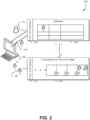
- FIG. 2 illustrates an example environment 200 in which an ownership transaction for an asset tracked by a cryptographically secured ledger committed and made available via a database, in accordance with the present invention as claimed.
- the cryptographically secured ledger 210 may accept new transactions in different ways depending on the implementation.
- the cryptographically secured ledger 210 may be updated using implied or explicit trust (e.g., certificates, cryptographic signatures, etc. that identify and/or authenticate/authorize the updating entity, and so long as the entity is identified by the cryptographically secured ledger authority as authorized to add a transaction to the ledger, it may do so with no constraints or impediments other than those specified for the transaction itself, by an implemented schema.
- implied or explicit trust e.g., certificates, cryptographic signatures, etc. that identify and/or authenticate/authorize the updating entity, and so long as the entity is identified by the cryptographically secured ledger authority as authorized to add a transaction to the ledger, it may do so with no constraints or impediments other than those specified for the transaction itself, by an implemented schema.
- the cryptographically secured ledger 210 is exposed as a ledger via a front end interface 212 to a client entity 202 or other requestor.
- the front end interface 212 (as with front end interface 206 for the database 204) may be a graphical or command-line user interface, a programmatic interface (such as an application programming interface (API) or web service call), or any appropriate interface.
- the client device submits ownership transfer requests 208 for a given asset represented in the cryptographically secured ledger 210.
- the ownership transfer request 208 is verified, e.g., by way of verifying the integrity and/or provenance of a digital signature or cryptographic key included with the request 208 (or separately therefrom), as well as the authority of the identity associated with the signature or key to make the requested ownership transfer 208.
- the verification may be made by any appropriate entity, including a third party cryptographic service, an entity associated with the cryptographically secured ledger 210, the client entity 202 itself (in the case of a self-authenticating certificate), or some other entity.
- the actual trust proof or attestation may be sourced from a cryptographic device or service of the client entity (e.g., local hardware security modules or trusted platform modules), issued by a third party authority or other cryptographic service, or any other appropriate, verifiable way for the identity and integrity of the issuing entity and/or that of the requesting entity to be ascertained.
- a cryptographic key such as a wrapped key, may be issued by a service of the computing resource service provider to the client entity 202 for submission to the front end interface 212 of the cryptographically secured ledger 210.
- the front end interface 212 passes the request 208 to an entity associated with the cryptographically secured ledger 210 to determine whether the request 208 is valid and any constraints, e.g., on other assets or limiting the requestor's authority to make the associated change, apply.
- a defining schema or database engine automatically requires that any change associated with that asset be initiated by the holder of that key. Consequently, if an ownership transfer request 208 comes from some other entity than the owner of the key presently associated with a given asset, it is rejected.
- the cryptographically secured ledger 210 commits the ownership transaction. As previously mentioned, such writes, once executed, are immutable so as to preserve the audit trail. If the ownership transaction is performed in error, the holder of the "new" key submits a new transaction to revert ownership back to the original holder, which would be written to the cryptographically secured ledger 210 as a new transaction.
- the database 204 reflects the new state of the cryptographically secured ledger in tabular form, depending on the implementation details of the database, as well as the way in which it is updated (e.g., as described above in connection with FIG. 1 ). Consequently, if the client device 202 issues a request 214 to the database 204 via its front end interface 206 inquiring as to the current ownership of a given asset, the database 204 will return, via its front end interface 206, a response 216 indicating the new owner.
- Other implementations where the database reflect not just the current state of the cryptographically secured ledger, but also includes every transaction committed to the ledger 210, are contemplated as within scope of the present disclosure.
- a database query requesting a history of ownership transactions over a specific time period, or over all time represented in the cryptographically secured ledger 210, or since the asset itself came into existence, could be serviced in a more efficient manner than a similar request directed directly to the cryptographically secured ledger 210.
- FIG. 3 illustrates an example environment 300 in which a schema defining one or more database formats (e.g., fields) associated with an asset is updated so as to further update the database representation of the asset, in accordance with some embodiments.
- a schema defining one or more database formats e.g., fields
- constraints and conditions as mentioned herein such as update dependencies on, e.g., the existence and cross-association of certain keys, fields, rows, columns, and the like, as well as permissions associated with a given identity's authority to make changes thereto, may be implemented at one (or a combination) of several layers.
- a schema may be used to prescribe the relationships between different rows, columns and/or fields of a database table, as well as how the data and/or metadata contained within the cryptographically secured ledger is to be represented in the associated database table.
- the schema, and transactions/changes associated therewith, are committed to the cryptographically secured ledger and reflected in a similar fashion to other data in the cryptographically secured ledger.
- a client device 302 may submit, in a fashion similar to that described in connection with at least FIG. 2 , schema updates 308 via the front end interface 312 for addition to the cryptographically secured ledger 310.
- an administrator entity which may in some cases be an owner of one or more assets stored in the cryptographically secured ledger, may have permissions to define and update the schema, as in some of such cases, that same entity was the originator of the previous schema and signed it with its associated key.
- a request to replace or update an existing schema may be required to be associated with the same key as associated with the present version of the schema.
- requirements are enforced by a database engine, an entity associated with the cryptographically secured ledger 310, etc. It is also contemplated that in some embodiments, the cryptographically secured ledger or database engine may also enforce a requirement that a given schema update request be accompanied by signatures of some or all of the owners (or other stakeholders) of assets to which the schema pertains, not just that of the administrator.
- the database 304 adjusts its mapping to conform to the new schema. For example, a new key column may be added to some or all records, or an additional descriptive field may pertain to some or all of the records.
- queries 314 against the database 304 relate to the database table as defined by the new schema.
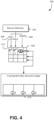
- FIG. 4 illustrates an example environment 400 in which a schema is implemented to define one or more fields of a database backed by a cryptographically secured ledger, in accordance with the present invention as claimed.
- Constraints and/or definitions such as the way in which data and transactions written to the cryptographically secured ledger are represented in the database table, how they interact relative to other objects in the cryptographically secured ledger, and/or the semantic meaning of any given row, column, field, or object, may be prescribed by a record definition 402, which may be implemented by one or more of a schema, an implementing application, and an implementing database engine (e.g., that which administers the database).
- the database engine may enforce, in the case of an asset tracking regime, basic field definitions that relate to an asset identifier, an owner associated with the asset, and a reference back to one or more ledger transactions.
- the schema (which may be updated by an authorized entity) may define further fields, such as secondary owners, supporting documents or other information associated with the asset, and the like.
- the application layer may define which entities are authorized to view the overall constraint and/or definition set.
- the cryptographically secured ledger as well as the database table that exposes the cryptographically secured ledger data simply treats the data without an intrinsic semantic framework, instead leaving such interpretation, constraints, presentation layer representation, etc. to the application layer, the schema, a database engine, or some combination thereof.
- some or all of the semantics may be implemented in the record definition, which abstracts the cryptographically secured ledger data for exposure through the associated database table.
- an implementing service provider may provide the cryptographically secured ledger-backed database for a specific purpose, such as tracking and auditing asset ownership.
- some or all of the semantics and/or transactional constraints e.g., required key and asset fields
- a remainder may be defined and/or controlled by the implementing application and/or an applicable schema.
- constraints/semantics are implemented by the database engine so as to protect them from being modified, maliciously or accidentally, by entities that are not authorized to do so (but who may otherwise by authorized to change other constraints/semantics defined elsewhere, such as at the application layer).
- an administrator of the system may implement such constraints/semantics as a basic set of immutable constraints/semantics of the system as a whole.
- the record definition 402 may dictate that assets 406 are associated with one or more keys 408, 410 that represent various stakeholders, owners, or other concepts associated with the asset.
- keys 408, 410 represent various stakeholders, owners, or other concepts associated with the asset.
- an implementing system would understand that only the holder of that key has the authority to transfer ownership to a different owner, and the memorialization of such transfers in a monotonically advancing cryptographically secured ledger 412 would prevent an attacker from back-propagating an ownership change once it has been committed.
- each associated record (e.g., rows in the illustrated example) is associated with a ledger identifier 404 that identifies where in the cryptographically secured ledger 412 the associated transaction is written.
- This ledger identifier 404 may be a hash value of the associated cryptographically secured ledger block, a location on disk (e.g., offset, relative to the start offset of the cryptographically secured ledger), a counter, or some other unique identifier that allows a requestor to locate the associated transaction within the cryptographically secured ledger 412. It is contemplated that, in some embodiments, the database reflects a state of a given data set, object, asset, etc. that may refer to a plurality of transactions in the cryptographically secured ledger 412 related to that information. Accordingly, the ledger 404 field may refer to a plurality of such cryptographically secured ledger locations, the location of the most recent transaction, etc.
- keys 408, 410, and asset 406 are described herein, additional constraints may be implemented or otherwise prescribed within or outside of the record definition 402 e.g., by an implementing application, a schema, or a database engine.
- a recipient of a transfer may also be required to sign or approve (e.g., by providing their respective key).
- Other parties such as supervisors or controlling authorities, may also be required to sign for ownership transactions to be accepted.
- Metadata associated with the asset 406 but not necessarily relevant to the actual ownership thereof may existing in any number of arbitrarily defined fields.
- Assets 406 may be either discrete (such as digital works, links or representations to physical assets such as real estate, and the like) or fungible (e.g., currency, equities, or other countable, uniform assets), and any associated data to prove the existence of such assets may be included in the cryptographically secured ledger (and therefore represented in the database table) in connection with the asset.
- fungible e.g., currency, equities, or other countable, uniform assets
- the associated database table may be made available for such queries, while ownership transfers requests may be performed in connection with direct ledger update requests.
- a record definition 402 may prescribe that discrete resources may be separated into "lots," which comprise references to a given asset (e.g., digital objects like documents, media, URIs to descriptions, and/or references that validate and/or verify the existence of physical objects, such as recorded deeds for real estate, titles to vehicles or other personal property, contracts, etc.), and "works,” which refer to one or more "lots" and describe the semantic relationship between the lots.
- slots comprise references to a given asset (e.g., digital objects like documents, media, URIs to descriptions, and/or references that validate and/or verify the existence of physical objects, such as recorded deeds for real estate, titles to vehicles or other personal property, contracts, etc.), and "works,” which refer to one or more "lots" and describe the semantic relationship between the lots.
- a record definition 402 may prescribe that fungible resources are divided into unitless objects such as "coins” and "funds,” which describe a quantity of "coins,” as well as the semantic meaning of what that quantity (or the coins themselves) represents, to which a given owner (holder of an associated key) is entitled.
- FIG. 5 illustrates an example process 500 for processing transactions in a cryptographically secured ledger-backed database, in accordance with the present invention as claimed.
- an entity such as a client device, submits transactions or other data to be committed irrevocably to a cryptographically secured ledger, such as described above in connection with FIGS. 1-4 .
- the transactions are ownership transactions associated with assets, and are submitted by the client entity via a front end interface of the cryptographically secured ledger.
- a database table such as of a non-relational database, is updated and/or generated from the data contained within the cryptographically secured ledger, and in some embodiments, reflects one or both of the current state of the associated data and/or historical transactions associated with that data.
- the database table is made available via a standard interface, such as a programmatic interface provided by an implementing database engine (e.g., a database management system).
- step 506 additional write transactions, such as ownership transfer requests, are received, e.g., via the cryptographically secured ledger interface, and processed to determine whether such requests are valid and authorized. For example, a public key of an asymmetric cryptographic key pair associated with the request is assessed to determine whether it is the same key as used by the present entity associated with the asset. As another example, a symmetric key as managed by a third party key management service may similarly be assessed.
- step 508 assuming that the processing and verification at step 506 was successful, the transaction is committed to the cryptographically secured ledger and the associated read-only database is updated to reflect the settling of that transaction.
- Such database table update may be asynchronously or synchronously executed relative to the cryptographically secured ledger addition.
- FIG. 6 illustrates an example process 600 for updating a schema used to define one or more properties associated with an asset tracked by a cryptographically secured ledger, in accordance with some embodiments.
- an interface or other entity associated with a cryptographically secured ledger receives a new schema associated with field definitions for a database table associated with (e.g., backed by) the cryptographically secured ledger.
- the requestor's authority is verified, as described above in FIGS. 1-5 , and in some cases the validity of other keys associated with asset owners associated with assets affected by the schema is affirmatively assessed as a precondition for accepting the schema update, at step 606, the new schema is committed to the cryptographically secured ledger, and is instituted at step 608 such that the database tables conform with the new schema.
- the specific schema used for a given transaction in the ledger may be referred to in that transaction, and as such, any further transactions past the point at which the new schema is committed may refer, in the ledger, to the new schema.
- the schema update request is denied at step 610.
- FIG. 7 illustrates an example process 700 for determining the validity of ownership transactions for assets held or tracked by a cryptographically secured ledger, in accordance with the present invention as claimed.
- a request is received from a client entity, to update a record associated with an asset stored in or otherwise represented in a cryptographically secured ledger, as previously described.
- the receiving system determines the requestor's identity by assessing keys submitted as part of or in connection with the request. This requirement, as previously mentioned, in examples not covered by the present invention as claimed, may be enforced by the database engine or application layer.
- step 706 the identity determined in connection with step 704 is checked against that which is presently associated with the asset (e.g., current ownership), and if they match, at step 708, the record change is committed to the ledger. Thereafter, either synchronously or asynchronously relative to the ledger update, the database table is updated to reflect the new ownership at step 710. However, if at decision point706 the requestor identity does not have the requisite permissions, the request is denied at step 712.
- FIG. 8 shows an example of a customer connected to a computing resource service provider in accordance with at least one example not covered by the independent claims.
- the computing resource service provider 802 may provide a variety of services to the customer 804 and the customer 804 may communicate with the computing resource service provider 802 via an interface 826, which may be a web services interface or any other type of customer interface. While FIG. 8 shows one interface 826 for the services of the computing resource service provider 802, each service may have its own interface and, generally, subsets of the services may have corresponding interfaces in addition to or as an alternative to the interface 826.
- the customer 804 may be an organization that may utilize one or more of the services provided by the computing resource service provider 802 to maintain and deliver information to its employees, which may be located in various geographical locations.
- the customer 804 may be an individual that utilizes the services of the computing resource service provider 802 to deliver content to a working group located remotely. As shown in FIG. 8 , the customer 804 may communicate with the computing resource service provider 802 through a network 806, whereby the network 806 may be a communication network, such as the Internet, an intranet or an Internet service provider (ISP) network. Some communications from the customer 804 to the computing resource service provider 802 may cause the computing resource service provider 802 to operate in accordance with one or more embodiments described or a variation thereof.
- ISP Internet service provider
- the computing resource service provider 802 may provide various computing resource services to its customers.
- the services provided by the computing resource service provider 802 include a virtual computer system service 808, a block-level data storage service 810, a cryptography service 812, an on-demand data storage service 814, a notification service 816, an authentication system 818, a policy management service 820, a task service 822, and one or more other services 824.
- a virtual computer system service 808 a block-level data storage service 810
- a cryptography service 812 an on-demand data storage service 814
- a notification service 816 an authentication system 818
- a policy management service 820 a policy management service 820
- a task service 822 a task service 822
- one or more other services 824 it is noted that not all embodiments described include the services 808-824 described with reference to FIG. 8 and additional services may be provided in addition to or as an alternative to services explicitly described.
- each of the 808-824 may include one or more web service interfaces
- each of the services may include one or more service interfaces that enable the services to access each other (e.g., to enable a virtual computer system of the virtual computer system service 808 to store data in or retrieve data from the on-demand data storage service 814 and/or to access one or more block-level data storage devices provided by the block level data storage service 810).
- the virtual computer system service 808 may be a collection of computing resources configured to instantiate virtual machine instances on behalf of the customer 804.
- the customer 804 may interact with the virtual computer system service 808 (via appropriately configured and authenticated API calls) to provision and operate virtual computer systems that are instantiated on physical computing devices hosted and operated by the computing resource service provider 802.
- the virtual computer systems may be used for various purposes, such as to operate as servers supporting a website, to operate business applications or, generally, to serve as computing power for the customer. Other applications for the virtual computer systems may be to support database applications, electronic commerce applications, business applications, and/or other applications.
- any other computer system or computer system service may be utilized in the computing resource service provider 802, such as a computer system or computer system service that does not employ virtualization or instantiation and instead provisions computing resources on dedicated or shared computers/servers and/or other physical devices.
- the block-level data storage service 810 may comprise one or more computing resources that collectively operate to store data for a customer 804 using block-level storage devices (and/or virtualizations thereof).
- the block-level storage devices of the block-level data storage service 810 may, for instance, be operationally attached to virtual computer systems provided by the virtual computer system service 808 to serve as logical units (e.g., virtual drives) for the computer systems.
- a block-level storage device may enable the persistent storage of data used/generated by a corresponding virtual computer system where the virtual computer system service 808 may only provide ephemeral data storage.
- the computing resource service provider 802 also includes a cryptography service 812.
- the cryptography service 812 may utilize one or more storage services of the computing resource service provider 802 to store keys of the customers in encrypted form, whereby the keys may be usable to decrypt the customer 804 keys accessible only to particular devices of the cryptography service 812.
- the computing resource service provider 802 further includes an on-demand data storage service 814.
- the on-demand data storage service 814 may be a collection of computing resources configured to synchronously process requests to store and/or access data.
- the on-demand data storage service 814 may operate using computing resources (e.g., databases) that enable the on-demand data storage service 814 to locate and retrieve data quickly, to allow data to be provided in responses to requests for the data.
- the on-demand data storage service 814 may maintain stored data in a manner such that, when a request for a data object is retrieved, the data object can be provided (or streaming of the data object can be initiated) in a response to the request.
- data stored in the on-demand data storage service 814 may be organized into data objects.
- the data objects may have arbitrary sizes except, perhaps, for certain constraints on size.
- the on-demand data storage service 814 may store numerous data objects of varying sizes.
- the on-demand data storage service 814 may operate as a key value store that associates data objects with identifiers of the data objects which may be used by the customer 804 to retrieve or perform other operations in connection with the data objects stored by the on-demand data storage service 814.
- the notification service 816 may comprise a collection of computing resources collectively configured to provide a web service or other interface and browser-based management console.
- the management console can be used to configure topics for which customers seek to receive notifications, configure applications (or people), subscribe clients to the topics, publish messages, or configure delivery of the messages over clients' protocol of choice (i.e., hypertext transfer protocol (HTTP), e-mail and short message service (SMS), among others).
- HTTP hypertext transfer protocol
- SMS short message service
- the notification service 816 may provide notifications to clients using a "push" mechanism without the need to periodically check or "poll" for new information and updates.
- the notification service 816 may further be used for various purposes such as monitoring applications executing in the virtual computer system service 808, workflow systems, time-sensitive information updates, mobile applications, and many others.
- the computing resource service provider 802 includes an authentication system 818 and a policy management service 820.
- the authentication system 818 in an embodiment, is a computer system (i.e., collection of computing resources) configured to perform operations involved in authentication of users of the customer. For instance, one of the services 808-816 and 820-824 may provide information from a user to the authentication system 818 to receive information in return that indicates whether the user requests are authentic.
- the policy management service 820 in an embodiment, is a computer system configured to manage policies on behalf of customers (such as customer 804) of the computing resource service provider 802.
- the policy management service 820 may include an interface that enables customers to submit requests related to the management of policy. Such requests may be, for instance, requests to add, delete, change, or otherwise modify policy for a customer or for other administrative actions, such as providing an inventory of existing policies and the like.
- the computing resource service provider 802 is also equipped with a task service 822.
- the task service 822 is configured to receive a task package from the customer 804 and enable executing tasks as dictated by the task package.
- the task service 822 may be configured to use any resource of the computing resource service provider 802, such as one or more instantiated virtual machines or virtual hosts, for executing the task.
- the task service 822 may configure the one or more instantiated virtual machines or virtual hosts to operate using a selected operating system and/or a selected execution application in accordance with a requirement of the customer 804.
- the computing resource service provider 802 additionally maintains one or more other services 824 based at least in part on the needs of its customers 804. For instance, the computing resource service provider 802 may maintain a database service for its customers 804.
- a database service may be a collection of computing resources that collectively operate to run one or more databases for one or more customers 804.
- the customer 804 may operate and manage a database from the database service by utilizing appropriately configured API calls. This, in turn, may allow a customer 804 to maintain and potentially scale the operations in the database.
- Other services include, but are not limited to, object-level archival data storage services, services that manage and/or monitor other services.
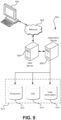
- FIG. 9 illustrates aspects of an example environment 900 for implementing aspects in accordance with various embodiments.
- the environment includes an electronic client device 902, which can include any appropriate device operable to send and/or receive requests, messages, or information over an appropriate network 904 and, in some embodiments, convey information back to a user of the device.
- client devices include personal computers, cell phones, handheld messaging devices, laptop computers, tablet computers, set-top boxes, personal data assistants, embedded computer systems, electronic book readers, and the like.
- the network can include any appropriate network, including an intranet, the Internet, a cellular network, a local area network, a satellite network, or any other such network and/or combination thereof. Components used for such a system can depend at least in part upon the type of network and/or environment selected. Many protocols and components for communicating via such a network are well known and will not be discussed herein in detail. Communication over the network can be enabled by wired or wireless connections and combinations thereof.
- the network includes the Internet and/or other publicly-addressable communications network, as the environment includes a web server 906 for receiving requests and serving content in response thereto, although for other networks an alternative device serving a similar purpose could be used as would be apparent to one of ordinary skill in the art.
- the illustrative environment includes at least one application server 908 and a data store 910. It should be understood that there can be several application servers, layers, or other elements, processes, or components, which may be chained or otherwise configured, which can interact to perform tasks such as obtaining data from an appropriate data store. Servers, as used herein, may be implemented in various ways, such as hardware devices or virtual computer systems. In some contexts, servers may refer to a programming module being executed on a computer system.
- data store refers to any device or combination of devices capable of storing, accessing, and retrieving data, which may include any combination and number of data servers, databases, data storage devices, and data storage media, in any standard, distributed, virtual, or clustered environment.
- the application server can include any appropriate hardware, software, and firmware for integrating with the data store as needed to execute aspects of one or more applications for the client device, handling some or all of the data access and business logic for an application.
- the application server may provide access control services in cooperation with the data store and is able to generate content including, but not limited to, text, graphics, audio, video, and/or other content usable to be provided to the user, which may be served to the user by the web server in the form of HyperText Markup Language (“HTML”), Extensible Markup Language (“XML”), JavaScript, Cascading Style Sheets (“CSS”), JavaScript Object Notation (JSON), and/or another appropriate client-side structured language.
- HTML HyperText Markup Language
- XML Extensible Markup Language
- CSS Cascading Style Sheets
- JSON JavaScript Object Notation
- Content transferred to a client device may be processed by the client device to provide the content in one or more forms including, but not limited to, forms that are perceptible to the user audibly, visually, and/or through other senses.
- PHP Hypertext Preprocessor
- Python Python
- Ruby Ruby
- Perl Java
- HTML Hypertext Preprocessor
- XML Hypertext Markup Language
- JSON Java
- operations described herein as being performed by a single device may, unless otherwise clear from context, be performed collectively by multiple devices, which may form a distributed and/or virtual system.
- the data store 910 can include several separate data tables, databases, data documents, dynamic data storage schemes, and/or other data storage mechanisms and media for storing data relating to a particular aspect of the present disclosure.
- the data store illustrated may include mechanisms for storing production data 912 and user information 916, which can be used to serve content for the production side.
- the data store also is shown to include a mechanism for storing log data 914, which can be used for reporting, analysis, or other such purposes. It should be understood that there can be many other aspects that may need to be stored in the data store, such as page image information and access rights information, which can be stored in any of the above listed mechanisms as appropriate or in additional mechanisms in the data store 910.
- the data store 910 is operable, through logic associated therewith, to receive instructions from the application server 908 and obtain, update, or otherwise process data in response thereto.
- the application server 908 may provide static, dynamic, or a combination of static and dynamic data in response to the received instructions.
- Dynamic data such as data used in web logs (blogs), shopping applications, news services, and other such applications may be generated by server-side structured languages, as described herein, or may be provided by a content management system (“CMS”) operating on, or under the control of, the application server.
- CMS content management system
- a user through a device operated by the user, might submit a search request for a certain type of item.
- the data store might access the user information to verify the identity of the user and can access the catalog detail information to obtain information about items of that type.
- the information then can be returned to the user, such as in a results listing on a web page that the user is able to view via a browser on the user device 902.
- Information for a particular item of interest can be viewed in a dedicated page or window of the browser. It should be noted, however, that embodiments of the present disclosure are not necessarily limited to the context of web pages, but may be more generally applicable to processing requests in general, where the requests are not necessarily requests for content.
- Each server typically will include an operating system that provides executable program instructions for the general administration and operation of that server and typically will include a computer-readable storage medium (e.g., a hard disk, random access memory, read only memory, etc.) storing instructions that, when executed (i.e., as a result of being executed) by a processor of the server, allow the server to perform its intended functions.
- a computer-readable storage medium e.g., a hard disk, random access memory, read only memory, etc.
- the environment in one embodiment, is a distributed and/or virtual computing environment utilizing several computer systems and components that are interconnected via communication links, using one or more computer networks or direct connections.
- the environment could operate equally well in a system having fewer or a greater number of components than are illustrated in FIG. 9 .
- the depiction of the system 900 in FIG. 9 should be taken as being illustrative in nature and not limiting to the scope of the disclosure.
- the various embodiments further can be implemented in a wide variety of operating environments, which in some cases can include one or more user computers, computing devices or processing devices which can be used to operate any of a number of applications.
- User or client devices can include any of a number of computers, such as desktop, laptop, or tablet computers running a standard operating system, as well as cellular, wireless, and handheld devices running mobile software and capable of supporting a number of networking and messaging protocols.
- Such a system also can include a number of workstations running any of a variety of commercially available operating systems and other known applications for purposes such as development and database management.
- These devices also can include other electronic devices, such as dummy terminals, thin-clients, gaming systems, and other devices capable of communicating via a network.
- These devices also can include virtual devices such as virtual machines, hypervisors, and other virtual devices capable of communicating via a network.
- Various embodiments of the present disclosure utilize at least one network that would be familiar to those skilled in the art for supporting communications using any of a variety of commercially available protocols, such as Transmission Control Protocol/Internet Protocol (“TCP/IP”), User Datagram Protocol (“UDP”), protocols operating in various layers of the Open System Interconnection (“OSI”) model, File Transfer Protocol (“FTP”), Universal Plug and Play (“UpnP”), Network File System (“NFS”), Common Internet File System (“CIFS”), and AppleTalk.
- the network can be, for example, a local area network, a wide-area network, a virtual private network, the Internet, an intranet, an extranet, a public switched telephone network, an infrared network, a wireless network, a satellite network, and any combination thereof.
- connection-oriented protocols may be used to communicate between network endpoints.
- Connection-oriented protocols (sometimes called connection-based protocols) are capable of transmitting data in an ordered stream.
- Connection-oriented protocols can be reliable or unreliable.
- TCP protocol is a reliable connection-oriented protocol.
- ATM Asynchronous Transfer Mode
- Frame Relay is unreliable connection-oriented protocols.
- Connection-oriented protocols are in contrast to packet-oriented protocols such as UDP that transmit packets without a guaranteed ordering.
- the web server can run any of a variety of server or mid-tier applications, including Hypertext Transfer Protocol ("HTTP”) servers, FTP servers, Common Gateway Interface (“CGI”) servers, data servers, Java servers, Apache servers, and business application servers.
- HTTP Hypertext Transfer Protocol
- CGI Common Gateway Interface
- the server(s) also may be capable of executing programs or scripts in response to requests from user devices, such as by executing one or more web applications that may be implemented as one or more scripts or programs written in any programming language, such as Java ® , C, C#, or C++, or any scripting language, such as Ruby, PHP, Perl, Python, or TCL, as well as combinations thereof.
- the server(s) may also include database servers, including without limitation those commercially available from Oracle ® , Microsoft ® , Sybase ® , and IBM ® as well as open-source servers such as MySQL, Postgres, SQLite, MongoDB, and any other server capable of storing, retrieving, and accessing structured or unstructured data.
- Database servers may include table-based servers, document-based servers, unstructured servers, relational servers, non-relational servers, or combinations of these and/or other database servers.
- the environment can include a variety of data stores and other memory and storage media as discussed above. These can reside in a variety of locations, such as on a storage medium local to (and/or resident in) one or more of the computers or remote from any or all of the computers across the network. In a particular set of embodiments, the information may reside in a storage-area network ("SAN") familiar to those skilled in the art. Similarly, any necessary files for performing the functions attributed to the computers, servers, or other network devices may be stored locally and/or remotely, as appropriate.
- SAN storage-area network
- each such device can include hardware elements that may be electrically coupled via a bus, the elements including, for example, at least one central processing unit (“CPU” or “processor”), at least one input device (e.g., a mouse, keyboard, controller, touch screen, or keypad), and at least one output device (e.g., a display device, printer, or speaker).
- CPU central processing unit
- input device e.g., a mouse, keyboard, controller, touch screen, or keypad
- output device e.g., a display device, printer, or speaker
- Such a system may also include one or more storage devices, such as disk drives, optical storage devices, and solid-state storage devices such as random access memory (“RAM”) or read-only memory (“ROM”), as well as removable media devices, memory cards, flash cards, etc.
- RAM random access memory
- ROM read-only memory
- Such devices can include a computer-readable storage media reader, a communications device (e.g., a modem, a network card (wireless or wired), an infrared communication device, etc.), and working memory, as described above.
- the computer-readable storage media reader can be connected with, or configured to receive, a computer-readable storage medium, representing remote, local, fixed, and/or removable storage devices as well as storage media for temporarily and/or more permanently containing, storing, transmitting, and retrieving computer-readable information.
- the system and various devices also typically will include a number of software applications, modules, services, or other elements located within at least one working memory device, including an operating system and application programs, such as a client application or web browser.
- customized hardware might also be used and/or particular elements might be implemented in hardware, software (including portable software, such as applets), or both. Further, connection to other computing devices such as network input/output devices may be employed.
- Storage media and computer readable media for containing code, or portions of code can include any appropriate media known or used in the art, including storage media and communication media, such as, but not limited to, volatile and non-volatile, removable and non-removable media implemented in any method or technology for storage and/or transmission of information such as computer readable instructions, data structures, program modules, or other data, including RAM, ROM, Electrically Erasable Programmable Read-Only Memory (“EEPROM”), flash memory, or other memory technology, Compact Disc Read-Only Memory (“CD-ROM”), digital versatile disk (DVD), or other optical storage, magnetic cassettes, magnetic tape, magnetic disk storage, or other magnetic storage devices or any other medium which can be used to store the desired information and which can be accessed by the system device.
- RAM random access memory
- ROM read-only memory
- EEPROM Electrically Erasable Programmable Read-Only Memory
- CD-ROM Compact Disc Read-Only Memory
- DVD digital versatile disk
- magnetic cassettes magnetic tape
- magnetic disk storage or other magnetic
- the conjunctive phrases "at least one of A, B, and C” and "at least one of A, B and C” refer to any of the following sets: ⁇ A ⁇ , ⁇ B ⁇ , ⁇ C ⁇ , ⁇ A, B ⁇ , ⁇ A, C ⁇ , ⁇ B, C ⁇ , ⁇ A, B, C ⁇ .
- conjunctive language is not generally intended to imply that certain embodiments require at least one of A, at least one of B and at least one of C each to be present.
- Processes described herein can be performed in any suitable order unless otherwise indicated herein or otherwise clearly contradicted by context.
- Processes described herein may be performed under the control of one or more computer systems configured with executable instructions and may be implemented as code (e.g., executable instructions, one or more computer programs or one or more applications) executing collectively on one or more processors, by hardware or combinations thereof.
- the code may be stored on a computer-readable storage medium, for example, in the form of a computer program comprising a plurality of instructions executable by one or more processors.
- the computer-readable storage medium may be non-transitory.
- the code is stored on set of one or more non-transitory computer-readable storage media having stored thereon executable instructions that, when executed (i.e., as a result of being executed) by one or more processors of a computer system, cause the computer system to perform operations described herein.
- the set of non-transitory computer-readable storage media may comprise multiple non-transitory computer-readable storage media and one or more of individual non-transitory storage media of the multiple non-transitory computer-readable storage media may lack all of the code while the multiple non-transitory computer-readable storage media collectively store all of the code.
- the executable instructions are executed such that different instructions are executed by different processors.
- a non-transitory computer-readable storage medium may store instructions.
- a main CPU may execute some of the instructions and a graphics processor unit may execute other of the instructions.
- a graphics processor unit may execute other of the instructions.
- different components of a computer system may have separate processors and different processors may execute different subsets of the instructions.
- computer systems are configured to implement one or more services that singly or collectively perform operations of processes described herein.
- Such computer systems may, for instance, be configured with applicable hardware and/or software that enable the performance of the operations.
- computer systems that implement various embodiments of the present disclosure may, in some examples, be single devices and, in other examples, be distributed computer systems comprising multiple devices that operate differently such that the distributed computer system performs the operations described herein and such that a single device may not perform all operations.
Landscapes
- Engineering & Computer Science (AREA)
- Business, Economics & Management (AREA)
- Theoretical Computer Science (AREA)
- General Physics & Mathematics (AREA)
- Physics & Mathematics (AREA)
- Accounting & Taxation (AREA)
- Finance (AREA)
- Economics (AREA)
- Strategic Management (AREA)
- General Business, Economics & Management (AREA)
- General Engineering & Computer Science (AREA)
- Marketing (AREA)
- Development Economics (AREA)
- Computer Security & Cryptography (AREA)
- Databases & Information Systems (AREA)
- Software Systems (AREA)
- Health & Medical Sciences (AREA)
- Bioethics (AREA)
- General Health & Medical Sciences (AREA)
- Computer Hardware Design (AREA)
- Quality & Reliability (AREA)
- Human Resources & Organizations (AREA)
- Tourism & Hospitality (AREA)
- Operations Research (AREA)
- Entrepreneurship & Innovation (AREA)
- Data Mining & Analysis (AREA)
- Technology Law (AREA)
- Computer Networks & Wireless Communication (AREA)
- Signal Processing (AREA)
- Information Retrieval, Db Structures And Fs Structures Therefor (AREA)
- Financial Or Insurance-Related Operations Such As Payment And Settlement (AREA)
- Management, Administration, Business Operations System, And Electronic Commerce (AREA)
- Storage Device Security (AREA)
Claims (12)
- Procédé mis en œuvre par ordinateur, comprenant :sous le contrôle d'un ou plusieurs systèmes informatiques (102) configurés avec des instructions exécutables,la validation d'une première référence à un registre de chaîne de blocs (106), la première référence comportant au moins une référence d'actif d'un actif (406), de telle sorte que la première référence validée au registre de chaîne de blocs ne peut pas être modifiée ;la fourniture, à un demandeur effectuant une première demande à un premier dispositif client, d'un accès à la première référence sous la forme d'un enregistrement (402) dans une table de base de données, dans lequel le registre de chaîne de blocs est exposé en tant que table de base de données par l'intermédiaire d'une interface (206) de la table de base de données au premier dispositif client et dans lequel un ou plusieurs champs de la table de base de données sont définis par un schéma validé dans le registre de chaîne de blocs, dans lequel le schéma définit en outre des contraintes sur des demandes de mise à jour d'informations de propriété associées à des actifs comprenant ledit actif, dans lequel les contraintes comportent l'exigence selon laquelle tout changement associé à un actif soit initié par le détenteur d'une clé associée à l'actif ;la réception (702), par l'intermédiaire d'une interface (212) du registre de chaîne de blocs, d'une deuxième demande (208) de mise à jour d'informations de propriété associées à la première référence ;la détermination (704) que la première référence comporte une première clé (408) associée aux informations de propriété ;la vérification (706) d'une ou de plusieurs autorisations associées à la deuxième demande, générant une seconde référence qui comporte la référence d'actif et une seconde clé reflétant des informations de propriété mises à jour (710) telles que demandées, dans lequel la vérification des une ou plusieurs autorisations comprend la vérification que la première clé correspond à une clé soumise dans le cadre de la deuxième demande et dans lequel le registre de chaîne de blocs accepte la seconde référence sur la base, au moins en partie, de la vérification des une ou plusieurs autorisations ;la validation (708) de la seconde référence au registre de chaîne de blocs, de sorte que la seconde référence validée au registre de chaîne de blocs ne peut pas être modifiée ; etla fourniture, au demandeur effectuant une troisième demande au premier dispositif client, d'un accès à l'enregistrement par l'intermédiaire de l'interface de la table de base de données, de telle sorte que l'enregistrement reflète au moins les informations de propriété mises à jour dans la seconde référence.
- Procédé mis en œuvre par ordinateur selon la revendication 1, dans lequel l'actif est un actif numérique inclus dans le registre de chaîne de blocs en tant que partie de la première référence.
- Procédé mis en œuvre par ordinateur selon la revendication 1, dans lequel :
le schéma prescrit les relations entre différentes lignes, colonnes et/ou différents champs de la table de base de données, ainsi que la manière dont les données et/ou les métadonnées contenues dans le registre sécurisé de manière cryptographique doivent être représentées dans la table de base de données associée. - Système comprenant :
au moins un dispositif informatique, stockant des instructions exécutables, qui met en œuvre un ou plusieurs services (102), dans lequel les un ou plusieurs services :valident une première référence à un registre de chaîne de blocs (106), la première référence comportant au moins une référence d'actif d'un actif (406), de telle sorte que la première référence validée au registre de chaîne de blocs ne peut pas être modifiée ;fournissent, à un demandeur effectuant une première demande à un premier dispositif client, un accès à la première référence sous la forme d'un enregistrement (402) dans une table de base de données, dans lequel le registre de chaîne de blocs est exposé en tant que table de base de données par l'intermédiaire d'une interface (206) de la table de base de données au niveau du premier dispositif client et dans lequel un ou plusieurs champs de la table de base de données sont définis par un schéma validé dans le registre de chaîne de blocs, dans lequel le schéma définit en outre des contraintes sur des demandes de mise à jour d'informations de propriété associées à des actifs comprenant ledit actif, dans lequel les contraintes comportent l'exigence selon laquelle tout changement associé à un actif soit initié par le détenteur d'une clé associée à l'actif ;reçoivent (702), par l'intermédiaire d'une interface (212) du registre de chaîne de blocs, une deuxième demande (208) de mise à jour d'informations de propriété associées à la première référence ;déterminent (704) que la première référence comporte une première clé (408) associée aux informations de propriété ;vérifient (706) une ou plusieurs autorisations associées à la deuxième demande, générant une seconde référence qui comprend la référence d'actif et une seconde clé reflétant des informations de propriété mises à jour (710) telles que demandées, dans lequel la vérification des une ou plusieurs autorisations comprend la vérification que la première clé correspond à une clé soumise dans le cadre de la deuxième demande et dans lequel le registre de chaîne de blocs accepte la seconde référence sur la base, au moins en partie, de la vérification des une ou plusieurs autorisations ;valident (708) la seconde référence au registre de chaîne de blocs, de sorte que la seconde référence validée au registre de chaîne de blocs ne peut pas être modifiée ; etfournissent, au demandeur effectuant une troisième demande au premier dispositif client, un accès à l'enregistrement par l'intermédiaire de l'interface de la table de base de données, de telle sorte que l'enregistrement reflète au moins les informations de propriété mises à jour dans la seconde référence. - Système selon la revendication 4, dans lequeli) le schéma est mis à jour par l'intermédiaire de la deuxième demande ; ouii) la deuxième demande est reçue à la suite d'une opération d'écriture dans la table de base de données.
- Système selon la revendication 5, dans lequel le schéma prescrit les relations entre différentes lignes, colonnes et/ou différents champs de la table de base de données, ainsi que la manière dont les données et/ou les métadonnées contenues dans le registre de chaîne de blocs sécurisé de manière cryptographique doivent être représentées dans la table de base de données associée.
- Système selon la revendication 4, dans lequel la référence d'actif (406) est une référence à un actif physique ou numérique.
- Support de stockage non transitoire lisible par ordinateur sur lequel sont stockées des instructions exécutables qui, lorsqu'elles sont exécutées par un ou plusieurs processeurs d'un système informatique (102), amènent le système informatique (102) au moins à :valider une première référence à un registre de chaîne de blocs (106), la première référence comportant au moins une référence d'actif d'un actif (406), de telle sorte que la première référence validée au registre de chaîne de blocs ne peut pas être modifiée ;fournir, à un demandeur effectuant une première demande à un premier dispositif client, un accès à la première référence sous la forme d'un enregistrement (402) dans une table de base de données, dans lequel le registre de chaîne de blocs est exposé en tant que table de base de données par l'intermédiaire d'une interface (206) de la table de base de données au premier dispositif client et dans lequel un ou plusieurs champs de la table de base de données sont définis par un schéma validé dans le registre de chaîne de blocs, dans lequel le schéma définit en outre des contraintes sur des demandes de mise à jour d'informations de propriété associées à des actifs comprenant ledit actif, dans lequel les contraintes comportent l'exigence selon laquelle tout changement associé à un actif soit initié par le détenteur d'une clé associée à l'actif ;recevoir (702), par l'intermédiaire d'une interface (212) du registre de chaîne de blocs, une deuxième demande (208) de mise à jour d'informations de propriété associées à la première référence ;déterminer (704) que la première référence comporte une première clé (408) associée aux informations de propriété ;vérifier (706) une ou plusieurs autorisations associées à la deuxième demande, générant une seconde référence qui comprend la référence d'actif et une seconde clé reflétant des informations de propriété mises à jour (710) telles que demandées, dans lequel la vérification des une ou plusieurs autorisations comprend la vérification que la première clé correspond à une clé soumise dans le cadre de la deuxième demande et dans lequel le registre de chaîne de blocs accepte la seconde référence sur la base, au moins en partie, de la vérification des une ou plusieurs autorisations ;valider (708) la seconde référence au registre de chaîne de blocs, de sorte que la seconde référence validée au registre de chaîne de blocs ne peut pas être modifiée ; etfournir, au demandeur effectuant une troisième demande au premier dispositif client, un accès à l'enregistrement par l'intermédiaire de l'interface de la table de base de données, de telle sorte que l'enregistrement reflète au moins les informations de propriété mises à jour dans la seconde référence.
- Support de stockage lisible par ordinateur non transitoire selon la revendication 8, dans lequel la deuxième demande est associée à la mise à jour d'un propriétaire de l'actif.
- Support de stockage lisible par ordinateur non transitoire selon la revendication 8, dans lequel la deuxième demande est associée à la mise à jour des une ou plusieurs autorisations.
- Support de stockage lisible par ordinateur non transitoire selon la revendication 8, dans lequel :la deuxième demande est associée à une mise à jour du schéma lié à un premier ensemble de transactions associées à l'actif dans le registre de chaîne de blocs à un schéma mis à jour lié à l'actif ; etles instructions, lorsqu'elles sont exécutées par les un ou plusieurs processeurs, amènent en outre le système informatique à :traiter la deuxième demande en mettant à jour la table de base de données pour refléter un nouvel état associé au schéma mis à jour ; etassocier un second ensemble de transactions associé à l'actif au schéma mis à jour, le second ensemble de transactions étant traité par le système informatique à un moment après l'écriture de la transaction associée au schéma mis à jour dans le registre de chaîne de blocs.
- Support de stockage lisible par ordinateur non transitoire selon la revendication 8, dans lequel le schéma prescrit les relations entre différentes lignes, colonnes et/ou différents champs de la table de base de données, ainsi que la manière dont les données et/ou les métadonnées contenues dans le registre de chaîne de blocs sécurisé de manière cryptographique doivent être représentées dans la table de base de données associée.
Applications Claiming Priority (2)
| Application Number | Priority Date | Filing Date | Title |
|---|---|---|---|
| US15/283,017 US10614239B2 (en) | 2016-09-30 | 2016-09-30 | Immutable cryptographically secured ledger-backed databases |
| PCT/US2017/054319 WO2018064487A1 (fr) | 2016-09-30 | 2017-09-29 | Bases de données protégées de manière cryptographique immuable |
Publications (2)
| Publication Number | Publication Date |
|---|---|
| EP3520047A1 EP3520047A1 (fr) | 2019-08-07 |
| EP3520047B1 true EP3520047B1 (fr) | 2024-03-06 |
Family
ID=60081326
Family Applications (1)
| Application Number | Title | Priority Date | Filing Date |
|---|---|---|---|
| EP17783685.5A Active EP3520047B1 (fr) | 2016-09-30 | 2017-09-29 | Bases de données protégées de manière cryptographique immuable |
Country Status (6)
| Country | Link |
|---|---|
| US (1) | US10614239B2 (fr) |
| EP (1) | EP3520047B1 (fr) |
| JP (1) | JP6730520B2 (fr) |
| CN (1) | CN109844783B (fr) |
| AU (1) | AU2017336924B2 (fr) |
| WO (1) | WO2018064487A1 (fr) |
Families Citing this family (59)
| Publication number | Priority date | Publication date | Assignee | Title |
|---|---|---|---|---|
| US8874477B2 (en) | 2005-10-04 | 2014-10-28 | Steven Mark Hoffberg | Multifactorial optimization system and method |
| US10438197B2 (en) * | 2016-04-13 | 2019-10-08 | Paypal, Inc. | Public ledger authentication system |
| US9774578B1 (en) * | 2016-05-23 | 2017-09-26 | Accenture Global Solutions Limited | Distributed key secret for rewritable blockchain |
| US20180247191A1 (en) | 2017-02-03 | 2018-08-30 | Milestone Entertainment Llc | Architectures, systems and methods for program defined entertainment state system, decentralized cryptocurrency system and system with segregated secure functions and public functions |
| US10824737B1 (en) * | 2017-02-22 | 2020-11-03 | Assa Abloy Ab | Protecting data from brute force attack |
| US10621150B2 (en) * | 2017-03-05 | 2020-04-14 | Jonathan Sean Callan | System and method for enforcing the structure and content of databases synchronized over a distributed ledger |
| US10805090B1 (en) * | 2017-03-24 | 2020-10-13 | Blockstream Corporation | Address whitelisting using public/private keys and ring signature |
| US11887115B2 (en) * | 2017-04-17 | 2024-01-30 | Jeff STOLLMAN | Systems and methods to validate transactions for inclusion in electronic blockchains |
| US11362834B2 (en) * | 2017-07-24 | 2022-06-14 | Comcast Cable Communications, Llc | Systems and methods for managing digital rights |
| EP3710974B1 (fr) * | 2017-11-17 | 2023-07-26 | Telefonaktiebolaget LM Ericsson (publ) | Procédé et configuration de détection d'altération de contenu numérique |
| US10990887B1 (en) * | 2017-12-13 | 2021-04-27 | Amazon Technologies, Inc. | Anything-but matching using finite-state machines |
| US11720888B2 (en) * | 2018-03-08 | 2023-08-08 | Borsetta Labs, Llc | Decentralized title transfer and validation of assets |
| US12483397B1 (en) * | 2018-04-13 | 2025-11-25 | Hushmesh Inc. | Use of cryptographic twins for secure storage and access of entity data |
| CN112334933B (zh) * | 2018-04-19 | 2024-03-01 | 唯链基金会有限公司 | 区块链交易处理 |
| AU2019256002B2 (en) * | 2018-04-20 | 2023-08-17 | Vishal Gupta | Decentralized document and entity verification engine |
| US20190340623A1 (en) * | 2018-05-03 | 2019-11-07 | SigmaLedger, Inc. | System and method for verifying authenticity of the products based on proof of ownership and transfer of ownership |
| US11257081B2 (en) * | 2018-05-08 | 2022-02-22 | Oracle International Corporation | Integrating a blockchain ledger with an application external to the blockchain ledger |
| US10560261B1 (en) | 2018-05-24 | 2020-02-11 | DeepTruth, LLC | Systems and techniques for capture of trusted media data |
| US11683180B1 (en) | 2018-05-24 | 2023-06-20 | Swear Inc. | Protecting digital media with nested hashing techniques |
| US10771240B2 (en) * | 2018-06-13 | 2020-09-08 | Dynamic Blockchains Inc | Dynamic blockchain system and method for providing efficient and secure distributed data access, data storage and data transport |
| GB201811263D0 (en) * | 2018-07-10 | 2018-08-29 | Netmaster Solutions Ltd | A method and system for managing digital using a blockchain |
| US10764039B2 (en) | 2018-08-01 | 2020-09-01 | The Toronto-Dominion Bank | Dynamic generation and management of asymmetric cryptographic keys using distributed ledgers |
| US11146560B1 (en) * | 2018-08-30 | 2021-10-12 | Amazon Technologies, Inc. | Distributed governance of computing resources |
| US11100533B1 (en) | 2018-09-14 | 2021-08-24 | Facebook, Inc. | Cryptographically generating custom audiences |
| US11120024B2 (en) * | 2018-11-01 | 2021-09-14 | Sap Se | Dual-stack architecture that integrates relational database with blockchain |
| JP7274198B2 (ja) * | 2018-11-19 | 2023-05-16 | 株式会社A.L.I.Technologies | 資産情報登録方法 |
| US20200160289A1 (en) * | 2018-11-19 | 2020-05-21 | Rare Bits, Inc. | Lazy updating and state prediction for blockchain-based applications |
| US11023490B2 (en) * | 2018-11-20 | 2021-06-01 | Chicago Mercantile Exchange Inc. | Selectively replicated trustless persistent store |
| US11196567B2 (en) * | 2018-11-26 | 2021-12-07 | Amazon Technologies, Inc. | Cryptographic verification of database transactions |
| EP3549028A4 (fr) * | 2018-11-30 | 2020-01-15 | Alibaba Group Holding Limited | Système de structuration de relations de données de chaîne de blocs basé sur une réplication de journaux binaires |
| CA3121919C (fr) * | 2018-12-04 | 2023-01-24 | Zeu Technologies, Inc. | Systeme et procede d'augmentation d'applications de base de donnees avec une technologie de chaine de blocs |
| US10325084B1 (en) * | 2018-12-11 | 2019-06-18 | block.one | Systems and methods for creating a secure digital identity |
| CN111898139B (zh) * | 2018-12-20 | 2024-04-16 | 创新先进技术有限公司 | 数据读写方法及装置、电子设备 |
| US11836259B2 (en) * | 2019-01-16 | 2023-12-05 | EMC IP Holding Company LLC | Blockchain technology for regulatory compliance of data management systems |
| EP3921741A4 (fr) * | 2019-02-08 | 2022-10-12 | Christopher Lyndon Higgins | Plateformes informatiques de registre distribué et procédés, systèmes et dispositifs associés |
| EP3699856A1 (fr) * | 2019-02-21 | 2020-08-26 | INL - International Iberian Nanotechnology Laboratory | Marquage d'un objet |
| EP4462274A3 (fr) * | 2019-02-22 | 2024-12-18 | Visa International Service Association | Procede et systeme de creation de donnees modifiees rapide et interrogeables dans une base de donnees |
| US12277571B2 (en) | 2019-03-22 | 2025-04-15 | SigmaLedger, Inc. | System and method including a distributed ledger data structure for authenticating and clearing coupons |
| CA3134357A1 (fr) * | 2019-04-25 | 2020-10-29 | Mark Moore | Systemes et procedes de traitement, de securisation et de communication de transactions de commerce industriel |
| CN111262901B (zh) * | 2019-07-29 | 2021-03-26 | 深圳百灵声学有限公司 | 多对多通信系统及其运行方法 |
| US11586614B2 (en) | 2019-07-30 | 2023-02-21 | Oracle International Corporation | Native persistent store support for blockchains |
| US11640391B2 (en) | 2019-09-11 | 2023-05-02 | Oracle International Corporation | Supporting blockchain collections in a database |
| CN110661867B (zh) * | 2019-09-25 | 2021-07-23 | 东北大学 | 一种基于改进工作量证明与权益证明的区块链共识方法 |
| GB2589578B (en) | 2019-12-02 | 2025-05-14 | Sage Global Services Ltd | Apparatus and methods for verifying a file origin |
| WO2021134473A1 (fr) * | 2019-12-31 | 2021-07-08 | 深圳市网心科技有限公司 | Procédé, système et dispositif de supervision d'informations de bloc de chaînes et support de stockage informatique |
| US11558180B2 (en) | 2020-01-20 | 2023-01-17 | International Business Machines Corporation | Key-value store with blockchain properties |
| US11875178B2 (en) | 2020-07-30 | 2024-01-16 | Oracle International Corporation | Using multiple blockchains for applying transactions to a set of persistent data objects in persistent storage systems |
| US20230334064A1 (en) * | 2020-10-13 | 2023-10-19 | Hitachi, Ltd. | System including peer-to-peer network involved in blockchain, method for supporting construction of the same peer-to-peer network, and smart contract executed on peer |
| US11949788B1 (en) | 2020-11-21 | 2024-04-02 | CodeNotary Inc. | System and method to shorten cryptographic proofs |
| US11483132B2 (en) * | 2020-12-04 | 2022-10-25 | Meta Platforms, Inc. | Generating and initiating pre-signed transaction requests for flexibly and efficiently implementing secure cryptographic key management |
| US12223469B2 (en) | 2021-01-25 | 2025-02-11 | Neurosymbolic Ai-Ip, Llc | Systems and methods for project accountability services |
| KR102812575B1 (ko) | 2021-03-12 | 2025-05-27 | 마이클 이라 카노비츠 | 블록체인 기반 데이터의 인증된 수정 |
| US11494347B1 (en) | 2021-05-05 | 2022-11-08 | Oracle International Corporation | Efficient update-anywhere replication of queue operations on a replicated message queue |
| WO2022264085A1 (fr) * | 2021-06-18 | 2022-12-22 | Compellio S.A. | Coordination d'échange d'actifs numériques |
| WO2023027756A1 (fr) * | 2021-08-26 | 2023-03-02 | Hewlett-Packard Development Company, L.P. | Enregistrement dans un registre sécurisé |
| US12099489B2 (en) * | 2022-09-20 | 2024-09-24 | Bank Of America Corporation | Intelligently storing data in a fault tolerant system using robotic process automation and blockchain |
| US12182100B2 (en) | 2022-10-11 | 2024-12-31 | Oracle International Corporation | User-specified chains and row versions in a blockchain table |
| WO2024137428A1 (fr) * | 2022-12-20 | 2024-06-27 | Kanovitz Michael Ira | Modification authentifiée de données basées sur une chaîne de blocs |
| US12602481B1 (en) | 2025-04-19 | 2026-04-14 | The Crown And The Cross Llc | Neural override verification and constraint architecture for sovereign AGI execution |
Family Cites Families (212)
| Publication number | Priority date | Publication date | Assignee | Title |
|---|---|---|---|---|
| DE69406296T2 (de) | 1993-07-27 | 1998-05-14 | Taligent, Inc., Cupertino, Calif. | Objekorientiertes anzeigesystem |
| US6112243A (en) | 1996-12-30 | 2000-08-29 | Intel Corporation | Method and apparatus for allocating tasks to remote networked processors |
| US6753830B2 (en) | 1998-09-11 | 2004-06-22 | Visible Tech-Knowledgy, Inc. | Smart electronic label employing electronic ink |
| US6665565B1 (en) | 1999-12-24 | 2003-12-16 | Medtronic, Inc. | Method and a system for conducting failure mode recovery in an implanted medical device |
| US6922700B1 (en) | 2000-05-16 | 2005-07-26 | International Business Machines Corporation | System and method for similarity indexing and searching in high dimensional space |
| US6779150B1 (en) | 2000-12-21 | 2004-08-17 | Emc Corporation | CRC error detection system and method |
| US6941135B2 (en) | 2001-08-13 | 2005-09-06 | Qualcomm Inc. | System and method for temporary application component deletion and reload on a wireless device |
| US6862362B2 (en) | 2001-11-02 | 2005-03-01 | International Business Machines Corporation | Parity-grid steganographic method and apparatus |
| US7609512B2 (en) | 2001-11-19 | 2009-10-27 | Otter Products, Llc | Protective enclosure for electronic device |
| US6968479B2 (en) | 2002-03-06 | 2005-11-22 | Hewlett-Packard Development Company, L.P. | Verifying data in a data storage device |
| US7117294B1 (en) | 2002-05-28 | 2006-10-03 | Oracle International Corporation | Method and system for archiving and compacting data in a data storage array |
| FI116166B (fi) | 2002-06-20 | 2005-09-30 | Nokia Corp | Menetelmä ja järjestelmä sovellusistuntojen suorittamiseksi elektroniikkalaitteessa, ja elektroniikkalaite |
| US8108656B2 (en) | 2002-08-29 | 2012-01-31 | Qst Holdings, Llc | Task definition for specifying resource requirements |
| US7010645B2 (en) | 2002-12-27 | 2006-03-07 | International Business Machines Corporation | System and method for sequentially staging received data to a write cache in advance of storing the received data |
| US7865536B1 (en) | 2003-02-14 | 2011-01-04 | Google Inc. | Garbage collecting systems and methods |
| US7043621B2 (en) | 2003-05-16 | 2006-05-09 | Hewlett-Packard Development Company, L.P. | Sharding method and apparatus using directed graphs |
| US7213102B2 (en) | 2003-06-26 | 2007-05-01 | International Business Machines Corporation | Apparatus method and system for alternate control of a RAID array |
| US7490013B2 (en) | 2003-12-09 | 2009-02-10 | Oslsoft, Inc. | Power grid failure detection system and method |
| US7380129B2 (en) | 2004-04-22 | 2008-05-27 | International Business Machines Corporation | Method and apparatus for detecting grid intrusions |
| US9218588B2 (en) | 2004-06-29 | 2015-12-22 | United Parcel Service Of America, Inc. | Offline processing systems and methods for a carrier management system |
| WO2006023895A2 (fr) | 2004-08-20 | 2006-03-02 | Digital Site Management, Llc | Systeme de protection de supports de memoires |
| US9632665B2 (en) | 2004-09-08 | 2017-04-25 | Universal Electronics Inc. | System and method for flexible configuration of a controlling device |
| US7321905B2 (en) | 2004-09-30 | 2008-01-22 | International Business Machines Corporation | System and method for efficient data recovery in a storage array utilizing multiple parity slopes |
| US20060080574A1 (en) | 2004-10-08 | 2006-04-13 | Yasushi Saito | Redundant data storage reconfiguration |
| TWI253007B (en) | 2004-11-11 | 2006-04-11 | Promise Technology Inc | Data storage system |
| US7142150B2 (en) | 2004-12-15 | 2006-11-28 | Deere & Company | Method and system for detecting an object using a composite evidence grid |
| US7752624B2 (en) | 2004-12-21 | 2010-07-06 | Hewlett-Packard Development Company, L.P. | System and method for associating workload management definitions with computing containers |
| US7950010B2 (en) | 2005-01-21 | 2011-05-24 | Sap Ag | Software deployment system |
| US20060168575A1 (en) | 2005-01-21 | 2006-07-27 | Ankur Bhatt | Defining a software deployment |
| US7805706B1 (en) | 2005-06-21 | 2010-09-28 | Unisys Corporation | Process for optimizing software components for an enterprise resource planning (ERP) application SAP on multiprocessor servers |
| US9996413B2 (en) | 2007-10-09 | 2018-06-12 | International Business Machines Corporation | Ensuring data integrity on a dispersed storage grid |
| US7592916B2 (en) | 2005-11-16 | 2009-09-22 | Blue Clover Design, Llc | Smart shipping and storage container |
| US20070118657A1 (en) | 2005-11-22 | 2007-05-24 | Motorola, Inc. | Method and system for sharing podcast information |
| US7716180B2 (en) | 2005-12-29 | 2010-05-11 | Amazon Technologies, Inc. | Distributed storage system with web services client interface |
| JP4718340B2 (ja) | 2006-02-02 | 2011-07-06 | 富士通株式会社 | ストレージシステム、制御方法及びプログラム |
| US7783600B1 (en) | 2006-02-27 | 2010-08-24 | Symantec Operating Corporation | Redundancy management service for peer-to-peer networks |
| US8250559B2 (en) | 2006-04-12 | 2012-08-21 | Oracle America, Inc. | Supporting per-program classpaths with class sharing in a multi-tasking virtual machine |
| US8671091B2 (en) | 2006-08-02 | 2014-03-11 | Hewlett-Packard Development Company, L.P. | Optimizing snowflake schema queries |
| JP4918841B2 (ja) | 2006-10-23 | 2012-04-18 | 富士通株式会社 | 符号化システム |
| US8326911B2 (en) | 2007-02-02 | 2012-12-04 | Microsoft Corporation | Request processing with mapping and repeatable processes |
| MY151687A (en) * | 2007-03-02 | 2014-06-30 | Manual System Sdn Bhd E | A method of data storage and management |
| US7930611B2 (en) | 2007-03-09 | 2011-04-19 | Microsoft Corporation | Erasure-resilient codes having multiple protection groups |
| US7693813B1 (en) | 2007-03-30 | 2010-04-06 | Google Inc. | Index server architecture using tiered and sharded phrase posting lists |
| US8756293B2 (en) | 2007-04-23 | 2014-06-17 | Nholdings Sa | Providing a user with virtual computing services |
| US8381062B1 (en) | 2007-05-03 | 2013-02-19 | Emc Corporation | Proof of retrievability for archived files |
| US7975109B2 (en) | 2007-05-30 | 2011-07-05 | Schooner Information Technology, Inc. | System including a fine-grained memory and a less-fine-grained memory |
| US20080320097A1 (en) | 2007-06-22 | 2008-12-25 | Tenoware R&D Limited | Network distributed file system |
| US8560634B2 (en) | 2007-10-17 | 2013-10-15 | Dispersive Networks, Inc. | Apparatus, systems and methods utilizing dispersive networking |
| US20110022633A1 (en) | 2008-03-31 | 2011-01-27 | Dolby Laboratories Licensing Corporation | Distributed media fingerprint repositories |
| US20090319078A1 (en) | 2008-06-23 | 2009-12-24 | United Parcel Services Of America, Inc. | Method for shipping an item using an electronic envelope |
| US9098519B2 (en) | 2008-09-16 | 2015-08-04 | File System Labs Llc | Methods and apparatus for distributed data storage |
| US8798579B2 (en) | 2008-09-30 | 2014-08-05 | Xe2 Ltd. | System and method for secure management of mobile user access to network resources |
| US8156388B2 (en) | 2008-11-24 | 2012-04-10 | Symbol Technologies, Inc. | Analysis leading to automatic action |
| US20100153941A1 (en) | 2008-12-12 | 2010-06-17 | Lazar Borissov | Flexible content update via deployment order template |
| US8788831B2 (en) | 2009-03-20 | 2014-07-22 | Barracuda Networks, Inc. | More elegant exastore apparatus and method of operation |
| US8769049B2 (en) | 2009-04-24 | 2014-07-01 | Microsoft Corporation | Intelligent tiers of backup data |
| US9270683B2 (en) | 2009-05-15 | 2016-02-23 | Amazon Technologies, Inc. | Storage device authentication |
| EP2304919B1 (fr) | 2009-05-25 | 2013-07-24 | Hitachi, Ltd. | Dispositif de stockage et son procédé de commande |
| US8090690B2 (en) | 2009-05-27 | 2012-01-03 | MiMedia LLC | Systems and methods for data upload and download |
| US8261033B1 (en) | 2009-06-04 | 2012-09-04 | Bycast Inc. | Time optimized secure traceable migration of massive quantities of data in a distributed storage system |
| US9239740B2 (en) | 2009-06-16 | 2016-01-19 | Microsoft Technology Licensing, Llc | Program partitioning across client and cloud |
| US8964115B2 (en) | 2009-06-30 | 2015-02-24 | Nokia Corporation | Transmission capacity probing using adaptive redundancy adjustment |
| US10230692B2 (en) | 2009-06-30 | 2019-03-12 | International Business Machines Corporation | Distributed storage processing module |
| US8706980B2 (en) | 2009-07-30 | 2014-04-22 | Cleversafe, Inc. | Method and apparatus for slice partial rebuilding in a dispersed storage network |
| US8352719B2 (en) | 2009-07-31 | 2013-01-08 | Cleversafe, Inc. | Computing device booting utilizing dispersed storage |
| US9772791B2 (en) | 2009-08-27 | 2017-09-26 | International Business Machines Corporation | Dispersed storage processing unit and methods with geographical diversity for use in a dispersed storage system |
| US9047217B2 (en) | 2009-08-27 | 2015-06-02 | Cleversafe, Inc. | Nested distributed storage unit and applications thereof |
| US8554994B2 (en) | 2009-09-29 | 2013-10-08 | Cleversafe, Inc. | Distributed storage network utilizing memory stripes |
| US8479078B2 (en) | 2009-10-30 | 2013-07-02 | Cleversafe, Inc. | Distributed storage network for modification of a data object |
| US9900150B2 (en) | 2009-10-30 | 2018-02-20 | International Business Machines Corporation | Dispersed storage camera device and method of operation |
| US8918897B2 (en) | 2009-11-24 | 2014-12-23 | Cleversafe, Inc. | Dispersed storage network data slice integrity verification |
| US8413187B1 (en) | 2010-02-06 | 2013-04-02 | Frontier Communications Corporation | Method and system to request audiovisual content items matched to programs identified in a program grid |
| US9171044B2 (en) | 2010-02-16 | 2015-10-27 | Oracle International Corporation | Method and system for parallelizing database requests |
| US9135115B2 (en) | 2010-02-27 | 2015-09-15 | Cleversafe, Inc. | Storing data in multiple formats including a dispersed storage format |
| US8464063B2 (en) | 2010-03-10 | 2013-06-11 | Avaya Inc. | Trusted group of a plurality of devices with single sign on, secure authentication |
| US9244768B2 (en) | 2010-03-12 | 2016-01-26 | International Business Machines Corporation | Dispersed storage network file system directory |
| US8856593B2 (en) | 2010-04-12 | 2014-10-07 | Sandisk Enterprise Ip Llc | Failure recovery using consensus replication in a distributed flash memory system |
| GB2479996A (en) | 2010-04-26 | 2011-11-02 | Hu-Do Ltd | Mobile computing device operating in conjunction with companion computing device to generate a user environment. |
| US8566354B2 (en) | 2010-04-26 | 2013-10-22 | Cleversafe, Inc. | Storage and retrieval of required slices in a dispersed storage network |
| US9271052B2 (en) | 2010-05-10 | 2016-02-23 | Comcast Cable Communications, Llc | Grid encoded media asset data |
| US8601498B2 (en) | 2010-05-28 | 2013-12-03 | Security First Corp. | Accelerator system for use with secure data storage |
| US8984384B1 (en) | 2010-06-30 | 2015-03-17 | Emc Corporation | Distributed storage system with efficient handling of file updates |
| GB201011146D0 (en) | 2010-07-02 | 2010-08-18 | Vodafone Ip Licensing Ltd | Mobile computing device |
| US8386841B1 (en) | 2010-07-21 | 2013-02-26 | Symantec Corporation | Systems and methods for improving redundant storage fault tolerance |
| US9063968B2 (en) | 2010-08-02 | 2015-06-23 | Cleversafe, Inc. | Identifying a compromised encoded data slice |
| US9940508B2 (en) | 2010-08-26 | 2018-04-10 | Blast Motion Inc. | Event detection, confirmation and publication system that integrates sensor data and social media |
| US8621069B1 (en) | 2010-09-03 | 2013-12-31 | Adobe Systems Incorporated | Provisioning a computing application executing on a cloud to a client device |
| US9244769B2 (en) | 2010-09-28 | 2016-01-26 | Pure Storage, Inc. | Offset protection data in a RAID array |
| US8463991B2 (en) | 2010-09-28 | 2013-06-11 | Pure Storage Inc. | Intra-device data protection in a raid array |
| US9032053B2 (en) | 2010-10-29 | 2015-05-12 | Nokia Corporation | Method and apparatus for upgrading components of a cluster |
| US8504535B1 (en) | 2010-12-20 | 2013-08-06 | Amazon Technologies, Inc. | Erasure coding and redundant replication |
| US9740762B2 (en) | 2011-04-01 | 2017-08-22 | Mongodb, Inc. | System and method for optimizing data migration in a partitioned database |
| US9563681B1 (en) | 2012-08-08 | 2017-02-07 | Amazon Technologies, Inc. | Archival data flow management |
| US9251097B1 (en) | 2011-03-22 | 2016-02-02 | Amazon Technologies, Inc. | Redundant key management |
| US9767098B2 (en) | 2012-08-08 | 2017-09-19 | Amazon Technologies, Inc. | Archival data storage system |
| US9213709B2 (en) | 2012-08-08 | 2015-12-15 | Amazon Technologies, Inc. | Archival data identification |
| US8538029B2 (en) | 2011-03-24 | 2013-09-17 | Hewlett-Packard Development Company, L.P. | Encryption key fragment distribution |
| US20120254089A1 (en) | 2011-03-31 | 2012-10-04 | International Business Machines Corporation | Vector throttling to control resource use in computer systems |
| BR112013008053B1 (pt) | 2011-04-01 | 2021-01-26 | Siemens Aktiengesellschaft | controlador lógico programável e método para operar um controlador lógico programável |
| US8843804B2 (en) | 2011-04-01 | 2014-09-23 | Cleversafe, Inc. | Adjusting a dispersal parameter of dispersedly stored data |
| CA2834864C (fr) | 2011-05-05 | 2021-10-26 | Reversinglabs International Gmbh | Systeme et procede de base de donnees |
| HK1201093A1 (en) | 2011-06-01 | 2015-08-21 | 安全第一公司 | Systems and methods for secure distributed storage |
| WO2012177681A2 (fr) | 2011-06-20 | 2012-12-27 | Aces & Eights Corporation | Systèmes et procédés for digital triage investigatif |
| US8589724B2 (en) | 2011-06-30 | 2013-11-19 | Seagate Technology Llc | Rapid rebuild of a data set |
| CN103649910A (zh) | 2011-07-11 | 2014-03-19 | 惠普发展公司,有限责任合伙企业 | 虚拟机放置 |
| US20130073600A1 (en) | 2011-09-21 | 2013-03-21 | Jonathan A. Jenkins | Remote process execution management |
| US8788855B2 (en) | 2011-09-23 | 2014-07-22 | Microsoft Corporation | Cluster computational capacity level switching based on demand prediction and stability constraint and power consumption management |
| US8869235B2 (en) | 2011-10-11 | 2014-10-21 | Citrix Systems, Inc. | Secure mobile browser for protecting enterprise data |
| US20140207680A1 (en) | 2011-10-17 | 2014-07-24 | Capital One Financial Corporation | System and method for providing a mobile wallet shopping companion application |
| CN102542402B (zh) * | 2011-12-02 | 2015-08-26 | 袁义军 | 财务数据处理方法及系统 |
| US9135269B2 (en) | 2011-12-07 | 2015-09-15 | Egnyte, Inc. | System and method of implementing an object storage infrastructure for cloud-based services |
| US9009567B2 (en) | 2011-12-12 | 2015-04-14 | Cleversafe, Inc. | Encrypting distributed computing data |
| US8930542B2 (en) | 2012-01-23 | 2015-01-06 | International Business Machines Corporation | Dynamically building a set of compute nodes to host the user's workload |
| KR101531702B1 (ko) | 2012-03-21 | 2015-06-26 | (주)아이티헬스 | 물류운영시스템의 배송이력정보 관리장치 |
| US8843935B2 (en) | 2012-05-03 | 2014-09-23 | Vmware, Inc. | Automatically changing a pre-selected datastore associated with a requested host for a virtual machine deployment based on resource availability during deployment of the virtual machine |
| US9047214B1 (en) | 2012-05-22 | 2015-06-02 | Pmc-Sierra, Inc. | System and method for tolerating a failed page in a flash device |
| US9747310B2 (en) | 2012-06-04 | 2017-08-29 | Google Inc. | Systems and methods of increasing database access concurrency using granular timestamps |
| US9426517B2 (en) | 2012-06-08 | 2016-08-23 | Ntt Docomo, Inc. | Method and apparatus for low delay access to key-value based storage systems using FEC techniques |
| US8935761B2 (en) | 2012-06-25 | 2015-01-13 | Cleversafe, Inc. | Accessing storage nodes in an on-line media storage system |
| US8869001B1 (en) | 2012-06-27 | 2014-10-21 | Amazon Technologies, Inc. | Layered redundancy encoding schemes for data storage |
| US8850288B1 (en) | 2012-06-27 | 2014-09-30 | Amazon Technologies, Inc. | Throughput-sensitive redundancy encoding schemes for data storage |
| US8806296B1 (en) | 2012-06-27 | 2014-08-12 | Amazon Technologies, Inc. | Scheduled or gradual redundancy encoding schemes for data storage |
| US9110797B1 (en) | 2012-06-27 | 2015-08-18 | Amazon Technologies, Inc. | Correlated failure zones for data storage |
| US9165002B1 (en) | 2012-06-27 | 2015-10-20 | Amazon Technologies, Inc. | Inexpensive deletion in a data storage system |
| WO2014003599A1 (fr) | 2012-06-29 | 2014-01-03 | Ems Corparation | Codage sur disques redondant par l'intermédiaire de décodage d'effacement |
| US8935221B1 (en) | 2012-07-25 | 2015-01-13 | Amazon Technologies, Inc. | Object loss reporting in a data storage system |
| US9298760B1 (en) | 2012-08-03 | 2016-03-29 | Google Inc. | Method for shard assignment in a large-scale data processing job |
| US8805793B2 (en) | 2012-08-08 | 2014-08-12 | Amazon Technologies, Inc. | Data storage integrity validation |
| US8959067B1 (en) | 2012-08-08 | 2015-02-17 | Amazon Technologies, Inc. | Data storage inventory indexing |
| US9354683B2 (en) | 2012-08-08 | 2016-05-31 | Amazon Technologies, Inc. | Data storage power management |
| US9092441B1 (en) | 2012-08-08 | 2015-07-28 | Amazon Technologies, Inc. | Archival data organization and management |
| US9250811B1 (en) | 2012-08-08 | 2016-02-02 | Amazon Technologies, Inc. | Data write caching for sequentially written media |
| US9225675B2 (en) | 2012-08-08 | 2015-12-29 | Amazon Technologies, Inc. | Data storage application programming interface |
| US9461876B2 (en) | 2012-08-29 | 2016-10-04 | Loci | System and method for fuzzy concept mapping, voting ontology crowd sourcing, and technology prediction |
| AU2013318249B2 (en) | 2012-09-20 | 2016-04-21 | Amazon Technologies, Inc. | Automated profiling of resource usage |
| US20140108421A1 (en) | 2012-10-04 | 2014-04-17 | Codefutures Corporation | Partitioning database data in a sharded database |
| US9917889B2 (en) | 2012-11-01 | 2018-03-13 | Ebay Inc. | Enterprise service bus routing system |
| US9229983B2 (en) | 2012-11-30 | 2016-01-05 | Amazon Technologies, Inc. | System-wide query optimization |
| US8989000B2 (en) | 2012-12-04 | 2015-03-24 | Verizon Patent And Licensing Inc. | Cloud-based telecommunications infrastructure |
| US9052942B1 (en) | 2012-12-14 | 2015-06-09 | Amazon Technologies, Inc. | Storage object deletion job management |
| US9002805B1 (en) | 2012-12-14 | 2015-04-07 | Amazon Technologies, Inc. | Conditional storage object deletion |
| US9104412B2 (en) | 2012-12-28 | 2015-08-11 | International Business Machines Corporation | Mobile device offloading its task to a peer device when available power is below a threshold level |
| US9483657B2 (en) | 2013-01-14 | 2016-11-01 | Accenture Global Services Limited | Secure online distributed data storage services |
| US9223789B1 (en) | 2013-03-14 | 2015-12-29 | Amazon Technologies, Inc. | Range retrievals from archived data objects according to a predefined hash tree schema |
| US9208018B1 (en) | 2013-03-15 | 2015-12-08 | Pmc-Sierra, Inc. | Systems and methods for reclaiming memory for solid-state memory |
| WO2014165817A1 (fr) | 2013-04-05 | 2014-10-09 | iDevices, LLC | Agrégateur sans fil |
| US9600365B2 (en) | 2013-04-16 | 2017-03-21 | Microsoft Technology Licensing, Llc | Local erasure codes for data storage |
| US10243786B2 (en) | 2013-05-20 | 2019-03-26 | Citrix Systems, Inc. | Proximity and context aware mobile workspaces in enterprise systems |
| US9195668B2 (en) | 2013-06-18 | 2015-11-24 | Barracuda Networks, Inc. | Log access method storage control apparatus, archive system, and method of operation |
| US9244761B2 (en) | 2013-06-25 | 2016-01-26 | Microsoft Technology Licensing, Llc | Erasure coding across multiple zones and sub-zones |
| US9378084B2 (en) | 2013-06-25 | 2016-06-28 | Microsoft Technology Licensing, Llc | Erasure coding across multiple zones |
| WO2014209359A1 (fr) | 2013-06-28 | 2014-12-31 | Hewlett-Packard Development Company, L.P. | Cadre de crochet |
| US20150058473A1 (en) | 2013-08-26 | 2015-02-26 | Cisco Technology, Inc. | Network address mapping to nearby location identification |
| WO2015080752A1 (fr) | 2013-11-29 | 2015-06-04 | New Jersey Institute Of Technology | Affectation de machines virtuelles à des machines physiques via une heuristique assistée par ressources dominantes |
| US9817749B2 (en) | 2013-12-04 | 2017-11-14 | Sandisk Technologies Llc | Apparatus and method of offloading processing from a data storage device to a host device |
| US10685037B2 (en) | 2013-12-18 | 2020-06-16 | Amazon Technology, Inc. | Volume cohorts in object-redundant storage systems |
| US20150256423A1 (en) | 2014-03-10 | 2015-09-10 | Charles Carey Stearns | Data collection, aggregation, and analysis for parental monitoring |
| US10120924B2 (en) | 2014-03-31 | 2018-11-06 | Akamai Technologies, Inc. | Quarantine and repair of replicas in a quorum-based data storage system |
| US9513820B1 (en) | 2014-04-07 | 2016-12-06 | Pure Storage, Inc. | Dynamically controlling temporary compromise on data redundancy |
| US20150324745A1 (en) | 2014-05-09 | 2015-11-12 | Elwha LLC, a limited liability company of the State of Delaware | Transport label system with updatable address |
| US9448614B2 (en) | 2014-05-13 | 2016-09-20 | Netapp, Inc. | Low power archival data storage enclosure |
| US9753669B2 (en) | 2014-05-13 | 2017-09-05 | Velostrata Ltd. | Real time cloud bursting |
| US9449346B1 (en) | 2014-05-21 | 2016-09-20 | Plaid Technologies, Inc. | System and method for programmatically accessing financial data |
| US9565250B2 (en) | 2014-05-30 | 2017-02-07 | Microsoft Technology Licensing, Llc | Data transfer service |
| US9003144B1 (en) | 2014-06-04 | 2015-04-07 | Pure Storage, Inc. | Mechanism for persisting messages in a storage system |
| US9218244B1 (en) | 2014-06-04 | 2015-12-22 | Pure Storage, Inc. | Rebuilding data across storage nodes |
| US9612952B2 (en) | 2014-06-04 | 2017-04-04 | Pure Storage, Inc. | Automatically reconfiguring a storage memory topology |
| US9213485B1 (en) | 2014-06-04 | 2015-12-15 | Pure Storage, Inc. | Storage system architecture |
| US8868825B1 (en) | 2014-07-02 | 2014-10-21 | Pure Storage, Inc. | Nonrepeating identifiers in an address space of a non-volatile solid-state storage |
| US9021297B1 (en) | 2014-07-02 | 2015-04-28 | Pure Storage, Inc. | Redundant, fault-tolerant, distributed remote procedure call cache in a storage system |
| US20160011816A1 (en) | 2014-07-09 | 2016-01-14 | Nexenta Systems, Inc. | Method to optimize inline i/o processing in tiered distributed storage systems |
| US9825625B2 (en) | 2014-07-09 | 2017-11-21 | CT-Concept Technologie GmbH | Multi-stage gate turn-off with dynamic timing |
| US9851998B2 (en) | 2014-07-30 | 2017-12-26 | Microsoft Technology Licensing, Llc | Hypervisor-hosted virtual machine forensics |
| US9766972B2 (en) | 2014-08-07 | 2017-09-19 | Pure Storage, Inc. | Masking defective bits in a storage array |
| US9558069B2 (en) | 2014-08-07 | 2017-01-31 | Pure Storage, Inc. | Failure mapping in a storage array |
| US9495255B2 (en) | 2014-08-07 | 2016-11-15 | Pure Storage, Inc. | Error recovery in a storage cluster |
| US9483346B2 (en) | 2014-08-07 | 2016-11-01 | Pure Storage, Inc. | Data rebuild on feedback from a queue in a non-volatile solid-state storage |
| US20160048399A1 (en) | 2014-08-15 | 2016-02-18 | At&T Intellectual Property I, L.P. | Orchestrated sensor set |
| US9256761B1 (en) | 2014-08-18 | 2016-02-09 | Yp Llc | Data storage service for personalization system |
| US10095394B2 (en) | 2014-09-02 | 2018-10-09 | Apple Inc. | Image display and interaction using a mobile device |
| US10721062B2 (en) | 2014-09-24 | 2020-07-21 | Hewlett Packard Enterprise Development Lp | Utilizing error correction for secure secret sharing |
| JP6247193B2 (ja) | 2014-10-10 | 2017-12-13 | 山下 健一 | 広告閲覧促進システム、情報処理方法及びプログラム |
| US20170242475A1 (en) | 2014-10-30 | 2017-08-24 | Spondoolies Tech Ltd. | Method and system for reducing power consumption in bitcoin mining via waterfall structure |
| US9256467B1 (en) | 2014-11-11 | 2016-02-09 | Amazon Technologies, Inc. | System for managing and scheduling containers |
| US9959274B2 (en) | 2014-12-19 | 2018-05-01 | Amazon Technologies, Inc. | Volume-level redundancy coding techniques for sequential transfer optimized storage devices |
| US20160203477A1 (en) | 2015-01-14 | 2016-07-14 | Modernity Financial Holdings, Ltd. | Cryptographic security for electronic transactions |
| US20160217436A1 (en) * | 2015-01-25 | 2016-07-28 | Dror Samuel Brama | Method, System and Program Product for Tracking and Securing Transactions of Authenticated Items over Block Chain Systems. |
| US9405333B1 (en) | 2015-03-23 | 2016-08-02 | Allied Reliabily Group Inc. | Method and system for rugged tablet PC based modular data acquisition |
| EP3073670B1 (fr) | 2015-03-27 | 2020-09-02 | Black Gold Coin, Inc. | Système et procédé d'identification personnelle et de vérification |
| US9459959B1 (en) | 2015-03-30 | 2016-10-04 | Amazon Technologies, Inc. | Failure-decoupled volume-level redundancy coding techniques |
| US9495249B1 (en) | 2015-03-31 | 2016-11-15 | Amazon Technolgies, Inc. | Precomputed redundancy code matrices for high-availability data storage |
| JP5858506B1 (ja) | 2015-04-09 | 2016-02-10 | 株式会社Orb | 仮想通貨管理プログラム、及び仮想通貨管理方法 |
| US11829349B2 (en) | 2015-05-11 | 2023-11-28 | Oracle International Corporation | Direct-connect functionality in a distributed database grid |
| US9838041B1 (en) | 2015-06-17 | 2017-12-05 | Amazon Technologies, Inc. | Device type differentiation for redundancy coded data storage systems |
| US9866242B1 (en) | 2015-06-17 | 2018-01-09 | Amazon Technologies, Inc. | Throughput optimization for redundancy coded data storage systems |
| US9825652B1 (en) | 2015-06-17 | 2017-11-21 | Amazon Technologies, Inc. | Inter-facility network traffic optimization for redundancy coded data storage systems |
| US9838042B1 (en) | 2015-06-17 | 2017-12-05 | Amazon Technologies, Inc. | Data retrieval optimization for redundancy coded data storage systems with static redundancy ratios |
| US9853662B1 (en) | 2015-06-17 | 2017-12-26 | Amazon Technologies, Inc. | Random access optimization for redundancy coded data storage systems |
| US9923966B1 (en) | 2015-06-29 | 2018-03-20 | Amazon Technologies, Inc. | Flexible media storage and organization in automated data storage systems |
| US9904589B1 (en) | 2015-07-01 | 2018-02-27 | Amazon Technologies, Inc. | Incremental media size extension for grid encoded data storage systems |
| US9998539B1 (en) | 2015-07-01 | 2018-06-12 | Amazon Technologies, Inc. | Non-parity in grid encoded data storage systems |
| US10097356B2 (en) * | 2015-07-02 | 2018-10-09 | Nasdaq, Inc. | Systems and methods of secure provenance for distributed transaction databases |
| US9792179B1 (en) | 2015-07-06 | 2017-10-17 | Amazon Technologies, Inc. | Eventually durable redundancy encoded data storage |
| US9672110B1 (en) | 2015-09-22 | 2017-06-06 | Amazon Technologies, Inc. | Transmission time refinement in a storage system |
| CN108701276B (zh) | 2015-10-14 | 2022-04-12 | 剑桥区块链有限责任公司 | 用于管理数字身份的系统和方法 |
| US9785495B1 (en) | 2015-12-14 | 2017-10-10 | Amazon Technologies, Inc. | Techniques and systems for detecting anomalous operational data |
| US10261782B2 (en) | 2015-12-18 | 2019-04-16 | Amazon Technologies, Inc. | Software container registry service |
| US9934389B2 (en) | 2015-12-18 | 2018-04-03 | Amazon Technologies, Inc. | Provisioning of a shippable storage device and ingesting data from the shippable storage device |
| US10404469B2 (en) * | 2016-04-08 | 2019-09-03 | Chicago Mercantile Exchange Inc. | Bilateral assertion model and ledger implementation thereof |
| US10346428B2 (en) * | 2016-04-08 | 2019-07-09 | Chicago Mercantile Exchange Inc. | Bilateral assertion model and ledger implementation thereof |
| US20170331896A1 (en) | 2016-05-13 | 2017-11-16 | De La Rue International Limited | Methods and systems for processing assets |
| US11170346B2 (en) * | 2016-09-19 | 2021-11-09 | Sap Se | Decentralized credentials verification network |
-
2016
- 2016-09-30 US US15/283,017 patent/US10614239B2/en active Active
-
2017
- 2017-09-29 WO PCT/US2017/054319 patent/WO2018064487A1/fr not_active Ceased
- 2017-09-29 AU AU2017336924A patent/AU2017336924B2/en active Active
- 2017-09-29 JP JP2019516608A patent/JP6730520B2/ja active Active
- 2017-09-29 EP EP17783685.5A patent/EP3520047B1/fr active Active
- 2017-09-29 CN CN201780060802.3A patent/CN109844783B/zh active Active
Non-Patent Citations (3)
| Title |
|---|
| AZARIA ASAPH ET AL: "MedRec: Using Blockchain for Medical Data Access and Permission Management", 2016 2ND INTERNATIONAL CONFERENCE ON OPEN AND BIG DATA (OBD), IEEE, 22 August 2016 (2016-08-22), pages 25 - 30, XP032969608, DOI: 10.1109/OBD.2016.11 * |
| DR GAVIN WOOD: "ETHEREUM: A SECURE DECENTRALISED GENERALISED TRANSACTION LEDGER HOMESTEAD DRAFT", 30 March 2016 (2016-03-30), XP055393071, Retrieved from the Internet <URL:http://web.archive.org/web/20160330220735if_/http://gavwood.com/paper.pdf> [retrieved on 20170721] * |
| GIDEON GREENSPAN ET AL: "MultiChain Private Blockchain - White Paper", 24 July 2015 (2015-07-24), XP055588977, Retrieved from the Internet <URL:http://web.archive.org/web/20150724003212if_/http://www.multichain.com/download/MultiChain-White-Paper.pdf> [retrieved on 20190515] * |
Also Published As
| Publication number | Publication date |
|---|---|
| CN109844783A (zh) | 2019-06-04 |
| CN109844783B (zh) | 2023-11-07 |
| US20180096163A1 (en) | 2018-04-05 |
| WO2018064487A1 (fr) | 2018-04-05 |
| JP6730520B2 (ja) | 2020-07-29 |
| AU2017336924A1 (en) | 2019-04-18 |
| EP3520047A1 (fr) | 2019-08-07 |
| AU2017336924B2 (en) | 2020-11-12 |
| JP2019535076A (ja) | 2019-12-05 |
| US10614239B2 (en) | 2020-04-07 |
Similar Documents
| Publication | Publication Date | Title |
|---|---|---|
| EP3520047B1 (fr) | Bases de données protégées de manière cryptographique immuable | |
| US10296764B1 (en) | Verifiable cryptographically secured ledgers for human resource systems | |
| US20210044426A1 (en) | Aws identity - blockchain for cloud based audit services | |
| AU2022226929B2 (en) | Advanced non-fungible token blockchain architecture | |
| US11636216B2 (en) | System and methods for tamper proof interaction recording and timestamping | |
| US10581847B1 (en) | Blockchain-backed device and user provisioning | |
| US11429729B2 (en) | Buckets with policy driven forced encryption | |
| US11652604B2 (en) | Blockchain data compression and storage | |
| EP3729287B1 (fr) | Systèmes et procédés de génération et de gestion de dossiers numériques inaltérables de réunion dans des noeuds de réseau distribué | |
| CN110494877B (zh) | 用于在分布式网络节点内发布和追踪数字令牌的系统和方法 | |
| US12160519B2 (en) | Complete forward access sessions | |
| US20200242595A1 (en) | Systems, methods, and apparatuses utilizing a blended blockchain ledger in a cloud service to address local storage | |
| US11354445B2 (en) | Mechanism to protect a distributed replicated state machine | |
| US11159498B1 (en) | Information security proxy service | |
| US12256018B1 (en) | Dynamic response signing capability in a distributed system | |
| US10650003B1 (en) | Expiration of elements associated with a probabilistic data structure | |
| EP4128692B1 (fr) | Authentification fiable de service à service | |
| EP4462723A2 (fr) | Système et procédés d'enregistrement et d'horodatage d'interaction inviolables | |
| US12309290B1 (en) | Software as a service two-way compliance | |
| US20240330428A1 (en) | Quorum based transfer of computer-implemented resources | |
| HK40040181B (en) | Systems and methods for generating and maintaining immutable digital meeting records within distributed network nodes | |
| HK40040181A (en) | Systems and methods for generating and maintaining immutable digital meeting records within distributed network nodes |
Legal Events
| Date | Code | Title | Description |
|---|---|---|---|
| STAA | Information on the status of an ep patent application or granted ep patent |
Free format text: STATUS: UNKNOWN |
|
| STAA | Information on the status of an ep patent application or granted ep patent |
Free format text: STATUS: THE INTERNATIONAL PUBLICATION HAS BEEN MADE |
|
| PUAI | Public reference made under article 153(3) epc to a published international application that has entered the european phase |
Free format text: ORIGINAL CODE: 0009012 |
|
| STAA | Information on the status of an ep patent application or granted ep patent |
Free format text: STATUS: REQUEST FOR EXAMINATION WAS MADE |
|
| 17P | Request for examination filed |
Effective date: 20190321 |
|
| AK | Designated contracting states |
Kind code of ref document: A1 Designated state(s): AL AT BE BG CH CY CZ DE DK EE ES FI FR GB GR HR HU IE IS IT LI LT LU LV MC MK MT NL NO PL PT RO RS SE SI SK SM TR |
|
| AX | Request for extension of the european patent |
Extension state: BA ME |
|
| DAV | Request for validation of the european patent (deleted) | ||
| DAX | Request for extension of the european patent (deleted) | ||
| STAA | Information on the status of an ep patent application or granted ep patent |
Free format text: STATUS: EXAMINATION IS IN PROGRESS |
|
| 17Q | First examination report despatched |
Effective date: 20210701 |
|
| REG | Reference to a national code |
Ref country code: DE Ref legal event code: R079 Free format text: PREVIOUS MAIN CLASS: G06Q0010080000 Ref country code: DE Ref legal event code: R079 Ref document number: 602017079792 Country of ref document: DE Free format text: PREVIOUS MAIN CLASS: G06Q0010080000 Ipc: G06Q0010087000 |
|
| GRAP | Despatch of communication of intention to grant a patent |
Free format text: ORIGINAL CODE: EPIDOSNIGR1 |
|
| STAA | Information on the status of an ep patent application or granted ep patent |
Free format text: STATUS: GRANT OF PATENT IS INTENDED |
|
| RIC1 | Information provided on ipc code assigned before grant |
Ipc: H04L 9/00 20060101ALI20230915BHEP Ipc: G06Q 20/20 20120101ALI20230915BHEP Ipc: G06F 16/23 20190101ALI20230915BHEP Ipc: G06Q 40/02 20120101ALI20230915BHEP Ipc: G06Q 20/36 20120101ALI20230915BHEP Ipc: G06Q 10/08 20120101ALI20230915BHEP Ipc: G06Q 10/087 20230101AFI20230915BHEP |
|
| INTG | Intention to grant announced |
Effective date: 20231004 |
|
| GRAS | Grant fee paid |
Free format text: ORIGINAL CODE: EPIDOSNIGR3 |
|
| GRAA | (expected) grant |
Free format text: ORIGINAL CODE: 0009210 |
|
| STAA | Information on the status of an ep patent application or granted ep patent |
Free format text: STATUS: THE PATENT HAS BEEN GRANTED |
|
| AK | Designated contracting states |
Kind code of ref document: B1 Designated state(s): AL AT BE BG CH CY CZ DE DK EE ES FI FR GB GR HR HU IE IS IT LI LT LU LV MC MK MT NL NO PL PT RO RS SE SI SK SM TR |
|
| REG | Reference to a national code |
Ref country code: GB Ref legal event code: FG4D |
|
| P01 | Opt-out of the competence of the unified patent court (upc) registered |
Effective date: 20240201 |
|
| REG | Reference to a national code |
Ref country code: CH Ref legal event code: EP |
|
| REG | Reference to a national code |
Ref country code: DE Ref legal event code: R096 Ref document number: 602017079792 Country of ref document: DE |
|
| REG | Reference to a national code |
Ref country code: IE Ref legal event code: FG4D |
|
| REG | Reference to a national code |
Ref country code: LT Ref legal event code: MG9D |
|
| PG25 | Lapsed in a contracting state [announced via postgrant information from national office to epo] |
Ref country code: LT Free format text: LAPSE BECAUSE OF FAILURE TO SUBMIT A TRANSLATION OF THE DESCRIPTION OR TO PAY THE FEE WITHIN THE PRESCRIBED TIME-LIMIT Effective date: 20240306 |
|
| REG | Reference to a national code |
Ref country code: NL Ref legal event code: MP Effective date: 20240306 |
|
| PG25 | Lapsed in a contracting state [announced via postgrant information from national office to epo] |
Ref country code: GR Free format text: LAPSE BECAUSE OF FAILURE TO SUBMIT A TRANSLATION OF THE DESCRIPTION OR TO PAY THE FEE WITHIN THE PRESCRIBED TIME-LIMIT Effective date: 20240607 |
|
| PG25 | Lapsed in a contracting state [announced via postgrant information from national office to epo] |
Ref country code: HR Free format text: LAPSE BECAUSE OF FAILURE TO SUBMIT A TRANSLATION OF THE DESCRIPTION OR TO PAY THE FEE WITHIN THE PRESCRIBED TIME-LIMIT Effective date: 20240306 Ref country code: RS Free format text: LAPSE BECAUSE OF FAILURE TO SUBMIT A TRANSLATION OF THE DESCRIPTION OR TO PAY THE FEE WITHIN THE PRESCRIBED TIME-LIMIT Effective date: 20240606 |
|
| PG25 | Lapsed in a contracting state [announced via postgrant information from national office to epo] |
Ref country code: ES Free format text: LAPSE BECAUSE OF FAILURE TO SUBMIT A TRANSLATION OF THE DESCRIPTION OR TO PAY THE FEE WITHIN THE PRESCRIBED TIME-LIMIT Effective date: 20240306 |
|
| PG25 | Lapsed in a contracting state [announced via postgrant information from national office to epo] |
Ref country code: RS Free format text: LAPSE BECAUSE OF FAILURE TO SUBMIT A TRANSLATION OF THE DESCRIPTION OR TO PAY THE FEE WITHIN THE PRESCRIBED TIME-LIMIT Effective date: 20240606 Ref country code: NO Free format text: LAPSE BECAUSE OF FAILURE TO SUBMIT A TRANSLATION OF THE DESCRIPTION OR TO PAY THE FEE WITHIN THE PRESCRIBED TIME-LIMIT Effective date: 20240606 Ref country code: LT Free format text: LAPSE BECAUSE OF FAILURE TO SUBMIT A TRANSLATION OF THE DESCRIPTION OR TO PAY THE FEE WITHIN THE PRESCRIBED TIME-LIMIT Effective date: 20240306 Ref country code: HR Free format text: LAPSE BECAUSE OF FAILURE TO SUBMIT A TRANSLATION OF THE DESCRIPTION OR TO PAY THE FEE WITHIN THE PRESCRIBED TIME-LIMIT Effective date: 20240306 Ref country code: GR Free format text: LAPSE BECAUSE OF FAILURE TO SUBMIT A TRANSLATION OF THE DESCRIPTION OR TO PAY THE FEE WITHIN THE PRESCRIBED TIME-LIMIT Effective date: 20240607 Ref country code: FI Free format text: LAPSE BECAUSE OF FAILURE TO SUBMIT A TRANSLATION OF THE DESCRIPTION OR TO PAY THE FEE WITHIN THE PRESCRIBED TIME-LIMIT Effective date: 20240306 Ref country code: ES Free format text: LAPSE BECAUSE OF FAILURE TO SUBMIT A TRANSLATION OF THE DESCRIPTION OR TO PAY THE FEE WITHIN THE PRESCRIBED TIME-LIMIT Effective date: 20240306 Ref country code: BG Free format text: LAPSE BECAUSE OF FAILURE TO SUBMIT A TRANSLATION OF THE DESCRIPTION OR TO PAY THE FEE WITHIN THE PRESCRIBED TIME-LIMIT Effective date: 20240306 |
|
| REG | Reference to a national code |
Ref country code: AT Ref legal event code: MK05 Ref document number: 1664293 Country of ref document: AT Kind code of ref document: T Effective date: 20240306 |
|
| PG25 | Lapsed in a contracting state [announced via postgrant information from national office to epo] |
Ref country code: SE Free format text: LAPSE BECAUSE OF FAILURE TO SUBMIT A TRANSLATION OF THE DESCRIPTION OR TO PAY THE FEE WITHIN THE PRESCRIBED TIME-LIMIT Effective date: 20240306 Ref country code: LV Free format text: LAPSE BECAUSE OF FAILURE TO SUBMIT A TRANSLATION OF THE DESCRIPTION OR TO PAY THE FEE WITHIN THE PRESCRIBED TIME-LIMIT Effective date: 20240306 |
|
| PG25 | Lapsed in a contracting state [announced via postgrant information from national office to epo] |
Ref country code: NL Free format text: LAPSE BECAUSE OF FAILURE TO SUBMIT A TRANSLATION OF THE DESCRIPTION OR TO PAY THE FEE WITHIN THE PRESCRIBED TIME-LIMIT Effective date: 20240306 |
|
| PG25 | Lapsed in a contracting state [announced via postgrant information from national office to epo] |
Ref country code: NL Free format text: LAPSE BECAUSE OF FAILURE TO SUBMIT A TRANSLATION OF THE DESCRIPTION OR TO PAY THE FEE WITHIN THE PRESCRIBED TIME-LIMIT Effective date: 20240306 |
|
| PG25 | Lapsed in a contracting state [announced via postgrant information from national office to epo] |
Ref country code: IS Free format text: LAPSE BECAUSE OF FAILURE TO SUBMIT A TRANSLATION OF THE DESCRIPTION OR TO PAY THE FEE WITHIN THE PRESCRIBED TIME-LIMIT Effective date: 20240706 |
|
| PG25 | Lapsed in a contracting state [announced via postgrant information from national office to epo] |
Ref country code: PT Free format text: LAPSE BECAUSE OF FAILURE TO SUBMIT A TRANSLATION OF THE DESCRIPTION OR TO PAY THE FEE WITHIN THE PRESCRIBED TIME-LIMIT Effective date: 20240708 Ref country code: SM Free format text: LAPSE BECAUSE OF FAILURE TO SUBMIT A TRANSLATION OF THE DESCRIPTION OR TO PAY THE FEE WITHIN THE PRESCRIBED TIME-LIMIT Effective date: 20240306 |
|
| PG25 | Lapsed in a contracting state [announced via postgrant information from national office to epo] |
Ref country code: CZ Free format text: LAPSE BECAUSE OF FAILURE TO SUBMIT A TRANSLATION OF THE DESCRIPTION OR TO PAY THE FEE WITHIN THE PRESCRIBED TIME-LIMIT Effective date: 20240306 Ref country code: EE Free format text: LAPSE BECAUSE OF FAILURE TO SUBMIT A TRANSLATION OF THE DESCRIPTION OR TO PAY THE FEE WITHIN THE PRESCRIBED TIME-LIMIT Effective date: 20240306 |
|
| PG25 | Lapsed in a contracting state [announced via postgrant information from national office to epo] |
Ref country code: AT Free format text: LAPSE BECAUSE OF FAILURE TO SUBMIT A TRANSLATION OF THE DESCRIPTION OR TO PAY THE FEE WITHIN THE PRESCRIBED TIME-LIMIT Effective date: 20240306 |
|
| PG25 | Lapsed in a contracting state [announced via postgrant information from national office to epo] |
Ref country code: PL Free format text: LAPSE BECAUSE OF FAILURE TO SUBMIT A TRANSLATION OF THE DESCRIPTION OR TO PAY THE FEE WITHIN THE PRESCRIBED TIME-LIMIT Effective date: 20240306 |
|
| PG25 | Lapsed in a contracting state [announced via postgrant information from national office to epo] |
Ref country code: SK Free format text: LAPSE BECAUSE OF FAILURE TO SUBMIT A TRANSLATION OF THE DESCRIPTION OR TO PAY THE FEE WITHIN THE PRESCRIBED TIME-LIMIT Effective date: 20240306 |
|
| PG25 | Lapsed in a contracting state [announced via postgrant information from national office to epo] |
Ref country code: SM Free format text: LAPSE BECAUSE OF FAILURE TO SUBMIT A TRANSLATION OF THE DESCRIPTION OR TO PAY THE FEE WITHIN THE PRESCRIBED TIME-LIMIT Effective date: 20240306 Ref country code: SK Free format text: LAPSE BECAUSE OF FAILURE TO SUBMIT A TRANSLATION OF THE DESCRIPTION OR TO PAY THE FEE WITHIN THE PRESCRIBED TIME-LIMIT Effective date: 20240306 Ref country code: RO Free format text: LAPSE BECAUSE OF FAILURE TO SUBMIT A TRANSLATION OF THE DESCRIPTION OR TO PAY THE FEE WITHIN THE PRESCRIBED TIME-LIMIT Effective date: 20240306 Ref country code: PT Free format text: LAPSE BECAUSE OF FAILURE TO SUBMIT A TRANSLATION OF THE DESCRIPTION OR TO PAY THE FEE WITHIN THE PRESCRIBED TIME-LIMIT Effective date: 20240708 Ref country code: PL Free format text: LAPSE BECAUSE OF FAILURE TO SUBMIT A TRANSLATION OF THE DESCRIPTION OR TO PAY THE FEE WITHIN THE PRESCRIBED TIME-LIMIT Effective date: 20240306 Ref country code: IS Free format text: LAPSE BECAUSE OF FAILURE TO SUBMIT A TRANSLATION OF THE DESCRIPTION OR TO PAY THE FEE WITHIN THE PRESCRIBED TIME-LIMIT Effective date: 20240706 Ref country code: EE Free format text: LAPSE BECAUSE OF FAILURE TO SUBMIT A TRANSLATION OF THE DESCRIPTION OR TO PAY THE FEE WITHIN THE PRESCRIBED TIME-LIMIT Effective date: 20240306 Ref country code: CZ Free format text: LAPSE BECAUSE OF FAILURE TO SUBMIT A TRANSLATION OF THE DESCRIPTION OR TO PAY THE FEE WITHIN THE PRESCRIBED TIME-LIMIT Effective date: 20240306 Ref country code: AT Free format text: LAPSE BECAUSE OF FAILURE TO SUBMIT A TRANSLATION OF THE DESCRIPTION OR TO PAY THE FEE WITHIN THE PRESCRIBED TIME-LIMIT Effective date: 20240306 |
|
| PG25 | Lapsed in a contracting state [announced via postgrant information from national office to epo] |
Ref country code: IT Free format text: LAPSE BECAUSE OF FAILURE TO SUBMIT A TRANSLATION OF THE DESCRIPTION OR TO PAY THE FEE WITHIN THE PRESCRIBED TIME-LIMIT Effective date: 20240306 |
|
| REG | Reference to a national code |
Ref country code: DE Ref legal event code: R097 Ref document number: 602017079792 Country of ref document: DE |
|
| PG25 | Lapsed in a contracting state [announced via postgrant information from national office to epo] |
Ref country code: IT Free format text: LAPSE BECAUSE OF FAILURE TO SUBMIT A TRANSLATION OF THE DESCRIPTION OR TO PAY THE FEE WITHIN THE PRESCRIBED TIME-LIMIT Effective date: 20240306 |
|
| PLBE | No opposition filed within time limit |
Free format text: ORIGINAL CODE: 0009261 |
|
| STAA | Information on the status of an ep patent application or granted ep patent |
Free format text: STATUS: NO OPPOSITION FILED WITHIN TIME LIMIT |
|
| PG25 | Lapsed in a contracting state [announced via postgrant information from national office to epo] |
Ref country code: DK Free format text: LAPSE BECAUSE OF FAILURE TO SUBMIT A TRANSLATION OF THE DESCRIPTION OR TO PAY THE FEE WITHIN THE PRESCRIBED TIME-LIMIT Effective date: 20240306 |
|
| PG25 | Lapsed in a contracting state [announced via postgrant information from national office to epo] |
Ref country code: DK Free format text: LAPSE BECAUSE OF FAILURE TO SUBMIT A TRANSLATION OF THE DESCRIPTION OR TO PAY THE FEE WITHIN THE PRESCRIBED TIME-LIMIT Effective date: 20240306 |
|
| 26N | No opposition filed |
Effective date: 20241209 |
|
| PG25 | Lapsed in a contracting state [announced via postgrant information from national office to epo] |
Ref country code: SI Free format text: LAPSE BECAUSE OF FAILURE TO SUBMIT A TRANSLATION OF THE DESCRIPTION OR TO PAY THE FEE WITHIN THE PRESCRIBED TIME-LIMIT Effective date: 20240306 Ref country code: MC Free format text: LAPSE BECAUSE OF FAILURE TO SUBMIT A TRANSLATION OF THE DESCRIPTION OR TO PAY THE FEE WITHIN THE PRESCRIBED TIME-LIMIT Effective date: 20240306 |
|
| REG | Reference to a national code |
Ref country code: CH Ref legal event code: PL |
|
| PG25 | Lapsed in a contracting state [announced via postgrant information from national office to epo] |
Ref country code: LU Free format text: LAPSE BECAUSE OF NON-PAYMENT OF DUE FEES Effective date: 20240929 |
|
| REG | Reference to a national code |
Ref country code: BE Ref legal event code: MM Effective date: 20240930 |
|
| PG25 | Lapsed in a contracting state [announced via postgrant information from national office to epo] |
Ref country code: BE Free format text: LAPSE BECAUSE OF NON-PAYMENT OF DUE FEES Effective date: 20240930 |
|
| PG25 | Lapsed in a contracting state [announced via postgrant information from national office to epo] |
Ref country code: CH Free format text: LAPSE BECAUSE OF NON-PAYMENT OF DUE FEES Effective date: 20240930 |
|
| PG25 | Lapsed in a contracting state [announced via postgrant information from national office to epo] |
Ref country code: IE Free format text: LAPSE BECAUSE OF NON-PAYMENT OF DUE FEES Effective date: 20240929 |
|
| PGFP | Annual fee paid to national office [announced via postgrant information from national office to epo] |
Ref country code: DE Payment date: 20250929 Year of fee payment: 9 |
|
| PGFP | Annual fee paid to national office [announced via postgrant information from national office to epo] |
Ref country code: GB Payment date: 20250929 Year of fee payment: 9 |
|
| PGFP | Annual fee paid to national office [announced via postgrant information from national office to epo] |
Ref country code: FR Payment date: 20250925 Year of fee payment: 9 |
|
| PG25 | Lapsed in a contracting state [announced via postgrant information from national office to epo] |
Ref country code: CY Free format text: LAPSE BECAUSE OF FAILURE TO SUBMIT A TRANSLATION OF THE DESCRIPTION OR TO PAY THE FEE WITHIN THE PRESCRIBED TIME-LIMIT; INVALID AB INITIO Effective date: 20170929 |
|
| PG25 | Lapsed in a contracting state [announced via postgrant information from national office to epo] |
Ref country code: HU Free format text: LAPSE BECAUSE OF FAILURE TO SUBMIT A TRANSLATION OF THE DESCRIPTION OR TO PAY THE FEE WITHIN THE PRESCRIBED TIME-LIMIT; INVALID AB INITIO Effective date: 20170929 |