EP3520334B1 - Verfahren zur verbesserung des edca-mechanismus in der räumlichen wiederverwendung - Google Patents
Verfahren zur verbesserung des edca-mechanismus in der räumlichen wiederverwendung Download PDFInfo
- Publication number
- EP3520334B1 EP3520334B1 EP17855043.0A EP17855043A EP3520334B1 EP 3520334 B1 EP3520334 B1 EP 3520334B1 EP 17855043 A EP17855043 A EP 17855043A EP 3520334 B1 EP3520334 B1 EP 3520334B1
- Authority
- EP
- European Patent Office
- Prior art keywords
- transmission
- spatial reuse
- ess
- going
- sta
- Prior art date
- Legal status (The legal status is an assumption and is not a legal conclusion. Google has not performed a legal analysis and makes no representation as to the accuracy of the status listed.)
- Active
Links
Images





Classifications
-
- H—ELECTRICITY
- H04—ELECTRIC COMMUNICATION TECHNIQUE
- H04W—WIRELESS COMMUNICATION NETWORKS
- H04W74/00—Wireless channel access
- H04W74/02—Hybrid access
-
- H—ELECTRICITY
- H04—ELECTRIC COMMUNICATION TECHNIQUE
- H04W—WIRELESS COMMUNICATION NETWORKS
- H04W52/00—Power management, e.g. Transmission Power Control [TPC] or power classes
- H04W52/04—Transmission power control [TPC]
- H04W52/18—TPC being performed according to specific parameters
- H04W52/24—TPC being performed according to specific parameters using SIR [Signal to Interference Ratio] or other wireless path parameters
- H04W52/245—TPC being performed according to specific parameters using SIR [Signal to Interference Ratio] or other wireless path parameters taking into account received signal strength
-
- H—ELECTRICITY
- H04—ELECTRIC COMMUNICATION TECHNIQUE
- H04W—WIRELESS COMMUNICATION NETWORKS
- H04W52/00—Power management, e.g. Transmission Power Control [TPC] or power classes
- H04W52/04—Transmission power control [TPC]
- H04W52/18—TPC being performed according to specific parameters
- H04W52/24—TPC being performed according to specific parameters using SIR [Signal to Interference Ratio] or other wireless path parameters
- H04W52/246—TPC being performed according to specific parameters using SIR [Signal to Interference Ratio] or other wireless path parameters where the output power of a terminal is based on a path parameter calculated in said terminal
-
- H—ELECTRICITY
- H04—ELECTRIC COMMUNICATION TECHNIQUE
- H04W—WIRELESS COMMUNICATION NETWORKS
- H04W74/00—Wireless channel access
- H04W74/08—Non-scheduled access, e.g. ALOHA
- H04W74/0808—Non-scheduled access, e.g. ALOHA using carrier sensing, e.g. carrier sense multiple access [CSMA]
-
- H—ELECTRICITY
- H04—ELECTRIC COMMUNICATION TECHNIQUE
- H04W—WIRELESS COMMUNICATION NETWORKS
- H04W16/00—Network planning, e.g. coverage or traffic planning tools; Network deployment, e.g. resource partitioning or cells structures
- H04W16/24—Cell structures
- H04W16/28—Cell structures using beam steering
-
- H—ELECTRICITY
- H04—ELECTRIC COMMUNICATION TECHNIQUE
- H04W—WIRELESS COMMUNICATION NETWORKS
- H04W72/00—Local resource management
- H04W72/04—Wireless resource allocation
- H04W72/044—Wireless resource allocation based on the type of the allocated resource
- H04W72/046—Wireless resource allocation based on the type of the allocated resource the resource being in the space domain, e.g. beams
-
- H—ELECTRICITY
- H04—ELECTRIC COMMUNICATION TECHNIQUE
- H04W—WIRELESS COMMUNICATION NETWORKS
- H04W84/00—Network topologies
- H04W84/02—Hierarchically pre-organised networks, e.g. paging networks, cellular networks, WLAN [Wireless Local Area Network] or WLL [Wireless Local Loop]
- H04W84/10—Small scale networks; Flat hierarchical networks
- H04W84/12—WLAN [Wireless Local Area Networks]
Definitions
- This patent document relates to wireless communications.
- Wireless communication systems can include a network of one or more access points (AP) to communicate with one or more wireless stations (STA).
- An access point can emit radio signals that carry management information, control information or users' data to one or more wireless stations, and a station can also transmit radio signals to the access point in the same frequency channel via time division duplexing (TDD) or in a different frequency channel via frequency division duplexing (FDD).
- TDD time division duplexing
- FDD frequency division duplexing
- IEEE 802.11 is an asynchronous time division duplexing technology designated for wireless local area network (WLAN).
- the basic unit of WLAN is a basic service set (BSS).
- the infrastructure BSS is the BSS with stations through associating with an Access Point (AP) to connect to the wired network or Internet.
- AP Access Point
- both access point and stations share the same frequency channel via using Carrier Sensing Multiple Access with Collision Avoidance (CSMA/CA) technology, a kind of TDD mechanism, for multiple access and data transmission.
- CSMA/CA Carrier Sensing Multiple Access with Collision Avoidance
- US2016/0066257A1 describes a spatial reuse prioritized channel access scheme proposed to enhance the average throughput per station in a wireless network by optimizing spatial reuse.
- Spatial reuse capability (SRC) is defined as a monotonically decreasing function of co-channel interference signal strength from OBSSs.
- SRC Spatial reuse capability
- Higher spatial reuse capability can be transformed into higher data rate or less usage of airtime by using higher MCS or less interferences to OBSSs by reducing TX power.
- the present invention comprises a method of wireless communication, a wireless transmission apparatus and a computer program product as defined by the claims.
- Subject-matter that does not fall within the scope of the claims is to be interpreted as examples useful for understanding the invention.
- This patent document describes technologies for, among other things, using an enhanced EDCA (enhanced distributed channel access) mechanism to contend the medium for transmission over the on-going transmission(s) in the way of sharing radio environment via spatial reuse.
- enhanced EDCA enhanced distributed channel access
- This document describes techniques, mechanisms, devices, and systems of improving EDCA mechanism for contending the medium in special reuse over unlicensed band through enhanced CCA threshold adjustment, transmit power optimization, and MCS rate adaptation to channel condition in an overlapping BSS (OBSS) in contention based wireless communications.
- OBSS overlapping BSS
- a mechanism is provided for the on-going transmission station to determine whether a spatial reuse with the existing communication is permitted or not. If the station of on-going transmission(s) indicates the spatial reuse over the on-going transmission is permitted, the surrounding stations may use the spatial reuse EDCA mechanism to contend the medium for the spatial reuse transmissions. Otherwise, the spatial reuse transmission over the on-going transmission is prohibited.
- a method for tracking the time for spatial reuse duration with the on-going transmission.
- the station may use spatial reuse EDCA mechanism to contend to medium for spatial reuse transmission. If the spatial reuse duration timer(s) expires, the station switches back to legacy EDCA mechanism to contend the medium.
- a method for sharing the backoff counters between legacy EDCA mechanism and spatial reuse EDCA mechanism(s) so that different mechanisms can be smoothly switched and continues performing carrier sensing at different conditions.
- a method is provided to deliver spatial reuse control information via broadcast beacon or probe response frame.
- the AP controls the spatial reuse transmission via broadcasting the spatial reuse parameters (such as OBSS-PDmax and OBSS-PDmin) carried in the Information Element of beacon or probe response frame. This information is to control the STA's initiating spatial reuse transmission procedure.
- the spatial reuse capable STA receives OBSS-PD parameters, it should use it as OBSS CCA threshold in the spatial reuse channel contention.
- the OBSS-PD is an adjustable CCA threshold based on the transmit power.
- the STA calculates and determines the target transmit power for a new spatial reuse transmission which is different from the reference transmit power, the relative CCA threshold could be adjusted accordingly.
- a fast delivery method for stations to include the spatial reuse information (SRP) in the HE SIG field of physical layer convergence procedure (PLCP) protocol data unit PPDU transmission. Therefore the spatial reuse information can be used by surrounding spatial reuse capable stations to calculate the path loss and interference level, and determine the target transmission power for initiating a new transmission without interrupting the on-going transmission(s).
- SRP spatial reuse information
- PLCP physical layer convergence procedure
- a method for the spatial reuse station to adjust the spatial reuse CCA threshold according to the target transmission power level for initiating a new transmission without interrupting the on-going transmission(s) during the spatial reuse period if the station can detect the preamble or identify IEEE802.11based symbols of PPDU, or otherwise use energy detection threshold to assess the channel occupancy.
- a method for the spatial reuse station to perform spatial reuse EDCA and decrease the backoff counter when assessing the channel as idle for a slot time according to the RSSI measurement of received PPDU and the appropriate spatial reuse CCA threshold, or suspend the backoff counter when assessing the channel as busy for a slot time.
- a method for spatial reuse initiating station to choose appropriate transmit power that does not interrupt the on-going transmission and right MCS rate adaptive to the receiving channel condition of spatial reuse receiving station during the spatial reuse period.
- the spatial reuse transmission over the same channel shared with other on-going transmissions could be successfully demodulated and decoded by the spatial reuse receiving station. If the spatial reuse period is timed out, the station may transmit a frame with full power.
- a method of wireless communication includes the spatial reuse initiating STA carrying a Spatial Reuse Indication in the HE-SIG-A field of transmission frame to indicate whether the current transmission is a spatial transmission, and setting it to a pre-defined value when the current transmission being a spatial reuse transmission.
- a method of wireless communication includes the determination of spatial reuse transmission response rule for non-spatial reuse capable STAs or spatial reuse capable STAs. If the responder of the spatial reuse transmission is a non-spatial reuse capable STA, then the spatial reuse transmission initiator may initiate an RTS/CTS frame exchange before the spatial reuse data transmission or set the acknowledgement policy to delayed BA, or no ACK. If the responder of the spatial reuse transmission is a spatial reuse capable STA, then the spatial reuse transmission initiator carries and sets an SR-Indication in the spatial reuse transmission to require the spatial reuse transmission responder to perform the virtual carrier sensing before responding to the spatial reuse transmission.
- a method of wireless communication includes disabling a new SR transmission when the transmission with the Spatial Reuse Indication being set is received by the third party spatial reuse capable stations.
- the basic service set is the building block of a Wireless Local Area Network (WLAN).
- Wireless stations also called stations associated in the radio coverage area establish a BSS and provide basic service of WLAN.
- FIG. 1 illustrates an example of infrastructure BSS.
- BSS1 and BSS2 are infrastructure BSSes.
- BSS1 contains one access point (AP1) and several non-AP stations, STA11, STA12, and STA13.
- the AP1 maintains associations with stations STA11, STA12, and STA13.
- BSS2 contains one access point (AP2) and two non-AP stations, STA21 and STA22.
- the AP2 maintains associations with stations STA21 and STA22.
- Infrastructure BSS1 and BSS2 may be interconnected via the AP1 and AP2 or connected to a server through a distribution system (DS).
- a central station being associated with other stations and dedicated to manage the BSS is referred to an Access Point (AP).
- AP Access Point
- a BSS built around an AP is called an infrastructure BSS.
- IEEE 802.11 wireless communications support multiple access and provide two types of access control mechanisms for multiple stations to access the medium:
- PCF (or its enhanced version HCCA - hybrid control function coordinated channel access) is a centrally controlled multiple Media Access Control (MAC) mechanism used in IEEE 802.11 based WLANs.
- PCF typically resides in an AP to coordinate the communication within the BSS.
- the AP waits for PIFS (PCF interframe space) to contend the medium after the medium is sensed in idle.
- PIFS PCF interframe space
- AP can contend the medium earlier than other stations and send a CF-Poll frame to the PCF capable stations to schedule its transmissions. If the polled station does not have any frames to send, it transmits null frame to the AP. Otherwise, the polled station will take the transmission opportunity to send its data frames to the AP over the medium.
- PCF or HCCA uses polling mechanism for multiple access control, i.e. it alternatively in time polls all the associated stations to check whether they have data to send, it may encounter channel efficiency issue when there are a large number of associated stations in the deployment cases such as the hotspot of public area or conference room.
- the PCF polling mechanism is not very efficiency and causes a lot of medium waste.
- DCF relies on the carrier sensing multiple access with collision avoidance (CSMA/CA) mechanism to control the multiple medium accesses.
- CSMA/CA carrier sensing multiple access with collision avoidance
- Each station implements a CSMA/CA function. Before access to the wireless medium, the station senses the medium occupancy using CSMA/CA. If the station senses that the medium is busy, the station waits and retries sensing the medium at a later time. If the station senses the medium in idle state, it will wait for some IFS and then enter a time period called the contention window (CW). In order to support multiple stations to access the medium, each station has to backoff a random time before transmitting over the medium so that the access to medium could be evenly distributed.
- CW contention window
- CCA Clear Channel Assessment
- CCA-PD CCA-Preamble Detection
- the CCA-PD can be performed by the PHY of station via measuring the signal strength of preamble (short training sequence) of an OFDM transmission at a receiving level equal to or greater than the minimum modulation and coding rate sensitivity, called CCA Threshold (CCAT).
- CCAT CCA Threshold
- the CCAT may be set to:
- a CCA mechanism of a station may report busy when a preamble is detected at or above the CCAT.
- a CCA mechanism may consider the medium to be busy for the length (duration) of the received frame as indicated in the frame's PLCP Length field.
- CCA-MD CCA-Mid preamble Detection: CCA-MD is used to detect the symbols with specific format like 802.11 when the preamble detection is missed. According to OFDM symbol characteristic, CCA-MD detects the accumulated energy of CP in OFDM symbol to identify whether the received signal belongs to an 802.11 frame or not.
- CCA-ED CCA-Energy Detect
- CCA mechanism is originally designated for single transmission detection.
- RSSI received signal strength indication
- MU MIMO Multi-User Multiple Input and Multiple Output
- multiple transmissions from different users can be performed in spatial reuse manner over the shared medium.
- the spatial reuse allows two or more transmissions over the same radio channel in the same coverage without interrupting each other. Therefore it requires an enhanced EDCA with adjustable CCAT for spatial reuse carrier sensing.
- the spatial reuse transmission can be categorized as:
- the spatial reuse procedure starts with that one station detects the preamble of PPDU from other BSS and may enter the SR state.
- the SR state consists of following information.
- the SR capable STA sets the SR status to inactive.
- the station When the station enters the SR state, it uses spatial reuse EDCA (SR-EDCA) to contend the medium with other SR capable STAs.
- SR-EDCA spatial reuse EDCA
- the station determines the transmit power level of PPDU and the MCS rate in the spatial reuse when the backoff counter reaches 0. In this way, it can avoid interrupting the on-going transmission(s) and provide reliable delivery of the PPDU to the destination station in spatial reuse.
- FIG. 2(A) shows an example of two BSSs that are overlapped each other.
- AP1 and STA1 belong to BSS1.
- AP2 and STA2 belong to BSS2.
- STA1 and STA2 can hear the transmissions from both AP1 and AP2.
- AP1 starts a communication with STA1 via sending a trigger frame.
- STA1 responds with a Trigger-Based PPDU.
- the STA2 which is going to share the medium with the on-going transmission is called the SR initiator and AP2 is called the SR responder.
- STA2 As STA2 is in the overlapped area with BSS1, it can detect the preamble of PPDU and decode the SIG field of PPDU sent from BSS1. Based on the information of Color Code (CC) in the SIG, the STA2 can know whether the PPDU is from BSS1.
- CC Color Code
- the STA2 If the CC of received PPDU indicates BSS2, the STA2 knows the transmission is from intra BSS and marks the medium as busy and not interfere the on-going transmission in BSS2. If the CC of received PPDU indicates BSS1, i.e. OBSS, the STA2 will further check whether the spatial reuse is allowed if it is the transmitting station controlled spatial reuse, or will perform the enhanced CCA for spatial reuse directly if the AP controlled spatial reuse is supported. If the PPDU carries SRP in HE-SIG-A and it indicates the BSS1 does not allow spatial reuse over its current on-going transmission, the STA2 will not enter the SR state. Instead it will suspend its backoff counter and continue sensing the medium until it becomes idle again. If the SRP indicates the spatial reuse allowed for the transmitting STA controlled SR or the AP controlled spatial reuse is supported, the STA2 shall set the SR status to active and may perform SR transmission using SR-EDCA to further check the radio condition.
- BSS1 i.e.
- the STA2 may initiate the SR transmission over the current on-going transmission, and may include the SR-Indication in the HE-SIG of SR transmission to indicate the new transmission is a SR transmission.
- FIG. 2 (B) shows an example of three BSSs overlapped each other.
- AP1 and STA1 belong to BSS1.
- AP2 and STA2 belong to BSS2.
- AP3 and STA3 belong to BSS3.
- STA1, STA2 and STA3 can hear the transmissions from API, AP2 and AP3.
- AP1 acquires the medium and communicates with STA1, the stations in BSS2 and BSS3 may use the invented SR-EDCA to contend the medium for spatial reuse transmission.
- the STA2 or STA3 may initiate the SR transmission over the current on-going transmission, including the SR-Indication in the HE SIG field of the SR transmission to indicate the new transmission is a SR transmission.
- third party stations When third party stations receive the SR transmission with the SR-Indication being set, they shall set the SR status to inactive not performing a new SR transmission over the current SR transmission.
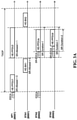
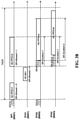
- FIG 3 shows examples of SR transmission(s) in the time sequences.
- FIG. 3 (A) shows an example of the spatial reuse transmissions that start and end within the spatial reuse duration.
- FIG. 3 (B) shows an example of spatial reuse transmissions that start within the spatial reuse duration, and continue the transmissions after the spatial reuse duration ends.
- the APlof high efficiency (HE) capability sends a PPDU1 to STA1 with the Color Code (CC) and SR Parameters (SRP) in SIG field of preamble.
- the STA1 station is also of HE spatial reuse capable station.
- the STA1 After receiving the PPDU1 sent from the API, the STA1 responds with a BA1.
- the AP1 then continues sending the PPDU2 to STA1, etc.
- the STA2 with SR capable in OBSS can also detect the PPDU1 from API, and the BA1 from the STA1.
- the STA2 can know the SINR headroom of the communication between AP1 and STA1 and calculate their path loss to the STA2. Therefore the STA2 can perform SR-EDCA mechanism to determine whether it could start a new SR transmission over the on-going communication between AP1 and STA1.
- the SR-EDCA mechanism disclosed herein is an enhanced EDCA mechanism for spatial reuse. It may include of following:
- N is the maximum number of supported spatial reuse transmissions.
- the disclosed SR-EDCA may use the same backoff counters as the legacy EDCA mechanism, and applies enhanced CCAT for spatial reuse (i.e. SR-CCAT) to assess the medium occupancy status.
- SR-EDCA mechanism relies on the SR state to determine the current backoff procedure is under legacy EDCA or SR-EDCA mechanism. If the SR state is inactive, then the current backoff is under EDCA. Otherwise, if the SR state is active, the backoff counter is used by SR-EDCA mechanism.
- the SR-EDCA uses the SR duration timer to track the time left in the SR state for the detected transmission.
- the SR duration timer is set to the remaining time of the detected PPDU transmission if the TXOP duration subfield of HE-SIG-A field in detected PPDU transmission is all Is, or otherwise the current TXOP value in HE-SIG-A field.
- the SR duration timer is set to the remaining time of current PPDU. Then the SR duration timer counts down to track the remaining time for the SR transmission.
- the SR-EDCA backoff counting is based on SR-CCA assessment.
- the SR-CCA mechanism relies on the clear channel assessment according to variable CCAT in the spatial reuse.
- FIG 4 shows an example of the SR-CCAT mechanism, which the SR-CCAT threshold varies from the TX power. The lower transmit power, the higher SR-CCAT could be. However, the SR-CCAT level should not excess ED level (-62dBm) or the value of OBSS-PDmax specified in the spatial reuse IE of beacon or probe response frames depending on the detection condition.
- the legacy CCAT is set to the fixed threshold (-82dBm for preamble detection) regardless of the transmission power as illustrated in the FIG 4 .
- the channel assessment is associated with the estimated transmission power.
- the AP broadcast SR parameters in the beacon or probe response frame such as OBSS-PDmin and OBSS-PDmax.
- the SR capable station receives those SR parameters, it then calculates the SR-CCAT according to the condition of receiving PPDUs. For example, the SR-CCAT threshold varies as the transmit power linearly. The lower the transmit power, the higher of the CCAT would be (the maximum SR-CCAT threshold is limited by the OBSS-PDmax).
- the SR capable station may increase its SR-CCAT threshold via lowering its transmit power.
- the SR capable station should use the OBSS-PD threshold below the curve of OBSS-PD.
- the on-going STA sets the SPR index in the HE-SIG field of PPDU, which combines the transmit power and acceptable receiver interference.
- the SR initiating station receives the PPDUs from the on-going transmissions and gets SRP information, the SR transmit power should be less than the SRP value minus RSSI measurement of PPDUs of the on-going transmissions.
- the SR capable station may derive the SR-CCAT threshold from the target transmitting power and other SR parameters.
- the SR capable STA2 in FIG. 3 uses the EDCA mechanism to contend the medium with AP1 and STA1. If the API's backoff counter reaches 0 and sends a PPDU1 before the backoff counter of STA2 reaches 0, the SR capable STA2 may apply SR-EDCA to continue contending the medium depending on the channel condition. If the SR capable STA2 receives the preamble of PPDU1 from AP1 and finds that the AP1 disallows the SR transmission over its on-going transmission for the transmitting STA controlled SR, the SR capable STA2 will not enter the SR state to perform SR transmission.
- the SR capable STA2 can enter the SR state to use SR-EDCA mechanism for the medium contention under SR condition. In the SR state, the virtual CCA is still applied.
- the virtual CCA sensing is based on the information of NAVs: intra-BSS NAV and inter-BSS NAV.
- intra-BSS NAV timer When the intra-BSS NAV timer does not expire, the STA2 suspends its backoff counters. The STA2 may need to update its intra-BSS NAV setting to the Duration field of received PPDU if the Duration is longer than the current value of intra-BSS NAV. Otherwise the STA2 checks the status of inter-BSS NAV timer. If the inter-BSS NAV timer does not expire, the STA2 suspends its backoff counter and continue monitoring the medium till the medium is sensed as idle again.
- the STA2 may perform physical carrier sensing to determine the channel occupancy status.
- the SR capable STA2 may need to update its inter-BSS NAV setting to the Duration field of received PPDU if the Duration is longer than the current value of inter-BSS NAV and the physical CCA sensing for spatial reuse indicates the medium is busy.
- the SR capable STA2 assesses the spatial reuse channel as idle, the SR capable STA2 should not update its NAV timer(s), whether the NAV timer(s) expire or not.
- the SR capable STA2 may perform the physical CCA over SR condition (i.e. SR-EDCA) to assess the medium status in parallel to the virtual CCA sensing.
- the SR capable STA2 may apply two kinds of CCAT in the carrier sensing: SR-CCAT (i.e. OBSS-PD) or ED threshold.
- SR-CCAT is based on the preamble detection (PD) and RSSI measurement of received signal from OBSS.
- the SR capable STA2 determines the SINR headroom and path loss in the received PPDU according to the information carried in the SIG of preamble of PPDU. Then it can calculate the target transmit power in the spatial reuse condition without interrupting the on-going PPDU transmission.
- the target transmit power should not be less than TXPmin, which is corresponding to the OBSS-PDmax.
- the SR capable STA2 determines the threshold of SR-CCAT (i.e. OBSS-PD) which varies with the target transmit power and perform clear channel assessment for spatial reuse.
- the STA2 If the RSSI measurement of received PPDU (to be spatial reused with) is higher than the SR-CCAT (OBSS-PD), the STA2 suspends its backoff counter(s) and continues monitoring the medium until it becomes idle again.
- the SR capable STA2 updates the inter-BSS NAV timer if the Duration of received PPDU is longer than the current inter-BSS NAV timer.
- the STA2 assesses the medium as idle at SR condition, and decreases the backoff counter by 1, and continues sensing the medium with SR-CCAT , assuming the inter-BSS NAV timer has expired. If the STA2 cannot detect the preamble , it may use energy detection for the carrier sensing.
- the SR-CCAT i.e. OBSS-PD
- the SR capable STA2 may start a SR transmission over the on-going transmission using either (A) the target transmit power determined by the latest RSSI measurement in the time slot which triggers the backoff counter to be 0; or (B) the average of target transmit power among the multiple measurement during the spatial reuse backoff period, (C) the minimum target transmit power among multiple measurements during the spatial reuse backoff period. If the backoff counter(s) of STA2 reaches 0 but SR State becomes inactive, then the SR capable STA2 should not adjust the transmit power. Instead, it uses full power to transmit a PPDU.
- the SR capable STA2 may include the Spatial Reuse Indication in the HE-SIG-A of SR transmission to indicate that the current transmission is a spatial reuse transmission and request the spatial reuse responder to perform the virtual carrier sensing before responding to the spatial reuse transmission or set the acknowledgement policy to the delayed BA, or no ACK to the SR transmission or initiate an RTS/CTS frame exchange before the spatial reuse data transmission if the STA2 knows that the responder of SR transmission is a SR capable station.
- the STA2 may initiate an RTS/CTS frame exchange before the spatial reuse data transmission or set the acknowledgement policy to the delayed BA, or no ACK for the non-spatial reuse capable STA to respond the SR transmission.
- the SR capable responder When the SR capable responder receives a RTS frame, it could examine its SR status and respond to the RTS with a CTS by adjusting the TX power conformant with the SRP value or the corresponding OBSS-PD level if its SR status is active.
- the SR capable responder When the SR capable responder receives the SR transmission with SR-Indication set to 1, it shall follow the SR responder's rule to perform the virtual carrier sensing before responding to the spatial reuse transmission, or defer the BA, or not respond to the SR transmission. Furthermore, the SR receiver could examine the SRP value of the on-going transmission and make a BA/Ack transmission decision conformant with the SRP value, or adjust the TX power and makes a BA/Ack transmission decision conformant with the corresponding OBSS-PD level.
- the third party stations When the third party stations receive the SR transmission with the SR-Indication being set, they shall set the SR Status to inactive and not initiate a new SR transmission over the current SR transmission.
- the SR capable STA2 can initiate a SR transmission of HE PPDUa over the on-going transmission of HE PPDU2. If the SR capable STA3 performs SR-EDCA as well during time of PPDU2 transmission, it may start another SR transmission of HE PPDUb over on-going transmissions of HE PPDU2 and HE PPDUa if its backoff counter is decreased to 0 after the SR STA2 transmits a HE PPDUa.
- the SR STA3 starts SR EDCA with setting SR state active and enabling SR duration timer when it detects the AP1 allows SR transmission over its on-going transmission of HE PPDU2.
- the SR STA3 calculates the SINR headroom, the target transmit power for HE PPDUb without interrupt of HE PPDU2 transmission (the transmit power should not be less than TXPmin), and assesses the medium status using SR-CCAT like STA2.
- the SR STA3 suspends its backoff counter and continues sensing the medium until it becomes idle again. In addition, the STA3 needs to update the inter-BSS NAV timer if the TXOP of received PPDU2 is longer than the current inter-BSS NAV timer.
- the SR capable STA3 detects the preamble of HE PPDU2 and measures RSSI of received HE PPDU2 lower than the SR-CCAT at the given SRP and the target transmit power for initiating a new transmission of HE PPDUb, the SR capable STA3 assesses the medium as idle and decreases its backoff counter(s) by 1 and continues performing carrier sensing with SR-CCAT. If the SR capable STA3 cannot detect the preamble or the symbols of PPDU, it may apply the energy detection threshold in the channel assessment. If the SR capable STA3 detects the RSSI of received signal higher than the ED threshold, it assesses the medium as busy. Otherwise, if the RSSI of received signal is less than the ED threshold, the SR capable STA3 assesses the medium as idle and decreases the backoff counter(s) by 1.
- the SR capable STA3 assesses the medium as idle and decreases its backoff counter(s) by 1. If the backoff counter(s) is decreased to 0, then the SR capable STA3 may start the SR transmission of HE PPDUb using (A) the target transmission power level over the on-going transmissions of HE PPDU2 and HE PPDUa which is determined by the latest RSSI measurement in the idle slot (i.e. it triggers the backoff counter to be 0), or (B) the average of target transmit power among multiple measurements during the spatial reuse backoff period, (C) the minimum target transmit power among multiple measurements during the spatial reuse backoff period.
- the SR capable STA3 may suspend its backoff counter and continue sensing the medium until it becomes idle again. In addition, the SR capable STA3 needs to update the inter-BSS NAV timer if the TXOP of received HE PPDU2 or HE PPDUa is longer than the current inter-BSS NAV timer setting of STA3.
- the SR capable STA may need to update its SR duration timer or assign a new SR duration timer if the new SR transmission is detected.
- the SR capable STA3 if the TXOP of received HE PPDUa is longer than the current value of SR duration timer, the SR capable STA3 shall update the SR duration timer to the value of TXOP of received HE PPDUa if only one SP duration timer of STA3 is allocated, or assign a new SR duration timer to track the spatial reuse time left for HE PPDUa if multiple SP duration timers of STA3 are allocated.
- the SR capable STA3 may continue performing SR-EDCA to contend the medium in spatial reuse using the SR-CCAT for clear channel assessment if preamble or IEEE802.11 based OFDM symbols can be detected; or using the ED threshold if the signal cannot be identified. If all the SR duration timers expire, the SR capable STA3 may switch from the SR-EDCA to the legacy EDCA mechanism with the current values of EDCA backoff counters to continue performing the medium contention, and use full power for PPDU transmission if the medium is acquired.
- the STA may adjust its transmit power to the target transmit power based on RSSI measurement for the SR transmission. If the SR State becomes inactive during the SR transmission, the STA may then resume to full power to transmit remaining PPDU.
- FIG. 5 shows an example of SR-EDCA procedure for contending the medium in spatial reuse with SR-CCAT.
- the SR capable STA may include the SR-Indication and set to the pre-determined value in the SR transmission to notify the responder of the SR transmission that the transmission is a SR frame and request the responder to perform the virtual carrier sensing before responding the SR transmission, or set the acknowledgement policy to the delayed BA, or no ACK to the SR transmission or initiate an RTS/CTS frame exchange before the spatial if the SR capable STA knows the responder is also a SR capable STA.
- the SR capable STA may initiate an RTS/CTS frame exchange before the spatial reuse data transmission and/or set the acknowledgement policy to the delayed BA, or no ACK for the non-spatial reuse capable STA to respond the SR transmission.
- the SR capable responder When the SR capable responder receives a RTS frame, it could examine its SR status and respond to the RTS with a CTS by adjusting the TX power conformant with the SRP value or the corresponding OBSS-PD level if its SR status is active.
- the SR responder When the SR responder receives the SR transmission with SR-Indication set to 1, it shall follow the SR responder's rule to perform the virtual carrier sensing before responding to the spatial reuse transmission, or defer the BA, or not respond to the SR transmission. Furthermore, the SR receiver could examine the SRP value of the on-going transmission and make a BA/Ack transmission decision conformant with the SRP value, or adjust the TX power and makes a BA/Ack transmission decision conformant with the corresponding OBSS-PD level.
- the third party stations When the third party stations receive the SR transmission with the SR-Indication being set, they shall not initiate a new SR transmission over the current SR transmission.
- the SR capable STA checks whether the SR duration timer expires or not in parallel. If it does not expire, the SR capable STA may continue using the SR-EDCA to contend the medium for new SR transmission. Otherwise, if the SR duration timer expires, the STA switches back to the legacy EDCA mechanism with legacy CCAT threshold to contend the medium. If the backoff counter reaches 0, the STA transmits a PPDU with full power.
- the enhanced EDCA mechanism can also be used in the either intra-ESSS or inter-ESS or both spatial reuse contentions.
- FIG 6 (A) shows an example of deployment for intra-ESS and inter-ESS spatial reuse.
- FIG. 6 (B) shows an example of using enhanced EDCA mechanism to contend the medium for both intra-ESS and inter-ESS spatial reuse transmissions in time sequence.
- the AP1 with SR capable belongs to a spatial reuse group (SRG) in ESS1 and sends a PPDU1 to its group member STA1 with SR capable. After receiving the PPDU1 sent from the AP1, the STA1 responds with a BA1 back to the AP1. The AP1 then continues sending the PPDU2 to STA1, etc. Meanwhile, the STA2 of SR capable in ESS2 can also detect the PPDU1 from the AP1 of ESS1, and the BA1 from the STA1 of ESS1.
- SRG spatial reuse group
- the STA2 can know the PPDUs belonging to a spatial reuse group of inter-ESS and their SINR headroom of the communication between AP1 and STA1 of inter-ESS, and calculate their path loss to the STA2. Therefore the STA2 can use the inter-ESS spatial reuse SR-EDCA mechanism to contend the medium and to determine whether it could be able to start a new SR transmission over the on-going communication between AP1 and STA1 of inter-ESS.
- the STA3 of SR capable may also detect the transmissions of PPDU1 and BA1 in ESS1 and PPDUa in ESS2 according the preamble and MAC header information of received PPDUs and determine whether a PPDU comes from inter-ESS or intra-ESS.
- the spatial reuse STA may define two SR states, one for intra-ESS and another for inter-ESS.
- the SR state of either intra-ESS or inter-ESS may include the following:
- the SR duration timer starts to count down to track the spatial reuse time left.
- the SR duration timer may set the SR status to inactive.
- the SR-EDCA for intra-ESS and/or inter-ESS spatial reuse consists of following parameters and methods.
- the intra-ESS SR-EDCA shares the same backoff counters with the legacy EDCA mechanism, and applies the intra-ESS SR-CCAT threshold to assess the medium status.
- the intra-ESS SR-EDCA method uses the SR state for intra-ESS (i.e. SR-status (intra-ESS)) to indicate whether the current backoff procedure is in the process of intra-ESS SR-EDCA. If the intra-ESS SR state is active, the backoff counter is used by the intra-ESS SR-EDCA mechanism.
- the inter-ESS SR-EDCA is similar to the intra-ESS and shares the same backoff counters with the legacy EDCA mechanism, but uses the inter-ESS SR-CCAT threshold to assess the medium status.
- the inter-ESS SR-EDCA method uses the inter-ESS SR state (i.e. SR-state(inter-ESS)) to indicate whether the current backoff procedure is in the inter-ESS SR-EDCA. If the inter-ESS SR state is active, the backoff counter is used by the inter-ESS SR-EDCA mechanism for inter-ESS contention.
- the SR duration timer for intra-ESS is used to track the time left over for intra-ESS spatial reuse, while the SR duration timer for inter-ESS is used to track the time left over inter-ESS spatial reuse. If the SR duration timer of intra-ESS or inter-ESS expires, the SR status for either intra-ESS or inter-ESS may be set to inactive accordingly.
- the intra-ESS and inter-ESS SR-CCAT thresholds may be different.
- the intra-ESS SR-CCAT i.e. intra-ESS OBSS-PD
- the inter-ESS SR-CCAT i.e. inter-ESS OBSS-PD
- a STA may apply a different CCAT for intra-ESS or inter-ESS spatial reuse depending on the different cases.
- the SR capable STA performs the backoff procedure of enhanced EDCA to contend the medium for spatial use according to the different condition in intra-ESS or inter-ESS:
- the SR capable STA may use the ED threshold for channel assessment. If the RSSI of received signal is higher than the ED threshold, the SR capable STA assesses the channel as busy and suspend its backoff counters. If the RSSI of received signal is lower than the ED threshold for a slot time, the SR capable STA assesses the channel as idle and decreases the backoff counter by one, and continues sensing the channel. If the backoff counter is decreased to 0, the STA may send a PPDU.
- the SR capable STA may include the SR-Indication which is set to the pre-determined value in the SR transmission to notify the responder of the SR transmission that the transmission is a SR frame and request the responder to perform the virtual carrier sensing before responding the SR transmission, or set the acknowledgement policy to the delayed BA, or no ACK to the SR transmission or initiate an RTS/CTS frame exchange before the spatial reuse data transmission if the SR capable STA knows the responder is also a SR capable STA.
- the SR capable STA may initiate an RTS/CTS frame exchange before the spatial reuse data transmission or set the acknowledgement policy to the delayed BA, or no ACK for the non-spatial reuse capable STA to respond the SR transmission.
- the SR capable responder When the SR capable responder receives a RTS frame, it could examine its SR status and respond to the RTS with a CTS by adjusting the TX power conformant with the SRP value or the corresponding OBSS-PD level if its SR status is active.
- the SR capable responder When the SR capable responder receives the SR transmission with SR-Indication being set, it shall follow the SR responder's rule to perform the virtual carrier sensing before responding to the spatial reuse transmission, or defer the BA, or not respond to the SR transmission. Furthermore, the SR receiver could examine the SRP value of the on-going transmission and make a BA/Ack transmission decision conformant with the SRP value, or adjust the TX power and makes a BA/Ack transmission decision conformant with the corresponding OBSS-PD level.
- the third party stations of the SR capable When the third party stations of the SR capable receive the SR transmission with the SR-Indication being set, they are not allowed for performing a new SR transmission.
- the SR capable STA may use the adjustable intra-ESS or inter-ESS SR-CCAT threshold to assess the channel accordingly. If the RSSI of received PPDU is higher than the corresponding ESS SR-CCAT threshold, the SR capable STA assesses the channel as busy and suspends the backoff counter. Otherwise, it assesses the channel as idle and decreases the backoff counter by one. If the backoff counter is decreased to 0, then the SR capable STA may send a PPDU using the appropriate transmit power.
- the STA may limit the adjustable SR-CCAT to the OBSS-PDmax.
- the STA assesses the channel as busy and suspends the backoff counter.
- the channel assessment is based on the more restrict ESS SR-CCAT threshold.
- the inter-ESS SR-CCAT is lower (more restrict) than the intra-ESS SR-CCAT threshold
- the channel assessment may be based on the inter-ESS SR-CCAT, and assess the channel busy if the RSSI of received PPDU is higher than that threshold.
- the STA uses the adjustable SR-CCAT of active ESS SR state as the carrier sensing threshold to assess the channel occupancy.
- the STA may choose the appropriate transmit power according to the following situation.
- the SR capable responder When the SR capable responder receives a RTS frame, it could examine its SR status and respond to the RTS with a CTS by adjusting the TX power conformant with the SRP value or the corresponding OBSS-PD level if its SR status is active.
- the SR capable responder When the SR capable responder receives the SR transmission with SR-Indication set to 1, it shall follow the SR responder's rule to perform the virtual carrier sensing before responding to the spatial reuse transmission, or defer the BA, or not respond to the SR transmission.
- the SR capable receiver could examine its SR state and make a BA/Ack transmission decision immediately by adjusting the TX power conformant with the corresponding OBSS-PD level or SRP value if its SR status is active.
- the spatial reuse capable receiver may perform the virtual carrier sensing before responding to the spatial reuse transmission when receiving a transmission with an SR-Indication being set and adjusts the TX power conformant with the corresponding OBSS-PD level or SRP value if its SR status is active.
- the third party stations When the third party stations receive the SR transmission with the SR-Indication being set, they shall not initiate a new SR transmission over the current SR transmission.
- the SR capable STA may apply the appropriate the transmit power of the spatial reuse transmission.
- the STA2 may use the inter-ESS SR-CCAT to assess the medium occupancy and use the target transmit power for initiating an inter-ESS spatial reuse transmission.
- the STA3 may use the more restrict ESS SR-CCAT threshold to assess the medium occupancy and use the corresponding target transmit power for initiating a spatial reuse transmission.
- the STA3 may use the intra-ESS SR-CCAT to assess the medium occupancy and use the target transmit power for initiating an intra-ESS spatial reuse transmission.
- the STA3 may apply legacy CCAT to assess the channel occupancy and transmit a PPDU with the normal transmit power.
- Path Loss STA ⁇ m TXP STA ⁇ m ⁇ measured RSSI STA ⁇ m
- Target Tx Power STA ⁇ m Path Loss STA ⁇ m + SINR ⁇ HR STA ⁇ m + Delta ⁇ B
- the SR STA should calculate the Target Tx Power (STA-m) for all "m”, and find the optimized TX power (OTXP) for a new transmission.
- OTXP min target Tx Power STA ⁇ m ; for all"m"
- a method of wireless communication includes identify, by a wireless communication device, one or more transmissions for spatial reuse, tracking the spatial reuse period via a timer for each identified transmission for spatial reuse.
- a method of wireless communication includes identify, by a wireless communication device, the spatial reuse period, performing interference measurement of a wireless transmission medium, and adjusting a wireless clear channel assessment threshold in spatial reuse.
- the clear channel assessment is based on the information including one or more of: (a) a transmit power used for the current wireless transmission; (b) a headroom of Signal to Interference and Noise Ratio (SINR) left in the current wireless transmission according the interference measurement; and (c) the target transmit power for initiating a new transmission without interrupting the on-going transmission for spatial reuse.
- SINR Signal to Interference and Noise Ratio
- an apparatus for wireless communication includes a memory that stores executable instructions, and a processor that reads the executable instructions from the memory to control one or more modules of the wireless communication apparatus to perform interference measurement of a wireless transmission medium, and perform a wireless clear channel assessment in spatial reuse.
- the clear channel assessment for spatial reuse is based on the information including one or more of (a) a transmit power used for the current wireless transmission, (b) a headroom of Signal to Interference and Noise Ratio (SINR) left in the current wireless transmission according the interference measurement; and (c) the target transmit power for initiating a new transmission over the on-going transmission for spatial reuse.
- SINR Signal to Interference and Noise Ratio
- a method of enhanced distributed channel access for spatial reuse includes determining, prior to performing a new transmission over the on-going transmission, the channel access assessment based on the information including one or more of (a) spatial reuse information in the beacon or probe response frame for the AP controlled SR, and the SRP information in HE-SIA-A for the SRP based spatial reuse ; (b) virtual carrier sensing (NAV) timer has expired; (c) the backoff counter for the spatial reuse has been decreased to 0, wherein the backoff counters of EDCA are conducted according to the adjustable clear channel assessment threshold for spatial reuse when the preamble or OFDM symbols of PPDU can be detected or otherwise the energy detection threshold during the spatial reuse period if the signal cannot be identified.
- EDCA for spatial reuse are provided in the present document.
- a method of wireless communication includes sensing, prior to performing a transmission, a medium for received signal strength, performing, if the sensed received signal strength is below a threshold of clear channel assessment for spatial reuse when the preamble or OFDM symbols of PPDU can be detected, or otherwise the energy detection threshold during the spatial reuse period, the transmission, receiving, if the sensed received signal strength is above the threshold of clear channel assessment for spatial reuse, a PHY transmission, attempting to decode the PHY transmission, extracting, when the attempt to decode the PHY transmission is successful, spatial reuse information for clear channel assessment from the PHY transmission, and adjusting, based on the received spatial reuse information, a value of the clear channel access threshold.
- a method of wireless communication includes identifying, by a wireless communication device, the spatial reuse period for intra-ESS or inter-ESS, performing interference measurement of a wireless transmission medium, and adjusting a wireless clear channel assessment threshold in differ ESS spatial reuse policy and method, and determining the transmit power of initiating a new transmission according to (a) measured at the time of triggering the backoff timer to be 0, (b) averaging the target transmission power measured during the spatial reuse backoff period, (c) the minimum target transmit power measured during the spatial reuse backoff period.
- FIG. 7 shows a flowchart of an example method 700 of wireless communication.
- the method 700 includes measuring (702) signal strength of a received signal transmission, checking (704), based on the received signal transmission, whether a condition for spatial reuse of transmission resources by sharing time and/or frequency of an on-going transmission, is met, performing (706), when the checking indicates that the condition for spatial reuse of transmission resource is met, enhanced distributed channel access (EDCA) over the on-going transmission, and transmitting (708), based on EDCA, a signal over the on-going transmission.
- EDCA enhanced distributed channel access
- the checking operation 704 may include ascertaining the condition for spatial reuse by decoding a field from the received signal transmission. In some examples, the method 700 may further include calculating transmit power value of the signal based on the signal strength of the received signal transmission.
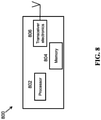
- FIG. 8 is a block diagram showing an example of a wireless communication device 800 that implements any of the methods described in the present document.
- the apparatus 800 includes at least one processor 802, at least one memory 804, and at least one transceiver 806 coupled to an antenna.
- the processor may be configured to execute software code and implement a method described herein.
- the memory 804 may be used to store data and instructions (or code) that can be used by the processor.
- the transceiver electronics 806 may implement the transmission and reception mechanisms described herein.
- FIG. 9 shows a flowchart of an example method 900 of wireless communication.
- the method 900 includes performing (902), by a wireless communication device, measurement of received signal strength indication of an on-going transmission.
- the method 900 includes calculating (904) a target transmission power and a clear channel assessment (CCA) threshold for initiating a spatial reuse transmission over the on-going transmission without interruption.
- CCA clear channel assessment
- the method 900 includes comparing (906) the received signal strength indication with the CCA threshold for the spatial reuse transmission for assessing availability of transmission medium for spatial reuse.
- the method 900 includes performing (908), when the transmission medium is available for spatial reuse, an enhanced distributed channel access (EDCA) over the on-going transmission.
- EDCA enhanced distributed channel access
- the method 900 includes transmitting (910) a wireless signal over the on-going transmission using the calculated target transmission power, if the CCA indicates that the transmission medium is available for spatial reuse.
- the method 900 may further include determining an inter-intra extended service set (ESS) status of the on-going transmission, and using the determination of the inter-intra ESS status to calculate the CCA.
- ESS inter-intra extended service set
- the operation of assessing availability of the transmission medium includes reading a flag in a received message.
- the method 900 further includes counting down a backoff timer for spatial reuse transmission based on the CCA threshold for the spatial reuse transmission.
- spatial reuse enables a second transmitter to transmit during a same time slot and/or using a same frequency band, as an on-going transmission.
- the spatial reuse EDCA and legacy EDCA shares the same backoff timer for contending the medium, but spatial reuse EDCA uses adjustable CCA threshold for clear channel assessment.
- the spatial reuse EDCA relies on a timer or multiple timers to track the spatial reuse period.
- SR EDCA could use single timer for tracking SP period.
- the SR EDCA may use multiple timers, each of which to track an OBSS.
- the inter-ESS can be considered as a special OBSS.
- the spatial reuse EDCA use adjustable CCA threshold.
- the adjustable threshold determination is based on the expected transmission power of the spatial reuse transmission. If the STA can detect the preamble and decode the SIG of received frame, then it may use adjustable CCA threshold to clear channel assessment. Otherwise, it may use ED to CCA threshold during the SP duration.
- the inter-ESS and intra-ESS OBSS may have different spatial reuse policy and different spatial reuse parameter.
- SR EDCA may use a stricter threshold to assess the channel occupancy.
- transmission power of spatial reuse may be performed using one of the following options:
- modules and the functional operations described in this document can be implemented in digital electronic circuitry, or in computer software, firmware, or hardware, including the structures disclosed in this document and their structural equivalents, or in combinations of one or more of them.
- the disclosed and other examples can be implemented as one or more computer program products, i.e., one or more modules of computer program instructions encoded on a computer readable medium for execution by, or to control the operation of, data processing apparatus.
- the computer readable medium can be a machine-readable storage device, a machine-readable storage substrate, a memory device, a composition of matter effecting a machine-readable propagated signal, or a combination of one or more them.
- data processing apparatus encompasses all apparatus, devices, and machines for processing data, including by way of example a programmable processor, a computer, or multiple processors or computers.
- the apparatus can include, in addition to hardware, code that creates an execution environment for the computer program in question, e.g., code that constitutes processor firmware, a protocol stack, a database management system, an operating system, or a combination of one or more of them.
- a propagated signal is an artificially generated signal, e.g., a machine-generated electrical, optical, or electromagnetic signal, that is generated to encode information for transmission to suitable receiver apparatus.
- a computer program (also known as a program, software, software application, script, or code) can be written in any form of programming language, including compiled or interpreted languages, and it can be deployed in any form, including as a stand alone program or as a module, component, subroutine, or other unit suitable for use in a computing environment.
- a computer program does not necessarily correspond to a file in a file system.
- a program can be stored in a portion of a file that holds other programs or data (e.g., one or more scripts stored in a markup language document), in a single file dedicated to the program in question, or in multiple coordinated files (e.g., files that store one or more modules, sub programs, or portions of code).
- a computer program can be deployed to be executed on one computer or on multiple computers that are located at one site or distributed across multiple sites and interconnected by a communication network.
- the processes and logic flows described in this document can be performed by one or more programmable processors executing one or more computer programs to perform functions by operating on input data and generating output.
- the processes and logic flows can also be performed by, and apparatus can also be implemented as, special purpose logic circuitry, e.g., an FPGA (field programmable gate array) or an ASIC (application specific integrated circuit).
- processors suitable for the execution of a computer program include, by way of example, both general and special purpose microprocessors, and any one or more processors of any kind of digital computer.
- a processor will receive instructions and data from a read only memory or a random access memory or both.
- the essential elements of a computer are a processor for performing instructions and one or more memory devices for storing instructions and data.
- a computer will also include, or be operatively coupled to receive data from or transfer data to, or both, one or more mass storage devices for storing data, e.g., magnetic, magneto optical disks, or optical disks.
- mass storage devices for storing data, e.g., magnetic, magneto optical disks, or optical disks.
- a computer need not have such devices.
- Computer readable media suitable for storing computer program instructions and data include all forms of non volatile memory, media and memory devices, including by way of example semiconductor memory devices, e.g., EPROM, EEPROM, and flash memory devices; magnetic disks, e.g., internal hard disks or removable disks; magneto optical disks; and CD ROM and DVD-ROM disks.
- semiconductor memory devices e.g., EPROM, EEPROM, and flash memory devices
- magnetic disks e.g., internal hard disks or removable disks
- magneto optical disks e.g., CD ROM and DVD-ROM disks.
- the processor and the memory can be supplemented by, or incorporated in, special purpose logic circuitry.
Landscapes
- Engineering & Computer Science (AREA)
- Computer Networks & Wireless Communication (AREA)
- Signal Processing (AREA)
- Mobile Radio Communication Systems (AREA)
- Quality & Reliability (AREA)
- Physics & Mathematics (AREA)
- Electromagnetism (AREA)
Claims (15)
- Verfahren (700) für eine Drahtloskommunikation, das durch eine Drahtloskommunikationsvorrichtung durchgeführt wird, das Folgendes umfasst:Messen (702) von Signalstärke einer empfangenen laufenden Übertragung;Prüfen (704), basierend auf der empfangenen laufenden Übertragung, ob eine Bedingung für eine räumliche Wiederverwendungsübertragung, die Zeit und/oder Frequenz der laufenden Übertragung teilt, erfüllt ist, wobei das Prüfen der Bedingung ein Nachverfolgen einer räumlichen Wiederverwendungsdauer der räumlichen Wiederverwendungsübertragung umfasst;Durchführen (706), innerhalb der räumlichen Wiederverwendungsdauer, eines erweiterten verteilten Kanalzugriffsmechanismus über die laufende Übertragung für die räumliche Wiederverwendungsübertragung, wobei der erweiterte verteilte Kanalzugriffsmechanismus ein Berechnen einer Zielübertragungsleistung zum Initiieren der räumlichen Wiederverwendungsübertragung über die laufende Übertragung umfasst; undÜbertragen (708), basierend auf dem erweiterten verteilten Kanalzugriffsmechanismus, der räumlichen Wiederverwendungsübertragung über die laufende Übertragung.
- Verfahren (700) nach Anspruch 1, wobei der erweiterte verteilte Kanalzugriffsmechanismus über die laufende Übertragung Folgendes umfasst:
Setzen eines räumlichen Wiederverwendungszustands beim Erfassen einer Präambel einer Übertragung der Konvergenzverfahrensprotokolldateneinheit der physikalischen Schicht von einem Basisdienstsatz, wobei der räumliche Wiederverwendungszustand auf einen Standardzustand gesetzt wird, der einen inaktiven Status der räumlichen Wiederverwendung anzeigt. - Verfahren (700) nach Anspruch 2, das Folgendes umfasst:
Empfangen von Informationen, die einen aktiven oder inaktiven Status der räumlichen Wiederverwendung über die laufende Übertragung anzeigen. - Verfahren (700) nach Anspruch 3, das Folgendes umfasst:
Setzen des räumlichen Wiederverwendungszustands auf aktiv beim Empfangen einer Konvergenzverfahrensprotokolldateneinheit der physikalischen Schicht von einem überlappenden Basisdienstsatz. - Verfahren (700) nach Anspruch 4, das ferner Folgendes beinhaltet:
Herunterzählen eines Zeitgebers für die räumliche Wiederverwendungsübertragung, nachdem der räumliche Wiederverwendungszustand auf aktiv gesetzt wurde. - Verfahren (700) nach Anspruch 3, das Folgendes umfasst:
Setzen des räumlichen Wiederverwendungszustands auf inaktiv beim Erfassen eines positiven Werts eines Felds in einer räumlichen Wiederverwendungskonvergenzverfahrensprotokolldateneinheit der physikalischen Schicht. - Verfahren (700) nach Anspruch 1, wobei der erweiterte verteilte Kanalzugriffsmechanismus über die laufende Übertragung einen oder mehrere räumliche Wiederverwendungszustände umfasst, die jeweils konfiguriert sind, um eine einzelne überlappende Basisdienstsatzübertragung für die räumliche Wiederverwendung nachzuverfolgen.
- Verfahren (700) nach Anspruch 1, das Folgendes umfasst:
Bestimmen eines oder mehrerer einstellbarer klarer Kanalbewertungsschwellenwerte gemäß der Zielübertragungsleistung. - Verfahren (700) nach Anspruch 8, das Folgendes umfasst:
Vergleichen einer empfangenen Signalstärkeanzeige mit einem der einen oder mehreren einstellbaren klaren Kanalbewertungsschwellenwerten zum Bewerten einer Verfügbarkeit eines Übertragungsmediums für die räumliche Wiederverwendung. - Verfahren (700) nach Anspruch 1, das Folgendes umfasst:
Durchführen der räumlichen Wiederverwendungsübertragung beim Bestimmen, dass ein Backoff-Zeitgeber, der mit dem erweiterten verteilten Kanalzugriffsmechanismus verknüpft ist, abläuft und der räumliche Wiederverwendungszustand aktiv bleibt. - Verfahren (700) nach Anspruch 1, wobei die Zielübertragungsleistung basierend auf einer zuletzt empfangenen Signalstärkeanzeige bestimmt wird.
- Verfahren (700) nach Anspruch 1, wobei die räumliche Wiederverwendungsübertragung basierend auf einem Durchschnitt von Zielübertragungsleistungen durchgeführt wird, die basierend auf mehreren empfangenen Signalstärkeanzeigen bestimmt werden.
- Verfahren (700) nach Anspruch 1, wobei die räumliche Wiederverwendungsübertragung unter Verwendung eines Minimums von Zielübertragungsleistungen durchgeführt wird, die basierend auf mehreren empfangenen Signalstärkeanzeigen bestimmt werden.
- Drahtlosübertragungseinrichtung (800), die einen Speicher (804), einen Prozessor (802) und eine Übertragungsschaltung und eine Empfängerschaltung (806) umfasst, wobei der Prozessor (802) konfiguriert ist, um Anweisungscode aus dem Speicher (804) zu lesen und die Übertragungsschaltung und die Empfängerschaltung (806) zu steuern, um ein Verfahren (700) nach einem der Ansprüche 1 bis 13 durchzuführen.
- Computerprogrammprodukt, das darauf gespeicherten Code aufweist, wobei der Code, wenn er durch einen Prozessor (802) ausgeführt wird, den Prozessor (802) veranlasst, eine Übertragungsschaltung und eine Empfängerschaltung (806) einer Drahtlosübertragungseinrichtung (800) zu steuern, um ein Verfahren (700) nach einem der Ansprüche 1 bis 13 zu implementieren.
Priority Applications (1)
| Application Number | Priority Date | Filing Date | Title |
|---|---|---|---|
| EP22155277.1A EP4090088B1 (de) | 2016-09-30 | 2017-09-30 | Verfahren zur verbesserung des edca-mechanismus in der räumlichen wiederverwendung |
Applications Claiming Priority (4)
| Application Number | Priority Date | Filing Date | Title |
|---|---|---|---|
| CN2016101170 | 2016-09-30 | ||
| CN2016103378 | 2016-10-26 | ||
| CN2016000605 | 2016-11-03 | ||
| PCT/CN2017/105053 WO2018059593A1 (en) | 2016-09-30 | 2017-09-30 | Techniques of improving edca mechanism in spatial reuse |
Related Child Applications (1)
| Application Number | Title | Priority Date | Filing Date |
|---|---|---|---|
| EP22155277.1A Division EP4090088B1 (de) | 2016-09-30 | 2017-09-30 | Verfahren zur verbesserung des edca-mechanismus in der räumlichen wiederverwendung |
Publications (3)
| Publication Number | Publication Date |
|---|---|
| EP3520334A1 EP3520334A1 (de) | 2019-08-07 |
| EP3520334A4 EP3520334A4 (de) | 2019-10-02 |
| EP3520334B1 true EP3520334B1 (de) | 2022-02-16 |
Family
ID=61763330
Family Applications (2)
| Application Number | Title | Priority Date | Filing Date |
|---|---|---|---|
| EP17855043.0A Active EP3520334B1 (de) | 2016-09-30 | 2017-09-30 | Verfahren zur verbesserung des edca-mechanismus in der räumlichen wiederverwendung |
| EP22155277.1A Active EP4090088B1 (de) | 2016-09-30 | 2017-09-30 | Verfahren zur verbesserung des edca-mechanismus in der räumlichen wiederverwendung |
Family Applications After (1)
| Application Number | Title | Priority Date | Filing Date |
|---|---|---|---|
| EP22155277.1A Active EP4090088B1 (de) | 2016-09-30 | 2017-09-30 | Verfahren zur verbesserung des edca-mechanismus in der räumlichen wiederverwendung |
Country Status (6)
| Country | Link |
|---|---|
| US (3) | US11438925B2 (de) |
| EP (2) | EP3520334B1 (de) |
| CN (1) | CN110024338B (de) |
| ES (1) | ES3039783T3 (de) |
| HU (1) | HUE057584T2 (de) |
| WO (1) | WO2018059593A1 (de) |
Families Citing this family (37)
| Publication number | Priority date | Publication date | Assignee | Title |
|---|---|---|---|---|
| US10039115B2 (en) * | 2016-05-10 | 2018-07-31 | Intel IP Corporation | Setting parameters for spatial reuse proportional rule in non-perfect managed environments |
| WO2018128521A1 (ko) * | 2017-01-09 | 2018-07-12 | 엘지전자 주식회사 | 무선랜 시스템에서 공간 재사용을 기반으로 프레임을 송신하는 방법 및 이를 이용한 무선 단말 |
| MY193925A (en) | 2017-01-13 | 2022-11-01 | Nec Corp | Wireless communication system, access point, terminal, and communication method |
| US11683833B2 (en) * | 2017-09-28 | 2023-06-20 | Qualcomm Incorporated | Spatial listen-before-talk (LBT) with channel variation consideration |
| US10785798B2 (en) * | 2017-10-25 | 2020-09-22 | Mediatek Singapore Pte. Ltd. | Secondary channel spatial reuse in a wireless network |
| CN110300442B (zh) * | 2018-03-23 | 2020-07-28 | 维沃移动通信有限公司 | 一种信号发送方法及网络设备 |
| US10757001B2 (en) * | 2018-05-22 | 2020-08-25 | Huawei Technologies Co., Ltd. | Methods for dynamic sensitivity control in wireless networks |
| CN110536469B (zh) | 2018-05-23 | 2024-06-25 | 华为技术有限公司 | 基于多接入点ap协作的空间复用的方法和装置 |
| KR102160878B1 (ko) * | 2018-12-31 | 2020-09-29 | 서울대학교산학협력단 | 공간 재사용 전송 방법 및 장치 |
| US11736245B2 (en) | 2019-01-04 | 2023-08-22 | Mediatek Inc. | Enhanced spatial reuse in a wireless local area network |
| CN117200955A (zh) * | 2019-01-30 | 2023-12-08 | 华为技术有限公司 | 空间复用的指示方法及无线通信装置 |
| JP7233248B2 (ja) * | 2019-02-26 | 2023-03-06 | キヤノン株式会社 | 通信装置、通信装置の制御方法、およびプログラム |
| CN111787612A (zh) * | 2019-04-03 | 2020-10-16 | 华为技术有限公司 | 传输方法和通信装置 |
| US11432247B2 (en) * | 2019-04-22 | 2022-08-30 | Cypress Semiconductor Corporation | Methods, systems and devices for varying wireless transmit power based on path loss information |
| WO2020222584A1 (ko) * | 2019-04-30 | 2020-11-05 | 현대자동차주식회사 | 광대역 무선 통신 네트워크에서 채널의 확장 여부 결정을 통한 프레임 전송 방법 및 장치 |
| TWI715202B (zh) * | 2019-09-23 | 2021-01-01 | 瑞昱半導體股份有限公司 | 用來於多站環境中進行空間重用增強的方法與設備 |
| CN112584400B (zh) * | 2019-09-30 | 2023-08-25 | 瑞昱半导体股份有限公司 | 用来于多站环境中进行空间重用增强的方法与设备 |
| CN114667759B (zh) * | 2019-11-05 | 2025-05-06 | 索尼集团公司 | 接入点、站和对应方法 |
| US11191038B2 (en) * | 2019-12-26 | 2021-11-30 | Intel Corporation | Determining wideband transmission power based on interference and preamble detection levels for an overlapping basic service set |
| US12328686B2 (en) * | 2020-03-02 | 2025-06-10 | Lg Electronics Inc. | Transmission power in multi-AP transmission using space reuse |
| US11197319B1 (en) * | 2020-05-18 | 2021-12-07 | Hewlett Packard Enterprise Development Lp | Enhanced spatial reuse of radio spectrum in WLAN operation |
| US11595994B2 (en) * | 2020-06-19 | 2023-02-28 | Samsung Electronics Co., Ltd. | Apparatus and method for coordinated spatial reuse in wireless communication |
| US11212750B1 (en) * | 2020-07-23 | 2021-12-28 | Huawei Technologies Co., Ltd. | Method, device, and medium for spatial frequency reuse in wireless networks |
| US12096475B2 (en) * | 2020-08-26 | 2024-09-17 | Samsung Electronics Co., Ltd. | Apparatus and method for coordinated spatial reuse in wireless communication |
| TWI749793B (zh) * | 2020-09-30 | 2021-12-11 | 瑞昱半導體股份有限公司 | 處理基於空間重用的傳輸的裝置及方法 |
| US11683835B2 (en) * | 2021-04-02 | 2023-06-20 | Hewlett Packard Enterprise Development Lp | Spatial reuse for high priority traffic |
| CN114302496A (zh) * | 2021-12-17 | 2022-04-08 | 深圳市联平半导体有限公司 | 数据发送方法、装置、存储介质、处理器及ap终端 |
| CN116489771A (zh) * | 2022-01-24 | 2023-07-25 | 联发科技股份有限公司 | 通信设备和通信方法 |
| US12150073B2 (en) * | 2022-02-16 | 2024-11-19 | Tp-Link Corporation Limited | Transmit power control method and apparatus, node device, and storage medium |
| CN118368714A (zh) * | 2022-02-22 | 2024-07-19 | 华为技术有限公司 | 一种空间复用方法及第一设备 |
| US20230284269A1 (en) * | 2022-03-04 | 2023-09-07 | Samsung Electronics Co., Ltd. | Method and apparatus for spatial reuse for a communication system |
| US20230362834A1 (en) * | 2022-05-04 | 2023-11-09 | Ofinno, Llc | Backward and Forward Compatible Spatial Reuse |
| CN115226159A (zh) * | 2022-07-15 | 2022-10-21 | 深圳市联平半导体有限公司 | 基于空间复用机制的退避参数的确定方法以及装置 |
| US20240098790A1 (en) * | 2022-09-20 | 2024-03-21 | Maxlinear, Inc. | Latency-based contention |
| US20240163913A1 (en) * | 2022-11-10 | 2024-05-16 | Maxlinear, Inc. | Signal-to-interference plus noise ratio (sinr)-aware spatial reuse |
| TWI865104B (zh) * | 2023-10-13 | 2024-12-01 | 瑞昱半導體股份有限公司 | 無線收發設備及其無線傳輸處理方法與無線通訊系統 |
| TWI898620B (zh) * | 2024-05-27 | 2025-09-21 | 瑞昱半導體股份有限公司 | 無線收發設備及其傳輸功率控制方法與無線通訊系統 |
Family Cites Families (48)
| Publication number | Priority date | Publication date | Assignee | Title |
|---|---|---|---|---|
| EP2862399B1 (de) * | 2012-06-18 | 2016-11-30 | Nokia Technologies Oy | Verfahren, vorrichtung und computer program zur verbesserte abtastung in einem drahtlosen netzwerk |
| US9408230B2 (en) * | 2013-05-03 | 2016-08-02 | Qualcomm Incorporated | Transmit opportunity (TXOP) based channel reuse |
| US20140328264A1 (en) * | 2013-05-03 | 2014-11-06 | Qualcomm Incorporated | Systems and methods for coordination messaging using high efficiency wifi |
| US9071474B1 (en) * | 2013-07-25 | 2015-06-30 | Marvell International Ltd. | Systems and methods for suppressing interference in a wireless communication system |
| US9807699B2 (en) * | 2013-09-13 | 2017-10-31 | Interdigital Patent Holdings, Inc. | Clear channel assessment (CCA) threshold adaptation method |
| DE102014019906B4 (de) * | 2013-11-20 | 2024-06-27 | Electronics And Telecommunications Research Institute | Verfahren zur Aufrechterhaltung einer Vielzahl von Netzzuteilungsvektoren in einem drahtlosen Netz |
| US9820162B2 (en) * | 2014-01-24 | 2017-11-14 | Mediatek Singapore Pte Ltd. | Adaptive CCA and TX power level adjustment for dense deployment of wireless networks |
| RU2641228C1 (ru) * | 2014-05-01 | 2018-01-16 | ЭлДжи ЭЛЕКТРОНИКС ИНК. | Способ повышения частоты повторного использования пространства в системе беспроводной lan и аппарат для этого |
| US9769746B2 (en) * | 2014-06-10 | 2017-09-19 | Newracom, Inc. | Operation method of station in wireless local area network |
| US20160050691A1 (en) * | 2014-08-12 | 2016-02-18 | Mediatek Inc. | Method to Improve Channel Access Opportunity in a Wireless Communications System |
| EP3180956B1 (de) * | 2014-08-29 | 2019-05-29 | MediaTek Inc. | Priorisierter kanalzugriff unter berücksichtigung von spatial-reuse |
| CN106161292B (zh) * | 2014-11-07 | 2020-09-08 | 北京三星通信技术研究有限公司 | 一种传输数据的方法和设备 |
| WO2016087917A1 (ko) * | 2014-11-19 | 2016-06-09 | 뉴라컴 인코포레이티드 | 고효율 무선랜에서 bss 식별정보에 기초한 ppdu프로세싱 방법 및 장치 |
| WO2016081181A1 (en) * | 2014-11-21 | 2016-05-26 | Newracom, Inc. | Channel access mechanism |
| US10588165B1 (en) * | 2014-12-08 | 2020-03-10 | Marvell Asia Pte, Ltd. | Methods and devices for communicating in a wireless network with multiple virtual access points |
| US9949285B2 (en) * | 2015-01-07 | 2018-04-17 | Futurewei Technologies, Inc. | System and method for digital communications with interference avoidance |
| FI4311361T3 (fi) * | 2015-01-09 | 2026-04-16 | Interdigital Patent Holdings Inc | Bss-värityksellä parannettu lähetys wlan-verkoissa (bss-cet) |
| WO2016122086A1 (ko) * | 2015-01-27 | 2016-08-04 | 엘지전자(주) | 무선 통신 시스템의 송수신 장치 및 방법 |
| US10172137B1 (en) * | 2015-03-02 | 2019-01-01 | Newracom, Inc. | Apparatus and methods for efficient wireless channel usage |
| US9609667B2 (en) * | 2015-03-06 | 2017-03-28 | Nokia Technologies Oy | Procedure for setting threshold for accessing channel |
| WO2016156766A1 (en) * | 2015-03-31 | 2016-10-06 | Toshiba Research Europe Limited | Ap coordinated dynamic sensitivity control in 802.11 stations |
| US10454650B2 (en) * | 2015-04-01 | 2019-10-22 | Lg Electronics Inc. | Method and apparatus for transmitting data in wireless communication system |
| EP4492905A1 (de) * | 2015-04-29 | 2025-01-15 | InterDigital Patent Holdings, Inc. | Verfahren und vorrichtungen für subkanalisierte übertragungsschemata in wlans |
| KR102328669B1 (ko) * | 2015-05-07 | 2021-11-19 | 삼성전자주식회사 | 비인가 대역을 지원하는 무선 통신 시스템에서 신호 송/수신 장치 및 방법 |
| US10524231B2 (en) * | 2015-05-20 | 2019-12-31 | Lg Electronics Inc. | Method for managing NAV in wireless LAN system and device for same |
| EP3307007B1 (de) * | 2015-06-05 | 2022-04-27 | LG Electronics Inc. | Verfahren zum senden von daten in einem drahtloskommunikationssystem und vorrichtung dafür |
| WO2017011569A1 (en) * | 2015-07-16 | 2017-01-19 | Atefi Ali | Apparatuses, methods, and computer-readable medium for communication in a wireless local area network |
| US10356819B2 (en) * | 2015-08-05 | 2019-07-16 | Apple Inc. | Spatial-reuse enhancement in RTS and CTS |
| US10470138B2 (en) * | 2015-10-12 | 2019-11-05 | Newracom, Inc. | Apparatus and methods for virtual channel sensing |
| US10251065B1 (en) * | 2015-10-12 | 2019-04-02 | Marvell International Ltd. | Methods and apparatus for interference aware spatial reuse |
| ES3037335T3 (en) * | 2015-10-20 | 2025-10-01 | Wilus Inst Standards & Tech Inc | Wireless communication method and wireless communication terminal in high-density environment including overlapped basic service set |
| CN108353425B (zh) * | 2015-11-03 | 2021-10-08 | 韦勒斯标准与技术协会公司 | 在包括重叠基本服务集的高密度环境中的无线通信方法和无线通信终端 |
| US10470128B2 (en) * | 2015-11-18 | 2019-11-05 | Newracom, Inc. | Early detection procedure of high-efficiency frame and decision timing for spatial reuse |
| US10321485B1 (en) * | 2015-12-14 | 2019-06-11 | Newracom, Inc. | Multiple network allocation vector operation |
| US10980061B2 (en) * | 2016-01-06 | 2021-04-13 | Sony Corporation | Information processing apparatus, communication system, information processing method, and program |
| TWI734725B (zh) * | 2016-01-07 | 2021-08-01 | 美商內數位專利控股公司 | 多使用者(mu)傳輸保護方法及裝置 |
| US10366064B2 (en) * | 2016-01-29 | 2019-07-30 | Intel IP Corporation | Basic service set identifications for using non-default spatial reuse parameters |
| KR102618731B1 (ko) * | 2016-03-04 | 2023-12-29 | 주식회사 윌러스표준기술연구소 | 다른 베이직 서비스 세트와 중첩된 베이직 서비스 세트에서의 무선 통신 방법 및 무선 통신 단말 |
| KR102164966B1 (ko) * | 2016-04-02 | 2020-10-13 | 주식회사 윌러스표준기술연구소 | 중첩된 베이직 서비스 세트의 공간적 재사용 동작을 위한 무선 통신 방법 및 무선 통신 단말 |
| US10306476B2 (en) * | 2016-04-26 | 2019-05-28 | Apple Inc. | Controlled spatial reuse in a WLAN |
| US20170325254A1 (en) * | 2016-05-06 | 2017-11-09 | Qualcomm Incorporated | Default spatial reuse modes |
| CN115942507B (zh) * | 2016-05-13 | 2025-05-09 | 松下电器(美国)知识产权公司 | 用于第一无线台的集成电路 |
| US10257859B1 (en) * | 2016-05-17 | 2019-04-09 | Marvell International Ltd. | Method and apparatus for clear channel assessment |
| US10397955B2 (en) * | 2016-07-06 | 2019-08-27 | Frontside | Uplink PPDU transmission |
| US10187889B2 (en) * | 2016-08-25 | 2019-01-22 | Intel IP Corporation | Classification of basic service sets based on transmission opportunity holder addresses |
| US10390230B2 (en) * | 2016-08-31 | 2019-08-20 | Avago Technologies International Sales Pte. Limited | MAC delimiter enhancement for spatial reuse |
| JP6612702B2 (ja) * | 2016-09-20 | 2019-11-27 | 株式会社東芝 | 無線通信装置および無線通信方法 |
| US10375695B2 (en) * | 2016-09-20 | 2019-08-06 | Marvell World Trade Ltd. | Spatial reuse transmissions in wireless local area networks (WLANS) |
-
2017
- 2017-09-30 EP EP17855043.0A patent/EP3520334B1/de active Active
- 2017-09-30 HU HUE17855043A patent/HUE057584T2/hu unknown
- 2017-09-30 CN CN201780073815.4A patent/CN110024338B/zh active Active
- 2017-09-30 EP EP22155277.1A patent/EP4090088B1/de active Active
- 2017-09-30 WO PCT/CN2017/105053 patent/WO2018059593A1/en not_active Ceased
- 2017-09-30 ES ES22155277T patent/ES3039783T3/es active Active
-
2019
- 2019-03-29 US US16/370,865 patent/US11438925B2/en active Active
-
2022
- 2022-08-30 US US17/823,311 patent/US11997712B2/en active Active
-
2024
- 2024-04-19 US US18/641,147 patent/US12418935B2/en active Active
Non-Patent Citations (1)
| Title |
|---|
| None * |
Also Published As
| Publication number | Publication date |
|---|---|
| US12418935B2 (en) | 2025-09-16 |
| EP4090088A1 (de) | 2022-11-16 |
| EP3520334A1 (de) | 2019-08-07 |
| US20190230703A1 (en) | 2019-07-25 |
| WO2018059593A1 (en) | 2018-04-05 |
| CN110024338B (zh) | 2021-06-25 |
| US11997712B2 (en) | 2024-05-28 |
| EP4090088B1 (de) | 2025-08-13 |
| EP3520334A4 (de) | 2019-10-02 |
| US11438925B2 (en) | 2022-09-06 |
| ES3039783T3 (en) | 2025-10-24 |
| HUE057584T2 (hu) | 2022-05-28 |
| US20230037649A1 (en) | 2023-02-09 |
| US20240276541A1 (en) | 2024-08-15 |
| CN110024338A (zh) | 2019-07-16 |
Similar Documents
| Publication | Publication Date | Title |
|---|---|---|
| US12418935B2 (en) | Techniques of improving EDCA mechanism in spatial reuse | |
| US10863373B2 (en) | Mechanisms of virtual clear channel assessment for Wi-Fi devices | |
| US9622189B2 (en) | Techniques for fast delivery of radio information | |
| US9326158B2 (en) | Method and apparatus for communicating with extended range in a wireless network | |
| US10165596B2 (en) | Method and apparatus for transmitting frame in wireless local area network | |
| US20170118725A1 (en) | Backoff operation in connection with spatial reuse | |
| US10117272B2 (en) | Data transmission method and device in wireless LAN system supporting downlink oriented channel | |
| US20170325266A1 (en) | Method and apparatus for transmitting frame | |
| US9942857B2 (en) | Method for transmitting and receiving interference control signals based on power information, and apparatus therefor | |
| US9693363B2 (en) | Method and apparatus for controlling clear channel assessment threshold | |
| US10595341B2 (en) | NAV operation method in wireless LAN system and station apparatus for same | |
| KR20250084235A (ko) | 클리어 채널 할당을 위한 무선 통신 단말 및 무선 통신 방법 | |
| US20180242362A1 (en) | Nav operation method in wireless lan system and station apparatus for same | |
| US10051656B2 (en) | Operation method using downlink oriented channel in wireless LAN system | |
| WO2017153630A1 (en) | Protecting transmissions in wireless network |
Legal Events
| Date | Code | Title | Description |
|---|---|---|---|
| STAA | Information on the status of an ep patent application or granted ep patent |
Free format text: STATUS: THE INTERNATIONAL PUBLICATION HAS BEEN MADE |
|
| PUAI | Public reference made under article 153(3) epc to a published international application that has entered the european phase |
Free format text: ORIGINAL CODE: 0009012 |
|
| STAA | Information on the status of an ep patent application or granted ep patent |
Free format text: STATUS: REQUEST FOR EXAMINATION WAS MADE |
|
| 17P | Request for examination filed |
Effective date: 20190430 |
|
| AK | Designated contracting states |
Kind code of ref document: A1 Designated state(s): AL AT BE BG CH CY CZ DE DK EE ES FI FR GB GR HR HU IE IS IT LI LT LU LV MC MK MT NL NO PL PT RO RS SE SI SK SM TR |
|
| AX | Request for extension of the european patent |
Extension state: BA ME |
|
| A4 | Supplementary search report drawn up and despatched |
Effective date: 20190829 |
|
| RIC1 | Information provided on ipc code assigned before grant |
Ipc: H04L 12/413 20060101AFI20190823BHEP |
|
| DAV | Request for validation of the european patent (deleted) | ||
| DAX | Request for extension of the european patent (deleted) | ||
| STAA | Information on the status of an ep patent application or granted ep patent |
Free format text: STATUS: EXAMINATION IS IN PROGRESS |
|
| 17Q | First examination report despatched |
Effective date: 20200415 |
|
| GRAP | Despatch of communication of intention to grant a patent |
Free format text: ORIGINAL CODE: EPIDOSNIGR1 |
|
| STAA | Information on the status of an ep patent application or granted ep patent |
Free format text: STATUS: GRANT OF PATENT IS INTENDED |
|
| INTG | Intention to grant announced |
Effective date: 20210908 |
|
| GRAS | Grant fee paid |
Free format text: ORIGINAL CODE: EPIDOSNIGR3 |
|
| GRAA | (expected) grant |
Free format text: ORIGINAL CODE: 0009210 |
|
| STAA | Information on the status of an ep patent application or granted ep patent |
Free format text: STATUS: THE PATENT HAS BEEN GRANTED |
|
| AK | Designated contracting states |
Kind code of ref document: B1 Designated state(s): AL AT BE BG CH CY CZ DE DK EE ES FI FR GB GR HR HU IE IS IT LI LT LU LV MC MK MT NL NO PL PT RO RS SE SI SK SM TR |
|
| REG | Reference to a national code |
Ref country code: GB Ref legal event code: FG4D |
|
| REG | Reference to a national code |
Ref country code: SE Ref legal event code: TRGR |
|
| REG | Reference to a national code |
Ref country code: CH Ref legal event code: EP |
|
| REG | Reference to a national code |
Ref country code: DE Ref legal event code: R096 Ref document number: 602017053539 Country of ref document: DE |
|
| REG | Reference to a national code |
Ref country code: AT Ref legal event code: REF Ref document number: 1469577 Country of ref document: AT Kind code of ref document: T Effective date: 20220315 |
|
| REG | Reference to a national code |
Ref country code: IE Ref legal event code: FG4D |
|
| REG | Reference to a national code |
Ref country code: HU Ref legal event code: AG4A Ref document number: E057584 Country of ref document: HU |
|
| REG | Reference to a national code |
Ref country code: LT Ref legal event code: MG9D |
|
| REG | Reference to a national code |
Ref country code: NL Ref legal event code: MP Effective date: 20220216 |
|
| REG | Reference to a national code |
Ref country code: AT Ref legal event code: MK05 Ref document number: 1469577 Country of ref document: AT Kind code of ref document: T Effective date: 20220216 |
|
| PG25 | Lapsed in a contracting state [announced via postgrant information from national office to epo] |
Ref country code: RS Free format text: LAPSE BECAUSE OF FAILURE TO SUBMIT A TRANSLATION OF THE DESCRIPTION OR TO PAY THE FEE WITHIN THE PRESCRIBED TIME-LIMIT Effective date: 20220216 Ref country code: PT Free format text: LAPSE BECAUSE OF FAILURE TO SUBMIT A TRANSLATION OF THE DESCRIPTION OR TO PAY THE FEE WITHIN THE PRESCRIBED TIME-LIMIT Effective date: 20220616 Ref country code: NO Free format text: LAPSE BECAUSE OF FAILURE TO SUBMIT A TRANSLATION OF THE DESCRIPTION OR TO PAY THE FEE WITHIN THE PRESCRIBED TIME-LIMIT Effective date: 20220516 Ref country code: NL Free format text: LAPSE BECAUSE OF FAILURE TO SUBMIT A TRANSLATION OF THE DESCRIPTION OR TO PAY THE FEE WITHIN THE PRESCRIBED TIME-LIMIT Effective date: 20220216 Ref country code: LT Free format text: LAPSE BECAUSE OF FAILURE TO SUBMIT A TRANSLATION OF THE DESCRIPTION OR TO PAY THE FEE WITHIN THE PRESCRIBED TIME-LIMIT Effective date: 20220216 Ref country code: HR Free format text: LAPSE BECAUSE OF FAILURE TO SUBMIT A TRANSLATION OF THE DESCRIPTION OR TO PAY THE FEE WITHIN THE PRESCRIBED TIME-LIMIT Effective date: 20220216 Ref country code: ES Free format text: LAPSE BECAUSE OF FAILURE TO SUBMIT A TRANSLATION OF THE DESCRIPTION OR TO PAY THE FEE WITHIN THE PRESCRIBED TIME-LIMIT Effective date: 20220216 Ref country code: BG Free format text: LAPSE BECAUSE OF FAILURE TO SUBMIT A TRANSLATION OF THE DESCRIPTION OR TO PAY THE FEE WITHIN THE PRESCRIBED TIME-LIMIT Effective date: 20220516 |
|
| PG25 | Lapsed in a contracting state [announced via postgrant information from national office to epo] |
Ref country code: PL Free format text: LAPSE BECAUSE OF FAILURE TO SUBMIT A TRANSLATION OF THE DESCRIPTION OR TO PAY THE FEE WITHIN THE PRESCRIBED TIME-LIMIT Effective date: 20220216 Ref country code: LV Free format text: LAPSE BECAUSE OF FAILURE TO SUBMIT A TRANSLATION OF THE DESCRIPTION OR TO PAY THE FEE WITHIN THE PRESCRIBED TIME-LIMIT Effective date: 20220216 Ref country code: GR Free format text: LAPSE BECAUSE OF FAILURE TO SUBMIT A TRANSLATION OF THE DESCRIPTION OR TO PAY THE FEE WITHIN THE PRESCRIBED TIME-LIMIT Effective date: 20220517 Ref country code: FI Free format text: LAPSE BECAUSE OF FAILURE TO SUBMIT A TRANSLATION OF THE DESCRIPTION OR TO PAY THE FEE WITHIN THE PRESCRIBED TIME-LIMIT Effective date: 20220216 Ref country code: AT Free format text: LAPSE BECAUSE OF FAILURE TO SUBMIT A TRANSLATION OF THE DESCRIPTION OR TO PAY THE FEE WITHIN THE PRESCRIBED TIME-LIMIT Effective date: 20220216 |
|
| PG25 | Lapsed in a contracting state [announced via postgrant information from national office to epo] |
Ref country code: IS Free format text: LAPSE BECAUSE OF FAILURE TO SUBMIT A TRANSLATION OF THE DESCRIPTION OR TO PAY THE FEE WITHIN THE PRESCRIBED TIME-LIMIT Effective date: 20220617 |
|
| PG25 | Lapsed in a contracting state [announced via postgrant information from national office to epo] |
Ref country code: SM Free format text: LAPSE BECAUSE OF FAILURE TO SUBMIT A TRANSLATION OF THE DESCRIPTION OR TO PAY THE FEE WITHIN THE PRESCRIBED TIME-LIMIT Effective date: 20220216 Ref country code: SK Free format text: LAPSE BECAUSE OF FAILURE TO SUBMIT A TRANSLATION OF THE DESCRIPTION OR TO PAY THE FEE WITHIN THE PRESCRIBED TIME-LIMIT Effective date: 20220216 Ref country code: RO Free format text: LAPSE BECAUSE OF FAILURE TO SUBMIT A TRANSLATION OF THE DESCRIPTION OR TO PAY THE FEE WITHIN THE PRESCRIBED TIME-LIMIT Effective date: 20220216 Ref country code: EE Free format text: LAPSE BECAUSE OF FAILURE TO SUBMIT A TRANSLATION OF THE DESCRIPTION OR TO PAY THE FEE WITHIN THE PRESCRIBED TIME-LIMIT Effective date: 20220216 Ref country code: DK Free format text: LAPSE BECAUSE OF FAILURE TO SUBMIT A TRANSLATION OF THE DESCRIPTION OR TO PAY THE FEE WITHIN THE PRESCRIBED TIME-LIMIT Effective date: 20220216 Ref country code: CZ Free format text: LAPSE BECAUSE OF FAILURE TO SUBMIT A TRANSLATION OF THE DESCRIPTION OR TO PAY THE FEE WITHIN THE PRESCRIBED TIME-LIMIT Effective date: 20220216 |
|
| REG | Reference to a national code |
Ref country code: DE Ref legal event code: R097 Ref document number: 602017053539 Country of ref document: DE |
|
| PG25 | Lapsed in a contracting state [announced via postgrant information from national office to epo] |
Ref country code: AL Free format text: LAPSE BECAUSE OF FAILURE TO SUBMIT A TRANSLATION OF THE DESCRIPTION OR TO PAY THE FEE WITHIN THE PRESCRIBED TIME-LIMIT Effective date: 20220216 |
|
| PLBE | No opposition filed within time limit |
Free format text: ORIGINAL CODE: 0009261 |
|
| STAA | Information on the status of an ep patent application or granted ep patent |
Free format text: STATUS: NO OPPOSITION FILED WITHIN TIME LIMIT |
|
| 26N | No opposition filed |
Effective date: 20221117 |
|
| PG25 | Lapsed in a contracting state [announced via postgrant information from national office to epo] |
Ref country code: SI Free format text: LAPSE BECAUSE OF FAILURE TO SUBMIT A TRANSLATION OF THE DESCRIPTION OR TO PAY THE FEE WITHIN THE PRESCRIBED TIME-LIMIT Effective date: 20220216 |
|
| PG25 | Lapsed in a contracting state [announced via postgrant information from national office to epo] |
Ref country code: MC Free format text: LAPSE BECAUSE OF FAILURE TO SUBMIT A TRANSLATION OF THE DESCRIPTION OR TO PAY THE FEE WITHIN THE PRESCRIBED TIME-LIMIT Effective date: 20220216 |
|
| REG | Reference to a national code |
Ref country code: BE Ref legal event code: MM Effective date: 20220930 |
|
| PG25 | Lapsed in a contracting state [announced via postgrant information from national office to epo] |
Ref country code: LU Free format text: LAPSE BECAUSE OF NON-PAYMENT OF DUE FEES Effective date: 20220930 |
|
| PG25 | Lapsed in a contracting state [announced via postgrant information from national office to epo] |
Ref country code: IT Free format text: LAPSE BECAUSE OF FAILURE TO SUBMIT A TRANSLATION OF THE DESCRIPTION OR TO PAY THE FEE WITHIN THE PRESCRIBED TIME-LIMIT Effective date: 20220216 Ref country code: IE Free format text: LAPSE BECAUSE OF NON-PAYMENT OF DUE FEES Effective date: 20220930 |
|
| PG25 | Lapsed in a contracting state [announced via postgrant information from national office to epo] |
Ref country code: BE Free format text: LAPSE BECAUSE OF NON-PAYMENT OF DUE FEES Effective date: 20220930 |
|
| PG25 | Lapsed in a contracting state [announced via postgrant information from national office to epo] |
Ref country code: CY Free format text: LAPSE BECAUSE OF FAILURE TO SUBMIT A TRANSLATION OF THE DESCRIPTION OR TO PAY THE FEE WITHIN THE PRESCRIBED TIME-LIMIT Effective date: 20220216 |
|
| PG25 | Lapsed in a contracting state [announced via postgrant information from national office to epo] |
Ref country code: MK Free format text: LAPSE BECAUSE OF FAILURE TO SUBMIT A TRANSLATION OF THE DESCRIPTION OR TO PAY THE FEE WITHIN THE PRESCRIBED TIME-LIMIT Effective date: 20220216 |
|
| PG25 | Lapsed in a contracting state [announced via postgrant information from national office to epo] |
Ref country code: TR Free format text: LAPSE BECAUSE OF FAILURE TO SUBMIT A TRANSLATION OF THE DESCRIPTION OR TO PAY THE FEE WITHIN THE PRESCRIBED TIME-LIMIT Effective date: 20220216 |
|
| PG25 | Lapsed in a contracting state [announced via postgrant information from national office to epo] |
Ref country code: MT Free format text: LAPSE BECAUSE OF FAILURE TO SUBMIT A TRANSLATION OF THE DESCRIPTION OR TO PAY THE FEE WITHIN THE PRESCRIBED TIME-LIMIT Effective date: 20220216 |
|
| P01 | Opt-out of the competence of the unified patent court (upc) registered |
Free format text: CASE NUMBER: APP_12663/2025 Effective date: 20250314 |
|
| REG | Reference to a national code |
Ref country code: CH Ref legal event code: U11 Free format text: ST27 STATUS EVENT CODE: U-0-0-U10-U11 (AS PROVIDED BY THE NATIONAL OFFICE) Effective date: 20251001 |
|
| PGFP | Annual fee paid to national office [announced via postgrant information from national office to epo] |
Ref country code: DE Payment date: 20250805 Year of fee payment: 9 |
|
| PGFP | Annual fee paid to national office [announced via postgrant information from national office to epo] |
Ref country code: HU Payment date: 20250828 Year of fee payment: 9 Ref country code: GB Payment date: 20250807 Year of fee payment: 9 |
|
| PGFP | Annual fee paid to national office [announced via postgrant information from national office to epo] |
Ref country code: FR Payment date: 20250808 Year of fee payment: 9 |
|
| PGFP | Annual fee paid to national office [announced via postgrant information from national office to epo] |
Ref country code: SE Payment date: 20250812 Year of fee payment: 9 |
|
| PGFP | Annual fee paid to national office [announced via postgrant information from national office to epo] |
Ref country code: CH Payment date: 20251001 Year of fee payment: 9 |