EP3521091A1 - Procédé et système pour réduire le risque d'une erreur de ravitaillement en carburant - Google Patents
Procédé et système pour réduire le risque d'une erreur de ravitaillement en carburant Download PDFInfo
- Publication number
- EP3521091A1 EP3521091A1 EP18154835.5A EP18154835A EP3521091A1 EP 3521091 A1 EP3521091 A1 EP 3521091A1 EP 18154835 A EP18154835 A EP 18154835A EP 3521091 A1 EP3521091 A1 EP 3521091A1
- Authority
- EP
- European Patent Office
- Prior art keywords
- fuel
- type identifier
- fuel type
- controller
- reference value
- Prior art date
- Legal status (The legal status is an assumption and is not a legal conclusion. Google has not performed a legal analysis and makes no representation as to the accuracy of the status listed.)
- Withdrawn
Links
- 238000000034 method Methods 0.000 title claims abstract description 51
- 239000000446 fuel Substances 0.000 claims abstract description 154
- 230000008569 process Effects 0.000 claims abstract description 12
- 238000004590 computer program Methods 0.000 claims abstract description 9
- 238000004891 communication Methods 0.000 claims description 7
- 239000002551 biofuel Substances 0.000 claims description 3
- 239000002283 diesel fuel Substances 0.000 claims description 3
- 239000003915 liquefied petroleum gas Substances 0.000 claims description 3
- 238000012545 processing Methods 0.000 description 5
- 230000002265 prevention Effects 0.000 description 4
- 238000013461 design Methods 0.000 description 3
- 230000004913 activation Effects 0.000 description 2
- 230000008901 benefit Effects 0.000 description 2
- 230000015556 catabolic process Effects 0.000 description 2
- 238000011161 development Methods 0.000 description 2
- 238000004519 manufacturing process Methods 0.000 description 2
- 239000004215 Carbon black (E152) Substances 0.000 description 1
- UFHFLCQGNIYNRP-UHFFFAOYSA-N Hydrogen Chemical compound [H][H] UFHFLCQGNIYNRP-UHFFFAOYSA-N 0.000 description 1
- 230000003197 catalytic effect Effects 0.000 description 1
- 230000001010 compromised effect Effects 0.000 description 1
- 230000001419 dependent effect Effects 0.000 description 1
- 238000005516 engineering process Methods 0.000 description 1
- 239000002828 fuel tank Substances 0.000 description 1
- 230000006870 function Effects 0.000 description 1
- 229930195733 hydrocarbon Natural products 0.000 description 1
- 150000002430 hydrocarbons Chemical class 0.000 description 1
- 230000000977 initiatory effect Effects 0.000 description 1
- 230000003287 optical effect Effects 0.000 description 1
- 239000013307 optical fiber Substances 0.000 description 1
- 230000004044 response Effects 0.000 description 1
- 239000004065 semiconductor Substances 0.000 description 1
- 230000003068 static effect Effects 0.000 description 1
- 238000012795 verification Methods 0.000 description 1
Images


Classifications
-
- B—PERFORMING OPERATIONS; TRANSPORTING
- B67—OPENING, CLOSING OR CLEANING BOTTLES, JARS OR SIMILAR CONTAINERS; LIQUID HANDLING
- B67D—DISPENSING, DELIVERING OR TRANSFERRING LIQUIDS, NOT OTHERWISE PROVIDED FOR
- B67D7/00—Apparatus or devices for transferring liquids from bulk storage containers or reservoirs into vehicles or into portable containers, e.g. for retail sale purposes
- B67D7/04—Apparatus or devices for transferring liquids from bulk storage containers or reservoirs into vehicles or into portable containers, e.g. for retail sale purposes for transferring fuels, lubricants or mixed fuels and lubricants
-
- B—PERFORMING OPERATIONS; TRANSPORTING
- B60—VEHICLES IN GENERAL
- B60K—ARRANGEMENT OR MOUNTING OF PROPULSION UNITS OR OF TRANSMISSIONS IN VEHICLES; ARRANGEMENT OR MOUNTING OF PLURAL DIVERSE PRIME-MOVERS IN VEHICLES; AUXILIARY DRIVES FOR VEHICLES; INSTRUMENTATION OR DASHBOARDS FOR VEHICLES; ARRANGEMENTS IN CONNECTION WITH COOLING, AIR INTAKE, GAS EXHAUST OR FUEL SUPPLY OF PROPULSION UNITS IN VEHICLES
- B60K15/00—Arrangement in connection with fuel supply of combustion engines or other fuel consuming energy converters, e.g. fuel cells; Mounting or construction of fuel tanks
- B60K15/03—Fuel tanks
- B60K15/04—Tank inlets
- B60K15/0406—Filler caps for fuel tanks
-
- B—PERFORMING OPERATIONS; TRANSPORTING
- B67—OPENING, CLOSING OR CLEANING BOTTLES, JARS OR SIMILAR CONTAINERS; LIQUID HANDLING
- B67D—DISPENSING, DELIVERING OR TRANSFERRING LIQUIDS, NOT OTHERWISE PROVIDED FOR
- B67D7/00—Apparatus or devices for transferring liquids from bulk storage containers or reservoirs into vehicles or into portable containers, e.g. for retail sale purposes
- B67D7/06—Details or accessories
- B67D7/32—Arrangements of safety or warning devices; Means for preventing unauthorised delivery of liquid
- B67D7/34—Means for preventing unauthorised delivery of liquid
- B67D7/344—Means for preventing unauthorised delivery of liquid by checking a correct coupling or coded information
- B67D7/348—Means for preventing unauthorised delivery of liquid by checking a correct coupling or coded information by interrogating an information transmitter, e.g. a transponder
-
- B—PERFORMING OPERATIONS; TRANSPORTING
- B60—VEHICLES IN GENERAL
- B60K—ARRANGEMENT OR MOUNTING OF PROPULSION UNITS OR OF TRANSMISSIONS IN VEHICLES; ARRANGEMENT OR MOUNTING OF PLURAL DIVERSE PRIME-MOVERS IN VEHICLES; AUXILIARY DRIVES FOR VEHICLES; INSTRUMENTATION OR DASHBOARDS FOR VEHICLES; ARRANGEMENTS IN CONNECTION WITH COOLING, AIR INTAKE, GAS EXHAUST OR FUEL SUPPLY OF PROPULSION UNITS IN VEHICLES
- B60K15/00—Arrangement in connection with fuel supply of combustion engines or other fuel consuming energy converters, e.g. fuel cells; Mounting or construction of fuel tanks
- B60K15/03—Fuel tanks
- B60K2015/03328—Arrangements or special measures related to fuel tanks or fuel handling
- B60K2015/03361—Arrangements or special measures related to fuel tanks or fuel handling for checking the quality or quantity of fuel during filling of fuel tank
Definitions
- the present disclosure relates to a system for reducing a risk of misfuelling. Furthermore, the present disclosure relates to a method for reducing a risk of misfuelling, and to a corresponding computer program.
- misfuelling has grown from a virtually unheard problem to a widely discussed problem.
- Misfuelling a vehicle i.e. providing a vehicle with the wrong type of fuel
- Examples of vehicle components that may get damaged as a result of misfuelling are fuel pumps, injectors, catalytic converters, fuel tanks, carburetors, valve guides and valve seats.
- the type of fuel is often clearly shown on a fuel dispenser, it remains easy to select a wrong type of fuel.
- the driver might not know exactly which fuel type is required. Therefore, it is important that the prevention of misfuelling is facilitated.
- a system for reducing a risk of misfuelling comprising: a radio frequency (RF) receiver configured to receive a fuel type identifier; a controller configured to compare the received fuel type identifier with a reference value, wherein said controller is further configured to output a signal for controlling a part of a fuelling process in dependence on a result of comparing the received fuel type identifier with the reference value.
- RF radio frequency
- the signal initiates opening of a fuel lid if the received fuel type identifier matches the reference value.
- the RF receiver is disposed near a fuel inlet of a vehicle.
- system further comprises a display configured to display a warning, wherein the controller is further configured to cause the display to display said warning if the received fuel type identifier does not match the reference value.
- the controller is further configured to switch on the display.
- the display is disposed near a fuel inlet of a vehicle.
- the RF receiver is a passive RF receiver.
- system further comprises an RF transmitter configured to transmit the fuel type identifier.
- the RF transmitter is configured to transmit the fuel type identifier in a broadcast mode.
- the RF transmitter has a communication range of at most 10 centimeters.
- the RF transmitter is attached to or integrally formed with a fuel dispenser.
- the fuel type identifier and the reference value are indicative of at least one of the following fuel types: diesel fuel, petrol fuel, liquefied petroleum gas, high-performance fuel, biofuel.
- a method for reducing a risk of misfuelling comprising: receiving, by a radio frequency (RF) receiver, a fuel type identifier; comparing, by a controller, the received fuel type identifier with a reference value; outputting, by said controller, a signal for controlling a part of a fuelling process in dependence on a result of comparing the received fuel type identifier with the reference value.
- RF radio frequency
- a computer program comprising executable instructions which, when executed, carry out or control a method of the kind set forth.
- a non-transitory computer-readable medium comprising a computer program of the kind set forth.
- misfuelling a vehicle is an important cause of vehicle breakdown. Therefore, it is important that the prevention of misfuelling is facilitated.
- the various embodiments of systems and methods as disclosed herein facilitate the prevention of misfuelling.
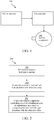
- Fig. 1 shows an illustrative embodiment of a system 100 for reducing a risk of misfuelling.
- the system 100 comprises an RF receiver 102 and a controller 104.
- the RF receiver 102 is configured to receive a fuel type identifier.
- the controller 104 is configured to compare the received fuel type identifier with a reference value, and to output a signal for controlling a part of a fuelling process in dependence on a result of comparing the received fuel type identifier with the reference value.
- the reference value may for example be stored in a memory (not shown) of the controller 104. In this way, the fuelling process may be influenced in a relatively simple manner, in order to reduce the risk of misfuelling.
- the signal initiates opening of a fuel lid if the received fuel type identifier matches the reference value.
- the fuel lid may form part of a fuel lid component 106, which also comprises an actuator for opening the fuel lid.
- the actuator may receive the signal from the controller 104 and open the fuel lid in response thereto.
- the fuel lid may be controlled automatically in dependence on a verification of the type of fuel. This may be less error prone than a user-controlled unlocking of the fuel lid, for example. Furthermore, the reduced proneness to errors can be achieved with a high degree of user convenience.
- Opening the fuel lid is thus one part of the fuelling process that can be controlled in accordance with the presently disclosed system and method.
- other parts of the fuelling process may be controlled in dependence on the result of comparing the received fuel type identifier with the reference value.
- the signal may be transmitted to a fuel pump in order to stop said fuel pump, or the signal may be transmitted to the fuel pump in order to switch to another grade of fuel in case one fuel nozzle is used for different fuel types.
- fuelling is not limited to specific or traditional types of fuel, such as hydrocarbon fuels.
- the presently disclosed system and method can also be used to advantage for other types of fuels, such as hydrogen gas, and, for example, in electric charging systems.
- the RF receiver 102 is disposed near a fuel inlet (not shown) of a vehicle.
- the RF receiver 102 may be a passive RF receiver, which is powered by the RF field generated by a transmitter. In this way, the no additional power source needs to be provided near the fuel inlet of the vehicle.
- the fuel type identifier and the reference value are indicative of at least one of the following fuel types: diesel fuel, petrol fuel, liquefied petroleum gas, high-performance fuel, biofuel. This facilitates the prevention of misfuelling for different types of vehicles.
- Radio frequency identification (RF) devices are used in different areas of industry and commerce for various purposes.
- RF receivers may for example be embodied as so-called radio frequency identification (RFID) tags or smart card integrated circuits (ICs).
- RFID transmitters may for example be embodied as so-called RFID readers, which often include battery-powered reading and writing capability over a contactless interface.
- RFID readers which often include battery-powered reading and writing capability over a contactless interface.
- NFC near field communication
- the principles described herein may also be applied to NFC devices.
- the RF receiver 102 and controller 104 may both be comprised in a smart card IC.
- a smart card IC often comprises a processing unit that may carry out the functions of a controller 104 of the kind set forth.
- the operation of smart card ICs and their communication capabilities have been described and defined in different technical standards, such as ISO/IEC 14443.
- the RF receiver 102 and controller 104 may operate in accordance with other technologies and standards, such as ISO/IEC 18092 (near field communication - NFC - having a range of at most 10 centimeters) and ISO/IEC 18000-3 (radio frequency identification - RFID - having a range of at most 40 centimeters).
- Fig. 2 shows an illustrative embodiment of a method 200 for reducing a risk of misfuelling.
- the method 200 comprises, at 202, receiving, by the RF receiver 102, a fuel type identifier. Furthermore, the method 200 comprises, at 204, comparing, by the controller 104, the received fuel type identifier with a reference value. Finally, the method 200 comprises, at 206, outputting, by the controller 104, a signal for controlling a part of a fuelling process in dependence on a result of comparing the received fuel type identifier with the reference value.
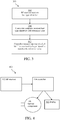
- Fig. 3 shows another illustrative embodiment of a method 300 for reducing a risk of misfuelling.
- the method 300 comprises, at 202, receiving, by the RF receiver 102, a fuel type identifier. Furthermore, the method 300 comprises, at 204, comparing, by the controller 104, the received fuel type identifier with a reference value. Finally, the method 300 comprises, at 302, initiating opening of the fuel lid if the received fuel type identifier matches the reference value. In particular, in step 302, the controller 104 may output a signal that causes an actuator of the fuel lid component 106 to open the fuel lid.
- Fig. 4 shows another illustrative embodiment of a system 400 for reducing a risk of misfuelling.
- the system 400 comprises the RF receiver 102 and the controller 104.
- the RF receiver 102 is configured to receive a fuel type identifier.
- the controller 104 is configured to compare the received fuel type identifier with a reference value, and to output a signal for controlling a part of a fuelling process - e.g. a control signal that causes an actuator of the fuel lid component 106 to open the fuel lid - in dependence on a result of comparing the received fuel type identifier with the reference value.
- the system 400 comprises a display 402.
- the display 402 is configured to display a warning.
- the controller 104 is further configured to cause the display 402 to display said warning if the received fuel type identifier does not match the reference value. In this way, the user is quickly warned about his selection of the wrong fuel type.
- the controller 104 is also configured to switch on the display 402. In this way, the display 402 may remain off most of the time, which results in reduced power consumption and less wear of said display 402.
- the display 402 is disposed near a fuel inlet (not shown) of a vehicle. In this way, the warning may be clearly visible to the user.
- Fig. 5 shows a further illustrative embodiment of a method 500 for reducing a risk of misfuelling.
- the method 500 comprises, at 202, receiving, by the RF receiver 102, a fuel type identifier. Furthermore, the method 500 comprises, at 204, comparing, by the controller 104, the received fuel type identifier with a reference value. Finally, the method 500 comprises, at 502, causing, by the controller 104, the display 402 to display a warning if the received fuel type identifier does not match the reference value.
- Fig. 6 shows a further illustrative embodiment of a system 600 for reducing a risk of misfuelling.
- the system 600 comprises a first unit 602, which comprises an RF receiver, controller and display of the kind set forth.
- the first unit 602 may be disposed near a fuel inlet 604 of a vehicle 608.
- the system 600 comprises a second unit 606, which comprises a fuel dispenser equipped with an RF transmitter.
- the system 600 comprises an RF transmitter.
- the RF transmitter is configured to transmit the fuel type identifier to the RF receiver.
- the transmitted fuel type identifier identifies the type of fuel dispensed by the fuel dispenser.
- the RF transmitter is attached to or integrally formed with the fuel dispenser.
- the RF transmitter may be attached to or be located near the nozzle of the fuel dispenser.
- the RF transmitter is configured to transmit the fuel type identifier in a broadcast mode. In this way, since the fuel type identifier is continuously transmitted, or at least at regular intervals, the RF receiver quickly receives said fuel type identifier.
- the RF transmitter has a communication range of at most 10 centimeters. In this way, the risk of interference by more remote fuel dispensers is minimized. In other words, if the communication range is limited it will be less likely that the RF receiver of the vehicle communicates with the wrong RF transmitter, i.e. an RF transmitter of a fuel dispenser other than the selected one.
- Fig. 7 shows a further illustrative embodiment of a system 700 for reducing a risk of misfuelling.
- the system comprises an RF transmitter 702 that operates in a broadcast mode.
- the RF transmitter 702 broadcasts a fuel type identifier that identifies a type of fuel dispensed by a fuel dispenser (not shown).
- the RF transmitter 702 may be powered by an external power supply 704.
- the system 700 further comprises an RF receiver 708.
- the RF receiver 708 receives the fuel type identifier broadcasted by the RF transmitter 702 over an air interface 706.
- the fuel type identifier may have been broadcasted in encoded form. Therefore, the broadcasted information may be decoded 710 by a controller of the kind set forth.
- the controller may cause a display to display the fuel type. Furthermore, the controller compares the received fuel type identifier with a reference value. This comparison may result in a match 714 or a mismatch 716. In case of a match 714, the controller may open a fuel lid (not shown). In case of a mismatch, the controller may keep the fuel lid locked and cause the display to display a warning.
- Fig. 8 shows an example of an implementation of a method 800 for reducing a risk of misfuelling.
- the steps shown in Fig. 8 are executed at the transmitter side.
- the method starts at 802.
- a fuel nozzle is pulled out of a fuel pump.
- an RF transmitter is powered up in a broadcast mode.
- the RF transmitter broadcasts a fuel type identifier associated with said nozzle.
- it is checked 810 if the nozzle has been placed back into the fuel pump. If not, then RF transmitter keeps broadcasting the fuel type identifier. Otherwise, the RF transmitter is turned off 812.
- the method ends at 814.
- Fig. 9 shows another example of an implementation of a method 900 for reducing a risk of misfuelling.
- the steps shown in Fig. 9 are executed at the receiver side.
- the method starts at 902.
- an RF receiver operates in a passive mode. If, at 906, the RF receiver enters an RF field generated by a transmitter, then it receives a fuel type identifier at 908.
- the controller may cause a display to display the fuel type.
- the controller decodes the information at 910, and checks if the fuel type identifier matches the reference value. In case of a match at 912, a further check 916 is performed, i.e. whether the fuel lid has been unlocked by the user.
- This user-controlled unlocking of the fuel lid may be the typical unlocking performed manually from within the vehicle.
- This additional check 916 may be performed as a safety measure, for example to prevent that a compromised automatic system will open the fuel lid.
- the controller causes, at 914, the display to display a warning message and keeps the fuel lid locked. If, at 916, it is determined that the fuel lid has been unlocked by the user, the controller opens, at 920, the fuel lid. Furthermore, the controller may cause the display to display a succeed message. If, at 916, it is determined that the fuel lid has not been unlocked by the user, the controller causes, at 918, the display to display a warning and causes the activation of a buzzer. In that case, the user may manually unlock the fuel lid, after which the controller may open the fuel lid at 920. The method ends at 922.
- the systems and methods described herein may at least partially be embodied by a computer program or a plurality of computer programs, which may exist in a variety of forms both active and inactive in a single computer system or across multiple computer systems.
- they may exist as software program(s) comprised of program instructions in source code, object code, executable code or other formats for performing some of the steps.
- Any of the above may be embodied on a computer-readable medium, which may include storage devices and signals, in compressed or uncompressed form.
- the term "computer” refers to any electronic device comprising a processor, such as a general-purpose central processing unit (CPU), a specific-purpose processor or a microcontroller.
- a computer is capable of receiving data (an input), of performing a sequence of predetermined operations thereupon, and of producing thereby a result in the form of information or signals (an output).
- the term "computer” will mean either a processor in particular or more generally a processor in association with an assemblage of interrelated elements contained within a single case or housing.
- processor or “processing unit” refers to a data processing circuit that may be a microprocessor, a co-processor, a microcontroller, a microcomputer, a central processing unit, a field programmable gate array (FPGA), a programmable logic circuit, and/or any circuit that manipulates signals (analog or digital) based on operational instructions that are stored in a memory.
- memory refers to a storage circuit or multiple storage circuits such as read-only memory, random access memory, volatile memory, non-volatile memory, static memory, dynamic memory, Flash memory, cache memory, and/or any circuit that stores digital information.
- a "computer-readable medium” or “storage medium” may be any means that can contain, store, communicate, propagate, or transport a computer program for use by or in connection with the instruction execution system, apparatus, or device.
- the computer-readable medium may be, for example but not limited to, an electronic, magnetic, optical, electromagnetic, infrared, or semiconductor system, apparatus, device, or propagation medium.
- the computer-readable medium may include the following: an electrical connection having one or more wires, a portable computer diskette, a random access memory (RAM), a read-only memory (ROM), an erasable programmable read-only memory (EPROM or Flash memory), an optical fiber, a portable compact disc read-only memory (CDROM), a digital versatile disc (DVD), a Blu-ray disc (BD), and a memory card.
- RAM random access memory
- ROM read-only memory
- EPROM or Flash memory erasable programmable read-only memory
- CDROM compact disc read-only memory
- DVD digital versatile disc
- BD Blu-ray disc
Landscapes
- Engineering & Computer Science (AREA)
- Mechanical Engineering (AREA)
- Life Sciences & Earth Sciences (AREA)
- Sustainable Development (AREA)
- Sustainable Energy (AREA)
- Chemical & Material Sciences (AREA)
- Combustion & Propulsion (AREA)
- Transportation (AREA)
- Fuel Cell (AREA)
Priority Applications (1)
| Application Number | Priority Date | Filing Date | Title |
|---|---|---|---|
| EP18154835.5A EP3521091A1 (fr) | 2018-02-02 | 2018-02-02 | Procédé et système pour réduire le risque d'une erreur de ravitaillement en carburant |
Applications Claiming Priority (1)
| Application Number | Priority Date | Filing Date | Title |
|---|---|---|---|
| EP18154835.5A EP3521091A1 (fr) | 2018-02-02 | 2018-02-02 | Procédé et système pour réduire le risque d'une erreur de ravitaillement en carburant |
Publications (1)
| Publication Number | Publication Date |
|---|---|
| EP3521091A1 true EP3521091A1 (fr) | 2019-08-07 |
Family
ID=61157057
Family Applications (1)
| Application Number | Title | Priority Date | Filing Date |
|---|---|---|---|
| EP18154835.5A Withdrawn EP3521091A1 (fr) | 2018-02-02 | 2018-02-02 | Procédé et système pour réduire le risque d'une erreur de ravitaillement en carburant |
Country Status (1)
| Country | Link |
|---|---|
| EP (1) | EP3521091A1 (fr) |
Cited By (3)
| Publication number | Priority date | Publication date | Assignee | Title |
|---|---|---|---|---|
| WO2022101122A1 (fr) * | 2020-11-13 | 2022-05-19 | Volkswagen Ag | Système de ravitaillement pour véhicules à moteur |
| DE102023125213A1 (de) | 2023-09-18 | 2025-03-20 | Audi Aktiengesellschaft | System und Verfahren zum Beschränken einer Kraftstoffzufuhr für ein Kraftfahrzeug auf einen zulässigen Kraftstoff |
| CN119847035A (zh) * | 2024-12-30 | 2025-04-18 | 浙江吉利控股集团有限公司 | 车载油箱盖控制方法、装置、计算机设备和存储介质 |
Citations (6)
| Publication number | Priority date | Publication date | Assignee | Title |
|---|---|---|---|---|
| WO2005053986A1 (fr) * | 2003-11-27 | 2005-06-16 | Kirk Eden | Dispositif d'alarme sonore |
| GB2437276A (en) * | 2006-04-21 | 2007-10-24 | Venn West Ltd | Preventing dispense of the wrong type of fuel. |
| KR20080015659A (ko) * | 2006-08-16 | 2008-02-20 | 현대자동차주식회사 | 이종연료 투입 방지 시스템 및 방법 |
| EP2193950A2 (fr) * | 2008-12-05 | 2010-06-09 | Robben & Wientjes OHG | Protection de cuve et procédé contre le remplissage à plat d'un véhicule automobile |
| DE102009030269A1 (de) * | 2009-06-24 | 2011-01-05 | Daimler Ag | Behälteranordnung für Kraft- und/oder Hilfsstoffe |
| KR20120049556A (ko) * | 2010-11-09 | 2012-05-17 | (주) 코리아텍 | 오주유 방지기능을 갖는 주유장치 |
-
2018
- 2018-02-02 EP EP18154835.5A patent/EP3521091A1/fr not_active Withdrawn
Patent Citations (6)
| Publication number | Priority date | Publication date | Assignee | Title |
|---|---|---|---|---|
| WO2005053986A1 (fr) * | 2003-11-27 | 2005-06-16 | Kirk Eden | Dispositif d'alarme sonore |
| GB2437276A (en) * | 2006-04-21 | 2007-10-24 | Venn West Ltd | Preventing dispense of the wrong type of fuel. |
| KR20080015659A (ko) * | 2006-08-16 | 2008-02-20 | 현대자동차주식회사 | 이종연료 투입 방지 시스템 및 방법 |
| EP2193950A2 (fr) * | 2008-12-05 | 2010-06-09 | Robben & Wientjes OHG | Protection de cuve et procédé contre le remplissage à plat d'un véhicule automobile |
| DE102009030269A1 (de) * | 2009-06-24 | 2011-01-05 | Daimler Ag | Behälteranordnung für Kraft- und/oder Hilfsstoffe |
| KR20120049556A (ko) * | 2010-11-09 | 2012-05-17 | (주) 코리아텍 | 오주유 방지기능을 갖는 주유장치 |
Cited By (4)
| Publication number | Priority date | Publication date | Assignee | Title |
|---|---|---|---|---|
| WO2022101122A1 (fr) * | 2020-11-13 | 2022-05-19 | Volkswagen Ag | Système de ravitaillement pour véhicules à moteur |
| US12286340B2 (en) | 2020-11-13 | 2025-04-29 | Volkswagen Aktiengesellschaft | Refuelling system for motor vehicles |
| DE102023125213A1 (de) | 2023-09-18 | 2025-03-20 | Audi Aktiengesellschaft | System und Verfahren zum Beschränken einer Kraftstoffzufuhr für ein Kraftfahrzeug auf einen zulässigen Kraftstoff |
| CN119847035A (zh) * | 2024-12-30 | 2025-04-18 | 浙江吉利控股集团有限公司 | 车载油箱盖控制方法、装置、计算机设备和存储介质 |
Similar Documents
| Publication | Publication Date | Title |
|---|---|---|
| US9499389B2 (en) | Liquid transportation | |
| US8261784B2 (en) | Method and system for preventing a fuel dispensing system from dispensing inappropriate fuel to a vehicle | |
| US11332098B2 (en) | Self-declaring electronic license plate with immobilizer features | |
| US10239630B2 (en) | Aircraft refueling safety system | |
| US20240010488A1 (en) | Control systems for liquid product delivery vehicles | |
| US5610574A (en) | Data processing apparatus for vehicle | |
| CN110014881B (zh) | 用于感测燃料电池电动车辆的充氢状态的系统和方法 | |
| US10439677B2 (en) | NFC controller | |
| US9714004B2 (en) | Electronic key registration system | |
| US9764715B2 (en) | License plate validation | |
| US9607457B2 (en) | Reuseable keyfob for use prior to sale of keyless vehicle | |
| US20100277273A1 (en) | System and method for assigning driver status to a spare key and for programming the spare key to a vehicle | |
| CN111003367B (zh) | 一种卸液控制方法、设备及存储介质 | |
| US9367977B2 (en) | Apparatus, method and system for controlling smart key | |
| CN103927614A (zh) | 基于电子标签技术的加油卡系统 | |
| US20110043324A1 (en) | Locking system and method for electronic device | |
| WO2017023881A1 (fr) | Validation de plaque d'immatriculation | |
| US20220006492A1 (en) | Communication control device, vehicle including the same, and communication control method | |
| KR20150088940A (ko) | Nfc 위치 동시 인증 기반 탱크 로리 주유 개폐 제어 시스템 | |
| CN110895710A (zh) | 一种车载终端的物品检测方法 | |
| KR20200007242A (ko) | Nfc 디지털 키 충돌 방지 시스템 및 방법 | |
| WO2019161922A1 (fr) | Dispositif de commande, système et procédé de prévention d'erreur de carburant pour véhicule | |
| JPH08207999A (ja) | 燃料性状判別システム | |
| KR200412553Y1 (ko) | 무선 주파수 식별자를 이용한 차량 연료 자동 확인 장치. | |
| US20180160391A1 (en) | Network interface feature to appropriately configure for regulations at new location |
Legal Events
| Date | Code | Title | Description |
|---|---|---|---|
| PUAI | Public reference made under article 153(3) epc to a published international application that has entered the european phase |
Free format text: ORIGINAL CODE: 0009012 |
|
| AK | Designated contracting states |
Kind code of ref document: A1 Designated state(s): AL AT BE BG CH CY CZ DE DK EE ES FI FR GB GR HR HU IE IS IT LI LT LU LV MC MK MT NL NO PL PT RO RS SE SI SK SM TR |
|
| AX | Request for extension of the european patent |
Extension state: BA ME |
|
| STAA | Information on the status of an ep patent application or granted ep patent |
Free format text: STATUS: THE APPLICATION IS DEEMED TO BE WITHDRAWN |
|
| 18D | Application deemed to be withdrawn |
Effective date: 20200208 |