EP3522629A1 - Verfahren und vorrichtung für ein endgerät zur selbstwiederauswahl von ressourcen je nach priorität in einem drahtloskommunikationssystem - Google Patents
Verfahren und vorrichtung für ein endgerät zur selbstwiederauswahl von ressourcen je nach priorität in einem drahtloskommunikationssystem Download PDFInfo
- Publication number
- EP3522629A1 EP3522629A1 EP17856743.4A EP17856743A EP3522629A1 EP 3522629 A1 EP3522629 A1 EP 3522629A1 EP 17856743 A EP17856743 A EP 17856743A EP 3522629 A1 EP3522629 A1 EP 3522629A1
- Authority
- EP
- European Patent Office
- Prior art keywords
- sidelink
- resource
- reselecting
- mac
- grant
- Prior art date
- Legal status (The legal status is an assumption and is not a legal conclusion. Google has not performed a legal analysis and makes no representation as to the accuracy of the status listed.)
- Withdrawn
Links
Images


Classifications
-
- H—ELECTRICITY
- H04—ELECTRIC COMMUNICATION TECHNIQUE
- H04W—WIRELESS COMMUNICATION NETWORKS
- H04W72/00—Local resource management
- H04W72/50—Allocation or scheduling criteria for wireless resources
- H04W72/56—Allocation or scheduling criteria for wireless resources based on priority criteria
- H04W72/566—Allocation or scheduling criteria for wireless resources based on priority criteria of the information or information source or recipient
- H04W72/569—Allocation or scheduling criteria for wireless resources based on priority criteria of the information or information source or recipient of the traffic information
-
- H—ELECTRICITY
- H04—ELECTRIC COMMUNICATION TECHNIQUE
- H04L—TRANSMISSION OF DIGITAL INFORMATION, e.g. TELEGRAPHIC COMMUNICATION
- H04L1/00—Arrangements for detecting or preventing errors in the information received
- H04L1/12—Arrangements for detecting or preventing errors in the information received by using return channel
- H04L1/16—Arrangements for detecting or preventing errors in the information received by using return channel in which the return channel carries supervisory signals, e.g. repetition request signals
- H04L1/18—Automatic repetition systems, e.g. Van Duuren systems
- H04L1/1812—Hybrid protocols; Hybrid automatic repeat request [HARQ]
-
- H—ELECTRICITY
- H04—ELECTRIC COMMUNICATION TECHNIQUE
- H04L—TRANSMISSION OF DIGITAL INFORMATION, e.g. TELEGRAPHIC COMMUNICATION
- H04L1/00—Arrangements for detecting or preventing errors in the information received
- H04L1/12—Arrangements for detecting or preventing errors in the information received by using return channel
- H04L1/16—Arrangements for detecting or preventing errors in the information received by using return channel in which the return channel carries supervisory signals, e.g. repetition request signals
- H04L1/18—Automatic repetition systems, e.g. Van Duuren systems
- H04L1/1812—Hybrid protocols; Hybrid automatic repeat request [HARQ]
- H04L1/1819—Hybrid protocols; Hybrid automatic repeat request [HARQ] with retransmission of additional or different redundancy
-
- H—ELECTRICITY
- H04—ELECTRIC COMMUNICATION TECHNIQUE
- H04W—WIRELESS COMMUNICATION NETWORKS
- H04W28/00—Network traffic management; Network resource management
- H04W28/16—Central resource management; Negotiation of resources or communication parameters, e.g. negotiating bandwidth or QoS [Quality of Service]
- H04W28/26—Resource reservation
-
- H—ELECTRICITY
- H04—ELECTRIC COMMUNICATION TECHNIQUE
- H04W—WIRELESS COMMUNICATION NETWORKS
- H04W36/00—Hand-off or reselection arrangements
- H04W36/06—Reselecting a communication resource in the serving access point
-
- H—ELECTRICITY
- H04—ELECTRIC COMMUNICATION TECHNIQUE
- H04W—WIRELESS COMMUNICATION NETWORKS
- H04W4/00—Services specially adapted for wireless communication networks; Facilities therefor
- H04W4/30—Services specially adapted for particular environments, situations or purposes
- H04W4/40—Services specially adapted for particular environments, situations or purposes for vehicles, e.g. vehicle-to-pedestrians [V2P]
-
- H—ELECTRICITY
- H04—ELECTRIC COMMUNICATION TECHNIQUE
- H04W—WIRELESS COMMUNICATION NETWORKS
- H04W4/00—Services specially adapted for wireless communication networks; Facilities therefor
- H04W4/30—Services specially adapted for particular environments, situations or purposes
- H04W4/40—Services specially adapted for particular environments, situations or purposes for vehicles, e.g. vehicle-to-pedestrians [V2P]
- H04W4/44—Services specially adapted for particular environments, situations or purposes for vehicles, e.g. vehicle-to-pedestrians [V2P] for communication between vehicles and infrastructures, e.g. vehicle-to-cloud [V2C] or vehicle-to-home [V2H]
-
- H—ELECTRICITY
- H04—ELECTRIC COMMUNICATION TECHNIQUE
- H04W—WIRELESS COMMUNICATION NETWORKS
- H04W72/00—Local resource management
- H04W72/02—Selection of wireless resources by user or terminal
-
- H—ELECTRICITY
- H04—ELECTRIC COMMUNICATION TECHNIQUE
- H04W—WIRELESS COMMUNICATION NETWORKS
- H04W72/00—Local resource management
- H04W72/20—Control channels or signalling for resource management
- H04W72/23—Control channels or signalling for resource management in the downlink direction of a wireless link, i.e. towards a terminal
-
- H—ELECTRICITY
- H04—ELECTRIC COMMUNICATION TECHNIQUE
- H04W—WIRELESS COMMUNICATION NETWORKS
- H04W72/00—Local resource management
- H04W72/20—Control channels or signalling for resource management
- H04W72/25—Control channels or signalling for resource management between terminals via a wireless link, e.g. sidelink
-
- H—ELECTRICITY
- H04—ELECTRIC COMMUNICATION TECHNIQUE
- H04W—WIRELESS COMMUNICATION NETWORKS
- H04W76/00—Connection management
- H04W76/20—Manipulation of established connections
- H04W76/23—Manipulation of direct-mode connections
-
- H—ELECTRICITY
- H04—ELECTRIC COMMUNICATION TECHNIQUE
- H04W—WIRELESS COMMUNICATION NETWORKS
- H04W76/00—Connection management
- H04W76/20—Manipulation of established connections
- H04W76/27—Transitions between radio resource control [RRC] states
-
- H—ELECTRICITY
- H04—ELECTRIC COMMUNICATION TECHNIQUE
- H04W—WIRELESS COMMUNICATION NETWORKS
- H04W80/00—Wireless network protocols or protocol adaptations to wireless operation
- H04W80/02—Data link layer protocols
-
- H—ELECTRICITY
- H04—ELECTRIC COMMUNICATION TECHNIQUE
- H04W—WIRELESS COMMUNICATION NETWORKS
- H04W92/00—Interfaces specially adapted for wireless communication networks
- H04W92/16—Interfaces between hierarchically similar devices
- H04W92/18—Interfaces between hierarchically similar devices between terminal devices
-
- H—ELECTRICITY
- H04—ELECTRIC COMMUNICATION TECHNIQUE
- H04W—WIRELESS COMMUNICATION NETWORKS
- H04W4/00—Services specially adapted for wireless communication networks; Facilities therefor
- H04W4/30—Services specially adapted for particular environments, situations or purposes
- H04W4/40—Services specially adapted for particular environments, situations or purposes for vehicles, e.g. vehicle-to-pedestrians [V2P]
- H04W4/46—Services specially adapted for particular environments, situations or purposes for vehicles, e.g. vehicle-to-pedestrians [V2P] for vehicle-to-vehicle communication [V2V]
Definitions
- the present invention relates to wireless communications and, more particularly, to a method and apparatus for reselecting a resource autonomously based on a priority in a wireless communication system.
- 3rd generation partnership project (3GPP) long-term evolution (LTE) is a technology for enabling high-speed packet communications.
- 3GPP 3rd generation partnership project
- LTE long-term evolution
- Many schemes have been proposed for the LTE objective including those that aim to reduce user and provider costs, improve service quality, and expand and improve coverage and system capacity.
- the 3GPP LTE requires reduced cost per bit, increased service availability, flexible use of a frequency band, a simple structure, an open interface, and adequate power consumption of a terminal as an upper-level requirement.
- V2X LTE-based vehicle-to-everything
- LTE-based network provides the opportunity for the vehicle industry to realize the concept of 'connected cars'.
- the market for vehicle-to-vehicle (V2V) communication in particular is time sensitive because related activities such as research projects, field test, and regulatory work are already ongoing or expected to start in some countries or regions such as US, Europe, Japan, Korea, and China.
- LTE-based V2X In LTE-based V2X, PC5-based V2V has been given highest priority. It is feasible to support V2V services based on LTE PC5 interface with necessary enhancements such as LTE sidelink resource allocation, physical layer structure, and synchronization.
- a user equipment is able to select a sidelink (SL) resource for V2X communication by itself in a resource pool configured by a network.
- SL sidelink
- the present invention provides a method and apparatus for reselecting a resource autonomously based on a priority in a wireless communication system.
- the present invention provides a method and apparatus for enabling a user equipment to select and/or reselect a sidelink (SL) resource for vehicle-to-everything (V2X) communication autonomously based on a latency requirement dependent upon a ProSe per-packet priority (PPPP).
- SL sidelink
- V2X vehicle-to-everything
- a method for reselecting a sidelink resource by a media access control (MAC) entity of a user equipment (UE) in a wireless communication system includes selecting to configure a sidelink grant corresponding to transmissions of multiple MAC protocol data units (PDUs), determining that there is data for a vehicle-to-everything (V2X) communication in a sidelink traffic channel (STCH), determining that the configured sidelink grant cannot fulfil a latency requirement according to a ProSe per-packet priority (PPPP), and reselecting the sidelink resource.
- the MAC entity is configured by an upper layer to transmit based on sensing by using a resource pool.
- the reselecting the sidelink resource may be performed for each sidelink process configured for multiple transmissions based on sensing.
- the reselecting the sidelink resource may include clearing the configured sidelink grant.
- the reselecting the sidelink resource may include randomly selecting, with equal probability, an integer value in an interval between 5 and 15, and setting a value of a sidelink resource reselection counter to the selected integer value.
- the reselecting the sidelink resource may include selecting a number of hybrid automatic repeat request (HARQ) retransmissions from allowed numbers configured by the upper layer in allowedRetxNumberPSSCH, and an amount of frequency resources within the range configured by the upper layer between minRB-NumberPSSCH and maxRB-NumberPSSCH.
- HARQ hybrid automatic repeat request
- the reselecting the sidelink resource may include selecting an integer value in an interval between 1 and 10 from allowed values configured by the upper layer in restrictResourceReservationPeriod, and setting a resource reservation interval by multiplying 100 with the selected integer value.
- the reselecting the sidelink resource may include randomly selecting time and frequency resources for transmission opportunities of sidelink control information (SCI) and sidelink shared channel (SL-SCH) corresponding to a number of transmissions of MAC PDUs with the resource reservation interval from the resource pool, excluding resources indicated by a physical layer.
- SCI sidelink control information
- SL-SCH sidelink shared channel
- the upper layer may be a radio resource control (RRC) layer of the UE.
- RRC radio resource control
- a user equipment (UE) in a wireless communication system includes a memory, a transceiver, and a processor, operably coupled to the memory and the transceiver, that selects to configure a sidelink grant corresponding to transmissions of multiple media access control (MAC) protocol data units (PDUs), determines that there is data for a vehicle-to-everything (V2X) communication in a sidelink traffic channel (STCH), determines that the configured sidelink grant cannot fulfil a latency requirement according to a ProSe per-packet priority (PPPP), and reselects a sidelink resource.
- a MAC entity of the UE is configured by an upper layer to transmit based on sensing by using a resource pool.
- a UE is capable of efficiently selecting and/or reselecting an SL resource for V2X communication.
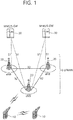
- FIG. 1 shows 3GPP LTE system architecture.
- the 3GPP long-term evolution (LTE) system architecture includes one or more user equipment (UE; 10), an evolved-UMTS terrestrial radio access network (E-UTRAN) and an evolved packet core (EPC).
- the UE 10 refers to a communication equipment carried by a user.
- the UE 10 may be fixed or mobile, and may be referred to as another terminology, such as a mobile station (MS), a user terminal (UT), a subscriber station (SS), a wireless device, etc.
- MS mobile station
- UT user terminal
- SS subscriber station
- wireless device etc.
- the E-UTRAN includes one or more evolved node-B (eNB) 20, and a plurality of UEs may be located in one cell.
- the eNB 20 provides an end point of a control plane and a user plane to the UE 10.
- the eNB 20 is generally a fixed station that communicates with the UE 10 and may be referred to as another terminology, such as a base station (BS), an access point, etc.
- BS base station
- One eNB 20 may be deployed per cell.
- a downlink denotes communication from the eNB 20 to the UE 10.
- An uplink denotes communication from the UE 10 to the eNB 20.
- a sidelink denotes communication between the UEs 10.
- a transmitter may be a part of the eNB 20, and a receiver may be a part of the UE 10.
- the transmitter may be a part of the UE 10
- the receiver may be a part of the eNB 20.
- the transmitter and receiver may be a part of the UE 10.
- the EPC includes a mobility management entity (MME) and a serving gateway (S-GW).
- MME/S-GW 30 provides an end point of session and mobility management function for the UE 10.
- MME/S-GW 30 will be referred to herein simply as a "gateway,” but it is understood that this entity includes both the MME and S-GW.
- a packet data network (PDN) gateway (P-GW) may be connected to an external network.
- the MME provides various functions including non-access stratum (NAS) signaling to eNBs 20, NAS signaling security, access stratum (AS) security control, inter core network (CN) node signaling for mobility between 3GPP access networks, idle mode UE reachability (including control and execution of paging retransmission), tracking area list management (for UE in idle and active mode), packet data network (PDN) gateway (P-GW) and S-GW selection, MME selection for handovers with MME change, serving GPRS support node (SGSN) selection for handovers to 2G or 3G 3GPP access networks, roaming, authentication, bearer management functions including dedicated bearer establishment, support for public warning system (PWS) (which includes earthquake and tsunami warning system (ETWS) and commercial mobile alert system (CMAS)) message transmission.
- PWS public warning system
- ETWS earthquake and tsunami warning system
- CMAS commercial mobile alert system
- the S-GW host provides assorted functions including per-user based packet filtering (by e.g., deep packet inspection), lawful interception, UE Internet protocol (IP) address allocation, transport level packet marking in the DL, UL and DL service level charging, gating and rate enforcement, DL rate enforcement based on access point name aggregate maximum bit rate (APN-AMBR).
- per-user based packet filtering by e.g., deep packet inspection
- IP Internet protocol
- transport level packet marking in the DL transport level packet marking in the DL
- UL and DL service level charging e.g., gating and rate enforcement
- DL rate enforcement based on access point name aggregate maximum bit rate (APN-AMBR).
- APN-AMBR access point name aggregate maximum bit rate
- Interfaces for transmitting user traffic or control traffic may be used.
- the UE 10 is connected to the eNB 20 via a Uu interface.
- the UEs 10 are connected to each other via a PC5 interface.
- the eNBs 20 are connected to each other via an X2 interface.
- Neighboring eNBs may have a meshed network structure that has the X2 interface.
- the eNB 20 is connected to the gateway 30 via an S1 interface.
- FIG. 2 shows a block diagram of a user plane protocol stack of an LTE system.
- FIG. 3 shows a block diagram of a control plane protocol stack of an LTE system.
- Layers of a radio interface protocol between the UE and the E-UTRAN may be classified into a first layer (LI), a second layer (L2), and a third layer (L3) based on the lower three layers of the open system interconnection (OSI) model that is well-known in the communication system.
- LI first layer
- L2 second layer
- L3 third layer
- a physical (PHY) layer belongs to the L1.
- the PHY layer provides a higher layer with an information transfer service through a physical channel.
- the PHY layer is connected to a medium access control (MAC) layer, which is a higher layer of the PHY layer, through a transport channel.
- MAC medium access control
- a physical channel is mapped to the transport channel. Data between the MAC layer and the PHY layer is transferred through the transport channel.
- PHY physical
- a MAC layer, a radio link control (RLC) layer, and a packet data convergence protocol (PDCP) layer belong to the L2.
- the MAC layer provides services to the RLC layer, which is a higher layer of the MAC layer, via a logical channel.
- the MAC layer provides data transfer services on logical channels.
- the RLC layer supports the transmission of data with reliability. Meanwhile, a function of the RLC layer may be implemented with a functional block inside the MAC layer. In this case, the RLC layer may not exist.
- the PDCP layer provides a function of header compression function that reduces unnecessary control information such that data being transmitted by employing IP packets, such as IPv4 or Ipv6, can be efficiently transmitted over a radio interface that has a relatively small bandwidth.
- a radio resource control (RRC) layer belongs to the L3.
- the RLC layer is located at the lowest portion of the L3, and is only defined in the control plane.
- the RRC layer controls logical channels, transport channels, and physical channels in relation to the configuration, reconfiguration, and release of radio bearers (RBs).
- the RB signifies a service provided the L2 for data transmission between the UE and E-UTRAN.
- the RLC and MAC layers may perform functions such as scheduling, automatic repeat request (ARQ), and hybrid ARQ (HARQ).
- the PDCP layer may perform the user plane functions such as header compression, integrity protection, and ciphering.
- the RLC and MAC layers may perform the same functions for the control plane.
- the RRC layer (terminated in the eNB on the network side) may perform functions such as broadcasting, paging, RRC connection management, RB control, mobility functions, and UE measurement reporting and controlling.
- the NAS control protocol (terminated in the MME of gateway on the network side) may perform functions such as a SAE bearer management, authentication, LTE_IDLE mobility handling, paging origination in LTE_IDLE, and security control for the signaling between the gateway and UE.
- a physical channel transfers signaling and data between PHY layer of the UE and eNB with a radio resource.
- a physical channel consists of a plurality of subframes in time domain and a plurality of subcarriers in frequency domain.
- One subframe which is 1ms, consists of a plurality of symbols in the time domain. Specific symbol(s) of the subframe, such as the first symbol of the subframe, may be used for a physical downlink control channel (PDCCH).
- the PDCCH carries dynamic allocated resources, such as a physical resource block (PRB) and modulation and coding scheme (MCS).
- PRB physical resource block
- MCS modulation and coding scheme
- a DL transport channel includes a broadcast channel (BCH) used for transmitting system information, a paging channel (PCH) used for paging a UE, a downlink shared channel (DL-SCH) used for transmitting user traffic or control signals, a multicast channel (MCH) used for multicast or broadcast service transmission.
- BCH broadcast channel
- PCH paging channel
- DL-SCH downlink shared channel
- MCH multicast channel
- the DL-SCH supports HARQ, dynamic link adaptation by varying the modulation, coding and transmit power, and both dynamic and semi-static resource allocation.
- the DL-SCH also may enable broadcast in the entire cell and the use of beamforming.
- a UL transport channel includes a random access channel (RACH) normally used for initial access to a cell, and an uplink shared channel (UL-SCH) for transmitting user traffic or control signals.
- RACH random access channel
- UL-SCH uplink shared channel
- the UL-SCH supports HARQ and dynamic link adaptation by varying the transmit power and potentially modulation and coding.
- the UL-SCH also may enable the use of beamforming.
- the logical channels are classified into control channels for transferring control plane information and traffic channels for transferring user plane information, according to a type of transmitted information. That is, a set of logical channel types is defined for different data transfer services offered by the MAC layer.
- the control channels are used for transfer of control plane information only.
- the control channels provided by the MAC layer include a broadcast control channel (BCCH), a paging control channel (PCCH), a common control channel (CCCH), a multicast control channel (MCCH) and a dedicated control channel (DCCH).
- the BCCH is a downlink channel for broadcasting system control information.
- the PCCH is a downlink channel that transfers paging information and is used when the network does not know the location cell of a UE.
- the CCCH is used by UEs having no RRC connection with the network.
- the MCCH is a point-to-multipoint downlink channel used for transmitting multimedia broadcast multicast services (MBMS) control information from the network to a UE.
- the DCCH is a point-to-point bidirectional channel used by UEs having an RRC connection that transmits dedicated control information between a UE and the network.
- Traffic channels are used for the transfer of user plane information only.
- the traffic channels provided by the MAC layer include a dedicated traffic channel (DTCH) and a multicast traffic channel (MTCH).
- DTCH dedicated traffic channel
- MTCH multicast traffic channel
- the DTCH is a point-to-point channel, dedicated to one UE for the transfer of user information and can exist in both UL and DL.
- the MTCH is a point-to-multipoint downlink channel for transmitting traffic data from the network to the UE.
- UL connections between logical channels and transport channels include the DCCH that can be mapped to the UL-SCH, the DTCH that can be mapped to the UL-SCH and the CCCH that can be mapped to the UL-SCH.
- Downlink connections between logical channels and transport channels include the BCCH that can be mapped to the BCH or DL-SCH, the PCCH that can be mapped to the PCH, the DCCH that can be mapped to the DL-SCH, and the DTCH that can be mapped to the DL-SCH, the MCCH that can be mapped to the MCH, and the MTCH that can be mapped to the MCH.
- An RRC state indicates whether an RRC layer of the UE is logically connected to an RRC layer of the E-UTRAN.
- the RRC state may be divided into two different states such as an RRC idle state (RRCIDLE) and an RRC connected state (RRC_CONNECTED).
- RRC_IDLE the UE may receive broadcasts of system information and paging information while the UE specifies a discontinuous reception (DRX) configured by NAS, and the UE has been allocated an identification (ID) which uniquely identifies the UE in a tracking area and may perform public land mobile network (PLMN) selection and cell re-selection.
- ID identification
- PLMN public land mobile network
- the UE In RRC_CONNECTED, the UE has an E-UTRAN RRC connection and a context in the E-UTRAN, such that transmitting and/or receiving data to/from the eNB becomes possible. Also, the UE can report channel quality information and feedback information to the eNB.
- the E-UTRAN knows the cell to which the UE belongs. Therefore, the network can transmit and/or receive data to/from UE, the network can control mobility (handover and inter-radio access technologies (RAT) cell change order to GSM EDGE radio access network (GERAN) with network assisted cell change (NACC)) of the UE, and the network can perform cell measurements for a neighboring cell.
- RAT inter-radio access technologies
- GERAN GSM EDGE radio access network
- NACC network assisted cell change
- the UE specifies the paging DRX cycle. Specifically, the UE monitors a paging signal at a specific paging occasion of every UE specific paging DRX cycle.
- the paging occasion is a time interval during which a paging signal is transmitted.
- the UE has its own paging occasion.
- a paging message is transmitted over all cells belonging to the same tracking area. If the UE moves from one tracking area (TA) to another TA, the UE will send a tracking area update (TAU) message to the network to update its location.
- TAU tracking area update
- Sidelink is described.
- Sidelink is a UE to UE interface for sidelink communication and sidelink discovery.
- the Sidelink corresponds to the PC5 interface.
- Sidelink communication is AS functionality enabling proximity-based services (ProSe) direct communication, between two or more nearby UEs, using E-UTRA technology but not traversing any network node.
- Sidelink discovery is AS functionality enabling ProSe direct discovery, using E-UTRA technology but not traversing any network node.
- Sidelink physical channels include a physical sidelink broadcast channel (PSBCH) carrying system and synchronization related information, transmitted from the UE, a physical sidelink discovery channel (PSDCH) carrying sidelink discovery message from the UE, a physical sidelink control channel (PSCCH) carrying control from a UE for sidelink communication, and a physical sidelink shared channel (PSSCH) carrying data from a UE for sidelink communication.
- the sidelink physical channels are mapped to sidelink transport channels.
- the PSBCH is mapped to a sidelink broadcast channel (SL-BCH).
- the PSDCH is mapped to a sidelink discovery channel (SL-DCH).
- the PSSCH is mapped to a sidelink shared channel (SL-SCH).
- the logical channels are also classified into control channels for transferring control plane information and traffic channels for transferring user plane information.
- the sidelink control channels include a sidelink broadcast control channel (SBCCH) which is a sidelink channel for broadcasting sidelink system information from one UE to other UE(s).
- the SBCCH is mapped to the SL-BCH.
- the sidelink traffic channels include a sidelink traffic channel (STCH) which is a point-to-multipoint channel, for transfer of user information from one UE to other UE(s).
- the STCH is mapped to the SL-SCH. This channel is used only by sidelink communication capable UEs.
- Sidelink communication is a mode of communication whereby UEs can communicate with each other directly over the PC5 interface. This communication mode is supported when the UE is served by E-UTRAN and when the UE is outside of E-UTRA coverage. Only those UEs authorized to be used for public safety operation can perform sidelink communication.
- the UE supporting sidelink communication can operate in the following two modes for resource allocation.
- the first mode is a scheduled resource allocation.
- the scheduled resource allocation may be called Mode 1.
- Mode 1 the UE needs to be RRC_CONNECTED in order to transmit data.
- the UE requests transmission resources from the eNB.
- the eNB schedules transmission resources for transmission of sidelink control information (SCI) and data.
- the UE sends a scheduling request (dedicated scheduling request (D-SR) or random access) to the eNB followed by a sidelink buffer status report (BSR).
- D-SR dedicated scheduling request
- BSR sidelink buffer status report
- the eNB can determine that the UE has data for a sidelink communication transmission and estimate the resources needed for transmission.
- the eNB can schedule transmission resources for sidelink communication using configured sidelink radio network temporary identity (SL-RNTI).
- SL-RNTI configured sidelink radio network temporary identity
- the second mode is a UE autonomous resource allocation.
- the UE autonomous resource allocation may be called Mode 2.
- mode 2 a UE on its own selects resources from resource pools and performs transport format selection to transmit sidelink control information and data.
- Each pool can have one or more Prose per-packet priority (PPPP) associated with it.
- PPPP Prose per-packet priority
- the resource pool is selected, the selection is valid for the entire sidelink control period. After the sidelink control period is finished, the UE may perform resource pool selection again.
- a UE is considered in-coverage for sidelink communication whenever it detects a cell on a public safety ProSe carrier. If the UE is out of coverage for sidelink communication, it can only use Mode 2. If the UE is in coverage for sidelink communication, it may use Mode 1 or Mode 2 as per eNB configuration. If the UE is in coverage for sidelink communication, it shall use only the resource allocation mode indicated by eNB configuration unless one of the exceptional cases occurs. When an exceptional case occurs, the UE is allowed to use Mode 2 temporarily even though it was configured to use Mode 1. Resource pool to be used during exceptional case may be provided by eNB.
- the cell on the public safety ProSe carrier may select one of the following two options.
- the cell on the public safety ProSe carrier may provide a transmission resource pool for Mode 2 in SIB18.
- UEs that are authorized for sidelink communication may use these resources for sidelink communication in RRC_IDLE in the cell on the same carrier (i.e. public safety ProSe carrier).
- UEs that are authorized for sidelink communication may use these resources for sidelink communication in RRC_IDLE or RRC_CONNECTED in a cell on another carrier.
- the cell on the public safety ProSe carrier may indicate in SIB18 that it supports sidelink communication but does not provide transmission resources. UEs need to enter RRC_CONNECTED to perform sidelink communication transmission. In this case the cell on the public safety ProSe carrier may provide in broadcast signalling an exceptional transmission resource pool for Mode 2, to be used by the UE in exceptional cases.
- a UE in RRC_CONNECTED that is authorized to perform sidelink communication transmission indicates to the serving eNB that it wants to perform sidelink communication transmissions. The eNB validates whether the UE is authorized for sidelink communication transmission using the UE context received from MME.
- the eNB may configure a UE by dedicated signalling with a transmission resource pool for Mode 2 that may be used without constraints while the UE is in RRC_CONNECTED.
- the eNB may configure a UE to use the exceptional transmission resource pool for Mode 2 which the UE is allowed to use only in exceptional cases, and rely on Mode 1 otherwise.
- a set of transmission and reception resource pools for sidelink control information when the UE is out of coverage for sidelink communication is pre-configured in the UE.
- the resource pools for sidelink control information when the UE is in coverage for sidelink communication are configured as below.
- the resource pools used for reception are configured by the eNB via RRC, in broadcast signaling.
- the resource pool used for transmission is configured by the eNB via RRC, in dedicated or broadcast signaling, if Mode 2 is used.
- the resource pool used for transmission is configured by the eNB via RRC, in dedicated signaling if Mode 1 is used.
- the eNB schedules the specific resource(s) for sidelink control information transmission within the configured reception pools.
- a set of transmission and reception resource pools for data when the UE is out of coverage for sidelink communication is pre-configured in the UE.
- the resource pools for data when the UE is in coverage for sidelink communication are configured as below.
- the resource pools used for transmission and reception are configured by the eNB via RRC, in dedicated or broadcast signaling, if Mode 2 is used. There is no resource pool for transmission and reception if Mode 1 is used.
- Sidelink discovery is defined as the procedure used by the UE supporting sidelink discovery to discover other UE(s) in its proximity, using E-UTRA direct radio signals via PC5. Sidelink discovery is supported both when UE is served by EUTRAN and when UE is out of EUTRA coverage. Only ProSe-enabled public safety UE can perform sidelink discovery when it is out of EUTRA coverage.
- the allowed frequency is pre-configured in the UE, and is used even when UE is out of coverage of E-UTRA in that frequency. The pre-configured frequency is the same frequency as the public safety ProSe carrier.
- the first type is a UE autonomous resource selection, which is a resource allocation procedure where resources for announcing of discovery message are allocated on a non UE specific basis.
- the UE autonomous resource selection may be called Type 1.
- the eNB provides the UE(s) with the resource pool configuration used for announcing of discovery message.
- the configuration may be signaled in broadcast or dedicated signaling.
- the UE autonomously selects radio resource(s) from the indicated resource pool and announces discovery message.
- the UE can announce discovery message on a randomly selected discovery resource during each discovery period.
- the second is a scheduled resource allocation, which is a resource allocation procedure where resources for announcing of discovery message are allocated on per UE specific basis.
- the scheduled resource allocation may be called Type 2.
- the UE in RRC_CONNECTED may request resource(s) for announcing of discovery message from the eNB via RRC.
- the eNB assigns resource(s) via RRC.
- the resources are allocated within the resource pool that is configured in UEs for announcement.
- the eNB may select one of the following options.
- the eNB may provide resource pools for Type 1 based discovery message announcement in SIB19. UEs that are authorized for sidelink discovery use these resources for announcing discovery message in RRC_IDLE. Or, the eNB may indicate in SIB19 that it supports sidelink discovery but does not provide resources for discovery message announcement. UEs need to enter RRC_CONNECTED in order to request resources for discovery message announcement.
- a UE authorized to perform sidelink discovery announcement indicates to the eNB that it wants to perform sidelink discovery announcement.
- a UE can also indicate to the eNB the frequency(s) in which sidelink discovery announcement is desired.
- the eNB validates whether the UE is authorized for sidelink discovery announcement using the UE context received from MME.
- the eNB may configure the UE with resource pool for Type 1 for discovery message announcement via dedicated signaling.
- the eNB may configure resource pool along with dedicated resource in the form of time and frequency indices for discovery message announcement via dedicated RRC signaling.
- the resources allocated by the eNB via dedicated signaling are valid until the eNB re-configures the resource(s) by RRC signaling or, the UE enters RRC_IDLE.
- the eNB provides the resource pool configuration used for discovery message monitoring on intra frequency, inter frequency of same or different PLMNs cells in RRC signaling (SIB19).
- the RRC signaling (SIB19 or dedicated) may contain detailed sidelink discovery configuration used for announcement of sidelink discovery in cells of intra-frequency, inter-frequency of same or different PLMNs.
- V2X communication contains the three different types, i.e. vehicle-to-vehicle (V2V) communications, vehicle-to-infrastructure (V2I) communications, and vehicle-to-pedestrian (V2P) communications.
- V2V vehicle-to-vehicle
- V2I vehicle-to-infrastructure
- V2P vehicle-to-pedestrian
- These three types of V2X can use "co-operative awareness" to provide more intelligent services for end-users.
- transport entities such as vehicles, road side unit (RSU), and pedestrians, can collect knowledge of their local environment (e.g. information received from other vehicles or sensor equipment in proximity) to process and share that knowledge in order to provide more intelligent services, such as cooperative collision warning or autonomous driving.
- RSU road side unit
- pedestrians can collect knowledge of their local environment (e.g. information received from other vehicles or sensor equipment in proximity) to process and share that knowledge in order to provide more intelligent services, such as cooperative collision warning or autonomous driving.
- V2X service is a type of communication service that involves a transmitting or receiving UE using V2V application via 3GPP transport. Based on the other party involved in the communication, it can be further divided into V2V service, V2I service, V2P service, and vehicle-to-network (V2N) service.
- V2V service is a type of V2X service, where both parties of the communication are UEs using V2V application.
- V2I service is a type of V2X service, where one party is a UE and the other party is an RSU both using V2I application.
- the RSU is an entity supporting V2I service that can transmit to, and receive from a UE using V2I application.
- RSU is implemented in an eNB or a stationary UE.
- V2P service is a type of V2X service, where both parties of the communication are UEs using V2P application.
- V2N service is a type of V2X service, where one party is a UE and the other party is a serving entity, both using V2N applications and communicating with each other via LTE network entities.
- E-UTRAN allows such UEs that are in proximity of each other to exchange V2V-related information using E-UTRA(N) when permission, authorization and proximity criteria are fulfilled.
- the proximity criteria can be configured by the mobile network operator (MNO).
- MNO mobile network operator
- UEs supporting V2V service can exchange such information when served by or not served by E-UTRAN which supports V2X service.
- the UE supporting V2V applications transmits application layer information (e.g. about its location, dynamics, and attributes as part of the V2V service).
- the V2V payload must be flexible in order to accommodate different information contents, and the information can be transmitted periodically according to a configuration provided by the MNO.
- V2V is predominantly broadcast-based.
- V2V includes the exchange of V2V-related application information between distinct UEs directly and/or, due to the limited direct communication range of V2V, the exchange of V2V-related application information between distinct UEs via infrastructure supporting V2X Service, e.g., RSU, application server, etc.
- V2X Service e.g., RSU, application server, etc.
- the UE supporting V2I applications sends application layer information to RSU.
- RSU sends application layer information to a group of UEs or a UE supporting V2I applications.
- E-UTRAN allows such UEs that are in proximity of each other to exchange V2P-related information using E-UTRAN when permission, authorization and proximity criteria are fulfilled.
- the proximity criteria can be configured by the MNO.
- UEs supporting V2P service can exchange such information even when not served by E-UTRAN which supports V2X service.
- the UE supporting V2P applications transmits application layer information. Such information can be broadcast by a vehicle with UE supporting V2X Service (e.g. warning to pedestrian), and/or by a pedestrian with UE supporting V2X Service (e.g. warning to vehicle).
- V2P includes the exchange of V2P-related application information between distinct UEs (one for vehicle and the other for pedestrian) directly and/or, due to the limited direct communication range of V2P, the exchange of V2P-related application information between distinct UEs via infrastructure supporting V2X service, e.g., RSU, application server, etc.
- infrastructure supporting V2X service e.g., RSU, application server, etc.
- messages such as common awareness messages (CAM), decentralized environmental notification messages (DENM), or basic safety messages (BSM) may be transmitted.
- the CAM includes information on a vehicle's type, a location, speed, a direction, etc., and may be periodically broadcasted by any vehicle.
- the DENM includes information on a type of a particular event and an area where the particular event has occurred, and may be broadcasted by an RSU or a vehicle.
- the BSM is included in the U.S. J2735 basic safety message, and have similar characteristics to those of the CAM. Through the BSM, an emergency brake warning, a front collision warning, an intersection safety support, a blind spot and line departure warning, a overtake warning, an out-of-control warning service may be provided.
- the UE may autonomously select the SL resource for V2X communication within the resource pool configured by the network. That is, the UE may select autonomously the SL resource for V2X communication in Mode 2 and perform V2X communication via the corresponding SL resource.
- SL resources for V2X communication may be selected based on sensing. More specifically, the UE may perform sensing for (re)-selection of SL resources. Based on the sensing result, the UE may (re)-select a specific SL resource and may reserve a plurality of SL resources.
- UE autonomous resource selection based on sensing for V2X communication may be referred to as SL mode 4.
- SL grant reception and SCI transmission according to the conventional art are described in detail.
- the MAC entity In order to transmit on the SL-SCH, the MAC entity must have at least one sidelink grant.
- Sidelink grants are selected as follows for sidelink communication.
- resource reselection is used to allocate multiple transmission opportunities of SCI and SL-SCH. If resource reselection is triggered, a UE allocates multiple transmission opportunities as below.
- This resource allocation mechanism is intended to support an actual V2X traffic pattern (for example, a V2X message periodically generated at an interval of 100ms).
- This mechanism is substantially similar to semi-persistent scheduling (SPS) allocation.
- SPS may operate for each logical channel or each PPPP. Thus, even associating one resource (re)selecting procedure with one logical channel or one PPPP is possible.
- one resource (re)selecting procedure is associated with transmission of a plurality of MAC PDUs for one SL process.
- Packet delay budget may be considered as a latency requirement from an application layer (that is, 20ms or 100ms).
- the latency may be derived from PPPP by the AS layer, which is based on the mapping between the PPPP and latency provided by configuration.
- the UE allocates a time resource and a frequency resource from a resource pool selected for periodic transmission of a V2X message (which is, for example, occurs every 500ms). Meanwhile, a time to periodically generate a V2X message may be adjusted. Due to the change of the message generation time, an allocated periodic resource may fail to satisfy the latency requirement (20ms or 100ms).
- a CAM generating time is adjusted by +150ms with respect to the same period (for example, 500ms)
- the UE needs to reselect a time resource and a frequency resource from a selected resource pool during 500ms.
- the CAM generating period is changed from 500ms to 1000ms, the UE needs to reselect a time resource and a frequency resource from a resource pool selected according to a new period.
- the UE may know a latency requirement from a PPPP associated with an STCH.
- the UE needs to be able to reselect a resource.
- a latency requirement derived from the PPPP is considered as a resource reselection trigger condition. That is, if an SL grant fails to satisfy a latency requirement from a PPPP associated with an MAC PDU (or associated with an STCH), reselection may be triggered.
- the conventional method for SL grant reception and SCI transmission may be changed as shown in Table 3.
- FIG. 4 shows a method for reselecting an SL resource by an MAC entity of a UE according to an embodiment of the present invention.
- step S100 the MAC entity of the UE selects to configure a sidelink grant corresponding to transmission of multiple MAC PDUs.
- step S110 the MAC entity of the UE determines that there is data for V2X communication in an STCH.
- the MAC entity is configured by a higher layer to transmit based on sensing using a resource pool.
- the higher layer may be the RRC layer of the UE.
- step S120 the MAC entity of the UE determines that the configured sidelink grant cannot fulfil a latency requirement from a PPPP.
- step S130 the MAC entity of the UE reselects a sidelink resource. The reselection of the sidelink resource may be performed for each sidelink process configured for multiple transmissions based on sensing.
- the reselecting the sidelink resource may include clearing the configured sidelink grant. Further, the reselecting the sidelink resource may include randomly selecting, with equal probability, an integer value in an interval between 5 and 15, and setting a value of a sidelink resource reselection counter to the selected integer value. Further, the reselecting the sidelink resource may include selecting a number of HARQ retransmissions from allowed numbers configured by the upper layer in allowedRetxNumberPSSCH, and an amount of frequency resources within the range configured by the upper layer between minRB-NumberPSSCH and maxRB-NumberPSSCH.
- the reselecting the sidelink resource may include selecting an integer value in an interval between 1 and 10 from allowed values configured by the upper layer in restrictResourceReservationPeriod, and setting a resource reservation interval by multiplying 100 with the selected integer value. Further, the reselecting the sidelink resource may include randomly selecting time and frequency resources for transmission opportunities of SCI and SL-SCH corresponding to a number of transmissions of MAC PDUs with the resource reservation interval from the resource pool, excluding resources indicated by a physical layer.
- a vehicle may transmit a periodic message and a periodic message (for example, DENM) triggered by an event.
- DENM a periodic message
- the vehicle is likely to allocate both the multiple transmissions and the single transmission.
- the UE allocates both the multiple transmissions and the single transmission in SL mode 4.
- an exceptional resource pool is configured through random selection, it is obvious that the UE randomly allocate a single opportunity. This does not mean that SL transmission in a plurality of SL procedures is not allowed in an exceptional resource pool by random selection. That is, according to an embodiment of the present invention, when the exceptional resource pool is configured through random selection, it may be suggested that the UE allocates one of the multiple transmissions and the single transmission.
- the UE selects an integer value between [1, 10] from allowed values that are configured in restrictResourceReservationPeriod by a higher layer, and sets a resource reservation period by multiplying the selected value by 100. That is, 100ms, 200ms...1000ms may be supported as the current resource reservation period. This means that the latency requirement of 20ms cannot be satisfied as the current resource reservation period.
- a resource reservation period needs to be calculated by multiplying a value selected between [1, 10] by 20. That is, in order to set a resource reservation period, a value by which the integer value between [1, 10] is multiplied needs to be set to a variable rather than an integer.
- RSV_INTERVAL the value, by which the integer value between [1, 10] is multiplied, from 100 to a variable RSV_INTERVAL.
- the value of RSV_INTERVAL may be set to 20ms or 100ms. Then, the UE may select an integer value between [1, 10], and set a resource reservation period by multiplying the selected value by RSV_INTERVAL.
- a PDB may be considered as a latency requirement from the application layer.
- the latency may be derived from PPPP by the AS layer, which is based on the mapping between the PPPP and latency provided by configuration. That is, a latency of 20ms may be derived from the PPPP by the AS layer.
- each SL logical channel has a PPPP associated therewith, and thus, the UE may configure one or more logical channels having a latency 100ms, or one or more logical channels having a latency of 20ms.
- a variable RSV_INTERVAL from a PPPP related to an MAC PDU to be transmitted.
- multiple transmission opportunities reserved together with resource reservation periods may be used for an STCH associated with the PPPP.
- the UE may derive the variable RSV_INTERVAL from a PPPP associated with an STCH in which an MAC PDU to be transmitted exists
- the conventional method for SL grant reception and SCI transmission may be changed as shown in Table 4.
- FIG. 5 shows a wireless communication system to implement an embodiment of the present invention.
- An eNB 800 includes a processor 810, a memory 820 and a transceiver 830.
- the processor 810 may be configured to implement proposed functions, procedures and/or methods described in this description. Layers of the radio interface protocol may be implemented in the processor 810.
- the memory 820 is operatively coupled with the processor 810 and stores a variety of information to operate the processor 810.
- the transceiver 830 is operatively coupled with the processor 810, and transmits and/or receives a radio signal.
- a UE 900 includes a processor 910, a memory 920 and a transceiver 930.
- the processor 910 may be configured to implement proposed functions, procedures and/or methods described in this description. Layers of the radio interface protocol may be implemented in the processor 910.
- the memory 920 is operatively coupled with the processor 910 and stores a variety of information to operate the processor 910.
- the transceiver 930 is operatively coupled with the processor 910, and transmits and/or receives a radio signal.
- the processors 810, 910 may include application-specific integrated circuit (ASIC), other chipset, logic circuit and/or data processing device.
- the memories 820, 920 may include read-only memory (ROM), random access memory (RAM), flash memory, memory card, storage medium and/or other storage device.
- the transceivers 830, 930 may include baseband circuitry to process radio frequency signals.
- the techniques described herein can be implemented with modules (e.g., procedures, functions, and so on) that perform the functions described herein.
- the modules can be stored in memories 820, 920 and executed by processors 810, 910.
- the memories 820, 920 can be implemented within the processors 810, 910 or external to the processors 810, 910 in which case those can be communicatively coupled to the processors 810, 910 via various means as is known in the art.
Landscapes
- Engineering & Computer Science (AREA)
- Computer Networks & Wireless Communication (AREA)
- Signal Processing (AREA)
- Quality & Reliability (AREA)
- Mobile Radio Communication Systems (AREA)
Applications Claiming Priority (3)
| Application Number | Priority Date | Filing Date | Title |
|---|---|---|---|
| US201662402074P | 2016-09-30 | 2016-09-30 | |
| US201662402059P | 2016-09-30 | 2016-09-30 | |
| PCT/KR2017/010734 WO2018062857A1 (ko) | 2016-09-30 | 2017-09-27 | 무선 통신 시스템에서 우선 순위를 기반으로 단말 자체적으로 자원을 재선택하는 방법 및 장치 |
Publications (2)
| Publication Number | Publication Date |
|---|---|
| EP3522629A1 true EP3522629A1 (de) | 2019-08-07 |
| EP3522629A4 EP3522629A4 (de) | 2020-05-13 |
Family
ID=61759946
Family Applications (1)
| Application Number | Title | Priority Date | Filing Date |
|---|---|---|---|
| EP17856743.4A Withdrawn EP3522629A4 (de) | 2016-09-30 | 2017-09-27 | Verfahren und vorrichtung für ein endgerät zur selbstwiederauswahl von ressourcen je nach priorität in einem drahtloskommunikationssystem |
Country Status (6)
| Country | Link |
|---|---|
| US (4) | US10736128B2 (de) |
| EP (1) | EP3522629A4 (de) |
| JP (1) | JP6644947B2 (de) |
| KR (1) | KR102553664B1 (de) |
| CN (1) | CN109565791B (de) |
| WO (1) | WO2018062857A1 (de) |
Cited By (4)
| Publication number | Priority date | Publication date | Assignee | Title |
|---|---|---|---|---|
| EP3609268A1 (de) * | 2018-08-10 | 2020-02-12 | ASUSTek Computer Inc. | Verfahren und vorrichtung zur zuweisung von ressourcen für mehrere vorrichtung-zu-vorrichtung-ressourcenpools in einem drahtloskommunikationssystem |
| EP3747225A4 (de) * | 2018-05-08 | 2021-01-27 | LG Electronics Inc. | Verfahren und vorrichtung zur auslösung einer übertragungsträgerauswahl in einem drahtlosen kommunikationssystem |
| EP3914003A4 (de) * | 2019-01-18 | 2022-06-22 | Vivo Mobile Communication Co., Ltd. | Verfahren und vorrichtung zur ressourcenzuweisung |
| EP4374600A4 (de) * | 2021-07-21 | 2024-11-20 | Telefonaktiebolaget LM Ericsson (publ) | Verfahren, benutzergerät, netzwerkknoten, medien zur sl-übertragung mit dediziertem ressourcenpool |
Families Citing this family (81)
| Publication number | Priority date | Publication date | Assignee | Title |
|---|---|---|---|---|
| EP3244677B1 (de) * | 2016-05-13 | 2020-04-29 | Panasonic Intellectual Property Corporation of America | Verbesserter mechanismus zur qos-implementierung in der fahrzeugkommunikation |
| CN109565791B (zh) * | 2016-09-30 | 2023-05-16 | Lg 电子株式会社 | 无线通信系统中基于优先级的终端自主重选资源的方法和装置 |
| CN116074959A (zh) * | 2017-02-13 | 2023-05-05 | 瑞典爱立信有限公司 | 基于延时需求的资源选择 |
| US11310810B2 (en) * | 2017-06-15 | 2022-04-19 | Samsung Electronics Co., Ltd. | Method and apparatus for performing scheduling request to support plurality of services efficiently |
| MX2020008213A (es) * | 2018-02-05 | 2020-09-21 | Guangdong Oppo Mobile Telecommunications Corp Ltd | Metodo y dispositivo de reserva de recursos y medio de almacenamiento de computadora. |
| EP3741181B1 (de) * | 2018-02-13 | 2023-07-05 | Guangdong Oppo Mobile Telecommunications Corp., Ltd. | Vorrichtung und verfahren zur durchführung von vehicle-to-everything-kommunikation |
| US10716134B2 (en) * | 2018-02-15 | 2020-07-14 | Qualcomm Incorporated | Coexistence between user equipment with shared resource pool |
| EP3761728B1 (de) | 2018-03-15 | 2022-09-07 | Guangdong Oppo Mobile Telecommunications Corp., Ltd. | Verfahren zur trägerauswahl im internet der fahrzeuge und endgerätevorrichtung |
| CN110719649B (zh) * | 2018-07-12 | 2023-02-10 | 华为技术有限公司 | 一种信道接入的方法及装置 |
| WO2020024208A1 (en) | 2018-08-02 | 2020-02-06 | Guangdong Oppo Mobile Telecommunications Corp., Ltd. | Method and apparatus for performing radio resource selection and contention indication in wireless communication system |
| EP3821658A1 (de) * | 2018-08-09 | 2021-05-19 | Convida Wireless, Llc | Ressourcenverwaltung für 5g ev2x |
| CN110859005B (zh) * | 2018-08-23 | 2023-04-21 | 华为技术有限公司 | 一种通信方法及相关设备 |
| CN113660694B (zh) * | 2018-09-18 | 2024-04-12 | 华为技术有限公司 | 传输数据的方法和装置 |
| US11723046B2 (en) | 2018-09-25 | 2023-08-08 | Asustek Computer Inc. | Method and apparatus of deriving feedback resource for sidelink transmission in a wireless communication system |
| KR102586632B1 (ko) | 2018-09-28 | 2023-10-11 | 주식회사 아이티엘 | Nr v2x 시스템을 위한 harq 동작을 수행하는 방법 및 장치 |
| KR102224410B1 (ko) * | 2018-10-25 | 2021-03-08 | 엘지전자 주식회사 | 무선 통신 시스템에서 사이드링크 harq 피드백과 관련된 정보에 기반하여 자원선택 윈도우를 결정하는 방법 및 장치 |
| US11224007B2 (en) | 2018-11-19 | 2022-01-11 | Huawei Technologies Co., Ltd. | System and method for supporting sidelink radio bearers |
| CN113196822B (zh) * | 2018-12-26 | 2025-01-10 | 索尼集团公司 | 终端设备、基站、方法和记录介质 |
| CN111565095B (zh) * | 2019-02-13 | 2021-10-26 | 华为技术有限公司 | 数据处理方法、装置及终端 |
| WO2020194053A1 (en) * | 2019-03-22 | 2020-10-01 | Lenovo (Singapore) Pte. Ltd. | Harq process for sidelink transmission |
| MX2021011776A (es) * | 2019-04-02 | 2021-10-19 | Ntt Docomo Inc | Equipo de usuario. |
| US11356212B2 (en) * | 2019-04-05 | 2022-06-07 | Kt Corporation | Method and apparatus for transmitting and receiving sidelink HARQ feedback information |
| US11476899B2 (en) * | 2019-04-18 | 2022-10-18 | Huawei Technologies Co., Ltd. | Uplink multi-user equipment (UE) cooperative transmission |
| US11985719B2 (en) | 2019-04-25 | 2024-05-14 | Lg Electronics Inc. | Method and device for performing PC5 RRC connection-based HARQ feedback in NR V2X |
| US12501419B2 (en) | 2019-04-28 | 2025-12-16 | Lg Electronics Inc. | Method and device for performing HARQ feedback in NR V2X |
| CN113785650B (zh) * | 2019-05-02 | 2023-06-27 | Lg电子株式会社 | 基于不同直接链路的状态的侧链路调度请求的触发和取消 |
| KR102806827B1 (ko) | 2019-05-02 | 2025-05-13 | 삼성전자 주식회사 | 단말 직접 통신시스템에서 패킷 송수신 영역 결정 방법 및 장치 |
| US11259214B2 (en) * | 2019-05-13 | 2022-02-22 | Qualcomm Incorporated | Guaranteed packet delay budget |
| EP3968688B1 (de) * | 2019-05-30 | 2024-01-17 | Guangdong Oppo Mobile Telecommunications Corp., Ltd. | Verbindungsübertragungsverfahren, endgerätevorrichtung und speichermedium |
| US11363602B2 (en) * | 2019-06-27 | 2022-06-14 | Qualcomm Incorporated | Triggering resource allocation configuration switching for sidelink communications |
| CN112153746B (zh) | 2019-06-28 | 2022-11-25 | 华为技术有限公司 | 通信方法及装置 |
| CN120434601A (zh) * | 2019-07-05 | 2025-08-05 | 现代自动车株式会社 | 侧链路通信中的资源分配方法 |
| US12120723B2 (en) * | 2019-08-05 | 2024-10-15 | Lg Electronics Inc. | Method for transmitting data on resource selected by sensing or randomly selected in wireless communication system |
| CN114270755B (zh) * | 2019-08-14 | 2025-08-19 | 现代自动车株式会社 | 用于在支持侧链路通信的通信系统中发送和接收harq响应的方法和装置 |
| US11589310B2 (en) * | 2019-08-15 | 2023-02-21 | Qualcomm Incorporated | Discontinuous reception for mode 1 sidelink |
| US11956679B2 (en) * | 2019-08-16 | 2024-04-09 | Huawei Technologies Co., Ltd. | Sensing and resource selection based on priorities for sidelink transmissions |
| US11570843B2 (en) | 2019-08-23 | 2023-01-31 | Qualcomm Incorporated | Discontinuous reception operations for wireless communications systems |
| CN121771859A (zh) * | 2019-08-27 | 2026-03-31 | 交互数字专利控股公司 | Nr v2x移动性 |
| WO2021046788A1 (en) * | 2019-09-12 | 2021-03-18 | Qualcomm Incorporated | Techniques for improving efficiency in sidelink wireless communications |
| CN112788670B (zh) * | 2019-11-07 | 2025-02-18 | 北京三星通信技术研究有限公司 | 资源分配的方法及设备 |
| WO2021060936A1 (en) | 2019-09-26 | 2021-04-01 | Samsung Electronics Co., Ltd. | Resource allocation and a power control method for sidelink communication system |
| CN114503760B (zh) * | 2019-09-27 | 2025-08-26 | 夏普株式会社 | 信道状态信息报告方法及相关设备 |
| WO2021066407A1 (en) | 2019-10-03 | 2021-04-08 | Lg Electronics Inc. | Method and apparatus for performing retransmission in wireless communication system |
| CN114503618B (zh) * | 2019-10-04 | 2025-11-07 | 松下电器(美国)知识产权公司 | 终端及通信方法 |
| CN114762279B (zh) * | 2019-10-06 | 2023-12-12 | Lg电子株式会社 | 在nr v2x中用于向基站报告harq反馈的方法和装置 |
| US12309786B2 (en) | 2019-10-06 | 2025-05-20 | Lg Electronics Inc. | Method and apparatus for reporting HARQ feedback to base station in NR V2X |
| KR102505137B1 (ko) * | 2019-10-17 | 2023-03-02 | 엘지전자 주식회사 | Nr v2x에서 사이드링크 자원을 재선택하는 방법 및 장치 |
| US12395988B2 (en) | 2019-10-17 | 2025-08-19 | Lg Electronics Inc. | Method and apparatus for performing sensing for sidelink communication in NR V2X |
| WO2021080376A1 (ko) | 2019-10-23 | 2021-04-29 | 엘지전자 주식회사 | Nr v2x에서 사이드링크 자원을 결정하는 방법 및 장치 |
| US12167396B2 (en) | 2019-10-28 | 2024-12-10 | Lg Electronics Inc. | Clearing part of sidelink grant for single pdu transmission and sidelink resource allocation |
| EP4042780B1 (de) * | 2019-10-29 | 2025-06-11 | Nokia Technologies Oy | Verfahren und vorrichtungen zum ausnutzen von gleichzeitigem modus 1 und modus 2 zum lastausgleich und moduswechsel |
| US11109363B2 (en) * | 2019-10-31 | 2021-08-31 | Asustek Computer Inc. | Method and apparatus for transmitting device-to-device sidelink report in a wireless communication system |
| CN112788657B (zh) * | 2019-11-05 | 2024-03-19 | 华硕电脑股份有限公司 | 在侧链路中传送侧链路测量报告的方法和设备 |
| CN114651493B (zh) * | 2019-11-07 | 2025-09-09 | 中兴通讯股份有限公司 | 用于参考信令设计和配置的系统和方法 |
| JP7324369B2 (ja) * | 2019-11-07 | 2023-08-09 | エルジー エレクトロニクス インコーポレイティド | 無線通信システムにおけるサイドリンク無線リンク失敗を表示する方法及び装置 |
| CN114698034B (zh) | 2019-11-20 | 2024-02-23 | Oppo广东移动通信有限公司 | 用于新无线电侧链路通信中的资源预留周期性的方法 |
| US12363750B2 (en) | 2019-11-25 | 2025-07-15 | Samsung Electronics Co., Ltd. | Method and device for allocating resource in V2X system |
| WO2021160495A1 (en) * | 2020-02-10 | 2021-08-19 | Fraunhofer-Gesellschaft zur Förderung der angewandten Forschung e.V. | Nr sidelink discontinuous reception |
| CN113259896A (zh) * | 2020-02-10 | 2021-08-13 | 索尼公司 | 用于无线通信的电子设备和方法、计算机可读存储介质 |
| CN114930947A (zh) * | 2020-02-11 | 2022-08-19 | Oppo广东移动通信有限公司 | 一种资源选择方法、终端设备及存储介质 |
| CN115136683A (zh) | 2020-02-12 | 2022-09-30 | 创新技术实验室株式会社 | 在无线通信系统中确定针对设备到设备通信的待感测资源的方法和设备 |
| CN113271684A (zh) * | 2020-02-14 | 2021-08-17 | 维沃移动通信有限公司 | 旁链路传输控制方法、发送终端和接收终端 |
| US11558876B2 (en) * | 2020-02-20 | 2023-01-17 | Qualcomm Incorporated | Communication of a known payload to support a machine learning process |
| CN115039503B (zh) * | 2020-03-03 | 2025-11-25 | 中兴通讯股份有限公司 | 分配用于侧行链路传输的资源的方法和设备 |
| CN115299129B (zh) * | 2020-04-09 | 2026-01-02 | 富士通株式会社 | 边链路资源的重选方法以及装置 |
| US20230199719A1 (en) * | 2020-04-11 | 2023-06-22 | Lg Electronics Inc. | Method and apparatus for selecting transmission resource in nr v2x |
| CN113543063B (zh) * | 2020-04-21 | 2024-08-23 | 株式会社日立制作所 | 一种信息处理方法及装置 |
| KR102586022B1 (ko) * | 2020-05-15 | 2023-10-10 | 엘지전자 주식회사 | Nr v2x에서 사이드링크 전송 자원을 재선택하는 방법 및 장치 |
| CN115699965B (zh) * | 2020-06-03 | 2025-09-05 | 高通股份有限公司 | 分组抖动和延迟缓解 |
| KR20220000716A (ko) * | 2020-06-26 | 2022-01-04 | 삼성전자주식회사 | 무선 통신 시스템에서 단말이 sidelink 송신을 처리하기 위한 장치 및 방법 |
| CN116530180A (zh) * | 2020-07-22 | 2023-08-01 | Lg 电子株式会社 | 在nr v2x中基于辅助信息执行sl通信的方法和装置 |
| EP4201101A4 (de) * | 2020-08-21 | 2024-05-22 | Telefonaktiebolaget LM Ericsson (publ) | Trainieren eines maschinenlernmodells unter verwendung von übertragungen zwischen reservierten harq-ressourcen in einem kommunikationsnetzwerk |
| JP7646820B2 (ja) * | 2020-09-28 | 2025-03-17 | 華為技術有限公司 | 通信方法、装置、およびシステム |
| WO2022151191A1 (en) * | 2021-01-14 | 2022-07-21 | Lenovo (Beijing) Limited | Mechanism for inter-ue coordination for sidelink drx ue |
| US11653252B2 (en) * | 2021-03-12 | 2023-05-16 | Ford Global Technologies, Llc | Systems and methods of detecting and predicting quality of service of communication links of connected vehicles |
| WO2023000233A1 (zh) * | 2021-07-21 | 2023-01-26 | Oppo广东移动通信有限公司 | 资源重选方法、装置、设备及存储介质 |
| EP4381853A1 (de) * | 2021-08-05 | 2024-06-12 | Qualcomm Incorporated | Signalisierung von ressourceninformationen für sidelink-zuverlässigkeit |
| WO2023019977A1 (en) * | 2021-08-16 | 2023-02-23 | Qualcomm Incorporated | Power saving technique for ue transmitting periodic traffic |
| US12004238B2 (en) * | 2021-10-28 | 2024-06-04 | Qualcomm Incorporated | Low latency schemes for peer-to-peer (P2P) communications |
| US12069725B2 (en) * | 2021-11-19 | 2024-08-20 | Qualcomm Incorporated | Starting position control in channel occupancy time for new radio sidelink communications |
| CN115245023B (zh) * | 2022-06-17 | 2026-04-14 | 北京小米移动软件有限公司 | 资源确定的方法、装置 |
Family Cites Families (18)
| Publication number | Priority date | Publication date | Assignee | Title |
|---|---|---|---|---|
| DE112011105271T5 (de) | 2011-05-25 | 2014-03-06 | Renesas Mobile Corporation | Ressourcenzuordnung für eine D2D-Kommunikation |
| US9161382B2 (en) * | 2013-03-28 | 2015-10-13 | Lg Electronics Inc. | Method and apparatus for proximity-based service |
| KR102130296B1 (ko) * | 2013-07-31 | 2020-07-08 | 삼성전자주식회사 | 단말 대 단말 통신을 지원하는 단말 및 그 동작 방법 |
| WO2015142082A1 (en) * | 2014-03-19 | 2015-09-24 | Lg Electronics Inc. | Method and apparatus for configuring buffer status report for public safety transmission or vehicle-related transmission in wireless communication system |
| WO2016048870A1 (en) | 2014-09-25 | 2016-03-31 | Sharp Laboratories Of America, Inc. | Latency reduction for mode switching in sidelink communications |
| CN105636187B (zh) * | 2014-11-06 | 2019-04-09 | 上海诺基亚贝尔股份有限公司 | 在d2d通信中保证消息完整性检测的方法 |
| JP6566404B2 (ja) * | 2014-12-31 | 2019-08-28 | 華為技術有限公司Huawei Technologies Co.,Ltd. | 送信リソース要求の方法および装置 |
| US10225858B2 (en) * | 2015-01-23 | 2019-03-05 | Lg Electronics Inc. | Method for selecting of sidelink grant for a D2D UE in a D2D communication system and device therefor |
| EP3324695B1 (de) | 2015-07-15 | 2020-09-09 | Nec Corporation | Endgerät, basisstation und verfahren für d2d kommunikationen |
| EP3125643B1 (de) | 2015-07-31 | 2019-04-03 | Panasonic Intellectual Property Corporation of America | Verbesserter zuweisungsmechanismus für weiterleitungsfähige endgeräte die entfernte edngeräate unterstützen |
| EP3148285B1 (de) | 2015-09-25 | 2019-04-17 | Panasonic Intellectual Property Corporation of America | Verbesserte funkträgerzuordnung für endgerät zu netzwerk 3gpp proximity services relais mittels signalisierung der verbundene priorität |
| JP6628165B2 (ja) | 2015-11-06 | 2020-01-08 | サン パテント トラスト | 送信側ユーザ機器および方法 |
| KR101984594B1 (ko) * | 2016-02-04 | 2019-06-03 | 주식회사 케이티 | 차량 통신 제어 방법 및 그 장치 |
| EP3273634A1 (de) | 2016-07-18 | 2018-01-24 | Panasonic Intellectual Property Corporation of America | Verbesserte unterstützung der dienstqualität für v2x-übertragungen |
| JP6799600B2 (ja) | 2016-08-12 | 2020-12-16 | 京セラ株式会社 | 通信装置及びプロセッサ |
| US10439682B2 (en) | 2016-08-19 | 2019-10-08 | FG Innovation Company Limited | Access mechanism for proximity-based service UE-to-network relay service |
| CN109565791B (zh) * | 2016-09-30 | 2023-05-16 | Lg 电子株式会社 | 无线通信系统中基于优先级的终端自主重选资源的方法和装置 |
| KR102695605B1 (ko) * | 2016-11-04 | 2024-08-19 | 삼성전자 주식회사 | 차세대 이동 통신 시스템을 지원하기 위한 mac 서브 헤더의 구조와 이를 적용하는 방법 및 장치 |
-
2017
- 2017-09-27 CN CN201780046461.4A patent/CN109565791B/zh active Active
- 2017-09-27 EP EP17856743.4A patent/EP3522629A4/de not_active Withdrawn
- 2017-09-27 WO PCT/KR2017/010734 patent/WO2018062857A1/ko not_active Ceased
- 2017-09-27 KR KR1020197002831A patent/KR102553664B1/ko active Active
- 2017-09-27 JP JP2019506153A patent/JP6644947B2/ja active Active
- 2017-09-27 US US16/318,349 patent/US10736128B2/en active Active
-
2019
- 2019-07-01 US US16/458,715 patent/US10568115B2/en active Active
-
2020
- 2020-06-24 US US16/910,714 patent/US11523408B2/en active Active
-
2022
- 2022-10-26 US US17/973,650 patent/US11856600B2/en active Active
Cited By (7)
| Publication number | Priority date | Publication date | Assignee | Title |
|---|---|---|---|---|
| EP3747225A4 (de) * | 2018-05-08 | 2021-01-27 | LG Electronics Inc. | Verfahren und vorrichtung zur auslösung einer übertragungsträgerauswahl in einem drahtlosen kommunikationssystem |
| US11297681B2 (en) | 2018-05-08 | 2022-04-05 | Lg Electronics Inc. | Method and apparatus for triggering transmission carrier selection in wireless communication system |
| US20220167459A1 (en) | 2018-05-08 | 2022-05-26 | Lg Electronics Inc. | Method and apparatus for triggering transmission carrier selection in wireless communication system |
| EP3609268A1 (de) * | 2018-08-10 | 2020-02-12 | ASUSTek Computer Inc. | Verfahren und vorrichtung zur zuweisung von ressourcen für mehrere vorrichtung-zu-vorrichtung-ressourcenpools in einem drahtloskommunikationssystem |
| EP3914003A4 (de) * | 2019-01-18 | 2022-06-22 | Vivo Mobile Communication Co., Ltd. | Verfahren und vorrichtung zur ressourcenzuweisung |
| US12177872B2 (en) | 2019-01-18 | 2024-12-24 | Vivo Mobile Communication Co., Ltd. | Resource allocation method and device |
| EP4374600A4 (de) * | 2021-07-21 | 2024-11-20 | Telefonaktiebolaget LM Ericsson (publ) | Verfahren, benutzergerät, netzwerkknoten, medien zur sl-übertragung mit dediziertem ressourcenpool |
Also Published As
| Publication number | Publication date |
|---|---|
| US20200329484A1 (en) | 2020-10-15 |
| JP6644947B2 (ja) | 2020-02-12 |
| JP2019525615A (ja) | 2019-09-05 |
| US20230053635A1 (en) | 2023-02-23 |
| CN109565791A (zh) | 2019-04-02 |
| KR102553664B1 (ko) | 2023-07-10 |
| WO2018062857A1 (ko) | 2018-04-05 |
| EP3522629A4 (de) | 2020-05-13 |
| US10568115B2 (en) | 2020-02-18 |
| KR20190050763A (ko) | 2019-05-13 |
| US20190289615A1 (en) | 2019-09-19 |
| US11523408B2 (en) | 2022-12-06 |
| US10736128B2 (en) | 2020-08-04 |
| US20190327753A1 (en) | 2019-10-24 |
| CN109565791B (zh) | 2023-05-16 |
| US11856600B2 (en) | 2023-12-26 |
Similar Documents
| Publication | Publication Date | Title |
|---|---|---|
| US11856600B2 (en) | Method and apparatus for terminal self-reselecting resource based on priority in wireless communication system | |
| US11039355B2 (en) | Method and apparatus for performing user equipment autonomous resource reselection based on counter in wireless communication system | |
| US11076315B2 (en) | Method and device for transmitting sidelink channel busy ratio in wireless communication system | |
| US11102758B2 (en) | Method and apparatus for user equipment independently reselecting resource based on resource pool configuration in wireless communication system | |
| US10798726B2 (en) | Method and apparatus for transmitting SPS assistance information in wireless communication system | |
| US10728926B2 (en) | Method and apparatus for reallocating PUCCH resource according to change of SPS operation in wireless communication system | |
| US10904703B2 (en) | Method and apparatus for reporting geographic information of in-vehicle terminal in wireless communication system | |
| US20190037430A1 (en) | Method and device for reporting sidelink resource occupancy level in wireless communication system | |
| US10873935B2 (en) | Method and apparatus for transmitting terminal support data for SPS in wireless communication system |
Legal Events
| Date | Code | Title | Description |
|---|---|---|---|
| STAA | Information on the status of an ep patent application or granted ep patent |
Free format text: STATUS: THE INTERNATIONAL PUBLICATION HAS BEEN MADE |
|
| PUAI | Public reference made under article 153(3) epc to a published international application that has entered the european phase |
Free format text: ORIGINAL CODE: 0009012 |
|
| STAA | Information on the status of an ep patent application or granted ep patent |
Free format text: STATUS: REQUEST FOR EXAMINATION WAS MADE |
|
| 17P | Request for examination filed |
Effective date: 20190114 |
|
| AK | Designated contracting states |
Kind code of ref document: A1 Designated state(s): AL AT BE BG CH CY CZ DE DK EE ES FI FR GB GR HR HU IE IS IT LI LT LU LV MC MK MT NL NO PL PT RO RS SE SI SK SM TR |
|
| AX | Request for extension of the european patent |
Extension state: BA ME |
|
| DAV | Request for validation of the european patent (deleted) | ||
| DAX | Request for extension of the european patent (deleted) | ||
| A4 | Supplementary search report drawn up and despatched |
Effective date: 20200417 |
|
| RIC1 | Information provided on ipc code assigned before grant |
Ipc: H04W 72/12 20090101ALI20200408BHEP Ipc: H04W 72/14 20090101ALI20200408BHEP Ipc: H04W 72/02 20090101AFI20200408BHEP |
|
| STAA | Information on the status of an ep patent application or granted ep patent |
Free format text: STATUS: EXAMINATION IS IN PROGRESS |
|
| 17Q | First examination report despatched |
Effective date: 20201211 |
|
| STAA | Information on the status of an ep patent application or granted ep patent |
Free format text: STATUS: THE APPLICATION HAS BEEN WITHDRAWN |
|
| 18W | Application withdrawn |
Effective date: 20210326 |