EP3525111A1 - Datenverarbeitungsverfahren und datenverarbeitungsvorrichtung - Google Patents
Datenverarbeitungsverfahren und datenverarbeitungsvorrichtung Download PDFInfo
- Publication number
- EP3525111A1 EP3525111A1 EP17865339.0A EP17865339A EP3525111A1 EP 3525111 A1 EP3525111 A1 EP 3525111A1 EP 17865339 A EP17865339 A EP 17865339A EP 3525111 A1 EP3525111 A1 EP 3525111A1
- Authority
- EP
- European Patent Office
- Prior art keywords
- log
- logs
- data processing
- processing device
- type
- Prior art date
- Legal status (The legal status is an assumption and is not a legal conclusion. Google has not performed a legal analysis and makes no representation as to the accuracy of the status listed.)
- Ceased
Links
Images

Classifications
-
- G—PHYSICS
- G06—COMPUTING OR CALCULATING; COUNTING
- G06F—ELECTRIC DIGITAL DATA PROCESSING
- G06F16/00—Information retrieval; Database structures therefor; File system structures therefor
- G06F16/20—Information retrieval; Database structures therefor; File system structures therefor of structured data, e.g. relational data
- G06F16/21—Design, administration or maintenance of databases
-
- G—PHYSICS
- G06—COMPUTING OR CALCULATING; COUNTING
- G06F—ELECTRIC DIGITAL DATA PROCESSING
- G06F16/00—Information retrieval; Database structures therefor; File system structures therefor
- G06F16/20—Information retrieval; Database structures therefor; File system structures therefor of structured data, e.g. relational data
- G06F16/24—Querying
- G06F16/245—Query processing
- G06F16/2455—Query execution
- G06F16/24564—Applying rules; Deductive queries
-
- G—PHYSICS
- G06—COMPUTING OR CALCULATING; COUNTING
- G06F—ELECTRIC DIGITAL DATA PROCESSING
- G06F16/00—Information retrieval; Database structures therefor; File system structures therefor
- G06F16/20—Information retrieval; Database structures therefor; File system structures therefor of structured data, e.g. relational data
- G06F16/25—Integrating or interfacing systems involving database management systems
- G06F16/254—Extract, transform and load [ETL] procedures, e.g. ETL data flows in data warehouses
-
- G—PHYSICS
- G06—COMPUTING OR CALCULATING; COUNTING
- G06F—ELECTRIC DIGITAL DATA PROCESSING
- G06F11/00—Error detection; Error correction; Monitoring
- G06F11/30—Monitoring
- G06F11/34—Recording or statistical evaluation of computer activity, e.g. of down time, of input/output operation ; Recording or statistical evaluation of user activity, e.g. usability assessment
-
- G—PHYSICS
- G06—COMPUTING OR CALCULATING; COUNTING
- G06F—ELECTRIC DIGITAL DATA PROCESSING
- G06F11/00—Error detection; Error correction; Monitoring
- G06F11/30—Monitoring
- G06F11/34—Recording or statistical evaluation of computer activity, e.g. of down time, of input/output operation ; Recording or statistical evaluation of user activity, e.g. usability assessment
- G06F11/3438—Recording or statistical evaluation of computer activity, e.g. of down time, of input/output operation ; Recording or statistical evaluation of user activity, e.g. usability assessment monitoring of user actions
-
- G—PHYSICS
- G06—COMPUTING OR CALCULATING; COUNTING
- G06F—ELECTRIC DIGITAL DATA PROCESSING
- G06F11/00—Error detection; Error correction; Monitoring
- G06F11/30—Monitoring
- G06F11/34—Recording or statistical evaluation of computer activity, e.g. of down time, of input/output operation ; Recording or statistical evaluation of user activity, e.g. usability assessment
- G06F11/3452—Performance evaluation by statistical analysis
-
- G—PHYSICS
- G06—COMPUTING OR CALCULATING; COUNTING
- G06F—ELECTRIC DIGITAL DATA PROCESSING
- G06F16/00—Information retrieval; Database structures therefor; File system structures therefor
-
- G—PHYSICS
- G06—COMPUTING OR CALCULATING; COUNTING
- G06F—ELECTRIC DIGITAL DATA PROCESSING
- G06F16/00—Information retrieval; Database structures therefor; File system structures therefor
- G06F16/10—File systems; File servers
- G06F16/18—File system types
- G06F16/1805—Append-only file systems, e.g. using logs or journals to store data
- G06F16/1815—Journaling file systems
-
- G—PHYSICS
- G06—COMPUTING OR CALCULATING; COUNTING
- G06F—ELECTRIC DIGITAL DATA PROCESSING
- G06F16/00—Information retrieval; Database structures therefor; File system structures therefor
- G06F16/20—Information retrieval; Database structures therefor; File system structures therefor of structured data, e.g. relational data
- G06F16/23—Updating
- G06F16/2379—Updates performed during online database operations; commit processing
-
- G—PHYSICS
- G06—COMPUTING OR CALCULATING; COUNTING
- G06F—ELECTRIC DIGITAL DATA PROCESSING
- G06F16/00—Information retrieval; Database structures therefor; File system structures therefor
- G06F16/20—Information retrieval; Database structures therefor; File system structures therefor of structured data, e.g. relational data
- G06F16/28—Databases characterised by their database models, e.g. relational or object models
- G06F16/284—Relational databases
- G06F16/285—Clustering or classification
Definitions
- This application relates to the computer field, and in particular, to a data processing method and a data processing device.
- Log data is one type of important data in system operation. Analysis of the log data is necessary in website user behavior analysis, system operation statistics, and the like. However, it is very difficult to directly analyze a variable of a log type from massive text logs, for example, analyzing state changes recorded in a protocol log of massive texts or analyzing ports recorded in a log about port flapping caused by a transmission problem. After structuring processing is performed on a log, the log may be output in a report format (for example, generating an Excel format), and therefore it is relatively easy to collect and analyze each log variable. Therefore, a log structuring requirement usually exists in log analysis and log processing.
- a data description language (English full name: Data Description Language, DDL for short) file is usually configured in an upstream system, and a parsing rule and a field definition of structured information are defined in the DDL file.
- the upstream system provides a log and a log DDL file for a downstream system, so that the downstream system may automatically extract structured log data based on the log DDL file.
- the structured log data may be loaded to a target database for subsequent analysis.
- the DDL file is configured in advance and remains unchanged.
- logs corresponding to different products or different versions are different. Therefore, the DDL file needs to be modified with change of a product or a version, and it is difficult to perform maintenance in a process of extracting structured log information.
- Embodiments of this application provide a data processing method and a data processing device, so as to determine, based on a plurality of logs of a same type, a log template of the log type corresponding to the plurality of logs, that is, a parsing rule, and then extract, based on the log template, variables of the plurality of logs to generate a structured log. That is, the parsing rule no longer needs to be manually set, and manual maintenance and updating on the parsing rule are not needed in a running process.
- an embodiment of this application provides a data processing method, including: after obtaining a log set, determining, by the data processing device, that a type to which N logs in the log set belong is a first type, where N is a positive integer; then determining, by the data processing device based on the N logs, a log template corresponding to the first type, where the log template corresponding to the first type is used to indicate a variable location of the N logs, that is, a parsing rule of the N logs; and finally extracting, by the data processing device based on the variable location, a variable from one or more logs in the N logs to generate a structured log file.
- the log template corresponding to the first type may indicate a quantity of variables or indicate other information that is corresponding to the log template corresponding to the first type, including but not limited to information such as a module name, severity, and a process ID.
- the data processing device determines, based on a plurality of logs of a same type, the log template of the log type corresponding to the plurality of logs, that is, the parsing rule; and then extracts, based on the log template, variables of the plurality of logs to generate the structured log file. That is, the data processing device may immediately obtain and update, in a running process, the parsing rule corresponding to the log, the parsing rule no longer needs to be manually set, and manual maintenance and updating on the parsing rule are not needed in the running process.
- the data processing device determines, based on the N logs, the log template corresponding to the first type, the following manner may be used:
- a specific manner in which the data processing device updates, based on the M th log, the first target template determined based on another log that is of the same type with the N logs with the log template corresponding to the first type is as follows:
- a specific manner in which the data processing device may update, based on the M th log, the second target template determined based on the (M-1) th log with the log template corresponding to the first type is as follows:
- the data processing device determines the last log template by cyclically comparing and updating the N logs. This may ensure that logs of a same batch are generated based on a same log template, and a new log template is used when there is a new type. Therefore, a log template may be obtained and updated immediately, and accuracy of log data analysis is improved.
- the data processing device extracts, based on the variable location in the log template corresponding to the first type, the variable from one or more logs in the N logs to generate the structured log, the following manners may be used.
- the data processing device separately compares one or more logs in the N logs with the log template corresponding to the first type to determine a different part in the one or more logs in the N logs relative to the log template corresponding to the first type, and identify the different part as a variable; and then the data processing device extracts the variable to generate the structured log.
- the data processing device obtains the variable location from the log template corresponding to the first type; and then the data processing device separately extracts, based on the variable location from one or more logs in the N logs, variables corresponding to the variable location to generate the structured log.
- the data processing device may use, based on the log template corresponding to the first type, various manners to extract variables, so as to generate the structured log. That is, the data processing device may flexibly and quickly process the log.
- the data processing device may determine, according to a classification algorithm or a clustering algorithm, that the N logs in the log set belong to the first type.
- the classification algorithm that may be used by the data processing device includes but is not limited to application decision tree classification algorithm, Bayes classification algorithm, BP neural network algorithm, and K-Means algorithm.
- the clustering algorithm includes but is not limited to SOM clustering algorithm and FCM clustering algorithm. There are also other algorithms, for example, logs are classified by measuring a distance or relevance between logs.
- the data processing device may flexibly and quickly classify logs, and effectively increase a log processing speed.
- the data processing device establishes, by using the index, a mapping relationship between the log template corresponding to the first type and the N logs, that is, one template may be corresponding to a plurality of logs.
- the data processing device may query, by using the mapping relationship and the index, the log template corresponding to the first type corresponding to the N logs, and the data processing device extracts, based on the variable location in the log template corresponding to the first type, the variable in the N logs to generate the structured log.
- a speed of generating the structured log by the data processing device may be effectively increased, and log processing efficiency is improved.
- the data processing device may further send the structured log and the log template corresponding to the first type to a downstream system.
- the data processing device sends the structured log and the log template corresponding to the structured log to the downstream system, so that the downstream system may correctly analyze the structured log.
- the structured log generated by the data processing device further includes but is not limited to any one or more of a time, a host name, a template name, severity, and a process identification ID.
- more information included in the structured log indicates higher accuracy of a result obtained when the downstream system analyzes the structured log.
- an embodiment of this application provides a data processing device, and the data processing device has a function of implementing the data processing device in the foregoing method.
- the function may be implemented by hardware, or may be implemented by hardware by implementing corresponding software.
- the hardware or the software includes one or more modules corresponding to the foregoing function.
- the data processing device includes:
- the data processing device includes: a transceiver, a processor, and a bus; where:
- an embodiment of this application provides a computer storage medium.
- the computer storage medium stores program code, and the program code is used to instruct to perform the method according to the first aspect.
- the data processing device determines, based on a plurality of logs of a same type, the log template of the log type corresponding to the plurality of logs, that is, the parsing rule; and then extracts, based on the log template, variables of the plurality of logs to generate the structured log. That is, the parsing rule no longer needs to be manually set, and manual maintenance and updating on the parsing rule are not needed in a running process.
- Embodiments of this application provide a data processing method and a data processing device, so as to determine, based on a plurality of logs of a same type, a log template of the log type corresponding to the plurality of logs, that is, a parsing rule, and then extract, based on the log template, variables of the plurality of logs to generate a structured log. That is, the parsing rule no longer needs to be manually set, and manual maintenance and updating on the parsing rule are not needed in a running process.
- Log data is one type of important data in system operation. Analysis of log data is necessary in website user behavior analysis, system operation statistics, and the like. However, it is very difficult to directly analyze a variable of a log type from massive text logs. Referring to FIG. 1 , currently, after structuring processing is performed on a log, the structured log is usually output in a report format, and therefore it is relatively easy to collect and analyze each log variable. Therefore, a log structuring requirement usually exists in log analysis and log processing.
- a DDL file is usually configured in an upstream system, and a parsing rule and a field definition of structured information are defined in the DDL file.
- the upstream system provides a log and a log DDL file for a downstream system, so that the downstream system may automatically extract structured log data based on the log DDL file.
- the structured log data may be loaded to a target database for subsequent analysis.
- the DDL file is configured in advance and remains unchanged.
- logs corresponding to different products or different versions are different. Therefore, the DDL file needs to be modified with change of a product or a version, and it is difficult to perform maintenance in a process of extracting structured log information.
- the embodiments of this application provide the following solution: after obtaining a log set, determining, by the data processing device, that a type to which N logs in the log set belong is a first type, where N is a positive integer; then determining, by the data processing device based on the N logs, a log template corresponding to the first type, where the log template corresponding to the first type is used to indicate a variable location of the N logs, that is, a parsing rule of the N logs; and finally extracting, by the data processing device based on the variable location, a variable from one or more logs in the N logs to generate a structured log file.
- An embodiment of a data processing method according to an embodiment of this application includes the following steps.
- a data processing device obtains a log set.
- the data processing device obtains the log set.
- the data processing device may obtain the first log file in various manners, including but not limited to interface-based importing and interface-based transmission.
- a specific manner is not limited herein.
- the log set includes but is not limited to a system log (English full name: System Log, Syslog for short).
- the data processing device usually obtains massive logs, and the data processing device usually processes the logs in batches in a log structuring process.
- the data processing device when a duration of logs obtained by the data processing device reaches a preset duration, or a quantity of logs obtained by the data processing device reaches a preset threshold, the data processing device assorts the obtained logs as a log set, classifies the logs in the log set based on types, and determines templates of log types corresponding to the logs, that is, parsing rules.
- the preset duration and the preset threshold are determined in advance, and specific values are not limited herein.
- the data processing device determines that N logs in the log set belong to a first type.
- the data processing device parses each log in the log set, and assorts the N logs of a same type as one type, that is, the first type.
- the data processing device may determine a type of each log in the log set in various manners. For example, the data processing device may determine a type of the first log file by using a classification algorithm or a clustering algorithm, or determine the type of the first log file by obtaining source code of the first log file.
- the classification algorithm that may be used by the data processing device includes but is not limited to application decision tree classification algorithm, Bayes classification algorithm, BP neural network algorithm, and K-Means algorithm.
- the clustering algorithm includes but is not limited to SOM clustering algorithm and FCM clustering algorithm. There are also other algorithms, for example, logs are classified by measuring a distance or relevance between logs.
- the data processing device determines, based on the N logs, a log template corresponding to the first type, where the log template corresponding to the first type is used to indicate a variable location of the N logs.
- the data processing device determines, based on the N logs, the log template corresponding to the first type, where the log template corresponding to the first type is used to indicate the variable location of the N logs.
- the data processing device determines, based on the N logs, the log template corresponding to the first type, the following manner may be used:
- the log set includes four logs, and details are shown in FIG. 1 . It may be learned according to an algorithm that a log shown in the second line and a log shown in the third line are logs of a same type, and a log shown in the fourth line and a log shown in the fifth line are logs of a same type.
- the log shown in the second line and the log shown in the third line are used as an example in this embodiment of this application.
- Table 1 Time Host name Module Severity Process ID Message (MSG) May 18 2016 00:24:30 ROUTER-1 BFD 3 31533 The BFD session went Down.
- SessName is 26585-tdm
- Interface is GE1/1/0 May 18 2016 00:24:35 ROUTER-1 BFD 3 31533
- the BFD session went Down.
- SessName is 26586-tdm
- Interface is GE1/2/0 May 15 2016 08:35:38 ROUTER-1 IFNET 4 21000 Slot 6, Vcpu 0, Interface output flow exceeded the threshold.
- a specific manner in which the data processing device determines a log template corresponding to a type of the two logs is as follows: When the data processing device obtains a first log from the two logs, that is, the log shown in the second line in Table 1, the data processing device may use the first log as the log template. That is, a current log template is shown in Table 2: Table 2 Template The BFD session went Down. SessName is 26585-tdm, Interface is GE1/1/0 when the data processing device obtains a second log from the two logs, that is, the log shown in the third line in Table 1, the data processing device needs to update, based on the second log, the log template determined based on the first log, that is, the log template shown in Table 2.
- the data processing device compares the second log with the log template shown in Table 2, and represents a different part in the log template shown in Table 2 relative to the second log with the wildcard character *, so as to generate the log template shown in Table 3.
- the log template of the first type that is corresponding to the two logs is the log template shown in Table 3.
- the data processing device may generate the log template in the following manner: The data processing device obtains a first target template determined in last log processing process based on a log that is of a same type with the first type in this embodiment of this application.
- the first target template is shown in Table 3, and the data processing device may compare the first log with the first target template to determine whether the first target template includes a variable relative to the first log. If the variable exists, the data processing device represents words that are considered as variables relative to the first log in the first target template with the wildcard character *, so as to generate the log template shown in Table 4; or if the variable does not exist, the data processing device uses the first target template, that is, Table 3 as the log template.
- the data processing device compares the second log with the log template shown in Table 4. If a variable exists, the data processing device represents words that are considered as variables relative to the first log in the first target template with the wildcard character *, so as to generate the log template shown in Table 4; or if the variable does not exist, the data processing device uses the first target template, that is, Table 3 as the log template.
- the first log is "The BFD session went Up. SessName is 26585-tdm, Interface is GE1/1/0”
- the data processing device updates, based on the first log, the first target template shown in Table 3, and a log template of the first type that is obtained by the data processing device is shown in Table 5.
- Table 4 Template The BFD session went Down. SessName is*, Interface is * Table 5 Template The BFD session went *. SessName is*, Interface is *
- the data processing device may further establish a mapping relationship between the N logs and the log template corresponding to the first type. In this way, when the data processing device structures, based on the log template corresponding to the first type, one or more logs in the N logs to generate the structured log, the data processing device may quickly find a log in the N logs based on the mapping relationship.
- the data processing device may directly traverse the log set, and separately perform a log template generating process at a same time on each log based on a type annotation.
- the log set includes five logs, a log 1, a log 3, and a log 4 are logs of a first type, and a log 2 and a log 5 are logs of a second type.
- the first log obtained by the data processing device is the log 1, and in this case, the data processing device uses the log 1 as a log template of the first type.
- the second log obtained by the data processing device is the log 2, and in this case, the data processing device learns, based on a type annotation, that a type of the second log is different from a type of the first log.
- the data processing device uses the log 2 as the first log of the second type, and in this case, the data processing device uses the log 2 as a log template of the second type.
- the third log obtained by the data processing device is the log 3, and in this case, the data processing device learns, based on a type annotation, that types of the third log and the first log are the same; and the data processing device updates, based on the third log, the log template determined based on the first log to obtain a log template, which is used as the log template of the first type.
- the fourth log obtained by the data processing device is the log 4, and in this case, the data processing device learns, based on a type annotation, that types of the fourth log, the third log, and the first log are the same; and the data processing device updates, based on the fourth log, the log template determined based on the third log to obtain a final log template, which is used as the log template of the first type.
- the fifth log obtained by the data processing device is the log 5, and in this case, the data processing device learns, based on a type annotation, that types of the fifth log and the second log are the same; and the data processing device updates, based on the fifth log, the log template determined based on the first log to obtain a final log template, which is used as the log template of the second type.
- the data processing device may separately traverse logs of each type to obtain log templates corresponding to logs of each type.
- the log set is shown in Table 1
- the data processing device first traverses logs shown in the second line and the third line in Table 1, and then traverses logs shown in the fourth line and the fifth line in Table 1.
- the log shown in the second line in Table 1 and the log shown in the third line in Table 1 are of the first type
- the log shown in the fourth line in Table 1 and the log shown in the fifth line in Table 1 are of the second type.
- the data processing device uses the first log as the log template of the first type; then when the data processing device obtains the second log of the first type, that is, the log shown in the third line of Table 1, the data processing device updates, based on the second log, the log template determined based on the first log to generate the final log template of the first type; further, when the data processing device obtains the first log of the second type, that is, the log shown in the fourth line of Table 1, the data processing device uses the first log of the second type as the log template of the second type; and finally, when the data processing device obtains the second log of the second type, that is, the log shown in the fifth line of Table 1, the data processing device updates, based on the second log of the second type, the log template determined based on the first log of the second type to generate the final log template of the second type.
- the example cases in this embodiment of this application are merely possible cases,
- the data processing device may further separate the N logs with statement separators to generate word vectors.
- the statement separator herein is a preset character or a preset character string such as an asterisk "*", a space " ", and a comma ",". A specific selection is not limited herein.
- the data processing device extracts, based on the variable location, a variable from one or more logs in the N logs to generate a structured log.
- the data processing device extracts, based on the variable location, the variable of the N logs to generate the structured log.
- the data processing device may structure the N logs in the following manners:
- the data processing device directly compares each of the N logs with the log template; and then the data processing device identifies a different part in each log in the N logs relative to the log template as variables, and extracts the variable to generate the structured log.
- the data processing device compares the log template shown in Table 3 with the two logs in Table 1, and determines different parts in the two logs relative to the log template; and then the data processing device extracts the different parts to generate the structured log shown in Table 6.
- the data processing device parses the log template to obtain information about the variable location in the log template; and then the data processing device extracts each variable corresponding to the variable location from the N logs to generate the structured log. For example, for the template shown in Table 3 in this embodiment of this application, if the data processing device uses the punctuation and the word as a unit, the data processing device may learn that locations of the 8 th word and the 11 th word in the log template are variable locations. Therefore, when the data processing device traverses the two logs shown in Table 1, the data processing device may directly extract variables from the locations of the 8 th word and the 11 th word of the two logs to generate the structured log shown in Table 5.
- Table 6 Variable 1 Variable 2 26585-tdm GE1/1/0 26586-tdm GE1/2/0
- the structured log may further include information such as a time, a host name, and a module. If the structured log shown in Table 6 is used as an example, the structured log is shown in Table 7. Table 7 Time Host name Module Severity Process ID Variable 1 Variable 2 May 18 2016 00:24:30 ROUTER-1 BFD 3 31533 26585-tdm GE1/1/0 May 18 2016 00:24:35 ROUTER-1 BFD 3 31533 26586-tdm GE1/2/0
- the data processing device may further send the structured log and the log template to a downstream system, so that the downstream system may parse the structured log based on the log template.
- the data processing device determines, based on a plurality of logs of a same type, the log template of the log type corresponding to the plurality of logs, that is, the parsing rule; and then extracts, based on the log template, variables of the plurality of logs to generate the structured log. That is, the data processing device may immediately obtain and update, in a running process, the parsing rule corresponding to the log, the parsing rule no longer needs to be manually set, and manual maintenance and updating on the parsing rule are not needed in the running process.
- the foregoing has described the data processing method in this embodiment of this application. The following describes the data processing device in this embodiment of this application.
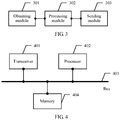
- the data processing device includes:
- the processing module 302 is specifically configured to obtain the M th log in the N logs, where M is a positive integer; and when M is equal to 1, use the M th log as a log template corresponding to the first type; or update, based on the M th log, a first target template, and using the first target template as the log template corresponding to the first type, where the first target template is a log template determined based on another log that is of a same type with the N logs.
- the processing module 302 is specifically configured to update, based on the M th log, a second target template, and using the second target template as the log template corresponding to the first type, where the second target template is a log template determined by the data processing device based on the (M-1) th log.
- the processing module 302 is specifically configured to compare the M th log with the second target template; and if it is determined that the second target template includes a variable relative to the M th log, represent the variable that is in the second target template and that is relative to the M th log by using a wildcard character, and use the second target template as the log template corresponding to the first type, where the wildcard character is a preset character or character string; or if it is determined that the second target template includes no variable relative to the M th log, use the second target template as the log template corresponding to the first type.
- the processing module 302 is specifically configured to: identify a different part in one or more logs in the N logs obtained by comparing the one or more logs in the N logs with the log template corresponding to the first type as the variable; and extract the variable to generate the structured log.
- the processing module 302 is specifically configured to: obtain the variable location recorded by the log template corresponding to the first type; and extract, from one or more logs in the N logs, a variable corresponding to the variable location to generate the structured log.
- the processing module 302 is specifically configured to determine, according to a classification algorithm or a clustering algorithm, that the N logs in the log set belong to the first type.
- the processing module 302 is further configured to establish a mapping relationship between the log template corresponding to the first type and the N logs; and the processing module 302 is specifically configured to query, based on the mapping relationship, one or more logs in the N logs that are corresponding to the log template corresponding to the first type; and extract, based on the variable location in the log template corresponding to the first type, the variables from the N logs to generate the structured log.
- the data processing device further includes a sending module 303, configured to send the structured log and the log template corresponding to the first type to a downstream system.
- a sending module 303 configured to send the structured log and the log template corresponding to the first type to a downstream system.
- the structured log further includes any one or more of a time, a host name, a module name, severity, and a process ID.
- the data processing device in FIG. 3 may be configured to: perform any step performed by the data processing device in FIG. 2 , and implement any function implemented by the data processing device in FIG. 2 .
- the processing module 302 determines, based on a plurality of logs of a same type, the log template of the log type corresponding to the plurality of logs, that is, a parsing rule; and then the processing module 302 extracts, based on the log template, variables of the plurality of logs to generate the structured log. That is, the data processing device may immediately obtain and update, in a running process, the parsing rule corresponding to the log, the parsing rule no longer needs to be manually set, and manual maintenance and updating on the parsing rule are not needed in the running process.
- the data processing device includes: a transceiver 401, a processor 402, and a bus 403, where the transceiver 401 is connected to the processor 402 by using the bus 403.
- the processor 402 may be a central processing unit (central processing unit, CPU for short), a network processor (network processor, NP for short), or a combination of a CPU and an NP.
- CPU central processing unit
- NP network processor
- the processor 402 may further include a hardware chip.
- the hardware chip may be an application-specific integrated circuit (application-specific integrated circuit, ASIC for short), a programmable logic device (programmable logic device, PLD for short), or a combination of an application-specific integrated circuit and a programmable logic device.
- the PLD may be a complex programmable logic device (complex programmable logic device, CPLD for short), a field-programmable gate array (field-programmable gate array, FPGA for short), a generic array logic (generic array logic, GAL for short), or any combination thereof.
- the data processing device may further include a memory 404, and the memory 404 may be further configured to store a log set.
- the memory 404 may include a volatile memory (volatile memory) such as a random-access memory (random-access memory, RAM for short).
- the memory may also include a non-volatile memory (non-volatile memory) such as a flash memory (flash memory), a hard disk drive (hard disk drive, HDD for short), or a solid-state drive (solid-state drive, SSD for short).
- flash memory flash memory
- HDD hard disk drive
- SSD solid-state drive
- the memory 404 may also include a combination of the foregoing types of memories.
- the memory 404 may be further configured to store a program instruction.
- the processor 402 may perform one or more steps or an optional implementation in the embodiment shown in FIG. 2 by invoking the program instruction stored in the memory 404, so as to implement a function of the data processing device in the foregoing method.
- the transceiver 401 performs step 201 shown in FIG. 2 ; and the processor performs step 202 to step 204 shown in FIG. 2 .
- the processor 402 determines, based on a plurality of logs of a same type, the log template of the log type corresponding to the plurality of logs, that is, a parsing rule; and then the processor 402 extracts, based on the log template, variables of the plurality of logs to generate the structured log. That is, the data processing device may immediately obtain and update, in a running process, the parsing rule corresponding to the log, the parsing rule no longer needs to be manually set, and manual maintenance and updating on the parsing rule are not needed in the running process.
- the displayed or discussed mutual couplings or direct couplings or communication connections may be implemented by using some interfaces.
- the indirect couplings or communication connections between the apparatuses or units may be implemented in electronic, mechanical, or other forms.
- the units described as separate parts may or may not be physically separate, and parts displayed as units may or may not be physical units, may be located in one position, or may be distributed on a plurality of network units. Some or all of the units may be selected according to actual requirements to achieve the objectives of the solutions of the embodiments.
- functional units in the embodiments of this application may be integrated into one processing unit, or each of the units may exist alone physically, or two or more units are integrated into one unit.
- the integrated unit may be implemented in a form of hardware, or may be implemented in a form of a software functional unit.
- the integrated unit When the integrated unit is implemented in the form of a software functional unit and sold or used as an independent product, the integrated unit may be stored in a computer-readable storage medium.
- the software product is stored in a storage medium and includes several instructions for instructing a computer device (which may be a personal computer, a server, or a network device) to perform all or a part of the steps of the methods described in the embodiments of this application.
- the foregoing storage medium includes: any medium that can store program code, such as a USB flash drive, a removable hard disk, a read-only memory (ROM, Read-Only Memory), a random access memory (RAM, Random Access Memory), a magnetic disk, or an optical disc.
- program code such as a USB flash drive, a removable hard disk, a read-only memory (ROM, Read-Only Memory), a random access memory (RAM, Random Access Memory), a magnetic disk, or an optical disc.
Landscapes
- Engineering & Computer Science (AREA)
- Theoretical Computer Science (AREA)
- General Engineering & Computer Science (AREA)
- Databases & Information Systems (AREA)
- Physics & Mathematics (AREA)
- General Physics & Mathematics (AREA)
- Data Mining & Analysis (AREA)
- Computer Hardware Design (AREA)
- Quality & Reliability (AREA)
- Life Sciences & Earth Sciences (AREA)
- Bioinformatics & Computational Biology (AREA)
- Evolutionary Biology (AREA)
- Probability & Statistics with Applications (AREA)
- Bioinformatics & Cheminformatics (AREA)
- Computational Linguistics (AREA)
- Debugging And Monitoring (AREA)
- Document Processing Apparatus (AREA)
Applications Claiming Priority (2)
| Application Number | Priority Date | Filing Date | Title |
|---|---|---|---|
| CN201610948580.6A CN107992490B (zh) | 2016-10-26 | 2016-10-26 | 一种数据处理方法以及数据处理设备 |
| PCT/CN2017/090054 WO2018076739A1 (zh) | 2016-10-26 | 2017-06-26 | 一种数据处理方法以及数据处理设备 |
Publications (2)
| Publication Number | Publication Date |
|---|---|
| EP3525111A1 true EP3525111A1 (de) | 2019-08-14 |
| EP3525111A4 EP3525111A4 (de) | 2019-08-21 |
Family
ID=62024306
Family Applications (1)
| Application Number | Title | Priority Date | Filing Date |
|---|---|---|---|
| EP17865339.0A Ceased EP3525111A4 (de) | 2016-10-26 | 2017-06-26 | Datenverarbeitungsverfahren und datenverarbeitungsvorrichtung |
Country Status (4)
| Country | Link |
|---|---|
| US (1) | US20190251093A1 (de) |
| EP (1) | EP3525111A4 (de) |
| CN (2) | CN107992490B (de) |
| WO (1) | WO2018076739A1 (de) |
Families Citing this family (24)
| Publication number | Priority date | Publication date | Assignee | Title |
|---|---|---|---|---|
| JP6978687B2 (ja) * | 2018-03-08 | 2021-12-08 | 日本電信電話株式会社 | 監視装置及び監視方法 |
| CN110968500A (zh) * | 2018-09-30 | 2020-04-07 | 北京国双科技有限公司 | 一种测试用例的执行方法及装置 |
| CN109582650B (zh) * | 2018-11-09 | 2021-05-25 | 金色熊猫有限公司 | 模块调用量处理方法、装置、电子设备、存储介质 |
| CN109783459A (zh) * | 2019-01-04 | 2019-05-21 | 平安科技(深圳)有限公司 | 从日志中提取数据的方法、装置及计算机可读存储介质 |
| CN111488260B (zh) * | 2019-01-29 | 2023-12-08 | 华为云计算技术有限公司 | 数据模板获取方法、装置、计算机设备以及可读存储介质 |
| CN110263009B (zh) * | 2019-06-21 | 2024-01-16 | 深圳前海微众银行股份有限公司 | 日志分类规则的生成方法、装置、设备及可读存储介质 |
| CN110377576B (zh) * | 2019-07-24 | 2021-10-29 | 中国工商银行股份有限公司 | 创建日志模板的方法和装置、日志分析方法 |
| CN111046012B (zh) * | 2019-12-02 | 2023-09-26 | 东软集团股份有限公司 | 巡检日志的抽取方法、装置、存储介质和电子设备 |
| CN111353036B (zh) * | 2020-02-27 | 2024-04-09 | 深信服科技股份有限公司 | 一种规则文件生成方法、装置、设备及可读存储介质 |
| CN111581057B (zh) * | 2020-05-08 | 2022-06-14 | 厦门服云信息科技有限公司 | 一种通用日志解析方法、终端设备及存储介质 |
| AT523829B1 (de) * | 2020-07-28 | 2021-12-15 | Ait Austrian Inst Tech Gmbh | Verfahren zur Detektion von anomalen Betriebszuständen eines Computersystems |
| CN112565232B (zh) * | 2020-11-30 | 2022-05-13 | 国网江苏省电力有限公司检修分公司 | 一种基于模板和流量状态的日志解析方法及系统 |
| CN112732759B (zh) * | 2020-12-31 | 2023-02-03 | 青岛海尔科技有限公司 | 数据处理方法及装置,存储介质及电子装置 |
| US12034731B2 (en) * | 2021-01-29 | 2024-07-09 | Paypal, Inc. | Evaluating access requests using assigned common actor identifiers |
| CN112463772B (zh) * | 2021-02-02 | 2022-05-27 | 北京信安世纪科技股份有限公司 | 日志处理方法、装置、日志服务器及存储介质 |
| CN113596097B (zh) * | 2021-06-30 | 2023-08-18 | 联想(北京)有限公司 | 一种日志的传输方法及电子设备 |
| US20230035274A1 (en) * | 2021-08-01 | 2023-02-02 | Authomize Ltd. | Methods and Systems for Classification of Sensitive Electronic Resources |
| CN114168672B (zh) * | 2021-12-13 | 2022-09-23 | 明觉科技(北京)有限公司 | 日志数据的处理方法、装置、系统以及介质 |
| CN115237873A (zh) * | 2022-07-28 | 2022-10-25 | 中国银行股份有限公司 | 一种日志存储方法、装置、设备及存储介质 |
| CN115470073B (zh) * | 2022-09-06 | 2026-03-31 | 中信科移动通信技术股份有限公司 | 设备监控方法及装置 |
| CN116166501B (zh) * | 2023-02-03 | 2024-03-08 | 上海擎创信息技术有限公司 | 一种日志校验方法、装置、电子设备及存储介质 |
| CN116610651B (zh) * | 2023-05-18 | 2026-02-13 | 深蓝汽车科技有限公司 | 车辆的日志输出方法、装置、车辆及存储介质 |
| CN117407242B (zh) * | 2023-10-10 | 2024-04-05 | 浙江大学 | 基于大语言模型的低成本、零样本的在线日志解析方法 |
| CN118626359B (zh) * | 2024-08-15 | 2024-11-15 | 中电数据产业集团有限公司 | 一种基于大语言模型的日志分析方法及系统 |
Family Cites Families (15)
| Publication number | Priority date | Publication date | Assignee | Title |
|---|---|---|---|---|
| US6564171B1 (en) * | 2000-09-14 | 2003-05-13 | Advanced Micro Devices Inc. | Method and apparatus for parsing event logs to determine tool operability |
| CN100357900C (zh) * | 2005-01-20 | 2007-12-26 | 上海复旦光华信息科技股份有限公司 | 基于模板的异构日志信息自动提取与分析方法 |
| US8041683B1 (en) * | 2006-09-29 | 2011-10-18 | Emc Corporation | Methods and apparatus for locating network logs |
| CN101534580B (zh) * | 2009-04-08 | 2011-09-14 | 华为技术有限公司 | 一种数据处理方法以及数据处理系统 |
| RU2536390C2 (ru) * | 2012-10-31 | 2014-12-20 | Общество с ограниченной ответственностью "1С" | Способ для автоматизированного создания отчетов |
| CN103412924B (zh) * | 2013-08-12 | 2017-10-31 | 东软集团股份有限公司 | 日志多语言查询方法和系统 |
| WO2015181876A1 (ja) * | 2014-05-26 | 2015-12-03 | 株式会社日立製作所 | システム運用支援方法および計算機 |
| KR20160027419A (ko) * | 2014-08-29 | 2016-03-10 | 삼성전자주식회사 | 정보에 기반하여 부가기능을 제공하는 방법 |
| CN104281672B (zh) * | 2014-09-28 | 2021-02-12 | 网神信息技术(北京)股份有限公司 | 日志数据的处理方法和装置 |
| CN105790967B (zh) * | 2014-12-18 | 2020-04-14 | 华为技术有限公司 | 一种网络日志处理方法和装置 |
| CN105808375A (zh) * | 2014-12-31 | 2016-07-27 | 航天信息软件技术有限公司 | 导入数据的方法和装置 |
| US11048608B2 (en) * | 2015-03-17 | 2021-06-29 | Vmware, Inc. | Probability-distribution-based log-file analysis |
| US11226975B2 (en) * | 2015-04-03 | 2022-01-18 | Oracle International Corporation | Method and system for implementing machine learning classifications |
| WO2016161381A1 (en) * | 2015-04-03 | 2016-10-06 | Oracle International Corporation | Method and system for implementing a log parser in a log analytics system |
| CN105447099B (zh) * | 2015-11-11 | 2018-12-14 | 中国建设银行股份有限公司 | 日志结构化信息提取方法及装置 |
-
2016
- 2016-10-26 CN CN201610948580.6A patent/CN107992490B/zh active Active
- 2016-10-26 CN CN202111084804.0A patent/CN114281781A/zh active Pending
-
2017
- 2017-06-26 WO PCT/CN2017/090054 patent/WO2018076739A1/zh not_active Ceased
- 2017-06-26 EP EP17865339.0A patent/EP3525111A4/de not_active Ceased
-
2019
- 2019-04-26 US US16/396,193 patent/US20190251093A1/en not_active Abandoned
Also Published As
| Publication number | Publication date |
|---|---|
| WO2018076739A1 (zh) | 2018-05-03 |
| US20190251093A1 (en) | 2019-08-15 |
| CN114281781A (zh) | 2022-04-05 |
| CN107992490B (zh) | 2021-09-14 |
| EP3525111A4 (de) | 2019-08-21 |
| CN107992490A (zh) | 2018-05-04 |
Similar Documents
| Publication | Publication Date | Title |
|---|---|---|
| EP3525111A1 (de) | Datenverarbeitungsverfahren und datenverarbeitungsvorrichtung | |
| US10262059B2 (en) | Method, apparatus, and storage medium for text information processing | |
| CN110263009B (zh) | 日志分类规则的生成方法、装置、设备及可读存储介质 | |
| US11757708B2 (en) | Anomaly detection device, anomaly detection method, and anomaly detection program | |
| CN105574156A (zh) | 文本聚类方法、装置及计算设备 | |
| CN105812177A (zh) | 一种网络故障处理方法和处理设备 | |
| CN109145162B (zh) | 用于确定数据相似度的方法、设备和计算机可读存储介质 | |
| CN109240895A (zh) | 一种分析日志故障的处理方法及装置 | |
| CN113688240B (zh) | 威胁要素提取方法、装置、设备及存储介质 | |
| CN111240942A (zh) | 日志异常检测方法及装置 | |
| CN111666101A (zh) | 软件同源分析方法及装置 | |
| KR20230024747A (ko) | 이기종 네트워크 장비들을 위한 장애 경보 분류 장치 및 방법 | |
| WO2016093839A1 (en) | Structuring of semi-structured log messages | |
| CN114297347A (zh) | 行业类别的确定方法、装置、存储介质和电子设备 | |
| CN115048345A (zh) | 异常日志检测方法、装置、电子设备和存储介质 | |
| CN119030887A (zh) | 网络故障处理时长的预测方法、装置、设备及介质 | |
| US11908466B2 (en) | Automatically determining a descriptive identifier for a process grouping | |
| US20180253071A1 (en) | Work supporting system, work supporting method, and computer program product | |
| JP6280089B2 (ja) | ホワイトリスト作成装置、ホワイトリスト作成方法およびホワイトリスト作成プログラム | |
| CN116192619A (zh) | 一种异常定位方法、装置、电子设备、介质及程序产品 | |
| WO2022060868A1 (en) | An automated machine learning tool for explaining the effects of complex text on predictive results | |
| US12189673B2 (en) | Techniques for securing computing interfaces using clustering | |
| US12619650B2 (en) | Techniques for securing computing interfaces using clustering | |
| US20250291654A1 (en) | System and method configured to perform powershell monitoring of communications to a computer-based system using keywords | |
| WO2025201327A1 (zh) | 一种加密检测方法及相关装置 |
Legal Events
| Date | Code | Title | Description |
|---|---|---|---|
| STAA | Information on the status of an ep patent application or granted ep patent |
Free format text: STATUS: THE INTERNATIONAL PUBLICATION HAS BEEN MADE |
|
| PUAI | Public reference made under article 153(3) epc to a published international application that has entered the european phase |
Free format text: ORIGINAL CODE: 0009012 |
|
| STAA | Information on the status of an ep patent application or granted ep patent |
Free format text: STATUS: REQUEST FOR EXAMINATION WAS MADE |
|
| REG | Reference to a national code |
Ref country code: DE Ref legal event code: R079 Free format text: PREVIOUS MAIN CLASS: G06F0017300000 Ipc: G06F0011340000 |
|
| 17P | Request for examination filed |
Effective date: 20190510 |
|
| AK | Designated contracting states |
Kind code of ref document: A1 Designated state(s): AL AT BE BG CH CY CZ DE DK EE ES FI FR GB GR HR HU IE IS IT LI LT LU LV MC MK MT NL NO PL PT RO RS SE SI SK SM TR |
|
| AX | Request for extension of the european patent |
Extension state: BA ME |
|
| A4 | Supplementary search report drawn up and despatched |
Effective date: 20190723 |
|
| RIC1 | Information provided on ipc code assigned before grant |
Ipc: G06F 16/21 20190101ALI20190717BHEP Ipc: G06F 16/00 20190101ALI20190717BHEP Ipc: G06F 11/34 20060101AFI20190717BHEP |
|
| DAV | Request for validation of the european patent (deleted) | ||
| DAX | Request for extension of the european patent (deleted) | ||
| STAA | Information on the status of an ep patent application or granted ep patent |
Free format text: STATUS: EXAMINATION IS IN PROGRESS |
|
| 17Q | First examination report despatched |
Effective date: 20210215 |
|
| REG | Reference to a national code |
Ref country code: DE Ref legal event code: R003 |
|
| STAA | Information on the status of an ep patent application or granted ep patent |
Free format text: STATUS: THE APPLICATION HAS BEEN REFUSED |
|
| 18R | Application refused |
Effective date: 20220711 |