EP3528457A2 - Détection collaborative d'anomalies de l'internet des objets - Google Patents
Détection collaborative d'anomalies de l'internet des objets Download PDFInfo
- Publication number
- EP3528457A2 EP3528457A2 EP19157787.3A EP19157787A EP3528457A2 EP 3528457 A2 EP3528457 A2 EP 3528457A2 EP 19157787 A EP19157787 A EP 19157787A EP 3528457 A2 EP3528457 A2 EP 3528457A2
- Authority
- EP
- European Patent Office
- Prior art keywords
- model
- participants
- agent
- partial block
- local
- Prior art date
- Legal status (The legal status is an assumption and is not a legal conclusion. Google has not performed a legal analysis and makes no representation as to the accuracy of the status listed.)
- Ceased
Links
Images





Classifications
-
- H—ELECTRICITY
- H04—ELECTRIC COMMUNICATION TECHNIQUE
- H04L—TRANSMISSION OF DIGITAL INFORMATION, e.g. TELEGRAPHIC COMMUNICATION
- H04L63/00—Network architectures or network communication protocols for network security
- H04L63/14—Network architectures or network communication protocols for network security for detecting or protecting against malicious traffic
- H04L63/1408—Network architectures or network communication protocols for network security for detecting or protecting against malicious traffic by monitoring network traffic
- H04L63/1425—Traffic logging, e.g. anomaly detection
Definitions
- the present invention relates to the field of cyber security. More particularly, the invention relates to a method for detecting anomalies in loT devices.
- the Internet of Things is a rapidly growing aspect in which the Internet is evolving. Leading IoT experts believe that soon there will be more than 50 billion devices connected to the Internet, and these devices will offer a variety of applications and services for both daily and critical uses. The vision for these loT devices is that they will autonomously communicate with one another to improve services and our daily lives
- loT Like many new technologies, the loT improves our lives but introduces disruptive elements as well.
- One particular issue associated with loT devices is that they tend to have vulnerabilities, which in some cases are not treated by the device manufacturer. An attacker can exploit these vulnerabilities for nefarious purposes. Since loT devices have been integrated into both daily and critical applications, their security is a significant concern.
- IDS Intrusion Detection System
- the participants may be loT devices connected to each other over a network.
- the method may further comprise the step of ensuring that the collaboration is safe in case where an adversary attacks one or more of the participants by feeding false information; by performing self-attestation, to check if a combined model is safe and model-filtration, to remove possible manipulations from combined models.
- the method may further comprise the step of performing load balancing of the network, wherein the participants shares new models in a high frequency and share an established and old model in a low frequency.
- a method for efficiently detecting abnormal program control flow comprising the steps of:
- the Extensible Markov Model may be trained in a distributed manner by the participants.
- the system comprises:
- the present invention relates to a method for collaboration of remote participants in a distributed manner with no central server, on training an anomaly detection model, based on each of the local observations of the participants, wherein, a block-chain protocol is used where the blocks are the current anomaly detection models of a subset of participants.
- the method of the present invention ensures that the collaboration is safe in the case where an adversary attacks one or more of the participants by feeding false information; This method is to perform both self-attestation (i.e. to check if a combined model is safe) and model-filtration (i.e. to remove possible manipulations from combined models).
- the method of the present invention enables a participant to learn how to detect current cyber-attacks targeting his own local code (exploitation) in a manner which is very efficient (enough for loTs).
- the method of the present invention relates to detecting anomalies in devices that are resource limited, such as Internet of Things (IoT) devices.
- IoT Internet of Things
- CIoTA Collaborative Internet of Things Anomaly
- M L A model which is currently deployed on a local device is denoted as M L .
- Verified Model - Let d ( M i ,M j ) be the distance between models M i and M j .
- a model M v is said to be verified by a device if d ( M L ,M v ) ⁇ ⁇ , where ⁇ is a user given parameter of the system.
- Combined Model - A model created by merging a set of models together.
- the combined model only contains elements which are present in at least p c percent of the models in the set.
- Report - A record consisting of a model m and a cryptographic signature S ( m,seed ) that uses a private key of the model and a random seed.
- Block - A list of reports on the same seed from different devices which has L entries. If a block has less than L entries, then it is referred to as a partial block or a block in progress.
- Trusted Model The combined model resulting from merging the models from the reports in the most recently closed block. Since reports originate from different devices (verified by their signatures), and the reports have had time to be verified by the majority, the combined model is considered to have collaborative trust.
- Chain - A blockchain consisting of CIoTA's blocks for a type of IoT device.
- the block's acceptance criterion is for the block to include precisely L entries, while the criterion for agreeing on a partial block is for the combined model which results from merging the models to be a verified model.
- the length of a chain is the total number of completed blocks in that chain.
- a chain may have at most one partial block appended to the end of the chain.
- Agent - A program that runs on an IoT device which is responsible for training and executing the local model M L , downloading broadcasted chains to replace M L and the locally stored chain, and periodically broadcasting the locally stored chain, with the latest M L as a report in the partial block.
- An agent only replaces its locally stored chain if the downloaded chain is longer than the existing chain.
- an agent only uses the downloaded chain's partial block if the agent can attest that the combined model, resulting from the partial block, is a verified model.
- a blockchain is a database that is distributed among a plurality of devices, consisting of a chain of data blocks that is managed by the majority of the devices in the network. Each data block contains a list of records and a hash value of the previous block. A block is accepted into the chain if it satisfies specific criteria.
- the present invention uses a blockchain to incrementally update a trusted anomaly detection model, via self-attestation and consensus among the loT devices.
- the blockchain acts as a secured distributed ledger to ensure that a majority of the devices are using the latest validated anomaly detection model, and can collaboratively construct an ongoing set of validated models, each of which has been trained by a single device.
- a closed block in the chain represents a validated model which is ready for use that has been verified by a majority of devices in the system.
- CloTA uses an Extensible Markov Model (EMM) as the anomaly detection model.
- EMM Extensible Markov Model
- the EMM tracks a program's regular memory jump sequences and can be incrementally updated and merged with other models.
- new states are accepted to the EMM only when there is a consensus among the models.
- the present invention defines and evaluates a novel approach to efficiently detect abnormal control-flows at a set granularity. The approach is efficient in because the program counter's flow is tracked between regions of memory, and not actual memory addresses or system calls. As a result, the model is compact (has relatively few states) and is suitable for devices with limited resources (IoT devices).
- An MC is a memory-less process, i.e., a process where the probability of transition at time t only depends on the state at time t and not on any of the states leading up that state.
- an MC is represented as an adjacent matrix M , such that M ij stores the probability of transitioning from state i to state j at any given time t .
- X t is the random variable representing the state at time t
- M ij can be calculated by Eq. 1, where P(a) is the probability of a .
- X t i
- EMM is the incremental version of the MC.
- N [ n ij ] be the frequency matrix, such that n ij is the number of transitions which have occurred from state i to state j .
- N By maintaining N, M can be updated incrementally by simply adding the value '1' to N ij whenever a transition from i to j is observed. In most cases, N is a sparse matrix (most of the entries are zero).
- efficient data structures e.g., compressed row storage or hash maps
- the resulting MC can be used for the purpose of anomaly detection.
- Q k be the last k observed states in the MC, where k ⁇ ⁇ 1, 2, 3, ... ⁇ is a user defined parameter.
- a kernel debugger such as the Linux performance monitoring API (linux/perf event.h) .
- the debugger runs in parallel to the target application and tracks addresses of the PC.
- the debugger periodically reports the addresses observed since the last report.
- the sequence of observed addresses can then be modeled in the MC.
- a state in the MC should be region of memory.
- the debugger is configured to report right after branch and jump instructions. To accomplish this, a kernel feature was used via the debugger.
- PC addr be the current logical address of the application's program counter, where 0x0 is the start of the app's logical memory-space.
- B be the partition size in Bytes, defined by the user.
- the partition size of a memory space is a user defined parameter. When selecting the partition size, there is a trade off between the true positive rate and memory requirements. For an Apache web-server, it was found that a partition size of 256 Bytes was is enough to detect the evaluated attacks, where the memory consumption of the model N was only 20KB of memory.
- Algorithm 1 presents the complete process for modeling and monitoring an application's control-flow in memory.
- T grace is the initial learning time given to the MC, before we start searching for anomalies.
- Algorithm 1 The algorithm for training an MC, and detecting anomalies in an application's control flow via the memory.
- model-attestation and abnormality-filtration (Model -filtration).
- Model-attestation - is used to determine whether a trusted model N (i) is similar to a given model N (j). If N (j) is similar, than it is considered to be a verified model with respect to N (i) .
- N (j) is similar, than it is considered to be a verified model with respect to N (i) .
- dim(M) is the length of M's dimensions
- M is the Markov chain obtained from N.
- a local device i can attest that model N (j) is a self-similar model, if d(N (i) , N (j) ) ⁇ ⁇ , where ⁇ is a parameter of the framework.
- Each IoT device has an agent which maintains a local model M L that is used to detect malicious behaviors in a particular application.
- An agent records new intelligence by updating M L with observations on the application's behavior.
- An agent shares its intelligence ( M L ), in the form of a rumor, by adding M L to the chain's partial block, and then sending the chain to neighboring agents in the network.
- Other agents will only accept this partial block if it is longer than their own partial block, and if they can attest that it is safe (by verifying it against their own local model).
- the partial block only grows if the majority of agents have verified that it contains a safe model.
- rumors are signed by a private key and verified with the respective public key.
- Fig. 1A shows a flowchart describing the process of an agent's intelligence gathering, according to an embodiment of the present invention.
- Each IoT device begins by checking in stage 101 if a local model M L exists, and if not creating its local model M L in stage 102 after which, in stage 103, M L is checked to see if it is a combined model. Given that M L is a combined model the process continues to stage 104 to continuously collect intelligence about its territory (local application), and detect anomalies in the collected intelligence using M L in stage 105 by comparing each member in M L to p th , wherein if a member is found that exceeds the threshold an alert is published in stage 106.
- the device updates M L in stage 107 to support the new intelligence. If stage 103 finds that M L is a new model, M L is given a brief period of training from all intelligence unconditionally which is verified in stage 108. If infected, this short period will not affect the other agents, since rumors (broadcasted models) are only accepted if verified by the majority of agents.
- the whole process of Fig. 1A is triggered by a control-flow event in the first stage 100.
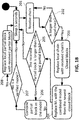
- Fig. 1B shows a flowchart describing the process of an agent receiving intelligence from another agent, according to an embodiment of the present invention.
- L checks, in the next stage 202, if C R is longer than C L (i.e. the local chain) and contains valid signatures. If these conditions hold, the blocks in C L are replaced in stage 203 by those in C R , and the last completed block is used to form a combined model (Algorithm 1) which replaces M L in stage 204, after which L checks in stage 205 if the partial block in C R is longer than the partial block in C L . If this condition holds the in stage 206 the combined model from the partial block undergoes the validation test in Algorithm 2, as result of which if the combined is verified (stage 207) then C L is updated with the partial block from C R in stage 208.
- Algorithm 1 the combined model from the partial block undergoes the validation test in Algorithm 2
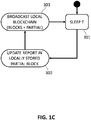
- Fig. 1C shows a flowchart describing the process of intelligence sharing, according to an embodiment of the present invention, in which an agent periodically (i.e. every T time elapses, stage 301) updates its report in the locally stored chain's partial block in stage 302. The agent then broadcasts the entire locally stored chain to all neighboring agents in stage 303.
- an agent periodically (i.e. every T time elapses, stage 301) updates its report in the locally stored chain's partial block in stage 302.
- the agent then broadcasts the entire locally stored chain to all neighboring agents in stage 303.
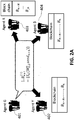
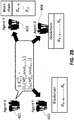
- Figs. 2A-2C schematically illustrate an exemplary implementation of the disclosed method, in which CIoTA is installed on a set of four IoT smart bulbs, 401, 402, 403 and 404, with the maximum number of reports in a block ( L ) set at 3.
- Each device (bulb) maintains a list of the last N blocks, B n - N to B n , to limit the amount of memory consumed by the locally stored chain. If there is no partial block, a bulb can create a new partial block or add/update the existing partial block.
- Fig. 2A schematically illustrates bulb 401 attempting to create B n +1 with the device's report on its model, M G,L and randomly generated seed n +1 .
- Fig. 2A schematically illustrates bulb 401 attempting to create B n +1 with the device's report on its model, M G,L and randomly generated seed n +1 .
- 2B bulb 404 contributes to B n +1 by expanding B n +1 with its report, which is a signature on M B,L and seed n +1 .
- Bulb 403 completes the block by adding its report to the block, causing all of the agents to update their models with a combined model based on all of the models in B n +1 , as shown in Fig. 2C .
- the main assumption of the present invention is that an attacker cannot exploit a large number of devices within a short period of time, while simultaneously evading M L 's detection. Furthermore, CIoTA assumes that reports in a block came from the reporting device; otherwise, an attacker could simply broadcast fake chains.
- a Public-Key Infrastructure PKI
- PKI Public-Key Infrastructure
- a TrustZone is a safe house on a device which has access to untrusted territory within the device.
- the agent along with a symmetric encryption key (provided by the system's administrator), are located in the TrustZone. Thereby, the agent is able to securely communicate with other agents, while avoiding the issues of PKI.
- a system according to the present invention may be attacked in one of various possible attack vectors.
- the goal of an attacker is to execute his/her own persistent logic on the loT device.
- the attacker may succeed in negatively affecting M L before it is shared with the other agents via the partial block.
- the majority of the other agents will either reject the partial block because the verification Algorithm 2 will fail, or will omit the additional behaviors (new transitions) while forming the combined model in Algorithm 1.
- M L will be replaced at the completion of the next block, and then the malware will be detected.
- agent is installed at a higher level than the infected application (e.g., the kernel or the TrustZone), accessing the agent's memory address will require additional exploits. This requirement creates a catch-22 effect since the attacker needs to perform additional actions (by exploiting the device further) to gain access to the agent, yet doing so creates anomalies in the control-flow which in turn raises alerts.
- the agent is installed at a higher level than the infected application (e.g., the kernel or the TrustZone)
- accessing the agent's memory address will require additional exploits. This requirement creates a catch-22 effect since the attacker needs to perform additional actions (by exploiting the device further) to gain access to the agent, yet doing so creates anomalies in the control-flow which in turn raises alerts.
- an attacker might attempt to alter the anomaly detection model by creating similar alterations to at least p c percent of the models inside the partial block, and then broadcast the chain.
- this is challenging both because the deployment may be widespread geographically, and because the attacker must obtain a large number of private keys when employing PKI or extract the private key from the TrustZone.
- the values of p c and L are set relatively high, and diverse keys are used if possible.
- an agent in CIoTA applies one or more of the following policies after detecting an attack:
- a parameter optimization of the system was done and to predict the optimal parameters initiation of the system without the necessity to run experiments on the specific device. Also a methodology for optimizing parameters on every application was developed.
- Window Size Due to the noisiness nature of the EMM, the anomaly score was defined as the average of last n scores, therefore smoothening the score and evading false alarms, window size is determining how much jumps are included into the probability averaging window.
- Fig. 4 schematically shows how a window of size 5 works. Three windows of size 5 are shown. The first window 401 (as it contains the higher scores) has the average score of 90.4. The second window, 402 contains the lowest scores has the average score of 86.4, and the third window 403, has an average score of 86.6 the bigger the window is - it is harder to change the score of the agent, which may cause false negatives.
- Fig4 shows an example of setting the window size to 5.
- the bigger window size the detection mechanism is less sensitive and therefore, will result in lower false alarms, but with a lower detection rate (i.e., false negative).
- smaller windows will make the system (or model) more sensitive and will detect more attacks, but at the cost of a higher false alarm rate.
- Fig. 5 shows the detection capabilities (represented by the p diff measurement) as a function of the monitored application memory size and the window size. It is shown that for different application size, the optimal window size is around 50 to 70.
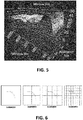
- FIG. 6 schematically shows the application memory split for different mask size. The more blocks the memory is split into - the more accurate the results are, however more memory is consumed (e.g. in mask 0xFFFFFFFF each memory address is treated as its own memory block), as shown in Fig. 6
- Fig. 7 schematically shows Mask size performance per app size. As it can be seen in Fig. 7 the best mask was with 28 active bits (0xFFFFFFF0). It was expected that the bigger the mask value is the model will be more accurate, but from the results, it looks like the largest mask came a bit short probably because low generalization, test error or even depends on the application size.
- the system of the invention CloTA works with a multi-threaded app and modified it to better trace multiple threads.
- CloTA uses a kernel debugger api called "Perf", it samples the memory a returns the latest addresses. It can also provide the thread id (tid).
- CloTA's jump processing algorithm is simple, when a new address is received, record a new jump from the latest address to the current. This approach works well on single threaded applications. But real life apps are usually complex and concurrent. In a case of a multi-process app CloTA agent can be run per process, but in a case of multi-threaded app adjustments have to done. The concern was that threads would report their locations out of turn, thus scrambling the transition order, hence corrupting the final EMM model. The present invention solution was to monitor each threads transition traces separately and then update the local EMM according to every thread.
- Fig. 8 shows a demonstration of the issues with multi-threaded applications and the suggested fix.
- Fig. 9 schematically shows the multithreading experiment results. From the received results it can be seen in Fig. 9 that the model of the invention has successfully detected the attack. Before the attack it was steady without false positives we can also see that the P diff is large.
- the participants for example the devices of the loT network
- models are sent in the network and may cause over load traffic.
- the method of the present invention performs a smart load balancing so that the traffic load will be reduced.
- This method for load balancing of the present invention comprises the steps of: as long as a model is newer the participants share the model in a high frequency, to increase the learning process with time. However, as the model is older and more established, the participant will share the model less and less. In that way the load on the network is reduced.
Landscapes
- Engineering & Computer Science (AREA)
- Computer Security & Cryptography (AREA)
- Computer Hardware Design (AREA)
- Computing Systems (AREA)
- General Engineering & Computer Science (AREA)
- Computer Networks & Wireless Communication (AREA)
- Signal Processing (AREA)
- Data Exchanges In Wide-Area Networks (AREA)
Applications Claiming Priority (1)
| Application Number | Priority Date | Filing Date | Title |
|---|---|---|---|
| US201862632329P | 2018-02-19 | 2018-02-19 |
Publications (2)
| Publication Number | Publication Date |
|---|---|
| EP3528457A2 true EP3528457A2 (fr) | 2019-08-21 |
| EP3528457A3 EP3528457A3 (fr) | 2019-10-23 |
Family
ID=65529266
Family Applications (1)
| Application Number | Title | Priority Date | Filing Date |
|---|---|---|---|
| EP19157787.3A Ceased EP3528457A3 (fr) | 2018-02-19 | 2019-02-18 | Détection collaborative d'anomalies de l'internet des objets |
Country Status (1)
| Country | Link |
|---|---|
| EP (1) | EP3528457A3 (fr) |
Cited By (7)
| Publication number | Priority date | Publication date | Assignee | Title |
|---|---|---|---|---|
| CN111818049A (zh) * | 2020-07-08 | 2020-10-23 | 宝牧科技(天津)有限公司 | 一种基于马尔可夫模型的僵尸网络流量检测方法及系统 |
| CN112528317A (zh) * | 2020-11-10 | 2021-03-19 | 联想(北京)有限公司 | 一种基于区块链的信息处理方法、装置及设备 |
| CN112637186A (zh) * | 2020-12-18 | 2021-04-09 | 电子科技大学长三角研究院(衢州) | 一种基于区块链的入侵检测功能分布式部署方法 |
| CN114760077A (zh) * | 2022-06-14 | 2022-07-15 | 天聚地合(苏州)科技股份有限公司 | 基于区块链的异常数据检测方法、装置、存储介质及网关 |
| CN118573588A (zh) * | 2024-07-31 | 2024-08-30 | 国富瑞(福建)信息技术产业园有限公司 | 一种基于大数据和人工智能的物联网数据处理方法 |
| US12438765B2 (en) | 2020-04-30 | 2025-10-07 | British Telecommunications Public Limited Company | Network anomaly detection |
| US12566431B2 (en) | 2020-04-30 | 2026-03-03 | British Telecommunications Public Limited Company | Sensor anomaly detection |
Family Cites Families (6)
| Publication number | Priority date | Publication date | Assignee | Title |
|---|---|---|---|---|
| WO2009152511A2 (fr) * | 2008-06-13 | 2009-12-17 | Board Of Regents, The University Of Texas System | Détection de déviation de flux de commande pour une sécurité de logiciel |
| WO2013086447A1 (fr) * | 2011-12-07 | 2013-06-13 | Seven Networks, Inc. | Sensibilité radio d'un dispositif mobile pour envoyer des signaux de commande côté serveur au moyen d'un protocole de transport optimisé de réseau sans fil |
| US20150007142A1 (en) * | 2012-12-12 | 2015-01-01 | Google Inc. | Branch destination tables |
| US9779557B2 (en) * | 2015-08-18 | 2017-10-03 | Carfit Corp. | Automotive activity monitor |
| WO2017180382A1 (fr) * | 2016-04-12 | 2017-10-19 | Pcms Holdings, Inc. | Système et procédé de validation de données dans un réseau de capteurs décentralisé |
| US9882918B1 (en) * | 2017-05-15 | 2018-01-30 | Forcepoint, LLC | User behavior profile in a blockchain |
-
2019
- 2019-02-18 EP EP19157787.3A patent/EP3528457A3/fr not_active Ceased
Non-Patent Citations (1)
| Title |
|---|
| None |
Cited By (9)
| Publication number | Priority date | Publication date | Assignee | Title |
|---|---|---|---|---|
| US12438765B2 (en) | 2020-04-30 | 2025-10-07 | British Telecommunications Public Limited Company | Network anomaly detection |
| US12566431B2 (en) | 2020-04-30 | 2026-03-03 | British Telecommunications Public Limited Company | Sensor anomaly detection |
| CN111818049A (zh) * | 2020-07-08 | 2020-10-23 | 宝牧科技(天津)有限公司 | 一种基于马尔可夫模型的僵尸网络流量检测方法及系统 |
| CN112528317A (zh) * | 2020-11-10 | 2021-03-19 | 联想(北京)有限公司 | 一种基于区块链的信息处理方法、装置及设备 |
| CN112637186A (zh) * | 2020-12-18 | 2021-04-09 | 电子科技大学长三角研究院(衢州) | 一种基于区块链的入侵检测功能分布式部署方法 |
| CN112637186B (zh) * | 2020-12-18 | 2022-04-19 | 电子科技大学长三角研究院(衢州) | 一种基于区块链的入侵检测功能分布式部署方法 |
| CN114760077A (zh) * | 2022-06-14 | 2022-07-15 | 天聚地合(苏州)科技股份有限公司 | 基于区块链的异常数据检测方法、装置、存储介质及网关 |
| CN114760077B (zh) * | 2022-06-14 | 2022-08-26 | 天聚地合(苏州)科技股份有限公司 | 基于区块链的异常数据检测方法、装置、存储介质及网关 |
| CN118573588A (zh) * | 2024-07-31 | 2024-08-30 | 国富瑞(福建)信息技术产业园有限公司 | 一种基于大数据和人工智能的物联网数据处理方法 |
Also Published As
| Publication number | Publication date |
|---|---|
| EP3528457A3 (fr) | 2019-10-23 |
Similar Documents
| Publication | Publication Date | Title |
|---|---|---|
| EP3528457A2 (fr) | Détection collaborative d'anomalies de l'internet des objets | |
| Wazid et al. | Uniting cyber security and machine learning: Advantages, challenges and future research | |
| Golomb et al. | CIoTA: Collaborative IoT anomaly detection via blockchain | |
| Bijone | A survey on secure network: intrusion detection & prevention approaches | |
| Bohara et al. | An unsupervised multi-detector approach for identifying malicious lateral movement | |
| CN120050079A (zh) | 基于人工智能的网络安全渗透检测方法及系统 | |
| Grammatikakis et al. | Understanding and mitigating banking trojans: From zeus to emotet | |
| Salim et al. | Securing Smart Cities using LSTM algorithm and lightweight containers against botnet attacks | |
| Limer et al. | Automated ransomware detection using dynamic behavior trace profiling | |
| Just et al. | Learning unknown attacks—A start | |
| US20200128025A1 (en) | Network security using artificial intelligence and high speed computing | |
| Wu et al. | Densely connected residual network for attack recognition | |
| US20250384131A1 (en) | Ensemble intrusion detection system for iot platforms | |
| Jain et al. | A literature review on machine learning for cyber security issues | |
| KR20230002841A (ko) | 보안 분석 프레임워크를 위한 중재기 시스템 | |
| KR20110131627A (ko) | 악성 코드 진단 및 복구 장치, 그리고 이를 위한 단말 장치 | |
| Cao | On preempting advanced persistent threats using probabilistic graphical models | |
| Saeed et al. | Machine learning based intrusion detection system in cloud environment | |
| US20160149933A1 (en) | Collaborative network security | |
| Alese et al. | A machine learning approach for information system security | |
| CN119849314A (zh) | 基于可信计算的安全推演方法和装置 | |
| Pasandideh et al. | Improving attack trees analysis using Petri net modeling of cyber-attacks | |
| Masoodi | Intrusion Detection in the Age of Deep Learning: An Introduction | |
| Lakra | HSNORT: A Hybrid intrusion detection system using artificial intelligence with snort | |
| Baah et al. | A study of gaps in cyber defense automation |
Legal Events
| Date | Code | Title | Description |
|---|---|---|---|
| PUAI | Public reference made under article 153(3) epc to a published international application that has entered the european phase |
Free format text: ORIGINAL CODE: 0009012 |
|
| STAA | Information on the status of an ep patent application or granted ep patent |
Free format text: STATUS: THE APPLICATION HAS BEEN PUBLISHED |
|
| AK | Designated contracting states |
Kind code of ref document: A2 Designated state(s): AL AT BE BG CH CY CZ DE DK EE ES FI FR GB GR HR HU IE IS IT LI LT LU LV MC MK MT NL NO PL PT RO RS SE SI SK SM TR |
|
| AX | Request for extension of the european patent |
Extension state: BA ME |
|
| PUAL | Search report despatched |
Free format text: ORIGINAL CODE: 0009013 |
|
| AK | Designated contracting states |
Kind code of ref document: A3 Designated state(s): AL AT BE BG CH CY CZ DE DK EE ES FI FR GB GR HR HU IE IS IT LI LT LU LV MC MK MT NL NO PL PT RO RS SE SI SK SM TR |
|
| AX | Request for extension of the european patent |
Extension state: BA ME |
|
| RIC1 | Information provided on ipc code assigned before grant |
Ipc: H04L 29/06 20060101AFI20190916BHEP |
|
| STAA | Information on the status of an ep patent application or granted ep patent |
Free format text: STATUS: REQUEST FOR EXAMINATION WAS MADE |
|
| 17P | Request for examination filed |
Effective date: 20200421 |
|
| RBV | Designated contracting states (corrected) |
Designated state(s): AL AT BE BG CH CY CZ DE DK EE ES FI FR GB GR HR HU IE IS IT LI LT LU LV MC MK MT NL NO PL PT RO RS SE SI SK SM TR |
|
| STAA | Information on the status of an ep patent application or granted ep patent |
Free format text: STATUS: EXAMINATION IS IN PROGRESS |
|
| 17Q | First examination report despatched |
Effective date: 20200917 |
|
| STAA | Information on the status of an ep patent application or granted ep patent |
Free format text: STATUS: THE APPLICATION HAS BEEN REFUSED |
|
| 18R | Application refused |
Effective date: 20241128 |