EP3530360A1 - Détection d'expéditions non éligibles - Google Patents
Détection d'expéditions non éligibles Download PDFInfo
- Publication number
- EP3530360A1 EP3530360A1 EP18157870.9A EP18157870A EP3530360A1 EP 3530360 A1 EP3530360 A1 EP 3530360A1 EP 18157870 A EP18157870 A EP 18157870A EP 3530360 A1 EP3530360 A1 EP 3530360A1
- Authority
- EP
- European Patent Office
- Prior art keywords
- eligible
- light grid
- arrangement
- light
- receiver
- Prior art date
- Legal status (The legal status is an assumption and is not a legal conclusion. Google has not performed a legal analysis and makes no representation as to the accuracy of the status listed.)
- Withdrawn
Links
Images

Classifications
-
- B—PERFORMING OPERATIONS; TRANSPORTING
- B07—SEPARATING SOLIDS FROM SOLIDS; SORTING
- B07C—POSTAL SORTING; SORTING INDIVIDUAL ARTICLES, OR BULK MATERIAL FIT TO BE SORTED PIECE-MEAL, e.g. BY PICKING
- B07C5/00—Sorting according to a characteristic or feature of the articles or material being sorted, e.g. by control effected by devices which detect or measure such characteristic or feature; Sorting by manually actuated devices, e.g. switches
- B07C5/02—Measures preceding sorting, e.g. arranging articles in a stream orientating
-
- B—PERFORMING OPERATIONS; TRANSPORTING
- B07—SEPARATING SOLIDS FROM SOLIDS; SORTING
- B07C—POSTAL SORTING; SORTING INDIVIDUAL ARTICLES, OR BULK MATERIAL FIT TO BE SORTED PIECE-MEAL, e.g. BY PICKING
- B07C1/00—Measures preceding sorting according to destination
-
- B—PERFORMING OPERATIONS; TRANSPORTING
- B07—SEPARATING SOLIDS FROM SOLIDS; SORTING
- B07C—POSTAL SORTING; SORTING INDIVIDUAL ARTICLES, OR BULK MATERIAL FIT TO BE SORTED PIECE-MEAL, e.g. BY PICKING
- B07C5/00—Sorting according to a characteristic or feature of the articles or material being sorted, e.g. by control effected by devices which detect or measure such characteristic or feature; Sorting by manually actuated devices, e.g. switches
- B07C5/04—Sorting according to size
- B07C5/10—Sorting according to size measured by light-responsive means
-
- B—PERFORMING OPERATIONS; TRANSPORTING
- B65—CONVEYING; PACKING; STORING; HANDLING THIN OR FILAMENTARY MATERIAL
- B65G—TRANSPORT OR STORAGE DEVICES, e.g. CONVEYORS FOR LOADING OR TIPPING, SHOP CONVEYOR SYSTEMS OR PNEUMATIC TUBE CONVEYORS
- B65G43/00—Control devices, e.g. for safety, warning or fault-correcting
-
- G—PHYSICS
- G01—MEASURING; TESTING
- G01B—MEASURING LENGTH, THICKNESS OR SIMILAR LINEAR DIMENSIONS; MEASURING ANGLES; MEASURING AREAS; MEASURING IRREGULARITIES OF SURFACES OR CONTOURS
- G01B11/00—Measuring arrangements characterised by the use of optical techniques
- G01B11/24—Measuring arrangements characterised by the use of optical techniques for measuring contours or curvatures
-
- G—PHYSICS
- G06—COMPUTING OR CALCULATING; COUNTING
- G06N—COMPUTING ARRANGEMENTS BASED ON SPECIFIC COMPUTATIONAL MODELS
- G06N3/00—Computing arrangements based on biological models
- G06N3/02—Neural networks
- G06N3/04—Architecture, e.g. interconnection topology
- G06N3/0464—Convolutional networks [CNN, ConvNet]
-
- G—PHYSICS
- G06—COMPUTING OR CALCULATING; COUNTING
- G06N—COMPUTING ARRANGEMENTS BASED ON SPECIFIC COMPUTATIONAL MODELS
- G06N3/00—Computing arrangements based on biological models
- G06N3/02—Neural networks
- G06N3/08—Learning methods
-
- G—PHYSICS
- G06—COMPUTING OR CALCULATING; COUNTING
- G06N—COMPUTING ARRANGEMENTS BASED ON SPECIFIC COMPUTATIONAL MODELS
- G06N3/00—Computing arrangements based on biological models
- G06N3/02—Neural networks
- G06N3/08—Learning methods
- G06N3/09—Supervised learning
-
- B—PERFORMING OPERATIONS; TRANSPORTING
- B65—CONVEYING; PACKING; STORING; HANDLING THIN OR FILAMENTARY MATERIAL
- B65G—TRANSPORT OR STORAGE DEVICES, e.g. CONVEYORS FOR LOADING OR TIPPING, SHOP CONVEYOR SYSTEMS OR PNEUMATIC TUBE CONVEYORS
- B65G2201/00—Indexing codes relating to handling devices, e.g. conveyors, characterised by the type of product or load being conveyed or handled
- B65G2201/02—Articles
- B65G2201/0264—Luggage
-
- B—PERFORMING OPERATIONS; TRANSPORTING
- B65—CONVEYING; PACKING; STORING; HANDLING THIN OR FILAMENTARY MATERIAL
- B65G—TRANSPORT OR STORAGE DEVICES, e.g. CONVEYORS FOR LOADING OR TIPPING, SHOP CONVEYOR SYSTEMS OR PNEUMATIC TUBE CONVEYORS
- B65G2201/00—Indexing codes relating to handling devices, e.g. conveyors, characterised by the type of product or load being conveyed or handled
- B65G2201/02—Articles
- B65G2201/0285—Postal items, e.g. letters, parcels
-
- B—PERFORMING OPERATIONS; TRANSPORTING
- B65—CONVEYING; PACKING; STORING; HANDLING THIN OR FILAMENTARY MATERIAL
- B65G—TRANSPORT OR STORAGE DEVICES, e.g. CONVEYORS FOR LOADING OR TIPPING, SHOP CONVEYOR SYSTEMS OR PNEUMATIC TUBE CONVEYORS
- B65G2203/00—Indexing code relating to control or detection of the articles or the load carriers during conveying
- B65G2203/02—Control or detection
- B65G2203/0208—Control or detection relating to the transported articles
-
- B—PERFORMING OPERATIONS; TRANSPORTING
- B65—CONVEYING; PACKING; STORING; HANDLING THIN OR FILAMENTARY MATERIAL
- B65G—TRANSPORT OR STORAGE DEVICES, e.g. CONVEYORS FOR LOADING OR TIPPING, SHOP CONVEYOR SYSTEMS OR PNEUMATIC TUBE CONVEYORS
- B65G2203/00—Indexing code relating to control or detection of the articles or the load carriers during conveying
- B65G2203/04—Detection means
- B65G2203/042—Sensors
- B65G2203/044—Optical
Definitions
- the invention relates to the technical field of the recognition of non-eligible shipments by a conveyor system.
- Conveying systems can be sorting systems or other conveyor systems, for example for the transport or sorting of luggage within airports.
- the term conveyor system thus includes pure conveyor systems of consignments, but also sorting systems.
- Shipments may include, for example, luggage of passengers, but also postal items, such as letters, parcels, mailbags or other promotional objects.
- the present invention is therefore based on the object of inexpensively recognizing for a conveyor system ineligible shipments.
- a system for recognizing programs that are not eligible for funding by a conveyor system includes a conveyor line, a light grid and a detection system.
- the conveyor line and the light grid are configured and arranged such that the item can be conveyed through the light grid on the conveyor line.
- a data structure characterizing the shipment can be generated by means of the light grid and fed into the recognition system.
- the recognition system is designed on the basis of the data structure to assess whether the consignment is eligible or not.
- a system for recognizing programs that are not eligible for funding by a conveyor system comprises a conveyor line, a measuring arrangement and a recognition system.
- the measuring arrangement comprises a transmitter arrangement and a receiver arrangement which are designed and arranged such that a measuring area exists between the transmitter arrangement and the receiver arrangement, which is arranged so that the transmission can be conveyed through the measuring area by means of the conveying path.
- the measuring range consists of wave signals which can be emitted by the transmitter arrangement and which can be received by the receiver arrangement.
- the receiver arrangement is designed to generate receiver signals on the basis of received wave signals and to feed these into the recognition system.
- the detection system is configured to judge whether the transmission is eligible or not by means of receiver signals influenced by the transmission of the transmission through the measurement range.
- the conveyor system is a baggage conveyor system, according to another embodiment, a conveyor system for sorting shipping packages, according to another embodiment, a conveyor system for sorting letters.
- the measuring arrangement can be a light grid, the term light grid being understood to be not limited to visible light but to all suitable electromagnetic-wave-based suitable transmitter-receiver arrangements, in particular also to infrared light, visible light, microwaves , ultraviolet or x-ray based waves.
- the transmitters are light-emitting diodes.
- measuring arrangements based on non-electromagnetic waves are also conceivable, for example measuring arrangements based on acoustic waves.
- the data structure generated by means of the measuring arrangement, or the data structure generated by means of the light grid comprises at least one shadow outline, preferably at least two silhouetted contours of the broadcast recorded from different directions.
- Silhouettes have the advantage that they are particularly easy to produce by means of a light grid.
- silhouettes have the advantage over photographic solutions that they are particularly easy to recognize and evaluate.
- the data structure generated by means of the measuring arrangement, or the data structure generated by the light grid comprises two shadow cracks, wherein a first silhouette is a vertical outline and a second outline is a horizontal outline of the broadcast.
- the two shadow cracks are perpendicular to the conveying direction of the conveying path.
- the vertical one Silhouette can be generated by a light grid, which has arranged a transmitter arrangement or a receiver arrangement in a gap interrupting the conveyor line.
- the shadow outline is executed as a binary image, respectively, the shadow cracks are executed as binary images.
- the recognition system learns by machine, preferably by means of a neural network, preferably by means of a computer-implemented neural network, the assessment of whether the program is eligible or not.
- an appropriate measure is taken if the assessment shows that the consignment is ineligible.
- a suitable measure may be, for example, the removal of the consignment from the conveyor system, but also the repositioning or transfer of the consignment into an eligible state, for example by a retracted for a baggage handling system a retracted handle a rolling suitcase in the wheeled suitcase.
- the system for detecting programs that are not eligible for funding by a conveyor system may comprise a correction system that can be controlled by the recognition system.
- the correction system may, for example, be a switch to remove a non-eligible shipment from the conveyor system.
- Other correction systems may for example be designed to relocate the ineligible shipment or to put it in a condition eligible.
- the measuring area is arranged flat and transversely to the conveying direction of the conveying path, preferably vertically. This can be achieved in a particularly simple manner with a light grid and has the advantage that the item can be scanned through the areal measurement area during delivery. In other words, the As a result, the measuring range can be smaller in the conveying direction than the transmission.
- the transmitter arrangement comprises one or more transmitters and / or the receiver arrangement comprises one or more receivers.
- the transmitter arrangement and the receiver arrangement are arranged opposite one another, as is generally the case, for example, with commercially available light curtains. This allows particularly simple constructions. However, other solutions in which transmitters and receivers of a light grid are arranged nested on a row are also conceivable.
- the transmitter arrangement comprises a directional characteristic, wherein preferably the directivity of a transmitter, ie a strong intensity, is directed in each case to a receiver.
- the directional characteristics need not be directed to the receivers, nor is it necessary for each transmitter to have exactly one receiver associated therewith.
- solutions are conceivable in which more complex measuring arrangements are trained by means of neural networks to assess whether a program is eligible or not.
- FIG. 1 shows a schematic representation from above of a system 1 for detecting by a baggage conveyor system 30 not eligible shipments 2 according to an embodiment of the invention.
- the system 1 is also referred to below as classification system 1.
- the classification system 1 comprises a conveyor line 3, a measuring arrangement 4 comprising a light grid, and a recognition system 5.
- the conveyor line 3 is configured to convey the mail item 2 along a conveying direction 13.
- the conveyor line 3 and the measuring arrangement 4 are configured and arranged such that the mail item 2 can be conveyed on the conveyor line 3 through a measuring area 7 of the measuring arrangement 4, such that a digital data structure 21 characterizing the mail item can be generated by means of the measuring arrangement 4 and into the recognition system 5 is fed.
- the light grid is arranged transversely, preferably orthogonal to the conveying direction 13.
- the data structure 21 can thus be generated during the conveyance of the mail item 2 through the light grid by means of a scanning process.
- the recognition system 5 is adapted to judge from the data structure 21 whether the program 2 is eligible or not.
- Also visible in FIG. 1 is a transmitter arrangement 18a with light-emitting diodes 8 arranged vertically in a line and a receiver arrangement 16a with photodiodes 6 arranged vertically in a line.
- FIG. 2 shows the classification system 1 of Figure from the side, with a viewing direction perpendicular to the conveying direction 13, with the vertically aligned light emitting diodes 8 of the transmitter assembly 18a and the vertically aligned photodiodes 6 of the receiver assembly 16a.
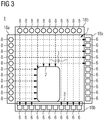
- FIG. 3 shows a schematic side view of the classification system 1 of FIG. 1 along the conveying direction 13.
- the measuring arrangement 4 comprises two light grids, one of the light grids being arranged horizontally and the other light grating being arranged vertically.
- Each of the light grids comprises a transmitter assembly 18a and a receiver assembly 16a, perspective 18b and 16b.
- Each of the transmitter assemblies 18a, 18b comprises linearly arranged light-emitting diodes 8 and each of the receiver assemblies 16a, 16b comprises linearly arranged photodiodes 6.
- the light emitting diodes 8 of the transmitter arrangement 18b are arranged above the photodiodes 6 of the receiver arrangement 16b.
- Each of the LEDs has a directional characteristic, that is, a direction in which the LED 8 emits a maximum intensity, and which is directed to an underlying photodiode 6 of the receiver assembly 16b.
- a vertical grid is defined, which is characterized by vertically extending wave signals 9, similarly vertically extending bars.
- the conveying path 3 comprises an interruption, or a column preferably extending perpendicular to the conveying direction 13, into which the receiver arrangement 16b is embedded.
- a measuring range 7 is defined between the transmitter arrangement 18b and the receiver arrangement 16b by means of wave signals 9 which can be emitted by the transmitter arrangement 18a and can be received by the receiver arrangement 16a is that means of the conveyor line 3, the shipment through the measuring area 7, respectively through the light grid 4 is conveyed through.
- the measuring arrangement 4 comprises as in FIG. 3 2 illustrates a horizontal light grid comprising the transmitter arrangement 18a and the receiver arrangement 16a, by means of which horizontal wave signals 9 define the measuring area 7.
- the horizontal light grating 16a, 18a has the same measuring range 7 as the vertical light grating 16b, 18b.
- the measuring ranges of the two light grids are different, for example in that the light grids are not arranged in the same plane, or in the same plane, but offset from one another.
- embodiments are conceivable in which only a light grid is used. For example, in horizontally-lying suitcases, a shadow crack generated by means of a vertical light grid should be able to detect whether a handle of the suitcase is in an extended state.
- light grid encompasses both a horizontal light grid, a vertical light grid, and an otherwise suitably arranged, for example obliquely arranged, light grid.
- light grid includes arrangements of two or more light grids, such as those in FIG FIG. 3 illustrated double light grid with the horizontal and the vertical light grid.
- a MLG2 light array from Sick can be used as a light grid 4
- a MLG2 light array from Sick can be used as a light grid 4.
- the receiver arrangements 16a, 16b or the photodiodes 6 are designed to generate electronic receiver signals 11 on the basis of received wave signals 9 and to feed these into the recognition system 5.
- the recognition system 5 is configured by means of during conveyance the consignment 2 by the measuring range 7 influenced receiver signals 11 to judge whether the program 2 is eligible or not.
- the recognition system can receive, for example from the horizontal 16a, 18a shown in FIG. 3 as well as from the vertical 16b, 18b light grid, electronic receiver signals 11, respectively data structures 21 contained in the receiver signals 11, which respectively represent a silhouette, respectively comprise a silhouette projected onto the ground plane from the vertical light grid, and a shadow projection projected onto a vertical side plane parallel to the conveying direction 13 from the horizontal light grid.
- silhouettes may be represented by the recognition system 5 as binary images, and further processed by determining their contours or outer limits, or other characteristics capable of judging whether or not the shipment is eligible by the conveyance system.
- the light-emitting diodes 8 and the photodiodes 6 preferably operate in the infrared range or with visible light. In alternative embodiments, other suitable regions of the electromagnetic spectrum may be used. Likewise, solutions are conceivable in which acoustic transmitters and receivers are used instead of photodiodes and photodetectors.
- the light-emitting diodes or other transmitters of the transmitter arrangement need not be grid-like, that is to say be directed in parallel wave signals, on photodiodes or other receivers.
- the signals can also run in crossed or skewed paths, for example. It can be expected that even such measuring arrangements can be trained by means of neural networks in order to be able to make statements about the eligibility of a program. Also, solutions are conceivable in which the directional characteristics, or their maxima, are not on the receivers have to be directed, but also solutions with transmitter arrangements which have no directional characteristics, for example by neural networks are trained with the output signals of the receiver arrangement, so the receiver signals to judge whether the program is eligible or not.
- the classification system 1 comprises a switch 12, which can be controlled by the recognition system 5, which discharges the mailpiece 2 if the result of the assessment is that the mailpiece 2 is ineligible.
- a warning means can generate a human perceptible signal, which indicates to the operator that a measure must be taken. If the assessment shows that consignment 2 is eligible, the consignment will be conveyed to the conveyor system 30.
- the data structure 21 generated by means of the light grid 4 comprises at least one shadow outline, preferably at least two shadow cracks of the broadcast recorded from different directions.
- the shadow cracks are binary images and can be taken perpendicular to the conveying direction 13 of the conveying path 3 and perpendicular to each other in a horizontal and a vertical projection direction.
- the recognition system 5 learns the assessment of whether the program is eligible or not by machine, preferably by means of a neural network, preferably by means of a computer-implemented neural network. In an alternative embodiment, the recognition system 5 is judged on the basis of algorithms, whether the program 2 is eligible or not.
- Eligible shipments are further promoted on the conveyor system.
- a suitable measure is taken, for example, the removal of the baggage piece, or not infiltrating the baggage into the conveyor system 30 and / or generating a warning signal for manual processing and / or putting the shipment in a condition eligible.
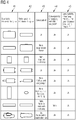
- FIG. 4 shows in tabular form in the first two columns silhouettes of luggage in a plan view 41 and in a side view 52.
- the third column 43 is an assessment (yes / no), whether the bag is eligible or not.
- the fourth column 44 states whether it is possible by means of a light grid to judge whether the piece of luggage is eligible or not.
- the fifth column 45 is also recorded whether it can be judged by means of a light grid and a laser scanner, which acts from below, whether the bag is eligible or not.
- Embodiments of the invention enable recognition of non-eligible broadcasts based on images of inexpensive sensors such as light grids and deep neural networks for object classification.
- an image processing computer without GPU acceleration is used. There is a risk of having too many false positives or unrecognized ineligible shipments.
- an additional laser scanner can be used as the second data source.
Landscapes
- Engineering & Computer Science (AREA)
- Physics & Mathematics (AREA)
- Theoretical Computer Science (AREA)
- General Physics & Mathematics (AREA)
- General Health & Medical Sciences (AREA)
- General Engineering & Computer Science (AREA)
- Biophysics (AREA)
- Computational Linguistics (AREA)
- Data Mining & Analysis (AREA)
- Evolutionary Computation (AREA)
- Artificial Intelligence (AREA)
- Molecular Biology (AREA)
- Computing Systems (AREA)
- Biomedical Technology (AREA)
- Life Sciences & Earth Sciences (AREA)
- Mathematical Physics (AREA)
- Software Systems (AREA)
- Health & Medical Sciences (AREA)
- Sorting Of Articles (AREA)
- Length Measuring Devices By Optical Means (AREA)
- Discharge Of Articles From Conveyors (AREA)
- Geophysics And Detection Of Objects (AREA)
Priority Applications (5)
| Application Number | Priority Date | Filing Date | Title |
|---|---|---|---|
| EP18157870.9A EP3530360A1 (fr) | 2018-02-21 | 2018-02-21 | Détection d'expéditions non éligibles |
| US16/971,808 US20210370352A1 (en) | 2018-02-21 | 2019-01-08 | Detecting non-handleable items |
| PCT/EP2019/050293 WO2019161983A1 (fr) | 2018-02-21 | 2019-01-08 | Identification de marchandises expédiées non transportables |
| CN201980014454.5A CN111757783B (zh) | 2018-02-21 | 2019-01-08 | 无法输送的物品的识别 |
| EP19701976.3A EP3755471A1 (fr) | 2018-02-21 | 2019-01-08 | Identification de marchandises expédiées non transportables |
Applications Claiming Priority (1)
| Application Number | Priority Date | Filing Date | Title |
|---|---|---|---|
| EP18157870.9A EP3530360A1 (fr) | 2018-02-21 | 2018-02-21 | Détection d'expéditions non éligibles |
Publications (1)
| Publication Number | Publication Date |
|---|---|
| EP3530360A1 true EP3530360A1 (fr) | 2019-08-28 |
Family
ID=61258161
Family Applications (2)
| Application Number | Title | Priority Date | Filing Date |
|---|---|---|---|
| EP18157870.9A Withdrawn EP3530360A1 (fr) | 2018-02-21 | 2018-02-21 | Détection d'expéditions non éligibles |
| EP19701976.3A Withdrawn EP3755471A1 (fr) | 2018-02-21 | 2019-01-08 | Identification de marchandises expédiées non transportables |
Family Applications After (1)
| Application Number | Title | Priority Date | Filing Date |
|---|---|---|---|
| EP19701976.3A Withdrawn EP3755471A1 (fr) | 2018-02-21 | 2019-01-08 | Identification de marchandises expédiées non transportables |
Country Status (4)
| Country | Link |
|---|---|
| US (1) | US20210370352A1 (fr) |
| EP (2) | EP3530360A1 (fr) |
| CN (1) | CN111757783B (fr) |
| WO (1) | WO2019161983A1 (fr) |
Cited By (1)
| Publication number | Priority date | Publication date | Assignee | Title |
|---|---|---|---|---|
| CN113843174A (zh) * | 2021-08-31 | 2021-12-28 | 上海大学 | 一种函件整理分拣装置 |
Families Citing this family (5)
| Publication number | Priority date | Publication date | Assignee | Title |
|---|---|---|---|---|
| EP4043111A1 (fr) | 2021-02-12 | 2022-08-17 | Siemens Aktiengesellschaft | Classification d'articles |
| US12365548B2 (en) | 2021-11-19 | 2025-07-22 | Dematic Corp. | System and method for identifying and transporting non-conveyable items |
| DE102022134121A1 (de) | 2022-12-20 | 2024-07-04 | Körber Supply Chain Logistics Gmbh | Verfahren zum Analysieren von Störungen bei einem Betrieb eines Handhabungssystems, Verfahren zum Trainieren oder Umtrainieren eines Klassifikators, Computerprogramm und System zum Analysieren von Störungen |
| CN117142009B (zh) * | 2023-10-30 | 2024-03-15 | 西安重装蒲白煤矿机械有限公司 | 一种基于图卷积网络的刮板输送机健康状态评估方法 |
| US12428241B1 (en) * | 2024-03-15 | 2025-09-30 | Analogic Corporation | Bypass of items in a security lane of a security checkpoint |
Citations (1)
| Publication number | Priority date | Publication date | Assignee | Title |
|---|---|---|---|---|
| EP0813913A2 (fr) * | 1996-06-22 | 1997-12-29 | Siemens Aktiengesellschaft | Procédé de reconnaissance de chevauchement d'envois plats |
Family Cites Families (8)
| Publication number | Priority date | Publication date | Assignee | Title |
|---|---|---|---|---|
| FR2666315B1 (fr) * | 1990-09-04 | 1992-12-11 | France Etat | Dispositif pour controler et regulariser l'espacement de colis, paquets ou objets analogues, notamment de colis postaux. |
| JP2548840B2 (ja) * | 1991-01-24 | 1996-10-30 | 株式会社クボタ | 作物の選別用搬送装置 |
| EP1421999A3 (fr) * | 2002-11-21 | 2005-11-30 | CTR Carinthian Tech Research AG | Procédé d'identification, de classification et de tri d'objets ou matériaux et système de reconnaissance correspondant |
| GB0525593D0 (en) * | 2005-12-16 | 2006-01-25 | Cxr Ltd | X-ray tomography inspection systems |
| WO2006007386A1 (fr) * | 2004-06-16 | 2006-01-19 | Siemens Corporate Research Inc | Localisation et identification, dans un flux en vrac, d'articles portant des etiquettes d'identification par radio-frequence |
| JP5595039B2 (ja) * | 2007-07-10 | 2014-09-24 | 株式会社プリマジェスト | 書類搬送装置及び書類搬送装置制御方法 |
| CN206286222U (zh) * | 2016-12-14 | 2017-06-30 | 中山市振良自动化设备有限公司 | 一种泡沫板生产输送系统的分类机构 |
| CN206248034U (zh) * | 2016-12-14 | 2017-06-13 | 中山市振良自动化设备有限公司 | 一种泡沫板生产输送系统的体积测量机构 |
-
2018
- 2018-02-21 EP EP18157870.9A patent/EP3530360A1/fr not_active Withdrawn
-
2019
- 2019-01-08 CN CN201980014454.5A patent/CN111757783B/zh not_active Expired - Fee Related
- 2019-01-08 US US16/971,808 patent/US20210370352A1/en not_active Abandoned
- 2019-01-08 EP EP19701976.3A patent/EP3755471A1/fr not_active Withdrawn
- 2019-01-08 WO PCT/EP2019/050293 patent/WO2019161983A1/fr not_active Ceased
Patent Citations (1)
| Publication number | Priority date | Publication date | Assignee | Title |
|---|---|---|---|---|
| EP0813913A2 (fr) * | 1996-06-22 | 1997-12-29 | Siemens Aktiengesellschaft | Procédé de reconnaissance de chevauchement d'envois plats |
Cited By (1)
| Publication number | Priority date | Publication date | Assignee | Title |
|---|---|---|---|---|
| CN113843174A (zh) * | 2021-08-31 | 2021-12-28 | 上海大学 | 一种函件整理分拣装置 |
Also Published As
| Publication number | Publication date |
|---|---|
| US20210370352A1 (en) | 2021-12-02 |
| WO2019161983A1 (fr) | 2019-08-29 |
| EP3755471A1 (fr) | 2020-12-30 |
| CN111757783A (zh) | 2020-10-09 |
| CN111757783B (zh) | 2023-05-26 |
Similar Documents
| Publication | Publication Date | Title |
|---|---|---|
| WO2019161983A1 (fr) | Identification de marchandises expédiées non transportables | |
| DE60213133T2 (de) | Vorrichtung und verfahren zur erkennung von überlappungen | |
| EP2375380B1 (fr) | Procédé et dispositif de mesure d'un paramètre lors du transport d'objets vers un dispositif de traitement | |
| DE102011000852A1 (de) | RFID-Lesetunnel und Verfahren zum Auslesen von RFID-Transpondern | |
| DE102010010375A1 (de) | Verfahren und Vorrichtung zur Richtungsumkehr beim Transport von Gegenständen | |
| DE102012017770A1 (de) | Vorrichtung und Verfahren zur Bearbeitung von Wertdokumenten | |
| DE102016114477A1 (de) | Fördervorrichtung | |
| WO2004044567A1 (fr) | Systeme pour inspecter des contenants pleins a l'aide de rayons x a incidence oblique | |
| DE19936440A1 (de) | Optoelektronische Vorrichtung | |
| EP2556006A1 (fr) | Procédé et dispositif pour le transport régulé de plusieurs objets | |
| DE102007029252A1 (de) | Stückgutfördervorrichtung mit Scaneinrichtung | |
| DE102010018450B3 (de) | Detektor und Verfahren zur Bestimmung des Schlupfes zwischen einem Förderband und einem darauf beförderten Gegenstand | |
| EP2283307B1 (fr) | Détection optique de position | |
| EP3630613B1 (fr) | Dispositif de transport | |
| DE29800833U1 (de) | Vorrichtung zur Identifikation eines Objekts auf einem Förderband | |
| EP3822198B1 (fr) | Agencement de détection de marchandises de détail | |
| DE102020104931B4 (de) | Verfahren und Vorrichtung zur Kantenerkennung eines Objekts | |
| DE202011100974U1 (de) | Optisches Sensorsystem | |
| DE202021105507U1 (de) | Optoelektronischer Sensor | |
| DE3211344C2 (fr) | ||
| EP1148353A2 (fr) | Capteur optique | |
| DE102022123248A1 (de) | Sortieranlage zum Sortieren von Poststücken sowie Verfahren zur Erfassung einer Belegung von zum Transport von Poststücken verwendeten Ablagen einer Sortieranlage | |
| EP2310979A1 (fr) | Identification de l'ordre de succession de transpondeurs rfid | |
| DE1129106B (de) | Einrichtung zum UEberwachen der Vereinzelung von flachem Foerdergut | |
| EP4385634A1 (fr) | Dispositif et procédé de classification |
Legal Events
| Date | Code | Title | Description |
|---|---|---|---|
| PUAI | Public reference made under article 153(3) epc to a published international application that has entered the european phase |
Free format text: ORIGINAL CODE: 0009012 |
|
| STAA | Information on the status of an ep patent application or granted ep patent |
Free format text: STATUS: THE APPLICATION HAS BEEN PUBLISHED |
|
| AK | Designated contracting states |
Kind code of ref document: A1 Designated state(s): AL AT BE BG CH CY CZ DE DK EE ES FI FR GB GR HR HU IE IS IT LI LT LU LV MC MK MT NL NO PL PT RO RS SE SI SK SM TR |
|
| AX | Request for extension of the european patent |
Extension state: BA ME |
|
| STAA | Information on the status of an ep patent application or granted ep patent |
Free format text: STATUS: THE APPLICATION IS DEEMED TO BE WITHDRAWN |
|
| 18D | Application deemed to be withdrawn |
Effective date: 20200229 |