EP3531340B1 - Verfahren, gerät und vorrichtung zur verfolgung des menschlichen körpers sowie speichermedium - Google Patents
Verfahren, gerät und vorrichtung zur verfolgung des menschlichen körpers sowie speichermedium Download PDFInfo
- Publication number
- EP3531340B1 EP3531340B1 EP19182982.9A EP19182982A EP3531340B1 EP 3531340 B1 EP3531340 B1 EP 3531340B1 EP 19182982 A EP19182982 A EP 19182982A EP 3531340 B1 EP3531340 B1 EP 3531340B1
- Authority
- EP
- European Patent Office
- Prior art keywords
- human body
- position information
- frame image
- current frame
- image
- Prior art date
- Legal status (The legal status is an assumption and is not a legal conclusion. Google has not performed a legal analysis and makes no representation as to the accuracy of the status listed.)
- Active
Links
Images

Classifications
-
- G—PHYSICS
- G06—COMPUTING OR CALCULATING; COUNTING
- G06V—IMAGE OR VIDEO RECOGNITION OR UNDERSTANDING
- G06V20/00—Scenes; Scene-specific elements
- G06V20/50—Context or environment of the image
- G06V20/52—Surveillance or monitoring of activities, e.g. for recognising suspicious objects
-
- G—PHYSICS
- G06—COMPUTING OR CALCULATING; COUNTING
- G06T—IMAGE DATA PROCESSING OR GENERATION, IN GENERAL
- G06T7/00—Image analysis
- G06T7/20—Analysis of motion
- G06T7/246—Analysis of motion using feature-based methods, e.g. the tracking of corners or segments
-
- G—PHYSICS
- G06—COMPUTING OR CALCULATING; COUNTING
- G06T—IMAGE DATA PROCESSING OR GENERATION, IN GENERAL
- G06T7/00—Image analysis
- G06T7/20—Analysis of motion
- G06T7/292—Multi-camera tracking
-
- G—PHYSICS
- G06—COMPUTING OR CALCULATING; COUNTING
- G06T—IMAGE DATA PROCESSING OR GENERATION, IN GENERAL
- G06T7/00—Image analysis
- G06T7/70—Determining position or orientation of objects or cameras
-
- G—PHYSICS
- G06—COMPUTING OR CALCULATING; COUNTING
- G06V—IMAGE OR VIDEO RECOGNITION OR UNDERSTANDING
- G06V10/00—Arrangements for image or video recognition or understanding
- G06V10/94—Hardware or software architectures specially adapted for image or video understanding
- G06V10/95—Hardware or software architectures specially adapted for image or video understanding structured as a network, e.g. client-server architectures
-
- G—PHYSICS
- G06—COMPUTING OR CALCULATING; COUNTING
- G06V—IMAGE OR VIDEO RECOGNITION OR UNDERSTANDING
- G06V40/00—Recognition of biometric, human-related or animal-related patterns in image or video data
- G06V40/10—Human or animal bodies, e.g. vehicle occupants or pedestrians; Body parts, e.g. hands
- G06V40/103—Static body considered as a whole, e.g. static pedestrian or occupant recognition
-
- G—PHYSICS
- G06—COMPUTING OR CALCULATING; COUNTING
- G06F—ELECTRIC DIGITAL DATA PROCESSING
- G06F18/00—Pattern recognition
- G06F18/20—Analysing
- G06F18/21—Design or setup of recognition systems or techniques; Extraction of features in feature space; Blind source separation
- G06F18/217—Validation; Performance evaluation; Active pattern learning techniques
-
- G—PHYSICS
- G06—COMPUTING OR CALCULATING; COUNTING
- G06T—IMAGE DATA PROCESSING OR GENERATION, IN GENERAL
- G06T17/00—Three-dimensional [3D] modelling for computer graphics
-
- G—PHYSICS
- G06—COMPUTING OR CALCULATING; COUNTING
- G06T—IMAGE DATA PROCESSING OR GENERATION, IN GENERAL
- G06T2207/00—Indexing scheme for image analysis or image enhancement
- G06T2207/10—Image acquisition modality
- G06T2207/10016—Video; Image sequence
-
- G—PHYSICS
- G06—COMPUTING OR CALCULATING; COUNTING
- G06T—IMAGE DATA PROCESSING OR GENERATION, IN GENERAL
- G06T2207/00—Indexing scheme for image analysis or image enhancement
- G06T2207/30—Subject of image; Context of image processing
- G06T2207/30196—Human being; Person
-
- G—PHYSICS
- G06—COMPUTING OR CALCULATING; COUNTING
- G06V—IMAGE OR VIDEO RECOGNITION OR UNDERSTANDING
- G06V40/00—Recognition of biometric, human-related or animal-related patterns in image or video data
- G06V40/20—Movements or behaviour, e.g. gesture recognition
-
- G—PHYSICS
- G06—COMPUTING OR CALCULATING; COUNTING
- G06V—IMAGE OR VIDEO RECOGNITION OR UNDERSTANDING
- G06V40/00—Recognition of biometric, human-related or animal-related patterns in image or video data
- G06V40/20—Movements or behaviour, e.g. gesture recognition
- G06V40/23—Recognition of whole body movements, e.g. for sport training
Definitions
- Embodiments of the present invention relate to the field of communication technologies, and in particular, to a human body tracking method, apparatus and device, and a storage medium.
- a video or an image captured by a photographing device may include a human body, and sometimes it is necessary to trace a human body in different images.
- the position of the human body in the space may change in real time, resulting in a change in the position of the same human body in different images, thus a poor accuracy of tracking the human body in the images.
- US2014/0341427A1 discloses a surveillance system including an acquisition unit configured to acquire motion information of an object detected from an image captured by an image capturing unit, an association unit configured to associate a recognition processing result of the object with the motion information and a determination unit configured to determine, from among a plurality of objects detected from the image captured by the image capturing unit, an object to be subjected to recognition processing based on the recognition result associated with the motion information.
- Embodiments of the present invention provide a human body tracking method, apparatus and device, and a storage medium to improve the accuracy of human body tracking in images.
- an embodiment of the present invention provides a human body tracking method, including:
- an embodiment of the present invention provides a human body tracking apparatus, including:
- an image processing device including:
- an embodiment of the present invention provides a computer readable storage medium having a computer program stored thereon, and the computer program is executed by a processor to implement the method of the first aspect.
- the human body tracking method, apparatus, and device, and a storage medium provided by the embodiments of the present invention obtain first position information of each human body in a current frame image by detecting the each human body in the current frame image, calculate second position information of a first human body in the current frame image tracked in a previous frame image ahead of the current frame image by using a preset tracking algorithm, determine target position information of the each human body in the current frame image according to the second position information of the first human body in the current frame image, the first position information of the each human body in the current frame image, and pedestrian features of all the tracked pedestrians stored in a preset list, where pedestrian features of all the tracked pedestrians stored in the preset list are determined according to historical images captured by a plurality of photographing devices, and the target position information is the more accurate one of the first position information and the second position information, thereby improving the accuracy of human body tracking in images.
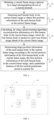
- the human body tracking method provided by the present invention can be applied to the application scenario shown in FIG. 1 .
- the application scenario may be specifically an enclosed environment 11 as shown in FIG. 1 , and the enclosed environment 11 may be, for example, a supermarket, a shopping mall, or the like.
- the enclosed environment 11 is provided with a plurality of photographing devices, such as a photographing device 12, a photographing device 13, a photographing device 14, a photographing device 15, and a photographing device 16; it is only a schematic illustration herein, and the number and the position of the photographing devices in the enclosed environment are not limited.
- a plurality of photographing devices can be configured to take photos of different positions in the enclosed environment.
- the human body tracking method provided by the present invention is intended to solve the above technical problem of the prior art.
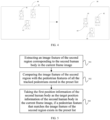
- FIG. 2 is a flowchart of a human body tracking method according to an embodiment of the present invention.
- the embodiment of the present invention provides a human body tracking method in view of the above technical problem of the prior art, and the specific steps of the method are as below: Step 201, obtaining a current frame image captured by a target photographing device at a current moment.
- the application scenario also includes a human body tracking apparatus that may be a device independent of a plurality of photographing devices, or may be a component integrated in each photographing device.
- the human body tracking apparatus may be respectively communicatively connected to each of the plurality of photographing devices, and the communicative connection manner may be a wired connection or a wireless connection.
- each of the plurality of photographing devices is connected to a human body tracking apparatus, and the human body tracking apparatuses corresponding to the respective photographing devices are communicatively connected to each other.
- each photographing device may include a human body tracking apparatus, and the human body tracking apparatuses included in the respective photographing devices are communicatively connected to each other.
- a human body tracking apparatus 17 may be a local computer in an enclosed environment 11, or may be a remote server, a cloud server, or the like beyond the closed environment 11.
- the human body tracking apparatus 17 may specifically be a terminal device having an image processing function.
- the human body tracking apparatus 17 is respectively communicatively connected to each of the plurality of photographing devices.
- the human body tracking apparatus 17 receives the image information captured by each photographing device.
- the human body tracking apparatus 17 receives a current frame image captured at the current moment by the target photographing device, such as the photographing device 12.
- Step 202 detecting each human body in the current frame image to obtain first position information of the each human body in the current frame image.
- the human body tracking apparatus 17 identifies the human body in the current frame image, that is, detects the each human body in the current frame image to obtain the first position information of the each human body in the current frame image.
- 30 represents a current frame image captured by the photographing device 12 at the current moment, and the human body tracking apparatus 17 performs detection on the human body in the current frame image 30, for example, a plurality of human bodies, such as a human body A, a human body B, a human body C, a human body D, and a human body E shown in FIG. 3 are detected by using a trained pedestrian detection model; and human body tracking apparatus 17 obtains bounding boxes of all the human bodies in the current frame image 30, for example, multiple dotted boxes as shown in FIG. 3 .
- the above are only for schematic illustration herein, rather than limiting the number and positions of human bodies included in the current frame image 30.
- a dotted box 31 is a bounding box of a certain human body in a plurality of human bodies as shown in FIG. 3
- the first position information of the human body in the current frame image 30 can be determined according to the dotted box 31.
- the first position information of the human body in the current frame image 30 includes: a coordinate of the upper left corner (for example, a point 32) of the dotted box 31 in the current frame image 30, and the height and width of the dotted box 31.
- the first position information of other human bodies in the current frame image 30 is similar thereto, which will not be repeated herein.
- the human body tracking apparatus 17 may not show the current frame image 30, the human body in the current frame image 30, or the bounding box of the human body. Instead, the human body tracking apparatus 17 may store the first position information of the each human body only after the first position information of the each human body in the current frame image 30 is determined. Alternatively, the human body tracking apparatus 17 may show the current frame image 30, the human body in the current frame image 30, and the bounding box of the human body, and then store the first position information of the each human body after the first position information of the each human body in the current frame image 30 is determined. That is to say, in this embodiment, the first position information of the human body is obtained through the detection of the human body in the current frame image 30 performed by the human body tracking apparatus 17 with the pedestrian detection model.
- Step 203 calculating, by using a preset tracking algorithm, second position information of a first human body in the current frame image, where the first human body is tracked in a previous frame image ahead of the current frame image.
- 40 represents the previous frame image ahead of the current frame image 30, while 41, 42, 43 are the human bodies tracked in the previous frame image by the human body tracking apparatus 17 with the preset tracking algorithm such as the kernelized correlation filters (KCF) tracking algorithm.
- KCF kernelized correlation filters
- the human body 41, the human body 42, and the human body 43 are referred to as the first human body herein.
- tracking results of the human bodies in the previous frame 40 obtained by the human body tracking apparatus 17 include the respective position information of the human body 41, the human body 42, and the human body 43 in the previous frame image 40, and include the respective identification information, such as the ID numbers of the human body 41, the human body 42, and the human body 43.
- the position information of the human body 41, the human body 42, and the human body 43 in the previous frame image 40 may specifically be the coordinates of the upper left corners of the respective human bodies' bounding boxes in the previous frame image 40, and the heights and widths of the bounding boxes.
- the human body tracking apparatus 17 calculates the position information of the first human body in the current frame image 30 according to the current frame image 30 and the tracking result of the human body in the previous frame image 40 obtained by the human body tracking apparatus 17 with the KCF tracking algorithm, where the first human body is tracked in the previous frame image 40 and is for example the human body 41, the human body 42, and the human body 43.
- the position information of the human body 41, the human body 42, and the human body 43 in the current frame image 30 is referred to as the second position information herein. That is, in this embodiment, the second position information of the human body is the position information of the human body in the current frame image 30, where the human body is tracked in the previous frame image 40 by the human body tracking apparatus 17 with the present tracking algorithm, such as the KCF tracking algorithm.
- the position information and appearance feature of the human body are utilized. As shown in FIG. 4 , the positions of the human body 41, the human body 42, and the human body 43 tracked in the current frame image 30 respectively change with respect to the human body 41, the human body 42, and the human body 43 tracked in the previous frame image 40.
- Step 204 determining target position information of the each human body in the current frame image according to the second position information of the first human body in the current frame image, the first position information of the each human body in the current frame image, and pedestrian features of all the tracked pedestrians stored in a preset list, where the pedestrian features of all the tracked pedestrians stored in the preset list are determined according to historical images captured by a plurality of photographing devices.
- the human body tracking apparatus 17 can receive the historical images captured by the plurality of photographing devices, determine a pedestrian feature in the historical image according to the historical image captured by each of the photographing devices, and generate the preset list, in which the pedestrian feature and pedestrian identification information, such as an ID number corresponding to the pedestrian feature, are stored, according to the pedestrian feature in the historical image.
- the human body tracking apparatus 17 detects the human body in the current frame image 30 with the trained pedestrian detection model, and obtains the bounding boxes of all the human bodies in the current frame image 30, thereby obtaining the first position information of all the detected human bodies in the frame image 30.
- the processing device 17 uses the preset tracking algorithm, such as the KCF tracking algorithm, to trace the human body in the previous frame image 40 to obtain the second position information of the human body in the current frame image 30. It is assumed that the human body A shown in FIG. 3 and the human body 41 shown in FIG. 4 are the same person, and the human body B shown in FIG. 3 and the human body 42 shown in FIG. 4 are the same person, and the human body C shown in FIG.
- the first position information of the human body A in the current frame image 30 may be different from the second position information of the human body 41 in the current frame image 30
- the first position information of the human body B in the current frame image 30 may be different from the second position information of the human body 42 in the current frame image
- the first position information of the human body C in the current frame image 30 may be different from the second position information of the human body 43 in the current frame image 30. Therefore, it is necessary to determine the target position information of the each human body in the current frame image.
- the determining target position information of the each human body in the current frame image according to the second position information of the first human body in the current frame image, the first position information of the each human body in the current frame image, and pedestrian features of all the tracked pedestrians stored in a preset list includes: determining target position information of the first human body in the current frame image according to the second position information of the first human body in the current frame image, the first position information of the each human body in the current frame image, and the pedestrian features of all the tracked pedestrians stored in the preset list; determining a second human body corresponding to a piece of first position information which does not match the second position information in the current frame image, according to the second position information of the first human body in the current frame image and the first position information of the each human body in the current frame image; and determining target position information of the second human body in the current frame image according to the piece of first position information of the second human body in the current frame image and the pedestrian features of all the tracked pedestrians stored in the preset list.
- the target position information of the human body 41, the human body 42, and the human body 43 in the current frame image 30 is determined according to the second position information of the human body 41, the human body 42, and the human body 43 in the current frame image 30, the first position information of the each human body in the current frame image 30, and pedestrian features of all the tracked pedestrians stored in the preset list, where the target position information is the more accurate one of the first position information and the second position information.
- the second position information of each of the human body 41, the human body 42, and the human body 43 in the current frame image 30 is compared with the first position information of the each human body in the current frame image 30, and then the first position information that matches the second position information of the human body 41, the human body 42, or the human body 43 in the current frame image 30 is determined from the first position information of the each human body in the current frame image 30.
- the first position information of the human body A in the current frame image 30 matches the second position information of the human body 41 in the current frame image 30
- the first position information of the human body B in the current frame image 30 matches the second position information of the human body 42 in the current frame image
- the first position information of the human body C in the current frame image 30 matches the second position information of the human body 43 in the current frame image 30. That is, the human body A matches the human body 41, the human body B matches the human body 42, and the human body C matches the human body 43.
- the human body D does not match the human body 41, the human body 42, or the human body 43
- the human body E does not match the human body 41, the human body 42, or the human body 43.
- the human body D and the human body E may be human bodies newly entering the coverage of the photographing device 12 at the current moment.
- the tracked human body that does not match the human body such as the human body 41, the human body 42, and the human body 43, is referred to as the second human body herein;
- the target position information of the human body D and the human body E in the current frame image 30 is determined further according to the first position information of the human body D and the human body E in the current frame image 30 and the pedestrian features of all the tracked pedestrians stored in the preset list.
- the determining target position information of the each human body in the current frame image according to the second position information of the first human body in the current frame image, the first position information of the each human body in the current frame image, and pedestrian features of all the tracked pedestrians stored in a preset list includes: comparing the second position information of the first human body in the current frame image with the first position information of the each human body in the current frame image; extracting, an image feature of a first region corresponding to the second position information in the current frame image if the first position information of the each human body in the current frame image does not match the second position information; comparing the image feature of the first region corresponding to the second position information in the current frame image with the pedestrian features of all the tracked pedestrians stored in the preset list; and taking the second position information as the target position information of the first human body in the current frame image if a pedestrian feature that matches an image feature of the first region exists in the preset list.
- the human body tracking apparatus 17 attempts to match the second position information of the human body 41 in the current frame image 30 respectively with the first position information of the human body A, the human body B, the human body C, the human body D, and the human body E in the current frame image 30, and none of the first position information of the human body A, the human body B, the human body C, the human body D, and the human body E matches the second position information of the human body 41 in the current frame image 30, the image feature of the region corresponding to the human body 41in the current frame image 30 is extracted, where the region corresponding to human body 41, the human body 42, and the human body 43 in the current frame image 30 is referred to as the first region herein. As shown in FIG.
- the dotted box 44 is a region corresponding to the human body 41 in the current frame image 30.
- the position information of the dotted box 44 is the second position information of the human body 41 in the current frame image 30.
- the human body tracking apparatus 17 compares the image feature in the dotted box 44 with the pedestrian features of all the tracked pedestrians stored in the preset list.
- the preset list stores the pedestrian features of all the tracked pedestrians and the pedestrian IDs corresponding to the pedestrian features.
- the pedestrian features of all the tracked pedestrians stored in the preset list may be determined by the human body tracking apparatus 17 according to the images captured by the plurality of photographing devices shown in FIG. 1 at different historical moments.
- the plurality of photographing devices may include a target photographing device such as the photographing device 12, or may not include any target photographing device such as the photographing device 12.
- the pedestrian features of all the tracked pedestrians stored in the preset list may be features of all pedestrians in the enclosed environment 11 shown in FIG. 1 . Specifically, if a pedestrian feature that matches the image feature in the dotted box 44 exists in the preset list, the second position information of the human body 41 in the current frame image 30 is taken as the target position information of the human body 41 in the current frame image 30. If no pedestrian feature that matches the image feature in the dotted box 44 exists in the preset list, the second position information of the human body 41 in the current frame image 30 is discarded, that is, the second position information of the human body 41 in the current frame image 30 is inaccurate.
- the human body tracking apparatus 17 attempts to match the second position information of the human body 42 (or the human body 43) in the current frame image 30 respectively with the first position information of the human body A, the human body B, the human body C, the human body D, and the human body E in the current frame image 30, and the first position information of the human body A, the human body B, the human body C, the human body D, and the human body E does not match the second position information of the human body 42 (or the human body 43) in the current frame image 30, then the human body tracking apparatus 17 can determine the target position information of the human body 42 (or the human body 43) in the current frame image 30 by further comparing with the pedestrian features stored in the preset list.
- the second position information is taken as the target position information of the first human body in the current frame image.
- the human body tracking apparatus 17 attempts to match the second position information of the human body 41 in the current frame image 30 respectively with the first position information of the human body A, the human body B, the human body C, the human body D, and the human body E in the current frame image 30, and if the first position information of one human body among the human body A, the human body B, the human body C, the human body D, and the human body E, such as the human body A, matches the second position information of the human body 41 in the current frame image 30, the second position information of the human body 41 in the current frame image 30 is taken as the target position information of the human body 41 in the current frame image 30.
- the second position information of the human body 42 in the current frame image 30 is taken as the target position information of the human body 42 in the current frame image 30; if the first position information of the human body C matches the second position information of the human body 43 in the current frame image 30, the second position information of the human body 43 in the current frame image 30 is taken as the target position information of the human body 43 in the current frame image 30.
- the embodiment of the present invention obtains first position information of each human body in a current frame image by detecting the each human body in the current frame image, calculates second position information of a first human body in the current frame image tracked in a previous frame image ahead of the current frame image by using a preset tracking algorithm, determines target position information of the each human body in the current frame image according to the second position information, the first position information of the each human body in the current frame image, and pedestrian features of all the tracked pedestrians stored in a preset list; where the pedestrian features of all the tracked pedestrians stored in the preset list are determined according to historical images captured by a plurality of photographing devices, and the target position information is the more accurate one of the first position information and the second position information, thereby improving the accuracy of human body tracking in images.
- the above embodiment is merely intended for illustration, and the quantity of human body in the current frame image may also be at least one.
- FIG. 5 is a flowchart of a human body tracking method according to another embodiment of the present invention.
- the determining, the target position information of the second human body in the current frame image according to the first position information of the second human body in the current frame image and pedestrian features of all the tracked pedestrians stored in the preset list may specifically include following steps: Step 501, extracting an image feature of a second region corresponding to the second human body in the current frame image.
- the dotted box 31 is the region occupied by the human body E in the current frame image 30, and the dotted box 33 is the region occupied by the human body D in the current frame image 30.
- the regions occupied by the human body E and the human body D in the current frame image 30 are referred to as a second region herein.
- the human body tracking apparatus 17 extracts image features within both the dotted box 31 and the dotted box 33.
- Step 502 comparing the image feature of the second region with the pedestrian features of all the tracked pedestrians stored in the preset list.
- the human body tracking apparatus 17 compares the image feature within the dotted box 31 with the pedestrian features of all the tracked pedestrians stored in the preset list, and compares the image feature within the dotted box 33 with the pedestrian features of all the tracked pedestrians stored in the preset list.
- Step 503 taking the piece of first position information of the second human body as the target position information of the second human body in the current frame image if a pedestrian feature that matches the image feature of the second region exists in the preset list.
- the first position information of the human body E in the current frame image 30 is taken as the target position information of the human body E in the current frame image 30. If no pedestrian feature that matches the image feature in the dotted box 31 exists in the preset list, the first position information of the human body E in the current frame image 30 is discarded, that is, the first position information of the human body E in the current frame image 30 is considered inaccurate.
- the first position information of the human body D in the current frame image 30 is taken as the target position information of the human body D in the current frame image 30. If no pedestrian feature that matches the image feature in the dotted box 33 exists in the preset list, the first position information of the human body D in the current frame image 30 is discarded, that is, the first position information of the human body D in the current frame image 30 is considered inaccurate.
- the target position information of the human body A in the current frame image 30 can also be determined by a method similar to that for determining the target position information of the human body D and the human body E, and the specific process will not be repeated herein.
- the method further includes: updating a tracker parameter corresponding to a preset tracking algorithm according to the target position information of the first human body in the current frame image and the target position information of the second human body in the current frame image.
- the second position information of the human body 41, the human body 42, and the human body 43 in the current frame image 30 is the corresponding target position information
- the first position information of the human body D and the human body E in the current frame image 30 is the corresponding target position information
- one pedestrian may correspond to one tracker.
- the human body tracking apparatus 17 determines the final position of the each human body in the current frame image 30
- the tracker parameter corresponding to the each human body can be updated according to the final position of the each human body in the current frame image 30.
- the tracker is associated with a preset tracking algorithm such as the KCF tracking algorithm.
- the method further includes: updating the pedestrian features of the tracked pedestrians in the preset list according to the target position information of the first human body in the current frame image and the target position information of the second human body in the current frame image.
- the preset list includes, but is not limited to, the pedestrian features of the human body 41, the human body 42, the human body 43, the human body D, and the human body E.
- the pedestrian features respectively corresponding to the human body 41, the human body 42, the human body 43, the human body D, and the human body E in the preset list may be updated according to the final positions of the human body 41, the human body 42, the human body 43, the human body D, and the human body E in the current frame image 30.
- the embodiments of the present invention update the tracker parameter corresponding to the preset tracking algorithm continuously, so that the tracker corresponding to the preset tracking algorithm can continuously adapt to the change of the tracking target position and appearance, thus improving the accuracy of the human body tracking in the image; in addition, it can be ensured that the latest pedestrian features are stored in the preset list by continuously updating the pedestrian features of the tracked pedestrians in the preset list, which further improves the accuracy of human body tracking in the image.
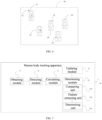
- FIG. 7 is a schematic structural diagram of a human body tracking apparatus according to an embodiment of the present invention.
- the human body tracking apparatus provided by the embodiments of the present invention can perform the processing flow provided by the embodiments of the human body tracking method.
- a human body tracking apparatus 70 includes: an obtaining module 71, a detecting module 72, a calculating module 73, and a determining module 74; where the obtaining module 71 is configured to obtain a current frame image captured by a target photographing device at a current moment; the detecting module 72 is configured to detect each human body in the current frame image to obtain first position information of the each human body in the current frame image; the calculating module 73 is configured to calculate, by using a preset tracking algorithm, second position information of a first human body in the current frame image, wherein the first human body is tracked in a previous frame image ahead of the current frame image; the determining module 74 is configured to determine target position information of the each human body in the current frame image according to the second position information of the first
- the determining module 74 is specifically configured to:
- the determining module 74 includes: a comparing unit 741, a feature extracting unit 742, and a determining unit 743.
- the comparing unit 741 is configured to compare the second position information of the first human body in the current frame image with the first position information of the each human body in the current frame image;
- the feature extracting unit 742 is configured to extract an image feature of a first region corresponding to the second position information in the current frame image if the first position information of the each human body in the current frame image does not match the second position information;
- the comparing unit 741 is further configured to compare the image feature of the first region corresponding to the second position information in the current frame image with the pedestrian features of all the tracked pedestrians stored in the preset list;
- the determining unit 743 is configured to take the second position information as the target position information of the first human body in the current frame image if a pedestrian feature that matches an image feature of the first region exists in the preset list.
- the determining unit 743 is further configured to take the second position information as the target position information of the first human body in the current frame image if a piece of first position information that matches the second position information exists in the first position information of the each human body in the current frame image.
- the feature extracting unit 742 is configured to extract an image feature of a second region corresponding to the second human body in the current frame image; and comparing unit 741 is configured to compare the image feature of the second region with the pedestrian features of all the tracked pedestrians stored in the preset list; the determining unit 743 is configured to take the piece of first position information of the second human body as the target position information of the second human body in the current frame image if a pedestrian feature that matches the image feature of the second region exists in the preset list.
- the human body tracking apparatus 70 further includes: an updating module 75, configured to update a tracker parameter corresponding to a preset tracking algorithm according to the target position information of the first human body in the current frame image and the target position information of the second human body in the current frame image.
- an updating module 75 configured to update a tracker parameter corresponding to a preset tracking algorithm according to the target position information of the first human body in the current frame image and the target position information of the second human body in the current frame image.
- the updating module 75 is configured to update the pedestrian features of the tracked pedestrians in the preset list according to the target position information of the first human body in the current frame image and the target position information of the second human body in the current frame image.
- the human body tracking apparatus of the embodiment shown in FIG. 7 can be used to implement the technical solution of the above method embodiments. As the implementation principle and technical effects of the human body tracking apparatus and the method embodiments are similar, details will not be repeated herein.
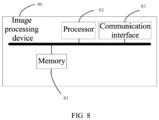
- FIG. 8 is a schematic structural diagram of an image processing device according to an embodiment of the present invention.
- the image processing device provided by the embodiments of the present invention may perform the processing flow provided by the embodiment of the human body tracking method.
- an image processing device 80 includes a memory 81, a processor 82, a computer program, and a communication interface 83; where the computer program is stored in the memory 81 and is configured to be executed by the processor 82 to perform the human body tracking method described in the above embodiments.
- the image processing device of the embodiment shown in FIG. 8 can be configured to perform the technical solution of the above method embodiments.
- the implementation principle and the technical effect of the image processing device and the method embodiments are similar, details will not be repeated herein.
- this embodiment further provides a computer readable storage medium having a computer program stored thereon, and the computer program is executed by the processor to implement the human body tracking method described in the above embodiments.
- the integrated unit described above implemented in the form of a software functional unit can be stored in a computer readable storage medium.
- the above software functional unit is stored in a storage medium and includes instructions for causing a computer device (which may be a personal computer, a server, a network device, or the like.) or a processor to perform part of the steps of the methods according to the various embodiments of the present invention.
- the above storage medium includes medium that stores program codes like a flash memory, a mobile hard disk, a read-only memory (ROM), a random access memory (RAM), a magnetic disk, or an optical disk.
Landscapes
- Engineering & Computer Science (AREA)
- Physics & Mathematics (AREA)
- General Physics & Mathematics (AREA)
- Theoretical Computer Science (AREA)
- Multimedia (AREA)
- Computer Vision & Pattern Recognition (AREA)
- Human Computer Interaction (AREA)
- Software Systems (AREA)
- Health & Medical Sciences (AREA)
- General Health & Medical Sciences (AREA)
- Psychiatry (AREA)
- Social Psychology (AREA)
- Image Analysis (AREA)
- Closed-Circuit Television Systems (AREA)
- Traffic Control Systems (AREA)
Claims (13)
- Verfahren zur Verfolgung eines menschlichen Körpers, das Folgendes beinhaltet:(a) Erhalten (201) eines aktuellen Einzelbildes, das von einem Zielfotografiergerät zu einem aktuellen Zeitpunkt aufgenommen wurde;(b) Erfassen (202) jedes menschlichen Körpers in dem aktuellen Einzelbild, um erste Positionsinformationen jedes menschlichen Körpers in dem aktuellen Einzelbild zu erhalten;(c) Berechnen (203), mittels eines KCF-(Kemelized Correlation Filter)-Verfolgungsalgorithmus, von zweiten Positionsinformationen eines ersten menschlichen Körpers in dem aktuellen Einzelbild, wobei der erste menschliche Körper mindestens ein menschlicher Körper ist, der mit Hilfe des KCF-Verfolgungsalgorithmus in einem vorherigen Einzelbild vor dem aktuellen Einzelbild verfolgt wurde;(d) Bestimmen (204) von Zielpositionsinformationen jedes menschlichen Körpers in dem aktuellen Einzelbild anhand der zweiten Positionsinformationen des ersten menschlichen Körpers in dem aktuellen Einzelbild, der ersten Positionsinformationen jedes menschlichen Körpers in dem aktuellen Einzelbild und von Fußgängermerkmalen aller in einer Voreinstellungsliste gespeicherten verfolgten Fußgänger; wobei die Zielpositionsinformationen die genaueren aus den ersten Positionsinformationen und den zweiten Positionsinformationen sind und die Fußgängermerkmale aller in der Voreinstellungsliste gespeicherten verfolgten Fußgänger Bildmerkmale in historischen Bildern sind, die von mindestens einem Fotografiergerät zu verschiedenen historischen Zeitpunkten aufgenommen wurden;
wobei Schritt (d) Folgendes beinhaltet:(e) Bestimmen von Zielpositionsinformationen des ersten menschlichen Körpers in dem aktuellen Einzelbild anhand der zweiten Positionsinformationen des ersten menschlichen Körpers in dem aktuellen Einzelbild, der ersten Positionsinformationen jedes menschlichen Körpers in dem aktuellen Einzelbild und der Fußgängermerkmale aller in der Voreinstellungsliste gespeicherten verfolgten Fußgänger;wobei Schritt (e) Folgendes beinhaltet:Vergleichen der zweiten Positionsinformationen des ersten menschlichen Körpers in dem aktuellen Einzelbild mit den ersten Positionsinformationen jedes menschlichen Körpers in dem aktuellen Einzelbild;Extrahieren eines Bildmerkmals einer ersten Region entsprechend den zweiten Positionsinformationen in dem aktuellen Einzelbild, wenn die ersten Positionsinformationen jedes menschlichen Körpers in dem aktuellen Einzelbild nicht mit den zweiten Positionsinformationen übereinstimmen;Vergleichen des Bildmerkmals der ersten Region entsprechend den zweiten Positionsinformationen in dem aktuellen Einzelbild mit den Fußgängermerkmalen aller in der Voreinstellungsliste gespeicherten verfolgten Fußgänger; undNehmen der zweiten Positionsinformationen als die Zielpositionsinformationen des ersten menschlichen Körpers in dem aktuellen Einzelbild, wenn ein mit dem Bildmerkmal der ersten Region übereinstimmendes Fußgängermerkmal in der Voreinstellungsliste existiert. - Verfahren nach Anspruch 1, wobei Schritt (d) Folgendes beinhaltet:Bestimmen eines zweiten menschlichen Körpers entsprechend einer ersten Positionsinformation, die nicht mit den zweiten Positionsinformationen im aktuellen Einzelbild übereinstimmt, gemäß den zweiten Positionsinformationen des ersten menschlichen Körpers im aktuellen Einzelbild und den ersten Positionsinformationen jedes menschlichen Körpers im aktuellen Einzelbild; undBestimmen von Zielpositionsinformationen des zweiten menschlichen Körpers im aktuellen Einzelbild gemäß der ersten Positionsinformation des zweiten menschlichen Körpers in dem aktuellen Einzelbild und den Fußgängermerkmalen aller in der Voreinstellungsliste gespeicherten verfolgten Fußgänger.
- Verfahren nach Anspruch 1, wobei Schritt (e) Folgendes beinhaltet:
Nehmen der zweiten Positionsinformationen als die Zielpositionsinformationen des ersten menschlichen Körpers in dem aktuellen Einzelbild, wenn eine mit den zweiten Positionsinformationen übereinstimmende erste Positionsinformation in den ersten Positionsinformationen jedes menschlichen Körpers im aktuellen Einzelbild existiert. - Verfahren nach Anspruch 2, wobei das Bestimmen von Zielpositionsinformationen des zweiten menschlichen Körpers in dem aktuellen Einzelbild gemäß der ersten Positionsinformation des zweiten menschlichen Körpers in dem aktuellen Einzelbild und den Fußgängermerkmalen aller in der Voreinstellungsliste gespeicherten verfolgten Fußgänger Folgendes beinhaltet:Extrahieren (501) eines Bildmerkmals einer zweiten Region entsprechend dem zweiten menschlichen Körper in dem aktuellen Einzelbild;Vergleichen (502) des Bildmerkmals der zweiten Region mit den Fußgängermerkmalen aller in der Voreinstellungsliste gespeicherten verfolgten Fußgänger; undNehmen (503) der ersten Positionsinformation des zweiten menschlichen Körpers als die Zielpositionsinformationen des zweiten menschlichen Körpers in dem aktuellen Einzelbild, wenn ein mit dem Bildmerkmal der zweiten Region übereinstimmendes Fußgängermerkmal in der Voreinstellungsliste existiert.
- Verfahren nach einem der Ansprüche 2 bis 4, wobei das Verfahren ferner Folgendes beinhaltet:
Aktualisieren eines Verfolgungsparameters entsprechend einem voreingestellten Verfolgungsalgorithmus gemäß den Zielpositionsinformationen des ersten menschlichen Körpers in dem aktuellen Einzelbild und den Zielpositionsinformationen des zweiten menschlichen Körpers in dem aktuellen Einzelbild. - Verfahren nach einem der Ansprüche 2 bis 4, wobei das Verfahren ferner Folgendes beinhaltet:
Aktualisieren der Fußgängermerkmale der verfolgten Fußgänger in der Voreinstellungsliste gemäß den Zielpositionsinformationen des ersten menschlichen Körpers in dem aktuellen Einzelbild und den Zielpositionsinformationen des zweiten menschlichen Körpers in dem aktuellen Einzelbild. - Vorrichtung (70) zur Verfolgung eines menschlichen Körpers, die Folgendes umfasst:ein Erhaltungsmodul (71), das zum Erhalten eines aktuellen Einzelbildes konfiguriert ist, das von einem Zielfotografiergerät zu einem aktuellen Zeitpunkt aufgenommen wurde;ein Erfassungsmodul (72), das zum Erfassen jedes menschlichen Körpers in dem aktuellen Einzelbild konfiguriert ist, um erste Positionsinformationen jedes menschlichen Körpers in dem aktuellen Einzelbild zu erhalten;ein Berechnungsmodul (73), das zum Berechnen, mittels eines KCF-(Kernelized Correlation Filter)-Verfolgungsalgorithmus, von zweiten Positionsinformationen eines ersten menschlichen Körpers in dem aktuellen Einzelbild konfiguriert ist, wobei der erste menschliche Körper mindestens ein menschlicher Körper ist, der mittels des KCF-Verfolgungsalgorithmus in einem vorherigen Einzelbild vor dem aktuellen Einzelbild verfolgt wurde;ein Bestimmungsmodul (74), das zum Bestimmen von Zielpositionsinformationen jedes menschlichen Körpers in dem aktuellen Einzelbild anhand der zweiten Positionsinformationen des ersten menschlichen Körpers in dem aktuellen Einzelbild, der ersten Positionsinformationen jedes menschlichen Körpers in dem aktuellen Einzelbild und von Fußgängermerkmalen aller in einer Voreinstellungsliste gespeicherten verfolgten Fußgänger konfiguriert ist; wobei die Zielpositionsinformation die genaueren aus den ersten Positionsinformationen und den zweiten Positionsinformationen sind und die Fußgängermerkmale aller in der Voreinstellungsliste gespeicherten verfolgten Fußgänger Bildmerkmale in historischen Bildern sind, die von mindestens einem Fotografiergerät zu verschiedenen historischen Zeitpunkten aufgenommen wurden;wobei das Bestimmungsmodul (74) speziell konfiguriert ist zum:Bestimmen von Zielpositionsinformationen des ersten menschlichen Körpers in dem aktuellen Einzelbild anhand der zweiten Positionsinformationen des ersten menschlichen Körpers in dem aktuellen Einzelbild, der ersten Positionsinformationen jedes menschlichen Körpers in dem aktuellen Einzelbild und der Fußgängermerkmale aller in der Voreinstellungsliste gespeicherten verfolgten Fußgänger;wobei das Bestimmungsmodul (74) eine Vergleichseinheit, eine Merkmalsextraktionseinheit und eine Bestimmungseinheit umfasst;die Vergleichseinheit (741) zum Vergleichen der zweiten Positionsinformationen des ersten menschlichen Körpers in dem aktuellen Einzelbild mit den ersten Positionsinformationen jedes menschlichen Körpers in dem aktuellen Einzelbild konfiguriert ist;die Merkmalsextraktionseinheit (742) zum Extrahieren eines Bildmerkmals einer ersten Region entsprechend den zweiten Positionsinformationen in dem aktuellen Einzelbild konfiguriert ist, wenn die ersten Positionsinformationen jedes menschlichen Körpers in dem aktuellen Einzelbild nicht mit den zweiten Positionsinformationen übereinstimmen;die Vergleichseinheit (741) ferner zum Vergleichen des Bildmerkmals der ersten Region entsprechend den zweiten Positionsinformationen in dem aktuellen Einzelbild mit den Fußgängermerkmalen aller in der Voreinstellungsliste gespeicherten verfolgten Fußgänger konfiguriert ist; unddie Bestimmungseinheit (743) zum Nehmen der zweiten Positionsinformationen als die Zielpositionsinformationen des ersten menschlichen Körpers in dem aktuellen Einzelbild konfiguriert ist, wenn ein mit dem Bildmerkmal der ersten Region übereinstimmendes Fußgängermerkmal in der Voreinstellungsliste existiert.
- Vorrichtung (70) zur Verfolgung eines menschlichen Körpers nach Anspruch 7, wobei das Bestimmungsmodul (74) ferner konfiguriert ist zum:Bestimmen eines zweiten menschlichen Körpers entsprechend einer ersten Positionsinformation, die nicht mit den zweiten Positionsinformationen in dem aktuellen Einzelbild übereinstimmt, gemäß den zweiten Positionsinformationen des ersten menschlichen Körpers in dem aktuellen Einzelbild und den ersten Positionsinformationen jedes menschlichen Körpers in dem aktuellen Einzelbild; undBestimmen von Zielpositionsinformationen des zweiten menschlichen Körpers in dem aktuellen Einzelbild gemäß der ersten Positionsinformation des zweiten menschlichen Körpers in dem aktuellen Einzelbild und den Fußgängermerkmalen aller in der Voreinstellungsliste gespeicherten verfolgten Fußgänger.
- Vorrichtung (70) zur Verfolgung eines menschlichen Körpers nach Anspruch 7, wobei die Bestimmungseinheit (743) ferner zum Nehmen der zweiten Positionsinformationen als die Zielpositionsinformationen des ersten menschlichen Körpers in dem aktuellen Einzelbild konfiguriert ist, wenn eine mit den zweiten Positionsinformationen übereinstimmende erste Positionsinformation in den ersten Positionsinformationen jedes menschlichen Körpers in dem aktuellen Einzelbild existiert.
- Vorrichtung (70) zur Verfolgung eines menschlichen Körpers nach Anspruch 8, wobei das Bestimmungsmodul (74) Folgendes umfasst: eine Vergleichseinheit, eine Merkmalsextraktionseinheit, eine Bestimmungseinheit;die Merkmalsextraktionseinheit (742) zum Extrahieren eines Bildmerkmals einer zweiten Region entsprechend dem zweiten menschlichen Körper in dem aktuellen Einzelbild konfiguriert ist;die Vergleichseinheit (741) zum Vergleichen des Bildmerkmals der zweiten Region mit den Fußgängermerkmalen aller in der Voreinstellungsliste gespeicherten verfolgten Fußgänger konfiguriert ist; unddie Bestimmungseinheit (743) zum Nehmen der ersten Positionsinformation des zweiten menschlichen Körpers als die Zielpositionsinformationen des zweiten menschlichen Körpers in dem aktuellen Einzelbildbild konfiguriert ist, wenn ein mit dem Bildmerkmal der zweiten Region übereinstimmendes Fußgängermerkmal in der Voreinstellungsliste existiert.
- Vorrichtung (70) zur Verfolgung eines menschlichen Körpers nach einem der Ansprüche 8 bis 10, die ferner Folgendes umfasst:
ein Aktualisierungsmodul (75), das zum Aktualisieren eines Verfolgungsparameters entsprechend einem voreingestellten Verfolgungsalgorithmus gemäß den Zielpositionsinformationen des ersten menschlichen Körpers in dem aktuellen Einzelbild und den Zielpositionsinformationen des zweiten menschlichen Körpers in dem aktuellen Einzelbild konfiguriert ist. - Vorrichtung (70) zur Verfolgung eines menschlichen Körpers nach einem der Ansprüche 8 bis 10, die ferner Folgendes umfasst:
ein Aktualisierungsmodul (75), das zum Aktualisieren der Fußgängermerkmale der verfolgten Fußgänger in der Voreinstellungsliste gemäß den Zielpositionsinformationen des ersten menschlichen Körpers in dem aktuellen Bild und den Zielpositionsinformationen des zweiten menschlichen Körpers in dem aktuellen Bild konfiguriert ist. - Bildverarbeitungsgerät (80), dadurch gekennzeichnet, dass es Folgendes umfasst:einen Speicher (81);einen Prozessor (82); undein Computerprogramm;wobei das Computerprogramm in dem Speicher gespeichert ist und zum Ausführen durch den Prozessor konfiguriert ist, um das Verfahren nach einem der Ansprüche 1 bis 6 zu implementieren.
Applications Claiming Priority (1)
| Application Number | Priority Date | Filing Date | Title |
|---|---|---|---|
| CN201810710538.XA CN110675426B (zh) | 2018-07-02 | 2018-07-02 | 人体跟踪方法、装置、设备及存储介质 |
Publications (3)
| Publication Number | Publication Date |
|---|---|
| EP3531340A2 EP3531340A2 (de) | 2019-08-28 |
| EP3531340A3 EP3531340A3 (de) | 2019-12-04 |
| EP3531340B1 true EP3531340B1 (de) | 2023-05-24 |
Family
ID=67105930
Family Applications (1)
| Application Number | Title | Priority Date | Filing Date |
|---|---|---|---|
| EP19182982.9A Active EP3531340B1 (de) | 2018-07-02 | 2019-06-27 | Verfahren, gerät und vorrichtung zur verfolgung des menschlichen körpers sowie speichermedium |
Country Status (4)
| Country | Link |
|---|---|
| US (1) | US11348354B2 (de) |
| EP (1) | EP3531340B1 (de) |
| JP (1) | JP6868061B2 (de) |
| CN (1) | CN110675426B (de) |
Families Citing this family (7)
| Publication number | Priority date | Publication date | Assignee | Title |
|---|---|---|---|---|
| TWI686748B (zh) * | 2018-12-07 | 2020-03-01 | 國立交通大學 | 人流分析系統及人流分析方法 |
| CN111951325B (zh) * | 2019-05-14 | 2024-01-12 | 虹软科技股份有限公司 | 位姿跟踪方法、位姿跟踪装置及电子设备 |
| US11043003B2 (en) | 2019-11-18 | 2021-06-22 | Waymo Llc | Interacted object detection neural network |
| CN111488858B (zh) * | 2020-04-30 | 2021-07-06 | 杭州齐圣科技有限公司 | 云计算大数据金融安防系统行人行为分析方法及系统 |
| JP7635002B2 (ja) * | 2021-01-22 | 2025-02-25 | 日本放送協会 | 顔追跡装置およびプログラム |
| CN112989938A (zh) * | 2021-02-07 | 2021-06-18 | 平安科技(深圳)有限公司 | 一种行人实时跟踪识别方法、装置、介质及设备 |
| CN116453011B (zh) * | 2023-03-17 | 2026-03-31 | 智道网联科技(北京)有限公司 | 障碍物检测目标列表生成方法、设备、存储介质 |
Family Cites Families (18)
| Publication number | Priority date | Publication date | Assignee | Title |
|---|---|---|---|---|
| JP2004046647A (ja) * | 2002-07-12 | 2004-02-12 | Univ Waseda | 動画像データに基づく移動物体追跡方法及び装置 |
| JP2004146647A (ja) | 2002-10-25 | 2004-05-20 | Seiko Epson Corp | 半導体装置及びその製造方法 |
| JP4987513B2 (ja) | 2007-03-07 | 2012-07-25 | 綜合警備保障株式会社 | 追跡装置、追跡方法、及び追跡プログラム |
| CN101162525A (zh) * | 2007-11-29 | 2008-04-16 | 哈尔滨工程大学 | 基于Mean Shift和人工鱼群智能优化的人体多关节特征跟踪方法 |
| JP5202419B2 (ja) * | 2009-03-31 | 2013-06-05 | 綜合警備保障株式会社 | 警備システムおよび警備方法 |
| CN101854516B (zh) * | 2009-04-02 | 2014-03-05 | 北京中星微电子有限公司 | 视频监控系统、视频监控服务器及视频监控方法 |
| CN102129690B (zh) * | 2011-03-21 | 2013-01-02 | 西安理工大学 | 一种抗环境干扰的人体运动目标的跟踪方法 |
| CN102509306B (zh) * | 2011-10-08 | 2014-02-19 | 西安理工大学 | 一种基于视频的特定目标的跟踪方法 |
| CN102982598B (zh) * | 2012-11-14 | 2015-05-20 | 三峡大学 | 基于单个摄像头场景配置的视频人数统计方法和系统 |
| CN104050712B (zh) * | 2013-03-15 | 2018-06-05 | 索尼公司 | 三维模型的建立方法和装置 |
| JP6316023B2 (ja) * | 2013-05-17 | 2018-04-25 | キヤノン株式会社 | カメラシステム及びカメラ制御装置 |
| CN104281837B (zh) * | 2014-09-26 | 2018-05-25 | 哈尔滨工业大学深圳研究生院 | 结合卡尔曼滤波和相邻帧间roi扩大的行人跟踪方法 |
| JP6659095B2 (ja) * | 2015-06-30 | 2020-03-04 | キヤノン株式会社 | 画像処理装置、画像処理方法及びプログラム |
| JP6720587B2 (ja) * | 2016-03-08 | 2020-07-08 | 富士通株式会社 | 映像処理装置、映像処理方法および映像処理プログラム |
| CN105933650A (zh) * | 2016-04-25 | 2016-09-07 | 北京旷视科技有限公司 | 视频监控系统及方法 |
| JP6598746B2 (ja) * | 2016-08-22 | 2019-10-30 | Kddi株式会社 | 他の物体の画像領域も考慮して物体を追跡する装置、プログラム及び方法 |
| CN106355603B (zh) * | 2016-08-29 | 2019-10-22 | 深圳市商汤科技有限公司 | 人体跟踪方法和人体跟踪装置 |
| CN107341460B (zh) * | 2017-06-26 | 2022-04-22 | 北京小米移动软件有限公司 | 人脸跟踪方法及装置 |
-
2018
- 2018-07-02 CN CN201810710538.XA patent/CN110675426B/zh active Active
-
2019
- 2019-06-27 EP EP19182982.9A patent/EP3531340B1/de active Active
- 2019-07-01 US US16/458,531 patent/US11348354B2/en active Active
- 2019-07-01 JP JP2019122659A patent/JP6868061B2/ja active Active
Also Published As
| Publication number | Publication date |
|---|---|
| US11348354B2 (en) | 2022-05-31 |
| EP3531340A2 (de) | 2019-08-28 |
| US20190325208A1 (en) | 2019-10-24 |
| JP6868061B2 (ja) | 2021-05-12 |
| CN110675426A (zh) | 2020-01-10 |
| CN110675426B (zh) | 2022-11-22 |
| EP3531340A3 (de) | 2019-12-04 |
| JP2019204518A (ja) | 2019-11-28 |
Similar Documents
| Publication | Publication Date | Title |
|---|---|---|
| EP3531340B1 (de) | Verfahren, gerät und vorrichtung zur verfolgung des menschlichen körpers sowie speichermedium | |
| US10417503B2 (en) | Image processing apparatus and image processing method | |
| US10769480B2 (en) | Object detection method and system | |
| US9888235B2 (en) | Image processing method, particularly used in a vision-based localization of a device | |
| CN111798487B (zh) | 目标跟踪方法、装置和计算机可读存储介质 | |
| JP6095018B2 (ja) | 移動オブジェクトの検出及び追跡 | |
| US10970528B2 (en) | Method for human motion analysis, apparatus for human motion analysis, device and storage medium | |
| WO2019242672A1 (zh) | 一种目标跟踪方法、装置及系统 | |
| CN105915784A (zh) | 信息处理方法和装置 | |
| CN109255802B (zh) | 行人跟踪方法、装置、计算机设备及存储介质 | |
| CN115773759B (zh) | 自主移动机器人的室内定位方法、装置、设备及存储介质 | |
| CN109636828A (zh) | 基于视频图像的物体跟踪方法及装置 | |
| JP7448035B2 (ja) | 情報処理装置、3次元位置推定方法、及びプログラム | |
| CN112291701B (zh) | 定位验证方法、装置、机器人、外部设备和存储介质 | |
| CN113516685A (zh) | 目标跟踪方法、装置、设备及存储介质 | |
| KR101595334B1 (ko) | 농장에서의 움직임 개체의 이동 궤적 트래킹 방법 및 장치 | |
| CN113609886B (zh) | 实时行人数量统计方法、装置、相机和服务器 | |
| CN112927291B (zh) | 三维物体的位姿确定方法、装置及电子设备和存储介质 | |
| KR20240136504A (ko) | 딥러닝 기반 표적 추적 정확도 향상을 위한 시각 대응 추적 방법 및 장치 | |
| CN119445540A (zh) | 一种机械车位的检测方法、装置、电子设备、介质及产品 | |
| Liu et al. | A method of personnel location based on monocular camera in complex Terrain | |
| WO2024252507A1 (ja) | 情報処理装置、情報処理システム、位置特定方法、及び非一時的なコンピュータ可読媒体 | |
| CN115410229A (zh) | 一种室内人员的定位方法、装置、电子终端及存储介质 | |
| CN117612205A (zh) | 基于深度图的目标检测方法、系统及存储介质 | |
| CN115713268A (zh) | 一种工序作业循环时间估算方法、装置、介质及设备 |
Legal Events
| Date | Code | Title | Description |
|---|---|---|---|
| PUAI | Public reference made under article 153(3) epc to a published international application that has entered the european phase |
Free format text: ORIGINAL CODE: 0009012 |
|
| STAA | Information on the status of an ep patent application or granted ep patent |
Free format text: STATUS: REQUEST FOR EXAMINATION WAS MADE |
|
| 17P | Request for examination filed |
Effective date: 20190627 |
|
| AK | Designated contracting states |
Kind code of ref document: A2 Designated state(s): AL AT BE BG CH CY CZ DE DK EE ES FI FR GB GR HR HU IE IS IT LI LT LU LV MC MK MT NL NO PL PT RO RS SE SI SK SM TR |
|
| AX | Request for extension of the european patent |
Extension state: BA ME |
|
| PUAL | Search report despatched |
Free format text: ORIGINAL CODE: 0009013 |
|
| AK | Designated contracting states |
Kind code of ref document: A3 Designated state(s): AL AT BE BG CH CY CZ DE DK EE ES FI FR GB GR HR HU IE IS IT LI LT LU LV MC MK MT NL NO PL PT RO RS SE SI SK SM TR |
|
| AX | Request for extension of the european patent |
Extension state: BA ME |
|
| RIC1 | Information provided on ipc code assigned before grant |
Ipc: G06K 9/00 20060101AFI20191031BHEP |
|
| STAA | Information on the status of an ep patent application or granted ep patent |
Free format text: STATUS: EXAMINATION IS IN PROGRESS |
|
| 17Q | First examination report despatched |
Effective date: 20211104 |
|
| REG | Reference to a national code |
Ref country code: DE Free format text: PREVIOUS MAIN CLASS: G06K0009000000 Ref country code: DE Ref legal event code: R079 Ref document number: 602019029191 Country of ref document: DE Free format text: PREVIOUS MAIN CLASS: G06K0009000000 Ipc: G06V0020500000 |
|
| REG | Reference to a national code |
Ref country code: DE Ref legal event code: R079 Free format text: PREVIOUS MAIN CLASS: G06V0020500000 Ipc: G06V0020520000 Ref document number: 602019029191 Country of ref document: DE |
|
| GRAP | Despatch of communication of intention to grant a patent |
Free format text: ORIGINAL CODE: EPIDOSNIGR1 |
|
| STAA | Information on the status of an ep patent application or granted ep patent |
Free format text: STATUS: GRANT OF PATENT IS INTENDED |
|
| RIC1 | Information provided on ipc code assigned before grant |
Ipc: G06V 20/50 20220101AFI20230215BHEP |
|
| RIC1 | Information provided on ipc code assigned before grant |
Ipc: G06V 40/20 20220101ALI20230221BHEP Ipc: G06V 20/52 20220101AFI20230221BHEP |
|
| INTG | Intention to grant announced |
Effective date: 20230309 |
|
| RIN1 | Information on inventor provided before grant (corrected) |
Inventor name: DING, ERRUI Inventor name: CHEN, MINGYU Inventor name: BAO, YINGZE Inventor name: WEN, SHILEI Inventor name: SUN, HAO Inventor name: LIU, XIAO Inventor name: LIU, ZEYU Inventor name: KANG, LE Inventor name: LI, XUBIN Inventor name: WANG, JIAN Inventor name: WANG, ZHIGANG |
|
| GRAS | Grant fee paid |
Free format text: ORIGINAL CODE: EPIDOSNIGR3 |
|
| GRAA | (expected) grant |
Free format text: ORIGINAL CODE: 0009210 |
|
| STAA | Information on the status of an ep patent application or granted ep patent |
Free format text: STATUS: THE PATENT HAS BEEN GRANTED |
|
| AK | Designated contracting states |
Kind code of ref document: B1 Designated state(s): AL AT BE BG CH CY CZ DE DK EE ES FI FR GB GR HR HU IE IS IT LI LT LU LV MC MK MT NL NO PL PT RO RS SE SI SK SM TR |
|
| REG | Reference to a national code |
Ref country code: GB Ref legal event code: FG4D |
|
| REG | Reference to a national code |
Ref country code: CH Ref legal event code: EP |
|
| REG | Reference to a national code |
Ref country code: DE Ref legal event code: R096 Ref document number: 602019029191 Country of ref document: DE |
|
| REG | Reference to a national code |
Ref country code: AT Ref legal event code: REF Ref document number: 1570016 Country of ref document: AT Kind code of ref document: T Effective date: 20230615 |
|
| REG | Reference to a national code |
Ref country code: IE Ref legal event code: FG4D |
|
| REG | Reference to a national code |
Ref country code: LT Ref legal event code: MG9D |
|
| REG | Reference to a national code |
Ref country code: NL Ref legal event code: MP Effective date: 20230524 |
|
| REG | Reference to a national code |
Ref country code: AT Ref legal event code: MK05 Ref document number: 1570016 Country of ref document: AT Kind code of ref document: T Effective date: 20230524 |
|
| PG25 | Lapsed in a contracting state [announced via postgrant information from national office to epo] |
Ref country code: SE Free format text: LAPSE BECAUSE OF FAILURE TO SUBMIT A TRANSLATION OF THE DESCRIPTION OR TO PAY THE FEE WITHIN THE PRESCRIBED TIME-LIMIT Effective date: 20230524 Ref country code: PT Free format text: LAPSE BECAUSE OF FAILURE TO SUBMIT A TRANSLATION OF THE DESCRIPTION OR TO PAY THE FEE WITHIN THE PRESCRIBED TIME-LIMIT Effective date: 20230925 Ref country code: NO Free format text: LAPSE BECAUSE OF FAILURE TO SUBMIT A TRANSLATION OF THE DESCRIPTION OR TO PAY THE FEE WITHIN THE PRESCRIBED TIME-LIMIT Effective date: 20230824 Ref country code: NL Free format text: LAPSE BECAUSE OF FAILURE TO SUBMIT A TRANSLATION OF THE DESCRIPTION OR TO PAY THE FEE WITHIN THE PRESCRIBED TIME-LIMIT Effective date: 20230524 Ref country code: ES Free format text: LAPSE BECAUSE OF FAILURE TO SUBMIT A TRANSLATION OF THE DESCRIPTION OR TO PAY THE FEE WITHIN THE PRESCRIBED TIME-LIMIT Effective date: 20230524 Ref country code: AT Free format text: LAPSE BECAUSE OF FAILURE TO SUBMIT A TRANSLATION OF THE DESCRIPTION OR TO PAY THE FEE WITHIN THE PRESCRIBED TIME-LIMIT Effective date: 20230524 |
|
| PG25 | Lapsed in a contracting state [announced via postgrant information from national office to epo] |
Ref country code: RS Free format text: LAPSE BECAUSE OF FAILURE TO SUBMIT A TRANSLATION OF THE DESCRIPTION OR TO PAY THE FEE WITHIN THE PRESCRIBED TIME-LIMIT Effective date: 20230524 Ref country code: PL Free format text: LAPSE BECAUSE OF FAILURE TO SUBMIT A TRANSLATION OF THE DESCRIPTION OR TO PAY THE FEE WITHIN THE PRESCRIBED TIME-LIMIT Effective date: 20230524 Ref country code: LV Free format text: LAPSE BECAUSE OF FAILURE TO SUBMIT A TRANSLATION OF THE DESCRIPTION OR TO PAY THE FEE WITHIN THE PRESCRIBED TIME-LIMIT Effective date: 20230524 Ref country code: LT Free format text: LAPSE BECAUSE OF FAILURE TO SUBMIT A TRANSLATION OF THE DESCRIPTION OR TO PAY THE FEE WITHIN THE PRESCRIBED TIME-LIMIT Effective date: 20230524 Ref country code: IS Free format text: LAPSE BECAUSE OF FAILURE TO SUBMIT A TRANSLATION OF THE DESCRIPTION OR TO PAY THE FEE WITHIN THE PRESCRIBED TIME-LIMIT Effective date: 20230924 Ref country code: HR Free format text: LAPSE BECAUSE OF FAILURE TO SUBMIT A TRANSLATION OF THE DESCRIPTION OR TO PAY THE FEE WITHIN THE PRESCRIBED TIME-LIMIT Effective date: 20230524 Ref country code: GR Free format text: LAPSE BECAUSE OF FAILURE TO SUBMIT A TRANSLATION OF THE DESCRIPTION OR TO PAY THE FEE WITHIN THE PRESCRIBED TIME-LIMIT Effective date: 20230825 |
|
| P01 | Opt-out of the competence of the unified patent court (upc) registered |
Effective date: 20231030 |
|
| PG25 | Lapsed in a contracting state [announced via postgrant information from national office to epo] |
Ref country code: FI Free format text: LAPSE BECAUSE OF FAILURE TO SUBMIT A TRANSLATION OF THE DESCRIPTION OR TO PAY THE FEE WITHIN THE PRESCRIBED TIME-LIMIT Effective date: 20230524 |
|
| PG25 | Lapsed in a contracting state [announced via postgrant information from national office to epo] |
Ref country code: SK Free format text: LAPSE BECAUSE OF FAILURE TO SUBMIT A TRANSLATION OF THE DESCRIPTION OR TO PAY THE FEE WITHIN THE PRESCRIBED TIME-LIMIT Effective date: 20230524 |
|
| PG25 | Lapsed in a contracting state [announced via postgrant information from national office to epo] |
Ref country code: SM Free format text: LAPSE BECAUSE OF FAILURE TO SUBMIT A TRANSLATION OF THE DESCRIPTION OR TO PAY THE FEE WITHIN THE PRESCRIBED TIME-LIMIT Effective date: 20230524 Ref country code: SK Free format text: LAPSE BECAUSE OF FAILURE TO SUBMIT A TRANSLATION OF THE DESCRIPTION OR TO PAY THE FEE WITHIN THE PRESCRIBED TIME-LIMIT Effective date: 20230524 Ref country code: RO Free format text: LAPSE BECAUSE OF FAILURE TO SUBMIT A TRANSLATION OF THE DESCRIPTION OR TO PAY THE FEE WITHIN THE PRESCRIBED TIME-LIMIT Effective date: 20230524 Ref country code: EE Free format text: LAPSE BECAUSE OF FAILURE TO SUBMIT A TRANSLATION OF THE DESCRIPTION OR TO PAY THE FEE WITHIN THE PRESCRIBED TIME-LIMIT Effective date: 20230524 Ref country code: DK Free format text: LAPSE BECAUSE OF FAILURE TO SUBMIT A TRANSLATION OF THE DESCRIPTION OR TO PAY THE FEE WITHIN THE PRESCRIBED TIME-LIMIT Effective date: 20230524 Ref country code: CZ Free format text: LAPSE BECAUSE OF FAILURE TO SUBMIT A TRANSLATION OF THE DESCRIPTION OR TO PAY THE FEE WITHIN THE PRESCRIBED TIME-LIMIT Effective date: 20230524 |
|
| REG | Reference to a national code |
Ref country code: CH Ref legal event code: PL |
|
| REG | Reference to a national code |
Ref country code: BE Ref legal event code: MM Effective date: 20230630 |
|
| REG | Reference to a national code |
Ref country code: DE Ref legal event code: R097 Ref document number: 602019029191 Country of ref document: DE |
|
| PG25 | Lapsed in a contracting state [announced via postgrant information from national office to epo] |
Ref country code: MC Free format text: LAPSE BECAUSE OF FAILURE TO SUBMIT A TRANSLATION OF THE DESCRIPTION OR TO PAY THE FEE WITHIN THE PRESCRIBED TIME-LIMIT Effective date: 20230524 |
|
| PG25 | Lapsed in a contracting state [announced via postgrant information from national office to epo] |
Ref country code: MC Free format text: LAPSE BECAUSE OF FAILURE TO SUBMIT A TRANSLATION OF THE DESCRIPTION OR TO PAY THE FEE WITHIN THE PRESCRIBED TIME-LIMIT Effective date: 20230524 |
|
| PG25 | Lapsed in a contracting state [announced via postgrant information from national office to epo] |
Ref country code: LU Free format text: LAPSE BECAUSE OF NON-PAYMENT OF DUE FEES Effective date: 20230627 |
|
| REG | Reference to a national code |
Ref country code: IE Ref legal event code: MM4A |
|
| PG25 | Lapsed in a contracting state [announced via postgrant information from national office to epo] |
Ref country code: LU Free format text: LAPSE BECAUSE OF NON-PAYMENT OF DUE FEES Effective date: 20230627 |
|
| PLBE | No opposition filed within time limit |
Free format text: ORIGINAL CODE: 0009261 |
|
| STAA | Information on the status of an ep patent application or granted ep patent |
Free format text: STATUS: NO OPPOSITION FILED WITHIN TIME LIMIT |
|
| PG25 | Lapsed in a contracting state [announced via postgrant information from national office to epo] |
Ref country code: IE Free format text: LAPSE BECAUSE OF NON-PAYMENT OF DUE FEES Effective date: 20230627 |
|
| PG25 | Lapsed in a contracting state [announced via postgrant information from national office to epo] |
Ref country code: IE Free format text: LAPSE BECAUSE OF NON-PAYMENT OF DUE FEES Effective date: 20230627 Ref country code: CH Free format text: LAPSE BECAUSE OF NON-PAYMENT OF DUE FEES Effective date: 20230630 |
|
| 26N | No opposition filed |
Effective date: 20240227 |
|
| PG25 | Lapsed in a contracting state [announced via postgrant information from national office to epo] |
Ref country code: SI Free format text: LAPSE BECAUSE OF FAILURE TO SUBMIT A TRANSLATION OF THE DESCRIPTION OR TO PAY THE FEE WITHIN THE PRESCRIBED TIME-LIMIT Effective date: 20230524 |
|
| PG25 | Lapsed in a contracting state [announced via postgrant information from national office to epo] |
Ref country code: SI Free format text: LAPSE BECAUSE OF FAILURE TO SUBMIT A TRANSLATION OF THE DESCRIPTION OR TO PAY THE FEE WITHIN THE PRESCRIBED TIME-LIMIT Effective date: 20230524 Ref country code: IT Free format text: LAPSE BECAUSE OF FAILURE TO SUBMIT A TRANSLATION OF THE DESCRIPTION OR TO PAY THE FEE WITHIN THE PRESCRIBED TIME-LIMIT Effective date: 20230524 Ref country code: BE Free format text: LAPSE BECAUSE OF NON-PAYMENT OF DUE FEES Effective date: 20230630 |
|
| PG25 | Lapsed in a contracting state [announced via postgrant information from national office to epo] |
Ref country code: BG Free format text: LAPSE BECAUSE OF FAILURE TO SUBMIT A TRANSLATION OF THE DESCRIPTION OR TO PAY THE FEE WITHIN THE PRESCRIBED TIME-LIMIT Effective date: 20230524 |
|
| PG25 | Lapsed in a contracting state [announced via postgrant information from national office to epo] |
Ref country code: BG Free format text: LAPSE BECAUSE OF FAILURE TO SUBMIT A TRANSLATION OF THE DESCRIPTION OR TO PAY THE FEE WITHIN THE PRESCRIBED TIME-LIMIT Effective date: 20230524 |
|
| PGFP | Annual fee paid to national office [announced via postgrant information from national office to epo] |
Ref country code: DE Payment date: 20250618 Year of fee payment: 7 |
|
| PGFP | Annual fee paid to national office [announced via postgrant information from national office to epo] |
Ref country code: GB Payment date: 20250508 Year of fee payment: 7 |
|
| PGFP | Annual fee paid to national office [announced via postgrant information from national office to epo] |
Ref country code: FR Payment date: 20250508 Year of fee payment: 7 |
|
| PG25 | Lapsed in a contracting state [announced via postgrant information from national office to epo] |
Ref country code: CY Free format text: LAPSE BECAUSE OF FAILURE TO SUBMIT A TRANSLATION OF THE DESCRIPTION OR TO PAY THE FEE WITHIN THE PRESCRIBED TIME-LIMIT; INVALID AB INITIO Effective date: 20190627 |
|
| PG25 | Lapsed in a contracting state [announced via postgrant information from national office to epo] |
Ref country code: HU Free format text: LAPSE BECAUSE OF FAILURE TO SUBMIT A TRANSLATION OF THE DESCRIPTION OR TO PAY THE FEE WITHIN THE PRESCRIBED TIME-LIMIT; INVALID AB INITIO Effective date: 20190627 |
|
| PG25 | Lapsed in a contracting state [announced via postgrant information from national office to epo] |
Ref country code: TR Free format text: LAPSE BECAUSE OF FAILURE TO SUBMIT A TRANSLATION OF THE DESCRIPTION OR TO PAY THE FEE WITHIN THE PRESCRIBED TIME-LIMIT Effective date: 20230524 |