EP3531923B1 - System und verfahren zur nichtinvasiven überwachung von östrogen - Google Patents
System und verfahren zur nichtinvasiven überwachung von östrogen Download PDFInfo
- Publication number
- EP3531923B1 EP3531923B1 EP17791363.9A EP17791363A EP3531923B1 EP 3531923 B1 EP3531923 B1 EP 3531923B1 EP 17791363 A EP17791363 A EP 17791363A EP 3531923 B1 EP3531923 B1 EP 3531923B1
- Authority
- EP
- European Patent Office
- Prior art keywords
- female human
- perfusion
- level
- change
- processor
- Prior art date
- Legal status (The legal status is an assumption and is not a legal conclusion. Google has not performed a legal analysis and makes no representation as to the accuracy of the status listed.)
- Active
Links
Images


Classifications
-
- A—HUMAN NECESSITIES
- A61—MEDICAL OR VETERINARY SCIENCE; HYGIENE
- A61B—DIAGNOSIS; SURGERY; IDENTIFICATION
- A61B10/00—Instruments for taking body samples for diagnostic purposes; Other methods or instruments for diagnosis, e.g. for vaccination diagnosis, sex determination or ovulation-period determination; Throat striking implements
- A61B10/0012—Ovulation-period determination
-
- A—HUMAN NECESSITIES
- A61—MEDICAL OR VETERINARY SCIENCE; HYGIENE
- A61B—DIAGNOSIS; SURGERY; IDENTIFICATION
- A61B5/00—Measuring for diagnostic purposes; Identification of persons
- A61B5/02—Detecting, measuring or recording for evaluating the cardiovascular system, e.g. pulse, heart rate, blood pressure or blood flow
- A61B5/0205—Simultaneously evaluating both cardiovascular conditions and different types of body conditions, e.g. heart and respiratory condition
-
- A—HUMAN NECESSITIES
- A61—MEDICAL OR VETERINARY SCIENCE; HYGIENE
- A61B—DIAGNOSIS; SURGERY; IDENTIFICATION
- A61B5/00—Measuring for diagnostic purposes; Identification of persons
- A61B5/02—Detecting, measuring or recording for evaluating the cardiovascular system, e.g. pulse, heart rate, blood pressure or blood flow
- A61B5/026—Measuring blood flow
-
- A—HUMAN NECESSITIES
- A61—MEDICAL OR VETERINARY SCIENCE; HYGIENE
- A61B—DIAGNOSIS; SURGERY; IDENTIFICATION
- A61B5/00—Measuring for diagnostic purposes; Identification of persons
- A61B5/103—Measuring devices for testing the shape, pattern, colour, size or movement of the body or parts thereof, for diagnostic purposes
- A61B5/11—Measuring movement of the entire body or parts thereof, e.g. head or hand tremor or mobility of a limb
- A61B5/1118—Determining activity level
-
- A—HUMAN NECESSITIES
- A61—MEDICAL OR VETERINARY SCIENCE; HYGIENE
- A61B—DIAGNOSIS; SURGERY; IDENTIFICATION
- A61B5/00—Measuring for diagnostic purposes; Identification of persons
- A61B5/43—Detecting, measuring or recording for evaluating the reproductive systems
-
- A—HUMAN NECESSITIES
- A61—MEDICAL OR VETERINARY SCIENCE; HYGIENE
- A61B—DIAGNOSIS; SURGERY; IDENTIFICATION
- A61B5/00—Measuring for diagnostic purposes; Identification of persons
- A61B5/43—Detecting, measuring or recording for evaluating the reproductive systems
- A61B5/4306—Detecting, measuring or recording for evaluating the reproductive systems for evaluating the female reproductive systems, e.g. gynaecological evaluations
-
- A—HUMAN NECESSITIES
- A61—MEDICAL OR VETERINARY SCIENCE; HYGIENE
- A61B—DIAGNOSIS; SURGERY; IDENTIFICATION
- A61B5/00—Measuring for diagnostic purposes; Identification of persons
- A61B5/68—Arrangements of detecting, measuring or recording means, e.g. sensors, in relation to patient
- A61B5/6801—Arrangements of detecting, measuring or recording means, e.g. sensors, in relation to patient specially adapted to be attached to or worn on the body surface
- A61B5/6802—Sensor mounted on worn items
- A61B5/681—Wristwatch-type devices
-
- A—HUMAN NECESSITIES
- A61—MEDICAL OR VETERINARY SCIENCE; HYGIENE
- A61B—DIAGNOSIS; SURGERY; IDENTIFICATION
- A61B5/00—Measuring for diagnostic purposes; Identification of persons
- A61B5/72—Signal processing specially adapted for physiological signals or for diagnostic purposes
- A61B5/7235—Details of waveform analysis
- A61B5/7239—Details of waveform analysis using differentiation including higher order derivatives
-
- A—HUMAN NECESSITIES
- A61—MEDICAL OR VETERINARY SCIENCE; HYGIENE
- A61D—VETERINARY INSTRUMENTS, IMPLEMENTS, TOOLS, OR METHODS
- A61D17/00—Devices for indicating trouble during labour of animals ; Methods or instruments for detecting pregnancy-related states of animals
- A61D17/002—Devices for indicating trouble during labour of animals ; Methods or instruments for detecting pregnancy-related states of animals for detecting period of heat of animals, i.e. for detecting oestrus
-
- A—HUMAN NECESSITIES
- A61—MEDICAL OR VETERINARY SCIENCE; HYGIENE
- A61B—DIAGNOSIS; SURGERY; IDENTIFICATION
- A61B10/00—Instruments for taking body samples for diagnostic purposes; Other methods or instruments for diagnosis, e.g. for vaccination diagnosis, sex determination or ovulation-period determination; Throat striking implements
- A61B10/0012—Ovulation-period determination
- A61B2010/0016—Ovulation-period determination based on measurement of electric currents, e.g. conductivity tests
-
- A—HUMAN NECESSITIES
- A61—MEDICAL OR VETERINARY SCIENCE; HYGIENE
- A61B—DIAGNOSIS; SURGERY; IDENTIFICATION
- A61B10/00—Instruments for taking body samples for diagnostic purposes; Other methods or instruments for diagnosis, e.g. for vaccination diagnosis, sex determination or ovulation-period determination; Throat striking implements
- A61B10/0012—Ovulation-period determination
- A61B2010/0019—Ovulation-period determination based on measurement of temperature
-
- A—HUMAN NECESSITIES
- A61—MEDICAL OR VETERINARY SCIENCE; HYGIENE
- A61B—DIAGNOSIS; SURGERY; IDENTIFICATION
- A61B5/00—Measuring for diagnostic purposes; Identification of persons
- A61B5/01—Measuring temperature of body parts ; Diagnostic temperature sensing, e.g. for malignant or inflamed tissue
Definitions
- the present invention relates to system and method for non-invasive monitoring of estrogen. Specifically, the present invention relates to an electronic system and a method for non-invasive monitoring of estrogen of a female human, using a wearable device with sensor systems for measuring physiological parameters of the female human.
- WO 97/22298 describes an apparatus with a microprocessor that processes data from wrist worn sensors measuring eccrine sweat to observe the pattern in pH change during the menstrual cycle for determining the fertility status of a female.
- CN 203314947U describes a multifunctional watch that comprises a microprocessor and a temperature sensor for monitoring the menstrual cycle of a female.
- WO 2016/131630 describes a wearable device which identifies the fertile phase based on physiological parameters. WO 2016/131630 does not describe or provide any reference to calculating hormonal variations.
- EP 01 32119 describes a device employing plethysmographic measurement to determine the blood flow reaction in response to a stimulus. EP 0132119 does not describe or provide any reference to using or relying on parameters other than those calculated from the blood flow.
- US 2016/066894 mentions that multiple parameters measured with various sensors can be used to monitor varying hormonal levels. US 2016/066894 does not describe or provide any reference on how these parameters are used.
- US 2004/081024 describes another wristwatch that comprises a temperature sensor and a computing device for predicting the ovulation phase.
- US 2014 / 246500 mentions that ovulation can be detected with wrist based collected data. US 2014 / 246500 does neither describe how to process the collected data, nor make it possible to predict ovulation and to determine in advance the fertile phase which would be valuable for women who want to become pregnant.
- WO 2015/150434 describes an unobtrusive ovulation tracking system using a subject's heart rate.
- the time of ovulation is considered a particularly fertile time.
- the likelihood of ovulation is predicted based on heart rate variability features extracted from the heart rate. While heart rate variability is useful as an indicator for ovulation, its reliability is affected by various external influences such as drugs, e.g. alcohol or caffeine, or stress, etc.
- a module includes at least one sensor, a processor and potentially an amplifier to provide appropriate signal strength of the output of the sensor to the processor. The processor then calculates or generates current temperature data.
- WO 2016/102971 A2 describes methods and apparatus for processing a physical signal, in particular signals relating to physical characteristics of a female user.
- One or more sensors can be used to obtain data, in particular indwelling thermometers, aural thermometers, blood pressure and heart rate monitors.
- the data can be processed to provide health information in relation to the user's fertility or state of ovulation.
- the level of estrogen could also be used as an indicator or predictor of ovulation.
- the estrogen level is measured from blood serum or urinary metabolites (E3G).
- E3G urinary metabolites
- Using blood serum for determining estrogen level is advantageous in that it provides a direct measurement of the concentration of estrogen that is actually delivered to the brain.
- the blood serum can only be obtained invasively, e.g. through venipuncture.
- the process of determining estrogen levels from blood serum is not only time consuming and inconvenient, but also costly and, thus, not suitable for continuous monitoring. As estrogen is delivered in pulses, measurement uncertainty is increased because an overall picture of estrogen production over time is missing.
- Determining estrogen levels from urinary metabolites is considerably less invasive than taking blood samples. Taking urine samples is also less costly, if home tests are used, but also less precise. Particularly, because the measurement depends on individual state of hydration status and metabolisation. Determining estrogen levels from urine samples has an inherent time lag of a couple of minutes, for home tests, and a couple of hours, for laboratory tests, before the result is available. Thus, as the blood based approach, determining estrogen levels from urinary metabolites is not practical for continuous monitoring and an overall picture of estrogen production over time is not obtained. It is also to be noted that the concentration of estrogen in urine can differ significantly from concentration in blood.
- an electronic system comprises, for non-invasive monitoring of estrogen of a female human, a wearable device including a sensor system configured to be worn in contact with the skin of the female human and to determine one or more physiological parameters of the female human.
- the electronic system further comprises a processor configured to receive and store the physiological parameters of the female human from the sensor system for a respective point in time.
- the processor is further configured to determine a change in the physiological parameters of the female human, using the physiological parameters of the female human stored for a plurality of respective points in time, and to detect a change in estrogen level of the female human based on the change in the physiological parameters of the female human.
- This non-invasive monitoring of estrogen makes possible continuous monitoring of the estrogen level, in a highly convenient and efficient fashion, without requiring any inconvenient and costly disposables or time-consuming laboratory analysis.
- the non-invasive detection of the changes in estrogen level allows for early recognition of a female's fertile phase, based on the onset of estrogen. Even in cases of highly irregular cycles and polycystic ovary syndrome (PCOS), fertile levels can be tracked.
- PCOS polycystic ovary syndrome
- the non-invasive estrogen monitoring can be used by women to determine when to take Progesterone serum samples in ART cycles (Assisted Reproductive Techniques).
- the non-invasive estrogen monitoring assists postmenopausal women in monitoring the effectiveness of HRT (Hormonal Replacement Therapies).
- the sensor system is configured to determine a level of perfusion of the female human; and the processor is configured to receive and store the level of perfusion of the female human from the sensor system for a respective point in time, to determine a change in the level of perfusion of the female human, using the levels of perfusion of the female human stored for a plurality of respective points in time; and to detect the change in estrogen level of the female human based on the change in the level of perfusion of the female human.
- the processor is configured to determine the change in the level of perfusion of the female human by calculating a first derivative of a course of the level of perfusion.
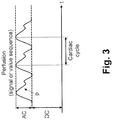
- the processor is configured to determine the change in the level of perfusion of the female human by calculating a first derivative of a course of a perfusion index, the perfusion index being defined by an AC component of the level of perfusion normalized by a DC component of the level of perfusion.
- the processor is configured to determine the change in the level of perfusion of the female human over one or more set time intervals during a resting phase of the female human.
- the sensor system is configured to determine non-invasively the one or more physiological parameters of the female human, the one or more physiological parameters including a level of perfusion, heart rate variability, heart rate, breathing rate, blood pressure, temperature, and/or bio-impedance.
- the processor is configured to determine a resting phase of the female human, using the one or more physiological parameters of the female human.
- the processor is configured to receive and store one or more behavioral parameters of the female human from a mobile communication device, the one or more further behavioral parameters including activity level, number of social interactions, number of intercourses, communication style, and/or type of contacts; and the processor is configured to detect the change in estrogen level of the female human, using the one or more behavioral parameters of the female human.
- the processor is configured to determine a peak of the change in the level of perfusion of the female human during a menstrual cycle of the female human, and to determine a predicted time of ovulation of the female human, using the peak of the change in the level of perfusion.
- the processor is arranged in the wearable device and configured to determine the change in estrogen level of the female human using the physiological parameters measured by the sensor system of the wearable device.
- the processor is arranged in an external system, separated from the wearable device.
- the wearable device further comprises a communication module configured to transmit the physiological parameters measured by the sensor system of the wearable device to the external system, and the processor is configured to determine the change in estrogen level of the female human using the physiological parameters received from the wearable device.
- the present invention also relates to a method of non-invasive monitoring of estrogen of a female human.
- the method comprises: receiving in the processor, as previously defined, from a sensor system of a wearable device one or more physiological parameters of the female human for a respective point in time; storing, by the processor, the physiological parameters of the female human for the respective point in time; determining, by the processor, a change in the physiological parameters of the female human, using the physiological parameters of the female human stored for a plurality of respective points in time; and detecting, by the processor, a change in estrogen level of the female human based on the change in the physiological parameters of the female human.
- the method further comprises: receiving in the processor from the sensor system of the wearable device the one or more physiological parameters of the female human including a level of perfusion, heart rate variability, heart rate, breathing rate, blood pressure, temperature, and/or bio-impedance.
- the present invention also relates to a computer program product comprising a non-transient computer-readable medium having stored thereon computer program code configured to control one or more processors, as previously defined, of a computerized system.
- the computer program code is configured to control the one or more processors such that the computerized system performs the steps of: receiving from a sensor system of a wearable device one or more physiological parameters of the female human for a respective point in time; storing the physiological parameters of the female human for the respective point in time; determining a change in the physiological parameters of the female human, using the physiological parameters of the female human stored for a plurality of respective points in time; and detecting a change in estrogen level of the female human based on the change in the physiological parameters of the female human.
- the computer program code is further configured to control the one or more processors of the computerized system, such that the computerized system performs the steps of: receiving from the sensor system of the wearable device the one or more physiological parameters of the female human including a level of perfusion, heart rate variability, heart rate, breathing rate, blood pressure, temperature, and/or bio-impedance.
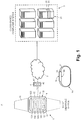
- reference numeral 3 refers to a computer system, e.g. a cloud-based computer system, comprising one or more computers 31 with one or more processors 30 and a data storage system 31.
- the computer system 3 or its processors 30, respectively, are connected to the data storage system 31 and configured to execute various functions, as will be explained later in more detail.
- the data storage system 31 comprises RAM, flash memory, hard disks, data memory, and/or other data stores.
- reference numeral 4 refers to a mobile communication device, e.g. a cellular telephone or a tablet computer, comprising one or more processors 40 and a data store 41.
- the processors 40 are connected to the data store 41 and configured to execute various functions, as will be explained later in more detail.
- the data store comprises RAM, flash memory, data memory, and/or other data storage systems.
- reference numeral 1 refers to a wearable device, e.g. a wrist wearable device, specifically a wrist wearable electronic device.
- Reference numeral 1A refers to a cross-sectional view of the wearable device 1 along central axis A.
- the wearable device 1 includes a fixation system for attaching the wearable device 1 on the body of a user, specifically, for attaching the wearable device 1 in contact with the skin of the user; in the embodiment shown in Figure 1 , the wearable device 1 comprises a wrist band 11 and a device body 10 attached to or integrated in the wrist band 11.
- the wristband 11 is implemented as a watchstrap, a watchband, a bracelet, or the like.
- the device body 10 comprises a housing 15 and an optional display 16 integrated in the housing 15.
- wearable device 1 comprises several sensor systems 100, including a perfusion sensor system 101 configured to measure the level of perfusion, i.e. the passage or flow of blood through the blood vessels, specifically the level of skin perfusion of the female user.
- a perfusion sensor system 101 configured to measure the level of perfusion, i.e. the passage or flow of blood through the blood vessels, specifically the level of skin perfusion of the female user.
- the sensor systems 100 further include a bio-impedance sensor system 102 with an electrical resistance or conductance measuring system for measuring bio-impedance of the female user based on the galvanic skin response.
- the sensor systems 100 further include a sensor system 103 with optical sensors 103 configured to generate photoplethysmography (PPG) signals for measuring heart rate and heart rate variability.
- sensor system 103 comprises a PPG-based sensor system for measuring heart rate and heart rate variability as described in Simon Arberet et al., "Photoplethysmography-Based Ambulatory Heartbeat Monitoring Embedded into a Dedicated Bracelet", Computing in Cardiology 2013; 40:935-938 , included herewith by reference in its entirety.
- the sensor systems 100 further includes a sensor system 104 with one or more accelerometers for measuring body movements (acceleration).
- the accelerometers are implemented in combination with the PPG-based sensor system, as described in Philippe Renevey et al., "PHOTOPLETHYSMOGRAPHY-BASED BRACELET FOR AUTOMATIC SLEEP STAGES CLASSIFICATION: PRELIMINARY RESULTS", IASTED 2014, Zurich, Switzerl and, included herewith by reference in its entirety.
- the sensor systems 100 further include a temperature sensor system 105 for measuring the user's temperature; specifically, the user's skin temperature; more specifically, the wrist's skin temperature.
- the temperature sensor system 105 comprises one or more sensors, including at least one temperature sensor.
- the perfusion sensor system 101, bio-impedance sensor system 102, the optical sensors 103, and the temperature sensor system 105 are integrated in the housing 15 of the wearable device 1 and are arranged on a rear side 150 of the wearable device 1, e.g. opposite of the optional display 16, facing the user's skin in a mounted state of the wearable device 1.
- the rear side 150 of the wearable device 1 or the rear side 150 of its housing 15, respectively is in contact with the skin, e.g. the skin of the wrist, i.e.
- the wearable device 1 further comprises a data store 12, e.g. data memory such as RAM or flush memory, and an operational processor 13 connected to the data store 12 and the sensor systems 100.
- the processor 13 comprises an electronic circuit configured to perform various functions that will be described later in more detail.
- the wearable device 1 further comprises a communication module 14 connected to the processor 13.
- the communication module 14 is configured for data communication with an external system 3, 4, that is separated from the wearable device 1, i.e. a computerized system that is arranged in a different housing than the wearable device 1.
- the external system is a remote computer system 3 or a mobile communication device 4.
- the communication module 14 is configured for data communication with the remote computer system 3 via a network 2 and/or with the mobile communication device 4 via a close range communication interface.
- the network 2 comprises a mobile radio network such as a GSM-network (Global System for Mobile communication), a UMTS-network (Universal Mobile Telephone System), or another mobile radio telephone system, a wireless local area network (WLAN), and/or the Internet.
- the communication module 14 comprises a Bluetooth communication module, e.g. a Low Energy Bluetooth module, an RFID (Radio Frequency Identifier) communication module, e.g. an NFC (Near Field Communication) module, or another close range communication module configured for direct data communication with the external mobile communication device 4.
- the mobile communication device 4 is configured to facilitate the data communication between the wearable device 1 and the remote computer system 3, e.g.
- the wearable device 1 further comprises a timer module configured to generate current time and date information, e.g. a clock circuit or a programmed timer module.
- the timer module is further configured to generate time stamps including the current time and date.
- the estrogen E influences the autonomous nervous system, the endocrine system, and local receptors of a (female) human.
- the autonomous nervous system, the endocrine system, and local receptors of a (female) human influence physiological parameters Y and the behavior and related behavioral parameters A of the female human.
- the functions executed by the processor 13 of the wearable device 1 and/or the processor(s) 30, 40 of the computer system 3 and/or the mobile communication device 4 are described with reference to Figure 2 . Specifically, described are the functions executed by these processors 13, 30, 40 for non-invasive monitoring of estrogen E of a female human and non-invasive detection of a change in estrogen level E of the female human.
- step S1 physiological parameters Y of the female human are measured by way of the wearable device 1.
- the measurements of the various physiological parameters Y of the female user are performed concurrently.
- the measurements are performed periodically.
- the periodic measurements for monitoring and determining changes in estrogen levels CE are limited to specific time intervals, e.g. during night time or, more specifically, during the sleep phase with resting pulse, e.g. as detected by sensor systems 103, 104.
- Resting and sleep phases L are detected by the processor(s) 13, 30, 40 using physiological parameters Y; particularly, heart rate H, heart rate variability V, and acceleration. Different sleep phases are determined by combining the measurements of the heart rate variability V and acceleration as described by Renevey et al. cited above.
- reference numeral Y refers to the physiological parameters, at least some of which are measured and taken into consideration for monitoring and detecting the change in estrogen level E of the female human.
- the physiological parameters Y include perfusion P, bio-impedance b (galvanic skin response, sweating, skin hydration s), heart rate H, heart rate variability V, breathing rate R, blood pressure B, sleep parameters L, and/or temperature T (body, wrist, skin temperature) of the female human.
- a first sensor system of the wearable device 1 measures the (skin) perfusion P of the female user. More specifically, in the state of the device 1 being worn, e.g. on the wrist, the processor 13 of the wearable device 1 reads or receives from the perfusion sensor system 101 the currently measured (skin) perfusion P of the female user.
- a second sensor system of the wearable device 1 measures further physiological parameters Y of the female user, as will be described later in more detail.
- behavioral parameters A of the female user are determined by the wearable device 1, at least some of which are taken into consideration for detecting the change in estrogen level E of the female human.
- the behavioral parameters A include activity level, number of social interactions, communication style, type of contacts, and/or number of intercourses.
- the behavioral parameters A are determined by a sensor system of the wearable device 1 and/or by the processor 13 of the wearable device 1.
- step S2 the processor 13 stores the perfusion P (value) in the data store 12 together with a time stamp, including the current time and date.
- step S2 the processor 13 stores further or other physiological parameters Y of the female user with time stamps, as will be described later in more detail.
- the processor 13 further stores further behavioral parameters A of the female user with time stamps.
- the detected and stored perfusion P, further or other physiological parameters Y, behavioral parameters A, and their associated time stamps define the temporal course of one or more physiological and behavioral parameters Y, A of the female user.
- step S3 the (normalized) perfusion P and/or other physiologic parameters Y (as well as behavioral parameters A, if applicable) of the female user are processed to monitor and detect a change in estrogen level E of the female user during the menstrual cycle of the female user.
- the processing of the perfusion P and/or other physiologic parameters Y (as well as behavioral parameters A, if applicable) of the female user is performed by the processor 13 of the wearable device 1 and/or by the processor(s) 30, 40 of the computer system 3 and/or the mobile communication device 4.
- the measured and time stamped values of perfusion P and/or other physiological parameters Y are transmitted by the communication module 14 from the wearable device 1 via network 2 to the computer system 3, as indicated by step S4 in Figures 1a and 2 , e.g. directly or via the mobile communication device 4 as a relay device.
- the measured and time stamped values of perfusion P and/or other physiological parameters Y are transmitted by the communication module 14 from the wearable device 1 via the close range communication interface to the mobile communication device 4 where they are stored in the data store 41.
- the received measurement values and parameters are stored securely assigned to the female user, defined, for example, by a user identifier and/or a device identifier (for increased anonymity/privacy).
- Transmission of the time stamped measurements is performed periodically, for example; typically, the measurement and parameter data is transmitted less frequently than the measurements or detection are performed, e.g. various time stamped measurement and parameters, taken at different times, are grouped and transmitted together by the wearable device 1 in a combined data transmission.
- the processor 13 of the wearable device and/or the processor(s) 30, 40 of the computer system 3 and/or the mobile communication device 4 determines from a plurality of measurements of the perfusion P the change in the level of perfusion P.
- the change of perfusion CP is detected from a plurality of (normalized) measurement points during the night (or during a detected sleeping phase), over one or more set time intervals, e.g. time intervals with a duration of a few minutes, e.g. one, two, five or ten minutes.
- the change of perfusion CP is determined by calculating the first derivative (slope) of the temporal course of measured (and normalized) perfusion P.
- the processor 13 of the wearable device and/or the processor(s) 30, 40 of the computer system 3 and/or the mobile communication device 4 determines the change of estrogen CE.
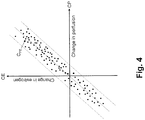
- every point C PE represents at a point in time (during the night) the change of perfusion CP and at the same point in time the change in the level of estrogen CE.
- the change in perfusion CP correlates with the change in estrogen CE. Accordingly, if there is a detected/measured change in perfusion CP, there is a corresponding/correlating change in estrogen CE.
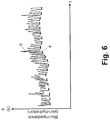
- the processor 13 of the wearable device 1 and/or the processor(s) 30, 40 of the computer system 3 and/or the mobile communication device 4 determines from the measured and stored bio-impedance (skin-impedance) values, the skin hydration s of the female user. As illustrated in Figure 6 , the skin-hydration s is determined from the measured and recorded bio-impedance (signal or value sequence) b by determining the lower envelope of the bio-impedance (signal or value sequence) b.
- step S3 the bio-impedance b or skin-hydration s of the female user is processed to detect a change CE in estrogen level E of the female user during the menstrual cycle of the female user.
- the processing of the bio-impedance b or skin-hydration s of the female user is performed by the processor 13 of the wearable device 1 and/or by the processor(s) 30, 40 of the computer system 3 and/or the mobile communication device 4, as outlined above in connection with the perfusion P.
- the respective processor 13, 30, 40 determines from a plurality of measurements of the bio-impedance b or skin-hydration s the change in the level of bio-impedance b or skin-hydration s.
- the change of bio-impedance b or skin-hydration s is detected from a plurality of measurement points during the night (or during a detected sleeping phase).
- the change of bio-impedance b or skin-hydration s is determined by calculating the first derivative (slope) of the temporal course of measured bio-impedance b or skin-hydration s.
- the processor 13 of the wearable device and/or the processor(s) 30, 40 of the computer system 3 and/or the mobile communication device 4 determines the change of estrogen E.
- the change in bio-impedance b or skin-hydration s correlates with the change in estrogen E. Accordingly, if there is a detected/measured change in bio-impedance b or skin-hydration s, there is a corresponding/correlating change in estrogen E.
- the determination of the change in estrogen CE based on the change in perfusion CP, based on the change of bio-impedance Cb or skin-hydration Cs, or based on other physiological parameters Y or behavioral parameters A, are used in combination (e.g. with weighted contribution of change in perfusion CP, change of bio-impedance Cb, change of skin-hydration Cs, or other physiological parameters Y or behavioral parameters A) or as alternatives.
- Table 1 illustrates the relationship between various physiological parameters Y and behavioral parameters A and the level of estrogen. Table 1 Increase in physiological/behavioral parameter Estimated estrogen level Pulse rate Lower Breathing rate Lower Heart rate variability Higher Blood pressure Lower Bio-impedance Lower Perfusion Higher Social interaction level Higher Activity Higher Type of social communication and contacts Individual
- a detected change of estrogen E level is indicated to the user on a user interface of the wearable device 1 or the mobile communication device 4 by the processor 13 or 40, respectively, e.g. on the display 16 as numerical value and/or a graphical representation indicating the extent of change.
- the detected change in estrogen E is transmitted by the processor(s) 30 of the computer system 3 via network 2 to the wearable device 1 and/or the mobile communication device 4.
- the change of estrogen E level is indicated to the user, only if it exceeds a defined threshold, e.g. when the nightly average change of estrogen E level, as derived from the nightly average change C avg of perfusion P, exceeds a certain percentage, e.g. 20%.
- the information about the change of estrogen E level is further used to inform the user about an upcoming ovulation.
- the highest change of estrogen E level is indicated to the user, as an indicator of the predicted time of ovulation O, which typically occurs two days after the highest change (strongest increase) of estrogen E level or the highest average change C peak of perfusion P, respectively, at night time during the menstruation cycle.
- the processor 13 of the wearable device and/or the processor(s) 30, 40 of the computer system 3 and/or the mobile communication device 4 determines the predicted time of ovulation O of the female user, using the highest average change C peak of perfusion P, by adding an individual time lag (typically two days) to the time of the highest average change C peak of perfusion P. It should be noted that this time lag is individually different and is estimated based on analysis of recordings of previous (earlier) cycles for the respective female user.
- the processors 30 of the cloud-based computer system 3 are configured to implement an online user platform.
- the online user platform is configured to provide to authorized users secured access to their private personal data and stored measurement data.
Landscapes
- Health & Medical Sciences (AREA)
- Life Sciences & Earth Sciences (AREA)
- Veterinary Medicine (AREA)
- Engineering & Computer Science (AREA)
- Public Health (AREA)
- General Health & Medical Sciences (AREA)
- Animal Behavior & Ethology (AREA)
- Pathology (AREA)
- Biomedical Technology (AREA)
- Heart & Thoracic Surgery (AREA)
- Medical Informatics (AREA)
- Molecular Biology (AREA)
- Surgery (AREA)
- Biophysics (AREA)
- Physics & Mathematics (AREA)
- Physiology (AREA)
- Cardiology (AREA)
- Gynecology & Obstetrics (AREA)
- Reproductive Health (AREA)
- Pregnancy & Childbirth (AREA)
- Pulmonology (AREA)
- Oral & Maxillofacial Surgery (AREA)
- Artificial Intelligence (AREA)
- Computer Vision & Pattern Recognition (AREA)
- Psychiatry (AREA)
- Signal Processing (AREA)
- Animal Husbandry (AREA)
- Dentistry (AREA)
- Wood Science & Technology (AREA)
- Zoology (AREA)
- Hematology (AREA)
- Measuring And Recording Apparatus For Diagnosis (AREA)
Claims (14)
- Elektronisches System zur nichtinvasiven Überwachung von Östrogen (E) eines weiblichen Menschen, wobei das System umfasst:eine tragbare Vorrichtung (1), die ein Sensorsystem (101, 102, 103, 104) umfasst, das eingerichtet ist, um in Kontakt mit der Haut des weiblichen Menschen getragen zu werden und um einen oder mehrere physiologische Parameter (Y) des weiblichen Menschen zu bestimmen; undeinen Prozessor (13, 30, 40), der eingerichtet ist, um die physiologischen Parameter (Y) des weiblichen Menschen von dem Sensorsystem (101, 102, 103, 104) für einen jeweiligen Zeitpunkt zu empfangen und zu speichern;der Prozessor (13, 30, 40) des Weiteren eingerichtet ist, um eine Änderung (C) in den physiologischen Parametern (Y) des weiblichen Menschen unter Verwendung der physiologischen Parameter (Y) des weiblichen Menschen zu bestimmen, die für eine Vielzahl von jeweiligen Zeitpunkten gespeichert sind; und der Prozessor (13, 30, 40) des Weiteren eingerichtet ist, um eine Änderung des Östrogenspiegels (E) des weiblichen Menschen basierend auf der Änderung (C) in den physiologischen Parametern (Y) des weiblichen Menschen zu bestimmen,wobei das Sensorsystem (101) eingerichtet ist, um ein Perfusionsniveau (p) des weiblichen Menschen zu bestimmen; und der Prozessor (13, 30, 40) eingerichtet ist, um das Perfusionsniveau (p) des weiblichen Menschen von dem Sensorsystem (101) für einen jeweiligen Zeitpunkt zu empfangen und zu speichern, um eine Änderung (C) in dem Perfusionsniveau (p) des weiblichen Menschen zu bestimmen, indem eine erste Ableitung eines Verlaufs des Perfusionsniveaus (p) unter Verwendung der Perfusionsniveaus (p) des weiblichen Menschen berechnet wird, die für eine Vielzahl von jeweiligen Zeitpunkten gespeichert wurden; und um die Änderung des Östrogenspiegels (E) des weiblichen Menschen basierend auf der Änderung (C) in dem Perfusionsniveau (p) des weiblichen Menschen zu detektieren.
- Elektronisches System nach Anspruch 1, wobei der Prozessor (13, 30, 40) eingerichtet ist, um die Änderung (C) in dem Perfusionsniveau (p) des weiblichen Menschen zu bestimmen, indem eine erste Ableitung eines Verlaufs eines Perfusionsindex berechnet wird, wobei der Perfusionsindex durch eine AC-Komponente (AC) des Perfusionsniveaus (p), normalisiert durch eine DC-Komponente (DC) des Perfusionsniveaus (p), definiert ist.
- Elektronisches System nach einem der Ansprüche 1 oder 2, wobei der Prozessor (13, 30, 40) eingerichtet ist, um die Änderung (C) in dem Perfusionsniveau (p) des weiblichen Menschen über ein oder mehrere festgelegte Zeitintervalle während einer Ruhephase des weiblichen Menschen zu bestimmen.
- Elektronisches System nach einem der Ansprüche 1 bis 3, wobei das Sensorsystem (101, 102, 103, 104) eingerichtet ist, um nichtinvasiv den einen oder die mehreren physiologischen Parameter (Y) des weiblichen Menschen zu bestimmen.
- Elektronisches System nach Anspruch 4, wobei der eine oder die mehreren physiologischen Parameter (Y) das Perfusionsniveau (p) und mindestens eins von Herzfrequenzvariabilität (V), Herzfrequenz (H), Atemfrequenz (R), Blutdruck (B), Temperatur (T) und Bioimpedanz (b) umfasst bzw. einschließen.
- Elektronisches System nach einem der Ansprüche 1 bis 5, wobei der Prozessor (13, 30, 40) eingerichtet ist, um eine Ruhephase des weiblichen Menschen unter Verwendung des einen oder der mehreren physiologischen Parameter (Y) des weiblichen Menschen zu bestimmen.
- Elektronisches System nach einem der Ansprüche 1 bis 6, wobei der Prozessor (13, 30, 40) eingerichtet ist, um einen oder mehrere Verhaltensparameter (A) des weiblichen Menschen von einer mobilen Kommunikationsvorrichtung (4) zu empfangen und zu speichern, wobei der eine oder die mehreren weiteren Verhaltensparameter (A) mindestens eins von: Aktivitätsniveau, Anzahl der sozialen Interaktionen, Anzahl der Verkehre, Kommunikationsstil und Art von Kontakten umfasst bzw. umfassen; und der Prozessor (13, 30, 40) eingerichtet ist, um die Änderung des Östrogenniveaus (E) des weiblichen Menschen unter Verwendung des einen oder der mehreren Verhaltensparameter (A) des weiblichen Menschen zu detektieren.
- Elektronisches System nach einem der Ansprüche 1 bis 7, wobei der Prozessor (13, 30, 40) eingerichtet ist, um einen Peak (CPeak) der Änderung (C) in dem Perfusionsniveau (p) des weiblichen Menschen während eines Menstruationszyklus des weiblichen Menschen zu bestimmen, und um eine prognostizierte Ovulationszeit (t0 ) des weiblichen Menschen unter Verwendung des Peaks (CPeak) der Änderung (C) in dem Perfusionsniveau (p) zu bestimmen.
- Elektronisches System nach einem der Ansprüche 1 bis 8, wobei der Prozessor (13) in der tragbaren Vorrichtung (1) angeordnet ist und eingerichtet ist, um die Änderung des Östrogenspiegels (E) des weiblichen Menschen unter Verwendung der physiologischen Parameter (Y) zu bestimmen, die durch das Sensorsystem (101, 102, 103, 104) der tragbaren Vorrichtung (1) gemessen wurden.
- Elektronisches System nach einem der Ansprüche 1 bis 9, wobei der Prozessor (30, 40) in einem externen System (3, 4) getrennt von der tragbaren Vorrichtung (1) angeordnet ist, wobei die tragbare Vorrichtung (1) des Weiteren ein Kommunikationsmodul (14) umfasst, das eingerichtet ist, um die physiologischen Parameter, die durch das Sensorsystem (101, 102, 103, 104) der tragbaren Vorrichtung (1) gemessen wurden, an das externe System (3, 4) zu übertragen, und der Prozessor (30, 40) eingerichtet ist, um die Änderung des Östrogenspiegels (E) des weiblichen Menschen unter Verwendung der physiologischen Parameter (Y) zu bestimmen, die von der tragbaren Vorrichtung (1) empfangen wurden.
- Verfahren zur nichtinvasiven Überwachung von Östrogen (E) eines weiblichen Menschen, wobei das Verfahren umfasst:Empfangen von einem oder mehreren physiologischen Parametern (Y) des weiblichen Menschen für einen jeweiligen Zeitpunkt in einem Prozessor (13, 30, 40) von einem Sensorsystem (101, 102, 103, 104) einer tragbaren Vorrichtung (1);Speichern der physiologischen Parameter (Y) des weiblichen Menschen für den jeweiligen Zeitpunkt durch den Prozessor (13, 30, 40);Bestimmen einer Änderung (C) in den physiologischen Parametern (Y) des weiblichen Menschen unter Verwendung der physiologischen Parameter (Y) des weiblichen Menschen, die für eine Vielzahl von jeweiligen Zeitpunkten gespeichert wurden, durch den Prozessor (13, 30, 40); undDetektieren einer Änderung des Östrogenspiegels (E) des weiblichen Menschen basierend auf der Änderung (C) in den physiologischen Parametern (Y) des weiblichen Menschen durch den Prozessor (13, 30, 40) ;wobei in dem Prozessor (13, 30, 40) von dem Sensorsystem (101) ein Perfusionsniveau (p) des weiblichen Menschen empfangen wird; durch den Prozessor (13, 30, 40) das Perfusionsniveau (p) des weiblichen Menschen von dem Sensorsystem (101) für einen jeweiligen Zeitpunkt gespeichert wird; und der Prozessor (13, 30, 40) eine Änderung (C) in dem Perfusionsniveau (p) des weiblichen Menschen ermittelt, indem eine erste Ableitung eines Verlaufs des Perfusionsniveaus (p) unter Verwendung der Perfusionsniveaus (p) des weiblichen Menschen berechnet wird, die für eine Vielzahl von jeweiligen Zeitpunkten gespeichert wurden, und die Änderung des Östrogenspiegels (E) des weiblichen Menschen basierend auf der Änderung (C) in dem Perfusionsniveau (p) des weiblichen Menschen detektiert.
- Verfahren nach Anspruch 11, des Weiteren umfassend Empfangen des einen oder der mehreren physiologischen Parameter (Y) des weiblichen Menschen einschließlich des Perfusionsniveaus (p) und mindestens einem von: Herzfrequenzvariabilität (V), Herzfrequenz (H), Atemfrequenz (R), Blutdruck (B), Temperatur (T) und Bioimpedanz (b) in dem Prozessor (13, 30, 40) von dem Sensorsystem (101, 102, 103, 104) der tragbaren Vorrichtung (1).
- Computerprogrammprodukt, umfassend ein nicht-flüchtiges computerlesbares Medium, worauf Computerprogrammcode gespeichert ist, der eingerichtet ist, um einen oder mehrere Prozessoren (13, 30, 40) eines cumputergestützten System (1, 3, 4) zu steuern, so dass das computergestützte System (1, 3, 4) die Schritte durchführt:Empfangen von einem oder mehreren physiologischen Parametern (Y) des weiblichen Menschen für einen jeweiligen Zeitpunkt von einem Sensorsystem (101, 102, 103, 104) einer tragbaren Vorrichtung (1); Speichern der physiologischen Parameter (Y) des weiblichen Menschen für den jeweiligen Zeitpunkt; Bestimmen einer Änderung (C) in den physiologischen Parametern (Y) des weiblichen Menschen unter Verwendung der physiologischen Parameter (Y) des weiblichen Menschen, die für eine Vielzahl von jeweiligen Zeitpunkten gespeichert sind; undDetektieren einer Änderung des Östrogenspiegels (E) des weiblichen Menschen basierend auf der Änderung (C) in den physiologischen Parametern (Y) des weiblichen Menschen;wobei das computergestützte System (1, 3, 4) von dem Sensorsystem (101) ein Perfusionsniveau (p) des weiblichen Menschen empfängt, das Perfusionsniveau (p) des weiblichen Menschen von dem Sensorsystem (101) für einen jeweiligen Zeitpunkt speichert, eine Änderung (C) in dem Perfusionsniveau (p) des weiblichen Menschen ermittelt, indem eine erste Ableitung eines Verlaufs des Perfusionsniveaus (p) unter Verwendung der Perfusionsniveaus (p) des weiblichen Menschen berechnet wird, die für eine Vielzahl jeweiliger Zeitpunkte gespeichert wurden, und die Änderung des Östrogenspiegels (E) des weiblichen Menschen basierend auf der Änderung (C) des Perfusionsniveaus (p) des weiblichen Menschen detektiert.
- Computerprogrammprodukt nach Anspruch 13, wobei der Computerprogrammcode des Weiteren eingerichtet ist, um den einen oder die mehreren Prozessoren (13, 30, 40) des computergestützten Systems (1, 3, 4) zu steuern, so dass das computergestützte System (1, 3, 4) von dem Sensorsystem (101, 102, 103, 104) der tragbaren Vorrichtung (1) den einen oder die mehreren physiologischen Parameter (Y) des weiblichen Menschen einschließlich des Perfusionsniveaus (p) und mindestens einem von: Herzfrequenzvariabilität (V), Herzfrequenz (H), Atemfrequenz (R), Blutdruck (B), Temperatur (T) und Bioimpedanz (b) empfängt.
Applications Claiming Priority (2)
| Application Number | Priority Date | Filing Date | Title |
|---|---|---|---|
| CH14402016 | 2016-10-27 | ||
| PCT/EP2017/077406 WO2018077998A1 (en) | 2016-10-27 | 2017-10-26 | System and a method for non-invasive monitoring of estrogen |
Publications (2)
| Publication Number | Publication Date |
|---|---|
| EP3531923A1 EP3531923A1 (de) | 2019-09-04 |
| EP3531923B1 true EP3531923B1 (de) | 2021-07-28 |
Family
ID=57233261
Family Applications (1)
| Application Number | Title | Priority Date | Filing Date |
|---|---|---|---|
| EP17791363.9A Active EP3531923B1 (de) | 2016-10-27 | 2017-10-26 | System und verfahren zur nichtinvasiven überwachung von östrogen |
Country Status (3)
| Country | Link |
|---|---|
| US (2) | US11517292B2 (de) |
| EP (1) | EP3531923B1 (de) |
| WO (1) | WO2018077998A1 (de) |
Families Citing this family (5)
| Publication number | Priority date | Publication date | Assignee | Title |
|---|---|---|---|---|
| US10765409B2 (en) * | 2018-06-28 | 2020-09-08 | Fitbit, Inc. | Menstrual cycle tracking |
| CN113873953B (zh) * | 2019-05-26 | 2025-04-04 | Vivo感官医学有限公司 | 体温检定 |
| US12185630B2 (en) | 2019-08-09 | 2024-12-31 | Apple Inc. | Layered sensor having multiple laterally adjacent substrates in a single layer |
| US11771406B2 (en) * | 2020-08-12 | 2023-10-03 | Apple Inc. | In-bed temperature array for menstrual cycle tracking |
| WO2022074650A1 (en) | 2020-10-07 | 2022-04-14 | Medical Research & Development Fund for Health Services Bnai Zion Medical Center | Methods for determining ovulation time |
Family Cites Families (36)
| Publication number | Priority date | Publication date | Assignee | Title |
|---|---|---|---|---|
| US3986494A (en) * | 1974-10-30 | 1976-10-19 | The Trustees Of The University Of Pennsylvania | Method of predicting and detecting ovulation |
| US4541439A (en) | 1982-04-23 | 1985-09-17 | American Home Products Corporation (Del.) | Monitoring of capillary blood flow |
| GB8319078D0 (en) | 1983-07-14 | 1983-08-17 | Trafford J C De | Detecting ovulation |
| US4836216A (en) * | 1984-09-11 | 1989-06-06 | Zetek, Inc. | Method for predicting optimum time for insemination |
| US5685319A (en) | 1995-12-18 | 1997-11-11 | Marett; Douglas Michael | Method and apparatus for determining the fertility status of women |
| US20070100666A1 (en) * | 2002-08-22 | 2007-05-03 | Stivoric John M | Devices and systems for contextual and physiological-based detection, monitoring, reporting, entertainment, and control of other devices |
| TW563517U (en) | 2002-10-23 | 2003-11-21 | Wang Nai Dung | Wrist watch capable of recording body temperature and informing pregnable period |
| US20040181167A1 (en) * | 2003-03-13 | 2004-09-16 | Carney Fiona Patricia | Method and kits for monitoring women's health |
| JP2005030992A (ja) * | 2003-07-09 | 2005-02-03 | Matsushita Electric Ind Co Ltd | 排卵周期モニタシステムおよび排卵周期モニタ方法 |
| EP2574275A3 (de) | 2004-03-22 | 2013-06-26 | BodyMedia, Inc. | Nichtinvasive Temperaturüberwachungsvorrichtung |
| ITMI20051328A1 (it) * | 2005-07-13 | 2007-01-14 | Agristudio Srl | Apparecchiatura e procedimento per il rilevamento dello stato riproduttivo in particolare dello stato estrale di un mammifero |
| EP1952162A2 (de) * | 2005-10-24 | 2008-08-06 | Manawatu Biotech Investments Ltd. (Mbil) | Überwachung und verwaltung des ovulationszyklus |
| US20080311047A1 (en) * | 2005-11-16 | 2008-12-18 | Thijs Kaper | Multimetric Biosensors and Methods of Using Same |
| US7977103B2 (en) * | 2006-04-20 | 2011-07-12 | Kimberly-Clark Worldwide, Inc. | Method for detecting the onset of ovulation |
| US20100274073A1 (en) * | 2006-08-04 | 2010-10-28 | Philip George Chelf Regas | Methods and Devices for Predicting Ovulation and Optimum Insemination Time of Animals |
| US20080255472A1 (en) * | 2007-04-13 | 2008-10-16 | Youti Kuo | Ovulation-prediction devices with image processing system |
| CN102170820A (zh) * | 2008-08-05 | 2011-08-31 | Ph值诊断公司 | 用于确定哺乳动物的生理状态的装置、方法和系统 |
| US20130338531A1 (en) * | 2009-02-04 | 2013-12-19 | Philip Regas | Methods and Devices for Predicting Ovulation and Optimum Insemination Time of Animals |
| CA2808651C (en) * | 2010-08-20 | 2018-08-14 | Oratel Diagnostics, Llc | Estrous cycle monitoring by color response |
| US9361572B2 (en) | 2013-03-04 | 2016-06-07 | Hello Inc. | Wearable device with magnets positioned at opposing ends and overlapped from one side to another |
| CN203314947U (zh) | 2013-06-21 | 2013-12-04 | 南京信息工程大学 | 一种用于女性生理周期监测的多功能手表 |
| GB2518648A (en) * | 2013-09-26 | 2015-04-01 | Vivosensmedical Gmbh | Ovulation Determination |
| WO2015061471A1 (en) * | 2013-10-22 | 2015-04-30 | Kindara, Inc. | Integrated wireless fertility tracking system |
| US20160066894A1 (en) | 2014-03-21 | 2016-03-10 | Razzberry Inc. | Health state monitoring device |
| US11013497B2 (en) * | 2014-03-28 | 2021-05-25 | Mti Ltd. | Program for predicting day of ovulation and method of predicting the same |
| US9743913B2 (en) | 2014-04-01 | 2017-08-29 | Koninklijke Philips N.V. | Unobtrusive ovulation tracking system and method using a subject's heart rate |
| AT516566A1 (de) * | 2014-12-03 | 2016-06-15 | Smartbow Gmbh | Verfahren für das Gewinnen von quantifizierten Daten über die Wiederkäutätigkeit |
| US20190110692A1 (en) * | 2014-12-23 | 2019-04-18 | James Pardey | Processing a physical signal |
| WO2016131630A1 (en) | 2015-02-16 | 2016-08-25 | Ava Ag | System and method for determining the fertility phase of a female |
| WO2017015661A1 (en) * | 2015-07-23 | 2017-01-26 | Yono Health Inc. | System for body temperature measurement |
| JP5960936B1 (ja) * | 2015-09-07 | 2016-08-02 | 楽天株式会社 | 端末装置、情報処理方法及び情報処理プログラム |
| US20170202185A1 (en) * | 2016-01-18 | 2017-07-20 | Dinklage Feed Yards, Inc. | Unmanned livestock monitoring system and methods of use |
| US20180368814A1 (en) * | 2016-02-26 | 2018-12-27 | Parag R. Kudtarkar | Intelligent application for an absorbent multifunctional disposable hygiene apparatus, system and methods employed thereof |
| US10765408B2 (en) * | 2016-03-10 | 2020-09-08 | Simple Design Ltd. | Methods and systems for fertility estimation |
| US9867597B1 (en) * | 2016-07-13 | 2018-01-16 | Withings | Method and system to notify female fertility period |
| KR20180025714A (ko) * | 2016-09-01 | 2018-03-09 | 주식회사 플레이포식스 | 임신계획 관리 장치 및 임신계획 관리 방법 |
-
2017
- 2017-10-26 US US16/345,543 patent/US11517292B2/en active Active
- 2017-10-26 WO PCT/EP2017/077406 patent/WO2018077998A1/en not_active Ceased
- 2017-10-26 EP EP17791363.9A patent/EP3531923B1/de active Active
-
2022
- 2022-12-02 US US18/061,405 patent/US20230096495A1/en not_active Abandoned
Non-Patent Citations (1)
| Title |
|---|
| None * |
Also Published As
| Publication number | Publication date |
|---|---|
| US20230096495A1 (en) | 2023-03-30 |
| EP3531923A1 (de) | 2019-09-04 |
| WO2018077998A1 (en) | 2018-05-03 |
| US11517292B2 (en) | 2022-12-06 |
| US20190307430A1 (en) | 2019-10-10 |
Similar Documents
| Publication | Publication Date | Title |
|---|---|---|
| EP3258853B1 (de) | System und verfahren zur bestimmung der fruchtbarkeitsphase einer frau | |
| US20230096495A1 (en) | System and a method for non-invasive monitoring of estrogen | |
| US11766248B2 (en) | System and method for determining temperature nadir of a female | |
| US12446865B2 (en) | System and method for detecting pregnancy related events | |
| EP3125754B1 (de) | Unauffälliges ovulationsverfolgungssystem und verfahren zur verwendung der herzfrequenz einer person | |
| US12453517B2 (en) | Method for processing noise of biometric information measurement data | |
| US20220409186A1 (en) | System and method for estimating a fertility status of a woman | |
| EP3582689B1 (de) | System, verfahren und computerprogramm zur diskreten bestimmung eines fruchtbaren fensters | |
| WO2017162465A1 (en) | Method and apparatus for monitoring urination of a subject | |
| US20220192585A1 (en) | System and method for precise determination of a date of childbirth with a wearable device | |
| US20180242858A1 (en) | Method of registering the intervals between adjacent R-peaks of the ECG signal with the one hand in order to diagnose and assess the state of the human body and Heart Rate Variability wearable monitoring device | |
| EP3549519A1 (de) | Verfahren und vorrichtung zur überwachung eines subjekts | |
| WO2026030757A1 (en) | Wearable-based health system for detecting stress and recovery | |
| CN120957656A (zh) | 利用光体积变化信号的血压推定校准方法及血压推定装置 |
Legal Events
| Date | Code | Title | Description |
|---|---|---|---|
| STAA | Information on the status of an ep patent application or granted ep patent |
Free format text: STATUS: UNKNOWN |
|
| STAA | Information on the status of an ep patent application or granted ep patent |
Free format text: STATUS: THE INTERNATIONAL PUBLICATION HAS BEEN MADE |
|
| PUAI | Public reference made under article 153(3) epc to a published international application that has entered the european phase |
Free format text: ORIGINAL CODE: 0009012 |
|
| STAA | Information on the status of an ep patent application or granted ep patent |
Free format text: STATUS: REQUEST FOR EXAMINATION WAS MADE |
|
| 17P | Request for examination filed |
Effective date: 20190527 |
|
| AK | Designated contracting states |
Kind code of ref document: A1 Designated state(s): AL AT BE BG CH CY CZ DE DK EE ES FI FR GB GR HR HU IE IS IT LI LT LU LV MC MK MT NL NO PL PT RO RS SE SI SK SM TR |
|
| AX | Request for extension of the european patent |
Extension state: BA ME |
|
| DAV | Request for validation of the european patent (deleted) | ||
| DAX | Request for extension of the european patent (deleted) | ||
| GRAP | Despatch of communication of intention to grant a patent |
Free format text: ORIGINAL CODE: EPIDOSNIGR1 |
|
| STAA | Information on the status of an ep patent application or granted ep patent |
Free format text: STATUS: GRANT OF PATENT IS INTENDED |
|
| INTG | Intention to grant announced |
Effective date: 20200910 |
|
| GRAJ | Information related to disapproval of communication of intention to grant by the applicant or resumption of examination proceedings by the epo deleted |
Free format text: ORIGINAL CODE: EPIDOSDIGR1 |
|
| STAA | Information on the status of an ep patent application or granted ep patent |
Free format text: STATUS: REQUEST FOR EXAMINATION WAS MADE |
|
| GRAP | Despatch of communication of intention to grant a patent |
Free format text: ORIGINAL CODE: EPIDOSNIGR1 |
|
| STAA | Information on the status of an ep patent application or granted ep patent |
Free format text: STATUS: GRANT OF PATENT IS INTENDED |
|
| INTC | Intention to grant announced (deleted) | ||
| INTG | Intention to grant announced |
Effective date: 20210216 |
|
| GRAS | Grant fee paid |
Free format text: ORIGINAL CODE: EPIDOSNIGR3 |
|
| GRAA | (expected) grant |
Free format text: ORIGINAL CODE: 0009210 |
|
| STAA | Information on the status of an ep patent application or granted ep patent |
Free format text: STATUS: THE PATENT HAS BEEN GRANTED |
|
| RAP3 | Party data changed (applicant data changed or rights of an application transferred) |
Owner name: AVA AG |
|
| AK | Designated contracting states |
Kind code of ref document: B1 Designated state(s): AL AT BE BG CH CY CZ DE DK EE ES FI FR GB GR HR HU IE IS IT LI LT LU LV MC MK MT NL NO PL PT RO RS SE SI SK SM TR |
|
| REG | Reference to a national code |
Ref country code: GB Ref legal event code: FG4D |
|
| REG | Reference to a national code |
Ref country code: CH Ref legal event code: EP |
|
| REG | Reference to a national code |
Ref country code: DE Ref legal event code: R096 Ref document number: 602017042985 Country of ref document: DE |
|
| REG | Reference to a national code |
Ref country code: AT Ref legal event code: REF Ref document number: 1413979 Country of ref document: AT Kind code of ref document: T Effective date: 20210815 |
|
| REG | Reference to a national code |
Ref country code: IE Ref legal event code: FG4D |
|
| REG | Reference to a national code |
Ref country code: LT Ref legal event code: MG9D |
|
| REG | Reference to a national code |
Ref country code: NL Ref legal event code: MP Effective date: 20210728 |
|
| REG | Reference to a national code |
Ref country code: AT Ref legal event code: MK05 Ref document number: 1413979 Country of ref document: AT Kind code of ref document: T Effective date: 20210728 |
|
| PG25 | Lapsed in a contracting state [announced via postgrant information from national office to epo] |
Ref country code: ES Free format text: LAPSE BECAUSE OF FAILURE TO SUBMIT A TRANSLATION OF THE DESCRIPTION OR TO PAY THE FEE WITHIN THE PRESCRIBED TIME-LIMIT Effective date: 20210728 Ref country code: FI Free format text: LAPSE BECAUSE OF FAILURE TO SUBMIT A TRANSLATION OF THE DESCRIPTION OR TO PAY THE FEE WITHIN THE PRESCRIBED TIME-LIMIT Effective date: 20210728 Ref country code: NL Free format text: LAPSE BECAUSE OF FAILURE TO SUBMIT A TRANSLATION OF THE DESCRIPTION OR TO PAY THE FEE WITHIN THE PRESCRIBED TIME-LIMIT Effective date: 20210728 Ref country code: PT Free format text: LAPSE BECAUSE OF FAILURE TO SUBMIT A TRANSLATION OF THE DESCRIPTION OR TO PAY THE FEE WITHIN THE PRESCRIBED TIME-LIMIT Effective date: 20211129 Ref country code: NO Free format text: LAPSE BECAUSE OF FAILURE TO SUBMIT A TRANSLATION OF THE DESCRIPTION OR TO PAY THE FEE WITHIN THE PRESCRIBED TIME-LIMIT Effective date: 20211028 Ref country code: LT Free format text: LAPSE BECAUSE OF FAILURE TO SUBMIT A TRANSLATION OF THE DESCRIPTION OR TO PAY THE FEE WITHIN THE PRESCRIBED TIME-LIMIT Effective date: 20210728 Ref country code: BG Free format text: LAPSE BECAUSE OF FAILURE TO SUBMIT A TRANSLATION OF THE DESCRIPTION OR TO PAY THE FEE WITHIN THE PRESCRIBED TIME-LIMIT Effective date: 20211028 Ref country code: AT Free format text: LAPSE BECAUSE OF FAILURE TO SUBMIT A TRANSLATION OF THE DESCRIPTION OR TO PAY THE FEE WITHIN THE PRESCRIBED TIME-LIMIT Effective date: 20210728 Ref country code: SE Free format text: LAPSE BECAUSE OF FAILURE TO SUBMIT A TRANSLATION OF THE DESCRIPTION OR TO PAY THE FEE WITHIN THE PRESCRIBED TIME-LIMIT Effective date: 20210728 Ref country code: RS Free format text: LAPSE BECAUSE OF FAILURE TO SUBMIT A TRANSLATION OF THE DESCRIPTION OR TO PAY THE FEE WITHIN THE PRESCRIBED TIME-LIMIT Effective date: 20210728 Ref country code: HR Free format text: LAPSE BECAUSE OF FAILURE TO SUBMIT A TRANSLATION OF THE DESCRIPTION OR TO PAY THE FEE WITHIN THE PRESCRIBED TIME-LIMIT Effective date: 20210728 |
|
| PG25 | Lapsed in a contracting state [announced via postgrant information from national office to epo] |
Ref country code: PL Free format text: LAPSE BECAUSE OF FAILURE TO SUBMIT A TRANSLATION OF THE DESCRIPTION OR TO PAY THE FEE WITHIN THE PRESCRIBED TIME-LIMIT Effective date: 20210728 Ref country code: LV Free format text: LAPSE BECAUSE OF FAILURE TO SUBMIT A TRANSLATION OF THE DESCRIPTION OR TO PAY THE FEE WITHIN THE PRESCRIBED TIME-LIMIT Effective date: 20210728 Ref country code: GR Free format text: LAPSE BECAUSE OF FAILURE TO SUBMIT A TRANSLATION OF THE DESCRIPTION OR TO PAY THE FEE WITHIN THE PRESCRIBED TIME-LIMIT Effective date: 20211029 |
|
| PG25 | Lapsed in a contracting state [announced via postgrant information from national office to epo] |
Ref country code: DK Free format text: LAPSE BECAUSE OF FAILURE TO SUBMIT A TRANSLATION OF THE DESCRIPTION OR TO PAY THE FEE WITHIN THE PRESCRIBED TIME-LIMIT Effective date: 20210728 |
|
| REG | Reference to a national code |
Ref country code: DE Ref legal event code: R097 Ref document number: 602017042985 Country of ref document: DE |
|
| PG25 | Lapsed in a contracting state [announced via postgrant information from national office to epo] |
Ref country code: SM Free format text: LAPSE BECAUSE OF FAILURE TO SUBMIT A TRANSLATION OF THE DESCRIPTION OR TO PAY THE FEE WITHIN THE PRESCRIBED TIME-LIMIT Effective date: 20210728 Ref country code: SK Free format text: LAPSE BECAUSE OF FAILURE TO SUBMIT A TRANSLATION OF THE DESCRIPTION OR TO PAY THE FEE WITHIN THE PRESCRIBED TIME-LIMIT Effective date: 20210728 Ref country code: RO Free format text: LAPSE BECAUSE OF FAILURE TO SUBMIT A TRANSLATION OF THE DESCRIPTION OR TO PAY THE FEE WITHIN THE PRESCRIBED TIME-LIMIT Effective date: 20210728 Ref country code: EE Free format text: LAPSE BECAUSE OF FAILURE TO SUBMIT A TRANSLATION OF THE DESCRIPTION OR TO PAY THE FEE WITHIN THE PRESCRIBED TIME-LIMIT Effective date: 20210728 Ref country code: CZ Free format text: LAPSE BECAUSE OF FAILURE TO SUBMIT A TRANSLATION OF THE DESCRIPTION OR TO PAY THE FEE WITHIN THE PRESCRIBED TIME-LIMIT Effective date: 20210728 Ref country code: AL Free format text: LAPSE BECAUSE OF FAILURE TO SUBMIT A TRANSLATION OF THE DESCRIPTION OR TO PAY THE FEE WITHIN THE PRESCRIBED TIME-LIMIT Effective date: 20210728 |
|
| PLBE | No opposition filed within time limit |
Free format text: ORIGINAL CODE: 0009261 |
|
| STAA | Information on the status of an ep patent application or granted ep patent |
Free format text: STATUS: NO OPPOSITION FILED WITHIN TIME LIMIT |
|
| REG | Reference to a national code |
Ref country code: BE Ref legal event code: MM Effective date: 20211031 |
|
| PG25 | Lapsed in a contracting state [announced via postgrant information from national office to epo] |
Ref country code: MC Free format text: LAPSE BECAUSE OF FAILURE TO SUBMIT A TRANSLATION OF THE DESCRIPTION OR TO PAY THE FEE WITHIN THE PRESCRIBED TIME-LIMIT Effective date: 20210728 |
|
| 26N | No opposition filed |
Effective date: 20220429 |
|
| PG25 | Lapsed in a contracting state [announced via postgrant information from national office to epo] |
Ref country code: LU Free format text: LAPSE BECAUSE OF NON-PAYMENT OF DUE FEES Effective date: 20211026 Ref country code: IT Free format text: LAPSE BECAUSE OF FAILURE TO SUBMIT A TRANSLATION OF THE DESCRIPTION OR TO PAY THE FEE WITHIN THE PRESCRIBED TIME-LIMIT Effective date: 20210728 Ref country code: BE Free format text: LAPSE BECAUSE OF NON-PAYMENT OF DUE FEES Effective date: 20211031 |
|
| PG25 | Lapsed in a contracting state [announced via postgrant information from national office to epo] |
Ref country code: FR Free format text: LAPSE BECAUSE OF NON-PAYMENT OF DUE FEES Effective date: 20211031 |
|
| REG | Reference to a national code |
Ref country code: DE Ref legal event code: R081 Ref document number: 602017042985 Country of ref document: DE Owner name: FERNTEC HEALTH, INC., HOUSTON, US Free format text: FORMER OWNER: AVA AG, ZUERICH, CH Ref country code: DE Ref legal event code: R081 Ref document number: 602017042985 Country of ref document: DE Owner name: AWESOME HEALTH, INC., HOUSTON, US Free format text: FORMER OWNER: AVA AG, ZUERICH, CH |
|
| PG25 | Lapsed in a contracting state [announced via postgrant information from national office to epo] |
Ref country code: IE Free format text: LAPSE BECAUSE OF NON-PAYMENT OF DUE FEES Effective date: 20211026 |
|
| REG | Reference to a national code |
Ref country code: GB Ref legal event code: 732E Free format text: REGISTERED BETWEEN 20221013 AND 20221019 |
|
| PG25 | Lapsed in a contracting state [announced via postgrant information from national office to epo] |
Ref country code: CY Free format text: LAPSE BECAUSE OF FAILURE TO SUBMIT A TRANSLATION OF THE DESCRIPTION OR TO PAY THE FEE WITHIN THE PRESCRIBED TIME-LIMIT Effective date: 20210728 |
|
| PG25 | Lapsed in a contracting state [announced via postgrant information from national office to epo] |
Ref country code: HU Free format text: LAPSE BECAUSE OF FAILURE TO SUBMIT A TRANSLATION OF THE DESCRIPTION OR TO PAY THE FEE WITHIN THE PRESCRIBED TIME-LIMIT; INVALID AB INITIO Effective date: 20171026 |
|
| REG | Reference to a national code |
Ref country code: GB Ref legal event code: 732E Free format text: REGISTERED BETWEEN 20230727 AND 20230802 |
|
| REG | Reference to a national code |
Ref country code: DE Ref legal event code: R082 Ref document number: 602017042985 Country of ref document: DE Representative=s name: SUN, YIMING, M.SC. DIPL. SC. POL. UNIV., DE Ref country code: DE Ref legal event code: R081 Ref document number: 602017042985 Country of ref document: DE Owner name: AWESOME HEALTH, INC., HOUSTON, US Free format text: FORMER OWNER: FERNTEC HEALTH, INC., HOUSTON, TX, US |
|
| PG25 | Lapsed in a contracting state [announced via postgrant information from national office to epo] |
Ref country code: MK Free format text: LAPSE BECAUSE OF FAILURE TO SUBMIT A TRANSLATION OF THE DESCRIPTION OR TO PAY THE FEE WITHIN THE PRESCRIBED TIME-LIMIT Effective date: 20210728 |
|
| PG25 | Lapsed in a contracting state [announced via postgrant information from national office to epo] |
Ref country code: MT Free format text: LAPSE BECAUSE OF FAILURE TO SUBMIT A TRANSLATION OF THE DESCRIPTION OR TO PAY THE FEE WITHIN THE PRESCRIBED TIME-LIMIT Effective date: 20210728 |
|
| PGFP | Annual fee paid to national office [announced via postgrant information from national office to epo] |
Ref country code: DE Payment date: 20240919 Year of fee payment: 8 |
|
| PGFP | Annual fee paid to national office [announced via postgrant information from national office to epo] |
Ref country code: GB Payment date: 20241028 Year of fee payment: 8 |
|
| PGFP | Annual fee paid to national office [announced via postgrant information from national office to epo] |
Ref country code: CH Payment date: 20241101 Year of fee payment: 8 |
|
| PG25 | Lapsed in a contracting state [announced via postgrant information from national office to epo] |
Ref country code: TR Free format text: LAPSE BECAUSE OF FAILURE TO SUBMIT A TRANSLATION OF THE DESCRIPTION OR TO PAY THE FEE WITHIN THE PRESCRIBED TIME-LIMIT Effective date: 20210728 |