EP3532111B1 - Bioaktive knochenzusammensetzung und verwendungen davon - Google Patents
Bioaktive knochenzusammensetzung und verwendungen davon Download PDFInfo
- Publication number
- EP3532111B1 EP3532111B1 EP17797277.5A EP17797277A EP3532111B1 EP 3532111 B1 EP3532111 B1 EP 3532111B1 EP 17797277 A EP17797277 A EP 17797277A EP 3532111 B1 EP3532111 B1 EP 3532111B1
- Authority
- EP
- European Patent Office
- Prior art keywords
- bone
- composition
- solution
- concentration
- bioactive composition
- Prior art date
- Legal status (The legal status is an assumption and is not a legal conclusion. Google has not performed a legal analysis and makes no representation as to the accuracy of the status listed.)
- Active
Links
Images





Classifications
-
- A—HUMAN NECESSITIES
- A61—MEDICAL OR VETERINARY SCIENCE; HYGIENE
- A61L—METHODS OR APPARATUS FOR STERILISING MATERIALS OR OBJECTS IN GENERAL; DISINFECTION, STERILISATION OR DEODORISATION OF AIR; CHEMICAL ASPECTS OF BANDAGES, DRESSINGS, ABSORBENT PADS OR SURGICAL ARTICLES; MATERIALS FOR BANDAGES, DRESSINGS, ABSORBENT PADS OR SURGICAL ARTICLES
- A61L27/00—Materials for grafts or prostheses or for coating grafts or prostheses
- A61L27/02—Inorganic materials
- A61L27/12—Phosphorus-containing materials, e.g. apatite
-
- A—HUMAN NECESSITIES
- A61—MEDICAL OR VETERINARY SCIENCE; HYGIENE
- A61C—DENTISTRY; APPARATUS OR METHODS FOR ORAL OR DENTAL HYGIENE
- A61C8/00—Means to be fixed to the jaw-bone for consolidating natural teeth or for fixing dental prostheses thereon; Dental implants; Implanting tools
- A61C8/0003—Not used, see subgroups
- A61C8/0004—Consolidating natural teeth
- A61C8/0006—Periodontal tissue or bone regeneration
-
- A—HUMAN NECESSITIES
- A61—MEDICAL OR VETERINARY SCIENCE; HYGIENE
- A61K—PREPARATIONS FOR MEDICAL, DENTAL OR TOILETRY PURPOSES
- A61K33/00—Medicinal preparations containing inorganic active ingredients
- A61K33/14—Alkali metal chlorides; Alkaline earth metal chlorides
-
- A—HUMAN NECESSITIES
- A61—MEDICAL OR VETERINARY SCIENCE; HYGIENE
- A61K—PREPARATIONS FOR MEDICAL, DENTAL OR TOILETRY PURPOSES
- A61K33/00—Medicinal preparations containing inorganic active ingredients
- A61K33/42—Phosphorus; Compounds thereof
-
- A—HUMAN NECESSITIES
- A61—MEDICAL OR VETERINARY SCIENCE; HYGIENE
- A61K—PREPARATIONS FOR MEDICAL, DENTAL OR TOILETRY PURPOSES
- A61K6/00—Preparations for dentistry
- A61K6/70—Preparations for dentistry comprising inorganic additives
-
- A—HUMAN NECESSITIES
- A61—MEDICAL OR VETERINARY SCIENCE; HYGIENE
- A61L—METHODS OR APPARATUS FOR STERILISING MATERIALS OR OBJECTS IN GENERAL; DISINFECTION, STERILISATION OR DEODORISATION OF AIR; CHEMICAL ASPECTS OF BANDAGES, DRESSINGS, ABSORBENT PADS OR SURGICAL ARTICLES; MATERIALS FOR BANDAGES, DRESSINGS, ABSORBENT PADS OR SURGICAL ARTICLES
- A61L27/00—Materials for grafts or prostheses or for coating grafts or prostheses
- A61L27/02—Inorganic materials
- A61L27/025—Other specific inorganic materials not covered by A61L27/04 - A61L27/12
-
- A—HUMAN NECESSITIES
- A61—MEDICAL OR VETERINARY SCIENCE; HYGIENE
- A61L—METHODS OR APPARATUS FOR STERILISING MATERIALS OR OBJECTS IN GENERAL; DISINFECTION, STERILISATION OR DEODORISATION OF AIR; CHEMICAL ASPECTS OF BANDAGES, DRESSINGS, ABSORBENT PADS OR SURGICAL ARTICLES; MATERIALS FOR BANDAGES, DRESSINGS, ABSORBENT PADS OR SURGICAL ARTICLES
- A61L27/00—Materials for grafts or prostheses or for coating grafts or prostheses
- A61L27/28—Materials for coating prostheses
- A61L27/30—Inorganic materials
- A61L27/32—Phosphorus-containing materials, e.g. apatite
-
- A—HUMAN NECESSITIES
- A61—MEDICAL OR VETERINARY SCIENCE; HYGIENE
- A61L—METHODS OR APPARATUS FOR STERILISING MATERIALS OR OBJECTS IN GENERAL; DISINFECTION, STERILISATION OR DEODORISATION OF AIR; CHEMICAL ASPECTS OF BANDAGES, DRESSINGS, ABSORBENT PADS OR SURGICAL ARTICLES; MATERIALS FOR BANDAGES, DRESSINGS, ABSORBENT PADS OR SURGICAL ARTICLES
- A61L27/00—Materials for grafts or prostheses or for coating grafts or prostheses
- A61L27/36—Materials for grafts or prostheses or for coating grafts or prostheses containing ingredients of undetermined constitution or reaction products thereof, e.g. transplant tissue, natural bone, extracellular matrix
- A61L27/38—Materials for grafts or prostheses or for coating grafts or prostheses containing ingredients of undetermined constitution or reaction products thereof, e.g. transplant tissue, natural bone, extracellular matrix containing added animal cells
-
- A—HUMAN NECESSITIES
- A61—MEDICAL OR VETERINARY SCIENCE; HYGIENE
- A61L—METHODS OR APPARATUS FOR STERILISING MATERIALS OR OBJECTS IN GENERAL; DISINFECTION, STERILISATION OR DEODORISATION OF AIR; CHEMICAL ASPECTS OF BANDAGES, DRESSINGS, ABSORBENT PADS OR SURGICAL ARTICLES; MATERIALS FOR BANDAGES, DRESSINGS, ABSORBENT PADS OR SURGICAL ARTICLES
- A61L27/00—Materials for grafts or prostheses or for coating grafts or prostheses
- A61L27/50—Materials characterised by their function or physical properties, e.g. injectable or lubricating compositions, shape-memory materials, surface modified materials
-
- A—HUMAN NECESSITIES
- A61—MEDICAL OR VETERINARY SCIENCE; HYGIENE
- A61L—METHODS OR APPARATUS FOR STERILISING MATERIALS OR OBJECTS IN GENERAL; DISINFECTION, STERILISATION OR DEODORISATION OF AIR; CHEMICAL ASPECTS OF BANDAGES, DRESSINGS, ABSORBENT PADS OR SURGICAL ARTICLES; MATERIALS FOR BANDAGES, DRESSINGS, ABSORBENT PADS OR SURGICAL ARTICLES
- A61L2430/00—Materials or treatment for tissue regeneration
- A61L2430/02—Materials or treatment for tissue regeneration for reconstruction of bones; weight-bearing implants
-
- A—HUMAN NECESSITIES
- A61—MEDICAL OR VETERINARY SCIENCE; HYGIENE
- A61L—METHODS OR APPARATUS FOR STERILISING MATERIALS OR OBJECTS IN GENERAL; DISINFECTION, STERILISATION OR DEODORISATION OF AIR; CHEMICAL ASPECTS OF BANDAGES, DRESSINGS, ABSORBENT PADS OR SURGICAL ARTICLES; MATERIALS FOR BANDAGES, DRESSINGS, ABSORBENT PADS OR SURGICAL ARTICLES
- A61L2430/00—Materials or treatment for tissue regeneration
- A61L2430/12—Materials or treatment for tissue regeneration for dental implants or prostheses
Definitions
- the present invention refers to the field of biomedicine and particularly, to compositions for use in promoting osteogenesis. Specifically, the present invention includes compositions for regeneration of dental bone tissue when an implant is used and/or in case of periodontal diseases.
- US20070213832 (Wen Hai B ) describes a calcium phosphate implant that is immersed in HBSS (Hank's Buffered salt Solution) or common PBS for 5 days, rinsed with distilled water and then dried in air for 24 hours, resulting in the microscopic observation of a nanoporous mineral layer.
- the document does not describe any biological effect derived from the above process.
- the mineral layer is used as delivery vehicle for bioactive compositions.
- an osteogenic capacity can be achieved by incorporating into the mineral layer bioactive agents such as growth factors.
- the osteogenic effect is not linked to the mineral layer itself or to the use of the PBS composition, but to the bioactive agents incorporated into the mineral layer.
- Lindahl C, 2012 describes a method to form an apatite-like surface on Titanium substrates to mimic the natural bone, comprising the step of immersing the Titanium substrate into PBS or SBF (Simulated body fluid - Kokubo) normally at 37 °C for a period of days to weeks, drying and sterilizing.
- PBS or SBF Simulated body fluid - Kokubo
- the result is an apatite-like surface which can be further modified or functionalized to improve the properties of the implant coating, e.g. by incorporation of bone promoting drugs like biphosphonate ( Lindahl C. "Biomimetic deposition of hydroxyapatite on titanium implant materials" Uppsala Univ. 1 January 2012, pages 978-91 ).
- Lindberg F et al., 2008 describes a method to form an apatite-like surface on titanium material, comprising soaking in PBS solution preheated to 37 °C from 1 to 4 weeks, rinsing with deionized water and drying in air. After this process, precipitated hydroxyapatite can be observed by XRD ( Lindberg F. et al., "Hydrohylapatite growth onf single crystal rutile substrates" Biomaterials, Elsevier Science Publishers BV, Barking GB, vol. 29, no 23, 1 August 2008 pages 3317-23 )
- peri-implantitis is defined as a destructive inflammatory process affecting the soft and hard tissues surrounding dental implants produced or induced by bacteria colonizing dental implants and their surroundings.
- periodontitis is characterized by the destruction of connective tissue and dental bone support following an inflammatory host response secondary to infection by periodontal bacteria. Both diseases are currently treated with antibiotics and with increased or improved dental hygiene. Nevertheless, they still lead sometimes to the loss of the implant or the tooth and/or severe damages in the surrounding tissue (connective tissue and dental bone).
- One problem to be solved by the present invention may be seen as related to the provision of means capable of avoiding implant failure and promoting properly engraftment of the implant with the surrounding tissues, specifically when dental implants are used.
- compositions and kits that have been surprisingly found that promote osteogenesis. Specifically, they promote, increase, and accelerate the osteogenesis of the surrounding bone tissue of the implant, thus, regenerating or remodeling bone tissue, promoting implant engraftment and avoiding implant loss.
- compositions and kits of the invention promote osteogenesis by theirselves, they are also useful in the treatment of periodontal diseases with loss of bone tissue such as periodontitis and peri-implantitis.
- a first aspect of the invention relates to a bone bioactive composition
- a bone bioactive composition comprising a water-based salt solution comprising sodium dihydrogen phosphate and sodium chloride, for use in promoting osteogenesis, as defined in the claims.
- bone bioactive composition means that the composition is active or reactive with the bone tissue; i.e. that has an effect on, interacts with, or elicits a response from the bone tissue. In other words, that means that the composition interacts and reacts with the bone tissue in some extension. The maximum extension of this "bioactivity" or reaction would be the bone repair.
- bioactive is usually used in the field of implants and prosthetics; for example, “bioactive glasses” are a group of surface reactive glass-ceramic biomaterials. They are biocompatible and bioactive, thus being useful as implant materials in the human body to repair and replace diseased or damaged bone.
- osteogenesis has the meaning generally understood in the art; i.e. promoting the development and formation of bone. Osteogenesis is also known as ossification and is the process of laying down new bone material by cells called osteoblasts.
- a bone bioactive composition comprising a water-based salt solution comprising sodium dihydrogen phosphate in a concentration from 8 to 12 mM in the solution, sodium chloride in a concentration from 130 to 140 mM in the solution, potassium hydrogen phosphate in a concentration from 1.4 to 2.2 mM in the solution, potassium chloride in a concentration from 2.3 to 3.1 mM in the solution, a calcium salt in a concentration from 7 to 15 mM in the solution, a salt of a divalent metal different from calcium in a concentration from 2 to 12 mM in the solution, and a chelating agent.
- a water-based salt solution comprising sodium dihydrogen phosphate in a concentration from 8 to 12 mM in the solution, sodium chloride in a concentration from 130 to 140 mM in the solution, potassium hydrogen phosphate in a concentration from 1.4 to 2.2 mM in the solution, potassium chloride in a concentration from 2.3 to 3.1 mM in the solution, a calcium salt in a concentration
- Another aspect of the invention is the bone bioactive composition as described above for use in promoting osteogenesis.
- kits comprising a composition as described above and an implant.
- Another aspect of the invention is the use of the kits mentioned above in promoting osteogenesis.
- Another aspect of the invention is a process for preparing the composition according to the first aspect comprising mixing all the elements in solid form of the composition with water until complete homogenization.
- Another aspect of the invention relates to the use of a bone bioactive composition, according to the first aspect, for treating the surface of a metal implant prior implantation.
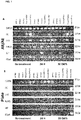
- the present invention provides the first liquid composition that promotes osteogenesis, with a very easy application and particularly useful when a metal implant is used. Therefore, with the composition of the invention it is not needed to modify the implant surface in order to improve protein binding and osteointegration of implants; which are the strategies currently used in the art. Without being limited to theory, it is believed that the compositions herein proposed promote osteogenesis, favoring bone formation, increasing the production of bone tissue and also improving the quality of the bone produced. This is observed in Example 1 provided below, where influence of the bone bioactive composition in the expression of bone markers in in vitro cell cultures is studied. The different expression of genes shown in FIGs 1 and 2 is correlated with the favoring of bone formation. In addition, when the implant is treated with the bone bioactive composition of the present invention, the production of bone is increased and the quality of the produced bone is higher.
- the bone bioactive composition greatly accelerates the process of bone formation.
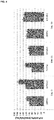
- This finding is confirmed with the study in Example 2 and FIG. 3 of the influence of the bone bioactive composition in the calcium excretion and Alcaline Phosphatase (ALP) activity during bone formation in in vitro cell cultures.
- ALP Alcaline Phosphatase
- FIG. 4 Results obtained for ALP activity appear summarized in FIG. 4 .
- a similar trend as the one seen in FIG. 3 can be seen in FIG. 4 , i.e. early peak on day 3 of ALP activity showing early bone formation. Therefore, results obtained for calcium concentration and ALP activity perfectly correlate and are consistent with an early bone formation induced by the bone bioactive composition of the present invention.
- compositions and kits of the invention a dental implant takes three months to properly engraft, while using the compositions and kits of the invention, engraftment is greatly accelerated and only takes 15 days. This represents a great advantage for the patient and the doctor.
- FIG. 9 shows that basic PBS composition enhances bone growth.
- Two different commercial PBS were additionally tested and all of them gave similar results.
- Commercial PBS which contains low concentrations of CaCl 2 +MgCl 2 , also enhances bone growth.
- the combination PBS+EDTA enhances bone growth in a similar extension that PBS.
- example 6 shows that the bone bioactive composition is able to promote osteogenesis in combination with a great variety of materials, also when using biomaterials for bone reconstruction (like xenografts or ground teeth material) instead of metal implants.
- the bone bioactive composition is able to promote osteogenesis without presence of implant.
- Results of example 7 show, due to the use of the bone bioactive composition, an improved calcification of the cementoblast-like cells together with a recuperation of the collagen fibrils of the periodontal ligament, which is the major defect in periodontitis.
- compositions of the invention also show relevant advantages from a practical point of view. All the elements of the bone bioactive composition are used in GMP condition; the composition can be used to any kind of titanium surface; its manufacture is not convoluted and is not expensive; the procedure is very easy because the implant is submerged only 2 minutes in the bone bioactive composition prior to insertion into bone, thus, the bone bioactive composition handling is effortless in surgical procedures for bone regeneration or peri-implantitis.
- Composition comprising water-based salt solution and preparation thereof
- the invention provides a bone bioactive composition
- a bone bioactive composition comprising a water-based salt solution comprising sodium dihydrogen phosphate and sodium chloride, which is useful in for use in promoting osteogenesis.
- sodium dihydrogen phosphate is in a concentration from 8 to 12 mM in the solution and sodium chloride is in a concentration from 130 to 140 mM in the solution.
- sodium dihydrogen phosphate is in a concentration from 9 to 11 mM in the solution.
- the concentration of sodium dihydrogen phosphate is in a value or in a subrange between the range 8 to 12 mM, that is, at 8 mM, 8.5 mM, 9 mM, 9.5 mM, 10 mM, 10.5 mM, 11 mM, 11.5 mM or 12 mM. More preferably, the concentration of sodium dihydrogen phosphate is 10 mM and more preferably, 10.14 mM.
- sodium chloride is in a concentration from 130 to 140 mM in the solution.
- sodium chloride is in a concentration from 132 to 138 mM in the solution.
- the concentration of sodium chloride is in a value or in a subrange between the range 130 to 140 mM, that is, at 130 mM, 130.5 mM, 131 mM, 131.5 mM, 132 mM, 132.5 mM, 133 mM, 133.5 mM, 134 mM, 134.5 mM, 135 mM, 135.5 mM, 136 mM, 136.5 mM, 137 mM, 137.5 mM, 138 mM, 138.5 mM, 139 mM, 139.5 mM or 140 mM. More preferably, the concentration of sodium chloride is 137 mM, and more exactly, 136.99 mM.
- the water-based salt solution further comprises potassium hydrogen phosphate and potassium chloride.
- the potassium hydrogen phosphate is in a concentration from 1.4 to 2.2 mM in the solution.
- potassium hydrogen phosphate is in a concentration from 1.6 to 2 mM in the solution.
- the concentration of potassium hydrogen phosphate is in a value or in a subrange between the range 1.4 to 2.2 mM, that is, at 1.4 mM, 1.5 mM, 1.6 mM, 1.7 mM, 1.8 mM, 1.9 mM, 2.0 mM, 2.1 mM or 2.2. mM.
- the concentration of potassium hydrogen phosphate is 1.8 mM and more preferably, 1.76 mM.
- the potassium chloride is in a concentration from 2.3 to 3.1 mM in the solution. More particularly, potassium chloride is in a concentration from 2.5 to 2.9 mM in the solution. Preferably, the concentration of potassium chloride is in a value or in a subrange between the range 2.3 to 3.1 mM, that is, at 2.3 mM, 2.4 mM, 2.5 mM, 2.6 mM, 2.7 mM, 2.8 mM, 2.9 mM, 3.0 mM, or 3.1 mM. More preferably, the concentration of potassium chloride is 2.7 mM, and more exactly, 2.68 mM.
- the pH of the solution is between 7.0 and 7.8.
- the pH is in a value or in a subrange between the range 7.0 and 8.0, that is at 7.0, 7.1, 7.2, 7.3, 7.4, 7.5, 7.6, 7.7, 7.8, 7.9 or 8.0.
- the pH is between 7.4 and 7.8.
- the pH is between 7.5 and 7.7.
- the pH of the solution is 7.6. It is noteworthy, that, surprisingly, the composition of the present invention at pH 7.6 shows even increased effects, as it will be apparent from the examples included below. More specifically, the composition of the present invention, when used at said pH showed an even earlier bone formation and an increased bone formation.
- the water-based salt solution further comprises magnesium chloride and calcium chloride.
- the solution can comprise one salt of magnesium and one salt of calcium with a counterion different but equivalent to chloride, that does not interfere in the solution.
- the solution comprises a calcium salt and a salt of a divalent metal different from calcium.
- the divalent metal can be e.g. beryllium, magnesium, strontium, barium, radium, zinc, copper, nickel, manganese (2+), iron (2+), chromium (2+), platinum (2+), or mercury (2+).
- magnesium chloride or the salt of a divalent metal different from calcium is in a concentration from 2 to 12 mM in the solution and calcium chloride or the calcium salt is in a concentration from 7 to 15 mM in the solution.
- magnesium chloride or the salt of a divalent metal different from calcium is in a concentration from 4 to 10 mM.
- the concentration of magnesium chloride or the salt of a divalent metal different from calcium is in a value or in a subrange between the range 2 to 12 mM, that is, at 2.0 mM, 2.5 mM, 3.0 mM, 3.5 mM, 4.0 mM, 4.5 mM, 5.0 mM, 5.5 mM, 6.0 mM, 6.5 mM, 7.0 mM, 7.5 mM, 8.0 mM, 8.5 mM, 9.0 mM, 9.5 mM, 10.0 mM, 10.5 mM, 11.0 mM, 11.5 mM or 12.0 mM. More preferably, the concentration of magnesium chloride or the salt of a divalent metal different from calcium in the solution is 8.4 mM.
- calcium chloride or the calcium salt is in a concentration from 7 to 15 mM in the solution.
- calcium chloride or the calcium salt is in a concentration from 9 to 12 mM in the solution.
- the concentration of calcium chloride or the calcium salt is in a value or in a subrange between the range 7 to 15 mM, that is, at 7.0 mM, 7.5 mM, 8.0 mM, 8.5 mM, 9.0 mM, 9.5 mM, 10.0 mM, 10.5 mM, 11.0 mM, 11.5 mM, 12.0 mM, 12.5 mM, 13.0 mM, 13.5 mM, 14.0 mM, 14.5 mM or 15.0 mM. More preferably, the concentration of calcium chloride or the calcium salt is 10.81 mM.
- the water-based salt solution further comprises a chelating agent.
- the chelating agent is EDTA.
- the concentration of EDTA in the composition is from 25 mM to 100 mM.
- EDTA is in a concentration from 40 to 80 mM in the solution.
- the concentration of EDTA is in a value or in a subrange between the range 25 mM to 100 mM, and preferably at 68.44 mM.
- the invention provides a bone bioactive composition
- a bone bioactive composition comprising a water-based salt solution comprising sodium dihydrogen phosphate in a concentration from 8 to 12 mM in the solution, sodium chloride in a concentration from 130 to 140 mM in the solution, potassium hydrogen phosphate in a concentration from 1.4 to 2.2 mM in the solution, potassium chloride in a concentration from 2.3 to 3.1 mM in the solution, a calcium salt in a concentration from 7 to 15 mM in the solution, a salt of a divalent metal different from calcium in a concentration from 2 to 12 mM in the solution, and a chelating agent.
- the calcium salt is calcium chloride and the salt of a divalent metal different from calcium is magnesium chloride.
- the bone bioactive composition for promoting osteogenesis comprises a water-based salt solution comprising sodium dihydrogen phosphate, sodium chloride, potassium hydrogen phosphate, potassium chloride, magnesium chloride, calcium chloride, and EDTA.
- the composition comprises a water-based salt solution comprising a water-based salt solution comprising 10 mM sodium dihydrogen phosphate, 137 mM sodium chloride, 1.8 mM potassium hydrogen phosphate, 2.7 mM potassium chloride, 8.4 mM magnesium chloride, 10.8 mM calcium chloride and 68.4 mM EDTA.
- the composition comprises a water-based salt solution comprising NaCl 136.99 mM, KCI 2.68 mM, Na 2 HPO 4 10.14 mM, KH 2 PO 4 1.76 mM, MgCl 2 8.4 mM, CaCl 2 10.81 mM and EDTA 68.44 mM, at a pH of between 7.0 and 7.8, and more preferably of 7.6.
- a bone bioactive composition particularly useful for the purposes of the invention comprises a water-based salt solution comprising 10 mM sodium dihydrogen phosphate, 137 mM sodium chloride, 1.8 mM potassium hydrogen phosphate, 2.7 mM potassium chloride, 8.4 mM magnesium chloride, 10.8 mM calcium chloride and 68.4 mM EDTA.
- the pH of the solution is 7.6.
- compositions are useful in the promotion of osteogenesis for the purposes of the invention. These include particularly, compositions based only on sodium dihydrogen phosphate and sodium chloride; compositions further comprising potassium hydrogen phosphate and/or potassium chloride; compositions further comprising magnesium and calcium chloride, and compositions further comprising EDTA.
- PBS Phosphate Buffered Saline
- the basic components are sodium dihydrogen phosphate and sodium chloride and, in some formulations, potassium chloride and potassium dihydrogen phosphate.
- the osmolarity and ion concentrations of the solutions match those of the human body (isotonic). PSB can be stored at room temperature.
- PBS solutions There are many different ways to prepare PBS solutions. Some formulations do not contain potassium and magnesium, while other ones contain calcium and/or magnesium. Some examples of PBS are described herein. Table A. The most common composition of PBS (1X) Salt Concentration (mmol/L) Concentration (g/L) NaCl 137 8.0 KCl 2.7 0.2 Na2HPO4 10 1.42 KH2PO4 1.8 0.24
- the pH of the 10x stock solution of PBS is -6.8, but when diluted with water to 1x PBS it should change to 7.4.
- buffer solutions it is good practice to always measure the pH directly using a pH meter. If necessary, pH can be adjusted using hydrochloric acid or sodium hydroxide.
- PBS buffer tablets or pouches The simplest way to prepare a PBS solution is to use PBS buffer tablets or pouches. They are formulated to give a ready-to-use PBS solution upon dissolution in a specified quantity of distilled water. They are available in the standard volumes: 100, 200, 500 and 1000 mL, and 10, 25, 50 and 100 L.
- PBS can be stored at room temperature or in the refrigerator. However, concentrated stock solutions may precipitate when cooled and should be kept at room temperature until precipitate has completely dissolved before use.
- Table C Phosphate-buffered saline (PBS) (Cold Spring Harbor) Reagent Amount to add (for 1 ⁇ solution) Final concentration (1 ⁇ ) Amount to add (for 10 ⁇ stock) Final concentration (10 ⁇ ) NaCl 8 g 137 mM 80 g 1.37 M KCl 0.2 g 2.7 mM 2 g 27 mM Na 2 HPO 4 1.44 g 10 mM 14.4 g 100 mM KH 2 PO 4 0.24 g 1.8 mM 2.4 g 18 mM If necessary, PBS may be supplemented with the following: CaCl 2 •2H 2 O 0.133 g 1 mM 1.33 g 10 mM MgCl 2 •6H 2 O 0.10 g 0.5 mM 1.0 g 5 mM
- PBS can be made as a 1 ⁇ solution or as a 10x stock.
- 1 L of either 1 ⁇ or 10x PBS dissolve the reagents listed above in 800 mL of H 2 O. Adjust the pH to 7.4 (or 7.2, if required) with HCI, and then add H 2 O to 1 L. Dispense the solution into aliquots and sterilize them by autoclaving for 20 min at 15 psi (1.05 kg/cm 2 ) on liquid cycle or by filter sterilization. Store PBS at room temperature.
- the resultant 1x PBS should have a final concentration of 137 mM NaCl, 10 mM Phosphate, 2.7 mM KCI, and a pH of 7.4.
- pH is adjusted with an acid or a base, for instance with hydrochloric acid or phosphoric acid and sodium hydroxide.
- PBS is also referred as PBS 10 mM because the concentration of Na 2 HPO 4 is 10 mM (PBS 1x 1L).
- DPBS Dulbecco's Phosphate Buffered Saline
- composition according to the invention is usually in liquid form ready to be used; therefore it can be commercially sold as liquid in a suitable container, in single doses (e.g. of 1 ml, 2 ml, 3 ml, 5 ml, 10 ml or higher, or in a higher volume (e.g. 25 ml, 50 ml, 100 ml, 1 liter, 10 liters).
- composition can also adopt suitable forms to make the application easier, for example in the form of gel to be applied in the area to be treated or in the tissues surrounding the implant.
- the composition is in liquid form, in the form of a gel, a varnish or a spray.
- the elements of the composition are in solid form, with all the elements of the composition together in a single container or in different containers (e.g. a vial) or in the form of solid tablet, in both cases, to be reconstituted just before use.
- the commercial product can comprise the elements of the composition in a container/containers or in the form of tablet, and a volume of water in a container, perfectly measured to be mixed with the solid elements, thus achieving the final solution concentrations specified in other sections of this description.
- water can be acidified or basified in order to obtained the desired pH when mixing with the elements of the composition.
- the term "container” herein is used to denote any recipient, having a closure that is suitable for packaging a unit dosage amount of a solid or liquid composition. It will be understood that equivalent forms of packaging, such as a vial, an ampoule, a disposable syringe, a syringe cartridge or a pre-filled syringe, are encompassed by this embodiment of the invention.
- the containers should be made of a material to preserve stability of the elements of the composition for preferably storing it at room temperature, but also refrigerated.
- kits comprising a composition as defined above and an implant.
- implant is understood widely as any material or scaffold to restore missing bone, in part or in a whole.
- Implant is understood as synonymous of prosthesis.
- implants used in bone tissue engineering can be classified in implants made of metals and alloys (Titanium, Cobalt-Chromium-Molybdenum alloys) and non-metallic implants made basically of ceramics, which can be inert ceramics (alumina, carbon, zirconia) and bioactive ceramics (bioactive glasses and ceramics, calcium phosphates, and hydroxyapatite).
- Non-metallic implants can also be made of polymers.
- the implant is a metal implant.
- the metal implant or the metal prosthesis can be anyone used in odontology and traumatology.
- the metal implant is a dental implant.
- Dental implants are usually made of titanium with very specific and accurate tolerances. The most important Titanium alloys for clinical applications are Ti-6AI-4V, Ti-3AI-2.5V and Ti-6AI-7Nb. Dental implants are also made of monolithic Zirconium-oxide.
- the dental metal implant is a dental titanium implant.
- the implant is made of a biomaterial.
- the available bone tissue replacement biomaterials commonly used include autografts, allografts, xenografts and alloplasts.
- Allografts are derived from a donor of the same species, which may be a fresh/frozen, freeze-dried bone or demineralized freeze-dried bone.
- Xenografts are obtained from another species and are widely used in clinical periodontal regenerative applications.
- Alloplastic materials include ceramics and polymers and are either natural or synthetic.
- alloplasts are bioactive glasses, calcium phosphates (hydroxyapatite, tricalcium phosphate and other calcium phosphates -brushite, monetite, calcium polyphosphates/CPP-) and calcium sulphate.
- calcium phosphates hydroxyapatite, tricalcium phosphate and other calcium phosphates -brushite, monetite, calcium polyphosphates/CPP-
- calcium sulphate particularly examples of commercially available bone grafts for bone reconstructive applications are described in Sheikh Z, et al. "Natural graft tissues and synthetic biomaterials for periodontal and alveolar bone reconstructive applications: a review" Biomater Res. 2017; 21: 9 .
- the kit comprises the implant and the composition of the invention in separate parts.
- the commercial presentation is the implant submerged into the liquid composition in a container.
- the kit further comprises means to apply the composition; said means are explained hereinafter.
- the proposal of the invention can also be useful to promote bone regeneration of areas that are not in contact with an implant but with presence of bone loss. Examples of the above are in case of periodontal diseases.
- the article of manufacture is only the composition in liquid form or in solid form, because the professional has at his disposal the other elements to prepare the composition and to use and apply the composition to the patient (e.g. water and means for application).
- another aspect of the invention is a kit comprising a composition according to the first aspect and means to apply the composition to the area to be treated.
- the means to apply the composition are a syringe, a cotton rod and a textile gauze.
- the means are to apply the composition to the buccal cavity.
- a mouthguard also known as occlusal splints, mouthprotector, mouth piece, gumshield, gumguard, nightguard, bite or mouth splint, or bite plane. This is a removable dental appliance to fit the upper or lower arches of teeth.
- the kit further comprises means for adding water into the container with the composition in solid form.
- the means are preferably a syringe equipped with a disposable perforating needle that is used for drawing water from its container and putting into the container with the composition in solid form.
- kits described above for use in promoting osteogenesis Another aspect of the invention is the use of the kits described above for use in promoting osteogenesis.
- composition of the invention can comprise additional elements, carriers or excipients, adequate to have a biocompatible composition.
- These products can adopt the form of a pharmaceutical product, a medicament, a food supplement or an oral care product.
- an aspect of the invention relates to a bone bioactive composition as described above, for use in promoting osteogenesis.
- This aspect can be alternatively formulated as the use of any of the compositions of the invention for the manufacture of a pharmaceutical product, a medicament, a food supplement or an oral care product for promoting osteogenesis.
- This aspect may be also alternatively formulated as a method for promoting osteogenesis comprising administering to the subject in need thereof an effective amount of any of the compositions of the invention.
- it can also be formulated as the use of a bone bioactive composition as described above, in promoting osteogenesis.
- the same aspect can also be formulated as a method of promoting osteogenesis by using a bone bioactive composition as described above.
- the invention provides a bone bioactive composition for use a medicament.
- the bone bioactive composition is used in the promotion of osteogenesis when an implant is used.
- the metal implant is a dental titanium implant.
- the use of the composition or the kits of the present invention favor an early engraftment of the metal implant, inducing the earlier formation of the bone around the implant and, also increasing the quantity as well as the quality of bone formed.
- the bone formed is of an increased quality. All the above features contribute to an earlier and stronger engraftment of the implant as well as to a reduced implant loss. Without the compositions and kits of the invention a dental implant takes three months to properly engraft, while using the compositions and kits of the invention, engraftment is greatly accelerated and only takes 15 days. This represents a great advantage for the patient and the doctor.
- compositions or kits of the present invention are used to improve the engraftment of metal implants (preferably dental titanium implants).
- the composition of the present invention induces early and/or increased ossification it has also been found useful in the treatment of periodontal diseases such as periodontitis and peri-implantitis, two diseases associated with bacterial infections affecting the connective tissue and the dental bone, leading to the destruction thereof and the loss of implants or teeth, respectively.
- Said composition due to its capacity for early and accelerated and increased bone generation is also useful for promoting osteogenesis in the treatment of a periodontal disease, such as peri-implantitis and periodontitis.
- This may be alternatively formulated as a method for the prevention and/or treatment of a periodontal disease, comprising administering to the subject in need thereof an effective amount of any of the compositions of the invention.
- the bone bioactive composition is able to promote osteogenesis by itself, without presence of a material as happens in periodontitis.
- Another aspect of the invention relates to the use of a bone bioactive composition, for treating the surface of a metal implant prior implantation.
- composition is applied to the area until the bleeding of said area that means that the stem cells have emerged. In a particular embodiment, some milliliters of composition are applied to the area.
- Example 1 Influence of the bone bioactive composition in the expression of bone markers in in vitro cell cultures.
- DPPSC medium containing as base medium 60% Dulbecco modified Eagle's medium (DMEM)-low glucose (Sigma, United States) and 40% MCDB-201 (Sigma, United States) supplemented with 1x insulin-transferrin-selenium (hereinafter, ITS; Sigma, United States), 1x linoleic acid-bovine serum albumin (hereinafter, LA-BSA; Sigma, United States), dexamethasone 10 -9 M (Sigma, United States), 10 -4 M ascorbic acid 2-phosphate (Sigma, United States), 100 units of penicillin 1000 units of streptomycin (PAA, Life Technologies, USA), 2% foetal bovine serum (hereinafter, FBS; Sigma, United States), 10 ng/ml of Human Platelet Derived Growth Factor-BB (hereinafter, hPDGF-BB; R & D Systems, United States) and 10 ng/ml of Epidermal Growth Factor (hereinafter,
- DPMSC medium culture in DPMSC medium (hereinafter, cells cultured under these conditions are referred as DPMSCs)
- DPMSC Dulbecco modified Eagle's medium
- bFGF basic Fibroblast Growth Factor
- FBS FBS
- Cells were seeded at 300,000 cells/cm 2 density, and the medium was changed every three days. The confluence was settled at 50-80 % in order to maintain cell morphology and multipotency.
- Saos cells Culture in Saos medium (hereinafter, cells cultured under these conditions are referred as Saos cells)
- Subculture P 12 cells were seeded at 500,000 cells/cm 2 density, and the medium was changed every three days. The confluence was settled at 80% were unfreezed and seeded in 75 cm 2 flasks with Saos medium containing DMEM (Invitrogen, United States), supplemented with 10 % FBS ([Hyclone, USA]), 2mm L-Glutamine (Sigma USA), 100 u/ml penicillin (Life Technologies, USA), 1000 u/ml streptomycin (Life Technologies, USA), The flasks were previously covered with 10 ml of 100ng/ml fibronectin (Life Technologies, USA) and incubated at 37 °C, 5 % CO 2 concentration during 1 hour.
- the medium was changed every three days.
- the subcultures were done when cells were at 80 % of confluence.
- the three cell populations mentioned above were cultured, independently, on the titanium discs.
- Cells were seeded in titanium discs of Ti 6 Al 4 V discs (treated as mentioned above, i.e., discs treated AB/AE and incubated or not with the bone bioactive composition of the present invention) in 24-well plates at a density of 1x10 3 cells per cm 2 .
- the culture conditions for osteoblast differentiation were:
- RT-PCR was performed using the primers on the following Table 1 for the amplification of OC, COL I, RUNX-2, ALP, ITG ⁇ 4, and GAPDH.
- Table 1 Primers used for the amplification of OC, COL I, RUNX-2, ALP, ITG ⁇ 4, and GAPDH.
- Primers used for the amplification of OC, COL I, RUNX-2, ALP, ITG ⁇ 4, and GAPDH GENE Accession Number FORWARD PRIMER (5'-3') REVERSE PRIMER (5'-3') PRODUCT SIZE (bp) USE ALP NM_000478 GGACATGCAGTACGAGCTGA (SEQ ID NO: 1) GTCAATTCTGCCTCCTTCCA (SEQ ID NO: 2) 133 RT-PCR ALP NM_000478 CCGTGGCAACTCTATCTTTGG (SEQ ID NO: 3) GCCATACAGGATGGCAGTGA (SEQ ID NO: 4) 79 qRT-PCR
- FIG. 2 shows the results of relative expression for the genes COL I, BMP2 and OCN at day 0 and 30.
- BMP2 (Bone morphogenetic protein) Forward GCG GAA ACG CCT TAA GTC CA (SEQ ID NO: 21) 20 Reverse GTG GAG TTC AGA TGA TCA GC (SEQ ID NO: 22) 20 OCN Forward GCAGACCTGACATCCAGTAC (SEQ ID NO: 23) 57.7 Reverse TAATCTGGACTGCTTGTGGC (SEQ ID NO: 24) 57.7 Primers used for COL I were the same identified in Table 1.
- FIGs 1 and 2 The different expression of genes shown in FIGs 1 and 2 is correlated with the favouring of bone formation.
- the implant is treated with the bone bioactive composition of the present invention, the production of bone is increased and the quality of the produced bone is higher.
- Example 2 Influence of the bone bioactive composition in the calcium excretion and Alcaline Phosphatase (hereinafter, ALP) activity during bone formation in in vitro cell cultures.
- ALP Alcaline Phosphatase
- ALP activity was measured in the supernatant of the above-mentioned cell cultures also at days 3, 11 and 20. Said activity was measured using an alkaline phosphatase kit (BioSystems, USA) according to the manufacturer's instructions. The absorbance of each sample was measured at a wavelength of 405 nm at different times (day 3, 11 and 20 during cell differentiation) wherein an increase in the ALP activity is observed in the treated group vs not treated.
- Results obtained for ALP activity appear summarized in FIG. 4 .
- a similar trend as the one seen in FIG. 3 can be seen in FIG. 4 , i.e. early peak on day 3 of ALP activity showing early bone formation.
- results obtained for calcium concentration and ALP activity perfectly correlate and are consistent with an early bone formation induced by the bone bioactive composition of the present invention.
- Example 3 Influence of the bone bioactive composition in the implant-bone engraftment in rabbits.
- the implants were treated by blasting with 50-100 ⁇ m TiO 2 particles, followed by ultrasonic cleaning with an alkaline solution Riozyme IV-E Neutro Gold (Ind ⁇ stria Farmacêutica Rioqu ⁇ mica Ltda, S ⁇ o Jose do Rio Preto, Brazil), washing with distilled water and pickling with maleic acid (HO 2 CCH 2 CHOHCO 2 H).
- Riozyme IV-E Neutro Gold Ind ⁇ stria Farmacêutica Rioqu ⁇ mica Ltda, S ⁇ o Jose do Rio Preto, Brazil
- maleic acid HO 2 CCH 2 CHOHCO 2 H
- the samples were embedded in Technovit 7200 VLC resin (Kultzer & Co., Wehrhein, Germany) and, after curing, samples were sectioned using a metallographical cutter (Isomet 1000; Buehler, Germany).
- the disc samples were polished using an abrasive paper sequence (Metaserv 3000; Buehler, Germany) to a ⁇ 30- ⁇ m thickness and analyzed using light microscopy (Nikon E200, Japan).
- the bone growth was measured with respect to the implant platform at the bone contact with the healing abutment, according to the scheme using Image Tool software, version 5.02 for Microsoft WindowsTM. Two different investigators made the measurements at different times and a unique average of these values was computed. When the measured values were very different both investigators repeated measures.
- the implants were in contact with predominantly cortical bone along the upper threads in the cortical region, while the threads in the bone marrow were in contact with either newly formed bone or with normal bone marrow.
- a demarcation line was consistently seen between the newly formed bone and the old bone tissue.
- an earlier formation of bone is induced in Groups B and C (even earlier and greater in the latter). This difference was maintained all throughout the experimental time frame (i.e., until day 60).
- Results are summarized in FIG. 8 and are consistent with what has been discussed above. It can be seen an earlier formation of bone in groups B and C (group C shows an even higher bone formation in day 15 when compared with group B). In addition, group C is the only group that surprisingly showed an increase in new bone formed on day 60 (on said day, the quantity of bone formed in groups A and B had evolved to be similar).
- Discs were treated and incubated during one hour before seeding cells in 24-well plates at a density of 1x10 3 cells per cm 2 .
- RT-PCR was performed at day 7 of osteoblast differentiation using OC, OCN and ALP.
- the differences in expression shown in FIG. 9 show that titanium discs treated with PBS with the addition of CaCl 2 and MgCl 2 presents more osteogenic capacity in comparison with treatment with only PBS or PBS+EDTA and that the combination of PBS, CaCl 2 , MgCl 2 and EDTA shows and even more surprising osteogenic capacity compared to the other treatments.
- FIG. 9 Values of FIG. 9 are expressed as expression related to no treated discs at day 7.
- Said commercial PBS were: Sigma Aldrich P3813 SIGMA - Phosphate buffered saline (Contents of one pouch, when dissolved in one liter of distilled or deionized water, will yield 0.01 M phosphate buffered saline (NaCl 0.138 M; KCI - 0.0027 M); pH 7.4, at 25 °C). Thermo Fisher CatNum 18912 - PBS Tablets.
- the drilling sequence bone has to according to the manufacturer's recommendations subsequently implant placing and with very low insertion between 20 to 50 Newtons. This is applicable for dental implants as well as for traumatology implants.
- the composition in a patient with periodontitis or peri-implantitis For the periodontitis treatment using the bone bioactive composition, first of all the conventional periodontal treatment should be done; removing bacterial plaque and granulation tissue by supragingival and subgingival scrapings. In the same intervention, the area of the bone defect has to be well dry before applying the bone bioactive composition using a conventional brush; after that, bleeding is caused until the clot is formed. This process should be done more than once until recuperate all lost bone.
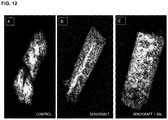
- Example 6 In vivo study of the influence of the bioactive bone composition in the use of biomaterials in dog
- the study was designed as an in vivo trial. Dental extraction of all posterior upper and lower molars was performed three months before the study with bone bioactive composition and biomaterials. After that, 12 bone defects were made using a 5 mm trephine, 3 in each zone:
- Straumann® XenoGraft is a bovine bone and slow resorption rate similar to human bone with low cristallinity, high porosity and an optimal balance of calcium and phosphate designed to achieve reliable bone volume in guided bone regeneration.
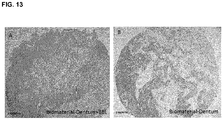
- Dentum is used in this description to name a biomaterial formed by autologous dentin.
- Autologous dentin is used in the clinical procedures as an autograft for its composition almost identical to that of human bone in calcium and phosphorus ions organized as hydroxyapatite and TCP.
- Dentum was obtained using the Smart Dentin Grinder (distributed by Bioner, Spain, from KometaBio, USA).
- the tooth particles that were obtained were 300-1200 ⁇ m, which were subsequently sieved through a special two-compartment classification system.
- the particles of teeth were immersed in a basic alcohol cleaner in a sterile vessel to dissolve all organic waste and bacteria during 15 minutes. The particles were then washed with sterile saline solution for 5 minutes and dried.
- the dog received a pre-anesthetic medication consisting of 0.01 mg/kg atropine (Atropuinsulfat, Braun, B. Braun Melsungen, Melsungen, Germany), 20 mg/kg ketamine hydrochloride (Ketamin 10%, Essex, Kunststoff, Germany), and 0.1 mg/kg xylazine (Rompun, Bayer Vital, Leverkusen, Germany) intramuscularly, followed by an intravenously 2 to 4 mg/kg propofol (Propofol 1% MCT Fresenius, Fresenius Kabi, Bad Homburg, Germany) to induce anesthesia.
- samples were obtained and fixed in a 4% formaldehyde solution (Merck, Darmstadt, Germany) for 5-7 days. Following that, samples were dehydrated in an ethanol series of 70%, 80%, 90%, and 100%, remaining 24 hours in each ethanol concentration and defatted in Xylene for 24 hours (Merck, Darmstadt, Germany). For slicing the samples, they were infiltrated embedded and polymerized in Technovit 9100 (Heraeus Kulzer, Wehrheim, Germany) following the instructions manual. The obtained slices were cut to 500 ⁇ m by a low-speed rotary diamond saw (Microslice, Metals Research, Cambridge, UK).
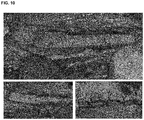
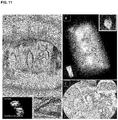
- FIG. 11 , 12 and 13 shows that in (A) the bone defect has regenerated in 80% in the test group (Dentum + bone bioactive composition (BBL)) due to the growth of bone tissue in detriment of the growth of connective tissue - fibroblasts. In (B) with only Dentum, the regeneration of the defect is in a 40% and an extensive presence of connective tissue - not desirable - can be observed.
- BBL bone bioactive composition
- Example 7 In vivo study of the influence of the bioactive bone composition in periodontitis.
- the transversal sections of the teeth were placed in 6 well culture plates, the DPPSC were seeded at 20000 cells per well in 4 ml of osteogenic medium and incubated at 37 °C for 3 weeks.
- the osteogenic medium consists of ⁇ - MEM (Gibco) containing 10% heat-inactivated FBS (Biochrom), 10 mM ⁇ - glycerol phosphate (Sigma-Aldrich), 50 ⁇ M L ascorbic acid (Sigma-Aldrich), 0.01 ⁇ M dexamethasone and 1X penicillin/streptomycin solution. Medium was changed every 3 days over a period of 21 days.
- teeth sheets were processed for SEM. Samples were fixed with 2.5% glutaraldehyde (Ted Pella Inc.) in 0.1 M Na-ca codylate buffer EMS, Electron Microscopy Sciences, Hatfield, PA) (pH 7.2) for 1 hour on ice. After fixation, samples were treated with 1% osmium tetroxide (OsO4) for 1 hour. The samples were then dehydrated in serial solutions of acetone (30-100%) with the scaffolds mounted on aluminium stubs. The samples were examined with a Zeiss 940 DSM scanning electron microscope.
- the harvested samples were embedded in paraffin, and cut into 4- ⁇ m-thick sections.
- the sections were stained with Haematoxylin and eosin (H&E), Alcian blue and Masson's trichrome to determine the formation of new collagen fibers, blood vessels and cementoblast-like cells.
- H&E Haematoxylin and eosin
- An image analysis system was used (Image-Pro PlusTM, Media Cybernetic, SilverSprings, MD).
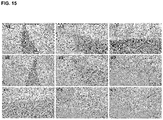
- FIG. 15 A1, A2, A3 Masson's trichrome stain
- Alcian blue FIG. 15 , B1, B2, B3
- Haematoxylin and eosin H&E
- FIG. 15 C1, C2, C3 staining were employed.
- Histological section of the group DPPSC FIG. 15 A2-3; B2-3; C2-3) showed the formation of collagen fibers inserted perpendicularly into the cementum-like tissues, which resembled Sharpey's fibres in contrast to the control group ( FIG. 15 A1, B1, C1).
- Higher magnification FIG. 15 A3, B3, C3 revealed the homogeneity of the newly formed reparative collagen fibres that attached well onto the surfaces at 21 days.
- the experimental results show, due to the use of the bone bioactive composition, an improved calcification of the cementoblast-like cells together with a recuperation of the collagen fibrils of the periodontal ligament, which is the major defect in periodontitis.
Landscapes
- Health & Medical Sciences (AREA)
- Chemical & Material Sciences (AREA)
- Life Sciences & Earth Sciences (AREA)
- Epidemiology (AREA)
- Animal Behavior & Ethology (AREA)
- General Health & Medical Sciences (AREA)
- Public Health (AREA)
- Veterinary Medicine (AREA)
- Medicinal Chemistry (AREA)
- Oral & Maxillofacial Surgery (AREA)
- Dermatology (AREA)
- Transplantation (AREA)
- Inorganic Chemistry (AREA)
- Engineering & Computer Science (AREA)
- Biomedical Technology (AREA)
- Pharmacology & Pharmacy (AREA)
- Zoology (AREA)
- Botany (AREA)
- Chemical Kinetics & Catalysis (AREA)
- Cell Biology (AREA)
- Developmental Biology & Embryology (AREA)
- Orthopedic Medicine & Surgery (AREA)
- Dentistry (AREA)
- Medicinal Preparation (AREA)
- Materials For Medical Uses (AREA)
- Pharmaceuticals Containing Other Organic And Inorganic Compounds (AREA)
- Dental Preparations (AREA)
Claims (15)
- Knochenbioaktive Zusammensetzung umfassend:eine Salzlösung auf Wasserbasis zur Verwendung bei der Förderung der Osteogenese, wobei die Salzlösung auf Wasserbasis Dinatriumhydrogenphosphat in einer Konzentration von 8 bis 12 mM in der Lösung, Natriumchlorid in einer Konzentration von 130 bis 140 mM in der Lösung, Kaliumhydrogenphosphat in einer Konzentration von 1,4 bis 2,2 mM in der Lösung und Kaliumchlorid in einer Konzentration von 2,3 bis 3,1 mM in der Lösung umfasst; undwobei der pH-Wert der Zusammensetzung bei zwischen 7,0 und 7,8 liegt.
- Knochenbioaktive Zusammensetzung zur Verwendung nach Anspruch 1, wobei die Lösung weiterhin ein Calciumsalz und ein Salz eines zweiwertigen Metalls umfasst, das sich von Calcium unterscheidet.
- Knochenbioaktive Zusammensetzung zur Verwendung nach Anspruch 2, wobei das Calciumsalz in einer Konzentration von 7 bis 15 mM in der Lösung vorliegt und das Salz eines von Calcium verschiedenen zweiwertigen Metalls in der Lösung in einer Konzentration von 2 bis 12 mM vorliegt.
- Knochenbioaktive Zusammensetzung zur Verwendung nach Anspruch 2, wobei das Calciumsalz Calciumchlorid und das Salz eines von Calcium verschiedenen zweiwertigen Metalls Magnesiumchlorid ist.
- Knochenbioaktive Zusammensetzung zur Verwendung nach einem der Ansprüche 1-4, wobei die Lösung weiterhin einen Chelatbildner, wie etwa EDTA, umfasst.
- Knochenbioaktive Zusammensetzung zur Verwendung nach Anspruch 5, wobei die Konzentration von EDTA in der Zusammensetzung von 25 mM bis 100 mM reicht.
- Knochenbioaktive Zusammensetzung zur Verwendung nach einem der Ansprüche 1-6, zur Verwendung bei der Förderung der Osteogenese, wenn ein Implantat, insbesondere ein zahnärztliches Titanimplantat, verwendet wird.
- Knochenbioaktive Zusammensetzung zur Verwendung nach einem der Ansprüche 1-7, zur Verwendung bei der Förderung der Osteogenese in der Behandlung von einer Parodontalerkrankung.
- Knochenbioaktive Zusammensetzung, umfassend eine Salzlösung auf Wasserbasis, umfassend Dinatriumhydrogenphosphat in einer Konzentration von 8 bis 12 mM in der Lösung, Natriumchlorid in einer Konzentration von 130 bis 140 mM in der Lösung, Kaliumhydrogenphosphat in einer Konzentration von 1,4 bis 2,2 mM in der Lösung, Kaliumchlorid in einer Konzentration von 2,3 bis 3,1 mM in der Lösung, ein Calciumsalz in einer Konzentration von 7 bis 15 mM in der Lösung, ein Salz eines zweiwertigen Metalls, das sich von Calcium unterscheidet in einer Konzentration von 2 bis 12 mM in der Lösung und einen Chelatbildner, wobei der pH-Wert der Zusammensetzung bei zwischen 7,0 und 7,8 liegt.
- Knochenbioaktive Zusammensetzung nach Anspruch 9, wobei das Calciumsalz Calciumchlorid ist und das Salz eines von Calcium verschiedenen zweiwertigen Metalls Magnesiumchlorid ist.
- Knochenbioaktive Zusammensetzung nach Anspruch 10, umfassend 10-mM-Dinatriumhydrogenphosphat, 137-mM-Natriumchlorid, 1,8-mM-Kaliumhydrogenphosphat, 2,7-mM-Kaliumchlorid, 8,4-mM-Magnesiumchlorid, 10,81-mM-Calciumchlorid und 68,4-mM-EDTA.
- Kit umfassend die knochenbioaktive Zusammensetzung wie in einem der Ansprüche 9-11 definiert und ein Implantat.
- Kit umfassend die knochenbioaktive Zusammensetzung wie in einem der Ansprüche 9-11 definiert und ein Mittel zur Anwendung der Zusammensetzung.
- Knochenbioaktive Zusammensetzung nach einem der Ansprüche 9-11 zur Verwendung bei der Förderung der Osteogenese.
- Ein Implantat umfassend die knochenbioaktive Zusammensetzung wie in Anspruch 1 definiert, wobei die Salzlösung auf Wasserbasis zur Verwendung bei der Förderung der Osteogenese ist.
Priority Applications (1)
| Application Number | Priority Date | Filing Date | Title |
|---|---|---|---|
| PL17797277T PL3532111T3 (pl) | 2016-10-26 | 2017-10-26 | Kompozycja bioaktywna względem kości i jej zastosowania |
Applications Claiming Priority (3)
| Application Number | Priority Date | Filing Date | Title |
|---|---|---|---|
| EP16195718.8A EP3315146A1 (de) | 2016-10-26 | 2016-10-26 | Bioaktive knochenzusammensetzung und verwendungen davon |
| EP17382638 | 2017-09-26 | ||
| PCT/EP2017/077505 WO2018078044A1 (en) | 2016-10-26 | 2017-10-26 | Bone bioactive composition and uses thereof |
Publications (2)
| Publication Number | Publication Date |
|---|---|
| EP3532111A1 EP3532111A1 (de) | 2019-09-04 |
| EP3532111B1 true EP3532111B1 (de) | 2021-01-20 |
Family
ID=60302088
Family Applications (1)
| Application Number | Title | Priority Date | Filing Date |
|---|---|---|---|
| EP17797277.5A Active EP3532111B1 (de) | 2016-10-26 | 2017-10-26 | Bioaktive knochenzusammensetzung und verwendungen davon |
Country Status (7)
| Country | Link |
|---|---|
| US (1) | US10925997B2 (de) |
| EP (1) | EP3532111B1 (de) |
| BR (1) | BR112019008392B1 (de) |
| DK (1) | DK3532111T3 (de) |
| ES (1) | ES2867230T3 (de) |
| PL (1) | PL3532111T3 (de) |
| WO (1) | WO2018078044A1 (de) |
Families Citing this family (1)
| Publication number | Priority date | Publication date | Assignee | Title |
|---|---|---|---|---|
| US20240269167A1 (en) * | 2020-12-21 | 2024-08-15 | Biointelligent Technology Systems Slu | A mucosal re-epithelialization composition |
Family Cites Families (8)
| Publication number | Priority date | Publication date | Assignee | Title |
|---|---|---|---|---|
| US4994237A (en) * | 1987-10-02 | 1991-02-19 | The Beth Israel Hospital Association | Microwave preservation of bioprostheses |
| US5217954A (en) * | 1990-04-04 | 1993-06-08 | Scios Nova Inc. | Formulations for stabilizing fibroblast growth factor |
| US5656598A (en) * | 1994-03-08 | 1997-08-12 | Rhone-Poulenc Rorer Pharmaceuticals Inc. | Use of fibroblast growth factors to stimulate bone growth |
| EP1855732A1 (de) * | 2005-02-24 | 2007-11-21 | Roland Dricot | Knochenimplantat |
| WO2007044229A2 (en) | 2005-09-28 | 2007-04-19 | Calcitec, Inc. | Surface treatments for calcium phosphate-based implants |
| FR2928270B1 (fr) * | 2008-03-10 | 2011-01-21 | Erytech Pharma | Formulation methode pour la prevention ou le traitement des metastases osseuses et autres maladies de l'os |
| WO2014020446A2 (en) * | 2012-08-01 | 2014-02-06 | Sandvik Intellectual Property Ab | Hydroxyapatite coating process using microwave technology |
| US9192574B2 (en) * | 2013-10-24 | 2015-11-24 | Medtronic Xomed, Inc. | Chitosan paste wound dressing |
-
2017
- 2017-10-26 BR BR112019008392-8A patent/BR112019008392B1/pt active IP Right Grant
- 2017-10-26 WO PCT/EP2017/077505 patent/WO2018078044A1/en not_active Ceased
- 2017-10-26 PL PL17797277T patent/PL3532111T3/pl unknown
- 2017-10-26 DK DK17797277.5T patent/DK3532111T3/da active
- 2017-10-26 ES ES17797277T patent/ES2867230T3/es active Active
- 2017-10-26 EP EP17797277.5A patent/EP3532111B1/de active Active
- 2017-10-26 US US16/344,322 patent/US10925997B2/en active Active
Non-Patent Citations (1)
| Title |
|---|
| None * |
Also Published As
| Publication number | Publication date |
|---|---|
| WO2018078044A1 (en) | 2018-05-03 |
| DK3532111T3 (da) | 2021-04-19 |
| EP3532111A1 (de) | 2019-09-04 |
| PL3532111T3 (pl) | 2021-08-23 |
| US20190262499A1 (en) | 2019-08-29 |
| BR112019008392A2 (pt) | 2019-07-09 |
| ES2867230T3 (es) | 2021-10-20 |
| US10925997B2 (en) | 2021-02-23 |
| BR112019008392B1 (pt) | 2022-11-16 |
Similar Documents
| Publication | Publication Date | Title |
|---|---|---|
| Yamada et al. | A novel approach to periodontal tissue regeneration with mesenchymal stem cells and platelet-rich plasma using tissue engineering technology: A clinical case report. | |
| Krishnan et al. | Bioglass: A novel biocompatible innovation | |
| Mizuno et al. | A novel approach to regenerating periodontal tissue by grafting autologous cultured periosteum | |
| Profeta et al. | Bioactive-glass in periodontal surgery and implant dentistry | |
| Piattelli et al. | Effects of alkaline phosphatase on bone healing around plasma-sprayed titanium implants: a pilot study in rabbits | |
| Ding et al. | Mechanical biocompatibility, osteogenic activity, and antibacterial efficacy of calcium silicate–zirconia biocomposites | |
| KR101178939B1 (ko) | 4?헥실레조르시놀(hexylresorcinol)을 포함하는 치과용 골 이식재 및 이를 이용한 임플란트 코팅 | |
| EP3162385B1 (de) | Kultivierter periodontaler ligamentzellschichtkomplex für implantat | |
| CA2710206A1 (en) | Method and kit for delivering regenerative endodontic treatment | |
| Khojasteh et al. | Mesenchymal stem cell therapy for treatment of craniofacial bone defects: 10 years of experience | |
| Chandrahasa et al. | Proliferation of mature ex vivo human dental pulp using tissue engineering scaffolds | |
| Minabe et al. | Histological study of the hydroxyapatite‐collagen complex implants in periodontal osseous defects in dogs | |
| Mauth et al. | Restorative applications for dental pulp therapy | |
| Lanka Mahesh | Histomorphometric evaluation of a calcium-phosphosilicate putty bone substitute in extraction sockets | |
| EP2567675B1 (de) | Knochentransplantations- oder knochenfüllungszusammensetzung mit einem dihydroxybenzoesäure-derivat | |
| US10925997B2 (en) | Bone bioactive composition and uses thereof | |
| Karpyuk et al. | Innovation-based approach in reconstruction of reduced jaw alveolar ridge bone using cell regeneration technologies | |
| Teng et al. | Bone Tissue Responses to Zirconia Implants Modified by Biomimetic Coating Incorporated with BMP-2. | |
| JPH10243996A (ja) | 硬組織石灰化促進用生体材料 | |
| Park et al. | Periimplant bone regeneration in hydroxyapatite block grafts with mesenchymal stem cells and bone morphogenetic protein-2 | |
| EP3315146A1 (de) | Bioaktive knochenzusammensetzung und verwendungen davon | |
| Lim et al. | Hydroxyapatite coating on damaged tooth surfaces by immersion | |
| Binderman et al. | Alveolar ridge preservation: Particulate dentin of extracted teeth are optimal for immediate grafting of extracted site | |
| Ponsford et al. | Peri-implant disease | |
| Foley et al. | Effect of phosphate treatment of Acid-etched implants on mineral apposition rates near implants in a dog model. |
Legal Events
| Date | Code | Title | Description |
|---|---|---|---|
| STAA | Information on the status of an ep patent application or granted ep patent |
Free format text: STATUS: UNKNOWN |
|
| STAA | Information on the status of an ep patent application or granted ep patent |
Free format text: STATUS: THE INTERNATIONAL PUBLICATION HAS BEEN MADE |
|
| PUAI | Public reference made under article 153(3) epc to a published international application that has entered the european phase |
Free format text: ORIGINAL CODE: 0009012 |
|
| STAA | Information on the status of an ep patent application or granted ep patent |
Free format text: STATUS: REQUEST FOR EXAMINATION WAS MADE |
|
| 17P | Request for examination filed |
Effective date: 20190527 |
|
| AK | Designated contracting states |
Kind code of ref document: A1 Designated state(s): AL AT BE BG CH CY CZ DE DK EE ES FI FR GB GR HR HU IE IS IT LI LT LU LV MC MK MT NL NO PL PT RO RS SE SI SK SM TR |
|
| AX | Request for extension of the european patent |
Extension state: BA ME |
|
| DAV | Request for validation of the european patent (deleted) | ||
| DAX | Request for extension of the european patent (deleted) | ||
| STAA | Information on the status of an ep patent application or granted ep patent |
Free format text: STATUS: EXAMINATION IS IN PROGRESS |
|
| 17Q | First examination report despatched |
Effective date: 20200310 |
|
| GRAP | Despatch of communication of intention to grant a patent |
Free format text: ORIGINAL CODE: EPIDOSNIGR1 |
|
| STAA | Information on the status of an ep patent application or granted ep patent |
Free format text: STATUS: GRANT OF PATENT IS INTENDED |
|
| INTG | Intention to grant announced |
Effective date: 20201019 |
|
| GRAS | Grant fee paid |
Free format text: ORIGINAL CODE: EPIDOSNIGR3 |
|
| GRAA | (expected) grant |
Free format text: ORIGINAL CODE: 0009210 |
|
| STAA | Information on the status of an ep patent application or granted ep patent |
Free format text: STATUS: THE PATENT HAS BEEN GRANTED |
|
| AK | Designated contracting states |
Kind code of ref document: B1 Designated state(s): AL AT BE BG CH CY CZ DE DK EE ES FI FR GB GR HR HU IE IS IT LI LT LU LV MC MK MT NL NO PL PT RO RS SE SI SK SM TR |
|
| REG | Reference to a national code |
Ref country code: GB Ref legal event code: FG4D |
|
| REG | Reference to a national code |
Ref country code: CH Ref legal event code: EP |
|
| REG | Reference to a national code |
Ref country code: DE Ref legal event code: R096 Ref document number: 602017031751 Country of ref document: DE |
|
| REG | Reference to a national code |
Ref country code: AT Ref legal event code: REF Ref document number: 1355798 Country of ref document: AT Kind code of ref document: T Effective date: 20210215 |
|
| REG | Reference to a national code |
Ref country code: IE Ref legal event code: FG4D |
|
| REG | Reference to a national code |
Ref country code: RO Ref legal event code: EPE |
|
| REG | Reference to a national code |
Ref country code: CH Ref legal event code: NV Representative=s name: VALIPAT S.A. C/O BOVARD SA NEUCHATEL, CH |
|
| REG | Reference to a national code |
Ref country code: DK Ref legal event code: T3 Effective date: 20210412 |
|
| REG | Reference to a national code |
Ref country code: PT Ref legal event code: SC4A Ref document number: 3532111 Country of ref document: PT Date of ref document: 20210421 Kind code of ref document: T Free format text: AVAILABILITY OF NATIONAL TRANSLATION Effective date: 20210414 Ref country code: NL Ref legal event code: FP |
|
| REG | Reference to a national code |
Ref country code: SE Ref legal event code: TRGR |
|
| REG | Reference to a national code |
Ref country code: LT Ref legal event code: MG9D |
|
| PG25 | Lapsed in a contracting state [announced via postgrant information from national office to epo] |
Ref country code: LT Free format text: LAPSE BECAUSE OF FAILURE TO SUBMIT A TRANSLATION OF THE DESCRIPTION OR TO PAY THE FEE WITHIN THE PRESCRIBED TIME-LIMIT Effective date: 20210120 Ref country code: BG Free format text: LAPSE BECAUSE OF FAILURE TO SUBMIT A TRANSLATION OF THE DESCRIPTION OR TO PAY THE FEE WITHIN THE PRESCRIBED TIME-LIMIT Effective date: 20210420 Ref country code: NO Free format text: LAPSE BECAUSE OF FAILURE TO SUBMIT A TRANSLATION OF THE DESCRIPTION OR TO PAY THE FEE WITHIN THE PRESCRIBED TIME-LIMIT Effective date: 20210420 Ref country code: GR Free format text: LAPSE BECAUSE OF FAILURE TO SUBMIT A TRANSLATION OF THE DESCRIPTION OR TO PAY THE FEE WITHIN THE PRESCRIBED TIME-LIMIT Effective date: 20210421 Ref country code: FI Free format text: LAPSE BECAUSE OF FAILURE TO SUBMIT A TRANSLATION OF THE DESCRIPTION OR TO PAY THE FEE WITHIN THE PRESCRIBED TIME-LIMIT Effective date: 20210120 Ref country code: HR Free format text: LAPSE BECAUSE OF FAILURE TO SUBMIT A TRANSLATION OF THE DESCRIPTION OR TO PAY THE FEE WITHIN THE PRESCRIBED TIME-LIMIT Effective date: 20210120 |
|
| PG25 | Lapsed in a contracting state [announced via postgrant information from national office to epo] |
Ref country code: LV Free format text: LAPSE BECAUSE OF FAILURE TO SUBMIT A TRANSLATION OF THE DESCRIPTION OR TO PAY THE FEE WITHIN THE PRESCRIBED TIME-LIMIT Effective date: 20210120 Ref country code: RS Free format text: LAPSE BECAUSE OF FAILURE TO SUBMIT A TRANSLATION OF THE DESCRIPTION OR TO PAY THE FEE WITHIN THE PRESCRIBED TIME-LIMIT Effective date: 20210120 |
|
| PG25 | Lapsed in a contracting state [announced via postgrant information from national office to epo] |
Ref country code: IS Free format text: LAPSE BECAUSE OF FAILURE TO SUBMIT A TRANSLATION OF THE DESCRIPTION OR TO PAY THE FEE WITHIN THE PRESCRIBED TIME-LIMIT Effective date: 20210520 |
|
| REG | Reference to a national code |
Ref country code: ES Ref legal event code: FG2A Ref document number: 2867230 Country of ref document: ES Kind code of ref document: T3 Effective date: 20211020 |
|
| REG | Reference to a national code |
Ref country code: DE Ref legal event code: R097 Ref document number: 602017031751 Country of ref document: DE |
|
| PG25 | Lapsed in a contracting state [announced via postgrant information from national office to epo] |
Ref country code: SM Free format text: LAPSE BECAUSE OF FAILURE TO SUBMIT A TRANSLATION OF THE DESCRIPTION OR TO PAY THE FEE WITHIN THE PRESCRIBED TIME-LIMIT Effective date: 20210120 Ref country code: CZ Free format text: LAPSE BECAUSE OF FAILURE TO SUBMIT A TRANSLATION OF THE DESCRIPTION OR TO PAY THE FEE WITHIN THE PRESCRIBED TIME-LIMIT Effective date: 20210120 Ref country code: EE Free format text: LAPSE BECAUSE OF FAILURE TO SUBMIT A TRANSLATION OF THE DESCRIPTION OR TO PAY THE FEE WITHIN THE PRESCRIBED TIME-LIMIT Effective date: 20210120 |
|
| PLBE | No opposition filed within time limit |
Free format text: ORIGINAL CODE: 0009261 |
|
| STAA | Information on the status of an ep patent application or granted ep patent |
Free format text: STATUS: NO OPPOSITION FILED WITHIN TIME LIMIT |
|
| PG25 | Lapsed in a contracting state [announced via postgrant information from national office to epo] |
Ref country code: SK Free format text: LAPSE BECAUSE OF FAILURE TO SUBMIT A TRANSLATION OF THE DESCRIPTION OR TO PAY THE FEE WITHIN THE PRESCRIBED TIME-LIMIT Effective date: 20210120 |
|
| 26N | No opposition filed |
Effective date: 20211021 |
|
| PG25 | Lapsed in a contracting state [announced via postgrant information from national office to epo] |
Ref country code: AL Free format text: LAPSE BECAUSE OF FAILURE TO SUBMIT A TRANSLATION OF THE DESCRIPTION OR TO PAY THE FEE WITHIN THE PRESCRIBED TIME-LIMIT Effective date: 20210120 |
|
| PG25 | Lapsed in a contracting state [announced via postgrant information from national office to epo] |
Ref country code: SI Free format text: LAPSE BECAUSE OF FAILURE TO SUBMIT A TRANSLATION OF THE DESCRIPTION OR TO PAY THE FEE WITHIN THE PRESCRIBED TIME-LIMIT Effective date: 20210120 |
|
| PG25 | Lapsed in a contracting state [announced via postgrant information from national office to epo] |
Ref country code: IS Free format text: LAPSE BECAUSE OF FAILURE TO SUBMIT A TRANSLATION OF THE DESCRIPTION OR TO PAY THE FEE WITHIN THE PRESCRIBED TIME-LIMIT Effective date: 20210520 |
|
| PG25 | Lapsed in a contracting state [announced via postgrant information from national office to epo] |
Ref country code: MC Free format text: LAPSE BECAUSE OF FAILURE TO SUBMIT A TRANSLATION OF THE DESCRIPTION OR TO PAY THE FEE WITHIN THE PRESCRIBED TIME-LIMIT Effective date: 20210120 |
|
| PG25 | Lapsed in a contracting state [announced via postgrant information from national office to epo] |
Ref country code: LU Free format text: LAPSE BECAUSE OF NON-PAYMENT OF DUE FEES Effective date: 20211026 |
|
| PG25 | Lapsed in a contracting state [announced via postgrant information from national office to epo] |
Ref country code: IE Free format text: LAPSE BECAUSE OF NON-PAYMENT OF DUE FEES Effective date: 20211026 |
|
| REG | Reference to a national code |
Ref country code: AT Ref legal event code: UEP Ref document number: 1355798 Country of ref document: AT Kind code of ref document: T Effective date: 20210120 |
|
| PG25 | Lapsed in a contracting state [announced via postgrant information from national office to epo] |
Ref country code: CY Free format text: LAPSE BECAUSE OF FAILURE TO SUBMIT A TRANSLATION OF THE DESCRIPTION OR TO PAY THE FEE WITHIN THE PRESCRIBED TIME-LIMIT Effective date: 20210120 |
|
| PG25 | Lapsed in a contracting state [announced via postgrant information from national office to epo] |
Ref country code: HU Free format text: LAPSE BECAUSE OF FAILURE TO SUBMIT A TRANSLATION OF THE DESCRIPTION OR TO PAY THE FEE WITHIN THE PRESCRIBED TIME-LIMIT; INVALID AB INITIO Effective date: 20171026 |
|
| PG25 | Lapsed in a contracting state [announced via postgrant information from national office to epo] |
Ref country code: MK Free format text: LAPSE BECAUSE OF FAILURE TO SUBMIT A TRANSLATION OF THE DESCRIPTION OR TO PAY THE FEE WITHIN THE PRESCRIBED TIME-LIMIT Effective date: 20210120 |
|
| PG25 | Lapsed in a contracting state [announced via postgrant information from national office to epo] |
Ref country code: MT Free format text: LAPSE BECAUSE OF FAILURE TO SUBMIT A TRANSLATION OF THE DESCRIPTION OR TO PAY THE FEE WITHIN THE PRESCRIBED TIME-LIMIT Effective date: 20210120 |
|
| REG | Reference to a national code |
Ref country code: CH Ref legal event code: U11 Free format text: ST27 STATUS EVENT CODE: U-0-0-U10-U11 (AS PROVIDED BY THE NATIONAL OFFICE) Effective date: 20251101 |
|
| PGFP | Annual fee paid to national office [announced via postgrant information from national office to epo] |
Ref country code: NL Payment date: 20251026 Year of fee payment: 9 |
|
| PGFP | Annual fee paid to national office [announced via postgrant information from national office to epo] |
Ref country code: PT Payment date: 20251007 Year of fee payment: 9 |
|
| PGFP | Annual fee paid to national office [announced via postgrant information from national office to epo] |
Ref country code: DE Payment date: 20251029 Year of fee payment: 9 |
|
| PGFP | Annual fee paid to national office [announced via postgrant information from national office to epo] |
Ref country code: GB Payment date: 20251027 Year of fee payment: 9 |
|
| PGFP | Annual fee paid to national office [announced via postgrant information from national office to epo] |
Ref country code: AT Payment date: 20251029 Year of fee payment: 9 |
|
| PGFP | Annual fee paid to national office [announced via postgrant information from national office to epo] |
Ref country code: DK Payment date: 20251027 Year of fee payment: 9 Ref country code: IT Payment date: 20251021 Year of fee payment: 9 |
|
| PGFP | Annual fee paid to national office [announced via postgrant information from national office to epo] |
Ref country code: FR Payment date: 20251027 Year of fee payment: 9 |
|
| PGFP | Annual fee paid to national office [announced via postgrant information from national office to epo] |
Ref country code: TR Payment date: 20251007 Year of fee payment: 9 Ref country code: BE Payment date: 20251027 Year of fee payment: 9 |
|
| PGFP | Annual fee paid to national office [announced via postgrant information from national office to epo] |
Ref country code: SE Payment date: 20251027 Year of fee payment: 9 Ref country code: CH Payment date: 20251101 Year of fee payment: 9 |
|
| PGFP | Annual fee paid to national office [announced via postgrant information from national office to epo] |
Ref country code: PL Payment date: 20251001 Year of fee payment: 9 |
|
| PGFP | Annual fee paid to national office [announced via postgrant information from national office to epo] |
Ref country code: RO Payment date: 20251006 Year of fee payment: 9 |
|
| PGFP | Annual fee paid to national office [announced via postgrant information from national office to epo] |
Ref country code: ES Payment date: 20251101 Year of fee payment: 9 |