EP3535599B1 - Bereitstellen der geschätzten genauigkeit von mobilstationssynchronisation und mobilstationsübertragungsversatz zum netzwerk - Google Patents
Bereitstellen der geschätzten genauigkeit von mobilstationssynchronisation und mobilstationsübertragungsversatz zum netzwerk Download PDFInfo
- Publication number
- EP3535599B1 EP3535599B1 EP17818266.3A EP17818266A EP3535599B1 EP 3535599 B1 EP3535599 B1 EP 3535599B1 EP 17818266 A EP17818266 A EP 17818266A EP 3535599 B1 EP3535599 B1 EP 3535599B1
- Authority
- EP
- European Patent Office
- Prior art keywords
- mobile station
- bss
- bts
- estimated
- accuracy
- Prior art date
- Legal status (The legal status is an assumption and is not a legal conclusion. Google has not performed a legal analysis and makes no representation as to the accuracy of the status listed.)
- Not-in-force
Links
- 230000005540 biological transmission Effects 0.000 title claims description 145
- 238000000034 method Methods 0.000 claims description 50
- 238000005259 measurement Methods 0.000 claims description 13
- 230000004044 response Effects 0.000 claims description 9
- 238000004891 communication Methods 0.000 description 27
- VYLDEYYOISNGST-UHFFFAOYSA-N bissulfosuccinimidyl suberate Chemical compound O=C1C(S(=O)(=O)O)CC(=O)N1OC(=O)CCCCCCC(=O)ON1C(=O)C(S(O)(=O)=O)CC1=O VYLDEYYOISNGST-UHFFFAOYSA-N 0.000 description 15
- 238000012545 processing Methods 0.000 description 15
- 238000010586 diagram Methods 0.000 description 14
- 102100034243 Solute carrier family 12 member 2 Human genes 0.000 description 12
- 230000008569 process Effects 0.000 description 10
- 230000008901 benefit Effects 0.000 description 4
- 230000006870 function Effects 0.000 description 4
- 230000001360 synchronised effect Effects 0.000 description 4
- 101150080339 BTS1 gene Proteins 0.000 description 2
- 230000009286 beneficial effect Effects 0.000 description 2
- 230000001413 cellular effect Effects 0.000 description 2
- 238000012937 correction Methods 0.000 description 2
- 238000013461 design Methods 0.000 description 2
- 230000007774 longterm Effects 0.000 description 2
- 238000010295 mobile communication Methods 0.000 description 2
- 238000000926 separation method Methods 0.000 description 2
- 230000011664 signaling Effects 0.000 description 2
- 230000001960 triggered effect Effects 0.000 description 2
- 101150079307 BSC3 gene Proteins 0.000 description 1
- 108091006621 SLC12A1 Proteins 0.000 description 1
- 108091006620 SLC12A2 Proteins 0.000 description 1
- 230000009471 action Effects 0.000 description 1
- 238000013459 approach Methods 0.000 description 1
- 230000001419 dependent effect Effects 0.000 description 1
- 238000005516 engineering process Methods 0.000 description 1
- 238000003780 insertion Methods 0.000 description 1
- 230000037431 insertion Effects 0.000 description 1
- 230000009467 reduction Effects 0.000 description 1
Images





Classifications
-
- H—ELECTRICITY
- H04—ELECTRIC COMMUNICATION TECHNIQUE
- H04W—WIRELESS COMMUNICATION NETWORKS
- H04W64/00—Locating users or terminals or network equipment for network management purposes, e.g. mobility management
- H04W64/006—Locating users or terminals or network equipment for network management purposes, e.g. mobility management with additional information processing, e.g. for direction or speed determination
-
- H—ELECTRICITY
- H04—ELECTRIC COMMUNICATION TECHNIQUE
- H04W—WIRELESS COMMUNICATION NETWORKS
- H04W64/00—Locating users or terminals or network equipment for network management purposes, e.g. mobility management
-
- G—PHYSICS
- G01—MEASURING; TESTING
- G01S—RADIO DIRECTION-FINDING; RADIO NAVIGATION; DETERMINING DISTANCE OR VELOCITY BY USE OF RADIO WAVES; LOCATING OR PRESENCE-DETECTING BY USE OF THE REFLECTION OR RERADIATION OF RADIO WAVES; ANALOGOUS ARRANGEMENTS USING OTHER WAVES
- G01S5/00—Position-fixing by co-ordinating two or more direction or position line determinations; Position-fixing by co-ordinating two or more distance determinations
- G01S5/0009—Transmission of position information to remote stations
- G01S5/0018—Transmission from mobile station to base station
- G01S5/0036—Transmission from mobile station to base station of measured values, i.e. measurement on mobile and position calculation on base station
-
- G—PHYSICS
- G01—MEASURING; TESTING
- G01S—RADIO DIRECTION-FINDING; RADIO NAVIGATION; DETERMINING DISTANCE OR VELOCITY BY USE OF RADIO WAVES; LOCATING OR PRESENCE-DETECTING BY USE OF THE REFLECTION OR RERADIATION OF RADIO WAVES; ANALOGOUS ARRANGEMENTS USING OTHER WAVES
- G01S5/00—Position-fixing by co-ordinating two or more direction or position line determinations; Position-fixing by co-ordinating two or more distance determinations
- G01S5/0009—Transmission of position information to remote stations
- G01S5/0045—Transmission from base station to mobile station
-
- G—PHYSICS
- G01—MEASURING; TESTING
- G01S—RADIO DIRECTION-FINDING; RADIO NAVIGATION; DETERMINING DISTANCE OR VELOCITY BY USE OF RADIO WAVES; LOCATING OR PRESENCE-DETECTING BY USE OF THE REFLECTION OR RERADIATION OF RADIO WAVES; ANALOGOUS ARRANGEMENTS USING OTHER WAVES
- G01S5/00—Position-fixing by co-ordinating two or more direction or position line determinations; Position-fixing by co-ordinating two or more distance determinations
- G01S5/01—Determining conditions which influence positioning, e.g. radio environment, state of motion or energy consumption
- G01S5/011—Identifying the radio environment
-
- G—PHYSICS
- G01—MEASURING; TESTING
- G01S—RADIO DIRECTION-FINDING; RADIO NAVIGATION; DETERMINING DISTANCE OR VELOCITY BY USE OF RADIO WAVES; LOCATING OR PRESENCE-DETECTING BY USE OF THE REFLECTION OR RERADIATION OF RADIO WAVES; ANALOGOUS ARRANGEMENTS USING OTHER WAVES
- G01S5/00—Position-fixing by co-ordinating two or more direction or position line determinations; Position-fixing by co-ordinating two or more distance determinations
- G01S5/02—Position-fixing by co-ordinating two or more direction or position line determinations; Position-fixing by co-ordinating two or more distance determinations using radio waves
- G01S5/06—Position of source determined by co-ordinating a plurality of position lines defined by path-difference measurements
-
- G—PHYSICS
- G01—MEASURING; TESTING
- G01S—RADIO DIRECTION-FINDING; RADIO NAVIGATION; DETERMINING DISTANCE OR VELOCITY BY USE OF RADIO WAVES; LOCATING OR PRESENCE-DETECTING BY USE OF THE REFLECTION OR RERADIATION OF RADIO WAVES; ANALOGOUS ARRANGEMENTS USING OTHER WAVES
- G01S5/00—Position-fixing by co-ordinating two or more direction or position line determinations; Position-fixing by co-ordinating two or more distance determinations
- G01S5/02—Position-fixing by co-ordinating two or more direction or position line determinations; Position-fixing by co-ordinating two or more distance determinations using radio waves
- G01S5/10—Position of receiver fixed by co-ordinating a plurality of position lines defined by path-difference measurements, e.g. omega or decca systems
-
- H—ELECTRICITY
- H04—ELECTRIC COMMUNICATION TECHNIQUE
- H04L—TRANSMISSION OF DIGITAL INFORMATION, e.g. TELEGRAPHIC COMMUNICATION
- H04L5/00—Arrangements affording multiple use of the transmission path
- H04L5/003—Arrangements for allocating sub-channels of the transmission path
- H04L5/0053—Allocation of signalling, i.e. of overhead other than pilot signals
-
- H—ELECTRICITY
- H04—ELECTRIC COMMUNICATION TECHNIQUE
- H04W—WIRELESS COMMUNICATION NETWORKS
- H04W4/00—Services specially adapted for wireless communication networks; Facilities therefor
- H04W4/02—Services making use of location information
-
- H—ELECTRICITY
- H04—ELECTRIC COMMUNICATION TECHNIQUE
- H04W—WIRELESS COMMUNICATION NETWORKS
- H04W56/00—Synchronisation arrangements
- H04W56/001—Synchronization between nodes
-
- H—ELECTRICITY
- H04—ELECTRIC COMMUNICATION TECHNIQUE
- H04W—WIRELESS COMMUNICATION NETWORKS
- H04W72/00—Local resource management
- H04W72/20—Control channels or signalling for resource management
- H04W72/21—Control channels or signalling for resource management in the uplink direction of a wireless link, i.e. towards the network
-
- H—ELECTRICITY
- H04—ELECTRIC COMMUNICATION TECHNIQUE
- H04W—WIRELESS COMMUNICATION NETWORKS
- H04W72/00—Local resource management
- H04W72/50—Allocation or scheduling criteria for wireless resources
- H04W72/51—Allocation or scheduling criteria for wireless resources based on terminal or device properties
-
- H—ELECTRICITY
- H04—ELECTRIC COMMUNICATION TECHNIQUE
- H04W—WIRELESS COMMUNICATION NETWORKS
- H04W56/00—Synchronisation arrangements
- H04W56/004—Synchronisation arrangements compensating for timing error of reception due to propagation delay
- H04W56/0045—Synchronisation arrangements compensating for timing error of reception due to propagation delay compensating for timing error by altering transmission time
Definitions
- the present disclosure relates generally to the wireless telecommunications field and, more particularly, to a mobile station (MS), a base station subsystem (BSS), and various methods that enable a positioning node (e.g., Serving Mobile Location Center (SMLC)) to improve the accuracy of estimating a position of the mobile station.
- a positioning node e.g., Serving Mobile Location Center (SMLC)
- NB-IoT Narrow Band Internet of Things
- TA is a measure of the propagation delay between a base transceiver station (BTS) and the MS, and since the speed by which radio waves travel is known, the distance between the BTS and the MS can be derived. Further, if the TA applicable to the MS is measured within multiple BTSs and the positions of these BTSs are known, the position of the MS can be derived using the measured TA values.
- the measurement of the TA requires that the MS synchronize to each neighbor BTS and transmit a signal time-aligned with the estimated timing of the downlink channel received from each BTS.
- the BTS measures the time difference between its own time reference for the downlink channel, and the timing of the received signal (transmitted by the MS). This time difference is equal to two times the propagation delay between the BTS and the MS (one propagation delay of the BTS's synchronization signal sent on the downlink channel to the MS, plus one equal propagation delay of the signal transmitted by the MS back to the BTS).
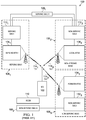
- the position of the MS can be derived through so called multilateration wherein the position of the MS is determined by the intersection of a set of hyperbolic curves associated with each BTS (see FIGURE 1 ).
- the calculation of the position of the MS is typically carried out by a serving positioning node (i.e., serving Serving Mobile Location Center (SMLC)), which implies that all of the derived TA and associated BTS position information needs to be sent to the positioning node (i.e., the serving SMLC) that initiated the positioning procedure.
- SMLC serving Serving Mobile Location Center
- FIGURE 1 PRIOR ART
- the exemplary wireless communication network 100 has several nodes which are shown and defined herein as follows:
- FIGURE 1 is an illustration of an exemplary multilateration process involving three BTSs 104 1 , 104 2 , and 104 3 associated with three timing advance (TA) values 114 1 , 114 2 , 114 3 for a particular MS 102.
- the multilateration can involve more than three BTSs 104 1 , 104 2 , and 104 3 and more than three TA values 114 1 , 114 2 , 114 3 .
- FIGURE 1 is an illustration of an exemplary wireless communication network 100 showing the basic nodes which are needed to explain the positioning (multilateration) process. It should be appreciated that the exemplary wireless communication network 100 includes additional nodes which are well known in the art.
- the serving SMLC 108 1 it is advantageous for the serving SMLC 108 1 to estimate the accuracy of the estimated position of the MS 102.
- the accuracy of the estimated position of the MS 102 depends on the number of cell specific TA estimates 114 1 , 114 2 , 114 3 (for example) it has been provided with, the accuracy of the individual (cell specific) TA estimates 114 1 , 114 2 , 114 3 (for example) performed by the BTSs 104 1 , 104 2 , 104 3 (for example) as well as the MS-BTS geometry, i.e., the true position of the MS 102 relative to the involved BTSs 104 1 , 104 2 , 104 3 (for example).
- the accuracy of the TA estimation performed by a BTS 104 1 , 104 2 , 104 3 in turn depends on the accuracy by which the MS 102 is able to time its uplink (UL) transmissions to the BTS 104 1 , 104 2 , 104 3 according to signals received from the BTS 104 1 , 104 2 , 104 3 (i.e., the MS Transmission Timing Accuracy), and the accuracy by which the BTS 104 1 , 104 2 , 104 3 is able to measure the timing of signals received from the MS 102 (i.e., the BTS Timing Advance Accuracy).
- the accuracy by which the MS 102 is able to time its uplink transmissions to the BTS 104 1 , 104 2 , 104 3 according to signals received from the BTS 104 1 , 104 2 , 104 3 may be specified as a worst-case tolerance.
- GSM Global System for Mobile telephony
- a Global System for Mobile telephony (GSM) MS 102 is required to time its uplink transmission to the BTS 104 1 , 104 2 , 104 3 signal with a tolerance of ⁇ 1.0 symbol period (a symbol period being 48/13 ⁇ s), see 3GPP Technical Specification (TS) 45.010 V13.3.0 (2016-09 ) from which the excerpt below is taken: "The MS shall time its transmissions to the BTS according to signals received from the BTS.
- TS Technical Specification
- the MS transmissions to the BTS shall be 468,75-TA normal symbol periods (i.e. 3 timeslots-TA) behind the transmissions received from the BTS, where TA is the last timing advance received from the current serving BTS.
- the tolerance on these timings shall be ⁇ 1 normal symbol period.”
- the serving SMLC 108 1 does not have any information about the TA estimation accuracy of the BTS 104 1 , 104 2 , 104 3 or about the actual accuracy with which the MS 102 is able to time its uplink transmission to the BTS 104 1 , 104 2 , 104 3 according to signals received from the BTS 104 1 , 104 2 , 104 3 .
- the serving SMLC 108 1 receives cell specific TA information as determined by the BTS 104 1 , 104 2 , 104 3 and assumes that the accuracy by which the MS 102 is able to time its uplink transmission to the BTS 104 1 , 104 2 , 104 3 according to signals received from the BTS 104 1 , 104 2 , 104 3 for that cell is according to the specified worst case tolerance, the estimated accuracy of the estimated position of the MS 102 may be overly pessimistic. Therefore, services requiring a higher positioning accuracy may not be provided with a positioning estimate (i.e., the serving SMLC 108 1 may conclude that it cannot realize the target positioning accuracy) even though the actual positioning accuracy may in fact be better than estimated and therefore sufficient.
- the serving SMLC 108 1 may involve more BTSs 104 1 , 104 2 , 104 3 than are necessary in the positioning process in order to guarantee sufficient accuracy in the estimated position of the MS 102.
- a mobile station, a base station subsystem (BSS) and various methods for addressing the aforementioned problems are described in the independent claims.
- Advantageous embodiments of the mobile station, the BSS and the various methods are further described in the dependent claims.
- the present disclosure provides a mobile station configured to interact with a BSS, wherein the BSS includes a BTS.
- the mobile station comprises a processor and a memory that stores processor-executable instructions, wherein the processor interfaces with the memory to execute the processor-executable instructions, whereby the mobile station is operable to perform a receive operation, an estimate operation, and a transmit operation.
- the mobile station receives, from the BSS, a multilateration request.
- the mobile station in response to the receipt of the multilateration request (i) estimates a synchronization accuracy with the BTS, and (ii) estimates a transmission offset for uplink transmissions to the BTS.
- the mobile station transmits, to the BSS, a RLC data block that includes at least (i) a TLLI of the mobile station, (ii) the estimated synchronization accuracy, and (iii) the estimated transmission offset (note: the BSS subsequently relays this information to the SMLC).
- a RLC data block that includes at least (i) a TLLI of the mobile station, (ii) the estimated synchronization accuracy, and (iii) the estimated transmission offset (note: the BSS subsequently relays this information to the SMLC).
- the BSS can provide the SMLC with the mobile station's transmission timing accuracy capability information received from the SGSN, thus allowing the SMLC to make an a priori assessment as to how many BTSs may be needed to reach the desired position accuracy and thus provide the mobile station with more accurate assistance information.
- the present disclosure provides a method in a mobile station that is configured to interact with a BSS, wherein the BSS includes a BTS.
- the method comprises a receiving step, an estimating step, and a transmitting step
- the mobile station receives, from the BSS, a multilateration request.
- the mobile station in response to receiving the multilateration request (i) estimates a synchronization accuracy with the BTS and (ii) estimates a transmission offset for uplink transmissions to the BTS.
- the mobile station transmits, to the BSS, a RLC data block that includes at least (i) a TLLI of the mobile station, (ii) the estimated synchronization accuracy, and (iii) the estimated transmission offset (note: the BSS subsequently relays this information to the SMLC).
- a RLC data block that includes at least (i) a TLLI of the mobile station, (ii) the estimated synchronization accuracy, and (iii) the estimated transmission offset (note: the BSS subsequently relays this information to the SMLC).
- the BSS can provide the SMLC with the mobile station's transmission timing accuracy capability information received from the SGSN, thus allowing the SMLC to make an a priori assessment as to how many BTSs may be needed to reach the desired position accuracy and thus provide the mobile station with more accurate assistance information.
- the present disclosure provides a BSS which includes a BTS and is configured to interact with a mobile station.
- the BSS further comprises a processor and a memory that stores processor-executable instructions, wherein the processor interfaces with the memory to execute the processor-executable instructions, whereby the BSS is operable to perform a transmit operation and a receive operation.
- the BSS transmits, to the mobile station, a multilateration request.
- the BSS receives, from the mobile station, a RLC data block that includes at least (i) a TLLI of the mobile station, (ii) an estimated mobile station synchronization accuracy, and (iii) an estimated mobile station transmission offset (note: the BSS subsequently relays this information to the SMLC).
- a RLC data block that includes at least (i) a TLLI of the mobile station, (ii) an estimated mobile station synchronization accuracy, and (iii) an estimated mobile station transmission offset (note: the BSS subsequently relays this information to the SMLC).
- the BSS can provide the SMLC with the mobile station's transmission timing accuracy capability information received from the SGSN, thus allowing the SMLC to make an a priori assessment as to how many BTSs may be needed to reach the desired position accuracy and thus provide the mobile station with more accurate assistance information.
- the present disclosure provides a method in a BSS which includes a BTS and is configured to interact with a mobile station.
- the method comprises a transmitting step and a receiving step.
- the BSS transmits, to the mobile station, a multilateration request.
- the BSS receives, from the mobile station, a RLC data block that includes at least (i) a TLLI of the mobile station, (ii) an estimated mobile station synchronization accuracy, and (iii) an estimated mobile station transmission offset (note: the BSS subsequently relays this information to the SMLC).
- the BSS can provide the SMLC with the mobile station's transmission timing accuracy capability information received from the SGSN, thus allowing the SMLC to make an a priori assessment as to how many BTSs may be needed to reach the desired position accuracy and thus provide the mobile station with more accurate assistance information.
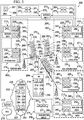
- the wireless communication network 200 includes a core network (CN) 208 (which comprises at least one CN node 207 (e.g., SGSN 207)), multiple SMLCs 206 1 and 206 2 , and multiple BSSs 202 1 , 202 2 , 202 3 , (only three shown) which interface with a mobile station 204 (only one shown) (note: in practice there would be multiple mobile stations 204 but for clarity only one mobile station 204 is discussed herein).
- the wireless communication network 200 also includes many well-known components, but for clarity, only the components needed to describe the features of the present disclosure are described herein.
- the wireless communication network 200 is described herein as being a GSM/EGPRS wireless communication network 200 which is also known as an EDGE wireless communication network 200.
- GSM/EGPRS wireless communication network 200 which is also known as an EDGE wireless communication network 200.
- EDGE wireless communication network 200 a GSM/EGPRS wireless communication network 200 which is also known as an EDGE wireless communication network 200.
- EC-GSM Code Division Multiple Access
- WCDMA Wideband Code Division Multiple Access
- LTE Long Term Evolution
- WiMAX Worldwide Interoperability for Mobile communications
- the wireless communication network 200 includes the BSSs 202 1 , 202 2 , 202 3 (which are basically wireless access nodes 202 1 , 202 2 , 202 3 , RAN nodes 202 1 , 202 2 , 202 3 , wireless access points 202 1 , 202 2 , 202 3 ) which can provide network access to the mobile station 204.
- Each BSS 202 1 , 202 2 , 202 3 includes one or more BTSs 210 1 , 210 2 , 210 3 and a BSC 212 1 , 212 2 , 212 3 .
- the BSSs 202 1 , 202 2 , 202 3 are connected to the core network 208 and, in particular, to the CN node 207 (e.g., SGSN 207).
- the core network 208 is connected to an external packet data network (PDN) 219, such as the Internet, and a server 213 (only one shown).
- PDN packet data network
- the mobile station 204 may communicate with one or more servers 213 (only one shown) connected to the core network 208 and/or the PDN 219.
- the mobile station 204 may be referred to generally as an end terminal (user) that attaches to the wireless communication network 200, and may refer to either a Machine Type Communications (MTC) device (e.g., a smart meter) or a non-MTC device.
- MTC Machine Type Communications
- the term "mobile station” is generally intended to be synonymous with the term mobile device, wireless device, "User Equipment,” or UE, as that term is used by 3GPP, and includes standalone mobile stations, such as terminals, cell phones, smart phones, tablets, Internet of Things (IoT) devices, cellular IoT devices, and wireless-equipped personal digital assistants, as well as wireless cards or modules that are designed for attachment to or insertion into another electronic device, such as a personal computer, electrical meter, etc...
- IoT Internet of Things
- the mobile station 204 may include a transceiver circuit 214 for communicating with the BSSs 202 1 , 202 2 , 202 3 (RAN nodes 202 1 , 202 2 , 202 3 ), and a processing circuit 216 for processing signals transmitted from and received by the transceiver circuit 214 and for controlling the operation of the mobile station 204.
- the transceiver circuit 214 may include a transmitter 218 and a receiver 220, which may operate according to any standard, e.g., the GSM/EDGE standard, and the EC-GSM standard.
- the processing circuit 216 may include a processor 222 and a memory 224 for storing program code for controlling the operation of the mobile station 204.
- the program code may include code for performing the procedures as described hereinafter.
- Each BTS 210 1 , 210 2 , 210 3 may include a transceiver circuit 226 1 , 226 2 , 226 3 for communicating with the mobile station 204 (typically multiple mobile stations 204-only one shown for clarity) and their respective BSC 212 1 , 212 2 , 212 3 , a processing circuit 228 1 , 228 2 , 228 3 for processing signals transmitted from and received by the transceiver circuit 226 1 , 226 2 , 226 3 and for controlling the operation of the corresponding BTS 210 1 , 210 2 , 210 3 .
- the transceiver circuit 226 1 , 226 2 , 226 3 may include a transmitter 230 1 , 230 2 , 230 3 and a receiver 232 1 , 232 2 , 232 3 , which may operate according to any standard, e.g., the GSM/EDGE standard, and the EC-GSM standard.
- the processing circuit 228 1 , 228 2 , 228 3 may include a processor 234 1 , 234 2 , 234 3 , and a memory 236 1 , 236 2 , 236 3 for storing program code for controlling the operation of the corresponding BTS 210 1 , 210 2 , 210 3 .
- the program code may include code for performing the procedures as described hereinafter.
- Each BSC 212 1 , 212 2 , 212 3 may include a transceiver circuit 238 1 , 238 2 , 238 3 for communicating with their respective BTS 210 1 , 210 2 , 210 3 and SMLC 206 1 , 206 2 , a processing circuit 240 1 , 240 2 , 240 3 for processing signals transmitted from and received by the transceiver circuit 238 1 , 238 2 , 238 3 and for controlling the operation of the corresponding BSC 212 1 , 212 2 , 212 3 , and a network interface 242 1 , 242 2 , 242 3 for communicating with the SGSN 207 part of the core network 208.
- the transceiver circuit 238 1 , 238 2 , 238 3 may include a transmitter 244 1 , 244 2 , 244 3 and a receiver 246 1 , 246 2 , 246 3 , which may operate according to any standard, e.g., the GSM/EDGE standard (in this example), and the EC-GSM standard.
- the processing circuit 240 1 , 240 2 , 240 3 may include a processor 248 1 , 248 2 , 248 3 , and a memory 250 1 , 250 2 , 250 3 for storing program code for controlling the operation of the corresponding BSC 212i, 212 2 , 212 3 .
- the program code may include code for performing the procedures as described hereinafter.
- BSS 202 1 , 202 2 , 202 3 circuitry can be considered to be the same circuitry as BSC 212 1 , 212 2 , 212 3 (it should be appreciated that a BSS comprises a BSC and a BTS according to well-known prior art, so when there is a discussion herein about a BSS performing certain functions, it typically means the BSC performing those functions unless it is specifically mentioned that the BTS is performing a function).
- the CN node 207 may include a transceiver circuit 252 for communicating with the BSSs 202 1 , 202 2 , 202 3 , a processing circuit 254 for processing signals transmitted from and received by the transceiver circuit 252 and for controlling the operation of the CN node 207, and a network interface 257 for communicating with the PDN 219 or the server 213.
- the transceiver circuit 252 may include a transmitter 256 and a receiver 258, which may operate according to any standard, e.g., the GSM/EDGE standard (in this example), and the EC-GSM standard.
- the processing circuit 254 may include a processor 260 and a memory 262 for storing program code for controlling the operation of the CN node 207.
- the program code may include code for performing the procedures as described hereinafter.
- the MS 204 when synchronizing to a BTS 210 1 , 210 2 , 210 3 (three shown) also estimates the accuracy 264 1 , 264 2 , 264 3 by which it has synchronized to the BTS 210 1 , 210 2 , 210 3 . Further, the MS 204 also estimates a MS Transmission Offset 265 1 , 265 2 , 265 3 with which it is able to time its uplink transmissions to the BTS 210 1 , 210 2 , 210 3 .
- the MS 204 reports (e.g., in an uplink Radio Link Control (RLC) data block 270i, 270 2 , 270 3 ) the estimated synchronization accuracy 264 1 , 264 2 , 264 3 and the MS Transmission Offset 265 1 , 265 2 , 265 3 associated with the respective BTS 210 1 , 210 2 , 210 3 to the network (e.g., BSS 202 1 , 202 2 , 202 3 ).
- RLC Radio Link Control
- the BSS 202 1 , 202 2 , 202 3 (BTS 210i, 210 2 , 210 3 ) adjusts its estimated TA 271 1 , 271 2 , 272 3 for the MS 204 according to the indicated MS Transmission Offset 265 1 , 265 2 , 265 3 and then forwards in a BSSMAP-LE CONNECTION ORIENTED INFORMATION message 275 1 , 275 2 , 275 3 (for example) the Adjusted Estimated Timing Advance 285 1 , 285 2 , 285 3 and the estimated MS synchronization accuracy 264 1 , 264 2 , 264 3 to the serving SMLC 206 1 along with a corresponding BTS Timing Advance Accuracy 273 1 , 273 2 , 273 3 .
- the MS Transmission Timing Accuracy field 266 indicates (a) the worst case accuracy (guaranteed minimum accuracy) with which the MS 204 is able to estimate the timing of the BTS 210 1 according to signals received from the BTS 210 1 and (b) the worst case MS Transmission Offset 265 1 .
- the serving BSS 202 1 passes either the complete MS Radio Access Capability IE 267 or the MS Transmission Timing Accuracy field 266 in a BSSMAP-LE PERFORM-LOCATION-REQUEST Protocol Data Unit (PDU) 269 to the serving SMLC 206 1 prior to the serving SMLC 206 1 triggering multilateration for the MS 204 (e.g., sending the MS 204 a multilateration request 272).
- PDU Protocol Data Unit
- the serving SMLC 206 1 could also utilize a BTS TA accuracy 271 1 , 271 2 , 271 3 .
- the BSS 202 1 , 202 2 , 202 3 may take both the BTS Timing Advance Accuracy 271 1 , 271 2 , 271 3 and the MS Sync Accuracy 264 1 , 264 2 , 264 3 into account and report an overall Timing Advance Accuracy to the SMLC 206 1 (i.e., the BTS 210 1 , 210 2 , 210 3 processes the values of the BTS Timing Advance Accuracy 271 1 , 271 2 , 271 3 and MS Sync Accuracy 264 1 , 264 2 , 264 3 to arrive at a value for the overall Timing Advance Accuracy for the corresponding cell which the BTS 210 1 , 210 2 , 210 3 then passes to the SMLC 206 1 ).
- BTS 210 1 , 210 2 , 210 3 may take both the BTS Timing Advance Accuracy 271 1 , 271 2 , 271 3 and the MS Sync Accuracy 264 1 ,
- the MS 204 As part of its procedure to time the uplink transmission to the BTS 210 1 , 210 2 , 210 3 according to signals received from the BTS 210 1 , 210 2 , 210 3 , the MS 204 first synchronizes to the network 200 (BTS 210 1 , 210 2 , 210 3 ). In the synchronization process, the MS 204 estimates the synchronization accuracy 264 1 , 264 2 , 264 3 by which it has synchronized to the BTS 210 1 , 210 2 , 210 3 (note: the MS 204 will estimate a separate synchronization accuracy 264 1 , 264 2 , 264 3 for each BTS 210 1 , 210 2 , 210 3 ).
- the MS 204 When synchronization is completed, the MS 204 will access the cell. However, the uplink transmission of the MS 204 when accessing the cell may not be perfectly time aligned with the timing of the signals from the BTS 210 1 , 210 2 , 210 3 as estimated during synchronization due to limitations in the design of the MS 204. For example, this limitation in the design of the MS 204 may be due to the internal time base of the MS 204 (to which transmissions must be time aligned) which may not be perfectly aligned with the estimated timing of the BTS transmissions.
- the internal time base used for uplink transmissions may be somewhat arbitrary as to when its corresponding uplink transmission opportunities (see upward pointing dashed arrows in FIGURE 3 ) occur relative to the ability of the MS 204 to synchronize to downlink signals (e.g., Frequency Correction Channel (FCCH)/Synchronization Channel (SCH)/ Extended Coverage-Synchronization Channel (EC-SCH)) received from the BTS 210 1 , 210 2 , 210 3 .
- FCCH Frequency Correction Channel
- SCH Synchromoperability Channel
- EC-SCH Extended Coverage-Synchronization Channel
- the MS 204 can have knowledge of the MS Transmission Offset 265 1 , 265 2 , 265 3 it applied when performing the Multilateration Timing Advance (MTA) procedure in a given cell to be made available when the corresponding BSS 202 1 , 202 2 , 202 3 (BTS 210i, 210 2 , 210 3 ) attempts to determine the applicable value of the BTS timing advance 271 1 , 271 2 , 271 3 for the MS 204 in that cell.
- MTA Multilateration Timing Advance
- the BSS 202 1 , 202 2 , 202 3 (BTS 210 1 , 210 2 , 210 3 ) not having access to MS Transmission Offset 265 1 , 265 2 , 265 3 applicable when the MS 204 performed the MTA procedure in a given cell, there will be a forced misalignment of uplink transmissions that the BSS 202 1 , 202 2 , 202 3 (BTS 210 1 , 210 2 , 210 3 ) will not be able to take into account.
- the MS 204 estimates the downlink (DL) timing denoted as MS estimated DL timing.
- MS estimated DL timing due to limitations in the MS 204 (i.e., the internal time base imposed on all uplink transmissions) there is a difference between the MS Nominal UL Transmission opportunity (e.g., determined according to the MS estimated DL timing + 3 time slot offset for the uplink) and the MS Selected Transmission opportunity (i.e., the closest internal time base uplink transmission opportunity which may occur either before or after the MS Nominal Transmission opportunity), denoted MS Transmission Offset 265 1 , 265 2 , 265 3 .
- MS Nominal UL Transmission opportunity e.g., determined according to the MS estimated DL timing + 3 time slot offset for the uplink
- MS Selected Transmission opportunity i.e., the closest internal time base uplink transmission opportunity which may occur either before or after the MS Nominal Transmission opportunity
- the present disclosure addresses this problem by having the MS 204 estimate and transmit the MS Transmission Offset 265 1 , 265 2 , 265 3 to each BTS 210 1 , 210 2 , 210 3 as information included in the respective RLC data block 270i, 270 2 , 270 3 .
- Each BTS 210 1 , 210 2 , 210 3 will perform a TA estimation 271 1 , 271 2 , 271 3 based on the signal sent by the MS 204 (e.g., an access request received on the EC-RACH or an uplink RLC data block received on an EC-PDTCH). In this process, the BTS 210 1 , 210 2 , 210 3 will estimate the accuracy by which it is able to measure the timing of signals received from the MS 204.
- Either of these separate accuracies or the total accuracy i.e., the BTS processes the values of the BTS Timing Advance Accuracy 271 1 , 271 2 , 271 3 and the MS Sync Accuracy 264 1 , 264 2 , 264 3 to arrive at a value for the overall Timing Advance Accuracy for the corresponding cell
- the serving SMLC node 206 1 combines accuracy estimates of TA estimates from multiple BTSs 210 1 , 210 2 , 210 3 to derive an estimate of the accuracy of the positioning of the MS 204.
- LTE Long Term Evolution
- UMTS Universal Mobile Telephony System
- NB-IoT Narrow Band Internet of Things
- eMTC Enhanced Machine Type Communications
- TLLI Temporary Logical Link Identifier
- MS Sync Accuracy field 278 the MS Transmission Offset field 290 in the Radio Link Control (RLC) data block 270 1 transmitted by the MS 204 on an uplink Temporary Block Flow (TBF) established in response to an access request 272 indicating Multilateration.
- RLC Radio Link Control
- the MS 204 use a reserved length indicator 276, e.g., a length indicator 276 of value 122 in the RLC data block 270 1 (note that any of the unused length indicators may be used). Length indicators are used to delimit upper layer PDU but may also be used to indicate the presence of additional information within the RLC data block.
- One example is the length indicator with a value 125, which indicates the presence of dynamic timeslot reduction control information which shall be included after the last Upper Layer PDU (see 3GPP TS 44.060 V13.3.0 (2016-09 ).
- a Length Indicator 276 of value 122 be used in the RLC data block 270 1 by the MS 204 to indicate the presence of the MS synchronization accuracy field 278 (which includes the estimated MS synchronization accuracy 264 1 ) and the MS Transmission Offset field 290 (which includes the MS Transmission Offset 265 1 ) in the first octet immediately following the Length Indicator 276.
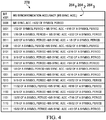
- FIGURE 4 is a diagram illustrating one possible coding of the MS synchronization accuracy field 278 which contains the MS estimated assessment of the BTS 210 1 timing (i.e., the MS estimated synchronization accuracy 264 1 ) in units of 1/32 of a symbol period.
- FIGURE 5 is a diagram illustrating one possible coding of the MS Transmission Offset field 290 which contains the MS Transmission Offset 265 1 which the MS 204 was forced to apply due to the transmission opportunities corresponding to the internal base in units of 1/32 of a symbol period.
- An alternative coding or field realizations may also be used.
- a second embodiment it is proposed, in addition to the TLLI 274 (or other MS identity) of the MS 204 and the Source Identity 280 of the Serving BSS 202 1 , to also include the estimated MS synchronization accuracy 264 2 , 264 3 and the estimated uplink MS Transmission Offset 265 2 , 265 3 in the RLC data blocks 270 2 , 270 3 transmitted by the MS 204 on an uplink TBF established in response to an access request 272 indicating Multilateration.
- the MS 204 uses a reserved length indicator 276, e.g., a length indicator 276 of value 122 within the RLC data blocks 270 2 , 270 3 .
- a Length Indicator 276 of value 122 is used in the RLC data blocks 270 2 , 270 3 by the MS 204 to indicate the presence of the "Source Identity" field 281, MS synchronization accuracy field 278, and the MS Transmission Offset field 290 in the five octets immediately following the Length Indicator 276 (four octets for the Source Identity field 281, 1/2 octet for the MS synchronization accuracy field 278, and a 1/2 octet for the MS Transmission Offset field 290).
- the assumption of using four octets for the Source Identity field 281 can be seen as valid if it is always sufficient to provide two octets of Location Area Code (LAC) and two octets of Cell ID information for the source identity (i.e., if it can be assumed that only cells belonging to the same Public Land Mobile Network (PLMN) are used for positioning).
- LAC Location Area Code
- PLMN Public Land Mobile Network
- the "Source Identity" field 281 could alternatively comprise Mobile Country Code (MCC) + Mobile Network Code (MNC) + LAC + Cell ID (i.e., a total of 7 octets) in order to address the case where knowledge of PLMN ID (MCC + MNC) is needed to forward the derived TA information 264 2 , 264 3 and associated Cell ID information 280 from a non-serving BSS 202 2 and 202 3 to the serving BSS 202 1 .
- MCC Mobile Country Code
- MNC Mobile Network Code
- LAC + Cell ID i.e., a total of 7 octets
- the serving BSS 202 1 in order to address a scenario when there is no assessment of the MS synchronization accuracy 264 1 and the MS Transmission Offset 265 1 from the MS 204 as the MTA procedure is performed in each cell, it is proposed to add means for the serving BSS 202 1 to pass a new field called the MS Transmission Timing Accuracy Capability IE 266 (which includes a total MS transmission accuracy derived from a worst case MS synchronization accuracy and a worst case MS Transmission Offset) to the serving SMLC 206 1 in the BSSMAP-LE PERFORM LOCATION REQUEST message 269 sent from the serving BSS 202 1 to the serving SMLC 206 1 .
- the MS Transmission Timing Accuracy Capability IE 266 which includes a total MS transmission accuracy derived from a worst case MS synchronization accuracy and a worst case MS Transmission Offset
- the serving BSS 202 1 obtains the information carried in MS Transmission Timing Accuracy Capability IE 266 from the MS Radio Access Capability Information Element (IE) 267 received from the SGSN 207 when the SGSN 207 commands the BSS 202 1 to perform the positioning procedure.
- FIGURE 6 illustrates details of the BSSMAP-LE PERFORM LOCATION REQUEST message 269 with the new MS Transmission Timing Accuracy Capability IE 266 (note: the reference to TABLE 9.1 3GPP TS 49.031 indicates that this table will be updated in the new standard to reflect the updated BSSMAP-LE PERFORM LOCATION REQUEST message 269 per the present disclosure).
- FIGURE 7 illustrates details of the new MS Transmission Timing Accuracy Capability IE 266 which is a variable length information element that is derived from a worst case MS synchronization accuracy and a worst case MS Transmission Offset (note 1: the reference to 10.34 3GPP TS 49.031 indicates that this figure will be updated in the new standard to reflect the new MS Transmission Timing Accuracy Capability IE 266 per the present disclosure) (note 2: it is to be noted that the shown MS Transmission Timing Accuracy Capability IE 266 is just an example and, to anyone skilled in the art, various variations of the MS Transmission Timing Accuracy Capability IE 266 are possible such as a different range or that a 4 bit field with smaller steps in granularity can be used).
- the worst case MS synchronization accuracy is 1/8 symbol and the worst case MS Transmission Offset is 1/8 symbol, this results in a total MS Transmission Timing Accuracy of 1/4 symbol.
- the serving BSS 202 1 using a field 266 that indicates the worst case synchronization accuracy of MS 204 and the worst case MS transmission offset is added to the MS Radio Access Capability IE 267 which can be forwarded from the BSS 202 1 to the SMLC 206 1 as received by the BSS 202 1 from the SGSN 207.
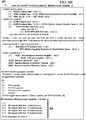
- FIGURES 8A-8B illustrate details of the MS Radio Access Capability IE 267 with the new MS Transmission Timing Accuracy Capability IE 266 (note: the reference to TABLE 10.5.146 3GPP TS 24.008 indicates that this table will be updated in the new standard to reflect the MS Transmission Timing Accuracy Capability IE 266 per the present disclosure).
- the complete MS Radio Access Capability IE 267 is sent as a new IE in the BSSMAP-LE PERFORM LOCATION REQUEST message 269 or the MS Transmission Timing Accuracy Capability IE 266 is added to the Classmark Information Type 3 message already optionally included in the BSSMAP-LE PERFORM LOCATION REQUEST message 269.
- a fourth embodiment in order for the serving SMLC 2061 to know the overall accuracy of the estimation of the TA 271 1 , 271 2 , 271 3 , it is proposed to add means for the BSS 202 1 , 202 2 , 202 3 (BTS 210 1 , 210 2 , 210 3 ) to indicate an overall TA estimation accuracy to the serving SMLC 206 1 in the BSSMAP-LE CONNECTION ORIENTED INFORMATION message 275 1 , 275 2 , 275 3 , either as a new IE or as part of the BSSLAP APDU.
- BSS 202 1 , 202 2 , 202 3 BSS 210 1 , 210 2 , 210 3
- FIGURE 9 is a diagram that illustrates where a new 3GPP TS 49.031 Multilateration TA (MTA) IE 277 is proposed to carry the overall Timing Advance estimation accuracy (bits 2 to 4 of octet 2), which indicates the overall timing advance estimation symbol granularity derived by the BSS 202 1 , 202 2 , 202 3 taking its own TA accuracy (i.e., the BTS Timing Advance Accuracy 271 1 , 271 2 , 271 3 ) as well as the MS estimated accuracy 264 1 , 264 2 , 264 3 of the timing of the BTS 210 1 , 210 2 , 210 3 (i.e., the estimated MS synchronization accuracy 264 1 , 264 2 , 264 3 ) into account.
- the same information could also have been included in the BSSLAP APDU as a new 3GPP 48.071 Multilateration Timing Advance (MTA) message.
- MTA Multilateration Timing Advance
- FIGURE 10 there is a flowchart of a method 1000 implemented in the mobile station 204 that is configured to interact with BSS 202 1 (the serving BSS 202 1 ) which includes BTS 210 1 (for example) in accordance with an embodiment of the present disclosure.
- the mobile station 204 receives, from the BSS 202 1 , a multilateration request 272 (note: the serving SMLC 206 1 originally transmits the multilateration request 272 which is then transmitted by the BSS 202 1 to the mobile station 204).
- the mobile station 204 estimates a synchronization accuracy 264 1 with the BTS 210 1 and estimates a transmission offset 265 1 for uplink transmissions to the BTS 210 1 in response to receiving the multilateration request 272. For instance, the mobile station 204 can estimate the synchronization accuracy 264 1 with the BTS 210 1 by performing multiple timing measurements of the BTS 210 1 and estimating a variance between the timing measurements of the BTS 210 1 (note: the variance can be estimated as discussed above with respect to equation nos. 1-3).
- the mobile station 204 can estimate the transmission offset 265 1 by taking into account limitations of an internal time base and estimated timing of transmissions (e.g., with the SCH or the EC-SCH) from the BTS 210 1 (see discussion above with respect to FIG. 3 ).
- the mobile station 204 transmits, to the BSS 202 1 , a RLC data block 270 1 that includes at least (i) a TLLI 274 of the mobile station 204, (ii) the estimated synchronization accuracy 264 1 , and (iii) the estimated transmission offset 265 1 .
- the RLC data block 270 1 may further include (iv) a Source Identity 280 of the BSS 202 1 , and (v) a length indicator 276 to indicate a presence of the estimated synchronization accuracy 264 1 and the transmission offset 265 1 . It should be appreciated that the mobile station 204 would also perform at least steps 1004 and 1006 with the non-serving BSSs 202 2 and 202 3 .
- the mobile station 204 comprises a receive module 1102, an estimate module 1104, and a transmit module 1106.
- the receive module 1102 is configured to receive from a BSS 202 1 (for example) a multilateration request 272.
- the estimate module 1104 is configured, in response to receipt of the multilateration request 272, to estimate a synchronization accuracy 264 1 with the BTS 210 1 and to estimate a transmission offset 265 1 for uplink transmissions to the BTS 210 1 .
- the transmit module 1106 is configured to transmit, to the BSS 202 1 , a RLC data block 270 1 that includes at least (i) a TLLI 274 of the mobile station 204, (ii) the estimated synchronization accuracy 264 1 , and (iii) the estimated transmission offset 265 1 .
- the RLC data block 270 1 may further include (iv) a Source Identity 280 of the BSS 202 1 , and (v) a length indicator 276 to indicate a presence of the estimated synchronization accuracy 264 1 and the transmission offset 265 1 .
- the mobile station 204 may also include other components, modules or structures which are well-known, but for clarity, only the components, modules or structures needed to describe the features of the present disclosure are described herein.
- the above-described modules 1102, 1104, and 1106 of the mobile station 204 may be implemented separately as suitable dedicated circuits. Further, the modules 1102, 1104, and 1106 can also be implemented using any number of dedicated circuits through functional combination or separation. In some embodiments, the modules 1102, 1104, and 1106 may be even combined in a single application specific integrated circuit (ASIC).
- the mobile station 204 may comprise a memory 224, a processor 222 (including but not limited to a microprocessor, a microcontroller or a Digital Signal Processor (DSP), etc.) and a transceiver 214.
- the memory 224 stores machine-readable program code executable by the processor 222 to cause the mobile station 204 to perform the steps of the above-described method 1000.
- the BSS 202 1 transmits, to the mobile station 204, a multilateration request 272 (note: the serving SMLC 206 1 originally transmits the multilateration request 272 which is then transmitted by the BSS 202 1 to the mobile station 204).
- the BSS 202 1 receives, from the mobile station 204, a RLC data block 270 1 that includes at least (i) a TLLI 274 of the mobile station 204, (ii) an estimated mobile station synchronization accuracy 264 1 (wherein the estimated synchronization accuracy 264 1 indicates an estimate by the mobile station 204 of an accuracy by which the mobile station 204 is synchronized to the BTS 210 1 ), and (iii) a mobile station transmission offset 265 1 (wherein the mobile station transmission offset 265 1 is determined by the MS 204 by taking into account limitations of an internal time base and estimated timing of transmissions from the BTS 210 1 ).
- the RLC data block 270 1 may further include (iv) a Source Identity 280 of the BSS 202 1 , and (v) a length indicator 276 to indicate a presence of the estimated synchronization accuracy 264 1 and the transmission offset 265 1 .
- the BSS 202 1 obtains a BTS TA estimation 271 1 for the mobile station 204 calculated by the BTS 210 1 based on the received RLC data block 270 1 .
- the BSS 202 1 transmits, to the SMLC 206 1 , the adjusted BTS TA estimation 285 1 , the estimated mobile station synchronization accuracy 264 1 , and the BTS TA accuracy 273 1 . It should be appreciated that the BSSs 202 2 and 202 3 would also perform at least step 1204 with the mobile station 204, and possibly optional steps 1206, 1208, and 1210.
- the BSS 202 1 comprises a first transmit module 1302, a receive module 1304, an optional obtain module 1306, an optional adjust module 1308, and an optional second transmit module 1310.
- the first transmit module 1302 is configured to transmit, to the mobile station 204, a multilateration request 272.
- the receive module 1304 is configured to receive, from the mobile station 204, a RLC data block 270 1 that includes at least (i) a TLLI 274 of the mobile station 204, (ii) an estimated mobile station synchronization accuracy 264 1 (wherein the estimated synchronization accuracy 264 1 indicates an estimate by the mobile station 204 of an accuracy by which the mobile station 204 is synchronized to the BTS 210 1 ), and (iii) a mobile station transmission offset 265 1 (wherein the mobile station transmission offset 265 1 is determined by the MS 204 by taking into account limitations of an internal time base and estimated timing of transmissions from the BTS 210 1 ).
- the RLC data block 270 1 may further include (iv) a Source Identity 280 of the BSS 202 1 , and (v) a length indicator 276 to indicate a presence of the estimated synchronization accuracy 264 1 and the transmission offset 265 1 .
- the optional obtain module 1306 is configured to obtain a BTS TA estimation 271 1 for the mobile station 204 calculated by the BTS 210 1 based on the received RLC data block 270 1 .
- the optional second transmit module 1310 is configured to transmit, to the SMLC 206 1 , the adjusted BTS TA estimation 285 1 , the estimated mobile station synchronization accuracy 264 1 , and the BTS TA accuracy 273 1 .
- the BSS 202 1 may also include other components, modules or structures which are well-known, but for clarity, only the components, modules or structures needed to describe the features of the present disclosure are described herein.
- the above-described modules 1302, 1304, 1306, 1308, and 1310 of the BSS 202 1 may be implemented separately as suitable dedicated circuits. Further, the modules 1302, 1304, 1306, 1308, and 1310 can also be implemented using any number of dedicated circuits through functional combination or separation. In some embodiments, the modules 1302, 1304, 1306, 1308, and 1310 may be even combined in a single application specific integrated circuit (ASIC).
- the BSS 202 1 may comprise a memory 250 1 , a processor 248 1 (including but not limited to a microprocessor, a microcontroller or a Digital Signal Processor (DSP), etc.) and a transceiver 238 1 .
- DSP Digital Signal Processor
- the memory 250 1 stores machine-readable program code executable by the processor 248 1 to cause the BSS 202 1 to perform the steps of the above-described method 1200.
- the other BSSs 202 2 and 202 3 may be configured the same as BSS 202 1 .
- the serving SMLC 206 1 it will be readily appreciated that it is beneficial for the serving SMLC 206 1 to receive cell specific timing advance information that is supplemented with MS Synchronization Accuracy information 264 1 , 264 2 , 264 3 that indicates the guaranteed minimum accuracy with which the MS 204 is able to synchronize to signals received from the BTS 210 1 , 210 2 , 210 3 and time its uplink transmissions accordingly.
- MS Synchronization Accuracy information 264 1 , 264 2 , 264 3 that indicates the guaranteed minimum accuracy with which the MS 204 is able to synchronize to signals received from the BTS 210 1 , 210 2 , 210 3 and time its uplink transmissions accordingly.
- MS Synchronization Accuracy information 264 1 , 264 2 , 264 3 indicates the guaranteed minimum accuracy with which the MS 204 is able to synchronize to signals received from the BTS 210 1 , 210 2 , 210 3 and time its uplink transmissions accordingly.
- MS uplink transmissions will not be made according to the MS Synchronization Accuracy 264 1 , 264 2 , 264 3 alone per (case a) according to the MS Synchronization Accuracy 264 1 , 264 2 , 264 3 plus an indicated timing advance as per (case b), but may also be subject to an offset, herein called the MS Transmission Offset 265 1 , 265 2 , 265 3 , that the MS 204 is aware of but unable to correct.
- the BTS 210 1 , 210 2 , 210 3 (or the SMLC 206 1 ) can use the MS Transmission Offset 265 1 , 265 2 , 265 to directly compensate the Estimated BTS Timing Advance value 271 1 , 271 2 , 271 3 in order to derive a more accurate value referred to herein as an Adjusted BTS Estimated Timing Advance value 285 1 , 285 2 , 285 3 .
- the BTS 210 1 , 210 2 , 210 3 to receive "MS Transmission Offset" information 265 1 , 265 2 , 265 3 from the MS 204 whenever it performs the positioning procedure in a given cell, thereby allowing e.g., the BTS 210 1 , 210 2 , 210 3 to adjust its "Estimated Timing Advance" 271 1 , 271 2 , 271 3 for that MS 204 so that an "Adjusted Estimated Timing Advance" 285 1 , 285 2 , 285 3 can be determined and relayed to the serving SMLC 206 1 .
- step is meant to be synonymous with “operation” or “action.” Any description herein of a sequence of steps does not imply that these operations must be carried out in a particular order, or even that these operations are carried out in any order at all, unless the context or the details of the described operation clearly indicates otherwise.
- processing circuits may in some embodiments be embodied in one or more application-specific integrated circuits (ASICs).
- ASICs application-specific integrated circuits
- these processing circuits may comprise one or more microprocessors, microcontrollers, and/or digital signal processors programmed with appropriate software and/or firmware to carry out one or more of the operations described above, or variants thereof.
- these processing circuits may comprise customized hardware to carry out one or more of the functions described above.
- present embodiments are, therefore, to be considered in all respects as illustrative and not restrictive.
Landscapes
- Engineering & Computer Science (AREA)
- Signal Processing (AREA)
- Physics & Mathematics (AREA)
- General Physics & Mathematics (AREA)
- Radar, Positioning & Navigation (AREA)
- Remote Sensing (AREA)
- Computer Networks & Wireless Communication (AREA)
- Mobile Radio Communication Systems (AREA)
- Position Fixing By Use Of Radio Waves (AREA)
Claims (14)
- Mobilstation (204), die zum Interagieren mit einem Basisstationssubsystem, BSS, (2021) konfiguriert ist, wobei das BSS eine Basis-Sendeempfängerstation, BTS, (2101) umfasst, und die Mobilstation (204) umfasst:einen Prozessor (222); undeinen Speicher (224), der prozessorausführbare Anweisungen speichert, wobei der Prozessor (222) über eine Schnittstelle mit dem Speicher (224) verbunden ist, um die prozessorausführbaren Anweisungen auszuführen, wodurch die Mobilstation (204) ausgelegt ist zum:
Empfangen (1002) einer Multilaterationsanforderung (272) vom BSS;
dadurch gekennzeichnet, dass
die Mobilstation (204) ferner ausgelegt ist zum:Schätzen (1004) einer Synchronisationsgenauigkeit (2641) mit der BTS und Schätzen eines Übertragungsoffsets (2651) für Uplink-Übertragungen an die BTS in Reaktion auf den Empfang der Multilaterationsanforderung; undSenden (1006) eines Funkverbindungssteuerungs-,RLC-,Datenblocks (2701) an das BSS, der mindestens (i) eine temporäre Kennung einer logischen Verbindung, TLLI, (274) der Mobilstation (204), (ii) die geschätzte Synchronisationsgenauigkeit (2641) und (iii) den geschätzten Übertragungsoffset (2651) umfasst. - Mobilstation (204) nach Anspruch 1, wobei die Mobilstation (204) so ausgelegt ist, dass sie die Synchronisationsgenauigkeit mit der BTS durch Durchführen mehrerer Taktmessungen der BTS und Schätzen einer Varianz zwischen den mehreren Taktmessungen der BTS schätzt.
- Mobilstation (204) nach Anspruch 2, wobei die Mobilstation (204) so ausgelegt ist, dass sie die Varianz gemäß den folgenden Gleichungen schätzt:

t ein Mittelwert von ti ist;
wobeit berechnet wird, wie folgt:
t der mehreren Taktmessungen berechnet wird, wie folgt:
- Mobilstation (204) nach Anspruch 1, wobei die Mobilstation (204) so ausgelegt ist, dass sie den Übertragungsoffset durch Berücksichtigen von Beschränkungen einer internen Zeitbasis und eines geschätzten Takts von Übertragungen von der BTS schätzt.
- Mobilstation (204) nach Anspruch 4, wobei die Übertragungen von der BTS Übertragungen mit einem Synchronisationskanal, SCH, oder einem Synchronisationskanal für erweiterte Versorgung, EC-SCH, umfassen.
- Mobilstation (204) nach Anspruch 1, wobei der RLC-Datenblock (2701) ferner eine Quellenkennung (280) des BSS umfasst.
- Mobilstation (204) nach Anspruch 1, wobei der RLC-Datenblock (2701) ferner einen Längenindikator (276) zum Anzeigen eines Vorhandenseins der geschätzten Synchronisationsgenauigkeit (2641) und des Übertragungsoffsets (2651) umfasst.
- Verfahren (1000) in einer Mobilstation (204), die zum Interagieren mit einem Basisstationssubsystem, BSS, (2021) konfiguriert ist, wobei das BSS eine Basis-Sendeempfängerstation, BTS, (2101) umfasst, und das Verfahren umfasst:Empfangen (1002) einer Multilaterationsanforderung (272) vom BSS; gekennzeichnet durchSchätzen (1004) einer Synchronisationsgenauigkeit (2641) mit der BTS und Schätzen eines Übertragungsoffsets (2651) für Uplink-Übertragungen an die BTS in Reaktion auf den Empfang der Multilaterationsanforderung; undSenden (1006) eines Funkverbindungssteuerungs-,RLC-,Datenblocks (2701) an das BSS, der mindestens (i) eine temporäre Kennung einer logischen Verbindung, TLLI, (274) der Mobilstation (204), (ii) die geschätzte Synchronisationsgenauigkeit (2641) und (iii) den geschätzten Übertragungsoffset (2651) umfasst.
- Basisstationssubsystem, BSS, (2021), das zum Interagieren mit einer Mobilstation (204) und einer versorgenden Mobiltelefonlokalisierungszentrale, SMLC, (2061) konfiguriert ist, wobei das BSS eine Basis-Sendeempfängerstation, BTS, (2101) umfasst, und das BSS umfasst:einen Prozessor (2481); undeinen Speicher (2501), der prozessorausführbare Anweisungen speichert, wobei der Prozessor (2481) über eine Schnittstelle mit dem Speicher (2501) verbunden ist, um die prozessorausführbaren Anweisungen auszuführen, wodurch das BSS ausgelegt ist zum:
Senden (1202) einer Multilaterationsanforderung (272) an die Mobilstation (204); und
dadurch gekennzeichnet, dass
die BSS ferner ausgelegt ist zum:
Empfangen (1204) eines Funkverbindungssteuerungs-,RLC-,Datenblocks (2701) von der Mobilstation (204), der mindestens (i) eine temporäre Kennung einer logischen Verbindung, TLLI, (274) der Mobilstation (204), (ii) eine geschätzte Synchronisationsgenauigkeit (2641) der Mobilstation und (iii) einen Übertragungsoffset (2651) der Mobilstation umfasst. - BSS nach Anspruch 9, wobei das BSS ferner ausgelegt ist zum:Erhalten (1206) einer Schätzung einer Vorhaltezeit, TA, (2711) für die Mobilstation (204), die von der BTS basierend auf dem empfangenen RLC-Datenblock (2701) berechnet wird;Anpassen (1208) der TA-Schätzung gemäß dem Übertragungsoffset der Mobilstation (204); undSenden (1210) der angepassten TA-Schätzung (2851), der geschätzten Synchronisationsgenauigkeit (2641) der Mobilstation und einer TA-Genauigkeit (2731) der BTS an die SMLC.
- BSS nach Anspruch 10, wobei das BSS den Anpassungsvorgang gemäß Folgendem durchführt:
angepasste TA-Schätzung TAangepasst = TA-Schätzung TAgeschätzt minus Übertragungsoffset (2651) der Mobilstation. - BSS nach Anspruch 9, wobei der RLC-Datenblock (2701) ferner eine Quellenkennung (280) des BSS umfasst.
- BSS nach Anspruch 1, wobei der RLC-Datenblock (2701) ferner einen Längenindikator (276) zum Anzeigen eines Vorhandenseins der geschätzten Synchronisationsgenauigkeit (2641) der Mobilstation und des Übertragungsoffsets (2651) der Mobilstation umfasst.
- Verfahren (1200) in einem Basisstationssubsystem, BSS, (2021), das zum Interagieren mit einer Mobilstation (204) und einer versorgenden Mobiltelefonlokalisierungszentrale, SMLC, (2061) konfiguriert ist, wobei das BSS eine Basis-Sendeempfängerstation, BTS, (2101) umfasst, und das Verfahren umfasst:Senden (1202) einer Multilaterationsanforderung (272) an die Mobilstation (204);
und
gekennzeichnet durchEmpfangen (1204) eines Funkverbindungssteuerungs-,RLC-,Datenblocks (2701) von der Mobilstation (204), der mindestens (i) eine temporäre Kennung einer logischen Verbindung, TLLI, (274) der Mobilstation (204, (ii) eine geschätzte Synchronisationsgenauigkeit (2641) der Mobilstation und (iii) einen Übertragungsoffset (2651) der Mobilstation umfasst.
Applications Claiming Priority (4)
| Application Number | Priority Date | Filing Date | Title |
|---|---|---|---|
| US201662415990P | 2016-11-01 | 2016-11-01 | |
| US201662419794P | 2016-11-09 | 2016-11-09 | |
| US201662433672P | 2016-12-13 | 2016-12-13 | |
| PCT/IB2017/056772 WO2018083597A1 (en) | 2016-11-01 | 2017-10-31 | Providing estimated accuracy of mobile station synchronization and mobile station transmission offset to the network |
Publications (2)
| Publication Number | Publication Date |
|---|---|
| EP3535599A1 EP3535599A1 (de) | 2019-09-11 |
| EP3535599B1 true EP3535599B1 (de) | 2020-12-02 |
Family
ID=60782264
Family Applications (1)
| Application Number | Title | Priority Date | Filing Date |
|---|---|---|---|
| EP17818266.3A Not-in-force EP3535599B1 (de) | 2016-11-01 | 2017-10-31 | Bereitstellen der geschätzten genauigkeit von mobilstationssynchronisation und mobilstationsübertragungsversatz zum netzwerk |
Country Status (7)
| Country | Link |
|---|---|
| US (2) | US10314004B2 (de) |
| EP (1) | EP3535599B1 (de) |
| CN (1) | CN110114686A (de) |
| BR (1) | BR112019008640A2 (de) |
| CA (1) | CA3041966A1 (de) |
| RU (1) | RU2713730C1 (de) |
| WO (1) | WO2018083597A1 (de) |
Family Cites Families (17)
| Publication number | Priority date | Publication date | Assignee | Title |
|---|---|---|---|---|
| US6185429B1 (en) * | 1998-07-31 | 2001-02-06 | Motorola, Inc. | Method and apparatus for performing a time synchronization of a base site |
| TW518419B (en) | 2001-06-26 | 2003-01-21 | Benq Corp | Positioning device and method |
| US7447181B1 (en) * | 2001-12-05 | 2008-11-04 | Nokia Corporation | Method and apparatus for improving a mobile station cell change operation in the general packet radio system (GPRS) |
| RU2382507C2 (ru) * | 2004-04-14 | 2010-02-20 | Телеком Италия С.П.А. | Способ и система для распределения мультимедийного содержимого посредством сети беспроводной связи, в частности сети мобильной телефонной связи |
| JP2007218868A (ja) * | 2006-02-20 | 2007-08-30 | Mitsubishi Electric Corp | 移動局の位置検出方法及びその移動局、位置検出装置、基地局 |
| US20090069032A1 (en) | 2007-09-11 | 2009-03-12 | Qualcomm Incorporated | Dynamic measure position request processing in a mobile radio network |
| CN101472330A (zh) * | 2007-12-28 | 2009-07-01 | 三星电子株式会社 | 基于时间差定位的传输同步方法 |
| US8660574B2 (en) | 2008-04-02 | 2014-02-25 | Qualcomm Incorporated | Generic positioning protocol |
| US20110151881A1 (en) | 2009-12-23 | 2011-06-23 | Joey Chou | Techniques for fractional frequency reuse in wireless networks |
| US20120115479A1 (en) * | 2010-10-12 | 2012-05-10 | Bo Ehrenholm | Method and Network Node |
| EP2595436B1 (de) * | 2011-11-15 | 2016-03-16 | Telefonaktiebolaget LM Ericsson (publ) | Verfahren und Netzwerkknoten zur Lokalisierung eines Benutzergeräts |
| GB2491218B (en) | 2011-12-22 | 2013-06-26 | Renesas Mobile Corp | Timing-based positioning |
| EP2817652B1 (de) | 2012-02-21 | 2016-11-23 | Karlsruher Institut für Technologie | Verfahren und system zur simultanen empfängerkalibrierung und objektlokalisierung für multilateration |
| CN104322120B (zh) | 2012-04-03 | 2019-01-04 | 瑞典爱立信有限公司 | 确保小区改变期间的定位服务质量 |
| US9210664B2 (en) | 2012-04-17 | 2015-12-08 | Ofinno Technologies. LLC | Preamble transmission in a wireless device |
| EP3535598B1 (de) * | 2016-11-01 | 2021-02-24 | Telefonaktiebolaget LM Ericsson (publ) | Bereitstellen einer geschätzten genauigkeit einer mobilstationssynchronisation an das netzwerk |
| WO2018207158A1 (en) * | 2017-05-11 | 2018-11-15 | Telefonaktiebolaget Lm Ericsson (Publ) | Increased security for multilateration timing advance |
-
2017
- 2017-10-31 EP EP17818266.3A patent/EP3535599B1/de not_active Not-in-force
- 2017-10-31 BR BR112019008640A patent/BR112019008640A2/pt not_active IP Right Cessation
- 2017-10-31 CN CN201780080651.8A patent/CN110114686A/zh active Pending
- 2017-10-31 US US15/799,037 patent/US10314004B2/en active Active
- 2017-10-31 WO PCT/IB2017/056772 patent/WO2018083597A1/en not_active Ceased
- 2017-10-31 RU RU2019116812A patent/RU2713730C1/ru active
- 2017-10-31 CA CA3041966A patent/CA3041966A1/en not_active Abandoned
-
2019
- 2019-04-23 US US16/391,912 patent/US10609674B2/en not_active Expired - Fee Related
Non-Patent Citations (1)
| Title |
|---|
| None * |
Also Published As
| Publication number | Publication date |
|---|---|
| US20190253999A1 (en) | 2019-08-15 |
| CA3041966A1 (en) | 2018-05-11 |
| BR112019008640A2 (pt) | 2019-07-09 |
| US20180124737A1 (en) | 2018-05-03 |
| EP3535599A1 (de) | 2019-09-11 |
| US10314004B2 (en) | 2019-06-04 |
| WO2018083597A1 (en) | 2018-05-11 |
| RU2713730C1 (ru) | 2020-02-07 |
| US10609674B2 (en) | 2020-03-31 |
| CN110114686A (zh) | 2019-08-09 |
Similar Documents
| Publication | Publication Date | Title |
|---|---|---|
| EP3535597B1 (de) | Bereitstellung von geschätzter genauigkeit der mobilstationssynchronisation an das netzwerk | |
| US10712423B2 (en) | Assignment messages acknowledging access attempt without assigning resources | |
| US10757575B2 (en) | Increased security for multilateration timing advance | |
| EP3535599B1 (de) | Bereitstellen der geschätzten genauigkeit von mobilstationssynchronisation und mobilstationsübertragungsversatz zum netzwerk | |
| US10477502B2 (en) | Notification of delivery of a RRLP multilateration timing advance request message to a base station subsystem (BSS) | |
| US20180220389A1 (en) | Notification of ongoing multilateration timing advance (mta) procedure to a serving gprs support node (sgsn) |
Legal Events
| Date | Code | Title | Description |
|---|---|---|---|
| STAA | Information on the status of an ep patent application or granted ep patent |
Free format text: STATUS: UNKNOWN |
|
| STAA | Information on the status of an ep patent application or granted ep patent |
Free format text: STATUS: THE INTERNATIONAL PUBLICATION HAS BEEN MADE |
|
| PUAI | Public reference made under article 153(3) epc to a published international application that has entered the european phase |
Free format text: ORIGINAL CODE: 0009012 |
|
| STAA | Information on the status of an ep patent application or granted ep patent |
Free format text: STATUS: REQUEST FOR EXAMINATION WAS MADE |
|
| 17P | Request for examination filed |
Effective date: 20190528 |
|
| AK | Designated contracting states |
Kind code of ref document: A1 Designated state(s): AL AT BE BG CH CY CZ DE DK EE ES FI FR GB GR HR HU IE IS IT LI LT LU LV MC MK MT NL NO PL PT RO RS SE SI SK SM TR |
|
| AX | Request for extension of the european patent |
Extension state: BA ME |
|
| DAV | Request for validation of the european patent (deleted) | ||
| DAX | Request for extension of the european patent (deleted) | ||
| GRAJ | Information related to disapproval of communication of intention to grant by the applicant or resumption of examination proceedings by the epo deleted |
Free format text: ORIGINAL CODE: EPIDOSDIGR1 |
|
| GRAP | Despatch of communication of intention to grant a patent |
Free format text: ORIGINAL CODE: EPIDOSNIGR1 |
|
| RIC1 | Information provided on ipc code assigned before grant |
Ipc: H04W 64/00 20090101ALI20200220BHEP Ipc: G01S 5/06 20060101ALI20200220BHEP Ipc: G01S 5/00 20060101AFI20200220BHEP Ipc: H04W 56/00 20090101ALI20200220BHEP Ipc: G01S 5/10 20060101ALI20200220BHEP |
|
| GRAP | Despatch of communication of intention to grant a patent |
Free format text: ORIGINAL CODE: EPIDOSNIGR1 |
|
| STAA | Information on the status of an ep patent application or granted ep patent |
Free format text: STATUS: GRANT OF PATENT IS INTENDED |
|
| GRAJ | Information related to disapproval of communication of intention to grant by the applicant or resumption of examination proceedings by the epo deleted |
Free format text: ORIGINAL CODE: EPIDOSDIGR1 |
|
| RAP1 | Party data changed (applicant data changed or rights of an application transferred) |
Owner name: TELEFONAKTIEBOLAGET LM ERICSSON (PUBL) |
|
| INTG | Intention to grant announced |
Effective date: 20200430 |
|
| GRAP | Despatch of communication of intention to grant a patent |
Free format text: ORIGINAL CODE: EPIDOSNIGR1 |
|
| GRAJ | Information related to disapproval of communication of intention to grant by the applicant or resumption of examination proceedings by the epo deleted |
Free format text: ORIGINAL CODE: EPIDOSDIGR1 |
|
| STAA | Information on the status of an ep patent application or granted ep patent |
Free format text: STATUS: REQUEST FOR EXAMINATION WAS MADE |
|
| INTG | Intention to grant announced |
Effective date: 20200518 |
|
| INTG | Intention to grant announced |
Effective date: 20200528 |
|
| INTG | Intention to grant announced |
Effective date: 20200605 |
|
| GRAP | Despatch of communication of intention to grant a patent |
Free format text: ORIGINAL CODE: EPIDOSNIGR1 |
|
| STAA | Information on the status of an ep patent application or granted ep patent |
Free format text: STATUS: GRANT OF PATENT IS INTENDED |
|
| GRAJ | Information related to disapproval of communication of intention to grant by the applicant or resumption of examination proceedings by the epo deleted |
Free format text: ORIGINAL CODE: EPIDOSDIGR1 |
|
| STAA | Information on the status of an ep patent application or granted ep patent |
Free format text: STATUS: REQUEST FOR EXAMINATION WAS MADE |
|
| GRAP | Despatch of communication of intention to grant a patent |
Free format text: ORIGINAL CODE: EPIDOSNIGR1 |
|
| STAA | Information on the status of an ep patent application or granted ep patent |
Free format text: STATUS: GRANT OF PATENT IS INTENDED |
|
| INTC | Intention to grant announced (deleted) | ||
| INTG | Intention to grant announced |
Effective date: 20200703 |
|
| INTC | Intention to grant announced (deleted) | ||
| INTG | Intention to grant announced |
Effective date: 20200721 |
|
| GRAS | Grant fee paid |
Free format text: ORIGINAL CODE: EPIDOSNIGR3 |
|
| GRAA | (expected) grant |
Free format text: ORIGINAL CODE: 0009210 |
|
| STAA | Information on the status of an ep patent application or granted ep patent |
Free format text: STATUS: THE PATENT HAS BEEN GRANTED |
|
| AK | Designated contracting states |
Kind code of ref document: B1 Designated state(s): AL AT BE BG CH CY CZ DE DK EE ES FI FR GB GR HR HU IE IS IT LI LT LU LV MC MK MT NL NO PL PT RO RS SE SI SK SM TR |
|
| REG | Reference to a national code |
Ref country code: GB Ref legal event code: FG4D |
|
| REG | Reference to a national code |
Ref country code: AT Ref legal event code: REF Ref document number: 1341525 Country of ref document: AT Kind code of ref document: T Effective date: 20201215 Ref country code: CH Ref legal event code: EP |
|
| REG | Reference to a national code |
Ref country code: IE Ref legal event code: FG4D |
|
| REG | Reference to a national code |
Ref country code: DE Ref legal event code: R096 Ref document number: 602017028976 Country of ref document: DE |
|
| PG25 | Lapsed in a contracting state [announced via postgrant information from national office to epo] |
Ref country code: RS Free format text: LAPSE BECAUSE OF FAILURE TO SUBMIT A TRANSLATION OF THE DESCRIPTION OR TO PAY THE FEE WITHIN THE PRESCRIBED TIME-LIMIT Effective date: 20201202 Ref country code: FI Free format text: LAPSE BECAUSE OF FAILURE TO SUBMIT A TRANSLATION OF THE DESCRIPTION OR TO PAY THE FEE WITHIN THE PRESCRIBED TIME-LIMIT Effective date: 20201202 Ref country code: GR Free format text: LAPSE BECAUSE OF FAILURE TO SUBMIT A TRANSLATION OF THE DESCRIPTION OR TO PAY THE FEE WITHIN THE PRESCRIBED TIME-LIMIT Effective date: 20210303 Ref country code: NO Free format text: LAPSE BECAUSE OF FAILURE TO SUBMIT A TRANSLATION OF THE DESCRIPTION OR TO PAY THE FEE WITHIN THE PRESCRIBED TIME-LIMIT Effective date: 20210302 |
|
| REG | Reference to a national code |
Ref country code: NL Ref legal event code: MP Effective date: 20201202 |
|
| REG | Reference to a national code |
Ref country code: AT Ref legal event code: MK05 Ref document number: 1341525 Country of ref document: AT Kind code of ref document: T Effective date: 20201202 |
|
| PG25 | Lapsed in a contracting state [announced via postgrant information from national office to epo] |
Ref country code: BG Free format text: LAPSE BECAUSE OF FAILURE TO SUBMIT A TRANSLATION OF THE DESCRIPTION OR TO PAY THE FEE WITHIN THE PRESCRIBED TIME-LIMIT Effective date: 20210302 Ref country code: PL Free format text: LAPSE BECAUSE OF FAILURE TO SUBMIT A TRANSLATION OF THE DESCRIPTION OR TO PAY THE FEE WITHIN THE PRESCRIBED TIME-LIMIT Effective date: 20201202 Ref country code: LV Free format text: LAPSE BECAUSE OF FAILURE TO SUBMIT A TRANSLATION OF THE DESCRIPTION OR TO PAY THE FEE WITHIN THE PRESCRIBED TIME-LIMIT Effective date: 20201202 Ref country code: SE Free format text: LAPSE BECAUSE OF FAILURE TO SUBMIT A TRANSLATION OF THE DESCRIPTION OR TO PAY THE FEE WITHIN THE PRESCRIBED TIME-LIMIT Effective date: 20201202 |
|
| PG25 | Lapsed in a contracting state [announced via postgrant information from national office to epo] |
Ref country code: NL Free format text: LAPSE BECAUSE OF FAILURE TO SUBMIT A TRANSLATION OF THE DESCRIPTION OR TO PAY THE FEE WITHIN THE PRESCRIBED TIME-LIMIT Effective date: 20201202 Ref country code: HR Free format text: LAPSE BECAUSE OF FAILURE TO SUBMIT A TRANSLATION OF THE DESCRIPTION OR TO PAY THE FEE WITHIN THE PRESCRIBED TIME-LIMIT Effective date: 20201202 |
|
| REG | Reference to a national code |
Ref country code: LT Ref legal event code: MG9D |
|
| PG25 | Lapsed in a contracting state [announced via postgrant information from national office to epo] |
Ref country code: SM Free format text: LAPSE BECAUSE OF FAILURE TO SUBMIT A TRANSLATION OF THE DESCRIPTION OR TO PAY THE FEE WITHIN THE PRESCRIBED TIME-LIMIT Effective date: 20201202 Ref country code: LT Free format text: LAPSE BECAUSE OF FAILURE TO SUBMIT A TRANSLATION OF THE DESCRIPTION OR TO PAY THE FEE WITHIN THE PRESCRIBED TIME-LIMIT Effective date: 20201202 Ref country code: CZ Free format text: LAPSE BECAUSE OF FAILURE TO SUBMIT A TRANSLATION OF THE DESCRIPTION OR TO PAY THE FEE WITHIN THE PRESCRIBED TIME-LIMIT Effective date: 20201202 Ref country code: EE Free format text: LAPSE BECAUSE OF FAILURE TO SUBMIT A TRANSLATION OF THE DESCRIPTION OR TO PAY THE FEE WITHIN THE PRESCRIBED TIME-LIMIT Effective date: 20201202 Ref country code: PT Free format text: LAPSE BECAUSE OF FAILURE TO SUBMIT A TRANSLATION OF THE DESCRIPTION OR TO PAY THE FEE WITHIN THE PRESCRIBED TIME-LIMIT Effective date: 20210405 Ref country code: SK Free format text: LAPSE BECAUSE OF FAILURE TO SUBMIT A TRANSLATION OF THE DESCRIPTION OR TO PAY THE FEE WITHIN THE PRESCRIBED TIME-LIMIT Effective date: 20201202 Ref country code: RO Free format text: LAPSE BECAUSE OF FAILURE TO SUBMIT A TRANSLATION OF THE DESCRIPTION OR TO PAY THE FEE WITHIN THE PRESCRIBED TIME-LIMIT Effective date: 20201202 |
|
| PG25 | Lapsed in a contracting state [announced via postgrant information from national office to epo] |
Ref country code: AT Free format text: LAPSE BECAUSE OF FAILURE TO SUBMIT A TRANSLATION OF THE DESCRIPTION OR TO PAY THE FEE WITHIN THE PRESCRIBED TIME-LIMIT Effective date: 20201202 |
|
| REG | Reference to a national code |
Ref country code: DE Ref legal event code: R097 Ref document number: 602017028976 Country of ref document: DE |
|
| PG25 | Lapsed in a contracting state [announced via postgrant information from national office to epo] |
Ref country code: IS Free format text: LAPSE BECAUSE OF FAILURE TO SUBMIT A TRANSLATION OF THE DESCRIPTION OR TO PAY THE FEE WITHIN THE PRESCRIBED TIME-LIMIT Effective date: 20210402 |
|
| PLBE | No opposition filed within time limit |
Free format text: ORIGINAL CODE: 0009261 |
|
| STAA | Information on the status of an ep patent application or granted ep patent |
Free format text: STATUS: NO OPPOSITION FILED WITHIN TIME LIMIT |
|
| PG25 | Lapsed in a contracting state [announced via postgrant information from national office to epo] |
Ref country code: AL Free format text: LAPSE BECAUSE OF FAILURE TO SUBMIT A TRANSLATION OF THE DESCRIPTION OR TO PAY THE FEE WITHIN THE PRESCRIBED TIME-LIMIT Effective date: 20201202 Ref country code: IT Free format text: LAPSE BECAUSE OF FAILURE TO SUBMIT A TRANSLATION OF THE DESCRIPTION OR TO PAY THE FEE WITHIN THE PRESCRIBED TIME-LIMIT Effective date: 20201202 |
|
| 26N | No opposition filed |
Effective date: 20210903 |
|
| PG25 | Lapsed in a contracting state [announced via postgrant information from national office to epo] |
Ref country code: SI Free format text: LAPSE BECAUSE OF FAILURE TO SUBMIT A TRANSLATION OF THE DESCRIPTION OR TO PAY THE FEE WITHIN THE PRESCRIBED TIME-LIMIT Effective date: 20201202 Ref country code: DK Free format text: LAPSE BECAUSE OF FAILURE TO SUBMIT A TRANSLATION OF THE DESCRIPTION OR TO PAY THE FEE WITHIN THE PRESCRIBED TIME-LIMIT Effective date: 20201202 |
|
| PG25 | Lapsed in a contracting state [announced via postgrant information from national office to epo] |
Ref country code: ES Free format text: LAPSE BECAUSE OF FAILURE TO SUBMIT A TRANSLATION OF THE DESCRIPTION OR TO PAY THE FEE WITHIN THE PRESCRIBED TIME-LIMIT Effective date: 20201202 |
|
| REG | Reference to a national code |
Ref country code: CH Ref legal event code: PL |
|
| PG25 | Lapsed in a contracting state [announced via postgrant information from national office to epo] |
Ref country code: IS Free format text: LAPSE BECAUSE OF FAILURE TO SUBMIT A TRANSLATION OF THE DESCRIPTION OR TO PAY THE FEE WITHIN THE PRESCRIBED TIME-LIMIT Effective date: 20210402 |
|
| REG | Reference to a national code |
Ref country code: BE Ref legal event code: MM Effective date: 20211031 |
|
| GBPC | Gb: european patent ceased through non-payment of renewal fee |
Effective date: 20211031 |
|
| PG25 | Lapsed in a contracting state [announced via postgrant information from national office to epo] |
Ref country code: MC Free format text: LAPSE BECAUSE OF FAILURE TO SUBMIT A TRANSLATION OF THE DESCRIPTION OR TO PAY THE FEE WITHIN THE PRESCRIBED TIME-LIMIT Effective date: 20201202 |
|
| PG25 | Lapsed in a contracting state [announced via postgrant information from national office to epo] |
Ref country code: LU Free format text: LAPSE BECAUSE OF NON-PAYMENT OF DUE FEES Effective date: 20211031 Ref country code: GB Free format text: LAPSE BECAUSE OF NON-PAYMENT OF DUE FEES Effective date: 20211031 Ref country code: BE Free format text: LAPSE BECAUSE OF NON-PAYMENT OF DUE FEES Effective date: 20211031 |
|
| PG25 | Lapsed in a contracting state [announced via postgrant information from national office to epo] |
Ref country code: LI Free format text: LAPSE BECAUSE OF NON-PAYMENT OF DUE FEES Effective date: 20211031 Ref country code: CH Free format text: LAPSE BECAUSE OF NON-PAYMENT OF DUE FEES Effective date: 20211031 |
|
| PG25 | Lapsed in a contracting state [announced via postgrant information from national office to epo] |
Ref country code: FR Free format text: LAPSE BECAUSE OF NON-PAYMENT OF DUE FEES Effective date: 20211031 |
|
| PG25 | Lapsed in a contracting state [announced via postgrant information from national office to epo] |
Ref country code: IE Free format text: LAPSE BECAUSE OF NON-PAYMENT OF DUE FEES Effective date: 20211031 |
|
| PGFP | Annual fee paid to national office [announced via postgrant information from national office to epo] |
Ref country code: DE Payment date: 20221027 Year of fee payment: 6 |
|
| PG25 | Lapsed in a contracting state [announced via postgrant information from national office to epo] |
Ref country code: CY Free format text: LAPSE BECAUSE OF FAILURE TO SUBMIT A TRANSLATION OF THE DESCRIPTION OR TO PAY THE FEE WITHIN THE PRESCRIBED TIME-LIMIT Effective date: 20201202 |
|
| PG25 | Lapsed in a contracting state [announced via postgrant information from national office to epo] |
Ref country code: HU Free format text: LAPSE BECAUSE OF FAILURE TO SUBMIT A TRANSLATION OF THE DESCRIPTION OR TO PAY THE FEE WITHIN THE PRESCRIBED TIME-LIMIT; INVALID AB INITIO Effective date: 20171031 |
|
| PG25 | Lapsed in a contracting state [announced via postgrant information from national office to epo] |
Ref country code: MK Free format text: LAPSE BECAUSE OF FAILURE TO SUBMIT A TRANSLATION OF THE DESCRIPTION OR TO PAY THE FEE WITHIN THE PRESCRIBED TIME-LIMIT Effective date: 20201202 |
|
| REG | Reference to a national code |
Ref country code: DE Ref legal event code: R119 Ref document number: 602017028976 Country of ref document: DE |
|
| PG25 | Lapsed in a contracting state [announced via postgrant information from national office to epo] |
Ref country code: TR Free format text: LAPSE BECAUSE OF FAILURE TO SUBMIT A TRANSLATION OF THE DESCRIPTION OR TO PAY THE FEE WITHIN THE PRESCRIBED TIME-LIMIT Effective date: 20201202 |
|
| PG25 | Lapsed in a contracting state [announced via postgrant information from national office to epo] |
Ref country code: DE Free format text: LAPSE BECAUSE OF NON-PAYMENT OF DUE FEES Effective date: 20240501 |
|
| PG25 | Lapsed in a contracting state [announced via postgrant information from national office to epo] |
Ref country code: MT Free format text: LAPSE BECAUSE OF FAILURE TO SUBMIT A TRANSLATION OF THE DESCRIPTION OR TO PAY THE FEE WITHIN THE PRESCRIBED TIME-LIMIT Effective date: 20201202 |