EP3535631B1 - Mesure de l'état de disponibilité de l'opérateur et déclenchement du test de disponibilité dans un véhicule autonome - Google Patents
Mesure de l'état de disponibilité de l'opérateur et déclenchement du test de disponibilité dans un véhicule autonome Download PDFInfo
- Publication number
- EP3535631B1 EP3535631B1 EP17867507.0A EP17867507A EP3535631B1 EP 3535631 B1 EP3535631 B1 EP 3535631B1 EP 17867507 A EP17867507 A EP 17867507A EP 3535631 B1 EP3535631 B1 EP 3535631B1
- Authority
- EP
- European Patent Office
- Prior art keywords
- vehicle
- responsiveness
- operator
- level
- challenge
- Prior art date
- Legal status (The legal status is an assumption and is not a legal conclusion. Google has not performed a legal analysis and makes no representation as to the accuracy of the status listed.)
- Active
Links
Images


Classifications
-
- B—PERFORMING OPERATIONS; TRANSPORTING
- B60—VEHICLES IN GENERAL
- B60K—ARRANGEMENT OR MOUNTING OF PROPULSION UNITS OR OF TRANSMISSIONS IN VEHICLES; ARRANGEMENT OR MOUNTING OF PLURAL DIVERSE PRIME-MOVERS IN VEHICLES; AUXILIARY DRIVES FOR VEHICLES; INSTRUMENTATION OR DASHBOARDS FOR VEHICLES; ARRANGEMENTS IN CONNECTION WITH COOLING, AIR INTAKE, GAS EXHAUST OR FUEL SUPPLY OF PROPULSION UNITS IN VEHICLES
- B60K28/00—Safety devices for propulsion-unit control, specially adapted for, or arranged in, vehicles, e.g. preventing fuel supply or ignition in the event of potentially dangerous conditions
- B60K28/02—Safety devices for propulsion-unit control, specially adapted for, or arranged in, vehicles, e.g. preventing fuel supply or ignition in the event of potentially dangerous conditions responsive to conditions relating to the driver
- B60K28/06—Safety devices for propulsion-unit control, specially adapted for, or arranged in, vehicles, e.g. preventing fuel supply or ignition in the event of potentially dangerous conditions responsive to conditions relating to the driver responsive to incapacity of driver
-
- B—PERFORMING OPERATIONS; TRANSPORTING
- B60—VEHICLES IN GENERAL
- B60W—CONJOINT CONTROL OF VEHICLE SUB-UNITS OF DIFFERENT TYPE OR DIFFERENT FUNCTION; CONTROL SYSTEMS SPECIALLY ADAPTED FOR HYBRID VEHICLES; ROAD VEHICLE DRIVE CONTROL SYSTEMS FOR PURPOSES NOT RELATED TO THE CONTROL OF A PARTICULAR SUB-UNIT
- B60W40/00—Estimation or calculation of non-directly measurable driving parameters for road vehicle drive control systems not related to the control of a particular sub unit, e.g. by using mathematical models
- B60W40/08—Estimation or calculation of non-directly measurable driving parameters for road vehicle drive control systems not related to the control of a particular sub unit, e.g. by using mathematical models related to drivers or passengers
-
- B—PERFORMING OPERATIONS; TRANSPORTING
- B60—VEHICLES IN GENERAL
- B60W—CONJOINT CONTROL OF VEHICLE SUB-UNITS OF DIFFERENT TYPE OR DIFFERENT FUNCTION; CONTROL SYSTEMS SPECIALLY ADAPTED FOR HYBRID VEHICLES; ROAD VEHICLE DRIVE CONTROL SYSTEMS FOR PURPOSES NOT RELATED TO THE CONTROL OF A PARTICULAR SUB-UNIT
- B60W50/00—Details of control systems for road vehicle drive control not related to the control of a particular sub-unit, e.g. process diagnostic or vehicle driver interfaces
- B60W50/08—Interaction between the driver and the control system
- B60W50/082—Selecting or switching between different modes of propelling
-
- B—PERFORMING OPERATIONS; TRANSPORTING
- B60—VEHICLES IN GENERAL
- B60W—CONJOINT CONTROL OF VEHICLE SUB-UNITS OF DIFFERENT TYPE OR DIFFERENT FUNCTION; CONTROL SYSTEMS SPECIALLY ADAPTED FOR HYBRID VEHICLES; ROAD VEHICLE DRIVE CONTROL SYSTEMS FOR PURPOSES NOT RELATED TO THE CONTROL OF A PARTICULAR SUB-UNIT
- B60W60/00—Drive control systems specially adapted for autonomous road vehicles
- B60W60/005—Handover processes
- B60W60/0053—Handover processes from vehicle to occupant
-
- B—PERFORMING OPERATIONS; TRANSPORTING
- B60—VEHICLES IN GENERAL
- B60W—CONJOINT CONTROL OF VEHICLE SUB-UNITS OF DIFFERENT TYPE OR DIFFERENT FUNCTION; CONTROL SYSTEMS SPECIALLY ADAPTED FOR HYBRID VEHICLES; ROAD VEHICLE DRIVE CONTROL SYSTEMS FOR PURPOSES NOT RELATED TO THE CONTROL OF A PARTICULAR SUB-UNIT
- B60W60/00—Drive control systems specially adapted for autonomous road vehicles
- B60W60/005—Handover processes
- B60W60/0057—Estimation of the time available or required for the handover
-
- B—PERFORMING OPERATIONS; TRANSPORTING
- B60—VEHICLES IN GENERAL
- B60W—CONJOINT CONTROL OF VEHICLE SUB-UNITS OF DIFFERENT TYPE OR DIFFERENT FUNCTION; CONTROL SYSTEMS SPECIALLY ADAPTED FOR HYBRID VEHICLES; ROAD VEHICLE DRIVE CONTROL SYSTEMS FOR PURPOSES NOT RELATED TO THE CONTROL OF A PARTICULAR SUB-UNIT
- B60W60/00—Drive control systems specially adapted for autonomous road vehicles
- B60W60/005—Handover processes
- B60W60/0059—Estimation of the risk associated with autonomous or manual driving, e.g. situation too complex, sensor failure or driver incapacity
-
- G—PHYSICS
- G07—CHECKING-DEVICES
- G07C—TIME OR ATTENDANCE REGISTERS; REGISTERING OR INDICATING THE WORKING OF MACHINES; GENERATING RANDOM NUMBERS; VOTING OR LOTTERY APPARATUS; ARRANGEMENTS, SYSTEMS OR APPARATUS FOR CHECKING NOT PROVIDED FOR ELSEWHERE
- G07C5/00—Registering or indicating the working of vehicles
- G07C5/008—Registering or indicating the working of vehicles communicating information to a remotely located station
-
- B—PERFORMING OPERATIONS; TRANSPORTING
- B60—VEHICLES IN GENERAL
- B60W—CONJOINT CONTROL OF VEHICLE SUB-UNITS OF DIFFERENT TYPE OR DIFFERENT FUNCTION; CONTROL SYSTEMS SPECIALLY ADAPTED FOR HYBRID VEHICLES; ROAD VEHICLE DRIVE CONTROL SYSTEMS FOR PURPOSES NOT RELATED TO THE CONTROL OF A PARTICULAR SUB-UNIT
- B60W40/00—Estimation or calculation of non-directly measurable driving parameters for road vehicle drive control systems not related to the control of a particular sub unit, e.g. by using mathematical models
- B60W40/08—Estimation or calculation of non-directly measurable driving parameters for road vehicle drive control systems not related to the control of a particular sub unit, e.g. by using mathematical models related to drivers or passengers
- B60W2040/0818—Inactivity or incapacity of driver
-
- B—PERFORMING OPERATIONS; TRANSPORTING
- B60—VEHICLES IN GENERAL
- B60W—CONJOINT CONTROL OF VEHICLE SUB-UNITS OF DIFFERENT TYPE OR DIFFERENT FUNCTION; CONTROL SYSTEMS SPECIALLY ADAPTED FOR HYBRID VEHICLES; ROAD VEHICLE DRIVE CONTROL SYSTEMS FOR PURPOSES NOT RELATED TO THE CONTROL OF A PARTICULAR SUB-UNIT
- B60W40/00—Estimation or calculation of non-directly measurable driving parameters for road vehicle drive control systems not related to the control of a particular sub unit, e.g. by using mathematical models
- B60W40/08—Estimation or calculation of non-directly measurable driving parameters for road vehicle drive control systems not related to the control of a particular sub unit, e.g. by using mathematical models related to drivers or passengers
- B60W2040/0818—Inactivity or incapacity of driver
- B60W2040/0863—Inactivity or incapacity of driver due to erroneous selection or response of the driver
-
- B—PERFORMING OPERATIONS; TRANSPORTING
- B60—VEHICLES IN GENERAL
- B60W—CONJOINT CONTROL OF VEHICLE SUB-UNITS OF DIFFERENT TYPE OR DIFFERENT FUNCTION; CONTROL SYSTEMS SPECIALLY ADAPTED FOR HYBRID VEHICLES; ROAD VEHICLE DRIVE CONTROL SYSTEMS FOR PURPOSES NOT RELATED TO THE CONTROL OF A PARTICULAR SUB-UNIT
- B60W2420/00—Indexing codes relating to the type of sensors based on the principle of their operation
- B60W2420/40—Photo, light or radio wave sensitive means, e.g. infrared sensors
- B60W2420/403—Image sensing, e.g. optical camera
-
- B—PERFORMING OPERATIONS; TRANSPORTING
- B60—VEHICLES IN GENERAL
- B60W—CONJOINT CONTROL OF VEHICLE SUB-UNITS OF DIFFERENT TYPE OR DIFFERENT FUNCTION; CONTROL SYSTEMS SPECIALLY ADAPTED FOR HYBRID VEHICLES; ROAD VEHICLE DRIVE CONTROL SYSTEMS FOR PURPOSES NOT RELATED TO THE CONTROL OF A PARTICULAR SUB-UNIT
- B60W2420/00—Indexing codes relating to the type of sensors based on the principle of their operation
- B60W2420/40—Photo, light or radio wave sensitive means, e.g. infrared sensors
- B60W2420/408—Radar; Laser, e.g. lidar
-
- B—PERFORMING OPERATIONS; TRANSPORTING
- B60—VEHICLES IN GENERAL
- B60W—CONJOINT CONTROL OF VEHICLE SUB-UNITS OF DIFFERENT TYPE OR DIFFERENT FUNCTION; CONTROL SYSTEMS SPECIALLY ADAPTED FOR HYBRID VEHICLES; ROAD VEHICLE DRIVE CONTROL SYSTEMS FOR PURPOSES NOT RELATED TO THE CONTROL OF A PARTICULAR SUB-UNIT
- B60W2420/00—Indexing codes relating to the type of sensors based on the principle of their operation
- B60W2420/54—Audio sensitive means, e.g. ultrasound
-
- B—PERFORMING OPERATIONS; TRANSPORTING
- B60—VEHICLES IN GENERAL
- B60W—CONJOINT CONTROL OF VEHICLE SUB-UNITS OF DIFFERENT TYPE OR DIFFERENT FUNCTION; CONTROL SYSTEMS SPECIALLY ADAPTED FOR HYBRID VEHICLES; ROAD VEHICLE DRIVE CONTROL SYSTEMS FOR PURPOSES NOT RELATED TO THE CONTROL OF A PARTICULAR SUB-UNIT
- B60W2530/00—Input parameters relating to vehicle conditions or values, not covered by groups B60W2510/00 or B60W2520/00
- B60W2530/10—Weight
-
- B—PERFORMING OPERATIONS; TRANSPORTING
- B60—VEHICLES IN GENERAL
- B60W—CONJOINT CONTROL OF VEHICLE SUB-UNITS OF DIFFERENT TYPE OR DIFFERENT FUNCTION; CONTROL SYSTEMS SPECIALLY ADAPTED FOR HYBRID VEHICLES; ROAD VEHICLE DRIVE CONTROL SYSTEMS FOR PURPOSES NOT RELATED TO THE CONTROL OF A PARTICULAR SUB-UNIT
- B60W2540/00—Input parameters relating to occupants
- B60W2540/22—Psychological state; Stress level or workload
-
- B—PERFORMING OPERATIONS; TRANSPORTING
- B60—VEHICLES IN GENERAL
- B60W—CONJOINT CONTROL OF VEHICLE SUB-UNITS OF DIFFERENT TYPE OR DIFFERENT FUNCTION; CONTROL SYSTEMS SPECIALLY ADAPTED FOR HYBRID VEHICLES; ROAD VEHICLE DRIVE CONTROL SYSTEMS FOR PURPOSES NOT RELATED TO THE CONTROL OF A PARTICULAR SUB-UNIT
- B60W2540/00—Input parameters relating to occupants
- B60W2540/225—Direction of gaze
-
- B—PERFORMING OPERATIONS; TRANSPORTING
- B60—VEHICLES IN GENERAL
- B60W—CONJOINT CONTROL OF VEHICLE SUB-UNITS OF DIFFERENT TYPE OR DIFFERENT FUNCTION; CONTROL SYSTEMS SPECIALLY ADAPTED FOR HYBRID VEHICLES; ROAD VEHICLE DRIVE CONTROL SYSTEMS FOR PURPOSES NOT RELATED TO THE CONTROL OF A PARTICULAR SUB-UNIT
- B60W2552/00—Input parameters relating to infrastructure
- B60W2552/05—Type of road, e.g. motorways, local streets, paved or unpaved roads
-
- B—PERFORMING OPERATIONS; TRANSPORTING
- B60—VEHICLES IN GENERAL
- B60W—CONJOINT CONTROL OF VEHICLE SUB-UNITS OF DIFFERENT TYPE OR DIFFERENT FUNCTION; CONTROL SYSTEMS SPECIALLY ADAPTED FOR HYBRID VEHICLES; ROAD VEHICLE DRIVE CONTROL SYSTEMS FOR PURPOSES NOT RELATED TO THE CONTROL OF A PARTICULAR SUB-UNIT
- B60W2552/00—Input parameters relating to infrastructure
- B60W2552/15—Road slope, i.e. the inclination of a road segment in the longitudinal direction
-
- B—PERFORMING OPERATIONS; TRANSPORTING
- B60—VEHICLES IN GENERAL
- B60W—CONJOINT CONTROL OF VEHICLE SUB-UNITS OF DIFFERENT TYPE OR DIFFERENT FUNCTION; CONTROL SYSTEMS SPECIALLY ADAPTED FOR HYBRID VEHICLES; ROAD VEHICLE DRIVE CONTROL SYSTEMS FOR PURPOSES NOT RELATED TO THE CONTROL OF A PARTICULAR SUB-UNIT
- B60W2552/00—Input parameters relating to infrastructure
- B60W2552/30—Road curve radius
-
- B—PERFORMING OPERATIONS; TRANSPORTING
- B60—VEHICLES IN GENERAL
- B60W—CONJOINT CONTROL OF VEHICLE SUB-UNITS OF DIFFERENT TYPE OR DIFFERENT FUNCTION; CONTROL SYSTEMS SPECIALLY ADAPTED FOR HYBRID VEHICLES; ROAD VEHICLE DRIVE CONTROL SYSTEMS FOR PURPOSES NOT RELATED TO THE CONTROL OF A PARTICULAR SUB-UNIT
- B60W2552/00—Input parameters relating to infrastructure
- B60W2552/40—Coefficient of friction
-
- B—PERFORMING OPERATIONS; TRANSPORTING
- B60—VEHICLES IN GENERAL
- B60W—CONJOINT CONTROL OF VEHICLE SUB-UNITS OF DIFFERENT TYPE OR DIFFERENT FUNCTION; CONTROL SYSTEMS SPECIALLY ADAPTED FOR HYBRID VEHICLES; ROAD VEHICLE DRIVE CONTROL SYSTEMS FOR PURPOSES NOT RELATED TO THE CONTROL OF A PARTICULAR SUB-UNIT
- B60W2554/00—Input parameters relating to objects
-
- B—PERFORMING OPERATIONS; TRANSPORTING
- B60—VEHICLES IN GENERAL
- B60W—CONJOINT CONTROL OF VEHICLE SUB-UNITS OF DIFFERENT TYPE OR DIFFERENT FUNCTION; CONTROL SYSTEMS SPECIALLY ADAPTED FOR HYBRID VEHICLES; ROAD VEHICLE DRIVE CONTROL SYSTEMS FOR PURPOSES NOT RELATED TO THE CONTROL OF A PARTICULAR SUB-UNIT
- B60W2554/00—Input parameters relating to objects
- B60W2554/40—Dynamic objects, e.g. animals, windblown objects
- B60W2554/406—Traffic density
-
- B—PERFORMING OPERATIONS; TRANSPORTING
- B60—VEHICLES IN GENERAL
- B60W—CONJOINT CONTROL OF VEHICLE SUB-UNITS OF DIFFERENT TYPE OR DIFFERENT FUNCTION; CONTROL SYSTEMS SPECIALLY ADAPTED FOR HYBRID VEHICLES; ROAD VEHICLE DRIVE CONTROL SYSTEMS FOR PURPOSES NOT RELATED TO THE CONTROL OF A PARTICULAR SUB-UNIT
- B60W2554/00—Input parameters relating to objects
- B60W2554/80—Spatial relation or speed relative to objects
- B60W2554/802—Longitudinal distance
-
- B—PERFORMING OPERATIONS; TRANSPORTING
- B60—VEHICLES IN GENERAL
- B60W—CONJOINT CONTROL OF VEHICLE SUB-UNITS OF DIFFERENT TYPE OR DIFFERENT FUNCTION; CONTROL SYSTEMS SPECIALLY ADAPTED FOR HYBRID VEHICLES; ROAD VEHICLE DRIVE CONTROL SYSTEMS FOR PURPOSES NOT RELATED TO THE CONTROL OF A PARTICULAR SUB-UNIT
- B60W2555/00—Input parameters relating to exterior conditions, not covered by groups B60W2552/00, B60W2554/00
- B60W2555/20—Ambient conditions, e.g. wind or rain
-
- B—PERFORMING OPERATIONS; TRANSPORTING
- B60—VEHICLES IN GENERAL
- B60W—CONJOINT CONTROL OF VEHICLE SUB-UNITS OF DIFFERENT TYPE OR DIFFERENT FUNCTION; CONTROL SYSTEMS SPECIALLY ADAPTED FOR HYBRID VEHICLES; ROAD VEHICLE DRIVE CONTROL SYSTEMS FOR PURPOSES NOT RELATED TO THE CONTROL OF A PARTICULAR SUB-UNIT
- B60W2556/00—Input parameters relating to data
- B60W2556/10—Historical data
-
- B—PERFORMING OPERATIONS; TRANSPORTING
- B60—VEHICLES IN GENERAL
- B60W—CONJOINT CONTROL OF VEHICLE SUB-UNITS OF DIFFERENT TYPE OR DIFFERENT FUNCTION; CONTROL SYSTEMS SPECIALLY ADAPTED FOR HYBRID VEHICLES; ROAD VEHICLE DRIVE CONTROL SYSTEMS FOR PURPOSES NOT RELATED TO THE CONTROL OF A PARTICULAR SUB-UNIT
- B60W2556/00—Input parameters relating to data
- B60W2556/45—External transmission of data to or from the vehicle
-
- B—PERFORMING OPERATIONS; TRANSPORTING
- B60—VEHICLES IN GENERAL
- B60W—CONJOINT CONTROL OF VEHICLE SUB-UNITS OF DIFFERENT TYPE OR DIFFERENT FUNCTION; CONTROL SYSTEMS SPECIALLY ADAPTED FOR HYBRID VEHICLES; ROAD VEHICLE DRIVE CONTROL SYSTEMS FOR PURPOSES NOT RELATED TO THE CONTROL OF A PARTICULAR SUB-UNIT
- B60W30/00—Purposes of road vehicle drive control systems not related to the control of a particular sub-unit, e.g. of systems using conjoint control of vehicle sub-units
- B60W30/10—Path keeping
- B60W30/12—Lane keeping
-
- B—PERFORMING OPERATIONS; TRANSPORTING
- B60—VEHICLES IN GENERAL
- B60W—CONJOINT CONTROL OF VEHICLE SUB-UNITS OF DIFFERENT TYPE OR DIFFERENT FUNCTION; CONTROL SYSTEMS SPECIALLY ADAPTED FOR HYBRID VEHICLES; ROAD VEHICLE DRIVE CONTROL SYSTEMS FOR PURPOSES NOT RELATED TO THE CONTROL OF A PARTICULAR SUB-UNIT
- B60W30/00—Purposes of road vehicle drive control systems not related to the control of a particular sub-unit, e.g. of systems using conjoint control of vehicle sub-units
- B60W30/14—Adaptive cruise control
- B60W30/16—Control of distance between vehicles, e.g. keeping a distance to preceding vehicle
-
- B—PERFORMING OPERATIONS; TRANSPORTING
- B60—VEHICLES IN GENERAL
- B60Y—INDEXING SCHEME RELATING TO ASPECTS CROSS-CUTTING VEHICLE TECHNOLOGY
- B60Y2302/00—Responses or measures related to driver conditions
- B60Y2302/05—Leading to automatic stopping of the vehicle
-
- G—PHYSICS
- G07—CHECKING-DEVICES
- G07C—TIME OR ATTENDANCE REGISTERS; REGISTERING OR INDICATING THE WORKING OF MACHINES; GENERATING RANDOM NUMBERS; VOTING OR LOTTERY APPARATUS; ARRANGEMENTS, SYSTEMS OR APPARATUS FOR CHECKING NOT PROVIDED FOR ELSEWHERE
- G07C5/00—Registering or indicating the working of vehicles
- G07C5/08—Registering or indicating performance data other than driving, working, idle, or waiting time, with or without registering driving, working, idle or waiting time
- G07C5/0841—Registering performance data
Definitions
- the systems and methods disclosed herein are related to transitioning vehicle control between autonomous operation and manual operation, and, in particular, determining when to present a challenge to the vehicle operator to gauge his or her level of responsiveness.
- One aspect of the invention relates to a system as defined in claim 1 configured to determine when to gauge whether a vehicle operator in an autonomously controlled vehicle is prepared to assume manual control of a vehicle.
- the system is coupled and/or otherwise related to a vehicle. Some or all of the system is installed in the vehicle and/or otherwise coupled with the vehicle.
- the system is configured to capture information based on vehicle operation. In some implementations, the system is configured to off-load and/or otherwise generate output signals conveying information related to the operation of the vehicle, the vehicle operator, driving parameters, and/or other relevant information.
- the system is configured to gauge, measure, derive, estimate, approximate, and/or otherwise determine whether a vehicle operator is ready or prepared to assume control of a vehicle, based on a combination of different types of information.
- the system controls vehicle operation based on a level of confidence in the vehicle operator and/or the autopilot to handle current driving parameters.
- the system may detect vehicle events based on a comparison of the information conveyed by the output signals from the sensors to predetermined (variable and/or fixed) values, threshold, functions, and/or other information.
- the system identifies vehicle events in real-time or near real-time during operation of the vehicle.
- processor is used interchangeably with the term "physical processor.”
- Individual sensors are configured to generate output signals conveying information.
- the information may include one or more of visual information, motion-related information, position-related information, biometric information, and/or other information.
- the system determines one or more parameters that are measured, derived, estimated, approximated, and/or otherwise determined based on one or more output signals generated by one or more sensors.
- the individual sensors of the system may include, by way of non-limiting example, one or more of an altimeter (e.g. a sonic altimeter, a radar altimeter, and/or other types of altimeters), a barometer, a magnetometer, a pressure sensor (e.g. a static pressure sensor, a dynamic pressure sensor, a pitot sensor, etc.
- an altimeter e.g. a sonic altimeter, a radar altimeter, and/or other types of altimeters
- a barometer e.g. a magnetometer
- a pressure sensor e.g. a static pressure sensor, a dynamic pressure sensor, a pitot sensor, etc.
- thermometer an accelerometer, a gyroscope, an inertial measurement sensor, global positioning system sensors, a tilt sensor, a motion sensor, a vibration sensor, an image sensor, a camera, an ultrasonic sensor, an infrared sensor, a light sensor, a microphone, an air speed sensor, a ground speed sensor, an altitude sensor, biometric sensors (including but not limited to blood pressure sensor, pulse oximeter, heart rate sensor, Blood Alcohol Level (BAC), etc .), degree-of-freedom sensors (e.g. 6-DOF and/or 9-DOF sensors), a compass, seat pressure sensor, and/or other sensors.
- biometric sensors including but not limited to blood pressure sensor, pulse oximeter, heart rate sensor, Blood Alcohol Level (BAC), etc .
- degree-of-freedom sensors e.g. 6-DOF and/or 9-DOF sensors
- compass e.g. 6-DOF and/or 9-DOF sensors
- motion sensor includes one or more sensors configured to generate output conveying information related to position, location, distance, motion, movement, acceleration, and/or other motion-based parameters. Output signals generated by individual sensors (and/or information based thereon) may be stored and/or transferred in electronic files.
- the individual sensors of the system may include image sensors, cameras, depth sensors, remote sensors, and/or other sensors.
- the terms "camera” and/or “image sensor” include any device that captures images, including but not limited to a single lens-based camera, a camera array, a solid-state camera, a mechanical camera, a digital camera, an image sensor, a depth sensor, a remote sensor, a lidar, an infrared sensor, a (monochrome) complementary metal-oxide-semiconductor (CMOS) sensor, an active pixel sensor, and/or other sensors.
- CMOS complementary metal-oxide-semiconductor
- Different types of individual sensors are configured to capture information, including but not limited to visual information, video information, audio information, geolocation information, orientation and/or motion information, depth information, and/or other information.
- Information captured by one or more sensors may be marked, timestamped, annotated, and/or otherwise processed such that information captured by other sensors can be synchronized, aligned, annotated, and/or otherwise associated therewith.
- video information captured by an image sensor may be synchronized with information captured by an accelerometer or other sensor.
- Output signals generated by individual image sensors (and/or information based thereon) may be stored and/or transferred in electronic files.
- an image sensor may be integrated with electronic storage such that captured information can be stored in the integrated embedded storage.
- the system includes one or more cameras.
- a camera can include one or more image sensors and electronic storage media.
- an image sensor is configured to transfer captured information to remote electronic storage media, e.g., through "the cloud.”
- the one or more servers include one or more processors configured to execute one or more computer program components.
- the computer program components include one or more of a parameter determination component, an autopilot component, a timing component, a challenge component, a response component, a responsiveness component, a vehicle control component, a confidence component, a record component, a transmission component, and/or other components.
- the parameter determination component is configured to determine parameters, e.g., based on output signals from sensors.
- Parameters include one or more of operating parameters, driving parameters, traffic parameters, road surface parameters, weather parameters, vehicle parameters, operator parameters, environmental parameters, and/or other parameters.
- the different types of parameters used in this invention need not be mutually exclusive.
- a parameter representing the current level of precipitation could be both a weather parameter and an environmental parameter.
- a parameter representing how icy the road is could be both a road surface parameter and an environmental parameter.
- other relationships between different types of parameters are described in this disclosure.
- Driving parameters are related to traffic parameters, road surface parameters, weather parameters, and/or other information.
- Vehicle parameters are related to the vehicle, the operation of the vehicle, physical characteristics of the vehicle, and/or other information.
- Operator parameters are related to the vehicle operator, and/or other information.
- Environmental parameters are related to the environment outside of the vehicle, visibility, and/or other information.
- the parameter determination component is configured to determine a parameter one or more times in an ongoing manner during operation of the vehicle, and/or over periods longer than one day, one week, and/or one month.
- one or more parameters e.g., weather parameters
- sources external to the vehicle could include a remote server and/or an external provider.
- the autopilot component is configured to operate a vehicle autonomously, e.g., in an autonomous operation mode.
- autonomous refers to a lack of human intervention or control, at least for some continuous duration.
- the timing component is configured to determine moments in time for gauging whether a vehicle operator is ready to assume control of a vehicle.
- a vehicle operator being ready to assume manual control is referred to as being prepared or as preparedness.
- the timing component is configured to determine a moment in time to present a challenge to the vehicle operator. Once a challenge has been presented, the vehicle operator may take action to respond to or meet the challenge. The challenge and response are used to gauge a level of responsiveness of the vehicle operator. Preparedness may correspond to responsiveness of the vehicle operator. For example, a highly responsive vehicle operator could be deemed highly prepared to assume manual control of the vehicle. On the other hand, a vehicle operator who is slow to respond to a challenge could be deemed unprepared or insufficiently prepared to assume manual control of the vehicle.
- the challenge component is configured to present challenges to vehicle operators.
- the challenge component is configured to present a challenge to a vehicle operator at a moment in time as determined by the timing component.
- a challenge may include one or more of a generation of a sound, activation of an indicator, and/or another audible and/or visual notification to which a vehicle operator is expected to respond, in order to confirm he or she is paying attention in general, and, more specifically, ready to assume manual control of the vehicle if needed.
- the response component is configured to detect whether a vehicle operator has responded to a challenge presented by the challenge component.
- a response may include audible feedback (i.e., the vehicle operator could say a particular phrase out loud such that his or her response can be captured through a microphone), a particular gesture or motion, a particular interaction with a user interface (i.e., the vehicle operator can push a button to indicate a response), and/or other types of responses capable of being interpreted and/or recognized through one or more sensors of the vehicle.
- the responsiveness component is configured to determine levels of responsiveness of a vehicle operator. In some implementations, determinations by the responsiveness component are based on detections by the response component. Alternatively, and/or simultaneously, determinations by the responsiveness component can be based on (the timing of) presentations by the challenge component. For example, a level of responsiveness may be based on the elapsed time between a presentation of a challenge and detection of a response to that challenge by the vehicle operator.
- the vehicle control component is configured to operate the vehicle in one or more modes of operation.
- the vehicle control component is configured to transition vehicle control between different modes of operation.
- the vehicle control component may transition vehicle control from an autonomous mode of operation to a manual mode of operation, and/or vice versa.
- the vehicle control component may transition vehicle control from an autonomous mode of operation to halt vehicle operation, e.g., by pulling the vehicle over or parking the vehicle.
- operations and/or transitions by the vehicle control component is based on determinations by the responsiveness component, and/or based on the operation of other components.
- the confidence component is configured to determine and/or interpret levels of confidence pertaining to one or more modes of vehicle operation. In some implementations, the confidence component is configured to determine and/or interpret an operator confidence. Operator confidence is a level of confidence that the vehicle operator is prepared to assume manual control of the vehicle. In some implementations, the confidence component is configured to determine and/or interpret an automation confidence. Automation confidence is a level of confidence that vehicle control through an autonomous mode of operation is prepared to continue autonomous vehicle operation. One or more levels of confidence could be used by other components, e.g., by the timing component.
- the record component is configured to capture, record, store, and/or transmit information, including but not limited to information related to vehicle operation.
- information related to vehicle operation is used to create vehicle event records.
- changes in the operation mode of the vehicle can be used to create a vehicle event record.
- determinations by the responsiveness component can be used to create a vehicle record.
- determinations by other components may be used to create a vehicle record.
- Vehicle event records include video information, audio information, data from an engine control module (ECM) system, metadata, information based on sensor-generated output, and/or other information.
- ECM engine control module
- the transmission component is configured to transmit information, e.g., to one or more remote servers that are external to a vehicle.
- the transmission component can transmit vehicle event records.
- Vehicle event records may be stored locally in a vehicle and/or transmitted from a vehicle to a system, server, and/or a service that is external to the vehicle, including but not limited to a remote server and/or an external provider.
- a system, server, and/or a service that is external to the vehicle can query and/or request information from a particular vehicle.
- the transmission component is configured to respond to a query or request by transmitting information as queried and/or requested.
- the transmission component is configured to facilitate communication of information between vehicles, remote servers, external providers, and/or other systems, servers, and/or services external to vehicles. Communication may be in real-time or near real-time. In some implementations, communication is wireless.
- the transmission component is configured to generate and/or determine notifications related to vehicle operation.
- notifications are intended for drivers of vehicles.
- the transmission component can receive transmissions, such as notifications for drivers, including but not limited to warnings or requests (for example to reduce speed).
- notifications are transmitted from a vehicle to a system, server, and/or a service that is external to the vehicle, including but not limited to a remote server and/or an external provider.
- any association (or relation, or reflection, or indication, or correspondency) involving vehicles, sensors, vehicle events, parameters, parameters, thresholds, functions, notifications, and/or another entity or object that interacts with any part of the system and/or plays a part in the operation of the system, can be a one-to-one association, a one-to-many association, a many-to-one association, and/or a many-to-many association or N-to-M association (note that N and M may be different numbers greater than 1).
- the term “obtain” may include active and/or passive retrieval, determination, derivation, transfer, upload, download, submission, and/or exchange of information, and/or any combination thereof.
- the term “effectuate” may include active and/or passive causation of any effect.
- the term “determine” may include measure, calculate, compute, estimate, approximate, generate, and/or otherwise derive, and/or any combination thereof.
- FIG. 1 illustrates a system 10 configured to transition vehicle control between autonomous operation and manual operation for a vehicle 12.
- System 10 includes one or more of sensors 142, one or more servers 11, one or more physical processors 110, electronic storage 60, a network 13, one or more external providers 18, and/or other components.
- system 10 includes a set of sensors 142, and one or more processors 100 configured to execute multiple computer program components.
- One or more sensors 142 are configured to generate output signals. The output signals convey information related to vehicle 12, vehicle operation of vehicle 12, a vehicle operator of vehicle 12, operating parameters of vehicle 12, parameters of vehicle 12, and/or other parameters.
- Information related to current operating parameters of the vehicle include feedback information from one or more of the mechanical systems of vehicle 12, and/or other information.
- the mechanical systems of vehicle 12 include, for example, the engine, the drive train, the lighting systems (e.g., headlights, brake lights), the braking system, the transmission, fuel delivery systems, and/or other mechanical systems.
- the mechanical systems of vehicle 12 include one or more mechanical sensors, electronic sensors, and/or other sensors that generate the output signals (e.g., seat belt sensors, tire pressure sensors, etc .).
- at least one of sensors 142 is a vehicle system sensor included in an ECM system of vehicle 12.
- sensors 142 include one or more video cameras, one or more image sensors, and/or one or more microphones, and/or other sensors. Based on an analysis of images and/or sounds captured, system 10 can determine, using algorithms, that vehicle 12 is moving forward, is in reverse, has maneuvered outside of its lane of traffic, is making a turn, and/or other maneuvers.
- driving maneuvers include swerving, a U-turn, freewheeling, over-revving, lane-departure, short following distance, imminent collision, unsafe turning that approaches rollover and/or vehicle stability limits, hard braking, rapid acceleration, idling, driving outside a geo-fence boundary, crossing double-yellow lines, passing on single-lane roads, a certain number of lane changes within a certain amount of time or distance, fast lane change, cutting off other vehicles during lane-change speeding, running a red light, running a stop sign, and/or other driving maneuvers.
- information related to current operating parameters of vehicle 12 includes information related to the environment in and/or around vehicle 12.
- the vehicle environment includes spaces in and around an interior and an exterior of vehicle 12.
- the information may be related to movement of vehicle 12, an orientation of vehicle 12, a geographic position of vehicle 12, a spatial position of vehicle 12 relative to other objects, a tilt angle of vehicle 12, an inclination/declination angle of vehicle 12, and/or other information.
- the output signals conveying information are generated via non-standard aftermarket sensors installed in vehicle 12.
- Non-standard aftermarket sensors could include, for example, a video camera, a microphone, an accelerometer, a gyroscope, a geolocation sensor (e.g., a GPS device), a radar detector, a magnetometer, radar ( e.g., for measuring distance of leading vehicle), and/or other sensors.
- sensors 142 include multiple cameras positioned around vehicle 12 and synchronized together to provide a 360 degree view of the inside of vehicle 12 and/or a 360 degree view of the outside of vehicle 12.
- sensors 142 are depicted in FIG. 1 as five elements, this is not intended to be limiting.
- Sensors 142 include one or more sensors located adjacent to and/or in communication with the various mechanical systems of vehicle 12, in one or more positions (e.g., at or near the front of vehicle 12, at or near the back of vehicle 12, on the side of vehicle 12, on or near the windshield of vehicle 12, facing outward and/or inward, etc .) to accurately acquire information representing the vehicle environment (e.g. visual information, spatial information, orientation information), and/or in other locations.
- system 10 is configured such that a first sensor is located near or in communication with a rotating tire of vehicle 12, and a second sensor located on top of vehicle 12 is in communication with a geolocation satellite.
- sensors 142 are configured to generate output signals continuously during operation of vehicle 12.
- one or more sensors 142 are located external to vehicle 12, e.g., as depicted in FIG. 1 , in proximity of a road 15.
- sensors external to vehicle 12 are configured to generate output signals that convey information that is external to vehicle 12 but pertinent to vehicle operation, including but not limited to traffic information, visibility information, road surface information, and/or other information.
- server 11 includes one or more processors 110 configured to execute one or more computer program components.
- System 10 is configured to gauge, measure, derive, estimate, approximate, and/or otherwise determine whether a vehicle operator is ready or prepared to assume control of vehicle 12, based on a combination of different types of information.
- system 10 controls vehicle operation based on a level of confidence in the vehicle operator and/or the autopilot to handle current driving parameters.
- the computer program components include one or more of a parameter determination component 20, an autopilot component 21, a timing component 22, a challenge component 23, a response component 24, a responsiveness component 25, a vehicle control component 26, a confidence component 27, a record component 28, a transmission component 29, and/or other components.
- system 10 is configured to execute at least autopilot component 21, timing component 22, challenge component 23, response component 24, responsiveness component 25, and vehicle control component 26, in order to operate the vehicle autonomously in an autonomous operation mode; determine a first moment in time for presenting a challenge to a vehicle operator to gauge a level of responsiveness of the vehicle operator, wherein determination of the first moment in time is based on the output signals; present, at the first moment in time, the challenge to the vehicle operator to gauge the level of responsiveness of the vehicle operator; detect whether the vehicle operator provides a response to the challenge; determine the level of responsiveness of the vehicle operator based on the detection; and operate the vehicle based on the determined level of responsiveness.
- Parameter determination component 20 is configured to determine parameters, e.g., current operating parameters and/or vehicle parameters of vehicle 12. Parameter determination component 20 can determine one or more of current operating parameters, driving parameters, traffic parameters, road surface parameters, weather parameters, vehicle parameters, operator parameters, environmental parameters, and/or other parameters based on the information conveyed by the output signals from sensors 142 and/or other information.
- the one or more current operating parameters are related to vehicle 12, the operation of vehicle 12, physical characteristics of vehicle 12, and/or other information.
- Driving parameters are related to traffic parameters, road surface parameters, weather parameters, and/or other information. Vehicle parameters are related to vehicle 12, the operation of vehicle 12, physical characteristics of vehicle 12, and/or other information.
- Operator parameters are related to the vehicle operator, and/or other information.
- Environmental parameters are related to the environment outside of vehicle 12, visibility for the vehicle operator, and/or other information.
- parameter determination component 20 is configured to determine one or more of the current operating parameters and/or the vehicle parameters one or more times in an ongoing manner during operation of vehicle 12.
- operating parameters include vehicle parameters.
- vehicle parameters are related to one or more of an acceleration, a direction of travel, a turn diameter, a vehicle speed, an engine speed ( e.g., RPM), a duration of time, a closing distance, a lane departure from an intended travelling lane of the vehicle, a following distance, physical characteristics of vehicle 12 (such as mass and/or number of axles, for example), a tilt angle of vehicle 12, an inclination/declination angle of vehicle 12, and/or other parameters.
- the physical characteristics of vehicle 12 may be physical features of vehicle 12 set during manufacture of vehicle 12, during loading of vehicle 12, and/or at other times.
- the one or more vehicle parameters could include a vehicle type (e.g., a car, a bus, a semi-truck, a tanker truck), a vehicle size ( e.g., length), a vehicle weight ( e.g., including cargo and/or without cargo), a number of gears, a number of axles, a type of load carried by vehicle 12 (e.g., food items, livestock, construction materials, hazardous materials, an oversized load, a liquid), vehicle trailer type, trailer length, trailer weight, trailer height, a number of axles, and/or other physical features.
- a vehicle type e.g., a car, a bus, a semi-truck, a tanker truck
- a vehicle size e.g., length
- a vehicle weight e.g., including cargo and/or without cargo
- a number of gears e.g
- Traffic parameters are related to one or more of the number of other vehicles on the road, the distance to one or more other vehicles, the average distance to a vehicle in front of vehicle 12, average speed of vehicle 12, and/or other parameters that vary with traffic conditions.
- Road surface parameters are related to one or more of the material that comprises the road, the inclination of the road, the width of the road, the curviness of the road, the wetness of the road, the iciness of the road, and/or other parameters related to road surface.
- Weather parameters are related to one or more of temperature, humidity, precipitation, wind speed and direction, storminess, visibility, ambient lighting conditions, and/or other parameters related to weather.
- Operator parameters are related to one or more of the height, weight, reaction time, dexterity, driving record, reaction time, eye-sight, hearing, and/or other measurements or physical characteristics of the vehicle operator.
- Operator parameters are related to one or more of biometric information of the vehicle operator, including but not limited to heart rate, breathing rate, blood pressure level, and/or other biometric information.
- Operator parameters are related to one or more of the current position or location of the vehicle operator, the direction of the vehicle operator's face, eyes, or gaze, and/or other operator information.
- Environmental parameters are related to one or more of the environment outside of the vehicle, visibility, and/or other information.
- parameter determination component 20 is configured to determine one or more vehicle parameters based on the output signals from at least two different sensors.
- parameter determination component 20 can determine one or more of the vehicle parameters based on output signals from a sensor 142 related to the ECM system and an external aftermarket added sensor 142.
- a determination of one or more of the vehicle parameters based on output signals from at least two different sensors 142 could be more accurate and/or precise than a determination based on the output signals from only one sensor 142.
- output signals from an accelerometer may not convey that a driver of vehicle 12 is applying the brakes of vehicle 12.
- a sensor in communication with the braking system of vehicle 12 would convey that the driver is applying the brakes.
- System 10 could determine a value of a braking parameter based on the braking sensor information even though the output signals from the accelerometer fail to convey that the driver is applying the brakes.
- Parameter determination component 20 is configured to determine vehicle parameters that are not directly measurable by any of the available sensors. For example, an inclinometer may not be available to measure the road grade, but vehicle speed data as measured by a GPS system and/or by a wheel sensor ECM can be combined with accelerometer data to determine the road grade. If an accelerometer measures a force that is consistent with braking, but the vehicle speed remains constant, the parameter component can determine that the measured force is a component of the gravity vector that is acting along the longitudinal axis of the vehicle. By using trigonometry, the magnitude of the gravity vector component can be used to determine the road grade (e.g., pitch angle of the vehicle in respect to the horizontal plane).
- the road grade e.g., pitch angle of the vehicle in respect to the horizontal plane.
- one or more of the vehicle parameters are determined one or more times in an ongoing manner during operation of vehicle 12. In some implementations, one or more of the vehicle parameters are determined at regular time intervals during operation of vehicle 12.
- the timing of the vehicle parameter determinations can be programmed at manufacture, obtained responsive to user entry and/or selection of timing information via a user interface and/or a remote computing device, and/or can be determined in other ways. In some implementations, the time intervals of parameter determination are significantly less ( e.g., more frequent) than the time intervals at which various sensor measurements are available.
- system 10 can estimate vehicle parameters in between the actual measurements of the same vehicle parameters by the respective sensors, to the extent that the vehicle parameters are measurable.
- This may be established by means of a physical model that describes the behavior of various vehicle parameters and their interdependency.
- a vehicle speed parameter could be estimated at a rate of 20 times per second, although the underlying speed measurements are much less frequent (e.g., four times per second for ECM speed, one time per second for GPS speed). This may be accomplished by integrating vehicle acceleration, as measured by the accelerometer sensor where the measurements are available 1000 times per second, across time to determine change in speed that is accumulated over time again for the most recent vehicle speed measurement.
- one or more types of information are received by system 10 through network 13, e.g., the internet.
- Network 13 could include private networks, public networks, and/or combinations thereof.
- information related to weather parameters could be received from a particular external provider 18 that provides weather information.
- information related to road surface parameters could be received from a particular external provider 18 that provides road parameter information.
- information related to traffic parameters could be received from a particular external provider 18 that provides traffic information.
- a value of a current operating parameter that effectuates a particular determination and/or detection varies as a function of a parameter or of other information.
- Autopilot component 21 is configured to operate vehicle 12 autonomously, e.g., in an autonomous operation mode.
- system 10 supports a single autonomous operation mode.
- system 10 supports multiple autonomous operation modes. For example, a vehicle operator could select which mode of operation is preferred.
- autonomous operation is based on a particular operator-specific destination, such as a destination address, or the nearest coffee shop.
- Autopilot component 21 is configured to use output signals from sensors and/or parameters derived therefrom in order to operate vehicle 12 autonomously.
- Timing component 22 is configured to determine moments in time for gauging whether a vehicle operator is ready to assume control of vehicle 12. For example, timing component 22 is configured to determine a moment in time to present a challenge to the vehicle operator. Once a challenge has been presented, the vehicle operator could take action to respond to or meet the challenge. The challenge and response are used to gauge a level of responsiveness of the vehicle operator. Preparedness corresponds to responsiveness of the vehicle operator. In some implementations, preparedness corresponds to an estimate for how long it would take the vehicle operator to assume manual control of vehicle 12.
- determinations by timing component 22 are based on one or more operator parameters, driving parameters, and/or other parameters, as well as combinations thereof. In some implementations, determinations by timing component 22 are based on one or more of biometric information of the vehicle operator, and operator information related to a direction of view of the vehicle operator. In some implementations, determinations by timing component 22 are based on traffic information related to current traffic parameters and environmental information related to surface parameters of the road. In some implementations, determinations by timing component 22 are based on one or more of biometric information of the vehicle operator, operator information related to a direction of view of the vehicle operator, traffic information related to current traffic parameters, and environmental information related to surface parameters of the road. In some implementations, determinations by timing component 22 are based on one or more determination by other modules, such as a determination of a level of responsiveness of the vehicle operator by responsiveness component 25.
- Challenge component 23 is configured to present challenges to vehicle operators.
- challenge component 23 presents a challenge to a vehicle operator at a moment in time as determined by timing component 22.
- a challenge could include one or more of a generation of a sound, an activation of an indicator, and/or another tactile, audible, and/or visual notification to which a vehicle operator is expected to respond, in order to confirm he or she is paying attention in general, and, more specifically, ready to assume manual control of vehicle 12 if needed.
- the output signals convey biometric information of the vehicle operator, and a determination of timing component 22 could be based on the biometric information. For example, detected operator drowsiness could prompt more challenges.
- the output signals convey operator information related to a direction of view of the vehicle operator, and a determination of timing component 22 is based on the operator information. For example, distractedness by the operator could prompt more challenges.
- the output signals convey traffic information related to current traffic parameters, and a determination of timing component 22 is based on the traffic information. For example, crowded streets could warrant more challenges.
- the output signals convey environmental information related to surface parameters of the road, and a determination of timing component 22 is based on the environmental information. For example, wet, icy, and/or uneven roads could prompt more challenges.
- Response component 24 is configured to detect whether a vehicle operator has responded to a challenge presented by challenge component 23.
- a response includes one or more of audible feedback (i.e. the vehicle operator can say a particular phrase out loud such that his or her response may be captured through a microphone), a particular gesture or motion, a particular interaction with a user interface (i.e. the vehicle operator can push a button or touch a particular object to indicate a response), and/or other types of responses capable of being interpreted and/or recognized through one or more sensors 142 of vehicle 12.
- Responsiveness component 25 is configured to determine levels of responsiveness of a vehicle operator. In some implementations, determinations by responsiveness component 25 are used to determine whether the current mode of operation should be maintained or be changed, e.g., from autonomous to manual operation. In some implementations, determinations by responsiveness component 25 are based on detections by response component 24. Alternatively, and/or simultaneously, determinations by responsiveness component 25 could be based on (the timing of) presentations by challenge component 23. For example, a level of responsiveness could be based on the elapsed time between a presentation of a challenge and detection of a response to that challenge by the vehicle operator. In some implementations, the elapsed time is used as an estimate for how long it would take the vehicle operator to assume manual control of vehicle 12.
- operation of responsiveness component 25 is based on comparisons with one or more thresholds.
- the level of responsiveness of the vehicle operator is compared with a threshold of adequate responsiveness.
- system 10 maintains an autonomous mode of operation.
- system 10 transitions to another mode of operation and/or halt or park vehicle 12.
- the threshold is adjusted dynamically. For example, under more challenging driving conditions, the required level of responsiveness may be higher than compared to less challenging driving conditions.
- the current level of responsiveness can be used to determine the next moment in time for presenting a challenge and/or the next threshold of adequate responsiveness that the vehicle operator is required to meet in order to maintain the autonomous operation mode.
- a value of a threshold level varies as a function of one or more of responsiveness, a parameter, and of other information. For example, a threshold level could increase after one or more challenges. A vehicle operator may be expected to have an increased level of preparedness after one or more challenges have been presented, in particular if some of those challenges were prompted by conditions indicating a reduction in operator confidence.
- the required level of responsiveness is adjusted based on measurements and/or determinations spanning a period extending beyond 15 minutes, or an hour, or spanning a day, week, month, year, or more. For example, adjustments could be based on a particular vehicle operator's driving history. For example, in some implementations, adjustments are based on the driving history for multiple drivers.
- responsiveness is based on more than one challenge-response pair. For example, the past 2, 3, 4, 5, or more such pairs may be aggregated to determine a current level of responsiveness.
- Vehicle control component 26 is configured to operate vehicle 12 in one or more modes of operation. In some implementations, vehicle control component 26 is configured to transition vehicle control between different modes of operation. For example, vehicle control component 26 transitions vehicle control from an autonomous mode of operation to a manual mode of operation, and/or vice versa. For example, vehicle control component 26 transitions vehicle control from an autonomous mode of operation to halt vehicle operation, e.g., by pulling vehicle 12 over or parking vehicle 12. In some implementations, operations and/or transitions by vehicle control component 26 are based on determinations by responsiveness component 25, and/or based on the operation of other components.
- FIG. 3 illustrates a top-view of a scenario in which a system similar or the same as system 10 of FIG. 1 is used.
- vehicle 12 is driving on a road in an autonomous operation mode of control, in a direction indicated by a dotted arrow.
- a system of vehicle 12 presents a challenge to the operator of vehicle 12 to gauge the level of responsiveness of the vehicle operator.
- the system detects a response by the vehicle operator to the presented challenge.
- the system determines that the level of responsiveness of the vehicle operator is not adequate to maintain the autonomous vehicle operation. As a result, vehicle 12 is guided to the nearest parking place.
- the system parks vehicle 12 in a parking spot and halts autonomous operation of vehicle 12.
- Confidence component 27 is configured to determine levels of confidence pertaining to one or more modes of vehicle operation. In some implementations, confidence component 27 is configured to determine a metric representing a level of operator confidence, also referred to as an operator confidence. Operator confidence is a level of confidence that the vehicle operator is prepared to assume manual control of vehicle 12. In some implementations, operator confidence could be based on the level of responsiveness of the vehicle operator as determined by responsiveness component 25. In some implementations, operator confidence is based on a prediction of how responsive a particular vehicle operator will be. Alternatively, and/or simultaneously, operator confidence could be based on a prediction of the level of responsiveness required to transition vehicle control to the vehicle operator. In some implementations, predictions are based on traffic parameters, weather parameters, and/or other parameters. For example, driving at a higher speed corresponds to a requirement of a higher level of responsiveness, whereas driving at a lower speed corresponds to a requirement of a lower level of responsiveness.
- confidence component 27 is configured to determine an automation confidence.
- Automation confidence is a level of confidence that vehicle control should continue autonomous vehicle operation.
- automation confidence is based on one or more predictions.
- automation confidence could be based on a prediction of changes in a traffic parameter and/or other parameter.
- One or more levels of confidence could be used by other components, e.g., by timing component 22.
- lower levels of confidence correspond to more and/or more frequent challenges to the vehicle operator.
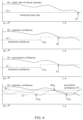
- FIG. 4 illustrates four scenarios, depicted by graphs 41, 45, 49, and 53, in which a system similar or the same as system 10 of FIG. 1 is used to determine a moment in time for presenting a challenge to a vehicle operator.
- the horizontal axis represents the passage of time.
- a heart rate 42 of a vehicle operator is depicted.
- heart rate 42 crosses a threshold heart rate 43.
- a low heart rate may indicate that a vehicle operator is falling asleep or has fallen asleep.
- the system may be configured to determine that it is time to present a challenge to the vehicle operator.
- an operator confidence 46 of a vehicle operator is depicted.
- operator confidence 46 crosses a threshold confidence level 47.
- a low level of operator confidence may indicate that a vehicle operator is less responsive than required, and/or that the vehicle operator is predicted to be insufficiently responsive.
- the threshold level 47 may be changed and/or adjusted. For example, such an adjustment may be prompted by an increase in vehicle speed, a decrease in visibility, a decrease in the heart rate of the vehicle operator, and/or by other events or occurrences.
- the system may be configured to determine that it is time to present a challenge to the vehicle operator.
- an automation confidence 50 of a system for autonomous vehicle operation is depicted.
- automation confidence 50 crosses a threshold confidence level 51.
- a low level of automation confidence may indicate a prediction of increasingly challenging traffic conditions.
- the threshold level 51 may be changed and/or adjusted. For example, such an adjustment may be prompted by an increase in vehicle speed, a decrease in visibility, an increase in traffic density, and/or by other events or occurrences.
- the system may be configured to determine that it is time to present a challenge to the vehicle operator.
- an operator confidence 54 of a vehicle operator and an automation confidence 55 of a system for autonomous vehicle operation are depicted at the same time.
- the operator confidence 54 is compared to threshold operator confidence level 56.
- the automation confidence 55 is compared to threshold automation confidence level 57.
- the system may be configured to determine that it is time to present a challenge to a vehicle operator if a combination of two events occur: responsive to both the operator confidence 54 and the automation confidence 55 breaching their respective threshold levels, a challenge will be presented to the vehicle operator.
- the automation confidence level 57 crosses the threshold automation confidence level 57.
- the automation confidence level 57 again crosses the threshold automation confidence level 57.
- the operator confidence level 54 is no sufficient (i.e., it has breached the threshold operator confidence level 56 at moment 56a). Accordingly, at moment 57b, a determination is made that a challenge should be presented to the vehicle operator.
- record component 28 is configured to capture, record, store, transmit, and/or process information, including but not limited to information related to vehicle operation.
- information related to vehicle operation is used to generate and/or create vehicle event records.
- Vehicle event records include one or more of video information, audio information, data from an ECM system, metadata, timing information, information based on sensor-generated output, and/or other information.
- changes in the operation mode of vehicle 12 could be used to create a vehicle event record.
- information regarding transitions from autonomous to manual operation may be captured, recorded, stored, transmitted, and/or otherwise processed.
- record component 28 is configured to capture information conveyed by the output signals proximate in time to presentation of one or more particular challenges and/or responses.
- Vehicle event records are generated and/or stored locally in vehicle 12 and/or transmitted from vehicle 12 to system 10, server 11, and/or to a service that is external to the vehicle, including but not limited to a remote server and/or external provider 18.
- vehicle event records are generated and/or stored remotely, i.e., not locally at vehicle 12.
- system 10, server 11, and/or a service that is external to vehicle 12 queries and/or requests information from a particular vehicle 12.
- Record component 28 is configured to respond to a query or request by transmitting information as queried and/or requested.
- record component 28 is configured to facilitate communication of information between particular vehicles, remote servers, external providers, and/or other systems, servers, and/or services external to the particular vehicles. Such communication may be in real-time or near real-time. Such communication may include wireless communication.
- Transmission component 29 is configured to generate and/or determine notifications related to vehicle operation.
- notifications are intended for drivers of vehicles.
- transmission component 29 receives transmissions, such as notifications for drivers, including but not limited to warnings or requests (for example to reduce speed).
- notifications are transmitted from vehicle 12 to a system, server, and/or a service that is external to the vehicle, including but not limited to a remote server and/or an external provider 18.
- system 10 includes a user interface configured to provide an interface between system 10 and users through which the users can provide information to and receive information from system 10. This enables information to be communicated between a user and one or more of processor 110, sensors 142, vehicle 12, and/or other components of system 10.
- interface devices suitable for inclusion in a user interface include a keypad, buttons, switches, a keyboard, knobs, levers, a display screen, a touch screen, speakers, a microphone, an indicator light, an audible alarm, a printer, a tactile feedback device, and/or other interface devices.
- Information may be loaded into system 10 wirelessly from a remote location, from removable storage (e.g., a smart card, a flash drive, a removable disk, etc. ), and/or information to be communicated between a user and one or more of processor 110, sensors 142, vehicle 12, and/or other components of system 10.
- removable storage e.g., a smart card, a flash drive, a removable disk, etc.
- interface devices suitable for inclusion in a user interface include a keypad, buttons, switches, a keyboard, knobs, levers, a display screen, a touch screen, speakers, a microphone, an indicator light, an audible alarm, a printer, a tactile feedback device, and/or other interface devices.
- system 10 Information may be loaded into system 10 wirelessly from a remote location, from removable storage (e.g., a smart card, a flash drive, a removable disk, etc. ), and/or other sources that enable the user(s) to customize the implementation of system 10.
- removable storage e.g., a smart card, a flash drive, a removable disk, etc.
- Other exemplary input devices and techniques adapted for use with system 10 include, but are not limited to, an RS-232 port, RF link, an IR link, modem (telephone, cable, and/or other modems), a cellular network, a Wi-Fi network, a local area network, and/or other devices and/or systems.
- modem telephone, cable, and/or other modems
- any technique for communicating information with system 10 is contemplated by the present invention as a user interface.
- Electronic storage 60 comprises electronic storage media that electronically stores information.
- the electronic storage media of electronic storage 60 may comprise one or both of system storage that is provided integrally (i.e., substantially non-removable) with system 10 and/or removable storage that is removably connectable to system 10 via, for example, a port (e.g., a USB port, a firewire port, etc .) or a drive (e.g., a disk drive, etc.).
- a port e.g., a USB port, a firewire port, etc .
- a drive e.g., a disk drive, etc.
- Electronic storage 60 may comprise one or more of optically readable storage media (e.g., optical disks, etc .), magnetically readable storage media (e.g., magnetic tape, magnetic hard drive, floppy drive, etc .), electrical charge-based storage media (e.g., EEPROM, RAM, etc .), solid-state storage media (e.g., flash drive, etc .), and/or other electronically readable storage media.
- Electronic storage 60 may store software algorithms, recorded video event data, information determined by processor 110, information received via a user interface, and/or other information that enables system 10 to function properly.
- Electronic storage 60 may be (in whole or in part) a separate component within more of a digital processor, an analog processor, a digital circuit designed to process information, an analog circuit designed to process information, a state machine, and/or other mechanisms for electronically processing information.
- processor 110 is shown in FIG. 1 as a single entity, this is for illustrative purposes only. In some implementations, processor 110 may comprise a plurality of processing units. These processing units may be physically located within the same device (e.g., a vehicle event recorder), or processor 110 may represent processing functionality of a plurality of devices operating in coordination.
- Processor 110 is configured to execute components 20-29 by software; hardware; firmware; some combination of software, hardware, and/or firmware; and/or other mechanisms for configuring processing capabilities on processor 110. It should be appreciated that although components 20-29 are illustrated in FIG. 1 as being co-located within a single processing unit, in implementations in which processor 110 comprises multiple processing units, one or more of components 20-29 may be located remotely from the other components. The description of the functionality provided by the different components 20-29 described herein is for illustrative purposes, and is not intended to be limiting, as any of components 20-29 may provide more or less functionality than is described. For example, one or more of components 20-29 may be eliminated, and some or all of its functionality may be provided by other components 20-29. As another example, processor 110 may be configured to execute one or more additional components that may perform some or all of the functionality attributed below to one of components 20-29.
- FIG. 2 illustrates a method 200 to transition vehicle control between autonomous operation and manual operation.
- the operations of method 200 presented below are intended to be illustrative. In some implementations, method 200 is accomplished with one or more additional operations not described, and/or without one or more of the operations discussed. Additionally, the order in which the operations of method 200 are illustrated (in FIG. 2 ) and described below is not intended to be limiting. In some implementations, two or more of the operations may occur substantially simultaneously.
- method 200 may be implemented in one or more processing devices (e.g., a digital processor, an analog processor, a digital circuit designed to process information, an analog circuit designed to process information, a state machine, and/or other mechanisms for electronically processing information).
- the one or more processing devices may include one or more devices executing some or all of the operations of method 200 in response to instructions stored electronically on one or more electronic storage mediums.
- the one or more processing devices may include one or more devices configured through hardware, firmware, and/or software to be specifically designed for execution of one or more of the operations of method 200.
- output signals are generated by a set of sensors conveying information related to vehicle operation.
- operation 202 is performed by a set of sensors the same as or similar to sensors 142 (shown in FIG. 1 and described herein).
- operation 204 the vehicle is operated autonomously in an autonomous operation mode.
- operation 204 is performed by an autopilot component the same as or similar to autopilot component 21 (shown in FIG. 1 and described herein).
- a first moment in time is determined for presenting a challenge to a vehicle operator to gauge a level of responsiveness of the vehicle operator. Determination of the first moment in time is based on the output signals. In some embodiments, operation 206 is performed by a timing component the same as or similar to timing component 22 (shown in FIG. 1 and described herein).
- operation 208 at the first moment in time, the challenge is presented to the vehicle operator to gauge the level of responsiveness of the vehicle operator.
- operation 208 is performed by a challenge component the same as or similar to challenge component 23 (shown in FIG. 1 and described herein).
- operation 210 whether the vehicle operator provides a response to the challenge is detected.
- operation 210 is performed by a response component the same as or similar to response component 24 (shown in FIG. 1 and described herein).
- the level of responsiveness of the vehicle operator is determined based on the detection.
- operation 212 is performed by a responsiveness component the same as or similar to responsiveness component 25 (shown in FIG. 1 and described herein).
- operation 214 the vehicle is operated based on the determined level of responsiveness.
- operation 214 is performed by a vehicle control component the same as or similar to vehicle control component 26 (shown in FIG. 1 and described herein).
Landscapes
- Engineering & Computer Science (AREA)
- Automation & Control Theory (AREA)
- Transportation (AREA)
- Mechanical Engineering (AREA)
- Human Computer Interaction (AREA)
- Physics & Mathematics (AREA)
- General Physics & Mathematics (AREA)
- Mathematical Physics (AREA)
- Chemical & Material Sciences (AREA)
- Combustion & Propulsion (AREA)
- Traffic Control Systems (AREA)
- Aviation & Aerospace Engineering (AREA)
- Radar, Positioning & Navigation (AREA)
- Remote Sensing (AREA)
- Control Of Driving Devices And Active Controlling Of Vehicle (AREA)
Claims (20)
- Un système (10) configuré pour effectuer une transition entre la fonctionnement autonome et le fonctionnement manuelle d'un véhicule, le système (10) étant conçu pour être couplé à un véhicule (12), ledit système (10) comprenant:un ensemble de capteurs (142) configurés pour générer (202) des signaux de sortie transmettant des informations relatives au fonctionnement du véhicule; etun ou plusieurs processeurs (110) configurés pour:faire fonctionner (204) le véhicule (12) de manière autonome en mode autonome de conduite;déterminer (206) un premier instant dans le temps pour présenter un défi à un opérateur du véhicule afin d'évaluer son niveau de réactivité de l'opérateur du véhicule, dans lequel la détermination du premier instant étant basée sur les signaux de sortie;présenter (208), au premier instant dans le temps, le défi à l'opérateur du véhicule pour évaluer le niveau de réactivité de l'opérateur du véhicule;détecter (210) si l'opérateur du véhicule fournit une réponse au défi;déterminer (212) le niveau de réactivité de l'opérateur du véhicule en fonction du temps écoulé entre la présentation du défi et la détection de la réponse; etfaire fonctionner (214) le véhicule en fonction du niveau de réactivité déterminé,dans lequel le niveau de réactivité de l'opérateur du véhicule est comparé à un seuil de réactivité adéquate ajusté dynamiquement.
- Le système (10) selon la revendication 1, dans lequel le ou les processeurs (110) sont en outre configurés pour:déterminer si le niveau de réactivité satisfait le seuil de réactivité adéquate pour maintenir le mode autonome de fonctionnement; eten réponse au fait que le niveau de réactivité ne satisfait pas le seuil de réactivité adéquate, immobiliser le véhicule (12).
- Le système (10) selon la revendication 1, dans lequel les signaux de sortie transmettent une ou plusieurs des informations biométriques de l'opérateur du véhicule, des informations de l'opérateur sur la direction du regard de l'opérateur du véhicule, des informations sur le trafic liées aux paramètres de trafic actuels, et des informations environnementales liées aux paramètres de la surface de la route (15), et dans lequel la détermination du premier instant dans le temps est basée sur le signal de sortie.
- Le système (10) selon la revendication 1, dans lequel le niveau de réactivité de l'opérateur du véhicule est déterminé de manière continue pendant une période dépassant 15 minutes, et dans lequel la détermination du premier instant dans le temps est basée sur le niveau de réactivité.
- Le système (10) selon la revendication 1, dans lequel le ou les processeurs (110) sont en outre configurés pour:déterminer une confiance de l'opérateur indiquant que l'opérateur du véhicule est actuellement prêt à prendre le contrôle du fonctionnement du véhicule, dans lequel la détermination de la confiance de l'opérateur est basée sur les signaux de sortie;dans lequel la détermination du premier instant dans le temps est basée sur la confiance de l'opérateur.
- Le système (10) selon la revendication 1, dans lequel le ou les processeurs (110) sont en outre configurés pour:déterminer une confiance dans l'automatisation indiquant que le mode autonome de fonctionnement est actuellement prêt à continuer le fonctionnement du véhicule, dans lequel la détermination de la confiance dans l'automation est basée sur une ou plusieurs des informations sur le trafic liées aux paramètres de trafic actuels, des informations environnementales relatives aux paramètres de la surface de la route (15), et des paramètres météorologiques;et dans lequel la détermination du premier instant dans le temps est basée sur cette confiance dans l'automatisation.
- Le système (10) selon la revendication 1, dans lequel le ou les processeurs (110) sont en outre configurés pour:capturer les informations transmises par les signaux de sortie proches dans le temps de la présentation du défi; etgénérer un premier enregistrement d'événement associé à la transition du premier mode au second mode, dans lequel l'enregistrement du premier événement comprend les informations capturées.
- Le système (10) selon la revendication 7, dans lequel le ou les processeurs (110) sont en outre configurés pour:
transmettre le premier enregistrement d'événement depuis le véhicule (12) à un serveur distant situé à l'extérieur du véhicule (12). - Le système (10) selon la revendication 1, dans lequel le défi comprend la génération d'un ou des deux sons et une notification tactile dans lequel l'opérateur du véhicule fournisse la réponse via un retour tactile.
- Le système (10) selon la revendication 1, dans lequel le seuil de réactivité adéquate est ajusté dynamiquement en fonction des signaux de sortie.
- Un procédé pour effectuer une transition du contrôle d'un véhicule entre la conduite autonome et la conduite manuelle d'un véhicule, le procédé comprenant:générer (202), par un ensemble de capteurs (142), des signaux de sortie transmettant des informations relatives au fonctionnement du véhicule;faire fonctionner (204) le véhicule (12) de manière autonome en mode autonome de fonctionnement;déterminer (206) un premier instant dans le temps pour présenter un défi à un opérateur du véhicule afin d'évaluer le niveau de réactivité de l'opérateur du véhicule, dans lequel la détermination du premier instant dans le temps est basée sur les signaux de sortie;présenter (208), au premier instant dans le temps, le défi à l'opérateur du véhicule pour évaluer le niveau de réactivité de l'opérateur du véhicule;détecter (210) si l'opérateur du véhicule fournit une réponse au défi;déterminer (212) le niveau de réactivité de l'opérateur du véhicule en fonction du temps écoulé entre la présentation du défi et la détection de la réponse; etfaire fonctionner (214) le véhicule en fonction du niveau de réactivité déterminé,dans lequel le niveau de réactivité de l'opérateur du véhicule est comparé à un seuil de réactivité adéquate ajusté dynamiquement.
- Le procédé selon la revendication 11, comprenant en outre:déterminer si le niveau de réactivité satisfait le seuil de réactivité adéquate pour maintenir le mode autonome de fonctionnement; eten réponse au fait que le niveau de réactivité ne satisfait pas le seuil de réactivité adéquate, immobiliser le véhicule (12).
- Le procédé selon la revendication 11, dans lequel les signaux de sortie transmettent une ou plusieurs des informations biométriques de l'opérateur du véhicule, des informations sur l'opérateur sur la direction du regard de l'opérateur du véhicule, des informations sur le trafic liées aux paramètres de trafic actuels, et des informations environnementales relatives aux paramètres de la surface de la route (15), et dans lequel la détermination du premier instant dans le temps est basée sur le signal de sortie.
- Le procédé selon la revendication 11, dans lequel le niveau de réactivité de l'opérateur du véhicule est déterminé de manière continue pendant une période dépassant 15 minutes, et dans lequel la détermination du premier instant dans le temps est basée sur le niveau de réactivité.
- Le procédé selon la revendication 11, comprenant en outre:déterminer une confiance de l'opérateur indiquant que l'opérateur du véhicule est actuellement prêt à prendre le contrôle du fonctionnement du véhicule, dans lequel la détermination de la confiance de l'opérateur est basée sur les signaux de sortie;dans lequel la détermination du premier instant dans le temps est basée sur la confiance de l'opérateur.
- Le procédé selon la revendication 11, comprenant en outre:déterminer une confiance dans l'automatisation indiquant que le mode autonome de fonctionnement est actuellement prêt à continuer le fonctionnement du véhicule, dans lequel la détermination est basée sur une ou plusieurs des informations sur le trafic liées aux paramètres de trafic actuels, des informations environnementales relatives aux paramètres de la surface de la route (15), et des paramètres météorologiques; etdans lequel la détermination du premier instant dans le temps est basée sur la confiance dans l'automatisation.
- Le procédé selon la revendication 11, comprenant en outre:capturer les informations transmises par les signaux de sortie proches dans le temps de la présentation du défi; etgénérer un premier enregistrement d'événement associé à la transition du premier mode au second mode, dans lequel l'enregistrement comprend les informations capturées.
- Le procédé selon la revendication 17, comprenant en outre:
transmettre le premier enregistrement d'événement depuis le véhicule (12) à un serveur distant situé à l'extérieur du véhicule (12). - Le procédé selon la revendication 11, dans lequel présenter le défi comprend générer un ou les deux éléments: un son et une notification tactile, dans lequel détecter la réponse comprend détecter un retour tactile.
- Le procédé selon la revendication 11, comprenant en outre:
ajuster dynamiquement le seuil de réactivité adéquate en fonction des signaux de sortie.
Applications Claiming Priority (2)
| Application Number | Priority Date | Filing Date | Title |
|---|---|---|---|
| US15/341,714 US9823657B1 (en) | 2016-11-02 | 2016-11-02 | Measuring operator readiness and readiness testing triggering in an autonomous vehicle |
| PCT/IB2017/056337 WO2018083557A1 (fr) | 2016-11-02 | 2017-10-13 | Mesure de l'état de disponibilité de l'opérateur et de déclenchement du test de disponibilité dans un véhicule autonome |
Publications (4)
| Publication Number | Publication Date |
|---|---|
| EP3535631A1 EP3535631A1 (fr) | 2019-09-11 |
| EP3535631A4 EP3535631A4 (fr) | 2020-10-14 |
| EP3535631C0 EP3535631C0 (fr) | 2025-03-05 |
| EP3535631B1 true EP3535631B1 (fr) | 2025-03-05 |
Family
ID=60320399
Family Applications (1)
| Application Number | Title | Priority Date | Filing Date |
|---|---|---|---|
| EP17867507.0A Active EP3535631B1 (fr) | 2016-11-02 | 2017-10-13 | Mesure de l'état de disponibilité de l'opérateur et déclenchement du test de disponibilité dans un véhicule autonome |
Country Status (3)
| Country | Link |
|---|---|
| US (6) | US9823657B1 (fr) |
| EP (1) | EP3535631B1 (fr) |
| WO (1) | WO2018083557A1 (fr) |
Families Citing this family (20)
| Publication number | Priority date | Publication date | Assignee | Title |
|---|---|---|---|---|
| DE102015225157A1 (de) * | 2015-12-14 | 2017-06-14 | Robert Bosch Gmbh | Verfahren zum Übertragen, Empfangen und Verarbeiten von Datenwerten, sowie eine Übertragungs- und Empfangsvorrichtung |
| US9639804B1 (en) | 2016-03-22 | 2017-05-02 | Smartdrive Systems, Inc. | System and method to determine responsiveness of a driver of a vehicle to feedback regarding driving behaviors |
| US9823657B1 (en) | 2016-11-02 | 2017-11-21 | Smartdrive Systems, Inc. | Measuring operator readiness and readiness testing triggering in an autonomous vehicle |
| US9663118B1 (en) * | 2016-11-02 | 2017-05-30 | Smartdrive Systems, Inc. | Autonomous vehicle operator performance tracking |
| US10268195B2 (en) * | 2017-01-06 | 2019-04-23 | Qualcomm Incorporated | Managing vehicle driving control entity transitions of an autonomous vehicle based on an evaluation of performance criteria |
| JP6946351B2 (ja) * | 2017-01-19 | 2021-10-06 | ソニーセミコンダクタソリューションズ株式会社 | 車両制御装置及び車両制御方法 |
| US11061399B2 (en) * | 2018-01-03 | 2021-07-13 | Samsung Electronics Co., Ltd. | System and method for providing information indicative of autonomous availability |
| US10676103B2 (en) * | 2018-05-17 | 2020-06-09 | Aptiv Technologies Limited | Object position history playback for automated vehicle transition from autonomous-mode to manual-mode |
| DE102018212286A1 (de) * | 2018-07-24 | 2020-01-30 | Robert Bosch Gmbh | Verfahren und Vorrichtung zur Unterstützung einer Aufmerksamkeit und/oder Fahrbereitschaft eines Fahrers bei einem automatisierten Fahrvorgang eines Fahrzeugs |
| US10647333B1 (en) * | 2018-08-31 | 2020-05-12 | Uatc, Llc | Vehicle operator awareness system |
| US11365975B2 (en) | 2018-09-27 | 2022-06-21 | Honda Motor Co., Ltd. | Visual confirmation system for driver assist system |
| JP7115270B2 (ja) * | 2018-12-07 | 2022-08-09 | トヨタ自動車株式会社 | 自動運転システム |
| JP7151495B2 (ja) | 2019-01-16 | 2022-10-12 | トヨタ自動車株式会社 | 自動運転システム |
| DE112020001663T5 (de) * | 2019-03-29 | 2022-03-24 | Intel Corporation | Autonomes Fahrzeugsystem |
| CN111845749A (zh) * | 2019-04-28 | 2020-10-30 | 郑州宇通客车股份有限公司 | 一种自动驾驶车辆的控制方法及系统 |
| US10807527B1 (en) | 2019-05-01 | 2020-10-20 | Smartdrive Systems, Inc. | Systems and methods for verifying whether vehicle operators are paying attention |
| CN114007919A (zh) * | 2019-06-18 | 2022-02-01 | 维宁尔美国公司 | 用于确定驾驶员对接管车辆控制是否准备就绪的系统和方法 |
| JP6937856B2 (ja) * | 2020-02-13 | 2021-09-22 | 本田技研工業株式会社 | 運転支援装置および車両 |
| CN113408331A (zh) * | 2020-03-17 | 2021-09-17 | 株式会社斯巴鲁 | 注视对象检测装置 |
| KR20250090976A (ko) * | 2023-12-13 | 2025-06-20 | 현대자동차주식회사 | 차량 제어 장치 및 그 방법 |
Citations (6)
| Publication number | Priority date | Publication date | Assignee | Title |
|---|---|---|---|---|
| US20080231461A1 (en) * | 2007-03-20 | 2008-09-25 | Julian Sanchez | Method and system for maintaining operator alertness |
| DE102012112802A1 (de) * | 2012-12-20 | 2014-06-26 | Conti Temic Microelectronic Gmbh | Verfahren zur Steuerung eines Fahrzeugs mit einem ein automatisiertes, teilautomatisiertes und ein manuelles Fahren ermöglichenden Fahrerassistenzsystem |
| US20150006012A1 (en) * | 2011-11-14 | 2015-01-01 | Robert Bosch Gmbh | Method for Safely Parking a METHOD FOR SAFELY PARKING A VEHICLE IN AN EMERGENCY SITUATION |
| US9135803B1 (en) * | 2014-04-17 | 2015-09-15 | State Farm Mutual Automobile Insurance Company | Advanced vehicle operator intelligence system |
| WO2015145606A1 (fr) * | 2014-03-26 | 2015-10-01 | 日産自動車株式会社 | Dispositif de présentation d'informations et procédé de présentation d'informations |
| US20150314780A1 (en) * | 2014-04-30 | 2015-11-05 | Here Global B.V. | Mode Transition for an Autonomous Vehicle |
Family Cites Families (44)
| Publication number | Priority date | Publication date | Assignee | Title |
|---|---|---|---|---|
| US929017A (en) | 1906-02-14 | 1909-07-27 | James K Reynard | Metal-depositing apparatus. |
| DE567633C (de) | 1930-12-03 | 1933-01-05 | H C Dr Alexander Classen Dr In | Verfahren zur Herstellung von Furfurol aus Cellulose und Cellulose enthaltenden Stoffen |
| US2008008A (en) | 1933-11-09 | 1935-07-16 | Enos Alexander | Click doorlock |
| US8164464B2 (en) | 2005-03-24 | 2012-04-24 | Matos Jeffrey A | Method and system of aircraft pilot assessment |
| CA2509888A1 (fr) | 2005-06-14 | 2006-12-14 | Accutrak Systems Limited | Systeme et methode de pilotage automatique |
| AU2006306523B2 (en) | 2005-10-21 | 2011-05-19 | Deere & Company | Systems and methods for switching between autonomous and manual operation of a vehicle |
| US8504222B2 (en) | 2009-09-11 | 2013-08-06 | George W. Braly | Emergency descent intervention system |
| US8618922B2 (en) * | 2010-03-30 | 2013-12-31 | GM Global Technology Operations LLC | Method and system for ensuring operation of limited-ability autonomous driving vehicles |
| DE102011117850B4 (de) | 2011-11-08 | 2020-12-03 | Audi Ag | Verfahren zum Betrieb eines Fahrzeugsystems eines Kraftfahrzeugs und Kraftfahrzeug |
| US20130131907A1 (en) | 2011-11-17 | 2013-05-23 | GM Global Technology Operations LLC | System and method for managing misuse of autonomous driving |
| US8825258B2 (en) | 2012-11-30 | 2014-09-02 | Google Inc. | Engaging and disengaging for autonomous driving |
| US9019107B2 (en) | 2013-06-19 | 2015-04-28 | GM Global Technology Operations LLC | Methods and apparatus for detection and reporting of vehicle operator impairment |
| KR101470190B1 (ko) * | 2013-07-09 | 2014-12-05 | 현대자동차주식회사 | 자율주행 시스템의 고장 처리 장치 및 그 방법 |
| DE102013012777A1 (de) | 2013-07-31 | 2015-02-05 | Valeo Schalter Und Sensoren Gmbh | Verfahren zum Nutzen eines Kommunikationsendgeräts in einm Kraftfahrzeug beim aktivierten Autopiloten und Kraftfahrzeug |
| US20150066284A1 (en) | 2013-09-05 | 2015-03-05 | Ford Global Technologies, Llc | Autonomous vehicle control for impaired driver |
| US20150066282A1 (en) * | 2013-09-05 | 2015-03-05 | Ford Global Technologeis, Llc | Autonomous driving in areas for non-drivers |
| EP2848488B2 (fr) * | 2013-09-12 | 2022-04-13 | Volvo Car Corporation | Procédé et agencement pour avertissement de transfert de commande dans un véhicule possédant des capacités de conduite autonome |
| US9610955B2 (en) | 2013-11-11 | 2017-04-04 | Smartdrive Systems, Inc. | Vehicle fuel consumption monitor and feedback systems |
| US9364178B2 (en) | 2013-11-26 | 2016-06-14 | Elwha Llc | Robotic vehicle control |
| EP3128498B1 (fr) | 2014-04-02 | 2018-10-31 | Nissan Motor Co., Ltd | Dispositif d'affichage d'informations de véhicule |
| US10354330B1 (en) * | 2014-05-20 | 2019-07-16 | State Farm Mutual Automobile Insurance Company | Autonomous feature use monitoring and insurance pricing |
| JP6135618B2 (ja) * | 2014-08-08 | 2017-05-31 | トヨタ自動車株式会社 | 車両制御装置 |
| US9771081B2 (en) | 2014-09-29 | 2017-09-26 | The Boeing Company | System for fatigue detection using a suite of physiological measurement devices |
| US11069257B2 (en) | 2014-11-13 | 2021-07-20 | Smartdrive Systems, Inc. | System and method for detecting a vehicle event and generating review criteria |
| JP6567376B2 (ja) | 2015-09-25 | 2019-08-28 | パナソニック株式会社 | 装置 |
| EP3357778B1 (fr) | 2015-09-30 | 2022-10-26 | Sony Group Corporation | Dispositif de commande de conduite, procédé de commande de conduite, et programme |
| CA3014660C (fr) * | 2016-02-15 | 2021-08-17 | Allstate Insurance Company | Avis rapide de zone non autonome |
| US9688288B1 (en) * | 2016-03-08 | 2017-06-27 | VOLKSWAGEN AG et al. | Geofencing for auto drive route planning |
| US9969404B2 (en) * | 2016-06-03 | 2018-05-15 | Toyota Motor Engineering & Manufacturing North America, Inc. | Conveyance of required driver behaviors using persistent patterned sound |
| US10007264B2 (en) * | 2016-07-14 | 2018-06-26 | Baidu Usa Llc | Autonomous vehicle human driver takeover mechanism using electrodes |
| US10640117B2 (en) * | 2016-08-17 | 2020-05-05 | Allstate Insurance Company | Driving cues and coaching |
| US9663118B1 (en) | 2016-11-02 | 2017-05-30 | Smartdrive Systems, Inc. | Autonomous vehicle operator performance tracking |
| US9823657B1 (en) | 2016-11-02 | 2017-11-21 | Smartdrive Systems, Inc. | Measuring operator readiness and readiness testing triggering in an autonomous vehicle |
| DE102016014383A1 (de) | 2016-12-02 | 2018-06-07 | Lucas Automotive Gmbh | Erweitertes Fahreraufmerksamkeitsmodul für Fahrerassistenzsysteme |
| US10732627B1 (en) | 2017-05-25 | 2020-08-04 | State Farm Mutual Automobile Insurance Company | Driver re-engagement system |
| CN109496188B (zh) | 2017-06-30 | 2022-04-05 | 北京航迹科技有限公司 | 用于切换车辆驾驶模式的系统和方法 |
| US10948911B2 (en) | 2017-10-31 | 2021-03-16 | Denso International America, Inc. | Co-pilot |
| US11237554B2 (en) | 2018-03-08 | 2022-02-01 | Steering Solutions Ip Holding Corporation | Driver readiness assessment system and method for vehicle |
| CN109002757A (zh) | 2018-06-04 | 2018-12-14 | 上海商汤智能科技有限公司 | 驾驶管理方法和系统、车载智能系统、电子设备、介质 |
| CN109147368A (zh) | 2018-08-22 | 2019-01-04 | 北京市商汤科技开发有限公司 | 基于车道线的智能驾驶控制方法装置与电子设备 |
| US11279348B2 (en) | 2018-12-04 | 2022-03-22 | Boyd Johnson | Safety, security and control system for vehicle |
| DE102020106679B4 (de) | 2019-03-12 | 2023-03-16 | Steering Solutions Ip Holding Corporation | Lenksystem und verfahren zum bereitstellen eines betriebsartübergangs für ein fahrzeug |
| US10807527B1 (en) | 2019-05-01 | 2020-10-20 | Smartdrive Systems, Inc. | Systems and methods for verifying whether vehicle operators are paying attention |
| US10783507B1 (en) * | 2019-07-03 | 2020-09-22 | Spellbound Development Group, Inc. | Consumables dispensing system and method |
-
2016
- 2016-11-02 US US15/341,714 patent/US9823657B1/en active Active
-
2017
- 2017-10-12 US US15/782,140 patent/US10082790B2/en active Active
- 2017-10-13 WO PCT/IB2017/056337 patent/WO2018083557A1/fr not_active Ceased
- 2017-10-13 EP EP17867507.0A patent/EP3535631B1/fr active Active
-
2018
- 2018-09-21 US US16/138,588 patent/US10705523B2/en active Active
-
2020
- 2020-06-11 US US16/899,377 patent/US11334068B2/en active Active
-
2022
- 2022-03-04 US US17/686,840 patent/US11640167B2/en active Active
-
2023
- 2023-02-14 US US18/169,059 patent/US20230195111A1/en active Pending
Patent Citations (7)
| Publication number | Priority date | Publication date | Assignee | Title |
|---|---|---|---|---|
| US20080231461A1 (en) * | 2007-03-20 | 2008-09-25 | Julian Sanchez | Method and system for maintaining operator alertness |
| US20150006012A1 (en) * | 2011-11-14 | 2015-01-01 | Robert Bosch Gmbh | Method for Safely Parking a METHOD FOR SAFELY PARKING A VEHICLE IN AN EMERGENCY SITUATION |
| DE102012112802A1 (de) * | 2012-12-20 | 2014-06-26 | Conti Temic Microelectronic Gmbh | Verfahren zur Steuerung eines Fahrzeugs mit einem ein automatisiertes, teilautomatisiertes und ein manuelles Fahren ermöglichenden Fahrerassistenzsystem |
| WO2015145606A1 (fr) * | 2014-03-26 | 2015-10-01 | 日産自動車株式会社 | Dispositif de présentation d'informations et procédé de présentation d'informations |
| EP3125211A1 (fr) * | 2014-03-26 | 2017-02-01 | Nissan Motor Co., Ltd. | Dispositif de présentation d'informations et procédé de présentation d'informations |
| US9135803B1 (en) * | 2014-04-17 | 2015-09-15 | State Farm Mutual Automobile Insurance Company | Advanced vehicle operator intelligence system |
| US20150314780A1 (en) * | 2014-04-30 | 2015-11-05 | Here Global B.V. | Mode Transition for an Autonomous Vehicle |
Also Published As
| Publication number | Publication date |
|---|---|
| EP3535631A1 (fr) | 2019-09-11 |
| US10705523B2 (en) | 2020-07-07 |
| US9823657B1 (en) | 2017-11-21 |
| US20180120840A1 (en) | 2018-05-03 |
| EP3535631C0 (fr) | 2025-03-05 |
| US11640167B2 (en) | 2023-05-02 |
| EP3535631A4 (fr) | 2020-10-14 |
| US20190025827A1 (en) | 2019-01-24 |
| US20230195111A1 (en) | 2023-06-22 |
| US20200301417A1 (en) | 2020-09-24 |
| US11334068B2 (en) | 2022-05-17 |
| WO2018083557A1 (fr) | 2018-05-11 |
| US10082790B2 (en) | 2018-09-25 |
| US20220187825A1 (en) | 2022-06-16 |
Similar Documents
| Publication | Publication Date | Title |
|---|---|---|
| US11640167B2 (en) | Measuring operator readiness and readiness testing triggering in an autonomous vehicle | |
| US11999369B2 (en) | Autonomous vehicle operator performance tracking | |
| US12142096B2 (en) | Systems and methods for capturing and offloading different information based on event trigger type | |
| US10796504B2 (en) | Systems and method to trigger vehicle events based on contextual information | |
| US12100249B2 (en) | Systems and methods for querying fleet information stored in a distributed data center |
Legal Events
| Date | Code | Title | Description |
|---|---|---|---|
| STAA | Information on the status of an ep patent application or granted ep patent |
Free format text: STATUS: THE INTERNATIONAL PUBLICATION HAS BEEN MADE |
|
| PUAI | Public reference made under article 153(3) epc to a published international application that has entered the european phase |
Free format text: ORIGINAL CODE: 0009012 |
|
| STAA | Information on the status of an ep patent application or granted ep patent |
Free format text: STATUS: REQUEST FOR EXAMINATION WAS MADE |
|
| 17P | Request for examination filed |
Effective date: 20190529 |
|
| AK | Designated contracting states |
Kind code of ref document: A1 Designated state(s): AL AT BE BG CH CY CZ DE DK EE ES FI FR GB GR HR HU IE IS IT LI LT LU LV MC MK MT NL NO PL PT RO RS SE SI SK SM TR |
|
| AX | Request for extension of the european patent |
Extension state: BA ME |
|
| DAV | Request for validation of the european patent (deleted) | ||
| DAX | Request for extension of the european patent (deleted) | ||
| RAP1 | Party data changed (applicant data changed or rights of an application transferred) |
Owner name: SMARTDRIVE SYSTEMS, INC. |
|
| RIN1 | Information on inventor provided before grant (corrected) |
Inventor name: FREITAS, MARK Inventor name: VAIDYA, ALEKH Inventor name: PALMER, JASON Inventor name: DENINGER,DANIEL A. Inventor name: SLJIVAR, SLAVEN Inventor name: GRISWOLD, JEFFREY Inventor name: FORNEY, DAVID |
|
| A4 | Supplementary search report drawn up and despatched |
Effective date: 20200911 |
|
| RIC1 | Information provided on ipc code assigned before grant |
Ipc: B60W 40/08 20120101ALI20200907BHEP Ipc: G05D 1/00 20060101AFI20200907BHEP Ipc: G07C 5/00 20060101ALI20200907BHEP |
|
| STAA | Information on the status of an ep patent application or granted ep patent |
Free format text: STATUS: EXAMINATION IS IN PROGRESS |
|
| 17Q | First examination report despatched |
Effective date: 20220405 |
|
| REG | Reference to a national code |
Ref country code: DE Ref legal event code: R079 Free format text: PREVIOUS MAIN CLASS: G05D0001000000 Ipc: B60K0028060000 Ref country code: DE Ref legal event code: R079 Ref document number: 602017088210 Country of ref document: DE Free format text: PREVIOUS MAIN CLASS: G05D0001000000 Ipc: B60K0028060000 |
|
| GRAP | Despatch of communication of intention to grant a patent |
Free format text: ORIGINAL CODE: EPIDOSNIGR1 |
|
| STAA | Information on the status of an ep patent application or granted ep patent |
Free format text: STATUS: GRANT OF PATENT IS INTENDED |
|
| RIC1 | Information provided on ipc code assigned before grant |
Ipc: B60W 60/00 20200101ALI20240807BHEP Ipc: B60W 50/08 20120101ALI20240807BHEP Ipc: B60W 40/08 20120101ALI20240807BHEP Ipc: B60K 28/06 20060101AFI20240807BHEP |
|
| INTG | Intention to grant announced |
Effective date: 20240830 |
|
| GRAS | Grant fee paid |
Free format text: ORIGINAL CODE: EPIDOSNIGR3 |
|
| GRAA | (expected) grant |
Free format text: ORIGINAL CODE: 0009210 |
|
| STAA | Information on the status of an ep patent application or granted ep patent |
Free format text: STATUS: THE PATENT HAS BEEN GRANTED |
|
| AK | Designated contracting states |
Kind code of ref document: B1 Designated state(s): AL AT BE BG CH CY CZ DE DK EE ES FI FR GB GR HR HU IE IS IT LI LT LU LV MC MK MT NL NO PL PT RO RS SE SI SK SM TR |
|
| REG | Reference to a national code |
Ref country code: GB Ref legal event code: FG4D |
|
| REG | Reference to a national code |
Ref country code: CH Ref legal event code: EP |
|
| REG | Reference to a national code |
Ref country code: IE Ref legal event code: FG4D |
|
| REG | Reference to a national code |
Ref country code: DE Ref legal event code: R096 Ref document number: 602017088210 Country of ref document: DE |
|
| U01 | Request for unitary effect filed |
Effective date: 20250307 |
|
| U07 | Unitary effect registered |
Designated state(s): AT BE BG DE DK EE FI FR IT LT LU LV MT NL PT RO SE SI Effective date: 20250317 |
|
| PG25 | Lapsed in a contracting state [announced via postgrant information from national office to epo] |
Ref country code: RS Free format text: LAPSE BECAUSE OF FAILURE TO SUBMIT A TRANSLATION OF THE DESCRIPTION OR TO PAY THE FEE WITHIN THE PRESCRIBED TIME-LIMIT Effective date: 20250605 |
|
| PG25 | Lapsed in a contracting state [announced via postgrant information from national office to epo] |
Ref country code: ES Free format text: LAPSE BECAUSE OF FAILURE TO SUBMIT A TRANSLATION OF THE DESCRIPTION OR TO PAY THE FEE WITHIN THE PRESCRIBED TIME-LIMIT Effective date: 20250305 |
|
| PG25 | Lapsed in a contracting state [announced via postgrant information from national office to epo] |
Ref country code: NO Free format text: LAPSE BECAUSE OF FAILURE TO SUBMIT A TRANSLATION OF THE DESCRIPTION OR TO PAY THE FEE WITHIN THE PRESCRIBED TIME-LIMIT Effective date: 20250605 |
|
| PG25 | Lapsed in a contracting state [announced via postgrant information from national office to epo] |
Ref country code: HR Free format text: LAPSE BECAUSE OF FAILURE TO SUBMIT A TRANSLATION OF THE DESCRIPTION OR TO PAY THE FEE WITHIN THE PRESCRIBED TIME-LIMIT Effective date: 20250305 |
|
| PG25 | Lapsed in a contracting state [announced via postgrant information from national office to epo] |
Ref country code: GR Free format text: LAPSE BECAUSE OF FAILURE TO SUBMIT A TRANSLATION OF THE DESCRIPTION OR TO PAY THE FEE WITHIN THE PRESCRIBED TIME-LIMIT Effective date: 20250606 |
|
| PG25 | Lapsed in a contracting state [announced via postgrant information from national office to epo] |
Ref country code: SM Free format text: LAPSE BECAUSE OF FAILURE TO SUBMIT A TRANSLATION OF THE DESCRIPTION OR TO PAY THE FEE WITHIN THE PRESCRIBED TIME-LIMIT Effective date: 20250305 |
|
| PG25 | Lapsed in a contracting state [announced via postgrant information from national office to epo] |
Ref country code: PL Free format text: LAPSE BECAUSE OF FAILURE TO SUBMIT A TRANSLATION OF THE DESCRIPTION OR TO PAY THE FEE WITHIN THE PRESCRIBED TIME-LIMIT Effective date: 20250305 |
|
| U20 | Renewal fee for the european patent with unitary effect paid |
Year of fee payment: 9 Effective date: 20250909 |
|
| PGFP | Annual fee paid to national office [announced via postgrant information from national office to epo] |
Ref country code: GB Payment date: 20250904 Year of fee payment: 9 |
|
| PG25 | Lapsed in a contracting state [announced via postgrant information from national office to epo] |
Ref country code: CZ Free format text: LAPSE BECAUSE OF FAILURE TO SUBMIT A TRANSLATION OF THE DESCRIPTION OR TO PAY THE FEE WITHIN THE PRESCRIBED TIME-LIMIT Effective date: 20250305 |
|
| PG25 | Lapsed in a contracting state [announced via postgrant information from national office to epo] |
Ref country code: SK Free format text: LAPSE BECAUSE OF FAILURE TO SUBMIT A TRANSLATION OF THE DESCRIPTION OR TO PAY THE FEE WITHIN THE PRESCRIBED TIME-LIMIT Effective date: 20250305 |
|
| PG25 | Lapsed in a contracting state [announced via postgrant information from national office to epo] |
Ref country code: IS Free format text: LAPSE BECAUSE OF FAILURE TO SUBMIT A TRANSLATION OF THE DESCRIPTION OR TO PAY THE FEE WITHIN THE PRESCRIBED TIME-LIMIT Effective date: 20250705 |
|
| PLBE | No opposition filed within time limit |
Free format text: ORIGINAL CODE: 0009261 |
|
| STAA | Information on the status of an ep patent application or granted ep patent |
Free format text: STATUS: NO OPPOSITION FILED WITHIN TIME LIMIT |
|
| REG | Reference to a national code |
Ref country code: CH Ref legal event code: L10 Free format text: ST27 STATUS EVENT CODE: U-0-0-L10-L00 (AS PROVIDED BY THE NATIONAL OFFICE) Effective date: 20260114 |
|
| 26N | No opposition filed |
Effective date: 20251208 |