EP3535764B1 - Système et procédé de production et de collecte de radio-isotopes - Google Patents
Système et procédé de production et de collecte de radio-isotopes Download PDFInfo
- Publication number
- EP3535764B1 EP3535764B1 EP17892833.9A EP17892833A EP3535764B1 EP 3535764 B1 EP3535764 B1 EP 3535764B1 EP 17892833 A EP17892833 A EP 17892833A EP 3535764 B1 EP3535764 B1 EP 3535764B1
- Authority
- EP
- European Patent Office
- Prior art keywords
- tubular housing
- elongated tubular
- fuel assembly
- axial position
- core
- Prior art date
- Legal status (The legal status is an assumption and is not a legal conclusion. Google has not performed a legal analysis and makes no representation as to the accuracy of the status listed.)
- Active
Links
Images


Classifications
-
- G—PHYSICS
- G21—NUCLEAR PHYSICS; NUCLEAR ENGINEERING
- G21C—NUCLEAR REACTORS
- G21C17/00—Monitoring; Testing ; Maintaining
- G21C17/10—Structural combination of fuel element, control rod, reactor core, or moderator structure with sensitive instruments, e.g. for measuring radioactivity, strain
- G21C17/108—Measuring reactor flux
-
- G—PHYSICS
- G21—NUCLEAR PHYSICS; NUCLEAR ENGINEERING
- G21G—CONVERSION OF CHEMICAL ELEMENTS; RADIOACTIVE SOURCES
- G21G1/00—Arrangements for converting chemical elements by electromagnetic radiation, corpuscular radiation or particle bombardment, e.g. producing radioactive isotopes
- G21G1/02—Arrangements for converting chemical elements by electromagnetic radiation, corpuscular radiation or particle bombardment, e.g. producing radioactive isotopes in nuclear reactors
-
- G—PHYSICS
- G21—NUCLEAR PHYSICS; NUCLEAR ENGINEERING
- G21C—NUCLEAR REACTORS
- G21C19/00—Arrangements for treating, for handling, or for facilitating the handling of, fuel or other materials which are used within the reactor, e.g. within its pressure vessel
- G21C19/02—Details of handling arrangements
- G21C19/06—Magazines for holding fuel elements or control elements
- G21C19/07—Storage racks; Storage pools
-
- G—PHYSICS
- G21—NUCLEAR PHYSICS; NUCLEAR ENGINEERING
- G21C—NUCLEAR REACTORS
- G21C19/00—Arrangements for treating, for handling, or for facilitating the handling of, fuel or other materials which are used within the reactor, e.g. within its pressure vessel
- G21C19/20—Arrangements for introducing objects into the pressure vessel; Arrangements for handling objects within the pressure vessel; Arrangements for removing objects from the pressure vessel
-
- G—PHYSICS
- G21—NUCLEAR PHYSICS; NUCLEAR ENGINEERING
- G21C—NUCLEAR REACTORS
- G21C23/00—Adaptations of reactors to facilitate experimentation or irradiation
-
- G—PHYSICS
- G21—NUCLEAR PHYSICS; NUCLEAR ENGINEERING
- G21G—CONVERSION OF CHEMICAL ELEMENTS; RADIOACTIVE SOURCES
- G21G1/00—Arrangements for converting chemical elements by electromagnetic radiation, corpuscular radiation or particle bombardment, e.g. producing radioactive isotopes
- G21G1/0005—Isotope delivery systems
-
- G—PHYSICS
- G21—NUCLEAR PHYSICS; NUCLEAR ENGINEERING
- G21G—CONVERSION OF CHEMICAL ELEMENTS; RADIOACTIVE SOURCES
- G21G1/00—Arrangements for converting chemical elements by electromagnetic radiation, corpuscular radiation or particle bombardment, e.g. producing radioactive isotopes
- G21G1/001—Recovery of specific isotopes from irradiated targets
- G21G2001/0089—Actinium
-
- Y—GENERAL TAGGING OF NEW TECHNOLOGICAL DEVELOPMENTS; GENERAL TAGGING OF CROSS-SECTIONAL TECHNOLOGIES SPANNING OVER SEVERAL SECTIONS OF THE IPC; TECHNICAL SUBJECTS COVERED BY FORMER USPC CROSS-REFERENCE ART COLLECTIONS [XRACs] AND DIGESTS
- Y02—TECHNOLOGIES OR APPLICATIONS FOR MITIGATION OR ADAPTATION AGAINST CLIMATE CHANGE
- Y02E—REDUCTION OF GREENHOUSE GAS [GHG] EMISSIONS, RELATED TO ENERGY GENERATION, TRANSMISSION OR DISTRIBUTION
- Y02E30/00—Energy generation of nuclear origin
- Y02E30/30—Nuclear fission reactors
Definitions
- This invention pertains generally to methods and devices for the insertion and removal of radioactive isotopes into and out of a nuclear core and, more particularly, to the insertion and removal of such isotopes that can remain in the nuclear core for at least the remainder of a full operating cycle after insertion.
- a number of operating reactors employ a moveable in-core detector system such as the one described in U.S. Patent No. 3,932,211 , to periodically measure the axial and radial power distribution within the core.
- the moveable detector system generally comprises four, five or six detector/drive assemblies, depending upon the size of the plant (two, three or four loops), which are interconnected in such a fashion that they can assess various combinations of in-core flux thimbles.
- each detector has associated with it a five-path and ten-path rotary mechanical transfer device.
- a core map is made by selecting, by way of the transfer devices, particular thimbles through which the detectors are driven.
- each detector is capable of being run at high speeds of 0.37 m/s (72 feet per minute) from its withdrawn position to a point just below the core. At this point, the detector speed is reduced to 0.06 m/s (12 feet per minute) and the detector traversed to the top of the core, direction reversed, and the detector traversed to the bottom of the core. The detector speed is then increased to 0.37 m/s (72 feet per minute) and the detector is moved to its withdrawn position. A new flux thimble is selected for mapping by rotating the transfer devices and the above procedure repeated.
- FIG. 1 shows the basic system for the insertion of the movable miniature detectors.
- Retractable thimbles 10 into which the miniature detectors 12 are driven, take the routes approximately as shown.
- the thimbles are inserted into the reactor core 14 through conduits extending from the bottom of the reactor vessel 16 through the concrete shield area 18 and then up to a thimble seal table 20. Since the movable detector thimbles are closed at the leading (reactor) end, they are dry inside.
- the thimbles thus, serve as a pressure barrier between the reactor water pressure of 172 bar (2500 psig design) and the atmosphere. Mechanical seals between the retractable thimbles and the conduits are provided at the seal table 20.
- the conduits 22 are essentially extensions of the reactor vessel 16, with the thimbles allowing the insertion of the in-core instrumentation movable miniature detectors.
- the thimbles 10 are stationary and will be retracted only under depressurized conditions during refueling or maintenance operations. Withdrawal of a thimble to the bottom of the reactor vessel is also possible if work is required on the vessel internals.
- the drive system for insertion of the miniature detectors includes, basically, drive units 24, limit switch assemblies 26, five-path rotary transfer devices 28, 10-path rotary transfer devices 30, and isolation valves 32, as shown.
- Each drive unit pushes a hollow helical wrap drive cable into the core with a miniature detector attached to the leading end of the cable and a small diameter coaxial cable, which communicates the detector output, threaded through the hollow center back to the trailing end of the drive cable.
- the use of the Moveable In-core Detector System flux thimbles 10 for the production of irradiation desired neutron activation and transmutation products, such as isotopes used in medical procedures, requires a means to insert and withdraw the material to be irradiated from inside the flux thimbles located in the reactor core 14.
- the means used minimizes the potential for radiation exposure to personnel during the production process and also minimizes the amount of radioactive waste generated during this process.
- radioisotopes that are produced via neutron transmutation that require multiple neuron induced transmutation reactions to occur in order to produce the desired radioisotope product, or are derived from materials having a very low neutron interaction cross section, such as Co-60, W-188, Ni-63, Bi-213 and Ac-225. These isotopes require a core residence time of a fuel cycle or more.
- Commercial power reactors have an abundance of neutrons that do not significantly contribute to the heat output from the reactor used to generate electrical power. This invention describes a process and associated hardware that may be used to utilize the neutron environment in a commercial nuclear reactor to produce commercially valuable quantities of radioisotopes that require long-term neutron exposure with minimal impact on reactor operations and operating costs.
- This invention provides a nuclear fuel assembly target flux thimble insert for irradiating a target material over an extended portion of a fuel cycle and harvesting the irradiated target material at the end of the fuel cycle.
- the flux thimble insert includes an elongated tubular housing having an axis along its elongated dimension.
- the elongated tubular housing is closed at a forward end and capped at a rearward end to form a target specimen chamber there between within an interior of the elongated tubular housing.
- the elongated tubular housing is sized to slide within an instrument thimble of a nuclear fuel assembly resident within a reactor core, with the rearward or trailing end structured to be driven by a drive cable of an existing moveable in-core detector system.
- An elongated target specimen is captured within an interior of the elongated tubular housing between a forward and a rear axial position plug, with the axial position plugs structured to seat against an interior wall of the elongated tubular housing to hold the target specimen at a preselected axial position within the interior of the elongated tubular housing.
- the target specimen is formed from one or more of Co-60, W-188, Ni-63, Bi-213 and Ac-225.
- the elongated tubular housing is constructed from a material having a low neutron capture cross-section such as, for example, zirconium or a zirconium alloy.
- the axial position plugs maintain their axial position due to friction between interfacing surfaces on the axial position plugs and the interior wall of the elongated tubular housing.
- the axial position plugs may maintain their axial position by fitting into slight recesses in the interior wall of the elongated tubular housing or a combination of both designs may be employed.
- the upper and lower surfaces of the axial position plugs that extend substantially orthogonal to the axis have an outer substantially circular wall extending there between with the dimension of the outer, substantially circular wall sized to fit into one of the recesses.
- the interface of the upper and lower surfaces with the outer, substantially circular wall are slanted at an acute angle to facilitate lodging and dislodging of the axial position plugs from the recesses.
- the invention also contemplates a method of irradiating an isotope that requires an extended exposure within a nuclear reactor lasting at least one fuel cycle, to achieve an intended target product.
- the method comprises the step of enclosing the isotope within an elongated tubular housing having an axis along its elongated dimension.
- the elongated tubular housing is closed at a forward end and capped at a rearward end to form a target specimen chamber therebetween within an interior of the elongated tubular housing.
- the elongated tubular housing is sized to slide within an instrument thimble of a nuclear fuel assembly, with the rearward end structured to be driven by a drive cable of an existing moveable in-core detector system.
- the isotope is then positioned at a preselected axial position within the elongated tubular housing and the rearward end of the housing is attached to the drive cable.
- the isotope within the elongated tubular housing is then driven at least partially through an instrument thimble of a selected nuclear fuel assembly within a core of a nuclear reactor and left within the core for the remainder of the fuel cycle.
- the elongated tubular housing is removed from the core at the end of the fuel cycle and the selected fuel assembly removed from the core.
- the elongated tubular housing is then reinserted into the core location and a portion of the elongated tubular housing containing the isotope is then removed from the drive cable.
- the removed portion of the elongated tubular housing is transferred under water to a spent fuel pool where it may be packaged for shipment.
- One preferred embodiment of the radioisotope production process of this invention utilizes the flux thimbles that provide the access conduit for the existing movable in-core detector fission chambers to the instrument thimble in the fuel assembly to periodically measure the reactor power distribution, to insert the target material to be transmuted into a desired radioisotope, into the fuel assembly instrument thimble.
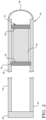
- the flux thimble containing the target material hereafter referred to as the target flux thimble 34, is shown schematically in Figure 2 and takes the place of the miniature detector 12 shown in Figure 1 as being inserted into the fuel assembly instrument thimble 50.
- the target flux thimble 34 is attached to the drive cable 48 in place of the miniature detector 12 and comprises an outer sheath 36 having an enclosed lead end 38 that is preferably rounded or beveled and an enclosed trailing end 40 that is enclosed by a cap 42 once the specimen or isotope target capsule 44 has been loaded within the chamber 45 within the outer sheath 36.
- the target material capsule 44 may have its own sheath (not shown) or if in solid self-standing form may be capped at either axial end by axial position end plugs 46 that position the target material capsule 44 in a desired axial position within the target flux thimble 34.
- the axial position end plugs may be held in position by friction or fit in slight recesses 52 in the inside surface of the target flux thimble sheath 36 preferably with the interfacing surface of the axial position end plugs beveled to assist movement of the axial position end plugs into the recesses when they are loaded into the target flux thimble sheath 36.
- the target flux thimble 34 remains in place within the fuel assembly instrument thimble 50 throughout the remainder of the reactor operating cycle after it is installed within the fuel assembly instrument thimble. When the reactor is refueled all the flux thimbles are withdrawn below the lower core plate inside the reactor vessel to allow the fuel assembly to be shuffled and/or removed from the vessel as part of the refueling process.
- the target flux thimble can be re-inserted into the empty reactor vessel location previously occupied by the removed fuel assembly to allow the portion of the target flux thimble containing the irradiated target material that was inside the fuel assembly instrument thimble to be cut off from the target flux thimble using existing tooling dedicated to flux thimble removal operations.
- Figure 3 provides an illustration of the positioning of the target flux thimble during the irradiation, refueling, and harvesting phases of production.
- Reference character 22 points to the guide conduits through which the target flux thimble 34 travels from the seal table 20.
- the guide conduits 22 are each aligned with a corresponding instrument column 56, which is aligned with a corresponding instrument thimble in one of the fuel assemblies in the core.
- Reference character 54 points to the fully inserted target flux thimble position in the corresponding fuel assembly in the core at which the target material capsule will be irradiated and reference character 58 refers to the fully withdrawn position that enables the corresponding fuel assembly to be withdrawn from the core, prior to harvesting the target material.
- Reference characters 68 and 70 respectively, show the difference of the fully withdrawn position and the fully inserted position at the seal table 20. After the fuel assembly is withdrawn from the core the target flux thimble 34 can be reinserted into the core area and severed at reference character 60 for removal from the reactor vessel.
- the irradiated target material can then be inserted into a container 62 that will allow the target material containing target flux thimble portion to be transferred via the fuel transfer system 66 to the spent fuel pool 64 where it can be packaged in a shielded shipping container 72 to ship to a processing facility.
- the remaining portion of the affected target flux thimble is removed using standard maintenance procedures and is replaced with a new target flux thimble.
- the process can be repeated as many times as desired, and simultaneously in as many different core locations as prudent to ensure that at least 75% of the fuel assembly locations hosting flux thimbles are available throughout the operating cycle.
- the typical prior art method for producing commercially valuable radioisotopes that require long term irradiation inside commercial nuclear reactors involves inserting one or more fuel pin structures that contain the target material into one or more fuel assemblies.
- the process offered by this invention avoids the need to perform the very rigorous, time consuming and expensive analysis needed to support modifications to a licensed fuel assembly design to incorporate the modified fuel pin structures.
- the fuel assembly instrument thimbles that are accessed via the flux thimbles by the moveable in-core detector fission chambers do not require any modifications. Since there are no modifications to the fuel assembly design required by the approach documented herein, there is little cost associated with implementation of this process.
- the irradiation of target materials to produce a desired radioisotope is the first step in the production of any commercially valuable radioisotope. Consequently, the potential business is the entire breadth of the longer lived radioisotope production market.
- Some notable highly desired (and priced) radioisotopes suitable for the production process addressed by this invention include Co-60, W-188, Ni-63, Bi-213, and Ac-225.
- the process described herein lends itself to the use of radioactive target material since the ability to shield the target material before it is irradiated is supported by the existing features of the moveable in-core detector architecture.
Landscapes
- Physics & Mathematics (AREA)
- Engineering & Computer Science (AREA)
- General Engineering & Computer Science (AREA)
- High Energy & Nuclear Physics (AREA)
- Plasma & Fusion (AREA)
- Chemical & Material Sciences (AREA)
- Chemical Kinetics & Catalysis (AREA)
- General Chemical & Material Sciences (AREA)
- Monitoring And Testing Of Nuclear Reactors (AREA)
- Physical Or Chemical Processes And Apparatus (AREA)
- Medicines Containing Antibodies Or Antigens For Use As Internal Diagnostic Agents (AREA)
Claims (12)
- Insert (34) de cosses de flux d'assemblage de combustible nucléaire comprenant :un boîtier tubulaire allongé (36) possédant un axe le long de sa dimension allongée, le boîtier tubulaire allongé étant fermé sur une extrémité avant (38) et limité (42) sur une extrémité arrière (40) afin d'y former une chambre de spécimen cible (45) dans un intérieur du boîtier tubulaire allongé (36), le boîtier tubulaire allongé étant dimensionné afin de glisser à l'intérieur d'une cosse d'instrument (50) d'un assemblage de combustible nucléaire, avec l'extrémité arrière (40) structurée afin d'être entraînée par un câble de commande (48) d'un système détecteur in-core mobile existant ; etun spécimen cible allongé (44) capturé entre un clapet à position axiale avant et un arrière (46) dans lequel les clapets à position axiale sont structurés afin d'être placés contre une paroi intérieure du boîtiertubulaire allongé (36) afin de maintenir le spécimen cible (44) sur une position axiale présélectionnée à l'intérieur du boîtiertubulaire allongé.
- Insert (34) de cosses de flux d'assemblage de combustible nucléaire selon la revendication 1, dans lequel le spécimen cible (44) est formé à partir d'un ou plusieurs du Co-60, du W-188, du Ni-63, du Bi-213 et de l'Ac-225.
- Insert (34) de cosses de flux d'assemblage de combustible nucléaire selon la revendication 1, dans lequel le boîtiertubulaire allongé (36) est construit à partir d'un matériau possédant une basse section transversale de capture neutronique.
- Insert (34) de cosses de flux d'assemblage de combustible nucléaire selon la revendication 3, dans lequel le boîtiertubulaire allongé (36) est construit à partir de zirconium ou d'un alliage de zirconium.
- Insert (34) de cosses de flux d'assemblage de combustible nucléaire selon la revendication 1, dans lequel les clapets à position axiale (46) maintiennent leur position axiale grâce à la friction entre les surface d'interfaçage sur les clapets à position axiale et la paroi intérieure du boîtiertubulaire allongé (36).
- Insert (34) de cosses de flux d'assemblage de combustible nucléaire selon la revendication 1, dans lequel les clapets à position axiale (46) maintiennent leur position axiale en entrant dans de légers renfoncements (52) dans la paroi intérieure du boîtier tubulaire allongé (36).
- Insert (34) de cosses de flux d'assemblage de combustible nucléaire selon la revendication 6, dans lequel les clapets à position axiale (46) possèdent une surface supérieure et inférieure qui s'étend de manière pratiquement orthogonale à l'axe, avec une paroi extérieure pratiquement circulaire s'étendant entre la surface supérieure et la surface inférieure, dans lequel la dimension axiale de la paroi extérieure pratiquement circulaire est dimensionnée afin d'entrer dans l'un des renfoncements (52).
- Insert (34) de cosses de flux d'assemblage de combustible nucléaire selon la revendication 6, dans lequel l'interface des surfaces supérieure et inférieure avec la paroi extérieure, pratiquement circulaire, est inclinée à un angle aigu afin de faciliter le logement et le délogement des clapets à position axiale (46) des renfoncements (52).
- Méthode d'irradiation d'un isotope (44) qui requiert une exposition étendue à l'intérieur d'un réacteur nucléaire (16) durant au moins un cycle de combustible, afin d'obtenir un produit de référence prévu, comprenant les étapes suivantes :enfermement de l'isotope (44) à l'intérieur d'un boîtiertubulaire allongé (36) possédant un axe le long de sa dimension allongée, le boîtier tubulaire allongé étant fermé sur une extrémité avant (38) et limité (42) sur une extrémité arrière (40) afin d'y former une chambre de spécimen cible (45) dans un intérieur du boîtiertubulaire allongé (36), le boîtiertubulaire allongé étant dimensionné afin de glisser à l'intérieur d'une cosse d'instrument (50) d'un assemblage de combustible nucléaire, avec l'extrémité arrière (40) structurée afin d'être entraînée par un câble de commande (48) d'un système détecteur in-core mobile existant;positionnement de l'isotope (44) sur une position axiale présélectionnée à l'intérieur du boîtiertubulaire allongé (36) ;fixation de l'extrémité arrière (40) au câble de commande (48) ;entraînement de l'isotope (44) à l'intérieur du boîtier tubulaire allongé (36) dans et au moins partiellement à travers une cosse d'instrument (50) d'un assemblage de combustible nucléaire sélectionné à l'intérieur d'un coeur (14) d'un réacteur nucléaire (16) ;sortie de l'isotope (44) à l'intérieur de la cosse d'instrument (50) pour le reste d'un cycle de combustible du coeur (14) ;retrait du boîtiertubulaire allongé (36) hors du coeur (14) à la fin du cycle du combustible ;extraction de l'assemblage sélectionné de combustible hors du coeur (14) ;réinsertion du boîtier tubulaire allongé (36) au moins partiellement dans le coeur (14) ; etextraction d'au moins une partie du boîtier tubulaire allongé (36) qui contient l'isotope (44) en délogeant la partie du câble d'entraînement (48).
- Méthode selon la revendication 9, dans laquelle l'étape de délogement coupe le boîtier tubulaire allongé (36) autour d'une circonférence.
- Méthode selon la revendication 10 comportant l'étape de transfert de la partie sous l'eau vers un bassin de combustible usé (64).
- Méthode selon la revendication 11, transférant la partie dans un boîtier abritant le bassin de combustible usé (64) vers un conteneur blindé pour embarquement.
Applications Claiming Priority (2)
| Application Number | Priority Date | Filing Date | Title |
|---|---|---|---|
| US15/341,478 US10446283B2 (en) | 2016-11-02 | 2016-11-02 | System and process for production and collection of radioisotopes |
| PCT/US2017/058414 WO2018136125A2 (fr) | 2016-11-02 | 2017-10-26 | Système et procédé de production et de collecte de radio-isotopes |
Publications (3)
| Publication Number | Publication Date |
|---|---|
| EP3535764A2 EP3535764A2 (fr) | 2019-09-11 |
| EP3535764A4 EP3535764A4 (fr) | 2020-07-15 |
| EP3535764B1 true EP3535764B1 (fr) | 2023-06-28 |
Family
ID=62021793
Family Applications (1)
| Application Number | Title | Priority Date | Filing Date |
|---|---|---|---|
| EP17892833.9A Active EP3535764B1 (fr) | 2016-11-02 | 2017-10-26 | Système et procédé de production et de collecte de radio-isotopes |
Country Status (8)
| Country | Link |
|---|---|
| US (2) | US10446283B2 (fr) |
| EP (1) | EP3535764B1 (fr) |
| JP (1) | JP7042281B2 (fr) |
| KR (1) | KR102590263B1 (fr) |
| AU (1) | AU2017394652B2 (fr) |
| CA (1) | CA3040571C (fr) |
| ES (1) | ES2955036T3 (fr) |
| WO (1) | WO2018136125A2 (fr) |
Families Citing this family (12)
| Publication number | Priority date | Publication date | Assignee | Title |
|---|---|---|---|---|
| US10446283B2 (en) | 2016-11-02 | 2019-10-15 | Westinghouse Electric Company Llc | System and process for production and collection of radioisotopes |
| US10720253B2 (en) | 2017-10-11 | 2020-07-21 | Westinghouse Electric Company Llc | Apparatus for planting and harvesting radioisotopes on a mass production basis |
| RO135131A2 (ro) * | 2018-07-16 | 2021-07-30 | BWXT Isotope Technology Group, Inc. | Sisteme de iradiere a ţintei pentru producerea de radioizotopi |
| CN112789689B (zh) * | 2018-08-27 | 2024-04-09 | Bwxt同位素技术集团有限公司 | 产生放射性同位素的靶辐照系统 |
| TWI769552B (zh) * | 2019-10-14 | 2022-07-01 | 美商西屋電器公司 | 模組化放射線同位素生產囊室及其相關方法 |
| US12046386B2 (en) | 2020-05-19 | 2024-07-23 | Westinghouse Electric Company Llc | Method for periodically measuring the total gamma radiation activity of a target radioisotope being produced inside a nuclear reactor core |
| RU2743234C9 (ru) * | 2020-09-14 | 2021-05-18 | Федеральное государственное унитарное предприятие "Научно-исследовательский технологический институт имени А.П. Александрова" | Способ контроля плотности нейтронного потока |
| JP7426324B2 (ja) * | 2020-10-23 | 2024-02-01 | 三菱重工業株式会社 | 放射性同位体の製造方法、放射性同位体製造システム及びカプセル |
| JP7499157B2 (ja) * | 2020-11-09 | 2024-06-13 | 三菱重工業株式会社 | カプセルユニット及び放射性同位体の製造方法 |
| US12080435B2 (en) | 2020-12-17 | 2024-09-03 | Westinghouse Electric Company Llc | Methods of manufacture for nuclear batteries |
| US20240233973A9 (en) * | 2022-10-25 | 2024-07-11 | Westinghouse Electric Company Llc | Additively manufactured cobalt burnable absorber capsules |
| WO2024221080A1 (fr) * | 2023-04-26 | 2024-10-31 | Kinectrics Inc. | Procédé de manipulation et de transport de radio-isotopes hors d'un système de production d'isotopes |
Family Cites Families (17)
| Publication number | Priority date | Publication date | Assignee | Title |
|---|---|---|---|---|
| US3932211A (en) | 1973-07-13 | 1976-01-13 | Westinghouse Electric Corporation | Method of automatically monitoring the power distribution of a nuclear reactor employing movable incore detectors |
| US4196047A (en) * | 1978-02-17 | 1980-04-01 | The Babcock & Wilcox Company | Irradiation surveillance specimen assembly |
| US4839135A (en) * | 1987-08-21 | 1989-06-13 | Westinghouse Electric Corp. | Anti-vibration flux thimble |
| US5254308A (en) * | 1992-12-24 | 1993-10-19 | Combustion Engineering, Inc. | Zirconium alloy with improved post-irradiation properties |
| US6356614B1 (en) * | 2000-06-19 | 2002-03-12 | Westinghouse Electric Company Llc | Anchor assembly for fuel bundle |
| US8953731B2 (en) | 2004-12-03 | 2015-02-10 | General Electric Company | Method of producing isotopes in power nuclear reactors |
| KR100728703B1 (ko) * | 2004-12-21 | 2007-06-15 | 한국원자력연구원 | I-125 생산을 위한 내부 순환식 중성자 조사 용기 및 이를 이용한 i-125 생산방법 |
| US8437443B2 (en) * | 2008-02-21 | 2013-05-07 | Ge-Hitachi Nuclear Energy Americas Llc | Apparatuses and methods for production of radioisotopes in nuclear reactor instrumentation tubes |
| US8699651B2 (en) | 2009-04-15 | 2014-04-15 | Ge-Hitachi Nuclear Energy Americas Llc | Method and system for simultaneous irradiation and elution capsule |
| US9773577B2 (en) | 2009-08-25 | 2017-09-26 | Ge-Hitachi Nuclear Energy Americas Llc | Irradiation targets for isotope delivery systems |
| US8488733B2 (en) | 2009-08-25 | 2013-07-16 | Ge-Hitachi Nuclear Energy Americas Llc | Irradiation target retention assemblies for isotope delivery systems |
| US8625733B2 (en) | 2011-02-01 | 2014-01-07 | Westinghouse Electric Company Llc | Neutron source assembly |
| US20130007772A1 (en) * | 2011-06-28 | 2013-01-03 | Unisys Corporation | Method and system for automated system migration |
| US9196390B2 (en) * | 2011-09-23 | 2015-11-24 | Ge-Hitachi Nuclear Energy Americas Llc | Irradiation target encapsulation assembly and method of assembly |
| US10737273B2 (en) * | 2013-02-21 | 2020-08-11 | Biotix, Inc. | Pipette tip rack |
| US20160012928A1 (en) * | 2014-07-08 | 2016-01-14 | Westinghouse Electric Company Llc | Targeted Isotope Production System |
| US10446283B2 (en) | 2016-11-02 | 2019-10-15 | Westinghouse Electric Company Llc | System and process for production and collection of radioisotopes |
-
2016
- 2016-11-02 US US15/341,478 patent/US10446283B2/en active Active
-
2017
- 2017-10-26 KR KR1020197015639A patent/KR102590263B1/ko active Active
- 2017-10-26 ES ES17892833T patent/ES2955036T3/es active Active
- 2017-10-26 AU AU2017394652A patent/AU2017394652B2/en active Active
- 2017-10-26 EP EP17892833.9A patent/EP3535764B1/fr active Active
- 2017-10-26 WO PCT/US2017/058414 patent/WO2018136125A2/fr not_active Ceased
- 2017-10-26 CA CA3040571A patent/CA3040571C/fr active Active
- 2017-10-26 JP JP2019547575A patent/JP7042281B2/ja active Active
-
2019
- 2019-04-10 US US16/380,092 patent/US11200996B2/en active Active
Also Published As
| Publication number | Publication date |
|---|---|
| CA3040571C (fr) | 2024-01-02 |
| JP2020512545A (ja) | 2020-04-23 |
| WO2018136125A3 (fr) | 2018-08-30 |
| US10446283B2 (en) | 2019-10-15 |
| US20200075187A1 (en) | 2020-03-05 |
| CA3040571A1 (fr) | 2018-07-26 |
| JP7042281B2 (ja) | 2022-03-25 |
| EP3535764A4 (fr) | 2020-07-15 |
| KR20190066081A (ko) | 2019-06-12 |
| AU2017394652B2 (en) | 2022-09-01 |
| US11200996B2 (en) | 2021-12-14 |
| ES2955036T3 (es) | 2023-11-28 |
| AU2017394652A1 (en) | 2019-06-20 |
| WO2018136125A2 (fr) | 2018-07-26 |
| US20180122521A1 (en) | 2018-05-03 |
| EP3535764A2 (fr) | 2019-09-11 |
| KR102590263B1 (ko) | 2023-10-16 |
Similar Documents
| Publication | Publication Date | Title |
|---|---|---|
| US11200996B2 (en) | System and process for production and collection of radioisotopes | |
| EP3625804B1 (fr) | Conception d'insert cible de production de radio-isotope et méthodologie de collecte de cible pour une irradiation à long terme dans des réacteurs nucléaires commerciaux | |
| JP5118297B2 (ja) | 同位元素生成方法 | |
| CA2712889C (fr) | Ensembles de retention de cibles d'irradiation pour installations de production d'isotopes | |
| EP3695422B1 (fr) | Appareil d'implantation et de retrait de radio-isotopes sur la base d'une production de masse | |
| US11721450B2 (en) | Irradiation target handling device for moving a target into a nuclear reactor | |
| CA2986976A1 (fr) | Procede de production de radio-isotopes a l'aide d'une centrale nucleaire a eau lourde | |
| JP2011047938A (ja) | 同位体送り出しシステム用照射ターゲット | |
| KR20220076477A (ko) | 모듈형 방사성 동위원소 생산 캡슐 및 관련 방법 | |
| US20240387068A1 (en) | Systems for periodically measuring the total gamma radiation activity of a target radioisotope being produced inside the core of a nuclear reactor | |
| EP3830840B1 (fr) | Unité lance et procédé de production de radionucléides | |
| Galtier | IRRADIATION OF 33SV IN THE SILOE REACTOR FOR THE PRODUCTION OF" Mo, 131I AND 133Xe RADIOISOTOPES |
Legal Events
| Date | Code | Title | Description |
|---|---|---|---|
| STAA | Information on the status of an ep patent application or granted ep patent |
Free format text: STATUS: THE INTERNATIONAL PUBLICATION HAS BEEN MADE |
|
| PUAI | Public reference made under article 153(3) epc to a published international application that has entered the european phase |
Free format text: ORIGINAL CODE: 0009012 |
|
| STAA | Information on the status of an ep patent application or granted ep patent |
Free format text: STATUS: REQUEST FOR EXAMINATION WAS MADE |
|
| 17P | Request for examination filed |
Effective date: 20190408 |
|
| AK | Designated contracting states |
Kind code of ref document: A2 Designated state(s): AL AT BE BG CH CY CZ DE DK EE ES FI FR GB GR HR HU IE IS IT LI LT LU LV MC MK MT NL NO PL PT RO RS SE SI SK SM TR |
|
| AX | Request for extension of the european patent |
Extension state: BA ME |
|
| DAV | Request for validation of the european patent (deleted) | ||
| DAX | Request for extension of the european patent (deleted) | ||
| A4 | Supplementary search report drawn up and despatched |
Effective date: 20200615 |
|
| RIC1 | Information provided on ipc code assigned before grant |
Ipc: G21C 19/07 20060101ALI20200608BHEP Ipc: G21C 17/108 20060101ALI20200608BHEP Ipc: H05H 6/00 20060101ALI20200608BHEP Ipc: G21G 1/02 20060101AFI20200608BHEP Ipc: G21C 19/20 20060101ALI20200608BHEP |
|
| REG | Reference to a national code |
Ref country code: DE Ref legal event code: R079 Free format text: PREVIOUS MAIN CLASS: G21C0019200000 Ipc: G21G0001020000 Ref country code: DE Ref legal event code: R079 Ref document number: 602017070815 Country of ref document: DE Free format text: PREVIOUS MAIN CLASS: G21C0019200000 Ipc: G21G0001020000 |
|
| GRAP | Despatch of communication of intention to grant a patent |
Free format text: ORIGINAL CODE: EPIDOSNIGR1 |
|
| STAA | Information on the status of an ep patent application or granted ep patent |
Free format text: STATUS: GRANT OF PATENT IS INTENDED |
|
| RIC1 | Information provided on ipc code assigned before grant |
Ipc: H05H 6/00 20060101ALI20221215BHEP Ipc: G21C 17/108 20060101ALI20221215BHEP Ipc: G21C 19/07 20060101ALI20221215BHEP Ipc: G21C 19/20 20060101ALI20221215BHEP Ipc: G21G 1/02 20060101AFI20221215BHEP |
|
| INTG | Intention to grant announced |
Effective date: 20230109 |
|
| GRAS | Grant fee paid |
Free format text: ORIGINAL CODE: EPIDOSNIGR3 |
|
| GRAA | (expected) grant |
Free format text: ORIGINAL CODE: 0009210 |
|
| STAA | Information on the status of an ep patent application or granted ep patent |
Free format text: STATUS: THE PATENT HAS BEEN GRANTED |
|
| AK | Designated contracting states |
Kind code of ref document: B1 Designated state(s): AL AT BE BG CH CY CZ DE DK EE ES FI FR GB GR HR HU IE IS IT LI LT LU LV MC MK MT NL NO PL PT RO RS SE SI SK SM TR |
|
| REG | Reference to a national code |
Ref country code: CH Ref legal event code: EP |
|
| REG | Reference to a national code |
Ref country code: AT Ref legal event code: REF Ref document number: 1583460 Country of ref document: AT Kind code of ref document: T Effective date: 20230715 |
|
| REG | Reference to a national code |
Ref country code: IE Ref legal event code: FG4D |
|
| REG | Reference to a national code |
Ref country code: DE Ref legal event code: R096 Ref document number: 602017070815 Country of ref document: DE |
|
| REG | Reference to a national code |
Ref country code: NL Ref legal event code: FP |
|
| REG | Reference to a national code |
Ref country code: SE Ref legal event code: TRGR Ref country code: LT Ref legal event code: MG9D |
|
| REG | Reference to a national code |
Ref country code: NO Ref legal event code: T2 Effective date: 20230628 |
|
| REG | Reference to a national code |
Ref country code: AT Ref legal event code: MK05 Ref document number: 1583460 Country of ref document: AT Kind code of ref document: T Effective date: 20230628 |
|
| REG | Reference to a national code |
Ref country code: ES Ref legal event code: FG2A Ref document number: 2955036 Country of ref document: ES Kind code of ref document: T3 Effective date: 20231128 |
|
| PG25 | Lapsed in a contracting state [announced via postgrant information from national office to epo] |
Ref country code: RS Free format text: LAPSE BECAUSE OF FAILURE TO SUBMIT A TRANSLATION OF THE DESCRIPTION OR TO PAY THE FEE WITHIN THE PRESCRIBED TIME-LIMIT Effective date: 20230628 Ref country code: LV Free format text: LAPSE BECAUSE OF FAILURE TO SUBMIT A TRANSLATION OF THE DESCRIPTION OR TO PAY THE FEE WITHIN THE PRESCRIBED TIME-LIMIT Effective date: 20230628 Ref country code: LT Free format text: LAPSE BECAUSE OF FAILURE TO SUBMIT A TRANSLATION OF THE DESCRIPTION OR TO PAY THE FEE WITHIN THE PRESCRIBED TIME-LIMIT Effective date: 20230628 Ref country code: HR Free format text: LAPSE BECAUSE OF FAILURE TO SUBMIT A TRANSLATION OF THE DESCRIPTION OR TO PAY THE FEE WITHIN THE PRESCRIBED TIME-LIMIT Effective date: 20230628 Ref country code: GR Free format text: LAPSE BECAUSE OF FAILURE TO SUBMIT A TRANSLATION OF THE DESCRIPTION OR TO PAY THE FEE WITHIN THE PRESCRIBED TIME-LIMIT Effective date: 20230929 |
|
| PG25 | Lapsed in a contracting state [announced via postgrant information from national office to epo] |
Ref country code: FI Free format text: LAPSE BECAUSE OF FAILURE TO SUBMIT A TRANSLATION OF THE DESCRIPTION OR TO PAY THE FEE WITHIN THE PRESCRIBED TIME-LIMIT Effective date: 20230628 |
|
| PG25 | Lapsed in a contracting state [announced via postgrant information from national office to epo] |
Ref country code: SK Free format text: LAPSE BECAUSE OF FAILURE TO SUBMIT A TRANSLATION OF THE DESCRIPTION OR TO PAY THE FEE WITHIN THE PRESCRIBED TIME-LIMIT Effective date: 20230628 |
|
| PG25 | Lapsed in a contracting state [announced via postgrant information from national office to epo] |
Ref country code: IS Free format text: LAPSE BECAUSE OF FAILURE TO SUBMIT A TRANSLATION OF THE DESCRIPTION OR TO PAY THE FEE WITHIN THE PRESCRIBED TIME-LIMIT Effective date: 20231028 |
|
| PG25 | Lapsed in a contracting state [announced via postgrant information from national office to epo] |
Ref country code: SM Free format text: LAPSE BECAUSE OF FAILURE TO SUBMIT A TRANSLATION OF THE DESCRIPTION OR TO PAY THE FEE WITHIN THE PRESCRIBED TIME-LIMIT Effective date: 20230628 Ref country code: SK Free format text: LAPSE BECAUSE OF FAILURE TO SUBMIT A TRANSLATION OF THE DESCRIPTION OR TO PAY THE FEE WITHIN THE PRESCRIBED TIME-LIMIT Effective date: 20230628 Ref country code: RO Free format text: LAPSE BECAUSE OF FAILURE TO SUBMIT A TRANSLATION OF THE DESCRIPTION OR TO PAY THE FEE WITHIN THE PRESCRIBED TIME-LIMIT Effective date: 20230628 Ref country code: PT Free format text: LAPSE BECAUSE OF FAILURE TO SUBMIT A TRANSLATION OF THE DESCRIPTION OR TO PAY THE FEE WITHIN THE PRESCRIBED TIME-LIMIT Effective date: 20231030 Ref country code: IS Free format text: LAPSE BECAUSE OF FAILURE TO SUBMIT A TRANSLATION OF THE DESCRIPTION OR TO PAY THE FEE WITHIN THE PRESCRIBED TIME-LIMIT Effective date: 20231028 Ref country code: EE Free format text: LAPSE BECAUSE OF FAILURE TO SUBMIT A TRANSLATION OF THE DESCRIPTION OR TO PAY THE FEE WITHIN THE PRESCRIBED TIME-LIMIT Effective date: 20230628 Ref country code: CZ Free format text: LAPSE BECAUSE OF FAILURE TO SUBMIT A TRANSLATION OF THE DESCRIPTION OR TO PAY THE FEE WITHIN THE PRESCRIBED TIME-LIMIT Effective date: 20230628 Ref country code: AT Free format text: LAPSE BECAUSE OF FAILURE TO SUBMIT A TRANSLATION OF THE DESCRIPTION OR TO PAY THE FEE WITHIN THE PRESCRIBED TIME-LIMIT Effective date: 20230628 |
|
| PG25 | Lapsed in a contracting state [announced via postgrant information from national office to epo] |
Ref country code: PL Free format text: LAPSE BECAUSE OF FAILURE TO SUBMIT A TRANSLATION OF THE DESCRIPTION OR TO PAY THE FEE WITHIN THE PRESCRIBED TIME-LIMIT Effective date: 20230628 |
|
| REG | Reference to a national code |
Ref country code: DE Ref legal event code: R097 Ref document number: 602017070815 Country of ref document: DE |
|
| PG25 | Lapsed in a contracting state [announced via postgrant information from national office to epo] |
Ref country code: DK Free format text: LAPSE BECAUSE OF FAILURE TO SUBMIT A TRANSLATION OF THE DESCRIPTION OR TO PAY THE FEE WITHIN THE PRESCRIBED TIME-LIMIT Effective date: 20230628 |
|
| PLBE | No opposition filed within time limit |
Free format text: ORIGINAL CODE: 0009261 |
|
| STAA | Information on the status of an ep patent application or granted ep patent |
Free format text: STATUS: NO OPPOSITION FILED WITHIN TIME LIMIT |
|
| PG25 | Lapsed in a contracting state [announced via postgrant information from national office to epo] |
Ref country code: IT Free format text: LAPSE BECAUSE OF FAILURE TO SUBMIT A TRANSLATION OF THE DESCRIPTION OR TO PAY THE FEE WITHIN THE PRESCRIBED TIME-LIMIT Effective date: 20230628 Ref country code: MC Free format text: LAPSE BECAUSE OF FAILURE TO SUBMIT A TRANSLATION OF THE DESCRIPTION OR TO PAY THE FEE WITHIN THE PRESCRIBED TIME-LIMIT Effective date: 20230628 |
|
| 26N | No opposition filed |
Effective date: 20240402 |
|
| PG25 | Lapsed in a contracting state [announced via postgrant information from national office to epo] |
Ref country code: LU Free format text: LAPSE BECAUSE OF NON-PAYMENT OF DUE FEES Effective date: 20231026 |
|
| PG25 | Lapsed in a contracting state [announced via postgrant information from national office to epo] |
Ref country code: LU Free format text: LAPSE BECAUSE OF NON-PAYMENT OF DUE FEES Effective date: 20231026 |
|
| PG25 | Lapsed in a contracting state [announced via postgrant information from national office to epo] |
Ref country code: SI Free format text: LAPSE BECAUSE OF FAILURE TO SUBMIT A TRANSLATION OF THE DESCRIPTION OR TO PAY THE FEE WITHIN THE PRESCRIBED TIME-LIMIT Effective date: 20230628 |
|
| PG25 | Lapsed in a contracting state [announced via postgrant information from national office to epo] |
Ref country code: IE Free format text: LAPSE BECAUSE OF NON-PAYMENT OF DUE FEES Effective date: 20231026 |
|
| PG25 | Lapsed in a contracting state [announced via postgrant information from national office to epo] |
Ref country code: IE Free format text: LAPSE BECAUSE OF NON-PAYMENT OF DUE FEES Effective date: 20231026 |
|
| PG25 | Lapsed in a contracting state [announced via postgrant information from national office to epo] |
Ref country code: BG Free format text: LAPSE BECAUSE OF FAILURE TO SUBMIT A TRANSLATION OF THE DESCRIPTION OR TO PAY THE FEE WITHIN THE PRESCRIBED TIME-LIMIT Effective date: 20230628 |
|
| PG25 | Lapsed in a contracting state [announced via postgrant information from national office to epo] |
Ref country code: BG Free format text: LAPSE BECAUSE OF FAILURE TO SUBMIT A TRANSLATION OF THE DESCRIPTION OR TO PAY THE FEE WITHIN THE PRESCRIBED TIME-LIMIT Effective date: 20230628 |
|
| PG25 | Lapsed in a contracting state [announced via postgrant information from national office to epo] |
Ref country code: CY Free format text: LAPSE BECAUSE OF FAILURE TO SUBMIT A TRANSLATION OF THE DESCRIPTION OR TO PAY THE FEE WITHIN THE PRESCRIBED TIME-LIMIT; INVALID AB INITIO Effective date: 20171026 |
|
| PG25 | Lapsed in a contracting state [announced via postgrant information from national office to epo] |
Ref country code: HU Free format text: LAPSE BECAUSE OF FAILURE TO SUBMIT A TRANSLATION OF THE DESCRIPTION OR TO PAY THE FEE WITHIN THE PRESCRIBED TIME-LIMIT; INVALID AB INITIO Effective date: 20171026 |
|
| PGFP | Annual fee paid to national office [announced via postgrant information from national office to epo] |
Ref country code: NO Payment date: 20250919 Year of fee payment: 9 |
|
| PGFP | Annual fee paid to national office [announced via postgrant information from national office to epo] |
Ref country code: NL Payment date: 20250922 Year of fee payment: 9 |
|
| REG | Reference to a national code |
Ref country code: CH Ref legal event code: U11 Free format text: ST27 STATUS EVENT CODE: U-0-0-U10-U11 (AS PROVIDED BY THE NATIONAL OFFICE) Effective date: 20251101 |
|
| PG25 | Lapsed in a contracting state [announced via postgrant information from national office to epo] |
Ref country code: TR Free format text: LAPSE BECAUSE OF FAILURE TO SUBMIT A TRANSLATION OF THE DESCRIPTION OR TO PAY THE FEE WITHIN THE PRESCRIBED TIME-LIMIT Effective date: 20230628 |
|
| PGFP | Annual fee paid to national office [announced via postgrant information from national office to epo] |
Ref country code: DE Payment date: 20250919 Year of fee payment: 9 |
|
| PGFP | Annual fee paid to national office [announced via postgrant information from national office to epo] |
Ref country code: GB Payment date: 20251024 Year of fee payment: 9 |
|
| PGFP | Annual fee paid to national office [announced via postgrant information from national office to epo] |
Ref country code: FR Payment date: 20251017 Year of fee payment: 9 |
|
| PGFP | Annual fee paid to national office [announced via postgrant information from national office to epo] |
Ref country code: BE Payment date: 20251021 Year of fee payment: 9 |
|
| PGFP | Annual fee paid to national office [announced via postgrant information from national office to epo] |
Ref country code: SE Payment date: 20251017 Year of fee payment: 9 Ref country code: CH Payment date: 20251101 Year of fee payment: 9 |
|
| PGFP | Annual fee paid to national office [announced via postgrant information from national office to epo] |
Ref country code: ES Payment date: 20251113 Year of fee payment: 9 |