EP3536320A1 - Anwendung eines hedgehog-signalweg-inhibitors zur behandlung von fibrotischen erkrankungen - Google Patents
Anwendung eines hedgehog-signalweg-inhibitors zur behandlung von fibrotischen erkrankungen Download PDFInfo
- Publication number
- EP3536320A1 EP3536320A1 EP17867700.1A EP17867700A EP3536320A1 EP 3536320 A1 EP3536320 A1 EP 3536320A1 EP 17867700 A EP17867700 A EP 17867700A EP 3536320 A1 EP3536320 A1 EP 3536320A1
- Authority
- EP
- European Patent Office
- Prior art keywords
- imidazol
- benzamide
- chlorophenyl
- trimethylpiperazin
- chloro
- Prior art date
- Legal status (The legal status is an assumption and is not a legal conclusion. Google has not performed a legal analysis and makes no representation as to the accuracy of the status listed.)
- Withdrawn
Links
- BNRNAKTVFSZAFA-UHFFFAOYSA-N C(C1)CC2C1CCCC2 Chemical compound C(C1)CC2C1CCCC2 BNRNAKTVFSZAFA-UHFFFAOYSA-N 0.000 description 1
- 0 C*=C(C)N(*)C(*I*)=O Chemical compound C*=C(C)N(*)C(*I*)=O 0.000 description 1
Images






Classifications
-
- A—HUMAN NECESSITIES
- A61—MEDICAL OR VETERINARY SCIENCE; HYGIENE
- A61K—PREPARATIONS FOR MEDICAL, DENTAL OR TOILETRY PURPOSES
- A61K31/00—Medicinal preparations containing organic active ingredients
- A61K31/33—Heterocyclic compounds
- A61K31/395—Heterocyclic compounds having nitrogen as a ring hetero atom, e.g. guanethidine or rifamycins
- A61K31/495—Heterocyclic compounds having nitrogen as a ring hetero atom, e.g. guanethidine or rifamycins having six-membered rings with two or more nitrogen atoms as the only ring heteroatoms, e.g. piperazine or tetrazines
- A61K31/496—Non-condensed piperazines containing further heterocyclic rings, e.g. rifampin, thiothixene or sparfloxacin
-
- A—HUMAN NECESSITIES
- A61—MEDICAL OR VETERINARY SCIENCE; HYGIENE
- A61P—SPECIFIC THERAPEUTIC ACTIVITY OF CHEMICAL COMPOUNDS OR MEDICINAL PREPARATIONS
- A61P1/00—Drugs for disorders of the alimentary tract or the digestive system
- A61P1/16—Drugs for disorders of the alimentary tract or the digestive system for liver or gallbladder disorders, e.g. hepatoprotective agents, cholagogues, litholytics
-
- A—HUMAN NECESSITIES
- A61—MEDICAL OR VETERINARY SCIENCE; HYGIENE
- A61P—SPECIFIC THERAPEUTIC ACTIVITY OF CHEMICAL COMPOUNDS OR MEDICINAL PREPARATIONS
- A61P11/00—Drugs for disorders of the respiratory system
-
- A—HUMAN NECESSITIES
- A61—MEDICAL OR VETERINARY SCIENCE; HYGIENE
- A61P—SPECIFIC THERAPEUTIC ACTIVITY OF CHEMICAL COMPOUNDS OR MEDICINAL PREPARATIONS
- A61P13/00—Drugs for disorders of the urinary system
- A61P13/12—Drugs for disorders of the urinary system of the kidneys
-
- A—HUMAN NECESSITIES
- A61—MEDICAL OR VETERINARY SCIENCE; HYGIENE
- A61P—SPECIFIC THERAPEUTIC ACTIVITY OF CHEMICAL COMPOUNDS OR MEDICINAL PREPARATIONS
- A61P17/00—Drugs for dermatological disorders
-
- A—HUMAN NECESSITIES
- A61—MEDICAL OR VETERINARY SCIENCE; HYGIENE
- A61P—SPECIFIC THERAPEUTIC ACTIVITY OF CHEMICAL COMPOUNDS OR MEDICINAL PREPARATIONS
- A61P37/00—Drugs for immunological or allergic disorders
- A61P37/02—Immunomodulators
- A61P37/06—Immunosuppressants, e.g. drugs for graft rejection
-
- A—HUMAN NECESSITIES
- A61—MEDICAL OR VETERINARY SCIENCE; HYGIENE
- A61P—SPECIFIC THERAPEUTIC ACTIVITY OF CHEMICAL COMPOUNDS OR MEDICINAL PREPARATIONS
- A61P9/00—Drugs for disorders of the cardiovascular system
Definitions
- This disclosure is in the field of medicinal chemistry, and relates to treatment for fibrosis.
- the invention relates to application of hedegehog pathway inhibitors in treating fibrosis diseases.
- fibrosis abnormal and/or excessive fibrous connective tissue hyperplasia is called fibrosis in those tissues that have been damaged by injury, disease or infection. Fibrosis may occur in a variety of organs. The main pathological changes are increased fibrous connective tissue in organ tissues and decreased parenchymal cells. Continuous progress may lead to organ structural damage and functional decline, or even loss, or even life threatening.
- PF pulmonary fibrosis
- Fb fibroblast
- ECM extracellular matrix
- PF can be caused by various causes, such as occupational dust (SiO 2 , etc.), radiation damage and toxicity of certain drugs (such as bleomycin).
- IPF idiopathic pulmonary fibrosis
- the damaged alveolar epithelial cells release cytokines, thus activating fibroblasts, causing the migration and proliferation of fibroblasts to the damaged sites, accompanied by differentiation into myoblasts. These cells and the extracellular matrix proteins and collagen produced by them proliferate and deposit in the damaged area, further cause the injury and death of alveolar epithelial cells, form a vicious circle, and finally cause lung structure damage. Advanced PF often causes heart and lung failure and leads to death, which is of great harm to human health. At present, the exact mechanism of PF is still unclear, and no breakthrough has been made in early prevention and treatment.
- IPF interstitial lung disease
- It is a chronic and progressive malignant disease that ultimately leads to irreversible changes in the lung structure and loss of lung function.
- There are millions of patients worldwide (Gharaee-Kermani and Phan, 2005; Meltzer and Noble, 2008).
- the prognosis of IPF patients was very poor.
- the median survival time was only 2-3 years after diagnosis, and the 5-year survival rate was only 20% (Scotton and Chambers, 2007), which are similar to those for many malignancies.
- the pathology of IPF is characterized by excessive deposition and accumulation of collagen fibers and other extracellular matrix components, resulting in tissue stiffness, loss of flexibility and progressive decline in lung function.
- Hedgehog signaling pathway is an important signal pathway for early embryonic development and plays a very important role in the formation of tissue and organ morphology. For the lung, it controls the early development of the lung and the epithelial mesenchymal transformation during the formation of pulmonary branching. Unlike embryonic development, Hedgehog signaling pathways remain inactive in human tissue cells.
- Some fibrosis diseases, including idiopathic pulmonary fibrosis, are related to abnormal activation of Hedgehog signaling pathway in organ tissues. Therefore, inhibiting abnormal activation of Hedgehog signaling pathway and returning its activity to low or inactive state may be a method for the treatment of fibrotic diseases.
- Hedgehog signaling pathway mainly includes Hedgehog protein, Hedgehog transmembrane receptor Patched-1 (PTC), transmembrane protein Smoothened (SMO), transcription factor GLI and genes in downstream control expression.
- PTC Hedgehog transmembrane receptor Patched-1
- SMO transmembrane protein Smoothened
- GLI transcription factor GLI
- Hedgehog signaling pathway occurs in primary cilia, which is organelles that are widely present on the surface of various cells and play an important sensory role in sensing changes in extracellular mechanical and chemical signals and assisting them to be transduced into cells to induce cellular responses.
- Hedgehog transmembrane receptor PTC binds and inhibits the activity of transmembrane protein SMO.
- SMO controls the activity of members of the GLI transcription factor family. Without Hedgehog proteins such as SHH, GLI1 was not expressed, while GLI2 and GLI3 were expressed as weak and strong transcription suppressor, respectively.
- Hedgehog signaling pathway is activated in the lung tissues of IPF patients; In vitro studies have shown that the Hedgehog-Glioma-associated oncogene homology (GLI) pathway plays an important role in the function and differentiation of fibroblasts, especially at the level of GLI transcription factor. In a bleomycin-induced mouse model of pulmonary fibrosis, the Hedgehog signaling pathway is activated, and inhibition of its expression can lead to fibrosis reduction. Meanwhile, Hedgehog signaling pathway may also be involved in a variety of signaling pathways, such as mTOR signaling pathway. However, at present, the relationship between Hedgehog signaling and other signaling pathways is not clear in the pathogenesis of pulmonary fibrosis.
- Hirsova et al. (Plos One, 8(7): e70599-e70599 (2013 )) reported the effect of vismodegib (GDC-0449), a hedgehog pathway inhibitor, in a foodborne non-alcoholic fatty hepatitis (NASH) model in mice.
- the results showed that vismodegib can reduce TRAIL-mediated liver injury in a model of NASH, thereby attenuating hepatic inflammation and fibrosis.
- WO2014012511 disclosed compounds represented by Formula (I) as hedgehog pathway inhibitors
- WO2012159565 and WO2013013614 disclosed another compounds as hedgehog pathway inhibitors.
- the disclosure provides hedgehog pathway inhibitors for treating or preventing fibrosis diseases.
- the hedgehog pathway inhibitors are compounds of Formula (I).
- compounds of Formula (I) are used to treat or prevent fibrosis diseases, such as pulmonary fibrosis diseases, especially idiopathic pulmonary fibrosis, as well as liver fibrosis diseases.
- the present invention also provides the use of hedgehog pathway inhibitors in the preparation of drugs for the treatment or prevention of fibrosis.
- the hedgehog pathway inhibitors are compounds of Formula (I).
- the fibrotic disease is pulmonary fibrosis, especially idiopathic pulmonary fibrosis.
- the fibrotic disease is a disease of liver fibrosis.
- the invention also provides a method for the treatment or prevention of fibrosis by administering an effective amount of a hedgehog pathway inhibitor to a subject in need.
- the method includes administration of an effective amount of a compound of Formula (I).
- the fibrotic disease is pulmonary fibrosis, especially idiopathic pulmonary fibrosis.
- the fibrotic disease is a disease of liver fibrosis.
- the useful compounds of the present disclosure are small-molecule hedgehog pathway inhibitors. These inhibitors include, but are not limited to, the compounds described herein and, in particular, include, but are not limited to, compounds disclosed by WO2014012511 , WO2012159565 , and WO2013013614 .
- the present invention also includes the application of the hedgehog pathway inhibitors described herein in combination with other effective antifibrotic drugs to treat fibrotic diseases, including pulmonary fibrosis, hepatic fibrosis, renal fibrosis, cardiac fibrosis and scleroderma.
- fibrotic diseases including pulmonary fibrosis, hepatic fibrosis, renal fibrosis, cardiac fibrosis and scleroderma.
- Effective antifibrosis drugs that can be used in combination include, but are not limited to, pifenidone (Esbriet), Ofev (nintedanib), Obeticholic acid (OCA), and EDP-305, AKN-083, NP201, PXS472A, PRM-151, pumpuzumab, GS-4997, GS-0976, ND-630, Cenicriviroc, FG-3019, GLPG1690 and Evogliptin.
- Esbriet pifenidone
- Ofev nintedanib
- OOA Obeticholic acid
- EDP-305 AKN-083, NP201, PXS472A, PRM-151, pumpuzumab, GS-4997, GS-0976, ND-630, Cenicriviroc, FG-3019, GLPG1690 and Evogliptin.
- fibrosis may cause a scar formation in an affected organ, thereby destroying that functional and/or structural framework of the organ in the body. In some cases, fibrosis occurs in organs after organ transplantation and/or organ allograft transplantation. In some cases, activation of the hedgehog pathway is associated with the onset and/or progression of fibrosis as described herein.
- fibrosis used herein includes, but is not limited to, pulmonary fibrosis, liver fibrosis, renal fibrosis, cardiac fibrosis and scleroderma.
- the present disclosure describes methods of inhibiting or partially inhibiting hedgehog pathway, thereby reversing or delaying the progression of fibrosis or preventing the establishment of fibrosis (for example, after organ transplantation).
- the present disclosure provides a method for treating or preventing warm-blooded animals, especially human beings, with or possibly suffering from fibrosis diseases, in particular for treating or preventing pulmonary fibrosis, including administering the animal an effective amount of hedgehog pathway inhibitor.
- the present disclosure provides a method for treating or preventing mild or moderate or severe pulmonary fibrosis, including the application of hedgehog pathway inhibitors to subjects in need.
- pulmonary fibrosis is idiopathic pulmonary fibrosis.
- pulmonary fibrosis is associated with asbestosis, cystic fibrosis, infection (e.g. pneumonia), exposure to environmental allergens (e.g. coal dust, asbestos, smoking, diesel emissions, ozone, particles from industrial emissions), lung transplantation, autoimmune diseases (e.g. scleroderma), or pulmonary fibrosis is drug-induced.
- environmental allergens e.g. coal dust, asbestos, smoking, diesel emissions, ozone, particles from industrial emissions
- autoimmune diseases e.g. scleroderma
- pulmonary fibrosis is drug-induced.
- the application of hedgehog pathway inhibitors can reduce or reverse or decrease the progression of pulmonary fibrosis.
- the use of hedgehog pathway inhibitors can prevent the establishment of pulmonary fibrosis.
- the present disclosure relates to the treatment of liver fibrosis.
- the liver fibrosis involved herein includes, but is not limited to, patients with chronic hepatitis B, hepatitis C, non-alcoholic steatohepatitis (NASH), alcoholic liver disease, metabolic liver disease (Wilson's disease, hemochromatosis), a bile duct obstruction (congenital or acquired) or a liver disease with an unknown cause of fibrosis.
- hedgehog pathway inhibitors are orally administered.
- hedgehog pathway inhibitors are the compounds represented by Formula (I) or pharmaceutically acceptable salts or prodrugs thereof
- D 1 is N or CR 6
- D 2 is N or CR 7
- D 3 is N or CR 8
- D 4 is N or CR 9
- (1) D 1 is CR 6
- D 2 is CR 7
- D 3 is CR 8
- D 4 is CR 9
- one of D 1 -D 4 is N; wherein R 6 -R 9 are independently selected from H, halo and C 1-6 alkyl.
- R 6 -R 9 are each independently selected from H, halo and C 1-6 alkyl groups.
- the C cyclic group is an optionally substituted benzothiazolyl, pyridinyl, pyrazinyl, pyrimidinyl, pyridazinyl, indolyl, isoindolyl, 3H-indolyl, indolizinyl, indazolyl, purinyl, 4H-quinolizinyl, isoquinolyl, quinolyl, phthalzinyl, naphthyridinyl, acrindinyl, perimidinyl, phenanthrolinyl, phenazinyl, isothiazolyl, phenothiazinyl, oxazolyl, isoxazolyl, furazanyl, phenoxazinyl, 1,2-benzisoxazol-3-yl, imidazolyl, benzimidazolyl, 2-oxindolyl, thiadiazolyl, imidazo[4,5-c
- the substitute on the C cyclic group may be selected from the group consisting of C 1-4 alkyl, optionally substituted aryl, optionally substituted heteroaryl, optionally substituted heterocylic group, and optionally substituted C 3-8 cycloalkyl.
- the number of substituents on the C cyclic group may be 1 or 2.
- one of the substitutes is C 1-4 alkyl.
- the C cyclic group is an optionally substituted imidazolyl, and the substitute is selected from the group consisting of C 1-4 alkyl, optionally substituted aryl, optionally substituted heteroaryl, optionally substituted heterocylic group, and optionally substituted C 3-8 cycloalkyl.
- the C cyclic group is an optionally substituted imidazolyl, and the substitute is one of C 1-4 alkyl, optionally substituted aryl, optionally substituted heteroaryl, optionally substituted heterocylic group, and optionally substituted C 3-8 cycloalkyl.
- the optionally substituted imidazolyl includes phenylimidazolyl, pyridinylimidazolyl, furylimidazolyl, thienylimidazolyl, thiazolylimidazolyl, pyrrolylimidazolyl, alkylimidazolyl and cycloalkylimidazolyl, wherein said phenyl, pyridinyl, furyl, thienyl, thiazolyl, pyrrolyl, alkyl and cycloakyl may be optionally substituted.
- the substituents on said phenyl, pyridinyl, furyl, thienyl, thiazolyl, pyrrolyl, alkyl and cycloakyl are selected from C 1-4 alkyl and halo and the number of the substituents is 1, 2 or 3.
- the C cyclic group is an optionally substituted benzoimidazolyl, thienoimidazolyl, imidazopyridinyl or imidazothiazolyl.
- the C cyclic group may be substituted by one or two substituents selected from C 1-4 alkyl and halo.
- one of D 1 , D 2 , D 3 and D 4 is N.
- the cyclic group containing D 1 -D 4 is an optionally substituted phenyl or pyridinyl, of which the substituent is preferably alkyl, halo, haloalkyl and the like.
- Q 1 is an optionally substituted phenyl, pyridinyl or cycloalkyl.
- Q 2 is an optionally substituted phenyl, pyridinyl, pyrimidinyl, furyl, thienyl, morpholinyl, piperazinyl or piperidinyl.
- preferred compounds of Formula (I) includes but not limited to compounds represented by Formula (II): or pharmaceutically acceptable salts or prodrugs, wherein:
- R 11 and R 12 are each independently hydrogen, C 1-6 alkyl, C 3-8 cycloalkyl, thienyl and thiazolyl optionally substituted by 1, 2 or 3 groups of C 1-6 alkyl and halo, pyrrolyl optionally substituted by 1-4 groups of C 1-6 alkyl, or furyl optionally substituted by 1, 2 or 3 groups of C 1-6 alkyl.
- one of R 11 and R 12 is H.
- a 1 is CR 1
- a 2 is CR 2
- a 3 is CR 3
- a 4 is CR 4 .
- R 1 -R 4 are independently H, halo, C 1-3 alkyl and C 1-3 haloalkyl.
- a 1 is CR 1
- a 2 is CR 2
- a 3 is CR 3
- a 4 is CR 4
- R 1 -R 4 are independently H, halo, C 1-3 alkyl and C 1-3 haloalkyl.
- R 26 , R 28 and R 33 are independently C 1-3 alkyl.
- D 1 is CR 6
- D 2 is CR 7
- D 3 is CR 8
- D 4 is CR 9 .
- R 6 -R 9 are independently H, halo, or C 1-3 alkyl.
- D 1 is CR 6
- D 2 is CR 7
- D 3 is CR 8
- D 4 is CR 9
- R 6 -R 9 are independently H, halo, or C 1-3 alkyl.
- D 1 is CR 6
- D 2 is CR 7
- D 3 is CR 8
- D 4 is CR 9
- a 1 is CR 1
- a 2 is CR 2
- a 3 is CR 3
- a 4 is CR 4
- R 11 is H, C 1-6 alkyl or C 3-8 cycloalkyl
- R 12 is C 1-6 alkyl or C 3-8 cycloalkyl
- R 11 is C 1-6 alkyl or C 3-8 cycloalkyl
- R 12 is H, C 1-6 alkyl or C 3-8 cycloalkyl
- R 26 , R 28 and R 33 are each independently C 1-3 alkyl.
- B 1 is NR 14
- B 2 is CR 11
- B 3 is CR 12
- R 11 and R 12 are each independently hydrogen, C 1-6 alkyl, C 3-8 cycloalkyl, thienyl and thiazolyl optionally substituted by 1, 2 or 3 groups of C 1-6 alkyl and halo, pyrrolyl optionally substituted by 1-4 groups of C 1-6 alkyl, or furyl optionally substituted by 1, 2 or 3 groups of C 1-6 alkyl
- D 1 is CR 6
- D 2 is CR 7
- D 3 is CR 8
- D 4 is CR 9
- a 1 is CR 1
- a 2 is CR 2
- a 3 is CR 3
- a 4 is CR 4 .
- one of R 11 and R 12 is H.
- B 1 is NR 14
- B 2 is CR 11
- B 3 is CR 12
- R 11 and R 12 are each independently hydrogen or C 1-6 alkyl with one of R 11 and R 12 is H
- D 1 is CR 6
- D 2 is CR 7
- D 3 is CR 8
- D 4 is CR 9
- a 1 is CR 1
- a 2 is CR 2
- a 3 is CR 3
- a 4 is CR 4 .
- R 6 -R 9 are independently selected from H, halo or C1-3 alkyl, more preferably H or halo;
- R 1 -R 4 are independently H, halo, C 1-3 alkyl and C 1-3 haloalkyl, more preferably H or C 1-3 haloalkyl.
- R 1 -R 4 are H.
- R 2 and R 3 are H
- one of R 1 and R 4 is C 1-3 haloalkyl and the other one is H.
- R 6 -R 9 are H.
- R 8 is halo
- R 6 , R 7 and R 9 are H.
- preferred compounds of Formula (I) include, without limitation:
- useful alkyl groups include straight-chained or branched C 1-10 alkyl groups, preferably straight-chained or branched C 1-6 alkyl groups, more preferably C 1-3 alkyl groups.
- Typical C 1-10 alkyl groups include methyl, ethyl, propyl, isopropyl, butyl, sec-butyl, tert-butyl, 3-pentyl, hexyl and octyl groups.
- Preferred alkenyl group is C 2-4 alkenyl.
- Typical alkenyl groups include ethenyl, 1-propenyl, 2-methyl-1-propenyl, 1-butenyl and 2-butenyl.
- Preferred alkynyl group is C 2-4 alkynyl.
- Typical alkynyl groups include ethynyl, 1-propynyl, 1-methyl-2-propynyl, 2-propynyl, 1-butynyl and 2-butynyl.
- Useful alkoxy groups include oxy substituted by alkyl, e.g., one of the C 1-10 alkyl groups mentioned above, preferably the C 1-6 alkyl groups mentioned above (that is C 1-6 alkoxy), more preferably C 1-3 alkoxy.
- Useful alkylthio groups include thio substituted by any one of the C 1-10 alkyl groups mentioned above, preferably C 1-6 alkyl, more preferably C 1-3 alkyl, which may be optionally substituted. Also included are the sulfoxides and sulfones of such alkylthio groups.
- Useful amino groups include -NH 2 , -NHR' and -NR'R", wherein R' and R" are C 1-10 alkyl or C 3-8 cycloalkyl; or R' and R" are combined with the N to form a ring structure, such as a piperidyl; or R' and R'' are combined with the N and another group to form a ring, such as a piperazinyl, which are optionally substituted.
- Alkyl, alkoxy, alkylthio, alkenyl, alkynyl, cycloalkyl, carbocyclic and heterocyclic groups may be optionally substituted by one or more (such as 1, 2, 3, or 4) substituents selected from the group consisting of halo, hydroxy, carboxy, amino, amido, nitro, cyano, C 1 -C 6 acylamino, C 1 -C 6 acyloxy, C 1 -C 6 alkoxy, aryloxy, alkylthio, C 6 -C 10 aryl, C 4 -C 7 cycloalkyl, C 2 -C 6 alkenyl, C 6 -C 10 aryl(C 2 -C 6 )alkenyl, C 6 -C 10 aryl(C 2 -C 6 )alkynyl, saturated and unsaturated heterocyclic and heteroaryl.
- substituents selected from the group consisting of halo, hydroxy, carboxy, amino,
- alkoxy may be substituted by one or more (such as 1-4 or 1-3) substituents selected from the group consisting of halo, morpholino, amino including alkylamino and dialkylamino, and carboxylic ester.
- Optional substituents on the aryl, arylalkyl, arylalkenyl, arylalkynyl, heteroaryl and heteroarylalkyl groups may be one or more (such as 1, 2, 3, or 4) groups selected from the group consisting of C 1 -C 6 alkyl, acyl, halo, methylenedioxy, C 1 -C 6 haloalkyl, C 6 -C 10 aryl, C 4 -C 7 cycloalkyl, C 2 -C 6 alkenyl, C 2 -C 6 alkynyl, C 6 -C 10 aryl(C 1 -C 6 )alkyl, C 6 -C 10 aryl(C 2 -C 6 )alkenyl, C 6 -C 10 aryl(C 2 -C 6 )alkynyl, C 1 -C 6 hydroxyalkyl, nitro, amino, ureido, cyano, C 1 -C 6
- Useful aryl groups include C 6-14 aryl, preferably C 6-10 aryl.
- Typical C 6-14 aryl groups include phenyl, naphthyl, phenanthrenyl, anthracenyl, indenyl, biphenyl, biphenylene and fluorenyl groups.
- Useful cycloalkyl groups are C 3-8 cycloalkyl.
- Typical cycloalkyl groups include cyclopropyl, cyclobutyl, cyclopentyl, cyclohexyl and cycloheptyl.
- Useful partially saturated carbocyclic groups include cycloalkenyl groups, such as cyclopentenyl, cycloheptenyl and cyclooctenyl.
- Useful halo or halogen groups include fluorine, chlorine, bromine and iodine.
- Arylalkyl groups are preferably C 1-4 alkyl groups.
- the arylalkyl group is benzyl, phenethyl or naphthylmethyl.
- arylalkenyl groups are C 2-4 alkenyl groups.
- arylalkynyl groups are C 2-4 alkynyl groups.
- Useful aryloxy groups include phenoxy and 4-methylphenoxy.
- Useful arylalkoxy groups include benzyloxy and phenethyloxy.
- Useful haloalkyl groups include C 1-10 alkyl substituted by one or more fluorine, chlorine, bromine or iodine atoms, e.g., fluoromethyl, difluoromethyl, trifluoromethyl, pentafluoroethyl, 1,1-difluoroethyl, chloromethyl, chlorofluoromethyl and trichloromethyl groups.
- Useful acyl groups include, for example, C 1-6 acyl, e.g., formacyl, acetyl, and the like.
- acylamino (acylamido) groups are any C 1-6 acyl (alkanoyl) attached to an amino nitrogen, e.g., acetamido, chloroacetamido, propionamido, butanoylamido, pentanoylamido and hexanoylamido, as well as aryl-substituted C 1-6 acylamino groups, e.g., benzoylamido.
- acyloxy groups are any C 1-6 acyl (alkanoyl) attached to an oxy (-O-) group, e.g., formyloxy, acetoxy, propionoyloxy, butanoyloxy, pentanoyloxy and hexanoyloxy.
- Useful saturated or partially saturated heterocyclic groups include tetrahydrofuranyl, pyranyl, piperidinyl, piperazinyl, pyrrolidinyl, imidazolidinyl, imidazolinyl, indolinyl, isoindolinyl, quinuclidinyl, morpholinyl, isochromanyl, chromanyl, pyrazolidinyl, and pyrazolinyl.
- a heterocyclic group also includes heteroaryl herein.
- Useful heteroaryl groups include quinazolinyl, thienyl, benzo[b]thienyl, benzo[2,3-b]thienyl, thianthrenyl, furyl (furanyl), pyranyl, isobenzopyranyl, chromenyl, xanthenyl, phenoxanthiinyl, pyrrolyl, imidazolyl, pyrazolyl, pyridyl (pyridinyl, including without limitation 2-pyridyl, 3-pyridyl, and 4-pyridyl), pyrazinyl, pyrimidinyl, pyridazinyl, indolizinyl, isoindolyl, 3H-indolyl, indazolyl, purinyl, 4H-quinolizinyl, isoquinolyl, dihydroisoquinolyl, quinolyl, phthalzinyl, naphthyridinyl, acri
- heteroaryl group contains a nitrogen atom in a ring
- nitrogen atom may be in the form of an N-oxide, e.g., a pyridyl N-oxide, pyrazinyl N-oxide and pyrimidinyl N-oxide.
- heteroaryloxy groups include pyridyloxy, pyrazinyloxy, pyrrolyloxy, pyrazolyloxy, imidazolyloxy and thiophenyloxy.
- stereoisomers including optical isomers.
- the disclosure includes all stereoisomers and both the racemic mixtures of such stereoisomers as well as the individual enantiomers that may be separated according to methods that are well known to those of ordinary skill in the art.
- Examples of pharmaceutically acceptable salts include inorganic and organic acid salts, such as hydrochloride, hydrobromide, sulphate, citrate, lactate, tartrate, maleate, fumarate, mandelate and oxalate; and inorganic and organic base salts with bases, such as sodium hydroxy, tris(hydroxymethyl)aminomethane (TRIS, tromethane) and N-methylglucamine.
- inorganic and organic acid salts such as hydrochloride, hydrobromide, sulphate, citrate, lactate, tartrate, maleate, fumarate, mandelate and oxalate
- inorganic and organic base salts with bases such as sodium hydroxy, tris(hydroxymethyl)aminomethane (TRIS, tromethane) and N-methylglucamine.
- prodrugs of the compounds of the disclosure include the simple esters of carboxylic acid containing compounds (e.g., those obtained by condensation with a C 1- 4 alcohol according to methods known in the art); esters of hydroxy containing compounds (e.g., those obtained by condensation with a C 1-4 carboxylic acid, C 3-6 diacid or anhydride thereof, such as succinic and fumaric anhydrides according to methods known in the art); imines of amino containing compounds (e.g., those obtained by condensation with a C 1-4 aldehyde or ketone according to methods known in the art); carbamate of amino containing compounds, such as those described by Leu, et. al., (J. Med. Chem.
- the hedgehog pathway inhibitor of the disclosure may be obtained using a method known to the skilled in the art or a method of reference (including patent, patent application and public case) cited by the invention, including a synthesis method disclosed by WO2014012511 , WO2012159565 and WO2013013614 .
- the hedgehog pathway inhibitor of the disclosure may be applied in pharmaceutical compositions comprising pharmaceutical carrier, wherein the pharmaceutical compositions within the scope of this disclosure include all compositions wherein the compounds of the present disclosure are contained in an amount that is effective to achieve its intended purpose. While individual needs vary, determination of optimal ranges of effective amounts of each component is within the skilled of the art.
- the compounds or pharmaceutically acceptable salt thereof may be administered to mammals (for example, human), orally at a dose of 0.0025 to 50 mg/kg of body weight, per day. Preferably, approximately 0.01 to approximately 10 mg/kg of body weight is orally administered.
- the dose for intramuscular injection is half of the dose for oral administration, for example, approximately 0.0025 to approximately 25 mg/kg of body weight, more preferably, approximately 0.01 to approximately 5 mg/kg of body weight.
- the unit oral dose may comprise from approximately 0.01 to approximately 50 mg, preferably approximately 0.1 to approximately 10 mg of the compound of the disclosure.
- the unit dose may be administered one or more times daily, as one or more tablets, each containing from approximately 0.1 to approximately 10 mg, conveniently approximately 0.25 to 50 mg of the compound or its solvates.
- the compound may be present at a concentration of approximately 0.01 to 100 mg per gram of carrier.
- Suitable pharmaceutically acceptable carriers comprise excipients and auxiliaries, which facilitate processing of the compounds into preparations that may be used pharmaceutically.
- the preparations particularly those preparations which may be administered orally and that may be used for the preferred type of administration, such as tablets, dragees, and capsules, oral cleaning agent, hair gel, shampoo, and formulations suitable for rectal administration, such as enemas and suppositories, as well as suitable solutions for administration by injection or orally, contain from approximately 0.01 to 99 percent, preferably from approximately 0.25 to 75 percent of active compound(s), together with the excipient.
- Non-toxic pharmaceutically acceptable salts of the compounds of the present invention are also included within the scope of the present disclosure.
- Acid addition salts are formed by mixing a solution of the hedgehog pathway inhibitor of the present disclosure with a solution of a pharmaceutically acceptable non-toxic acid, such as hydrochloric acid, fumaric acid, maleic acid, succinic acid, acetic acid, citric acid, tartaric acid, carbonic acid, phosphoric acid, oxalic acid, and the like.
- Base addition salts are formed by mixing a solution of the hedgehog pathway inhibitor of the present disclosure with a solution of a pharmaceutically acceptable non-toxic base, such as sodium hydroxide, potassium hydroxide, choline hydroxide, sodium carbonate, Tris, N-methylglucamine and the like.
- the hedgehog pathway inhibitor of the disclosure may be administered to any mammal, as long as they may experience the beneficial effects of the compounds of the disclosure. Foremost among such mammals are humans and veterinary animals, although the disclosure is not intended to be so limited.
- the hedgehog pathway inhibitor and pharmaceutical compositions of the present disclosure may be administered by any means that achieve their intended purpose.
- administration may be by parenteral, subcutaneous, intravenous, intramuscular, intraperitoneal, transdermal, buccal, intrathecal, intracranial, intranasal or topical routes.
- administration may be by the oral route.
- the dosage administered will be dependent upon the age, health, and weight of the recipient, kind of concurrent treatment, frequency of treatment, and the nature of the effect desired.
- compositions of the present disclosure are manufactured in a manner, which is itself known, e.g., by means of conventional mixing, granulating, dragee-making, dissolving, or lyophilizing processes.
- pharmaceutical preparations for oral use may be obtained by combining the active compounds with solid excipients, optionally grinding the resulting mixture and processing the mixture of granules, after adding suitable auxiliaries, if desired or necessary, to obtain tablets or dragee cores.
- Suitable excipients are, in particular fillers, such as saccharides, e.g. lactose or sucrose, mannitol or sorbitol; cellulose preparations or calcium phosphates, e.g. tricalcium phosphate or calcium hydrogen phosphate; as well as binders, such as starch paste, using, e.g., maize starch, wheat starch, rice starch, potato starch, gelatin, tragacanth, methyl cellulose, hydroxypropylmethylcellulose, sodium carboxymethylcellulose, or polyvinyl pyrrolidone.
- fillers such as saccharides, e.g. lactose or sucrose, mannitol or sorbitol
- cellulose preparations or calcium phosphates e.g. tricalcium phosphate or calcium hydrogen phosphate
- binders such as starch paste, using, e.g., maize starch, wheat starch, rice starch, potato starch, gelatin,
- disintegrating agents may be added, such as the above-mentioned starches and also carboxymethyl-starch, cross-linked polyvinyl pyrrolidone, agar, or alginic acid or a salt thereof, such as sodium alginate.
- Auxiliaries are, above all, flow-regulating agents and lubricants, e.g., silica, talc, stearic acid or salts thereof, such as magnesium stearate, calcium stearate, stearic acid or polyethylene glycol.
- Dragee cores are provided with suitable coatings which, if desired, are resistant to gastric juices.
- concentrated saccharide solutions may be used, which may optionally contain gum arabic, talc, polyvinyl pyrrolidone, polyethylene glycol and/or titanium dioxide, lacquer solutions and suitable organic solvents or solvent mixtures.
- suitable cellulose preparations such as acetylcellulose phthalate or hydroxypropylmethyl-cellulose phthalate, are used.
- Dye stuffs or pigments may be added to the tablets or dragee coatings, e.g., for identification or in order to characterize combinations of active compound doses.
- Other pharmaceutical preparations which may be used orally, include push-fit capsules made of gelatin, as well as soft, sealed capsules made of gelatin and a plasticizer, such as glycerol or sorbitol.
- the push-fit capsules may contain the active compounds in the form of granules, which may be mixed with fillers, such as lactose; binders, such as starches; and/or lubricants, such as talc or magnesium stearate and, stabilizers.
- the active compounds are preferably dissolved or suspended in suitable liquids, such as fatty oils, or liquid paraffin.
- suitable liquids such as fatty oils, or liquid paraffin.
- stabilizers may be added.
- Suitable formulations for parenteral administration include aqueous solutions of the active compounds, e.g., water-soluble salts and alkaline solutions.
- suspensions of the active compounds as appropriate oily injection suspensions may be administered.
- Suitable lipophilic solvents or vehicles include fatty oils, e.g., sesame oil, or synthetic fatty acid esters, e.g., ethyl oleate, triglycerides or polyethylene glycol-400, cremophor, or cyclodextrins.
- Aqueous injection suspensions may contain substances which increase the viscosity of the suspension include, e.g., sodium carboxymethyl cellulose, sorbitol, or dextran.
- the suspension may also contain suspension stabilizers.
- the topical formulations of this disclosure are formulated preferably as oils, creams, lotions, ointments and the like by choice of appropriate carriers.
- Suitable carriers include vegetable or mineral oils, white petrolatum (white soft paraffin), branched chain fats or oils, animal fats and high molecular weight alcohol (greater than C 12 ).
- the preferred carriers are those in which the active ingredient is soluble.
- Emulsifiers, stabilizers, humectants and antioxidants may also be included, as well as agents imparting color or fragrance, if desired.
- transdermal penetration enhancers may be employed in these topical formulations. Examples of such enhancers are found in U.S. Patent Nos. 3,989,816 and 4,444,762 .
- Creams are preferably formulated from a mixture of mineral oil, self-emulsifying beeswax and water in which mixture of the active ingredient, dissolved in a small amount of an oil, such as almond oil, is admixed.
- An oil such as almond oil
- a typical example of such a cream is one which includes approximately 40 parts water, approximately 20 parts beeswax, approximately 40 parts mineral oil and approximately 1 part almond oil.
- Ointments may be formulated by mixing a solution of the active ingredient in a vegetable oil, such as almond oil, with warm soft paraffin and allowing the mixture to cool.
- a vegetable oil such as almond oil
- a typical example of such an ointment is one which includes approximately 30% almond oil and approximately 70% white soft paraffin by weight.
- the "effective dose” in the present disclosure relates to the amount of biological or medical responses of active compounds or medical reagents to tissues, systems, animals or individual workers sought by researchers, veterinarians, physicians or other clinicians.
- the said biological or medical response includes one or more of the following: (1) Prevention of disease: for example, prevention of disease, condition or illness in an individual, who may be vulnerable to the disease, pathology or symptoms, that has not yet been experienced or presented, (2) Suppression: for example, the suppression of an individual who is experiencing or presenting a disease, condition, or symptoms.
- an unrestricted instance of the "effective dose" composition of the present disclosure may be used to suppress, block or reverse the activation, migration or proliferation of cells, or to effectively treat cancer or improve its symptoms.
- rats were anesthetized and exposed to trachea.
- Bleomycin was injected into trachea of each group (dosage: 3 mg/kg, volume: 1. 0 ml/kg).
- Oral administration was performed 2 hours after modeling, once a day.
- the animals had a slight decrease in body weight for a short period of time (within 6-7 days) during the course of the experiment.
- the weight of all animals increased gradually as the experiment process (see Fig. 1 and 2 for details).
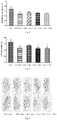
- the lung volume of each group was reduced after left pulmonary fibrosis for two weeks.
- the weights of left lung in Compound A-10 mpk and Compound A-20 mpk groups were significantly lower than that in model group (p ⁇ 0. 05).
- the weights of left lung in compound A-10 mpk and compound A-20 mpk groups were lower than that in compound A-5 mpk group (p ⁇ 0. 05).
- the weight of left lung in positive control drug BIBF1120 group was lower than that in model group.
- the left lung volume of treatment groups showed a decreasing trend, but there was no statistical difference (see Table 2 and Fig. 3-5 for details).
- the area of pulmonary fibrosis lesion, the pathological score of pulmonary fibrosis and the grade parameters of fibrosis were evaluated by Masson trichrome staining for pulmonary fibrosis foci in left lung.
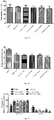
- the results of fibrosis area measurement showed that the area of pulmonary fibrosis lesion induced by BLM was basically uniform among all groups, with no significant difference in lesion area ( Fig. 12 and 13 , Table 4).
- the Ashcraft score of pulmonary fibrosis showed that the degree of pulmonary fibrosis in the treatment group of BIBF1120 and Compound A was significantly alleviated compared with that in the model group, with statistically significant differences (p ⁇ 0.01) ( Fig. 14 and 15 , Table 4).
- the inhibitory effect of compound A-10 mg/kg on the damage of bronchioles, bronchioles and pulmonary arterioles in fibrotic lesions was significantly better than compound A-5 mg/kg.
- the ashcraft score of pulmonary fibrosis showed that both the positive drug BIBF1120 and compound A significantly reduced the score of pulmonary fibrosis, and the average score of fibrosis in the entire fibrosis lesion decreased to about 3 points. More significantly, fibrosis lesions below 3 points accounted for more than 60%, and above 4 points was only less than 40%, indicating that the degree of fibrosis in the entire left lung tissue was significantly inhibited.
- rats were anesthetized and exposed to trachea. Bleomycin was injected into left trachea of each group (dosage: 3 mg/kg, volume: 1.0 ml/kg).
- Oral administration was performed on Day 8 after modeling, once a day.
- animals in each group were given an overdose of sodium barbiturate and sacrificed under intraperitoneal anesthesia, the left lung was taken, the weight and volume of the left lung were measured, then fixed by formalin, the bronchioles were stained with HE, Masson trichrome.
- the bronchioles, final bronchiole and small pulmonary artery injury and inflammation invasion were evaluated by semi-quantitative score, and pulmonary fibrosis was evaluated by Ashcraft semi-quantitative score.
- the animals had a slight decrease in body weight for a short period of time (within 6-7 days) during the course of the experiment.
- the weight of all animals increased gradually as the experiment process. There was no significant difference in average body weight among the experimental groups.
- Inflammatory cell infiltration partial tube wall thickening, smooth muscle hyperplasia and granulation tissue hyperplasia of the outer membrane of tube wall were observed in different degrees; here were different degrees of small arterial endothelial cells falling off and proliferating in the pulmonary arterioles and arterioles, inflammatory cells infiltrating to different degrees in the arterial wall, thickened smooth muscle layer, inflammatory exudation and the formation of adventitious granuloma.
- the alveolar tissue in the lesion was damaged to different degrees, which was manifested as alveolar epithelium shedding and regeneration, alveolar wall thickening and fibrosis. There were inflammatory exudation of alveolar cavity, inflammatory cell infiltration in alveolar wall and cavity.
- the terminal bronchioles and the accompanying damage of small pulmonary arteries were divided into fibrosis foci and fibrotic marginal area to evaluate the degree of pathological injury (Table 8).
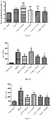
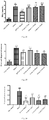
- the results showed that it significantly reduced the damage and inflammatory response of terminal bronchioles within fibrosis lesions and pulmonary small artery, treated with positive control BIBF1120, Compound A and GDC0449 for 14 consecutive days, with significant difference compared with model group (p ⁇ 0.001) ( Figure 17 ), and the analysis results of fibrosis in edge area were consistent with trends within the focal fibrosis ( Fig 18 ).
- the area of pulmonary fibrosis lesion, the pathological score of pulmonary fibrosis and the grade parameters of fibrosis were evaluated by Masson trichrome staining for pulmonary fibrosis foci in left lung.
- the results of fibrosis area measurement showed that the area of pulmonary fibrosis lesion induced by BLM was basically uniform among all groups, with no significant difference in lesion area ( Fig. 19 , Table 9).
- the destruction of alveolar structure, the fibrosis of alveolar wall and the fibrosis mass in alveolar cavity can be clearly seen by Masson's trichrome staining. Pulmonary fibrosis was significantly relieved after treatment with the compound.
- Ashcraft score of pulmonary fibrosis showed that the degree of pulmonary fibrosis treated with BIBF1120, Compound A and GDC0449 was significantly better than that in the model group, with significant difference by statistic analysis (p ⁇ 0.01) ( Fig 20 , Table 9). There was no significant statistic difference in dose-dependent effect between each dose group of the test compound A.
- alveolar structure damage (below 3 points) was used as the limit to calculate the cumulative score to evaluate the percentage of pulmonary fibrosis degree. The results showed that more than 60% of the lesions in the model group had a score of 4 or more.
- Type I collagen showed a very small amount of Type I collagen tissue in the alveolar wall of sham operation group. Diffuse Type I collagen deposition in fibrosis tissue, with fine reticular distribution, and some of them showed collagen-like structure were observed in the lesions of pulmonary fibrosis in each group. Type I collagen deposition with uneven density and distribution can be seen in the alveolar walls with alveolar structure remaining in the lesion, resulting in thickening and destruction of the remaining alveolar walls due to collagen deposition. The results of semi-quantitative immunohistochemical analysis of Type I collagen were shown in Fig.
- ⁇ -SMA The immunohistochemical results of ⁇ -SMA showed diffuse proliferation of myofibroblasts ( ⁇ -SMA positive cells) in the foci of pulmonary fibrosis, spreading over the fibrosis tissue, the alveolar wall of the lesion, and the bronchial adventitia and the non-arteriole adventitia of the lesion.
- the results of semi-quantitative analysis of ⁇ -SMA positive staining showed that there was no significant difference in positive rate of ⁇ -SMA in fibrosis lesions per unit area in model group compared with the positive drugs BIBF1120 and GDC0449.
- BIBF1120 Compared with the therapeutic effect of the positive control, BIBF1120 at the dose of 100mg/kg/d, similar inhibitory effects on fibrosis were observed in three doses of compound A (5, 15 and 30 mg/kg).
- the ashcraft score of pulmonary fibrosis showed that both the positive drugs and the tested compounds significantly reduced the score of pulmonary fibrosis, and the average score of the entire fibrosis lesion was reduced to about 3 points.
- the degree of fibrosis below 3 points accounted for more than 80%, and that above 4 points was less than 20%, indicating that the degree of fibrosis in the entire left lung tissue was significantly inhibited.
- the ashcraft score of pulmonary fibrosis showed that no significant dose-effect relationship was observed in the therapeutic efficacy test of the three different dose groups of the tested compound A, but there was a dose-dependent change in the protein expression of ⁇ -SMA at three doses of Compound A, and the protein expression was significantly reduced at the dose of 30 mg/kg/d. After 14 days of treatment, there was no significant change in the expression of Type I collagen in the lung tissue of compound A group compared with model group. There was no significant regulation of ⁇ -SMA and type I collagen expression for the positive drug BIBF1120 and the tested compound GDC0449 at 50 mg/kg/d for 14 consecutive days.
- both compounds have a certain effect on inhibiting pulmonary fibrosis, which is mainly manifested in the improvement of pulmonary pathological changes.
- the surface of the liver was rough, and dull, and fine granular changes were observed.
- the surface of Obercholic acid treated group was rough and the change of dispersive fine particles was significantly less than that of model group.
- the changes of liver surface in compound A treatment group were slightly alleviated compared with the model group.
- the liver of the model group and the positive drug Obercholic acid group increased significantly. There was no significant increase in liver in the treatment group of Compound A compared with the false model group.
- the change of liver weight/body weight ratio was consistent with the change of liver weight ( Fig 24-25 ).
- the level of ALT, AST, TBIL in animal peripheral blood of model group was significantly increased after oral administration of CCl 4 for 4 weeks. Compared with the model group, the level of ALT, AST, TBIL in peripheral blood of the Obercholic acid group decreased, but there was no statistical significance. After four weeks of treatment of Compound A, there was a decreasing trend of dose-dependent ALT and AST, of which the high dose group of compound A was significantly lower than that of the model group (p ⁇ 0.05), but TBIL was not significantly decreased ( Fig. 26-28 ).
- the treatment groups of Compound A had a tendency to reduce hepatocellular degeneration, necrosis and inflammatory cell infiltration, but the overall score of hepatocyte injury was not significantly different from that of the model group ( Fig. 29-32 ).
- This Sirius red stain demonstrated uneven collagen deposition in the liver tissue. Fibrosis was mostly distributed in the central venous area, portal area and between the hepatic lobules, no clear bridging fibrosis and pseudolobule tissue like.
- the results of quantitative analysis of the whole scanning liver fibrosis area with Sirius scarlet staining showed that the fibrosis was significantly reduced in the treatment group with devischolic acid, which was significantly different from that in the model group. There was no significant difference in hepatic fibrosis area between each treatment group of compound A and model group ( Fig33 ).
- liver injury score in the three dose groups decreased from 6 points in the model group to 4-5 points.
- the main manifestations were inhibition of hepatocyte degeneration and necrosis. However, it had little effect on the inflammatory response of liver tissue.
- the area of liver tissue fibrosis decreased from 1.2% to 0.8% in the model group, indicating a trend of inhibition of fibrosis, but there was no statistical difference.
- compound A has a certain therapeutic trend of inhibiting CCl 4 -induced liver fibrosis, which was mainly manifested in reducing the degree of liver cell degeneration and necrosis as well as fibrosis, and there was no clear therapeutic effect of inhibiting inflammatory reaction.
- mice 60 male C57BL/6 mice, 8 weeks old, weighing about 25 g, were purchased from Beijing China Fukang Bio-tech Co., Ltd. (animal certificate number: 11401300053752).
- mice in BLM infusion group were randomly assigned to start treatment on the 5th day, once a day, with a treatment cycle of 20 days. The whole process was 25 days.
- the lung tissues were fixed in 10% neutral formalin, dehydrated by alcohol gradient, embedded with paraffin, stained by hematoxylin-eosin (H&E) and Masson trichrome staining. And the inflammatory area and degree of fibrosis of the lung tissues in mice were evaluated by APERIO ScanScope. Immunohistochemical staining of lung tissue was performed to quantify ⁇ -SMA positive fibroblasts in lung tissue and to calculate the percentage (%) of ⁇ -SMA staining in the entire lung stroma.
- mice During administration, the mice had normal intake and drinking water, no animal physiology, abnormal behavior and death.
- the control group showed normal lung tissue morphology, and BLM infusion caused severe pathological changes in the lungs of mice, including alveolar tissue structure destruction and inflammatory cell infiltration, pulmonary vascular and bronchial inflammatory cell infiltration, which significantly increased the infiltration area of inflammatory cells in the lung tissue (p ⁇ 0.001).
- the area of inflammatory infiltration in the lung tissue of mice was decreased, the pathological changes were improved, and partial of lung structure returned to normal.
- the inflammatory infiltration area in compound A 10mpk group and 20mpk group was significantly decreased (p ⁇ 0.05); the inflammatory area of compound A 20mpk combined with BIBF1120 50mpk and BIBF1120 50mpk group was significantly decreased (p ⁇ 0.01; p ⁇ 0.001), which was statistically significant (Table 14, Fig. 35 ).
- the efficacy of compound A combined with BIBF1120 was similar to that of BIBF1120.
- the blank control group showed normal lung tissue morphology and some normal collagen protein around the pulmonary duct.
- pulmonary fibrosis was very significant, including diffuse fibrosis, thickening of alveolar septum, intracavitary fibrosis and disappearance of normal alveolar structure.
- some lung tissues were improved, alveolar structure returned to normal, and compound A 10mpk and 20mpk, Compound A 20mpk combined with BIBF1120 50mpk, and BIBF1120 50mpk group significantly decreased the modified pathological Ashcroft score of pulmonary fibrosis injury (p ⁇ 0. 01) ( Fig 36 ).
- mice in the model group After BLM induction, the body weight of mice in the model group was significantly reduced, and the content of soluble collagen in the bronchoalveolar lavage solution of mice was significantly increased, resulting in a significant increase in the infiltration area of inflammatory cells in the lung tissue of mice, which further led to a large amount of collagen deposition and caused severe fibrosis.
- various indexes of mice were improved, among which compound A 20mpk combined with BIBF1120 50mpk and BIBF1120 50mpk significantly reduced the content of soluble collagen in alveolar lavage fluid.
- Compound A 10mpk and 20mpk significantly reduced the percentage of inflammatory infiltration area.
- Compound A 20mpk combined with BIBF1120 50mpk and BIBF1120 50mpk significantly reduced the percentage of inflammatory infiltration area.
- the efficacy of compound A combined with BIBF1120 group was similar to that of BIBF1120 group.
- Compound A 10mpk, compound A 20mpk, compound A 20mpk combined with BIBF1120 50mpk and BIBF1120 50mpk significantly reduced the modified pathological Ashcroft score of pulmonary fibrosis injury.
- Compound A 20mpk group and compound A 20mpk combined with BIBF1120 50mpk also significantly reduced the percentage of ⁇ -SMA immunohistochemical staining.
- Compound A showed significant efficacy, while BIBF1120 showed no significant efficacy.
- compound A alone showed significant inhibitory effect on bleomycin-induced lung inflammation and fibrosis.
- Compound A combined with BIBF1120 and compound BIBF1120 alone also showed good anti-inflammatory and anti-pulmonary fibrosis effects.
Landscapes
- Health & Medical Sciences (AREA)
- Pharmacology & Pharmacy (AREA)
- Veterinary Medicine (AREA)
- Public Health (AREA)
- Chemical & Material Sciences (AREA)
- General Health & Medical Sciences (AREA)
- Medicinal Chemistry (AREA)
- Animal Behavior & Ethology (AREA)
- Life Sciences & Earth Sciences (AREA)
- Engineering & Computer Science (AREA)
- Bioinformatics & Cheminformatics (AREA)
- Chemical Kinetics & Catalysis (AREA)
- Nuclear Medicine, Radiotherapy & Molecular Imaging (AREA)
- General Chemical & Material Sciences (AREA)
- Organic Chemistry (AREA)
- Immunology (AREA)
- Gastroenterology & Hepatology (AREA)
- Pulmonology (AREA)
- Epidemiology (AREA)
- Transplantation (AREA)
- Cardiology (AREA)
- Dermatology (AREA)
- Heart & Thoracic Surgery (AREA)
- Urology & Nephrology (AREA)
- Pharmaceuticals Containing Other Organic And Inorganic Compounds (AREA)
- Plural Heterocyclic Compounds (AREA)
Applications Claiming Priority (2)
| Application Number | Priority Date | Filing Date | Title |
|---|---|---|---|
| CN201610972163 | 2016-11-04 | ||
| PCT/CN2017/109021 WO2018082587A1 (zh) | 2016-11-04 | 2017-11-02 | Hedgehog通路抑制剂在治疗纤维化疾病中的应用 |
Publications (2)
| Publication Number | Publication Date |
|---|---|
| EP3536320A1 true EP3536320A1 (de) | 2019-09-11 |
| EP3536320A4 EP3536320A4 (de) | 2020-07-29 |
Family
ID=62075731
Family Applications (1)
| Application Number | Title | Priority Date | Filing Date |
|---|---|---|---|
| EP17867700.1A Withdrawn EP3536320A4 (de) | 2016-11-04 | 2017-11-02 | Anwendung eines hedgehog-signalweg-inhibitors zur behandlung von fibrotischen erkrankungen |
Country Status (4)
| Country | Link |
|---|---|
| US (1) | US20190255042A1 (de) |
| EP (1) | EP3536320A4 (de) |
| CN (1) | CN109890390A (de) |
| WO (1) | WO2018082587A1 (de) |
Families Citing this family (14)
| Publication number | Priority date | Publication date | Assignee | Title |
|---|---|---|---|---|
| US11066404B2 (en) | 2018-10-11 | 2021-07-20 | Incyte Corporation | Dihydropyrido[2,3-d]pyrimidinone compounds as CDK2 inhibitors |
| WO2020168197A1 (en) | 2019-02-15 | 2020-08-20 | Incyte Corporation | Pyrrolo[2,3-d]pyrimidinone compounds as cdk2 inhibitors |
| TW202100520A (zh) | 2019-03-05 | 2021-01-01 | 美商英塞特公司 | 作為cdk2 抑制劑之吡唑基嘧啶基胺化合物 |
| US11919904B2 (en) | 2019-03-29 | 2024-03-05 | Incyte Corporation | Sulfonylamide compounds as CDK2 inhibitors |
| WO2020223558A1 (en) | 2019-05-01 | 2020-11-05 | Incyte Corporation | Tricyclic amine compounds as cdk2 inhibitors |
| WO2020223469A1 (en) | 2019-05-01 | 2020-11-05 | Incyte Corporation | N-(1-(methylsulfonyl)piperidin-4-yl)-4,5-di hydro-1h-imidazo[4,5-h]quinazolin-8-amine derivatives and related compounds as cyclin-dependent kinase 2 (cdk2) inhibitors for treating cancer |
| WO2021030537A1 (en) | 2019-08-14 | 2021-02-18 | Incyte Corporation | Imidazolyl pyrimidinylamine compounds as cdk2 inhibitors |
| CR20220170A (es) | 2019-10-11 | 2022-10-10 | Incyte Corp | Aminas bicíclicas como inhibidoras de la cdk2 |
| US12605377B2 (en) | 2020-10-13 | 2026-04-21 | Endeavor Biomedicines, Inc. | Methods of treating fibrosis |
| JP7868066B2 (ja) * | 2020-10-13 | 2026-06-01 | エンデバー バイオメディシンズ, インコーポレイテッド | 線維症を処置する方法 |
| US11981671B2 (en) | 2021-06-21 | 2024-05-14 | Incyte Corporation | Bicyclic pyrazolyl amines as CDK2 inhibitors |
| US11976073B2 (en) | 2021-12-10 | 2024-05-07 | Incyte Corporation | Bicyclic amines as CDK2 inhibitors |
| US12447148B2 (en) | 2024-03-05 | 2025-10-21 | Endeavor Biomedicines, Inc. | Methods of improving lung function |
| CN120118023B (zh) * | 2025-02-17 | 2025-12-23 | 张家界学院 | 一种特发性肺纤维化抑制剂及应用 |
Family Cites Families (10)
| Publication number | Priority date | Publication date | Assignee | Title |
|---|---|---|---|---|
| US3989816A (en) | 1975-06-19 | 1976-11-02 | Nelson Research & Development Company | Vehicle composition containing 1-substituted azacycloheptan-2-ones |
| US4444762A (en) | 1980-04-04 | 1984-04-24 | Nelson Research & Development Company | Vehicle composition containing 1-substituted azacyclopentan-2-ones |
| UY31322A1 (es) * | 2007-09-05 | 2009-04-30 | Amidas heterocíclicas y sus métodos de uso-975 | |
| US20090281089A1 (en) * | 2008-04-11 | 2009-11-12 | Genentech, Inc. | Pyridyl inhibitors of hedgehog signalling |
| WO2011088404A1 (en) * | 2010-01-15 | 2011-07-21 | Infinity Pharmaceuticals , Inc | Treatment of fibrotic conditions using hedgehog inhibitors |
| CN102796103A (zh) | 2011-05-23 | 2012-11-28 | 南京英派药业有限公司 | 6-(芳基甲酰)咪唑并[1,2-a]嘧啶和6-(芳基甲酰)[1,2,4]三唑并[4,3-a]嘧啶作为Hedgehog抑制剂及其应用 |
| EP2715366B1 (de) * | 2011-06-02 | 2017-07-19 | Novartis AG | Biomarker für hedgehog-hemmertherapie |
| WO2013013614A1 (zh) | 2011-07-28 | 2013-01-31 | 南京英派药业有限公司 | 4-(3-杂芳基芳基氨基)喹唑啉和1-(3-杂芳基芳基氨基)异喹啉作为Hedgehog通路抑制剂及其应用 |
| CN103570625A (zh) | 2012-07-19 | 2014-02-12 | 南京英派药业有限公司 | N-(3-杂芳基芳基)-4-芳基芳基甲酰胺和类似物作为Hedgehog通路抑制剂及其应用 |
| US20150225476A1 (en) * | 2012-09-21 | 2015-08-13 | Agency For Science, Technology And Research | Method for treating a disease or disorder of the lung by inhibition of the hedgehog pathway |
-
2017
- 2017-11-02 US US16/347,242 patent/US20190255042A1/en not_active Abandoned
- 2017-11-02 CN CN201780067167.1A patent/CN109890390A/zh active Pending
- 2017-11-02 WO PCT/CN2017/109021 patent/WO2018082587A1/zh not_active Ceased
- 2017-11-02 EP EP17867700.1A patent/EP3536320A4/de not_active Withdrawn
Also Published As
| Publication number | Publication date |
|---|---|
| WO2018082587A1 (zh) | 2018-05-11 |
| CN109890390A (zh) | 2019-06-14 |
| US20190255042A1 (en) | 2019-08-22 |
| EP3536320A4 (de) | 2020-07-29 |
Similar Documents
| Publication | Publication Date | Title |
|---|---|---|
| US20190255042A1 (en) | Application of hedgehog pathway inhibitor in treating fibrosis diseases | |
| AU2022256167B2 (en) | Methods and compositions for killing senescent cells and for treating senescence-associated diseases and disorders | |
| JP6557684B2 (ja) | 線維性疾患の治療に用いられるppar化合物 | |
| HK1249030A1 (zh) | 化合物及在治疗衰老相关病症中的用途 | |
| AU2018346712A1 (en) | P38 kinase inhibitors reduce DUX4 and downstream gene expression for the treatment of FSHD | |
| CN114026072A (zh) | 治疗特发性肺纤维化的方法 | |
| EP4426298B1 (de) | Neue therapeutische kombinationen enthalend pirfenidon und pde4-inhibitor zur behandlung von fortschreitenden fibrosierenden interstitiellen lungenerkrankungen | |
| EP4494700A2 (de) | Neue orale pharmazeutische zusammensetzung und dosierungsplan zur therapie progressiver fibrosierender interstitieller lungenerkrankungen | |
| KR102128810B1 (ko) | 요산 또는 통풍 질환의 예방 또는 치료 | |
| KR20100014267A (ko) | Acat 억제제 및 이의 섬유증 예방 또는 치료에서의 용도 | |
| WO2002011725A1 (en) | Inflammatory cytokine production inhibitors | |
| HK40115215A (en) | New therapeutic combinations for the treatment of progressive fibrosing interstitial lung diseases | |
| HK40115216A (en) | New oral pharmaceutical composition and dose regimen for the therapy of progressive fibrosing interstitial lung diseases | |
| JP2006117654A (ja) | 呼吸器疾患治療剤 | |
| HK40096647A (en) | Pharmaceutical composition for preventing or treating fibrosis | |
| HK40063173A (en) | Method for treating idiopathic pulmonary fibrosis | |
| JP2022065212A (ja) | 組織線維化による疾患の予防又は治療のための医薬 | |
| NZ765534B2 (en) | P38 kinase inhibitors reduce dux4 and downstream gene expression for the treatment of fshd | |
| JPWO2001058489A1 (ja) | 術後ストレス予防・治療剤 | |
| HK1231392B (en) | Methods and compositions for killing senescent cells and for treating senescence-associated diseases and disorders |
Legal Events
| Date | Code | Title | Description |
|---|---|---|---|
| STAA | Information on the status of an ep patent application or granted ep patent |
Free format text: STATUS: THE INTERNATIONAL PUBLICATION HAS BEEN MADE |
|
| PUAI | Public reference made under article 153(3) epc to a published international application that has entered the european phase |
Free format text: ORIGINAL CODE: 0009012 |
|
| STAA | Information on the status of an ep patent application or granted ep patent |
Free format text: STATUS: REQUEST FOR EXAMINATION WAS MADE |
|
| 17P | Request for examination filed |
Effective date: 20190529 |
|
| AK | Designated contracting states |
Kind code of ref document: A1 Designated state(s): AL AT BE BG CH CY CZ DE DK EE ES FI FR GB GR HR HU IE IS IT LI LT LU LV MC MK MT NL NO PL PT RO RS SE SI SK SM TR |
|
| AX | Request for extension of the european patent |
Extension state: BA ME |
|
| DAV | Request for validation of the european patent (deleted) | ||
| DAX | Request for extension of the european patent (deleted) | ||
| A4 | Supplementary search report drawn up and despatched |
Effective date: 20200630 |
|
| RIC1 | Information provided on ipc code assigned before grant |
Ipc: A61P 37/06 20060101ALI20200624BHEP Ipc: A61P 9/00 20060101ALI20200624BHEP Ipc: A61K 31/496 20060101AFI20200624BHEP Ipc: A61P 13/12 20060101ALI20200624BHEP Ipc: A61P 1/16 20060101ALI20200624BHEP Ipc: A61P 11/00 20060101ALI20200624BHEP Ipc: A61P 17/00 20060101ALI20200624BHEP |
|
| STAA | Information on the status of an ep patent application or granted ep patent |
Free format text: STATUS: EXAMINATION IS IN PROGRESS |
|
| 17Q | First examination report despatched |
Effective date: 20210902 |
|
| RAP3 | Party data changed (applicant data changed or rights of an application transferred) |
Owner name: IMPACT THERAPEUTICS, INC. |
|
| RAP3 | Party data changed (applicant data changed or rights of an application transferred) |
Owner name: IMPACT THERAPEUTICS (SHANGHAI), INC |
|
| STAA | Information on the status of an ep patent application or granted ep patent |
Free format text: STATUS: THE APPLICATION IS DEEMED TO BE WITHDRAWN |
|
| 18D | Application deemed to be withdrawn |
Effective date: 20220113 |