EP3536611B1 - Rotor für ein schwebefähiges flugzeug und zugehöriges verfahren zur steuerung - Google Patents
Rotor für ein schwebefähiges flugzeug und zugehöriges verfahren zur steuerung Download PDFInfo
- Publication number
- EP3536611B1 EP3536611B1 EP19171701.6A EP19171701A EP3536611B1 EP 3536611 B1 EP3536611 B1 EP 3536611B1 EP 19171701 A EP19171701 A EP 19171701A EP 3536611 B1 EP3536611 B1 EP 3536611B1
- Authority
- EP
- European Patent Office
- Prior art keywords
- axis
- tip portion
- respect
- blade
- main portion
- Prior art date
- Legal status (The legal status is an assumption and is not a legal conclusion. Google has not performed a legal analysis and makes no representation as to the accuracy of the status listed.)
- Active
Links
Images






Classifications
-
- B—PERFORMING OPERATIONS; TRANSPORTING
- B64—AIRCRAFT; AVIATION; COSMONAUTICS
- B64C—AEROPLANES; HELICOPTERS
- B64C27/00—Rotorcraft; Rotors peculiar thereto
- B64C27/32—Rotors
- B64C27/46—Blades
- B64C27/463—Blade tips
-
- B—PERFORMING OPERATIONS; TRANSPORTING
- B64—AIRCRAFT; AVIATION; COSMONAUTICS
- B64C—AEROPLANES; HELICOPTERS
- B64C27/00—Rotorcraft; Rotors peculiar thereto
- B64C27/32—Rotors
- B64C27/46—Blades
-
- B—PERFORMING OPERATIONS; TRANSPORTING
- B64—AIRCRAFT; AVIATION; COSMONAUTICS
- B64C—AEROPLANES; HELICOPTERS
- B64C27/00—Rotorcraft; Rotors peculiar thereto
- B64C27/04—Helicopters
-
- B—PERFORMING OPERATIONS; TRANSPORTING
- B64—AIRCRAFT; AVIATION; COSMONAUTICS
- B64C—AEROPLANES; HELICOPTERS
- B64C27/00—Rotorcraft; Rotors peculiar thereto
- B64C27/54—Mechanisms for controlling blade adjustment or movement relative to rotor head, e.g. lag-lead movement
- B64C27/58—Transmitting means, e.g. interrelated with initiating means or means acting on blades
- B64C27/59—Transmitting means, e.g. interrelated with initiating means or means acting on blades mechanical
-
- B—PERFORMING OPERATIONS; TRANSPORTING
- B64—AIRCRAFT; AVIATION; COSMONAUTICS
- B64C—AEROPLANES; HELICOPTERS
- B64C27/00—Rotorcraft; Rotors peculiar thereto
- B64C27/54—Mechanisms for controlling blade adjustment or movement relative to rotor head, e.g. lag-lead movement
- B64C27/72—Means acting on blades
-
- B—PERFORMING OPERATIONS; TRANSPORTING
- B64—AIRCRAFT; AVIATION; COSMONAUTICS
- B64C—AEROPLANES; HELICOPTERS
- B64C27/00—Rotorcraft; Rotors peculiar thereto
- B64C27/54—Mechanisms for controlling blade adjustment or movement relative to rotor head, e.g. lag-lead movement
- B64C27/72—Means acting on blades
- B64C2027/7205—Means acting on blades on each blade individually, e.g. individual blade control [IBC]
- B64C2027/7211—Means acting on blades on each blade individually, e.g. individual blade control [IBC] without flaps
-
- Y—GENERAL TAGGING OF NEW TECHNOLOGICAL DEVELOPMENTS; GENERAL TAGGING OF CROSS-SECTIONAL TECHNOLOGIES SPANNING OVER SEVERAL SECTIONS OF THE IPC; TECHNICAL SUBJECTS COVERED BY FORMER USPC CROSS-REFERENCE ART COLLECTIONS [XRACs] AND DIGESTS
- Y02—TECHNOLOGIES OR APPLICATIONS FOR MITIGATION OR ADAPTATION AGAINST CLIMATE CHANGE
- Y02T—CLIMATE CHANGE MITIGATION TECHNOLOGIES RELATED TO TRANSPORTATION
- Y02T50/00—Aeronautics or air transport
- Y02T50/60—Efficient propulsion technologies, e.g. for aircraft
Definitions
- the present invention relates to a rotor for a hover-capable aircraft.
- the present invention also relates to a method of controlling a rotor for a hover-capable aircraft.
- Known hover-capable aircrafts such as helicopters for example, comprise a fuselage, a main rotor positioned on the top of a central portion of the fuselage and an anti-torque tail rotor with the function of countering the torque generated by the main rotor on the fuselage.
- the main rotor basically comprises a mast rotatable about an axis, a hub coupled to this mast, and a plurality of blades fastened in a cantilever manner to the above-mentioned hub.
- each blade has a substantially longitudinal extension radial to the axis of the mast and, in use, is driven in rotation by the hub on a motion plane transversal to the axis of the mast.
- each blade is movable with respect to the hub on some or all of the orientation planes so as to enable the different manoeuvres of the helicopter.
- Each blade comprises, in particular:
- each blade is longer than the corresponding tip portion.
- the tip portions of the blades In the helicopter industry, it is known to shape the tip portions of the blades with an anhedral (negative dihedral) angle with respect to the corresponding main portions. In other words, the tip portions of the blades are inclined downwards from the corresponding main portions and towards the fuselage of the helicopter.
- US2016/0075430 describes a rotor for a hover-capable aircraft in which each blade of the rotor comprises a tip portion hinged to a main root portion, and which can be operated to adjust the anhedral angle according to the flight conditions of the aircraft.
- the rotor shown in US2016/0075430 further comprises a hydraulic actuator for adjusting the anhedral angle of the tip portion.
- the tip portions are subjected to very high aerodynamic and inertial loads, in particular centrifugal forces. Accordingly, the actuating system requires very powerful actuating forces and torques.
- KR-A-20120059091 discloses a known rotor.
- EP-A-1127786 discloses a base wing, which is attached at its root end portion to the rotor head of a rotational drive unit and is provided with a front wing and a rear wing having substantially equal spans.
- EP-A-1127786 discloses a control unit for controlling the incidence angle of the front and rear wings.
- EP-A-1127786 discloses a rotor for a hover-capable aircraft according to the preamble of claim 1 and a method of controlling a rotor for a hover-capable aircraft according to the preamble of claim 9.
- US-A-2006/027703 discloses a blade comprising a main portion, a tip portion having an aerodynamic shape and positioned proximate to an edge of the main portion, an actuator coupled to the tip portion.
- the actuator is configured to rotate the tip portion about a longitudinal axis thereof and to adjust a dihedral angle of the tip portion.
- EP-A-2228299 discloses a known rotor for a hover-capable aircraft.
- the object of the present invention is to produce a rotor for an aircraft capable of hovering that satisfies at least one of the above-specified needs in a simple and inexpensive manner.
- the aforesaid object is achieved by the present invention, in so far as it relates to a rotor for a hover-capable aircraft, as claimed in claim 1.
- the present invention also relates to a method of controlling a rotor for a hover-capable aircraft, as claimed in claim 9.
- reference numeral 1 indicates a helicopter.
- the helicopter 1 basically comprises a fuselage 2, a main rotor 3 rotating about an axis and a tail rotor 4 located at one end of the fuselage 2 and rotating about its own axis transversal to axis A.
- the anti-torque tail rotor 4 projects in a cantilever manner from a fin situated at a tail end of the fuselage 2 and is designed to counter the torque transmitted by the rotor 3 to the fuselage 2.
- the rotor 3 basically comprises:
- the hub 7 drives the blades 6 in rotation about axis A and enables the blades 6 to rotate, under the action of an external drive, about respective directions of extension to vary the respective angles of attack with respect to the airflow.
- the blades 6 are hinged to the hub 7 so as to be movable about different axes, according to the configuration of the rotor 3.
- the blade 6 comprises:
- the main portion 10 is longer than the tip portion 11 in the direction of radial extension of the blade 6.
- the tip portion 11 is movable with respect to the main portion 10.
- the tip portion 11 is selectively movable with respect to the main portion 10 between:
- the main portion 10 and tip portion 11 have respective leading 12 and 13 and trailing edges 14 and 15.
- dihedral/anhedral angle ⁇ indicates the angle formed between the leading edge 13 of the tip portion 11 and the leading edge 12 of the main portion 10 on a plane parallel to axis A and to axis C, at the common point of the leading edges 12 and 13.
- An anhedral angle ⁇ indicates that the leading edge 13 of the tip portion 11 is inclined towards the fuselage 2 with respect to the leading edge 12 of the main portion 10.
- a dihedral angle ⁇ indicates that the leading edge 13 of the tip portion 11 is inclined away from fuselage 2 with respect to the leading edge 12 of the main portion 10.
- sweep angle ⁇ indicates the angle formed between the leading edge 13 of the tip portion 11 and the leading edge 12 of the main portion 10 in a plane transversal to axis A, at the common point of the leading edges 12 and 13.
- a positive sweep angle ⁇ indicates that the leading edge 13 of the tip portion 11 is arranged downstream with respect to the leading edge 12 of the main portion 10, with reference to the direction of motion of the blade 6 about axis A.
- a negative sweep angle ⁇ indicates that the leading edge 13 of the tip portion 11 is arranged upstream with respect to the leading edge 12 of the main portion 10, with reference to the direction of motion of the blade 6 about axis A.
- the sweep angle ⁇ of the tip portion 11 with respect to the main portion 10 is minimized when the tip portion 11 is arranged in the first position.
- the dihedral angle ⁇ of the tip portion 11 with respect to the main portion 10 is zero, when the tip portion 11 is arranged in the second position.
- the blade 6 also comprises an actuator unit 16 to produce the transition of the tip portion 11 between the first and second positions.
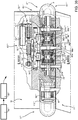
- the actuator unit 16 comprises ( Figures 3 to 9 ) :
- the motor 20 is a stepper motor.
- the motor 20 is housed inside the main portion 10.
- the rods 21 rotate about respective axes parallel to each other and to axis C, and in turn comprise:
- sections 26 are inclined with respect to sections 25.
- sections 25 and the associated axes C are straight, while sections 26 and the associated axes D are curved.
- sections 26 are shaped in such a way that:
- Sections 26 are housed in a rotatable manner inside respective apertures 27 defined by ribs 28 of the tip portion 11.
- the rods 21 are connected to the respective ribs 28 by corresponding articulated joints 29 ( Figures 4-9 ).
- rods 21 are axially constrained to the ribs 28 parallel to axis C in a manner not shown in detail in the accompanying figures.
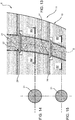
- the rods 21 and the ribs 28 move in a plane orthogonal to axis C and their section in this plane does not change during the transition of the tip portion 11 between the corresponding first and second positions, so as not to alter the sections transversal to axis D of the tip portion 11.
- the sections of the tip portion 11 interposed between the ribs 28 elastically shear deform in a plane orthogonal to the tip portion 11.
- the ribs 28 are spaced apart along the direction of extension of the tip portion 11.
- section area of the rods 21 transversal to associated axis D decreases when proceeding along the tip portion 11 away from axis A.
- the rods 21 also perform the function of supporting the bending moments and shear loads on the associated blades 6. In other words, the rods 21 perform the structural function normally carried out by the spars used in the blades.
- the rods 21 have a circular section in a plane orthogonal to axes C and D.
- the diameter of the rods 21 decreases when proceeding along the tip portion 11 following axes D.
- the transmission unit 22 comprises, in particular, ( Figures 3 to 9 ):
- the helicopter 1 also comprises a control unit 40 (only shown schematically in Figure 3 ) configured to:
- the tip portion 11 comprises a covering 50 defining the aerodynamic surface.
- control unit 40 controls the motor 20 so as to arrange the tip portion 11 in the first position ( Figures 4 to 6 ), where angle ⁇ is anhedral and the sweep angle ⁇ is minimized.
- control unit 40 controls the motor 20 so as to arrange the tip portion 11 in the second position ( Figures 7 to 9 ), where the dihedral angle ⁇ is zero and the sweep angle ⁇ is positive.
- the motor 20, via the transmission unit 22, causes the rotation of the rods 21 about axis C, by an angle of ninety degrees in the case shown.
- the ribs 28 of the tip portion 11 move rigidly, maintaining their shape in planes orthogonal to the axes D as they are in contact with the rods 21, while the sections of the tip portion 11 interposed between the ribs 28 elastically shear deform.
- reference numeral 3' indicates, as a whole, a rotor according to a second embodiment of the present invention.
- Rotor 3' differs from rotor 3 in that it comprises a pair of freewheels 51' interposed along one of the actuating rods 21' and configured to prevent rotation of the rods 21' about axis C in the clockwise and anticlockwise directions, respectively. In particular, it is possible to selectively activate one of the freewheels 51' and deactivate the other freewheel 51'.
- rotor 3' differs from rotor 3 in that it uses, at least in forward flight at speeds above a threshold value, the aerodynamic force acting on the tip portions 11 to move them between the first and second operating positions.
- the lift acting on the tip portions 11 varies in sign depending on whether the associated blades 6 are advancing or retroceding.
- lift is directed downwards when the blades 6 are advancing - i.e. they have respective tangential velocities concordant with the direction of flight of the helicopter 1 - and upwards when the blades 6 are retroceding - i.e. they have respective tangential velocities discordant with respect to the direction of flight of the helicopter 1.
- Rotor 3' uses, jointly with the motor 20, the downward (upward) lift forces to arrange the tip portions 11 in the first position with an anhedral (dihedral) angle ⁇ , before setting the helicopter 1 in hovering conditions.
- the freewheel 51' that allows rotation in the clockwise (anticlockwise) direction of the rods 21' is activated and the other freewheel 51' is deactivated (and vice versa).
- the covering 50 also comprises ( Figure 17 ) fibres arranged along the associated axes D so that it becomes axially rigid and shear-flexible.
- reference numeral 3 indicates, as a whole, a rotor according to a third embodiment of the present invention.
- Rotor 3" differs from rotor 3 in that the tip portion 11" of each blade 6 (shown entirely schematically) is formed by a plurality of elements 55" in a rigid material and elements in a viscoelastic material 56" lying on respective planes orthogonal to axis C and alternating with one another along axis C.
- the tip portions 11 are particularly rigid to flexure in planes orthogonal to axis C so as to maintain the shape of the ribs 28 and therefore the aerodynamic efficiency of the covering 50, and shear deformable in planes perpendicular to axis C under the action of the rods 21.
- reference numeral 3' indicates, as a whole, a rotor according to a fourth embodiment, which is not part of the present invention and is shown only for illustrative purposes.
- Rotor 3'" differs from rotor 3 in that it does not comprise actuating unit 16 and in that the adjustment of the position of tip portions 11''' relative to main portion 10 is achieved by means of the resultant moments Mr generated by inertia forces and aerodynamic forces and/or elastic forces and/or damping forces on respective tip portions 11'".
- tip portion 11'" of each blade 6'" is movable with respect to relative main portion 10 between:
- tip portion 11'" when set in the first angular position, is arranged at a lower level than in the second angular position.
- Blade 6' comprises connecting means 60'" for connecting tip portion 11'" to main portion 10 movably between the first and second position.
- connecting means 60'" comprises a hinge 61"' extending about an axis F tangential to axis A and about which tip portion 11"' is hinged to main portion 10.
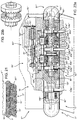
- hinge 61"' comprises ( Figure 22 ):
- Protrusion 106"' comprises a conical end 108'" coaxial to axis C and fitted inside a body 110"' onto which a further joining element 109a"' is articulated about axis F. Further joining element 109a"' also protrudes from tip portion 11"'.
- Connecting means 60"' can be selectively set in a first configuration ( Figure 22 ) in which they:
- connecting means 60'" can be selectively set in a second configuration ( Figure 23a ), in which they:
- the first angular direction corresponds to a downwards movement of tip portions 11'" about relative axes C, i.e. to an increase of the anhedral angle ⁇ or to a decrease of dihedral angle.
- the second angular direction corresponds to an upwards movement of tip portions 11"', i.e. to a decrease of anhedral angle ⁇ or to an increase of dihedral angle.
- each tip portion 11'" is set in the respective first angular position, when helicopter 1 is in hover and is set in the respective second angular position, when helicopter 1 is in forward flight.
- each tip portion 11'" is movable from the first angular position to the second angular position, when helicopter 1 is in hover or in forward flight with a speed lower than a threshold value and helicopter 1 must be arranged in a configuration optimized for forward flight.
- connecting means 60'" are set in the first configuration, when helicopter 1 is in hover or in forward flight with a speed lower than a threshold value, and are moved to the second configuration when helicopter 1 must be arranged in a configuration optimized for forward flight.
- Each tip portion 11'" is also movable from the second angular position to the first angular position when helicopter 1 is in forward flight and helicopter 1 must be arranged in a configuration optimized for hovering. Accordingly, connecting means 60''' are set in the second configuration, when helicopter 1 is in forward flight with a speed greater than a threshold value, and are moved to the first configuration, when helicopter 1 must be arranged in a configuration optimized for hovering.
- blade 6' comprises ( Figures 22 , 23a and 35 ) a rotational spring 90"', which is interposed between relative main portion 10 and tip portion 11'" and exerts an elastic torque Mk about relative axis F on tip portion 11'".
- blade 6' comprises ( Figures 22 , 23a and 35 ) a rotational damper 92"', which is interposed between main portion 10 and tip portion 11"', and exerts a damping torque Md dependent on the rate of rotation about axis F on tip portion 11'".
- spring 90"' and/or damper 92"' are housed inside body 110'"
- blade 6'" comprises a plurality of ballasts 91"' arranged on tip portion 11'" and aimed to locate the centre of mass of tip portion 11'" as close as possible to axis F, so as to minimize the moment Mc due to centrifugal force and other inertial actions acting on tip portion 11'" ( Figure 35 ) .
- Ballasts 91"' are fixed to main portion 10.
- ballasts 91"' are radially opposed radially to axis F with respect to respective joining elements 109a"', 109b"'.
- ballasts 91"' are made in tungsten.
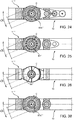
- Figure 27 shows the temporal variation of lift resulting on tip portion 11"' of blade 6"' in a hover condition of helicopter 1.
- the lift is positive and substantially constant in value.
- the aerodynamic moment Mlift generated on tip portion 11'" by the lift is constant directed in the second angular direction, counter-clockwise in Figure 35 .
- Figure 28 shows the temporal variation of lift resulting on tip portion 11'" of blade 6"' in a forward flight of helicopter 1 with a speed below a threshold value.
- the lift is positive but cyclically changes in value.
- the aerodynamic moment Mlift generated by the lift on tip portion 11'" is variable and directed in the second angular direction, counter-clockwise in Figure 35 .
- Figure 29 is relative to a forward flight condition of helicopter 1 with a speed above a threshold value.
- the lift acting on tip portion 11'" is cyclically positive and negative (upwards and downwards directed) and changes in value.
- Figure 33 and 34 see Figure 33 and 34 ).
- aerodynamic moment Mlift acting on tip portion 11'" of blade 6'" is directed in the first angular direction, clockwise in Figure 35 , when blade 6 is advancing; and is directed in the second angular direction, counter-clockwise in Figure 35 , when blade 6'" is retreating.
- Moments Mlift, Mk, Md, Mc generate a resulting moment Mr about axis on tip portions 11"'.
- spring 90"', ballasts 91"' and damper 92" are configured to direct resulting moment Mr:
- tip portion 11'" is rotated in the first or in the second angular direction or remains angularly fixed with respect to main portion 10.
- tip portion 11'" is rotated up to the first angular position.
- tip portion 11'" is not rotated.
- tip portion 11'" is rotated up to the second angular position.
- tip portion 11'" is not rotated.
- blade 6'" comprises a partially relieved stop element 88"', which defines a first and a second stop for tip portion 11'" set in the first angular position and the second angular position respectively.
- stop element 88'" stops tip portion 11'" in the first position at anhedral angle ⁇ of about 20 degrees with respect to the plane of main portion 10 and in the second position at a null anhedral angle ⁇ with respect to the plane of main portion 10.
- blade 6"' comprises an actuator 65'" controllable by a control unit 66'" of rotor 3"' and which can be operated to set connecting means 60"' in either the first configuration or the second configuration.
- actuator 65'" is housed inside main portion 10.
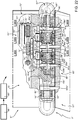
- Actuator 65' comprises ( Figures 22 and 23a ):
- transmission group 72'" comprises:
- Output member 73'" is housed in a compartment of main portion 10.
- Connecting means 60'" comprise, in turn,:
- coupling elements 81a"' are arranged at axial ends of tip portions 11'" with respect to axis F.
- Coupling elements 81b''' (only one of which is shown in Figures 22 and 23a ) are axially interposed between coupling elements 81a"' and are spaced along axis F
- Coupling element 80'" are also axially spaced along axis F.
- each coupling element 80'" is axially interposed between one adjacent coupling element 81a"' and an adjacent coupling element 81b'", or between two adjacent coupling elements 81b'", or between one an adjacent coupling element 81b'" and other one adjacent coupling element 81a'".
- Actuator 65'" can be operated to alternatively engage coupling elements 80'" with first adjacent coupling elements 81a'", 81b'" in the first configuration of connecting means 60'", or to engage coupling elements 80'" with second adjacent coupling elements 81a'", 81b'" in the second configuration of connecting means 60"'.
- Each coupling element 80'" comprises, in turn,
- surfaces 83a"', 83b"' are arranged on respective opposite axial sides of one-way freewheel clutches 84"', 85'".
- one-way freewheel clutch 84' allows the rotation of disk 82a'" only in the first angular direction and one-way freewheel clutch 85'" allows the rotation of disk 82b"' only in the second angular direction.
- Each coupling element 81b'" comprises a pair of axial end disks 86a"', 86b"' opposite to another and having respective toothed surfaces 87a"', 87b"'.
- Each coupling element 81a"' comprises only one axial end disk 86a"' having respective toothed surface 87a"'.
- Actuator 65' can be operated to displace coupling elements 80''' along axis F:
- one-way freewheel clutches 84'" allow tip portion 11'" to rotate in the first angular direction relative to main portion 10 and prevent tip portion 11'" from rotating in the second direction relative to main portion 10.
- one-way freewheel clutches 85'" allow tip portion 11'" to rotate in the second angular direction relative to main portion 10 and prevent tip portion 11'" from rotating in the first direction relative to main portion 10.
- teeth of toothed surface 83a"', 83b"' and teeth of toothed surfaces, 87a"', 87b'” are shaped in such a way that when toothed surfaces 83a'", 83b"' engage respective toothed surfaces, 87a"', 87b'", disks 82a", 86a" and 82b", 86b" can rotate integrally with one another about axis F, in both the first and the second angular directions.
- rotor 3' differs from that of rotor 3 in that the angular position of tip portion 11'" with respect to main portion 10 is determined by the resulting moment Mr on tip portion 11'" and by the position of connecting means 60"'.
- aerodynamic moment Mlift is directed in the second direction when blade 6'" is advancing or retroceding.
- control unit 66'" sets actuator 65'" in the first axial position. Accordingly, connecting means 60'" are set in the first configuration (shown in Figure 22 ), in which they prevent the rotation of tip portion 11'" in the second angular direction with respect to main portion 10 and only allow the rotation of tip portion 11'" in the first angular direction with respect to main portion 10.
- tip portion 11'" is kept in the first angular position in which it defines anhedral angle ⁇ with respect to main portion 10.
- tip portion 11'" abuts against stop element 88"', which prevents any further rotation thereof in the first angular direction and any consequent undesired increase of anhedral angle ⁇ .
- coupling elements 80'" engage coupling elements 81a"'. Still more precisely, surfaces 83b"' of disks 82b”' engage surfaces 87a"', 87b"' of disk 86a'", 86b'" of first adjacent connecting element 81a"', 81b"'. Furthermore, one-way freewheel clutch 84'" allows tip portion 11'" to rotate in the first angular direction relative to main portion 10 and prevents tip portion 11'" from rotating in the second angular direction.
- control unit 66'" sets actuator 65'" in the second axial position.
- connecting means 60'" are also set in the second configuration ( Figure 23a ), in which they allow the rotation of tip portion 11'" with respect to main portion 10 in the second angular direction and prevent the rotation of tip portion 11'" in the first angular direction.
- tip portion 11'" increasingly rotates in the second angular direction only, up to when it reaches the second angular position in which the anhedral angle ⁇ is substantially null.
- tip portion 11'" abuts against stop element 88"' which prevents any further rotation thereof in the second angular direction and any consequent undesired increase of the dihedral angle.
- control unit 66"' sets actuator 65'" in the second axial position ( Figure 23a ). Therefore, coupling elements 80'" engage second adjacent coupling elements 81a"', 81b"'. Still more precisely, surfaces 83a"' of disks 82a'” engage surfaces 87a"', 87b'" of disk 86a"', 86b'" of second adjacent coupling elements 81a"', 81b"'. Furthermore, one-way freewheel clutches 85"' allow tip portion 11'" to rotate in the second direction relative to main portion 10 and prevent tip portion 11'" from rotating in the first direction.
- control unit 66'" sets back actuator 65'" in the first axial position.
- connecting means 60'" are also set in the first configuration ( Figure 23a ), in which they allow the rotation of tip portion 11"' with respect to main portion 10 in the first angular direction only and prevent the rotation of tip portion 11'" in the second angular direction.
- the increase in the forward speed of helicopter 1 causes at a speed greater than the threshold value:
- tip portion 11'" rotates back in the first angular direction up to when it reaches the first position. This is due to the fact that, being negative the lift on tip portion 11'" of advancing blade 6'", resulting moment Mr on tip portion 11'" is directed in the first direction when blade 6'" is advancing.
- helicopter 1 is set in hovering.
- reference numeral 3" indicates, as a whole, a rotor according to a fifth embodiment, which is not part of the present invention and is shown only for illustrative purposes.
- Rotor 3"" differs from rotor 3'" in that each coupling element 80"" comprises, in turn,:
- teeth of toothed surface 83a"", 83b”” and teeth of toothed surfaces 87a"", 87b”” are shaped in such a way that when toothed surfaces 83a"", (83b”") engage respective toothed surface 87a'''' (87b"") of first (second) adjacent angular coupling element 81a"", 81b"", the rotation of disk 86a"" (86b"") in the first (second) angular direction causes the intermittent meshing of toothed surfaces 87a"", 87b”".
- the intermittent meshing causes a back and forth movement of surfaces 83a"" (83b”") towards and away from surface 87a"" (87b”") parallel to axis F.
- teeth of toothed surface 83a"", 83b”" and teeth of toothed surfaces 87a"", 87b”” are shaped in such a way that when toothed surfaces 83a"", (83b”") engage respective toothed surface 87a"" (87b”"), the rotation of disk 86a"" (86b”") in the second (first) angular direction is prevented.
- elements 96"" are angularly movable integrally with shaft 99"" about axis F and are axially slidable relative to shaft 99"" along axis F.
- teeth of surfaces 83a"", 83b"" and 87a"", 87b”" are saw-teeth shaped.
- elements 96"" are splined on the respective sides facing axis F while shaft 99"" is splined on the opposite side with respect to axis F.
- each coupling element 80"" comprises, in turn, elastic means 100"" interposed between frame 95"" and elements 96"".
- Elastic means 100"" elastically load elements 96"' and disks 82a”", 82b”" towards adjacent disks 86a”", 86b"" of adjacent coupling element 81a"", 81b"".
- elastic means 100" comprises a plurality of springs 101"", helical springs in the embodiment shown, interposed between frame 95"" and elements 96"".
- Springs 101"" extend along respective axes parallel to axis F and angularly spaced about axis F.
- rotor 3"" differs from that of rotor 3'" in that the, when connecting means 60"" are set in the first configuration ( Figure 36 ), toothed surfaces 83a"" of disks 82a”” mesh with toothed surfaces 87a"" of disks 86a"" while toothed surfaces 83b"" of disks 82b”" are axially spaced from toothed surfaces 87b"" of disks 86b"".
- This intermittent angular rotation is formed by a succession of alternate first time intervals in which teeth of surfaces 83a"", 87a"" mesh with one another and second time intervals in which teeth of surfaces 83a"", 87a"" are disengaged.
- surfaces 83a"" rotate in the first angular direction, thus rotating tip portions 11"".
- teeth of surfaces 83b"", 87b”” mesh with one another, thus preventing the rotation of disks 86b"' and, therefore, of tip portion 11 in the first angular direction and allowing the intermittent angular rotation of disks 86b"' and, therefore, of tip portion 11 in the second angular position.
- each blade 6 is selectively movable between:
- the motor 20 does not need to counter high loads due to centrifugal force and only needs to generate relatively low actuating forces. In consequence, the motor 20 can be compact and low-cost.
- the rotor 3, 3' and 3" does not alter the aerodynamic profile of the blades 6 and does not penalize the overall aerodynamic efficiency of the helicopter 1.
- the rotor 3, 3' and 3" could be used in a convertiplane instead of in the helicopter 1.
- the tip portions 11 and 11" could have dihedral angles ⁇ in the respective first positions and negative sweep angles ⁇ in the respective second positions.
- the transmission unit 22 could comprise an epicyclical train interposed between the motor 20 and the rods 21.
- the actuator units 16 could be completely housed inside the tip portions 11 of the respective blades 6.
- Rotor 3' might not comprise the transmission unit 22 and could comprise a plurality of motors 20 connected to associated rods 21 and not comprise the transmission unit 22.
Landscapes
- Engineering & Computer Science (AREA)
- Mechanical Engineering (AREA)
- Aviation & Aerospace Engineering (AREA)
- Toys (AREA)
- Transmission Devices (AREA)
Claims (11)
- Rotor (3, 3', 3") für ein schwebefähiges Luftfahrzeug (1), umfassend:- eine Nabe (7), die um eine erste Achse (A) herum rotierbar ist; und- wenigstens zwei Laufschaufeln (6), die an der Nabe (7) eingehängt sind;wobei jede der Laufschaufeln (6) einen Hauptabschnitt (10), der an der Nabe (7) eingehängt ist, und einen Spitzenabschnitt (11, 11"), der radial am äußersten von der ersten Achse (A) hinsichtlich des entsprechenden Hauptabschnitts (10) angeordnet ist, umfasst; wobei der Spitzenabschnitt (11, 11") von jeder der Laufschaufeln (6) hinsichtlich des entsprechenden Hauptabschnitts (10) der Laufschaufel (6) beweglich ist zwischen:- einer ersten Position, wobei eine V- oder eine negative V-Stellung (α) hinsichtlich des entsprechenden Hauptabschnitts (10) definiert ist; und- einer zweiten Position, wobei eine positive oder negative Pfeilstellung (β) hinsichtlich des entsprechenden Hauptabschnitts (10) definiert ist;wobei jede der Laufschaufeln (6) wenigstens zwei Betätigungsstangen (21), die mit dem jeweiligen Spitzenabschnitt (11, 11") wirkverbunden sind, umfasst, um ihren Übergang hinsichtlich des entsprechenden Hauptabschnitts (10) hervorzurufen;
wobei jede der Betätigungsstangen (21) um die zweite Achse (C) herum rotierbar ist; dadurch gekennzeichnet, dass jeder der Betätigungsstangen (21) wenigstens teilweise hinsichtlich der zweiten Achse (C) gekrümmt ist;
wobei der Spitzenabschnitt (11, 11") wenigstens eine Rippe (28), die auf einer Ebene diagonal zu der zweiten Achse (C) liegt, umfasst und ein Öffnungspaar (27), die in frei rotierender Weise um die zweite Achse (C) herum durch die jeweiligen Betätigungsstangen (21) in Eingriff genommen sind, definiert;
wobei die Rippen (28) in Verwendung während des Übergangs zwischen der ersten und der zweiten Position die jeweiligen Bereiche unverformt auf Ebenen diagonal zu den Betätigungsstangen (21) beibehalten; wobei die Bereiche des Spitzenabschnitts (11, 11"), die zwischen den Rippen eingefügt sind, in Verwendung während des Übergangs zwischen der ersten und der zweiten Position diagonal zu dem Spitzenabschnitt (11, 11") scherverformt werden. - Rotor nach Anspruch 1, dadurch gekennzeichnet, dass:- die Pfeilstellung (β) hinsichtlich des entsprechenden Hauptabschnitts (10) minimiert sind, wenn jeder Spitzenabschnitt (11, 11") in der ersten Position angeordnet ist; und/oder- die V-Stellung (α) hinsichtlich des entsprechenden Hauptabschnitts (10) Null ist, wenn jeder Spitzenabschnitt (11, 11") in der zweiten Position angeordnet ist.
- Rotor nach Anspruch 1 oder 2, dadurch gekennzeichnet, dass der Hauptabschnitt (10) sich von jeder der Laufschaufeln (6) einer zweiten Achse (C) diagonal zu der ersten Achse (A) erstreckt;
wobei der Spitzenabschnitt (11, 11") in einer Ebene diagonal zu der zweiten Achse (C) zwischen der ersten und der zweiten Position beweglich ist. - Rotor nach einem der vorhergehenden Ansprüche, dadurch gekennzeichnet, dass jede der Betätigungsstangen (21) umfasst:- einen ersten Bereich (25), der in dem Hauptabschnitt (10) der relevanten Laufschaufel (6) und parallel zu der zweiten Achse (C) aufgenommen ist; und- einen zweiten Bereich (26), der in dem Spitzenabschnitt (11) der relevanten Laufschaufel (6) aufgenommen und hinsichtlich der zweiten Achse (C) geneigt ist.
- Rotor nach einem der vorhergehenden Ansprüche, dadurch gekennzeichnet, dass die Fläche von jeder der Betätigungsstangen (21), die im Querschnitt diagonal zu einer Ausdehnungsrichtung der Betätigungsstange (21) gemessen wird, in dem Inneren des Hauptabschnitts (10) progressiv abnimmt, wenn sie in einer Richtung weg von der ersten Achse (A) verläuft;
und/oder dadurch gekennzeichnet, dass die Betätigungsstangen (21) eine strukturelle Funktion zum Tragen von Biege- und Scherbelastungen erfüllen, die auf die Laufschaufel (6) wirken. - Rotor nach einem der vorhergehenden Ansprüche, dadurch gekennzeichnet, dass der Aktuator (16) einen Motor (20) umfasst, der in dem Inneren des Hauptabschnitts (10) jeder Laufschaufel (6) aufgenommen ist, und dass er eine Übertragungseinheit (12) umfasst, um eine Bewegung von dem Motor (20) zu den Betätigungsstangen (21) zu übertragen.
- Rotor nach Anspruch 6, dadurch gekennzeichnet, dass wenigstens zwei wahlweise betriebsfähige Überholkupplungen (51') mit der Stange (21) wirkverbunden sind;
wobei die Überholkupplungen (51') die Rotation der Stangen (21) in jeweils zueinander entgegengesetzte Richtungen ermöglichen, wobei sie der aerodynamischen Wirkung, die auf die jeweilige Laufschaufel (6) wirkt, folgen. - Schwebefähiges Luftfahrzeug, umfassend:- einen Hauptrotor (3, 3', 3") nach einem der vorhergehenden Ansprüche; und- eine Steuereinheit (40), die programmiert ist, um die Spitzenabschnitte (11, 11") der Laufschaufeln (6) in der jeweiligen ersten Position, wenn sich das Luftfahrzeug (1) in Schwebebedingungen befindet, und in der jeweiligen zweiten Position anzuordnen, wenn sich das Luftfahrzeug (1) in Vorwärtsflugbedingungen befindet.
- Verfahren zum Steuern eines Rotors (3, 3', 3") für ein schwebefähiges Luftfahrzeug (1), wobei der Rotor (3, 3', 3") umfasst:- eine Nabe (7), die um eine erste Achse (A) herum rotierbar ist; und- wenigstens zwei Laufschaufeln (6), die an der Nabe (7) eingehängt sind;wobei jede der Laufschaufeln (6) einen Hauptabschnitt (10), der an der Nabe (7) eingehängt ist, und einen Spitzenabschnitt (11, 11"), der hinsichtlich der ersten Achse (A) radial am äußersten hinsichtlich des entsprechenden Hauptabschnitts (10) angeordnet ist, umfasst;
wobei das Verfahren die Schritte umfasst:i) Anordnen der Spitzenabschnitte der Laufschaufeln (6) in jeweiligen ersten Positionen, in denen sie jeweilige V-Stellungen oder negative V-Stellungen (α) hinsichtlich der zugehörigen Hauptabschnitte (10) definieren, wenn sich das Luftfahrzeug (1) in Schwebebedingungen befindet;ii) Anordnen der Spitzenabschnitte (11, 11") der Laufschaufeln (6) in jeweiligen zweiten Positionen, in denen sie positive oder negative Pfeilstellungen (β) hinsichtlich der zugehörigen Hauptabschnitte (10) definieren, wenn sich das Luftfahrzeug (1) in Vorwärtsflugbedingungen befindet;gekennzeichnet durch Umfassen der Schritte:iii) Aufnehmen wenigstens eines Paars von Betätigungsstangen (21) auf rotationsfreie Weise in dem Inneren der jeweiligen Durchgangsöffnungen (27) in den Rippen (28) des Spitzenabschnitts (11, 11");iv) Rotieren der Betätigungsstangen (21) um eine zweite Achse (C) diagonal zu der ersten Achse (A) herum, um die zugehörigen Spitzenabschnitte (11, 11") zwischen den entsprechenden ersten und zweiten Positionen zu bewegen;v) Beibehalten der Bereiche der Rippen (28), die während des Übergangs zwischen den ersten und der zweiten Positionen in den jeweiligen Ebenen diagonal zu den Betätigungsstangen (21) unverformt sind;vi) Scherverformem der Bereiche der Spitzenabschnitte (11), die zwischen den Rippen (28) eingefügt sind;wobei die Betätigungsstangen (21) jeweilige erste Bereiche (25) und zweite Bereiche (26), die hinsichtlicher der entsprechenden ersten Bereiche (25) geneigt sind, umfassen;
wobei die zweiten Bereiche (26) in dem Inneren der Öffnungen (27) auf eine rotationsfreie Weise hinsichtlich der Rippen (28) aufgenommen sind; und
wobei die Rippen (28) auf jeweiligen Ebenen diagonal zu der zweiten Achse (C) liegen. - Verfahren nach Anspruch 9, dadurch gekennzeichnet, dass:- die Pfeilstellungen (β) von jedem des Spitzenabschnitts (11, 11") hinsichtlich des entsprechenden Hauptabschnitts (10) minimiert sind, wenn jeder Spitzenabschnitt (11, 11") in der ersten Position angeordnet ist; und/oder- die V-Stellungen (α) jedes Spitzenabschnitts (11, 11") hinsichtlich des entsprechenden Hauptabschnitts (10) Null sind, wenn jeder Spitzenabschnitt (11, 11") in der zweiten Position angeordnet ist.
- Verfahren nach Anspruch 9 oder 10, dadurch gekennzeichnet, dass es den Schritt vii) zum Betreiben der Betätigungsstangen (21) mittels eines zugeordneten Aktuators (16) oder mittels der aerodynamischen Wirkung auf die Spitzenabschnitte (21) während der Rotation des Rotors (3') umfasst; und/oder
dadurch gekennzeichnet, dass es den Schritt viii) zum Rotieren der Spitzenabschnitte (11, 11") um die zweite Achse (C) herum umfasst.
Applications Claiming Priority (3)
| Application Number | Priority Date | Filing Date | Title |
|---|---|---|---|
| EP16187546.3A EP3293112B1 (de) | 2016-09-07 | 2016-09-07 | Rotor für schwebefähiges flugzeug und zugehöriges verfahren zu dessen steuerung |
| PCT/EP2017/072496 WO2018046612A1 (en) | 2016-09-07 | 2017-09-07 | Rotor for a hover-capable aircraft and related method of control |
| EP17761295.9A EP3509946B1 (de) | 2016-09-07 | 2017-09-07 | Rotor für schwebefähiges flugzeug und zugehöriges verfahren zu dessen steuerung |
Related Parent Applications (2)
| Application Number | Title | Priority Date | Filing Date |
|---|---|---|---|
| EP17761295.9A Division-Into EP3509946B1 (de) | 2016-09-07 | 2017-09-07 | Rotor für schwebefähiges flugzeug und zugehöriges verfahren zu dessen steuerung |
| EP17761295.9A Division EP3509946B1 (de) | 2016-09-07 | 2017-09-07 | Rotor für schwebefähiges flugzeug und zugehöriges verfahren zu dessen steuerung |
Publications (2)
| Publication Number | Publication Date |
|---|---|
| EP3536611A1 EP3536611A1 (de) | 2019-09-11 |
| EP3536611B1 true EP3536611B1 (de) | 2020-11-04 |
Family
ID=56896386
Family Applications (4)
| Application Number | Title | Priority Date | Filing Date |
|---|---|---|---|
| EP17168851.8A Active EP3293113B1 (de) | 2016-09-07 | 2016-09-07 | Rotor für ein schwebefähiges flugzeug und zugehöriges verfahren zur steuerung |
| EP16187546.3A Active EP3293112B1 (de) | 2016-09-07 | 2016-09-07 | Rotor für schwebefähiges flugzeug und zugehöriges verfahren zu dessen steuerung |
| EP17761295.9A Active EP3509946B1 (de) | 2016-09-07 | 2017-09-07 | Rotor für schwebefähiges flugzeug und zugehöriges verfahren zu dessen steuerung |
| EP19171701.6A Active EP3536611B1 (de) | 2016-09-07 | 2017-09-07 | Rotor für ein schwebefähiges flugzeug und zugehöriges verfahren zur steuerung |
Family Applications Before (3)
| Application Number | Title | Priority Date | Filing Date |
|---|---|---|---|
| EP17168851.8A Active EP3293113B1 (de) | 2016-09-07 | 2016-09-07 | Rotor für ein schwebefähiges flugzeug und zugehöriges verfahren zur steuerung |
| EP16187546.3A Active EP3293112B1 (de) | 2016-09-07 | 2016-09-07 | Rotor für schwebefähiges flugzeug und zugehöriges verfahren zu dessen steuerung |
| EP17761295.9A Active EP3509946B1 (de) | 2016-09-07 | 2017-09-07 | Rotor für schwebefähiges flugzeug und zugehöriges verfahren zu dessen steuerung |
Country Status (6)
| Country | Link |
|---|---|
| US (3) | US11014660B2 (de) |
| EP (4) | EP3293113B1 (de) |
| KR (1) | KR102276875B1 (de) |
| CN (1) | CN109789924B (de) |
| RU (1) | RU2730786C1 (de) |
| WO (1) | WO2018046612A1 (de) |
Families Citing this family (4)
| Publication number | Priority date | Publication date | Assignee | Title |
|---|---|---|---|---|
| EP3293113B1 (de) * | 2016-09-07 | 2018-12-12 | LEONARDO S.p.A. | Rotor für ein schwebefähiges flugzeug und zugehöriges verfahren zur steuerung |
| US10787251B2 (en) * | 2017-03-07 | 2020-09-29 | Textron Innovations Inc. | Variable sweep rotorcraft blade tip |
| WO2026036252A1 (zh) * | 2024-08-12 | 2026-02-19 | 深圳市大疆创新科技有限公司 | 飞行器、桨叶、螺旋桨、推进组件及可移动平台 |
| CN120364130B (zh) * | 2025-06-26 | 2025-10-14 | 中国东方航空设备集成有限公司 | 一种可变后掠旋翼 |
Family Cites Families (12)
| Publication number | Priority date | Publication date | Assignee | Title |
|---|---|---|---|---|
| US4324530A (en) * | 1980-01-21 | 1982-04-13 | United Technologies Corp. | Helicopter blade with a tip having a selected combination of sweep, taper and anhedral to improve hover efficiency |
| DE3242584A1 (de) * | 1982-11-18 | 1984-05-24 | Messerschmitt-Bölkow-Blohm GmbH, 8000 München | Anordnung von zusatzflaechen an den spitzen eines tragfluegels |
| FR2755941B1 (fr) * | 1996-11-19 | 1999-01-15 | Eurocopter France | Pale a extremite en fleche pour voilure tournante d'aeronef |
| DE19926832B4 (de) * | 1999-06-12 | 2005-09-15 | Airbus Deutschland Gmbh | Unterschallflugzeug vorzugsweise mit gepfeilten Tragflügeln |
| JP4535550B2 (ja) * | 2000-02-23 | 2010-09-01 | 富士重工業株式会社 | 回転翼航空機の回転翼羽根 |
| US7264200B2 (en) | 2004-07-23 | 2007-09-04 | The Boeing Company | System and method for improved rotor tip performance |
| US7513750B2 (en) * | 2006-03-08 | 2009-04-07 | Sikorsky Aircraft Corporation | Rotor blade tip planform |
| DE102009012801B4 (de) * | 2009-03-13 | 2012-04-05 | Eads Deutschland Gmbh | Anisotrope Betätigung einer Helikopterrotorblattspitze |
| KR20120059091A (ko) * | 2010-11-30 | 2012-06-08 | 부산대학교 산학협력단 | 끝단부가 천공된 항공기 날개 |
| RU2546337C1 (ru) * | 2014-02-04 | 2015-04-10 | Сергей Нестерович Белоглазов | Фиксированная или управляемая законцовка (крылышко) лопасти винта |
| US10106251B2 (en) | 2014-09-15 | 2018-10-23 | Bell Helicopter Textron Inc. | Variable anhedral tip rotor blade |
| EP3293113B1 (de) * | 2016-09-07 | 2018-12-12 | LEONARDO S.p.A. | Rotor für ein schwebefähiges flugzeug und zugehöriges verfahren zur steuerung |
-
2016
- 2016-09-07 EP EP17168851.8A patent/EP3293113B1/de active Active
- 2016-09-07 EP EP16187546.3A patent/EP3293112B1/de active Active
-
2017
- 2017-09-07 US US16/328,069 patent/US11014660B2/en active Active
- 2017-09-07 KR KR1020197009223A patent/KR102276875B1/ko active Active
- 2017-09-07 EP EP17761295.9A patent/EP3509946B1/de active Active
- 2017-09-07 WO PCT/EP2017/072496 patent/WO2018046612A1/en not_active Ceased
- 2017-09-07 RU RU2019110129A patent/RU2730786C1/ru active
- 2017-09-07 EP EP19171701.6A patent/EP3536611B1/de active Active
- 2017-09-07 CN CN201780055079.XA patent/CN109789924B/zh active Active
-
2021
- 2021-04-22 US US17/237,813 patent/US11623744B2/en active Active
- 2021-04-22 US US17/237,520 patent/US11618558B2/en active Active
Non-Patent Citations (1)
| Title |
|---|
| None * |
Also Published As
| Publication number | Publication date |
|---|---|
| KR20190042698A (ko) | 2019-04-24 |
| US20210253230A1 (en) | 2021-08-19 |
| KR102276875B1 (ko) | 2021-07-14 |
| EP3293113B1 (de) | 2018-12-12 |
| EP3293112B1 (de) | 2018-12-05 |
| RU2730786C1 (ru) | 2020-08-26 |
| US20210253229A1 (en) | 2021-08-19 |
| EP3509946A1 (de) | 2019-07-17 |
| US11618558B2 (en) | 2023-04-04 |
| CN109789924B (zh) | 2022-02-25 |
| CN109789924A (zh) | 2019-05-21 |
| US11014660B2 (en) | 2021-05-25 |
| EP3536611A1 (de) | 2019-09-11 |
| EP3293112A1 (de) | 2018-03-14 |
| US20190193850A1 (en) | 2019-06-27 |
| WO2018046612A1 (en) | 2018-03-15 |
| EP3509946B1 (de) | 2020-11-04 |
| US11623744B2 (en) | 2023-04-11 |
| EP3293113A1 (de) | 2018-03-14 |
Similar Documents
| Publication | Publication Date | Title |
|---|---|---|
| US11623744B2 (en) | Rotor for a hover-capable aircraft and related method of control | |
| US8403255B2 (en) | Compound aircraft with autorotation | |
| EP2222554B1 (de) | Mehrblättriges rotorsystem für drehflügler | |
| EP2432688B1 (de) | Differentialanstellwinkelsteuerung zur optimierung der leistung des co-rotierenden rotors | |
| EP2778061B1 (de) | Steuerungssystem für einen schwenkbarem Rotor mit zwei Anstiegs-/Abstiegsktuatoren | |
| EP2678221B1 (de) | Blattwinkelteuerungssystem mit rückkoppelungstaumelscheibe | |
| EP2604513B1 (de) | Zyklische Blattsteuerung mit Rückmeldungshebel | |
| EP2387532B1 (de) | Verbessertes rotorblattsteuersystem und -verfahren | |
| US20130134253A1 (en) | Power Rotor Drive for Slowed Rotor Winged Aircraft | |
| WO2008130447A2 (en) | Rotor blade pitch control | |
| EP2089274B1 (de) | Blattwinkelverstellsteuerungssystem | |
| EP2619085A1 (de) | Adaptives drehsystem für eine rotorschaufel | |
| EP2733072B1 (de) | System zur zyklischen Blattsteuerung mit Indexiertaumelscheibe | |
| US11554860B1 (en) | Apparatus, system and method for a convertible thruster for a compound aircraft | |
| EP3878739A1 (de) | Bidirektionaler flugzeugrotor | |
| US9162759B2 (en) | Twist mechanism for twisting a rotor blade for a rotorcraft, and a blade | |
| EP4578785B1 (de) | Rotor für ein schwebeähiges flugzeug und verfahren zur einstellung der rotorblattwinkel | |
| EP2969750B1 (de) | Automatische neigungsänderung für drehflügelrotorsystem und verfahren zur rotorregelung | |
| CN114408170A (zh) | 一种双旋翼直升机系统及控制策略 |
Legal Events
| Date | Code | Title | Description |
|---|---|---|---|
| PUAI | Public reference made under article 153(3) epc to a published international application that has entered the european phase |
Free format text: ORIGINAL CODE: 0009012 |
|
| STAA | Information on the status of an ep patent application or granted ep patent |
Free format text: STATUS: THE APPLICATION HAS BEEN PUBLISHED |
|
| AC | Divisional application: reference to earlier application |
Ref document number: 3509946 Country of ref document: EP Kind code of ref document: P |
|
| AK | Designated contracting states |
Kind code of ref document: A1 Designated state(s): AL AT BE BG CH CY CZ DE DK EE ES FI FR GB GR HR HU IE IS IT LI LT LU LV MC MK MT NL NO PL PT RO RS SE SI SK SM TR |
|
| AX | Request for extension of the european patent |
Extension state: BA ME |
|
| STAA | Information on the status of an ep patent application or granted ep patent |
Free format text: STATUS: REQUEST FOR EXAMINATION WAS MADE |
|
| 17P | Request for examination filed |
Effective date: 20190919 |
|
| RBV | Designated contracting states (corrected) |
Designated state(s): AL AT BE BG CH CY CZ DE DK EE ES FI FR GB GR HR HU IE IS IT LI LT LU LV MC MK MT NL NO PL PT RO RS SE SI SK SM TR |
|
| GRAP | Despatch of communication of intention to grant a patent |
Free format text: ORIGINAL CODE: EPIDOSNIGR1 |
|
| STAA | Information on the status of an ep patent application or granted ep patent |
Free format text: STATUS: GRANT OF PATENT IS INTENDED |
|
| RIC1 | Information provided on ipc code assigned before grant |
Ipc: B64C 27/46 20060101AFI20200214BHEP |
|
| INTG | Intention to grant announced |
Effective date: 20200311 |
|
| GRAJ | Information related to disapproval of communication of intention to grant by the applicant or resumption of examination proceedings by the epo deleted |
Free format text: ORIGINAL CODE: EPIDOSDIGR1 |
|
| STAA | Information on the status of an ep patent application or granted ep patent |
Free format text: STATUS: REQUEST FOR EXAMINATION WAS MADE |
|
| GRAR | Information related to intention to grant a patent recorded |
Free format text: ORIGINAL CODE: EPIDOSNIGR71 |
|
| GRAS | Grant fee paid |
Free format text: ORIGINAL CODE: EPIDOSNIGR3 |
|
| STAA | Information on the status of an ep patent application or granted ep patent |
Free format text: STATUS: GRANT OF PATENT IS INTENDED |
|
| INTC | Intention to grant announced (deleted) | ||
| INTG | Intention to grant announced |
Effective date: 20200803 |
|
| GRAA | (expected) grant |
Free format text: ORIGINAL CODE: 0009210 |
|
| STAA | Information on the status of an ep patent application or granted ep patent |
Free format text: STATUS: THE PATENT HAS BEEN GRANTED |
|
| AC | Divisional application: reference to earlier application |
Ref document number: 3509946 Country of ref document: EP Kind code of ref document: P |
|
| AK | Designated contracting states |
Kind code of ref document: B1 Designated state(s): AL AT BE BG CH CY CZ DE DK EE ES FI FR GB GR HR HU IE IS IT LI LT LU LV MC MK MT NL NO PL PT RO RS SE SI SK SM TR |
|
| REG | Reference to a national code |
Ref country code: GB Ref legal event code: FG4D |
|
| REG | Reference to a national code |
Ref country code: CH Ref legal event code: EP |
|
| REG | Reference to a national code |
Ref country code: AT Ref legal event code: REF Ref document number: 1330514 Country of ref document: AT Kind code of ref document: T Effective date: 20201115 |
|
| REG | Reference to a national code |
Ref country code: IE Ref legal event code: FG4D |
|
| REG | Reference to a national code |
Ref country code: DE Ref legal event code: R096 Ref document number: 602017027193 Country of ref document: DE |
|
| REG | Reference to a national code |
Ref country code: NL Ref legal event code: MP Effective date: 20201104 |
|
| REG | Reference to a national code |
Ref country code: AT Ref legal event code: MK05 Ref document number: 1330514 Country of ref document: AT Kind code of ref document: T Effective date: 20201104 |
|
| PG25 | Lapsed in a contracting state [announced via postgrant information from national office to epo] |
Ref country code: NO Free format text: LAPSE BECAUSE OF FAILURE TO SUBMIT A TRANSLATION OF THE DESCRIPTION OR TO PAY THE FEE WITHIN THE PRESCRIBED TIME-LIMIT Effective date: 20210204 Ref country code: GR Free format text: LAPSE BECAUSE OF FAILURE TO SUBMIT A TRANSLATION OF THE DESCRIPTION OR TO PAY THE FEE WITHIN THE PRESCRIBED TIME-LIMIT Effective date: 20210205 Ref country code: RS Free format text: LAPSE BECAUSE OF FAILURE TO SUBMIT A TRANSLATION OF THE DESCRIPTION OR TO PAY THE FEE WITHIN THE PRESCRIBED TIME-LIMIT Effective date: 20201104 Ref country code: PT Free format text: LAPSE BECAUSE OF FAILURE TO SUBMIT A TRANSLATION OF THE DESCRIPTION OR TO PAY THE FEE WITHIN THE PRESCRIBED TIME-LIMIT Effective date: 20210304 Ref country code: FI Free format text: LAPSE BECAUSE OF FAILURE TO SUBMIT A TRANSLATION OF THE DESCRIPTION OR TO PAY THE FEE WITHIN THE PRESCRIBED TIME-LIMIT Effective date: 20201104 |
|
| PG25 | Lapsed in a contracting state [announced via postgrant information from national office to epo] |
Ref country code: ES Free format text: LAPSE BECAUSE OF FAILURE TO SUBMIT A TRANSLATION OF THE DESCRIPTION OR TO PAY THE FEE WITHIN THE PRESCRIBED TIME-LIMIT Effective date: 20201104 Ref country code: AT Free format text: LAPSE BECAUSE OF FAILURE TO SUBMIT A TRANSLATION OF THE DESCRIPTION OR TO PAY THE FEE WITHIN THE PRESCRIBED TIME-LIMIT Effective date: 20201104 Ref country code: BG Free format text: LAPSE BECAUSE OF FAILURE TO SUBMIT A TRANSLATION OF THE DESCRIPTION OR TO PAY THE FEE WITHIN THE PRESCRIBED TIME-LIMIT Effective date: 20210204 Ref country code: LV Free format text: LAPSE BECAUSE OF FAILURE TO SUBMIT A TRANSLATION OF THE DESCRIPTION OR TO PAY THE FEE WITHIN THE PRESCRIBED TIME-LIMIT Effective date: 20201104 Ref country code: IS Free format text: LAPSE BECAUSE OF FAILURE TO SUBMIT A TRANSLATION OF THE DESCRIPTION OR TO PAY THE FEE WITHIN THE PRESCRIBED TIME-LIMIT Effective date: 20210304 Ref country code: PL Free format text: LAPSE BECAUSE OF FAILURE TO SUBMIT A TRANSLATION OF THE DESCRIPTION OR TO PAY THE FEE WITHIN THE PRESCRIBED TIME-LIMIT Effective date: 20201104 Ref country code: SE Free format text: LAPSE BECAUSE OF FAILURE TO SUBMIT A TRANSLATION OF THE DESCRIPTION OR TO PAY THE FEE WITHIN THE PRESCRIBED TIME-LIMIT Effective date: 20201104 |
|
| REG | Reference to a national code |
Ref country code: LT Ref legal event code: MG9D |
|
| PG25 | Lapsed in a contracting state [announced via postgrant information from national office to epo] |
Ref country code: HR Free format text: LAPSE BECAUSE OF FAILURE TO SUBMIT A TRANSLATION OF THE DESCRIPTION OR TO PAY THE FEE WITHIN THE PRESCRIBED TIME-LIMIT Effective date: 20201104 |
|
| PG25 | Lapsed in a contracting state [announced via postgrant information from national office to epo] |
Ref country code: LT Free format text: LAPSE BECAUSE OF FAILURE TO SUBMIT A TRANSLATION OF THE DESCRIPTION OR TO PAY THE FEE WITHIN THE PRESCRIBED TIME-LIMIT Effective date: 20201104 Ref country code: RO Free format text: LAPSE BECAUSE OF FAILURE TO SUBMIT A TRANSLATION OF THE DESCRIPTION OR TO PAY THE FEE WITHIN THE PRESCRIBED TIME-LIMIT Effective date: 20201104 Ref country code: EE Free format text: LAPSE BECAUSE OF FAILURE TO SUBMIT A TRANSLATION OF THE DESCRIPTION OR TO PAY THE FEE WITHIN THE PRESCRIBED TIME-LIMIT Effective date: 20201104 Ref country code: SK Free format text: LAPSE BECAUSE OF FAILURE TO SUBMIT A TRANSLATION OF THE DESCRIPTION OR TO PAY THE FEE WITHIN THE PRESCRIBED TIME-LIMIT Effective date: 20201104 Ref country code: SM Free format text: LAPSE BECAUSE OF FAILURE TO SUBMIT A TRANSLATION OF THE DESCRIPTION OR TO PAY THE FEE WITHIN THE PRESCRIBED TIME-LIMIT Effective date: 20201104 Ref country code: CZ Free format text: LAPSE BECAUSE OF FAILURE TO SUBMIT A TRANSLATION OF THE DESCRIPTION OR TO PAY THE FEE WITHIN THE PRESCRIBED TIME-LIMIT Effective date: 20201104 |
|
| REG | Reference to a national code |
Ref country code: DE Ref legal event code: R097 Ref document number: 602017027193 Country of ref document: DE |
|
| PG25 | Lapsed in a contracting state [announced via postgrant information from national office to epo] |
Ref country code: DK Free format text: LAPSE BECAUSE OF FAILURE TO SUBMIT A TRANSLATION OF THE DESCRIPTION OR TO PAY THE FEE WITHIN THE PRESCRIBED TIME-LIMIT Effective date: 20201104 |
|
| PLBE | No opposition filed within time limit |
Free format text: ORIGINAL CODE: 0009261 |
|
| STAA | Information on the status of an ep patent application or granted ep patent |
Free format text: STATUS: NO OPPOSITION FILED WITHIN TIME LIMIT |
|
| 26N | No opposition filed |
Effective date: 20210805 |
|
| PG25 | Lapsed in a contracting state [announced via postgrant information from national office to epo] |
Ref country code: NL Free format text: LAPSE BECAUSE OF FAILURE TO SUBMIT A TRANSLATION OF THE DESCRIPTION OR TO PAY THE FEE WITHIN THE PRESCRIBED TIME-LIMIT Effective date: 20201104 Ref country code: AL Free format text: LAPSE BECAUSE OF FAILURE TO SUBMIT A TRANSLATION OF THE DESCRIPTION OR TO PAY THE FEE WITHIN THE PRESCRIBED TIME-LIMIT Effective date: 20201104 |
|
| PG25 | Lapsed in a contracting state [announced via postgrant information from national office to epo] |
Ref country code: SI Free format text: LAPSE BECAUSE OF FAILURE TO SUBMIT A TRANSLATION OF THE DESCRIPTION OR TO PAY THE FEE WITHIN THE PRESCRIBED TIME-LIMIT Effective date: 20201104 |
|
| REG | Reference to a national code |
Ref country code: CH Ref legal event code: PL |
|
| REG | Reference to a national code |
Ref country code: BE Ref legal event code: MM Effective date: 20210930 |
|
| PG25 | Lapsed in a contracting state [announced via postgrant information from national office to epo] |
Ref country code: IS Free format text: LAPSE BECAUSE OF FAILURE TO SUBMIT A TRANSLATION OF THE DESCRIPTION OR TO PAY THE FEE WITHIN THE PRESCRIBED TIME-LIMIT Effective date: 20210304 Ref country code: MC Free format text: LAPSE BECAUSE OF FAILURE TO SUBMIT A TRANSLATION OF THE DESCRIPTION OR TO PAY THE FEE WITHIN THE PRESCRIBED TIME-LIMIT Effective date: 20201104 |
|
| PG25 | Lapsed in a contracting state [announced via postgrant information from national office to epo] |
Ref country code: LU Free format text: LAPSE BECAUSE OF NON-PAYMENT OF DUE FEES Effective date: 20210907 Ref country code: IE Free format text: LAPSE BECAUSE OF NON-PAYMENT OF DUE FEES Effective date: 20210907 Ref country code: BE Free format text: LAPSE BECAUSE OF NON-PAYMENT OF DUE FEES Effective date: 20210930 |
|
| PG25 | Lapsed in a contracting state [announced via postgrant information from national office to epo] |
Ref country code: LI Free format text: LAPSE BECAUSE OF NON-PAYMENT OF DUE FEES Effective date: 20210930 Ref country code: CH Free format text: LAPSE BECAUSE OF NON-PAYMENT OF DUE FEES Effective date: 20210930 |
|
| PG25 | Lapsed in a contracting state [announced via postgrant information from national office to epo] |
Ref country code: CY Free format text: LAPSE BECAUSE OF FAILURE TO SUBMIT A TRANSLATION OF THE DESCRIPTION OR TO PAY THE FEE WITHIN THE PRESCRIBED TIME-LIMIT Effective date: 20201104 |
|
| PG25 | Lapsed in a contracting state [announced via postgrant information from national office to epo] |
Ref country code: HU Free format text: LAPSE BECAUSE OF FAILURE TO SUBMIT A TRANSLATION OF THE DESCRIPTION OR TO PAY THE FEE WITHIN THE PRESCRIBED TIME-LIMIT; INVALID AB INITIO Effective date: 20170907 |
|
| P01 | Opt-out of the competence of the unified patent court (upc) registered |
Effective date: 20231005 |
|
| PG25 | Lapsed in a contracting state [announced via postgrant information from national office to epo] |
Ref country code: MK Free format text: LAPSE BECAUSE OF FAILURE TO SUBMIT A TRANSLATION OF THE DESCRIPTION OR TO PAY THE FEE WITHIN THE PRESCRIBED TIME-LIMIT Effective date: 20201104 |
|
| PG25 | Lapsed in a contracting state [announced via postgrant information from national office to epo] |
Ref country code: TR Free format text: LAPSE BECAUSE OF FAILURE TO SUBMIT A TRANSLATION OF THE DESCRIPTION OR TO PAY THE FEE WITHIN THE PRESCRIBED TIME-LIMIT Effective date: 20201104 |
|
| PG25 | Lapsed in a contracting state [announced via postgrant information from national office to epo] |
Ref country code: MT Free format text: LAPSE BECAUSE OF FAILURE TO SUBMIT A TRANSLATION OF THE DESCRIPTION OR TO PAY THE FEE WITHIN THE PRESCRIBED TIME-LIMIT Effective date: 20201104 |
|
| PGFP | Annual fee paid to national office [announced via postgrant information from national office to epo] |
Ref country code: DE Payment date: 20250926 Year of fee payment: 9 |
|
| PGFP | Annual fee paid to national office [announced via postgrant information from national office to epo] |
Ref country code: IT Payment date: 20250903 Year of fee payment: 9 |
|
| PGFP | Annual fee paid to national office [announced via postgrant information from national office to epo] |
Ref country code: GB Payment date: 20250923 Year of fee payment: 9 |
|
| PGFP | Annual fee paid to national office [announced via postgrant information from national office to epo] |
Ref country code: FR Payment date: 20250925 Year of fee payment: 9 |