EP3536832A1 - Fibre lyocell présentant des propriétés de désintégration améliorées - Google Patents
Fibre lyocell présentant des propriétés de désintégration améliorées Download PDFInfo
- Publication number
- EP3536832A1 EP3536832A1 EP18160141.0A EP18160141A EP3536832A1 EP 3536832 A1 EP3536832 A1 EP 3536832A1 EP 18160141 A EP18160141 A EP 18160141A EP 3536832 A1 EP3536832 A1 EP 3536832A1
- Authority
- EP
- European Patent Office
- Prior art keywords
- fibers
- lyocell
- fiber
- lyocell fiber
- less
- Prior art date
- Legal status (The legal status is an assumption and is not a legal conclusion. Google has not performed a legal analysis and makes no representation as to the accuracy of the status listed.)
- Withdrawn
Links
- 229920000433 Lyocell Polymers 0.000 title claims abstract description 123
- 238000004519 manufacturing process Methods 0.000 claims abstract description 25
- 239000000835 fiber Substances 0.000 claims description 222
- 229920002488 Hemicellulose Polymers 0.000 claims description 64
- 229920002678 cellulose Polymers 0.000 claims description 42
- 239000001913 cellulose Substances 0.000 claims description 41
- 229920000297 Rayon Polymers 0.000 claims description 39
- 238000000034 method Methods 0.000 claims description 36
- 229920001221 xylan Polymers 0.000 claims description 27
- 150000004823 xylans Chemical class 0.000 claims description 27
- 238000009987 spinning Methods 0.000 claims description 22
- 238000011282 treatment Methods 0.000 claims description 17
- 229920000057 Mannan Polymers 0.000 claims description 14
- 239000004753 textile Substances 0.000 claims description 13
- 239000004745 nonwoven fabric Substances 0.000 claims description 7
- 230000015271 coagulation Effects 0.000 claims description 4
- 238000005345 coagulation Methods 0.000 claims description 4
- 238000001125 extrusion Methods 0.000 claims description 4
- 238000005406 washing Methods 0.000 claims description 4
- 238000005520 cutting process Methods 0.000 claims description 2
- 238000001035 drying Methods 0.000 claims description 2
- 150000003512 tertiary amines Chemical class 0.000 claims description 2
- 235000010980 cellulose Nutrition 0.000 description 41
- 206010061592 cardiac fibrillation Diseases 0.000 description 24
- 230000002600 fibrillogenic effect Effects 0.000 description 24
- 230000008569 process Effects 0.000 description 22
- 238000012360 testing method Methods 0.000 description 21
- 230000015556 catabolic process Effects 0.000 description 19
- 239000000126 substance Substances 0.000 description 19
- 208000012886 Vertigo Diseases 0.000 description 17
- 238000006065 biodegradation reaction Methods 0.000 description 17
- 238000006731 degradation reaction Methods 0.000 description 16
- LFTLOKWAGJYHHR-UHFFFAOYSA-N N-methylmorpholine N-oxide Chemical compound CN1(=O)CCOCC1 LFTLOKWAGJYHHR-UHFFFAOYSA-N 0.000 description 15
- 239000004744 fabric Substances 0.000 description 14
- 229920000742 Cotton Polymers 0.000 description 12
- 239000000243 solution Substances 0.000 description 12
- 230000007423 decrease Effects 0.000 description 11
- 239000000463 material Substances 0.000 description 11
- 238000009264 composting Methods 0.000 description 10
- 238000009826 distribution Methods 0.000 description 10
- 239000000203 mixture Substances 0.000 description 10
- 239000000654 additive Substances 0.000 description 9
- 239000002689 soil Substances 0.000 description 9
- 238000005516 engineering process Methods 0.000 description 8
- 238000004090 dissolution Methods 0.000 description 7
- 238000002360 preparation method Methods 0.000 description 7
- 238000002203 pretreatment Methods 0.000 description 7
- 239000002994 raw material Substances 0.000 description 7
- 239000002023 wood Substances 0.000 description 7
- 230000003247 decreasing effect Effects 0.000 description 6
- 239000010410 layer Substances 0.000 description 6
- 238000006116 polymerization reaction Methods 0.000 description 6
- 229920001282 polysaccharide Polymers 0.000 description 6
- 238000001556 precipitation Methods 0.000 description 6
- 229920001131 Pulp (paper) Polymers 0.000 description 5
- 230000002255 enzymatic effect Effects 0.000 description 5
- 229920000642 polymer Polymers 0.000 description 5
- 239000005017 polysaccharide Substances 0.000 description 5
- 150000004804 polysaccharides Chemical class 0.000 description 5
- 239000011148 porous material Substances 0.000 description 5
- 238000012545 processing Methods 0.000 description 5
- XLYOFNOQVPJJNP-UHFFFAOYSA-N water Substances O XLYOFNOQVPJJNP-UHFFFAOYSA-N 0.000 description 5
- 210000002268 wool Anatomy 0.000 description 5
- KXDHJXZQYSOELW-UHFFFAOYSA-M Carbamate Chemical compound NC([O-])=O KXDHJXZQYSOELW-UHFFFAOYSA-M 0.000 description 4
- 241000196324 Embryophyta Species 0.000 description 4
- 241000208202 Linaceae Species 0.000 description 4
- 235000004431 Linum usitatissimum Nutrition 0.000 description 4
- QAOWNCQODCNURD-UHFFFAOYSA-N Sulfuric acid Chemical compound OS(O)(=O)=O QAOWNCQODCNURD-UHFFFAOYSA-N 0.000 description 4
- GWEVSGVZZGPLCZ-UHFFFAOYSA-N Titan oxide Chemical compound O=[Ti]=O GWEVSGVZZGPLCZ-UHFFFAOYSA-N 0.000 description 4
- 239000012792 core layer Substances 0.000 description 4
- 238000007380 fibre production Methods 0.000 description 4
- 150000002402 hexoses Chemical class 0.000 description 4
- 239000002608 ionic liquid Substances 0.000 description 4
- 239000006224 matting agent Substances 0.000 description 4
- 230000004048 modification Effects 0.000 description 4
- 238000012986 modification Methods 0.000 description 4
- 150000002972 pentoses Chemical class 0.000 description 4
- HEMHJVSKTPXQMS-UHFFFAOYSA-M Sodium hydroxide Chemical compound [OH-].[Na+] HEMHJVSKTPXQMS-UHFFFAOYSA-M 0.000 description 3
- 230000006978 adaptation Effects 0.000 description 3
- 238000009933 burial Methods 0.000 description 3
- 239000011436 cob Substances 0.000 description 3
- 230000001419 dependent effect Effects 0.000 description 3
- 230000000694 effects Effects 0.000 description 3
- 238000002474 experimental method Methods 0.000 description 3
- 238000002156 mixing Methods 0.000 description 3
- 239000002798 polar solvent Substances 0.000 description 3
- 238000013341 scale-up Methods 0.000 description 3
- 239000002904 solvent Substances 0.000 description 3
- 239000002344 surface layer Substances 0.000 description 3
- 239000002028 Biomass Substances 0.000 description 2
- CURLTUGMZLYLDI-UHFFFAOYSA-N Carbon dioxide Chemical compound O=C=O CURLTUGMZLYLDI-UHFFFAOYSA-N 0.000 description 2
- 240000000491 Corchorus aestuans Species 0.000 description 2
- 235000011777 Corchorus aestuans Nutrition 0.000 description 2
- 235000010862 Corchorus capsularis Nutrition 0.000 description 2
- SRBFZHDQGSBBOR-IOVATXLUSA-N D-xylopyranose Chemical compound O[C@@H]1COC(O)[C@H](O)[C@H]1O SRBFZHDQGSBBOR-IOVATXLUSA-N 0.000 description 2
- VEXZGXHMUGYJMC-UHFFFAOYSA-N Hydrochloric acid Chemical compound Cl VEXZGXHMUGYJMC-UHFFFAOYSA-N 0.000 description 2
- UFHFLCQGNIYNRP-UHFFFAOYSA-N Hydrogen Chemical compound [H][H] UFHFLCQGNIYNRP-UHFFFAOYSA-N 0.000 description 2
- 239000002253 acid Substances 0.000 description 2
- 150000007513 acids Chemical class 0.000 description 2
- WQZGKKKJIJFFOK-PHYPRBDBSA-N alpha-D-galactose Chemical compound OC[C@H]1O[C@H](O)[C@H](O)[C@@H](O)[C@H]1O WQZGKKKJIJFFOK-PHYPRBDBSA-N 0.000 description 2
- 238000004458 analytical method Methods 0.000 description 2
- 230000015572 biosynthetic process Effects 0.000 description 2
- 238000004061 bleaching Methods 0.000 description 2
- 239000003153 chemical reaction reagent Substances 0.000 description 2
- 238000011156 evaluation Methods 0.000 description 2
- 238000001891 gel spinning Methods 0.000 description 2
- 229910052500 inorganic mineral Inorganic materials 0.000 description 2
- 238000002955 isolation Methods 0.000 description 2
- 229920005610 lignin Polymers 0.000 description 2
- 238000005259 measurement Methods 0.000 description 2
- VNWKTOKETHGBQD-UHFFFAOYSA-N methane Chemical compound C VNWKTOKETHGBQD-UHFFFAOYSA-N 0.000 description 2
- 239000011707 mineral Substances 0.000 description 2
- 238000000465 moulding Methods 0.000 description 2
- 239000004033 plastic Substances 0.000 description 2
- 238000009877 rendering Methods 0.000 description 2
- 239000007858 starting material Substances 0.000 description 2
- 229920002994 synthetic fiber Polymers 0.000 description 2
- 239000012209 synthetic fiber Substances 0.000 description 2
- 230000000007 visual effect Effects 0.000 description 2
- QGGOCWIJGWDKHC-FSIIMWSLSA-N (2s,3s,4r,5r)-2,4,5-trihydroxy-3-methoxy-6-oxohexanoic acid Chemical group OC(=O)[C@@H](O)[C@@H](OC)[C@H](O)[C@@H](O)C=O QGGOCWIJGWDKHC-FSIIMWSLSA-N 0.000 description 1
- 241000894006 Bacteria Species 0.000 description 1
- 235000018185 Betula X alpestris Nutrition 0.000 description 1
- 235000018212 Betula X uliginosa Nutrition 0.000 description 1
- SHZGCJCMOBCMKK-UHFFFAOYSA-N D-mannomethylose Natural products CC1OC(O)C(O)C(O)C1O SHZGCJCMOBCMKK-UHFFFAOYSA-N 0.000 description 1
- WQZGKKKJIJFFOK-QTVWNMPRSA-N D-mannopyranose Chemical compound OC[C@H]1OC(O)[C@@H](O)[C@@H](O)[C@@H]1O WQZGKKKJIJFFOK-QTVWNMPRSA-N 0.000 description 1
- 102000004190 Enzymes Human genes 0.000 description 1
- 108090000790 Enzymes Proteins 0.000 description 1
- 238000005079 FT-Raman Methods 0.000 description 1
- 229920001503 Glucan Polymers 0.000 description 1
- WQZGKKKJIJFFOK-GASJEMHNSA-N Glucose Natural products OC[C@H]1OC(O)[C@H](O)[C@@H](O)[C@@H]1O WQZGKKKJIJFFOK-GASJEMHNSA-N 0.000 description 1
- SHZGCJCMOBCMKK-JFNONXLTSA-N L-rhamnopyranose Chemical compound C[C@@H]1OC(O)[C@H](O)[C@H](O)[C@H]1O SHZGCJCMOBCMKK-JFNONXLTSA-N 0.000 description 1
- PNNNRSAQSRJVSB-UHFFFAOYSA-N L-rhamnose Natural products CC(O)C(O)C(O)C(O)C=O PNNNRSAQSRJVSB-UHFFFAOYSA-N 0.000 description 1
- 241000736262 Microbiota Species 0.000 description 1
- GRYLNZFGIOXLOG-UHFFFAOYSA-N Nitric acid Chemical compound O[N+]([O-])=O GRYLNZFGIOXLOG-UHFFFAOYSA-N 0.000 description 1
- 239000006057 Non-nutritive feed additive Substances 0.000 description 1
- ITJLNEXJUADEMK-UHFFFAOYSA-N Shirin Natural products CCC(C)(O)c1c(Cl)c(OC)c(C)c2OC(=O)c3c(C)c(Cl)c(O)c(Cl)c3Oc12 ITJLNEXJUADEMK-UHFFFAOYSA-N 0.000 description 1
- 239000005708 Sodium hypochlorite Substances 0.000 description 1
- 125000002777 acetyl group Chemical group [H]C([H])([H])C(*)=O 0.000 description 1
- 239000007864 aqueous solution Substances 0.000 description 1
- PYMYPHUHKUWMLA-UHFFFAOYSA-N arabinose Natural products OCC(O)C(O)C(O)C=O PYMYPHUHKUWMLA-UHFFFAOYSA-N 0.000 description 1
- 125000000089 arabinosyl group Chemical group C1([C@@H](O)[C@H](O)[C@H](O)CO1)* 0.000 description 1
- SRBFZHDQGSBBOR-UHFFFAOYSA-N beta-D-Pyranose-Lyxose Natural products OC1COC(O)C(O)C1O SRBFZHDQGSBBOR-UHFFFAOYSA-N 0.000 description 1
- WQZGKKKJIJFFOK-VFUOTHLCSA-N beta-D-glucose Chemical compound OC[C@H]1O[C@@H](O)[C@H](O)[C@@H](O)[C@@H]1O WQZGKKKJIJFFOK-VFUOTHLCSA-N 0.000 description 1
- ATSGLBOJGVTHHC-UHFFFAOYSA-N bis(ethane-1,2-diamine)copper(2+) Chemical compound [Cu+2].NCCN.NCCN ATSGLBOJGVTHHC-UHFFFAOYSA-N 0.000 description 1
- 210000000988 bone and bone Anatomy 0.000 description 1
- 239000001569 carbon dioxide Substances 0.000 description 1
- 229910002092 carbon dioxide Inorganic materials 0.000 description 1
- 238000006243 chemical reaction Methods 0.000 description 1
- 239000003795 chemical substances by application Substances 0.000 description 1
- 238000012569 chemometric method Methods 0.000 description 1
- 238000004140 cleaning Methods 0.000 description 1
- 239000008367 deionised water Substances 0.000 description 1
- 229910021641 deionized water Inorganic materials 0.000 description 1
- 238000001212 derivatisation Methods 0.000 description 1
- 238000001514 detection method Methods 0.000 description 1
- 230000001627 detrimental effect Effects 0.000 description 1
- 239000000975 dye Substances 0.000 description 1
- 230000007613 environmental effect Effects 0.000 description 1
- 230000002349 favourable effect Effects 0.000 description 1
- 244000144992 flock Species 0.000 description 1
- 239000013505 freshwater Substances 0.000 description 1
- 229920001002 functional polymer Polymers 0.000 description 1
- 238000007306 functionalization reaction Methods 0.000 description 1
- 230000002538 fungal effect Effects 0.000 description 1
- 229930182830 galactose Natural products 0.000 description 1
- 239000008103 glucose Substances 0.000 description 1
- 238000004128 high performance liquid chromatography Methods 0.000 description 1
- 230000007062 hydrolysis Effects 0.000 description 1
- 238000006460 hydrolysis reaction Methods 0.000 description 1
- 230000009474 immediate action Effects 0.000 description 1
- 238000005470 impregnation Methods 0.000 description 1
- 238000011534 incubation Methods 0.000 description 1
- 239000011256 inorganic filler Substances 0.000 description 1
- 229910003475 inorganic filler Inorganic materials 0.000 description 1
- 238000011031 large-scale manufacturing process Methods 0.000 description 1
- 230000014759 maintenance of location Effects 0.000 description 1
- LUEWUZLMQUOBSB-GFVSVBBRSA-N mannan Chemical class O[C@H]1[C@@H](O)[C@H](O)[C@@H](CO)O[C@H]1O[C@@H]1[C@@H](CO)O[C@@H](O[C@@H]2[C@H](O[C@@H](O[C@H]3[C@H](O[C@@H](O)[C@@H](O)[C@H]3O)CO)[C@@H](O)[C@H]2O)CO)[C@H](O)[C@H]1O LUEWUZLMQUOBSB-GFVSVBBRSA-N 0.000 description 1
- 230000007246 mechanism Effects 0.000 description 1
- 238000003801 milling Methods 0.000 description 1
- 230000003278 mimic effect Effects 0.000 description 1
- 229910017604 nitric acid Inorganic materials 0.000 description 1
- 239000011368 organic material Substances 0.000 description 1
- 239000002245 particle Substances 0.000 description 1
- 239000008188 pellet Substances 0.000 description 1
- 239000002861 polymer material Substances 0.000 description 1
- 230000002035 prolonged effect Effects 0.000 description 1
- 239000002964 rayon Substances 0.000 description 1
- 229920013730 reactive polymer Polymers 0.000 description 1
- 230000009257 reactivity Effects 0.000 description 1
- 238000007670 refining Methods 0.000 description 1
- 230000008929 regeneration Effects 0.000 description 1
- 238000011069 regeneration method Methods 0.000 description 1
- 230000004044 response Effects 0.000 description 1
- 230000000717 retained effect Effects 0.000 description 1
- 230000005070 ripening Effects 0.000 description 1
- 239000013535 sea water Substances 0.000 description 1
- 239000010801 sewage sludge Substances 0.000 description 1
- SUKJFIGYRHOWBL-UHFFFAOYSA-N sodium hypochlorite Chemical compound [Na+].Cl[O-] SUKJFIGYRHOWBL-UHFFFAOYSA-N 0.000 description 1
- 239000002364 soil amendment Substances 0.000 description 1
- 241000894007 species Species 0.000 description 1
- 230000003595 spectral effect Effects 0.000 description 1
- 230000000087 stabilizing effect Effects 0.000 description 1
- 238000007655 standard test method Methods 0.000 description 1
- 238000003860 storage Methods 0.000 description 1
- 238000012916 structural analysis Methods 0.000 description 1
- 239000000758 substrate Substances 0.000 description 1
- 230000008685 targeting Effects 0.000 description 1
- 210000001519 tissue Anatomy 0.000 description 1
Images



Classifications
-
- D—TEXTILES; PAPER
- D01—NATURAL OR MAN-MADE THREADS OR FIBRES; SPINNING
- D01F—CHEMICAL FEATURES IN THE MANUFACTURE OF ARTIFICIAL FILAMENTS, THREADS, FIBRES, BRISTLES OR RIBBONS; APPARATUS SPECIALLY ADAPTED FOR THE MANUFACTURE OF CARBON FILAMENTS
- D01F2/00—Monocomponent artificial filaments or the like of cellulose or cellulose derivatives; Manufacture thereof
-
- D—TEXTILES; PAPER
- D01—NATURAL OR MAN-MADE THREADS OR FIBRES; SPINNING
- D01F—CHEMICAL FEATURES IN THE MANUFACTURE OF ARTIFICIAL FILAMENTS, THREADS, FIBRES, BRISTLES OR RIBBONS; APPARATUS SPECIALLY ADAPTED FOR THE MANUFACTURE OF CARBON FILAMENTS
- D01F2/00—Monocomponent artificial filaments or the like of cellulose or cellulose derivatives; Manufacture thereof
- D01F2/02—Monocomponent artificial filaments or the like of cellulose or cellulose derivatives; Manufacture thereof from solutions of cellulose in acids, bases or salts
Definitions
- the present invention relates to a lyocell fiber with improved disintegration properties, a method for producing same as well as to products comprising the lyocell fiber.
- Biodegradation is the physical breakdown of material into microscopic pieces
- biodegradation is the chemical breakdown of a material into carbon dioxide, methane and biomass.
- Biodegradation and disintegration have to occur simultaneously for a material to decompose. Biodegradation and disintegration can take place in soil, fresh water or sea water.
- cellulosic fibers are biodegradable, compostable and undergo disintegration.
- Cellulosic fibers can either be fibers from natural origin like wool, linen, cotton, flax,... or man-made cellulosic fibers.
- Ratajska et al compare viscose and cellulose carbamate fibers, whereas the carbamate degrades (aqueous and soil) faster, the authors postulate the faster degradation can be explained by the changes in the chemical structure of the carbamate by its modification.
- Warnock et al (Summ Ark Cotton Res,2009, 208-211 ) compare cotton, viscose and lyocell fabrics having a similar chemical composition, but different degrees of polymerization and crystallinities.
- Cotton shows high degrees of polymerization (6000-10000) and crystallinities (70%), whereas viscose shows lower values, with only 30% of crystallinity and decreased DP 400-700 adjusted during the production.
- the lyocell fiber is defined as a high crystalline fiber.
- Biodegradation experiments (soil burial tests) proved the influence of these properties on the rate of biodegradation - the viscose degrades rapidly, followed by a medium degradation of cotton and a slow rate for lyocell. The rate of biodegradation increases with the decreased crystallinity and decreased length of cellulose chains.
- Fiber based fibers are employed in a wide variety of applications. Due to ever increasing demands even for such fibers based on renewable resources such as wood attempts have been made to increase the variety of raw materials which may be employed for the production of such fibers. At the same time a demand exists towards a further functionalization of such fibers, targeting specific fiber properties. Another aim is to mimic properties and structure of natural fibers. Fibers based on cellulose regeneration differ in their structure from natural fibers in that they typically do not show any internal cavities/lumen. For example viscose fibers do show an oval cross section comprising a dense sheath and a sponge like core of the fiber.
- Lyocell fibers on the other hand do show a circular cross section with a three layered structure, comprising an outer compact skin with a thickness of 100 to 150 nm and a small pore size from 2 to 5 nm, followed by a middle layer with increasing porosity and a dense, non-porous core.
- the process for preparing lyocell fibers offers only limited options to influence fiber properties and structure. However, it would be advantageous if means existed to influence fiber properties to a greater extend even in the lyocell process.
- During the process of preparing viscose fibers due to the type of solvent used and the general robustness of the process, it is possible to add a broad variety of additives and additional components to adjust fiber properties. Due to the specific solvent system used for the lyocell process there are however only limited options available for the addition of additives in order to further vary the structure and/or properties of lyocell fibers.
- meltblown fibers obtained from hemicelluloses rich pulps show a decreased or reduced tendency to fibrillate.
- a similar disclosure is also given in US 6440547 , which again refers to meltblown fibers.
- crystallinity was determined, showing a rather insignificant decrease of crystallinity for the meltblown fibers with high hemicelluloses content as compared to standard lyocell fibers (decrease of less than 5%).
- US 8420004 discloses another example of meltblown fibers for producing non-woven fabrics.
- Zhang et al (Polymer Engineering and Science 2007, 47, 702-706 ) describe lyocell fibers with higher hemicellulose contents. The authors postulate that the fibers tend to show an enhanced fiber fibrillation resistance, lower crystallinity and better dyeability. However, the determination of crystallinity in this paper showed an only insignificant decrease (less than 5%). They also postulate that the tensile strength only decreases insignificantly and that the fiber properties could be even increased further by higher hemicelluloses concentrations in the spinning dope.
- Zhang et al Journal of Applied Polymer Science 2008, 107, 636-641
- Zhang et al Polymer Materials Science and Engineering 2008, 24, 11, 99-102
- Zhang et al Chinese Synthetic Fiber Industry 2008, 31, 2, 24-27
- Zhang et al Chinese Synthetic Fiber Industry 2008, 31, 2, 24-27
- the same authors postulate this same theory in Journal of Applied Science 2009, 113, 150-156 .
- the viscose fiber is well-established within the market, with over 100 years of experience. In the last 20 years a new technology - lyocell - found its way on the market. These lyocell fibers are presumed as "new-age" fibers produced with an environmental friendly, closed-loop, direct dissolution process. In terms of rate of biodegradability and disintegration the lyocell fibers are inferior to viscose fibers. A lyocell fiber with a higher rate of biodegradation and disintegration comparable to viscose would allow new application fields for lyocell. The task of the present invention accordingly was to provide a new lyocell fiber with increased biodegradability and disintegration properties.
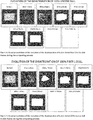
- Figure 1 shows the fibrillation dynamics of a fiber in accordance with the present invention in comparison with a standard fiber and a standard fiber subjected to chemical fibrillation.
- Figures 2 and 3 show the results of an enzymatic peeling test, while Figures 4 to 6 show the results of degradation experiments in soil.
- the fiber in accordance with the present invention is a lyocell fiber with an increased degradation behavior.
- the novel fibers display properties similar to standard lyocell fibers, such as mechanical fiber properties, while other properties, such as WRV and fibrillation tendencies, as well as degradation behavior are similar to the advantageous property levels known from viscose fibers.
- the fiber of the present invention shows a novel structure of the cross section, as compared to standard lyocell fibers. While the three layer structure known from standard lyocell fibers is maintained, at least the inner core layer shows an increased porosity, as compared with standard lyocell fibers. In embodiments also the surface layer may be less thick and/or the pore size, which is typically for standard lyocell fibers in the range of from 2 to 5 nm, may be larger.
- the fibers in accordance with the present invention are lyocell fibers with enhanced fibrillation tendencies, which are produced without any chemical pre-treatment.
- the chemical pre-treatment step weakens the fiber properties (working capacity) on the one hand and adds cost to the fiber production on the other hand.
- the fiber in accordance with the present invention shows well-balanced fibrillation dynamics between standard lyocell fibers and fast fibrillated fibers obtained with additional chemical pre-treatments. Accordingly, in embodiments the lyocell fiber in accordance with the present invention avoids the need for chemical pre-treatment whilst achieving fast fibrillation.
- Standard lyocell fibers are currently commercially produced from high quality wood pulps with high ⁇ -cellulose content and low non-cellulose contents such as hemicelluloses.
- Commercially available lyocell fibers such as TENCELTM fibers produced from Lenzing AG, show excellent fiber properties for nonwovens and textile applications.
- these lyocell fibers are chemically pre-treated using agents such as mineral acids or bleaching reagents. By this chemical treatment the fiber properties are weakened drastically and the working capacity decreases.
- the lyocell process is well known in the art and relates to a direct dissolution process of cellulose wood pulp or other cellulose-based feedstock in a polar solvent (for example N-methylmorpholine N-oxide [NMMO, NMO] or ionic liquids).
- a polar solvent for example N-methylmorpholine N-oxide [NMMO, NMO] or ionic liquids.
- NMMO, NMO N-methylmorpholine N-oxide
- ionic liquids for example N-methylmorpholine N-oxide [NMMO, NMO] or ionic liquids.
- the technology is used to produce a family of cellulose staple fibers (commercially available from Lenzing AG, Lenzing, Austria under the trademark TENCEL® or TENCELTM) which are widely used in the textile and nonwoven industry.
- Other cellulose bodies from lyocell technology have also been produced.
- the fibers in accordance with the present invention were produced on a semi-commercial pilot plant ( ⁇ 1 kt/a) and a complete, commercial-like after-treatment of the fiber.
- a straightforward scale-up from this production unit to a commercial unit (>30 kt/a) is feasible and reliable.
- the solution of cellulose is extruded in a so called dry-wet-spinning process by means of a forming tool and the moulded solution is guided for example over an air gap into a precipitation bath, where the moulded body is obtained by precipitation of the cellulose.
- the molding is washed and optionally dried after further treatment steps.
- Such lyocell fibers are well known in the art and the general methodology to produce and analyze same is for example disclosed in US 4,246,221 and in the BISFA (The International Bureau for the Standardization of Man-Made Fibers) publication "Terminology of Man-Made Fibres", 2009 editi on. Both references are included herewith in their entirety by reference.
- lyocell fiber as employed herein defines a fiber obtained by this process, as it has been found that fibers in accordance with the present invention differ greatly from fibers for example obtained from a meltblown process, even if using a direct dissolution process of cellulose wood pulp or other cellulose-based feedstock in a polar solvent (for example N-methylmorpholine N-oxide [NMMO, NMO] or ionic liquids) in order to produce the starting material.
- a polar solvent for example N-methylmorpholine N-oxide [NMMO, NMO] or ionic liquids
- the fibers in accordance with the present invention also differ from other types of cellulose based fibers, such as viscose fibers.
- hemicelluloses refers to materials known to the skilled person which are present in wood and other cellulosic raw material such as annual plants, i.e. the raw material from which cellulose typically is obtained. Hemicelluloses are present in wood and other plants in form of branched short chain polysaccharides built up by pentoses and/or hexoses (C5 and / or C6-sugar units). The main building blocks are mannose, xylose, glucose, rhamnose and galactose. The back bone of the polysaccharides can consist of only one unit (f.e. xylan) or of two or more units (e.g. mannan).
- hemicelluloses as known by the skilled person and as employed herein comprises hemicelluloses in its native state, hemicelluloses degraded by ordinary processing and hemicelluloses chemically modified by special process steps (e. g. derivatization) as well as short chain celluloses and other short chain polysaccharides with a degree of polymerization (DP) of up to 500.
- DP degree of polymerization
- the pulps preferably employed in the present invention do show as outlined herein a high content of hemicelluloses. Compared with the standard low hemicellulose content pulp employed for the preparation of standard lyocell fibers the preferred pulps employed in accordance with the present invention do show also other differences, which are outlined below.
- the pulps as employed herein display a more fluffy appearance, which results after milling (during preparation of starting materials for the formation of spinning solutions for the lyocell process), in the presence of a high proportion of larger particles.
- the bulk density is much lower, compared with standard pulps having a low hemicellulose content.
- This low bulk density requires adaptions in the dosage parameters (f.e. dosage from at least 2 storage devices).
- the pulps employed in accordance with the present invention are more difficult to impregnate with NMMO. This can be seen by evaluating the impregnating behavior according to the Cobb evaluation.
- the pulp employed for the preparation of the lyocell products, preferably fibers, as described herein has a scan viscosity in the range of from 300-440 ml/g, especially 320-420 ml/g, more preferably 320 to 400 ml/g.
- the scan viscosity is determined in accordance with SCAN-CM 15:99 in a cupriethylenediamine solution, a methodology which is known to the skilled person and which can be carried out on commercially available devices, such as the device Auto PulplVA PSLRheotek available from psl-rheotek.
- the scan viscosity is an important parameter influencing in particular processing of the pulp to prepare spinning solutions.
- lyocell process and lyocell technology relate to a direct dissolution process of cellulose wood pulp or other cellulose-based feedstock in a polar solvent (for example N-methylmorpholine N-oxide [NMMO, NMO] or ionic liquids).
- a polar solvent for example N-methylmorpholine N-oxide [NMMO, NMO] or ionic liquids.
- the technology is used to produce a family of cellulose staple fibers (commercially available from Lenzing AG, Lenzing, Austria under the trademark TENCEL® or TENCELTM) which are widely used in the textile and nonwoven industry.
- Other cellulose bodies from lyocell technology have also been produced.
- the solution of cellulose is usually extruded in a so called dry-wet-spinning process by means of a forming tool and the moulded solution gets for example over an air gap into a precipitation bath, where the moulded body is obtained by precipitation of the cellulose.
- the moulding is washed and optionally dried after further treatment steps.
- a process for production of lyocell fibers is described, for instance, in US 4,246,221 , WO 93/19230 , WO95/02082 or WO97/38153 .
- the task and object mentioned above was solved by lyocell fibers with the properties mentioned above,
- the fibers in accordance with the present invention show, in embodiments due to the specific structure, the required improved degradation properties, which in turn may also be determined for example by increased enzymatic peelability and increased WRV, decreased crystallinity, and/or increased fibrillation tendency.
- the WRV may be influenced by the crystallinity as well as by the structure of the fiber, in particular the porous core layer.
- Standard lyocell fibers are currently commercially produced from high quality wood pulps with high ⁇ -cellulose content and low non-cellulose contents such as hemicelluloses.
- Commercially available Lyocell fibers such as TENCELTM fibers produced from Lenzing AG, show excellent fiber properties for nonwovens and textile applications.
- the present invention surprisingly is able to provide fibers with the unique properties as described herein by using hemicellulose-rich pulps with a hemicellulose content of at least 5 wt.-%. Contrary to the disclosure in the prior art discussed above, such high hemicellulose content surprisingly, for lyocell fibers of the present invention, gives rise to an increased degradation property. Also the WRV is increased as well as fibrillation tendencies. Accordingly the present invention surprisingly achieves the tasks as outlined above while using a cellulose based raw material with a higher hemicelluloses content, as compared for standard lyocell fibers.
- the fibers in accordance with the present invention are fibers produced using large scale production equipment employing a lyocell spinning process, while the fibers described in the prior art are either produced with lab equipment not allowing the production of lyocell fibers in commercial quality (as for example drawing ratios, production velocities, after-treatment do not reflect scale-up qualities) or produced using meltblowing techniques.
- the fibers, not being produced with insufficient drawing and inadequate after-treatment therefore show different structure and properties compared to the fibers produced at production scale at titers reflecting market applications.
- the content of hemicelluloses in the pulps - which can also be a mixture of different pulps (as long as the essential requirements are met) - may be from 7 to 50 wt.-%, such as from 10 to 25, preferably 10 to 15 wt.-%.
- the hemicellulose content may be adjusted according to procedures known in the art.
- the hemicellulose may be the hemicelluloses originating from the wood from which the pulp is obtained, it is however also possible to add individual hemicelluloses depending on the desired fiber properties from other sources to high purity cellulose with a low original hemicellulose content.
- the addition of individual hemicelluloses may also be employed to adjust the composition of the hemicelluloses content, for example to adjust the ratio of hexoses to pentoses.
- the hemicelluloses contained in the pulp used for preparing the fibers in accordance with the present invention may have varying compositions, in particular regarding the content of pentoses and hexoses.
- the content of pentoses in the hemicellulose-rich pulp employed in the present invention is higher that the hexose content.
- the ratio of C5/xylan to C6/mannan may be in the range of from 125:1 to 1:3, preferably 25:1 to 1:2.
- the xylan content preferably is 6 wt.-% or more, more preferably 8 wt.-% or more and in embodiments even 12 wt.-% or more, with a suitable upper limit being about 20 wt.-%.
- the mannan content preferably, wither in isolation from or in combination with the above identified hemicelluloses content and/or xylan content, in embodiments is 3 wt.-% or more, preferably 5 wt.-% or more, with a suitable upper limit being about 10 wt.-%.
- the mannan content is low, such as 1 wt.-% or less, preferably 0.2 wt.-% or less and in embodiments 0.1 wt.-% or less, i.e. below a typical detection threshold.
- hemicelluloses content as well as the composition in particular of xylan and mannan content and ratio is not altered much during fiber spinning the above identified ranges, contents and ratios, presented in the context of the pulp used for the preparation of the lyocell fiber are also applicable for the lyocell fibers as such.
- the fibers in accordance with the present invention typically have a titer of 6.7 dtex or less, such as 2.2 dtex or less, such as 1.7 dtex, or even lower, such as 1.3 dtex or even lower, depending on the desired application. If the fiber is intended to be used in nonwoven applications a titer of from 1.5 to 1.8 dtex typically is suitable while for textile applications lower titers such as from 0.9 to 1.7 dtex are suitable. Surprisingly the present invention enables the formation of fibers with the desired titers over the whole application range, from nonwoven applications to textile applications.
- the present invention also covers fibers with much lower titers, with suitable lower limits for titers being 0.5 dtex or higher, such as 0.8 dtex or higher, and in embodiments 1.3 dtex or higher.
- suitable lower limits for titers being 0.5 dtex or higher, such as 0.8 dtex or higher, and in embodiments 1.3 dtex or higher.
- These upper and lower values as disclosed here define ranges of from 0.5 to 9 dtex, and including all further ranges formed by combining any one of the upper values with any one of the lower values.
- the fiber in accordance with the present invention may be prepared using lyocell technology employing a solution of cellulose and a spinning process employing a precipitation bath according to standard lyocell processes, known to the skilled person
- the fiber in accordance with the present invention preferably shows a reduced crystallinity, preferably of 40% or less.
- the fiber in accordance with the present invention preferably shows a WRV of 70% or more, more preferably 75% or more. Suitable ranges, in particular in combination with the crystallinity described herein and/or the hemicelluloses content and composition, are from72% to 90%, such as from 75% to 85%.
- the fiber in accordance with the present invention does not show any sulfuric smell so that olfactoric drawbacks of viscose fibers are overcome, while properties such as WRV and working capacity enable the use of the fibers of the present invention as viscose replacement fibers.
- the fiber in accordance with the present invention in isolation or in any combination with features outlined above as preferred for the claimed fiber, has a crystallinity of 40 % or less, preferably 39 % or less.
- fibers to be employed for non woven applications do show preferably a low crystallinity of for example from 39 to 30%, such as from 38 to 33 %.
- the present invention however is not limited to these exemplary crystallinity values.
- the fibers in accordance with the present invention do show a reduced crystallinity of 40 % or less.
- the fiber in accordance with the present invention shows in embodiments a novel type of distribution of the hemicelluloses over the cross section of the fiber. While for standard lyocell fibers the hemicelluloses are concentrated within the surface region of the fiber the fibers in accordance with the present invention do show an even distribution of the hemicelluloses over the entire cross section of the fiber. Such a distribution enhances the functionality of the fiber, as hemicelluloses increase for example binding properties towards other additives with a matching chemical reactivity. In addition the even distribution of the hemicelluloses may also contribute towards stabilizing the novel structure of the fibers in accordance with the present invention, comprising larger pores in the surface layer and a porous core layer. This novel structure enhances uptake as well as retention of other molecules, such as dyes and also contributes towards a faster degradation, in particular biological (enzymatic) degradation / disintegration.
- the fibers in accordance with the present invention may be employed for a variety of applications, such as the production of nonwoven fabrics, but also textiles.
- the fibers in accordance with the present invention may by employed as the only fiber of a desired product or they may be mixed with other types of fibers. The mixing ratio can depend from the desired end use.
- parameter values and ranges as defined herein in relation to fibers refer to properties determined with fibers derived from pulp and containing only additives, such as processing aids typically added to the dope as well as other additives, such as matting agents (TiO 2 , which often is added in amounts of up to 0.75 wt.-%), in a total amount of up to 1 wt.-% (based on fiber weight).
- additives such as processing aids typically added to the dope as well as other additives, such as matting agents (TiO 2 , which often is added in amounts of up to 0.75 wt.-%), in a total amount of up to 1 wt.-% (based on fiber weight).
- TiO 2 matting agents
- the unique and particular properties as reported herein are properties of the fibers as such, and not properties obtained by addition of particular additives and/or post spinning treatments (such as fibrillation improving treatments etc.).
- the fibers as disclosed and claimed herein may comprise additives, such as inorganic fillers etc. in usual amounts as long as the presence of these additives has no detrimental effect on dope preparation and spinning operation.
- additives such as inorganic fillers etc.
- the type of such additives as well as the respective addition amounts are known to the skilled person.
- 3 different fibers were produced using 3 different types of pulp with different hemicellulose contents (table 1).
- the lyocell fibers were produced according to WO93/19230 dissolving the pulps in NMMO and spinning them over an air-gap into a precipitation bath to receive fibers with titers from 1.3 dtex to 1.7 dtex, with and without matting agent (0.75% TiO 2 ).
- Table 1 Sugar contents of the different pulps for the lyocell fiber production.
- Fiber 1 is produced from hemi-rich pulp 1 and fiber 2 from hemi-rich pulp 2.
- the standard lyocell (CLY) fibers are produced from the standard lyocell reference pulp. Bright indicates a textile fiber without matting agent, whereas the dull fibers contain the matting agent identified above.
- Tablle 2 Fiber properties.
- the displayed results show that the fibers in accordance with the present invention may be prepared over the commercially relevant range of fiber titers, while maintaining sufficient mechanical properties, in particular working capacity, to render these fibers suitable as viscose replacement fibers.
- Crystallinities of the fibers of Example 1 are measured using a FT/IR with a Bruker MultiRAM FT-Raman spectrometer with a Nd-Yag-laser at 1064 nm and 500 mW. The fibers are pressed into pellets for a smooth surface. Fourfold determination with a spectral resolution of 4 cm -1 with 100 scans respectively. Evaluation of the measurements was done using a chemometric method (calibration with WAXS-data).
- crystallinities of the fibers of the present invention decrease by 15 and 16% respectively compared to the standard lyocell fibers. But they are still significantly higher compared to viscose fibers.
- Table 3 Crystallinities of the different lyocell fibers. fiber type crystallinity [%] 1.3 dtex / 38 mm CLY standard bright 44 1.3 dtex / 40 mm viscose standard bright 29 1.3 dtex / 38 mm fiber 1 bright 37 1.7 dtex / 38 mm CLY standard dull 47 1.7 dtex / 40 mm viscose standard dull 34 1.7 dtex / 38 mm fiber 1 dull 40 1.7 dtex / 38 mm fiber 2 dull 39
- a defined quantity of dry fibers is introduced into special centrifuge tubes (with an outlet for the water). The fibers are allowed to swell in deionized water for 5 minutes. Then it is centrifuged at 3000 rpm for 15 minutes, whereupon the moist cellulose is weighed right away. The moist cellulose is dried for 4 hours at 105 °C, whereupon the dry weight is determined.
- the water retention value is a measured value that indicates how much water of a moisture penetrated sample is retained after centrifuging.
- the water retention value is expressed as a percentage relative to the dry weight of the sample.
- the standard 1.7 dtex / 4 mm lyocell fibers are commercially available as TENCELTM fibers from Lenzing AG ("lyocell standard").
- Lyocell fibers subjected to a chemical pre-treatment were produced as described in AT 515693 .
- a fiber tow with single titers of 1.7 dtex was impregnated with diluted sulfuric acid at room temperature with a liquor ratio 1:10 and afterwards pressed to -200 % moisture.
- After-treatment of the fiber tow in a steamer for -10 min allows application of water vapor under pressure.
- the fiber bundle is washed acid-free, a soft-finish is applied and the fibers are dried.
- the dried fiber tow is cut into 4 mm shortcut fibers subsequently ending up with 1.7 dtex / 4 mm "lyocell chemical fibrillation" fibers.
- Lyocell fibers of the present invention were produced from the hemicellulose-rich pulp 1 from example 1 with a hemicelluloses content of >10%, yielding after post-spinning treatment 1.7 dtex / 4 mm fibers.
- the 3 different fiber types were refined in an Andritz Laboratory plant 12-1C plate refiner (NFB, S01-218238) at a starting concentration of 6 g/l, 1400 rpm and 172 l/min flow rate.
- the gap was fixed at 1 mm.
- lyocell fibers of the present invention designated lyocell increased fibrillation and lyocell chemical fibrillation fibers fibrillate at a significant higher rate compared to Lyocell standard fiber, meaning a decrease in time- and energy effort.
- the lyocell increased fibrillation fiber however showed a slower increase in fibrillation.
- the lyocell fibers CLY standard bright and fiber 1 bright (1.3 dtex / 38 mm bright) evaluated in Example 1 were subjected to an enzymatic peeling test according to Sjöberg et al (Biomacromolecules 2005, 6, 3146-3151 ).
- a viscose fiber with an enhanced xylan content of 7.5% was chosen for comparison from the paper by Schild and Liftinger ( Cellulose 2014, 21, 3031-3039 ). This xylan content is close to the xylan content of the new fiber with 6.8%.
- the test enables the generation of data concerning the hemicellulose distribution over the cross section of fibers, in particular xylan (by HPLC determination) including information relating to different densities and structures of layers (as denser layers show a slower response as well as layers with smaller pore sizes).
- the standard lyocell fibers as well as the xylan enriched viscose fibers showed a slow peeling rate ( fig. 2 ). This effect is even more pronounced for prolonged peeling times due to the denser cores.
- the xylan liberation determined corresponds to fibers with high hemicellulose content at the surface of the fiber and a sharp concentration decrease towards the core ( fig. 3 ).
- the fibers in accordance with the present invention show a peeling behavior corresponding to a fiber structure with an even distribution of the hemicellulose content over the entire cross section. Additionally, the peeling is much faster. This is even more astonishing and completely new as this phenomenon could not be achieved with xylan enriched viscose fibers. Due to the faster peeling rate it can be concluded that the new fibers have more porous core and surface layers with increased pore sizes and numbers and a homogenous distribution of the xylan over the whole fiber cross section.
- Example 7 Disintegration in soil
- Disintegration is qualitatively evaluated during 8 weeks (the test normally lasts 12 weeks, but after the material completely disappeared after 8 weeks, the test was stopped) of composting, simulating industrial composting conditions.
- test materials were put in slide frames, mixed with biowaste and composted in a 200 liter composting bin.
- the test is considered valid if the maximum temperature during the composting (industrial composition requirements) is above 60°C and below 75°C. Moreover, the daily temperature should be above 60°C during 1 week and above 40°C during at least 4 consecutive weeks.
- fiber 1 disintegrates much faster compared to standard lyocell.
- the disintegration after 4 weeks is comparable with the viscose test sample, after 2 weeks large holes can be observed at the fiber 1 sample, whereas the viscose sample shows only small tears and holes and the lyocell sample is still intact.
Landscapes
- Chemical & Material Sciences (AREA)
- Chemical Kinetics & Catalysis (AREA)
- General Chemical & Material Sciences (AREA)
- Engineering & Computer Science (AREA)
- Textile Engineering (AREA)
- Artificial Filaments (AREA)
- Nonwoven Fabrics (AREA)
Priority Applications (3)
| Application Number | Priority Date | Filing Date | Title |
|---|---|---|---|
| EP18160141.0A EP3536832A1 (fr) | 2018-03-06 | 2018-03-06 | Fibre lyocell présentant des propriétés de désintégration améliorées |
| PCT/EP2019/055517 WO2019170715A1 (fr) | 2018-03-06 | 2019-03-06 | Fibre lyocell présentant des propriétés de désintégration améliorées |
| TW108107364A TW201938670A (zh) | 2018-03-06 | 2019-03-06 | 分解性質改善的萊纖纖維 |
Applications Claiming Priority (1)
| Application Number | Priority Date | Filing Date | Title |
|---|---|---|---|
| EP18160141.0A EP3536832A1 (fr) | 2018-03-06 | 2018-03-06 | Fibre lyocell présentant des propriétés de désintégration améliorées |
Publications (1)
| Publication Number | Publication Date |
|---|---|
| EP3536832A1 true EP3536832A1 (fr) | 2019-09-11 |
Family
ID=61622322
Family Applications (1)
| Application Number | Title | Priority Date | Filing Date |
|---|---|---|---|
| EP18160141.0A Withdrawn EP3536832A1 (fr) | 2018-03-06 | 2018-03-06 | Fibre lyocell présentant des propriétés de désintégration améliorées |
Country Status (3)
| Country | Link |
|---|---|
| EP (1) | EP3536832A1 (fr) |
| TW (1) | TW201938670A (fr) |
| WO (1) | WO2019170715A1 (fr) |
Families Citing this family (2)
| Publication number | Priority date | Publication date | Assignee | Title |
|---|---|---|---|---|
| CN113109205A (zh) * | 2021-03-29 | 2021-07-13 | 杭州融凯盛科技有限公司 | 一种快速检测莱赛尔纤维成型状态方法 |
| CN115559007B (zh) * | 2022-09-23 | 2024-04-12 | 当阳市鸿阳新材料科技有限公司 | 一种消光莱赛尔纤维及其生产方法 |
Citations (15)
| Publication number | Priority date | Publication date | Assignee | Title |
|---|---|---|---|---|
| US4246221A (en) | 1979-03-02 | 1981-01-20 | Akzona Incorporated | Process for shaped cellulose article prepared from a solution containing cellulose dissolved in a tertiary amine N-oxide solvent |
| WO1993019230A1 (fr) | 1992-03-17 | 1993-09-30 | Lenzing Aktiengesellschaft | Procede de fabrication d'elements moules cellulosiques et dispositif de mise en oeuvre dudit procede |
| WO1994028214A1 (fr) | 1993-05-24 | 1994-12-08 | Courtaulds Fibres (Holdings) Limited | Tremie de stockage et de pre-melange |
| WO1994028217A1 (fr) | 1993-05-24 | 1994-12-08 | Courtaulds Fibres (Holdings) Limited | Formation d'un premelange a base de cellulose |
| WO1995002082A1 (fr) | 1993-07-08 | 1995-01-19 | Lenzing Aktiengesellschaft | Fibres cellulosiques |
| WO1996033221A1 (fr) | 1995-04-19 | 1996-10-24 | Lenzing Aktiengesellschaft | Procede de production d'une suspension de cellulose |
| WO1996033934A1 (fr) | 1995-04-25 | 1996-10-31 | Lenzing Aktiengesellschaft | Dispositif pour maintenir et decharger une suspension homogene de cellulose |
| WO1997038153A1 (fr) | 1996-04-10 | 1997-10-16 | Courtaulds Fibres (Holdings) Limited | Procede de fabrication de filaments lyocellulaires |
| WO1998005702A1 (fr) | 1996-08-01 | 1998-02-12 | Lenzing Aktiengesellschaft | Procede de production d'une suspension de cellulose |
| US6042769A (en) | 1994-06-22 | 2000-03-28 | Acordis Fibres (Holdings ) Limited | Lyocell fibre and a process for its manufacture |
| US6440547B1 (en) | 1996-08-23 | 2002-08-27 | Weyerhaeuser | Lyocell film made from cellulose having low degree of polymerization values |
| US20090004473A1 (en) * | 2007-06-29 | 2009-01-01 | Weyerhaeuser Co. | Lyocell fibers |
| US8420004B2 (en) | 2009-12-31 | 2013-04-16 | Acelon Chemical And Fiber Corporation | Meltblown wetlaid method for producing non-woven fabrics from natural cellulose |
| WO2014086883A1 (fr) | 2012-12-06 | 2014-06-12 | Lenzing Aktiengesellschaft | Procédé de production d'un article façonné cellulosique |
| WO2014128128A1 (fr) * | 2013-02-19 | 2014-08-28 | Deutsche Institute Für Textil- Und Faserforschung Denkendorf | Fibres de cellulose régénérée, leur fabrication et leur utilisation |
Family Cites Families (1)
| Publication number | Priority date | Publication date | Assignee | Title |
|---|---|---|---|---|
| AT515693B1 (de) | 2014-10-29 | 2015-11-15 | Chemiefaser Lenzing Ag | Schnell fibrillierende Lyocellfasern und deren Verwendung |
-
2018
- 2018-03-06 EP EP18160141.0A patent/EP3536832A1/fr not_active Withdrawn
-
2019
- 2019-03-06 TW TW108107364A patent/TW201938670A/zh unknown
- 2019-03-06 WO PCT/EP2019/055517 patent/WO2019170715A1/fr not_active Ceased
Patent Citations (16)
| Publication number | Priority date | Publication date | Assignee | Title |
|---|---|---|---|---|
| US4246221A (en) | 1979-03-02 | 1981-01-20 | Akzona Incorporated | Process for shaped cellulose article prepared from a solution containing cellulose dissolved in a tertiary amine N-oxide solvent |
| WO1993019230A1 (fr) | 1992-03-17 | 1993-09-30 | Lenzing Aktiengesellschaft | Procede de fabrication d'elements moules cellulosiques et dispositif de mise en oeuvre dudit procede |
| WO1994028214A1 (fr) | 1993-05-24 | 1994-12-08 | Courtaulds Fibres (Holdings) Limited | Tremie de stockage et de pre-melange |
| WO1994028217A1 (fr) | 1993-05-24 | 1994-12-08 | Courtaulds Fibres (Holdings) Limited | Formation d'un premelange a base de cellulose |
| WO1995002082A1 (fr) | 1993-07-08 | 1995-01-19 | Lenzing Aktiengesellschaft | Fibres cellulosiques |
| US6042769A (en) | 1994-06-22 | 2000-03-28 | Acordis Fibres (Holdings ) Limited | Lyocell fibre and a process for its manufacture |
| WO1996033221A1 (fr) | 1995-04-19 | 1996-10-24 | Lenzing Aktiengesellschaft | Procede de production d'une suspension de cellulose |
| WO1996033934A1 (fr) | 1995-04-25 | 1996-10-31 | Lenzing Aktiengesellschaft | Dispositif pour maintenir et decharger une suspension homogene de cellulose |
| WO1997038153A1 (fr) | 1996-04-10 | 1997-10-16 | Courtaulds Fibres (Holdings) Limited | Procede de fabrication de filaments lyocellulaires |
| WO1998005702A1 (fr) | 1996-08-01 | 1998-02-12 | Lenzing Aktiengesellschaft | Procede de production d'une suspension de cellulose |
| US6440547B1 (en) | 1996-08-23 | 2002-08-27 | Weyerhaeuser | Lyocell film made from cellulose having low degree of polymerization values |
| US6706237B2 (en) | 1996-08-23 | 2004-03-16 | Weyerhaeuser Company | Process for making lyocell fibers from pulp having low average degree of polymerization values |
| US20090004473A1 (en) * | 2007-06-29 | 2009-01-01 | Weyerhaeuser Co. | Lyocell fibers |
| US8420004B2 (en) | 2009-12-31 | 2013-04-16 | Acelon Chemical And Fiber Corporation | Meltblown wetlaid method for producing non-woven fabrics from natural cellulose |
| WO2014086883A1 (fr) | 2012-12-06 | 2014-06-12 | Lenzing Aktiengesellschaft | Procédé de production d'un article façonné cellulosique |
| WO2014128128A1 (fr) * | 2013-02-19 | 2014-08-28 | Deutsche Institute Für Textil- Und Faserforschung Denkendorf | Fibres de cellulose régénérée, leur fabrication et leur utilisation |
Non-Patent Citations (22)
| Title |
|---|
| "Terminology of Man-Made Fibres", 2009 |
| ARSHAD ET AL., TEKSTILEC, vol. 57, no. 2, 2014, pages 118 - 132 |
| CARBOHYDRATE POLYMERS, vol. 181, 2018, pages 893 - 901 |
| F.E. LI ET AL., JOURNAL OF ENGINEERED FIBERS AND FABRICS, vol. 5, no. 4, 2010, pages 42 - 53 |
| JOURNAL OF APPLIED SCIENCE, vol. 113, 2009, pages 150 - 156 |
| PALA ET AL: "Enzymatic depolymerisation of cellulose", CARBOHYDRATE POLYM, APPLIED SCIENCE PUBLISHERS, LTD. BARKING, GB, vol. 68, no. 1, 7 February 2007 (2007-02-07), pages 101 - 108, XP005878267, ISSN: 0144-8617, DOI: 10.1016/J.CARBPOL.2006.07.015 * |
| PARK ET AL., JOURNAL OF APPLIED POLYMER SCIENCE, vol. 94, 2004, pages 248 - 253 |
| RATAJSKA ET AL., REACTIVE AND FUNCTIONAL POLYMERS, vol. 38, 1998, pages 35 - 49 |
| SCHILD ET AL., CELLULOSE, vol. 21, 2014, pages 3031 - 3039 |
| SCHILD; LIFTINGER, CELLULOSE, vol. 21, 2014, pages 3031 - 3039 |
| SHIRIN ASAADIA; MICHAEL HUMMEL; PATRIK AHVENAINEN; MARTA GUBITOSIC; ULF OLSSON; HERBERT SIXTA, STRUCTURAL ANALYSIS OF LONCELL-F FIBRES FROM BIRCH WOOD |
| SINGH ET AL., CELLULOSE, vol. 24, 2017, pages 3119 - 3130 |
| SJOBERG ET AL., BIOMACROMOLECULES, vol. 6, 2005, pages 3146 - 3151 |
| WARNOCK ET AL., SUMM ARK COTTON RES, 2009, pages 208 - 211 |
| WENDLER ET AL., CELLULOSE, vol. 18, 2011, pages 1165 - 1178 |
| WENDLER ET AL., FIBERS AND TEXTILES IN EASTERN EUROPE, vol. 2, no. 79, 2010, pages 21 - 30 |
| ZHANG ET AL., CHINA SYNTHETIC FIBER INDUSTRY, vol. 31, no. 2, 2008, pages 24 - 27 |
| ZHANG ET AL., JOURNAL OF APPLIED POLYMER SCIENCE, vol. 107, 2008, pages 636 - 641 |
| ZHANG ET AL., POLYM. ENGIN. SCI., vol. 47, 2007, pages 702 - 706 |
| ZHANG ET AL., POLYMER ENGINEERING AND SCIENCE, vol. 47, 2007, pages 702 - 706 |
| ZHANG ET AL., POLYMER MATERIALS SCIENCE AND ENGINEERING, vol. 24, no. 11, 2008, pages 99 - 102 |
| ZHANG, POLYMER ENGINEERING AND SCIENCE, vol. 47, 2007, pages 702 - 706 |
Also Published As
| Publication number | Publication date |
|---|---|
| TW201938670A (zh) | 2019-10-01 |
| WO2019170715A1 (fr) | 2019-09-12 |
Similar Documents
| Publication | Publication Date | Title |
|---|---|---|
| EP3762523B1 (fr) | Fibre lyocell présentant des propriétés de type viscose | |
| KR20150139596A (ko) | 증가된 피브릴화 경향성을 지니는 폴리사카라이드 섬유 및 이의 제조 방법 | |
| EP3762536B1 (fr) | Fibre lyocell présentant une tendance accrue à la fibrillation | |
| KR20150139594A (ko) | 폴리사카라이드 섬유 및 이의 생산 방법 | |
| WO2016135385A1 (fr) | Procédé de production d'articles façonnés à base de cellulose | |
| KR102662301B1 (ko) | 용매-방적 셀룰로오스 섬유 | |
| WO2019170715A1 (fr) | Fibre lyocell présentant des propriétés de désintégration améliorées | |
| EP3536831A1 (fr) | Fibre lyocell comportant une nouvelle section transversale | |
| EP3536853A1 (fr) | Fibre lyocell à formation de bouloche réduite | |
| CN111788348A (zh) | 具有减少的纤维素含量的浆粕和莱赛尔成型体 | |
| BR112020017243B1 (pt) | Fibra liocel com propriedades similares à viscose, seu método de produção, e produto | |
| CA3091720C (fr) | Fibre cellulosique filée avec solvant |
Legal Events
| Date | Code | Title | Description |
|---|---|---|---|
| PUAI | Public reference made under article 153(3) epc to a published international application that has entered the european phase |
Free format text: ORIGINAL CODE: 0009012 |
|
| AK | Designated contracting states |
Kind code of ref document: A1 Designated state(s): AL AT BE BG CH CY CZ DE DK EE ES FI FR GB GR HR HU IE IS IT LI LT LU LV MC MK MT NL NO PL PT RO RS SE SI SK SM TR |
|
| AX | Request for extension of the european patent |
Extension state: BA ME |
|
| STAA | Information on the status of an ep patent application or granted ep patent |
Free format text: STATUS: THE APPLICATION IS DEEMED TO BE WITHDRAWN |
|
| 18D | Application deemed to be withdrawn |
Effective date: 20200312 |