EP3537346A1 - Verfahren und system zur integration der regression in gestapelten autoencoder (sae) - Google Patents
Verfahren und system zur integration der regression in gestapelten autoencoder (sae) Download PDFInfo
- Publication number
- EP3537346A1 EP3537346A1 EP19155046.6A EP19155046A EP3537346A1 EP 3537346 A1 EP3537346 A1 EP 3537346A1 EP 19155046 A EP19155046 A EP 19155046A EP 3537346 A1 EP3537346 A1 EP 3537346A1
- Authority
- EP
- European Patent Office
- Prior art keywords
- sae
- regression
- encoder
- variables
- values
- Prior art date
- Legal status (The legal status is an assumption and is not a legal conclusion. Google has not performed a legal analysis and makes no representation as to the accuracy of the status listed.)
- Ceased
Links
Images


Classifications
-
- G—PHYSICS
- G06—COMPUTING OR CALCULATING; COUNTING
- G06N—COMPUTING ARRANGEMENTS BASED ON SPECIFIC COMPUTATIONAL MODELS
- G06N3/00—Computing arrangements based on biological models
- G06N3/02—Neural networks
- G06N3/08—Learning methods
-
- G—PHYSICS
- G06—COMPUTING OR CALCULATING; COUNTING
- G06N—COMPUTING ARRANGEMENTS BASED ON SPECIFIC COMPUTATIONAL MODELS
- G06N3/00—Computing arrangements based on biological models
- G06N3/02—Neural networks
- G06N3/08—Learning methods
- G06N3/084—Backpropagation, e.g. using gradient descent
-
- G—PHYSICS
- G06—COMPUTING OR CALCULATING; COUNTING
- G06N—COMPUTING ARRANGEMENTS BASED ON SPECIFIC COMPUTATIONAL MODELS
- G06N3/00—Computing arrangements based on biological models
- G06N3/02—Neural networks
- G06N3/04—Architecture, e.g. interconnection topology
- G06N3/045—Combinations of networks
-
- G—PHYSICS
- G06—COMPUTING OR CALCULATING; COUNTING
- G06N—COMPUTING ARRANGEMENTS BASED ON SPECIFIC COMPUTATIONAL MODELS
- G06N3/00—Computing arrangements based on biological models
- G06N3/02—Neural networks
- G06N3/04—Architecture, e.g. interconnection topology
- G06N3/045—Combinations of networks
- G06N3/0455—Auto-encoder networks; Encoder-decoder networks
-
- G—PHYSICS
- G06—COMPUTING OR CALCULATING; COUNTING
- G06N—COMPUTING ARRANGEMENTS BASED ON SPECIFIC COMPUTATIONAL MODELS
- G06N3/00—Computing arrangements based on biological models
- G06N3/02—Neural networks
- G06N3/08—Learning methods
- G06N3/09—Supervised learning
-
- G—PHYSICS
- G06—COMPUTING OR CALCULATING; COUNTING
- G06N—COMPUTING ARRANGEMENTS BASED ON SPECIFIC COMPUTATIONAL MODELS
- G06N3/00—Computing arrangements based on biological models
- G06N3/02—Neural networks
- G06N3/08—Learning methods
- G06N3/0985—Hyperparameter optimisation; Meta-learning; Learning-to-learn
Definitions
- the disclosure herein generally relates to field of regression analysis and, more particularly to, incorporating regression into Stacked Auto Encoder (SAE) for solving regression problems.
- SAE Stacked Auto Encoder
- Regression analysis is a statistical technique utilized for estimation or prediction purposes. Regression analysis enables estimation or prediction of dependent variables or output parameters using independent variables or input parameters by modelling unknown relationship between the dependent variables and the independent variables. Regression analysis has applications in plurality of fields; right from monitoring and control of units in industrial plant or machine automation to management processes, wherein regression analysis helps in predictive analytics, process optimization, error corrections and the like.
- linear regression models such as linear regression, Generalised Linear Models (GLM), quasi-likelihood estimation, Least Absolute Shrinkage and Selection Operator (LASSO), non-parametric Nadaraya-Watson kernel estimator, Support Vector Regression (SVR) and the like.
- LLM Generalised Linear Models
- LASSO Least Absolute Shrinkage and Selection Operator
- SVR Support Vector Regression
- Linear regression models have been explored in the intelligent manufacturing domain for various problems like spindle load estimation, error compensation and the like.
- linear regression models such as Ridge, LASSO and the like cannot handle non-linearity between input and output (target).
- Non-linear regression techniques especially the SVR with polynomial kernels and Gaussian kernels, have been used widely in machine automation use-cases. SVRs with these kernels have been applied for tool condition assessment in CNC machine, assessment of machine degradation and the like.
- AEs Auto Encoders
- the encoder and the decoder are learnt by minimizing a Euclidean cost function, given by equation: argmin W E , W D ⁇ X ⁇ W D ⁇ W E X ⁇ F 2
- Embodiments of the present disclosure present technological improvements as solutions to one or more of the above-mentioned technical problems recognized by the inventors in conventional systems.
- a method for incorporating regression into a Stacked Auto Encoder comprises generating a regression model for the SAE for solving a regression problem by formulating the regression model as a non-convex joint optimization function.
- the non-convex joint optimization function comprises a first set of training values associated with a set of input variables applied at an input encoder layer among a plurality of encoder layers of the SAE, a second set of training values for a set of output variables, a plurality of encoder weight matrices associated with the plurality of encoder layers, a decoder weight matrix associated with a decoder layer of the SAE, a regression weight vector associated with the set of output variables, a parameter for controlling weightage of a regression term in the non-convex joint optimization function and a non-linear activation function.
- the associated weights that need to be learned during training by minimizing this joint optimization function are learned by reformulating the non-convex joint optimization function as an Augmented Lagrangian formulation in terms of a plurality of proxy variables and a plurality of hyper parameters.
- the plurality of proxy variables provide representations of the set of input variables at each encoder layer among the plurality of encoder layers of the SAE.
- the method comprises splitting the Augmented Lagrangian formulation into a set of derived functions using Alternating Direction Method of Multipliers (ADMM), wherein the derived functions are sub-problems of the Augmented Lagrangian formulation.
- ADMM Alternating Direction Method of Multipliers
- the method comprises learning values of the plurality of encoder weight matrices, the decoder weight matrix, the regression weight vector and the plurality of proxy variables for the regression model to train the SAE for the regression problem by obtaining argument minimum of each derived function among the set of derived functions in multiple iterations. Furthermore, the method comprises applying, a set of test values associated with the set of input variables to an output SAE function of the SAE to estimate a set of values for the output variables, wherein the output variables are unknown, wherein the output SAE function comprises the learned values of the plurality of encoder weight matrices and the regression weight vector.
- a Stacked Auto Encoder (SAE) system for incorporating regression into a Stacked Auto Encoder (SAE) is provided.
- the system comprises a processor, an Input output interface, a memory, wherein the memory comprises the SAE and a repository.
- the SAE is configured to generate a regression model for the SAE for solving a regression problem by formulating the regression model as a non-convex joint optimization function comprising a first set of training values associated with a set of input variables applied at an input encoder layer among a plurality of encoder layers of the SAE, a second set of training values for a set of output variables, a plurality of encoder weight matrices associated with the plurality of encoder layers, a decoder weight matrix associated with a decoder layer of the SAE, a regression weight vector associated with the set of output variables, a parameter for controlling weightage of a regression term in the non-convex joint optimization function and a non-linear activation function.
- the associated weights that need to be learned during training by minimizing this joint optimization function are learned by reformulating the non-convex joint optimization function as an Augmented Lagrangian formulation in terms of a plurality of proxy variables and a plurality of hyper parameters.
- the plurality of proxy variables provide representations of the set of input variables at each encoder layer among the plurality of encoder layers of the SAE.
- the SAE is configured to split the reformulated Augmented Lagrangian formulation into a set of derived functions using Alternating Direction Method of Multipliers (ADMM), wherein the derived functions are sub-problems of the Augmented Lagrangian formulation.
- ADMM Alternating Direction Method of Multipliers
- the SAE is configured to learn values of the plurality of encoder weight matrices, the decoder weight matrix, the regression weight vector and values of the plurality of proxy variables for the regression model to train the SAE for the regression problem by obtaining argument minimum of each derived function among the set of derived functions in multiple iterations. Furthermore, the SAE is configured to apply, a set of test values associated with the set of input variables to an output SAE function of the SAE to estimate a set of values for the output variables, wherein the output variables are unknown, wherein the output SAE function comprises the learned values of the plurality of encoder weight matrices and the regression weight vector.
- a non-transitory computer readable medium stores instructions which, when executed by a hardware processor, cause the hardware processor to perform acts comprising generating a regression model for the SAE for solving a regression problem by formulating the regression model as a non-convex joint optimization function comprising a first set of training values associated with a set of input variables applied at an input encoder layer among a plurality of encoder layers of the SAE, a second set of training values for a set of output variables, a plurality of encoder weight matrices associated with the plurality of encoder layers, a decoder weight matrix associated with a decoder layer of the SAE, a regression weight vector associated the set of output variables, a parameter for controlling weightage of a regression term in the non-convex joint optimization function and a non-linear activation function.
- the associated weights that need to be learned during training by minimizing this joint optimization function are learned by reformulating the non-convex joint optimization function as an Augmented Lagrangian formulation in terms of a plurality of proxy variables and a plurality of hyper parameters.
- the plurality of proxy variables provide representations of the set of input variables at each encoder layer among the plurality of encoder layers of the SAE.
- the acts comprise splitting the Augmented Lagrangian formulation function into a set of derived functions using Alternating Direction Method of Multipliers (ADMM), wherein the derived functions are sub-problems of the Augmented Lagrangian formulation.
- ADMM Alternating Direction Method of Multipliers
- the acts comprise learning values of the plurality of encoder weight matrices, the decoder weight matrix, the regression weight vector and values of the plurality of proxy variables for the regression model to train the SAE for the regression problem by obtaining argument minimum of each derived function among the set of derived functions in multiple iterations.
- the actions include applying, a set of test values associated with the set of input variables to an output SAE function of the SAE to estimate a set of values for the output variables, wherein the output variables are unknown, wherein the output SAE function comprises the learned values of the plurality of encoder weight matrices and the regression weight vector.
- the embodiments herein provide a method and a system for incorporating regression into Stacked Auto Encoder (SAE).
- the method comprises a training phase and a testing phase.
- the training phase comprises generating a regression model for the SAE for solving a regression problem.
- the regression model is formulated as a non-convex joint optimization function (alternatively referred as joint optimization function).
- joint optimization function incorporates regression and modifies an existing Euclidean cost function of the Stacked Auto Encoder framework.
- the existing Euclidean cost function for the Stacked Auto Encoder comprises a set of training values associated with a set of input variables applied at an input encoder layer among a plurality of encoder layers of the SAE, a plurality of encoder weight matrices associated with the plurality of encoder layers, one or more decoder weight matrices associated with one or more decoder layers of the SAE and a non-linear activation function associated with the layers of the SAE.
- the modifications to the existing Euclidean cost function as provided in the joint optimization function include adding a set of training values for a set of output variables, a regression weight vector associated with the set of output variables and a parameter for controlling weightage of a regression term in the non-convex joint optimization function. Further, the modifications includes reducing number of decoder layers to a single decoder layer, which represents an asymmetric SAE. Incorporating the set of output variables and the regression weight vector to the existing Euclidean function enables joint learning, wherein weights of the plurality of encoder weight matrices, the decoder weight matrix and the regression weight vector associated with the output variables are learned simultaneously in a mathematically more optimal manner, unlike existing layer wise pre-training and fine tuning approach.
- the proposed non-convex joint optimization function, representing the regression model is minimized to learn values of the regression weight vector, values of the plurality of encoder weight matrices and values of the decoder weight matrix.
- all layers including the plurality of encoder layers, the decoder layer and the regression weight vector are learnt jointly. Since, the method includes learning all the layers jointly, the decoders do not play any direct role in the analysis, unlike layer-wise pre-training in the traditional approach. Also, more decoders require more parameters to learn, which leads to over-fitting with limited training data.
- the joint learning of multiple layers of SAE enables using the asymmetric SAE, where a SAE architecture is built on top of an asymmetric model having multiple encoders but a single decoder.
- the method is explained with reference to an asymmetric SAE comprising the plurality of encoder layers and the single decoder layer.
- the asymmetric structure of the SAE as utilized herein by the method, keeps the robust abstraction capacity of deep learning without the pitfalls of over-fitting. Even though the method is explained in conjunction with the asymmetric SAE, which provides an added advantage by reducing number of parameters to be computed, it is understood for a person skilled in the art that the method can be applied to symmetric SAEs with minor modifications and still being within the scope of the invention.
- the minimization of the joint optimization function comprises reformulating joint optimization function as an Augmented Lagrangian formulation in terms of a plurality of proxy variables and a plurality of hyper parameters. Further, the minimization comprises breaking the Augmented Lagrangian formulation is into a set of derived functions using Alternating Direction Method of Multipliers (ADMM).
- the derived functions are sub-problems of the Augmented Lagrangian formulation. Furthermore, argument minimum of each derived function is obtained, during which the values of the plurality of encoder weight matrices, the decoder weight matrix, and the regression weight vector are learned to train the SAE for the regression problem. This completes the training phase.
- the testing phase of the method comprises applying, in real time, a set of test values associated with the set of input variables to an output SAE function to estimate a set of values of the unknown output variables.
- the output SAE function comprises the learned values of the plurality of encoder weight matrices and the learned regression weight vector.
- the proposed method provides a generic solution for any regression problem in all domains or application areas.
- the method is explained with an example application, wherein the regression analysis as proposed is applied in machine automation use cases.
- a typical use case described herein is for load estimation of a Computer Numerical Control (CNC) machine using the SAE based regression.
- the proposed method can be applied in plurality of domains where the problem to be solved can be formulated as the regression problem.
- prediction of household electricity consumption can be formulated as an electricity consumption regression problem using known regression techniques.
- the proposed method can represent the regression problem as the non-convex joint optimization function and further solve the non-convex joint optimization function using the method steps proposed. Examples from other domains include blood pressure estimation using photo plethysmography (PPG) and electrocardiography (ECG) signals and the like that can be formulated as regression problems.
- PPG photo plethysmography
- ECG electrocardiography
- FIGS. 1 through FIG. 3 where similar reference characters denote corresponding features consistently throughout the figures, there are shown preferred embodiments and these embodiments are described in the context of the following exemplary system and/or method.
- FIG. 1 illustrates an example system 100 implementing a Stacked Auto Encoder (SAE) system 102 that incorporates regression into a SAE for solving a regression problem, according to some embodiments of the present disclosure.
- the system 100 depicts one or more data sources 106-1 through 106-n that are source of data required by the SAE system 102.
- one or more data sources among the data sources 106-1 through 106-n collect data of interest that serve as the input variables for the SAE system 102 to solve the regression problem for which a regression model is generated by the SAE system 102.
- the data of interest may include training values received in training phase by the SAE 102 or test values received during testing phase (real time monitored data or offline data) by the SAE.
- Each data source such as 106-1 collects multiple sensor readings combined together, which may be obtained from a set of sensors, such as a sensor set 114-1 monitoring the CNC machine unit 110-1.
- the data source 106-2 collects multiple sensor readings for CNC machine (unit 110-2) through a sensor set 114-2.
- each data source 106-1 through 106-n is associated with the sensor set 114-1 through 114-n respectively.
- An example environment, wherein the system 100 may be implemented may be in intelligent manufacturing domain that has been automated to a great extent with the introduction of Computer Numerical Control (CNC) machines.
- Computation of outputs (values of output variables) such as load estimation from inputs (values of input variables) such as data from sensor signals or sensor data collected through the data sources (106-1 through 106-n) holds significance in the field of intelligent manufacturing.
- the SAE system 102 can be configured to estimate output variables such as an axial load and a spindle load values of units 110-1, 110-2 through 110-n (for example multiple CNC machines) in a manufacturing plant from input sensor readings providing spindle speed, feed rate, tool positions and the like obtained from the sensors installed for monitoring the CNC machines (here unit 110-1 through 110-n) via the data sources 106-1 through 106-n. Estimation of the load on the CNC machine from input sensor readings can be viewed as a standard regression problem.
- the SAE system 102 is configured to generate the regression model for the defined regression problem (for example herein, axial load and spindle load estimation).
- the SAE system 102 is configured to utilize the proposed deep learning based regression technique that incorporates regression within the SAE.
- the SAE is configured to generate the regression model defined by the joint optimization function.
- each such unit has its separate training phase, wherein a separate trained model is generated for each CNC machine.
- Sensor values from each CNC machine are fed to the respective SAE of the SAE system 102 for obtaining respective trained models during training phase or values of unknown load during the testing phase, wherein different CNC machines may have different characteristics and behavior.
- the SAE system 102 and generation of the regression model is explained in conjunction with FIG.2a , FIG. 2b and FIG. 3 .
- the computed values of output variables enable either predicting the future load values or estimating the current load incurred across the axes and spindle.
- the unknown output variables axis load and spindle load
- the corresponding regression model of the SAE for each CNC machine (unit 110-1 through 110-n) from the set of input variables (spindle speed, feed rate, tool positions), which are being monitored for each CNC machine (unit 110-1 through 110-n) through the set of sensors 114-1 through 114-n respectively
- corrective actions such as change of tools of the CNC machines (units110-1 or 110-2) may be performed by a system controller.
- the data of interest, also referred as data streams, from the data sources 106-1 through 106-n may be transferred to a computing device 104 through a network 108, wherein the computing device 104 may include the SAE system 102.
- the SAE system 102 may be embodied in the computing device 104 (not shown).
- the SAE system 102 may be in direct communication with the computing device 104, as depicted in FIG. 1 .
- the collected data from data sources 106-1 through 106-n as well as the regression models generated for each CNC machine by the SAE system 102 can be stored in a repository 112.
- the data sources 106-1 through 106-n may be directly connected to the SAE system 102.
- the network 108, transmitting data streams from the data sources 106-1 through 106-n to the computing device 104 may be a wireless or a wired network, or a combination thereof.
- the network 108 can be implemented as a computer network, as one of the different types of networks, such as virtual private network (VPN), intranet, local area network (LAN), wide area network (WAN), the internet, and such.
- VPN virtual private network
- LAN local area network
- WAN wide area network
- the internet and such.
- the network 108 may either be a dedicated network or a shared network, which represents an association of the different types of networks that use a variety of protocols, for example, Hypertext Transfer Protocol (HTTP), Transmission Control Protocol/Internet Protocol (TCP/IP), and Wireless Application Protocol (WAP), to communicate with each other.
- HTTP Hypertext Transfer Protocol
- TCP/IP Transmission Control Protocol/Internet Protocol
- WAP Wireless Application Protocol
- the network 108 may include a variety of network devices, including routers, bridges, servers, computing devices, storage devices.
- the network devices within the network 108 may interact with the SAE system 102 through communication links.
- the computing device 104 which implements the SAE system 102 can be a workstation, a mainframe computer, a general purpose server, a network server or the like.
- the repository 112, coupled to the SAE system 102 may also store other data such as the intermediate data generated during estimation of the output variables during testing phase and weights generated during training phase of the SAE system 102.
- the data repository 112 may be internal to the SAE system 102 (as depicted in FIG. 2a ).
- the components or modules and functionalities of SAE system 102 with an example SAE architecture are described further in detail in conjunction with FIG. 2a and FIG. 2b respectively.
- FIG. 2a illustrates a functional block diagram of the SAE system 102 of FIG. 1 , according to some embodiments of the present disclosure and FIG. 2b illustrates architecture of an example SAE for the SAE system 102 with an asymmetric SAE for the regression, according to some embodiments of the present disclosure.
- the SAE system 102 includes or is otherwise in communication with one or more hardware processors such as a processor(s) 202, at least one memory such as a memory 204, and an I/O interface 206.
- the processor 202 (hardware processor), the memory 204, and the I/O interface(s) 206 may be coupled by a system bus such as a system bus 208 or a similar mechanism.
- the memory 204 further may include modules 210.
- the modules 210 include a SAE 212 and other modules (not shown) for implementing functions of the SAE system 102.
- the module 210 can be an Integrated Circuit (IC), external to the memory 204 (not shown), implemented using a Field-Programmable Gate Array (FPGA) or an Application-Specific Integrated Circuit (ASIC).
- IC Integrated Circuit
- FPGA Field-Programmable Gate Array
- ASIC Application-Specific Integrated Circuit
- the names of the modules of functional block in the modules 210 referred herein, are used for explanation and are not a limitation.
- the memory 204 can also include a repository 112.
- the hardware processor(s) 202 may be implemented as one or more multicore processors, a microprocessors, microcomputers, microcontrollers, digital signal processors, central processing units, state machines, logic circuitries, and/or any devices that manipulate data based on operational instructions.
- the hardware processor 202 is configured to fetch and execute computer-readable instructions stored in the memory 204 and communicate with the modules 210, internal or external to the memory 204, for triggering execution of functions to be implemented by the modules 210.
- the SAE 212 is configured for two stages, the training phase and the testing phase, for solving the regression problem.
- the regression problem defined can be estimating axis load and spindle load of the CNC machines (units 110-1 through 110-n) based on inputs from the sensors sets 114-1 through 114-n through data sources 106-1 through 106-n.
- the training phase comprises generating the regression model for the SAE 212 for solving the regression problem.
- the SAE 212 is the asymmetric SAE with the plurality of encoder layers and the single decoder layer.
- the example architecture of the asymmetric SAE (SAE 212) for regression is depicted in FIG. 2b .
- the example SAE 212 for regression comprises the asymmetric SAE having two encoding layers and a single decoder layer.
- Non-linearity is added at each layer using a non-linear activation function.
- the SAE 212 depicts representations of the raw input X (a set of input variables) at its encoding layers ( Z 1 and Z 2 ) associated with a plurality of (for example herein, two) encoder weight matrices W E 1 and W E 2 respectively.
- the SAE system 102 is scalable with respect to number of encoding layers that can be included. Though the implementation, explained in example herein, has been done for two encoding layers, the regression model generated can be easily extrapolated to any number of encoding layers, suited to application. The resulting optimization problem can be solved in a similar manner to obtain multiple encoding weights. Also, the parameters and hyper-parameters are configurable and can be tuned as per the application. This makes the SAE system 102 adaptable and efficient.
- the single decoding layer, associated with the decoder weight matrix W D strives to yield raw data from the representation at the deepest encoding layer.
- the estimated or regressed target value y is obtained from the representation at deepest layer ( Z 2 ) of the SAE 212, associated with a weight vector w (alternatively referred as the regression weight vector).
- the regression model for the SAE 212 is formulated as the non-convex joint optimization function (alternatively referred as joint optimization).
- the joint optimization function comprises the regression weight vector ( w in the FIG. 2b ) associated with the set of output variables for training (for example, as depicted in the FIG. 2b with only one output variable y ) of the SAE 212, as well with the two encoder weight matrices ( W E 1 and W E 2 in the FIG. 2b ) associated with the plurality of encoder layers of the SAE 212 and the decoder weight matrix ( W D in the figure) associated with the decoder layer of the SAE 212.
- Sensor data from each CNC machine unit, collected through data sources 106-1 through 106-n are used to train the SAE system 102 independently and separate training models are obtained corresponding to each CNC machine unit. It can be understood by person skilled in the art that there can be multiple SAEs, each trained for one unit, however all SAEs for all units are not shown in the FIG.
- x 1 m are the descriptors for the input x 1 ) corresponds to the output variable with target value y 1 .
- x 1 , x 2 ,..., x n corresponding output values y 1 , y 2 ,..., y n are provided during training.
- 'm' is the number of descriptors of a single input (say x 1 ) at one time instance, where there are 'n' number of such input instances collected at different time instances.
- the proposed joint optimization function used during the training phase of the SAE 212 to learn weights is provided in equation 1 below, also explained in conjunction with step 302 of FIG.3 .
- ⁇ is a parameter for controlling the weightage of the regression term, ⁇ y - w T ⁇ ( W E 2 ⁇ ( W E 1 X )) ⁇ , in the non-convex joint optimization function of equation land ⁇ is the non-linear activation function.
- the joint optimization function of the equation 1 is minimized to learn the regression weight vector ( w ), the plurality of encoder weight matrices ( W E 1 and W E 2 ) associated with the plurality of encoder layers and the decoder weight matrix ( W D ) .
- the non-convex joint optimization function has multiple local minima with multiple locally optimal points and hence, it is difficult to solve.
- the proposed SAE 212 is configured to solve this non-convex problem by reformulating it as the Augmented Lagrangian formulation and splitting down into the sub-problems, also explained in conjunction with step 304 of FIG.3 .
- the advantage of the proposed method lies in the fact that the non-convex joint optimization function enables joint learning of the regression weights along with the encoding weight matrices and the decoding weight matrix. This ensures a more optimal solution owing to the fact that in the traditional pre-training approach the shallower layers influence the deeper layers but the opposite influence does not take place, which results in sub-optimality. When they are jointly learnt, all the layers influence one another. Moreover, since existing backpropagation technique is used for training unidirectional structures with one input and one output, they cannot be easily applied to the SAE architecture proposed, which has two outputs. Hence, the regression problem for the SAE 212 is addressed by formulating and solving the joint optimization problem.
- the minimization of the joint optimization function comprises reformulating the Augmented Lagrangian formulation (reformulated joint optimization function),as in equation 3, in terms of the plurality of proxy variables ( Z 1 and Z 2 ) provided in equation 2 and a plurality of hyper parameters ⁇ 1 and ⁇ 2 provided in the Augmented Lagrangian formulation in the equation 3 below:
- Z 1 and Z 2 the proxy variables, provide representations of X at the two encoding layers.
- the minimization of the joint optimization function in the training phase comprises splitting the reformulated joint function of equation 3, also referred as the Augmented Lagrangian formulation, into a set of derived functions, alternatively referred as sub problems P1, P2, P3, P4, P5 and P6 of the non-convex joint optimization function, as provided in equations 4 through equations 9 below with I as the identity matrix.
- the minimization of the joint optimization function comprises obtaining argument minimum of each derived functions, during which the values of the plurality of encoder weight matrices, the decoder weight matrix, and the regression weight vector that minimizes the objective functions are learned also described in conjunction with step 308 of FIG.3 , to train the SAE for the regression problem.
- P1, P2 and P5 are standard linear least square problems having closed form solutions. They can also be solved using conjugate gradient.
- P3, P4 and P6 can be easily converted to their equivalent forms since the activation functions are unitary and easily invertible. Hence, P3, P4 and P6 turn out to be linear least square problems. This concludes the training phase of the SAE 212.
- the testing phase of the SAE comprises applying a set of test values associated with the set of input variables ( X test ) to an output SAE function (as provided in equation 10 below) to estimate a set of values of the set of unknown output variables ⁇ .
- the output SAE function for the testing phase comprises the learned values of the plurality of encoder weights and the set of regression weights.
- the set of test values may be the values of input variables acquired in real time.
- test values may be values of input variable acquired earlier for off line processing.
- the I/O interface(s) 206 in the SAE system 102 may include a variety of software and hardware interfaces, for example, a web interface, a graphical user interface and the like.
- the interface(s) 206 may include a variety of software and hardware interfaces, for example, interfaces for peripheral device(s), such as a keyboard, a mouse, an external memory, sensors (data sources 106-1 through 106-n), and a printer and a display.
- the interface(s) 206 may enable the SAE system 102 to communicate with other devices, such as the computing device 104, web servers and external databases (such as the repository 112, if external to the SAE system 102).
- the interface(s) 206 can facilitate multiple communications within a wide variety of networks and protocol types, including wired networks, for example, local area network (LAN), cable, etc., and wireless networks, such as Wireless LAN (WLAN), cellular, or satellite.
- the interface(s) 206 may include one or more ports for connecting a number of computing systems with one another or to another server computer.
- the I/O interface(s) 206 may include one or more ports for connecting a number of devices to one another or to another server.
- the memory 204 may include any computer-readable medium known in the art including, for example, volatile memory, such as static random access memory (SRAM) and dynamic random access memory (DRAM), and/or non-volatile memory, such as read only memory (ROM), erasable programmable ROM, flash memories, hard disks, optical disks, and magnetic tapes.
- volatile memory such as static random access memory (SRAM) and dynamic random access memory (DRAM)
- non-volatile memory such as read only memory (ROM), erasable programmable ROM, flash memories, hard disks, optical disks, and magnetic tapes.
- the modules 210 may include routines, programs, objects, components, data structures, and so on, which perform particular tasks or implement particular abstract data types.
- the modules 210 may include computer-readable instructions that supplement applications or functions performed by the SAE system 102.
- the repository 112 may store data that is processed, received, or generated as a result of the execution of one or more modules in the module(s) 210.
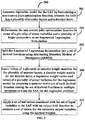
- FIG. 3 is a flow diagram illustrating a method 300 for incorporating regression into the SAE 212 for solving the regression problem, in accordance with some embodiments of the present disclosure.
- the method 300 includes two stages for the SAE 212, the training stage and the testing stage
- the method 300 includes allowing the SAE system 102 to generate the regression model for the SAE 212 for solving the regression problem.
- the input encoder layer is a first layer among the plurality of encoder layers of the SAE 212 that receives external input.
- the joint optimization function also comprises the set of training values for the set of output variables y 1 , y 2 , ..., y n , the plurality of encoder weights matrices W E 1 and W E 2 associated with the plurality of encoder layers, the decoder weight matrix W D associated with the decoder layer of the SAE 212, the regression weight vector ( w ) associated with the set of output variables, the parameter ⁇ for controlling weightage of the regression term and the nonlinear activation function ⁇ .
- the method 300 includes allowing the SAE system 102 to reformulate the non-convex joint optimization function in terms of the plurality of proxy variables ( Z 1 and Z 2 as provided in equation 2) and the plurality of hyper parameters ( ⁇ 1 and ⁇ 2 provided in Augmented Lagrangian formulation in the equation 3).
- the plurality of proxy variables provide representations of the set of input variables at each encoder layer among the plurality of encoder layers of the SAE 212.
- the method 300 includes allowing the SAE system 102 to split the Augmented Lagrangian formulation (alternatively referred as reformulated joint optimization function) into the set of derived functions (as provided in equations 4,5,6,7,8 and 9) using the ADMM.
- the derived functions are the sub-problems of the Augmented Lagrangian formulation.
- the method includes allowing the SAE system 102 to learn values of the plurality of encoder weight matrices, the decoder weight matrix, the regression weight vector and values of the plurality of proxy variables for the regression model to train the SAE for the regression problem.
- the values are learnt by obtaining argument minimum of each derived function among the set of derived functions in multiple iterations. This concludes the training phase for the SAE 212.
- the step 308 works in iterations during the training phase where an error is computed after each iteration and subsequent iterations try to minimize the error.
- the training can be stopped at any iteration to check whether error approximately decreases as a whole and thus training failures can be detected.
- the number of encoding layers, number of iterations and values of the parameter and hyper-parameters can be changed as per the application scenario and error reduction can be checked during training.
- the method proposed is adaptable and efficient because it can be applied to any regression problem with minimal changes and the SAE architecture provides flexibility in terms of changing the number of encoding layers, configuring parameters and the like.
- the method 300 includes allowing the SAE system 102 to apply the set of test values associated with the set of input variables the output SAE function (as provided in equation 10) of the SAE 212 to obtain the set of test values for the unknown output variables.
- the output variables are unknown.
- the set of test values may be the values of input variables acquired in real time.
- test values may values of input variable acquired earlier for off line processing.
- the output SAE function comprises the derived values (also referred as learned weights) of the plurality of encoder weight matrices and the regression weight vector.
- the learned weights have small sizes or values, this enables the testing phase to be performed both in real time as well as offline, as per the need.
- the SAE 212 trained for the defined regression problem for the CNC machine, in the example herein, receives input data from different sensor signals (for example sensors 114-1 or data sources 106-1 monitoring the unit 110-1) associated with the CNC machine.
- the axial load and spindle load incurred while machining specific components, measured in units of mega-watt (Mw), is recorded as ground truth for training using the method 300.
- Mw mega-watt
- the hidden ground truth for the test data is compared with the estimated ones and error values are computed.
- the output values for test data remain unknown, hence they are kept hidden from the regression model.
- the captured signals consist of absolute tool position across all the axes, amount of distance to go along the controlled axes, spindle speed value related to constant surface speed control on CNC, surface speed value, feed rate and the spindle motor speed.
- the estimation of load values at different axes as well as the spindle load is carried out using steps of the method 300 with these captured signals as input variable values ( X ).
- Table 1 below provides parameter values of ⁇ and ⁇ 1 and ⁇ 2 considered for a generated regression model for the load estimation on the CNC machine during the training phase in accordance with the steps of the method 300 based on equations 1 through 9.
- NMSE Normalized Mean Square Error
- RMSE Root Mean Square Error
- y output variable
- ⁇ the estimated load vector using regression analysis
- N length ( y ).
- the hardware device can be any kind of device which can be programmed including e.g. any kind of computer like a server or a personal computer, or the like, or any combination thereof.
- the device may also include means which could be e.g. hardware means like e.g. an application-specific integrated circuit (ASIC), a field-programmable gate array (FPGA), or a combination of hardware and software means, e.g.
- ASIC application-specific integrated circuit
- FPGA field-programmable gate array
- the means can include both hardware means and software means.
- the method embodiments described herein could be implemented in hardware and software.
- the device may also include software means.
- the embodiments may be implemented on different hardware devices, e.g. using a plurality of CPUs.
- the embodiments herein can comprise hardware and software elements.
- the embodiments that are implemented in software include but are not limited to, firmware, resident software, microcode, etc.
- the functions performed by various modules described herein may be implemented in other modules or combinations of other modules.
- a computer-usable or computer readable medium can be any apparatus that can comprise, store, communicate, propagate, or transport the program for use by or in connection with the instruction execution system, apparatus, or device.
- a computer-readable storage medium refers to any type of physical memory on which information or data readable by a processor may be stored.
- a computer-readable storage medium may store instructions for execution by one or more processors, including instructions for causing the processor(s) to perform steps or stages consistent with the embodiments described herein.
- the term "computer-readable medium” should be understood to include tangible items and exclude carrier waves and transient signals, i.e., be non-transitory. Examples include random access memory (RAM), read-only memory (ROM), volatile memory, nonvolatile memory, hard drives, CD ROMs, DVDs, flash drives, disks, and any other known physical storage media.
Landscapes
- Engineering & Computer Science (AREA)
- Theoretical Computer Science (AREA)
- Physics & Mathematics (AREA)
- Data Mining & Analysis (AREA)
- General Health & Medical Sciences (AREA)
- Biomedical Technology (AREA)
- Biophysics (AREA)
- Computational Linguistics (AREA)
- Life Sciences & Earth Sciences (AREA)
- Evolutionary Computation (AREA)
- Artificial Intelligence (AREA)
- Molecular Biology (AREA)
- Computing Systems (AREA)
- General Engineering & Computer Science (AREA)
- General Physics & Mathematics (AREA)
- Mathematical Physics (AREA)
- Software Systems (AREA)
- Health & Medical Sciences (AREA)
- Feedback Control In General (AREA)
Applications Claiming Priority (1)
| Application Number | Priority Date | Filing Date | Title |
|---|---|---|---|
| IN201821008854 | 2018-03-09 |
Publications (1)
| Publication Number | Publication Date |
|---|---|
| EP3537346A1 true EP3537346A1 (de) | 2019-09-11 |
Family
ID=65496698
Family Applications (1)
| Application Number | Title | Priority Date | Filing Date |
|---|---|---|---|
| EP19155046.6A Ceased EP3537346A1 (de) | 2018-03-09 | 2019-02-01 | Verfahren und system zur integration der regression in gestapelten autoencoder (sae) |
Country Status (2)
| Country | Link |
|---|---|
| US (1) | US11586928B2 (de) |
| EP (1) | EP3537346A1 (de) |
Cited By (3)
| Publication number | Priority date | Publication date | Assignee | Title |
|---|---|---|---|---|
| CN110932734A (zh) * | 2019-11-14 | 2020-03-27 | 浙江大学 | 一种基于交替方向乘子法的深度学习信道译码方法 |
| CN111915006A (zh) * | 2020-06-23 | 2020-11-10 | 宁波大学 | 一种基于有监督型sae的尾气硫化氢浓度实时监测方法 |
| CN114167729A (zh) * | 2021-12-08 | 2022-03-11 | 北京工业大学 | 基于分布式二段自适应加权堆叠自动编码器的微小故障检测方法及系统 |
Families Citing this family (9)
| Publication number | Priority date | Publication date | Assignee | Title |
|---|---|---|---|---|
| US10886943B2 (en) | 2019-03-18 | 2021-01-05 | Samsung Electronics Co., Ltd | Method and apparatus for variable rate compression with a conditional autoencoder |
| CN111325233B (zh) * | 2019-10-29 | 2024-02-09 | 国网辽宁省电力有限公司电力科学研究院 | 一种变压器故障检测方法及装置 |
| CN110941700B (zh) * | 2019-11-22 | 2022-08-09 | 福州大学 | 一种基于多任务联合学习的论辩挖掘系统及其工作方法 |
| US12246699B2 (en) * | 2020-06-26 | 2025-03-11 | Mitsubishi Electric Research Laboratories, Inc. | System and method for data-driven reference generation |
| CN111880489B (zh) * | 2020-07-07 | 2022-12-09 | 北京理工大学 | 一种复杂制造系统回归调度方法 |
| CA3223108A1 (en) * | 2021-06-16 | 2022-12-22 | Chih Lai | Classification using artificial intelligence strategies that reconstruct data using compression and decompression transformations |
| CN114492508B (zh) * | 2021-12-27 | 2026-02-17 | 中云开源数据技术(上海)有限公司 | 一种基于深度稀疏自动编码器的两阶段集成故障诊断模型 |
| CN114444971A (zh) * | 2022-02-21 | 2022-05-06 | 国网河南省电力公司经济技术研究院 | 基于堆叠自编码器的配电网规划成效评估器 |
| CN117235533B (zh) * | 2023-11-10 | 2024-03-01 | 腾讯科技(深圳)有限公司 | 对象变量分析方法、装置、计算机设备和存储介质 |
Family Cites Families (4)
| Publication number | Priority date | Publication date | Assignee | Title |
|---|---|---|---|---|
| US20180024968A1 (en) * | 2016-07-22 | 2018-01-25 | Xerox Corporation | System and method for domain adaptation using marginalized stacked denoising autoencoders with domain prediction regularization |
| DE112016007411T5 (de) * | 2016-12-02 | 2019-08-14 | Ford Global Technologies, Llc | Fuzzy-eingabe für autoencoder |
| IL267518B2 (en) * | 2016-12-21 | 2024-04-01 | Innereye Ltd | System and method for iterative classification using neurophysiological signals |
| WO2019009449A1 (ko) * | 2017-07-06 | 2019-01-10 | 삼성전자 주식회사 | 영상을 부호화/복호화 하는 방법 및 그 장치 |
-
2019
- 2019-02-01 EP EP19155046.6A patent/EP3537346A1/de not_active Ceased
- 2019-02-01 US US16/265,906 patent/US11586928B2/en active Active
Non-Patent Citations (3)
| Title |
|---|
| BOSE TULIKA ET AL: "Machine Load Estimation Via Stacked Autoencoder Regression", 2018 IEEE INTERNATIONAL CONFERENCE ON ACOUSTICS, SPEECH AND SIGNAL PROCESSING (ICASSP), IEEE, 15 April 2018 (2018-04-15), pages 2126 - 2130, XP033400856, DOI: 10.1109/ICASSP.2018.8461576 * |
| MAJUMDAR ANGSHUL ET AL: "Asymmetric stacked autoencoder", 2017 INTERNATIONAL JOINT CONFERENCE ON NEURAL NETWORKS (IJCNN), IEEE, 14 May 2017 (2017-05-14), pages 911 - 918, XP033112151, DOI: 10.1109/IJCNN.2017.7965949 * |
| RICHA OJHA ET AL: "Using attributes of ungauged basins to improve regional regression equations for flood estimation: a deep learning approach", ISH JOURNAL OF HYDRAULIC ENGINEERING, vol. 24, no. 2, 19 December 2017 (2017-12-19), pages 239 - 248, XP055610221, ISSN: 0971-5010, DOI: 10.1080/09715010.2017.1408433 * |
Cited By (6)
| Publication number | Priority date | Publication date | Assignee | Title |
|---|---|---|---|---|
| CN110932734A (zh) * | 2019-11-14 | 2020-03-27 | 浙江大学 | 一种基于交替方向乘子法的深度学习信道译码方法 |
| CN110932734B (zh) * | 2019-11-14 | 2021-06-08 | 浙江大学 | 一种基于交替方向乘子法的深度学习信道译码方法 |
| CN111915006A (zh) * | 2020-06-23 | 2020-11-10 | 宁波大学 | 一种基于有监督型sae的尾气硫化氢浓度实时监测方法 |
| CN111915006B (zh) * | 2020-06-23 | 2023-09-29 | 宁波大学 | 一种基于有监督型sae的尾气硫化氢浓度实时监测方法 |
| CN114167729A (zh) * | 2021-12-08 | 2022-03-11 | 北京工业大学 | 基于分布式二段自适应加权堆叠自动编码器的微小故障检测方法及系统 |
| CN114167729B (zh) * | 2021-12-08 | 2024-05-28 | 北京工业大学 | 基于分布式二段自适应加权堆叠自动编码器的微小故障检测方法及系统 |
Also Published As
| Publication number | Publication date |
|---|---|
| US20190279090A1 (en) | 2019-09-12 |
| US11586928B2 (en) | 2023-02-21 |
Similar Documents
| Publication | Publication Date | Title |
|---|---|---|
| EP3537346A1 (de) | Verfahren und system zur integration der regression in gestapelten autoencoder (sae) | |
| US12462189B2 (en) | Robust and data-efficient blackbox optimization | |
| CN109902832B (zh) | 机器学习模型的训练方法、异常预测方法及相关装置 | |
| Kondratenko et al. | Multi-criteria decision making for selecting a rational IoT platform | |
| EP3572980A1 (de) | Verfahren und system zur gemeinsamen auswahl eines merkmalsteilmengenklassifiziererpaares für eine klassifizierungsaufgabe | |
| Fallahdizcheh et al. | Profile monitoring based on transfer learning of multiple profiles with incomplete samples | |
| EP3594859A1 (de) | Fehlgeschlagene und zensierte instanzen auf basis der restnutzungsdauerschätzung von entitäten | |
| US12147915B2 (en) | Systems and methods for modelling prediction errors in path-learning of an autonomous learning agent | |
| EP3990269B1 (de) | Maschinenlernen für spleissverbesserung | |
| Liu et al. | Robust formation control of discrete-time multi-agent systems by iterative learning approach | |
| Izonin et al. | GRNN approach towards missing data recovery between IoT systems | |
| EP4213073A1 (de) | System und verfahren zur online-zeitreihenvorhersage mit spiking-reservoir | |
| CN113204590A (zh) | 基于序列化自编码器的无监督kpi异常检测方法 | |
| Niu et al. | Hybrid Gaussian process regression with temporal feature extraction for partially interpretable remaining useful life interval prediction in Aeroengine prognostics | |
| Yang et al. | Leader–follower synchronisation for networked Lagrangian systems with uncertainties: A learning approach | |
| Kouki et al. | Autonomous Internet of Things predictive control application based on wireless networked multi-agent topology and embedded operating system | |
| Liu et al. | A multi-input parallel convolutional attention network for tool wear monitoring | |
| US12093849B2 (en) | Smart sensing: a system and a method for distributed and fault tolerant hierarchical autonomous cognitive instrumentation | |
| WO2021183363A1 (en) | Predictive maintenance convolutional neural networks | |
| Liu et al. | A digital twin emulator for production performance prediction and optimization using multi-scale 1DCNN ensemble and surrogate models | |
| US12499388B2 (en) | Method and system for multi-sensor fusion using transform learning | |
| Yu et al. | Fault Diagnosis and Predictive Maintenance of Electromechanical Equipment Based on Deep Learning and Optimization Algorithm | |
| Kurosz et al. | The idea of “Industry 4.0” in car production factories | |
| EP3797939A1 (de) | Steuerbefehlbasiertes adaptives system und verfahren zur schätzung von bewegungsparametern von fahrzeugen mit differentialantrieb | |
| KR20240129317A (ko) | 이상치 데이터를 감지하고 개선하는 방법 및 시스템 |
Legal Events
| Date | Code | Title | Description |
|---|---|---|---|
| PUAI | Public reference made under article 153(3) epc to a published international application that has entered the european phase |
Free format text: ORIGINAL CODE: 0009012 |
|
| STAA | Information on the status of an ep patent application or granted ep patent |
Free format text: STATUS: THE APPLICATION HAS BEEN PUBLISHED |
|
| AK | Designated contracting states |
Kind code of ref document: A1 Designated state(s): AL AT BE BG CH CY CZ DE DK EE ES FI FR GB GR HR HU IE IS IT LI LT LU LV MC MK MT NL NO PL PT RO RS SE SI SK SM TR |
|
| AX | Request for extension of the european patent |
Extension state: BA ME |
|
| STAA | Information on the status of an ep patent application or granted ep patent |
Free format text: STATUS: REQUEST FOR EXAMINATION WAS MADE |
|
| 17P | Request for examination filed |
Effective date: 20200311 |
|
| RBV | Designated contracting states (corrected) |
Designated state(s): AL AT BE BG CH CY CZ DE DK EE ES FI FR GB GR HR HU IE IS IT LI LT LU LV MC MK MT NL NO PL PT RO RS SE SI SK SM TR |
|
| STAA | Information on the status of an ep patent application or granted ep patent |
Free format text: STATUS: EXAMINATION IS IN PROGRESS |
|
| 17Q | First examination report despatched |
Effective date: 20210430 |
|
| STAA | Information on the status of an ep patent application or granted ep patent |
Free format text: STATUS: THE APPLICATION HAS BEEN REFUSED |
|
| 18R | Application refused |
Effective date: 20240110 |