EP3537376A2 - Bildverarbeitungsverfahren und elektronische vorrichtung zur unterstützung der bildverarbeitung - Google Patents
Bildverarbeitungsverfahren und elektronische vorrichtung zur unterstützung der bildverarbeitung Download PDFInfo
- Publication number
- EP3537376A2 EP3537376A2 EP17870978.8A EP17870978A EP3537376A2 EP 3537376 A2 EP3537376 A2 EP 3537376A2 EP 17870978 A EP17870978 A EP 17870978A EP 3537376 A2 EP3537376 A2 EP 3537376A2
- Authority
- EP
- European Patent Office
- Prior art keywords
- image
- specified
- image data
- objects
- electronic device
- Prior art date
- Legal status (The legal status is an assumption and is not a legal conclusion. Google has not performed a legal analysis and makes no representation as to the accuracy of the status listed.)
- Granted
Links
Images




Classifications
-
- H—ELECTRICITY
- H04—ELECTRIC COMMUNICATION TECHNIQUE
- H04N—PICTORIAL COMMUNICATION, e.g. TELEVISION
- H04N7/00—Television systems
- H04N7/14—Systems for two-way working
- H04N7/141—Systems for two-way working between two video terminals, e.g. videophone
- H04N7/147—Communication arrangements, e.g. identifying the communication as a video-communication, intermediate storage of the signals
-
- G—PHYSICS
- G06—COMPUTING OR CALCULATING; COUNTING
- G06T—IMAGE DATA PROCESSING OR GENERATION, IN GENERAL
- G06T7/00—Image analysis
- G06T7/10—Segmentation; Edge detection
- G06T7/11—Region-based segmentation
-
- H—ELECTRICITY
- H04—ELECTRIC COMMUNICATION TECHNIQUE
- H04N—PICTORIAL COMMUNICATION, e.g. TELEVISION
- H04N13/00—Stereoscopic video systems; Multi-view video systems; Details thereof
- H04N13/20—Image signal generators
- H04N13/261—Image signal generators with monoscopic-to-stereoscopic image conversion
-
- G—PHYSICS
- G06—COMPUTING OR CALCULATING; COUNTING
- G06T—IMAGE DATA PROCESSING OR GENERATION, IN GENERAL
- G06T7/00—Image analysis
- G06T7/90—Determination of colour characteristics
-
- H—ELECTRICITY
- H04—ELECTRIC COMMUNICATION TECHNIQUE
- H04N—PICTORIAL COMMUNICATION, e.g. TELEVISION
- H04N13/00—Stereoscopic video systems; Multi-view video systems; Details thereof
-
- H—ELECTRICITY
- H04—ELECTRIC COMMUNICATION TECHNIQUE
- H04N—PICTORIAL COMMUNICATION, e.g. TELEVISION
- H04N13/00—Stereoscopic video systems; Multi-view video systems; Details thereof
- H04N13/10—Processing, recording or transmission of stereoscopic or multi-view image signals
- H04N13/106—Processing image signals
- H04N13/15—Processing image signals for colour aspects of image signals
-
- H—ELECTRICITY
- H04—ELECTRIC COMMUNICATION TECHNIQUE
- H04N—PICTORIAL COMMUNICATION, e.g. TELEVISION
- H04N13/00—Stereoscopic video systems; Multi-view video systems; Details thereof
- H04N13/30—Image reproducers
- H04N13/349—Multi-view displays for displaying three or more geometrical viewpoints without viewer tracking
-
- H—ELECTRICITY
- H04—ELECTRIC COMMUNICATION TECHNIQUE
- H04N—PICTORIAL COMMUNICATION, e.g. TELEVISION
- H04N7/00—Television systems
- H04N7/14—Systems for two-way working
- H04N7/141—Systems for two-way working between two video terminals, e.g. videophone
-
- G—PHYSICS
- G06—COMPUTING OR CALCULATING; COUNTING
- G06T—IMAGE DATA PROCESSING OR GENERATION, IN GENERAL
- G06T2210/00—Indexing scheme for image generation or computer graphics
- G06T2210/62—Semi-transparency
Definitions
- Embodiments disclosed in the disclosure relate to an image processing technology based on a transparent display.
- a transparent display has a primary function of displaying various images and a space-friendly advantage of showing a rear portion of the display, thereby supporting various operating environments.
- the transparent display is employed as a show window or a smart window in a residential or work space or a transportation, such as a vehicle, an air plane, or a ship, to serve as a basis for constructing an information telecommunication infrastructure in a new aspect.
- the transparent display has been introduced into an internet of things environment or an augmented reality environment. Accordingly, there is required the development of a grafting technology based on the interaction between functions of the electronic device and the transparent display.
- Various embodiments disclosed in the disclosure provide an image processing method and an electronic device supporting the same, capable of giving stereoscopic effect to an image displayed on a transparent display, by controlling a screen element (e.g., light transmittance, color, or saturation) of a screen region corresponding to a relevant object on the transparent display, based on image data setting for at least one object included in the image.
- a screen element e.g., light transmittance, color, or saturation
- an electronic device may include at least one camera module to capture an image based on a specified angle of view, a display to display the image, and a processor electrically connected with the camera module and the display.
- the processor may detect a plurality of objects included in the image, and may perform setting of image data associated with at least one object of the plurality of objects such that a region, which corresponds to the at least one object, in a screen region of the display has a specified light transmittance value.
- the electronic device may support the display of a stereoscopic image on the external device interacting with the electronic device in association with the use of the video telephone function.
- the expressions “have”, “may have”, “include” and “comprise”, or “may include” and “may comprise” used herein indicate existence of corresponding features (e.g., components such as numeric values, functions, operations, or parts) but do not exclude presence of additional features.
- the expressions "A or B”, “at least one of A or/and B”, or “one or more of A or/and B”, and the like may include any and all combinations of one or more of the associated listed items.
- the term “A or B”, “at least one of A and B”, or “at least one of A or B” may refer to all of the case (1) where at least one A is included, the case (2) where at least one B is included, or the case (3) where both of at least one A and at least one B are included.
- first, second, and the like used in the disclosure may be used to refer to various components regardless of the order and/or the priority and to distinguish the relevant components from other components, but do not limit the components.
- a first user device and "a second user device” indicate different user devices regardless of the order or priority.
- a first component may be referred to as a second component, and similarly, a second component may be referred to as a first component.
- the expression “configured to” used in the disclosure may be used as, for example, the expression “suitable for”, “having the capacity to”, “designed to”, “adapted to”, “made to”, or “capable of'.
- the term “configured to” must not mean only “specifically designed to” in hardware. Instead, the expression “a device configured to” may mean that the device is “capable of' operating together with another device or other parts.
- a "processor configured to (or set to) perform A, B, and C” may mean a dedicated processor (e.g., an embedded processor) for performing a corresponding operation or a generic-purpose processor (e.g., a central processing unit (CPU) or an application processor) which performs corresponding operations by executing one or more software programs which are stored in a memory device.
- a dedicated processor e.g., an embedded processor
- a generic-purpose processor e.g., a central processing unit (CPU) or an application processor
- An electronic device may include at least one of, for example, smartphones, tablet personal computers (PCs), mobile phones, video telephones, electronic book readers, desktop PCs, laptop PCs, netbook computers, workstations, servers, personal digital assistants (PDAs), portable multimedia players (PMPs), Motion Picture Experts Group (MPEG-1 or MPEG-2) Audio Layer 3 (MP3) players, mobile medical devices, cameras, or wearable devices.
- PCs tablet personal computers
- PDAs personal digital assistants
- PMPs Portable multimedia players
- MPEG-1 or MPEG-2 Motion Picture Experts Group Audio Layer 3
- MP3 Motion Picture Experts Group Audio Layer 3
- the wearable device may include at least one of an accessory type (e.g., watches, rings, bracelets, anklets, necklaces, glasses, contact lens, or head-mounted-devices (HMDs), a fabric or garment-integrated type (e.g., an electronic apparel), a body-attached type (e.g., a skin pad or tattoos), or a bio-implantable type (e.g., an implantable circuit).
- an accessory type e.g., watches, rings, bracelets, anklets, necklaces, glasses, contact lens, or head-mounted-devices (HMDs)
- a fabric or garment-integrated type e.g., an electronic apparel
- a body-attached type e.g., a skin pad or tattoos
- a bio-implantable type e.g., an implantable circuit
- the electronic device may be a home appliance.
- the home appliances may include at least one of, for example, televisions (TVs), digital versatile disc (DVD) players, audios, refrigerators, air conditioners, cleaners, ovens, microwave ovens, washing machines, air cleaners, set-top boxes, home automation control panels, security control panels, TV boxes (e.g., Samsung HomeSyncTM, Apple TVTM, or Google TVTM), game consoles (e.g., XboxTM or PlayStationTM), electronic dictionaries, electronic keys, camcorders, electronic picture frames, and the like.
- TVs televisions
- DVD digital versatile disc
- an electronic device may include at least one of various medical devices (e.g., various portable medical measurement devices (e.g., a blood glucose monitoring device, a heartbeat measuring device, a blood pressure measuring device, a body temperature measuring device, and the like), a magnetic resonance angiography (MRA), a magnetic resonance imaging (MRI), a computed tomography (CT), scanners, and ultrasonic devices), navigation devices, Global Navigation Satellite System (GNSS), event data recorders (EDRs), flight data recorders (FDRs), vehicle infotainment devices, electronic equipment for vessels (e.g., navigation systems and gyrocompasses), avionics, security devices, head units for vehicles, industrial or home robots, automated teller machines (ATMs), points of sales (POSs) of stores, or internet of things (e.g., light bulbs, various sensors, electric or gas meters, sprinkler devices, fire alarms, thermostats, street lamps, toasters, exercise equipment, hot water tanks, heaters, boilers, and the like.
- the electronic device may include at least one of parts of furniture or buildings/structures, electronic boards, electronic signature receiving devices, projectors, or various measuring instruments (e.g., water meters, electricity meters, gas meters, or wave meters, and the like).
- the electronic device may be one of the above-described devices or a combination thereof.
- An electronic device according to an embodiment may be a flexible electronic device.
- an electronic device according to an embodiment of the disclosure may not be limited to the above-described electronic devices and may include other electronic devices and new electronic devices according to the development of technologies.
- the term "user” may refer to a person who uses an electronic device or may refer to a device (e.g., an artificial intelligence electronic device) that uses the electronic device.
- FIG. 1 is a view illustrating an electronic device, according to an embodiment.
- an electronic device 100 may construct a network 200 together with at least one external device 300 (or an external server).
- the electronic device 100 may transmit data or a signal associated with function use to the external device 300 or may receive the data or the signal from the external device 300, by accessing the network 200.
- the network 200 may include a computer network (e.g., a local area network (LAN) or a wired area network (WAN)), the Internet, or a telephone network.
- LAN local area network
- WAN wired area network
- the electronic device 100 may include a camera module 110, a memory 120, a display 130, a communication interface 140, a processor 150, and a housing 160.
- the electronic device 100 may not include at least one of the above-described components or may further include any other component(s).
- the electronic device 100 may further include a power supply device (e.g., a battery) to supply electrical energy to the components, a sensor module (e.g., a proximity sensor, an acceleration sensor, a fingerprint sensor, or an iris sensor) to sense various pieces of information, or a speaker module to output a sound acquired from an inside or an outside.
- a power supply device e.g., a battery
- a sensor module e.g., a proximity sensor, an acceleration sensor, a fingerprint sensor, or an iris sensor
- speaker module to output a sound acquired from an inside or an outside.
- the housing 160 may receive at least some of the components (e.g., the memory 120, the communication interface 140, or the processor 150) of electronic device 100 described above, or may support the mounting of the at least some of the components.
- the housing 160 may include a bottom surface, at least one side surface extending at a specified angle (e.g., substantially perpendicularly) from an edge of the bottom surface at a specified angle, and a top surface opposite to the bottom surface. At least a portion of the top surface may be open. For example, a region having a specified area from the center of the top surface may be open, so the housing 160 may include an inner space having at least a partial region that is open.
- the housing 160 may include, in at least a partial region thereof, at least one opening (not illustrated) for exposing a functional key (e.g., a power key or a volume control key) associated with the use of the electronic device 100.
- a functional key e.g., a power key or a volume control key
- the camera module 110 may capture an image (e.g., a still image or a video, etc.) of the surrounding region of the electronic device 100 based on a specified angle of view.
- the camera module 110 may be disposed in a partial front region of the electronic device 100 to have an angle of view in a first direction (e.g., forward of the electronic device 100).
- the camera module 110 is disposed on a front region of the display 130 having at least a portion exposed out of the housing 160.
- the camera module 110 may be disposed at an edge of the display 130 such that the visibility of content displayed on the display 130 is not interrupted.
- the camera module 110 may include a first camera and a second camera.
- any one of the first camera and the second camera may include a 3D depth camera.
- the angles of view of the first camera and the second camera may be similar to each other or may at least partially overlap with each other.
- a plurality of camera modules 110 may be provided to have angles of view in the first direction and a second direction (e.g., rearward of the electronic device 100) opposite to the first direction, and may be disposed on front and rear surfaces of the display 130.
- the memory 120 may store a command or data associated to another component of the electronic device 100 or the external device 300 that interacts with the electronic device 100.
- the memory 120 may store an image captured by the camera module 110 or data based on content received from the external device 300.
- the memory 120 may include a content (e.g., a video) analysis database.
- the content analysis database may be used, for example, to detect an object specified for any content.
- the content analysis database may include relevant information (e.g., the shape, feature, or contour of the object) of the specified object.
- the memory 120 may include at least one program associated with the function use of the electronic device 100.
- the program may include, for example, an application program (e.g., a call program), a kernel, a middleware or an application programming interface (API). At least a portion of the kernel, the middleware, or the API may be called as an operating system (OS).
- an application program e.g., a call program
- kernel e.g., a call program
- API application programming interface
- OS operating system
- the memory 120 may include at least one of a volatile memory (e.g., a dynamic random access memory (DRAM), a static RAM (SRAM), or a synchronous DRAM (SDRAM)), a nonvolatile memory (e.g., one time programmable read only memory (OTPROM), a programmable ROM (PROM), an erasable and programmable ROM (EPROM), an electrically erasable and programmable ROM (EEPROM) or the like), a mask ROM, a flash ROM, or a flash memory.
- a volatile memory e.g., a dynamic random access memory (DRAM), a static RAM (SRAM), or a synchronous DRAM (SDRAM)
- a nonvolatile memory e.g., one time programmable read only memory (OTPROM), a programmable ROM (PROM), an erasable and programmable ROM (EPROM), an electrically erasable and programmable ROM (EEPROM) or the
- the display 130 may display various screens corresponding to user control or specified scheduling information.
- the display 130 may display an image (e.g., a still image or a video) captured by the camera module 110 or content received from the external device 300.
- the display 130 may display multiple pieces of content (e.g., video) on a single screen.
- the display 130 may display first content (e.g., a first image), which is received from the external device 300, in a specified first size on a portion of the screen region and display second content (e.g., a second image), which is produced by the camera module 110, in a second size on a remaining portion of the screen region, when specific program (e.g., video telephone program) is executed.
- first content e.g., a first image
- second content e.g., a second image
- the first size and the second size for displaying multiple pieces of content may be equal to or approximate to each other.
- the display 130 may display the first content in a specified size (e.g., a full screen size) on the screen region and may display second content, which overlaps with at least a partial region of the first content, produced by the camera module 110.
- the display 130 may include a transparent display that is able to control a specified screen element (e.g., light transmittance (or transparency), color, or saturation) under the control of the processor 150.
- a specified screen element e.g., light transmittance (or transparency), color, or saturation
- at least one component associated with the function operation of the display 130 may be formed of a transparent material.
- at least one electrode layer associated with the detection of a user input e.g., a touch, proximity, drag, or hovering
- ITO Indium Tin Oxide
- a control circuit to calculate the coordinates, in which the user input is made, or the duration of the user input based on the variation in the physical quantity (e.g., a voltage or a capacitance) of the at least one electrode layer may be disposed, for example, in the internal space of the housing 160 while avoiding the display 130.
- the communication interface 140 may support communication between the electronic device 100 and the external device 300.
- the communication interface 140 may support the communication between the electronic device 100 and the external device 300 by accessing the network 200 based on wired communication or wireless communication.
- the wireless communication may use, for example, at least one of long term evolution (LTE), LTE-advanced (LTE-A), code division multiple access (CDMA), wideband CDMA(WCDMA), universal mobile telecommunications system (UMTS), wireless broadband (WiBro), or global system for mobile communications (GSM), and the like as a cellular communication protocol.
- LTE long term evolution
- LTE-A LTE-advanced
- CDMA code division multiple access
- WCDMA wideband CDMA
- UMTS universal mobile telecommunications system
- WiBro wireless broadband
- GSM global system for mobile communications
- the wireless communication may include short range communication, such as wireless fidelity (Wi-Fi), Bluetooth, near field communication (NFC), or magnetic stripe transmission (MST).
- the processor 150 is electrically or operatively connected with other components of the electronic device 100 to perform a control, a communication computation, or data processing for the components.
- the processor 150 may perform setting of image data on at least one image (e.g., a still image or video) captured based on the camera module 110.
- the setting of the image data may be associated with the control of a screen element (e.g., light transmittance (or transparency), color, or saturation) for at least a partial region of the display 130 when the image is displayed on the display 130 (e.g., a transparent display).
- a screen element e.g., light transmittance (or transparency), color, or saturation
- a region which corresponds to the specified object on the display 130, may be controlled and displayed based on a screen element (e.g., light transmittance (or transparency) color, or saturation) based on the setting of the image data.
- a screen element e.g., light transmittance (or transparency) color, or saturation
- the processor 150 may perform the setting of the image data based on any one of a plurality of images captured by the first camera and the second camera of the camera module 110. In addition, the processor 150 may perform the setting of the image data based on the combination of the plurality of images. The processor 150 may transmit data on an image, which is subject to the setting of the image data, to the external device 300 by controlling the function operation of the communication interface 140.
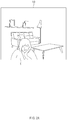
- FIG. 2A is a view illustrating a first image, according to an embodiment
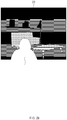
- FIG. 2B is a view illustrating a second image, according to an embodiment
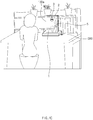
- FIG. 2C is a view illustrating an image display state on the display, according to an embodiment.
- the functions or the operations to be described with reference to FIGS. 2A , 2B , and 2C may be associated with a video telephone environment between the electronic device and the external device.
- the processor 150 may perform image data setting based on a first image 10 captured by the first camera of a camera module 110 (see FIG. 1 ).
- the processor 150 may perform image analysis by obtaining the first image 10 from the camera module 110 or the memory 120 ( FIG. 1 ).
- the processor 150 may detect at least one object (hereinafter, referred to as a "first object") included in the first image 10 based on image processing such as edge detection filtering, or active contours modeling.
- the processor 150 may extract a specified object (e.g., a human body; hereinafter referred to as a "second object") of the first object based on a machine learning algorithm (e.g., deep learning).
- the processor 150 may refer to a content analysis database constructed in the memory 120.
- the processor 150 may identify an object, which is matched at a specified ratio or more with the contour of the second object, of the detected first object, based on the information on the contour (or the shape) of the second object included in the content analysis database and may extract a second object 1 from the first image 10.
- the processor 150 may extract at least one feature of the detected first object and may extract the second object 1 from the first image 10, based on the comparison between the at least one feature of the first object and feature point information, which is included in the content analysis database, of the second object.
- the processor 150 may perform image data setting for a remaining object (hereinafter, referred to as a "third object") of the at least one first object except for the extracted second object 1.
- the processor 150 may control the light transmittance of the screen region corresponding to the third object on the display 130 ( FIG. 1 ; e.g., a transparent display) to be a specified value, based on the image data setting.
- the processor 150 may control the screen region of the third object to be transparent on the display 130 by setting an alpha ( ⁇ ) value (e.g., a value associated with the transparency of the image) for image data of the third object to a specified value (e.g., 100 in the range of 1 to 100).
- the processor 150 may control the screen region corresponding to the third object to be transparent on the display 130 by setting R, G, and B grayscale values of the image data of the third object to a specified value (e.g., 255).
- the processor 150 may further control screen elements such as color or saturation as well as the control of the light transparency, based on the image data setting for a specific object or region in the first image 10.
- the processor 150 may control the output of the display 130 such that a region of the display 130 except for the second object 1 is displayed in specific color, or displayed to be clear or blurred.
- the control of the light transparency for a specific screen region of the display 130 will be described as screen element control of the display 130 based on the image data setting by way of example.
- the processor 150 may perform image data setting based on a second image 20 captured by the second camera (e.g., a depth camera) of the camera module 110.
- the second image 20 may include depth information (or distance information based on the second camera) of at least one object included in an image.
- the depth information may be calculated based on time in which a signal (e.g., infrared signal) transmitted from the second camera is reflected from an object and returns to the second camera.
- the processor 150 may identify a layer including the object 1 present at less than a specified depth (or distance) on the second image 20 based on the depth information.
- the processor 150 may perform the above-described image data setting with respect to the remaining layer except for the identified layer.
- the processor 150 may set at least one alpha ( ⁇ ) value to a specified value (100 in the range of 1 to 100) or R, G, and B grayscale values to a specified value (e.g., 255), with respect to image data of at least one object included in the remaining layer.
- ⁇ alpha
- R, G, and B grayscale values e.g., 255
- the processor 150 may perform image data setting with respect to the first image 10 and the second image 20 by combining the first image 10 and the second image 20.
- the processor 150 may extract a specified object (e.g., a human body) from at least one object included in the first image 10 based on the image analysis for the first image 10, and may map the first image 10 to the second image 20.
- the processor 150 may exclude the depth information from the second image 20 and may identify an object, which is mapped to an object (e.g., a human body) extracted from the first image 10 at an equal ratio or an approximate ratio, and a layer including the object.
- the processor 150 may perform image data setting (e.g., the setting of an alpha ( ⁇ ) value or the setting of the R, G, and B grayscale values) with respect to remaining layers except for the identified layer.
- the processor 150 may perform image data setting by clearly determining a region of a specified object (e.g., a human body) included in the image, based on the combination of the first image 10 and the second image 20.
- the processor 150 may transmit information on the image data setting performed based on any one of the first image 10 or the second image 20 to an external device (300 of FIG. 1 ) together with the data on the first image 10. According to an embodiment, the processor 150 may transmit information on the image data setting, which is performed based on the combination of the first image 10 or the second image 20, to the external device 300 together with the data on the first image 10.
- the external device 300 may receive information on image data setting and data on the first image 10 ( FIG. 2A ) from the electronic device 100 ( FIG. 1 ) and may display the first image 10 on a display included in the external device 300.
- the external device 300 may include a transparent display 130a.
- the information on the image data setting may include image data, the alpha ( ⁇ ) value of which is set to a specified value (e.g., 100 in the range of 1 to 100), on a remaining object (a layer except for a layer including the object 1) of at least one object included in the first image 10 except for the specified object 1 (e.g., the human body of a user of the electronic device 100).
- the information of the image data setting may include image data, R, G, and B values of which are set to a specified value (e.g., 255), on the remaining object (or the layer except for the layer including the object 1) except for the specified object 1.
- a region 2 (or the background region of the specified object 1) except for the specified object 1 of the screen region of the transparent display 130a provided in the external device 300 to display the first image 10 may be transparently controlled corresponding to the alpha ( ⁇ ) value or the R, G, and B values, and an arbitrary object (e.g., a book) disposed at the rear portion of the transparent display 130a may be visualized.
- a display object 3 e.g., an icon associated with the termination of the video telephone function may be displayed on some region of the transparent display, in relation to the use of the video telephone.
- the user of the electronic device 100 may control, for example, content (e.g., video) transmission setting when operating the video telephone function.
- content e.g., video
- the user of the electronic device 100 may control the above-described information on image data setting not to be transmitted to the external device 300 through the user interface associated with content transmission setting or based on system setting of the electronic device 100.
- the transparent display 130a of the external device 300 may display the first image 10 received from the electronic device 100 without change.
- the external device 300 may include a camera that is the same as or corresponds to at least one of a first camera or a second camera (e.g., a depth camera) of the electronic device 100.
- the external device 300 may perform image data setting which are the same as or similar to image data setting of the electronic device 100 described above, to the image captured by the camera.
- the electronic device 100 may receive information on the image data setting from the external device 300 and may display the image on the display (130 in Fig. 1 ; e.g., a transparent display) in the form the same as or the form corresponding to the form illustrated in FIG. 3C .
- FIG. 3A is a view illustrating a first image, according to another embodiment
- FIG. 3B is a view illustrating a second image, according to another embodiment
- FIG. 3C is a view illustrating an image display state on a display, according to another embodiment.
- the functions or operations performed by an electronic device or an external device may be similar to or correspond to those described above with reference to FIGS. 2A , 2B , and/or 2C.
- the function or operations different from those descried with reference to FIGS. 2A , 2B , and/or 2C will be described.
- a processor 150 performs image analysis with respect to a first image 10 captured by a first camera of a camera module 110 (see
- FIG. 1 may detect at least one object (hereinafter, referred to as a first object) from the first image 10.
- the processor 150 may extract an object 1 (e.g., a human body; hereinafter, referred to as "second object"), which is specified from the first object, from the content analysis database constructed in a memory 120 (see FIG. 1 ).
- the detected first object may include at least one object (hereinafter, referred to as a "third object") associated to the second object 1.
- the at least one first object may include a third object positioned forward from the second object 1 on the first image 10 or the third object which is included in an upper layer of a layer including the second object 1 to overlap with the second object.
- the processor 150 may determine the third object 4 as at least a portion of the second object 1 by considering the disconnection of at least a portion of the second object 1.
- the processor 150 may perform an image data setting operation of setting, for example, alpha ( ⁇ ) value to a specified value (e.g., 100 in the range of 1 to 100) or R, G, and B grayscale values to a specified value (e.g., 255), with respect to image data of remaining objects of at least one first object except for the second object 1 and the third object 4.
- the processor 150 may obtain depth information (or the information on the distance from the second camera) of at least one object in the second image 20, based on the second image 20 captured by the second camera (e.g., a depth camera) of the camera module 110.
- a plurality of objects 1 and 4 having depth values less than a specified depth may be included in the second image 20.
- the plurality of objects 1 and 4 may be included in the same layer having the same depth value or may be included in respective layers corresponding to different depth values, within the range less than the specified depth.
- the processor 150 may identify at least one layer corresponding to the plurality of objects 1 and 4 present at the depth less than the specified depth and may perform an image data setting operation by setting the alpha ( ⁇ ) value or the R, G, B grayscale values with respect to remaining layers of the second image 20 except for the identified layer.
- the external device 300 may receive information on image data setting and data on the first image (10 of FIG. 3A ) from the electronic device (100 of FIG. 1 ) and may display the first image 10 on the transparent display 130a.
- a specified object 1 and an object 4 e.g., an object positioned in front of the specified object 1 or an object overlapping with the specified object 1 associated with the specified object 1 may be displayed at least a portion of a screen region of the transparent display 130a displaying the first image 10.
- An arbitrary object positioned at a rear portion of the transparent display 130a may be visualized on a remaining portion of the screen region of the transparent display 130a by controlling the light transparency based on the image data, the alpha ( ⁇ ) value (100 in the range of 1 to 100) or the R, G, and B values (e.g., 255) of which are set to a specified value.
- the alpha ( ⁇ ) value 100 in the range of 1 to 100
- the R, G, and B values e.g., 255
- FIG. 4A is a view illustrating a first image, according to another embodiment
- FIG. 4B is a view illustrating a second image, according to another embodiment
- FIG. 4C is a view illustrating an image display state on a display, according to another embodiment.
- the functions or operations performed by an electronic device or an external device may be similar to or correspond to those described above with reference to FIGS. 2A , 2B , and/or 2C.
- the function or operations different from those descried with reference to FIGS. 2A , 2B , and/or 2C will be described.
- a processor 150 may perform image analysis with respect to a first image 10 captured by a first camera of a camera module 110 (see FIG. 1 ).
- the processor 150 may detect at least one object (hereinafter, referred to as a first object) from a first image 10 through the image analysis.
- the processor 150 may extract an object (e.g., a human body; hereinafter, referred to as "second object"), which is specified in the first object, from a content analysis database constructed in the memory 120 (see FIG. 1 ).
- the processor 150 may extract a plurality of second objects 1 and 5 from the first object.
- the processor 150 may output a first user interface associated with image data setting for each of the plurality of second objects 1 and 5 which are extracted.
- the first user interface may include image content for the plurality of second objects 1 and 5 and a control tap to control whether the image data setting is performed with respect to each of the plurality of second objects 1 and 5.
- the electronic device 100 may control whether the image data setting is performed with respect to the plurality of second objects 1 and 5, based on a user input (e.g., a touch) applied to the control tap.
- the processor 150 may perform the image data setting with respect to remaining objects of the first object, which is detected through the image analysis, except for the plurality of second objects 1 and 5.
- the processor 150 may obtain depth information of at least one object in a second image 20, based on the second image 20 captured by a second camera (e.g., a depth camera) of a camera module 110.
- the processor 150 may output the second user interface including, for example, the depth information.
- the second user interface may include, for example, image content for at least one object included in the second image 20 and depth information corresponding to each object.
- the user of the electronic device 100 may select at least one object which is to be subject to the image data setting, based on the second user interface.
- the processor 150 may perform image data setting with respect to a remaining layer on the second image 20 except for at least one layer including the relevant object of the specific image content.
- the external device 300 may receive information on image data setting and data on the first image (10 of FIG. 3A ) from the electronic device (100 of FIG. 1 ) and may display the first image 10 on the transparent display 130a.
- the information on the image data setting may include user control information based on the first user interface or the second interface described with reference to FIG. 4A or FIG. 4B .
- the objects 1 and 5 which are controlled not to be subject to the image data setting by the user of the electronic device 100 or correspond to image contents selected by the user of the electronic device 100, may be displayed on at least a portion of the screen region of the transparent display 130a of the external device 300.
- An arbitrary object (e.g., a book), which is positioned at a rear portion of the transparent display 130a, may be visualized on a remaining portion of the screen region of the transparent display 130a, due to the light transparency resulting from the alpha ( ⁇ ) value (100 in the range of 1 to 100) or the R, G, and B values (e.g., 255) based on the image data setting.
- ⁇ alpha
- R, G, and B values e.g., 255
- FIG. 5 is a view illustrating an operating environment of the electronic device, according to an embodiment.
- the processor 150 (see FIG. 1 ) of the electronic device 100 may calculate the distance between the electronic device 100 and the user 1 by referring to the first image 10 (see FIG. 2A , 3A , or 4A ) and the second image 20 (see FIG. 5 ).
- FIG. 2B , 3B , or 4B captured by the camera module 110 (see FIG. 1 ) in real time or at a specified period.
- the processor 150 extracts a specified object (e.g., a human body) on the first image 10 and obtains depth information of the specified object through the mapping analysis to the second image 20, thereby tracking the variation in the distance between the electronic device 100 and the user 1.
- the processor 150 may determine whether the user 1 is present within the angle 0 of view of the camera module 110 based on the analysis of the first image 10 or the second image 20.
- the processor 150 may control a specified function of the electronic device 100 based on the distance information from the user 1 and the determination of whether the user 1 is present within a specified range (e.g., the range of the angle of view of the camera module 110). For example, the processor 150 may operate or maintain the call function of the electronic device 100 as a video telephone function when the user 1 is present at the specified distance "r" or within the specified range " ⁇ ". When it is not determined that the user 1 is present at less than the specified distance "r" or within the specified range " ⁇ ", the processor 150 may operate or maintain the call function of the electronic device 100 as a voice call function .
- a specified range e.g., the range of the angle of view of the camera module 110.
- the processor 150 may operate or maintain the call function of the electronic device 100 as a video telephone function when the user 1 is present at the specified distance "r" or within the specified range " ⁇ ".
- the processor 150 may operate or maintain the call function of the electronic device 100 as a voice call function .
- an electronic device may include at least one camera module to capture an image based on a specified angle of view, a display to display the image, a processor electrically connected with the camera module and the display,
- the processor may detect a plurality of objects included in the image, and may perform setting of image data associated with at least one object of the plurality of objects such that a region, which corresponds to the at least one object, in a screen region of the display has a specified light transmittance value.
- the electronic device may further include a communication interface to make communication with an external device.
- the processor may transmit, to the external device, information on the image subject to the setting of image data based on the communication interface.
- the processor may output a user interface that is able to control whether to transmit the information on the image subject to the setting of the image data.
- the electronic device may further include a memory to store information on a specified object through a database.
- the processor may extract the specified object from the plurality of objects based on the database; and may set image data associated with at least one object of the plurality of objects except for the specified object.
- the processor may extract at least one object, which has a specified relationship with the specified object, from the plurality of objects, and may set image data associated with at least one object of the plurality of objects except for the specified object and the at least one object having the specified relationship.
- the camera module may obtain depth information on the plurality of objects included in the image.
- the processor may extract at least one object, which is present at less than a specified depth, from the plurality of objects based on the depth information, and may set image data associated with at least one object of the plurality of objects except for the at least one object present at less than the specified depth.
- the processor may set an alpha ( ⁇ ) value, which is included in the image data, to a specified value in association with the setting of the image data.
- the processor may sets R, G, and B grayscale values, which are included in the image data, to a specified value in association with the setting of the image data.
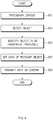
- FIG. 6 is a view illustrating an image processing method of the electronic device, according to an embodiment.
- the electronic device 100 may capture an image (e.g., a still image or a video) of a surrounding region of the electronic device 100 based on the camera module 110 (see FIG. 1 ).
- the camera module 110 may include a first camera and a second camera. Any one of the first camera and the second camera may include a 3D depth camera. At least one image captured by the camera module may be stored in the memory 120 (see FIG. 1 ).
- the processor 150 may obtain an image from the camera module or the memory, analyze the image (e.g., through image processing based on a contour detection filter or an active contour model), and detect at least one object (hereinafter, referred to as "first object") included in the image.
- the processor may detect a layer including an object (hereinafter, referred to as a second object), which is present at less than a specified depth, on the image based on the image captured by the 3D depth camera.
- the processor may extract a specified object (e.g., a human body) (hereinafter referred to as a third object) from the first object.
- the processor may refer to the database (e.g., the database including the information on the shape, the feature, the contour, or the like of the specified object (human body)) constructed in the memory.
- the processor may identify an object, which is matched at a specified ratio or more in shape, feature, or contour with the specified object of the first object by referring to the database and may extract the third object within an image (or from the first object).
- the processor may determine, as a target of the image data setting, a remaining object of the first object except for the extracted third object.
- the processor may determine, as the target of the image data setting, a remaining layer of a plurality of layers, which constitutes the image, except for the layer including the second object.
- the processor may perform image data setting with respect to at least one object or layer determined as the target of the image data setting.
- the processor may control the light transparency of a region, which corresponds to an object or a layer determined as the target of the image data setting, in a screen region of the display 130 (see FIG. 1 ; e.g., the transparent display), based on the image data setting.
- the processor may set an alpha ( ⁇ ) value to a specified value (e.g., 100 in the range of 1 to 100) with respect to image data of the object or the layer determined as the target of the image data setting.
- the processor may set R, G, and B grayscale values to a specified value (e.g., 255) with respect to the image data of the object or the layer determined as the target of the image data setting.
- the electronic device may transmit information on the image data setting and data on an image (e.g., an image by the first camera) captured by the camera module, to the external device 300 of FIG. 1 interacting with the electronic device.
- the display included in the external device may include a transparent display.
- the second object e.g., an object having a depth value less than a specified depth on the image captured by the electronic device
- the third object e.g., an object having specified contour or feature on the image captured by the electronic device
- the second object e.g., an object having a depth value less than a specified depth on the image captured by the electronic device
- the third object e.g., an object having specified contour or feature on the image captured by the electronic device
- An arbitrary object e.g., a book positioned at a rear portion of the transparent display 130a may be visualized on a remaining portion of the screen region of the transparent display 130a, due to the light transparency resulting from the alpha ( ⁇ ) value (100 in the range of 1 to 100) or the R, G, and B values (e.g., 255), based on the image data setting.
- ⁇ alpha
- R, G, and B values e.g., 255
- an image processing method of an electronic device may include constructing information associated with a specified object through a database, capturing an image, detecting a plurality of objects included in the image, and performing setting of image data associated with at least one object of the plurality of objects such that a region, which corresponds to the at least one object, in a screen region of a display has a specified light transmittance value.
- the image processing method may further include transmitting information on an image subject to the setting of the image data to an external device.
- the transmitting may include outputting a user interface that is able to control whether to transmit the information on the image subject to the setting of the image data.
- the detecting of the plurality of objects may include extracting a specified object from the plurality of objects based on the database.
- the setting of the image data may include setting image data associated with at least one object of the plurality of objects except for the specified object.
- the detecting of the plurality of objects may include extracting at least one object, which has a specified relationship with the specified object, of the plurality of objects.
- the setting of the image data may include setting image data of at least one object of the plurality of objects except for the specified object and the at least one object having the specified relationship.
- the detecting of the plurality of objects may include extracting at least one object, which is present at less than a specified depth, of the plurality of objects, based on depth information on the plurality of objects.
- the setting of the image data may include setting image data associated with at least one object of the plurality of objects except for the at least one object present at less than the specified depth.
- the setting of the image data may include setting an alpha ( ⁇ ) value, which is included in the image data, to a specified value in association with the setting of the image data.
- the setting of the image data may include setting R, G, and B grayscale values, which are included in the image data, to a specified value in association with the setting of the image data.
Landscapes
- Engineering & Computer Science (AREA)
- Multimedia (AREA)
- Signal Processing (AREA)
- Computer Vision & Pattern Recognition (AREA)
- Physics & Mathematics (AREA)
- General Physics & Mathematics (AREA)
- Theoretical Computer Science (AREA)
- User Interface Of Digital Computer (AREA)
- Studio Devices (AREA)
- Controls And Circuits For Display Device (AREA)
Priority Applications (1)
| Application Number | Priority Date | Filing Date | Title |
|---|---|---|---|
| EP24187388.4A EP4418649A3 (de) | 2016-11-18 | 2017-11-17 | Bildverarbeitungsverfahren und elektronische vorrichtung zur unterstützung der bildverarbeitung |
Applications Claiming Priority (2)
| Application Number | Priority Date | Filing Date | Title |
|---|---|---|---|
| KR1020160154078A KR102809632B1 (ko) | 2016-11-18 | 2016-11-18 | 콘텐츠 처리 방법 및 이를 지원하는 전자 장치 |
| PCT/KR2017/013106 WO2018093197A2 (ko) | 2016-11-18 | 2017-11-17 | 영상 처리 방법 및 이를 지원하는 전자 장치 |
Related Child Applications (1)
| Application Number | Title | Priority Date | Filing Date |
|---|---|---|---|
| EP24187388.4A Division EP4418649A3 (de) | 2016-11-18 | 2017-11-17 | Bildverarbeitungsverfahren und elektronische vorrichtung zur unterstützung der bildverarbeitung |
Publications (3)
| Publication Number | Publication Date |
|---|---|
| EP3537376A2 true EP3537376A2 (de) | 2019-09-11 |
| EP3537376A4 EP3537376A4 (de) | 2019-11-20 |
| EP3537376B1 EP3537376B1 (de) | 2024-07-10 |
Family
ID=62146644
Family Applications (2)
| Application Number | Title | Priority Date | Filing Date |
|---|---|---|---|
| EP17870978.8A Active EP3537376B1 (de) | 2016-11-18 | 2017-11-17 | Bildverarbeitungsverfahren und elektronische vorrichtung zur unterstützung der bildverarbeitung |
| EP24187388.4A Pending EP4418649A3 (de) | 2016-11-18 | 2017-11-17 | Bildverarbeitungsverfahren und elektronische vorrichtung zur unterstützung der bildverarbeitung |
Family Applications After (1)
| Application Number | Title | Priority Date | Filing Date |
|---|---|---|---|
| EP24187388.4A Pending EP4418649A3 (de) | 2016-11-18 | 2017-11-17 | Bildverarbeitungsverfahren und elektronische vorrichtung zur unterstützung der bildverarbeitung |
Country Status (4)
| Country | Link |
|---|---|
| US (2) | US10958894B2 (de) |
| EP (2) | EP3537376B1 (de) |
| KR (1) | KR102809632B1 (de) |
| WO (1) | WO2018093197A2 (de) |
Families Citing this family (4)
| Publication number | Priority date | Publication date | Assignee | Title |
|---|---|---|---|---|
| CN110430384B (zh) * | 2019-08-23 | 2020-11-03 | 珠海格力电器股份有限公司 | 视频通话方法、装置以及智能终端、存储介质 |
| KR102932370B1 (ko) * | 2020-07-24 | 2026-02-26 | 삼성전자주식회사 | 영상 통화 수행 방법, 그 방법을 수행하는 디스플레이 기기, 및 그 방법을 수행하는 프로그램이 저장된 컴퓨터 판독 가능 저장 매체 |
| KR102810635B1 (ko) * | 2020-08-07 | 2025-05-22 | 삼성전자주식회사 | 전자장치 및 그 제어방법 |
| KR20230039351A (ko) * | 2021-09-14 | 2023-03-21 | 삼성전자주식회사 | 이미지에 보케 효과를 적용하는 전자 장치 및 그 동작 방법 |
Family Cites Families (33)
| Publication number | Priority date | Publication date | Assignee | Title |
|---|---|---|---|---|
| US7574016B2 (en) * | 2003-06-26 | 2009-08-11 | Fotonation Vision Limited | Digital image processing using face detection information |
| US7565030B2 (en) * | 2003-06-26 | 2009-07-21 | Fotonation Vision Limited | Detecting orientation of digital images using face detection information |
| JP2005267607A (ja) * | 2004-02-20 | 2005-09-29 | Fuji Photo Film Co Ltd | デジタル図鑑システム、図鑑検索方法、及び図鑑検索プログラム |
| US8203577B2 (en) | 2007-09-25 | 2012-06-19 | Microsoft Corporation | Proximity based computer display |
| EP2325768A4 (de) * | 2008-08-08 | 2016-08-17 | Nikon Corp | Suchhilfesystem, suchhilfeverfahren und suchhilfeprogramm |
| US8711198B2 (en) * | 2009-06-04 | 2014-04-29 | Hewlett-Packard Development Company, L.P. | Video conference |
| US8682082B2 (en) * | 2009-08-04 | 2014-03-25 | Xerox Corporation | Pictogram and ISO symbol decoder service |
| US9083958B2 (en) * | 2009-08-06 | 2015-07-14 | Qualcomm Incorporated | Transforming video data in accordance with three dimensional input formats |
| KR101659958B1 (ko) * | 2010-04-05 | 2016-09-26 | 엘지전자 주식회사 | 이동 단말기 및 이동 단말기의 영상 표시 방법 |
| US8957919B2 (en) | 2010-04-05 | 2015-02-17 | Lg Electronics Inc. | Mobile terminal and method for displaying image of mobile terminal |
| US8928659B2 (en) | 2010-06-23 | 2015-01-06 | Microsoft Corporation | Telepresence systems with viewer perspective adjustment |
| EP2431895B1 (de) * | 2010-09-16 | 2017-07-26 | LG Electronics Inc. | Transparente Anzeigevorrichtung und Verfahren zur Bereitstellung von Informationen damit |
| KR20120133640A (ko) * | 2011-05-31 | 2012-12-11 | 삼성전자주식회사 | 3d 영상변환장치 그 구현방법 및 그 저장매체 |
| KR20130008746A (ko) * | 2011-07-13 | 2013-01-23 | 삼성전자주식회사 | 3d 영상변환장치, 그 구현방법 및 그 저장매체 |
| KR101873759B1 (ko) * | 2012-04-10 | 2018-08-02 | 엘지전자 주식회사 | 영상 표시 장치 및 그 제어방법 |
| TWI576771B (zh) | 2012-05-28 | 2017-04-01 | 宏碁股份有限公司 | 透明顯示裝置及其透明度調整方法 |
| JP5660078B2 (ja) * | 2012-05-31 | 2015-01-28 | カシオ計算機株式会社 | 多クラス識別器、方法、およびプログラム |
| EP2680616A1 (de) * | 2012-06-25 | 2014-01-01 | LG Electronics Inc. | Mobiles Endgerät und Audiozoomverfahren dafür |
| TWI637312B (zh) | 2012-09-19 | 2018-10-01 | 三星電子股份有限公司 | 用於在透明顯示裝置顯示資訊的方法、顯示裝置及電腦可讀記錄媒體 |
| KR102255832B1 (ko) | 2012-09-19 | 2021-05-26 | 삼성전자주식회사 | 투명 디스플레이 기기상에 정보를 디스플레이 하는 시스템 및 방법 |
| EP2752758A3 (de) * | 2013-01-07 | 2016-10-26 | LG Electronics Inc. | Bildanzeigevorrichtung und Steuerungsverfahren dafür |
| JP6103526B2 (ja) * | 2013-03-15 | 2017-03-29 | オリンパス株式会社 | 撮影機器,画像表示機器,及び画像表示機器の表示制御方法 |
| US20140347436A1 (en) * | 2013-05-22 | 2014-11-27 | Sony Corporation | Portable transparent display with life-size image for teleconference |
| KR102098277B1 (ko) * | 2013-06-11 | 2020-04-07 | 삼성전자주식회사 | 시선 추적을 이용한 시인성 개선 방법, 저장 매체 및 전자 장치 |
| US9055186B2 (en) | 2013-07-23 | 2015-06-09 | Personify, Inc | Systems and methods for integrating user personas with content during video conferencing |
| KR20150026565A (ko) * | 2013-09-03 | 2015-03-11 | 엘지전자 주식회사 | 디스플레이 장치 및 그것의 제어방법 |
| US9536493B2 (en) * | 2013-09-25 | 2017-01-03 | Samsung Electronics Co., Ltd. | Display apparatus and method of controlling display apparatus |
| US20170237941A1 (en) * | 2014-08-14 | 2017-08-17 | Nitin Vats | Realistic viewing and interaction with remote objects or persons during telepresence videoconferencing |
| US9602767B2 (en) | 2014-10-10 | 2017-03-21 | Microsoft Technology Licensing, Llc | Telepresence experience |
| AU2016222716B2 (en) * | 2015-02-25 | 2018-11-29 | Facebook Technologies, Llc | Identifying an object in a volume based on characteristics of light reflected by the object |
| EP3316592A4 (de) * | 2015-06-29 | 2018-12-05 | LG Electronics Inc. | Anzeigevorrichtung und steuerungsverfahren dafür |
| JP2016181004A (ja) | 2016-06-24 | 2016-10-13 | ソニー株式会社 | 情報処理装置、表示制御方法、プログラムおよび記憶媒体 |
| US10198621B2 (en) * | 2016-11-28 | 2019-02-05 | Sony Corporation | Image-Processing device and method for foreground mask correction for object segmentation |
-
2016
- 2016-11-18 KR KR1020160154078A patent/KR102809632B1/ko active Active
-
2017
- 2017-11-17 EP EP17870978.8A patent/EP3537376B1/de active Active
- 2017-11-17 US US16/462,261 patent/US10958894B2/en active Active
- 2017-11-17 WO PCT/KR2017/013106 patent/WO2018093197A2/ko not_active Ceased
- 2017-11-17 EP EP24187388.4A patent/EP4418649A3/de active Pending
-
2021
- 2021-03-22 US US17/207,821 patent/US11595633B2/en active Active
Also Published As
| Publication number | Publication date |
|---|---|
| EP3537376B1 (de) | 2024-07-10 |
| US11595633B2 (en) | 2023-02-28 |
| US20210211636A1 (en) | 2021-07-08 |
| EP3537376A4 (de) | 2019-11-20 |
| WO2018093197A3 (ko) | 2018-07-05 |
| EP4418649A2 (de) | 2024-08-21 |
| KR20180056174A (ko) | 2018-05-28 |
| WO2018093197A2 (ko) | 2018-05-24 |
| US10958894B2 (en) | 2021-03-23 |
| US20190342540A1 (en) | 2019-11-07 |
| EP4418649A3 (de) | 2024-11-13 |
| KR102809632B1 (ko) | 2025-05-20 |
Similar Documents
| Publication | Publication Date | Title |
|---|---|---|
| US11595633B2 (en) | Image processing method and electronic device supporting image processing | |
| EP3466070B1 (de) | Verfahren und vorrichtung zur erfassung eines bildes und aufzeichnungsmedium dafür | |
| KR102344045B1 (ko) | 화면을 표시하는 전자 장치 및 그 제어 방법 | |
| US10281981B2 (en) | AR output method and electronic device for supporting the same | |
| KR102499110B1 (ko) | 디스플레이 제어 방법 및 이를 사용하는 전자 장치 | |
| KR102442098B1 (ko) | 벤디드 디스플레이를 포함하는 전자 장치 및 그것을 통한 이미지 표시 방법 | |
| EP3296951A1 (de) | Bildzusammensetzungsverfahren und elektronische vorrichtung zur unterstützung davon | |
| US10916049B2 (en) | Device and method for rendering image | |
| EP3736627B1 (de) | Elektronische vorrichtung mit kamera | |
| EP3309667A1 (de) | Elektronische vorrichtung mit mehreren fingerabdruckmodi und verfahren zur steuerung davon | |
| EP3469787B1 (de) | Elektronische vorrichtung und computerlesbares aufzeichnungsmedium zur anzeige von bildern | |
| CN108462818B (zh) | 电子设备及用于在该电子设备中显示360度图像的方法 | |
| KR20170097884A (ko) | 이미지를 처리하기 위한 방법 및 그 전자 장치 | |
| KR102632270B1 (ko) | 전자 장치 및 파노라마 영상 표시와 생성 방법 | |
| US20200286276A1 (en) | Electronic device and method for displaying and generating panoramic image | |
| US20190349562A1 (en) | Method for providing interface for acquiring image of subject, and electronic device | |
| KR102355759B1 (ko) | 사용자의 위치를 결정하는 전자 장치 및 그 제어 방법 | |
| US10818075B2 (en) | Content output method and electronic device for supporting same | |
| US11210828B2 (en) | Method and electronic device for outputting guide | |
| US10908645B2 (en) | Method for controlling screen output and electronic device supporting same | |
| US20180143681A1 (en) | Electronic device for displaying image and method for controlling the same | |
| KR102568387B1 (ko) | 전자 장치 및 그의 데이터 처리 방법 | |
| KR102349269B1 (ko) | 컨텐츠의 이동 방법 및 전자장치 | |
| CN110494840A (zh) | 电子设备和用于电子设备的屏幕图像显示方法 |
Legal Events
| Date | Code | Title | Description |
|---|---|---|---|
| STAA | Information on the status of an ep patent application or granted ep patent |
Free format text: STATUS: THE INTERNATIONAL PUBLICATION HAS BEEN MADE |
|
| PUAI | Public reference made under article 153(3) epc to a published international application that has entered the european phase |
Free format text: ORIGINAL CODE: 0009012 |
|
| STAA | Information on the status of an ep patent application or granted ep patent |
Free format text: STATUS: REQUEST FOR EXAMINATION WAS MADE |
|
| 17P | Request for examination filed |
Effective date: 20190606 |
|
| AK | Designated contracting states |
Kind code of ref document: A2 Designated state(s): AL AT BE BG CH CY CZ DE DK EE ES FI FR GB GR HR HU IE IS IT LI LT LU LV MC MK MT NL NO PL PT RO RS SE SI SK SM TR |
|
| AX | Request for extension of the european patent |
Extension state: BA ME |
|
| A4 | Supplementary search report drawn up and despatched |
Effective date: 20191018 |
|
| RIC1 | Information provided on ipc code assigned before grant |
Ipc: G06T 7/90 20170101ALI20191014BHEP Ipc: H04N 7/14 20060101AFI20191014BHEP Ipc: H04N 13/00 20180101ALI20191014BHEP Ipc: G06T 7/11 20170101ALI20191014BHEP |
|
| DAV | Request for validation of the european patent (deleted) | ||
| DAX | Request for extension of the european patent (deleted) | ||
| STAA | Information on the status of an ep patent application or granted ep patent |
Free format text: STATUS: EXAMINATION IS IN PROGRESS |
|
| 17Q | First examination report despatched |
Effective date: 20210114 |
|
| GRAP | Despatch of communication of intention to grant a patent |
Free format text: ORIGINAL CODE: EPIDOSNIGR1 |
|
| STAA | Information on the status of an ep patent application or granted ep patent |
Free format text: STATUS: GRANT OF PATENT IS INTENDED |
|
| INTG | Intention to grant announced |
Effective date: 20240208 |
|
| GRAS | Grant fee paid |
Free format text: ORIGINAL CODE: EPIDOSNIGR3 |
|
| GRAA | (expected) grant |
Free format text: ORIGINAL CODE: 0009210 |
|
| STAA | Information on the status of an ep patent application or granted ep patent |
Free format text: STATUS: THE PATENT HAS BEEN GRANTED |
|
| AK | Designated contracting states |
Kind code of ref document: B1 Designated state(s): AL AT BE BG CH CY CZ DE DK EE ES FI FR GB GR HR HU IE IS IT LI LT LU LV MC MK MT NL NO PL PT RO RS SE SI SK SM TR |
|
| REG | Reference to a national code |
Ref country code: CH Ref legal event code: EP |
|
| REG | Reference to a national code |
Ref country code: DE Ref legal event code: R096 Ref document number: 602017083261 Country of ref document: DE |
|
| REG | Reference to a national code |
Ref country code: LT Ref legal event code: MG9D |
|
| REG | Reference to a national code |
Ref country code: NL Ref legal event code: MP Effective date: 20240710 |
|
| PG25 | Lapsed in a contracting state [announced via postgrant information from national office to epo] |
Ref country code: PT Free format text: LAPSE BECAUSE OF FAILURE TO SUBMIT A TRANSLATION OF THE DESCRIPTION OR TO PAY THE FEE WITHIN THE PRESCRIBED TIME-LIMIT Effective date: 20241111 |
|
| REG | Reference to a national code |
Ref country code: AT Ref legal event code: MK05 Ref document number: 1703055 Country of ref document: AT Kind code of ref document: T Effective date: 20240710 |
|
| PG25 | Lapsed in a contracting state [announced via postgrant information from national office to epo] |
Ref country code: NL Free format text: LAPSE BECAUSE OF FAILURE TO SUBMIT A TRANSLATION OF THE DESCRIPTION OR TO PAY THE FEE WITHIN THE PRESCRIBED TIME-LIMIT Effective date: 20240710 |
|
| PG25 | Lapsed in a contracting state [announced via postgrant information from national office to epo] |
Ref country code: PT Free format text: LAPSE BECAUSE OF FAILURE TO SUBMIT A TRANSLATION OF THE DESCRIPTION OR TO PAY THE FEE WITHIN THE PRESCRIBED TIME-LIMIT Effective date: 20241111 Ref country code: NL Free format text: LAPSE BECAUSE OF FAILURE TO SUBMIT A TRANSLATION OF THE DESCRIPTION OR TO PAY THE FEE WITHIN THE PRESCRIBED TIME-LIMIT Effective date: 20240710 |
|
| PG25 | Lapsed in a contracting state [announced via postgrant information from national office to epo] |
Ref country code: NO Free format text: LAPSE BECAUSE OF FAILURE TO SUBMIT A TRANSLATION OF THE DESCRIPTION OR TO PAY THE FEE WITHIN THE PRESCRIBED TIME-LIMIT Effective date: 20241010 |
|
| PG25 | Lapsed in a contracting state [announced via postgrant information from national office to epo] |
Ref country code: FI Free format text: LAPSE BECAUSE OF FAILURE TO SUBMIT A TRANSLATION OF THE DESCRIPTION OR TO PAY THE FEE WITHIN THE PRESCRIBED TIME-LIMIT Effective date: 20240710 Ref country code: GR Free format text: LAPSE BECAUSE OF FAILURE TO SUBMIT A TRANSLATION OF THE DESCRIPTION OR TO PAY THE FEE WITHIN THE PRESCRIBED TIME-LIMIT Effective date: 20241011 Ref country code: PL Free format text: LAPSE BECAUSE OF FAILURE TO SUBMIT A TRANSLATION OF THE DESCRIPTION OR TO PAY THE FEE WITHIN THE PRESCRIBED TIME-LIMIT Effective date: 20240710 |
|
| PG25 | Lapsed in a contracting state [announced via postgrant information from national office to epo] |
Ref country code: BG Free format text: LAPSE BECAUSE OF FAILURE TO SUBMIT A TRANSLATION OF THE DESCRIPTION OR TO PAY THE FEE WITHIN THE PRESCRIBED TIME-LIMIT Effective date: 20240710 |
|
| PG25 | Lapsed in a contracting state [announced via postgrant information from national office to epo] |
Ref country code: LV Free format text: LAPSE BECAUSE OF FAILURE TO SUBMIT A TRANSLATION OF THE DESCRIPTION OR TO PAY THE FEE WITHIN THE PRESCRIBED TIME-LIMIT Effective date: 20240710 |
|
| PG25 | Lapsed in a contracting state [announced via postgrant information from national office to epo] |
Ref country code: IS Free format text: LAPSE BECAUSE OF FAILURE TO SUBMIT A TRANSLATION OF THE DESCRIPTION OR TO PAY THE FEE WITHIN THE PRESCRIBED TIME-LIMIT Effective date: 20241110 Ref country code: AT Free format text: LAPSE BECAUSE OF FAILURE TO SUBMIT A TRANSLATION OF THE DESCRIPTION OR TO PAY THE FEE WITHIN THE PRESCRIBED TIME-LIMIT Effective date: 20240710 |
|
| PG25 | Lapsed in a contracting state [announced via postgrant information from national office to epo] |
Ref country code: HR Free format text: LAPSE BECAUSE OF FAILURE TO SUBMIT A TRANSLATION OF THE DESCRIPTION OR TO PAY THE FEE WITHIN THE PRESCRIBED TIME-LIMIT Effective date: 20240710 |
|
| PG25 | Lapsed in a contracting state [announced via postgrant information from national office to epo] |
Ref country code: ES Free format text: LAPSE BECAUSE OF FAILURE TO SUBMIT A TRANSLATION OF THE DESCRIPTION OR TO PAY THE FEE WITHIN THE PRESCRIBED TIME-LIMIT Effective date: 20240710 Ref country code: RS Free format text: LAPSE BECAUSE OF FAILURE TO SUBMIT A TRANSLATION OF THE DESCRIPTION OR TO PAY THE FEE WITHIN THE PRESCRIBED TIME-LIMIT Effective date: 20241010 |
|
| PG25 | Lapsed in a contracting state [announced via postgrant information from national office to epo] |
Ref country code: RS Free format text: LAPSE BECAUSE OF FAILURE TO SUBMIT A TRANSLATION OF THE DESCRIPTION OR TO PAY THE FEE WITHIN THE PRESCRIBED TIME-LIMIT Effective date: 20241010 Ref country code: PL Free format text: LAPSE BECAUSE OF FAILURE TO SUBMIT A TRANSLATION OF THE DESCRIPTION OR TO PAY THE FEE WITHIN THE PRESCRIBED TIME-LIMIT Effective date: 20240710 Ref country code: NO Free format text: LAPSE BECAUSE OF FAILURE TO SUBMIT A TRANSLATION OF THE DESCRIPTION OR TO PAY THE FEE WITHIN THE PRESCRIBED TIME-LIMIT Effective date: 20241010 Ref country code: LV Free format text: LAPSE BECAUSE OF FAILURE TO SUBMIT A TRANSLATION OF THE DESCRIPTION OR TO PAY THE FEE WITHIN THE PRESCRIBED TIME-LIMIT Effective date: 20240710 Ref country code: IS Free format text: LAPSE BECAUSE OF FAILURE TO SUBMIT A TRANSLATION OF THE DESCRIPTION OR TO PAY THE FEE WITHIN THE PRESCRIBED TIME-LIMIT Effective date: 20241110 Ref country code: HR Free format text: LAPSE BECAUSE OF FAILURE TO SUBMIT A TRANSLATION OF THE DESCRIPTION OR TO PAY THE FEE WITHIN THE PRESCRIBED TIME-LIMIT Effective date: 20240710 Ref country code: GR Free format text: LAPSE BECAUSE OF FAILURE TO SUBMIT A TRANSLATION OF THE DESCRIPTION OR TO PAY THE FEE WITHIN THE PRESCRIBED TIME-LIMIT Effective date: 20241011 Ref country code: FI Free format text: LAPSE BECAUSE OF FAILURE TO SUBMIT A TRANSLATION OF THE DESCRIPTION OR TO PAY THE FEE WITHIN THE PRESCRIBED TIME-LIMIT Effective date: 20240710 Ref country code: ES Free format text: LAPSE BECAUSE OF FAILURE TO SUBMIT A TRANSLATION OF THE DESCRIPTION OR TO PAY THE FEE WITHIN THE PRESCRIBED TIME-LIMIT Effective date: 20240710 Ref country code: BG Free format text: LAPSE BECAUSE OF FAILURE TO SUBMIT A TRANSLATION OF THE DESCRIPTION OR TO PAY THE FEE WITHIN THE PRESCRIBED TIME-LIMIT Effective date: 20240710 Ref country code: AT Free format text: LAPSE BECAUSE OF FAILURE TO SUBMIT A TRANSLATION OF THE DESCRIPTION OR TO PAY THE FEE WITHIN THE PRESCRIBED TIME-LIMIT Effective date: 20240710 |
|
| REG | Reference to a national code |
Ref country code: DE Ref legal event code: R097 Ref document number: 602017083261 Country of ref document: DE |
|
| PG25 | Lapsed in a contracting state [announced via postgrant information from national office to epo] |
Ref country code: RO Free format text: LAPSE BECAUSE OF FAILURE TO SUBMIT A TRANSLATION OF THE DESCRIPTION OR TO PAY THE FEE WITHIN THE PRESCRIBED TIME-LIMIT Effective date: 20240710 Ref country code: SM Free format text: LAPSE BECAUSE OF FAILURE TO SUBMIT A TRANSLATION OF THE DESCRIPTION OR TO PAY THE FEE WITHIN THE PRESCRIBED TIME-LIMIT Effective date: 20240710 Ref country code: DK Free format text: LAPSE BECAUSE OF FAILURE TO SUBMIT A TRANSLATION OF THE DESCRIPTION OR TO PAY THE FEE WITHIN THE PRESCRIBED TIME-LIMIT Effective date: 20240710 |
|
| PG25 | Lapsed in a contracting state [announced via postgrant information from national office to epo] |
Ref country code: EE Free format text: LAPSE BECAUSE OF FAILURE TO SUBMIT A TRANSLATION OF THE DESCRIPTION OR TO PAY THE FEE WITHIN THE PRESCRIBED TIME-LIMIT Effective date: 20240710 |
|
| PG25 | Lapsed in a contracting state [announced via postgrant information from national office to epo] |
Ref country code: CZ Free format text: LAPSE BECAUSE OF FAILURE TO SUBMIT A TRANSLATION OF THE DESCRIPTION OR TO PAY THE FEE WITHIN THE PRESCRIBED TIME-LIMIT Effective date: 20240710 |
|
| PG25 | Lapsed in a contracting state [announced via postgrant information from national office to epo] |
Ref country code: IT Free format text: LAPSE BECAUSE OF FAILURE TO SUBMIT A TRANSLATION OF THE DESCRIPTION OR TO PAY THE FEE WITHIN THE PRESCRIBED TIME-LIMIT Effective date: 20240710 Ref country code: SK Free format text: LAPSE BECAUSE OF FAILURE TO SUBMIT A TRANSLATION OF THE DESCRIPTION OR TO PAY THE FEE WITHIN THE PRESCRIBED TIME-LIMIT Effective date: 20240710 |
|
| PLBE | No opposition filed within time limit |
Free format text: ORIGINAL CODE: 0009261 |
|
| STAA | Information on the status of an ep patent application or granted ep patent |
Free format text: STATUS: NO OPPOSITION FILED WITHIN TIME LIMIT |
|
| 26N | No opposition filed |
Effective date: 20250411 |
|
| REG | Reference to a national code |
Ref country code: CH Ref legal event code: PL |
|
| PG25 | Lapsed in a contracting state [announced via postgrant information from national office to epo] |
Ref country code: MC Free format text: LAPSE BECAUSE OF FAILURE TO SUBMIT A TRANSLATION OF THE DESCRIPTION OR TO PAY THE FEE WITHIN THE PRESCRIBED TIME-LIMIT Effective date: 20240710 |
|
| PG25 | Lapsed in a contracting state [announced via postgrant information from national office to epo] |
Ref country code: LU Free format text: LAPSE BECAUSE OF NON-PAYMENT OF DUE FEES Effective date: 20241117 |
|
| REG | Reference to a national code |
Ref country code: CH Ref legal event code: PL |
|
| GBPC | Gb: european patent ceased through non-payment of renewal fee |
Effective date: 20241117 |
|
| PG25 | Lapsed in a contracting state [announced via postgrant information from national office to epo] |
Ref country code: CH Free format text: LAPSE BECAUSE OF NON-PAYMENT OF DUE FEES Effective date: 20241130 |
|
| REG | Reference to a national code |
Ref country code: BE Ref legal event code: MM Effective date: 20241130 |
|
| PG25 | Lapsed in a contracting state [announced via postgrant information from national office to epo] |
Ref country code: SE Free format text: LAPSE BECAUSE OF FAILURE TO SUBMIT A TRANSLATION OF THE DESCRIPTION OR TO PAY THE FEE WITHIN THE PRESCRIBED TIME-LIMIT Effective date: 20240710 |
|
| PG25 | Lapsed in a contracting state [announced via postgrant information from national office to epo] |
Ref country code: GB Free format text: LAPSE BECAUSE OF NON-PAYMENT OF DUE FEES Effective date: 20241117 Ref country code: BE Free format text: LAPSE BECAUSE OF NON-PAYMENT OF DUE FEES Effective date: 20241130 |
|
| PG25 | Lapsed in a contracting state [announced via postgrant information from national office to epo] |
Ref country code: FR Free format text: LAPSE BECAUSE OF NON-PAYMENT OF DUE FEES Effective date: 20241130 |
|
| PG25 | Lapsed in a contracting state [announced via postgrant information from national office to epo] |
Ref country code: IE Free format text: LAPSE BECAUSE OF NON-PAYMENT OF DUE FEES Effective date: 20241117 |
|
| PGFP | Annual fee paid to national office [announced via postgrant information from national office to epo] |
Ref country code: DE Payment date: 20251002 Year of fee payment: 9 |
|
| PG25 | Lapsed in a contracting state [announced via postgrant information from national office to epo] |
Ref country code: HU Free format text: LAPSE BECAUSE OF FAILURE TO SUBMIT A TRANSLATION OF THE DESCRIPTION OR TO PAY THE FEE WITHIN THE PRESCRIBED TIME-LIMIT; INVALID AB INITIO Effective date: 20171117 |
|
| PG25 | Lapsed in a contracting state [announced via postgrant information from national office to epo] |
Ref country code: CY Free format text: LAPSE BECAUSE OF FAILURE TO SUBMIT A TRANSLATION OF THE DESCRIPTION OR TO PAY THE FEE WITHIN THE PRESCRIBED TIME-LIMIT; INVALID AB INITIO Effective date: 20171117 |