EP3540612A1 - Verfahren und vorrichtung zur verarbeitung von frage-clustering in einem automatischen frage- und beantwortungssystem - Google Patents
Verfahren und vorrichtung zur verarbeitung von frage-clustering in einem automatischen frage- und beantwortungssystem Download PDFInfo
- Publication number
- EP3540612A1 EP3540612A1 EP17847762.6A EP17847762A EP3540612A1 EP 3540612 A1 EP3540612 A1 EP 3540612A1 EP 17847762 A EP17847762 A EP 17847762A EP 3540612 A1 EP3540612 A1 EP 3540612A1
- Authority
- EP
- European Patent Office
- Prior art keywords
- question
- clustering
- feature
- feature set
- clustered
- Prior art date
- Legal status (The legal status is an assumption and is not a legal conclusion. Google has not performed a legal analysis and makes no representation as to the accuracy of the status listed.)
- Ceased
Links
Images
Classifications
-
- G—PHYSICS
- G06—COMPUTING OR CALCULATING; COUNTING
- G06F—ELECTRIC DIGITAL DATA PROCESSING
- G06F16/00—Information retrieval; Database structures therefor; File system structures therefor
- G06F16/30—Information retrieval; Database structures therefor; File system structures therefor of unstructured textual data
- G06F16/35—Clustering; Classification
-
- G—PHYSICS
- G06—COMPUTING OR CALCULATING; COUNTING
- G06F—ELECTRIC DIGITAL DATA PROCESSING
- G06F16/00—Information retrieval; Database structures therefor; File system structures therefor
- G06F16/30—Information retrieval; Database structures therefor; File system structures therefor of unstructured textual data
- G06F16/33—Querying
- G06F16/332—Query formulation
- G06F16/3329—Natural language query formulation
-
- G—PHYSICS
- G06—COMPUTING OR CALCULATING; COUNTING
- G06F—ELECTRIC DIGITAL DATA PROCESSING
- G06F16/00—Information retrieval; Database structures therefor; File system structures therefor
- G06F16/30—Information retrieval; Database structures therefor; File system structures therefor of unstructured textual data
- G06F16/33—Querying
- G06F16/3331—Query processing
- G06F16/334—Query execution
- G06F16/3347—Query execution using vector based model
-
- G—PHYSICS
- G06—COMPUTING OR CALCULATING; COUNTING
- G06F—ELECTRIC DIGITAL DATA PROCESSING
- G06F16/00—Information retrieval; Database structures therefor; File system structures therefor
- G06F16/30—Information retrieval; Database structures therefor; File system structures therefor of unstructured textual data
- G06F16/35—Clustering; Classification
- G06F16/355—Creation or modification of classes or clusters
-
- G—PHYSICS
- G06—COMPUTING OR CALCULATING; COUNTING
- G06F—ELECTRIC DIGITAL DATA PROCESSING
- G06F18/00—Pattern recognition
- G06F18/20—Analysing
- G06F18/21—Design or setup of recognition systems or techniques; Extraction of features in feature space; Blind source separation
- G06F18/213—Feature extraction, e.g. by transforming the feature space; Summarisation; Mappings, e.g. subspace methods
-
- G—PHYSICS
- G06—COMPUTING OR CALCULATING; COUNTING
- G06F—ELECTRIC DIGITAL DATA PROCESSING
- G06F40/00—Handling natural language data
- G06F40/40—Processing or translation of natural language
- G06F40/53—Processing of non-Latin text
Definitions
- the present invention relates to the field of text information processing, and more particularly relates to a method and a device for processing question clustering in an automatic question and answering system.
- An automatic Question and Answering (QA) system comprehensive applies technologies such as knowledge representation, information retrieval, and natural language processing and is capable of receiving questions inputted by users in a natural language form. That is to say, it is a system that may return concise and accurate answers. Compared with a traditional search engine, the automatic question and answering system has advantages of being more convenient and more accurate, which is a current research hotspot in the field of natural language processing and artificial intelligence.
- Frequently-Asked Question should be usually preset.
- the FAQ is used to store at least one question and answering pair. Each question and answering pair comprises questions and answers frequently asked by users.
- the automatic question and answering system determines whether there are the same questions in the FAQ; if there are the same questions, the corresponding answers in the FAQ are returned to the user directly so as to facilitate the improvement of the processing efficiency and accuracy of the automated question and answering system; if there are no same questions, the corresponding answer cannot be returned directly, and manual response or other processing is required to reduce the processing efficiency and accuracy of the automated question and answering system.
- the automatic answering system Due to the accuracy and timeliness with which the automatic answering system answers questions, the automatic answering system has greater application in the field of client service or other artificial intelligence. Because the automatic question and answering system is capable of answering timely and accurately on the premise that there are corresponding question and answering pairs in the FAQ, if the question and answering pairs in the FAQ are richer and more extensive in coverage, the answers in the question and answering system are higher in accuracy and better in efficiency. In summary, the writing of the question and answering pairs is the core of the automated question and answering system.
- the question and answering pairs are usually written by writers, and the questions are answered by answerers to form a question and answering pair in which questions are corresponding to answers.
- Writers usually consider based on factors such as their own experience, knowledge and memory when writing questions, in which there are limitations, so that the questions written by writers has a limited coverage and cannot completely and rapidly cover the questions concerned by users so that the question and answering pairs stored in the FAQ cannot meet user requirements well.
- the process in which writers write questions needs a large amount of manpower cost and time cost, and is inefficient.
- the technical problem to be solved in the present invention lies in that, aiming at limited deficiencies in coverage of questions existing in questions written by writers in the existing automatic question and answering system, there is provided a method and a device for processing question clustering in an automatic question and answering system.
- the coverage of a question design is improved and the intelligent design of question and answering pairs is achieved by performing clustering process on the questions concerned by users.
- a method for processing question clustering in an automatic question and answering system wherein the method comprises:
- the present invention further provides a device for processing question clustering in an automatic question and answering system, wherein the device comprises:
- the present invention further provides a computer-readable storage medium in which a computer program is stored, wherein the computer program, when being executed by a processor, implements the steps of:
- the present invention further provides a server comprising a memory, a processor, and a computer program stored in the memory and executable on the processor, wherein the processor, when executing the computer program, implements the steps of:
- the present invention has the following advantages: in the method and device for processing question clustering in the automatic question and answering system provided by the present invention, a question set to be clustered is acquired from a database of unanswered questions based on the clustering request, and the question set to be clustered is automatically clustered, which may help the writer understand question consultation requirements, improve the coverage of the written question and answering pairs, and improve the overall question and answering performance of the automated question and answering system.
- the method and device for processing question clustering in the automatic question and answering system it is required to determine whether the question feature set after performing feature extraction on the question set to be clustered meets a preset splitting condition, and perform segmenting clustering with a segmenting clustering algorithm when the preset splitting condition is met, and automatically stop segmenting clustering when the preset splitting condition is not met, so as to meet the application scenario in which the question feature set dynamically changes and achieve a hierarchical clustering process. It may be ensured that the output questions inside the clustering class cluster are relatively similar, a better clustering effect is obtained, and the tedious operation of manually adjusting parameters is avoided.
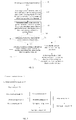
- FIG. 1 shows a method for processing question clustering in an automatic question and answering system in the present embodiment.
- the automatic question and answering system comprises a server, a client terminal communicatively connected with the server, and a background service terminal, wherein the FAQ is stored on the server.
- the client terminal is configured to receive questions inputted by a client in a natural language form or other forms, send the questions to the server, and receive and display the answers fed back by the server.
- the server is configured to query whether there are corresponding question and answering pairs in the FAQ based on the questions sent by the client terminal; if there are corresponding question and answering pairs, the server sends the answers to the client terminal; if there are no corresponding question and answering pairs, the server should send the answers to the background service terminal, receive the answers sent by the background service terminal, and send the answers to the client terminal.
- the background service terminal is not only configured to receive and display the questions input by the writers, but also to receive and display the questions sent by the server, receive the answers inputted by the answerers and upload the answers to the server.
- the questions uploaded by clients to the server are clustered, so that the writers understand consultation requirements of clients more so as to improve the question and answering pair in the FAQ of the automated question and answering system, and improve the overall question and answering performance of the automated question and answering system, wherein clustering refers to the process in which the collection of physical or abstract objects is classified into a plurality of classes consisting of similar objects; and the classes consisting of similar objects are clustering class clusters.
- the method for processing question clustering in an automatic question and answering system comprises the following steps.
- a clustering request input by a writer is received.
- the automatic question and answering system may acquire the consulting requirements of users based on the clustering request and set questions in the FAQ of the automatic question and answering system.
- the background service terminal receives the clustering request output by the writer and sends the clustering request to the server, wherein the clustering request is an HTTP request.
- a question set to be clustered is acquired from a database of unanswered questions based on the clustering request, wherein the question set to be clustered comprises at least one question to be clustered.
- the server after receiving the clustering request, acquires an unanswered question set from the database of unanswered questions based on the clustering request and outputs as the question set to be clustered, wherein the question set to be clustered comprises at least one question to be clustered.
- Each question to be clustered is an unanswered question in the automatic question and answering system.
- the automatic question and answering system After the question input by the client in natural language form through a client terminal is uploaded to the server, if there are corresponding question and answering pairs in the FAQ of the server, the answers are directly fed back to the client terminal; if there are no corresponding question and answering pairs in the FAQ of the server, the answers cannot be directly fed back to the client terminal, unanswered labels are added to the corresponding questions, and all the questions carrying unanswered labels are stored in the database of unanswered questions.
- a question set to be clustered is acquired from a database of unanswered questions based on a clustering request. Since each question to be clustered in the question set to be clustered is an unanswered question that the client uploads through the client terminal and the system does not automatically answer, the question set to be clustered acquired based on the clustering request can better reflect the questions concerned by the client. When the question and answering pair is written based on the question set to be clustered, the coverage of the question and answering pair may be made wider.
- the clustering request may comprise a time range field.
- a question set to be clustered is acquired from a database of unanswered questions based on a clustering request, only all the unanswered questions within the time range field of the clustering request are extracted as the question set to be clustered so that the question set to be clustered that has been extracted has timeliness and the writer understands the questions concerned by the client during any period of time through the background service terminal. It may be understood that if the clustering request uploaded by the writer through the background service terminal does not comprise a time range field, all the unanswered questions in the database of unanswered questions are acquired by default as the question set to be clustered.
- Feature extraction is performed on the question set to be clustered with a text feature extraction algorithm to output a question feature set, wherein the question feature set comprises at least one question feature.
- the server after acquiring the question set to be clustered from the database of unanswered questions, the server performs feature extraction on the question to be clustered with a text feature extraction algorithm, and may convert questions to be clustered which are stored in a natural language form among the question set to be clustered into a structured question feature set that may be identified and processed by a computer.
- Each question feature in the question feature set is a text message that may be identified by a computer.
- the step S3 comprises the following steps.
- step S31 Feature extraction is performed on the question set to be clustered with a vector space model of an IT-IDF algorithm to output an initial feature set.
- the IT-IDF (term frequency-inverse document frequency) algorithm is a commonly used weighted algorithm for information retrieval and data mining.
- the step S31 comprises the following steps: calculating the term frequency (IT) and the inverse document frequency (IDF) respectively for all terms contained in all the questions to be clustered in the question set to be clustered, then using the term frequency (IT) and inverse document frequency (IDF) to calculate the IT-IDF value, and determining the initial feature set corresponding to the question set to be clustered based on the IT-IDF value.
- the term frequency (IT) refers to the quotient of the number of times that a term appears in an article and the total number of terms in the article.
- the inverse document frequency (IDF) refers to the logarithm of the quotient of the total number of documents of the corpus and the number of documents containing the term in the corpus simulating the usage environment of a language. It may be understood that in order to avoid having the denominator 0 (that is to say, all documents in the corpus do not contain the term), the denominator may be the sum of the number of documents containing the term and a constant.
- the IT-IDF value is the product of the term frequency (IT) and the inverse document frequency (IDF). It may be understood that the higher the IT-IDF value of any term, the more important it is.
- S32 Feature mapping is performed on the initial feature set with an LSI model to output the question feature set.
- the vector space model of the IT-IDF algorithm is usually used to represent documents or sentences as a high-dimensional sparse vector, only the IT-IDF algorithm is used to perform feature extraction on the question set to be clustered in the lengthy question texts, and the output initial feature set may not express the feature of the question very well, the LSI model needs to be used to perform feature mapping on the initial feature set to output the final question feature set.
- the LSI (Latent Semantic Index) model refers to two or more terms appear in a document in a large number, it is then considered that two or more words are semantically related and are calculated by the LSI model so that related words form a potential theme in order to achieve the term clustering and achieve the purpose of dimensionality reduction.
- the method further comprises: preprocessing the question set to be clustered with a text preprocessing algorithm, wherein the text preprocessing algorithm comprises at least one of unification of traditional Chinese and simplified Chinese, unification of upper case and lower case, Chinese word segmentation, and stop word removal.
- Chinese word segmentation refers to the segmentation of a sequence of Chinese characters into a single word. Stop words refers to some characters or words that will be automatically filtered out when natural language data is processed, such as English characters, numbers, numeric characters, identifiers, a single Chinese character that is used at a high frequency, etc.
- the question to be clustered is preprocessed with a text preprocessing algorithm, which helps save storage space and improve the processing efficiency.
- the effect that the question set to be clustered is preprocessed with a text preprocessing algorithm will directly affect the effect that feature extraction is performed on the question set to be clustered with a text feature extraction algorithm subsequently.
- S4 It is determined whether the question feature set meets a preset splitting condition.
- the server performs feature extraction on the question to be clustered with a text feature extraction algorithm and outputs a question feature set, it should be determined whether the question feature set meets a preset splitting condition to determine whether the question feature set can be split into several question feature subsets.
- the step S4 comprises: determining whether the question feature set can be segmented into at least two question feature subsets based on at least two splitting clustering centers so that the average distance between all points in the question feature set and the original clustering center is greater than the average distance between all points in each feature subset to the splitting cluster center, wherein the preset splitting condition is met if the question feature set can be segmented into at least two question feature subsets based on at least two splitting clustering centers, and the preset splitting condition is not met if the question feature set is not capable of being segmented into at least two question feature subsets based on at least two splitting clustering centers, wherein the original clustering center is the clustering center of the question feature set.
- the step S4 comprises: determining whether the number of question features of the question feature set is greater than a preset splitting number, wherein the preset splitting condition is met if the number of question features of the question feature set is greater than a preset splitting number, and the preset splitting condition is not met if the number of question features of the question feature set is not greater than a preset splitting number.
- the strategy adopted by the embodiment is to determine whether the number of question features of a question feature set is greater than a preset splitting number.
- the question feature set may continue splitting only when the number of question features of a question feature set is greater than a preset splitting number.
- the preset splitting number may be the square root of the number of all the questions in the database of unanswered questions.
- Segmenting clustering is performed on the question feature set with a segmenting clustering algorithm if the preset splitting condition is met to output at least two question feature subsets; the question feature subsets are updated to a question feature set, and it is determined whether the question feature set meets the preset splitting condition.
- the server uses a segmenting clustering algorithm such as a K-means algorithm, a K-medoids algorithm and a CLARANS algorithm to perform segmenting clustering on the question feature set so as to segment the question feature set into at least two question feature subsets, and update any of the question feature subsets to the question feature set.
- the step S4 is repeated.
- the question feature in the feature set is a short text.
- the value of K is 2.
- the step S4 is repeatedly performed.
- the value of K usually needs to be specified in advance, and cannot be dynamically adjusted during operation.
- the question set to be clustered acquired based on the clustering request dynamically changes, and its corresponding question feature set also changes dynamically.
- the value of K specified in advance cannot be adapted to the dynamically changing question feature set; therefore, in this embodiment, it should be determined first whether the question feature set meets a preset splitting condition.
- the segmentation clustering is performed using the K-means algorithm only when the preset splitting condition is met so as to meet the requirement that the question feature set changes dynamically.
- the question feature set is output as a clustering class cluster if the preset splitting condition is not met.
- the server When determining that the question set does not meet the preset splitting condition, the server outputs the question feature set as a clustering class cluster to the background service terminal, wherein the clustering class cluster is a question of the smallest unit.
- the background service terminal receives and displays the clustering class cluster so that the writer may understand the consulting requirements of the client based on the clustering class cluster more clearly, design a new question and answering pair, and store the question and answering pair in the FAQ.
- a database field matching process is performed on the clustering class cluster and the processed clustering class cluster is stored in a cluster question database.
- the output clustering class cluster is different from the text form of a question to be clustered acquired from a database of unanswered questions.
- the clustering class cluster needs to be associated with the question to be clustered, and a database field matching process is performed on the clustering class cluster, so as to process the clustering class cluster into a form consistent with the field in the clustering question database so that it is more convenient and quicker when the clustering class cluster is stored in the clustering question database.
- a question set to be clustered is acquired from a database of unanswered questions based on the clustering request, and the question set to be clustered is automatically clustered, which may help the writer understand question consultation requirements, improve the coverage of the written question and answering pairs, and improve the overall question and answering performance.
- the method for processing question clustering in the automatic question and answering system it is required to determine whether the question feature set after performing feature extraction on the question set to be clustered meets a preset splitting condition, and perform segmenting clustering with a segmenting clustering algorithm when the preset splitting condition is met, and automatically stop segmenting clustering when the preset splitting condition is not met, so as to meet the application scenario in which the question feature set dynamically changes and achieve a hierarchical clustering process. It may be ensured that the output questions inside the clustering class cluster are relatively similar, a better clustering effect is obtained, and the tedious operation of manually adjusting parameters is avoided.
- FIG. 2 shows a device for processing question clustering in an automatic question and answering system in the present embodiment.
- the automatic question and answering system comprises a server, a client terminal communicatively connected with the server, and a background service terminal, wherein the FAQ is stored on the server.
- the client terminal is configured to receive questions inputted by a client in a natural language form or other forms, send the questions to the server, and receive and display the answers fed back by the server.
- the server is configured to query whether there are corresponding question and answering pairs in the FAQ based on the questions sent by the client terminal; if there are corresponding question and answering pairs, the server sends the answers to the client terminal; if there are no corresponding question and answering pairs, the server should send the answers to the background service terminal, receive the answers sent by the background service terminal, and send the answers to the client terminal.
- the background service terminal is not only configured to receive and display the questions input by the writers, but also to receive and display the questions sent by the server, receive the answers inputted by the answerers and upload the answers to the server.
- the questions uploaded by clients to the server are clustered, so that the writers understand consultation requirements of clients more so as to improve the question and answering pair in the FAQ of the automated question and answering system, and improve the overall question and answering performance of the automated question and answering system, wherein clustering refers to the process in which the collection of physical or abstract objects is classified into a plurality of classes consisting of similar objects; and the classes consisting of similar objects are clustering class clusters.
- the device for processing question clustering in the automatic question and answering system comprises a clustering request receiving unit 10, a clustering question set acquiring unit 20, a feature extracting unit 30, a splitting determining unit 40, a first processing unit 50, a second processing unit 60, a preprocessing unit 70 and a matching processing unit 80.
- the clustering request receiving unit 10 is configured to receive clustering request input by a writer.
- the automatic question and answering system may acquire the consulting requirements of users based on the clustering request and set questions in the FAQ of the automatic question and answering system.
- the background service terminal receives the clustering request output by the writer and sends the clustering request to the server, wherein the clustering request is an HTTP request.
- the clustering question set acquiring unit 20 is configured to acquire a question set to be clustered from a database of unanswered questions based on the clustering request, wherein the question set to be clustered comprises at least one question to be clustered.
- the server after receiving the clustering request, acquires an unanswered question set from the database of unanswered questions based on the clustering request and outputs as the question set to be clustered, wherein the question set to be clustered comprises at least one question to be clustered.
- Each question to be clustered is an unanswered question in the automatic question and answering system.
- the automatic question and answering system After the question input by the client in natural language form through a client terminal is uploaded to the server, if there are corresponding question and answering pairs in the FAQ of the server, the answers are directly fed back to the client terminal; if there are no corresponding question and answering pairs in the FAQ of the server, the answers cannot be directly fed back to the client terminal, unanswered labels are added to the corresponding questions, and all the questions carrying unanswered labels are stored in the database of unanswered questions.
- a question set to be clustered is acquired from a database of unanswered questions based on a clustering request. Since each question to be clustered in the question set to be clustered is an unanswered question that the client uploads through the client terminal and the system does not automatically answer, the question set to be clustered acquired based on the clustering request can better reflect the questions concerned by the client. When the question and answering pair is written based on the question set to be clustered, the coverage of the question and answering pair may be made wider.
- the clustering request may comprise a time range field.
- a question set to be clustered is acquired from a database of unanswered questions based on a clustering request, only all the unanswered questions within the time range field of the clustering request are extracted as the question set to be clustered so that the question set to be clustered that has been extracted has timeliness and the writer understands the questions concerned by the client during any period of time through the background service terminal. It may be understood that if the clustering request uploaded by the writer through the background service terminal does not comprise a time range field, all the unanswered questions in the database of unanswered questions are acquired by default as the question set to be clustered.
- the feature extracting unit 30 is configured to perform feature extraction on the question set to be clustered with a text feature extraction algorithm to output a question feature set, wherein the question feature set comprises at least one question feature.
- the server after acquiring the question set to be clustered from the database of unanswered questions, the server performs feature extraction on the question to be clustered with a text feature extraction algorithm, and may convert questions to be clustered which are stored in a natural language form among the question set to be clustered into a structured question feature set that may be identified and processed by a computer.
- Each question feature in the question feature set is a text message that may be identified by a computer.
- the feature extracting unit 30 comprises a feature extracting subunit 31 and a feature mapping subunit 32.
- the feature extracting subunit 31 is configured to perform feature extraction on the question set to be clustered with a vector space model of an IT-IDF algorithm to output an initial feature set.
- the IT-IDF (term frequency-inverse document frequency) algorithm is a commonly used weighted algorithm for information retrieval and data mining.
- the feature extracting subunit 31 is configured to calculate the term frequency (IT) and the inverse document frequency (IDF) respectively for all terms contained in all the questions to be clustered in the question set to be clustered, then use the term frequency (IT) and inverse document frequency (IDF) to calculate the IT-IDF value, and determine the initial feature set corresponding to the question set to be clustered based on the IT-IDF value.
- the term frequency (IT) refers to the quotient of the number of times that a term appears in an article and the total number of terms in the article.
- the inverse document frequency (IDF) refers to the logarithm of the quotient of the total number of documents of the corpus and the number of documents containing the term in the corpus simulating the usage environment of a language. It may be understood that in order to avoid having the denominator 0 (that is to say, all documents in the corpus do not contain the term), the denominator may be the sum of the number of documents containing the term and a constant.
- the IT-IDF value is the product of the term frequency (IT) and the inverse document frequency (IDF). It may be understood that the higher the IT-IDF value of any term, the more important it is.
- the feature mapping subunit 32 is configured to perform feature mapping on the initial feature set with an LSI model to output the question feature set. Because the vector space model of the IT-IDF algorithm is usually used to represent documents or sentences as a high-dimensional sparse vector, only the IT-IDF algorithm is used to perform feature extraction on the question set to be clustered in the lengthy question texts, and the output initial feature set may not express the feature of the question very well, the LSI model needs to be used to perform feature mapping on the initial feature set to output the final question feature set.
- the LSI (Latent Semantic Index) model refers to two or more terms appear in a document in a large number, it is then considered that two or more words are semantically related and are calculated by the LSI model so that related words form a potential theme in order to achieve the term clustering and achieve the purpose of dimensionality reduction.
- the device for processing question clustering in an automatic question and answering system further comprises a preprocessing unit 70 configured to preprocess the question set to be clustered with a text preprocessing algorithm, wherein the text preprocessing algorithm comprises at least one of unification of traditional Chinese and simplified Chinese, unification of upper case and lower case, Chinese word segmentation, and stop word removal.
- Chinese word segmentation refers to the segmentation of a sequence of Chinese characters into a single word.
- Stop words refers to some characters or words that will be automatically filtered out when natural language data is processed, such as English characters, numbers, numeric characters, identifiers, a single Chinese character that is used at a high frequency, etc.
- the question to be clustered is preprocessed with a text preprocessing algorithm, which helps save storage space and improve the processing efficiency.
- the effect that the question set to be clustered is preprocessed with a text preprocessing algorithm will directly affect the effect that feature extraction is performed on the question set to be clustered with a text feature extraction algorithm subsequently.
- the splitting determining unit 40 is configured to determine whether the question feature set meets a preset splitting condition. In an embodiment, after the server performs feature extraction on the question to be clustered with a text feature extraction algorithm and outputs a question feature set, it should be determined whether the question feature set meets a preset splitting condition to determine whether the question feature set can be split into several question feature subsets.
- the splitting determining unit 40 may be a first determining unit 41 configured to determine whether the question feature set can be segmented into at least two question feature subsets based on at least two splitting clustering centers so that the average distance between all points in the question feature set and the original clustering center is greater than the average distance between all points in each feature subset to the splitting cluster center, wherein the preset splitting condition is met if the question feature set can be segmented into at least two question feature subsets based on at least two splitting clustering centers, and the preset splitting condition is not met if the question feature set is not capable of being segmented into at least two question feature subsets based on at least two splitting clustering centers, wherein the original clustering center is the clustering center of the question feature set.
- the splitting determining unit 40 may be a second determining unit 42 configured to determine whether the number of question features of the question feature set is greater than a preset splitting number, wherein the preset splitting condition is met if the number of question features of the question feature set is greater than a preset splitting number, and the preset splitting condition is not met if the number of question features of the question feature set is not greater than a preset splitting number.
- the strategy adopted by the embodiment is to determine whether the number of question features of a question feature set is greater than a preset splitting number.
- the question feature set may continue splitting only when the number of question features of a question feature set is greater than a preset splitting number.
- the preset splitting number may be the square root of the number of all the questions in the database of unanswered questions.
- the first processing unit 50 is configured to perform segmenting clustering on the question feature set with a segmenting clustering algorithm when the question feature set meets the preset splitting condition to output at least two question feature subsets; update the question feature subsets to a question feature set, and determine whether the question feature set meets the preset splitting condition.
- the server uses a segmenting clustering algorithm such as a K-means algorithm, a K-medoids algorithm and a CLARANS algorithm to perform segmenting clustering on the question feature set so as to segment the question feature set into at least two question feature subsets, and update any of the question feature subsets to the question feature set. Jump to the splitting determining unit 40.
- the question feature in the feature set is a short text.
- the value of K is 2.
- the value of K usually needs to be specified in advance, and cannot be dynamically adjusted during operation.
- the question set to be clustered acquired based on the clustering request dynamically changes, and its corresponding question feature set also changes dynamically.
- the value of K specified in advance cannot be adapted to the dynamically changing question feature set; therefore, in this embodiment, it should be determined first whether the question feature set meets a preset splitting condition.
- the segmentation clustering is performed using the K-means algorithm only when the preset splitting condition is met so as to meet the requirement that the question feature set changes dynamically.
- the second processing unit 60 is configured to output the question feature set as a clustering class cluster when the question feature set does not meets the preset splitting condition.
- the server When determining that the question set does not meet the preset splitting condition, the server outputs the question feature set as a clustering class cluster to the background service terminal, wherein the clustering class cluster is a question of the smallest unit. After the clustering class cluster is sent to the background service terminal, the background service terminal receives and displays the clustering class cluster.
- the question feature set may continue splitting only when the number of question features of a question feature set is greater than a preset splitting number.
- the preset splitting number may be the square root of the number of all the questions in the database of unanswered questions.
- the matching processing unit 80 is configured to perform a database field matching process on the clustering class cluster and store the processed clustering class cluster in a cluster question database. After the question set to be clustered is preprocessed with a text preprocessing algorithm and feature extraction is performed on the question set to be clustered with a text feature extraction algorithm, the output clustering class cluster is different from the text form of a question to be clustered acquired from a database of unanswered questions.
- the clustering class cluster needs to be associated with the question to be clustered, and a database field matching process is performed on the clustering class cluster, so as to process the clustering class cluster into a form consistent with the field in the clustering question database so that it is more convenient and quicker when the clustering class cluster is stored in the clustering question database.
- a question set to be clustered is acquired from a database of unanswered questions based on the clustering request, and the question set to be clustered is automatically clustered, which may help the writer understand question consultation requirements, improve the coverage of the written question and answering pairs, and improve the overall question and answering performance.
- the device for processing question clustering in the automatic question and answering system it is required to determine whether the question feature set after performing feature extraction on the question set to be clustered meets a preset splitting condition, and perform segmenting clustering with a segmenting clustering algorithm when the preset splitting condition is met, and automatically stop segmenting clustering when the preset splitting condition is not met, so as to meet the application scenario in which the question feature set dynamically changes and achieve a hierarchical clustering process. It may be ensured that the output questions inside the clustering class cluster are relatively similar, a better clustering effect is obtained, and the tedious operation of manually adjusting parameters is avoided.
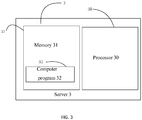
- FIG. 3 is a schematic diagram of a server provided by an embodiment of the present invention.
- the server 3 of the embodiment comprises a processor 30, a memory 31, and a computer program 32 stored in the memory 31 and executable on the processor 30, for example, a program executing the method for processing question clustering in an automatic question and answering system described above.
- the processor 30, when executing the computer program 32 implements the steps in each embodiment of the method for processing question clustering in an automatic question and answering system described above, for example, steps S1 to S7 shown in FIG. 1 .
- the processor 30, when executing the computer program 32 implements the function of each module/unit in each device embodiment described above, for example, the functions of units 10 to 80 shown in FIG. 2 .
- the computer program 32 may be segmented into one or more modules/units, which are stored in the memory 31 and executed by the processor 30 to complete the present invention.
- the one or more modules/units may be a series of computer program instruction segments capable of fulfilling a specific function for describing the execution of the computer program 32 in the server 3.
- the server 3 may be a computing device such as a local server, a cloud server etc.
- the server may comprise, but not limited to, a processor 30 and a memory 31. It may be understood by those skilled in the art that FIG. 3 is merely an example of the server 3 and does not constitute a limitation on the server 3, and may comprise more or fewer components than those shown, or combine certain components or different components.
- the server may further comprise an input/output device, a network access device, a bus, etc.
- the processor 30 may be a Central Processing Unit (CPU) or other general-purpose processors, a Digital Signal Processor (DSP), an Application Specific Integrated Circuit (ASIC), a Field-Programmable Gate Array (FPGA), or other programmable logic devices, a discrete gate or a transistor logic device, a discrete hardware component, etc.
- the general-purpose processor may be a microprocessor or the processor may also be any of conventional processors, etc.
- the memory 31 may be an internal storage unit of the server 3, such as a hard disk or memory of the server 3.
- the memory 31 may also be an external storage device of the server 3, such as a plug-in hard disk, a Smart Media Card (SMC), a Secure Digital (SD) card, a Flash Card, etc. equipped on the server 3.
- the memory 31 may further comprise both an internal storage unit and an external storage device of the server 3.
- the memory 31 is configured to store the computer program and other programs and data required by the server.
- the memory 31 may also be configured to temporarily store data that has been output or is to be output.
Landscapes
- Engineering & Computer Science (AREA)
- Theoretical Computer Science (AREA)
- Physics & Mathematics (AREA)
- Data Mining & Analysis (AREA)
- General Engineering & Computer Science (AREA)
- General Physics & Mathematics (AREA)
- Databases & Information Systems (AREA)
- Artificial Intelligence (AREA)
- Mathematical Physics (AREA)
- Computer Vision & Pattern Recognition (AREA)
- Computational Linguistics (AREA)
- Human Computer Interaction (AREA)
- Life Sciences & Earth Sciences (AREA)
- Bioinformatics & Cheminformatics (AREA)
- Bioinformatics & Computational Biology (AREA)
- Evolutionary Biology (AREA)
- Evolutionary Computation (AREA)
- General Health & Medical Sciences (AREA)
- Audiology, Speech & Language Pathology (AREA)
- Health & Medical Sciences (AREA)
- Information Retrieval, Db Structures And Fs Structures Therefor (AREA)
- Management, Administration, Business Operations System, And Electronic Commerce (AREA)
Applications Claiming Priority (2)
| Application Number | Priority Date | Filing Date | Title |
|---|---|---|---|
| CN201611002092.2A CN107656948B (zh) | 2016-11-14 | 2016-11-14 | 自动问答系统中的问题聚类处理方法及装置 |
| PCT/CN2017/099708 WO2018086401A1 (zh) | 2016-11-14 | 2017-08-30 | 自动问答系统中的问题聚类处理方法及装置 |
Publications (2)
| Publication Number | Publication Date |
|---|---|
| EP3540612A1 true EP3540612A1 (de) | 2019-09-18 |
| EP3540612A4 EP3540612A4 (de) | 2020-06-17 |
Family
ID=61127345
Family Applications (1)
| Application Number | Title | Priority Date | Filing Date |
|---|---|---|---|
| EP17847762.6A Ceased EP3540612A4 (de) | 2016-11-14 | 2017-08-30 | Verfahren und vorrichtung zur verarbeitung von frage-clustering in einem automatischen frage- und beantwortungssystem |
Country Status (8)
| Country | Link |
|---|---|
| US (1) | US20190073416A1 (de) |
| EP (1) | EP3540612A4 (de) |
| JP (1) | JP6634515B2 (de) |
| KR (1) | KR102113413B1 (de) |
| CN (1) | CN107656948B (de) |
| AU (1) | AU2017329098B2 (de) |
| SG (1) | SG11201802373WA (de) |
| WO (1) | WO2018086401A1 (de) |
Families Citing this family (26)
| Publication number | Priority date | Publication date | Assignee | Title |
|---|---|---|---|---|
| CN108804567B (zh) * | 2018-05-22 | 2024-07-19 | 平安科技(深圳)有限公司 | 提高智能客服应答率的方法、设备、存储介质及装置 |
| CN109002434A (zh) * | 2018-05-31 | 2018-12-14 | 青岛理工大学 | 客服问答匹配方法、服务器及存储介质 |
| CN109189901B (zh) * | 2018-08-09 | 2021-05-18 | 北京中关村科金技术有限公司 | 一种智能客服系统中自动发现新分类以及对应语料的方法 |
| CN109145118B (zh) * | 2018-09-06 | 2021-01-26 | 北京京东尚科信息技术有限公司 | 信息管理方法和装置 |
| CN110110084A (zh) * | 2019-04-23 | 2019-08-09 | 北京科技大学 | 高质量用户生成内容的识别方法 |
| CN110728298A (zh) * | 2019-09-05 | 2020-01-24 | 北京三快在线科技有限公司 | 多任务分类模型训练方法、多任务分类方法及装置 |
| CN110767224B (zh) * | 2019-10-15 | 2020-08-07 | 上海云从企业发展有限公司 | 一种基于特征权级的业务管理方法、系统、设备和介质 |
| CN111046158B (zh) * | 2019-12-13 | 2020-12-15 | 腾讯科技(深圳)有限公司 | 问答匹配方法及模型训练方法、装置、设备、存储介质 |
| CN111191687B (zh) * | 2019-12-14 | 2023-02-10 | 贵州电网有限责任公司 | 基于改进K-means算法的电力通信数据聚类方法 |
| CN111259154B (zh) * | 2020-02-07 | 2021-04-13 | 腾讯科技(深圳)有限公司 | 一种数据处理方法、装置、计算机设备及存储介质 |
| CN111309881A (zh) * | 2020-02-11 | 2020-06-19 | 深圳壹账通智能科技有限公司 | 智能问答中未知问题处理方法、装置、计算机设备和介质 |
| CN111352988B (zh) * | 2020-02-29 | 2023-05-23 | 重庆百事得大牛机器人有限公司 | 针对法务信息的大数据仓库存储、分析、提取系统 |
| CN111813905B (zh) * | 2020-06-17 | 2024-05-10 | 平安科技(深圳)有限公司 | 语料生成方法、装置、计算机设备及存储介质 |
| KR102445841B1 (ko) * | 2020-10-16 | 2022-09-22 | 성균관대학교산학협력단 | 다중 검색 방식을 이용한 의료 챗봇 시스템 |
| CN112650841A (zh) * | 2020-12-07 | 2021-04-13 | 北京有竹居网络技术有限公司 | 信息处理方法、装置和电子设备 |
| CN112559723B (zh) * | 2020-12-28 | 2024-05-28 | 广东国粒教育技术有限公司 | 一种基于深度学习的faq检索式问答构建方法及系统 |
| CN113779239B (zh) * | 2021-01-26 | 2025-02-25 | 北京沃东天骏信息技术有限公司 | 一种热点信息获取方法和装置 |
| CN112995719B (zh) * | 2021-04-21 | 2021-07-27 | 平安科技(深圳)有限公司 | 基于弹幕文本的问题集获取方法、装置及计算机设备 |
| CN113159178B (zh) * | 2021-04-22 | 2026-03-20 | 中国建设银行股份有限公司 | 问题扩展方法、装置、服务器及介质 |
| CN113010664B (zh) * | 2021-04-27 | 2024-06-14 | 数网金融有限公司 | 一种数据处理方法、装置及计算机设备 |
| CN113220853B (zh) * | 2021-05-12 | 2022-10-04 | 燕山大学 | 一种法律提问自动生成方法及系统 |
| CN115238681B (zh) * | 2022-06-28 | 2025-05-09 | 有米科技股份有限公司 | 应用于文本分类的词名单生成方法及装置 |
| WO2024143374A1 (ja) * | 2022-12-27 | 2024-07-04 | 武田薬品工業株式会社 | 業務支援システム、業務支援方法、データ管理プログラム及び検索プログラム |
| US12438790B1 (en) | 2024-03-26 | 2025-10-07 | Servicenow, Inc. | Network anomaly detection using clustering |
| CN119359166B (zh) * | 2024-12-24 | 2025-03-07 | 陕西佰特睿驰新能源科技有限公司 | 一种碳酸锂生产质量数据分析方法 |
| CN119557470B (zh) * | 2025-01-27 | 2025-06-03 | 中国科学院自动化研究所 | 图文检索方法、装置、设备、存储介质及程序产品 |
Family Cites Families (16)
| Publication number | Priority date | Publication date | Assignee | Title |
|---|---|---|---|---|
| US6675159B1 (en) * | 2000-07-27 | 2004-01-06 | Science Applic Int Corp | Concept-based search and retrieval system |
| JP4081065B2 (ja) * | 2004-10-22 | 2008-04-23 | クオリカ株式会社 | Faqデータ作成装置、方法、及びプログラム |
| SG138575A1 (en) * | 2006-06-23 | 2008-01-28 | Colorzip Media Inc | Method of classifying colors of color based image code |
| CN101308496A (zh) * | 2008-07-04 | 2008-11-19 | 沈阳格微软件有限责任公司 | 大规模文本数据的外部聚类方法及系统 |
| CN101477563B (zh) * | 2009-01-21 | 2010-11-10 | 北京百问百答网络技术有限公司 | 一种短文本聚类的方法、系统及其数据处理装置 |
| CN101599071B (zh) * | 2009-07-10 | 2012-04-18 | 华中科技大学 | 对话文本主题的自动提取方法 |
| CN101630312A (zh) * | 2009-08-19 | 2010-01-20 | 腾讯科技(深圳)有限公司 | 一种用于问答平台中问句的聚类方法及系统 |
| JP5574842B2 (ja) * | 2010-06-21 | 2014-08-20 | 株式会社野村総合研究所 | Faq候補抽出システムおよびfaq候補抽出プログラム |
| US9230009B2 (en) * | 2013-06-04 | 2016-01-05 | International Business Machines Corporation | Routing of questions to appropriately trained question and answer system pipelines using clustering |
| CN103559175B (zh) * | 2013-10-12 | 2016-08-10 | 华南理工大学 | 一种基于聚类的垃圾邮件过滤系统及方法 |
| CN103699695B (zh) * | 2014-01-14 | 2017-02-01 | 吉林大学 | 基于中心法的自适应文本聚类算法 |
| US10678765B2 (en) * | 2014-03-31 | 2020-06-09 | Rakuten, Inc. | Similarity calculation system, method of calculating similarity, and program |
| CN104142918B (zh) * | 2014-07-31 | 2017-04-05 | 天津大学 | 基于tf‑idf特征的短文本聚类以及热点主题提取方法 |
| US10387430B2 (en) * | 2015-02-26 | 2019-08-20 | International Business Machines Corporation | Geometry-directed active question selection for question answering systems |
| KR101720972B1 (ko) * | 2015-04-16 | 2017-03-30 | 주식회사 플런티코리아 | 답변 추천 장치 및 방법 |
| CN105975460A (zh) * | 2016-05-30 | 2016-09-28 | 上海智臻智能网络科技股份有限公司 | 问句信息处理方法及装置 |
-
2016
- 2016-11-14 CN CN201611002092.2A patent/CN107656948B/zh active Active
-
2017
- 2017-08-30 AU AU2017329098A patent/AU2017329098B2/en not_active Ceased
- 2017-08-30 KR KR1020187015559A patent/KR102113413B1/ko not_active Expired - Fee Related
- 2017-08-30 SG SG11201802373WA patent/SG11201802373WA/en unknown
- 2017-08-30 JP JP2018513838A patent/JP6634515B2/ja active Active
- 2017-08-30 EP EP17847762.6A patent/EP3540612A4/de not_active Ceased
- 2017-08-30 WO PCT/CN2017/099708 patent/WO2018086401A1/zh not_active Ceased
- 2017-08-30 US US16/093,610 patent/US20190073416A1/en not_active Abandoned
Also Published As
| Publication number | Publication date |
|---|---|
| JP6634515B2 (ja) | 2020-01-22 |
| CN107656948A (zh) | 2018-02-02 |
| AU2017329098B2 (en) | 2020-01-23 |
| SG11201802373WA (en) | 2018-06-28 |
| AU2017329098A1 (en) | 2018-05-31 |
| CN107656948B (zh) | 2019-05-07 |
| KR20180077261A (ko) | 2018-07-06 |
| JP2019504371A (ja) | 2019-02-14 |
| EP3540612A4 (de) | 2020-06-17 |
| WO2018086401A1 (zh) | 2018-05-17 |
| KR102113413B1 (ko) | 2020-05-21 |
| US20190073416A1 (en) | 2019-03-07 |
Similar Documents
| Publication | Publication Date | Title |
|---|---|---|
| AU2017329098B2 (en) | Method and device for processing question clustering in automatic question and answering system | |
| US11392838B2 (en) | Method, equipment, computing device and computer-readable storage medium for knowledge extraction based on TextCNN | |
| CN117235226A (zh) | 一种基于大语言模型的问题应答方法及装置 | |
| WO2021114810A1 (zh) | 基于图结构的公文推荐方法、装置、计算机设备及介质 | |
| US10482146B2 (en) | Systems and methods for automatic customization of content filtering | |
| US11475055B2 (en) | Artificial intelligence based method and apparatus for determining regional information | |
| WO2019153612A1 (zh) | 问答数据处理方法、电子装置及存储介质 | |
| US11120214B2 (en) | Corpus generating method and apparatus, and human-machine interaction processing method and apparatus | |
| CN111552788B (zh) | 基于实体属性关系的数据库检索方法、系统与设备 | |
| CN116414961A (zh) | 基于军事领域知识图谱的问答方法和系统 | |
| CN110738059B (zh) | 一种文本相似度计算方法及系统 | |
| CN110309377B (zh) | 语义归一化、提问模式的生成、应答确定方法及装置 | |
| CN113722438A (zh) | 基于句向量模型的句向量生成方法、装置及计算机设备 | |
| CN116150376B (zh) | 一种样本数据分布优化方法、装置和存储介质 | |
| CN118245568A (zh) | 一种基于大模型的问答方法、装置、电子设备及存储介质 | |
| CN118245574A (zh) | 一种文档处理方法、系统、设备及存储介质 | |
| CN112149389A (zh) | 简历信息结构化处理方法、装置、计算机设备和存储介质 | |
| CN109885651B (zh) | 一种问题推送方法和装置 | |
| CN113672700A (zh) | 内容项的搜索方法、装置、电子设备以及存储介质 | |
| US20260003909A1 (en) | Methods and apparatuses for importing graph data online and graph database systems | |
| CN113010664A (zh) | 一种数据处理方法、装置及计算机设备 | |
| CN113434654B (zh) | 一种数据处理方法及装置、设备、存储介质 | |
| CN113010651B (zh) | 一种针对用户提问的答复方法、装置及设备 | |
| CN113254640A (zh) | 一种工单数据的处理方法、装置、电子设备及存储介质 | |
| CN117573956B (zh) | 元数据管理方法、装置、设备及存储介质 |
Legal Events
| Date | Code | Title | Description |
|---|---|---|---|
| STAA | Information on the status of an ep patent application or granted ep patent |
Free format text: STATUS: UNKNOWN |
|
| STAA | Information on the status of an ep patent application or granted ep patent |
Free format text: STATUS: THE INTERNATIONAL PUBLICATION HAS BEEN MADE |
|
| PUAI | Public reference made under article 153(3) epc to a published international application that has entered the european phase |
Free format text: ORIGINAL CODE: 0009012 |
|
| STAA | Information on the status of an ep patent application or granted ep patent |
Free format text: STATUS: REQUEST FOR EXAMINATION WAS MADE |
|
| 17P | Request for examination filed |
Effective date: 20180315 |
|
| AK | Designated contracting states |
Kind code of ref document: A1 Designated state(s): AL AT BE BG CH CY CZ DE DK EE ES FI FR GB GR HR HU IE IS IT LI LT LU LV MC MK MT NL NO PL PT RO RS SE SI SK SM TR |
|
| AX | Request for extension of the european patent |
Extension state: BA ME |
|
| DAV | Request for validation of the european patent (deleted) | ||
| DAX | Request for extension of the european patent (deleted) | ||
| REG | Reference to a national code |
Ref country code: DE Ref legal event code: R079 Free format text: PREVIOUS MAIN CLASS: G06F0017300000 Ipc: G06F0016332000 |
|
| A4 | Supplementary search report drawn up and despatched |
Effective date: 20200519 |
|
| RIC1 | Information provided on ipc code assigned before grant |
Ipc: G06F 16/332 20190101AFI20200513BHEP Ipc: G06F 16/33 20190101ALI20200513BHEP |
|
| STAA | Information on the status of an ep patent application or granted ep patent |
Free format text: STATUS: EXAMINATION IS IN PROGRESS |
|
| 17Q | First examination report despatched |
Effective date: 20210112 |
|
| REG | Reference to a national code |
Ref country code: DE Ref legal event code: R003 |
|
| STAA | Information on the status of an ep patent application or granted ep patent |
Free format text: STATUS: THE APPLICATION HAS BEEN REFUSED |
|
| 18R | Application refused |
Effective date: 20230212 |