EP3540616A1 - Procédé et dispositif d'invocation et de stockage de données - Google Patents
Procédé et dispositif d'invocation et de stockage de données Download PDFInfo
- Publication number
- EP3540616A1 EP3540616A1 EP18818895.7A EP18818895A EP3540616A1 EP 3540616 A1 EP3540616 A1 EP 3540616A1 EP 18818895 A EP18818895 A EP 18818895A EP 3540616 A1 EP3540616 A1 EP 3540616A1
- Authority
- EP
- European Patent Office
- Prior art keywords
- data
- motion data
- motion
- user
- location information
- Prior art date
- Legal status (The legal status is an assumption and is not a legal conclusion. Google has not performed a legal analysis and makes no representation as to the accuracy of the status listed.)
- Withdrawn
Links
Images










Classifications
-
- G—PHYSICS
- G06—COMPUTING OR CALCULATING; COUNTING
- G06F—ELECTRIC DIGITAL DATA PROCESSING
- G06F16/00—Information retrieval; Database structures therefor; File system structures therefor
- G06F16/90—Details of database functions independent of the retrieved data types
- G06F16/95—Retrieval from the web
- G06F16/955—Retrieval from the web using information identifiers, e.g. uniform resource locators [URL]
- G06F16/9554—Retrieval from the web using information identifiers, e.g. uniform resource locators [URL] by using bar codes
-
- G—PHYSICS
- G06—COMPUTING OR CALCULATING; COUNTING
- G06F—ELECTRIC DIGITAL DATA PROCESSING
- G06F16/00—Information retrieval; Database structures therefor; File system structures therefor
- G06F16/20—Information retrieval; Database structures therefor; File system structures therefor of structured data, e.g. relational data
- G06F16/29—Geographical information databases
-
- G—PHYSICS
- G06—COMPUTING OR CALCULATING; COUNTING
- G06F—ELECTRIC DIGITAL DATA PROCESSING
- G06F16/00—Information retrieval; Database structures therefor; File system structures therefor
- G06F16/90—Details of database functions independent of the retrieved data types
- G06F16/907—Retrieval characterised by using metadata, e.g. metadata not derived from the content or metadata generated manually
- G06F16/909—Retrieval characterised by using metadata, e.g. metadata not derived from the content or metadata generated manually using geographical or spatial information, e.g. location
-
- G—PHYSICS
- G06—COMPUTING OR CALCULATING; COUNTING
- G06F—ELECTRIC DIGITAL DATA PROCESSING
- G06F16/00—Information retrieval; Database structures therefor; File system structures therefor
- G06F16/90—Details of database functions independent of the retrieved data types
- G06F16/95—Retrieval from the web
- G06F16/953—Querying, e.g. by the use of web search engines
- G06F16/9537—Spatial or temporal dependent retrieval, e.g. spatiotemporal queries
-
- G—PHYSICS
- G06—COMPUTING OR CALCULATING; COUNTING
- G06F—ELECTRIC DIGITAL DATA PROCESSING
- G06F16/00—Information retrieval; Database structures therefor; File system structures therefor
- G06F16/90—Details of database functions independent of the retrieved data types
- G06F16/95—Retrieval from the web
- G06F16/955—Retrieval from the web using information identifiers, e.g. uniform resource locators [URL]
-
- G—PHYSICS
- G06—COMPUTING OR CALCULATING; COUNTING
- G06F—ELECTRIC DIGITAL DATA PROCESSING
- G06F16/00—Information retrieval; Database structures therefor; File system structures therefor
- G06F16/90—Details of database functions independent of the retrieved data types
- G06F16/95—Retrieval from the web
- G06F16/957—Browsing optimisation, e.g. caching or content distillation
-
- G—PHYSICS
- G06—COMPUTING OR CALCULATING; COUNTING
- G06F—ELECTRIC DIGITAL DATA PROCESSING
- G06F18/00—Pattern recognition
- G06F18/20—Analysing
- G06F18/22—Matching criteria, e.g. proximity measures
-
- G—PHYSICS
- G06—COMPUTING OR CALCULATING; COUNTING
- G06F—ELECTRIC DIGITAL DATA PROCESSING
- G06F9/00—Arrangements for program control, e.g. control units
- G06F9/06—Arrangements for program control, e.g. control units using stored programs, i.e. using an internal store of processing equipment to receive or retain programs
- G06F9/44—Arrangements for executing specific programs
- G06F9/451—Execution arrangements for user interfaces
-
- G—PHYSICS
- G06—COMPUTING OR CALCULATING; COUNTING
- G06Q—INFORMATION AND COMMUNICATION TECHNOLOGY [ICT] SPECIALLY ADAPTED FOR ADMINISTRATIVE, COMMERCIAL, FINANCIAL, MANAGERIAL OR SUPERVISORY PURPOSES; SYSTEMS OR METHODS SPECIALLY ADAPTED FOR ADMINISTRATIVE, COMMERCIAL, FINANCIAL, MANAGERIAL OR SUPERVISORY PURPOSES, NOT OTHERWISE PROVIDED FOR
- G06Q30/00—Commerce
- G06Q30/02—Marketing; Price estimation or determination; Fundraising
-
- G—PHYSICS
- G06—COMPUTING OR CALCULATING; COUNTING
- G06Q—INFORMATION AND COMMUNICATION TECHNOLOGY [ICT] SPECIALLY ADAPTED FOR ADMINISTRATIVE, COMMERCIAL, FINANCIAL, MANAGERIAL OR SUPERVISORY PURPOSES; SYSTEMS OR METHODS SPECIALLY ADAPTED FOR ADMINISTRATIVE, COMMERCIAL, FINANCIAL, MANAGERIAL OR SUPERVISORY PURPOSES, NOT OTHERWISE PROVIDED FOR
- G06Q30/00—Commerce
- G06Q30/02—Marketing; Price estimation or determination; Fundraising
- G06Q30/0207—Discounts or incentives, e.g. coupons or rebates
-
- G—PHYSICS
- G06—COMPUTING OR CALCULATING; COUNTING
- G06Q—INFORMATION AND COMMUNICATION TECHNOLOGY [ICT] SPECIALLY ADAPTED FOR ADMINISTRATIVE, COMMERCIAL, FINANCIAL, MANAGERIAL OR SUPERVISORY PURPOSES; SYSTEMS OR METHODS SPECIALLY ADAPTED FOR ADMINISTRATIVE, COMMERCIAL, FINANCIAL, MANAGERIAL OR SUPERVISORY PURPOSES, NOT OTHERWISE PROVIDED FOR
- G06Q30/00—Commerce
- G06Q30/02—Marketing; Price estimation or determination; Fundraising
- G06Q30/0241—Advertisements
- G06Q30/0251—Targeted advertisements
- G06Q30/0259—Targeted advertisements based on store location
-
- G—PHYSICS
- G06—COMPUTING OR CALCULATING; COUNTING
- G06Q—INFORMATION AND COMMUNICATION TECHNOLOGY [ICT] SPECIALLY ADAPTED FOR ADMINISTRATIVE, COMMERCIAL, FINANCIAL, MANAGERIAL OR SUPERVISORY PURPOSES; SYSTEMS OR METHODS SPECIALLY ADAPTED FOR ADMINISTRATIVE, COMMERCIAL, FINANCIAL, MANAGERIAL OR SUPERVISORY PURPOSES, NOT OTHERWISE PROVIDED FOR
- G06Q30/00—Commerce
- G06Q30/02—Marketing; Price estimation or determination; Fundraising
- G06Q30/0241—Advertisements
- G06Q30/0251—Targeted advertisements
- G06Q30/0261—Targeted advertisements based on user location
-
- H—ELECTRICITY
- H04—ELECTRIC COMMUNICATION TECHNIQUE
- H04L—TRANSMISSION OF DIGITAL INFORMATION, e.g. TELEGRAPHIC COMMUNICATION
- H04L67/00—Network arrangements or protocols for supporting network services or applications
- H04L67/50—Network services
- H04L67/51—Discovery or management thereof, e.g. service location protocol [SLP] or web services
-
- H—ELECTRICITY
- H04—ELECTRIC COMMUNICATION TECHNIQUE
- H04L—TRANSMISSION OF DIGITAL INFORMATION, e.g. TELEGRAPHIC COMMUNICATION
- H04L67/00—Network arrangements or protocols for supporting network services or applications
- H04L67/50—Network services
- H04L67/52—Network services specially adapted for the location of the user terminal
-
- H—ELECTRICITY
- H04—ELECTRIC COMMUNICATION TECHNIQUE
- H04W—WIRELESS COMMUNICATION NETWORKS
- H04W4/00—Services specially adapted for wireless communication networks; Facilities therefor
- H04W4/02—Services making use of location information
- H04W4/025—Services making use of location information using location based information parameters
- H04W4/027—Services making use of location information using location based information parameters using movement velocity, acceleration information
Definitions
- the present application relates to the field of information technologies, and in particular to data storage and calling methods and devices.
- each resource e.g., data
- each resource e.g., data
- URL uniform resource locator
- the ways users obtain data are relatively monotonous.
- users can usually find required data and obtain the corresponding URL through a web search engine or a website.
- the URL corresponding to the data is obtained by scanning an identification code including the URL.
- the corresponding data is obtained by receiving a URL sent by another person.
- Some embodiments of the present application provide data storage and calling methods, which adopt diversified data obtaining methods to simplify the data obtaining process and enhance the use desire of users.
- the methods provided by the present application are intended to solve the problem of low efficiency in obtaining data and low use desire of users in the prior art due to the fact that the methods for obtaining data are relatively monotonous and there are certain limitations or inconveniences in operation.
- Some embodiments of the present application provide data storage and calling devices, which adopt diversified data obtaining methods to simplify the data obtaining process and enhance the use desire of users.
- the data storage and calling devices provided by the present application are intended to solve the problem of low efficiency in obtaining data and low use desire of users in the prior art due to the fact that the methods for obtaining data are relatively monotonous and there are certain limitations or inconveniences in operation.
- a data calling method including:
- a data storage method including:
- a data storage method including:
- a data calling method including:
- a data calling method including:
- a data storage device including:
- a data storage device including:
- a data calling device including:
- a data calling device including:
- a server including one or more processors and a memory, wherein the memory stores a program, and configured that the one or more processors perform the following steps:
- a mobile terminal including one or more processors and a memory, wherein the memory stores a program, and configured that the one or more processors perform the following steps:
- a server including one or more processors and a memory, wherein the memory stores a program, and configured that the one or more processors perform the following steps:
- a mobile terminal including one or more processors and a memory, wherein the memory stores a program, and configured that the one or more processors perform the following steps:
- At least one of the above-mentioned technical solutions, adopted by embodiments of the present application, may achieve the following beneficial effects.
- first motion data and business data are received, and association relationships among the first motion data, the business data and the geographical location information are established and stored.
- second motion data may be received in the case of data calling.
- first motion data that matches the second motion data is determined, and business data associated with the matched first motion data is returned to a sender of the second motion data. It may be seen that, by the methods provided by the present application, a sender of second motion data can obtain business data associated with first motion data only by sending second motion data that matches the first motion data. Therefore, more ways are available for users to obtain data, users are motivated to obtain data in a novel way, the data obtaining process is simplified, the use desire of users is enhanced, and the efficiency in obtaining data is improved.
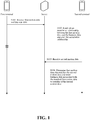
- FIG. 1 shows a data processing process according to some embodiments of the present application, specifically including the following steps.
- S101 first motion data and business data are received.
- a first user is described as a user who provides business data (such as, a seller user, an advertiser, and an event marketing company).
- business data such as, a seller user, an advertiser, and an event marketing company.
- the first user may send the business data and first motion data to a server for storage.
- the first motion data herein is motion data sent by the first user who provides the business data.
- the server may receive the business data sent by the first user, and the server may further receive the first motion data sent by the first user.
- the application does not limit the sending sequence of the first motion data and the business data, and the first motion data and the business data may also be sent to the server together.
- the first motion data and the business data may both include the account ID of the first user, and then the server may determine, in a subsequent step, that the first motion data and the business data have an association relationship.
- the server when receiving first motion data and business data, the server may determine, according to an account ID included in the first motion data and the business data, that the first motion data and the business data have an association relationship, and then the server may establish an association relationship between the first motion data and the business data and store the first motion data, the business data and the established association relationship.
- the server may store different first motion data and business data sent by the first user. Therefore, in some embodiments of the present application, when the server subsequently calls data, data to be called is business data stored in the server and associated with any one or more pieces of first motion data.
- a second user is described as a user who needs to obtain business data (such as, a buyer user and a user who receives service).
- the second user may send second motion data to the server in order to obtain the required business data.
- the second motion data herein is motion data sent by the second user who needs to obtain business data.
- the first user may prompt the second user to perform a motion corresponding to the second motion data by providing text, a picture, an audio, or a video. Therefore, when the second user needs to obtain the business data, the second user may perform a corresponding motion according to information displayed by the first user. Then, the second user may send, to the server, the second motion data corresponding to the performed motion and obtain the business data provided by the first user.
- the server may further receive the second motion data sent by the second user, so that the server subsequently determines the business data that the second user needs to obtain according to the second motion data and returns the business data.
- step S103 may be independent of the step S101 and the step S102. That is to say, the server may receive the first motion data and the business data sent by the first user, and may also receive the second motion data sent by the second user at the same time.
- the time sequence between the step S101 to the step S102 and the step S103 to step S104 is not limited by the present application.
- the server when receiving the second motion data, may match the first motion data stored in the step S101 and the step S102 with the second motion data, and return, to the sender of the second motion data (i.e., the second user), business data associated with the first motion data that matches the second motion data.
- the User s when User s sends business data to other users, the User s serves as the first user. Moreover, motion data sent by the User s and associated with the business data is the first motion data. When the User s sends motion data to obtain business data, the User s serves as the second user, and the sent motion data is the second motion data. It may be seen that in fact, one user may be both the first user described in the present application and the second user described in the present application.
- the second user only needs to send the second motion data that matches the first motion data, and then the second user may obtain the business data sent by the first user. Therefore, more ways are available for users to obtain data, users are motivated to obtain data in a novel way, the data obtaining process is simplified, the use desire of users is enhanced, and the efficiency in obtaining data is improved .
- Some embodiments of the present application provide herein a data storage process, as shown in FIG. 2 , based on the data calling process shown in FIG. 1 .
- FIG. 2 shows a data storage process according to some embodiments of the present application, specifically including the following steps.
- a server may receive business data and first motion data and create an association relationship between the business data and the first motion data, so that other users only need to send a motion that matches the first motion data to obtain business data associated with the first motion data. For this reason, the server storing the business data needs to establish and store the above association relationship. Thus, the first motion data and the business data sent by the first user may be received by the server.
- the server herein may be a single device or a system composed of multiple devices.
- the first user may send the first motion data and the business data through a first terminal, where the first terminal may be a mobile phone, a tablet computer, a personal computer, a smart wearable device, etc., and it will not be specifically limited by the present application.
- the server may receive the first motion data and the business data sent by the first user. Moreover, the first user may send the first motion data and the business data to the server through an account that is logged in on the first terminal, so the first motion data and/or the business data may also carry the account ID of the account. Then, in a subsequent data calling process, the server may determine the correspondence between called business data and the account ID. It should be noted that, in some embodiments of the present application, the data calling process and the data processing process are independent of each other.
- the business data and the first motion data may be sent to the server at one time after being packaged by the first terminal or may be sent to the server in multiple times. Then, through the account ID included in the first motion data and the business data, the server may determine that there is an association relationship between the received business data and the first motion data.
- the first motion data herein is the first motion data of the first user collected by the first terminal, and specifically includes: acceleration data and angular velocity data recorded in a chronological order, as shown in Table 1.
- Table 1 Time Acceleration data Angular velocity data 0.0s-1.1s 0 0 1.2s-1.5s X axis 9.8 m /s 2 X axis 0.600 rad /s Y axis 2 m /s 2 Y axis-0.003 rad /s Z axis 0 m /s 2 Z axis 0.000 rad /s 1.6s-2.0s 0 0 2.1s-2.5s X axis 0.5 m /s 2 X axis 1.000 rad /s Y axis 0 m /s 2 Y axis0.000 rad /s Z axis 0 m /s 2 Z axis 0.000 rad /s 2.6s-3.0s X axis 0.5 m /
- the motion trajectory of the first terminal may be determined, and the motion made by the first user may be roughly determined by the motion trajectory of the first terminal.
- the server may further receive motion description information sent by the first user, and determine, from pre-stored pieces of motion data, motion data corresponding to the motion description information as the received first motion data.
- the motion description information herein may be text information, such as "draw a circle,” “write an Arabic number 5,” etc.
- the server may determine a corresponding piece of first motion data by using the text information in the same manner as the prior art.
- the server may first determine pre-stored motion description information that matches the motion description information sent by the first user according to correspondence between pre-stored motion description information or keywords and every piece of motion data, and then determine corresponding first motion data.
- the corresponding first motion data is determined according to a keyword in the received motion description information.
- the keyword herein may be set as needed, and how to select a keyword is not limited by the present application.
- the server B may determine corresponding pre-stored motion data, according to pre-stored motion description information or keywords shown in Table 2, as first motion data sent by the first user. It is assumed that the motion description information sent by the first user is "write an English letter a first, then draw a circle.” Then, the server B may determine motion data n according to motion description information "English letter a” and determine motion data n-1 according to a keyword "circle.” Then, the server may determine that the first motion data sent by the first user is: motion data n+motion data n-1.
- the first motion data determined by the server may be different from the intention of the motion description information sent by the first user.
- the server may determine first motion data composed of multiple pieces of pre-stored motion data according to the motion description information sent by the first user; however, the first user's intention may be just one of the multiple pieces of motion data.
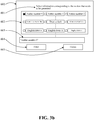
- the server may return, to the first user, every piece of motion description information corresponding to the determined motion data as an option in the form of query information, as shown in FIG. 3a .
- FIG. 3a is a schematic diagram of an interface of query information according to some embodiments of the present application.
- an option interface 600 includes: prompt information "Select information corresponding to the motion that needs to be generated” 601, motion description information 602 respectively corresponding to every piece of pre-stored motion data determined by the server, a display area 603 for selected motion description information, an "Enter” key 604 and a "Delete” key 605.
- a first terminal monitors that the first user performs a click operation on the option “draw a circle” and the option “Arabic number 1" in the 602 area, and then motion description information selected by the first user, i.e., "draw a circle + Arabic number 1," is displayed in the area 603 at the bottom.
- the symbol "+” serves as a separator between the two pieces of motion description information.
- the sequence in which the first user sends the business data and the motion data is not limited, so the first user may also send the business data first.
- the server may also return, to the first user, the pre-stored motion description information shown in Table 2 as options and determine the first motion data according to a selection result of the first user.
- the server cannot determine the first motion data.
- the motion description information sent by the first user is too simple, such as, "draw a line,” “draw a point”; or the server does not pre-save corresponding motion description information, for example, the motion description information sent by the first user is "delta.” Therefore, the server may also return, to the first user, the pre-stored motion description information shown in Table 2 as options and determine the first motion data according to a selection result of the first user.
- the server B may determine the corresponding motion data according to Table 3 and determine the first motion data of the first terminal A as motion data n, motion data n+2, and motion data 1 in the sequence of the motion description information.
- the server may return, to the first user, every piece of motion description information as an option in the form of query information, as shown in FIG. 3b .
- FIG. 3b is a schematic diagram of query information according to some embodiments of the present application.
- an option interface 600 includes: prompt information "Select information corresponding to the motion that needs to be generated” 601, a selection interface 602 containing motion description information as options, a display area 603 for selected motion description information, an "Enter” key 604 and a "Delete” key 605.
- a first terminal monitors that the first user performs a click operation on the option "Arabic number 0" in the 602 area, and then the selected motion description information, i.e., "Arabic number 0," is displayed in the area 603 at the bottom.
- the server may determine, for one piece of motion description information, a plurality of pre-stored motion data as the first motion data sent by the first user. For example, when the motion description information is "draw a circle,” the server may determine that motion data corresponding to a circular motion track and motion data corresponding to oval motion track are first motion data, and the like.
- the server may also determine, according to the received first motion data of the first user and from pre-stored pieces of motion data, motion data with a similarity to the first motion data higher than a preset threshold as first motion data sent by the first user.
- the server may determine, according to pre-stored motion data, a piece of pre-stored motion data with the highest similarity to the first motion data, for example, motion data corresponding to a circular motion track, and then use the pre-stored motion data with the highest similarity as first motion data, and establish an association relationship between the first motion data and business data.
- the server may determine motion data corresponding to an oval motion track as first motion data.
- the server may also determine both the motion data corresponding to the circular motion track and the motion data corresponding to the oval motion track as first motion data.
- the server may also return, to the first user, the determined motion data with a similarity higher than the preset threshold, and determine to-be-stored first motion data according to motion data selected by the first user.
- the first motion data sent by the first user may be repeated execution of the same motion (for example, drawing 4 circles, which means repeating the motion of drawing a circle four times), in order to facilitate the determination, by the first user, of the number of repetitions of the first motion data, the first motion data determined by the server may also include the number of repetitions.
- the second user when obtaining the business data provided by the first user, the second user also needs to repeatedly perform the motion, so that second motion data sent by a second terminal to the server can match the first motion data. It takes a certain time to repeat the motion many times. For example, when the first motion data is "draw a circle" and the number of repetitions is 100, the second user needs to take a certain time to complete second motion data that matches the first motion data.
- the first motion data sent by the first user may further include a collection duration, so that the server matches second motion data received within the collection duration with the first motion data. For example, if the collection duration of the first motion data sent by the first user is 1 hour, the server may determine whether second motion data sent by the second user and received within 1 hour matches the first motion data, during the subsequent data calling process. Here, the server may calculate similarity between second motion data and first motion data and determine second motion data with a similarity higher than a preset threshold and may further accumulate the quantity of second motion data with a similarity higher than the preset threshold.
- the server may determine that second motion data matches first motion data when determining that the quantity of second motion data with a similarity to first motion data sent by the first user higher than the preset threshold meets, within the collection time, the number of repetitions sent by the first user.
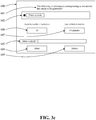
- the server may further return, to the first user, query information about the number of repetitions of the first motion data and the collection duration, as shown in FIG. 3c .
- the sever then respectively determines, according to the number of repetitions as well as the collection duration selected by the first user, the number of repetitions of first motion data and the duration of receiving second motion data.
- FIG. 3c is a schematic diagram of query information according to some embodiments of the present application.
- an option interface 600 includes: prompt information "Select information corresponding to the motion that needs to be generated” 601, a selection interface 602 containing motion description information as options, a display area 603 for selected motion description information, an "Enter” key 604, a "Delete” key 605, an input box 606 for the number of repetitions, and an input box 607 for duration.
- the first terminal monitors that the first user inputs 10 in the input box 606 for the number of repetitions in the area 606 and input 10 minutes in the duration input box 607.
- the server may determine, according to the selection of the first user, that the first motion data is "draw a circle for ten times" and the collection duration is 10 minutes. Therefore, in the subsequent data calling process, when receiving the motion data that matches the motion description information "draw a circle” and is sent ten times by the second user within 10 minutes, the server determines that the second motion data matches the first motion data and returns business data to the second user.
- the foregoing methods for determining the received first motion data sent by the first user may be used alternatively or in any combination, which is not specifically limited by the present application.
- the business data may be text, a picture, etc., or may be a URL.
- the business data may be the same as business data included in a two-dimensional code in the prior art, and the specific content of the business data is not limited by the present application.
- the business data may be the URL of a payment page of the first user. Then, after the second user obtains the URL, a payment page for making a payment to the first user may be obtained by accessing the URL to perform the payment operation.
- an association relationship between the first motion data and the business data may be established and stored, so that to-be-called data may be determined according to the above association relationship in the subsequence data calling stage.
- the server may directly establish the association relationship between the first motion data and the business data, determined in step S201, and store the first motion data, the business data and the association relationship.
- the first motion data, the business data and the association relationship may be specifically stored in a hard disk of the server or stored in a database corresponding to the server, which is not specifically limited by the present application.
- the server may receive the first motion data and the business data sent by the first user, establish an association relationship between the first motion data and the business data, and store the association relationship for subsequent data calling.
- the server may store a large amount of first motion data and its associated business data.
- the server may determine multiple pieces of matched first motion data according to the received second motion data, and return, to the second user, business data respectively associated with the multiple pieces of first motion data.
- the second user may receive multiple pieces of business data, but the business data that the second user needs to obtain is usually only one of them. Not only is the amount of data transmission between the server and the second user increased, but also the second user needs to select the required business data from the multiple pieces of business data, resulting in poor user experience.
- the server may further determine geographical location information of the first user, establish association relationships among the first motion data, the business data and the geographical location information and store the association relationships, so that the quantity of the first motion data for matching the second motion data is reduced in the subsequent data calling process by determining the geographical location information of the second user.
- the geographical location information herein may be a specific location or a geographical range.
- the first user may pre-store geographical location information corresponding to an account of the first user in the server. For example, the first user pre-sends geographical location information to the server through the account, and then the server may establish an association relationship between the account ID of the account and the geographical location information and store the association relationship in a database. Then, the server may call the geographical location information corresponding to the account ID from the database according to the account ID determined in step S201 and associate the geographical location information with the first motion data.
- the geographical location information herein may include longitude and latitude, altitude interval, floor space, terrain profile, etc.
- the latitude and longitude may be the latitude and longitude of the center point of the geographical location information, and the altitude interval is represented by the number of floors.
- the server B receives the first motion data and the business data sent by the first user through the account A, and the server B calls the corresponding geographical location information from the database according to the ID of the account A, as shown in Table 3.
- FIG. 4 is a schematic diagram of geographical location information according to some embodiments of the present application, which may include illustrated data such as angles, radians, and the like.
- Table 3 Geographical location information Content Longitude and latitude N39°59'17.30" E116°28'33.96" Altitude interval 15m-20m Floor space 180m 2 Terrain profile As shown in FIG. 2
- the altitude interval of 15m-20m may also be indicated by four floors.
- the server may further determine the geographical location information of the first terminal when the first terminal sends the first motion data or sends the business data by using a method such as GPS or base station positioning, as geographical location information associated with the first motion data.
- the server may supplement the geographical location information associated with the first motion data according to a preset range.
- the server B obtains the geographical location information as N39° 59' 17.30", E116° 28' 33.96".
- the server can supplement the geographical location information as shown in FIG. 5a , where the circle is the geographical location information of the first user after the supplement, and the thin solid lines illustrate the shapes of rooms in an electronic map and dotted lines illustrate roads.
- the preset range is a rectangle with a long side of 10m and a short side of 5m
- the server may determine that the geographical location information may be as shown in FIG. 5b , and the rectangle defined by the thick solid lines is the supplemented geographical location information.
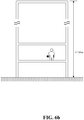
- the preset range may further include an altitude interval
- the supplemented geographical location information may be a closed space.
- the preset range is determined by the common floor height, the floor height of a building at the latitude and longitude, or the building height at the latitude and longitude, and then the altitude interval of the geographical location information is determined.
- the server may pre-store a plurality of intervals corresponding to common floor heights of buildings.
- the server may determine a height interval in which the altitude falls, as an altitude interval corresponding to the geographical location information of the first user.
- the geographical location information of the first user determined by the server includes altitude data of 3.65m
- the pre-stored altitude interval includes 0-3m, 3-6m, 6-9m, etc.
- the server may determine the altitude interval in the geographical location information of the first user as 3m to 6m.
- the server determines that the geographical location information of the first user does not include altitude data, and the server may further determine the height of a building corresponding to latitude and longitude in the geographical location information as 150m, and then determine that the altitude interval of the geographical location information of the first user is 0m to 150m.
- the height of the building corresponding to the latitude and longitude may be the height of the highest point inside the building, or the height of the highest point outside the building.
- the height of a building is not limited by the present application.
- the geographical location information associated with the first motion data may be determined as a stereoscopic space, and then, in the subsequence data calling process, as long as second motion data that matches the first motion data is received in the stereoscopic space of the geographical location information, the server may call associated business data and return the associated business data.
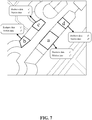
- the server since the server may establish association relationships among the first motion data, the business data and the geographical location information, and store the association relationships, and any first user who provides business data may send first motion data to the server, the server may store multiple association relationships. Then, the association relationships stored by the server are represented on an electronic map as shown in FIG. 7 .
- FIG. 7 is a schematic diagram showing stored association relationships on an electronic map according to some embodiments of the present application. It may be seen that on the electronic map, there are multiple pieces of geographical location information: a, b, c, and d, and every piece of geographical location information is a closed graph defined by thick solid lines. Moreover, every piece of geographical location information is associated with first motion data and the business data that are not completely identical, respectively, as illustrated in FIG. 5a , the thin solid lines illustrate the shapes of rooms, and the dotted lines illustrate roads.
- the server may further determine whether the similarity between the received first motion data and every piece of stored first motion data is higher than a threshold; if yes, the first motion data and its associated business data are not stored; or if not, an associated relationship between the first motion data and the business data is established, and the subsequent operations are continued. Therefore, the problem that there is too much business data matched in the subsequent data calling process because the similarity of the first motion data stored in the server is too high is avoided.
- the server when receiving first motion data sent by the first user, the server may further calculate, for every piece of stored first motion data, the similarity between the first motion data and the first motion data received in the step S201, and determine whether there is stored first motion data with a similarity higher than a preset threshold; if yes, the first motion data received in the step S201 is not stored, and the first user is notified to change the first motion data; or if not, an association relationship between the first motion data and the business data is established. That is, every time the server receives first motion data sent by the first user, the server may first review the first motion data, and determine whether the similarity between the received first motion data and any stored first motion data exceeds a preset threshold.
- the similarity between first motion data stored in the server may not be greater than a preset threshold.
- the amount of data that the server needs to match will also increase, resulting in an increase in the operating load of the server.
- the probability of existence of first motion data with a similarity to the stored first motion data higher than the preset threshold is also increased; therefore, the first user needs to repeatedly send first motion data, thereby reducing the business execution efficiency, and resulting in poor user experience.
- the server when receiving first motion data, may further determine the geographical location information of the first user, and when performing similarity calculation on the received first motion data according to stored first motion data, the server only calculates the similarity of first motion data having similar geographical location information. Therefore, the amount of data that needs to be matched is reduced and the business execution efficiency is improved.
- the server may first determine, from stored geographical location information associated with business data, geographical location information from which the distance to the geographical location information of the first user falls within a specified distance range as adjacent location information, and then determine whether there is motion data whose similarity with the first motion data exceeds a threshold in motion data respectively associated with the pieces of adjacent location information; if yes, the first user is notified to change the first motion data; or if not, association relationships among the first motion data, the business data and the geographical location information are established.
- the server may store multiple pieces of first motion data with a similarity higher than the preset threshold as long as the server determines that the distance between the geographical location information associated with the multiple pieces of first motion data does not fall within a specified distance range. Moreover, in the subsequent data calling process, the server may also first determine stored adjacent location information according to the geographical location information of the second user and determine whether there is first motion data with a similarity to second motion data higher than a threshold in first motion data respectively associated with the adjacent location information.
- motion data respectively associated with every piece of adjacent location information is also first motion data, and specifically may be first motion data uploaded by other first users.
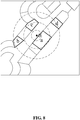
- FIG. 8 is a schematic diagram of adjacent location information according to some embodiments of the present application.
- the latitude and longitude in the geographical location information of the first user as a center O of a circle and different distance ranges as radiuses
- multiple dotted circles can be drawn
- the thin solid lines illustrate the shapes of rooms in the electronic map
- the thick solid lines illustrate geographical location information respectively associated with stored business data.
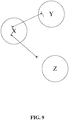
- the geographical location information of the first user may be a geographical range area; therefore, when determining adjacent location information, the server may determine, when a minimum distance between the geographical location information of the first user and geographical location information associated with stored business data is less than a preset distance, the geographical location information associated with the stored business data as adjacent location information. As shown in FIG. 9 , the minimum distance between the geographical location information X and the geographical location information Y is less than a preset distance. The minimum distance between the geographical location information X and the geographical location information Z is greater than the preset distance. Then the server may determine that the geographical location information Y is adjacent location information.
- the first motion data of the first user may also be determined by an image collected by a camera.
- the first terminal may collect a motion image (e.g., video) of the first user by using a camera of the first terminal, and then the server may receive the motion image of the first user and determine first motion data according to the motion image.
- the server determines first motion data corresponding to the motion image by using the same method as the prior art, which is not specifically limited by the present application.
- the first terminal may also determine first motion data according to the collected motion data and send the first motion data to the server.
- the motion image of the first user may also be collected by cameras of other devices than the first terminal. Then, when receiving the motion image sent by the first user (or first motion data determined by other devices according to collected motion images), the server may determine an account ID logged in on the device. Corresponding geographical location information is determined according to pre-stored correspondence between each account ID and geographical location information, and association relationships among the first motion data, the business data and the geographical location information are subsequently created and stored.
- a first terminal and a camera may be two independent devices, and the first terminal may obtain a motion image collected by the camera by external connection, etc., and then the camera may be regarded as the camera of the first terminal. For the same reason, the above expressions are also applicable to other devices and their cameras.
- the server may not only determine the geographical location information of a device that sends first motion data (or a motion image) but also determine stored location information according to the account ID of the first user, the server may also return, to the first user, query information including the determined geographical location information, so as to establish association relationships among the first motion data, the business data and the geographical location information according to the geographical location information selected by the first user, and store the association relationships.
- the steps of the method provided by the embodiments of the present application may all be performed by the same device, or the method may also be performed by different devices.
- the step S201 may be performed by a device 1
- the step S202 may be performed by a device 2
- the step S201 may be performed by the device 2
- the step S202 may be performed by the device 1.
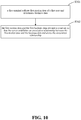
- some embodiments of the present application further correspondingly provide a data calling method, as shown in FIG. 10 .
- FIG. 10 shows a data storage process according to some embodiments of the present application, specifically including the following steps.
- S301 a first terminal collects first motion data of a first user and determines business data.
- the first terminal may be a terminal used by the first user, and the first terminal may collect the acceleration data and angular velocity data of the first terminal according to the operation of the user and send the data as first motion data to a server.
- the first terminal starts data collection when monitoring a long press operation of the first user and stops the collection when the first user stops the long press operation.
- the first terminal starts data collection when monitoring a start instruction of the first user and ends the collection when monitoring a stop instruction of the first user. How to collect the first motion data is not limited by the present application.
- the first terminal may monitor motion description information input by the first user and send the information to the server, so that the server determines the first motion data of the first user according to the motion description information.
- the business data may be data input by the first user through the first terminal, or may also be data obtained by the first user through the first terminal (e.g., data obtained through other servers, or received data sent by other terminals, etc.), and how the first terminal determines business data is not limited by the present application.
- the first terminal may send the first motion data and the business data to a server, and at the same time, the geographical location information of the first terminal may be sent to the server as the geographical location information of the first user.
- the geographical location information herein may be sent by the first terminal actively or may be returned according to the query information of the server, which is not limited by the present application.
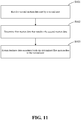
- some embodiments of the present application further correspondingly provide a data calling method, as shown in FIG. 11 .
- the first user uploads first motion data and business data to the server, so that the server stores the data as shown in FIG. 7 . Therefore, in order to enable other users (e.g., the second user) to obtain the associated business data by performing the same motion, the first user may post a motion description image, post a motion description text, broadcast a motion description audio, play a motion demonstration video, etc., thereby prompting other users to obtain business data by completing the motion.
- other users e.g., the second user
- the first user may post a motion description image, post a motion description text, broadcast a motion description audio, play a motion demonstration video, etc., thereby prompting other users to obtain business data by completing the motion.
- the manager of the flower shop completes the motion of drawing a circle by using a mobile phone, and sends an electronic coupon with a discount of 10 yuan for every purchase of 100 yuan as business data to the server B.
- the server B may determine the location of the store as first motion data geographical location information and establish association relationships among the first motion data corresponding to the motion of drawing a circle, the business data and the geographical location information, and store the association relationships.
- the store manager can suspend prompt information at the door of the store, as shown in FIG.
- FIG. 11 shows a data calling process according to some embodiments of the present application, specifically including the following steps: S401: second motion data sent by a second user is received.
- the server may store multiple association relationships between business data and first motion data, so that the server may call associated business data and returns the associated business data to the second user after the second user completes the motion that matches the first motion data.
- Diversified data obtaining methods are provided to solve the problem that the user's desire to obtain data is not high, resulting in low efficiency in obtaining data.
- the server may receive second motion data sent by a second terminal of the second user, and perform subsequent matching on the second motion data to determine data to be returned to the second user.
- the second terminal herein is a terminal used by the second user.
- the server when receiving first motion data, may determine, according to stored first motion data, first motion data that matches the second motion data, so that business data associated with the matched first motion data is returned to the second user.
- similarity calculation is performed between the first motion data and the second motion data to determine whether the similarity is higher than a preset threshold; if yes, it is determined that the first motion data matches the second motion data; or if not, it is determined that the first motion data does not match the second motion data.
- the server may return error information to the second user, prompting the second user to resend the second motion data.
- the algorithm for performing similarity calculation herein may be obtained by training samples based on a neural network or a hidden Markov model. Specifically, the training may be performed in the same manner as in the prior art, and the preset threshold may also be set as needed, which is not limited by the present application.
- the preparation motion may be a motion of lifting the pen.
- the additional motions such as the above-mentioned motion of lifting the pen or intermediate motion may be referred to as preparatory motions.
- samples of preparatory motions may be added, so that when receiving motion data sent by a user, the server may identify, according to the samples of preparatory motions, motion data corresponding to the preparatory motions in the motion data and remove the motion data, thereby further improving the accuracy of the calculated similarity.
- the server may also remove, from first motion data and second motion data, the motion data corresponding to the preparatory motions according to the samples of preparatory motions, which is not specifically limited by the present application.
- the server may call business data associated with the matched first motion data and return the business data to the second user.
- the server may further determine a data ID corresponding to the business data associated with the matched first motion data, and return, to the second terminal and according to the data ID, query information about whether to obtain business data corresponding to the data ID, and finally, return the business data corresponding to the data ID to the second user according to response information returned by the second user.
- the response information herein may indicate confirmation or cancellation for the obtaining of the business data.
- the server may determine business data respectively associated with multiple pieces of matched first motion data.
- the server may further send data IDs of business data associated with the determined pieces of first motion data to the second user, and according to a data ID selected by the second user, return business data corresponding to the data ID selected by the second user.
- FIG. 13a is a schematic diagram of query information returned by the server when there is only one piece of first motion data with a similarity higher than a preset threshold. It may be seen that, according to the query information, shown in FIG. 13a , which includes a data ID corresponding to the business data, that is, "Shop E, Coupon H: a discount of 10 yuan for every purchase of 100 yuan," the second terminal may return response information to the server by monitoring the operation of the second user.
- FIG. 13b is a schematic diagram of query information returned by the server when there are multiple pieces of first motion data with a similarity higher than a preset threshold. It may be seen that FIG.
- 13b shows selection of query information, which includes data IDs respectively corresponding to two different pieces of business data, namely, "Shop E, Coupon H: a discount of 10 yuan for every purchase of 100 yuan," and "Shop T, Coupon U: free sample sacks.” Then, the second terminal may determine a selection result by monitoring the operation by the second user on the query information and return the selection result to the server.
- the server may receive second motion data sent by the second user, and when at least one piece of first motion data that matches the second motion data is determined, business data associated with the matched first motion data is returned to the second user. It may be seen that, by using the methods provided by the present application, as long as the second user performs a motion matching the first motion data and sends, to the server, second motion data corresponding to the motion, corresponding business data may be obtained from the server, and the efficiency of obtaining data is improved and a new method for obtaining data is provided to users.
- the server may also determine the geographical location information of the first user, establish association relationships among the first motion data, the business data and the geographical location information, and store the association relationships. Therefore, in the data calling process shown in FIG. 11 , the server may also determine the geographical location information of the second user and reduce the quantity of first motion data for matching.
- the server may first obtain the geographical location information of the second user. Next, from stored geographical location information respectively associated with pieces of first motion data, geographical location information from which the distance to the geographical location information of the second user falls within a specified distance range is determined as adjacent location information. From first motion data respectively associated with the pieces of adjacent location information, the first motion data that matches the second motion data is then determined. Finally, the business data associated with the determined first motion data is returned to the second user.
- the server determines, by using a method such as GPS or base station positioning, the geographical location information of the second terminal when the second user sends the second motion data.
- the geographical location information may be latitude and longitude data of the second terminal.
- the second terminal may actively obtain and send geographical location information to the server, or the server may, after receiving the second motion data, enable the second terminal to collect and return geographical location information, by sending a geographical location request to the second terminal.
- the present application does not limit how to obtain the geographical location information, and the geographical location information may be any geographical location information of the second terminal when the second user sends the second motion data.
- the server may determine whether a time interval between the time of receiving the geographical location information and the time of receiving the second motion data is less than a preset duration, and if yes, it is determined that the geographical location information is the geographical location information of the second user, or if not, it is determined that the geographical location information is not the geographical location information of the second user and the second user is notified to resend the second motion data.
- the preset duration may be set as needed, which will not be limited by the present application.
- the server may determine geographical location information from which the distance to the geographical location information of the second user falls within a specified distance range as adjacent location information, and determine, from first motion data respectively associated with the pieces of adjacent location information, first motion data that matches the second motion data. Specifically, it may be similar to the process of determining the adjacent location information shown in FIG. 8 and FIG. 9 and thus will not be elaborated by the present application.
- the server may determine, through the step S401, that the second user needs to obtain business data, and the server may store the data as shown in FIG. 7 through the data storage process shown in FIG. 2 ; therefore, the server may further determine that business data that the second user needs to obtain is business data in an adjacent area of the geographical location information of the second terminal as shown in, for example, an scenario shown in FIG. 12 .
- the server may further determine that business data that the second user needs to obtain is business data in an adjacent area of the geographical location information of the second terminal as shown in, for example, an scenario shown in FIG. 12 .
- latitude and longitude may be included in the geographical location information of the second user, so the server may determine adjacent location information by using the latitude and longitude as a center and the specified distance range as a radius. In addition, if it is determined that there is no adjacent location information, the server may expand the specified distance range until determining adjacent location information or return error information to the second user without performing subsequent steps.
- the server may further reduce the quantity of first motion data for matching second motion data, thus ensuring a higher matching efficiency.
- the steps of the method provided by the embodiments of the present application may all be performed by the same device, or the method may also be performed by different devices.
- the step S401 and the step S402 may be performed by a device 1, and the step S403 may be performed by a device 2; for another example, the step S401 may be performed by the device 1, and the step S402 and the step S403 may be performed by the device 2, etc.
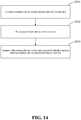
- some embodiments of the present application further correspondingly provide a data calling method, as shown in FIG. 15 .
- FIG. 15 is a schematic diagram of a data calling process according to some embodiments of the present application, including the following steps:
- the above steps S501 to S503 are a data calling process by the second terminal and corresponding to the data calling process shown in FIG. 12 .
- the process of collecting the second motion data of the second user by the second terminal in the step S501 may be similar to the process of collecting the first motion data of the first user by the first terminal in the step S301 in the data storage process shown in FIG. 11 and will not be elaborated by the present application.
- the second motion data herein may be acceleration data and angular velocity data arranged in a chronological order.
- the second terminal may further collect geographical location information of the second terminal, and send the geographical location information to the server, and the server may perform the process of further reducing, through the geographical location information of the second user, the quantity of first motion data for matching in the above data calling process shown in FIG. 11 , thereby improving the matching efficiency and further improving the efficiency of the second terminal obtaining data.
- the second terminal may monitor the operation by the second user on the business data and perform corresponding business. For example, with the business data shown in FIG. 12 , the second terminal may monitor the operation by the second user on the electronic coupon, and assuming that the second user uses the electronic coupon, then the second terminal may send the electronic coupon to a corresponding payer, and so on.
- the present application does not limit how the subsequent steps are specifically implemented.
- the second terminal may further receive data IDs corresponding to business data associated with the matched first motion data and returned by the server, for example, the query interface as shown in FIG. 13b .
- the query interface herein may include a selection interface for the data IDs corresponding to the business data associated with the matched first motion data and each data ID corresponds to an option.
- the second terminal may also monitor the selection operation by the second user on each option in the query interface, and return a data ID selected by the second user to the server so that the server determines the business data to be returned according to the data ID selected by the second user, and then further receives the business data returned by the server.
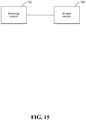
- some embodiments of the present application further correspondingly provide a schematic structural diagram of a data storage device, as shown in FIG. 16 .
- FIG. 16 is a schematic structural diagram of a data storage device according to some embodiments of the present application, including:
- the storage module 702 determines geographical location information of the first user, establishes association relationships among the first motion data, the business data and the geographical location information, and stores the association relationships.
- the receiving module 701 receives motion description information sent by the first user, and determines, from pre-stored pieces of motion data, motion data corresponding to the motion description information as received first motion data.
- the business data includes text, a picture and a URL.
- the storage module 702 determines, from stored geographical location information associated with business data, geographical location information from which the distance to the geographical location information of the first user falls within a specified distance range as adjacent location information, and then determines whether there is motion data whose similarity with the first motion data exceeds a threshold in motion data respectively associated with the pieces of adjacent location information, and if yes, notifies the first user to change the first motion data, or if not, establishes association relationships among the first motion data, the business data and the geographical location information.
- the data storage device may be in a server.
- the server may be a single device or a system consisting of multiple devices.
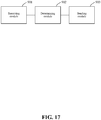
- some embodiments of the present application further correspondingly provide a schematic structural diagram of a data storage device, as shown in FIG. 17 .
- FIG. 17 is a schematic structural diagram of a data storage device according to some embodiments of the present application, including:
- the sending module 802 collects geographical location information of the device, sends the geographical location information of the device, the first motion data and the business data to the server, so that the server establishes association relationships among the first motion data, the business data and the geographical location information and stores the association relationships.
- the data storage device may be in a first terminal.
- the first terminal is a terminal of a first user who provides business data, and the first terminal may be a mobile phone, a tablet computer, a personal computer, a smart wearable device, or the like.
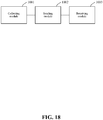
- some embodiments of the present application further correspondingly provide a schematic structural diagram of a data calling device, as shown in FIG. 18 .
- FIG. 18 is a schematic structural diagram of a data calling device according to some embodiments of the present application, including:
- the determining module 902 For every piece of stored first motion data, the determining module 902 performs similarity calculation between the first motion data and the second motion data to determine whether the similarity is higher than a preset threshold, and if yes, determines that the first motion data matches the second motion data, or if not, determines that the first motion data does not match the second motion data.
- the determining module 902 determines geographical location information of the second user, determines, from stored geographical location information respectively associated with pieces of first motion data, geographical location information from which the distance to the geographical location information of the second user falls within a specified distance range as adjacent location information, and determines, from first motion data respectively associated with the pieces of adjacent location information, first motion data that matches the second motion data.
- the sending module 903 sends data IDs of business data associated with the determined pieces of first motion data to the second user, and according to a data ID selected by the second user, returns business data corresponding to the data ID selected by the second user.
- the data calling device may be in a server.
- the server may be a single device or a system consisting of multiple devices.
- some embodiments of the present application further correspondingly provide a schematic structural diagram of a data calling device, as shown in FIG. 19 .
- FIG. 19 is a schematic structural diagram of a data calling device according to some embodiments of the present application, including:
- the determining module 1002 collects geographical location information of the device, sends the geographical location information and the second motion data to the server so that the server determines stored geographical location information, associated with first motion data, from which the distance to the geographical location information of the device falls within a specified distance range as adjacent location information, and determines, from first motion data respectively associated with the pieces of adjacent location information, first motion data that matches the second motion data.
- the receiving module 1003 When receiving multiple data IDs returned by the server and corresponding to business data associated with the first motion data that matches the second motion data, the receiving module 1003 returns to the server a data ID selected by the second user and receives business data determined by the server according to the data ID selected by the second user.
- the data calling device may be in a second terminal.
- the second terminal is a terminal of a second user who needs to obtain business data, and the second terminal may be a mobile phone, a tablet computer, a personal computer, a smart wearable device, or the like.
- some embodiments of the present application further correspondingly provide a server, as shown in FIG. 19 .
- the server includes one or more processors and a memory, wherein the memory stores a program, and configured that the one or more processors perform the following steps:
- some embodiments of the present application further correspondingly provide a first mobile terminal, as shown in FIG. 20 .
- the mobile terminal includes one or more processors and a memory, wherein the memory herein stores a program, and configured that the one or more processors perform the following steps:
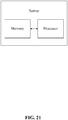
- Some embodiments of the present application further correspondingly provide a server, as shown in FIG. 21 , based on the data storage method shown in FIG. 11 .
- the server includes one or more processors and a memory, wherein the memory stores a program, and configured that the one or more processors perform the following steps:
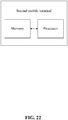
- some embodiments of the present application further correspondingly provide a second mobile terminal, as shown in FIG. 22 .
- the mobile terminal includes one or more processors and a memory, wherein the memory stores a program, and configured that the one or more processors perform the following steps:
- a hardware improvement e.g., an improvement to circuit structures such as diodes, transistors, and switches
- a software improvement an improvement to process flows.
- many of today's process flow improvements may be regarded as direct improvements in hardware circuit structure.
- Designers almost always obtain a corresponding hardware circuit structure by programming an improved process flow into a hardware circuit. Therefore, it cannot be said that the improvement of a process flow cannot be implemented by a hardware entity module.
- a programmable logic device e.g., a field programmable gate array (FPGA)
- FPGA field programmable gate array
- HDL Hardware Description Language
- HDLs such as ABEL (Advanced Boolean Expression Language), AHDL (Altera Hardware Description Language), Confluence, CUPL (Cornell University Programming Language), HDCal, JHDL (Java Hardware Description Language), Lava, Lola, MyHDL, PALASM, and RHDL (Ruby Hardware Description Language); VHDL (Very-High-Speed Integrated Circuit Hardware Description Language) and Verilog are most commonly used at present.
- ABEL Advanced Boolean Expression Language
- AHDL Altera Hardware Description Language
- Confluence CUPL (Cornell University Programming Language)
- HDCal Joint Joint High-Speed Integrated Circuit Hardware Description Language
- JHDL Java Hardware Description Language
- Lava Lava
- Lola MyHDL
- PALASM Phase Change Language
- RHDL Raby Hardware Description Language
- VHDL Very-High-Speed Integrated Circuit Hardware Description Language
- Verilog Verilog
- a controller may be implemented in any suitable manner.
- the controller can take the form of, for example, a (micro)processor or processor, and a computer readable medium storing a computer readable program code (e.g., software or firmware) executable by the (micro)processor, a logic gate, a switch, an application specific integrated circuit (ASIC), a programmable logic controller, and an embedded microcontroller; examples of the controller include, but are not limited to, the following microcontrollers: ARC 625D, Atmel AT91SAM, Microchip PIC18F26K20 and Silicone Labs C8051F320; and a memory controller can also be implemented as part of the memory's control logic.
- the controller may achieve the same function in the form of a logic gate, a switch, an ASIC, a programmable logic controller, an embedded microcontroller or the like by logically programming process steps.
- a controller may therefore be considered as a hardware component, and an apparatus included in the controller and configured to implement various functions may also be considered as a structure within the hardware component. Or even an apparatus for implementing various functions may be considered as both a software module for an implementation method and a structure within a hardware component.
- the systems, apparatuses, modules or units illustrated in the above embodiments may be implemented by a computer chip or an entity, or by a product having a certain function.
- a typical implementation device is a computer.
- the computer may be a personal computer, a laptop computer, a cellular phone, a camera phone, a smart phone, a personal digital assistant, a media player, a navigation device, an email device, a game console, a tablet computer, a wearable device or a combination of any of these devices.
- embodiments of the present invention may be provided as a method, system, or computer program product. Accordingly, the present invention may take the form of an entirely hardware embodiment, an entirely software embodiment, or a combination of software and hardware. Moreover, the present invention may take the form of a computer program product implemented on one or more computer usable storage media (including, but not limited to, disk memories, CD-ROMs and optical memories) comprising computer usable program codes.
- a computer usable storage media including, but not limited to, disk memories, CD-ROMs and optical memories
- These computer program instructions may be provided to a processor of a general-purpose computer, a special-purpose computer, an embedded processor, or other programmable data processing devices to produce a machine such that instructions are executed by the processor of the computer or other programmable data processing devices to generate an apparatus for implementing the functions specified in one or more processes in the flowcharts and/or one or more blocks in the block diagrams.
- These computer program instructions may also be stored in a computer readable memory that may direct a computer or other programmable data processing devices to function in a particular manner such that the instructions stored in the computer readable memory produce an article of manufacture including an instruction means which implements functions specified in one or more processes in the flowcharts and/or one or more blocks in the block diagrams.
- These computer program instructions may also be loaded onto a computer or other programmable data processing devices to cause a series of operating steps to be performed on the computer or other programmable devices to produce computer-implemented processing, and the instructions executed on a computer or other programmable devices provide steps for implementing the functions specified in one or more processes in the flowcharts and/or one or more blocks in the block diagrams.
- a computing device includes one or more processors (CPUs), input/output interfaces, network interfaces, and memories.
- processors CPUs
- input/output interfaces network interfaces
- memories volatile and non-volatile memories
- the memory may include a non-permanent memory, a random access memory (RAM), and/or a nonvolatile memory, such as a read-only memory (ROM) or a flash RAM, in computer-readable media.
- RAM random access memory
- ROM read-only memory
- flash RAM flash random access memory
- Computer readable media include both permanent and non-persistent, removable and non-removable media and may store information by any method or technology.
- the information may be a computer readable instruction, a data structure, a module of a program or other data.
- Examples of computer storage media include, but are not limited to, a phase change memory (PRAM), a static random access memory (SRAM), a dynamic random access memory (DRAM), other types of random access memory (RAM), a read only memory (ROM), an electrically erasable programmable read-only memory (EEPROM), a flash memory or other memory technologies, a read-only optical disk read-only memory (CD-ROM), a digital versatile disc (DVD) or other optical storages, a magnetic tape cassette, a magnetic disk storage or other magnetic storage devices or any other non-transmission medium for storing information that may be accessed by computing devices.
- the computer readable media do not include transitory media, such as modulated data signals and carriers.
- the embodiments of the present application may be provided as a method, a system, or a computer program product. Accordingly, this application may take the form of an entirely hardware embodiment, an entirely software embodiment, or an embodiment combining software and hardware. Moreover, the present application may take the form of a computer program product implemented on one or more computer usable storage media (including, but not limited to, disk memories, CD-ROMs and optical memories) comprising computer usable program codes.
- the present application may be described in the general context of computer-executable instructions executed by a computer, such as program modules.
- the program modules include routines, programs, objects, components, data structures, and the like that perform particular tasks or implement particular abstract data types.
- the present application may also be practiced in distributed computing environments where tasks are performed by remote processing devices that are connected through a communication network.
- program modules may be in both local and remote computer storage media including storage devices.
Landscapes
- Engineering & Computer Science (AREA)
- Theoretical Computer Science (AREA)
- Databases & Information Systems (AREA)
- Physics & Mathematics (AREA)
- General Physics & Mathematics (AREA)
- General Engineering & Computer Science (AREA)
- Data Mining & Analysis (AREA)
- Software Systems (AREA)
- Business, Economics & Management (AREA)
- Signal Processing (AREA)
- Computer Networks & Wireless Communication (AREA)
- Accounting & Taxation (AREA)
- Development Economics (AREA)
- Finance (AREA)
- Strategic Management (AREA)
- Human Computer Interaction (AREA)
- Marketing (AREA)
- Economics (AREA)
- General Business, Economics & Management (AREA)
- Entrepreneurship & Innovation (AREA)
- Game Theory and Decision Science (AREA)
- Remote Sensing (AREA)
- Library & Information Science (AREA)
- Evolutionary Biology (AREA)
- Evolutionary Computation (AREA)
- Computer Vision & Pattern Recognition (AREA)
- Bioinformatics & Computational Biology (AREA)
- Bioinformatics & Cheminformatics (AREA)
- Artificial Intelligence (AREA)
- Life Sciences & Earth Sciences (AREA)
- Information Transfer Between Computers (AREA)
- Telephonic Communication Services (AREA)
- Management, Administration, Business Operations System, And Electronic Commerce (AREA)
- Information Retrieval, Db Structures And Fs Structures Therefor (AREA)
Applications Claiming Priority (2)
| Application Number | Priority Date | Filing Date | Title |
|---|---|---|---|
| CN201710443328.4A CN107423358B (zh) | 2017-06-13 | 2017-06-13 | 一种数据存储及调用方法及装置 |
| PCT/CN2018/090276 WO2018228271A1 (fr) | 2017-06-13 | 2018-06-07 | Procédé et dispositif d'invocation et de stockage de données |
Publications (2)
| Publication Number | Publication Date |
|---|---|
| EP3540616A1 true EP3540616A1 (fr) | 2019-09-18 |
| EP3540616A4 EP3540616A4 (fr) | 2020-03-18 |
Family
ID=60428194
Family Applications (1)
| Application Number | Title | Priority Date | Filing Date |
|---|---|---|---|
| EP18818895.7A Withdrawn EP3540616A4 (fr) | 2017-06-13 | 2018-06-07 | Procédé et dispositif d'invocation et de stockage de données |
Country Status (9)
| Country | Link |
|---|---|
| US (2) | US11386166B2 (fr) |
| EP (1) | EP3540616A4 (fr) |
| JP (1) | JP6886516B2 (fr) |
| KR (1) | KR102311455B1 (fr) |
| CN (1) | CN107423358B (fr) |
| MY (1) | MY196193A (fr) |
| PH (1) | PH12019501345A1 (fr) |
| TW (1) | TWI713825B (fr) |
| WO (1) | WO2018228271A1 (fr) |
Families Citing this family (6)
| Publication number | Priority date | Publication date | Assignee | Title |
|---|---|---|---|---|
| CN107423358B (zh) * | 2017-06-13 | 2020-08-07 | 阿里巴巴集团控股有限公司 | 一种数据存储及调用方法及装置 |
| CN109976773B (zh) * | 2019-04-04 | 2023-01-10 | 网易(杭州)网络有限公司 | 游戏测试环境的部署方法和装置 |
| CN110012108A (zh) * | 2019-04-15 | 2019-07-12 | 深圳市网心科技有限公司 | 数据副本存储方法、下载方法、云存储系统及相关装置 |
| CN110888871B (zh) * | 2019-10-12 | 2023-09-19 | 中国平安财产保险股份有限公司 | 基于嵌套对象的数据存储方法、装置及计算机设备 |
| TWI820845B (zh) * | 2022-08-03 | 2023-11-01 | 中國信託商業銀行股份有限公司 | 訓練資料標註方法及其運算裝置、文章標註模型建立方法及其運算裝置,以及文章標註方法及其運算裝置 |
| JP7780233B1 (ja) | 2025-05-30 | 2025-12-04 | 株式会社LinQ | 情報処理装置、情報処理プログラム、情報処理方法 |
Family Cites Families (23)
| Publication number | Priority date | Publication date | Assignee | Title |
|---|---|---|---|---|
| US8103445B2 (en) * | 2005-04-21 | 2012-01-24 | Microsoft Corporation | Dynamic map rendering as a function of a user parameter |
| CN101625699B (zh) * | 2009-07-28 | 2013-01-09 | 大连新中连软件集团有限公司 | 基于业务组件化的应用软件进行业务控制的方法和系统 |
| FI20100056A0 (fi) * | 2010-02-12 | 2010-02-12 | Notava Oy | Menetelmä ja palvelinjärjestelmä hallittuun verkonvalintaan ja dataliikenteen uudelleenohjaukseen |
| WO2011106797A1 (fr) * | 2010-02-28 | 2011-09-01 | Osterhout Group, Inc. | Déclenchement de projection par un repère externe dans des lunettes intégrales |
| US9418705B2 (en) * | 2010-08-26 | 2016-08-16 | Blast Motion Inc. | Sensor and media event detection system |
| US8601000B1 (en) * | 2011-06-27 | 2013-12-03 | Amazon Technologies, Inc. | System and method for conditionally updating an item with attribute granularity |
| US8595267B2 (en) * | 2011-06-27 | 2013-11-26 | Amazon Technologies, Inc. | System and method for implementing a scalable data storage service |
| US8572091B1 (en) * | 2011-06-27 | 2013-10-29 | Amazon Technologies, Inc. | System and method for partitioning and indexing table data using a composite primary key |
| TW201401078A (zh) * | 2012-06-27 | 2014-01-01 | Quanta Comp Inc | 互動系統 |
| KR20150032101A (ko) * | 2013-09-17 | 2015-03-25 | 삼성전자주식회사 | 영상표시장치 및 영상표시방법 |
| CN104516774A (zh) * | 2013-09-30 | 2015-04-15 | 华为技术有限公司 | 一种远程应用的操作方法及终端、服务器 |
| US20150120553A1 (en) * | 2013-10-31 | 2015-04-30 | Tencent Technology (Shenzhen) Company Limited | Method and system for making mobile payments based on user gesture detection |
| JP6386331B2 (ja) * | 2013-11-05 | 2018-09-05 | 株式会社Moff | 動作検出システム、動作検出装置、移動通信端末及びプログラム |
| CN104679227A (zh) * | 2013-12-02 | 2015-06-03 | 创世界科技有限公司 | 一种产品展示实现方法 |
| US9607319B2 (en) * | 2013-12-30 | 2017-03-28 | Adtile Technologies, Inc. | Motion and gesture-based mobile advertising activation |
| JP6263259B2 (ja) * | 2014-05-19 | 2018-01-17 | 株式会社Moff | 配信システム、配信方法及び配信装置 |
| CN105117143B (zh) * | 2015-07-28 | 2020-07-03 | Oppo广东移动通信有限公司 | 一种信息展示方法、智能手表、服务器以及系统 |
| CN105184647B (zh) * | 2015-08-25 | 2018-12-21 | 王子瑜 | 交易流程的还原方法及系统 |
| CN106603604A (zh) * | 2015-10-16 | 2017-04-26 | 阿里巴巴集团控股有限公司 | 触发事务处理动作的方法及装置 |
| JP2017078915A (ja) * | 2015-10-19 | 2017-04-27 | 富士通株式会社 | 情報特定装置、方法、及びプログラム |
| US20170228138A1 (en) * | 2016-02-08 | 2017-08-10 | University Of Ontario Institute Of Technology | System and method for spatial interaction for viewing and manipulating off-screen content |
| CN106649574A (zh) * | 2016-11-16 | 2017-05-10 | 珠海市魅族科技有限公司 | 商户信息获取方法及装置 |
| CN107423358B (zh) * | 2017-06-13 | 2020-08-07 | 阿里巴巴集团控股有限公司 | 一种数据存储及调用方法及装置 |
-
2017
- 2017-06-13 CN CN201710443328.4A patent/CN107423358B/zh active Active
-
2018
- 2018-03-14 TW TW107108575A patent/TWI713825B/zh not_active IP Right Cessation
- 2018-06-07 MY MYPI2019003359A patent/MY196193A/en unknown
- 2018-06-07 JP JP2019530799A patent/JP6886516B2/ja active Active
- 2018-06-07 EP EP18818895.7A patent/EP3540616A4/fr not_active Withdrawn
- 2018-06-07 WO PCT/CN2018/090276 patent/WO2018228271A1/fr not_active Ceased
- 2018-06-07 KR KR1020197017082A patent/KR102311455B1/ko active Active
-
2019
- 2019-06-12 US US16/438,917 patent/US11386166B2/en active Active
- 2019-06-13 PH PH12019501345A patent/PH12019501345A1/en unknown
-
2020
- 2020-01-28 US US16/774,629 patent/US11334632B2/en active Active
Also Published As
| Publication number | Publication date |
|---|---|
| US20200167388A1 (en) | 2020-05-28 |
| CN107423358A (zh) | 2017-12-01 |
| US11334632B2 (en) | 2022-05-17 |
| WO2018228271A1 (fr) | 2018-12-20 |
| JP6886516B2 (ja) | 2021-06-16 |
| TW201903564A (zh) | 2019-01-16 |
| EP3540616A4 (fr) | 2020-03-18 |
| KR102311455B1 (ko) | 2021-10-14 |
| PH12019501345A1 (en) | 2019-10-28 |
| TWI713825B (zh) | 2020-12-21 |
| JP2020509444A (ja) | 2020-03-26 |
| US20190294632A1 (en) | 2019-09-26 |
| MY196193A (en) | 2023-03-22 |
| KR20190098965A (ko) | 2019-08-23 |
| US11386166B2 (en) | 2022-07-12 |
| CN107423358B (zh) | 2020-08-07 |
Similar Documents
| Publication | Publication Date | Title |
|---|---|---|
| US11334632B2 (en) | Data storage and calling methods and devices | |
| US10353975B2 (en) | Terminal, server and event suggesting methods thereof | |
| US9069865B2 (en) | Geocoding personal information | |
| US9363634B1 (en) | Providing context-relevant information to users | |
| EP2688014A1 (fr) | Procédé et appareil permettant de recommander des textes | |
| CN105446994A (zh) | 业务推荐方法和具有智能助手的装置 | |
| US8751426B2 (en) | Apparatus and method for generating context-aware information using local service information | |
| KR20190046960A (ko) | 통지 메시지를 연관시키는 방법, 장치 및 이동 단말 | |
| CN108958634A (zh) | 快递信息获取方法、装置、移动终端以及存储介质 | |
| CA2936090C (fr) | Systemes et procedes pour une identification contextuelle d'appelant | |
| CN114779914B (zh) | 电池电量提醒方法及装置 | |
| US11455178B2 (en) | Method for providing routine to determine a state of an electronic device and electronic device supporting same | |
| WO2019071607A1 (fr) | Procédé et dispositif de traitement d'informations vocales, et terminal | |
| EP3779819A1 (fr) | Procédé de traitement d'informations et terminal | |
| CN113139029A (zh) | 处理方法、移动终端及存储介质 | |
| CN106502639A (zh) | 一种数据刷新显示装置及方法 | |
| HK1247339B (zh) | 一种数据存储及调用方法及装置 | |
| HK1247339A1 (zh) | 一种数据存储及调用方法及装置 | |
| KR20140045642A (ko) | 주소록 정보 서비스 시스템, 그 시스템에서의 주소록 정보 서비스를 위한 방법 및 장치 | |
| CN121581950A (zh) | 对象推荐方法、装置、电子设备、存储介质及程序产品 |
Legal Events
| Date | Code | Title | Description |
|---|---|---|---|
| STAA | Information on the status of an ep patent application or granted ep patent |
Free format text: STATUS: THE INTERNATIONAL PUBLICATION HAS BEEN MADE |
|
| PUAI | Public reference made under article 153(3) epc to a published international application that has entered the european phase |
Free format text: ORIGINAL CODE: 0009012 |
|
| STAA | Information on the status of an ep patent application or granted ep patent |
Free format text: STATUS: REQUEST FOR EXAMINATION WAS MADE |
|
| 17P | Request for examination filed |
Effective date: 20190613 |
|
| AK | Designated contracting states |
Kind code of ref document: A1 Designated state(s): AL AT BE BG CH CY CZ DE DK EE ES FI FR GB GR HR HU IE IS IT LI LT LU LV MC MK MT NL NO PL PT RO RS SE SI SK SM TR |
|
| AX | Request for extension of the european patent |
Extension state: BA ME |
|
| A4 | Supplementary search report drawn up and despatched |
Effective date: 20200213 |
|
| RIC1 | Information provided on ipc code assigned before grant |
Ipc: G06F 3/01 20060101ALI20200207BHEP Ipc: G06F 16/955 20190101AFI20200207BHEP Ipc: G06Q 30/02 20120101ALI20200207BHEP |
|
| DAV | Request for validation of the european patent (deleted) | ||
| DAX | Request for extension of the european patent (deleted) | ||
| RAP1 | Party data changed (applicant data changed or rights of an application transferred) |
Owner name: ADVANCED NEW TECHNOLOGIES CO., LTD. |
|
| STAA | Information on the status of an ep patent application or granted ep patent |
Free format text: STATUS: EXAMINATION IS IN PROGRESS |
|
| 17Q | First examination report despatched |
Effective date: 20210209 |
|
| STAA | Information on the status of an ep patent application or granted ep patent |
Free format text: STATUS: THE APPLICATION HAS BEEN WITHDRAWN |
|
| 18W | Application withdrawn |
Effective date: 20230103 |