EP3542177B1 - Détection d'un emplacement de signal de référence de positionnement à bande étroite (nprs) dans une trame radio - Google Patents
Détection d'un emplacement de signal de référence de positionnement à bande étroite (nprs) dans une trame radio Download PDFInfo
- Publication number
- EP3542177B1 EP3542177B1 EP17871565.2A EP17871565A EP3542177B1 EP 3542177 B1 EP3542177 B1 EP 3542177B1 EP 17871565 A EP17871565 A EP 17871565A EP 3542177 B1 EP3542177 B1 EP 3542177B1
- Authority
- EP
- European Patent Office
- Prior art keywords
- nprs
- cell
- neighbour cell
- indication
- timing offset
- Prior art date
- Legal status (The legal status is an assumption and is not a legal conclusion. Google has not performed a legal analysis and makes no representation as to the accuracy of the status listed.)
- Active
Links
Images





Classifications
-
- G—PHYSICS
- G01—MEASURING; TESTING
- G01S—RADIO DIRECTION-FINDING; RADIO NAVIGATION; DETERMINING DISTANCE OR VELOCITY BY USE OF RADIO WAVES; LOCATING OR PRESENCE-DETECTING BY USE OF THE REFLECTION OR RERADIATION OF RADIO WAVES; ANALOGOUS ARRANGEMENTS USING OTHER WAVES
- G01S5/00—Position-fixing by co-ordinating two or more direction or position line determinations; Position-fixing by co-ordinating two or more distance determinations
- G01S5/02—Position-fixing by co-ordinating two or more direction or position line determinations; Position-fixing by co-ordinating two or more distance determinations using radio waves
- G01S5/0205—Details
- G01S5/0236—Assistance data, e.g. base station almanac
-
- G—PHYSICS
- G01—MEASURING; TESTING
- G01S—RADIO DIRECTION-FINDING; RADIO NAVIGATION; DETERMINING DISTANCE OR VELOCITY BY USE OF RADIO WAVES; LOCATING OR PRESENCE-DETECTING BY USE OF THE REFLECTION OR RERADIATION OF RADIO WAVES; ANALOGOUS ARRANGEMENTS USING OTHER WAVES
- G01S1/00—Beacons or beacon systems transmitting signals having a characteristic or characteristics capable of being detected by non-directional receivers and defining directions, positions, or position lines fixed relatively to the beacon transmitters; Receivers co-operating therewith
- G01S1/02—Beacons or beacon systems transmitting signals having a characteristic or characteristics capable of being detected by non-directional receivers and defining directions, positions, or position lines fixed relatively to the beacon transmitters; Receivers co-operating therewith using radio waves
- G01S1/08—Systems for determining direction or position line
- G01S1/20—Systems for determining direction or position line using a comparison of transit time of synchronised signals transmitted from non-directional antennas or antenna systems spaced apart, i.e. path-difference systems
-
- G—PHYSICS
- G01—MEASURING; TESTING
- G01S—RADIO DIRECTION-FINDING; RADIO NAVIGATION; DETERMINING DISTANCE OR VELOCITY BY USE OF RADIO WAVES; LOCATING OR PRESENCE-DETECTING BY USE OF THE REFLECTION OR RERADIATION OF RADIO WAVES; ANALOGOUS ARRANGEMENTS USING OTHER WAVES
- G01S5/00—Position-fixing by co-ordinating two or more direction or position line determinations; Position-fixing by co-ordinating two or more distance determinations
- G01S5/02—Position-fixing by co-ordinating two or more direction or position line determinations; Position-fixing by co-ordinating two or more distance determinations using radio waves
- G01S5/0205—Details
- G01S5/021—Calibration, monitoring or correction
-
- G—PHYSICS
- G01—MEASURING; TESTING
- G01S—RADIO DIRECTION-FINDING; RADIO NAVIGATION; DETERMINING DISTANCE OR VELOCITY BY USE OF RADIO WAVES; LOCATING OR PRESENCE-DETECTING BY USE OF THE REFLECTION OR RERADIATION OF RADIO WAVES; ANALOGOUS ARRANGEMENTS USING OTHER WAVES
- G01S5/00—Position-fixing by co-ordinating two or more direction or position line determinations; Position-fixing by co-ordinating two or more distance determinations
- G01S5/02—Position-fixing by co-ordinating two or more direction or position line determinations; Position-fixing by co-ordinating two or more distance determinations using radio waves
- G01S5/0205—Details
- G01S5/0226—Transmitters
-
- H—ELECTRICITY
- H04—ELECTRIC COMMUNICATION TECHNIQUE
- H04W—WIRELESS COMMUNICATION NETWORKS
- H04W64/00—Locating users or terminals or network equipment for network management purposes, e.g. mobility management
-
- G—PHYSICS
- G01—MEASURING; TESTING
- G01S—RADIO DIRECTION-FINDING; RADIO NAVIGATION; DETERMINING DISTANCE OR VELOCITY BY USE OF RADIO WAVES; LOCATING OR PRESENCE-DETECTING BY USE OF THE REFLECTION OR RERADIATION OF RADIO WAVES; ANALOGOUS ARRANGEMENTS USING OTHER WAVES
- G01S5/00—Position-fixing by co-ordinating two or more direction or position line determinations; Position-fixing by co-ordinating two or more distance determinations
- G01S5/0009—Transmission of position information to remote stations
- G01S5/0018—Transmission from mobile station to base station
- G01S5/0036—Transmission from mobile station to base station of measured values, i.e. measurement on mobile and position calculation on base station
-
- H—ELECTRICITY
- H04—ELECTRIC COMMUNICATION TECHNIQUE
- H04W—WIRELESS COMMUNICATION NETWORKS
- H04W24/00—Supervisory, monitoring or testing arrangements
Definitions
- Embodiments herein relate to wireless communication systems, such as cellular networks. More specifically embodiments of the disclosure relate to a target device, a location server, a network node and methods performed therein.
- the Internet of Things is a vision for the future world where everything that can benefit from a connection will be connected.
- Cellular technologies are being developed or evolved to play an indispensable role in the loT world, particularly the machine type communication (MTC).
- MTC is characterized by lower demands on data rates than for example mobile broadband, but with higher requirements on e.g. low cost device design, better coverage, and ability to operate for years on batteries without charging or replacing the batteries.
- 3GPP has standardized Narrowband loT (NB-loT) in Release 13 that has a system bandwidth of 180 kHz and targets improved coverage, long battery life, low complexity communication design, and network capacity that is sufficient for supporting a massive number of devices.
- NB-loT Narrowband loT
- the enhancement will be designed to maintain the ultra-low cost and complexity of the Rel-13 NB-IoT UE where appropriate, as well as the coverage and capacity of the NB-IoT network.
- Positioning in LTE is supported by the architecture in Figure 1 , with direct interactions between a UE and a location server (E-SMLC) via the LTE Positioning Protocol (LPP). Moreover, there are also interactions between the location server and the eNodeB via the LPPa protocol, to some extent supported by interactions between the eNodeB and the UE via the Radio Resource Control (RRC) protocol.
- E-SMLC location server
- LPPa LTE Positioning Protocol
- RRC Radio Resource Control
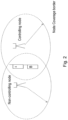
- a UE A is served/controlled by a serving/controlling node.
- the UE A may also detect a signal from one or more non-serving/non-controlling nodes.
- the UE estimates the TOA of a signal from one node, possibly subject to an interfering signal from another node within coverage or communication range.
- significant interfering signals from other nodes may be avoided by employing a muting scheme where nodes alternate transmission and muting according to a schedule.
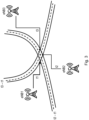
- the Observed Time Difference Of Arrival (OTDOA) method is a UEassisted method, in which the UE measures the time of arrival (TOA) of specific positioning reference signals (PRS) from multiple cells (eNBs), and computes the relative differences between the TOAs for each cell and the TOA for a reference cell.
- TOA time of arrival
- PRS specific positioning reference signals
- RSTDs reference signal time differences
- Figure 3 illustrates the multilateration in OTDOA while considering eNB1 as the reference cell. eNB2 and eNB3 are referred to as neighbouring cells.
- the positioning reference signals may be transmitted in the same carrier which the UE is currently operating on or carriers the UE is configured to use for communication, or at a different carrier.
- the UE can inform the serving eNB in order to obtain a measurement gap configuration, where the UE will leave a serving carrier to search for a positioning reference signal at a different carrier.
- the interactions with the serving eNB can be via the Radio Resource Control (RRC) protocol for example.
- RRC Radio Resource Control
- the UE informs the serving eNB about the configured transmission pattern with which the positioning reference signal is being transmitted (typically periodic) and the frequency carrier.
- the downlink (DL) based positioning OTDOA is supported for Rel.14 positioning of NB-loT, since the overhead of positioning reference signal does not need to scale with the number of UEs requiring positioning and thus it is a scalable solution.
- a radio frame a.k.a. system frame (numbered with SFN) has 10 ms length and the corresponding SFN can be an integer between 0 and 1023.
- a subframe has 1 ms length and the corresponding subframe number is an integer between 0 and 9.
- One radio frame comprises 10 subframes.
- Each subframe comprises 2 slots.
- the device In the existing solution for legacy LTE, the device generally does not know the System Frame Number (SFN) or subframe number of the neighbour cells, but only the serving cell SFN or subframe number. To determine the SFN or subframe number of a neighbour cell the UE needs to read the system information of the neighbour cell, which is time and resource consuming but also may not be possible since the positioning reference signals from neighbour cells may be quite weak.
- SFN System Frame Number
- the UE needs to read the system information of the neighbour cell, which is time and resource consuming but also may not be possible since the positioning reference signals from neighbour cells may be quite weak.
- the device may not be able to determine the time resources with NPRS transmitted by neighbour cells, due to a large misalignment between different cells, or even determine the NPRS sequence if it is to be based on SFN or subframe number. This will make it impossible for the device to perform the positioning reference signal measurements for many reference-neighbour cell pairs with NB-IoT.
- the object is achieved by a method, performed by a target device, for enabling detection of a narrowband positioning reference signal (NPRS) location in a radio frame according to claim 1.
- NPRS narrowband positioning reference signal
- the object is achieved by a method, performed by a location server, for enabling detection of a NPRS location in a radio frame.
- the location server may obtain, from a network node, assistance data related to a neighbour cell in a reference and neighbour cell list.
- the assistance data comprises timing offset information for the neighbour cell.
- the location server may transmit, to the target device, the assistance data related to the reference and neighbour cell list.
- the location server may receive, from the target device, a measured PRS. frame according to claim 4.
- the object is achieved by a method, performed by a network node, for enabling detection of a NPRS location in a radio frame, according to claim 7.
- the object is achieved by a target device, for enabling detection of a NPRS location in a radio frame according to claim 8.
- the object is achieved by a location server, for enabling detection of a NPRS location in a radio frame according to claim 9.
- the object is achieved by a network node, for enabling detection of a NPRS location in a radio frame according to claim 10.
- the embodiments herein may allow the target device, such as an NB-loT device, to successfully detect the time, such as e.g. a location in a time frame, of NPRS subframes in different cells. Thereby ensuring that the target device can perform RSTD measurements. Hence, the risk that the NB-IoT device is not able to detect the time of NPRS subframe in different cells and will fail to perform RSTD measurements may be reduced.
- the embodiments herein may further be adapted according to the newly agreed NPRS configuration which has three different parts.
- Embodiments herein relate to an exchange of messages/indications between a target device, such as e.g. NB-loT, and a network node in order to retrieve a NPRS location in a radio frame based on a reported timing offset for performing positioning reference signal measurements, from which for example the reference signal time difference (RSTD) may be determined.
- RSTD reference signal time difference
- This may further be complemented with signaling between a positioning node, or location server, and a radio network node transmitting NPRS.
- the timing offset may comprise a subframe offset or a system frame number (SFN) offset, or both.
- the target device may for example be a wireless communication device, a mobile station, a station (STA), a user equipment (UE) and/or a NB-loT device.
- STA station
- UE user equipment
- the network node may for example be a radio network node such as a radio access node e.g., a Wi-Fi access point or a radio base station (RBS), which in some networks may also be denoted, for example, a "NodeB” or "eNodeB".
- a radio access node e.g., a Wi-Fi access point or a radio base station (RBS)
- RBS radio base station
- NPRS configuration for NB-IoT devices
- the timing offset comprises a subframe offset
- the definition of the subframe offset may be different for each embodiment. This aspect is described in greater detail below with respect to Figures 8 to 10 .
- the target device may further require to receive the SFN offset for all the three different types of NPRS configuration.
- the SFN offset may define an offset in system frame number between a particular cell and a reference or serving cell.
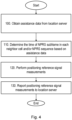
- Embodiments herein relate to a target device, a location server, a network node and methods therein, see Figure 4 , Figure 5 , Figure 6 , Figure 11 , Figure 12 and Figure 13 . Dashed lines in the figures indicate that these boxes are optional.
- a first aspect of embodiments relating to a method, performed by a target device i.e. a wireless device which is the subject of a positioning method
- a target device i.e. a wireless device which is the subject of a positioning method
- the method comprises the following actions.
- the target device obtains, from the location server, assistance data, which comprise NPRS configuration and timing offset information related to each cell within a reference and neighbour cell list.
- the timing offset information may comprise, e.g., SFN for a cell; SFN offset for a cell with respect to a reference time or another cell e.g. reference or serving cell; and comprises subframe offset for a cell with respect to a reference time of another cell e.g. reference or serving cell; it may comprise an indication whether for one, some, or all cells the timing offset information is the same as or different than that of a reference or serving cell.
- neighbour cells may be intrafrequency cells.
- the obtained assistance data such as e.g. the timing offset information is used by the target device to determine the time of NPRS subframe in each neighbour cell and/or NPRS sequence.
- Action 120 The target device performs positioning reference signal measurements based on the determined time of the NPRS subframe.
- Action 130 The target device reports the positioning reference signal measurements to the location
- the assistance information comprises NPRS configuration information which comprises an indication of the subframes in which NPRSs are transmitted in the neighbour cells, and wherein the indication of subframes comprises a bitmap, where each bit of the bit map corresponds to a subframe, and indicates whether the corresponding subframe contains an NPRS or not.
- the positioning reference signal measurements may be represented by a Reference Signal Time Difference (RSTD) in the report to the location server.
- RSTD Reference Signal Time Difference
- a second aspect of embodiments relating to a method, performed by a location server, for enabling detection of a NPRS location in a radio frame by a target device, will now be described with reference to the flowchart depicted in Figure 5 .
- the method comprises the following actions, which actions may be taken in any suitable order.
- the location server obtains, from a network node, timing offset information related to a neighbour cell (e.g. a cell served by the network node) to be included in assistance data to be sent to a target device.
- the neighbour cell belongs to a reference and neighbour cell list.
- the timing offset information may comprise one or more of: SFN for the neighbour cell; SFN offset for the neighbour cell with respect to a reference time or another cell e.g. reference or serving cell; it comprises the subframe offset for the neighbour cell with respect to a reference time of another cell e.g. reference or serving cell.
- the location server sends the assistance data, which comprises the timing offset information together with other NPRS configuration of each reference and neighbour cell in the reference and neighbour cell list, to the target device.
- this assistance data may be utilized by the target device to determine an NPRS location in a radio frame for the neighbour cell, and to measure the PRS transmitted by the network node.
- Action 220 The location server receives positioning reference signal measurements from the target device.
- the assistance information comprises NPRS configuration information which comprises an indication of the subframes in which NPRSs are transmitted in the neighbour cells, and wherein the indication of subframes comprises a bitmap, where each bit of the bit map corresponds to a subframe, and indicates whether the corresponding subframe contains an NPRS or not.
- the positioning reference signal measurements may be represented by RSTDs in the measurement reports.
- RSTDs in the measurement reports.
- a third aspect of embodiments relating to a method, performed by the network node, for enabling detection of a NPRS location in a radio frame by a target device, will now be described with reference to the flowchart depicted in Figure 6 .
- the method comprises the following actions.
- Action 300 The network node receives a request from a location server for assistance data related to a cell served by the network node.
- the network node transmits to the location server, the requested assistance data for the cell served by the network node.
- the assistance data comprises timing offset information, for example, SFN for the cell served by the network node; SFN offset for the cell with respect to a reference time or another cell e.g. reference or serving cell; it comprises subframe offset for the cell with respect to a reference time of another cell e.g. reference or serving cell.
- the assistance data may then be transmitted by the location server to the target device, to enable the target device to determine the NPRS location for the cell served by the network node.
- the assistance information comprises NPRS configuration information which comprises an indication of the subframes in which NPRSs are transmitted in the neighbour cell, and wherein the indication of subframes comprises a bitmap, where each bit of the bit map corresponds to a subframe, and indicates whether the corresponding subframe contains an NPRS or not.
- subframe offset may be different for each part defined in the agreement, therefore here this definition is explained explicit to each part and compared with the legacy LTE case, in which this information was not required. Hence, in the following the subframe offset definition is explicitly discussed for each part of the agreement and compared with the legacy scenario.
- the OTDOA assistance data further relates to positioningonly TPs or other radio nodes which may not be associated with any cell and/or may not transmit system information but may still transmit positioning signals, such as e.g., NPRS, one or more of the following solutions may be implemented:
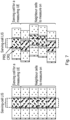
- the maximum difference between the transmitted PRS positioning occasions cannot exceed half a subframe, which is less than 1 ms. Therefore even in the case where an ideal alignment is not considered, which is shown in the left picture in Figure 7 , it is still possible for the target device to determine the PRS subframe in both the reference cell and in the neighbour cells.
- the NPRS may be sent as a fixed length bitmap indicating subframes which are not NB-loT DL subframes (also referred to as invalid DL subframes). While the target device is able to derive the subframes in which the NPRS is transmitted from such a bitmap, it is not possible for the target device to know the subframe offset between the two cells.
- the misalignment of subframes may not be in the scale of less than 1 ms, but may actually be 16 ms, which is an unneglectable value in terms of NPRS determination.
- the location server may send the subframe number and/or SFN of each cell along with the list of reference and neighbour cells.
- the offset between the subframe numbers or SFNs of each cell in comparison to a reference cell may be reported to the target device. As the target device has the subframe number and SFN of the serving cell, one embodiment may be to consider that the reference cell in this context may be the serving cell.
- the NPRS is sent in the diagonally striped blocks in each PRS occasion for the reference cell in the upper line and for a neighbour cell in the lower line.
- the subframe offset is identified in the same figure as the time difference between the NPRS sent for the reference cell and the neighbour cell. Once the subframe offset is reported to the target device, the same value may be used for all PRS occasions.
- Part B NPRS configuration may be defined as follows:
- subframe offset may be considered to be reported for a given periodicity, this may however still not fix the issue with SFN or subframe non alignment.
- the location server may send the SFN or subframe number of each cell along with the list of reference and neighbour cells to the target device.
- the offset between the SFN or subframe numbers of each cell in comparison to a reference cell may be reported to the target device. Since the target device has the SFN and subframe number of the serving cell, one embodiment may be to consider that the reference cell in this context would be the serving cell.
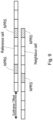
- the NPRS is sent in the diagonally striped blocks for the first cell shown in the upper line, such as e.g. the reference cell, while NPRS is sent in the vertically striped blocks in a neighbour cell shown in the lower line.
- the starting subframe offset may be reported to the target device (i.e. the subframe offset of an initial NPRS occasion)
- one or more of the subframe number or SFN offset may also be reported to the target device according to the figure 9 .
- the same value may be used in all PRS occasions.
- Part C is a combination of Part A and Part B.
- a cell may be configured according to both Part A and Part B, with NPRS transmissions occurring in a particular subframe if one or both of the Part A and Part B configurations indicates so.
- each fixed-size bitmap i.e. as defined above for Part A
- the target device in Part C is not aware of the SFN or subframe number offset between the cells.
- the value of the misalignment may herein also not be unneglectable, but may be at least 16 times more than what is possible in LTE.
- the location server may send one or more of the SFN and the subframe number of each cell along with the list of reference and neighbour cells to the target device.
- one or more of the offsets between the SFN and the subframe number of each cell in comparison to a reference cell may be reported to the target device. Since the target device may have the SFN and subframe number of the serving cell, one embodiment may be to consider that the reference cell in this context may be the serving cell.
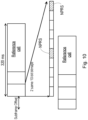
- Figure 10 exemplifies the SFN or subframe number offset for the Part C NPRS configuration.
- the NPRS are sent in some subframes included in the shaded blocks for the reference cell, while other bitmap configurations are used for the neighbour cell in the lower line. Once the SFN or subframe number offset is reported to the target device, the same value can be used in all PRS occasions.
- the description has focused on one single PRS configuration.
- the target device may receive more than one PRS configuration.
- the target device may be configured with multiple PRS configurations, but only one set or piece of timing offset information for a specific entity, such as e.g a node, a cell, a transmission point, etc, which implies that the set or piece of timing offset information may be considered or indicated as applicable to all PRS configurations (e.g., together with pre-configured offsets).
- the offset may be based on the type of the LTE narrowband technique that the PRS configuration is associated with.
- one of the PRS configurations may be utilized for NB-IoT transmissions, and another of the PRS configurations may relate to LTE or narrowband versions of LTE with specific focus on bandwidth reduced low complexity (BL) devices, possibly also with coverage extension (CE) components such as repetitions of signals and data.
- BL bandwidth reduced low complexity
- CE coverage extension
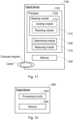
- FIG 11 is a schematic illustration of a target device 1100 according to embodiments of the disclosure.
- the target device 1100 comprises a processor 1102, and memory 1104.
- Embodiments described herein may be implemented through the processor 1102 executing computer program code stored on the memory 1104 for performing the methods set out herein.
- the processor 1102 may comprise one or more modules for performing the methods set out herein.
- the processor 1102 may comprise an obtaining module 1106, a determining module 1108 and a measuring module 1110.
- the obtaining module 1106 may be configured to obtain, from a location server, assistance data related to a neighbour cell in a reference and neighbour cell list.
- the assistance data may comprise timing offset information for the neighbour cell, such as an SFN offset and/or a subframe offset.
- the obtaining module 1106 may comprise a receiving module 1112 for receiving the timing offset information from the location server.
- the determining module 1108 may be configured to determine a time of a NPRS subframe for the neighbour cell and/or a NPRS sequence based on the timing offset information.
- the measuring module 1110 may be configured to measure a positioning reference signal (PRS) or NPRS based on the determined time.
- the obtaining module 1106 may comprise a sending module 1114 configured to report the measured PRS to the location server.
- PRS positioning reference signal
- the computer code may be provided as a computer program product, for instance in the form of a data carrier carrying computer program code for performing the methods described above (e.g. with respect to Figure 4 ); the computer code may be provided to or downloaded by the target device 1100.
- the memory 1104 may be arranged to be used to store obtained information such as assistance data, timing offset information, other NPRS configuration, indications of a mobility set, identifiers of APs and WLANs, identifiers of UEs, ciphering keys, measurements of signals from radio access nodes, measurement reports or parts thereof and applications etc. to perform the methods herein when being executed in the target device 1100.
- obtained information such as assistance data, timing offset information, other NPRS configuration, indications of a mobility set, identifiers of APs and WLANs, identifiers of UEs, ciphering keys, measurements of signals from radio access nodes, measurement reports or parts thereof and applications etc.
- FIG 12 is a schematic illustration of a target device 1200 according to embodiments of the disclosure.
- the target device 1200 comprises processing circuitry 1202, and memory 1204.
- Embodiments described herein e.g. the method described above with respect to Figure 4
- FIG 13 is a schematic illustration of a location server 1300 according to embodiments of the disclosure.
- the location server 1300 comprises a processor 1302, and memory 1304.
- Embodiments described herein may be implemented through the processor 1302 executing computer program code stored on the memory 1304 for performing the methods set out herein.
- the processor 1302 may comprise one or more modules for performing the methods set out herein.
- the processor 1302 may comprise an obtaining module 1306, a transmitting module 1308 and a receiving module 1310.
- the obtaining module 1306 may be configured to obtain, from a network node, assistance data related to a neighbour cell in a reference and neighbour cell list, wherein the assistance data comprises timing offset information for the neighbour cell.
- the transmitting module 1308 may be configured to transmit, to a target device, the assistance data related to the reference and neighbour cell list.
- the receiving module 1310 may be configured to receive, from the target device, a measured positioning reference signal, or a report relating to a measured positioning reference signal.
- the computer code may be provided as a computer program product, for instance in the form of a data carrier carrying computer program code for performing the methods described above (e.g. with respect to Figure 5 ); the computer code may be provided to or downloaded by the location server 1300.
- the memory 1304 may be arranged to be used to store obtained information such as assistance data, timing offset information, other NPRS configuration, indications of a mobility set, identifiers of APs and WLANs, identifiers of UEs, ciphering keys, measurements of signals from radio access nodes, measurement reports or parts thereof and applications etc. to perform the methods herein when being executed in the location server 1300.
- obtained information such as assistance data, timing offset information, other NPRS configuration, indications of a mobility set, identifiers of APs and WLANs, identifiers of UEs, ciphering keys, measurements of signals from radio access nodes, measurement reports or parts thereof and applications etc.
- the location server 1300 may be embodied in a network node.
- FIG 14 is a schematic illustration of a location server 1400 according to embodiments of the disclosure.
- the location server 1400 comprises processing circuitry 1402, and memory 1404.
- Embodiments described herein e.g. the method described above with respect to Figure 5
- FIG 15 is a schematic illustration of a network node 1500 (e.g. a radio access network node such as a base station or eNB, etc) according to embodiments of the disclosure.
- the network node 1500 comprises a processor 1502, and memory 1504.
- Embodiments described herein e.g. the method described above with respect to Figure 6
- the processor 1502 may comprise one or more modules for performing the methods set out herein.
- the processor 1502 may comprise a receiving module 1506 and a transmitting module 1508.
- the receiving module 1506 may be configured to receive, from a location server, a request for assistance data related to a cell served by the network node.
- the transmitting module 1508 may be configured to transmit, to the location server, the assistance data related to the cell served by the network node, wherein the assistance data comprises timing offset information for the cell.
- the computer code may be provided as a computer program product, for instance in the form of a data carrier carrying computer program code for performing the methods described above (e.g. with respect to Figure 6 ); the computer code may be provided to or downloaded by the network node 1500.
- the memory 1504 may be arranged to be used to store obtained information such as assistance data, timing offset information, other NPRS configuration, indications of a mobility set, identifiers of APs and WLANs, identifiers of UEs, ciphering keys, measurements of signals from radio access nodes, measurement reports or parts thereof and applications etc. to perform the methods herein when being executed in the network node 1500.
- obtained information such as assistance data, timing offset information, other NPRS configuration, indications of a mobility set, identifiers of APs and WLANs, identifiers of UEs, ciphering keys, measurements of signals from radio access nodes, measurement reports or parts thereof and applications etc.
- FIG 16 is a schematic illustration of a network node 1600 according to embodiments of the disclosure.
- the network node 1600 comprises processing circuitry 1602, and memory 1604.
- Embodiments described herein e.g. the method described above with respect to Figure 6
- the methods according to the embodiments described herein performed by the UE and/or the network node may be implemented by means of a computer program product, comprising instructions, i.e. software code portions, which, when executed on at least one processor, cause the at least one processor to carry out the actions described herein, as performed by the target device and/or the location server and/or the network node.
- the computer program product may be stored on a computer-readable storage medium.
- the computer-readable storage medium, having stored there on the computer program may comprise the instructions which, when executed on at least one processor, cause the at least one processor to carry out the actions described herein, as performed by the target device and/or the location server and/or the network node.
- the computer-readable storage medium may be a non-transitory computer-readable storage medium.
Landscapes
- Engineering & Computer Science (AREA)
- Physics & Mathematics (AREA)
- General Physics & Mathematics (AREA)
- Radar, Positioning & Navigation (AREA)
- Remote Sensing (AREA)
- Computer Networks & Wireless Communication (AREA)
- Signal Processing (AREA)
- Mobile Radio Communication Systems (AREA)
- Position Fixing By Use Of Radio Waves (AREA)
Claims (10)
- Procédé, réalisé par un dispositif cible, pour permettre une détection d'un emplacement de signal de référence de positionnement de bande étroite, NPRS, dans une trame radio, dans lequel le procédé comprend :- l'obtention (100), depuis un serveur d'emplacement, de données d'assistance relatives à des cellules voisines dans une liste de cellules voisines et de référence, dans lequel, pour chaque cellule voisine, les données d'assistance comprennent des informations de décalage de synchronisation pour chaque cellule voisine à l'intérieur de la liste de cellules voisines et de référence, dans lequel les informations de décalage de synchronisation comprennent une indication d'un décalage de numéro de sous-trame entre la cellule voisine et une cellule de référence ou une cellule de desserte, dans lequel les informations d'assistance comprennent en outre des informations de configuration de NPRS pour la cellule voisine, les informations de configuration de NPRS comprenant une indication de sous-trames dans lesquelles des NPRS sont transmis dans la cellule voisine, et dans lequel l'indication de sous-trames comprend un bitmap, où chaque bit du bitmap correspond à une sous-trame, et indique si la sous-trame correspondante contient ou non un NPRS,- la détermination (110) d'un temps d'une sous-trame de NPRS pour chaque cellule voisine et/ou chaque séquence de NPRS sur la base des informations de décalage de synchronisation,- la mesure (120) d'un signal de référence de positionnement, PRS, pour la cellule voisine sur la base du temps déterminé, et- le rapport (130) du PRS mesuré au serveur d'emplacement.
- Procédé selon la revendication 1, dans lequel les informations de décalage de synchronisation comprennent une indication d'un décalage de numéro de trame de système, SFN, entre la cellule voisine et une cellule de référence ou une cellule de desserte.
- Procédé selon l'une quelconque des revendications précédentes, dans lequel les informations de décalage de synchronisation comprennent une indication indiquant si les informations de décalage de synchronisation de la cellule voisine sont identiques aux ou différentes des informations de décalage de synchronisation d'une cellule de référence ou d'une cellule de desserte.
- Procédé, réalisé par un serveur d'emplacement, pour permettre une détection d'un emplacement de signal de référence de positionnement de bande étroite, NPRS, dans une trame radio, dans lequel le procédé comprend :- l'obtention (200), depuis un noeud de réseau, de données d'assistance relatives à chaque cellule voisine, desservie par le noeud de réseau, dans une liste de cellules voisines et de référence, dans lequel les données d'assistance comprennent des informations de décalage de synchronisation pour chaque cellule voisine, dans lequel les informations de décalage de synchronisation comprennent une indication d'un décalage de numéro de sous-trame entre la cellule voisine et une cellule de référence ou une cellule de desserte,- la transmission (210), à un dispositif cible, des données d'assistance comprenant les informations de décalage de synchronisation pour chaque cellule voisine et de référence relative à la liste de cellules voisines et de référence pour permettre une détection de l'emplacement de NPRS dans la trame radio, dans lequel les informations d'assistance comprennent en outre des informations de configuration de NPRS pour la cellule voisine, les informations de configuration de NPRS comprenant une indication de sous-trames dans lesquelles des NPRS sont transmis dans la cellule voisine, et dans lequel l'indication de sous-trames comprend un bitmap, où chaque bit du bitmap correspond à une sous-trame, et indique si la sous-trame correspondante contient ou non un NPRS, et- la réception (220), depuis le dispositif cible, d'un signal de référence de positionnement, PRS, mesuré.
- Procédé selon la revendication 4, dans lequel les informations de décalage de synchronisation comprennent une indication d'un décalage de numéro de trame de système, SFN, entre la cellule voisine et une cellule de référence ou une cellule de desserte.
- Procédé selon la revendication 4 ou 5, dans lequel les informations de décalage de synchronisation comprennent une indication indiquant si les informations de décalage de synchronisation de la cellule voisine sont identiques aux ou différentes des informations de décalage de synchronisation d'une cellule de référence ou d'une cellule de desserte.
- Procédé, réalisé par un noeud de réseau, pour permettre une détection d'un emplacement de signal de référence de positionnement de bande étroite, NPRS, dans une trame radio, dans lequel le procédé comprend :- la réception (300), depuis un serveur d'emplacement, d'une demande de données d'assistance relatives à une cellule voisine dans une liste de cellules voisines et de référence et desservie par le noeud de réseau ; et- la transmission (310), au serveur d'emplacement, des données d'assistance relatives à la cellule voisine desservie par le noeud de réseau, dans lequel les données d'assistance comprennent des informations de décalage de synchronisation pour la cellule pour permettre une détection de l'emplacement de NPRS dans la trame radio, dans lequel les informations de décalage de synchronisation comprennent une indication d'un décalage de numéro de sous-trame entre la cellule voisine et une cellule de référence ou une cellule de desserte, dans lequel les informations d'assistance comprennent en outre des informations de configuration de NPRS pour la cellule voisine, les informations de configuration de NPRS comprenant une indication de sous-trames dans lesquelles des NPRS sont transmis dans la cellule voisine, et dans lequel l'indication de sous-trames comprend un bitmap, où chaque bit du bitmap correspond à une sous-trame, et indique si la sous-trame correspondante contient ou non un NPRS.
- Dispositif cible, pour permettre une détection d'un emplacement de signal de référence de positionnement de bande étroite, NPRS, dans une trame radio, dans lequel le dispositif cible est configuré pour :- obtenir, depuis un serveur d'emplacement, des données d'assistance relatives à des cellules voisines dans une liste de cellules voisines et de référence, dans lequel les données d'assistance comprennent des informations de décalage de synchronisation pour chaque cellule voisine à l'intérieur de la liste de cellules voisines et de référence, dans lequel, pour chaque cellule voisine, les informations de décalage de synchronisation comprennent une indication d'un décalage de numéro de sous-trame entre la cellule voisine et une cellule de référence ou une cellule de desserte, dans lequel les informations d'assistance comprennent en outre des informations de configuration de NPRS pour la cellule voisine, les informations de configuration de NPRS comprenant une indication de sous-trames dans lesquelles des NPRS sont transmis dans la cellule voisine, et dans lequel l'indication de sous-trames comprend un bitmap, où chaque bit du bitmap correspond à une sous-trame, et indique si la sous-trame correspondante contient ou non un NPRS ;- déterminer un temps d'une sous-trame de NPRS pour chaque cellule voisine et/ou chaque séquence de NPRS sur la base des informations de décalage de synchronisation ;- mesurer un signal de référence de positionnement, PRS, de la cellule voisine sur la base du temps déterminé ; et- rapporter le PRS mesuré au serveur d'emplacement.
- Serveur d'emplacement, pour permettre une détection d'un emplacement de signal de référence de positionnement de bande étroite, NPRS, dans une trame radio, dans lequel le serveur d'emplacement est configuré pour :- obtenir, depuis un noeud de réseau, des données d'assistance relatives à chaque cellule voisine, desservie par le noeud de réseau, dans une liste de cellules voisines et de référence, dans lequel les données d'assistance comprennent des informations de décalage de synchronisation pour chaque cellule voisine, dans lequel les informations de décalage de synchronisation comprennent une indication d'un décalage de numéro de sous-trame entre la cellule voisine et une cellule de référence ou une cellule de desserte, dans lequel les informations d'assistance comprennent en outre des informations de configuration de NPRS pour la cellule voisine, les informations de configuration de NPRS comprenant une indication de sous-trames dans lesquelles des NPRS sont transmis dans la cellule voisine, et dans lequel l'indication de sous-trames comprend un bitmap, où chaque bit du bitmap correspond à une sous-trame, et indique si la sous-trame correspondante contient ou non un NPRS ;- transmettre, à un dispositif cible, les données d'assistance comprenant les informations de décalage de synchronisation pour chaque cellule voisine et de référence relative à la liste de cellules voisines et de référence pour permettre une détection de l'emplacement de NPRS dans la trame radio ; et- recevoir, depuis le dispositif cible, un PRS mesuré.
- Noeud de réseau, pour permettre une détection d'un emplacement de signal de référence de positionnement de bande étroite, NPRS, dans une trame radio, dans lequel le noeud de réseau est configuré pour :- recevoir, depuis un serveur d'emplacement, une demande de données d'assistance relatives à une cellule voisine dans une liste de cellules voisines et de référence ; et- transmettre, au serveur d'emplacement, les données d'assistance relatives à la cellule voisine desservie par le noeud de réseau, dans lequel les données d'assistance comprennent des informations de décalage de synchronisation pour la cellule voisine pour permettre une détection de l'emplacement de NPRS dans la trame radio, dans lequel les informations de décalage de synchronisation comprennent une indication d'un décalage de numéro de sous-trame entre la cellule voisine et une cellule de référence ou une cellule de desserte, dans lequel les informations d'assistance comprennent en outre des informations de configuration de NPRS pour la cellule voisine, les informations de configuration de NPRS comprenant une indication de sous-trames dans lesquelles des NPRS sont transmis dans la cellule voisine, et dans lequel l'indication de sous-trames comprend un bitmap, où chaque bit du bitmap correspond à une sous-trame, et indique si la sous-trame correspondante contient ou non un NPRS.
Priority Applications (1)
| Application Number | Priority Date | Filing Date | Title |
|---|---|---|---|
| EP23168525.6A EP4220215A1 (fr) | 2016-11-18 | 2017-11-14 | Détection d'un emplacement de signal de référence de positionnement à bande étroite (nprs) dans une trame radio |
Applications Claiming Priority (2)
| Application Number | Priority Date | Filing Date | Title |
|---|---|---|---|
| US201662424003P | 2016-11-18 | 2016-11-18 | |
| PCT/SE2017/051123 WO2018093320A1 (fr) | 2016-11-18 | 2017-11-14 | Procédé de détection d'un emplacement de signal de référence de positionnement à bande étroite (nprs) dans une trame radioélectrique |
Related Child Applications (1)
| Application Number | Title | Priority Date | Filing Date |
|---|---|---|---|
| EP23168525.6A Division EP4220215A1 (fr) | 2016-11-18 | 2017-11-14 | Détection d'un emplacement de signal de référence de positionnement à bande étroite (nprs) dans une trame radio |
Publications (3)
| Publication Number | Publication Date |
|---|---|
| EP3542177A1 EP3542177A1 (fr) | 2019-09-25 |
| EP3542177A4 EP3542177A4 (fr) | 2019-12-18 |
| EP3542177B1 true EP3542177B1 (fr) | 2023-04-19 |
Family
ID=62146679
Family Applications (2)
| Application Number | Title | Priority Date | Filing Date |
|---|---|---|---|
| EP23168525.6A Pending EP4220215A1 (fr) | 2016-11-18 | 2017-11-14 | Détection d'un emplacement de signal de référence de positionnement à bande étroite (nprs) dans une trame radio |
| EP17871565.2A Active EP3542177B1 (fr) | 2016-11-18 | 2017-11-14 | Détection d'un emplacement de signal de référence de positionnement à bande étroite (nprs) dans une trame radio |
Family Applications Before (1)
| Application Number | Title | Priority Date | Filing Date |
|---|---|---|---|
| EP23168525.6A Pending EP4220215A1 (fr) | 2016-11-18 | 2017-11-14 | Détection d'un emplacement de signal de référence de positionnement à bande étroite (nprs) dans une trame radio |
Country Status (4)
| Country | Link |
|---|---|
| US (1) | US10890646B2 (fr) |
| EP (2) | EP4220215A1 (fr) |
| CN (1) | CN109964142B (fr) |
| WO (1) | WO2018093320A1 (fr) |
Families Citing this family (14)
| Publication number | Priority date | Publication date | Assignee | Title |
|---|---|---|---|---|
| BR112019006640A2 (pt) | 2016-09-30 | 2019-07-02 | Qualcomm Inc | programação para sinais de referência de posicionamento (prs) em internet das coisas de banda estreita (nb-iot) |
| US10547421B2 (en) | 2016-09-30 | 2020-01-28 | Qualcomm Incorporated | Scheduling for positioning reference signal (PRS) in narrowband-internet of things (NB-IoT) |
| US11316633B2 (en) * | 2018-02-08 | 2022-04-26 | Qualcomm Incorporated | Bandwidth-dependent positioning reference signal (PRS) transmission for narrowband internet of things (NB-IoT) observed time difference of arrival (OTDOA) positioning |
| US11567159B2 (en) * | 2018-04-06 | 2023-01-31 | Telefonaktiebolaget Lm Ericsson (Publ) | Narrowband positioning reference signal generation for correlation properties |
| WO2020191646A1 (fr) * | 2019-03-27 | 2020-10-01 | Nokia Shanghai Bell Co., Ltd. | Mesure de positionnement sans fil |
| CN113632521B (zh) * | 2019-03-28 | 2024-12-10 | 上海诺基亚贝尔股份有限公司 | 用于定位参考信号的接收的带宽部分配置 |
| EP4046432A1 (fr) * | 2019-10-18 | 2022-08-24 | Telefonaktiebolaget LM Ericsson (publ) | Positionnement et détermination d'avance temporelle |
| CN112769531B (zh) * | 2019-11-05 | 2022-08-12 | 维沃移动通信有限公司 | 定位参考信号的配置方法及装置 |
| US12571870B2 (en) | 2020-04-20 | 2026-03-10 | Lg Electronics Inc. | Method and apparatus for positioning terminal in wireless communication system |
| CN114071690B (zh) * | 2020-08-06 | 2024-04-26 | 维沃移动通信有限公司 | 信息上报方法、信息接收方法及相关设备 |
| US11635485B2 (en) * | 2020-08-21 | 2023-04-25 | Qualcomm Incorporated | Positioning reference signal (PRS) measurement window adaptation |
| CN116326053B (zh) * | 2020-10-09 | 2024-10-22 | 上海诺基亚贝尔股份有限公司 | 用于定位参考信号发送和接收的方法和设备 |
| EP4224197A4 (fr) | 2020-10-23 | 2023-11-29 | Huawei Technologies Co., Ltd. | Procédé, appareil et système de mesure de rss |
| CN114237874B (zh) * | 2021-11-29 | 2025-01-10 | 国网浙江省电力有限公司营销服务中心 | 一种直连物联网平台负载均衡方法 |
Family Cites Families (20)
| Publication number | Priority date | Publication date | Assignee | Title |
|---|---|---|---|---|
| US9119036B2 (en) * | 2010-05-10 | 2015-08-25 | Telefonaktiebolaget L M Ericsson (Publ) | Enhanced measurement gap configuration support for positioning |
| CN103125133B (zh) * | 2010-05-10 | 2016-03-23 | 瑞典爱立信有限公司 | 用于测量配置支持的方法和设备 |
| KR101191215B1 (ko) * | 2010-07-16 | 2012-10-15 | 엘지전자 주식회사 | 무선 통신 시스템에서 위치 결정 방법 및 장치 |
| US8942720B2 (en) * | 2010-08-16 | 2015-01-27 | Telefonaktiebolaget L M Ericsson (Publ) | Positioning node, user equipment and methods therein |
| US20120258730A1 (en) * | 2010-11-29 | 2012-10-11 | Qualcomm Incorporated | Estimating access terminal location based on beacon signals from femto cells |
| BR112013022758A2 (pt) * | 2011-03-07 | 2016-12-06 | Intel Corp | método implementado por computador, dispositivo de máquina para máquina, sistema de computador e sistema de máquina para máquina |
| US9602990B2 (en) * | 2011-04-11 | 2017-03-21 | Qualcomm Incorporated | Method for providing network-based measurements for user equipment-based positioning |
| US9432809B2 (en) * | 2013-07-12 | 2016-08-30 | Qualcomm Incorporated | Providing OTDOA PRS assistance data |
| EP3033913B1 (fr) | 2013-08-12 | 2018-10-31 | Telefonaktiebolaget LM Ericsson (publ) | Positionnement dans une cellule partagée |
| US9516541B2 (en) * | 2013-09-17 | 2016-12-06 | Intel IP Corporation | Congestion measurement and reporting for real-time delay-sensitive applications |
| EP3116150B1 (fr) * | 2014-03-07 | 2021-05-12 | LG Electronics Inc. | Procédé de réception d'un signal de référence de découverte par un terminal dans un système de communication sans fil et dispositif correspondant |
| US9491575B2 (en) | 2014-06-13 | 2016-11-08 | Qualcomm Incorporated | Positioning beacons with wireless backhaul |
| US9560627B2 (en) | 2015-02-12 | 2017-01-31 | Qualcomm Incorporated | Assistance data for use in determining a position of a mobile device |
| US9641984B2 (en) | 2015-06-05 | 2017-05-02 | Qualcomm Incorporated | Support of OTDOA positioning using ambiguous cells |
| JP6660541B2 (ja) * | 2015-08-18 | 2020-03-11 | 株式会社ジェイテクト | シール部材 |
| US10736113B2 (en) * | 2016-02-16 | 2020-08-04 | Qualcomm Incorporated | Positioning signal techniques for narrowband devices |
| US10045325B2 (en) * | 2016-08-12 | 2018-08-07 | Innovative Technology Lab Co., Ltd. | Method and apparatus for transmitting/receiving positioning reference signal in wireless communication system |
| US10256957B2 (en) * | 2016-08-12 | 2019-04-09 | Innovative Technology Lab Co., Ltd. | Method and apparatus for transmitting/receiving positioning reference signal |
| US10649064B2 (en) * | 2017-02-02 | 2020-05-12 | Qualcomm Incorporated | Method and/or system for acquisition of a positioning signal |
| US20190297489A1 (en) * | 2018-03-23 | 2019-09-26 | Qualcomm Incorporated | Waveform design and signaling support for positioning enhancement |
-
2017
- 2017-11-14 EP EP23168525.6A patent/EP4220215A1/fr active Pending
- 2017-11-14 CN CN201780069939.5A patent/CN109964142B/zh not_active Expired - Fee Related
- 2017-11-14 EP EP17871565.2A patent/EP3542177B1/fr active Active
- 2017-11-14 US US16/344,241 patent/US10890646B2/en active Active
- 2017-11-14 WO PCT/SE2017/051123 patent/WO2018093320A1/fr not_active Ceased
Also Published As
| Publication number | Publication date |
|---|---|
| CN109964142A (zh) | 2019-07-02 |
| EP4220215A1 (fr) | 2023-08-02 |
| US20190265326A1 (en) | 2019-08-29 |
| EP3542177A4 (fr) | 2019-12-18 |
| WO2018093320A1 (fr) | 2018-05-24 |
| US10890646B2 (en) | 2021-01-12 |
| EP3542177A1 (fr) | 2019-09-25 |
| CN109964142B (zh) | 2023-12-15 |
Similar Documents
| Publication | Publication Date | Title |
|---|---|---|
| EP3542177B1 (fr) | Détection d'un emplacement de signal de référence de positionnement à bande étroite (nprs) dans une trame radio | |
| US11889336B2 (en) | System and methods for rapid round-trip-time measurement | |
| TWI412777B (zh) | 增強定位量測功能的方法及其相關通訊裝置 | |
| CN103139905B (zh) | 对用户设备进行定位的方法和装置 | |
| EP2673985B1 (fr) | Levé d'ambiguïté de l'assistance au positionnement par le côté équipement utilisateur | |
| CN106102010B (zh) | 定位节点、用户设备以及其中的方法 | |
| EP3036948B1 (fr) | Positionnement d'une cellule partagée | |
| EP3295731B1 (fr) | Appareils et procédés en leur sein de mesures de positionnement | |
| US12593305B2 (en) | Methods, apparatuses, system and product for positioning determination | |
| EP2763478B1 (fr) | Procédé et dispositif utilisant une différence de temps d'arrivée observée pour localiser une station mobile | |
| US11882466B2 (en) | Calibrating beam orientation errors for improved positioning | |
| JP2014222904A (ja) | セルラネットワークにおける測位支援方法及び装置 | |
| CN103874150A (zh) | 小区切换的方法、基站和用户设备 | |
| US20110230208A1 (en) | Methods and Arrangements in a Telecommunication System | |
| CN116458222B (zh) | 基于多个测量报告进行定位 | |
| US11234206B2 (en) | Wireless device, a core network node and methods therein | |
| WO2020231307A1 (fr) | Bilan de mesure de positionnement concernant des nœuds de réseau radio mobile | |
| EP3495838A1 (fr) | Procédé de positionnement d'un équipement utilisateur dans un réseau cellulaire | |
| CN118056434A (zh) | 跳过定位测量的报告 | |
| US20260113727A1 (en) | Sidelink synchronization during user equipment selection | |
| OA19294A (en) | Method for detection of a narrowband positioning reference signal (Nprs) location in a radio frame. | |
| CN103200610A (zh) | 定位测量的触发方法及装置、系统 |
Legal Events
| Date | Code | Title | Description |
|---|---|---|---|
| STAA | Information on the status of an ep patent application or granted ep patent |
Free format text: STATUS: THE INTERNATIONAL PUBLICATION HAS BEEN MADE |
|
| PUAI | Public reference made under article 153(3) epc to a published international application that has entered the european phase |
Free format text: ORIGINAL CODE: 0009012 |
|
| STAA | Information on the status of an ep patent application or granted ep patent |
Free format text: STATUS: REQUEST FOR EXAMINATION WAS MADE |
|
| 17P | Request for examination filed |
Effective date: 20190416 |
|
| AK | Designated contracting states |
Kind code of ref document: A1 Designated state(s): AL AT BE BG CH CY CZ DE DK EE ES FI FR GB GR HR HU IE IS IT LI LT LU LV MC MK MT NL NO PL PT RO RS SE SI SK SM TR |
|
| AX | Request for extension of the european patent |
Extension state: BA ME |
|
| STAA | Information on the status of an ep patent application or granted ep patent |
Free format text: STATUS: EXAMINATION IS IN PROGRESS |
|
| A4 | Supplementary search report drawn up and despatched |
Effective date: 20191115 |
|
| RIC1 | Information provided on ipc code assigned before grant |
Ipc: G01S 5/02 20100101AFI20191111BHEP Ipc: G01S 1/20 20060101ALI20191111BHEP Ipc: H04W 64/00 20090101ALI20191111BHEP Ipc: G01S 5/00 20060101ALI20191111BHEP |
|
| 17Q | First examination report despatched |
Effective date: 20191127 |
|
| DAV | Request for validation of the european patent (deleted) | ||
| DAX | Request for extension of the european patent (deleted) | ||
| GRAP | Despatch of communication of intention to grant a patent |
Free format text: ORIGINAL CODE: EPIDOSNIGR1 |
|
| STAA | Information on the status of an ep patent application or granted ep patent |
Free format text: STATUS: GRANT OF PATENT IS INTENDED |
|
| INTG | Intention to grant announced |
Effective date: 20230130 |
|
| GRAS | Grant fee paid |
Free format text: ORIGINAL CODE: EPIDOSNIGR3 |
|
| GRAA | (expected) grant |
Free format text: ORIGINAL CODE: 0009210 |
|
| STAA | Information on the status of an ep patent application or granted ep patent |
Free format text: STATUS: THE PATENT HAS BEEN GRANTED |
|
| AK | Designated contracting states |
Kind code of ref document: B1 Designated state(s): AL AT BE BG CH CY CZ DE DK EE ES FI FR GB GR HR HU IE IS IT LI LT LU LV MC MK MT NL NO PL PT RO RS SE SI SK SM TR |
|
| REG | Reference to a national code |
Ref country code: GB Ref legal event code: FG4D |
|
| REG | Reference to a national code |
Ref country code: CH Ref legal event code: EP |
|
| REG | Reference to a national code |
Ref country code: DE Ref legal event code: R096 Ref document number: 602017067932 Country of ref document: DE |
|
| REG | Reference to a national code |
Ref country code: IE Ref legal event code: FG4D |
|
| REG | Reference to a national code |
Ref country code: AT Ref legal event code: REF Ref document number: 1561594 Country of ref document: AT Kind code of ref document: T Effective date: 20230515 |
|
| REG | Reference to a national code |
Ref country code: NL Ref legal event code: FP |
|
| REG | Reference to a national code |
Ref country code: LT Ref legal event code: MG9D |
|
| REG | Reference to a national code |
Ref country code: AT Ref legal event code: MK05 Ref document number: 1561594 Country of ref document: AT Kind code of ref document: T Effective date: 20230419 |
|
| PG25 | Lapsed in a contracting state [announced via postgrant information from national office to epo] |
Ref country code: SE Free format text: LAPSE BECAUSE OF FAILURE TO SUBMIT A TRANSLATION OF THE DESCRIPTION OR TO PAY THE FEE WITHIN THE PRESCRIBED TIME-LIMIT Effective date: 20230419 Ref country code: PT Free format text: LAPSE BECAUSE OF FAILURE TO SUBMIT A TRANSLATION OF THE DESCRIPTION OR TO PAY THE FEE WITHIN THE PRESCRIBED TIME-LIMIT Effective date: 20230821 Ref country code: NO Free format text: LAPSE BECAUSE OF FAILURE TO SUBMIT A TRANSLATION OF THE DESCRIPTION OR TO PAY THE FEE WITHIN THE PRESCRIBED TIME-LIMIT Effective date: 20230719 Ref country code: ES Free format text: LAPSE BECAUSE OF FAILURE TO SUBMIT A TRANSLATION OF THE DESCRIPTION OR TO PAY THE FEE WITHIN THE PRESCRIBED TIME-LIMIT Effective date: 20230419 Ref country code: AT Free format text: LAPSE BECAUSE OF FAILURE TO SUBMIT A TRANSLATION OF THE DESCRIPTION OR TO PAY THE FEE WITHIN THE PRESCRIBED TIME-LIMIT Effective date: 20230419 |
|
| PG25 | Lapsed in a contracting state [announced via postgrant information from national office to epo] |
Ref country code: RS Free format text: LAPSE BECAUSE OF FAILURE TO SUBMIT A TRANSLATION OF THE DESCRIPTION OR TO PAY THE FEE WITHIN THE PRESCRIBED TIME-LIMIT Effective date: 20230419 Ref country code: PL Free format text: LAPSE BECAUSE OF FAILURE TO SUBMIT A TRANSLATION OF THE DESCRIPTION OR TO PAY THE FEE WITHIN THE PRESCRIBED TIME-LIMIT Effective date: 20230419 Ref country code: LV Free format text: LAPSE BECAUSE OF FAILURE TO SUBMIT A TRANSLATION OF THE DESCRIPTION OR TO PAY THE FEE WITHIN THE PRESCRIBED TIME-LIMIT Effective date: 20230419 Ref country code: LT Free format text: LAPSE BECAUSE OF FAILURE TO SUBMIT A TRANSLATION OF THE DESCRIPTION OR TO PAY THE FEE WITHIN THE PRESCRIBED TIME-LIMIT Effective date: 20230419 Ref country code: IS Free format text: LAPSE BECAUSE OF FAILURE TO SUBMIT A TRANSLATION OF THE DESCRIPTION OR TO PAY THE FEE WITHIN THE PRESCRIBED TIME-LIMIT Effective date: 20230819 Ref country code: HR Free format text: LAPSE BECAUSE OF FAILURE TO SUBMIT A TRANSLATION OF THE DESCRIPTION OR TO PAY THE FEE WITHIN THE PRESCRIBED TIME-LIMIT Effective date: 20230419 Ref country code: GR Free format text: LAPSE BECAUSE OF FAILURE TO SUBMIT A TRANSLATION OF THE DESCRIPTION OR TO PAY THE FEE WITHIN THE PRESCRIBED TIME-LIMIT Effective date: 20230720 |
|
| PG25 | Lapsed in a contracting state [announced via postgrant information from national office to epo] |
Ref country code: FI Free format text: LAPSE BECAUSE OF FAILURE TO SUBMIT A TRANSLATION OF THE DESCRIPTION OR TO PAY THE FEE WITHIN THE PRESCRIBED TIME-LIMIT Effective date: 20230419 |
|
| PG25 | Lapsed in a contracting state [announced via postgrant information from national office to epo] |
Ref country code: SK Free format text: LAPSE BECAUSE OF FAILURE TO SUBMIT A TRANSLATION OF THE DESCRIPTION OR TO PAY THE FEE WITHIN THE PRESCRIBED TIME-LIMIT Effective date: 20230419 |
|
| PGFP | Annual fee paid to national office [announced via postgrant information from national office to epo] |
Ref country code: GB Payment date: 20231127 Year of fee payment: 7 |
|
| REG | Reference to a national code |
Ref country code: DE Ref legal event code: R097 Ref document number: 602017067932 Country of ref document: DE |
|
| PG25 | Lapsed in a contracting state [announced via postgrant information from national office to epo] |
Ref country code: SM Free format text: LAPSE BECAUSE OF FAILURE TO SUBMIT A TRANSLATION OF THE DESCRIPTION OR TO PAY THE FEE WITHIN THE PRESCRIBED TIME-LIMIT Effective date: 20230419 Ref country code: SK Free format text: LAPSE BECAUSE OF FAILURE TO SUBMIT A TRANSLATION OF THE DESCRIPTION OR TO PAY THE FEE WITHIN THE PRESCRIBED TIME-LIMIT Effective date: 20230419 Ref country code: RO Free format text: LAPSE BECAUSE OF FAILURE TO SUBMIT A TRANSLATION OF THE DESCRIPTION OR TO PAY THE FEE WITHIN THE PRESCRIBED TIME-LIMIT Effective date: 20230419 Ref country code: EE Free format text: LAPSE BECAUSE OF FAILURE TO SUBMIT A TRANSLATION OF THE DESCRIPTION OR TO PAY THE FEE WITHIN THE PRESCRIBED TIME-LIMIT Effective date: 20230419 Ref country code: DK Free format text: LAPSE BECAUSE OF FAILURE TO SUBMIT A TRANSLATION OF THE DESCRIPTION OR TO PAY THE FEE WITHIN THE PRESCRIBED TIME-LIMIT Effective date: 20230419 Ref country code: CZ Free format text: LAPSE BECAUSE OF FAILURE TO SUBMIT A TRANSLATION OF THE DESCRIPTION OR TO PAY THE FEE WITHIN THE PRESCRIBED TIME-LIMIT Effective date: 20230419 |
|
| PLBE | No opposition filed within time limit |
Free format text: ORIGINAL CODE: 0009261 |
|
| STAA | Information on the status of an ep patent application or granted ep patent |
Free format text: STATUS: NO OPPOSITION FILED WITHIN TIME LIMIT |
|
| 26N | No opposition filed |
Effective date: 20240122 |
|
| PG25 | Lapsed in a contracting state [announced via postgrant information from national office to epo] |
Ref country code: SI Free format text: LAPSE BECAUSE OF FAILURE TO SUBMIT A TRANSLATION OF THE DESCRIPTION OR TO PAY THE FEE WITHIN THE PRESCRIBED TIME-LIMIT Effective date: 20230419 |
|
| PG25 | Lapsed in a contracting state [announced via postgrant information from national office to epo] |
Ref country code: SI Free format text: LAPSE BECAUSE OF FAILURE TO SUBMIT A TRANSLATION OF THE DESCRIPTION OR TO PAY THE FEE WITHIN THE PRESCRIBED TIME-LIMIT Effective date: 20230419 Ref country code: IT Free format text: LAPSE BECAUSE OF FAILURE TO SUBMIT A TRANSLATION OF THE DESCRIPTION OR TO PAY THE FEE WITHIN THE PRESCRIBED TIME-LIMIT Effective date: 20230419 |
|
| REG | Reference to a national code |
Ref country code: DE Ref legal event code: R119 Ref document number: 602017067932 Country of ref document: DE |
|
| REG | Reference to a national code |
Ref country code: CH Ref legal event code: PL |
|
| PG25 | Lapsed in a contracting state [announced via postgrant information from national office to epo] |
Ref country code: MC Free format text: LAPSE BECAUSE OF FAILURE TO SUBMIT A TRANSLATION OF THE DESCRIPTION OR TO PAY THE FEE WITHIN THE PRESCRIBED TIME-LIMIT Effective date: 20230419 |
|
| REG | Reference to a national code |
Ref country code: NL Ref legal event code: MM Effective date: 20231201 |
|
| PG25 | Lapsed in a contracting state [announced via postgrant information from national office to epo] |
Ref country code: LU Free format text: LAPSE BECAUSE OF NON-PAYMENT OF DUE FEES Effective date: 20231114 |
|
| PG25 | Lapsed in a contracting state [announced via postgrant information from national office to epo] |
Ref country code: CH Free format text: LAPSE BECAUSE OF NON-PAYMENT OF DUE FEES Effective date: 20231130 |
|
| PG25 | Lapsed in a contracting state [announced via postgrant information from national office to epo] |
Ref country code: MC Free format text: LAPSE BECAUSE OF FAILURE TO SUBMIT A TRANSLATION OF THE DESCRIPTION OR TO PAY THE FEE WITHIN THE PRESCRIBED TIME-LIMIT Effective date: 20230419 Ref country code: LU Free format text: LAPSE BECAUSE OF NON-PAYMENT OF DUE FEES Effective date: 20231114 Ref country code: CH Free format text: LAPSE BECAUSE OF NON-PAYMENT OF DUE FEES Effective date: 20231130 |
|
| REG | Reference to a national code |
Ref country code: BE Ref legal event code: MM Effective date: 20231130 |
|
| PG25 | Lapsed in a contracting state [announced via postgrant information from national office to epo] |
Ref country code: NL Free format text: LAPSE BECAUSE OF NON-PAYMENT OF DUE FEES Effective date: 20231201 |
|
| REG | Reference to a national code |
Ref country code: IE Ref legal event code: MM4A |
|
| PG25 | Lapsed in a contracting state [announced via postgrant information from national office to epo] |
Ref country code: NL Free format text: LAPSE BECAUSE OF NON-PAYMENT OF DUE FEES Effective date: 20231201 |
|
| PG25 | Lapsed in a contracting state [announced via postgrant information from national office to epo] |
Ref country code: IE Free format text: LAPSE BECAUSE OF NON-PAYMENT OF DUE FEES Effective date: 20231114 Ref country code: DE Free format text: LAPSE BECAUSE OF NON-PAYMENT OF DUE FEES Effective date: 20240601 |
|
| PG25 | Lapsed in a contracting state [announced via postgrant information from national office to epo] |
Ref country code: BE Free format text: LAPSE BECAUSE OF NON-PAYMENT OF DUE FEES Effective date: 20231130 |
|
| PG25 | Lapsed in a contracting state [announced via postgrant information from national office to epo] |
Ref country code: FR Free format text: LAPSE BECAUSE OF NON-PAYMENT OF DUE FEES Effective date: 20231130 |
|
| PG25 | Lapsed in a contracting state [announced via postgrant information from national office to epo] |
Ref country code: IE Free format text: LAPSE BECAUSE OF NON-PAYMENT OF DUE FEES Effective date: 20231114 Ref country code: FR Free format text: LAPSE BECAUSE OF NON-PAYMENT OF DUE FEES Effective date: 20231130 Ref country code: DE Free format text: LAPSE BECAUSE OF NON-PAYMENT OF DUE FEES Effective date: 20240601 Ref country code: BE Free format text: LAPSE BECAUSE OF NON-PAYMENT OF DUE FEES Effective date: 20231130 |
|
| PG25 | Lapsed in a contracting state [announced via postgrant information from national office to epo] |
Ref country code: BG Free format text: LAPSE BECAUSE OF FAILURE TO SUBMIT A TRANSLATION OF THE DESCRIPTION OR TO PAY THE FEE WITHIN THE PRESCRIBED TIME-LIMIT Effective date: 20230419 |
|
| PG25 | Lapsed in a contracting state [announced via postgrant information from national office to epo] |
Ref country code: BG Free format text: LAPSE BECAUSE OF FAILURE TO SUBMIT A TRANSLATION OF THE DESCRIPTION OR TO PAY THE FEE WITHIN THE PRESCRIBED TIME-LIMIT Effective date: 20230419 |
|
| GBPC | Gb: european patent ceased through non-payment of renewal fee |
Effective date: 20241114 |
|
| PG25 | Lapsed in a contracting state [announced via postgrant information from national office to epo] |
Ref country code: CY Free format text: LAPSE BECAUSE OF FAILURE TO SUBMIT A TRANSLATION OF THE DESCRIPTION OR TO PAY THE FEE WITHIN THE PRESCRIBED TIME-LIMIT; INVALID AB INITIO Effective date: 20171114 |
|
| PG25 | Lapsed in a contracting state [announced via postgrant information from national office to epo] |
Ref country code: HU Free format text: LAPSE BECAUSE OF FAILURE TO SUBMIT A TRANSLATION OF THE DESCRIPTION OR TO PAY THE FEE WITHIN THE PRESCRIBED TIME-LIMIT; INVALID AB INITIO Effective date: 20171114 |
|
| PG25 | Lapsed in a contracting state [announced via postgrant information from national office to epo] |
Ref country code: GB Free format text: LAPSE BECAUSE OF NON-PAYMENT OF DUE FEES Effective date: 20241114 |
|
| PG25 | Lapsed in a contracting state [announced via postgrant information from national office to epo] |
Ref country code: TR Free format text: LAPSE BECAUSE OF FAILURE TO SUBMIT A TRANSLATION OF THE DESCRIPTION OR TO PAY THE FEE WITHIN THE PRESCRIBED TIME-LIMIT Effective date: 20230419 |