EP3545292B1 - System und verfahren zur bestimmung eines satzes von masse-ladungs-verhältnissen für einen satz von gasen - Google Patents
System und verfahren zur bestimmung eines satzes von masse-ladungs-verhältnissen für einen satz von gasen Download PDFInfo
- Publication number
- EP3545292B1 EP3545292B1 EP17874813.3A EP17874813A EP3545292B1 EP 3545292 B1 EP3545292 B1 EP 3545292B1 EP 17874813 A EP17874813 A EP 17874813A EP 3545292 B1 EP3545292 B1 EP 3545292B1
- Authority
- EP
- European Patent Office
- Prior art keywords
- mass
- charge ratio
- matrix
- gases
- charge
- Prior art date
- Legal status (The legal status is an assumption and is not a legal conclusion. Google has not performed a legal analysis and makes no representation as to the accuracy of the status listed.)
- Active
Links
Images





Classifications
-
- H—ELECTRICITY
- H01—ELECTRIC ELEMENTS
- H01J—ELECTRIC DISCHARGE TUBES OR DISCHARGE LAMPS
- H01J49/00—Particle spectrometers or separator tubes
- H01J49/0027—Methods for using particle spectrometers
- H01J49/0036—Step by step routines describing the handling of the data generated during a measurement
-
- H—ELECTRICITY
- H01—ELECTRIC ELEMENTS
- H01J—ELECTRIC DISCHARGE TUBES OR DISCHARGE LAMPS
- H01J49/00—Particle spectrometers or separator tubes
- H01J49/0027—Methods for using particle spectrometers
-
- G—PHYSICS
- G06—COMPUTING OR CALCULATING; COUNTING
- G06F—ELECTRIC DIGITAL DATA PROCESSING
- G06F17/00—Digital computing or data processing equipment or methods, specially adapted for specific functions
- G06F17/10—Complex mathematical operations
- G06F17/16—Matrix or vector computation, e.g. matrix-matrix or matrix-vector multiplication, matrix factorization
-
- H—ELECTRICITY
- H01—ELECTRIC ELEMENTS
- H01J—ELECTRIC DISCHARGE TUBES OR DISCHARGE LAMPS
- H01J49/00—Particle spectrometers or separator tubes
- H01J49/02—Details
- H01J49/10—Ion sources; Ion guns
- H01J49/16—Ion sources; Ion guns using surface ionisation, e.g. field-, thermionic- or photo-emission
- H01J49/161—Ion sources; Ion guns using surface ionisation, e.g. field-, thermionic- or photo-emission using photoionisation, e.g. by laser
- H01J49/164—Laser desorption/ionisation, e.g. matrix-assisted laser desorption/ionisation [MALDI]
Definitions
- the inventions generally relate to determining ion mass to charge ratios for a set of gases, and, more particularly, to a system and a method for determining an optimal set of mass to charge ratios for a set of gases to scan in response to a time budget.
- US 2014/166878 A1 discloses a detector in a residual gas analyzer (RGA), the latter further comprising an ion source and an analyzer, wherein an RGA controller can include a memory.
- RGA residual gas analyzer
- One of aspect of this invention is a system for scanning a gas mixture using a first type of sensor.
- the first type of sensor generates a scan output for a set of gases in the gas mixture.
- the scan output includes spectra of detected ions as a function of mass to charge ratio corresponding to the set of gases.
- the system includes a database and a set of modules.
- the database stores standard reference data related to standard fragmentation and ionization potentials for the set of gases.
- the set of modules includes a matrix multiplication module and a mass to charge ratio extraction module.
- the matrix multiplication module is configured to pre-multiply a B matrix with a diagonal matrix that is created with a vector of nominal concentration of the set of gases to obtain an adjusted B matrix (Ba).
- the B matrix is a multiplication of P, T, C and R matrices relating to the standard reference data.
- P is a convolution matrix representing peak shapes
- T is transmission efficiencies at each integral mass to charge ratio (m/z)
- R is relative ionization potentials for each gas
- C is a reference spectrum representing idealized responses for each gas at the integral mass to charge ratio.
- the diagonal matrix is a matrix in which the entries outside the main diagonal are all zero.
- the mass to charge ratio extraction module is configured to select a set of mass to charge ratios for the set of gases to scan in a time budget based on the adjusted B matrix (Ba).
- the matrix multiplication module may include a first matrix multiplication module that is configured to pre-multiply the B matrix with a diagonal matrix that is created from a vector of inverses of the nominal concentration of the set of gases to obtain the adjusted B matrix (Ba).
- the mass to charge ratio extraction module may include a singular value decomposition module, a principal components obtaining module, a principal components multiplication module, and an integral mass to charge ratio selection module.
- the Ba T is a matrix transpose of the sub-matrix of the adjusted B matrix (Ba).
- the U * diag(E) * Vh is the singular value decomposition (SVD) that is a factorization of a real or a complex matrix.
- the principal components obtaining module is configured to obtain a number of first principal components of the Ba T based on an input.
- the principal components multiplication module is configured to multiply each vector of the first principal component by its corresponding Eigen-value and adding the vectors of the first principal component that is multiplied with its corresponding Eigen-value for each column of the B matrix.
- the integral mass to charge ratio selection module that is configured to select a top integral mass to charge ratios to scan by dropping all mass to charge ratio when mass to charge ratio is below to a threshold value (t).
- the mass to charge ratio extraction module may further include a mass to charge ratio dropping module that is configured to drop the mass to charge ratio that is below to the threshold value.
- the integral mass to charge ratio selection module may be configured to select an increased number of mass to charge ratios when the number of principal components and the threshold value are increased.
- the matrix multiplication module may include a second matrix multiplication module that is configured to pre-multiply the B matrix with a diagonal matrix that is created from a vector of the nominal concentration of the set of gases to obtain the adjusted B matrix (Ba).
- the mass to charge ratio extraction module may include a mass to charge ratio selection module and a mass to charge ratio determination module.
- the mass to charge ratio selection module is configured to (a) select a mass to charge ratio with maximum intensity in the column of the adjusted B matrix, (b) prioritize the gases in increasing order of total intensity in the B matrix at the selected mass to charge ratios and (c) select a second mass to charge ratio with next highest intensity that is selected when the first mass to charge ratio with maximum intensity is already selected.
- the mass to charge ratio determination module is configured to (a) determine whether the mass to charge ratio exists for a first gas and (b) determine whether the total number of picked mass to charge ratios is less than a total number of mass to charge ratio to prioritize a set of gases in the gas mixture.
- This system mass spectrometer system selects a mass to charge ratio one after another with non-conflicting information for a set of gases in a gas mixture in a time budget.
- the mass to charge ratio determination module may be further configured to (c) add the mass to charge ratio to a list of mass to charge ratio when the mass to charge ratio exists for the first gas and (d) delete the first gas from list of gases of the gas mixture when the mass to charge ratio does not exist for the first gas.
- the mass to charge ratio determination module may be further configured to (e) determine whether the list of gases is not empty or not to prioritize the set of gases in the gas mixture.
- the set of modules may further include analyzing module that is configured to analyze the gas mixture based on the scan output that includes the set of mass to charge ratios selected.
- the system may further include a memory that stores the database and the set of modules, and a processor that executes the set of modules.
- the system may further include a first type of sensor.
- the method includes selecting a set of mass to charge ratios of a gas mixture to scan using a first type of sensor.
- the first type of sensor generates a scan output for a set of gases in the gas mixture.
- the scan output includes spectra of detected ions as a function of mass to charge ratio corresponding to the set of gases.
- the selecting a set of mass to charge ratios includes the following steps of (i) pre-multiplying, a B matrix with a diagonal matrix that is created with a vector of nominal concentration of the set of gases to obtain an adjusted B matrix (Ba) and (ii) extracting a set of mass to charge ratios for the set of gases to scan in a time budget based on the adjusted B matrix.
- the B matrix is a multiplication of P, T, C and R matrices.
- P is a convolution matrix representing peak shapes
- T transmission efficiencies at each integral mass to charge ratio (m/z)
- R relative ionization potentials for each gas
- C is a reference spectrum representing idealized responses for each gas at the integral mass to charge ratio.
- the step of pre-multiplying may include a step of pre-multiplying the B matrix with a diagonal matrix that is created from a vector of inverses of the nominal concentration of the set of gases to obtain the adjusted B matrix (Ba).
- the Ba T is a matrix transpose of the sub-matrix of the adjusted B matrix (Ba).
- the U * diag(E) * Vh is the singular value decomposition that is a
- the step of extracting may further include a step of selecting an increased number of mass to charge ratios when the number of principal components and the threshold value are increased.
- the step of pre-multiplying may include pre-multiplying, the B matrix with a diagonal matrix that is created from the vector of the nominal concentration of the set of gases to obtain the adjusted B matrix (Ba).
- the step of extracting may include, for selecting a mass to charge ratio one after another with non-conflicting information for the set of gases in the gas mixture, steps of (a) selecting a mass to charge ratio with maximum intensity in the column of the adjusted B matrix (Ba), (b) prioritizing the gases in increasing order of total intensity in the B matrix at the selected mass to charge ratios, (c) selecting a second mass to charge ratio with next highest intensity is selected when the first mass to charge ratio with maximum intensity is already selected, (d) determining whether the mass to charge ratio exists for a first gas, (e) determining whether the total number of picked mass to charge ratios is less than a total number of mass to charge ratio to prioritize the set of gases in the gas mixture and (f) determining whether the list of gases is not empty or not to prioritize the set of gases in the
- the step of extracting may further include (g) adding the mass to charge ratio to a list of mass to charge ratio when the mass to charge ratio exists for the first gas and (h) deleting the first gas from a list of gases of the gas mixture when the mass to charge ratio does not exist for the first gas.
- the method may further include a step of analyzing the gas mixture based on the scan output for the set of mass to charge ratios selected.
- Yet another aspect of this invention is a computer program (program product) that includes instructions for a computer to operate as the system described above.
- the program (program product) may be supplied stored in a memory medium.
- the system is used to determine an optimal set of mass to charge ratios in response to a time budget.
- the system gets much faster performance than using a full scan.
- the system allows optimally determining peaks from a whole set of ions scanned where substantial information degradation due to peak overlap exists and the system suggests to add or alter the mass to charge ratios to scan.
- the system is used to trade-off accuracy for speed by varying the number of mass to charge ratios to be scanned.
- the system is used to produce as declining marginal utility function for the accuracy for each mass to charge ratio added to the mass to charge ratios list.
- a system according to claim 1 that includes a first mass to charge ratio extraction system that implements a first method to extract (i.e. selection of a set of mass to charge ratios) the set of mass to charge ratios for a set of gases gas in a gas mixture to scan.
- the embodiments herein achieve this by providing a system according to claim 1 that includes a second mass to charge ratio extraction system that implements a second method to select mass to charge ratios one after another with non-conflicting information for a set of gases in the gas mixture to scan.
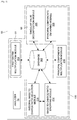
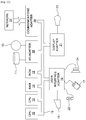
- FIG. 1 illustrates a system that includes a system for selecting a set of mass to charge ratios for a set of gases in a gas mixture to scan according to an embodiment herein.
- the system includes a source 102, a first type of sensor 104 and a system 50 for scanning the source 102.
- the system 50 may be a system for analyzing and/or monitoring the source 102.
- the system 50 includes a first mass to charge ratio extraction system 106.
- the source 102 includes a gas.
- the first mass to charge ratio extraction system 106 may be electrically connected to the first type of sensor 104.
- the first type of sensor 104 generates a scan output for the set of gases in the gas mixture.
- the scan output includes spectra of detected ions as a function of the mass-to-charge ratio corresponding to the set of gases.
- the first type of sensor 104 includes a mass spectrometer sensor.
- one example of the first type of sensor 104 is disclosed in the United States patent 9,666,422 .
- the first mass to charge ratio extraction system 106 extracts a set of mass to charge ratio for a set of gases with a B matrix to scan, in response to a time budget.
- the B matrix is defined as a matrix multiplication of P, T, C and R matrices.
- the first mass to charge ratio extraction system 106 pre-multiplies the B matrix with a diagonal matrix that is created from a vector of inverses of nominal concentration of the set of gases to obtain an adjusted B matrix (Ba).
- a diagonal matrix is a matrix in which the entries outside the main diagonal are all zero.
- the first mass to charge ratio extraction system 106 further normalizes current intensities across the expected nominal concentration of the set of gases in the gas mixture.
- a sub-matrix of the adjusted B matrix (Ba) corresponding to integral mass to charge ratio for the set of gases may be used to normalize current intensities across the expected nominal concentration of the set of gases in the gas mixture.
- the diag(E) represents a diagonal matrix including Eigen-values of Ba T .
- the Ba T is a matrix transpose of the sub-matrix of the adjusted B matrix (Ba).
- the matrix transpose of Ba T is needed as the B matrix is arranged with rows corresponding to mass to charge ratios and columns corresponding to gases.
- the U * diag(E) * Vh is the singular value decomposition (SVD) that is a factorization of a real or a complex matrix.
- the SVD is a generalization of the Eigen-decomposition of a positive semi-definite normal matrix to any matrix (m x n) via an extension of polar decomposition.
- the first mass to charge ratio extraction system 106 obtains an input related to a number of principal components (n) and selects a first 'n' rows of diag(E) * Vh.
- the principal components are the coordinates of the observations in the orthonormal basis of the new variable which are linear combinations of input components with maximum covariance.
- the first 'n' rows may include a number of first principal components of the Ba T .
- the first mass to charge ratio extraction system 106 multiplies a vector of each of the first principal component by its corresponding Eigen-value (e.g. a diagonal element of diag(E) and sums the vectors).
- Eigen-values refers to a special set of scalars associated with a linear system of equations (i.e., a matrix equation).
- the Eigen-values are sometimes called as characteristic roots, characteristic values, proper values or latent roots.
- each column corresponds to one mass to charge ratio.
- the first mass to charge ratio extraction system 106 weights the principal components that have greater Eigen-values higher.
- the first mass to charge ratio extraction system 106 may reduce the vector that is in mass to charge ratio space (i.e. the vector that corresponds to most of the energy in the adjusted B matrix (Ba)) to a lower dimensional space. To regularize the vector, the first mass to charge ratio extraction system 106 drops mass to charge ratio (m/z) which is below to a threshold value (t) or selects a top 'm' mass to charge ratios to scan, wherein 'm' is a number of mass to charge ratios.
- the system 50 and/or the first mass to charge ratio extraction system 106 may be a controller in a mass spectrometer or other instrument, a computer, a mobile phone, a PDA (Personal Digital Assistant), a tablet, an electronic notebook or a Smartphone.
- the first type of sensor 104 may be embedded in or connected to the first mass to charge ratio extraction system 106.
- the first mass to charge ratio extraction system 106 may be a cloud server.
- the first mass to charge ratio extraction system 106 is implemented in a field programmable gate array or any semiconductor device.
- the first mass to charge ratio extraction system 106 may select an increased number of mass to charge ratios when there is an increase in the number of principal components (n) and the threshold value (t).
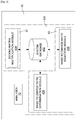
- FIG. 2 illustrates a system that includes a system for selecting a mass to charge ratio one after another with non-conflicting information for a set of gases gas in a gas mixture according to an embodiment herein.
- the system includes the source 102, the first type of sensor 104 and a system 50 for scanning, analyzing or monitoring the source 102.
- the system 50 includes a second mass to charge ratio extraction system 202.
- the second mass to charge ratio extraction system 202 may be electrically connected to the first type of sensor 104.
- the second mass to charge ratio extraction system 202 pre-multiplies the B matrix with a diagonal matrix that is created from a vector of nominal concentration of the set of gases to obtain an adjusted B matrix (Ba).
- the second mass to charge ratio extraction system 202 selects a first mass to charge ratio with maximum intensity in the column of the adjusted B matrix (Ba) for the set of gases in the gas mixture.
- the gas mixture may include 'g' gases.
- the second mass to charge ratio extraction system 202 may select a second mass to charge ratio with next highest intensity if the first mass to charge ratio with maximum intensity is already selected.
- the second mass to charge ratio extraction system 202 may select subsequent mass to charge ratio with subsequent highest intensity.
- the second mass to charge ratio extraction system 202 may arrange/prioritize the gases in increasing order of the total intensity at the selected mass to charge ratios.
- the second mass to charge ratio extraction system 202 further selects a mass to charge ratio corresponding to highest intensity in the column of the adjusted B matrix (Ba) for a first gas in the gas mixture if the first gas is not already selected.
- the second mass to charge ratio extraction system 202 further determines whether the mass to charge ratio for the first gas exists.
- the second mass to charge ratio extraction system 202 adds the mass to charge ratio to a list of mass to charge ratio to update the total intensity of the first gas and to increment the total number of picked mass to charge ratios.
- the second mass to charge ratio extraction system 202 determines whether the total number of picked mass to charge ratios is less than the number of mass to charge ratio (m) to scan. If the total number of picked mass to charge ratios is less than the number of mass to charge ratio (m) to scan, the second mass to charge ratio extraction system 202 then arranges/prioritizes the gases in increasing order of total intensity at the selected mass to charge ratios.
- the second mass to charge ratio extraction system 202 determines whether a mass to charge ratio is not already selected for the first gas.
- the second mass to charge ratio extraction system 202 then deletes the first gas from list of 'g' gases.
- the second mass to charge ratio extraction system 202 determines whether the list of 'g' gases is not empty or not. If the list of 'g' gases is not empty, the second mass to charge ratio extraction system 202 arranges/prioritizes the gases in increasing order of the total intensity at the selected mass to charge ratios.
- the second mass to charge ratio extraction system 202 may be a cloud server. In an embodiment, the second mass to charge ratio extraction system 202 may be implemented in a field programmable gate array or any semiconductor device. The second mass to charge ratio extraction system 202 may be a controller, a computer, a mobile phone, a PDA (Personal Digital Assistant), a tablet, an electronic notebook, a Smartphone or a cloud service. In an embodiment, the first type of sensor 104 may be embedded in the second mass to charge ratio extraction system 202.
- FIG. 3 illustrates an exploded view of the system 50 that includes the first mass to charge ratio extraction system 106 of FIG. 1 for selecting a set of mass to charge ratios for a set of gases of source 102 to scan in a time budget according to an embodiment herein.
- the system 50 may be an analyzing system or a mass spectrometer system.
- the system 50 may include a memory unit and a processor (specialized mass to charge ratio extraction processor).
- the memory unit includes the database 302 and the set of modules according to claim 1.
- the database 302 stores data related to standard fragmentation and ionization potentials for the set of gases.
- the specialized processor executes the set of modules that include a matrix multiplication module 61 and a mass to charge ratio extraction module 62 for the first mass to charge ration extraction system 106 and an analyzer module 70.
- the matrix multiplication module 61 obtains an adjusted B matrix (Ba) and includes a first matrix multiplication module 304.
- the mass to charge ratio extraction module 62 selects a set of mass to charge ratios for the set of gases to scan in a time budget based on the adjusted B matrix and includes a singular value decomposition module 306, a principal components obtaining module 308, a principal components multiplication module 310, a mass to charge ratio dropping module 312 and an integral mass to charge ratio selection module 314.
- the first matrix multiplication module 304 pre-multiplies a B matrix with a diagonal matrix that is created from a vector of inverses of nominal concentration of the set of gases to obtain an adjusted B matrix (Ba).
- the first matrix multiplication module 304 normalizes current intensities across the expected nominal concentration of the set of gases in the gas mixture.
- a sub-matrix of the adjusted B matrix (Ba) corresponding to integral mass to charge ratio for the set of gases may be used to normalize current intensities across the expected nominal concentration of the set of gases in the gas mixture.
- the diag(E) represents a diagonal matrix including Eigen-values of Ba T .
- the Ba T is a matrix transpose of the sub-matrix of the adjusted B matrix (Ba).
- the matrix transpose of Ba T is needed as the B matrix is arranged with rows corresponding to mass to charge ratios and columns corresponding to gases.
- the principal components obtaining module 308 obtains an input related to a number of principal components (n) and selects a first 'n' rows of diag(E) * Vh.
- the first 'n' rows may include a number of first principal components of the BaT.
- the principal components multiplication module 310 multiplies a vector of each of the first principal component by its corresponding Eigen-value (e.g. a diagonal element of diag(E) and sums the vectors of the first principal component that is multiplied with its corresponding Eigen-value for each column of the B matrix).
- Eigen-value e.g. a diagonal element of diag(E)
- the principal components multiplication module 310 may weigh the principal components that have greater Eigen-values higher.
- the mass to charge ratio dropping module 312 drops mass to charge ratio (m/z) which is below to a threshold value (t).
- the integral mass to charge ratio selection module 314 selects a top 'm' mass to charge ratios to scan by dropping all mass to charge ratio when mass to charge ratio is below to the threshold value (t).
- the 'm' is a number of mass to charge ratios.
- the integral mass to charge ratio selection module 314 may select an increased number of mass to charge ratios when the number of principal components (n) and the threshold value (t) are increased.
- the first mass to charge ration extraction system 106 may control the first type of sensor 104 to generate or output the scan output that includes the selected set of mass to charge ratios to scan the gas mixture of the source 102 in a time budget.
- the first mass to charge ration extraction system 106 for instance, the mass to charge ratio extraction module 62 may output the scan output of the first type sensor 104 that includes the selected set of mass to charge ratios.
- the analyzer (analyzing module) 70 analyzes or monitors the gas mixture continuously or intermittently based on the scan output generated by the first type of sensor 104 that includes the set of mass to charge ratios selected by the first mass to charge ration extraction system 106.
- FIG. 4 illustrates an exploded view of the system 50 that includes the second mass to charge ratio extraction system 202 of FIG. 2 for selecting a mass to charge ratio one after another with non-conflicting information for a set of gases in a gas mixture of source 102 in a time budget according to an embodiment herein.
- the system 50 and the second mass to charge ratio extraction system 202 may be a mass spectrometer system, an analyzer or other general or special instrument.
- the system may include a memory unit and a processor (specialized mass to charge ratio extraction processor).
- the memory unit includes the database 402 and the set of modules according to claim 1.
- the system database 402 stores data related to standard fragmentation and ionization potentials for the set of gases.
- the processor executes the set of modules that include a matrix multiplication module 61 and a mass to charge ratio extraction module 62 for the second mass to charge ration extraction system 202 and an analyzer module 70.
- the matrix multiplication module 61 obtains an adjusted B matrix (Ba) and includes a second matrix multiplication module 404.
- the mass to charge ratio extraction module 62 selects a set of mass to charge ratios for the set of gases to scan in a time budget based on the adjusted B matrix and includes a mass to charge ratio selection module 406 and a mass to charge ratio determination module 408.
- the second matrix multiplication module 404 pre-multiplies the B matrix with a diagonal matrix that is created from a vector of nominal concentration of the set of gases to obtain an adjusted B matrix (Ba).
- the mass to charge ratio selection module 406 selects a first mass to charge ratio with maximum intensity in the column of the adjusted B matrix (Ba) for the set of gases in the gas mixture.
- the gas mixture may include 'g' gases.
- the mass to charge ratio selection module 406 may select a second mass to charge ratio with next highest intensity when the first mass to charge ratio with maximum intensity is already selected. Similarly, the mass to charge ratio selection module 406 may select subsequent mass to charge ratio with subsequent highest intensity.
- the mass to charge ratio selection module 406 may arrange/prioritize the gases in increasing order of the total intensity at the selected mass to charge ratios.
- the mass to charge ratio selection module 406 further selects a mass to charge ratio corresponding to highest intensity in the column of the adjusted B matrix (Ba) matrix for a first gas in the gas mixture if the first gas is not already selected.
- the mass to charge ratio determination module 408 further determines whether the mass to charge ratio for the first gas exists. When the mass to charge ratio for the first gas exists, the mass to charge ratio determination module 408 adds the mass to charge ratio to a list of mass to charge ratio to update the total intensity of the first gas and to increment the total number of picked mass to charge ratios. The mass to charge ratio determination module 408 determines whether the total number of picked mass to charge ratios is less than the number of mass to charge ratio (m) to scan. When the total number of picked mass to charge ratios is less than the number of mass to charge ratio (m) to scan, the mass to charge ratio determination module 408 then arranges/ prioritizes the gases in increasing order of total intensity at the selected mass to charge ratios.
- the mass to charge ratio determination module 408 determines whether a mass to charge ratio exists for the first gas. If no mass to charge ratio exists for the first gas, the mass to charge ratio determination module 408 then deletes the first gas from list of 'g' gases. The mass to charge ratio determination module 408 determines whether the list of 'g' gases is not empty or not. If the list of 'g' gases is not empty, the second mass to charge ratio extraction system 202 arranges/prioritizes the gases in increasing order of the total intensity at the selected mass to charge ratios.
- the second mass to charge ration extraction system 202 may also control the first type of sensor 104 to generate or output the scan output that includes the selected set of mass to charge ratios to scan the gas mixture of the source 102 in a time budget.
- the second mass to charge ration extraction system 202 may output the scan output of the first type sensor 104 that includes the selected set of mass to charge ratios.
- the analyzing module 70 analyzes or monitors the gas mixture based on the scan output that includes the set of mass to charge ratios selected by the second mass to charge ration extraction system 202.
- FIG. 5 is a flow diagram that illustrates a process for selecting a set of mass to charge ratios for a set of gases in a gas mixture which can be be used in embodiments according to claim 11.
- inputs that include a B matrix, a number of principal components (n), a threshold value (t) or a number of mass to charge ratios (m) are obtained.
- the B matrix is pre-multiplied with a diagonal matrix that is created from a vector of inverses of nominal concentration of the set of gases to obtain an adjusted B matrix (Ba).
- an input related to a number of principal components (n) is obtained to select a first 'n' rows of diag(E) * Vh.
- a vector of each of the first principal component is multiplied by its corresponding Eigen-value (e.g. a diagonal element of diag(E)).
- Vectors of the first principal component that is multiplied with its corresponding Eigen-value is added for each column.
- a top integral mass to charge ratios that is above a threshold value 't' are selected by dropping mass to charge ratio (m/z) that is below to the threshold value (t).
- FIG. 6 is a flow diagram that illustrates a process for selecting mass to charge ratios one after another with non-conflicting information for a set of gases to scan which can be used in embodiments according to claim 11.
- the process starts at step 602.
- inputs that include a B matrix, and a number of mass to charge ratios (m) are obtained.
- a first mass to charge ratio (m/z) with maximum intensity in the column of the adjusted B matrix (Ba) for the set of gases in the gas mixture is selected.
- a second mass to charge ratio (m/z) with next highest intensity is selected if the first mass to charge ratio with maximum intensity is already selected.
- the gases are arranged/prioritized in increasing order of total intensity at the selected mass to charge ratios.
- step 610 it is determined whether the mass to charge ratio for a first gas exists.
- the mass to charge ratio is added to a list of mass to charge ratio to update the total intensity of the first gas and to increment the total number of picked mass to charge ratios, at step 612.
- the mass to charge ratio for the first gas does not exist, the first gas is deleted from list of 'g' gases, at step 614.
- the gases are arranged/prioritized in increasing order of total intensity at the selected mass to charge ratios.
- the process ends at step 620.
- FIG. 7 is a flow diagram that illustrates a computer implemented method that includes selecting a set of mass to charge ratios for a set of gases in a gas mixture to scan of FIG. 1 according to an embodiment herein.
- the scan output is generated for the set of gases in the gas mixture using the first type of sensor 104.
- the scan output includes spectra of detected ions as a function of the mass-to-charge ratio corresponding to the set of gases.
- a B matrix is pre-multiplied with a diagonal matrix that is created from a vector of inverses of nominal concentration of a gas to obtain an adjusted B matrix (Ba) using a first matrix multiplication module 304.
- a singular value decomposition of Ba T U * diag(E) * Vh is determined using a singular value decomposition module 306.
- the Ba T is a matrix transpose of the sub-matrix of the adjusted B matrix (Ba).
- the U * diag(E) * Vh is the singular value decomposition (SVD) that is a factorization of a real or a complex matrix.
- a number of first principal components of the Ba T is obtained using the principal components obtaining module 308 based on an input.
- each vector of the first principal component is multiplied by its corresponding Eigen-value and adding the vectors of the first principal component that is multiplied with its corresponding Eigen-value for each column of the B matrix using the principal components multiplication module 310.
- a top integral mass to charge ratios is selected to scan by dropping all mass to charge ratio when mass to charge ratio is below to a threshold value (t) using the integral mass to charge ratio selection module 314.
- the mass to charge ratio is dropped using the mass to charge ratio dropping module 312 when the mass to charge ratio (m/z) is below to the threshold value (t).
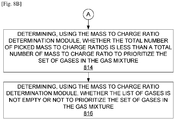
- FIGS. 8A-8B are flow diagrams that illustrate a computer implemented method for selecting a mass to charge ratio one after another with non-conflicting information for a set of gases gas in a gas mixture according to an embodiment herein.
- the scan output is generated for the set of gases in the gas mixture using the first type of sensor 104.
- a B matrix is pre-multiplied with a diagonal matrix that is created from a vector of nominal concentration of a gas to obtain an adjusted B matrix (Ba) using the second matrix multiplication module 404.
- a mass to charge ratio is selected with maximum intensity in the column of the adjusted B matrix (Ba) using the mass to charge ratio selection module 406.
- the gases are pri-oritized in increasing order of total intensity in the B matrix at the selected mass to charge ratios using the mass to charge ratio selection module 406.
- a second mass to charge ratio is selected with next highest intensity is selected when the first mass to charge ratio with maximum intensity is already selected using the mass to charge ratio selection module 406.
- it determines whether the mass to charge ratio exists for a first gas using the mass to charge ratio determination module 408.
- step 814 it determines whether the total number of picked mass to charge ratios is less than a total number of mass to charge ratio to prioritize a set of gases in the gas mixture using the mass to charge ratio determination module 408.
- step 816 it determines whether the list of gases is not empty or not to prioritize the set of gases in the gas mixture using the mass to charge ratio determination module 408.
- the mass to charge ratio is added to a list of mass to charge ratio when the mass to charge ratio exists for the first gas using the mass to charge ratio determination module 408.
- the first gas is deleted from a list of gases of the gas mixture when the mass to charge ratio does not exist for the first gas using the mass to charge ratio determination module 408.
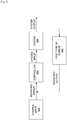
- FIG. 9 is a block diagram that illustrates a control loop to scan mass to charge ratios in a time budget with high accuracy.
- the block diagram includes a control input 902 (e.g. a reference gas samples), a controller 904, a system 906 and a first type of sensor 104.
- the controller 904 may be electrically connected to the system 906.
- the controller 904 may obtain a set of gases and controls the set of gases with a high accuracy, stability within a time budget.
- the mass to charge ratios for a set of gases are scanned within a given time budget using the first type of sensor 104 that is integrated with the system 906 in the control loop.
- the mass to charge ratios for the set of gases are scanned in the time budget based on an accuracy of the first type of sensor 104 according to claim 11.
- a set of mass to charge ratios are selected/extracted to scan with the accuracy and the time budget (i.e. a response time to scan the mass to charge ratios) using a method as disclosed in FIG. 5 .
- a set of mass to charge ratios are selected to scan one after another with non-conflicting information for a set of gases with the accuracy and the time budget (i.e. a response time to scan the mass to charge ratios) using a method as disclosed in FIG. 6 .
- the techniques provided by the embodiments herein may be implemented on an integrated circuit chip (not shown).
- the chip design is created in a graphical computer programming language, and stored in a computer storage medium (such as a disk, tape, physical hard drive, or virtual hard drive such as in a storage access network). If the designer does not fabricate chips or the photolithographic masks used to fabricate chips, the designer transmits the resulting design by physical means (e.g., by providing a copy of the storage medium storing the design) or electronically (e.g., through the Internet) to such entities, directly or indirectly.
- the stored design is then converted into the appropriate format (e.g., GDSII) for the fabrication of photolithographic masks, which typically include multiple copies of the chip design in question that are to be formed on a wafer.
- the photolithographic masks are utilized to define areas of the wafer (and/or the layers thereon) to be etched or otherwise processed.
- the resulting integrated circuit chips can be distributed by the fabricator in raw wafer form (that is, as a single wafer that has multiple unpackaged chips), as a bare die, or in a packaged form.
- the chip is mounted in a single chip package (such as a plastic carrier, with leads that are affixed to a motherboard or other higher level carrier) or in a multichip package (such as a ceramic carrier that has either or both surface interconnections or buried interconnections).
- the chip is then integrated with other chips, discrete circuit elements, and/or other signal processing devices as part of either (a) an intermediate product, such as a motherboard, or (b) an end product.
- the end product can be any product that includes integrated circuit chips, ranging from toys and other low-end applications to advanced computer products having a display, a keyboard or other input device, and a central processor.
- the embodiments herein can take the form of, an entirely hardware embodiment, an entirely software embodiment or an embodiment including both hardware and software elements.
- the embodiments that are implemented in software include but are not limited to, firmware, resident software, microcode, etc.
- the embodiments herein can take the form of a computer program product accessible from a computer-usable or computer-readable medium providing program code for use by or in connection with a computer or any instruction execution system.
- a computer-usable or computer readable medium can be any apparatus that can comprise, store, communicate, propagate, or transport the program for use by or in connection with the instruction execution system, apparatus, or device.
- the medium can be an electronic, magnetic, optical, electromagnetic, infrared, or semiconductor system (or apparatus or device) or a propagation medium.
- Examples of a computer-readable medium include a semiconductor or solid state memory, magnetic tape, a removable computer diskette, a random access memory (RAM), a read-only memory (ROM), a rigid magnetic disk and an optical disk.
- Current examples of optical disks include compact disk - read only memory (CD-ROM), compact disk - read/write (CD-R/W) and DVD.
- a data processing system suitable for storing and/or executing program code will include at least one processor coupled directly or indirectly to memory elements through a system bus.
- the memory elements can include local memory employed during actual execution of the program code, bulk storage, and cache memories which provide temporary storage of at least some program code in order to reduce the number of times code must be retrieved from bulk storage during execution.
- I/O devices can be coupled to the system either directly or through intervening I/O controllers.
- Network adapters may also be coupled to the system to enable the data processing system to become coupled to other data processing systems or remote printers or storage devices through intervening private or public networks. Modems, cable modem and Ethernet cards are just a few of the currently available types of network adapters.
- FIG. 10 illustrates a perspective view of a first type of sensor 104 (a mass spectrometer) that can be used in embodiments according to claim 1.
- the first type of sensor 104 includes a set of gases 1002, an electron gun 1004, an electric magnet 1006, an ion beam 1008 and an ion detector 1010.
- the set of gases 1002 to be ionized is obtained from the source 102.
- the electron gun 1004 ionizes particles in the set of gases 1002 by adding or removing electrons from the ionized particles.
- the electron gun 1004 ionizes vaporized or gaseous particles using electron ionization process.
- the electric magnet 1006 in the first type of sensor 104 produces electric or magnetic fields to measure the mass (i.e. weight) of charged particles.
- the magnetic field separates the ions according to their momentum (i.e. how the force exerted by the magnetic field can be used to separate ions according to their mass).
- the separated ion is targeted through a mass analyzer and onto the ion detector 1010. Differences in masses of the fragments allow the mass analyzer to sort the ions using their mass-to-charge ratio.
- the ion detector 1010 measures a value of an indicator quantity and thus provides data for calculating the abundances of each ion present in the set of gases 1002.
- the ion detector 1010 records either the charge induced or the current produced when the ion passes by or hits a surface.
- the mass spectrum is displayed in the first mass to charge ratio extraction system 106 or in the second mass to charge ratio extraction system 202.
- FIG. 11 A representative hardware environment for practicing the embodiments herein is depicted in FIG. 11 .
- the mass to charge ratio extraction system (106, 202) comprises at least one processor or central processing unit (CPU) 10.
- the CPUs 10 are interconnected via system bus 12 to various devices such as a random access memory (RAM) 14, read-only memory (ROM) 16, and an input/output (I/O) adapter 18.
- RAM random access memory
- ROM read-only memory
- I/O input/output
- the I/O adapter 18 can connect to peripheral devices, such as disk units 11 and tape drives 13, or other program storage devices that are readable by the system.
- the mass to charge ratio extraction system (106, 202) can read the inventive instructions on the program storage devices and follow these instructions to execute the methodology of the embodiments herein.
- the mass to charge ratio extraction system (106, 202) further includes a user interface adapter 19 that connects a keyboard 15, mouse 17, speaker 24, microphone 22, and/or other user interface devices such as a touch screen device (not shown) or a remote control to the bus 12 to gather user input.
- a communication adapter 20 connects the bus 12 to a data processing network 25, and a display adapter 21 connects the bus 12 to a display device 23 which may be embodied as an output device such as a monitor, printer, or transmitter, for example.
- P matrix a convolution matrix representing peak shapes
- T matrix transmission efficiencies at each integral m/z
- R matrix relative ionization potentials for each gas
- C matrix a reference spectrum representing idealized responses for each gas at the integral m/z value
- C matrix a reference spectrum representing idealized responses for each gas at the integral m/z value
- the first mass to charge ratio extraction system 106 may select 6th, 4th and 8th mass to charge ratios, which are a feasible set of mass to charge ratios to compute a composition of the three gases.
- the 4th mass to charge ratio is selected in spite of the contribution of the three gases.
- the second mass to charge ratio extraction system 202 may select a mass to charge ratio in the following order i.e. 4th, 6th and 8th, which may lead to the same result.
- a table that compares the mass to charge ratios that are selected by Greedy method i.e. the greedy method that picks the mass to charge ratios with the most signal strength in the vector 'y'
- Greedy method i.e. the greedy method that picks the mass to charge ratios with the most signal strength in the vector 'y'
- the method as described in FIG. 5 the method as described in FIG. 6 for various time budgets as follows.
- the system includes a first type of sensor 104 and a first mass to charge ratio extraction system 106.
- the first type of sensor 104 generates a scan output for the set of gases 1002 in a gas mixture.
- the scan output comprises spectra of detected ions as a function of the mass-to-charge ratio corresponding to the set of gases 1002.
- the first mass to charge ratio extraction system 106 is connected to the first type of sensor 104.
- the first mass to charge ratio extraction system comprises a memory unit and a specialized mass to charge ratio extraction processor.
- the memory unit stores a database 302 and a set of modules.
- the database 302 stores data related to standard fragmentation and ionization potentials for the set of gases 1002.
- the specialized mass to charge ratio extraction processor executes the set of modules. Characterized in that the set of modules include a first matrix multiplication module, a singular value decomposition module, a principal components obtaining module, a principal components multiplication module and an integral mass to charge ratio selection module.
- the first matrix multiplication module 304 is configured to pre-multiply a B matrix with a diagonal matrix that is created from a vector of inverses of nominal concentration of a gas to obtain an adjusted B matrix (Ba).
- the B matrix is a multiplication of P, T, C and R matrices.
- the P is a convolution matrix representing peak shapes
- T transmission efficiencies at each integral mass to charge ratio (m/z)
- R relative ionization potentials for each gas
- C is a reference spectrum representing idealized responses for each gas at the integral m/z value.
- the diagonal matrix is a matrix in which the entries outside the main diagonal are all zero.
- the Ba T is a matrix transpose of the sub-matrix of the adjusted B matrix (Ba).
- the U * diag(E) * Vh is the singular value decomposition (SVD) that is a factorization of a real or a complex matrix.
- the principal components obtaining module 308 is configured to obtain a number of first principal components of the Ba T based on an input.
- the principal components multiplication module 310 is configured to multiply each vector of the first principal component by its corresponding Eigen-value and adding the vectors of the first principal component that is multiplied with its corresponding Eigen-value for each column of the B matrix.
- the integral mass to charge ratio selection module 314 is configured to select a top integral mass to charge ratios to scan by dropping all mass to charge ratio when mass to charge ratio is below to a threshold value (t).
- system further comprises a mass to charge ratio dropping module 312 that is configured to drop the mass to charge ratio (m/z) that is below to the threshold value (t).
- the integral mass to charge ratio selection 314 module is configured to select an increased number of mass to charge ratios when the number of principal components (n) and the threshold value (t) are increased.
- a mass spectrometer system for selecting a mass to charge ratio one after another with non-conflicting information for a set of gases 1002 in a gas mixture in a time budget.
- the mass spectrometer system includes a first type of sensor 104 and a second mass to charge ratio extraction system 202.
- the first type of sensor 104 generates a scan output for the set of gases 1002 in the gas mixture.
- the scan output comprises spectra of detected ions as a function of the mass-to-charge ratio corresponding to the set of gases 1002.
- the second mass to charge ratio extraction system 202 is connected to the first type of sensor 104.
- the second mass to charge ratio extraction system 202 comprises a memory unit and a specialized mass to charge ratio extraction processor.
- the memory unit stores a system database 402 and a set of modules.
- the system database 402 stores data related to standard fragmentation and ionization potentials for the set of gases 1002.
- the specialized mass to charge ratio extraction processor executes the set of modules. Characterized in that the set of modules include a second matrix multiplication module, a mass to charge ratio selection module and a mass to charge ratio determination module.
- the second matrix multiplication module 404 is configured to pre-multiply a B matrix with a diagonal matrix that is created from a vector of nominal concentration of a gas to obtain an adjusted B matrix (Ba).
- the mass to charge ratio selection module 406 is configured to (a) select a mass to charge ratio with maximum intensity in the column of the adjusted B matrix (Ba), (b) prioritize the gases in increasing order of total intensity in the B matrix at the selected mass to charge ratios, and (c) select a second mass to charge ratio with next highest intensity is selected when the first mass to charge ratio with maximum intensity is already selected.
- the mass to charge ratio determination module 408 is configured to (a) determine whether the mass to charge ratio exists for a first gas, and (b) determine whether the total number of picked mass to charge ratios is less than a total number of mass to charge ratio to prioritize a set of gases 1002 in the gas mixture.
- the mass to charge ratio determination module 408 is configured to (a) add the mass to charge ratio to a list of mass to charge ratio when the mass to charge ratio exists for the first gas and (b) delete the first gas from list of gases of the gas mixture when the mass to charge ratio does not exist for the first gas.
- the mass to charge ratio determination module 408 is configured to determine whether the list of gases is not empty or not to prioritize the set of gases 1002 in the gas mixture.
- the scan output includes spectra of detected ions as a function of the mass-to-charge ratio corresponding to the set of gases.
- the Ba T is a matrix transpose of the sub-matrix of the adjusted B matrix (Ba).
- the U * diag(E) * Vh is the singular value decomposition (SVD) that is a factorization of a real or a complex matrix.
- the method further includes a step of selecting, using the integral mass to charge ratio selection module 314, an increased number of mass to charge ratios when the number of principal components (n) and the threshold value (t) are increased.
- a computer implemented method for selecting a mass to charge ratio one after another with non-conflicting information for a set of gases 1002 in a gas mixture using a second mass to charge ratio extraction system 202 Characterized by the method includes following steps of (a) generating 802, using a first type of sensor 104, a scan output for the set of gases 1002 in the gas mixture; (b) pre-multiplying 804, using a second matrix multiplication module 404, a B matrix with a diagonal matrix that is created from a vector of nominal concentration of a gas to obtain an adjusted B matrix (Ba); (c) selecting 806, using a mass to charge ratio selection module 406, a mass to charge ratio with maximum intensity in the column of the adjusted B matrix (Ba); (d) prioritizing 808, using the mass to charge ratio selection module 406, the gases in increasing order of total intensity in the B matrix at the selected mass to charge ratios; (e) selecting 810, using the mass to charge ratio selection module 406, a second mass to charge ratio with next highest
- the method further includes a step of (a) adding, using the mass to charge ratio determination module 408, the mass to charge ratio to a list of mass to charge ratio when the mass to charge ratio exists for the first gas; and (b) deleting, using the mass to charge ratio determination module 408, the first gas from a list of gases of the gas mixture when the mass to charge ratio does not exist for the first gas.
Landscapes
- Physics & Mathematics (AREA)
- Engineering & Computer Science (AREA)
- Mathematical Physics (AREA)
- General Physics & Mathematics (AREA)
- Analytical Chemistry (AREA)
- Chemical & Material Sciences (AREA)
- Data Mining & Analysis (AREA)
- Mathematical Optimization (AREA)
- Pure & Applied Mathematics (AREA)
- Computational Mathematics (AREA)
- Mathematical Analysis (AREA)
- Optics & Photonics (AREA)
- Theoretical Computer Science (AREA)
- General Engineering & Computer Science (AREA)
- Software Systems (AREA)
- Databases & Information Systems (AREA)
- Plasma & Fusion (AREA)
- Computing Systems (AREA)
- Algebra (AREA)
- Other Investigation Or Analysis Of Materials By Electrical Means (AREA)
- Electron Tubes For Measurement (AREA)
Claims (17)
- System zum Abtasten eines Gasgemisches unter Verwendung eines ersten Sensortyps (104), wobei der erste Sensortyp (104) ein Abtastausgangssignal für einen Satz von Gasen (1002) in dem Gasgemisch erzeugt und das Abtastausgangssignal Spektren von detektierten Ionen als eine Funktion des Masse-Ladungs-Verhältnisses entsprechend dem Satz von Gasen (1002) enthält, aufweisend:eine Datenbank (302) zum Speichern von Standardreferenzdaten, die sich auf Standardfragmentierungs- und Ionisierungspotentiale für den Satz von Gasen (1002) beziehen; undeinen Satz von Modulen, wobei der Satz von Modulen aufweist:ein Matrixmultiplikationsmodul (61), das so ausgebildet ist, dass es eine B-Matrix mit einer Diagonalmatrix vormultipliziert, die mit einem Vektor der Nennkonzentration des Satzes von Gasen (1002) erzeugt wird, um eine angepasste B-Matrix zu erhalten, wobei die B-Matrix eine Multiplikation von P-, T-, C- und R-Matrizen ist, die sich auf die Standardreferenzdaten beziehen, wobei P eine Faltungsmatrix ist, welche die Peakformen darstellt, T die Transmissionseffizienzen bei jedem integralen Masse-Ladungs-Verhältnis darstellt, R die relativen Ionisationspotentiale für jedes Gas darstellt und C ein Referenzspektrum ist, das idealisierte Reaktionen für jedes Gas bei dem integralen Masse-Ladungs-Verhältnis beschreibt; undein Masse-Ladungs-Verhältnis-Extraktionsmodul (62), das so ausgebildet ist, dass es einen Satz von Masse-Ladungs-Verhältnissen für den Satz von Gasen (1002) auswählt, die, entsprechend der angepassten B-Matrix, in einem Zeitrahmen abgetastet werden sollen.
- System nach Anspruch 1, wobei das Matrixmultiplikationsmodul (61) ein erstes Matrixmultiplikationsmodul (304) aufweist, das so ausgebildet ist, dass es die B-Matrix mit einer Diagonalmatrix vormultipliziert, die aus einem Vektor von Inversen der Nennkonzentration des Satzes von Gasen (1002) erzeugt wird, um die angepasste B-Matrix zu erhalten, und
das Masse-Ladungs-Verhältnis-Extraktionsmodul (62) folgende Komponenten aufweist:ein Singulärwertzerlegungsmodul (306), das ausgebildet ist, um eine Singulärwertzerlegung von BaT = U * diag(E) * Vh zu bestimmen, wobei BaT eine Matrixtransponierung der Untermatrix der angepassten B-Matrix darstellt, wobei U * diag(E) * Vh die Singulärwertzerlegung ist, die eine Faktorisierung einer reellen oder einer komplexen Matrix beschreibt;ein Hauptkomponenten-Erfassungsmodul (308), das so ausgebildet ist, dass es eine Anzahl von ersten Hauptkomponenten der BaT auf der Grundlage einer Eingabe erhält;ein Hauptkomponenten-Multiplikationsmodul (310), das ausgebildet ist, um jeden Vektor der ersten Hauptkomponente mit seinem entsprechenden Eigenwert zu multiplizieren und die Vektoren der ersten Hauptkomponente, die mit ihrem entsprechenden Eigenwert für jede Spalte der B-Matrix multipliziert wird, zu addieren; undein Integral-Masse-Ladungs-Verhältnis-Auswahlmodul (314), das so ausgebildet ist, dass es ein oberes Integral-Masse-Ladungs-Verhältnis zum Abtasten auswählt, indem es alle Masse-Ladungs-Verhältnisse verwirft, wenn das Masse-Ladungs-Verhältnis unter einem Schwellenwert liegt. - System nach Anspruch 2, wobei das Masse-Ladungs-Verhältnis-Extraktionsmodul (62) ferner ein Masse-Ladungs-Verhältnis-Verwerfungsmodul (312) aufweist, das so ausgebildet ist, dass es das Masse-Ladungs-Verhältnis, das unter dem Schwellenwert liegt, verwirft.
- System nach Anspruch 2 oder 3, wobei das integrale Masse-Ladungs-Verhältnis-Auswahlmodul (314) so ausgebildet ist, dass es eine erhöhte Anzahl von Masse-Ladungs-Verhältnissen auswählt, wenn die Anzahl der Hauptkomponenten und der Schwellenwert erhöht werden.
- System nach Anspruch 1, wobei das Matrixmultiplikationsmodul (61) ein zweites Matrixmultiplikationsmodul (404) aufweist, das so ausgebildet ist, dass es die B-Matrix mit der Diagonalmatrix, welche aus einem Vektor der Nennkonzentration des Satzes von Gasen (1002) erzeugt wird, vormultipliziert, um die angepasste B-Matrix zu erhalten, und
das Masse-Ladungs-Verhältnis-Extraktionsmodul (62) folgende Komponenten aufweist:ein Masse-Ladungs-Verhältnis-Auswahlmodul (314), das so ausgebildet ist, dass es in der Spalte der angepassten B-Matrix ein Masse-Ladungs-Verhältnis mit maximaler Intensität auswählt,um die Gase in aufsteigender Reihenfolge der Gesamtintensität in der B-Matrix bei den ausgewählten Masse-Ladungs-Verhältnissen zu priorisieren; undum ein zweites Masse-Ladungs-Verhältnis mit der nächsthöheren Intensität auszuwählen, wenn das erste Masse-Ladungs-Verhältnis mit maximaler Intensität bereits ausgewählt ist, undein Masse-Ladungs-Verhältnis-Bestimmungsmodul (408), das ausgebildet ist, um zu bestimmen, ob das Masse-Ladungs-Verhältnis für ein erstes Gas existiert; undum zu bestimmen, ob die Gesamtzahl der ausgewählten Masse-zu-Ladungs-Verhältnisse kleiner ist als eine Gesamtzahl von Masse-zu-Ladungs-Verhältnissen, um einen Satz von Gasen (1002) in der Gasmischung zu priorisieren. - System nach Anspruch 5, wobei das Masse-Ladungs-Verhältnis-Bestimmungsmodul (408) ferner ausgebildet ist, umdas Masse-Ladungs-Verhältnis einer Liste von Masse-Ladungs-Verhältnissen hinzuzufügen, wenn das Masse-Ladungs-Verhältnis für das erste Gas existiert; unddas erste Gas aus der Liste der Gase der Gasmischung zu entfernen, wenn das Masse-Ladungs-Verhältnis für das erste Gas nicht existiert.
- System nach Anspruch 5 oder 6, wobei das Modul (408) zur Bestimmung des Masse-Ladungs-Verhältnisses ferner so ausgebildet ist, dass es bestimmt, ob die Liste der Gase leer ist oder nicht, um den Satz von Gasen (1002) im Gasgemisch zu priorisieren.
- System nach einem der Ansprüche 1 bis 7, wobei der Satz von Modulen ferner ein Analysemodul (70) aufweist, das so ausgebildet ist, dass es das Gasgemisch auf der Grundlage des Abtast-Ausgangssignals einschließlich des ausgewählten Satzes von Masse-Ladungs-Verhältnissen analysiert.
- System nach einem der Ansprüche 1bis 8, ferner aufweisendeinen Speicher, der die Datenbank (302) und den Satz von Modulen enthält; undeinen Prozessor, der den Satz von Modulen ausführt.
- System nach einem der Ansprüche 1 bis 9, ferner aufweisend einen ersten Sensortyp (104).
- Auf einem Computer implementiertes Verfahren, das das Auswählen eines Satzes von Masse-Ladungs-Verhältnissen eines Gasgemisches zum Abtasten unter Verwendung eines ersten Sensortyps (104) umfasst, wobei der erste Sensortyp (104) ein Abtast-Ausgangssignal für einen Satz von Gasen (1002) in dem Gasgemisch erzeugt und das Abtast-Ausgangssignal Spektren von detektierten Ionen als Funktion des Masse-Ladungs-Verhältnisses entsprechend dem Satz von Gasen (1002) aufweist, wobei das Auswählen eines Satzes von Masse-Ladungs-Verhältnissen folgende Schritte aufweist:Vormultiplizieren (504) einer B-Matrix mit einer Diagonalmatrix, die mit einem Vektor der Nennkonzentration des Satzes von Gasen (1002) erzeugt wird, um eine angepasste B-Matrix zu erhalten, wobei die B-Matrix eine Multiplikation von P-, T-, C- und R-Matrizen ist, wobei P eine Faltungsmatrix ist, welche Peakformen darstellt, T Übertragungseffizienzen bei jedem integralen Masse-Ladungs-Verhältnis beschreibt, R relative Ionisierungspotentiale für jedes Gas darstellt und C ein Referenzspektrum ist, welches idealisierte Reaktionen für jedes Gas bei dem integralen Masse-Ladungs-Verhältnis darstellt; undExtrahieren eines Satzes von Masse-Ladungs-Verhältnissen für den Satz von Gasen (1002) zum Abtasten in einem Zeitrahmen auf der Grundlage der angepassten B-Matrix.
- Verfahren nach Anspruch 11, wobei das Vormultiplizieren (504) das Vormultiplizieren (704) der B-Matrix mit einer Diagonalmatrix umfasst, welche aus einem Vektor von Inversen der Nennkonzentration des Satzes von Gasen (1002) erzeugt wird, um die angepasste B-Matrix zu erhalten, und
das Extrahieren die folgenden Schritte aufweist:Bestimmen (706) einer Singulärwertzerlegung von BaT = U * diag(E) * Vh, wobei BaT eine Matrixtransponierte der Untermatrix der angepassten B-Matrix ist, wobei U * diag(E) * Vh die Singulärwertzerlegung ist, die eine Faktorisierung einer reellen oder einer komplexen Matrix darstellt;Erhalten (708) einer Anzahl von ersten Hauptkomponenten der BaT gemäß einer Eingabe;Multiplizieren jedes Vektors der ersten Hauptkomponente mit seinem entsprechenden Eigenwert und Addieren der Vektoren der ersten Hauptkomponente, die mit ihrem entsprechenden Eigenwert für jede Spalte der B-Matrix multipliziert wird; undAuswählen (712) eines oberen integralen Masse-Ladungs-Verhältnisses zum Abtasten durch Verwerfen aller Masse-Ladungs-Verhältnisse, wenn das Masse-Ladungs-Verhältnis unter einem Schwellenwert liegt. - Verfahren nach Anspruch 12, wobei das Extrahieren weiterhin das Auswählen einer erhöhten Anzahl von Masse-Ladungs-Verhältnissen umfasst, wenn die Anzahl der Hauptkomponenten und der Schwellenwert erhöht werden.
- Verfahren nach Anspruch 11, wobei das Vormultiplizieren (504) folgenden Schritt aufweist Vormultiplizieren (804) der B-Matrix mit einer Diagonalmatrix, die aus dem Vektor der Nennkonzentration des Satzes von Gasen (1002) erzeugt wird, um die angepasste B-Matrix zu erhalten; und
das Extrahieren folgende Schritte aufweist:Auswählen (806) eines Masse-Ladungs-Verhältnisses mit maximaler Intensität in der Spalte der angepassten B-Matrix;Priorisieren (808) der Gase in aufsteigender Reihenfolge der Gesamtintensität in der B-Matrix anhand der ausgewählten Masse-Ladungs-Verhältnisse;Auswählen (810) eines zweiten Masse-Ladungs-Verhältnisses mit der nächsthöheren Intensität, wenn das erste Masse-Ladungs-Verhältnis mit maximaler Intensität bereits ausgewählt ist;Bestimmen (812), ob das Masse-Ladungs-Verhältnis für ein erstes Gas existiert;Bestimmen (814), ob die Gesamtzahl der ausgewählten Masse-Ladungs-Verhältnisse kleiner ist als eine Gesamtzahl von Masse-Ladungs-Verhältnissen, um den Satz von Gasen (1002) in der Gasmischung zu priorisieren; undBestimmen (816), ob die Liste der Gase leer ist oder nicht, um die Menge der Gase (1002) in der Gasmischung zu priorisieren. - Verfahren nach Anspruch 14, wobei das Extrahieren ferner folgende Schritte aufweist:Hinzufügen des Masse-Ladungs-Verhältnisses zu einer Liste von Masse-Ladungs-Verhältnissen, wenn das Masse-Ladungs-Verhältnis für das erste Gas existiert; undEntfernen des ersten Gases aus einer Liste von Gasen der Gasmischung, wenn das Masse-Ladungs-Verhältnis für das erste Gas nicht existiert.
- Verfahren nach einem der Ansprüche 11 bis 15, ferner aufweisend das Analysieren des Gasgemisches auf der Grundlage des Abtast-Ausgangssignals für den ausgewählten Satz von Masse-Ladungs-Verhältnissen.
- Computerprogramm mit Anweisungen für einen Computer, um als System nach einem der Ansprüche 1 bis 9 betrieben zu werden.
Applications Claiming Priority (2)
| Application Number | Priority Date | Filing Date | Title |
|---|---|---|---|
| IN201641040089 | 2016-11-23 | ||
| PCT/JP2017/041816 WO2018097129A1 (en) | 2016-11-23 | 2017-11-21 | System and method for determining set of mass to charge ratios for set of gases |
Publications (3)
| Publication Number | Publication Date |
|---|---|
| EP3545292A1 EP3545292A1 (de) | 2019-10-02 |
| EP3545292A4 EP3545292A4 (de) | 2020-07-22 |
| EP3545292B1 true EP3545292B1 (de) | 2021-09-15 |
Family
ID=62195936
Family Applications (1)
| Application Number | Title | Priority Date | Filing Date |
|---|---|---|---|
| EP17874813.3A Active EP3545292B1 (de) | 2016-11-23 | 2017-11-21 | System und verfahren zur bestimmung eines satzes von masse-ladungs-verhältnissen für einen satz von gasen |
Country Status (5)
| Country | Link |
|---|---|
| US (1) | US11183376B2 (de) |
| EP (1) | EP3545292B1 (de) |
| JP (1) | JP6695087B2 (de) |
| CN (1) | CN109997036B (de) |
| WO (1) | WO2018097129A1 (de) |
Family Cites Families (38)
| Publication number | Priority date | Publication date | Assignee | Title |
|---|---|---|---|---|
| US5077470A (en) * | 1991-01-11 | 1991-12-31 | Jeol Ltd. | Mass spectrometer |
| DE4135404A1 (de) * | 1991-10-26 | 1993-04-29 | Boehringer Mannheim Gmbh | Stabiles fluessiges kontroll- bzw. eichserum fuer die klinische diagnostik |
| US5247175A (en) * | 1992-05-27 | 1993-09-21 | Finnigan Corporation | Method and apparatus for the deconvolution of unresolved data |
| US5352891A (en) * | 1993-07-16 | 1994-10-04 | The Regents Of The University Of California | Method and apparatus for estimating molecular mass from electrospray spectra |
| GB2339958B (en) * | 1998-07-17 | 2001-02-21 | Genomic Solutions Ltd | Time-of-flight mass spectrometer |
| WO2000017908A2 (en) * | 1998-09-23 | 2000-03-30 | Wisconsin Alumni Research Foundation | Charge reduction in electrospray mass spectrometry |
| US6649907B2 (en) * | 2001-03-08 | 2003-11-18 | Wisconsin Alumni Research Foundation | Charge reduction electrospray ionization ion source |
| JP2004535043A (ja) * | 2001-07-13 | 2004-11-18 | シファーゲン バイオシステムズ, インコーポレイテッド | 時間依存デジタル信号の信号スケーリングプロセス |
| US7457708B2 (en) * | 2003-03-13 | 2008-11-25 | Agilent Technologies Inc | Methods and devices for identifying related ions from chromatographic mass spectral datasets containing overlapping components |
| US6983213B2 (en) * | 2003-10-20 | 2006-01-03 | Cerno Bioscience Llc | Methods for operating mass spectrometry (MS) instrument systems |
| ATE554458T1 (de) * | 2003-04-28 | 2012-05-15 | Cerno Bioscience Llc | Rechnerisches verfahren und system für die massenspektralanalyse |
| US20050255606A1 (en) * | 2004-05-13 | 2005-11-17 | Biospect, Inc., A California Corporation | Methods for accurate component intensity extraction from separations-mass spectrometry data |
| US7072772B2 (en) * | 2003-06-12 | 2006-07-04 | Predicant Bioscience, Inc. | Method and apparatus for modeling mass spectrometer lineshapes |
| US7321980B2 (en) * | 2004-01-13 | 2008-01-22 | Texas Instruments Incorporated | Software power control of circuit modules in a shared and distributed DMA system |
| EP1749272A4 (de) * | 2004-02-13 | 2010-08-25 | Waters Technologies Corp | Vorrichtung und verfahren zum identifizieren von spitzen in daten der flüssigchromatographie/massenspektrometrie und zur bildung von spektren und chromatogrammen |
| CN100445959C (zh) * | 2004-05-24 | 2008-12-24 | 杨百翰大学 | 用于从光谱仪产生的数据提取光谱的系统和方法 |
| CA2585453C (en) | 2004-10-28 | 2020-02-18 | Cerno Bioscience Llc | Qualitative and quantitative mass spectral analysis |
| EP2024064B1 (de) * | 2006-05-26 | 2014-11-19 | Waters Technologies Corporation | Ionendetektion und parameterschätzung für flüssigchromatographie - ionmobilitätsspektrometrie - massenspektrometrie daten |
| US7904253B2 (en) | 2006-07-29 | 2011-03-08 | Cerno Bioscience Llc | Determination of chemical composition and isotope distribution with mass spectrometry |
| CN102132151B (zh) * | 2008-06-23 | 2015-05-06 | Atonarp株式会社 | 用于处理与化学物质有关的信息的系统 |
| WO2010009411A2 (en) * | 2008-07-17 | 2010-01-21 | Schlumberger Canada Limited | Hydrocarbon determination in presence of electron and chemical ionization |
| GB201005959D0 (en) * | 2010-04-12 | 2010-05-26 | Univ Leuven Kath | Spectroscopic analysis system |
| US10553412B2 (en) * | 2010-05-24 | 2020-02-04 | Agilent Technologies, Inc. | System and method of data-dependent acquisition by mass spectrometry |
| WO2011155984A1 (en) * | 2010-06-11 | 2011-12-15 | Waters Technologies Corporation | Techniques for mass spectrometry peak list computation using parallel processing |
| EP2621089A4 (de) | 2010-09-24 | 2016-03-23 | Shimadzu Corp | Datenverarbeitungsverfahren und vorrichtung |
| CA2862255A1 (en) * | 2011-12-29 | 2013-07-04 | Dh Technologies Development Pte. Ltd. | Use of windowed mass spectrometry data for retention time determination or confirmation |
| US8921779B2 (en) * | 2012-11-30 | 2014-12-30 | Thermo Finnigan Llc | Exponential scan mode for quadrupole mass spectrometers to generate super-resolved mass spectra |
| TWI602901B (zh) * | 2012-12-11 | 2017-10-21 | 半導體能源研究所股份有限公司 | 發光元件,發光裝置,電子裝置,與照明裝置 |
| TWI539154B (zh) * | 2012-12-19 | 2016-06-21 | 英福康公司 | 雙重偵測殘餘氣體分析器 |
| US20140179020A1 (en) * | 2012-12-20 | 2014-06-26 | David A. Wright | Methods and Apparatus for Identifying Ion Species Formed during Gas-Phase Reactions |
| WO2014105089A1 (en) * | 2012-12-31 | 2014-07-03 | 908 Devices Inc. | Compact mass spectrometer |
| CN103076387B (zh) * | 2013-01-11 | 2015-01-14 | 同济大学 | 一种基于dart-tof技术的书写时间鉴别方法 |
| JP2016075474A (ja) | 2013-02-13 | 2016-05-12 | アトナープ株式会社 | 解析装置 |
| SG11201509562TA (en) | 2013-08-30 | 2015-12-30 | Atonarp Inc | Analytical device |
| CN104462826B (zh) * | 2014-12-11 | 2017-07-18 | 云南师范大学 | 基于矩阵奇异值分解的多传感器证据冲突检测与度量方法 |
| CN105046090B (zh) * | 2015-08-18 | 2017-08-11 | 中国科学院地质与地球物理研究所兰州油气资源研究中心 | 气体质谱和色谱质谱数据处理的径向基函数方法 |
| US11227753B2 (en) * | 2016-10-04 | 2022-01-18 | Atonarp Inc. | System and method for accurately quantifying composition of a target sample |
| US10319573B2 (en) * | 2017-01-26 | 2019-06-11 | Protein Metrics Inc. | Methods and apparatuses for determining the intact mass of large molecules from mass spectrographic data |
-
2017
- 2017-11-21 EP EP17874813.3A patent/EP3545292B1/de active Active
- 2017-11-21 JP JP2019527258A patent/JP6695087B2/ja active Active
- 2017-11-21 WO PCT/JP2017/041816 patent/WO2018097129A1/en not_active Ceased
- 2017-11-21 CN CN201780072688.6A patent/CN109997036B/zh active Active
- 2017-11-21 US US16/462,676 patent/US11183376B2/en active Active
Also Published As
| Publication number | Publication date |
|---|---|
| JP2019536037A (ja) | 2019-12-12 |
| US20200273686A1 (en) | 2020-08-27 |
| US11183376B2 (en) | 2021-11-23 |
| WO2018097129A1 (en) | 2018-05-31 |
| EP3545292A1 (de) | 2019-10-02 |
| EP3545292A4 (de) | 2020-07-22 |
| CN109997036B (zh) | 2022-04-22 |
| JP6695087B2 (ja) | 2020-05-20 |
| CN109997036A (zh) | 2019-07-09 |
Similar Documents
| Publication | Publication Date | Title |
|---|---|---|
| Fouesneau et al. | Accounting for stochastic fluctuations when analysing the integrated light of star clusters-I. First systematics | |
| Fornazier et al. | The BINGO project-V. Further steps in component separation and bispectrum analysis | |
| JPWO2018134952A1 (ja) | 分析データ解析方法および分析データ解析装置 | |
| US20220036223A1 (en) | Processing apparatus, processing method, and non-transitory storage medium | |
| EP3584795A2 (de) | Prädiktive 3d-massenspektrometrie-klassifizierung | |
| CN113567605B (zh) | 质量色谱图的自动化解释模型构建方法、装置和电子设备 | |
| CN116438625A (zh) | 用于在调谐质谱设备时选择参数值的方法、介质和系统 | |
| Villeneuve et al. | Improved matched-filter detection techniques | |
| US10629420B2 (en) | Apparatus and method for processing mass spectrum | |
| EP3737940B1 (de) | System und verfahren zur optimierung von peakformen | |
| Moreira et al. | Analysis of presence-only data via exact Bayes, with model and effects identification | |
| EP3545292B1 (de) | System und verfahren zur bestimmung eines satzes von masse-ladungs-verhältnissen für einen satz von gasen | |
| JP2019035719A (ja) | 質量分析データ処理装置、質量分析システム及び質量分析データ処理方法 | |
| CN109844515B (zh) | 用于准确地量化目标样本的组成的系统和方法 | |
| Berti et al. | PRIMUS: Clustering of Star-forming and Quiescent Central Galaxies at 0.2< z< 0.9 | |
| CN103293215A (zh) | 质量分析系统 | |
| Nishimichi et al. | Simulating the anisotropic clustering of luminous red galaxies with subhaloes: a direct confrontation with observation and cosmological implications | |
| AU2005248835A1 (en) | System and method for extracting spectra from data produced by a spectrometer | |
| Semelin et al. | Combining summary statistics with simulation-based inference for the 21 cm signal from the Epoch of Reionisation | |
| CN109964300B (zh) | 用于实时同位素识别的系统和方法 | |
| Dickson et al. | Reassessment of the reported correlations between gravitational waves and neutrinos associated with SN 1987A | |
| JP5860833B2 (ja) | 質量分析データ処理方法及び装置 | |
| CN115825311B (zh) | 一种代谢组学数据的校正方法及装置 | |
| JP5756169B2 (ja) | タンパク質信頼値を計算するためのシステムおよび方法 | |
| CN108009150B (zh) | 一种基于循环神经网络的输入方法及装置 |
Legal Events
| Date | Code | Title | Description |
|---|---|---|---|
| STAA | Information on the status of an ep patent application or granted ep patent |
Free format text: STATUS: THE INTERNATIONAL PUBLICATION HAS BEEN MADE |
|
| PUAI | Public reference made under article 153(3) epc to a published international application that has entered the european phase |
Free format text: ORIGINAL CODE: 0009012 |
|
| STAA | Information on the status of an ep patent application or granted ep patent |
Free format text: STATUS: REQUEST FOR EXAMINATION WAS MADE |
|
| 17P | Request for examination filed |
Effective date: 20190412 |
|
| AK | Designated contracting states |
Kind code of ref document: A1 Designated state(s): AL AT BE BG CH CY CZ DE DK EE ES FI FR GB GR HR HU IE IS IT LI LT LU LV MC MK MT NL NO PL PT RO RS SE SI SK SM TR |
|
| AX | Request for extension of the european patent |
Extension state: BA ME |
|
| DAV | Request for validation of the european patent (deleted) | ||
| DAX | Request for extension of the european patent (deleted) | ||
| A4 | Supplementary search report drawn up and despatched |
Effective date: 20200623 |
|
| RIC1 | Information provided on ipc code assigned before grant |
Ipc: G01N 27/62 20060101ALI20200617BHEP Ipc: H01J 49/00 20060101ALI20200617BHEP Ipc: H01J 49/02 20060101AFI20200617BHEP |
|
| REG | Reference to a national code |
Ref country code: DE Ref legal event code: R079 Ref document number: 602017046227 Country of ref document: DE Free format text: PREVIOUS MAIN CLASS: G01N0027620000 Ipc: H01J0049020000 |
|
| GRAP | Despatch of communication of intention to grant a patent |
Free format text: ORIGINAL CODE: EPIDOSNIGR1 |
|
| STAA | Information on the status of an ep patent application or granted ep patent |
Free format text: STATUS: GRANT OF PATENT IS INTENDED |
|
| RIC1 | Information provided on ipc code assigned before grant |
Ipc: H01J 49/00 20060101ALI20210330BHEP Ipc: H01J 49/02 20060101AFI20210330BHEP |
|
| INTG | Intention to grant announced |
Effective date: 20210416 |
|
| GRAS | Grant fee paid |
Free format text: ORIGINAL CODE: EPIDOSNIGR3 |
|
| GRAA | (expected) grant |
Free format text: ORIGINAL CODE: 0009210 |
|
| STAA | Information on the status of an ep patent application or granted ep patent |
Free format text: STATUS: THE PATENT HAS BEEN GRANTED |
|
| AK | Designated contracting states |
Kind code of ref document: B1 Designated state(s): AL AT BE BG CH CY CZ DE DK EE ES FI FR GB GR HR HU IE IS IT LI LT LU LV MC MK MT NL NO PL PT RO RS SE SI SK SM TR |
|
| REG | Reference to a national code |
Ref country code: CH Ref legal event code: EP |
|
| REG | Reference to a national code |
Ref country code: DE Ref legal event code: R096 Ref document number: 602017046227 Country of ref document: DE |
|
| REG | Reference to a national code |
Ref country code: IE Ref legal event code: FG4D |
|
| REG | Reference to a national code |
Ref country code: AT Ref legal event code: REF Ref document number: 1431170 Country of ref document: AT Kind code of ref document: T Effective date: 20211015 |
|
| REG | Reference to a national code |
Ref country code: LT Ref legal event code: MG9D |
|
| REG | Reference to a national code |
Ref country code: NL Ref legal event code: MP Effective date: 20210915 |
|
| PG25 | Lapsed in a contracting state [announced via postgrant information from national office to epo] |
Ref country code: RS Free format text: LAPSE BECAUSE OF FAILURE TO SUBMIT A TRANSLATION OF THE DESCRIPTION OR TO PAY THE FEE WITHIN THE PRESCRIBED TIME-LIMIT Effective date: 20210915 Ref country code: SE Free format text: LAPSE BECAUSE OF FAILURE TO SUBMIT A TRANSLATION OF THE DESCRIPTION OR TO PAY THE FEE WITHIN THE PRESCRIBED TIME-LIMIT Effective date: 20210915 Ref country code: HR Free format text: LAPSE BECAUSE OF FAILURE TO SUBMIT A TRANSLATION OF THE DESCRIPTION OR TO PAY THE FEE WITHIN THE PRESCRIBED TIME-LIMIT Effective date: 20210915 Ref country code: FI Free format text: LAPSE BECAUSE OF FAILURE TO SUBMIT A TRANSLATION OF THE DESCRIPTION OR TO PAY THE FEE WITHIN THE PRESCRIBED TIME-LIMIT Effective date: 20210915 Ref country code: BG Free format text: LAPSE BECAUSE OF FAILURE TO SUBMIT A TRANSLATION OF THE DESCRIPTION OR TO PAY THE FEE WITHIN THE PRESCRIBED TIME-LIMIT Effective date: 20211215 Ref country code: LT Free format text: LAPSE BECAUSE OF FAILURE TO SUBMIT A TRANSLATION OF THE DESCRIPTION OR TO PAY THE FEE WITHIN THE PRESCRIBED TIME-LIMIT Effective date: 20210915 Ref country code: NO Free format text: LAPSE BECAUSE OF FAILURE TO SUBMIT A TRANSLATION OF THE DESCRIPTION OR TO PAY THE FEE WITHIN THE PRESCRIBED TIME-LIMIT Effective date: 20211215 |
|
| REG | Reference to a national code |
Ref country code: AT Ref legal event code: MK05 Ref document number: 1431170 Country of ref document: AT Kind code of ref document: T Effective date: 20210915 |
|
| PG25 | Lapsed in a contracting state [announced via postgrant information from national office to epo] |
Ref country code: LV Free format text: LAPSE BECAUSE OF FAILURE TO SUBMIT A TRANSLATION OF THE DESCRIPTION OR TO PAY THE FEE WITHIN THE PRESCRIBED TIME-LIMIT Effective date: 20210915 Ref country code: GR Free format text: LAPSE BECAUSE OF FAILURE TO SUBMIT A TRANSLATION OF THE DESCRIPTION OR TO PAY THE FEE WITHIN THE PRESCRIBED TIME-LIMIT Effective date: 20211216 |
|
| PG25 | Lapsed in a contracting state [announced via postgrant information from national office to epo] |
Ref country code: AT Free format text: LAPSE BECAUSE OF FAILURE TO SUBMIT A TRANSLATION OF THE DESCRIPTION OR TO PAY THE FEE WITHIN THE PRESCRIBED TIME-LIMIT Effective date: 20210915 |
|
| PG25 | Lapsed in a contracting state [announced via postgrant information from national office to epo] |
Ref country code: IS Free format text: LAPSE BECAUSE OF FAILURE TO SUBMIT A TRANSLATION OF THE DESCRIPTION OR TO PAY THE FEE WITHIN THE PRESCRIBED TIME-LIMIT Effective date: 20220115 Ref country code: SM Free format text: LAPSE BECAUSE OF FAILURE TO SUBMIT A TRANSLATION OF THE DESCRIPTION OR TO PAY THE FEE WITHIN THE PRESCRIBED TIME-LIMIT Effective date: 20210915 Ref country code: SK Free format text: LAPSE BECAUSE OF FAILURE TO SUBMIT A TRANSLATION OF THE DESCRIPTION OR TO PAY THE FEE WITHIN THE PRESCRIBED TIME-LIMIT Effective date: 20210915 Ref country code: RO Free format text: LAPSE BECAUSE OF FAILURE TO SUBMIT A TRANSLATION OF THE DESCRIPTION OR TO PAY THE FEE WITHIN THE PRESCRIBED TIME-LIMIT Effective date: 20210915 Ref country code: PT Free format text: LAPSE BECAUSE OF FAILURE TO SUBMIT A TRANSLATION OF THE DESCRIPTION OR TO PAY THE FEE WITHIN THE PRESCRIBED TIME-LIMIT Effective date: 20220117 Ref country code: PL Free format text: LAPSE BECAUSE OF FAILURE TO SUBMIT A TRANSLATION OF THE DESCRIPTION OR TO PAY THE FEE WITHIN THE PRESCRIBED TIME-LIMIT Effective date: 20210915 Ref country code: NL Free format text: LAPSE BECAUSE OF FAILURE TO SUBMIT A TRANSLATION OF THE DESCRIPTION OR TO PAY THE FEE WITHIN THE PRESCRIBED TIME-LIMIT Effective date: 20210915 Ref country code: ES Free format text: LAPSE BECAUSE OF FAILURE TO SUBMIT A TRANSLATION OF THE DESCRIPTION OR TO PAY THE FEE WITHIN THE PRESCRIBED TIME-LIMIT Effective date: 20210915 Ref country code: EE Free format text: LAPSE BECAUSE OF FAILURE TO SUBMIT A TRANSLATION OF THE DESCRIPTION OR TO PAY THE FEE WITHIN THE PRESCRIBED TIME-LIMIT Effective date: 20210915 Ref country code: CZ Free format text: LAPSE BECAUSE OF FAILURE TO SUBMIT A TRANSLATION OF THE DESCRIPTION OR TO PAY THE FEE WITHIN THE PRESCRIBED TIME-LIMIT Effective date: 20210915 Ref country code: AL Free format text: LAPSE BECAUSE OF FAILURE TO SUBMIT A TRANSLATION OF THE DESCRIPTION OR TO PAY THE FEE WITHIN THE PRESCRIBED TIME-LIMIT Effective date: 20210915 |
|
| REG | Reference to a national code |
Ref country code: DE Ref legal event code: R097 Ref document number: 602017046227 Country of ref document: DE |
|
| PG25 | Lapsed in a contracting state [announced via postgrant information from national office to epo] |
Ref country code: MC Free format text: LAPSE BECAUSE OF FAILURE TO SUBMIT A TRANSLATION OF THE DESCRIPTION OR TO PAY THE FEE WITHIN THE PRESCRIBED TIME-LIMIT Effective date: 20210915 |
|
| REG | Reference to a national code |
Ref country code: CH Ref legal event code: PL |
|
| PLBE | No opposition filed within time limit |
Free format text: ORIGINAL CODE: 0009261 |
|
| STAA | Information on the status of an ep patent application or granted ep patent |
Free format text: STATUS: NO OPPOSITION FILED WITHIN TIME LIMIT |
|
| PG25 | Lapsed in a contracting state [announced via postgrant information from national office to epo] |
Ref country code: LU Free format text: LAPSE BECAUSE OF NON-PAYMENT OF DUE FEES Effective date: 20211121 Ref country code: DK Free format text: LAPSE BECAUSE OF FAILURE TO SUBMIT A TRANSLATION OF THE DESCRIPTION OR TO PAY THE FEE WITHIN THE PRESCRIBED TIME-LIMIT Effective date: 20210915 Ref country code: BE Free format text: LAPSE BECAUSE OF NON-PAYMENT OF DUE FEES Effective date: 20211130 |
|
| REG | Reference to a national code |
Ref country code: BE Ref legal event code: MM Effective date: 20211130 |
|
| 26N | No opposition filed |
Effective date: 20220616 |
|
| PG25 | Lapsed in a contracting state [announced via postgrant information from national office to epo] |
Ref country code: SI Free format text: LAPSE BECAUSE OF FAILURE TO SUBMIT A TRANSLATION OF THE DESCRIPTION OR TO PAY THE FEE WITHIN THE PRESCRIBED TIME-LIMIT Effective date: 20210915 Ref country code: LI Free format text: LAPSE BECAUSE OF NON-PAYMENT OF DUE FEES Effective date: 20211130 Ref country code: CH Free format text: LAPSE BECAUSE OF NON-PAYMENT OF DUE FEES Effective date: 20211130 |
|
| PG25 | Lapsed in a contracting state [announced via postgrant information from national office to epo] |
Ref country code: IE Free format text: LAPSE BECAUSE OF NON-PAYMENT OF DUE FEES Effective date: 20211121 |
|
| PG25 | Lapsed in a contracting state [announced via postgrant information from national office to epo] |
Ref country code: IT Free format text: LAPSE BECAUSE OF FAILURE TO SUBMIT A TRANSLATION OF THE DESCRIPTION OR TO PAY THE FEE WITHIN THE PRESCRIBED TIME-LIMIT Effective date: 20210915 |
|
| PG25 | Lapsed in a contracting state [announced via postgrant information from national office to epo] |
Ref country code: CY Free format text: LAPSE BECAUSE OF FAILURE TO SUBMIT A TRANSLATION OF THE DESCRIPTION OR TO PAY THE FEE WITHIN THE PRESCRIBED TIME-LIMIT Effective date: 20210915 |
|
| P01 | Opt-out of the competence of the unified patent court (upc) registered |
Effective date: 20230526 |
|
| PG25 | Lapsed in a contracting state [announced via postgrant information from national office to epo] |
Ref country code: HU Free format text: LAPSE BECAUSE OF FAILURE TO SUBMIT A TRANSLATION OF THE DESCRIPTION OR TO PAY THE FEE WITHIN THE PRESCRIBED TIME-LIMIT; INVALID AB INITIO Effective date: 20171121 |
|
| PG25 | Lapsed in a contracting state [announced via postgrant information from national office to epo] |
Ref country code: MK Free format text: LAPSE BECAUSE OF FAILURE TO SUBMIT A TRANSLATION OF THE DESCRIPTION OR TO PAY THE FEE WITHIN THE PRESCRIBED TIME-LIMIT Effective date: 20210915 |
|
| PG25 | Lapsed in a contracting state [announced via postgrant information from national office to epo] |
Ref country code: MT Free format text: LAPSE BECAUSE OF FAILURE TO SUBMIT A TRANSLATION OF THE DESCRIPTION OR TO PAY THE FEE WITHIN THE PRESCRIBED TIME-LIMIT Effective date: 20210915 |
|
| PG25 | Lapsed in a contracting state [announced via postgrant information from national office to epo] |
Ref country code: TR Free format text: LAPSE BECAUSE OF FAILURE TO SUBMIT A TRANSLATION OF THE DESCRIPTION OR TO PAY THE FEE WITHIN THE PRESCRIBED TIME-LIMIT Effective date: 20210915 |
|
| PGFP | Annual fee paid to national office [announced via postgrant information from national office to epo] |
Ref country code: DE Payment date: 20251113 Year of fee payment: 9 |
|
| PGFP | Annual fee paid to national office [announced via postgrant information from national office to epo] |
Ref country code: GB Payment date: 20251120 Year of fee payment: 9 |
|
| PGFP | Annual fee paid to national office [announced via postgrant information from national office to epo] |
Ref country code: FR Payment date: 20251125 Year of fee payment: 9 |