EP3545401B1 - Appareil électronique et procédé destinés à la récapitulation de contenu - Google Patents
Appareil électronique et procédé destinés à la récapitulation de contenu Download PDFInfo
- Publication number
- EP3545401B1 EP3545401B1 EP17876699.4A EP17876699A EP3545401B1 EP 3545401 B1 EP3545401 B1 EP 3545401B1 EP 17876699 A EP17876699 A EP 17876699A EP 3545401 B1 EP3545401 B1 EP 3545401B1
- Authority
- EP
- European Patent Office
- Prior art keywords
- content
- summarization
- display
- data
- displayed
- Prior art date
- Legal status (The legal status is an assumption and is not a legal conclusion. Google has not performed a legal analysis and makes no representation as to the accuracy of the status listed.)
- Active
Links
Images



Classifications
-
- G—PHYSICS
- G06—COMPUTING OR CALCULATING; COUNTING
- G06Q—INFORMATION AND COMMUNICATION TECHNOLOGY [ICT] SPECIALLY ADAPTED FOR ADMINISTRATIVE, COMMERCIAL, FINANCIAL, MANAGERIAL OR SUPERVISORY PURPOSES; SYSTEMS OR METHODS SPECIALLY ADAPTED FOR ADMINISTRATIVE, COMMERCIAL, FINANCIAL, MANAGERIAL OR SUPERVISORY PURPOSES, NOT OTHERWISE PROVIDED FOR
- G06Q50/00—Information and communication technology [ICT] specially adapted for implementation of business processes of specific business sectors, e.g. utilities or tourism
- G06Q50/10—Services
-
- G—PHYSICS
- G06—COMPUTING OR CALCULATING; COUNTING
- G06Q—INFORMATION AND COMMUNICATION TECHNOLOGY [ICT] SPECIALLY ADAPTED FOR ADMINISTRATIVE, COMMERCIAL, FINANCIAL, MANAGERIAL OR SUPERVISORY PURPOSES; SYSTEMS OR METHODS SPECIALLY ADAPTED FOR ADMINISTRATIVE, COMMERCIAL, FINANCIAL, MANAGERIAL OR SUPERVISORY PURPOSES, NOT OTHERWISE PROVIDED FOR
- G06Q30/00—Commerce
- G06Q30/06—Buying, selling or leasing transactions
- G06Q30/0601—Electronic shopping [e-shopping]
- G06Q30/0641—Electronic shopping [e-shopping] utilising user interfaces specially adapted for shopping
- G06Q30/0643—Electronic shopping [e-shopping] utilising user interfaces specially adapted for shopping graphically representing goods, e.g. 3D product representation
-
- G—PHYSICS
- G06—COMPUTING OR CALCULATING; COUNTING
- G06F—ELECTRIC DIGITAL DATA PROCESSING
- G06F16/00—Information retrieval; Database structures therefor; File system structures therefor
- G06F16/70—Information retrieval; Database structures therefor; File system structures therefor of video data
- G06F16/73—Querying
- G06F16/738—Presentation of query results
- G06F16/739—Presentation of query results in form of a video summary, e.g. the video summary being a video sequence, a composite still image or having synthesized frames
-
- G—PHYSICS
- G06—COMPUTING OR CALCULATING; COUNTING
- G06F—ELECTRIC DIGITAL DATA PROCESSING
- G06F3/00—Input arrangements for transferring data to be processed into a form capable of being handled by the computer; Output arrangements for transferring data from processing unit to output unit, e.g. interface arrangements
- G06F3/01—Input arrangements or combined input and output arrangements for interaction between user and computer
- G06F3/03—Arrangements for converting the position or the displacement of a member into a coded form
- G06F3/033—Pointing devices displaced or positioned by the user, e.g. mice, trackballs, pens or joysticks; Accessories therefor
- G06F3/0354—Pointing devices displaced or positioned by the user, e.g. mice, trackballs, pens or joysticks; Accessories therefor with detection of two-dimensional [2D] relative movements between the device, or an operating part thereof, and a plane or surface, e.g. 2D mice, trackballs, pens or pucks
- G06F3/03545—Pens or stylus
-
- G—PHYSICS
- G06—COMPUTING OR CALCULATING; COUNTING
- G06F—ELECTRIC DIGITAL DATA PROCESSING
- G06F3/00—Input arrangements for transferring data to be processed into a form capable of being handled by the computer; Output arrangements for transferring data from processing unit to output unit, e.g. interface arrangements
- G06F3/01—Input arrangements or combined input and output arrangements for interaction between user and computer
- G06F3/03—Arrangements for converting the position or the displacement of a member into a coded form
- G06F3/041—Digitisers, e.g. for touch screens or touch pads, characterised by the transducing means
-
- G—PHYSICS
- G06—COMPUTING OR CALCULATING; COUNTING
- G06F—ELECTRIC DIGITAL DATA PROCESSING
- G06F3/00—Input arrangements for transferring data to be processed into a form capable of being handled by the computer; Output arrangements for transferring data from processing unit to output unit, e.g. interface arrangements
- G06F3/01—Input arrangements or combined input and output arrangements for interaction between user and computer
- G06F3/048—Interaction techniques based on graphical user interfaces [GUI]
- G06F3/0484—Interaction techniques based on graphical user interfaces [GUI] for the control of specific functions or operations, e.g. selecting or manipulating an object, an image or a displayed text element, setting a parameter value or selecting a range
- G06F3/0485—Scrolling or panning
-
- G—PHYSICS
- G06—COMPUTING OR CALCULATING; COUNTING
- G06F—ELECTRIC DIGITAL DATA PROCESSING
- G06F3/00—Input arrangements for transferring data to be processed into a form capable of being handled by the computer; Output arrangements for transferring data from processing unit to output unit, e.g. interface arrangements
- G06F3/01—Input arrangements or combined input and output arrangements for interaction between user and computer
- G06F3/048—Interaction techniques based on graphical user interfaces [GUI]
- G06F3/0487—Interaction techniques based on graphical user interfaces [GUI] using specific features provided by the input device, e.g. functions controlled by the rotation of a mouse with dual sensing arrangements, or of the nature of the input device, e.g. tap gestures based on pressure sensed by a digitiser
- G06F3/0488—Interaction techniques based on graphical user interfaces [GUI] using specific features provided by the input device, e.g. functions controlled by the rotation of a mouse with dual sensing arrangements, or of the nature of the input device, e.g. tap gestures based on pressure sensed by a digitiser using a touch-screen or digitiser, e.g. input of commands through traced gestures
-
- G—PHYSICS
- G06—COMPUTING OR CALCULATING; COUNTING
- G06F—ELECTRIC DIGITAL DATA PROCESSING
- G06F3/00—Input arrangements for transferring data to be processed into a form capable of being handled by the computer; Output arrangements for transferring data from processing unit to output unit, e.g. interface arrangements
- G06F3/01—Input arrangements or combined input and output arrangements for interaction between user and computer
- G06F3/048—Interaction techniques based on graphical user interfaces [GUI]
- G06F3/0487—Interaction techniques based on graphical user interfaces [GUI] using specific features provided by the input device, e.g. functions controlled by the rotation of a mouse with dual sensing arrangements, or of the nature of the input device, e.g. tap gestures based on pressure sensed by a digitiser
- G06F3/0488—Interaction techniques based on graphical user interfaces [GUI] using specific features provided by the input device, e.g. functions controlled by the rotation of a mouse with dual sensing arrangements, or of the nature of the input device, e.g. tap gestures based on pressure sensed by a digitiser using a touch-screen or digitiser, e.g. input of commands through traced gestures
- G06F3/04886—Interaction techniques based on graphical user interfaces [GUI] using specific features provided by the input device, e.g. functions controlled by the rotation of a mouse with dual sensing arrangements, or of the nature of the input device, e.g. tap gestures based on pressure sensed by a digitiser using a touch-screen or digitiser, e.g. input of commands through traced gestures by partitioning the display area of the touch-screen or the surface of the digitising tablet into independently controllable areas, e.g. virtual keyboards or menus
-
- G—PHYSICS
- G06—COMPUTING OR CALCULATING; COUNTING
- G06F—ELECTRIC DIGITAL DATA PROCESSING
- G06F40/00—Handling natural language data
- G06F40/10—Text processing
- G06F40/166—Editing, e.g. inserting or deleting
- G06F40/169—Annotation, e.g. comment data or footnotes
-
- G—PHYSICS
- G06—COMPUTING OR CALCULATING; COUNTING
- G06F—ELECTRIC DIGITAL DATA PROCESSING
- G06F40/00—Handling natural language data
- G06F40/30—Semantic analysis
-
- G—PHYSICS
- G06—COMPUTING OR CALCULATING; COUNTING
- G06Q—INFORMATION AND COMMUNICATION TECHNOLOGY [ICT] SPECIALLY ADAPTED FOR ADMINISTRATIVE, COMMERCIAL, FINANCIAL, MANAGERIAL OR SUPERVISORY PURPOSES; SYSTEMS OR METHODS SPECIALLY ADAPTED FOR ADMINISTRATIVE, COMMERCIAL, FINANCIAL, MANAGERIAL OR SUPERVISORY PURPOSES, NOT OTHERWISE PROVIDED FOR
- G06Q30/00—Commerce
- G06Q30/06—Buying, selling or leasing transactions
- G06Q30/0601—Electronic shopping [e-shopping]
- G06Q30/0623—Electronic shopping [e-shopping] by investigating goods or services
-
- H—ELECTRICITY
- H04—ELECTRIC COMMUNICATION TECHNIQUE
- H04W—WIRELESS COMMUNICATION NETWORKS
- H04W4/00—Services specially adapted for wireless communication networks; Facilities therefor
- H04W4/80—Services using short range communication, e.g. near-field communication [NFC], radio-frequency identification [RFID] or low energy communication
Definitions
- the content is summarized regardless of a type of the content, which decreases readability of the content.
- an electronic apparatus is provided according to claim 9.
- 'first' or 'second,' may be used to describe various elements, but the elements are not limited by the term. The terms including the ordinal number are used only to distinguish the same or similar elements.
- 'first' element may be referred to as 'second' element, and the 'second' element may be also referred to as the 'first' element without deviating from the scope of the present disclosure.
- the term 'and/or' includes any one or combinations of a plurality of related elements.
- a term 'module' or 'unit' refers to an element which performs one or more functions or operations.
- the 'module' or 'unit' may be realized as hardware, software, or combinations thereof.
- a plurality of 'modules' or 'units' may be integrated into at least one module and realized as at least one processor, except for a case in which the respective 'modules' or 'units' need to be realized as discrete specific hardware.
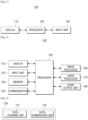
- the input unit 120 receives a user input for controlling the electronic apparatus 100.
- the input unit 120 may receive a user input for summarizing content displayed in the display 110.
- the user input may be a user touch of touching a certain area of the display 110.
- the processor 130 controls overall operations of the electronic apparatus 100. To be specific, based on user input for content summarization being received through the input unit 120, the processor 130 may determine a content summarization range from content areas which are not displayed on the display according to a location where the user input was detected, summarize the content within the content summarization range according to a type of the content, and control the display 110 to display the summarized content on the content.
- the processor 130 may determine the content summarization unit according to the type of the user input and summarize the content within the content summarization range by the determined content summarization unit.
- the processor 130 may summarize the content by a first content summarization unit (for example, a paragraph) and, in response to the user input being a second touch (e.g., a touch beyond or greater than a predetermined time), the processor 130 may summarize the content by a second content summarization unit (for example, an entire document).
- the input unit 120 may be realized as various kinds of input devices, such as, without limitation, a keyboard, a mouse, a pointing device, a user motion summarization device, or the like.
- the memory 140 may store programs and data for various screens to be displayed in a display area of the display 110. Further, the memory 140 may store a data summarization model generated by a learning algorithm for content summarization according to an example embodiment disclosed herein.
- the communicator 150 may communicate with various types of external apparatuses according to diverse communication methods.
- the communicator 150 may include, without limitation, at least one of a Wireless-Fidelity (Wi-Fi) chip, a Bluetooth chip, a wireless communication chip, and a Near Field Communication (NFC) chip.
- the processor 130 may communicate with an external server or a various external apparatuses by controlling the communicator 150.
- the communicator 150 may receive the data summarization model for generating content from the external server.
- the image processor 160 may perform image processing with respect to the image data received from various sources.
- the image processor 160 may perform various image processing operations, such as, decoding, scaling, noise filtering, frame rate conversion, and resolution conversion, with respect to the image data.
- the audio output unit 180 may output various audio data processed by the audio processor 170 and also output various notification sounds or voice messages.
- the processor 130 may determine a content summarization range according to a location where the user input was detected, summarize the content within the content summarization range according to the type of the content, and control the display 110 to display the summarized content, for example, on the content. Meanwhile, according to an example embodiment disclosed herein, the processor 130 may summarize the content by using a data summarization model generated by using a learning algorithm. This operation will be described below in further detail with reference to FIGS. 3 , 4A, and 4B .
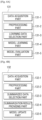
- the processor 130 may include a data learning unit 131 and a data summarizing unit 132 as illustrated in FIG. 3 .
- the data learning unit 131 may learn criteria for content summarization. To be specific, the data learning unit 131 may learn the criteria as to which model to use in order to determine the content summarization or as to how to generate summarized content by using the summarized data for learning. The data learning unit 131 may learn the criteria for content summarization by acquiring the summarized data for learning to be used in the learning operation and applying the acquired summarized data for learning to the data summarization model. A detailed description on the data summarization model will be provided below.
- the data learning unit 131 may allow the data summarization model to learn by using the content and generate the data summarization model for summarizing the content.
- the content may include at least one of text, image, and video.
- the data learning unit 131 may allow the data summarization model to learn by using the content and the summarized content of the content as learning data.
- the data summarization model may be a model configured to summarize content.
- the learning data may be text and summarized text of the text.
- the expected rainfall in the eastern part of Gangwondo, the south coast of Jeollanam-do, Gyeongsang-do, Ulleung-do, and Dok-do is about 5 to 40 mm
- the expected rainfall in the southeastern part of Gangwon-do, Chungcheong-do, Jeolla-do, and Cheju-do is about 5 mm.
- the morning's low temperature will range from 7 to 17 degrees
- the daytime's high temperature will range from 13 to 21 degrees.
- the summarized text may be generated by extracting and editing nouns, verbs, and adjectives which are frequently shown in the text.
- the summarized text may be 'Seoul, Gyeonggi-do, Gangwon-do, raining in eastern coast of Gyeongsang-do, temperature drops' by using the frequently shown words 'Seoul,' 'Gyeonggi-do,' 'Gangwon-do,' 'eastern coast of Gyeongsang-do,' 'rain,' and 'temperature.'
- the data summarization model may be a model configured to summarize a plurality of images.
- the learning data may be the plurality of images and a representative image thereof.
- the learning data may be a plurality of images displayed in a web page of a shopping mall and the largest image or an image displayed in the uppermost part of the web page.
- the data summarization model may be a model configured to summarize text.
- the data summarizing unit 132 may estimate summarized information of the text by applying the text to the data summarization model as recognition data.
- the data summarization model may summarize the text by using nouns, verbs, and adjectives which are frequently shown in the text and sentences including the same.
- the dedicated hardware chip for AI may be a dedicated processor specialized for probability calculation and provide higher parallel processing performance as compared with the existing universal general-purpose processor. Accordingly, the dedicated hardware chip for AI may quickly execute a calculation operation for the AI field, such as, machine learning.
- FIG. 4A is a block diagram illustrating the data learning unit 131 according to some example embodiments disclosed herein.
- the learning data selection part 131-3 may select the summarized data for learning according to the type of the inputted content. For example, in response to the content being news content, the learning data selection part 131-3 may select only the data on areas excluding advertisement data included in the news content. The learning data selection part 131-3 may select some of the summarized data for learning from the preprocessed summarized data for learning, but this is only an example, and the learning data selection part 131-3 may select all of the preprocessed summarized data for learning.
- the learning data selection part 131-3 may select the summarized data for learning according to a user input. For example, in response to a user input being a first touch, the learning data selection part 131-3 may select a paragraph as the summarized data for learning, and in response to the user input being a second touch, the learning data selection part 131-3 may select a passage as the summarized data for learning.
- the data summarizing unit 132 may include a data acquisition part 132-1, a preprocessing part 132-2, a summarized data selection part 132-3, a summarization result providing part 132-4, and a model update part 132-5.
- the data summarizing unit 132 may include the data acquisition part 132-1 and the summarization result providing part 132-4 as essential components and selectively include at least one or none of the preprocessing part 132-2, the summarized data selection part 132-3, and the model update part 132-5.
- the summarization result providing part 132-4 may summarize the content by applying the selected summarized data for recognition to the data summarization model.
- the summarization result providing part 132-4 may provide a summarization result according to a summarization purpose of data.
- the summarization result providing part 132-4 may apply the selected data to the data summarization model by using the summarized data for recognition selected by the summarized data selection part 132-3 as an input value.
- the summarization result may be determined by the data summarization model.
- the data acquisition part 132-1, the preprocessing part 132-2, the summarized data selection part 132-3, the summarization result providing part 132-4, and the model update part 132-5 may be installed in the electronic apparatus 100 or installed in different electronic apparatuses, respectively.
- some of the data acquisition part 132-1, the preprocessing part 132-2, the summarized data selection part 132-3, the summarization result providing part 132-4, and the model update part 132-5 may be included in the electronic apparatus, and the other may be included in a server or other computer.
- At least one of the data acquisition part 132-1, the preprocessing part 132-2, the summarized data selection part 132-3, the summarization result providing part 132-4, and the model update part 132-5 may be realized as a software module.
- the software module may be stored in a non-transitory computer readable medium.
- at least one software module may be provided by the OS or by a certain application. Further, some of the at least one software module may be provided by the OS, and the other may be provided by the certain application.
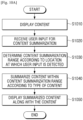
- the processor 130 may control the display 110 to display content.
- the content may be image content including at least one of text, an image, and a video.
- the content may include news content, e-book content, or web page content (for example, blog content or shopping content ).
- text summarization may be executed through three operations of analysis 610, transformation 620, and synthesis 630 as illustrated in FIG. 6 .
- analysis operation 610 information on the content within the content summarization range may be analyzed by the content summarization unit.
- transformation operation 620 main text for forming a summary sentence may be extracted based on the analyzed information.
- synthesis operation 630 the summarized content may be generated and output by arranging and editing the extracted text.
- the processor 130 may perform content summarization by using the data summarization model generated by using the learning algorithm described above in FIGS. 3 , 4A, and 4B , but this is only an example.
- the processor 130 may summarize the content by other summarization methods.
- the processor 130 may determine a main theme of the content summarization unit through semantic analysis of the text included in the content, extract at least one representative sentence from each content summarization unit based on the determined main theme, and generate the summarized content by arranging or synthesizing the representative sentence of each content summarization unit.
- the processor 130 may perform generic summarization for summarizing content according to a type of content for general users and perform query-based summarization for summarizing content to be suitable for interests of a specific user. Further, the processor 130 may perform extractive summarization for extracting and summarizing sentences with meaning from the inputted text according to a type of summarized content and perform abstractive summarization for modifying extracted sentences or generating and summarizing new sentences.
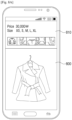
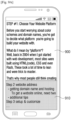
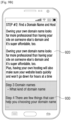
- the processor 130 may generate the summarized content including different objects according to the type of the content. For example, when the type of content is news content or blog content, the processor 130 may generate summarized content including text. When the type of the content is shopping content, the processor 130 may generate summarized content including at least one of text and an image.
- the processor 130 may control the display 110 to display the summarized content in an area corresponding to a location at which the user touch was input, from the display screen where the content is displayed. For example, when user input of touching the lower part of the display 110 is received while a part of the content 700 is displayed, the processor 130 may control the display 110 to display the summarized content 710, 720 in the lower part of the display 110 as illustrated in FIG. 7A or FIG. 7B .
- the processor 130 may control the display 110 to display the area corresponding to a part at which the user input was received of the summarized content.
- the processor 130 may control the display 110 to display an area 920 where a part of the currently displayed content corresponds to the location at which the user input was received as illustrated in FIG. 9B .
- the processor 130 may generate new summarized content 930 by changing the content summarization range of the summarized content and controlling the display 110 to display the new summarized content 930.
- the processor 130 may control the display 110 to display summarized content having a content summarization range changed while a screen of the content is scrolled.
- the processor 130 may control the display 110 to scroll and display a part of the currently displayed content as illustrated in FIG. 9B .
- the processor 130 may generate new summarized content 930 by changing the content summarization range according to the user input for scrolling the page and control the display 110 to display the new summarized content 930.
- the electronic apparatus 100 summarizes the content within the content summarization range according to the type of content (S1040).
- the electronic apparatus 100 may perform content summarization so the content is summarized by different content summarization units according to the type of the content.
- the second component 2002 may be more integrated, more dedicated (specialized), provide less delays, provide higher performance, and/or provide a large amount of resources as compared with the component 2001. Accordingly, the second component 2002 may be capable of processing a large number of calculations required to generate, update, or apply the data summarization model more quickly and effectively.
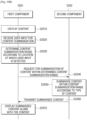
- FIG. 10B is a flowchart provided to describe an example in which the first component summarizes content by using the data summarization model.
- the first component 2001 displays content (S2010).
- the first component 2001 may display only a part of the areas of the content.
- the second component 2002 summarizes the content within the content summarization range according to the type of content (S2050).
- the second component 2002 may summarize the content so as to have different content summarization units according to the type of content.
- the first component 2001 may display the received summarized content along with the content (S2070).
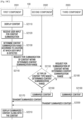
- the first component 2001 and the second component 2002 may be components included in the electronic apparatus 100, and the third component 2003 may be a component located outside the electronic apparatus 100, but the present disclosure is not limited in this respect.
- the first component 2001 displays content (S2110).
- the first component 2001 may display only a part of the areas of the content.
- the user can be provided with summarized content for an area which is not currently displayed more intuitively and conveniently.
- the electronic apparatus 100 learns and summarizes data, but this is only an example, and the electronic apparatus 100 may learn and summarize the data in conjunction with an external server.
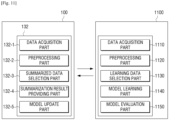
- FIG. 11 is a diagram provided to describe an example in which the electronic apparatus 100 and the server 1100 learn and recognize data through interworking according to some example embodiments.
- the electronic apparatus 100 may interwork with the server 1100 over a local area network or by long distance communication.
- the interworking of the electronic apparatus 100 and the server 1100 may include an operation in which the electronic apparatus 100 and the server 1100 are connected directly or an operation in which the electronic apparatus 100 and the server 1100 are connected through another component (for example, at least one of an Access Point (AP), a hub, a relay device, a base station, a router, and a gateway).
- AP Access Point
- the server 1100 may perform the functions of the data learning unit 131 of FIG. 3 .
- a model learning part 1140 of the server 1100 may learn the criteria as to which data to use in order to summarize the content and as to how to summarize the content by using the data.
- the model learning unit 1140 may learn the criteria for content summarization by acquiring summarized data to be used in the learning operation and applying the acquired summarized data to the data summarization model. A detailed description on the data summarization model will be provided below.
- the model learning unit 1140 may allow the data summarization mode to learn by using the content (for example, text, an image, and a video) and generate the data summarization model configured to generate summarized information of the content.
- the generated data summarization model may be a data summarization model configured to summarize text, for example.
- the summarization result providing part 132-4 of the electronic apparatus 100 may summarize the content by applying the summarized data selected by the summarized data selection part 132-3 to the data summarization model generated by the server 1100.
- the summarization result providing part 132-4 may transmit the summarized data selected by the summarized data selection part 132-3 to the server 1100, and the server 110 may apply the data selected by the summarized data selection part 132-3 to the data summarization model.
- the summarization result providing part 132-4 may summarize the content.
- the summarization result providing part 132-4 may receive information on the summarized content generated by the server 1100 from the server 1100.
- the server 1100 may summarize the text by applying the text to the data summarization model configured to summarize text and provide the summarized text to the summarization result providing part 132-4 of the electronic apparatus 100.
- the summarization result providing part 132-4 of the electronic apparatus 100 may receive the data summarization model generated by the server 1100 from the server 1100 and summarize the content by using the received data summarization model.
- the summarization result providing part 132-4 of the electronic apparatus 100 may summarize the content by applying the summarized data selected by the summarized data selection part 132-3 to the data summarization model received from the server 1100.
- the server 1100 may summarize the text by applying the text to a data summarization model configured to summarize text received from the server 1100 and provide the summarized text to the processor of the electronic apparatus 100 (for example, the processor 130 of FIG. 1 ).
- the processor 130 may control the display (for example, the display 110 of FIG. 1 ) to display the summarized text.
- the above-described methods may be realized as program instructions which are executable by diverse computer systems and recorded in a non-transitory computer readable medium.
- the non-transitory computer readable medium may include program instructions, data files, and data structures or combinations thereof.
- the program instructions recorded in the medium may be specially designed and configured for the present disclosure or may have been publicly known and available to a person having ordinary skill in the computer software field.
- the non-transitory computer readable medium may include a hardware device which is specially configured to store and execute program instructions, such as, magnetic mediums including a hard disk, a floppy disk, or a magnetic tape, optical mediums including a Compact Disc Read-Only Memory (CD-ROM) or a Digital Versatile Disk (DVD), magneto-optical mediums including a floptical disk, a Read-Only Memory (ROM), a Random Access Memory (RAM), and a flash memory.
- the program instructions may include a high-level language code which is executable by a computer by using an interpreter as well as a machine language code generated by a compiler, for example.
- the hardware device may be configured to operate as one or more software modules in order to perform the operations of the present disclosure, and vice versa.
- the computer program products may include a software program, a recording medium which is readable by a computer with a software program, or a product transacted between a seller and a buyer.
- the computer program products may include a product in a form of a software program (for example, a downloadable application) which is electrically distributed through the electronic apparatus 100, a manufacturer of the electronic apparatus 100, or an e-market (for example, Google Play Store or App Store).
- a software program for example, a downloadable application
- an e-market for example, Google Play Store or App Store
- the software program may be stored in a recording medium or may be temporarily generated.
- the recording medium may be a recording medium of a server of the manufacturer or the e-market or a recording medium or a relay server.
Landscapes
- Engineering & Computer Science (AREA)
- Theoretical Computer Science (AREA)
- General Engineering & Computer Science (AREA)
- Physics & Mathematics (AREA)
- General Physics & Mathematics (AREA)
- Business, Economics & Management (AREA)
- Finance (AREA)
- Accounting & Taxation (AREA)
- Human Computer Interaction (AREA)
- Economics (AREA)
- Strategic Management (AREA)
- General Health & Medical Sciences (AREA)
- General Business, Economics & Management (AREA)
- Health & Medical Sciences (AREA)
- Marketing (AREA)
- Computational Linguistics (AREA)
- Artificial Intelligence (AREA)
- Development Economics (AREA)
- Audiology, Speech & Language Pathology (AREA)
- Tourism & Hospitality (AREA)
- Multimedia (AREA)
- Computer Networks & Wireless Communication (AREA)
- Signal Processing (AREA)
- Human Resources & Organizations (AREA)
- Primary Health Care (AREA)
- Data Mining & Analysis (AREA)
- Databases & Information Systems (AREA)
- Information Retrieval, Db Structures And Fs Structures Therefor (AREA)
- User Interface Of Digital Computer (AREA)
Claims (13)
- Procédé destiné à la récapitulation de contenu d'un appareil électronique (100), le procédé comprenant :
l'affichage (S1010) d'une première partie (700, 900) de contenu sur un dispositif d'affichage (110) :la réception (S1020) d'une première saisie tactile (505, 515, 525) destinée à la récapitulation de parties non affichées du contenu sur le dispositif d'affichage pendant que la première partie du contenu est affichée ; en réponse à la réception de la première saisie tactile, la détermination, parmi la zone supérieure, la zone inférieure, la zone droite et la zone gauche du dispositif d'affichage, de la première zone du dispositif d'affichage correspondant à une position où la première saisie tactile est reçue sur le dispositif d'affichage, etla détermination (S1030), parmi une pluralité de différentes parties non affichées du contenu, d'une première partie non affichée (510, 520, 530) du contenu correspondant à la première zone déterminée, dans lequel la première partie non affichée du contenu est dans une même direction que la première zone déterminée par rapport à un centre du dispositif d' affichage ;l'identification d'un type de contenu en analysant au moins l'un de texte et d'une image compris dans le contenu ;l'obtention (S1040) d'informations de récapitulation (710, 720, 910) liées à la première partie non affichée du contenu selon le type identifié du contenu, dans lequel les informations de récapitulation comprennent différents objets selon le type identifié du contenu ;l'affichage (S1050) des informations de récapitulation liées à une première partie non affichée de contenu avec la première partie du contenu, dans lequel les informations de récapitulation sont affichées sur une zone correspondant à la position où la saisie utilisateur est reçue sur le dispositif d'affichage,
la réception d'une seconde saisie tactile sur une partie des informations de récapitulation pendant que les informations de récapitulation sont affichées sur le dispositif d'affichage avec la première partie du contenu ;en réponse à la seconde saisie tactile, l'affichage sur le dispositif d'affichage d'au moins une partie de la première partie non affichée du contenu (920) correspondant à une partie du contenu récapitulé au niveau de laquelle la seconde saisie tactile a été reçue,dans lequel la première partie précédemment affichée du contenu est remplacée par l'affichage de l'au moins une partie de la première partie non affichée du contenu sur le dispositif d'affichage,dans lequel une quantité de l'au moins une partie de la première partie non affichée du contenu est supérieure à une quantité des informations de récapitulation ; et de plus, en réponse à la seconde saisie tactile, la génération de nouvelles informations de récapitulation (930) liées à la première partie non affichée du contenu et l'affichage des nouvelles informations de récapitulation sur le dispositif d'affichage. - Procédé selon la revendication 1,
dans lequel l'obtention des informations de récapitulation comprend en outre :l'identification d'une zone à récapituler dans la première partie non affichée selon le type du contenu ; etl'obtention des informations de récapitulation liées au contenu de la première partie non affichée en récapitulant des données de la zone identifiée. - Procédé selon la revendication 1,
dans lequel l'obtention des informations de récapitulation comprend en outre la récapitulation du contenu par différentes unités de récapitulation de contenu sur la base du type de contenu, et dans lequel les unités de récapitulation de contenu comprennent au moins l'un d'un paragraphe, d'un chapitre, d'une page ou d'un document entier. - Procédé selon la revendication 1,
dans lequel l'affichage d'au moins une partie de la première partie non affichée du contenu sur le dispositif d'affichage comprend l'affichage d'une zone correspondant à une partie au niveau de laquelle la seconde saisie utilisateur a été reçue. - Procédé selon la revendication 1, comprenant en outre :
l'affichage, sur la base de la réception d'une saisie utilisateur destinée au défilement d'un écran pendant que les informations de récapitulation sont affichées, d'informations de récapitulation présentant une plage de récapitulation de contenu modifiée selon le défilement de l'écran. - Procédé selon la revendication 1, dans lequel le contenu est récapitulé au sein de la première partie non affichée sur la base d'un modèle de récapitulation de données généré en utilisant un algorithme d'apprentissage.
- Procédé selon la revendication 1, dans lequel l'obtention d'informations de récapitulation liées au contenu de la première partie non affichée comprend :l'analyse d'informations du contenu au sein de la première partie non affichée ;l'extraction de texte principal pour une phrase récapitulative sur la base des informations analysées ; etla génération de contenu récapitulé en éditant et en arrangeant le texte principal extrait.
- Procédé selon la revendication 1, dans lequel le contenu comprend un contenu d'achat (800) pour une pluralité de produits, les informations de récapitulation comprenant des images des produits et du texte concernant les produits.
- Appareil électronique (100) comprenant :un dispositif d'affichage (110) ;une unité de saisie (120) configurée pour recevoir une saisie utilisateur ; etun processeur (130) configuré pour :commander au dispositif d'affichage d'afficher une première partie de contenu (900) ;recevoir une première saisie tactile (505, 515, 525) destinée à la récapitulation de parties non affichées du contenu sur le dispositif d'affichage pendant que la première partie du contenu est affichée ; en réponse à la réception de la première saisie tactile, déterminer, parmi la zone supérieure, la zone inférieure, la zone droite et la zone gauche du dispositif d'affichage, de la première zone du dispositif d'affichage correspondant à une position où la première saisie tactile est reçue sur le dispositif d'affichage,
et déterminer, parmi une pluralité de différentes parties non affichées du contenu, une première partie non affichée (510, 520, 530) du contenu correspondant à la première zone déterminée ;dans lequel la première partie non affichée du contenu est dans une même direction que la première zone déterminée par rapport à un centre du dispositif d'affichage ;identifier un type de contenu en analysant au moins l'un de texte et d'une image compris dans le contenu ;obtenir des informations de récapitulation (710, 720, 910) liées à la première partie non affichée du contenu selon le type identifié du contenu, dans lequel les informations de récapitulation comprennent différents objets selon le type identifié du contenu ; etcommander au dispositif d'affichage d'afficher les informations de récapitulation liées à une première partie non affichée de contenu avec au moins une partie de la première partie du contenu, dans lequel les informations de récapitulation sont affichées sur une zone correspondant à la position où la saisie utilisateur est reçue sur le dispositif d'affichage, recevoir une seconde saisie tactile sur une partie des informations de récapitulation pendant que les informations de récapitulation sont affichées sur le dispositif d'affichage avec la première partie du contenu ;en réponse à la seconde saisie tactile, commander au dispositif d'affichage d'afficher au moins une partie de la première partie non affichée du contenu (920) correspondant à une partie du contenu récapitulé au niveau de laquelle la seconde saisie tactile a été reçue,dans lequel la première partie précédemment affichée du contenu est remplacée par l'affichage de l'au moins une partie de la première partie non affichée du contenu sur le dispositif d'affichagedans lequel une quantité de l'au moins une partie de la première partie non affichée du contenu est supérieure à une quantité des informations de récapitulation ; etde plus, en réponse à la seconde saisie tactile, générer de nouvelles informations de récapitulation (930) liées à la première partie non affichée du contenu et afficher les nouvelles informations de récapitulation sur le dispositif d'affichage. - Appareil selon la revendication 9, dans lequel le processeur est en outre configuré pour :identifier une zone à récapituler dans la première partie non affichée selon le type du contenu en utilisant un module de sélection de données récapitulées ; etobtenir les informations de récapitulation liées au contenu de la première partie non affichée en récapitulant des données de la zone identifiée à l'aide d'un module fournissant des résultats de récapitulation.
- Appareil selon la revendication 9, dans lequel le processeur est en outre configuré pour récapituler le contenu par différentes unités de récapitulation de contenu sur la base du type de contenu, et dans lequel les unités de récapitulation de contenu comprennent au moins l'un d'un paragraphe, d'un chapitre, d'une page ou d'un document entier.
- Appareil selon la revendication 9, dans lequel l'affichage de l'au moins une partie de la première partie non affichée du contenu sur le dispositif d'affichage comprend l'affichage d'une zone correspondant à une partie au niveau de laquelle la seconde saisie utilisateur a été reçue.
- Appareil selon la revendication 9, dans lequel le processeur est en outre configuré pour, sur la base de la réception d'une saisie utilisateur destinée au défilement de l'écran pendant que les informations de récapitulation sont affichées, commander au dispositif d'affichage d'afficher des informations de récapitulation comportant une plage de récapitulation de contenu modifiée selon le défilement de l'écran.
Applications Claiming Priority (3)
| Application Number | Priority Date | Filing Date | Title |
|---|---|---|---|
| KR20160160125 | 2016-11-29 | ||
| KR1020170144782A KR102629772B1 (ko) | 2016-11-29 | 2017-11-01 | 전자 장치 및 이의 컨텐츠 요약 방법 |
| PCT/KR2017/013632 WO2018101694A1 (fr) | 2016-11-29 | 2017-11-28 | Appareil électronique et procédé destinés à la récapitulation de contenu |
Publications (4)
| Publication Number | Publication Date |
|---|---|
| EP3545401A4 EP3545401A4 (fr) | 2019-10-02 |
| EP3545401A1 EP3545401A1 (fr) | 2019-10-02 |
| EP3545401B1 true EP3545401B1 (fr) | 2025-04-09 |
| EP3545401C0 EP3545401C0 (fr) | 2025-04-09 |
Family
ID=62621799
Family Applications (1)
| Application Number | Title | Priority Date | Filing Date |
|---|---|---|---|
| EP17876699.4A Active EP3545401B1 (fr) | 2016-11-29 | 2017-11-28 | Appareil électronique et procédé destinés à la récapitulation de contenu |
Country Status (3)
| Country | Link |
|---|---|
| EP (1) | EP3545401B1 (fr) |
| KR (1) | KR102629772B1 (fr) |
| CN (1) | CN110023984A (fr) |
Families Citing this family (9)
| Publication number | Priority date | Publication date | Assignee | Title |
|---|---|---|---|---|
| KR102700670B1 (ko) * | 2018-11-12 | 2024-08-30 | 삼성전자주식회사 | 전자 펜에 의한 터치 입력을 수신하는 터치 스크린을 포함하는 디바이스 및 그 동작 방법 |
| KR102201153B1 (ko) * | 2018-11-29 | 2021-01-12 | 동국대학교 산학협력단 | 전자책 서비스 제공 장치 및 방법 |
| KR102311947B1 (ko) * | 2021-04-12 | 2021-10-13 | (주)인더스트리미디어 | 학습과정 예고편 영상 생성 방법 및 장치 |
| KR20230096164A (ko) | 2021-12-22 | 2023-06-30 | 한국전자기술연구원 | 영상 내 정보를 기반으로 영상을 요약하는 영상 요약 장치 및 방법 |
| KR102750269B1 (ko) * | 2022-07-06 | 2025-01-03 | 염광윤 | 인공지능 기반 컨텐츠 생성 장치 및 방법 |
| KR102799464B1 (ko) * | 2023-04-28 | 2025-04-28 | 주식회사 더샹그릴라 | 복합 콘텐츠 제공 장치 및 방법 |
| KR102816917B1 (ko) * | 2024-05-24 | 2025-06-10 | 쿠팡 주식회사 | 전자 장치 및 그의 정보 제공 방법 |
| WO2026005253A1 (fr) * | 2024-06-27 | 2026-01-02 | 삼성전자 주식회사 | Dispositif électronique comprenant un projecteur et procédé de fonctionnement correspondant |
| WO2026010115A1 (fr) * | 2024-07-01 | 2026-01-08 | 삼성전자 주식회사 | Dispositif électronique pour fournir des informations de résumé, son procédé de fonctionnement et support de stockage |
Citations (1)
| Publication number | Priority date | Publication date | Assignee | Title |
|---|---|---|---|---|
| US20150347403A1 (en) * | 2014-06-03 | 2015-12-03 | Kobo Inc. | Gesture controlled content summarization for a computing device |
Family Cites Families (7)
| Publication number | Priority date | Publication date | Assignee | Title |
|---|---|---|---|---|
| JP2012008970A (ja) * | 2010-06-28 | 2012-01-12 | Rakuten Inc | 要約情報表示装置、要約情報表示方法、要約情報表示プログラム、要約情報提供装置、要約情報提供プログラム、および、記録媒体 |
| CN103294706A (zh) * | 2012-02-28 | 2013-09-11 | 腾讯科技(深圳)有限公司 | 触摸式终端中的文本搜索方法和装置 |
| WO2013136501A1 (fr) * | 2012-03-16 | 2013-09-19 | トヨタ自動車 株式会社 | Dispositif de présentation d'informations et système de gestion d'informations à usage de présentation |
| US20150278187A1 (en) * | 2012-04-26 | 2015-10-01 | Google Inc. | Summary-so-far feature for electronic books |
| KR101328202B1 (ko) * | 2012-12-03 | 2013-11-20 | 김정수 | 제스처 입력을 통한 기능 수행 명령실행 방법 및 장치 |
| KR20140087573A (ko) * | 2012-12-31 | 2014-07-09 | 엘지전자 주식회사 | 이동 단말기 및 그 제어방법 |
| KR20160065670A (ko) * | 2014-12-01 | 2016-06-09 | 삼성전자주식회사 | 컨텐트를 제공하는 방법 및 디바이스 |
-
2017
- 2017-11-01 KR KR1020170144782A patent/KR102629772B1/ko active Active
- 2017-11-28 CN CN201780073715.1A patent/CN110023984A/zh active Pending
- 2017-11-28 EP EP17876699.4A patent/EP3545401B1/fr active Active
Patent Citations (1)
| Publication number | Priority date | Publication date | Assignee | Title |
|---|---|---|---|---|
| US20150347403A1 (en) * | 2014-06-03 | 2015-12-03 | Kobo Inc. | Gesture controlled content summarization for a computing device |
Non-Patent Citations (1)
| Title |
|---|
| ANDHALE NARENDRA ET AL: "An overview of Text Summarization techniques", 2016 INTERNATIONAL CONFERENCE ON COMPUTING COMMUNICATION CONTROL AND AUTOMATION (ICCUBEA), IEEE, 12 August 2016 (2016-08-12), pages 1 - 7, XP033068497, DOI: 10.1109/ICCUBEA.2016.7860024 * |
Also Published As
| Publication number | Publication date |
|---|---|
| EP3545401A4 (fr) | 2019-10-02 |
| CN110023984A (zh) | 2019-07-16 |
| KR102629772B1 (ko) | 2024-01-29 |
| KR20180060972A (ko) | 2018-06-07 |
| EP3545401C0 (fr) | 2025-04-09 |
| EP3545401A1 (fr) | 2019-10-02 |
Similar Documents
| Publication | Publication Date | Title |
|---|---|---|
| US11481832B2 (en) | Electronic apparatus and method for summarizing content thereof | |
| US12591419B2 (en) | Prompt based hyper-personalization of user interfaces | |
| KR102644088B1 (ko) | 인공지능 학습모델을 이용하여 요약 정보를 제공하기 위한 전자 장치 및 이의 제어 방법 | |
| KR102629772B1 (ko) | 전자 장치 및 이의 컨텐츠 요약 방법 | |
| US12327197B2 (en) | System and method for providing content based on knowledge graph | |
| US10726208B2 (en) | Consumer insights analysis using word embeddings | |
| US20210217409A1 (en) | Electronic device and control method therefor | |
| JP2018041443A (ja) | ディープラーニング人工神経網基盤のタスク提供プラットフォーム | |
| US20210182558A1 (en) | Apparatus for generating user interest information and method therefor | |
| JP2018529133A (ja) | デジタルグラフィックノベルの自動翻訳 | |
| KR20180132493A (ko) | 스와이프 입력에 기초하여 입력 문자를 판단하는 시스템 및 방법 | |
| WO2021237227A1 (fr) | Procédé et système pour modèle de reconnaissance de texte multilingue avec classification de langue autonome | |
| US20190251355A1 (en) | Method and electronic device for generating text comment about content | |
| US20220269935A1 (en) | Personalizing Digital Experiences Based On Predicted User Cognitive Style | |
| CN119580707A (zh) | 语音交互方法、设备及存储介质 | |
| US20200097507A1 (en) | Electronic apparatus, method for controlling the same, and non-transitory computer readable recording medium | |
| Islam et al. | A simple and mighty arrowhead detection technique of Bangla sign language characters with CNN | |
| KR20180102987A (ko) | 전자 장치, 이의 제어 방법 및 비일시적인 컴퓨터 판독가능 기록매체 | |
| CN113934501B (zh) | 翻译方法、装置、存储介质及电子设备 | |
| KR102865284B1 (ko) | 전자 장치 및 그의 제어 방법 | |
| US11893063B2 (en) | Electronic device and operation method thereof | |
| Indra Gandhi et al. | AI-NLP powered assistive technology system for individuals with vocally and hearing impairments | |
| US11308279B2 (en) | Method and system simplifying the input of symbols used as a pair within a user interface | |
| KR102780542B1 (ko) | 멀티 모달을 활용한 웹북 콘텐츠 생성 방법 | |
| CN120494908A (zh) | 广告推荐方法、装置、电子设备及介质 |
Legal Events
| Date | Code | Title | Description |
|---|---|---|---|
| STAA | Information on the status of an ep patent application or granted ep patent |
Free format text: STATUS: THE INTERNATIONAL PUBLICATION HAS BEEN MADE |
|
| PUAI | Public reference made under article 153(3) epc to a published international application that has entered the european phase |
Free format text: ORIGINAL CODE: 0009012 |
|
| STAA | Information on the status of an ep patent application or granted ep patent |
Free format text: STATUS: REQUEST FOR EXAMINATION WAS MADE |
|
| 17P | Request for examination filed |
Effective date: 20190628 |
|
| A4 | Supplementary search report drawn up and despatched |
Effective date: 20190827 |
|
| AK | Designated contracting states |
Kind code of ref document: A1 Designated state(s): AL AT BE BG CH CY CZ DE DK EE ES FI FR GB GR HR HU IE IS IT LI LT LU LV MC MK MT NL NO PL PT RO RS SE SI SK SM TR |
|
| AX | Request for extension of the european patent |
Extension state: BA ME |
|
| DAV | Request for validation of the european patent (deleted) | ||
| DAX | Request for extension of the european patent (deleted) | ||
| STAA | Information on the status of an ep patent application or granted ep patent |
Free format text: STATUS: EXAMINATION IS IN PROGRESS |
|
| 17Q | First examination report despatched |
Effective date: 20210621 |
|
| REG | Reference to a national code |
Ref country code: DE Free format text: PREVIOUS MAIN CLASS: G06F0003048800 Ref legal event code: R079 Ref document number: 602017088867 Country of ref document: DE Ipc: G06F0003048500 |
|
| GRAP | Despatch of communication of intention to grant a patent |
Free format text: ORIGINAL CODE: EPIDOSNIGR1 |
|
| STAA | Information on the status of an ep patent application or granted ep patent |
Free format text: STATUS: GRANT OF PATENT IS INTENDED |
|
| RIC1 | Information provided on ipc code assigned before grant |
Ipc: G06Q 30/0601 20230101ALI20250116BHEP Ipc: G06F 40/30 20200101ALI20250116BHEP Ipc: G06F 40/169 20200101ALI20250116BHEP Ipc: G06F 16/738 20190101ALI20250116BHEP Ipc: G06F 3/0488 20130101ALI20250116BHEP Ipc: G06F 3/0485 20130101AFI20250116BHEP |
|
| GRAS | Grant fee paid |
Free format text: ORIGINAL CODE: EPIDOSNIGR3 |
|
| INTG | Intention to grant announced |
Effective date: 20250130 |
|
| RIN1 | Information on inventor provided before grant (corrected) |
Inventor name: RHO, JI-HYUN Inventor name: RYU, WON-HO Inventor name: LEE, JI-YEON |
|
| GRAA | (expected) grant |
Free format text: ORIGINAL CODE: 0009210 |
|
| STAA | Information on the status of an ep patent application or granted ep patent |
Free format text: STATUS: THE PATENT HAS BEEN GRANTED |
|
| AK | Designated contracting states |
Kind code of ref document: B1 Designated state(s): AL AT BE BG CH CY CZ DE DK EE ES FI FR GB GR HR HU IE IS IT LI LT LU LV MC MK MT NL NO PL PT RO RS SE SI SK SM TR |
|
| REG | Reference to a national code |
Ref country code: GB Ref legal event code: FG4D |
|
| REG | Reference to a national code |
Ref country code: CH Ref legal event code: EP |
|
| REG | Reference to a national code |
Ref country code: DE Ref legal event code: R096 Ref document number: 602017088867 Country of ref document: DE |
|
| REG | Reference to a national code |
Ref country code: IE Ref legal event code: FG4D |
|
| U01 | Request for unitary effect filed |
Effective date: 20250429 |
|
| U07 | Unitary effect registered |
Designated state(s): AT BE BG DE DK EE FI FR IT LT LU LV MT NL PT RO SE SI Effective date: 20250507 |
|
| PG25 | Lapsed in a contracting state [announced via postgrant information from national office to epo] |
Ref country code: ES Free format text: LAPSE BECAUSE OF FAILURE TO SUBMIT A TRANSLATION OF THE DESCRIPTION OR TO PAY THE FEE WITHIN THE PRESCRIBED TIME-LIMIT Effective date: 20250409 |
|
| PG25 | Lapsed in a contracting state [announced via postgrant information from national office to epo] |
Ref country code: NO Free format text: LAPSE BECAUSE OF FAILURE TO SUBMIT A TRANSLATION OF THE DESCRIPTION OR TO PAY THE FEE WITHIN THE PRESCRIBED TIME-LIMIT Effective date: 20250709 Ref country code: GR Free format text: LAPSE BECAUSE OF FAILURE TO SUBMIT A TRANSLATION OF THE DESCRIPTION OR TO PAY THE FEE WITHIN THE PRESCRIBED TIME-LIMIT Effective date: 20250710 |
|
| PG25 | Lapsed in a contracting state [announced via postgrant information from national office to epo] |
Ref country code: PL Free format text: LAPSE BECAUSE OF FAILURE TO SUBMIT A TRANSLATION OF THE DESCRIPTION OR TO PAY THE FEE WITHIN THE PRESCRIBED TIME-LIMIT Effective date: 20250409 |
|
| PG25 | Lapsed in a contracting state [announced via postgrant information from national office to epo] |
Ref country code: HR Free format text: LAPSE BECAUSE OF FAILURE TO SUBMIT A TRANSLATION OF THE DESCRIPTION OR TO PAY THE FEE WITHIN THE PRESCRIBED TIME-LIMIT Effective date: 20250409 |
|
| PG25 | Lapsed in a contracting state [announced via postgrant information from national office to epo] |
Ref country code: RS Free format text: LAPSE BECAUSE OF FAILURE TO SUBMIT A TRANSLATION OF THE DESCRIPTION OR TO PAY THE FEE WITHIN THE PRESCRIBED TIME-LIMIT Effective date: 20250709 |
|
| PG25 | Lapsed in a contracting state [announced via postgrant information from national office to epo] |
Ref country code: IS Free format text: LAPSE BECAUSE OF FAILURE TO SUBMIT A TRANSLATION OF THE DESCRIPTION OR TO PAY THE FEE WITHIN THE PRESCRIBED TIME-LIMIT Effective date: 20250809 |
|
| U20 | Renewal fee for the european patent with unitary effect paid |
Year of fee payment: 9 Effective date: 20251124 |
|
| PGFP | Annual fee paid to national office [announced via postgrant information from national office to epo] |
Ref country code: GB Payment date: 20251001 Year of fee payment: 9 |
|
| PG25 | Lapsed in a contracting state [announced via postgrant information from national office to epo] |
Ref country code: SM Free format text: LAPSE BECAUSE OF FAILURE TO SUBMIT A TRANSLATION OF THE DESCRIPTION OR TO PAY THE FEE WITHIN THE PRESCRIBED TIME-LIMIT Effective date: 20250409 |
|
| PG25 | Lapsed in a contracting state [announced via postgrant information from national office to epo] |
Ref country code: CZ Free format text: LAPSE BECAUSE OF FAILURE TO SUBMIT A TRANSLATION OF THE DESCRIPTION OR TO PAY THE FEE WITHIN THE PRESCRIBED TIME-LIMIT Effective date: 20250409 |
|
| PG25 | Lapsed in a contracting state [announced via postgrant information from national office to epo] |
Ref country code: SK Free format text: LAPSE BECAUSE OF FAILURE TO SUBMIT A TRANSLATION OF THE DESCRIPTION OR TO PAY THE FEE WITHIN THE PRESCRIBED TIME-LIMIT Effective date: 20250409 |
|
| PLBE | No opposition filed within time limit |
Free format text: ORIGINAL CODE: 0009261 |
|
| STAA | Information on the status of an ep patent application or granted ep patent |
Free format text: STATUS: NO OPPOSITION FILED WITHIN TIME LIMIT |
|
| REG | Reference to a national code |
Ref country code: CH Ref legal event code: L10 Free format text: ST27 STATUS EVENT CODE: U-0-0-L10-L00 (AS PROVIDED BY THE NATIONAL OFFICE) Effective date: 20260218 |
|
| 26N | No opposition filed |
Effective date: 20260112 |