EP3545423B1 - Gestion des surcharges dans un réseau de distribution de contenu (cdn) - Google Patents
Gestion des surcharges dans un réseau de distribution de contenu (cdn) Download PDFInfo
- Publication number
- EP3545423B1 EP3545423B1 EP17874200.3A EP17874200A EP3545423B1 EP 3545423 B1 EP3545423 B1 EP 3545423B1 EP 17874200 A EP17874200 A EP 17874200A EP 3545423 B1 EP3545423 B1 EP 3545423B1
- Authority
- EP
- European Patent Office
- Prior art keywords
- degraded
- server
- requests
- processing
- content
- Prior art date
- Legal status (The legal status is an assumption and is not a legal conclusion. Google has not performed a legal analysis and makes no representation as to the accuracy of the status listed.)
- Active
Links
Images

Classifications
-
- H—ELECTRICITY
- H04—ELECTRIC COMMUNICATION TECHNIQUE
- H04L—TRANSMISSION OF DIGITAL INFORMATION, e.g. TELEGRAPHIC COMMUNICATION
- H04L67/00—Network arrangements or protocols for supporting network services or applications
- H04L67/50—Network services
- H04L67/60—Scheduling or organising the servicing of application requests, e.g. requests for application data transmissions using the analysis and optimisation of the required network resources
- H04L67/61—Scheduling or organising the servicing of application requests, e.g. requests for application data transmissions using the analysis and optimisation of the required network resources taking into account QoS or priority requirements
-
- H—ELECTRICITY
- H04—ELECTRIC COMMUNICATION TECHNIQUE
- H04L—TRANSMISSION OF DIGITAL INFORMATION, e.g. TELEGRAPHIC COMMUNICATION
- H04L67/00—Network arrangements or protocols for supporting network services or applications
- H04L67/01—Protocols
- H04L67/10—Protocols in which an application is distributed across nodes in the network
- H04L67/1001—Protocols in which an application is distributed across nodes in the network for accessing one among a plurality of replicated servers
- H04L67/1004—Server selection for load balancing
- H04L67/1008—Server selection for load balancing based on parameters of servers, e.g. available memory or workload
-
- G—PHYSICS
- G06—COMPUTING OR CALCULATING; COUNTING
- G06F—ELECTRIC DIGITAL DATA PROCESSING
- G06F9/00—Arrangements for program control, e.g. control units
- G06F9/06—Arrangements for program control, e.g. control units using stored programs, i.e. using an internal store of processing equipment to receive or retain programs
- G06F9/46—Multiprogramming arrangements
- G06F9/50—Allocation of resources, e.g. of the central processing unit [CPU]
- G06F9/5005—Allocation of resources, e.g. of the central processing unit [CPU] to service a request
- G06F9/5027—Allocation of resources, e.g. of the central processing unit [CPU] to service a request the resource being a machine, e.g. CPUs, Servers, Terminals
- G06F9/505—Allocation of resources, e.g. of the central processing unit [CPU] to service a request the resource being a machine, e.g. CPUs, Servers, Terminals considering the load
-
- H—ELECTRICITY
- H04—ELECTRIC COMMUNICATION TECHNIQUE
- H04L—TRANSMISSION OF DIGITAL INFORMATION, e.g. TELEGRAPHIC COMMUNICATION
- H04L43/00—Arrangements for monitoring or testing data switching networks
- H04L43/08—Monitoring or testing based on specific metrics, e.g. QoS, energy consumption or environmental parameters
- H04L43/0876—Network utilisation, e.g. volume of load or congestion level
-
- H—ELECTRICITY
- H04—ELECTRIC COMMUNICATION TECHNIQUE
- H04L—TRANSMISSION OF DIGITAL INFORMATION, e.g. TELEGRAPHIC COMMUNICATION
- H04L43/00—Arrangements for monitoring or testing data switching networks
- H04L43/16—Threshold monitoring
-
- H—ELECTRICITY
- H04—ELECTRIC COMMUNICATION TECHNIQUE
- H04L—TRANSMISSION OF DIGITAL INFORMATION, e.g. TELEGRAPHIC COMMUNICATION
- H04L65/00—Network arrangements, protocols or services for supporting real-time applications in data packet communication
- H04L65/60—Network streaming of media packets
- H04L65/61—Network streaming of media packets for supporting one-way streaming services, e.g. Internet radio
- H04L65/612—Network streaming of media packets for supporting one-way streaming services, e.g. Internet radio for unicast
-
- H—ELECTRICITY
- H04—ELECTRIC COMMUNICATION TECHNIQUE
- H04L—TRANSMISSION OF DIGITAL INFORMATION, e.g. TELEGRAPHIC COMMUNICATION
- H04L65/00—Network arrangements, protocols or services for supporting real-time applications in data packet communication
- H04L65/80—Responding to QoS
Definitions
- This invention relates to content delivery and content delivery networks. More specifically, this invention relates to overload handling in content delivery networks (CDNs).
- CDNs content delivery networks
- the prior art EP 1049031 A2 presents an adaptive load control system which detects an overload condition of the content server, causing the content requests to access the corresponding file from one of several alternative content qualities for delivery in accordance with the load conditions.
- the prior art XP011135309 deals with several scenarios for a content server that combines requests downgrading options using different threshold values in the access control.
- a content delivery network distributes content (e.g., resources) efficiently to clients on behalf of one or more content providers, preferably via a public Internet.
- Content providers provide their content (e.g., resources) via origin sources (origin servers or origins).
- a CDN can also provide an over-the-top transport mechanism for efficiently sending content in the reverse direction - from a client to an origin server.
- clients end-users
- content providers benefit from using a CDN.
- a content provider is able to take pressure off (and thereby reduce the load on) its own servers (e.g ., its origin servers). Clients benefit by being able to obtain content with fewer delays.
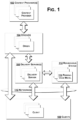
- FIG. 1 shows aspects of an exemplary CDN in which one or more content providers 102 provide content via one or more origin sources 104 and delivery services (servers) 106 to clients 108 via one or more networks 110.
- the delivery services (servers) 106 may form a delivery network from which clients 108 may obtain content.
- the delivery services 106 may be logically and/or physically organized hierarchically and may include edge caches.
- components of a CDN may use the CDN to deliver content to other CDN components.
- a CDN component may itself be a client of the CDN.
- the CDN may use its own infrastructure to deliver CDN content (e.g., CDN control and configuration information) to CDN components.
- Client requests may be associated with delivery server(s) 106 by a rendezvous system 112 comprising one or more rendezvous mechanism(s) 114 , possibly in the form of one or more rendezvous networks.
- the rendezvous mechanism(s) 114 may be implemented, at least in part, using or as part of a DNS system, and the association of a particular client request (e.g., for content) with one or more delivery servers may be done as part of DNS processing associated with that particular client request (e.g., DNS processing of a domain name associated with the particular client request).
- multiple delivery servers 106 in the CDN can process or handle any particular client request for content (e.g., for one or more resources).
- the rendezvous system 112 associates a particular client request with one or more "best” or “optimal” (or “least worst") delivery servers 106 (or clusters) to deal with that particular request.
- the "best” or “optimal” delivery server(s) 106 (or cluster(s)) may be one(s) that is (are) close to the client (by some measure of network cost) and that is (are) not overloaded.
- the chosen delivery server(s) 106 (or cluster(s)) (i.e., the delivery server(s) or cluster(s) chosen by the rendezvous system 112 for a client request) can deliver the requested content to the client or can direct the client, somehow and in some manner, to somewhere where the client can try to obtain the requested content.
- a chosen delivery server 106 (or cluster) need not have the requested content at the time the request is made, even if that chosen delivery server 106 (or cluster) eventually serves the requested content to the requesting client.
- CDNs are described in U.S. Patents Nos. 8,060,613 and 8,825,830 , the entire contents of both of which are fully incorporated herein by reference in their entirety and for all purposes.
- the rendezvous system 112 may be implemented, at least in part, as described in U.S. Patent No. 7,822,871 titled “Configurable Adaptive Global Traffic Control And Management,” filed September 30, 2002 , issued October 26, 2010.
- a CDN acts as an object delivery system.
- a CDN may provide aspects of a content delivery system to deliver content from a content source 204 to a client 208.
- the content source 204 may correspond to an arbitrary component of the CDN shown in FIG. 1 .
- the content source 204 may be one or more of: a content provider 102 , an origin source 104 , a delivery sever 106 , etc.
- the client 208 may be or correspond to an arbitrary component of the CDN (e.g., a content provider 102 , an origin source 104 , a delivery sever 106 , or a CDN client 108 ).
- the CDN's rendezvous system 112 should not send client requests to overloaded servers, but in some cases (e.g., in the case of flash crowds), the rendezvous system 112 may not have received feedback from the overloaded delivery servers 106 in enough time to affect rendezvous decisions. In these cases the rendezvous system 112 may be sending client requests to overloaded servers (at least until the rendezvous system 112 catches up with feedback from the overloaded servers). Even if the rendezvous system 112 has a current measure of load, there are inherent delays in the rendezvous mechanism 114 used to do the rendezvous (e.g., DNS or the like).
- DNS TTLs may cause caching by a rendezvous mechanism 114 , which may cause rendezvous to overloaded servers.
- some client resolvers may not honor DNS TTLs, causing them to re-use IP addresses that now correspond to overloaded servers.
- the system described here may be incorporated on some or all of the delivery servers in a CDN and allows the servers and thus the CDN to handle flash crowds.
- the system allows a delivery server to degrade gracefully.
- a particular delivery server 204 may be serving multiple clients 208 at the same time. As shown in FIG. 2 , the multiple clients 208 are shown in arrival order from left to right, with client 208-A being the oldest and client 208-X being the newest.
- a request management mechanism 210 on the delivery server 204 monitors aspects of its utilization (e.g., its load), and chooses to degrade the performance of some of the clients 208.
- the oldest clients are favored, and one or more of the newest clients are degraded when the delivery server 204 determines that it is, in some way, overloaded.
- the server un-degrades at least some of the degraded clients.
- the degrading of a client comprises throttling the client down. Note that while a server has degraded some clients, new requests may be accepted, but they may also be degraded.
- the clients 208 comprise un-degraded clients 208-A to 208-L and degraded clients 208-M to 208-X.
- the diagram in FIG. 2 is given by way of a snapshot example of the system in operation, and, at any one time there may be no degraded clients or only one degraded client. Similarly, at any one time there may be only one un-degraded client. Preferably there is always at least one un-degraded client.
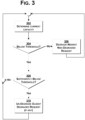
- the request management mechanism 210 (which may be part of the server's request-response processing system) repeatedly performs the following:
- the server determines (at 304 ) if the current utilization is below a certain predetermined or preset threshold. This determination may be made based on a percentage of the utilization, on the server's capacity, or on some other measure. If it is determined (at 304 ) that the current utilization is not below the certain threshold, then (at 306 ) the server degrades the newest (most recently arrived) non-degraded client request, after which the server repeats the current utilization determination (at 302 ). On the other hand, if it is determined (at 304 ) that the current utilization is at or below the certain threshold, then processing continues to determine if a currently degraded request can be un-degraded.
- the server determines (at 308 ) if the current utilization is sufficiently below the certain threshold to allow a currently degraded request can be un-degraded.
- the request management mechanism 210 of the server 204 may use a percentage of the threshold used in 304 (e.g., at 90% or 80% or 70%, etc.) or a different predetermined threshold value may be used.
- the request management mechanism 210 of the server 204 will degrade sufficient non-degraded requests, one by one (at 306 ), until the current utilization is below the threshold required at 304.
- the request management mechanism 210 will un-degrade degraded requests, one by one, if any exist, until the utilization is no longer sufficiently below the threshold (at 308 ).
- degraded client requests may be un-degraded if the delivery server's utilization is sufficient (e.g., because other requests have been completed).
- the management mechanism 210 favors clients based on their time (age) of connection. In this embodiment, a new request from a currently un-degraded client will not automatically be degraded, even if there are currently degraded clients. Additionally, in this embodiment, requests are degraded (at 306 ) based also on the age of the oldest client requests.
- client X has three requests being handled (RX1, RX2, and RX3), and client Y arrived after client X and has three requests being handled (RY1, RY2, and RY3), and the requests are arrived in the order RX1, RY1, RY2, RY3, RX2, RX3, then, in this embodiment, client X will be favored and client Y's requests RY3 and RY2 may be degraded before client X's requests RX2 and RX3.
- the un-degrading of requests (at 310 ) will also take into account the age of the oldest client(s), and the oldest clients will be favored.
- the server may track the clients based, e.g., on their IP addresses or other unique identifying information in the requests that allows clients to be identified and distinguished.
- Programs that implement such methods may be stored and transmitted using a variety of media (e.g ., computer readable media) in a number of manners.
- Hard-wired circuitry or custom hardware may be used in place of, or in combination with, some or all of the software instructions that can implement the processes of various embodiments.
- various combinations of hardware and software may be used instead of software only.
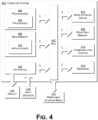
- FIG. 4 is a schematic diagram of a computer system 400 upon which embodiments of the present disclosure may be implemented and carried out.
- the computer system 400 includes a bus 402 ( i.e., interconnect), one or more processors 404 , a main memory 406 , read-only memory 408 , removable storage media 410 , mass storage 412 , and one or more communications ports 414 .
- Communication port 414 may be connected to one or more networks by way of which the computer system 400 may receive and/or transmit data.
- a "processor” means one or more microprocessors, central processing units (CPUs), computing devices, microcontrollers, digital signal processors, or like devices or any combination thereof, regardless of their architecture.
- An apparatus that performs a process can include, e.g ., a processor and those devices such as input devices and output devices that are appropriate to perform the process.
- Processor(s) 404 can be any known processor, such as, but not limited to, an Intel ® Itanium ® or Itanium 2 ® processor(s), AMD ® Opteron ® or Athlon MP ® processor(s), or Motorola ® lines of processors, and the like.
- Communications port(s) 414 can be any of an RS-232 port for use with a modem based dial-up connection, a 10/100 Ethernet port, a Gigabit port using copper or fiber, or a USB port, and the like. Communications port(s) 414 may be chosen depending on a network such as a Local Area Network (LAN), a Wide Area Network (WAN), a CDN, or any network to which the computer system 400 connects.
- the computer system 400 may be in communication with peripheral devices (e. g., display screen 416 , input device(s) 418 ) via Input / Output (I/O) port 420.
- peripheral devices e. g., display screen 416
- Main memory 406 can be Random Access Memory (RAM), or any other dynamic storage device(s) commonly known in the art.
- Read-only memory 408 can be any static storage device(s) such as Programmable Read-Only Memory (PROM) chips for storing static information such as instructions for processor 404.
- Mass storage 412 can be used to store information and instructions.
- hard disks such as the Adaptec ® family of Small Computer Serial Interface (SCSI) drives, an optical disc, an array of disks such as Redundant Array of Independent Disks (RAID), such as the Adaptec ® family of RAID drives, or any other mass storage devices may be used.
- SCSI Small Computer Serial Interface
- RAID Redundant Array of Independent Disks
- Bus 402 communicatively couples processor(s) 404 with the other memory, storage, and communications blocks.
- Bus 402 can be a PCI / PCI-X, SCSI, a Universal Serial Bus (USB) based system bus (or other) depending on the storage devices used, and the like.
- Removable storage media 410 can be any kind of external hard-drives, floppy drives, IOMEGA ® Zip Drives, Compact Disc - Read Only Memory (CD-ROM), Compact Disc - Re-Writable (CD-RW), Digital Versatile Disk - Read Only Memory (DVD-ROM), etc.
- Embodiments herein may be provided as one or more computer program products, which may include a machine-readable medium having stored thereon instructions, which may be used to program a computer (or other electronic devices) to perform a process.
- machine-readable medium refers to any medium, a plurality of the same, or a combination of different media, which participate in providing data (e.g., instructions, data structures) which may be read by a computer, a processor or a like device.
- Such a medium may take many forms, including but not limited to, non-volatile media, volatile media, and transmission media.
- Non-volatile media include, for example, optical or magnetic disks and other persistent memory.
- Volatile media include dynamic random access memory, which typically constitutes the main memory of the computer.
- Transmission media include coaxial cables, copper wire and fiber optics, including the wires that comprise a system bus coupled to the processor. Transmission media may include or convey acoustic waves, light waves and electromagnetic emissions, such as those generated during radio frequency (RF) and infrared (IR) data communications.
- RF radio frequency
- IR infrared
- the machine-readable medium may include, but is not limited to, floppy diskettes, optical discs, CD-ROMs, magneto-optical disks, ROMs, RAMs, erasable programmable read-only memories (EPROMs), electrically erasable programmable read-only memories (EEPROMs), magnetic or optical cards, flash memory, or other type of media/machine-readable medium suitable for storing electronic instructions.
- embodiments herein may also be downloaded as a computer program product, wherein the program may be transferred from a remote computer to a requesting computer by way of data signals embodied in a carrier wave or other propagation medium via a communication link (e.g ., modem or network connection).
- data may be (i) delivered from RAM to a processor; (ii) carried over a wireless transmission medium; (iii) formatted and/or transmitted according to numerous formats, standards or protocols; and/or (iv) encrypted in any of a variety of ways well known in the art.
- a computer-readable medium can store (in any appropriate format) those program elements that are appropriate to perform the methods.
- main memory 406 is encoded with application(s) 422 that supports the functionality discussed herein (the application 422 may be an application that provides some or all of the functionality of the CD services described herein, including rendezvous services).
- Application(s) 422 (and/or other resources as described herein) can be embodied as software code such as data and/or logic instructions (e.g. , code stored in the memory or on another computer readable medium such as a disk) that supports processing functionality according to different embodiments described herein.
- processor(s) 404 accesses main memory 406 via the use of bus 402 in order to launch, run, execute, interpret or otherwise perform the logic instructions of the application(s) 422 .
- Execution of application(s) 422 produces processing functionality of the service related to the application(s).
- the process(es) 424 represent one or more portions of the application(s) 422 performing within or upon the processor(s) 404 in the computer system 400.
- the application 422 itself (i.e., the un-executed or non-performing logic instructions and/or data).
- the application 422 may be stored on a computer readable medium (e.g ., a repository) such as a disk or in an optical medium.
- the application 422 can also be stored in a memory type system such as in firmware, read only memory (ROM), or, as in this example, as executable code within the main memory 406 ( e.g ., within Random Access Memory or RAM).
- ROM read only memory
- RAM Random Access Memory
- application 422 may also be stored in removable storage media 410 , read-only memory 408 and/or mass storage device 412.
- the computer system 400 can include other processes and/or software and hardware components, such as an operating system that controls allocation and use of hardware resources.
- embodiments of the present invention include various steps or operations. A variety of these steps may be performed by hardware components or may be embodied in machine-executable instructions, which may be used to cause a general-purpose or special-purpose processor programmed with the instructions to perform the operations. Alternatively, the steps may be performed by a combination of hardware, software, and/or firmware.
- module refers to a self-contained functional component, which can include hardware, software, firmware or any combination thereof.
- an apparatus may include a computer/computing device operable to perform some (but not necessarily all) of the described process.
- Embodiments of a computer-readable medium storing a program or data structure include a computer-readable medium storing a program that, when executed, can cause a processor to perform some (but not necessarily all) of the described process.
- process may operate without any user intervention.
- process includes some human intervention (e.g ., a step is performed by or with the assistance of a human).
- the phrase “at least some” means “one or more,” and includes the case of only one.
- the phrase “at least some services” means “one or more services”, and includes the case of one service.
- the phrase “based on” means “based in part on” or “based, at least in part, on,” and is not exclusive.
- the phrase “based on factor X” means “based in part on factor X” or “based, at least in part, on factor X.”
- the phrase “based on X” does not mean “based only on X.”
- the phrase “using” means “using at least,” and is not exclusive. Thus, e.g ., the phrase “using X” means “using at least X.” Unless specifically stated by use of the word “only”, the phrase “using X” does not mean “using only X.”
- the phrase “distinct” means “at least partially distinct.” Unless specifically stated, distinct does not mean fully distinct. Thus, e.g ., the phrase, "X is distinct from Y” means that "X is at least partially distinct from Y,” and does not mean that "X is fully distinct from Y.” Thus, as used herein, including in the claims, the phrase “X is distinct from Y” means that X differs from Y in at least some way.
- a list may include only one item, and, unless otherwise stated, a list of multiple items need not be ordered in any particular manner.
- a list may include duplicate items.
- the phrase "a list of CDN services" may include one or more CDN services.
Landscapes
- Engineering & Computer Science (AREA)
- Computer Networks & Wireless Communication (AREA)
- Signal Processing (AREA)
- General Engineering & Computer Science (AREA)
- Theoretical Computer Science (AREA)
- Software Systems (AREA)
- Multimedia (AREA)
- Physics & Mathematics (AREA)
- General Physics & Mathematics (AREA)
- Computer Hardware Design (AREA)
- Environmental & Geological Engineering (AREA)
- Data Exchanges In Wide-Area Networks (AREA)
- Information Transfer Between Computers (AREA)
- Computer And Data Communications (AREA)
Claims (9)
- Procédé mis en oeuvre par ordinateur, dans un réseau de diffusion de contenu, CD, dans lequel ledit réseau de CD diffuse un contenu pour le compte de multiples fournisseurs de contenus (102), le procédé comprenant :la réception, au niveau d'un serveur (106, 204) dans ledit réseau de CD, de multiples demandes de contenu en provenance d'une pluralité de clients distincts (108, 208) ;la détermination, par le serveur (106, 204), de l'utilisation d'au moins une capacité dudit serveur (106, 204) ;le procédé étant caractérisé en ce que :sur la base de la détermination que l'utilisation de l'au moins une capacité dudit serveur (106, 204) n'est pas inférieure à un seuil prédéterminé, un traitement de dégradation d'une demande de client non dégradée arrivée le plus récemment, dans lequel le traitement de dégradation de la demande de client non dégradée arrivée le plus récemment comprend un traitement d'étranglement de la demande de client non dégradée arrivée le plus récemment ; eten réponse à la détermination que l'utilisation de l'au moins une capacité du serveur (106, 204) est inférieure au seuil prédéterminé à raison d'une marge prédéterminée, la suppression de la dégradation, par le serveur (106, 204), du traitement d'une demande de client dégradée la plus ancienne si de quelconques demandes de client dégradées existent.
- Procédé selon la revendication 1, dans lequel ladite au moins une capacité dudit serveur (106, 204) comprend : une charge dudit serveur (106, 204).
- Procédé selon la revendication 1, dans lequel ledit serveur (106, 204) continue à accepter des demandes entrantes tout en traitant certaines demandes de manière dégradante.
- Procédé selon la revendication 3, dans lequel, tandis qu'un traitement de quelconques demandes est dégradé, au moins certaines nouvelles demandes entrantes sont également dégradées.
- Support lisible par ordinateur (406) présentant des instructions de programme stockées sur celui-ci, les instructions de programme, étant opérationnelles sur un dispositif (400) dans un réseau de diffusion de contenu, CDN, ledit dispositif mettant en oeuvre au moins un service de diffusion de contenu, CD, (106, 204), dans lequel ledit dispositif traite de multiples demandes de contenu en provenance d'une pluralité de clients distincts (108, 208), dans lequel une exécution des instructions de programme par un ou plusieurs processeurs (404) dudit dispositif amène l'un ou les plusieurs processeurs (404) à réaliser les étapes consistant à :déterminer l'utilisation d'au moins une capacité dudit serveur (106, 204) ;caractérisé en ce que :sur la base de la détermination que l'utilisation de l'au moins une capacité dudit serveur (106, 204) n'est pas inférieure à un seuil prédéterminé, le traitement de dégradation d'une demande de client non dégradée arrivée le plus récemment, dans lequel le traitement de de la demande de client non dégradée arrivée le plus récemment comprend un traitement d'étranglement de la demande de client non dégradée arrivée le plus récemment ; eten réponse à la détermination que l'utilisation de l'au moins une capacité du serveur (106, 204) est inférieure au seuil prédéterminé à raison d'une marge prédéterminée, la suppression de la dégradation, par le serveur (106, 204), du traitement d'une demande de client dégradée la plus ancienne si de quelconques demandes de client dégradées existent.
- Support lisible par ordinateur (406) selon la revendication 5, dans lequel ledit dispositif (400) continue d'accepter des demandes entrantes tout en traitant certaines demandes de manière dégradante, facultativement dans lequel, tandis que le traitement de quelconques demandes est dégradé, au moins certaines nouvelles demandes entrantes sont également dégradées.
- Dispositif (400) dans un réseau de diffusion de contenu, CDN, dans lequel ledit CDN distribue un contenu pour le compte d'au moins un fournisseur de contenu (102), ledit dispositif (400) mettant en oeuvre un service de diffusion de contenu, CD, (106, 204), le dispositif (400) étant configuré pour :recevoir de multiples demandes en provenance d'une pluralité de clients distincts (108, 208) ;déterminer l'utilisation d'au moins une capacité dudit serveur (106, 204) ;caractérisé en ce qu'il est en outre configuré pour :déterminer que l'utilisation de l'au moins une capacité dudit dispositif (400) dépasse un seuil prédéterminé, et traiter une demande de client non dégradée arrivée le plus récemment de manière dégradante, dans lequel le traitement de dégradation de la demande de client non dégradée arrivée le plus récemment comprend un traitement d'étranglement de la demande de client non dégradée arrivée le plus récemment ;déterminer que l'utilisation de l'au moins une capacité du serveur (106, 204) est inférieure au seuil prédéterminé à raison d'une marge prédéterminée, et la suppression de la dégradation du traitement d'une demande de client dégradée la plus ancienne si de quelconques demandes de client dégradées existent.
- Dispositif (400) selon la revendication 7, dans lequel ledit dispositif (400) est configuré pour continuer à accepter des demandes entrantes tout en traitant certaines demandes de manière dégradante.
- Dispositif (400) selon la revendication 7, dans lequel le dispositif (400) est en outre configuré pour : tandis que le traitement de quelconques demandes est dégradé, dégrader au moins certaines nouvelles demandes entrantes.
Applications Claiming Priority (2)
| Application Number | Priority Date | Filing Date | Title |
|---|---|---|---|
| US15/360,456 US10924583B2 (en) | 2016-11-23 | 2016-11-23 | Overload handling in a content delivery network (CDN) |
| PCT/US2017/012860 WO2018097850A1 (fr) | 2016-11-23 | 2017-01-10 | Gestion des surcharges dans un réseau de distribution de contenu (cdn) |
Publications (3)
| Publication Number | Publication Date |
|---|---|
| EP3545423A1 EP3545423A1 (fr) | 2019-10-02 |
| EP3545423A4 EP3545423A4 (fr) | 2020-05-13 |
| EP3545423B1 true EP3545423B1 (fr) | 2023-07-05 |
Family
ID=62147408
Family Applications (1)
| Application Number | Title | Priority Date | Filing Date |
|---|---|---|---|
| EP17874200.3A Active EP3545423B1 (fr) | 2016-11-23 | 2017-01-10 | Gestion des surcharges dans un réseau de distribution de contenu (cdn) |
Country Status (4)
| Country | Link |
|---|---|
| US (1) | US10924583B2 (fr) |
| EP (1) | EP3545423B1 (fr) |
| CA (1) | CA3043999A1 (fr) |
| WO (1) | WO2018097850A1 (fr) |
Families Citing this family (2)
| Publication number | Priority date | Publication date | Assignee | Title |
|---|---|---|---|---|
| CN111245873B (zh) * | 2018-11-28 | 2023-09-05 | 北京京东尚科信息技术有限公司 | 服务降级方法、装置、设备及存储介质 |
| CN111831504B (zh) * | 2019-04-15 | 2024-11-26 | 北京京东尚科信息技术有限公司 | 监控方法、监控装置、计算机设备和介质 |
Family Cites Families (13)
| Publication number | Priority date | Publication date | Assignee | Title |
|---|---|---|---|---|
| US7949779B2 (en) | 1998-02-10 | 2011-05-24 | Level 3 Communications, Llc | Controlling subscriber information rates in a content delivery network |
| US6850965B2 (en) * | 1998-11-17 | 2005-02-01 | Arthur Douglas Allen | Method for connection acceptance and rapid determination of optimal multi-media content delivery over network |
| US8200837B1 (en) | 1999-04-26 | 2012-06-12 | Hewlett-Packard Development Company, L.P. | Method and system for maintaining a content server at safe load conditions |
| US20030046396A1 (en) * | 2000-03-03 | 2003-03-06 | Richter Roger K. | Systems and methods for managing resource utilization in information management environments |
| US9167036B2 (en) * | 2002-02-14 | 2015-10-20 | Level 3 Communications, Llc | Managed object replication and delivery |
| US7418494B2 (en) * | 2002-07-25 | 2008-08-26 | Intellectual Ventures Holding 40 Llc | Method and system for background replication of data objects |
| US9094257B2 (en) * | 2006-06-30 | 2015-07-28 | Centurylink Intellectual Property Llc | System and method for selecting a content delivery network |
| US7805529B2 (en) * | 2006-07-14 | 2010-09-28 | International Business Machines Corporation | Method and system for dynamically changing user session behavior based on user and/or group classification in response to application server demand |
| US8239564B2 (en) * | 2008-06-20 | 2012-08-07 | Microsoft Corporation | Dynamic throttling based on network conditions |
| US8190593B1 (en) * | 2010-04-14 | 2012-05-29 | A9.Com, Inc. | Dynamic request throttling |
| EP3249545B1 (fr) * | 2011-12-14 | 2022-02-09 | Level 3 Communications, LLC | Réseau de fourniture de contenu |
| US9438487B2 (en) * | 2012-02-23 | 2016-09-06 | Ericsson Ab | Bandwith policy management in a self-corrected content delivery network |
| US9311377B2 (en) * | 2013-11-13 | 2016-04-12 | Palo Alto Research Center Incorporated | Method and apparatus for performing server handoff in a name-based content distribution system |
-
2016
- 2016-11-23 US US15/360,456 patent/US10924583B2/en active Active
-
2017
- 2017-01-10 CA CA3043999A patent/CA3043999A1/fr not_active Abandoned
- 2017-01-10 EP EP17874200.3A patent/EP3545423B1/fr active Active
- 2017-01-10 WO PCT/US2017/012860 patent/WO2018097850A1/fr not_active Ceased
Also Published As
| Publication number | Publication date |
|---|---|
| US10924583B2 (en) | 2021-02-16 |
| CA3043999A1 (fr) | 2018-05-31 |
| US20180146033A1 (en) | 2018-05-24 |
| EP3545423A4 (fr) | 2020-05-13 |
| WO2018097850A1 (fr) | 2018-05-31 |
| EP3545423A1 (fr) | 2019-10-02 |
Similar Documents
| Publication | Publication Date | Title |
|---|---|---|
| CN112839111B (zh) | 边缘位置处的可定制的事件触发计算的系统、方法和介质 | |
| AU2009296744B2 (en) | Selective data forwarding storage | |
| US20080270524A1 (en) | Distributing files over a computer network | |
| AU2009296495B2 (en) | Disassembly/reassembly in data forwarding storage | |
| EP2786262A1 (fr) | Systèmes et procédés de regroupement de connexions pour la transmission de flux vidéo sur des réseaux de fourniture de contenu | |
| US20260006093A1 (en) | Predictive load mitigation and control in a content delivery network (cdn) | |
| US20250097316A1 (en) | Front-end optimization in a content delivery network (cdn) | |
| US11750536B2 (en) | Store and forward logging in a content delivery network | |
| US10154079B2 (en) | Pre-boot file transfer system | |
| US10924583B2 (en) | Overload handling in a content delivery network (CDN) | |
| EP3785423B1 (fr) | Mise en mémoire cache spéculative dans un réseau de distribution de contenu | |
| US8458268B1 (en) | Systems and methods for distributing spam signatures | |
| US8478823B2 (en) | Selective data forwarding storage | |
| EP1868351B1 (fr) | Système de distribution de fichiers | |
| US10574624B2 (en) | Staged deployment of rendezvous tables for selecting a content delivery network (CDN) | |
| US11330032B2 (en) | Method and system for content proxying between formats | |
| EP1736886A1 (fr) | Procédés de configuration de la dimension de la mémoire cache |
Legal Events
| Date | Code | Title | Description |
|---|---|---|---|
| STAA | Information on the status of an ep patent application or granted ep patent |
Free format text: STATUS: THE INTERNATIONAL PUBLICATION HAS BEEN MADE |
|
| PUAI | Public reference made under article 153(3) epc to a published international application that has entered the european phase |
Free format text: ORIGINAL CODE: 0009012 |
|
| STAA | Information on the status of an ep patent application or granted ep patent |
Free format text: STATUS: REQUEST FOR EXAMINATION WAS MADE |
|
| 17P | Request for examination filed |
Effective date: 20190503 |
|
| AK | Designated contracting states |
Kind code of ref document: A1 Designated state(s): AL AT BE BG CH CY CZ DE DK EE ES FI FR GB GR HR HU IE IS IT LI LT LU LV MC MK MT NL NO PL PT RO RS SE SI SK SM TR |
|
| AX | Request for extension of the european patent |
Extension state: BA ME |
|
| DAV | Request for validation of the european patent (deleted) | ||
| DAX | Request for extension of the european patent (deleted) | ||
| A4 | Supplementary search report drawn up and despatched |
Effective date: 20200417 |
|
| RIC1 | Information provided on ipc code assigned before grant |
Ipc: H04L 29/08 20060101ALI20200409BHEP Ipc: G06F 15/173 20060101ALI20200409BHEP Ipc: H04L 12/26 20060101ALI20200409BHEP Ipc: H04L 29/06 20060101ALI20200409BHEP Ipc: G06F 15/16 20060101AFI20200409BHEP |
|
| REG | Reference to a national code |
Ref country code: HK Ref legal event code: DE Ref document number: 40015033 Country of ref document: HK |
|
| STAA | Information on the status of an ep patent application or granted ep patent |
Free format text: STATUS: EXAMINATION IS IN PROGRESS |
|
| 17Q | First examination report despatched |
Effective date: 20210618 |
|
| REG | Reference to a national code |
Ref country code: DE Ref legal event code: R079 Free format text: PREVIOUS MAIN CLASS: G06F0015160000 Ipc: H04L0065612000 Ref document number: 602017071057 Country of ref document: DE |
|
| RIC1 | Information provided on ipc code assigned before grant |
Ipc: G06F 15/173 20060101ALI20221207BHEP Ipc: G06F 15/16 20060101ALI20221207BHEP Ipc: H04L 65/612 20220101AFI20221207BHEP |
|
| GRAP | Despatch of communication of intention to grant a patent |
Free format text: ORIGINAL CODE: EPIDOSNIGR1 |
|
| STAA | Information on the status of an ep patent application or granted ep patent |
Free format text: STATUS: GRANT OF PATENT IS INTENDED |
|
| INTG | Intention to grant announced |
Effective date: 20230120 |
|
| GRAS | Grant fee paid |
Free format text: ORIGINAL CODE: EPIDOSNIGR3 |
|
| GRAA | (expected) grant |
Free format text: ORIGINAL CODE: 0009210 |
|
| STAA | Information on the status of an ep patent application or granted ep patent |
Free format text: STATUS: THE PATENT HAS BEEN GRANTED |
|
| P01 | Opt-out of the competence of the unified patent court (upc) registered |
Effective date: 20230505 |
|
| AK | Designated contracting states |
Kind code of ref document: B1 Designated state(s): AL AT BE BG CH CY CZ DE DK EE ES FI FR GB GR HR HU IE IS IT LI LT LU LV MC MK MT NL NO PL PT RO RS SE SI SK SM TR |
|
| REG | Reference to a national code |
Ref country code: CH Ref legal event code: EP |
|
| REG | Reference to a national code |
Ref country code: AT Ref legal event code: REF Ref document number: 1585862 Country of ref document: AT Kind code of ref document: T Effective date: 20230715 |
|
| REG | Reference to a national code |
Ref country code: DE Ref legal event code: R096 Ref document number: 602017071057 Country of ref document: DE |
|
| REG | Reference to a national code |
Ref country code: IE Ref legal event code: FG4D |
|
| REG | Reference to a national code |
Ref country code: LT Ref legal event code: MG9D |
|
| REG | Reference to a national code |
Ref country code: NL Ref legal event code: MP Effective date: 20230705 |
|
| REG | Reference to a national code |
Ref country code: AT Ref legal event code: MK05 Ref document number: 1585862 Country of ref document: AT Kind code of ref document: T Effective date: 20230705 |
|
| PG25 | Lapsed in a contracting state [announced via postgrant information from national office to epo] |
Ref country code: NL Free format text: LAPSE BECAUSE OF FAILURE TO SUBMIT A TRANSLATION OF THE DESCRIPTION OR TO PAY THE FEE WITHIN THE PRESCRIBED TIME-LIMIT Effective date: 20230705 |
|
| PG25 | Lapsed in a contracting state [announced via postgrant information from national office to epo] |
Ref country code: GR Free format text: LAPSE BECAUSE OF FAILURE TO SUBMIT A TRANSLATION OF THE DESCRIPTION OR TO PAY THE FEE WITHIN THE PRESCRIBED TIME-LIMIT Effective date: 20231006 |
|
| PG25 | Lapsed in a contracting state [announced via postgrant information from national office to epo] |
Ref country code: ES Free format text: LAPSE BECAUSE OF FAILURE TO SUBMIT A TRANSLATION OF THE DESCRIPTION OR TO PAY THE FEE WITHIN THE PRESCRIBED TIME-LIMIT Effective date: 20230705 |
|
| PG25 | Lapsed in a contracting state [announced via postgrant information from national office to epo] |
Ref country code: IS Free format text: LAPSE BECAUSE OF FAILURE TO SUBMIT A TRANSLATION OF THE DESCRIPTION OR TO PAY THE FEE WITHIN THE PRESCRIBED TIME-LIMIT Effective date: 20231105 |
|
| PG25 | Lapsed in a contracting state [announced via postgrant information from national office to epo] |
Ref country code: SE Free format text: LAPSE BECAUSE OF FAILURE TO SUBMIT A TRANSLATION OF THE DESCRIPTION OR TO PAY THE FEE WITHIN THE PRESCRIBED TIME-LIMIT Effective date: 20230705 Ref country code: RS Free format text: LAPSE BECAUSE OF FAILURE TO SUBMIT A TRANSLATION OF THE DESCRIPTION OR TO PAY THE FEE WITHIN THE PRESCRIBED TIME-LIMIT Effective date: 20230705 Ref country code: PT Free format text: LAPSE BECAUSE OF FAILURE TO SUBMIT A TRANSLATION OF THE DESCRIPTION OR TO PAY THE FEE WITHIN THE PRESCRIBED TIME-LIMIT Effective date: 20231106 Ref country code: NO Free format text: LAPSE BECAUSE OF FAILURE TO SUBMIT A TRANSLATION OF THE DESCRIPTION OR TO PAY THE FEE WITHIN THE PRESCRIBED TIME-LIMIT Effective date: 20231005 Ref country code: LV Free format text: LAPSE BECAUSE OF FAILURE TO SUBMIT A TRANSLATION OF THE DESCRIPTION OR TO PAY THE FEE WITHIN THE PRESCRIBED TIME-LIMIT Effective date: 20230705 Ref country code: LT Free format text: LAPSE BECAUSE OF FAILURE TO SUBMIT A TRANSLATION OF THE DESCRIPTION OR TO PAY THE FEE WITHIN THE PRESCRIBED TIME-LIMIT Effective date: 20230705 Ref country code: IS Free format text: LAPSE BECAUSE OF FAILURE TO SUBMIT A TRANSLATION OF THE DESCRIPTION OR TO PAY THE FEE WITHIN THE PRESCRIBED TIME-LIMIT Effective date: 20231105 Ref country code: HR Free format text: LAPSE BECAUSE OF FAILURE TO SUBMIT A TRANSLATION OF THE DESCRIPTION OR TO PAY THE FEE WITHIN THE PRESCRIBED TIME-LIMIT Effective date: 20230705 Ref country code: GR Free format text: LAPSE BECAUSE OF FAILURE TO SUBMIT A TRANSLATION OF THE DESCRIPTION OR TO PAY THE FEE WITHIN THE PRESCRIBED TIME-LIMIT Effective date: 20231006 Ref country code: FI Free format text: LAPSE BECAUSE OF FAILURE TO SUBMIT A TRANSLATION OF THE DESCRIPTION OR TO PAY THE FEE WITHIN THE PRESCRIBED TIME-LIMIT Effective date: 20230705 Ref country code: ES Free format text: LAPSE BECAUSE OF FAILURE TO SUBMIT A TRANSLATION OF THE DESCRIPTION OR TO PAY THE FEE WITHIN THE PRESCRIBED TIME-LIMIT Effective date: 20230705 Ref country code: AT Free format text: LAPSE BECAUSE OF FAILURE TO SUBMIT A TRANSLATION OF THE DESCRIPTION OR TO PAY THE FEE WITHIN THE PRESCRIBED TIME-LIMIT Effective date: 20230705 |
|
| PG25 | Lapsed in a contracting state [announced via postgrant information from national office to epo] |
Ref country code: PL Free format text: LAPSE BECAUSE OF FAILURE TO SUBMIT A TRANSLATION OF THE DESCRIPTION OR TO PAY THE FEE WITHIN THE PRESCRIBED TIME-LIMIT Effective date: 20230705 |
|
| REG | Reference to a national code |
Ref country code: DE Ref legal event code: R097 Ref document number: 602017071057 Country of ref document: DE |
|
| PG25 | Lapsed in a contracting state [announced via postgrant information from national office to epo] |
Ref country code: SM Free format text: LAPSE BECAUSE OF FAILURE TO SUBMIT A TRANSLATION OF THE DESCRIPTION OR TO PAY THE FEE WITHIN THE PRESCRIBED TIME-LIMIT Effective date: 20230705 Ref country code: RO Free format text: LAPSE BECAUSE OF FAILURE TO SUBMIT A TRANSLATION OF THE DESCRIPTION OR TO PAY THE FEE WITHIN THE PRESCRIBED TIME-LIMIT Effective date: 20230705 Ref country code: EE Free format text: LAPSE BECAUSE OF FAILURE TO SUBMIT A TRANSLATION OF THE DESCRIPTION OR TO PAY THE FEE WITHIN THE PRESCRIBED TIME-LIMIT Effective date: 20230705 Ref country code: DK Free format text: LAPSE BECAUSE OF FAILURE TO SUBMIT A TRANSLATION OF THE DESCRIPTION OR TO PAY THE FEE WITHIN THE PRESCRIBED TIME-LIMIT Effective date: 20230705 Ref country code: CZ Free format text: LAPSE BECAUSE OF FAILURE TO SUBMIT A TRANSLATION OF THE DESCRIPTION OR TO PAY THE FEE WITHIN THE PRESCRIBED TIME-LIMIT Effective date: 20230705 Ref country code: SK Free format text: LAPSE BECAUSE OF FAILURE TO SUBMIT A TRANSLATION OF THE DESCRIPTION OR TO PAY THE FEE WITHIN THE PRESCRIBED TIME-LIMIT Effective date: 20230705 |
|
| PLBE | No opposition filed within time limit |
Free format text: ORIGINAL CODE: 0009261 |
|
| STAA | Information on the status of an ep patent application or granted ep patent |
Free format text: STATUS: NO OPPOSITION FILED WITHIN TIME LIMIT |
|
| PG25 | Lapsed in a contracting state [announced via postgrant information from national office to epo] |
Ref country code: IT Free format text: LAPSE BECAUSE OF FAILURE TO SUBMIT A TRANSLATION OF THE DESCRIPTION OR TO PAY THE FEE WITHIN THE PRESCRIBED TIME-LIMIT Effective date: 20230705 |
|
| 26N | No opposition filed |
Effective date: 20240408 |
|
| PG25 | Lapsed in a contracting state [announced via postgrant information from national office to epo] |
Ref country code: SI Free format text: LAPSE BECAUSE OF FAILURE TO SUBMIT A TRANSLATION OF THE DESCRIPTION OR TO PAY THE FEE WITHIN THE PRESCRIBED TIME-LIMIT Effective date: 20230705 |
|
| PG25 | Lapsed in a contracting state [announced via postgrant information from national office to epo] |
Ref country code: MC Free format text: LAPSE BECAUSE OF FAILURE TO SUBMIT A TRANSLATION OF THE DESCRIPTION OR TO PAY THE FEE WITHIN THE PRESCRIBED TIME-LIMIT Effective date: 20230705 |
|
| PG25 | Lapsed in a contracting state [announced via postgrant information from national office to epo] |
Ref country code: MC Free format text: LAPSE BECAUSE OF FAILURE TO SUBMIT A TRANSLATION OF THE DESCRIPTION OR TO PAY THE FEE WITHIN THE PRESCRIBED TIME-LIMIT Effective date: 20230705 |
|
| REG | Reference to a national code |
Ref country code: CH Ref legal event code: PL |
|
| PG25 | Lapsed in a contracting state [announced via postgrant information from national office to epo] |
Ref country code: LU Free format text: LAPSE BECAUSE OF NON-PAYMENT OF DUE FEES Effective date: 20240110 |
|
| PG25 | Lapsed in a contracting state [announced via postgrant information from national office to epo] |
Ref country code: LU Free format text: LAPSE BECAUSE OF NON-PAYMENT OF DUE FEES Effective date: 20240110 |
|
| PG25 | Lapsed in a contracting state [announced via postgrant information from national office to epo] |
Ref country code: BE Free format text: LAPSE BECAUSE OF NON-PAYMENT OF DUE FEES Effective date: 20240131 |
|
| PG25 | Lapsed in a contracting state [announced via postgrant information from national office to epo] |
Ref country code: FR Free format text: LAPSE BECAUSE OF NON-PAYMENT OF DUE FEES Effective date: 20240131 |
|
| PG25 | Lapsed in a contracting state [announced via postgrant information from national office to epo] |
Ref country code: CH Free format text: LAPSE BECAUSE OF NON-PAYMENT OF DUE FEES Effective date: 20240131 |
|
| PG25 | Lapsed in a contracting state [announced via postgrant information from national office to epo] |
Ref country code: FR Free format text: LAPSE BECAUSE OF NON-PAYMENT OF DUE FEES Effective date: 20240131 Ref country code: CH Free format text: LAPSE BECAUSE OF NON-PAYMENT OF DUE FEES Effective date: 20240131 Ref country code: BE Free format text: LAPSE BECAUSE OF NON-PAYMENT OF DUE FEES Effective date: 20240131 |
|
| REG | Reference to a national code |
Ref country code: BE Ref legal event code: MM Effective date: 20240131 |
|
| PG25 | Lapsed in a contracting state [announced via postgrant information from national office to epo] |
Ref country code: BG Free format text: LAPSE BECAUSE OF FAILURE TO SUBMIT A TRANSLATION OF THE DESCRIPTION OR TO PAY THE FEE WITHIN THE PRESCRIBED TIME-LIMIT Effective date: 20230705 |
|
| PG25 | Lapsed in a contracting state [announced via postgrant information from national office to epo] |
Ref country code: BG Free format text: LAPSE BECAUSE OF FAILURE TO SUBMIT A TRANSLATION OF THE DESCRIPTION OR TO PAY THE FEE WITHIN THE PRESCRIBED TIME-LIMIT Effective date: 20230705 |
|
| PG25 | Lapsed in a contracting state [announced via postgrant information from national office to epo] |
Ref country code: CY Free format text: LAPSE BECAUSE OF FAILURE TO SUBMIT A TRANSLATION OF THE DESCRIPTION OR TO PAY THE FEE WITHIN THE PRESCRIBED TIME-LIMIT; INVALID AB INITIO Effective date: 20170110 |
|
| PG25 | Lapsed in a contracting state [announced via postgrant information from national office to epo] |
Ref country code: HU Free format text: LAPSE BECAUSE OF FAILURE TO SUBMIT A TRANSLATION OF THE DESCRIPTION OR TO PAY THE FEE WITHIN THE PRESCRIBED TIME-LIMIT; INVALID AB INITIO Effective date: 20170110 |
|
| PG25 | Lapsed in a contracting state [announced via postgrant information from national office to epo] |
Ref country code: TR Free format text: LAPSE BECAUSE OF FAILURE TO SUBMIT A TRANSLATION OF THE DESCRIPTION OR TO PAY THE FEE WITHIN THE PRESCRIBED TIME-LIMIT Effective date: 20230705 |
|
| PGFP | Annual fee paid to national office [announced via postgrant information from national office to epo] |
Ref country code: GB Payment date: 20260126 Year of fee payment: 10 |
|
| PGFP | Annual fee paid to national office [announced via postgrant information from national office to epo] |
Ref country code: DE Payment date: 20260305 Year of fee payment: 10 Ref country code: IE Payment date: 20260126 Year of fee payment: 10 |