EP3547144B1 - Génération de tests structuraux - Google Patents
Génération de tests structuraux Download PDFInfo
- Publication number
- EP3547144B1 EP3547144B1 EP18305333.9A EP18305333A EP3547144B1 EP 3547144 B1 EP3547144 B1 EP 3547144B1 EP 18305333 A EP18305333 A EP 18305333A EP 3547144 B1 EP3547144 B1 EP 3547144B1
- Authority
- EP
- European Patent Office
- Prior art keywords
- test
- objectives
- code
- source
- category
- Prior art date
- Legal status (The legal status is an assumption and is not a legal conclusion. Google has not performed a legal analysis and makes no representation as to the accuracy of the status listed.)
- Active
Links
Images



Classifications
-
- G—PHYSICS
- G06—COMPUTING OR CALCULATING; COUNTING
- G06F—ELECTRIC DIGITAL DATA PROCESSING
- G06F11/00—Error detection; Error correction; Monitoring
- G06F11/36—Prevention of errors by analysis, debugging or testing of software
- G06F11/3668—Testing of software
- G06F11/3672—Test management
- G06F11/3676—Test management for coverage analysis
-
- G—PHYSICS
- G06—COMPUTING OR CALCULATING; COUNTING
- G06F—ELECTRIC DIGITAL DATA PROCESSING
- G06F11/00—Error detection; Error correction; Monitoring
- G06F11/36—Prevention of errors by analysis, debugging or testing of software
- G06F11/3668—Testing of software
- G06F11/3672—Test management
- G06F11/3684—Test management for test design, e.g. generating new test cases
-
- G—PHYSICS
- G06—COMPUTING OR CALCULATING; COUNTING
- G06F—ELECTRIC DIGITAL DATA PROCESSING
- G06F17/00—Digital computing or data processing equipment or methods, specially adapted for specific functions
- G06F17/10—Complex mathematical operations
- G06F17/11—Complex mathematical operations for solving equations, e.g. nonlinear equations, general mathematical optimization problems
Definitions
- the invention pertains to the technical field of software developments and more specifically to the field of testing of source-code.
- EP 3 208 716 discloses systems and methods to support the development of safety-critical software in a model-based development environment.
- Model test coverage gaps can be identified by model coverage analysis tools of the model-based development environment after the high-level requirements-based test cases are executed against the design model.
- the coverage gaps indicate the test criteria that have not been exercised by the high-level requirements-based test cases.
- the proposed solution can automatically augment the test cases to cover the coverage gaps.
- Embodying systems and methods translate coverage gap information to machine-readable mathematical test objectives so that coverage gap information can be attached to a design model for automated test case augmentation, where the design model(s) is written in model-based development language.
- the proposed solution employs a test generator, which can perform model-checking, constraint solving, and/ or reachability resolution technologies on the design model(s) with test objectives attached, to automatically identify and fill test coverage gaps for the design model(s) of the safety-critical software.
- US2013/311976 discloses a method and system for generating and processing test cases for effective black box testing of software applications.
- Test cases are automatically generated based on parameters that are identified from automated manual test cases associated with business models.
- the generated automated test cases cover one or more paths in the business models.
- the automated test cases are optimized by determining minimal path covered by the automated test cases in the business models. The optimization is performed based on analysis of the one or more paths covered by the automated test cases in the business models.
- code coverage data of the optimized test cases are obtained by execution of the optimized test cases.
- the optimized test cases are analysed for at least prioritization and further optimization of the optimized test cases for effective black box testing.
- XP032686582 discloses an automated test case generation method. Test suites are hardly ever created from scratch. Hence, automatic test case generation methods should take advantage of existing tests to produce high-quality test suites more efficiently.
- An approach is presented for automatic test suite augmentation addressing this challenge. It modifies existing test cases in such a way that full branch coverage in specified target functions is achieved. It is based on symbolic execution and model checking, and has been implemented as an extension to FShell, a test case generation tool for C programs. Finally, a case study is presented where the tool is applied to augment a model-based test suite for real industrial code of a Java Card applet firewall, ultimately achieving 100% branch coverage fully automatically.
- unit tests focus on testing a single program unit (function, method, class). To do such testing, one starts from a source file containing the function under test and the function name. Then a test sheet containing the test cases exercising the test function has to be produced.
- the outputs do not contain any information about the part of the source-code for which no test cases have been generated. At most, the non-tested parts are identified but the reasons of the fail to find test cases are unknown. As a consequence, a tedious and costly human work is then needed to identify, check, and sometimes correct, the non-tested part of the source-code.
- the invention improves the situation.
- test suite for a source-code, test cases being preliminary stored on a memory accessible to computer means, the method being implemented by said computer means.
- the method comprises:
- Such a method enables to automatically generate structural tests suite for a source-code.
- a first part of the source-code could be automatically checked and validated.
- the remaining parts of the source-code (if they exist) are associated to messages (understandable by a human) explaining the reasons of the non-testable state.
- the specific sequenced combination of semantic analysis and mathematical optimization algorithm enables to quickly identify parts of the source-code for which the impossibility to establish a test is (mathematically) proven.
- some of time and computing resources are preserved (not consumed to look for an impossible solution).
- the general efficiency of the method is enhanced with respect to known methods while being totally automatized.
- the rate of completeness of the tests is known.
- the automatic results are equivalent to those obtained by known methods but the time and computing resources consumed to obtain the results are reduced.
- the applicant proposes a computer software comprising instructions to implement a method as defined here when the software is executed by a processor.
- the applicant proposes a computer-readable non-transient recording medium on which a software is recorded to implement the method as defined here when the software is executed by a processor.
- the method can optionally comprise the following features, separately or in combination one with the others:
- a computer system planned to implement a method according to the invention is represented on figure 1 .
- Such a system comprises computer means 3, such like at least one processor, and a memory 5 accessible by the computer means 3.
- the source-code 1 to test is registered.
- some test parameters can be previously registered on the memory 5.
- the test cases established at the first time can further be registered on the memory 5.
- some test cases can be initially stored and other ones can be progressively registered.
- a completed source-code 1' is provided associated with a test case suite 11, 21.
- the completed source-code 1' comprises automatically added annotations with respect to the original source-code 1 provided at the beginning of the method.
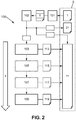
- a method 100 according to the invention is represented on figure 2 .
- the memory 5 contains a first list 11 of test cases. At the beginning of the method 100, the first list 11 is empty. The first list 11 is progressively fed with test cases during the implementation of the method 100.
- the memory 5 contains a second list 21 of test objectives related to the source-code 1 which are impossible to satisfy. At the beginning of the method, the second list 21 is empty. The second list 21 is progressively fed during the implementation of the method 100.
- the method 100 generates a structural test suite in the form of data progressively registered in the first list 11 and the second list 21 and associated to the source-code 1.
- the source-code 1 to test is an input for the method 100.
- the completed source-code 1' and the first and second lists 11, 21 are the outputs for the method 100.
- the method comprises a step (referenced "a").
- the step a comprises an implementation 101 of a structural analysis of the source-code 1.
- the structural analysis includes:
- the comparison of figures 4 and 5 enables to understand, for a person skilled in software developing, how the tests objectives can be added to the source-code 1 in the form of annotations (lines beginning by "//" on figure 5 ).
- figure 4 is an example of a part of an original source-code 1 to test
- figure 5 is the corresponding part of the completed source-code 1' containing annotations after that the step a has been implemented.
- the lines referenced 51 contains a function "f(a, b)" to test.
- the lines referenced 53 contains a function "g(a)" called in the function "f(a, b)" to test.
- the annotations lines contain test objectives according to given coverage criterion.
- the lines referenced 55 contains impossible test objectives. The treatment of such test objectives will be described hereinafter.
- the coverage criterion contains simple limits: for the parameter "a” the following values are tested: k-1, k, k+1, the minimum value and the maximum value of "a", k being a constant equal to a limit condition of the tested function (equal to 10 and 12 in the example of figures 4 and 5 ).
- other criteria can be implemented, including more sophisticated criteria.
- MC/DC coverage can be used ("MC/DC” for "Modified Condition/Decision Coverage") which is usually used in high performance technical field like in avionics software.
- Figure 6 shows a generation of a stub: the result of the called function g(a) is replaced by the value "1" during the test of the function "f(a, b)".
- the called function can be replaced by dummy ones, which is needed to perform unit testing.
- the function body is also generated.
- the stub can be compiled without human intervention. For example, two kinds of stubs can be generated:
- a semantic formal analysis of the source-code 1 further enables, for example, to find pseudo-constants and/or to prepare inputs for the following phases of the method 100.
- the word "pseudo-constant" means, here, variables that can have a small set of different values that can be determined for any possible execution of the source-code.
- stub generation is manual (made by a human). It takes an important part of the tests process.
- integration tests by opposition to unit testing
- stubs can be generated at any depth of the call tree of the function under test. The stub generation applies to both unit testing and integration testing.
- step a The addition of the annotations and the generation of stubs into the source-code 1 are ensured by a structural decomposition of the source-code 1 including a parsing of the said source-code 1.
- the source-code 1 becomes the completed source-code 1', including annotations and stubs.
- the described step a gives guarantees concerning the satisfaction of coverage criteria. For example, such approaches are defined in the following document: VectorCAST User Manual, Parasoft C/C++test User Manual.
- the method comprises a step referenced "b": implementing a semantic analysis algorithm 102 on the completed source-code 1'.
- the semantic analysis algorithm 102 enables to categorize each test objective. Examples of (known) semantic analysis are:
- tests objectives categories are:
- the semantic analysis enables finding test cases.
- the number of tests parameters satisfying a set of tests objectives is further minimized. Thereby, any human review of generated test suite is facilitated, for example to fill expected output of tests in generated test suite.
- to implement a genetic algorithm before the semantic analysis can enabling to very quickly finds parameters for trivial test cases satisfying part of coverage criteria.
- Such a previous implementation of a genetic algorithm is optional.
- the method comprises a step referenced "c": feeding the first list 11 of set of test cases with test cases that satisfy the test objectives of category i/.
- the method comprises a step referenced "d": feeding the second list 21 of test objectives with test objectives that are impossible to satisfy and pertaining to category ii/.
- Each test objective of the category ii/ is associated with information about the reason of impossibility to be satisfied.
- the information is, preferably, in natural language, able to be understood by a human. By natural language, it has to be understood that the said information is planned to be read and used by a human to check the corresponding part of the source code 1. Preferably, using machine language or codes are avoided.
- an aim is to reduce, if possible to zero, the number of test objectives of the third category iii/ "unclassified".
- the method 100 comprises a step referenced “e”: if the category iii/ is not empty, implementing at least one mathematical optimization algorithm 103 (which could also be called “optimum search algorithm") on test objectives of category iii/.
- the step e includes:
- An example of (known) mathematical optimization algorithm is a genetic algorithm, which is an example pertaining to an Artificial Intelligence category of a mathematical optimization.
- a genetic algorithm finds parameters for less obvious test cases.
- other examples of mathematical optimization can be used: Deep learning (Artificial Intelligence), simplex algorithms (Optimization algorithms), Simulated annealing (Heuristic category), Greedy algorithm (Heuristic category).
- Semantic analysis algorithms enable to quickly and efficiently decrease the number of not handled test objective (category iii) either by (mathematically) proving the impossibility to satisfy the test objectives (category ii) and/or by finding new test parameters that satisfy them (category i).
- the step b (at least one semantic analysis), for example by using the module "Value Analysis” of "Frama-C”, is implemented before the step e (at least one mathematical optimization).
- resources computer means 3 and time
- the mathematical optimization is then implemented by avoiding the mathematical optimization on test objectives impossible to satisfy (category ii).
- the method 100 comprises a step referenced "f": providing a test suite comprising:
- the test suite can have the form of a CSV files (Comma Separated Values).
- the C sources can be compiled with the stubs to perform unitary tests, for example with the commercial test software "CoverageMaster winAMS”.
- a single semantic analysis of the source-code 1 is implemented (the step b).
- at least one supplementary (thorough) semantic analysis can be implemented (step b') after the implementation of a mathematical optimization algorithm (after step e).
- a supplementary step consumes more resources (time) but enables to indicate the parameters for the remaining test cases or the absence of solution.
- such an optional and supplementary semantic analysis can be implemented, preferably after step e, in order to treat any objective test that can be still classified in category iii/.
- a first semantic analysis algorithm 102 is implemented (step b) in order to feed the first list 11 (step c) and the second list 21 (step d), and then, after having implemented the at least one mathematical optimization algorithm 103 (step e), a second semantic analysis algorithm, different from the first one, is implemented (step b'). This enables to feed again the first list 11 with some test cases 119 and the second list 21 with some impossible test objectives, respectively in steps c' and d'.
- a supplementary mathematical optimization algorithm 105, 107 is implemented.
- a genetic algorithm implementation can refine the solution, like mixing the inputs, to obtain a smaller set of test samples while covering the same tests objectives.
- the step e can be implemented a first time with a first mathematical optimization algorithm 103, and then, the step e is implemented at least a second time with a second mathematical optimization algorithm 105 (and optionally with a third one 107) different from the first mathematical optimization algorithm.
- step f the method 100 can be reiterated when the source-code 1 is changed.
- the test suite generated at the first time can be reused.
- a "fingerprint" mechanism can be used to identify the unmodified parts between two versions of a same source-code 1. This enables to avoid reproducing entirely the method on the entire source-code 1.
- Figure 3 shows an example of implementation for generation of unitary tests on a source-code 1 in C language (60,000 lines of C code). It contains:
- the figure 3 also gives as an example of the results obtained on the given set of input programs.
- the treatment of the C sources is done in four operations in the following order:
- figure 3 shows particularly good results.
- the examples values above depend on the used source-code 1 and computer means. There are given essentially to show that the method 100 enables to obtain quickly the most part of the test suite while to ensure completeness in much time. In other words, the final user can easily choose between a quick (but incomplete) test suite and a guaranteed complete test suite.
- Some of known methods are limited to a specific computer language. For example, in C language, it is impossible to syntactically determine if a pointer function argument points to a scalar or an array, therefore additional manual information is usually needed (when known methods are used).
- supplementary manual annotations can be previously added in the test cases registered in the memory 5 in such a way to enhance the automatic identification of the test objectives (step a). The time and workforce needed to generate tests cases for coverage criteria are reduced.
- the method 100 gives a high completeness: for each impossible test objective, if there are any, explanations of the impossibility are provided. Human can check specifically such parts of the source-code 1. This facilitates any subsequent certification process for the source-code 1. For example, it is possible to pose assertions corresponding to the "Path predicates" in C code and then to verify them using the "WP" module of Frama-C.
- the method 100 has been described as implemented by a computer system, including computer means 3 such as a processor and a memory 5.
- the method 100 has the form of a computer software comprising instructions to implement the method 100 when the software is executed by any processor.
- the computer software is recorded on a computer-readable non-transient recording medium.
Landscapes
- Engineering & Computer Science (AREA)
- Theoretical Computer Science (AREA)
- Physics & Mathematics (AREA)
- General Physics & Mathematics (AREA)
- General Engineering & Computer Science (AREA)
- Computer Hardware Design (AREA)
- Quality & Reliability (AREA)
- Mathematical Physics (AREA)
- Mathematical Analysis (AREA)
- Mathematical Optimization (AREA)
- Computational Mathematics (AREA)
- Pure & Applied Mathematics (AREA)
- Data Mining & Analysis (AREA)
- Operations Research (AREA)
- Algebra (AREA)
- Databases & Information Systems (AREA)
- Software Systems (AREA)
- Debugging And Monitoring (AREA)
Claims (9)
- Procédé (100) de génération d'une suite de tests pour un code source (1), des cas de tests étant préalablement stockés dans une mémoire (5) accessible à un moyen informatique (3), le procédé (100) étant mis en œuvre par ledit moyen informatique (3), ledit procédé (100) comprenant :a) la mise en œuvre d'une analyse structurelle (101) dudit code source (1) pour obtenir un code source complété (1') comportant :- la décomposition du code source (1),- l'ajout d'annotations définissant les objectifs de tests dans le code source (1),
dans lequel un objectif de test est la combinaison d'un énoncé s particulier d'une fonction f du code source et d'une formule booléenne F,- la génération de modules de remplacement correspondant au code source (1) ;b) la mise en œuvre d'au moins un algorithme d'analyse sémantique (102) sur ledit code source complété (1') comportant la catégorisation de chaque ensemble d'objectifs de tests dans une seule des catégories suivantes :i/ un ensemble d'objectifs de tests qui sont satisfaits en utilisant comme entrées des cas de tests comportant des paramètres de tests stockés dans la mémoire (5) ;ii/ un ensemble d'objectifs de tests qui sont impossibles à satisfaire avec n'importe quel cas de test ;iii/ un ensemble d'objectifs de tests qui sont, au moins temporairement, insatisfaits ;c) l'alimentation d'une première liste (11) d'ensembles de cas de tests en des cas de tests qui satisfont les objectifs de tests de catégorie i/ ;d) l'alimentation d'une seconde liste (21) d'objectifs de tests en des objectifs de tests impossibles à satisfaire et appartenant à la catégorie ii/,e) si la catégorie iii/ n'est pas vide, la mise en œuvre d'au moins un algorithme d'optimisation mathématique (103) sur des parties dudit code source complété (1') correspondant aux objectifs de tests de la catégorie iii/ comportant :- l'identification de cas de tests (113) qui satisfont au moins une partie desdits objectifs de tests,- l'alimentation de ladite première liste (11) d'ensembles de cas de tests (113) en des cas de tests qui satisfont lesdits objectifs de tests,- la catégorisation desdits objectifs de tests dans la catégorie i/ ;f) la fourniture d'une suite de tests comprenant ladite première liste (11) obtenue à l'étape c et complétée à l'étape e et ladite seconde liste (21) obtenue à l'étape d correspondant audit code source (1). - Procédé selon la revendication 1, comprenant en outre l'étape préalable supplémentaire suivante, avant l'étape b de mise en œuvre d'au moins un algorithme d'analyse sémantique (102), comprenant la mise en œuvre d'au moins un algorithme d'optimisation mathématique sur des parties dudit code source complété, comprenant :- l'identification de cas de tests (113) qui satisfont au moins une partie desdits objectifs de tests,- l'alimentation de ladite première liste (11) d'ensembles de cas de tests (113) en des cas de tests qui satisfont lesdits objectifs de tests,- la catégorisation desdits objectifs de tests dans la catégorie i/.
- Procédé selon l'une quelconque des revendications précédentes, dans lequel l'étape e est mise en œuvre une première fois avec un premier algorithme d'optimisation mathématique, puis, l'étape e est mise en œuvre au moins une seconde fois avec un second algorithme d'optimisation mathématique (105, 107) différent du premier algorithme d'optimisation mathématique.
- Procédé selon l'une quelconque des revendications précédentes, dans lequel l'étape e est mise en œuvre au moins une fois avec au moins un algorithme d'optimisation mathématique, puis, avant l'étape f, les séries des étapes suivantes b', c' et d' sont mises en œuvre au moins une fois :b') la mise en œuvre d'au moins un algorithme d'analyse sémantique supplémentaire (109) sur des parties dudit code source complété (1') correspondant à des objectifs de tests de catégorie iii/ de manière à catégoriser au moins une partie desdits objectifs de tests en des catégories i/ ou ii/ ;c') l'alimentation de ladite première liste (11) d'ensembles de cas de tests en des cas de tests (119) qui satisfont les objectifs de tests de la catégorie i/ ;d') l'alimentation de ladite seconde liste (21) d'objectifs de tests en des objectifs de tests impossibles à satisfaire et appartenant à la catégorie ii/.
- Procédé selon l'une quelconque des revendications précédentes, dans lequel l'étape d comprend en outre l'association, avec chaque objectif de test impossible à satisfaire et appartenant à la catégorie ii/, d'informations sur le motif d'impossibilité de satisfaction, lesdites informations étant en langage naturel.
- Procédé selon l'une quelconque des revendications précédentes, dans lequel au moins un algorithme d'analyse sémantique (102, 109) est l'un des suivants :- le module « Value Analysis » de « Frama-C »- « CBMC », et- le module « PathCrawler » de « Frama-C ».
- Procédé selon l'une quelconque des revendications précédentes, comprenant les étapes suivantes dans cet ordre :b) la mise en œuvre du module « Value Analysis » de « Frama-C » (102) sur ledit code source complété (1');e) si la catégorie iii/ n'est pas vide, la mise en œuvre d'un algorithme génétique (103) sur des parties dudit code-source complété (1') correspondant aux objectifs de tests de catégorie iii/ ;b') la mise en œuvre de l'algorithme d'analyse CBMC (109 ; 119)b") la mise en œuvre de l'algorithme d'analyse PathCrawler (109 ; 121) de « Frama-C ».
- Logiciel informatique comprenant des instructions pour mettre en œuvre le procédé selon l'une quelconque des revendications 1 à 7 lorsque le logiciel est exécuté par un processeur.
- Support d'enregistrement non transitoire lisible par ordinateur sur lequel un logiciel est enregistré pour mettre en œuvre le procédé selon l'une quelconque des revendications 1 à 7 lorsque le logiciel est exécuté par un processeur.
Priority Applications (4)
| Application Number | Priority Date | Filing Date | Title |
|---|---|---|---|
| EP18305333.9A EP3547144B1 (fr) | 2018-03-26 | 2018-03-26 | Génération de tests structuraux |
| PCT/JP2019/010432 WO2019188313A1 (fr) | 2018-03-26 | 2019-03-07 | Procédé destiné à générer une suite d'essai pour un code source |
| US16/970,671 US11755463B2 (en) | 2018-03-26 | 2019-03-07 | Method to generate test suite for source-code |
| JP2020556581A JP6945957B2 (ja) | 2018-03-26 | 2019-03-07 | ソースコードのテストスイートを生成する方法 |
Applications Claiming Priority (1)
| Application Number | Priority Date | Filing Date | Title |
|---|---|---|---|
| EP18305333.9A EP3547144B1 (fr) | 2018-03-26 | 2018-03-26 | Génération de tests structuraux |
Publications (2)
| Publication Number | Publication Date |
|---|---|
| EP3547144A1 EP3547144A1 (fr) | 2019-10-02 |
| EP3547144B1 true EP3547144B1 (fr) | 2021-08-25 |
Family
ID=62486534
Family Applications (1)
| Application Number | Title | Priority Date | Filing Date |
|---|---|---|---|
| EP18305333.9A Active EP3547144B1 (fr) | 2018-03-26 | 2018-03-26 | Génération de tests structuraux |
Country Status (4)
| Country | Link |
|---|---|
| US (1) | US11755463B2 (fr) |
| EP (1) | EP3547144B1 (fr) |
| JP (1) | JP6945957B2 (fr) |
| WO (1) | WO2019188313A1 (fr) |
Families Citing this family (7)
| Publication number | Priority date | Publication date | Assignee | Title |
|---|---|---|---|---|
| US12436871B2 (en) | 2022-01-26 | 2025-10-07 | International Business Machines Corporation | Objective-driven test cases and suites |
| US12405880B2 (en) * | 2022-12-09 | 2025-09-02 | Micro Focus Llc | Automate load test scenario based on mapping with real-time data monitoring |
| JP7812346B2 (ja) * | 2023-03-15 | 2026-02-09 | 株式会社日立製作所 | プログラム検証支援システム、及びプログラム検証支援方法 |
| CN116594915B (zh) * | 2023-07-17 | 2023-09-29 | 西南交通大学 | 一种集成测试用例的自动生成方法、装置、设备及介质 |
| CN117909249B (zh) | 2024-03-20 | 2024-07-02 | 中国汽车技术研究中心有限公司 | 一种自动驾驶场景测试用例的生成方法和设备 |
| US20250315367A1 (en) * | 2024-04-09 | 2025-10-09 | Bank Of America Corporation | System and Method for Improving the Testing Phase of Software Development Life Cycles |
| CN118842740A (zh) * | 2024-06-28 | 2024-10-25 | 天翼云科技有限公司 | 一种基于状态机的网络协议模糊测试方法及系统 |
Family Cites Families (10)
| Publication number | Priority date | Publication date | Assignee | Title |
|---|---|---|---|---|
| US6993747B1 (en) | 1999-08-30 | 2006-01-31 | Empirix Inc. | Method and system for web based software object testing |
| US20110173591A1 (en) * | 2010-01-13 | 2011-07-14 | Target Brands, Inc. | Unit Test Generator |
| US9043759B1 (en) * | 2011-01-27 | 2015-05-26 | Trimble Navigation Limited | System and method for generating software unit tests simultaneously with API documentation |
| US8589736B2 (en) * | 2011-08-12 | 2013-11-19 | Tata Consultancy Services Limited | System and method for automatic test data generation for relational testing |
| US8819642B2 (en) * | 2012-05-17 | 2014-08-26 | Cognizant Technology Solutions India Pvt. Ltd. | Method and system for generating and processing black box test cases |
| US9361068B2 (en) * | 2014-05-21 | 2016-06-07 | International Business Machines Corporation | System and method for using development objectives to guide implementation of source code |
| US9672029B2 (en) * | 2014-08-01 | 2017-06-06 | Vmware, Inc. | Determining test case priorities based on tagged execution paths |
| US10387585B2 (en) | 2014-10-30 | 2019-08-20 | The Mathworks, Inc. | System and method for performing model verification |
| US9792204B2 (en) * | 2016-02-02 | 2017-10-17 | General Electric Company | System and method for coverage-based automated test case augmentation for design models |
| US10691514B2 (en) * | 2017-05-08 | 2020-06-23 | Datapipe, Inc. | System and method for integration, testing, deployment, orchestration, and management of applications |
-
2018
- 2018-03-26 EP EP18305333.9A patent/EP3547144B1/fr active Active
-
2019
- 2019-03-07 JP JP2020556581A patent/JP6945957B2/ja active Active
- 2019-03-07 US US16/970,671 patent/US11755463B2/en active Active
- 2019-03-07 WO PCT/JP2019/010432 patent/WO2019188313A1/fr not_active Ceased
Also Published As
| Publication number | Publication date |
|---|---|
| JP6945957B2 (ja) | 2021-10-06 |
| JP2021509996A (ja) | 2021-04-08 |
| US11755463B2 (en) | 2023-09-12 |
| WO2019188313A1 (fr) | 2019-10-03 |
| US20200379888A1 (en) | 2020-12-03 |
| EP3547144A1 (fr) | 2019-10-02 |
Similar Documents
| Publication | Publication Date | Title |
|---|---|---|
| EP3547144B1 (fr) | Génération de tests structuraux | |
| Le Goues et al. | A systematic study of automated program repair: Fixing 55 out of 105 bugs for $8 each | |
| EP3428828B1 (fr) | Système et procédé permettant de localiser et de corriger des vulnérabilités dans un système informatique cible | |
| US10025696B2 (en) | System and method for equivalence class analysis-based automated requirements-based test case generation | |
| Langer et al. | A posteriori operation detection in evolving software models | |
| Bulej et al. | Capturing performance assumptions using stochastic performance logic | |
| Nguyen et al. | Automatic program repair using formal verification and expression templates | |
| Winston et al. | A taxonomy of failures in tool-augmented llms | |
| Akhtar et al. | A systematic literature review on software-refactoring techniques, challenges, and practices | |
| Gay | Improving the readability of generated tests using gpt-4 and chatgpt code interpreter | |
| Michailidis et al. | Cp-bench: Evaluating large language models for constraint modelling | |
| Zhang et al. | Fixing security vulnerabilities with AI in OSS-Fuzz | |
| US7543274B2 (en) | System and method for deriving a process-based specification | |
| Patrick | Exploring software reusability metrics with Q&A forum data | |
| US20220156174A1 (en) | Automated identification of lines of code related to errors field | |
| CN119149015A (zh) | 一种生成代码的方法及装置 | |
| CN117251369A (zh) | 自动化单元测试代码生成方法、装置、设备及存储介质 | |
| Duque-Torres et al. | The Metamorphic Lighthouse: Understanding the Input Data Space of Metamorphic Relations | |
| CN119690852B (zh) | 一种复杂软件系统功能正确性的工程化验证方法与系统 | |
| Ferrari et al. | Criteria for the analysis of gaps and limitations of V&V methods for safety-and security-critical systems | |
| CN111881055A (zh) | 军用软件评测规范的Simulink模型设计方法 | |
| Mahmoud et al. | Leveraging LLM Enhanced Commit Messages to Improve Machine Learning Based Test Case Prioritization | |
| Zou | DECOMPILATION UNDER THE LENS: AN INTEGRATED FRAMEWORK WITH SYMBOLIC DIFFERENTIATION TESTING AND LLM-BASED FINE-TUNING | |
| Sehrawat et al. | Genetic algorithm based approach for code clone detection | |
| Holovko et al. | AUTOMATION OF PROVING THE PROGRAMS CORRECTNESS IN THE FRAMA-C SYSTEM |
Legal Events
| Date | Code | Title | Description |
|---|---|---|---|
| PUAI | Public reference made under article 153(3) epc to a published international application that has entered the european phase |
Free format text: ORIGINAL CODE: 0009012 |
|
| STAA | Information on the status of an ep patent application or granted ep patent |
Free format text: STATUS: THE APPLICATION HAS BEEN PUBLISHED |
|
| AK | Designated contracting states |
Kind code of ref document: A1 Designated state(s): AL AT BE BG CH CY CZ DE DK EE ES FI FR GB GR HR HU IE IS IT LI LT LU LV MC MK MT NL NO PL PT RO RS SE SI SK SM TR |
|
| AX | Request for extension of the european patent |
Extension state: BA ME |
|
| STAA | Information on the status of an ep patent application or granted ep patent |
Free format text: STATUS: REQUEST FOR EXAMINATION WAS MADE |
|
| 17P | Request for examination filed |
Effective date: 20200305 |
|
| RBV | Designated contracting states (corrected) |
Designated state(s): AL AT BE BG CH CY CZ DE DK EE ES FI FR GB GR HR HU IE IS IT LI LT LU LV MC MK MT NL NO PL PT RO RS SE SI SK SM TR |
|
| GRAP | Despatch of communication of intention to grant a patent |
Free format text: ORIGINAL CODE: EPIDOSNIGR1 |
|
| STAA | Information on the status of an ep patent application or granted ep patent |
Free format text: STATUS: GRANT OF PATENT IS INTENDED |
|
| INTG | Intention to grant announced |
Effective date: 20210512 |
|
| GRAS | Grant fee paid |
Free format text: ORIGINAL CODE: EPIDOSNIGR3 |
|
| GRAA | (expected) grant |
Free format text: ORIGINAL CODE: 0009210 |
|
| STAA | Information on the status of an ep patent application or granted ep patent |
Free format text: STATUS: THE PATENT HAS BEEN GRANTED |
|
| AK | Designated contracting states |
Kind code of ref document: B1 Designated state(s): AL AT BE BG CH CY CZ DE DK EE ES FI FR GB GR HR HU IE IS IT LI LT LU LV MC MK MT NL NO PL PT RO RS SE SI SK SM TR |
|
| REG | Reference to a national code |
Ref country code: CH Ref legal event code: EP |
|
| REG | Reference to a national code |
Ref country code: IE Ref legal event code: FG4D Ref country code: AT Ref legal event code: REF Ref document number: 1424498 Country of ref document: AT Kind code of ref document: T Effective date: 20210915 |
|
| REG | Reference to a national code |
Ref country code: DE Ref legal event code: R096 Ref document number: 602018022335 Country of ref document: DE |
|
| REG | Reference to a national code |
Ref country code: LT Ref legal event code: MG9D |
|
| REG | Reference to a national code |
Ref country code: NL Ref legal event code: MP Effective date: 20210825 |
|
| REG | Reference to a national code |
Ref country code: AT Ref legal event code: MK05 Ref document number: 1424498 Country of ref document: AT Kind code of ref document: T Effective date: 20210825 |
|
| PG25 | Lapsed in a contracting state [announced via postgrant information from national office to epo] |
Ref country code: NO Free format text: LAPSE BECAUSE OF FAILURE TO SUBMIT A TRANSLATION OF THE DESCRIPTION OR TO PAY THE FEE WITHIN THE PRESCRIBED TIME-LIMIT Effective date: 20211125 Ref country code: PT Free format text: LAPSE BECAUSE OF FAILURE TO SUBMIT A TRANSLATION OF THE DESCRIPTION OR TO PAY THE FEE WITHIN THE PRESCRIBED TIME-LIMIT Effective date: 20211227 Ref country code: LT Free format text: LAPSE BECAUSE OF FAILURE TO SUBMIT A TRANSLATION OF THE DESCRIPTION OR TO PAY THE FEE WITHIN THE PRESCRIBED TIME-LIMIT Effective date: 20210825 Ref country code: BG Free format text: LAPSE BECAUSE OF FAILURE TO SUBMIT A TRANSLATION OF THE DESCRIPTION OR TO PAY THE FEE WITHIN THE PRESCRIBED TIME-LIMIT Effective date: 20211125 Ref country code: AT Free format text: LAPSE BECAUSE OF FAILURE TO SUBMIT A TRANSLATION OF THE DESCRIPTION OR TO PAY THE FEE WITHIN THE PRESCRIBED TIME-LIMIT Effective date: 20210825 Ref country code: SE Free format text: LAPSE BECAUSE OF FAILURE TO SUBMIT A TRANSLATION OF THE DESCRIPTION OR TO PAY THE FEE WITHIN THE PRESCRIBED TIME-LIMIT Effective date: 20210825 Ref country code: RS Free format text: LAPSE BECAUSE OF FAILURE TO SUBMIT A TRANSLATION OF THE DESCRIPTION OR TO PAY THE FEE WITHIN THE PRESCRIBED TIME-LIMIT Effective date: 20210825 Ref country code: HR Free format text: LAPSE BECAUSE OF FAILURE TO SUBMIT A TRANSLATION OF THE DESCRIPTION OR TO PAY THE FEE WITHIN THE PRESCRIBED TIME-LIMIT Effective date: 20210825 Ref country code: FI Free format text: LAPSE BECAUSE OF FAILURE TO SUBMIT A TRANSLATION OF THE DESCRIPTION OR TO PAY THE FEE WITHIN THE PRESCRIBED TIME-LIMIT Effective date: 20210825 Ref country code: ES Free format text: LAPSE BECAUSE OF FAILURE TO SUBMIT A TRANSLATION OF THE DESCRIPTION OR TO PAY THE FEE WITHIN THE PRESCRIBED TIME-LIMIT Effective date: 20210825 |
|
| PG25 | Lapsed in a contracting state [announced via postgrant information from national office to epo] |
Ref country code: PL Free format text: LAPSE BECAUSE OF FAILURE TO SUBMIT A TRANSLATION OF THE DESCRIPTION OR TO PAY THE FEE WITHIN THE PRESCRIBED TIME-LIMIT Effective date: 20210825 Ref country code: LV Free format text: LAPSE BECAUSE OF FAILURE TO SUBMIT A TRANSLATION OF THE DESCRIPTION OR TO PAY THE FEE WITHIN THE PRESCRIBED TIME-LIMIT Effective date: 20210825 Ref country code: GR Free format text: LAPSE BECAUSE OF FAILURE TO SUBMIT A TRANSLATION OF THE DESCRIPTION OR TO PAY THE FEE WITHIN THE PRESCRIBED TIME-LIMIT Effective date: 20211126 |
|
| PG25 | Lapsed in a contracting state [announced via postgrant information from national office to epo] |
Ref country code: NL Free format text: LAPSE BECAUSE OF FAILURE TO SUBMIT A TRANSLATION OF THE DESCRIPTION OR TO PAY THE FEE WITHIN THE PRESCRIBED TIME-LIMIT Effective date: 20210825 |
|
| PG25 | Lapsed in a contracting state [announced via postgrant information from national office to epo] |
Ref country code: DK Free format text: LAPSE BECAUSE OF FAILURE TO SUBMIT A TRANSLATION OF THE DESCRIPTION OR TO PAY THE FEE WITHIN THE PRESCRIBED TIME-LIMIT Effective date: 20210825 |
|
| REG | Reference to a national code |
Ref country code: DE Ref legal event code: R097 Ref document number: 602018022335 Country of ref document: DE |
|
| PG25 | Lapsed in a contracting state [announced via postgrant information from national office to epo] |
Ref country code: SM Free format text: LAPSE BECAUSE OF FAILURE TO SUBMIT A TRANSLATION OF THE DESCRIPTION OR TO PAY THE FEE WITHIN THE PRESCRIBED TIME-LIMIT Effective date: 20210825 Ref country code: SK Free format text: LAPSE BECAUSE OF FAILURE TO SUBMIT A TRANSLATION OF THE DESCRIPTION OR TO PAY THE FEE WITHIN THE PRESCRIBED TIME-LIMIT Effective date: 20210825 Ref country code: RO Free format text: LAPSE BECAUSE OF FAILURE TO SUBMIT A TRANSLATION OF THE DESCRIPTION OR TO PAY THE FEE WITHIN THE PRESCRIBED TIME-LIMIT Effective date: 20210825 Ref country code: EE Free format text: LAPSE BECAUSE OF FAILURE TO SUBMIT A TRANSLATION OF THE DESCRIPTION OR TO PAY THE FEE WITHIN THE PRESCRIBED TIME-LIMIT Effective date: 20210825 Ref country code: CZ Free format text: LAPSE BECAUSE OF FAILURE TO SUBMIT A TRANSLATION OF THE DESCRIPTION OR TO PAY THE FEE WITHIN THE PRESCRIBED TIME-LIMIT Effective date: 20210825 Ref country code: AL Free format text: LAPSE BECAUSE OF FAILURE TO SUBMIT A TRANSLATION OF THE DESCRIPTION OR TO PAY THE FEE WITHIN THE PRESCRIBED TIME-LIMIT Effective date: 20210825 |
|
| PLBE | No opposition filed within time limit |
Free format text: ORIGINAL CODE: 0009261 |
|
| STAA | Information on the status of an ep patent application or granted ep patent |
Free format text: STATUS: NO OPPOSITION FILED WITHIN TIME LIMIT |
|
| PG25 | Lapsed in a contracting state [announced via postgrant information from national office to epo] |
Ref country code: IT Free format text: LAPSE BECAUSE OF FAILURE TO SUBMIT A TRANSLATION OF THE DESCRIPTION OR TO PAY THE FEE WITHIN THE PRESCRIBED TIME-LIMIT Effective date: 20210825 |
|
| 26N | No opposition filed |
Effective date: 20220527 |
|
| PG25 | Lapsed in a contracting state [announced via postgrant information from national office to epo] |
Ref country code: SI Free format text: LAPSE BECAUSE OF FAILURE TO SUBMIT A TRANSLATION OF THE DESCRIPTION OR TO PAY THE FEE WITHIN THE PRESCRIBED TIME-LIMIT Effective date: 20210825 |
|
| PG25 | Lapsed in a contracting state [announced via postgrant information from national office to epo] |
Ref country code: MC Free format text: LAPSE BECAUSE OF FAILURE TO SUBMIT A TRANSLATION OF THE DESCRIPTION OR TO PAY THE FEE WITHIN THE PRESCRIBED TIME-LIMIT Effective date: 20210825 |
|
| REG | Reference to a national code |
Ref country code: CH Ref legal event code: PL |
|
| REG | Reference to a national code |
Ref country code: BE Ref legal event code: MM Effective date: 20220331 |
|
| PG25 | Lapsed in a contracting state [announced via postgrant information from national office to epo] |
Ref country code: LU Free format text: LAPSE BECAUSE OF NON-PAYMENT OF DUE FEES Effective date: 20220326 Ref country code: LI Free format text: LAPSE BECAUSE OF NON-PAYMENT OF DUE FEES Effective date: 20220331 Ref country code: IE Free format text: LAPSE BECAUSE OF NON-PAYMENT OF DUE FEES Effective date: 20220326 Ref country code: CH Free format text: LAPSE BECAUSE OF NON-PAYMENT OF DUE FEES Effective date: 20220331 |
|
| PG25 | Lapsed in a contracting state [announced via postgrant information from national office to epo] |
Ref country code: BE Free format text: LAPSE BECAUSE OF NON-PAYMENT OF DUE FEES Effective date: 20220331 |
|
| P01 | Opt-out of the competence of the unified patent court (upc) registered |
Effective date: 20230512 |
|
| PG25 | Lapsed in a contracting state [announced via postgrant information from national office to epo] |
Ref country code: MK Free format text: LAPSE BECAUSE OF FAILURE TO SUBMIT A TRANSLATION OF THE DESCRIPTION OR TO PAY THE FEE WITHIN THE PRESCRIBED TIME-LIMIT Effective date: 20210825 Ref country code: CY Free format text: LAPSE BECAUSE OF FAILURE TO SUBMIT A TRANSLATION OF THE DESCRIPTION OR TO PAY THE FEE WITHIN THE PRESCRIBED TIME-LIMIT Effective date: 20210825 |
|
| PG25 | Lapsed in a contracting state [announced via postgrant information from national office to epo] |
Ref country code: HU Free format text: LAPSE BECAUSE OF FAILURE TO SUBMIT A TRANSLATION OF THE DESCRIPTION OR TO PAY THE FEE WITHIN THE PRESCRIBED TIME-LIMIT; INVALID AB INITIO Effective date: 20180326 |
|
| PG25 | Lapsed in a contracting state [announced via postgrant information from national office to epo] |
Ref country code: MT Free format text: LAPSE BECAUSE OF FAILURE TO SUBMIT A TRANSLATION OF THE DESCRIPTION OR TO PAY THE FEE WITHIN THE PRESCRIBED TIME-LIMIT Effective date: 20210825 |
|
| PG25 | Lapsed in a contracting state [announced via postgrant information from national office to epo] |
Ref country code: TR Free format text: LAPSE BECAUSE OF FAILURE TO SUBMIT A TRANSLATION OF THE DESCRIPTION OR TO PAY THE FEE WITHIN THE PRESCRIBED TIME-LIMIT Effective date: 20210825 |
|
| PGFP | Annual fee paid to national office [announced via postgrant information from national office to epo] |
Ref country code: GB Payment date: 20260209 Year of fee payment: 9 |
|
| PGFP | Annual fee paid to national office [announced via postgrant information from national office to epo] |
Ref country code: DE Payment date: 20260128 Year of fee payment: 9 |
|
| PGFP | Annual fee paid to national office [announced via postgrant information from national office to epo] |
Ref country code: FR Payment date: 20260209 Year of fee payment: 9 |