EP3549128B1 - Élément de rembourrage à isolant adapté - Google Patents
Élément de rembourrage à isolant adapté Download PDFInfo
- Publication number
- EP3549128B1 EP3549128B1 EP17817186.4A EP17817186A EP3549128B1 EP 3549128 B1 EP3549128 B1 EP 3549128B1 EP 17817186 A EP17817186 A EP 17817186A EP 3549128 B1 EP3549128 B1 EP 3549128B1
- Authority
- EP
- European Patent Office
- Prior art keywords
- tuned
- cushioning element
- predetermined frequency
- frequency
- assembly
- Prior art date
- Legal status (The legal status is an assumption and is not a legal conclusion. Google has not performed a legal analysis and makes no representation as to the accuracy of the status listed.)
- Active
Links
Images


Classifications
-
- G—PHYSICS
- G10—MUSICAL INSTRUMENTS; ACOUSTICS
- G10K—SOUND-PRODUCING DEVICES; METHODS OR DEVICES FOR PROTECTING AGAINST, OR FOR DAMPING, NOISE OR OTHER ACOUSTIC WAVES IN GENERAL; ACOUSTICS NOT OTHERWISE PROVIDED FOR
- G10K11/00—Methods or devices for transmitting, conducting or directing sound in general; Methods or devices for protecting against, or for damping, noise or other acoustic waves in general
- G10K11/16—Methods or devices for protecting against, or for damping, noise or other acoustic waves in general
- G10K11/162—Selection of materials
- G10K11/168—Plural layers of different materials, e.g. sandwiches
-
- B—PERFORMING OPERATIONS; TRANSPORTING
- B60—VEHICLES IN GENERAL
- B60N—SEATS SPECIALLY ADAPTED FOR VEHICLES; VEHICLE PASSENGER ACCOMMODATION NOT OTHERWISE PROVIDED FOR
- B60N2/00—Seats specially adapted for vehicles; Arrangement or mounting of seats in vehicles
- B60N2/70—Upholstery springs ; Upholstery
-
- B—PERFORMING OPERATIONS; TRANSPORTING
- B64—AIRCRAFT; AVIATION; COSMONAUTICS
- B64D—EQUIPMENT FOR FITTING IN OR TO AIRCRAFT; FLIGHT SUITS; PARACHUTES; ARRANGEMENT OR MOUNTING OF POWER PLANTS OR PROPULSION TRANSMISSIONS IN AIRCRAFT
- B64D11/00—Passenger or crew accommodation; Flight-deck installations not otherwise provided for
- B64D11/06—Arrangements of seats, or adaptations or details specially adapted for aircraft seats
- B64D11/0647—Seats characterised by special upholstery or cushioning features
-
- G—PHYSICS
- G10—MUSICAL INSTRUMENTS; ACOUSTICS
- G10K—SOUND-PRODUCING DEVICES; METHODS OR DEVICES FOR PROTECTING AGAINST, OR FOR DAMPING, NOISE OR OTHER ACOUSTIC WAVES IN GENERAL; ACOUSTICS NOT OTHERWISE PROVIDED FOR
- G10K11/00—Methods or devices for transmitting, conducting or directing sound in general; Methods or devices for protecting against, or for damping, noise or other acoustic waves in general
- G10K11/16—Methods or devices for protecting against, or for damping, noise or other acoustic waves in general
- G10K11/172—Methods or devices for protecting against, or for damping, noise or other acoustic waves in general using resonance effects
Definitions
- the application relates generally to noise absorption and, more particularly, to noise absorption in vehicle cabins such as aircraft cabins.
- Aircraft engines and other rotating components can produce tonal noise which may be an irritant for aircraft passengers.
- Reduction of tonal noise in the aircraft cabin is typically obtained by adding dampening material on the fuselage, for example around and in proximity of the engines.
- Dampening material and structures may be heavy, structurally difficult to implement, and/or require new certification for example when integrated into engine attachments.
- the first predetermined frequency is at least 50 Hz
- a frequency distribution of sound absorption coefficient of the first cushioning element defines a peak at the first predetermined frequency, the peak corresponding to a value of sound absorption coefficient at least 5% above a sound absorption coefficient of the first cushioning element at frequencies adjacent the predetermined frequency.
- the value of sound absorption coefficient at the peak is at least 10% above the sound absorption coefficient of the first cushioning element at frequencies adjacent the first predetermined frequency.
- the first cushioning element includes an outer envelope defining an outer surface of the first cushioning element, the outer envelope being unperforated.
- the first predetermined frequency is at most 100 Hz
- the second predetermined frequency is within a range defined from 100 Hz to 500 Hz.
- the voids are in fluid communication with ports having a smaller cross-sectional area than that of the voids, the voids and ports defining resonators.
- a method of providing noise absorption with an assembly within a cabin of an aircraft having at least one engine comprising determining a first predetermined frequency of at least 20 Hz of an undesirable noise within the cabin, the first predetermined frequency corresponding to a frequency of a tonal noise produced by a low pressure shaft of the at least one engine; determining a second predetermined frequency greater than the first predetermined frequency of an undesirable noise within the cabin, the second predetermined frequency corresponding to a frequency of a tonal noise produced by a high pressure shaft of the at least one engine; configuring a foam core of an internal structure of a first cushioning element of the assembly to define a first tuned absorber tuned to absorb noise at the first predetermined frequency; and configuring a foam core of an internal structure of a second cushioning element of the assembly to define a second tuned absorber tuned to absorb noise at the second predetermined frequency, said first and second predetermined frequencies being in the audible range, the cushioning elements in use being located in the cabin, wherein an
- the aircraft 1 has a fuselage 2 having a fore end at which a cockpit is located, and an aft end supporting a tail assembly, with the cabin generally located between the cockpit and the tail assembly.
- the tail assembly comprises a vertical stabilizer 3 with a rudder, and horizontal stabilizers 4 with elevators.
- the tail assembly has a fuselage-mounted tail, but other configurations may also be used for the aircraft 1, such as cruciform, T-tail, etc.
- Wings 5 project laterally from the fuselage.
- the aircraft 1 has engines 6 supported by the wings 5, although the engines 6 could also be mounted to the fuselage 2.
- the aircraft 1 is shown as a jet-engine aircraft, but may also be a propeller aircraft.
- Rotating or vibrating components of the aircraft 1 can produce tonal noise; cavity resonance may also produce tonal noise.
- Tonal noise can be defined by a noise concentrated in a narrow part of the spectrum or containing a high proportion of energy at a single frequency or within a limited frequency range - as opposed to non-tonal noise which is typically spread over a wide band of frequencies. Tonal noise is generally more noticeable than non-tonal noise of the same level, and accordingly dampening of the tonal noise within the aircraft cabin is desirable.
- Tonal noise generated by rotating components has a predictable frequency which depends on the rotational speed and structure of the rotating components.
- the engine 6 may include low pressure and high pressure rotatable shafts producing tonal noise at different frequencies, these frequencies being affected by the number of blades connected to the shaft, vanes interacting with the flow, etc.
- Other rotatable components may also produce tonal noise, for example gearboxes.
- Other systems may also produce tonal noise, including, but not limited to, hydraulic systems (e.g. hydraulic pumps), electrical transformers, other types of turbines/fans/compressors, pumps, propellers, cavities (cavity resonance), etc.
- the aircraft cabin may contain several cushioning elements, for example seat cushions (seating surface, back rest), sofa cushions (seating surface, back rest), pillows, and, in cabin configurations including sleeping quarters, mattresses.
- the term "cushioning element" as used herein is intended to include any soft and/or padded and/or impact absorbing element designed for comfort of the user for sitting, kneeling or lying thereon, as well as any soft and/or padded and/or impact absorbing element designed to absorb impacts, for example overlaying a structure of the cabin (e.g. cabinet) to prevent injury of users upon impact with such structure.
- Cushioning elements may include padding material (e.g. foam layer(s), foam beads, feathers, unwoven fabric, open or closed cell foam, etc.) and/or springs.
- Cushioning elements may include an outer envelope made of cloth, other types of fabric, natural or synthetic leather, etc.
- tuned absorbers are embedded in cushioning elements to reduce noise at particular frequencies corresponding to the tonal noise generated by the aircraft engine(s).
- the embedded tuned absorber as a whole is not visible from outside of the cushioning element.
- the outer envelope of the cushioning element may be part of the tuned absorber, however the remaining part of the embedded tuned absorber is not visible from outside of the cushioning element, and the apparent outer surface of the outer envelope is preferably not modified to be part of the tuned absorber (e.g., the outer envelope is not perforated).
- the cushioning element may accordingly include the tuned absorber without changing its appearance, i.e. without affecting the esthetic aspect of the cushioning element.
- tuned absorber as used herein is intended to include any apparatus that is tuned to absorb noise at a specific frequency.
- tuned absorbers are provided in the exemplary embodiments described below.
- a cushioning element 10 in accordance with a particular example not forming part of the invention is shown, which may be for example a mattress.
- the cushioning element 10 includes a foam core 12, a plurality of springs 14 extending from the foam core 12, and a top layer 16 of material supported by the springs 14.
- the bottom of the cushioning element 10 may be a mirror image of the layup shown, so that the cushioning element 10 is reversible; alternately, the foam core 12 may define the bottom of the cushioning element 10, or the foam core 12 may be omitted.
- Other variations are possible, including, but not limited to, two or more superimposed layers of springs 14, a layer of springs 14 sandwiched between two foam cores 12, etc.
- An outer layer 18 overlays the top layer 16 and defines an outer surface of the cushioning element 10.
- the outer layer 18 forms or is part of an outer envelope defining the outer surface of the entire cushioning element 10; in a particular embodiment, this outer envelope is unperforated, i.e. it does not include holes other than the voids which may be naturally present in the structure of the fabric forming the outer envelope (e.g. space between woven fibers, voids of open cell material).
- the foam core 12 is made of a suitable open cell foam, for example a polyurethane foam.
- suitable materials may alternately be used, including, but not limited to, closed cell foam or semi open cell foam; fluoropolymer foam, polyamide foam, thermoplastic elastomer foam.
- the springs 14 are made of plastic filaments.
- suitable spring materials include, but are not limited to, suitable metals, unwoven fabrics, and open or closed cell foams. Although schematically depicted with a zigzag shape, it is understood that the springs 14 may have any other suitable configuration (e.g. a curved C-type shape) allowing the springs 14 to bias the top and outer layers 16, 18 upwardly and provide an adequate resistance force against a weight applied on the top and outer layers 16, 18.
- the top and outer layers 16, 18 are both fabric layers; different fabrics may be used. Examples are suitable fabrics include, but are not limited to, leather, silk, wool, synthetic leather, suede, ultrasuede ® , woven or unwoven fabric. Although two layers 16, 18 are shown on top of the springs 14, it is understood that alternately a single layer may be provided, or more than two layers.
- the tuned absorber 20 embedded in the cushioning element 10 is defined by the spring-mass system formed by the springs 14 and the layer(s) 16, 18 of material supported by the springs 14.
- the spring-mass system is tuned to the predetermined noise frequency (e.g. tonal noise frequency) to be absorbed.
- Such tuning can be done by changing the properties of the springs 14, for example by changing the number of springs 14, the wire diameter, internal spring diameter, external spring diameter, pitch, stiffness, preload, shape and/or length of the springs 14, etc.
- Such tuning can also be done by changing the mass supported by the springs 14, for example by varying the number and/or the thickness of the layer(s) 16, 18 of material on top of the springs 14, and/or the density of the material used in the layer(s) 16, 18 on top of the springs 14.
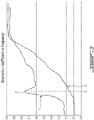
- the properties of the springs 14 and/or mass of the layer(s) 16, 18 supported by the springs 14 are varied until the cushioning element 10 is tuned to the predetermined noise frequency. Verification of the tuning of the cushioning element may be done for example by measuring and plotting the sound absorption coefficient of the cushioning element over a wide range of frequencies.
- the sound absorption coefficient ⁇ is defined as the ratio of energy absorbed by a material to the energy incident upon its surface, and can be calculated as 1 ⁇ I R I I where I R is the one-sided intensity of the reflected sound and I l is the one-sided intensity of the incident sound.
- the plot T of the tuned cushioning element defines a peak P at frequency X - the tuned absorber of the cushioning element is tuned to absorb noise, for example tonal noise, at frequency X.
- the variation of the sound absorption coefficient of the un-tuned foam mattress does not define such a peak.
- the peak P does not necessarily define the maximum sound absorption coefficient of the cushioning element, but represents a significant local increase in the sound absorption coefficient curve.
- the peak P corresponds to a sound absorption coefficient value at least 5% above the sound absorption coefficient at adjacent frequencies; in a particular embodiment, the peak P corresponds to a sound absorption coefficient value at least 10% above the sound absorption coefficient at adjacent frequencies.
- the frequency X for which the tuned absorber (and accordingly the cushioning element) is tuned is a frequency value within the audible range, and corresponds to the frequency of a noise (e.g. tonal noise) to be absorbed.
- the frequency X has a value of at least 20 Hz, and in another particular embodiment the frequency X has a value of at least 50 Hz.
- the frequency X is within the range extending from 50 Hz to 100 Hz, which may correspond for example to the frequency of the tonal noise produced by the low pressure (e.g. fan) shaft of each engine 6.
- the frequency X is within the range extending from 100 Hz to 350 Hz or from 100 Hz to 500 Hz, which may correspond for example to the frequency of the tonal noise produced by the high pressure (core) shaft of each engine 6.
- Other values are also possible, for example up to 1000 Hz.
- a cushioning element 110 in accordance with another particular example not forming part of the invention is shown, suitable to be tuned to absorb noise (e.g. tonal noise) as described above. Elements similar to that of the cushioning element 10 of Fig. 2 are identified by the same reference numerals and will not be further described herein.
- the cushioning element 110 is shown as including the springs 14 and top layer 16, it is understood that alternately the springs 14 and/or top layer 16 may be omitted.
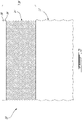
- the cushioning element 110 may include only the foam core 12 and the outer layer 18 defining the outer envelope and outer surface of the cushioning element 110.
- the tuned absorber 120 is defined in the foam core 12.
- the foam core 12 includes one or more portion(s) 32, 34 having a different density and/or stiffness than the remainder 36 of the foam core 12.
- a portion 32 of the foam core 12 having a different density/stiffness than the remainder 36 of the foam core 12 is defined as a foam layer superimposed over the remainder 36 of the foam core and extending along an entire width and length of the cushioning element 110.
- Portions 34 of the foam core having a different density/stiffness than the remainder 36 of the foam core 12 are also defined in pieces or blocks, shown here with a rectangular cross-section, embedded in the remainder 36 of the foam core 12. It is understood that the portion(s) of the foam core having a different density/stiffness than the remainder of the foam core may be defined only as superimposed layer(s) or only as embedded piece(s), and that the shape of the embedded pieces may be varied.
- the portion(s) 32, 34 of the foam core 12 having a different density/stiffness define the tuned absorber 120.
- the tuned absorber 120 can be tuned by changing the size and/or number of the portion(s) 32, 34 of the foam core 12 having a different density/stiffness, or by selecting a particular density/stiffness (e.g., a particular foam material) used in the portion(s) 32, 34 of the foam core 12 having a different density/stiffness.
- the size, number and/or density/stiffness of the portion(s) 32, 34 of the foam core 12 having a different density/stiffness are varied until the cushioning element 110 is tuned to the predetermined noise frequency (e.g. tonal noise frequency).
- Different regions of the cushioning element 110 can be tuned to absorb noise of different frequencies. Verification of the tuning of the cushioning element 110 with the tuned absorber 120 may be done for example by measuring and plotting the sound absorption coefficient of the cushioning element 110 over a wide range of frequencies to determine the position of the peak(s) P, as set forth above.
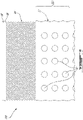
- a cushioning element 210 in accordance with a particular embodiment is shown, suitable to be tuned to absorb noise (e.g. tonal noise) as described above. Elements similar to that of the previously described cushioning elements 10, 110 are identified by the same reference numerals and will not be further described herein.
- the cushioning element 210 is shown as including the springs 14 and top layer 16, it is understood that alternately the springs 14 and/or top layer 16 may be omitted.
- the cushioning element 210 includes only the foam core 12. In an embodiment, it also includes the outer layer 18 defining the outer envelope and outer surface of the cushioning element 210.
- the tuned absorber 220 is also defined in the foam core 12.
- the foam core 12 include voids 42 (i.e. portions free of foam, filled for example with ambient air) formed in the foam core 12.
- voids 42 are shown as being defined in a regular pattern of spherical voids, it is understood that the shape and distribution of the voids 42 may vary.
- the voids 42 in the foam core 12 define the tuned absorber 220.
- the tuned absorber 220 is tuned by changing the size, number, pattern and/or distribution of voids 42 provided in the foam core 12. The size, number, pattern and/or distribution of voids 42 in the foam core 12 are varied until the cushioning element 210 is tuned to the predetermined noise frequency (e.g. tonal noise frequency). Different regions of the cushioning element 110 can be tuned to absorb noise of different frequencies. Verification of the tuning of the cushioning element 210 with the tuned absorber 220 may be done for example by measuring and plotting the sound absorption coefficient of the cushioning element 210 over a wide range of frequencies to determine the position of the peak(s) P, as set forth above.
- the predetermined noise frequency e.g. tonal noise frequency
- a cushioning element 310 in accordance with another particular embodiment is shown, suitable to be tuned to absorb noise (e.g. tonal noise) as described above. Elements similar to that of the previously described cushioning elements 10, 110, 210 are identified by the same reference numerals and will not be further described herein.
- the cushioning element 310 is shown as including the springs 14 and top layer 16, it is understood that alternately the springs 14 and/or top layer 16 may be omitted.
- the cushioning element 310 includes only the foam core 12. In an embodiment, it also includes the outer layer 18 defining the outer envelope and outer surface of the cushioning element 310.
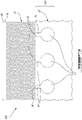
- the tuned absorber 320 is also defined in the foam core 12.
- the foam core include voids 52 (i.e. portions free of foam, filled for example with ambient air) formed in the foam core 12, in fluid communication with ports 54 having a smaller cross-sectional area than the voids 52.
- the voids 52 are shown as being defined as spaced apart spherical voids, it is understood that the shape, pattern and distribution of the voids 52 may vary.
- the ports 54 may each define a neck extending from the respective void 52 to an opening 56 defined in the surface of the foam core 12, as shown.
- the voids 52 with ports 54 may define Helmholtz resonators, where the volume of air in and near the port 54 vibrates and produces air resonance at a particular frequency - the air trapped in and near the port 54 acts as a mass and the air in the void 52 itself acts as a spring.
- the voids 52 with ports 54, or resonators, thus define the tuned absorber 320.
- the tuned absorber 320 is tuned by changing the size, number, pattern and/or distribution of voids 52 provided in the foam core 12 and, in an embodiment, additionally of the relative size of their ports 54.
- the size, number, pattern and/or distribution of voids 52 in the foam core 12 and, in an embodiment, additionally the size of their ports 54 are varied until the cushioning element 310 is tuned to the predetermined noise frequency (e.g. tonal noise frequency). Different regions of the cushioning element 110 can be tuned to absorb noise of different frequencies, for example by having different resonators tuned to different frequencies. Verification of the tuning of the cushioning element 310 with the tuned absorber 320 may be done for example by measuring and plotting the sound absorption coefficient of the cushioning element over a wide range of frequencies to determine the position of the peak(s) P, as set forth above.
- the predetermined noise frequency e.g. tonal noise frequency
- an assembly of cushioning elements 210, 310 is provided in the aircraft cabin, including tuned absorbers 220, 320 tuned to absorb noise of different frequencies.
- Cushioning element(s) 210, 310 with a relatively large volume e.g. mattress
- cushioning element(s) 210, 310 with a smaller volume e.g., seat cushion
- tonal noise of higher frequency(ies) e.g. hydraulic system noise
- noise absorption can thus be provided within the cabin of the aircraft by determining a predetermined frequency of at least 20 Hz or at least 50 Hz of an undesirable noise within the cabin, and configuring an internal structure of the cushioning element 210, 310 used in the cabin to defined a tuned absorber 220, 320 tuned to absorb noise at the predetermined frequency.
- configuring the internal structure of the cushioning element 210, 310 includes defining voids 42, 52 within the foam core 12.
- configuring the internal structure of the cushioning element 210, 310 may include defining ports 54 having a smaller cross-sectional area than that of the voids 52 and in fluid communication with the voids 52 so that the voids 52 and ports 54 define resonators.
- the internal structure of the cushioning element 210, 310 is performed without perforating an outer envelope defining an outer surface of the cushioning element 210, 310.
- the internal structure of the cushioning element 210, 310 may be configured until a frequency distribution of sound absorption coefficient of the cushioning element 210, 310 defines a peak P in sound absorption coefficient at the predetermined frequency.
- the peak P may correspond to a value of sound absorption coefficient at least 5%, or at least 10%, above a sound absorption coefficient of the cushioning element 210, 310 at frequencies adjacent the predetermined frequency.
- Providing the noise absorption further includes determining a second frequency of another undesirable noise within the cabin, higher than the first frequency, and similarly configuring the internal structure of an additional cabin cushioning element 210, 310 to define a tuned absorber tuned to absorb noise at the second frequency.
- the use of existing cushioning elements to provide tuned absorbers allow for tonal noise absorption to be provided without the need to add additional and potentially bulky structure in the aircraft, allowing for tuned absorbers to be provided with no or with minimal impact on the aircraft weight.
- any two or more of the tuned absorbers 20, 120, 220, 320 described above can be combined in a same cushioning element; as a non-limiting example not forming part of the invention, the spring-mass system tuned absorber 20 can be combined with any one or any combination of the foam core tuned absorbers 120, 220, 320. Two or more of the foam core tuned absorbers can also be combined. The combined tuned absorbers in a same cushioning element may allow for the cushioning element to be tuned to two or more noise frequencies.
Landscapes
- Engineering & Computer Science (AREA)
- Physics & Mathematics (AREA)
- Acoustics & Sound (AREA)
- Multimedia (AREA)
- Aviation & Aerospace Engineering (AREA)
- Transportation (AREA)
- Mechanical Engineering (AREA)
- Mattresses And Other Support Structures For Chairs And Beds (AREA)
Claims (9)
- Ensemble de rembourrage destiné à être utilisé dans une cabine d'un aéronef avec au moins un moteur comprenant :un premier élément de rembourrage (210, 310) comportant une structure interne comprenant au moins un premier absorbeur accordé (220, 320) intégré dans le premier élément de rembourrage (210, 310), le premier absorbeur accordé (220, 320) étant accordé pour absorber le bruit à une première fréquence prédéfinie supérieure ou égale à 20 Hz ; etun second élément de rembourrage (210, 310) possédant une structure interne comprenant au moins un second absorbeur accordé (220, 320) intégré dans le second élément de rembourrage (210, 310), le second absorbeur accordé (220, 320) étant accordé pour absorber le bruit à une seconde fréquence prédéfinie supérieure à la première fréquence prédéfinie, lesdites première etseconde fréquences prédéfinies étant dans la plage audible, l'ensemble étant caractérisé en ce que la première fréquence prédéfinie correspond à une fréquence d'un bruit tonal produit par un arbre basse pression de l'au moins un moteur et la seconde fréquence prédéfinie correspond à une fréquence d'un bruit tonal produit par un arbre haute pression de l'au moins un moteur ; une structure interne des éléments de rembourrage comprend un cœur en mousse (12), les absorbeurs accordés (220, 320) étant définis dans le cœur en mousse et comprenant des vides (42, 52) à l'intérieur du cœur en mousse, les absorbeurs accordés étant accordés en changeant la taille, le nombre, le motif et/ou la distribution des vides et le premier élément de rembourrage (210, 310) est un matelas et le second élément de rembourrage (210, 310) est un coussin de siège possédant un volume plus petit que le matelas.
- Ensemble selon la revendication 1, ladite première fréquence prédéfinie étant supérieure ou égale à 50 Hz.
- Ensemble selon la revendication 1 ou 2, une distribution de fréquence du coefficient d'absorption acoustique du premier élément de rembourrage (210, 310) définissant un pic à la première fréquence prédéfinie, le pic correspondant à une valeur de coefficient d'absorption acoustique supérieure d'au moins 5 % à un coefficient d'absorption acoustique du premier élément de rembourrage (210, 310) à des fréquences adjacentes à la première fréquence prédéfinie.
- Ensemble selon la revendication 3, ladite valeur du coefficient d'absorption acoustique au pic étant supérieure d'au moins 10 % au coefficient d'absorption acoustique du premier élément de rembourrage (210, 310) à des fréquences adjacentes à la première fréquence prédéfinie.
- Ensemble selon l'une quelconque des revendications 1 à 4, ledit premier élément de rembourrage (210, 310) comprenant une enveloppe externe définissant une surface externe du premier élément de rembourrage (210, 310), l'enveloppe externe étant non perforée.
- Ensemble selon l'une quelconque des revendications 1 à 5, ladite première fréquence prédéfinie étant inférieure ou égale à 100 Hz.
- Ensemble selon l'une quelconque des revendications 1 à 5, ladite seconde fréquence prédéfinie étant compris dans une plage définie de 100 Hz à 500 Hz.
- Ensemble selon la revendication 1, lesdits vides (52) étant en communication fluidique avec des orifices (54) possédant une section transversale inférieure à celle des vides, les vides (52) et les orifices (54) définissant des résonateurs.
- Procédé de fourniture d'absorption de bruit avec un ensemble à l'intérieur d'une cabine d'un aéronef possédant au moins un moteur, le procédé comprenant :la détermination d'une première fréquence prédéfinie supérieure ou égale à 20 Hz d'un bruit indésirable à l'intérieur de la cabine, la première fréquence prédéfinie correspondant à une fréquence d'un bruit tonal produit par un arbre basse pression de l'au moins un moteur ;la détermination d'une seconde fréquence prédéfinie supérieure à la première fréquence prédéfinie d'un bruit indésirable à l'intérieur de la cabine, ladite seconde fréquence prédéfinie correspondant à une fréquence d'un bruit tonal produit par un arbre haute pression de l'au moins un moteur ;la configuration d'un cœur en mousse (12) d'une structure interne d'un premier élément de rembourrage (210, 310) de l'ensemble pour définir un premier absorbeur accordé (220, 320) accordé pour absorber le bruit au niveau de la première fréquence prédéfinie ; etla configuration d'un cœur en mousse d'une structure interne d'un second élément de rembourrage (210, 310) de l'ensemble pour définir un second absorbeur accordé (220, 320) accordé pour absorber le bruit au niveau de la seconde fréquence prédéfinie, lesdites première et seconde fréquences prédéfinies étant dans la plage audible, les éléments de rembourrage (210, 310) lors de l'utilisation étant situés dans la cabine, une structure interne des éléments de rembourrage (210, 310) comprenant le cœur en mousse (12), les absorbeurs accordés (220, 320) étant définis dans le cœur en mousse (12) et comprenant des vides (42, 52) à l'intérieur du cœur en mousse (12), les absorbeurs accordés étant accordés en changeant la taille, le nombre, le motif et/ou la distribution des vides et ledit premier élément de rembourrage (210, 310) étant un matelas et ledit second élément de rembourrage (210, 310) étant un coussin de siège possédant un volume inférieur à celui du matelas.
Applications Claiming Priority (2)
| Application Number | Priority Date | Filing Date | Title |
|---|---|---|---|
| US201662430036P | 2016-12-05 | 2016-12-05 | |
| PCT/IB2017/057665 WO2018104868A1 (fr) | 2016-12-05 | 2017-12-05 | Élément de rembourrage à isolant accordé |
Publications (2)
| Publication Number | Publication Date |
|---|---|
| EP3549128A1 EP3549128A1 (fr) | 2019-10-09 |
| EP3549128B1 true EP3549128B1 (fr) | 2022-04-13 |
Family
ID=60702913
Family Applications (1)
| Application Number | Title | Priority Date | Filing Date |
|---|---|---|---|
| EP17817186.4A Active EP3549128B1 (fr) | 2016-12-05 | 2017-12-05 | Élément de rembourrage à isolant adapté |
Country Status (3)
| Country | Link |
|---|---|
| US (1) | US11514880B2 (fr) |
| EP (1) | EP3549128B1 (fr) |
| WO (1) | WO2018104868A1 (fr) |
Families Citing this family (1)
| Publication number | Priority date | Publication date | Assignee | Title |
|---|---|---|---|---|
| WO2026018156A1 (fr) * | 2024-07-18 | 2026-01-22 | T4G Engineering Gmbh | Dispositif d'absorption pour réduire les vibrations sonores |
Family Cites Families (15)
| Publication number | Priority date | Publication date | Assignee | Title |
|---|---|---|---|---|
| JPH0688514B2 (ja) | 1986-01-24 | 1994-11-09 | 日産自動車株式会社 | 共振低減クツシヨン |
| AT399488B (de) * | 1991-04-22 | 1995-05-26 | Greiner & Soehne C A | Sitzpolster, insbesondere flugzeugsitz |
| GB9705402D0 (en) | 1996-12-04 | 1997-04-30 | Pritex Ltd | Apparatus for and method of attenuating acoustic energy |
| US6648100B2 (en) | 2001-10-24 | 2003-11-18 | Lear Corporation | Method of tuning acoustical absorption in a vehicle interior |
| US7677660B2 (en) * | 2007-09-06 | 2010-03-16 | Lear Corporation | Acoustically tuned seating assembly |
| JP5326472B2 (ja) * | 2007-10-11 | 2013-10-30 | ヤマハ株式会社 | 吸音構造 |
| DE102009007891A1 (de) | 2009-02-07 | 2010-08-12 | Willsingh Wilson | Resonanz-Schallabsorber in mehrschichtiger Ausführung |
| EP2595142B1 (fr) * | 2010-07-15 | 2021-01-20 | Aishin Kako Kabushiki Kaisha | Structure caractéristique d'absorption du son |
| US8974003B2 (en) * | 2012-03-30 | 2015-03-10 | Toyota Motor Engineering & Manufacturing North America, Inc. | Rear seat cushion sound reduction mat |
| US8657067B1 (en) * | 2012-09-25 | 2014-02-25 | The Boeing Company | Acoustic damping device for noise reduction |
| GB201410856D0 (en) | 2014-06-18 | 2014-07-30 | Carbon Air Ltd | Vibration propagation |
| US9630575B2 (en) * | 2015-09-30 | 2017-04-25 | GM Global Technology Operations LLC | Panel assembly with noise attenuation system |
| US11634091B2 (en) * | 2017-04-03 | 2023-04-25 | Cascade Engineering, Inc. | Acoustic fiber silencer |
| US10077011B1 (en) * | 2017-05-09 | 2018-09-18 | Ford Global Technologies, Llc | Vehicle underbody acoustic panels |
| EP3409468B1 (fr) * | 2017-06-01 | 2020-08-19 | Autoneum Management AG | Système de revêtement de sol esthétique |
-
2017
- 2017-12-05 EP EP17817186.4A patent/EP3549128B1/fr active Active
- 2017-12-05 US US16/466,440 patent/US11514880B2/en active Active
- 2017-12-05 WO PCT/IB2017/057665 patent/WO2018104868A1/fr not_active Ceased
Non-Patent Citations (1)
| Title |
|---|
| None * |
Also Published As
| Publication number | Publication date |
|---|---|
| EP3549128A1 (fr) | 2019-10-09 |
| US20200074972A1 (en) | 2020-03-05 |
| US11514880B2 (en) | 2022-11-29 |
| WO2018104868A1 (fr) | 2018-06-14 |
Similar Documents
| Publication | Publication Date | Title |
|---|---|---|
| US8147001B2 (en) | Method of absorbing energy in an aircraft passenger seat assembly | |
| GB2548906A (en) | Seat back for vehicle | |
| US9033420B2 (en) | Seat cushion, for instance for an aircraft seat, and a method for manufacturing such a seat cushion | |
| US7871039B2 (en) | Modular passenger seat for an aircraft | |
| EP2024230B1 (fr) | Siege passager d'avion leger a construction composite | |
| CN104044317B (zh) | 缓冲材料 | |
| US20170174346A1 (en) | Seat Cushion for Use by Airline Passengers | |
| EP3159256A1 (fr) | Sections thermoacoustiques améliorées pour aéronef | |
| WO2018156302A1 (fr) | Chemisage acoustique et procédé de formation de chemisage acoustique | |
| US20060162081A1 (en) | Adaptive pneumatic sitting and reclining cushion for vehicles and aircraft | |
| JP5898791B2 (ja) | 浮力発泡体が分散されている、航空機用シートに用いられるシートクッション | |
| US11514880B2 (en) | Cushioning element with tuned absorber | |
| WO2019017834A1 (fr) | Dossier pour un siège de passager | |
| Kone et al. | Control and broadening of multiple noise frequencies using an assembly of sub-metamaterials connected by membranes for aircraft noise mitigation. | |
| US7410126B2 (en) | Tunable acoustic absorption system for an aircraft cabin | |
| US20090066127A1 (en) | Acoustically tuned seating assembly | |
| EP4021806B1 (fr) | Éléments de support auxétiques avec courbures ergonomiques pour sièges passagers | |
| AU2017417473B2 (en) | Seat cushion for airline passengers | |
| US20170283069A1 (en) | Cushion Assembly | |
| DE102004008407A1 (de) | Sitz, insbesondere für ein Kraftfahrzeug oder ein Flugzeug | |
| Chen et al. | Investigation of helicopter seat structural dynamics for aircrew vibration mitigation | |
| CN204196753U (zh) | 地毯及车辆 | |
| US20250333175A1 (en) | Integrated cushion lattice structures for vibration damping for aircraft seating | |
| JP2025121531A (ja) | 車両用シートとその振動低減方法 | |
| US20240294259A1 (en) | Energy absorbing mechanisms and methods thereof |
Legal Events
| Date | Code | Title | Description |
|---|---|---|---|
| STAA | Information on the status of an ep patent application or granted ep patent |
Free format text: STATUS: UNKNOWN |
|
| STAA | Information on the status of an ep patent application or granted ep patent |
Free format text: STATUS: THE INTERNATIONAL PUBLICATION HAS BEEN MADE |
|
| PUAI | Public reference made under article 153(3) epc to a published international application that has entered the european phase |
Free format text: ORIGINAL CODE: 0009012 |
|
| STAA | Information on the status of an ep patent application or granted ep patent |
Free format text: STATUS: REQUEST FOR EXAMINATION WAS MADE |
|
| 17P | Request for examination filed |
Effective date: 20190627 |
|
| AK | Designated contracting states |
Kind code of ref document: A1 Designated state(s): AL AT BE BG CH CY CZ DE DK EE ES FI FR GB GR HR HU IE IS IT LI LT LU LV MC MK MT NL NO PL PT RO RS SE SI SK SM TR |
|
| AX | Request for extension of the european patent |
Extension state: BA ME |
|
| DAV | Request for validation of the european patent (deleted) | ||
| DAX | Request for extension of the european patent (deleted) | ||
| STAA | Information on the status of an ep patent application or granted ep patent |
Free format text: STATUS: EXAMINATION IS IN PROGRESS |
|
| 17Q | First examination report despatched |
Effective date: 20200416 |
|
| REG | Reference to a national code |
Ref country code: DE Ref legal event code: R079 Ref document number: 602017056007 Country of ref document: DE Free format text: PREVIOUS MAIN CLASS: G10K0011172000 Ipc: G10K0011168000 |
|
| GRAP | Despatch of communication of intention to grant a patent |
Free format text: ORIGINAL CODE: EPIDOSNIGR1 |
|
| STAA | Information on the status of an ep patent application or granted ep patent |
Free format text: STATUS: GRANT OF PATENT IS INTENDED |
|
| RIC1 | Information provided on ipc code assigned before grant |
Ipc: B60N 2/70 20060101ALI20210924BHEP Ipc: B64D 11/06 20060101ALI20210924BHEP Ipc: G10K 11/172 20060101ALI20210924BHEP Ipc: G10K 11/168 20060101AFI20210924BHEP |
|
| INTG | Intention to grant announced |
Effective date: 20211025 |
|
| GRAS | Grant fee paid |
Free format text: ORIGINAL CODE: EPIDOSNIGR3 |
|
| GRAA | (expected) grant |
Free format text: ORIGINAL CODE: 0009210 |
|
| STAA | Information on the status of an ep patent application or granted ep patent |
Free format text: STATUS: THE PATENT HAS BEEN GRANTED |
|
| AK | Designated contracting states |
Kind code of ref document: B1 Designated state(s): AL AT BE BG CH CY CZ DE DK EE ES FI FR GB GR HR HU IE IS IT LI LT LU LV MC MK MT NL NO PL PT RO RS SE SI SK SM TR |
|
| REG | Reference to a national code |
Ref country code: GB Ref legal event code: FG4D |
|
| REG | Reference to a national code |
Ref country code: CH Ref legal event code: EP |
|
| REG | Reference to a national code |
Ref country code: DE Ref legal event code: R096 Ref document number: 602017056007 Country of ref document: DE |
|
| REG | Reference to a national code |
Ref country code: IE Ref legal event code: FG4D |
|
| REG | Reference to a national code |
Ref country code: AT Ref legal event code: REF Ref document number: 1484028 Country of ref document: AT Kind code of ref document: T Effective date: 20220515 |
|
| REG | Reference to a national code |
Ref country code: LT Ref legal event code: MG9D |
|
| REG | Reference to a national code |
Ref country code: NL Ref legal event code: MP Effective date: 20220413 |
|
| REG | Reference to a national code |
Ref country code: AT Ref legal event code: MK05 Ref document number: 1484028 Country of ref document: AT Kind code of ref document: T Effective date: 20220413 |
|
| PG25 | Lapsed in a contracting state [announced via postgrant information from national office to epo] |
Ref country code: NL Free format text: LAPSE BECAUSE OF FAILURE TO SUBMIT A TRANSLATION OF THE DESCRIPTION OR TO PAY THE FEE WITHIN THE PRESCRIBED TIME-LIMIT Effective date: 20220413 |
|
| PG25 | Lapsed in a contracting state [announced via postgrant information from national office to epo] |
Ref country code: SE Free format text: LAPSE BECAUSE OF FAILURE TO SUBMIT A TRANSLATION OF THE DESCRIPTION OR TO PAY THE FEE WITHIN THE PRESCRIBED TIME-LIMIT Effective date: 20220413 Ref country code: PT Free format text: LAPSE BECAUSE OF FAILURE TO SUBMIT A TRANSLATION OF THE DESCRIPTION OR TO PAY THE FEE WITHIN THE PRESCRIBED TIME-LIMIT Effective date: 20220816 Ref country code: NO Free format text: LAPSE BECAUSE OF FAILURE TO SUBMIT A TRANSLATION OF THE DESCRIPTION OR TO PAY THE FEE WITHIN THE PRESCRIBED TIME-LIMIT Effective date: 20220713 Ref country code: LT Free format text: LAPSE BECAUSE OF FAILURE TO SUBMIT A TRANSLATION OF THE DESCRIPTION OR TO PAY THE FEE WITHIN THE PRESCRIBED TIME-LIMIT Effective date: 20220413 Ref country code: HR Free format text: LAPSE BECAUSE OF FAILURE TO SUBMIT A TRANSLATION OF THE DESCRIPTION OR TO PAY THE FEE WITHIN THE PRESCRIBED TIME-LIMIT Effective date: 20220413 Ref country code: GR Free format text: LAPSE BECAUSE OF FAILURE TO SUBMIT A TRANSLATION OF THE DESCRIPTION OR TO PAY THE FEE WITHIN THE PRESCRIBED TIME-LIMIT Effective date: 20220714 Ref country code: FI Free format text: LAPSE BECAUSE OF FAILURE TO SUBMIT A TRANSLATION OF THE DESCRIPTION OR TO PAY THE FEE WITHIN THE PRESCRIBED TIME-LIMIT Effective date: 20220413 Ref country code: ES Free format text: LAPSE BECAUSE OF FAILURE TO SUBMIT A TRANSLATION OF THE DESCRIPTION OR TO PAY THE FEE WITHIN THE PRESCRIBED TIME-LIMIT Effective date: 20220413 Ref country code: BG Free format text: LAPSE BECAUSE OF FAILURE TO SUBMIT A TRANSLATION OF THE DESCRIPTION OR TO PAY THE FEE WITHIN THE PRESCRIBED TIME-LIMIT Effective date: 20220713 Ref country code: AT Free format text: LAPSE BECAUSE OF FAILURE TO SUBMIT A TRANSLATION OF THE DESCRIPTION OR TO PAY THE FEE WITHIN THE PRESCRIBED TIME-LIMIT Effective date: 20220413 |
|
| PG25 | Lapsed in a contracting state [announced via postgrant information from national office to epo] |
Ref country code: RS Free format text: LAPSE BECAUSE OF FAILURE TO SUBMIT A TRANSLATION OF THE DESCRIPTION OR TO PAY THE FEE WITHIN THE PRESCRIBED TIME-LIMIT Effective date: 20220413 Ref country code: PL Free format text: LAPSE BECAUSE OF FAILURE TO SUBMIT A TRANSLATION OF THE DESCRIPTION OR TO PAY THE FEE WITHIN THE PRESCRIBED TIME-LIMIT Effective date: 20220413 Ref country code: LV Free format text: LAPSE BECAUSE OF FAILURE TO SUBMIT A TRANSLATION OF THE DESCRIPTION OR TO PAY THE FEE WITHIN THE PRESCRIBED TIME-LIMIT Effective date: 20220413 Ref country code: IS Free format text: LAPSE BECAUSE OF FAILURE TO SUBMIT A TRANSLATION OF THE DESCRIPTION OR TO PAY THE FEE WITHIN THE PRESCRIBED TIME-LIMIT Effective date: 20220813 |
|
| REG | Reference to a national code |
Ref country code: DE Ref legal event code: R097 Ref document number: 602017056007 Country of ref document: DE |
|
| PG25 | Lapsed in a contracting state [announced via postgrant information from national office to epo] |
Ref country code: SM Free format text: LAPSE BECAUSE OF FAILURE TO SUBMIT A TRANSLATION OF THE DESCRIPTION OR TO PAY THE FEE WITHIN THE PRESCRIBED TIME-LIMIT Effective date: 20220413 Ref country code: SK Free format text: LAPSE BECAUSE OF FAILURE TO SUBMIT A TRANSLATION OF THE DESCRIPTION OR TO PAY THE FEE WITHIN THE PRESCRIBED TIME-LIMIT Effective date: 20220413 Ref country code: RO Free format text: LAPSE BECAUSE OF FAILURE TO SUBMIT A TRANSLATION OF THE DESCRIPTION OR TO PAY THE FEE WITHIN THE PRESCRIBED TIME-LIMIT Effective date: 20220413 Ref country code: EE Free format text: LAPSE BECAUSE OF FAILURE TO SUBMIT A TRANSLATION OF THE DESCRIPTION OR TO PAY THE FEE WITHIN THE PRESCRIBED TIME-LIMIT Effective date: 20220413 Ref country code: DK Free format text: LAPSE BECAUSE OF FAILURE TO SUBMIT A TRANSLATION OF THE DESCRIPTION OR TO PAY THE FEE WITHIN THE PRESCRIBED TIME-LIMIT Effective date: 20220413 Ref country code: CZ Free format text: LAPSE BECAUSE OF FAILURE TO SUBMIT A TRANSLATION OF THE DESCRIPTION OR TO PAY THE FEE WITHIN THE PRESCRIBED TIME-LIMIT Effective date: 20220413 |
|
| PLBE | No opposition filed within time limit |
Free format text: ORIGINAL CODE: 0009261 |
|
| STAA | Information on the status of an ep patent application or granted ep patent |
Free format text: STATUS: NO OPPOSITION FILED WITHIN TIME LIMIT |
|
| 26N | No opposition filed |
Effective date: 20230116 |
|
| PG25 | Lapsed in a contracting state [announced via postgrant information from national office to epo] |
Ref country code: AL Free format text: LAPSE BECAUSE OF FAILURE TO SUBMIT A TRANSLATION OF THE DESCRIPTION OR TO PAY THE FEE WITHIN THE PRESCRIBED TIME-LIMIT Effective date: 20220413 |
|
| PG25 | Lapsed in a contracting state [announced via postgrant information from national office to epo] |
Ref country code: SI Free format text: LAPSE BECAUSE OF FAILURE TO SUBMIT A TRANSLATION OF THE DESCRIPTION OR TO PAY THE FEE WITHIN THE PRESCRIBED TIME-LIMIT Effective date: 20220413 |
|
| P01 | Opt-out of the competence of the unified patent court (upc) registered |
Effective date: 20230529 |
|
| REG | Reference to a national code |
Ref country code: CH Ref legal event code: PL |
|
| REG | Reference to a national code |
Ref country code: BE Ref legal event code: MM Effective date: 20221231 |
|
| PG25 | Lapsed in a contracting state [announced via postgrant information from national office to epo] |
Ref country code: LU Free format text: LAPSE BECAUSE OF NON-PAYMENT OF DUE FEES Effective date: 20221205 |
|
| PG25 | Lapsed in a contracting state [announced via postgrant information from national office to epo] |
Ref country code: LI Free format text: LAPSE BECAUSE OF NON-PAYMENT OF DUE FEES Effective date: 20221231 Ref country code: IE Free format text: LAPSE BECAUSE OF NON-PAYMENT OF DUE FEES Effective date: 20221205 Ref country code: CH Free format text: LAPSE BECAUSE OF NON-PAYMENT OF DUE FEES Effective date: 20221231 |
|
| PG25 | Lapsed in a contracting state [announced via postgrant information from national office to epo] |
Ref country code: BE Free format text: LAPSE BECAUSE OF NON-PAYMENT OF DUE FEES Effective date: 20221231 |
|
| PG25 | Lapsed in a contracting state [announced via postgrant information from national office to epo] |
Ref country code: IT Free format text: LAPSE BECAUSE OF FAILURE TO SUBMIT A TRANSLATION OF THE DESCRIPTION OR TO PAY THE FEE WITHIN THE PRESCRIBED TIME-LIMIT Effective date: 20220413 |
|
| PG25 | Lapsed in a contracting state [announced via postgrant information from national office to epo] |
Ref country code: HU Free format text: LAPSE BECAUSE OF FAILURE TO SUBMIT A TRANSLATION OF THE DESCRIPTION OR TO PAY THE FEE WITHIN THE PRESCRIBED TIME-LIMIT; INVALID AB INITIO Effective date: 20171205 |
|
| PG25 | Lapsed in a contracting state [announced via postgrant information from national office to epo] |
Ref country code: CY Free format text: LAPSE BECAUSE OF FAILURE TO SUBMIT A TRANSLATION OF THE DESCRIPTION OR TO PAY THE FEE WITHIN THE PRESCRIBED TIME-LIMIT Effective date: 20220413 |
|
| PG25 | Lapsed in a contracting state [announced via postgrant information from national office to epo] |
Ref country code: MK Free format text: LAPSE BECAUSE OF FAILURE TO SUBMIT A TRANSLATION OF THE DESCRIPTION OR TO PAY THE FEE WITHIN THE PRESCRIBED TIME-LIMIT Effective date: 20220413 |
|
| PG25 | Lapsed in a contracting state [announced via postgrant information from national office to epo] |
Ref country code: MC Free format text: LAPSE BECAUSE OF FAILURE TO SUBMIT A TRANSLATION OF THE DESCRIPTION OR TO PAY THE FEE WITHIN THE PRESCRIBED TIME-LIMIT Effective date: 20220413 |
|
| PG25 | Lapsed in a contracting state [announced via postgrant information from national office to epo] |
Ref country code: TR Free format text: LAPSE BECAUSE OF FAILURE TO SUBMIT A TRANSLATION OF THE DESCRIPTION OR TO PAY THE FEE WITHIN THE PRESCRIBED TIME-LIMIT Effective date: 20220413 Ref country code: MC Free format text: LAPSE BECAUSE OF FAILURE TO SUBMIT A TRANSLATION OF THE DESCRIPTION OR TO PAY THE FEE WITHIN THE PRESCRIBED TIME-LIMIT Effective date: 20220413 |
|
| PG25 | Lapsed in a contracting state [announced via postgrant information from national office to epo] |
Ref country code: MT Free format text: LAPSE BECAUSE OF FAILURE TO SUBMIT A TRANSLATION OF THE DESCRIPTION OR TO PAY THE FEE WITHIN THE PRESCRIBED TIME-LIMIT Effective date: 20220413 |
|
| PG25 | Lapsed in a contracting state [announced via postgrant information from national office to epo] |
Ref country code: BG Free format text: LAPSE BECAUSE OF FAILURE TO SUBMIT A TRANSLATION OF THE DESCRIPTION OR TO PAY THE FEE WITHIN THE PRESCRIBED TIME-LIMIT Effective date: 20220413 |
|
| PG25 | Lapsed in a contracting state [announced via postgrant information from national office to epo] |
Ref country code: BG Free format text: LAPSE BECAUSE OF FAILURE TO SUBMIT A TRANSLATION OF THE DESCRIPTION OR TO PAY THE FEE WITHIN THE PRESCRIBED TIME-LIMIT Effective date: 20220413 |
|
| PGFP | Annual fee paid to national office [announced via postgrant information from national office to epo] |
Ref country code: DE Payment date: 20251211 Year of fee payment: 9 |
|
| PGFP | Annual fee paid to national office [announced via postgrant information from national office to epo] |
Ref country code: GB Payment date: 20251219 Year of fee payment: 9 |
|
| PGFP | Annual fee paid to national office [announced via postgrant information from national office to epo] |
Ref country code: FR Payment date: 20251229 Year of fee payment: 9 |