EP3549852B1 - Système de manoeuvre de navire, navire et procédé de manoeuvre de navire - Google Patents
Système de manoeuvre de navire, navire et procédé de manoeuvre de navire Download PDFInfo
- Publication number
- EP3549852B1 EP3549852B1 EP17875136.8A EP17875136A EP3549852B1 EP 3549852 B1 EP3549852 B1 EP 3549852B1 EP 17875136 A EP17875136 A EP 17875136A EP 3549852 B1 EP3549852 B1 EP 3549852B1
- Authority
- EP
- European Patent Office
- Prior art keywords
- starboard
- port
- ship
- turning
- force
- Prior art date
- Legal status (The legal status is an assumption and is not a legal conclusion. Google has not performed a legal analysis and makes no representation as to the accuracy of the status listed.)
- Active
Links
Images





Classifications
-
- B—PERFORMING OPERATIONS; TRANSPORTING
- B63—SHIPS OR OTHER WATERBORNE VESSELS; RELATED EQUIPMENT
- B63H—MARINE PROPULSION OR STEERING
- B63H25/00—Steering; Slowing-down otherwise than by use of propulsive elements; Dynamic anchoring, i.e. positioning vessels by means of main or auxiliary propulsive elements
- B63H25/06—Steering by rudders
-
- B—PERFORMING OPERATIONS; TRANSPORTING
- B63—SHIPS OR OTHER WATERBORNE VESSELS; RELATED EQUIPMENT
- B63H—MARINE PROPULSION OR STEERING
- B63H25/00—Steering; Slowing-down otherwise than by use of propulsive elements; Dynamic anchoring, i.e. positioning vessels by means of main or auxiliary propulsive elements
- B63H25/06—Steering by rudders
- B63H25/38—Rudders
-
- B—PERFORMING OPERATIONS; TRANSPORTING
- B63—SHIPS OR OTHER WATERBORNE VESSELS; RELATED EQUIPMENT
- B63H—MARINE PROPULSION OR STEERING
- B63H25/00—Steering; Slowing-down otherwise than by use of propulsive elements; Dynamic anchoring, i.e. positioning vessels by means of main or auxiliary propulsive elements
- B63H25/02—Initiating means for steering, for slowing down, otherwise than by use of propulsive elements, or for dynamic anchoring
-
- B—PERFORMING OPERATIONS; TRANSPORTING
- B63—SHIPS OR OTHER WATERBORNE VESSELS; RELATED EQUIPMENT
- B63H—MARINE PROPULSION OR STEERING
- B63H25/00—Steering; Slowing-down otherwise than by use of propulsive elements; Dynamic anchoring, i.e. positioning vessels by means of main or auxiliary propulsive elements
- B63H25/06—Steering by rudders
- B63H25/08—Steering gear
- B63H25/14—Steering gear power assisted; power driven, i.e. using steering engine
- B63H25/18—Transmitting of movement of initiating means to steering engine
- B63H25/24—Transmitting of movement of initiating means to steering engine by electrical means
-
- B—PERFORMING OPERATIONS; TRANSPORTING
- B63—SHIPS OR OTHER WATERBORNE VESSELS; RELATED EQUIPMENT
- B63H—MARINE PROPULSION OR STEERING
- B63H25/00—Steering; Slowing-down otherwise than by use of propulsive elements; Dynamic anchoring, i.e. positioning vessels by means of main or auxiliary propulsive elements
- B63H25/42—Steering or dynamic anchoring by propulsive elements; Steering or dynamic anchoring by propellers used therefor only; Steering or dynamic anchoring by rudders carrying propellers
-
- G—PHYSICS
- G05—CONTROLLING; REGULATING
- G05D—SYSTEMS FOR CONTROLLING OR REGULATING NON-ELECTRIC VARIABLES
- G05D1/00—Control of position, course, altitude or attitude of land, water, air or space vehicles, e.g. using automatic pilots
- G05D1/02—Control of position or course in two dimensions
- G05D1/0206—Control of position or course in two dimensions specially adapted to water vehicles
-
- B—PERFORMING OPERATIONS; TRANSPORTING
- B63—SHIPS OR OTHER WATERBORNE VESSELS; RELATED EQUIPMENT
- B63H—MARINE PROPULSION OR STEERING
- B63H25/00—Steering; Slowing-down otherwise than by use of propulsive elements; Dynamic anchoring, i.e. positioning vessels by means of main or auxiliary propulsive elements
- B63H25/06—Steering by rudders
- B63H2025/066—Arrangements of two or more rudders; Steering gear therefor
Definitions
- the present invention relates to a ship maneuvering system, a ship, and a ship maneuvering method for a ship having, at its stern, two propulsion systems, namely a port-side propulsion system including a port-side propulsion device and a port-side rudder, and a starboard-side propulsion system including a starboard-side propulsion device and a starboard-side rudder.
- JP2000-302098A For a ship to be used in the dynamic positioning system, there is proposed as described in JP2000-302098A , for example, an automatic direction setting method that controls the ship by using a ship having two-axis propellers and two rudders at its stern combined with the bow thruster at its bow, or a ship having the stern thruster at its stern and a one-axis propeller and a rudder combined with the bow thruster at its bow to distribute the propulsion force on the basis of forward and backward control force commands, lateral control force commands, and turning force commands.
- a dynamic positioning system for a one-axis propeller, one-rudder and bow thruster ship which is a ship having a tunnel-type bow thruster and a propeller together with a flap rudder or a special rudder capable of steering at a large-angle, and performs control in various modes such as a dynamic positioning mode, a standby mode, a JOY mode or an auto heading control mode, using a joy-stick or a turning-round dial.
- a dynamic positioning control device for a twin-screw twin-rudder ship having two side thrusters respectively provided at its bow and stern as described in JP2010-105551A , for example.
- the bow thruster provided at the bow and therefore the aforementioned technique is not available for a ship without a bow thruster and, even when the ship has a bow thruster, observation devices such as an acoustic device provided in the vicinity of the bow may be affected by using the bow thruster, which results in a problem that the bow thruster is not available even when dynamic positioning is needed in a situation under which use of the bow thruster is not desirable during observation.
- a target value of the ship direction or the ship position may be changed by using a joy-stick (joystick lever), a turning-round dial (turning dial).
- JP S62 8899 A discloses an other example of manoeuvring system and method of a ship.
- a ship maneuvering system for achieving the aforementioned object is a maneuvering system of a ship having two propulsion systems of a port-side propulsion system including a port-side propulsion device and a port-side rudder and a starboard-side propulsion system including a starboard-side propulsion device and a starboard-side rudder, at its stern, the ship maneuvering system comprising a maneuvering control device configured to perform at least one of transverse control and pivot turning heading control, wherein said transverse control carries out to obtain propulsive force in the longitudinal direction of the ship due to a difference between a backward force of the propulsion system on one broadside and a forward force of the propulsion system on another broadside, and move the ship to the direction of said one broadside, while avoiding turning round of the ship, by cancelling a first turning moment in a turning direction of the ship generated by a backward force of the propulsion system of said one broadside and a forward force of the propulsion system on another broadside, by a second turning moment
- steering refers to turning the rudder to starboard or port.
- transverse refers to moving in a lateral direction, in a diagonally forward direction, or a diagonally backward direction without changing the heading of the ship, in other words, without the ship turning round.
- the port-side propulsion device and the starboard-side propulsion device may include fixed-pitch propellers, variable-pitch propellers, or the like.
- the maneuvering control device is configured to perform transverse control in port-side and transverse control in starboard-side, wherein said transverse control in port-side carries out to equalize a magnitude of a port-side backward force generated by said port-side propulsion system and a magnitude of a starboard-side forward force generated by said starboard-side propulsion system, and also cancel a first turning moment generated by a port-side backward force and a starboard-side forward force by a second turning moment generated by steering said starboard-side rudder to starboard, so as to cause the ship to translate in the port-side direction by a lateral direction force generated by steering said starboard-side rudder to starboard; and wherein said transverse control in starboard-side carries out to equalize a magnitude of a port-side forward force generated by said port-side propulsion system and a magnitude
- the maneuvering control device is configured to perform diagonally-forward control in port-side and diagonally-forward control in starboard-side, wherein said diagonally-forward control in port-side carries out to make a magnitude of a starboard-side forward force generated by said starboard-side propulsion system larger than a magnitude of a port-side backward force generated by said port-side propulsion system, and also cancel a first turning moment generated by said port-side backward force and said starboard-side forward force by a second turning moment generated by steering said starboard-side rudder to starboard, so as to cause the ship to transverse diagonally forward in port-side by a lateral direction force generated by steering said starboard-side rudder to starboard; and wherein said diagonally-forward control in starboard-side carries out to make a magnitude of a port-side forward force generated by
- the maneuvering control device is configured to perform diagonally-forward control in port-side and diagonally-forward control in starboard-side, wherein said diagonally-forward control in port-side carried out to make a magnitude of a starboard-side forward force generated by said starboard-side propulsion system smaller than a magnitude of a port-side backward force generated by said port-side propulsion system, and also cancel a first turning moment generated by a port-side backward force and a starboard-side forward force by a second turning moment generated by steering said starboard-side rudder to starboard, so as to cause the ship to transverse diagonally backward in port-side by a lateral direction force generated by steering said starboard-side rudder to starboard; and wherein said diagonally-forward control in starboard-side carried out to make a magnitude of a port-side forward force generated
- the maneuvering control device is configured to perform pivot turning heading control in counterclockwise and pivot turning heading control in clockwise, wherein said pivot turning heading control in counterclockwise carries out to equalize a magnitude of a port-side backward force generated by said port-side propulsion system and a magnitude of a starboard-side forward force generated by said starboard-side propulsion system, and also adds a second turning moment generated by steering said starboard-side rudder to port to a first turning moment generated by a port-side backward force and a starboard-side forward force, so as to cause the ship to turn around counterclockwise when seen from above; and wherein said pivot turning heading control in clockwise carries out to equalize a magnitude of a port-side forward force generated by said port-side propulsion system and a magnitude of a starboard-side backward force generated by said starboard-side propulsion
- the maneuvering control device has an automatic berthing/ unberthing control mode which automatically performs one or all of: unberthing control in port-side to perform unberthing or steering away from a ship at the port-side; unberthing control in starboard-side to perform unberthing or steering away from a ship at the starboard-side; berthing control in port-side to perform berthing or approaching a ship at the port-side; or berthing control in starboard-side to perform berthing or approaching a ship at the starboard-side, using at least one of said transverse control or said pivot turning heading control.
- a movement information input unit which may be in a form of a very convenient joystick or the like
- a turning information input unit which may be in a form of a dial or the like
- the aforementioned ship maneuvering system provides with a movement information input unit which is a joy-stick type and a turning information input unit which is a dial type, as input devices for ship maneuvering.
- the maneuvering control device is configured to: in a case where an input to said turning information input unit is neutral; cause the ship to move in a port-side direction without turning round when an input to said movement information input unit indicates the port-side direction; cause the ship to move diagonally forward in port-side without turning round when an input to said movement information input unit indicates diagonally forward in port-side; cause the ship to move diagonally backward in port-side without turning round when an input to said movement information input unit indicates diagonally backward in port-side; cause the ship to move in a starboard-side direction without turning round when an input to said movement information input unit indicates the starboard-side direction; cause the ship to move diagonally forward in starboard-side without turning round when an input to said movement information input unit indicates diagonally forward in starboard-side; and cause the ship to move diagonally backward in starboard-side without turning round
- the maneuvering control device is configured to: in a case where an input to said movement information input unit is neutral, cause the ship to perform pivot turning heading in clockwise round without forward or backward movement when an input to said turning information input unit indicates the starboard-side direction; and cause the ship to perform pivot turning heading in counterclockwise round without forward or backward movement when an input to said turning information input unit indicates the port-side direction.
- a ship for achieving the aforementioned object is characterized in comprising the aforementioned ship maneuvering system, and is capable of exhibiting the effect of the aforementioned ship maneuvering system.
- a maneuvering method of a ship for achieving the aforementioned object having two propulsion systems of a port-side propulsion system including a port-side propulsion device and a port-side rudder and a starboard-side propulsion system including a starboard-side propulsion device and a starboard-side rudder, at its stern, the method performing at least one of: obtaining a propulsive force in the longitudinal direction of the ship due to a difference between a backward force of the propulsion system on one broadside and a forward force of the propulsion system on another broadside, and moving the ship to the direction of said one broadside, while avoiding turning round of the ship, by cancelling a first turning moment in a turning direction of the ship generated by a backward force of the propulsion system of said one broadside and a forward force of the propulsion system on another broadside, by a second turning moment in a turning direction of the ship generated by steering the rudder of the propulsion system on said another broadside; and zeroing out a
- a relatively simple maneuvering allows for transverse without turning round of the ship, or pivot turning heading round with neither forward nor backward advancing, which realizes a significantly improved maneuverability, and makes automatic maneuvering for dynamic positioning or position holding within a certain area significantly easy.
- a high maneuverability is exhibited by a relatively easy maneuvering operation in a maneuvering system of a ship having two propulsion systems of a port-side propulsion system including a port-side propulsion device and a port-side rudder and a starboard-side propulsion system including a starboard-side propulsion device and a starboard-side rudder, at its stern.
- a ship which does not have a bow thruster at its bow is taken as example here, the present invention is not necessarily limited to a ship with a bow thruster, but a ship with a bow thruster may also be used, because even when the ship has a bow thruster at its bow, the bow thruster may also be used for ship maneuvering in a case where use of the bow thruster is prohibited when using an underwater acoustic instrument or the like.
- the ship maneuvering described here does not use a bow thruster, maneuvering performance may be further improved by using a bow thruster together.
- steering refers to, assuming the angle of the counter rudder which does not generate a turning-round force of the ship to be zero, changing the rudder angle from the zero position to a position where the rudder is turned to starboard, which is a manner of steering that generates a clockwise turning force of the ship when seen from above, or where the rudder is turned to port, which is a manner of steering that generates a counterclockwise turning force of the ship when seen from above.
- transverse refers to a movement of the ship in a lateral direction, a diagonally forward direction, or a diagonally backward direction without changing its heading, in other words, without veering.
- forward force and backward force are respectively intended to include the case of “forward force is zero” and “backward force is zero”.
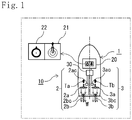
- a ship 1 has two propulsion systems 2 and 3 of a port-side propulsion system 2 including a port-side propulsion device 2a and a port-side rudder 2b and a starboard-side propulsion system 3 including a starboard-side propulsion device 3a and a starboard-side rudder 3b, at its stern.
- Both the port-side propulsion device 2a and the starboard-side propulsion device 3a are in a form of propellers.
- the propeller may be a fixed-pitch propeller, a variable-pitch propeller is more preferred since it facilitates change of propulsion force.
- an input device 20 and a maneuvering control device 30 there are provided an input device 20 and a maneuvering control device 30.
- the input device 20 includes a movement information input unit 21 in a form of joy-stick and a turning information input unit 22 in a form of a dial.
- the maneuvering control device 30 inputs position information and speed information of the ship 1 from a GPS device or log and the like, heading information from a gyro device, information from an anemometer, information from an underwater positioning device, information from a radar, information from a distance measuring device or a ranging communication device, besides data indicating inclination direction (maneuvering direction: ship movement direction) and degree of inclination angle of the joy-stick in the inclination direction from the information input unit 21, and data indicating turning direction of the dial and dial angle from the turning information input unit 22, and outputs, to control devices 2ac and 3ac of respective variable-pitch propellers, selection between forward or backward performed respectively by the port-side propulsion device 2a and the starboard-side propulsion device 3a, and command of the magnitude of propulsion force to be generated, and also outputs selection between starboard and port for the port-side rudder 2b and the starboard-side rudder 3b, as well as command of the degree of the rudder angle to
- the maneuvering control device 30 receives data of inclination direction and inclination angle from the movement information input unit 21 and data of turning direction of the dial and dial angle from the turning information input unit 22, integrally controls the propulsion devices 2a and 3a and the rudders 2b and 3b to perform ship maneuvering such as forward, backward, transverse, diagonally forward transverse, diagonally backward transverse or pivot turning heading round.
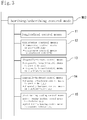
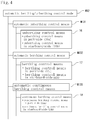
- the ship maneuvering system 10 has a control means as described below.
- the inclination direction of the movement information input unit 21 means the direction in which the ship 1 is desired to be translated
- the inclination angle of the movement information input unit 21 means the magnitude of the force generated for the transversal movement
- the turning direction of the dial of the turning information input unit 22 means the turning direction of the ship 1
- the dial angle of the turning information input unit 22 means the degree of the turning moment to be generated for the turning, and the larger the dial angle is, the larger the turning moment to be generated for the turning becomes.
- a longitudinal control means 11 including a transverse control means 12 including a transverse control means in port-side 12a and a transverse control means in starboard-side 12b
- a diagonally-forward control means 13 including a diagonally-forward control means in port-side 13a and a diagonally-forward control means in starboard-side 13b
- a diagonally-backward control means 14 including a diagonally-backward control means in port-side 14a and a diagonally-backward control means in starboard 14b
- a pivot turning heading control means 15 including a pivot turning heading control means in clockwise 15a and a pivot turning heading control means in counterclockwise 15b, or the like.
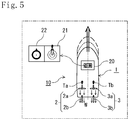
- the longitudinal control means 11 of the berthing/unberthing control mode M12 is means for performing longitudinal control by performing control of zeroing out both rudder angles of the port-side rudder 2b and the starboard-side rudder 3b when the inclination direction of the movement information input unit 21 is a forward direction and the rudder angle of the turning information input unit 22 is zero, as illustrated in FIG. 5 , and performing control of causing the port-side propulsion device 2a and the starboard-side propulsion device 3a to generate a same forward force, and causing both of the port-side propulsion system 2 and the starboard-side propulsion system 3 to generate a forward force Fx of same forward forces Ta and Tb.
- water current W generated by the port-side propulsion device 2a and the starboard-side propulsion device 3a flows along the rudder surface of the port-side rudder 2b and the starboard-side rudder 3b, whereby no rudder force is generated in the lateral direction.
- the control of zeroing out the rudder angle dose not means the control making the rudder angle zero with respect the fore-aft direction of the ship 1.
- the angle of the rudder becomes the angle of counter rudder so that the ship 1 advances longitudinal, then the angle of the counter rudder is set to zero of the rudder angle.
- the transverse control means in port-side 12a equalizes the magnitude of a port-side backward force Ta generated by a port-side propulsion system 2 and the magnitude of a starboard-side forward force Ta generated by the starboard-side propulsion system 3 when the inclination direction of the movement information input unit 21 is the port-side direction and the rudder angle of the turning information input unit 22 is zero (neutral), as illustrated in FIG. 6 .
- transverse control in port-side is performed, which cancels a first turning moment M1 generated by the port-side backward force Ta and the starboard-side forward force Tb by a second turning moment M2 generated by steering the starboard-side rudder 3b to starboard, and causes the ship 1 to translate in the port-side direction by a lateral direction force Fy generated by steering the starboard-side rudder 3b to starboard.
- the water current W generated by the starboard-side propulsion device 3a hits the rudder surface of the starboard-side rudder 3b which has been turned to starboard, and generates a rudder force having the component Fy in the port-side direction.
- the transverse control means in starboard-side 12b equalizes the magnitude of a port-side forward force Ta generated by a port-side propulsion system 2 and the magnitude of a starboard-side backward force Tb generated by the starboard-side propulsion system 3 when the inclination direction of the movement information input unit 21 is the starboard-side direction and the rudder angle of the turning information input unit 22 is zero (neutral), as illustrated in FIG. 7 .
- transverse control in starboard-side is performed, which cancels the first turning moment M1 generated by the port-side forward force Ta and the starboard-side backward force Tb by the second turning moment M2 generated by steering the port-side rudder 2b to port, and causes the ship 1 to translate in the starboard-side direction by a lateral direction force Fy generated by steering the port-side rudder 2b to port.
- the water current W generated by a port-side propulsion device 2a hits the rudder surface of the port-side rudder 2b which has been turned to port, and generates a rudder force having the component Fy in the starboard-side direction.
- the diagonally-forward control means in port-side 13a makes the magnitude of a starboard-side forward force Ta generated by the starboard-side propulsion system 3 larger than a magnitude of a port-side backward force Ta generated by a port-side propulsion system 2 when the inclination direction of the movement information input unit 21 is a diagonally-forward direction in port-side and the rudder angle of the turning information input unit 22 is zero (neutral), as illustrated in FIG. 8 . Accordingly, a forward force Fx in the travel direction of the ship 1 is obtained. The larger the inclination angle data from the movement information input unit 21 is, the larger the magnitude of the forward force Fx is set.
- the first turning moment M1 generated by the port-side backward force Ta and the starboard-side forward force Tb is canceled by the second turning moment M2 generated by steering the starboard-side rudder 3b to starboard, and a lateral direction force Fy is obtained by the lateral direction force Fy generated by steering the starboard-side rudder 3b to starboard.
- Diagonally-forward control in port-side is performed by combining the lateral direction force Fy and the forward force Fx, which causes the ship 1 to transverse diagonally forward in port-side.
- the water current W generated by the starboard-side propulsion device 3a hits the rudder surface of the starboard-side rudder 3b which has been steered to starboard, and generates the rudder force having the component Fy in the port-side direction.
- the diagonally-forward control means in starboard-side 13b makes the magnitude of the port-side forward force Ta generated by a port-side propulsion system 2 larger than a magnitude of a starboard-side backward force Tb generated by the starboard-side propulsion system 3 when the inclination direction of the movement information input unit 21 is a diagonally-forward direction in starboard-side and the rudder angle of the turning information input unit 22 is zero (neutral), as illustrated in FIG. 9 . Accordingly, a forward force Fx in the travel direction of the ship 1 is obtained. The larger the inclination angle data from the movement information input unit 21 is, the larger the magnitude of the forward force Fx is set.
- the first turning moment M1 generated by the port-side forward force Ta and the starboard-side backward force Tb is canceled by the second turning moment M2 generated by steering the port-side rudder 2b to port, and a lateral direction force Fy is obtained by the lateral direction force Fy generated by steering the port-side rudder 2b to port.
- Diagonally-forward control in starboard-side is performed by combining the lateral direction force Fy and the forward force Fx, which causes the ship 1 to transverse diagonally forward in starboard-side.
- the water current W generated by a port-side propulsion device 2a hits the rudder surface of the port-side rudder 2b which has been steered to port, and generates a rudder force having the component Fy in the starboard-side direction.
- the diagonally-backward control means in port-side 14a makes the magnitude of a starboard-side forward force Ta generated by the starboard-side propulsion system 3 smaller than a magnitude of a port-side backward force Ta generated by a port-side propulsion system 2 when the inclination direction of the movement information input unit 21 is a diagonally-backward direction in port-side and the rudder angle of the turning information input unit 22 is zero (neutral), as illustrated in FIG. 10 . Accordingly, a backward force Fx in the travel direction of the ship 1 is obtained. The larger the inclination angle data from the movement information input unit 21 is, the larger the magnitude of the backward force Fx is set.
- the first turning moment M1 generated by the port-side backward force Ta and the starboard-side forward force Tb is canceled by the second turning moment M2 generated by steering the starboard-side rudder 3b to starboard, and a lateral direction force Fy is obtained by the lateral direction force Y generated by steering the starboard-side rudder 3b to starboard.
- Diagonally-backward control in port-side is performed by combining the lateral direction force Fy and the backward force Fx, which causes the ship 1 to transverse diagonally backward in port-side.
- the water current W generated by the starboard-side propulsion device 3a hits the rudder surface of the starboard-side rudder 3b which has been steered to starboard, and generates the rudder force having the component Fy in the port-side direction.
- the diagonally-forward control means in starboard-side 13b makes the magnitude of the port-side forward force Ta generated by a port-side propulsion system 2 smaller than a magnitude of a starboard-side backward force Tb generated by the starboard-side propulsion system 3 when the inclination direction of the movement information input unit 21 is a diagonally-backward direction in starboard-side and the rudder angle of the turning information input unit 22 is zero (neutral), as illustrated in FIG. 11 . Accordingly, a backward force Fx in the travel direction of the ship 1 is obtained. The larger the inclination angle data from the movement information input unit 21 is, the larger the magnitude of the backward force Fx is set.
- the first turning moment M1 generated by the port-side forward force Ta and the starboard-side backward force Tb is canceled by the second turning moment M2 generated by steering the port-side rudder 2b to port, and a lateral direction force Fy is obtained by the lateral direction force Y generated by steering the port-side rudder 2b to port.
- Diagonally-forward control in starboard-side is performed by combining the lateral direction force Fy and the backward force Fx, which causes the ship 1 to transverse diagonally backward in starboard-side.
- the water current W generated by the port-side propulsion device 2a hits the rudder surface of the port-side rudder 2b which has been steered to port, and generates a rudder force having the component Fy in the starboard-side direction.
- the pivot turning heading control means in clockwise 15a equalizes the magnitude of the port-side backward force Ta generated by a port-side propulsion system 2 and the magnitude of the starboard-side forward force Tb generated by the starboard-side propulsion system 3 when the inclination direction of the movement information input unit 21 is zero (neutral) and the rudder angle of the turning information input unit 22 is an angle in the starboard-side direction, as illustrated in FIG. 12 .
- the pivot turning heading control in clockwise is performed, which adds the second turning moment M2 generated by steering the port-side rudder 2b to starboard to the first turning moment M1 generated by the port-side backward force Ta and the starboard-side forward force Tb, so as to cause the ship 1 to turn round clockwise when seen from above.
- the water current W generated by a port-side propulsion device 2a hits the rudder surface of the port-side rudder 2b which has been steered to starboard, and generates a rudder force having the component Fy in the port-side direction.
- the pivot turning heading control means in counterclockwise 15b equalizes the magnitude of the port-side forward force Ta generated by a port-side propulsion system 2 and the magnitude of the starboard-side backward force Tb generated by the starboard-side propulsion system 3 when the inclination direction of the movement information input unit 21 is zero (neutral) and the rudder angle of the turning information input unit 22 is an angle in the port-side direction, as illustrated in FIG. 13 .
- pivot turning heading control in counterclockwise is performed, which adds the second turning moment M2 generated by steering the starboard-side rudder 3b to port to the first turning moment M1 generated by the port-side backward force Ta and the starboard-side forward force Tb, so as to cause the ship 1 to turn round counterclockwise when seen from above.
- the water current W generated by the starboard-side propulsion device 3a hits the rudder surface of the starboard-side rudder 3b which has been steered to port, and generates a rudder force having the component Fy in the starboard-side direction.
- transverse control including transverse control in port-side, transverse control in starboard-side, diagonally-forward control in port-side, diagonally-forward control in starboard-side, diagonally-backward control in port-side, and diagonally-backward control in starboard-side
- a propulsion force Fx in the travel direction of the ship 1 is obtained due to a difference between the backward force (Ta or Tb) of the propulsion system (2 or 3) on one broadside (port or starboard) and the forward force (Tb or Ta) of the propulsion system (3 or 2) on the other broadside (starboard or port).
- pivot turning heading control including pivot turning heading control in clockwise and pivot turning heading control in counterclockwise
- cancelling a backward force (Ta or Tb) of the propulsion system (2 or 3) on one broadside (port or starboard) by a forward force (Tb or Ta) of the propulsion system (3 or 2) on the other broadside (starboard or port) zeros out the propulsion force Fx in the travel direction of the ship 1.
- an automatic unberthing control mode M131 is provided with an unberthing control means 16 including an unberthing control means in port-side 16a and an unberthing control means in starboard-side 16b
- an automatic berthing control mode M132 is provided with a berthing control means 17 including a berthing control means in port-side 17a and a berthing control means in starboard-side 17b
- an automatic continuous berthing control mode M133 is provided with a continuous berthing control means 18 including a continuous berthing control means in port-side 18a and a continuous berthing control means in starboard-side 18b.
- "automatic unberthing control mode" is selected via a switch or the like provided on the input device 20.
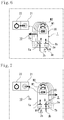
- the unberthing control means in port-side 16a of the unberthing control means 16 uses transverse control in starboard-side performed by the transverse control means in starboard-side 12b, or diagonally-forward control in starboard-side performed by the diagonally-forward control means in starboard-side 13b to automatically perform unberthing control in port-side for unberthing (or steering away) from a pier 50 (or mother ship) located at the port-side, as illustrated in FIG. 14 .
- the unberthing control means in starboard-side 16b of the unberthing control means 16 uses transverse control in port-side performed by the transverse control means in port-side 12a, or diagonally-forward control in starboard-side performed by the diagonally-forward control means in starboard-side 13a to automatically perform unberthing control in starboard-side for unberthing (or steering away) from the pier 50 (or mother ship) located at the starboard-side, as illustrated in FIG. 15 .
- the unberthing control means in port-side 16a (or the unberthing control means in starboard-side 16b) of the unberthing control means 16 causes the ship 1 to advance and unberth the pier 50 in a manner such that, while calculating the distance in the forward direction and the unberthing distance between the broadside of the ship 1 and the pier 50, and calculating the speed of the ship 1 which is suitable for the distances, the ship 1 increases its speed to the calculated speed, and performs diagonally-forward taransverse in starboard-side as illustrated in FIG. 14 to unberth the pier 50 located at the port-side.
- the ship 1 performs diagonally-forward transverse in port-side to un-berth the pier 50 located at the starboard-side.
- the same goes for when steering away from a mother ship instead of the pier 50.
- Automatically performing the aforementioned maneuvering may be easily achieved by performing, by a skilled ship operator, unberthing operation (or steering away operation) of the ship 1 using the movement information input unit 21 and the turning information input unit 22 and storing data collected at the time, reproducing the data in the automatic unberthing control mode M131 when actually performing the unberthing operation, and furthermore, updating the data while learning from the situation at the time.
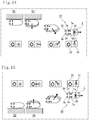
- the berthing control means in port-side 17a of the berthing control means 17 uses diagonally-forward control in starboard-side performed by the diagonally-forward control means in starboard-side 13a, or transverse control in port-side performed by the transverse control means in port-side 12a to automatically perform berthing control in port-side for berthing (or approaching a ship) on the port-side, as illustrated in FIG. 16 .
- the berthing control means in starboard-side 17b of the berthing control means 17 uses diagonally-forward control in starboard-side performed by the diagonally-forward control means in starboard-side 13b, or transverse control in starboard-side performed by the transverse control means in starboard-side 12b to automatically perform berthing control in starboard-side for berthing (or approaching a ship) on the starboard-side, as illustrated in FIG. 17 .
- automatic berthing control mode M132 When using the automatic berthing control mode M132, "automatic berthing control mode" is selected via the input device 20 in the vicinity of the pier 50, and the distance to the berthing spot of the pier 50 in the forward direction and the unberthing distance in the berthing direction (ship width direction) are input to the input device 20.
- the distance to the berthing spot in the forward direction and the distance in the berthing direction may be input, or imported from the position data of the own ship provided by GPS, and position data of the berthing spot.
- the ship 1 While calculating the distance in the travel direction and the unberthing distance from the broadside, or alternatively performing measurement by a distance measurement device or the like, the ship 1 calculates the speed which has been preliminarily set via an experiment or the like, in accordance with the distance to the berthing spot, and, while decreasing to the speed, performs diagonally-forward transverse in port-side and transverse in port-side to berth on the pier 50 located at the port-side as illustrated in FIG. 16 .
- the ship 1 performs diagonally-forward transverse in starboard-side and transverse in starboard-side to berth on the pier 50 located at the starboard-side. The same goes for when approaching a mother ship instead of the pier 50.
- Automatically performing the aforementioned maneuvering may be easily achieved by performing, by a skilled ship operator, berthing operation (or approaching operation) of the ship 1 using the movement information input unit 21 and the turning information input unit 22 and storing data collected at the time, reproducing the data in the automatic berthing control mode M132 when actually performing the berthing operation, and furthermore, updating the data while learning from the situation at the time.
- the continuous berthing control means in port-side means 18a of the continuous berthing control means 18 automatically switches to the "automatic berthing control mode", and uses the berthing control means in port-side 17a of the automatic berthing control mode M132 to automatically perform berthing, when the berthing distance reaches the preliminarily set distance automatically by a combination of forward advancing, forward left turning round, forward right turning round, or the like, via maneuvering of various well known ship maneuvering techniques of the ship maneuvering mode M11, as illustrated in FIG. 18 .
- the continuous berthing control means in port-side 18b of the continuous berthing control means 18 automatically switches to the "automatic berthing control mode", and uses the berthing control means in port-side 17a of the automatic berthing control mode M132 to automatically perform berthing, when the berthing distance reaches the preliminarily set distance automatically by a combination of forward advancing, forward left turning round, forward right turning round, or the like, via maneuvering of various well known ship maneuvering techniques of the ship maneuvering mode M11, as illustrated in FIG. 19 .
- “automatic continuous berthing control mode” is selected via the input device 20 in the vicinity of the pier 50, and the distance to the berthing spot of the pier 50 in the forward direction and the un-berthing distance in the berthing direction (ship width direction) are input to the input device 20.
- the distance to the berthing spot in the forward direction and the distance in the berthing direction may be input, or imported from the position data of the own ship provided by GPS, and position data of the berthing spot.
- the ship 1 While calculating the distance in the travel direction and the unberthing distance from the broadside, or alternatively performing measurement by a distance measurement device or the like, the ship 1 calculates the speed which has been preliminarily set via an experiment or the like, in accordance with the distance to the berthing spot, and, while decreasing to the speed, performs forward advancement, left turning round, and right turning round repeatedly as necessary, subsequently enters the "automatic berthing control mode", and finally berths on the pier 50 located at the port-side by diagonally-forward control in port-side and transverse control in port-side, as illustrated in FIG. 18 .
- FIG. 18 Alternatively, as illustrated in FIG.
- the ship 1 performs forward advancement, right turning round, and left turning round repeatedly as necessary, subsequently enters the "automatic berthing control mode", and finally berths on the pier 50 located at the starboard-side by diagonally-forward control in starboard-side and transverse control in starboard-side. The same goes for when approaching a mother ship instead of the pier 50.
- Automatically performing the aforementioned maneuvering may be easily achieved by performing, by a skilled ship operator, continuous berthing operation (or continuous approaching operation) of the ship 1 using the movement information input unit 21 and the turning information input unit 22 and storing data collected at the time, reproducing the data in the automatic continuous berthing control mode M133 when actually performing the berthing operation, and furthermore, updating the data while learning from the situation at the time.
- the ship 1 of the embodiments of the present invention includes a ship maneuvering system 10. Therefore, the ship 1 may be maneuvered using the ship maneuvering system 10, which allows for implementing ship maneuvering with the ship maneuvering system 10.
- a high maneuverability is exhibited by a relatively easy maneuvering operation input to the maneuvering system 10 of the ship 1 having the two propulsion systems 2 and 3,of the port-side propulsion system 2 including the port-side propulsion device 2a and the port-side rudder 2b and the starboard-side propulsion system 3 including the starboard-side propulsion device 3s and the starboard-side rudder 3b, at its stern.
Landscapes
- Engineering & Computer Science (AREA)
- Chemical & Material Sciences (AREA)
- Combustion & Propulsion (AREA)
- Mechanical Engineering (AREA)
- Ocean & Marine Engineering (AREA)
- Radar, Positioning & Navigation (AREA)
- Aviation & Aerospace Engineering (AREA)
- Remote Sensing (AREA)
- Physics & Mathematics (AREA)
- General Physics & Mathematics (AREA)
- Automation & Control Theory (AREA)
- Traffic Control Systems (AREA)
- Control Of Position, Course, Altitude, Or Attitude Of Moving Bodies (AREA)
- Mechanical Control Devices (AREA)
- Control Of Vehicle Engines Or Engines For Specific Uses (AREA)
Claims (11)
- Système de manœuvre (10) d'un navire (1) ayant deux systèmes de propulsion constitués d'un système de propulsion bâbord (2) comprenant un dispositif de propulsion bâbord (2a) et un gouvernail bâbord (2b) et d'un système de propulsion tribord (3) comprenant un dispositif de propulsion tribord (3a) et un gouvernail tribord (3b), à sa poupe, le système de manœuvre de navire (10) comprenant un dispositif de commande de manœuvre (30) configuré pour effectuer au moins l'une d'une commande transversale et d'une commande de guidage à virage pivot, dans lequel ladite commande transversale agit pour obtenir une force de propulsion dans la direction longitudinale du navire (1) du fait d'une différence entre une force vers l'arrière (Ta, Tb) du système de propulsion (2, 3) sur un flanc et une force vers l'avant (Tb, Ta) du système de propulsion (3, 2) sur un autre flanc, et déplacer le navire (1) dans la direction dudit flanc, tout en évitant un demi-tour du bateau, en annulant un premier moment de virage (M1) dans une direction de virage du navire (1) généré par une force vers l'arrière (Ta, Tb) du système de propulsion (2, 3) dudit flanc et une force vers l'avant (Tb, Ta) du système de propulsion (3, 2) sur un autre flanc, par un second moment de virage (M2) dans une direction de virage du navire (1) généré en orientant le gouvernail (3b, 3a) du système de propulsion (3, 2) sur ledit autre flanc ; et dans lequel ladite commande de guidage à virage pivot agit pour mettre à zéro une force de propulsion dans la direction longitudinale du navire du fait d'une annulation d'une force vers l'arrière du système de propulsion (2, 3) sur un flanc par une force vers l'avant du système de propulsion sur un autre flanc, et obtenir également un moment de demi-tour du navire dans une direction de virage en ajoutant un second moment de virage (M2) dans une direction de virage du navire généré en orientant le gouvernail (2b, 3b) du système de propulsion (2, 3) sur ledit flanc à un premier moment de virage (M1) dans la direction de virage du navire généré par la force vers l'arrière (Ta, Tb) du système de propulsion dudit flanc et une force vers l'avant (Tb, Ta) du système de propulsion (3, 2) sur ledit autre flanc, de manière à amener la proue du navire à virer de cap sur place dans la direction dudit autre flanc.
- Système de manœuvre de navire selon la revendication 1,
dans lequel ledit dispositif de commande de manœuvre est configuré pour effectuer une commande transversale à bâbord et une commande transversale à tribord,
dans lequel ladite commande transversale à bâbord agit pour égaliser une grandeur d'une force vers l'arrière bâbord générée par ledit système de propulsion bâbord et une grandeur d'une force vers l'avant tribord générée par ledit système de propulsion tribord, et annuler également un premier moment de virage généré par une force vers l'arrière bâbord et une force vers l'avant tribord par un second moment de virage généré en orientant ledit gouvernail tribord vers tribord, de manière à amener le navire à se déplacer dans la direction bâbord par une force de direction latérale générée en orientant ledit gouvernail tribord vers tribord ; et
dans lequel des moyens de commande transversale à tribord agissent pour égaler une grandeur d'une force vers l'avant bâbord générée par ledit système de propulsion bâbord et une grandeur d'une force vers l'arrière tribord générée par ledit système de propulsion tribord, et annuler également un premier moment de virage généré par une force vers l'avant bâbord et une force vers l'arrière tribord par un second moment de virage généré en orientant ledit gouvernail bâbord vers bâbord, de manière à amener le navire à se déplacer dans la direction tribord par une force de direction latérale générée en orientant ledit gouvernail bâbord vers bâbord. - Système de manœuvre de navire selon la revendication 1 ou 2, dans lequel ledit dispositif de commande de manœuvre est configuré pour effectuer une commande vers l'avant en diagonale à bâbord et une commande vers l'avant en diagonale à tribord,
dans lequel ladite commande vers l'avant en diagonale à bâbord agit pour rendre une grandeur d'une force vers l'avant tribord générée par ledit système de propulsion tribord plus grande qu'une grandeur d'une force vers l'arrière bâbord générée par ledit système de propulsion bâbord, et annuler également un premier moment de virage généré par ladite force vers l'arrière bâbord et ladite force vers l'avant tribord par un second moment de virage généré en orientant ledit gouvernail tribord vers tribord, de manière à amener le navire à se déplacer transversalement vers l'avant en diagonale à tribord par une force de direction latérale générée en orientant ledit gouvernail tribord vers tribord ; et
dans lequel ladite commande vers l'avant en diagonale à tribord agit pour rendre une grandeur d'une force vers l'avant bâbord générée par ledit système de propulsion bâbord plus grande qu'une grandeur d'une force vers l'arrière tribord générée par ledit système de propulsion tribord, et annuler également un premier moment de virage généré par une force vers l'avant bâbord et une force vers l'arrière tribord par un second moment de virage généré en orientant ledit gouvernail bâbord vers bâbord, de manière à amener le navire à se déplacer transversalement vers l'avant en diagonale à tribord par une force de direction latérale générée en orientant ledit gouvernail bâbord vers bâbord. - Système de manœuvre de navire selon l'une des revendications 1 à 3,
dans lequel ledit dispositif de commande de manœuvre est configuré pour effectuer une commande vers l'avant en diagonale à bâbord et une commande vers l'avant en diagonale à tribord,
dans lequel ladite commande vers l'arrière en diagonale à bâbord agit pour rendre une grandeur d'une force vers l'avant tribord générée par ledit système de propulsion tribord plus petite qu'une grandeur d'une force vers l'arrière bâbord générée par ledit système de propulsion bâbord, et annuler également un premier moment de virage généré par une force vers l'arrière bâbord et une force vers l'avant tribord par un second moment de virage généré en orientant ledit gouvernail tribord vers tribord, de manière à amener le navire à se déplacer transversalement vers l'arrière en diagonale à bâbord par une force de direction latérale générée en orientant ledit gouvernail tribord vers tribord ; et
dans lequel ladite commande vers l'avant en diagonale à tribord agit pour rendre une grandeur d'une force vers l'avant bâbord générée par ledit système de propulsion bâbord plus petite qu'une grandeur d'une force vers l'arrière tribord générée par ledit système de propulsion tribord, et annuler également un premier moment de virage généré par une force vers l'avant bâbord et une force vers l'arrière tribord par un second moment de virage généré en orientant ledit gouvernail bâbord vers bâbord, de manière à amener le navire à se déplacer transversalement vers l'arrière en diagonale à tribord par une force de direction latérale générée en orientant ledit gouvernail bâbord vers bâbord. - Système de manœuvre de navire selon l'une des revendications 1 à 4,
dans lequel ledit dispositif de commande de manœuvre est configuré pour effectuer une commande de guidage à virage pivot dans le sens horaire et une commande de guidage à virage pivot dans le sens antihoraire,
dans lequel ladite commande de guidage à virage pivot dans le sens horaire agit pour égaler une grandeur d'une force vers l'arrière bâbord générée par ledit système de propulsion bâbord et une grandeur d'une force vers l'avant tribord générée par ledit système de propulsion tribord, et ajoute également un second moment de virage généré en orientant ledit gouvernail tribord vers bâbord à un premier moment de virage généré par une force vers l'arrière bâbord et une force vers l'avant tribord, de manière à amener le navire à faire demi-tour dans le sens antihoraire lorsqu'observé de dessus ; et
dans lequel ladite commande de guidage à virage pivot dans le sens antihoraire agit pour égaler une grandeur d'une force vers l'avant bâbord générée par ledit système de propulsion bâbord et une grandeur d'une force vers l'arrière tribord générée par ledit système de propulsion tribord, et ajoute également un second moment de virage généré en orientant ledit gouvernail bâbord vers tribord à un premier moment de virage généré par une force vers l'arrière bâbord et une force vers l'avant tribord, de manière à amener le navire à faire demi-tour dans le sens horaire lorsqu'observé de dessus. - Système de manœuvre de navire selon l'une des revendications 1 à 5,
dans lequel ledit dispositif de commande de manœuvre a un mode de commande automatique d'accostage qui effectue automatiquement l'une ou la totalité parmi : une commande d'appareillage à bâbord pour effectuer un appareillage ou un éloignement d'un navire à bâbord ; une commande d'appareillage pour effectuer un appareillage à tribord ou un éloignement d'un navire à tribord ; une commande d'accostage à bâbord pour effectuer un accostage ou une approche d'un navire à bâbord ; ou une commande d'accostage à tribord pour effectuer un accostage ou une approche d'un navire à tribord, en utilisant au moins l'une de ladite commande transversale ou de ladite commande de guidage à virage pivot. - Système de manœuvre de navire selon l'une des revendications 1 à 6,
comprenant une unité d'entrée d'informations de mouvement qui est du type joystick et une unité d'entrée d'informations de virage qui est du type cadran, en tant que dispositifs d'entrée pour une manœuvre de navire. - Système de manœuvre de navire selon la revendication 7,
dans lequel ledit dispositif de commande de manœuvre est configuré pour :dans un cas où une entrée dans ladite unité d'entrée d'informations de virage est neutre ;amener le navire à se déplacer dans une direction bâbord sans faire demi-tour lorsqu'une entrée dans ladite unité d'entrée d'informations de mouvement indique la direction bâbord ;amener le navire à se déplacer vers l'avant en diagonale à bâbord sans faire demi-tour lorsqu'une entrée dans ladite unité d'entrée d'informations de mouvement indique vers l'avant en diagonale à bâbord ;amener le navire à se déplacer à vers l'arrière gauche en diagonale sans faire demi-tour lorsqu'une entrée dans ladite unité d'entrée d'informations de mouvement indique vers l'arrière gauche en diagonale ;amener le navire à se déplacer dans une direction tribord sans faire demi-tour lorsqu'une entrée dans ladite unité d'entrée d'informations de mouvement indique la direction tribord ;amener le navire à se déplacer vers l'avant en diagonale à tribord sans faire demi-tour lorsqu'une entrée dans ladite unité d'entrée d'informations de mouvement indique vers l'avant en diagonale à tribord ; etamener le navire à se déplacer vers l'arrière droit en diagonale sans faire demi-tour lorsqu'une entrée dans ladite unité d'entrée d'informations de mouvement indique vers l'arrière droit en diagonale. - Système de manœuvre de navire selon la revendication 7 ou 8,
dans lequel ledit dispositif de commande de manœuvre est configuré pour :dans un cas où une entrée dans ladite unité d'entrée d'informations de mouvement est neutre,amener le navire à effectuer un guidage à virage pivot dans le sens horaire sans mouvement vers l'avant ou vers l'arrière lorsqu'une entrée dans ladite unité d'entrée d'informations de virage indique la direction tribord ; etamener le navire à effectuer un guidage à virage pivot dans le sens antihoraire sans mouvement vers l'avant ou vers l'arrière lorsqu'une entrée dans ladite unité d'entrée d'informations de virage indique la direction bâbord. - Navire comprenant le système de manœuvre de navire selon l'une des revendications 1 à 9.
- Procédé de manœuvre d'un navire (1) ayant deux systèmes de propulsion constitués d'un système de propulsion bâbord (2) comprenant un dispositif de propulsion bâbord (2a) et un gouvernail bâbord (2b) et d'un système de propulsion tribord (3) comprenant un dispositif de propulsion tribord (3a) et un gouvernail tribord (3b), à sa poupe, le procédé effectuant au moins l'une des étapes consistant à : obtenir une force de propulsion dans la direction longitudinale du navire (1) du fait d'une différence entre une force vers l'arrière (Ta, Tb) du système de propulsion (2, 3) sur un flanc et une force vers l'avant (Tb, Ta) du système de propulsion (3, 2) sur un autre flanc, et déplacer le navire (1) dans la direction dudit flanc, tout en évitant un demi-tour du bateau, en annulant un premier moment de virage (M1) dans une direction de virage du navire généré par une force vers l'arrière (Ta, Tb) du système de propulsion (2, 3) dudit flanc et une force vers l'avant (Tb, Ta) du système de propulsion (2, 3) sur un autre flanc, par un second moment de virage (M2) dans une direction de virage du navire généré en orientant le gouvernail (3b, 3a) du système de propulsion (3, 2) sur ledit autre flanc ; et mettre à zéro une force de propulsion dans la direction longitudinale du navire (1) du fait d'une annulation d'une force vers l'arrière (Ta, Tb) du système de propulsion (2, 3) sur un flanc par une force vers l'avant (Tb, Ta) du système de propulsion (3, 2) sur un autre flanc, et obtenir également un moment de demi-tour du navire dans une direction de virage en ajoutant un second moment de virage (M2) dans une direction de virage du navire généré en orientant le gouvernail (2b, 3b) du système de propulsion (2, 3) sur ledit flanc à un premier moment de virage (M1) dans la direction de virage du navire généré par la force vers l'arrière (Ta, Tb) du système de propulsion (2, 3) dudit flanc et une force vers l'avant (Tb, Ta) du système de propulsion (3, 2) sur ledit autre flanc, de manière à amener la proue du navire (1) à virer de cap sur place dans la direction dudit autre flanc.
Applications Claiming Priority (2)
| Application Number | Priority Date | Filing Date | Title |
|---|---|---|---|
| JP2016232223A JP6786748B2 (ja) | 2016-11-30 | 2016-11-30 | 船舶の操縦システム、船舶、及び船舶の操縦方法 |
| PCT/JP2017/043028 WO2018101395A1 (fr) | 2016-11-30 | 2017-11-30 | Système de manœuvre de navire, navire et procédé de manœuvre de navire |
Publications (3)
| Publication Number | Publication Date |
|---|---|
| EP3549852A1 EP3549852A1 (fr) | 2019-10-09 |
| EP3549852A4 EP3549852A4 (fr) | 2020-07-29 |
| EP3549852B1 true EP3549852B1 (fr) | 2021-07-07 |
Family
ID=62241655
Family Applications (1)
| Application Number | Title | Priority Date | Filing Date |
|---|---|---|---|
| EP17875136.8A Active EP3549852B1 (fr) | 2016-11-30 | 2017-11-30 | Système de manoeuvre de navire, navire et procédé de manoeuvre de navire |
Country Status (4)
| Country | Link |
|---|---|
| US (1) | US11597488B2 (fr) |
| EP (1) | EP3549852B1 (fr) |
| JP (1) | JP6786748B2 (fr) |
| WO (1) | WO2018101395A1 (fr) |
Families Citing this family (13)
| Publication number | Priority date | Publication date | Assignee | Title |
|---|---|---|---|---|
| US10322787B2 (en) | 2016-03-01 | 2019-06-18 | Brunswick Corporation | Marine vessel station keeping systems and methods |
| US10640190B1 (en) | 2016-03-01 | 2020-05-05 | Brunswick Corporation | System and method for controlling course of a marine vessel |
| US10671073B2 (en) * | 2017-02-15 | 2020-06-02 | Brunswick Corporation | Station keeping system and method |
| JP7199935B2 (ja) * | 2018-11-27 | 2023-01-06 | ヤンマーパワーテクノロジー株式会社 | 経路生成装置 |
| JP7080162B2 (ja) * | 2018-12-05 | 2022-06-03 | 三菱造船株式会社 | 船舶、船舶の航行方法 |
| CN110908369A (zh) * | 2019-10-22 | 2020-03-24 | 浙江工业大学 | 一种基于手动控制器的船舶停泊数据采集方法 |
| JP2021116011A (ja) * | 2020-01-28 | 2021-08-10 | ナブテスコ株式会社 | 船舶 |
| EP4406827A4 (fr) | 2021-09-22 | 2025-10-08 | Ihi Power Systems Co Ltd | Système de manoeuvre de navire |
| JP7573296B2 (ja) * | 2022-04-21 | 2024-10-25 | ジャパン・ハムワージ株式会社 | 一軸二舵船の船体運動制御装置 |
| CN116069030B (zh) * | 2023-01-03 | 2025-10-21 | 中国船舶科学研究中心 | 一种考虑船舶操纵性能的船舶自动靠泊路径规划方法 |
| JP7742178B2 (ja) * | 2024-02-16 | 2025-09-19 | ジャパン・ハムワージ株式会社 | 2軸4舵船 |
| JP7784752B1 (ja) | 2024-08-07 | 2025-12-12 | ジャパン・ハムワージ株式会社 | 二軸四舵の小型無人船 |
| CN119002277B (zh) * | 2024-08-13 | 2025-04-25 | 中国人民解放军海军潜艇学院 | 舰船机动决策辅助方法及装置 |
Family Cites Families (14)
| Publication number | Priority date | Publication date | Assignee | Title |
|---|---|---|---|---|
| JPS628899A (ja) * | 1985-07-06 | 1987-01-16 | Tokyo Keiki Co Ltd | 操船装置 |
| JPS6255292A (ja) * | 1985-09-05 | 1987-03-10 | Tokyo Keiki Co Ltd | 船舶の旋回制御装置 |
| JPS6255293A (ja) * | 1985-09-05 | 1987-03-10 | Tokyo Keiki Co Ltd | 船舶の旋回制御装置 |
| US5488919A (en) * | 1995-06-20 | 1996-02-06 | The United States Of America As Represented By The Secretary Of The Navy | Canted rudder system for pitch roll and steering control |
| JP3310839B2 (ja) | 1995-10-12 | 2002-08-05 | 三菱重工業株式会社 | 操船指示装置 |
| JP3038209B1 (ja) | 1999-04-20 | 2000-05-08 | 海洋科学技術センター | 自動方位設定方法とその装置 |
| JP3525113B2 (ja) * | 2001-02-08 | 2004-05-10 | 川崎重工業株式会社 | 操船装置 |
| JP4339016B2 (ja) * | 2002-05-20 | 2009-10-07 | 川崎重工業株式会社 | 推力配分方法及び推力配分装置 |
| JP5151157B2 (ja) * | 2007-01-22 | 2013-02-27 | 株式会社Ihi | バウスラスタを有する2軸2舵船の推力制御方法及び装置 |
| US20090197486A1 (en) * | 2008-01-31 | 2009-08-06 | Ab Volvo Penta | Method and system for maneuvering aquatic vessels |
| JP5226355B2 (ja) | 2008-03-31 | 2013-07-03 | 三井造船株式会社 | 1軸1舵バウスラスタ船の定点保持システムおよび定点保持方法 |
| WO2010039952A1 (fr) * | 2008-10-02 | 2010-04-08 | Zf Friedrichshafen Ag | Système de manœuvre marin à commande par manche à balai |
| JP5173745B2 (ja) | 2008-10-30 | 2013-04-03 | 三菱重工業株式会社 | 定点保持制御装置およびその方法並びにプログラム |
| US9690295B1 (en) * | 2015-08-20 | 2017-06-27 | Brunswick Corporation | Heading control on a marine vessel |
-
2016
- 2016-11-30 JP JP2016232223A patent/JP6786748B2/ja active Active
-
2017
- 2017-11-30 US US16/346,630 patent/US11597488B2/en active Active
- 2017-11-30 EP EP17875136.8A patent/EP3549852B1/fr active Active
- 2017-11-30 WO PCT/JP2017/043028 patent/WO2018101395A1/fr not_active Ceased
Also Published As
| Publication number | Publication date |
|---|---|
| WO2018101395A1 (fr) | 2018-06-07 |
| JP2018086988A (ja) | 2018-06-07 |
| US20200062366A1 (en) | 2020-02-27 |
| US11597488B2 (en) | 2023-03-07 |
| JP6786748B2 (ja) | 2020-11-18 |
| EP3549852A4 (fr) | 2020-07-29 |
| EP3549852A1 (fr) | 2019-10-09 |
Similar Documents
| Publication | Publication Date | Title |
|---|---|---|
| EP3549852B1 (fr) | Système de manoeuvre de navire, navire et procédé de manoeuvre de navire | |
| JP6664171B2 (ja) | 船舶操縦装置 | |
| JP7249657B2 (ja) | 船舶の制御法 | |
| JP2020083090A (ja) | 経路生成装置 | |
| JP7202389B2 (ja) | 船舶及び推進システム | |
| WO2018008589A1 (fr) | Système de manœuvre de navire, navire et procédé de manœuvre de navire | |
| JP7141777B1 (ja) | 自動着桟機能を有する一軸二舵船 | |
| TWI910381B (zh) | 具有一軸二舵船的操舵角修正功能的操舵系統 | |
| JP5147273B2 (ja) | 1軸1舵船の定点位置保持方法とその装置 | |
| JP4295645B2 (ja) | ウォータジェット推進船の自動定点保持装置 | |
| JP7530682B1 (ja) | 可変ピッチプロペラを装備する一軸二舵船 | |
| JP2964304B2 (ja) | 船舶の航路保持制御方法及び装置 | |
| JP5479552B2 (ja) | 1軸1舵船の定点位置保持方法とその装置 | |
| JP2926531B2 (ja) | 自動船位保持装置 | |
| JP7598653B2 (ja) | 一軸二舵船の船位保持装置 | |
| JP7634293B2 (ja) | 可変ピッチプロペラを装備する一軸二舵船 | |
| US20250147522A1 (en) | Control system for controlling a plurality of marine vessels | |
| US20250050989A1 (en) | Marine propulsion system enabling movement of marine vessel in lateral direction, and control method thereof | |
| CA3014086C (fr) | Systeme et procede de positionnement d'un navire maritime |
Legal Events
| Date | Code | Title | Description |
|---|---|---|---|
| STAA | Information on the status of an ep patent application or granted ep patent |
Free format text: STATUS: THE INTERNATIONAL PUBLICATION HAS BEEN MADE |
|
| PUAI | Public reference made under article 153(3) epc to a published international application that has entered the european phase |
Free format text: ORIGINAL CODE: 0009012 |
|
| STAA | Information on the status of an ep patent application or granted ep patent |
Free format text: STATUS: REQUEST FOR EXAMINATION WAS MADE |
|
| 17P | Request for examination filed |
Effective date: 20190618 |
|
| AK | Designated contracting states |
Kind code of ref document: A1 Designated state(s): AL AT BE BG CH CY CZ DE DK EE ES FI FR GB GR HR HU IE IS IT LI LT LU LV MC MK MT NL NO PL PT RO RS SE SI SK SM TR |
|
| AX | Request for extension of the european patent |
Extension state: BA ME |
|
| DAV | Request for validation of the european patent (deleted) | ||
| DAX | Request for extension of the european patent (deleted) | ||
| A4 | Supplementary search report drawn up and despatched |
Effective date: 20200625 |
|
| RIC1 | Information provided on ipc code assigned before grant |
Ipc: B63H 25/24 20060101AFI20200619BHEP Ipc: B63H 25/02 20060101ALI20200619BHEP Ipc: G05D 1/02 20200101ALI20200619BHEP Ipc: B63H 25/42 20060101ALI20200619BHEP Ipc: B63H 5/08 20060101ALI20200619BHEP Ipc: B63H 25/06 20060101ALI20200619BHEP |
|
| GRAP | Despatch of communication of intention to grant a patent |
Free format text: ORIGINAL CODE: EPIDOSNIGR1 |
|
| STAA | Information on the status of an ep patent application or granted ep patent |
Free format text: STATUS: GRANT OF PATENT IS INTENDED |
|
| INTG | Intention to grant announced |
Effective date: 20210330 |
|
| GRAS | Grant fee paid |
Free format text: ORIGINAL CODE: EPIDOSNIGR3 |
|
| RAP3 | Party data changed (applicant data changed or rights of an application transferred) |
Owner name: MITSUI E&S SHIPBUILDING CO., LTD. |
|
| GRAA | (expected) grant |
Free format text: ORIGINAL CODE: 0009210 |
|
| STAA | Information on the status of an ep patent application or granted ep patent |
Free format text: STATUS: THE PATENT HAS BEEN GRANTED |
|
| AK | Designated contracting states |
Kind code of ref document: B1 Designated state(s): AL AT BE BG CH CY CZ DE DK EE ES FI FR GB GR HR HU IE IS IT LI LT LU LV MC MK MT NL NO PL PT RO RS SE SI SK SM TR |
|
| REG | Reference to a national code |
Ref country code: GB Ref legal event code: FG4D |
|
| REG | Reference to a national code |
Ref country code: AT Ref legal event code: REF Ref document number: 1408356 Country of ref document: AT Kind code of ref document: T Effective date: 20210715 |
|
| REG | Reference to a national code |
Ref country code: DE Ref legal event code: R096 Ref document number: 602017041891 Country of ref document: DE |
|
| REG | Reference to a national code |
Ref country code: IE Ref legal event code: FG4D Ref country code: NL Ref legal event code: FP |
|
| REG | Reference to a national code |
Ref country code: NO Ref legal event code: T2 Effective date: 20210707 |
|
| REG | Reference to a national code |
Ref country code: LT Ref legal event code: MG9D |
|
| REG | Reference to a national code |
Ref country code: AT Ref legal event code: MK05 Ref document number: 1408356 Country of ref document: AT Kind code of ref document: T Effective date: 20210707 |
|
| PG25 | Lapsed in a contracting state [announced via postgrant information from national office to epo] |
Ref country code: RS Free format text: LAPSE BECAUSE OF FAILURE TO SUBMIT A TRANSLATION OF THE DESCRIPTION OR TO PAY THE FEE WITHIN THE PRESCRIBED TIME-LIMIT Effective date: 20210707 Ref country code: SE Free format text: LAPSE BECAUSE OF FAILURE TO SUBMIT A TRANSLATION OF THE DESCRIPTION OR TO PAY THE FEE WITHIN THE PRESCRIBED TIME-LIMIT Effective date: 20210707 Ref country code: HR Free format text: LAPSE BECAUSE OF FAILURE TO SUBMIT A TRANSLATION OF THE DESCRIPTION OR TO PAY THE FEE WITHIN THE PRESCRIBED TIME-LIMIT Effective date: 20210707 Ref country code: ES Free format text: LAPSE BECAUSE OF FAILURE TO SUBMIT A TRANSLATION OF THE DESCRIPTION OR TO PAY THE FEE WITHIN THE PRESCRIBED TIME-LIMIT Effective date: 20210707 Ref country code: FI Free format text: LAPSE BECAUSE OF FAILURE TO SUBMIT A TRANSLATION OF THE DESCRIPTION OR TO PAY THE FEE WITHIN THE PRESCRIBED TIME-LIMIT Effective date: 20210707 Ref country code: PT Free format text: LAPSE BECAUSE OF FAILURE TO SUBMIT A TRANSLATION OF THE DESCRIPTION OR TO PAY THE FEE WITHIN THE PRESCRIBED TIME-LIMIT Effective date: 20211108 Ref country code: AT Free format text: LAPSE BECAUSE OF FAILURE TO SUBMIT A TRANSLATION OF THE DESCRIPTION OR TO PAY THE FEE WITHIN THE PRESCRIBED TIME-LIMIT Effective date: 20210707 Ref country code: BG Free format text: LAPSE BECAUSE OF FAILURE TO SUBMIT A TRANSLATION OF THE DESCRIPTION OR TO PAY THE FEE WITHIN THE PRESCRIBED TIME-LIMIT Effective date: 20211007 Ref country code: LT Free format text: LAPSE BECAUSE OF FAILURE TO SUBMIT A TRANSLATION OF THE DESCRIPTION OR TO PAY THE FEE WITHIN THE PRESCRIBED TIME-LIMIT Effective date: 20210707 |
|
| PG25 | Lapsed in a contracting state [announced via postgrant information from national office to epo] |
Ref country code: PL Free format text: LAPSE BECAUSE OF FAILURE TO SUBMIT A TRANSLATION OF THE DESCRIPTION OR TO PAY THE FEE WITHIN THE PRESCRIBED TIME-LIMIT Effective date: 20210707 Ref country code: LV Free format text: LAPSE BECAUSE OF FAILURE TO SUBMIT A TRANSLATION OF THE DESCRIPTION OR TO PAY THE FEE WITHIN THE PRESCRIBED TIME-LIMIT Effective date: 20210707 Ref country code: GR Free format text: LAPSE BECAUSE OF FAILURE TO SUBMIT A TRANSLATION OF THE DESCRIPTION OR TO PAY THE FEE WITHIN THE PRESCRIBED TIME-LIMIT Effective date: 20211008 |
|
| REG | Reference to a national code |
Ref country code: DE Ref legal event code: R097 Ref document number: 602017041891 Country of ref document: DE |
|
| PG25 | Lapsed in a contracting state [announced via postgrant information from national office to epo] |
Ref country code: DK Free format text: LAPSE BECAUSE OF FAILURE TO SUBMIT A TRANSLATION OF THE DESCRIPTION OR TO PAY THE FEE WITHIN THE PRESCRIBED TIME-LIMIT Effective date: 20210707 |
|
| PLBE | No opposition filed within time limit |
Free format text: ORIGINAL CODE: 0009261 |
|
| STAA | Information on the status of an ep patent application or granted ep patent |
Free format text: STATUS: NO OPPOSITION FILED WITHIN TIME LIMIT |
|
| PG25 | Lapsed in a contracting state [announced via postgrant information from national office to epo] |
Ref country code: SM Free format text: LAPSE BECAUSE OF FAILURE TO SUBMIT A TRANSLATION OF THE DESCRIPTION OR TO PAY THE FEE WITHIN THE PRESCRIBED TIME-LIMIT Effective date: 20210707 Ref country code: SK Free format text: LAPSE BECAUSE OF FAILURE TO SUBMIT A TRANSLATION OF THE DESCRIPTION OR TO PAY THE FEE WITHIN THE PRESCRIBED TIME-LIMIT Effective date: 20210707 Ref country code: RO Free format text: LAPSE BECAUSE OF FAILURE TO SUBMIT A TRANSLATION OF THE DESCRIPTION OR TO PAY THE FEE WITHIN THE PRESCRIBED TIME-LIMIT Effective date: 20210707 Ref country code: EE Free format text: LAPSE BECAUSE OF FAILURE TO SUBMIT A TRANSLATION OF THE DESCRIPTION OR TO PAY THE FEE WITHIN THE PRESCRIBED TIME-LIMIT Effective date: 20210707 Ref country code: CZ Free format text: LAPSE BECAUSE OF FAILURE TO SUBMIT A TRANSLATION OF THE DESCRIPTION OR TO PAY THE FEE WITHIN THE PRESCRIBED TIME-LIMIT Effective date: 20210707 Ref country code: AL Free format text: LAPSE BECAUSE OF FAILURE TO SUBMIT A TRANSLATION OF THE DESCRIPTION OR TO PAY THE FEE WITHIN THE PRESCRIBED TIME-LIMIT Effective date: 20210707 |
|
| REG | Reference to a national code |
Ref country code: DE Ref legal event code: R119 Ref document number: 602017041891 Country of ref document: DE |
|
| 26N | No opposition filed |
Effective date: 20220408 |
|
| PG25 | Lapsed in a contracting state [announced via postgrant information from national office to epo] |
Ref country code: MC Free format text: LAPSE BECAUSE OF FAILURE TO SUBMIT A TRANSLATION OF THE DESCRIPTION OR TO PAY THE FEE WITHIN THE PRESCRIBED TIME-LIMIT Effective date: 20210707 |
|
| REG | Reference to a national code |
Ref country code: CH Ref legal event code: PL |
|
| PG25 | Lapsed in a contracting state [announced via postgrant information from national office to epo] |
Ref country code: LU Free format text: LAPSE BECAUSE OF NON-PAYMENT OF DUE FEES Effective date: 20211130 Ref country code: IT Free format text: LAPSE BECAUSE OF FAILURE TO SUBMIT A TRANSLATION OF THE DESCRIPTION OR TO PAY THE FEE WITHIN THE PRESCRIBED TIME-LIMIT Effective date: 20210707 Ref country code: BE Free format text: LAPSE BECAUSE OF NON-PAYMENT OF DUE FEES Effective date: 20211130 |
|
| REG | Reference to a national code |
Ref country code: BE Ref legal event code: MM Effective date: 20211130 |
|
| PG25 | Lapsed in a contracting state [announced via postgrant information from national office to epo] |
Ref country code: LI Free format text: LAPSE BECAUSE OF NON-PAYMENT OF DUE FEES Effective date: 20211130 Ref country code: CH Free format text: LAPSE BECAUSE OF NON-PAYMENT OF DUE FEES Effective date: 20211130 |
|
| PG25 | Lapsed in a contracting state [announced via postgrant information from national office to epo] |
Ref country code: IE Free format text: LAPSE BECAUSE OF NON-PAYMENT OF DUE FEES Effective date: 20211130 Ref country code: DE Free format text: LAPSE BECAUSE OF NON-PAYMENT OF DUE FEES Effective date: 20220601 |
|
| PG25 | Lapsed in a contracting state [announced via postgrant information from national office to epo] |
Ref country code: FR Free format text: LAPSE BECAUSE OF NON-PAYMENT OF DUE FEES Effective date: 20211130 |
|
| PG25 | Lapsed in a contracting state [announced via postgrant information from national office to epo] |
Ref country code: CY Free format text: LAPSE BECAUSE OF FAILURE TO SUBMIT A TRANSLATION OF THE DESCRIPTION OR TO PAY THE FEE WITHIN THE PRESCRIBED TIME-LIMIT Effective date: 20210707 |
|
| PG25 | Lapsed in a contracting state [announced via postgrant information from national office to epo] |
Ref country code: HU Free format text: LAPSE BECAUSE OF FAILURE TO SUBMIT A TRANSLATION OF THE DESCRIPTION OR TO PAY THE FEE WITHIN THE PRESCRIBED TIME-LIMIT; INVALID AB INITIO Effective date: 20171130 |
|
| PG25 | Lapsed in a contracting state [announced via postgrant information from national office to epo] |
Ref country code: MK Free format text: LAPSE BECAUSE OF FAILURE TO SUBMIT A TRANSLATION OF THE DESCRIPTION OR TO PAY THE FEE WITHIN THE PRESCRIBED TIME-LIMIT Effective date: 20210707 |
|
| PG25 | Lapsed in a contracting state [announced via postgrant information from national office to epo] |
Ref country code: MT Free format text: LAPSE BECAUSE OF FAILURE TO SUBMIT A TRANSLATION OF THE DESCRIPTION OR TO PAY THE FEE WITHIN THE PRESCRIBED TIME-LIMIT Effective date: 20210707 |
|
| PG25 | Lapsed in a contracting state [announced via postgrant information from national office to epo] |
Ref country code: TR Free format text: LAPSE BECAUSE OF FAILURE TO SUBMIT A TRANSLATION OF THE DESCRIPTION OR TO PAY THE FEE WITHIN THE PRESCRIBED TIME-LIMIT Effective date: 20210707 |
|
| PGFP | Annual fee paid to national office [announced via postgrant information from national office to epo] |
Ref country code: NL Payment date: 20251119 Year of fee payment: 9 |
|
| PGFP | Annual fee paid to national office [announced via postgrant information from national office to epo] |
Ref country code: GB Payment date: 20251121 Year of fee payment: 9 |
|
| PGFP | Annual fee paid to national office [announced via postgrant information from national office to epo] |
Ref country code: NO Payment date: 20251125 Year of fee payment: 9 |
|
| REG | Reference to a national code |
Ref country code: NL Ref legal event code: HC Owner name: TSUNEISHI SOLUTIONS TOKYOBAY CO., LTD.; JP Free format text: DETAILS ASSIGNMENT: CHANGE OF OWNER(S), CHANGE OF OWNER(S) NAME; FORMER OWNER NAME: MITSUI E&S SHIPBUILDING CO., LTD. Effective date: 20251128 |