EP3550742A1 - Optische netzwerkeinheitsaktivierung - Google Patents
Optische netzwerkeinheitsaktivierung Download PDFInfo
- Publication number
- EP3550742A1 EP3550742A1 EP18165553.1A EP18165553A EP3550742A1 EP 3550742 A1 EP3550742 A1 EP 3550742A1 EP 18165553 A EP18165553 A EP 18165553A EP 3550742 A1 EP3550742 A1 EP 3550742A1
- Authority
- EP
- European Patent Office
- Prior art keywords
- onu
- olt
- window
- ranging
- time
- Prior art date
- Legal status (The legal status is an assumption and is not a legal conclusion. Google has not performed a legal analysis and makes no representation as to the accuracy of the status listed.)
- Granted
Links
Images


Classifications
-
- H—ELECTRICITY
- H04—ELECTRIC COMMUNICATION TECHNIQUE
- H04J—MULTIPLEX COMMUNICATION
- H04J3/00—Time-division multiplex systems
- H04J3/02—Details
- H04J3/06—Synchronising arrangements
- H04J3/0635—Clock or time synchronisation in a network
- H04J3/0682—Clock or time synchronisation in a network by delay compensation, e.g. by compensation of propagation delay or variations thereof, by ranging
-
- H—ELECTRICITY
- H04—ELECTRIC COMMUNICATION TECHNIQUE
- H04Q—SELECTING
- H04Q11/00—Selecting arrangements for multiplex systems
- H04Q11/0001—Selecting arrangements for multiplex systems using optical switching
- H04Q11/0062—Network aspects
- H04Q11/0067—Provisions for optical access or distribution networks, e.g. Gigabit Ethernet Passive Optical Network (GE-PON), ATM-based Passive Optical Network (A-PON), PON-Ring
-
- H—ELECTRICITY
- H04—ELECTRIC COMMUNICATION TECHNIQUE
- H04Q—SELECTING
- H04Q11/00—Selecting arrangements for multiplex systems
- H04Q11/0001—Selecting arrangements for multiplex systems using optical switching
- H04Q11/0062—Network aspects
- H04Q2011/0064—Arbitration, scheduling or medium access control aspects
Definitions
- the present disclosure relates to an activation of an optical network unit, ONU, in a time division multiplexing, TDM, passive optical network, PON.
- the present disclosure relates to ONU ranging in a TDM-PON.
- ONU activation may be based on two steps:
- the serial number acquisition step may comprise singling-out one ONU, if multiple ONUs request activation at the same time, and determining the serial number of the singled-out ONU.
- the distance of the singled-out ONU relative to the OLT may be measured to determine an equalization delay for the ONU.
- the equalization delay may compensate for different distances between different ONUs and the OLT and thus ensure that all ranged ONUs have the same "virtual" distance from the OLT. In other words, the equalization delay may ensure that all traffic from the ranged ONUs arrives at the OLT within the prescribed/assigned time slots.
- G.989.3 (cf. section 13.1) recommends enforcing a quiet window, during which upstream transmissions by the activated ONUs are temporarily suppressed.
- the start of the quiet window is to be chosen in accordance with the minimum round-trip propagation delay (also referred to as “round-trip time” or “round-trip delay” in the following) and the minimum ONU processing time, as well as the (dynamically generated) start time of the grant.
- the size of the quiet window depends on the maximum variation of the (unknown) round-trip time (associated with the "differential distance" between ONUs).
- TDM-PON e.g. XGS-PON and TWDM-PON
- interrupt-induced latencies add to the transmission round trip time (order of 200 ⁇ sec), and may exceed the acceptable values for some applications.
- the quiet window ensures that serial number/ranging grant traffic does not interfere with regular upstream traffic
- enforcing the quiet window also increases the overall latency of the regular upstream traffic.
- the present disclosure is directed at reducing the interference of ONU activation with ongoing upstream traffic and reducing latency during ONU activation, e.g. by reducing the size of the quiet window.
- a method of ranging an ONU in a TDM-PON may comprise:
- identifying a single subsequence may be sufficient to determine the timing of the localization sequence, and in consequence the round-trip time and the distance between ONU and OLT.
- the duration of the time window which is reserved for ranging i.e., the quiet window, also called empty window in the following
- the quiet window also called empty window in the following
- the localization sequence may be a bit sequence allowing to uniquely identify the position of any subsequence of a certain length relative to the start of the localization sequence.
- the duration of the quiet/empty window may be reduced to the duration of a single subsequence (of the certain length).
- the upstream data traffic to the OLT may be organized in PON-frames, each lasting e.g. 125 ⁇ s.
- An upstream transmission window may be provided for ONU activation.
- the upstream transmission window comprises the empty window reserved for ONU ranging.
- the duration/length of the localization sequence (transmitted by the ONU) may be conveniently chosen substantially equal to the duration of one upstream transmission window. However, the length of the localization sequence may also be shorter than the upstream transmission window; but in this case, the localization sequence should be transmitted at the periodicity of the upstream transmission window.
- substantially each upstream transmission window comprises a time-window which is reserved for ranging
- averaging over multiple empty windows of an averaging cycle is possible if the localization sequence is transmitted multiple times and corresponding empty windows are provided in consecutive upstream transmission windows.
- the method may further comprise detecting, by the OLT, transmissions of multiple localization sequences from different ONUs during one upstream transmission window and transmitting, by the OLT, a request to delay a retransmission of one or more of said multiple localization sequences by one or more ONUs until after a succeeding upstream transmission window.
- the ONUs may use the same localization sequence for ranging which may be announced by the OLT in a respective message.
- each ONU may use a distinctive localization sequence which is known to the OLT.
- one ONU may be singled-out by suppressing the response(s) of one or more other ONUs to activation grants for a period during which ranging (activating) the singled-out ONU can be completed.
- the method may further comprise transmitting again, by the ONU, the localization sequence in a later upstream transmission window to the OLT.
- the localization sequence may be re-transmitted after completion of an averaging cycle.
- the localization sequence may be re-transmitted with a delay within (relative to) the respective upstream transmission window. The applied delay is thus smaller than the upstream transmission window.
- the method may further comprise, by the OLT, identifying another received subsequence of the re-transmitted localization sequence within the reserved time-window (due to the delay with respect to the sequence sent previously), determining the delay based on the position of the subsequence and the position of the another received subsequence within the reserved time-windows of the respective upstream transmission windows, and identifying the ONU based on the delay.
- an unknown ONU may be identified based on the positions of the respective subsequences detected by the OLT during the empty window.
- the delay corresponding to the detected subsequence positions may be unique (e.g. randomly chosen) and thereby allowing identification of the ONU.
- a plurality of ONUs may be registered in the PON and the OLT may repeatedly poll subgroups of ONUs to send test signals until a single ONU is left.
- one ONU may be singled-out by iteratively requesting ONUs to stop transmitting the localization sequence (e.g., for a predetermined interval or until receipt of further notice).
- the ONU may transmit the localization sequence to the OLT during ranging at a first transmission power, and the ranged (activated) ONU may subsequently transmit user data (payload data) to the OLT at a second transmission power, wherein the second transmission power is higher than the first transmission power.
- Transmitting the localization sequence and the regular upstream traffic (i.e. upstream traffic sent after activation) at a different transmission power may reduce the interference between the localization sequence of an ONU requesting activation and activated ONUs that transmit regular upstream traffic.
- the method may further comprise transmitting, by the ONU, the localization sequence at least twice in consecutive upstream transmission windows to the OLT.
- the transmission of the localization sequence many be by transmission of corresponding localization signals by the ONU.
- the step of receiving the subsequence of the multitude of unique subsequences during the empty time-window may comprise multiple receipts of corresponding localization signals sent by the ONU in consecutive upstream transmission windows.
- the step of ranging the ONU may comprise averaging the localization signals received in a plurality of empty windows from the ONU in order to identify the subsequences within the localization sequence. In other words, signals received during empty windows may be averaged by the OLT to improve signal quality, and the averaged signals employed for detection of subsequences.
- ranging precision may be increased by signal averaging, and adverse effects resulting from a reduced transmission power during ranging may be (partially) compensated.
- An OLT for use in a TDM-PON in which upstream ONU activation data to the OLT is organized in upstream transmission windows may be configured to:
- the OLT may comprise a multi-rate receiver.
- the multi-rate receiver may operate at different signal levels and bit rates. For detection of 10Mbit/s localization signals representing the localization sequence, for example, Rx power at - 65 dBm to -50 dBm may be chosen. Regular data signals may be received with 10Gbit/s at approx. -25 dBm.
- the OLT may comprise a first optical receiver for receiving optical signals during the time-window which is reserved for ranging and a second optical receiver, different from the first optical receiver, for receiving optical signals during a data transmission window before and/or after the time-window reserved for ranging, wherein the optical receivers have different receive sensitivities.
- the first optical receiver may be a narrowband receiver for low bit rate transmission.
- the OLT may be further configured to average a plurality of localization signals from the ONU corresponding to localization sequences received during multiple time-windows reserved for ranging in multiple upstream transmission windows and calculate an equalization delay for the ONU based on the distance of the ONU calculated from averaged localization signals of the ONU.
- the localization signals may be averaged in the electrical domain after o/e conversion and sampling.
- the OLT may apply a signal detection algorithm on the measured localization signals to identify a subsequence of a localization sequence from an ONU during the reserved time-window.
- the upstream data for activating and ranging of the ONU may be organized in upstream transmission windows.
- the ONU may be further configured to delay a retransmission of the localization sequence in a later upstream transmission window by a fixed or random number of upstream transmission windows in response to a corresponding request received from the OLT.
- the delay is larger than an averaging cycle so that ranging of a first ONU (including averaging) can be completed before the ranging of another ONU starts (after the applied delay).
- the ONU may be further configured to, after transmitting a localization sequence to the OLT, re-transmit the localization sequence to the OLT, wherein the re-transmitted localization sequence is transmitted with a random delay chosen by the ONU within the upstream transmission window (the delay smaller than the upstream transmission window), receive a message from the OLT indicating a delay value associated with receipt of a localization sequence; and determine whether the received delay value matches the chosen random delay, and in the affirmative case (i.e. when the received delay value is confirmed to be the chosen random delay) determine that the OLT has detected the localization sequences sent from the ONU.
- the disclosed ranging process may further deviate from the ranging process recommended in G.989.3 in that the serial number of the ONU may be transmitted only after an initial (coarse) ranging has been completed to reduce bandwidth/quiet window duration requirements of the initial ranging.
- initial ranging may be performed at 10 Mb/s with an empty window duration of 3.5 ⁇ s, where the bitrate may be too small to transmit the serial number within the empty window.
- a serial number grant response may be transmitted by the ONU (unless the serial number of the requesting ONU is already available at the OLT) at full bitrate (and full transmission power), wherein the offset of the serial number grant response may be determined based on the initial ranging, such that the (whole) serial number grant response is received during the quiet/empty window.
- a ranging grant response may be transmitted by the ONU after the initial ranging at full bitrate (and full transmission power), wherein the offset of the serial number grant response may be determined based on the initial ranging, such that the (whole) ranging grant response is received during the quiet/empty window.
- the activation procedure may be continued by a step of serial number acquisition and assignment of an ONU-ID (unless the ONU has already an assigned ID).
- a step of fine ranging may be performed, wherein the whole ranging grant response is received during the empty window at normal bitrate (e.g., 10 Gb/s).
- the present disclosure also relates to a passive optical network, PON, comprising an OLT and at least one ONU as disclosed above.
- implementations of the devices/network may include, but are not limited to, one or more processor, one or more application specific integrated circuits (ASICs) and/or one or more field programmable gate arrays (FPGAs). Implementations of the devices/network may also include using other conventional and/or customized hardware such as software programmable processors.
- ASICs application specific integrated circuits
- FPGAs field programmable gate arrays
- Future telecommunication networks will increasingly call for ultra-low latency connections in metro and access networks, e.g. low latency fronthaul links will be essential in future 5G C-RAN architectures.
- certain new services in 5G networks will require low end-to-end latencies (URLLC: Ultra-reliable low latency communication).
- URLLC Ultra-reliable low latency communication
- the one-way latency for transport across the fixed network shall typically be in the order of only 100 ⁇ s.
- TDM-PON GPON, XGS-PON, TWDM-PON
- the above latency requirements cannot be met due to the ranging process which allows new ONUs to join the network during operation.
- this ranging process is based on switching off the upstream traffic on the entire PON for a certain time ("quiet window", lasting typically for 2-4 PON frames, i.e. (2 ... 4) x 125 ⁇ sec) during which new ONUs can make themselves known to the network and get ranged.
- This quiet time adds to the delays which are anyway caused by the system protocol and fiber transmission, finally resulting in overall latency values well into the range of 1 msec which is more than can be tolerated by the 5G network.
- ranging new ONUs in a TDM-PON may be accomplished by inserting empty windows in the upstream transmission window, wherein each empty window interrupts the regular upstream traffic.
- One possible option to avoid these interruptions is to employ two PON channels, where one channel (“ranging channel”) is used for ranging, while the other channel (“working channel”) can be used for uninterrupted (hence low latency) upstream data transmission.
- the information collected from the ranging channel can be used for assigning the newly ranged ONUs to transmission slots in the working channel. If, e.g., an XGS-PON channel is operating in ultra-low latency mode, a GPON channel, being operated on the same fiber, can be used for ranging the ONUs that require access to the XGS-PON channel. Likewise, in TWDM-PON, one wavelength channel can be used for transporting ultra-low latency traffic, while another wavelength channel in the same system can be used for ranging. However, this requires that the ONUs are connected to two different PON channels, and thus necessitates two optical modules and associated hardware and software functionalities for each ONU.
- the present disclosure only requires a single PON channel and allows regular, operational (activated) ONUs to work uninterrupted.
- Already activated ONUs work uninterrupted, since they are assigned time slots which will never be affected by the ranging process, while the new ONUs are activated using time slots which are never assigned to any activated ONU.
- This can be achieved by configuring new (to be activated) ONUs to transmit continuous (low bit rate and/or low power level) signals for initial (coarse) ranging.
- the transmitted signals may be specific pulse sequences (localization sequences) that allow for uniquely identifying the relative position of any sub-sequence of a certain (minimal) length within the localization sequence.
- the localization sequences can, for instance, be chosen from the family of m-sequences (e.g. PRBSs: pseudo-random bit sequences) or de Bruijn sequences of suitable order. For example, for an m-sequence of order k (length 2 ⁇ k-1) the position of any sub-sequence of length k can be uniquely determined. Therefore, the m-sequence can be used as a "timing ruler" for the ranging process. All ONUs that must be ranged may transmit the same localization sequence. This sequence can either be agreed upon beforehand (e.g. in accordance with an implemented standard) or can be announced in a broadcast message from the OLT to all ONUs.
- PRBSs pseudo-random bit sequences
- the OLT may assign certain time slots (PON frames) to the operational (activated) ONUs for transmitting their up-stream data.
- a repetitive (short) time-window for ranging i.e., an "empty window" which may last a few ⁇ secs, for example
- the empty window may be scheduled once per upstream transmission window T US or once per multiple upstream transmission windows T US .
- the upstream transmission window may be provided for ONU activation.
- a specific sub-sequence detected within this empty window may allow the OLT to determine a transmission delay for an ONU that transmitted the corresponding localization sequence.
- the round-trip time may include the ONU response time T resp , which may be predefined (e.g., 35 ⁇ 1 ⁇ sec).
- T ew is the time at the OLT from the start of the upstream transmission window to the empty window.
- T us is the duration of the upstream transmission window and T sub is the time from the start of the localization sequence to the position where the sub-sequence is identified.
- the duration of the upstream transmission window as well as the position of the empty window within may be adapted to the round trip times over the fiber link, e.g. take into account the round trip propagation delay of the ONU being farthest away from the OLT (PD max ), or more generally, take into account the maximal differential distance between ONUs.
- the length of the localization sequence (transmitted by the ONUs) may be identical to the duration of the upstream transmission window; or more generally, it can be shorter under certain conditions, but in this case must be transmitted at the periodicity of the upstream transmission window.
- the empty window may be positioned towards the end of the upstream transmission window such as to meet the requirement T ew ⁇ T resp + PD max .
- the ONU transmits a predefined localization sequence of length T US to the OLT, after receiving downstream frame from the OLT, including an activation grant.
- the localization sequence is a bit sequence allowing for uniquely identifying the position T sub of any sub-sequence of a certain length relative to the localization sequence.
- a m-sequence of length 2 ⁇ k-1 allows for unambiguously identifying position of any k-bit sub-sequence.
- the OLT identifies the sub-sequence falling into the empty window at T ew and determines its position T sub .
- the localization sequences may be transmitted continuously (and overlap with regular upstream traffic), their optical power may have to be sufficiently smaller than the optical power of the regular upstream traffic. Otherwise, the regular upstream traffic of the other operational ONUs arriving outside the empty window at the OLT may be disturbed.
- the localization sequence may be received at -25 to -20 dB below the power of the regular upstream traffic at the OLT receiver. Taking available PON system specifications for reference, the received test signal power may, for example, be in the range of -65 dBm to -50 dBm.
- the detection of the localization sequence may benefit from using low bit rate signals (e.g., 10 Mbit/s) and/or from averaging over many repetitions N of the localization sequence (e.g.
- averaging cycle allows for enabling "error-free" localization of sub-sequences by increasing detection reliability.
- T avg N * T US ).
- Averaging may include averaging localization signals received in a plurality of empty windows from the ONU in order to improve signal quality for identifying the subsequences within the localization sequence.
- a proposed ONU activation process may comprise the following activities: The ONUs repeatedly transmit a predefined localization sequence at low bit rate and at very low power, which is averaged at the OLT over e.g. 1 sec. The OLT evaluates sub-sequences of the predefined localization sequence detected during a short empty window in every upstream transmission window (e.g. each n-th PON frame). Once an ONU is discovered and singled out, the ONU performs micro-ranging, similar to standardized process, however, restricted to the short empty window. There is no additional induced latency for activated ONUs.
- Fig 3 shows a flow-chart for an embodiment of a method for activating a ONU in a single-channel TDM-PON that supports low latency applications.
- the figure summarizes the method on a high level using the above disclosed aspects.
- the method has 3 steps S.1 to S.3 and starts with ONU activation in an empty window as explained above.
- the method ends with the transfer of the new ONUs to normal operation outside the empty window.
- Step S.1 relates to downstream synchronization, including transmission of an localization sequence (also called localization sequence) to be used by new ONUs.
- the OLT sends the localization sequence to be used for the activation process to the ONUs.
- Step S.2 relates to ONU discovery without serial number acquisition.
- the ONUs respond to activation grants received from OLT.
- the OLT singles out one ONU, not yet knowing its serial number.
- a quiet window with a duration ⁇ 4 ⁇ s per upstream frame is used.
- the length of the quiet window is independent of absolute or differential ONU distances.
- Step S.3 relates to serial number acquisition and micro-ranging.
- the serial number acquisition and precise ranging is performed at full bit rate (10G) and at full power levels, however restricted to arrival times at the OLT receiver within empty window.
- the coarse distance information collected in step S.2 may be used for this purpose.
- a quiet window with a duration ⁇ 4 ⁇ s per upstream frame is used and the length of the quiet window is independent of absolute or differential ONU distances.
- Fig. 4 shows an overview of states in an ONU activation process for multiple ONUs according to an embodiment. If dealing with multiple ONUs that are to join the PON at the same time, two scenarios may occur:
- a first step one ONU is singled out from the group.
- the OLT In case of a group of pre-registered ONUs (case a)), the OLT repeatedly polls subgroups (of size decreasing by factor of 2) of ONUs to send test signals, until one single ONU is left.
- the OLT In case of unknown ONUs, the OLT repeatedly tells the unknown ONUs to transmit test signals with random time offset, until one single ONU is left.
- step B the distance to the OLT for the singled out ONU is determined. As described above, the OLT tells the selected ONU to transmit a localization sequence right after receiving a downstream frame.
- the OLT measures the round trip time OLT - ONU - OLT by localizing a sub-sequence inside the localization sequence received during the empty window.
- Optional step C provides for a fine ranging of the singled out ONU by applying the regular TDM-PON ranging process, but restricting the ONU signals to arrive at the OLT during the empty window. These steps may be repeated until all new ONUs are ranged.
- the regular PON operation may start.
- the ranged ONUs are assigned with slot assignments outside the empty window to transmit payload data.
- the above process may employ the following downstream messages before ranging:
- Upstream messages during ranging may be
- step A case a) it may be possible to single out one ONU from the group of pre-registered ONUs by applying the following process.
- the OLT may request a first sub-set (e.g., 50%) of the pre-registered ONUs to transmit a pre-defined (dummy) test signal (which may not necessarily be the localization sequence described above).
- the (dummy) test signal may be a small integer number to which the serial number of the ONU is mapped in accordance with a table containing the pre-registered ONU serial numbers or an alive message.
- the OLT may measure whether an optical signal is received (by one or more ONUs) or not. If yes, then the first sub-set may be further divided, and the process may be repeated with one of the resulting sub-sets.
- the OLT may request a second sub-set of pre-registered ONUs to transmit the pre-defined (dummy) test signal. If no transmit power is detected from this group either, the whole process stops and may be started all over again after some time (which may be configured by the network operator, for instance). If, however, power is detected, the split-and-poll procedure may be repeated with the second sub-set.
- the process may be stopped if there is only one ONU left.
- the OLT may address the ONUs by their ID, the information which ONU has been singled-out may already be available to the OLT.
- the relative distance (in time) from the OLT to the singled-out ONU may be determined in a next step in which the OLT requests the single-out ONU to transmit the localization sequence (e.g., in response to receiving the downstream PON frame).
- the upstream transmission process may start immediately or within a pre-determined time interval (e.g., 35 +/-1 ⁇ sec) after receiving a downstream frame.
- This timing offset may be standardized and hence be identical for all ONUs (within +/-1 ⁇ sec) - within the PON.
- the OLT may be enabled to determine the round-trip time between the OLT and the ONU as described with reference to Fig. 1 and Fig. 2 above.
- the accuracy may be improved in a consecutive step, by letting the OLT initiate a regular ranging process for the OLT as defined, for example, in G.989.3.
- the regular ranging process may now be restricted to transmissions during the empty window (as seen by the OLT). After this, the ranged ONU may be assigned a time slot outside the empty window for regular operation.
- the ONU selection process may start by requesting all new ONUs within the PON to transmit a localization sequence immediately (or after a pre-defined time interval) after receiving the downstream frame, as described above. Since there might be multiple ONUs transmitting at the same time, collisions might occur at the OLT receiver. Again, two cases may be considered:
- the OLT may request the (unknown) ONUs to retransmit the localization sequence after waiting for a random delay (e.g., a random delay of a few seconds) as illustrated in Fig. 5 .
- Fig. 5 illustrates an approach to single out one ONU in case of ONU signal collisions.
- the figure shows the signals of only two strong ONUs. There may be more signals from simultaneously emitting weaker ONUs along with strong ONUs. Each bar represents one full averaging cycle.
- the signals of ONU1 and ONU2 arrive at different times due to different fiber distances. The detection of sub-sequences is impossible in this case due to collision of evenly strong signals at OLT narrow band receiver.
- the OLT may tell the ONUs to re-transmit with random delay > T avg . If in the second step the OLT can identify the subsequence, it then tells the ONUs that those who transmitted during the ,current' time slot of length T avg will be taken to the next step, all others to remain quiet. In the next step(s) this procedure is repeated until there is only one ONU left. This singled out ONU is then taken to step B.
- one cycle of ranging an ONU has a duration of x seconds and the random delays are chosen within a range of, e.g., x seconds to 10X seconds, no overlap may occur in the next round (if there are only very few ONUs trying to connect at the same time, which is typically the case). If there are still severe collisions, the process may be repeated. Once the sub-sequence can be clearly detected, the OLT may inform the ONUs that those who had started transmitting x seconds ago (+/- few hundred microseconds to account for the different transmission times which are still unknown at this point) will be taken to the next step and that all others shall remain quiet from now on (for a pre-determined time interval or until further notice). As there may be a weak ONU signal that was not noticed during detection, there might be multiple ONUs taken to the next step, which is the starting point for case b2).
- the OLT may request that all ONUs that have started transmitting the localization sequence x seconds ago (+/- few hundred microseconds) will be promoted to the next step and request all other ONUs which desire activation to remain quiet (for a pre-determined time interval or until further notice). Those promoted to the next step may be requested to retransmit the localization sequence while adding a random delay before starting retransmission. After two or three such cycles the probability will be extremely low that there are still multiple ONUs transmitting at the same time. At this point the OLT tells the (still unknown) ONU to transmit immediately after receiving the downstream frame.
- FIG. 6 shows the situation of one dominant ONU having a larger signal power responding together with other ONUs that experience a larger link loss (e.g. for being located at a larger distance from the OLT).
- the OLT mainly receives the signal of the dominant ONU (here sub-sequence S 1 at T sub_1 ) but with some superposition of signals from other ONUs.
- the OLT may detect that multiple ONUs have responded. In this situation the OLT may not know the identity of the dominant ONU and instruct the ONUs to each apply a random delay T rnd .
- the ONUs may then repeat the ranging process by sending the localization sequence again, each applying its own random delay.
- the OLT detects sub-sequence S2 from the dominant ONU at T sub_2 . As shown in Fig. 7 , this may be repeated for averaging to increase detection reliability.
- the OLT may report the measured T rnd to the ONUs such that the ONUs can identify which one has been detected by the OLT and is promoted to ranging. By comparing with their respective T rnd the ONUs know whether they are the one that was discovered by the OLT.
- the one ONU with matching T rnd may join for the serial number acquisition and micro-ranging phase.
- the OLT may request the (still unknown) ONU to transmit the localization sequence immediately (or after a pre-defined time interval) after receiving the downstream frame. From this point onward, the process may be continued as described with reference to case a) above.
- the ONUs may each apply a predetermined delay (e.g. derived from its unique localization number) which delays are also known to the OLT. In this case, the OLT may determine the localization of the dominant ONU from the measured delay T rnd .
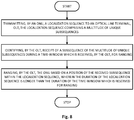
- Fig. 8 illustrates a flow-chart of a process for initial (coarse) ranging.
- the process may start after an ONU has been singled-out with instructing the ONU to transmit the localization sequence. After identifying the subsequence which has been received during the empty window, the OLT may determine the round-trip delay and use this information for the initial (coarse) ranging.
- the initial ranging may comprise averaging over multiple upstream transmission windows and be used in a conventional ranging process to follow-up. By this, the length of the empty window can be substantially reduced and made independent of the round-trip time variation within the group of ONUs.
- the proposed registration process may comprise two steps, with the first step involving the possibility of "pre-registered ONUs" as a special case, which may be addressed differently, as described above.
- the isolated ONU is then asked to send the localization sequence that can be used to determine its distance from the OLT.
- a final step may take place, which may be largely identical to the standardized ranging: Transmission of a burst at full bitrate and full power, but sent so that the burst, at the OLT, in any case falls into the empty window. This can be done using the rough timing information of the previous step.
- This fine-ranging step may be preceded by the additional step of transmitting the serial number.
- the registration (ranging) of ONUs may have 4 steps:
- a quiet window must be reserved for the steps of discovery and ranging, which corresponds to the round trip time in the PON plus an offset (2 ⁇ s + 48 ⁇ s).
- the empty window is much smaller, e.g., only 3.5 ⁇ s, independent of how large the absolute or the differential distance of ONUs in the PON is.
- Usage of a localization sequence which is (much) larger than the empty window allows precise determination of a sub-sequence that is received by the OLT during the empty window and, hence, determination of the signal round trip time for a ONU.
- the latency of already activated ONUs is not adversely affected by the activation of new ONUs, i.e. their latency is not increased by this process.
Landscapes
- Engineering & Computer Science (AREA)
- Computer Networks & Wireless Communication (AREA)
- Signal Processing (AREA)
- Optical Communication System (AREA)
- Small-Scale Networks (AREA)
Priority Applications (1)
| Application Number | Priority Date | Filing Date | Title |
|---|---|---|---|
| EP18165553.1A EP3550742B1 (de) | 2018-04-03 | 2018-04-03 | Optische netzwerkeinheitsaktivierung |
Applications Claiming Priority (1)
| Application Number | Priority Date | Filing Date | Title |
|---|---|---|---|
| EP18165553.1A EP3550742B1 (de) | 2018-04-03 | 2018-04-03 | Optische netzwerkeinheitsaktivierung |
Publications (2)
| Publication Number | Publication Date |
|---|---|
| EP3550742A1 true EP3550742A1 (de) | 2019-10-09 |
| EP3550742B1 EP3550742B1 (de) | 2020-07-15 |
Family
ID=61906639
Family Applications (1)
| Application Number | Title | Priority Date | Filing Date |
|---|---|---|---|
| EP18165553.1A Active EP3550742B1 (de) | 2018-04-03 | 2018-04-03 | Optische netzwerkeinheitsaktivierung |
Country Status (1)
| Country | Link |
|---|---|
| EP (1) | EP3550742B1 (de) |
Cited By (4)
| Publication number | Priority date | Publication date | Assignee | Title |
|---|---|---|---|---|
| EP3860141A4 (de) * | 2018-09-25 | 2021-12-01 | ZTE Corporation | Entfernungsmessungsverfahren und kommunikationsverfahren für optisches netzwerk, olt, onu und optisches netzwerksystem |
| EP3860002A4 (de) * | 2018-09-25 | 2021-12-01 | ZTE Corporation | Entfernungsmessverfahren für ein optisches netzwerk, olt, onu und optisches netzwerksystem |
| CN114845188A (zh) * | 2021-02-01 | 2022-08-02 | 迈凌有限公司 | 时延敏感网络中的光网络单元激活和低延迟传输 |
| EP4425953A1 (de) * | 2023-02-28 | 2024-09-04 | Nokia Solutions and Networks Oy | Abstimmung von empfängerkomponenten in einem optischen leitungsendgerät |
Citations (3)
| Publication number | Priority date | Publication date | Assignee | Title |
|---|---|---|---|---|
| EP0616444A2 (de) * | 1993-03-15 | 1994-09-21 | Koninklijke Philips Electronics N.V. | Telekommunikationssystem mit Abstandsmessung |
| EP2448152A1 (de) * | 2009-11-23 | 2012-05-02 | ZTE Corporation | Sortierverfahren und -vorrichtung in einem passiven optischen netzwerk |
| EP2493103A1 (de) * | 2009-11-24 | 2012-08-29 | ZTE Corporation | Einordnungsverfahren und -system für eine optische netzwerkeinheit in einem passiven optischen netzwerk |
-
2018
- 2018-04-03 EP EP18165553.1A patent/EP3550742B1/de active Active
Patent Citations (3)
| Publication number | Priority date | Publication date | Assignee | Title |
|---|---|---|---|---|
| EP0616444A2 (de) * | 1993-03-15 | 1994-09-21 | Koninklijke Philips Electronics N.V. | Telekommunikationssystem mit Abstandsmessung |
| EP2448152A1 (de) * | 2009-11-23 | 2012-05-02 | ZTE Corporation | Sortierverfahren und -vorrichtung in einem passiven optischen netzwerk |
| EP2493103A1 (de) * | 2009-11-24 | 2012-08-29 | ZTE Corporation | Einordnungsverfahren und -system für eine optische netzwerkeinheit in einem passiven optischen netzwerk |
Non-Patent Citations (1)
| Title |
|---|
| "Phoneline networking transceivers - Isolation function; G.989.3 (2015) Amendment 1 (11/16)", no. G.989.3 (2015) Amendment 1 (11/16), 13 November 2016 (2016-11-13), pages 1 - 266, XP044190113, Retrieved from the Internet <URL:http://mirror.itu.int/dms/pay/itu-t/rec/g/T-REC-G.989.3-201611-I!Amd1!PDF-E.pdf> [retrieved on 20170405] * |
Cited By (5)
| Publication number | Priority date | Publication date | Assignee | Title |
|---|---|---|---|---|
| EP3860141A4 (de) * | 2018-09-25 | 2021-12-01 | ZTE Corporation | Entfernungsmessungsverfahren und kommunikationsverfahren für optisches netzwerk, olt, onu und optisches netzwerksystem |
| EP3860002A4 (de) * | 2018-09-25 | 2021-12-01 | ZTE Corporation | Entfernungsmessverfahren für ein optisches netzwerk, olt, onu und optisches netzwerksystem |
| US11425474B2 (en) | 2018-09-25 | 2022-08-23 | Zte Corporation | Ranging method and communication method for optical network, OLT, ONU, and optical network system |
| CN114845188A (zh) * | 2021-02-01 | 2022-08-02 | 迈凌有限公司 | 时延敏感网络中的光网络单元激活和低延迟传输 |
| EP4425953A1 (de) * | 2023-02-28 | 2024-09-04 | Nokia Solutions and Networks Oy | Abstimmung von empfängerkomponenten in einem optischen leitungsendgerät |
Also Published As
| Publication number | Publication date |
|---|---|
| EP3550742B1 (de) | 2020-07-15 |
Similar Documents
| Publication | Publication Date | Title |
|---|---|---|
| US7489869B2 (en) | Passive optical network system and ranging system thereof | |
| EP3550742B1 (de) | Optische netzwerkeinheitsaktivierung | |
| CN101304281B (zh) | Pon系统的可进行警报传送策略的光线路终端、光网络单元 | |
| CA2295563C (en) | Method and apparatus for controlling communications in a passive optical network | |
| KR102433853B1 (ko) | 수동형 광 네트워크 시스템에서의 콰이어트 윈도우 설정 방법 및 그 장치 | |
| US5802061A (en) | Method and apparatus for network access control with implicit ranging and dynamically assigned time slots | |
| US7428586B2 (en) | System and method for discovering undiscovered nodes using a registry bit in a point-to-multipoint network | |
| US20020167963A1 (en) | Method and apparatus for spread spectrum medium access protocol with collision avoidance using controlled time of arrival | |
| WO2009135825A1 (en) | Two and three-stroke discovery process for 10g-epons | |
| HK1215113A1 (zh) | 無源光網絡(pon)中的概率性帶寬控制 | |
| US11706547B2 (en) | Systems and methods for collision resolution during ONU activation | |
| EP3573343B1 (de) | Verfahren und vorrichtung zur entfernungsmessung einer neuen optischen netzwerkeinheit in einem passiven optischen netzsystem ohne beeinträchtigung des verkehrs der entfernten optischen netzwerkeinheit | |
| WO2008093338A1 (en) | Apparatus, network and method for implementing tdm channels over a csma shared media network | |
| JP5759420B2 (ja) | 光通信システム及び新規接続端末検出方法 | |
| Clarke et al. | Simultaneous and interleaved polling: an upstream protocol for WDM-PON | |
| WO2014201605A1 (zh) | 带宽分配方法、装置、局端、终端和系统 | |
| US20210329356A1 (en) | Systems and methods of open contention-based grant allocations | |
| CN105359441B (zh) | 使用噪声窗用于未校准的光网络单元激活 | |
| EP3457596B1 (de) | Verfahren und produkte zum onu-inbetriebnahmeverfahren | |
| US6967945B2 (en) | Method and system of communications using a pulse transmission protocol | |
| JP2014236484A (ja) | 光通信システム及び衝突検出方法 | |
| JP6093282B2 (ja) | 光通信システム、通信制御方法及び局側光回線終端装置 | |
| CN113891489A (zh) | 一种基于跳频的竞争随机接入方法及装置 | |
| US20070237188A1 (en) | Method and apparatus for ONT ranging with improved noise immunity | |
| JP2019022157A (ja) | 加入者線端局装置 |
Legal Events
| Date | Code | Title | Description |
|---|---|---|---|
| PUAI | Public reference made under article 153(3) epc to a published international application that has entered the european phase |
Free format text: ORIGINAL CODE: 0009012 |
|
| STAA | Information on the status of an ep patent application or granted ep patent |
Free format text: STATUS: THE APPLICATION HAS BEEN PUBLISHED |
|
| AK | Designated contracting states |
Kind code of ref document: A1 Designated state(s): AL AT BE BG CH CY CZ DE DK EE ES FI FR GB GR HR HU IE IS IT LI LT LU LV MC MK MT NL NO PL PT RO RS SE SI SK SM TR |
|
| AX | Request for extension of the european patent |
Extension state: BA ME |
|
| STAA | Information on the status of an ep patent application or granted ep patent |
Free format text: STATUS: REQUEST FOR EXAMINATION WAS MADE |
|
| 17P | Request for examination filed |
Effective date: 20200116 |
|
| RBV | Designated contracting states (corrected) |
Designated state(s): AL AT BE BG CH CY CZ DE DK EE ES FI FR GB GR HR HU IE IS IT LI LT LU LV MC MK MT NL NO PL PT RO RS SE SI SK SM TR |
|
| GRAP | Despatch of communication of intention to grant a patent |
Free format text: ORIGINAL CODE: EPIDOSNIGR1 |
|
| STAA | Information on the status of an ep patent application or granted ep patent |
Free format text: STATUS: GRANT OF PATENT IS INTENDED |
|
| INTG | Intention to grant announced |
Effective date: 20200303 |
|
| GRAS | Grant fee paid |
Free format text: ORIGINAL CODE: EPIDOSNIGR3 |
|
| GRAA | (expected) grant |
Free format text: ORIGINAL CODE: 0009210 |
|
| STAA | Information on the status of an ep patent application or granted ep patent |
Free format text: STATUS: THE PATENT HAS BEEN GRANTED |
|
| AK | Designated contracting states |
Kind code of ref document: B1 Designated state(s): AL AT BE BG CH CY CZ DE DK EE ES FI FR GB GR HR HU IE IS IT LI LT LU LV MC MK MT NL NO PL PT RO RS SE SI SK SM TR |
|
| REG | Reference to a national code |
Ref country code: CH Ref legal event code: EP Ref country code: GB Ref legal event code: FG4D |
|
| REG | Reference to a national code |
Ref country code: DE Ref legal event code: R096 Ref document number: 602018005972 Country of ref document: DE |
|
| REG | Reference to a national code |
Ref country code: IE Ref legal event code: FG4D |
|
| REG | Reference to a national code |
Ref country code: AT Ref legal event code: REF Ref document number: 1292141 Country of ref document: AT Kind code of ref document: T Effective date: 20200815 |
|
| REG | Reference to a national code |
Ref country code: LT Ref legal event code: MG4D |
|
| REG | Reference to a national code |
Ref country code: AT Ref legal event code: MK05 Ref document number: 1292141 Country of ref document: AT Kind code of ref document: T Effective date: 20200715 |
|
| REG | Reference to a national code |
Ref country code: NL Ref legal event code: MP Effective date: 20200715 |
|
| PG25 | Lapsed in a contracting state [announced via postgrant information from national office to epo] |
Ref country code: NO Free format text: LAPSE BECAUSE OF FAILURE TO SUBMIT A TRANSLATION OF THE DESCRIPTION OR TO PAY THE FEE WITHIN THE PRESCRIBED TIME-LIMIT Effective date: 20201015 Ref country code: AT Free format text: LAPSE BECAUSE OF FAILURE TO SUBMIT A TRANSLATION OF THE DESCRIPTION OR TO PAY THE FEE WITHIN THE PRESCRIBED TIME-LIMIT Effective date: 20200715 Ref country code: HR Free format text: LAPSE BECAUSE OF FAILURE TO SUBMIT A TRANSLATION OF THE DESCRIPTION OR TO PAY THE FEE WITHIN THE PRESCRIBED TIME-LIMIT Effective date: 20200715 Ref country code: SE Free format text: LAPSE BECAUSE OF FAILURE TO SUBMIT A TRANSLATION OF THE DESCRIPTION OR TO PAY THE FEE WITHIN THE PRESCRIBED TIME-LIMIT Effective date: 20200715 Ref country code: BG Free format text: LAPSE BECAUSE OF FAILURE TO SUBMIT A TRANSLATION OF THE DESCRIPTION OR TO PAY THE FEE WITHIN THE PRESCRIBED TIME-LIMIT Effective date: 20201015 Ref country code: PT Free format text: LAPSE BECAUSE OF FAILURE TO SUBMIT A TRANSLATION OF THE DESCRIPTION OR TO PAY THE FEE WITHIN THE PRESCRIBED TIME-LIMIT Effective date: 20201116 Ref country code: GR Free format text: LAPSE BECAUSE OF FAILURE TO SUBMIT A TRANSLATION OF THE DESCRIPTION OR TO PAY THE FEE WITHIN THE PRESCRIBED TIME-LIMIT Effective date: 20201016 Ref country code: LT Free format text: LAPSE BECAUSE OF FAILURE TO SUBMIT A TRANSLATION OF THE DESCRIPTION OR TO PAY THE FEE WITHIN THE PRESCRIBED TIME-LIMIT Effective date: 20200715 Ref country code: ES Free format text: LAPSE BECAUSE OF FAILURE TO SUBMIT A TRANSLATION OF THE DESCRIPTION OR TO PAY THE FEE WITHIN THE PRESCRIBED TIME-LIMIT Effective date: 20200715 Ref country code: FI Free format text: LAPSE BECAUSE OF FAILURE TO SUBMIT A TRANSLATION OF THE DESCRIPTION OR TO PAY THE FEE WITHIN THE PRESCRIBED TIME-LIMIT Effective date: 20200715 |
|
| PG25 | Lapsed in a contracting state [announced via postgrant information from national office to epo] |
Ref country code: LV Free format text: LAPSE BECAUSE OF FAILURE TO SUBMIT A TRANSLATION OF THE DESCRIPTION OR TO PAY THE FEE WITHIN THE PRESCRIBED TIME-LIMIT Effective date: 20200715 Ref country code: RS Free format text: LAPSE BECAUSE OF FAILURE TO SUBMIT A TRANSLATION OF THE DESCRIPTION OR TO PAY THE FEE WITHIN THE PRESCRIBED TIME-LIMIT Effective date: 20200715 Ref country code: PL Free format text: LAPSE BECAUSE OF FAILURE TO SUBMIT A TRANSLATION OF THE DESCRIPTION OR TO PAY THE FEE WITHIN THE PRESCRIBED TIME-LIMIT Effective date: 20200715 Ref country code: IS Free format text: LAPSE BECAUSE OF FAILURE TO SUBMIT A TRANSLATION OF THE DESCRIPTION OR TO PAY THE FEE WITHIN THE PRESCRIBED TIME-LIMIT Effective date: 20201115 |
|
| PG25 | Lapsed in a contracting state [announced via postgrant information from national office to epo] |
Ref country code: NL Free format text: LAPSE BECAUSE OF FAILURE TO SUBMIT A TRANSLATION OF THE DESCRIPTION OR TO PAY THE FEE WITHIN THE PRESCRIBED TIME-LIMIT Effective date: 20200715 |
|
| REG | Reference to a national code |
Ref country code: DE Ref legal event code: R097 Ref document number: 602018005972 Country of ref document: DE |
|
| PG25 | Lapsed in a contracting state [announced via postgrant information from national office to epo] |
Ref country code: IT Free format text: LAPSE BECAUSE OF FAILURE TO SUBMIT A TRANSLATION OF THE DESCRIPTION OR TO PAY THE FEE WITHIN THE PRESCRIBED TIME-LIMIT Effective date: 20200715 Ref country code: SM Free format text: LAPSE BECAUSE OF FAILURE TO SUBMIT A TRANSLATION OF THE DESCRIPTION OR TO PAY THE FEE WITHIN THE PRESCRIBED TIME-LIMIT Effective date: 20200715 Ref country code: RO Free format text: LAPSE BECAUSE OF FAILURE TO SUBMIT A TRANSLATION OF THE DESCRIPTION OR TO PAY THE FEE WITHIN THE PRESCRIBED TIME-LIMIT Effective date: 20200715 Ref country code: CZ Free format text: LAPSE BECAUSE OF FAILURE TO SUBMIT A TRANSLATION OF THE DESCRIPTION OR TO PAY THE FEE WITHIN THE PRESCRIBED TIME-LIMIT Effective date: 20200715 Ref country code: DK Free format text: LAPSE BECAUSE OF FAILURE TO SUBMIT A TRANSLATION OF THE DESCRIPTION OR TO PAY THE FEE WITHIN THE PRESCRIBED TIME-LIMIT Effective date: 20200715 Ref country code: EE Free format text: LAPSE BECAUSE OF FAILURE TO SUBMIT A TRANSLATION OF THE DESCRIPTION OR TO PAY THE FEE WITHIN THE PRESCRIBED TIME-LIMIT Effective date: 20200715 |
|
| PLBE | No opposition filed within time limit |
Free format text: ORIGINAL CODE: 0009261 |
|
| STAA | Information on the status of an ep patent application or granted ep patent |
Free format text: STATUS: NO OPPOSITION FILED WITHIN TIME LIMIT |
|
| PG25 | Lapsed in a contracting state [announced via postgrant information from national office to epo] |
Ref country code: AL Free format text: LAPSE BECAUSE OF FAILURE TO SUBMIT A TRANSLATION OF THE DESCRIPTION OR TO PAY THE FEE WITHIN THE PRESCRIBED TIME-LIMIT Effective date: 20200715 |
|
| 26N | No opposition filed |
Effective date: 20210416 |
|
| PG25 | Lapsed in a contracting state [announced via postgrant information from national office to epo] |
Ref country code: SK Free format text: LAPSE BECAUSE OF FAILURE TO SUBMIT A TRANSLATION OF THE DESCRIPTION OR TO PAY THE FEE WITHIN THE PRESCRIBED TIME-LIMIT Effective date: 20200715 |
|
| PG25 | Lapsed in a contracting state [announced via postgrant information from national office to epo] |
Ref country code: SI Free format text: LAPSE BECAUSE OF FAILURE TO SUBMIT A TRANSLATION OF THE DESCRIPTION OR TO PAY THE FEE WITHIN THE PRESCRIBED TIME-LIMIT Effective date: 20200715 |
|
| PG25 | Lapsed in a contracting state [announced via postgrant information from national office to epo] |
Ref country code: MC Free format text: LAPSE BECAUSE OF FAILURE TO SUBMIT A TRANSLATION OF THE DESCRIPTION OR TO PAY THE FEE WITHIN THE PRESCRIBED TIME-LIMIT Effective date: 20200715 |
|
| PG25 | Lapsed in a contracting state [announced via postgrant information from national office to epo] |
Ref country code: LU Free format text: LAPSE BECAUSE OF NON-PAYMENT OF DUE FEES Effective date: 20210403 |
|
| REG | Reference to a national code |
Ref country code: BE Ref legal event code: MM Effective date: 20210430 |
|
| PG25 | Lapsed in a contracting state [announced via postgrant information from national office to epo] |
Ref country code: FR Free format text: LAPSE BECAUSE OF NON-PAYMENT OF DUE FEES Effective date: 20210430 Ref country code: LI Free format text: LAPSE BECAUSE OF NON-PAYMENT OF DUE FEES Effective date: 20210430 Ref country code: CH Free format text: LAPSE BECAUSE OF NON-PAYMENT OF DUE FEES Effective date: 20210430 |
|
| PG25 | Lapsed in a contracting state [announced via postgrant information from national office to epo] |
Ref country code: IE Free format text: LAPSE BECAUSE OF NON-PAYMENT OF DUE FEES Effective date: 20210403 |
|
| PG25 | Lapsed in a contracting state [announced via postgrant information from national office to epo] |
Ref country code: IS Free format text: LAPSE BECAUSE OF FAILURE TO SUBMIT A TRANSLATION OF THE DESCRIPTION OR TO PAY THE FEE WITHIN THE PRESCRIBED TIME-LIMIT Effective date: 20201115 |
|
| PG25 | Lapsed in a contracting state [announced via postgrant information from national office to epo] |
Ref country code: BE Free format text: LAPSE BECAUSE OF NON-PAYMENT OF DUE FEES Effective date: 20210430 |
|
| PG25 | Lapsed in a contracting state [announced via postgrant information from national office to epo] |
Ref country code: CY Free format text: LAPSE BECAUSE OF FAILURE TO SUBMIT A TRANSLATION OF THE DESCRIPTION OR TO PAY THE FEE WITHIN THE PRESCRIBED TIME-LIMIT Effective date: 20200715 |
|
| P01 | Opt-out of the competence of the unified patent court (upc) registered |
Effective date: 20230527 |
|
| PG25 | Lapsed in a contracting state [announced via postgrant information from national office to epo] |
Ref country code: HU Free format text: LAPSE BECAUSE OF FAILURE TO SUBMIT A TRANSLATION OF THE DESCRIPTION OR TO PAY THE FEE WITHIN THE PRESCRIBED TIME-LIMIT; INVALID AB INITIO Effective date: 20180403 |
|
| PG25 | Lapsed in a contracting state [announced via postgrant information from national office to epo] |
Ref country code: MK Free format text: LAPSE BECAUSE OF FAILURE TO SUBMIT A TRANSLATION OF THE DESCRIPTION OR TO PAY THE FEE WITHIN THE PRESCRIBED TIME-LIMIT Effective date: 20200715 |
|
| PG25 | Lapsed in a contracting state [announced via postgrant information from national office to epo] |
Ref country code: MT Free format text: LAPSE BECAUSE OF FAILURE TO SUBMIT A TRANSLATION OF THE DESCRIPTION OR TO PAY THE FEE WITHIN THE PRESCRIBED TIME-LIMIT Effective date: 20200715 |
|
| PGFP | Annual fee paid to national office [announced via postgrant information from national office to epo] |
Ref country code: DE Payment date: 20250305 Year of fee payment: 8 |
|
| PG25 | Lapsed in a contracting state [announced via postgrant information from national office to epo] |
Ref country code: TR Free format text: LAPSE BECAUSE OF FAILURE TO SUBMIT A TRANSLATION OF THE DESCRIPTION OR TO PAY THE FEE WITHIN THE PRESCRIBED TIME-LIMIT Effective date: 20200715 |
|
| PGFP | Annual fee paid to national office [announced via postgrant information from national office to epo] |
Ref country code: GB Payment date: 20260312 Year of fee payment: 9 |