EP3551425B1 - Formation d'objets en 3d à l'aide de polymères à température de fusion élevée - Google Patents
Formation d'objets en 3d à l'aide de polymères à température de fusion élevée Download PDFInfo
- Publication number
- EP3551425B1 EP3551425B1 EP17906582.6A EP17906582A EP3551425B1 EP 3551425 B1 EP3551425 B1 EP 3551425B1 EP 17906582 A EP17906582 A EP 17906582A EP 3551425 B1 EP3551425 B1 EP 3551425B1
- Authority
- EP
- European Patent Office
- Prior art keywords
- layer
- temperature
- polymer particles
- fusing agent
- heat
- Prior art date
- Legal status (The legal status is an assumption and is not a legal conclusion. Google has not performed a legal analysis and makes no representation as to the accuracy of the status listed.)
- Active
Links
Images

Classifications
-
- B—PERFORMING OPERATIONS; TRANSPORTING
- B29—WORKING OF PLASTICS; WORKING OF SUBSTANCES IN A PLASTIC STATE IN GENERAL
- B29C—SHAPING OR JOINING OF PLASTICS; SHAPING OF MATERIAL IN A PLASTIC STATE, NOT OTHERWISE PROVIDED FOR; AFTER-TREATMENT OF THE SHAPED PRODUCTS, e.g. REPAIRING
- B29C64/00—Additive manufacturing, i.e. manufacturing of three-dimensional [3D] objects by additive deposition, additive agglomeration or additive layering, e.g. by 3D printing, stereolithography or selective laser sintering
- B29C64/10—Processes of additive manufacturing
- B29C64/165—Processes of additive manufacturing using a combination of solid and fluid materials, e.g. a powder selectively bound by a liquid binder, catalyst, inhibitor or energy absorber
-
- B—PERFORMING OPERATIONS; TRANSPORTING
- B29—WORKING OF PLASTICS; WORKING OF SUBSTANCES IN A PLASTIC STATE IN GENERAL
- B29C—SHAPING OR JOINING OF PLASTICS; SHAPING OF MATERIAL IN A PLASTIC STATE, NOT OTHERWISE PROVIDED FOR; AFTER-TREATMENT OF THE SHAPED PRODUCTS, e.g. REPAIRING
- B29C64/00—Additive manufacturing, i.e. manufacturing of three-dimensional [3D] objects by additive deposition, additive agglomeration or additive layering, e.g. by 3D printing, stereolithography or selective laser sintering
- B29C64/20—Apparatus for additive manufacturing; Details thereof or accessories therefor
- B29C64/205—Means for applying layers
- B29C64/209—Heads; Nozzles
-
- B—PERFORMING OPERATIONS; TRANSPORTING
- B29—WORKING OF PLASTICS; WORKING OF SUBSTANCES IN A PLASTIC STATE IN GENERAL
- B29C—SHAPING OR JOINING OF PLASTICS; SHAPING OF MATERIAL IN A PLASTIC STATE, NOT OTHERWISE PROVIDED FOR; AFTER-TREATMENT OF THE SHAPED PRODUCTS, e.g. REPAIRING
- B29C64/00—Additive manufacturing, i.e. manufacturing of three-dimensional [3D] objects by additive deposition, additive agglomeration or additive layering, e.g. by 3D printing, stereolithography or selective laser sintering
- B29C64/20—Apparatus for additive manufacturing; Details thereof or accessories therefor
- B29C64/264—Arrangements for irradiation
-
- B—PERFORMING OPERATIONS; TRANSPORTING
- B29—WORKING OF PLASTICS; WORKING OF SUBSTANCES IN A PLASTIC STATE IN GENERAL
- B29C—SHAPING OR JOINING OF PLASTICS; SHAPING OF MATERIAL IN A PLASTIC STATE, NOT OTHERWISE PROVIDED FOR; AFTER-TREATMENT OF THE SHAPED PRODUCTS, e.g. REPAIRING
- B29C64/00—Additive manufacturing, i.e. manufacturing of three-dimensional [3D] objects by additive deposition, additive agglomeration or additive layering, e.g. by 3D printing, stereolithography or selective laser sintering
- B29C64/20—Apparatus for additive manufacturing; Details thereof or accessories therefor
- B29C64/264—Arrangements for irradiation
- B29C64/268—Arrangements for irradiation using laser beams; using electron beams [EB]
-
- B—PERFORMING OPERATIONS; TRANSPORTING
- B29—WORKING OF PLASTICS; WORKING OF SUBSTANCES IN A PLASTIC STATE IN GENERAL
- B29C—SHAPING OR JOINING OF PLASTICS; SHAPING OF MATERIAL IN A PLASTIC STATE, NOT OTHERWISE PROVIDED FOR; AFTER-TREATMENT OF THE SHAPED PRODUCTS, e.g. REPAIRING
- B29C64/00—Additive manufacturing, i.e. manufacturing of three-dimensional [3D] objects by additive deposition, additive agglomeration or additive layering, e.g. by 3D printing, stereolithography or selective laser sintering
- B29C64/20—Apparatus for additive manufacturing; Details thereof or accessories therefor
- B29C64/295—Heating elements
-
- B—PERFORMING OPERATIONS; TRANSPORTING
- B29—WORKING OF PLASTICS; WORKING OF SUBSTANCES IN A PLASTIC STATE IN GENERAL
- B29C—SHAPING OR JOINING OF PLASTICS; SHAPING OF MATERIAL IN A PLASTIC STATE, NOT OTHERWISE PROVIDED FOR; AFTER-TREATMENT OF THE SHAPED PRODUCTS, e.g. REPAIRING
- B29C64/00—Additive manufacturing, i.e. manufacturing of three-dimensional [3D] objects by additive deposition, additive agglomeration or additive layering, e.g. by 3D printing, stereolithography or selective laser sintering
- B29C64/30—Auxiliary operations or equipment
- B29C64/307—Handling of material to be used in additive manufacturing
- B29C64/321—Feeding
- B29C64/336—Feeding of two or more materials
-
- B—PERFORMING OPERATIONS; TRANSPORTING
- B33—ADDITIVE MANUFACTURING TECHNOLOGY
- B33Y—ADDITIVE MANUFACTURING, i.e. MANUFACTURING OF THREE-DIMENSIONAL [3D] OBJECTS BY ADDITIVE DEPOSITION, ADDITIVE AGGLOMERATION OR ADDITIVE LAYERING, e.g. BY 3D PRINTING, STEREOLITHOGRAPHY OR SELECTIVE LASER SINTERING
- B33Y10/00—Processes of additive manufacturing
-
- B—PERFORMING OPERATIONS; TRANSPORTING
- B33—ADDITIVE MANUFACTURING TECHNOLOGY
- B33Y—ADDITIVE MANUFACTURING, i.e. MANUFACTURING OF THREE-DIMENSIONAL [3D] OBJECTS BY ADDITIVE DEPOSITION, ADDITIVE AGGLOMERATION OR ADDITIVE LAYERING, e.g. BY 3D PRINTING, STEREOLITHOGRAPHY OR SELECTIVE LASER SINTERING
- B33Y30/00—Apparatus for additive manufacturing; Details thereof or accessories therefor
-
- B—PERFORMING OPERATIONS; TRANSPORTING
- B33—ADDITIVE MANUFACTURING TECHNOLOGY
- B33Y—ADDITIVE MANUFACTURING, i.e. MANUFACTURING OF THREE-DIMENSIONAL [3D] OBJECTS BY ADDITIVE DEPOSITION, ADDITIVE AGGLOMERATION OR ADDITIVE LAYERING, e.g. BY 3D PRINTING, STEREOLITHOGRAPHY OR SELECTIVE LASER SINTERING
- B33Y40/00—Auxiliary operations or equipment, e.g. for material handling
-
- B—PERFORMING OPERATIONS; TRANSPORTING
- B33—ADDITIVE MANUFACTURING TECHNOLOGY
- B33Y—ADDITIVE MANUFACTURING, i.e. MANUFACTURING OF THREE-DIMENSIONAL [3D] OBJECTS BY ADDITIVE DEPOSITION, ADDITIVE AGGLOMERATION OR ADDITIVE LAYERING, e.g. BY 3D PRINTING, STEREOLITHOGRAPHY OR SELECTIVE LASER SINTERING
- B33Y70/00—Materials specially adapted for additive manufacturing
-
- B—PERFORMING OPERATIONS; TRANSPORTING
- B33—ADDITIVE MANUFACTURING TECHNOLOGY
- B33Y—ADDITIVE MANUFACTURING, i.e. MANUFACTURING OF THREE-DIMENSIONAL [3D] OBJECTS BY ADDITIVE DEPOSITION, ADDITIVE AGGLOMERATION OR ADDITIVE LAYERING, e.g. BY 3D PRINTING, STEREOLITHOGRAPHY OR SELECTIVE LASER SINTERING
- B33Y70/00—Materials specially adapted for additive manufacturing
- B33Y70/10—Composites of different types of material, e.g. mixtures of ceramics and polymers or mixtures of metals and biomaterials
Definitions
- Three dimensional printing (forming) of objects is a developing technology that uses ejectors and/or material to assemble objects. While machining starts with a block of material and removes material until the object is formed, three dimensional printing, in contrast, builds the part up bit by bit until the object is formed. Early three dimensional printing used ejected fluid to provide all of the mass of the developing part. Other methods have used incorporated particles and/or solid material to provide much of the mass of the formed object. Not providing all the material through an ejected fluid has increased the speed and reduced the cost of three dimensional printing. Three dimensional printing continues to be a developing technology that is approaching competitiveness with traditional methods.
- Fluid ejection heads may use a solvent, for example, water, to convey the material to the surface. The solvent then evaporates and leaves the material behind on the surface.
- a solvent for example, water
- TIJ thermal inkjet
- a heater forms a gas bubble by evaporating the solvent, the gas bubble then pushes the fluid droplet out of the fluid ejection head toward the target.
- the drying time of the solvent on a surface may be modified by heating and/or cooling.
- the drying time may also be modified by use a more volatile solvent and/or solvents.
- the drying time may be extended by adding a humectant, such as glycerol.
- a system including: a spreader to form layers of polymer particles, the polymer particles having a melting temperature (Tm) of at least 250° C; a fluid ejection head to selectively deposit a fusing agent on a top layer of the layers of polymer particles; a bed heater to heat a working area of the system to no more than 10 degrees centigrade below the Tm of the polymer particles; and a radiation source to selectively heat the top layer, wherein spreading a new layer on top of the layers of polymer particulate, applying the fusing agent to the new layer, and heating the new layer with the radiation source are accomplished such that the temperature of the top layer remains above a solidification temperature (Ts) of the polymer particles until the top layer is covered by the new layer.
- Tm melting temperature
- the system (100) is a system for forming a multiple layer object from a high melting temperature polymer.
- a layer of polymer particles (110) is formed and then selectively consolidated to form a layer of the object.
- Another layer of polymer particles (110) is applied and the process repeated.
- the object is built up layer by layer until the desired thickness is reached.
- This approach has some advantages over providing the material for the object through deposition.
- the use of consolidated polymer particles (110) may have higher throughput and/or quicker layer times.
- the use of consolidated polymer particles (110) may have thicker layers, reducing the total object forming time.
- the use of consolidated polymer particles (110) may make producing distributions of color, composition, strength, etc. within the formed object more difficult compared with a system where different materials are deposited to build up the component.
- the use of a consolidated polymer particle (110) approach also uses a spreader (120) to form the layer of polymer particles (110).
- the polymer particles (110) provide the material to form the multiple layer object.
- the polymer particles (110) include high melting temperature polymer.
- High melting temperature polymers may be polymers with a melting temperature above 250° C.
- High melting temperature polymers may be polymers with a melting temperature above 300° C.
- High melting temperature polymers may be polymers with a melting temperature above 325° C.
- high melting temperature polymers include, but are not limited to: Fluorinated ethylene propylene (FEP, Tm of 260 ° C); Perfluoroalkoxy alkane (PFA, Tm of 260 ° C); Polyamide 6,6 (Nylon 6,6) (PA 6,6, Tm of 265° C); Polyphenylene sulfide (PPS, Tm of 280° C); Polyamide 4,6 (PA 4,6, Tm of 280° C); Polyphthalamide (PPA, Tm of 310° C); Liquid crystal polymer-Glass composite (e.g.
- LCP Liquid crystal polymers
- the polymer particles (110) may be of a single polymer, for example, PEEK.
- the polymer particles (110) may be a mixture of polymers, e.g. PA 6,6 and PA 4,6.
- the polymer particles (110) may be in a single distribution.
- the polymer particles (110) may include multiple size distributions, for example, a larger mean size distribution and a smaller mean size distribution to create a bimodal distribution.
- the smaller particles are formed with a higher melting temperature (Tm) polymer.
- Tm melting temperature
- the smaller particles are formed from a lower melting temperature polymer.
- Tm melting temperature
- the use of a bimodal size distribution may achieve higher density parts than the use of a single size distribution.
- the polymer particles (110) may be mixed with other components to modify the formed multilayer object. Care and experimentation may be needed as adding additional components, e.g. a flow agent and/or a colorant, may impact the performance of the polymer particles (110).
- additional components e.g. a flow agent and/or a colorant
- the tackiness of the polymer particles (110) is sensitive to additional components. This is consistent with a working theory that the tackiness at higher temperatures is driven by the behavior of amorphous portions of a semi crystalline high melting temperature polymer. If the crystalline portions remain intact in the tacky particles, then a very thin surface component is able to effectively interact with other particles. However, the thinness of the interacting layer may allow this behavior to be disrupted by relatively small amounts of secondary materials.
- the spreader (120) is used to form a layer of polymer particles (110).
- the spreader (120) may include a feed to provide additional particulate to form the layer of polymer particles (110).
- the spreader (120) may include a vibrating component to distribute and/or compact the layer of polymer particles (110).
- the spreader (120) may make a single pass to form the layer of polymer particles (110).
- the spreader may make multiple passes to form the layer of polymer particles (110). In some examples, the subsequent passes increase the density of the layer of polymer particles (110).
- the spreader (120) may be automatic.
- the spreader (120) may be semi-automatic.
- the spreader (120) may be manually operated by a user.
- the spreader (120) may form layers of polymer particles (110) that are of a uniform depth.
- the spreader may vary the depth of the formed layer of polymer particles (110) as a function of location in the part, location in the bed, and/or feature resolution.
- the spreader (120) uses a first thickness for the initial layer and/or the initial few layers and then changes to a second thickness for subsequent layers.
- the spreader (120) may include multiple particle feeds.
- the spreader (120) provides a first distribution of particles for the initial layer and a second distribution of particles in subsequent layers.
- the spreader (120) may apply a first distribution of particles on a first pass and a second distribution of smaller particle on a second pass.
- the spreader (120) may apply a first distribution of smaller particles near the bottom of the layer and a second distribution including more, larger particles near the top of the layer of polymer particulate (110).
- the fluid ejection head (130) ejects the first fusing agent (132) and the second fusing agent (134) onto the layer of polymer particles (120).
- the fluid ejection head (130) may be part of a printbar.
- the fluid ejection head (130) may be static and/or move relative to a forming area.
- the fluid ejection head (130) may include a plurality of solutions for patterning on the polymer particles (110).
- the fluid ejection head (130) may contain a fusing agent (132, 134).
- the fluid ejection head may include a masking fluid to selectively reduce absorption of the radiation from the radiation source (140).
- the first fusing agent (132) increases the energy absorbed by the radiation source (140).
- the first fusing agent (132) may absorb a broad spectrum of electromagnetic radiation.
- the first fusing agent (132) may absorb a narrow wavelength of electromagnetic radiation.
- the first fusing agent (132) may be carried in a solvent, where the solvent acts as the propellant in the fluid ejection head.
- the first fusing agent (132) may be in water.
- the first fusing agent may be mixed with a humectant, an anti-kogation agent, a detergent, an ion source, a pH modifier, a chelator, and/or combinations thereof.
- the second fusing agent (134) increases the energy absorbed from the radiation source (140).
- the second fusing agent (134) may be the same agent as the first fusing agent (132) but at a different concentration in solution.
- the second fusing agent (134) may be the same formulation as the first fusing agent (132) but applied at a different density on the polymer particles (110).
- the first fusing agent (132) and the second fusing agent (134) may include different materials.
- Fusing agents (132, 134) may include: carbon black, platinum black, titanium black, ivory black, black iron oxide, graphite, aniline black, and/or anthraquinone black.
- the first fusing agent (132) and second fusing agent (134) may include any near infrared absorbing dyes and/or pigments. These may include materials which strongly absorb in the infrared and/or visible regime. Some other examples include doped cesium-tungsten oxide pigments and metal ditholene chemical dyes. Further discussion of fusing agents (132, 134) may be found in PCT/US2017/016681, "Fusing Agent including a Metal bis(Dithiolene) Complex" by Olubummo , which is incorporated by reference.
- the radiation source (140) provides energy that is preferentially absorbed by the portions of the layer of polymer particles (110) that have been treated with the first fusing agent (132) and/or the second fusing agent (134).
- the untreated areas of the layer of polymer particles (110) may absorb energy from the radiation source (140).
- the untreated polymer particles (110) may absorb less than 10% of the energy of the radiation from the radiation source falling on the untreated polymer particles (110). That is to say, in some examples, more than 90% of the radiation is reflected and/or transmitted by the untreated polymer particles (110).
- the radiation source (140) may be a pulsed irradiation light source.
- Pulsed irradiation light sources are capable of applying large amounts of light in a relatively short period of time. This makes pulsed irradiation light sources a useful energy source for high throughput operations such as three dimensional forming.
- Pulsed irradiation light sources may also be used in a flood mode, rather than as a point source, for example, like a laser. Irradiating the entire treatment area simultaneously provides throughput advantages as well as uniformity advantages. Simultaneous treatment of the layer of polymer particles (110) may reduce the internal stresses in the consolidated part. Simultaneous treatment may produce more uniform heating and cooling.
- Pulsed irradiation light sources may be monochromatic. Pulsed irradiation light sources may have a distribution of wavelengths, including wavelengths in the infrared, visible, and/or ultraviolet frequencies. Pulsed irradiation light sources may use a light emitting diode (LED), an array of LEDs, plasmas, filaments, and/or other components to generate the electromagnetic radiation used to heat the polymer particles (120).
- LED light emitting diode
- the radiation source (140) may provide the radiation as a single pulse.
- the radiation source (140) may provide the radiation as a series of pulses.
- the pulses may be of the same wavelength and/or energy.
- the pulses may vary, for example, a first type of pulse may be used to heat the polymer particles (120) and a second pulse with a different energy, wavelength, duration, frequency, spectrum, and/or other property may be used after the first pulse.
- the wavelength of the radiation provided by the radiation source may be selected based on a preferential absorbance frequency of the fusing agent, for example, based on a bond found in the fusing agent but not found in the polymer particles (110).
- a heating pulse and/or maintenance pulse may be applied that is not dependent on the preferential absorbance of the fusing agent. Selecting a wavelength that preferentially interacts with a characteristic chemical bond in the polymer particles (110) may be useful.
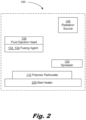
- FIG. 2 is a diagram of a system according to one example consistent with the present specification.
- the system (100) includes: a spreader (120) to form layers of polymer particles (110), the polymer particles having a melting temperature (Tm) of at least 250° C; a fluid ejection head (130) to selectively deposit a fusing agent (132, 134) on a top layer of the layers of polymer particles (110); a bed heater (250) to heat a working area of the system to no more than 10 degrees centigrade below the Tm of the polymer particles (110); and a radiation source (140) to selectively heat the top layer of polymer particles (110), wherein spreading a new layer on top of the layers of polymer particles (110), applying the fusing agent (132, 134) to the new layer, and heating the new layer with the radiation source (140) are accomplished such that the temperature of the top layer remains above a solidification temperature (Ts) of the polymer particles (110) until the top layer is covered by the new layer.
- the system (100) is a system for forming consolidated parts from polymer particles (110).
- the system (100) uses a fusing agent (132, 134) to selectively heat portions of a layer of polymer particles (110).
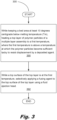
- FIG. 3 shows a flowchart for a method (300) of forming a multiple layer assembly using a polymer with a melting temperature (Tm).
- the method (300) includes: while keeping a bed area at least 10 degrees centigrade below Tm, heating a top layer of polymer particles (110) of a multiple layer assembly to a first temperature, where the first temperature is above a temperature at which the polymer particles (110) become sufficient tacky to resist displacement by a deposited agent (390); and while a top surface of the top layer is at the first temperature, selectively applying a fusing agent (132, 134) to the top surface of the top layer using a fluid ejection head (130)(392).
- the method (300) includes, while keeping a bed area at least 10 degrees centigrade below Tm, heating a top layer of polymer particles (110) of a multiple layer assembly to a first temperature, where the first temperature is above a temperature at which the polymer particles (110) become sufficient tacky to resist displacement by a deposited agent (390. Getting the layer of polymer particles (110) to become tacky so as to resist displacement allows patterning with the fusing agent without disrupting the layer. The presence of this tacky zone between the boiling point of the fusing agent (132, 134) solution and the melting temperature of the polymer particulate increases dimensional control of the formed object.
- the method (300) includes, while a top surface of the top layer is at the first temperature, selectively applying a fusing agent (132, 134) to the top surface of the top layer using a fluid ejection head (130)(392).
- a fusing agent 132, 134
- selective application of the fusing agent enables selective heating of the areas to form the consolidated part while other areas remain at a lower, bed temperature to avoid damage to the system (100).
- the use of the polymer particulate to insulate the forming area and the ability to rapidly form a layer, patterning the layer, and selective heat the desired portions allow forming a consolidated part from a polymer with a high melting temperature without hardening the system. This dynamic control approach offers equipment cost and throughput advantages over systems that bring the bed to near the melting temperature of the polymer particulate (110).
- the behavior may change.
- a droplet is dropped onto a surface that is higher temperature than the boiling point of the droplet, the contact with the surface may form a vapor layer that lifts and propels the droplet chaotically around the surface.
- a common example of this is a droplet of water on a hot pan.
- the motion of the droplet may disrupt the layer of polymer particles as the droplet darts back and forth across the surface and/or from pressure build-up from evaporating gases.
- the second temperature is 70 degrees C below Tm. In some examples, the second temperature is 50 degrees C below Tm. The second temperature may be 30 degrees C below Tm. The second temperature may be 20 degrees C below Tm. Determination of the second temperature will depend on the polymer particles (110) including their composition.
- the bed temperature may be limited to 120 ° C.
- the bed temperature may be limited to 150 ° C.
- the bed temperature may be limited to 180 ° C.
- Other bed temperatures may be selected depending on the temperature tolerances of the system (100) and components of the system (100) in the bed area. Temperature differences up to approximately 400° C between the bed temperature and the peak temperature of the polymer layer (110) may be supported with proper layer patterning and diligent control. The ability to rapidly form, pattern, and heat the top layer is part of achieving larger temperature differences and avoiding excessive cooling while forming the object.
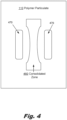
- FIG. 4 shows top view of a layer of polymer particulate (110) with both the consolidated zone (460) that will form the part and the heat reservoirs (470) according to one example of the principles described herein.
- FIG. 4 shows a consolidated zone (460) in the shape of a tensile test specimen (a.k.a. a "dogbone").
- Heat reservoirs (470) are located on either side of the narrower portion of the test specimen. The addition of the heat reservoirs (470) near the narrower portion of the consolidated zone (460) helps to equalize the cooling rate of the ends of the test specimen and the center of the test specimen. The extra heat provided by the heat reservoirs (470) also slows the cooling rate of the layer overall, for example, to keep the consolidated zone (460) and/or the heat reservoirs (470) above the solidification temperature (Ts) of the polymer making up the polymer particles.
- Ts solidification temperature
Landscapes
- Engineering & Computer Science (AREA)
- Chemical & Material Sciences (AREA)
- Materials Engineering (AREA)
- Manufacturing & Machinery (AREA)
- Optics & Photonics (AREA)
- Physics & Mathematics (AREA)
- Mechanical Engineering (AREA)
- Health & Medical Sciences (AREA)
- Toxicology (AREA)
- Plasma & Fusion (AREA)
- Ceramic Engineering (AREA)
- Civil Engineering (AREA)
- Composite Materials (AREA)
- Structural Engineering (AREA)
Claims (14)
- Système (100) de formation d'un objet à couches multiples, le système comprenant : un diffuseur destiné à former une couche de particules de polymère (110), les particules de polymère ayant une température de fusion (Tm) d'au moins 250 °C ;une tête d'éjection de fluide (130) configurée pour déposer sélectivement un premier agent de fusion sur une première partie de la couche et pour déposer sélectivement un second agent de fusion sur une deuxième partie de la couche et pour ne pas déposer d'agent de fusion sur une troisième partie de la couche ; etune source de chaleur (140) destinée à chauffer la première partie et la deuxième partie, la première partie faisant partie de l'objet à couches multiples et la deuxième partie ne faisant pas partie de l'objet à couches multiples, etdans lequel la deuxième partie réduit un gradient thermique entre la première partie et d'autres parties de la couche qui ne feront pas partie de l'objet formé, et augmente une température des particules de polymère dans une couche suivante.
- Système (100) selon la revendication 1, dans lequel le premier agent de fusion est appliqué à une première densité sur la première partie de la couche et le second agent de fusion est appliqué à une seconde densité sur la deuxième partie de la couche.
- Système (100) selon la revendication 1, dans lequel la première partie de la couche présente une première densité du premier agent de fusion au niveau d'un bord de la partie et une seconde densité du premier agent de fusion au niveau d'un centre de la partie.
- Système (100) selon la revendication 1, dans lequel le premier agent de fusion et le second agent de fusion comprennent un matériau fonctionnel partagé.
- Système (100) selon la revendication 1, dans lequel la source de chaleur applique simultanément de la chaleur à la première partie, à la deuxième partie et à la troisième partie.
- Système (100) selon la revendication 1, dans lequel la source de chaleur applique un rayonnement uniforme à la première partie, à la deuxième partie et à la troisième partie de la couche.
- Système (100) selon la revendication 1, dans lequel la première partie fusionne en raison d'une application de chaleur par la source de chaleur et la deuxième partie ne fond pas en raison d'une application de chaleur par la source de chaleur.
- Système (100) selon la revendication 1, comprenant :
un chauffe-lit (250) destiné à chauffer une zone de formation du système jusqu'à une température inférieure de plus de 10 degrés centigrades à la température de fusion des particules de polymère. - Système (100) selon la revendication 8, dans lequel la deuxième partie est maintenue supérieure à la température de solidification jusqu'à ce que la couche supérieure contenant une partie de solidification soit recouverte d'une nouvelle couche de particules de polymère.
- Système (100) selon la revendication 8, dans lequel le polymère formant les particules de polymère est un polymère semi-cristallin.
- Système (100) selon la revendication 10, dans lequel une surface supérieure de la couche supérieure de particules de polymère avant une application sélective de l'agent de fusion a une température d'une température de solidification (Ts) à une température de fusion (Tm).
- Procédé (300) de formation d'un objet à couches multiples à l'aide d'un polymère à température de fusion (Tm), le procédé comprenant :tout en maintenant une zone de lit à au moins 10 degrés centigrades en dessous de la température de fusion (Tm), le chauffage (390) d'une couche supérieure de particules de polymère d'un objet à couches multiples à une première température, la première température étant supérieure à une température à laquelle les particules de polymère deviennent suffisamment collantes pour résister à un déplacement d'un agent déposé ; etpendant qu'une surface supérieure de la couche supérieure est à la première température, l'application sélective d'un premier agent de fusion à la surface supérieure sur une première partie de la couche supérieure et l'application sélective d'un second agent de fusion sur une deuxième partie de la couche supérieure à l'aide d'une tête d'éjection de fluide et ne pas déposer d'agent de fusion sur une troisième partie de la couche,dans lequel la première partie fait partie de l'objet à couches multiples et la deuxième partie ne fait pas partie de l'objet à couches multiples ; etdans lequel la deuxième partie réduit un gradient thermique entre la première partie et d'autres parties de la couche qui ne feront pas partie de l'objet formé, et augmente une température des particules de polymère dans une couche suivante.
- Procédé (300) selon la revendication 12, comprenant le chauffage d'une partie de la couche supérieure à l'aide d'un rayonnement absorbé par l'agent de fusion appliqué sélectivement.
- Procédé (300) selon la revendication 13, comprenant en outre : la formation d'une nouvelle couche supérieure sur la couche supérieure ; et
la répétition du chauffage, de l'application sélective et de la formation afin de construire un objet solidifié à couches multiples pendant que la température du lit reste au moins 10 degrés centigrades en dessous de la température de fusion (Tm).
Applications Claiming Priority (1)
| Application Number | Priority Date | Filing Date | Title |
|---|---|---|---|
| PCT/US2017/028951 WO2018194679A1 (fr) | 2017-04-21 | 2017-04-21 | Formation d'objets en 3d à l'aide de polymères à température de fusion élevée |
Publications (3)
| Publication Number | Publication Date |
|---|---|
| EP3551425A1 EP3551425A1 (fr) | 2019-10-16 |
| EP3551425A4 EP3551425A4 (fr) | 2020-08-12 |
| EP3551425B1 true EP3551425B1 (fr) | 2023-12-20 |
Family
ID=63856048
Family Applications (1)
| Application Number | Title | Priority Date | Filing Date |
|---|---|---|---|
| EP17906582.6A Active EP3551425B1 (fr) | 2017-04-21 | 2017-04-21 | Formation d'objets en 3d à l'aide de polymères à température de fusion élevée |
Country Status (7)
| Country | Link |
|---|---|
| US (2) | US11413815B2 (fr) |
| EP (1) | EP3551425B1 (fr) |
| JP (1) | JP6832438B2 (fr) |
| KR (1) | KR102212911B1 (fr) |
| CN (1) | CN110430987B (fr) |
| BR (1) | BR112019017354B1 (fr) |
| WO (1) | WO2018194679A1 (fr) |
Families Citing this family (1)
| Publication number | Priority date | Publication date | Assignee | Title |
|---|---|---|---|---|
| WO2020204911A1 (fr) * | 2019-04-02 | 2020-10-08 | Hewlett-Packard Development Company, L.P. | Détermination de la température de fusion pour la génération d'objets 3d |
Family Cites Families (22)
| Publication number | Priority date | Publication date | Assignee | Title |
|---|---|---|---|---|
| JPH11513328A (ja) * | 1995-09-27 | 1999-11-16 | スリーディー システムズ インコーポレーテッド | 選択積層造形システムにおけるデータ操作およびシステム制御の方法および装置 |
| JPH09207228A (ja) | 1996-02-06 | 1997-08-12 | Toshiba Corp | 光造形装置 |
| US6019814A (en) | 1997-11-25 | 2000-02-01 | Xerox Corporation | Method of manufacturing 3D parts using a sacrificial material |
| US20070241482A1 (en) * | 2006-04-06 | 2007-10-18 | Z Corporation | Production of three-dimensional objects by use of electromagnetic radiation |
| US20100028645A1 (en) | 2008-08-04 | 2010-02-04 | Michael Maguire | Adaptive supports for green state articles and methods of processing thereof |
| RU2015131619A (ru) * | 2013-01-31 | 2017-03-10 | Сименс Энерджи, Инк. | Локализованный ремонт компонента из суперсплава |
| EP3094469B1 (fr) | 2014-01-16 | 2019-11-13 | Hewlett-Packard Development Company, L.P. | Génération d'un objet tridimensionnel |
| CN105939837B (zh) | 2014-01-16 | 2019-05-10 | 惠普发展公司,有限责任合伙企业 | 对用于增材制造系统的切片数据进行处理 |
| JP2015139977A (ja) * | 2014-01-30 | 2015-08-03 | セイコーエプソン株式会社 | 三次元造形物の製造方法および三次元造形物 |
| US10434708B2 (en) * | 2014-04-30 | 2019-10-08 | Hewlett-Packard Development Company, L.P. | Three-dimensional (3D) printing method |
| WO2016053248A1 (fr) | 2014-09-29 | 2016-04-07 | Hewlett-Packard Development Company, L.P. | Agent de coalescence pour impression en trois dimensions (3d) |
| US10301490B2 (en) * | 2014-09-29 | 2019-05-28 | Hewlett-Packard Development Company, L.P. | Three-dimensional (3D) printing system |
| US11254068B2 (en) * | 2014-10-29 | 2022-02-22 | Hewlett-Packard Development Company, L.P. | Three-dimensional (3D) printing method |
| US10800153B2 (en) * | 2014-11-20 | 2020-10-13 | Hewlett-Packard Development Company, L.P. | Generating three-dimensional objects |
| US20160167089A1 (en) | 2014-12-11 | 2016-06-16 | Palo Alto Research Center Incorporation | Forming sacrificial structures using phase-change materials that sublimate |
| WO2016115046A1 (fr) | 2015-01-12 | 2016-07-21 | Polyone Corporation | Matériau support pour l'impression 3d de composés polymères |
| KR101980466B1 (ko) * | 2015-03-05 | 2019-05-20 | 휴렛-팩커드 디벨롭먼트 컴퍼니, 엘.피. | 삼차원 물체 생성 기법 |
| US9694423B2 (en) * | 2015-04-09 | 2017-07-04 | Siemens Energy, Inc. | Laser additive manufacturing using filler material suspended in a liquid carrier |
| CN107206675A (zh) * | 2015-04-30 | 2017-09-26 | 惠普发展公司有限责任合伙企业 | 打印多结构3d物体 |
| US10807305B2 (en) | 2015-06-02 | 2020-10-20 | Hewlett-Packard Development Company, L.P. | Sacrificial objects based on a temperature threshold |
| EP3261820B1 (fr) * | 2015-07-23 | 2021-09-22 | Hewlett-Packard Development Company, L.P. | Procédé d'impression en trois dimensions (3d) |
| CN107530968A (zh) | 2015-07-30 | 2018-01-02 | 惠普发展公司有限责任合伙企业 | 用于3d打印的受控加热 |
-
2017
- 2017-04-21 BR BR112019017354-4A patent/BR112019017354B1/pt active IP Right Grant
- 2017-04-21 EP EP17906582.6A patent/EP3551425B1/fr active Active
- 2017-04-21 KR KR1020197024027A patent/KR102212911B1/ko active Active
- 2017-04-21 US US16/076,338 patent/US11413815B2/en active Active
- 2017-04-21 WO PCT/US2017/028951 patent/WO2018194679A1/fr not_active Ceased
- 2017-04-21 JP JP2019539841A patent/JP6832438B2/ja active Active
- 2017-04-21 CN CN201780086685.8A patent/CN110430987B/zh active Active
-
2022
- 2022-05-25 US US17/824,197 patent/US11904537B2/en active Active
Also Published As
| Publication number | Publication date |
|---|---|
| CN110430987A (zh) | 2019-11-08 |
| KR20190103404A (ko) | 2019-09-04 |
| US20210197454A1 (en) | 2021-07-01 |
| US11413815B2 (en) | 2022-08-16 |
| US20220281165A1 (en) | 2022-09-08 |
| JP2020504040A (ja) | 2020-02-06 |
| CN110430987B (zh) | 2021-11-16 |
| WO2018194679A1 (fr) | 2018-10-25 |
| EP3551425A4 (fr) | 2020-08-12 |
| EP3551425A1 (fr) | 2019-10-16 |
| BR112019017354B1 (pt) | 2022-11-08 |
| JP6832438B2 (ja) | 2021-02-24 |
| US11904537B2 (en) | 2024-02-20 |
| KR102212911B1 (ko) | 2021-02-05 |
| BR112019017354A2 (pt) | 2020-03-31 |
Similar Documents
| Publication | Publication Date | Title |
|---|---|---|
| CN111356738B (zh) | 用于三维打印的抗聚结剂 | |
| EP3230383B1 (fr) | Agent de détaillage pour impression en trois dimensions (3d) | |
| JP6669985B2 (ja) | 三次元造形物の製造方法 | |
| CN105916663B (zh) | 产生三维对象 | |
| US20140252685A1 (en) | Powder Bed Fusion Systems, Apparatus, and Processes for Multi-Material Part Production | |
| US11541568B2 (en) | Three-dimensional (3D) printing with a detailing agent fluid and a liquid functional material | |
| KR20170097055A (ko) | 적층에 의한 3d 형상 물품의 제조 방법 및 장치 | |
| JP2018537699A (ja) | プリントされた3次元構造物の表面特性の制御 | |
| US10723068B2 (en) | Additive manufacturing by selective liquid cooling | |
| CN110366465B (zh) | 三维造型物制造用组合物、三维造型物的制造方法以及三维造型物制造装置 | |
| US11904537B2 (en) | 3D forming objects using high melting temperature polymers | |
| CN108602265A (zh) | 具有调整的冷却剂液滴的3d打印机 | |
| CN110869192B (zh) | 用于制造三维物体的装置和方法以及三维打印机 | |
| US11007712B2 (en) | Three-dimensional (3D) printing with epoxy resin | |
| WO2016143334A1 (fr) | Procédé et appareil de fabrication de corps tridimensionnel | |
| EP3673414B1 (fr) | Fabrication additive par refroidissement sélectif d'un liquide | |
| US20250001680A1 (en) | Method and system for generating a three-dimensional object with edge definition | |
| CN115666822A (zh) | 逐层溶剂蒸发 | |
| EP3558639A1 (fr) | Fabrication additive | |
| EP3551366B1 (fr) | Réduction des contraintes dans des couches métalliques | |
| US11766826B2 (en) | Reducing stresses in metal layers | |
| JP6730412B2 (ja) | 3次元物体の生成 | |
| US12502837B2 (en) | Printing with multiple carriages | |
| EP4065346B1 (fr) | Fabrication additive présentant des distributions de propriétés uniformes | |
| CN117098648A (zh) | 用于三维打印的阿伏苯宗熔合剂 |
Legal Events
| Date | Code | Title | Description |
|---|---|---|---|
| STAA | Information on the status of an ep patent application or granted ep patent |
Free format text: STATUS: THE INTERNATIONAL PUBLICATION HAS BEEN MADE |
|
| PUAI | Public reference made under article 153(3) epc to a published international application that has entered the european phase |
Free format text: ORIGINAL CODE: 0009012 |
|
| STAA | Information on the status of an ep patent application or granted ep patent |
Free format text: STATUS: REQUEST FOR EXAMINATION WAS MADE |
|
| 17P | Request for examination filed |
Effective date: 20190708 |
|
| AK | Designated contracting states |
Kind code of ref document: A1 Designated state(s): AL AT BE BG CH CY CZ DE DK EE ES FI FR GB GR HR HU IE IS IT LI LT LU LV MC MK MT NL NO PL PT RO RS SE SI SK SM TR |
|
| AX | Request for extension of the european patent |
Extension state: BA ME |
|
| REG | Reference to a national code |
Ref country code: DE Free format text: PREVIOUS MAIN CLASS: B29C0064100000 Ref country code: DE Ref legal event code: R079 Ref document number: 602017077805 Country of ref document: DE Free format text: PREVIOUS MAIN CLASS: B29C0064100000 Ipc: B29C0064165000 |
|
| DAV | Request for validation of the european patent (deleted) | ||
| DAX | Request for extension of the european patent (deleted) | ||
| A4 | Supplementary search report drawn up and despatched |
Effective date: 20200710 |
|
| RIC1 | Information provided on ipc code assigned before grant |
Ipc: B33Y 30/00 20150101ALI20200706BHEP Ipc: B33Y 10/00 20150101ALI20200706BHEP Ipc: B33Y 70/00 20200101ALI20200706BHEP Ipc: B29C 64/165 20170101AFI20200706BHEP Ipc: B29C 64/295 20170101ALI20200706BHEP |
|
| STAA | Information on the status of an ep patent application or granted ep patent |
Free format text: STATUS: EXAMINATION IS IN PROGRESS |
|
| 17Q | First examination report despatched |
Effective date: 20220506 |
|
| GRAP | Despatch of communication of intention to grant a patent |
Free format text: ORIGINAL CODE: EPIDOSNIGR1 |
|
| STAA | Information on the status of an ep patent application or granted ep patent |
Free format text: STATUS: GRANT OF PATENT IS INTENDED |
|
| INTG | Intention to grant announced |
Effective date: 20221116 |
|
| GRAJ | Information related to disapproval of communication of intention to grant by the applicant or resumption of examination proceedings by the epo deleted |
Free format text: ORIGINAL CODE: EPIDOSDIGR1 |
|
| STAA | Information on the status of an ep patent application or granted ep patent |
Free format text: STATUS: EXAMINATION IS IN PROGRESS |
|
| INTC | Intention to grant announced (deleted) | ||
| GRAP | Despatch of communication of intention to grant a patent |
Free format text: ORIGINAL CODE: EPIDOSNIGR1 |
|
| STAA | Information on the status of an ep patent application or granted ep patent |
Free format text: STATUS: GRANT OF PATENT IS INTENDED |
|
| INTG | Intention to grant announced |
Effective date: 20230908 |
|
| GRAS | Grant fee paid |
Free format text: ORIGINAL CODE: EPIDOSNIGR3 |
|
| GRAA | (expected) grant |
Free format text: ORIGINAL CODE: 0009210 |
|
| STAA | Information on the status of an ep patent application or granted ep patent |
Free format text: STATUS: THE PATENT HAS BEEN GRANTED |
|
| AK | Designated contracting states |
Kind code of ref document: B1 Designated state(s): AL AT BE BG CH CY CZ DE DK EE ES FI FR GB GR HR HU IE IS IT LI LT LU LV MC MK MT NL NO PL PT RO RS SE SI SK SM TR |
|
| REG | Reference to a national code |
Ref country code: GB Ref legal event code: FG4D |
|
| REG | Reference to a national code |
Ref country code: CH Ref legal event code: EP |
|
| REG | Reference to a national code |
Ref country code: DE Ref legal event code: R096 Ref document number: 602017077805 Country of ref document: DE |
|
| REG | Reference to a national code |
Ref country code: IE Ref legal event code: FG4D |
|
| PG25 | Lapsed in a contracting state [announced via postgrant information from national office to epo] |
Ref country code: GR Free format text: LAPSE BECAUSE OF FAILURE TO SUBMIT A TRANSLATION OF THE DESCRIPTION OR TO PAY THE FEE WITHIN THE PRESCRIBED TIME-LIMIT Effective date: 20240321 |
|
| REG | Reference to a national code |
Ref country code: LT Ref legal event code: MG9D |
|
| PG25 | Lapsed in a contracting state [announced via postgrant information from national office to epo] |
Ref country code: LT Free format text: LAPSE BECAUSE OF FAILURE TO SUBMIT A TRANSLATION OF THE DESCRIPTION OR TO PAY THE FEE WITHIN THE PRESCRIBED TIME-LIMIT Effective date: 20231220 |
|
| REG | Reference to a national code |
Ref country code: NL Ref legal event code: MP Effective date: 20231220 |
|
| PG25 | Lapsed in a contracting state [announced via postgrant information from national office to epo] |
Ref country code: ES Free format text: LAPSE BECAUSE OF FAILURE TO SUBMIT A TRANSLATION OF THE DESCRIPTION OR TO PAY THE FEE WITHIN THE PRESCRIBED TIME-LIMIT Effective date: 20231220 |
|
| PG25 | Lapsed in a contracting state [announced via postgrant information from national office to epo] |
Ref country code: LT Free format text: LAPSE BECAUSE OF FAILURE TO SUBMIT A TRANSLATION OF THE DESCRIPTION OR TO PAY THE FEE WITHIN THE PRESCRIBED TIME-LIMIT Effective date: 20231220 Ref country code: GR Free format text: LAPSE BECAUSE OF FAILURE TO SUBMIT A TRANSLATION OF THE DESCRIPTION OR TO PAY THE FEE WITHIN THE PRESCRIBED TIME-LIMIT Effective date: 20240321 Ref country code: FI Free format text: LAPSE BECAUSE OF FAILURE TO SUBMIT A TRANSLATION OF THE DESCRIPTION OR TO PAY THE FEE WITHIN THE PRESCRIBED TIME-LIMIT Effective date: 20231220 Ref country code: ES Free format text: LAPSE BECAUSE OF FAILURE TO SUBMIT A TRANSLATION OF THE DESCRIPTION OR TO PAY THE FEE WITHIN THE PRESCRIBED TIME-LIMIT Effective date: 20231220 Ref country code: BG Free format text: LAPSE BECAUSE OF FAILURE TO SUBMIT A TRANSLATION OF THE DESCRIPTION OR TO PAY THE FEE WITHIN THE PRESCRIBED TIME-LIMIT Effective date: 20240320 |
|
| REG | Reference to a national code |
Ref country code: AT Ref legal event code: MK05 Ref document number: 1642125 Country of ref document: AT Kind code of ref document: T Effective date: 20231220 |
|
| PG25 | Lapsed in a contracting state [announced via postgrant information from national office to epo] |
Ref country code: NL Free format text: LAPSE BECAUSE OF FAILURE TO SUBMIT A TRANSLATION OF THE DESCRIPTION OR TO PAY THE FEE WITHIN THE PRESCRIBED TIME-LIMIT Effective date: 20231220 |
|
| PG25 | Lapsed in a contracting state [announced via postgrant information from national office to epo] |
Ref country code: SE Free format text: LAPSE BECAUSE OF FAILURE TO SUBMIT A TRANSLATION OF THE DESCRIPTION OR TO PAY THE FEE WITHIN THE PRESCRIBED TIME-LIMIT Effective date: 20231220 Ref country code: RS Free format text: LAPSE BECAUSE OF FAILURE TO SUBMIT A TRANSLATION OF THE DESCRIPTION OR TO PAY THE FEE WITHIN THE PRESCRIBED TIME-LIMIT Effective date: 20231220 Ref country code: NO Free format text: LAPSE BECAUSE OF FAILURE TO SUBMIT A TRANSLATION OF THE DESCRIPTION OR TO PAY THE FEE WITHIN THE PRESCRIBED TIME-LIMIT Effective date: 20240320 Ref country code: NL Free format text: LAPSE BECAUSE OF FAILURE TO SUBMIT A TRANSLATION OF THE DESCRIPTION OR TO PAY THE FEE WITHIN THE PRESCRIBED TIME-LIMIT Effective date: 20231220 Ref country code: LV Free format text: LAPSE BECAUSE OF FAILURE TO SUBMIT A TRANSLATION OF THE DESCRIPTION OR TO PAY THE FEE WITHIN THE PRESCRIBED TIME-LIMIT Effective date: 20231220 Ref country code: HR Free format text: LAPSE BECAUSE OF FAILURE TO SUBMIT A TRANSLATION OF THE DESCRIPTION OR TO PAY THE FEE WITHIN THE PRESCRIBED TIME-LIMIT Effective date: 20231220 |
|
| PG25 | Lapsed in a contracting state [announced via postgrant information from national office to epo] |
Ref country code: IS Free format text: LAPSE BECAUSE OF FAILURE TO SUBMIT A TRANSLATION OF THE DESCRIPTION OR TO PAY THE FEE WITHIN THE PRESCRIBED TIME-LIMIT Effective date: 20240420 |
|
| PG25 | Lapsed in a contracting state [announced via postgrant information from national office to epo] |
Ref country code: AT Free format text: LAPSE BECAUSE OF FAILURE TO SUBMIT A TRANSLATION OF THE DESCRIPTION OR TO PAY THE FEE WITHIN THE PRESCRIBED TIME-LIMIT Effective date: 20231220 Ref country code: CZ Free format text: LAPSE BECAUSE OF FAILURE TO SUBMIT A TRANSLATION OF THE DESCRIPTION OR TO PAY THE FEE WITHIN THE PRESCRIBED TIME-LIMIT Effective date: 20231220 |
|
| PG25 | Lapsed in a contracting state [announced via postgrant information from national office to epo] |
Ref country code: SK Free format text: LAPSE BECAUSE OF FAILURE TO SUBMIT A TRANSLATION OF THE DESCRIPTION OR TO PAY THE FEE WITHIN THE PRESCRIBED TIME-LIMIT Effective date: 20231220 |
|
| PG25 | Lapsed in a contracting state [announced via postgrant information from national office to epo] |
Ref country code: SM Free format text: LAPSE BECAUSE OF FAILURE TO SUBMIT A TRANSLATION OF THE DESCRIPTION OR TO PAY THE FEE WITHIN THE PRESCRIBED TIME-LIMIT Effective date: 20231220 Ref country code: SK Free format text: LAPSE BECAUSE OF FAILURE TO SUBMIT A TRANSLATION OF THE DESCRIPTION OR TO PAY THE FEE WITHIN THE PRESCRIBED TIME-LIMIT Effective date: 20231220 Ref country code: RO Free format text: LAPSE BECAUSE OF FAILURE TO SUBMIT A TRANSLATION OF THE DESCRIPTION OR TO PAY THE FEE WITHIN THE PRESCRIBED TIME-LIMIT Effective date: 20231220 Ref country code: IT Free format text: LAPSE BECAUSE OF FAILURE TO SUBMIT A TRANSLATION OF THE DESCRIPTION OR TO PAY THE FEE WITHIN THE PRESCRIBED TIME-LIMIT Effective date: 20231220 Ref country code: IS Free format text: LAPSE BECAUSE OF FAILURE TO SUBMIT A TRANSLATION OF THE DESCRIPTION OR TO PAY THE FEE WITHIN THE PRESCRIBED TIME-LIMIT Effective date: 20240420 Ref country code: EE Free format text: LAPSE BECAUSE OF FAILURE TO SUBMIT A TRANSLATION OF THE DESCRIPTION OR TO PAY THE FEE WITHIN THE PRESCRIBED TIME-LIMIT Effective date: 20231220 Ref country code: CZ Free format text: LAPSE BECAUSE OF FAILURE TO SUBMIT A TRANSLATION OF THE DESCRIPTION OR TO PAY THE FEE WITHIN THE PRESCRIBED TIME-LIMIT Effective date: 20231220 Ref country code: AT Free format text: LAPSE BECAUSE OF FAILURE TO SUBMIT A TRANSLATION OF THE DESCRIPTION OR TO PAY THE FEE WITHIN THE PRESCRIBED TIME-LIMIT Effective date: 20231220 |
|
| PG25 | Lapsed in a contracting state [announced via postgrant information from national office to epo] |
Ref country code: PT Free format text: LAPSE BECAUSE OF FAILURE TO SUBMIT A TRANSLATION OF THE DESCRIPTION OR TO PAY THE FEE WITHIN THE PRESCRIBED TIME-LIMIT Effective date: 20240422 Ref country code: PL Free format text: LAPSE BECAUSE OF FAILURE TO SUBMIT A TRANSLATION OF THE DESCRIPTION OR TO PAY THE FEE WITHIN THE PRESCRIBED TIME-LIMIT Effective date: 20231220 |
|
| PG25 | Lapsed in a contracting state [announced via postgrant information from national office to epo] |
Ref country code: PT Free format text: LAPSE BECAUSE OF FAILURE TO SUBMIT A TRANSLATION OF THE DESCRIPTION OR TO PAY THE FEE WITHIN THE PRESCRIBED TIME-LIMIT Effective date: 20240422 Ref country code: PL Free format text: LAPSE BECAUSE OF FAILURE TO SUBMIT A TRANSLATION OF THE DESCRIPTION OR TO PAY THE FEE WITHIN THE PRESCRIBED TIME-LIMIT Effective date: 20231220 |
|
| REG | Reference to a national code |
Ref country code: DE Ref legal event code: R097 Ref document number: 602017077805 Country of ref document: DE |
|
| PG25 | Lapsed in a contracting state [announced via postgrant information from national office to epo] |
Ref country code: DK Free format text: LAPSE BECAUSE OF FAILURE TO SUBMIT A TRANSLATION OF THE DESCRIPTION OR TO PAY THE FEE WITHIN THE PRESCRIBED TIME-LIMIT Effective date: 20231220 |
|
| PLBE | No opposition filed within time limit |
Free format text: ORIGINAL CODE: 0009261 |
|
| STAA | Information on the status of an ep patent application or granted ep patent |
Free format text: STATUS: NO OPPOSITION FILED WITHIN TIME LIMIT |
|
| PG25 | Lapsed in a contracting state [announced via postgrant information from national office to epo] |
Ref country code: SI Free format text: LAPSE BECAUSE OF FAILURE TO SUBMIT A TRANSLATION OF THE DESCRIPTION OR TO PAY THE FEE WITHIN THE PRESCRIBED TIME-LIMIT Effective date: 20231220 |
|
| PG25 | Lapsed in a contracting state [announced via postgrant information from national office to epo] |
Ref country code: SI Free format text: LAPSE BECAUSE OF FAILURE TO SUBMIT A TRANSLATION OF THE DESCRIPTION OR TO PAY THE FEE WITHIN THE PRESCRIBED TIME-LIMIT Effective date: 20231220 Ref country code: DK Free format text: LAPSE BECAUSE OF FAILURE TO SUBMIT A TRANSLATION OF THE DESCRIPTION OR TO PAY THE FEE WITHIN THE PRESCRIBED TIME-LIMIT Effective date: 20231220 |
|
| PG25 | Lapsed in a contracting state [announced via postgrant information from national office to epo] |
Ref country code: MC Free format text: LAPSE BECAUSE OF FAILURE TO SUBMIT A TRANSLATION OF THE DESCRIPTION OR TO PAY THE FEE WITHIN THE PRESCRIBED TIME-LIMIT Effective date: 20231220 |
|
| 26N | No opposition filed |
Effective date: 20240923 |
|
| PG25 | Lapsed in a contracting state [announced via postgrant information from national office to epo] |
Ref country code: MC Free format text: LAPSE BECAUSE OF FAILURE TO SUBMIT A TRANSLATION OF THE DESCRIPTION OR TO PAY THE FEE WITHIN THE PRESCRIBED TIME-LIMIT Effective date: 20231220 |
|
| REG | Reference to a national code |
Ref country code: CH Ref legal event code: PL |
|
| PG25 | Lapsed in a contracting state [announced via postgrant information from national office to epo] |
Ref country code: LU Free format text: LAPSE BECAUSE OF NON-PAYMENT OF DUE FEES Effective date: 20240421 |
|
| REG | Reference to a national code |
Ref country code: BE Ref legal event code: MM Effective date: 20240430 |
|
| PG25 | Lapsed in a contracting state [announced via postgrant information from national office to epo] |
Ref country code: LU Free format text: LAPSE BECAUSE OF NON-PAYMENT OF DUE FEES Effective date: 20240421 |
|
| PG25 | Lapsed in a contracting state [announced via postgrant information from national office to epo] |
Ref country code: BE Free format text: LAPSE BECAUSE OF NON-PAYMENT OF DUE FEES Effective date: 20240430 |
|
| PG25 | Lapsed in a contracting state [announced via postgrant information from national office to epo] |
Ref country code: BE Free format text: LAPSE BECAUSE OF NON-PAYMENT OF DUE FEES Effective date: 20240430 Ref country code: CH Free format text: LAPSE BECAUSE OF NON-PAYMENT OF DUE FEES Effective date: 20240430 |
|
| PG25 | Lapsed in a contracting state [announced via postgrant information from national office to epo] |
Ref country code: IE Free format text: LAPSE BECAUSE OF NON-PAYMENT OF DUE FEES Effective date: 20240421 |
|
| REG | Reference to a national code |
Ref country code: DE Ref legal event code: R081 Ref document number: 602017077805 Country of ref document: DE Owner name: PERIDOT PRINT LLC, PALO ALTO, US Free format text: FORMER OWNER: HEWLETT-PACKARD DEVELOPMENT COMPANY, L.P., SPRING, TX, US Ref country code: GB Ref legal event code: 732E Free format text: REGISTERED BETWEEN 20250410 AND 20250416 |
|
| PGFP | Annual fee paid to national office [announced via postgrant information from national office to epo] |
Ref country code: DE Payment date: 20250319 Year of fee payment: 9 |
|
| PG25 | Lapsed in a contracting state [announced via postgrant information from national office to epo] |
Ref country code: CY Free format text: LAPSE BECAUSE OF FAILURE TO SUBMIT A TRANSLATION OF THE DESCRIPTION OR TO PAY THE FEE WITHIN THE PRESCRIBED TIME-LIMIT; INVALID AB INITIO Effective date: 20170421 |
|
| PG25 | Lapsed in a contracting state [announced via postgrant information from national office to epo] |
Ref country code: HU Free format text: LAPSE BECAUSE OF FAILURE TO SUBMIT A TRANSLATION OF THE DESCRIPTION OR TO PAY THE FEE WITHIN THE PRESCRIBED TIME-LIMIT; INVALID AB INITIO Effective date: 20170421 |
|
| PGFP | Annual fee paid to national office [announced via postgrant information from national office to epo] |
Ref country code: GB Payment date: 20260319 Year of fee payment: 10 |
|
| PGFP | Annual fee paid to national office [announced via postgrant information from national office to epo] |
Ref country code: FR Payment date: 20260319 Year of fee payment: 10 |