EP3552178B1 - Systèmes et procédés d'ajustement des courbes de traitement vidéo pour des images à grande gamme dynamique - Google Patents
Systèmes et procédés d'ajustement des courbes de traitement vidéo pour des images à grande gamme dynamique Download PDFInfo
- Publication number
- EP3552178B1 EP3552178B1 EP17818715.9A EP17818715A EP3552178B1 EP 3552178 B1 EP3552178 B1 EP 3552178B1 EP 17818715 A EP17818715 A EP 17818715A EP 3552178 B1 EP3552178 B1 EP 3552178B1
- Authority
- EP
- European Patent Office
- Prior art keywords
- curve
- original
- video
- adjustment
- mean
- Prior art date
- Legal status (The legal status is an assumption and is not a legal conclusion. Google has not performed a legal analysis and makes no representation as to the accuracy of the status listed.)
- Active
Links
Images


Classifications
-
- G—PHYSICS
- G06—COMPUTING OR CALCULATING; COUNTING
- G06T—IMAGE DATA PROCESSING OR GENERATION, IN GENERAL
- G06T5/00—Image enhancement or restoration
- G06T5/90—Dynamic range modification of images or parts thereof
- G06T5/92—Dynamic range modification of images or parts thereof based on global image properties
-
- G—PHYSICS
- G06—COMPUTING OR CALCULATING; COUNTING
- G06T—IMAGE DATA PROCESSING OR GENERATION, IN GENERAL
- G06T2207/00—Indexing scheme for image analysis or image enhancement
- G06T2207/10—Image acquisition modality
- G06T2207/10004—Still image; Photographic image
-
- G—PHYSICS
- G06—COMPUTING OR CALCULATING; COUNTING
- G06T—IMAGE DATA PROCESSING OR GENERATION, IN GENERAL
- G06T2207/00—Indexing scheme for image analysis or image enhancement
- G06T2207/10—Image acquisition modality
- G06T2207/10016—Video; Image sequence
-
- G—PHYSICS
- G06—COMPUTING OR CALCULATING; COUNTING
- G06T—IMAGE DATA PROCESSING OR GENERATION, IN GENERAL
- G06T2207/00—Indexing scheme for image analysis or image enhancement
- G06T2207/20—Special algorithmic details
- G06T2207/20172—Image enhancement details
- G06T2207/20208—High dynamic range [HDR] image processing
Definitions
- the present invention relates to High Dynamic Range Displays (HDR), and more particularly to HDR displays using dual modulation.
- HDR High Dynamic Range Displays
- the term 'dynamic range' may relate to a capability of the human visual system (HVS) to perceive a range of intensity (e.g., luminance, luma) in an image, e.g., from darkest grays (blacks) to brightest whites (highlights).
- HVS human visual system
- DR relates to a 'scene-referred' intensity.
- DR may also relate to the ability of a display device to adequately or approximately render an intensity range of a particular breadth. In this sense, DR relates to a 'display-referred' intensity.
- the term may be used in either sense, e.g. interchangeably.
- high dynamic range relates to a DR breadth that spans some 14-15 orders of magnitude of the human visual system (HVS).
- HVS human visual system
- EDR enhanced dynamic range
- VDR visual dynamic range
- EDR may individually or interchangeably relate to the DR that is perceivable within a scene or image by a human visual system (HVS) that includes eye movements, allowing for some light adaptation changes across the scene or image.
- EDR may relate to a DR that spans 5 to 6 orders of magnitude.
- HDR high dynamic range
- HDR displays and the technology behind them are marketed as DOLBY VISION TM by Dolby Laboratories Licensing Corporation., related to the assignee of the present invention.
- HDR displays now being constructed, may use a backlight comprising modulated light sources such as modulated LEDs. Such backlights are sometimes called IMLED (Individually Modulated Array of LED) backlights.
- IMLED Individually Modulated Array of LED
- the brightness of each LED is controlled by an 8-bit signal, so each LED has 256 brightness steps.
- a plurality of small regions are backlit in a modulated manner according to the local brightness and contrast in the scene being shown.
- n ⁇ 8 e.g., color 24-bit JPEG images
- images where n > 8 may be considered images of enhanced dynamic range.
- EDR and HDR images may also be stored and distributed using high-precision (e.g., 16-bit) floating-point formats, such as the OpenEXR file format developed by Industrial Light and Magic.
- a reference electro-optical transfer function (EOTF) for a given display characterizes the relationship between color values (e.g., luminance) of an input video signal to output screen color values (e.g., screen luminance) produced by the display.
- color values e.g., luminance
- screen color values e.g., screen luminance
- ITU Rec. ITU-R BT. 1886 "Reference electro-optical transfer function for flat panel displays used in HDTV studio production," (03/2011) defines the reference EOTF for flat panel displays based on measured characteristics of the Cathode Ray Tube (CRT). Given a video stream, information about its EOTF is typically embedded in the bit stream as metadata.
- Metadata relates to any auxiliary information that is transmitted as part of the coded bitstream and assists a decoder to render a decoded image.
- metadata may include, but are not limited to, color space or gamut information, reference display parameters, and auxiliary signal parameters, as those described herein.
- HDR lower dynamic range
- SDR standard dynamic range
- HDR content may be color graded and displayed on HDR displays that support higher dynamic ranges (e.g., from 1,000 nits to 5,000 nits or more).
- Such displays may be defined using alternative EOTFs that support high luminance capability (e.g., 0 to 10,000 nits).
- An example of such an EOTF is defined in SMPTE ST 2084:2014 "High Dynamic Range EOTF of Mastering Reference Displays".
- the methods of the present disclosure relate to any dynamic range higher than SDR.
- document US 2004/213 457 A1 describes an image processor that includes a coefficient holding device to hold correction coefficients of a correction curve that corresponds to the entire grayscale range or a portion of the grayscale range and includes one or more correction points and a combination portion that is formed of a combination of a plurality of specific curve pattern portions, a correction amount determination device to determine a correction amount based on statistical information of grayscale values of pixels in the image input data, and a correction device to correct the input image data by adding the product of the correction amount and the correction coefficients determined by the input image data to the input image data.
- Image data may be color graded, distributed and viewed on target displays. Mappings that preserve mid-range points and mid-range contrast may be applied to view the image data for color grading and to prepare the image data for display on a target display. The image data may be expanded to exploit the dynamic range of the target display without affecting mid-tone values.
- Tania Pouli et al. describe in their article on "Color Correction for Tone Reproduction", Color and Imaging Conference, 1 November 2013 (2013-11-01), pages 215-220 , a novel and fully automatic saturation correction technique, suitable for any tone reproduction operator.
- DMU display management unit
- the original curve is a luminance mapping curve, i.e. instructions for mapping the image data to luma values for rendering a final image on a display device.
- the adjustment curve (which may be represented by a lookup-table featuring multiple values) is based on a scaling factor representing an ambient illumination of a viewing environment and/or representing user preferences such that the original curve may represent the default mapping parameters that would be applied if neither ambient illumination nor user preferences were available.
- FIG. 1 depicts an example process of a video delivery pipeline (100) showing various stages from video capture to video content display.
- a sequence of video frames (102) is captured or generated using image generation block (105).
- Video frames (102) may be digitally captured (e.g. by a digital camera) or generated by a computer (e.g. using computer animation) to provide video data (107).
- video frames (102) may be captured on film by a film camera. The film is converted to a digital format to provide video data (107).
- a production phase (110) video data (107) is edited to provide a video production stream (112).
- Block (115) post-production editing may include adjusting or modifying colors or brightness in particular areas of an image to enhance the image quality or achieve a particular appearance for the image in accordance with the video creator's creative intent. This is sometimes called "color timing" or "color grading.”
- Other editing e.g. scene selection and sequencing, image cropping, addition of computer-generated visual special effects, etc.
- video images are viewed on a reference display (125).
- video data of final production (117) may be delivered to encoding block (120) for delivering downstream to decoding and playback devices such as television sets, set-top boxes, movie theaters, and the like.
- coding block (120) may include audio and video encoders, such as those defined by ATSC, DVB, DVD, Blu-Ray, and other delivery formats, to generate coded bit stream (122).
- the coded bit stream (122) is decoded by decoding unit (130) to generate a decoded signal (132) representing an identical or close approximation of signal (117).
- the receiver may be attached to a target display (140) which may have completely different characteristics than the reference display (125).
- a display management unit (DMU) (135) may be used to map the dynamic range of decoded signal (132) to the characteristics of the target display (140) by generating display-mapped signal (137).
- DMU display management unit
- the display management unit may be implemented external to the display or internal to the display system.
- the DMU comprises a processor and may comprise a computer readable memory, executing image processing algorithms as described herein - e.g., in the form of a set-top box, codec as is well known in the art.
- both systems and methods are disclosed to adjust various video curves according to tone, saturation, brightness and the like.
- the adjustments may be either accomplished automatically - or according to user preference and input.
- ambient corrections may be made to the video curves due to increased room illumination, screen reflectance - as well as for user preference adjustments to change, e.g., the average pixel luminance of an image, or to alter saturation.
- FIG. 2 is one embodiment of an application of adjusting an original image curve according to some adjustment parameter.
- this adjustment method may be executed as an adjustment module in a DMU at some point in the video pipeline.
- Method (200) calculates one or more adjustment curves (202) and calculates the original curve (204) and applies the adjustment curve to the original curve (206).
- an original curve may be derived from a number of sources - e.g., an image, a frame of video data, a scene in a video (e.g., multiple consecutive frames of video data) or the like.
- an original curve may be the processing that would happen irrespective of any adjustment curve.
- this original curve may be the display curve designed to tone map an image from one display to another.
- This original curve may be input and/or otherwise received by a suitable module and/or processing component in the video pipeline. It will also be appreciated that, while the present application talks of "original curve”, the “original curve” may also be presented as a sequence of numbers to the suitable module for further processing - and may or may not literally be a curve.
- FIG. 3 depicts one example of the application of the adjustment module of FIG. 2 .
- the original data is calculated as curve 302 and an adjustment curve is calculated as curve 304.
- the resulting, combined curve is shown as curve 306.
- the original curve may be calculated according to one or more parameters - e.g., saturation, tone mapping, 1:1 mapping and the like.
- the adjustment curve may be received, derived and/or calculated from one or more image parameters (e.g., brightness, saturation, contrast or the like) and may or may not literally be presented as a curve (e.g., the adjustment curve may be presented as a derived sequence of numbers to a suitable module).
- the adjustment curve may be applied to additionally process the image beyond the parameters specified in the "original curve".
- this curve allows for a user preference to be applied during tone mapping (tone mapping is the "original curve”). This tends to increase efficiency and color accuracy.
- the application of adjustment curve to an original curve may be performed by one or more of the linear or nonlinear operations (e.g., addition, subtraction, multiplication, division, convolution etc.).
- the resulting curve may be presented by the suitable module, DMU or the like to the display for final rendering of an image.
- the final resulting curve may or may not literally be a curve - but presented as a derived sequence of numbers to a suitable module, DMU, or display for final rendering.
- adjustment curve could be applied to the input image, as follows:
- the image adjustment may be applied using a one-dimensional function, e.g., where the single variable is the surround luminance of the display. Such a one-dimensional function may be calculated first, and a scalar is applied.
- the Table 1 is one embodiment
- Step 1 Calculate the adjustment curve:
- the original curve may be defined by previous mapping or tone curves applied to an image. If no previous mapping or curve is available, or if none is desired, a 1:1 curve may be used as the original curve.
- a saturation adjustment curve that is not encompassed by the claims may be applied/changed based on user preference.
- the adjustment curve may be applied to any form of saturation component (e.g., RGB independently or a chroma component C T C P of IC T C P ).
- saturation component e.g., RGB independently or a chroma component C T C P of IC T C P
- the saturation of each pixel may be modified according to its intensity using the following equation (e.g., as in the method noted in FIG. 2 and as may be substituted in Table 1 above):
- f s (x) SaturationScaleFunction
- C ′ T C T ⁇ f S I
- C ′ P C P ⁇ f S I
- C T and Cp are the chroma components of the source image
- C' T and C' P are the chroma components of the target image, in IC T C P or IPT color space as described in Rec. ITU-R BT. 2100, "Image parameter values for high dynamic range television for use in production and international programme exchange," July 2016.
- a brightness adjustment curve may be employed. Such a curve may be modified to change the brightness of the image and may be applied to any form of brightness component (e.g., RGB independently or a luminance component such as I of IC T C P ).
- the adjustment curve may be applied during the time that the DMU is applying a display tone mapping and may be applied directly to the original tone mapping curve.
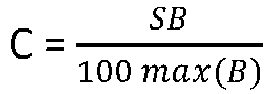
- the minimum, mean and maximum of the image is used to define a Gaussian-like function.
- the variables a, b, and c may be altered independently based on user preference.
- the Gaussian curve may also be skewed based on the mean of the image so as to avoid brightening noise in an image.
- FIG. 4 depicts this embodiment - as original curve 402 is adjusted by curve 404, to produce a resulting, combined curve 406. It will be noted that the min, mean and max values are as shown in curve 404 and the resulting values as mapped in curve 406.
- the same processing concepts may apply - e.g., there is some original tone mapping and some contrast adjustment curve may be applied. It will be appreciated that a suitable contrast adjustment curve may be derived automatically (e.g., with ambient data, possibly recorded by a sensor), or may be user-supplied.
- FIG. 5 depicts one non claimed embodiment of a contrast adjustment curve being applied to original curve 502.
- the contrast curve may look like the negative of the derivative of the brightness curve (e.g., the derivative of a Gaussian). In one non claimed embodiment, this may allow to increase the slope of the curve around the midpoint (as noted) -- but without changing the brightness at the midpoint in resulting curve 506. Increasing the slope may increase the contrast in a way that doesn't affect the brightness. By selecting the width and center of the adjustment curve, it is possible to optimize the effect on the image.
- FIGS. 6 through 11 depict a number of adjustment processing examples that may be applied to an exemplary original curve 602. It will be appreciated that although the original curve 602 (and other original curves depicted herein) may be shown as a 1:1 mapping, the original curve may assume may other forms and/or mappings.
- Curves 702 and 802 depict exemplary brightness and contrast adjustment curves, respectively.
- Curves 902, 1002 and 1102 depict final curves, resulting from brightness adjustment, contrast adjustment and a combination of both brightness and contrast, respectively.
- a computer program product which is a storage medium (media) having instructions stored thereon/in which can be used to control, or cause, a computer to perform any of the processes described herein.
- the storage medium can include, but is not limited to, any type of disk including floppy disks, mini disks (MD's), optical discs, DVD, HD-DVD, Blue-ray, CD-ROMS, CD or DVD RW+/-, micro-drive, and magneto-optical disks, ROMs, RAMs, EPROMs, EEPROMs, DRAMs, VRAMs, flash memory devices (including flash cards, memory sticks), magnetic or optical cards, SIM cards, MEMS, nanosystems (including molecular memory ICs), RAID devices, remote data storage/archive/warehousing, or any type of media or device suitable for storing instructions and/or data.
- any one of the computer readable medium there may be included software for controlling both the hardware of the general purpose/specialized computer or microprocessor, and for enabling the computer or microprocessor to interact with a human user or other mechanism utilizing the results of the processes described herein.
- software may include, but is not limited to, device drivers, operating systems, and user applications.
- computer readable media may further include software for performing the processes described herein.
- Included in the programming (software) of the general/specialized computer or microprocessor may be software modules for implementing the teachings of the present disclosure, including, but not limited to, calculating pixel/sub-pixel blurring of a local dimming panel, calculating color correction or characterizations, preparing image signals and applying them to driver and/or other electronics to energize backlights, panels, or other devices in a display, calculating luminance values, interpolating, averaging, or adjusting luminance based on any of the factors described herein, including a desired luminance for a pixel or region of an image to be displayed, and the display, storage, or communication of results according to the processes described herein.
- the present invention may suitably comprise, consist of, or consist essentially of, any of element (the various parts or features of the invention) as described in the appended claims. Obviously, numerous modifications and variations of the present invention are possible in light of the above teachings. It is therefore to be understood that within the scope of the appended claims, the invention may be practiced otherwise than as specifically described herein.
Landscapes
- Physics & Mathematics (AREA)
- General Physics & Mathematics (AREA)
- Engineering & Computer Science (AREA)
- Theoretical Computer Science (AREA)
- Image Processing (AREA)
- Controls And Circuits For Display Device (AREA)
Claims (8)
- Procédé mis en œuvre par ordinateur (200) pour appliquer un ajustement à une courbe de mappage de luminance initiale (302, 402, 602) dérivée d'un jeu de données d'image d'entrée, comprenant :la réception d'un jeu de données d'image d'entrée à ajuster;le calcul (204) d'une courbe de mappage de luminance initiale (302, 402, 602) à partir du jeu de données d'image d'entrée ;la réception (202) d'une courbe d'ajustement (304, 404, 702), la courbe d'ajustement (304, 404, 702) étant basée sur un facteur de mise à l'échelle, le facteur de mise à l'échelle représentant un éclairage ambiant d'un environnement de visualisation et/ou représentant des préférences d'utilisateur, dans lequel les préférences d'utilisateur comprennent des préférences d'utilisateur relatives à la luminosité de l'image finale ; etl'application (206) de la courbe d'ajustement (304. 404, 702) à la courbe de mappage initiale (302, 402, 602) pour produire une courbe de mappage résultante (306, 406, 902) utilisée pour le rendu d'une image finale sur la base de la courbe résultante (306,406,902), dans lequel la courbe d'ajustement (304,404, 702) est calculée en tant que l'un de ce qui suit :(i)
 (ii)
(ii) (iii) le négatif de la dérivée de
- Procédé (200) selon la revendication 1, dans lequel le jeu de données d'image d'entrée comprend l'une parmi une image, une trame de données vidéo et une scène dans une vidéo à afficher par un dispositif d'affichage dans l'environnement de visualisation, dans lequel la scène dans la vidéo comprend de multiples trames consécutives de données vidéo.
- Procédé (200) selon la revendication 1 ou 2, dans lequel le calcul (204) de la courbe de mappage de luminance initiale (302, 402, 602) à partir du jeu de données d'image d'entrée comprend en outre le calcul de la courbe de mappage de luminance initiale (302, 402, 602) à partir d'un ou plusieurs paramètres de mappage de tons.
- Procédé (200) selon l'une quelconque des revendications 1 à 3, dans lequel l'application (206) de la courbe d'ajustement (304. 404, 702) à une courbe de mappage initiale (302, 402, 602) comprend l'application d'une opération à ladite courbe initiale (302, 402, 602) en employant la courbe d'ajustement (304. 404, 702), dans lequel facultativement l'opération comprend l'une parmi une addition, une soustraction, une multiplication, une division et une convolution.
- Procédé (200) selon l'une quelconque des revendications 1 à 4, dans lequel le procédé comprend en outre :
l'envoi de la courbe résultante (306, 406, 902) à un affichage (140) pour le rendu d'une image finale sur la base de la courbe résultante (306, 406, 902). - Unité de gestion d'affichage, DMU, (135) comprenant un processeur qui, à la réception d'un jeu de données d'image d'entrée, traite une courbe de mappage de luminance initiale (302, 402, 602) en fonction de ce qui suit :le calcul (204) d'une courbe de mappage de luminance initiale (302, 402, 602) à partir du jeu de données d'image d'entrée ;la réception (202) d'une courbe d'ajustement (304, 404, 702), la courbe d'ajustement étant basée sur un facteur de mise à l'échelle, le facteur de mise à l'échelle représentant un éclairage ambiant d'un environnement de visualisation et/ou représentant des préférences d'utilisateur, dans laquelle les préférences d'utilisateur comprennent des préférences d'utilisateur relatives à la luminosité de l'image finale ; etl'application (206) de la courbe d'ajustement (304. 404, 702) à la courbe de mappage initiale (302, 402, 602) pour produire une courbe résultante (306, 406, 902) pour le rendu d'une image finale sur la base de la courbe résultante (306, 406, 902),dans laquelle la courbe d'ajustement (304, 404, 702) est calculée en tant que l'un de ce qui suit :(i)
 (ii)
(ii) (iii) le négatif de la dérivée de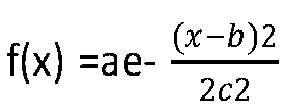
- DMU (135) selon la revendication 6, dans laquelle l'application (206) de la courbe d'ajustement (304. 404, 702) à la courbe de mappage initiale (302, 402, 602) comprend l'application d'une opération à ladite courbe initiale (302, 402, 602) en employant la courbe d'ajustement (304. 404, 702), dans laquelle facultativement l'opération comprend l'une parmi une addition, une soustraction, une multiplication, une division et une convolution.
- DMU (135) selon la revendication 6 ou 7, dans laquelle la DMU (135) envoie la courbe résultante (306, 406, 902) à un affichage (140) pour le rendu d'une image finale sur la base de la courbe résultante (306, 406, 902).
Applications Claiming Priority (3)
| Application Number | Priority Date | Filing Date | Title |
|---|---|---|---|
| US201662432912P | 2016-12-12 | 2016-12-12 | |
| EP17152419 | 2017-01-20 | ||
| PCT/US2017/065114 WO2018111682A1 (fr) | 2016-12-12 | 2017-12-07 | Systèmes et procédés permettant de régler des courbes de traitement vidéo pour des images à plage dynamique élevée |
Publications (2)
| Publication Number | Publication Date |
|---|---|
| EP3552178A1 EP3552178A1 (fr) | 2019-10-16 |
| EP3552178B1 true EP3552178B1 (fr) | 2022-06-01 |
Family
ID=60788721
Family Applications (1)
| Application Number | Title | Priority Date | Filing Date |
|---|---|---|---|
| EP17818715.9A Active EP3552178B1 (fr) | 2016-12-12 | 2017-12-07 | Systèmes et procédés d'ajustement des courbes de traitement vidéo pour des images à grande gamme dynamique |
Country Status (4)
| Country | Link |
|---|---|
| US (1) | US11468547B2 (fr) |
| EP (1) | EP3552178B1 (fr) |
| JP (1) | JP6845946B2 (fr) |
| CN (1) | CN110050292B (fr) |
Families Citing this family (15)
| Publication number | Priority date | Publication date | Assignee | Title |
|---|---|---|---|---|
| US10628929B2 (en) * | 2018-05-28 | 2020-04-21 | Augentix Inc. | Method and computer system of image enhancement |
| CN112686810B (zh) * | 2019-10-18 | 2025-04-04 | 华为技术有限公司 | 一种图像处理的方法及装置 |
| CN111698442B (zh) * | 2020-06-16 | 2022-10-04 | 深圳康佳电子科技有限公司 | 一种图像对比度调整方法、显示装置及存储介质 |
| CN115803802B (zh) * | 2020-06-30 | 2025-01-28 | 杜比实验室特许公司 | 用于使用pq偏移进行环境光补偿的系统和方法 |
| KR20220070912A (ko) | 2020-11-23 | 2022-05-31 | 삼성전자주식회사 | 영상을 제공하는 방법 및 이를 지원하는 전자 장치 |
| CN114640799B (zh) * | 2020-12-15 | 2024-11-26 | 深圳Tcl数字技术有限公司 | 一种亮度调节方法、装置、存储介质及终端设备 |
| US12293498B2 (en) * | 2021-03-22 | 2025-05-06 | Dolby Laboratories Licensing Corporation | Luminance adjustment based on viewer adaptation state |
| WO2022203258A1 (fr) * | 2021-03-25 | 2022-09-29 | 삼성전자주식회사 | Appareil électronique et procédé de commande de celui-ci |
| CN113222869B (zh) * | 2021-05-06 | 2024-03-01 | 杭州海康威视数字技术股份有限公司 | 一种图像处理方法 |
| EP4086844A1 (fr) * | 2021-05-07 | 2022-11-09 | Koninklijke Philips N.V. | Adaptation de contraste vidéo hdr optimisée pour l'affichage |
| DE102021120300A1 (de) * | 2021-08-04 | 2023-02-09 | Carl Zeiss Meditec Ag | Fusion von räumlichem und zeitlichem kontext für eine lokalisierung für visualisierungssysteme |
| US11961206B2 (en) * | 2021-09-09 | 2024-04-16 | Samsung Electronics Co., Ltd. | Image generation using non-linear scaling and tone-mapping based on cubic spline curves |
| CN116741106A (zh) * | 2022-03-04 | 2023-09-12 | 瑞昱半导体股份有限公司 | 补偿显示器驱动参数的方法与电路系统 |
| CN115147308B (zh) * | 2022-07-05 | 2025-06-24 | 浙江大学 | 一种改善hdr图像全局阶调映射处理中细节保留性能的方法 |
| CN119273779A (zh) * | 2023-07-06 | 2025-01-07 | 联发科技(新加坡)私人有限公司 | 地图画面处理方法及其装置 |
Family Cites Families (40)
| Publication number | Priority date | Publication date | Assignee | Title |
|---|---|---|---|---|
| DE4310727C2 (de) * | 1992-04-06 | 1996-07-11 | Hell Ag Linotype | Verfahren und Einrichtung zur Analyse von Bildvorlagen |
| JPH0997319A (ja) * | 1995-09-28 | 1997-04-08 | Fujitsu Ltd | 色空間画像を補正する画像処理装置および方法 |
| JP3894302B2 (ja) * | 2002-03-25 | 2007-03-22 | セイコーエプソン株式会社 | 画像表示システム、画像処理方法、プログラムおよび情報記憶媒体 |
| JP3956887B2 (ja) | 2003-04-10 | 2007-08-08 | セイコーエプソン株式会社 | 画像処理装置および画像処理方法並びに画像処理プログラム |
| WO2004098202A1 (fr) * | 2003-05-01 | 2004-11-11 | Seiko Epson Corporation | Reglage de l'equilibre des couleurs tenant compte de la reproductibilite d'une couleur donnee |
| US7532234B2 (en) * | 2003-06-19 | 2009-05-12 | Microsoft Corporation | Automatic analysis and adjustment of digital images upon acquisition |
| KR100592385B1 (ko) * | 2003-11-17 | 2006-06-22 | 엘지.필립스 엘시디 주식회사 | 액정표시장치의 구동방법 및 구동장치 |
| KR100555755B1 (ko) * | 2004-05-04 | 2006-03-03 | 삼성전자주식회사 | 휘도 히스토그램을 이용한 영상 자동 보정 장치 |
| BRPI0512662A (pt) | 2004-06-30 | 2008-04-01 | Koninklije Philips Electronics | método para extração de cor dominante de conteúdo de vìdeo codificado em um espaço de cor renderizado |
| US7982707B2 (en) * | 2004-12-02 | 2011-07-19 | Sharp Laboratories Of America, Inc. | Methods and systems for generating and applying image tone scale adjustments |
| US7372507B2 (en) * | 2005-02-08 | 2008-05-13 | Texas Instruments Incorporated | Real-time content based gamma adjustment for digital video display |
| US7352410B2 (en) | 2005-05-31 | 2008-04-01 | Kolorific, Inc. | Method and system for automatic brightness and contrast adjustment of a video source |
| US7783105B2 (en) * | 2006-06-07 | 2010-08-24 | National Semiconductor Corporation | Method and system for digitally scaling a gamma curve |
| KR101248872B1 (ko) * | 2006-08-09 | 2013-03-28 | 삼성전자주식회사 | 영상표시장치 및 그의 고화질 제공방법 |
| US7893975B2 (en) * | 2006-10-13 | 2011-02-22 | Apple Inc. | System and method for processing images using predetermined tone reproduction curves |
| USRE47534E1 (en) * | 2007-04-23 | 2019-07-23 | Ramot At Tel Aviv University Ltd. | System, method and a computer readable medium for providing an output image |
| JP2008286832A (ja) * | 2007-05-15 | 2008-11-27 | Funai Electric Co Ltd | 液晶表示装置及び液晶テレビジョン |
| US8593476B2 (en) | 2008-02-13 | 2013-11-26 | Gary Demos | System for accurately and precisely representing image color information |
| US8531379B2 (en) | 2008-04-28 | 2013-09-10 | Sharp Laboratories Of America, Inc. | Methods and systems for image compensation for ambient conditions |
| US8154753B2 (en) * | 2008-10-29 | 2012-04-10 | Thx, Ltd. | Method and system for providing access to image system services |
| US8462171B2 (en) * | 2009-02-06 | 2013-06-11 | Micrososft Corporation | Saturation contrast image enhancement |
| JP5509729B2 (ja) * | 2009-08-24 | 2014-06-04 | ソニー株式会社 | 画像表示装置、画像表示方法及び画像処理装置 |
| US20120075353A1 (en) * | 2010-09-27 | 2012-03-29 | Ati Technologies Ulc | System and Method for Providing Control Data for Dynamically Adjusting Lighting and Adjusting Video Pixel Data for a Display to Substantially Maintain Image Display Quality While Reducing Power Consumption |
| US8704859B2 (en) | 2010-09-30 | 2014-04-22 | Apple Inc. | Dynamic display adjustment based on ambient conditions |
| KR20190130079A (ko) | 2011-09-23 | 2019-11-20 | 매뉴팩처링 리소시스 인터내셔널 인코포레이티드 | 디스플레이 특성들의 환경 적응을 위한 시스템 및 방법 |
| US8988552B2 (en) | 2011-09-26 | 2015-03-24 | Dolby Laboratories Licensing Corporation | Image formats and related methods and apparatuses |
| PL4421797T3 (pl) * | 2011-09-27 | 2025-09-01 | Koninklijke Philips N.V. | Urządzenie i sposób do przekształcenia zakresu dynamiki obrazów |
| US9472163B2 (en) | 2012-02-17 | 2016-10-18 | Monotype Imaging Inc. | Adjusting content rendering for environmental conditions |
| JP5968070B2 (ja) | 2012-05-16 | 2016-08-10 | キヤノン株式会社 | 色処理装置および色調整方法 |
| US20130329996A1 (en) * | 2012-06-10 | 2013-12-12 | Apple Inc. | Method and system for auto-enhancing photographs with tonal response curves |
| US9208749B2 (en) * | 2012-11-13 | 2015-12-08 | Htc Corporation | Electronic device and method for enhancing readability of an image thereof |
| BR112015020009B1 (pt) * | 2013-02-21 | 2023-02-07 | Dolby Laboratories Licensing Corporation | Gerenciamento de exibição para vídeo de alta gama dinâmica |
| US20150070402A1 (en) | 2013-09-12 | 2015-03-12 | Qualcomm Incorporated | Real-time color calibration of displays |
| KR101509712B1 (ko) | 2013-09-13 | 2015-04-07 | 현대자동차 주식회사 | 디스플레이 장치에서의 빛 반사 방지 방법 및 시스템 |
| KR102509533B1 (ko) | 2014-02-25 | 2023-03-14 | 애플 인크. | 비디오 인코딩 및 디코딩을 위한 적응형 전달 함수 |
| JP6525543B2 (ja) * | 2014-10-21 | 2019-06-05 | キヤノン株式会社 | 画像処装置および画像処理方法、並びにプログラム |
| US9478157B2 (en) | 2014-11-17 | 2016-10-25 | Apple Inc. | Ambient light adaptive displays |
| US20180108169A1 (en) * | 2016-10-14 | 2018-04-19 | Toshiba Medical Systems Corporation | Image rendering apparatus and method |
| DK3559901T3 (da) * | 2017-02-15 | 2020-08-31 | Dolby Laboratories Licensing Corp | Tonekurveafbildning for billeder med højt dynamikområde |
| US11803947B2 (en) * | 2020-03-18 | 2023-10-31 | Intel Corporation | Brightness and contrast enhancement for video |
-
2017
- 2017-12-07 EP EP17818715.9A patent/EP3552178B1/fr active Active
- 2017-12-07 US US16/461,779 patent/US11468547B2/en active Active
- 2017-12-07 CN CN201780076408.9A patent/CN110050292B/zh active Active
- 2017-12-07 JP JP2019551501A patent/JP6845946B2/ja active Active
Also Published As
| Publication number | Publication date |
|---|---|
| CN110050292B (zh) | 2023-08-01 |
| CN110050292A (zh) | 2019-07-23 |
| US20190362476A1 (en) | 2019-11-28 |
| JP2020502707A (ja) | 2020-01-23 |
| JP6845946B2 (ja) | 2021-03-24 |
| EP3552178A1 (fr) | 2019-10-16 |
| US11468547B2 (en) | 2022-10-11 |
Similar Documents
| Publication | Publication Date | Title |
|---|---|---|
| EP3552178B1 (fr) | Systèmes et procédés d'ajustement des courbes de traitement vidéo pour des images à grande gamme dynamique | |
| US9554020B2 (en) | Workflow for content creation and guided display management of EDR video | |
| RU2713869C1 (ru) | Преобразование тоновой кривой для изображений с расширенным динамическим диапазоном | |
| US11803948B2 (en) | Display management for high dynamic range images | |
| US10244244B2 (en) | Screen-adaptive decoding of high dynamic range video | |
| US11361699B2 (en) | Display mapping for high dynamic range images on power-limiting displays | |
| US9842385B2 (en) | Display management for images with enhanced dynamic range | |
| US11336895B2 (en) | Tone-curve optimization method and associated video encoder and video decoder | |
| EP4143817B1 (fr) | Réglage du contraste et de la luminosité d'un hdr affichage dépendant de l'image | |
| WO2018111682A1 (fr) | Systèmes et procédés permettant de régler des courbes de traitement vidéo pour des images à plage dynamique élevée | |
| CN110192223A (zh) | 高动态范围图像的显示映射 | |
| US11792532B2 (en) | Picture metadata for high dynamic range video | |
| HK40005341A (en) | Systems and methods for adjusting video processing curves for high dynamic range images | |
| HK40005341B (zh) | 用於调整高动态范围图像的视频处理曲线的系统和方法 | |
| HK1215984B (en) | Method and apparatus for guiding display management of images |
Legal Events
| Date | Code | Title | Description |
|---|---|---|---|
| STAA | Information on the status of an ep patent application or granted ep patent |
Free format text: STATUS: UNKNOWN |
|
| STAA | Information on the status of an ep patent application or granted ep patent |
Free format text: STATUS: THE INTERNATIONAL PUBLICATION HAS BEEN MADE |
|
| PUAI | Public reference made under article 153(3) epc to a published international application that has entered the european phase |
Free format text: ORIGINAL CODE: 0009012 |
|
| STAA | Information on the status of an ep patent application or granted ep patent |
Free format text: STATUS: REQUEST FOR EXAMINATION WAS MADE |
|
| 17P | Request for examination filed |
Effective date: 20190712 |
|
| AK | Designated contracting states |
Kind code of ref document: A1 Designated state(s): AL AT BE BG CH CY CZ DE DK EE ES FI FR GB GR HR HU IE IS IT LI LT LU LV MC MK MT NL NO PL PT RO RS SE SI SK SM TR |
|
| AX | Request for extension of the european patent |
Extension state: BA ME |
|
| DAV | Request for validation of the european patent (deleted) | ||
| DAX | Request for extension of the european patent (deleted) | ||
| STAA | Information on the status of an ep patent application or granted ep patent |
Free format text: STATUS: EXAMINATION IS IN PROGRESS |
|
| 17Q | First examination report despatched |
Effective date: 20210413 |
|
| GRAP | Despatch of communication of intention to grant a patent |
Free format text: ORIGINAL CODE: EPIDOSNIGR1 |
|
| STAA | Information on the status of an ep patent application or granted ep patent |
Free format text: STATUS: GRANT OF PATENT IS INTENDED |
|
| INTG | Intention to grant announced |
Effective date: 20220105 |
|
| GRAA | (expected) grant |
Free format text: ORIGINAL CODE: 0009210 |
|
| GRAS | Grant fee paid |
Free format text: ORIGINAL CODE: EPIDOSNIGR3 |
|
| STAA | Information on the status of an ep patent application or granted ep patent |
Free format text: STATUS: THE PATENT HAS BEEN GRANTED |
|
| AK | Designated contracting states |
Kind code of ref document: B1 Designated state(s): AL AT BE BG CH CY CZ DE DK EE ES FI FR GB GR HR HU IE IS IT LI LT LU LV MC MK MT NL NO PL PT RO RS SE SI SK SM TR |
|
| REG | Reference to a national code |
Ref country code: GB Ref legal event code: FG4D |
|
| REG | Reference to a national code |
Ref country code: AT Ref legal event code: REF Ref document number: 1495905 Country of ref document: AT Kind code of ref document: T Effective date: 20220615 Ref country code: CH Ref legal event code: EP |
|
| REG | Reference to a national code |
Ref country code: IE Ref legal event code: FG4D |
|
| REG | Reference to a national code |
Ref country code: DE Ref legal event code: R096 Ref document number: 602017058091 Country of ref document: DE |
|
| REG | Reference to a national code |
Ref country code: LT Ref legal event code: MG9D |
|
| REG | Reference to a national code |
Ref country code: NL Ref legal event code: MP Effective date: 20220601 |
|
| PG25 | Lapsed in a contracting state [announced via postgrant information from national office to epo] |
Ref country code: SE Free format text: LAPSE BECAUSE OF FAILURE TO SUBMIT A TRANSLATION OF THE DESCRIPTION OR TO PAY THE FEE WITHIN THE PRESCRIBED TIME-LIMIT Effective date: 20220601 Ref country code: NO Free format text: LAPSE BECAUSE OF FAILURE TO SUBMIT A TRANSLATION OF THE DESCRIPTION OR TO PAY THE FEE WITHIN THE PRESCRIBED TIME-LIMIT Effective date: 20220901 Ref country code: LT Free format text: LAPSE BECAUSE OF FAILURE TO SUBMIT A TRANSLATION OF THE DESCRIPTION OR TO PAY THE FEE WITHIN THE PRESCRIBED TIME-LIMIT Effective date: 20220601 Ref country code: HR Free format text: LAPSE BECAUSE OF FAILURE TO SUBMIT A TRANSLATION OF THE DESCRIPTION OR TO PAY THE FEE WITHIN THE PRESCRIBED TIME-LIMIT Effective date: 20220601 Ref country code: GR Free format text: LAPSE BECAUSE OF FAILURE TO SUBMIT A TRANSLATION OF THE DESCRIPTION OR TO PAY THE FEE WITHIN THE PRESCRIBED TIME-LIMIT Effective date: 20220902 Ref country code: FI Free format text: LAPSE BECAUSE OF FAILURE TO SUBMIT A TRANSLATION OF THE DESCRIPTION OR TO PAY THE FEE WITHIN THE PRESCRIBED TIME-LIMIT Effective date: 20220601 Ref country code: ES Free format text: LAPSE BECAUSE OF FAILURE TO SUBMIT A TRANSLATION OF THE DESCRIPTION OR TO PAY THE FEE WITHIN THE PRESCRIBED TIME-LIMIT Effective date: 20220601 Ref country code: BG Free format text: LAPSE BECAUSE OF FAILURE TO SUBMIT A TRANSLATION OF THE DESCRIPTION OR TO PAY THE FEE WITHIN THE PRESCRIBED TIME-LIMIT Effective date: 20220901 |
|
| REG | Reference to a national code |
Ref country code: AT Ref legal event code: MK05 Ref document number: 1495905 Country of ref document: AT Kind code of ref document: T Effective date: 20220601 |
|
| PG25 | Lapsed in a contracting state [announced via postgrant information from national office to epo] |
Ref country code: RS Free format text: LAPSE BECAUSE OF FAILURE TO SUBMIT A TRANSLATION OF THE DESCRIPTION OR TO PAY THE FEE WITHIN THE PRESCRIBED TIME-LIMIT Effective date: 20220601 Ref country code: PL Free format text: LAPSE BECAUSE OF FAILURE TO SUBMIT A TRANSLATION OF THE DESCRIPTION OR TO PAY THE FEE WITHIN THE PRESCRIBED TIME-LIMIT Effective date: 20220601 Ref country code: LV Free format text: LAPSE BECAUSE OF FAILURE TO SUBMIT A TRANSLATION OF THE DESCRIPTION OR TO PAY THE FEE WITHIN THE PRESCRIBED TIME-LIMIT Effective date: 20220601 |
|
| PG25 | Lapsed in a contracting state [announced via postgrant information from national office to epo] |
Ref country code: NL Free format text: LAPSE BECAUSE OF FAILURE TO SUBMIT A TRANSLATION OF THE DESCRIPTION OR TO PAY THE FEE WITHIN THE PRESCRIBED TIME-LIMIT Effective date: 20220601 |
|
| PG25 | Lapsed in a contracting state [announced via postgrant information from national office to epo] |
Ref country code: SM Free format text: LAPSE BECAUSE OF FAILURE TO SUBMIT A TRANSLATION OF THE DESCRIPTION OR TO PAY THE FEE WITHIN THE PRESCRIBED TIME-LIMIT Effective date: 20220601 Ref country code: SK Free format text: LAPSE BECAUSE OF FAILURE TO SUBMIT A TRANSLATION OF THE DESCRIPTION OR TO PAY THE FEE WITHIN THE PRESCRIBED TIME-LIMIT Effective date: 20220601 Ref country code: RO Free format text: LAPSE BECAUSE OF FAILURE TO SUBMIT A TRANSLATION OF THE DESCRIPTION OR TO PAY THE FEE WITHIN THE PRESCRIBED TIME-LIMIT Effective date: 20220601 Ref country code: PT Free format text: LAPSE BECAUSE OF FAILURE TO SUBMIT A TRANSLATION OF THE DESCRIPTION OR TO PAY THE FEE WITHIN THE PRESCRIBED TIME-LIMIT Effective date: 20221003 Ref country code: EE Free format text: LAPSE BECAUSE OF FAILURE TO SUBMIT A TRANSLATION OF THE DESCRIPTION OR TO PAY THE FEE WITHIN THE PRESCRIBED TIME-LIMIT Effective date: 20220601 Ref country code: CZ Free format text: LAPSE BECAUSE OF FAILURE TO SUBMIT A TRANSLATION OF THE DESCRIPTION OR TO PAY THE FEE WITHIN THE PRESCRIBED TIME-LIMIT Effective date: 20220601 Ref country code: AT Free format text: LAPSE BECAUSE OF FAILURE TO SUBMIT A TRANSLATION OF THE DESCRIPTION OR TO PAY THE FEE WITHIN THE PRESCRIBED TIME-LIMIT Effective date: 20220601 |
|
| PG25 | Lapsed in a contracting state [announced via postgrant information from national office to epo] |
Ref country code: IS Free format text: LAPSE BECAUSE OF FAILURE TO SUBMIT A TRANSLATION OF THE DESCRIPTION OR TO PAY THE FEE WITHIN THE PRESCRIBED TIME-LIMIT Effective date: 20221001 |
|
| REG | Reference to a national code |
Ref country code: DE Ref legal event code: R097 Ref document number: 602017058091 Country of ref document: DE |
|
| PG25 | Lapsed in a contracting state [announced via postgrant information from national office to epo] |
Ref country code: AL Free format text: LAPSE BECAUSE OF FAILURE TO SUBMIT A TRANSLATION OF THE DESCRIPTION OR TO PAY THE FEE WITHIN THE PRESCRIBED TIME-LIMIT Effective date: 20220601 |
|
| PLBE | No opposition filed within time limit |
Free format text: ORIGINAL CODE: 0009261 |
|
| STAA | Information on the status of an ep patent application or granted ep patent |
Free format text: STATUS: NO OPPOSITION FILED WITHIN TIME LIMIT |
|
| PG25 | Lapsed in a contracting state [announced via postgrant information from national office to epo] |
Ref country code: DK Free format text: LAPSE BECAUSE OF FAILURE TO SUBMIT A TRANSLATION OF THE DESCRIPTION OR TO PAY THE FEE WITHIN THE PRESCRIBED TIME-LIMIT Effective date: 20220601 |
|
| 26N | No opposition filed |
Effective date: 20230302 |
|
| PG25 | Lapsed in a contracting state [announced via postgrant information from national office to epo] |
Ref country code: SI Free format text: LAPSE BECAUSE OF FAILURE TO SUBMIT A TRANSLATION OF THE DESCRIPTION OR TO PAY THE FEE WITHIN THE PRESCRIBED TIME-LIMIT Effective date: 20220601 |
|
| P01 | Opt-out of the competence of the unified patent court (upc) registered |
Effective date: 20230513 |
|
| REG | Reference to a national code |
Ref country code: CH Ref legal event code: PL |
|
| REG | Reference to a national code |
Ref country code: BE Ref legal event code: MM Effective date: 20221231 |
|
| PG25 | Lapsed in a contracting state [announced via postgrant information from national office to epo] |
Ref country code: LU Free format text: LAPSE BECAUSE OF NON-PAYMENT OF DUE FEES Effective date: 20221207 |
|
| PG25 | Lapsed in a contracting state [announced via postgrant information from national office to epo] |
Ref country code: LI Free format text: LAPSE BECAUSE OF NON-PAYMENT OF DUE FEES Effective date: 20221231 Ref country code: IE Free format text: LAPSE BECAUSE OF NON-PAYMENT OF DUE FEES Effective date: 20221207 Ref country code: CH Free format text: LAPSE BECAUSE OF NON-PAYMENT OF DUE FEES Effective date: 20221231 |
|
| PG25 | Lapsed in a contracting state [announced via postgrant information from national office to epo] |
Ref country code: BE Free format text: LAPSE BECAUSE OF NON-PAYMENT OF DUE FEES Effective date: 20221231 |
|
| PG25 | Lapsed in a contracting state [announced via postgrant information from national office to epo] |
Ref country code: IT Free format text: LAPSE BECAUSE OF FAILURE TO SUBMIT A TRANSLATION OF THE DESCRIPTION OR TO PAY THE FEE WITHIN THE PRESCRIBED TIME-LIMIT Effective date: 20220601 |
|
| PG25 | Lapsed in a contracting state [announced via postgrant information from national office to epo] |
Ref country code: HU Free format text: LAPSE BECAUSE OF FAILURE TO SUBMIT A TRANSLATION OF THE DESCRIPTION OR TO PAY THE FEE WITHIN THE PRESCRIBED TIME-LIMIT; INVALID AB INITIO Effective date: 20171207 |
|
| PG25 | Lapsed in a contracting state [announced via postgrant information from national office to epo] |
Ref country code: CY Free format text: LAPSE BECAUSE OF FAILURE TO SUBMIT A TRANSLATION OF THE DESCRIPTION OR TO PAY THE FEE WITHIN THE PRESCRIBED TIME-LIMIT Effective date: 20220601 |
|
| PG25 | Lapsed in a contracting state [announced via postgrant information from national office to epo] |
Ref country code: MK Free format text: LAPSE BECAUSE OF FAILURE TO SUBMIT A TRANSLATION OF THE DESCRIPTION OR TO PAY THE FEE WITHIN THE PRESCRIBED TIME-LIMIT Effective date: 20220601 |
|
| PG25 | Lapsed in a contracting state [announced via postgrant information from national office to epo] |
Ref country code: MC Free format text: LAPSE BECAUSE OF FAILURE TO SUBMIT A TRANSLATION OF THE DESCRIPTION OR TO PAY THE FEE WITHIN THE PRESCRIBED TIME-LIMIT Effective date: 20220601 |
|
| PG25 | Lapsed in a contracting state [announced via postgrant information from national office to epo] |
Ref country code: TR Free format text: LAPSE BECAUSE OF FAILURE TO SUBMIT A TRANSLATION OF THE DESCRIPTION OR TO PAY THE FEE WITHIN THE PRESCRIBED TIME-LIMIT Effective date: 20220601 Ref country code: MC Free format text: LAPSE BECAUSE OF FAILURE TO SUBMIT A TRANSLATION OF THE DESCRIPTION OR TO PAY THE FEE WITHIN THE PRESCRIBED TIME-LIMIT Effective date: 20220601 |
|
| PG25 | Lapsed in a contracting state [announced via postgrant information from national office to epo] |
Ref country code: MT Free format text: LAPSE BECAUSE OF FAILURE TO SUBMIT A TRANSLATION OF THE DESCRIPTION OR TO PAY THE FEE WITHIN THE PRESCRIBED TIME-LIMIT Effective date: 20220601 |
|
| PG25 | Lapsed in a contracting state [announced via postgrant information from national office to epo] |
Ref country code: BG Free format text: LAPSE BECAUSE OF FAILURE TO SUBMIT A TRANSLATION OF THE DESCRIPTION OR TO PAY THE FEE WITHIN THE PRESCRIBED TIME-LIMIT Effective date: 20220601 |
|
| PG25 | Lapsed in a contracting state [announced via postgrant information from national office to epo] |
Ref country code: BG Free format text: LAPSE BECAUSE OF FAILURE TO SUBMIT A TRANSLATION OF THE DESCRIPTION OR TO PAY THE FEE WITHIN THE PRESCRIBED TIME-LIMIT Effective date: 20220601 |
|
| PGFP | Annual fee paid to national office [announced via postgrant information from national office to epo] |
Ref country code: DE Payment date: 20251126 Year of fee payment: 9 |
|
| PGFP | Annual fee paid to national office [announced via postgrant information from national office to epo] |
Ref country code: GB Payment date: 20251120 Year of fee payment: 9 |
|
| PGFP | Annual fee paid to national office [announced via postgrant information from national office to epo] |
Ref country code: FR Payment date: 20251120 Year of fee payment: 9 |