EP3552921B1 - Planification autonome de vitesse d'un acteur mobile limité à un trajet prédéterminé - Google Patents
Planification autonome de vitesse d'un acteur mobile limité à un trajet prédéterminé Download PDFInfo
- Publication number
- EP3552921B1 EP3552921B1 EP19167833.3A EP19167833A EP3552921B1 EP 3552921 B1 EP3552921 B1 EP 3552921B1 EP 19167833 A EP19167833 A EP 19167833A EP 3552921 B1 EP3552921 B1 EP 3552921B1
- Authority
- EP
- European Patent Office
- Prior art keywords
- objects
- movement
- actor
- speed
- determination
- Prior art date
- Legal status (The legal status is an assumption and is not a legal conclusion. Google has not performed a legal analysis and makes no representation as to the accuracy of the status listed.)
- Not-in-force
Links
Images
Classifications
-
- G—PHYSICS
- G05—CONTROLLING; REGULATING
- G05D—SYSTEMS FOR CONTROLLING OR REGULATING NON-ELECTRIC VARIABLES
- G05D1/00—Control of position, course, altitude or attitude of land, water, air or space vehicles, e.g. using automatic pilots
- G05D1/02—Control of position or course in two dimensions
- G05D1/021—Control of position or course in two dimensions specially adapted to land vehicles
- G05D1/0212—Control of position or course in two dimensions specially adapted to land vehicles with means for defining a desired trajectory
- G05D1/0223—Control of position or course in two dimensions specially adapted to land vehicles with means for defining a desired trajectory involving speed control of the vehicle
-
- B—PERFORMING OPERATIONS; TRANSPORTING
- B60—VEHICLES IN GENERAL
- B60W—CONJOINT CONTROL OF VEHICLE SUB-UNITS OF DIFFERENT TYPE OR DIFFERENT FUNCTION; CONTROL SYSTEMS SPECIALLY ADAPTED FOR HYBRID VEHICLES; ROAD VEHICLE DRIVE CONTROL SYSTEMS FOR PURPOSES NOT RELATED TO THE CONTROL OF A PARTICULAR SUB-UNIT
- B60W60/00—Drive control systems specially adapted for autonomous road vehicles
- B60W60/001—Planning or execution of driving tasks
-
- B—PERFORMING OPERATIONS; TRANSPORTING
- B61—RAILWAYS
- B61L—GUIDING RAILWAY TRAFFIC; ENSURING THE SAFETY OF RAILWAY TRAFFIC
- B61L15/00—Indicators provided on the vehicle or train for signalling purposes
- B61L15/0058—On-board optimisation of vehicle or vehicle train operation
-
- B—PERFORMING OPERATIONS; TRANSPORTING
- B61—RAILWAYS
- B61L—GUIDING RAILWAY TRAFFIC; ENSURING THE SAFETY OF RAILWAY TRAFFIC
- B61L23/00—Control, warning or like safety means along the route or between vehicles or trains
- B61L23/04—Control, warning or like safety means along the route or between vehicles or trains for monitoring the mechanical state of the route
- B61L23/041—Obstacle detection
-
- G—PHYSICS
- G06—COMPUTING OR CALCULATING; COUNTING
- G06V—IMAGE OR VIDEO RECOGNITION OR UNDERSTANDING
- G06V20/00—Scenes; Scene-specific elements
- G06V20/50—Context or environment of the image
- G06V20/56—Context or environment of the image exterior to a vehicle by using sensors mounted on the vehicle
- G06V20/58—Recognition of moving objects or obstacles, e.g. vehicles or pedestrians; Recognition of traffic objects, e.g. traffic signs, traffic lights or roads
Definitions
- the invention relates to a method for the autonomous speed planning of an at least semi-autonomously controlled mobile actor restricted to a predetermined path.
- the invention also relates to a planning device.
- the invention relates to an at least semi-autonomously controlled mobile actor restricted to a predetermined path.
- a vehicle or a robot can control its speed for driving on a route and a trajectory must be calculated along the route with which collisions with other objects can be avoided.
- a trajectory must be calculated along the route with which collisions with other objects can be avoided.
- rail vehicles such as trains, suburban trains or trams.
- the movement of these rail vehicles is naturally restricted to driving along railways.
- semi-autonomous road vehicles the situation can arise that they do not have a road map available and only follow the road markings. Such vehicles can then only plan their speed for a route established by the lane being traveled. Although these vehicles can change lanes, it can happen that the neighboring lanes are all occupied and therefore only one speed optimization can be carried out.
- a speed planner is required for the speed while driving in a lane or on a pre-calculated route.
- the patent specification US 9,766,626 B1 discloses a behavior analysis of moving objects in the vicinity of an autonomous vehicle. For this purpose, objects located in the vicinity, such as other vehicles and pedestrians, are detected and it is determined how the detected objects perceive their surroundings. The information is used so that the autonomous vehicle can safely drive around the objects.
- a method for determining a probable movement area of a living being in particular for use in a personal protection system in a vehicle or a driving simulator, is known.
- the environmental information is recorded with at least one sensor system and evaluated with a computing unit in order to identify a living being.
- a movement trajectory and a movement state are determined for the living being at a given point in time.
- possible locations for one or more future points in time are determined based on a location of the movement trajectory and the movement state, taking into account a physiological movement ability of the living being.
- paths or routes of the robots are calculated centrally.
- the robots can only change their movement or their speed when traveling along the specified path. Examples are warehouse robots or security robots, which follow a predetermined path and are called cleaning robots.
- the robot arm should repeatedly follow the same path when it is performing a task and only change its speed when moving along the predetermined path, so that it is ensured that the robot arm does not collide with people or other robots.
- Vehicles in lane boundaries usually adapt their driving speed to the current speed limit and try to keep the distance or a driving time difference to the vehicle in front of them constant. In some cases, they can observe vehicles and other objects that are out of the lane and on the basis make predictions of their future position and thereby take measures to avoid collisions.
- This object is achieved by a method for autonomous speed planning of an at least semi-autonomously controlled mobile actor restricted to a predetermined path according to claim 1, by a planning device according to claim 12 and an at least semi-autonomously controlled mobile actor restricted to a predetermined path according to Claim 13 solved.
- a mobile actor is to be understood as a technical functional unit that moves in at least one dimension.
- a technical functional unit can, for example, comprise a transport unit with which people or objects are moved through space or from one position to another position.
- Such a unit can, for example, be a vehicle, include an airplane, a transport robot or the like.
- Such a technical functional unit can also comprise a movable technical maintenance unit, an assembly unit or a repair unit.
- An at least semi-autonomously controlled mobile actor restricted to a predetermined path should be understood to mean a technical functional unit whose movements on or along a predetermined path are controlled at least semi-autonomously.
- at least part of the automated and autonomously acting motion control is comprised by the technical functional unit itself.
- the acquisition of the sensor data can take place, for example, by the actor, more precisely by a sensor system located on the actor.
- a sensor system located on the actor e.g., a sensor system located on the actor.
- objects in the vicinity of the actor are detected on the basis of the recorded sensor data.
- These objects can include, for example, passers-by, people and vehicles working in the vicinity of the actor.
- the objects are divided into different object classes, each of the object classes being assigned at least one movement model.
- Such a movement model can, for example, be trained or adapted using test data using an automated learning method before the method according to the invention is used in regular operation.
- a future movement and / or time-dependent position of the objects is assigned on the basis of the at least one assigned movement model.
- a movement should be understood to mean the variables or parameters characterizing the movement, such as the speed values, the acceleration values and the directions of movement of the objects.
- a speed profile of the moving actor in which a predetermined risk criterion is met, is determined on the basis of the future movement and / or position of the objects.
- a speed profile should be understood to mean a time-dependent course of the speed values of an actor who is moving on or along a predetermined path.
- a speed profile is determined with the help of a mixed-discrete-continuous optimization method, the discrete component taking into account a plurality of movement models per object.
- a mixed-discrete-continuous method can include, for example, a Monte Carlo tree search method, a genetic algorithm or a so-called branch-and-bound method.
- the optimization method is designed as an “anytime optimization algorithm”. Such a method has the advantage that, even with a high computational effort, it may have a suboptimal result if, for example, a specific time limit is exceeded. Because mixed-discrete-continuous Optimization methods require an increased computational effort, it can make sense, with limited computing capacity, to abort such an optimization process before the optimum result is achieved in order to obtain the most current or near real-time speed profiles.
- a risk of the actor colliding with other, possibly movable objects that cross or touch the actor's path can advantageously be achieved. Due to the anticipatory behavior of the actor, in the event that the actor includes a passenger transport unit, emergency braking maneuvers can be reduced, thereby improving the safety and comfort of the passengers.
- the planning device has a sensor interface for acquiring sensor data relating to the environment of a moving actor. Part of the planning device according to the invention is also a detection unit for detecting objects in the environment on the basis of the recorded sensor data.
- the planning device according to the invention also comprises a classification unit for dividing the objects into different object classes, each of the object classes being assigned at least one movement model.
- the planning device has a determination unit for determining a future movement and / or position of the objects on the basis of the at least one assigned movement model.
- a profile determination unit is also part of the planning device according to the invention.
- the profile determination unit is set up to determine a speed profile of the moving actor, in which a predetermined risk criterion is met, on the basis of a future movement and / or position of the objects.
- the planning device according to the invention shares the advantages of the method according to the invention for the autonomous Speed planning of an at least semi-autonomously controlled mobile actor limited to a predetermined path.
- the at least semi-autonomously controlled mobile actor according to the invention restricted to a predetermined path, preferably a vehicle, particularly preferably a rail vehicle, has a planning device according to the invention.
- Parts of the planning device according to the invention can predominantly be designed in the form of software components. This applies in particular to parts of the sensor interface, the detection unit, the classification unit, the determination unit and the profile determination unit. In principle, however, these components can also be implemented in part, especially when particularly fast calculations are concerned, in the form of software-supported hardware, for example FPGAs or the like.
- the required interfaces for example if it is only a matter of transferring data from other software components, can be designed as software interfaces. However, they can also be designed as hardware-based interfaces that are controlled by suitable software.
- a partially software-based implementation has the advantage that computer systems that have already been used in semi-autonomous systems can be easily retrofitted by a software update in order to work in the manner according to the invention.
- the object is also achieved by a corresponding computer program product with a computer program that can be loaded directly into a memory device of such a computer system, with program sections for all steps of the method for autonomous speed planning an at least semi-autonomously controlled mobile actor restricted to a predetermined path when the computer program is executed in the computer system.
- such a computer program product can optionally contain additional components, e.g. documentation and / or additional components, including hardware components, such as Hardware keys (dongles etc.) for using the software.
- additional components e.g. documentation and / or additional components, including hardware components, such as Hardware keys (dongles etc.) for using the software.
- a computer-readable medium for example a memory stick, a hard drive or some other transportable or permanently installed data carrier on which the program sections of the computer program that can be read and executed by a computer unit are stored can be used for transport to the memory device of the computer system and / or for storage on the computer system.
- the computer unit can e.g. for this purpose have one or more cooperating microprocessors or the like.
- Robots can move autonomously in areas in which people are also active. With the aid of the method according to the invention, the safety of the people can be increased, with the robot still working as efficiently as possible. The robot reacts flexibly to the behavior of the possibly moving objects that appear in its environment.
- Rail vehicles are also limited to the rail routes they use as paths, but can usually change their speed themselves.
- the rail vehicles can advantageously adapt their speed in anticipation to the predicted behavior of the other road users, so that the safety of the road users and the passengers of the rail vehicles is improved.
- objects are detected by a model based on a machine learning method.
- a machine learning process can be adapted much more flexibly and precisely to scenarios that can either only be described inadequately, with great effort or not at all by a rigid model.
- the objects are divided into different object classes by a model based on a machine learning method.
- a learning process enables a highly flexible and nevertheless very precise adaptation of model structures to different scenarios.
- a respective movement model is generated with the aid of a machine learning method.
- Different movement models for different classes of objects can advantageously be trained flexibly with a machine learning method. This type of trained model can be adapted much more precisely to the individual movement behavior of these objects than rigid models in which only individual parameters can be adapted.
- a speed profile is determined with the help of a purely continuous optimization method, the movement model with the highest probability being taken into account for each object.
- the computational effort for determining an optimal speed profile is advantageously drastically reduced in comparison to a mixed-discrete-continuous optimization method, so that forecast data can be more easily generated in real time.
- boundary conditions that cannot be influenced can advantageously also flow into the determination of the speed profile, so that the accuracy or reliability of the planning of the movement of the actor is improved.
- the risk criterion includes a collision risk.
- the safety of passengers or people in the vicinity can advantageously be taken into account and, nevertheless, the best possible movement behavior for the operational objective of the actor can be achieved.
- optimization goals for the optimization method used such as, for example, minimizing the overall acceleration, minimizing the travel time or a combination of the mentioned optimization goals, can also be taken into account in the optimization process.
- the shortest possible travel time can be used as the optimization target when calculating the optimized speed or the optimized Speed profile should be taken into account.
- additional restrictions can be speed limits or the restriction that negative speeds are not permitted. This restriction is particularly important in the case of rail vehicles in which sensors that are directed forward do not allow safe travel in the opposite direction of the vehicle.
- the minimization of the travel time by means of a cost term is included in the determination of the speed profile.
- a cost term allows flexible consideration of individual optimization goals or criteria when optimizing an overall term on which the optimization process is based.
- the determined speed profile can be updated at successive points in time during a movement of the actor.
- a flexible adaptation to a change in the movement behavior of individual objects is advantageously made possible, especially since the classification and the movement models include estimates that are not always exactly correct and that require a correction based on new sensor data over a longer period of time.
- Map material can be used to detect objects, classify objects and determine movement models in order to generate more precise results.
- the position of streets can provide information for motion models of objects, in this case vehicles, deliver that are on the road.
- a vehicle is in a turning lane, which is determined on the basis of a road map, it can be assumed with a high degree of probability that the vehicle is turning and is not going any further in a straight line.
- the individual method steps can advantageously be carried out with increased accuracy and reliability.
- the movement models of the detected objects can also be updated continuously.
- the actions of the mobile actor planned during the optimization can also be taken into account.
- movement models differ from vehicles which cross a track section depending on whether a rail vehicle stops before crossing the road used by the vehicles or does not drive more slowly at all. In this way, the movement models of the vehicles are further specified and flexibly adapted to the behavior of the moving actor.
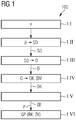
- FIG 1 a flowchart 100 is shown which illustrates a method for autonomous speed planning of an at least semi-autonomously controlled mobile actor restricted to a predetermined path according to an embodiment of the invention.
- step 1.I a rail vehicle travels on a defined track section at a current speed v.
- sensors of the rail vehicle for example image recording sensors, are used to record sensor data SD from the surroundings U of the rail vehicle.
- step 1.III objects O are automatically detected in the recorded sensor data SD of the surroundings U of the rail vehicle. The object detection can take place using a model trained with the aid of a machine learning process.
- step 1.IV the detected objects O in the environment U are automatically divided into different object classes OK.
- the division of the objects O into the different object classes OK takes place with the aid of a classification process trained on the basis of a machine learning process.
- Each of the object classes OK are in the in FIG 1
- the illustrated embodiment is assigned several movement models BM.
- Each of the movement models BM is assigned a probability value w which provides information about the probability w with which the respective movement model BM applies to an object O of the associated object class OK.
- the determination of the movement models BM and their assignment to individual object classes OK can, for example, take place in advance, ie before the described method is used in the regular operation of the rail vehicle, by means of a machine learning process. In this case, experimentally recorded data stored in a database can be used with the help of the machine learning process to come to a choice of suitable movement models BM and a correct assignment of the movement models BM to the individual object classes OK.
- step 1.V there is an automated prediction of a future movement process ZB and a future time-dependent position P of the respective objects O.
- This automated process can also take place based on a model that has been trained by a machine learning process, as well as based on current position and movement data and corresponding data from the past.
- an optimal speed or an optimal future speed profile GP of the rail vehicle is finally determined taking into account a predetermined optimization target.
- the optimization goal includes the condition that the rail vehicle should reach its destination as quickly as possible.
- a plurality of secondary conditions RK, ZK or restrictions that should also be met should be taken into account.
- the secondary conditions include, for example, a predetermined low risk RK for passengers, staff and other road users.
- Additional secondary conditions ZK can include, for example, official speed restrictions, right of way rules, forced stopping processes, such as at train stations or stops, and acceleration restrictions due to safety regulations and to ensure the comfort of any passengers in the rail vehicle.
- optimization targets when determining the optimal future speed profile of the rail vehicle, such as the lowest possible collision risk, a minimum overall acceleration in order to achieve the lowest possible energy consumption, the lowest possible maximum Acceleration of the rail vehicle in order to increase the comfort of the passengers, the shortest possible travel time or a combination of at least two of the mentioned secondary conditions are taken into account.
- a discrete number of movement models BM can be assigned to each of the classified objects O.
- the speed optimization is of a continuous nature. This results in a mixed, discrete, continuous optimization problem.
- the computational effort in the search for a solution to the problem mentioned can be extremely high.
- the number of movement models BM per object O is reduced to exactly one single movement model BM, specifically the most likely movement model BM.
- the discrete-continuous-mixed optimization problem is reduced to a purely continuous optimization problem.
- Such a problem structure allows the use of simpler continuous optimization methods, which can be generated, for example, by linear programming. This enables a solution to the optimization problem to be calculated more quickly and easily. If the constraints contain time restrictions, then, for example, a cost term can be inserted into the structure of the optimization term is kept low.
- the object classifications OK and movement models BM are estimates of the identity of actual objects and their movement behavior, classifications and assignments of movement models can change significantly the more observations have been made of an object, and depending on how the observed object continues to move in the vicinity of the rail vehicle.
- the determination of the speed profile of the rail vehicle is therefore carried out regularly, for example several times per second, so that unexpected changes in the surroundings of the rail vehicle can be taken into account as promptly as possible.
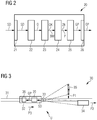
- FIG 2 a planning device 20 according to an embodiment of the invention is shown.
- a planning device 20 can, for example, be installed in a rail vehicle 30 (see FIG 3 ) be arranged.
- the planning device 20 can, however, also be arranged centrally for a plurality of rail vehicles, for example when the calculations are to be particularly precise and the computational effort for the FIG 1 described optimization of the speed profile is particularly high.
- the planning device 20 shown has a sensor interface 21.
- the sensor interface 21 receives sensor data SD which are transmitted to the planning device 20 from sensors of a rail vehicle or from other interposed data transmission units, evaluation units or control units.
- the sensor data SD include in the in FIG 2 illustrated embodiment image data from the environment U of a rail vehicle.
- the received sensor data SD are transmitted to a detection unit 22, which is also part of the planning device 20.
- the detection unit 22 is set up to detect objects O in the environment U on the basis of the detected sensor data SD.
- the detection unit 22 uses a model identification method that was trained with the aid of a machine learning method.
- the objects O transmitted by the detection unit 22 are transmitted to a classification unit 23.
- the classification unit 23 is also included in the planning device 20 and is set up to divide objects O into different object classes OK. Each of the object classes OK is assigned at least one movement model BM.
- the classification unit 23 uses in the FIG 2 Illustrated embodiment for the classification of the objects O, a classification method trained by a machine learning method.
- the determined object classes OK with the movement models BM assigned to them are transmitted to a determination unit 24, which is set up to determine a future movement ZB and / or position P of the objects O on the basis of the at least one assigned movement model BW.
- the determination unit 24 uses a determination method that is based on a model context that was learned by a machine learning method.
- the data determined about the future movement ZB and the position P of the objects O are also transmitted to a profile determination unit 25.
- the details of the functioning of such a determination of a speed profile GP are in connection with the FIG 1 described in detail.
- the determined speed profile GP is output via an output interface 26 and can from units external to the planning device 20, such as the Example of a control device of a rail vehicle, to be further processed to control the rail vehicle.
- FIG 3 a rail transport system 30 with a vehicle, in this special case a rail vehicle, more precisely a tram 32, according to an exemplary embodiment of the invention is illustrated.
- the tram 32 travels on a track 31 in the direction of arrow P3, ie in FIG 3 to the right and, by means of a sensor unit 33, detects two different objects 34, 35 which are in the vicinity U of the tram 32.
- One of these detected objects is a person 35 who is moving in the direction of the arrow P1, that is to say in the direction of the track body of the track section 31.
- the second object 34 is a motor vehicle which is traveling in the direction of arrow P2 parallel to the direction of movement P3 of the tram 32 and is partially traveling on the track 31.
- the recorded sensor data SD are sent to a planning device 20, as shown in FIG FIG 2 is illustrated, transmitted.
- the planning device 20 is in the in FIG 3
- the embodiment shown in the tram 32 is arranged.
- the planning device 20 uses the acquired sensor data SD to calculate a future speed profile GP of the tram 32, taking into account optimization goals and additional constraints controls the speed of the tram 31. For example, a speed v of the tram 32 is reduced in order to allow the person 35 crossing the track body 31 a safe transition. After the transition, the speed of the tram 32 is then adapted to the speed of the motor vehicle 34 in order to avoid colliding with the motor vehicle 34.
- the speed profile GP becomes updated on the basis of constantly newly recorded sensor data at short intervals. In the event that the motor vehicle 34 moves away from the track 31 because its driver has noticed the tram 32 coming from behind, the tram 32 can increase its speed v again to an optimal level for it.
Landscapes
- Engineering & Computer Science (AREA)
- Mechanical Engineering (AREA)
- Automation & Control Theory (AREA)
- General Physics & Mathematics (AREA)
- Physics & Mathematics (AREA)
- Multimedia (AREA)
- Theoretical Computer Science (AREA)
- Human Computer Interaction (AREA)
- Transportation (AREA)
- Aviation & Aerospace Engineering (AREA)
- Radar, Positioning & Navigation (AREA)
- Remote Sensing (AREA)
- Control Of Position, Course, Altitude, Or Attitude Of Moving Bodies (AREA)
Claims (15)
- Procédé de planification autonome de vitesse d'un acteur ( 32 ) commandé au moins de manière semi autonome et mobile en étant limité à un trajet déterminé à l'avance, comportant les stades :- relevé de données (SD) de capteur, concernant les alentours (U) de l'acteur (32) mobile,- détection d'objets (O) aux alentours (U) sur la base des données (SD) de capteur relevées,- classement des objets (O) en des classes (OK) d'objets différentes, au moins un modèle (BM) de déplacement étant associé à chacune des classes (OK) d'objets,- détermination d'un déplacement (ZB) et/ou d'une position (P) à venir de l'objet sur la base du au moins un modèle (BW) de déplacement associé respectivement,- détermination d'un profil (GP) de vitesse de l'acteur (1) mobile, dans lequel un critère (RK) de risque déterminé à l'avance est satisfait sur la base du déplacement (ZB) et/ou de la position (P) à venir de l'objet (O),caractérisé- en ce que la détermination d'un profil (GP) de vitesse s'effectue à l'aide d'un procédé d'optimisation mixte-discret-continu, la composante discrète prenant en compte une pluralité de modèles (BM) de déplacement pour chaque objet (O), et- en ce que l'on utilise un « algorithme d'optimisation Anytime ».
- Procédé suivant la revendication 1, dans lequel l'acteur (32) mobile comprend l'une des unités fonctionnelles suivantes :- un robot,- un véhicule, de préférence un véhicule (32) ferroviaire.
- Procédé suivant la revendication 1 ou 2, dans lequel la détection d'objets (O) s'effectue par un modèle reposant sur un procédé d'apprentissage automatique.
- Procédé suivant l'une des revendications précédentes, dans lequel le classement des objets (O) en des classes (OK) d'objets différentes s'effectue par un modèle reposant sur un procédé d'apprentissage automatique.
- Procédé suivant l'une des revendications précédentes, dans lequel un modèle (BM) de déplacement respectif est produit à l'aide d'un procédé d'apprentissage automatique.
- Procédé suivant l'une des revendications 1 à 5, dans lequel la détermination d'un profil (GP) de vitesse s'effectue à l'aide d'un procédé d'optimisation continu, le modèle (BM) de déplacement ayant la probabilité la plus grande étant pris en compte pour chaque objet (O).
- Procédé suivant l'une des revendications précédentes, dans lequel on utilise, comme critère (ZK) supplémentaire, un critère limitant.
- Procédé suivant la revendication 7, dans lequel on utilise, comme critère limitant, au moins l'un des critères suivants :- limitations de vitesse,- prescriptions de priorité,- arrêt forcé,- limitations d'accélération.
- Procédé suivant l'une des revendications précédentes, dans lequel le critère (RK) de risque concerne un risque de collision de l'acteur (32) avec un objet (O) aux alentours (U) de l'acteur (32).
- Procédé suivant la revendication 9, dans lequel la minimisation du temps de parcours entre par un terme de coût dans la détermination du profil (GP) de vitesse.
- Procédé suivant l'une des revendications précédentes, dans lequel on met à jour, à des instants successifs pendant un déplacement de l'acteur (32), le profil (GP) de vitesse, qui est déterminé.
- Système (20) de planification, comportant :- une interface (21) de capteur pour le relevé de données (SD) de capteur concernant les alentours (U) d'un acteur (32) commandé au moins de manière semi-autonome et mobile de manière limitée à un trajet déterminé à l'avance,- une unité (22) de détection pour la détection d'objets (O) aux alentours (U) sur la base des données (SD) de capteur détectées,- une unité (23) de classification pour classer les objets (o) en des classes (OK) d'objets différentes, au moins un modèle (BM) de déplacement étant associé à chacune des classes (OK) d'objets,- une unité (24) de détermination pour la détermination d'un déplacement (ZB) et/ou d'une position (P) à venir des objets (O), sur la base du au moins un modèle (BW) de déplacement associé respectivement,- une unité (25) de détermination de profil pour la détermination d'un profil (GP) de vitesse de l'acteur (32) mobile, dans lequel un critère (RK) de risque déterminé à l'avance est satisfait, sur la base du déplacement (ZB) et/ou de la position (P) à venir des objets (O),caractérisé- en ce que la détermination d'un profil (GP) de vitesse s'effectue à l'aide d'un procédé d'optimisation mixte-discret-continu,- en ce que la composante discrète tient compte d'une pluralité de modules (BM) de déplacement par objet (O),- en ce que l'on utilise un « algorithme d'optimisation Anytime ».
- Acteur (32), de préférence véhicule, commandé au moins de manière semi-autonome et mobile de manière limitée à un trajet déterminé à l'avance, comportant un système (20) de planification suivant la revendication 12.
- Produit de programme d'ordinateur, comprenant un programme d'ordinateur, qui peut être chargé directement dans une unité de mémoire d'un acteur (32) mobile ayant des parties de programme pour effectuer tous les stades d'un procédé suivant l'une des revendications 1 à 11, lorsque le programme d'ordinateur est réalisé dans l'acteur (32) mobile.
- Support déchiffrable par ordinateur, sur lequel sont mises en mémoire des parties de programme pouvant être réalisées par une unité informatique pour effectuer tous les stades du procédé suivant l'une des revendications 1 11, lorsque les parties de programme sont réalisées par l'unité informatique.
Applications Claiming Priority (1)
| Application Number | Priority Date | Filing Date | Title |
|---|---|---|---|
| DE102018205667 | 2018-04-13 |
Publications (2)
| Publication Number | Publication Date |
|---|---|
| EP3552921A1 EP3552921A1 (fr) | 2019-10-16 |
| EP3552921B1 true EP3552921B1 (fr) | 2020-11-18 |
Family
ID=66323662
Family Applications (1)
| Application Number | Title | Priority Date | Filing Date |
|---|---|---|---|
| EP19167833.3A Not-in-force EP3552921B1 (fr) | 2018-04-13 | 2019-04-08 | Planification autonome de vitesse d'un acteur mobile limité à un trajet prédéterminé |
Country Status (1)
| Country | Link |
|---|---|
| EP (1) | EP3552921B1 (fr) |
Cited By (1)
| Publication number | Priority date | Publication date | Assignee | Title |
|---|---|---|---|---|
| EP4035969B1 (fr) * | 2021-01-29 | 2024-11-13 | Siemens Mobility GmbH | Procédé d'apprentissage d'un dispositif commande pour véhicule ferroviaire, dispositif de commande et véhicule ferroviaire |
Families Citing this family (8)
| Publication number | Priority date | Publication date | Assignee | Title |
|---|---|---|---|---|
| US11072326B2 (en) | 2019-08-22 | 2021-07-27 | Argo AI, LLC | Systems and methods for trajectory based safekeeping of vehicles |
| US11167754B2 (en) | 2019-08-22 | 2021-11-09 | Argo AI, LLC | Systems and methods for trajectory based safekeeping of vehicles |
| US12103560B2 (en) | 2020-10-01 | 2024-10-01 | Argo AI, LLC | Methods and systems for predicting actions of an object by an autonomous vehicle to determine feasible paths through a conflicted area |
| US11618444B2 (en) | 2020-10-01 | 2023-04-04 | Argo AI, LLC | Methods and systems for autonomous vehicle inference of routes for actors exhibiting unrecognized behavior |
| US11358598B2 (en) | 2020-10-01 | 2022-06-14 | Argo AI, LLC | Methods and systems for performing outlet inference by an autonomous vehicle to determine feasible paths through an intersection |
| US11731661B2 (en) | 2020-10-01 | 2023-08-22 | Argo AI, LLC | Systems and methods for imminent collision avoidance |
| DE102021207417A1 (de) * | 2021-07-13 | 2023-01-19 | Siemens Mobility GmbH | Überwachungsverfahren und -system |
| CN118722797B (zh) * | 2024-08-30 | 2024-10-29 | 北京市基础设施投资有限公司 | 一种可跨线路作业的工程车信号控制运行系统 |
Family Cites Families (2)
| Publication number | Priority date | Publication date | Assignee | Title |
|---|---|---|---|---|
| DE102007037610A1 (de) * | 2007-08-09 | 2009-02-19 | Siemens Restraint Systems Gmbh | Verfahren zum Bestimmen eines wahrscheinlichen Bewegungs-Aufenthaltsbereichs eines Lebewesens |
| US9381916B1 (en) * | 2012-02-06 | 2016-07-05 | Google Inc. | System and method for predicting behaviors of detected objects through environment representation |
-
2019
- 2019-04-08 EP EP19167833.3A patent/EP3552921B1/fr not_active Not-in-force
Non-Patent Citations (1)
| Title |
|---|
| None * |
Cited By (1)
| Publication number | Priority date | Publication date | Assignee | Title |
|---|---|---|---|---|
| EP4035969B1 (fr) * | 2021-01-29 | 2024-11-13 | Siemens Mobility GmbH | Procédé d'apprentissage d'un dispositif commande pour véhicule ferroviaire, dispositif de commande et véhicule ferroviaire |
Also Published As
| Publication number | Publication date |
|---|---|
| EP3552921A1 (fr) | 2019-10-16 |
Similar Documents
| Publication | Publication Date | Title |
|---|---|---|
| EP3552921A1 (fr) | Planification autonome de vitesse d'un acteur mobile limité à un trajet prédéterminé | |
| EP3181422B1 (fr) | Procédé et système de commande automatique d'un véhicule suiveur comprenant un véhicule scout | |
| DE102015225238B4 (de) | Verfahren und System zur automatischen Steuerung eines Folgefahrzeugs mit einem Scout-Fahrzeug | |
| EP3365211B1 (fr) | Procédé et dispositif pour réduire le risque de collision d'un véhicule à moteur avec un objet | |
| EP3144920B1 (fr) | Détermination d'une trajectoire théorique d'un véhicule | |
| EP3181421B1 (fr) | Procédé et système de commande automatique d'un véhicule suiveur à l'aide d'un véhicule meneur | |
| EP3250426B1 (fr) | Procédé et dispositif pour faire fonctionner un véhicule | |
| EP3445538B1 (fr) | Procédé de commande d'une pluralité de systèmes de manipulation mobiles autonomes | |
| DE102014003343A1 (de) | Verfahren zum Ermitteln eines Spurwechselbedarfs eines Systemfahrzeugs | |
| DE102016007899B4 (de) | Verfahren zum Betreiben einer Einrichtung zur Verkehrssituationsanalyse, Kraftfahrzeug und Datenverarbeitungseinrichtung | |
| DE102007037610A1 (de) | Verfahren zum Bestimmen eines wahrscheinlichen Bewegungs-Aufenthaltsbereichs eines Lebewesens | |
| DE102016203522A1 (de) | Verfahren und Vorrichtung zum Vorhersagen von Trajektorien eines Kraftfahrzeugs | |
| DE102020130831A1 (de) | Autonomes-Fahrzeug-System zur Detektion des Sicherheitsfahrmodell-Konformitätsstatus eines anderen Fahrzeugs und entsprechende Planung | |
| DE102020109662A1 (de) | Computerimplementiertes Verfahren zur Trajektorienplanung für ein Fahrzeug | |
| EP3365739B1 (fr) | Procédé de pilotage d'un véhicule automobile au moins semi-autonome et véhicule automobile | |
| DE102018215560A1 (de) | Verfahren zum Koordinieren und Überwachen von Objekten | |
| DE102019218455A1 (de) | Verfahren zum Betreiben einer Fahrassistenzvorrichtung eines Fahrzeugs, Fahrassistenzvorrichtung und Fahrzeug, aufweisend zumindest eine Fahrassistenzvorrichtung | |
| EP3844664B1 (fr) | Procédé pour la prédiction d'au moins un vecteur de vitesse futur et/ou une pose future d'un piéton | |
| DE102018211726A1 (de) | Verfahren zum automatischen maschinellen Trainieren eines elektronischen Fahrzeugführungssystems, sowie Kraftfahrzeug | |
| DE102018207015B4 (de) | Verfahren zum Trainieren selbstlernender Steuerungsalgorithmen für autonom bewegbare Vorrichtungen und autonom bewegbare Vorrichtung | |
| DE102020204042A1 (de) | Verfahren und System zum Programmieren eines autonom betriebenen Fahrzeugs zum Durchführen einer Trajektorie | |
| EP4291965B1 (fr) | Procédé de détermination d'une direction de déplacement d'un dispositif mobile au moins semi-autonome ou autonome, et appareil ou système | |
| DE102022207041A1 (de) | Verfahren zum Planen von Bewegungstrajektorien durch ein Modell für maschinelles Lernen | |
| DE102021214429B4 (de) | Verfahren zur Auswahl eines zumindest teilweise automatisierten Fahrmanövers mittels eines Fahrassistenzsystems | |
| EP4443261B1 (fr) | Procédé de détermination de trajectoire pour un véhicule autonome |
Legal Events
| Date | Code | Title | Description |
|---|---|---|---|
| PUAI | Public reference made under article 153(3) epc to a published international application that has entered the european phase |
Free format text: ORIGINAL CODE: 0009012 |
|
| STAA | Information on the status of an ep patent application or granted ep patent |
Free format text: STATUS: THE APPLICATION HAS BEEN PUBLISHED |
|
| AK | Designated contracting states |
Kind code of ref document: A1 Designated state(s): AL AT BE BG CH CY CZ DE DK EE ES FI FR GB GR HR HU IE IS IT LI LT LU LV MC MK MT NL NO PL PT RO RS SE SI SK SM TR |
|
| AX | Request for extension of the european patent |
Extension state: BA ME |
|
| STAA | Information on the status of an ep patent application or granted ep patent |
Free format text: STATUS: REQUEST FOR EXAMINATION WAS MADE |
|
| 17P | Request for examination filed |
Effective date: 20200416 |
|
| RBV | Designated contracting states (corrected) |
Designated state(s): AL AT BE BG CH CY CZ DE DK EE ES FI FR GB GR HR HU IE IS IT LI LT LU LV MC MK MT NL NO PL PT RO RS SE SI SK SM TR |
|
| RIC1 | Information provided on ipc code assigned before grant |
Ipc: B61L 3/00 20060101ALI20200526BHEP Ipc: G06K 9/00 20060101ALI20200526BHEP Ipc: B61L 23/04 20060101ALI20200526BHEP Ipc: B61L 29/00 20060101AFI20200526BHEP Ipc: G05D 1/02 20200101ALI20200526BHEP |
|
| GRAP | Despatch of communication of intention to grant a patent |
Free format text: ORIGINAL CODE: EPIDOSNIGR1 |
|
| STAA | Information on the status of an ep patent application or granted ep patent |
Free format text: STATUS: GRANT OF PATENT IS INTENDED |
|
| INTG | Intention to grant announced |
Effective date: 20200728 |
|
| GRAS | Grant fee paid |
Free format text: ORIGINAL CODE: EPIDOSNIGR3 |
|
| GRAA | (expected) grant |
Free format text: ORIGINAL CODE: 0009210 |
|
| STAA | Information on the status of an ep patent application or granted ep patent |
Free format text: STATUS: THE PATENT HAS BEEN GRANTED |
|
| AK | Designated contracting states |
Kind code of ref document: B1 Designated state(s): AL AT BE BG CH CY CZ DE DK EE ES FI FR GB GR HR HU IE IS IT LI LT LU LV MC MK MT NL NO PL PT RO RS SE SI SK SM TR |
|
| REG | Reference to a national code |
Ref country code: GB Ref legal event code: FG4D Free format text: NOT ENGLISH |
|
| REG | Reference to a national code |
Ref country code: CH Ref legal event code: EP |
|
| REG | Reference to a national code |
Ref country code: DE Ref legal event code: R096 Ref document number: 502019000410 Country of ref document: DE |
|
| REG | Reference to a national code |
Ref country code: IE Ref legal event code: FG4D Free format text: LANGUAGE OF EP DOCUMENT: GERMAN |
|
| REG | Reference to a national code |
Ref country code: AT Ref legal event code: REF Ref document number: 1335458 Country of ref document: AT Kind code of ref document: T Effective date: 20201215 |
|
| REG | Reference to a national code |
Ref country code: NL Ref legal event code: MP Effective date: 20201118 |
|
| PG25 | Lapsed in a contracting state [announced via postgrant information from national office to epo] |
Ref country code: GR Free format text: LAPSE BECAUSE OF FAILURE TO SUBMIT A TRANSLATION OF THE DESCRIPTION OR TO PAY THE FEE WITHIN THE PRESCRIBED TIME-LIMIT Effective date: 20210219 Ref country code: NO Free format text: LAPSE BECAUSE OF FAILURE TO SUBMIT A TRANSLATION OF THE DESCRIPTION OR TO PAY THE FEE WITHIN THE PRESCRIBED TIME-LIMIT Effective date: 20210218 Ref country code: PT Free format text: LAPSE BECAUSE OF FAILURE TO SUBMIT A TRANSLATION OF THE DESCRIPTION OR TO PAY THE FEE WITHIN THE PRESCRIBED TIME-LIMIT Effective date: 20210318 Ref country code: RS Free format text: LAPSE BECAUSE OF FAILURE TO SUBMIT A TRANSLATION OF THE DESCRIPTION OR TO PAY THE FEE WITHIN THE PRESCRIBED TIME-LIMIT Effective date: 20201118 Ref country code: FI Free format text: LAPSE BECAUSE OF FAILURE TO SUBMIT A TRANSLATION OF THE DESCRIPTION OR TO PAY THE FEE WITHIN THE PRESCRIBED TIME-LIMIT Effective date: 20201118 |
|
| PG25 | Lapsed in a contracting state [announced via postgrant information from national office to epo] |
Ref country code: BG Free format text: LAPSE BECAUSE OF FAILURE TO SUBMIT A TRANSLATION OF THE DESCRIPTION OR TO PAY THE FEE WITHIN THE PRESCRIBED TIME-LIMIT Effective date: 20210218 Ref country code: PL Free format text: LAPSE BECAUSE OF FAILURE TO SUBMIT A TRANSLATION OF THE DESCRIPTION OR TO PAY THE FEE WITHIN THE PRESCRIBED TIME-LIMIT Effective date: 20201118 Ref country code: IS Free format text: LAPSE BECAUSE OF FAILURE TO SUBMIT A TRANSLATION OF THE DESCRIPTION OR TO PAY THE FEE WITHIN THE PRESCRIBED TIME-LIMIT Effective date: 20210318 Ref country code: LV Free format text: LAPSE BECAUSE OF FAILURE TO SUBMIT A TRANSLATION OF THE DESCRIPTION OR TO PAY THE FEE WITHIN THE PRESCRIBED TIME-LIMIT Effective date: 20201118 Ref country code: SE Free format text: LAPSE BECAUSE OF FAILURE TO SUBMIT A TRANSLATION OF THE DESCRIPTION OR TO PAY THE FEE WITHIN THE PRESCRIBED TIME-LIMIT Effective date: 20201118 |
|
| REG | Reference to a national code |
Ref country code: LT Ref legal event code: MG9D |
|
| PG25 | Lapsed in a contracting state [announced via postgrant information from national office to epo] |
Ref country code: HR Free format text: LAPSE BECAUSE OF FAILURE TO SUBMIT A TRANSLATION OF THE DESCRIPTION OR TO PAY THE FEE WITHIN THE PRESCRIBED TIME-LIMIT Effective date: 20201118 |
|
| PG25 | Lapsed in a contracting state [announced via postgrant information from national office to epo] |
Ref country code: CZ Free format text: LAPSE BECAUSE OF FAILURE TO SUBMIT A TRANSLATION OF THE DESCRIPTION OR TO PAY THE FEE WITHIN THE PRESCRIBED TIME-LIMIT Effective date: 20201118 Ref country code: SM Free format text: LAPSE BECAUSE OF FAILURE TO SUBMIT A TRANSLATION OF THE DESCRIPTION OR TO PAY THE FEE WITHIN THE PRESCRIBED TIME-LIMIT Effective date: 20201118 Ref country code: SK Free format text: LAPSE BECAUSE OF FAILURE TO SUBMIT A TRANSLATION OF THE DESCRIPTION OR TO PAY THE FEE WITHIN THE PRESCRIBED TIME-LIMIT Effective date: 20201118 Ref country code: EE Free format text: LAPSE BECAUSE OF FAILURE TO SUBMIT A TRANSLATION OF THE DESCRIPTION OR TO PAY THE FEE WITHIN THE PRESCRIBED TIME-LIMIT Effective date: 20201118 Ref country code: RO Free format text: LAPSE BECAUSE OF FAILURE TO SUBMIT A TRANSLATION OF THE DESCRIPTION OR TO PAY THE FEE WITHIN THE PRESCRIBED TIME-LIMIT Effective date: 20201118 Ref country code: LT Free format text: LAPSE BECAUSE OF FAILURE TO SUBMIT A TRANSLATION OF THE DESCRIPTION OR TO PAY THE FEE WITHIN THE PRESCRIBED TIME-LIMIT Effective date: 20201118 |
|
| REG | Reference to a national code |
Ref country code: DE Ref legal event code: R097 Ref document number: 502019000410 Country of ref document: DE |
|
| PG25 | Lapsed in a contracting state [announced via postgrant information from national office to epo] |
Ref country code: DK Free format text: LAPSE BECAUSE OF FAILURE TO SUBMIT A TRANSLATION OF THE DESCRIPTION OR TO PAY THE FEE WITHIN THE PRESCRIBED TIME-LIMIT Effective date: 20201118 |
|
| PLBE | No opposition filed within time limit |
Free format text: ORIGINAL CODE: 0009261 |
|
| STAA | Information on the status of an ep patent application or granted ep patent |
Free format text: STATUS: NO OPPOSITION FILED WITHIN TIME LIMIT |
|
| 26N | No opposition filed |
Effective date: 20210819 |
|
| PG25 | Lapsed in a contracting state [announced via postgrant information from national office to epo] |
Ref country code: IT Free format text: LAPSE BECAUSE OF FAILURE TO SUBMIT A TRANSLATION OF THE DESCRIPTION OR TO PAY THE FEE WITHIN THE PRESCRIBED TIME-LIMIT Effective date: 20201118 Ref country code: AL Free format text: LAPSE BECAUSE OF FAILURE TO SUBMIT A TRANSLATION OF THE DESCRIPTION OR TO PAY THE FEE WITHIN THE PRESCRIBED TIME-LIMIT Effective date: 20201118 Ref country code: NL Free format text: LAPSE BECAUSE OF FAILURE TO SUBMIT A TRANSLATION OF THE DESCRIPTION OR TO PAY THE FEE WITHIN THE PRESCRIBED TIME-LIMIT Effective date: 20201118 |
|
| PG25 | Lapsed in a contracting state [announced via postgrant information from national office to epo] |
Ref country code: SI Free format text: LAPSE BECAUSE OF FAILURE TO SUBMIT A TRANSLATION OF THE DESCRIPTION OR TO PAY THE FEE WITHIN THE PRESCRIBED TIME-LIMIT Effective date: 20201118 Ref country code: MC Free format text: LAPSE BECAUSE OF FAILURE TO SUBMIT A TRANSLATION OF THE DESCRIPTION OR TO PAY THE FEE WITHIN THE PRESCRIBED TIME-LIMIT Effective date: 20201118 |
|
| PG25 | Lapsed in a contracting state [announced via postgrant information from national office to epo] |
Ref country code: LU Free format text: LAPSE BECAUSE OF NON-PAYMENT OF DUE FEES Effective date: 20210408 |
|
| REG | Reference to a national code |
Ref country code: BE Ref legal event code: MM Effective date: 20210430 |
|
| PG25 | Lapsed in a contracting state [announced via postgrant information from national office to epo] |
Ref country code: ES Free format text: LAPSE BECAUSE OF FAILURE TO SUBMIT A TRANSLATION OF THE DESCRIPTION OR TO PAY THE FEE WITHIN THE PRESCRIBED TIME-LIMIT Effective date: 20201118 |
|
| PG25 | Lapsed in a contracting state [announced via postgrant information from national office to epo] |
Ref country code: IE Free format text: LAPSE BECAUSE OF NON-PAYMENT OF DUE FEES Effective date: 20210408 |
|
| PG25 | Lapsed in a contracting state [announced via postgrant information from national office to epo] |
Ref country code: IS Free format text: LAPSE BECAUSE OF FAILURE TO SUBMIT A TRANSLATION OF THE DESCRIPTION OR TO PAY THE FEE WITHIN THE PRESCRIBED TIME-LIMIT Effective date: 20210318 |
|
| PG25 | Lapsed in a contracting state [announced via postgrant information from national office to epo] |
Ref country code: BE Free format text: LAPSE BECAUSE OF NON-PAYMENT OF DUE FEES Effective date: 20210430 |
|
| REG | Reference to a national code |
Ref country code: CH Ref legal event code: PL |
|
| PG25 | Lapsed in a contracting state [announced via postgrant information from national office to epo] |
Ref country code: LI Free format text: LAPSE BECAUSE OF NON-PAYMENT OF DUE FEES Effective date: 20220430 Ref country code: CH Free format text: LAPSE BECAUSE OF NON-PAYMENT OF DUE FEES Effective date: 20220430 |
|
| PG25 | Lapsed in a contracting state [announced via postgrant information from national office to epo] |
Ref country code: CY Free format text: LAPSE BECAUSE OF FAILURE TO SUBMIT A TRANSLATION OF THE DESCRIPTION OR TO PAY THE FEE WITHIN THE PRESCRIBED TIME-LIMIT Effective date: 20201118 |
|
| PG25 | Lapsed in a contracting state [announced via postgrant information from national office to epo] |
Ref country code: HU Free format text: LAPSE BECAUSE OF FAILURE TO SUBMIT A TRANSLATION OF THE DESCRIPTION OR TO PAY THE FEE WITHIN THE PRESCRIBED TIME-LIMIT; INVALID AB INITIO Effective date: 20190408 |
|
| GBPC | Gb: european patent ceased through non-payment of renewal fee |
Effective date: 20230408 |
|
| PG25 | Lapsed in a contracting state [announced via postgrant information from national office to epo] |
Ref country code: GB Free format text: LAPSE BECAUSE OF NON-PAYMENT OF DUE FEES Effective date: 20230408 |
|
| PG25 | Lapsed in a contracting state [announced via postgrant information from national office to epo] |
Ref country code: GB Free format text: LAPSE BECAUSE OF NON-PAYMENT OF DUE FEES Effective date: 20230408 |
|
| PG25 | Lapsed in a contracting state [announced via postgrant information from national office to epo] |
Ref country code: MK Free format text: LAPSE BECAUSE OF FAILURE TO SUBMIT A TRANSLATION OF THE DESCRIPTION OR TO PAY THE FEE WITHIN THE PRESCRIBED TIME-LIMIT Effective date: 20201118 |
|
| PG25 | Lapsed in a contracting state [announced via postgrant information from national office to epo] |
Ref country code: TR Free format text: LAPSE BECAUSE OF FAILURE TO SUBMIT A TRANSLATION OF THE DESCRIPTION OR TO PAY THE FEE WITHIN THE PRESCRIBED TIME-LIMIT Effective date: 20201118 |
|
| PGFP | Annual fee paid to national office [announced via postgrant information from national office to epo] |
Ref country code: DE Payment date: 20240619 Year of fee payment: 6 |
|
| PGFP | Annual fee paid to national office [announced via postgrant information from national office to epo] |
Ref country code: FR Payment date: 20240415 Year of fee payment: 6 |
|
| PG25 | Lapsed in a contracting state [announced via postgrant information from national office to epo] |
Ref country code: MT Free format text: LAPSE BECAUSE OF FAILURE TO SUBMIT A TRANSLATION OF THE DESCRIPTION OR TO PAY THE FEE WITHIN THE PRESCRIBED TIME-LIMIT Effective date: 20201118 |
|
| REG | Reference to a national code |
Ref country code: AT Ref legal event code: MM01 Ref document number: 1335458 Country of ref document: AT Kind code of ref document: T Effective date: 20240408 |
|
| PG25 | Lapsed in a contracting state [announced via postgrant information from national office to epo] |
Ref country code: AT Free format text: LAPSE BECAUSE OF NON-PAYMENT OF DUE FEES Effective date: 20240408 |
|
| REG | Reference to a national code |
Ref country code: DE Ref legal event code: R119 Ref document number: 502019000410 Country of ref document: DE |
|
| PG25 | Lapsed in a contracting state [announced via postgrant information from national office to epo] |
Ref country code: DE Free format text: LAPSE BECAUSE OF NON-PAYMENT OF DUE FEES Effective date: 20251104 |
|
| PG25 | Lapsed in a contracting state [announced via postgrant information from national office to epo] |
Ref country code: FR Free format text: LAPSE BECAUSE OF NON-PAYMENT OF DUE FEES Effective date: 20250430 |
|
| PGFP | Annual fee paid to national office [announced via postgrant information from national office to epo] |
Ref country code: AT Payment date: 20260410 Year of fee payment: 5 |