EP3553716A1 - Procédé et dispositif de surveillance de capacité de transport - Google Patents
Procédé et dispositif de surveillance de capacité de transport Download PDFInfo
- Publication number
- EP3553716A1 EP3553716A1 EP17877790.0A EP17877790A EP3553716A1 EP 3553716 A1 EP3553716 A1 EP 3553716A1 EP 17877790 A EP17877790 A EP 17877790A EP 3553716 A1 EP3553716 A1 EP 3553716A1
- Authority
- EP
- European Patent Office
- Prior art keywords
- transport capacity
- orders
- region
- outstanding
- performer
- Prior art date
- Legal status (The legal status is an assumption and is not a legal conclusion. Google has not performed a legal analysis and makes no representation as to the accuracy of the status listed.)
- Withdrawn
Links
Images



Classifications
-
- G—PHYSICS
- G06—COMPUTING OR CALCULATING; COUNTING
- G06Q—INFORMATION AND COMMUNICATION TECHNOLOGY [ICT] SPECIALLY ADAPTED FOR ADMINISTRATIVE, COMMERCIAL, FINANCIAL, MANAGERIAL OR SUPERVISORY PURPOSES; SYSTEMS OR METHODS SPECIALLY ADAPTED FOR ADMINISTRATIVE, COMMERCIAL, FINANCIAL, MANAGERIAL OR SUPERVISORY PURPOSES, NOT OTHERWISE PROVIDED FOR
- G06Q10/00—Administration; Management
- G06Q10/08—Logistics, e.g. warehousing, loading or distribution; Inventory or stock management
-
- G—PHYSICS
- G06—COMPUTING OR CALCULATING; COUNTING
- G06Q—INFORMATION AND COMMUNICATION TECHNOLOGY [ICT] SPECIALLY ADAPTED FOR ADMINISTRATIVE, COMMERCIAL, FINANCIAL, MANAGERIAL OR SUPERVISORY PURPOSES; SYSTEMS OR METHODS SPECIALLY ADAPTED FOR ADMINISTRATIVE, COMMERCIAL, FINANCIAL, MANAGERIAL OR SUPERVISORY PURPOSES, NOT OTHERWISE PROVIDED FOR
- G06Q10/00—Administration; Management
- G06Q10/08—Logistics, e.g. warehousing, loading or distribution; Inventory or stock management
- G06Q10/083—Shipping
- G06Q10/0833—Tracking
-
- G—PHYSICS
- G06—COMPUTING OR CALCULATING; COUNTING
- G06Q—INFORMATION AND COMMUNICATION TECHNOLOGY [ICT] SPECIALLY ADAPTED FOR ADMINISTRATIVE, COMMERCIAL, FINANCIAL, MANAGERIAL OR SUPERVISORY PURPOSES; SYSTEMS OR METHODS SPECIALLY ADAPTED FOR ADMINISTRATIVE, COMMERCIAL, FINANCIAL, MANAGERIAL OR SUPERVISORY PURPOSES, NOT OTHERWISE PROVIDED FOR
- G06Q10/00—Administration; Management
- G06Q10/06—Resources, workflows, human or project management; Enterprise or organisation planning; Enterprise or organisation modelling
- G06Q10/063—Operations research, analysis or management
- G06Q10/0631—Resource planning, allocation, distributing or scheduling for enterprises or organisations
- G06Q10/06311—Scheduling, planning or task assignment for a person or group
- G06Q10/063114—Status monitoring or status determination for a person or group
-
- G—PHYSICS
- G06—COMPUTING OR CALCULATING; COUNTING
- G06Q—INFORMATION AND COMMUNICATION TECHNOLOGY [ICT] SPECIALLY ADAPTED FOR ADMINISTRATIVE, COMMERCIAL, FINANCIAL, MANAGERIAL OR SUPERVISORY PURPOSES; SYSTEMS OR METHODS SPECIALLY ADAPTED FOR ADMINISTRATIVE, COMMERCIAL, FINANCIAL, MANAGERIAL OR SUPERVISORY PURPOSES, NOT OTHERWISE PROVIDED FOR
- G06Q30/00—Commerce
- G06Q30/02—Marketing; Price estimation or determination; Fundraising
- G06Q30/0201—Market modelling; Market analysis; Collecting market data
Definitions
- the present application relates to a method and device for monitoring transport capacity in the field of information technology.
- the historical order information in one area could be used to estimate the number of orders that will be generated in this area.
- the distribution of the transport capacity in the area can be calculated based on the positions of performers, such as food deliverymen, goods deliverymen, drivers and the like.
- the object of the embodiments of the present application is to provide a method and a device for monitoring transport capacity.
- the embodiments of the present disclosure provide a method for monitoring transport capacity, comprising:
- obtaining the transport capacity of the monitored area according to the positional information and the processing progress information of outstanding orders of each performer comprises:
- obtaining the transport capacity of each region according to the positional information and the processing progress information of outstanding orders of each performer comprises:
- increasing the transport capacity of the corresponding region in the monitored area according to the information of each outstanding order comprises:
- the first adjustment value corresponds to a first threshold range to which the number of responded outstanding orders held by the performer of the outstanding order belongs; and the second adjustment value corresponds to a second threshold range to which the number of non-responded outstanding orders held by the performer of the outstanding order belongs.
- increasing the transport capacity of the corresponding region in the monitored area according to the information of outstanding order further comprises:
- obtaining the transport capacity of each region according to the positional information and the processing progress information of outstanding orders of each performer further comprises:
- the method for monitoring transport capacity according to the present disclosure further comprises:
- determining the number of orders of the region in a preset future time period comprises:
- dividing the monitored area into a plurality of regions comprises: dividing the monitored area through a geohash algorithm to obtain the plurality of regions.
- dividing the monitored area into a plurality of regions comprises:
- one embodiment of the present disclosure provide a device for monitoring transport capacity, comprising:
- one embodiment of the present disclosure provide A machine-readable storage medium, having machine-executable instructions stored thereon, wherein when being called and executed by a processor, the machine-executable instructions cause the processor to perform the method for monitoring transport capacity according to the first aspect of the present disclosure.
- the processing progress information of outstanding orders of performers is subtly introduced to monitor the transport capacity of the area.
- the trajectory showing a positional change of the performer can be estimated, and further, based on the trajectory showing the positional change, the distribution of transport capacity can be monitored in a more accurate and reliable way.
- Reference numerals 100-device for monitoring transport capacity; 110-machine-readable storage medium; 120-processor; 130-network module; 200-transport capacity monitoring logic; 220-information acquiring module; 230- transport capacity obtaining module.
- a method for monitoring transport capacity determines the transport capacity of each region based on the current positions of respective performers.
- the change of the transport capacity in a future time period is not considered.
- the accuracy in evaluating the transport capacity of an area is relatively limited when merely relying on the current positional information of each performer.
- the embodiments of the present disclosure can estimate the positional change of each performer in a future time period according to the processing progress information of outstanding orders of each performer (for the purpose of conciseness, referred to as "information of outstanding orders" hereinafter).
- the transport capacity of each region can be monitored accurately, thereby further providing a basis for reasonable allocation of the transport capacity of each region.
- FIG. 1 is a schematic diagram of a hardware structure of a device for monitoring transport capacity 100 according to an embodiment of the present disclosure.
- the device for monitoring transport capacity 100 in the embodiment of the present disclosure may be a device having a data processing capability such as a server or a computer.
- the device for monitoring transport capacity 100 may include a machine-readable storage medium 110, a processor 120, and a network module 130.
- the machine-readable storage medium 110, the processor 120, and the network module 130 are electrically connected with each other, directly or indirectly, to implement data transmission or interaction. For example, these components may be electrically connected with one another by one or more communication buses or signal lines.
- the machine-readable storage medium 110 has machine-executable instructions stored thereon, corresponding to a transport capacity monitoring logic.
- the transport capacity monitoring logic 200 may include at least one software function module stored in the machine-readable storage medium 110 in the form of software or firmware.
- the processor 120 executes various functional applications and data processing, such as implementing the method for monitoring transport capacity in the embodiments of the present disclosure, by operating software programs and the modules stored in the machine-readable storage medium 110, such as the machine-executable instructions corresponding to the transport capacity monitoring logic 200 in the embodiments of the present disclosure.
- the machine-readable storage medium 110 may be, but not limited to, a random access memory (RAM), a read only memory (ROM), a programmable read-only memory (PROM), an erasable programmable read-only memory (EPROM), an electric erasable programmable read-only memory (EEPROM), a flash memory, a storage drive (for example, a hard disk drive), a solid state hard disk, a storage disk of any type (such as an optical disk, dvd or the like), or a similar storage medium, or a combination thereof.
- the machine-readable storage medium 110 may be configured to store a program, and the processor 120 executes the program after receiving an execution instruction.
- the processor 120 may be an integrated circuit chip with a signal processing capability.
- the above processor 120 may be a general processor, including a central processing unit (CPU), a network processor (NP), etc., and may also be a digital signal processor (DSP), an application specific integrated circuit (ASIC), a field-programmable gate array (FPGA) or other programmable logic devices, discrete gate or transistor logic devices, or discrete hardware components, which could implement or execute respective methods, steps, and logical block diagrams disclosed in the embodiments of the present disclosure.
- the general processor may be a microprocessor, or the processor may be any conventional processor, etc.
- the network module 130 is configured to establish communication connection between the device for monitoring transport capacity 100 and an external communication terminal by the network, thereby implementing the transmission and reception operations of network signals and data.
- the above network signals may include a wireless signal or a wired signal.
- the structure shown in FIG. 1 is merely illustrative, and the device for monitoring transport capacity 100 may further include more or less components than those shown in FIG. 1 , or have a configuration different from that shown in FIG. 1 .
- the respective components shown in FIG. 1 may be implemented by hardware, software, or a combination thereof.
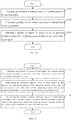
- FIG. 2 is a flowchart of a method for monitoring transport capacity according to an embodiment of the present disclosure.
- the method steps defined by the flow related to the method may be implemented by the processor 120.
- the specific flow shown in FIG. 2 will be described in detail below.
- step S220 the positional information and the information of outstanding orders of each performer in a monitored area are acquired.
- each performer may carry a handheld terminal or a wearable device.
- the wearable device may include a locating module, a processing module, a communication module, and the like.
- the locating module may record the positional information of the performer.
- the processing module may record and adjust the information of outstanding orders of the performer.
- the communication module may send the positional information and the information of outstanding orders of each performer to the processor 120. In such step, the positional information and the information of outstanding orders of each performer sent by the communication module can be acquired.
- the information of outstanding orders may include the information concerning the responding places and the completing places of the outstanding orders of the performer, the information on whether the outstanding orders have been responded, and the like.
- the responding places of the outstanding orders may refer to the places where the outstanding orders are received.
- the responding place of the food delivery order may be the position of a merchant who has confirmed the order.
- the completing place of the food delivery order may be the position of a customer who books the order, and the expression "has been responded” or “responded” means that the deliveryman has received the takeout food required by the customer from the merchant.
- the responding place of the car booking order is the boarding place of the user who books this service.
- the completing place of the car booking order is the destination of the user, and the expression "has been responded” or “responded” means that the driver has picked up the user at the boarding place.
- step S230 the transport capacity in the monitored area is obtained according to the positional information and the information of outstanding orders of each performer.
- the positional information of each performer represents the current position of each performer, and according to the information of outstanding orders of each performer, such as the responding places and completing places of the outstanding orders, the trajectory showing the positional change of each performer in the future can be estimated.
- the transport capacity of the monitored area will also change. For example, if the responding place and completing place of an outstanding order of a performer are outside the monitored area, then it can be estimated that the performer will leave the monitored area in order to complete the outstanding order, thereby reducing the transport capacity of the monitored area.
- the respond place and the completing place of an outstanding order of a performer outside the monitored area are in the monitored area, it can be estimated that the performer will enter the monitored area in order to complete the outstanding order, thereby increasing the transport capacity of the monitored area.
- the monitored area may include a plurality of regions, and each performer may move among the plurality of regions in the monitored area.
- step S230 may include: dividing the monitored area into a plurality of regions; and obtaining the transport capacity of each region according to the positional information and the information of outstanding orders of each performer.
- the change condition of the region of each performer in a future time period can be estimated.
- the transport capacity of each region also changes.
- FIG. 3 is a schematic diagram of sub-steps included in step S230 shown in FIG. 2 according to an embodiment of the present disclosure.
- step S230 includes three sub-steps of step S231, step S232 and step S233.
- step S231 the number of outstanding orders of each performer is acquired.
- step S232 whether there is a performer whose number of outstanding orders is 0 is judged.
- step S233 if there is a performer whose number of outstanding orders is 0, the transport capacity of the region to which the positional information of the performer belongs is increased.
- the transport capacity of the region to which the positional information of the performer belongs can be increased by a set value, for example 5.
- FIG. 4 is a schematic diagram of sub-steps included in step S230 shown in FIG. 2 according to another embodiment of the present disclosure.
- step S230 may further include three sub-steps of step S234, step S235, and step S236.
- step S234 the number of outstanding orders of each performer is acquired.
- step S235 whether a performer whose number of outstanding orders is at least 1 is judged.
- step S236 if there is a performer whose number of outstanding orders is at least 1, the transport capacity of the region to which the responding place or the completing place of each outstanding order belongs is increased according to the information of each outstanding order.
- FIG. 5 is a schematic diagram of sub-steps included in step S236 shown in FIG. 4 according to an embodiment of the present disclosure.
- step S236 may include three sub-steps of step S2361, step S2362, and step S2363.
- step S2361 for each outstanding order, whether the outstanding order is an order which has been responded is judged. If the order is an order which has been responded, step S2362 is performed, otherwise step S2363 is performed.
- step S2362 the transport capacity of the region to which the completing place of the outstanding order belongs is increased.
- step S2363 the transport capacity of the region to which the responding place of the outstanding order belongs is increased.
- Step S236 may also include other implementing manners depending on actual needs. For example, if an outstanding order is an order which has not been responded, the transport capacity of the region to which the responding place of the outstanding order belongs and the transport capacity of the region to which the completing place of the outstanding order belongs may be separately increased. As another example, different transport capacities may be increased according to the different numbers of outstanding orders of performers. Generally, the fewer the number of outstanding orders of a performer is, the greater the increased transport capacity is. The more the number of outstanding orders of a performer is, the less the increased transport capacity is.
- FIG. 6 is a schematic diagram of sub-steps included in step S236 shown in FIG. 4 according to another embodiment of the present disclosure.
- step S236 may further include five sub-steps of step S2364 to step S2368.
- step S2364 a threshold range to which the number of outstanding orders of each performer belongs is determined.
- step S2365 an adjustment value corresponding to the threshold range is found.
- step S2366 for each outstanding order, whether the outstanding order is an order which has been responded is judged. If the order has been responded, step S2367 is performed, otherwise step S2368 is performed.
- step S2367 the transport capacity of the region to which the completing place of the outstanding order belongs is increased by the adjustment value.
- step S2368 the transport capacity of the region to which the responding place of the outstanding order belongs is increased by the adjustment value.
- the threshold range can be flexibly set in a gradient manner according to the actual demand. For example, 1 to 3 is set as a threshold range, 4 to 6 is set as a threshold range, and 7 to 9 is set as a threshold range, etc.
- the corresponding relationships between different threshold ranges and different transport capacity values may be set. For example, among the listed three threshold ranges, the adjustment value corresponding to the set threshold range 1 to 3 is the largest, the adjustment value corresponding to the threshold range 4 to 6 is less, and the adjustment value corresponding to the threshold range 7 to 9 is the smallest. In this way, by analyzing the threshold range to which the number of outstanding orders of the performer belongs, the corresponding increased transport capacity of the monitored area to which the responding place or completing place of each outstanding order of the performer belongs can be obtained.
- step S2366 of judging whether the outstanding order is an order which has been responded may be performed at first, and then step S2364 and step S2365 of determining the threshold range to which the number of outstanding orders of the performer belongs to and finding the adjustment value corresponding to the threshold range are performed.
- step S2364 and step S2365 of determining the threshold range to which the number of outstanding orders of the performer belongs to and finding the adjustment value corresponding to the threshold range, and step S2366 of judging whether the outstanding order is an order which has been responded may be performed in parallel.
- step 236 may further include: determining the number of responded orders and the number of non-responded orders in all the outstanding orders of each performer; determining a first threshold range to which the number of responded orders in the outstanding orders of such performer belongs and a second threshold range to which the number of non-responded orders in the outstanding orders of such performer belongs; finding a first adjustment value corresponding to the first threshold range and a second adjustment value corresponding to the second threshold range; increasing the transport capacity of the region to which the completing place of each outstanding order of the performer belongs by the first adjustment value; and increasing the transport capacity of the region to which the responding place of each outstanding order of the performer belongs by the second adjustment value.
- FIG. 7 is a flowchart of a method for monitoring transport capacity according to another embodiment of the present disclosure. As shown in FIG. 7 , the method for monitoring transport capacity may further include step S260, step S270, and step S280.
- step S260 for each outstanding order, a path from the responding place to the completing place of the outstanding order is obtained based on pre-stored map data.
- step S270 the regions through which the path passes are found.
- step S280 the transport capacities of the found regions are increased.
- the transport capacities of the found regions can be flexibly increased.
- the transport capacity of each found region may be increased by a fixed value.
- a transport capacity calculation model may be established, and the transport capacity of each found region is increased by a different value according to the difference in ratio of the number of performers to the number of outstanding orders in this region. In general, if the ratio of the number of performers to the number of outstanding orders in a region is larger, the transport capacity of such region may be increased by a larger value; if the ratio of the number of performers to the number of outstanding orders in a region is smaller, the transport capacity of such region may be increased by a smaller value.
- the information of the performers passing through the region can be sent to a terminal in the responding place of the region. For example, information of an outstanding order in a region through which a performer will soon pass may be sent to a wearable device of the performer. An outstanding order in a region through which a performer may pass may be automatically assigned to the passing performer.
- the method for monitoring transport capacity in the present embodiments may further include: acquiring, for each region, the transport capacity of an adjacent region of such region, and performing comprehensive processing, such as smoothing, on the transport capacity of the adjacent region and the transport capacity of such region, to obtain the final transport capacity of such region.
- comprehensive processing such as smoothing
- the transport capacity of such region is smoothed according to the transport capacity of the adjacent region of such region, and the value obtained by the smoothing processing is used as the final transport capacity of the region.
- FIG. 8 is a flowchart of a method for monitoring transport capacity according to yet another embodiment of the present disclosure.
- the embodiment of the present disclosure further provides a method for monitoring transport capacity, which can analyze the transport capacity shortage degree.
- the method further includes step S210 and step S240.
- step S210 the number of orders of each region in the monitored area in a preset future time period is determined.
- step S210 has a plurality of implementing manners, as long as the number of orders in each region can be estimated.
- the average number of orders of a previous time period of each region such as a previous quarter, a previous month and a previous week, can be calculated, and the average number of orders could be used as the number of orders of each region in the preset future time period.
- big data analysis may be performed on historical order information of each region, so that the change condition of the number of orders of each region in different time periods, such as in the morning, afternoon, night, several hours and several minutes for example 15 minutes time period, can be obtained. In this way, the number of orders of each region in a specific time period in the historical order information can be used as the number of orders of each region in the specific time period.
- FIG. 9 is a schematic diagram of sub-steps included in step S210 shown in FIG. 8 according to an embodiment of the present disclosure.
- the embodiment of the present disclosure provides one implementing solution of step S210, which may include four sub-steps of step S211, step S212, step S213, and step S214.
- step 211 a orders amount estimation model is obtained by training on historical order information.
- the historical order information may include information such as the number of orders in the history, the time of placing the order, the current date, and the real-time weather of the monitored area.
- the orders amount estimation model may have different estimation rules. For example, moving average estimation, exponential smoothing estimation and the like may be used, which is not limited by the present embodiment.
- the orders amount estimation model can be obtained by offline training, without online training, to meet the real-time calculation requirements.
- step S212 the number of orders of the monitored area in a preset future time period is determined according to the current date, the real-time weather, and the orders amount estimation model.
- the number of orders of the monitored area in a preset future time period can be obtained according to whether the current date is a working day or a holiday, whether the real-time weather is raining, or the like. For example, if the current date is a working day, the real-time weather is raining, and the preset future time period is 11:30-14:00, generally speaking, the calculated number of orders may be higher than that of other time periods.
- step S213 according to the historical order information, the ratio of the number of orders of each region of the monitored area in the preset future time period is determined.
- the average number of orders of each region and the monitored area in a previous time period such as a previous quarter, a previous month, and a previous week, may be calculated.
- the percentage of the average number of orders of each region in the average number of orders of the monitored area can be regarded as the ratio of the number of orders of each region in the preset future time period.
- Big data analysis can also be performed on the historical order information to obtain the change condition of the number of orders of each region and the monitored area in different time periods, such as in the morning, afternoon, night, and several hours.
- the percentage of the number of orders of each region in the number of orders of the monitored area in a specific time period in the historical order information is regarded as the ratio of the number of orders of each region in such specific time period.
- step S214 according to the ratio of the number of orders and the number of orders of the monitored area in the preset future time period, the number of orders of each region in the preset future time period is obtained.
- step 214 by calculating a product of the ratio of the number of orders of each region in the preset future time period and the number of orders of the monitored area in the preset future time period, the number of orders of each region in the preset future time period is obtained.
- the number of orders (total amount) of the monitored area in the preset future time period is firstly calculated, then the number of orders of each region in the preset future time period is calculated according to the ratio of the number of orders of each region in the preset future time period, in this way, the efficiency is relatively high and the calculation results are more accurate.
- the ratio of the number of orders of each region and the number of orders of each region can be obtained by offline training, without online training, to meet real-time calculation requirements.
- step S240 the transport capacity shortage degree of each region is determined according to the number of orders of each region in the preset future time period and the transport capacity of each region obtained in the above steps S220 and S230.
- the method for monitoring transport capacity may further include step S250.
- step S250 the transport capacity shortage degree of each region is sent to each performer in the monitored area.
- sending the transport capacity shortage degree to each performer in the monitored area includes sending the transport capacity shortage degree to a terminal device of each performer in the monitored area, such as a wearable device.
- the wearable device carried by each performer may also include a display module or/and a voice module.
- the transport capacity shortage degree is sent to the wearable device of each performer in the monitored area for display and/or voice reminding, so that the performer, in particular, a performer whose number of outstanding orders is less, for example 0, is guided to the region where the transport capacity is relatively short. Therefore, the responding efficiency of orders can be improved, thereby improving the user experience.
- the monitored area may be divided in many manners.
- the monitored area may be divided into multiple regions, for example, the monitored area may be divided by the geohash algorithm to obtain multiple regions.
- the monitored area may be divided into a plurality of regions through steps S310, S320, and S330.
- step S310 the positional coordinate points of completing places of the historical orders are obtained.
- step S320 a plurality of order clusters are clustered according to a density-based clustering algorithm.
- step S330 a plurality of regions are obtained by using a range of positional coordinate points of the completing places of orders in each order cluster as one region.
- the solution of the present disclosure is explained by using the following example, wherein the performer is a food deliveryman, the monitored area is a delivery area, and the delivery area is divided into a plurality of regions with certain side length based on geohash coding algorithm.
- the following steps 1101-1103 are performed during transport capacity monitoring.
- step 1101 the number of orders of each region in a certain future time period is estimated according to the historical order information and real-time information of the delivery area.
- a orders amount estimation model can be offline-trained based on the historical order information.
- the historical order information mainly includes the total order number information in the history and the time of placing the order of the delivery area, and the fact whether the day is a working day, and the weather of the day.
- Real-time information such as a current number of orders and the weather is obtained, and is combined with the orders amount estimation model to estimate the total number of orders of the delivery area in the future time period.
- the ratio of the number of orders of each region is obtained according to the historical order information. According to the product of the ratio and the total number of orders of the delivery area, the number of orders of each region in a certain future time period is obtained.
- step 1102 the transport capacity value of each region in the delivery area and the distribution of the transport capacity of the delivery area are determined according to the information of the outstanding orders and current positional information of each food deliveryman in the delivery area.
- the positional information of all food deliverymen in the delivery area and the information of the outstanding orders of each food deliveryman are obtained. The following calculation can be performed for each food deliveryman.
- the current region and the list of outstanding orders of the food deliveryman are acquired.
- the number of outstanding orders of the food deliveryman is counted as ⁇ .
- the transport capacity of the region to which the responding place of the outstanding order belongs is increased by ⁇ k ⁇ .
- the transport capacity of the region to which the completing place of the outstanding order belongs is increased by ⁇ k ⁇ .
- R b represents the transport capacity of the region b
- a i represents the adjacent region of region b
- ⁇ represents a smoothing factor
- step 1103 the transport capacity shortage degree of each region is determined according to the obtained number of orders and the transport capacity value of each region, and the transport capacity shortage degree of the region is sent to each food deliveryman in the delivery area.
- the present embodiment provides a method for calculating a transport capacity shortage value, which is shown in the following formula (2).
- n s geohash ⁇ t r geohash ⁇ t ⁇ f s geohash ⁇ t
- n is the transport capacity shortage value and f is a logarithmic function for adjusting a confidence. The more the orders amount is, the more reliable the result is.
- the transport capacity shortage degree and the orders amount value of each region in the delivery area may be sent to the food deliveryman in an interactive manner such as a heat map or a voice.
- FIG. 12 is a functional block diagram of a transport capacity monitoring logic according to an embodiment of the present disclosure.
- the transport capacity monitoring logic 200 includes an information acquiring module 220 and a transport capacity obtaining module 230.
- the information acquiring module 220 is configured to acquire the positional information of each performer and the information of outstanding orders of each performer in a monitored area.
- the transport capacity obtaining module 230 is configured to obtain the transport capacity in the monitored area according to the positional information and the information of outstanding orders of each performer.
- the monitored area may include a plurality of regions, in which case, the transport capacity obtaining module 230 may be configured to divide the monitored area into a plurality of regions; and obtain the transport capacity of each region according to the information region of each performer and the information of outstanding orders of each performer.
- the transport capacity obtaining module 230 may include a first obtaining sub-module, a first increasing sub-module, and a second increasing sub-module.
- the first obtaining sub-module may be configured to obtain the number of outstanding orders of each performer in the monitored area.
- the first increasing sub-module may be configured to increase the transport capacity of the region to which the positional information belongs according to the positional information of the performer whose number of the outstanding orders is zero.
- the second increasing sub-module may be configured to increase the transport capacity of the corresponding region in the monitored area according to the information of each outstanding order.
- increasing the transport capacity of the corresponding region in the monitored area according to the information of the outstanding orders includes: if the outstanding order is an order which has been responded, increasing the transport capacity of the region to which the completing place of the outstanding order belongs by a preset adjustment value; and if the outstanding order is an order which has not been responded, increasing the transport capacity of the region to which the responding place of the outstanding order belongs by an adjustment value.
- the adjustment value corresponds to a threshold range to which the number of outstanding orders held by the performer of the outstanding order belongs.
- the second increasing sub-module further includes a second obtaining sub-module, a finding sub-module and a third increasing sub-module.
- the second obtaining sub-module may be configured to, in combination with pre-stored map data, obtain a path from the responding place to the completing place of an outstanding order.
- the finding sub-module may be configured to find a region through which the path passes.
- the transport capacity increasing sub-module may be configured to increase the transport capacity of the found region.
- the second increasing sub-module further includes a processing sub-module and a first determining sub-module.
- the processing sub-module may be configured to smooth the transport capacity of a region according to the transport capacity of the adjacent region of the region for every region.
- the first determining sub-module may be configured to use the value obtained by the smoothing processing as the final transport capacity of the region.
- the transport capacity monitoring logic further includes a second determining sub-module and a third determining sub-module.
- the second determining sub-module may be configured to determine the number of orders of each region in the monitored area in a preset future time period.
- the third determining sub-module may be configured to determine a transport capacity shortage degree of each region according to the number of orders of each region in the preset future time period and the transport capacity of each region.
- determining the number of orders of each region in the monitored area in a preset future time period includes: obtaining a orders amount estimation model by training on historical order information; determining, according to the current date, the real-time weather, and the orders amount estimation model, the number of orders of the monitored area in the preset future time period; determining, according to the historical order information, the ratio of the number of orders of the region in the preset future time period; and obtaining, by calculating the product of the ratio of the number of orders of the region in the preset future time period and the number of orders of the monitored area in the preset future time period, the number of orders of the region in the preset future time period.
- the transport capacity obtaining module 230 may further include a first region dividing sub-module.
- the first dividing sub-module may divide the monitored area by a geohash algorithm to obtain a plurality of regions.
- the transport capacity obtaining module 230 may further include a third obtaining sub-module, an order cluster obtaining sub-module, and a second region dividing sub-module.
- the third obtaining sub-module may be configured to obtain the positional coordinate points of completing places of historical orders in the monitored area.
- the order cluster obtaining sub-module may be configured to cluster a plurality of order clusters according to a density-based clustering algorithm.
- the second region dividing sub-module may be configured to obtain a plurality of regions by using the range of positional coordinate points of the order completing places of the orders in each order cluster as a region.
- a machine-readable storage medium including machine-executable instructions, for example, the machine-readable storage medium 110 of FIG. 1 .
- the machine-executable instructions are executable by the processor 120 in the device for monitoring transport capacity 100 to implement the method for monitoring transport capacity described above.
- the processing progress information of outstanding orders of the performer is subtly introduced to more accurately describe the transport capacity distribution of each region.
- the transport capacity distribution information is sent to each performer to guide the performer whose number of outstanding orders is small, for example 0, to the area where the transport capacity is tight, thereby further ensuring reasonable distribution of the transport capacity among regions and improving the user experience.
- the orders amount estimation, data statistics and other work are completed offline, and the efficiency is relatively high, thereby meeting the real-time calculation requirements.
- the method and the device have a wide range of application and can be applied to the scenes such as food delivery, carpooling, and real-time logistics.
- each block of the flowcharts or block diagrams can represent a module, a program segment, or a portion of code, and the module, program segment, or portion of code includes one or more executable instructions for implementing specific logic functions.
- the functions noted in the blocks may also occur in a sequence different from those illustrated in the drawings.
- each block of the block diagrams and/or flowcharts, and combinations of the blocks in the block diagrams and/or flowcharts can be implemented in a dedicated hardware-based system that performs the specified functions or actions, or can be implemented by the combination of dedicated hardware and computer instructions.
- respective functional modules in each embodiment of the present disclosure may be integrated to form a separate portion, or each module may exist separately, or two or more modules may be integrated to form a separate portion.
- the functions may be stored in a computer readable storage medium if implemented in the form of a software functional module and sold or used as a separate product. Based on such understanding, parts of the technical solutions of the present disclosure, which are essential or contribute to the prior art, or a portion of the technical solutions may be embodied in the form of a software product.
- the computer software product is stored in a storage medium, including a plurality of instructions, causing a computer device (which may be a personal computer, the device for monitoring transport capacity 100, or network device, etc.) to perform all or part of the steps of the method described in various embodiments of the present disclosure.
- the foregoing storage medium includes: a U disk, a mobile hard disk, a read-only memory (ROM), a random access memory (RAM), a magnetic disk, or an optical disk, and other mediums capable of storing the program codes.
- ROM read-only memory
- RAM random access memory
- magnetic disk or an optical disk
- other mediums capable of storing the program codes include: a U disk, a mobile hard disk, a read-only memory (ROM), a random access memory (RAM), a magnetic disk, or an optical disk, and other mediums capable of storing the program codes.
- the terms “include”, “comprise”, “contain” or any other variants thereof are intended to cover non-exclusive including, such that the process, method, article, or device including a plurality of elements includes not only those elements but also other elements that are not explicitly listed, or also includes the elements that are inherent to such a process, method, item, or device.
- the element defined by the phrase “including a " does not exclude the presence of additional equivalent elements
Landscapes
- Business, Economics & Management (AREA)
- Engineering & Computer Science (AREA)
- Human Resources & Organizations (AREA)
- Economics (AREA)
- Strategic Management (AREA)
- Entrepreneurship & Innovation (AREA)
- Development Economics (AREA)
- Physics & Mathematics (AREA)
- Theoretical Computer Science (AREA)
- General Physics & Mathematics (AREA)
- Marketing (AREA)
- General Business, Economics & Management (AREA)
- Operations Research (AREA)
- Tourism & Hospitality (AREA)
- Quality & Reliability (AREA)
- Accounting & Taxation (AREA)
- Finance (AREA)
- Game Theory and Decision Science (AREA)
- Educational Administration (AREA)
- Data Mining & Analysis (AREA)
- Management, Administration, Business Operations System, And Electronic Commerce (AREA)
- Warehouses Or Storage Devices (AREA)
- Control Of Conveyors (AREA)
Applications Claiming Priority (2)
| Application Number | Priority Date | Filing Date | Title |
|---|---|---|---|
| CN201611136523.4A CN108615129B (zh) | 2016-12-09 | 2016-12-09 | 一种运力监测方法、装置及电子设备 |
| PCT/CN2017/097459 WO2018103369A1 (fr) | 2016-12-09 | 2017-08-15 | Procédé et dispositif de surveillance de capacité de transport |
Publications (2)
| Publication Number | Publication Date |
|---|---|
| EP3553716A4 EP3553716A4 (fr) | 2019-10-16 |
| EP3553716A1 true EP3553716A1 (fr) | 2019-10-16 |
Family
ID=62492227
Family Applications (1)
| Application Number | Title | Priority Date | Filing Date |
|---|---|---|---|
| EP17877790.0A Withdrawn EP3553716A1 (fr) | 2016-12-09 | 2017-08-15 | Procédé et dispositif de surveillance de capacité de transport |
Country Status (5)
| Country | Link |
|---|---|
| US (1) | US20200090296A1 (fr) |
| EP (1) | EP3553716A1 (fr) |
| CN (1) | CN108615129B (fr) |
| CA (1) | CA3053975C (fr) |
| WO (1) | WO2018103369A1 (fr) |
Cited By (1)
| Publication number | Priority date | Publication date | Assignee | Title |
|---|---|---|---|---|
| WO2021143487A1 (fr) * | 2020-01-19 | 2021-07-22 | 北京三快在线科技有限公司 | Détermination de coordonnées de poi |
Families Citing this family (7)
| Publication number | Priority date | Publication date | Assignee | Title |
|---|---|---|---|---|
| CN109636166A (zh) * | 2018-12-04 | 2019-04-16 | 首约科技(北京)有限公司 | 对预定地区的网约车进行调度的方法,系统以及存储介质 |
| CN110728432A (zh) * | 2019-09-19 | 2020-01-24 | 杭州飞步科技有限公司 | 一种运力调度方法和装置、电子设备、存储介质 |
| CN111815229B (zh) * | 2020-06-12 | 2024-01-23 | 北京顺达同行科技有限公司 | 订单信息的处理方法、装置、电子设备及存储介质 |
| CN111985697A (zh) * | 2020-07-30 | 2020-11-24 | 中国外运股份有限公司 | 一种送装车辆拼载方法、装置、电子设备及存储介质 |
| US11720850B1 (en) * | 2020-08-10 | 2023-08-08 | Amazon Technologies, Inc. | Dynamic package selection algorithm for delivery |
| CN112232605B (zh) * | 2020-12-14 | 2021-05-14 | 北京顺达同行科技有限公司 | 派送资源的处理方法、装置、设备及计算机可读存储介质 |
| CN114897480B (zh) * | 2022-07-11 | 2022-11-18 | 中化现代农业有限公司 | 配送状态确定方法、装置、电子设备和存储介质 |
Family Cites Families (9)
| Publication number | Priority date | Publication date | Assignee | Title |
|---|---|---|---|---|
| NO331246B1 (no) * | 2009-07-31 | 2011-11-07 | Trond Paulsen | Fremgangsmate og system for bestilling av taxi |
| CN104537831B (zh) * | 2015-01-23 | 2018-12-11 | 北京嘀嘀无限科技发展有限公司 | 车辆调度的方法及设备 |
| CN103985247B (zh) * | 2014-04-24 | 2016-08-24 | 北京嘀嘀无限科技发展有限公司 | 基于城市叫车需求分布密度的出租车运力调度系统 |
| CN104599088A (zh) * | 2015-02-13 | 2015-05-06 | 北京嘀嘀无限科技发展有限公司 | 基于订单的调度方法和调度系统 |
| CN104751271A (zh) * | 2015-03-04 | 2015-07-01 | 径圆(上海)信息技术有限公司 | 智能订单调度方法、服务器、电动车、移动终端及系统 |
| CN105719110A (zh) * | 2015-05-22 | 2016-06-29 | 北京小度信息科技有限公司 | 订单处理方法和装置 |
| US9805605B2 (en) * | 2015-08-12 | 2017-10-31 | Madhusoodhan Ramanujam | Using autonomous vehicles in a taxi service |
| CN105373840B (zh) * | 2015-10-14 | 2018-12-11 | 深圳市天行家科技有限公司 | 代驾订单预测方法和代驾运力调度方法 |
| CN105844349A (zh) * | 2016-03-21 | 2016-08-10 | 上海壹佰米网络科技有限公司 | 一种订单自动分配方法及系统 |
-
2016
- 2016-12-09 CN CN201611136523.4A patent/CN108615129B/zh active Active
-
2017
- 2017-08-15 WO PCT/CN2017/097459 patent/WO2018103369A1/fr not_active Ceased
- 2017-08-15 US US16/467,858 patent/US20200090296A1/en not_active Abandoned
- 2017-08-15 CA CA3053975A patent/CA3053975C/fr active Active
- 2017-08-15 EP EP17877790.0A patent/EP3553716A1/fr not_active Withdrawn
Cited By (1)
| Publication number | Priority date | Publication date | Assignee | Title |
|---|---|---|---|---|
| WO2021143487A1 (fr) * | 2020-01-19 | 2021-07-22 | 北京三快在线科技有限公司 | Détermination de coordonnées de poi |
Also Published As
| Publication number | Publication date |
|---|---|
| CA3053975A1 (fr) | 2018-06-14 |
| EP3553716A4 (fr) | 2019-10-16 |
| CA3053975C (fr) | 2025-05-13 |
| CN108615129A (zh) | 2018-10-02 |
| US20200090296A1 (en) | 2020-03-19 |
| WO2018103369A1 (fr) | 2018-06-14 |
| CN108615129B (zh) | 2021-05-25 |
Similar Documents
| Publication | Publication Date | Title |
|---|---|---|
| CA3053975C (fr) | Procédé et dispositif de surveillance de capacité de transport | |
| EP3479306B1 (fr) | Procédé et système pour estimer une heure d'arrivée | |
| US10977585B2 (en) | Order allocation system and method | |
| KR101994631B1 (ko) | 서비스의 공급을 관리하기 위한 시스템 및 방법 | |
| US20210341299A1 (en) | E-hailing service | |
| US20170364933A1 (en) | User maintenance system and method | |
| US20200051193A1 (en) | Systems and methods for allocating orders | |
| CN110869953A (zh) | 推荐交通出行服务的系统和方法 | |
| US20170262770A1 (en) | Cascaded boosted predictive models | |
| WO2018228110A1 (fr) | Systèmes et procédés de planification de capacité de transport | |
| US20140052750A1 (en) | Updating cached database query results | |
| Nejadettehad et al. | Short-term demand forecasting for online car-hailing services using recurrent neural networks | |
| CN110555578B (zh) | 一种销量预测方法和装置 | |
| CN108280685A (zh) | 信息获取方法和装置 | |
| CN105744005A (zh) | 客户定位分析方法及服务器 | |
| US11651320B2 (en) | Presentation device and presentation method | |
| CN111179006B (zh) | 司机调度方法、装置及电子设备 | |
| CN113689125A (zh) | 信息推送方法和装置 | |
| CN113766016A (zh) | 一种信息推送方法及服务器 | |
| Dhivya Bharathi et al. | Bus travel time prediction: a log-normal auto-regressive (AR) modelling approach | |
| CN112579910A (zh) | 信息处理方法、信息处理装置、存储介质和电子设备 | |
| CN113761398B (zh) | 信息推荐方法、装置、电子设备以及存储介质 | |
| Chen et al. | Bayesian inference for link travel time correlation of a bus route | |
| CN112801324A (zh) | 出行推荐方法、装置、电子设备及计算机可读存储介质 | |
| CN111695919B (zh) | 评价数据处理方法、装置、电子设备及存储介质 |
Legal Events
| Date | Code | Title | Description |
|---|---|---|---|
| STAA | Information on the status of an ep patent application or granted ep patent |
Free format text: STATUS: THE INTERNATIONAL PUBLICATION HAS BEEN MADE |
|
| PUAI | Public reference made under article 153(3) epc to a published international application that has entered the european phase |
Free format text: ORIGINAL CODE: 0009012 |
|
| STAA | Information on the status of an ep patent application or granted ep patent |
Free format text: STATUS: REQUEST FOR EXAMINATION WAS MADE |
|
| 17P | Request for examination filed |
Effective date: 20190607 |
|
| A4 | Supplementary search report drawn up and despatched |
Effective date: 20190808 |
|
| AK | Designated contracting states |
Kind code of ref document: A1 Designated state(s): AL AT BE BG CH CY CZ DE DK EE ES FI FR GB GR HR HU IE IS IT LI LT LU LV MC MK MT NL NO PL PT RO RS SE SI SK SM TR |
|
| AX | Request for extension of the european patent |
Extension state: BA ME |
|
| DAV | Request for validation of the european patent (deleted) | ||
| DAX | Request for extension of the european patent (deleted) | ||
| STAA | Information on the status of an ep patent application or granted ep patent |
Free format text: STATUS: EXAMINATION IS IN PROGRESS |
|
| 17Q | First examination report despatched |
Effective date: 20200824 |
|
| STAA | Information on the status of an ep patent application or granted ep patent |
Free format text: STATUS: THE APPLICATION HAS BEEN WITHDRAWN |
|
| 18W | Application withdrawn |
Effective date: 20220419 |