EP3553730A1 - Système et procédé de création et de gestion de visuels de produits numériques - Google Patents
Système et procédé de création et de gestion de visuels de produits numériques Download PDFInfo
- Publication number
- EP3553730A1 EP3553730A1 EP19166368.1A EP19166368A EP3553730A1 EP 3553730 A1 EP3553730 A1 EP 3553730A1 EP 19166368 A EP19166368 A EP 19166368A EP 3553730 A1 EP3553730 A1 EP 3553730A1
- Authority
- EP
- European Patent Office
- Prior art keywords
- product
- visual
- customer
- acquisition system
- tangible
- Prior art date
- Legal status (The legal status is an assumption and is not a legal conclusion. Google has not performed a legal analysis and makes no representation as to the accuracy of the status listed.)
- Withdrawn
Links
Images





Classifications
-
- G—PHYSICS
- G06—COMPUTING OR CALCULATING; COUNTING
- G06Q—INFORMATION AND COMMUNICATION TECHNOLOGY [ICT] SPECIALLY ADAPTED FOR ADMINISTRATIVE, COMMERCIAL, FINANCIAL, MANAGERIAL OR SUPERVISORY PURPOSES; SYSTEMS OR METHODS SPECIALLY ADAPTED FOR ADMINISTRATIVE, COMMERCIAL, FINANCIAL, MANAGERIAL OR SUPERVISORY PURPOSES, NOT OTHERWISE PROVIDED FOR
- G06Q30/00—Commerce
- G06Q30/06—Buying, selling or leasing transactions
- G06Q30/0601—Electronic shopping [e-shopping]
- G06Q30/0603—Catalogue creation or management
-
- G—PHYSICS
- G03—PHOTOGRAPHY; CINEMATOGRAPHY; ANALOGOUS TECHNIQUES USING WAVES OTHER THAN OPTICAL WAVES; ELECTROGRAPHY; HOLOGRAPHY
- G03B—APPARATUS OR ARRANGEMENTS FOR TAKING PHOTOGRAPHS OR FOR PROJECTING OR VIEWING THEM; APPARATUS OR ARRANGEMENTS EMPLOYING ANALOGOUS TECHNIQUES USING WAVES OTHER THAN OPTICAL WAVES; ACCESSORIES THEREFOR
- G03B15/00—Special procedures for taking photographs; Apparatus therefor
-
- G—PHYSICS
- G03—PHOTOGRAPHY; CINEMATOGRAPHY; ANALOGOUS TECHNIQUES USING WAVES OTHER THAN OPTICAL WAVES; ELECTROGRAPHY; HOLOGRAPHY
- G03B—APPARATUS OR ARRANGEMENTS FOR TAKING PHOTOGRAPHS OR FOR PROJECTING OR VIEWING THEM; APPARATUS OR ARRANGEMENTS EMPLOYING ANALOGOUS TECHNIQUES USING WAVES OTHER THAN OPTICAL WAVES; ACCESSORIES THEREFOR
- G03B15/00—Special procedures for taking photographs; Apparatus therefor
- G03B15/02—Illuminating scene
- G03B15/06—Special arrangements of screening, diffusing, or reflecting devices, e.g. in studio
-
- G—PHYSICS
- G03—PHOTOGRAPHY; CINEMATOGRAPHY; ANALOGOUS TECHNIQUES USING WAVES OTHER THAN OPTICAL WAVES; ELECTROGRAPHY; HOLOGRAPHY
- G03B—APPARATUS OR ARRANGEMENTS FOR TAKING PHOTOGRAPHS OR FOR PROJECTING OR VIEWING THEM; APPARATUS OR ARRANGEMENTS EMPLOYING ANALOGOUS TECHNIQUES USING WAVES OTHER THAN OPTICAL WAVES; ACCESSORIES THEREFOR
- G03B17/00—Details of cameras or camera bodies; Accessories therefor
- G03B17/56—Accessories
- G03B17/561—Support related camera accessories
-
- G—PHYSICS
- G06—COMPUTING OR CALCULATING; COUNTING
- G06F—ELECTRIC DIGITAL DATA PROCESSING
- G06F16/00—Information retrieval; Database structures therefor; File system structures therefor
- G06F16/20—Information retrieval; Database structures therefor; File system structures therefor of structured data, e.g. relational data
- G06F16/26—Visual data mining; Browsing structured data
-
- G—PHYSICS
- G06—COMPUTING OR CALCULATING; COUNTING
- G06Q—INFORMATION AND COMMUNICATION TECHNOLOGY [ICT] SPECIALLY ADAPTED FOR ADMINISTRATIVE, COMMERCIAL, FINANCIAL, MANAGERIAL OR SUPERVISORY PURPOSES; SYSTEMS OR METHODS SPECIALLY ADAPTED FOR ADMINISTRATIVE, COMMERCIAL, FINANCIAL, MANAGERIAL OR SUPERVISORY PURPOSES, NOT OTHERWISE PROVIDED FOR
- G06Q10/00—Administration; Management
- G06Q10/08—Logistics, e.g. warehousing, loading or distribution; Inventory or stock management
-
- G—PHYSICS
- G06—COMPUTING OR CALCULATING; COUNTING
- G06Q—INFORMATION AND COMMUNICATION TECHNOLOGY [ICT] SPECIALLY ADAPTED FOR ADMINISTRATIVE, COMMERCIAL, FINANCIAL, MANAGERIAL OR SUPERVISORY PURPOSES; SYSTEMS OR METHODS SPECIALLY ADAPTED FOR ADMINISTRATIVE, COMMERCIAL, FINANCIAL, MANAGERIAL OR SUPERVISORY PURPOSES, NOT OTHERWISE PROVIDED FOR
- G06Q10/00—Administration; Management
- G06Q10/08—Logistics, e.g. warehousing, loading or distribution; Inventory or stock management
- G06Q10/083—Shipping
-
- G—PHYSICS
- G06—COMPUTING OR CALCULATING; COUNTING
- G06Q—INFORMATION AND COMMUNICATION TECHNOLOGY [ICT] SPECIALLY ADAPTED FOR ADMINISTRATIVE, COMMERCIAL, FINANCIAL, MANAGERIAL OR SUPERVISORY PURPOSES; SYSTEMS OR METHODS SPECIALLY ADAPTED FOR ADMINISTRATIVE, COMMERCIAL, FINANCIAL, MANAGERIAL OR SUPERVISORY PURPOSES, NOT OTHERWISE PROVIDED FOR
- G06Q30/00—Commerce
- G06Q30/06—Buying, selling or leasing transactions
- G06Q30/0601—Electronic shopping [e-shopping]
- G06Q30/0641—Electronic shopping [e-shopping] utilising user interfaces specially adapted for shopping
- G06Q30/0643—Electronic shopping [e-shopping] utilising user interfaces specially adapted for shopping graphically representing goods, e.g. 3D product representation
-
- G—PHYSICS
- G06—COMPUTING OR CALCULATING; COUNTING
- G06T—IMAGE DATA PROCESSING OR GENERATION, IN GENERAL
- G06T17/00—Three-dimensional [3D] modelling for computer graphics
-
- G—PHYSICS
- G06—COMPUTING OR CALCULATING; COUNTING
- G06T—IMAGE DATA PROCESSING OR GENERATION, IN GENERAL
- G06T19/00—Manipulating three-dimensional [3D] models or images for computer graphics
- G06T19/006—Mixed reality
-
- H—ELECTRICITY
- H04—ELECTRIC COMMUNICATION TECHNIQUE
- H04N—PICTORIAL COMMUNICATION, e.g. TELEVISION
- H04N1/00—Scanning, transmission or reproduction of documents or the like, e.g. facsimile transmission; Details thereof
- H04N1/21—Intermediate information storage
- H04N1/2166—Intermediate information storage for mass storage, e.g. in document filing systems
-
- H—ELECTRICITY
- H04—ELECTRIC COMMUNICATION TECHNIQUE
- H04N—PICTORIAL COMMUNICATION, e.g. TELEVISION
- H04N13/00—Stereoscopic video systems; Multi-view video systems; Details thereof
- H04N13/20—Image signal generators
- H04N13/282—Image signal generators for generating image signals corresponding to three or more geometrical viewpoints, e.g. multi-view systems
-
- B—PERFORMING OPERATIONS; TRANSPORTING
- B25—HAND TOOLS; PORTABLE POWER-DRIVEN TOOLS; MANIPULATORS
- B25J—MANIPULATORS; CHAMBERS PROVIDED WITH MANIPULATION DEVICES
- B25J9/00—Program-controlled manipulators
- B25J9/16—Program controls
- B25J9/1679—Program controls characterised by the tasks executed
-
- G—PHYSICS
- G03—PHOTOGRAPHY; CINEMATOGRAPHY; ANALOGOUS TECHNIQUES USING WAVES OTHER THAN OPTICAL WAVES; ELECTROGRAPHY; HOLOGRAPHY
- G03B—APPARATUS OR ARRANGEMENTS FOR TAKING PHOTOGRAPHS OR FOR PROJECTING OR VIEWING THEM; APPARATUS OR ARRANGEMENTS EMPLOYING ANALOGOUS TECHNIQUES USING WAVES OTHER THAN OPTICAL WAVES; ACCESSORIES THEREFOR
- G03B35/00—Stereoscopic photography
- G03B35/08—Stereoscopic photography by simultaneous recording
- G03B35/10—Stereoscopic photography by simultaneous recording having single camera with stereoscopic-base-defining system
-
- G—PHYSICS
- G06—COMPUTING OR CALCULATING; COUNTING
- G06Q—INFORMATION AND COMMUNICATION TECHNOLOGY [ICT] SPECIALLY ADAPTED FOR ADMINISTRATIVE, COMMERCIAL, FINANCIAL, MANAGERIAL OR SUPERVISORY PURPOSES; SYSTEMS OR METHODS SPECIALLY ADAPTED FOR ADMINISTRATIVE, COMMERCIAL, FINANCIAL, MANAGERIAL OR SUPERVISORY PURPOSES, NOT OTHERWISE PROVIDED FOR
- G06Q10/00—Administration; Management
- G06Q10/40—Business processes related to social networking or social networking services
Definitions
- one or more network servers can host an application that facilitates generating product content for a product, managing product content, and sharing product content with third-parties.
- a customer can use the application to order a product visual and, upon receiving a product visual order, a network server can direct an acquisition system to capture product visual data. The network server can then transform the captured product visual data into a product visual, and store the product visual in a product profile.
- the product profile can be approved and edited by a customer, and shared with third-parties, such as retailers.
- a system may include an acquisition system including a robotic manipulator and a camera coupled to the robotic manipulator.
- the system may further include one or more network servers storing program instructions that, upon execution by at least one processor of the one or more network servers, cause the one or more network servers to perform various operations.
- the operations may include receiving, from a client application operating on a client device, a product visual order including a customer identifier indicative of a customer, a product identifier indicative of a tangible product, and at least one scan parameter.
- the client device can be located remotely from the acquisition system.
- the operations may also include generating a product profile corresponding to the product visual order in a product visual database.
- the product profile can include the product identifier and be associated with a customer account for the customer.
- the operations may include transmitting, to the acquisition system, acquisition instructions for acquiring product visual data indicative of the tangible product in accordance with the at least one scan parameter, with reception of the acquisition instructions by the acquisition system causing the robotic manipulator to adjust a position the camera and causes the camera to capture the product visual data. Still further, the operations may include transforming the captured product visual data into a product visual of the tangible product, and storing the product visual in the product profile.
- a computer-implemented method may involve receiving, by one or more network servers from a client application operating on a client device, a product visual order including a customer identifier indicative of a customer, a product identifier indicative of a tangible product, and at least one scan parameter.
- the client device can be located remotely from the acquisition system that is configured to generate product visuals.
- the computer-implemented method may also involve generating, by the one or more network servers, a product profile corresponding to the product visual order in a product visual database.
- the product profile can include the product identifier and be associated with a customer account for the customer.
- the computer-implemented method may involve transmitting, by the one or more network servers, acquisition instructions to the acquisition system for acquiring product visual data indicative of the tangible product in accordance with the at least one scan parameter, with reception of the acquisition instructions by the acquisition system causing a robotic manipulator of the acquisition system to adjust a position of a camera of the acquisition system and causes the camera of the acquisition system to capture the product visual data.
- the computer-implemented method can involve transforming, by the one or more network servers, the captured product visual data into a product visual of the tangible product, and storing the product visual in the product profile.
- an article of manufacture may include a non-transitory computer-readable medium, having stored thereon program instructions that, upon execution by one or more computing devices, cause the one or more computing devices to perform operations in accordance with the second example embodiment.
- a system may include various means for carrying out each of the operations of the second example embodiment.
- An example system may include an acquisition system including a robotic manipulator and a camera coupled to the robotic manipulator.
- the example system may further include one or more network servers storing program instructions that, upon execution by at least one processor of the one or more network servers, cause the one or more network servers to perform various operations.
- the operations may include: receiving, from a client application operating on a client device, a product visual order; generating a product profile corresponding to the product visual order in a product visual database; transmitting, to the acquisition system, acquisition instructions for acquiring product visual data indicative of the tangible product; transforming captured product visual data into a product visual of the tangible product; and storing the product visual in the product profile.
- Example methods, devices, and systems are described herein. It should be understood that the words “example” and “exemplary” are used herein to mean “serving as an example, instance, or illustration.” Any embodiment or feature described herein as being an “example” or “exemplary” is not necessarily to be construed as preferred or advantageous over other embodiments or features. Other embodiments can be utilized, and other changes can be made, without departing from the scope of the subject matter presented herein.
- maximum and minimum refer to a desirable outcome to achieve, but do not imply that the outcome must be achieved.
- a goal of a function may be to select a maximum or minimum value, but there is no guarantee that the value selected is actually a maximum or minimum. Instead, the value selected may be close to a maximum or minimum value (e.g., within a threshold extent), or the function may take steps that are expected to result in a maximum or minimum value, but may not achieve this goal in all situations.
- any sort of optimization described herein may be in the statistical sense, and an actual optimal outcome is not required.
- one or more network servers can host one or more applications that facilitate generating product content for a product, managing product content, and/or sharing product content with third-parties.
- a network server can be configured to host a client application that a customer, such as a manufacturer, can access using a client device.
- the customer can, for example, order a product visual for a tangible product, and specify one or more scan parameters, such as a model type or product size.
- the network server can generate a product profile corresponding to the order.
- the product profile can be associated with a customer account of the customer, and can be accessible by the customer using the client application.
- the network server can provide instructions to an acquisition system that causes the acquisition system to acquire product visual data indicative of the tangible product in accordance with the scan parameter.
- Product visual data captured by the acquisition system can then be uploaded to a database that is accessible by the network server.
- the network server can transform captured product visual data into a product visual, and store the product visual in the product profile.
- the acquisition system can be located remotely from the customer and the client device, and the customer can ship the tangible product to a location of the acquisition system.
- the acquisition system can be located on the customer's premises, but controlled by a network server located remotely from the acquisition system.
- the network server could also be configured to a host a client application that a customer, such as a manufacturer, can access to manage product content. For instance, using a client device, the customer can access the client application to review/approve product visuals or to update product information of a product profile.
- a customer can access a client application to share a product profile.
- the customer can request to share a product profile privately with one or more particular third-parties, such as one or more retailers.
- a network server can then share the product profile with the particular third-parties, who, in turn, can access the product profile using a third-party device.
- the platform provides a streamlined way of communicating product content to third-parties.
- the customer can request to share a product profile publicly with a plurality of users of the platform, and the network server can provide the plurality of users with access to the product profile.
- this automated solution for creating and managing product visuals can save customers time and effort.
- the platform helps to ease the burdensome task of gathering and sharing product content.
- the platform provides access to a database of product content where retailers can select product content for integration into their digital product catalogs and existing e-commerce platforms.
- using such a computer-implemented platform to create and manage product visuals can also be more cost effective than other approaches, such as sourcing product visuals from outside vendors or generating product visuals in-house.
- FIG. 1 illustrates an example system 100.
- system 100 may include an acquisition system 102 and one or more computing devices, such as one or more network server devices 104 and one or more client devices 106.
- a "computing device” may refer to a client device, a server device (e.g., a stand-alone server computer or networked cluster of server equipment), or some other type of computational platform.
- Robotic manipulator 110 can include one or more arms mounted to a base, with the base being stationary or movable.
- Robotic manipulator 110 can also include one or more actuators that are controllable to move the one or more arms, and one or more sensors configured to provide feedback regarding the state (e.g., position) of robotic manipulator 110.
- robotic manipulator 110 can include one or more actuators configured to pan or tilt camera 112.
- Camera 112 can be configured to capture two-dimensional (2D) data or images and can have various configurable parameters, such as aperture, shutter speed, sensitivity to light (e.g., ISO sensitivity), and/or zoom. Camera 112 can also be configured to capture 3D data or images. For instance, camera 112 can be configured to generate a point cloud or capture RGBD images (e.g., RGB images augmented with depth information (i.e. distance "D" to sensor) on a per-pixel or group of pixel basis).
- 2D two-dimensional
- Camera 112 can have various configurable parameters, such as aperture, shutter speed, sensitivity to light (e.g., ISO sensitivity), and/or zoom. Camera 112 can also be configured to capture 3D data or images. For instance, camera 112 can be configured to generate a point cloud or capture RGBD images (e.g., RGB images augmented with depth information (i.e. distance "D" to sensor) on a per-pixel or group of pixel basis).
- RGBD images e.g., RGB
- the Acquisition system 102 can also include one or more lighting elements.
- the lighting elements can be individually controllable to cause illumination from various illumination positions with various illumination intensities.
- the lighting elements can include one or more strips and/or arrays of light-emitting diodes.
- Acquisition system 102 can also include a control system for controlling robotic manipulator 110 and camera 112.
- the control system may include at least one processor that executes instructions stored in a non-transitory computer readable medium.
- the control system may also represent one or more computing devices that may serve to control individual components or subsystems of acquisition system 102.
- acquisition system 102 can include a communication interface through which robotic manipulator 110 and camera 112 may be controlled by a remote computing device, such as network server device 104. As shown in Figure 1 , acquisition system 102 can transmit data 114 to and/or receive data 116 from network server device 104.
- Network server device 104 may be any type of server device configured to carry out the network server operations described herein.
- Network server device 104 may be configured to send data 116 to and/or receive data 114 from acquisition system 102.
- network server device 104 may be configured to send to acquisition system 102 acquisition instructions and to receive from acquisition system 102 captured product visual data.
- network server device 104 may be configured to send data 118 to and/or receive data 120 from client device 108.
- network server device 104 can be configured to receive a product visual order from client device 106 and to transmit a product visual to client device 106.
- Client device 106 may be any type of device including a personal computer, laptop computer, a wearable computing device, a wireless computing device, a head-mountable computing device, a mobile telephone, or tablet computing device, etc., that is configured to send data 120 to and/or receive data 118 from network server device 104 in accordance with the embodiments described herein.
- client device 106 may be configured to send a product visual order to network server device 104, to send sharing requests to network server device 104, and/or to receive a product visual from network server device 104.
- network server device 104 may communicate with acquisition system 102 and client device 106 via one or more wireline or wireless interfaces.
- the acquisition system 102 may incorporate the network server device 104 (not shown).
- the network server device 104 may be a computing device of the acquisition system 102.
- the operations of the network server device 104, as well as any other operation associated with the architecture of Figure 1 can be carried out by one or more computing devices. These computing devices may be organized in a standalone fashion, in cloud-based (networked) computing environments, or in other arrangements.
- FIG. 2 is a simplified block diagram representing a computing device 200, illustrating some of the functional components that could be included in a computing device arranged to operate in accordance with the embodiments herein.
- Example computing device 200 could be a control system, a client device, a server device, or some other type of computational platform.
- this specification may equate computing device 200 to a server from time to time. Nonetheless, the description of computing device 200 could apply to any component used for the purposes described herein.
- computing device 200 includes a processor 202, a data storage 204, a network interface 206, and an input/output function 208, all of which may be coupled by a system bus 210 or a similar mechanism.
- Processor 202 can include one or more CPUs, such as one or more general purpose processors and/or one or more dedicated processors (e.g., application specific integrated circuits (ASICs), digital signal processors (DSPs), network processors, etc.).
- ASICs application specific integrated circuits
- DSPs digital signal processors
- network processors etc.
- Data storage 204 may comprise volatile and/or non-volatile data storage and can be integrated in whole or in part with processor 202.
- Data storage 204 can hold program instructions, executable by processor 202, and data that may be manipulated by these instructions to carry out the various methods, processes, or operations described herein. Alternatively, these methods, processes, or operations can be defined by hardware, firmware, and/or any combination of hardware, firmware and software.
- the data in data storage 204 may contain program instructions, perhaps stored on a non-transitory, computer-readable medium, executable by processor 202 to carry out any of the methods, processes, or operations disclosed in this specification or the accompanying drawings.
- Network interface 206 may take the form of a wireline connection, such as an Ethernet, Token Ring, or T-carrier connection.
- Network interface 206 may also take the form of a wireless connection, such as IEEE 802.11 (Wifi), BLUETOOTH®, or a wide-area wireless connection.
- Wi IEEE 802.11
- BLUETOOTH® BLUETOOTH®
- network interface 206 may comprise multiple physical interfaces.
- Input/output function 208 may facilitate user interaction with example computing device 200.
- Input/output function 208 may comprise multiple types of input devices, such as a keyboard, a mouse, a touch screen, and so on.
- input/output function 208 may comprise multiple types of output devices, such as a screen, monitor, printer, or one or more light emitting diodes (LEDs).
- example computing device 200 may support remote access from another device, via network interface 206 or via another interface (not shown), such as a universal serial bus (USB) or high-definition multimedia interface (HDMI) port.
- USB universal serial bus
- HDMI high-definition multimedia interface
- Computing device 200 may represent any control system, client device, server device, or other device depicted in any of the drawings herein.
- one or more computing devices may be deployed in a networked architecture.
- the exact physical location, connectivity, and configuration of the computing devices may be unknown and/or unimportant to client devices. Accordingly, the computing devices may be referred to as "cloud-based" devices that may be housed at various remote locations.
- FIG. 3 depicts a cloud-based server cluster 304 in accordance with an example embodiment.
- functions of a server device such as network server device 104 (as represented by computing device 200) may be distributed between server devices 306, cluster data storage 308, and cluster routers 310, all of which may be connected by local cluster network 312.
- the number of server devices, cluster data storages, and cluster routers in server cluster 304 may depend on the computing task(s) and/or applications assigned to server cluster 304.
- server devices 306 can be configured to perform various computing tasks of computing device 200.
- computing tasks can be distributed among one or more of server devices 306. To the extent that these computing tasks can be performed in parallel, such a distribution of tasks may reduce the total time to complete these tasks and return a result.
- server cluster 304 and individual server devices 306 may be referred to as "a server device.” This nomenclature should be understood to imply that one or more distinct server devices, data storage devices, and cluster routers may be involved in server device operations.
- Cluster data storage 308 may be data storage arrays that include disk array controllers configured to manage read and write access to groups of hard disk drives.
- the disk array controllers alone or in conjunction with server devices 306, may also be configured to manage backup or redundant copies of the data stored in cluster data storage 308 to protect against disk drive failures or other types of failures that prevent one or more of server devices 306 from accessing units of cluster data storage 308.
- Cluster routers 310 may include networking equipment configured to provide internal and external communications for the server clusters.
- cluster routers 310 may include one or more packet-switching and/or routing devices configured to provide (i) network communications between server devices 306 and cluster data storage 308 via cluster network 312, and/or (ii) network communications between the server cluster 304 and other devices via communication link 302 to network 300.
- the configuration of cluster routers 310 can be based at least in part on the data communication requirements of server devices 306 and cluster data storage 308, the latency and throughput of the local cluster networks 312, the latency, throughput, and cost of communication link 302, and/or other factors that may contribute to the cost, speed, fault-tolerance, resiliency, efficiency and/or other design goals of the system architecture.
- cluster data storage 308 may include any form of database or data storage, such as a structured query language (SQL) database or data storage or a non-structured query language (NoSQL) database or data storage.
- SQL structured query language
- NoSQL non-structured query language
- Various types of data structures may store the information in such a data storage system, including but not limited to tables, arrays, lists, trees, and tuples.
- any databases in cluster data storage 308 may be monolithic or distributed across multiple physical devices.
- Server devices 306 may be configured to transmit data to and receive data from cluster data storage 308. This transmission and retrieval may take the form of SQL queries or other types of database queries, and the output of such queries, respectively. Additional text, images, video, and/or audio may be included as well.
- server devices 306 can be configured to remotely host one or more applications and make the applications available to other computing devices, such as client devices or third-party devices over a network (e.g., the Internet).
- server devices 306 can host a client application, and allow remote access to the client application.
- a client device may remotely access the client application using a web-based application, such as an application that communicates with the server devices 306 using the Hypertext Transfer Protocol (HTTP).
- HTTP Hypertext Transfer Protocol
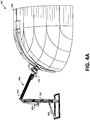
- FIGS 4A and 4B illustrate an example acquisition system 400.
- Acquisition system 400 includes a robotic manipulator 402, a camera 404, a rotatable turntable 406, and a lighting wall 408.
- Robotic manipulator 402 includes a first arm 410 and a second arm 412 that are controllable by a first actuator 414 and a second actuator 416, respectively.
- first actuator 414 and second actuator 416 can be controlled so as to move camera 404 closer to and further away from a tangible product positioned on the rotatable turntable 406 and to raise and lower camera 404 vertically.
- Robotic manipulator 402 also includes one or more third actuators 418 that can be controlled so as to tilt camera 404 up, down, left, and right and to pan camera 404 up, down, left, and right.
- the example configuration of robotic manipulator 402 is not meant to be limiting. Other robotic manipulators can be configured in other manners as well. For instance, a robotic manipulator can have six joints and six degrees of freedom.
- Camera 404 can be configured to capture data indicative of a tangible product positioned on the rotatable turntable 406.
- Camera 404 can transmit images or raw image data to a network server device using a wired or wireless interface.
- camera 404 may transmit images or raw image data to a computing device that, in turn, forwards the transmitted images or raw image data to a network server device.
- the images and/or raw image data can include 2D data and/or 3D data.
- Rotatable turntable 406 can be controlled so as to rotate 360 degrees in either direction.
- a motor of rotatable turntable 406 can be controlled so as to cause rotatable turntable 406 to rotate clock-wise or counter-clockwise around a central axis.
- Lighting wall 408 includes a plurality of individually controllable lighting elements. As shown in Figures 4A and 4B , lighting wall 408 can be configured as a partial dome including a plurality of panels. Each of the panels can include an array of individually controllable lighting elements. A controller can cause various lighting elements of various lighting panels to illuminate with various intensities in order to provide a desired amount of lighting from a desired direction(s).
- the acquisition system 400 can include a second robotic manipulator that is configured to grab tangible products and position the tangible products on rotatable turntable 406.
- the second robotic manipulator could be controllable so as to grab a tangible product from a staging area, position the tangible product on rotatable turntable 406, and to then remove the tangible product from rotatable turntable 406 after camera 404 captures one or more images or image data indicative of the tangible product.
- FIG. 5 illustrates an example user interface 500 of a client application.
- User interface 500 shows various user interface items that may be presented to a customer via a client application.
- user interface 500 includes an account information item 502, a notifications item 504, and quick start items 506.
- the account information item 502 provides a summary of a customer's account, including a username, company identifier, and product count.
- the product count may indicate the number of products in the customer's digital product catalog.
- the notifications item 504 shows notifications for the customer. Notifications in the notifications item 504 may, for instance, include notifications of product visuals that are available for review and/or notifications of product profiles that have been shared with the customer.
- the quick start items 506 include different user selectable items that can be selected by a customer to perform different actions, namely, creating new product visuals, managing assets, and connecting with partners.
- the client application may prompt the customer to provide additional information. For instance, after receiving data indicative of a selection of the "Create new product visuals" item, the client application may prompt the customer to provide a product identifier indicative of a tangible product and at least one scan parameter.
- the at least one scan parameter could include one or more model types, such as a 3D model, a 360-degree model, a virtual reality model, and/or an augmented reality model.
- the at least one scan parameter could also include a size of the tangible product (e.g., height, width, depth).
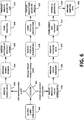
- Figure 6 depicts a flow chart illustrating an example embodiment.
- Figure 6 shows various operations that could be performed by a client device that is executing a client application.
- the client device launches a client application.
- client application could be a web-based application that is hosted by a network server device.
- the client device determines which of multiple actions to perform. The client device may make the decision based on data indicative of a user interface selection. If the decision at block 604 is to create a new product visual order, then, at block 606, the client device can receive product visual order data. For instance, client device can provide a form that a customer fills out, thereby identifying various information about a tangible product. By way of example, a manufacturer may input information such as a size, name, UPC code, description, etc., for a tangible product.
- the manufacturer can also indicate a model type, such as, 3D model, 360-degree model, augmented reality model, or virtual reality model. Further, the manufacturer could indicate a desired pose or poses for the tangible product.
- the tangible product could be a water bottle, an item of clothing, an electronic device, or another product.
- the client device can provide for display an order summary.
- the order summary may include the information provided by the customer, as well as a customer identifier indicative of the customer.
- the client device can prompt the customer to select a payment plan and provide payment data. And at block 612, the client device can send a product visual order and payment data to a network server device.
- the product visual order can include the customer identifier, a product identifier indicative of the tangible product, and at least one scan parameter.
- the network server device can, at block 614, generate a product profile corresponding to the product visual order.
- the product profile can include the product identifier and can be associated with a customer account for the customer. If product information is known by the network server device, the product profile can include any product information about the tangible product. After a product visual is created, the product visual can be added to the product profile as well.
- the client device can provide for display shipping information.
- the shipping information can specify a destination to which the tangible product is to be shipped, such as a location of an acquisition system that is configured to capture product visual data.
- the client device can receive a textual description of a tangible product to be added to a product profile.
- the textual description could include a name, features, specifications, etc.
- the client device can also receive a selection of the product profile. For instance, the client device can provide for display a list of product profiles, and receive a selection of one of the product profiles. Or the client device can receive a product identifier of a particular product profile.
- the client device can send the textual description and the product identifier to a network server device.
- the network server device can add the textual description to the product profile for the tangible product.
- the client device can receive search data.
- the client device can provide a search form, and a customer can input various search criteria.
- the client device can then provide search results matching the search data.
- providing the search results can include sending the search data to a network server device and receiving from the network server device the search results.
- the search results can include a list of product profiles.
- the client device can receive a selection of a product profile from among the search results.
- the client device can send data indicative of the selected product profile to a network server device. For instance, the client device can send a product identifier of a tangible product to the network server device.
- the network server device can then add the product profile to the digital product catalog at block 632. The client device or the network server device could also bill the customer for adding the product profile to the digital product catalog.
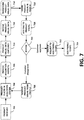
- Figure 7 depicts another flow chart illustrating an example embodiment.
- Figure 7 shows various operations that could be performed by a network server device.
- a tangible product is received at a location of an acquisition system, and, at block, 704, the tangible product is placed in the acquisition system.
- the acquisition system could be any of the acquisition systems disclosed herein.
- the network server device provides acquisition instructions for acquiring product visual data indicative of the tangible product to the acquisition system in accordance with at least one scan parameter.
- the network server device can provide the acquisition instructions in response to receiving confirmation that the tangible product has been placed in the acquisition system. For instance, after placing the tangible product on a rotatable turntable, an operator could send to the network server device a product identifier of the tangible product. The network server device could then use the product identifier to look up the product profile, and retrieve information about a product visual order. Further, the retrieved information could include at least one scan parameter, and the network server device could use the at least one scan parameter to generate the acquisition instructions.
- the network server device can generate the acquisition instructions based on a scan parameter that is indicative of a size of the tangible product. For instance, the network server device can determine, based on the size of the tangible product, a desired distance between the tangible product and the camera. The desired distance could be determined by mapping a dimension of the object (e.g., height or width) to a corresponding distance using a mapping table.
- the acquisition instructions can then include instructions for causing a robotic manipulator to move the camera such that the distance between the camera and the tangible product is the desired distance.
- the network server device can use information indicative of a size of the tangible product to generate acquisition instructions for adjusting configurable parameters, such as aperture, shutter speed, sensitivity to light (e.g., ISO sensitivity), and/or zoom, of the camera and/or acquisition instructions for adjusting illumination intensities of one or more lighting elements.
- configurable parameters such as aperture, shutter speed, sensitivity to light (e.g., ISO sensitivity), and/or zoom
- the at least one scan parameter could indicate a desired number of images
- the network server device could provide acquisition instructions for capturing the desired the number of images.
- the at least one scan parameter could include one or more desired poses of the tangible product.
- Generating the acquisition instructions could then involve generating instructions for adjusting a position of the camera and/or a rotatable turntable so as to cause the acquisition system to capture data in accordance with the desired poses of the tangible product.
- Reception of the acquisition instructions can cause a camera of the acquisition system to capture product visual data indicative of the tangible product at block 710.
- capturing product visual data indicative of the tangible product can involve receiving sensor-feedback data from one or more sensors and adjusting configurable parameters of the camera based on the received sensor-feedback data.
- the acquisition system can receive sensor-feedback data indicative of a distance between the camera and the tangible product and an intensity of light in in an environment of the acquisition system. From this received sensor-feedback data, a control system of the acquisition system (or the network server device) can select a corresponding f-stop, shutter speed, and aperture for the camera.
- the sensor-feedback data could be captured by the camera or captured by separate sensors of the acquisition system
- the network server device can receive the captured product visual data from the acquisition system.
- the acquisition system can upload to the network server device captured 2D data, 2D images, 3D data, and/or 3D images.
- the network server device transforms the captured product visual data into at least one product visual of the tangible product.
- the product visual could be a 2D image or a group of 2D images.
- the product visual could be a 360-degree model, a 3D model, an augmented reality model and an associated viewing configuration, or a virtual reality model and an associated viewing configuration.
- a scan parameter included in the product visual order may specify at least one model type, and the network server device can transform the captured product visual data into a particular model type in accordance with the specified at least one model type.
- the scan parameter may specify two or more model types, and the network server device can transform the captured product visual data into the two or more specified model types.
- Transforming the captured product visual data into a product visual could involve adjusting brightness and/or saturation. Transforming the captured product visual data into a 360-degree model could also involve combining information from multiple 2D images and/or 3D images to create the 360-degree model. Further, transforming the captured product visual data into a product visual could involve generating an associated viewing configuration for the product visual. For an augmented reality model, the associated viewing configuration could include lighting information, shading information, or both that facilitate display of the augmented reality model by an augmented reality device. Similarly, for a virtual reality model, the associated viewing configuration could include lighting information, shader information, or both that facilitate display of the virtual reality model by a virtual reality device.
- transforming the captured product visual data into a product visual could involve using machine learning processes to post-process the captured product visual data.
- a machine learning process can be used to remove a background from an image.
- a machine learning process can be used to crop an image to a standard size.
- a machine learning process can be used to smooth 3D point cloud data.
- a machine learning process can be used to stitch images to 3D point cloud data.
- a machine learning model could be trained using a training set of data.
- the training set could include a plurality of images of tangible products, including images having a background and images having backgrounds removed for respective tangible products.
- the machine learning model could be a convolution neural network, for instance. Other examples are also possible.
- the network server device can store the product visual for the tangible product in the product profile corresponding to the tangible product. Still further, at block 718, the network server device can add an identifier tag to the product visual for analytics and tracking purposes.
- a machine learning process can be used to add one or more attributes or identifier tags to the product profile. By way of example, for a tangible product in the form of a green water bottle, machine learning can be used to automatically categorize the product through tags.
- a machine learning process could recognize that the item is a bottle (e.g., using an object identification machine learning model) and colored green, generate a textual description (e.g., "green water bottle"), and add the generated textual description to product textual information associated with a product profile for the tangible product.
- a machine learning process could recognize a label or logo on a tangible product (e.g., "GMO-Free"), and list this attribute in the product profile.
- the network server device can notify the customer that the product visual is available for review and, at block 720, the customer can review the product visual using a client application. If the customer approves of the product visual then, at block 722, the network server device could also receive, from a client device executing the client application, a request to add the product profile to a digital product catalog associated with the customer's account. In response to receiving the request, at block 724, the network server device can add the product profile to the digital product catalog. Whereas, if the customer does not approve the product visual, the network server device could receive a request to delete the product visual, and, at block 726, responsively remove the product visual from the product profile.
- Figure 8 depicts another flow chart illustrating an example embodiment.
- Figure 8 shows additional operations that could be carried out by a network server device.
- a customer such as a manufacturer
- a customer may share a product profile with all of the users that have accounts on a platform provided by the network server device. With this approach, the customer could receive royalties anytime another user purchases product visuals of the product profile.
- a customer may share a product profile privately with one or more particular third-parties.
- a network server device can receive sharing settings for a particular product profile.
- the network server device can make a decision depending on the received sharing settings. If the decision is to share the product profile privately with particular third-parties, then, at block 806, the network server device can share the product profile with the particular third-parties.
- the received sharing settings may indicate customer identifiers of each of the particular third-parties.
- the particular third-parties can access the product profile by, for example, using a client application executing on a client device.
- the network server device can share product profile with all users. Further, at block 812, the network server device can track purchases of the product profile. And at block 814, for any purchases of the product profile, the customer could receive a royalty payment.
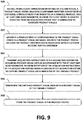
- Figure 9 is a flow chart illustrating an example embodiment.
- the process illustrated by Figure 9 may be carried out by a computing device, such as computing device 200, and/or a cluster of computing devices, such as server cluster 304.
- the process can be carried out by other types of devices or device subsystems.
- the process could be carried out by a portable computer, such as a laptop or a tablet device.
- Block 900 may involve receiving, from a client application operating on a client device, a product visual order including a customer identifier indicative of a customer, a product identifier indicative of a tangible product, and at least one scan parameter.
- the client device may be located remotely from an acquisition system that is configured to generate product visuals. Or the client device and the acquisition system may be located on a customer's premises.
- the client application can be a web-based application.
- the client application may be hosted in a server-based computing environment, and the client device may be a thin client configured to connect to the server-based computing environment.
- the client device may access the client application using a web browser.
- Block 902 may involve generating a product profile corresponding to the product visual order in a product visual database.
- the product profile may include the product identifier and be associated with a customer account for the customer.
- Block 904 may involve transmitting acquisition instructions to the acquisition system for acquiring product visual data in accordance with the at least one scan parameter, with reception of the acquisition instructions by the acquisition system causing a camera of the acquisition system to capture product visual data indicative of the tangible product.
- the acquisition instructions can include instructions for manipulating a position or orientation of the camera using a robotic manipulator of the acquisition system.
- the acquisition system may include a lighting wall having individually-controllable lighting elements.
- the acquisition instructions can include instructions for controlling the lighting elements.
- Block 906 may involve transforming the captured product visual data into a product visual of the tangible product.
- the at least one scan parameter of the product visual order can specify a model type.
- transforming the captured visual data into the product visual of the tangible product can include transforming the captured product visual data into a model of the tangible product in accordance with the specified model type.
- the captured product visual data can include 2D images captured from multiple different viewpoints around the tangible product, and the product visual of the tangible product can be a 360-degree model.
- transforming the captured visual data into the model of the tangible product can involve storing the 2D images as a sequence of images for display within a 360-degree model viewer.
- the product visual of the tangible product can include an augmented reality model and an associated viewing configuration.
- the associated viewing configuration can include lighting information, shader information, or both.
- the product visual of the tangible product can include a 360-degree model.
- the product visual of the tangible product can include a virtual reality model and an associated viewing configuration.
- Additional blocks may involve providing, to the customer, shipping information that specifies a destination to which the tangible product is to be shipped and, after the tangible product is received at the destination, receiving confirmation that the tangible product is positioned in the acquisition system. Further, transmitting the acquisition instructions can include transmitting the acquisition instructions after receiving the confirmation.
- additional blocks may involve receiving, by the one or more network servers from the client application, a request form the customer to share the product profile privately with a third-party account, and providing access to the product profile to the third-party account.
- each step, block, and/or communication can represent a processing of information and/or a transmission of information in accordance with example embodiments.
- Alternative embodiments are included within the scope of these example embodiments.
- functions described as steps, blocks, transmissions, communications, requests, responses, and/or messages can be executed out of order from that shown or discussed, including substantially concurrently or in reverse order, depending on the functionality involved.
- more or fewer blocks and/or functions can be used with any of the ladder diagrams, scenarios, and flow charts discussed herein, and these ladder diagrams, scenarios, and flow charts can be combined with one another, in part or in whole.
- a step or block that represents a processing of information can correspond to circuitry that can be configured to perform the specific logical functions of a herein-described method or technique.
- a step or block that represents a processing of information can correspond to a module, a segment, or a portion of program code (including related data).
- the program code can include one or more instructions executable by a processor for implementing specific logical functions or actions in the method or technique.
- the program code and/or related data can be stored on any type of computer readable medium such as a storage device including a disk, hard drive, or other storage medium.
- the computer readable medium can also include non-transitory computer readable media such as computer-readable media that store data for short periods of time like register memory, processor cache, and random access memory (RAM).
- the computer readable media can also include non-transitory computer readable media that store program code and/or data for longer periods of time.
- the computer readable media may include secondary or persistent long term storage, like read only memory (ROM), optical or magnetic disks, compact-disc read only memory (CD-ROM), for example.
- the computer readable media can also be any other volatile or non-volatile storage systems.
- a computer readable medium can be considered a computer readable storage medium, for example, or a tangible storage device.
- a step or block that represents one or more information transmissions can correspond to information transmissions between software and/or hardware modules in the same physical device.
- other information transmissions can be between software modules and/or hardware modules in different physical devices.
Landscapes
- Engineering & Computer Science (AREA)
- Business, Economics & Management (AREA)
- Physics & Mathematics (AREA)
- General Physics & Mathematics (AREA)
- Theoretical Computer Science (AREA)
- Economics (AREA)
- Accounting & Taxation (AREA)
- Finance (AREA)
- General Business, Economics & Management (AREA)
- Development Economics (AREA)
- Marketing (AREA)
- Strategic Management (AREA)
- Signal Processing (AREA)
- Multimedia (AREA)
- Quality & Reliability (AREA)
- Human Resources & Organizations (AREA)
- Operations Research (AREA)
- Entrepreneurship & Innovation (AREA)
- Tourism & Hospitality (AREA)
- Computer Graphics (AREA)
- Software Systems (AREA)
- General Engineering & Computer Science (AREA)
- Databases & Information Systems (AREA)
- Computer Hardware Design (AREA)
- Geometry (AREA)
- Data Mining & Analysis (AREA)
- Management, Administration, Business Operations System, And Electronic Commerce (AREA)
Applications Claiming Priority (1)
| Application Number | Priority Date | Filing Date | Title |
|---|---|---|---|
| US15/949,248 US10248981B1 (en) | 2018-04-10 | 2018-04-10 | Platform and acquisition system for generating and maintaining digital product visuals |
Publications (1)
| Publication Number | Publication Date |
|---|---|
| EP3553730A1 true EP3553730A1 (fr) | 2019-10-16 |
Family
ID=65898644
Family Applications (1)
| Application Number | Title | Priority Date | Filing Date |
|---|---|---|---|
| EP19166368.1A Withdrawn EP3553730A1 (fr) | 2018-04-10 | 2019-03-29 | Système et procédé de création et de gestion de visuels de produits numériques |
Country Status (2)
| Country | Link |
|---|---|
| US (1) | US10248981B1 (fr) |
| EP (1) | EP3553730A1 (fr) |
Families Citing this family (9)
| Publication number | Priority date | Publication date | Assignee | Title |
|---|---|---|---|---|
| EP3711677A1 (fr) * | 2019-03-18 | 2020-09-23 | Koninklijke Philips N.V. | Procédés et systèmes d'acquisition d'images ultrasonores 3d composites |
| US12056715B2 (en) | 2019-05-03 | 2024-08-06 | Ul Llc | Technologies for dynamically assessing applicability of product regulations to product protocols |
| US11475493B2 (en) * | 2019-12-11 | 2022-10-18 | Ul Llc | Methods for dynamically assessing applicability of product regulation updates to product profiles |
| CN112230504B (zh) * | 2020-12-07 | 2021-03-02 | 山东科技职业学院 | 一种基于虚拟现实的3d立体影像拍摄装置 |
| CN112738499A (zh) * | 2020-12-25 | 2021-04-30 | 京东方科技集团股份有限公司 | 基于ar的信息显示方法、装置、ar设备、电子设备及介质 |
| US12002220B2 (en) * | 2021-05-13 | 2024-06-04 | Beijing Sankuai Online Technology Co., Ltd. | Method of image acquisition based on motion control signal according to acquisition pose |
| CN113641946B (zh) * | 2021-10-15 | 2021-12-24 | 中国科学院地理科学与资源研究所 | 耗水作物种植布局优化方法及装置 |
| CN115817939B (zh) * | 2022-09-16 | 2023-11-17 | 锋聚睿(苏州)科技有限公司 | 包装设备的控制方法、装置、计算机设备及存储介质 |
| WO2024151232A1 (fr) * | 2023-01-12 | 2024-07-18 | Extoget Bilisim Anonim Sirketi | Système portable de catalogage et de commercialisation numériques |
Citations (8)
| Publication number | Priority date | Publication date | Assignee | Title |
|---|---|---|---|---|
| US6122409A (en) * | 1997-08-29 | 2000-09-19 | Mci Communications Corporation | System and method for digitally capturing a product image |
| JP2001145123A (ja) * | 1999-11-10 | 2001-05-25 | Shimane Pref Gov | 三次元表示装置用の画像撮影装置 |
| US20030093183A1 (en) * | 2001-11-13 | 2003-05-15 | Bunn Shayne J. | Multipoint inspection system |
| EP1435737A1 (fr) * | 2002-12-30 | 2004-07-07 | Abb Research Ltd. | Système et méthode de réalité augmentée |
| US20040199435A1 (en) * | 1999-07-28 | 2004-10-07 | Abrams David Hardin | Method and apparatus for remote location shopping over a computer network |
| DE202006009479U1 (de) * | 2006-06-17 | 2006-08-24 | Ernst Sicherheits- Und Kommunikationstechnik Gmbh | Vorrichtung zur Erzeugung von mehreren Ansichten eines Objekts |
| WO2013177464A1 (fr) * | 2012-05-23 | 2013-11-28 | 1-800 Contacts, Inc. | Systèmes et procédés pour générer un modèle 3d d'un produit d'essayage virtuel |
| US20160150138A1 (en) * | 2012-11-30 | 2016-05-26 | Sharp Cars Detailing & More, LLC | Inspection system |
Family Cites Families (20)
| Publication number | Priority date | Publication date | Assignee | Title |
|---|---|---|---|---|
| US5947051A (en) * | 1997-06-04 | 1999-09-07 | Geiger; Michael B. | Underwater self-propelled surface adhering robotically operated vehicle |
| US6643626B1 (en) * | 1998-11-24 | 2003-11-04 | Otavio Marcio Perri de Resende | Sales point business method and apparatus |
| US7630986B1 (en) * | 1999-10-27 | 2009-12-08 | Pinpoint, Incorporated | Secure data interchange |
| US20020085219A1 (en) | 2000-08-11 | 2002-07-04 | Victor Ramamoorthy | Method of and system for generating and viewing multi-dimensional images |
| WO2003014867A2 (fr) * | 2001-08-03 | 2003-02-20 | John Allen Ananian | Profilage de catalogue numerique interactif personnalise |
| US20040015408A1 (en) * | 2002-07-18 | 2004-01-22 | Rauen Philip Joseph | Corporate content management and delivery system |
| EP1877982A1 (fr) | 2005-04-25 | 2008-01-16 | Yappa Corporation | Systeme de production et d'affichage d'images 3d |
| US20070172216A1 (en) | 2006-01-26 | 2007-07-26 | Ortery Technologies, Inc. | Computer controlled system for synchronizing photography implementation between a 3-D turntable and an image capture device with automatic image format conversion |
| ITBO20060624A1 (it) | 2006-09-05 | 2008-03-06 | Crea Solution S R L | Metodo e macchina per catalogare digitalmente articoli |
| US20090150246A1 (en) * | 2007-12-06 | 2009-06-11 | Honeywell International, Inc. | Automatic filtering of pos data |
| US8949143B2 (en) * | 2007-12-17 | 2015-02-03 | Honeywell International Inc. | Smart data filter for POS systems |
| US8781882B1 (en) * | 2008-08-07 | 2014-07-15 | Accenture Global Services Limited | Automotive industry high performance capability assessment |
| US8700492B1 (en) | 2009-12-09 | 2014-04-15 | Amazon Technologies, Inc. | Customized product display |
| US8560357B2 (en) * | 2011-08-31 | 2013-10-15 | International Business Machines Corporation | Retail model optimization through video data capture and analytics |
| US9602778B2 (en) * | 2012-12-12 | 2017-03-21 | Sensormatic Electronics, LLC | Security video system using customer regions for monitoring point of sale areas |
| US20180124374A1 (en) * | 2014-07-31 | 2018-05-03 | Ashcorp Technologies | System and Method for Reducing System Requirements for a Virtual Reality 360 Display |
| US20170243403A1 (en) * | 2014-11-11 | 2017-08-24 | Bent Image Lab, Llc | Real-time shared augmented reality experience |
| US9672707B2 (en) * | 2015-03-12 | 2017-06-06 | Alarm.Com Incorporated | Virtual enhancement of security monitoring |
| US10311634B2 (en) * | 2015-07-21 | 2019-06-04 | IAM Robotics, LLC | Three dimensional scanning and data extraction systems and processes for supply chain piece automation |
| CA2997965C (fr) * | 2015-10-14 | 2021-04-27 | Surgical Theater LLC | Navigation chirurgicale a realite augmentee |
-
2018
- 2018-04-10 US US15/949,248 patent/US10248981B1/en active Active
-
2019
- 2019-03-29 EP EP19166368.1A patent/EP3553730A1/fr not_active Withdrawn
Patent Citations (8)
| Publication number | Priority date | Publication date | Assignee | Title |
|---|---|---|---|---|
| US6122409A (en) * | 1997-08-29 | 2000-09-19 | Mci Communications Corporation | System and method for digitally capturing a product image |
| US20040199435A1 (en) * | 1999-07-28 | 2004-10-07 | Abrams David Hardin | Method and apparatus for remote location shopping over a computer network |
| JP2001145123A (ja) * | 1999-11-10 | 2001-05-25 | Shimane Pref Gov | 三次元表示装置用の画像撮影装置 |
| US20030093183A1 (en) * | 2001-11-13 | 2003-05-15 | Bunn Shayne J. | Multipoint inspection system |
| EP1435737A1 (fr) * | 2002-12-30 | 2004-07-07 | Abb Research Ltd. | Système et méthode de réalité augmentée |
| DE202006009479U1 (de) * | 2006-06-17 | 2006-08-24 | Ernst Sicherheits- Und Kommunikationstechnik Gmbh | Vorrichtung zur Erzeugung von mehreren Ansichten eines Objekts |
| WO2013177464A1 (fr) * | 2012-05-23 | 2013-11-28 | 1-800 Contacts, Inc. | Systèmes et procédés pour générer un modèle 3d d'un produit d'essayage virtuel |
| US20160150138A1 (en) * | 2012-11-30 | 2016-05-26 | Sharp Cars Detailing & More, LLC | Inspection system |
Also Published As
| Publication number | Publication date |
|---|---|
| US10248981B1 (en) | 2019-04-02 |
Similar Documents
| Publication | Publication Date | Title |
|---|---|---|
| US10248981B1 (en) | Platform and acquisition system for generating and maintaining digital product visuals | |
| US20240345566A1 (en) | Automated certificate systems and methods | |
| US12130610B2 (en) | Automated certificate systems and methods | |
| US10360531B1 (en) | Robot implemented item manipulation | |
| JP7228671B2 (ja) | 深層学習に基づく店舗リアログラム | |
| JP7228670B2 (ja) | 深層学習を使用したリアルタイム在庫追跡 | |
| US12094054B2 (en) | Neural light transport | |
| US20150046299A1 (en) | Inventory Assessment with Mobile Devices | |
| JP7352694B2 (ja) | 倉庫ロケーションの監視方法、コンピュータ装置及び記憶媒体 | |
| WO2020236315A1 (fr) | Reconnaissance d'objets du monde réel pour dispositif informatique | |
| US12243095B2 (en) | Techniques for generating a three dimensional model for a listing | |
| US11934450B2 (en) | System and method for object matching using 3D imaging | |
| CN109154816A (zh) | 用于自主无人机导航的系统和方法 | |
| EP3244286B1 (fr) | Installation d'un élément physique | |
| US12524868B2 (en) | Retail shelf image processing and inventory tracking system | |
| US20190080170A1 (en) | Icon-ize identified objects in a known area to add more context to 3d computer vision | |
| CN113986949B (zh) | 物品标签卡调整方法、装置、电子设备和计算机可读介质 | |
| JP2018101339A (ja) | 推定装置、推定方法及び推定プログラム | |
| US20240220534A1 (en) | System and Method for Object Matching Using 3D Imaging | |
| US20250086585A1 (en) | Retail shelf image processing and inventory tracking system | |
| US20240386705A1 (en) | Automatic Recognition of Equipment Configuration | |
| US20240420211A1 (en) | Intelligent product guidance based on space availability | |
| US20180053247A1 (en) | Produce selection system for bulk items | |
| CN116386024A (zh) | 货物识别系统、中控设备及存储介质 | |
| AU2019275955B2 (en) | A system for capturing media of a product |
Legal Events
| Date | Code | Title | Description |
|---|---|---|---|
| PUAI | Public reference made under article 153(3) epc to a published international application that has entered the european phase |
Free format text: ORIGINAL CODE: 0009012 |
|
| AK | Designated contracting states |
Kind code of ref document: A1 Designated state(s): AL AT BE BG CH CY CZ DE DK EE ES FI FR GB GR HR HU IE IS IT LI LT LU LV MC MK MT NL NO PL PT RO RS SE SI SK SM TR |
|
| AX | Request for extension of the european patent |
Extension state: BA ME |
|
| STAA | Information on the status of an ep patent application or granted ep patent |
Free format text: STATUS: THE APPLICATION IS DEEMED TO BE WITHDRAWN |
|
| 18D | Application deemed to be withdrawn |
Effective date: 20200603 |