EP3556060B1 - Procédé d'optimisation de la reconnaissance de défaillance des protocoles de redondance contenant des paquets de données d'essai - Google Patents
Procédé d'optimisation de la reconnaissance de défaillance des protocoles de redondance contenant des paquets de données d'essai Download PDFInfo
- Publication number
- EP3556060B1 EP3556060B1 EP17828698.5A EP17828698A EP3556060B1 EP 3556060 B1 EP3556060 B1 EP 3556060B1 EP 17828698 A EP17828698 A EP 17828698A EP 3556060 B1 EP3556060 B1 EP 3556060B1
- Authority
- EP
- European Patent Office
- Prior art keywords
- network
- data packets
- test data
- transmission
- data packet
- Prior art date
- Legal status (The legal status is an assumption and is not a legal conclusion. Google has not performed a legal analysis and makes no representation as to the accuracy of the status listed.)
- Active
Links
Images

Classifications
-
- H—ELECTRICITY
- H04—ELECTRIC COMMUNICATION TECHNIQUE
- H04L—TRANSMISSION OF DIGITAL INFORMATION, e.g. TELEGRAPHIC COMMUNICATION
- H04L69/00—Network arrangements, protocols or services independent of the application payload and not provided for in the other groups of this subclass
- H04L69/40—Network arrangements, protocols or services independent of the application payload and not provided for in the other groups of this subclass for recovering from a failure of a protocol instance or entity, e.g. service redundancy protocols, protocol state redundancy or protocol service redirection
-
- H—ELECTRICITY
- H04—ELECTRIC COMMUNICATION TECHNIQUE
- H04L—TRANSMISSION OF DIGITAL INFORMATION, e.g. TELEGRAPHIC COMMUNICATION
- H04L12/00—Data switching networks
- H04L12/28—Data switching networks characterised by path configuration, e.g. LAN [Local Area Networks] or WAN [Wide Area Networks]
- H04L12/42—Loop networks
- H04L12/437—Ring fault isolation or reconfiguration
-
- H—ELECTRICITY
- H04—ELECTRIC COMMUNICATION TECHNIQUE
- H04L—TRANSMISSION OF DIGITAL INFORMATION, e.g. TELEGRAPHIC COMMUNICATION
- H04L43/00—Arrangements for monitoring or testing data switching networks
- H04L43/06—Generation of reports
- H04L43/067—Generation of reports using time frame reporting
-
- H—ELECTRICITY
- H04—ELECTRIC COMMUNICATION TECHNIQUE
- H04L—TRANSMISSION OF DIGITAL INFORMATION, e.g. TELEGRAPHIC COMMUNICATION
- H04L43/00—Arrangements for monitoring or testing data switching networks
- H04L43/08—Monitoring or testing based on specific metrics, e.g. QoS, energy consumption or environmental parameters
- H04L43/0823—Errors, e.g. transmission errors
-
- H—ELECTRICITY
- H04—ELECTRIC COMMUNICATION TECHNIQUE
- H04L—TRANSMISSION OF DIGITAL INFORMATION, e.g. TELEGRAPHIC COMMUNICATION
- H04L43/00—Arrangements for monitoring or testing data switching networks
- H04L43/10—Active monitoring, e.g. heartbeat, ping or trace-route
- H04L43/106—Active monitoring, e.g. heartbeat, ping or trace-route using time related information in packets, e.g. by adding timestamps
-
- H—ELECTRICITY
- H04—ELECTRIC COMMUNICATION TECHNIQUE
- H04L—TRANSMISSION OF DIGITAL INFORMATION, e.g. TELEGRAPHIC COMMUNICATION
- H04L43/00—Arrangements for monitoring or testing data switching networks
- H04L43/50—Testing arrangements
-
- H—ELECTRICITY
- H04—ELECTRIC COMMUNICATION TECHNIQUE
- H04L—TRANSMISSION OF DIGITAL INFORMATION, e.g. TELEGRAPHIC COMMUNICATION
- H04L43/00—Arrangements for monitoring or testing data switching networks
- H04L43/08—Monitoring or testing based on specific metrics, e.g. QoS, energy consumption or environmental parameters
- H04L43/0805—Monitoring or testing based on specific metrics, e.g. QoS, energy consumption or environmental parameters by checking availability
- H04L43/0811—Monitoring or testing based on specific metrics, e.g. QoS, energy consumption or environmental parameters by checking availability by checking connectivity
Definitions
- the invention relates to a method for operating a network, wherein network devices in the network exchange user data with each other via at least one transmission medium by transmitting user data packets and at least one redundancy protocol is used to reduce the risk of failure, wherein this at least one redundancy protocol carries out a transmission of test data packets to detect failures in the network, according to the features of the respective preamble of the two independent patent claims.
- Methods for operating a network are known, wherein network devices in the network exchange data with each other and from and to other devices such as sensors, actuators, and the like via at least one transmission medium, and at least one redundancy protocol is used to reduce the risk of failure.
- This at least one redundancy protocol carries out a cyclical transmission of test data packets to detect failures in the network.
- Networks, in particular Ethernet data networks form the technological basis, for example, for industrial monitoring and for control networks in production lines. A failure or malfunction in these networks is typically associated with a loss of productivity or control or monitoring reliability.
- Redundancy protocols such as the Media Redundancy Protocol (MRP) or the Device Level Ring (DLR) have proven effective in reducing the risk of failure. These redundancy protocols typically require, in addition to the exchange of payload data (also referred to as productive data) between network devices and other devices in the network using payload data packets (also referred to as frames), the cyclical transmission of test data packets (also referred to as test frames or test packets) to detect network failures.
- payload data also referred to as productive data
- payload data packets also referred to as frames
- test data packets also referred to as test frames or test packets
- test data packets can be significantly delayed, which negatively impacts the worst-case switchover time to redundant network paths in the event of a failure.
- frame preemption according to IEEE802.3br and IEEE 802.1Qbu also enables the interruption of the transmission of other data (payload data) in order to improve the latency for certain traffic classes of the payload data packets.
- TDMA time-division multiple access
- CoS class-of-service priorities
- VLAN virtual local area network
- test data packets of a redundancy protocol typically compete with other data (payload) for access to at least one transmission medium (e.g., data line, radio link, or the like; in Ethernet applications, primarily wired).
- transmission medium e.g., data line, radio link, or the like; in Ethernet applications, primarily wired.
- the payload can increasingly lead to delays in the forwarding of test data packets.
- the worst-case detection and switchover times of redundancy protocols with test data packets are therefore due to the maximum delay in forwarding a test frame on each network device.
- the invention is therefore based on the object of providing a method for operating a network that avoids the disadvantages described above.
- the time required to switch to another transmission path when an interruption of at least one transmission medium is detected is to be reduced.
- the present invention combines known methods of dynamic redundancy protocols with test data packets and the use of frame preemption or time slotting techniques in three alternative or combinable ways. This, either individually or in combination, enables a significant reduction in the worst-case detection time of a network failure and thus a reduction in the worst-case failover time in the event of a fault.
- the redundancy protocols MRP and DLR have proven effective in ring networks.
- a network device configured as a ring master monitors the network by regularly sending test data packets through the ring. The test data packets are received by every network device participating in the redundancy protocol and forwarded until they arrive back at the ring master. If the test data packets fail to arrive, a failure occurs in the ring network, and an alternative transmission path is activated.
- the invention provides that the transmission of a user data packet is interrupted and, instead of further transmission of this user data packet, a test data packet is transmitted and only then is the transmission of the remaining user data packet carried out.
- redundancy protocols can treat test data packets as express data, and the transmission of payload packets can be interrupted. This interruption enables the prioritized transmission of test data packets, even if a payload packet has already begun. After the test data packet has been transmitted, the transmission of payload packets is resumed and completed.
- the dwell time of the test data packets in the network devices participating in the redundancy protocol is reduced to a minimum defined by the frame preemption mechanism. This results in the dwell time of the test data packets being independent of the payload data length, thus significantly reducing worst-case detection and failover times in the event of a fault.
- the invention provides that a predeterminable time range is reserved for the transmission of test data packets, wherein no payload data packets (regardless of the traffic class or the priority assigned to them) are transmitted within the predeterminable time range.
- a predefined time range is always available for the transmission of a test data packet, which is at least large enough for the test data packet to be transmitted within the predefined time range. It is also possible to select a longer time for the reserved transmission of test data packets than is required for the actual transmission. In this case, it is ensured that the test data packets are transmitted with the highest priority and precedence over the transmission of payload data packets.
- the specified time range is longer than the time required to transmit a test data packet, the available bandwidth will not be used optimally, since within the specified time range (time slot) after the transmission of a test data packet there is still time available to transmit payload data packets, in particular payload data packets of lower priority.
- the invention therefore provides that a predeterminable time period is reserved for the transmission of test data packets, wherein the transmission of payload data can continue within the predeterminable time period and the test data packets are transmitted with a higher transmission priority than the payload data packets.
- payload data packets in particular payload data packets with a lower priority or payload data packets that are in a queue, can also be transmitted within this time slot. This means that the bandwidth is optimally utilized and it is not necessary to wait for the predefined time period to expire before further payload data packets can be transmitted.
- a test data packet is first transmitted by the network devices and only then does at least one network device begin transmitting a user data packet.
- the fact that no user data packets are transmitted within the predefined time range advantageously ensures that the user data packets cannot cause any influence or delay for the transmission of the test data packets.
- test data packets are assigned to a class, a so-called traffic class, based on recognizable properties of these packets, for which a predefined time slot is then configured using time slotting techniques such as IEEE802.1Qbv. In such a time slot, the test data packets are then transmitted with priority, either within a class and/or across classes.
- the advantage of this solution is the optimization of worst-case detection and switching times and thus in the Use of time slotting techniques, such as the aforementioned "Enhancements for Scheduled Traffic” (IEEE802.1Qbv), to enable the transmission of test data packets on the ring through dedicated time slots without additional waiting time in the forwarding network device.
- a predefined portion of the available network bandwidth is thus reserved for test frames (test data packets).
- the ring master sends the test frames synchronized with the start of the time slot designated for test frames.
- the generation of the test data packets in the network device configured as the master is time-coupled with the opening of the time slot designated for the test data packets. This ensures optimal use of the time window for transmitting the test data packet.
- the invention is not limited to ring redundancy protocols, but extends to redundancy protocols based on the use of test data packets, regardless of the network topology.
- the detection of a failure is thus always advantageously quickly detected by minimizing the waiting time of test data packets on network devices, so that the time until a failure is detected is minimized.
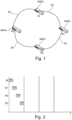
- Figure 1 shows an example of a network in the form of a ring topology in which four network devices (NWG) are present. These network devices (NWG) are connected to each other via a wired transmission medium, in particular a data line (DL), for the purpose of transmitting data.
- DL data line
- MRP Media Redundancy Protocol
- DLR Device Level Ring
- FIG 2 is the passage of test data packets TP within the ring topology according to Figure 1
- the network device NWG which is configured as master M, sends a test data packet TP to the next network device NWG (here the client R1). From there, the client R1 sends the test data packet to the next network device NWG, namely the next client R2. Once the test data packet TP has been received, it is forwarded to the next Network device NWG, namely the client R3, which can forward the received test data packet to the master M. Due to this mechanism, it is recognized in a conventional manner that the ring is closed and there is no interruption.
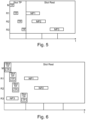
- test data packets and payload data packets The worst case scenario for this transmission of test data packets and payload data packets is that the master M sends a test data packet. Since the client R1 processes, and in particular sends, a payload data packet NP1, the test data packet TP received by the master M can only be forwarded once the payload data packet NP1 has been completely transmitted. The same applies to the other network devices R2 and R3, so that in any case, the forwarding of the test data packet by the other network devices NWG (here the clients R2 and R3) is delayed due to the processing or transmission of the other payload data packets NP2 and NP3.
- NWG here the clients R2 and R3
- the transmission of a payload packet is interrupted and instead of further transmission of this payload packet, a test data packet is transmitted and only then the transmission of the remaining payload packet is carried out.
- the first network device (the master M, which does not necessarily have to be the first network device, but can be any other network device) sends out a test data packet and the next network device NWG, here the client R1, starts sending a payload packet 1.
- NWG next network device
- the system does not wait until the payload packet NP1 has been completely transmitted by the network device R1, but rather interrupts the transmission of this payload packet NP1 in order to initiate the transmission of the test data packet TP by the network device R1. After this has happened, the remaining payload packet NP1 (in the Figure 4 the larger part of NP1) is emitted.
- the same process occurs on network device R2, which has already begun transmitting a payload packet NP2 upon receiving the test data packet.
- the transmission of the payload packet NP2 that had already begun is interrupted, and the test data packet TP is transmitted by network device R2.
- the remaining part of the payload packet NP2 (here, again, the larger part, for example) is transmitted further.
- the length or size of the respective payload data packet NP1, NP2 or NP3 according to Figure 4 depends on the time at which the respective test data packet TP was received on the respective network device. This means that the length or size of the payload packets NP1, NP2 and NP3 before and after the test data packet TP can be the same or different than shown in Figure 4 is shown.
- the master M therefore sends out its test data packet TP within the reserved time slot, which is received and forwarded by the client R1.
- the same also applies to the two other network devices R2 and R3, which can only send their payload packets NP2 and NP3 respectively when the test data packet TP has been transmitted within the reserved time slot (slot TP).
- slot TP the reserved time slot
- a predeterminable time range is reserved for the transmission of test data packets, with no payload data packets being transmitted within the predeterminable time range.
- This can thus be at least two or more time slots (as opposed to one time slot for all network devices) and even different time slots on different network devices to account for path and processing latencies.
- each network device (M, R1 to R3) is assigned a reserved time slot (slot TP) in which the test data packet TP can be transmitted.
- the transmission of the payload packets is possible at any time before and after this reserved time slot.
- the network device configured as master M sends a test data packet to the client R1 in a time slot reserved for this purpose. Before and after the reserved time slot, the network device configured as master can receive and send payload packets.
- the client R1 Before and after the reserved time slot, the network device configured as master can receive and send payload packets.
- the client R1 has reserved a time slot within which it can forward the received test data packet TP.
- the payload packet NP1 from client R1 is sent after the reserved time slot for the test data packet TP.
- Client R3 has also reserved a time slot for the test data packet TP. However, this client R3 can, in turn, send its payload packet NP3 before the reserved time slot.
- time slots reserved by the respective network devices are identical (i.e., they have the same length). Alternatively, different time slots can be reserved for the test data packets for each network device or group of network devices (configured in the network device). Care must be taken to ensure that the specified time range (time slot) has a minimum length sufficient for the secure and complete transmission of a test data packet.
- test data packets are transmitted preferentially in the reserved time slot of the network devices, so that either the transmission of a network data packet must occur before the reserved time slot or only after the transmission of the test data packet within its reserved time slot. This advantageously ensures that whenever a test data packet is pending transmission, no payload data packet is in transmission and would interfere with the transmission of the test data packet.
- test data packets are treated as so-called express data, just as in the first solution according to the invention, whereby in the first solution the payload data packets are interrupted and in the second solution the test data packets have the highest priority and thus "free" travel on the network.
Landscapes
- Engineering & Computer Science (AREA)
- Computer Networks & Wireless Communication (AREA)
- Signal Processing (AREA)
- Computer Security & Cryptography (AREA)
- Health & Medical Sciences (AREA)
- Cardiology (AREA)
- General Health & Medical Sciences (AREA)
- Environmental & Geological Engineering (AREA)
- Maintenance And Management Of Digital Transmission (AREA)
- Small-Scale Networks (AREA)
Claims (6)
- Procédé pour faire fonctionner un réseau, des périphériques de réseau dans le réseau échangeant entre eux des données utiles par le biais d'au moins un support de transmission par la transmission de paquets de données utiles et, afin de réduire un risque de défaillance, au moins un protocole de redondance étant utilisé, cet au moins un protocole de redondance effectuant une transmission de paquets de données de test afin de détecter des défaillances dans le réseau, caractérisé en ce que la transmission d'un paquet de données utiles est interrompue et, à la place de la poursuite de la transmission de ce paquet de données utiles, un paquet de données de test est transmis en vue de la détection des défaillances dans le réseau, et la transmission du reste du paquet de données utiles n'est effectuée qu'ensuite.
- Procédé pour faire fonctionner un réseau, des périphériques de réseau dans le réseau échangeant entre eux des données utiles par le biais d'au moins un support de transmission par la transmission de paquets de données utiles et, afin de réduire un risque de défaillance, au moins un protocole de redondance étant utilisé, cet au moins un protocole de redondance effectuant une transmission de paquets de données de test afin de détecter des défaillances dans le réseau, caractérisé en ce qu'un créneau temporel pouvant être prédéfini est réservé pour la transmission de paquets de données de test en vue de la détection de défaillances dans le réseau, aucun paquet de données utiles n'étant transmis à l'intérieur du créneau temporel pouvant être prédéfini.
- Procédé pour faire fonctionner un réseau, des périphériques de réseau dans le réseau échangeant entre eux des données utiles par le biais d'au moins un support de transmission par la transmission de paquets de données utiles et, afin de réduire un risque de défaillance, au moins un protocole de redondance étant utilisé, cet au moins un protocole de redondance effectuant une transmission de paquets de données de test afin de détecter des défaillances dans le réseau, caractérisé en ce qu'un créneau temporel pouvant être prédéfini est réservé pour la transmission de paquets de données de test en vue de la détection de défaillances dans le réseau, la transmission de données utiles pouvant continuer à s'effectuer à l'intérieur du créneau temporel pouvant être prédéfini et les paquets de données de test étant transmis avec une priorité de transmission plus élevée que les paquets de données utiles.
- Procédé pour faire fonctionner un réseau selon la revendication 2 ou 3, caractérisé en ce qu'un paquet de données de test est d'abord transmis par le périphérique de réseau configuré en tant que maître, et que la transmission d'un paquet de données utiles n'est débutée qu'ensuite par au moins un périphérique de réseau.
- Procédé pour faire fonctionner un réseau selon la revendication 2 ou 3, caractérisé en ce qu'une génération des paquets de données de test dans le périphérique de réseau qui est configuré en tant que maître est couplée dans le temps à l'ouverture du créneau temporel prévu pour les paquets de données de test.
- Procédé pour faire fonctionner un réseau selon l'une des revendications précédentes, caractérisé en ce que des paquets de données de test destinés à détecter des défaillances dans le réseau se voient attribuer une priorité plus élevée et les temps d'attente des paquets de données de test sur les périphériques du réseau sont ainsi réduits au minimum, lequel est nécessaire jusqu'à l'interruption effective d'un paquet de données utiles ayant une priorité moins élevée.
Applications Claiming Priority (2)
| Application Number | Priority Date | Filing Date | Title |
|---|---|---|---|
| DE102016124584 | 2016-12-16 | ||
| PCT/EP2017/083105 WO2018109190A1 (fr) | 2016-12-16 | 2017-12-15 | Procédé d'optimisation de la reconnaissance de défaillance des protocoles de redondance contenant des paquets de données d'essai |
Publications (2)
| Publication Number | Publication Date |
|---|---|
| EP3556060A1 EP3556060A1 (fr) | 2019-10-23 |
| EP3556060B1 true EP3556060B1 (fr) | 2025-06-18 |
Family
ID=60955012
Family Applications (1)
| Application Number | Title | Priority Date | Filing Date |
|---|---|---|---|
| EP17828698.5A Active EP3556060B1 (fr) | 2016-12-16 | 2017-12-15 | Procédé d'optimisation de la reconnaissance de défaillance des protocoles de redondance contenant des paquets de données d'essai |
Country Status (5)
| Country | Link |
|---|---|
| US (1) | US20190335024A1 (fr) |
| EP (1) | EP3556060B1 (fr) |
| CN (1) | CN110249591B (fr) |
| DE (1) | DE102017130167A1 (fr) |
| WO (1) | WO2018109190A1 (fr) |
Families Citing this family (2)
| Publication number | Priority date | Publication date | Assignee | Title |
|---|---|---|---|---|
| EP3451591B1 (fr) * | 2017-09-01 | 2020-03-18 | Siemens Aktiengesellschaft | Procédé de fonctionnement d'un réseau de communication en topologie en anneau ainsi qu'un tel réseau de communication |
| MX2022004547A (es) * | 2019-10-18 | 2022-05-10 | Omicron Electronics Gmbh | Arreglo de verificacion seguro. |
Citations (2)
| Publication number | Priority date | Publication date | Assignee | Title |
|---|---|---|---|---|
| EP1734700A1 (fr) * | 2005-06-16 | 2006-12-20 | Siemens Aktiengesellschaft | Procédé et dispositif pour la transmission de données en temps réel dans un réseau Ethernet |
| EP3451591A1 (fr) * | 2017-09-01 | 2019-03-06 | Siemens Aktiengesellschaft | Procédé de fonctionnement d'un réseau de communication en topologie en anneau ainsi qu'un tel réseau de communication |
Family Cites Families (12)
| Publication number | Priority date | Publication date | Assignee | Title |
|---|---|---|---|---|
| SE505091C2 (sv) * | 1995-10-03 | 1997-06-23 | Ericsson Telefon Ab L M | Redundansstruktur vid digital väljare |
| DE19810587A1 (de) * | 1998-03-11 | 1999-09-16 | Siemens Ag | Ethernet-Netzwerk mit Redundanzeigenschaften |
| US20050058149A1 (en) * | 1998-08-19 | 2005-03-17 | Howe Wayne Richard | Time-scheduled and time-reservation packet switching |
| US6910148B1 (en) * | 2000-12-07 | 2005-06-21 | Nokia, Inc. | Router and routing protocol redundancy |
| US20070071026A1 (en) * | 2005-09-23 | 2007-03-29 | Rivulet Communications, Inc. | Compressed video packet scheduling system |
| US7747734B2 (en) * | 2006-03-29 | 2010-06-29 | International Business Machines Corporation | Apparatus, system, and method for error assessment over a communication link |
| DE602007004878D1 (de) * | 2006-09-29 | 2010-04-01 | Nokia Siemens Networks Gmbh | Verfahren zur schutzumschaltung |
| US8520508B2 (en) * | 2007-02-13 | 2013-08-27 | Force10 Networks, Inc. | Spanning tree ring protocol |
| US8259590B2 (en) * | 2007-12-21 | 2012-09-04 | Ciena Corporation | Systems and methods for scalable and rapid Ethernet fault detection |
| US8817611B2 (en) * | 2009-03-18 | 2014-08-26 | Hirschmann Automation And Control Gmbh | Parallel operation of RSTP (rapid spanning tree protocol) and MRP (media redundancy protocol) and segmentation/coupling |
| EP2661023B1 (fr) * | 2012-04-30 | 2015-01-14 | Siemens Aktiengesellschaft | Appareil de communication pour un réseau de communication industriel fonctionnant de manière redondante et procédé de fonctionnement d'un appareil de communication |
| US9769075B2 (en) * | 2015-04-01 | 2017-09-19 | Honeywell International Inc. | Interference cognizant network scheduling |
-
2017
- 2017-12-15 DE DE102017130167.4A patent/DE102017130167A1/de active Pending
- 2017-12-15 CN CN201780085740.1A patent/CN110249591B/zh active Active
- 2017-12-15 WO PCT/EP2017/083105 patent/WO2018109190A1/fr not_active Ceased
- 2017-12-15 US US16/468,424 patent/US20190335024A1/en not_active Abandoned
- 2017-12-15 EP EP17828698.5A patent/EP3556060B1/fr active Active
Patent Citations (2)
| Publication number | Priority date | Publication date | Assignee | Title |
|---|---|---|---|---|
| EP1734700A1 (fr) * | 2005-06-16 | 2006-12-20 | Siemens Aktiengesellschaft | Procédé et dispositif pour la transmission de données en temps réel dans un réseau Ethernet |
| EP3451591A1 (fr) * | 2017-09-01 | 2019-03-06 | Siemens Aktiengesellschaft | Procédé de fonctionnement d'un réseau de communication en topologie en anneau ainsi qu'un tel réseau de communication |
Also Published As
| Publication number | Publication date |
|---|---|
| CN110249591A (zh) | 2019-09-17 |
| CN110249591B (zh) | 2022-05-10 |
| EP3556060A1 (fr) | 2019-10-23 |
| WO2018109190A1 (fr) | 2018-06-21 |
| US20190335024A1 (en) | 2019-10-31 |
| DE102017130167A1 (de) | 2018-06-21 |
Similar Documents
| Publication | Publication Date | Title |
|---|---|---|
| EP2936747B1 (fr) | Transmission de données en utilisant un état d'exception de protocole | |
| EP1100230B1 (fr) | Système de transmission de données pour avions | |
| EP3622692B1 (fr) | Procédé de transmission performante de données dans un réseau de données, à conditions en partie en temps réel, et système de mise en oeuvre dudit procédé | |
| EP2637362B1 (fr) | Dispositif de participant bus pour le raccordement à un bus de données série à lignes redondantes et procédé de commande de la communication d'un participant bus avec un bus de données série à lignes redondantes | |
| EP3155763B1 (fr) | Transmission redondante de télégrammes de données dans des réseaux de communication présentant une topologie en anneau | |
| EP2538619B1 (fr) | Procédé destiné à la transmission de paquets de données | |
| EP2586162B1 (fr) | Transmission prioritaire de télégrammes de données | |
| EP3183851A1 (fr) | Noeud de distribution, réseau d'automatisation et procédé de transmission de paquets de données sensibles au temps réel et non sensibles au temps réel | |
| EP3211838B1 (fr) | Systeme de communication industriel pouvant fonctionner de maniere redondante, son procede de fonctionnement et station emettrice/receptrice radio | |
| EP2936746B1 (fr) | Protocole de transmission de données avec état d'exception de protocole | |
| EP2661023A1 (fr) | Appareil de communication pour un réseau de communication industriel fonctionnant de manière redondante et procédé de fonctionnement d'un appareil de communication | |
| EP3151476B1 (fr) | Procede de trafic transversal entre deux esclaves d'un reseau de donnees en boucle | |
| EP3854035B1 (fr) | Procédé de transmission de données et réseau de communication d'automatisation | |
| EP3895384B1 (fr) | Unité de détection de recouvrement pour un poste d'abonné d'un système de bus série et procédé de communication dans un système de bus série | |
| DE102012206529B4 (de) | Drahtloses Echtzeitübertragungssystem | |
| EP3451591B1 (fr) | Procédé de fonctionnement d'un réseau de communication en topologie en anneau ainsi qu'un tel réseau de communication | |
| EP2704370B1 (fr) | Procédé de transmission de nouvelles dans un réseau de communication industriel pouvant fonctionner de manière redondante et appareil de communication pour un réseau de communication industriel pouvant fonctionner de manière redondante | |
| WO2009089850A1 (fr) | Procédé de fonctionnement d'un réseau de communication, commutateur et réseau de communication | |
| EP3130099A1 (fr) | Procédé pour un système de transmission redondant avec prp et économie d'énergie | |
| DE102017130167A1 (de) | Verfahren zur Optimierung der Ausfallerkennung von Redundanz-Protokollen mit Testdatenpaketen | |
| EP1990941B1 (fr) | Agencement et procédé destinés à la communication de données par un réseau non sécurisé | |
| EP3629550A1 (fr) | Procédé de transmission de données dans un réseau de communication industrielle et dispositif de communication couplée | |
| EP2466805B1 (fr) | Procédé de transmission de données entre deux participants, convertisseur d'émission et de réception de données et voie de transmission de données | |
| DE102011003310A1 (de) | Netzwerkgerät für ein Automatisierungsnetzwerk | |
| DE102020202226A1 (de) | Verfahren sowie Übertragungssystem zur Übermittlung von Messdaten |
Legal Events
| Date | Code | Title | Description |
|---|---|---|---|
| STAA | Information on the status of an ep patent application or granted ep patent |
Free format text: STATUS: UNKNOWN |
|
| STAA | Information on the status of an ep patent application or granted ep patent |
Free format text: STATUS: THE INTERNATIONAL PUBLICATION HAS BEEN MADE |
|
| PUAI | Public reference made under article 153(3) epc to a published international application that has entered the european phase |
Free format text: ORIGINAL CODE: 0009012 |
|
| STAA | Information on the status of an ep patent application or granted ep patent |
Free format text: STATUS: REQUEST FOR EXAMINATION WAS MADE |
|
| 17P | Request for examination filed |
Effective date: 20190715 |
|
| AK | Designated contracting states |
Kind code of ref document: A1 Designated state(s): AL AT BE BG CH CY CZ DE DK EE ES FI FR GB GR HR HU IE IS IT LI LT LU LV MC MK MT NL NO PL PT RO RS SE SI SK SM TR |
|
| AX | Request for extension of the european patent |
Extension state: BA ME |
|
| DAV | Request for validation of the european patent (deleted) | ||
| DAX | Request for extension of the european patent (deleted) | ||
| RIN1 | Information on inventor provided before grant (corrected) |
Inventor name: WENDT, MARTIN Inventor name: MUECK, FLORIAN Inventor name: KEHRER, STEPHAN Inventor name: HUMMEN, RENE |
|
| RIN1 | Information on inventor provided before grant (corrected) |
Inventor name: WENDT, MARTIN Inventor name: KEHRER, STEPHAN Inventor name: MUECK, FLORIAN Inventor name: HUMMEN, RENE |
|
| STAA | Information on the status of an ep patent application or granted ep patent |
Free format text: STATUS: EXAMINATION IS IN PROGRESS |
|
| 17Q | First examination report despatched |
Effective date: 20210511 |
|
| GRAP | Despatch of communication of intention to grant a patent |
Free format text: ORIGINAL CODE: EPIDOSNIGR1 |
|
| STAA | Information on the status of an ep patent application or granted ep patent |
Free format text: STATUS: GRANT OF PATENT IS INTENDED |
|
| RIC1 | Information provided on ipc code assigned before grant |
Ipc: H04L 43/50 20220101ALI20250227BHEP Ipc: H04L 43/0823 20220101ALI20250227BHEP Ipc: H04L 43/0811 20220101ALI20250227BHEP Ipc: H04L 12/437 20060101AFI20250227BHEP |
|
| INTG | Intention to grant announced |
Effective date: 20250314 |
|
| GRAS | Grant fee paid |
Free format text: ORIGINAL CODE: EPIDOSNIGR3 |
|
| GRAA | (expected) grant |
Free format text: ORIGINAL CODE: 0009210 |
|
| STAA | Information on the status of an ep patent application or granted ep patent |
Free format text: STATUS: THE PATENT HAS BEEN GRANTED |
|
| AK | Designated contracting states |
Kind code of ref document: B1 Designated state(s): AL AT BE BG CH CY CZ DE DK EE ES FI FR GB GR HR HU IE IS IT LI LT LU LV MC MK MT NL NO PL PT RO RS SE SI SK SM TR |
|
| REG | Reference to a national code |
Ref country code: GB Ref legal event code: FG4D Free format text: NOT ENGLISH |
|
| REG | Reference to a national code |
Ref country code: CH Ref legal event code: EP |
|
| REG | Reference to a national code |
Ref country code: DE Ref legal event code: R096 Ref document number: 502017016914 Country of ref document: DE |
|
| REG | Reference to a national code |
Ref country code: CH Ref legal event code: EP |
|
| REG | Reference to a national code |
Ref country code: IE Ref legal event code: FG4D Free format text: LANGUAGE OF EP DOCUMENT: GERMAN |
|
| PG25 | Lapsed in a contracting state [announced via postgrant information from national office to epo] |
Ref country code: FI Free format text: LAPSE BECAUSE OF FAILURE TO SUBMIT A TRANSLATION OF THE DESCRIPTION OR TO PAY THE FEE WITHIN THE PRESCRIBED TIME-LIMIT Effective date: 20250618 |
|
| REG | Reference to a national code |
Ref country code: LT Ref legal event code: MG9D |
|
| PG25 | Lapsed in a contracting state [announced via postgrant information from national office to epo] |
Ref country code: NO Free format text: LAPSE BECAUSE OF FAILURE TO SUBMIT A TRANSLATION OF THE DESCRIPTION OR TO PAY THE FEE WITHIN THE PRESCRIBED TIME-LIMIT Effective date: 20250918 Ref country code: GR Free format text: LAPSE BECAUSE OF FAILURE TO SUBMIT A TRANSLATION OF THE DESCRIPTION OR TO PAY THE FEE WITHIN THE PRESCRIBED TIME-LIMIT Effective date: 20250919 |
|
| PG25 | Lapsed in a contracting state [announced via postgrant information from national office to epo] |
Ref country code: BG Free format text: LAPSE BECAUSE OF FAILURE TO SUBMIT A TRANSLATION OF THE DESCRIPTION OR TO PAY THE FEE WITHIN THE PRESCRIBED TIME-LIMIT Effective date: 20250618 |
|
| PG25 | Lapsed in a contracting state [announced via postgrant information from national office to epo] |
Ref country code: HR Free format text: LAPSE BECAUSE OF FAILURE TO SUBMIT A TRANSLATION OF THE DESCRIPTION OR TO PAY THE FEE WITHIN THE PRESCRIBED TIME-LIMIT Effective date: 20250618 |
|
| PG25 | Lapsed in a contracting state [announced via postgrant information from national office to epo] |
Ref country code: RS Free format text: LAPSE BECAUSE OF FAILURE TO SUBMIT A TRANSLATION OF THE DESCRIPTION OR TO PAY THE FEE WITHIN THE PRESCRIBED TIME-LIMIT Effective date: 20250918 |
|
| REG | Reference to a national code |
Ref country code: NL Ref legal event code: MP Effective date: 20250618 |
|
| PG25 | Lapsed in a contracting state [announced via postgrant information from national office to epo] |
Ref country code: LV Free format text: LAPSE BECAUSE OF FAILURE TO SUBMIT A TRANSLATION OF THE DESCRIPTION OR TO PAY THE FEE WITHIN THE PRESCRIBED TIME-LIMIT Effective date: 20250618 |
|
| PG25 | Lapsed in a contracting state [announced via postgrant information from national office to epo] |
Ref country code: NL Free format text: LAPSE BECAUSE OF FAILURE TO SUBMIT A TRANSLATION OF THE DESCRIPTION OR TO PAY THE FEE WITHIN THE PRESCRIBED TIME-LIMIT Effective date: 20250618 |
|
| PG25 | Lapsed in a contracting state [announced via postgrant information from national office to epo] |
Ref country code: PT Free format text: LAPSE BECAUSE OF FAILURE TO SUBMIT A TRANSLATION OF THE DESCRIPTION OR TO PAY THE FEE WITHIN THE PRESCRIBED TIME-LIMIT Effective date: 20251020 |
|
| PG25 | Lapsed in a contracting state [announced via postgrant information from national office to epo] |
Ref country code: IS Free format text: LAPSE BECAUSE OF FAILURE TO SUBMIT A TRANSLATION OF THE DESCRIPTION OR TO PAY THE FEE WITHIN THE PRESCRIBED TIME-LIMIT Effective date: 20251018 |
|
| PGFP | Annual fee paid to national office [announced via postgrant information from national office to epo] |
Ref country code: DE Payment date: 20251211 Year of fee payment: 9 |
|
| PGFP | Annual fee paid to national office [announced via postgrant information from national office to epo] |
Ref country code: GB Payment date: 20251219 Year of fee payment: 9 |
|
| PG25 | Lapsed in a contracting state [announced via postgrant information from national office to epo] |
Ref country code: SM Free format text: LAPSE BECAUSE OF FAILURE TO SUBMIT A TRANSLATION OF THE DESCRIPTION OR TO PAY THE FEE WITHIN THE PRESCRIBED TIME-LIMIT Effective date: 20250618 |
|
| PG25 | Lapsed in a contracting state [announced via postgrant information from national office to epo] |
Ref country code: CZ Free format text: LAPSE BECAUSE OF FAILURE TO SUBMIT A TRANSLATION OF THE DESCRIPTION OR TO PAY THE FEE WITHIN THE PRESCRIBED TIME-LIMIT Effective date: 20250618 |
|
| PG25 | Lapsed in a contracting state [announced via postgrant information from national office to epo] |
Ref country code: PL Free format text: LAPSE BECAUSE OF FAILURE TO SUBMIT A TRANSLATION OF THE DESCRIPTION OR TO PAY THE FEE WITHIN THE PRESCRIBED TIME-LIMIT Effective date: 20250618 |
|
| PG25 | Lapsed in a contracting state [announced via postgrant information from national office to epo] |
Ref country code: EE Free format text: LAPSE BECAUSE OF FAILURE TO SUBMIT A TRANSLATION OF THE DESCRIPTION OR TO PAY THE FEE WITHIN THE PRESCRIBED TIME-LIMIT Effective date: 20250618 |
|
| PG25 | Lapsed in a contracting state [announced via postgrant information from national office to epo] |
Ref country code: SK Free format text: LAPSE BECAUSE OF FAILURE TO SUBMIT A TRANSLATION OF THE DESCRIPTION OR TO PAY THE FEE WITHIN THE PRESCRIBED TIME-LIMIT Effective date: 20250618 Ref country code: RO Free format text: LAPSE BECAUSE OF FAILURE TO SUBMIT A TRANSLATION OF THE DESCRIPTION OR TO PAY THE FEE WITHIN THE PRESCRIBED TIME-LIMIT Effective date: 20250618 |
|
| PG25 | Lapsed in a contracting state [announced via postgrant information from national office to epo] |
Ref country code: ES Free format text: LAPSE BECAUSE OF FAILURE TO SUBMIT A TRANSLATION OF THE DESCRIPTION OR TO PAY THE FEE WITHIN THE PRESCRIBED TIME-LIMIT Effective date: 20250618 |
|
| REG | Reference to a national code |
Ref country code: DE Ref legal event code: R097 Ref document number: 502017016914 Country of ref document: DE |
|
| PG25 | Lapsed in a contracting state [announced via postgrant information from national office to epo] |
Ref country code: DK Free format text: LAPSE BECAUSE OF FAILURE TO SUBMIT A TRANSLATION OF THE DESCRIPTION OR TO PAY THE FEE WITHIN THE PRESCRIBED TIME-LIMIT Effective date: 20250618 |
|
| PG25 | Lapsed in a contracting state [announced via postgrant information from national office to epo] |
Ref country code: IT Free format text: LAPSE BECAUSE OF FAILURE TO SUBMIT A TRANSLATION OF THE DESCRIPTION OR TO PAY THE FEE WITHIN THE PRESCRIBED TIME-LIMIT Effective date: 20250618 |
|
| PLBE | No opposition filed within time limit |
Free format text: ORIGINAL CODE: 0009261 |
|
| STAA | Information on the status of an ep patent application or granted ep patent |
Free format text: STATUS: NO OPPOSITION FILED WITHIN TIME LIMIT |
|
| REG | Reference to a national code |
Ref country code: CH Ref legal event code: L10 Free format text: ST27 STATUS EVENT CODE: U-0-0-L10-L00 (AS PROVIDED BY THE NATIONAL OFFICE) Effective date: 20260430 |