EP3559190B1 - Composition aqueuse de détergent moussant ayant un temps de séjour de mousse plus long et une teneur en eau accrue - Google Patents
Composition aqueuse de détergent moussant ayant un temps de séjour de mousse plus long et une teneur en eau accrue Download PDFInfo
- Publication number
- EP3559190B1 EP3559190B1 EP16823004.3A EP16823004A EP3559190B1 EP 3559190 B1 EP3559190 B1 EP 3559190B1 EP 16823004 A EP16823004 A EP 16823004A EP 3559190 B1 EP3559190 B1 EP 3559190B1
- Authority
- EP
- European Patent Office
- Prior art keywords
- alkyl
- composition
- detergent composition
- foaming detergent
- iminodiglycinate
- Prior art date
- Legal status (The legal status is an assumption and is not a legal conclusion. Google has not performed a legal analysis and makes no representation as to the accuracy of the status listed.)
- Active
Links
Images

Classifications
-
- C—CHEMISTRY; METALLURGY
- C11—ANIMAL OR VEGETABLE OILS, FATS, FATTY SUBSTANCES OR WAXES; FATTY ACIDS THEREFROM; DETERGENTS; CANDLES
- C11D—DETERGENT COMPOSITIONS; USE OF SINGLE SUBSTANCES AS DETERGENTS; SOAP OR SOAP-MAKING; RESIN SOAPS; RECOVERY OF GLYCEROL
- C11D3/00—Other compounding ingredients of detergent compositions covered in group C11D1/00
- C11D3/02—Inorganic compounds ; Elemental compounds
- C11D3/04—Water-soluble compounds
- C11D3/044—Hydroxides or bases
-
- C—CHEMISTRY; METALLURGY
- C11—ANIMAL OR VEGETABLE OILS, FATS, FATTY SUBSTANCES OR WAXES; FATTY ACIDS THEREFROM; DETERGENTS; CANDLES
- C11D—DETERGENT COMPOSITIONS; USE OF SINGLE SUBSTANCES AS DETERGENTS; SOAP OR SOAP-MAKING; RESIN SOAPS; RECOVERY OF GLYCEROL
- C11D1/00—Detergent compositions based essentially on surface-active compounds; Use of these compounds as a detergent
- C11D1/88—Ampholytes; Electroneutral compounds
- C11D1/94—Mixtures with anionic, cationic or non-ionic compounds
-
- C—CHEMISTRY; METALLURGY
- C11—ANIMAL OR VEGETABLE OILS, FATS, FATTY SUBSTANCES OR WAXES; FATTY ACIDS THEREFROM; DETERGENTS; CANDLES
- C11D—DETERGENT COMPOSITIONS; USE OF SINGLE SUBSTANCES AS DETERGENTS; SOAP OR SOAP-MAKING; RESIN SOAPS; RECOVERY OF GLYCEROL
- C11D3/00—Other compounding ingredients of detergent compositions covered in group C11D1/00
- C11D3/16—Organic compounds
- C11D3/20—Organic compounds containing oxygen
- C11D3/2003—Alcohols; Phenols
- C11D3/2006—Monohydric alcohols
- C11D3/201—Monohydric alcohols linear
- C11D3/2013—Monohydric alcohols linear fatty or with at least 8 carbon atoms in the alkyl chain
-
- C—CHEMISTRY; METALLURGY
- C11—ANIMAL OR VEGETABLE OILS, FATS, FATTY SUBSTANCES OR WAXES; FATTY ACIDS THEREFROM; DETERGENTS; CANDLES
- C11D—DETERGENT COMPOSITIONS; USE OF SINGLE SUBSTANCES AS DETERGENTS; SOAP OR SOAP-MAKING; RESIN SOAPS; RECOVERY OF GLYCEROL
- C11D1/00—Detergent compositions based essentially on surface-active compounds; Use of these compounds as a detergent
- C11D1/02—Anionic compounds
- C11D1/12—Sulfonic acids or sulfuric acid esters; Salts thereof
- C11D1/14—Sulfonic acids or sulfuric acid esters; Salts thereof derived from aliphatic hydrocarbons or mono-alcohols
- C11D1/146—Sulfuric acid esters
-
- C—CHEMISTRY; METALLURGY
- C11—ANIMAL OR VEGETABLE OILS, FATS, FATTY SUBSTANCES OR WAXES; FATTY ACIDS THEREFROM; DETERGENTS; CANDLES
- C11D—DETERGENT COMPOSITIONS; USE OF SINGLE SUBSTANCES AS DETERGENTS; SOAP OR SOAP-MAKING; RESIN SOAPS; RECOVERY OF GLYCEROL
- C11D1/00—Detergent compositions based essentially on surface-active compounds; Use of these compounds as a detergent
- C11D1/66—Non-ionic compounds
- C11D1/72—Ethers of polyoxyalkylene glycols
-
- C—CHEMISTRY; METALLURGY
- C11—ANIMAL OR VEGETABLE OILS, FATS, FATTY SUBSTANCES OR WAXES; FATTY ACIDS THEREFROM; DETERGENTS; CANDLES
- C11D—DETERGENT COMPOSITIONS; USE OF SINGLE SUBSTANCES AS DETERGENTS; SOAP OR SOAP-MAKING; RESIN SOAPS; RECOVERY OF GLYCEROL
- C11D1/00—Detergent compositions based essentially on surface-active compounds; Use of these compounds as a detergent
- C11D1/66—Non-ionic compounds
- C11D1/722—Ethers of polyoxyalkylene glycols having mixed oxyalkylene groups; Polyalkoxylated fatty alcohols or polyalkoxylated alkylaryl alcohols with mixed oxyalkylele groups
-
- C—CHEMISTRY; METALLURGY
- C11—ANIMAL OR VEGETABLE OILS, FATS, FATTY SUBSTANCES OR WAXES; FATTY ACIDS THEREFROM; DETERGENTS; CANDLES
- C11D—DETERGENT COMPOSITIONS; USE OF SINGLE SUBSTANCES AS DETERGENTS; SOAP OR SOAP-MAKING; RESIN SOAPS; RECOVERY OF GLYCEROL
- C11D1/00—Detergent compositions based essentially on surface-active compounds; Use of these compounds as a detergent
- C11D1/88—Ampholytes; Electroneutral compounds
-
- C—CHEMISTRY; METALLURGY
- C11—ANIMAL OR VEGETABLE OILS, FATS, FATTY SUBSTANCES OR WAXES; FATTY ACIDS THEREFROM; DETERGENTS; CANDLES
- C11D—DETERGENT COMPOSITIONS; USE OF SINGLE SUBSTANCES AS DETERGENTS; SOAP OR SOAP-MAKING; RESIN SOAPS; RECOVERY OF GLYCEROL
- C11D1/00—Detergent compositions based essentially on surface-active compounds; Use of these compounds as a detergent
- C11D1/88—Ampholytes; Electroneutral compounds
- C11D1/90—Betaines
-
- C—CHEMISTRY; METALLURGY
- C11—ANIMAL OR VEGETABLE OILS, FATS, FATTY SUBSTANCES OR WAXES; FATTY ACIDS THEREFROM; DETERGENTS; CANDLES
- C11D—DETERGENT COMPOSITIONS; USE OF SINGLE SUBSTANCES AS DETERGENTS; SOAP OR SOAP-MAKING; RESIN SOAPS; RECOVERY OF GLYCEROL
- C11D2111/00—Cleaning compositions characterised by the objects to be cleaned; Cleaning compositions characterised by non-standard cleaning or washing processes
- C11D2111/40—Specific cleaning or washing processes
- C11D2111/42—Application of foam or a temporary coating on the surface to be cleaned
Definitions
- carbohydrate soils such as cellulosic, monosaccharides, disaccharides, oligosaccharides, starches, gums and other complex materials, when dried, can form tough, hard to remove soils, particularly when combined with other soil components such as proteins, blood, fats, oils, minerals, and others. The removal of such soils and residues, can be a significant problem.
- Clean out of place systems (COP) cleaning techniques are a specific cleaning regimen adapted for removing soils from exterior surfaces of a wide variety of parts, such as ceramic surfaces, metal surfaces, walls, wash tanks, soaking vessels, mop buckets, holding tanks, scrub sinks, vehicle parts washers, non-continuous batch washers and systems, ceilings, external parts of production machinery and the like.
- Often clean out of place methods can involve a first rinse, the application of the cleaning solutions, and a second rinse with potable water followed by resumed operations.
- the process can also include any other contacting step in which a rinse, acidic or basic functional fluid, solvent or other cleaning component such as hot water, cold water, etc. can be contacted with the equipment at any step during the process.
- Conventional clean in place as well as clean out of place methods require high temperatures, up to 80° C. In production rooms, the elevated water temperature currently used for that kind of cleaning processes is in the range of 40° C to 60° C.
- Conventional clean out of place techniques (COP) thus require the consumption of large amounts of energy.
- Detergent compositions generally used in clean out of place processes, related to medical devices, hospitals, food and meat processing industry are no-foaming or low foaming liquid compositions.
- No-foaming or low foaming detergent compositions have the drawback that the dwell time or so called "soaking time" on an upright tiled wall is short due to a good flow rate of the liquid detergent composition.
- no-foaming or low foaming detergent compositions have the drawback that the user cannot easily track the areas that are processed or not processed due to the brief residence time of the detergent composition, and low foam stability. There is a tendency that surfaces to be cleaned are treated twice thus require the consumption of large amounts of water and detergent composition.
- the object addressed by the present invention is to provide a long lasting foaming detergent composition that has excellent soil removal properties at lower temperatures, increased foam stability, increased dwell time and being traceable, that can be used for example in removing soil from a surface to be cleaned, preferably in a clean-out-of-place systems (COP) or in a clean-in-place system (CIP).
- COP clean-out-of-place systems
- CIP clean-in-place system
- an aqueous foaming detergent composition comprising:
- the aqueous foaming detergent composition can be used for removal of soil at reduced temperatures, while still providing excellent soil removal properties.
- the compositions of the present invention provide for reduced energy consumption, since it is active at lower cleaning temperatures.
- the aqueous foaming detergent composition provides a long lasting foam, which adheres excellent on vertical and horizontal surfaces as well as overhead surfaces.
- the foam of the present invention holds the cleaning liquid and water released by collapsing foam bubbles over a significant increased time period. This provides a wet foam over a significant increased time period that adheres to the surface to be cleaned and maintains its cleaning activity for a significant increased time period.
- the composition of the invention is applied to the surface to be cleaned in the form of a foam.
- the foam has compared to know foaming composition an remarkable increased dwell time and liquid absorption capacity and the foam treated areas can be easily tracked due to the visibility of the foam that avoids multiple treatment of the same area.
- aqueous foaming detergent composition is active at a low components concentration thus provides a reduced chemical consumption.
- compositions of the invention may be manually applied to the surface to be cleaned.
- compositions of the invention can be used in hospital cleaning, cleaning of medical devices, for example chirurgical instruments, the food processing industry, such as meat processing industry, for cleaning purposes.
- the aqueous foaming detergent composition can be a more component composition that can be mixed in situ at the place of use.
- the aqueous foaming detergent composition can be applied to the surfaces to be cleaned in form of foam. Applying foam to an upright surface to be cleaned provides a long lasting contact time and the treated areas can be easily traced.
- the aqueous foaming detergent composition allows for the use of reduced levels of chemistry, because the foaming detergent of the invention has a remarkable increased cleaning efficiency that allows the use of a lower concentrated foaming detergent composition.
- the methods of the present invention provide for reduced energy consumption, e.g., lower cleaning temperatures, and reduced chemical consumption.
- by weight refers to the total weight of the composition. For example, if a composition has a total weight of 100 grams and comprises 40% (by weight) of an alcohol, the composition may comprise 40 grams of alcohol.
- the total weight percent amount of all components, substances or agents of a composition are selected such that it does not exceed 100 wt.-%.
- C 6 -C 20 alcohols is not a solvent, but an active agent.
- the term "surface” refers to a surface of a medical instrument, a healthcare setting, a tool, a machine, equipment, a structure, a building, or the like that is employed as part of a food processing, preparation, or storage activity.
- healthcare settings include hospitals, doctor's offices and long term care facilities.
- food processing surfaces include surfaces of food processing or preparation equipment, e.g., slicing, canning, or transport equipment, including flumes, of food processing wares, e.g., utensils, dishware, wash ware, and bar glasses), and of floors, walls, or fixtures of structures in which food processing occurs.
- Food processing surfaces are found and employed in milking machines, food anti-spoilage air circulation systems, aseptic packaging sanitizing, food refrigeration and cooler cleaners and sanitizers, ware washing sanitizing, blancher cleaning and sanitizing, food packaging materials, cutting board additives, third-sink sanitizing, beverage chillers and warmers, meat chilling or scalding waters, auto dish sanitizers, sanitizing gels, cooling towers, food processing antimicrobial garment sprays, and non-to-low-aqueous food preparation lubricants, oils, and rinse additives.
- compositions of the invention including the foam can have an alkaline pH, for example a pH of 7.0 to 14.
- the aqueous foaming detergent composition as well as the foam has a pH in the range of 7.0 to 14.0, preferably a pH in the range of 11 to 14.0 and more preferred a pH in the range of 12.0 to 13.5.
- the methods and compositions of the present invention may also be used to remove other non-thermally degraded soils that are not easily removed using conventional cleaning techniques.
- Soil types suited to cleaning with the methods of the present invention include, but are not limited to, starch, cellulosic fiber, protein, simple carbohydrates and combinations of any of these soil types with mineral complexes.
- Examples of specific food soils that are effectively removed using the methods of the present invention include, but are not limited to, meat residues, blood residues, protein residues, vegetable and fruit juices, brewing and fermentation residues, soils generated in sugar beet and cane processing, and soils generated in condiment and sauce manufacture, e.g., ketchup, tomato sauce, barbeque sauce. These soils can develop on heat exchange equipment surfaces and on other surfaces during the manufacturing and packaging process.
- Exemplary industries in which the methods and compositions of the present invention can be used include, but are not limited to: the food and beverage industry, e.g., the meat processing industry; dairy, cheese, sugar, and brewery industries; oil processing industry; industrial agriculture and ethanol processing; and the pharmaceutical manufacturing industry.
- the food and beverage industry e.g., the meat processing industry; dairy, cheese, sugar, and brewery industries; oil processing industry; industrial agriculture and ethanol processing; and the pharmaceutical manufacturing industry.
- the process includes applying a foam composition of the invention onto the surface to be cleaned.
- the foam adheres on the surface for slowly removing the soil.
- the process to remove a soil according to the invention can includes an alkaline foam wash.
- a process to remove a soil can include a fresh water rinse and an alkaline foam wash or a fresh water rinse, an alkaline foam wash and a fresh water rinse.
- Another embodiment of a process of the invention to remove soil can comprise at least three steps: an alkaline foam wash, an acid solution wash, and then a fresh water rinse.
- the alkaline foam softens the soils and removes the organic alkaline soluble soils.
- the subsequent acid solution removes mineral soils left behind by the alkaline cleaning step.
- the strength of the alkaline and acid solutions and the duration of the cleaning steps are typically dependent on the durability of the soil.
- the water rinse removes any residual solution and soils, and cleans the surface prior to the equipment being returned on-line.
- composition of the invention can be applied by spray as foam to the surface to be cleaned.
- spray the present invention means a spray of discrete droplets or a jet of foam.
- a surfactant mixture of five different surfactants is used in the aqueous foaming detergent composition and methods of the present invention.
- the five different surfactants of the aqueous foaming detergent composition are selected from the group comprising:
- the alkyl sulfate surfactant can be a C 10 -C 18 -alkyl sulfate, preferably a C 12 -C 16 -alkyl sulfate and most preferred a lauryl sulfate.
- the alkyl C 1 -C 3 -dialkylaminoacetate surfactant can be a C 10 -C 18 -alkyl C 1 -C 3 -dialkylaminoacetate, preferably a C 10 -C 16 -alkyl C 1 -C 3 -dialkylaminoacetate, further preferred a C 12 -C 14 -alkyl C 1 -C 3 -dialkylaminoacetate and most preferred a coco dimethylaminoacetate.
- the alkyl iminodipropionate surfactant can be a C 10 -C 18 -alkyl iminodipropionate, preferably a C 10 -C 16 -alkyl iminodipropionate, further preferred a C 12 -C 14 -alkyl iminodipropionate and most preferred a coco iminodipropionate.
- the alkyl iminodiglycinate can be a C 10 -C 18 - alkyl iminodiglycinate, preferably a C 10 -C 16 -alkyl iminodiglycinate, further preferred a C 12 -C 14 -alkyl iminodiglycinate and most preferred a coco iminodiglycinate.
- he weight ratio of the five different surfactants of lauryl sulfate to C 9 -C 11 -alkyl (EO) 4-6 -alkoxylate to coco imino C 1 -C 3 -dialkylaminoacetate to coco iminodipropionate to coco iminodiglycinate can be in the range of 1 : 5 : 1 : 4.5 : 2 to 1 : 1.5 : 0.9 : 1.8 : 0.8.
- the aqueous foaming detergent composition may comprises in addition at least one further anionic surfactant and/or further non-ionic surfactant.
- the additional surfactant chosen may be compatible with the surface to be cleaned.
- the additional surfactant can be an anionic surfactant and/or non-ionic surfactant. It can be preferred that the additional surfactant, which differs from the five surfactants of the aqueous foaming detergent composition may be selected from the group comprising of linear alkyl benzene sulfonates, alcohol sulfonates, amine oxides, alcohol ethoxylates, alkyl phenol ethoxylates, polyethylene glycol esters, EO/PO block copolymers, and mixtures thereof.
- the level and degree of foaming under the conditions of use and in subsequent recovery of the composition may be a factor for selecting particular surfactants and mixtures of surfactants.
- the nonionics and anionics may be used in combination.
- the amount of total surfactant in the aqueous foaming detergent composition can be ⁇ 0.1 wt.-% to ⁇ 15 wt.-%.
- Acceptable levels of surfactants include ⁇ 0.18 wt.-% to ⁇ 13 wt.-%, ⁇ 1.1 wt.-% to ⁇ 6 wt.-%, ⁇ 1.5 wt.-% to ⁇ 5 wt.-%, or ⁇ 1.9 wt.-% to ⁇ 3.7 wt.-%.
- the amount of alkaline source present in a diluted aqueous foaming detergent composition can be ⁇ 0.015 wt.-% to ⁇ 0.75 wt.-%, preferably ⁇ 0.15 wt.-% to ⁇ 0.51 wt.-%, and further preferred ⁇ 0.21 wt.-% to ⁇ 0.39 wt.-%; wherein the source of alkalinity is preferably sodium hydroxide.
- the amount of the long chain alcohol of a mixture of C 8 -C 18 -alcohols or a mixture of a C 10 -C 16 -alcohols, preferably present in a concentrated aqueous foaming detergent composition can be ⁇ 0.05 wt.-% to ⁇ 1.3 wt.-%, preferably ⁇ 0.2 wt.-% to ⁇ 0.8 wt.-%, further preferred ⁇ 0.375 wt.-% to ⁇ 0.625 wt.-%, and more preferred ⁇ 0.04 wt.-% to ⁇ 0.16 wt.
- the amount of the long chain alcohol of a mixture of C 8 -C 18 -alcohols or a mixture of a C 10 -C 16 -alcohols, preferably present in a diluted aqueous foaming detergent composition can be ⁇ 0.0015 wt.-% to ⁇ 0.039 wt.-%, preferably ⁇ 0.006 wt.-% to ⁇ 0.024 wt.-%, and more preferred ⁇ 0.011 wt.-% to ⁇ 0.019 wt.-%.
- polyols containing only carbon, hydrogen and oxygen atoms are commonly used. They preferably contain from 2 to 6 carbon atoms and from 2 to 6 hydroxy groups. Examples include 1,2-propanediol, 1,2-butanediol, hexylene glycol, glycerol, sorbitol, mannitol, and glucose.
- the hydrotrope may be selected from the group comprising of a xylene sulfonate, toluene sulfonate, or cumene sulfonate, n-octane sulfonate, and/or acids thereof and also more preferred cumene sulfonate.
- Na-cumolsulfonate, linear alkylbenzene sulfonates (LAS) and/or xylene sulfonate, cumolsulfonate may be suitable to use as hydrotrope and having an improved wetting effect.
- the aqueous foaming detergent composition may comprise at least one hydrotrope that is a cumene sulfonate.
- the aqueous foaming detergent composition may comprise in addition a hydrotrope, preferably cumolsulfonate or the acid thereof, in the range of ⁇ 0 wt.-% to ⁇ 10 wt.-%, preferably ⁇ 1 wt.-% to ⁇ 5 wt.-% and more preferred ⁇ 2 wt.-% to ⁇ 4 wt.-%, by weight of the total aqueous foaming detergent composition.
- the aqueous foaming detergent composition preferably a diluted aqueous foaming detergent composition may comprise a hydrotrope, preferably cumolsulfonate or the acid thereof, in the range of ⁇ 0 wt.-% to ⁇ 0.1 wt.-%, preferably ⁇ 0 wt.-% to ⁇ 0.3 wt.-%, further preferred ⁇ 0.03 wt.-% to ⁇ 0.15 wt.-%, and more preferred ⁇ 0.06 wt.-% to ⁇ 0.12 wt.-%, by weight of the total aqueous foaming detergent composition.
- a hydrotrope preferably cumolsulfonate or the acid thereof
- hydrotrope can present in the form of an acid or salt thereof, depending on the pH of the aqueous foaming detergent composition.
- aqueous foaming detergent composition can be free of a hydrotrope.
- the aqueous foaming detergent composition can be free of a hydrotrope.
- the aqueous foaming detergent composition can be free of a hydrotrope, except cumene sulfonate.
- the aqueous foaming detergent composition may include at least one polymeric polycarboxylate.
- the polymeric polycarboxylates suitable for use include those having a pendant carboxylate (--CO 2 ) groups and include, for example, polyacrylic acid, maleic/olefin copolymer, acrylic/maleic copolymer, polymethacrylic acid, acrylic acid-methacrylic acid copolymers, hydrolyzed polyacrylamide, hydrolyzed polymethacrylamide, hydrolyzed polyamide-methacrylamide copolymers, hydrolyzed polyacrylonitrile, hydrolyzed polymethacrylonitrile, hydrolyzed acrylonitrile-methacrylonitrile copolymers, and the like.
- copolymeric polycarboxylates are particularly those of acrylic acid with methacrylic acid and of acrylic acid or methacrylic acid with maleic acid.
- the aqueous foaming detergent composition may comprise a polymeric polycarboxylate, preferably a polyacrylate having a molecular weight of 500 Mw to 50000 Mw, preferably 1000 Mw to 20000 Mw, in addition preferred 3000 Mw to 10000 Mw and more preferred 4000 Mw to 6000 Mw, wherein the molecular weight of the polymeric polycarboxylate is based on a totally neutralized sodium polymeric polycarboxylate.
- a polymeric polycarboxylate preferably a polyacrylate having a molecular weight of 500 Mw to 50000 Mw, preferably 1000 Mw to 20000 Mw, in addition preferred 3000 Mw to 10000 Mw and more preferred 4000 Mw to 6000 Mw, wherein the molecular weight of the polymeric polycarboxylate is based on a totally neutralized sodium polymeric polycarboxylate.
- compositions of examples E1 to E7 of the invention and comparative examples C1 to C6 were prepared by mixing the components as mentioned in table I and II below at 20° C. The obtained compositions of tables I and II are then additional diluted by demineralized water to a 3% (w/w).
- the detergent compositions of examples E1 to E7 and Comparative examples C1 to C6 are further diluted with addition of demin. water to a 3% (w/w) detergent composition.
- a 3% (w/w) detergent compositions of examples E1 to E7 and Comparative examples C1 to C6 are tested in a Dynamic Foam Analyzer DFA 100 Krüss; wherein 50 ml of each 3% (w/w) detergent compositions of examples E1 to E7 and Comparative examples C1 to C6 are filed into a CY 4501 Glass Column.
- the CY 4501 Glass Column has a diameter 40 mm and a height of 250 mm. Then oxygen is blown through a frit for 5 sec and a flow rate of 1L/min to generate foam.
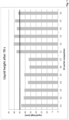
- the water liquid loss of the 3% (w/w) detergent compositions of examples E1 to E7 after 70s is below 35 mm.
- the water liquid loss of the 3% (w/w) detergent compositions of the comperative examples C1 to C6 is after 70s closed to the maximum of liquid loss, which is 42 mm.
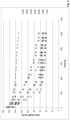
- results of tables III and IV and Fig. 1 demonstrate for the 3% (w/w) detergent compositions of examples Examples 1 to 7 of the present invention an improved rewetting foam effect.
- the test further demonstrate that the foam of the 3% (w/w) detergent compositions of comparative examples C1 to C6 dries over time, which leads to an decreased cleaning effect compared to the 3% (w/w) detergent compositions of examples E1 to E7.
- the volume liquid to volume foam test clearly demonstrates that the foam of the 3% (w/w) aqueous foaming detergent compositions E1 to E7 according to the present invention compared to the 3% (w/w) detergent compositions of C1 to C6 have a significant decreased foam liquid loss. Further the foam stability and moistening content of the 3% (w/w) foam compositions of Examples 1 to 7 are significant improved as indicated in Figs. 2 and 3 .
- Fig. 3 it can be seen that the 3% (w/w) foam detergent composition of example E1 is practically stable over time with respect of foam stability and water liquid loss compared to the 3% (w/w) compositions of C1 to C6.
- the test further demonstrate that the foam of C1 to C6 quickly dries over time due rapid liquid loss, which leads to an decreased cleaning effect, since the loss of liquid causes a loss of cleaning components combined with a decrease of cleaning effectivity.
Landscapes
- Chemical & Material Sciences (AREA)
- Life Sciences & Earth Sciences (AREA)
- Engineering & Computer Science (AREA)
- Chemical Kinetics & Catalysis (AREA)
- Oil, Petroleum & Natural Gas (AREA)
- Wood Science & Technology (AREA)
- Organic Chemistry (AREA)
- Health & Medical Sciences (AREA)
- Emergency Medicine (AREA)
- Inorganic Chemistry (AREA)
- Detergent Compositions (AREA)
Claims (17)
- Composition détergente moussante aqueuse comprenant :- au moins une source d'alcalinité ;- au moins un agent tensioactif sulfate d'alkyle d'un sulfate d'alkyle en C8-C20 ;- au moins un agent tensioactif alkyl(EO)n/(PO)m-alcoxylate d'un alkyl en C8-C20(EO)n/(PO)m-alcoxylate, dans laquelle n = 1 à 12 et m = 0 à 12 ;- au moins un agent tensioactif dialkylaminoacétate d'alkyle d'un (dialkyl en C1-C3)aminoacétate d'alkyle en C8-C20 ;- au moins un agent tensioactif iminodipropionate d'alkyle d'un iminodipropionate d'alkyle en C8-C20 ;- au moins un agent tensioactif iminodiglycinate d'alkyle d'un iminodiglycinate d'alkyle en C8-C20 ;- au moins un alcool d'un alcool en C6-C20 ; et- un solvant.
- Composition selon la revendication 1, comprenant :- 0,5 % en poids à 25 % en poids d'au moins une source d'alcalinité ;- 0,01 % en poids à 2 % en poids d'au moins un sulfate d'alkyle en C8-C20 ;- 0,05 % en poids à 3 % en poids d'au moins un alkyl en C8-C20(EO)n/(PO)m-alcoxylate, dans laquelle n = 1 à 12, et m = 0 à 12, de préférence m = 0 ;- 0,02 % en poids à 2,0 % en poids d'au moins un (dialkyl en C1-C3)aminoacétate d'alkyle en C8-C20 ;- 0,1 % en poids à 4 % en poids d'au moins un iminodipropionate d'alkyle en C8-C20 ;- 0,05 % en poids à 3 % en poids d'au moins un iminodiglycinate d'alkyle en C8-C20 ;- 0,05 % en poids à 1,3 % en poids d'au moins deux alcools en C6-C20 ; et- de l'eau ; dans laquelle les % en poids des composants sont basés sur le poids total de la composition et le % en poids total de tous les composants de la composition ne dépasse pas 100 % en poids ;
ou- 5 % en poids à 17 % en poids d'au moins une source d'alcalinité ;- 0, 1 % en poids à 1 % en poids d'au moins un sulfate d'alkyle en C8-C20 ;- 0,5 % en poids à 1,5 % en poids d'au moins un alkyl en C8-C20(EO)n/(PO)m-alcoxylate, dans laquelle n = 2 à 10, et m = 0 à 12 préférence m = 0 ;- 0,1 % en poids à 0,9 % en poids d'au moins un (dialkyl en C1-C3)aminoacétate d'alkyle en C8-C20 ;- 0,45 % en poids à 1,8 % en poids d'au moins un iminodipropionate d'alkyle en C8-C20 ;- 0,15 % en poids à 0,8 % en poids d'au moins un iminodiglycinate d'alkyle en C8-C20 ;- 0,2 % en poids à 0,8 % en poids d'au moins deux alcools choisis dans le groupe des alcools en C6-C20 ; et- de l'eau ; dans laquelle les % en poids des composants sont basés sur le poids total de la composition et le % en poids total de tous les composants de la composition ne dépasse pas 100 % en poids ;
ou- 7 % en poids à 13 % en poids d'au moins une source d'alcalinité, de préférence l'hydroxyde de sodium ;- 0,2 % en poids à 0,4 % en poids d'au moins un sulfate d'alkyle en C8-C20, de préférence le laurylsulfate de sodium ;- 0,8 % en poids à 1,2 % en poids d'au moins un agent tensioactif alcoxylate en C2-C3 d'alkyle en C8-C20, de préférence un alcool linéaire C9-C11 éthoxy 6 EO ;- 0,2 % en poids à 0,4 % en poids d'au moins un (dialkyl en C1-C3)aminoacétate d'alkyle en C8-C20, de préférence un dipropionate d'alkyle sodique ;- 0,7 % en poids à 1,1 % en poids d'au moins un iminodipropionate d'alkyle en C8-C20, de préférence le Coco diméthylaminoacétate ;- 0,4 % en poids à 0,6 % en poids d'au moins un iminodiglycinate d'alkyle en C8-C20, de préférence le coco iminodiglycinate ;- 0,375 % en poids à 0,625 % en poids d'au moins deux alcools choisis dans le groupe des alcools en C6-C20, de préférence des alcools en C10-C16 ; et- de l'eau ; dans laquelle les % en poids des composants sont basés sur le poids total de la composition et le % en poids total de tous les composants de la composition ne dépasse pas 100 % en poids. - Composition selon la revendication 1 ou 2, dans laquelle la source d'alcalinité est choisie dans le groupe comprenant des sels basiques, amines, alcanolamines, carbonates, silicates, et mélanges de ceux-ci, de préférence la source d'alcalinité est choisie dans le groupe comprenant l'hydroxyde de sodium, l'hydroxyde de potassium ou un mélange de ceux-ci, le plus préférablement la source d'alcalinité est l'hydroxyde de sodium.
- Composition selon les revendications 1 à 3, dans laquelle l'agent tensioactif sulfate d'alkyle est un sulfate d'alkyle en C10-C18, de préférence un sulfate d'alkyle en C12-C16 et le plus préférablement un sulfate de lauryle.
- Composition selon les revendications 1 à 4, dans laquelle l'agent tensioactif alkyl(EO)n/(PO)m-alcoxylate est un alkyl en C9-C17(EO)n/(PO)m-alcoxylate, de préférence un alkyl en C9-C15(EO)n/(PO)m-alcoxylate et le plus préférablement un alkyle en C9-C11(EO)n/(PO)m-alcoxylate ; dans laquelle n = 2 à 10 et m = 0 à 10, de préférence n = 4 à 8 et m = 0 et plus préférablement n = 6 et m = 0.
- Composition selon les revendications 1 à 5, dans laquelle l'agent tensioactif (dialkyl en C1-C3)aminoacétate d'alkyle est un (dialkyl en C1-C3)aminoacétate d'alkyle en C10-C18, de préférence un (dialkyl en C1-C3)aminoacétate d'alkyle en C10-C16, plus préférablement un (dialkyl en C1-C3)aminoacétate d'alkyle en C12-C14 et le plus préférablement un coco diméthylaminoacétate.
- Composition selon les revendications 1 à 6, dans laquelle l'agent tensioactif iminodipropionate d'alkyle est un iminodipropionate d'alkyle en C10-C18, de préférence un iminodipropionate d'alkyle en C10-C16, plus préférablement un iminodipropionate d'alkyle en C12-C14 et le plus préférablement un coco iminodipropionate.
- Composition selon les revendications 1 à 7, dans laquelle l'iminodiglycinate d'alkyle est un iminodiglycinate d'alkyle en C10-C18, de préférence un iminodiglycinate d'alkyle en C10-C16, plus préférablement un iminodiglycinate d'alkyle en C12-C14 et le plus préférablement un coco iminodiglycinate.
- Composition selon les revendications 1 à 8, dans laquelle l'alcool est un alcool en C8-C18, de préférence un alcool en C10-C16 et le plus préférablement un mélange d'alcools en C8-C18 ou d'alcools en C10-C16.
- Composition selon les revendications 1 à 9, comprenant :- 5 % en poids à 17 % en poids d'hydroxyde de sodium ;- 0,1 % en poids à 1 % en poids de lauryl sulfate ;- 0, 5 % en poids à 1,5 % en poids d'alkyl en C9-C11(OE)4-6-alcoxylate ;- 0,1 % en poids à 0,9 % en poids de coco imino dialkylaminoacétate en C1-C3 ;- 0,45 % en poids à 1,8 % en poids de coco iminodipropionate ;- 0,15 % en poids à 0,8 % en poids de coco iminodiglycinate ;- 0,2 % en poids à 0,8 % en poids d'au moins deux alcools choisis dans le groupe des alcools en C10-C16 ; et- de l'eau ; dans laquelle les % en poids des composants sont basés sur le poids total de la composition et le % en poids total de tous les composants de la composition ne dépasse pas 100 % en poids ;
ou- 7 % en poids à 13 % en poids d'hydroxyde de sodium ;- 0,2 % en poids à 0,4 % en poids de lauryl sulfate ;- 0,8 % en poids à 1,2 % en poids d'alkyl en C9-C11(OE)4-6-alcoxylate ;- 0,2 % en poids à 0,4 % en poids de coco imino dialkylaminoacétate en C1-C3 ;- 0,7 % en poids à 1,1 % en poids de coco iminodipropionate ;- 0,4 % en poids à 0,6 % en poids de coco iminodiglycinate ;- 0,375 % en poids à 0,625 % en poids d'au moins deux alcools choisis dans le groupe des alcools en C10-C16 ; et- de l'eau ; dans laquelle les % en poids des composants sont basés sur le poids total de la composition et le % en poids total de tous les composants de la composition ne dépasse pas 100 % en poids. - Composition selon les revendications 1 à 10, dans laquelle la composition détergente moussante aqueuse comprend en outre :- au moins un agent chélatant, de préférence un gluconate, le N,N-bis(carboxylatométhyl)-L-glutamate tétra-sodique, l'acide méthylglycine diacétique et/ou l'éther monobutylique du diéthylène glycol ; et/ou- au moins un polycarboxylate polymère ; et/ou- au moins un agent séquestrant, de préférence le tricarboxylate de phosphonobutane ; et/ou- au moins un hydrotrope, de préférence le sulfonate de cumène.
- Composition selon les revendications 1 à 11, comprenant :- 5 % en poids à 17 % en poids d'hydroxyde de sodium ;- 0,1 % en poids à 1 % en poids de lauryl sulfate ;- 0, 5 % en poids à 1,5 % en poids d'alkyl en C9-C11(OE)4-6-alcoxylate ;- 0,1 % en poids à 0,9 % en poids de coco imino dialkylaminoacétate en C1-C3 ;- 0,45 % en poids à 1,8 % en poids de coco iminodipropionate ;- 0,15 % en poids à 0,8 % en poids de coco iminodiglycinate ;- 0,2 % en poids à 0,8 % en poids d'au moins deux alcools choisis dans le groupe des alcools en C6-C20, et plus préférablement choisis dans le groupe des alcools en C10-C16 ;- ≥ 0 % en poids à ≤ 3 % en poids d'un gluconate ;- ≥ 0 % en poids à ≤ 5 % en poids d'un N,N-bis(carboxylatométhyl)-L-glutamate tétra-sodique ;- ≥ 0 % en poids à ≤ 5 % en poids d'un acide méthylglycine diacétique ;- ≥ 0 % en poids à ≤ 10 % en poids d'un éther monobutylique du diéthylène glycol ;- ≥ 0 % en poids à ≤ 5 % en poids d'un polycarboxylate polymère ayant une masse moléculaire moyenne de 2 000 g/mol à 10 000 g/mol ;- ≥ 0 % en poids à ≤ 5 % en poids d'un tricarboxylate de phosphonobutane ; et/ou- ≥ 0 % en poids à ≤ 10 % en poids d'un sulfonate de cumène ; et- de l'eau ; dans laquelle les % en poids des composants sont basés sur le poids total de la composition et le % en poids total de tous les composants de la composition ne dépasse pas 100 % en poids.
- Composition selon les revendications 1 à 12, dans laquelle la composition selon les revendications 1 à 12 est en outre diluée avec de l'eau 1: 10 à 1: 1000, de préférence la composition est diluée avec de l'eau 1: 50 à 1: 500, et plus préférablement la composition est diluée avec de l'eau 1: 100 à 1: 250.
- Mousse comprenant les composants de la composition détergente moussante liquide selon les revendications 1 à 13.
- Procédé d'élimination de salissures à partir d'une surface à nettoyer, comprenant l'application sur la surface d'une composition selon les revendications 1 à 14.
- Procédé selon la revendication 15, comprenant :a) l'application facultative d'une solution de prétraitement sur la surface à nettoyer pendant une durée suffisante pour pénétrer sensiblement une salissure sur la surface à nettoyer et/ou pré-nettoyer une salissure sur la surface à nettoyer ;b) l'application d'une composition ayant formé une mousse selon les revendications 1 à 14 sur la surface à nettoyer pendant une durée suffisante pour nettoyer la surface à nettoyer ;c) facultativement, une étape de rinçage avant et/ou après l'application (a) et/ou (b).
- Utilisation de la composition selon les revendications 1 à 14 pour éliminer des salissures d'une surface à nettoyer, de préférence dans un système de nettoyage hors site (COP) ou dans un système de nettoyage sur site (CIP).
Applications Claiming Priority (1)
| Application Number | Priority Date | Filing Date | Title |
|---|---|---|---|
| PCT/EP2016/082420 WO2018113979A1 (fr) | 2016-12-22 | 2016-12-22 | Composition aqueuse de détergent moussant ayant un temps de séjour de mousse plus long et une teneur en eau accrue |
Publications (3)
| Publication Number | Publication Date |
|---|---|
| EP3559190A1 EP3559190A1 (fr) | 2019-10-30 |
| EP3559190B1 true EP3559190B1 (fr) | 2025-04-16 |
| EP3559190C0 EP3559190C0 (fr) | 2025-04-16 |
Family
ID=57755285
Family Applications (1)
| Application Number | Title | Priority Date | Filing Date |
|---|---|---|---|
| EP16823004.3A Active EP3559190B1 (fr) | 2016-12-22 | 2016-12-22 | Composition aqueuse de détergent moussant ayant un temps de séjour de mousse plus long et une teneur en eau accrue |
Country Status (2)
| Country | Link |
|---|---|
| EP (1) | EP3559190B1 (fr) |
| WO (1) | WO2018113979A1 (fr) |
Families Citing this family (4)
| Publication number | Priority date | Publication date | Assignee | Title |
|---|---|---|---|---|
| US11370999B2 (en) | 2017-01-19 | 2022-06-28 | Diversey, Inc. | Formulations and method for low temperature cleaning of dairy equipment |
| WO2020052743A1 (fr) * | 2018-09-11 | 2020-03-19 | Ecolab Usa Inc. | Compositions détergentes aqueuses à phase stable et faiblement moussante ayant une activité enzymatique de longue durée |
| CN109136950A (zh) * | 2018-09-28 | 2019-01-04 | 天津圳鹏清洗技术开发有限公司 | 用于医疗器械和设备的清洗剂 |
| PL4232537T3 (pl) | 2020-10-23 | 2025-04-14 | Chemische Fabrik Dr. Weigert Gmbh & Co. Kg | Płynny koncentrat środka czyszczącego, gotowy do użycia roztwór użytkowy, jego zastosowania i sposoby czyszczenia |
Family Cites Families (4)
| Publication number | Priority date | Publication date | Assignee | Title |
|---|---|---|---|---|
| WO1994005769A1 (fr) * | 1992-09-01 | 1994-03-17 | The Procter & Gamble Company | Detergent liquide ou en gel pour lave-vaisselle, contenant du carboxylate d'ethoxy d'alkyle, des ions bivalents et de l'alkylpolyethoxypolycarboxylate |
| EP0908512A3 (fr) * | 1997-10-08 | 1999-04-28 | The Procter & Gamble Company | Compositions de blanchiment aqueuses liquides |
| AR080796A1 (es) * | 2010-03-26 | 2012-05-09 | Innospec Ltd | Composiciones acuosas que comprenden un acil-isetionato para el cuidado personal. |
| US20140366920A1 (en) * | 2011-09-21 | 2014-12-18 | Ecoalb Usa Inc. | Use of iron(iii) hydroxymonocarboxylate complexes to enhance lower temperature cleaning in alkaline peroxide cleaning systems |
-
2016
- 2016-12-22 EP EP16823004.3A patent/EP3559190B1/fr active Active
- 2016-12-22 WO PCT/EP2016/082420 patent/WO2018113979A1/fr not_active Ceased
Also Published As
| Publication number | Publication date |
|---|---|
| EP3559190A1 (fr) | 2019-10-30 |
| EP3559190C0 (fr) | 2025-04-16 |
| WO2018113979A1 (fr) | 2018-06-28 |
Similar Documents
| Publication | Publication Date | Title |
|---|---|---|
| US11208613B2 (en) | Long lasting cleaning foam | |
| US10091988B2 (en) | Wetting agents for aseptic filling | |
| US9103038B2 (en) | Acidic compositions including reducing agents for scale and decolorization of metal stains | |
| EP3238837B1 (fr) | Procédé de nettoyage amélioré de bulles | |
| US6484734B1 (en) | Multi-step post detergent treatment method | |
| CA2991407A1 (fr) | Detergent acide | |
| JP2022089915A (ja) | 高濃縮液体配合物における粘弾性を制御するためのeo/poブロックコポリマー界面活性剤の使用 | |
| JP2011528231A (ja) | 食品および飲料の製造および取扱い設備の洗浄方法 | |
| WO2018113979A1 (fr) | Composition aqueuse de détergent moussant ayant un temps de séjour de mousse plus long et une teneur en eau accrue | |
| JP2006265469A (ja) | アルカリ性cip用洗浄剤組成物 | |
| US20140366920A1 (en) | Use of iron(iii) hydroxymonocarboxylate complexes to enhance lower temperature cleaning in alkaline peroxide cleaning systems | |
| US20150218495A1 (en) | Removal of tea and coffee stains by fatty acid soaps | |
| JP6277243B1 (ja) | 硬質表面用液体洗浄剤組成物 | |
| JP5148987B2 (ja) | 自動食器洗浄機庫内用洗浄剤 | |
| WO2024020975A1 (fr) | Compositions non oxydantes moussantes de nettoyage et de désinfection 2 en 1 | |
| EP3850068A1 (fr) | Compositions détergentes aqueuses à phase stable et faiblement moussante ayant une activité enzymatique de longue durée | |
| JP7421351B2 (ja) | 食器洗浄機用洗浄剤組成物 | |
| JP4455290B2 (ja) | 食品製造加工設備用洗浄剤組成物 | |
| WO2024238003A1 (fr) | Compositions à alcalinité d'hydroxyde solide réduite pour l'élimination efficace de salissures protéiniques et la stabilité enzymatique tout au long d'une distribution à cycles multiples |
Legal Events
| Date | Code | Title | Description |
|---|---|---|---|
| STAA | Information on the status of an ep patent application or granted ep patent |
Free format text: STATUS: UNKNOWN |
|
| STAA | Information on the status of an ep patent application or granted ep patent |
Free format text: STATUS: THE INTERNATIONAL PUBLICATION HAS BEEN MADE |
|
| PUAI | Public reference made under article 153(3) epc to a published international application that has entered the european phase |
Free format text: ORIGINAL CODE: 0009012 |
|
| STAA | Information on the status of an ep patent application or granted ep patent |
Free format text: STATUS: REQUEST FOR EXAMINATION WAS MADE |
|
| 17P | Request for examination filed |
Effective date: 20190703 |
|
| AK | Designated contracting states |
Kind code of ref document: A1 Designated state(s): AL AT BE BG CH CY CZ DE DK EE ES FI FR GB GR HR HU IE IS IT LI LT LU LV MC MK MT NL NO PL PT RO RS SE SI SK SM TR |
|
| AX | Request for extension of the european patent |
Extension state: BA ME |
|
| DAV | Request for validation of the european patent (deleted) | ||
| DAX | Request for extension of the european patent (deleted) | ||
| STAA | Information on the status of an ep patent application or granted ep patent |
Free format text: STATUS: EXAMINATION IS IN PROGRESS |
|
| 17Q | First examination report despatched |
Effective date: 20220810 |
|
| GRAP | Despatch of communication of intention to grant a patent |
Free format text: ORIGINAL CODE: EPIDOSNIGR1 |
|
| STAA | Information on the status of an ep patent application or granted ep patent |
Free format text: STATUS: GRANT OF PATENT IS INTENDED |
|
| INTG | Intention to grant announced |
Effective date: 20240621 |
|
| GRAJ | Information related to disapproval of communication of intention to grant by the applicant or resumption of examination proceedings by the epo deleted |
Free format text: ORIGINAL CODE: EPIDOSDIGR1 |
|
| STAA | Information on the status of an ep patent application or granted ep patent |
Free format text: STATUS: EXAMINATION IS IN PROGRESS |
|
| INTC | Intention to grant announced (deleted) | ||
| GRAS | Grant fee paid |
Free format text: ORIGINAL CODE: EPIDOSNIGR3 |
|
| STAA | Information on the status of an ep patent application or granted ep patent |
Free format text: STATUS: GRANT OF PATENT IS INTENDED |
|
| GRAP | Despatch of communication of intention to grant a patent |
Free format text: ORIGINAL CODE: EPIDOSNIGR1 |
|
| INTG | Intention to grant announced |
Effective date: 20241127 |
|
| GRAA | (expected) grant |
Free format text: ORIGINAL CODE: 0009210 |
|
| STAA | Information on the status of an ep patent application or granted ep patent |
Free format text: STATUS: THE PATENT HAS BEEN GRANTED |
|
| AK | Designated contracting states |
Kind code of ref document: B1 Designated state(s): AL AT BE BG CH CY CZ DE DK EE ES FI FR GB GR HR HU IE IS IT LI LT LU LV MC MK MT NL NO PL PT RO RS SE SI SK SM TR |
|
| REG | Reference to a national code |
Ref country code: GB Ref legal event code: FG4D |
|
| REG | Reference to a national code |
Ref country code: CH Ref legal event code: EP |
|
| REG | Reference to a national code |
Ref country code: IE Ref legal event code: FG4D |
|
| REG | Reference to a national code |
Ref country code: DE Ref legal event code: R096 Ref document number: 602016091931 Country of ref document: DE |
|
| U01 | Request for unitary effect filed |
Effective date: 20250515 |
|
| RAP4 | Party data changed (patent owner data changed or rights of a patent transferred) |
Owner name: ECOLAB USA INC. |
|
| U07 | Unitary effect registered |
Designated state(s): AT BE BG DE DK EE FI FR IT LT LU LV MT NL PT RO SE SI Effective date: 20250522 |
|
| PG25 | Lapsed in a contracting state [announced via postgrant information from national office to epo] |
Ref country code: ES Free format text: LAPSE BECAUSE OF FAILURE TO SUBMIT A TRANSLATION OF THE DESCRIPTION OR TO PAY THE FEE WITHIN THE PRESCRIBED TIME-LIMIT Effective date: 20250416 |
|
| PG25 | Lapsed in a contracting state [announced via postgrant information from national office to epo] |
Ref country code: NO Free format text: LAPSE BECAUSE OF FAILURE TO SUBMIT A TRANSLATION OF THE DESCRIPTION OR TO PAY THE FEE WITHIN THE PRESCRIBED TIME-LIMIT Effective date: 20250716 Ref country code: GR Free format text: LAPSE BECAUSE OF FAILURE TO SUBMIT A TRANSLATION OF THE DESCRIPTION OR TO PAY THE FEE WITHIN THE PRESCRIBED TIME-LIMIT Effective date: 20250717 |
|
| PG25 | Lapsed in a contracting state [announced via postgrant information from national office to epo] |
Ref country code: PL Free format text: LAPSE BECAUSE OF FAILURE TO SUBMIT A TRANSLATION OF THE DESCRIPTION OR TO PAY THE FEE WITHIN THE PRESCRIBED TIME-LIMIT Effective date: 20250416 |
|
| PG25 | Lapsed in a contracting state [announced via postgrant information from national office to epo] |
Ref country code: HR Free format text: LAPSE BECAUSE OF FAILURE TO SUBMIT A TRANSLATION OF THE DESCRIPTION OR TO PAY THE FEE WITHIN THE PRESCRIBED TIME-LIMIT Effective date: 20250416 |
|
| PG25 | Lapsed in a contracting state [announced via postgrant information from national office to epo] |
Ref country code: RS Free format text: LAPSE BECAUSE OF FAILURE TO SUBMIT A TRANSLATION OF THE DESCRIPTION OR TO PAY THE FEE WITHIN THE PRESCRIBED TIME-LIMIT Effective date: 20250716 |
|
| PG25 | Lapsed in a contracting state [announced via postgrant information from national office to epo] |
Ref country code: IS Free format text: LAPSE BECAUSE OF FAILURE TO SUBMIT A TRANSLATION OF THE DESCRIPTION OR TO PAY THE FEE WITHIN THE PRESCRIBED TIME-LIMIT Effective date: 20250816 |
|
| U20 | Renewal fee for the european patent with unitary effect paid |
Year of fee payment: 10 Effective date: 20251110 |
|
| PG25 | Lapsed in a contracting state [announced via postgrant information from national office to epo] |
Ref country code: SM Free format text: LAPSE BECAUSE OF FAILURE TO SUBMIT A TRANSLATION OF THE DESCRIPTION OR TO PAY THE FEE WITHIN THE PRESCRIBED TIME-LIMIT Effective date: 20250416 |
|
| PG25 | Lapsed in a contracting state [announced via postgrant information from national office to epo] |
Ref country code: CZ Free format text: LAPSE BECAUSE OF FAILURE TO SUBMIT A TRANSLATION OF THE DESCRIPTION OR TO PAY THE FEE WITHIN THE PRESCRIBED TIME-LIMIT Effective date: 20250416 |
|
| PG25 | Lapsed in a contracting state [announced via postgrant information from national office to epo] |
Ref country code: SK Free format text: LAPSE BECAUSE OF FAILURE TO SUBMIT A TRANSLATION OF THE DESCRIPTION OR TO PAY THE FEE WITHIN THE PRESCRIBED TIME-LIMIT Effective date: 20250416 |
|
| PLBE | No opposition filed within time limit |
Free format text: ORIGINAL CODE: 0009261 |
|
| STAA | Information on the status of an ep patent application or granted ep patent |
Free format text: STATUS: NO OPPOSITION FILED WITHIN TIME LIMIT |
|
| REG | Reference to a national code |
Ref country code: CH Ref legal event code: L10 Free format text: ST27 STATUS EVENT CODE: U-0-0-L10-L00 (AS PROVIDED BY THE NATIONAL OFFICE) Effective date: 20260225 |
|
| 26N | No opposition filed |
Effective date: 20260119 |