EP3560146B1 - Prädiktive bestandsoptimierung für computerressourcen - Google Patents
Prädiktive bestandsoptimierung für computerressourcen Download PDFInfo
- Publication number
- EP3560146B1 EP3560146B1 EP16925229.3A EP16925229A EP3560146B1 EP 3560146 B1 EP3560146 B1 EP 3560146B1 EP 16925229 A EP16925229 A EP 16925229A EP 3560146 B1 EP3560146 B1 EP 3560146B1
- Authority
- EP
- European Patent Office
- Prior art keywords
- computer system
- mts
- network servers
- enterprise
- variables
- Prior art date
- Legal status (The legal status is an assumption and is not a legal conclusion. Google has not performed a legal analysis and makes no representation as to the accuracy of the status listed.)
- Not-in-force
Links
Images



Classifications
-
- G—PHYSICS
- G06—COMPUTING OR CALCULATING; COUNTING
- G06N—COMPUTING ARRANGEMENTS BASED ON SPECIFIC COMPUTATIONAL MODELS
- G06N5/00—Computing arrangements using knowledge-based models
- G06N5/04—Inference or reasoning models
-
- G—PHYSICS
- G06—COMPUTING OR CALCULATING; COUNTING
- G06F—ELECTRIC DIGITAL DATA PROCESSING
- G06F9/00—Arrangements for program control, e.g. control units
- G06F9/06—Arrangements for program control, e.g. control units using stored programs, i.e. using an internal store of processing equipment to receive or retain programs
- G06F9/46—Multiprogramming arrangements
- G06F9/50—Allocation of resources, e.g. of the central processing unit [CPU]
- G06F9/5061—Partitioning or combining of resources
-
- G—PHYSICS
- G06—COMPUTING OR CALCULATING; COUNTING
- G06F—ELECTRIC DIGITAL DATA PROCESSING
- G06F16/00—Information retrieval; Database structures therefor; File system structures therefor
- G06F16/20—Information retrieval; Database structures therefor; File system structures therefor of structured data, e.g. relational data
- G06F16/24—Querying
- G06F16/245—Query processing
- G06F16/2458—Special types of queries, e.g. statistical queries, fuzzy queries or distributed queries
- G06F16/2474—Sequence data queries, e.g. querying versioned data
-
- G—PHYSICS
- G06—COMPUTING OR CALCULATING; COUNTING
- G06F—ELECTRIC DIGITAL DATA PROCESSING
- G06F16/00—Information retrieval; Database structures therefor; File system structures therefor
- G06F16/20—Information retrieval; Database structures therefor; File system structures therefor of structured data, e.g. relational data
- G06F16/28—Databases characterised by their database models, e.g. relational or object models
- G06F16/284—Relational databases
- G06F16/285—Clustering or classification
-
- G—PHYSICS
- G06—COMPUTING OR CALCULATING; COUNTING
- G06F—ELECTRIC DIGITAL DATA PROCESSING
- G06F17/00—Digital computing or data processing equipment or methods, specially adapted for specific functions
- G06F17/10—Complex mathematical operations
- G06F17/14—Fourier, Walsh or analogous domain transformations, e.g. Laplace, Hilbert, Karhunen-Loeve, transforms
- G06F17/141—Discrete Fourier transforms
- G06F17/142—Fast Fourier transforms, e.g. using a Cooley-Tukey type algorithm
-
- G—PHYSICS
- G06—COMPUTING OR CALCULATING; COUNTING
- G06Q—INFORMATION AND COMMUNICATION TECHNOLOGY [ICT] SPECIALLY ADAPTED FOR ADMINISTRATIVE, COMMERCIAL, FINANCIAL, MANAGERIAL OR SUPERVISORY PURPOSES; SYSTEMS OR METHODS SPECIALLY ADAPTED FOR ADMINISTRATIVE, COMMERCIAL, FINANCIAL, MANAGERIAL OR SUPERVISORY PURPOSES, NOT OTHERWISE PROVIDED FOR
- G06Q10/00—Administration; Management
- G06Q10/06—Resources, workflows, human or project management; Enterprise or organisation planning; Enterprise or organisation modelling
- G06Q10/063—Operations research, analysis or management
- G06Q10/0631—Resource planning, allocation, distributing or scheduling for enterprises or organisations
- G06Q10/06313—Resource planning in a project environment
-
- G—PHYSICS
- G06—COMPUTING OR CALCULATING; COUNTING
- G06F—ELECTRIC DIGITAL DATA PROCESSING
- G06F2209/00—Indexing scheme relating to G06F9/00
- G06F2209/50—Indexing scheme relating to G06F9/50
- G06F2209/5019—Workload prediction
-
- H—ELECTRICITY
- H04—ELECTRIC COMMUNICATION TECHNIQUE
- H04L—TRANSMISSION OF DIGITAL INFORMATION, e.g. TELEGRAPHIC COMMUNICATION
- H04L12/00—Data switching networks
Definitions
- the present invention is directed to a computer-implemented method and a system for forecasting network resource and/or infrastructure needs for an enterprise computer system that employs network servers to host resources (applications, data, etc.) that are requested by network users.
- the network resources can be scaled or provisioned accordingly. That is, for example, the state of the network servers can be dynamically adjusted to meet the request needs of the users while reducing excess capacity.
- the forecasting techniques of the present invention are also applicable to cloud computing environments. Based on the forecasts, the cloud server pool can be scaled dynamically, so that the system's scale satisfies the changing requests and avoids wasting resources when the system is under low load.
- FIG. 1 One exemplary enterprise computer system 10 is illustrated in Figure 1 .
- the enterprise computer system 10 illustrated in Figure 1 includes several local area networks (LANs) 12 interconnected with a wide area network (WAN) 14.
- LANs local area networks
- WAN wide area network
- Each LAN 12 can include a number of client computers 16 and a number of network servers 18.
- the network servers 18 may, for example, host computer resources, such as computer programs, data, storage devices, and printers, for the client computers 16 in its LAN 12 or from other LANs 12, depending on the implementation.
- a resource prediction computer system 20 performs the resource predictions for the enterprise based on, according to various embodiments, multivariate time-series (MTS) data for the network servers 18, where the MTS data are stored in a database computer system 22.
- the resource prediction computer system 20 and MTS database system 22 are shown in Figure 1 as being connected to the WAN 14 for illustration purposes, although one or both of them could be included with one of the illustrated LANs 12. They could also be connected to different LANs 12 and WANs 14 in the enterprise's network.
- the resource prediction computer system 20 may be implemented as one or number of interconnected computer devices, such as a server(s), a mainframes(s), a workstation(s), and/or any other suitable computer device.
- Each such computer device of the resource prediction computer system 20 may include one or more processors 24 and one or more memory units 26.
- the memory units 26 may comprise both primary computer storage (e.g., RAM and ROM) and second computer storage (e.g., HDDs, SSDs, flash).
- the processor(s) 24 may include a microprocessor(s) that executes computer instructions (e.g., software) stored in the memory units 26, such as a variable grouping module 30 and the k-nearest neighbor (k-NN) searching module 32, as shown in Figure 1 and described further below.
- the illustrated resource prediction computer system 20 includes only one computer, and only one processor 24 and one memory unit 26 are illustrated, although it should be recognized that the present invention is not so limited and that the resource prediction computer system 20 can be scaled as needed.
- the MTS database 22 stores time series computer usage and hardware statistics for the network servers 18 of the enterprise system 10.
- the statistics can include values for a number of variables related to each user resource request, such as:
- the MTS database 22 may be implemented with one or more database servers as needed that run database management system (DBMS) software and that include suitable RAID disk arrays and/or any other suitable data storage mechanism.
- DBMS database management system
- the usage and hardware statistics may be transmitted to the MTS database 22 using CSV files and/or any other suitable data format from the network servers 18.
- Each network server 18 may transmit its periodic statistics to the MTS database 22, and/or one or more of the network servers 18 in a LAN 12 could collect the statistics for multiple network servers 18 in the LAN 12 and transmit the collection to the MTS database 22.
- the MTS database 22 may be implemented as an Oracle or SQL database, for example, or any other suitable database.
- the resource prediction computer system 20 groups pertinent variables into clusters so that each pertinent variable is a member of one cluster and so that the dependency between the variables with the same cluster is high, but the very low relative to the variables in other clusters.
- the processor 24 may perform this function by executing the software of the variable grouping module 30.
- the resource prediction computer system 20 uses k-NN searching in various embodiments in order to compute the predictions.
- the processor 24 may perform this function by executing the software of the k-NN searching module 32.
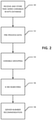
- FIG. 2 is a process flow of the prediction process that may be executed by the resource prediction computer system 20 in conjunction with the MTS database 22 according to various embodiments.
- the MTS database 22 receives and stores the time series usage and hardware statistic variables for the enterprise's network servers 18. The data is collected for periodic time increments, such as every five minutes, 10 minutes, or any other suitable time increment.
- the resource prediction computer system 20 can pre-process the MTS data stored in the database 22 to eliminate or reduce noise and/or to scale the data to standard normally distributed data using conventional data pre-processing techniques.
- the variable grouping includes two stages: (i) correlation matrix construction and (ii) variable clustering.
- a correlation coefficient can be used to measure the relevance between two variables.
- Spearman's rank correlation coefficient is used, which is a nonparametric measure of the monotonicity of the relationship between two variables. The Spearman correlation does not assume that both datasets are normally distributed.
- x i , y i refer to the raw variables
- x , y refer to the average of the variables.
- ⁇ ij max ⁇ x i x j with lag t for i ⁇ j , and i , j ⁇ n , and t ⁇ MaxLag
- n x n correlation matrix The pairwise correlation coefficients among all variables are computed to form a n x n correlation matrix.
- Table 1 is an example correlation matrix constructed in experiments with a particular network server host. Note that it is a symmetric matrix with darker gray colors indicating stronger correlations.
- the partitioning method can be applied to decompose the n variables into clusters.
- the Affinity Propagation (AP) clustering algorithm is used for this step.
- AP is a clustering algorithm based on the concept of "message passing" between data points. Unlike other known partition methods, such as k -means and k -medoids, AP does not require the number of clusters to be determined or estimated before running the algorithm. Therefore, it is more adaptive to the present embodiment because the grouping result may vary as the input hardware metrics change. More details about AP may be found at Brendan J. Frey et al., "Clustering by passing messages between data points," Science 31:972-976 (2007 ).
- the AP algorithm creates clusters by sending messages between pairs of samples until convergence.
- the messages sent between points have two categories.
- Table 2 shows the clustering results based on the matrix in Table 1.
- each variable 0 to 6 belongs to one of the groups/clusters.
- the k-NN algorithm is used to make the desired predictions.
- the k-NN searching algorithm is first illustrated for a univariate situation, and only for a one-step ahead value based on a fixed number of immediately preceding history data measured at a constant-width time interval.
- FIG. 3 is a graph illustrating the prediction method for the univariate k-NN approach. It shows the two closest neighbors to (days 171 to 221 and 1 to 51) to a reference period (days 341 to 381).
- the reference (e.g., latest) feature vector and m -histories in the univariate case are extended to multiple dimensions.
- X d denote a multivariate time series (MTS) of d dimensions.
- MTS multivariate time series
- the global k nearest neighbors close to the current (or other reference) state of MTS can be found, each of which is composed by d vectors of m consecutive observations.
- the weights are obtained by the gradient descent algorithm and are gradually adjusted to match the new data.
- the predictions can forecast the cumulative user resource requests for the time horizon and the server resources required to handle those requests. Thus, the predictions yield the predicted server workload for the time horizon step. This process can be repeated for additional time horizon steps to obtain an extended workload forecast.
- the resource prediction computer system 20 can recommend a number of servers at a future time horizon step.
- server number predictions can be used for numerous beneficial purposes.
- One such purpose is that the enterprise could provision its servers 18 based on the forecasted number of servers.
- a number of computed metrics may be used in such capability planning, including the following metrics:
- C-SNR Capacity- based server number recommendation
- U-SNR User-based server number recommendation
- A-SNR Adaptive server number recommendation
- the user's average load values for a request are also known based on the user's classification, so the expected load the user's request will bring to the system can be predicted.
- the number of servers can be decided.
- the ratio (actually threshold) is used to determine which server to send a new user session to and whether a new server should be added.
- the first attempt is for a currently operational server to handle the request.
- the request is assigned to a current server based on its potential load level, which is estimated from the classification results. If the new request cannot be allocated to a currently active sever because of the overload status, a new server is added to handle the request. Similarly, when a request is completed, the remaining workload can be rebalanced among the servers 18.
- the resource prediction computer system 20 can forecast an appropriate number of servers 18 for the enterprise for particular time periods based on the forecasted user workload.
- the resource prediction computer system 20 could communicate these server number recommendations to a network server 40 that acts as a broker (see Figure 1 ) for the network servers 18.
- this broker server(s) 40 can determine how many servers 18 in a LAN 12 should be turned on (full active, operational mode) and or put into low power modes (e.g., idle or sleep mode) at various times and instruct the servers 18 accordingly.
- the resource prediction computer system 20 could determine a forecasted number of network servers 18 that are needed for a particular time period.
- the forecast can be for the network servers 18 in one LAN 12 or across multiple LANs 12.
- the resource prediction computer system 20 can transmit this number to the broker server 40, which can instruct the various servers 18 in its LAN 12 and/or in other LANs 12 to be in an operational, high power mode (able to handle user resource demands) or to be in a low-power mode (unable to handle user resource demands) at the appropriate times.
- the network servers 18 can assume the instructed power modes accordingly.
- the processor 24 (when executing the k-NN searching module software 32) selects the k and m parameters for the k-NN searching prior to the k-NN searching.
- the module 32 may use the high-climbing algorithm to tune the k and m parameters to minimize the forecasting error for the different datasets.
- the high-climbing algorithm iterative algorithm that starts with an arbitrary solution to a problem (in this case, the k and m parameters), then attempts to find a better solution by incrementally changing a single element of the solution. If the change produces a better solution, an incremental change is made to the new solution, repeating until no further improvements can be found.
- the k and m parameters are re-established.
- the relationship between predictions with the K-nearest neighbors can change with time. Therefore, the weights are preferably adjusted with time.
- Train t [ x t-1 , x t-2 ,..., x t-n ] represents the training set of size n at time t.
- x t is the true value at time t and y t is the predicted value for time t.
- y t can be predicted based on Train t .
- various embodiments of the present invention provide a workload generation method based on a prediction and stripe sampling approach. By predicting the future number of requests in unit time, analyzing the features of requests and classifying the requests accordingly, and determining the slice sampling strategy, future detail workload data can be generated. The future workload data can provide the basis for the dynamic adjustment of server resources.
- the prediction and stripe sampling approach can be divided into steps. First, the time series prediction model is applied to predict the number of requests in unit time. Based on k-Nearest Neighbor (KNN) algorithm, K sub-sequences which are similar to current sub-sequences in the request number time series data are searched. Then a linear regression model can be applied to compose the predictions given by K nearest neighbor sequences to the final prediction results.
- KNN k-Nearest Neighbor
- Each request consumes different resources (such CPU load, memory). Besides, the length of each request needs to be predicted.
- the analysis can be divided into three types according to various embodiments:
- requests are selected from the historical data according to the percentages of each category and compose these request data into the final predictions.
- This process has the advantage that the workloads are measured based on multiple metrics, which overcomes limitations of single metric. Another potential advantage is that it makes a more accurate prediction by modeling workloads brought by each request, taking into account the number of future requests and the impact of each request on the various metrics. As such, the method overcomes the limitations of the overall workload forecast approach.
- Figure 4 is diagram of the resource prediction computer system 20 and Figure 5 is a diagram of a process flow executed by resource prediction computer system 20 in order to implement this prediction and stripe-sampling strategy to generate future workload traces according to various embodiments of the present invention.
- the resource prediction computer system 20 may comprise a prediction and stripe sampling module 60 for generating the future workload trace.
- the prediction and stripe sampling module 60 may be implemented as software code stored in the memory(ies) 26 and executed by the processor(s) 24 of the resource prediction computer system 20.
- the example process flow in Figure 5 can be implemented by the resource prediction computer system 20 when the code of the prediction and stripe sampling module 60 is executed.
- the database 22 can store data about historical requests by the users of the network servers.
- the request number per unit time is predicted.
- the problem of predicting how many requests are submitted by users every unit time can be modeled as a time series prediction problem.
- the K nearest neighbor classification algorithm can be used to find out sub-sequences similar to the current sub-sequence from the historical data stored in the database 22. Then the predictions obtained based on these similar sub-sequences can be combined together to produce the final prediction result.
- N now n p ⁇ m + 1 , n p ⁇ m + 2 , ... ... , n p
- N history n 1 , n 2 , ... ... , n p ⁇ m
- N i,i+m-1 [n i , ... ..., n i+m-1 ] can be found from the historical data which is most similar to N now .
- An evaluation criterion to measure the similarity between the historical and the current sub-sequences can be used.
- Dis(X,Y) be the distance function to measure similarity between two time series.
- the distance between each historical sub-sequence and the current sub-sequence can be calculated.
- the historical sequence can be split into the sub sequence set ⁇ N 1 , 1+m-1 , N 2,2+m-1 , ... ... ,N p-2 ⁇ m+1 , p-m ⁇ . Then the distance can be calculated in order to find i in range 0 ⁇ i ⁇ p - 2 ⁇ m + 1, which makes the value of Dis( Ni,i+m-1 , N now ) is the smallest. Then the most similar sub-sequence N i,i+m-1 to the current one can be determined.
- the nearest distance[d a , d b , ... ..., d k ] can be determined, and the index of the distance [a,b,...,...,k] is the index of the most similar sub-sequences.
- the sub-sequences immediately following these K nearest neighbor sequences are preferably combined to produce the final prediction.
- Two factors are preferably considered.
- the similarity should be considered in the model; generally, more similar ones should have larger weights.
- the appearance time of the sub-sequences generally, more recent ones should have larger weights.
- the k sub-sequences are sorted according to their similarities to the current sub-sequence and the happen time. Then the linear regression approach can be applied to learn the weights for kth predictions.
- the request features or attributes are analyzed.
- the attributes can comprise request data such as the duration of the request, the disk 10, the CPU and/or memory utilization, etc., as described above.
- This step 64 can involve three sub-steps according to various embodiments: correction analysis at step 66; request classification at step 68; and periodicity analysis at step 70.
- correction analysis step 66 each request generally brings different workloads to various computer resources. Therefore, multiple features should be used to characterize the workload.
- One complication is whether these workload features have correlations or not. For example, is should be known whether the claim that when CPU is less consumed, the disk I/O consumption is also decreased is true or not for an application.
- the request classification step 68 by observing the distribution of the feature values against the feature number, it can be found that some features may have multiple peaks, which indicates that the feature values can be classified. Requests can be classified into different types so that requests can be sampled from past according to the class ratio. During the classification process, classification should be made on correlated features. In this step, bisecting K-means, which is based on the classical k-means clustering algorithm, can be used to avoid falling into a local optimal solution.
- This clustering algorithm can divided into three steps. The first step is finding the clustering center; the second step is calculating the distance between each point to the cluster center and put each point into the nearest cluster; and the third step is computing the average value of all cluster coordinates as a new cluster center.
- the bisecting K- mean clustering method can be further enhanced by first putting all points into one cluster, then dividing one cluster into two, and finally selecting the cluster which could reduce the maximum degree of the error is divided into two clusters. This process can be repeated until the number of clusters is equal to the number of K given by the user.
- Cyclical factors are an important factor in prediction. Since the request to the server is made from people, it is obvious that working time and non-work time request numbers differ. Therefore, the influence of cyclical factors should be considered in the periodicity analysis step 70.
- FFT Fast Fourier Transform
- the average value of the characteristic x i in time interval t can be obtained.
- the spectrum of the Fourier transform function will be hit at the reciprocal of the period, and the period of f(n) can be obtained by the impact value.
- the request load represented by a single feature it is only needed to sample the requests from the corresponding cycle time points.
- the proportion of each category in every time unit can be predicted, which can be done by adopting the K-NN approach introduced in step 62.
- the request data from the historical data can be extracted in order to simulate future requests.
- the periodicity analysis shows that the length of the cycle is T period .
- the requests are divided into K classes, and historical request collection N history is divided into a number of sub-sets.
- N t , k n t , k , 1 , n t , k , 2 , ... , n t , k , 2 , ... , n t , k , m
- the future workload trace can be generated. And based on the future workload traces, a server number recommendation can be made for the future time period so that the needs of the enterprise's users can be met based on the expected workloads (see step 58 of Figure 2 ).
- One advantage of the above-described solution is that the workloads are measured based on multiple metrics, which overcomes limitations of single metric. Another advantage is that it makes a more accurate prediction by modeling workloads brought by each request, taking into account the number of future requests and the impact of each request on the various metrics. As such, the solution overcomes limitations experienced with the overall workload forecast approach.
- Anther potential beneficial use of the forecasted usage patterns is for an enterprise migrating to virtual desktops hosted by cloud computing vendors that offer desktop-as-a-service (DaaS).
- the enterprise can run projections to determine its forecasted DaaS resource sizing, such as number of CPUs, amount of RAM, and/or amount of storage. That way, the enterprise can avoid reserving too much cloud computing resources for its needs (and thereby overpaying for its needs) and reserving too little loud computing resources (and thereby not having the needed resources for its users).
- FIG. 6 illustrates a controller 120 (e.g., the resource prediction computer system 20 shown in Figure 1 ) for making such determinations.
- the requests of the system can be described as time-series data, i.e., the number of the requests is changing with time periodically. For example, the requests in the daytime will generally be more than the requests in the night.
- the controller 120 predicts the future requests and adjusts the system according to different policies. The general steps of the process are described below in conjunction with Figure 6 .
- the k-NN predictor 122 uses the k-NN algorithm to predict the future requests. In various embodiments, the predictor 122 only predicts the request pattern during the next period instead of a specific number of periods.
- Other patterns are classified as fluctuating, except that in various embodiments periods following an increasing or decreasing pattern can also be classified to increasing or decreasing, as the case may be, until a decreasing period or increasing period occurs.
- Figure 7 shows a typical service system's load in one day.
- the sample period is every 15 minutes.
- the request data is under an increasing pattern.
- the request number increases quickly with few decreasing periods in the time frame .
- the request number is under a decreasing pattern, with the request number decreasing most of the periods during this hour.
- the request data is under a fluctuating pattern since the request numbers keep fluctuating during this 4 hour time span.
- the other periods can be classified similarly.
- the k-NN predictor 122 predicts the request pattern for the next control cycle. The request number of every control cycle is recorded.
- K most similar groups
- the three patterns have different features. Consequently, the decision maker 126 can apply different control policies. For an increasing pattern, it is required to add servers in advance as acquiring the server resources from the virtual provider and waiting for the service to start up will require time.
- u(t) is the control output at time t , which is the number of servers to add;
- e ( t ) is the deviation of the system's load with the ideal load;
- K is the proportionality coefficient;
- r' ( t ) is the predicted request number at time t ;
- T c is the control cycle;
- A is the prediction influence coefficient (it determines how much the prediction affects the control process).
- the first part on the right side of the equation i.e., Ke ( t )
- the second part i.e., AK ( r' ( t + T c ) - r' ( t )) introduces the influence of the prediction to the control process, affecting the output by the prediction influence coefficient.
- a decreasing pattern as reducing servers rarely has delay, there is little or no need to reduce servers in advance.
- the decision maker 126 can therefore close and return the servers when the system is under low load.
- the decreasing pattern formula just includes the proportionality control part.
- the decision maker 126 In fluctuating patterns, the decision maker 126 has to deal with the changing of the system's load carefully as the requests may frequently fluctuate. If the decision maker 126 lets the servers just fluctuate with the load, it may lead to unsteadiness of the system and cause a great waste as the servers may be paid for by the hour, in addition to the energy consumption costs incurred from the servers repeatedly booting up and shutting down.
- the decision maker 126 When e ( t ) ⁇ 0 , the decision maker 126 just adds servers by proportionality control. When e ( t ) ⁇ 0, which means that the number of servers may need to be reduced, the decision maker 126 collects the load levels over the last three control periods (or some other number of control period), and if during all these periods the system was under low load, the controller chooses the control period (of the three control periods) with the greatest load to calculate the number of servers to close and return as described above for a decreasing pattern. The goal of the control policy can be to stabilize the server number while ensuring the system's stability.
- the controller 120 may include a Smith predictor 124 to compensate for the influence of the delay.
- the Smith predictor 124 can receive as input the number of servers which are available/purchased but that are not yet in use. Based on this input, the Smith predictor 124 estimates the capacities of these servers and compensates these pending capacities to the system's current load. The compensated system's load is then delivered to the decision maker 126 for use in the decision making process.
- the principle of Smith predictor 124 is that, in various embodiments, the compensation part is introduced into the feedback of the system, which will put the delayed feedback amount into the decision maker 126 in advance.
- Figure 8 is the transfer function for the controller 120 according to various embodiments of the present invention.
- G 0 ( s ) e -ts represents the lag in the system
- the transfer function of the Smith predictor is G 0 ( s )(1 - e -ts ).
- the Smith predictor 124 is connected to the k-NN predictor 122 C ⁇ ( s ), and the controller with pure time delay compensation is formed.
- the learner 128 collects system load and status information and uses that information to adjust online the proportionality coefficient K in the decision maker 126.
- the proportionality coefficient K determines how the controller 120 reacts to the system's load. The larger the K value, the more adjustments are made, but thereby making the system more susceptible to fluctuations.
- the controller 120 can implemented the process described above with appropriate software instructions stored in the member 26 and executed by the processor(s) 24 of the computer system 20 (see Figure 1 ).
- the memory 26 may include software module for the k-NN prediction, Smith prediction, learning, and decision making, that are executed by the processor(s) 24 to implement the process described above.
- the results can be provided to the broker computer system 40, which can implement the ramping up or down of the network servers, as the case may be.
- the Figure 1 only illustrates components of an enterprise computer system 10 sufficient to understand aspects of the present invention.
- the enterprise computer system 10 could include a number of internetworked LANs, WANs, MANs, etc., with wired (e.g., Ethernet over twisted pair cabling) or wireless (e.g., Wi-Fi) communication links.
- the network servers 18 could handle numerous and different types of resources as required by the enterprise, and the client computers 16 may be any suitable type of network-enabled end-user computer device, such as laptops, personal computers, tablet computers, smartphones, etc.
- the resource prediction computer system 20 could be implemented by one or more networked computer devices. Where the resource prediction computer system 20 comprises multiple computer devices, they could be internetworked by one or more LANs, WANs, MANs, etc.
- the enterprise computer system 10 may include additional broker computers 40 for provisioning the servers 18.
- the software modules described herein can be implemented in one or more computer programs that are written in any suitable computer language, such as Python, such that when the processor(s) 24 executes the software programs of the modules, the processor(s) 24 is caused to perform the functions of the modules described herein.
- Suitable processors 24 for the execution of a program of instructions include, by way of example, both general and special purpose microprocessors.
- any computer component described herein can include a single processor or multiple processors.
- the processor 24 receives instructions and data from a read-only memory or a random access memory or both.
Landscapes
- Engineering & Computer Science (AREA)
- Physics & Mathematics (AREA)
- Theoretical Computer Science (AREA)
- General Physics & Mathematics (AREA)
- Mathematical Physics (AREA)
- Business, Economics & Management (AREA)
- Human Resources & Organizations (AREA)
- Data Mining & Analysis (AREA)
- Databases & Information Systems (AREA)
- General Engineering & Computer Science (AREA)
- Software Systems (AREA)
- Economics (AREA)
- Entrepreneurship & Innovation (AREA)
- Computational Linguistics (AREA)
- Computational Mathematics (AREA)
- Mathematical Analysis (AREA)
- Mathematical Optimization (AREA)
- Pure & Applied Mathematics (AREA)
- Strategic Management (AREA)
- Life Sciences & Earth Sciences (AREA)
- Operations Research (AREA)
- Biodiversity & Conservation Biology (AREA)
- Discrete Mathematics (AREA)
- Development Economics (AREA)
- Computing Systems (AREA)
- Educational Administration (AREA)
- Evolutionary Computation (AREA)
- Game Theory and Decision Science (AREA)
- Artificial Intelligence (AREA)
- Marketing (AREA)
- Algebra (AREA)
- Quality & Reliability (AREA)
- Tourism & Hospitality (AREA)
- General Business, Economics & Management (AREA)
- Fuzzy Systems (AREA)
- Probability & Statistics with Applications (AREA)
- Debugging And Monitoring (AREA)
- Management, Administration, Business Operations System, And Electronic Commerce (AREA)
- Computer And Data Communications (AREA)
- Complex Calculations (AREA)
Claims (10)
- Computerimplementiertes Verfahren zur Vorhersage von Netzwerk-Ressourcenbedürfnissen für ein Unternehmens-Computersystem (10), wobei das Unternehmens-Computersystem eine Vielzahl von Netzwerkservern (18) umfasst, die Computerressourcen für Benutzer (16) des Unternehmens-Computersystems hosten, wobei das Verfahren Folgendes umfasst:Empfangen (50) von Multivariaten Zeitreihen- bzw. MTS-Leistungsfähigkeitsdaten für die mehreren Netzwerkserver durch ein Computer-Datenbanksystem (22), wobei die MTS-Leistungsfähigkeitsdaten Daten für eine Vielzahl von d Leistungsfähigkeitsvariablen für die Vielzahl von Netzwerkservern für eine Reihe von m vorherigen Samplingzeiten umfassen, dergestalt, dass es m Vorgeschichten der MTS gibt;Gruppieren (54) von Variablen in den MTS-Leistungsfähigkeitsdaten zu zwei oder mehr variablen Gruppen durch ein programmiertes Computersystem (20), das sich mit dem Computer-Datenbanksystem in Kommunikation befindet, dergestalt, dass jede der Leistungsfähigkeitsvariablen in den MTS-Leistungsfähigkeitsdaten zu einer variablen Gruppe gehört, wobei der Schritt des Gruppierens der Variablen Folgendes umfasst:Berechnen einer Korrelationsmatrix durch das programmierte Computersystem, die eine Stärke der Korrelation zwischen jedem Paar von Leistungsfähigkeitsvariablen angibt; undBestimmen der variablen Gruppen durch das programmierte Computersystem auf der Basis der Stärke der Korrelation unter Verwendung eines Clusterungsalgorithmus;Berechnen (56) von Vorhersagen zukünftiger Arbeitslasten der Netzwerkserver des Unternehmens-Computersystems durch ein programmiertes Computersystem durch Berechnen von Vorhersagen für die Variablen in einem oder mehreren zukünftigen Zeithorizontschritten, wobei Berechnen der Vorhersagen Folgendes umfasst:
Finden der k nächsten Nachbarn eines Referenzzustands der MTS-Leistungsfähigkeitsdaten unter Verwendung eines auf die zwei oder mehr variablen Gruppen angewandten k-nächste-Nachbarn-Suchalgorithmus, wobei Finden der k nächsten Nachbarn Folgendes umfasst:Berechnen von Distanzen zwischen einer einen Referenzzustand der MTS repräsentierenden Zielmerkmalmatrix und Zielmerkmalmatrizen jeweils für jede der m Vorgeschichten; undBestimmen der k Zielmerkmalmatrizen für vorherige Samplingzeiten, die die kleinste Distanz zu der den Referenzzustand der MTS repräsentierenden Zielmerkmalmatrix aufweisen, wobei jede der k Zielmerkmalmatrizen d Vektoren von m Samplingzeitbeobachtungen umfasst; undBerechnen eines gewichteten Mittelwerts nachfolgender Werte der MTS in einem Horizontzeitschritt h der k nächsten Nachbarn, dergestalt, dass der gewichtete Mittelwert kumulative Benutzerressourcenanforderungen für das Unternehmens-Computersystem in dem Horizontzeitschritt h ergibt; undBestimmen (58) einer empfohlenen Anzahl von Netzwerkservern, die von dem Unternehmen benötigt werden, um sich in jedem des einen oder der mehreren zukünftigen Zeithorizontschritte in betriebsfähigen Modi zum Umgang mit Ressourcenanforderungen durch die Benutzer des Unternehmens-Computersystems zu befinden, durch ein programmiertes Computersystem auf der Basis der berechneten kumulativen Benutzerressourcenanforderungen. - Verfahren nach Anspruch 1, wobei die Leistungsfähigkeitsvariablen für die Vielzahl von Netzwerkservern Variablen umfassen, die mindestens Folgendes angeben:CPU-Last;Primär-Computerspeicherauslastung; undSekundär-Computerspeicherungs-Eingabe/Ausgabe(EA)-Operationen pro Einheitszeitperiode.
- Verfahren nach Anspruch 1, wobei die Korrelationsmatrix eine Spearman-Korrelationsmatrix umfasst.
- Verfahren nach Anspruch 3, wobei der Clusterungsalgorithmus einen Affinity-Propagation-Clusterungsalgorithmus umfasst.
- Verfahren nach Anspruch 1, wobei Berechnen von Distanzen Berechnen von euklidischen Distanzen umfasst.
- Verfahren nach Anspruch 1, ferner umfassend:Übertragen von Daten, die die empfohlene Anzahl von Netzwerkservern angeben, die von dem Unternehmen benötigt wird, um sich für mindestens einen der zukünftigen Zeithorizontschritte in betriebsfähigen Modi zum Umgang mit den Ressourcenanforderungen durch die Benutzer des Unternehmens-Computersystems zu befinden, durch das programmierte Computersystem; undAnweisen der Netzwerkserver durch ein oder mehrere Makler-Computersysteme (40), die sich mit dem programmierten Computersystem in Kommunikation befinden, dergestalt, dass die empfohlene Anzahl von Netzwerkservern sich in betriebsfähigen Modi befindet, um mit den Ressourcenanforderungen durch die Benutzer für den mindestens einen zukünftigen Zeithorizontschritt umzugehen.
- System zur Vorhersage von Netzwerkressourcenbedürfnissen für ein Unternehmens-Computersystem (10), wobei das Unternehmens-Computersystem eine Vielzahl von Netzwerkservern (18) umfasst, die Computerressourcen für Benutzer (16) des Unternehmens-Computersystems hosten, wobei das System Folgendes umfasst:ein Computer-Datenbanksystem (22), das sich mit der Vielzahl von Netzwerkservern in Kommunikation befindet, zum Speichern von multivariaten Zeitreihen- bzw. MTS-Leistungsfähigkeitsdaten für eine Vielzahl von Netzwerkservern, wobei die MTS-Leistungsfähigkeitsdaten Daten für eine Vielzahl von d Leistungsfähigkeitsvariablen für die Vielzahl von Netzwerkservern für eine Reihe von m vorherigen Samplingzeiten umfassen, dergestalt, dass es m Vorgeschichten der MTS gibt;ein programmiertes Computersystem (20), das sich mit dem Computer-Datenbanksystem in Kommunikation befindet, wobei das programmierte Computersystem programmiert ist zum Vorhersagen zukünftiger Arbeitslasten der Netzwerkserver des Unternehmens-Computersystems durch Ausführen von Schritten, die Folgendes umfassen:
Gruppieren (54) von Variablen in den MTS-Leistungsfähigkeitsdaten zu zwei oder mehr variablen Gruppen dergestalt, dass jede der Leistungsfähigkeitsvariablen in den MTS-Leistungsfähigkeitsdaten zu einer variablen Gruppe gehört, wobei der Schritt des Gruppierens der Variablen Folgendes umfasst:Berechnen einer Korrelationsmatrix durch das programmierte Computersystem, die eine Stärke der Korrelation zwischen jedem Paar von Leistungsfähigkeitsvariablen angibt; undBestimmen der variablen Gruppen durch das programmierte Computersystem auf der Basis der Stärke der Korrelation unter Verwendung eines Clusterungsalgorithmus;Berechnen (56) von Vorhersagen für die Variablen in einem oder mehreren zukünftigen Zeithorizontschritten, die Arbeitslasten für die Netzwerkserver angeben, wobei die Vorhersagen durch Schritte berechnet werden, die Folgendes umfassen:
Finden der k nächsten Nachbarn eines Referenzzustands der MTS-Leistungsfähigkeitsdaten unter Verwendung eines auf die zwei oder mehr variablen Gruppen angewandten k-nächste-Nachbarn-Suchalgorithmus, wobei Finden der k nächsten Nachbarn Folgendes umfasst:Berechnen von Distanzen zwischen einer einen Referenzzustand der MTS repräsentierenden Zielmerkmalmatrix und Zielmerkmalmatrizen jeweils für jede der m Vorgeschichten; undBestimmen der k Zielmerkmalmatrizen für vorherige Samplingzeiten, die die kleinste Distanz zu der den Referenzzustand der MTS repräsentierenden Zielmerkmalmatrix aufweisen, wobei jede der k Zielmerkmalmatrizen d Vektoren von m Samplingzeitbeobachtungen umfasst; undBerechnen eines gewichteten Mittelwerts nachfolgender Werte der MTS in einem Horizontzeitschritt h der k nächsten Nachbarn, dergestalt, dass der gewichtete Mittelwert kumulative Benutzerressourcenanforderungen für das Unternehmens-Computersystem in dem Horizontzeitschritt h ergibt; undBestimmen (58) einer Anzahl von Netzwerkservern, die von dem Unternehmen benötigt werden, um sich in jedem des einen oder der mehreren zukünftigen Zeithorizontschritte in betriebsfähigen Modi zum Umgang mit Ressourcenanforderungen durch die Benutzer des Unternehmens-Computersystems zu befinden, auf der Basis der berechneten kumulativen Benutzerressourcenanforderungen; undmindestens ein Makler-Computersystem (40) in Kommunikation mit dem programmierten Computersystem und der Vielzahl von Netzwerkservern, wobei das mindestens eine Makler-Computersystem zu Folgendem dient:Empfangen von Daten von dem programmierten Computersystem, die eine empfohlene Anzahl von Netzwerkservern angeben, die von dem Unternehmen benötigt wird, um sich für mindestens einen der zukünftigen Zeithorizontschritte in betriebsfähigen Modi zum Umgang mit den Ressourcenanforderungen durch die Benutzer des Unternehmens-Computersystems zu befinden; undAnweisen der Netzwerkserver dergestalt, dass die empfohlene Anzahl von Netzwerkservern sich in betriebsfähigen Modi befindet, um mit den Ressourcenanforderungen durch die Benutzer für den mindestens einen zukünftigen Zeithorizontschritt umzugehen. - System nach Anspruch 7, wobei die Leistungsfähigkeitsvariablen für die Vielzahl von Netzwerkservern Variablen umfassen, die mindestens Folgendes angeben:CPU-Last;Primär-Computerspeicherauslastung; undSekundär-Computerspeicherungs-Eingabe/Ausgabe(EA)-Operationen pro Einheitszeitperiode.
- System nach Anspruch 8, wobei die Korrelationsmatrix eine Spearman-Korrelationsmatrix umfasst.
- System nach Anspruch 8, wobei der Clusterungsalgorithmus einen Affinity-Propagation-Clusterungsalgorithmus umfasst.
Applications Claiming Priority (1)
| Application Number | Priority Date | Filing Date | Title |
|---|---|---|---|
| PCT/CN2016/112086 WO2018119568A1 (en) | 2016-12-26 | 2016-12-26 | Predictive asset optimization for computer resources |
Publications (3)
| Publication Number | Publication Date |
|---|---|
| EP3560146A1 EP3560146A1 (de) | 2019-10-30 |
| EP3560146A4 EP3560146A4 (de) | 2020-01-01 |
| EP3560146B1 true EP3560146B1 (de) | 2022-03-02 |
Family
ID=62706540
Family Applications (1)
| Application Number | Title | Priority Date | Filing Date |
|---|---|---|---|
| EP16925229.3A Not-in-force EP3560146B1 (de) | 2016-12-26 | 2016-12-26 | Prädiktive bestandsoptimierung für computerressourcen |
Country Status (4)
| Country | Link |
|---|---|
| US (2) | US11113612B2 (de) |
| EP (1) | EP3560146B1 (de) |
| JP (1) | JP6756048B2 (de) |
| WO (1) | WO2018119568A1 (de) |
Families Citing this family (27)
| Publication number | Priority date | Publication date | Assignee | Title |
|---|---|---|---|---|
| US11113852B2 (en) | 2016-02-29 | 2021-09-07 | Oracle International Corporation | Systems and methods for trending patterns within time-series data |
| EP3560146B1 (de) | 2016-12-26 | 2022-03-02 | Morgan Stanley Services Group Inc. | Prädiktive bestandsoptimierung für computerressourcen |
| CN110300961A (zh) * | 2017-02-17 | 2019-10-01 | 维萨国际服务协会 | 统一智能连接器 |
| US11640617B2 (en) * | 2017-03-21 | 2023-05-02 | Adobe Inc. | Metric forecasting employing a similarity determination in a digital medium environment |
| US10817803B2 (en) * | 2017-06-02 | 2020-10-27 | Oracle International Corporation | Data driven methods and systems for what if analysis |
| WO2020045925A1 (en) | 2018-08-27 | 2020-03-05 | Samsung Electronics Co., Ltd. | Methods and systems for managing an electronic device |
| US11343155B2 (en) * | 2018-09-13 | 2022-05-24 | Cable Television Laboratories, Inc. | Machine learning algorithms for quality of service assurance in network traffic |
| US11553047B2 (en) * | 2018-11-30 | 2023-01-10 | International Business Machines Corporation | Dynamic connection capacity management |
| US11138047B2 (en) * | 2018-12-05 | 2021-10-05 | Vmware, Inc. | Efficient network services with performance lag prediction and prevention |
| US10956839B2 (en) * | 2019-02-05 | 2021-03-23 | Bank Of America Corporation | Server tool |
| CN111755106B (zh) * | 2019-03-28 | 2024-07-16 | 株式会社日立制作所 | 一种门诊量的预测方法及装置 |
| WO2020247934A1 (en) * | 2019-06-06 | 2020-12-10 | Alan Cuellar Amrod | Dynamic generation on enterprise architectures using capacity-based provisions |
| US10999403B2 (en) | 2019-09-27 | 2021-05-04 | Red Hat, Inc. | Composable infrastructure provisioning and balancing |
| CN111598390B (zh) * | 2019-10-16 | 2023-12-01 | 中国南方电网有限责任公司 | 服务器高可用性评估方法、装置、设备和可读存储介质 |
| US11263049B2 (en) * | 2020-04-29 | 2022-03-01 | Bank Of America Corporation | System for pattern recognition to customized resource usage |
| CN111800514B (zh) * | 2020-07-13 | 2022-04-15 | 华侨大学 | 一种基于应用和位置感知的云管理系统 |
| JP6950911B1 (ja) * | 2020-07-31 | 2021-10-13 | 株式会社アイデミ— | 需要予測プログラム、需要予測装置、需要予測方法、需要予測通知プログラム、需要予測通知装置及び需要予測通知方法 |
| CN111985726B (zh) * | 2020-08-31 | 2023-04-18 | 重庆紫光华山智安科技有限公司 | 资源数量预测方法、装置、电子设备及存储介质 |
| US11797416B2 (en) * | 2020-09-25 | 2023-10-24 | International Business Machines Corporation | Detecting performance degradation in remotely deployed applications |
| US11762709B2 (en) * | 2020-11-11 | 2023-09-19 | International Business Machines Corporation | Predictive auto-scaler for a hierarchical computing infrastructure |
| CN112650971B (zh) * | 2020-12-31 | 2024-03-05 | 新奥数能科技有限公司 | 一种公式计算的实现方法、装置、设备及存储介质 |
| CN113076196A (zh) * | 2021-04-08 | 2021-07-06 | 上海电力大学 | 结合注意力机制和门控循环单元的云计算主机负载预测法 |
| US11252036B1 (en) | 2021-06-10 | 2022-02-15 | Bank Of America Corporation | System for evaluating and tuning resources for anticipated demands |
| CN113722094A (zh) * | 2021-08-09 | 2021-11-30 | 国网福建省电力有限公司 | 基于神经网络算法的应用主机资源预测方法 |
| US12299007B2 (en) * | 2022-01-21 | 2025-05-13 | International Business Machines Corporation | Automatically drawing infographics for statistical data based on a data model |
| CN117519956A (zh) | 2022-07-26 | 2024-02-06 | 北京穿杨科技有限公司 | 资源配额确定方法、装置、计算设备及介质 |
| US12586015B2 (en) * | 2023-05-12 | 2026-03-24 | Dell Products L.P. | Resource-related forecasting using machine learning techniques |
Family Cites Families (20)
| Publication number | Priority date | Publication date | Assignee | Title |
|---|---|---|---|---|
| JP4071668B2 (ja) * | 2003-04-16 | 2008-04-02 | 富士通株式会社 | システムの使用資源を調整する装置および方法 |
| JP2005018304A (ja) | 2003-06-25 | 2005-01-20 | Nippon Telegr & Teleph Corp <Ntt> | 時系列データ予測方法、装置、時系列データ予測プログラム及びその記録媒体 |
| JP4298581B2 (ja) | 2004-05-17 | 2009-07-22 | 中国電力株式会社 | 電力需要予測装置、電力需要予測システム、電力需要予測プログラム、記録媒体、及び電力需要予測方法 |
| JP2006209276A (ja) | 2005-01-26 | 2006-08-10 | Hitachi Ltd | 生体試料分類システム及びその方法 |
| US20100082507A1 (en) * | 2008-09-30 | 2010-04-01 | Archana Sulochana Ganapathi | Predicting Performance Of Executing A Query In Isolation In A Database |
| US8572746B2 (en) * | 2010-01-21 | 2013-10-29 | The Regents Of The University Of California | Predictive blacklisting using implicit recommendation |
| US9075665B2 (en) | 2010-06-29 | 2015-07-07 | International Business Machines Corporation | Smoothing peak system load via behavior prediction in collaborative systems with temporal data access patterns |
| US8818787B2 (en) * | 2011-01-31 | 2014-08-26 | Yahoo! Inc. | Method and system for predicting performance of software applications on prospective hardware architecture |
| CN102104509B (zh) | 2011-02-17 | 2013-06-19 | 浪潮(北京)电子信息产业有限公司 | 云操作系统中服务器负载预测的方法及装置 |
| US8805648B2 (en) | 2011-10-05 | 2014-08-12 | Ats Group (Ip Holdings) Limited | Data fusion in high computational load environments |
| US8826277B2 (en) | 2011-11-29 | 2014-09-02 | International Business Machines Corporation | Cloud provisioning accelerator |
| CN102664812B (zh) | 2012-05-14 | 2015-05-20 | 山东大学 | 融合业务预测与实时负载的两阶段服务系统负载预测与均衡方法 |
| US9235801B2 (en) * | 2013-03-15 | 2016-01-12 | Citrix Systems, Inc. | Managing computer server capacity |
| CN103490956A (zh) | 2013-09-22 | 2014-01-01 | 杭州华为数字技术有限公司 | 基于业务量预测的自适应节能控制方法及设备、系统 |
| US10552745B2 (en) | 2013-10-18 | 2020-02-04 | Netflix, Inc. | Predictive auto scaling engine |
| JP2016014990A (ja) | 2014-07-01 | 2016-01-28 | 学校法人早稲田大学 | 動画像検索方法、動画像検索装置及びそのプログラム |
| US20170034720A1 (en) * | 2015-07-28 | 2017-02-02 | Futurewei Technologies, Inc. | Predicting Network Performance |
| US10412155B2 (en) * | 2015-10-29 | 2019-09-10 | Capital One Services, Llc | Automated server workload management using machine learning |
| US20170372224A1 (en) * | 2016-06-28 | 2017-12-28 | General Electric Company | Deep learning for imputation of industrial multivariate time-series |
| EP3560146B1 (de) | 2016-12-26 | 2022-03-02 | Morgan Stanley Services Group Inc. | Prädiktive bestandsoptimierung für computerressourcen |
-
2016
- 2016-12-26 EP EP16925229.3A patent/EP3560146B1/de not_active Not-in-force
- 2016-12-26 JP JP2019534881A patent/JP6756048B2/ja active Active
- 2016-12-26 WO PCT/CN2016/112086 patent/WO2018119568A1/en not_active Ceased
- 2016-12-26 US US16/472,916 patent/US11113612B2/en active Active
-
2021
- 2021-08-11 US US17/399,671 patent/US11481653B2/en active Active
Also Published As
| Publication number | Publication date |
|---|---|
| US20220215275A1 (en) | 2022-07-07 |
| JP6756048B2 (ja) | 2020-09-16 |
| US11481653B2 (en) | 2022-10-25 |
| EP3560146A4 (de) | 2020-01-01 |
| US11113612B2 (en) | 2021-09-07 |
| US20200074323A1 (en) | 2020-03-05 |
| WO2018119568A1 (en) | 2018-07-05 |
| JP2020504382A (ja) | 2020-02-06 |
| EP3560146A1 (de) | 2019-10-30 |
Similar Documents
| Publication | Publication Date | Title |
|---|---|---|
| US11481653B2 (en) | Predictive asset optimization for computer resources | |
| JP7111779B2 (ja) | コンピュータリソースのための予測的資産最適化 | |
| Kholidy | An intelligent swarm based prediction approach for predicting cloud computing user resource needs | |
| JP2021005387A5 (de) | ||
| Mondal et al. | Scheduling of time-varying workloads using reinforcement learning | |
| Cao et al. | CPU load prediction for cloud environment based on a dynamic ensemble model | |
| CN114500578B (zh) | 分布式存储系统负载均衡调度方法、装置及存储介质 | |
| JP2022023420A (ja) | 情報処理装置、情報処理方法および情報処理プログラム | |
| CN108241864A (zh) | 基于多变量分组的服务器性能预测方法 | |
| Xu et al. | A mixture of HMM, GA, and Elman network for load prediction in cloud-oriented data centers | |
| CN118171767B (zh) | 短期电荷负荷时序方法、装置、设备及可读存储介质 | |
| Panneerselvam et al. | InOt-RePCoN: Forecasting user behavioural trend in large-scale cloud environments | |
| CN108241526B (zh) | 基于模式预测的自适应控制策略 | |
| Wang et al. | Cloud workload analytics for real-time prediction of user request patterns | |
| Huang et al. | Mobile network traffic prediction based on seasonal adjacent windows sampling and conditional probability estimation | |
| CN120909809A (zh) | 基于k8s进行模型训练的方法 | |
| Huang et al. | Accurate prediction of required virtual resources via deep reinforcement learning | |
| CN120416250A (zh) | 基于云计算的自适应负载均衡与资源调度优化方法 | |
| Quoc et al. | Boosted regression for predicting CPU utilization in the cloud with periodicity: K. Nguyen Quoc et al. | |
| CN108241533B (zh) | 一种基于预测和分层抽样的资源池未来负载生成方法 | |
| Sanjay et al. | Hybrid Bio-Inspired Optimization-based Cloud Resource Demand Prediction using Improved Support Vector Machine. | |
| HK1257207A1 (zh) | 基於多变量分组的服务器性能预测方法 | |
| Zhang et al. | Temporal dependency task offloading via deep reinforcement learning for mobile edge computing | |
| Alfares et al. | Online vm service selection with spot cores for dynamic workloads | |
| CN120013139B (zh) | 一种面向配电网边缘计算的资源调度方法及系统 |
Legal Events
| Date | Code | Title | Description |
|---|---|---|---|
| STAA | Information on the status of an ep patent application or granted ep patent |
Free format text: STATUS: THE INTERNATIONAL PUBLICATION HAS BEEN MADE |
|
| PUAI | Public reference made under article 153(3) epc to a published international application that has entered the european phase |
Free format text: ORIGINAL CODE: 0009012 |
|
| STAA | Information on the status of an ep patent application or granted ep patent |
Free format text: STATUS: REQUEST FOR EXAMINATION WAS MADE |
|
| 17P | Request for examination filed |
Effective date: 20190702 |
|
| AK | Designated contracting states |
Kind code of ref document: A1 Designated state(s): AL AT BE BG CH CY CZ DE DK EE ES FI FR GB GR HR HU IE IS IT LI LT LU LV MC MK MT NL NO PL PT RO RS SE SI SK SM TR |
|
| AX | Request for extension of the european patent |
Extension state: BA ME |
|
| STAA | Information on the status of an ep patent application or granted ep patent |
Free format text: STATUS: EXAMINATION IS IN PROGRESS |
|
| A4 | Supplementary search report drawn up and despatched |
Effective date: 20191129 |
|
| RIC1 | Information provided on ipc code assigned before grant |
Ipc: H04L 12/26 20060101AFI20191125BHEP Ipc: G06F 9/50 20060101ALI20191125BHEP Ipc: H04L 12/00 20060101ALI20191125BHEP |
|
| 17Q | First examination report despatched |
Effective date: 20191212 |
|
| DAV | Request for validation of the european patent (deleted) | ||
| DAX | Request for extension of the european patent (deleted) | ||
| GRAP | Despatch of communication of intention to grant a patent |
Free format text: ORIGINAL CODE: EPIDOSNIGR1 |
|
| STAA | Information on the status of an ep patent application or granted ep patent |
Free format text: STATUS: GRANT OF PATENT IS INTENDED |
|
| INTG | Intention to grant announced |
Effective date: 20210929 |
|
| GRAS | Grant fee paid |
Free format text: ORIGINAL CODE: EPIDOSNIGR3 |
|
| GRAA | (expected) grant |
Free format text: ORIGINAL CODE: 0009210 |
|
| STAA | Information on the status of an ep patent application or granted ep patent |
Free format text: STATUS: THE PATENT HAS BEEN GRANTED |
|
| AK | Designated contracting states |
Kind code of ref document: B1 Designated state(s): AL AT BE BG CH CY CZ DE DK EE ES FI FR GB GR HR HU IE IS IT LI LT LU LV MC MK MT NL NO PL PT RO RS SE SI SK SM TR |
|
| REG | Reference to a national code |
Ref country code: GB Ref legal event code: FG4D |
|
| REG | Reference to a national code |
Ref country code: CH Ref legal event code: EP Ref country code: AT Ref legal event code: REF Ref document number: 1473164 Country of ref document: AT Kind code of ref document: T Effective date: 20220315 |
|
| REG | Reference to a national code |
Ref country code: DE Ref legal event code: R096 Ref document number: 602016069743 Country of ref document: DE |
|
| REG | Reference to a national code |
Ref country code: IE Ref legal event code: FG4D |
|
| REG | Reference to a national code |
Ref country code: LT Ref legal event code: MG9D |
|
| REG | Reference to a national code |
Ref country code: NL Ref legal event code: MP Effective date: 20220302 |
|
| PG25 | Lapsed in a contracting state [announced via postgrant information from national office to epo] |
Ref country code: SE Free format text: LAPSE BECAUSE OF FAILURE TO SUBMIT A TRANSLATION OF THE DESCRIPTION OR TO PAY THE FEE WITHIN THE PRESCRIBED TIME-LIMIT Effective date: 20220302 Ref country code: RS Free format text: LAPSE BECAUSE OF FAILURE TO SUBMIT A TRANSLATION OF THE DESCRIPTION OR TO PAY THE FEE WITHIN THE PRESCRIBED TIME-LIMIT Effective date: 20220302 Ref country code: NO Free format text: LAPSE BECAUSE OF FAILURE TO SUBMIT A TRANSLATION OF THE DESCRIPTION OR TO PAY THE FEE WITHIN THE PRESCRIBED TIME-LIMIT Effective date: 20220602 Ref country code: LT Free format text: LAPSE BECAUSE OF FAILURE TO SUBMIT A TRANSLATION OF THE DESCRIPTION OR TO PAY THE FEE WITHIN THE PRESCRIBED TIME-LIMIT Effective date: 20220302 Ref country code: HR Free format text: LAPSE BECAUSE OF FAILURE TO SUBMIT A TRANSLATION OF THE DESCRIPTION OR TO PAY THE FEE WITHIN THE PRESCRIBED TIME-LIMIT Effective date: 20220302 Ref country code: ES Free format text: LAPSE BECAUSE OF FAILURE TO SUBMIT A TRANSLATION OF THE DESCRIPTION OR TO PAY THE FEE WITHIN THE PRESCRIBED TIME-LIMIT Effective date: 20220302 Ref country code: BG Free format text: LAPSE BECAUSE OF FAILURE TO SUBMIT A TRANSLATION OF THE DESCRIPTION OR TO PAY THE FEE WITHIN THE PRESCRIBED TIME-LIMIT Effective date: 20220602 |
|
| REG | Reference to a national code |
Ref country code: AT Ref legal event code: MK05 Ref document number: 1473164 Country of ref document: AT Kind code of ref document: T Effective date: 20220302 |
|
| PG25 | Lapsed in a contracting state [announced via postgrant information from national office to epo] |
Ref country code: PL Free format text: LAPSE BECAUSE OF FAILURE TO SUBMIT A TRANSLATION OF THE DESCRIPTION OR TO PAY THE FEE WITHIN THE PRESCRIBED TIME-LIMIT Effective date: 20220302 Ref country code: LV Free format text: LAPSE BECAUSE OF FAILURE TO SUBMIT A TRANSLATION OF THE DESCRIPTION OR TO PAY THE FEE WITHIN THE PRESCRIBED TIME-LIMIT Effective date: 20220302 Ref country code: GR Free format text: LAPSE BECAUSE OF FAILURE TO SUBMIT A TRANSLATION OF THE DESCRIPTION OR TO PAY THE FEE WITHIN THE PRESCRIBED TIME-LIMIT Effective date: 20220603 Ref country code: FI Free format text: LAPSE BECAUSE OF FAILURE TO SUBMIT A TRANSLATION OF THE DESCRIPTION OR TO PAY THE FEE WITHIN THE PRESCRIBED TIME-LIMIT Effective date: 20220302 |
|
| PG25 | Lapsed in a contracting state [announced via postgrant information from national office to epo] |
Ref country code: NL Free format text: LAPSE BECAUSE OF FAILURE TO SUBMIT A TRANSLATION OF THE DESCRIPTION OR TO PAY THE FEE WITHIN THE PRESCRIBED TIME-LIMIT Effective date: 20220302 |
|
| PG25 | Lapsed in a contracting state [announced via postgrant information from national office to epo] |
Ref country code: SM Free format text: LAPSE BECAUSE OF FAILURE TO SUBMIT A TRANSLATION OF THE DESCRIPTION OR TO PAY THE FEE WITHIN THE PRESCRIBED TIME-LIMIT Effective date: 20220302 Ref country code: SK Free format text: LAPSE BECAUSE OF FAILURE TO SUBMIT A TRANSLATION OF THE DESCRIPTION OR TO PAY THE FEE WITHIN THE PRESCRIBED TIME-LIMIT Effective date: 20220302 Ref country code: RO Free format text: LAPSE BECAUSE OF FAILURE TO SUBMIT A TRANSLATION OF THE DESCRIPTION OR TO PAY THE FEE WITHIN THE PRESCRIBED TIME-LIMIT Effective date: 20220302 Ref country code: PT Free format text: LAPSE BECAUSE OF FAILURE TO SUBMIT A TRANSLATION OF THE DESCRIPTION OR TO PAY THE FEE WITHIN THE PRESCRIBED TIME-LIMIT Effective date: 20220704 Ref country code: EE Free format text: LAPSE BECAUSE OF FAILURE TO SUBMIT A TRANSLATION OF THE DESCRIPTION OR TO PAY THE FEE WITHIN THE PRESCRIBED TIME-LIMIT Effective date: 20220302 Ref country code: CZ Free format text: LAPSE BECAUSE OF FAILURE TO SUBMIT A TRANSLATION OF THE DESCRIPTION OR TO PAY THE FEE WITHIN THE PRESCRIBED TIME-LIMIT Effective date: 20220302 Ref country code: AT Free format text: LAPSE BECAUSE OF FAILURE TO SUBMIT A TRANSLATION OF THE DESCRIPTION OR TO PAY THE FEE WITHIN THE PRESCRIBED TIME-LIMIT Effective date: 20220302 |
|
| PG25 | Lapsed in a contracting state [announced via postgrant information from national office to epo] |
Ref country code: IS Free format text: LAPSE BECAUSE OF FAILURE TO SUBMIT A TRANSLATION OF THE DESCRIPTION OR TO PAY THE FEE WITHIN THE PRESCRIBED TIME-LIMIT Effective date: 20220702 Ref country code: AL Free format text: LAPSE BECAUSE OF FAILURE TO SUBMIT A TRANSLATION OF THE DESCRIPTION OR TO PAY THE FEE WITHIN THE PRESCRIBED TIME-LIMIT Effective date: 20220302 |
|
| REG | Reference to a national code |
Ref country code: DE Ref legal event code: R097 Ref document number: 602016069743 Country of ref document: DE |
|
| PLBE | No opposition filed within time limit |
Free format text: ORIGINAL CODE: 0009261 |
|
| STAA | Information on the status of an ep patent application or granted ep patent |
Free format text: STATUS: NO OPPOSITION FILED WITHIN TIME LIMIT |
|
| PG25 | Lapsed in a contracting state [announced via postgrant information from national office to epo] |
Ref country code: DK Free format text: LAPSE BECAUSE OF FAILURE TO SUBMIT A TRANSLATION OF THE DESCRIPTION OR TO PAY THE FEE WITHIN THE PRESCRIBED TIME-LIMIT Effective date: 20220302 |
|
| 26N | No opposition filed |
Effective date: 20221205 |
|
| PG25 | Lapsed in a contracting state [announced via postgrant information from national office to epo] |
Ref country code: SI Free format text: LAPSE BECAUSE OF FAILURE TO SUBMIT A TRANSLATION OF THE DESCRIPTION OR TO PAY THE FEE WITHIN THE PRESCRIBED TIME-LIMIT Effective date: 20220302 |
|
| REG | Reference to a national code |
Ref country code: DE Ref legal event code: R119 Ref document number: 602016069743 Country of ref document: DE |
|
| PG25 | Lapsed in a contracting state [announced via postgrant information from national office to epo] |
Ref country code: IT Free format text: LAPSE BECAUSE OF FAILURE TO SUBMIT A TRANSLATION OF THE DESCRIPTION OR TO PAY THE FEE WITHIN THE PRESCRIBED TIME-LIMIT Effective date: 20220302 |
|
| REG | Reference to a national code |
Ref country code: CH Ref legal event code: PL |
|
| GBPC | Gb: european patent ceased through non-payment of renewal fee |
Effective date: 20221226 |
|
| REG | Reference to a national code |
Ref country code: BE Ref legal event code: MM Effective date: 20221231 |
|
| PG25 | Lapsed in a contracting state [announced via postgrant information from national office to epo] |
Ref country code: LU Free format text: LAPSE BECAUSE OF NON-PAYMENT OF DUE FEES Effective date: 20221226 |
|
| P01 | Opt-out of the competence of the unified patent court (upc) registered |
Effective date: 20230805 |
|
| PG25 | Lapsed in a contracting state [announced via postgrant information from national office to epo] |
Ref country code: LI Free format text: LAPSE BECAUSE OF NON-PAYMENT OF DUE FEES Effective date: 20221231 Ref country code: IE Free format text: LAPSE BECAUSE OF NON-PAYMENT OF DUE FEES Effective date: 20221226 Ref country code: GB Free format text: LAPSE BECAUSE OF NON-PAYMENT OF DUE FEES Effective date: 20221226 Ref country code: DE Free format text: LAPSE BECAUSE OF NON-PAYMENT OF DUE FEES Effective date: 20230701 Ref country code: CH Free format text: LAPSE BECAUSE OF NON-PAYMENT OF DUE FEES Effective date: 20221231 |
|
| PG25 | Lapsed in a contracting state [announced via postgrant information from national office to epo] |
Ref country code: FR Free format text: LAPSE BECAUSE OF NON-PAYMENT OF DUE FEES Effective date: 20221231 Ref country code: BE Free format text: LAPSE BECAUSE OF NON-PAYMENT OF DUE FEES Effective date: 20221231 |
|
| PG25 | Lapsed in a contracting state [announced via postgrant information from national office to epo] |
Ref country code: HU Free format text: LAPSE BECAUSE OF FAILURE TO SUBMIT A TRANSLATION OF THE DESCRIPTION OR TO PAY THE FEE WITHIN THE PRESCRIBED TIME-LIMIT; INVALID AB INITIO Effective date: 20161226 |
|
| PG25 | Lapsed in a contracting state [announced via postgrant information from national office to epo] |
Ref country code: CY Free format text: LAPSE BECAUSE OF FAILURE TO SUBMIT A TRANSLATION OF THE DESCRIPTION OR TO PAY THE FEE WITHIN THE PRESCRIBED TIME-LIMIT Effective date: 20220302 |
|
| PG25 | Lapsed in a contracting state [announced via postgrant information from national office to epo] |
Ref country code: MK Free format text: LAPSE BECAUSE OF FAILURE TO SUBMIT A TRANSLATION OF THE DESCRIPTION OR TO PAY THE FEE WITHIN THE PRESCRIBED TIME-LIMIT Effective date: 20220302 |
|
| PG25 | Lapsed in a contracting state [announced via postgrant information from national office to epo] |
Ref country code: MC Free format text: LAPSE BECAUSE OF FAILURE TO SUBMIT A TRANSLATION OF THE DESCRIPTION OR TO PAY THE FEE WITHIN THE PRESCRIBED TIME-LIMIT Effective date: 20220302 |
|
| PG25 | Lapsed in a contracting state [announced via postgrant information from national office to epo] |
Ref country code: TR Free format text: LAPSE BECAUSE OF FAILURE TO SUBMIT A TRANSLATION OF THE DESCRIPTION OR TO PAY THE FEE WITHIN THE PRESCRIBED TIME-LIMIT Effective date: 20220302 Ref country code: MC Free format text: LAPSE BECAUSE OF FAILURE TO SUBMIT A TRANSLATION OF THE DESCRIPTION OR TO PAY THE FEE WITHIN THE PRESCRIBED TIME-LIMIT Effective date: 20220302 |
|
| PG25 | Lapsed in a contracting state [announced via postgrant information from national office to epo] |
Ref country code: MT Free format text: LAPSE BECAUSE OF FAILURE TO SUBMIT A TRANSLATION OF THE DESCRIPTION OR TO PAY THE FEE WITHIN THE PRESCRIBED TIME-LIMIT Effective date: 20220302 |