EP3560945A1 - Procédés de purification de polypeptides utilisant des polysorbates - Google Patents
Procédés de purification de polypeptides utilisant des polysorbates Download PDFInfo
- Publication number
- EP3560945A1 EP3560945A1 EP18169762.4A EP18169762A EP3560945A1 EP 3560945 A1 EP3560945 A1 EP 3560945A1 EP 18169762 A EP18169762 A EP 18169762A EP 3560945 A1 EP3560945 A1 EP 3560945A1
- Authority
- EP
- European Patent Office
- Prior art keywords
- protein
- polysorbate
- chromatography material
- sample
- impurity
- Prior art date
- Legal status (The legal status is an assumption and is not a legal conclusion. Google has not performed a legal analysis and makes no representation as to the accuracy of the status listed.)
- Withdrawn
Links
Images



Classifications
-
- C—CHEMISTRY; METALLURGY
- C07—ORGANIC CHEMISTRY
- C07K—PEPTIDES
- C07K1/00—General methods for the preparation of peptides, i.e. processes for the organic chemical preparation of peptides or proteins of any length
- C07K1/14—Extraction; Separation; Purification
- C07K1/16—Extraction; Separation; Purification by chromatography
-
- C—CHEMISTRY; METALLURGY
- C07—ORGANIC CHEMISTRY
- C07K—PEPTIDES
- C07K1/00—General methods for the preparation of peptides, i.e. processes for the organic chemical preparation of peptides or proteins of any length
- C07K1/14—Extraction; Separation; Purification
- C07K1/16—Extraction; Separation; Purification by chromatography
- C07K1/18—Ion-exchange chromatography
-
- C—CHEMISTRY; METALLURGY
- C07—ORGANIC CHEMISTRY
- C07K—PEPTIDES
- C07K1/00—General methods for the preparation of peptides, i.e. processes for the organic chemical preparation of peptides or proteins of any length
- C07K1/14—Extraction; Separation; Purification
- C07K1/16—Extraction; Separation; Purification by chromatography
- C07K1/20—Partition-, reverse-phase or hydrophobic interaction chromatography
-
- C—CHEMISTRY; METALLURGY
- C07—ORGANIC CHEMISTRY
- C07K—PEPTIDES
- C07K1/00—General methods for the preparation of peptides, i.e. processes for the organic chemical preparation of peptides or proteins of any length
- C07K1/14—Extraction; Separation; Purification
- C07K1/16—Extraction; Separation; Purification by chromatography
- C07K1/22—Affinity chromatography or related techniques based upon selective absorption processes
-
- C—CHEMISTRY; METALLURGY
- C07—ORGANIC CHEMISTRY
- C07K—PEPTIDES
- C07K16/00—Immunoglobulins [IG], e.g. monoclonal or polyclonal antibodies
- C07K16/18—Immunoglobulins [IG], e.g. monoclonal or polyclonal antibodies against material from animals or humans
- C07K16/28—Immunoglobulins [IG], e.g. monoclonal or polyclonal antibodies against material from animals or humans against receptors, cell surface antigens or cell surface determinants
- C07K16/2887—Immunoglobulins [IG], e.g. monoclonal or polyclonal antibodies against material from animals or humans against receptors, cell surface antigens or cell surface determinants against CD20
-
- C—CHEMISTRY; METALLURGY
- C07—ORGANIC CHEMISTRY
- C07K—PEPTIDES
- C07K16/00—Immunoglobulins [IG], e.g. monoclonal or polyclonal antibodies
- C07K16/18—Immunoglobulins [IG], e.g. monoclonal or polyclonal antibodies against material from animals or humans
- C07K16/22—Immunoglobulins [IG], e.g. monoclonal or polyclonal antibodies against material from animals or humans against growth factors ; against growth regulators
-
- C—CHEMISTRY; METALLURGY
- C07—ORGANIC CHEMISTRY
- C07K—PEPTIDES
- C07K16/00—Immunoglobulins [IG], e.g. monoclonal or polyclonal antibodies
- C07K16/18—Immunoglobulins [IG], e.g. monoclonal or polyclonal antibodies against material from animals or humans
- C07K16/32—Immunoglobulins [IG], e.g. monoclonal or polyclonal antibodies against material from animals or humans against translation products of oncogenes
-
- C—CHEMISTRY; METALLURGY
- C07—ORGANIC CHEMISTRY
- C07K—PEPTIDES
- C07K2317/00—Immunoglobulins specific features
- C07K2317/20—Immunoglobulins specific features characterized by taxonomic origin
- C07K2317/24—Immunoglobulins specific features characterized by taxonomic origin containing regions, domains or residues from different species, e.g. chimeric, humanized or veneered
Definitions
- the present invention generally relates to the field of purification of polypeptides or proteins.
- the present invention in particular relates to the reduction of hydrolytic activity in a sample.
- a method for purifying a polypeptide or protein by contacting a sample comprising the polypeptide with a polysorbate (e.g. Polysorbate 20 or Polysorbate 80) or a polysorbate-like surfactant before and/or during a purification step e.g. a chromatographic step.
- a polysorbate e.g. Polysorbate 20 or Polysorbate 80
- a polysorbate-like surfactant e.g. a chromatographic step.
- Polysorbates may have several impurities and degradants that occur in neat material as well as during quiescent storage in biopharmaceutical formulations, since polysorbates are prone to oxidation and hydrolysis leading to the formation of diverse polysorbate degradation products [1, 17, 18].
- the oxidative pathway is primarily characterized by the presence of peroxides, aldehydes, ketones and short-chain esterified sorbitan/isosorbide-PEG species, while hydrolysis results in an elevated level of free fatty acids (FFA) and non-esterified sorbitan/isosorbide-PEG species.
- FFA free fatty acids
- a method for the purification of a protein or polypeptide using a polysorbate in a purification step, for example in a chromatographic step, to reduce the hydrolytic activity in a sample or preparation. Also reported are methods for producing proteins or polypeptides and protein or polypeptide preparations.
- hydrolytic activity in a sample can be reduced significantly.
- a sample comprising the protein to be purified and an impurity with hydrolytic activity is contacted or mixed with a non-ionic surfactant like a polysorbate either before the sample is loaded onto a chromatographic material, or during the sample is purified in a chromatographic step or both, before and during a chromatographic step.
- a non-ionic surfactant like a polysorbate either before the sample is loaded onto a chromatographic material, or during the sample is purified in a chromatographic step or both, before and during a chromatographic step.
- the hydrolytic activity e.g. resulting in polysorbate degradation
- the reduction of impurities is therefore performed/achieved by adding the substrate or target of the impurity (that may later, for example during storage, be subject to hydrolytic cleavage) in/during the purification procedure.
- one aspect as reported herein is a method for purifying a protein (from a sample comprising the protein and at least one impurity with hydrolytic activity), comprising the following steps:
- One aspect as reported herein is a method for reducing the hydrolytic activity in a sample comprising a protein and at least one impurity with hydrolytic activity, comprising the following steps:
- the impurity is a hydrolase.
- the impurity is an esterase.
- polysorbate is selected from the group comprising polysorbate 20, polysorbate 40, polysorbate 60, polysorbate 65 or polysorbate 80.
- polysorbate is polysorbate 20.
- the polysorbate is added to a final concentration of at least about 0.001% (w/v).
- the polysorbate is added to a final concentration of from about 0.001% (w/v) to about 10% (w/v).
- the chromatography material is an affinity chromatography material, a cation exchange chromatography material, an anion exchange chromatography material, a hydrophobic interaction chromatography material or a mixed mode chromatography material.
- the chromatography material is an affinity chromatography material or a cation exchange chromatography material.
- the chromatography material is an affinity chromatography material selected from Protein A chromatography or a chromatography material with a camelid-derived single domain antibody fragment as ligand.
- the affinity chromatography material is CaptureSelect FcXL or MabSelect SuRe.
- the cation exchange chromatography material is SP Sepharose Fast Flow.
- the protein is a monoclonal antibody.
- the protein is a humanized Type II anti-CD20 antibody.
- liquid antibody preparation with reduced hydrolytic activity obtained by a method as reported herein.
- One aspect as reported herein is a liquid antibody preparation with increased stability obtained by a method as reported herein.
- One aspect as reported herein is a liquid antibody preparation with reduced particle formation (by free fatty acid assemblies) obtained by a method as reported herein.
- a protein can be purified from a sample by using a polysorbate as an additive in a purification step, such as e.g. a chromatography step.
- a purification step such as e.g. a chromatography step.
- impurities with hydrolytic activity like hydrolyzing enzymes (e.g. lipases) can be reduced.
- one aspect as reported herein is a method for purifying a protein from a sample comprising the protein and at least one impurity with hydrolytic activity, comprising the following steps:
- One aspect as reported herein is a method for purifying a protein from a sample comprising the protein and at least one impurity with hydrolytic activity, comprising the following steps:
- One aspect as reported herein is a method for purifying a protein from a sample comprising the protein and at least one impurity with hydrolytic activity, comprising the following steps:
- One aspect as reported herein is a method for purifying a protein from a sample comprising the protein and at least one impurity with hydrolytic activity, comprising the following steps:
- One aspect as reported herein is a method for purifying a protein from a sample comprising the protein and at least one impurity with hydrolytic activity, comprising the following steps:
- One aspect as reported herein is a method for purifying a protein from a sample comprising the protein and at least one impurity with hydrolytic activity, comprising the following steps:
- hydrolytic activity in a sample can be reduced by adding the substrate or target of the impurity (that may later be subject to hydrolytic cleavage during storage) in/during the purification procedure.
- the hydrolytic activity may be active towards polysorbates. If the hydrolytic activity is reduced, the stability of a polysorbate is increased.
- One aspect as reported herein is a method for reducing the (e.g. polysorbate) hydrolytic activity (increasing polysorbate degradation stability) in a sample comprising a protein and at least one impurity with hydrolytic activity, comprising the following steps:
- the hydrolytic activity may be attributable to hydrolytic enzymes. These can be reduced by the methods as reported herein.
- One aspect as reported herein is a method for reducing the amount of hydrolytic enzymes in a sample comprising a protein and hydrolytic enzymes, comprising the following steps:
- One aspect as reported herein is a method for producing a (recombinant) protein comprising the following steps:
- One aspect as reported herein is a method for producing an antibody comprising the following steps:
- samples comprising the protein may range from very small volumes to very large volumes and may expressly include preparative samples in large scale manufacturing of biotherapeutics.
- liquid antibody preparation comprising a hydrolytically cleavable surfactant/a polysorbate
- reduced hydrolytic activity increased polysorbate degradation stability
- One aspect as reported herein is a liquid antibody preparation with increased stability obtained by a method as reported herein.
- particle formation in protein or antibody preparations can be promoted by assemblies of free fatty acids that may evolve from the degradation or cleavage of polysorbates
- particle formation in these preparations can be reduced by lowering the hydrolytic activity with a method as reported herein.
- liquid antibody preparation with reduced particle formation formed by free fatty acids obtained by a method as reported herein.
- One aspect as reported herein is the use of a polysorbate for reducing the hydrolytic activity (increasing polysorbate degradation stability) in a sample comprising a protein, wherein the sample comprising a protein is
- HCPs may have hydrolytic activity.
- HCPs belong to the enzyme class of hydrolases including lipases like lipoprotein lipase (LPL) that hydrolyzes ester bonds within triglycerides.
- an “impurity with hydrolytic activity” or “hydrolytically active impurity” are capable of hydrolyzing chemical bonds, i.e. cleaving chemical bonds by hydrolysis, i.e. by the addition of water.
- hydrolysis i.e. by the addition of water.
- acid-base hydrolysis is the hydrolysis of amides or esters. The hydrolysis occurs when the nucleophile attacks the carbon of the carbonyl group of the ester or amide. Hydrolysis may be catalyzed by enzymes like proteases or esterases.
- the impurity (with hydrolytic activity) is an enzyme. In a further embodiment the impurity is a hydrolase. In a further embodiment the impurity is an esterase. In a further embodiment the impurity is a lipase.
- a "polysorbate” is a substance derived from ethoxylated sorbitan (a derivative of sorbitol) esterified with fatty acids (i.e. a polyoxyethylene sorbitan ester).
- Polysorbates are a class of emulsifiers (also known as surfactants) and polysorbates are non-ionic surfactants.
- Polysorbates are hydrolytically cleavable surfactants. Examples of polysorbates are e.g.
- polysorbate 20 polyoxyethylene (20) sorbitan monolaurate
- polysorbate 40 polyoxyethylene (20) sorbitan monopalmitate
- polysorbate 60 polyoxyethylene (20) sorbitan monostearate
- polysorbate 65 polyoxyethylene (20) sorbitan tristearate
- polysorbate 80 polyoxyethylene (20) sorbitan monooleate
- the number 20 following the 'polyoxyethylene' refers to the total number of oxyethylene -(CH2CH2O)- groups found in the molecule.
- the number following the 'polysorbate' is related to the type of fatty acid associated with the polyoxyethylene sorbitan part of the molecule.
- Monolaurate is indicated by 20
- monopalmitate is indicated by 40
- monostearate by 60
- monooleate by 80
- Common brand names for polysorbates include Scattics, Alkest, Canarcel, and Tween; e.g. Tween 20 for polysorbate 20.
- a "Polysorbate-like non-ionic surfactant” is a surfactant that shows similar chemical characteristics or behavior as a polysorbate.
- the polysorbate is selected from the group comprising polysorbate 20, polysorbate 40, polysorbate 60, polysorbate 61, polysorbate 65, polysorbate 80, polysorbate 81, polysorbate 85 or polysorbate 120, or a combination thereof.
- the polysorbate is selected from the group comprising polysorbate 20, polysorbate 40, polysorbate 60, polysorbate 65, polysorbate 80, or a combination thereof.
- the polysorbate is selected from the group comprising polysorbate 20 or polysorbate 80, or a combination thereof.
- the polysorbate is polysorbate 20.
- the polysorbate is polysorbate 80.
- the polysorbate is added to a final concentration of at least about 0.001% (w/v) and/or the washing solution comprising a polysorbate has a final concentration of at least about 0.001% (w/v). In a further embodiment the polysorbate is added to a final concentration of at least about 0.005% (w/v) and/or the washing solution comprising a polysorbate has a final concentration of at least about 0.005% (w/v). In a further embodiment the polysorbate is added to a final concentration of at least about 0.007% (w/v) and/or the washing solution comprising a polysorbate has a final concentration of at least about 0.007% (w/v).
- the polysorbate is added to a final concentration of at least about 0.01% (w/v) and/or the washing solution comprising a polysorbate has a final concentration of at least about 0.01% (w/v). In a further embodiment the polysorbate is added to a final concentration of at least about 0.04% (w/v) and/or the washing solution comprising a polysorbate has a final concentration of at least about 0.04% (w/v). In a further embodiment the polysorbate is added to a final concentration of from about 0.001% (w/v) to about 10% (w/v) and/or the washing solution comprising a polysorbate has a final concentration of at least about 0.001% (w/v) to about 10% (w/v).
- the polysorbate is added to a final concentration of from about 0.001% (w/v) to about 5% (w/v) and/or the washing solution comprising a polysorbate has a final concentration of at least about 0.001% (w/v) to about 5% (w/v). In a further embodiment the polysorbate is added to a final concentration of from about 0.001% (w/v) to about 3% (w/v) and/or the washing solution comprising a polysorbate has a final concentration of at least about 0.001% (w/v) to about 3% (w/v).
- the polysorbate is added to a final concentration of from about 0.001 % (w/v) to about 2% (w/v) and/or the washing solution comprising a polysorbate has a final concentration of at least about 0.001% (w/v) to about 2% (w/v). In a further embodiment the polysorbate is added to a final concentration of from about 0.001 % (w/v) to about 1% (w/v) and/or the washing solution comprising a polysorbate has a final concentration of at least about 0.001% (w/v) to about 1% (w/v).
- the mixture is incubated for a certain amount of time.
- a polysorbate containing solution in a wash step e.g. by washing with a low flow rate or stopping the flow for a certain amount of time.
- affinity chromatography with microbial proteins e.g. protein A or protein G or protein L affinity chromatography
- affinity chromatography with a recombinant protein as ligand e.g. single chain Fv as ligand, e.g. Kappa select
- affinity chromatography with a camelid-derived single domain antibody fragment as ligand e.g. Capture Select FcXL
- ion exchange chromatography e.g. cation exchange (carboxymethyl resins), anion exchange (amino ethyl resins) and mixed-mode exchange
- thiophilic adsorption e.g.
- hydrophobic interaction or aromatic adsorption chromatography e.g. with phenyl-sepharose, aza-arenophilic resins, or m-aminophenylboronic acid
- metal chelate affinity chromatography e.g. with Ni(II)- and Cu(II)-affinity material
- size exclusion chromatography e.g. with electrophoretical methods (such as gel electrophoresis, capillary electrophoresis).
- the term "applying to” denotes a partial step of a purification method in which a solution is brought in contact with a chromatography or chromatographic (terms can be used interchangeably) material.
- This denotes that either a) the solution is added to a chromatographic device in which the chromatography material is contained, or b) that the chromatography material is added to the solution.
- the solution passes through the device allowing for an interaction between the chromatography material and the substances contained in the solution.
- some substances of the solution bind to the chromatography material and thus can be recovered from the chromatography material in a further step.
- the substances remaining in solution can be found in the flow-through.
- the "flow-through” denotes the solution obtained after the passage of the device, which may either be the applied solution or a buffered solution, which is used to wash the column or to cause elution of substances bound to the chromatography material.
- a protein from a given chromatography material may be by applying a solution with low pH value or increased salt concentration so that the protein is no longer bound by the chromatography material and is found in this solution (e.g. an elution fraction obtained by applying an elution buffer).
- the device can be for example a column or a cassette.
- the chromatography material can be added, e.g. as a solid, to the solution, e.g. containing the substance of interest to be purified, allowing for an interaction between the chromatography material and the substances in solution. After the interaction the chromatography material is removed, e.g. by filtration, and substance bound to the chromatography material are also removed therewith from the solution, whereas substances not bound to the chromatography material remain in solution.
- a (washing) solution comprising a polysorbate is implemented as one step of the procedure, it is understood that the conditions of the chromatography step are chosen that way that the protein of interest remains bound to the chromatography material.
- the "material” in this context provides a matrix to which a component of a mixture, such as protein of interest, may bind.
- the material may be or may comprise a column, for example an expanded bed or packed bed column.
- the material may be in the form of discrete particles or beads.
- the material may in the form of a membrane.
- the material may be in the form of a porous monolithic material.
- the material may be in the form of a functionalized fiber, fleece, or mesh.
- the material may be in the form of any other solid support able to carry functional groups or exhibiting chromatographic properties.
- a ligand capable of interacting with the protein to be purified is covalently bound to the solid phase.
- protein A chromatographic material denotes an inert solid phase to which a protein A is co
- the chromatography material is an affinity chromatography material, a cation exchange chromatography material, an anion exchange chromatography material, a hydrophobic interaction chromatography material or a mixed mode chromatography material.
- the chromatography material is an affinity chromatography material, a cation exchange chromatography material or an anion exchange chromatography material.
- the chromatography material is an affinity chromatography material or a cation exchange chromatography material.
- the chromatography material is an affinity chromatography material.
- the chromatography material is an affinity chromatography material selected from the group comprising protein A or protein G or protein L affinity chromatography, single chain Fv ligand affinity chromatography, metal chelate affinity chromatography or an affinity chromatography material with a camelid-derived single domain antibody fragment as ligand (FcXL).
- the chromatography material is an affinity chromatography material selected from Protein A chromatography or a chromatography material with a camelid-derived single domain antibody fragment as ligand.
- the affinity chromatography material is a material with a matrix of aldehyde-activated agarose and a CaptureSelect FcXL affinity ligand [being a camelid-derived single domain antibody fragment] which specifically binds to the CH3 domain of all human IgG subclasses, wherein the ligand is coupled to the matrix by aldehyde coupling via NH2 residues of the ligand (CaptureSelectTM FcXL) or a material with a matrix of cross-linked agarose and an alkali-stabilized Protein A-derived ligand (MabSelectTM SuReTM).
- the affinity chromatography material is a material with a matrix of aldehyde-activated agarose, an average particle size of 65 ⁇ m and a CaptureSelectTM FcXL affinity ligand [being a camelid-derived single domain antibody fragment] which specifically binds to the CH3 domain of all human IgG subclasses, wherein the ligand is coupled to the matrix by aldehyde coupling via NH2 residues of the ligand (CaptureSelectTM FcXL) or a material with a matrix of cross-linked agarose, an alkali-stabilized Protein A-derived ligand and an average particle size of 85 ⁇ m (MabSelectTM SuReTM).
- the affinity chromatography material is CaptureSelectTM FcXL or MabSelectTM SuReTM.
- the chromatography material is a cation exchange chromatography material.
- the cation exchange chromatography material is a material with a matrix of cross-linked agarose and a sulphopropyl as ligand (SP Sepharose® Fast Flow).
- the cation exchange chromatography material is a material with a matrix of cross-linked agarose (6%), with a particle size of 45 to 165 ⁇ m (average 90 ⁇ m) and a sulphopropyl as ligand (SP Sepharose® Fast Flow).
- the cation exchange chromatography material is SP Sepharose® Fast Flow.
- protein and polypeptide refer to a polymer of amino acid residues with no limitation with respect to the minimum length of the polymer.
- the protein or polypeptide has at least amino acids.
- the definition includes both full-length proteins and fragments thereof, as well as modifications thereof (e.g., glycosylation, phosphorylation, deletions, additions and substitutions).
- the protein or polypeptide is an antibody.
- antibody herein is used in the broadest sense and encompasses various antibody structures, including but not limited to monoclonal antibodies, polyclonal antibodies, multi-specific antibodies (e.g., bispecific antibodies), antibody-fusion proteins and antibody fragments so long as they exhibit the desired antigen-binding activity.
- the term also includes molecules like fusion proteins, in which further effector moieties are bound to the antibody.
- ADCs Antibody Drug Conjugates
- effector moiety refers to a polypeptide, e.g., a protein or glycoprotein, that influences cellular activity, for example, through signal transduction or other cellular pathways. Accordingly, the effector moiety of the invention may be associated with receptor-mediated signaling that transmits a signal from outside the cell membrane to modulate a response in a cell bearing one or more receptors for the effector moiety. An effector moiety may also elicit a cytotoxic response in cells bearing one or more receptors for the effector moiety. An effector moiety may also elicit a proliferative response in cells bearing one or more receptors for the effector moiety.
- receptor-mediated signaling that transmits a signal from outside the cell membrane to modulate a response in a cell bearing one or more receptors for the effector moiety.
- An effector moiety may also elicit a cytotoxic response in cells bearing one or more receptors for the effector moiety.
- An effector moiety may also elicit a proliferative
- An effector moiety can elicit differentiation in cells bearing receptors for the effector moiety.
- An effector moiety may also alter expression (i.e. upregulate or downregulate) of an endogenous cellular protein in cells bearing receptors for the effector moiety.
- effector moieties include cytokines, growth factors, hormones, enzymes, substrates, and cofactors.
- antibody fragment refers to a molecule other than an intact antibody that comprises a portion of an intact antibody that binds the antigen to which the intact antibody binds.
- antibody fragments include but are not limited to Fv, Fab, Fab', Fab'-SH, F(ab') 2 ; diabodies; linear antibodies; single-chain antibody molecules (e.g. scFv); and multi-specific antibodies formed from antibody fragments (e.g. multi-specific Fabs).
- a Fab fragment is an antibody fragment obtained by a papain digestion of a (full length/complete) antibody.
- Multi-specific antibodies are antibodies which have two different or more antigen-binding specificities.
- Bispecific antibodies are antibodies which have two different antigen-binding specificities.
- the term “bispecific” antibody as used herein denotes an antibody that has at least two binding sites each of which bind to different epitopes.
- host cell refers to cells into which exogenous nucleic acid has been introduced, including the progeny of such cells.
- Host cells include “transformants” and “transformed cells” which include the primary transformed cell and progeny derived therefrom without regard to the number of passages. Progeny may not be completely identical in nucleic acid content to a parent cell, but may contain mutations. Mutant progeny that have the same function or biological activity as screened or selected for in the originally transformed cell are included herein.
- the term "cell” includes cells which are used for the expression of nucleic acids.
- Host cells may be a CHO cell (e.g.
- the expression "cell” includes the subject cell and its progeny.
- the protein is a recombinant protein. In a further embodiment the protein is an antibody. In a further embodiment the protein is a monoclonal antibody. In a further embodiment the protein is a multispecific antibody, a bispecific antibody or a monospecific antibody. In a further embodiment the protein is a humanized Type II anti-CD20 antibody. In a further embodiment the protein is a humanized Type II anti-CD20 antibody comprising (a) a heavy chain variable region of SEQ ID NO: 01, and (b) a light chain variable region of SEQ ID NO: 02. In a further embodiment the protein is obinutuzumab.
- the degree of purification is particularly pronounced if the solution comprising the polypeptide/protein is incubated/conditioned with a polysorbate/polysorbate-like surfactant before the chromatography and the solution comprising the polypeptide/protein is also washed with a solution comprising a polysorbate-like surfactant during the chromatography.
- the term "about” denotes a range of +/- 20 % of the thereafter following numerical value. In one embodiment the term about denotes a range of +/- 10 % of the thereafter following numerical value. In one embodiment the term about denotes a range of +/- 5 % of the thereafter following numerical value.
- nucleic acid is characterized by its nucleic acid sequence consisting of individual nucleotides and likewise by the amino acid sequence of a polypeptide encoded thereby.
- Protein purity was determined by size-exclusion High Performance Liquid Chromatography (SE-HPLC) using a Dionex UltiMate 3000 HPLC system (Thermo Scientific). Protein separation was performed on a TSKGEL G3000SWXL 7.8X300 column (Tosoh Bioscience LLC) with a flow rate of 0.5 ml/min using 0.2 M K 2 HPO 4 /KH 2 PO 4 , 0.25 M KCl, pH 7.0 as running buffer.
- SE-HPLC Size-exclusion High Performance Liquid Chromatography
- the current invention is exemplified using exemplary antibodies such as an humanized Type II anti-CD20 antibody as described in WO 2005/044859 or SEQ ID NO: 01 to SEQ ID NO: 02.
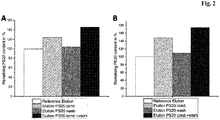
- FIG. 1 A schematic overview of the applied exemplary downstream processes is depicted in Figure 1 .
- the MabSelect SuRe® eluate (containing obinutuzumab) was adjusted to a pH value of 6,0 ⁇ 0,2 with 1.5 M Tris-amino and consecutively filtered using a 0.45 ⁇ m and a 0.22 ⁇ m pore size Minisart® filter unit (Sartorius Stedim). Filtered eluate was frozen at -20 °C and served as starting material for subsequent analytics.
- Wash 2 0.04 % (w/v) PS20 (5 CV in total: 4 CV, 30 min hold, 1 CV) 5. Wash 3 purified water (type II) 6. Wash 4 25 mM Tris/HCl, 25 mM NaCl, pH 7.0 7. Elution 30 mM Acetic acid (Pool 2.5 AU - 2.5 AU (1 cm UV-cell)) Run 5 (conditioned HCCF containing 0.28 % (w/v) PS20): Load densitiy: 19.82 g/L resin Chromatography steps: 1. Equilibration 25 mM Tris/HCl, 25 mM NaCl, pH 7.0 2. Load HCCF conditioned HCCF containing 0.28 % (w/v) PS20 3.
- Wash 2 0.28 % (w/v) PS20 (5 CV in total: 4 CV, 30 min hold, 1 CV) 5. Wash 3 purified water (type II) 6. Wash 4 25 mM Tris/HCl, 25 mM NaCl, pH 7.0 7. Elution 30 mM Acetic acid (Pool 2.5 AU - 2.5 AU (1 cm UV-cell)) Run 7 (conditioned HCCF containing 0.28 % (w/v) PS20 + add. wash-strip 0.28 % (w/v) PS20) Load densitiy: 19.86 g/L resin Chromatographic steps: 1. Equilibration 25 mM Tris/HCl, 25 mM NaCl, pH 7.0 2.
- CaptureSelectTM FcXL eluate (containing obinutuzumab) was adjusted to a pH value of 6,0 ⁇ 0,2 with 1.5 M Tris-amino and consecutively filtered using a 0.45 ⁇ m and a 0.22 ⁇ m pore size Minisart® filter unit (Sartorius Stedim). Filtered eluate was frozen at -20 °C served as starting material for subsequent analytics.
- samples were adjusted to the same protein concentration and prepared for PS20 stability studies using a stock solution of PS20 (4.0% (w/v)) and the corresponding elution buffer system as follows.
- a stock solution of methionine (100 mM) was added as an efficient antioxidant to control oxidative degradation of PS20 during the time-course of the experiment.
- Protein A (MabSelect SuRe): Sample ID c (sample) (mL) V (sample) (mL) V (PS20 stock soluti on) (mL) V (methionine stock solution) (mL) V (MSS Elution buffer) (mL) Final protein concentration (mg/mL) Reference Elution 19.89 0.603 0.050 0.500 3.847 2.40 Elution 0.04% PS20 cond.
- the CAD settings were as follows; internal nitrogen pressure 50 psi provided from an in-house source, power function setting 1.00 and range 200 pA by default.
- the post column switching valve directed the flow to the CAD between 2.4 and 6.5 min, while diverting the flow to waste at all other times.
- 25 ⁇ L of a sample with a nominal PS20 concentration of 0.4 mg/mL was injected and the PS20 content determined by establishing a calibration curve with an injection volume ranging from 5 (2 ⁇ g) to 40 ⁇ L (16 ⁇ g).
- the column temperature was set to 30°C.
- Solvent A (2% formic acid in purified water) and solvent B (2% formic acid in methanol) were used as mobile phases for the following gradient at a flow rate of 1.25 mL/min: Time (min) Solvent A Solvent B Switch to 0 90 10 Waste 1.0 60 40 Waste 2.4 60 40 Waste 3.4 60 40 CAD 3.5 0 100 CAD 5.5 0 100 CAD 5.6 90 10 CAD 6.5 90 10 Waste 8-0 90 10 Waste
- the degree of purification is most distinct if the solution comprising the protein is incubated/conditioned with a polysorbate before the chromatographic step and in addition the solution comprising the protein is also washed with a solution comprising a polysorbate during the chromatography. The combination of those treatment leads to even better results than the single treatments alone.
Landscapes
- Chemical & Material Sciences (AREA)
- Organic Chemistry (AREA)
- Health & Medical Sciences (AREA)
- Medicinal Chemistry (AREA)
- Proteomics, Peptides & Aminoacids (AREA)
- Biophysics (AREA)
- General Health & Medical Sciences (AREA)
- Genetics & Genomics (AREA)
- Life Sciences & Earth Sciences (AREA)
- Molecular Biology (AREA)
- Biochemistry (AREA)
- Analytical Chemistry (AREA)
- Immunology (AREA)
- Oncology (AREA)
- Peptides Or Proteins (AREA)
- Medicinal Preparation (AREA)
- Preparation Of Compounds By Using Micro-Organisms (AREA)
- Medicines Containing Antibodies Or Antigens For Use As Internal Diagnostic Agents (AREA)
Priority Applications (18)
| Application Number | Priority Date | Filing Date | Title |
|---|---|---|---|
| EP18169762.4A EP3560945A1 (fr) | 2018-04-27 | 2018-04-27 | Procédés de purification de polypeptides utilisant des polysorbates |
| ARP190101058A AR117418A1 (es) | 2018-04-27 | 2019-04-23 | Métodos para la purificación de polipéptidos usando polisorbatos |
| AU2019258509A AU2019258509A1 (en) | 2018-04-27 | 2019-04-25 | Methods for purification of polypeptides using polysorbates |
| MX2020010886A MX2020010886A (es) | 2018-04-27 | 2019-04-25 | Metodos para purificacion de polipeptidos usando polisorbatos. |
| CA3096562A CA3096562A1 (fr) | 2018-04-27 | 2019-04-25 | Procedes de purification de polypeptides a l'aide de polysorbates |
| BR112020021897-9A BR112020021897A2 (pt) | 2018-04-27 | 2019-04-25 | Métodos para purificar uma proteína e para reduzir a atividade hidrolítica em uma amostra, preparação líquida de anticorpo, método para a produção de uma proteína e composição líquida |
| PCT/EP2019/060557 WO2019207021A1 (fr) | 2018-04-27 | 2019-04-25 | Procédés de purification de polypeptides à l'aide de polysorbates |
| EP19720113.0A EP3784683A1 (fr) | 2018-04-27 | 2019-04-25 | Procédés de purification de polypeptides à l'aide de polysorbates |
| SG11202010618PA SG11202010618PA (en) | 2018-04-27 | 2019-04-25 | Methods for purification of polypeptides using polysorbates |
| CN201980028690.2A CN112041327A (zh) | 2018-04-27 | 2019-04-25 | 使用聚山梨酯纯化多肽的方法 |
| KR1020207032494A KR102613595B1 (ko) | 2018-04-27 | 2019-04-25 | 폴리솔베이트를 사용한 폴리펩티드의 정제 방법 |
| JP2020560138A JP2021520399A (ja) | 2018-04-27 | 2019-04-25 | ポリソルベートを使用するポリペプチドの精製方法 |
| TW108114799A TW201945056A (zh) | 2018-04-27 | 2019-04-26 | 使用聚山梨酸酯純化多肽之方法 |
| IL278220A IL278220A (en) | 2018-04-27 | 2020-10-21 | Methods for the purification of polypeptides using polysorbates |
| US17/080,505 US20210155656A1 (en) | 2018-04-27 | 2020-10-26 | Methods for purification of polypeptides using polysorbates |
| JP2022206521A JP2023030126A (ja) | 2018-04-27 | 2022-12-23 | ポリソルベートを使用するポリペプチドの精製方法 |
| JP2025025494A JP2025081536A (ja) | 2018-04-27 | 2025-02-20 | ポリソルベートを使用するポリペプチドの精製方法 |
| AU2026201295A AU2026201295A1 (en) | 2018-04-27 | 2026-02-20 | Methods for purification of polypeptides using polysorbates |
Applications Claiming Priority (1)
| Application Number | Priority Date | Filing Date | Title |
|---|---|---|---|
| EP18169762.4A EP3560945A1 (fr) | 2018-04-27 | 2018-04-27 | Procédés de purification de polypeptides utilisant des polysorbates |
Publications (1)
| Publication Number | Publication Date |
|---|---|
| EP3560945A1 true EP3560945A1 (fr) | 2019-10-30 |
Family
ID=62167103
Family Applications (2)
| Application Number | Title | Priority Date | Filing Date |
|---|---|---|---|
| EP18169762.4A Withdrawn EP3560945A1 (fr) | 2018-04-27 | 2018-04-27 | Procédés de purification de polypeptides utilisant des polysorbates |
| EP19720113.0A Pending EP3784683A1 (fr) | 2018-04-27 | 2019-04-25 | Procédés de purification de polypeptides à l'aide de polysorbates |
Family Applications After (1)
| Application Number | Title | Priority Date | Filing Date |
|---|---|---|---|
| EP19720113.0A Pending EP3784683A1 (fr) | 2018-04-27 | 2019-04-25 | Procédés de purification de polypeptides à l'aide de polysorbates |
Country Status (14)
| Country | Link |
|---|---|
| US (1) | US20210155656A1 (fr) |
| EP (2) | EP3560945A1 (fr) |
| JP (3) | JP2021520399A (fr) |
| KR (1) | KR102613595B1 (fr) |
| CN (1) | CN112041327A (fr) |
| AR (1) | AR117418A1 (fr) |
| AU (2) | AU2019258509A1 (fr) |
| BR (1) | BR112020021897A2 (fr) |
| CA (1) | CA3096562A1 (fr) |
| IL (1) | IL278220A (fr) |
| MX (1) | MX2020010886A (fr) |
| SG (1) | SG11202010618PA (fr) |
| TW (1) | TW201945056A (fr) |
| WO (1) | WO2019207021A1 (fr) |
Families Citing this family (7)
| Publication number | Priority date | Publication date | Assignee | Title |
|---|---|---|---|---|
| CN120795059A (zh) | 2018-08-27 | 2025-10-17 | 瑞泽恩制药公司 | 拉曼光谱在下游纯化中的应用 |
| EP4077644A1 (fr) * | 2019-12-20 | 2022-10-26 | Merck Sharp & Dohme LLC | Compositions purifiées d'entérovirus et procédés de purification avec une chromatographie d'affinité au glutathion |
| JP2023536366A (ja) * | 2020-08-07 | 2023-08-24 | エフ. ホフマン-ラ ロシュ アーゲー | タンパク質組成物を製造するための方法 |
| BR112023026011A2 (pt) * | 2021-06-14 | 2024-02-27 | Regeneron Pharma | Monitoramento da hidrólise de polissorbato em formulações farmacêuticas usando um método de quantificação de ácido graxo sem extração ultrassensível |
| AU2022429920A1 (en) * | 2021-12-31 | 2024-07-25 | Kashiv Biosciences, Llc | A process for separation and quantification of non-ionic surfactant |
| WO2024096505A1 (fr) * | 2022-10-31 | 2024-05-10 | 삼성바이오에피스 주식회사 | Procédé d'élimination d'impuretés par chromatographie d'affinité |
| WO2024107474A1 (fr) * | 2022-11-15 | 2024-05-23 | Massachusetts Institute Of Technology | Auto-assemblage contrôlé de lipides pour la fabrication évolutive de complexes de stimulation immunitaire de nouvelle génération |
Citations (4)
| Publication number | Priority date | Publication date | Assignee | Title |
|---|---|---|---|---|
| WO2005044859A2 (fr) | 2003-11-05 | 2005-05-19 | Glycart Biotechnology Ag | Molecules fixatrices d'antigenes presentant une affinite de fixation du recepteur de fc et une fonction effectrice accrues |
| WO2015095568A1 (fr) | 2013-12-18 | 2015-06-25 | Kelvin Lee | Réduction de l'activité d'une lipase dans des formulations de produits |
| WO2016057739A1 (fr) * | 2014-10-09 | 2016-04-14 | Regeneron Pharmaceuticals, Inc. | Procédé pour diminuer les particules sub-visibles au sein d'une formulation pharmaceutique |
| WO2017117311A1 (fr) | 2015-12-30 | 2017-07-06 | Genentech, Inc. | Formulations présentant une moindre dégradation des polysorbates |
Family Cites Families (17)
| Publication number | Priority date | Publication date | Assignee | Title |
|---|---|---|---|---|
| ATE255131T1 (de) | 1991-06-14 | 2003-12-15 | Genentech Inc | Humanisierter heregulin antikörper |
| WO1993021319A1 (fr) | 1992-04-08 | 1993-10-28 | Cetus Oncology Corporation | ANTICORPS HUMANISES SPECIFIES PAR C-erbB-2 |
| CA2120745A1 (fr) | 1992-06-30 | 1994-01-06 | Philip G. Kasprzyk | Combinaison d'anticorps monoclonaux anti-erbb-2 et methode d'utilisation |
| US5783186A (en) | 1995-12-05 | 1998-07-21 | Amgen Inc. | Antibody-induced apoptosis |
| EP1308455B9 (fr) * | 1998-05-06 | 2006-06-14 | Genentech, Inc. | Composition d'anticorps anti-HER2 |
| AT500848B1 (de) | 1999-06-25 | 2008-01-15 | Genentech Inc | Humanisierte anti-erbb2-antikörper |
| CA2473144C (fr) * | 2002-02-05 | 2013-05-28 | Genentech, Inc. | Purification de proteines |
| MXPA06014065A (es) | 2004-06-01 | 2007-01-31 | Genentech Inc | Conjugados de droga-anticuerpo y metodos. |
| JO3000B1 (ar) | 2004-10-20 | 2016-09-05 | Genentech Inc | مركبات أجسام مضادة . |
| US8263750B2 (en) * | 2006-03-16 | 2012-09-11 | Amgen Inc. | Method for purifying a protein using protein-A affinity chromatography using an intermediate wash step |
| US9345661B2 (en) | 2009-07-31 | 2016-05-24 | Genentech, Inc. | Subcutaneous anti-HER2 antibody formulations and uses thereof |
| NZ603616A (en) * | 2010-05-18 | 2015-02-27 | Abbvie Inc | Apparatus and process of purification of proteins |
| LT3495387T (lt) | 2012-07-13 | 2021-11-25 | Roche Glycart Ag | Bispecifiniai anti-vegf / anti-ang-2 antikūnai ir jų panaudojimas akių kraujagyslių ligoms gydyti |
| JP6602765B2 (ja) * | 2013-09-05 | 2019-11-06 | ジェネンテック, インコーポレイテッド | クロマトグラフィー再使用のための方法 |
| US8946395B1 (en) * | 2013-10-18 | 2015-02-03 | Abbvie Inc. | Purification of proteins using hydrophobic interaction chromatography |
| GB2542391A (en) * | 2015-09-17 | 2017-03-22 | Annexin Pharmaceuticals Ab | Process of manufacture |
| KR102318480B1 (ko) * | 2016-08-25 | 2021-10-28 | 제이씨알 파마 가부시키가이샤 | 항체 융합 단백질의 제조 방법 |
-
2018
- 2018-04-27 EP EP18169762.4A patent/EP3560945A1/fr not_active Withdrawn
-
2019
- 2019-04-23 AR ARP190101058A patent/AR117418A1/es unknown
- 2019-04-25 WO PCT/EP2019/060557 patent/WO2019207021A1/fr not_active Ceased
- 2019-04-25 MX MX2020010886A patent/MX2020010886A/es unknown
- 2019-04-25 JP JP2020560138A patent/JP2021520399A/ja not_active Withdrawn
- 2019-04-25 AU AU2019258509A patent/AU2019258509A1/en not_active Abandoned
- 2019-04-25 SG SG11202010618PA patent/SG11202010618PA/en unknown
- 2019-04-25 CN CN201980028690.2A patent/CN112041327A/zh active Pending
- 2019-04-25 EP EP19720113.0A patent/EP3784683A1/fr active Pending
- 2019-04-25 BR BR112020021897-9A patent/BR112020021897A2/pt unknown
- 2019-04-25 KR KR1020207032494A patent/KR102613595B1/ko active Active
- 2019-04-25 CA CA3096562A patent/CA3096562A1/fr active Pending
- 2019-04-26 TW TW108114799A patent/TW201945056A/zh unknown
-
2020
- 2020-10-21 IL IL278220A patent/IL278220A/en unknown
- 2020-10-26 US US17/080,505 patent/US20210155656A1/en active Pending
-
2022
- 2022-12-23 JP JP2022206521A patent/JP2023030126A/ja active Pending
-
2025
- 2025-02-20 JP JP2025025494A patent/JP2025081536A/ja active Pending
-
2026
- 2026-02-20 AU AU2026201295A patent/AU2026201295A1/en active Pending
Patent Citations (4)
| Publication number | Priority date | Publication date | Assignee | Title |
|---|---|---|---|---|
| WO2005044859A2 (fr) | 2003-11-05 | 2005-05-19 | Glycart Biotechnology Ag | Molecules fixatrices d'antigenes presentant une affinite de fixation du recepteur de fc et une fonction effectrice accrues |
| WO2015095568A1 (fr) | 2013-12-18 | 2015-06-25 | Kelvin Lee | Réduction de l'activité d'une lipase dans des formulations de produits |
| WO2016057739A1 (fr) * | 2014-10-09 | 2016-04-14 | Regeneron Pharmaceuticals, Inc. | Procédé pour diminuer les particules sub-visibles au sein d'une formulation pharmaceutique |
| WO2017117311A1 (fr) | 2015-12-30 | 2017-07-06 | Genentech, Inc. | Formulations présentant une moindre dégradation des polysorbates |
Non-Patent Citations (33)
| Title |
|---|
| "Advanced Chromatographic and Electromigration Methods in Biosciences", 1998, ELSEVIER SCIENCE BV |
| "Chromatography", 1992, ELSEVIER SCIENCE PUBLISHING COMPANY, article "Fundamentals and Techniques" |
| "Current Protocols in Molecular Biology", 1987, JOHN WILEY & SONS, INC. |
| "Molecular Cloning: A Laboratory Manual", 1989, COLD SPRING HARBOR LABORATORY PRESS |
| AYORINDE, F. O.; GELAIN, S. V.; JOHNSON, J. H., JR; WAN, L. W.: "Analysis of some commercial polysorbate formulations using matrix-assisted laser desorption/ionization time-of-flight mass spectrometry", RAPID COMMUNICATIONS IN MASS SPECTROMETRY: RCM, vol. 14, no. 22, 2000, pages 2116 - 2124 |
| BAM, N. B.; CLELAND, J. L.; YANG, J.; MANNING, M. C.; CARPENTER, J. F.; KELLEY, R. F.; RANDOLPH, T. W.: "Tween protects recombinant human growth hormone against agitation-induced damage via hydrophobic interactions", JOURNAL OF PHARMACEUTICAL SCIENCES, vol. 87, no. 12, 1998, pages 1554 - 1559, XP002548998, DOI: doi:10.1021/JS980175V |
| BRANDNER, J. D.: "The composition of NF-defined emulsifiers. Sorbitan monolaurate, monopalmitate, monostearate, monooleate, polysorbate 20, polysorbate 40, polysorbate 60, and polysorbate 80", DRUG DEVELOPMENT AND INDUSTRIAL PHARMACY, vol. 24, no. 11, 1998, pages 1049 - 1054 |
| CHI, EVA Y.; KRISHNAN, SAMPATHKUMAR; RANDOLPH, THEODORE W.; CARPENTER, JOHN F.: "Physical stability of proteins in aqueous solution. Mechanism and driving forces in nonnative protein aggregation", PHARMACEUTICAL RESEARCH, vol. 20, no. 9, 2003, pages 1325 - 1336, XP002475010, DOI: doi:10.1023/A:1025771421906 |
| CHIU, JOSEPHINE; VALENTE, KRISTIN N.; LEVY, NICHOLAS E.; MIN, LIE; LENHOFF, ABRAHAM M.; LEE, KELVIN H.: "Knockout of a difficult-to-remove CHO host cell protein, lipoprotein lipase, for improved polysorbate stability in monoclonal antibody formulations", BIOTECHNOLOGY AND BIOENGINEERING, vol. 114, no. 5, 2017, pages 1006 - 1015, XP055434412, DOI: doi:10.1002/bit.26237 |
| DIXIT, NITIN; SALAMAT-MILLER, NAZILA; SALINAS, PAUL A.; TAYLOR, KATHERINE D.; BASU, SUJIT K.: "Residual Host Cell Protein Promotes Polysorbate 20 Degradation in a Sulfatase Drug Product Leading to Free Fatty Acid Particles", JOURNAL OF PHARMACEUTICAL SCIENCES, vol. 105, no. 5, 2016, pages 1657 - 1666, XP055434427, DOI: doi:10.1016/j.xphs.2016.02.029 |
| DONEANU, CATALIN E.; XENOPOULOS, ALEX; FADGEN, KEITH; MURPHY, JIM; SKILTON, ST JOHN; PRENTICE, HOLLY ET AL.: "Analysis of host-cell proteins in biotherapeutic proteins by comprehensive online two-dimensional liquid chromatography/mass spectrometry", MABS, vol. 4, no. 1, 2012, pages 24 - 44, XP055297897, DOI: doi:10.4161/mabs.4.1.18748 |
| HEWITT ET AL., JOURNAL OF CHROMATOGRAPHY. A, vol. 1218, 2011, pages 2138 - 2145 |
| HEWITT, DANIEL; ALVAREZ, MELISSA; ROBINSON, KATHRYN; JI, JUNYAN; WANG, Y. JOHN; KAO, YUNG-HSIANG; ZHANG, TAYLOR: "Mixed-mode and reversed-phase liquid chromatography-tandem mass spectrometry methodologies to study composition and base hydrolysis of polysorbate 20 and 80", JOURNAL OF CHROMATOGRAPHY. A, vol. 1218, no. 15, 2011, pages 2138 - 2145, XP055031462, DOI: doi:10.1016/j.chroma.2010.09.057 |
| HILLGREN, ANNA; LINDGREN, JAN; ALDEN, MAGGIE: "Protection mechanism of Tween 80 during freeze-thawing of a model protein, LDH", INTERNATIONAL JOURNAL OF PHARMACEUTICS, vol. 237, no. 1-2, 2002, pages 57 - 69, XP002278945, DOI: doi:10.1016/S0378-5173(02)00021-2 |
| JONES LS; BAM NB; RANDOLPH TW, SURFACTANT-STABILIZEDPROTEIN FORMULATIONS: A REVIEW OF PROTEIN-SURFACTANT INTERACTIONS AND NOVEL ANALYTICAL METHODOLOGIES |
| K. LEE ET AL.: "A Chinese Hamster Ovary Cell Host Cell Protein That Impacts PS-80 Degradation", ACCBIO CONFERENCE, 2015 |
| KERWIN; BRUCE A.: "Polysorbates 20 and 80 used in the formulation of protein biotherapeutics. Structure and degradation pathways", JOURNAL OF PHARMACEUTICAL SCIENCES, vol. 97, no. 8, 2008, pages 2924 - 2935, XP055015864, DOI: doi:10.1002/jps.21190 |
| KISHORE, RAVURI S. K.; PAPPENBERGER, ASTRID; DAUPHIN, ISABELLE BAUER; ROSS, ALFRED; BUERGI, BEATRICE; STAEMPFLI, ANDREAS; MAHLER,: "Degradation of polysorbates 20 and 80. Studies on thermal autoxidation and hydrolysis", JOURNAL OF PHARMACEUTICAL SCIENCES, vol. 100, no. 2, 2011, pages 721 - 731 |
| KREILGAARD, L.; JONES, L. S.; RANDOLPH, T. W.; FROKJAER, S.; FLINK, J. M.; MANNING, M. C.; CARPENTER, J. F.: "Effect of Tween 20 on freeze-thawing-and agitation-induced aggregation of recombinant human factor XIII", JOURNAL OF PHARMACEUTICAL SCIENCES, vol. 87, no. 12, 1998, pages 1597 - 1603, XP001087507 |
| LABRENZ, STEVEN R.: "Ester hydrolysis of polysorbate 80 in mAb drug product. Evidence in support of the hypothesized risk after the observation of visible particulate in mAb formulations", JOURNAL OF PHARMACEUTICAL SCIENCES, vol. 103, no. 8, 2014, pages 2268 - 2277 |
| LIPPOLD ET AL., JOURNAL OF PHARMACEUTICAL AND BIOMEDICAL ANALYSIS, vol. 132, 2017, pages 24 - 34 |
| MAA, Y. F.; HSU, C. C.: "Protein denaturation by combined effect of shear and air-liquid interface", BIOTECHNOLOGY AND BIOENGINEERING, vol. 54, no. 6, 1997, pages 503 - 512, XP002492210, DOI: doi:10.1002/(SICI)1097-0290(19970620)54:6<503::AID-BIT1>3.0.CO;2-N |
| NITIN DIXIT ET AL: "Residual Host Cell Protein Promotes Polysorbate 20 Degradation in a Sulfatase Drug Product Leading to Free Fatty Acid Particles", JOURNAL OF PHARMACEUTICAL SCIENCES, vol. 105, no. 5, 1 May 2016 (2016-05-01), US, pages 1657 - 1666, XP055434427, ISSN: 0022-3549, DOI: 10.1016/j.xphs.2016.02.029 * |
| POOLE, C.F.; POOLE, S.K.: "Chromatography Today", 1991, ELSEVIER SCIENCE PUBLISHING COMPANY |
| RANDOLPH TW; JONES LS: "Surfactant-protein interactions", RATIONAL DESIGN OF STABLE PROTEIN FORMULATIONS |
| SAGGU, MIGUEL; LIU, JUN; PATEL, ANKIT: "Identification of Subvisible Particles in Biopharmaceutical Formulations Using Raman Spectroscopy Provides Insight into Polysorbate 20 Degradation Pathway", PHARMACEUTICAL RESEARCH, vol. 32, no. 9, 2015, pages 2877 - 2888, XP035525938, DOI: doi:10.1007/s11095-015-1670-x |
| SCOPES: "Protein Purification: Principles and Practice", 1982, SPRINGER VERLAG |
| TOMLINSON, ANTHONY; DEMEULE, BARTHELEMY; LIN, BAIWEI; YADAV, SANDEEP: "Polysorbate 20 Degradation in Biopharmaceutical Formulations. Quantification of Free Fatty Acids, Characterization of Particulates, and Insights into the Degradation Mechanism", MOLECULAR PHARMACEUTICS, vol. 12, no. 11, 2015, pages 3805 - 3815, XP009187156, DOI: doi:10.1021/acs.molpharmaceut.5b00311 |
| TOROSANTUCCI, RICCARDO; SCHONEICH, CHRISTIAN; JISKOOT, WIM: "Oxidation of therapeutic proteins and peptides. Structural and biological consequences", PHARMACEUTICAL RESEARCH, vol. 31, no. 3, 2014, pages 541 - 553 |
| VANDERLAAN, M. ET AL., BIOPROC INT., vol. 13, 2015, pages 18 - 29 |
| VU DANG, HOANG; GRAY, ALEXANDER I.; WATSON, DAVID; BATES, CATHARINE D.; SCHOLES, PETER; ECCLESTON, GILLIAN M.: "Composition analysis of two batches of polysorbate 60 using MS and NMR techniques", JOURNAL OF PHARMACEUTICAL AND BIOMEDICAL ANALYSIS, vol. 40, no. 5, 2006, pages 1155 - 1165 |
| WANG; WEI: "Protein aggregation and its inhibition in biopharmaceutics", INTERNATIONAL JOURNAL OF PHARMACEUTICS, vol. 289, no. 1-2, 2005, pages 1 - 30 |
| ZHANG, R.; WANG, Y.; TAN, L.; ZHANG, H. Y.; YANG, M.: "Analysis of polysorbate 80 and its related compounds by RP-HPLC with ELSD and MS detection", JOURNAL OF CHROMATOGRAPHIC SCIENCE, vol. 50, no. 7, 2012, pages 598 - 607 |
Also Published As
| Publication number | Publication date |
|---|---|
| AU2019258509A1 (en) | 2020-11-19 |
| IL278220A (en) | 2020-11-30 |
| EP3784683A1 (fr) | 2021-03-03 |
| AR117418A1 (es) | 2021-08-04 |
| KR102613595B1 (ko) | 2023-12-13 |
| WO2019207021A1 (fr) | 2019-10-31 |
| JP2023030126A (ja) | 2023-03-07 |
| MX2020010886A (es) | 2020-11-09 |
| SG11202010618PA (en) | 2020-11-27 |
| AU2026201295A1 (en) | 2026-03-12 |
| BR112020021897A2 (pt) | 2021-03-09 |
| CN112041327A (zh) | 2020-12-04 |
| US20210155656A1 (en) | 2021-05-27 |
| CA3096562A1 (fr) | 2019-10-31 |
| JP2021520399A (ja) | 2021-08-19 |
| TW201945056A (zh) | 2019-12-01 |
| JP2025081536A (ja) | 2025-05-27 |
| KR20200142551A (ko) | 2020-12-22 |
Similar Documents
| Publication | Publication Date | Title |
|---|---|---|
| AU2026201295A1 (en) | Methods for purification of polypeptides using polysorbates | |
| US20230046182A1 (en) | Methods for purifying antibodies | |
| JP5931255B2 (ja) | 免疫グロブリン溶液を精製するための方法 | |
| EP2714714B1 (fr) | Solution de lavage et procédé pour chromatographie d'affinité | |
| EP3680000B1 (fr) | Procédés de purification d'anticorps | |
| US20120177640A1 (en) | Optimizing the production of antibodies | |
| Jiang et al. | Evaluation of heavy-chain C-terminal deletion on product quality and pharmacokinetics of monoclonal antibodies | |
| US20210054023A1 (en) | Methods for purifying antibodies | |
| EP2714713B1 (fr) | Purification d'anticorps anti-cd20 | |
| EP2934597B1 (fr) | Procédés de production d'immunoconjugués | |
| WO2019171286A1 (fr) | Procédé de purification de polypeptides recombinants | |
| HK40043091A (en) | Methods for purification of polypeptides using polysorbates |
Legal Events
| Date | Code | Title | Description |
|---|---|---|---|
| PUAI | Public reference made under article 153(3) epc to a published international application that has entered the european phase |
Free format text: ORIGINAL CODE: 0009012 |
|
| AK | Designated contracting states |
Kind code of ref document: A1 Designated state(s): AL AT BE BG CH CY CZ DE DK EE ES FI FR GB GR HR HU IE IS IT LI LT LU LV MC MK MT NL NO PL PT RO RS SE SI SK SM TR |
|
| AX | Request for extension of the european patent |
Extension state: BA ME |
|
| RIN1 | Information on inventor provided before grant (corrected) |
Inventor name: RAVURI, SATYA KRISHNA KISHORE Inventor name: SPENSBERGER, BERNHARD Inventor name: LEISS, MICHAEL Inventor name: FALKENSTEIN, ROBERTO |
|
| 17P | Request for examination filed |
Effective date: 20200430 |
|
| RBV | Designated contracting states (corrected) |
Designated state(s): AL AT BE BG CH CY CZ DE DK EE ES FI FR GB GR HR HU IE IS IT LI LT LU LV MC MK MT NL NO PL PT RO RS SE SI SK SM TR |
|
| STAA | Information on the status of an ep patent application or granted ep patent |
Free format text: STATUS: THE APPLICATION IS DEEMED TO BE WITHDRAWN |
|
| 18D | Application deemed to be withdrawn |
Effective date: 20200603 |