EP3564251A1 - Nouveau glycoside de stéviol, son procédé de production et composition d'édulcorant le contenant - Google Patents
Nouveau glycoside de stéviol, son procédé de production et composition d'édulcorant le contenant Download PDFInfo
- Publication number
- EP3564251A1 EP3564251A1 EP17888291.6A EP17888291A EP3564251A1 EP 3564251 A1 EP3564251 A1 EP 3564251A1 EP 17888291 A EP17888291 A EP 17888291A EP 3564251 A1 EP3564251 A1 EP 3564251A1
- Authority
- EP
- European Patent Office
- Prior art keywords
- seq
- rebaudioside
- nucleotide sequence
- steviol glycoside
- compound
- Prior art date
- Legal status (The legal status is an assumption and is not a legal conclusion. Google has not performed a legal analysis and makes no representation as to the accuracy of the status listed.)
- Pending
Links
- 235000019202 steviosides Nutrition 0.000 title claims description 161
- 150000008144 steviol glycosides Chemical class 0.000 title claims description 156
- 239000004383 Steviol glycoside Substances 0.000 title claims description 153
- 235000019411 steviol glycoside Nutrition 0.000 title claims description 153
- 229930182488 steviol glycoside Natural products 0.000 title claims description 153
- 235000003599 food sweetener Nutrition 0.000 title claims description 64
- 239000003765 sweetening agent Substances 0.000 title claims description 64
- 239000000203 mixture Substances 0.000 title claims description 21
- 238000004519 manufacturing process Methods 0.000 title claims description 16
- 150000001875 compounds Chemical class 0.000 claims description 74
- WQZGKKKJIJFFOK-GASJEMHNSA-N Glucose Chemical class OC[C@H]1OC(O)[C@H](O)[C@@H](O)[C@@H]1O WQZGKKKJIJFFOK-GASJEMHNSA-N 0.000 claims description 59
- 239000000796 flavoring agent Substances 0.000 claims description 53
- 235000019634 flavors Nutrition 0.000 claims description 53
- 235000013361 beverage Nutrition 0.000 claims description 52
- 108091033319 polynucleotide Proteins 0.000 claims description 52
- 239000002157 polynucleotide Substances 0.000 claims description 52
- 102000040430 polynucleotide Human genes 0.000 claims description 52
- 239000002773 nucleotide Substances 0.000 claims description 46
- 125000003729 nucleotide group Chemical group 0.000 claims description 46
- 229930188195 rebaudioside Natural products 0.000 claims description 45
- HELXLJCILKEWJH-NCGAPWICSA-N rebaudioside A Chemical compound O([C@H]1[C@H](O)[C@@H](CO)O[C@H]([C@@H]1O[C@H]1[C@@H]([C@@H](O)[C@H](O)[C@@H](CO)O1)O)O[C@]12C(=C)C[C@@]3(C1)CC[C@@H]1[C@@](C)(CCC[C@]1([C@@H]3CC2)C)C(=O)O[C@H]1[C@@H]([C@@H](O)[C@H](O)[C@@H](CO)O1)O)[C@@H]1O[C@H](CO)[C@@H](O)[C@H](O)[C@H]1O HELXLJCILKEWJH-NCGAPWICSA-N 0.000 claims description 45
- QSRAJVGDWKFOGU-WBXIDTKBSA-N rebaudioside c Chemical compound O[C@@H]1[C@H](O)[C@@H](O)[C@H](C)O[C@H]1O[C@@H]1[C@@H](O[C@H]2[C@@H]([C@@H](O)[C@H](O)[C@@H](CO)O2)O)[C@H](O)[C@@H](CO)O[C@H]1O[C@]1(CC[C@H]2[C@@]3(C)[C@@H]([C@](CCC3)(C)C(=O)O[C@H]3[C@@H]([C@@H](O)[C@H](O)[C@@H](CO)O3)O)CC3)C(=C)C[C@]23C1 QSRAJVGDWKFOGU-WBXIDTKBSA-N 0.000 claims description 45
- 239000003795 chemical substances by application Substances 0.000 claims description 44
- 239000000284 extract Substances 0.000 claims description 44
- 235000013305 food Nutrition 0.000 claims description 44
- 238000000034 method Methods 0.000 claims description 37
- 239000008103 glucose Substances 0.000 claims description 35
- 108090000623 proteins and genes Proteins 0.000 claims description 32
- 230000000694 effects Effects 0.000 claims description 26
- 239000001776 FEMA 4720 Substances 0.000 claims description 24
- 150000003839 salts Chemical class 0.000 claims description 23
- 238000006243 chemical reaction Methods 0.000 claims description 22
- 102000004169 proteins and genes Human genes 0.000 claims description 22
- SHZGCJCMOBCMKK-JFNONXLTSA-N L-rhamnopyranose Chemical compound C[C@@H]1OC(O)[C@H](O)[C@H](O)[C@H]1O SHZGCJCMOBCMKK-JFNONXLTSA-N 0.000 claims description 18
- RPYRMTHVSUWHSV-CUZJHZIBSA-N rebaudioside D Chemical compound O([C@H]1[C@H](O)[C@@H](CO)O[C@H]([C@@H]1O[C@H]1[C@@H]([C@@H](O)[C@H](O)[C@@H](CO)O1)O)O[C@]12C(=C)C[C@@]3(C1)CC[C@@H]1[C@@](C)(CCC[C@]1([C@@H]3CC2)C)C(=O)O[C@H]1[C@@H]([C@@H](O)[C@H](O)[C@@H](CO)O1)O[C@H]1[C@@H]([C@@H](O)[C@H](O)[C@@H](CO)O1)O)[C@@H]1O[C@H](CO)[C@@H](O)[C@H](O)[C@H]1O RPYRMTHVSUWHSV-CUZJHZIBSA-N 0.000 claims description 16
- SHZGCJCMOBCMKK-UHFFFAOYSA-N D-mannomethylose Natural products CC1OC(O)C(O)C(O)C1O SHZGCJCMOBCMKK-UHFFFAOYSA-N 0.000 claims description 15
- PNNNRSAQSRJVSB-UHFFFAOYSA-N L-rhamnose Natural products CC(O)C(O)C(O)C(O)C=O PNNNRSAQSRJVSB-UHFFFAOYSA-N 0.000 claims description 15
- 240000004808 Saccharomyces cerevisiae Species 0.000 claims description 15
- QFVOYBUQQBFCRH-UHFFFAOYSA-N Steviol Natural products C1CC2(C3)CC(=C)C3(O)CCC2C2(C)C1C(C)(C(O)=O)CCC2 QFVOYBUQQBFCRH-UHFFFAOYSA-N 0.000 claims description 15
- QFVOYBUQQBFCRH-VQSWZGCSSA-N steviol Chemical compound C([C@@]1(O)C(=C)C[C@@]2(C1)CC1)C[C@H]2[C@@]2(C)[C@H]1[C@](C)(C(O)=O)CCC2 QFVOYBUQQBFCRH-VQSWZGCSSA-N 0.000 claims description 15
- 229940032084 steviol Drugs 0.000 claims description 15
- -1 azo compound Chemical class 0.000 claims description 13
- 125000006239 protecting group Chemical group 0.000 claims description 12
- 239000001512 FEMA 4601 Substances 0.000 claims description 10
- HELXLJCILKEWJH-SEAGSNCFSA-N Rebaudioside A Natural products O=C(O[C@H]1[C@@H](O)[C@@H](O)[C@H](O)[C@@H](CO)O1)[C@@]1(C)[C@@H]2[C@](C)([C@H]3[C@@]4(CC(=C)[C@@](O[C@H]5[C@H](O[C@H]6[C@H](O)[C@@H](O)[C@H](O)[C@@H](CO)O6)[C@@H](O[C@H]6[C@H](O)[C@@H](O)[C@H](O)[C@@H](CO)O6)[C@H](O)[C@@H](CO)O5)(C4)CC3)CC2)CCC1 HELXLJCILKEWJH-SEAGSNCFSA-N 0.000 claims description 10
- HELXLJCILKEWJH-UHFFFAOYSA-N entered according to Sigma 01432 Natural products C1CC2C3(C)CCCC(C)(C(=O)OC4C(C(O)C(O)C(CO)O4)O)C3CCC2(C2)CC(=C)C21OC(C1OC2C(C(O)C(O)C(CO)O2)O)OC(CO)C(O)C1OC1OC(CO)C(O)C(O)C1O HELXLJCILKEWJH-UHFFFAOYSA-N 0.000 claims description 10
- 235000019203 rebaudioside A Nutrition 0.000 claims description 10
- GSGVXNMGMKBGQU-PHESRWQRSA-N rebaudioside M Chemical compound C[C@@]12CCC[C@](C)([C@H]1CC[C@@]13CC(=C)[C@@](C1)(CC[C@@H]23)O[C@@H]1O[C@H](CO)[C@@H](O)[C@H](O[C@@H]2O[C@H](CO)[C@@H](O)[C@H](O)[C@H]2O)[C@H]1O[C@@H]1O[C@H](CO)[C@@H](O)[C@H](O)[C@H]1O)C(=O)O[C@@H]1O[C@H](CO)[C@@H](O)[C@H](O[C@@H]2O[C@H](CO)[C@@H](O)[C@H](O)[C@H]2O)[C@H]1O[C@@H]1O[C@H](CO)[C@@H](O)[C@H](O)[C@H]1O GSGVXNMGMKBGQU-PHESRWQRSA-N 0.000 claims description 10
- UEDUENGHJMELGK-HYDKPPNVSA-N Stevioside Chemical compound O([C@@H]1[C@@H](O)[C@H](O)[C@@H](CO)O[C@H]1O[C@]12C(=C)C[C@@]3(C1)CC[C@@H]1[C@@](C)(CCC[C@]1([C@@H]3CC2)C)C(=O)O[C@H]1[C@@H]([C@@H](O)[C@H](O)[C@@H](CO)O1)O)[C@@H]1O[C@H](CO)[C@@H](O)[C@H](O)[C@H]1O UEDUENGHJMELGK-HYDKPPNVSA-N 0.000 claims description 8
- DRDCJEIZVLVWNC-SLBWPEPYSA-N UDP-beta-L-rhamnose Chemical compound O[C@@H]1[C@H](O)[C@@H](O)[C@H](C)O[C@@H]1OP(O)(=O)OP(O)(=O)OC[C@@H]1[C@@H](O)[C@@H](O)[C@H](N2C(NC(=O)C=C2)=O)O1 DRDCJEIZVLVWNC-SLBWPEPYSA-N 0.000 claims description 8
- QSIDJGUAAUSPMG-CULFPKEHSA-N steviolmonoside Chemical compound O([C@]12C(=C)C[C@@]3(C1)CC[C@@H]1[C@@](C)(CCC[C@]1([C@@H]3CC2)C)C(O)=O)[C@@H]1O[C@H](CO)[C@@H](O)[C@H](O)[C@H]1O QSIDJGUAAUSPMG-CULFPKEHSA-N 0.000 claims description 8
- OHHNJQXIOPOJSC-UHFFFAOYSA-N stevioside Natural products CC1(CCCC2(C)C3(C)CCC4(CC3(CCC12C)CC4=C)OC5OC(CO)C(O)C(O)C5OC6OC(CO)C(O)C(O)C6O)C(=O)OC7OC(CO)C(O)C(O)C7O OHHNJQXIOPOJSC-UHFFFAOYSA-N 0.000 claims description 8
- 229940013618 stevioside Drugs 0.000 claims description 8
- RLLCWNUIHGPAJY-RYBZXKSASA-N Rebaudioside E Natural products O=C(O[C@H]1[C@H](O[C@H]2[C@H](O)[C@@H](O)[C@@H](O)[C@@H](CO)O2)[C@@H](O)[C@@H](O)[C@H](CO)O1)[C@]1(C)[C@@H]2[C@@](C)([C@@H]3[C@@]4(CC(=C)[C@@](O[C@@H]5[C@@H](O[C@@H]6[C@@H](O)[C@H](O)[C@@H](O)[C@H](CO)O6)[C@H](O)[C@@H](O)[C@H](CO)O5)(C4)CC3)CC2)CCC1 RLLCWNUIHGPAJY-RYBZXKSASA-N 0.000 claims description 7
- HINSNOJRHFIMKB-DJDMUFINSA-N [(2S,3R,4S,5S,6R)-4,5-dihydroxy-6-(hydroxymethyl)-3-[(2S,3R,4R,5R,6S)-3,4,5-trihydroxy-6-methyloxan-2-yl]oxyoxan-2-yl] (1R,4S,5R,9S,10R,13S)-13-[(2S,3R,4S,5R,6R)-5-hydroxy-6-(hydroxymethyl)-3,4-bis[[(2S,3R,4S,5S,6R)-3,4,5-trihydroxy-6-(hydroxymethyl)oxan-2-yl]oxy]oxan-2-yl]oxy-5,9-dimethyl-14-methylidenetetracyclo[11.2.1.01,10.04,9]hexadecane-5-carboxylate Chemical compound [H][C@@]1(O[C@@H]2[C@@H](O)[C@H](O)[C@@H](CO)O[C@H]2OC(=O)[C@]2(C)CCC[C@@]3(C)[C@]4([H])CC[C@@]5(C[C@]4(CC5=C)CC[C@]23[H])O[C@]2([H])O[C@H](CO)[C@@H](O)[C@H](O[C@]3([H])O[C@H](CO)[C@@H](O)[C@H](O)[C@H]3O)[C@H]2O[C@]2([H])O[C@H](CO)[C@@H](O)[C@H](O)[C@H]2O)O[C@@H](C)[C@H](O)[C@@H](O)[C@H]1O HINSNOJRHFIMKB-DJDMUFINSA-N 0.000 claims description 7
- 125000002887 hydroxy group Chemical group [H]O* 0.000 claims description 7
- RLLCWNUIHGPAJY-SFUUMPFESA-N rebaudioside E Chemical compound O([C@@H]1[C@@H](O)[C@H](O)[C@@H](CO)O[C@H]1O[C@]12C(=C)C[C@@]3(C1)CC[C@@H]1[C@@](C)(CCC[C@]1([C@@H]3CC2)C)C(=O)O[C@H]1[C@@H]([C@@H](O)[C@H](O)[C@@H](CO)O1)O[C@H]1[C@@H]([C@@H](O)[C@H](O)[C@@H](CO)O1)O)[C@@H]1O[C@H](CO)[C@@H](O)[C@H](O)[C@H]1O RLLCWNUIHGPAJY-SFUUMPFESA-N 0.000 claims description 7
- XYFCBTPGUUZFHI-UHFFFAOYSA-N Phosphine Chemical compound P XYFCBTPGUUZFHI-UHFFFAOYSA-N 0.000 claims description 6
- 230000002194 synthesizing effect Effects 0.000 claims description 6
- YWPVROCHNBYFTP-UHFFFAOYSA-N Rubusoside Natural products C1CC2C3(C)CCCC(C)(C(=O)OC4C(C(O)C(O)C(CO)O4)O)C3CCC2(C2)CC(=C)C21OC1OC(CO)C(O)C(O)C1O YWPVROCHNBYFTP-UHFFFAOYSA-N 0.000 claims description 5
- OMHUCGDTACNQEX-OSHKXICASA-N Steviolbioside Natural products O([C@@H]1[C@@H](O)[C@H](O)[C@@H](CO)O[C@H]1O[C@]12C(=C)C[C@@]3(C1)CC[C@@H]1[C@@](C)(CCC[C@]1([C@@H]3CC2)C)C(O)=O)[C@@H]1O[C@H](CO)[C@@H](O)[C@H](O)[C@H]1O OMHUCGDTACNQEX-OSHKXICASA-N 0.000 claims description 5
- HSCJRCZFDFQWRP-JZMIEXBBSA-N UDP-alpha-D-glucose Chemical compound O[C@@H]1[C@@H](O)[C@H](O)[C@@H](CO)O[C@@H]1OP(O)(=O)OP(O)(=O)OC[C@@H]1[C@@H](O)[C@@H](O)[C@H](N2C(NC(=O)C=C2)=O)O1 HSCJRCZFDFQWRP-JZMIEXBBSA-N 0.000 claims description 5
- HSCJRCZFDFQWRP-UHFFFAOYSA-N Uridindiphosphoglukose Natural products OC1C(O)C(O)C(CO)OC1OP(O)(=O)OP(O)(=O)OCC1C(O)C(O)C(N2C(NC(=O)C=C2)=O)O1 HSCJRCZFDFQWRP-UHFFFAOYSA-N 0.000 claims description 5
- JLPRGBMUVNVSKP-AHUXISJXSA-M chembl2368336 Chemical compound [Na+].O([C@H]1[C@@H](O)[C@H](O)[C@H](CO)O[C@H]1O[C@]12C(=C)C[C@@]3(C1)CC[C@@H]1[C@@](C)(CCC[C@]1([C@@H]3CC2)C)C([O-])=O)[C@@H]1O[C@@H](CO)[C@@H](O)[C@H](O)[C@@H]1O JLPRGBMUVNVSKP-AHUXISJXSA-M 0.000 claims description 5
- QRGRAFPOLJOGRV-UHFFFAOYSA-N rebaudioside F Natural products CC12CCCC(C)(C1CCC34CC(=C)C(CCC23)(C4)OC5OC(CO)C(O)C(OC6OCC(O)C(O)C6O)C5OC7OC(CO)C(O)C(O)C7O)C(=O)OC8OC(CO)C(O)C(O)C8O QRGRAFPOLJOGRV-UHFFFAOYSA-N 0.000 claims description 5
- HYLAUKAHEAUVFE-AVBZULRRSA-N rebaudioside f Chemical compound O([C@H]1[C@H](O)[C@@H](CO)O[C@H]([C@@H]1O[C@H]1[C@@H]([C@@H](O)[C@H](O)CO1)O)O[C@]12C(=C)C[C@@]3(C1)CC[C@@H]1[C@@](C)(CCC[C@]1([C@@H]3CC2)C)C(=O)O[C@H]1[C@@H]([C@@H](O)[C@H](O)[C@@H](CO)O1)O)[C@@H]1O[C@H](CO)[C@@H](O)[C@H](O)[C@H]1O HYLAUKAHEAUVFE-AVBZULRRSA-N 0.000 claims description 5
- YWPVROCHNBYFTP-OSHKXICASA-N rubusoside Chemical compound O([C@]12C(=C)C[C@@]3(C1)CC[C@@H]1[C@@](C)(CCC[C@]1([C@@H]3CC2)C)C(=O)O[C@H]1[C@@H]([C@@H](O)[C@H](O)[C@@H](CO)O1)O)[C@@H]1O[C@H](CO)[C@@H](O)[C@H](O)[C@H]1O YWPVROCHNBYFTP-OSHKXICASA-N 0.000 claims description 5
- CANAPGLEBDTCAF-QHSHOEHESA-N Dulcoside A Natural products C[C@@H]1O[C@H](O[C@@H]2[C@@H](O)[C@H](O)[C@@H](CO)O[C@H]2O[C@]34CC[C@H]5[C@]6(C)CCC[C@](C)([C@H]6CC[C@@]5(CC3=C)C4)C(=O)O[C@@H]7O[C@H](CO)[C@@H](O)[C@H](O)[C@H]7O)[C@H](O)[C@H](O)[C@H]1O CANAPGLEBDTCAF-QHSHOEHESA-N 0.000 claims description 4
- CANAPGLEBDTCAF-NTIPNFSCSA-N Dulcoside A Chemical compound O[C@@H]1[C@H](O)[C@@H](O)[C@H](C)O[C@H]1O[C@H]1[C@H](O[C@]23C(C[C@]4(C2)[C@H]([C@@]2(C)[C@@H]([C@](CCC2)(C)C(=O)O[C@H]2[C@@H]([C@@H](O)[C@H](O)[C@@H](CO)O2)O)CC4)CC3)=C)O[C@H](CO)[C@@H](O)[C@@H]1O CANAPGLEBDTCAF-NTIPNFSCSA-N 0.000 claims description 4
- 239000003153 chemical reaction reagent Substances 0.000 claims description 4
- 229910000073 phosphorus hydride Inorganic materials 0.000 claims description 3
- 230000001851 biosynthetic effect Effects 0.000 claims description 2
- 150000001732 carboxylic acid derivatives Chemical class 0.000 claims description 2
- 125000003275 alpha amino acid group Chemical group 0.000 claims 7
- DRSKVOAJKLUMCL-MMUIXFKXSA-N u2n4xkx7hp Chemical compound O([C@H]1[C@H](O)[C@@H](CO)O[C@H]([C@@H]1O[C@H]1[C@@H]([C@@H](O)[C@H](O)[C@@H](CO)O1)O)O[C@]12C(=C)C[C@@]3(C1)CC[C@@H]1[C@@](C)(CCC[C@]1([C@@H]3CC2)C)C(O)=O)[C@@H]1O[C@H](CO)[C@@H](O)[C@H](O)[C@H]1O DRSKVOAJKLUMCL-MMUIXFKXSA-N 0.000 claims 1
- 241000196324 Embryophyta Species 0.000 description 64
- 244000228451 Stevia rebaudiana Species 0.000 description 49
- XEKOWRVHYACXOJ-UHFFFAOYSA-N Ethyl acetate Chemical compound CCOC(C)=O XEKOWRVHYACXOJ-UHFFFAOYSA-N 0.000 description 42
- OKKJLVBELUTLKV-UHFFFAOYSA-N Methanol Chemical compound OC OKKJLVBELUTLKV-UHFFFAOYSA-N 0.000 description 39
- 229930182470 glycoside Natural products 0.000 description 39
- 150000002338 glycosides Chemical class 0.000 description 39
- WEVYAHXRMPXWCK-UHFFFAOYSA-N Acetonitrile Chemical compound CC#N WEVYAHXRMPXWCK-UHFFFAOYSA-N 0.000 description 24
- 235000020357 syrup Nutrition 0.000 description 24
- 239000006188 syrup Substances 0.000 description 24
- 206010013911 Dysgeusia Diseases 0.000 description 23
- XLYOFNOQVPJJNP-UHFFFAOYSA-N water Substances O XLYOFNOQVPJJNP-UHFFFAOYSA-N 0.000 description 23
- 239000007788 liquid Substances 0.000 description 22
- 239000000523 sample Substances 0.000 description 22
- VLKZOEOYAKHREP-UHFFFAOYSA-N n-Hexane Chemical compound CCCCCC VLKZOEOYAKHREP-UHFFFAOYSA-N 0.000 description 21
- HEDRZPFGACZZDS-MICDWDOJSA-N Trichloro(2H)methane Chemical compound [2H]C(Cl)(Cl)Cl HEDRZPFGACZZDS-MICDWDOJSA-N 0.000 description 20
- 238000011156 evaluation Methods 0.000 description 20
- 238000003786 synthesis reaction Methods 0.000 description 20
- 150000001413 amino acids Chemical group 0.000 description 19
- 230000015572 biosynthetic process Effects 0.000 description 19
- 229930006000 Sucrose Natural products 0.000 description 18
- CZMRCDWAGMRECN-UGDNZRGBSA-N Sucrose Chemical compound O[C@H]1[C@H](O)[C@@H](CO)O[C@@]1(CO)O[C@@H]1[C@H](O)[C@@H](O)[C@H](O)[C@@H](CO)O1 CZMRCDWAGMRECN-UGDNZRGBSA-N 0.000 description 18
- 239000000843 powder Substances 0.000 description 18
- 239000005720 sucrose Substances 0.000 description 18
- 239000000243 solution Substances 0.000 description 17
- 210000004027 cell Anatomy 0.000 description 16
- YXFVVABEGXRONW-UHFFFAOYSA-N Toluene Chemical compound CC1=CC=CC=C1 YXFVVABEGXRONW-UHFFFAOYSA-N 0.000 description 15
- 235000018102 proteins Nutrition 0.000 description 15
- 235000019640 taste Nutrition 0.000 description 15
- LFQSCWFLJHTTHZ-UHFFFAOYSA-N Ethanol Chemical compound CCO LFQSCWFLJHTTHZ-UHFFFAOYSA-N 0.000 description 14
- 235000014680 Saccharomyces cerevisiae Nutrition 0.000 description 14
- 239000000047 product Substances 0.000 description 14
- 239000007864 aqueous solution Substances 0.000 description 13
- 239000002904 solvent Substances 0.000 description 13
- WFDIJRYMOXRFFG-UHFFFAOYSA-N Acetic anhydride Chemical compound CC(=O)OC(C)=O WFDIJRYMOXRFFG-UHFFFAOYSA-N 0.000 description 12
- 239000005715 Fructose Substances 0.000 description 12
- ZMANZCXQSJIPKH-UHFFFAOYSA-N Triethylamine Chemical compound CCN(CC)CC ZMANZCXQSJIPKH-UHFFFAOYSA-N 0.000 description 12
- 238000013467 fragmentation Methods 0.000 description 12
- 238000006062 fragmentation reaction Methods 0.000 description 12
- 150000002500 ions Chemical class 0.000 description 12
- 239000013612 plasmid Substances 0.000 description 12
- 238000004885 tandem mass spectrometry Methods 0.000 description 12
- QFLWZFQWSBQYPS-AWRAUJHKSA-N (3S)-3-[[(2S)-2-[[(2S)-2-[5-[(3aS,6aR)-2-oxo-1,3,3a,4,6,6a-hexahydrothieno[3,4-d]imidazol-4-yl]pentanoylamino]-3-methylbutanoyl]amino]-3-(4-hydroxyphenyl)propanoyl]amino]-4-[1-bis(4-chlorophenoxy)phosphorylbutylamino]-4-oxobutanoic acid Chemical compound CCCC(NC(=O)[C@H](CC(O)=O)NC(=O)[C@H](Cc1ccc(O)cc1)NC(=O)[C@@H](NC(=O)CCCCC1SC[C@@H]2NC(=O)N[C@H]12)C(C)C)P(=O)(Oc1ccc(Cl)cc1)Oc1ccc(Cl)cc1 QFLWZFQWSBQYPS-AWRAUJHKSA-N 0.000 description 11
- 238000004949 mass spectrometry Methods 0.000 description 11
- 230000001953 sensory effect Effects 0.000 description 11
- SRBFZHDQGSBBOR-IOVATXLUSA-N D-xylopyranose Chemical compound O[C@@H]1COC(O)[C@H](O)[C@H]1O SRBFZHDQGSBBOR-IOVATXLUSA-N 0.000 description 10
- CSNNHWWHGAXBCP-UHFFFAOYSA-L Magnesium sulfate Chemical compound [Mg+2].[O-][S+2]([O-])([O-])[O-] CSNNHWWHGAXBCP-UHFFFAOYSA-L 0.000 description 10
- 240000007326 Thaumatococcus daniellii Species 0.000 description 10
- 235000005266 Thaumatococcus daniellii Nutrition 0.000 description 10
- 238000010586 diagram Methods 0.000 description 10
- 239000013604 expression vector Substances 0.000 description 10
- 238000004128 high performance liquid chromatography Methods 0.000 description 10
- 108091008146 restriction endonucleases Proteins 0.000 description 10
- QTBSBXVTEAMEQO-UHFFFAOYSA-N Acetic acid Chemical compound CC(O)=O QTBSBXVTEAMEQO-UHFFFAOYSA-N 0.000 description 9
- WQZGKKKJIJFFOK-VFUOTHLCSA-N beta-D-glucose Chemical compound OC[C@H]1O[C@@H](O)[C@H](O)[C@@H](O)[C@@H]1O WQZGKKKJIJFFOK-VFUOTHLCSA-N 0.000 description 9
- JUJWROOIHBZHMG-UHFFFAOYSA-N Pyridine Chemical compound C1=CC=NC=C1 JUJWROOIHBZHMG-UHFFFAOYSA-N 0.000 description 8
- PYMYPHUHKUWMLA-UHFFFAOYSA-N arabinose Natural products OCC(O)C(O)C(O)C=O PYMYPHUHKUWMLA-UHFFFAOYSA-N 0.000 description 8
- SRBFZHDQGSBBOR-UHFFFAOYSA-N beta-D-Pyranose-Lyxose Natural products OC1COC(O)C(O)C1O SRBFZHDQGSBBOR-UHFFFAOYSA-N 0.000 description 8
- 235000009508 confectionery Nutrition 0.000 description 8
- 230000001954 sterilising effect Effects 0.000 description 8
- 239000013598 vector Substances 0.000 description 8
- OWEGMIWEEQEYGQ-UHFFFAOYSA-N 100676-05-9 Natural products OC1C(O)C(O)C(CO)OC1OCC1C(O)C(O)C(O)C(OC2C(OC(O)C(O)C2O)CO)O1 OWEGMIWEEQEYGQ-UHFFFAOYSA-N 0.000 description 7
- 229930091371 Fructose Natural products 0.000 description 7
- RFSUNEUAIZKAJO-ARQDHWQXSA-N Fructose Chemical compound OC[C@H]1O[C@](O)(CO)[C@@H](O)[C@@H]1O RFSUNEUAIZKAJO-ARQDHWQXSA-N 0.000 description 7
- GUBGYTABKSRVRQ-PICCSMPSSA-N Maltose Natural products O[C@@H]1[C@@H](O)[C@H](O)[C@@H](CO)O[C@@H]1O[C@@H]1[C@@H](CO)OC(O)[C@H](O)[C@H]1O GUBGYTABKSRVRQ-PICCSMPSSA-N 0.000 description 7
- 101100427140 Stevia rebaudiana UGT74G1 gene Proteins 0.000 description 7
- 101100262416 Stevia rebaudiana UGT76G1 gene Proteins 0.000 description 7
- 101100048059 Stevia rebaudiana UGT85C2 gene Proteins 0.000 description 7
- 101100101356 Stevia rebaudiana UGT91D2 gene Proteins 0.000 description 7
- 238000004458 analytical method Methods 0.000 description 7
- GUBGYTABKSRVRQ-QUYVBRFLSA-N beta-maltose Chemical compound OC[C@H]1O[C@H](O[C@H]2[C@H](O)[C@@H](O)[C@H](O)O[C@@H]2CO)[C@H](O)[C@@H](O)[C@@H]1O GUBGYTABKSRVRQ-QUYVBRFLSA-N 0.000 description 7
- 230000014759 maintenance of location Effects 0.000 description 7
- 238000005259 measurement Methods 0.000 description 7
- 235000021096 natural sweeteners Nutrition 0.000 description 7
- 238000004659 sterilization and disinfection Methods 0.000 description 7
- 210000001519 tissue Anatomy 0.000 description 7
- 238000001644 13C nuclear magnetic resonance spectroscopy Methods 0.000 description 6
- 238000005160 1H NMR spectroscopy Methods 0.000 description 6
- WBZFUFAFFUEMEI-UHFFFAOYSA-M Acesulfame k Chemical compound [K+].CC1=CC(=O)[N-]S(=O)(=O)O1 WBZFUFAFFUEMEI-UHFFFAOYSA-M 0.000 description 6
- CSCPPACGZOOCGX-UHFFFAOYSA-N Acetone Chemical compound CC(C)=O CSCPPACGZOOCGX-UHFFFAOYSA-N 0.000 description 6
- 108010011485 Aspartame Proteins 0.000 description 6
- HEDRZPFGACZZDS-UHFFFAOYSA-N Chloroform Chemical compound ClC(Cl)Cl HEDRZPFGACZZDS-UHFFFAOYSA-N 0.000 description 6
- YMWUJEATGCHHMB-UHFFFAOYSA-N Dichloromethane Chemical compound ClCCl YMWUJEATGCHHMB-UHFFFAOYSA-N 0.000 description 6
- 229930186291 Dulcoside Natural products 0.000 description 6
- HEMHJVSKTPXQMS-UHFFFAOYSA-M Sodium hydroxide Chemical compound [OH-].[Na+] HEMHJVSKTPXQMS-UHFFFAOYSA-M 0.000 description 6
- 235000010358 acesulfame potassium Nutrition 0.000 description 6
- 229960004998 acesulfame potassium Drugs 0.000 description 6
- 239000000619 acesulfame-K Substances 0.000 description 6
- 239000008122 artificial sweetener Substances 0.000 description 6
- 235000021311 artificial sweeteners Nutrition 0.000 description 6
- 239000000605 aspartame Substances 0.000 description 6
- IAOZJIPTCAWIRG-QWRGUYRKSA-N aspartame Chemical compound OC(=O)C[C@H](N)C(=O)N[C@H](C(=O)OC)CC1=CC=CC=C1 IAOZJIPTCAWIRG-QWRGUYRKSA-N 0.000 description 6
- 235000010357 aspartame Nutrition 0.000 description 6
- 229960003438 aspartame Drugs 0.000 description 6
- YILGKTWKKDLHAF-DUXFSIBLSA-M chembl2368344 Chemical compound [Na+].O([C@@H]1[C@H](CO)O[C@H]([C@H]([C@H]1O)O[C@H]1[C@H]([C@@H](O)[C@H](O)[C@H](CO)O1)O)O[C@]12C(=C)C[C@@]3(C1)CC[C@@H]1[C@@](C)(CCC[C@]1([C@@H]3CC2)C)C([O-])=O)[C@@H]1O[C@@H](CO)[C@@H](O)[C@H](O)[C@@H]1O YILGKTWKKDLHAF-DUXFSIBLSA-M 0.000 description 6
- 230000002708 enhancing effect Effects 0.000 description 6
- 238000001228 spectrum Methods 0.000 description 6
- PJVXUVWGSCCGHT-ZPYZYFCMSA-N (2r,3s,4r,5r)-2,3,4,5,6-pentahydroxyhexanal;(3s,4r,5r)-1,3,4,5,6-pentahydroxyhexan-2-one Chemical compound OC[C@@H](O)[C@@H](O)[C@H](O)[C@@H](O)C=O.OC[C@@H](O)[C@@H](O)[C@H](O)C(=O)CO PJVXUVWGSCCGHT-ZPYZYFCMSA-N 0.000 description 5
- 241000219195 Arabidopsis thaliana Species 0.000 description 5
- 101000707716 Arabidopsis thaliana UDP-4-keto-6-deoxy-D-glucose 3,5-epimerase/UDP-4-keto-L-rhamnose 4-keto-reductase Proteins 0.000 description 5
- 108020004414 DNA Proteins 0.000 description 5
- 241000202807 Glycyrrhiza Species 0.000 description 5
- 235000001453 Glycyrrhiza echinata Nutrition 0.000 description 5
- 235000006200 Glycyrrhiza glabra Nutrition 0.000 description 5
- 235000017382 Glycyrrhiza lepidota Nutrition 0.000 description 5
- 239000004384 Neotame Substances 0.000 description 5
- 240000000111 Saccharum officinarum Species 0.000 description 5
- 235000007201 Saccharum officinarum Nutrition 0.000 description 5
- UIIMBOGNXHQVGW-UHFFFAOYSA-M Sodium bicarbonate Chemical class [Na+].OC([O-])=O UIIMBOGNXHQVGW-UHFFFAOYSA-M 0.000 description 5
- 229920002472 Starch Polymers 0.000 description 5
- 239000004376 Sucralose Substances 0.000 description 5
- 244000185386 Thladiantha grosvenorii Species 0.000 description 5
- 235000011171 Thladiantha grosvenorii Nutrition 0.000 description 5
- 229940024606 amino acid Drugs 0.000 description 5
- 235000001014 amino acid Nutrition 0.000 description 5
- 239000002299 complementary DNA Substances 0.000 description 5
- 229940125773 compound 10 Drugs 0.000 description 5
- 229940125782 compound 2 Drugs 0.000 description 5
- 229940125898 compound 5 Drugs 0.000 description 5
- 238000001514 detection method Methods 0.000 description 5
- 235000011389 fruit/vegetable juice Nutrition 0.000 description 5
- 235000012907 honey Nutrition 0.000 description 5
- ZLVXBBHTMQJRSX-VMGNSXQWSA-N jdtic Chemical compound C1([C@]2(C)CCN(C[C@@H]2C)C[C@H](C(C)C)NC(=O)[C@@H]2NCC3=CC(O)=CC=C3C2)=CC=CC(O)=C1 ZLVXBBHTMQJRSX-VMGNSXQWSA-N 0.000 description 5
- 229940010454 licorice Drugs 0.000 description 5
- 229940069445 licorice extract Drugs 0.000 description 5
- 229910052943 magnesium sulfate Inorganic materials 0.000 description 5
- 230000035772 mutation Effects 0.000 description 5
- 235000019412 neotame Nutrition 0.000 description 5
- HLIAVLHNDJUHFG-HOTGVXAUSA-N neotame Chemical compound CC(C)(C)CCN[C@@H](CC(O)=O)C(=O)N[C@H](C(=O)OC)CC1=CC=CC=C1 HLIAVLHNDJUHFG-HOTGVXAUSA-N 0.000 description 5
- 108010070257 neotame Proteins 0.000 description 5
- 229920001542 oligosaccharide Polymers 0.000 description 5
- 150000002482 oligosaccharides Chemical class 0.000 description 5
- 230000009467 reduction Effects 0.000 description 5
- 235000019204 saccharin Nutrition 0.000 description 5
- CVHZOJJKTDOEJC-UHFFFAOYSA-N saccharin Chemical compound C1=CC=C2C(=O)NS(=O)(=O)C2=C1 CVHZOJJKTDOEJC-UHFFFAOYSA-N 0.000 description 5
- 229940081974 saccharin Drugs 0.000 description 5
- 239000000901 saccharin and its Na,K and Ca salt Substances 0.000 description 5
- 238000010898 silica gel chromatography Methods 0.000 description 5
- 235000020374 simple syrup Nutrition 0.000 description 5
- 239000008107 starch Substances 0.000 description 5
- 235000019698 starch Nutrition 0.000 description 5
- 239000000126 substance Substances 0.000 description 5
- 235000019408 sucralose Nutrition 0.000 description 5
- BAQAVOSOZGMPRM-QBMZZYIRSA-N sucralose Chemical compound O[C@@H]1[C@@H](O)[C@@H](Cl)[C@@H](CO)O[C@@H]1O[C@@]1(CCl)[C@@H](O)[C@H](O)[C@@H](CCl)O1 BAQAVOSOZGMPRM-QBMZZYIRSA-N 0.000 description 5
- 150000005846 sugar alcohols Chemical class 0.000 description 5
- 238000012360 testing method Methods 0.000 description 5
- VLSDXINSOMDCBK-UHFFFAOYSA-N 1,1'-azobis(N,N-dimethylformamide) Chemical compound CN(C)C(=O)N=NC(=O)N(C)C VLSDXINSOMDCBK-UHFFFAOYSA-N 0.000 description 4
- UPQQXPKAYZYUKO-UHFFFAOYSA-N 2,2,2-trichloroacetamide Chemical compound OC(=N)C(Cl)(Cl)Cl UPQQXPKAYZYUKO-UHFFFAOYSA-N 0.000 description 4
- 229920001817 Agar Polymers 0.000 description 4
- IJGRMHOSHXDMSA-UHFFFAOYSA-N Atomic nitrogen Chemical compound N#N IJGRMHOSHXDMSA-UHFFFAOYSA-N 0.000 description 4
- 230000004544 DNA amplification Effects 0.000 description 4
- RTZKZFJDLAIYFH-UHFFFAOYSA-N Diethyl ether Chemical compound CCOCC RTZKZFJDLAIYFH-UHFFFAOYSA-N 0.000 description 4
- SIXFVXJMCGPTRB-UJPOAAIJSA-N Methylarbutin Chemical compound C1=CC(OC)=CC=C1O[C@H]1[C@H](O)[C@@H](O)[C@H](O)[C@@H](CO)O1 SIXFVXJMCGPTRB-UJPOAAIJSA-N 0.000 description 4
- 238000006751 Mitsunobu reaction Methods 0.000 description 4
- 108700019146 Transgenes Proteins 0.000 description 4
- 239000008272 agar Substances 0.000 description 4
- 238000010276 construction Methods 0.000 description 4
- 238000001914 filtration Methods 0.000 description 4
- 238000000589 high-performance liquid chromatography-mass spectrometry Methods 0.000 description 4
- 230000006872 improvement Effects 0.000 description 4
- 238000002955 isolation Methods 0.000 description 4
- 235000019341 magnesium sulphate Nutrition 0.000 description 4
- 239000003550 marker Substances 0.000 description 4
- 230000037361 pathway Effects 0.000 description 4
- UMJSCPRVCHMLSP-UHFFFAOYSA-N pyridine Natural products COC1=CC=CN=C1 UMJSCPRVCHMLSP-UHFFFAOYSA-N 0.000 description 4
- 239000000758 substrate Substances 0.000 description 4
- JOXIMZWYDAKGHI-UHFFFAOYSA-N toluene-4-sulfonic acid Chemical compound CC1=CC=C(S(O)(=O)=O)C=C1 JOXIMZWYDAKGHI-UHFFFAOYSA-N 0.000 description 4
- 108090000790 Enzymes Proteins 0.000 description 3
- 238000004113 cell culture Methods 0.000 description 3
- 229940126214 compound 3 Drugs 0.000 description 3
- 238000000132 electrospray ionisation Methods 0.000 description 3
- 125000002791 glucosyl group Chemical group C1([C@H](O)[C@@H](O)[C@H](O)[C@H](O1)CO)* 0.000 description 3
- 150000002373 hemiacetals Chemical group 0.000 description 3
- 239000002808 molecular sieve Substances 0.000 description 3
- 239000005445 natural material Substances 0.000 description 3
- 239000003960 organic solvent Substances 0.000 description 3
- 230000008569 process Effects 0.000 description 3
- URGAHOPLAPQHLN-UHFFFAOYSA-N sodium aluminosilicate Chemical compound [Na+].[Al+3].[O-][Si]([O-])=O.[O-][Si]([O-])=O URGAHOPLAPQHLN-UHFFFAOYSA-N 0.000 description 3
- MTCFGRXMJLQNBG-REOHCLBHSA-N (2S)-2-Amino-3-hydroxypropansäure Chemical compound OC[C@H](N)C(O)=O MTCFGRXMJLQNBG-REOHCLBHSA-N 0.000 description 2
- HEVMDQBCAHEHDY-UHFFFAOYSA-N (Dimethoxymethyl)benzene Chemical compound COC(OC)C1=CC=CC=C1 HEVMDQBCAHEHDY-UHFFFAOYSA-N 0.000 description 2
- MIOPJNTWMNEORI-GMSGAONNSA-N (S)-camphorsulfonic acid Chemical compound C1C[C@@]2(CS(O)(=O)=O)C(=O)C[C@@H]1C2(C)C MIOPJNTWMNEORI-GMSGAONNSA-N 0.000 description 2
- NWUYHJFMYQTDRP-UHFFFAOYSA-N 1,2-bis(ethenyl)benzene;1-ethenyl-2-ethylbenzene;styrene Chemical compound C=CC1=CC=CC=C1.CCC1=CC=CC=C1C=C.C=CC1=CC=CC=C1C=C NWUYHJFMYQTDRP-UHFFFAOYSA-N 0.000 description 2
- RYHBNJHYFVUHQT-UHFFFAOYSA-N 1,4-Dioxane Chemical compound C1COCCO1 RYHBNJHYFVUHQT-UHFFFAOYSA-N 0.000 description 2
- SIXFVXJMCGPTRB-KSSYENDESA-N 4-Methoxyphenyl beta-D-glucopyranoside Natural products C1=CC(OC)=CC=C1O[C@H]1[C@H](O)[C@@H](O)[C@@H](O)[C@@H](CO)O1 SIXFVXJMCGPTRB-KSSYENDESA-N 0.000 description 2
- 241000894006 Bacteria Species 0.000 description 2
- OKTJSMMVPCPJKN-UHFFFAOYSA-N Carbon Chemical group [C] OKTJSMMVPCPJKN-UHFFFAOYSA-N 0.000 description 2
- 241000701489 Cauliflower mosaic virus Species 0.000 description 2
- 125000003535 D-glucopyranosyl group Chemical group [H]OC([H])([H])[C@@]1([H])OC([H])(*)[C@]([H])(O[H])[C@@]([H])(O[H])[C@]1([H])O[H] 0.000 description 2
- 241000233866 Fungi Species 0.000 description 2
- 108700039691 Genetic Promoter Regions Proteins 0.000 description 2
- 241000238631 Hexapoda Species 0.000 description 2
- 206010020649 Hyperkeratosis Diseases 0.000 description 2
- WHUUTDBJXJRKMK-VKHMYHEASA-N L-glutamic acid Chemical compound OC(=O)[C@@H](N)CCC(O)=O WHUUTDBJXJRKMK-VKHMYHEASA-N 0.000 description 2
- ROHFNLRQFUQHCH-YFKPBYRVSA-N L-leucine Chemical compound CC(C)C[C@H](N)C(O)=O ROHFNLRQFUQHCH-YFKPBYRVSA-N 0.000 description 2
- KDXKERNSBIXSRK-YFKPBYRVSA-N L-lysine Chemical compound NCCCC[C@H](N)C(O)=O KDXKERNSBIXSRK-YFKPBYRVSA-N 0.000 description 2
- COLNVLDHVKWLRT-QMMMGPOBSA-N L-phenylalanine Chemical compound OC(=O)[C@@H](N)CC1=CC=CC=C1 COLNVLDHVKWLRT-QMMMGPOBSA-N 0.000 description 2
- AYFVYJQAPQTCCC-GBXIJSLDSA-N L-threonine Chemical compound C[C@@H](O)[C@H](N)C(O)=O AYFVYJQAPQTCCC-GBXIJSLDSA-N 0.000 description 2
- OUYCCCASQSFEME-QMMMGPOBSA-N L-tyrosine Chemical compound OC(=O)[C@@H](N)CC1=CC=C(O)C=C1 OUYCCCASQSFEME-QMMMGPOBSA-N 0.000 description 2
- KZSNJWFQEVHDMF-BYPYZUCNSA-N L-valine Chemical compound CC(C)[C@H](N)C(O)=O KZSNJWFQEVHDMF-BYPYZUCNSA-N 0.000 description 2
- 239000012901 Milli-Q water Substances 0.000 description 2
- 108091034117 Oligonucleotide Proteins 0.000 description 2
- WQDUMFSSJAZKTM-UHFFFAOYSA-N Sodium methoxide Chemical compound [Na+].[O-]C WQDUMFSSJAZKTM-UHFFFAOYSA-N 0.000 description 2
- 101150103101 UGT74G1 gene Proteins 0.000 description 2
- 101150092338 UGT76G1 gene Proteins 0.000 description 2
- 101150046863 UGT85C2 gene Proteins 0.000 description 2
- 101150062009 UGT91D2 gene Proteins 0.000 description 2
- 125000002777 acetyl group Chemical group [H]C([H])([H])C(*)=O 0.000 description 2
- 125000002252 acyl group Chemical group 0.000 description 2
- 230000003321 amplification Effects 0.000 description 2
- 239000003125 aqueous solvent Substances 0.000 description 2
- 230000031018 biological processes and functions Effects 0.000 description 2
- 235000019658 bitter taste Nutrition 0.000 description 2
- 238000009395 breeding Methods 0.000 description 2
- 230000001488 breeding effect Effects 0.000 description 2
- 229910052799 carbon Inorganic materials 0.000 description 2
- 235000014171 carbonated beverage Nutrition 0.000 description 2
- 239000003729 cation exchange resin Substances 0.000 description 2
- XMPZTFVPEKAKFH-UHFFFAOYSA-P ceric ammonium nitrate Chemical compound [NH4+].[NH4+].[Ce+4].[O-][N+]([O-])=O.[O-][N+]([O-])=O.[O-][N+]([O-])=O.[O-][N+]([O-])=O.[O-][N+]([O-])=O.[O-][N+]([O-])=O XMPZTFVPEKAKFH-UHFFFAOYSA-P 0.000 description 2
- 239000013068 control sample Substances 0.000 description 2
- 238000012258 culturing Methods 0.000 description 2
- 238000000605 extraction Methods 0.000 description 2
- 231100000089 gene mutation induction Toxicity 0.000 description 2
- BRZYSWJRSDMWLG-CAXSIQPQSA-N geneticin Chemical compound O1C[C@@](O)(C)[C@H](NC)[C@@H](O)[C@H]1O[C@@H]1[C@@H](O)[C@H](O[C@@H]2[C@@H]([C@@H](O)[C@H](O)[C@@H](C(C)O)O2)N)[C@@H](N)C[C@H]1N BRZYSWJRSDMWLG-CAXSIQPQSA-N 0.000 description 2
- 239000011521 glass Substances 0.000 description 2
- 230000036541 health Effects 0.000 description 2
- 238000004896 high resolution mass spectrometry Methods 0.000 description 2
- 125000004435 hydrogen atom Chemical class [H]* 0.000 description 2
- 239000004615 ingredient Substances 0.000 description 2
- 238000004895 liquid chromatography mass spectrometry Methods 0.000 description 2
- XIXADJRWDQXREU-UHFFFAOYSA-M lithium acetate Chemical compound [Li+].CC([O-])=O XIXADJRWDQXREU-UHFFFAOYSA-M 0.000 description 2
- 238000001819 mass spectrum Methods 0.000 description 2
- 238000010369 molecular cloning Methods 0.000 description 2
- 229910052757 nitrogen Inorganic materials 0.000 description 2
- 238000003199 nucleic acid amplification method Methods 0.000 description 2
- 239000012044 organic layer Substances 0.000 description 2
- SIXFVXJMCGPTRB-UHFFFAOYSA-N p-methoxyphenyl-beta-D-galactopyranoside Natural products C1=CC(OC)=CC=C1OC1C(O)C(O)C(O)C(CO)O1 SIXFVXJMCGPTRB-UHFFFAOYSA-N 0.000 description 2
- 239000011148 porous material Substances 0.000 description 2
- 210000001938 protoplast Anatomy 0.000 description 2
- 238000000746 purification Methods 0.000 description 2
- JUJWROOIHBZHMG-RALIUCGRSA-N pyridine-d5 Chemical compound [2H]C1=NC([2H])=C([2H])C([2H])=C1[2H] JUJWROOIHBZHMG-RALIUCGRSA-N 0.000 description 2
- 239000002994 raw material Substances 0.000 description 2
- 238000011160 research Methods 0.000 description 2
- 238000010839 reverse transcription Methods 0.000 description 2
- 229920006395 saturated elastomer Polymers 0.000 description 2
- 238000012216 screening Methods 0.000 description 2
- 238000002098 selective ion monitoring Methods 0.000 description 2
- 238000000926 separation method Methods 0.000 description 2
- 125000003808 silyl group Chemical group [H][Si]([H])([H])[*] 0.000 description 2
- 239000011734 sodium Substances 0.000 description 2
- 235000017557 sodium bicarbonate Nutrition 0.000 description 2
- 229910000030 sodium bicarbonate Inorganic materials 0.000 description 2
- 238000012916 structural analysis Methods 0.000 description 2
- 125000001424 substituent group Chemical group 0.000 description 2
- TUQOTMZNTHZOKS-UHFFFAOYSA-N tributylphosphine Chemical compound CCCCP(CCCC)CCCC TUQOTMZNTHZOKS-UHFFFAOYSA-N 0.000 description 2
- ITMCEJHCFYSIIV-UHFFFAOYSA-M triflate Chemical compound [O-]S(=O)(=O)C(F)(F)F ITMCEJHCFYSIIV-UHFFFAOYSA-M 0.000 description 2
- RIOQSEWOXXDEQQ-UHFFFAOYSA-N triphenylphosphine Chemical compound C1=CC=CC=C1P(C=1C=CC=CC=1)C1=CC=CC=C1 RIOQSEWOXXDEQQ-UHFFFAOYSA-N 0.000 description 2
- DIGQNXIGRZPYDK-WKSCXVIASA-N (2R)-6-amino-2-[[2-[[(2S)-2-[[2-[[(2R)-2-[[(2S)-2-[[(2R,3S)-2-[[2-[[(2S)-2-[[2-[[(2S)-2-[[(2S)-2-[[(2R)-2-[[(2S,3S)-2-[[(2R)-2-[[(2S)-2-[[(2S)-2-[[(2S)-2-[[2-[[(2S)-2-[[(2R)-2-[[2-[[2-[[2-[(2-amino-1-hydroxyethylidene)amino]-3-carboxy-1-hydroxypropylidene]amino]-1-hydroxy-3-sulfanylpropylidene]amino]-1-hydroxyethylidene]amino]-1-hydroxy-3-sulfanylpropylidene]amino]-1,3-dihydroxypropylidene]amino]-1-hydroxyethylidene]amino]-1-hydroxypropylidene]amino]-1,3-dihydroxypropylidene]amino]-1,3-dihydroxypropylidene]amino]-1-hydroxy-3-sulfanylpropylidene]amino]-1,3-dihydroxybutylidene]amino]-1-hydroxy-3-sulfanylpropylidene]amino]-1-hydroxypropylidene]amino]-1,3-dihydroxypropylidene]amino]-1-hydroxyethylidene]amino]-1,5-dihydroxy-5-iminopentylidene]amino]-1-hydroxy-3-sulfanylpropylidene]amino]-1,3-dihydroxybutylidene]amino]-1-hydroxy-3-sulfanylpropylidene]amino]-1,3-dihydroxypropylidene]amino]-1-hydroxyethylidene]amino]-1-hydroxy-3-sulfanylpropylidene]amino]-1-hydroxyethylidene]amino]hexanoic acid Chemical compound C[C@@H]([C@@H](C(=N[C@@H](CS)C(=N[C@@H](C)C(=N[C@@H](CO)C(=NCC(=N[C@@H](CCC(=N)O)C(=NC(CS)C(=N[C@H]([C@H](C)O)C(=N[C@H](CS)C(=N[C@H](CO)C(=NCC(=N[C@H](CS)C(=NCC(=N[C@H](CCCCN)C(=O)O)O)O)O)O)O)O)O)O)O)O)O)O)O)N=C([C@H](CS)N=C([C@H](CO)N=C([C@H](CO)N=C([C@H](C)N=C(CN=C([C@H](CO)N=C([C@H](CS)N=C(CN=C(C(CS)N=C(C(CC(=O)O)N=C(CN)O)O)O)O)O)O)O)O)O)O)O)O DIGQNXIGRZPYDK-WKSCXVIASA-N 0.000 description 1
- GVEZIHKRYBHEFX-MNOVXSKESA-N 13C-Cerulenin Natural products CC=CCC=CCCC(=O)[C@H]1O[C@@H]1C(N)=O GVEZIHKRYBHEFX-MNOVXSKESA-N 0.000 description 1
- KWTQSFXGGICVPE-UHFFFAOYSA-N 2-amino-5-(diaminomethylideneamino)pentanoic acid;hydron;chloride Chemical compound Cl.OC(=O)C(N)CCCN=C(N)N KWTQSFXGGICVPE-UHFFFAOYSA-N 0.000 description 1
- 101710163881 5,6-dihydroxyindole-2-carboxylic acid oxidase Proteins 0.000 description 1
- MKPCNMXYTMQZBE-UHFFFAOYSA-N 7h-purin-6-amine;sulfuric acid;dihydrate Chemical compound O.O.OS(O)(=O)=O.NC1=NC=NC2=C1NC=N2.NC1=NC=NC2=C1NC=N2 MKPCNMXYTMQZBE-UHFFFAOYSA-N 0.000 description 1
- TWCMVXMQHSVIOJ-UHFFFAOYSA-N Aglycone of yadanzioside D Natural products COC(=O)C12OCC34C(CC5C(=CC(O)C(O)C5(C)C3C(O)C1O)C)OC(=O)C(OC(=O)C)C24 TWCMVXMQHSVIOJ-UHFFFAOYSA-N 0.000 description 1
- 241000589158 Agrobacterium Species 0.000 description 1
- 239000004382 Amylase Substances 0.000 description 1
- 102000013142 Amylases Human genes 0.000 description 1
- 108010065511 Amylases Proteins 0.000 description 1
- 101100433757 Arabidopsis thaliana ABCG32 gene Proteins 0.000 description 1
- PLMKQQMDOMTZGG-UHFFFAOYSA-N Astrantiagenin E-methylester Natural products CC12CCC(O)C(C)(CO)C1CCC1(C)C2CC=C2C3CC(C)(C)CCC3(C(=O)OC)CCC21C PLMKQQMDOMTZGG-UHFFFAOYSA-N 0.000 description 1
- 241000954177 Bangana ariza Species 0.000 description 1
- XODYNDJBCLWSDC-UHFFFAOYSA-N CC(C)(CCCN=O)CC=C Chemical compound CC(C)(CCCN=O)CC=C XODYNDJBCLWSDC-UHFFFAOYSA-N 0.000 description 1
- 101100327917 Caenorhabditis elegans chup-1 gene Proteins 0.000 description 1
- 101100289995 Caenorhabditis elegans mac-1 gene Proteins 0.000 description 1
- RYGMFSIKBFXOCR-UHFFFAOYSA-N Copper Chemical compound [Cu] RYGMFSIKBFXOCR-UHFFFAOYSA-N 0.000 description 1
- CKLJMWTZIZZHCS-UHFFFAOYSA-N D-OH-Asp Natural products OC(=O)C(N)CC(O)=O CKLJMWTZIZZHCS-UHFFFAOYSA-N 0.000 description 1
- 108010014303 DNA-directed DNA polymerase Proteins 0.000 description 1
- 102000016928 DNA-directed DNA polymerase Human genes 0.000 description 1
- 206010059866 Drug resistance Diseases 0.000 description 1
- 102000004190 Enzymes Human genes 0.000 description 1
- YQYJSBFKSSDGFO-UHFFFAOYSA-N Epihygromycin Natural products OC1C(O)C(C(=O)C)OC1OC(C(=C1)O)=CC=C1C=C(C)C(=O)NC1C(O)C(O)C2OCOC2C1O YQYJSBFKSSDGFO-UHFFFAOYSA-N 0.000 description 1
- 101150094690 GAL1 gene Proteins 0.000 description 1
- 102100028501 Galanin peptides Human genes 0.000 description 1
- 108700028146 Genetic Enhancer Elements Proteins 0.000 description 1
- 101150009006 HIS3 gene Proteins 0.000 description 1
- 101100246753 Halobacterium salinarum (strain ATCC 700922 / JCM 11081 / NRC-1) pyrF gene Proteins 0.000 description 1
- 102000002812 Heat-Shock Proteins Human genes 0.000 description 1
- 108010004889 Heat-Shock Proteins Proteins 0.000 description 1
- 101100121078 Homo sapiens GAL gene Proteins 0.000 description 1
- 102100034343 Integrase Human genes 0.000 description 1
- CKLJMWTZIZZHCS-UWTATZPHSA-N L-Aspartic acid Natural products OC(=O)[C@H](N)CC(O)=O CKLJMWTZIZZHCS-UWTATZPHSA-N 0.000 description 1
- 235000019766 L-Lysine Nutrition 0.000 description 1
- FFEARJCKVFRZRR-UHFFFAOYSA-N L-Methionine Natural products CSCCC(N)C(O)=O FFEARJCKVFRZRR-UHFFFAOYSA-N 0.000 description 1
- CKLJMWTZIZZHCS-REOHCLBHSA-N L-aspartic acid Chemical compound OC(=O)[C@@H](N)CC(O)=O CKLJMWTZIZZHCS-REOHCLBHSA-N 0.000 description 1
- 239000004395 L-leucine Substances 0.000 description 1
- 235000019454 L-leucine Nutrition 0.000 description 1
- FFEARJCKVFRZRR-BYPYZUCNSA-N L-methionine Chemical compound CSCC[C@H](N)C(O)=O FFEARJCKVFRZRR-BYPYZUCNSA-N 0.000 description 1
- 229930195722 L-methionine Natural products 0.000 description 1
- 239000004472 Lysine Substances 0.000 description 1
- 102000003792 Metallothionein Human genes 0.000 description 1
- 108090000157 Metallothionein Proteins 0.000 description 1
- 241000713333 Mouse mammary tumor virus Species 0.000 description 1
- 108091028043 Nucleic acid sequence Proteins 0.000 description 1
- 208000008589 Obesity Diseases 0.000 description 1
- 240000007594 Oryza sativa Species 0.000 description 1
- 235000007164 Oryza sativa Nutrition 0.000 description 1
- 101100054296 Oryza sativa subsp. japonica ABCG37 gene Proteins 0.000 description 1
- 101100107593 Oryza sativa subsp. japonica ABCG40 gene Proteins 0.000 description 1
- 238000012408 PCR amplification Methods 0.000 description 1
- 108010092799 RNA-directed DNA polymerase Proteins 0.000 description 1
- 238000011530 RNeasy Mini Kit Methods 0.000 description 1
- GIPHUOWOTCAJSR-UHFFFAOYSA-N Rebaudioside A. Natural products C1CC2C3(C)CCCC(C)(C(=O)OC4C(C(O)C(O)C(CO)O4)O)C3CCC2(C2)CC(=C)C21OC1OC(CO)C(O)C(O)C1OC(C1O)OC(CO)C(O)C1OC1OC(CO)C(O)C(O)C1O GIPHUOWOTCAJSR-UHFFFAOYSA-N 0.000 description 1
- CVBNMWXECPZOLM-UHFFFAOYSA-N Rhamnetin Natural products COc1cc(O)c2C(=O)C(=C(Oc2c1)c3ccc(O)c(O)c3O)O CVBNMWXECPZOLM-UHFFFAOYSA-N 0.000 description 1
- 101100394989 Rhodopseudomonas palustris (strain ATCC BAA-98 / CGA009) hisI gene Proteins 0.000 description 1
- 101100491255 Saccharomyces cerevisiae (strain ATCC 204508 / S288c) YAP1 gene Proteins 0.000 description 1
- FAPWRFPIFSIZLT-UHFFFAOYSA-M Sodium chloride Chemical class [Na+].[Cl-] FAPWRFPIFSIZLT-UHFFFAOYSA-M 0.000 description 1
- 229910000831 Steel Inorganic materials 0.000 description 1
- 235000006092 Stevia rebaudiana Nutrition 0.000 description 1
- 101100370749 Streptomyces coelicolor (strain ATCC BAA-471 / A3(2) / M145) trpC1 gene Proteins 0.000 description 1
- 241000583907 Taraka Species 0.000 description 1
- 239000004098 Tetracycline Substances 0.000 description 1
- 244000299461 Theobroma cacao Species 0.000 description 1
- 235000009470 Theobroma cacao Nutrition 0.000 description 1
- 239000004473 Threonine Substances 0.000 description 1
- 101150050575 URA3 gene Proteins 0.000 description 1
- 101150044776 URA5 gene Proteins 0.000 description 1
- 108010084455 Zeocin Proteins 0.000 description 1
- 150000001241 acetals Chemical group 0.000 description 1
- 239000003377 acid catalyst Substances 0.000 description 1
- 239000011543 agarose gel Substances 0.000 description 1
- 238000000246 agarose gel electrophoresis Methods 0.000 description 1
- 235000013334 alcoholic beverage Nutrition 0.000 description 1
- 238000005904 alkaline hydrolysis reaction Methods 0.000 description 1
- 125000003342 alkenyl group Chemical group 0.000 description 1
- 125000000217 alkyl group Chemical group 0.000 description 1
- 125000000304 alkynyl group Chemical group 0.000 description 1
- XAGFODPZIPBFFR-UHFFFAOYSA-N aluminium Chemical compound [Al] XAGFODPZIPBFFR-UHFFFAOYSA-N 0.000 description 1
- 229910052782 aluminium Inorganic materials 0.000 description 1
- 150000003862 amino acid derivatives Chemical class 0.000 description 1
- 125000003277 amino group Chemical group 0.000 description 1
- 235000019418 amylase Nutrition 0.000 description 1
- 210000004102 animal cell Anatomy 0.000 description 1
- 125000003118 aryl group Chemical group 0.000 description 1
- 229960005261 aspartic acid Drugs 0.000 description 1
- 238000010533 azeotropic distillation Methods 0.000 description 1
- 230000001580 bacterial effect Effects 0.000 description 1
- 125000003236 benzoyl group Chemical group [H]C1=C([H])C([H])=C(C([H])=C1[H])C(*)=O 0.000 description 1
- 235000008429 bread Nutrition 0.000 description 1
- 239000000872 buffer Substances 0.000 description 1
- GVEZIHKRYBHEFX-UHFFFAOYSA-N caerulein A Natural products CC=CCC=CCCC(=O)C1OC1C(N)=O GVEZIHKRYBHEFX-UHFFFAOYSA-N 0.000 description 1
- 238000004364 calculation method Methods 0.000 description 1
- 238000001460 carbon-13 nuclear magnetic resonance spectrum Methods 0.000 description 1
- 238000005119 centrifugation Methods 0.000 description 1
- 235000013339 cereals Nutrition 0.000 description 1
- GVEZIHKRYBHEFX-NQQPLRFYSA-N cerulenin Chemical compound C\C=C\C\C=C\CCC(=O)[C@H]1O[C@H]1C(N)=O GVEZIHKRYBHEFX-NQQPLRFYSA-N 0.000 description 1
- 229950005984 cerulenin Drugs 0.000 description 1
- 230000008859 change Effects 0.000 description 1
- 239000007806 chemical reaction intermediate Substances 0.000 description 1
- 238000010367 cloning Methods 0.000 description 1
- 235000013353 coffee beverage Nutrition 0.000 description 1
- 238000009833 condensation Methods 0.000 description 1
- 230000005494 condensation Effects 0.000 description 1
- 238000006482 condensation reaction Methods 0.000 description 1
- 238000012790 confirmation Methods 0.000 description 1
- 229910052802 copper Inorganic materials 0.000 description 1
- 239000010949 copper Substances 0.000 description 1
- 239000012228 culture supernatant Substances 0.000 description 1
- 210000004748 cultured cell Anatomy 0.000 description 1
- 125000004093 cyano group Chemical group *C#N 0.000 description 1
- 235000013365 dairy product Nutrition 0.000 description 1
- 238000002716 delivery method Methods 0.000 description 1
- 150000004141 diterpene derivatives Chemical class 0.000 description 1
- 238000001035 drying Methods 0.000 description 1
- 238000001962 electrophoresis Methods 0.000 description 1
- 238000004520 electroporation Methods 0.000 description 1
- 210000002615 epidermis Anatomy 0.000 description 1
- 125000001033 ether group Chemical group 0.000 description 1
- ZMMJGEGLRURXTF-UHFFFAOYSA-N ethidium bromide Chemical compound [Br-].C12=CC(N)=CC=C2C2=CC=C(N)C=C2[N+](CC)=C1C1=CC=CC=C1 ZMMJGEGLRURXTF-UHFFFAOYSA-N 0.000 description 1
- 229960005542 ethidium bromide Drugs 0.000 description 1
- 235000013312 flour Nutrition 0.000 description 1
- 235000011194 food seasoning agent Nutrition 0.000 description 1
- 239000012634 fragment Substances 0.000 description 1
- 235000020510 functional beverage Nutrition 0.000 description 1
- 229930182830 galactose Natural products 0.000 description 1
- 238000002523 gelfiltration Methods 0.000 description 1
- 229960002989 glutamic acid Drugs 0.000 description 1
- 102000006602 glyceraldehyde-3-phosphate dehydrogenase Human genes 0.000 description 1
- 108020004445 glyceraldehyde-3-phosphate dehydrogenase Proteins 0.000 description 1
- 230000012010 growth Effects 0.000 description 1
- 229910052736 halogen Inorganic materials 0.000 description 1
- 150000002367 halogens Chemical class 0.000 description 1
- 238000000990 heteronuclear single quantum coherence spectrum Methods 0.000 description 1
- PFOARMALXZGCHY-UHFFFAOYSA-N homoegonol Natural products C1=C(OC)C(OC)=CC=C1C1=CC2=CC(CCCO)=CC(OC)=C2O1 PFOARMALXZGCHY-UHFFFAOYSA-N 0.000 description 1
- 239000001257 hydrogen Substances 0.000 description 1
- 229910052739 hydrogen Inorganic materials 0.000 description 1
- 230000006698 induction Effects 0.000 description 1
- 239000011261 inert gas Substances 0.000 description 1
- 238000011835 investigation Methods 0.000 description 1
- JEIPFZHSYJVQDO-UHFFFAOYSA-N iron(III) oxide Inorganic materials O=[Fe]O[Fe]=O JEIPFZHSYJVQDO-UHFFFAOYSA-N 0.000 description 1
- 229960003136 leucine Drugs 0.000 description 1
- 238000004811 liquid chromatography Methods 0.000 description 1
- 238000001294 liquid chromatography-tandem mass spectrometry Methods 0.000 description 1
- 244000144972 livestock Species 0.000 description 1
- 210000001161 mammalian embryo Anatomy 0.000 description 1
- 108010083942 mannopine synthase Proteins 0.000 description 1
- 239000000463 material Substances 0.000 description 1
- 238000001840 matrix-assisted laser desorption--ionisation time-of-flight mass spectrometry Methods 0.000 description 1
- 230000000442 meristematic effect Effects 0.000 description 1
- 229960004452 methionine Drugs 0.000 description 1
- XELZGAJCZANUQH-UHFFFAOYSA-N methyl 1-acetylthieno[3,2-c]pyrazole-5-carboxylate Chemical compound CC(=O)N1N=CC2=C1C=C(C(=O)OC)S2 XELZGAJCZANUQH-UHFFFAOYSA-N 0.000 description 1
- 235000013336 milk Nutrition 0.000 description 1
- 239000008267 milk Substances 0.000 description 1
- 210000004080 milk Anatomy 0.000 description 1
- 238000002156 mixing Methods 0.000 description 1
- 230000003472 neutralizing effect Effects 0.000 description 1
- 101150095344 niaD gene Proteins 0.000 description 1
- 235000019520 non-alcoholic beverage Nutrition 0.000 description 1
- 235000012149 noodles Nutrition 0.000 description 1
- 235000008935 nutritious Nutrition 0.000 description 1
- 235000020824 obesity Nutrition 0.000 description 1
- 210000000056 organ Anatomy 0.000 description 1
- 239000007800 oxidant agent Substances 0.000 description 1
- 230000001590 oxidative effect Effects 0.000 description 1
- 239000002245 particle Substances 0.000 description 1
- 229960005190 phenylalanine Drugs 0.000 description 1
- CWCMIVBLVUHDHK-ZSNHEYEWSA-N phleomycin D1 Chemical compound N([C@H](C(=O)N[C@H](C)[C@@H](O)[C@H](C)C(=O)N[C@@H]([C@H](O)C)C(=O)NCCC=1SC[C@@H](N=1)C=1SC=C(N=1)C(=O)NCCCCNC(N)=N)[C@@H](O[C@H]1[C@H]([C@@H](O)[C@H](O)[C@H](CO)O1)O[C@@H]1[C@H]([C@@H](OC(N)=O)[C@H](O)[C@@H](CO)O1)O)C=1N=CNC=1)C(=O)C1=NC([C@H](CC(N)=O)NC[C@H](N)C(N)=O)=NC(N)=C1C CWCMIVBLVUHDHK-ZSNHEYEWSA-N 0.000 description 1
- 229920001467 poly(styrenesulfonates) Polymers 0.000 description 1
- 230000008488 polyadenylation Effects 0.000 description 1
- 239000002243 precursor Substances 0.000 description 1
- 238000000425 proton nuclear magnetic resonance spectrum Methods 0.000 description 1
- 230000006798 recombination Effects 0.000 description 1
- 230000010076 replication Effects 0.000 description 1
- 239000011347 resin Substances 0.000 description 1
- 229920005989 resin Polymers 0.000 description 1
- 230000004044 response Effects 0.000 description 1
- 235000009566 rice Nutrition 0.000 description 1
- 238000005070 sampling Methods 0.000 description 1
- 238000012106 screening analysis Methods 0.000 description 1
- 229930000044 secondary metabolite Natural products 0.000 description 1
- 238000012163 sequencing technique Methods 0.000 description 1
- 229960001153 serine Drugs 0.000 description 1
- 159000000000 sodium salts Chemical class 0.000 description 1
- 239000007787 solid Substances 0.000 description 1
- 238000010186 staining Methods 0.000 description 1
- 239000007858 starting material Substances 0.000 description 1
- 238000007619 statistical method Methods 0.000 description 1
- 239000010959 steel Substances 0.000 description 1
- 239000006228 supernatant Substances 0.000 description 1
- 239000000725 suspension Substances 0.000 description 1
- 235000013616 tea Nutrition 0.000 description 1
- 229930101283 tetracycline Natural products 0.000 description 1
- 229960002180 tetracycline Drugs 0.000 description 1
- 235000019364 tetracycline Nutrition 0.000 description 1
- 150000003522 tetracyclines Chemical class 0.000 description 1
- 229960002898 threonine Drugs 0.000 description 1
- 238000013518 transcription Methods 0.000 description 1
- 230000035897 transcription Effects 0.000 description 1
- 230000005030 transcription termination Effects 0.000 description 1
- 230000009466 transformation Effects 0.000 description 1
- 230000001131 transforming effect Effects 0.000 description 1
- 125000000026 trimethylsilyl group Chemical group [H]C([H])([H])[Si]([*])(C([H])([H])[H])C([H])([H])[H] 0.000 description 1
- 150000004043 trisaccharides Chemical group 0.000 description 1
- 101150016309 trpC gene Proteins 0.000 description 1
- 229960004441 tyrosine Drugs 0.000 description 1
- 229960004295 valine Drugs 0.000 description 1
- 230000002792 vascular Effects 0.000 description 1
- 230000003612 virological effect Effects 0.000 description 1
Images





Classifications
-
- C—CHEMISTRY; METALLURGY
- C07—ORGANIC CHEMISTRY
- C07H—SUGARS; DERIVATIVES THEREOF; NUCLEOSIDES; NUCLEOTIDES; NUCLEIC ACIDS
- C07H1/00—Processes for the preparation of sugar derivatives
-
- C—CHEMISTRY; METALLURGY
- C07—ORGANIC CHEMISTRY
- C07H—SUGARS; DERIVATIVES THEREOF; NUCLEOSIDES; NUCLEOTIDES; NUCLEIC ACIDS
- C07H15/00—Compounds containing hydrocarbon or substituted hydrocarbon radicals directly attached to hetero atoms of saccharide radicals
- C07H15/20—Carbocyclic rings
- C07H15/24—Condensed ring systems having three or more rings
- C07H15/256—Polyterpene radicals
-
- A—HUMAN NECESSITIES
- A23—FOODS OR FOODSTUFFS; TREATMENT THEREOF, NOT COVERED BY OTHER CLASSES
- A23L—FOODS, FOODSTUFFS OR NON-ALCOHOLIC BEVERAGES, NOT OTHERWISE PROVIDED FOR; PREPARATION OR TREATMENT THEREOF
- A23L2/00—Non-alcoholic beverages; Dry compositions or concentrates therefor; Preparation or treatment thereof
- A23L2/02—Non-alcoholic beverages; Dry compositions or concentrates therefor; Preparation or treatment thereof containing fruit or vegetable juices
-
- A—HUMAN NECESSITIES
- A23—FOODS OR FOODSTUFFS; TREATMENT THEREOF, NOT COVERED BY OTHER CLASSES
- A23L—FOODS, FOODSTUFFS OR NON-ALCOHOLIC BEVERAGES, NOT OTHERWISE PROVIDED FOR; PREPARATION OR TREATMENT THEREOF
- A23L2/00—Non-alcoholic beverages; Dry compositions or concentrates therefor; Preparation or treatment thereof
- A23L2/38—Other non-alcoholic beverages
-
- A—HUMAN NECESSITIES
- A23—FOODS OR FOODSTUFFS; TREATMENT THEREOF, NOT COVERED BY OTHER CLASSES
- A23L—FOODS, FOODSTUFFS OR NON-ALCOHOLIC BEVERAGES, NOT OTHERWISE PROVIDED FOR; PREPARATION OR TREATMENT THEREOF
- A23L2/00—Non-alcoholic beverages; Dry compositions or concentrates therefor; Preparation or treatment thereof
- A23L2/52—Adding ingredients
- A23L2/60—Sweeteners
-
- A—HUMAN NECESSITIES
- A23—FOODS OR FOODSTUFFS; TREATMENT THEREOF, NOT COVERED BY OTHER CLASSES
- A23L—FOODS, FOODSTUFFS OR NON-ALCOHOLIC BEVERAGES, NOT OTHERWISE PROVIDED FOR; PREPARATION OR TREATMENT THEREOF
- A23L27/00—Spices; Flavouring agents or condiments; Artificial sweetening agents; Table salts; Dietetic salt substitutes; Preparation or treatment thereof
-
- A—HUMAN NECESSITIES
- A23—FOODS OR FOODSTUFFS; TREATMENT THEREOF, NOT COVERED BY OTHER CLASSES
- A23L—FOODS, FOODSTUFFS OR NON-ALCOHOLIC BEVERAGES, NOT OTHERWISE PROVIDED FOR; PREPARATION OR TREATMENT THEREOF
- A23L27/00—Spices; Flavouring agents or condiments; Artificial sweetening agents; Table salts; Dietetic salt substitutes; Preparation or treatment thereof
- A23L27/20—Synthetic spices, flavouring agents or condiments
-
- A—HUMAN NECESSITIES
- A23—FOODS OR FOODSTUFFS; TREATMENT THEREOF, NOT COVERED BY OTHER CLASSES
- A23L—FOODS, FOODSTUFFS OR NON-ALCOHOLIC BEVERAGES, NOT OTHERWISE PROVIDED FOR; PREPARATION OR TREATMENT THEREOF
- A23L27/00—Spices; Flavouring agents or condiments; Artificial sweetening agents; Table salts; Dietetic salt substitutes; Preparation or treatment thereof
- A23L27/20—Synthetic spices, flavouring agents or condiments
- A23L27/205—Heterocyclic compounds
- A23L27/2052—Heterocyclic compounds having oxygen or sulfur as the only hetero atoms
-
- A—HUMAN NECESSITIES
- A23—FOODS OR FOODSTUFFS; TREATMENT THEREOF, NOT COVERED BY OTHER CLASSES
- A23L—FOODS, FOODSTUFFS OR NON-ALCOHOLIC BEVERAGES, NOT OTHERWISE PROVIDED FOR; PREPARATION OR TREATMENT THEREOF
- A23L27/00—Spices; Flavouring agents or condiments; Artificial sweetening agents; Table salts; Dietetic salt substitutes; Preparation or treatment thereof
- A23L27/30—Artificial sweetening agents
- A23L27/33—Artificial sweetening agents containing sugars or derivatives
-
- C—CHEMISTRY; METALLURGY
- C12—BIOCHEMISTRY; BEER; SPIRITS; WINE; VINEGAR; MICROBIOLOGY; ENZYMOLOGY; MUTATION OR GENETIC ENGINEERING
- C12N—MICROORGANISMS OR ENZYMES; COMPOSITIONS THEREOF; PROPAGATING, PRESERVING, OR MAINTAINING MICROORGANISMS; MUTATION OR GENETIC ENGINEERING; CULTURE MEDIA
- C12N15/00—Mutation or genetic engineering; DNA or RNA concerning genetic engineering, vectors, e.g. plasmids, or their isolation, preparation or purification; Use of hosts therefor
- C12N15/09—Recombinant DNA-technology
- C12N15/11—DNA or RNA fragments; Modified forms thereof; Non-coding nucleic acids having a biological activity
- C12N15/52—Genes encoding for enzymes or proenzymes
-
- C—CHEMISTRY; METALLURGY
- C12—BIOCHEMISTRY; BEER; SPIRITS; WINE; VINEGAR; MICROBIOLOGY; ENZYMOLOGY; MUTATION OR GENETIC ENGINEERING
- C12N—MICROORGANISMS OR ENZYMES; COMPOSITIONS THEREOF; PROPAGATING, PRESERVING, OR MAINTAINING MICROORGANISMS; MUTATION OR GENETIC ENGINEERING; CULTURE MEDIA
- C12N9/00—Enzymes; Proenzymes; Compositions thereof; Processes for preparing, activating, inhibiting, separating or purifying enzymes
- C12N9/10—Transferases (2.)
- C12N9/1048—Glycosyltransferases (2.4)
- C12N9/1051—Hexosyltransferases (2.4.1)
-
- C—CHEMISTRY; METALLURGY
- C12—BIOCHEMISTRY; BEER; SPIRITS; WINE; VINEGAR; MICROBIOLOGY; ENZYMOLOGY; MUTATION OR GENETIC ENGINEERING
- C12P—FERMENTATION OR ENZYME-USING PROCESSES TO SYNTHESISE A DESIRED CHEMICAL COMPOUND OR COMPOSITION OR TO SEPARATE OPTICAL ISOMERS FROM A RACEMIC MIXTURE
- C12P19/00—Preparation of compounds containing saccharide radicals
- C12P19/44—Preparation of O-glycosides, e.g. glucosides
- C12P19/56—Preparation of O-glycosides, e.g. glucosides having an oxygen atom of the saccharide radical directly bound to a condensed ring system having three or more carbocyclic rings, e.g. daunomycin, adriamycin
-
- C—CHEMISTRY; METALLURGY
- C07—ORGANIC CHEMISTRY
- C07K—PEPTIDES
- C07K14/00—Peptides having more than 20 amino acids; Gastrins; Somatostatins; Melanotropins; Derivatives thereof
- C07K14/415—Peptides having more than 20 amino acids; Gastrins; Somatostatins; Melanotropins; Derivatives thereof from plants
-
- C—CHEMISTRY; METALLURGY
- C12—BIOCHEMISTRY; BEER; SPIRITS; WINE; VINEGAR; MICROBIOLOGY; ENZYMOLOGY; MUTATION OR GENETIC ENGINEERING
- C12N—MICROORGANISMS OR ENZYMES; COMPOSITIONS THEREOF; PROPAGATING, PRESERVING, OR MAINTAINING MICROORGANISMS; MUTATION OR GENETIC ENGINEERING; CULTURE MEDIA
- C12N15/00—Mutation or genetic engineering; DNA or RNA concerning genetic engineering, vectors, e.g. plasmids, or their isolation, preparation or purification; Use of hosts therefor
- C12N15/09—Recombinant DNA-technology
Definitions
- the present invention relates to a novel steviol glycoside, a method for producing the same, and a sweetener composition containing the same. Furthermore, the present invention also relates to a food or beverage, a plant, an extract thereof and a flavor controlling agent containing the novel steviol glycoside.
- Steviol is one type of diterpenoid, where steviol glycoside provides sweetness that is nearly 300 times the sweetness of sugar and is therefore utilized as a calorieless sweetener in the food industry.
- the demand for calorieless sweeteners is growing day by day as obesity has become a serious social problem worldwide and also for the sake of health promotion and reduction in the medical expenditure.
- aspartame and acesulfame potassium which are artificially synthesized amino acid derivatives, are utilized as artificial sweeteners, but natural calorieless sweeteners like the steviol glycosides are expected to be safer and more likely to gain public acceptance.
- the major steviol glycosides from stevia are ultimately glycosylated to a glycoside named rebaudioside A (Reb.A) that has four sugar moieties ( Figure 1 ).
- Stevioside namely, a tri-glycosylated steviol glycoside and a precursor of Reb.A, is the most abundant glycoside. These two glycosides are the main substances responsible for the sweetness of stevia. Stevioside accounts for the largest content in stevia leaves and is known to provide sweetness that is about 250-300 times the sweetness of sugar.
- Reb.A is a tetra-glycosylated steviol glycoside that has strong sweetness (350-450 times sugar) with good taste quality. They have been drawing attention as calorieless sweeteners.
- glycosides that are considered to be reaction intermediates and analogs having different types of sugar moieties.
- Reb.A all of the four glycoside sugar moieties of Reb.A are glucose
- rebaudioside C (Reb.C) is known to have rhamnose instead of glucose attached to C-2 of glucose at C-13
- rebaudioside F (Reb.F) is known to have xylose attached at the same position.
- Patent Document 1 Japanese Patent No. 3436317
- some stevia cultivars resulting from breeding may contain a minute amount of steviol glycoside whose structure is not yet identified, where the presence of such steviol glycoside present in minute quantity may potentially be contributing to the flavor characteristic of the stevia extract.
- steviol glycosides obtained by further attaching glucose to Reb.A and on cultivars containing the same, not much research has been made at this point on cultivars containing an abundant amount of a steviol glycoside having rhamnose like Reb.C and on such a steviol glycoside.
- the objective of the present invention is to determine the structure of a novel steviol glycoside present in minute quantity that affects the taste quality, and to identify the characteristics of its taste quality.
- further objectives of the present invention are to provide a novel steviol glycoside, a method for producing the same, and a sweetener composition containing the same.
- the present inventors have gone through extensive investigation to solve the above-described problem, and as a result of which succeeded in determining the structure of the novel steviol glycoside present in minute quantity that affects the taste quality.
- the present invention was made based on the above-described finding.
- the present invention can provide a novel steviol glycoside present in minute quantity that affects the taste quality. Furthermore, the present invention can also provide a method for producing the novel steviol glycoside, and a sweetener composition, a food or beverage, a plant, an extract thereof and a flavor controlling agent containing the novel steviol glycoside.
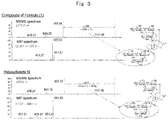
- the novel steviol glycoside of the present invention (hereinafter, also referred to as the "glycoside of the present invention") is a compound represented by Formula (1): or a derivative, a salt or a hydrate thereof.
- the glycoside of the present invention has a sugar chain containing three glucose moieties at C-19 of steviol and a sugar chain containing two glucose moieties and one rhamnose moiety at C-13.
- the glycoside of the present invention may be not only the compound represented by Formula (1) but may also be a derivative, a salt or a hydrate thereof.
- derivative refers to a compound resulting from a structural change of a minor moiety of the compound, for example, a compound in which some of the hydroxyl groups are substituted with other substituents. Therefore, derivatives of the compound represented by Formula (1) include compounds in which some of the hydroxyl groups contained in the compound have been substituted with a substituent selected from hydrogen, a halogen, an alkyl group, an alkenyl group, an alkynyl group, an aryl group, an amino group, a cyano group or the like.
- a “salt of the compound represented by Formula (1)” refers to a physiologically acceptable salt, for example, a sodium salt, of the compound represented by Formula (1).
- a “hydrate of the compound represented by Formula (1)” as used herein refers to a compound resulting from addition of a water molecule to the compound represented by Formula (1).
- the glycoside of the present invention is not particularly limited, it may be a plant-derived product, a chemically synthesized product or a biosynthetic product. For example, it may be isolated and purified from a plant with abundant Reb.C, or it may be obtained by chemical synthesis or biosynthesis. Details of a method for producing a glycoside of the present invention will be described later herein.
- the glycoside of the present invention is sweeter than sugar (sucrose), has taste quality of good lingering sweet aftertaste, and can affect the taste quality of foods/beverages in a small amount.
- sugar saccharide
- the glycoside of the present invention can be used as a novel sweetener.
- the novel steviol glycoside of the present invention is a compound represented by Formula (A): or a derivative, a salt or a hydrate thereof.
- a sweetener composition containing the compound represented by Formula (1), or a derivative, a salt or a hydrate thereof (hereinafter, also referred to as the "sweetener composition of the present invention") is provided.
- the sweetener composition of the present invention is not particularly limited as long as it contains the compound represented by Formula (1), or a derivative, a salt or a hydrate thereof, and it may be a composition containing an extract containing the compound represented by Formula (1), or a derivative, a salt or a hydrate thereof.
- the amount of the glycoside of the present invention contained in the sweetener composition of the present invention is not particularly limited.
- the sweetener composition of the present invention is preferably a composition containing the glycoside of the present invention in a larger amount than the amount in a wild-type stevia or stevia extract by at least 0.01%.
- the glycoside of the present invention was detected for the first time in a cultivar containing abundant Reb.C, and it is not contained in a wild-type stevia or an extract thereof at all or, if any, contained in an amount at the detection limit or below.
- the sweetener composition of the present invention may further contain other steviol glycosides.
- the sweetener composition of the present invention may contain, in addition to the glycoside of the present invention, one or more types of steviol glycosides selected from the group consisting of rebaudioside A, rebaudioside B, rebaudioside C, rebaudioside D, rebaudioside E, rebaudioside F, rebaudioside I, rebaudioside J, rebaudioside K, rebaudioside N, rebaudioside M, rebaudioside O, rebaudioside Q, rebaudioside R, dulcoside A, rubusoside, steviol, steviol monoside, steviol bioside and stevioside.
- the composition ratio of the glycoside of the present invention and other steviol glycoside is preferably 0.01:9.99-6:4 in a mass ratio.
- the sweetener composition of the present invention may further contain a general sweetener.
- a general sweetener include natural sweeteners such as fructose, sugar, fructose-glucose syrup, glucose, maltose, sucrose, high-fructose syrup, sugar alcohol, oligosaccharide, honey, pressed sugarcane juice (brown sugar syrup), starch syrup, Lo Han Kuo ( Siraitia grosvenorii ) powder, Lo Han Kuo extract, licorice powder, licorice extract, Thaumatococcus daniellii seed powder and Thaumatococcus daniellii seed extract, and artificial sweeteners such as acesulfame potassium, sucralose, neotame, aspartame and saccharin.
- natural sweeteners are preferably used from the aspect of imparting clean taste, easy drinkability, natural flavor and moderately rich taste, where fructose, glucose, maltose, sucrose and sugar are particularly preferably used. Either a single type or a plurality of types of these sweetness ingredients may be used.
- a food or beverage containing the compound represented by Formula (1), or a derivative, a salt or a hydrate thereof (hereinafter, also referred to as the "food or beverage of the present invention") is provided.
- the food or beverage of the present invention is not particularly limited as long as it contains the compound represented by Formula (1), or a derivative, a salt or a hydrate thereof, and it may be a food or beverage containing an extract containing the compound represented by Formula (1), or a derivative, a salt or a hydrate thereof.
- a food or beverage refers to foods and beverages. Therefore, in some embodiments, the present invention provides a novel food or beverage, and a method for producing said food or beverage.
- the amount of the glycoside of the present invention contained in the food or beverage of the present invention differs depending on the specific food or beverage, it is preferably around 0.0004%-0.8% and particularly preferably 0.04%-0.4%. As long as the content lies within this range, the lingering aftertaste can advantageously be suppressed.
- the food or beverage of the present invention may further contain other steviol glycosides.
- the sweetener composition of the present invention may contain, in addition to the glycoside of the present invention, one or more types of steviol glycosides selected from the group consisting of rebaudioside A, rebaudioside B, rebaudioside C, rebaudioside D, rebaudioside E, rebaudioside F, rebaudioside I, rebaudioside J, rebaudioside K, rebaudioside N, rebaudioside M, rebaudioside O, rebaudioside Q, rebaudioside R, dulcoside A, rubusoside, steviol, steviol monoside, steviol bioside and stevioside.
- the composition ratio of the glycoside of the present invention and other steviol glycoside is preferably 0.01:9.99-6:4 in a mass ratio.
- the food or beverage of the present invention may further contain a general sweetener.
- a general sweetener include natural sweeteners such as fructose, sugar, fructose-glucose syrup, glucose, maltose, sucrose, high-fructose syrup, sugar alcohol, oligosaccharide, honey, pressed sugarcane juice (brown sugar syrup), starch syrup, Lo Han Kuo ( Siraitia grosvenorii) powder, Lo Han Kuo extract, licorice powder, licorice extract, Thaumatococcus daniellii seed powder and Thaumatococcus daniellii seed extract, and artificial sweeteners such as acesulfame potassium, sucralose, neotame, aspartame and saccharin.
- natural sweeteners such as fructose, sugar, fructose-glucose syrup, glucose, maltose, sucrose, high-fructose syrup, sugar alcohol, oligosaccharide
- natural sweeteners are preferably used from the aspect of imparting clean taste, easy drinkability, natural flavor and moderately rich taste, where fructose, glucose, maltose, sucrose and sugar are particularly preferably used. Either a single type or a plurality of types of these sweetness ingredients may be used.
- Examples of the food of the present invention include, but not particularly limited to, a confection, a bread, cereal flour, noodles, rice, a processed agricultural/forestry food, a processed livestock product, a processed fishery product, a milk/dairy product, an oil-and-fat/processed oil-and-fat product, seasoning or other food material.
- beverage of the present invention examples include, but not particularly limited to, a carbonated beverage, a non-carbonated beverage, an alcoholic beverage, a non-alcoholic beverage, a coffee beverage, a tea beverage, a cocoa beverage, a nutritious beverage and a functional beverage.
- the beverage of the present invention may be heat sterilized and packaged to be prepared as a packaged beverage.
- package include, but not particularly limited to, a PET bottle, an aluminum can, a steel can, a paper package, a chilled cup, and a bottle.
- heat sterilization may be performed by employing a common technique such as UHT sterilization, retort sterilization or the like.
- the temperature during the heat sterilization process is not particularly limited, it is, for example, 65-130°C, and preferably 85-120°C, for 10-40 minutes. Sterilization, however, can be carried out at an appropriate temperature for a several seconds, for example, 5-30 seconds, without problem as long as the same sterilizing value as that under the above-described conditions can be earned.
- a plant containing the novel steviol glycoside and an extract thereof are provided.
- a food or beverage, preferably a beverage, containing the plant of the present invention or an extract of the plant is provided. While the amount of the glycoside of the present invention contained in the plant of the present invention is not particularly limited, it is preferably 0.001%-1.000% and more preferably 0.01%-0.80%.
- the plant of the present invention is a plant that contains the glycoside of the present invention in a larger amount than a wild-type stevia species by 0.01% or more.
- the steviol glycoside of the present invention is not contained in a wild-type stevia at all or, if any, contained in an amount of the detection limit or less.
- the phrase "contains the glycoside of the present invention in a larger amount than a wild-type stevia species by 0.01% or more” means that, with respect to an amount (concentration) of the glycoside of the present invention contained per unit quantity (e.g. 10 ml) of a liquid extract from fresh leaves (undried leaves) of a wild-type stevia plant, an amount (concentration) of the glycoside of the present invention contained in an equal unit quantity of a liquid extract from fresh leaves (undried leaves) of the plant of the present invention (the same amount as that of the liquid extract from the leaves of the wild-type stevia plant) is higher by 0.01% or more.
- the plant of the present invention may contain the glycoside of the present invention in a larger amount than a wild-type stevia species by 0.02% or more, 0.03% or more, 0.04% or more, 0.05% or more, 0.07% or more, 0.09% or more, 0.10% or more, 0.15% or more, 0.20% or more, 0.40% or more, 0.60% or more, 0.80% or more, 1.0% or more, 1.50% or more, 2.00% or more, 4.00% or more, 6.00% or more, 8.00% or more, or 10.00% or more.
- the phrase "the proportion of the glycoside of the present invention among the total steviol glycosides is 0.01% or more" means that the glycoside of the present invention exists at a percentage of 0.01% or more with respect to the total content of the steviol glycosides existing in the liquid extract from the fresh leaves (undried leaves) of the stevia plant of the present invention.
- the total steviol glycosides neither contain unknown steviol glycosides nor any steviol glycoside existing in an amount less than the detection limit.
- the total steviol glycosides consist of rebaudioside A, rebaudioside B, rebaudioside C, rebaudioside D, rebaudioside E, rebaudioside F, rebaudioside I, rebaudioside J, rebaudioside K, rebaudioside N, rebaudioside M, rebaudioside O, rebaudioside Q, rebaudioside R, dulcoside A, rubusoside, steviol, steviol monoside, steviol bioside and stevioside.
- the glycoside of the present invention may exist in an amount of 0.01 wt% or more, 0.02 wt% or more, 0.03 wt% or more, 0.04 wt% or more, 0.05 wt% or more, 0.07 wt% or more, 0.10 wt% or more, 0.15 wt% or more, 0.20 wt% or more, 0.30 wt% or more, 0.50 wt% or more, 0.60 wt% or more, 0.80 wt% or more, 1.00 wt% or more, 2.00 wt% or more, 4.00 wt% or more, 6.00 wt% or more, 8.00 wt% or more, or 10.00 wt% or more with respect to the weight of said dried leaves.
- dried leaves of the plant of the present invention refer to those obtained by drying fresh leaves of the plant of the present invention to reduce their water content to 10 wt% or less, 7 wt% or less, 5 wt% or less, 4 wt% or less, 3 wt% or less, 2 wt% or less, or 1 wt% or less.
- the water content of the dried leaves of the plant of the present invention is 3-4 wt%.
- Examples of the plant of the present invention include plants with abundant Reb.C.
- the steviol glycoside of the present invention is not contained in a wild-type stevia or an extract thereof at all or, if any, contained in an amount of the detection limit or less.
- the present inventors found out that the steviol glycoside of the present invention is contained in a larger amount in a plant having abundant Reb.C. Therefore, the novel steviol glycoside and the extract thereof also comprise such a plant with abundant Reb.C and an extract thereof.
- Examples of such a plant with abundant Reb.C include, but are not particularly limited to, high-rebaudioside C-containing non-recombinant stevia plants which contain rebaudioside C in a larger amount than a wild-type stevia species by 20% or more, and whose proportion of rebaudioside C among the total steviol glycosides is 40% or more (hereinafter, also referred to as a "high-Reb.C plant").
- Examples of such a high-Reb.C plant include high-rebaudioside C-containing non-recombinant stevia plants which contain rebaudioside C in a larger amount than a wild-type stevia species by 20% or more, and whose proportion of rebaudioside C among the total steviol glycosides is 40% or more.
- a high-Reb.C plant is a cultivar derived from a plant of a wild-type stevia, in which genetic mutation has occurred to increase rebaudioside C.
- genetic mutation include, but not particularly limited to, genetic mutation induced under naturally occurring conditions, genetic mutation induced by a non-recombinational technique and genetic mutation induced by genetic recombination.
- a high-Reb.C plant can be screened, for example, by detecting gene polymorphism in the tissue of the plant.
- screening means to identify a high-Reb.C plant among other plants and to select the high-Reb.C plant.
- the high-Reb.C plant may also be screened according to a screening method that includes a step of identifying a polymorphism of A in the wild type being altered to T at the 60th nucleotide of the nucleotide sequence represented by SEQ ID NO:11 in the genome of a test plant.
- a plant of the present invention not only comprises whole plants but may also include plant organs (for example, leaf, petal, stem, root, seed, etc.), plant tissues (for example, epidermis, phloem, parenchyma, xylem, vascular bundles, palisade tissue, spongy tissue, etc.), various forms of plant cells (for example, suspension cultured cells), a protoplast, a leaf piece, callus and the like.
- plant organs for example, leaf, petal, stem, root, seed, etc.
- plant tissues for example, epidermis, phloem, parenchyma, xylem, vascular bundles, palisade tissue, spongy tissue, etc.
- various forms of plant cells for example, suspension cultured cells
- a protoplast for example, a leaf piece, callus and the like.
- a plant of the present invention may also comprise a tissue culture or a plant cell culture. This is because such a tissue culture or plant cell culture may be cultured to regenerate a plant.
- tissue culture or the plant cell culture of the plant of the present invention include, but not limited to, an embryo, meristematic cells, pollen, a leaf, a root, a root apex, a petal, a protoplast, a leaf piece and callus.
- An extract of a plant of the present invention can be obtained by reacting a fresh leaf or a dried leaf of the plant of the present invention with an appropriate solvent (an aqueous solvent such as water or an organic solvent such as alcohol, ether or acetone).
- an appropriate solvent an aqueous solvent such as water or an organic solvent such as alcohol, ether or acetone.
- the extract of the plant of the present invention contains the glycoside of the present invention in a larger amount than a wild-type stevia by 0.01% or more, where the proportion of the glycoside of the present invention among the total steviol glycosides is 0.01% or more.
- the phrase "contains the glycoside of the present invention in a larger amount than a wild-type stevia by 0.01% or more” means the same as described above.
- the phrase the "proportion of the glycoside of the present invention among the total steviol glycosides is 0.01% or more” also means the same as described above.
- novel steviol glycoside of the present invention is contained in a stevia extract in a minute quantity, it is considered to have an influence on the flavor of the stevia extract. While not wishing to be bound by any theory, addition of a small amount of the steviol glycoside of the present invention is presumed to be capable of controlling the flavor of a food or beverage. Therefore, in one aspect of the present invention, a flavor controlling agent containing the above-described compound represented by Formula (1) or a derivative, a salt or a hydrate thereof is provided.
- a "flavor controlling agent” refers to a substance that can be added to a food or beverage to control the flavor of the food or beverage.
- the flavor controlling agent of the present invention can be added to a food or beverage so as to control the flavor of the food or beverage itself without the consumers recognizing the taste of the flavor controlling agent itself.
- the steviol glycoside of the present invention has good lingering sweet aftertaste as compared to conventional steviol glycosides, it can be used as a flavor controlling agent for controlling the lingering sweet aftertaste of the food or beverage.
- the flavor controlling (enhancing) agent of the present invention preferably contains, in addition to the above-described compound represented by Formula (1) or a derivative, a salt or a hydrate thereof, one or more types of other sweeteners.
- sweetener include: one or more types of steviol glycosides selected from the group consisting of rebaudioside A, rebaudioside D, rebaudioside B, rebaudioside M, rebaudioside N, rebaudioside O, rebaudioside E, rebaudioside K and rebaudioside J; natural sweeteners such as fructose, sugar, fructose-glucose syrup, glucose, maltose, sucrose, high-fructose syrup, sugar alcohol, oligosaccharide, honey, pressed sugarcane juice (brown sugar syrup), starch syrup, Lo Han Kuo ( Siraitia grosvenorii ) powder, Lo Han Kuo extract, licorice powder, licorice extract, Thaumatococcus
- the flavor controlling agent of the present invention is a flavor controlling agent that improves lingering aftertaste and that contains the compound represented by Formula (1) or a derivative, a salt or a hydrate thereof.
- Brix of commercially available foods or beverages for example, refreshing beverages
- reduction in the amount of sugar in foods or beverages has been considered due to the recent growth of health consciousness and the introduction of sugar tax.
- use of a non-sugar sweetener for example, a non-calorie sweetener
- Brix will be 5.
- a non-sugar sweetener to make up for the sweetness level corresponding to Brix of 5.
- Many of the non-sugar sweeteners have unique flavors that differ from sugar, where one of such characteristic flavors is bad lingering sweet aftertaste.
- a flavor controlling agent containing the steviol glycoside of the present invention can be used as a flavor controlling agent for improving the lingering aftertaste.
- “Brix” is a scale of a sweetness level of a food or beverage, that is, a value of the concentration of the soluble solid content expressed in a weight percent concentration in a sucrose solution at 20°C.
- sucrose (g) in 100 g of an aqueous sucrose solution For example, Brix of 5 represents a sweetness level corresponding to the sweetness level of 5 g of sucrose in 100 g of an aqueous sucrose solution.
- the flavor controlling agent of the present invention is preferably added to the non-sugar sweetener contained in a food or beverage in an amount of 1 mass%-15 mass% based on the mass of the sweetener.
- the flavor controlling agent of the present invention is added more preferably in an amount of 1.5 mass%-12 mass%, and still more preferably in an amount of 3.5 mass%-11 mass% based on the mass of the sweetener.
- the content of the non-sugar sweetener in the food or beverage added with the flavor controlling agent of the present invention is preferably 5-13, more preferably 5-12 and still more preferably 5-7 in terms of Brix.
- the phrase "the content of the non-sugar sweetener is 5 in terms of Brix” refers to a content that gives the sweetness of the aqueous solution containing the non-sugar sweetener to be equivalent to Brix of 5.
- the amount that gives "the content of the non-sugar sweetener to be 5 in terms of Brix" is 0.025 g in 100 g of an aqueous solution containing the non-sugar sweetener.
- a flavor controlling agent of the present invention is added to the non-sugar sweetener contained in the food or beverage in an amount of 1 mass%-15 mass% based on the mass of the sweetener, wherein the content of the non-sugar sweetener is 5.5-12 in terms of Brix.
- the flavor controlling agent of the present invention is added to the non-sugar sweetener contained in the food or beverage in an amount of 1.5 mass%-12 mass% based on the mass of the sweetener, wherein the content of the non-sugar sweetener is 5-13 in terms of Brix.
- sweetener contained in the food or beverage examples include, but not limited to: one or more types of steviol glycoside selected from the group consisting of rebaudioside A, rebaudioside D, rebaudioside B, rebaudioside M, rebaudioside N, rebaudioside O, rebaudioside E, rebaudioside K and rebaudioside J; natural sweeteners such as fructose, fructose-glucose syrup, glucose, maltose, high-fructose syrup, sugar alcohol, oligosaccharide, honey, pressed sugarcane juice (brown sugar syrup), starch syrup, Lo Han Kuo ( Siraitia grosvenorii) powder, Lo Han Kuo extract, licorice powder, licorice extract, Thaumatococcus daniellii seed powder and Thaumatococcus daniellii seed extract; and artificial sweeteners such as acesulfame potassium, sucralose, neotam
- a flavor controlling agent of the present invention is a flavor controlling agent containing the above-described compound represented by Formula (1) or a derivative, a salt or a hydrate thereof for enhancing sweetness.
- a flavor controlling agent for enhancing sweetness refers to a flavor controlling agent that can be added to a food or beverage containing a sweetener so that it can impart stronger sweetness to the food or beverage than a simple sum of the sweetness of the flavor controlling agent thereto.
- the flavor controlling agent when a flavor controlling agent of an amount equivalent to Brix of 0.1 is added to a food or beverage with sweetness equivalent to Brix of 9, the flavor controlling agent should be capable of imparting a sweetness level exceeding Brix of 9.1 (for example, Brix of 9.2) to the food or beverage.
- Brix of 9.1 for example, Brix of 9.2
- the flavor controlling agent for enhancing sweetness of the present invention is preferably added in an amount of 0.05 mass%-2.0 mass%, more preferably added in an amount of 0.1 mass%-1.5 mass%, and still more preferably added in an amount of 0.2 mass%-1.2 mass% based on the mass of the sweetener targeted for sweetness enhancement.
- sweetener targeted for sweetness enhancement examples include, but not particularly limited to: one or more types of steviol glycoside selected from the group consisting of rebaudioside A, rebaudioside D, rebaudioside B, rebaudioside M, rebaudioside N, rebaudioside O, rebaudioside E, rebaudioside K and rebaudioside J; natural sweeteners such as fructose, sugar, fructose-glucose syrup, glucose, maltose, sucrose, high-fructose syrup, sugar alcohol, oligosaccharide, honey, pressed sugarcane juice (brown sugar syrup), starch syrup, Lo Han Kuo ( Siraitia grosvenorii ) powder, Lo Han Kuo extract, licorice powder, licorice extract, Thaumatococcus daniellii seed powder and Thaumatococcus daniellii seed extract; and artificial sweeteners such as acesulfame potassium, sucralose,
- the steviol glycoside of the present invention can be produced by (A) isolation/purification from a plant, (B) a chemical synthesis, or (C) a biosynthesis.
- A isolation/purification from a plant
- B chemical synthesis
- C a biosynthesis
- the novel steviol glycoside can be isolated/purified from said plant.
- a fresh or dried leaf of the plant of the present invention is allowed to react with an appropriate solvent (an aqueous solvent such as water or an organic solvent such as alcohol, ether or acetone) to extract the novel steviol glycoside in a liquid extract state.
- an appropriate solvent an aqueous solvent such as water or an organic solvent such as alcohol, ether or acetone
- the resulting liquid extract may be subjected to a known method such as a gradient of ethyl acetate or other organic solvent: water, high performance liquid chromatography (HPLC), or ultra (high) performance liquid chromatography (UPLC) to isolate/purify the novel steviol glycoside.
- HPLC high performance liquid chromatography
- UPLC ultra (high) performance liquid chromatography
- the content of the novel steviol glycoside in the plant can be determined by the method described in WO2016/090460 or the method described in the example below. Specifically, the content can be measured by sampling fresh leaves from the plant of the present invention and subjecting the leaves to LC-MS/MS.
- Steviol glycosides have structures in which different sugar moieties (glucose, rhamnose, xylose, etc.) are attached to the aglycone, i.e. steviol, via various linkage forms (linkage positions and conformations). Therefore, a steviol glycoside of interest can be obtained via various pathways depending on the selected starting material. Those skilled in the art to which the present invention pertains, however, wound understand that the time and the yield for obtaining the compound of interest greatly vary depending on the synthetic pathways.
- a chemical synthesis of the steviol glycoside proceeds by separating the steviol glycoside into a "steviol glycoside” and a "sugar hemiacetal form" as shown in Scheme 1.
- the steviol glycoside can be prepared by deriving from an existing natural substance (rebaudioside, dulcoside, stevioside, steviol bioside, rubusoside, etc.). Meanwhile, the sugar hemiacetal form can be prepared either from an existing natural substance or by a chemical synthesis. The present inventors found that the steviol glycoside of interest can be obtained with good yield and extremely high ⁇ -selectivity by condensing the steviol glycoside and the sugar hemiacetal form through the Mitsunobu reaction.
- a method for producing the compound represented by Formula (1) comprises the steps of:
- the method for producing the compound represented by Formula (1) where the method further comprises a step of allowing reaction between the compound represented by Formula (3) above and the compound represented by Formula (4) above in the presence of a phosphine reagent and an azo compound to obtain a compound represented by Formula (5) below (wherein, PGs each independently represents a protecting group).
- examples of the protecting group include an acyl protecting group, a trisubstituted silyl group, an acetal protecting group and an ether protecting group.
- Preferable examples include a trisubstituted silyl group (a trimethylsilyl group, a triethylsilyl group, a t-butyldimethylsilyl group, etc.) and an acyl protecting group (an acetyl group, a benzoyl group, etc.).
- a steviol glycoside can be obtained, for example, by following Scheme 2 below using naturally occurring rebaudioside C (dulcoside B) as a raw material.
- rebaudioside C is dissolved in a solvent such as methanol and water, added with a strong base such as sodium hydroxide, and refluxed at 60°C-120°C for 2 hours or longer so that the glucose molecule is removed from C-19 of rebaudioside C to give Compound 2 above.
- the solvent may be evaporated after neutralizing the reaction solution with a cation exchange resin or the like.
- Compound 2 is further dissolved in a solvent such as pyridine, and added with acetic anhydride or the like to protect the hydroxyl groups contained in Compound 2, thereby obtaining Compound 3.
- a solvent such as pyridine
- the trisaccharide hemiacetal can be obtained, for example, by following Scheme 3 below using a commercially available glucopyranoside derivative as a raw material.
- Compound 7 is dissolved in a solvent such as ethanol, added with P-toluenesulfonic acid at room temperature, agitated at 60°C-80°C for 2 hours or longer to complete the reaction, then neutralized with triethylamine, and concentrated under a reduced pressure.
- the resulting syrup is dissolved in a solvent such as pyridine, and added with acetic anhydride or the like to give Compound 8 with protected hydroxyl groups.
- Compound 8 is dissolved in acetonitrile and water, added with an oxidant such as cerium ammonium nitrate, and agitated for 5 minutes to 2 hours, thereby obtaining Compound 9.
- the compound represented by Formula (1) can be synthesized, for example, by following Scheme 4 below using Compounds 3 and 9 obtained in Steps 1 and 2 above.
- the trisaccharide hemiacetal form and the steviol glycoside obtained in Steps 1 and 2 are allowed to undergo the Mitsunobu reaction so that only Compound 10 in the ⁇ -form can selectively be obtained with very high yield (45% or more).
- these compounds are dissolved in 1,4-dioxane, added with a phosphine reagent such as tributylphosphine or triphenylphosphine and an azo compound such as 1,1'-azobis (N,N'-dimethylformamide) (TMAD) at room temperature, and agitated at 50°C-80°C for 2 hours or longer to give only Compound 10 in the ⁇ -form.
- TMAD 1,1'-azobis (N,N'-dimethylformamide)
- the steviol glycoside of the present invention can also be generated by transferring a polynucleotide coding for a predetermined protein into a host cell derived from a bacterium, a plant, an insect, a non-human mammal or the like, and using steviol, a steviol glycoside, UDP-glucose and/or UDP-rhamnose as a substrate.
- Steviol, a steviol glycoside, UDP-glucose or UDP-rhamnose as the substrate may be either provided or biosynthesized in the cell.
- examples of the predetermined protein include stevia-derived UGT85C2 (the amino acid sequence represented by SEQ ID NO:2), UGT74G1 (the amino acid sequence represented by SEQ ID NO:4), UGT91D2 (the amino acid sequence represented by SEQ ID NO:6), UGT76G1 (the amino acid sequence represented by SEQ ID NO:8) and Arabidopsis thaliana-derived UDP-rhamnose synthase AtRHM2 (the amino acid sequence represented by SEQ ID NO: 10), it is not limited thereto as long as it has an equivalent activity.
- the above-described protein is an enzyme derived from Arabidopsis thaliana or stevia, which is expected to be highly active in an environment outside plant cells such as Arabidopsis thaliana and stevia (for example, in an extracellular environment, or inside a host cell other than stevia).
- the polynucleotide coding for the above-described protein (for example, UGT85C2 gene is represented by SEQ ID NO:1, UGT74G1 gene is represented by SEQ ID NO:3, UGT91D2 gene is represented by SEQ ID NO:5, UGT76G1 gene is represented by SEQ ID NO:7 and AtRHM2 gene is represented by SEQ ID NO:9) is transferred into a host cell derived from a bacterium, a fungus, a plant, an insect or a non-human mammal so as to allow expression of the protein of the present invention, to which steviol, a steviol glycoside, UDP-glucose or UDP-rhamnose as the substrate is provided to generate the compound of the present invention.
- the above-described protein is expressed in the host cell, to which an appropriate substrate is provided to generate the compound of the present invention.
- a method for producing the novel steviol glycoside of the present invention is provided, where the method is characterized by use of a non-human transformant that has been introduced with at least one of polynucleotides (a) to (g) below.
- polynucleotides independently having 91% or higher, 92% or higher, 93% or higher, 94% or higher, 95% or higher, 96% or higher, 97% or higher, 98% or higher, 99% or higher, 99.1% or higher, 99.2% or higher, 99.3% or higher, 99.4% or higher, 99.5% or higher, 99.6% or higher, 99.7% or higher, 99.8% or higher, or 99.9% or higher sequence identity with the nucleotide sequences of the sequence numbers mentioned in (a) to (g) above can be used.
- proteins that independently have an amino acid sequence having 91% or higher, 92% or higher, 93% or higher, 94% or higher, 95% or higher, 96% or higher, 97% or higher, 98% or higher, 99% or higher, 99.1% or higher, 99.2% or higher, 99.3% or higher, 99.4% or higher, 99.5% or higher, 99.6% or higher, 99.7% or higher, 99.8% or higher, or 99.9% or higher sequence identity with the amino acid sequences of the sequence number mentioned in (a) to (g) above and that has the predetermined activity described in (a) to (g) above can be used.
- a polynucleotide coding for the above-described protein is introduced into a host while being inserted into an appropriate expression vector.
- the polynucleotides may individually be inserted into separate vectors.
- An appropriate expression vector is generally made to contain:
- Examples of a method for preparing an expression vector include, but not particularly limited to, a method that uses a plasmid, a phage, a cosmid or the like, and DNA molecules having necessary components.
- the type of the vector is not particularly limited, and any vector that allows expression in the host cell can suitably be selected.
- a promoter sequence is suitably selected according to the type of the host cell to ensure expression of the polynucleotide of the present invention, and a vector obtained by integrating this promoter sequence and the polynucleotide of the present invention into a plasmid or the like is used as an expression vector.
- the expression vector of the present invention includes expression controlling regions (for example, a promoter, a terminator and/or an origin of replication and the like) depending on the type of the host into which it is introduced.
- a promoter used in a bacterial expression vector may be a common promoter (for example, a trc promoter, a tac promoter, a lac promoter, etc.)
- a promoter used for a yeast may be, for example, a glyceraldehyde-3-phosphate dehydrogenase promoter, PH05 promoter, a GAL1/10 promoter or the like
- a promoter for filamentous fungi may be, for example, amylase, trpC or the like.
- examples of a promoter for expressing the gene of interest in a plant cell include a cauliflower mosaic virus 35S RNA promoter, a rd29A gene promoter, a rbcS promoter, and a mac-1 promoter in which the enhancer sequence of the cauliflower mosaic virus 35S RNA promoter is provided at the 5' end of a promoter sequence of Agrobacterium-derived mannopine synthase.
- a promoter for an animal cell host may be a viral promoter (for example, a SV40 early promoter, a SV40 late promoter, etc.).
- a promoter that is inducibly activated in response to external stimuli examples include a mouse mammary tumor virus (MMTV) promoter, a tetracycline responsive promoter, a metallothionein promoter and a heat shock protein promoter.
- MMTV mouse mammary tumor virus
- a tetracycline responsive promoter examples include a tetracycline responsive promoter, a metallothionein promoter and a heat shock protein promoter.
- the expression vector contains at least one selectable marker.
- an auxotrophic marker LEU2, URA3, HIS3, TRP1, ura5, niaD
- a drug resistance marker hygromycin, zeocin
- G418r geneticin resistance gene
- CUP1 copper resistance gene
- fas2m, PDR4 Junji Inokoshi et al., Journal of Japanese Biochemical Society, vol. 64, p. 660, 1992 ; Hussain et al., Gene, vol. 101, p. 149, 1991 , respectively
- a generally employed known method can be employed.
- an electroporation method Mackenxie, D. A. et al., Appl. Environ. Microbiol., vol. 66, p. 4655-4661, 2000
- a particle delivery method Japanese Unexamined Patent Application Publication No. 2005-287403
- a spheroplast method Proc. Natl. Acad. Sci. USA, vol. 75, p. 1929, 1978
- a lithium acetate method J. Bacteriology, vol. 153, p. 163, 1983
- a method described in Methods in yeast genetics, 2000 Edition : A Cold Spring Harbor Laboratory Course Manual , or the like can be performed although the present invention is not limited thereto.
- a non-human transformant obtained as described above can be cultured so as to allow the non-human transformant to produce a steviol glycoside.
- a non-human transformant is preferably a yeast.
- the non-human transformant is preferably cultured in a medium containing steviol.
- the accumulated steviol glycoside can be extracted/purified to obtain the steviol glycoside of the present invention.
- Extracts obtained from the leaves of four lines of novel stevia plants (Sample 1 (EM3-4), Sample 2 (EM2-27-8), Sample 3 (EM2-27-15) and Sample 4 (EM2-11)) developed at Suntory Global Innovation Center (SIC) were subjected to high performance liquid chromatography (HPLC)-mass spectrometry (MS) for the screening analysis of the contained steviol glycoside based on the molecular weights of a steviol glycoside that had a sugar chain formed of D-glucopyranosyl (glc), L-rhamnopyranosyl (rha) and xylopyranosyl (xyl).
- HPLC high performance liquid chromatography
- MS mass spectrometry
- Sample 1 is a high-Reb.C plant having a genome polymorphism of A in the wild type being altered to T at the 60th nucleotide of the nucleotide sequence represented by SEQ ID NO:11 in the genome of a test plant.
- a statistical analysis of the correlation between the phenotype having a high-RebC concentration and the polymorphism of SEQ ID NO:11 revealed that said polymorphism had a statistic correlation with the phenotype having a high-RebC concentration.
- a process for preparing a test liquid was as follows: 10.0 mg each of lyophilized dried stevia leaves was weighed into a glass vial, to which 1.0 mL of water/methanol (1/1 vol/vol) was added as an extracting solvent, and then the resultant was subjected to ultrasonic irradiation in an ultrasonic cleaner (AS ONE, AS52GTU) at a set temperature of 25°C for 20 minutes, thereby obtaining a liquid extract of a steviol glycoside from the stevia leaves. The resultant was further 10-fold diluted with water/methanol and filtrated through a filter with a pore size of 0.45 ⁇ m (Nacalai tesque, Cosmonice filter S (solvent)) before being subjected to HPLC-MS.
- AS ONE ultrasonic cleaner
- triple quadrupole mass spectrometer LCMS-8030 (Shimadzu Corporation) equipped with an electrospray ionization (ESI) ion source was used.
- the mass spectrometry measurement was carried out in a selected ion monitoring (SIM) mode by selecting the negative ion measurement mode and the m/z values.
- SIM selected ion monitoring
- the m/z values were selected by calculation based on the molecular weights of a steviol glycoside that had a sugar chain formed of D-glucopyranosyl (glc), L-rhamnopyranosyl (rha) and xylopyranosyl (xyl).
- m/z 641.2 (glc (2)), 773.2 (glc (2), xyl (1)), 787.2 (glc (2), rha (1)), 803.2 (glc (3)), 935.3 (glc (3), xyl (1)), 949.3 (glc (3), rha (1)), 965.3 (glc (4)), 1095.4 (glc (3), rha (2)), 1097.4 (glc (4), xyl (1)), 1111.4 (glc (4), rha (1)), 1127.4 (glc (5)), 1257.5 (glc (4), rha (2)), 1259.5 (glc (5), xyl (1)), 1273.5 (glc (5), rha (1)), 1289.5 (glc (6)), 1435.6 (glc (6), rha (1)) were selected.
- Peak areas (arbitrary unit) observed by STM measurement in HPLC-MS Compound name Rebaudioside A Rebaudioside C Rebaudioside D Rebaudioside M Compound represented by Formula (1) Rebaudioside N Retention time (min) 29.60 29.96 28.00 28.66 27.70 28.18 Peak area (Sample 1) 29,669,582 30,122,062 1,428,384 1,030,603 140,947 772,570 46.97% 47.69% 2.26% 1.63% 0.22% 1.22% Peak area (Sample 2) 23,762,676 24,201,473 2,253,735 1,029,837 97,388 1,211,504 45.21% 46.05% 4.29% 1.96% 0.19% 2.31 % Peak area (Sample 3) 15,386,726 5,872,656 3,585,775 3,296,579 89,988 896.549 52.82% 20.16% 12.31% 11.32% 0.31% 3.08% Peak area (Sample 4) 16,070,017 10,
- the peak seen at the retention time (Rt) of 28.23 minutes matches the standard sample of rebaudioside N in terms of the mass value and the retention time. Meanwhile, no steviol glycoside has yet been reported to have a mass equivalent to that of rebaudioside N. Accordingly, the peak at Rt 27.73 minutes of the two peaks shown in Figure 2 was found to be an unknown substance. For Sample 4 whose rebaudioside C content was lower than the content of rebaudioside A and whose sugar chain elongation was shorter than other samples, the peak value at Rt 27.73 was lower than the detection limit.
- a process for preparing test liquids were as follows: 10.0 mg each of lyophilized dried stevia leaves was weighed into a glass vial, to which 1.0 mL of water/methanol (1/1 vol/vol) was added as an extracting solvent, and then the resultant was subjected to ultrasonic irradiation in an ultrasonic cleaner (AS ONE, AS52GTU) at a set temperature of 25°C for 20 minutes, thereby obtaining the liquid extract of a steviol glycoside from the stevia leaves. The resultant was further 10-fold diluted with water/methanol and filtrated through a filter with a pore size of 0.45 ⁇ m (Nacalai tesque, Cosmonice filter S (solvent)) before being subjected to HPLC-MS.
- AS ONE ultrasonic cleaner
- HPLC-ESI-HRMS high performance liquid chromatography-electrospray ionization-accurate mass spectrometry
- equipment for HPLC was configured by using Prominence LC-20AD (Shimadzu Corporation) as a liquid delivery unit LC pump and SM-C18 (4.6 x 250 mm) (from Imtakt) as a separation column.
- the LC mobile phase was delivered using 0.2% acetic acid-containing Milli-Q water as mobile phase A and methanol as mobile phase B, where the binary gradient was such that the concentration of the mobile phase B was constantly maintained at 10% for 0-5 minutes, the concentration of the mobile phase B was shifted from 10% to 70% in the next 15 minutes, and further from 70% to 100% in the following 5 minutes.
- the concentration of the mobile phase B was maintained at 100% for 5 minutes to end.
- the flow rate of the mobile phase was 0.4 mL/min, and the stevia leaf liquid extract diluted and subsequently filtrated with a filter was injected for 5 ⁇ L.
- Orbitrap Elite MS from Thermo Fisher Scientific
- the mass spectrometry measurement was carried out in a negative ion measurement mode at m/z in a range of 150-2000 with resolution set to 60,000.
- the MS/MS measurement was carried out by selecting the targeted m/z of 1273.5 and in a CID mode where fragmentation was induced by collision with an inert gas. Irradiation of energy required for fragmentation was performed at a standard collision energy unique to the apparatus, i.e. 35.
- the MS/MS and MS 3 -fragmented mass spectra of rebaudioside N and the novel steviol glycoside are shown in Figure 3 .
- rebaudioside N had the main peak at m/z of 803.37 corresponding to release of two glc moieties and one rha moiety.
- the main peak was detected at m/z of 787.38 corresponding to release of three Glc moieties.
- trisaccharide hemiacetal form (9) For synthesis of the trisaccharide hemiacetal form (9), a trisaccharide backbone was produced by condensation reaction between the appropriately protected glucose acceptor (5) and glucose donor (6), and the protecting group at the anomeric carbon of the reducing end was deprotected to give the trisaccharide hemiacetal form (9).
- the resulting steviol glycoside (3) and trisaccharide hemiacetal form (9) were subjected to condensation via the Mitsunobu reaction, where a reaction with good and complete ⁇ -selectivity of 47% (only the ⁇ -form) proceeded.
- the protecting groups of the resulting compound were deprotected, thereby obtaining the novel steviol glycoside (11).
- rebaudioside C (1) (1.0 g, 1.05 mmol) purchased from Ark Pharm was dissolved in methanol (10 mL) and water (10 mL), added with 4 mol/L of sodium hydroxide (2.6 mL, 10.5 mmol) at room temperature, and refluxed at 100°C for 20 hours.
- a novel steviol glycoside was generated from steviol in yeast.
- a yeast capable of coexpressing four types of stevia-derived glycosylated enzyme genes UGT85C2, UGT91D2, UGT74G1 and UGT76G1 and Arabidopsis thaliana-derived UDP-rhamnose synthase gene AtRHM2 was bred.
- the following primer sets were synthesized to perform PCR using cDNA prepared from stevia leaves as a template.
- the PCR reaction solution (50 ⁇ l) had the following composition: 1 ⁇ l of stevia leaf-derived cDNA, 1 x KOD plus buffer (TOYOBO), 0.2 mM dNTPs, 0.4 pmol/ ⁇ l of each primer, 1 mM MgSO 4 and 1U heat resistant KOD plus polymerase.
- PCR reaction consisted of reaction at 95°C for 5 minutes, followed by amplification by a total of 30 cycles of reaction at 94°C for 0.5 minutes, 50°C for 0.5 minutes and 68°C for 2 minutes.
- Each PCR product was subjected to electrophoresis with 0.8% agarose gel and ethidium bromide staining, by which an amplification band of nearly 1.4 kb in size was obtained as presumed from each template DNA.
- PCR product was subcloned into pENTR-TOPO Directional vector (Invitrogen) according to a method recommended by the manufacturer.
- DNA Sequencer model 3100 (Applied Biosystems) was used for sequencing by a primer walking process with a synthesized oligonucleotide primer, thereby confirming that all of the UGT genes of interest, namely, UGT85C2, UGT91D2, UGT74G1 and UGT76G1 were cloned.
- templates and primers namely, template UGT85C2 and SrUGT85C2 set, template UGT91D2 and SrUGT91D2 set, template UGT74G1 and SrUGT74G1 set, template UGT76G1 and SrUGT76G1 set, and template AtAHM2 and AtAHM2 set, were used for PCR amplification using heat resistant KOD DNA polymerase (TOYOBO) and introduction of the restriction enzyme sites at both ends of each ORF.
- TOYOBO heat resistant KOD DNA polymerase
- the resulting DNA fragment was subcloned using Zero Blunt-TOPO PCR cloning kit (Invitrogen), and sequenced with DNA Sequencer model 3100 (Applied Biosystems) by a primer walking process with a synthesized oligonucleotide primer to confirm that each of the UGT genes of interest was cloned.
- UGT85C2 was cleaved with restriction enzymes BglII and SalI, and linked to vector pESC-URA (Stratagene) that had been cleaved with restriction enzymes BamHI and SalI to give plasmid pESC-URA-UGT-5.
- This plasmid pESC-URA-UGT-5 was cleaved with restriction enzymes NotI and PacI while UGT91D2 was also cleaved with restriction enzymes NotI and PacI. The resultants were linked to give pESC-URA-UGT56.
- UGT76G1 was cleaved with restriction enzymes BamHI and SalI, and linked to vector pESC-HIS (Stratagene) that had been cleaved with the same restriction enzymes to give plasmid pESC-HIS-UGT-8.
- This plasmid pESC-HIS-UGT-8 was cleaved with restriction enzymes NotI and PacI while UGT74G1 was also cleaved with NotI and PacI. The resultants were linked to give pESC-HIS-UGT78.
- AtAHM2 was cleaved with restriction enzymes BamHI and XhoI while vector pESC-TRP (Stratagene) was cleaved with the same restriction enzymes. The resultants were linked to give plasmid pESC-TRP-AtAHM2.
- Plasmids shown in Table 2 were introduced into Saccharomyces cerevisiae YPH499 strain (ura3-52 lys2-801 amber ade2-101 ochre trpl- ⁇ 63 his3- ⁇ 200 leu2- ⁇ 1 a) as a host by lithium acetate technique.
- As transformed strains those that survived in a SC-Trp-Ura-His agar medium (6.7 g of yeast nitrogen base without amino acids, 20 g of glucose, 1.3 g of amino acid powder mix-Trp-Ura-His and 20 g of Bacto agar per 1L) were selected.
- the amino acid powder mix-Trp-Ura-His was prepared by mixing adenine sulfate (2.5 g), L-arginine hydrochloride (1.2 g), L-aspartic acid (6.0 g), L-glutamic acid (6.0 g), L-leucine (3.6 g), L-lysine (1.8 g), L-methionine (1.2 g), L-phenylalanine (3.0 g), L-serine (22.5 g), L-threonine (12 g), L-tyrosine (1.8 g) and L-valine (9.0 g).
- the resulting transformed strain was cultured as follows.
- each transformed strain was seeded in 10 ml of a SC-Trp-Ura-His liquid medium (SC-Trp-Ura-His agar medium without Bacto agar) and shake cultured at 30°C for a day.
- SC-Trp-Ura-His liquid medium SC-Trp-Ura-His agar medium without Bacto agar
- 1 ml of the preliminary culture solution was seeded into 10 ml of SG-Trp-Ura-His liquid medium (6.7 g of yeast nitrogen base without amino acids, 20 g of galactose, and 1.3 g of amino acid powder mix-Trp-Ura-His per 1L) and shake cultured at 30°C for two days.
- cDNA was synthesized using SuperScript II reverse transcriptase (Thermo Fischer Scientific) and random hexamer as a primer.
- UGT74G1-r1 5'-CCCGTGTGATTTCTTCCACTTGTTC-3' (SEQ ID NO:30)
- AtAHM2 AtAHM2-rl 5'-GCTTTGTCACCAGAATCACCATT-3' (SEQ ID NO:32)
- GAL10p region (promoter region) PGAL10-f3 5'-GATTATTAAACTTCTTTGCGTCCATCCA-3' (SEQ ID NO:33)
- GAL1p region promoter region
- PGAL1-f3 5'-CCTCTATACTTTAACGTCAAGGAGAAAAAACC-3' (SEQ ID NO:34)
- Culturing was performed under the same conditions as described above except that 0.5 ⁇ g or 2 ⁇ g of steviol (ChromaDex Inc.) was added to the liquid medium for the main culture per 1 ml of the medium. After culturing, the culture solution was separated into supernatant and cells by centrifugation. The culture supernatant was washed with acetonitrile, then subjected to a water-equilibrated Sep-Pak C18 column, washed with 20% acetonitrile, eluted with 80% acetonitrile, dried to solidify, and then dissolved in a small amount of 80% acetonitrile to prepare a glycoside sample. This glycoside sample was subjected to the following analysis.
- samples were prepared by adding sucrose to pure water to give Brix of 0.5 to 3 in 0.5 increments.
- Reb.A and the novel steviol glycoside were added to pure water at amounts indicated in Figure 8 to prepare beverage samples. All of the beverage samples were adjusted to have final Brix of 2 in terms of sucrose, provided that the sweetness levels were RebA: 300 and novel glycoside: 24.
- the resulting beverage samples were subjected to sensory evaluation for rating attributes, namely, sweetness on-set, bitterness and lingering sweet aftertaste.
- the novel steviol glycoside was found to have equal bitterness and shorter lingering sweet aftertaste as compared to the conventional sweetener Reb.A.
- Three-level aqueous solutions with Brix of 5, 7 and 11 were used to evaluate the effect of the flavor controlling agent of the present invention to improve lingering aftertaste of Reb.A.
- the added amounts of the flavor controlling agent made of the novel steviol glycoside of the present invention were 1, 3.5, 5 and 10 mass% in proportion based on the mass of added Reb.A.
- a control sample (Cont) was added with Reb.A only and was not added with the flavor controlling agent of the present invention.
- Three-level aqueous solutions with Brix of 5, 7 and 11 were used to evaluate the effect of the flavor controlling agent of the present invention to improve lingering aftertaste of Reb.D.
- the added amounts of the flavor controlling agent made of the novel steviol glycoside of the present invention were 1, 3.5, 5 and 10 mass% in proportion based on the mass of added Reb.D.
- a control sample (Cont) was added with Reb.D only and was not added with the flavor controlling agent of the present invention.
- Two-level aqueous solutions with Brix of 5 and 7 were used to evaluate the effect of the flavor controlling agent of the present invention to enhance sweetness with respect to sugar (sucrose).
- the added amounts of the flavor controlling agent made of the novel steviol glycoside of the present invention were 0.10, 0.44 and 0.80 mass% in proportion in terms of the amount of the sugar added for Brix of 5, and 0.10, 0.44 and 0.57 mass% in proportion for Brix of 7.
- the vertical axes (sweetness intensity) of the graphs represent the rates of sweetness intensity actually sensed by the panelists with respect to the total sweetness level of the sugar and the flavor controlling agent (calculated provided that the sweetness level of the flavor controlling agent had a sweetness fold of 24). For all samples, a sweetness enhancement effect of about 2-7% was observed.
Landscapes
- Chemical & Material Sciences (AREA)
- Life Sciences & Earth Sciences (AREA)
- Health & Medical Sciences (AREA)
- Engineering & Computer Science (AREA)
- Organic Chemistry (AREA)
- Genetics & Genomics (AREA)
- Polymers & Plastics (AREA)
- Food Science & Technology (AREA)
- Nutrition Science (AREA)
- Biotechnology (AREA)
- Molecular Biology (AREA)
- General Health & Medical Sciences (AREA)
- Biochemistry (AREA)
- Wood Science & Technology (AREA)
- Zoology (AREA)
- Bioinformatics & Cheminformatics (AREA)
- General Engineering & Computer Science (AREA)
- Biomedical Technology (AREA)
- Microbiology (AREA)
- Proteomics, Peptides & Aminoacids (AREA)
- Chemical Kinetics & Catalysis (AREA)
- Medicinal Chemistry (AREA)
- General Chemical & Material Sciences (AREA)
- Physics & Mathematics (AREA)
- Biophysics (AREA)
- Plant Pathology (AREA)
- Seasonings (AREA)
- Saccharide Compounds (AREA)
- Enzymes And Modification Thereof (AREA)
- Preparation Of Compounds By Using Micro-Organisms (AREA)
- Micro-Organisms Or Cultivation Processes Thereof (AREA)
- Non-Alcoholic Beverages (AREA)
- Measuring Or Testing Involving Enzymes Or Micro-Organisms (AREA)
Applications Claiming Priority (2)
| Application Number | Priority Date | Filing Date | Title |
|---|---|---|---|
| JP2016253248 | 2016-12-27 | ||
| PCT/JP2017/046806 WO2018124143A1 (fr) | 2016-12-27 | 2017-12-26 | Nouveau glycoside de stéviol, son procédé de production et composition d'édulcorant le contenant |
Publications (2)
| Publication Number | Publication Date |
|---|---|
| EP3564251A1 true EP3564251A1 (fr) | 2019-11-06 |
| EP3564251A4 EP3564251A4 (fr) | 2020-12-23 |
Family
ID=62710298
Family Applications (1)
| Application Number | Title | Priority Date | Filing Date |
|---|---|---|---|
| EP17888291.6A Pending EP3564251A4 (fr) | 2016-12-27 | 2017-12-26 | Nouveau glycoside de stéviol, son procédé de production et composition d'édulcorant le contenant |
Country Status (8)
| Country | Link |
|---|---|
| US (1) | US20190352324A1 (fr) |
| EP (1) | EP3564251A4 (fr) |
| JP (1) | JP6970689B2 (fr) |
| CN (1) | CN110167950B (fr) |
| AU (1) | AU2017388706B2 (fr) |
| MY (1) | MY204430A (fr) |
| NZ (1) | NZ754394A (fr) |
| WO (1) | WO2018124143A1 (fr) |
Cited By (3)
| Publication number | Priority date | Publication date | Assignee | Title |
|---|---|---|---|---|
| WO2018075874A1 (fr) | 2016-10-20 | 2018-04-26 | The Coca-Cola Company | Glycosides diterpéniques isolés à partir de stevia, compositions et procédés |
| EP3801041A4 (fr) * | 2018-06-08 | 2022-05-25 | PureCircle USA Inc. | Glycosides de stéviol de haute pureté |
| US12302932B2 (en) | 2019-08-09 | 2025-05-20 | Suntory Holdings Limited | Beverage having foam retentivity and method for improving foam retentivity of beverage |
Families Citing this family (4)
| Publication number | Priority date | Publication date | Assignee | Title |
|---|---|---|---|---|
| JPWO2020218382A1 (fr) * | 2019-04-26 | 2020-10-29 | ||
| AR119530A1 (es) * | 2019-07-31 | 2021-12-22 | Suntory Holdings Ltd | Glucósido de esteviol, método para su producción y composición endulzante que contiene al mismo |
| CN110818750B (zh) * | 2019-11-22 | 2020-11-06 | 江西师范大学 | 一种甜菊苷r的合成方法 |
| CN112964812A (zh) * | 2021-02-05 | 2021-06-15 | 山东省产品质量检验研究院 | 一种检测乳制品中8种甜味剂的方法 |
Family Cites Families (7)
| Publication number | Priority date | Publication date | Assignee | Title |
|---|---|---|---|---|
| JP3436317B2 (ja) * | 1993-11-24 | 2003-08-11 | 大日本インキ化学工業株式会社 | ステビア甘味料の製造方法 |
| JP4481702B2 (ja) | 2004-03-31 | 2010-06-16 | サントリーホールディングス株式会社 | 脂質生産菌の育種方法およびその利用 |
| CN107033200A (zh) * | 2008-10-03 | 2017-08-11 | 守田化学工业株式会社 | 新的甜菊醇糖苷 |
| CN105671108A (zh) * | 2010-06-02 | 2016-06-15 | 沃维公司 | 甜菊糖苷的重组生产 |
| EP2970354B1 (fr) * | 2013-03-15 | 2018-05-30 | The Coca-Cola Company | Glycosides de stéviol et leurs compositions |
| WO2016090460A1 (fr) | 2014-12-08 | 2016-06-16 | Qibin Wang | Variété de plante à teneur élevée en rébaudioside c et compositions extraites de celle-ci ayant une teneur élevée en rébaudioside c et en glycosides de stéviol totaux |
| AU2017345605B2 (en) * | 2016-10-20 | 2022-04-14 | The Coca-Cola Company | Diterpene glycosides isolated from Stevia, compositions and methods |
-
2017
- 2017-12-26 AU AU2017388706A patent/AU2017388706B2/en active Active
- 2017-12-26 CN CN201780080717.3A patent/CN110167950B/zh active Active
- 2017-12-26 US US16/473,081 patent/US20190352324A1/en not_active Abandoned
- 2017-12-26 NZ NZ754394A patent/NZ754394A/en unknown
- 2017-12-26 JP JP2018559554A patent/JP6970689B2/ja active Active
- 2017-12-26 EP EP17888291.6A patent/EP3564251A4/fr active Pending
- 2017-12-26 MY MYPI2019003657A patent/MY204430A/en unknown
- 2017-12-26 WO PCT/JP2017/046806 patent/WO2018124143A1/fr not_active Ceased
Cited By (4)
| Publication number | Priority date | Publication date | Assignee | Title |
|---|---|---|---|---|
| WO2018075874A1 (fr) | 2016-10-20 | 2018-04-26 | The Coca-Cola Company | Glycosides diterpéniques isolés à partir de stevia, compositions et procédés |
| EP3528640A4 (fr) * | 2016-10-20 | 2020-09-16 | The Coca-Cola Company | Glycosides diterpéniques isolés à partir de stevia, compositions et procédés |
| EP3801041A4 (fr) * | 2018-06-08 | 2022-05-25 | PureCircle USA Inc. | Glycosides de stéviol de haute pureté |
| US12302932B2 (en) | 2019-08-09 | 2025-05-20 | Suntory Holdings Limited | Beverage having foam retentivity and method for improving foam retentivity of beverage |
Also Published As
| Publication number | Publication date |
|---|---|
| BR112019013208A2 (pt) | 2019-12-10 |
| JPWO2018124143A1 (ja) | 2019-10-31 |
| EP3564251A4 (fr) | 2020-12-23 |
| CN110167950A (zh) | 2019-08-23 |
| AU2017388706A1 (en) | 2019-06-27 |
| NZ754394A (en) | 2023-04-28 |
| AU2017388706B2 (en) | 2022-04-21 |
| CN110167950B (zh) | 2023-03-10 |
| MY204430A (en) | 2024-08-28 |
| WO2018124143A1 (fr) | 2018-07-05 |
| US20190352324A1 (en) | 2019-11-21 |
| JP6970689B2 (ja) | 2021-11-24 |
Similar Documents
| Publication | Publication Date | Title |
|---|---|---|
| EP3611179B1 (fr) | Nouveau glycoside de stéviol et son procédé de production, et composition d'édulcorant contenant celui-ci | |
| EP3564251A1 (fr) | Nouveau glycoside de stéviol, son procédé de production et composition d'édulcorant le contenant | |
| US20220256903A1 (en) | Steviol glycosides | |
| JP7002703B2 (ja) | 新規ステビオール配糖体およびその製造方法、ならびにそれを含む甘味料組成物 | |
| CN114173555B (zh) | 含有新型甜菊醇糖苷的植物体 | |
| BR112019013208B1 (pt) | Composto, composição de adoçante, alimento ou bebida, método para produzir o composto, uso do composto, e, agente de controle do sabor | |
| NZ785123B2 (en) | Novel steviol glycoside, method for producing same, and sweetener composition containing same |
Legal Events
| Date | Code | Title | Description |
|---|---|---|---|
| STAA | Information on the status of an ep patent application or granted ep patent |
Free format text: STATUS: THE INTERNATIONAL PUBLICATION HAS BEEN MADE |
|
| PUAI | Public reference made under article 153(3) epc to a published international application that has entered the european phase |
Free format text: ORIGINAL CODE: 0009012 |
|
| STAA | Information on the status of an ep patent application or granted ep patent |
Free format text: STATUS: REQUEST FOR EXAMINATION WAS MADE |
|
| 17P | Request for examination filed |
Effective date: 20190708 |
|
| AK | Designated contracting states |
Kind code of ref document: A1 Designated state(s): AL AT BE BG CH CY CZ DE DK EE ES FI FR GB GR HR HU IE IS IT LI LT LU LV MC MK MT NL NO PL PT RO RS SE SI SK SM TR |
|
| AX | Request for extension of the european patent |
Extension state: BA ME |
|
| DAV | Request for validation of the european patent (deleted) | ||
| DAX | Request for extension of the european patent (deleted) | ||
| A4 | Supplementary search report drawn up and despatched |
Effective date: 20201123 |
|
| RIC1 | Information provided on ipc code assigned before grant |
Ipc: C12N 15/09 20060101ALI20201117BHEP Ipc: A23L 27/00 20160101ALI20201117BHEP Ipc: A23L 2/60 20060101ALI20201117BHEP Ipc: A23L 27/20 20160101ALI20201117BHEP Ipc: C12P 19/44 20060101ALI20201117BHEP Ipc: A01H 5/00 20180101ALI20201117BHEP Ipc: C07H 1/00 20060101ALI20201117BHEP Ipc: C12P 19/00 20060101ALI20201117BHEP Ipc: C12P 21/02 20060101ALI20201117BHEP Ipc: C07H 15/256 20060101AFI20201117BHEP Ipc: C07K 14/415 20060101ALI20201117BHEP Ipc: C12N 1/16 20060101ALI20201117BHEP |
|
| STAA | Information on the status of an ep patent application or granted ep patent |
Free format text: STATUS: EXAMINATION IS IN PROGRESS |
|
| 17Q | First examination report despatched |
Effective date: 20230510 |