EP3564863A1 - Vorrichtung zur ausführung eines betriebs eines neuronalen lstm-netzes und betriebsverfahren - Google Patents
Vorrichtung zur ausführung eines betriebs eines neuronalen lstm-netzes und betriebsverfahren Download PDFInfo
- Publication number
- EP3564863A1 EP3564863A1 EP16925613.8A EP16925613A EP3564863A1 EP 3564863 A1 EP3564863 A1 EP 3564863A1 EP 16925613 A EP16925613 A EP 16925613A EP 3564863 A1 EP3564863 A1 EP 3564863A1
- Authority
- EP
- European Patent Office
- Prior art keywords
- data
- vector
- data processing
- weights
- state cell
- Prior art date
- Legal status (The legal status is an assumption and is not a legal conclusion. Google has not performed a legal analysis and makes no representation as to the accuracy of the status listed.)
- Granted
Links
Images


Classifications
-
- G—PHYSICS
- G06—COMPUTING OR CALCULATING; COUNTING
- G06N—COMPUTING ARRANGEMENTS BASED ON SPECIFIC COMPUTATIONAL MODELS
- G06N3/00—Computing arrangements based on biological models
- G06N3/02—Neural networks
- G06N3/06—Physical realisation, i.e. hardware implementation of neural networks, neurons or parts of neurons
- G06N3/063—Physical realisation, i.e. hardware implementation of neural networks, neurons or parts of neurons using electronic means
-
- G—PHYSICS
- G06—COMPUTING OR CALCULATING; COUNTING
- G06N—COMPUTING ARRANGEMENTS BASED ON SPECIFIC COMPUTATIONAL MODELS
- G06N3/00—Computing arrangements based on biological models
- G06N3/02—Neural networks
- G06N3/04—Architecture, e.g. interconnection topology
- G06N3/044—Recurrent networks, e.g. Hopfield networks
- G06N3/0442—Recurrent networks, e.g. Hopfield networks characterised by memory or gating, e.g. long short-term memory [LSTM] or gated recurrent units [GRU]
-
- G—PHYSICS
- G06—COMPUTING OR CALCULATING; COUNTING
- G06N—COMPUTING ARRANGEMENTS BASED ON SPECIFIC COMPUTATIONAL MODELS
- G06N3/00—Computing arrangements based on biological models
- G06N3/02—Neural networks
- G06N3/04—Architecture, e.g. interconnection topology
- G06N3/048—Activation functions
-
- G—PHYSICS
- G06—COMPUTING OR CALCULATING; COUNTING
- G06F—ELECTRIC DIGITAL DATA PROCESSING
- G06F12/00—Accessing, addressing or allocating within memory systems or architectures
Definitions
- the present disclosure relates to the technical field of neural network operations, and more specifically to a device and an operation method for performing LSTM neural network operations.
- LSTM Long Short Term Memory Network
- RNN time recursive neural network
- LSTM is suitable for processing and predicting important events with very long intervals and delays in time series due to a unique structural design of the network itself.
- LSTM network exhibits better performances than traditional recursive neural networks, as it is suitable for learning from experiences so as to classify, process, and predict time series after a time of unknown-length between important events.
- LSTM network is widely used in many fields such as speech recognition, video description, machine translation, and automatic music synthesis.
- the performance of LSTM network has been greatly improved, and it has attracted extensive attention in industrial and academia communities.
- LSTM network involves a variety of algorithms, and its specific implementation devices mainly include the following two types:
- One device that implements LSTM network operations is a general-purpose processor.
- This method supports the above algorithms by executing general-purpose instructions using a general-purpose register stack and general functional means.
- One of the disadvantages of this method is that the operation performance of a single general-purpose processor is relatively low and cannot be accelerated by means of the normal parallelism of the LSTM network operations per se. While this method is executed by a plurality of general-purpose processors in parallel, mutual communication among these processors becomes a performance bottleneck.
- the general-purpose processors need to decode artificial neural network operations into a series of operations and memory access instructions, and the processor's front-end decoding also has large power consumption overhead.
- GPU graphics processing unit
- the method performs the above algorithms by executing generic SIMD instructions using a general-purpose register stack and a general-purpose stream processing unit. Since GPU is an apparatus specifically designed to execute graphic and image operations and scientific computations, it does not provide dedicated support for the LSTM network, and a large amount of front-end decoding is still required to perform LSTM network operations, which would bring a lot of extra overhead.
- the GPU has only a small on-chip buffer, and relevant parameters used in the LSTM network need to be repeatedly transferred from outside of the chip, thus the off-chip bandwidth becomes a performance bottleneck as well.
- the major object of the present disclosure lies in providing a device and a method for performing LSTM network operations, to solve at least one of the above described technical problems.
- the present disclosure provides a device for performing LSTM neural network operations, wherein, the device comprising:
- the present disclosure further provides a device for performing LSTM neural network operations, wherein, the device comprising:
- the present disclosure further provides a method for LSTM neural network operations, wherein, the method comprising:
- the device for performing LSTM network operations in the present disclosure can be applied to the following scenarios, including but not limited to: various electronic products such as data processing, robot, computer, printer, scanner, telephone, tablet, smart terminal, mobile phone, driving recorder, navigator, sensor, webcam, cloud server, camera, video camera, projector, watch, headset, mobile storage, and wearable apparatus; various transportations such as aircraft, ship, and vehicle; various household appliances such as television set, air conditioner, microwave oven, refrigerator, rice cooker, humidifier, washing machine, electric light, gas stove, and kitchen ventilator, as well as various medical equipment such as nuclear magnetic resonance imaging, B-ultrasound, and electrocardiograph.
- various electronic products such as data processing, robot, computer, printer, scanner, telephone, tablet, smart terminal, mobile phone, driving recorder, navigator, sensor, webcam, cloud server, camera, video camera, projector, watch, headset, mobile storage, and wearable apparatus
- various transportations such as aircraft, ship, and vehicle
- various household appliances such as television set, air conditioner, microwave oven, refrigerator, rice
- the present disclosure discloses a device for performing LSTM neural network operations, wherein, the device comprising:
- the data buffer units is further configured to buffer intermediate results calculated by the data processing modules, and import the weights and the biases from a direct memory access unit only once during the entire performance, without any further change on the weights and the biases.
- each of the data buffer units is written with weights and biases divided in correspondence with neurons of the LSTM neural network operations, wherein the number of the weight and the number of the biases in each of the data buffer units are the same, and each of the data buffer units is configured to acquire a complete set of input data.
- the data processing modules are configured to perform the LSTM neural network operations using vector point-multiplication means, vector addition means, vector summation means, and vector nonlinear function transformation means.
- the vector nonlinear function transformation means is configured to perform a function operation by a table lookup method.
- each of the data processing modules is configured to calculate vector values of a forget gate, an input gate, an output gate and a candidate state cell in the LSTM neutral network operations respectively for a vector operation, obtain an output value for each of the data processing modules from each of the vector values, and finally splice the output values for the data processing modules to obtain a final output value.
- the present disclosure discloses a device for performing LSTM neutral network operations, comprising:
- the direct memory access unit, the instruction buffer unit, the controller unit, the plurality of data buffer units and the plurality of data processing modules are all implemented by hardware circuits.
- the data buffer units further buffer intermediate results calculated from the data processing modules, and import the weights and the biases from the direct memory access unit only once during the entire performance, without any further change on the weights and the biases.
- the plurality of data processing modules perform the LSTM neural network operations using vector point-multiplication means, vector addition means, vector summation means, and vector nonlinear function transformation means.
- the vector nonlinear function transformation means is configured to perform a function operation by a table lookup method.
- the plurality of data processing modules perform the parallel operations in the following manner:
- the present disclosure also discloses a device for performing LSTM neural network operations, wherein, the device comprising:
- the present disclosure also discloses a method for LSTM neural network operations, wherein, the method comprising:
- each of the data processing modules is configured to divide the weights and input data in the corresponding data buffer unit into several portions, wherein the number of the weights or input data in each portion is the same as the number of operations in a vector operation unit in a corresponding single data processing module, each of the data buffer unit is configured to send the weights and input data of one portion into the corresponding data processing module each time, to calculate a partial sum, then a previously obtained partial sum is fetched from the data buffer unit for a vector addition to obtain a new partial sum, which is sent back to the data buffer unit, wherein an initial value of the partial sum is an bias value; after all the input data have been sent to the data processing module once, the obtained partial sum is a net activation amount corresponding to a neuron, which is then sent to the data processing module for obtaining an output value of the neuron by a nonlinear function transformation, i.e.
- a tanh or sigmoid function transformation in a data operation sub-module; in this way with different weights and biases, vector values of a forget gate, an input gate, an output gate and a candidate state cell in the LSTM neural network can be calculated respectively; determining, by each data processing module, whether the calculations of vector values of current forget gate, input gate and candidate state cell have been completed, and if so, performing a calculation of a new state cell, that is, sending the vector values of the old state cell and forget gate to the data processing unit to obtain the partial sum by the vector point-multiplication means, where the partial sum is sent back to the data buffer unit, and then sending the values of the candidate state cell and the input gate to the data processing unit to obtain another partial sum by the vector point-multiplication means; sending the partial sum in the data buffer unit to the data processing module to obtain an updated state cell by the vector summation sub-module, which then is sent back to the data buffer unit; and meanwhile transforming the updated state cell in the data processing module by a non
- the nonlinear function i.e. the tanh or sigmoid function
- the nonlinear function is configured to perform a function operation by a table lookup method.
- the present disclosure discloses a device and a method for LSTM network operations, which can be used to accelerate applications using LSTM network.
- the method specifically comprises the following steps.
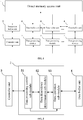
- FIG. 1 illustrates an overall structural diagram of a device for performing LSTM network operations in accordance with an embodiment of the present disclosure.
- the device includes a direct memory access unit 1, an instruction buffer unit 2, a controller unit 3, a data buffer unit 4, and a data processing module 5, all of which can be implemented by hardware circuits.
- the direct memory access unit 1 can access an external address space, read/write data from/to each of the buffer units inside the device, and complete the loading and storage of data, which specifically include reading an instruction from the instruction buffer unit 2, reading weights, biases, and input data required for LSTM network operations from designated storage units to the data buffer unit 4, and directly writing a post-operation output to the designated external space from the data buffer unit 4.
- the instruction buffer unit 2 reads the instruction through the direct memory access unit 1, and buffers the read instructions.
- the controller unit 3 reads an instruction from the instruction buffer unit 2, decodes the instruction into microinstructions that control behaviors of other modules, and sends them to other modules such as the direct memory access unit 1, the data buffer unit 4, and the data processing module 5.
- the data buffer unit 4 initializes an state cell of the LSTM at the time of device initialization, and reads weights and biases from a designated external address through the direct memory access unit 1, the weights and biases read in each data buffer unit 4 correspond to the neuron to be calculated, that is, the weights and biases read in each data buffer unit 4 are part of the total weights and biases, and the weights and biases in all data buffer units 4, after combination, are the weights and biases read from the designated external address; in the specific operations, an input data is first obtained from the direct memory access unit 1, with each data buffer unit 4 obtaining a copy of the input data, and a partial sum being initialized to an bias value; and then a part of the weights, biases and input values is sent to the data processing module 5; an intermediate value is calculated in the data processing module 5, which then is read from the data processing module 5 and saved into the data buffer unit 4.
- the partial sum is input to the data processing module 5 to calculate an neuron output, which is then written back to the data buffer unit 4, and finally vector values of an input gate, an output gate, a forget gate and a candidate state cell are obtained.
- the forget gate and the old state cell are sent to the data processing module 5 to calculate a partial sum and write it back to the data buffer unit 4;
- the candidate state cell and the input gate are sent to the data processing module 5 to calculate another partial sum;
- the partial sum in the data buffer unit 4 is written into the data processing module 5 and is subjected to a vector addition with the previously calculated partial sum to obtain the updated state cell, and the updated state cell is written back to the data buffer unit 4.
- the output gate is sent to the data processing module 5 and subjected to a vector point -multiplication with the transformed value by a nonlinear transformation function tanh of the updated state cell to obtain an output value, and the output value is written back to the data buffer unit 4.
- the corresponding updated state cell and the output value are obtained in each of the data buffer units 4, and the output values in all the data buffer units 4 are combined to be the final output value.
- each data buffer unit 4 writes the obtained final output value back to the designated external address space through the direct memory access unit 1.
- x t is the input data at a timing t
- h t-1 represents the output data at a timing t-1
- W f , W i , W c , and W o represent the weight vectors corresponding to the forget gate, the input gate, the updated state cell and the output gate respectively
- b f , b i , b c , and b o represent the biases corresponding to the forget gate, the input gate, the updated state cell and the output gate respectively
- f t represents the output of the forget gate, which is subjected to a point -multiplication with the state cell at the timing t-1 to selectively forget values of past state cells
- i t represents the output of the input gate, which is subjected to a point-multiplication with the candidate state value at the timing t to selectively add the candidate state value at the timing t into the state cell
- c t ⁇ represents the candidate state value calculated at the timing t
- c t represents
- the data processing module 5 each time reads part of the weights W i /W f /W o /W c and biases b i /b f /b o /b c as well as the corresponding input data [h t-1 , x t ] from the corresponding data buffer unit 4, completes a calculation on the partial sum by the vector-multiplication means and the summation means in the data processing module 5, until all the input data of each neuron have been operated once, and a net activation amounts net i /net f /net o /net c of the neuron can be obtained.
- the calculation of the output values are completed by vector nonlinear function transformations with a sigmoid or tanh function, and the calculations on the input gate i i , the forget gate f i , the output gate o i and the candidate state cell c t ⁇ are completed respectively in this way.
- the point-multiplication of the old state cell and the forget gate as well as that of the candidate state cell and the input gate are calculated respectively by the vector point-multiplication means in the data processing module 5, and the two results are subjected to an operation by the vector addition means to obtain a new state cell c t .
- the newly obtained state cell is written back into the data buffer unit 4.
- the state cell in the data processing module 5 completes the transformation of the tanh function by the vector nonlinear function transformation means, so as to obtain tanh(c t ). In the calculation process, it can be completed by calculating the value of the tanh function or by a lookup table. Then, the output gate and the tanh nonlinear transformed vector of the state cell are subjected to the vector point-multiplication means to calculate the final neuron output value h t . Finally, the neuron output value h t is written back to the data buffer unit 4.
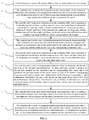
- FIG. 2 illustrates a diagram of a data processing module in the device for performing LSTM network operations in accordance with an embodiment of the present disclosure.
- the data processing unit 5 includes a data processing control sub-module 51, a data dependency determination sub-module 52, and a data operation sub-module 53.
- the data processing control sub-module 51 controls the operations performed by the data operation sub-module 53, and controls the data dependency determination sub-module 52 to determine whether or not the current operation has a data dependency. For part of the operations, the data processing control sub-module 51 controls the operations performed by the data operation sub-module 53; and for operations that may have data dependencies, the data processing control sub-module 51 first controls the data dependency determination sub-module 52 to determine whether the current operation has a data dependency. If so, the data processing control sub-module 51 inserts a null operation into the data operation sub-module 53 until the data dependency is released, and then controls the data operation sub-module 53 to perform a data operation.
- the data dependency determination sub-module 52 is controlled by the data processing control sub-module 51 to check whether there is a data dependency in the data operation sub-module 53. If the next operation requires a value that has not been operated yet, then there is currently a data dependency, otherwise there is no data dependency.
- a method of data dependency detection is that, there are registers R1, R2, R3, R4, and R5 in the data operation sub-module 53, which are respectively used for indicating whether the input gate, the forget gate, the output gate, the candidate state cell and the tanh function transformation on the updated state cell are completed; a non-zero value of the register indicates that the operation is completed, and a zero indicates that the operation has not been completed.
- the data dependency determination sub-module 52 determines the data dependency twice, i.e., determining whether there is data dependency among the input gate, the output gate and the candidate state cell when calculating the new state cell, and determining whether there is data dependency between the output gate and the tanh function transformation on the updated state cell when calculating the output value, respectively, by determining respectively whether R1, R3, and R4 are all non-zero and whether R2 and R5 are both non-zero. After the determination, the determination results need to be sent back to the data processing control sub-module 51.
- the data operation sub-module 53 is controlled by the data processing control sub-module 51 to complete the data processing in the network operation procedure.
- the data operation sub-module 53 includes vector point-multiplication means, vector addition means, vector summation means, vector non-linear transformation means, and registers R1, R2, R3, R4, and R5 indicating whether or not the relevant data operations are completed.
- the registers R1, R2, R3, R4, and R5 are used for indicating whether the input gate, the forget gate, the output gate, the candidate state cell, and the tanh function transformation on the updated state cell are completed; a non-zero value of the register indicates that the operation is completed, and zero indicates that the operation has not been completed.
- the vector addition means adds two vectors by their corresponding positions to obtain a vector, while the vector summation means divides the vector into several segments, and perform an internal summation for each segment, with the finally resulted vector having a length equal to the number of segments.
- the vector nonlinear transformation means takes each element in the vector as an input to obtain a nonlinear-function-transformed output. The specific nonlinear transformation can be done in two ways.
- one method is to directly calculate sigmoid(x) by use of function operation; and the other method is to use a table lookup method, where the data operation sub-module 53 maintains a table of sigmoid functions which records values of outputs y 1 , y 2 ...y n corresponding to inputs x 1 , x 2 ...x n (x 1 ⁇ x 2 ⁇ ...
- a partial sum of the input gate is initialized with an bias; an temporary value is obtained by the vector point-multiplication means from the partial sum of input data and the weight corresponding to the input data, then the temporary value is segmented according to vectors of the temporary values corresponding to different neurons, the summation on the temporary values is completed by the vector summation means, and an update of the partial sum is completed with the calculation result and the input gate partial sum; take another set of input data and weight for the same operation to update the partial sum; after all the input data have been operated once, the resulting partial sum is the net activation amount of the neuron, and then the output value of the input gate is calculated by the vector nonlinear transformation means. The output value is written back into the data buffer unit 4 and the register R1 is set to non-zero.
- the output values of the forget gate, the output gate, and the candidate state cell are calculated by the same method as that for calculating the output of the input gate, the corresponding output values are written back into the data buffer unit 4, and the registers R2, R3, and R4 are set to non-zero.
- a null operation or an operation on the updated state cell is performed according to the control commands of the data processing control sub-module 51.
- the operation on the updated state cell is: fetching the output value of the forget gate and an old state cell from the data buffer unit 4, calculating a partial sum by the vector point-multiplication means, then fetching the output value of the input gate and the candidate state cell from the data buffer unit 4, calculating a partial sum by the vector point-multiplication means, which then is subjected to the vector addition means together with the previous partial sum of state cell to obtain the updated state cell. Finally, the last state cell is written back into the data buffer unit 4.
- a null operation or an operation on the LSTM network output value is performed according to the control commands of the data processing control sub-module 51.
- the operation on the output value is: subjecting the updated state cell to the vector nonlinear function transformation means to calculate the nonlinear transformed value of the state cell, and then the R5 is set to non-zero. Then, a point-multiplication is performed on the output gate and the nonlinear transformed value of the state cell by the vector point-multiplication means, and the final output value is calculated as the output value of the corresponding neuron in the LSTM network.
- the output value is written back into the data buffer unit 4.
- the device of the present disclosure operates using a specially designed instruction set, and the efficiency of instruction decoding is relatively high.
- Parallel calculations among the plurality of data processing modules and parallel operations among the plurality of data buffer units do not require data transmission, which greatly improves parallelism of these operations.
- putting weights and biases in the data buffer unit can reduce IO operations between the device and the external address space, which reduces the bandwidth required for memory access.
- FIG. 3 illustrates a flowchart of performing LSTM network operations in accordance with an embodiment of the present disclosure.
- step S1 an IO instruction is stored at the starting address of the instruction buffer unit 2 in advance.
- step S2 the controller unit 3 reads the IO instruction from the starting address of the instruction buffer unit 2, and according to the decoded microinstructions, the direct memory access unit 1 reads all instructions related to the LSTM network calculations from the external address space and has them buffered into the instruction buffer unit 2.
- step S3 the controller unit 3 reads an IO instruction from the instruction buffer unit 2; according to the decoded microinstructions, the direct memory access unit 1 reads from the designated external address space the weights and biases related to the LSTM network operations, including the weights and biases of the input gate, the output gate, the forget gate, and the candidate state cell, and the weights and biases are divided and read into different data buffer modules 4 according to different neurons corresponding to the weights.
- step S4 the controller unit 3 reads a state cell initialization instruction from the instruction buffer unit 2, initializes the value of the state cell in the data buffer module 4 according to the decoded microinstructions, and sets the partial sums for the input gate, the output gate, the forget gate, and the candidate state cell to the corresponding neuron bias values.
- step S5 the controller unit 3 reads an IO instruction from the instruction buffer unit 2; according to the decoded microinstructions, the direct memory access unit 1 reads the input values from the designated external address space into the data buffer units 4; each data buffer unit 4 receives the same input value vector.
- step S6 the controller unit 3 reads a data processing instruction from the instruction buffer unit 2; according to the decoded microinstructions, the data processing module 5 acquires the relevant data required for the operation from the corresponding data buffer unit 4 for operations, the operation results are the output values of a part of the neurons corresponding to one time point, and the output values obtained from all the data processing modules 5, after combination, correspond to an output value for the one time point.
- the data processing module 5 stores the processed intermediate values or output values and the states cell values into the data buffer units 4.
- step S7 the controller unit 3 reads an IO instruction from the instruction buffer unit 2; according to the decoded microinstructions, the output values in the data buffer unit 4 are spliced together and outputted to the designated external address through the direct memory access unit 1.
- step S8 the controller unit 3 reads a determination instruction from the instruction buffer unit 2; according to the decoded microinstructions, the controller unit 3 decides whether the current forward process is completed, and if the current forward process is completed, the operation ends. If the current forward process is not completed, the flow proceeds to S6 to continue.
- FIG. 4 illustrates a detailed flowchart of a data processing procedure in a method for performing LSTM network operations in accordance with an embodiment of the present disclosure.
- step S1 the data processing module 5 reads the weights and input values of a part of the input gates from the data buffer unit 4.
- step S2 the data processing control sub-module 51 in the data processing module 5 controls the vector point-multiplication means in the data operation sub-module 53 to calculate a point-multiplication of the weight of the input gate and the input value, and then, performs grouping according to different neurons to which the result belongs, and subjects the point -multiplication results in the group to the vector summation means in the data operation sub-module 53 to calculate a partial sum.
- step S3 the data processing module 5 reads the partial sum for the input gate from the data buffer unit 4.
- step S4 the data processing control sub-module 51 in the data processing module 5 controls the data operation sub-module 53 to add the calculated partial sum with the newly read partial sum to obtain the updated partial sum for the input gate.
- step S5 the data processing module 5 writes the updated partial sum into the data buffer module 4.
- step S6 the data processing module 5 determines whether the weights for all the input gate have been operated once. If so, the partial sum in the data buffer unit is the value of the input gate, and the register R1 is set to be non-zero. Otherwise, the flow proceeds to step S1 to continue with a part of weights and input values of a different input value.
- step S7 the output values of the forget gate, the output gate, and the candidate state cell obtained by the operation method are used, and the R2, R3, and R4 are set to non-zero, and the output values are all written back into the data buffer unit 4.
- step S8 the data processing control sub-module 51 in the data processing module 5 controls the data dependency determination sub-module 52 to determine whether operations among the forget gate, the input gate, and the candidate state cell are completed, that is, whether R1, R2, and R4 are all non-zero. If no, the data processing control sub-module 51 controls the data operation sub-module 53 to perform a null operation, and then proceeds to step S8 to continue; if yes, the flow proceeds to step S9.
- step S9 the data processing module 5 reads the old state cell and the output value of the forget gate from the data buffer unit 4.
- step S10 the data processing control sub-module 51 in the data processing module 5 controls the data operation sub-module 53 to calculate a partial sum on the old state cell and the output value of the forget gate by the vector point-multiplication means.
- step S11 the data processing module 5 reads the candidate state cell and the output value of the input gate from the data buffer unit 4.
- step S12 the data processing control sub-module 51 in the data processing module 5 controls the data operation sub-module 53 to calculate a partial sum on the candidate state cell and output value of the input gate by the vector point-multiplication means, and subject the partial sum and the partial sum calculated in step S10 to the vector addition means so as to calculate an updated state cell.
- step S13 the data processing module 5 sends the updated states cell back to the data buffer unit 4.
- step S14 the data processing control sub-module 51 in the data processing module 5 controls the data operation sub-module 53 to calculate a transformed value of the state cell by a nonlinear transformation function tanh from the updated state cell with the vector nonlinear transformation means, and sets R5 to non-zero.
- step S15 the data processing control sub-module 51 in the data processing module 5 controls the data dependency determination sub-module 52 to determine whether the calculation of output value of the output gate and that of the transformed value of the state cell by the nonlinear transformation function tanh are completed, that is, whether R3 and R5 are both non-zero. If no, the data processing control sub-module 51 controls the data operation sub-module 53 to perform a null operation, then the flow proceeds to step S15 to continue; if yes, the flow proceeds to S16.
- step S16 the data processing module 5 reads the output of the output gate from the data buffer unit 4.
- step S17 the data processing control sub-module 51 in the data processing module 5 controls the data operation sub-module 53 to subject the output value of the output gate and the transformed value of the state cell by the nonlinear transformation function tanh to the vector point-multiplication means, so as to calculate an output value, i.e., the output value in the neuron in the LSTM network corresponding to the data processing module 5.
- step S18 the data processing module 5 writes the output value into the data buffer unit 4.
Landscapes
- Engineering & Computer Science (AREA)
- Physics & Mathematics (AREA)
- Theoretical Computer Science (AREA)
- Health & Medical Sciences (AREA)
- Life Sciences & Earth Sciences (AREA)
- Biomedical Technology (AREA)
- Biophysics (AREA)
- General Health & Medical Sciences (AREA)
- Data Mining & Analysis (AREA)
- Evolutionary Computation (AREA)
- Computational Linguistics (AREA)
- Molecular Biology (AREA)
- Computing Systems (AREA)
- General Engineering & Computer Science (AREA)
- General Physics & Mathematics (AREA)
- Mathematical Physics (AREA)
- Software Systems (AREA)
- Artificial Intelligence (AREA)
- Neurology (AREA)
- Complex Calculations (AREA)
Applications Claiming Priority (1)
| Application Number | Priority Date | Filing Date | Title |
|---|---|---|---|
| PCT/CN2016/113493 WO2018120016A1 (zh) | 2016-12-30 | 2016-12-30 | 用于执行lstm神经网络运算的装置和运算方法 |
Publications (3)
| Publication Number | Publication Date |
|---|---|
| EP3564863A1 true EP3564863A1 (de) | 2019-11-06 |
| EP3564863A4 EP3564863A4 (de) | 2020-08-19 |
| EP3564863B1 EP3564863B1 (de) | 2024-03-13 |
Family
ID=62706561
Family Applications (1)
| Application Number | Title | Priority Date | Filing Date |
|---|---|---|---|
| EP16925613.8A Active EP3564863B1 (de) | 2016-12-30 | 2016-12-30 | Vorrichtung zur ausführung eines betriebs eines neuronalen lstm-netzes und betriebsverfahren |
Country Status (2)
| Country | Link |
|---|---|
| EP (1) | EP3564863B1 (de) |
| WO (1) | WO2018120016A1 (de) |
Families Citing this family (14)
| Publication number | Priority date | Publication date | Assignee | Title |
|---|---|---|---|---|
| CN110687584B (zh) * | 2018-07-06 | 2024-01-26 | 中国人民解放军陆军防化学院 | 一种基于lstm的快速核素识别方法 |
| CN110163337B (zh) * | 2018-11-12 | 2023-01-20 | 腾讯科技(深圳)有限公司 | 基于神经网络的数据处理方法、装置、设备及存储介质 |
| CN109685252B (zh) * | 2018-11-30 | 2023-04-07 | 西安工程大学 | 基于循环神经网络和多任务学习模型的建筑能耗预测方法 |
| CN109670581B (zh) * | 2018-12-21 | 2023-05-23 | 中科寒武纪科技股份有限公司 | 一种计算装置及板卡 |
| US11042797B2 (en) | 2019-01-08 | 2021-06-22 | SimpleMachines Inc. | Accelerating parallel processing of data in a recurrent neural network |
| CN111767999B (zh) * | 2019-04-02 | 2023-12-05 | 上海寒武纪信息科技有限公司 | 数据处理方法、装置及相关产品 |
| CN110084367B (zh) * | 2019-04-19 | 2022-10-25 | 安徽农业大学 | 一种基于lstm深度学习模型的土壤墒情预测方法 |
| CN113095469B (zh) * | 2019-12-23 | 2025-10-28 | 海思技术有限公司 | 一种神经网络模型的优化方法及装置 |
| CN112488395B (zh) * | 2020-12-01 | 2024-04-05 | 湖南大学 | 一种配电网线损预测方法及系统 |
| CN112793797A (zh) * | 2021-02-03 | 2021-05-14 | 东航技术应用研发中心有限公司 | 一种飞机着陆弹跳预警方法和系统 |
| CN113488052B (zh) * | 2021-07-22 | 2022-09-02 | 深圳鑫思威科技有限公司 | 无线语音传输和ai语音识别互操控方法 |
| CN114418074A (zh) * | 2021-12-23 | 2022-04-29 | 中国科学院计算技术研究所 | 一种基于权值驻留的lstm循环网络加速方法和系统 |
| CN115366101B (zh) * | 2022-08-22 | 2025-03-18 | 桂林电子科技大学 | 一种基于cnn-lstm的机器人气动夹持力的建模估计方法 |
| CN115757531A (zh) * | 2022-10-11 | 2023-03-07 | 国网湖南省电力有限公司 | 基于用电负荷尖峰特征的用户窃电判定方法及系统 |
Family Cites Families (9)
| Publication number | Priority date | Publication date | Assignee | Title |
|---|---|---|---|---|
| JP3547482B2 (ja) * | 1994-04-15 | 2004-07-28 | 株式会社日立製作所 | 情報処理装置 |
| KR20150016089A (ko) * | 2013-08-02 | 2015-02-11 | 안병익 | 신경망 컴퓨팅 장치 및 시스템과 그 방법 |
| CN104657111A (zh) * | 2013-11-20 | 2015-05-27 | 方正信息产业控股有限公司 | 一种并行计算方法和装置 |
| US10275704B2 (en) * | 2014-06-06 | 2019-04-30 | Google Llc | Generating representations of input sequences using neural networks |
| CN104036451B (zh) * | 2014-06-20 | 2018-12-11 | 深圳市腾讯计算机系统有限公司 | 基于多图形处理器的模型并行处理方法及装置 |
| US20160034812A1 (en) * | 2014-07-31 | 2016-02-04 | Qualcomm Incorporated | Long short-term memory using a spiking neural network |
| US10140572B2 (en) * | 2015-06-25 | 2018-11-27 | Microsoft Technology Licensing, Llc | Memory bandwidth management for deep learning applications |
| CN105184366B (zh) * | 2015-09-15 | 2018-01-09 | 中国科学院计算技术研究所 | 一种时分复用的通用神经网络处理器 |
| CN107545303B (zh) * | 2016-01-20 | 2021-09-07 | 中科寒武纪科技股份有限公司 | 用于稀疏人工神经网络的计算装置和运算方法 |
-
2016
- 2016-12-30 WO PCT/CN2016/113493 patent/WO2018120016A1/zh not_active Ceased
- 2016-12-30 EP EP16925613.8A patent/EP3564863B1/de active Active
Also Published As
| Publication number | Publication date |
|---|---|
| EP3564863A4 (de) | 2020-08-19 |
| EP3564863B1 (de) | 2024-03-13 |
| WO2018120016A1 (zh) | 2018-07-05 |
Similar Documents
| Publication | Publication Date | Title |
|---|---|---|
| EP3564863B1 (de) | Vorrichtung zur ausführung eines betriebs eines neuronalen lstm-netzes und betriebsverfahren | |
| US10853722B2 (en) | Apparatus for executing LSTM neural network operation, and operational method | |
| CN111260025B (zh) | 用于执行lstm神经网络运算的装置和运算方法 | |
| US11922132B2 (en) | Information processing method and terminal device | |
| US11531540B2 (en) | Processing apparatus and processing method with dynamically configurable operation bit width | |
| KR102470264B1 (ko) | 완전연결층 신경망 역방향 트레이닝 실행용 장치와 방법 | |
| CN111310904B (zh) | 一种用于执行卷积神经网络训练的装置和方法 | |
| CN109284825B (zh) | 用于执行lstm运算的装置和方法 | |
| EP3832500B1 (de) | Vorrichtung und verfahren zur durchführung eines vektorvorgangs mit vier grundregeln | |
| EP3451239A1 (de) | Vorrichtung und verfahren zur ausführung rekurrenter neuronaler netzwerke und lstm-berechnungen | |
| CN107315715A (zh) | 一种用于执行矩阵加/减运算的装置和方法 | |
| EP3451238A1 (de) | Vorrichtung und verfahren zur ausführung einer pooling-operation | |
| EP3444758B1 (de) | Vorrichtung zur unterstützung der repräsentation diskreter daten und verfahren zum rückwärtigen trainieren eines künstlichen neuronalen netzwerks | |
| EP3451160B1 (de) | Vorrichtung und verfahren zur durchführung einer aussenproduktarithmetik eines vektors | |
| US11263530B2 (en) | Apparatus for operations at maxout layer of neural networks | |
| CN107315563A (zh) | 一种用于执行向量比较运算的装置和方法 | |
| EP3451240A1 (de) | Vorrichtung und verfahren zur durchführung eines selbstlernbetriebs eines künstlichen neuronalen netzwerkes | |
| CN109711540B (zh) | 一种计算装置及板卡 | |
| CN111651204A (zh) | 一种用于执行向量最大值最小值运算的装置和方法 | |
| CN111860814B (zh) | 一种用于执行batch normalization运算的装置和方法 | |
| CN107329733A (zh) | 用于执行pooling运算的装置和方法 | |
| CN113867797A (zh) | 计算装置、集成电路芯片、板卡、电子设备和计算方法 |
Legal Events
| Date | Code | Title | Description |
|---|---|---|---|
| STAA | Information on the status of an ep patent application or granted ep patent |
Free format text: STATUS: THE INTERNATIONAL PUBLICATION HAS BEEN MADE |
|
| PUAI | Public reference made under article 153(3) epc to a published international application that has entered the european phase |
Free format text: ORIGINAL CODE: 0009012 |
|
| STAA | Information on the status of an ep patent application or granted ep patent |
Free format text: STATUS: REQUEST FOR EXAMINATION WAS MADE |
|
| 17P | Request for examination filed |
Effective date: 20181116 |
|
| AK | Designated contracting states |
Kind code of ref document: A1 Designated state(s): AL AT BE BG CH CY CZ DE DK EE ES FI FR GB GR HR HU IE IS IT LI LT LU LV MC MK MT NL NO PL PT RO RS SE SI SK SM TR |
|
| AX | Request for extension of the european patent |
Extension state: BA ME |
|
| DAV | Request for validation of the european patent (deleted) | ||
| DAX | Request for extension of the european patent (deleted) | ||
| A4 | Supplementary search report drawn up and despatched |
Effective date: 20200722 |
|
| RIC1 | Information provided on ipc code assigned before grant |
Ipc: G06N 3/06 20060101AFI20200716BHEP Ipc: G06N 3/063 20060101ALI20200716BHEP Ipc: G06N 3/04 20060101ALI20200716BHEP |
|
| STAA | Information on the status of an ep patent application or granted ep patent |
Free format text: STATUS: EXAMINATION IS IN PROGRESS |
|
| 17Q | First examination report despatched |
Effective date: 20230405 |
|
| REG | Reference to a national code |
Ref legal event code: R079 Ipc: G06N0003044200 Ref country code: DE Ref legal event code: R079 Ref document number: 602016086355 Country of ref document: DE Free format text: PREVIOUS MAIN CLASS: G06N0003060000 Ipc: G06N0003044200 |
|
| GRAP | Despatch of communication of intention to grant a patent |
Free format text: ORIGINAL CODE: EPIDOSNIGR1 |
|
| STAA | Information on the status of an ep patent application or granted ep patent |
Free format text: STATUS: GRANT OF PATENT IS INTENDED |
|
| RIC1 | Information provided on ipc code assigned before grant |
Ipc: G06N 3/048 20230101ALI20231003BHEP Ipc: G06N 3/063 20060101ALI20231003BHEP Ipc: G06N 3/0442 20230101AFI20231003BHEP |
|
| INTG | Intention to grant announced |
Effective date: 20231020 |
|
| GRAS | Grant fee paid |
Free format text: ORIGINAL CODE: EPIDOSNIGR3 |
|
| GRAA | (expected) grant |
Free format text: ORIGINAL CODE: 0009210 |
|
| STAA | Information on the status of an ep patent application or granted ep patent |
Free format text: STATUS: THE PATENT HAS BEEN GRANTED |
|
| AK | Designated contracting states |
Kind code of ref document: B1 Designated state(s): AL AT BE BG CH CY CZ DE DK EE ES FI FR GB GR HR HU IE IS IT LI LT LU LV MC MK MT NL NO PL PT RO RS SE SI SK SM TR |
|
| REG | Reference to a national code |
Ref country code: GB Ref legal event code: FG4D |
|
| REG | Reference to a national code |
Ref country code: CH Ref legal event code: EP |
|
| REG | Reference to a national code |
Ref country code: DE Ref legal event code: R096 Ref document number: 602016086355 Country of ref document: DE |
|
| REG | Reference to a national code |
Ref country code: IE Ref legal event code: FG4D |
|
| PG25 | Lapsed in a contracting state [announced via postgrant information from national office to epo] |
Ref country code: LT Free format text: LAPSE BECAUSE OF FAILURE TO SUBMIT A TRANSLATION OF THE DESCRIPTION OR TO PAY THE FEE WITHIN THE PRESCRIBED TIME-LIMIT Effective date: 20240313 |
|
| REG | Reference to a national code |
Ref country code: LT Ref legal event code: MG9D |
|
| PG25 | Lapsed in a contracting state [announced via postgrant information from national office to epo] |
Ref country code: GR Free format text: LAPSE BECAUSE OF FAILURE TO SUBMIT A TRANSLATION OF THE DESCRIPTION OR TO PAY THE FEE WITHIN THE PRESCRIBED TIME-LIMIT Effective date: 20240614 |
|
| REG | Reference to a national code |
Ref country code: NL Ref legal event code: MP Effective date: 20240313 |
|
| PG25 | Lapsed in a contracting state [announced via postgrant information from national office to epo] |
Ref country code: HR Free format text: LAPSE BECAUSE OF FAILURE TO SUBMIT A TRANSLATION OF THE DESCRIPTION OR TO PAY THE FEE WITHIN THE PRESCRIBED TIME-LIMIT Effective date: 20240313 Ref country code: RS Free format text: LAPSE BECAUSE OF FAILURE TO SUBMIT A TRANSLATION OF THE DESCRIPTION OR TO PAY THE FEE WITHIN THE PRESCRIBED TIME-LIMIT Effective date: 20240613 |
|
| PG25 | Lapsed in a contracting state [announced via postgrant information from national office to epo] |
Ref country code: ES Free format text: LAPSE BECAUSE OF FAILURE TO SUBMIT A TRANSLATION OF THE DESCRIPTION OR TO PAY THE FEE WITHIN THE PRESCRIBED TIME-LIMIT Effective date: 20240313 |
|
| PG25 | Lapsed in a contracting state [announced via postgrant information from national office to epo] |
Ref country code: RS Free format text: LAPSE BECAUSE OF FAILURE TO SUBMIT A TRANSLATION OF THE DESCRIPTION OR TO PAY THE FEE WITHIN THE PRESCRIBED TIME-LIMIT Effective date: 20240613 Ref country code: NO Free format text: LAPSE BECAUSE OF FAILURE TO SUBMIT A TRANSLATION OF THE DESCRIPTION OR TO PAY THE FEE WITHIN THE PRESCRIBED TIME-LIMIT Effective date: 20240613 Ref country code: LT Free format text: LAPSE BECAUSE OF FAILURE TO SUBMIT A TRANSLATION OF THE DESCRIPTION OR TO PAY THE FEE WITHIN THE PRESCRIBED TIME-LIMIT Effective date: 20240313 Ref country code: HR Free format text: LAPSE BECAUSE OF FAILURE TO SUBMIT A TRANSLATION OF THE DESCRIPTION OR TO PAY THE FEE WITHIN THE PRESCRIBED TIME-LIMIT Effective date: 20240313 Ref country code: GR Free format text: LAPSE BECAUSE OF FAILURE TO SUBMIT A TRANSLATION OF THE DESCRIPTION OR TO PAY THE FEE WITHIN THE PRESCRIBED TIME-LIMIT Effective date: 20240614 Ref country code: FI Free format text: LAPSE BECAUSE OF FAILURE TO SUBMIT A TRANSLATION OF THE DESCRIPTION OR TO PAY THE FEE WITHIN THE PRESCRIBED TIME-LIMIT Effective date: 20240313 Ref country code: ES Free format text: LAPSE BECAUSE OF FAILURE TO SUBMIT A TRANSLATION OF THE DESCRIPTION OR TO PAY THE FEE WITHIN THE PRESCRIBED TIME-LIMIT Effective date: 20240313 Ref country code: BG Free format text: LAPSE BECAUSE OF FAILURE TO SUBMIT A TRANSLATION OF THE DESCRIPTION OR TO PAY THE FEE WITHIN THE PRESCRIBED TIME-LIMIT Effective date: 20240313 |
|
| REG | Reference to a national code |
Ref country code: AT Ref legal event code: MK05 Ref document number: 1666455 Country of ref document: AT Kind code of ref document: T Effective date: 20240313 |
|
| PG25 | Lapsed in a contracting state [announced via postgrant information from national office to epo] |
Ref country code: SE Free format text: LAPSE BECAUSE OF FAILURE TO SUBMIT A TRANSLATION OF THE DESCRIPTION OR TO PAY THE FEE WITHIN THE PRESCRIBED TIME-LIMIT Effective date: 20240313 Ref country code: LV Free format text: LAPSE BECAUSE OF FAILURE TO SUBMIT A TRANSLATION OF THE DESCRIPTION OR TO PAY THE FEE WITHIN THE PRESCRIBED TIME-LIMIT Effective date: 20240313 |
|
| PG25 | Lapsed in a contracting state [announced via postgrant information from national office to epo] |
Ref country code: NL Free format text: LAPSE BECAUSE OF FAILURE TO SUBMIT A TRANSLATION OF THE DESCRIPTION OR TO PAY THE FEE WITHIN THE PRESCRIBED TIME-LIMIT Effective date: 20240313 |
|
| PG25 | Lapsed in a contracting state [announced via postgrant information from national office to epo] |
Ref country code: NL Free format text: LAPSE BECAUSE OF FAILURE TO SUBMIT A TRANSLATION OF THE DESCRIPTION OR TO PAY THE FEE WITHIN THE PRESCRIBED TIME-LIMIT Effective date: 20240313 |
|
| PG25 | Lapsed in a contracting state [announced via postgrant information from national office to epo] |
Ref country code: IS Free format text: LAPSE BECAUSE OF FAILURE TO SUBMIT A TRANSLATION OF THE DESCRIPTION OR TO PAY THE FEE WITHIN THE PRESCRIBED TIME-LIMIT Effective date: 20240713 |
|
| PG25 | Lapsed in a contracting state [announced via postgrant information from national office to epo] |
Ref country code: PT Free format text: LAPSE BECAUSE OF FAILURE TO SUBMIT A TRANSLATION OF THE DESCRIPTION OR TO PAY THE FEE WITHIN THE PRESCRIBED TIME-LIMIT Effective date: 20240715 Ref country code: SM Free format text: LAPSE BECAUSE OF FAILURE TO SUBMIT A TRANSLATION OF THE DESCRIPTION OR TO PAY THE FEE WITHIN THE PRESCRIBED TIME-LIMIT Effective date: 20240313 |
|
| PG25 | Lapsed in a contracting state [announced via postgrant information from national office to epo] |
Ref country code: EE Free format text: LAPSE BECAUSE OF FAILURE TO SUBMIT A TRANSLATION OF THE DESCRIPTION OR TO PAY THE FEE WITHIN THE PRESCRIBED TIME-LIMIT Effective date: 20240313 Ref country code: CZ Free format text: LAPSE BECAUSE OF FAILURE TO SUBMIT A TRANSLATION OF THE DESCRIPTION OR TO PAY THE FEE WITHIN THE PRESCRIBED TIME-LIMIT Effective date: 20240313 |
|
| PG25 | Lapsed in a contracting state [announced via postgrant information from national office to epo] |
Ref country code: AT Free format text: LAPSE BECAUSE OF FAILURE TO SUBMIT A TRANSLATION OF THE DESCRIPTION OR TO PAY THE FEE WITHIN THE PRESCRIBED TIME-LIMIT Effective date: 20240313 |
|
| PG25 | Lapsed in a contracting state [announced via postgrant information from national office to epo] |
Ref country code: PL Free format text: LAPSE BECAUSE OF FAILURE TO SUBMIT A TRANSLATION OF THE DESCRIPTION OR TO PAY THE FEE WITHIN THE PRESCRIBED TIME-LIMIT Effective date: 20240313 |
|
| PG25 | Lapsed in a contracting state [announced via postgrant information from national office to epo] |
Ref country code: SK Free format text: LAPSE BECAUSE OF FAILURE TO SUBMIT A TRANSLATION OF THE DESCRIPTION OR TO PAY THE FEE WITHIN THE PRESCRIBED TIME-LIMIT Effective date: 20240313 |
|
| PG25 | Lapsed in a contracting state [announced via postgrant information from national office to epo] |
Ref country code: SM Free format text: LAPSE BECAUSE OF FAILURE TO SUBMIT A TRANSLATION OF THE DESCRIPTION OR TO PAY THE FEE WITHIN THE PRESCRIBED TIME-LIMIT Effective date: 20240313 Ref country code: SK Free format text: LAPSE BECAUSE OF FAILURE TO SUBMIT A TRANSLATION OF THE DESCRIPTION OR TO PAY THE FEE WITHIN THE PRESCRIBED TIME-LIMIT Effective date: 20240313 Ref country code: RO Free format text: LAPSE BECAUSE OF FAILURE TO SUBMIT A TRANSLATION OF THE DESCRIPTION OR TO PAY THE FEE WITHIN THE PRESCRIBED TIME-LIMIT Effective date: 20240313 Ref country code: PT Free format text: LAPSE BECAUSE OF FAILURE TO SUBMIT A TRANSLATION OF THE DESCRIPTION OR TO PAY THE FEE WITHIN THE PRESCRIBED TIME-LIMIT Effective date: 20240715 Ref country code: PL Free format text: LAPSE BECAUSE OF FAILURE TO SUBMIT A TRANSLATION OF THE DESCRIPTION OR TO PAY THE FEE WITHIN THE PRESCRIBED TIME-LIMIT Effective date: 20240313 Ref country code: IS Free format text: LAPSE BECAUSE OF FAILURE TO SUBMIT A TRANSLATION OF THE DESCRIPTION OR TO PAY THE FEE WITHIN THE PRESCRIBED TIME-LIMIT Effective date: 20240713 Ref country code: EE Free format text: LAPSE BECAUSE OF FAILURE TO SUBMIT A TRANSLATION OF THE DESCRIPTION OR TO PAY THE FEE WITHIN THE PRESCRIBED TIME-LIMIT Effective date: 20240313 Ref country code: CZ Free format text: LAPSE BECAUSE OF FAILURE TO SUBMIT A TRANSLATION OF THE DESCRIPTION OR TO PAY THE FEE WITHIN THE PRESCRIBED TIME-LIMIT Effective date: 20240313 Ref country code: AT Free format text: LAPSE BECAUSE OF FAILURE TO SUBMIT A TRANSLATION OF THE DESCRIPTION OR TO PAY THE FEE WITHIN THE PRESCRIBED TIME-LIMIT Effective date: 20240313 |
|
| PG25 | Lapsed in a contracting state [announced via postgrant information from national office to epo] |
Ref country code: IT Free format text: LAPSE BECAUSE OF FAILURE TO SUBMIT A TRANSLATION OF THE DESCRIPTION OR TO PAY THE FEE WITHIN THE PRESCRIBED TIME-LIMIT Effective date: 20240313 |
|
| REG | Reference to a national code |
Ref country code: DE Ref legal event code: R097 Ref document number: 602016086355 Country of ref document: DE |
|
| PG25 | Lapsed in a contracting state [announced via postgrant information from national office to epo] |
Ref country code: IT Free format text: LAPSE BECAUSE OF FAILURE TO SUBMIT A TRANSLATION OF THE DESCRIPTION OR TO PAY THE FEE WITHIN THE PRESCRIBED TIME-LIMIT Effective date: 20240313 |
|
| PG25 | Lapsed in a contracting state [announced via postgrant information from national office to epo] |
Ref country code: DK Free format text: LAPSE BECAUSE OF FAILURE TO SUBMIT A TRANSLATION OF THE DESCRIPTION OR TO PAY THE FEE WITHIN THE PRESCRIBED TIME-LIMIT Effective date: 20240313 |
|
| PLBE | No opposition filed within time limit |
Free format text: ORIGINAL CODE: 0009261 |
|
| STAA | Information on the status of an ep patent application or granted ep patent |
Free format text: STATUS: NO OPPOSITION FILED WITHIN TIME LIMIT |
|
| PG25 | Lapsed in a contracting state [announced via postgrant information from national office to epo] |
Ref country code: DK Free format text: LAPSE BECAUSE OF FAILURE TO SUBMIT A TRANSLATION OF THE DESCRIPTION OR TO PAY THE FEE WITHIN THE PRESCRIBED TIME-LIMIT Effective date: 20240313 |
|
| 26N | No opposition filed |
Effective date: 20241216 |
|
| PG25 | Lapsed in a contracting state [announced via postgrant information from national office to epo] |
Ref country code: SI Free format text: LAPSE BECAUSE OF FAILURE TO SUBMIT A TRANSLATION OF THE DESCRIPTION OR TO PAY THE FEE WITHIN THE PRESCRIBED TIME-LIMIT Effective date: 20240313 |
|
| PG25 | Lapsed in a contracting state [announced via postgrant information from national office to epo] |
Ref country code: MC Free format text: LAPSE BECAUSE OF FAILURE TO SUBMIT A TRANSLATION OF THE DESCRIPTION OR TO PAY THE FEE WITHIN THE PRESCRIBED TIME-LIMIT Effective date: 20240313 |
|
| REG | Reference to a national code |
Ref country code: CH Ref legal event code: PL |
|
| PG25 | Lapsed in a contracting state [announced via postgrant information from national office to epo] |
Ref country code: LU Free format text: LAPSE BECAUSE OF NON-PAYMENT OF DUE FEES Effective date: 20241230 |
|
| REG | Reference to a national code |
Ref country code: BE Ref legal event code: MM Effective date: 20241231 |
|
| PG25 | Lapsed in a contracting state [announced via postgrant information from national office to epo] |
Ref country code: BE Free format text: LAPSE BECAUSE OF NON-PAYMENT OF DUE FEES Effective date: 20241231 |
|
| PG25 | Lapsed in a contracting state [announced via postgrant information from national office to epo] |
Ref country code: CH Free format text: LAPSE BECAUSE OF NON-PAYMENT OF DUE FEES Effective date: 20241231 |
|
| PG25 | Lapsed in a contracting state [announced via postgrant information from national office to epo] |
Ref country code: IE Free format text: LAPSE BECAUSE OF NON-PAYMENT OF DUE FEES Effective date: 20241230 |
|
| PGFP | Annual fee paid to national office [announced via postgrant information from national office to epo] |
Ref country code: DE Payment date: 20251211 Year of fee payment: 10 |
|
| PGFP | Annual fee paid to national office [announced via postgrant information from national office to epo] |
Ref country code: GB Payment date: 20251219 Year of fee payment: 10 |
|
| PGFP | Annual fee paid to national office [announced via postgrant information from national office to epo] |
Ref country code: FR Payment date: 20251229 Year of fee payment: 10 |