EP3565149A1 - Procédé et appareil d'émission d'informations de commande et procédé et appareil de réception d'informations de commande - Google Patents
Procédé et appareil d'émission d'informations de commande et procédé et appareil de réception d'informations de commande Download PDFInfo
- Publication number
- EP3565149A1 EP3565149A1 EP17888699.0A EP17888699A EP3565149A1 EP 3565149 A1 EP3565149 A1 EP 3565149A1 EP 17888699 A EP17888699 A EP 17888699A EP 3565149 A1 EP3565149 A1 EP 3565149A1
- Authority
- EP
- European Patent Office
- Prior art keywords
- control information
- field
- fields
- information fields
- bits
- Prior art date
- Legal status (The legal status is an assumption and is not a legal conclusion. Google has not performed a legal analysis and makes no representation as to the accuracy of the status listed.)
- Granted
Links
Images



Classifications
-
- H—ELECTRICITY
- H04—ELECTRIC COMMUNICATION TECHNIQUE
- H04L—TRANSMISSION OF DIGITAL INFORMATION, e.g. TELEGRAPHIC COMMUNICATION
- H04L1/00—Arrangements for detecting or preventing errors in the information received
- H04L1/0001—Systems modifying transmission characteristics according to link quality, e.g. power backoff
- H04L1/0009—Systems modifying transmission characteristics according to link quality, e.g. power backoff by adapting the channel coding
- H04L1/001—Systems modifying transmission characteristics according to link quality, e.g. power backoff by adapting the channel coding applied to control information
-
- H—ELECTRICITY
- H04—ELECTRIC COMMUNICATION TECHNIQUE
- H04L—TRANSMISSION OF DIGITAL INFORMATION, e.g. TELEGRAPHIC COMMUNICATION
- H04L1/00—Arrangements for detecting or preventing errors in the information received
- H04L1/02—Arrangements for detecting or preventing errors in the information received by diversity reception
- H04L1/06—Arrangements for detecting or preventing errors in the information received by diversity reception using space diversity
- H04L1/0618—Space-time coding
- H04L1/0637—Properties of the code
- H04L1/0643—Properties of the code block codes
-
- H—ELECTRICITY
- H04—ELECTRIC COMMUNICATION TECHNIQUE
- H04L—TRANSMISSION OF DIGITAL INFORMATION, e.g. TELEGRAPHIC COMMUNICATION
- H04L1/00—Arrangements for detecting or preventing errors in the information received
- H04L1/0001—Systems modifying transmission characteristics according to link quality, e.g. power backoff
- H04L1/0002—Systems modifying transmission characteristics according to link quality, e.g. power backoff by adapting the transmission rate
- H04L1/0003—Systems modifying transmission characteristics according to link quality, e.g. power backoff by adapting the transmission rate by switching between different modulation schemes
- H04L1/0004—Systems modifying transmission characteristics according to link quality, e.g. power backoff by adapting the transmission rate by switching between different modulation schemes applied to control information
-
- H—ELECTRICITY
- H04—ELECTRIC COMMUNICATION TECHNIQUE
- H04L—TRANSMISSION OF DIGITAL INFORMATION, e.g. TELEGRAPHIC COMMUNICATION
- H04L1/00—Arrangements for detecting or preventing errors in the information received
- H04L1/0001—Systems modifying transmission characteristics according to link quality, e.g. power backoff
- H04L1/0023—Systems modifying transmission characteristics according to link quality, e.g. power backoff characterised by the signalling
-
- H—ELECTRICITY
- H04—ELECTRIC COMMUNICATION TECHNIQUE
- H04L—TRANSMISSION OF DIGITAL INFORMATION, e.g. TELEGRAPHIC COMMUNICATION
- H04L1/00—Arrangements for detecting or preventing errors in the information received
- H04L1/02—Arrangements for detecting or preventing errors in the information received by diversity reception
- H04L1/06—Arrangements for detecting or preventing errors in the information received by diversity reception using space diversity
- H04L1/0618—Space-time coding
- H04L1/0675—Space-time coding characterised by the signaling
-
- H—ELECTRICITY
- H04—ELECTRIC COMMUNICATION TECHNIQUE
- H04L—TRANSMISSION OF DIGITAL INFORMATION, e.g. TELEGRAPHIC COMMUNICATION
- H04L1/00—Arrangements for detecting or preventing errors in the information received
- H04L1/12—Arrangements for detecting or preventing errors in the information received by using return channel
- H04L1/16—Arrangements for detecting or preventing errors in the information received by using return channel in which the return channel carries supervisory signals, e.g. repetition request signals
- H04L1/1607—Details of the supervisory signal
- H04L1/1614—Details of the supervisory signal using bitmaps
-
- H—ELECTRICITY
- H04—ELECTRIC COMMUNICATION TECHNIQUE
- H04L—TRANSMISSION OF DIGITAL INFORMATION, e.g. TELEGRAPHIC COMMUNICATION
- H04L1/00—Arrangements for detecting or preventing errors in the information received
- H04L1/12—Arrangements for detecting or preventing errors in the information received by using return channel
- H04L1/16—Arrangements for detecting or preventing errors in the information received by using return channel in which the return channel carries supervisory signals, e.g. repetition request signals
- H04L1/1607—Details of the supervisory signal
- H04L1/1671—Details of the supervisory signal the supervisory signal being transmitted together with control information
-
- H—ELECTRICITY
- H04—ELECTRIC COMMUNICATION TECHNIQUE
- H04L—TRANSMISSION OF DIGITAL INFORMATION, e.g. TELEGRAPHIC COMMUNICATION
- H04L1/00—Arrangements for detecting or preventing errors in the information received
- H04L1/12—Arrangements for detecting or preventing errors in the information received by using return channel
- H04L1/16—Arrangements for detecting or preventing errors in the information received by using return channel in which the return channel carries supervisory signals, e.g. repetition request signals
- H04L1/18—Automatic repetition systems, e.g. Van Duuren systems
- H04L1/1829—Arrangements specially adapted for the receiver end
- H04L1/1861—Physical mapping arrangements
-
- H—ELECTRICITY
- H04—ELECTRIC COMMUNICATION TECHNIQUE
- H04L—TRANSMISSION OF DIGITAL INFORMATION, e.g. TELEGRAPHIC COMMUNICATION
- H04L1/00—Arrangements for detecting or preventing errors in the information received
- H04L1/12—Arrangements for detecting or preventing errors in the information received by using return channel
- H04L1/16—Arrangements for detecting or preventing errors in the information received by using return channel in which the return channel carries supervisory signals, e.g. repetition request signals
- H04L1/18—Automatic repetition systems, e.g. Van Duuren systems
- H04L1/1867—Arrangements specially adapted for the transmitter end
- H04L1/1896—ARQ related signaling
-
- H—ELECTRICITY
- H04—ELECTRIC COMMUNICATION TECHNIQUE
- H04L—TRANSMISSION OF DIGITAL INFORMATION, e.g. TELEGRAPHIC COMMUNICATION
- H04L5/00—Arrangements affording multiple use of the transmission path
- H04L5/003—Arrangements for allocating sub-channels of the transmission path
- H04L5/0053—Allocation of signalling, i.e. of overhead other than pilot signals
-
- H—ELECTRICITY
- H04—ELECTRIC COMMUNICATION TECHNIQUE
- H04L—TRANSMISSION OF DIGITAL INFORMATION, e.g. TELEGRAPHIC COMMUNICATION
- H04L5/00—Arrangements affording multiple use of the transmission path
- H04L5/0091—Signalling for the administration of the divided path, e.g. signalling of configuration information
- H04L5/0094—Indication of how sub-channels of the path are allocated
-
- H—ELECTRICITY
- H04—ELECTRIC COMMUNICATION TECHNIQUE
- H04W—WIRELESS COMMUNICATION NETWORKS
- H04W80/00—Wireless network protocols or protocol adaptations to wireless operation
- H04W80/08—Upper layer protocols
Definitions
- Embodiments of this application relate to the communications field, and more specifically, to a control information sending method and an apparatus, and a control information receiving method and an apparatus.
- a peak data rate keeps increasing, and a size (for example, a quantity of included bits) of a transport block (Transport Block, TB) increases accordingly.
- Transport Block Transport Block
- a receive end In order to improve communication accuracy and reliability, a feedback mechanism is proposed.
- a receive end generates, based on a decoding structure of a received TB, feedback information specific to the TB, for example, acknowledgment (Acknowledgment, ACK) information or negative acknowledgment (Negative Acknowledgment, NACK) information.
- acknowledgment Acknowledgment
- NACK Negative Acknowledgment
- a TB may be divided into a plurality of code blocks (Code Block, CB), and feedback is performed based on the CB. That is, feedback information is specific to the CB, thereby avoiding retransmission of the entire TB due to a transmission error of some data.
- CB Code Block
- CBs may be grouped into a plurality of CB groups (group), and feedback is performed based on the CB group. That is, feedback information is specific to the CB group.
- control information for example, downlink control information (Downlink Control Information, DCI)
- DCI Downlink Control Information
- a quantity of bits in the DCI may dynamically change, increasing blind detection complexity of a terminal device, increasing processing burden of the terminal device, and affecting user experience.
- Embodiments of this application provide a control information sending method and apparatus, and a control information receiving method and apparatus, so that a quantity of bits in control information can remain fixed, thereby reducing blind detection complexity of a terminal device, reducing processing burden of the terminal device, and improving user experience.
- a control information sending method includes: generating, by a network device, first control information for a first TB, where the first TB includes n code block CB groups, and 1 ⁇ n ⁇ N, where N is a maximum quantity of CB groups included in the first TB, and N ⁇ 1; each CB group includes at least one CB; the first control information includes N control information fields, and the N control information fields are in a one-to-one correspondence with the maximum N CB groups included in the first TB; and a control information field i in the N control information fields is used to indicate whether a CB group corresponding to the control information field i is to be sent or received, and i ⁇ [1, N]; and sending, by the network device, the first control information to a terminal device.
- a maximum quantity N of CB groups included in each TB is preset and the network device generates, based on the quantity N, control information including N control information fields, so that sizes of control information for all TBs are the same, or resources occupied by control information for all TBs are the same. This can avoid a dynamic change in a quantity of bits in the control information, so as to reduce blind detection complexity of a terminal device, reduce processing burden of the terminal device, and improve user experience.
- the method further includes: sending, by the network device, first indication information to the terminal device by using higher layer signaling or physical layer signaling, where the first indication information is used to indicate a value of N.
- the network device indicates the value of N to the terminal device, so that the network device itself can adjust the value of N.
- different terminal devices can be corresponding to different values of N, and further, lengths of control information received by different terminal devices are different, so that different requirements of different terminal devices on lengths of control information can be flexibly satisfied, thereby further improving practicability of this embodiment of this application.
- the value of N is predefined.
- N is specified by a communications system or a communication protocol, so as to reduce interactions between the network device and the terminal device, and reduce signaling overheads.
- the method further includes: determining, by the network device, a value of n based on a quantity A of bits in the first TB, a maximum quantity Z of bits included in each CB, and a maximum quantity X of CBs included in each CB, where A is an integer greater than 0, Z is an integer greater than 0, and X is an integer greater than 0.
- the first TB is configured to add check bits.
- each CB in each CB group is configured to add check bits.
- control information field i in the N control information fields is further used to indicate whether data corresponding to the CB group corresponding to the control information field i is initial transmission data or retransmission data.
- the data corresponding to the CB group corresponding to the control information field i is data (for example, a bit obtained through coding) carried by the CB group corresponding to the control information field i.
- the control information field i is used to indicate whether the data corresponding to the CB group corresponding to the control information field i is initial transmission data or retransmission data. This can implement flexible configuration of whether data carried by each CB group is initial transmission data or retransmission data, and can implement that a same TB can be used to transmit both initial transmission data and retransmission data, thereby improving flexibility of data transmission.
- control information field i in the N control information fields is further used to indicate a redundancy version RV number of data corresponding to the CB group corresponding to the control information field i.
- the control information field i is used to indicate an RV of the data corresponding to the CB group corresponding to the control information field i.
- This can implement flexible configuration of an RV version of data carried by each CB group, and can implement that a same TB can be used to transmit data of different RV versions, thereby improving flexibility of data transmission.
- the first control information further includes a first field, and the first field is used to indicate whether data corresponding to all CB groups in the first TB is initial transmission data or retransmission data, and/or the first control information further includes a second field, and the second field is used to indicate a redundancy version RV number of data corresponding to all CB groups in the first TB.
- a control information receiving method includes: receiving, by a terminal device, first control information that is for a first TB and that is sent by a network device, where the first TB includes n code block CB groups, and 1 ⁇ n ⁇ N, where N is a maximum quantity of CB groups included in the first TB, and N ⁇ 1; each CB group includes at least one CB; the first control information includes N control information fields, and the N control information fields are in a one-to-one correspondence with the maximum N CB groups included in the first TB; and a control information field i in the N control information fields is used to indicate whether a CB group corresponding to the control information field i is to be sent or received, and i ⁇ [1, N]; and determining, by the terminal device based on the control information field i in the N control information fields, whether the CB group corresponding to the control information field i is to be sent or received.
- the method further includes: receiving, by the terminal device, first indication information sent by the network device by using higher layer signaling or physical layer signaling, where the first indication information is used to indicate a value of N.
- the value of N is predefined.
- the method further includes: determining, by the terminal device, a value of n based on a quantity A of bits in the first TB, a maximum quantity Z of bits included in each CB, and a maximum quantity X of CBs included in each CB.
- the first TB is configured to add check bits.
- each CB in each CB group is configured to add check bits.
- control information field i in the N control information fields is further used to indicate whether data corresponding to the CB group corresponding to the control information field i is initial transmission data or retransmission data.
- control information field i in the N control information fields is further used to indicate a redundancy version RV number of data corresponding to the CB group corresponding to the control information field i.
- the first control information further includes a first field, and the first field is used to indicate whether data corresponding to all CB groups in the first TB is initial transmission data or retransmission data, and/or the first control information further includes a second field, and the second field is used to indicate a redundancy version RV number of data corresponding to all CB groups in the first TB.
- a control information sending apparatus is provided, and is configured to execute the method according to the first aspect and any possible implementation of the first aspect.
- the control information sending apparatus may include units configured to execute the method according to the first aspect and any possible implementation of the first aspect.
- a control information receiving apparatus is provided, and is configured to execute the method according to the second aspect and any possible implementation of the second aspect.
- the control information receiving apparatus may include units configured to execute the method according to the second aspect and any possible implementation of the second aspect.
- a control information sending device including a memory and a processor, where the memory is configured to store a computer program, and the processor is configured to invoke the computer program from the memory and run the computer program, so that the control information sending device executes the method in the first aspect and any possible implementation of the first aspect.
- a control information receiving device including a memory and a processor, where the memory is configured to store a computer program, and the processor is configured to invoke the computer program from the memory and run the computer program, so that the control information receiving device executes the method in the second aspect and any possible implementation of the second aspect.
- a computer program product includes computer program code.
- the computer program code is executed by a communications unit and a processing unit, or a transceiver and a processor of a network device, the network device is caused to execute the method in the first aspect or any possible implementation of the first aspect.
- a computer program product includes computer program code.
- the terminal device is caused to execute the method in the second aspect or any possible implementation of the second aspect.
- a computer readable storage medium stores a program and the program causes a network device to execute the method according to the first to the fourth aspects, or any possible implementation of the first to the fourth aspects.
- a computer readable storage medium stores a program, and the program causes a terminal device to execute the method according to the first to the fourth aspects, or any possible implementation of the first to the fourth aspects.
- the value of N is any one of 1, 2, 4, 8, or the like.
- each CB group in the first TB is configured to add a check bit.
- each control information field includes at least one bit.
- the N control information fields included in the first control information are a bitmap.
- a component may be, but is not limited to, a process running on a processor, a processor, an object, an executable file, an execution thread, a program, and/or a computer.
- a computing device and an application that runs on a computing device may be components.
- One or more components may reside within a process and/or an execution thread, and a component may be located on one computer and/or distributed between two or more computers.
- these components may be executed from various computer readable media that store various data structures.
- the components may communicate by using a local and/or remote process and according to, for example, a signal having one or more data packets (for example, data from two components interacting with another component in a local system, a distributed system, and/or across a network such as the Internet interacting with other systems by using the signal).
- a signal having one or more data packets (for example, data from two components interacting with another component in a local system, a distributed system, and/or across a network such as the Internet interacting with other systems by using the signal).
- GSM Global System for Mobile Communications
- CDMA Code Division Multiple Access
- WCDMA Wideband Code Division Multiple Access
- GPRS General Packet Radio Service
- LTE Long Term Evolution
- LTE-A Long Term Evolution Advanced
- Universal Mobile Telecommunications System Universal Mobile Telecommunication System, UMTS
- UMTS Universal Mobile Telecommunication System
- a quantity of connections supported by a conventional communications system is limited and the conventional communications is easy to implement.
- a mobile communications system not only supports conventional communication, but also supports, for example, device-to-device (Device to Device, D2D) communication, machine-to-machine (Machine to Machine, M2M) communication, machine type communication (Machine Type Communication, MTC), and vehicle to vehicle (Vehicle to Vehicle, V2V) communication.
- D2D Device to Device
- M2M Machine to Machine
- MTC Machine Type Communication
- V2V Vehicle to Vehicle
- the terminal device may also be referred to as user equipment (User Equipment, UE), an access terminal, a subscriber unit, a subscriber station, a mobile station, a mobile console, a remote station, a remote terminal, a mobile device, a user terminal, a terminal, a wireless communications device, a user agent, or a user apparatus.
- UE user equipment
- UE user equipment
- an access terminal a subscriber unit, a subscriber station, a mobile station, a mobile console, a remote station, a remote terminal, a mobile device, a user terminal, a terminal, a wireless communications device, a user agent, or a user apparatus.
- the terminal device may be a station (STATION, ST) in a wireless local area network (Wireless Local Area Network, WLAN), a cellular phone, a cordless phone, a Session Initiation Protocol (Session Initiation Protocol, SIP) phone, a wireless local loop (Wireless Local Loop, WLL) station, a personal digital assistant (Personal Digital Assistant, PDA) device, a handheld device having a wireless communication function, a computing device, another processing device connected to a wireless modem, an in-vehicle device, a wearable device, a terminal device in a next-generation communications system, for example, a fifth-generation (fifth-generation, 5G) network, a terminal device in a future evolved public land mobile network (Public Land Mobile Network, PLMN) network, or the like.
- WLAN wireless Local Area Network
- WLAN Wireless Local Area Network
- SIP Session Initiation Protocol
- WLL Wireless Local Loop
- PDA Personal Digital Assistant
- the terminal device may alternatively be a wearable device.
- a wearable device may also be referred to as a wearable smart device, and is a generic name for devices that are wearable and that are developed by performing intelligent design for daily wear by using a wearable technology, such as glasses, gloves, a watch, clothing, or shoes.
- a wearable device is a portable device that is directly worn on a human body or integrated with clothes or an accessory of a user. The wearable device is not merely a hardware device, and implements powerful functions through software support, data exchange, and cloud-based interaction.
- wearable smart devices include the wearable smart devices that have a full range of functions and a large size and that do not rely on smartphones to implement all or some functions, for example, smart watches and smart glasses; and wearable smart devices that focus on only one type of application function and that need to be used in cooperation with other devices such as smartphones, for example, various smart bands and smart jewelry for body signs monitoring.
- the network device may be a device, such as a network device, that is configured to communicate with a mobile device.
- the network device may be an access point (ACCESS POINT, AP) in a WLAN, a base transceiver station (Base Transceiver Station, BTS) in GSM or CDMA, a NodeB (NodeB, NB) in WCDMA, an evolved Node B (Evolutional Node B, eNB or eNodeB) in LTE, a relay node or an access point, an in-vehicle device, a wearable device, a network device in a future 5G network, a network device in a future evolved PLMN network, or the like.
- the network device provides a service for a cell
- the terminal device communicates with the network device by using a transmission resource (for example, a frequency-domain resource, or a spectrum resource) used by the cell.
- the cell may be a cell corresponding to the network device (for example, a base station), and the cell may belong to a macro base station, or may belong to a base station corresponding to a small cell (small cell).
- the small cell herein may include a metro cell (Metro cell), a micro cell (Micro cell), a pico cell (Pico cell), a femto cell (Femto cell), and the like. These small cells have advantages such as a small coverage area and low transmit power, and are applicable to a high-speed data transmission service.
- a plurality of cells may operate at a same frequency on a carrier in an LTE system.
- concepts of the carrier and the cell in the LTE system are equivalent.
- CA Carrier Aggregation
- a supplementary carrier when a supplementary carrier is configured for UE, both a carrier index of the supplementary carrier and a cell identity (Cell Identity, Cell ID) of a secondary cell working on the supplementary carrier are carried.
- Cell Identity Cell ID
- concepts of the carrier and the cell are equivalent.
- that the UE accesses a carrier is equivalent to that the UE accesses a cell.
- a method and an apparatus provided in the embodiments of this application may be applied to a terminal device or a network device.
- the terminal device or the network device includes a hardware layer, an operating system layer running above the hardware layer, and an application layer running above the operating system layer.
- the hardware layer includes hardware such as a central processing unit (Central Processing Unit, CPU), a memory management unit (Memory Management Unit, MMU), and a memory (also referred to as a main memory).
- the operating system may be any one or more types of computer operating systems that implement service processing by using a process (Process), such as a Linux operating system, a Unix operating system, an Android operating system, an iOS operating system, or a Windows operating system.
- the application layer includes applications such as a browser, an address book, word processing software, or instant messaging software.
- a specific structure of an execution body of a signal transmission method is not particularly limited in the embodiments of this application, provided that communication can be implemented based on the signal transmission method in the embodiments of this application by running a program that records code for the signal transmission method in the embodiments of this application.
- the execution body of a wireless communication method in the embodiments of this application may be a terminal device or a network device, or a function module that is in the terminal device or the network device and that can invoke a program and execute the program.
- aspects or features in the embodiments of this application may be implemented as a method, an apparatus or a product that uses standard programming and/or engineering technologies.
- product used in this application covers a computer program that can be accessed from any computer readable component, carrier, or medium.
- the computer readable medium may include, but is not limited to, a magnetic storage component (for example, a hard disk, a floppy disk, or a magnetic tape), an optical disc (for example, a compact disc (Compact Disc, CD), a digital versatile disc (Digital Versatile Disc, DVD), a smart card, and a flash memory component (for example, an erasable programmable read-only memory (Erasable Programmable Read-Only Memory, EPROM), a card, a stick, or a key drive).
- various storage media described in this specification may indicate one or more devices and/or other machine-readable media that are configured to store information.
- the term "machine-readable media” may include, but is not limited to, a radio channel, and various other media that can store, contain, and/or carry an instruction and/or data.
- FIG. 1 is a schematic diagram of a wireless communications system according to an embodiment of this application.
- the communications system 100 includes a network device 102.
- the network device 102 may include one or more antennas, such as antennas 104, 106, 108, 110, 112, and 114.
- the network device 102 may additionally include a transmitter chain and a receiver chain.
- both the transmitter chain and the receiver chain may include a plurality of components (for example, a processor, a modulator, a multiplexer, a demodulator, a demultiplexer, or an antenna, etc) related to signal transmission and reception.
- the network device 102 may communicate with a plurality of terminal devices (for example, a terminal device 116 and a terminal device 122). However, it can be understood that the network device 102 may communicate with any quantity of terminal devices similar to the terminal device 116 or the terminal device 122.
- the terminal devices 116 and 122 each may be, for example, a cellular phone, a smartphone, a portable computer, a handheld communications device, a handheld computing device, a satellite radio apparatus, a global positioning system, a PDA, and/or another appropriate device used for communication in the wireless communications system 100.
- the terminal device 116 communicates with the antennas 112 and 114.
- the antennas 112 and 114 send information to the terminal device 116 through a forward link (also referred to as a downlink) 118, and receive information from the terminal device 116 through a reverse link (also referred to as an uplink) 120.
- the terminal device 122 communicates with the antennas 104 and 106.
- the antennas 104 and 106 send information to the terminal device 122 through a forward link 124, and receive information from the terminal device 122 through a reverse link 126.
- FDD Frequency Division Duplex
- a same frequency band may be used on the forward link 118 and the reverse link 120, and a same frequency band may be used on the forward link 124 and the reverse link 126.
- Each antenna (or an antenna group including a plurality of antennas) and/or an area designed for communication are/is referred to as a sector of the network device 102.
- an antenna group may be designed to communicate with a terminal device in a sector of a coverage area of the network device 102.
- a network device may send, by using a single antenna or multi-antenna transmit diversity, a signal to all terminal devices in a sector corresponding to the network device.
- a transmit antenna of the network device 102 may improve signal-to-noise ratios of the forward links 118 and 124 through beamforming.
- a mobile device in a neighboring cell receives less interference.
- the network device 102, the terminal device 116, or the terminal device 122 may be a wireless communications sending apparatus and/or a wireless communications receiving apparatus.
- the wireless communications sending apparatus may encode the data for transmission.
- the wireless communications sending apparatus may obtain (for example, generate, receive from another communications apparatus, or store in a memory) a specific quantity of data bits to be sent to the wireless communications receiving apparatus through a channel.
- the data bits may be included in a data transport block (or a plurality of transport blocks), and the transport block may be segmented to generate a plurality of code blocks.
- the communications system 100 may be a PLMN network, a D2D network, an M2M network, or another network.
- FIG. 1 is merely a simplified schematic diagram used as an example.
- the network may further include another network device, which is not graphed in FIG. 1 .
- the network device may perform control information transmission with a plurality of terminal devices, and processes of control information transmission between the network device and the terminal devices are similar.
- the following provides description by using a control information transmission process between the network device and a terminal device #A as an example.
- a plurality of pieces of control information for a plurality of TBs may be transmitted between the network device and the terminal device #A.
- Generation and transmission processes of control information for all the TBs are similar.
- control information #A marked as control information #A below for ease of understanding and description
- FIG. 2 is a schematic interaction diagram of a method 200 for performing transmission of control information #A for a TB #A between a network device and a terminal device #A.
- the network device may generate control information #A (that is, an example of first control information) for the TB #A.
- control information #A includes N control information fields (or referred to as control information fields).
- each TB (including the TB #A) transmitted in a communications system can be divided into a plurality of (at least one) CB groups, and each CB group includes at least one CB.
- the value of N is a maximum quantity of CB groups that a TB can be divided into.
- a maximum quantity (that is, N) of CB groups that each TB can be divided into is definite.
- the TB #A that is to be sent or received by the terminal device #A can be divided into a maximum of N CB groups.
- N theoretical CB groups the maximum of N CB groups that the TB #A can be divided into.
- the value of N may be determined by the network device.
- the network device may determine the value of N based on information such as a transmission capability and a processing capability of the terminal device, and a service type or a delay requirement of a service to which the TB #A belongs.
- the terminal device may alternatively determine an expected value of N based on the foregoing information such as the transmission capability and the processing capability of the terminal device, and the service type or the delay requirement of the service to which the TB #A belongs, and the terminal device may send the expected value of N to the network device; and the network device may determine the value of N based on the expected value of N.
- the network device may send the value of N to the terminal device.
- the network device may send indication information (that is, an example of first indication information) of the value of N to the terminal device by using, for example, Radio Resource Control (Radio Resource Control, RRC) signaling (that is, an example of higher layer signaling) or physical layer signaling.
- RRC Radio Resource Control
- values of N may be different.
- the network device may determine different values of N for different terminal devices.
- the value of N may be specified by the communications system or a communications protocol.
- all values of N used by all terminal devices in the communications system may be the same.
- the value of N may be stored in the network device, and the network device may send, by using a broadcast message or the like, the indication information of the value of N to all terminal devices, including the terminal device #A, in the communications system.
- the value of N may be preconfigured in the terminal device #A by a manufacturer, a telecommunication operator, or a user.
- the network device and the terminal device #A can determine the value of N.
- control information #A includes N control information fields, and the N control information fields may be in a one-to-one correspondence with the N theoretical CB groups (that is, a maximum of N CB groups included in the TB #A).
- a control information field i in the N control information fields may be used to indicate whether a theoretical CB group corresponding to the control information field i is to be sent by the network device and received by the terminal device.
- control information field i in the N control information fields may be used to indicate whether the theoretical CB group corresponding to the control information field i is to be received by the network device and sent by the terminal device.
- value range of i is merely an example for description. This application is not limited thereto.
- value range of i may alternatively be i ⁇ [0, N-1].
- the network device and the terminal device may actually divide a TB (for example, the TB #A) that is to be received or sent into n CB groups (marked as "n actual CB groups" below for ease of understanding and description), where 1 ⁇ n ⁇ N.
- the TB #A may be divided in any manner. This is not particularly limited in this application, provided that n actual CB groups can be determined.
- the network device and the terminal device may determine the value of n based on a quantity A of bits in the first TB, a maximum quantity Z of bits included in each CB, and a maximum quantity X of CBs included in each CB.
- T is a quantity of check bits added to the first transport block TB, and T>0.
- L is a quantity of check bits added to each CB group, and L ⁇ 0.
- the above-enumerated methods of dividing the TB #A into n CB groups by the network device and the terminal device are merely examples for description, and are not specifically limited in this application.
- the network device and the terminal device may divide the TB #A in any manner.
- n control information fields (marked as “n control information fields #1" below for ease of understanding and description) in the N control information fields indicate that corresponding CB groups (that is, n actual CB groups) need to be sent (by the network device or the terminal device).
- N-n control information fields (marked as “N-n control information fields #2” below for ease of understanding and description) in the N control information fields indicate that corresponding CB groups (that is, CB groups that are in the N theoretical CB groups and that are different from the n actual CB groups) do not need to be sent (by the network device or the terminal device).
- the N-n control information fields #2 indicate that the corresponding CB groups do not exist or are CB groups that are not divided.
- the network device can determine the N control information fields (to be specific, information carried in the N control information fields) in the control information #A.
- a location, in the N control information fields, of a control information field corresponding to each of the n actual CB groups may be randomly determined by the network device. This is not particularly limited in this application.
- the n control information fields corresponding to the n actual CB groups may be continuously arranged in the N control information fields.
- the n control information fields corresponding to the n actual CB groups may be arranged at intervals in the N control information fields.
- the n control information fields (that is, control information fields corresponding to the n actual CB groups) in the N control information fields indicate that the corresponding CB groups need to be sent (by the network device or the terminal device).
- each control information field may include one bit.
- information carried in the n control information fields may be 1, and information carried in a control information field (that is, the control information field #2) in the N control information fields that is different from the n control information fields may be 0.
- the terminal device #A may determine, based on information carried in each control information field, whether a CB group corresponding to the control information field is to be sent (by the network device or the terminal device #A).
- the terminal device #A may determine that a CB group corresponding to the control information field # ⁇ is to be sent (by the network device or the terminal device #A).
- the terminal device #A may determine that a CB group corresponding to the control information field # ⁇ does not need to be sent (by the network device or the terminal device #A).
- control information fields are merely examples for description. This application is not limited thereto. All other values (or bit sequences) that can be used by the terminal device to distinguish between a CB group that is to be sent and a CB group that does not need to be sent fall within the protection scope of this application.
- control information field i in addition to being used to indicate whether the CB group corresponding to the control information field i is to be sent, the control information field i may further indicate whether the CB group corresponding to the control information field i is initial transmission data (or new transmission data) or retransmission data.
- the control information field i may include two or more bits.
- Table 1 lists information that can be carried in the control information field i and a meaning indicated by the information.
- Table 1 Coded bit carried in a control information field i Content indicated by the control information field i 00
- a CB group corresponding to the control information field i does not need to be sent or received.
- 01 A CB group corresponding to the control information field i is to be sent or received, and the CB group corresponding to the control information field i is retransmitted data.
- 10 A CB group corresponding to the control information field i is to be sent or received, and the CB group corresponding to the control information field i is initial transmission data.
- control information field i in addition to being used to indicate whether the CB group corresponding to the control information field i is to be sent, the control information field i may further indicate a redundancy version (Redundancy version, RV) of the CB group corresponding to the control information field i.
- RV redundancy version
- the control information field i may include two or more bits.
- Table 2 lists information that can be carried in the control information field i and a meaning indicated by the information.
- Table 2 Coded bit carried in a control information field i Content indicated by the control information field i 00
- a CB group corresponding to the control information field i does not need to be sent or received. 01
- a CB group corresponding to the control information field i is to be sent or received, and a redundancy version of the CB group corresponding to the control information field i is 0.
- 10 A CB group corresponding to the control information field i is to be sent or received, and a redundancy version of the CB group corresponding to the control information field i is 1.
- 11 A CB group corresponding to the control information field i is to be sent or received, and a redundancy version of the CB group corresponding to the control information field i is 2.
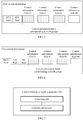
- FIG. 3 shows an example of a format of control information #A.
- the control information #A may include N control information fields.
- FIG. 3 does not show specific information of information carried in each control information field in the N control information fields, it can be learned based on the foregoing descriptions that n control information fields (that is, control information fields corresponding to n actual CB groups) in the N control information fields indicate that corresponding CB groups need to be sent (by a network device or a terminal device), and N-n control information fields in the N control information fields indicate that corresponding CB groups do not need to be sent (by the network device or the terminal device), or in other words, the N-n control information fields in the N control information fields indicate that corresponding CB groups do not exist. To avoid repetition, description of same or similar cases is omitted below.
- control information #A is merely an example for description. This application is not limited thereto.
- the control information #A may further include a field used to carry other information.
- FIG. 4 shows another example of a format of control information #A.
- the control information #A may further include an MCS field used to carry MCS information, where the MCS information may be used to indicate a modulation and coding scheme of a TB #A (specifically, CBs included in the TB #A).
- each control information field may be further used to indicate whether a corresponding CB group is retransmission data or initial transmission data.
- each control information field may be further used to indicate an RV version of a corresponding CB group.
- FIG. 5 shows still another example of a format of control information #A.
- the control information #A may further include an MCS field used to carry MCS information, and an NDI field used to indicate whether data carried in a TB #A is initial transmission data or retransmission data.
- the N control information fields may include a total of four bits.
- the N control information fields indicate that the TB #A includes only a CB group 1 (that is, a CB group corresponding to a first control information field in the N control information fields) and a CB group 2 (that is, a CB group corresponding to a second control information field in the N control information fields), but does not include a CB group 3 (that is, a CB group corresponding to a third control information field in the N control information fields) and a CB group 4 (that is, a CB group corresponding to a fourth control information field in the N control information fields).
- each control information field may be further used to indicate an RV version of a corresponding CB group.
- FIG. 6 shows still another example of a format of control information #A.
- the control information #A may further include an MCS field used to carry MCS information, an NDI field used to indicate whether data carried in a TB #A is initial transmission data or retransmission data, and an RV field used to carry an RV version of data carried in the TB #A.
- the network device may send the control information #A to the terminal device #A.
- the terminal device #A may determine, based on information carried in each control information field, whether a CB group corresponding to the control information field is to be sent (by the network device or the terminal device #A).
- the terminal device #A can determine, based on each control information field in the control information #A, whether each CB group in N CB groups (specifically, n theoretical CB groups) in the TB #A is to be sent or received; the terminal device #A can determine, based on each control information field in the control information #A, a quantity of CB groups in the TB #A that need to be sent or received; and the terminal device #A can determine, based on each control information field in the control information #A, which CB groups in the N CB groups (specifically, N theoretical CB groups) are CB groups that need to be actually sent (specifically, n actual CB groups).
- the N control information fields may be in a form of a bitmap (or bit mapping).
- the N control information fields include N bits, and each bit is corresponding to one control information field.
- the network device may determine, based on whether the CB group corresponding to the control information field i is to be sent or received, a bit (specifically, a bit value, for example, "1" or "0") on a bit corresponding to the control information field i.
- a receiving device of data (for example, n CB groups) indicated by the control information #A may send feedback information (marked as feedback information #A below for ease of understanding and description) for the n CB groups to a sending device of the data indicated by the control information #A.
- the feedback information #A may include N feedback information fields, and the N control information fields may be in a one-to-one correspondence with the N theoretical CB groups (that is, a maximum of N CB groups included in the TB #A).
- a feedback information field i in the N feedback information fields may be used to indicate whether a theoretical CB group corresponding to the feedback information field i is transmitted successfully (or decoded successfully).
- i ⁇ [1, N].
- each feedback information field may include one bit.
- the feedback information field #A may include N bits.
- the feedback information #A may include n feedback information fields, and the n control information fields may be in a one-to-one correspondence with the n actual CB groups (that is, n CB groups actually included in the TB #A).
- a feedback information field j in the n feedback information fields may be used to indicate whether an actual CB group corresponding to the feedback information field j is transmitted successfully (or decoded successfully), where j ⁇ [1, n].
- each feedback information field may include one bit.
- the feedback information field #A may include n bits.
- the N feedback information fields may be in a form of a bitmap (or bit mapping or a bitmap).
- the N feedback information fields include N bits, and each bit is corresponding to one feedback information field.
- a receiving device may determine, based on whether a CB group corresponding to the feedback information field i is decoded successfully, a bit (specifically, a bit value, for example, "1" or "0") on a bit corresponding to the feedback information field i.
- the maximum quantity N of CB groups included in each TB is specified and the network device generates, based on the quantity N, the control information including N control information fields, so that sizes of control information for all TBs are the same, or resources occupied by control information for all TBs are the same. This can ensure that a quantity of bits included in the control information remains fixed, and therefore can avoid a dynamic change in a quantity of bits in the control information, so as to reduce blind detection complexity of the terminal device, reduce processing burden of the terminal device, and improve user experience.
- FIG. 7 is a schematic block diagram of a control information sending apparatus 300 according to an embodiment of this application.
- the control information sending apparatus 300 may be corresponding to (for example, may be disposed on or is) the network device described in the method 200.
- modules or units of the control information sending apparatus 300 are configured to execute actions or processing processes executed by the network device described in the method 200.
- elaboration thereof is omitted.
- the apparatus 300 may include a processor and a transceiver, and the processor and the transceiver are communicatively connected.
- the apparatus 300 further includes a memory, and the memory and the processor are communicatively connected.
- the processor, the memory, and the transceiver may be communicatively connected.
- the memory may be configured to store an instruction, and the processor is configured to execute the instruction stored in the memory, so as to control the transceiver to send information or a signal.
- a processing unit in the apparatus 300 shown in FIG. 7 may be corresponding to the processor, and a communications unit in the apparatus 300 shown in FIG. 7 may be corresponding to the transceiver.
- FIG. 8 is a schematic block diagram of a control information receiving apparatus 400 according to an embodiment of this application.
- the control information receiving apparatus 400 may be corresponding to (for example, may be disposed on or is) the terminal device (for example, the terminal device #A) described in the method 200.
- modules or units of the control information receiving apparatus 400 are configured to execute actions or processing processes executed by the terminal device (for example, the terminal device #A) described in the method 200.
- elaboration thereof is omitted.
- the apparatus 400 may include a processor and a transceiver, and the processor and the transceiver are communicatively connected.
- the apparatus 400 further includes a memory, and the memory and the processor are communicatively connected.
- the processor, the memory, and the transceiver may be communicatively connected.
- the memory may be configured to store an instruction, and the processor is configured to execute the instruction stored in the memory, so as to control the transceiver to send information or a signal.
- a processing unit in the apparatus 400 shown in FIG. 8 may be corresponding to the processor, and a communications unit in the apparatus 400 shown in FIG. 8 may be corresponding to the transceiver.
- the processor may be an integrated circuit chip and has a signal processing capability.
- steps in the foregoing method embodiments can be implemented by using a hardware integrated logical circuit in the processor, or by using instructions in a form of software.
- the processor may be a general-purpose processor, a digital signal processor (Digital Signal Processor, DSP), an application-specific integrated circuit (Application-Specific Integrated Circuit, ASIC), a field programmable gate array (Field Programmable Gate Array, FPGA) or another programmable logic device, a discrete gate or transistor logic device, or a discrete hardware component.
- DSP Digital Signal Processor
- ASIC Application-Specific Integrated Circuit
- FPGA Field Programmable Gate Array
- the general-purpose processor may be a microprocessor, or the processor may be any conventional processor or the like. Steps of the methods disclosed with reference to the embodiments of this application may be directly executed and accomplished by using a hardware decoding processor, or may be executed and accomplished by using a combination of hardware and software modules in the decoding processor.
- the software modules may be located in a mature storage medium in the art, such as a random access memory, a flash memory, a read-only memory, a programmable read-only memory, an electrically erasable programmable memory, or a register. The storage medium is located in the memory, and a processor reads information in the memory and completes the steps in the foregoing methods in combination with hardware of the processor.
- the memory in the embodiments of this application may be a volatile memory or a nonvolatile memory, or may include a volatile memory and a nonvolatile memory.
- the nonvolatile memory may be a read-only memory (Read-Only Memory, ROM), a programmable read-only memory (Programmable ROM, PROM), an erasable programmable read-only memory (Erasable PROM, EPROM), an electrically erasable programmable read-only memory (Electrically EPROM, EEPROM), or a flash memory.
- the volatile memory may be a random access memory (Random Access Memory, RAM), and is used as an external cache.
- RAMs may be used, for example, a static random access memory (Static RAM, SRAM), a dynamic random access memory (Dynamic RAM, DRAM), a synchronous dynamic random access memory (Synchronous DRAM, SDRAM), a double data rate synchronous dynamic random access memory (Double Data Rate SDRAM, DDR SDRAM), an enhanced synchronous dynamic random access memory (Enhanced SDRAM, ESDRAM), a synchronous link dynamic random access memory (Synchlink DRAM, SLDRAM), and a direct rambus random access memory (Direct Rambus RAM, DR RAM).
- Static RAM static random access memory
- DRAM dynamic random access memory
- DRAM synchronous dynamic random access memory
- SDRAM double data rate synchronous dynamic random access memory
- Double Data Rate SDRAM Double Data Rate SDRAM
- ESDRAM enhanced synchronous dynamic random access memory
- Synchlink DRAM synchronous link dynamic random access memory
- Direct Rambus RAM Direct Rambus RAM
- sequence numbers of the foregoing processes do not mean execution sequences in various embodiments of this application.
- the execution sequences of the processes should be determined based on functions and internal logic of the processes, and should not be construed as any limitation on the implementation processes of the embodiments of this application.
- the disclosed system, apparatus, and method may be implemented in other manners.
- the described apparatus embodiment is merely an example.
- the unit division is merely logical function division and may be other division in actual implementation.
- a plurality of units or components may be combined or integrated into another system, or some features may be ignored or may not be performed.
- the displayed or discussed mutual couplings or direct couplings or communication connections may be implemented by using some interfaces.
- the indirect couplings or communication connections between the apparatuses or units may be implemented in electrical, mechanical, or other forms.
- the units described as separate parts may or may not be physically separate, and parts displayed as units may or may not be physical units, may be located in one position, or may be distributed on a plurality of network units. Some or all of the units may be selected based on actual requirements to achieve the objectives of the solutions of the embodiments.
- the functions When the functions are implemented in a form of a software functional unit and sold or used as an independent product, the functions may be stored in a computer readable storage medium. Based on such an understanding, the technical solutions of this application essentially, or the part contributing to the prior art, or some of the technical solutions may be implemented in a form of a software product.
- the software product is stored in a storage medium, and includes several instructions for instructing a computer device (which may be a personal computer, a server, or a network device) to perform all or some of the steps of the methods described in the embodiments of this application.
- the foregoing storage medium includes any medium that can store program code, such as a USB flash drive, a removable hard disk, a read-only memory (Read-Only Memory, ROM), a random access memory (Random Access Memory, RAM), a magnetic disk, or an optical disc.
- program code such as a USB flash drive, a removable hard disk, a read-only memory (Read-Only Memory, ROM), a random access memory (Random Access Memory, RAM), a magnetic disk, or an optical disc.
Landscapes
- Engineering & Computer Science (AREA)
- Signal Processing (AREA)
- Computer Networks & Wireless Communication (AREA)
- Quality & Reliability (AREA)
- Mobile Radio Communication Systems (AREA)
- Detection And Prevention Of Errors In Transmission (AREA)
Applications Claiming Priority (2)
| Application Number | Priority Date | Filing Date | Title |
|---|---|---|---|
| CN201611264483.1A CN108270513B (zh) | 2016-12-30 | 2016-12-30 | 发送控制信息的方法和装置及接收控制信息的方法和装置 |
| PCT/CN2017/115376 WO2018121227A1 (fr) | 2016-12-30 | 2017-12-11 | Procédé et appareil d'émission d'informations de commande et procédé et appareil de réception d'informations de commande |
Publications (3)
| Publication Number | Publication Date |
|---|---|
| EP3565149A1 true EP3565149A1 (fr) | 2019-11-06 |
| EP3565149A4 EP3565149A4 (fr) | 2019-12-18 |
| EP3565149B1 EP3565149B1 (fr) | 2022-03-02 |
Family
ID=62707857
Family Applications (1)
| Application Number | Title | Priority Date | Filing Date |
|---|---|---|---|
| EP17888699.0A Active EP3565149B1 (fr) | 2016-12-30 | 2017-12-11 | Procédé et appareil d'émission d'informations de commande et procédé et appareil de réception d'informations de commande |
Country Status (9)
| Country | Link |
|---|---|
| US (1) | US11012192B2 (fr) |
| EP (1) | EP3565149B1 (fr) |
| JP (1) | JP2020507238A (fr) |
| KR (1) | KR20190097272A (fr) |
| CN (1) | CN108270513B (fr) |
| AU (1) | AU2017386695B2 (fr) |
| BR (1) | BR112019013382A2 (fr) |
| RU (1) | RU2019123842A (fr) |
| WO (1) | WO2018121227A1 (fr) |
Families Citing this family (6)
| Publication number | Priority date | Publication date | Assignee | Title |
|---|---|---|---|---|
| JP2020511820A (ja) * | 2017-02-22 | 2020-04-16 | オッポ広東移動通信有限公司Guangdong Oppo Mobile Telecommunications Corp., Ltd. | 情報伝送のための方法及びデバイス |
| US11012221B2 (en) | 2017-03-08 | 2021-05-18 | Lg Electronics Inc. | Method and apparatus for transmitting and receiving radio signals in a wireless communication system |
| CN110839291B (zh) * | 2018-08-19 | 2024-02-02 | 华为技术有限公司 | 传输下行控制信息的方法和装置 |
| CN111262608B (zh) * | 2018-12-03 | 2022-04-12 | 华为技术有限公司 | 信道测量的配置方法及通信装置 |
| CN110958100A (zh) * | 2019-10-30 | 2020-04-03 | 中国安全生产科学研究院 | 一种设备控制方法及装置 |
| WO2022027205A1 (fr) | 2020-08-03 | 2022-02-10 | 华为技术有限公司 | Procédé, appareil et système de communication à courte distance |
Family Cites Families (23)
| Publication number | Priority date | Publication date | Assignee | Title |
|---|---|---|---|---|
| CN101127748A (zh) * | 2006-08-15 | 2008-02-20 | 大唐移动通信设备有限公司 | Ofdm移动通信系统中上行同步命令字的发送方法及装置 |
| US8234551B2 (en) * | 2007-11-02 | 2012-07-31 | Broadcom Corporation | Single CRC polynomial for both turbo code block CRC and transport block CRC |
| EP2383920B1 (fr) * | 2007-12-20 | 2014-07-30 | Optis Wireless Technology, LLC | Signalisation de canal de contrôle utilisant un champ de signalisation commun pour le format de transport et la version de redondance |
| WO2009096658A1 (fr) * | 2008-01-31 | 2009-08-06 | Lg Electronics Inc. | Procédé de détermination de taille de bloc de transport et procédé de transmission de signaux utilisant ledit procédé |
| CN101615986A (zh) * | 2008-06-27 | 2009-12-30 | 华为技术有限公司 | 一种数据传输方法、装置及通信系统 |
| CN102106098B (zh) * | 2009-02-27 | 2014-04-02 | 华为技术有限公司 | 一种信息传输方法及装置 |
| EP2234308A1 (fr) * | 2009-03-23 | 2010-09-29 | Panasonic Corporation | Signalisation de mode de retransmission dans un système de communication sans fil |
| EP2413627A4 (fr) * | 2009-03-25 | 2015-01-21 | Fujitsu Ltd | Système de radiocommunication, dispositif de station mobile, dispositif de station de base et procédé de radiocommunication dans le système de radiocommunication |
| CN101699780B (zh) * | 2009-10-30 | 2012-12-19 | 上海华为技术有限公司 | 一种数据传输方法、用户设备、基站及数据传输系统 |
| CN101808016B (zh) * | 2010-03-02 | 2012-12-26 | 河海大学常州校区 | IPv6下DiffServ区域端到端网络性能的快速测量方法及系统 |
| US8610551B2 (en) * | 2010-11-05 | 2013-12-17 | Komatsu Ltd. | Vehicle status notification device and a vehicle status notification method for a construction machine |
| KR101923440B1 (ko) * | 2011-02-15 | 2018-11-29 | 엘지전자 주식회사 | 무선접속시스템에서 채널품질제어정보 전송방법 및 장치 |
| CN103037513B (zh) * | 2011-09-30 | 2016-08-03 | 上海贝尔股份有限公司 | 增强下行控制信息以提高系统频谱效率的方法 |
| US9160485B2 (en) * | 2012-12-03 | 2015-10-13 | Lg Electronics Inc. | Method and apparatus for encoding transport block |
| CN105281868B (zh) * | 2014-07-10 | 2018-05-22 | 普天信息技术有限公司 | 一种基于码块分组的发送方法及装置 |
| CN105515733B (zh) * | 2014-09-24 | 2019-03-12 | 中兴通讯股份有限公司 | 一种反馈方法及装置 |
| JP6744065B2 (ja) | 2014-12-25 | 2020-08-19 | 一般財団法人電力中央研究所 | 工業用油の劣化評価方法及び工業用油の劣化評価システム |
| US9992004B2 (en) * | 2015-02-03 | 2018-06-05 | Qualcomm Incorporated | Code block cluster level HARQ |
| US9729422B2 (en) * | 2015-03-13 | 2017-08-08 | Cisco Technology, Inc. | Trace feature across the network (depth and breadth)-wise |
| TWI823214B (zh) * | 2015-08-25 | 2023-11-21 | 美商內數位專利控股公司 | 無線傳輸/接收單元及由其執行的方法 |
| JP7157512B2 (ja) * | 2016-06-20 | 2022-10-20 | 株式会社Nttドコモ | 端末、無線通信方法、基地局及びシステム |
| WO2018084488A1 (fr) * | 2016-11-01 | 2018-05-11 | 엘지전자 주식회사 | Procédé de transmission d'informations de commande de liaison descendante à variation de taille dynamique dans un système de communication sans fil et dispositif correspondant |
| CN108023721B (zh) * | 2016-11-04 | 2021-02-09 | 华为技术有限公司 | 一种数据传输方法和装置 |
-
2016
- 2016-12-30 CN CN201611264483.1A patent/CN108270513B/zh active Active
-
2017
- 2017-12-11 EP EP17888699.0A patent/EP3565149B1/fr active Active
- 2017-12-11 RU RU2019123842A patent/RU2019123842A/ru not_active Application Discontinuation
- 2017-12-11 KR KR1020197022467A patent/KR20190097272A/ko not_active Abandoned
- 2017-12-11 JP JP2019535752A patent/JP2020507238A/ja active Pending
- 2017-12-11 AU AU2017386695A patent/AU2017386695B2/en not_active Expired - Fee Related
- 2017-12-11 BR BR112019013382A patent/BR112019013382A2/pt not_active IP Right Cessation
- 2017-12-11 WO PCT/CN2017/115376 patent/WO2018121227A1/fr not_active Ceased
-
2019
- 2019-06-28 US US16/456,859 patent/US11012192B2/en active Active
Also Published As
| Publication number | Publication date |
|---|---|
| KR20190097272A (ko) | 2019-08-20 |
| BR112019013382A2 (pt) | 2019-12-17 |
| AU2017386695B2 (en) | 2020-11-19 |
| AU2017386695A1 (en) | 2019-07-25 |
| RU2019123842A (ru) | 2021-02-02 |
| WO2018121227A1 (fr) | 2018-07-05 |
| RU2019123842A3 (fr) | 2021-02-02 |
| JP2020507238A (ja) | 2020-03-05 |
| US20190334656A1 (en) | 2019-10-31 |
| CN108270513B (zh) | 2024-01-19 |
| US11012192B2 (en) | 2021-05-18 |
| CN108270513A (zh) | 2018-07-10 |
| EP3565149A4 (fr) | 2019-12-18 |
| EP3565149B1 (fr) | 2022-03-02 |
Similar Documents
| Publication | Publication Date | Title |
|---|---|---|
| EP3998734B1 (fr) | Procédé d'envoi d'indication de configuration de transmission (tci), dispositif côté réseau et dispositif terminal | |
| US11012192B2 (en) | Control information sending method and apparatus, and control information receiving method and apparatus | |
| US12309791B2 (en) | Method and device for transmitting uplink signal | |
| US11051302B2 (en) | Wireless communication method and device, chip, and system | |
| US10932251B2 (en) | Data receiving method and apparatus thereof, and data sending method and apparatus thereof | |
| US11218999B2 (en) | Method and apparatus for sending uplink control channel | |
| US11108502B2 (en) | Information sending method and apparatus and information receiving method and apparatus | |
| AU2018369067A1 (en) | Downlink control information determination method and communication device | |
| EP3531595A1 (fr) | Procédé et appareil d'envoi d'informations de commande et procédé et appareil pour recevoir des informations de commande | |
| WO2018171603A1 (fr) | Procédé d'envoi de données et appareil associé, et procédé de réception de données et appareil associé | |
| US20210194637A1 (en) | Method for determining harq-ack codebook, terminal device and network device | |
| CN112119595B (zh) | 一种信号加扰方法及装置、通信设备 | |
| US11064487B2 (en) | Radio communication method and device | |
| US11153897B2 (en) | Data transmission method and apparatus | |
| US20190260612A1 (en) | Method for transmitting sounding reference signal, network device, and terminal device | |
| CN116671204B (zh) | 无线通信的方法和装置 | |
| CN108270521B (zh) | 发送数据的方法和装置及接收数据的方法和装置 |
Legal Events
| Date | Code | Title | Description |
|---|---|---|---|
| STAA | Information on the status of an ep patent application or granted ep patent |
Free format text: STATUS: THE INTERNATIONAL PUBLICATION HAS BEEN MADE |
|
| PUAI | Public reference made under article 153(3) epc to a published international application that has entered the european phase |
Free format text: ORIGINAL CODE: 0009012 |
|
| STAA | Information on the status of an ep patent application or granted ep patent |
Free format text: STATUS: REQUEST FOR EXAMINATION WAS MADE |
|
| 17P | Request for examination filed |
Effective date: 20190729 |
|
| AK | Designated contracting states |
Kind code of ref document: A1 Designated state(s): AL AT BE BG CH CY CZ DE DK EE ES FI FR GB GR HR HU IE IS IT LI LT LU LV MC MK MT NL NO PL PT RO RS SE SI SK SM TR |
|
| AX | Request for extension of the european patent |
Extension state: BA ME |
|
| A4 | Supplementary search report drawn up and despatched |
Effective date: 20191118 |
|
| RIC1 | Information provided on ipc code assigned before grant |
Ipc: H04L 1/00 20060101AFI20191112BHEP Ipc: H04L 1/18 20060101ALI20191112BHEP Ipc: H04L 5/00 20060101ALI20191112BHEP Ipc: H04L 1/16 20060101ALI20191112BHEP |
|
| DAV | Request for validation of the european patent (deleted) | ||
| DAX | Request for extension of the european patent (deleted) | ||
| STAA | Information on the status of an ep patent application or granted ep patent |
Free format text: STATUS: EXAMINATION IS IN PROGRESS |
|
| 17Q | First examination report despatched |
Effective date: 20200828 |
|
| GRAP | Despatch of communication of intention to grant a patent |
Free format text: ORIGINAL CODE: EPIDOSNIGR1 |
|
| STAA | Information on the status of an ep patent application or granted ep patent |
Free format text: STATUS: GRANT OF PATENT IS INTENDED |
|
| INTG | Intention to grant announced |
Effective date: 20210917 |
|
| GRAS | Grant fee paid |
Free format text: ORIGINAL CODE: EPIDOSNIGR3 |
|
| GRAA | (expected) grant |
Free format text: ORIGINAL CODE: 0009210 |
|
| STAA | Information on the status of an ep patent application or granted ep patent |
Free format text: STATUS: THE PATENT HAS BEEN GRANTED |
|
| AK | Designated contracting states |
Kind code of ref document: B1 Designated state(s): AL AT BE BG CH CY CZ DE DK EE ES FI FR GB GR HR HU IE IS IT LI LT LU LV MC MK MT NL NO PL PT RO RS SE SI SK SM TR |
|
| REG | Reference to a national code |
Ref country code: GB Ref legal event code: FG4D |
|
| REG | Reference to a national code |
Ref country code: CH Ref legal event code: EP Ref country code: AT Ref legal event code: REF Ref document number: 1473125 Country of ref document: AT Kind code of ref document: T Effective date: 20220315 |
|
| REG | Reference to a national code |
Ref country code: DE Ref legal event code: R096 Ref document number: 602017054216 Country of ref document: DE |
|
| REG | Reference to a national code |
Ref country code: IE Ref legal event code: FG4D |
|
| REG | Reference to a national code |
Ref country code: LT Ref legal event code: MG9D |
|
| REG | Reference to a national code |
Ref country code: NL Ref legal event code: MP Effective date: 20220302 |
|
| PG25 | Lapsed in a contracting state [announced via postgrant information from national office to epo] |
Ref country code: SE Free format text: LAPSE BECAUSE OF FAILURE TO SUBMIT A TRANSLATION OF THE DESCRIPTION OR TO PAY THE FEE WITHIN THE PRESCRIBED TIME-LIMIT Effective date: 20220302 Ref country code: RS Free format text: LAPSE BECAUSE OF FAILURE TO SUBMIT A TRANSLATION OF THE DESCRIPTION OR TO PAY THE FEE WITHIN THE PRESCRIBED TIME-LIMIT Effective date: 20220302 Ref country code: NO Free format text: LAPSE BECAUSE OF FAILURE TO SUBMIT A TRANSLATION OF THE DESCRIPTION OR TO PAY THE FEE WITHIN THE PRESCRIBED TIME-LIMIT Effective date: 20220602 Ref country code: LT Free format text: LAPSE BECAUSE OF FAILURE TO SUBMIT A TRANSLATION OF THE DESCRIPTION OR TO PAY THE FEE WITHIN THE PRESCRIBED TIME-LIMIT Effective date: 20220302 Ref country code: HR Free format text: LAPSE BECAUSE OF FAILURE TO SUBMIT A TRANSLATION OF THE DESCRIPTION OR TO PAY THE FEE WITHIN THE PRESCRIBED TIME-LIMIT Effective date: 20220302 Ref country code: ES Free format text: LAPSE BECAUSE OF FAILURE TO SUBMIT A TRANSLATION OF THE DESCRIPTION OR TO PAY THE FEE WITHIN THE PRESCRIBED TIME-LIMIT Effective date: 20220302 Ref country code: BG Free format text: LAPSE BECAUSE OF FAILURE TO SUBMIT A TRANSLATION OF THE DESCRIPTION OR TO PAY THE FEE WITHIN THE PRESCRIBED TIME-LIMIT Effective date: 20220602 |
|
| REG | Reference to a national code |
Ref country code: AT Ref legal event code: MK05 Ref document number: 1473125 Country of ref document: AT Kind code of ref document: T Effective date: 20220302 |
|
| PG25 | Lapsed in a contracting state [announced via postgrant information from national office to epo] |
Ref country code: PL Free format text: LAPSE BECAUSE OF FAILURE TO SUBMIT A TRANSLATION OF THE DESCRIPTION OR TO PAY THE FEE WITHIN THE PRESCRIBED TIME-LIMIT Effective date: 20220302 Ref country code: LV Free format text: LAPSE BECAUSE OF FAILURE TO SUBMIT A TRANSLATION OF THE DESCRIPTION OR TO PAY THE FEE WITHIN THE PRESCRIBED TIME-LIMIT Effective date: 20220302 Ref country code: GR Free format text: LAPSE BECAUSE OF FAILURE TO SUBMIT A TRANSLATION OF THE DESCRIPTION OR TO PAY THE FEE WITHIN THE PRESCRIBED TIME-LIMIT Effective date: 20220603 Ref country code: FI Free format text: LAPSE BECAUSE OF FAILURE TO SUBMIT A TRANSLATION OF THE DESCRIPTION OR TO PAY THE FEE WITHIN THE PRESCRIBED TIME-LIMIT Effective date: 20220302 |
|
| PG25 | Lapsed in a contracting state [announced via postgrant information from national office to epo] |
Ref country code: NL Free format text: LAPSE BECAUSE OF FAILURE TO SUBMIT A TRANSLATION OF THE DESCRIPTION OR TO PAY THE FEE WITHIN THE PRESCRIBED TIME-LIMIT Effective date: 20220302 |
|
| PG25 | Lapsed in a contracting state [announced via postgrant information from national office to epo] |
Ref country code: SM Free format text: LAPSE BECAUSE OF FAILURE TO SUBMIT A TRANSLATION OF THE DESCRIPTION OR TO PAY THE FEE WITHIN THE PRESCRIBED TIME-LIMIT Effective date: 20220302 Ref country code: SK Free format text: LAPSE BECAUSE OF FAILURE TO SUBMIT A TRANSLATION OF THE DESCRIPTION OR TO PAY THE FEE WITHIN THE PRESCRIBED TIME-LIMIT Effective date: 20220302 Ref country code: RO Free format text: LAPSE BECAUSE OF FAILURE TO SUBMIT A TRANSLATION OF THE DESCRIPTION OR TO PAY THE FEE WITHIN THE PRESCRIBED TIME-LIMIT Effective date: 20220302 Ref country code: PT Free format text: LAPSE BECAUSE OF FAILURE TO SUBMIT A TRANSLATION OF THE DESCRIPTION OR TO PAY THE FEE WITHIN THE PRESCRIBED TIME-LIMIT Effective date: 20220704 Ref country code: EE Free format text: LAPSE BECAUSE OF FAILURE TO SUBMIT A TRANSLATION OF THE DESCRIPTION OR TO PAY THE FEE WITHIN THE PRESCRIBED TIME-LIMIT Effective date: 20220302 Ref country code: CZ Free format text: LAPSE BECAUSE OF FAILURE TO SUBMIT A TRANSLATION OF THE DESCRIPTION OR TO PAY THE FEE WITHIN THE PRESCRIBED TIME-LIMIT Effective date: 20220302 Ref country code: AT Free format text: LAPSE BECAUSE OF FAILURE TO SUBMIT A TRANSLATION OF THE DESCRIPTION OR TO PAY THE FEE WITHIN THE PRESCRIBED TIME-LIMIT Effective date: 20220302 |
|
| PG25 | Lapsed in a contracting state [announced via postgrant information from national office to epo] |
Ref country code: IS Free format text: LAPSE BECAUSE OF FAILURE TO SUBMIT A TRANSLATION OF THE DESCRIPTION OR TO PAY THE FEE WITHIN THE PRESCRIBED TIME-LIMIT Effective date: 20220702 Ref country code: AL Free format text: LAPSE BECAUSE OF FAILURE TO SUBMIT A TRANSLATION OF THE DESCRIPTION OR TO PAY THE FEE WITHIN THE PRESCRIBED TIME-LIMIT Effective date: 20220302 |
|
| REG | Reference to a national code |
Ref country code: DE Ref legal event code: R097 Ref document number: 602017054216 Country of ref document: DE |
|
| PLBE | No opposition filed within time limit |
Free format text: ORIGINAL CODE: 0009261 |
|
| STAA | Information on the status of an ep patent application or granted ep patent |
Free format text: STATUS: NO OPPOSITION FILED WITHIN TIME LIMIT |
|
| PG25 | Lapsed in a contracting state [announced via postgrant information from national office to epo] |
Ref country code: DK Free format text: LAPSE BECAUSE OF FAILURE TO SUBMIT A TRANSLATION OF THE DESCRIPTION OR TO PAY THE FEE WITHIN THE PRESCRIBED TIME-LIMIT Effective date: 20220302 |
|
| 26N | No opposition filed |
Effective date: 20221205 |
|
| PG25 | Lapsed in a contracting state [announced via postgrant information from national office to epo] |
Ref country code: SI Free format text: LAPSE BECAUSE OF FAILURE TO SUBMIT A TRANSLATION OF THE DESCRIPTION OR TO PAY THE FEE WITHIN THE PRESCRIBED TIME-LIMIT Effective date: 20220302 |
|
| REG | Reference to a national code |
Ref country code: DE Ref legal event code: R119 Ref document number: 602017054216 Country of ref document: DE |
|
| PG25 | Lapsed in a contracting state [announced via postgrant information from national office to epo] |
Ref country code: IT Free format text: LAPSE BECAUSE OF FAILURE TO SUBMIT A TRANSLATION OF THE DESCRIPTION OR TO PAY THE FEE WITHIN THE PRESCRIBED TIME-LIMIT Effective date: 20220302 |
|
| REG | Reference to a national code |
Ref country code: CH Ref legal event code: PL |
|
| REG | Reference to a national code |
Ref country code: BE Ref legal event code: MM Effective date: 20221231 |
|
| PG25 | Lapsed in a contracting state [announced via postgrant information from national office to epo] |
Ref country code: LU Free format text: LAPSE BECAUSE OF NON-PAYMENT OF DUE FEES Effective date: 20221211 |
|
| PG25 | Lapsed in a contracting state [announced via postgrant information from national office to epo] |
Ref country code: LI Free format text: LAPSE BECAUSE OF NON-PAYMENT OF DUE FEES Effective date: 20221231 Ref country code: IE Free format text: LAPSE BECAUSE OF NON-PAYMENT OF DUE FEES Effective date: 20221211 Ref country code: DE Free format text: LAPSE BECAUSE OF NON-PAYMENT OF DUE FEES Effective date: 20230701 Ref country code: CH Free format text: LAPSE BECAUSE OF NON-PAYMENT OF DUE FEES Effective date: 20221231 |
|
| PG25 | Lapsed in a contracting state [announced via postgrant information from national office to epo] |
Ref country code: FR Free format text: LAPSE BECAUSE OF NON-PAYMENT OF DUE FEES Effective date: 20221231 Ref country code: BE Free format text: LAPSE BECAUSE OF NON-PAYMENT OF DUE FEES Effective date: 20221231 |
|
| PG25 | Lapsed in a contracting state [announced via postgrant information from national office to epo] |
Ref country code: HU Free format text: LAPSE BECAUSE OF FAILURE TO SUBMIT A TRANSLATION OF THE DESCRIPTION OR TO PAY THE FEE WITHIN THE PRESCRIBED TIME-LIMIT; INVALID AB INITIO Effective date: 20171211 |
|
| PG25 | Lapsed in a contracting state [announced via postgrant information from national office to epo] |
Ref country code: CY Free format text: LAPSE BECAUSE OF FAILURE TO SUBMIT A TRANSLATION OF THE DESCRIPTION OR TO PAY THE FEE WITHIN THE PRESCRIBED TIME-LIMIT Effective date: 20220302 |
|
| PG25 | Lapsed in a contracting state [announced via postgrant information from national office to epo] |
Ref country code: MK Free format text: LAPSE BECAUSE OF FAILURE TO SUBMIT A TRANSLATION OF THE DESCRIPTION OR TO PAY THE FEE WITHIN THE PRESCRIBED TIME-LIMIT Effective date: 20220302 |
|
| PG25 | Lapsed in a contracting state [announced via postgrant information from national office to epo] |
Ref country code: MC Free format text: LAPSE BECAUSE OF FAILURE TO SUBMIT A TRANSLATION OF THE DESCRIPTION OR TO PAY THE FEE WITHIN THE PRESCRIBED TIME-LIMIT Effective date: 20220302 |
|
| PG25 | Lapsed in a contracting state [announced via postgrant information from national office to epo] |
Ref country code: MC Free format text: LAPSE BECAUSE OF FAILURE TO SUBMIT A TRANSLATION OF THE DESCRIPTION OR TO PAY THE FEE WITHIN THE PRESCRIBED TIME-LIMIT Effective date: 20220302 |
|
| PG25 | Lapsed in a contracting state [announced via postgrant information from national office to epo] |
Ref country code: MT Free format text: LAPSE BECAUSE OF FAILURE TO SUBMIT A TRANSLATION OF THE DESCRIPTION OR TO PAY THE FEE WITHIN THE PRESCRIBED TIME-LIMIT Effective date: 20220302 |
|
| PG25 | Lapsed in a contracting state [announced via postgrant information from national office to epo] |
Ref country code: TR Free format text: LAPSE BECAUSE OF FAILURE TO SUBMIT A TRANSLATION OF THE DESCRIPTION OR TO PAY THE FEE WITHIN THE PRESCRIBED TIME-LIMIT Effective date: 20220302 |
|
| PGFP | Annual fee paid to national office [announced via postgrant information from national office to epo] |
Ref country code: GB Payment date: 20251030 Year of fee payment: 9 |