EP3566719A1 - Compositions et procédés pour le traitement de maladies auto-immunes et d'autres maladies - Google Patents
Compositions et procédés pour le traitement de maladies auto-immunes et d'autres maladies Download PDFInfo
- Publication number
- EP3566719A1 EP3566719A1 EP19165905.1A EP19165905A EP3566719A1 EP 3566719 A1 EP3566719 A1 EP 3566719A1 EP 19165905 A EP19165905 A EP 19165905A EP 3566719 A1 EP3566719 A1 EP 3566719A1
- Authority
- EP
- European Patent Office
- Prior art keywords
- cdp
- conjugate
- particle
- composition
- therapeutic agent
- Prior art date
- Legal status (The legal status is an assumption and is not a legal conclusion. Google has not performed a legal analysis and makes no representation as to the accuracy of the status listed.)
- Withdrawn
Links
- 238000000034 method Methods 0.000 title claims abstract description 77
- 208000037265 diseases, disorders, signs and symptoms Diseases 0.000 title claims description 18
- 201000010099 disease Diseases 0.000 title claims description 7
- 239000000203 mixture Substances 0.000 title abstract description 707
- 238000011282 treatment Methods 0.000 title abstract description 7
- 230000001363 autoimmune Effects 0.000 title 1
- 239000003814 drug Substances 0.000 claims abstract description 282
- 229940124597 therapeutic agent Drugs 0.000 claims abstract description 272
- 206010028980 Neoplasm Diseases 0.000 claims abstract description 72
- 201000011510 cancer Diseases 0.000 claims abstract description 61
- 208000023275 Autoimmune disease Diseases 0.000 claims abstract description 60
- 206010025135 lupus erythematosus Diseases 0.000 claims description 75
- 229920000642 polymer Polymers 0.000 claims description 74
- HFHDHCJBZVLPGP-UHFFFAOYSA-N schardinger α-dextrin Chemical compound O1C(C(C2O)O)C(CO)OC2OC(C(C2O)O)C(CO)OC2OC(C(C2O)O)C(CO)OC2OC(C(O)C2O)C(CO)OC2OC(C(C2O)O)C(CO)OC2OC2C(O)C(O)C1OC2CO HFHDHCJBZVLPGP-UHFFFAOYSA-N 0.000 claims description 57
- 229960005277 gemcitabine Drugs 0.000 claims description 48
- 229960005079 pemetrexed Drugs 0.000 claims description 48
- 229920000858 Cyclodextrin Polymers 0.000 claims description 25
- 206010006187 Breast cancer Diseases 0.000 claims description 21
- 206010058467 Lung neoplasm malignant Diseases 0.000 claims description 19
- 201000005202 lung cancer Diseases 0.000 claims description 19
- 208000020816 lung neoplasm Diseases 0.000 claims description 19
- 206010033128 Ovarian cancer Diseases 0.000 claims description 18
- 206010061535 Ovarian neoplasm Diseases 0.000 claims description 18
- 208000007097 Urinary Bladder Neoplasms Diseases 0.000 claims description 18
- 208000026310 Breast neoplasm Diseases 0.000 claims description 16
- 208000005718 Stomach Neoplasms Diseases 0.000 claims description 16
- 206010017758 gastric cancer Diseases 0.000 claims description 16
- 201000011549 stomach cancer Diseases 0.000 claims description 16
- 239000002105 nanoparticle Substances 0.000 claims description 15
- 206010009944 Colon cancer Diseases 0.000 claims description 14
- 206010005003 Bladder cancer Diseases 0.000 claims description 13
- 208000001333 Colorectal Neoplasms Diseases 0.000 claims description 13
- 208000022559 Inflammatory bowel disease Diseases 0.000 claims description 13
- 201000004681 Psoriasis Diseases 0.000 claims description 13
- 206010003246 arthritis Diseases 0.000 claims description 13
- 201000006417 multiple sclerosis Diseases 0.000 claims description 13
- 201000008482 osteoarthritis Diseases 0.000 claims description 13
- 201000005112 urinary bladder cancer Diseases 0.000 claims description 13
- DHMQDGOQFOQNFH-UHFFFAOYSA-N Glycine Chemical compound NCC(O)=O DHMQDGOQFOQNFH-UHFFFAOYSA-N 0.000 claims description 12
- 206010025323 Lymphomas Diseases 0.000 claims description 12
- 206010061902 Pancreatic neoplasm Diseases 0.000 claims description 12
- 208000015486 malignant pancreatic neoplasm Diseases 0.000 claims description 12
- 201000002528 pancreatic cancer Diseases 0.000 claims description 12
- 208000008443 pancreatic carcinoma Diseases 0.000 claims description 12
- 206010017993 Gastrointestinal neoplasms Diseases 0.000 claims description 11
- 208000032839 leukemia Diseases 0.000 claims description 11
- 208000024313 Testicular Neoplasms Diseases 0.000 claims description 9
- 206010057644 Testis cancer Diseases 0.000 claims description 9
- 201000003120 testicular cancer Diseases 0.000 claims description 9
- GHASVSINZRGABV-UHFFFAOYSA-N Fluorouracil Chemical compound FC1=CNC(=O)NC1=O GHASVSINZRGABV-UHFFFAOYSA-N 0.000 claims description 8
- VJJPUSNTGOMMGY-MRVIYFEKSA-N etoposide Chemical compound COC1=C(O)C(OC)=CC([C@@H]2C3=CC=4OCOC=4C=C3[C@@H](O[C@H]3[C@@H]([C@@H](O)[C@@H]4O[C@H](C)OC[C@H]4O3)O)[C@@H]3[C@@H]2C(OC3)=O)=C1 VJJPUSNTGOMMGY-MRVIYFEKSA-N 0.000 claims description 8
- 229960002949 fluorouracil Drugs 0.000 claims description 8
- 229960005420 etoposide Drugs 0.000 claims description 7
- 208000014829 head and neck neoplasm Diseases 0.000 claims description 7
- 208000006168 Ewing Sarcoma Diseases 0.000 claims description 6
- 239000004471 Glycine Substances 0.000 claims description 6
- XUJNEKJLAYXESH-REOHCLBHSA-N L-Cysteine Chemical compound SC[C@H](N)C(O)=O XUJNEKJLAYXESH-REOHCLBHSA-N 0.000 claims description 6
- WHUUTDBJXJRKMK-VKHMYHEASA-N L-glutamic acid Chemical compound OC(=O)[C@@H](N)CCC(O)=O WHUUTDBJXJRKMK-VKHMYHEASA-N 0.000 claims description 6
- 208000001894 Nasopharyngeal Neoplasms Diseases 0.000 claims description 6
- 206010061306 Nasopharyngeal cancer Diseases 0.000 claims description 6
- 206010060862 Prostate cancer Diseases 0.000 claims description 6
- 208000000236 Prostatic Neoplasms Diseases 0.000 claims description 6
- 235000018417 cysteine Nutrition 0.000 claims description 6
- XUJNEKJLAYXESH-UHFFFAOYSA-N cysteine Natural products SCC(N)C(O)=O XUJNEKJLAYXESH-UHFFFAOYSA-N 0.000 claims description 6
- 208000026037 malignant tumor of neck Diseases 0.000 claims description 6
- 210000003061 neural cell Anatomy 0.000 claims description 6
- 230000001537 neural effect Effects 0.000 claims description 6
- 210000004498 neuroglial cell Anatomy 0.000 claims description 6
- 208000035895 Guillain-Barré syndrome Diseases 0.000 claims description 4
- 206010049567 Miller Fisher syndrome Diseases 0.000 claims description 4
- SDUQYLNIPVEERB-QPPQHZFASA-N gemcitabine Chemical compound O=C1N=C(N)C=CN1[C@H]1C(F)(F)[C@H](O)[C@@H](CO)O1 SDUQYLNIPVEERB-QPPQHZFASA-N 0.000 claims description 4
- 208000007465 Giant cell arteritis Diseases 0.000 claims description 3
- 206010047115 Vasculitis Diseases 0.000 claims description 3
- 206010043207 temporal arteritis Diseases 0.000 claims description 3
- 206010001935 American trypanosomiasis Diseases 0.000 claims description 2
- 206010002556 Ankylosing Spondylitis Diseases 0.000 claims description 2
- 208000023328 Basedow disease Diseases 0.000 claims description 2
- 208000008439 Biliary Liver Cirrhosis Diseases 0.000 claims description 2
- 208000033222 Biliary cirrhosis primary Diseases 0.000 claims description 2
- 208000024699 Chagas disease Diseases 0.000 claims description 2
- 208000006545 Chronic Obstructive Pulmonary Disease Diseases 0.000 claims description 2
- 201000009273 Endometriosis Diseases 0.000 claims description 2
- 208000024869 Goodpasture syndrome Diseases 0.000 claims description 2
- 206010072579 Granulomatosis with polyangiitis Diseases 0.000 claims description 2
- 208000015023 Graves' disease Diseases 0.000 claims description 2
- 206010021245 Idiopathic thrombocytopenic purpura Diseases 0.000 claims description 2
- 208000010159 IgA glomerulonephritis Diseases 0.000 claims description 2
- 206010021263 IgA nephropathy Diseases 0.000 claims description 2
- 208000000209 Isaacs syndrome Diseases 0.000 claims description 2
- 208000011200 Kawasaki disease Diseases 0.000 claims description 2
- 208000000185 Localized scleroderma Diseases 0.000 claims description 2
- 208000003250 Mixed connective tissue disease Diseases 0.000 claims description 2
- 206010027982 Morphoea Diseases 0.000 claims description 2
- 206010072359 Neuromyotonia Diseases 0.000 claims description 2
- 201000011152 Pemphigus Diseases 0.000 claims description 2
- 208000031845 Pernicious anaemia Diseases 0.000 claims description 2
- 206010065159 Polychondritis Diseases 0.000 claims description 2
- 208000012654 Primary biliary cholangitis Diseases 0.000 claims description 2
- 201000001263 Psoriatic Arthritis Diseases 0.000 claims description 2
- 208000036824 Psoriatic arthropathy Diseases 0.000 claims description 2
- 206010039710 Scleroderma Diseases 0.000 claims description 2
- 208000021386 Sjogren Syndrome Diseases 0.000 claims description 2
- 206010072148 Stiff-Person syndrome Diseases 0.000 claims description 2
- 208000031981 Thrombocytopenic Idiopathic Purpura Diseases 0.000 claims description 2
- 241000223109 Trypanosoma cruzi Species 0.000 claims description 2
- 206010047642 Vitiligo Diseases 0.000 claims description 2
- 150000003862 amino acid derivatives Chemical class 0.000 claims description 2
- 201000003710 autoimmune thrombocytopenic purpura Diseases 0.000 claims description 2
- 230000006378 damage Effects 0.000 claims description 2
- 201000001981 dermatomyositis Diseases 0.000 claims description 2
- 206010012601 diabetes mellitus Diseases 0.000 claims description 2
- 208000002557 hidradenitis Diseases 0.000 claims description 2
- 201000007162 hidradenitis suppurativa Diseases 0.000 claims description 2
- 208000001725 mucocutaneous lymph node syndrome Diseases 0.000 claims description 2
- 206010028417 myasthenia gravis Diseases 0.000 claims description 2
- 201000003631 narcolepsy Diseases 0.000 claims description 2
- 201000001976 pemphigus vulgaris Diseases 0.000 claims description 2
- 208000005987 polymyositis Diseases 0.000 claims description 2
- 201000001275 rectum cancer Diseases 0.000 claims description 2
- 208000009169 relapsing polychondritis Diseases 0.000 claims description 2
- 201000000980 schizophrenia Diseases 0.000 claims description 2
- 150000003852 triazoles Chemical class 0.000 claims description 2
- 206010033645 Pancreatitis Diseases 0.000 claims 2
- 230000004968 inflammatory condition Effects 0.000 claims 2
- 208000027866 inflammatory disease Diseases 0.000 claims 2
- XAYAKDZVINDZGB-BMVMHAJPSA-N (4s,7r,8s,9s,10e,13z,16s)-4,8-dihydroxy-5,5,7,9,13-pentamethyl-16-[(e)-1-(2-methyl-1,3-thiazol-4-yl)prop-1-en-2-yl]-1-oxacyclohexadeca-10,13-diene-2,6-dione Chemical compound O1C(=O)C[C@H](O)C(C)(C)C(=O)[C@H](C)[C@@H](O)[C@@H](C)\C=C\C\C(C)=C/C[C@H]1C(\C)=C\C1=CSC(C)=N1 XAYAKDZVINDZGB-BMVMHAJPSA-N 0.000 claims 1
- 208000024827 Alzheimer disease Diseases 0.000 claims 1
- 201000001320 Atherosclerosis Diseases 0.000 claims 1
- 206010008342 Cervix carcinoma Diseases 0.000 claims 1
- 206010010741 Conjunctivitis Diseases 0.000 claims 1
- 201000003883 Cystic fibrosis Diseases 0.000 claims 1
- 201000004624 Dermatitis Diseases 0.000 claims 1
- 206010012438 Dermatitis atopic Diseases 0.000 claims 1
- 206010012442 Dermatitis contact Diseases 0.000 claims 1
- 206010048768 Dermatosis Diseases 0.000 claims 1
- 206010013935 Dysmenorrhoea Diseases 0.000 claims 1
- 208000007882 Gastritis Diseases 0.000 claims 1
- 206010018366 Glomerulonephritis acute Diseases 0.000 claims 1
- 208000008839 Kidney Neoplasms Diseases 0.000 claims 1
- 206010051606 Necrotising colitis Diseases 0.000 claims 1
- 206010030216 Oesophagitis Diseases 0.000 claims 1
- 208000001132 Osteoporosis Diseases 0.000 claims 1
- 208000015634 Rectal Neoplasms Diseases 0.000 claims 1
- 206010038389 Renal cancer Diseases 0.000 claims 1
- 206010063837 Reperfusion injury Diseases 0.000 claims 1
- 208000000453 Skin Neoplasms Diseases 0.000 claims 1
- 208000006011 Stroke Diseases 0.000 claims 1
- 206010046742 Urticaria contact Diseases 0.000 claims 1
- 208000006105 Uterine Cervical Neoplasms Diseases 0.000 claims 1
- 208000027418 Wounds and injury Diseases 0.000 claims 1
- 230000001154 acute effect Effects 0.000 claims 1
- 231100000851 acute glomerulonephritis Toxicity 0.000 claims 1
- 201000008937 atopic dermatitis Diseases 0.000 claims 1
- 208000010668 atopic eczema Diseases 0.000 claims 1
- 201000010881 cervical cancer Diseases 0.000 claims 1
- 208000010247 contact dermatitis Diseases 0.000 claims 1
- 208000006881 esophagitis Diseases 0.000 claims 1
- 229930195712 glutamate Natural products 0.000 claims 1
- 230000002757 inflammatory effect Effects 0.000 claims 1
- 208000014674 injury Diseases 0.000 claims 1
- 208000002551 irritable bowel syndrome Diseases 0.000 claims 1
- 201000010982 kidney cancer Diseases 0.000 claims 1
- 201000007270 liver cancer Diseases 0.000 claims 1
- 208000014018 liver neoplasm Diseases 0.000 claims 1
- 208000037890 multiple organ injury Diseases 0.000 claims 1
- 208000010125 myocardial infarction Diseases 0.000 claims 1
- 208000004995 necrotizing enterocolitis Diseases 0.000 claims 1
- QOFFJEBXNKRSPX-ZDUSSCGKSA-N pemetrexed Chemical compound C1=N[C]2NC(N)=NC(=O)C2=C1CCC1=CC=C(C(=O)N[C@@H](CCC(O)=O)C(O)=O)C=C1 QOFFJEBXNKRSPX-ZDUSSCGKSA-N 0.000 claims 1
- 201000006195 perinatal necrotizing enterocolitis Diseases 0.000 claims 1
- 206010034674 peritonitis Diseases 0.000 claims 1
- 206010038038 rectal cancer Diseases 0.000 claims 1
- 230000035939 shock Effects 0.000 claims 1
- 201000000849 skin cancer Diseases 0.000 claims 1
- 208000017520 skin disease Diseases 0.000 claims 1
- 208000011580 syndromic disease Diseases 0.000 claims 1
- 239000002245 particle Substances 0.000 abstract description 702
- 208000037979 autoimmune inflammatory disease Diseases 0.000 abstract description 2
- 239000000562 conjugate Substances 0.000 description 924
- 239000003246 corticosteroid Substances 0.000 description 76
- BASFCYQUMIYNBI-UHFFFAOYSA-N platinum Chemical compound [Pt] BASFCYQUMIYNBI-UHFFFAOYSA-N 0.000 description 71
- 229940127089 cytotoxic agent Drugs 0.000 description 69
- 125000005647 linker group Chemical group 0.000 description 69
- 239000003795 chemical substances by application Substances 0.000 description 57
- 239000002256 antimetabolite Substances 0.000 description 50
- 229960004316 cisplatin Drugs 0.000 description 49
- 239000002254 cytotoxic agent Substances 0.000 description 49
- 239000002955 immunomodulating agent Substances 0.000 description 48
- 229940121354 immunomodulator Drugs 0.000 description 48
- 229910052697 platinum Inorganic materials 0.000 description 42
- -1 asparganine Chemical compound 0.000 description 39
- 239000003534 dna topoisomerase inhibitor Substances 0.000 description 38
- 229940044693 topoisomerase inhibitor Drugs 0.000 description 38
- 229960004562 carboplatin Drugs 0.000 description 36
- 229960001756 oxaliplatin Drugs 0.000 description 36
- 229960002930 sirolimus Drugs 0.000 description 36
- 229940127074 antifolate Drugs 0.000 description 35
- 239000004052 folic acid antagonist Substances 0.000 description 35
- 229940043355 kinase inhibitor Drugs 0.000 description 35
- 239000003757 phosphotransferase inhibitor Substances 0.000 description 35
- 230000002584 immunomodulator Effects 0.000 description 34
- VSJKWCGYPAHWDS-FQEVSTJZSA-N camptothecin Chemical compound C1=CC=C2C=C(CN3C4=CC5=C(C3=O)COC(=O)[C@]5(O)CC)C4=NC2=C1 VSJKWCGYPAHWDS-FQEVSTJZSA-N 0.000 description 33
- 229940127093 camptothecin Drugs 0.000 description 33
- 208000002154 non-small cell lung carcinoma Diseases 0.000 description 27
- 206010039073 rheumatoid arthritis Diseases 0.000 description 27
- 208000029729 tumor suppressor gene on chromosome 11 Diseases 0.000 description 27
- 230000001394 metastastic effect Effects 0.000 description 25
- 229960004117 capecitabine Drugs 0.000 description 24
- 231100000599 cytotoxic agent Toxicity 0.000 description 24
- 201000004997 drug-induced lupus erythematosus Diseases 0.000 description 24
- 229960000961 floxuridine Drugs 0.000 description 24
- ZZUFCTLCJUWOSV-UHFFFAOYSA-N furosemide Chemical compound C1=C(Cl)C(S(=O)(=O)N)=CC(C(O)=O)=C1NCC1=CC=CO1 ZZUFCTLCJUWOSV-UHFFFAOYSA-N 0.000 description 24
- 201000000596 systemic lupus erythematosus Diseases 0.000 description 24
- 125000000217 alkyl group Chemical group 0.000 description 23
- 229960000684 cytarabine Drugs 0.000 description 23
- 229960005529 CRLX101 Drugs 0.000 description 21
- 239000002246 antineoplastic agent Substances 0.000 description 21
- 229960004432 raltitrexed Drugs 0.000 description 21
- 239000003112 inhibitor Substances 0.000 description 20
- 206010061289 metastatic neoplasm Diseases 0.000 description 20
- 229940123237 Taxane Drugs 0.000 description 19
- 229940124302 mTOR inhibitor Drugs 0.000 description 19
- 239000003628 mammalian target of rapamycin inhibitor Substances 0.000 description 19
- 229940100198 alkylating agent Drugs 0.000 description 18
- 239000002168 alkylating agent Substances 0.000 description 18
- 125000003118 aryl group Chemical group 0.000 description 18
- VSRXQHXAPYXROS-UHFFFAOYSA-N azanide;cyclobutane-1,1-dicarboxylic acid;platinum(2+) Chemical compound [NH2-].[NH2-].[Pt+2].OC(=O)C1(C(O)=O)CCC1 VSRXQHXAPYXROS-UHFFFAOYSA-N 0.000 description 18
- DQLATGHUWYMOKM-UHFFFAOYSA-L cisplatin Chemical compound N[Pt](N)(Cl)Cl DQLATGHUWYMOKM-UHFFFAOYSA-L 0.000 description 18
- 125000004122 cyclic group Chemical group 0.000 description 18
- 125000000524 functional group Chemical group 0.000 description 18
- 238000001990 intravenous administration Methods 0.000 description 18
- DWAFYCQODLXJNR-BNTLRKBRSA-L oxaliplatin Chemical compound O1C(=O)C(=O)O[Pt]11N[C@@H]2CCCC[C@H]2N1 DWAFYCQODLXJNR-BNTLRKBRSA-L 0.000 description 18
- 206010041067 Small cell lung cancer Diseases 0.000 description 17
- 239000003972 antineoplastic antibiotic Substances 0.000 description 17
- 208000000587 small cell lung carcinoma Diseases 0.000 description 17
- 229940124087 DNA topoisomerase II inhibitor Drugs 0.000 description 16
- 239000000317 Topoisomerase II Inhibitor Substances 0.000 description 16
- 229940045799 anthracyclines and related substance Drugs 0.000 description 16
- 229960004584 methylprednisolone Drugs 0.000 description 16
- DKPFODGZWDEEBT-QFIAKTPHSA-N taxane Chemical class C([C@]1(C)CCC[C@@H](C)[C@H]1C1)C[C@H]2[C@H](C)CC[C@@H]1C2(C)C DKPFODGZWDEEBT-QFIAKTPHSA-N 0.000 description 16
- 102000009516 Protein Serine-Threonine Kinases Human genes 0.000 description 15
- 108010009341 Protein Serine-Threonine Kinases Proteins 0.000 description 15
- 206010041823 squamous cell carcinoma Diseases 0.000 description 15
- 229940079156 Proteasome inhibitor Drugs 0.000 description 14
- 108010073929 Vascular Endothelial Growth Factor A Proteins 0.000 description 14
- 102000005789 Vascular Endothelial Growth Factors Human genes 0.000 description 14
- 108010019530 Vascular Endothelial Growth Factors Proteins 0.000 description 14
- JYGXADMDTFJGBT-VWUMJDOOSA-N hydrocortisone Chemical compound O=C1CC[C@]2(C)[C@H]3[C@@H](O)C[C@](C)([C@@](CC4)(O)C(=O)CO)[C@@H]4[C@@H]3CCC2=C1 JYGXADMDTFJGBT-VWUMJDOOSA-N 0.000 description 14
- 229960004768 irinotecan Drugs 0.000 description 14
- ATHLLZUXVPNPAW-UHFFFAOYSA-N lamellarin d Chemical compound C1=C(O)C(OC)=CC(C2=C3C4=CC(OC)=C(O)C=C4C=CN3C3=C2C=2C=C(OC)C(O)=CC=2OC3=O)=C1 ATHLLZUXVPNPAW-UHFFFAOYSA-N 0.000 description 14
- 239000003207 proteasome inhibitor Substances 0.000 description 14
- 229960001220 amsacrine Drugs 0.000 description 13
- 210000004027 cell Anatomy 0.000 description 13
- 229950009429 exatecan Drugs 0.000 description 13
- 239000003481 heat shock protein 90 inhibitor Substances 0.000 description 13
- 125000001072 heteroaryl group Chemical group 0.000 description 13
- 125000002887 hydroxy group Chemical group [H]O* 0.000 description 13
- 229960001278 teniposide Drugs 0.000 description 13
- 208000027496 Behcet disease Diseases 0.000 description 12
- 208000009137 Behcet syndrome Diseases 0.000 description 12
- 206010009895 Colitis ischaemic Diseases 0.000 description 12
- 206010056979 Colitis microscopic Diseases 0.000 description 12
- 206010009900 Colitis ulcerative Diseases 0.000 description 12
- 208000011231 Crohn disease Diseases 0.000 description 12
- 201000005569 Gout Diseases 0.000 description 12
- FQISKWAFAHGMGT-SGJOWKDISA-M Methylprednisolone sodium succinate Chemical compound [Na+].C([C@@]12C)=CC(=O)C=C1[C@@H](C)C[C@@H]1[C@@H]2[C@@H](O)C[C@]2(C)[C@@](O)(C(=O)COC(=O)CCC([O-])=O)CC[C@H]21 FQISKWAFAHGMGT-SGJOWKDISA-M 0.000 description 12
- 229940122255 Microtubule inhibitor Drugs 0.000 description 12
- 201000006704 Ulcerative Colitis Diseases 0.000 description 12
- 206010009887 colitis Diseases 0.000 description 12
- 208000008609 collagenous colitis Diseases 0.000 description 12
- 201000008243 diversion colitis Diseases 0.000 description 12
- 230000001524 infective effect Effects 0.000 description 12
- 201000008222 ischemic colitis Diseases 0.000 description 12
- 238000011068 loading method Methods 0.000 description 12
- 208000004341 lymphocytic colitis Diseases 0.000 description 12
- 229940002612 prodrug Drugs 0.000 description 12
- 239000000651 prodrug Substances 0.000 description 12
- VEEGZPWAAPPXRB-BJMVGYQFSA-N (3e)-3-(1h-imidazol-5-ylmethylidene)-1h-indol-2-one Chemical compound O=C1NC2=CC=CC=C2\C1=C/C1=CN=CN1 VEEGZPWAAPPXRB-BJMVGYQFSA-N 0.000 description 11
- ZDZOTLJHXYCWBA-VCVYQWHSSA-N N-debenzoyl-N-(tert-butoxycarbonyl)-10-deacetyltaxol Chemical compound O([C@H]1[C@H]2[C@@](C([C@H](O)C3=C(C)[C@@H](OC(=O)[C@H](O)[C@@H](NC(=O)OC(C)(C)C)C=4C=CC=CC=4)C[C@]1(O)C3(C)C)=O)(C)[C@@H](O)C[C@H]1OC[C@]12OC(=O)C)C(=O)C1=CC=CC=C1 ZDZOTLJHXYCWBA-VCVYQWHSSA-N 0.000 description 11
- 229930012538 Paclitaxel Natural products 0.000 description 11
- 239000004037 angiogenesis inhibitor Substances 0.000 description 11
- 229940121369 angiogenesis inhibitor Drugs 0.000 description 11
- 230000000340 anti-metabolite Effects 0.000 description 11
- 229940100197 antimetabolite Drugs 0.000 description 11
- 208000035475 disorder Diseases 0.000 description 11
- 229960003668 docetaxel Drugs 0.000 description 11
- 208000027138 indeterminate colitis Diseases 0.000 description 11
- 229960001592 paclitaxel Drugs 0.000 description 11
- RCINICONZNJXQF-MZXODVADSA-N taxol Chemical compound O([C@@H]1[C@@]2(C[C@@H](C(C)=C(C2(C)C)[C@H](C([C@]2(C)[C@@H](O)C[C@H]3OC[C@]3([C@H]21)OC(C)=O)=O)OC(=O)C)OC(=O)[C@H](O)[C@@H](NC(=O)C=1C=CC=CC=1)C=1C=CC=CC=1)O)C(=O)C1=CC=CC=C1 RCINICONZNJXQF-MZXODVADSA-N 0.000 description 11
- 208000031261 Acute myeloid leukaemia Diseases 0.000 description 10
- 208000011691 Burkitt lymphomas Diseases 0.000 description 10
- 201000009030 Carcinoma Diseases 0.000 description 10
- 229940123780 DNA topoisomerase I inhibitor Drugs 0.000 description 10
- 208000017604 Hodgkin disease Diseases 0.000 description 10
- 208000021519 Hodgkin lymphoma Diseases 0.000 description 10
- 208000010747 Hodgkins lymphoma Diseases 0.000 description 10
- 208000033776 Myeloid Acute Leukemia Diseases 0.000 description 10
- 208000015914 Non-Hodgkin lymphomas Diseases 0.000 description 10
- 208000006265 Renal cell carcinoma Diseases 0.000 description 10
- 239000000365 Topoisomerase I Inhibitor Substances 0.000 description 10
- 208000009956 adenocarcinoma Diseases 0.000 description 10
- 125000003710 aryl alkyl group Chemical group 0.000 description 10
- BMQGVNUXMIRLCK-OAGWZNDDSA-N cabazitaxel Chemical compound O([C@H]1[C@@H]2[C@]3(OC(C)=O)CO[C@@H]3C[C@@H]([C@]2(C(=O)[C@H](OC)C2=C(C)[C@@H](OC(=O)[C@H](O)[C@@H](NC(=O)OC(C)(C)C)C=3C=CC=CC=3)C[C@]1(O)C2(C)C)C)OC)C(=O)C1=CC=CC=C1 BMQGVNUXMIRLCK-OAGWZNDDSA-N 0.000 description 10
- 229960001573 cabazitaxel Drugs 0.000 description 10
- 125000000753 cycloalkyl group Chemical group 0.000 description 10
- 229940079593 drug Drugs 0.000 description 10
- 230000002496 gastric effect Effects 0.000 description 10
- 210000003128 head Anatomy 0.000 description 10
- 208000003849 large cell carcinoma Diseases 0.000 description 10
- 229950005692 larotaxel Drugs 0.000 description 10
- SEFGUGYLLVNFIJ-QDRLFVHASA-N larotaxel dihydrate Chemical compound O.O.O([C@@H]1[C@@]2(C[C@@H](C(C)=C(C2(C)C)[C@H](C([C@@]23[C@H]1[C@@]1(CO[C@@H]1C[C@@H]2C3)OC(C)=O)=O)OC(=O)C)OC(=O)[C@H](O)[C@@H](NC(=O)OC(C)(C)C)C=1C=CC=CC=1)O)C(=O)C1=CC=CC=C1 SEFGUGYLLVNFIJ-QDRLFVHASA-N 0.000 description 10
- 230000037361 pathway Effects 0.000 description 10
- AOJJSUZBOXZQNB-TZSSRYMLSA-N Doxorubicin Chemical compound O([C@H]1C[C@@](O)(CC=2C(O)=C3C(=O)C=4C=CC=C(C=4C(=O)C3=C(O)C=21)OC)C(=O)CO)[C@H]1C[C@H](N)[C@H](O)[C@H](C)O1 AOJJSUZBOXZQNB-TZSSRYMLSA-N 0.000 description 9
- 206010027406 Mesothelioma Diseases 0.000 description 9
- 150000001413 amino acids Chemical class 0.000 description 9
- 238000006065 biodegradation reaction Methods 0.000 description 9
- 229960001467 bortezomib Drugs 0.000 description 9
- 210000003734 kidney Anatomy 0.000 description 9
- 239000003446 ligand Substances 0.000 description 9
- 239000002243 precursor Substances 0.000 description 9
- XOFYZVNMUHMLCC-ZPOLXVRWSA-N prednisone Chemical compound O=C1C=C[C@]2(C)[C@H]3C(=O)C[C@](C)([C@@](CC4)(O)C(=O)CO)[C@@H]4[C@@H]3CCC2=C1 XOFYZVNMUHMLCC-ZPOLXVRWSA-N 0.000 description 9
- 229960004618 prednisone Drugs 0.000 description 9
- 125000001424 substituent group Chemical group 0.000 description 9
- 230000008685 targeting Effects 0.000 description 9
- 229940122803 Vinca alkaloid Drugs 0.000 description 8
- 235000004279 alanine Nutrition 0.000 description 8
- 229940024606 amino acid Drugs 0.000 description 8
- 235000001014 amino acid Nutrition 0.000 description 8
- 230000003432 anti-folate effect Effects 0.000 description 8
- 230000000973 chemotherapeutic effect Effects 0.000 description 8
- GURKHSYORGJETM-WAQYZQTGSA-N irinotecan hydrochloride (anhydrous) Chemical compound Cl.C1=C2C(CC)=C3CN(C(C4=C([C@@](C(=O)OC4)(O)CC)C=4)=O)C=4C3=NC2=CC=C1OC(=O)N(CC1)CCC1N1CCCCC1 GURKHSYORGJETM-WAQYZQTGSA-N 0.000 description 8
- XLYOFNOQVPJJNP-UHFFFAOYSA-N water Substances O XLYOFNOQVPJJNP-UHFFFAOYSA-N 0.000 description 8
- FJHBVJOVLFPMQE-QFIPXVFZSA-N 7-Ethyl-10-Hydroxy-Camptothecin Chemical compound C1=C(O)C=C2C(CC)=C(CN3C(C4=C([C@@](C(=O)OC4)(O)CC)C=C33)=O)C3=NC2=C1 FJHBVJOVLFPMQE-QFIPXVFZSA-N 0.000 description 7
- MLDQJTXFUGDVEO-UHFFFAOYSA-N BAY-43-9006 Chemical compound C1=NC(C(=O)NC)=CC(OC=2C=CC(NC(=O)NC=3C=C(C(Cl)=CC=3)C(F)(F)F)=CC=2)=C1 MLDQJTXFUGDVEO-UHFFFAOYSA-N 0.000 description 7
- 206010055113 Breast cancer metastatic Diseases 0.000 description 7
- ITRJWOMZKQRYTA-RFZYENFJSA-N Cortisone acetate Chemical compound C1CC2=CC(=O)CC[C@]2(C)[C@@H]2[C@@H]1[C@@H]1CC[C@@](C(=O)COC(=O)C)(O)[C@@]1(C)CC2=O ITRJWOMZKQRYTA-RFZYENFJSA-N 0.000 description 7
- 229940123907 Disease modifying antirheumatic drug Drugs 0.000 description 7
- 239000005511 L01XE05 - Sorafenib Substances 0.000 description 7
- 125000003545 alkoxy group Chemical group 0.000 description 7
- XCPGHVQEEXUHNC-UHFFFAOYSA-N amsacrine Chemical compound COC1=CC(NS(C)(=O)=O)=CC=C1NC1=C(C=CC=C2)C2=NC2=CC=CC=C12 XCPGHVQEEXUHNC-UHFFFAOYSA-N 0.000 description 7
- 239000002260 anti-inflammatory agent Substances 0.000 description 7
- 229940121363 anti-inflammatory agent Drugs 0.000 description 7
- ALEXXDVDDISNDU-JZYPGELDSA-N cortisol 21-acetate Chemical compound C1CC2=CC(=O)CC[C@]2(C)[C@@H]2[C@@H]1[C@@H]1CC[C@@](C(=O)COC(=O)C)(O)[C@@]1(C)C[C@@H]2O ALEXXDVDDISNDU-JZYPGELDSA-N 0.000 description 7
- 229960003290 cortisone acetate Drugs 0.000 description 7
- LFQCJSBXBZRMTN-OAQYLSRUSA-N diflomotecan Chemical compound CC[C@@]1(O)CC(=O)OCC(C2=O)=C1C=C1N2CC2=CC3=CC(F)=C(F)C=C3N=C21 LFQCJSBXBZRMTN-OAQYLSRUSA-N 0.000 description 7
- 239000002988 disease modifying antirheumatic drug Substances 0.000 description 7
- ZVYVPGLRVWUPMP-FYSMJZIKSA-N exatecan Chemical compound C1C[C@H](N)C2=C(CN3C4=CC5=C(C3=O)COC(=O)[C@]5(O)CC)C4=NC3=CC(F)=C(C)C1=C32 ZVYVPGLRVWUPMP-FYSMJZIKSA-N 0.000 description 7
- 229960000890 hydrocortisone Drugs 0.000 description 7
- 229960001067 hydrocortisone acetate Drugs 0.000 description 7
- 210000004185 liver Anatomy 0.000 description 7
- 210000004072 lung Anatomy 0.000 description 7
- 230000004962 physiological condition Effects 0.000 description 7
- 229960005205 prednisolone Drugs 0.000 description 7
- OIGNJSKKLXVSLS-VWUMJDOOSA-N prednisolone Chemical compound O=C1C=C[C@]2(C)[C@H]3[C@@H](O)C[C@](C)([C@@](CC4)(O)C(=O)CO)[C@@H]4[C@@H]3CCC2=C1 OIGNJSKKLXVSLS-VWUMJDOOSA-N 0.000 description 7
- 229960003787 sorafenib Drugs 0.000 description 7
- NRUKOCRGYNPUPR-QBPJDGROSA-N teniposide Chemical compound COC1=C(O)C(OC)=CC([C@@H]2C3=CC=4OCOC=4C=C3[C@@H](O[C@H]3[C@@H]([C@@H](O)[C@@H]4O[C@@H](OC[C@H]4O3)C=3SC=CC=3)O)[C@@H]3[C@@H]2C(OC3)=O)=C1 NRUKOCRGYNPUPR-QBPJDGROSA-N 0.000 description 7
- BISFDZNIUZIKJD-XDANTLIUSA-N tixocortol pivalate Chemical compound C1CC2=CC(=O)CC[C@]2(C)[C@@H]2[C@@H]1[C@@H]1CC[C@@](C(=O)CSC(=O)C(C)(C)C)(O)[C@@]1(C)C[C@@H]2O BISFDZNIUZIKJD-XDANTLIUSA-N 0.000 description 7
- 229960003114 tixocortol pivalate Drugs 0.000 description 7
- 229960000303 topotecan Drugs 0.000 description 7
- 208000024893 Acute lymphoblastic leukemia Diseases 0.000 description 6
- 208000014697 Acute lymphocytic leukaemia Diseases 0.000 description 6
- 208000032791 BCR-ABL1 positive chronic myelogenous leukemia Diseases 0.000 description 6
- 229940122361 Bisphosphonate Drugs 0.000 description 6
- GAGWJHPBXLXJQN-UORFTKCHSA-N Capecitabine Chemical compound C1=C(F)C(NC(=O)OCCCCC)=NC(=O)N1[C@H]1[C@H](O)[C@H](O)[C@@H](C)O1 GAGWJHPBXLXJQN-UORFTKCHSA-N 0.000 description 6
- GAGWJHPBXLXJQN-UHFFFAOYSA-N Capecitabine Natural products C1=C(F)C(NC(=O)OCCCCC)=NC(=O)N1C1C(O)C(O)C(C)O1 GAGWJHPBXLXJQN-UHFFFAOYSA-N 0.000 description 6
- 208000010833 Chronic myeloid leukaemia Diseases 0.000 description 6
- CMSMOCZEIVJLDB-UHFFFAOYSA-N Cyclophosphamide Chemical compound ClCCN(CCCl)P1(=O)NCCCO1 CMSMOCZEIVJLDB-UHFFFAOYSA-N 0.000 description 6
- 208000017891 HER2 positive breast carcinoma Diseases 0.000 description 6
- 101001012157 Homo sapiens Receptor tyrosine-protein kinase erbB-2 Proteins 0.000 description 6
- 208000005726 Inflammatory Breast Neoplasms Diseases 0.000 description 6
- 206010021980 Inflammatory carcinoma of the breast Diseases 0.000 description 6
- 239000002147 L01XE04 - Sunitinib Substances 0.000 description 6
- 208000031422 Lymphocytic Chronic B-Cell Leukemia Diseases 0.000 description 6
- 208000033761 Myelogenous Chronic BCR-ABL Positive Leukemia Diseases 0.000 description 6
- 208000035327 Oestrogen receptor positive breast cancer Diseases 0.000 description 6
- 206010035226 Plasma cell myeloma Diseases 0.000 description 6
- 102000012338 Poly(ADP-ribose) Polymerases Human genes 0.000 description 6
- 108010061844 Poly(ADP-ribose) Polymerases Proteins 0.000 description 6
- 229920000776 Poly(Adenosine diphosphate-ribose) polymerase Polymers 0.000 description 6
- 208000006664 Precursor Cell Lymphoblastic Leukemia-Lymphoma Diseases 0.000 description 6
- 102100030086 Receptor tyrosine-protein kinase erbB-2 Human genes 0.000 description 6
- 208000003721 Triple Negative Breast Neoplasms Diseases 0.000 description 6
- 125000003342 alkenyl group Chemical group 0.000 description 6
- 229950007861 alvespimycin Drugs 0.000 description 6
- 150000004663 bisphosphonates Chemical class 0.000 description 6
- 210000000481 breast Anatomy 0.000 description 6
- 229960004679 doxorubicin Drugs 0.000 description 6
- 201000007280 estrogen-receptor negative breast cancer Diseases 0.000 description 6
- 201000007281 estrogen-receptor positive breast cancer Diseases 0.000 description 6
- 208000021045 exocrine pancreatic carcinoma Diseases 0.000 description 6
- ODKNJVUHOIMIIZ-RRKCRQDMSA-N floxuridine Chemical compound C1[C@H](O)[C@@H](CO)O[C@H]1N1C(=O)NC(=O)C(F)=C1 ODKNJVUHOIMIIZ-RRKCRQDMSA-N 0.000 description 6
- 125000004475 heteroaralkyl group Chemical group 0.000 description 6
- 125000005842 heteroatom Chemical group 0.000 description 6
- RAXXELZNTBOGNW-UHFFFAOYSA-N imidazole Natural products C1=CNC=N1 RAXXELZNTBOGNW-UHFFFAOYSA-N 0.000 description 6
- 201000004653 inflammatory breast carcinoma Diseases 0.000 description 6
- 201000000050 myeloid neoplasm Diseases 0.000 description 6
- 229910052760 oxygen Inorganic materials 0.000 description 6
- 210000000496 pancreas Anatomy 0.000 description 6
- 229920001223 polyethylene glycol Polymers 0.000 description 6
- 102000005962 receptors Human genes 0.000 description 6
- 108020003175 receptors Proteins 0.000 description 6
- 210000000664 rectum Anatomy 0.000 description 6
- 210000002966 serum Anatomy 0.000 description 6
- QFJCIRLUMZQUOT-HPLJOQBZSA-N sirolimus Chemical class C1C[C@@H](O)[C@H](OC)C[C@@H]1C[C@@H](C)[C@H]1OC(=O)[C@@H]2CCCCN2C(=O)C(=O)[C@](O)(O2)[C@H](C)CC[C@H]2C[C@H](OC)/C(C)=C/C=C/C=C/[C@@H](C)C[C@@H](C)C(=O)[C@H](OC)[C@H](O)/C(C)=C/[C@@H](C)C(=O)C1 QFJCIRLUMZQUOT-HPLJOQBZSA-N 0.000 description 6
- 210000002784 stomach Anatomy 0.000 description 6
- WINHZLLDWRZWRT-ATVHPVEESA-N sunitinib Chemical compound CCN(CC)CCNC(=O)C1=C(C)NC(\C=C/2C3=CC(F)=CC=C3NC\2=O)=C1C WINHZLLDWRZWRT-ATVHPVEESA-N 0.000 description 6
- 229960001796 sunitinib Drugs 0.000 description 6
- 208000024891 symptom Diseases 0.000 description 6
- 229950007866 tanespimycin Drugs 0.000 description 6
- 208000022679 triple-negative breast carcinoma Diseases 0.000 description 6
- MTCFGRXMJLQNBG-REOHCLBHSA-N (2S)-2-Amino-3-hydroxypropansäure Chemical compound OC[C@H](N)C(O)=O MTCFGRXMJLQNBG-REOHCLBHSA-N 0.000 description 5
- 206010061424 Anal cancer Diseases 0.000 description 5
- 208000007860 Anus Neoplasms Diseases 0.000 description 5
- 239000004475 Arginine Substances 0.000 description 5
- IJGRMHOSHXDMSA-UHFFFAOYSA-N Atomic nitrogen Chemical compound N#N IJGRMHOSHXDMSA-UHFFFAOYSA-N 0.000 description 5
- UHDGCWIWMRVCDJ-CCXZUQQUSA-N Cytarabine Chemical compound O=C1N=C(N)C=CN1[C@H]1[C@@H](O)[C@H](O)[C@@H](CO)O1 UHDGCWIWMRVCDJ-CCXZUQQUSA-N 0.000 description 5
- 206010014759 Endometrial neoplasm Diseases 0.000 description 5
- 201000010915 Glioblastoma multiforme Diseases 0.000 description 5
- WHUUTDBJXJRKMK-UHFFFAOYSA-N Glutamic acid Natural products OC(=O)C(N)CCC(O)=O WHUUTDBJXJRKMK-UHFFFAOYSA-N 0.000 description 5
- 206010062904 Hormone-refractory prostate cancer Diseases 0.000 description 5
- ONIBWKKTOPOVIA-BYPYZUCNSA-N L-Proline Chemical compound OC(=O)[C@@H]1CCCN1 ONIBWKKTOPOVIA-BYPYZUCNSA-N 0.000 description 5
- QNAYBMKLOCPYGJ-REOHCLBHSA-N L-alanine Chemical compound C[C@H](N)C(O)=O QNAYBMKLOCPYGJ-REOHCLBHSA-N 0.000 description 5
- ODKSFYDXXFIFQN-BYPYZUCNSA-P L-argininium(2+) Chemical compound NC(=[NH2+])NCCC[C@H]([NH3+])C(O)=O ODKSFYDXXFIFQN-BYPYZUCNSA-P 0.000 description 5
- CKLJMWTZIZZHCS-REOHCLBHSA-N L-aspartic acid Chemical compound OC(=O)[C@@H](N)CC(O)=O CKLJMWTZIZZHCS-REOHCLBHSA-N 0.000 description 5
- ZDXPYRJPNDTMRX-VKHMYHEASA-N L-glutamine Chemical compound OC(=O)[C@@H](N)CCC(N)=O ZDXPYRJPNDTMRX-VKHMYHEASA-N 0.000 description 5
- HNDVDQJCIGZPNO-YFKPBYRVSA-N L-histidine Chemical compound OC(=O)[C@@H](N)CC1=CN=CN1 HNDVDQJCIGZPNO-YFKPBYRVSA-N 0.000 description 5
- AGPKZVBTJJNPAG-WHFBIAKZSA-N L-isoleucine Chemical compound CC[C@H](C)[C@H](N)C(O)=O AGPKZVBTJJNPAG-WHFBIAKZSA-N 0.000 description 5
- ROHFNLRQFUQHCH-YFKPBYRVSA-N L-leucine Chemical compound CC(C)C[C@H](N)C(O)=O ROHFNLRQFUQHCH-YFKPBYRVSA-N 0.000 description 5
- KDXKERNSBIXSRK-YFKPBYRVSA-N L-lysine Chemical compound NCCCC[C@H](N)C(O)=O KDXKERNSBIXSRK-YFKPBYRVSA-N 0.000 description 5
- AYFVYJQAPQTCCC-GBXIJSLDSA-N L-threonine Chemical compound C[C@@H](O)[C@H](N)C(O)=O AYFVYJQAPQTCCC-GBXIJSLDSA-N 0.000 description 5
- ROHFNLRQFUQHCH-UHFFFAOYSA-N Leucine Natural products CC(C)CC(N)C(O)=O ROHFNLRQFUQHCH-UHFFFAOYSA-N 0.000 description 5
- KDXKERNSBIXSRK-UHFFFAOYSA-N Lysine Natural products NCCCCC(N)C(O)=O KDXKERNSBIXSRK-UHFFFAOYSA-N 0.000 description 5
- 239000004472 Lysine Substances 0.000 description 5
- ONIBWKKTOPOVIA-UHFFFAOYSA-N Proline Natural products OC(=O)C1CCCN1 ONIBWKKTOPOVIA-UHFFFAOYSA-N 0.000 description 5
- MTCFGRXMJLQNBG-UHFFFAOYSA-N Serine Natural products OCC(N)C(O)=O MTCFGRXMJLQNBG-UHFFFAOYSA-N 0.000 description 5
- AYFVYJQAPQTCCC-UHFFFAOYSA-N Threonine Natural products CC(O)C(N)C(O)=O AYFVYJQAPQTCCC-UHFFFAOYSA-N 0.000 description 5
- 239000004473 Threonine Substances 0.000 description 5
- 125000003277 amino group Chemical group 0.000 description 5
- 201000011165 anus cancer Diseases 0.000 description 5
- ODKSFYDXXFIFQN-UHFFFAOYSA-N arginine Natural products OC(=O)C(N)CCCNC(N)=N ODKSFYDXXFIFQN-UHFFFAOYSA-N 0.000 description 5
- 235000003704 aspartic acid Nutrition 0.000 description 5
- 125000004429 atom Chemical group 0.000 description 5
- OQFSQFPPLPISGP-UHFFFAOYSA-N beta-carboxyaspartic acid Natural products OC(=O)C(N)C(C(O)=O)C(O)=O OQFSQFPPLPISGP-UHFFFAOYSA-N 0.000 description 5
- 125000004432 carbon atom Chemical group C* 0.000 description 5
- 210000003679 cervix uteri Anatomy 0.000 description 5
- 210000001072 colon Anatomy 0.000 description 5
- 150000001875 compounds Chemical class 0.000 description 5
- 229960004397 cyclophosphamide Drugs 0.000 description 5
- 229960002433 cysteine Drugs 0.000 description 5
- 230000002357 endometrial effect Effects 0.000 description 5
- 230000006870 function Effects 0.000 description 5
- 210000000232 gallbladder Anatomy 0.000 description 5
- 208000005017 glioblastoma Diseases 0.000 description 5
- 235000013922 glutamic acid Nutrition 0.000 description 5
- 229960002989 glutamic acid Drugs 0.000 description 5
- 239000004220 glutamic acid Substances 0.000 description 5
- ZDXPYRJPNDTMRX-UHFFFAOYSA-N glutamine Natural products OC(=O)C(N)CCC(N)=O ZDXPYRJPNDTMRX-UHFFFAOYSA-N 0.000 description 5
- 125000000623 heterocyclic group Chemical group 0.000 description 5
- HNDVDQJCIGZPNO-UHFFFAOYSA-N histidine Natural products OC(=O)C(N)CC1=CN=CN1 HNDVDQJCIGZPNO-UHFFFAOYSA-N 0.000 description 5
- 229960000310 isoleucine Drugs 0.000 description 5
- AGPKZVBTJJNPAG-UHFFFAOYSA-N isoleucine Natural products CCC(C)C(N)C(O)=O AGPKZVBTJJNPAG-UHFFFAOYSA-N 0.000 description 5
- 210000000867 larynx Anatomy 0.000 description 5
- 229960003136 leucine Drugs 0.000 description 5
- 210000004324 lymphatic system Anatomy 0.000 description 5
- 229960003646 lysine Drugs 0.000 description 5
- 210000001672 ovary Anatomy 0.000 description 5
- WBXPDJSOTKVWSJ-ZDUSSCGKSA-N pemetrexed Chemical compound C=1NC=2NC(N)=NC(=O)C=2C=1CCC1=CC=C(C(=O)N[C@@H](CCC(O)=O)C(O)=O)C=C1 WBXPDJSOTKVWSJ-ZDUSSCGKSA-N 0.000 description 5
- 201000002628 peritoneum cancer Diseases 0.000 description 5
- 210000002307 prostate Anatomy 0.000 description 5
- 150000003230 pyrimidines Chemical class 0.000 description 5
- 208000017572 squamous cell neoplasm Diseases 0.000 description 5
- 238000012360 testing method Methods 0.000 description 5
- 210000001550 testis Anatomy 0.000 description 5
- 230000001225 therapeutic effect Effects 0.000 description 5
- 210000001685 thyroid gland Anatomy 0.000 description 5
- NDMPLJNOPCLANR-UHFFFAOYSA-N 3,4-dihydroxy-15-(4-hydroxy-18-methoxycarbonyl-5,18-seco-ibogamin-18-yl)-16-methoxy-1-methyl-6,7-didehydro-aspidospermidine-3-carboxylic acid methyl ester Natural products C1C(CC)(O)CC(CC2(C(=O)OC)C=3C(=CC4=C(C56C(C(C(O)C7(CC)C=CCN(C67)CC5)(O)C(=O)OC)N4C)C=3)OC)CN1CCC1=C2NC2=CC=CC=C12 NDMPLJNOPCLANR-UHFFFAOYSA-N 0.000 description 4
- RZVAJINKPMORJF-UHFFFAOYSA-N Acetaminophen Chemical compound CC(=O)NC1=CC=C(O)C=C1 RZVAJINKPMORJF-UHFFFAOYSA-N 0.000 description 4
- PMATZTZNYRCHOR-CGLBZJNRSA-N Cyclosporin A Chemical compound CC[C@@H]1NC(=O)[C@H]([C@H](O)[C@H](C)C\C=C\C)N(C)C(=O)[C@H](C(C)C)N(C)C(=O)[C@H](CC(C)C)N(C)C(=O)[C@H](CC(C)C)N(C)C(=O)[C@@H](C)NC(=O)[C@H](C)NC(=O)[C@H](CC(C)C)N(C)C(=O)[C@H](C(C)C)NC(=O)[C@H](CC(C)C)N(C)C(=O)CN(C)C1=O PMATZTZNYRCHOR-CGLBZJNRSA-N 0.000 description 4
- 108010036949 Cyclosporine Proteins 0.000 description 4
- RTZKZFJDLAIYFH-UHFFFAOYSA-N Diethyl ether Chemical compound CCOCC RTZKZFJDLAIYFH-UHFFFAOYSA-N 0.000 description 4
- 229940121710 HMGCoA reductase inhibitor Drugs 0.000 description 4
- FFEARJCKVFRZRR-BYPYZUCNSA-N L-methionine Chemical compound CSCC[C@H](N)C(O)=O FFEARJCKVFRZRR-BYPYZUCNSA-N 0.000 description 4
- COLNVLDHVKWLRT-QMMMGPOBSA-N L-phenylalanine Chemical compound OC(=O)[C@@H](N)CC1=CC=CC=C1 COLNVLDHVKWLRT-QMMMGPOBSA-N 0.000 description 4
- QIVBCDIJIAJPQS-VIFPVBQESA-N L-tryptophane Chemical compound C1=CC=C2C(C[C@H](N)C(O)=O)=CNC2=C1 QIVBCDIJIAJPQS-VIFPVBQESA-N 0.000 description 4
- OUYCCCASQSFEME-QMMMGPOBSA-N L-tyrosine Chemical compound OC(=O)[C@@H](N)CC1=CC=C(O)C=C1 OUYCCCASQSFEME-QMMMGPOBSA-N 0.000 description 4
- KZSNJWFQEVHDMF-BYPYZUCNSA-N L-valine Chemical compound CC(C)[C@H](N)C(O)=O KZSNJWFQEVHDMF-BYPYZUCNSA-N 0.000 description 4
- QIVBCDIJIAJPQS-UHFFFAOYSA-N Tryptophan Natural products C1=CC=C2C(CC(N)C(O)=O)=CNC2=C1 QIVBCDIJIAJPQS-UHFFFAOYSA-N 0.000 description 4
- KZSNJWFQEVHDMF-UHFFFAOYSA-N Valine Natural products CC(C)C(N)C(O)=O KZSNJWFQEVHDMF-UHFFFAOYSA-N 0.000 description 4
- JXLYSJRDGCGARV-WWYNWVTFSA-N Vinblastine Natural products O=C(O[C@H]1[C@](O)(C(=O)OC)[C@@H]2N(C)c3c(cc(c(OC)c3)[C@]3(C(=O)OC)c4[nH]c5c(c4CCN4C[C@](O)(CC)C[C@H](C3)C4)cccc5)[C@@]32[C@H]2[C@@]1(CC)C=CCN2CC3)C JXLYSJRDGCGARV-WWYNWVTFSA-N 0.000 description 4
- 125000001931 aliphatic group Chemical group 0.000 description 4
- 125000000304 alkynyl group Chemical group 0.000 description 4
- 235000008206 alpha-amino acids Nutrition 0.000 description 4
- 229920002988 biodegradable polymer Polymers 0.000 description 4
- 239000004621 biodegradable polymer Substances 0.000 description 4
- GXJABQQUPOEUTA-RDJZCZTQSA-N bortezomib Chemical compound C([C@@H](C(=O)N[C@@H](CC(C)C)B(O)O)NC(=O)C=1N=CC=NC=1)C1=CC=CC=C1 GXJABQQUPOEUTA-RDJZCZTQSA-N 0.000 description 4
- 230000015556 catabolic process Effects 0.000 description 4
- 230000001413 cellular effect Effects 0.000 description 4
- 238000006243 chemical reaction Methods 0.000 description 4
- 238000003776 cleavage reaction Methods 0.000 description 4
- 238000006731 degradation reaction Methods 0.000 description 4
- 150000002148 esters Chemical class 0.000 description 4
- 238000001727 in vivo Methods 0.000 description 4
- 229930182817 methionine Natural products 0.000 description 4
- 231100000782 microtubule inhibitor Toxicity 0.000 description 4
- 239000000178 monomer Substances 0.000 description 4
- 239000000041 non-steroidal anti-inflammatory agent Substances 0.000 description 4
- 229940021182 non-steroidal anti-inflammatory drug Drugs 0.000 description 4
- 210000000056 organ Anatomy 0.000 description 4
- COLNVLDHVKWLRT-UHFFFAOYSA-N phenylalanine Natural products OC(=O)C(N)CC1=CC=CC=C1 COLNVLDHVKWLRT-UHFFFAOYSA-N 0.000 description 4
- 238000002360 preparation method Methods 0.000 description 4
- ZAHRKKWIAAJSAO-UHFFFAOYSA-N rapamycin Chemical class COCC(O)C(=C/C(C)C(=O)CC(OC(=O)C1CCCCN1C(=O)C(=O)C2(O)OC(CC(OC)C(=CC=CC=CC(C)CC(C)C(=O)C)C)CCC2C)C(C)CC3CCC(O)C(C3)OC)C ZAHRKKWIAAJSAO-UHFFFAOYSA-N 0.000 description 4
- 230000007017 scission Effects 0.000 description 4
- 230000001988 toxicity Effects 0.000 description 4
- 231100000419 toxicity Toxicity 0.000 description 4
- OUYCCCASQSFEME-UHFFFAOYSA-N tyrosine Natural products OC(=O)C(N)CC1=CC=C(O)C=C1 OUYCCCASQSFEME-UHFFFAOYSA-N 0.000 description 4
- 239000004474 valine Substances 0.000 description 4
- JXLYSJRDGCGARV-CFWMRBGOSA-N vinblastine Chemical compound C([C@H](C[C@]1(C(=O)OC)C=2C(=CC3=C([C@]45[C@H]([C@@]([C@H](OC(C)=O)[C@]6(CC)C=CCN([C@H]56)CC4)(O)C(=O)OC)N3C)C=2)OC)C[C@@](C2)(O)CC)N2CCC2=C1NC1=CC=CC=C21 JXLYSJRDGCGARV-CFWMRBGOSA-N 0.000 description 4
- 229960003048 vinblastine Drugs 0.000 description 4
- OGWKCGZFUXNPDA-XQKSVPLYSA-N vincristine Chemical compound C([N@]1C[C@@H](C[C@]2(C(=O)OC)C=3C(=CC4=C([C@]56[C@H]([C@@]([C@H](OC(C)=O)[C@]7(CC)C=CCN([C@H]67)CC5)(O)C(=O)OC)N4C=O)C=3)OC)C[C@@](C1)(O)CC)CC1=C2NC2=CC=CC=C12 OGWKCGZFUXNPDA-XQKSVPLYSA-N 0.000 description 4
- 229960004528 vincristine Drugs 0.000 description 4
- OGWKCGZFUXNPDA-UHFFFAOYSA-N vincristine Natural products C1C(CC)(O)CC(CC2(C(=O)OC)C=3C(=CC4=C(C56C(C(C(OC(C)=O)C7(CC)C=CCN(C67)CC5)(O)C(=O)OC)N4C=O)C=3)OC)CN1CCC1=C2NC2=CC=CC=C12 OGWKCGZFUXNPDA-UHFFFAOYSA-N 0.000 description 4
- UGGWPQSBPIFKDZ-KOTLKJBCSA-N vindesine Chemical compound C([C@@H](C[C@]1(C(=O)OC)C=2C(=CC3=C([C@]45[C@H]([C@@]([C@H](O)[C@]6(CC)C=CCN([C@H]56)CC4)(O)C(N)=O)N3C)C=2)OC)C[C@@](C2)(O)CC)N2CCC2=C1N=C1[C]2C=CC=C1 UGGWPQSBPIFKDZ-KOTLKJBCSA-N 0.000 description 4
- 229960004355 vindesine Drugs 0.000 description 4
- GBABOYUKABKIAF-IELIFDKJSA-N vinorelbine Chemical compound C1N(CC=2C3=CC=CC=C3NC=22)CC(CC)=C[C@H]1C[C@]2(C(=O)OC)C1=CC([C@]23[C@H]([C@@]([C@H](OC(C)=O)[C@]4(CC)C=CCN([C@H]34)CC2)(O)C(=O)OC)N2C)=C2C=C1OC GBABOYUKABKIAF-IELIFDKJSA-N 0.000 description 4
- 229960002066 vinorelbine Drugs 0.000 description 4
- 206010073478 Anaplastic large-cell lymphoma Diseases 0.000 description 3
- BSYNRYMUTXBXSQ-UHFFFAOYSA-N Aspirin Chemical compound CC(=O)OC1=CC=CC=C1C(O)=O BSYNRYMUTXBXSQ-UHFFFAOYSA-N 0.000 description 3
- UHOVQNZJYSORNB-UHFFFAOYSA-N Benzene Chemical compound C1=CC=CC=C1 UHOVQNZJYSORNB-UHFFFAOYSA-N 0.000 description 3
- JRZJKWGQFNTSRN-UHFFFAOYSA-N Geldanamycin Natural products C1C(C)CC(OC)C(O)C(C)C=C(C)C(OC(N)=O)C(OC)CCC=C(C)C(=O)NC2=CC(=O)C(OC)=C1C2=O JRZJKWGQFNTSRN-UHFFFAOYSA-N 0.000 description 3
- AEMRFAOFKBGASW-UHFFFAOYSA-M Glycolate Chemical compound OCC([O-])=O AEMRFAOFKBGASW-UHFFFAOYSA-M 0.000 description 3
- 208000032004 Large-Cell Anaplastic Lymphoma Diseases 0.000 description 3
- 208000025205 Mantle-Cell Lymphoma Diseases 0.000 description 3
- 206010029260 Neuroblastoma Diseases 0.000 description 3
- 239000002202 Polyethylene glycol Substances 0.000 description 3
- DNIAPMSPPWPWGF-UHFFFAOYSA-N Propylene glycol Chemical compound CC(O)CO DNIAPMSPPWPWGF-UHFFFAOYSA-N 0.000 description 3
- IVTVGDXNLFLDRM-HNNXBMFYSA-N Tomudex Chemical compound C=1C=C2NC(C)=NC(=O)C2=CC=1CN(C)C1=CC=C(C(=O)N[C@@H](CCC(O)=O)C(O)=O)S1 IVTVGDXNLFLDRM-HNNXBMFYSA-N 0.000 description 3
- 229960001138 acetylsalicylic acid Drugs 0.000 description 3
- 239000002253 acid Substances 0.000 description 3
- 125000002252 acyl group Chemical group 0.000 description 3
- 125000003295 alanine group Chemical group N[C@@H](C)C(=O)* 0.000 description 3
- 150000001370 alpha-amino acid derivatives Chemical class 0.000 description 3
- 150000001412 amines Chemical class 0.000 description 3
- LSTJLLHJASXKIV-UHFFFAOYSA-N amino hexanoate Chemical compound CCCCCC(=O)ON LSTJLLHJASXKIV-UHFFFAOYSA-N 0.000 description 3
- 239000003430 antimalarial agent Substances 0.000 description 3
- 239000012298 atmosphere Substances 0.000 description 3
- LMEKQMALGUDUQG-UHFFFAOYSA-N azathioprine Chemical compound CN1C=NC([N+]([O-])=O)=C1SC1=NC=NC2=C1NC=N2 LMEKQMALGUDUQG-UHFFFAOYSA-N 0.000 description 3
- 125000002619 bicyclic group Chemical group 0.000 description 3
- 229920000249 biocompatible polymer Polymers 0.000 description 3
- 125000003178 carboxy group Chemical group [H]OC(*)=O 0.000 description 3
- 125000000392 cycloalkenyl group Chemical group 0.000 description 3
- 229910052736 halogen Inorganic materials 0.000 description 3
- 150000002367 halogens Chemical group 0.000 description 3
- 229940088597 hormone Drugs 0.000 description 3
- 239000005556 hormone Substances 0.000 description 3
- VHOGYURTWQBHIL-UHFFFAOYSA-N leflunomide Chemical compound O1N=CC(C(=O)NC=2C=CC(=CC=2)C(F)(F)F)=C1C VHOGYURTWQBHIL-UHFFFAOYSA-N 0.000 description 3
- 125000002950 monocyclic group Chemical group 0.000 description 3
- 229910052757 nitrogen Inorganic materials 0.000 description 3
- 239000001301 oxygen Substances 0.000 description 3
- 238000006116 polymerization reaction Methods 0.000 description 3
- 125000006239 protecting group Chemical group 0.000 description 3
- 239000000126 substance Substances 0.000 description 3
- ZGGHKIMDNBDHJB-NRFPMOEYSA-M (3R,5S)-fluvastatin sodium Chemical compound [Na+].C12=CC=CC=C2N(C(C)C)C(\C=C\[C@@H](O)C[C@@H](O)CC([O-])=O)=C1C1=CC=C(F)C=C1 ZGGHKIMDNBDHJB-NRFPMOEYSA-M 0.000 description 2
- FDKXTQMXEQVLRF-ZHACJKMWSA-N (E)-dacarbazine Chemical compound CN(C)\N=N\c1[nH]cnc1C(N)=O FDKXTQMXEQVLRF-ZHACJKMWSA-N 0.000 description 2
- WHTVZRBIWZFKQO-AWEZNQCLSA-N (S)-chloroquine Chemical compound ClC1=CC=C2C(N[C@@H](C)CCCN(CC)CC)=CC=NC2=C1 WHTVZRBIWZFKQO-AWEZNQCLSA-N 0.000 description 2
- OGSPWJRAVKPPFI-UHFFFAOYSA-N Alendronic Acid Chemical compound NCCCC(O)(P(O)(O)=O)P(O)(O)=O OGSPWJRAVKPPFI-UHFFFAOYSA-N 0.000 description 2
- XKRFYHLGVUSROY-UHFFFAOYSA-N Argon Chemical compound [Ar] XKRFYHLGVUSROY-UHFFFAOYSA-N 0.000 description 2
- KLWPJMFMVPTNCC-UHFFFAOYSA-N Camptothecin Natural products CCC1(O)C(=O)OCC2=C1C=C3C4Nc5ccccc5C=C4CN3C2=O KLWPJMFMVPTNCC-UHFFFAOYSA-N 0.000 description 2
- 229930105110 Cyclosporin A Natural products 0.000 description 2
- FBPFZTCFMRRESA-KVTDHHQDSA-N D-Mannitol Chemical compound OC[C@@H](O)[C@@H](O)[C@H](O)[C@H](O)CO FBPFZTCFMRRESA-KVTDHHQDSA-N 0.000 description 2
- 108010016626 Dipeptides Proteins 0.000 description 2
- 108010008165 Etanercept Proteins 0.000 description 2
- LFQSCWFLJHTTHZ-UHFFFAOYSA-N Ethanol Chemical compound CCO LFQSCWFLJHTTHZ-UHFFFAOYSA-N 0.000 description 2
- DBVJJBKOTRCVKF-UHFFFAOYSA-N Etidronic acid Chemical compound OP(=O)(O)C(O)(C)P(O)(O)=O DBVJJBKOTRCVKF-UHFFFAOYSA-N 0.000 description 2
- PEDCQBHIVMGVHV-UHFFFAOYSA-N Glycerine Chemical compound OCC(O)CO PEDCQBHIVMGVHV-UHFFFAOYSA-N 0.000 description 2
- 229920001612 Hydroxyethyl starch Polymers 0.000 description 2
- MPBVHIBUJCELCL-UHFFFAOYSA-N Ibandronate Chemical compound CCCCCN(C)CCC(O)(P(O)(O)=O)P(O)(O)=O MPBVHIBUJCELCL-UHFFFAOYSA-N 0.000 description 2
- 102000051628 Interleukin-1 receptor antagonist Human genes 0.000 description 2
- 108700021006 Interleukin-1 receptor antagonist Proteins 0.000 description 2
- FBOZXECLQNJBKD-ZDUSSCGKSA-N L-methotrexate Chemical compound C=1N=C2N=C(N)N=C(N)C2=NC=1CN(C)C1=CC=C(C(=O)N[C@@H](CCC(O)=O)C(O)=O)C=C1 FBOZXECLQNJBKD-ZDUSSCGKSA-N 0.000 description 2
- 239000005517 L01XE01 - Imatinib Substances 0.000 description 2
- 241000124008 Mammalia Species 0.000 description 2
- 229930195725 Mannitol Natural products 0.000 description 2
- PCZOHLXUXFIOCF-UHFFFAOYSA-N Monacolin X Natural products C12C(OC(=O)C(C)CC)CC(C)C=C2C=CC(C)C1CCC1CC(O)CC(=O)O1 PCZOHLXUXFIOCF-UHFFFAOYSA-N 0.000 description 2
- UFWIBTONFRDIAS-UHFFFAOYSA-N Naphthalene Chemical compound C1=CC=CC2=CC=CC=C21 UFWIBTONFRDIAS-UHFFFAOYSA-N 0.000 description 2
- 229910019142 PO4 Inorganic materials 0.000 description 2
- 229920002873 Polyethylenimine Polymers 0.000 description 2
- 108010020346 Polyglutamic Acid Proteins 0.000 description 2
- 229920000954 Polyglycolide Polymers 0.000 description 2
- CZPWVGJYEJSRLH-UHFFFAOYSA-N Pyrimidine Chemical class C1=CN=CN=C1 CZPWVGJYEJSRLH-UHFFFAOYSA-N 0.000 description 2
- IIDJRNMFWXDHID-UHFFFAOYSA-N Risedronic acid Chemical compound OP(=O)(O)C(P(O)(O)=O)(O)CC1=CC=CN=C1 IIDJRNMFWXDHID-UHFFFAOYSA-N 0.000 description 2
- 208000000102 Squamous Cell Carcinoma of Head and Neck Diseases 0.000 description 2
- 210000001744 T-lymphocyte Anatomy 0.000 description 2
- BPEGJWRSRHCHSN-UHFFFAOYSA-N Temozolomide Chemical compound O=C1N(C)N=NC2=C(C(N)=O)N=CN21 BPEGJWRSRHCHSN-UHFFFAOYSA-N 0.000 description 2
- DKJJVAGXPKPDRL-UHFFFAOYSA-N Tiludronic acid Chemical compound OP(O)(=O)C(P(O)(O)=O)SC1=CC=C(Cl)C=C1 DKJJVAGXPKPDRL-UHFFFAOYSA-N 0.000 description 2
- 125000002777 acetyl group Chemical group [H]C([H])([H])C(*)=O 0.000 description 2
- 150000001266 acyl halides Chemical class 0.000 description 2
- 239000002671 adjuvant Substances 0.000 description 2
- 125000002723 alicyclic group Chemical group 0.000 description 2
- 150000001408 amides Chemical class 0.000 description 2
- 150000008064 anhydrides Chemical class 0.000 description 2
- 239000003146 anticoagulant agent Substances 0.000 description 2
- 229940127219 anticoagulant drug Drugs 0.000 description 2
- 230000002238 attenuated effect Effects 0.000 description 2
- 229960002170 azathioprine Drugs 0.000 description 2
- 125000001584 benzyloxycarbonyl group Chemical group C(=O)(OCC1=CC=CC=C1)* 0.000 description 2
- WHGYBXFWUBPSRW-FOUAGVGXSA-N beta-cyclodextrin Chemical compound OC[C@H]([C@H]([C@@H]([C@H]1O)O)O[C@H]2O[C@@H]([C@@H](O[C@H]3O[C@H](CO)[C@H]([C@@H]([C@H]3O)O)O[C@H]3O[C@H](CO)[C@H]([C@@H]([C@H]3O)O)O[C@H]3O[C@H](CO)[C@H]([C@@H]([C@H]3O)O)O[C@H]3O[C@H](CO)[C@H]([C@@H]([C@H]3O)O)O3)[C@H](O)[C@H]2O)CO)O[C@@H]1O[C@H]1[C@H](O)[C@@H](O)[C@@H]3O[C@@H]1CO WHGYBXFWUBPSRW-FOUAGVGXSA-N 0.000 description 2
- 229960004853 betadex Drugs 0.000 description 2
- 229920001222 biopolymer Polymers 0.000 description 2
- 230000015572 biosynthetic process Effects 0.000 description 2
- ZADPBFCGQRWHPN-UHFFFAOYSA-N boronic acid Chemical compound OBO ZADPBFCGQRWHPN-UHFFFAOYSA-N 0.000 description 2
- 150000001720 carbohydrates Chemical class 0.000 description 2
- 235000014633 carbohydrates Nutrition 0.000 description 2
- 230000003915 cell function Effects 0.000 description 2
- 235000010980 cellulose Nutrition 0.000 description 2
- 229920002678 cellulose Polymers 0.000 description 2
- 239000001913 cellulose Substances 0.000 description 2
- 229960005110 cerivastatin Drugs 0.000 description 2
- SEERZIQQUAZTOL-ANMDKAQQSA-N cerivastatin Chemical compound COCC1=C(C(C)C)N=C(C(C)C)C(\C=C\[C@@H](O)C[C@@H](O)CC(O)=O)=C1C1=CC=C(F)C=C1 SEERZIQQUAZTOL-ANMDKAQQSA-N 0.000 description 2
- 229960003677 chloroquine Drugs 0.000 description 2
- WHTVZRBIWZFKQO-UHFFFAOYSA-N chloroquine Natural products ClC1=CC=C2C(NC(C)CCCN(CC)CC)=CC=NC2=C1 WHTVZRBIWZFKQO-UHFFFAOYSA-N 0.000 description 2
- 229960001265 ciclosporin Drugs 0.000 description 2
- ACSIXWWBWUQEHA-UHFFFAOYSA-N clodronic acid Chemical compound OP(O)(=O)C(Cl)(Cl)P(O)(O)=O ACSIXWWBWUQEHA-UHFFFAOYSA-N 0.000 description 2
- 125000006448 cycloalkyl cycloalkyl group Chemical group 0.000 description 2
- 229930182912 cyclosporin Natural products 0.000 description 2
- VSJKWCGYPAHWDS-UHFFFAOYSA-N dl-camptothecin Natural products C1=CC=C2C=C(CN3C4=CC5=C(C3=O)COC(=O)C5(O)CC)C4=NC2=C1 VSJKWCGYPAHWDS-UHFFFAOYSA-N 0.000 description 2
- 239000003937 drug carrier Substances 0.000 description 2
- 238000012377 drug delivery Methods 0.000 description 2
- 229930013356 epothilone Natural products 0.000 description 2
- MMXKVMNBHPAILY-UHFFFAOYSA-N ethyl laurate Chemical compound CCCCCCCCCCCC(=O)OCC MMXKVMNBHPAILY-UHFFFAOYSA-N 0.000 description 2
- 125000002541 furyl group Chemical group 0.000 description 2
- 229920000370 gamma-poly(glutamate) polymer Polymers 0.000 description 2
- 125000005843 halogen group Chemical group 0.000 description 2
- 201000000459 head and neck squamous cell carcinoma Diseases 0.000 description 2
- 125000004366 heterocycloalkenyl group Chemical group 0.000 description 2
- 229920001600 hydrophobic polymer Polymers 0.000 description 2
- XXSMGPRMXLTPCZ-UHFFFAOYSA-N hydroxychloroquine Chemical compound ClC1=CC=C2C(NC(C)CCCN(CCO)CC)=CC=NC2=C1 XXSMGPRMXLTPCZ-UHFFFAOYSA-N 0.000 description 2
- 229960004171 hydroxychloroquine Drugs 0.000 description 2
- 229940050526 hydroxyethylstarch Drugs 0.000 description 2
- 229960001101 ifosfamide Drugs 0.000 description 2
- HOMGKSMUEGBAAB-UHFFFAOYSA-N ifosfamide Chemical compound ClCCNP1(=O)OCCCN1CCCl HOMGKSMUEGBAAB-UHFFFAOYSA-N 0.000 description 2
- 229960002411 imatinib Drugs 0.000 description 2
- KTUFNOKKBVMGRW-UHFFFAOYSA-N imatinib Chemical compound C1CN(C)CCN1CC1=CC=C(C(=O)NC=2C=C(NC=3N=C(C=CN=3)C=3C=NC=CC=3)C(C)=CC=2)C=C1 KTUFNOKKBVMGRW-UHFFFAOYSA-N 0.000 description 2
- 210000002865 immune cell Anatomy 0.000 description 2
- 239000011261 inert gas Substances 0.000 description 2
- 230000003834 intracellular effect Effects 0.000 description 2
- 229960000681 leflunomide Drugs 0.000 description 2
- PCZOHLXUXFIOCF-BXMDZJJMSA-N lovastatin Chemical compound C([C@H]1[C@@H](C)C=CC2=C[C@H](C)C[C@@H]([C@H]12)OC(=O)[C@@H](C)CC)C[C@@H]1C[C@@H](O)CC(=O)O1 PCZOHLXUXFIOCF-BXMDZJJMSA-N 0.000 description 2
- 239000003120 macrolide antibiotic agent Substances 0.000 description 2
- 235000010355 mannitol Nutrition 0.000 description 2
- 239000000594 mannitol Substances 0.000 description 2
- SGDBTWWWUNNDEQ-LBPRGKRZSA-N melphalan Chemical compound OC(=O)[C@@H](N)CC1=CC=C(N(CCCl)CCCl)C=C1 SGDBTWWWUNNDEQ-LBPRGKRZSA-N 0.000 description 2
- 229960001924 melphalan Drugs 0.000 description 2
- 229960000485 methotrexate Drugs 0.000 description 2
- 230000007935 neutral effect Effects 0.000 description 2
- 231100000252 nontoxic Toxicity 0.000 description 2
- 230000003000 nontoxic effect Effects 0.000 description 2
- 229920001542 oligosaccharide Polymers 0.000 description 2
- 150000002482 oligosaccharides Chemical class 0.000 description 2
- WRUUGTRCQOWXEG-UHFFFAOYSA-N pamidronate Chemical compound NCCC(O)(P(O)(O)=O)P(O)(O)=O WRUUGTRCQOWXEG-UHFFFAOYSA-N 0.000 description 2
- 229960005489 paracetamol Drugs 0.000 description 2
- 239000008194 pharmaceutical composition Substances 0.000 description 2
- 239000010452 phosphate Substances 0.000 description 2
- 229920000747 poly(lactic acid) Polymers 0.000 description 2
- 229920000447 polyanionic polymer Polymers 0.000 description 2
- 229920001282 polysaccharide Polymers 0.000 description 2
- 239000005017 polysaccharide Substances 0.000 description 2
- 150000004804 polysaccharides Chemical class 0.000 description 2
- 229920002451 polyvinyl alcohol Polymers 0.000 description 2
- TUZYXOIXSAXUGO-PZAWKZKUSA-N pravastatin Chemical compound C1=C[C@H](C)[C@H](CC[C@@H](O)C[C@@H](O)CC(O)=O)[C@H]2[C@@H](OC(=O)[C@@H](C)CC)C[C@H](O)C=C21 TUZYXOIXSAXUGO-PZAWKZKUSA-N 0.000 description 2
- 125000002924 primary amino group Chemical group [H]N([H])* 0.000 description 2
- 108090000765 processed proteins & peptides Proteins 0.000 description 2
- 235000018102 proteins Nutrition 0.000 description 2
- 102000004169 proteins and genes Human genes 0.000 description 2
- 108090000623 proteins and genes Proteins 0.000 description 2
- 230000005855 radiation Effects 0.000 description 2
- 150000003254 radicals Chemical class 0.000 description 2
- 229960004641 rituximab Drugs 0.000 description 2
- RYMZZMVNJRMUDD-HGQWONQESA-N simvastatin Chemical compound C([C@H]1[C@@H](C)C=CC2=C[C@H](C)C[C@@H]([C@H]12)OC(=O)C(C)(C)CC)C[C@@H]1C[C@@H](O)CC(=O)O1 RYMZZMVNJRMUDD-HGQWONQESA-N 0.000 description 2
- 239000000243 solution Substances 0.000 description 2
- 150000003431 steroids Chemical class 0.000 description 2
- 238000011477 surgical intervention Methods 0.000 description 2
- 230000002194 synthesizing effect Effects 0.000 description 2
- 229960004964 temozolomide Drugs 0.000 description 2
- ILMRJRBKQSSXGY-UHFFFAOYSA-N tert-butyl(dimethyl)silicon Chemical group C[Si](C)C(C)(C)C ILMRJRBKQSSXGY-UHFFFAOYSA-N 0.000 description 2
- 125000001544 thienyl group Chemical group 0.000 description 2
- 210000001519 tissue Anatomy 0.000 description 2
- 125000002023 trifluoromethyl group Chemical group FC(F)(F)* 0.000 description 2
- 229940046728 tumor necrosis factor alpha inhibitor Drugs 0.000 description 2
- 239000002451 tumor necrosis factor inhibitor Substances 0.000 description 2
- VBEQCZHXXJYVRD-GACYYNSASA-N uroanthelone Chemical compound C([C@@H](C(=O)N[C@H](C(=O)N[C@@H](CS)C(=O)N[C@@H](CC(N)=O)C(=O)N[C@@H](CS)C(=O)N[C@H](C(=O)N[C@@H]([C@@H](C)CC)C(=O)NCC(=O)N[C@@H](CC=1C=CC(O)=CC=1)C(=O)N[C@@H](CO)C(=O)NCC(=O)N[C@@H](CC(O)=O)C(=O)N[C@@H](CCCNC(N)=N)C(=O)N[C@@H](CS)C(=O)N[C@@H](CCC(N)=O)C(=O)N[C@@H]([C@@H](C)O)C(=O)N[C@@H](CCCNC(N)=N)C(=O)N[C@@H](CC(O)=O)C(=O)N[C@@H](CC(C)C)C(=O)N[C@@H](CCCNC(N)=N)C(=O)N[C@@H](CC=1C2=CC=CC=C2NC=1)C(=O)N[C@@H](CC=1C2=CC=CC=C2NC=1)C(=O)N[C@@H](CCC(O)=O)C(=O)N[C@@H](CC(C)C)C(=O)N[C@@H](CCCNC(N)=N)C(O)=O)C(C)C)[C@@H](C)O)NC(=O)[C@H](CO)NC(=O)[C@H](CC(O)=O)NC(=O)[C@H](CC(C)C)NC(=O)[C@H](CO)NC(=O)[C@H](CCC(O)=O)NC(=O)[C@@H](NC(=O)[C@H](CC=1NC=NC=1)NC(=O)[C@H](CCSC)NC(=O)[C@H](CS)NC(=O)[C@@H](NC(=O)CNC(=O)CNC(=O)[C@H](CC(N)=O)NC(=O)[C@H](CC(C)C)NC(=O)[C@H](CS)NC(=O)[C@H](CC=1C=CC(O)=CC=1)NC(=O)CNC(=O)[C@H](CC(O)=O)NC(=O)[C@H](CC=1C=CC(O)=CC=1)NC(=O)[C@H](CO)NC(=O)[C@H](CO)NC(=O)[C@H]1N(CCC1)C(=O)[C@H](CS)NC(=O)CNC(=O)[C@H]1N(CCC1)C(=O)[C@H](CC=1C=CC(O)=CC=1)NC(=O)[C@H](CO)NC(=O)[C@@H](N)CC(N)=O)C(C)C)[C@@H](C)CC)C1=CC=C(O)C=C1 VBEQCZHXXJYVRD-GACYYNSASA-N 0.000 description 2
- XRASPMIURGNCCH-UHFFFAOYSA-N zoledronic acid Chemical compound OP(=O)(O)C(P(O)(O)=O)(O)CN1C=CN=C1 XRASPMIURGNCCH-UHFFFAOYSA-N 0.000 description 2
- HMLGSIZOMSVISS-ONJSNURVSA-N (7r)-7-[[(2z)-2-(2-amino-1,3-thiazol-4-yl)-2-(2,2-dimethylpropanoyloxymethoxyimino)acetyl]amino]-3-ethenyl-8-oxo-5-thia-1-azabicyclo[4.2.0]oct-2-ene-2-carboxylic acid Chemical compound N([C@@H]1C(N2C(=C(C=C)CSC21)C(O)=O)=O)C(=O)\C(=N/OCOC(=O)C(C)(C)C)C1=CSC(N)=N1 HMLGSIZOMSVISS-ONJSNURVSA-N 0.000 description 1
- 125000000008 (C1-C10) alkyl group Chemical group 0.000 description 1
- DGHHQBMTXTWTJV-BQAIUKQQSA-N 119413-54-6 Chemical compound Cl.C1=C(O)C(CN(C)C)=C2C=C(CN3C4=CC5=C(C3=O)COC(=O)[C@]5(O)CC)C4=NC2=C1 DGHHQBMTXTWTJV-BQAIUKQQSA-N 0.000 description 1
- XQQZRZQVBFHBHL-UHFFFAOYSA-N 12-crown-4 Chemical compound C1COCCOCCOCCO1 XQQZRZQVBFHBHL-UHFFFAOYSA-N 0.000 description 1
- VFTFKUDGYRBSAL-UHFFFAOYSA-N 15-crown-5 Chemical compound C1COCCOCCOCCOCCO1 VFTFKUDGYRBSAL-UHFFFAOYSA-N 0.000 description 1
- XEZNGIUYQVAUSS-UHFFFAOYSA-N 18-crown-6 Chemical compound C1COCCOCCOCCOCCOCCO1 XEZNGIUYQVAUSS-UHFFFAOYSA-N 0.000 description 1
- LJCZNYWLQZZIOS-UHFFFAOYSA-N 2,2,2-trichlorethoxycarbonyl chloride Chemical compound ClC(=O)OCC(Cl)(Cl)Cl LJCZNYWLQZZIOS-UHFFFAOYSA-N 0.000 description 1
- UEJJHQNACJXSKW-UHFFFAOYSA-N 2-(2,6-dioxopiperidin-3-yl)-1H-isoindole-1,3(2H)-dione Chemical class O=C1C2=CC=CC=C2C(=O)N1C1CCC(=O)NC1=O UEJJHQNACJXSKW-UHFFFAOYSA-N 0.000 description 1
- SQERDRRMCKKWIL-UHFFFAOYSA-N 2-hydroperoxy-2-oxoacetic acid Chemical compound OOC(=O)C(O)=O SQERDRRMCKKWIL-UHFFFAOYSA-N 0.000 description 1
- VHSHLMUCYSAUQU-UHFFFAOYSA-N 2-hydroxypropyl methacrylate Chemical compound CC(O)COC(=O)C(C)=C VHSHLMUCYSAUQU-UHFFFAOYSA-N 0.000 description 1
- AUFVJZSDSXXFOI-UHFFFAOYSA-N 2.2.2-cryptand Chemical compound C1COCCOCCN2CCOCCOCCN1CCOCCOCC2 AUFVJZSDSXXFOI-UHFFFAOYSA-N 0.000 description 1
- AOJJSUZBOXZQNB-VTZDEGQISA-N 4'-epidoxorubicin Chemical compound O([C@H]1C[C@@](O)(CC=2C(O)=C3C(=O)C=4C=CC=C(C=4C(=O)C3=C(O)C=21)OC)C(=O)CO)[C@H]1C[C@H](N)[C@@H](O)[C@H](C)O1 AOJJSUZBOXZQNB-VTZDEGQISA-N 0.000 description 1
- STQGQHZAVUOBTE-UHFFFAOYSA-N 7-Cyan-hept-2t-en-4,6-diinsaeure Natural products C1=2C(O)=C3C(=O)C=4C(OC)=CC=CC=4C(=O)C3=C(O)C=2CC(O)(C(C)=O)CC1OC1CC(N)C(O)C(C)O1 STQGQHZAVUOBTE-UHFFFAOYSA-N 0.000 description 1
- 229920001817 Agar Polymers 0.000 description 1
- 229920001450 Alpha-Cyclodextrin Polymers 0.000 description 1
- GUBGYTABKSRVRQ-XLOQQCSPSA-N Alpha-Lactose Chemical compound O[C@@H]1[C@@H](O)[C@@H](O)[C@@H](CO)O[C@H]1O[C@@H]1[C@@H](CO)O[C@H](O)[C@H](O)[C@H]1O GUBGYTABKSRVRQ-XLOQQCSPSA-N 0.000 description 1
- 241000416162 Astragalus gummifer Species 0.000 description 1
- XUKUURHRXDUEBC-KAYWLYCHSA-N Atorvastatin Chemical compound C=1C=CC=CC=1C1=C(C=2C=CC(F)=CC=2)N(CC[C@@H](O)C[C@@H](O)CC(O)=O)C(C(C)C)=C1C(=O)NC1=CC=CC=C1 XUKUURHRXDUEBC-KAYWLYCHSA-N 0.000 description 1
- XUKUURHRXDUEBC-UHFFFAOYSA-N Atorvastatin Natural products C=1C=CC=CC=1C1=C(C=2C=CC(F)=CC=2)N(CCC(O)CC(O)CC(O)=O)C(C(C)C)=C1C(=O)NC1=CC=CC=C1 XUKUURHRXDUEBC-UHFFFAOYSA-N 0.000 description 1
- 206010004146 Basal cell carcinoma Diseases 0.000 description 1
- 206010004593 Bile duct cancer Diseases 0.000 description 1
- 108010017384 Blood Proteins Proteins 0.000 description 1
- 102000004506 Blood Proteins Human genes 0.000 description 1
- 241000283690 Bos taurus Species 0.000 description 1
- BVKZGUZCCUSVTD-UHFFFAOYSA-L Carbonate Chemical compound [O-]C([O-])=O BVKZGUZCCUSVTD-UHFFFAOYSA-L 0.000 description 1
- 229920002261 Corn starch Polymers 0.000 description 1
- 241000938605 Crocodylia Species 0.000 description 1
- 102100039498 Cytotoxic T-lymphocyte protein 4 Human genes 0.000 description 1
- FBPFZTCFMRRESA-FSIIMWSLSA-N D-Glucitol Natural products OC[C@H](O)[C@H](O)[C@@H](O)[C@H](O)CO FBPFZTCFMRRESA-FSIIMWSLSA-N 0.000 description 1
- FBPFZTCFMRRESA-JGWLITMVSA-N D-glucitol Chemical compound OC[C@H](O)[C@@H](O)[C@H](O)[C@H](O)CO FBPFZTCFMRRESA-JGWLITMVSA-N 0.000 description 1
- VVNCNSJFMMFHPL-VKHMYHEASA-N D-penicillamine Chemical compound CC(C)(S)[C@@H](N)C(O)=O VVNCNSJFMMFHPL-VKHMYHEASA-N 0.000 description 1
- 108020004414 DNA Proteins 0.000 description 1
- 229920002307 Dextran Polymers 0.000 description 1
- LVGKNOAMLMIIKO-UHFFFAOYSA-N Elaidinsaeure-aethylester Natural products CCCCCCCCC=CCCCCCCCC(=O)OCC LVGKNOAMLMIIKO-UHFFFAOYSA-N 0.000 description 1
- HTIJFSOGRVMCQR-UHFFFAOYSA-N Epirubicin Natural products COc1cccc2C(=O)c3c(O)c4CC(O)(CC(OC5CC(N)C(=O)C(C)O5)c4c(O)c3C(=O)c12)C(=O)CO HTIJFSOGRVMCQR-UHFFFAOYSA-N 0.000 description 1
- VGGSQFUCUMXWEO-UHFFFAOYSA-N Ethene Chemical compound C=C VGGSQFUCUMXWEO-UHFFFAOYSA-N 0.000 description 1
- 239000001856 Ethyl cellulose Substances 0.000 description 1
- ZZSNKZQZMQGXPY-UHFFFAOYSA-N Ethyl cellulose Chemical compound CCOCC1OC(OC)C(OCC)C(OCC)C1OC1C(O)C(O)C(OC)C(CO)O1 ZZSNKZQZMQGXPY-UHFFFAOYSA-N 0.000 description 1
- 239000005977 Ethylene Substances 0.000 description 1
- 239000001116 FEMA 4028 Substances 0.000 description 1
- 241000282326 Felis catus Species 0.000 description 1
- 241000287828 Gallus gallus Species 0.000 description 1
- 108010010803 Gelatin Proteins 0.000 description 1
- WQZGKKKJIJFFOK-GASJEMHNSA-N Glucose Natural products OC[C@H]1OC(O)[C@H](O)[C@@H](O)[C@@H]1O WQZGKKKJIJFFOK-GASJEMHNSA-N 0.000 description 1
- HTTJABKRGRZYRN-UHFFFAOYSA-N Heparin Chemical compound OC1C(NC(=O)C)C(O)OC(COS(O)(=O)=O)C1OC1C(OS(O)(=O)=O)C(O)C(OC2C(C(OS(O)(=O)=O)C(OC3C(C(O)C(O)C(O3)C(O)=O)OS(O)(=O)=O)C(CO)O2)NS(O)(=O)=O)C(C(O)=O)O1 HTTJABKRGRZYRN-UHFFFAOYSA-N 0.000 description 1
- 101000889276 Homo sapiens Cytotoxic T-lymphocyte protein 4 Proteins 0.000 description 1
- 229940124790 IL-6 inhibitor Drugs 0.000 description 1
- XDXDZDZNSLXDNA-TZNDIEGXSA-N Idarubicin Chemical compound C1[C@H](N)[C@H](O)[C@H](C)O[C@H]1O[C@@H]1C2=C(O)C(C(=O)C3=CC=CC=C3C3=O)=C3C(O)=C2C[C@@](O)(C(C)=O)C1 XDXDZDZNSLXDNA-TZNDIEGXSA-N 0.000 description 1
- XDXDZDZNSLXDNA-UHFFFAOYSA-N Idarubicin Natural products C1C(N)C(O)C(C)OC1OC1C2=C(O)C(C(=O)C3=CC=CC=C3C3=O)=C3C(O)=C2CC(O)(C(C)=O)C1 XDXDZDZNSLXDNA-UHFFFAOYSA-N 0.000 description 1
- 108010002352 Interleukin-1 Proteins 0.000 description 1
- 102000000589 Interleukin-1 Human genes 0.000 description 1
- 102000019223 Interleukin-1 receptor Human genes 0.000 description 1
- 108050006617 Interleukin-1 receptor Proteins 0.000 description 1
- 229920001202 Inulin Polymers 0.000 description 1
- UETNIIAIRMUTSM-UHFFFAOYSA-N Jacareubin Natural products CC1(C)OC2=CC3Oc4c(O)c(O)ccc4C(=O)C3C(=C2C=C1)O UETNIIAIRMUTSM-UHFFFAOYSA-N 0.000 description 1
- 208000007666 Klatskin Tumor Diseases 0.000 description 1
- GUBGYTABKSRVRQ-QKKXKWKRSA-N Lactose Natural products OC[C@H]1O[C@@H](O[C@H]2[C@H](O)[C@@H](O)C(O)O[C@@H]2CO)[C@H](O)[C@@H](O)[C@H]1O GUBGYTABKSRVRQ-QKKXKWKRSA-N 0.000 description 1
- 206010050017 Lung cancer metastatic Diseases 0.000 description 1
- 241001465754 Metazoa Species 0.000 description 1
- GXCLVBGFBYZDAG-UHFFFAOYSA-N N-[2-(1H-indol-3-yl)ethyl]-N-methylprop-2-en-1-amine Chemical compound CN(CCC1=CNC2=C1C=CC=C2)CC=C GXCLVBGFBYZDAG-UHFFFAOYSA-N 0.000 description 1
- OKJIRPAQVSHGFK-UHFFFAOYSA-N N-acetylglycine Chemical compound CC(=O)NCC(O)=O OKJIRPAQVSHGFK-UHFFFAOYSA-N 0.000 description 1
- 108010038807 Oligopeptides Proteins 0.000 description 1
- 102000015636 Oligopeptides Human genes 0.000 description 1
- 235000019483 Peanut oil Nutrition 0.000 description 1
- 241001494479 Pecora Species 0.000 description 1
- 229920001774 Perfluoroether Polymers 0.000 description 1
- 241000009328 Perro Species 0.000 description 1
- 229920002732 Polyanhydride Polymers 0.000 description 1
- 229920001710 Polyorthoester Polymers 0.000 description 1
- 239000004372 Polyvinyl alcohol Substances 0.000 description 1
- TUZYXOIXSAXUGO-UHFFFAOYSA-N Pravastatin Natural products C1=CC(C)C(CCC(O)CC(O)CC(O)=O)C2C(OC(=O)C(C)CC)CC(O)C=C21 TUZYXOIXSAXUGO-UHFFFAOYSA-N 0.000 description 1
- 229920001218 Pullulan Polymers 0.000 description 1
- WBTCZXYOKNRFQX-UHFFFAOYSA-N S1(=O)(=O)NC1=O Chemical group S1(=O)(=O)NC1=O WBTCZXYOKNRFQX-UHFFFAOYSA-N 0.000 description 1
- RYMZZMVNJRMUDD-UHFFFAOYSA-N SJ000286063 Natural products C12C(OC(=O)C(C)(C)CC)CC(C)C=C2C=CC(C)C1CCC1CC(O)CC(=O)O1 RYMZZMVNJRMUDD-UHFFFAOYSA-N 0.000 description 1
- AJLFOPYRIVGYMJ-UHFFFAOYSA-N SJ000287055 Natural products C12C(OC(=O)C(C)CC)CCC=C2C=CC(C)C1CCC1CC(O)CC(=O)O1 AJLFOPYRIVGYMJ-UHFFFAOYSA-N 0.000 description 1
- 229910006069 SO3H Inorganic materials 0.000 description 1
- 235000019485 Safflower oil Nutrition 0.000 description 1
- FAPWRFPIFSIZLT-UHFFFAOYSA-M Sodium chloride Chemical compound [Na+].[Cl-] FAPWRFPIFSIZLT-UHFFFAOYSA-M 0.000 description 1
- 229920002472 Starch Polymers 0.000 description 1
- CZMRCDWAGMRECN-UGDNZRGBSA-N Sucrose Chemical compound O[C@H]1[C@H](O)[C@@H](CO)O[C@@]1(CO)O[C@@H]1[C@H](O)[C@@H](O)[C@H](O)[C@@H](CO)O1 CZMRCDWAGMRECN-UGDNZRGBSA-N 0.000 description 1
- 229930006000 Sucrose Natural products 0.000 description 1
- QAOWNCQODCNURD-UHFFFAOYSA-L Sulfate Chemical compound [O-]S([O-])(=O)=O QAOWNCQODCNURD-UHFFFAOYSA-L 0.000 description 1
- 241000282898 Sus scrofa Species 0.000 description 1
- QJJXYPPXXYFBGM-LFZNUXCKSA-N Tacrolimus Chemical class C1C[C@@H](O)[C@H](OC)C[C@@H]1\C=C(/C)[C@@H]1[C@H](C)[C@@H](O)CC(=O)[C@H](CC=C)/C=C(C)/C[C@H](C)C[C@H](OC)[C@H]([C@H](C[C@H]2C)OC)O[C@@]2(O)C(=O)C(=O)N2CCCC[C@H]2C(=O)O1 QJJXYPPXXYFBGM-LFZNUXCKSA-N 0.000 description 1
- 229920001615 Tragacanth Polymers 0.000 description 1
- 241000251539 Vertebrata <Metazoa> Species 0.000 description 1
- QYKIQEUNHZKYBP-UHFFFAOYSA-N Vinyl ether Chemical compound C=COC=C QYKIQEUNHZKYBP-UHFFFAOYSA-N 0.000 description 1
- UGEPSJNLORCRBO-UHFFFAOYSA-N [3-(dimethylamino)-1-hydroxy-1-phosphonopropyl]phosphonic acid Chemical compound CN(C)CCC(O)(P(O)(O)=O)P(O)(O)=O UGEPSJNLORCRBO-UHFFFAOYSA-N 0.000 description 1
- 229960003697 abatacept Drugs 0.000 description 1
- 125000000738 acetamido group Chemical group [H]C([H])([H])C(=O)N([H])[*] 0.000 description 1
- DPXJVFZANSGRMM-UHFFFAOYSA-N acetic acid;2,3,4,5,6-pentahydroxyhexanal;sodium Chemical compound [Na].CC(O)=O.OCC(O)C(O)C(O)C(O)C=O DPXJVFZANSGRMM-UHFFFAOYSA-N 0.000 description 1
- 208000009621 actinic keratosis Diseases 0.000 description 1
- 229940037127 actonel Drugs 0.000 description 1
- 125000005042 acyloxymethyl group Chemical group 0.000 description 1
- 229960002964 adalimumab Drugs 0.000 description 1
- 235000010419 agar Nutrition 0.000 description 1
- 239000008272 agar Substances 0.000 description 1
- 230000002776 aggregation Effects 0.000 description 1
- 238000004220 aggregation Methods 0.000 description 1
- 239000000556 agonist Substances 0.000 description 1
- 150000001299 aldehydes Chemical group 0.000 description 1
- 229940062527 alendronate Drugs 0.000 description 1
- 235000010443 alginic acid Nutrition 0.000 description 1
- 239000000783 alginic acid Substances 0.000 description 1
- 229920000615 alginic acid Polymers 0.000 description 1
- 229960001126 alginic acid Drugs 0.000 description 1
- 150000004781 alginic acids Chemical class 0.000 description 1
- 125000003282 alkyl amino group Chemical group 0.000 description 1
- 125000004448 alkyl carbonyl group Chemical group 0.000 description 1
- 125000004414 alkyl thio group Chemical group 0.000 description 1
- 125000002947 alkylene group Chemical group 0.000 description 1
- 125000005466 alkylenyl group Chemical group 0.000 description 1
- 150000001371 alpha-amino acids Chemical class 0.000 description 1
- 229940043377 alpha-cyclodextrin Drugs 0.000 description 1
- WNROFYMDJYEPJX-UHFFFAOYSA-K aluminium hydroxide Chemical compound [OH-].[OH-].[OH-].[Al+3] WNROFYMDJYEPJX-UHFFFAOYSA-K 0.000 description 1
- 230000001668 ameliorated effect Effects 0.000 description 1
- 125000000539 amino acid group Chemical group 0.000 description 1
- 229960004238 anakinra Drugs 0.000 description 1
- 239000003098 androgen Substances 0.000 description 1
- 230000001064 anti-interferon Effects 0.000 description 1
- 239000007864 aqueous solution Substances 0.000 description 1
- 229940059756 arava Drugs 0.000 description 1
- 229910052786 argon Inorganic materials 0.000 description 1
- 125000005018 aryl alkenyl group Chemical group 0.000 description 1
- 125000005129 aryl carbonyl group Chemical group 0.000 description 1
- 125000000732 arylene group Chemical group 0.000 description 1
- QVGXLLKOCUKJST-UHFFFAOYSA-N atomic oxygen Chemical compound [O] QVGXLLKOCUKJST-UHFFFAOYSA-N 0.000 description 1
- 229960005370 atorvastatin Drugs 0.000 description 1
- FQCKMBLVYCEXJB-MNSAWQCASA-L atorvastatin calcium Chemical compound [Ca+2].C=1C=CC=CC=1C1=C(C=2C=CC(F)=CC=2)N(CC[C@@H](O)C[C@@H](O)CC([O-])=O)C(C(C)C)=C1C(=O)NC1=CC=CC=C1.C=1C=CC=CC=1C1=C(C=2C=CC(F)=CC=2)N(CC[C@@H](O)C[C@@H](O)CC([O-])=O)C(C(C)C)=C1C(=O)NC1=CC=CC=C1 FQCKMBLVYCEXJB-MNSAWQCASA-L 0.000 description 1
- 150000001540 azides Chemical group 0.000 description 1
- 210000003719 b-lymphocyte Anatomy 0.000 description 1
- 229960003270 belimumab Drugs 0.000 description 1
- 229960003094 belinostat Drugs 0.000 description 1
- NCNRHFGMJRPRSK-MDZDMXLPSA-N belinostat Chemical compound ONC(=O)\C=C\C1=CC=CC(S(=O)(=O)NC=2C=CC=CC=2)=C1 NCNRHFGMJRPRSK-MDZDMXLPSA-N 0.000 description 1
- 230000009286 beneficial effect Effects 0.000 description 1
- 230000008901 benefit Effects 0.000 description 1
- 125000003785 benzimidazolyl group Chemical group N1=C(NC2=C1C=CC=C2)* 0.000 description 1
- 125000003236 benzoyl group Chemical group [H]C1=C([H])C([H])=C(C([H])=C1[H])C(*)=O 0.000 description 1
- WQZGKKKJIJFFOK-VFUOTHLCSA-N beta-D-glucose Chemical compound OC[C@H]1O[C@@H](O)[C@H](O)[C@@H](O)[C@@H]1O WQZGKKKJIJFFOK-VFUOTHLCSA-N 0.000 description 1
- 235000011175 beta-cyclodextrine Nutrition 0.000 description 1
- 208000026900 bile duct neoplasm Diseases 0.000 description 1
- 239000012867 bioactive agent Substances 0.000 description 1
- 230000000975 bioactive effect Effects 0.000 description 1
- 230000003851 biochemical process Effects 0.000 description 1
- 229960000074 biopharmaceutical Drugs 0.000 description 1
- 210000004369 blood Anatomy 0.000 description 1
- 239000008280 blood Substances 0.000 description 1
- 229940028101 boniva Drugs 0.000 description 1
- 201000008275 breast carcinoma Diseases 0.000 description 1
- 125000001246 bromo group Chemical group Br* 0.000 description 1
- 239000006172 buffering agent Substances 0.000 description 1
- VTJUKNSKBAOEHE-UHFFFAOYSA-N calixarene Chemical class COC(=O)COC1=C(CC=2C(=C(CC=3C(=C(C4)C=C(C=3)C(C)(C)C)OCC(=O)OC)C=C(C=2)C(C)(C)C)OCC(=O)OC)C=C(C(C)(C)C)C=C1CC1=C(OCC(=O)OC)C4=CC(C(C)(C)C)=C1 VTJUKNSKBAOEHE-UHFFFAOYSA-N 0.000 description 1
- 150000004657 carbamic acid derivatives Chemical class 0.000 description 1
- 125000002915 carbonyl group Chemical group [*:2]C([*:1])=O 0.000 description 1
- 239000001768 carboxy methyl cellulose Substances 0.000 description 1
- 229920002301 cellulose acetate Polymers 0.000 description 1
- 235000013330 chicken meat Nutrition 0.000 description 1
- 125000001309 chloro group Chemical group Cl* 0.000 description 1
- 208000006990 cholangiocarcinoma Diseases 0.000 description 1
- 229940090100 cimzia Drugs 0.000 description 1
- 229960002286 clodronic acid Drugs 0.000 description 1
- 229940110456 cocoa butter Drugs 0.000 description 1
- 235000019868 cocoa butter Nutrition 0.000 description 1
- 229920001577 copolymer Polymers 0.000 description 1
- 235000005687 corn oil Nutrition 0.000 description 1
- 239000002285 corn oil Substances 0.000 description 1
- 239000008120 corn starch Substances 0.000 description 1
- 229960001334 corticosteroids Drugs 0.000 description 1
- 235000012343 cottonseed oil Nutrition 0.000 description 1
- 239000002385 cottonseed oil Substances 0.000 description 1
- 229940066901 crestor Drugs 0.000 description 1
- 238000004132 cross linking Methods 0.000 description 1
- 150000003983 crown ethers Chemical class 0.000 description 1
- 239000002577 cryoprotective agent Substances 0.000 description 1
- 239000002739 cryptand Substances 0.000 description 1
- 125000006254 cycloalkyl carbonyl group Chemical group 0.000 description 1
- 229940097362 cyclodextrins Drugs 0.000 description 1
- 125000000151 cysteine group Chemical group N[C@@H](CS)C(=O)* 0.000 description 1
- 201000003146 cystitis Diseases 0.000 description 1
- STQGQHZAVUOBTE-VGBVRHCVSA-N daunorubicin Chemical compound O([C@H]1C[C@@](O)(CC=2C(O)=C3C(=O)C=4C=CC=C(C=4C(=O)C3=C(O)C=21)OC)C(C)=O)[C@H]1C[C@H](N)[C@H](O)[C@H](C)O1 STQGQHZAVUOBTE-VGBVRHCVSA-N 0.000 description 1
- 229960000975 daunorubicin Drugs 0.000 description 1
- 230000003111 delayed effect Effects 0.000 description 1
- 230000001419 dependent effect Effects 0.000 description 1
- 230000006866 deterioration Effects 0.000 description 1
- 230000001627 detrimental effect Effects 0.000 description 1
- BSCOYGIDBGKPIX-UHFFFAOYSA-N diazenylphosphonic acid Chemical group OP(O)(=O)N=N BSCOYGIDBGKPIX-UHFFFAOYSA-N 0.000 description 1
- 230000029087 digestion Effects 0.000 description 1
- 150000002016 disaccharides Chemical class 0.000 description 1
- 239000006185 dispersion Substances 0.000 description 1
- 238000009826 distribution Methods 0.000 description 1
- 230000036267 drug metabolism Effects 0.000 description 1
- 230000008406 drug-drug interaction Effects 0.000 description 1
- 229940073621 enbrel Drugs 0.000 description 1
- 230000007515 enzymatic degradation Effects 0.000 description 1
- 230000002255 enzymatic effect Effects 0.000 description 1
- 229960001904 epirubicin Drugs 0.000 description 1
- HESCAJZNRMSMJG-KKQRBIROSA-N epothilone A Chemical class C/C([C@@H]1C[C@@H]2O[C@@H]2CCC[C@@H]([C@@H]([C@@H](C)C(=O)C(C)(C)[C@@H](O)CC(=O)O1)O)C)=C\C1=CSC(C)=N1 HESCAJZNRMSMJG-KKQRBIROSA-N 0.000 description 1
- 150000003883 epothilone derivatives Chemical class 0.000 description 1
- 229960000403 etanercept Drugs 0.000 description 1
- 235000019441 ethanol Nutrition 0.000 description 1
- 229960004756 ethanol Drugs 0.000 description 1
- 235000019325 ethyl cellulose Nutrition 0.000 description 1
- 229920001249 ethyl cellulose Polymers 0.000 description 1
- LVGKNOAMLMIIKO-QXMHVHEDSA-N ethyl oleate Chemical compound CCCCCCCC\C=C/CCCCCCCC(=O)OCC LVGKNOAMLMIIKO-QXMHVHEDSA-N 0.000 description 1
- 229940093471 ethyl oleate Drugs 0.000 description 1
- 125000002534 ethynyl group Chemical group [H]C#C* 0.000 description 1
- 229940009626 etidronate Drugs 0.000 description 1
- 125000001153 fluoro group Chemical group F* 0.000 description 1
- 229960003765 fluvastatin Drugs 0.000 description 1
- 238000009472 formulation Methods 0.000 description 1
- 229940001490 fosamax Drugs 0.000 description 1
- 238000004108 freeze drying Methods 0.000 description 1
- GDSRMADSINPKSL-HSEONFRVSA-N gamma-cyclodextrin Chemical group OC[C@H]([C@H]([C@@H]([C@H]1O)O)O[C@H]2O[C@@H]([C@@H](O[C@H]3O[C@H](CO)[C@H]([C@@H]([C@H]3O)O)O[C@H]3O[C@H](CO)[C@H]([C@@H]([C@H]3O)O)O[C@H]3O[C@H](CO)[C@H]([C@@H]([C@H]3O)O)O[C@H]3O[C@H](CO)[C@H]([C@@H]([C@H]3O)O)O[C@H]3O[C@H](CO)[C@H]([C@@H]([C@H]3O)O)O3)[C@H](O)[C@H]2O)CO)O[C@@H]1O[C@H]1[C@H](O)[C@@H](O)[C@@H]3O[C@@H]1CO GDSRMADSINPKSL-HSEONFRVSA-N 0.000 description 1
- 201000006585 gastric adenocarcinoma Diseases 0.000 description 1
- 208000010749 gastric carcinoma Diseases 0.000 description 1
- 239000008273 gelatin Substances 0.000 description 1
- 229920000159 gelatin Polymers 0.000 description 1
- 235000019322 gelatine Nutrition 0.000 description 1
- 235000011852 gelatine desserts Nutrition 0.000 description 1
- QTQAWLPCGQOSGP-GBTDJJJQSA-N geldanamycin Chemical compound N1C(=O)\C(C)=C/C=C\[C@@H](OC)[C@H](OC(N)=O)\C(C)=C/[C@@H](C)[C@@H](O)[C@H](OC)C[C@@H](C)CC2=C(OC)C(=O)C=C1C2=O QTQAWLPCGQOSGP-GBTDJJJQSA-N 0.000 description 1
- 239000008103 glucose Substances 0.000 description 1
- 235000011187 glycerol Nutrition 0.000 description 1
- 125000003827 glycol group Chemical group 0.000 description 1
- 150000002334 glycols Chemical class 0.000 description 1
- 150000002343 gold Chemical class 0.000 description 1
- 229960001743 golimumab Drugs 0.000 description 1
- 125000004438 haloalkoxy group Chemical group 0.000 description 1
- 125000001188 haloalkyl group Chemical group 0.000 description 1
- 239000001307 helium Substances 0.000 description 1
- 229910052734 helium Inorganic materials 0.000 description 1
- SWQJXJOGLNCZEY-UHFFFAOYSA-N helium atom Chemical compound [He] SWQJXJOGLNCZEY-UHFFFAOYSA-N 0.000 description 1
- 229960002897 heparin Drugs 0.000 description 1
- 229920000669 heparin Polymers 0.000 description 1
- 125000004447 heteroarylalkenyl group Chemical group 0.000 description 1
- 125000004446 heteroarylalkyl group Chemical group 0.000 description 1
- 125000005549 heteroarylene group Chemical group 0.000 description 1
- 125000000592 heterocycloalkyl group Chemical group 0.000 description 1
- 125000006517 heterocyclyl carbonyl group Chemical group 0.000 description 1
- 208000018060 hilar cholangiocarcinoma Diseases 0.000 description 1
- 229940048921 humira Drugs 0.000 description 1
- 229930195733 hydrocarbon Natural products 0.000 description 1
- 150000002430 hydrocarbons Chemical class 0.000 description 1
- 125000000743 hydrocarbylene group Chemical group 0.000 description 1
- 230000007062 hydrolysis Effects 0.000 description 1
- 238000006460 hydrolysis reaction Methods 0.000 description 1
- 230000002209 hydrophobic effect Effects 0.000 description 1
- 229940015872 ibandronate Drugs 0.000 description 1
- 229960000908 idarubicin Drugs 0.000 description 1
- 125000002883 imidazolyl group Chemical group 0.000 description 1
- 125000001841 imino group Chemical group [H]N=* 0.000 description 1
- 230000028993 immune response Effects 0.000 description 1
- 210000000987 immune system Anatomy 0.000 description 1
- 230000005847 immunogenicity Effects 0.000 description 1
- 229940073062 imuran Drugs 0.000 description 1
- 238000000338 in vitro Methods 0.000 description 1
- 125000001041 indolyl group Chemical group 0.000 description 1
- 229960000598 infliximab Drugs 0.000 description 1
- 230000002401 inhibitory effect Effects 0.000 description 1
- 230000003993 interaction Effects 0.000 description 1
- 108010045851 interleukin 2 inhibitor Proteins 0.000 description 1
- JYJIGFIDKWBXDU-MNNPPOADSA-N inulin Chemical compound O[C@H]1[C@H](O)[C@@H](CO)O[C@@]1(CO)OC[C@]1(OC[C@]2(OC[C@]3(OC[C@]4(OC[C@]5(OC[C@]6(OC[C@]7(OC[C@]8(OC[C@]9(OC[C@]%10(OC[C@]%11(OC[C@]%12(OC[C@]%13(OC[C@]%14(OC[C@]%15(OC[C@]%16(OC[C@]%17(OC[C@]%18(OC[C@]%19(OC[C@]%20(OC[C@]%21(OC[C@]%22(OC[C@]%23(OC[C@]%24(OC[C@]%25(OC[C@]%26(OC[C@]%27(OC[C@]%28(OC[C@]%29(OC[C@]%30(OC[C@]%31(OC[C@]%32(OC[C@]%33(OC[C@]%34(OC[C@]%35(OC[C@]%36(O[C@@H]%37[C@@H]([C@@H](O)[C@H](O)[C@@H](CO)O%37)O)[C@H]([C@H](O)[C@@H](CO)O%36)O)[C@H]([C@H](O)[C@@H](CO)O%35)O)[C@H]([C@H](O)[C@@H](CO)O%34)O)[C@H]([C@H](O)[C@@H](CO)O%33)O)[C@H]([C@H](O)[C@@H](CO)O%32)O)[C@H]([C@H](O)[C@@H](CO)O%31)O)[C@H]([C@H](O)[C@@H](CO)O%30)O)[C@H]([C@H](O)[C@@H](CO)O%29)O)[C@H]([C@H](O)[C@@H](CO)O%28)O)[C@H]([C@H](O)[C@@H](CO)O%27)O)[C@H]([C@H](O)[C@@H](CO)O%26)O)[C@H]([C@H](O)[C@@H](CO)O%25)O)[C@H]([C@H](O)[C@@H](CO)O%24)O)[C@H]([C@H](O)[C@@H](CO)O%23)O)[C@H]([C@H](O)[C@@H](CO)O%22)O)[C@H]([C@H](O)[C@@H](CO)O%21)O)[C@H]([C@H](O)[C@@H](CO)O%20)O)[C@H]([C@H](O)[C@@H](CO)O%19)O)[C@H]([C@H](O)[C@@H](CO)O%18)O)[C@H]([C@H](O)[C@@H](CO)O%17)O)[C@H]([C@H](O)[C@@H](CO)O%16)O)[C@H]([C@H](O)[C@@H](CO)O%15)O)[C@H]([C@H](O)[C@@H](CO)O%14)O)[C@H]([C@H](O)[C@@H](CO)O%13)O)[C@H]([C@H](O)[C@@H](CO)O%12)O)[C@H]([C@H](O)[C@@H](CO)O%11)O)[C@H]([C@H](O)[C@@H](CO)O%10)O)[C@H]([C@H](O)[C@@H](CO)O9)O)[C@H]([C@H](O)[C@@H](CO)O8)O)[C@H]([C@H](O)[C@@H](CO)O7)O)[C@H]([C@H](O)[C@@H](CO)O6)O)[C@H]([C@H](O)[C@@H](CO)O5)O)[C@H]([C@H](O)[C@@H](CO)O4)O)[C@H]([C@H](O)[C@@H](CO)O3)O)[C@H]([C@H](O)[C@@H](CO)O2)O)[C@@H](O)[C@H](O)[C@@H](CO)O1 JYJIGFIDKWBXDU-MNNPPOADSA-N 0.000 description 1
- 229940029339 inulin Drugs 0.000 description 1
- 125000002346 iodo group Chemical group I* 0.000 description 1
- 229920000831 ionic polymer Polymers 0.000 description 1
- 229940054136 kineret Drugs 0.000 description 1
- 239000008101 lactose Substances 0.000 description 1
- 229940095570 lescol Drugs 0.000 description 1
- 229940002661 lipitor Drugs 0.000 description 1
- 239000002502 liposome Substances 0.000 description 1
- 229940092923 livalo Drugs 0.000 description 1
- 229960004844 lovastatin Drugs 0.000 description 1
- QLJODMDSTUBWDW-UHFFFAOYSA-N lovastatin hydroxy acid Natural products C1=CC(C)C(CCC(O)CC(O)CC(O)=O)C2C(OC(=O)C(C)CC)CC(C)C=C21 QLJODMDSTUBWDW-UHFFFAOYSA-N 0.000 description 1
- 201000005243 lung squamous cell carcinoma Diseases 0.000 description 1
- 238000012792 lyophilization process Methods 0.000 description 1
- VTHJTEIRLNZDEV-UHFFFAOYSA-L magnesium dihydroxide Chemical compound [OH-].[OH-].[Mg+2] VTHJTEIRLNZDEV-UHFFFAOYSA-L 0.000 description 1
- 239000000347 magnesium hydroxide Substances 0.000 description 1
- 229910001862 magnesium hydroxide Inorganic materials 0.000 description 1
- FPYJFEHAWHCUMM-UHFFFAOYSA-N maleic anhydride Chemical compound O=C1OC(=O)C=C1 FPYJFEHAWHCUMM-UHFFFAOYSA-N 0.000 description 1
- 238000004519 manufacturing process Methods 0.000 description 1
- 239000000463 material Substances 0.000 description 1
- 230000004060 metabolic process Effects 0.000 description 1
- 125000001570 methylene group Chemical group [H]C([H])([*:1])[*:2] 0.000 description 1
- 229940099246 mevacor Drugs 0.000 description 1
- AJLFOPYRIVGYMJ-INTXDZFKSA-N mevastatin Chemical compound C([C@H]1[C@@H](C)C=CC2=CCC[C@@H]([C@H]12)OC(=O)[C@@H](C)CC)C[C@@H]1C[C@@H](O)CC(=O)O1 AJLFOPYRIVGYMJ-INTXDZFKSA-N 0.000 description 1
- 229950009116 mevastatin Drugs 0.000 description 1
- BOZILQFLQYBIIY-UHFFFAOYSA-N mevastatin hydroxy acid Natural products C1=CC(C)C(CCC(O)CC(O)CC(O)=O)C2C(OC(=O)C(C)CC)CCC=C21 BOZILQFLQYBIIY-UHFFFAOYSA-N 0.000 description 1
- 239000000693 micelle Substances 0.000 description 1
- DYKFCLLONBREIL-KVUCHLLUSA-N minocycline Chemical compound C([C@H]1C2)C3=C(N(C)C)C=CC(O)=C3C(=O)C1=C(O)[C@@]1(O)[C@@H]2[C@H](N(C)C)C(O)=C(C(N)=O)C1=O DYKFCLLONBREIL-KVUCHLLUSA-N 0.000 description 1
- 229960004023 minocycline Drugs 0.000 description 1
- 150000002772 monosaccharides Chemical class 0.000 description 1
- RTGDFNSFWBGLEC-SYZQJQIISA-N mycophenolate mofetil Chemical class COC1=C(C)C=2COC(=O)C=2C(O)=C1C\C=C(/C)CCC(=O)OCCN1CCOCC1 RTGDFNSFWBGLEC-SYZQJQIISA-N 0.000 description 1
- 229960004866 mycophenolate mofetil Drugs 0.000 description 1
- OKPYIWASQZGASP-UHFFFAOYSA-N n-(2-hydroxypropyl)-2-methylprop-2-enamide Chemical compound CC(O)CNC(=O)C(C)=C OKPYIWASQZGASP-UHFFFAOYSA-N 0.000 description 1
- 125000001624 naphthyl group Chemical group 0.000 description 1
- PUUSSSIBPPTKTP-UHFFFAOYSA-N neridronic acid Chemical compound NCCCCCC(O)(P(O)(O)=O)P(O)(O)=O PUUSSSIBPPTKTP-UHFFFAOYSA-N 0.000 description 1
- 229950010733 neridronic acid Drugs 0.000 description 1
- 102000039446 nucleic acids Human genes 0.000 description 1
- 108020004707 nucleic acids Proteins 0.000 description 1
- 150000007523 nucleic acids Chemical class 0.000 description 1
- 239000003921 oil Substances 0.000 description 1
- 235000019198 oils Nutrition 0.000 description 1
- 239000004006 olive oil Substances 0.000 description 1
- 235000008390 olive oil Nutrition 0.000 description 1
- 229940035567 orencia Drugs 0.000 description 1
- 125000001181 organosilyl group Chemical group [SiH3]* 0.000 description 1
- 125000004043 oxo group Chemical group O=* 0.000 description 1
- 229940046231 pamidronate Drugs 0.000 description 1
- 239000000312 peanut oil Substances 0.000 description 1
- 229960001639 penicillamine Drugs 0.000 description 1
- 125000005010 perfluoroalkyl group Chemical group 0.000 description 1
- 239000000546 pharmaceutical excipient Substances 0.000 description 1
- 230000000144 pharmacologic effect Effects 0.000 description 1
- 125000001997 phenyl group Chemical group [H]C1=C([H])C([H])=C(*)C([H])=C1[H] 0.000 description 1
- NBIIXXVUZAFLBC-UHFFFAOYSA-K phosphate Chemical compound [O-]P([O-])([O-])=O NBIIXXVUZAFLBC-UHFFFAOYSA-K 0.000 description 1
- 239000008363 phosphate buffer Substances 0.000 description 1
- ACVYVLVWPXVTIT-UHFFFAOYSA-M phosphinate Chemical group [O-][PH2]=O ACVYVLVWPXVTIT-UHFFFAOYSA-M 0.000 description 1
- UEZVMMHDMIWARA-UHFFFAOYSA-M phosphonate Chemical group [O-]P(=O)=O UEZVMMHDMIWARA-UHFFFAOYSA-M 0.000 description 1
- KASDHRXLYQOAKZ-ZPSXYTITSA-N pimecrolimus Chemical class C/C([C@H]1OC(=O)[C@@H]2CCCCN2C(=O)C(=O)[C@]2(O)O[C@@H]([C@H](C[C@H]2C)OC)[C@@H](OC)C[C@@H](C)C/C(C)=C/[C@H](C(C[C@H](O)[C@H]1C)=O)CC)=C\[C@@H]1CC[C@@H](Cl)[C@H](OC)C1 KASDHRXLYQOAKZ-ZPSXYTITSA-N 0.000 description 1
- 229960005330 pimecrolimus Drugs 0.000 description 1
- VGYFMXBACGZSIL-MCBHFWOFSA-N pitavastatin Chemical compound OC(=O)C[C@H](O)C[C@H](O)\C=C\C1=C(C2CC2)N=C2C=CC=CC2=C1C1=CC=C(F)C=C1 VGYFMXBACGZSIL-MCBHFWOFSA-N 0.000 description 1
- 229960002797 pitavastatin Drugs 0.000 description 1
- RHGYHLPFVJEAOC-FFNUKLMVSA-L pitavastatin calcium Chemical compound [Ca+2].[O-]C(=O)C[C@H](O)C[C@H](O)\C=C\C1=C(C2CC2)N=C2C=CC=CC2=C1C1=CC=C(F)C=C1.[O-]C(=O)C[C@H](O)C[C@H](O)\C=C\C1=C(C2CC2)N=C2C=CC=CC2=C1C1=CC=C(F)C=C1 RHGYHLPFVJEAOC-FFNUKLMVSA-L 0.000 description 1
- 229920001308 poly(aminoacid) Polymers 0.000 description 1
- 229920002627 poly(phosphazenes) Polymers 0.000 description 1
- 108010064470 polyaspartate Proteins 0.000 description 1
- 229920002851 polycationic polymer Polymers 0.000 description 1
- 125000003367 polycyclic group Chemical group 0.000 description 1
- 229920002643 polyglutamic acid Polymers 0.000 description 1
- 239000004633 polyglycolic acid Substances 0.000 description 1
- 239000004626 polylactic acid Substances 0.000 description 1
- 229920005862 polyol Polymers 0.000 description 1
- 150000003077 polyols Chemical class 0.000 description 1
- 229920001592 potato starch Polymers 0.000 description 1
- 229940089484 pravachol Drugs 0.000 description 1
- 229960002965 pravastatin Drugs 0.000 description 1
- 102000004196 processed proteins & peptides Human genes 0.000 description 1
- 230000002062 proliferating effect Effects 0.000 description 1
- 235000019423 pullulan Nutrition 0.000 description 1
- 230000006825 purine synthesis Effects 0.000 description 1
- 125000004076 pyridyl group Chemical group 0.000 description 1
- 230000006824 pyrimidine synthesis Effects 0.000 description 1
- 125000000714 pyrimidinyl group Chemical group 0.000 description 1
- 125000002943 quinolinyl group Chemical group N1=C(C=CC2=CC=CC=C12)* 0.000 description 1
- 230000000306 recurrent effect Effects 0.000 description 1
- 230000002829 reductive effect Effects 0.000 description 1
- 229940116176 remicade Drugs 0.000 description 1
- 230000004044 response Effects 0.000 description 1
- 229940089617 risedronate Drugs 0.000 description 1
- BPRHUIZQVSMCRT-VEUZHWNKSA-N rosuvastatin Chemical compound CC(C)C1=NC(N(C)S(C)(=O)=O)=NC(C=2C=CC(F)=CC=2)=C1\C=C\[C@@H](O)C[C@@H](O)CC(O)=O BPRHUIZQVSMCRT-VEUZHWNKSA-N 0.000 description 1
- 229960000672 rosuvastatin Drugs 0.000 description 1
- LALFOYNTGMUKGG-BGRFNVSISA-L rosuvastatin calcium Chemical compound [Ca+2].CC(C)C1=NC(N(C)S(C)(=O)=O)=NC(C=2C=CC(F)=CC=2)=C1\C=C\[C@@H](O)C[C@@H](O)CC([O-])=O.CC(C)C1=NC(N(C)S(C)(=O)=O)=NC(C=2C=CC(F)=CC=2)=C1\C=C\[C@@H](O)C[C@@H](O)CC([O-])=O LALFOYNTGMUKGG-BGRFNVSISA-L 0.000 description 1
- 235000005713 safflower oil Nutrition 0.000 description 1
- 239000003813 safflower oil Substances 0.000 description 1
- 150000003839 salts Chemical class 0.000 description 1
- 239000008159 sesame oil Substances 0.000 description 1
- 235000011803 sesame oil Nutrition 0.000 description 1
- 229940068638 simponi Drugs 0.000 description 1
- 229960002855 simvastatin Drugs 0.000 description 1
- 229940112726 skelid Drugs 0.000 description 1
- 208000000649 small cell carcinoma Diseases 0.000 description 1
- 150000003384 small molecules Chemical class 0.000 description 1
- 235000019812 sodium carboxymethyl cellulose Nutrition 0.000 description 1
- 229920001027 sodium carboxymethylcellulose Polymers 0.000 description 1
- 239000007787 solid Substances 0.000 description 1
- 235000010356 sorbitol Nutrition 0.000 description 1
- 239000000600 sorbitol Substances 0.000 description 1
- 239000003549 soybean oil Substances 0.000 description 1
- 235000012424 soybean oil Nutrition 0.000 description 1
- 241000894007 species Species 0.000 description 1
- 235000019698 starch Nutrition 0.000 description 1
- 239000005720 sucrose Substances 0.000 description 1
- 235000000346 sugar Nutrition 0.000 description 1
- 150000008163 sugars Chemical class 0.000 description 1
- 125000000446 sulfanediyl group Chemical group *S* 0.000 description 1
- NCEXYHBECQHGNR-QZQOTICOSA-N sulfasalazine Chemical compound C1=C(O)C(C(=O)O)=CC(\N=N\C=2C=CC(=CC=2)S(=O)(=O)NC=2N=CC=CC=2)=C1 NCEXYHBECQHGNR-QZQOTICOSA-N 0.000 description 1
- 229960001940 sulfasalazine Drugs 0.000 description 1
- NCEXYHBECQHGNR-UHFFFAOYSA-N sulfasalazine Natural products C1=C(O)C(C(=O)O)=CC(N=NC=2C=CC(=CC=2)S(=O)(=O)NC=2N=CC=CC=2)=C1 NCEXYHBECQHGNR-UHFFFAOYSA-N 0.000 description 1
- 125000000020 sulfo group Chemical group O=S(=O)([*])O[H] 0.000 description 1
- 229940124530 sulfonamide Drugs 0.000 description 1
- 150000003456 sulfonamides Chemical class 0.000 description 1
- 125000000472 sulfonyl group Chemical group *S(*)(=O)=O 0.000 description 1
- 229910052717 sulfur Inorganic materials 0.000 description 1
- 201000011138 superficial basal cell carcinoma Diseases 0.000 description 1
- 239000000829 suppository Substances 0.000 description 1
- 238000003786 synthesis reaction Methods 0.000 description 1
- 229960001967 tacrolimus Drugs 0.000 description 1
- QJJXYPPXXYFBGM-SHYZHZOCSA-N tacrolimus Chemical class CO[C@H]1C[C@H](CC[C@@H]1O)C=C(C)[C@H]2OC(=O)[C@H]3CCCCN3C(=O)C(=O)[C@@]4(O)O[C@@H]([C@H](C[C@H]4C)OC)[C@@H](C[C@H](C)CC(=C[C@@H](CC=C)C(=O)C[C@H](O)[C@H]2C)C)OC QJJXYPPXXYFBGM-SHYZHZOCSA-N 0.000 description 1
- 239000000454 talc Substances 0.000 description 1
- 229910052623 talc Inorganic materials 0.000 description 1
- 229960003433 thalidomide Drugs 0.000 description 1
- 238000002560 therapeutic procedure Methods 0.000 description 1
- 125000000335 thiazolyl group Chemical group 0.000 description 1
- 150000003573 thiols Chemical class 0.000 description 1
- 125000000464 thioxo group Chemical group S=* 0.000 description 1
- 229940019375 tiludronate Drugs 0.000 description 1
- 229960003989 tocilizumab Drugs 0.000 description 1
- 231100000331 toxic Toxicity 0.000 description 1
- 230000002588 toxic effect Effects 0.000 description 1
- 235000010487 tragacanth Nutrition 0.000 description 1
- 239000000196 tragacanth Substances 0.000 description 1
- 229940116362 tragacanth Drugs 0.000 description 1
- 125000000876 trifluoromethoxy group Chemical group FC(F)(F)O* 0.000 description 1
- ZOCKGBMQLCSHFP-KQRAQHLDSA-N valrubicin Chemical compound O([C@H]1C[C@](CC2=C(O)C=3C(=O)C4=CC=CC(OC)=C4C(=O)C=3C(O)=C21)(O)C(=O)COC(=O)CCCC)[C@H]1C[C@H](NC(=O)C(F)(F)F)[C@H](O)[C@H](C)O1 ZOCKGBMQLCSHFP-KQRAQHLDSA-N 0.000 description 1
- 229960000653 valrubicin Drugs 0.000 description 1
- 229960000834 vinyl ether Drugs 0.000 description 1
- 229960005080 warfarin Drugs 0.000 description 1
- PJVWKTKQMONHTI-UHFFFAOYSA-N warfarin Chemical compound OC=1C2=CC=CC=C2OC(=O)C=1C(CC(=O)C)C1=CC=CC=C1 PJVWKTKQMONHTI-UHFFFAOYSA-N 0.000 description 1
- 239000001993 wax Substances 0.000 description 1
- 229940072168 zocor Drugs 0.000 description 1
- 229960004276 zoledronic acid Drugs 0.000 description 1
- 229940002005 zometa Drugs 0.000 description 1
Images
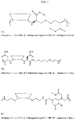
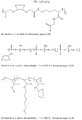


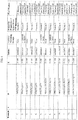


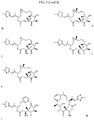


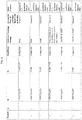


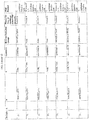


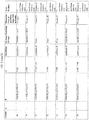
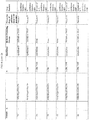





















Classifications
-
- C—CHEMISTRY; METALLURGY
- C08—ORGANIC MACROMOLECULAR COMPOUNDS; THEIR PREPARATION OR CHEMICAL WORKING-UP; COMPOSITIONS BASED THEREON
- C08B—POLYSACCHARIDES; DERIVATIVES THEREOF
- C08B37/00—Preparation of polysaccharides not provided for in groups C08B1/00 - C08B35/00; Derivatives thereof
- C08B37/0006—Homoglycans, i.e. polysaccharides having a main chain consisting of one single sugar, e.g. colominic acid
- C08B37/0009—Homoglycans, i.e. polysaccharides having a main chain consisting of one single sugar, e.g. colominic acid alpha-D-Glucans, e.g. polydextrose, alternan, glycogen; (alpha-1,4)(alpha-1,6)-D-Glucans; (alpha-1,3)(alpha-1,4)-D-Glucans, e.g. isolichenan or nigeran; (alpha-1,4)-D-Glucans; (alpha-1,3)-D-Glucans, e.g. pseudonigeran; Derivatives thereof
- C08B37/0012—Cyclodextrin [CD], e.g. cycle with 6 units (alpha), with 7 units (beta) and with 8 units (gamma), large-ring cyclodextrin or cycloamylose with 9 units or more; Derivatives thereof
- C08B37/0015—Inclusion compounds, i.e. host-guest compounds, e.g. polyrotaxanes
-
- A—HUMAN NECESSITIES
- A61—MEDICAL OR VETERINARY SCIENCE; HYGIENE
- A61K—PREPARATIONS FOR MEDICAL, DENTAL OR TOILETRY PURPOSES
- A61K45/00—Medicinal preparations containing active ingredients not provided for in groups A61K31/00 - A61K41/00
-
- A—HUMAN NECESSITIES
- A61—MEDICAL OR VETERINARY SCIENCE; HYGIENE
- A61K—PREPARATIONS FOR MEDICAL, DENTAL OR TOILETRY PURPOSES
- A61K47/00—Medicinal preparations characterised by the non-active ingredients used, e.g. carriers or inert additives; Targeting or modifying agents chemically bound to the active ingredient
- A61K47/50—Medicinal preparations characterised by the non-active ingredients used, e.g. carriers or inert additives; Targeting or modifying agents chemically bound to the active ingredient the non-active ingredient being chemically bound to the active ingredient, e.g. polymer-drug conjugates
- A61K47/51—Medicinal preparations characterised by the non-active ingredients used, e.g. carriers or inert additives; Targeting or modifying agents chemically bound to the active ingredient the non-active ingredient being chemically bound to the active ingredient, e.g. polymer-drug conjugates the non-active ingredient being a modifying agent
- A61K47/56—Medicinal preparations characterised by the non-active ingredients used, e.g. carriers or inert additives; Targeting or modifying agents chemically bound to the active ingredient the non-active ingredient being chemically bound to the active ingredient, e.g. polymer-drug conjugates the non-active ingredient being a modifying agent the modifying agent being an organic macromolecular compound, e.g. an oligomeric, polymeric or dendrimeric molecule
- A61K47/59—Medicinal preparations characterised by the non-active ingredients used, e.g. carriers or inert additives; Targeting or modifying agents chemically bound to the active ingredient the non-active ingredient being chemically bound to the active ingredient, e.g. polymer-drug conjugates the non-active ingredient being a modifying agent the modifying agent being an organic macromolecular compound, e.g. an oligomeric, polymeric or dendrimeric molecule obtained otherwise than by reactions only involving carbon-to-carbon unsaturated bonds, e.g. polyureas or polyurethanes
- A61K47/60—Medicinal preparations characterised by the non-active ingredients used, e.g. carriers or inert additives; Targeting or modifying agents chemically bound to the active ingredient the non-active ingredient being chemically bound to the active ingredient, e.g. polymer-drug conjugates the non-active ingredient being a modifying agent the modifying agent being an organic macromolecular compound, e.g. an oligomeric, polymeric or dendrimeric molecule obtained otherwise than by reactions only involving carbon-to-carbon unsaturated bonds, e.g. polyureas or polyurethanes the organic macromolecular compound being a polyoxyalkylene oligomer, polymer or dendrimer, e.g. PEG, PPG, PEO or polyglycerol
-
- A—HUMAN NECESSITIES
- A61—MEDICAL OR VETERINARY SCIENCE; HYGIENE
- A61K—PREPARATIONS FOR MEDICAL, DENTAL OR TOILETRY PURPOSES
- A61K47/00—Medicinal preparations characterised by the non-active ingredients used, e.g. carriers or inert additives; Targeting or modifying agents chemically bound to the active ingredient
- A61K47/50—Medicinal preparations characterised by the non-active ingredients used, e.g. carriers or inert additives; Targeting or modifying agents chemically bound to the active ingredient the non-active ingredient being chemically bound to the active ingredient, e.g. polymer-drug conjugates
- A61K47/51—Medicinal preparations characterised by the non-active ingredients used, e.g. carriers or inert additives; Targeting or modifying agents chemically bound to the active ingredient the non-active ingredient being chemically bound to the active ingredient, e.g. polymer-drug conjugates the non-active ingredient being a modifying agent
- A61K47/56—Medicinal preparations characterised by the non-active ingredients used, e.g. carriers or inert additives; Targeting or modifying agents chemically bound to the active ingredient the non-active ingredient being chemically bound to the active ingredient, e.g. polymer-drug conjugates the non-active ingredient being a modifying agent the modifying agent being an organic macromolecular compound, e.g. an oligomeric, polymeric or dendrimeric molecule
- A61K47/61—Medicinal preparations characterised by the non-active ingredients used, e.g. carriers or inert additives; Targeting or modifying agents chemically bound to the active ingredient the non-active ingredient being chemically bound to the active ingredient, e.g. polymer-drug conjugates the non-active ingredient being a modifying agent the modifying agent being an organic macromolecular compound, e.g. an oligomeric, polymeric or dendrimeric molecule the organic macromolecular compound being a polysaccharide or a derivative thereof
-
- A—HUMAN NECESSITIES
- A61—MEDICAL OR VETERINARY SCIENCE; HYGIENE
- A61P—SPECIFIC THERAPEUTIC ACTIVITY OF CHEMICAL COMPOUNDS OR MEDICINAL PREPARATIONS
- A61P19/00—Drugs for skeletal disorders
- A61P19/02—Drugs for skeletal disorders for joint disorders, e.g. arthritis, arthrosis
-
- A—HUMAN NECESSITIES
- A61—MEDICAL OR VETERINARY SCIENCE; HYGIENE
- A61P—SPECIFIC THERAPEUTIC ACTIVITY OF CHEMICAL COMPOUNDS OR MEDICINAL PREPARATIONS
- A61P19/00—Drugs for skeletal disorders
- A61P19/04—Drugs for skeletal disorders for non-specific disorders of the connective tissue
-
- A—HUMAN NECESSITIES
- A61—MEDICAL OR VETERINARY SCIENCE; HYGIENE
- A61P—SPECIFIC THERAPEUTIC ACTIVITY OF CHEMICAL COMPOUNDS OR MEDICINAL PREPARATIONS
- A61P29/00—Non-central analgesic, antipyretic or antiinflammatory agents, e.g. antirheumatic agents; Non-steroidal antiinflammatory drugs [NSAID]
-
- A—HUMAN NECESSITIES
- A61—MEDICAL OR VETERINARY SCIENCE; HYGIENE
- A61P—SPECIFIC THERAPEUTIC ACTIVITY OF CHEMICAL COMPOUNDS OR MEDICINAL PREPARATIONS
- A61P33/00—Antiparasitic agents
- A61P33/02—Antiprotozoals, e.g. for leishmaniasis, trichomoniasis, toxoplasmosis
- A61P33/06—Antimalarials
-
- A—HUMAN NECESSITIES
- A61—MEDICAL OR VETERINARY SCIENCE; HYGIENE
- A61P—SPECIFIC THERAPEUTIC ACTIVITY OF CHEMICAL COMPOUNDS OR MEDICINAL PREPARATIONS
- A61P35/00—Antineoplastic agents
-
- A—HUMAN NECESSITIES
- A61—MEDICAL OR VETERINARY SCIENCE; HYGIENE
- A61P—SPECIFIC THERAPEUTIC ACTIVITY OF CHEMICAL COMPOUNDS OR MEDICINAL PREPARATIONS
- A61P37/00—Drugs for immunological or allergic disorders
-
- A—HUMAN NECESSITIES
- A61—MEDICAL OR VETERINARY SCIENCE; HYGIENE
- A61P—SPECIFIC THERAPEUTIC ACTIVITY OF CHEMICAL COMPOUNDS OR MEDICINAL PREPARATIONS
- A61P37/00—Drugs for immunological or allergic disorders
- A61P37/02—Immunomodulators
-
- A—HUMAN NECESSITIES
- A61—MEDICAL OR VETERINARY SCIENCE; HYGIENE
- A61P—SPECIFIC THERAPEUTIC ACTIVITY OF CHEMICAL COMPOUNDS OR MEDICINAL PREPARATIONS
- A61P37/00—Drugs for immunological or allergic disorders
- A61P37/02—Immunomodulators
- A61P37/06—Immunosuppressants, e.g. drugs for graft rejection
-
- A—HUMAN NECESSITIES
- A61—MEDICAL OR VETERINARY SCIENCE; HYGIENE
- A61P—SPECIFIC THERAPEUTIC ACTIVITY OF CHEMICAL COMPOUNDS OR MEDICINAL PREPARATIONS
- A61P43/00—Drugs for specific purposes, not provided for in groups A61P1/00-A61P41/00
-
- A—HUMAN NECESSITIES
- A61—MEDICAL OR VETERINARY SCIENCE; HYGIENE
- A61P—SPECIFIC THERAPEUTIC ACTIVITY OF CHEMICAL COMPOUNDS OR MEDICINAL PREPARATIONS
- A61P7/00—Drugs for disorders of the blood or the extracellular fluid
- A61P7/02—Antithrombotic agents; Anticoagulants; Platelet aggregation inhibitors
-
- C—CHEMISTRY; METALLURGY
- C08—ORGANIC MACROMOLECULAR COMPOUNDS; THEIR PREPARATION OR CHEMICAL WORKING-UP; COMPOSITIONS BASED THEREON
- C08B—POLYSACCHARIDES; DERIVATIVES THEREOF
- C08B37/00—Preparation of polysaccharides not provided for in groups C08B1/00 - C08B35/00; Derivatives thereof
- C08B37/0006—Homoglycans, i.e. polysaccharides having a main chain consisting of one single sugar, e.g. colominic acid
- C08B37/0009—Homoglycans, i.e. polysaccharides having a main chain consisting of one single sugar, e.g. colominic acid alpha-D-Glucans, e.g. polydextrose, alternan, glycogen; (alpha-1,4)(alpha-1,6)-D-Glucans; (alpha-1,3)(alpha-1,4)-D-Glucans, e.g. isolichenan or nigeran; (alpha-1,4)-D-Glucans; (alpha-1,3)-D-Glucans, e.g. pseudonigeran; Derivatives thereof
- C08B37/0012—Cyclodextrin [CD], e.g. cycle with 6 units (alpha), with 7 units (beta) and with 8 units (gamma), large-ring cyclodextrin or cycloamylose with 9 units or more; Derivatives thereof
-
- Y—GENERAL TAGGING OF NEW TECHNOLOGICAL DEVELOPMENTS; GENERAL TAGGING OF CROSS-SECTIONAL TECHNOLOGIES SPANNING OVER SEVERAL SECTIONS OF THE IPC; TECHNICAL SUBJECTS COVERED BY FORMER USPC CROSS-REFERENCE ART COLLECTIONS [XRACs] AND DIGESTS
- Y02—TECHNOLOGIES OR APPLICATIONS FOR MITIGATION OR ADAPTATION AGAINST CLIMATE CHANGE
- Y02A—TECHNOLOGIES FOR ADAPTATION TO CLIMATE CHANGE
- Y02A50/00—TECHNOLOGIES FOR ADAPTATION TO CLIMATE CHANGE in human health protection, e.g. against extreme weather
- Y02A50/30—Against vector-borne diseases, e.g. mosquito-borne, fly-borne, tick-borne or waterborne diseases whose impact is exacerbated by climate change
Definitions
- Drug delivery and dosing of small molecule therapeutic agents can be problematic due to a number issues including half-life, toxicity, distribution etc.
- the invention features a method of treating an autoimmune disease in a subject, e.g., a human subject, comprising administering a CDP-therapeutic agent conjugate, particle or composition to the subject, e.g., a human subject, in an amount effective to treat the disease.
- autoimmune diseases examples include ankylosing spondylitis, arthritis (e.g., rheumatoid arthritis, osteoarthritis, gout), Chagas disease, chronic obstructive pulmonary disease (COPD), dermatomyositis, diabetes mellitus type 1, endometriosis, Goodpasture's syndrome, Graves' disease, Guillain-Barre syndrome (GBS), Hashiomoto's disease, Hidradenitis suppurativa, Kawasaki disease, IgA nephropathy, Idiopathic thrombocytopenic purpura, inflammatory bowel disease (e.g., Crohn's disease, ulcerative colitis, collagenous colitis, lymphocytic colitis, ischemic colitis, diversion colitis, Behcet's syndrome, infective colitis, indeterminate colitisinterstitial cystitis), lupus (e.g., systemic lupus ery
- the method includes inhibiting rejection of a transplanted organ, e.g., rejection of a kidney transplant, e.g., rejection of a lung transplant, e.g., rejection of a liver transplant.
- the autoimmune disease is arthritis, e.g., rheumatoid arthritis, osteoarthritis, gout; lupus, e.g., systemic lupus erythematosus, discoid lupus, drug-induced lupus, neonatal lupus; inflammatory bowel disease, e.g., Crohn's disease, ulcerative colitis, collagenous colitis, lymphocytic colitis, ischemic colitis, diversion colitis, Behcet's syndrome, infective colitis, indeterminate colitis; psoriasis; or multiple sclerosis.
- arthritis e.g., rheumatoid arthritis, osteoarthritis, gout
- lupus e.g
- the CDP-therapeutic agent conjugate, particle or composition is a CDP-cytotoxic agent conjugate, particle or composition, e.g., a CDP-topoisomerase inhibitor conjugate, particle or composition, e.g., a CDP-topoisomerase inhibitor I conjugate (e.g., a CDP-camptothecin conjugate, particle or composition, CDP-irinotecan conjugate, particle or composition, or CDP-SN-38 conjugate, particle or composition, a CDP-topotecan conjugate, particle or composition, a CDP-lamellarin D conjugate, particle or composition, a CDP-lurotecan conjugate, particle or composition, a CDP-exatecan conjugate, particle or composition, a CDP-diflomotecan conjugate, particle or composition, or a CDP-topoisomerase I inhibitor conjugate, particle or composition which includes a derivative of camptothecin, irinotecan, SN-38
- the topoisomerase inhibitor can be a topoisomerase II inhibitor, thus in an embodiment the conjugate, particle or composition is: a CDP-topoisomerase II inhibitor conjugate, particle or composition (e.g., a CDP-etoposide conjugate, particle or composition, a CDP-tenoposide conjugate, particle or composition, a CDP-amsacrine conjugate, particle or composition, or a CDP-topoisomerase II inhibitor conjugate, particle or composition which includes a derivative of etoposide, tenoposide, and amsacrine).
- a CDP-topoisomerase II inhibitor conjugate, particle or composition e.g., a CDP-etoposide conjugate, particle or composition, a CDP-tenoposide conjugate, particle or composition, a CDP-amsacrine conjugate, particle or composition, or a CDP-topoisomerase II inhibitor conjugate, particle or composition which includes a derivative of etoposide
- the therapeutic agent can be an anti-metabolite, thus in an embodiment the conjugate, particle or composition is: a CDP-anti-metabolic agent conjugate, particle or composition (e.g., a CDP-antifolate conjugate, particle or composition (e.g., a CDP-pemetrexed conjugate, particle or composition, a CDP-floxuridine conjugate, particle or composition, or a CDP-raltitrexed conjugate, particle or composition); or a CDP-pyrimidine analog conjugate, particle or composition (e.g., a CDP-capecitabine conjugate, particle or composition, a CDP-cytarabine conjugate, particle or composition, a CDP-gemcitabine conjugate, particle or composition, or a CDP-5FU conjugate, particle or composition)).
- a CDP-anti-metabolic agent conjugate, particle or composition e.g., a CDP-antifolate conjugate, particle or composition (e.g., a CD
- the therapeutic agent can be an alkylating agent, thus in an embodiment the conjugate, particle or composition is: a CDP-alkylating agent conjugate, particle or composition.
- the therapeutic agent can be an anthracycline, thus in an embodiment the conjugate, particle or composition is: a CDP-anthracycline conjugate, particle or composition.
- the therapeutic agent can be an anti-tumor antibiotic, thus in an embodiment the conjugate, particle or composition is a CDP-anti-tumor antibiotic conjugate, particle or composition (e.g., a CDP-HSP90 inhibitor conjugate, particle or composition, e.g., a CDP-geldanamycin conjugate, particle or composition, a CDP-tanespimycin conjugate, particle or composition or a CDP-alvespimycin conjugate, particle or composition).
- a CDP-anti-tumor antibiotic conjugate, particle or composition e.g., a CDP-HSP90 inhibitor conjugate, particle or composition, e.g., a CDP-geldanamycin conjugate, particle or composition, a CDP-tanespimycin conjugate, particle or composition or a CDP-alvespimycin conjugate, particle or composition.
- the therapeutic agent can be a platinum based agent, thus in an embodiment the conjugate, particle or composition is a CDP-platinum based agent conjugate, particle or composition (e.g., a CDP-cisplatin conjugate, particle or composition, a CDP-carboplatin conjugate, particle or composition, or a CDP-oxaliplatin conjugate, particle or composition).
- a CDP-platinum based agent conjugate, particle or composition e.g., a CDP-cisplatin conjugate, particle or composition, a CDP-carboplatin conjugate, particle or composition, or a CDP-oxaliplatin conjugate, particle or composition.
- the therapeutic agent can be a microtubule inhibitor, thus in an embodiment the conjugate, particle or composition is a CDP-microtubule inhibitor conjugate, particle or composition.
- the therapeutic agent can be a kinase inhibitor, thus in an embodiment the conjugate, particle or composition is, a CDP-kinase inhibitor conjugate, particle or composition (e.g., a CDP-seronine/threonine kinase inhibitor conjugate, particle or composition, e.g., a CDP-mTOR inhibitor conjugate, particle or composition, e.g., a CDP-rapamycin conjugate, particle or composition).
- a CDP-kinase inhibitor conjugate, particle or composition e.g., a CDP-seronine/threonine kinase inhibitor conjugate, particle or composition, e.g., a CDP-mTOR inhibitor conjugate, particle or composition, e.g., a CDP-rapamycin conjugate, particle or composition.
- the therapeutic agent can be a proteasome inhibitor, thus in an embodiment the conjugate, particle or composition is a CDP-proteasome inhibitor conjugate, particle or composition, e.g., a CDP-bortezomib inhibitor conjugate, particle or composition.
- the CDP-microtubule inhibitor conjugate, particle or composition comprises a CDP-taxane conjugate, particle or composition or a CDP-epothilone conjugate, particle or composition.
- the CDP-proteasome inhibitor conjugate, particle or composition is a CDP-boronic acid containing molecule conjugate, particle or composition, e.g., a CDP-bortezomib conjugate, particle or composition.
- the therapeutic agent can be an immunomodulator conjugate, thus in an embodiment the conjugate, particle or composposition is a CDP-immunomodulator conjugate, particle or composition, e.g., a CDP-corticosteroid conjugate, particle or composition.
- the CDP-immunomodulator conjugate, particle or composition is a CDP-kinase inhibitor conjugate, particle or composition (e.g., a CDP-seronine/threonine kinase inhibitor conjugate, particle or composition, e.g., a CDP-mTOR inhibitor conjugate, particle or composition, e.g., a CDP-rapamycin conjugate, particle or composition).
- the CDP-therapeutic agent conjugate, particle or composition is a CDP-corticosteroid conjugate, particle or composition wherein the corticosteroid is not (or is other than) methylprednisolone.
- the CDP-therapeutic agent conjugate, particle or composition is a CDP-corticosteroid conjugate, particle or composition wherein the corticosteroid is a Group B corticosteroid, a Group C corticosteroid, or a Group D corticosteroid.
- the CDP-therapeutic agent conjugate, particle or composition is a CDP-corticosteroid conjugate, particle or composition wherein the corticosteroid is hydrocortisone, hydrocortisone acetate, cortisone acetate, tixocortol pivalate, prednisolone, methylprednisolone, or prednisone.
- the CDP-therapeutic agent conjugate, particle or composition is a CDP-corticosteroid conjugate, particle or composition wherein the corticosteroid is a Group B corticosteroid, a Group C corticosteroid, a Group D corticosteroid, hydrocortisone, hydrocortisone acetate, cortisone acetate, tixocortol pivalate, prednisolone, methylprednisolone, or prednisone.
- the corticosteroid is a Group B corticosteroid, a Group C corticosteroid, a Group D corticosteroid, hydrocortisone, hydrocortisone acetate, cortisone acetate, tixocortol pivalate, prednisolone, methylprednisolone, or prednisone.
- the CDP-therapeutic agent conjugate, particle or composition is a CDP-corticosteroid conjugate, particle or composition wherein the corticosteroid is a Group B corticosteroid, a Group C corticosteroid, a Group D corticosteroid, hydrocortisone, hydrocortisone acetate, cortisone acetate, tixocortol pivalate, prednisolone, methylprednisolone, or prednisone.
- the corticosteroid is a Group B corticosteroid, a Group C corticosteroid, a Group D corticosteroid, hydrocortisone, hydrocortisone acetate, cortisone acetate, tixocortol pivalate, prednisolone, methylprednisolone, or prednisone.
- the CDP-corticosteroid conjugate e.g., the CDP-methylprednisolone conjugate
- the linker is one ore more of: alanine, arginine, histidine, lysine, aspartic acid, glutamic acid, serine, threonine, asparganine, glutamine, cysteine, proline, isoleucine, leucine, methionine, phenylalanine, tryptophan, tyrosine and valine.
- the linker is a linker described herein.
- the linker is not an amino acid (e.g., an alpha amino acid). In some embodiments, the linker is alanine glycolate or amino hexanoate. In some embodiments, the loading of the corticosteroid onto the CDP is at least about 13% by weight of the conjugate (e.g., at least about 14%, 15%, 16%, 17%, 18%, 19%, or 20%). In some embodiments, the loading of the corticosteroid onto the CDP is less than about 12% by weight of the conjugate (e.g., less than about 11%, 10%, 9%, 8%, or 7%).
- the CDP-corticosteroid conjugate, particle or composition is a CDP-corticosteroid conjugate, particle or composition described herein.
- the autoimmune disease is not (or is other than) rheumatoid arthritis. In an embodiment, the autoimmune disease is not (or is other than) rheumatoid arthritis and the CDP-therapeutic agent conjugate, particle or composition is a CDP-corticosteroid conjugate, particle or composition.
- the autoimmune disease is rheumatoid arthritis and the CDP-therapeutic agent conjugate, particle or composition is a CDP-corticosteroid conjugate, particle or composition wherein the corticosteroid is not (or is other than) methylprednisolone.
- the autoimmune disease is rheumatoid arthritis and the CDP-therapeutic agent conjugate, particle or composition is a CDP-corticosteroid conjugate, particle or composition wherein the corticosteroid is a Group B corticosteroid, a Group C corticosteroid, or a Group D corticosteroid.
- the autoimmune disease is rheumatoid arthritis and the CDP-therapeutic agent conjugate, particle or composition is a CDP-corticosteroid conjugate, particle or composition wherein the corticosteroid is hydrocortisone, hydrocortisone acetate, cortisone acetate, tixocortol pivalate, prednisolone, methylprednisolone, or prednisone.
- the autoimmune disease is rheumatoid arthritis and the CDP-therapeutic agent conjugate, particle or composition is a CDP-corticosteroid conjugate, particle or composition wherein the corticosteroid is a Group B corticosteroid, a Group C corticosteroid, or a Group D corticosteroid, hydrocortisone, hydrocortisone acetate, cortisone acetate, tixocortol pivalate, prednisolone, methylprednisolone, or prednisone.
- the CDP-corticosteroid conjugate, particle or composition is a CDP-corticosteroid conjugate, particle or composition described herein.
- the autoimmune disease is rheumatoid arthritis
- the CDP-corticosteroid conjugate, particle or composition is a CDP-methylprednisolone conjugate, particle or composition.
- the CDP-methylprednisolone conjugate includes a linker attaching the corticosteroid to the CDP, wherein the linker is not a glycine.
- the linker is one ore more of: alanine, arginine, histidine, lysine, aspartic acid, glutamic acid, serine, threonine, asparganine, glutamine, cysteine, proline, isoleucine, leucine, methionine, phenylalanine, tryptophan, tyrosine and valine.
- the linker is a linker described herein.
- the linker is not an amino acid (e.g., an alpha amino acid).
- the linker is alanine glycolate or amino hexanoate.
- the loading of the methylprednisolone onto the CDP is at least about 13% by weight of the conjugate (e.g., at least about 14%, 15%, 16%, 17%, 18%, 19%, or 20%). In some embodiments, the loading of the methylprednisolone onto the CDP is less than about 12% by weight of the conjugate (e.g., less than about 11%, 10%, 9%, 8%, or 7%).
- the autoimmune disease e.g., rheumatoid arthritis
- the CDP-therapeutic agent conjugate, particle or composition is administered to the subject in combination with a second therapeutic agent.
- the second therapeutic agent is one or more of the following agents: an anti-inflammatory agent, a corticosteroid, a disease modifying antirheumatic drug (DMARD), an immunomodulator, a statin, and/or a bisphosphonate.
- the anti-inflammatory agent is one or more of the following agents: aspirin, acetaminophen, and/or a non-steroidal anti-inflammatory drug.
- the corticosteroid is one of more of the corticosteroids described herein.
- the DMARD is one or more of the following agents; azathioprine, cyclosporine A, D-penicillamine, gold salts, hydroxychloroquine, chloroquine (also called anti-malarial agents herein), leflunomide, methotrexate, minocycline, sulfasalazine, and/or cyclophosphamide.
- the immunomodulator includes one or more of the following agents: TNF inhibitors (e.g. etanercept (Enbrel®), infliximab (Remicade®), adalimumab(Humira®), certolixumab pegol (Cimzia®), and golimumab (Simponi®)), IL-1 inhibitors (e.g.
- TNF inhibitors e.g. etanercept (Enbrel®), infliximab (Remicade®), adalimumab(Humira®), certolixumab pegol (Cimzia®), and golimumab (Simponi®)
- IL-1 inhibitors e.g.
- anakinra (Kineret®)
- antibodies against B cells rituxamab (Rituxan®)
- T cell comstimulation inhibitors abatacept (Orencia®)
- IL-6 inhibitors tocilizumab (RoActemra®)
- agents e.g., biologics, that interfere with immune cell function (e.g., antibodies to other immune system targets, e.g., antibodies to IL-15).
- the statin is one or more of the following agents: atorvastatin (Lipitor®), cerivastatin (Baycol®), fluvastatin (Lescol®), lovastatin (Mevacor®), mevastatin, pitavastatin (Livalo®), pravastatin (Pravachol®), rosuvastatin (Crestor®), and/or simvastatin (Zocor®).
- the bisphosphonate is one or more of the following agents: non-N (nitrogen)-containing bisphosphonates (e.g., etidronate (Didronel®), clodronate (Bonefos®), and tiludronate (Skelid®)) and/or N (nitrogen)-containing bisphosphonates (e.g., pamidronate (Aredia®), neridronate, olpadronate, alendronate (Fosamax®), ibandronate (Boniva®), risedronate (Actonel®), and zoledronate (Zometa®)
- non-N (nitrogen)-containing bisphosphonates e.g., etidronate (Didronel®), clodronate (Bonefos®), and tiludronate (Skelid®)
- N (nitrogen)-containing bisphosphonates e.g., pamidronate (Aredia®),
- the CDP-therapeutic agent conjugate, particle or composition inhibits rejection of a transplanted organ, e.g., rejection of a kidney transplant, rejection of a lung transplant, rejection of a liver transplant.
- the CDP-therapeutic agent conjugate, particle or composition inhibits rejection of a kidney transplant and the CDP-immunomodulator conjugate, particle or composition is a CDP-rapamycin conjugate, particle or composition or a CDP-rapamycin analog conjugate, particle or composition.
- the autoimmune disease is an immune response to a transplanted organ
- the CDP-therapeutic agent conjugate, particle or composition is administered to the subject in combination with a second therapeutic agent.
- the second therapeutic agent is one or more of the following agents: an anti-inflammatory agent, a corticosteroid, a disease modifying antirheumatic drug (DMARD), an immunomodulator, a statin, and/or a bisphosphonate, e.g., an anti-inflammatory agent, a corticosteroid, a disease modifying antirheumatic drug (DMARD), an immunomodulator, a statin, and/or a bisphosphonate disclosed herein.
- an anti-inflammatory agent e.g., an anti-inflammatory agent, a corticosteroid, a disease modifying antirheumatic drug (DMARD), an immunomodulator, a statin, and/or a bisphosphonate disclosed herein.
- the CDP-therapeutic agent conjugate, particle or composition is a CDP-rapamycin conjugate, particle or composition or a CDP-rapamycin analog conjugate, particle or composition
- the CDP-rapamycin conjugate, particle or composition or the CDP-rapamycin analog conjugate, particle or composition is administered to inhibit rejection of a transplanted organ, e.g., rejection of a kidney transplant, in combination with cyclosporine.
- the invention features a method of treating lupus e.g., systemic lupus erythematosus, discoid lupus, drug-induced lupus, neonatal lupus, in a subject, e.g., a human subject, comprising administering a CDP-therapeutic agent conjugate, particle or composition to the subject in an amount effective to treat the lupus.
- lupus e.g., systemic lupus erythematosus, discoid lupus, drug-induced lupus, neonatal lupus
- the CDP-therapeutic agent conjugate, particle or composition is a CDP-topoisomerase inhibitor conjugate, particle or composition, e.g., a CDP-topoisomerase I inhibitor conjugate, particle or composition, e.g., a CDP-camptothecin or camptothecin derivative conjugate, particle or composition, e.g., CRLX101 and is administered to the subject at 30 mg/m 2 per month or less.
- the CDP-topoisomerase I inhibitor conjugate is administered at 30 mg/m 2 per month or less on a dosing schedule described herein (wherein the dosage is expressed in mg of therapeutic agent, as opposed to mg of conjugate).
- the invention features, a method of treating an autoimmune disease in a subject, e.g., a human subject.
- the method comprises:
- the dosage of at least 2, 3, 4, 5, 6, 7, 8, 9, 10, 12, 15, or 20 administrations is the same.
- the time between at least 2, 3, 4, 5, 6, 7, 8, 9, 10, 12, 15, or 20 administrations is the same.
- each subsequent administration is administered 5-9, e.g., 7, days after the previous administration.
- At least 2, 3, 4, 5, 6, 7, 8, 9, 10, 12, 15, 20, 50 or 100 administrations are administered to the subject.
- the CDP-topoisomerase inhibitor conjugate, particle or composition e.g., a CDP-camptothecin or camptothecin derivative, a CDP-camptothecin or camptothecin derivative conjugate, particle or composition described herein, e.g., CRLX101, is administered by intravenous administration over a period equal to or less than about 30 minutes, 45 minutes, 60 minutes, 90 minutes, 120 minutes, 150 minutes, or 180 minutes.
- the CDP-topoisomerase inhibitor conjugate, particle or composition e.g., a CDP-camptothecin or camptothecin derivative conjugate, particle or composition, e.g., the CDP-camptothecin or camptothecin derivative conjugate, particle or composition described herein, e.g. CRLX101
- a dosage of 3 mg/m 2 , 4 mg/m 2 , 5 mg/m 2 , or 6 mg/m 2 is administered at a dosage of 3 mg/m 2 , 4 mg/m 2 , 5 mg/m 2 , or 6 mg/m 2 by intravenous administration over a period equal to or less than about 30 minutes, 45 minutes, 60 minutes or 90 minutes, e.g., a period equal to or less than 30 minutes, 45 minutes or 60 minutes.
- the method includes an initial administration of CRLX101 to said subject at a dosage of 3 mg/m 2 , 4 mg/m 2 , 5 mg/m 2 , or 6 mg/m 2 and one or more subsequent administrations of CRLX101 to said subject, at a dosage of 3 mg/m 2 , 4 mg/m 2 , 5 mg/m 2 , or 6 mg/m 2 , e.g., at the same dosage as the initial dosage, wherein each subsequent administration is administered, independently, 5-9, e.g., 7, days after the previous, e.g., the initial, administration, and the autoimmune disease is arthritis, e.g., rheumatoid arthritis, osteoarthritis, gout; lupus, e.g., systemic lupus erythematosus, discoid lupus, drug-induced lupus, neonatal lupus; inflammatory bowel disease, e.g., Crohn's disease, ulcerative co
- the invention features, a method of treating an autoimmune disease, e.g., in a subject, e.g., in a human subject.
- the method comprises:
- the dosage of at least 2, 3, 4, 5, 6, 7, 8, 9, 10, 12, 15 or 20 administrations is the same.
- the time between at least 2, 3, 4, 5, 6, 7, 8, 9, 10, 12, 15, or 20 administrations is the same.
- each subsequent administration is administered 12-16, e.g., 14, days after the previous administration.
- At least 2, 3, 4, 5, 6, 7, 8, 9, 10, 12, 15, 20, 50 or 100 administrations are administered to the subject.
- the CDP-topoisomerase I inhibitor conjugate, particle or composition e.g., a CDP-camptothecin or camptothecin derivative, a CDP-camptothecin or camptothecin derivative conjugate, particle or composition described herein, e.g., CRLX101, is administered by intravenous administration over a period equal to or less than about 30 minutes, 45 minutes, 60 minutes, 90 minutes, 120 minutes, 150 minutes, or 180 minutes.
- the CDP-topoisomerase inhibitor conjugate, particle or composition e.g., a CDP-camptothecin or camptothecin derivative conjugate, particle or composition, e.g., the CDP-camptothecin or camptothecin derivative conjugate, particle or composition described herein, e.g.
- CRLX101 is administered at a dosage of 9 mg/m 2 , 10 mg/m 2 , 11 mg/m 2 , 12 mg/m 2 , 13 mg/m 2 , 14 mg/m 2 , 15 mg/m 2 , 16 mg/m 2 , 17 mg/m 2 , 18 mg/m 2 , 19 mg/m 2 , 20 mg/m 2 , 21 mg/m 2 , 22 mg/m 2 , 23 mg/m 2 , 24 mg/m 2 , 25 mg/m 2 , 26 mg/m 2 , 27 mg/m 2 , 28 mg/m 2 , 29 mg/m 2 or 30 mg/m 2 by intravenous administration over a period equal to or less than about 30 minutes, 45 minutes, 60 minutes or 90 minutes, e.g., a period equal to or less than 30 minutes, 45 minutes or 60 minutes.
- the method includes an initial administration of CRLX101 to said subject at a dosage of 12 mg/m 2 , 13 mg/m 2 , 14 mg/m 2 or 15 mg/m 2 , and one or more subsequent administrations of CRLX101 to said subject, at a dosage of 12 mg/m 2 , 13 mg/m2, 14 mg/m 2 or 15 mg/m 2 , e.g., at the same dosage as the initial dosage, wherein each subsequent administration is administered, independently, 12-16, e.g., 14, days after the previous, e.g., the initial, administration, and the autoimmune disease is arthritis, e.g., rheumatoid arthritis, osteoarthritis, gout; lupus, e.g., systemic lupus erythematosus, discoid lupus, drug-induced lupus, neonatal lupus; inflammatory bowel disease, e.g., Crohn's disease, ulcerative colitis, collagenous
- arthritis
- the method includes an initial administration of CRLX101 to said subject at a dosage of 16 mg/m 2 , 17 mg/m 2 , 18 mg/m 2 , 19 mg/m 2 , 20 mg/m 2 , 21 mg/m 2 , 22 mg/m 2 , 23 mg/m 2 , 24 mg/m 2 , 25 mg/m 2 , 26 mg/m 2 , 27 mg/m 2 , 28 mg/m 2 , 29 mg/m 2 or 30 mg/m 2 , and one or more subsequent administrations of CRLX101 to said subject, at a dosage of 16 mg/m 2 , 17 mg/m 2 , 18 mg/m 2 , 19 mg/m 2 , 20 mg/m 2 , 21 mg/m 2 , 22 mg/m 2 , 23 mg/m 2 , 24 mg/m 2 , 25 mg/m 2 , 26 mg/m 2 , 27 mg/m 2 , 28 mg/m 2 , 29 mg/m 2 or 30 mg/m 2 , e.
- the invention features, a method of treating an autoimmune disease, in a subject, e.g., a human subject.
- the method comprises:
- the dosage of at least 2, 3, 4, 5, 6, 7, 8, 9, 10, 12, 15 or 20 administrations are the same.
- the time between at least 2, 3, 4, 5, 6, 7, 8, 9, 10, 12 15, or 20 administrations is the same.
- each subsequent administration is administered 19-23, e.g., 21, or 25-29, e.g., 27 or 28 days after the previous administration.
- At least 2, 3, 4, 5, 6, 7, 8, 9, 10, 12, 15, 20, 50 or 100 administrations are administered to the subject.
- the CDP-topoisomerase inhibitor conjugate, particle or composition e.g., a CDP-camptothecin or camptothecin derivative, a CDP-camptothecin or camptothecin derivative conjugate, particle or composition described herein, e.g., CRLX101, is administered by intravenous administration over a period equal to or less than about 30 minutes, 45 minutes, 60 minutes, 90 minutes, 120 minutes, 150 minutes, or 180 minutes.
- the CDP-topoisomerase inhibitor conjugate, particle or composition e.g., a CDP-camptothecin or camptothecin derivative conjugate, particle or composition, e.g., the CDP-camptothecin or camptothecin derivative conjugate, particle or composition described herein, e.g.
- CRLX101 is administered at a dosage of 9 mg/m 2 , 10 mg/m 2 , 11 mg/m 2 , 12 mg/m 2 , 13 mg/m 2 , 14 mg/m 2 , 15 mg/m 2 , 16 mg/m 2 , 17 mg/m 2 , 18 mg/m 2 , 19 mg/m 2 , 20 mg/m 2 , 21 mg/m 2 , 22 mg/m 2 , 23 mg/m 2 , 24 mg/m 2 , 25 mg/m 2 , 26 mg/m 2 , 27 mg/m 2 , 28 mg/m 2 , 29 mg/m 2 , 30 mg/m 2 , 31 mg/m 2 , 32 mg/m 2 , 33 mg/m 2 , 34 mg/m 2 , 35 mg/m 2 or 36 mg/m 2 by intravenous administration over a period equal to or less than about 30 minutes, 45 minutes, 60 minutes or 90 minutes, e.g., a period equal to or less than 30 minutes, 45 minutes or 60 minutes or
- the method includes an initial administration of CRLX101 to said subject at a dosage of 18 mg/m 2 , 19 mg/m 2 , 20 mg/m 2 , 21 mg/m 2 , 22 mg/m 2 , 23 mg/m 2 , 24 mg/m 2 , 25 mg/m 2 , 26 mg/m 2 , 27 mg/m 2 , 28 mg/m 2 , 29 mg/m 2 , 30 mg/m 2 , 31 mg/m 2 , 32 mg/m 2 , 33 mg/m 2 , 34 mg/m 2 , 35 mg/m 2 or 36 mg/m 2 , and one or more subsequent administrations of CRLX101 to said subject, at a dosage of 18 mg/m 2 , 19 mg/m2, 20 mg/m 2 , 21 mg/m 2 , 22 mg/m 2 , 23 mg/m 2 , 24 mg/m 2 , 25 mg/m 2 , 26 mg/m 2 , 27 mg/m 2 , 28 mg/m 2 , 29 mg/m
- the invention features a method of treating lupus, e.g., systemic lupus erythematosus, discoid lupus, drug-induced lupus, neonatal lupus in a subject, e.g., a human subject.
- the method comprises: administering a CDP-therapeutic agent conjugate, particle or composition to the subject in combination with a second therapeutic agent.
- the second therapeutic agent is one or more of the following agents: an anti-inflammatory agent, an anti-malarial agent, an immunomodulator, an anti-coagulant, and a hormone.
- the invention features, a method of treating an autoimmune disease in a subject, e.g., a human subject.
- the method comprises: providing an initial administration of CDP-anti-metabolic agent conjugate, particle or composition, e.g., a CDP-antifolate conjugate, particle or composition, e.g., a CDP-pemetrexed conjugate, particle or composition, e.g., a CDP-pemetrexed conjugate, particle or composition, described herein, or, e.g., a CDP-floxuridine conjugate, particle or composition, e.g., a CDP-floxuridine conjugate, particle or composition, described herein, or, e.g., a CDP-raltitrexed conjugate, particle or composition, e.g., a CDP-raltitrexed conjugate, particle or composition, described herein, to said subject, and, optionally, administering one or more subsequent administrations of said CDP-anti
- the dosage of at least 2, 3, 4, 5, 6, 7, 8, 9, 10, 12, 15, or 20 administrations is the same.
- the time between at least 2, 3, 4, 5, 6, 7, 8, 9, 10, 12, 15, or 20 administrations is the same.
- each subsequent administration is administered 18-24, e.g., 21, days after the previous administration.
- At least 2, 3, 4, 5, 6, 7, 8, 9, 10, 12, 15, 20, 50 or 100 administrations are administered to the subject.
- the CDP-anti-metabolic agent conjugate, particle or composition e.g., a CDP-antifolate conjugate, particle or composition, e.g., a CDP-pemetrexed conjugate, particle or composition, e.g., a CDP-pemetrexed conjugate, particle or composition, described herein, or, e.g., a CDP-floxuridine conjugate, particle or composition, e.g., a CDP-floxuridine conjugate, particle or composition, described herein, or, e.g., a CDP-raltitrexed conjugate, particle or composition, e.g., a CDP-raltitrexed conjugate, particle or composition, described herein, is administered by intravenous administration over a period equal to or less than about 30 minutes, 45 minutes, 60 minutes, 90 minutes, 120 minutes, 150 minutes, or 180 minutes.
- the method includes an initial administration of a CDP-pemetrexed conjugate, particle or composition to said subject at a dosage of 300 mg/m 2 , 320 mg/m 2 , 350 mg/m 2 , 380 mg/m 2 , 400 mg/m 2 , 420 mg/m 2 , 450 mg/m 2 , 480 mg/m 2 , 500 mg/m 2 , 520 mg/m 2 , 550 mg/m 2 , 580 mg/m 2 , 600 mg/m 2 , 620 mg/m 2 , 650 mg/m 2 , 680 mg/m 2 , 700 mg/m 2 , 720 mg/m 2 , or 750 mg/m 2 , (wherein the dosage is expressed in mg of therapeutic agent, as opposed to mg of conjugate), and one or more subsequent administrations of a CDP-pemetrexed conjugate, particle or composition to said subject, at a dosage of 300 mg/m 2 , 320 mg/m 2 , 350 mg/m
- the autoimmune disease is arthritis, e.g., rheumatoid arthritis, osteoarthritis, gout; lupus, e.g., systemic lupus erythematosus, discoid lupus, drug-induced lupus, neonatal lupus; inflammatory bowel disease, e.g., Crohn's disease, ulcerative colitis, collagenous colitis, lymphocytic colitis, ischemic colitis, diversion colitis, Behcet's syndrome, infective colitis, indeterminate colitis; psoriasis; or multiple sclerosis.
- the autoimmune disease is lupus, e.g., systemic lupus erythematosus, discoid lupus, drug-induced lupus, neonatal lupus.
- the invention features, a method of treating an autoimmune disease in a subject, e.g., a human subject.
- the method comprises: providing an initial administration of CDP-pyrimidine analog conjugate, particle or composition, e.g., a CDP-capecitabine conjugate, particle or composition, e.g., a CDP-capecitabine conjugate, particle or composition, described herein, or, e.g., a CDP-cytarabine conjugate, particle or composition, e.g., a CDP-cytarabine conjugate, particle or composition, described herein, or, e.g., a CDP-gemcitabine conjugate, particle or composition, e.g., a CDP-gemcitabine conjugate, particle or composition, described herein, or, e.g., a CDP-5FU conjugate, particle or composition, e.g., a CDP-5FU conjugate, particle or composition, described herein, to said subject, and
- the dosage of at least 2, 3, 4, 5, 6, 7, 8, 9, 10, 12, 15, or 20 administrations is the same.
- the time between at least 2, 3, 4, 5, 6, 7, 8, 9, 10, 12, 15, or 20 administrations is the same.
- each subsequent administration is administered 5-14 days, e.g., 7 days after the previous administration.
- At least 2, 3, 4, 5, 6, 7, 8, 9, 10, 12, 15, 20, 50 or 100 administrations are administered to the subject.
- the CDP-pyrimidine analog conjugate, particle or composition e.g., a CDP-antifolate conjugate, particle or composition, e.g., a CDP-capecitabine conjugate, particle or composition, e.g., a CDP-capecitabine conjugate, particle or composition, described herein, or, e.g., a CDP-cytarabine conjugate, particle or composition, e.g., a CDP-cytarabine conjugate, particle or composition, described herein, or, e.g., a CDP-gemcitabine conjugate, particle or composition, e.g., a CDP-gemcitabine conjugate, particle or composition, described herein, or, e.g., a CDP-5FU conjugate, particle or composition, e.g., a CDP-5FU conjugate, particle or composition, described herein, is administered by intravenous administration over a period equal to or less than about 30 minutes,
- the method includes an initial administration of a CDP-gemcitabine conjugate, particle or composition at a dosage of 600 mg/m 2 , 700 mg/m 2 , 730 mg/m 2 , 750 mg/m 2 , 780 mg/m 2 , 800 mg/m 2 , 830 mg/m 2 , 850 mg/m 2 , 880 mg/m 2 , 900 mg/m 2 , 930 mg/m 2 , 950 mg/m 2 , 980 mg/m 2 , 1000 mg/m 2 , 1030 mg/m 2 , 1050 mg/m 2 , 1080 mg/m 2 , 1100 mg/m 2 , 1130 mg/m 2 , 1150 mg/m 2 , 1180 mg/m 2 , 1200 mg/m 2 , 1230 mg/m 2 , 1250 mg/m 2 , 1280 mg/m 2 , 1300 mg/m 2 , 1330 mg/m 2 , 1350 mg/m 2 , 1380 mg/m 2
- the autoimmune disease is arthritis, e.g., rheumatoid arthritis, osteoarthritis, gout; lupus, e.g., systemic lupus erythematosus, discoid lupus, drug-induced lupus, neonatal lupus; inflammatory bowel disease, e.g., Crohn's disease, ulcerative colitis, collagenous colitis, lymphocytic colitis, ischemic colitis, diversion colitis, Behcet's syndrome, infective colitis, indeterminate colitis; psoriasis; or multiple sclerosis.
- the autoimmune disease is lupus, e.g., systemic lupus erythematosus, discoid lupus, drug-induced lupus, neonatal lupus.
- the method includes an initial administration of a CDP-5FU conjugate, particle or composition at a dosage of 1 mg/kg, 2 mg/kg, 3 mg/kg, 4 mg/kg, 5 mg/kg, 6 mg/kg, 7 mg/kg, 8 mg/kg, 9 mg/kg, 10 mg/kg, 11 mg/kg, 12 mg/kg, 13 mg/kg, 14 mg/kg, 15 mg/kg, 16 mg/kg, 17 mg/kg, 18 mg/kg, 19 mg/kg, or 20 mg/kg (wherein the dosage is expressed in mg of therapeutic agent, as opposed to mg of conjugate), and, optionally, one or more subsequent administrations of a CDP-5FU conjugate, particle or composition at a dosage of 1 mg/kg, 2 mg/kg, 3 mg/kg, 4 mg/kg, 5 mg/kg, 6 mg/kg, 7 mg/kg, 8 mg/kg, 9 mg/kg, 10 mg/kg, 11 mg/kg, 12 mg/kg, 13 mg/kg, 14 mg/kg, 15 mg/kg, 16 mg/kg,
- the autoimmune disease is lupus, e.g., systemic lupus erythematosus, discoid lupus, drug-induced lupus, neonatal lupus.
- the CDP-5FU conjugate, particle or composition is administered intravenously once daily for 4 successive days.
- the invention features, a method of treating an autoimmune disease in a subject, e.g., a human subject.
- the method comprises: providing an initial administration of a CDP-anti-tumor antibiotic conjugate, particle or composition, e.g., a CDP-HSP90 inhibitor conjugate, particle or composition, e.g., a CDP-geldanamycin conjugate, particle or composition, e.g., a CDP-geldanamycin conjugate, particle or composition described herein, to said subject, and, optionally, providing one or more subsequent administrations of said CDP-anti-tumor antibiotic conjugate, particle or composition, e.g., a CDP-HSP90 inhibitor conjugate, particle or composition, e.g., a CDP-geldanamycin conjugate, particle or composition, e.g., a CDP-geldanamycin conjugate, particle or composition described herein, wherein each subsequent administration is provided, independently, between 1, 2, 3, 4, 5, 6, 7, 8, 9, 10, 11, 12,
- the dosage of at least 2, 3, 4, 5, 6, 7, 8, 9, 10, 12, 15, or 20 administrations is the same.
- the time between at least 2, 3, 4, 5, 6, 7, 8, 9, 10, 12, 15, or 20 administrations is the same.
- each subsequent administration is administered 1-15, e.g., 3 or 7, days after the previous administration.
- At least 2, 3, 4, 5, 6, 7, 8, 9, 10, 12, 15, 20, 50 or 100 administrations are administered to the subject.
- the CDP-anti-tumor antibiotic conjugate, particle or composition e.g., a CDP-HSP90 inhibitor conjugate, particle or composition, e.g., a CDP-geldanamycin conjugate, particle or composition, e.g., a CDP-geldanamycin conjugate, particle or composition described herein, is administered by intravenous administration over a period equal to or less than about 30 minutes, 45 minutes, 60 minutes, 90 minutes, 120 minutes, 150 minutes, or 180 minutes.
- the method includes an initial administration of a CDP-geldanamycin conjugate, particle or composition at a dosage of 20 mg/m 2 , 30 mg/m 2 , 40 mg/m 2 , 50 mg/m 2 , 60 mg/m 2 , 70 mg/m 2 , 75 mg/m 2 , 80 mg/m 2 , 85 mg/m 2 , 90 mg/m 2 , 95 mg/m 2 , 100 mg/m 2 , 105 mg/m 2 , 110 mg/m 2 , 115 mg/m 2 , 120 mg/m 2 , 125 mg/m 2 , 130 mg/m 2 , 140 mg/m 2 , 150 mg/m 2 , 160 mg/m 2 , or 170 mg/m 2 (wherein the dosage is expressed in mg of therapeutic agent, as opposed to mg of conjugate), and, optionally, one or more subsequent administrations of a CDP-geldanamycin conjugate, particle or composition at a dosage of 20 mg/m 2 , 30 mg/m 2 ,
- the autoimmune disease is arthritis, e.g., rheumatoid arthritis, osteoarthritis, gout; lupus, e.g., systemic lupus erythematosus, discoid lupus, drug-induced lupus, neonatal lupus; inflammatory bowel disease, e.g., Crohn's disease, ulcerative colitis, collagenous colitis, lymphocytic colitis, ischemic colitis, diversion colitis, Behcet's syndrome, infective colitis, indeterminate colitis; psoriasis; or multiple sclerosis.
- the autoimmune disease is lupus, e.g., systemic lupus erythematosus, discoid lupus, drug-induced lupus, neonatal lupus.
- the invention features, a method of treating an autoimmune disease in a subject, e.g., a human subject.
- the method comprises: providing an initial administration of CDP-platinum based agent conjugate, particle or composition, e.g., a CDP-cisplatin conjugate, particle or composition, e.g., a CDP-cisplatin conjugate, particle or composition, described herein, or, e.g., a CDP-carboplatin conjugate, particle or composition, e.g., a CDP-carboplatin conjugate, particle or composition, described herein, or, e.g., a CDP-oxaliplatin conjugate, particle or composition, e.g., a CDP-oxaliplatin conjugate, particle or composition, described herein, and, optionally, providing one or more subsequent administrations of said CDP-platinum based agent conjugate, particle or composition, e.g., a CDP-cisplatin
- the dosage of at least 2, 3, 4, 5, 6, 7, 8, 9, 10, 12, 15, or 20 administrations is the same.
- the time between at least 2, 3, 4, 5, 6, 7, 8, 9, 10, 12, 15, or 20 administrations is the same.
- each subsequent administration is administered 17-31 days, e.g., 21 or 28, days after the previous administration. In an embodiment, each subsequent administration is administered 1-5 days, e.g., 1, 3 day(s) after the previous administration.
- At least 2, 3, 4, 5, 6, 7, 8, 9, 10, 12, 15, 20, 50 or 100 administrations are administered to the subject.
- the CDP-platinum based agent conjugate, particle or composition e.g., a CDP-cisplatin conjugate, particle or composition, e.g., a CDP-cisplatin conjugate, particle or composition, described herein, or, e.g., a CDP-carboplatin conjugate, particle or composition, e.g., a CDP-carboplatin conjugate, particle or composition, described herein, or, e.g., a CDP-oxaliplatin conjugate, particle or composition, e.g., a CDP-oxaliplatin conjugate, particle or composition, described herein, is administered by intravenous administration over a period equal to or less than about 30 minutes, 45 minutes, 60 minutes, 90 minutes, 120 minutes, 150 minutes, or 180 minutes.
- the method includes an initial administration of a CDP-cisplatin conjugate, particle or composition at a dosage of 10 mg/m 2 , 15 mg/m 2 , 20 mg/m 2 , 25 mg/m 2 , 30 mg/m 2 , 40 mg/m 2 , 50 mg/m 2 , 60 mg/m 2 , 70 mg/m 2 , 75 mg/m 2 , 80 mg/m 2 , 85 mg/m 2 , 90 mg/m 2 , 95 mg/m 2 , 100 mg/m 2 , 105 mg/m 2 , 110 mg/m 2 , 115 mg/m 2 , 120 mg/m 2 , 125 mg/m 2 , 130 mg/m 2 , 140 mg/m 2 , 150 mg/m 2 , 160 mg/m 2 , or 170 mg/m 2 (wherein the dosage is expressed in mg of therapeutic agent, as opposed to mg of conjugate), and, optionally, one or more subsequent administrations of a CDP-cisplatin conjugate, particle
- the autoimmune disease is arthritis, e.g., rheumatoid arthritis, osteoarthritis, gout; lupus, e.g., systemic lupus erythematosus, discoid lupus, drug-induced lupus, neonatal lupus; inflammatory bowel disease, e.g., Crohn's disease, ulcerative colitis, collagenous colitis, lymphocytic colitis, ischemic colitis, diversion colitis, Behcet's syndrome, infective colitis, indeterminate colitis; psoriasis; or multiple sclerosis.
- the autoimmune disease is lupus, e.g., systemic lupus erythematosus, discoid lupus, drug-induced lupus, neonatal lupus.
- the invention features, a method of treating an autoimmune disease in a subject, e.g., a human subject.
- the method comprises: providing an initial administration of CDP-kinase inhibitor conjugate, particle or composition, e.g., a CDP-seronine/threonine kinase inhibitor conjugate, particle or composition, e.g., a CDP-mTOR inhibitor conjugate, particle or composition, e.g., a CDP-rapamycin conjugate, particle or composition, e.g., a CDP-rapamycin conjugate, particle or composition, described herein, and, optionally, providing one or more subsequent administrations of said CDP-kinase inhibitor conjugate, particle or composition, e.g., a CDP-seronine/threonine kinase inhibitor conjugate, particle or composition, e.g., a CDP-mTOR inhibitor conjugate, particle or composition, e.g., a CDP-rapamycin conjug
- the dosage of at least 2, 3, 4, 5, 6, 7, 8, 9, 10, 12, 15, or 20 administrations is the same.
- the time between at least 2, 3, 4, 5, 6, 7, 8, 9, 10, 12, 15, or 20 administrations is the same.
- each subsequent administration is administered 1-21 days, e.g., 1, 2, 3, 4 or 5, days after the previous administration. In an embodiment, each subsequent administration is administered 1-5 days, e.g., 1, 3 day(s) after the previous administration.
- At least 2, 3, 4, 5, 6, 7, 8, 9, 10, 12, 15, 20, 50 or 100 administrations are administered to the subject.
- the CDP-kinase inhibitor agent conjugate, particle or composition e.g., a CDP-rapamycin conjugate, particle or composition, e.g., a CDP-rapamycin conjugate, particle or composition, described herein is administered by intravenous administration over a period equal to or less than about 30 minutes, 45 minutes, 60 minutes, 90 minutes, 120 minutes, 150 minutes, or 180 minutes.
- the method includes an initial administration of a CDP-rapamycin conjugate, particle or composition at a dosage of 2 mg, 3 mg, 4 mg, 5 mg, 6 mg, 7 mg, 8 mg, 9 mg, 10 mg, 12 mg, 15 mg, 20 mg, 25 mg, 30 mg, 35 mg, 40 mg, 45 mg, or 50 mg (wherein the dosage is expressed in mg of therapeutic agent, as opposed to mg of conjugate), and, optionally, one or more subsequent administrations of a CDP-rapamycin conjugate, particle or composition at a dosage of 2 mg, 3 mg, 4 mg, 5 mg, 6 mg, 7 mg, 8 mg, 9 mg, 10 mg, 12 mg, 15 mg, 20 mg, 25 mg, 30 mg, 35 mg, 40 mg, 45 mg, or 50 mg, e.g., at the same dosage as the initial dosage, wherein each subsequent administration is provided, independently, between 1, 2, 3, 4, 5, 6, 7, 8, 9, 10, 11, 12, 13, 14, 15, 16, 17, 18, 19, 20, or 21day(s) after the previous, e.g., the initial
- the autoimmune disease is arthritis, e.g., rheumatoid arthritis, osteoarthritis, gout; lupus, e.g., systemic lupus erythematosus, discoid lupus, drug-induced lupus, neonatal lupus; inflammatory bowel disease, e.g., Crohn's disease, ulcerative colitis, collagenous colitis, lymphocytic colitis, ischemic colitis, diversion colitis, Behcet's syndrome, infective colitis, indeterminate colitis; psoriasis; or multiple sclerosis.
- the autoimmune disease is lupus, e.g., systemic lupus erythematosus, discoid lupus, drug-induced lupus, neonatal lupus.
- the CDP-therapeutic agent conjugate, particle or composition e.g., the CDP-cytotoxic agent conjugate, particle or composition
- an anti-inflammatory agent which is one or more of the following agents: aspirin, acetaminophen, a non-steroidal anti-inflammatory drug, and/or a corticosteroid.
- the CDP-therapeutic agent conjugate, particle or composition e.g., the CDP-cytotoxic agent conjugate, particle or composition
- an anti-malarial agent which is one or more of the following agents: hydroxychloroquine and/or chloroquine.
- the CDP-therapeutic agent conjugate, particle or composition is administered in combination with an immunomodulator which is one or more of the following agents: an immunomodulator with an intracellular target (e.g., a macrolide), an immunomodulator with a cellular receptor target, an immunomodulator with a serum target, and/or other agents that interfere with immune cell function (e.g., thalidomide, mycophenolate mofetil, tacrolimus, pimecrolimus, cyclosporine (e.g., cyclosporine A), rapamycin and rapamycin analogs-some of these agents may also belong to another class of agents described herein).
- an immunomodulator which is one or more of the following agents: an immunomodulator with an intracellular target (e.g., a macrolide), an immunomodulator with a cellular receptor target, an immunomodulator with a serum target, and/or other agents that interfere with immune cell function (e.g., thalidomide, mycophenolate mofetil, tac
- the CDP-therapeutic agent conjugate, particle or composition is administered in combination with an immunomodulator wherein an intracellular target is an anti-metabolite (e.g., an alkylating agent (e.g., cyclophosphamide (e.g., Cytoxan®), a purine synthesis inhibitor (e.g., azathioprine (Imuran®), a pyrimidine synthesis inhibitor (e.g., leflunomide (Arava®), an antifolate (e.g., methotrexate), an IL-2 inhibitor, an mTOR inhibitor, a TNF inhibitor, or a macrolide.
- an anti-metabolite e.g., an alkylating agent (e.g., cyclophosphamide (e.g., Cytoxan®), a purine synthesis inhibitor (e.g., azathioprine (Imuran®), a pyrimidine synthesis inhibitor (e.g., leflunom
- the CDP-therapeutic agent conjugate, particle or composition e.g., the CDP-cytotoxic agent conjugate, particle or composition
- an immunomodulator wherein the receptor target is an IL-1 receptor inhibitor or an antibody which inhibits the function of the cellular receptor target.
- antibodies which inhibit the function of a cellular receptor target include an anti-CD3 antibody, an anti-CD4 antibody, an anti-CD5 antibody, an anti-CD11a antibody, anti-BLyS antibody, an anti-CD20 antibody, an anti-CD22 antibody, an anti-CD23 antibody, an anti-CD40 antibody, an anti-CD62L antibody, an anti-CD80 antibody, an anti-CD147 antibody, an anti-CD154 antibody, an anti-CAT antibody, an anti-integrin antibody, an CTLA4 antibody, an anti-IL6 receptor antibody, an anti-LFAl antibody, an anti-IL2 antibody, and an anti-human T cell antibody.
- the CDP-therapeutic agent conjugate, particle or composition is administered in combination with an immunomodulator wherein the serum target is an antibody which inhibits the function of the serum target.
- antibodies which inhibit the function of a serum target include an anti-BLyS antibody, an anti-IL5 antibody, anti-IL6 antibody, and anti-interferon alpha antibody, an anti-IgE antibody, an anti-C5a antibody, an anti-TNF antibody, anti-ILlO antibody, anti-IL12 antibody, and an anti-IL13 antibody.
- Other immunomodulators can be soluble forms of the cellular receptor targets described herein.
- a preferred antibody which inhibits the function of a serum target is an anti-BLyS antibody, e.g., belimumab (BenlystaTM).
- the CDP-therapeutic agent conjugate, particle or composition e.g., the CDP-cytotoxic agent conjugate, particle or composition
- an anti-coagulant which is one or more of the following agents: aspirin, heparin, and/or warfarin.
- the CDP-therapeutic agent conjugate, particle or composition e.g., the CDP-cytotoxic agent conjugate, particle or composition
- a hormone which selected from the group consisting of an androgen and/or a gonadotropin-hormone releasing agonist.
- the invention features, a method of treating an autoimmune disease, e.g., in a subject.
- the method comprises administering two or more CDP-therapeutic agent conjugates, wherein one CDP is conjugated to a therapeutic agent and the other CDP is conjugated to a second therapeutic agent, or a composition or particle including one or more of the CDP-therapeutic agent conjugates, to the subject to thereby treat the disease.
- the CDP-therapeutic agent conjugate, particle or composition is a CDP-cytotoxic agent conjugate, particle or composition, e.g., CDP-topoisomerase inhibitor conjugate, particle or composition, e.g., a CDP-topoisomerase inhibitor I conjugate, particle or composition (e.g., a CDP-camptothecin conjugate, particle or composition, CDP-irinotecan conjugate, particle or composition, CDP-SN-38 conjugate, particle or composition, CDP-topotecan conjugate, particle or composition, CDP-lamellarin D conjugate, particle or composition, a CDP-lurotecan conjugate, particle or composition, a CDP-exatecan conjugate, particle or composition, a CDP-diflomotecan conjugate, particle or composition and CDP-topoisomerase I inhibitor conjugates, particles and compositions which include derivatives of camptothecin, irinotecan, SN-38, lamellarin
- the CDP-therapeutic agent conjugate, particle or composition is a CDP-immunomodulator conjugate, particle or composition, e.g., a corticosteroid or a rapamycin analog conjugate, particle or composition.
- the invention features, a unit dosage of a CDP-therapeutic agent conjugate described herein, and particles and compositions containing a CDP-therapeutic agent conjugate described herein.
- the disclosure features a CDP-therapeutic agent conjugate, particle or composition, e.g., a CDP-therapeutic agent conjugate, particle or composition described herein.
- the CDP-therapeutic agent conjugate, particle or composition is a CDP-cytotoxic agent conjugate, particle or composition, e.g.:
- the CDP-therapeutic agent conjugate, particle or composition is a CDP-immunomodulator conjugate, particle or composition; e.g., a CDP-corticosteroid conjugate, particle or composition; or a CDP-kinase inhibitor conjugate, particle or composition (e.g., a CDP-seronine/threonine kinase inhibitor conjugate, particle or composition, e.g., a CDP-mTOR inhibitor conjugate, particle or composition, e.g., a CDP-rapamycin conjugate, particle or composition).
- a CDP-immunomodulator conjugate, particle or composition e.g., a CDP-corticosteroid conjugate, particle or composition
- a CDP-kinase inhibitor conjugate, particle or composition e.g., a CDP-seronine/threonine kinase inhibitor conjugate, particle or composition, e.g., a CDP-mTOR inhibitor conjug
- the CDP-therapeutic agent conjugate, particle or composition is a CDP-corticosteroid conjugate, particle or composition wherein the corticosteroid is not (or is other than) methylprednisolone.
- the CDP-therapeutic agent conjugate, particle or composition is a CDP-corticosteroid conjugate, particle or composition wherein the corticosteroid is a Group B corticosteroid, a Group C corticosteroid, or a Group D corticosteroid.
- the CDP-therapeutic agent conjugate, particle or composition is a CDP-corticosteroid conjugate, particle or composition wherein the corticosteroid is hydrocortisone, hydrocortisone acetate, cortisone acetate, tixocortol pivalate, prednisolone, methylprednisolone, or prednisone.
- the CDP-therapeutic agent conjugate, particle or composition is a CDP-corticosteroid conjugate, particle or composition wherein the corticosteroid is a Group B corticosteroid, a Group C corticosteroid, a Group D corticosteroid, hydrocortisone, hydrocortisone acetate, cortisone acetate, tixocortol pivalate, prednisolone, methylprednisolone, or prednisone.
- the corticosteroid is a Group B corticosteroid, a Group C corticosteroid, a Group D corticosteroid, hydrocortisone, hydrocortisone acetate, cortisone acetate, tixocortol pivalate, prednisolone, methylprednisolone, or prednisone.
- the CDP-corticosteroid conjugate e.g., the CDP-methylprednisolone conjugate
- the linker is one ore more of: alanine, arginine, histidine, lysine, aspartic acid, glutamic acid, serine, threonine, asparganine, glutamine, cysteine, proline, isoleucine, leucine, methionine, phenylalanine, tryptophan, tyrosine and valine.
- the linker is a linker described herein.
- the linker is not an amino acid (e.g., an alpha amino acid). In some embodiments, the linker is alanine glycolate or amino hexanoate. In some embodiments, the loading of the corticosteroid onto the CDP is at least about 13% by weight of the conjugate (e.g., at least about 14%, 15%, 16%, 17%, 18%, 19%, or 20%). In some embodiments, the loading of the corticosteroid onto the CDP is less than about 12% by weight of the conjugate (e.g., less than about 11%, 10%, 9%, 8%, or 7%).
- CDP-therapeutic agent conjugates, particles and compositions described herein e.g., a CDP-cytotoxic agent conjugate, particle or composition, e.g., CDP-topoisomerase inhibitor conjugate, particle or composition, e.g., a CDP-topoisomerase inhibitor 1 conjugate, particle or composition (e.g., a CDP-camptothecin conjugate, particle or composition, CDP-irinotecan conjugate, particle or composition, CDP-SN-38 conjugate, particle or composition, CDP-topotecan conjugate, particle or composition, CDP-lamellarin D conjugate, particle or composition, a CDP-lurotecan conjugate, particle or composition, a CDP-exatecan conjugate, particle or composition, a CDP-diflomotecan conjugate, particle or composition, and CDP-topoisomerase I inhibitor conjugates, particles and compositions which include derivatives of camptothecin, iri
- the CDP-therapeutic agent conjugate has the following formula: wherein each L is independently a linker, and each D is independently a therapeutic agent, a prodrug derivative thereof, or absent; and each comonomer is independently a comonomer described herein, and n is at least 4, 5, 6, 7, 8, 9, 10, 11, 12, 13, 14, 15, 16, 17, 18, 19 or 20, provided that the polymer comprises at least one therapeutic agent and in some embodiments, at least two therapeutic agents.
- the molecular weight of the comonomer is from about 2000 to about 5000 Da (e.g., from about 3000 to about 4000 Da (e.g., about 3400 Da).
- the therapeutic agent is a therapeutic agent described herein (e.g., a cytotoxic agent or an immunomodulator).
- the therapeutic agent can be attached to the CDP via a functional group such as a hydroxyl group, or where appropriate, an amino group.
- one or more of the therapeutic agent in the CDP-therapeutic agent conjugate can be replaced with another therapeutic agent, e.g., another cytotoxic agent or immunomodulator.
- the CDP-therapeutic agent conjugate has the following formula: wherein each L is independently a linker, and each D is independently a therapeutic agent, a prodrug derivative thereof, or absent, provided that the polymer comprises at least one therapeutic agent and in some embodiments, at least two therapeutic agent moieties; and wherein the group has a Mw of 3400 Da or less and n is at least 4, 5, 6, 7, 8, 9, 10, 11, 12, 13, 14, 15, 16, 17, 18, 19 or 20.
- the therapeutic agent is a therapeutic agent described herein (e.g., a cytotoxic agent or an immunomodulator).
- the therapeutic agent can be attached to the CDP via a functional group such as a hydroxyl group, or where appropriate, an amino group.
- one or more of the therapeutic agent in the CDP-therapeutic agent conjugate can be replaced with another therapeutic agent, e.g., another cytotoxic agent or immunomodulator.
- each L independently comprises an amino acid or a derivative thereof. In some embodiments, each L independently comprises a plurality of amino acids or derivatives thereof. In some embodiments, each L is independently a dipeptide or derivative thereof.
- L is one or more of: alanine, arginine, histidine, lysine, aspartic acid, glutamic acid, serine, threonine, asparganine, glutamine, cysteine, glycine, proline, isoleucine, leucine, methionine, phenylalanine, tryptophan, tyrosine and valine.
- the CDP-therapeutic agent conjugate (e.g., the CDP-cytotoxic agent conjugate) has the following formula: wherein each L is independently a linker or absent and each D is independently a therapeutic agent (e.g., a cytotoxic agent, immunomodulator, a prodrug thereof) or absent, and wherein the group has a Mw of 5,000 Da or less (e.g., 3,400 Da) and n is at least 4, 5, 6, 7, 8, 9, 10, 11, 12, 13, 14, 15, 16, 17, 18, 19 or 20, provided that the polymer comprises at least one therapeutic agent (e.g., at least one cytotoxic agent immunomodulator, a prodrug thereof).
- the cytotoxic agent is a cytotoxic agent described herein.
- the immunomodulator is an immunomodulator described herein.
- the CDP is not biodegradable. In one embodiment, the CDP is biodegradable. In one embodiment, the CDP is biocompatible. In one embodiment, the conjugate includes a combination of one or more therapeutic agents.
- each L of the CDP-therapeutic agent conjugate (e.g., the CDP-cytotoxic agent conjugate) is independently an amino acid derivative. In one embodiment, at least a portion of the CDP is covalently attached to the therapeutic agent
- the linker comprises a moiety formed using "click chemistry" (e.g., as described in WO 2006/115547 ).
- the linker comprises an amide bond, an ester bond, a disulfide bond, or a triazole.
- the linker comprises a bond that is cleavable under physiological conditions.
- the linker is hydrolysable under physiologic conditions or the linker is enzymatically cleavable under physiological conditions (e.g., the linker comprises a disulfide bond which can be reduced under physiological conditions).
- the linker is not cleavable under physiological conditions.
- at least a portion of the CDP is covalently attached to the therapeutic agent (e.g., the cytotoxic agent or immunomodulator) through a carboxy terminal of the therapeutic agent.
- the therapeutic agents are from about 1 to about 100 weight % of the conjugate, e.g., from 1 to about 80 weight % of the conjugate, e.g., from 1 to about 70 weight % of the conjugate, e.g., from 1 to about 60 weight % of the conjugate, e.g., from 1 to about 50 weight % of the conjugate, e.g., from 1 to about 40 weight % of the conjugate, e.g., from 1 to about 30 weight % of the conjugate, e.g., from 1 to about 20 weight % of the conjugate, e.g., from 1 to about 10 weight % of the conjugate.
- the CDP-therapeutic agent conjugate (e.g., the CDP-cytotoxic agent conjugate or immunomodulator) comprises a subunit of the following formula: wherein each L is independently a linker, and each D is independently a therapeutic agent, a prodrug derivative thereof, or absent; and each comonomer is independently a comonomer described herein provided that the subunit comprises at least one therapeutic agent.
- the CDP-therapeutic agent conjugate (e.g., the CDP-cytotoxic agent conjugate or immunomodulator) comprises a subunit of the following formula: wherein each L is independently a linker, and each D is independently a therapeutic agent, a prodrug derivative thereof, or absent, provided that the subunit comprises at least one therapeutic agent; and wherein the group has a Mw of 3400 Da or less.
- the CDP-therapeutic agent conjugate (e.g., the CDP-cytotoxic agent conjugate or immunomodulator) comprises a subunit of the following formula: wherein each L is independently a linker and each D is independently a therapeutic agent (e.g., the cytotoxic agent or a prodrug thereof) and wherein the group has a Mw of 5,000 Da or less (e.g., 3,400 Da), provided that the subunit comprises at least one therapeutic agent.
- the cytotoxic agent is a cytotoxic agent described herein.
- the immunomodulator is an immunomodulator described herein.
- the CDP is not biodegradable. In one embodiment, the CDP is biodegradable. In one embodiment, the CDP is biocompatible.
- the CDP-therapeutic agent conjugate e.g., the CDP-cytotoxic agent conjugate or the CDP-immunomodulator conjugate, e.g., a CDP-cytotoxic agent conjugate or CDP-immunomodulator conjugate described herein, forms an inclusion complex between a therapeutic agent attached or conjugated to the CDP, e.g., via a covalent linkage, and another moiety in the CDP (e.g., a cyclodextrin in the CDP) or a moiety (e.g., a cyclodextrin) in another CDP-therapeutic agent conjugate.
- the CDP-therapeutic agent conjugate forms a nanoparticle.
- a plurality of CDP-therapeutic agent conjugates can form a particle (e.g., where the particle is self-assembled), e.g., through the formation of intramolecular or intermolecular inclusion complexes.
- a particle described herein is a nanoparticle.
- a particle (e.g., a nanoparticle) described herein can include a plurality of CDP-therapeutic agent conjugates (e.g., at least 2, 3, 4, 5, 6, 7, 8, 9, or 10).
- the nanoparticle can range in size from 10 to 300 nm in diameter, e.g., 15 to 280, 30 to 250, 30 to 200, 20 to 150, 30 to 100, 20 to 80, 30 to 70, 30 to 60 or 30 to 50 nm diameter.
- the nanoparticle is 15 to 50 nm in diameter. In one embodiment, the nanoparticle is 30 to 60 nm in diameter. In one embodiment, the composition comprises a population or a plurality of nanoparticles with an average diameter from 10 to 300 nm, e.g., 15 to 280, 30 to 250, 30 to 200, 20 to 150, 30 to 100, 20 to 80, 30 to 70, 30 to 60 or 30 to 50 nm. In one embodiment, the nanoparticle is 15 to 50 nm in diameter. In one embodiment, the average nanoparticle diameter is from 30 to 60 nm. In one embodiment, the surface charge of the molecule is neutral, or slightly negative.
- the zeta potential of the particle surface is from about -80 mV to about 50 mV, about -20 mV to about 20 mV, about -20 mV to about -10 mV, or about -10 mV to about 0.
- the therapeutic agent e.g., a cytotoxic agent, e.g., a topoisomerase inhibitor (e.g., a topoisomerase inhibitor I, a topoisomerase II inhibitor), an anti-metabolic agent (e.g., an antifolate, a pyrimidine analog), an alkylating agent, an anthracycline, a platinum based agent, an anti-tumor antibiotic, a microtubule inhibitor (e.g., a taxane or a epothilone), a kinase inhibitor, or a proteasome inhibitor (a boronic acid containing molecule, e.g., a bortezomib); an immunomodulator (e.g., a corticosteroid or a rapamycin analog) conjugated to the CDP is more soluble when conjugated to the CDP than when not conjugated to the CDP.
- a cytotoxic agent e.g., a top
- the composition comprises a population, mixture or plurality of CDP-therapeutic agent conjugates or particles comprising CDP-therapeutic agent conjugates (e.g., CDP-cytotoxic agent conjugates, e.g., CDP-topoisomerase inhibitor conjugates (e.g., CDP-topoisomerase inhibitor I conjugates, CDP-topoisomerase II inhibitor conjugates), CDP-anti-metabolic agent conjugates (e.g., CDP-antifolate conjugates, CDP-pyrimidine analog conjugates), CDP-alkylating agent conjugates, CDP-anthracycline conjugates, CDP-platinum based agent conjugates, CDP-anti-tumor antibiotic conjugates, CDP-microtubule inhibitor conjugates (e.g., a CDP-taxane conjugates or CDP-epothilone conjugates), CDP-kinase inhibitor conjugates, CDP-proteasome inhibitor conjugates (CDP-boronic acid containing molecule conjugates
- the population, mixture or plurality of CDP-therapeutic agent conjugates comprises a plurality of different therapeutic agents conjugated to a CDP (e.g., a first therapeutic agent is attached to a first CDP and a different therapeutic agent is attached to a second CDP and both CDP-therapeutic agent conjugates are present in the composition).
- the composition comprises a population, mixture or plurality of particles, the particles comprising CDP-therapeutic agent conjugates.
- the invention features, a method of treating a proliferative disorder, e.g., cancer, in a subject, e.g., a human subject.
- the method comprises: providing an initial administration of a CDP-cytotoxic agent conjugate, particle or composition described herein to said subject, and, optionally, administering one or more subsequent administrations of said CDP-cytotoxic agent conjugate, particle or composition, to said subject.
- the CDP-cytotoxic agent conjugate, particle or composition is administered at a dose and/or dosing schedule described herein.
- the cancer is a bile duct cancer, e.g., a Klatskin tumor.
- the invention features, a method of treating cancer in a subject, e.g., a human subject.
- the method comprises: providing an initial administration of a CDP-anti-metabolic agent conjugate, particle or composition, e.g., a CDP-antifolate conjugate, particle or composition, e.g., a CDP-pemetrexed conjugate, particle or composition, e.g., a CDP-pemetrexed conjugate, particle or composition, described herein, or, e.g., a CDP-floxuridine conjugate, particle or composition, e.g., a CDP-floxuridine conjugate, particle or composition, described herein, or, e.g., a CDP-raltitrexed conjugate, particle or composition, e.g., a CDP-raltitrexed conjugate, particle or composition, described herein, to said subject, and, optionally, administering one or more subsequent administrations of said CDP-anti-
- the dosage of at least 2, 3, 4, 5, 6, 7, 8, 9, 10, 12, 15, or 20 administrations is the same.
- the time between at least 2, 3, 4, 5, 6, 7, 8, 9, 10, 12, 15, or 20 administrations is the same.
- each subsequent administration is administered 18-24, e.g., 21, days after the previous administration.
- At least 2, 3, 4, 5, 6, 7, 8, 9, 10, 12, 15, 20, 50 or 100 administrations are administered to the subject.
- the CDP-anti-metabolic agent conjugate, particle or composition e.g., a CDP-antifolate conjugate, particle or composition, e.g., a CDP-pemetrexed conjugate, particle or composition, e.g., a CDP-pemetrexed conjugate, particle or composition, described herein, or, e.g., a CDP-floxuridine conjugate, particle or composition, e.g., a CDP-floxuridine conjugate, particle or composition, described herein, or, e.g., a CDP-raltitrexed conjugate, particle or composition, e.g., a CDP-raltitrexed conjugate, particle or composition, described herein, is administered by intravenous administration over a period equal to or less than about 30 minutes, 45 minutes, 60 minutes, 90 minutes, 120 minutes, 150 minutes, or 180 minutes.
- the method includes an initial administration of a CDP-pemetrexed conjugate, particle or composition to said subject at a dosage of 300 mg/m 2 , 320 mg/m 2 , 350 mg/m 2 , 380 mg/m 2 , 400 mg/m 2 , 420 mg/m 2 , 450 mg/m 2 , 480 mg/m 2 , 500 mg/m 2 , 520 mg/m 2 , 550 mg/m 2 , 580 mg/m 2 , 600 mg/m 2 , 620 mg/m 2 , 650 mg/m 2 , 680 mg/m2, 700 mg/m 2 , 720 mg/m 2 , or 750 mg/m 2 (wherein the dosage is expressed in mg of drug, as opposed to mg of conjugate), and one or more subsequent administrations of a CDP-pemetrexed conjugate, particle or composition to said subject, at a dosage of 300 mg/m 2 , 320 mg/m 2 , 350 mg/m 2 , 380
- the cancer is a cancer described herein.
- the cancer can be a cancer of the bladder (including accelerated and metastatic bladder cancer), breast (e.g., estrogen receptor positive breast cancer, estrogen receptor negative breast cancer, HER-2 positive breast cancer, HER-2 negative breast cancer, triple negative breast cancer, inflammatory breast cancer), colon (including colorectal cancer), kidney (e.g., renal cell carcinoma), liver, lung (including small cell lung cancer and non-small cell lung cancer (including adenocarcinoma, squamous cell carcinoma, bronchoalveolar carcinoma and large cell carcinoma)), mesothelioma, genitourinary tract, e.g., ovary (including fallopian, endometrial and peritoneal cancers), cervix, prostate and testes, lymphatic system, rectum, larynx, pancreas (including exocrine pancreatic carcinoma), stomach (e.g., gastroesophageal, upper gastric or lower gastric cancer),
- breast e
- Preferred cancers include breast cancer (e.g., metastatic or locally advanced breast cancer), prostate cancer (e.g., hormone refractory prostate cancer), renal cell carcinoma, lung cancer (e.g., small cell lung cancer and non-small cell lung cancer (including adenocarcinoma, squamous cell carcinoma, bronchoalveolar carcinoma and large cell carcinoma)), mesothelioma, pancreatic cancer, gastric cancer (e.g., gastroesophageal, upper gastric or lower gastric cancer), colorectal cancer, squamous cell cancer of the head and neck, ovarian cancer (e.g., advanced ovarian cancer, platinum-based agent resistant or relapsed ovarian cancer), lymphoma (e.g., Burkitt's, Hodgkin's or non-Hodgkin's lymphoma), leukemia (e.g., acute myeloid leukemia) and gastrointestinal cancer.
- breast cancer e.g., metastatic or locally advanced
- the cancer is lung cancer, e.g., non-small cell lung cancer and/or small cell lung cancer (e.g., squamous cell non-small cell lung cancer, or nonsquamous cell non-small cell lung cancer, or squamous cell small cell lung cancer).
- the cancer is lung cancer, e.g., nonsquamous cell non-small cell lung cancer and the CDP-anti-metabolic agent conjugate, particle or composition is a CDP-pemetrexed conjugate, particle or composition.
- the lung cancer is metastatic, recurrent or refractory lung cancer.
- the lung cancer is KRAS wild-type lung cancer, e.g., KRAS wild-type non-small cell lung cancer.
- the CDP-anti-metabolic agent conjugate, particle or composition e.g., the CDP-antifolate conjugate, particle or composition, e.g., a CDP-pemetrexed conjugate, particle or composition
- 300-750 mg/m 2 /month e.g., 300-600 mg/m 2 /month or 400-750 mg/m 2 /month.
- the CDP-anti-metabolic agent conjugate, particle or composition is administered in combination with one or more additional chemotherapeutic agent, e.g., a chemotherapeutic agent (such as an angiogenesis inhibitor) or combination of chemotherapeutic agents described herein.
- additional chemotherapeutic agent e.g., a chemotherapeutic agent (such as an angiogenesis inhibitor) or combination of chemotherapeutic agents described herein.
- the conjugate, particle or composition is administered in combination with one or more of: a platinum based agent (e.g., carboplatin, cisplatin, oxaliplatin), a taxane (e.g., paclitaxel, docetaxel, larotaxel, cabazitaxel), a vinca alkaloid (e.g., vinblastine, vincristine, vindesine, vinorelbine), an antimetabolite (e.g., an antifolate (e.g., floxuridine), a pyrimidine analogue (e.g., gemcitabine, 5FU, capecitabine)), an alkylating agent (e.g., cyclophosphamide, decarbazine, melphalan, ifosfamide, temozolomide), a vascular endothelial growth factor (VEGF) pathway inhibitor, a poly ADP-ribose polymerase (PARP) inhibitor and
- the dose at which the CDP-anti-metabolic agent conjugate, particle or composition is administered is 1%, 3%, 5%, 10%, 15%, 20%, 25%, 30% less than the doses described herein.
- the CDP-anti-metabolic agent conjugate, particle or composition e.g., the CDP-antifolate conjugate, particle or composition, e.g., a CDP-pemetrexed conjugate, particle or composition
- the CDP-anti-metabolic agent conjugate, particle or composition e.g., the CDP-antifolate conjugate, particle or composition, e.g., a CDP-pemetrexed conjugate, particle or composition
- the CDP-anti-metabolic agent conjugate, particle or composition e.g., the CDP-antifolate conjugate, particle or composition, e.g., a CDP-pemetrexed conjugate, particle or composition
- the CDP-anti-metabolic agent conjugate, particle or composition is administered in combination with an angiogenesis inhibitor, e.g., a VEGF pathway inhibitor, e.g., sorafenib or sunitinib.
- angiogenesis inhibitor e.g., sorafenib
- the angiogenesis inhibitor is administered at a dose of about 400 mg per day or less, daily, e.g., 350 mg per day, 300 mg per day, 250 mg per day, 200 mg per day, or 150 mg per day.
- the angiogenesis inhibitor e.g., sunitinib
- the angiogenesis inhibitor is administered daily at a dose of about 50 mg per day or less, daily, e.g., 45 mg per day, 40 mg per day, 38 mg per day, 30 mg per day, 25 mg per day, 20 mg per day, or 15 mg per day.
- the dose at which the CDP-anti-metabolic agent conjugate, particle or composition is administered is 1%, 3%, 5%, 10%, 15%, 20%, 25%, or 30% less than a dose described herein.
- the CDP-anti-metabolic agent conjugate, particle or composition e.g., a CDP-antifolate conjugate, particle or composition, e.g., a CDP-pemetrexed conjugate, particle or composition, e.g., a CDP-pemetrexed conjugate, particle or composition, described herein is administered at a dosage of 300 mg/m 2 , 320 mg/m 2 , 350 mg/m 2 , 15 mg/m 2 , 380 mg/m 2 , 400 mg/m 2 , 420 mg/m 2 , 450 mg/m 2 , 480 mg/m 2 , 500 mg/m 2 , 520 mg/m 2 , 550 mg/m 2 , 580 mg/m 2 , 600 mg/m 2 , 620 mg/m 2 , 650 mg/m 2 , 680 mg/m 2 , 700 mg/m 2 , 720 mg/m 2 , or 750 mg/m 2 by intravenous administration
- the method includes an initial administration of the CDP-pemetrexed conjugate, particle or composition to the subject at a dosage of 300 mg/m 2 , 320 mg/m 2 , 350 mg/m 2 , 15 mg/m 2 , 380 mg/m 2 , 400 mg/m 2 , 420 mg/m 2 , 450 mg/m 2 , 480 mg/m 2 , 500 mg/m 2 , 520 mg/m 2 , 550 mg/m 2 , 580 mg/m 2 , 600 mg/m 2 , 620 mg/m 2 , 650 mg/m 2 , 680 mg/m 2 , 700 mg/m 2 , 720 mg/m 2 , or 750 mg/m 2 , and one or more subsequent administrations of the CDP-pemetrexed conjugate, particle or composition to the subject, at a dosage of 300 mg/m 2 , 320 mg/m 2 , 350 mg/m 2 , 15 mg/m 2 , 380 mg/m 2 , 400
- the subject has not been administered a CDP-anti-metabolic agent conjugate, particle or composition, e.g., a CDP-antifolate conjugate, particle or composition, e.g., a CDP-pemetrexed conjugate, particle or composition, e.g., a CDP-pemetrexed conjugate, particle or composition, described herein, prior to the initial administration.
- a CDP-anti-metabolic agent conjugate, particle or composition e.g., a CDP-antifolate conjugate, particle or composition, e.g., a CDP-pemetrexed conjugate, particle or composition, e.g., a CDP-pemetrexed conjugate, particle or composition, described herein
- the CDP-anti-metabolic agent conjugate, particle or composition is administered as a first line treatment for the cancer.
- the CDP-anti-metabolic agent conjugate, particle or composition is administered as a second, third or fourth line treatment for the cancer.
- the cancer is sensitive to one or more chemotherapeutic agents, e.g., a platinum-based agent, a taxane, an alkylating agent, an antimetabolite and/or a vinca alkaloid.
- the cancer is a refractory, relapsed or resistant to one or more chemotherapeutic agents, e.g., a platinum-based agent, a taxane, an alkylating agent, an anthracycline (e.g., doxorubicin (e.g., liposomal doxorubicin)), an antimetabolite and/or a vinca alkaloid.
- chemotherapeutic agents e.g., a platinum-based agent, a taxane, an alkylating agent, an anthracycline (e.g., doxorubicin (e.g., liposomal doxorubicin)), an antimetabolite and/or a vinca alkaloid.
- chemotherapeutic agents e.g., a platinum-based agent, a taxane, an alkylating agent, an anthracycline (e.g., doxorubicin (e.g., lipo
- the cancer is, e.g., lung cancer
- the lung cancer is refractory, relapsed or resistant to a taxane (e.g., paclitaxel, docetaxel, larotaxel, cabazitaxel), a platinum-based agent (e.g., carboplatin, cisplatin, oxaliplatin), a vinca alkaloid (e.g., vinblastine, vincristine, vindesine, vinorelbine), a vascular endothelial growth factor (VEGF) pathway inhibitor, and/or an epidermal growth factor (EGF) pathway inhibitor).
- a taxane e.g., paclitaxel, docetaxel, larotaxel, cabazitaxel
- a platinum-based agent e.g., carboplatin, cisplatin, oxaliplatin
- a vinca alkaloid e.g., vinblastine, vincristine, vindes
- the subject has lung cancer, e.g., nonsquamous non-small cell cancer, or mesothelioma that is refractory, relapsed or resistant to a platinum-based agent, and the subject is administered a CDP-anti-metabolic agent conjugate, particle or composition, e.g., a CDP-antifolate conjugate, particle or composition, e.g., a CDP-pemetrexed conjugate, particle or composition, e.g., a CDP-pemetrexed conjugate, particle or composition, described herein.
- a CDP-anti-metabolic agent conjugate, particle or composition e.g., a CDP-antifolate conjugate, particle or composition, e.g., a CDP-pemetrexed conjugate, particle or composition, e.g., a CDP-pemetrexed conjugate, particle or composition, described herein.
- the subject has mesothelioma, and the subject is administered a CDP-anti-metabolic agent conjugate, particle or composition, e.g., a CDP-antifolate conjugate, particle or composition, e.g., a CDP-pemetrexed conjugate, particle or composition, e.g., a CDP-pemetrexed conjugate, particle or composition, described herein, in combination with a platinum based agent (e.g., cisplatin, carboplatin, or oxaliplatin).
- a platinum based agent e.g., cisplatin, carboplatin, or oxaliplatin.
- the platinum based agent e.g., cisplatin, carboplatin, or oxaliplatin
- the platinum based agent is administered at a dose of about 20 mg/m 2 , about 30 mg/m 2 , about 40 mg/m2, 50 mg/m 2 , 60 mg/m 2 , 70 mg/m 2 , 80 mg/m 2 , every 17, 18, 19, 20, 21, 22, 23 or 24 days, e.g., 21 days.
- the CDP-anti-metabolic agent conjugate, particle or composition e.g., a CDP-antifolate conjugate, particle or composition, e.g., a CDP-pemetrexed conjugate, particle or composition, e.g., a CDP-pemetrexed conjugate, particle or composition, described herein is administered at a dose and/or dosing regimen described herein and the platinum-based chemotherapeutic (e.g., cisplatin, carboplatin, or oxaliplatin) is administered at a dose of about 20 mg/m 2 , about 30 mg/m 2 , about 40 mg/m2, 50 mg/m 2 , 60 mg/m 2 , 70 mg/m 2 , 80 mg/m 2 , every 17, 18, 19, 20, 21, 22, 23 or 24 days, e.g., 21 days.
- a CDP-antifolate conjugate, particle or composition e.g., a CDP-pemetrexed conjugate, particle or composition
- the dose at which the CDP-anti-metabolic agent conjugate, particle or composition is administered is 1%, 3%, 5%, 10%, 15%, 20%, 25%, 30% less than a dose described herein.
- the subject has radically resected non-small cell lung cancer, and/or advanced non-squamous KRAS wild type non-squamous cell lung cancer and the subject is administered a CDP-anti-metabolic agent conjugate, particle or composition, e.g., a CDP-antifolate conjugate, particle or composition, e.g., a CDP-pemetrexed conjugate, particle or composition, e.g., a CDP-pemetrexed conjugate, particle or composition, described herein, in combination with a platinum based agent (e.g., cisplatin, carboplatin, or oxaliplatin).
- a platinum based agent e.g., cisplatin, carboplatin, or oxaliplatin.
- the platinum based agent e.g., cisplatin, carboplatin, or oxaliplatin
- the platinum based agent is administered at a dose of about 20 mg/m 2 , about 30 mg/m 2 , about 40 mg/m 2 , 50 mg/m 2 , 60 mg/m 2 , 70 mg/m 2 , 80 mg/m 2 , every 17, 18, 19, 20, 21, 22, 23 or 24 days, e.g., 21 days.
- the CDP-anti-metabolic agent conjugate, particle or composition e.g., a CDP-antifolate conjugate, particle or composition, e.g., a CDP-pemetrexed conjugate, particle or composition, e.g., a CDP-pemetrexed conjugate, particle or composition, described herein is administered at a dose and/or dosing regimen described herein and the platinum-based chemotherapeutic (e.g., cisplatin, carboplatin, or oxaliplatin) is administered at a dose of about 20 mg/m 2 , about 30 mg/m 2 , about 40 mg/m 2 , 50 mg/m 2 , 60 mg/m 2 , 70 mg/m 2 , 80 mg/m 2 , every 17, 18, 19, 20, 21, 22, 23 or 24 days, e.g., 21 days.
- a CDP-antifolate conjugate, particle or composition e.g., a CDP-pemetrexed conjugate, particle
- the dose at which the CDP-anti-metabolic agent conjugate, particle or composition is administered is 1%, 3%, 5%, 10%, 15%, 20%, 25%, 30% less than a dose described herein.
- the invention features, a method of treating cancer in a subject, e.g., a human subject.
- the method comprises: providing an initial administration of CDP-pyrimidine analog conjugate, particle or composition, e.g., a CDP-capecitabine conjugate, particle or composition, e.g., a CDP-capecitabine conjugate, particle or composition, described herein, or, e.g., a CDP-cytarabine conjugate, particle or composition, e.g., a CDP-cytarabine conjugate, particle or composition, described herein, or, e.g., a CDP-gemcitabine conjugate, particle or composition, e.g., a CDP-gemcitabine conjugate, particle or composition, described herein, or, e.g., a CDP-5FU conjugate, particle or composition, e.g., a CDP-5FU conjugate, particle or composition, described herein, to said subject, and, optionally
- the dosage of at least 2, 3, 4, 5, 6, 7, 8, 9, 10, 12, 15, or 20 administrations is the same.
- the time between at least 2, 3, 4, 5, 6, 7, 8, 9, 10, 12, 15, or 20 administrations is the same.
- each subsequent administration is administered 20-28, e.g., 24, days after the previous administration.
- At least 2, 3, 4, 5, 6, 7, 8, 9, 10, 12, 15, 20, 50 or 100 administrations are administered to the subject.
- the CDP-pyrimidine analog conjugate, particle or composition e.g., a CDP-antifolate conjugate, particle or composition, e.g., a CDP-capecitabine conjugate, particle or composition, e.g., a CDP-capecitabine conjugate, particle or composition, described herein, or, e.g., a CDP-cytarabine conjugate, particle or composition, e.g., a CDP-cytarabine conjugate, particle or composition, described herein, or, e.g., a CDP-gemcitabine conjugate, particle or composition, e.g., a CDP-gemcitabine conjugate, particle or composition, described herein, or, e.g., a CDP-5FU conjugate, particle or composition, e.g., a CDP-5FU conjugate, particle or composition, described herein, is administered by intravenous administration over a period equal to or less than about 30 minutes,
- the method includes an initial administration of a CDP-gemcitabine conjugate, particle or composition at a dosage of 600 mg/m 2 , 700 mg/m 2 , 730 mg/m 2 , 750 mg/m 2 , 780 mg/m 2 , 800 mg/m 2 , 830 mg/m 2 , 850 mg/m 2 , 880 mg/m 2 , 900 mg/m 2 , 930 mg/m 2 , 950 mg/m 2 , 980 mg/m 2 , 1000 mg/m 2 , 1030 mg/m 2 , 1050 mg/m 2 , 1080 mg/m 2 , 1100 mg/m 2 , 1130 mg/m 2 , 1150 mg/m 2 , 1180 mg/m 2 , 1200 mg/m 2 , 1230 mg/m2, 1250 mg/m 2 , 1280 mg/m 2 , 1300 mg/m 2 , 1350 mg/m 2 , 1380 mg/m 2 , 1400 mg/m 2
- the cancer is a cancer described herein.
- the cancer can be a cancer of the bladder (including accelerated and metastatic bladder cancer), breast (e.g., estrogen receptor positive breast cancer, estrogen receptor negative breast cancer, HER-2 positive breast cancer, HER-2 negative breast cancer, triple negative breast cancer, inflammatory breast cancer), colon (including colorectal cancer), kidney (e.g., renal cell carcinoma), liver, lung (including small cell lung cancer and non-small cell lung cancer (including adenocarcinoma, squamous cell carcinoma, bronchoalveolar carcinoma and large cell carcinoma), mesothelioma, genitourinary tract, e.g., ovary (including fallopian, endometrial and peritoneal cancers), cervix, prostate and testes, lymphatic system, rectum, larynx, pancreas (including exocrine pancreatic carcinoma), stomach (e.g., gastroesophageal, upper gastric or lower gastric cancer), gastrointestinal
- breast
- Preferred cancers include breast cancer (e.g., metastatic or locally advanced breast cancer), prostate cancer (e.g., hormone refractory prostate cancer), renal cell carcinoma, lung cancer (e.g., small cell lung cancer and non-small cell lung cancer (including adenocarcinoma, squamous cell carcinoma, bronchoalveolar carcinoma and large cell carcinoma)), pancreatic cancer (e.g., metastatic or locally advanced pancreatic cancer), gastric cancer (e.g., gastroesophageal, upper gastric or lower gastric cancer), colorectal cancer, squamous cell cancer of the head and neck, ovarian cancer (e.g., advanced ovarian cancer, platinum-based agent resistant or relapsed ovarian cancer), lymphoma (e.g., Burkitt's, Hodgkin's or non-Hodgkin's lymphoma), leukemia (e.g., acute myeloid leukemia) and gastrointestinal cancer.
- breast cancer e.g.
- the CDP-pyrimidine analog conjugate, particle or composition e.g., a CDP-gemcitabine conjugate, particle or composition
- 1200-4950 mg/m 2 /month e.g., 2000-4000 mg/m 2 /month or 3000-3750 mg/m 2 /month.
- the CDP-pyrimidine analog conjugate, particle or composition is administered in combination with one or more additional chemotherapeutic agents, e.g., a chemotherapeutic agent (such as an angiogenesis inhibitor) or combination of chemotherapeutic agents described herein.
- additional chemotherapeutic agents e.g., a chemotherapeutic agent (such as an angiogenesis inhibitor) or combination of chemotherapeutic agents described herein.
- the conjugate, particle or composition is administered in combination with one or more of: a platinum based agent (e.g., carboplatin, cisplatin, oxaliplatin), a taxane (e.g., paclitaxel, docetaxel, larotaxel, cabazitaxel), a vinca alkaloid (e.g., vinblastine, vincristine, vindesine, vinorelbine), an antimetabolite (e.g., an antifolate (e.g., floxuridine, pemetrexed), a pyrimidine analogue (e.g., 5FU, capecitabine)), an alkylating agent (e.g., cyclophosphamide, decarbazine, melphalan, ifosfamide, temozolomide), a vascular endothelial growth factor (VEGF) pathway inhibitor, a poly ADP-ribose polymerase (PARP)
- the dose at which the CDP-pyrimidine analog conjugate, particle or composition is administered is 1%, 3%, 5%, 10%, 15%, 20%, 25%, 30% less than the doses described herein.
- the CDP-pyrimidine analog conjugate, particle or composition e.g., a CDP-gemcitabine conjugate, particle or composition
- the CDP-pyrimidine analog conjugate, particle or composition is provided at 1000-4000 mg/m 2 /month.
- the CDP-pyrimidine analog conjugate, particle or composition e.g., a CDP-gemcitabine conjugate, particle or composition, e.g., a CDP-gemcitabine conjugate, particle or composition, described herein is administered at a dosage of 600 mg/m 2 , 700 mg/m 2 , 730 mg/m 2 , 750 mg/m 2 , 780 mg/m 2 , 800 mg/m 2 , 830 mg/m 2 , 850 mg/m 2 , 880 mg/m 2 , 900 mg/m 2 , 930 mg/m 2 , 950 mg/m 2 , 980 mg/m 2 , 1000 mg/m 2 , 1030 mg/m 2 , 1050 mg/m 2 , 1080 mg/m 2 , 1100 mg/m 2 , 1130 mg/m 2 , 1150 mg/m 2 , 1180 mg/m 2 , 1200 mg/m 2 , 1230 mg/m 2 , 1250
- the method includes an initial administration of the CDP-gemcitabine conjugate, particle or composition to the subject at a dosage of 600 mg/m 2 , 700 mg/m 2 , 730 mg/m 2 , 750 mg/m 2 , 780 mg/m 2 , 800 mg/m 2 , 830 mg/m 2 , 850 mg/m 2 , 880 mg/m 2 , 900 mg/m 2 , 930 mg/m 2 , 950 mg/m 2 , 980 mg/m 2 , 1000 mg/m 2 , 1030 mg/m 2 , 1050 mg/m 2 , 1080 mg/m 2 , 1100 mg/m 2 , 1130 mg/m 2 , 1150 mg/m 2 , 1180 mg/m 2 , 1200 mg/m 2 , 1230 mg/m 2 , 1250 mg/m 2 , 1280 mg/m 2 , 1300 mg/m 2 , 1350 mg/m 2 , 1380 mg/m 2 , 1400
- the method includes an initial administration of the CDP-gemcitabine conjugate, particle or composition to the subject at a dosage of 600 mg/m 2 , 700 mg/m 2 , 730 mg/m 2 , 750 mg/m 2 , 780 mg/m 2 , 800 mg/m 2 , 830 mg/m 2 , 850 mg/m 2 , 880 mg/m2, 900 mg/m 2 , 930 mg/m 2 , 950 mg/m 2 , 980 mg/m 2 , 1000 mg/m 2 , 1030 mg/m 2 , 1050 mg/m 2 , 1080 mg/m 2 , 1100 mg/m 2 , 1130 mg/m 2 , 1150 mg/m 2 , 1180 mg/m 2 , 1200 mg/m 2 , 1230 mg/m 2 , 1250 mg/m 2 , 1280 mg/m 2 , 1300 mg/m 2 , 1350 mg/m 2 , 1380 mg/m 2 , 1400 mg/
- the method includes an initial administration of the CDP-gemcitabine conjugate, particle or composition to the subject at a dosage of 600 mg/m 2 , 700 mg/m 2 , 730 mg/m 2 , 750 mg/m 2 , 780 mg/m 2 , 800 mg/m 2 , 830 mg/m 2 , 850 mg/m 2 , 880 mg/m2, 900 mg/m 2 , 930 mg/m 2 , 950 mg/m 2 , 980 mg/m 2 , 1000 mg/m 2 , 1030 mg/m 2 , 1050 mg/m 2 , 1080 mg/m 2 , 1100 mg/m 2 , 1130 mg/m 2 , 1150 mg/m 2 , 1180 mg/m 2 , 1200 mg/m 2 , 1230 mg/m 2 , 1250 mg/m 2 , 1280 mg/m 2 , 1300 mg/m 2 , 1350 mg/m 2 , 1380 mg/m 2 , 1400 mg/
- the method includes an initial administration of a CDP-5FU conjugate, particle or composition at a dosage of 1 mg/kg, 2 mg/kg, 3 mg/kg, 4 mg/kg, 5 mg/kg, 6 mg/kg, 7 mg/kg, 8 mg/kg, 9 mg/kg, 10 mg/kg, 11 mg/kg, 12 mg/kg, 13 mg/kg, 14 mg/kg, 15 mg/kg, 16 mg/kg, 17 mg/kg, 18 mg/kg, 19 mg/kg, or 20 mg/kg (wherein the dosage is expressed in mg of drug, as opposed to mg of conjugate), and one or more subsequent administrations of a CDP-5FU conjugate, particle or composition at a dosage of 1 mg/kg, 2 mg/kg, 3 mg/kg, 4 mg/kg, 5 mg/kg, 6 mg/kg, 7 mg/kg, 8 mg/kg, 9 mg/kg, 10 mg/kg, 11 mg/kg, 12 mg/kg, 13 mg/kg, 14 mg/kg, 15 mg/kg, 16 mg/kg, 17 mg
- the CDP-5FU conjugate, particle or composition is administered intravenously once daily for 4 successive days.
- the cancer is carcinoma of the colon, rectum, breast, stomach or pancreas
- the CDP-pyrimidine analog conjugate, particle or composition is a CDP-5FU conjugate, particle or composition.
- the cancer is metastatic or refractory colorectal cancer, stage III colorectal cancer, locally advanced squamous cell carcinoma of the head and neck (SCCHN), or gastric adenocarcinoma, and the CDP-pyrimidine analog conjugate, particle or composition is a CDP-5FU conjugate, particle or composition.
- the cancer is superficial basal cell carcinoma or actinic keratosis
- the CDP-pyrimidine analog conjugate, particle or composition is a CDP-5FU conjugate, particle or composition.
- the subject has not been administered a CDP-pyrimidine analog conjugate, particle or composition, e.g., a CDP-gemcitabine conjugate, particle or composition, e.g., a CDP-gemcitabine conjugate, particle or composition, described herein, prior to the initial administration.
- a CDP-pyrimidine analog conjugate, particle or composition e.g., a CDP-gemcitabine conjugate, particle or composition, e.g., a CDP-gemcitabine conjugate, particle or composition, described herein
- the CDP-pyrimidine analog conjugate, particle or composition is administered as a first line treatment for the cancer.
- the CDP-pyrimidine analog conjugate, particle or composition is administered as a second, third or fourth line treatment for the cancer.
- the cancer is sensitive to one or more chemotherapeutic agents, e.g., a platinum-based agent, a taxane, an alkylating agent, an anthracycline, an antimetabolite and/or a vinca alkaloid.
- the cancer is a refractory, relapsed or resistant to one or more chemotherapeutic agents, e.g., a platinum-based agent, a taxane, an alkylating agent, an antimetabolite and/or a vinca alkaloid.
- the cancer is, e.g., lung cancer, and the cancer is refractory, relapsed or resistant to a taxane (e.g., paclitaxel, docetaxel, larotaxel, cabazitaxel), a platinum-based agent (e.g., carboplatin, cisplatin, oxaliplatin), an anthracycline, a vinca alkaloid (e.g., vinblastine, vincristine, vindesine, vinorelbine), a vascular endothelial growth factor (VEGF) pathway inhibitor, an epidermal growth factor (EGF) pathway inhibitor) and/or an antimetabolite (e.g., an antifolate (e.g., pemetrexed, floxuridine, raltitrexed) and a pyrimidine analogue (e.g., capecitabine, cytarabine, 5FU)).
- a taxane e.g.,
- the cancer is, e.g., breast cancer, and the cancer is refractory, relapsed or resistant to a taxane (e.g., paclitaxel, docetaxel, larotaxel, cabazitaxel), a vascular endothelial growth factor (VEGF) pathway inhibitor, an anthracycline (e.g., daunorubicin, doxorubicin (e.g., liposomal doxorubicin), epirubicin, valrubicin, idarubicin), a platinum-based agent (e.g., carboplatin, cisplatin, oxaliplatin), and/or an antimetabolite (e.g., an antifolate (e.g., pemetrexed, floxuridine, raltitrexed) and a pyrimidine analogue (e.g., capecitabine, cytarabine, 5FU)).
- the subject has breast cancer (e.g., metastatic breast cancer), and the subject is administered a CDP-pyrimidine analog conjugate, particle or composition, e.g., a CDP-gemcitabine conjugate, particle or composition, e.g., a CDP-gemcitabine conjugate, particle or composition, described herein in combination with a taxane.
- CDP-pyrimidine analog conjugate, particle or composition is administered in combination with a taxane (e.g., docetaxel, paclitaxel, larotaxel, or cabazitaxel).
- the taxane e.g., docetaxel, paclitaxel, larotaxel, or cabazitaxel
- the taxane is administered at a dose of about 80 mg/m 2 , 100 mg/m 2 , 125 mg/m 2 , 150 mg/m 2 , 175 mg/m 2 , or about 200 mg/m 2 , every 17, 18, 19, 20, 21, 22, 23, 24, 25, 26, 27 or 28 days, e.g., 21 days.
- the CDP-pyrimidine analog conjugate, particle or composition e.g., a CDP-gemcitabine conjugate, particle or composition, e.g., a CDP-gemcitabine conjugate, particle or composition, described herein is administered at a dose and/or dosing regimen described herein and the taxane (e.g., docetaxel, paclitaxel, larotaxel, or cabazitaxel) is administered at a dose of about 80 mg/m 2 , 100 mg/m 2 , 125 mg/m 2 , 150 mg/m 2 , 175 mg/m 2 , or about 200 mg/m 2 , every 17, 18, 19, 20, 21, 22, 23, 24, 25, 26, 27 or 28 days, e.g., 21 days.
- the taxane e.g., docetaxel, paclitaxel, larotaxel, or cabazitaxel
- the dose at which the CDP-pyrimidine analog conjugate, particle or composition is administered is 1%, 3%, 5%, 10%, 15%, 20%, 25%, 30% less than a dose described herein.
- the subject has non-small cell lung cancer (e.g., locally advanced or metastatic non-small cell lung cancer), and the subject is administered a CDP-pyrimidine analog conjugate, particle or composition, e.g., a CDP-gemcitabine conjugate, particle or composition, e.g., a CDP-gemcitabine conjugate, particle or composition, described herein.
- CDP-pyrimidine analog conjugate, particle or composition is administered in combination with a platinum-based chemotherapeutic (e.g., cisplatin, carboplatin, or oxaliplatin).
- the platinum-based chemotherapeutic e.g., cisplatin, carboplatin, or oxaliplatin
- the platinum-based chemotherapeutic is administered at a dose of about 60 mg/m 2 , 80 mg/m 2 , 100 mg/m 2 , 120 mg/m 2 , or 140 mg/m 2 , every 21, 24, 25, 26, 27, 28, 29, 30 or 31 days, e.g., 28 days.
- the CDP-pyrimidine analog conjugate, particle or composition e.g., a CDP-gemcitabine conjugate, particle or composition, e.g., a CDP-gemcitabine conjugate, particle or composition, described herein is administered at a dose and/or dosing regimen described herein and the platinum-based chemotherapeutic (e.g., cisplatin, carboplatin, or oxaliplatin) is administered at a dose of about 60 mg/m 2 , 80 mg/m 2 , 100 mg/m 2 , 120 mg/m 2 , or 140 mg/m 2 , every 21, 24, 25, 26, 27, 28, 29, 30 or 31 days, e.g., 28 days.
- the platinum-based chemotherapeutic e.g., cisplatin, carboplatin, or oxaliplatin
- the dose at which the CDP-pyrimidine analog conjugate, particle or composition is administered is 1%, 3%, 5%, 10%, 15%, 20%, 25%, 30% less than a dose described herein.
- the subject has non-small cell lung cancer (e.g., locally advanced or metastatic non-small cell lung cancer), and the CDP-pyrimidine analog conjugate, particle or composition is administered in combination with an angiogenesis inhibitor, e.g., a VEGF pathway inhibitor, e.g., soranenib or sunitinib.
- angiogenesis inhibitor e.g., sorafenib
- the angiogenesis inhibitor is administered at a dose of about 400 mg per day or less, daily, e.g., 350 mg per day, 300 mg per day, 250 mg per day, 200 mg per day, or 150 mg per day.
- the angiogenesis inhibitor e.g., sunitinib
- the angiogenesis inhibitor is administered daily at a dose of about 50 mg per day or less, daily, e.g., 45 mg per day, 40 mg per day, 38 mg per day, 30 mg per day, 25 mg per day, 20 mg per day, or 15 mg per day.
- the dose at which the CDP-pyrimidine analog conjugate, particle or composition is administered is 1%, 3%, 5%, 10%, 15%, 20%, 25%, or 30% less than a dose described herein.
- the invention features, a method of treating cancer in a subject, e.g., a human subject.
- the method comprises: providing an initial administration of a CDP-anti-tumor antibiotic conjugate, particle or composition, e.g., a CDP-HSP90 inhibitor conjugate, particle or composition, e.g., a CDP-geldanamycin conjugate, particle or composition, e.g., a CDP-geldanamycin conjugate, particle or composition described herein, to said subject, and, optionally, providing one or more subsequent administrations of said CDP-anti-tumor antibiotic conjugate, particle or composition, e.g., a CDP-HSP90 inhibitor conjugate, particle or composition, e.g., a CDP-geldanamycin conjugate, particle or composition, e.g., a CDP-geldanamycin conjugate, particle or composition described herein, wherein each subsequent administration is provided, independently, between 1, 2, 3, 4, 5, 6, 7, 8, 9, 10, 11, 12, 13, 14, 15,
- the dosage of at least 2, 3, 4, 5, 6, 7, 8, 9, 10, 12, 15, or 20 administrations is the same.
- the time between at least 2, 3, 4, 5, 6, 7, 8, 9, 10, 12, 15, or 20 administrations is the same.
- each subsequent administration is administered 1-12, e.g., 3 or 7, days after the previous administration.
- At least 2, 3, 4, 5, 6, 7, 8, 9, 10, 12, 15, 20, 50 or 100 administrations are administered to the subject.
- the CDP-anti-tumor antibiotic conjugate, particle or composition e.g., a CDP-HSP90 inhibitor conjugate, particle or composition, e.g., a CDP-geldanamycin conjugate, particle or composition, e.g., a CDP-geldanamycin conjugate, particle or composition described herein, is administered by intravenous administration over a period equal to or less than about 30 minutes, 45 minutes, 60 minutes, 90 minutes, 120 minutes, 150 minutes, or 180 minutes.
- the method includes an initial administration of a CDP-geldanamycin conjugate, particle or composition at a dosage of 20 mg/m 2 , 30 mg/m 2 , 40 mg/m 2 , 50 mg/m 2 , 60 mg/m 2 , 70 mg/m 2 , 75 mg/m 2 , 80 mg/m 2 , 85 mg/m 2 , 90 mg/m 2 , 95 mg/m 2 , 100 mg/m 2 , 105 mg/m 2 , 110 mg/m 2 , 115 mg/m 2 , 120 mg/m 2 , 125 mg/m 2 , 130 mg/m 2 , 140 mg/m 2 , 150 mg/m 2 , 160 mg/m 2 , or 170 mg/m 2 , and one or more subsequent administrations of a CDP-geldanamycin conjugate, particle or composition at a dosage of 20 mg/m 2 , 30 mg/m 2 , 40 mg/m 2 , 50 mg/m 2 , 60 mg/m 2 , 70 mg
- the cancer is a cancer described herein.
- the cancer can be a cancer of the bladder (including accelerated and metastatic bladder cancer), breast (e.g., estrogen receptor positive breast cancer, estrogen receptor negative breast cancer, HER-2 positive breast cancer, HER-2 negative breast cancer, triple negative breast cancer, inflammatory breast cancer), colon (including colorectal cancer), kidney (e.g., renal cell carcinoma), liver, lung (including small cell lung cancer and non-small cell lung cancer (including adenocarcinoma, squamous cell carcinoma, bronchoalveolar carcinoma and large cell carcinoma), mesothelioma, genitourinary tract, e.g., ovary (including fallopian, endometrial and peritoneal cancers), cervix, prostate and testes, lymphatic system, rectum, larynx, pancreas (including exocrine pancreatic carcinoma), stomach (e.g., gastroesophageal, upper gastric or lower gastric cancer), gastrointestinal
- breast
- Preferred cancers include breast cancer (e.g., metastatic or locally advanced breast cancer), prostate cancer (e.g., hormone refractory prostate cancer), renal cell carcinoma, lung cancer (e.g., small cell lung cancer and non-small cell lung cancer (including adenocarcinoma, squamous cell carcinoma, bronchoalveolar carcinoma and large cell carcinoma)), pancreatic cancer (e.g., metastatic or locally advanced pancreatic cancer), gastric cancer (e.g., gastroesophageal, upper gastric or lower gastric cancer), bladder cancer, colorectal cancer, squamous cell cancer of the head and neck, ovarian cancer (e.g., advanced ovarian cancer, platinum-based agent resistant or relapsed ovarian cancer), lymphoma (e.g., Burkitt's, Hodgkin's or non-Hodgkin's lymphoma), leukemia (e.g., acute myeloid leukemia, acute lymphoblastic leukemia, chronic my
- the CDP-geldanamycin conjugate, particle or composition is administered in combination with one or more additional chemotherapeutic agents, e.g., a chemotherapeutic agent (such as an angiogenesis inhibitor) or combination of chemotherapeutic agents described herein.
- additional chemotherapeutic agents e.g., a chemotherapeutic agent (such as an angiogenesis inhibitor) or combination of chemotherapeutic agents described herein.
- the conjugate, particle or composition is administered in combination with one or more of: a taxane (e.g., paclitaxel, docetaxel, larotaxel, cabazitaxel), an antimetabolite (e.g., an antifolate (e.g., floxuridine, pemetrexed), a proteasome inhibitor (e.g., a boronic acid containing molecule, e.g., bortezomib), a pyrimidine analogue (e.g., 5FU, cytarabine, capecitabine)), a kinase inhibitor (e.g., imatinib), e.g., a vascular endothelial growth factor (VEGF) pathway inhibitor (e.g., sorafenib), a poly ADP-ribose polymerase (PARP) inhibitor and an mTOR inhibitor.
- a taxane e.g., paclitaxel
- the dose at which the CDP- geldanamycin conjugate, particle or composition is administered is 1%, 3%, 5%, 10%, 15%, 20%, 25%, 30% less than the doses described herein.
- a CDP-geldanamycin conjugate, particle or composition is administered in combination with bortezomib, gemcitabine, belinostat, cytarabine, paclitaxel, rituximab, sorafenib, imatinib, irinotecan, or docetaxel.
- the invention features, a method of treating cancer in a subject, e.g., a human subject.
- the method comprises: providing an initial administration of CDP-platinum based agent conjugate, particle or composition, e.g., a CDP-cisplatin conjugate, particle or composition, e.g., a CDP-cisplatin conjugate, particle or composition, described herein, or, e.g., a CDP-carboplatin conjugate, particle or composition, e.g., a CDP-carboplatin conjugate, particle or composition, described herein, or, e.g., a CDP-oxaliplatin conjugate, particle or composition, e.g., a CDP-oxaliplatin conjugate, particle or composition, described herein, and, optionally, providing one or more subsequent administrations of said CDP-platinum based agent conjugate, particle or composition, e.g., a CDP-cisplatin conjugate,
- the dosage of at least 2, 3, 4, 5, 6, 7, 8, 9, 10, 12, 15, or 20 administrations is the same.
- the time between at least 2, 3, 4, 5, 6, 7, 8, 9, 10, 12, 15, or 20 administrations is the same.
- each subsequent administration is administered 20-28, e.g., 21 or 28, days after the previous administration. In an embodiment, each subsequent administration is administered 1-5, e.g., 1, 3 day(s) after the previous administration.
- At least 2, 3, 4, 5, 6, 7, 8, 9, 10, 12, 15, 20, 50 or 100 administrations are administered to the subject.
- the CDP-platinum based agent conjugate, particle or composition e.g., a CDP-cisplatin conjugate, particle or composition, e.g., a CDP-cisplatin conjugate, particle or composition, described herein, or, e.g., a CDP-carboplatin conjugate, particle or composition, e.g., a CDP-carboplatin conjugate, particle or composition, described herein, or, e.g., a CDP-oxaliplatin conjugate, particle or composition, e.g., a CDP-oxaliplatin conjugate, particle or composition, described herein, is administered by intravenous administration over a period equal to or less than about 30 minutes, 45 minutes, 60 minutes, 90 minutes, 120 minutes, 150 minutes, or 180 minutes.
- the method includes an initial administration of a CDP-cisplatin conjugate, particle or composition at a dosage of 10 mg/m 2 , 15 mg/m 2 , 20 mg/m 2 , 25 mg/m 2 , 30 mg/m 2 , 40 mg/m 2 , 50 mg/m 2 , 60 mg/m 2 , 70 mg/m 2 , 75 mg/m 2 , 80 mg/m 2 , 85 mg/m 2 , 90 mg/m 2 , 95 mg/m 2 , 100 mg/m 2 , 105 mg/m 2 , 110 mg/m 2 , 115 mg/m 2 , 120 mg/m 2 , 125 mg/m 2 , 130 mg/m 2 , 140 mg/m 2 , 150 mg/m 2 , 160 mg/m 2 , or 170 mg/m 2 , and one or more subsequent administrations of a CDP-cisplatin conjugate, particle or composition at a dosage of 10 mg/m 2 , 15 mg/m 2 , 20 mg/m 2
- each subsequent administration is provided, independently, between 1, 2, 3, 4, 5, 6, 7, 8, 9, 10, 11, 12, 13, 14, 15, 16, 17, 18, 19, 20, 21, 22, 23, 24, 25, 26, 27, 28, 29, 30, or 31, day(s) after the previous, e.g., the initial, administration.
- the cancer is a cancer described herein.
- the cancer can be a cancer of the bladder (including accelerated and metastatic bladder cancer), breast (e.g., estrogen receptor positive breast cancer, estrogen receptor negative breast cancer, HER-2 positive breast cancer, HER-2 negative breast cancer, triple negative breast cancer, inflammatory breast cancer), colon (including colorectal cancer), kidney (e.g., renal cell carcinoma), liver, lung (including small cell lung cancer and non-small cell lung cancer (including adenocarcinoma, squamous cell carcinoma, bronchoalveolar carcinoma and large cell carcinoma), mesothelioma, genitourinary tract, e.g., ovary (including fallopian, endometrial and peritoneal cancers), cervix, prostate and testes (e.g., metastatic testicular cancer), lymphatic system, rectum, larynx, pancreas (including exocrine pancreatic carcinoma), stomach (e.g., gastroesophageal
- breast
- Preferred cancers include breast cancer (e.g., metastatic or locally advanced breast cancer), prostate cancer (e.g., hormone refractory prostate cancer) and testicular cancer (e.g., metastatic testicular cancer), renal cell carcinoma, lung cancer (e.g., small cell lung cancer and non-small cell lung cancer (including adenocarcinoma, squamous cell carcinoma, bronchoalveolar carcinoma and large cell carcinoma)), pancreatic cancer (e.g., metastatic or locally advanced pancreatic cancer), gastric cancer (e.g., gastroesophageal, upper gastric or lower gastric cancer), bladder cancer (e.g., advanced bladder cancer), colorectal cancer, squamous cell cancer of the head and neck, ovarian cancer (e.g., advanced ovarian cancer, resistant or relapsed ovarian cancer), lymphoma (e.g., Burkitt's, Hodgkin's or non-Hodgkin's lymphoma), leukemia (e
- the method is a method of treating testicular cancer, e.g., metastatic testicular cancer, in a subject and the method includes an initial administration of a CDP- cisplatin conjugate, particle or composition at a dosage of 10 mg/m 2 , 15 mg/m 2 , 20 mg/m 2 , 25 mg/m 2 , 30 mg/m 2 , or 40 mg/m 2 , and, optionally, one or more subsequent administrations of a CDP-cisplatin conjugate, particle or composition at a dosage of 10 mg/m 2 , 15 mg/m 2 , 20 mg/m 2 , 25 mg/m 2 , 30 mg/m 2 , or 40 mg/m 2 , e.g., at the same dosage as the initial dosage.
- each subsequent administration is provided, independently, between 1, 2, 3, 4, 5, 6, 7, 8, 9 or 10 day(s) after the previous, e.g., the initial, administration.
- the method is a method of treating ovarian cancer, e.g., metastatic ovarian cancer, in a subject and the method includes an initial administration of a CDP- cisplatin conjugate, particle or composition at a dosage of 40 mg/m 2 , 50 mg/m 2 , 60 mg/m 2 , 70 mg/m 2 , 80 mg/m 2 , 90 mg/m 2 , 100 mg/m 2 , or 110 mg/m 2 , 120 mg/m 2 , or 130 mg/m 2 , and, optionally, one or more subsequent administrations of a CDP-cisplatin conjugate, particle or composition at a dosage of 40 mg/m 2 , 50 mg/m 2 , 60 mg/m 2 , 70 mg/m 2 , 80 mg/m 2 , 90 mg/m 2 , 100 mg/m 2 , or 110 mg/m 2 , 120 mg/m 2 , or 130 mg/m 2 , e.g., at the same dosage as the initial dosage.
- each subsequent administration is provided, independently, between 17, 18, 19, 20, 21, 22, 23, 24, 25, 26, 27, 28, 29, 30 or 31 day(s) after the previous, e.g., the initial, administration.
- the CDP-cisplatin conjugate, particle or composition is administered in combination with a second therapeutic agent, e.g., cyclophosphamide.
- the CDP-cisplatin conjugate, particle or composition is administered in combination with surgical intervention or radiation.
- the method is a method of treating bladder cancer, e.g., advanced bladder cancer, in a subject and the method includes an initial administration of a CDP- cisplatin conjugate, particle or composition at a dosage of 40 mg/m 2 , 50 mg/m 2 , 60 mg/m 2 , 70 mg/m 2 , 80 mg/m 2 , 90 mg/m 2 , 100 mg/m 2 , or 110 mg/m 2 , 120 mg/m 2 , or 130 mg/m 2 , and, optionally, one or more subsequent administrations of a CDP-cisplatin conjugate, particle or composition at a dosage of 40 mg/m 2 , 50 mg/m 2 , 60 mg/m 2 , 70 mg/m 2 , 80 mg/m 2 , 90 mg/m 2 , 100 mg/m 2 , or 110 mg/m 2 , 120 mg/m 2 , or 130 mg/m 2 , e.g., at the same dosage as the initial dosage.
- each subsequent administration is provided, independently, between 17, 18, 19, 20, 21, 22, 23, 24, 25, 26, 27, 28, 29, 30 or 31 day(s) after the previous, e.g., the initial, administration.
- the CDP-cisplatin conjugate, particle or composition is administered in combination with surgical intervention or radiation.
- the invention features, a method of treating cancer in a subject, e.g., a human subject.
- the method comprises: providing an initial administration of CDP-kinase inhibitor conjugate, particle or composition, e.g., a CDP-seronine/threonine kinase inhibitor conjugate, particle or composition, e.g., a CDP-mTOR inhibitor conjugate, particle or composition, e.g., a CDP-rapamycin conjugate, particle or composition, e.g., a CDP-rapamycin conjugate, particle or composition, described herein, to said subject, and, optionally, providing one or more subsequent administrations of said CDP-kinase inhibitor conjugate, particle or composition, e.g., a CDP-seronine/threonine kinase inhibitor conjugate, particle or composition, e.g., a CDP-mTOR inhibitor conjugate, particle or composition, e.g., a CDP-rapamycin
- the dosage of at least 2, 3, 4, 5, 6, 7, 8, 9, 10, 12, 15, or 20 administrations is the same.
- the time between at least 2, 3, 4, 5, 6, 7, 8, 9, 10, 12, 15, or 20 administrations is the same.
- each subsequent administration is administered 1-9, e.g., 1, 2, 3, 4, days after the previous administration.
- At least 2, 3, 4, 5, 6, 7, 8, 9, 10, 12, 15, 20, 50 or 100 administrations are administered to the subject.
- the CDP-kinase inhibitor conjugate, particle or composition e.g., a CDP-seronine/threonine kinase inhibitor conjugate, particle or composition, e.g., a CDP-mTOR inhibitor conjugate, particle or composition, e.g., a CDP-rapamycin conjugate, particle or composition, e.g., a CDP-rapamycin conjugate, particle or composition, described herein, is administered by intravenous administration over a period equal to or less than about 30 minutes, 45 minutes, 60 minutes, 90 minutes, 120 minutes, 150 minutes, or 180 minutes.
- the CDP-kinase inhibitor conjugate, particle or composition e.g., a CDP-seronine/threonine kinase inhibitor conjugate, particle or composition, e.g., a CDP-mTOR inhibitor conjugate, particle or composition, e.g., a CDP-rapamycin conjugate, particle or composition, e.g., a CDP-rapamycin conjugate, particle or composition, described herein, is administered at a dosage of 2 mg, 3 mg, 4 mg, 5 mg, 6 mg, 7 mg, 8 mg, 9 mg, 10 mg, 12 mg, 15 mg, 20 mg, 25 mg, 30 mg, 35 mg, 40 mg, 45 mg, or 50 mg (wherein said dosage is expressed in mg of therapeutic agent, as opposed to mg of conjugate).
- the cancer is a cancer described herein.
- the cancer can be a cancer of the bladder (including accelerated and metastatic bladder cancer), breast (e.g., estrogen receptor positive breast cancer, estrogen receptor negative breast cancer, HER-2 positive breast cancer, HER-2 negative breast cancer, triple negative breast cancer, inflammatory breast cancer), colon (including colorectal cancer), kidney (e.g., renal cell carcinoma), liver, lung (including small cell lung cancer and non-small cell lung cancer (including adenocarcinoma, squamous cell carcinoma, bronchoalveolar carcinoma and large cell carcinoma), mesothelioma, genitourinary tract, e.g., ovary (including fallopian, endometrial and peritoneal cancers), cervix, prostate and testes (e.g., metastatic testicular cancer), lymphatic system, rectum, larynx, pancreas (including exocrine pancreatic carcinoma), stomach (e.g., gastroesophageal
- breast
- Preferred cancers include breast cancer (e.g., metastatic or locally advanced breast cancer), prostate cancer (e.g., hormone refractory prostate cancer) and testicular cancer (e.g., metastatic testicular cancer), renal cell carcinoma, lung cancer (e.g., small cell lung cancer and non-small cell lung cancer (including adenocarcinoma, squamous cell carcinoma, bronchoalveolar carcinoma and large cell carcinoma)), pancreatic cancer (e.g., metastatic or locally advanced pancreatic cancer), gastric cancer (e.g., gastroesophageal, upper gastric or lower gastric cancer), bladder cancer (e.g., advanced bladder cancer), colorectal cancer, squamous cell cancer of the head and neck, ovarian cancer (e.g., advanced ovarian cancer, resistant or relapsed ovarian cancer), lymphoma (e.g., Burkitt's, Hodgkin's or non-Hodgkin's lymphoma), leukemia (e
- the method is a method of treating AKT-positive lymphomas in a subject and the method comprises administering a CDP-rapamycin conjugate, particle or composition, e.g., a CDP-rapamycin conjugate, particle or composition, described herein, at a dosage of 2 mg, 3 mg, 4 mg, 5 mg, 6 mg, 7 mg, 8 mg, 9 mg, 10 mg, 12 mg, 15 mg, 20 mg, 25 mg, 30 mg, 35 mg, 40 mg, 45 mg, or 50 mg (wherein said dosage is expressed in mg of therapeutic agent, as opposed to mg of conjugate).
- a CDP-rapamycin conjugate, particle or composition e.g., a CDP-rapamycin conjugate, particle or composition, described herein
- the CDP-rapamycin conjugate, particle or composition e.g., a CDP-rapamycin conjugate, particle or composition, described herein, is administered in combination with an anthracycline (e.g., doxorubicin (e.g., liposomal doxorubicin)).
- an anthracycline e.g., doxorubicin (e.g., liposomal doxorubicin)
- the invention features, a method of treating cancer, e.g., in a subject.
- the method comprises administering two or more CDP-therapeutic agent conjugates, wherein one CDP is conjugated to a therapeutic agent and the other CDP is conjugated to a second therapeutic agent, a composition or particle including one or more of the CDP-therapeutic agent conjugates, to the subject to thereby treat the disease.
- the CDP-therapeutic agent conjugate is a CDP-cytotoxic agent conjugate, e.g., CDP-topoisomerase inhibitor conjugate, e.g., a CDP-topoisomerase inhibitor I conjugate (e.g., a CDP-camptothecin conjugate, CDP-irinotecan conjugate, CDP-SN-38 conjugate, CDP-topotecan conjugate, CDP-lamellarin D conjugate, a CDP-lurotecan conjugate, particle or composition, a CDP-exatecan conjugate, particle or composition, a CDP-diflomotecan conjugate, particle or composition, and CDP-topoisomerase I inhibitor conjugates which include derivatives of camptothecin, irinotecan, SN-38, lamellarin D, lurotecan, exatecan, and diflomotecan), a CDP-topoisomerase II inhibitor conjugate (e.g., CD
- the CDP-therapeutic agent conjugate may be administered in the form of a pharmaceutical composition or a particle, e.g., a nanoparticle, e.g., a nanoparticle with an average diameter from 10 to 300 nm, e.g., 15 to 280, 30 to 250, 30 to 200, 20 to 150, 30 to 100, 20 to 80, 30 to 70, 30 to 60 or 30 to 50 nm.
- the nanoparticle is 15 to 50 nm in diameter.
- the average nanoparticle diameter is from 30 to 60 nm.
- the surface charge of the molecule is neutral, or slightly negative.
- the zeta potential of the particle surface is from about -80 mV to about 50 mV, about -20 mV to about 20 mV, about -20 mV to about -10 mV, or about -10 mV to about 0.
- the present invention relates to compositions of therapeutic cyclodextrin-containing polymers (CDP) designed for drug delivery of therapeutic agents described herein.
- CDP therapeutic cyclodextrin-containing polymers
- these cyclodextrin-containing polymers improve drug stability and/or solubility, and/or reduce toxicity, and/or improve efficacy of the therapeutic agent when used in vivo.
- the rate of drug release from the polymers can be attenuated for controlled delivery.
- the invention also relates to methods of treating subjects with compositions described herein.
- the invention further relates to methods for conducting a pharmaceutical business comprising manufacturing, licensing, or distributing kits containing or relating to the CDP-therapeutic agent conjugates, particles and compositions described herein.
- the present invention provides water-soluble, biocompatible polymer conjugates comprising a water-soluble, biocompatible polymer covalently attached to the topoisomerase inhibitor through attachments that are cleaved under biological conditions to release the therapeutic agent.
- Polymeric conjugates featured in the methods described herein may be useful to improve solubility and/or stability of a bioactive/therapeutic agent, reduce drug-drug interactions, reduce interactions with blood elements including plasma proteins, reduce or eliminate immunogenicity, protect the agent from metabolism, modulate drug-release kinetics, improve circulation time, improve drug half-life (e.g., in the serum, or in selected tissues, such as tumors), attenuate toxicity, improve efficacy, normalize drug metabolism across subjects of different species, ethnicities, and/or races, and/or provide for targeted delivery into specific cells or tissues.
- a bioactive/therapeutic agent reduce drug-drug interactions, reduce interactions with blood elements including plasma proteins, reduce or eliminate immunogenicity, protect the agent from metabolism, modulate drug-release kinetics, improve circulation time, improve drug half-life (e.g., in the serum, or in selected tissues, such as tumors), attenuate toxicity, improve efficacy, normalize drug metabolism across subjects of different species, ethnicities, and/or races, and/or provide
- ambient conditions refers to surrounding conditions at about one atmosphere of pressure, 50% relative humidity and about 25 °C.
- attach refers to the formation of a covalent bond between a first moiety and a second moiety.
- attachment refers to the covalent bond.
- a therapeutic agent attached to a polymer is a therapeutic agent covalently bonded to the polymer (e.g., a hydrophobic polymer described herein).
- the attachment can be a direct attachment, e.g., through a direct bond of the first moiety to the second moiety, or can be through a linker (e.g., through a covalently linked chain of one or more atoms disposed between the first and second moiety).
- a linker e.g., through a covalently linked chain of one or more atoms disposed between the first and second moiety.
- a first moiety e.g., a drug
- a linker which in turn is covalently bonded to a second moiety (e.g., a hydrophobic polymer described herein).
- biodegradable is art-recognized, and includes polymers, compositions and formulations, such as those described herein, that are intended to degrade during use.
- Biodegradable polymers typically differ from non-biodegradable polymers in that the former may be degraded during use.
- such use involves in vivo use, such as in vivo therapy, and in other certain embodiments, such use involves in vitro use.
- degradation attributable to biodegradability involves the degradation of a biodegradable polymer into its component subunits, or digestion, e.g., by a biochemical process, of the polymer into smaller, non-polymeric subunits.
- two different types of biodegradation may generally be identified.
- one type of biodegradation may involve cleavage of bonds (whether covalent or otherwise) in the polymer backbone.
- monomers and oligomers typically result, and even more typically, such biodegradation occurs by cleavage of a bond connecting one or more of subunits of a polymer.
- another type of biodegradation may involve cleavage of a bond (whether covalent or otherwise) internal to a side chain or that connects a side chain to the polymer backbone.
- one or the other or both general types of biodegradation may occur during use of a polymer.
- biodegradation encompasses both general types of biodegradation.
- the degradation rate of a biodegradable polymer often depends in part on a variety of factors, including the chemical identity of the linkage responsible for any degradation, the molecular weight, crystallinity, biostability, and degree of cross-linking of such polymer, the physical characteristics (e.g., shape and size) of a polymer, assembly of polymers or particle, and the mode and location of administration. For example, a greater molecular weight, a higher degree of crystallinity, and/or a greater biostability, usually lead to slower biodegradation.
- carbohydrate refers to and encompasses monosaccharides, disaccharides, oligosaccharides and polysaccharides.
- enzymatic degradation can occur over a period of less than about five years, one year, six months, three months, one month, fifteen days, five days, three days, or one day upon exposure to physiological conditions (e.g., an aqueous solution having a pH from about 4 to about 8, and a temperature from about 25°C to about 37°C).
- physiological conditions e.g., an aqueous solution having a pH from about 4 to about 8, and a temperature from about 25°C to about 37°C.
- an “effective amount” or “an amount effective” refers to an amount of the CDP-therapeutic agent conjugate which is effective, upon single or multiple dose administrations to a subject, in treating a cell, or curing, alleviating, relieving or improving a symptom of a disorder.
- An effective amount of the composition may vary according to factors such as the disease state, age, sex, and weight of the individual, and the ability of the compound to elicit a desired response in the individual.
- An effective amount is also one in which any toxic or detrimental effects of the composition are outweighed by the therapeutically beneficial effects.
- “Pharmaceutically acceptable carrier or adjuvant,” as used herein, refers to a carrier or adjuvant that may be administered to a patient, together with a CDP-therapeutic agent conjugate described herein, and which does not destroy the pharmacological activity thereof and is nontoxic when administered in doses sufficient to deliver a therapeutic amount of the particle.
- materials which can serve as pharmaceutically acceptable carriers include: (1) sugars, such as lactose, glucose, mannitol and sucrose; (2) starches, such as corn starch and potato starch; (3) cellulose, and its derivatives, such as sodium carboxymethyl cellulose, ethyl cellulose and cellulose acetate; (4) powdered tragacanth; (5) malt; (6) gelatin; (7) talc; (8) excipients, such as cocoa butter and suppository waxes; (9) oils, such as peanut oil, cottonseed oil, safflower oil, sesame oil, olive oil, corn oil and soybean oil; (10) glycols, such as propylene glycol; (11) polyols, such as glycerin, sorbitol, mannitol and polyethylene glycol; (12) esters, such as ethyl oleate and ethyl laurate; (13) agar; (14) buffering agents, such as magnesium hydroxide, such
- polymer as used herein, is given its ordinary meaning as used in the art, i.e., a molecular structure featuring one or more repeat units (monomers), connected by covalent bonds.
- the repeat units may all be identical, or in some cases, there may be more than one type of repeat unit present within the polymer.
- the polymer is biologically derived, i.e., a biopolymer.
- biopolymers include peptides or proteins (i.e., polymers of various amino acids), or nucleic acids such as DNA or RNA.
- a polymer may be comprised of subunits, e.g., a subunit described herein, wherein a subunit comprises polymers, e.g., PEG, but the subunit may be repeated within a conjugate.
- a conjugate may comprise only one subunit described herein; however conjugates may comprise more than one identical subunit.
- low aqueous solubility refers to water insoluble compounds having poor solubility in water, that is ⁇ 5 mg/ml at physiological pH (6.5-7.4). Preferably, their water solubility is ⁇ 1 mg/ml, more preferably ⁇ 0.1 mg/ml. It is desirable that the drug is stable in water as a dispersion; otherwise a lyophilized or spraydried solid form may be desirable.
- hydroxy protecting group as used herein, is well known in the art and includes those described in detail in Protecting Groups in Organic Synthesis, T. W. Greene and P. G. M. Wuts, 3rd edition, John Wiley & Sons, 1999 , the entirety of which is incorporated herein by reference.
- Suitable hydroxy protecting groups include, for example, acyl (e.g., acetyl), triethylsilyl (TES), t -butyldimethylsilyl (TBDMS), 2,2,2-trichloroethoxycarbonyl (Troc), and carbobenzyloxy (Cbz).
- Inert atmosphere refers to an atmosphere composed primarily of an inert gas, which does not chemically react with the CDP-therapeutic agent conjugates, particles, compositions or mixtures described herein.
- inert gases are nitrogen (N 2 ), helium, and argon.
- Linker is a moiety having at least two functional groups. One functional group is capable of reacting with a functional group on a polymer described herein, and a second functional group is capable of reacting with a functional group on agent described herein. In some embodiments the linker has just two functional groups. A linker may have more than two functional groups (e.g., 3, 4, 5, 6, 7, 8, 9, 10 or more functional groups), which may be used, e.g., to link multiple agents to a polymer.
- linker can refer to a linker moiety before attachment to either of a first or second moiety (e.g., agent or polymer), after attachment to one moiety but before attachment to a second moiety, or the residue of the linker present after attachment to both the first and second moiety.
- first or second moiety e.g., agent or polymer
- lyoprotectant refers to a substance present in a lyophilized preparation. Typically it is present prior to the lyophilization process and persists in the resulting lyophilized preparation. It can be used to protect nanoparticles, liposomes, and/or micelles during lyophilization, for example to reduce or prevent aggregation, particle collapse and/or other types of damage.
- the lyoprotectant is a cryoprotectant.
- the lyoprotectant is a carbohydrate.
- the term "prevent” or “preventing” as used in the context of the administration of an agent to a subject refers to subjecting the subject to a regimen, e.g., the administration of a CDP-therapeutic agent conjugate such that the onset of at least one symptom of the disorder is delayed as compared to what would be seen in the absence of the regimen.
- the term "subject” is intended to include human and non-human animals.
- exemplary human subjects include a human patient having a disorder, e.g., a disorder described herein, or a normal subject.
- non-human animals includes all vertebrates, e.g., non-mammals (such as chickens, amphibians, reptiles) and mammals, such as non-human primates, domesticated and/or agriculturally useful animals, e.g., sheep, dog, cat, cow, pig, etc.
- therapeutic agent refers to a moiety, wherein upon administration of the moiety to a subject, the subject receives a therapeutic effect (e.g., administration of the therapeutic agent treats a cell, or cures, alleviates, relieves or improves a symptom of a disorder).
- treat or “treating" a subject having a disorder refers to subjecting the subject to a regimen, e.g., the administration of a CDP-therapeutic agent conjugate such that at least one symptom of the disorder is cured, healed, alleviated, relieved, altered, remedied, ameliorated, or improved. Treating includes administering an amount effective to alleviate, relieve, alter, remedy, ameliorate, improve or affect the disorder or the symptoms of the disorder. The treatment may inhibit deterioration or worsening of a symptom of a disorder.
- acyl refers to an alkylcarbonyl, cycloalkylcarbonyl, arylcarbonyl, heterocyclylcarbonyl, or heteroarylcarbonyl substituent, any of which may be further substituted (e.g., by one or more substituents).
- exemplary acyl groups include acetyl (CH 3 C(O)-), benzoyl (C 6 H 5 C(O)-), and acetylamino acids (e.g., acetylglycine, CH 3 C(O)NHCH 2 C(O)-.
- alkoxy refers to an alkyl group, as defined below, having an oxygen radical attached thereto.
- Representative alkoxy groups include methoxy, ethoxy, propyloxy, tert-butoxy and the like.
- alkyl refers to the radical of saturated aliphatic groups, including straight-chain alkyl groups, branched-chain alkyl groups, cycloalkyl (alicyclic) groups, alkyl-substituted cycloalkyl groups, and cycloalkyl-substituted alkyl groups.
- a straight chain or branched chain alkyl has 30 or fewer carbon atoms in its backbone (e.g., C 1 -C 30 for straight chains, C 3 -C 30 for branched chains), and more preferably 20 or fewer, and most preferably 10 or fewer.
- alkylenyl refers to a divalent alkyl, e.g., -CH 2 -,-CH 2 CH 2 -, and -CH 2 CH 2 CH 2 -.
- alkenyl refers to an aliphatic group containing at least one double bond.
- alkoxyl refers to an alkyl group, as defined below, having an oxygen radical attached thereto.
- Representative alkoxyl groups include methoxy, ethoxy, propyloxy, tert-butoxy and the like.
- An “ether” is two hydrocarbons covalently linked by an oxygen.
- alkyl refers to the radical of saturated aliphatic groups, including straight-chain alkyl groups, branched-chain alkyl groups, cycloalkyl (alicyclic) groups, alkyl-substituted cycloalkyl groups, and cycloalkyl-substituted alkyl groups.
- a straight chain or branched chain alkyl has 30 or fewer carbon atoms in its backbone (e.g., C 1 -C 30 for straight chains, C 3 -C 30 for branched chains), and more preferably 20 or fewer, and most preferably 10 or fewer.
- preferred cycloalkyls have from 3-10 carbon atoms in their ring structure, and more preferably have 5, 6 or 7 carbons in the ring structure.
- alkynyl refers to an aliphatic group containing at least one triple bond.
- aralkyl or "arylalkyl” refers to an alkyl group substituted with an aryl group (e.g., a phenyl or naphthyl).
- aryl includes 5-14 membered single-ring or bicyclic aromatic groups, for example, benzene, naphthalene, and the like.
- the aromatic ring can be substituted at one or more ring positions with such substituents as described above, for example, halogen, azide, alkyl, aralkyl, alkenyl, alkynyl, cycloalkyl, polycyclyl, hydroxyl, alkoxyl, amino, nitro, sulfhydryl, imino, amido, phosphate, phosphonate, phosphinate, carbonyl, carboxyl, silyl, ether, alkylthio, sulfonyl, sulfonamido, ketone, aldehyde, ester, heterocyclyl, aromatic or heteroaromatic moieties, -CF 3 , -CN, or the like.
- aryl also includes polycyclic ring systems having two or more cyclic rings in which two or more carbons are common to two adjoining rings (the rings are "fused rings") wherein at least one of the rings is aromatic, e.g., the other cyclic rings can be cycloalkyls, cycloalkenyls, cycloalkynyls, aryls and/or heterocyclyls. Each ring can contain, e.g., 5-7 members.
- arylene refers to a divalent aryl, as defined herein.
- arylalkenyl refers to an alkenyl group substituted with an aryl group.
- carboxy refers to a -C(O)OH or salt thereof.
- hydroxy and “hydroxyl” are used interchangeably and refer to -OH.
- substituted refers to a group “substituted” on an alkyl, cycloalkyl, alkenyl, alkynyl, heterocyclyl, heterocycloalkenyl, cycloalkenyl, aryl, or heteroaryl group at any atom of that group. Any atom can be substituted.
- Suitable substituents include, without limitation, alkyl (e.g., C1, C2, C3, C4, C5, C6, C7, C8, C9, C10, C11, C12 straight or branched chain alkyl), cycloalkyl, haloalkyl (e.g., perfluoroalkyl such as CF 3 ), aryl, heteroaryl, aralkyl, heteroaralkyl, heterocyclyl, alkenyl, alkynyl, cycloalkenyl, heterocycloalkenyl, alkoxy, haloalkoxy (e.g., perfluoroalkoxy such as OCF 3 ), halo, hydroxy, carboxy, carboxylate, cyano, nitro, amino, alkyl amino, SO 3 H, sulfate, phosphate, methylenedioxy (-O-CH 2 -O- wherein oxygens are attached to vicinal atoms), ethylenedioxy, oxo,
- halo and halogen means halogen and includes chloro, fluoro, bromo, and iodo.
- heteroarylalkyl refers to an alkyl group substituted with a heteroaryl group.
- heteroaryl refers to an aromatic 5-8 membered monocyclic, 8-12 membered bicyclic, or 11-14 membered tricyclic ring system having 1-3 heteroatoms if monocyclic, 1-6 heteroatoms if bicyclic, or 1-9 heteroatoms if tricyclic, said heteroatoms selected from O, N, or S (e.g., carbon atoms and 1-3, 1-6, or 1-9 heteroatoms of N, O, or S if monocyclic, bicyclic, or tricyclic, respectively), wherein 0, 1, 2, 3, or 4 atoms of each ring may be substituted by a substituent.
- heteroaryl groups include pyridyl, furyl or furanyl, imidazolyl, benzimidazolyl, pyrimidinyl, thiophenyl or thienyl, quinolinyl, indolyl, thiazolyl, and the like.
- heteroarylene refers to a divalent heteroaryl, as defined herein.
- heteroarylalkenyl refers to an alkenyl group substituted with a heteroaryl group.
- cyclodextrin containing polymer (“CDP")-therapeutic agent conjugates, wherein one or more therapeutic agents are covalently attached to the CDP (e.g., either directly or through a linker).
- the CDP-therapeutic agent conjugates include linear or branched cyclodextrin-containing polymers and polymers grafted with cyclodextrin.
- Exemplary cyclodextrin-containing polymers that may be modified as described herein are taught in U.S. Patent Nos. 7,270,808 , 6,509,323 , 7,091,192 , 6,884,789 , U.S. Publication Nos. 20040087024 , 20040109888 and 20070025952 .
- the CDP-therapeutic agent conjugate can include a therapeutic agent such that the CDP-therapeutic agent conjugate can be used to treat an autoimmune disease, inflammatory disease, or cancer.
- exemplary therapeutic agents that can be used in a conjugate described herein include the following: a topisomerase inhibitor, an anti-metabolic agent, a pyrimide analog, an alkylating agent, an anthracycline an anti-tumor antibiotic, a platinum based agent, a microtubule inhibitor, a proteasome inhibitor, and a corticosteroid.
- CDP-therapeutic agent conjugate is represented by Formula I: wherein
- one or more of one type of therapeutic agent in the CDP-therapeutic agent conjugate can be replaced with another, different type of therapeutic agent, e.g., another cytotoxic agent or immunomodulator.
- another cytotoxic agent or immunomodulator examples include a steroid, e.g., prednisone, and a NSAID.
- the polymer chain of formula I further comprises n' units of U, wherein n' represents an integer in the range of 1 to about 30,000, e.g., from 4-100, 4-50, 4-25, 4-15, 6-100, 6-50, 6-25, and 6-15 (preferably ⁇ 25,000, ⁇ 20,000, ⁇ 15,000, ⁇ 10,000, ⁇ 5,000, ⁇ 1,000, ⁇ 500, ⁇ 100, ⁇ 50, ⁇ 25, ⁇ 20, ⁇ 15, ⁇ 10, or even ⁇ 5); and U is represented by one of the general formulae below: or wherein
- one g is 0 and one g is 1-10. In some embodiments, one z is 0 and one z is 1-10.
- the polymer has a plurality of D or D' moieties. In some embodiments, at least 50% of the U units have at least one D or D'. In some embodiments, one or more of one type of therapeutic agent in the CDP-therapeutic agent conjugate can be replaced with another, different type of therapeutic agent, e.g., another cytotoxic agent or immunomodulator.
- L 4 and L 7 represent linker groups.
- the CDP may include a polycation, polyanion, or non-ionic polymer.
- a polycationic or polyanionic polymer has at least one site that bears a positive or negative charge, respectively.
- at least one of the linker moiety and the cyclic moiety comprises such a charged site, so that every occurrence of that moiety includes a charged site.
- the CDP is biocompatible.
- the CDP may include polysaccharides, and other non-protein biocompatible polymers, and combinations thereof, that contain at least one terminal hydroxyl group, such as polyvinylpyrrollidone, poly(ethylene glycol) (PEG), polysuccinic anhydride, polysebacic acid, PEG-phosphate, polyglutamate, polyethylenimine, maleic anhydride divinylether (DIVMA), cellulose, pullulans, inulin, polyvinyl alcohol (PVA), N-(2-hydroxypropyl)methacrylamide (HPMA), dextran and hydroxyethyl starch (HES), and have optional pendant groups for grafting therapeutic agents, targeting ligands and/or cyclodextrin moieties.
- polyvinylpyrrollidone poly(ethylene glycol) (PEG), polysuccinic anhydride, polysebacic acid, PEG-phosphate, polyglutamate, polyethylenimine, maleic anhydride divinylether
- the polymer may be biodegradable such as poly(lactic acid), poly(glycolic acid), poly(alkyl 2-cyanoacrylates), polyanhydrides, and polyorthoesters, or bioerodible such as polylactide-glycolide copolymers, and derivatives thereof, non-peptide polyaminoacids, polyiminocarbonates, poly alpha-amino acids, polyalkyl-cyano-acrylate, polyphosphazenes or acyloxymethyl poly aspartate and polyglutamate copolymers and mixtures thereof.
- biodegradable such as poly(lactic acid), poly(glycolic acid), poly(alkyl 2-cyanoacrylates), polyanhydrides, and polyorthoesters
- bioerodible such as polylactide-glycolide copolymers, and derivatives thereof, non-peptide polyaminoacids, polyiminocarbonates, poly alpha-amino acids, polyalkyl-cyano-acrylate,
- CDP-therapeutic agent conjugate is represented by Formula II: wherein
- one or more of the therapeutic agents in the CDP-therapeutic agent conjugate can be replaced with another, different therapeutic agent, e.g., another cytotoxic agent or immunomodulator.
- another therapeutic agent e.g., another cytotoxic agent or immunomodulator.
- cytotoxic agents are described herein.
- immunomodulators include a steroid, e.g., prednisone, or a NSAID.
- CDP-therapeutic agent conjugate is represented either of the formulae below: or wherein
- one g is 0 and one g is 1-10. In some embodiments, one z is 0 and one z is 1-10.
- the polymer has a plurality of D or D' moieties. In some embodiments, at least 50% of the polymer repeating units have at least one D or D'. In some embodiments, one or more of the therapeutic agent in the CDP-therapeutic agent conjugate can be replaced with another therapeutic agent, e.g., another cytotoxic agent or immunomodulator.
- another therapeutic agent e.g., another cytotoxic agent or immunomodulator.
- L4 and L7 represent linker groups.
- the CDP comprises cyclic moieties alternating with linker moieties that connect the cyclic structures, e.g., into linear or branched polymers, preferably linear polymers.
- the cyclic moieties may be any suitable cyclic structures, such as cyclodextrins, crown ethers (e.g., 18-crown-6, 15-crown-5, 12-crown-4, etc.), cyclic oligopeptides (e.g., comprising from 5 to 10 amino acid residues), cryptands or cryptates (e.g., cryptand [2.2.2], cryptand-2,1,1, and complexes thereof), calixarenes, or cavitands, or any combination thereof.
- the cyclic structure is (or is modified to be) water-soluble.
- the cyclic structure is selected such that under polymerization conditions, exactly two moieties of each cyclic structure are reactive with the linker moieties, such that the resulting polymer comprises (or consists essentially of) an alternating series of cyclic moieties and linker moieties, such as at least four of each type of moiety.
- Suitable difunctionalized cyclic moieties include many that are commercially available and/or amenable to preparation using published protocols.
- conjugates are soluble in water to a concentration of at least 0.1 g/mL, preferably at least 0.25 g/mL.
- the invention relates to novel compositions of therapeutic cyclodextrin-containing polymeric compounds designed for delivery of a therapeutic agent described herein.
- these CDPs improve drug stability and/or solubility, and/or reduce toxicity, and/or improve efficacy of the therapeutic agent when used in vivo.
- the rate of therapeutic agent release from the CDP can be attenuated for controlled delivery.
- CDPs wherein a therapeutic agent is covalently bound to the polymer.
- the therapeutic agent is covalently linked via a biohydrolyzable bond, for example, an ester, amide, carbamates, or carbonate.
- CDPs linear, branched or grafted cyclodextrin-containing polymers
- cytotoxic agents e.g., topoisomerase inhibitors, e.g., a topoisomerase I inhibitor (e.g., camptothecin, irinotecan, SN-38, topotecan, lamellarin D, lurotecan, exatecan, diflomotecan, or derivatives thereof), or a topoisomerase II inhibitor (e.g., an etoposide, a tenoposide, amsacrine, or derivatives thereof), an anti-metabolic agent (e.g., an antifolate (e.g., pemetrexed, floxuridine, or raltitrexed
- an anti-metabolic agent e.g., an antifolate (e.g., pemetrexed, floxuridine, or raltitrexed
- CDPs are shown graphically as polymers (A)-(L) of FIG. 1 .
- R can be a therapeutic agent or an OH
- m, n, and o, if present, are independently from 1 to 1000, e.g., 1 to 500, e.g., 1 to 100, e.g., 1 to 50, e.g., 1 to 25, e.g., 10 to 20, e.g. about 14.
- the CDP comprises a linear cyclodextrin-containing polymer, e.g., the polymer backbone includes cyclodextrin moieties.
- the polymer may be a water-soluble, linear cyclodextrin polymer produced by providing at least one cyclodextrin derivative modified to bear one reactive site at each of exactly two positions, and reacting the cyclodextrin derivative with a linker having exactly two reactive moieties capable of forming a covalent bond with the reactive sites under polymerization conditions that promote reaction of the reactive sites with the reactive moieties to form covalent bonds between the linker and the cyclodextrin derivative, whereby a linear polymer comprising alternating units of cyclodextrin derivatives and linkers is produced.
- the polymer may be a water-soluble, linear cyclodextrin polymer having a linear polymer backbone, which polymer comprises a plurality of substituted or unsubstituted cyclodextrin moieties and linker moieties in the linear polymer backbone, wherein each of the cyclodextrin moieties, other than a cyclodextrin moiety at the terminus of a polymer chain, is attached to two of said linker moieties, each linker moiety covalently linking two cyclodextrin moieties.
- the polymer is a water-soluble, linear cyclodextrin polymer comprising a plurality of cyclodextrin moieties covalently linked together by a plurality of linker moieties, wherein each cyclodextrin moiety, other than a cyclodextrin moiety at the terminus of a polymer chain, is attached to two linker moieties to form a linear cyclodextrin polymer.
- the CDP-therapeutic agent conjugate comprises a water soluble linear polymer conjugate comprising: cyclodextrin moieties; comonomers which do not contain cyclodextrin moieties (comonomers); and a plurality of therapeutic agents; wherein the CDP-therapeutic agent conjugate comprises at least four, five six, seven, eight, etc., cyclodextrin moieties and at least four, five six, seven, eight, etc., comonomers.
- the therapeutic agent is a therapeutic gaent described herein, e.g., the CDP-therapeutic agent conjugate is a CDP-cytotoxic agent conjugate, e.g., CDP-topoisomerase inhibitor conjugate, e.g., a CDP-topoisomerase inhibitor I conjugate (e.g., a CDP-camptothecin conjugate, CDP-irinotecan conjugate, CDP-SN-38 conjugate, CDP-topotecan conjugate, CDP-lamellarin D conjugate, a CDP-lurotecan conjugate, particle or composition, a CDP-exatecan conjugate, particle or composition, a CDP-diflomotecan conjugate, particle or composition, and CDP-topoisomerase I inhibitor conjugates which include derivatives of camptothecin, irinotecan, SN-38, lamellarin D, lurotecan, exatecan, and diflomote
- the therapeutic agent can be attached to the CDP via a functional group such as a hydroxyl group, or where appropriate, an amino group.
- one or more of one type of therapeutic agent in the CDP-therapeutic agent conjugate can be replaced with another, different type of therapeutic agent, e.g., another anticancer agent or anti-inflammatory agent.
- the least four cyclodextrin moieties and at least four comonomers alternate in the CDP-therapeutic agent conjugate.
- the therapeutic agents are cleaved from said CDP-therapeutic agent conjugate under biological conditions to release the therapeutic agent.
- the cyclodextrin moieties comprise linkers to which therapeutic agents are linked. In some embodiments, the therapeutic agents are attached via linkers.
- the comonomer comprises residues of at least two functional groups through which reaction and linkage of the cyclodextrin monomers was achieved.
- the two functional groups are the same and are located at termini of the comonomer precursor.
- a comonomer contains one or more pendant groups with at least one functional group through which reaction and thus linkage of a therapeutic agent was achieved.
- the functional groups, which may be the same or different, terminal or internal, of each comonomer pendant group comprise an amino, acid, imidazole, hydroxyl, thiol, acyl halide, ethylene, ethyne group, or derivative thereof.
- the pendant group is a substituted or unsubstituted branched, cyclic or straight chain C1-C10 alkyl, or arylalkyl optionally containing one or more heteroatoms within the chain or ring.
- the cyclodextrin moiety comprises an alpha, beta, or gamma cyclodextrin moiety.
- the therapeutic agent is at least 5%, 10%, 15%, 20%, 25%, 30%, or 35% by weight of CDP-therapeutic agent conjugate.
- the comonomer comprises polyethylene glycol of molecular weight 3,400 Da
- the cyclodextrin moiety comprises beta-cyclodextrin
- the theoretical maximum loading of a therapeutic agent such as a topoisomerase inhibitor on a CDP-therapeutic agent conjugate is 25% (e.g., 20%, 15%, 13%, or 10%) by weight
- the therapeutic agent e.g., a topoisomerase inhibitor
- CDP-therapeutic agent conjugate e.g., CDP-topoisomerase inhibitor conjugate
- the therapeutic agent e.g., a topoisomerase inhibitor
- the solubility of the therapeutic agent is ⁇ 5 mg/ml at physiological pH.
- the therapeutic agent e.g., a topoisomerase inhibitor
- the therapeutic agent is a hydrophobic compound with a log P>0.4, >0.6, >0.8, >1, >2, >3, >4, or >5.
- the therapeutic agent is attached to the CDP via a second compound (e.g., a linker).
- a second compound e.g., a linker
- administration of the CDP-therapeutic agent conjugate to a subject results in release of the therapeutic agent over a period of at least 6 hours. In some embodiments, administration of the CDP-therapeutic agent conjugate to a subject results in release of the thereapeutic agent over a period of 2 hours, 3 hours, 5 hours, 6 hours, 8 hours, 10 hours, 15 hours, 20 hours, 1 day, 2 days, 3 days, 4 days, 7 days, 10 days, 14 days, 17 days, 20 days, 24 days, 27 days up to a month. In some embodiments, upon administration of the CDP-therapeutic agent conjugate to a subject, the rate of therapeutic agent release is dependent primarily upon the rate of hydrolysis of the therapeutic agent as opposed to enzymatic cleavage.
- the CDP-therapeutic agent conjugate has a molecular weight of 10,000-500,000 Da (e.g., 20,000-300,000, 30,000-200,000, or 40,000-200,000, or 50,000-100,000).
- the cyclodextrin moieties make up at least about 2%, 5%, 10%, 20%, 30%, 50% or 80% of the CDP-therapeutic agent conjugate by weight.
- the CDP-therapeutic agent conjugate is made by a method comprising providing cyclodextrin moiety precursors modified to bear one reactive site at each of exactly two positions, and reacting the cyclodextrin moiety precursors with comonomer precursors having exactly two reactive moieties capable of forming a covalent bond with the reactive sites under polymerization conditions that promote reaction of the reactive sites with the reactive moieties to form covalent bonds between the comonomers and the cyclodextrin moieties, whereby a CDP comprising alternating units of a cyclodextrin moiety and a comonomer is produced.
- the cyclodextrin moiety precursors are in a composition, the composition being substantially free of cyclodextrin moieties having other than two positions modified to bear a reactive site (e.g., cyclodextrin moieties having 1, 3, 4, 5, 6, or 7 positions modified to bear a reactive site).
- a comonomer of the CDP-therapeutic agent conjugate comprises a moiety selected from the group consisting of: an alkylene chain, polysuccinic anhydride, poly-L-glutamic acid, poly(ethyleneimine), an oligosaccharide, and an amino acid chain.
- a CDP-therapeutic agent conjugate comonomer comprises a polyethylene glycol chain.
- a comonomer comprises a moiety selected from: polyglycolic acid and polylactic acid chain.
- the CDP-therapeutic agent conjugate is a polymer having attached thereto a plurality of D moieties of the following formula: wherein each L is independently a linker, and each D is independently a therapeutic agent, a prodrug derivative thereof, or absent; and each comonomer is independently a comonomer described herein, and n is at least 4, 5, 6, 7, 8, 9, 10, 11, 12, 13, 14, 15, 16, 17, 18, 19 or 20, provided that the polymer comprises at least one therapeutic agent and in some embodiments, at least two therapeutic agent.
- the molecular weight of the comonomer is from about 2000 to about 5000 Da (e.g., from about 3000 to about 4000 Da (e.g., about 3400 Da).
- the therapeutic agent is a therapeutic agent described herein.
- the therapeutic agent can be attached to the CDP via a functional group such as a hydroxyl group, or where appropriate, an amino group.
- one or more of the therapeutic agent in the CDP-therapeutic agent conjugate can be replaced with another therapeutic agent, e.g., another cytotoxic agent or immunomodulator.
- the CDP-therapeutic agent conjugate is a polymer having attached thereto a plurality of D moieties of the following formula: wherein each L is independently a linker, and each D is independently a therapeutic agent, a prodrug derivative thereof, or absent, provided that the polymer comprises at least one therapeutic agent and in some embodiments, at least two therapeutic agent; and wherein the group has a Mw of 3400 Da or less and n is at least 4, 5, 6, 7, 8, 9, 10, 11, 12, 13, 14, 15, 16, 17, 18, 19 or 20.
- the therapeutic agent is a therapeutic agent described herein.
- the therapeutic agent can be attached to the CDP via a functional group such as a hydroxyl group, or where appropriate, an amino group.
- one or more of the therapeutic agent in the CDP-therapeutic agent conjugate can be replaced with another therapeutic agent, e.g., another cytotoxic agent or immunomodulator.
- each L independently comprises an amino acid or a derivative thereof. In some embodiments, each L independently comprises a plurality of amino acids or derivatives thereof. In some embodiments, each L is independently a dipeptide or derivative thereof.
- L is one ore more of: alanine, arginine, histidine, lysine, aspartic acid, glutamic acid, serine, threonine, asparganine, glutamine, cysteine, glycine, proline, isoleucine, leucine, methionine, phenylalanine, tryptophan, tyrosine and valine.
- the CDP-therapeutic agent conjugate is a polymer having attached thereto a plurality of L-D moieties of the following formula: wherein each L is independently a linker or absent and each D is independently a therapeutic agent described herein, a prodrug derivative thereof, or absent and wherein the group has a Mw of 3400 Da or less and n is at least 4, 5, 6, 7, 8, 9, 10, 11, 12, 13, 14, 15, 16, 17, 18, 19 or 20, provided that the polymer comprises at least one therapeutic agent and in some embodiments, at least two therapeutic agent.
- the loading of the L, D and/or L-D moieties on the CDP-therapeutic agent conjugate is from about 1 to about 50% (e.g., from about 1 to about 40%, from about 1 to about 25%, from about 5 to about 20% or from about 5 to about 15%).
- each L is independently an amino acid or derivative thereof.
- each L is glycine or a derivative thereof.
- one or more of the therapeutic agent in the CDP-therapeutic agent conjugate can be replaced with another therapeutic agent, e.g., another cytotoxic agent or immunomodulator.
- the CDP-therapeutic agent conjugate is a polymer having the following formula: wherein D is independently a therapeutic agent described herein, a prodrug derivative thereof, or absent, the group has a Mw of 3400 Da or less and n is at least 4, 5, 6, 7, 8, 9, 10, 11, 12, 13, 14, 15, 16, 17, 18, 19 or 20, provided that the polymer comprises at least one therapeutic agent and in some embodiments, at least two therapeutic agent.
- the loading of the moieties on the CDP-therapeutic agent conjugate is from about 1 to about 50% (e.g., from about 1 to about 40%, from about 1 to about 25%, from about 5 to about 20% or from about 5 to about 15%).
- one or more of the therapeutic agent in the CDP-therapeutic agent conjugate can be replaced with another therapeutic agent, e.g., another cytotoxic agent or immunomodulator.
- the CDP-therapeutic agent conjugate will contain a therapeutic agent and at least one additional therapeutic agent (e.g., a first and second therapeutic agent where the first and second therapeutic agents are different therapeutic agents).
- a therapeutic agent described herein and one more different cancer drugs, an immunosuppressant, an antibiotic or an anti-inflammatory agent may be grafted on to the polymer via optional linkers. By selecting different linkers for different drugs, the release of each drug may be attenuated to achieve maximal dosage and efficacy.
- the cyclodextrin moieties make up at least about 2%, 5% or 10% by weight, up to 20%, 30%, 50% or even 80% of the CDP by weight.
- the therapeutic agents, or targeting ligands make up at least about 1%, 5%, 10% or 15%, 20%, 25%, 30% or even 35% of the CDP by weight.
- Number-average molecular weight (Mn) may also vary widely, but generally fall in the range of about 1,000 to about 500,000 daltons, preferably from about 5000 to about 200,000 daltons and, even more preferably, from about 10,000 to about 100,000. Most preferably, M n varies between about 12,000 and 65,000 daltons.
- M n varies between about 3000 and 150,000 daltons.
- a wide range of molecular weights may be present.
- molecules within the sample may have molecular weights that differ by a factor of 2, 5, 10, 20, 50, 100, or more, or that differ from the average molecular weight by a factor of 2, 5, 10, 20, 50, 100, or more.
- Exemplary cyclodextrin moieties include cyclic structures consisting essentially of from 7 to 9 saccharide moieties, such as cyclodextrin and oxidized cyclodextrin.
- a cyclodextrin moiety optionally comprises a linker moiety that forms a covalent linkage between the cyclic structure and the polymer backbone, preferably having from 1 to 20 atoms in the chain, such as alkyl chains, including dicarboxylic acid derivatives (such as glutaric acid derivatives, succinic acid derivatives, and the like), and heteroalkyl chains, such as oligoethylene glycol chains.
- linker moiety that forms a covalent linkage between the cyclic structure and the polymer backbone, preferably having from 1 to 20 atoms in the chain, such as alkyl chains, including dicarboxylic acid derivatives (such as glutaric acid derivatives, succinic acid derivatives, and the like), and heteroalkyl chains, such as oligoethylene glycol chains.
- Cyclodextrins are cyclic polysaccharides containing naturally occurring D-(+)-glucopyranose units in an ⁇ -(1,4) linkage.
- the most common cyclodextrins are alpha (( ⁇ )-cyclodextrins, beta ( ⁇ )-cyclodextrins and gamma (y)-cyclodextrins which contain, respectively six, seven, or eight glucopyranose units.
- the cyclic nature of a cyclodextrin forms a torus or donut-like shape having an inner apolar or hydrophobic cavity, the secondary hydroxyl groups situated on one side of the cyclodextrin torus and the primary hydroxyl groups situated on the other.
- a cyclodextrin is often represented schematically as shown in FIG. 2 .
- Attachment on the trapezoid representing the cyclodextrin depicts only whether the moiety is attached through a primary hydroxyl on the cyclodextrin, i.e., by depicting attachment through the base of the trapezoid, or depicting whether the moiety is attached through a secondary hydroxyl on the cyclodextrin, i.e., by depicting attachment through the top of the trapezoid.
- a trapezoid with two moieties attached at the right and left bottom of the trapezoid does not indicate anything about the relative position of the moieties around the cyclodextrin ring.
- the attachment of the moieties can be on any glucopyranose in the cyclodextrin ring.
- Exemplary relative positions of two moieties on a cyclodextrin ring include the following: moieties positioned such that the derivatization on the cyclodextrin is on the A and D glucopyranose moieties, moieties positioned such that the derivatization on the cyclodextrin is on the A and C glucopyranose moieties, moieties positioned such that the derivatization on the cyclodextrin is on the A and F glucopyranose moieties, or moieties positioned such that the derivatization on the cyclodextrin is on the A and E glucopyranose moieties.
- the side on which the secondary hydroxyl groups are located has a wider diameter than the side on which the primary hydroxyl groups are located.
- the present invention contemplates covalent linkages to cyclodextrin moieties on the primary and/or secondary hydroxyl groups.
- the hydrophobic nature of the cyclodextrin inner cavity allows for host-guest inclusion complexes of a variety of compounds, e.g., adamantane. ( Comprehensive Supramolecular Chemistry, Volume 3, J.L. Atwood et al., eds., Pergamon Press (1996 ); T.
- the compounds comprise cyclodextrin moieties and wherein at least one or a plurality of the cyclodextrin moieties of the CDP-therapeutic agent conjugate is oxidized.
- the cyclodextrin moieties of P alternate with linker moieties in the polymer chain.
- the CDP can also include a comonomer, for example, a comonomer described herein.
- a comonomer of the CDP-topoisomerase inhibitor conjugate comprises a moiety selected from the group consisting of: an alkylene chain, polysuccinic anhydride, poly-L-glutamic acid, poly(ethyleneimine), an oligosaccharide, and an amino acid chain.
- a CDP-topoisomerase inhibitor conjugate comonomer comprises a polyethylene glycol chain.
- a comonomer comprises a moiety selected from: polyglycolic acid and polylactic acid chain.
- a comonomer can be and/or can comprise a linker such as a linker described herein.
- the CDPs described herein can include on or more linkers.
- a linker can link a therapeutic agent described herein to a CDP.
- the linker can be referred to as a tether.
- a plurality of the linker moieties are attached to a therapeutic agent or prodrug thereof and are cleaved under biological conditions.
- CDP-therapeutic agent conjugates comprising a CDP covalently attached to a therapeutic agent through attachments that are cleaved under biological conditions to release the therapeutic agent.
- a CDP-therapeutic agent conjugate comprises a therapeutic agent covalently attached to a polymer, preferably a biocompatible polymer, through a tether, e.g., a linker, wherein the tether comprises a selectivity-determining moiety and a self-cyclizing moiety which are covalently attached to one another in the tether, e.g., between the polymer and the therapeutic agent.
- such therapeutic agents are covalently attached to CDPs through functional groups comprising one or more heteroatoms, for example, hydroxy, thiol, carboxy, amino, and amide groups.
- groups may be covalently attached to the subject polymers through linker groups as described herein, for example, biocleavable linker groups, and/or through tethers, such as a tether comprising a selectivity-determining moiety and a self-cyclizing moiety which are covalently attached to one another.
- the CDP-therapeutic agent conjugate comprises a therapeutic agent covalently attached to the CDP through a tether, wherein the tether comprises a self-cyclizing moiety.
- the tether further comprises a selectivity-determining moiety.
- a polymer conjugate comprising a therapeutic agent covalently attached to a polymer, preferably a biocompatible polymer, through a tether, wherein the tether comprises a selectivity-determining moiety and a self-cyclizing moiety which are covalently attached to one another.
- the selectivity-determining moiety is bonded to the self-cyclizing moiety between the self-cyclizing moiety and the CDP.
- the selectivity-determining moiety is a moiety that promotes selectivity in the cleavage of the bond between the selectivity-determining moiety and the self-cyclizing moiety.
- a moiety may, for example, promote enzymatic cleavage between the selectivity-determining moiety and the self-cyclizing moiety.
- such a moiety may promote cleavage between the selectivity-determining moiety and the self-cyclizing moiety under acidic conditions or basic conditions.
- the invention contemplates any combination of the foregoing.
- any therapeutic agent described herein in combination with any linker e.g., self-cyclizing moiety, any selectivity-determining moiety, and/or any therapeutic agent described herein
- any linker e.g., self-cyclizing moiety, any selectivity-determining moiety, and/or any therapeutic agent described herein
- the selectivity-determining moiety is selected such that the bond is cleaved under acidic conditions.
- the selectivity-determining moiety is selected such that the bond is cleaved under basic conditions
- the selectivity-determining moiety is an aminoalkylcarbonyloxyalkyl moiety.
- the selectivity-determining moiety has a structure
- the selectivity-determining moiety is selected such that the bond is cleaved enzymatically, it may be selected such that a particular enzyme or class of enzymes cleaves the bond. In certain preferred such embodiments, the selectivity-determining moiety may be selected such that the bond is cleaved by a cathepsin, preferably cathepsin B.
- the selectivity-determining moiety comprises a peptide, preferably a dipeptide, tripeptide, or tetrapeptide.
- the peptide is a dipeptide is selected from KF and FK,
- the peptide is a tripeptide is selected from GFA, GLA, AVA, GVA, GIA, GVL, GVF, and AVF.
- the peptide is a tetrapeptide selected from GFYA and GFLG, preferably GFLG.
- a peptide such as GFLG, is selected such that the bond between the selectivity-determining moiety and the self-cyclizing moiety is cleaved by a cathepsin, preferably cathepsin B.
- the selectivity-determining moiety is represented by Formula A: wherein
- J may be polyethylene glycol, polyethylene, polyester, alkenyl, or alkyl.
- the selectivity-determining moiety is represented by Formula B: wherein
- J may be substituted or unsubstituted lower alkyl, such as methylene.
- J may be an aryl ring.
- the aryl ring is a benzo ring.
- W and S are in a 1,2-relationship on the aryl ring.
- the aryl ring may be optionally substituted with alkyl, alkenyl, alkoxy, aralkyl, aryl, heteroaryl, halogen, -CN, azido,-NR x R x , -CO 2 OR x , -C(O)-NR x R x , -C(O)-R x , -NR x -C(O)-R x , -NR x SO 2 R x , -SR x , -S(O)R x ,-SO 2 R x , -SO 2 NR x R x , -(C(R x ) 2 ) n -OR x , -(C(R x ) 2 ) n -NR x R x , and -(C(R x ) 2 ) n -SO 2 R x ; wherein R x is, independently for each occurrence,
- the aryl ring is optionally substituted with alkyl, alkenyl, alkoxy, aralkyl, aryl, heteroaryl, halogen, -CN, azido, -NR x R x , -CO 2 OR x , -C(O)-NR x R x ,-C(O)-R x , -NR x -C(O)-R x , -NR x SO 2 R x , -SR x , -S(O)R x , -SO 2 R x , -SO 2 NR x R x , -(C(R x ) 2 ) n -OR x , -(C(R x ) 2 ) n -NR x R x , and -(C(R x ) 2 ) n -SO 2 R x ; wherein R x is, independently for each occurrence,
- J independently and for each occurrence, is polyethylene glycol, polyethylene, polyester, alkenyl, or alkyl.
- J independently and for each occurrence, is substituted or unsubstituted lower alkylene. In certain embodiments, J, independently and for each occurrence, is substituted or unsubstituted ethylene.
- the selectivity-determining moiety is selected from
- the selectivity-determining moiety may include groups with bonds that are cleavable under certain conditions, such as disulfide groups.
- the selectivity-determining moiety comprises a disulfide-containing moiety, for example, comprising aryl and/or alkyl group(s) bonded to a disulfide group.
- the selectivity-determining moiety has a structure wherein
- Ar is unsubstituted. In certain embodiments, Ar is a 1,2-benzo ring.
- suitable moieties within Formula B include:
- the self-cyclizing moiety is selected such that upon cleavage of the bond between the selectivity-determining moiety and the self-cyclizing moiety, cyclization occurs thereby releasing the therapeutic agent.
- a cleavage-cyclization-release cascade may occur sequentially in discrete steps or substantially simultaneously.
- the rate of the self-cyclization cascade may depend on pH, e.g., a basic pH may increase the rate of self-cyclization after cleavage.
- Self-cyclization may have a half-life after introduction in vivo of 24 hours, 18 hours, 14 hours, 10 hours, 6 hours, 3 hours, 2 hours, 1 hour, 30 minutes, 10 minutes, 5 minutes, or 1 minute.
- the self-cyclizing moiety may be selected such that, upon cyclization, a five- or six-membered ring is formed, preferably a five-membered ring.
- the five- or six-membered ring comprises at least one heteroatom selected from oxygen, nitrogen, or sulfur, preferably at least two, wherein the heteroatoms may be the same or different.
- the heterocyclic ring contains at least one nitrogen, preferably two.
- the self-cyclizing moiety cyclizes to form an imidazolidone.
- the self-cyclizing moiety has a structure wherein
- U is NR 1 and/or V is NR 4 , and R 1 and R 4 are independently selected from methyl, ethyl, propyl, and isopropyl. In certain embodiments, both R 1 and R 4 are methyl.
- both R 2 and R 3 are hydrogen. In certain embodiments R 2 and R 3 are independently alkyl, preferably lower alkyl. In certain embodiments, R 2 and R 3 together are -(CH 2 ) n - wherein n is 3 or 4, thereby forming a cyclopentyl or cyclohexyl ring. In certain embodiments, the nature of R 2 and R 3 may affect the rate of cyclization of the self-cyclizing moiety.
- the rate of cyclization would be greater when R 2 and R 3 together with the carbon atoms to which they are attached form a ring than the rate when R 2 and R 3 are independently selected from hydrogen, alkyl, and alkoxy.
- U is bonded to the self-cyclizing moiety.
- the self-cyclizing moiety is selected from and
- the selectivity-determining moiety may connect to the self-cyclizing moiety through carbonyl-heteroatom bonds, e.g., amide, carbamate, carbonate, ester, thioester, and urea bonds.
- a therapeutic agent is covalently attached to a polymer through a tether, wherein the tether comprises a selectivity-determining moiety and a self-cyclizing moiety which are covalently attached to one another.
- the self-cyclizing moiety is selected such that after cleavage of the bond between the selectivity-determining moiety and the self-cyclizing moiety, cyclization of the self-cyclizing moiety occurs, thereby releasing the therapeutic agent.
- ABC may be a selectivity-determining moiety
- DEFGH maybe be a self-cyclizing moiety
- ABC may be selected such that enzyme Y cleaves between C and D. Once cleavage of the bond between C and D progresses to a certain point, D will cyclize onto H, thereby releasing therapeutic agent X, or a prodrug thereof.
- the conjugate may further comprise additional intervening components, including, but not limited to another self-cyclizing moiety or a leaving group linker, such as CO 2 or methoxymethyl, that spontaneously dissociates from the remainder of the molecule after cleavage occurs.
- additional intervening components including, but not limited to another self-cyclizing moiety or a leaving group linker, such as CO 2 or methoxymethyl, that spontaneously dissociates from the remainder of the molecule after cleavage occurs.
- a linker may be and/or comprise an alkylene chain, a polyethylene glycol (PEG) chain, polysuccinic anhydride, poly-L-glutamic acid, poly(ethyleneimine), an oligosaccharide, an amino acid (e.g., glycine or cysteine), an amino acid chain, or any other suitable linkage.
- PEG polyethylene glycol
- polysuccinic anhydride polysuccinic anhydride
- poly-L-glutamic acid poly(ethyleneimine)
- an oligosaccharide e.g., an amino acid chain, or any other suitable linkage.
- the linker group itself can be stable under physiological conditions, such as an alkylene chain, or it can be cleavable under physiological conditions, such as by an enzyme (e.g., the linkage contains a peptide sequence that is a substrate for a peptidase), or by hydrolysis (e.g., the linkage contains a hydrolyzable group, such as an ester or thioester).
- the linker groups can be biologically inactive, such as a PEG, polyglycolic acid, or polylactic acid chain, or can be biologically active, such as an oligo- or polypeptide that, when cleaved from the moieties, binds a receptor, deactivates an enzyme, etc.
- linker groups that are biologically compatible and/or bioerodible are known in the art, and the selection of the linkage may influence the ultimate properties of the material, such as whether it is durable when implanted, whether it gradually deforms or shrinks after implantation, or whether it gradually degrades and is absorbed by the body.
- the linker group may be attached to the moieties by any suitable bond or functional group, including carbon-carbon bonds, esters, ethers, amides, amines, carbonates, carbamates, sulfonamides, etc.
- the linker group represents a derivatized or non-derivatized amino acid (e.g., glycine or cysteine).
- linker groups with one or more terminal carboxyl groups may be conjugated to the polymer.
- one or more of these terminal carboxyl groups may be capped by covalently attaching them to a therapeutic agent, a targeting moiety, or a cyclodextrin moiety via an (thio)ester or amide bond.
- linker groups with one or more terminal hydroxyl, thiol, or amino groups may be incorporated into the polymer.
- one or more of these terminal hydroxyl groups may be capped by covalently attaching them to a therapeutic agent, a targeting moiety, or a cyclodextrin moiety via an (thio)ester, amide, carbonate, carbamate, thiocarbonate, or thiocarbamate bond.
- these (thio)ester, amide, (thio)carbonate or (thio)carbamates bonds may be biohydrolyzable, i.e., capable of being hydrolyzed under biological conditions.
- a linker group e.g., between a therapeutic agent described herein and the CDP, comprises a self-cyclizing moiety. In certain embodiments, a linker group, e.g., between a therapeutic agent described herein and the CDP, comprises a selectivity-determining moiety.
- a linker group e.g., between a therapeutic agent and the CDP, comprises a self-cyclizing moiety and a selectivity-determining moiety.
- the therapeutic agent or targeting ligand is covalently bonded to the linker group via a biohydrolyzable bond (e.g., an ester, amide, carbonate, carbamate, or a phosphate).
- a biohydrolyzable bond e.g., an ester, amide, carbonate, carbamate, or a phosphate.
- the CDP comprises cyclodextrin moieties that alternate with linker moieties in the polymer chain.
- the linker moieties are attached to therapeutic agents or prodrugs thereof that are cleaved under biological conditions.
- At least one linker that connects the therapeutic agent or prodrug thereof to the polymer comprises a group represented by the formula wherein
- E is NR 40 and R 40 is hydrogen.
- K is lower alkylene (e.g., ethylene).
- At least one linker comprises a group selected from
- X is OR 42 .
- the linker group comprises an amino acid or peptide, or derivative thereof (e.g., a glycine or cysteine).
- the linker is connected to the therapeutic agent through a hydroxyl group. In certain embodiments as disclosed herein, the linker is connected to the therapeutic agent through an amino group.
- the linker group that connects to the therapeutic agent may comprise a self-cyclizing moiety, or a selectivity-determining moiety, or both.
- the selectivity-determining moiety is a moiety that promotes selectivity in the cleavage of the bond between the selectivity-determining moiety and the self-cyclizing moiety. Such a moiety may, for example, promote enzymatic cleavage between the selectivity-determining moiety and the self-cyclizing moiety. Alternatively, such a moiety may promote cleavage between the selectivity-determining moiety and the self-cyclizing moiety under acidic conditions or basic conditions.
- any of the linker groups may comprise a self-cyclizing moiety or a selectivity-determining moiety, or both.
- the selectivity-determining moiety may be bonded to the self-cyclizing moiety between the self-cyclizing moiety and the polymer.
- any of the linker groups may independently be or include an alkyl chain, a polyethylene glycol (PEG) chain, polysuccinic anhydride, poly-L-glutamic acid, poly(ethyleneimine), an oligosaccharide, an amino acid chain, or any other suitable linkage.
- the linker group itself can be stable under physiological conditions, such as an alkyl chain, or it can be cleavable under physiological conditions, such as by an enzyme (e.g., the linkage contains a peptide sequence that is a substrate for a peptidase), or by hydrolysis (e.g., the linkage contains a hydrolyzable group, such as an ester or thioester).
- the linker groups can be biologically inactive, such as a PEG, polyglycolic acid, or polylactic acid chain, or can be biologically active, such as an oligo- or polypeptide that, when cleaved from the moieties, binds a receptor, deactivates an enzyme, etc.
- oligomeric linker groups that are biologically compatible and/or bioerodible are known in the art, and the selection of the linkage may influence the ultimate properties of the material, such as whether it is durable when implanted, whether it gradually deforms or shrinks after implantation, or whether it gradually degrades and is absorbed by the body.
- the linker group may be attached to the moieties by any suitable bond or functional group, including carbon-carbon bonds, esters, ethers, amides, amines, carbonates, carbamates, sulfonamides, etc.
- the present invention contemplates a CDP, wherein a plurality of therapeutic agents are covalently attached to the polymer through attachments that are cleaved under biological conditions to release the therapeutic agents as discussed above, wherein administration of the polymer to a subject results in release of the therapeutic agent over a period of at least 2, 3, 5, 6, 8, 10, 15, 20, 24, 36, 48 or even 72 hours.
- the conjugation of the therapeutic agent to the CDP improves the aqueous solubility of the therapeutic agent and hence the bioavailability.
- the therapeutic agent has a log P >0.4, >0.6, >0.8, >1, >2, >3, >4, or even >5.
- the CDP-therapeutic agent conjugate of the present invention preferably has a molecular weight in the range of 10,000 to 500,000; 30,000 to 200,000; or even 70,000 to 150,000 Da.
- the present invention contemplates attenuating the rate of release of the therapeutic agent by introducing various tether and/or linking groups between the therapeutic agent and the polymer.
- the CDP-therapeutic agent conjugates of the present invention are compositions for controlled delivery of the therapeutic agent.
- the CDP and/or CDP-therapeutic agent conjugate, particle or composition as described herein have polydispersities less than about 3, or even less than about 2 (e.g., 1.5, 1.25, or less).
- One embodiment of the present invention provides an improved delivery of certain therapeutic agents by covalently attaching one or more therapeutic agents to a CDP. Such conjugation can improve the aqueous solubility and hence the bioavailability of the therapeutic agent.
- the CDP-therapeutic agent conjugate has a number average (M n ) molecular weight between 1,000-500,000 Da, or between 5,000-200,000 Da, or between 10,000-100,000 Da.
- M n number average molecular weight
- One method to determine molecular weight is by gel permeation chromatography ("GPC"), e.g., mixed bed columns, CH 2 Cl 2 or HFIP (hexafluoroisopropanol) solvent, light scattering detector, and off-line dn/dc. Other methods are known in the art.
- GPC gel permeation chromatography
- the CDP-therapeutic agent conjugate, particle or composition is biodegradable or bioerodable.
- the therapeutic agent makes up at least 3% (e.g., at least about 5%) by weight of the CDP-therapeutic agent conjugate or particle. In certain embodiments, the therapeutic agent makes up at least 20% by weight of the CDP-therapeutic agent conjugate. In certain embodiments, the therapeutic agent makees up at least 5%, 10%, 15%, or at least 20% by weight of the CDP-therapeutic agent conjugate or particle.
- the CDP-therapeutic agent conjugate forms a particle, e.g., a nanoparticle.
- the particle can comprise multiple CDP-therapeutic agent conjugates, e.g., a plurality of CDP-therapeutic agent conjugates, e.g., CDP-therapeutic agent conjugates having the same therapeutic agents or different therapeutic agents.
- the nanoparticle ranges in size from 10 to 300 nm in diameter, e.g., 15 to 280, 30 to 250, 40 to 200, 20 to 150, 30 to 100, 20 to 80, 30 to 70, 40 to 60 or 40 to 50 nm diameter.
- the particle is 50 to 60 nm, 20 to 60 nm, 30 to 60 nm, 35 to 55 nm, 35 to 50 nm or 35 to 45 nm in diameter.
- the CDP-therapeutic agent conjugate forms an inclusion complex.
- the CDP-therapeutic agent conjugate containing the inclusion complex forms a particle, e.g., a nanoparticle.
- the nanoparticle ranges in size from 10 to 300 nm in diameter, e.g., 15 to 280, 30 to 250, 40 to 200, 20 to 150, 30 to 100, 20 to 80, 30 to 70, 40 to 60 or 40 to 50 nm diameter.
- the particle is 50 to 60 nm, 20 to 60 nm, 30 to 60 nm, 35 to 55 nm, 35 to 50 nm or 35 to 45 nm in diameter.
- the surface charge of the molecule is neutral, or slightly negative.
- the zeta potential of the particle surface is from about - 80 mV to about 50 mV, about -20 mV to about 20 mV, about -20 mV to about -10 mV, or about -10 mV to about 0.
- CDP-therapeutic agent conjugates, particles and compositions of the present invention may be useful to improve solubility and/or stability of the therapeutic agent, reduce drug-drug interactions, reduce interactions with blood elements including plasma proteins, reduce or eliminate immunogenicity, protect the therapeutic agent from metabolism, modulate drug-release kinetics, improve circulation time, improve therapeutic agent half-life (e.g., in the serum, or in selected tissues, such as tumors), attenuate toxicity, improve efficacy, normalize therapeutic agent metabolism across subjects of different species, ethnicities, and/or races, and/or provide for targeted delivery into specific cells or tissues.
- the CDP-therapeutic agent conjugate, particle or composition may be a flexible or flowable material.
- the CDP composition of the invention even when viscous, need not include a biocompatible solvent to be flowable, although trace or residual amounts of biocompatible solvents may still be present.
- biodegradable polymer or the biologically active agent may be dissolved in a small quantity of a solvent that is non-toxic to more efficiently produce an amorphous, monolithic distribution or a fine dispersion of the biologically active agent in the flexible or flowable composition, it is an advantage of the invention that, in a preferred embodiment, no solvent is needed to form a flowable composition.
- the use of solvents is preferably avoided because, once a polymer composition containing solvent is placed totally or partially within the body, the solvent dissipates or diffuses away from the polymer and must be processed and eliminated by the body, placing an extra burden on the body's clearance ability at a time when the illness (and/or other treatments for the illness) may have already deleteriously affected it.
- a solvent when used to facilitate mixing or to maintain the flowability of the CDP-therapeutic agent conjugate, particle or composition, it should be non-toxic, otherwise biocompatible, and should be used in relatively small amounts. Solvents that are toxic should not be used in any material to be placed even partially within a living body. Such a solvent also must not cause substantial tissue irritation or necrosis at the site of administration.
- suitable biocompatible solvents when used, include N-methyl-2-pyrrolidone, 2-pyrrolidone, ethanol, propylene glycol, acetone, methyl acetate, ethyl acetate, methyl ethyl ketone, dimethylformamide, dimethylsulfoxide, tetrahydrofuran, caprolactam, oleic acid, or 1-dodecylazacylcoheptanone.
- Preferred solvents include N-methylpyrrolidone, 2-pyrrolidone, dimethylsulfoxide, and acetone because of their solvating ability and their biocompatibility.
- the CDP-therapeutic agent conjugates, particles and compositions are soluble in one or more common organic solvents for ease of fabrication and processing.
- Common organic solvents include such solvents as chloroform, dichloromethane, dichloroethane, 2-butanone, butyl acetate, ethyl butyrate, acetone, ethyl acetate, dimethylacetamide, N-methylpyrrolidone, dimethylformamide, and dimethylsulfoxide.
- the life of a biodegradable polymer in vivo depends upon, among other things, its molecular weight, crystallinity, biostability, and the degree of crosslinking. In general, the greater the molecular weight, the higher the degree of crystallinity, and the greater the biostability, the slower biodegradation will be.
- a subject composition is formulated with a therapeutic agent or other material
- release of the therapeutic agent or other material for a sustained or extended period as compared to the release from an isotonic saline solution generally results.
- Such release profile may result in prolonged delivery (over, say 1 to about 2,000 hours, or alternatively about 2 to about 800 hours) of effective amounts (e.g., about 0.0001 mg/kg/hour to about 10 mg/kg/hour, e.g., 0.001 mg/kg/hour, 0.01 mg/kg/hour, 0.1 mg/kg/hour, 1.0 mg/kg/hour) of the therapeutic agent or any other material associated with the polymer.
- CDP-therapeutic agent conjugates may affect the desired rate of hydrolysis of CDP-therapeutic agent conjugates, particles and compositions, the desired softness and flexibility of the resulting solid matrix, rate and extent of bioactive material release.
- Some of such factors include the selection/identity of the various subunits, the enantiomeric or diastereomeric purity of the monomeric subunits, homogeneity of subunits found in the polymer, and the length of the polymer.
- the present invention contemplates heteropolymers with varying linkages, and/or the inclusion of other monomeric elements in the polymer, in order to control, for example, the rate of biodegradation of the matrix.
- a wide range of degradation rates may be obtained by adjusting the hydrophobicities of the backbones or side chains of the polymers while still maintaining sufficient biodegradability for the use intended for any such polymer.
- Such a result may be achieved by varying the various functional groups of the polymer. For example, the combination of a hydrophobic backbone and a hydrophilic linkage produces heterogeneous degradation because cleavage is encouraged whereas water penetration is resisted.
- PBS protocol is used herein to refer to such protocol.
- the release rates of different CDP-therapeutic agent conjugates, particles and compositions of the present invention may be compared by subjecting them to such a protocol.
- the present invention teaches several different methods of formulating the CDP-therapeutic agent conjugates, particles and compositions. Such comparisons may indicate that any one CDP-therapeutic agent conjugate, particle or composition releases incorporated material at a rate from about 2 or less to about 1000 or more times faster than another polymeric system.
- a comparison may reveal a rate difference of about 3, 5, 7, 10, 25, 50, 100, 250, 500 or 750 times. Even higher rate differences are contemplated by the present invention and release rate protocols.
- the release rate for CDP-therapeutic agent conjugates, particles and compositions of the present invention may present as mono- or bi-phasic.
- Release of any material incorporated into the polymer matrix may be characterized in certain instances by an initial increased release rate, which may release from about 5 to about 50% or more of any incorporated material, or alternatively about 10, 15, 20, 25, 30 or 40%, followed by a release rate of lesser magnitude.
- the release rate of any incorporated material may also be characterized by the amount of such material released per day per mg of polymer matrix.
- the release rate may vary from about 1 ng or less of any incorporated material per day per mg of polymeric system to about 500 or more ng/day/mg.
- the release rate may be about 0.05, 0.5, 5, 10, 25, 50, 75, 100, 125, 150, 175, 200, 250, 300, 350, 400, 450, or 500 ng/day/mg.
- the release rate of any incorporated material may be 10,000 ng/day/mg, or even higher.
- materials incorporated and characterized by such release rate protocols may include therapeutic agents, fillers, and other substances.
- the rate of release of any material from any CDP-therapeutic agent conjugate, particle or composition of the present invention may be presented as the half-life of such material in the matrix.
- in vivo protocols whereby in certain instances release rates for polymeric systems may be determined in vivo, are also contemplated by the present invention.
- Other assays useful for determining the release of any material from the polymers of the present system are known in the art.
- CDP-therapeutic agent conjugates, particles and compositions may be formed in a variety of shapes.
- CDP-therapeutic agent conjugates may be presented in the form of microparticles or nanoparticles.
- Microspheres typically comprise a biodegradable polymer matrix incorporating a drug. Microspheres can be formed by a wide variety of techniques known to those of skill in the art.
- microsphere forming techniques include, but are not limited to, (a) phase separation by emulsification and subsequent organic solvent evaporation (including complex emulsion methods such as oil in water emulsions, water in oil emulsions and water-oil-water emulsions); (b) coacervation-phase separation; (c) melt dispersion; (d) interfacial deposition; (e) in situ polymerization; (f) spray drying and spray congealing; (g) air suspension coating; and (h) pan and spray coating.
- phase separation by emulsification and subsequent organic solvent evaporation including complex emulsion methods such as oil in water emulsions, water in oil emulsions and water-oil-water emulsions
- coacervation-phase separation including complex emulsion methods such as oil in water emulsions, water in oil emulsions and water-oil-water emulsions
- coacervation-phase separation include
- Suitable methods include, but are not limited to, spray drying, freeze drying, air drying, vacuum drying, fluidized-bed drying, milling, co-precipitation and critical fluid extraction.
- spray drying freeze drying, air drying, vacuum drying, fluidized-bed drying and critical fluid extraction
- the components stabilizing polyol, bioactive material, buffers, etc.
- spray drying freeze drying, air drying, vacuum drying, fluidized-bed drying and critical fluid extraction
- the components are first dissolved or suspended in aqueous conditions.
- milling the components are mixed in the dried form and milled by any method known in the art.
- co-precipitation the components are mixed in organic conditions and processed as described below. Spray drying can be used to load the stabilizing polyol with the bioactive material.
- the components are mixed under aqueous conditions and dried using precision nozzles to produce extremely uniform droplets in a drying chamber.
- Suitable spray drying machines include, but are not limited to, Buchi, NIRO, APV and Lab-plant spray driers used according to the manufacturer's instructions.
- microparticles and nanoparticles may be determined by scanning electron microscopy. Spherically shaped nanoparticles are used in certain embodiments, for circulation through the bloodstream. If desired, the particles may be fabricated using known techniques into other shapes that are more useful for a specific application.
- particles of the CDP-therapeutic agent conjugates may undergo endocytosis, thereby obtaining access to the cell.
- the frequency of such an endocytosis process will likely depend on the size of any particle.
- the surface charge of the particle is neutral, or slightly negative.
- the zeta potential of the particle surface is from about -80 mV to about 50 mV, e.g., from about -40 mV to about 30 mV, e.g., from about -20 mV to about 30 mV.
- cyclodextrin containing polymer (“CDP”)-therapeutic agent conjugates wherein one or more therapeutic agents are covalently attached to the CDP (e.g., either directly or through a linker).
- These cyclodextrin containing polymer (“CDP")-therapeutic agent conjugates are useful as carriers for delivery of a therapeutic agent and may improve therapeutic agent stability and solubility when used in vivo.
- the CDP-therapeutic agent conjugate can include a therapeutic agent such that the CDP-therapeutic agent conjugate can be used to treat an autoimmune disease or cancer.
- the therapeutic agent in the CDP-therapeutic agent conjugate is a cytotoxic agent or immunomodulator.
- the CDP-therapeutic agent conjugate is a CDP-cytotoxic agent conjugate, e.g., CDP-topoisomerase inhibitor conjugate, e.g., a CDP-topoisomerase inhibitor I conjugate (e.g., a CDP-camptothecin conjugate, CDP-irinotecan conjugate, CDP-SN-38 conjugate, CDP-topotecan conjugate, CDP-lamellarin D conjugate, a CDP-lurotecan conjugate, particle or composition, a CDP-exatecan conjugate, particle or composition, a CDP-diflomotecan conjugate, particle or composition, and CDP-topoisomerase I inhibitor conjugates which include derivatives of camptothecin, irinotecan, SN-38, lamellarin D, lurotecan, exatecan, and diflomotecan), a CDP-topoisomerase II inhibitor conjugate (e.g., CD
- the cytotoxic agents include topoisomerase inhibitors, e.g., a topoisomerase I inhibitor (e.g., camptothecin, irinotecan, SN-38, topotecan, lamellarin D, lurotecan, exatecan, diflomotecan, and derivatives thereof), a topoisomerase II inhibitor (e.g., etoposide, tenoposide, amsacrine and derivatives thereof).
- a topoisomerase I inhibitor e.g., camptothecin, irinotecan, SN-38, topotecan, lamellarin D, lurotecan, exatecan, diflomotecan, and derivatives thereof
- a topoisomerase II inhibitor e.g., etoposide, tenoposide, amsacrine and derivatives thereof.
- the topoisomerase inhibitor in the CDP-topoisomerase inhibitor conjugate, particle or composition is camptothecin or a camptothecin derivative.
- camptothecin derivatives can have the following structure: wherein,
- R 1 , R 2 , R 3 and R 4 of the camptothecin derivative are each H, and n is 0.
- R 1 , R 2 , R 3 and R 4 of the camptothecin derivative are each H, and n is 1.
- the camptothecin or camptothecin derivative is the compound as provided below.
- R 1 of the camptothecin derivative is H
- R 2 is -CH 2 N(CH 3 ) 2
- R 3 is -OH
- R 4 is H
- n is 0.
- R 1 of the camptothecin derivative is -CH 2 CH 3
- R 2 is H
- R 3 is:
- R 1 of the camptothecin derivative is -CH 2 CH 3 , R 2 is H, R 3 is -OH, R 4 is H, and n is 0.
- R 1 of the camptothecin derivative is tert -butyldimethylsilyl
- R 2 is H
- R 3 is -OH and R 4 is H
- n is 0.
- R 1 of the camptothecin derivative is tert -butyldimethylsilyl
- R 2 is hydrogen
- R 3 is -OH and R 4 is hydrogen
- n is 1.
- R 1 of the camptothecin derivative is tert -butyldimethylsilyl
- R 2 , R 3 and R 4 are each H
- n is 0.
- R 1 of the camptothecin derivative is tert -butyldimethylsilyl
- R 2 , R 3 and R 4 are each H
- n is 1.
- R 1 of the camptothecin derivative is -CH 2 CH 2 Si(CH 3 ) 3 and R 2 , R 3 and R 4 are each H.
- R 1 and R 2 of the camptothecin derivative are taken together with the carbons to which they are attached to form an optionally substituted ring. In one embodiment, R 1 and R 2 of the camptothecin derivative are taken together with the carbons to which they are attached to form a substituted 6-membered ring. In one embodiment, the camptothecin derivative has the following formula: In one embodiment, R 3 is methyl and R 4 is fluoro.
- R 3 and R 4 are taken together with the carbons to which they are attached to form an optionally substituted ring. In one embodiment, R 3 and R 4 are taken together with the carbons to which they are attached to form a 6-membered heterocyclic ring. In one embodiment, the camptothecin derivative has the following formula:
- R 1 is: and R 2 is hydrogen.
- the camptothecin derivative has the following formula: In one embodiment, R 1 is: and R 2 is hydrogen.
- R 1 is: R 2 is H, R 3 is methyl, R 4 is chloro; and n is 1.
- R 2 , R 3 and R 4 are each H
- n is 0.
- R 1 is -CH 2 CH 2 NHCH(CH 3 ) 2
- R 2 , R 3 and R 4 are each H
- n is 0.
- R 1 and R 2 are H, R 3 and R 4 are fluoro, and n is 1.
- each of R 1 , R 3 , and R 4 is H, R 2 is NH 2 , and n is 0.
- each of R 1 , R 3 , and R 4 is H, R 2 is NO 2 , and n is 0.
- the CDP-topoisomerase I inhibitor conjugate is a CDP-camptothecin conjugate, e.g., as shown below, wherein represents a cyclodextrin; n is an integer from 1 to 100 (e.g., n is an integer from 4 to 80, from 4 to 50, from 4 to 30 or from 4 to 20, or n is 4, 5, 6, 7, 8, 9, 10, 11, 12, 13, 14, 15, 16, 17, 18, 19 or 20); m is an integer from 1 to 1000 (e.g., m is an integer from 1 to 200, from 1 to 100, from 1 to 80, from 2 to 80, from 5 to 70, from 10 to 50, or from 20 to 40).
- n is an integer from 1 to 100 (e.g., n is an integer from 4 to 80, from 4 to 50, from 4 to 30 or from 4 to 20, or n is 4, 5, 6, 7, 8, 9, 10, 11, 12, 13, 14, 15, 16, 17, 18, 19 or 20)
- m is an integer from 1 to 1000 (e.g., m is an integer
- the CDP-topoisomerase I inhibitor conjugate does not have complete loading, e.g., one or more binding sites, e.g., cysteine residues, are not bound to a topoisomerase I inhibitor, e.g., a camptothecin moiety, e.g., a glycine-linkage bound camptothecin, e.g., the CDP-camptothecin conjugate comprises one or more subunits having the formulae provided below wherein represents a cyclodextrin; m is an integer from 1 to 1000 (e.g., m is an integer from 1 to 200, from 1 to 100, from 1 to 80, from 2 to 80, from 5 to 70, from 10 to 50, or from 20 to 40).
- the CDP-topoisomerase I inhibitor conjugate, particle or composition e.g., the CDP-camptothecin conjugate, particle or composition, comprises a mixture of fully-loaded and partially-loaded CDP-topoisomerase I inhibitor subunits within the conjugates, e.g., CDP-camptothecin conjugates.
- the CDP is the cyclodextrin-containing polymer shown below (as well as in FIG. 3 ): wherein the group has a Mw of 3400 Da or less and n is at least 4, 5, 6, 7, 8, 9, 10, 11, 12, 13, 14, 15, 16, 17, 18, 19 or 20.
- the taxane is conjugated to the CDP through the carboxylic acid moieties of the polymer as provided above. Full loading of the taxane onto the CDP is not required.
- at least one, e.g., at least 2, 3, 4, 5, 6 or 7, of the carboxylic acid moieties remains unreacted with the taxane after conjugation (e.g., a plurality of the carboxylic acid moieties remain unreacted).
- the CDP-topoisomerase I inhibitor conjugate comprises a subunit of wherein m is an integer from 1 to 1000 (e.g., m is an integer from 1 to 200, from 1 to 100, from 1 to 80, from 2 to 80, from 5 to 70, from 10 to 50, or from 20 to 40).
- the CDP-topoisomerase inhibitor conjugate is a polymer having the following formula: wherein L and L' independently for each occurence, is a linker, a bond, or -OH and D, independently for each occurence, is a topoisomerase inhibitor such as camptothecin ("CPT"), a camptothecin derivative or absent, and wherein the group has a Mw of 3400 Da or less and n is at least 4, 5, 6, 7, 8, 9, 10, 11, 12, 13, 14, 15, 16, 17, 18, 19 or 20, provided that at least one D is CPT or a camptothecin derivative. In some embodiments, at least 2 D moieties are CPT and/or a camptothecin derivative.
- CPT camptothecin
- the group has a Mw of 3400 Da or less and n is at least 4, 5, 6, 7, 8, 9, 10, 11, 12, 13, 14, 15, 16, 17, 18, 19 or 20, provided that at least one D is CPT or a camptothecin derivative.
- at least 2 D moieties are CPT
- each L' for each occurence, is a cysteine.
- the cysteine is attached to the cyclodextrin via a sulfide bond.
- the cysteine is attached to the PEG containing portion of the polymer via an amide bond.
- the L is a linker (e.g., an amino acid such as glycine). In some embodiments, L is absent. In some embodiments, D-L together form
- a plurality of D moieties are absent and at the same position on the polymer, the corresponding L is -OH.
- the loading of the moieties on the CDP-topoisomerase inhibitor conjugate is from about 1 to about 50% (e.g., from about 1 to about 40%, from about 1 to about 25%, from about 5 to about 20% or from about 5 to about 15%, e.g., from about 6 to about 10%). In some embodiments, the loading of on the CDP is from about 6% to about 10% by weight of the total polymer.
- the CDP-topoisomerase inhibitor conjugate is a polymer having the following formula: wherein L, independently for each occurrence, is a linker, a bond, or -OH and D, independently for each occurrence, is camptothecin ("CPT"), a camptothecin derivative or absent, and wherein the group has a Mw of 3400 Da or less and n is at least 4, 5, 6, 7, 8, 9, 10, 11, 12, 13, 14, 15, 16, 17, 18, 19 or 20, provided that at least one D is CPT or a camptothecin derivative. In some embodiments, at least 2 D moieties are CPT and/or a camptothecin derivative.
- the CDP-camptothecin conjugate is as shown below, which is referred to herein as "CRLX101."
- a CDP-camptothecin conjugate may have one or more binding sites, e.g., a cysteine residue, not bound to the CDP, e.g., as described below:
- the polydispersity of the PEG component in the above structure is less than about 1.1.
- a CDP-camptothecin conjugate described herein has a terminal amine and/or a terminal carboxylic acid.
- the topoisomerase inhibitor of the CDP-topoisomerase inhibitor conjugate, particle, or composition is a topoisomerase II inhibitor, e.g., etoposide (Toposar® or VePesid®), teniposide (Vumon®), amsacrine and derivatives thereof.
- etoposide Toposar® or VePesid®
- teniposide Vumon®
- amsacrine amsacrine and derivatives thereof.
- the therapeutic agent in the CDP-therapeutic agent conjugate is a cytotoxic agent such as an anti-metabolic agent.
- the anti-metabolic agent in the CDP-anti-metabolic agent conjugate, particle or composition is an anti-metabolic agent including, without limitation, folic acid antagonists (also referred to herein as antifolates), pyrimidine analogs, purine analogs and adenosine deaminase inhibitors): methotrexate (Rheumatrex®, Trexall®), 5-fluorouracil (Adrucil®, Efudex®, or Fluoroplex®), floxuridine (FUDF®), cytarabine (Cytosar-U® or Tarabine PFS), 6-mercaptopurine (Puri-Nethol®)), 6-thioguanine (Thioguanine Tabloid®), fludarabine phosphate (Fludara®), pentostatin (Nipent®),
- Preferred anti-metabolites include, e.g., 5-fluorouracil (5FU) (Adrucil®, Efudex®, or Fluoroplex®), floxuridine (FUDF®), capecitabine (Xeloda®), pemetrexed (Alimta®), raltitrexed (Tomudex®) and gemcitabine (Gemzar®).
- 5FU 5-fluorouracil
- FUDF® floxuridine
- Xeloda® capecitabine
- pemetrexed Alimta®
- raltitrexed Tomudex®
- gemcitabine gemcitabine
- the anti-metabolic agent in the CDP-anti-metabolic agent conjugate, particle or composition is an antifolate, e.g., a CDP-antifolate conjugate, particle or composition.
- the antifolate in the CDP-antifolate conjugate, particle or composition is pemetrexed or a pemetrexed derivative.
- pemetrexed has the following structure:
- the CDP-antifolate conjugate is a CDP-pemetrexed conjugate, e.g., wherein represents a cyclodextrin; n is an integer from 1 to 100 (e.g., n is an integer from 4 to 80, from 4 to 50, from 4 to 30 or from 4 to 20, or n is 4, 5, 6, 7, 8, 9, 10, 11, 12, 13, 14, 15, 16, 17, 18, 19 or 20); m is an integer from 1 to 1000 (e.g., m is an integer from 1 to 200, from 1 to 100, from 1 to 80, from 2 to 80, from 5 to 70, from 10 to 50, or from 20 to 40).
- the CDP-antifolate conjugate e.g., the CDP-pemetrexed conjugate
- does not have complete loading e.g., one or more binding sites, e.g., cysteine residues, are not bound to an antifolate, e.g., a pemetrexed moiety, e.g., an amine-linkage bound pemetrexed
- the CDP-pemetrexed conjugate comprises one or more subunits having the formulae provided below: wherein represents a cyclodextrin and m is an integer from 1 to 1000 (e.g., m is an integer from 1 to 200, from 1 to 100, from 1 to 80, from 2 to 80, from 5 to 70, from 10 to 50, or from 20 to 40).
- the CDP-antifolate conjugate, particle or composition e.g., the CDP-pemetrexed conjugate, particle or composition, comprises a mixture of fully-loaded and partially-loaded CDP-antifolate analog conjugates, e.g., CDP-pemetrexed conjugates.
- the CDP-pemetrexed conjugate comprises a subunit of wherein m is an integer from 1 to 1000 (e.g., m is an integer from 1 to 200, from 1 to 100, from 1 to 80, from 2 to 80, from 5 to 70, from 10 to 50, or from 20 to 40).
- the CDP-antifolate conjugate is a CDP-pemetrexed conjugate, e.g., wherein represents a cyclodextrin; n is an integer from 1 to 100 (e.g., n is an integer from 4 to 80, from 4 to 50, from 4 to 30 or from 4 to 20, or n is 4, 5, 6, 7, 8, 9, 10, 11, 12, 13, 14, 15, 16, 17, 18, 19 or 20); m is an integer from 1 to 1000 (e.g., m is an integer from 1 to 200, from 1 to 100, from 1 to 80, from 2 to 80, from 5 to 70, from 10 to 50, or from 20 to 40).
- the CDP-antifolate conjugate e.g., the CDP-pemetrexed conjugate
- does not have complete loading e.g., one or more binding sites, e.g., cysteine residues, are not bound to an antifolate, e.g., a pemetrexed moiety, e.g., an amine-linkage bound pemetrexed
- the CDP-pemetrexed conjugate comprises one or more subunits having the formulae provided below: wherein represents a cyclodextrin and m is an integer from 1 to 1000 (e.g., m is an integer from 1 to 200, from 1 to 100, from 1 to 80, from 2 to 80, from 5 to 70, from 10 to 50, or from 20 to 40).
- the CDP-antifolate conjugate, particle or composition e.g., the CDP-pemetrexed conjugate, particle or composition, comprises a mixture of fully-loaded and partially-loaded CDP-antifolate analog conjugates, e.g., CDP-pemetrexed conjugates.
- the CDP-pemetrexed conjugate comprises a subunit of wherein m is an integer from 1 to 1000 (e.g., m is an integer from 1 to 200, from 1 to 100, from 1 to 80, from 2 to 80, from 5 to 70, from 10 to 50, or from 20 to 40).
- CDP-pemetrexed conjugates can be made using many different combinations of components described herein.
- cyclodextrins e.g., beta-cyclodextrin
- comonomers e.g., PEG containing comonomers
- linkers linking the cyclodextrins and comonomers e.g., linkers tethering the pemetrexed to the CDP are described herein.
- the CDP-pemetrexed conjugate forms a particle, e.g., a nanoparticle.
- the compositions described herein comprise a CDP-pemetrexed conjugate or a plurality of CDP-pemetrexed conjugates.
- the composition can also comprise a particle or a plurality of particles described herein.
- the CDP-pemetrexed conjugate forms a particle, e.g., a nanoparticle.
- the nanoparticle ranges in size from 10 to 300 nm in diameter, e.g., 15 to 280, 30 to 250, 40 to 200, 20 to 150, 30 to 100, 20 to 80, 30 to 70, 40 to 60 or 40 to 50 nm diameter.
- the particle is 50 to 60 nm, 20 to 60 nm, 30 to 60 nm, 35 to 55 nm, 35 to 50 nm or 35 to 45 nm in diameter.
- the surface charge of the molecule is neutral, or slightly negative.
- the zeta potential of the particle surface is from about - 80 mV to about 50 mV, about -20 mV to about 20 mV, about -20 mV to about -10 mV, or about -10 mV to about 0.
- the CDP-pemetrexed conjugate is a polymer having the formula: wherein L and L' independently for each occurence, is a linker, a bond, or -OH and D, independently for each occurence, is a pemetrexed, a pemetrexed derivative or absent, and wherein the group has a Mw of 3400 Da or less and n is at least 4, 5, 6, 7, 8, 9, 10, 11, 12, 13, 14, 15, 16, 17, 18, 19 or 20, provided that at least one D is pemetrexed or a pemetrexed derivative. In some embodiments, at least 2 D moieties are pemetrexed and/or a pemetrexed derivative.
- each L' for each occurence, is a cysteine.
- the cysteine is attached to the cyclodextrin via a sulfide bond.
- the cysteine is attached to the PEG containing portion of the polymer via an amide bond.
- the L is a linker (e.g., an amine linkage). In some embodiments, L is absent. In some embodiments, D-L together form
- a plurality of D moieties are absent and at the same position on the polymer, the corresponding L is -OH.
- the loading of the moieties on the CDP-pemetrexed conjugate is from about 1 to about 50% (e.g., from about 1 to about 40%, from about 1 to about 25%, from about 5 to about 20% or from about 5 to about 15%, e.g., from about 6 to about 10%). In some embodiments, the loading of on the CDP is from about 6% to about 10% by weight of the total polymer.
- the L is a linker (e.g., an amine linkage). In some embodiments, L is absent. In some embodiments, D-L together form
- a plurality of D moieties are absent and at the same position on the polymer, the corresponding L is -OH.
- the loading of the moieties on the CDP-pemetrexed conjugate is from about 1 to about 50% (e.g., from about 1 to about 40%, from about 1 to about 25%, from about 5 to about 20% or from about 5 to about 15%, e.g., from about 6 to about 10%). In some embodiments, the loading of on the CDP is from about 6% to about 10% by weight of the total polymer.
- the anti-metabolic agent in the CDP-anti-metabolic agent conjugate, particle or composition is pyrimidine analog, e.g., a CDP-pyrimidine analog conjugate, particle or composition.
- the pyrimidine analog agent in the CDP-pyrimidine analog conjugate, particle or composition comprises gemcitabine or a gemcitabine derivative.
- gemcitabine can have the following structure:
- the CDP-pyrimidine analog conjugate is a CDP-gemcitabine conjugate, e.g., wherein represents a cyclodextrin; n is an integer from 1 to 100 (e.g., n is an integer from 4 to 80, from 4 to 50, from 4 to 30 or from 4 to 20, or n is 4, 5, 6, 7, 8, 9, 10, 11, 12, 13, 14, 15, 16, 17, 18, 19 or 20); m is an integer from 1 to 1000 (e.g., m is an integer from 1 to 200, from 1 to 100, from 1 to 80, from 2 to 80, from 5 to 70, from 10 to 50, or from 20 to 40).
- n is an integer from 1 to 100
- n is an integer from 4 to 80, from 4 to 50, from 4 to 30 or from 4 to 20
- n is 4, 5, 6, 7, 8, 9, 10, 11, 12, 13, 14, 15, 16, 17, 18, 19 or 20
- m is an integer from 1 to 1000 (e.g., m is an integer from 1 to 200, from 1 to 100, from 1
- the CDP-pyrimidine analog conjugate does not have complete loading, e.g., one or more binding sites, e.g., cysteine residues, are not bound to a pyrimidine analog, e.g., a gemcitabine moiety, e.g., an ester-linkage bound gemcitabine, e.g., the CDP-gemcitabine conjugate comprises one or more subunits having the formulae provided below: wherein represents a cyclodextrin and m is an integer from 1 to 1000 (e.g., m is an integer from 1 to 200, from 1 to 100, from 1 to 80, from 2 to 80, from 5 to 70, from 10 to 50, or from 20 to 40).
- the CDP-pyrimidine analog conjugate, particle or composition e.g., the CDP-gemcitabine conjugate, particle or composition, comprises a mixture of fully-loaded and partially-loaded CDP-pyrimidine analog conjugates, e.g., CDP-gemcitabine conjugates.
- the CDP-pyrimidine analog conjugate comprises a subunit of wherein m is an integer from 1 to 1000 (e.g., m is an integer from 1 to 200, from 1 to 100, from 1 to 80, from 2 to 80, from 5 to 70, from 10 to 50, or from 20 to 40).
- the CDP-pyrimidine analog conjugate is a CDP-gemcitabine conjugate, e.g., wherein represents a cyclodextrin; n is an integer from 1 to 100 (e.g., n is an integer from 4 to 80, from 4 to 50, from 4 to 30 or from 4 to 20, or n is 4, 5, 6, 7, 8, 9, 10, 11, 12, 13, 14, 15, 16, 17, 18, 19 or 20); m is an integer from 1 to 1000 (e.g., m is an integer from 1 to 200, from 1 to 100, from 1 to 80, from 2 to 80, from 5 to 70, from 10 to 50, or from 20 to 40).
- n is an integer from 1 to 100
- n is an integer from 4 to 80, from 4 to 50, from 4 to 30 or from 4 to 20
- n is 4, 5, 6, 7, 8, 9, 10, 11, 12, 13, 14, 15, 16, 17, 18, 19 or 20
- m is an integer from 1 to 1000 (e.g., m is an integer from 1 to 200, from 1 to 100, from 1
- the CDP-pyrimidine analog conjugate does not have complete loading, e.g., one or more binding sites, e.g., cysteine residues, are not bound to a pyrimidine analog, e.g., a gemcitabine moiety, e.g., an ester-linkage bound gemcitabine, e.g., the CDP-gemcitabine conjugate comprises one or more subunits having the formulae provided below: wherein represents a cyclodextrin and m is an integer from 1 to 1000 (e.g., m is an integer from 1 to 200, from 1 to 100, from 1 to 80, from 2 to 80, from 5 to 70, from 10 to 50, or from 20 to 40).
- the CDP-pyrimidine analog conjugate, particle or composition e.g., the CDP-gemcitabine conjugate, particle or composition, comprises a mixture of fully-loaded and partially-loaded CDP-pyrimidine analog conjugates, e.g., CDP-gemcitabine conjugates.
- the CDP-pyrimidine analog conjugate comprises a subunit of wherein m is an integer from 1 to 1000 (e.g., m is an integer from 1 to 200, from 1 to 100, from 1 to 80, from 2 to 80, from 5 to 70, from 10 to 50, or from 20 to 40).
- the CDP-pyrimidine analog conjugate is a CDP-gemcitabine derivative conjugate, e.g., wherein represents a cyclodextrin; n is an integer from 1 to 100 (e.g., n is an integer from 4 to 80, from 4 to 50, from 4 to 30 or from 4 to 20, or n is 4, 5, 6, 7, 8, 9, 10, 11, 12, 13, 14, 15, 16, 17, 18, 19 or 20); m is an integer from 1 to 1000 (e.g., m is an integer from 1 to 200, from 1 to 100, from 1 to 80, from 2 to 80, from 5 to 70, from 10 to 50, or from 20 to 40).
- n is an integer from 1 to 100
- n is an integer from 4 to 80, from 4 to 50, from 4 to 30 or from 4 to 20
- n is 4, 5, 6, 7, 8, 9, 10, 11, 12, 13, 14, 15, 16, 17, 18, 19 or 20
- m is an integer from 1 to 1000 (e.g., m is an integer from 1 to 200, from 1 to 100, from
- the CDP-pyrimidine analog conjugate does not have complete loading, e.g., one or more binding sites, e.g., cysteine residues, are not bound to a pyrimidine analog, e.g., a gemcitabine derivative, e.g., an ester-linkage bound gemcitabine derivative, e.g., the CDP-gemcitabine derivative conjugate comprises one or more subunits having the formulae provided below: wherein represents a cyclodextrin; n is an integer from 1 to 100 (e.g., n is an integer from 4 to 80, from 4 to 50, from 4 to 30 or from 4 to 20, or n is 4, 5, 6, 7, 8, 9, 10, 11, 12, 13, 14, 15, 16, 17, 18, 19 or 20); m is an integer from 1 to 1000 (e.g., m is an integer from 1 to 200, from 1 to 100, from 1 to 80, from 2 to 80, from 5
- the CDP-pyrimidine analog conjugate, particle or composition e.g., the CDP-gemcitabine derivative conjugate, particle or composition, comprises a mixture of fully-loaded and partially-loaded CDP-pyrimidine analog conjugates, e.g., CDP-gemcitabine derivative conjugates.
- the CDP-pyrimidine analog conjugate comprises a subunit of wherein m is an integer from 1 to 1000 (e.g., m is an integer from 1 to 200, from 1 to 100, from 1 to 80, from 2 to 80, from 5 to 70, from 10 to 50, or from 20 to 40).
- the CDP-pyrimidine analog conjugate is a CDP-gemcitabine derivative conjugate, e.g., wherein represents a cyclodextrin; n is an integer from 1 to 100 (e.g., n is an integer from 4 to 80, from 4 to 50, from 4 to 30 or from 4 to 20, or n is 4, 5, 6, 7, 8, 9, 10, 11, 12, 13, 14, 15, 16, 17, 18, 19 or 20); m is an integer from 1 to 1000 (e.g., m is an integer from 1 to 200, from 1 to 100, from 1 to 80, from 2 to 80, from 5 to 70, from 10 to 50, or from 20 to 40).
- n is an integer from 1 to 100
- n is an integer from 4 to 80, from 4 to 50, from 4 to 30 or from 4 to 20
- n is 4, 5, 6, 7, 8, 9, 10, 11, 12, 13, 14, 15, 16, 17, 18, 19 or 20
- m is an integer from 1 to 1000 (e.g., m is an integer from 1 to 200, from 1 to 100, from
- the CDP-pyrimidine analog conjugate does not have complete loading, e.g., one or more binding sites, e.g., cysteine residues, are not bound to a pyrimidine analog, e.g., a gemcitabine derivative, e.g., an ester-linkage bound gemcitabine derivative, e.g., the CDP-gemcitabine derivative conjugate comprises one or more subunits having the formulae provided below: wherein represents a cyclodextrin and m is an integer from 1 to 1000 (e.g., m is an integer from 1 to 200, from 1 to 100, from 1 to 80, from 2 to 80, from 5 to 70, from 10 to 50, or from 20 to 40).
- the CDP-pyrimidine analog conjugate, particle or composition e.g., the CDP-gemcitabine derivative conjugate, particle or composition, comprises a mixture of fully-loaded and partially-loaded CDP-pyrimidine analog conjugates, e.g., CDP-gemcitabine derivative conjugates.
- the CDP-pyrimidine analog conjugate comprises a subunit of wherein m is an integer from 1 to 1000 (e.g., m is an integer from 1 to 200, from 1 to 100, from 1 to 80, from 2 to 80, from 5 to 70, from 10 to 50, or from 20 to 40).
- CDP-gemcitabine conjugates and CDP-gemcitabine derivative conjugates can be made using many different combinations of components described herein. For example, various combinations of cyclodextrins (e.g., beta-cyclodextrin), comonomers (e.g., PEG containing comonomers), linkers linking the cyclodextrins and comonomers, and/or linkers tethering the gemcitabine to the CDP are described herein.
- cyclodextrins e.g., beta-cyclodextrin
- comonomers e.g., PEG containing comonomers
- linkers linking the cyclodextrins and comonomers e.g., linkers linking the cyclodextrins and comonomers
- linkers tethering the gemcitabine to the CDP are described herein.
- the CDP-gemcitabine conjugate forms a particle, e.g., a nanoparticle.
- the particle can comprise a CDP-gemcitabine conjugate, e.g., a plurality of CDP-gemcitabine conjugates, e.g., CDP-gemcitabine conjugates having the same gemcitabine or different gemcitabines.
- the compositions described herein comprise a CDP-gemcitabine conjugate or a plurality of CDP-gemcitabine conjugates.
- the composition can also comprise a particle or a plurality of particles described herein.
- the CDP-gemcitabine conjugate containing the inclusion complex forms a particle, e.g., a nanoparticle.
- the nanoparticle ranges in size from 10 to 300 nm in diameter, e.g., 15 to 280, 30 to 250, 40 to 200, 20 to 150, 30 to 100, 20 to 80, 30 to 70, 40 to 60 or 40 to 50 nm diameter.
- the particle is 50 to 60 nm, 20 to 60 nm, 30 to 60 nm, 35 to 55 nm, 35 to 50 nm or 35 to 45 nm in diameter.
- the surface charge of the molecule is neutral, or slightly negative.
- the zeta potential of the particle surface is from about - 80 mV to about 50 mV, about -20 mV to about 20 mV, about -20 mV to about -10 mV, or about -10 mV to about 0.
- the CDP-gemcitabine conjugate or CDP-gemcitabine derivative conjugate is a polymer having a formula: wherein L and L' independently for each occurence, is a linker, a bond, or -OH and D, independently for each occurence, is a gemcitabine, a gemcitabine derivative or absent, and wherein the group has a Mw of 3400 Da or less and n is at least 4, 5, 6, 7, 8, 9, 10, 11, 12, 13, 14, 15, 16, 17, 18, 19 or 20, provided that at least one D is gemcitabine or a gemcitabine derivative. In some embodiments, at least 2 D moieties are gemcitabine and/or a gemcitabine derivative.
- each L' for each occurence, is a cysteine.
- the cysteine is attached to the cyclodextrin via a sulfide bond.
- the cysteine is attached to the PEG containing portion of the polymer via an amide bond.
- the L is a linker (e.g., an ester linkage). In some embodiments, L is absent. In some embodiments, D-L together form
- a plurality of D moieties are absent and at the same position on the polymer, the corresponding L is -OH.
- the loading of the moieties on the CDP-gemcitabine conjugate is from about 1 to about 50% (e.g., from about 1 to about 40%, from about 1 to about 25%, from about 5 to about 20% or from about 5 to about 15%, e.g., from about 6 to about 10%). In some embodiments, the loading of on the CDP is from about 6% to about 10% by weight of the total polymer.
- the L is a linker (e.g., an ester linkage). In some embodiments, L is absent. In some embodiments, D-L together form
- a plurality of D moieties are absent and at the same position on the polymer, the corresponding L is -OH.
- the loading of the moieties on the CDP-gemcitabine conjugate is from about 1 to about 50% (e.g., from about 1 to about 40%, from about 1 to about 25%, from about 5 to about 20% or from about 5 to about 15%, e.g., from about 6 to about 10%). Tn some embodiments, the loading of on the CDP is from about 6% to about 10% by weight of the total polymer.
- the L is a linker (e.g., an ester linkage). In some embodiments, L is absent. In some embodiments, D-L together form
- a plurality of D moieties are absent and at the same position on the polymer, the corresponding L is -OH.
- the loading of the moieties on the CDP-gemcitabine conjugate is from about 1 to about 50% (e.g., from about 1 to about 40%, from about 1 to about 25%, from about 5 to about 20% or from about 5 to about 15%, e.g., from about 6 to about 10%). In some embodiments, the loading of on the CDP is from about 6% to about 10% by weight of the total polymer.
- the L is a linker (e.g., an ester linkage). In some embodiments, L is absent. In some embodiments, D-L together form
- a plurality of D moieties are absent and at the same position on the polymer, the corresponding L is -OH.
- the loading of the moieties on the CDP-gemcitabine conjugate is from about 1 to about 50% (e.g., from about 1 to about 40%, from about 1 to about 25%, from about 5 to about 20% or from about 5 to about 15%, e.g., from about 6 to about 10%). In some embodiments, the loading of on the CDP is from about 6% to about 10% by weight of the total polymer.
- the therapeutic agent in the CDP-therapeutic agent conjugate is a cytotoxic agent such as an alkylating agent.
- the alkylating agent in the CDP-alkylating agent conjugate, particle or composition is an alkylating agent including alkylating agents (including, without limitation, nitrogen mustards, ethylenimine derivatives, alkyl sulfonates, nitrosoureas and triazenes): uracil mustard (Aminouracil Mustard®, Chlorethaminacil®, Demethyldopan®, Desmethyldopan®, Haemanthamine®, Nordopan®, Uracil nitrogen mustard®, Uracillost®, Uracilmostaza®, UrDastin®, UrDastine®), chlormethine (Mustargen®), cyclophosphamide (Cytoxan®, Neosar®, Clafen®, Endoxan®, Procytox®, RevimmuneTM), ifos
- the therapeutic agent in the CDP-therapeutic agent conjugate is a cytotoxic agent such as an anthracycline agent.
- the anthracycline in the CDP-anthracycline conjugate, particle or composition is an anthracycline including, without limitation, daunorubicin (Cerubidine® or Rubidomycin®), doxorubicin (Adriamycin®), epirubicin (Ellence®), idarubicin (Idamycin®), mitoxantrone (Novantrone®), and valrubicin (Valstar®).
- Preferred anthracyclines include daunorubicin (Cerubidine® or Rubidomycin®) and doxorubicin (Adriamycin®).
- the therapeutic agent in the CDP-therapeutic agent conjugate is a cytotoxic agent such as an anti-tumor-antibiotic agent.
- the anti-tumor-antibiotic agent in the CDP-anti-tumor-antibiotic agent conjugate, particle or composition is an anti-tumor-antibiotic agent including, without limitation, a HSP90 inhibitor, e.g., geldanamycin, a CDP-tanespimycin conjugate or a CDP-alvespimycin conjugate.
- the therapeutic agent in the CDP-therapeutic agent conjugate is a cytotoxic agent such as platinum based agent.
- the platinum based agent in the CDP-platinum based agent conjugate, particle or composition is a platinum based agent including, without limitation, cisplatin (Platinol® or Platinol-AQ®) carboplatin (Paraplatin® or Paraplatin-AQ®), and oxaliplatin (Eloxatin®).
- the therapeutic agent in the CDP-therapeutic agent conjugate is a cytotoxic agent such as microtubule inhibitor.
- the microtubule inhibitor in the CDP-microtubule inhibitor conjugate is a taxane.
- the taxane in the CDP-taxane conjugate, particle or composition is a taxane including, without limitation, paclitaxel (Taxol®), docetaxel (Taxotere®), larotaxel, and cabazitaxel.
- taxane refers to any naturally occurring, synthetic, or semi-synthetic taxane structure, for example, known in the art.
- exemplary taxanes include those compounds shown below, including, for example, formula (X), (XIIa), and (XIIb).
- a taxane is a compound of the following formula (X): wherein;
- R 1 is phenyl (e.g., optionally substituted for example with halo such as fluoro).
- R 1 is heteroaryl, for example, furanyl, thiophenyl, or pyridyl (e.g., an optionally substituted pyridyl).
- R 1 is alkyl, e.g., butyl such as isobutyl or tert-butyl.
- R 1 is heterocyclcoalkyl (e.g., epoxyl optionally substituted, for example, with one or more alkyl groups such as methyl).
- R 1 taken together with R 3b and the carbons to which they are attached form a bicyclic ring system (e.g.,
- R 1 taken together with R 10 and the carbons to which they are attached, form a ring, e.g., a mono- or bi-cyclic ring system).
- R 1 taken together with R 9b and the carbons to which they are attached, form a ring, e.g., a mono- or bi-cyclic ring system).
- R 2 is NR 2a R 2b . In some embodiments, at least one of R 2a or R 2b is H. In some embodiments, R 2a is H and R 2b is C(O)aryl (e.g, C(O)phenyl), C(O)alkyl (e.g., acyl), C(O)H, or C(O)Oalkyl. In some embodiments, R 2 is NHC(O)aryl or NHC(O)Oalkyl.
- R 3a is OH. In some embodiments, R 3a is Opolymer. In some embodiments, polymer is polyglutamic acid. In some embodiments, R 3a is OC(O)C 21 alkenyl.
- R 3a or R 3b is H and the other of R 3a or R 3b is OH.
- R 4 is OAcyl.
- R 4 is OH.
- R 4 is methoxy.
- R 4 together with R 5 and the carbons to which they are attached forms In some embodiments, R 4 , together with the carbon to which it is attached, forms In some embodiments, R 4 , together with the carbon to which it is attached, forms an oxo.
- R 4 is heterocycloalkylalkyl (e.g.,
- R 5 together with the carbon to which it is attached, forms an oxo. In some embodiments, R 5 together with R 7 and the carbons to which they are attached forms
- R 6 is methyl. In some embodiments, R 6 together with R 7 and the carbons to which they are attached form a ring (e.g., cyclopropyl).
- R 7 is OH. In some embodiments, R 7 is H. In some embodiments, when R 7 is H, R 7a is OH.
- R 7a is H. In some embodiments, R 7a is OH.
- R 8 together with R 9a and the carbons to which they are attached form wherein X is O, S, Se, or NR 8a (e.g., O), wherein R 8a is H, alkyl, arylalkyl (e.g., benzyl), C(O)alkyl, or C(O)H.
- R 8 together with R 9a and the carbons to which they are attached form a cyclopropyl ring.
- R 9b is OAc.
- R 10 is OC(O)phenyl. In some embodiments, R 10 taken together with R 11 and the carbon to which it is attached, forms a ring such as or
- R 11 is OH. In some embodiments, R 11 taken together with R 12 and the carbon to which it is attached, forms a ring such as
- R 12 is H.
- the variables defined above are chosen so as to form docetaxel, paclitaxel, larotaxel, or cabazitaxel or a structural analogue therof.
- the taxane is a compound of formula (Xa):
- the taxane is a compound of formula (Xb):
- the compound is a compound of formula Xc:
- R 2 is NHC(O)aryl or NHC(O)Oalkyl.
- R 4 is OH or OAc.
- R 6 is methyl
- R 7 is OH or OMe.
- R 6 and R 7 together with the carbons to which they are attached, form a ring.
- the variables defined above are chosen so as to form docetaxel, paclitaxel, larotaxel, or cabazitaxel or a structural analogue therof.
- the taxane is a compound of formula (XI): wherein,
- X is OH. In some embodiments, X is oxo. In some embodiments, X is OAc.
- R 4 is OAcyl. In some embodiments, R 4 is OH. In some embodiments, R 4 is methoxy. In some embodiments, R 4 is OPg (e.g., OTroc or OAc). In some embodiments, R 4 together with R 5 and the carbons to which they are attached forms a ring.
- R 5 together with the carbon to which it is attached, forms an oxo.
- R 5 is OH or OPg.
- R 6 is methyl.
- R 7 is H. In some embodiments, R 7 is OH or OPg. In some embodiments, R 7 , together with the carbon to which it is attached, forms an oxo. In some embodiments, R 8 is In some embodiments, R 8 together with R 9a and the carbons to which they are attached form wherein X is O, S, Se, or NR 8a (e.g., O), wherein R 8a is H, alkyl, arylalkyl (e.g., benzyl), C(O)alkyl, Pg, or C(O)H. In some embodiments, R 8 together with R 9a and the carbons to which they are attached form a cyclopropyl ring. In some embodiments,
- R 9a and R 9b together with the carbon to which they are attached form
- R 9b is OAc.
- R 10 is OC(O)phenyl. In some embodiments, R 10 taken together with R 11 and the carbon to which it is attached, forms a ring such as or
- R 11 is H. In some embodiments, R 11 is OH.
- R 12 is H. In some embodiments, R 12 is OH. In some embodiments, R 12 is
- the taxane is a compound of formula (XIIa): wherein,
- Z includes one or more phenyl rings.
- Z includes one or more double bonds.
- Z includes one or more heteroatoms.
- Z is wherein * indicates the atom X attached to CHR x and ** indicates the carbon attached to C(O). In some embodiments, Z is wherein * indicates the atom X attached to CHR x and ** indicates the carbon attached to C(O). In some embodiments, Z is wherein * indicates the atom X attached to CRR x and ** indicates the carbon attached to C(O).
- the taxane is a compound of formula (XIIb): wherein,
- Z' includes one or more phenyl rings.
- Z' includes one or more double bonds.
- Z' includes one or more heteroatoms.
- Z' is wherein * indicates the atom X attached to CHR x and ** indicates the carbon attached to C(O). In some embodiments, Z' is wherein * indicates the atom X attached to CHR x and ** indicates the carbon attached to C(O). In some embodiments, Z' is wherein * indicates the atom X attached to CHR x and ** indicates the carbon attached to C(O).
- the taxane is a compound of formula (XIII): wherein,
- R 7 is OH
- the taxane is docetaxel, larotaxel, milataxel, TPI-287, TL-310, BMS-275183, BMS-184476, BMS-188797, ortataxel, tesetaxel, or cabazitaxel. Additional taxanes are provided in Fan, Mini-Reviews in Medicinal Chemistry, 2005, 5, 1-12 ; Gueritte, Current Pharmaceutical Design, 2001, 7, 1229-1249 ; guitarist, J. Nat. Prod., 2009, 72, 507-515 ; and Ferlini, Exper Opin. Invest. Drugs, 2008, 17, 3, 335-347 ; the contents of each of which is incorporated herein by reference in its entirety.
- the CDP-microtubule inhibitor conjugate is a CDP-taxane conjugate, e.g., wherein represents a cyclodextrin; n is an integer from 1 to 100 (e.g., n is an integer from 4 to 80, from 4 to 50, from 4 to 30 or from 4 to 20, or n is 4, 5, 6, 7, 8, 9, 10, 11, 12, 13, 14, 15, 16, 17, 18, 19 or 20); m is an integer from 1 to 1000 (e.g., m is an integer from 1 to 200, from 1 to 100, from 1 to 80, from 2 to 80, from 5 to 70, from 10 to 50, or from 20 to 40); L is a linker, e.g., a linker described herein; and "taxane" is a taxane, e.g., a taxane described herein, e.g., a taxane shown in FIG.
- n is an integer from 1 to 100 (e.g., n is an integer from 4 to 80, from 4 to
- the CDP-microtubule inhibitor conjugate e.g., the CDP-taxane conjugate
- does not have complete loading e.g., one or more binding sites, e.g., cysteine residues, are not bound to a microtubule inhibitor, e.g., a taxane moiety, e.g., e.g., a taxane described herein, bound with a linker described herein
- the CDP-taxane conjugate comprises one or more subunits having the formulae provided below: wherein represents a cyclodextrin; m is an integer from 1 to 1000 (e.g., m is an integer from 1 to 200, from 1 to 100, from 1 to 80, from 2 to 80, from 5 to 70, from 10 to 50, or from 20 to 40); L is a linker, e.g., a linker described herein; and "taxane" is a taxane,
- the CDP-microtubule inhibitor conjugate, particle or composition e.g., the CDP-taxane conjugate, particle or composition, comprises a mixture of fully-loaded and partially-loaded CDP-microtubule inhibitor conjugates, e.g., CDP-taxane conjugates.
- the CDP-microtubule inhibitor conjugate comprises a subunit of wherein m is an integer from 1 to 1000 (e.g., m is an integer from 1 to 200, from 1 to 100, from 1 to 80, from 2 to 80, from 5 to 70, from 10 to 50, or from 20 to 40); L is a linker, e.g., a linker described herein; and "taxane” is a taxane, e.g., a taxane described herein, e.g., a taxane shown in FIG. 4 .
- FIG. 4 is a table depicting examples of different CDP-taxane conjugates.
- the CDP-taxane conjugates in FIG. 4 are represented by the following formula: CDP-CO-ABX-Taxane
- CDP is the cyclodextrin-containing polymer shown below (as well as in FIG. 3 ): wherein the group has a Mw of 3400 Da or less and n is at least 4, 5, 6, 7, 8, 9, 10. 11, 12, 13, 14, 15, 16, 17, 18, 19 or 20.
- the taxane is conjugated to the CDP through the carboxylic acid moieties of the polymer as provided above. Full loading of the taxane onto the CDP is not required.
- At least one, e.g., at least 2, 3, 4, 5, 6 or 7, of the carboxylic acid moieties remains unreacted with the taxane after conjugation (e.g., a plurality of the carboxylic acid moieties remain unreacted).
- CO represents the carbonyl group of the cysteine residue of the CDP
- Position A and B represent the link between the CDP and the taxane.
- Position A is either a bond between linker B and the cysteine acid carbonyl of CDP (represented as a "-" in FIG. 4 ), a bond between the taxane and the cysteine acid carbonyl of CDP (represented as a "-"in FIG. 4 ) or depicts a portion of the linker that is attached via a bond to the cysteine acid carbonyl of the CDP.
- Position B is either not occupied (represented by "-" in FIG. 4 ) or represents the linker or the portion of the linker that is attached via a bond to the taxane;
- X represents the heteroatom to which the linker is coupled on the taxane.
- the column with the heading "Taxane" indicates which taxane is included in the CDP-taxane conjugate.
- the three columns on the right of the table in FIG. 4 indicate respectively, what, if any, protecting groups are used to protect the indicated position of the taxane, the process for producing the CDP-taxane conjugate, and the final product of the process for producing the CDP-taxane conjugate.
- Process A Couple the protected linker of position B to the taxane, deprotect the linker and couple to CDP via the carboxylic acid group of the CDP to afford the 2'-taxane linked to CDP.
- Process B Couple the activated linker of position B to the 2'-hydroxyl of taxane, and couple to CDP containing linker of position A via the linker of A to afford the 2'-taxane linked to CDP.
- Process C Protect the C2' hydroxy group of the taxane, couple the protected linker of position B to the taxane, deprotect the linker and the C2' hydroxy group, and couple to CDP via the carboxylic acid group of the CDP to afford the 7-taxane linked to CDP.
- Process D Protect the C2' hydroxy group of the taxane, couple the activated linker of position B to the 7-hydroxyl of the taxane, deprotect the C2' hydroxy group and couple to CDP containing linker of position A via the linker of A to afford afford the 7-taxane linked to CDP.
- the CDP-taxane conjugates can be prepared using a variety of methods known in the art, including those described herein.
- the CDP-taxane conjugates can be prepared using no protecting groups on the taxane.
- the 2'-position is more reactive, and therefore when using no protecting groups, the major product of the reaction(s) will be that which is linked via the 2' position.
- One or more protecting groups can be used in the processes described above to make the CDP-taxane conjugates described herein.
- a protecting group can be used to control the point of attachment of the taxane and/or taxane linker to position A.
- the protecting group is removed and, in other embodiments, the protecting group is not removed. If a protecting group is not removed, then it can be selected so that it is removed in vivo (e.g., acting as a prodrug).
- An example is hexanoic acid which has been shown to be removed by lipases in vivo if used to protect a hydroxyl group in doxorubicin.
- Protecting groups are generally selected for both the reactive groups of the taxane and the reactive groups of the linker that are not targeted to be part of the coupling reaction.
- the protecting group should be removable under conditions which will not degrade the taxane and/or linker material. Examples include t-butyldimethylsilyl (“TBDMS”) and TROC (derived from 2,2,2-trichloroethoxy chloroformate).
- TDMS t-butyldimethylsilyl
- TROC derived from 2,2,2-trichloroethoxy chloroformate
- Carboxybenzyl CBz
- TROC t-butyldimethylsilyl
- CBz Carboxybenzyl
- TROC t-butyldimethylsilyl
- CBz Carboxybenzyl
- Other protecting groups may also be acceptable.
- One of skill in the art can select suitable protecting groups for the products and methods described herein.
- the microtubule inhibitor in the CDP-microtubule inhibitor conjugate is an epothilone.
- the epothilone in the CDP-epothilone conjugate, particle or composition is an epothilone including, without limitation, ixabepilone, epothilone B, epothilone D, BMS310705, dehydelone, and ZK-Epothilone (ZK-EPO).
- Other epothilones described herein can also be included in the CDP-epothilone conjugates.
- epothilone refers to any naturally occurring, synthetic, or semi-synthetic epothilone structure, for example, known in the art.
- epothilone also includes structures falling within the generic formulae XX, XXI, XXII, XXIII, XXIV, XXV, and XXVI as provided herein.
- epothilones include those described generically and specifically herein.
- the epothilone is epothilone B, ixabepilone, BMS310705, epothilone D, dehydelone, or sagopilone.
- BMS310705 epothilone B, ixabepilone BMS310705
- epothilone D epothilone
- dehydelone epothilone D
- sagopilone epothilone D
- epothilones may be found, for example, in US 7,317,100 ; US 6,946,561 ; US 6,350,878 ; US 6,302,838 ; US 7,030,147 ; US 6,387,927 ; US 6,346,404 ; US 2004/0038324 ; US 2009/0041715 ; US 2007/0129411 ; US 2005/0271669 ; US 2008/0139587 ; US 2004/0235796 ; US 2005/0282873 ; US 2006/0089327 ; WO 2008/071404 ; WO 2008/019820 ; WO 2007/121088 ; WO 1998/08849 ; EP 1198225 ; EP 1420780 ; EP 1385522 ; EP 1539768 ; EP 1485090 ; and EP 1463504 , the contents of these references are incorporated herein in their entireties.
- the epothilone is attached to a targeting moiety such as a folate moiety.
- the targeting moiety e.g., a folate
- the targeting moiety is attached to a functional group on the epothilone such as a hydroxyl group or an amino group where appropriate.
- the folate is attached to the epothilone directly.
- the folate is attached to the epothilone via a linker.
- Epofolate (BMS-753493) is an example an epothilone attached to a folate, see, for example, U.S. 7,033,594 , which is incorporated herein by reference.
- the epothilone is a compound of formula (XX) wherein
- R 1 is optionally substituted with 1-3 R 8 .
- HET is a five membered ring heteroaryl optionally substituted with 1-3 R 8 .
- HET is a thiazolyl optionally substituted with 1-3 R 8 .
- HET is substituted with alkyl (e.g., methyl), aminoalkyl (e.g., aminomethyl), alkylthiol (e.g., methylthiol), hydroxyalkyl (e.g., hydroxymethyl), alkoxy (e.g., methoxy) or aryl (e.g., phenyl).
- HET is substituted with alkyl (e.g., methyl) or amino alkyl.
- HET is wherein each of A, B and D is independently CH or N. In some embodiments, A is N, B is CH and D is CH. In some embodiments, A is CH, B is N and D is CH. In some embodiments, A is CH, B is CH and D is N.
- HET is wherein each of A, B and D is independently CH or N. In some embodiments, A is N, B is N and D is CH. In some embodiments, A is N, B is CH and D is N. Tn some embodiments, A is CH, B is CH and D is CH.
- HET is wherein each R a and R b is independently H or -SMe.
- HET is wherein each R a is H, alkyl or -Salkyl; and R b is H, alkyl (e.g., methyl) or aryl (e.g., phenyl).
- HET is wherein A is CH or N.
- HET is N-phenyl
- HET is wherein A is S or O.
- HET is N-phenyl
- R 2 is H.
- R 2 is alkyl (e.g., methyl).
- R 1 and R 2 when taken together with the carbon to which they are attached, form an aryl or a heteroaryl moiety optionally substituted with 1-3 R 8 .
- R 1 and R 2 when taken together with the carbon to which they are attached, form a heteroaryl moiety optionally substituted with 1-3 R 8 .
- the heteroaryl moiety is a bicyclic heteroaryl moiety.
- R 1 and R 2 when taken together with the carbon to which they are attached, are
- R 1 and R 2 when taken together with the carbon to which they are attached, are
- R 1 and R 2 when taken together with the carbon to which they are attached, are
- R 1 and R 2 when taken together with the carbon to which they are attached, are , wherein A is N and B is S or wherein A is S and B is N.
- R 1 and R 2 when taken together with the carbon to which they are attached, are wherein A is N and B is CH or wherein A is CH and B is N.
- X is O.
- X is NR 4 (e.g., NH).
- Y is CR 5 R 6 . In some embodiments, Y is In some embodiments, Y is CH 2 .
- Y is NR 7 (e.g., NH or NMe).
- Q-Z when taken together, form or heteroarylenyl.
- Q-Z when taken together, form or
- Q-Z when taken together, form or
- Q-Z when taken together, form wherein R q is H and R z is H or alkyl (e.g., methyl).
- both R q and R z are methyl. In some embodiments, is selected from In some embodiments, both R q and R z are methyl.
- Q-Z when taken together, form a heteroarylenyl. In some embodiments, Q-Z, when taken together, form
- Q-Z when taken together, form C(O)NR 4 .
- R 4 is H or alkyl (e.g., methyl or ethyl).
- Q-Z when taken together, form NR 4 C(O).
- R 4 is H or alkyl (e.g., methyl or ethyl).
- R 4 is H, alkyl, -C(O)Oalkyl, -C(O)Oarylalkyl, -C(O)alkyl, -C(O)aryl or arylalkyl. In some embodiments, R 4 is -C(O)Oalkyl, -C(O)Oarylalkyl, -C(O)alkyl, -C(O)aryl or arylalkyl.
- Q-Z when taken together, form NR 4 CH 2 .
- R 4 is H, alkyl, -C(O)Oalkyl, -C(O)Oarylalkyl, -C(O)alkyl, -C(O)aryl or arylalkyl.
- R 4 is -C(O)Oalkyl, -C(O)Oarylalkyl, -C(O)alkyl, -C(O)aryl or arylalkyl.
- the compound of formula (XX) is a compound of formula (XXa)
- the compound of formula (XX) is a compound of formula (XXb)
- the compound of formula (XX) is a compound of formula (XXc) wherein HET is an optionally substituted heteroaryl.
- HET is an optionally substituted 5 membered ring.
- the compound of formula (XX) is a compound of formula (XXd)
- the compound of formula (XX) is a compound of formula (XXe)
- the compound of formula (XX) is a compound of formula (XXf)
- the compound of formula (XX) is a compound of formula (XXg)
- the epothilone is a compound of formula (XXI) wherein
- R 1 is optionally substituted with 1-3 R 8 .
- HET is a five membered ring heteroaryl optionally substituted with 1-3 R 8 .
- HET is a thiazolyl optionally substituted with 1-3 R 8 .
- HET is substituted with alkyl (e.g., a methyl), aminoalkyl (e.g., aminomethyl), alkylthiol (e.g., methylthiol), hydroxyalkyl (e.g., hydroxymethyl), alkoxy (e.g., methoxy) or aryl (e.g., phenyl).
- HET is substituted with alkyl (e.g., methyl) or aminoalkyl.
- HET is wherein each of A, B and D is independently CH or N. In some embodiments, A is N, B is CH and D is CH. In some embodiments, A is CH, B is N and D is CH. In some embodiments, A is CH, B is CH and D is N.
- HET is wherein each of A, B and D is independently CH or N. In some embodiments, A is N, B is N and D is CH. In some embodiments, A is N, B is CH and D is N. In some embodiments, A is CH, B is CH and D is CH.
- HET is wherein each R a and R b is independently -H or -SMe.
- HET is wherein each R a is H, alkyl or -Salkyl; and R b is H, alkyl (e.g., methyl) or aryl (e.g., phenyl).
- HET is wherein A is CH or N.
- HET is N-phenyl
- HET is wherein A is S or O.
- HET is N-phenyl
- R 2 is H.
- R 2 is alkyl (e.g., methyl).
- R 1 and R 2 when taken together with the carbon to which they are attached, form an aryl or a heteroaryl moiety optionally substituted with 1-3 R 8 .
- the heteroaryl moiety is a bicyclic heteroaryl moiety.
- R 1 and R 2 when taken together with the carbon to which they are attached, are
- R 1 and R 2 when taken together with the carbon to which they are attached, are
- R 1 and R 2 when taken together with the carbon to which they are attached, are
- R 1 and R 2 when taken together with the carbon to which they are attached, are wherein A is N and B is S or wherein A is S and B is N.
- R 1 and R 2 when taken together with the carbon to which they are attached, are wherein A is N and B is CH or wherein A is CH and B is N.
- X is O.
- X is NR 4 (e.g., NH).
- Y is CR 5 R 6 .
- Y is
- Y is CH 2 .
- Y is NR 7 (e.g., NH or NMe).
- Q-Z when taken together, form or heteroarylenyl.
- Q-Z when taken together, form or In some embodiments, Q-Z, when taken together, form or
- Q-Z when taken together, form wherein R q is H and R z is H or alkyl (e.g., methyl).
- R q and R z are methyl.
- R q and R z are methyl.
- Q-Z when taken together, form a heteroarylenyl. In some embodiments, Q-Z, when taken together, form
- Q-Z when taken together, form C(O)NR 4 .
- R 4 is H or alkyl (e.g., methyl or ethyl).
- Q-Z when taken together, form NR 4 C(O).
- R 4 is H or alkyl (e.g., methyl or ethyl).
- R 4 is H, alkyl, -C(O)Oalkyl, -C(O)Oarylalkyl, -C(O)alkyl, -C(O)aryl or arylalkyl. In some embodiments, R 4 is -C(O)Oalkyl, -C(O)Oarylalkyl, -C(O)alkyl, -C(O)aryl or arylalkyl.
- Q-Z when taken together, form NR 4 CH 2 .
- R 4 is H, alkyl, -C(O)Oalkyl, -C(O)Oarylalkyl, -C(O)alkyl, -C(O)aryl or arylalkyl.
- R 4 is -C(O)Oalkyl, -C(O)Oarylalkyl, -C(O)alkyl, -C(O)aryl or arylalkyl.
- n 0.
- n 1
- the compound of formula (XXI) is a compound of formula (XXIa)
- the compound of formula (XXI) is a compound of formula (XXIb)
- the compound of formula (XXI) is a compound of formula (XXIc)
- the epothilone is a compound of formula (XXII) wherein,
- R 1 is optionally substituted with 1-3 R 8 .
- HET is a five membered ring heteroaryl optionally substituted with 1-3 R 8 .
- HET is thiazolyl optionally substituted with 1-3 R 8 .
- HET is substituted with alkyl (e.g., methyl), aminoalkyl (e.g., aminomethyl), alkylthiol (e.g., methylthiol), hydroxyalkyl (e.g., hydroxymethyl), alkoxy (e.g., methoxy) or aryl (e.g., phenyl).
- HET is substituted with alkyl (e.g., methyl) or amino alkyl.
- HET is wherein each of A, B and D is independently CH or N. In some embodiments, A is N, B is CH and D is CH. In some embodiments, A is CH, B is N and D is CH. In some embodiments, A is CH, B is CH and D is N.
- HET is wherein each of A, B and D is independently CH or N. In some embodiments, A is N, B is N and D is CH. In some embodiments, A is N, B is CH and D is N. In some embodiments, A is CH, B is CH and D is CH.
- HET is wherein each R a and R b is independently H or -SMe.
- HET is wherein each R a is H, an alkyl or -Salkyl; and R b is H, alkyl (e.g., methyl) or aryl (e.g., phenyl).
- HET is wherein A is CH or N.
- HET is N-phenyl
- HET is wherein A is S or O.
- HET is N-phenyl
- R 2 is H.
- R 2 is alkyl (e.g., methyl).
- R 1 and R 2 when taken together with the carbon to which they are attached, form an aryl or a heteroaryl moiety optionally substituted with 1-3 R 8 .
- the heteroaryl moiety is a bicyclic heteroaryl moiety.
- R 1 and R 2 when taken together with the carbon to which they are attached, are
- R 1 and R 2 when taken together with the carbon to which they are attached, are
- R 1 and R 2 when taken together with the carbon to which they are attached, are
- R 1 and R 2 when taken together with the carbon to which they are attached, are wherein A is N and B is S or wherein A is S and B is N.
- R 1 and R 2 when taken together with the carbon to which they are attached, are wherein A is N and B is CH or wherein A is CH and B is N.
- X is O.
- X is NR 4 (e.g., NH).
- Y is CR 5 R 6 . In some embodiments, Y is In some embodiments, Y is CH 2 .
- Y is NR 7 (e.g., NH or NMe).
- R 9 is H.
- R 9 is Me.
- m is 1.
- m is 0.
- n 0.
- compound of formula (XXII) is a compound of formula (XXIIa)
- compound of formula (XXII) is a compound of formula (XXIIb)
- the epothilone is a compound of formula (XXIII): wherein
- R 4 is
- Z is O. In some embodiments, Z is NH.
- the compound of formula (XXIII) can be represented by the following structures:
- the epothilone is a compound of formula (XXIV): wherein
- the epothilone is a compound of formula (XXV): wherein
- A is a group of Formula (XXVII) or (XXVIII), wherein
- the epothilone is a compound of formula (XXVI): wherein R is selected from OR 1 , NHR 1 , alkyl, alkenyl, alkynyl and heteroalkyl (e.g., CH 2 OR 1 or CH 2 NHR 1 ) and R 1 is selected from hydrogen, C 1-4 alkyl and C 1-4 heteroalkyl (preferably hydrogen).
- R is selected from methyl, CH 2 OH and CH 2 NH 2 .
- Patent 6,194,181 and various international PCT publications including WO 98/10121 , WO 97/19086 , WO 98/22461 and WO 99/42602 .
- Methods of preparing epothilones are also described in WO 93/10121 .
- epothilones can be obtained via de novo synthesis.
- the total synthesis of epothilones A and B have been reported by a number of research groups including Danishefsky, Schinzer and Nicolaou. These total syntheses are described, for example, in U.S. Patents 6,156,905 , 6,043,372 , and 5,969,145 and in international PCT publications WO 98/08849 , WO 98/25929 , and WO 99/01124 .
- the microtubule inhibitor in the CDP-microtubule inhibitor conjugate, particle or composition comprises an epothilone, e.g., an epothilone described herein, e.g., an epothilone shown in FIG. 5 or FIG. 6 .
- the CDP-microtubule inhibitor conjugate is a CDP-epothilone conjugate, e.g., wherein represents a cyclodextrin; n is an integer from 1 to 100 (e.g., n is an integer from 4 to 80, from 4 to 50, from 4 to 30 or from 4 to 20, or n is 4, 5, 6, 7, 8, 9, 10, 11, 12, 13, 14, 15, 16, 17, 18, 19 or 20); m is an integer from 1 to 1000 (e.g., m is an integer from 1 to 200, from 1 to 100, from 1 to 80, from 2 to 80, from 5 to 70, from 10 to 50, or from 20 to 40); L is a linker, e.g., a linker described herein; and "epothilone” is an epothilone, e.g., an epothilone described herein, e.g., an epothilone shown in FIG.
- n is an integer from 1 to 100 (e.g., n is
- the CDP-microtubule inhibitor conjugate e.g., the CDP-epothilone conjugate
- does not have complete loading e.g., one or more binding sites, e.g., cysteine residues, are not bound to a microtubule inhibitor, e.g., an epothilone moiety, e.g., e.g., an epothilone described herein, bound with a linker described herein
- the CDP-epothilone conjugate comprises one or more subunits having the formulae provided below: wherein represents a cyclodextrin; m is an integer from 1 to 1000 (e.g., m is an integer from 1 to 200, from 1 to 100, from 1 to 80, from 2 to 80, from 5 to 70, from 10 to 50, or from 20 to 40); L is a linker, e.g., a linker described herein; and
- the CDP-microtubule inhibitor conjugate, particle or composition e.g., the CDP-epothilone conjugate, particle or composition, comprises a mixture of fully-loaded and partially-loaded CDP-microtubule inhibitor conjugates, e.g., CDP-epothilone conjugates.
- the CDP-microtubule inhibitor conjugate comprises a subunit of wherein m is an integer from 1 to 1000 (e.g., m is an integer from 1 to 200, from 1 to 100, from 1 to 80, from 2 to 80, from 5 to 70, from 10 to 50, or from 20 to 40); L is a linker, e.g., a linker described herein; and "epothilone” is an epothilone, e.g., an epothilone described herein, e.g., an epothilone shown in FIG. 5 or FIG. 6 .
- CDP-epothilone conjugates can be made using many different combinations of components described herein. For example, various combinations of cyclodextrins (e.g., beta-cyclodextrin), comonomers (e.g., PEG containing comonomers), linkers linking the cyclodextrins and comonomers, and/or linkers tethering the epothilone to the CDP are described herein.
- cyclodextrins e.g., beta-cyclodextrin
- comonomers e.g., PEG containing comonomers
- linkers linking the cyclodextrins and comonomers e.g., PEG containing comonomers
- linkers tethering the epothilone to the CDP are described herein.
- FIG. 6 is a table depicting examples of different CDP-epothilone conjugates.
- the CDP-epothilone conjugates in FIG. 6 are represented by the following formula: CDP-COABX-Epothilone
- CDP is the cyclodextrin-containing polymer shown below (as well as in FIG. 3 ): or wherein for each example above, the group has a Mw of 3400 Da or less and n is at least 4, 5, 6, 7, 8, 9, 10, 11, 12, 13, 14, 15, 16, 17, 18, 19 or 20.
- n is at least 4, 5, 6, 7, 8, 9, 10, 11, 12, 13, 14, 15, 16, 17, 18, 19 or 20.
- the epothilone is conjugated to the CDP through the carboxylic acid moieties of the polymer as provided above. Full loading of the epothilone onto the CDP is not required.
- At least one, e.g., at least 2, 3, 4, 5, 6 or 7, of the carboxylic acid moieties remains unreacted with the epothilone after conjugation (e.g., a plurality of the carboxylic acid moieties remain unreacted).
- CO represents the carbonyl group of the cysteine residue of the CDP
- Position A and B represent the link between the CDP and the epothilone.
- Position A is either a bond between linker B and the cysteine acid carbonyl of CDP (represented as a "-" in FIG. 6 ), a bond between the epothilone and the cysteine acid carbonyl of CDP (represented as a "-" in FIG. 6 ) or depicts a portion of the linker that is attached via a bond to the cysteine acid carbonyl of the CDP.
- Position B is either not occupied (represented by "-" in FIG. 6 ) or represents the linker or the portion of the linker that is attached via a bond to the epothilone; and
- X represents the heteroatom to which the linker is coupled on the epothilone.
- the column with the heading "Epothilone” indicates which epothilone is included in the CDP-epothilone conjugate.
- the three columns on the right of the table in FIG. 6 indicate respectively, what, if any, protecting groups are used to protect the X on the epothilone, the process for producing the CDP-epothilone conjugate, and the final product of the process for producing the CDP-epothilone conjugate.
- the CDP-epothilone conjugates can be prepared using a variety of methods known in the art, including those described herein.
- the CDP-epothilone conjugates can be prepared using no protecting groups on the epothilone.
- the CDP-epothilone conjugates can be prepared as a mixture (e.g., where there are two free hydroxyl groups on the epothilone) at the time the epothilone is coupled to the CDP or the linker.
- the mixture can be coupled with a linker, e.g., a linker of position A, which is attached to the cysteine acid carbonyl of the CDP.
- the mixture may also be directly coupled with the CDP, i.e., the cysteine acid carbonyl of the CDP.
- the CDP-epothilone conjugates can be prepared using a protecting group on a hydroxyl group of the epothilone that is not used as a point of attachment to the CDP.
- a linker e.g., a linker of position B
- the linker can be coupled to the epothilone at an unprotected point of attachment, e.g., at an unprotected hydroxyl group of the epothilone.
- the epothilone can be deprotected and a linker of position B can be coupled to CDP via linker of position A.
- a linker of position A When a linker of position A is present, it can be attached to cysteine acid carbonyl of the CDP.
- Position A may also be a bond, and therefore, the coupling of the epothilone and/or epothilone linker B may be directly with the CDP, i.e., the cysteine acid carbonyl of the CD
- the CDP-epothilone conjugates can be prepared using a prodrug protecting group on a hydroxyl group of the epothilone that is not used as a point of attachment to the CDP.
- linker of position B the linker can be coupled to the epothilone without deprotecting the epothilone.
- the prodrug can be an ester group that remains on a hydroxyl group of the epothilone and a different hydroxyl group of the epothilone can be used as the point of attachment to the CDP (see, e.g., examples 289-400 of FIG. 6 ).
- the protected epothilone can be coupled to the CDP via a linker of position A.
- position A includes a linker
- the linker at position A is attached to the cysteine acid carbonyl of the CDP.
- Position A may also be a bond, and therefore, the coupling may be directly with the CDP, i.e., the cysteine acid carbonyl of the CDP.
- One or more protecting groups can be used in the processes described above to make the CDP-epothilone conjugates described herein.
- a protecting group can be used to control the point of attachment of the epothilone and/or epothilone linker to position A.
- the protecting group is removed and, in other embodiments, the protecting group is not removed. If a protecting group is not removed, then it can be selected so that it is removed in vivo (e.g., acting as a prodrug).
- An example is hexanoic acid which has been shown to be removed by lipases in vivo if used to protect a hydroxyl group in doxorubicin.
- Protecting groups are generally selected for both the reactive groups of the epothilone and the reactive groups of the linker that are not targeted to be part of the coupling reaction.
- the protecting group should be removable under conditions which will not degrade the epothilone and/or linker material. Examples include t-butyldimethylsilyl (“TBDMS”) and TROC (derived from 2,2,2-trichloroethoxy chloroformate). Carboxybenzyl (“CBz”) can also be used in place of TROC if there is selectivity seen for removal over olefin reduction. This can be addressed by using a group which is more readily removed by hydrogentation such as -methoxybenzyl OCO-. Other protecting groups may also be acceptable.
- TDMS t-butyldimethylsilyl
- TROC derived from 2,2,2-trichloroethoxy chloroformate
- CBz Carboxybenzyl
- Other protecting groups may also be acceptable.
- One of skill in the art can select
- a 3- linked epothilone to CDP can be produced in methods E, L, T, and FF by separating and isoloating a pure isomer of the 7-protected epothilone prior to coupling of the epothilone to the CDP; and a 7- linked epothilone to CDP can be produced in methods E, L, T, and FF by separating and isoloating a pure isomer of the 3-protected epothilone prior to coupling of the epothilone to the CDP.
- microtubule inhibitor in the CDP-microtubule inhibitor conjugate is an a vinca alkaloid, e.g., vinblastine (Velban® or Velsar®), vincristine (Vincasar® or Oncovin®), vindesine (Eldisine®), vinorelbine (Navelbine®).
- vinblastine Velban® or Velsar®
- vincristine Vincasar® or Oncovin®
- vindesine Eldisine®
- vinorelbine® vinorelbine
- the anti-tumor antibiotic in the CDP-anti-tumor antibiotic conjugate, particle or composition is an antibiotic including, without limitation, actinomycin (Cosmegen®), bleomycin (Blenoxane®), hydroxyurea (Droxia® or Hydrea®), mitomycin (Mitozytrex® or Mutamycin®).
- the therapeutic agent in the CDP-therapeutic agent conjugate is a cytotoxic agent such as a kinase inhibitor.
- the kinase inhibitor in the CDP-kinase inhibitor conjugate, particle or composition is a kinase inhibitor including, without limitation, a seronine/threonine kinase inhibitor conjugate, e.g., an mTOR inhibitor, e.g., rapamycin (RapDane®).
- the therapeutic agent in the CDP-therapeutic agent conjugate is a cytotoxic agent such as a proteasome inhibitor.
- the proteasome inhibitor in the CDP-proteasome inhibitor conjugate, particle or composition is a boronic acid containing molecule or a boronic acid derivative, e.g., bortezomib (Velcade®).
- bortezomib bortezomib
- Other proteasome inhibitors described herein can also be included in the CDP-proteasome inhibitor conjugates.
- a boronic acid derivative is represented by R-B(Y) 2 , wherein each Y is a group that is readily displaced by an amine or alcohol group on a liker L to form a covalent bond (e.g., conjugating the therapeutic agent (e.g., a proteasome inhibitor containing a boronic acid or derivative thereof to the CDP)).
- a covalent bond e.g., conjugating the therapeutic agent (e.g., a proteasome inhibitor containing a boronic acid or derivative thereof to the CDP)).
- boronic acid derivatives examples include boronic ester (e.g., RB(O-alkyl) 2 ), boronic amides (e.g., RB(N(alkyl) 2 ) 2 ), alkoxyboranamine (e.g., RB(O-alkyl)(N(alkyl) 2 ); and boronic acid anhydride.
- boronic ester e.g., RB(O-alkyl) 2
- boronic amides e.g., RB(N(alkyl) 2 ) 2
- alkoxyboranamine e.g., RB(O-alkyl)(N(alkyl) 2
- boronic acid anhydride examples include boronic acid anhydride.
- Mixed boronic acid derivatives are also included, such as RB(O-alkyl)(N(alkyl) 2 ).
- CDP-L-boronic acid structures are shown in FIG. 7 , wherein the structures for the CDP-proteasome inhibitor are represented by CDP-L-boronic acid, wherein Z 1 and Z 2 each represent bonds to the boron atom of the conjugated drug.
- CDP-bortezomib conjugate is represented by CDP-L-B-( L )-CH(CH 2 CH(CH 3 ) 2 )NH-( L )-Phe-CO-pyrazine.
- Z 1 and Z 2 each represents a bond to the boron atom of the boronic acid.
- Process A comprises: 1) couple linker, optionally protected, to CDP, 2) deprotect linker if protected, 3) conjugate to boronic acid.
- Process B comprises: 1) conjugate linker, optionally protected, to boronic acid, 2) deprotect linker if protected, 3) couple to CDP.
- RB(OH) 2 or RB(Y) 2 is represented by formula (1a) below: or a pharmaceutically acceptable salts thereof, wherein:
- RB(OH) 2 or its analog is represented by formula 2a below or a pharmaceutically acceptable salts thereof, wherein:
- compounds of formula (1a) or (2a) described above are compounds depicted in Table 1.
- compounds of formula (1a) or (2a) described above are selected from the following compounds as well as pharmaceutically acceptable salts and boronate esters thereof:
- RB(OH) 2 or RB(Y) 2 is represented by the formula (3b): or a pharmaceutically acceptable salt or boronic acid anhydride thereof, wherein: Z 1 and Z 2 are each independently hydroxy, alkoxy, aryloxy, or aralkoxy; or Z 1 and Z 2 together form a moiety derived from a boronic acid completing agent; and Ring A is selected from the group consisting of: and More specifically, compounds of formula (3b) are referred to by the following chemical names:
- RB(OH) 2 or RB(Y) 2 is represented by formula (4a): or a pharmaceutically acceptable salt or boronic acid anhydride thereof, wherein:
- the proteasome inhibitor in the CDP-proteasome inhibitor conjugate, particle or composition comprises a boronic acid containing molecule, e.g., a boronic acid containing molecule described herein, e.g., bortezomib;
- the CDP-proteasome inhibitor conjugate is a CDP-bortezomib conjugate, e.g., wherein represents a cyclodextrin; n is an integer from 1 to 100 (e.g., n is an integer from 4 to 80, from 4 to 50, from 4 to 30 or from 4 to 20, or n is 4, 5, 6, 7, 8, 9, 10, 11, 12, 13, 14, 15, 16, 17, 18, 19 or 20); m is an integer from 1 to 1000 (e.g., m is an integer from 1 to 200, from 1 to 100, from 1 to 80, from 2 to 80, from 5 to 70, from 10 to 50, or from 20 to 40); and "L-bortezemib" is a bortezemib-linker moiety, e.g., a bortezemib-linker moiety described herein, e.g., a bortezemib-linker moiety described in FIG.
- n is an integer from 1 to 100 (e.g
- the CDP-proteasome inhibitor conjugate e.g., the CDP-bortezomib conjugate
- does not have complete loading e.g., one or more binding sites, e.g., cysteine residues, are not bound to a proteasome inhibitor, e.g., a bortezomib moiety, bound with a linker described herein, e.g., the CDP-bortezemib conjugate comprises one or more subunits having the formulae provided below: wherein represents a cyclodextrin; m is an integer from 1 to 1000 (e.g., m is an integer from 1 to 200, from 1 to 100, from 1 to 80, from 2 to 80, from 5 to 70, from 10 to 50, or from 20 to 40); and "L-bortezemib" is a bortezemib-linker moiety, e.g., a bortezemib-link
- the CDP-proteasome inhibitor conjugate, particle or composition e.g., the CDP-bortezomib conjugate, particle or composition, comprises a mixture of fully-loaded and partially-loaded CDP-proteasome inhibitor conjugates, e.g., CDP-bortezomib conjugates.
- the CDP-proteasome inhibitor conjugate comprises a subunit of wherein m is an integer from 1 to 1000 (e.g., m is an integer from 1 to 200, from 1 to 100, from 1 to 80, from 2 to 80, from 5 to 70, from 10 to 50, or from 20 to 40); and "L-bortezemib” is a bortezemib-linker moiety, e.g., a bortezemib-linker moiety described herein, e.g., a bortezemib-linker moiety described in FIG. 7 .
- the CDP-proteasome inhibitor conjugate (such as a boronic acid containing proteasome inhibitor) of the invention comprises a proteasome inhibitor (such as a boronic acid containing proteasome inhibitor, e.g., bortezomib) covalently linked to a CDP described herein.
- the proteasome inhibitor is a pharmaceutically active agent, preferably comprises a boronic acid moiety or a boronic acid derivative described herein.
- CDP-proteasome inhibitor conjugate is formula (K) below: wherein:
- L-D moiety in formula (K) is represented by the following formula: or wherein:
- the L-D moiety is represented by a formula selected from: and wherein:
- Z is a bond or -(CH 2 ) r -, wherein r is an integer from 1 to 10.
- the linker i.e. -W-X-Y-Z-A
- the linker is represented by any one of the following formula: wherein R 5 ' is -H or (C 1 -C 6 )alkyl; R a is a side chain of a naturally occurring amino acid or an analog thereof; R 8 is a substituent; n is an integer from 1 to 10; r is an integer from 1 to 10; m, p and q are each an integer from 0 to 10; and o is an integer from 1 to 10.
- r is an integer from 2 to 10.
- q is an integer from 2 to 10.
- p and q are each an integer from 2 to 10.
- p is an integer from 1 to 10 and q is an integer from 2 to 10.
- p is an integer from 2 to 10.
- q is an integer from 2 to 10.
- R 8 is selected from H, halo, -CN, -NO 2 , -OH, (C 1 -C 6 )alkyl, halo(C 1 -C 6 )alkyl, hydroxy(C 1 -C 6 )alkyl, (C 1 -C 6 )alkoxy, halo(C 1 -C 6 )alkoxy, (C 1 -C 3 )alkoxy(C 1 -C 3 )alkyl and -NR 9 R 10 ; wherein R 9 and R 10 are each independently H, (C 1 -C 6 )alkyl, halo(C 1 -C 6 )alkyl, (C 1 -C 6 )alkoxy, halo(C 1 -C 6 )alkoxy, (C 1 -C 3 )alkoxy(C 1 -C 3 )alkyl.
- the linker i.e., -W-X-Y-Z-A
- n is an integer from 2 to 5
- R a is a side chain of a naturally occurring amino acid or an analog thereof.
- the linker is represented by formulas (AA1), (BB1) or (CC1): -(CH 2 ) m -O-CH 2 -O-(CH 2 ) q -N(R 5 )- (AA1), -(CH 2 ) m -O-(CH 2 ) p -O-CH 2 -N(R 5 )- (BB1) -(CH 2 ) m -(CH 2 ) p -O-CH 2 -N(R 5 )- (CC1) wherein m is an integer from 0 to 10; q is an integer from 2 to 10; p is an integer from 0 to 10 for structural formula (CC1) and p is an integer from 2 to 10 for structural formula (BB1).
- the L-D moiety is as described in FIG. 7 .
- the CDP-proteasome inhibitor conjugate is represented by the following formula: wherein n is an integer from 1 to 100 (e.g., n is an integer from 4 to 80, from 4 to 50, from 4 to 30 or from 4 to 20, or n is 4, 5, 6, 7, 8, 9, 10, 11, 12, 13, 14, 15, 16, 17, 18, 19 or 20); m is an integer from 1 to 1000 (e.g., m is an integer from 1 to 200, from 1 to 100, from 1 to 80, from 2 to 80, from 5 to 70, from 10 to 50, or from 20 to 40); and R 100 is - OH or a group comprising a -B-R moiety, wherein R is as described in RB(OH) 2 or RB(Y) 2 described above.
- At least one R 100 in the conjugate is a group comprising a -B-R moiety.
- the conjugate represented by formula (M) comprises at least 0.1, 0.2, 0.3, 0.4, 0.5, 0.6, 0.7, 0.8, 0.9, 1.0, 1.1, 1.2, 1.3, 1.4, 1.5, 1.6, 1.7, 1.8, 1.9 or 2.0 R 100 groups represented by a group comprising a -B-R moiety per repeat unit.
- at least one R 100 in the conjugate is a group comprising a -B-R moiety and R is represented by the following structural formula:
- the conjugate represented by formula (M) comprises at least 0.1, 0.2, 0.3, 0.4, 0.5, 0.6, 0.7, 0.8, 0.9, 1.0, 1.1, 1.2, 1.3, 1.4, 1.5, 1.6, 1.7, 1.8, 1.9 or 2.0
- R 100 groups represented by a group comprising a -B-R moiety per repeat unit and R is represented by the following structural formula:
- the CDP-proteasome inhibitor conjugate is represented by formula (M): wherein n is an integer from 1 to 100 (e.g., n is an integer from 4 to 80, from 4 to 50, from 4 to 30 or from 4 to 20, or n is 4, 5, 6, 7, 8, 9, 10, 11, 12, 13, 14, 15, 16, 17, 18, 19 or 20); m is an integer from 1 to 1000 (e.g., m is an integer from 1 to 200, from 1 to 100, from 1 to 80, from 2 to 80, from 5 to 70, from 10 to 50, or from 20 to 40); R 100 is -OH or a group represented by a formula selected from formulas (i)-(x).
- M formula (M): wherein n is an integer from 1 to 100 (e.g., n is an integer from 4 to 80, from 4 to 50, from 4 to 30 or from 4 to 20, or n is 4, 5, 6, 7, 8, 9, 10, 11, 12, 13, 14, 15, 16, 17, 18, 19 or 20); m is an integer from 1 to 1000 (e.g., m
- At least one R 100 group in the conjugate is a group represented by a formula selected from formulas (i)-(x).
- the conjugate represented by formula (M) comprises at least 0.1, 0.2, 0.3, 0.4, 0.5, 0.6, 0.7, 0.8, 0.9, 1.0, 1.1, 1.2, 1.3, 1.4, 1.5, 1.6, 1.7, 1.8, 1.9 or 2.0 R 100 groups represented by a formula selected from formulas (i)-(x) per repeat unit.
- n is an integer from 1 to 100 (e.g., n is an integer from 4 to 80, from 4 to 50, from 4 to 30 or from 4 to 20, or n is 4, 5, 6, 7, 8, 9, 10, 11, 12, 13, 14, 15, 16, 17, 18, 19 or 20);
- m is an integer from 1 to 1000 (e.g., m is an integer from 1 to 200, from 1 to 100, from 1 to 80, from 2 to 80, from 5 to 70, from 10 to 50, or from 20 to 40);
- R 100 is -OH or a group represented by a formula selected from formulas (i)-(x).
- At least one R 100 group in the conjugate is a group represented by a formula selected from formulas (i)-(x); and R in formulas (i)-(x) is as described in RB(OH) 2 or RB(Y) 2 described above. More specifically, at least one R 100 group in the conjugate is a group represented by a formula selected from formulas (i)-(x); and R in formulas (i)-(x) is represented by the following structural formula:
- the CDP-proteasome inhibitor conjugate represented by formula (M) comprises at least 0.1, 0.2, 0.3, 0.4, 0.5, 0.6, 0.7, 0.8, 0.9, 1.0, 1.1, 1.2, 1.3, 1.4, 1.5, 1.6, 1.7, 1.8, 1.9 or 2.0 R 100 groups represented by a formula selected from formulas (i)-(x) per repeat unit; and R in formulas (i)-(x) is as described in RB(OH) 2 or RB(Y) 2 described above.
- the CDP-proteasome inhibitor conjugate represented by formula (M) comprises at least 0.1, 0.2, 0.3, 0.4, 0.5, 0.6, 0.7, 0.8, 0.9, 1.0, 1.1, 1.2, 1.3, 1.4, 1.5, 1.6, 1.7, 1.8, 1.9 or 2.0
- n is an integer from 1 to 100 (e.g., n is an integer from 4 to 80, from 4 to 50, from 4 to 30 or from 4 to 20, or n is 4, 5, 6, 7, 8, 9, 10, 11, 12, 13, 14, 15, 16, 17, 18, 19 or 20);
- m is an integer from 1 to 1000 (e.g., m is an integer from 1 to 200, from 1 to 100, from 1 to 80, from 2 to 80, from 5 to 70, from 10 to 50, or from 20 to 40);
- R 100 is -OH or a group represented by a formula selected from formulas (ia)-(xa).
- At least one R 100 group in the conjugate is a group represented by a formula selected from formulas (ia)-(xa).
- the conjugate represented by formula (M) comprises at least 0.1, 0.2, 0.3, 0.4, 0.5, 0.6, 0.7, 0.8, 0.9, 1.0, 1.1, 1.2, 1.3, 1.4, 1.5, 1.6, 1.7, 1.8, 1.9 or 2.0 R 100 groups represented by a formula selected from formulas (ia)-(xa) per repeat unit.
- n is an integer from 1 to 100 (e.g., n is an integer from 4 to 80, from 4 to 50, from 4 to 30 or from 4 to 20, or n is 4, 5, 6, 7, 8, 9, 10, 11, 12, 13, 14, 15, 16, 17, 18, 19 or 20);
- m is an integer from 1 to 1000 (e.g., m is an integer from 1 to 200, from 1 to 100, from 1 to 80, from 2 to 80, from 5 to 70, from 10 to 50, or from 20 to 40);
- R 100 is -OH or a group represented by a formula selected from formulas (ia)-(xa).
- At least one R 100 group in the conjugate is a group represented by a formula selected from formulas (ia)-(xa); and R in formulas (ia)-(xa) is as described in RB(OH) 2 or RB(Y) 2 described above. More specifically, at least one R 100 group in the conjugate is a group represented by a formula selected from formulas (ia)-(xa); and R in formulas (i)-(x) is represented by the following structural formula:
- the CDP-proteasome inhibitor conjugate represented by formula (M) comprises at least 0.1, 0.2, 0.3, 0.4, 0.5, 0.6, 0.7, 0.8, 0.9, 1.0, 1.1, 1.2, 1.3, 1.4, 1.5, 1.6, 1.7, 1.8, 1.9 or 2.0 R 100 groups represented by a formula selected from formulas (ia)-(xa) per repeat unit; and R in formulas (ia)-(xa) is as described in RB(OH) 2 or RB(Y) 2 described above.
- the CDP-proteasome inhibitor conjugate represented by formula (M) comprises at least 0.1, 0.2, 0.3, 0.4, 0.5, 0.6, 0.7, 0.8, 0.9, 1.0, 1.1, 1.2, 1.3, 1.4, 1.5, 1.6, 1.7, 1.8, 1.9 or 2.0
- n is an integer from 1 to 100 (e.g., n is an integer from 4 to 80, from 4 to 50, from 4 to 30 or from 4 to 20, or n is 4, 5, 6, 7, 8, 9, 10, 11, 12, 13, 14, 15, 16, 17, 18, 19 or 20);
- m is an integer from 1 to 1000 (e.g., m is an integer from 1 to 200, from 1 to 100, from 1 to 80, from 2 to 80, from 5 to 70, from 10 to 50, or from 20 to 40);
- R 100 is -OH or a group represented by formula (ia).
- At least one R 100 group in the conjugate is a group represented by formula (1a) and the group -W-X-Y-Z-A in R 100 represented by formula (ia) is represented by a formula selected from formulas (a)-(x) described in the 3 rd embodiment and formulas (AA1), (BB1) and (CC1) described in the 5 th embodiment.
- the CDP-proteasome inhibitor conjugate represented by formula (M) comprises at least 0.1, 0.2, 0.3, 0.4, 0.5, 0.6, 0.7, 0.8, 0.9, 1.0, 1.1, 1.2, 1.3, 1.4, 1.5, 1.6, 1.7, 1.8, 1.9 or 2.0 R 100 groups represented by formula (ia) per repeat unit; and the group -W-X-Y-Z-A in R 100 represented by formula (ia) is represented by a formula selected from formulas (a)-(x) described in the 3 rd embodiment and formulas (AA1), (BB1) and (CC1) described in the 5 th embodiment.
- R 100 is represented by formula (iia) instead of formula (ia).
- R 100 is represented by formula (iiia) instead of formula (ia).
- R 100 is represented by formula (iva) instead of formula (ia).
- R 100 is represented by formula (va) instead of formula (ia).
- R 100 is represented by formula (via) instead of formula (ia).
- R 100 is represented by formula (viia) instead of formula (ia).
- R 100 is represented by formula (viiia) instead of formula (ia).
- R 100 is represented by formula (ixa) instead of formula (ia).
- R 100 is represented by formula (xa) instead of formula (ia).
- n is an integer from 1 to 100 (e.g., n is an integer from 4 to 80, from 4 to 50, from 4 to 30 or from 4 to 20, or n is 4, 5, 6, 7, 8, 9, 10, 11, 12, 13, 14, 15, 16, 17, 18, 19 or 20);
- m is an integer from 1 to 1000 (e.g., m is an integer from 1 to 200, from 1 to 100, from 1 to 80, from 2 to 80, from 5 to 70, from 10 to 50, or from 20 to 40);
- R 100 is -OH or a group represented by (ia).
- At least one R 100 group in the conjugate is a group represented by (ia); the group -W-X-Y-Z-A in formula (ia) is represented by a formula selected from formulas (a)-(x) described in the 3 rd embodiment and formulas (AA1), (BB1) and (CC1) described in the 5 th embodiment; and R in R 100 represented by formula (ia) is as describe in RB(OH) 2 or RB(Y) 2 described above.
- R 100 group in the conjugate is a group represented by formula (ia); the group -W-X-Y-Z-A in R 100 represented by formula (ia) is represented by a formula selected from formulas (a)-(x) described in the 3 rd embodiment and formulas (AA1), (BB1) and (CC1) described in the 5 th embodiment; and R in R 100 represented by formula (ia) is represented by the following structural formula:
- the CDP-proteasome inhibitor conjugate represented by formula (M) comprises at least 0.1, 0.2, 0.3, 0.4, 0.5, 0.6, 0.7, 0.8, 0.9, 1.0, 1.1, 1.2, 1.3, 1.4, 1.5, 1.6, 1.7, 1.8, 1.9 or 2.0 R 100 groups represented by formula (ia) per repeat unit; the group -W-X-Y-Z-A in R 100 represented by formula (ia) is represented by a formula selected from formulas (a)-(x) described in the 3 rd embodiment and formulas (AA1), (BB1) and (CC1) described in the 5 th embodiment; and R in R 100 represented by formula (ia) is as described in RB(OH) 2 or RB(Y) 2 described above.
- the CDP-proteasome inhibitor conjugate represented by formula (M) comprises at least 0.1, 0.2, 0.3, 0.4, 0.5, 0.6, 0.7, 0.8, 0.9, 1.0, 1.1, 1.2, 1.3, 1.4, 1.5, 1.6, 1.7, 1.8, 1.9 or 2.0 R 100 groups represented by formula (ia) per repeat unit; the group -W-X-Y-Z-A in R 100 represented by formula (ia) is represented by a formula selected from formulas (a)-(x) described in the 3 rd embodiment and formulas (AA1), (BB1) and (CC1) described in the 5 th embodiment; and R in R 100 represented by formula (ia) is represented by the following structural formula:
- R 100 is represented by formula (iia) instead of formula (ia).
- R 100 is represented by formula (iiia) instead of formula (ia).
- R 100 is represented by formula (iva) instead of formula (ia).
- R 100 is represented by formula (va) instead of formula (ia).
- R 100 is represented by formula (via) instead of formula (ia).
- R 100 is represented by formula (viia) instead of formula (ia).
- R 100 is represented by formula (viiia) instead of formula (ia).
- R 100 is represented by formula (ixa) instead of formula (ia).
- R 100 is represented by formula (xa) instead of formula (ia).
- n is an integer from 1 to 100 (e.g., n is an integer from 4 to 80, from 4 to 50, from 4 to 30 or from 4 to 20, or n is 4, 5, 6, 7, 8, 9, 10, 11, 12, 13, 14, 15, 16, 17, 18, 19 or 20);
- m is an integer from 1 to 1000 (e.g., m is an integer from 1 to 200, from 1 to 100, from 1 to 80, from 2 to 80, from 5 to 70, from 10 to 50, or from 20 to 40);
- R 100 is -OH or a group represented by formula (ia).
- At least one R 100 group in the conjugate is a group represented by formula (ia) and the group -W-X-Y-Z-A in R 100 represented by formula (ia) is represented by a formula selected from the formulas described in the 4 th embodiment.
- the CDP-proteasome inhibitor conjugate represented by formula (M) comprises at least 0.1, 0.2, 0.3, 0.4, 0.5, 0.6, 0.7, 0.8, 0.9, 1.0, 1.1, 1.2, 1.3, 1.4, 1.5, 1.6, 1.7, 1.8, 1.9 or 2.0 R 100 groups represented by formula (ia) per repeat unit; and the group -W-X-Y-Z-A in R 100 represented by formula (ia) is represented by a formula selected from the formulas described in the 4 th embodiment.
- R 100 is represented by formula (iia) instead of formula (ia).
- R 100 is represented by formula (iiia) instead of formula (ia).
- R 100 is represented by formula (iva) instead of formula (ia).
- R 100 is represented by formula (va) instead of formula (ia).
- R 100 is represented by formula (via) instead of formula (ia).
- R 100 is represented by formula (viia) instead of formula (ia).
- R 100 is represented by formula (viiia) instead of formula (ia).
- R 100 is represented by formula (ixa) instead of formula (ia).
- R 100 is represented by formula (xa) instead of formula (ia).
- n is an integer from 1 to 100 (e.g., n is an integer from 4 to 80, from 4 to 50, from 4 to 30 or from 4 to 20, or n is 4, 5, 6, 7, 8, 9, 10, 11, 12, 13, 14, 15, 16, 17, 18, 19 or 20);
- m is an integer from 1 to 1000 (e.g., m is an integer from 1 to 200, from 1 to 100, from 1 to 80, from 2 to 80, from 5 to 70, from 10 to 50, or from 20 to 40);
- R 100 is -OH or a group represented by formula (ia).
- At least one R 100 group in the conjugate is a group represented by formula (ia); the group -W-X-Y-Z-A in R 100 represented by formula (ia) is represented by a formula selected from the formulas described in the 4 th embodiment; and R in R 100 represented by formula (ia) is as described in RB(OH) 2 or RB(Y) 2 described above. More specifically, at least one R 100 group in the conjugate is a group represented by formula (ia); the group -W-X-Y-Z-A in R 100 represented by formula (ia) is represented by a formula selected from the formulas described in the 4 th embodiment; and R in R 100 represented by formulas (ia) is represented by the following structural formula:
- the CDP-proteasome inhibitor conjugate represented by formula (M) comprises at least 0.1, 0.2, 0.3, 0.4, 0.5, 0.6, 0.7, 0.8, 0.9, 1.0, 1.1, 1.2, 1.3, 1.4, 1.5, 1.6, 1.7, 1.8, 1.9 or 2.0 R 100 groups represented by formula (ia) per repeat unit; the group -W-X-Y-Z-A in R 100 represented by formula (ia) is represented by a formula selected from the formulas described in the 4 th embodiment; and R in R 100 represented by formula (ia) is as described in RB(OH) 2 or RB(Y) 2 described above.
- the CDP-proteasome inhibitor conjugate represented by formula (M) comprises at least 0.1, 0.2, 0.3, 0.4, 0.5, 0.6, 0.7, 0.8, 0.9, 1.0, 1.1, 1.2, 1.3, 1.4, 1.5, 1.6, 1.7, 1.8, 1.9 or 2.0 R 100 groups represented by formula (ia) per repeat unit; the group -W-X-Y-Z-A in R 100 represented by formula (ia) is represented by a formula selected from the formulas described in the 4 th embodiment; and R in R 100 represented by formula (ia) is represented by the following structural formula:
- R 100 is represented by formula (iia) instead of formula (ia).
- R 100 is represented by formula (iiia) instead of formula (ia).
- R 100 is represented by formula (iva) instead of formula (ia).
- R 100 is represented by formula (va) instead of formula (ia).
- R 100 is represented by formula (via) instead of formula (ia).
- R 100 is represented by formula (viia) instead of formula (ia).
- R 100 is represented by formula (viiia) instead of formula (ia).
- R 100 is represented by formula (ixa) instead of formula (ia).
- R 100 is represented by formula (xa) instead of formula (ia).
- n is preferably an integer from 4 to 20 and m is an integer from 1 to 1000; n is an integer from 4 to 80 and m is an integer from 1 to 200; n is an integer from 4 to 50 and m is an integer from 1 to 100; n is an integer from 4 to 30 and m is an integer from 1 to 80; n is an integer from 4 to 20 and m is an integer from 2 to 80; n is an integer from 4 to 20 and m is an integer from 5 to 70; n is an integer from 4 to 20 and and m is an integer from 10 to 50; or n is an integer from 4 to 20 and and m is an integer from 20-40.
- R in formulas (i)-(x) and (ia)-(xa) is represented by the following structural formula:
- RB(OH) 2 or RB(Y) 2 is as described in WO 91/13904 , U.S. Patent Nos 5,780,454 , 6,066,730 , 6,083,903 , 6,297,217 , 6,465,433 , 6,548,668 , 6,617,317 , 6,699,835 , 6,713,446 , 6,747,150 , 6,958,319 , 7,109,323 , 7,119,080 , 7,442,830 , 7,531,526 and U.S.
- CDP-proteasome inhibitor such as a boronic acid containing proteasome inhibitor, e.g., bortezomib
- CDP-proteasome inhibitor conjugates can be made using many different combinations of components described herein.
- various combinations of cyclodextrins e.g., beta-cyclodextrin
- comonomers e.g., PEG containing comonomers
- linkers linking the cyclodextrins and comonomers and/or linkers tethering the proteasome inhibitor (such as a boronic acid containing proteasome inhibitor, e.g., bortezomib) to the CDP are described herein.
- FIG. 7 is a table depicting examples of different CDP-proteasome inhibitor conjugates.
- the CDP-proteasome inhibitor conjugates in FIG. 7 are represented by the following formula: CDP-CO-L-D
- CDP is the cyclodextrin-containing polymer shown below (as well as in FIG. 3 ): wherein the group has a Mw of 3400 Da or less and n is at least 4, 5, 6, 7, 8, 9, 10, 11, 12, 13, 14, 15, 16, 17, 18, 19 or 20; and D is -B-R, wherein R is the non-boronic acid moiety in bortezomib.
- the proteasome inhibitor such as a boronic acid containing proteasome inhibitor, e.g., bortezomib
- the carboxylic acid moieties of the polymer as provided above.
- Full loading of the proteasome inhibitor (such as a boronic acid containing proteasome inhibitor, e.g., bortezomib) onto the CDP is not required.
- at least one, e.g., at least 2, 3, 4, 5, 6 or 7, of the carboxylic acid moieties remains unreacted with the proteasome inhibitor (such as a boronic acid containing proteasome inhibitor, e.g., bortezomib) after conjugation (e.g., a plurality of the carboxylic acid moieties remain unreacted).
- CO represents the carbonyl group of the cysteine residue of the CDP
- L represents a linker group between the CDP and the boronic acid.
- L has a terminal amino group that is bonded to the cysteine acid carbonyl of CDP.
- the other terminal of L comprises two functional groups that bind to the boron atom in bortezomib and upon binding to bortezomib, the two functional groups displace the two -OH groups in bortezomib that are bonded to the boron atom.
- the column with the heading "Boronic Acid” indicates which pharmaceutically active agent, preferably a proteasome inhibitor, comprising a boronic acid that is included in the CDP-proteasome inhibitor conjugate.
- the two columns on the right of the table in FIG. 7 indicate respectively, the process for producing the CDP-proteasome inhibitor conjugate, and the final product of the process for producing the CDP-proteasome inhibitor conjugate.
- Process A and Process B are given a letter representation, e.g., Process A and Process B, as seen in the second column from the right. The steps for each these processes respectively are provided below.
- the CDP-proteasome inhibitor conjugates can be prepared using a variety of methods known in the art, including those described herein..
- One or more protecting groups can be used in the processes described above to make the CDP-proteasome inhibitor conjugates described herein.
- the protecting group is removed and, in other embodiments, the protecting group is not removed. If a protecting group is not removed, then it can be selected so that it is removed in vivo (e.g., acting as a prodrug).
- a protecting group is not removed, then it can be selected so that it is removed in vivo (e.g., acting as a prodrug).
- An example is hexanoic acid which has been shown to be removed by lipases in vivo if used to protect a hydroxyl group in doxorubicin.
- Protecting groups are generally selected for both the reactive groups of the proteasome inhibitor and the reactive groups of the linker that are not targeted to be part of the coupling reaction.
- the protecting group should be removable under conditions which will not degrade the proteasome inhibitor and/or linker material.
- examples include t-butyldimethylsilyl (“TBDMS”), TROC (derived from 2,2,2-trichloroethoxy chloroformate), carboxybenzyl (“CBz”) and tert -butyloxycarbonyl (“Boc”).
- Carboxybenzyl (“CBz”) can also be used in place of TROC if there is selectivity seen for removal over olefin reduction. This can be addressed by using a group which is more readily removed by hydrogenation such as -methoxybenzyl OCO-.
- Other protecting groups may also be acceptable.
- One of skill in the art can select suitable protecting groups for the products and methods described herein.
- the therapeutic agent in the CDP-therapeutic agent conjugate is a cytotoxic agent such as an immunomodulator.
- the immunomodulator in the CDP-immunomodulator conjugate, particle, or composition is a corticosteroid, rapamycin, or a rapamycin analog.
- the immunomodulator is a corticosteroid (e.g., prednisone).
- the corticosteroid can have the following structure:
- R 1 is H or halo (e.g., F). In some embodiments, R 1 is methyl.
- R 2 is H. In some embodiments, R 2 is F.
- R 3 is OH
- R 4 is OH or OC(O)R a (e.g., wherein R a is C 1 -C 6 alkyl heteroaryl).
- R 5 is H. In some embodiments, R 5 is or methyl. In some embodiments, R 5 , together with the carbon to which it is attached forms C 2 alkenyl.
- R 4 and R 5 are OR b and OR c repsectively, and OR b and OR c , together with the carbons to which they are attached form the following structure
- each R d is independently C 1 -C 6 alkyl.
- two R d taken together with the carbon to which they are attached, form a cyclyoalkyl (e.g., C 4 -C 8 cycloalkyl such as C 5 cycloalkyl).
- R 4 is OH or OC(O)R a ; and R 5 is H.
- R 4 is H or OC(O)R a ; and R 5 is methyl.
- R 6 is OH. In some embodiments, R 6 is halo (e.g., Cl). In some embodiments, R 6 is OC(O)R e , e.g., wherein R e is C 1 -C 6 alkyl.
- the compound is not methylprednisolone.
- the compound is a compound of the following formula In some embodiments, denotes a double bond. In some embodiments, R 3 is OH.
- the compound is a compound of the following formula
- R 4 is OH and R 5 is H.
- R 4 and R 5 are OR b and OR c repsectively, and OR b and OR c , together with the carbons to which they are attached form the following structure
- R 3 is OH.
- the compound is a compound of the following formula In some embodiments, R 3 is OH.
- corticosteroids that can be conjugated to CDP include the corticosteroids shown below.
- a corticosteroid described herein can be linked to a CDP.
- a corticosteroid described herein can be linked to the CDP through a free OH group on the corticosteroid.
- the corticosteroid can be directly linked to the CDP for example, through a covalent bond or through a linker.
- Exemplary linkers are described herein and include amino acids and other linkers which can react with a free OH group to form a bond such as an ester bond.
- the corticosteroid in the CDP-corticosteroid conjugate, particle or composition comprises prednisone or a prednisone derivative.
- prednisone can have the following structure:
- the CDP-corticosteroid conjugate is a CDP-prednisone conjugate, e.g., wherein represents a cyclodextrin; n is an integer from 1 to 100 (e.g., n is an integer from 4 to 80, from 4 to 50, from 4 to 30 or from 4 to 20, or n is 4, 5, 6, 7, 8, 9, 10, 11, 12, 13, 14, 15, 16, 17, 18, 19 or 20); m is an integer from 1 to 1000 (e.g., m is an integer from 1 to 200, from 1 to 100, from 1 to 80, from 2 to 80, from 5 to 70, from 10 to 50, or from 20 to 40).
- the CDP-corticosteroid conjugate does not have complete loading, e.g., one or more binding sites, e.g., cysteine residues, are not bound to a corticosteroid, e.g., a prednisone moiety, e.g., a glycine-linkage bound prednisone, e.g., the CDP-prednisone conjugate comprises one or more subunits having the formulae provided below: wherein represents a cyclodextrin and m is an integer from 1 to 1000 (e.g., m is an integer from 1 to 200, from 1 to 100, from 1 to 80, from 2 to 80, from 5 to 70, from 10 to 50, or from 20 to 40).
- the CDP-corticosteroid conjugate, particle or composition e.g., the CDP-prednisone conjugate, particle or composition, comprises a mixture of fully-loaded and partially-loaded CDP-corticosteroid conjugates, e.g., CDP-prednisone conjugates.
- the CDP-corticosteroid conjugate comprises a subunit of wherein m is an integer from 1 to 1000 (e.g., m is an integer from 1 to 200, from 1 to 100, from 1 to 80, from 2 to 80, from 5 to 70, from 10 to 50, or from 20 to 40).
- the corticosteroid is a short to medium acting glucocorticoid. In some embodiments, the corticosteroid is a Group A corticosteroid. Examples of Group A corticosterodis include hydrocortisone, hydrocortisone acetate, cortisone acetate, tixocortol pivalate, prednisolone, methylprednisolone and prednisone.
- the corticosteroid is a Group B corticosteroid.
- Group B corticosteroids include triamcinolone acetonide, triamcinolone alcohol, mometasone, amcinonide, budesonide, desonide, fluocinonide, fluocinolone acetonide, and halcinonide.
- the corticosteroid is a Group C corticosteroid.
- Group C corticosteroids include betamethasone, betamethasone sodium phosphate, dexamethasone, dexamethasone sodium phosphate, and fluocortolone.
- the corticosteroid is a Group D corticosteroid.
- Group D corticosteroids include hydrocortisone- 17-butyrate, hydrocortisone-17-valerate, aclometasone diproprionate, betamethasone valerate, betamethasone diproprionate, prednicarbate, clobetasone-17-butyrate, clobetasol-17-propionate, fluocortolone caproate, fluocortolone pivalate, and fluprednidene acetate.
- An amount of a CDP-therapeutic agent conjugate, particle or composition effective to prevent a disorder, or "a prophylactically effective amount" of the conjugate, particle or composition as used in the context of the administration of an agent to a subject refers to subjecting the subject to a regimen, e.g., the administration of a CDP-therapeutic agent conjugate, particle or composition such that the onset of at least one symptom of the disorder is delayed as compared to what would be seen in the absence of the regimen.
- CDPs methods of making same, and methods of conjugating CDPs to therapeutic agents
- CDP-therapeutic agent conjugates described herein can be prepared in one of two ways: monomers bearing therapeutic agents, targeting ligands, and/or cyclodextrin moieties can be polymerized; or polymer backbones can be derivatized with therapeutic agents, targeting ligands, and/or cyclodextrin moieties.
- Therapeutic agents may include cytotoxic agents, e.g., topoisomerase inhibitors, e.g., a topoisomerase I inhibitor (e.g., camptothecin, irinotecan, SN-38, topotecan, lamellarin D, lurotecan, exatecan, diflomotecan, or derivatives thereof), or a topoisomerase II inhibitor (e.g., an etoposide, a tenoposide, doxorubicin, or derivatives thereof), an anti-metabolic agent (e.g., an antifolate (e.g., pemetrexed, floxuridine, or raltitrexed) or a pyrimidine conjugate (e.g., capecitabine, cytarabine, gemcitabine, or 5FU)), an alkylating agent, an anthracycline, an anti-tumor antibiotic (e.g., a HSP90 inhibitor
- the synthesis of the CDP-therapeutic agent conjugates can be accomplished by reacting monomers M-L-CD and M-L-D (and, optionally, M-L-T), wherein
- CD represents a cyclic moiety, such as a cyclodextrin molecule, or derivative thereof; L, independently for each occurrence, may be absent or represents a linker group; D, independently for each occurrence, represents the same or different therapeutic agent or prodrug thereof; T, independently for each occurrence, represents the same or different targeting ligand or precursor thereof; and M represents a monomer subunit bearing one or more reactive moieties capable of undergoing a polymerization reaction with one or more other M in the monomers in the reaction mixture, under conditions that cause polymerization of the monomers to take place.
- one or more of the therapeutic agents in the CDP-therapeutic agent conjugate can be replaced with another therapeutic agent, e.g., another cytotoxic agent or immunomodulator.
- reaction mixture may further comprise monomers that do not bear CD, T, or D moieties, e.g., to space the derivatized monomer units throughout the polymer.
- the invention contemplates synthesizing a CDP-therapeutic agent conjugate by reacting a polymer P (the polymer bearing a plurality of reactive groups, such as carboxylic acids, alcohols, thiols, amines, epoxides, etc.) with grafting agents X-L-CD and/or Y-L-D (and, optionally, Z-L-T), wherein CD represents a cyclic moiety, such as a cyclodextrin molecule, or derivative thereof; L, independently for each occurrence, may be absent or represents a linker group; D, independently for each occurrence, represents the same or different therapeutic agent or prodrug thereof; T, independently for each occurrence, represents the same or different targeting ligand or precursor thereof; X, independently for each occurrence, represents a reactive group, such as carboxylic acids, alcohols, thiols, amines, epoxides, etc., capable of forming a covalent bond with a
- one or more of the therapeutic agents in the CDP-taxane conjugate can be replaced with another therapeutic agent, e.g., another cytotoxic agent or immunomodulator.
- the grafting agents may include reactive groups that react with them, such as isocyanates, isothiocyanates, acid chlorides, acid anhydrides, epoxides, ketenes, sulfonyl chlorides, activated carboxylic acids (e.g., carboxylic acids treated with an activating agent such as PyBrOP, carbonyldiimidazole, or another reagent that reacts with a carboxylic acid to form a moiety susceptible to nucleophilic attack), or other electrophilic moieties known to those of skill in the art.
- a catalyst may be needed to cause the reaction to take place (e.g., a Lewis acid, a transition metal catalyst, an amine base, etc.) as will be understood by those of skill in the art.
- the different grafting agents are reacted with the polymer simultaneously or substantially simultaneously (e.g., in a one-pot reaction), or are reacted sequentially with the polymer (optionally with a purification and/or wash step between reactions).
- Another aspect of the present invention is a method for manufacturing the linear or branched CDPs and CDP-therapeutic agent conjugates as described herein. While the discussion below focuses on the preparation of linear cyclodextrin molecules, one skilled in the art would readily recognize that the methods described can be adapted for producing branched polymers by choosing an appropriate comonomer precursor.
- a linear CDP may be prepared by copolymerizing a cyclodextrin monomer precursor disubstituted with one or more appropriate leaving groups with a comonomer precursor capable of displacing the leaving groups.
- the leaving group which may be the same or different, may be any leaving group known in the art which may be displaced upon copolymerization with a comonomer precursor.
- a linear CDP may be prepared by iodinating a cyclodextrin monomer precursor to form a diiodinated cyclodextrin monomer precursor and copolymerizing the diiodinated cyclodextrin monomer precursor with a comonomer precursor to form a linear CDP having a repeating unit of formula I or II, provided in the section entitles "CDP-Therapeutic agent conjugates" or a combination thereof, each as described above.
- the cyclodextrin moiety precursors are in a composition, the composition being substantially free of cyclodextrin moieties having other than two positions modified to bear a reactive site (e.g., 1, 3, 4, 5, 6, or 7). While examples presented below discuss iodinated cyclodextrin moieties, one skilled in the art would readily recognize that the present invention contemplates and encompasses cyclodextrin moieties wherein other leaving groups such as alkyl and aryl sulfonate may be present instead of iodo groups.
- a method of preparing a linear cyclodextrin copolymer of the invention by iodinating a cyclodextrin monomer precursor as described above to form a diiodinated cyclodextrin monomer precursor of formula XXXIVa, XXXIVb, XXXIVc or a mixture thereof:
- the iodine moieties as shown on the cyclodextrin moieties are positioned such that the derivatization on the cyclodextrin is on the A and D glucopyranose moieties. In some embodiments, the iodine moieties as shown on the cyclodextrin moieties are positioned in such that the derivatization on the cyclodextrin is on the A and C glucopyranose moieties. In some embodiments, the iodine moieties as shown on the cyclodextrin moieties are positioned in such that the derivatization on the cyclodextrin is on the A and F glucopyranose moieties.
- the iodine moieties as shown on the cyclodextrin moieties are positioned in such that the derivatization on the cyclodextrin is on the A and E glucopyranose moieties.
- the diiodinated cyclodextrin may be prepared by any means known in the art. ( Tabushi et al. J. Am. Chem. 106, 5267-5270 (1984 ); Tabushi et al. J. Am. Chem. 106, 4580-4584 (1984 )).
- ⁇ -cyclodextrin may be reacted with biphenyl-4,4'-disulfonyl chloride in the presence of anhydrous pyridine to form a biphenyl-4,4'-disulfonyl chloride capped ⁇ -cyclodextrin which may then be reacted with potassium iodide to produce diiodo- ⁇ -cyclodextrin.
- the cyclodextrin monomer precursor is iodinated at only two positions.
- a linear cyclodextrin polymer having a repeating unit of Formula la, Ib, or a combination thereof, also as described above may be prepared.
- the iodine or iodo groups may be replaced with other known leaving groups.
- the iodo groups or other appropriate leaving group may be displaced with a group that permits reaction with a comonomer precursor, as described above.
- a diiodinated cyclodextrin monomer precursor of formula XXXIVa, XXXIVb, XXXIVc or a mixture thereof may be aminated to form a diaminated cyclodextrin monomer precursor of formula XXXVa, XXXVb, XXXVc or a mixture thereof:
- the amino moieties as shown on the cyclodextrin moieties are positioned such that the derivatization on the cyclodextrin is on the A and D glucopyranose moieties. In some embodiments, the amino moieties as shown on the cyclodextrin moieties are positioned in such that the derivatization on the cyclodextrin is on the A and C glucopyranose moieties. In some embodiments, the amino moieties as shown on the cyclodextrin moieties are positioned in such that the derivatization on the cyclodextrin is on the A and F glucopyranose moieties. In some embodiments, the amino moieties as shown on the cyclodextrin moieties are positioned in such that the derivatization on the cyclodextrin is on the A and E glucopyranose moieties.
- the diaminated cyclodextrin monomer precursor may be prepared by any means known in the art. ( Tabushi et al. Tetrahedron Lett. 18:11527-1530 (1977 ); Mungall et al., J. Org. Chem. 16591662 (1975 )). For example, a diiodo- ⁇ -cyclodextrin may be reacted with sodium azide and then reduced to form a diamino- ⁇ -cyclodextrin). The cyclodextrin monomer precursor is aminated at only two positions.
- the diaminated cyclodextrin monomer precursor may then be copolymerized with a comonomer precursor, as described above, to produce a linear cyclodextrin copolymer having a repeating unit.
- a diaminated cyclodextrin monomer precursor need not be directly attached to the cyclodextrin moiety.
- the amino functionality or another nucleophilic functionality may be introduced by displacement of the iodo or other appropriate leaving groups of a cyclodextrin monomer precursor with amino group containing moieties such as, for example, HSCH 2 CH 2 NH 2 (or a di-nucleophilic molecule more generally represented by HW-(CR 1 R 2 ) n -WH wherein W, independently for each occurrence, represents O, S, or NR 1 ; R 1 and R 2 , independently for each occurrence, represent H, (un)substituted alkyl, (un)substituted aryl, (un)substituted heteroalkyl, (un)substituted heteroaryl) with an appropriate base such as a metal hydride, alkali or alkaline carbonate, or tertiary amine to form a diaminated cyclodextrin monomer precursor of formula XXXVd, XXXVe, XXXVf or
- the -SCH 2 CH 2 NH 2 moieties as shown on the cyclodextrin moieties are positioned such that the derivatization on the cyclodextrin is on the A and D glucopyranose moieties. In some embodiments, the -SCH 2 CH 2 NH 2 moieties as shown on the cyclodextrin moieties are positioned in such that the derivatization on the cyclodextrin is on the A and C glucopyranose moieties.
- the -SCH 2 CH 2 NH 2 moieties as shown on the cyclodextrin moieties are positioned in such that the derivatization on the cyclodextrin is on the A and F glucopyranose moieties.
- the -SCH 2 CH 2 NH 2 moieties as shown on the cyclodextrin moieties are positioned in such that the derivatization on the cyclodextrin is on the A and E glucopyranose moieties.
- a linear oxidized CDP may also be prepared by oxidizing a reduced linear cyclodextrin-containing copolymer as described below. This method may be performed as long as the comonomer does not contain an oxidation sensitive moiety or group such as, for example, a thiol.
- a linear CDP of the invention may be oxidized so as to introduce at least one oxidized cyclodextrin monomer into the copolymer such that the oxidized cyclodextrin monomer is an integral part of the polymer backbone.
- a linear CDP which contains at least one oxidized cyclodextrin monomer is defined as a linear oxidized cyclodextrin copolymer or a linear oxidized cyclodextrin-containing polymer.
- the cyclodextrin monomer may be oxidized on either the secondary or primary hydroxyl side of the cyclodextrin moiety.
- a linear oxidized cyclodextrin copolymer with oxidized secondary hydroxyl groups has, for example, at least one unit of formula XXXVIa or XXXVIb:
- C is a substituted or unsubstituted oxidized cyclodextrin monomer and the comonomer (i.e., shown herein as A) is a comonomer bound, i.e., covalently bound, to the oxidized cyclodextrin C.
- oxidation of the secondary hydroxyl groups leads to ring opening of the cyclodextrin moiety and the formation of aldehyde groups.
- a linear oxidized CDP copolymer may be prepared by oxidation of a linear cyclodextrin copolymer as discussed above. Oxidation of a linear cyclodextrin copolymer of the invention may be accomplished by oxidation techniques known in the art. ( Hisamatsu et al., Starch 44:188-191 (1992 )). Preferably, an oxidant such as, for example, sodium periodate is used. It would be understood by one of ordinary skill in the art that under standard oxidation conditions that the degree of oxidation may vary or be varied per copolymer. Thus in one embodiment of the invention, a CDP may contain one oxidized cyclodextrin monomer. In another embodiment, substantially all cyclodextrin monomers of the copolymer would be oxidized.
- Another method of preparing a linear oxidized CDP involves the oxidation of a diiodinated or diaminated cyclodextrin monomer precursor, as described above, to form an oxidized diiodinated or diaminated cyclodextrin monomer precursor and copolymerization of the oxidized diiodinated or diaminated cyclodextrin monomer precursor with a comonomer precursor.
- an oxidized diiodinated cyclodextrin monomer precursor of formula XXXVIIa, XXXVIIb, XXXVIIc, or a mixture thereof may be prepared by oxidation of a diiodinated cyclodextrin monomer precursor of formulae XXXIVa, XXXIVb, XXXIVc, or a mixture thereof, as described above.
- an oxidized diaminated cyclodextrin monomer precursor of formula XXXVIIIa, XXXVIIIb, XXXVIIIc or a mixture thereof may be prepared by amination of an oxidized diiodinated cyclodextrin monomer precursor of formulae XXXVIIa, XXXVIIb, XXXVIIc, or a mixture thereof, as described above.
- an oxidized diaminated cyclodextrin monomer precursor of formula XXXIXa, XXXIXb, XXXIXc or a mixture thereof: may be prepared by displacement of the iodo or other appropriate leaving groups of an oxidized cyclodextrin monomer precursor disubstituted with an iodo or other appropriate leaving group with the amino or other nucleophilic group containing moiety such as, e.g.
- HSCH 2 CH 2 NH 2 (or a di-nucleophilic molecule more generally represented by HW-(CR 1 R 2 ) n -WH wherein W, independently for each occurrence, represents O, S, or NR 1 ; R 1 and R 2 , independently for each occurrence, represent H, (un)substituted alkyl, (un)substituted aryl, (un)substituted heteroalkyl, (un)substituted heteroaryl) with an appropriate base such as a metal hydride, alkali or alkaline carbonate, or tertiary amine.
- W independently for each occurrence, represents O, S, or NR 1
- R 1 and R 2 independently for each occurrence, represent H, (un)substituted alkyl, (un)substituted aryl, (un)substituted heteroalkyl, (un)substituted heteroaryl) with an appropriate base such as a metal hydride,
- an oxidized diiodinated or diaminated cyclodextrin monomer precursor may be prepared by oxidizing a cyclodextrin monomer precursor to form an oxidized cyclodextrin monomer precursor and then diiodinating and/or diaminating the oxidized cyclodextrin monomer, as described above.
- the cyclodextrin moiety may be modified with other leaving groups other than iodo groups and other amino group containing functionalities.
- the oxidized diiodinated or diaminated cyclodextrin monomer precursor may then be copolymerized with a comonomer precursor, as described above, to form a linear oxidized cyclodextrin copolymer of the invention.
- a linear oxidized CDP may also be further modified by attachment of at least one ligand to the copolymer.
- the ligand is as described above.
- a CDP comprises: cyclodextrin moieties, and comonomers which do not contain cyclodextrin moieties (comonomers), and wherein the CDP comprises at least four, five six, seven, eight, nine, ten, eleven, twelve, thirteen, fourteen, fifteen, sixteen, seventeen, eighteen, nineteen or twenty cyclodextrin moieties and at least four, five six, seven, eight, nine, ten, eleven, twelve, thirteen, fourteen, fifteen, sixteen, seventeen, eighteen, nineteen or twenty comonomers.
- the at least four, five six, seven, eight, etc., cyclodextrin moieties and at least four, five six, seven, eight, nine, ten, eleven, twelve, thirteen, fourteen, fifteen, sixteen, seventeen, eighteen, nineteen or twenty comonomers alternate in the water soluble linear polymer.
- the cyclodextrin moieties comprise linkers to which therapeutic agents may be further linked.
- the comonomer is a compound containing residues of least two functional groups through which reaction and thus linkage of the cyclodextrin monomers is achieved.
- the residues of the two functional groups are the same and are located at termini of the comonomer.
- a comonomer contains one or more pendant groups with at least one functional group through which reaction and thus linkage of a therapeutic agent can be achieved.
- the functional groups which may be the same or different, terminal or internal, of each comonomer pendant group comprise an amino, acid, imidazole, hydroxyl, thiol, acyl halide, ethylene, ethyne group, or derivative thereof.
- the pendant group is a substituted or unsubstituted branched, cyclic or straight chain C 1 -C 10 alkyl, or arylalkyl optionally containing one or more heteroatoms within the chain or ring.
- the cyclodextrin moiety comprises an alpha, beta, or gamma cyclodextrin moiety.
- the CDP is suitable for the attachment of sufficient therapeutic agent such that up to at least 5%, 10%, 15%, 20%, 25%, 30%, or even 35% by weight of the water soluble linear polymer, when conjugated, is therapeutic agent.
- the molecular weight of the CDP is 10,000-500,000 Da, e.g., about 30,000 to about 100,000 Da.
- the cyclodextrin moieties make up at least about 2%, 5%, 10%, 11%, 12%, 13%, 14%, 15%, 16%, 17%, 18%, 19%, 20%, 30%, 50% or 80% of the polymer by weight.
- the CDP is made by a method comprising providing cyclodextrin moiety precursors modified to bear one reactive site at each of exactly two positions, and reacting the cyclodextrin moiety with comonomer precursors having exactly two reactive moieties capable of forming a covalent bond with the reactive sites under polymerization conditions that promote reaction of the reactive sites with the reactive moieties to form covalent bonds between the comonomers and the cyclodextrin moieties, whereby a CDP comprising alternating units of a cyclodextrin moiety and comonomer is produced.
- the CDP comprises a comonomer selected from the group consisting of: an alkylene chain, polysuccinic anhydride, poly-L-glutamic acid, poly(ethyleneimine), an oligosaccharide, and an amino acid chain.
- a comonomer comprises a polyethylene glycol chain.
- the CDP comprises a comonomer selected from the group consisting of: polyglycolic acid and polylactic acid chain.
- the CDP is a polymer of the following formula: wherein each L is independently a linker, each comonomer is independently a comonomer described herein, and n is at least 4, 5, 6, 7, 8, 9, 10, 11, 12, 13, 14, 15, 16, 17, 18, 19 or 20.
- the molecular weight of the comonomer is from about 2000 to about 5000 Da (e.g., from about 3000 to about 4000 Da (e.g., about 3400 Da).
- the CDP is a polymer of the following formula: wherein each L is independently a linker, wherein the group has a Mw of 3400 Da or less and n is at least 4, 5, 6, 7, 8, 9, 10, 11, 12, 13, 14, 15, 16, 17, 18, 19 or 20.
- each L independently comprises an amino acid or a derivative thereof. In some embodiments, at least one L comprises cysteine or a derivative thereof. In some embodiments, each L comprises cysteine. In some embodiments, each L is cysteine and the cysteine is connected to the CD by way of a thiol linkage.
- the CDP is a polymer of the following formula: wherein the group has a Mw of 3400 Da or less and n is at least 4, 5, 6, 7, 8, 9, 10, 11, 12, 13, 14, 15, 16, 17, 18, 19 or 20.
- the CDP is a polymer of the following formula: wherein the group has a Mw of 3400 Da or less and n is at least 4, 5, 6, 7, 8, 9, 10, 11, 12, 13, 14, 15, 16, 17, 18, 19 or 20.
- the group has a Mw of 3400 Da and the Mw of the compound as a whole is from 27,000 Da to 99,600 Da.
- a CDP can be made by: providing cyclodextrin moiety precursors; providing comonomer precursors which do not contain cyclodextrin moieties (comonomer precursors); and copolymerizing the said cyclodextrin moiety precursors and comonomer precursors to thereby make a CDP wherein CDP comprises at least four, five six, seven, eight, or more, cyclodextrin moieties and at least four, five six, seven, eight, or more, comonomers.
- the at least four, five, six, seven, eight, or more cyclodextrin moieties and at least four, five, six, seven, eight, or more comonomers alternate in the water soluble linear polymer.
- the method includes providing cyclodextrin moiety precursors modified to bear one reactive site at each of exactly two positions, and reacting the cyclodextrin moiety precursors with comonomer precursors having exactly two reactive moieties capable of forming a covalent bond with the reactive sites under polymerization conditions that promote reaction of the reactive sites with the reactive moieties to form covalent bonds between the comonomers and the cyclodextrin moieties, whereby a CDP comprising alternating units of a cyclodextrin moiety and a comonomer is produced.
- the cyclodextrin comonomers comprise linkers to which therapeutic agents may be further linked.
- the therapeutic agents are linked via second linkers.
- the comonomer precursor is a compound containing at least two functional groups through which reaction and thus linkage of the cyclodextrin moieties is achieved.
- the two functional groups are the same and are located at termini of the comonomer precursor.
- a comonomer contains one or more pendant groups with at least one functional group through which reaction and thus linkage of a therapeutic agent can be achieved.
- the functional groups, which may be the same or different, terminal or internal, of each comonomer pendant group comprise an amino, acid, imidazole, hydroxyl, thiol, acyl halide, ethylene, ethyne group, or derivative thereof.
- the pendant group is a substituted or unsubstituted branched, cyclic or straight chain C 1 -C 10 alkyl, or arylalkyl optionally containing one or more heteroatoms within the chain or ring.
- the cyclodextrin moiety comprises an alpha, beta, or gamma cyclodextrin moiety.
- the CDP is suitable for the attachment of sufficient therapeutic agent such that up to at least 3%, 5%, 10%, 15%, 20%, 25%, 30%, or even 35% by weight of the CDP, when conjugated, is therapeutic agent.
- the CDP has a molecular weight of 10,000-500,000 Da. In some embodiments, the cyclodextrin moieties make up at least about 2%, 5%, 10%, 20%, 30%, 50% or 80% of the CDP by weight.
Landscapes
- Health & Medical Sciences (AREA)
- Chemical & Material Sciences (AREA)
- Life Sciences & Earth Sciences (AREA)
- General Health & Medical Sciences (AREA)
- Medicinal Chemistry (AREA)
- Veterinary Medicine (AREA)
- Engineering & Computer Science (AREA)
- Pharmacology & Pharmacy (AREA)
- Public Health (AREA)
- Animal Behavior & Ethology (AREA)
- Chemical Kinetics & Catalysis (AREA)
- Organic Chemistry (AREA)
- Bioinformatics & Cheminformatics (AREA)
- General Chemical & Material Sciences (AREA)
- Nuclear Medicine, Radiotherapy & Molecular Imaging (AREA)
- Immunology (AREA)
- Epidemiology (AREA)
- Molecular Biology (AREA)
- Biochemistry (AREA)
- Materials Engineering (AREA)
- Polymers & Plastics (AREA)
- Rheumatology (AREA)
- Physical Education & Sports Medicine (AREA)
- Tropical Medicine & Parasitology (AREA)
- Hematology (AREA)
- Diabetes (AREA)
- Orthopedic Medicine & Surgery (AREA)
- Biomedical Technology (AREA)
- Pain & Pain Management (AREA)
- Transplantation (AREA)
- Pharmaceuticals Containing Other Organic And Inorganic Compounds (AREA)
- Medicinal Preparation (AREA)
- Medicines That Contain Protein Lipid Enzymes And Other Medicines (AREA)
- Medicines Containing Antibodies Or Antigens For Use As Internal Diagnostic Agents (AREA)
- Acyclic And Carbocyclic Compounds In Medicinal Compositions (AREA)
Applications Claiming Priority (3)
| Application Number | Priority Date | Filing Date | Title |
|---|---|---|---|
| US34564110P | 2010-05-18 | 2010-05-18 | |
| EP11784186.6A EP2571525A4 (fr) | 2010-05-18 | 2011-05-18 | Compositions et procédés de traitement de maladies auto-immunes et autres |
| PCT/US2011/037025 WO2011146638A1 (fr) | 2010-05-18 | 2011-05-18 | Compositions et procédés de traitement de maladies auto-immunes et autres |
Related Parent Applications (1)
| Application Number | Title | Priority Date | Filing Date |
|---|---|---|---|
| EP11784186.6A Division EP2571525A4 (fr) | 2010-05-18 | 2011-05-18 | Compositions et procédés de traitement de maladies auto-immunes et autres |
Publications (1)
| Publication Number | Publication Date |
|---|---|
| EP3566719A1 true EP3566719A1 (fr) | 2019-11-13 |
Family
ID=44992046
Family Applications (2)
| Application Number | Title | Priority Date | Filing Date |
|---|---|---|---|
| EP19165905.1A Withdrawn EP3566719A1 (fr) | 2010-05-18 | 2011-05-18 | Compositions et procédés pour le traitement de maladies auto-immunes et d'autres maladies |
| EP11784186.6A Withdrawn EP2571525A4 (fr) | 2010-05-18 | 2011-05-18 | Compositions et procédés de traitement de maladies auto-immunes et autres |
Family Applications After (1)
| Application Number | Title | Priority Date | Filing Date |
|---|---|---|---|
| EP11784186.6A Withdrawn EP2571525A4 (fr) | 2010-05-18 | 2011-05-18 | Compositions et procédés de traitement de maladies auto-immunes et autres |
Country Status (10)
| Country | Link |
|---|---|
| US (1) | US20110300150A1 (fr) |
| EP (2) | EP3566719A1 (fr) |
| JP (2) | JP5881254B2 (fr) |
| CN (2) | CN105797168A (fr) |
| AU (2) | AU2011255647A1 (fr) |
| CA (2) | CA2927832C (fr) |
| EA (1) | EA035193B1 (fr) |
| IL (2) | IL222800A0 (fr) |
| MX (2) | MX2012013100A (fr) |
| WO (1) | WO2011146638A1 (fr) |
Families Citing this family (33)
| Publication number | Priority date | Publication date | Assignee | Title |
|---|---|---|---|---|
| ES2377318T3 (es) | 2002-09-06 | 2012-03-26 | Cerulean Pharma Inc. | Polímeros a base de ciclodextrina para el suministro de los agentes terapéuticos enlazados covalentemente a ellos |
| US20080176958A1 (en) | 2007-01-24 | 2008-07-24 | Insert Therapeutics, Inc. | Cyclodextrin-based polymers for therapeutics delivery |
| US20120064107A1 (en) * | 2010-05-18 | 2012-03-15 | Cerulean Pharma Inc. | Compositions and methods for treatment of autoimmune and other disease |
| US20130196946A1 (en) * | 2012-01-31 | 2013-08-01 | Cerulean Pharma Inc. | Cyclodextrin-based polymers for therapeutic delivery |
| US20130196906A1 (en) * | 2012-01-31 | 2013-08-01 | Cerulean Pharma Inc. | Cyclodextrin-based polymers for therapeutic delivery |
| US20140094432A1 (en) | 2012-10-02 | 2014-04-03 | Cerulean Pharma Inc. | Methods and systems for polymer precipitation and generation of particles |
| ES2773710T3 (es) | 2012-10-11 | 2020-07-14 | Daiichi Sankyo Co Ltd | Enlazadores para conjugados de anticuerpo - fármaco |
| WO2014061277A1 (fr) | 2012-10-19 | 2014-04-24 | 第一三共株式会社 | Conjugué anticorps-médicament produit par liaison par l'intermédiaire d'un lieur ayant une structure hydrophile |
| CN103012672B (zh) * | 2012-12-27 | 2014-08-06 | 西北师范大学 | 具有抗肿瘤活性的五氟尿嘧啶共聚物及其制备方法 |
| WO2014161072A1 (fr) * | 2013-04-02 | 2014-10-09 | The Governing Council Of The University Of Toronto | Isocyanides α-boryles, boropeptides et hétérocycles de bore |
| BR112015027474A8 (pt) * | 2013-05-02 | 2018-01-23 | Hoffmann La Roche | anticorpo, composição, método de tratamento do paciente que sofre de câncer e uso de um anticorpo. |
| US9572832B2 (en) * | 2013-08-29 | 2017-02-21 | Holy Stone Healthcare Co., Ltd. | Compound of glycosaminoglycan and its fabrication method as well as application |
| US20170020817A1 (en) * | 2013-12-19 | 2017-01-26 | Luminus Biosciences, Inc. | Solid nanoparticle formulation of microtuble inhibitors with reduced ostwald repening for oral administration |
| AU2014371934B2 (en) | 2013-12-25 | 2020-01-23 | Daiichi Sankyo Company, Limited | Anti-TROP2 antibody-drug conjugate |
| IL310627B2 (en) | 2014-01-31 | 2026-04-01 | Daiichi Sankyo Co Ltd | Anti-HER2 antibody-drug conjugates, compositions containing them and uses thereof |
| EP3130608B1 (fr) | 2014-04-10 | 2019-09-04 | Daiichi Sankyo Co., Ltd. | Conjugué (anticorps anti-her2)-médicament |
| KR102445502B1 (ko) | 2014-04-10 | 2022-09-21 | 다이이찌 산쿄 가부시키가이샤 | 항her3 항체-약물 콘주게이트 |
| CN116059395A (zh) | 2015-06-29 | 2023-05-05 | 第一三共株式会社 | 用于选择性制造抗体-药物缀合物的方法 |
| US20180126000A1 (en) | 2016-06-02 | 2018-05-10 | Abbvie Inc. | Glucocorticoid receptor agonist and immunoconjugates thereof |
| US11273155B2 (en) | 2016-12-12 | 2022-03-15 | Daiichi Sankyo Company, Limited | Combination of antibody-drug conjugate and immune checkpoint inhibitor |
| JP6679762B2 (ja) | 2017-01-17 | 2020-04-15 | 第一三共株式会社 | 抗gpr20抗体及び抗gpr20抗体−薬物コンジュゲート |
| TW202532104A (zh) | 2017-05-15 | 2025-08-16 | 日商第一三共股份有限公司 | 抗體-藥物結合物及其用途 |
| JP7187048B2 (ja) | 2017-06-30 | 2022-12-12 | マサチューセッツ インスティテュート オブ テクノロジー | 分枝多官能性マクロモノマーおよび関連ポリマーならびにそれらの使用 |
| IL324591A (en) | 2017-08-31 | 2026-01-01 | Daiichi Sankyo Co Ltd | Improved antibody-drug conjugate production methods |
| CA3074208C (fr) | 2017-08-31 | 2023-10-03 | Daiichi Sankyo Company, Limited | Nouveau procede de production d'un conjugue anticorps-medicament |
| BR112020010694A2 (pt) | 2017-12-01 | 2020-11-10 | Abbvie Inc. | agonista de receptor de glicocorticoides e imunoconjugados do mesmo |
| US12414997B2 (en) | 2018-04-13 | 2025-09-16 | Massachusetts Institute Of Technology | Brush prodrugs and uses thereof |
| SG11202010496WA (en) | 2018-05-18 | 2020-12-30 | Daiichi Sankyo Co Ltd | Anti-muc1 antibody-drug conjugate |
| WO2020022475A1 (fr) | 2018-07-27 | 2020-01-30 | 第一三共株式会社 | Protéine reconnaissant la fraction médicamenteuse d'un conjugué anticorps-médicament |
| CA3108044A1 (fr) | 2018-07-31 | 2020-02-06 | Daiichi Sankyo Company, Limited | Traitement d'une tumeur cerebrale metastatique par administration d'un conjugue anticorps-medicament |
| WO2020236253A1 (fr) * | 2019-05-20 | 2020-11-26 | Massachusetts Institute Of Technology | Promédicaments d'ester boronique et leurs utilisations |
| EP4045562A2 (fr) | 2019-10-16 | 2022-08-24 | Massachusetts Institute of Technology | Promédicaments à brosse et leurs utilisations |
| CN115109258A (zh) * | 2021-03-19 | 2022-09-27 | 江西中医药大学 | 7-乙基-10-羟基喜树碱聚合物、制备方法及其应用 |
Citations (124)
| Publication number | Priority date | Publication date | Assignee | Title |
|---|---|---|---|---|
| US4438253A (en) | 1982-11-12 | 1984-03-20 | American Cyanamid Company | Poly(glycolic acid)/poly(alkylene glycol) block copolymers and method of manufacturing the same |
| US4526938A (en) | 1982-04-22 | 1985-07-02 | Imperial Chemical Industries Plc | Continuous release formulations |
| US4652441A (en) | 1983-11-04 | 1987-03-24 | Takeda Chemical Industries, Ltd. | Prolonged release microcapsule and its production |
| EP0258780A2 (fr) | 1986-09-05 | 1988-03-09 | American Cyanamid Company | Polyesters contenant des séquences d'oxyde d'alkylène et leur utilisation comme systèmes de libération de médicaments |
| WO1991013904A1 (fr) | 1990-03-05 | 1991-09-19 | Cephalon, Inc. | Proteases analogues a la chymotrypsine et leurs inhibiteurs |
| FR2665169A1 (fr) | 1990-07-30 | 1992-01-31 | Rhone Poulenc Chimie | Composes d'inclusion de cyclodextrines enfermant des antioxydants phenoliques et leur utilisation dans les polymeres. |
| US5100669A (en) | 1988-02-24 | 1992-03-31 | Biomaterials Universe, Inc. | Polylactic acid type microspheres containing physiologically active substance and process for preparing the same |
| WO1993010121A1 (fr) | 1991-11-19 | 1993-05-27 | GESELLSCHAFT FüR BIOTECHNOLOGISCHE FORSCHUNG MBH (GBF) | Epothilones, leur procede de preparation et leur utilisation comme medicaments et comme agents phytosanitaires |
| US5330768A (en) | 1991-07-05 | 1994-07-19 | Massachusetts Institute Of Technology | Controlled drug delivery using polymer/pluronic blends |
| WO1997019086A1 (fr) | 1995-11-17 | 1997-05-29 | GESELLSCHAFT FüR BIOTECHNOLOGISCHE FORSCHUNG MBH (GBF) | Derives d'epothilone, leur preparation et leur utilisation |
| WO1998008849A1 (fr) | 1996-08-30 | 1998-03-05 | Novartis Aktiengesellschaft | Procede de fabrication d'epothilones, et composes intermediaires obtenus au cours de ce procede |
| WO1998010121A1 (fr) | 1996-09-06 | 1998-03-12 | Obducat Ab | Procede de gravure anisotrope de structures dans des materiaux conducteurs |
| WO1998022461A1 (fr) | 1996-11-18 | 1998-05-28 | GESELLSCHAFT FüR BIOTECHNOLOGISCHE FORSCHUNG MBH (GBF) | Epothilone c, d, e et f, mode de preparation et application comme agents cytostatiques et phytosanitaires |
| WO1998025929A1 (fr) | 1996-12-13 | 1998-06-18 | Novartis Ag | Analogues d'epothilone |
| US5780454A (en) | 1994-10-28 | 1998-07-14 | Proscript, Inc. | Boronic ester and acid compounds |
| WO1998038192A1 (fr) | 1997-02-25 | 1998-09-03 | GESELLSCHAFT FüR BIOTECHNOLOGISCHE FORSCHUNG MBH (GBF) | Epothilones a chaine laterale modifiee |
| DE19713970A1 (de) | 1997-04-04 | 1998-10-08 | Ludger A Dr Wessjohann | Epothilone-Synthesebausteine II - Prenylderivate |
| WO1999001124A1 (fr) | 1996-12-03 | 1999-01-14 | Sloan-Kettering Institute For Cancer Research | Synthese d'epothilones, intermediaires utilises dans leur synthese, analogues et utilisations de celles-ci |
| WO1999002514A2 (fr) | 1997-07-08 | 1999-01-21 | Bristol-Myers Squibb Company | Derives d'epothilone |
| WO1999007692A2 (fr) | 1997-08-09 | 1999-02-18 | Schering Aktiengesellschaft | Nouveaux derives d'epothilone, leur procede de fabrication et leur utilisation pharmaceutique |
| US5889110A (en) | 1992-05-28 | 1999-03-30 | Zeneca Limited | Salts of peptides with carboxy-terminated polyesters |
| WO1999028324A1 (fr) | 1997-12-04 | 1999-06-10 | Bristol-Myers Squibb Company | Procede de reduction d'epothilones d'oxiranyle en epothilones olefiniques |
| WO1999027890A2 (fr) | 1997-12-04 | 1999-06-10 | Bristol-Myers Squibb Company | Procede de preparation de produits intermediaires d'epothilone a noyau ouvert s'utilisant dans la preparation d'analogues d'epothilone |
| WO1999042602A2 (fr) | 1998-02-19 | 1999-08-26 | Novartis Ag | Procede de preparation par fermentation de cytostatiques et de formes cristallines |
| WO1999043653A1 (fr) | 1998-02-25 | 1999-09-02 | Sloan-Kettering Institute For Cancer Research | Synthese d'epothilones, de leurs intermediaires et de leurs analogues |
| US5969145A (en) | 1996-08-30 | 1999-10-19 | Novartis Ag | Process for the production of epothilones and intermediate products within the process |
| WO1999054319A1 (fr) | 1998-04-21 | 1999-10-28 | Bristol-Myers Squibb Company | Derives d'epothilone modifies en position 12,13 |
| WO1999054330A1 (fr) | 1998-04-21 | 1999-10-28 | Bristol-Myers Squibb Company | Derives d'epothilone 2,3-olefinique |
| WO1999058534A2 (fr) | 1998-05-08 | 1999-11-18 | GESELLSCHAFT FüR BIOTECHNOLOGISCHE FORSCHUNG MBH (GBF) | Derives d'epothilone, leur procede de preparation et leur utilisation |
| WO1999067252A2 (fr) | 1998-06-22 | 1999-12-29 | Novartis Ag | Derives de l'epothilone, leur synthese et leur utilisation |
| WO1999067253A2 (fr) | 1998-06-22 | 1999-12-29 | Novartis Ag | Desmethylepothilones |
| WO2000000485A1 (fr) | 1998-06-30 | 2000-01-06 | Schering Aktiengesellschaft | Derives d'epothilone, leur procede de production, produits intermediaires et leur utilisation pharmaceutique |
| WO2000023452A1 (fr) | 1998-10-14 | 2000-04-27 | Schering Aktiengesellschaft | Procede de preparation d'epothilone b et de derives, et produits intermediaires pour ledit procede |
| WO2000037473A1 (fr) | 1998-12-22 | 2000-06-29 | Novartis Ag | Derives d'epothilone et leur utilisation comme agents antitumoraux |
| WO2000047584A2 (fr) | 1999-02-11 | 2000-08-17 | Schering Aktiengesellschaft | Derives d'epothilone, leur procede de production et leur utilisation pharmaceutique |
| WO2000050423A1 (fr) | 1999-02-22 | 2000-08-31 | Gesellschaft Fuer Biotechnologische Forschung Mbh (Gbf) | Epothilones modifiees en c-21 |
| WO2000058254A1 (fr) | 1999-03-29 | 2000-10-05 | The University Of Kansas | Synthese d'epothilones |
| WO2000057874A1 (fr) | 1999-03-29 | 2000-10-05 | Bristol-Myers Squibb Co. | Procede de preparation d'epothilones d'aziridinyle a partir d'epothilone d'oxiranyle |
| WO2000066589A1 (fr) | 1999-04-30 | 2000-11-09 | Schering Aktiengesellschaft | Derives 6-alcenyl-, 6-alkinyl-, et 6-epoxy-epothilone, procede de preparation et leur utilisation dans des preparations pharmaceutiques |
| WO2000071521A1 (fr) | 1999-05-21 | 2000-11-30 | Bristol-Myers Squibb Co. | Procede de reduction d'epothilones d'oxiranyle en epothilones olefiniques |
| WO2001007439A2 (fr) | 1999-07-22 | 2001-02-01 | Schering Aktiengesellschaft | Procede de production d'epothilone b et de ses derives, et produits intermediaires obtenus au cours dudit procede |
| WO2001027308A2 (fr) | 1999-10-08 | 2001-04-19 | Novartis Ag | Derives d'epothilone d'alkyle-13 inferieur |
| US6280999B1 (en) | 1998-01-23 | 2001-08-28 | Kosan Bioscience | Sorangium polyketide synthases and encoding DNA therefor |
| US6291684B1 (en) | 1999-03-29 | 2001-09-18 | Bristol-Myers Squibb Company | Process for the preparation of aziridinyl epothilones from oxiranyl epothilones |
| US6294374B1 (en) | 1999-10-08 | 2001-09-25 | The Scripps Research Institute | Use of catalytic antibodies for synthesizing epothilone |
| US6302838B1 (en) | 1998-02-25 | 2001-10-16 | Novartis Ag | Cancer treatment with epothilones |
| US6346404B1 (en) | 1998-06-18 | 2002-02-12 | Novartis Ag | Genes for the biosynthesis of epothilones |
| WO2002012534A2 (fr) | 2000-08-09 | 2002-02-14 | Kosan Biosciences, Inc. | Bio-intermediaires destines a etre utilises dans la synthese chimique de polyketides |
| US6350878B1 (en) | 1998-05-18 | 2002-02-26 | Novartis Ag | Intermediates for the synthesis of epothilones and methods for their preparation |
| DE10051136A1 (de) | 2000-10-16 | 2002-04-18 | Ludger A Wessjohann | Epothilone-Synthesebausteine III und Verfahren zur Herstellung von Epothilon B, D und Epothilonderivaten |
| US20020045609A1 (en) | 2000-05-26 | 2002-04-18 | Gary Ashley | Epothilone derivatives and methods for making and using the same |
| EP1198225A1 (fr) | 1999-08-04 | 2002-04-24 | Novartis AG | Compositions d'epothilone |
| US6410301B1 (en) | 1998-11-20 | 2002-06-25 | Kosan Biosciences, Inc. | Myxococcus host cells for the production of epothilones |
| US20020137152A1 (en) | 2000-07-25 | 2002-09-26 | Daniel Santi | Fermentation process for epothilones |
| US6489314B1 (en) | 2001-04-03 | 2002-12-03 | Kosan Biosciences, Inc. | Epothilone derivatives and methods for making and using the same |
| US20020188100A1 (en) | 2001-01-25 | 2002-12-12 | Millennium Pharmaceuticals, Inc. | Formulation of boronic acid compounds |
| US6509323B1 (en) | 1998-07-01 | 2003-01-21 | California Institute Of Technology | Linear cyclodextrin copolymers |
| DE10134172A1 (de) | 2001-07-13 | 2003-01-23 | Morphochem Ag | Epothilone-Synthesebausteine IV:Unsymmetrisch substituierte Acyloine und Acyloinderivate und Verfahren zu deren Herstellung |
| US6537988B2 (en) | 2000-03-27 | 2003-03-25 | Bristol-Myers Squibb Company | Synergistic methods and compositions for treating cancer |
| US6589968B2 (en) | 2001-02-13 | 2003-07-08 | Kosan Biosciences, Inc. | Epothilone compounds and methods for making and using the same |
| US20030134883A1 (en) | 2001-11-26 | 2003-07-17 | David Myles | 14-Methyl-epothilones |
| US6670384B2 (en) | 2001-01-25 | 2003-12-30 | Bristol-Myers Squibb Company | Methods of administering epothilone analogs for the treatment of cancer |
| US6686380B2 (en) | 2001-02-20 | 2004-02-03 | Bristol-Myers Squibb Company | Treatment of refractory tumors using epothilone derivatives |
| EP1385522A2 (fr) | 2001-02-27 | 2004-02-04 | Novartis AG | Combinaison comprenant un inhibiteur de transduction de signaux et un derive d'epothilone |
| DE10232094A1 (de) | 2002-07-15 | 2004-02-05 | GESELLSCHAFT FüR BIOTECHNOLOGISCHE FORSCHUNG MBH (GBF) | 5-Thiaepothilone und 15-disubstituierte Epothilone |
| US20040038324A1 (en) | 2000-11-22 | 2004-02-26 | Atadja Peter Wisdom. | Epothilone resistant cell lines |
| US6719540B2 (en) | 2002-03-12 | 2004-04-13 | Bristol-Myers Squibb Company | C3-cyano epothilone derivatives |
| US20040072882A1 (en) | 2002-05-20 | 2004-04-15 | Kosan Biosciences, Inc., A Delaware Corporation | Methods to administer epothilone D |
| US6727276B2 (en) | 2001-02-20 | 2004-04-27 | Bristol-Myers Squibb Company | Epothilone derivatives for the treatment of refractory tumors |
| US20040087024A1 (en) | 2002-02-22 | 2004-05-06 | Insert Therapeutics, Inc. | Carbohydrate-modified polymers, compositions and uses related thereto |
| EP1420780A2 (fr) | 2001-08-23 | 2004-05-26 | Novartis AG | Analogues d' pothilone cyclopropyle et cyclobutyle |
| US20040109888A1 (en) | 2002-10-09 | 2004-06-10 | Insert Therapeutics, Inc. | Cyclodextrin-based materials, compositions and uses related thereto |
| US6780620B1 (en) | 1998-12-23 | 2004-08-24 | Bristol-Myers Squibb Company | Microbial transformation method for the preparation of an epothilone |
| US20040167097A1 (en) | 2002-10-09 | 2004-08-26 | Yiqing Zhou | EPO D + 5-FU/gemcitabine |
| WO2004078978A1 (fr) | 2003-02-26 | 2004-09-16 | Bristol-Myers Squibb Company | Compositions et methodes pour hydroxyler des epothilones |
| EP1463504A1 (fr) | 2001-12-13 | 2004-10-06 | Novartis AG | Compositions comprenant des epothilones et utilisation de ces dernieres dans le traitement du syndrome carcinoide |
| US20040235796A1 (en) | 2001-07-19 | 2004-11-25 | Chen Tianling | Combinations comprising epothilones and pharmaceutical uses thereof |
| EP1485090A2 (fr) | 2002-03-08 | 2004-12-15 | Novartis AG | Melanges comprenant des derives d'epothilone et des agents d'alkylation |
| US20050020558A1 (en) | 2003-05-30 | 2005-01-27 | Kosan Biosciences, Inc. | Method for treating diseases using HSP90-inhibiting agents in combination with antimitotics |
| US6884789B2 (en) | 1998-07-01 | 2005-04-26 | California Institute Of Technology | Linear cyclodextrin copolymers |
| US6893859B2 (en) | 2001-02-13 | 2005-05-17 | Kosan Biosciences, Inc. | Epothilone derivatives and methods for making and using the same |
| EP1539768A2 (fr) | 2002-09-13 | 2005-06-15 | Novartis AG | Nouvelle technique de preparation de derives d'epothilone, nouveaux derives de l'epothilone et nouveaux produits intermediaires utilises dans cette technique et dans les procedes de preparation de ces derives |
| US20050148543A1 (en) | 2003-10-09 | 2005-07-07 | Michael Sherrill | Therapeutic formulations |
| US6936628B2 (en) | 2002-04-04 | 2005-08-30 | Bristol-Myers Squibb Company | Oral administration of epothilones |
| US20050203174A1 (en) | 2004-03-09 | 2005-09-15 | Kosan Biosciences, Inc. | Combination therapies using leptomycin B |
| US6946561B2 (en) | 2000-12-07 | 2005-09-20 | Novartis Ag | Process for the isolation and purification of epothilones |
| US20050215604A1 (en) | 2004-03-26 | 2005-09-29 | Kosan Biosciences, Inc. | Combination therapies with epothilones and carboplatin |
| US20050240047A1 (en) | 2004-03-30 | 2005-10-27 | Millennium Pharmaceuticals, Inc. | Synthesis of boronic ester and acid compounds |
| US20050271669A1 (en) | 2002-06-10 | 2005-12-08 | Hohneker John A | Combinations comprising epothilones and pharmaceutical uses thereof |
| US20050277682A1 (en) | 2000-04-28 | 2005-12-15 | Licari Peter J | Therapeutic formulations of desoxyepothilones |
| US20050282873A1 (en) | 2002-05-01 | 2005-12-22 | Rothermel John D | Epothilone derivative for the treatment of hepatoma and other cancer diseases |
| US7022330B2 (en) | 2001-01-25 | 2006-04-04 | Bristol-Myers Squibb Company | Parenteral formulation for epothilone analogs |
| US7030147B2 (en) | 2001-03-19 | 2006-04-18 | Novartis Ag | Combinations comprising an antidiarrheal agent and an epothilone or an epothilone derivative |
| US7033594B2 (en) | 2000-03-31 | 2006-04-25 | Purdue Research Foundation | Method of treatment using ligand-immunogen conjugates |
| US20060089327A1 (en) | 2002-01-14 | 2006-04-27 | Hohneker John A | Combinations comprising epothilones and anti-metabolites |
| US7053069B2 (en) | 2002-05-15 | 2006-05-30 | Bristol-Myers Squibb Company | Pharmaceutical compositions and methods of using C-21 modified epothilone derivatives |
| US7070964B2 (en) | 2001-11-15 | 2006-07-04 | Kosan Biosciences Incorporated | Epothilone compounds and methods for making the same |
| US7091193B2 (en) | 2002-10-09 | 2006-08-15 | Kosan Biosciences Incorporated | Therapeutic formulations |
| US7119071B2 (en) | 2002-05-21 | 2006-10-10 | University Of Medicine And Dentistry Of New Jersey | Amino terminal substance P compositions and methods for using the same |
| WO2006115547A2 (fr) | 2005-04-20 | 2006-11-02 | Dendritic Nanotechnologies, Inc. | Polymeres dendritiques avec fonctionnalite interieure et amplification renforcees |
| US7169930B2 (en) | 2002-08-02 | 2007-01-30 | The Scripps Research Institute | Analogs of epothilone |
| US7211593B2 (en) | 2002-03-12 | 2007-05-01 | Bristol-Myers Squibb Co. | C12-cyano epothilone derivatives |
| US7220560B2 (en) | 2002-02-25 | 2007-05-22 | Kosan Biosciences Incorporated | Secondary metabolite congener distribution modulation |
| US20070129411A1 (en) | 2003-03-14 | 2007-06-07 | Martin Pruschy | Treatment of proliferative diseases with epothilone derivatives and radiation |
| US7270808B2 (en) | 2002-09-06 | 2007-09-18 | Insert Therapeutics, Inc. | Cyclodextrin-based polymers for therapeutics delivery |
| WO2007121088A2 (fr) | 2006-04-05 | 2007-10-25 | Novartis Ag | Combinaisons d'agents thérapeutiques pour traiter un cancer |
| US20070276018A1 (en) | 2006-05-25 | 2007-11-29 | Bristol-Myers Squibb Company | Aziridinyl-epothilone compounds |
| US7312237B2 (en) | 2001-03-14 | 2007-12-25 | Bristol-Myers Squibb Co. | Combination of epothilone analogs and chemotherapeutic agents for the treatment of prolilferative diseases |
| US7317100B2 (en) | 2002-12-23 | 2008-01-08 | Novartis Ag | Epothilone derivatives |
| WO2008019820A2 (fr) | 2006-08-16 | 2008-02-21 | Novartis Ag | Composés organiques |
| US20080139587A1 (en) | 2004-11-30 | 2008-06-12 | Novartis Ag | Combinations Comprising Epothilones and Protein Tyrosine Kinase Inhibitors and Pharmaceutical Uses Thereof |
| US20080146626A1 (en) | 2006-12-08 | 2008-06-19 | Sanna Kaekoenen | Use of epothilones in the treatment of osteoporosis and related diseases |
| WO2008071404A1 (fr) | 2006-12-14 | 2008-06-19 | Novartis Ag | Analogues d'épothilone modifiés au niveau des positions c12-c13 utilisés comme médicaments anticancéreux |
| US7402421B2 (en) | 1998-11-20 | 2008-07-22 | Kosan Biosciences, Inc. | Recombinant methods and materials for producing epothilone and epothilone derivatives |
| US20080176958A1 (en) * | 2007-01-24 | 2008-07-24 | Insert Therapeutics, Inc. | Cyclodextrin-based polymers for therapeutics delivery |
| US7442830B1 (en) | 2007-08-06 | 2008-10-28 | Millenium Pharmaceuticals, Inc. | Proteasome inhibitors |
| US20080319211A1 (en) | 2007-05-11 | 2008-12-25 | Kosan Biosciences, Inc. | Process for the preparation of epothilones |
| US20090004277A1 (en) | 2004-05-18 | 2009-01-01 | Franchini Miriam K | Nanoparticle dispersion containing lactam compound |
| WO2009003706A2 (fr) | 2007-06-29 | 2009-01-08 | Bayer Schering Pharma Aktiengesellschaft | Procédés, trousses et composés pour la détermination d'une sensibilité à un traitement d'un trouble pathologique par épothilones |
| US20090041715A1 (en) | 2004-07-26 | 2009-02-12 | Novartis Ag | Epothilone Combinations |
| US20090099132A1 (en) | 2007-10-16 | 2009-04-16 | Millennium Pharmaceuticals, Inc. | Proteasome inhibitors |
| WO2009064800A1 (fr) | 2007-11-12 | 2009-05-22 | Kosan Biosciences, Inc. | Intermédiaires et procédés pour la préparation d'épothilones |
| WO2009074274A1 (fr) | 2007-12-10 | 2009-06-18 | Bayer Schering Pharma Aktiengesellschaft | Nanoparticules polymères solides fonctionnalisées contenant des épothilones |
| WO2011031865A1 (fr) * | 2009-09-09 | 2011-03-17 | Cerulean Pharma Inc. | Polymères à base de cyclodextrine pour administration thérapeutique |
Family Cites Families (8)
| Publication number | Priority date | Publication date | Assignee | Title |
|---|---|---|---|---|
| ES2282988T3 (es) * | 1993-09-08 | 2007-10-16 | La Jolla Pharmaceutical Company | Moleculas plataforma de valencia no polimericas,. |
| JP3699141B2 (ja) * | 1994-09-24 | 2005-09-28 | 伸彦 由井 | 超分子構造の生体内分解性医薬高分子集合体及びその調製方法 |
| EP1562627A4 (fr) * | 2002-08-23 | 2006-11-02 | Mclean Hospital Corp | Conjugues de corticosteroides et utilisations de ceux-ci |
| CN1694728B (zh) * | 2002-09-06 | 2011-12-28 | 天蓝制药公司 | 用于传递治疗剂的以环糊精为基础的聚合物 |
| US20040047835A1 (en) * | 2002-09-06 | 2004-03-11 | Cell Therapeutics, Inc. | Combinatorial drug therapy using polymer drug conjugates |
| DE602004017164D1 (de) * | 2004-08-09 | 2008-11-27 | Deutsches Krebsforsch | Albuminkonjugate, die eine Glucuron-Verknüpfung enthalten |
| TWI528976B (zh) * | 2006-12-13 | 2016-04-11 | 斯茹林製藥公司 | 用於醫物傳遞之以環糊精為基之聚合物 |
| CN102781237A (zh) * | 2009-11-23 | 2012-11-14 | 天蓝制药公司 | 用于传递治疗剂的基于环糊精的聚合物 |
-
2011
- 2011-05-18 US US13/110,606 patent/US20110300150A1/en not_active Abandoned
- 2011-05-18 EP EP19165905.1A patent/EP3566719A1/fr not_active Withdrawn
- 2011-05-18 MX MX2012013100A patent/MX2012013100A/es unknown
- 2011-05-18 CA CA2927832A patent/CA2927832C/fr not_active Expired - Fee Related
- 2011-05-18 WO PCT/US2011/037025 patent/WO2011146638A1/fr not_active Ceased
- 2011-05-18 CN CN201610243765.7A patent/CN105797168A/zh active Pending
- 2011-05-18 CA CA2799202A patent/CA2799202C/fr not_active Expired - Fee Related
- 2011-05-18 JP JP2013510367A patent/JP5881254B2/ja not_active Expired - Fee Related
- 2011-05-18 AU AU2011255647A patent/AU2011255647A1/en not_active Abandoned
- 2011-05-18 CN CN2011800231439A patent/CN103037903A/zh active Pending
- 2011-05-18 EP EP11784186.6A patent/EP2571525A4/fr not_active Withdrawn
- 2011-05-18 EA EA201201400A patent/EA035193B1/ru not_active IP Right Cessation
-
2012
- 2012-11-01 IL IL222800A patent/IL222800A0/en unknown
- 2012-11-09 MX MX2019000225A patent/MX2019000225A/es unknown
-
2014
- 2014-07-18 JP JP2014147399A patent/JP2014196359A/ja active Pending
-
2015
- 2015-02-17 AU AU2015200791A patent/AU2015200791A1/en not_active Abandoned
-
2019
- 2019-05-30 IL IL267014A patent/IL267014A/en unknown
Patent Citations (165)
| Publication number | Priority date | Publication date | Assignee | Title |
|---|---|---|---|---|
| US4526938A (en) | 1982-04-22 | 1985-07-02 | Imperial Chemical Industries Plc | Continuous release formulations |
| US4438253A (en) | 1982-11-12 | 1984-03-20 | American Cyanamid Company | Poly(glycolic acid)/poly(alkylene glycol) block copolymers and method of manufacturing the same |
| US4652441A (en) | 1983-11-04 | 1987-03-24 | Takeda Chemical Industries, Ltd. | Prolonged release microcapsule and its production |
| EP0258780A2 (fr) | 1986-09-05 | 1988-03-09 | American Cyanamid Company | Polyesters contenant des séquences d'oxyde d'alkylène et leur utilisation comme systèmes de libération de médicaments |
| US5100669A (en) | 1988-02-24 | 1992-03-31 | Biomaterials Universe, Inc. | Polylactic acid type microspheres containing physiologically active substance and process for preparing the same |
| WO1991013904A1 (fr) | 1990-03-05 | 1991-09-19 | Cephalon, Inc. | Proteases analogues a la chymotrypsine et leurs inhibiteurs |
| FR2665169A1 (fr) | 1990-07-30 | 1992-01-31 | Rhone Poulenc Chimie | Composes d'inclusion de cyclodextrines enfermant des antioxydants phenoliques et leur utilisation dans les polymeres. |
| US5330768A (en) | 1991-07-05 | 1994-07-19 | Massachusetts Institute Of Technology | Controlled drug delivery using polymer/pluronic blends |
| WO1993010121A1 (fr) | 1991-11-19 | 1993-05-27 | GESELLSCHAFT FüR BIOTECHNOLOGISCHE FORSCHUNG MBH (GBF) | Epothilones, leur procede de preparation et leur utilisation comme medicaments et comme agents phytosanitaires |
| US5889110A (en) | 1992-05-28 | 1999-03-30 | Zeneca Limited | Salts of peptides with carboxy-terminated polyesters |
| US6034175A (en) | 1992-05-28 | 2000-03-07 | Zeneca Limited | Salts of peptides with carboxy-terminated polyesters |
| US20020173488A1 (en) | 1994-10-28 | 2002-11-21 | Millennium Pharmaceuticals, Inc. | Boronic Ester and acid compounds, synthesis and uses |
| US6617317B1 (en) | 1994-10-28 | 2003-09-09 | Millennium Pharmaceuticals, Inc. | Boronic ester and acid compositions |
| US7119080B2 (en) | 1994-10-28 | 2006-10-10 | Millennium Pharmaceuticals, Inc. | Boronic ester and acid compounds, synthesis and uses |
| US5780454A (en) | 1994-10-28 | 1998-07-14 | Proscript, Inc. | Boronic ester and acid compounds |
| US20060122390A1 (en) | 1994-10-28 | 2006-06-08 | Millennium Pharmaceuticals, Inc. | Boronic ester and acid compounds, synthesis and uses |
| US6297217B1 (en) | 1994-10-28 | 2001-10-02 | Millennium Pharmaceuticals, Inc. | Boronic ester and acid compounds, synthesis and uses |
| US6747150B2 (en) | 1994-10-28 | 2004-06-08 | Millennium Pharmaceuticals, Inc. | Boronic ester and acid compounds, synthesis and uses |
| US20070282100A1 (en) | 1994-10-28 | 2007-12-06 | Millennium Pharmaceuticals, Inc. | Boronic ester and acid compounds, synthesis and uses |
| US20080132678A1 (en) | 1994-10-28 | 2008-06-05 | Millennium Pharmaceuticals, Inc. | Boronic ester and acid compounds, synthesis and uses |
| US20030199561A1 (en) | 1994-10-28 | 2003-10-23 | Millennium Pharmaceuticals, Inc. | Boronic ester and acid compounds, synthesis and uses |
| US6548668B2 (en) | 1994-10-28 | 2003-04-15 | Millennium Pharmaceuticals, Inc. | Boronic ester and acid compounds, synthesis and uses |
| US7531526B2 (en) | 1994-10-28 | 2009-05-12 | Millennium Pharmaceuticals, Inc. | Boronic ester and acid compounds, synthesis and uses |
| US20090247731A1 (en) | 1994-10-28 | 2009-10-01 | Millennium Pharmaceuticals, Inc. | Boronic ester and acid compounds, synthesis and uses |
| US20040167332A1 (en) | 1994-10-28 | 2004-08-26 | Millennium Pharmaceuticals, Inc. | Boronic ester and acid compounds, synthesis and uses |
| US6083903A (en) | 1994-10-28 | 2000-07-04 | Leukosite, Inc. | Boronic ester and acid compounds, synthesis and uses |
| US6465433B1 (en) | 1994-10-28 | 2002-10-15 | Millennium Pharmaceuticals, Inc. | Boronic ester and acid compounds, synthesis and uses |
| US6066730A (en) | 1994-10-28 | 2000-05-23 | Proscript, Inc. | Boronic ester and acid compounds, synthesis and uses |
| WO1997019086A1 (fr) | 1995-11-17 | 1997-05-29 | GESELLSCHAFT FüR BIOTECHNOLOGISCHE FORSCHUNG MBH (GBF) | Derives d'epothilone, leur preparation et leur utilisation |
| US5969145A (en) | 1996-08-30 | 1999-10-19 | Novartis Ag | Process for the production of epothilones and intermediate products within the process |
| WO1998008849A1 (fr) | 1996-08-30 | 1998-03-05 | Novartis Aktiengesellschaft | Procede de fabrication d'epothilones, et composes intermediaires obtenus au cours de ce procede |
| US6156905A (en) | 1996-08-30 | 2000-12-05 | Novartis Ag | Deoxy epothilones and intermediates utilized in the process for preparing epothilones |
| US6043372A (en) | 1996-08-30 | 2000-03-28 | Novartis Ag | Intermediates in the process for preparing epothilones |
| WO1998010121A1 (fr) | 1996-09-06 | 1998-03-12 | Obducat Ab | Procede de gravure anisotrope de structures dans des materiaux conducteurs |
| WO1998022461A1 (fr) | 1996-11-18 | 1998-05-28 | GESELLSCHAFT FüR BIOTECHNOLOGISCHE FORSCHUNG MBH (GBF) | Epothilone c, d, e et f, mode de preparation et application comme agents cytostatiques et phytosanitaires |
| WO1999001124A1 (fr) | 1996-12-03 | 1999-01-14 | Sloan-Kettering Institute For Cancer Research | Synthese d'epothilones, intermediaires utilises dans leur synthese, analogues et utilisations de celles-ci |
| WO1998025929A1 (fr) | 1996-12-13 | 1998-06-18 | Novartis Ag | Analogues d'epothilone |
| US6380394B1 (en) | 1996-12-13 | 2002-04-30 | The Scripps Research Institute | Epothilone analogs |
| US6441186B1 (en) | 1996-12-13 | 2002-08-27 | The Scripps Research Institute | Epothilone analogs |
| WO1998038192A1 (fr) | 1997-02-25 | 1998-09-03 | GESELLSCHAFT FüR BIOTECHNOLOGISCHE FORSCHUNG MBH (GBF) | Epothilones a chaine laterale modifiee |
| DE19713970A1 (de) | 1997-04-04 | 1998-10-08 | Ludger A Dr Wessjohann | Epothilone-Synthesebausteine II - Prenylderivate |
| WO1999002514A2 (fr) | 1997-07-08 | 1999-01-21 | Bristol-Myers Squibb Company | Derives d'epothilone |
| US6605599B1 (en) | 1997-07-08 | 2003-08-12 | Bristol-Myers Squibb Company | Epothilone derivatives |
| US7125899B2 (en) | 1997-07-08 | 2006-10-24 | Bristol-Myers Squibb Company | Epothilone derivatives |
| WO1999007692A2 (fr) | 1997-08-09 | 1999-02-18 | Schering Aktiengesellschaft | Nouveaux derives d'epothilone, leur procede de fabrication et leur utilisation pharmaceutique |
| WO1999027890A2 (fr) | 1997-12-04 | 1999-06-10 | Bristol-Myers Squibb Company | Procede de preparation de produits intermediaires d'epothilone a noyau ouvert s'utilisant dans la preparation d'analogues d'epothilone |
| WO1999028324A1 (fr) | 1997-12-04 | 1999-06-10 | Bristol-Myers Squibb Company | Procede de reduction d'epothilones d'oxiranyle en epothilones olefiniques |
| US6280999B1 (en) | 1998-01-23 | 2001-08-28 | Kosan Bioscience | Sorangium polyketide synthases and encoding DNA therefor |
| WO1999042602A2 (fr) | 1998-02-19 | 1999-08-26 | Novartis Ag | Procede de preparation par fermentation de cytostatiques et de formes cristallines |
| US6194181B1 (en) | 1998-02-19 | 2001-02-27 | Novartis Ag | Fermentative preparation process for and crystal forms of cytostatics |
| WO1999043653A1 (fr) | 1998-02-25 | 1999-09-02 | Sloan-Kettering Institute For Cancer Research | Synthese d'epothilones, de leurs intermediaires et de leurs analogues |
| US6302838B1 (en) | 1998-02-25 | 2001-10-16 | Novartis Ag | Cancer treatment with epothilones |
| US6399638B1 (en) | 1998-04-21 | 2002-06-04 | Bristol-Myers Squibb Company | 12,13-modified epothilone derivatives |
| WO1999054319A1 (fr) | 1998-04-21 | 1999-10-28 | Bristol-Myers Squibb Company | Derives d'epothilone modifies en position 12,13 |
| WO1999054318A1 (fr) | 1998-04-21 | 1999-10-28 | Bristol-Myers Squibb Company | Derives d'epothilone 12,13-cyclopropane |
| WO1999054330A1 (fr) | 1998-04-21 | 1999-10-28 | Bristol-Myers Squibb Company | Derives d'epothilone 2,3-olefinique |
| WO1999058534A2 (fr) | 1998-05-08 | 1999-11-18 | GESELLSCHAFT FüR BIOTECHNOLOGISCHE FORSCHUNG MBH (GBF) | Derives d'epothilone, leur procede de preparation et leur utilisation |
| US6350878B1 (en) | 1998-05-18 | 2002-02-26 | Novartis Ag | Intermediates for the synthesis of epothilones and methods for their preparation |
| US6346404B1 (en) | 1998-06-18 | 2002-02-12 | Novartis Ag | Genes for the biosynthesis of epothilones |
| WO1999067252A2 (fr) | 1998-06-22 | 1999-12-29 | Novartis Ag | Derives de l'epothilone, leur synthese et leur utilisation |
| WO1999067253A2 (fr) | 1998-06-22 | 1999-12-29 | Novartis Ag | Desmethylepothilones |
| WO2000000485A1 (fr) | 1998-06-30 | 2000-01-06 | Schering Aktiengesellschaft | Derives d'epothilone, leur procede de production, produits intermediaires et leur utilisation pharmaceutique |
| US6509323B1 (en) | 1998-07-01 | 2003-01-21 | California Institute Of Technology | Linear cyclodextrin copolymers |
| US7091192B1 (en) | 1998-07-01 | 2006-08-15 | California Institute Of Technology | Linear cyclodextrin copolymers |
| US20070025952A1 (en) | 1998-07-01 | 2007-02-01 | California Institute Of Technology | Linear cyclodextrin copolymers |
| US6884789B2 (en) | 1998-07-01 | 2005-04-26 | California Institute Of Technology | Linear cyclodextrin copolymers |
| WO2000023452A1 (fr) | 1998-10-14 | 2000-04-27 | Schering Aktiengesellschaft | Procede de preparation d'epothilone b et de derives, et produits intermediaires pour ledit procede |
| US7067286B2 (en) | 1998-11-20 | 2006-06-27 | Kosan Biosciences, Inc. | Cystobacterineae host cells containing heterologous PKS genes for the synthesis of polykedtides |
| US6410301B1 (en) | 1998-11-20 | 2002-06-25 | Kosan Biosciences, Inc. | Myxococcus host cells for the production of epothilones |
| US7402421B2 (en) | 1998-11-20 | 2008-07-22 | Kosan Biosciences, Inc. | Recombinant methods and materials for producing epothilone and epothilone derivatives |
| US6387927B1 (en) | 1998-12-22 | 2002-05-14 | Novatis Ag | Epothilone derivatives and their use as antitumor agents |
| WO2000037473A1 (fr) | 1998-12-22 | 2000-06-29 | Novartis Ag | Derives d'epothilone et leur utilisation comme agents antitumoraux |
| US6780620B1 (en) | 1998-12-23 | 2004-08-24 | Bristol-Myers Squibb Company | Microbial transformation method for the preparation of an epothilone |
| WO2000047584A2 (fr) | 1999-02-11 | 2000-08-17 | Schering Aktiengesellschaft | Derives d'epothilone, leur procede de production et leur utilisation pharmaceutique |
| WO2000050423A1 (fr) | 1999-02-22 | 2000-08-31 | Gesellschaft Fuer Biotechnologische Forschung Mbh (Gbf) | Epothilones modifiees en c-21 |
| EP1157023A1 (fr) | 1999-02-22 | 2001-11-28 | Gesellschaft für Biotechnologische Forschung mbH (GBF) | Epothilones modifiees en c-21 |
| WO2000058254A1 (fr) | 1999-03-29 | 2000-10-05 | The University Of Kansas | Synthese d'epothilones |
| WO2000057874A1 (fr) | 1999-03-29 | 2000-10-05 | Bristol-Myers Squibb Co. | Procede de preparation d'epothilones d'aziridinyle a partir d'epothilone d'oxiranyle |
| US6291684B1 (en) | 1999-03-29 | 2001-09-18 | Bristol-Myers Squibb Company | Process for the preparation of aziridinyl epothilones from oxiranyl epothilones |
| WO2000066589A1 (fr) | 1999-04-30 | 2000-11-09 | Schering Aktiengesellschaft | Derives 6-alcenyl-, 6-alkinyl-, et 6-epoxy-epothilone, procede de preparation et leur utilisation dans des preparations pharmaceutiques |
| WO2000071521A1 (fr) | 1999-05-21 | 2000-11-30 | Bristol-Myers Squibb Co. | Procede de reduction d'epothilones d'oxiranyle en epothilones olefiniques |
| WO2001007439A2 (fr) | 1999-07-22 | 2001-02-01 | Schering Aktiengesellschaft | Procede de production d'epothilone b et de ses derives, et produits intermediaires obtenus au cours dudit procede |
| EP1198225A1 (fr) | 1999-08-04 | 2002-04-24 | Novartis AG | Compositions d'epothilone |
| US6294374B1 (en) | 1999-10-08 | 2001-09-25 | The Scripps Research Institute | Use of catalytic antibodies for synthesizing epothilone |
| WO2001027308A2 (fr) | 1999-10-08 | 2001-04-19 | Novartis Ag | Derives d'epothilone d'alkyle-13 inferieur |
| US6537988B2 (en) | 2000-03-27 | 2003-03-25 | Bristol-Myers Squibb Company | Synergistic methods and compositions for treating cancer |
| US7033594B2 (en) | 2000-03-31 | 2006-04-25 | Purdue Research Foundation | Method of treatment using ligand-immunogen conjugates |
| US20050277682A1 (en) | 2000-04-28 | 2005-12-15 | Licari Peter J | Therapeutic formulations of desoxyepothilones |
| US20020045609A1 (en) | 2000-05-26 | 2002-04-18 | Gary Ashley | Epothilone derivatives and methods for making and using the same |
| US20020137152A1 (en) | 2000-07-25 | 2002-09-26 | Daniel Santi | Fermentation process for epothilones |
| WO2002012534A2 (fr) | 2000-08-09 | 2002-02-14 | Kosan Biosciences, Inc. | Bio-intermediaires destines a etre utilises dans la synthese chimique de polyketides |
| DE10051136A1 (de) | 2000-10-16 | 2002-04-18 | Ludger A Wessjohann | Epothilone-Synthesebausteine III und Verfahren zur Herstellung von Epothilon B, D und Epothilonderivaten |
| US20040038324A1 (en) | 2000-11-22 | 2004-02-26 | Atadja Peter Wisdom. | Epothilone resistant cell lines |
| US6946561B2 (en) | 2000-12-07 | 2005-09-20 | Novartis Ag | Process for the isolation and purification of epothilones |
| US6699835B2 (en) | 2001-01-25 | 2004-03-02 | The United States Of America As Represented By The Department Of Health And Human Services | Formulation of boronic acid compounds |
| US7022330B2 (en) | 2001-01-25 | 2006-04-04 | Bristol-Myers Squibb Company | Parenteral formulation for epothilone analogs |
| US20040138411A1 (en) | 2001-01-25 | 2004-07-15 | Government of U.S.A., represented by the Secretary Department of Health & Human Services | Formulation of boronic acid compounds |
| US20020188100A1 (en) | 2001-01-25 | 2002-12-12 | Millennium Pharmaceuticals, Inc. | Formulation of boronic acid compounds |
| US20050282742A1 (en) | 2001-01-25 | 2005-12-22 | Government of the USA, represented by the Secretary,Dept. of Health and Human Services | Formulation of boronic acid compounds |
| US6670384B2 (en) | 2001-01-25 | 2003-12-30 | Bristol-Myers Squibb Company | Methods of administering epothilone analogs for the treatment of cancer |
| US6958319B2 (en) | 2001-01-25 | 2005-10-25 | The United States Of America As Represented By The Department Of Health And Human Services | Formulation of boronic acid compounds |
| US7109323B2 (en) | 2001-01-25 | 2006-09-19 | The United States Of America As Represented By The Department Of Health And Human Services | Formulation of boronic acid compounds |
| US6713446B2 (en) | 2001-01-25 | 2004-03-30 | The United States Of America As Represented By The Secretary Of The Department Of Health And Human Services | Formulation of boronic acid compounds |
| US6893859B2 (en) | 2001-02-13 | 2005-05-17 | Kosan Biosciences, Inc. | Epothilone derivatives and methods for making and using the same |
| US6589968B2 (en) | 2001-02-13 | 2003-07-08 | Kosan Biosciences, Inc. | Epothilone compounds and methods for making and using the same |
| US7176235B2 (en) | 2001-02-13 | 2007-02-13 | Kosan Biosciences, Inc. | Epothilone derivatives and methods for making and using the same |
| US6727276B2 (en) | 2001-02-20 | 2004-04-27 | Bristol-Myers Squibb Company | Epothilone derivatives for the treatment of refractory tumors |
| US6686380B2 (en) | 2001-02-20 | 2004-02-03 | Bristol-Myers Squibb Company | Treatment of refractory tumors using epothilone derivatives |
| EP1385522A2 (fr) | 2001-02-27 | 2004-02-04 | Novartis AG | Combinaison comprenant un inhibiteur de transduction de signaux et un derive d'epothilone |
| US7312237B2 (en) | 2001-03-14 | 2007-12-25 | Bristol-Myers Squibb Co. | Combination of epothilone analogs and chemotherapeutic agents for the treatment of prolilferative diseases |
| US7030147B2 (en) | 2001-03-19 | 2006-04-18 | Novartis Ag | Combinations comprising an antidiarrheal agent and an epothilone or an epothilone derivative |
| US6489314B1 (en) | 2001-04-03 | 2002-12-03 | Kosan Biosciences, Inc. | Epothilone derivatives and methods for making and using the same |
| DE10134172A1 (de) | 2001-07-13 | 2003-01-23 | Morphochem Ag | Epothilone-Synthesebausteine IV:Unsymmetrisch substituierte Acyloine und Acyloinderivate und Verfahren zu deren Herstellung |
| US20040235796A1 (en) | 2001-07-19 | 2004-11-25 | Chen Tianling | Combinations comprising epothilones and pharmaceutical uses thereof |
| EP1420780A2 (fr) | 2001-08-23 | 2004-05-26 | Novartis AG | Analogues d' pothilone cyclopropyle et cyclobutyle |
| US7070964B2 (en) | 2001-11-15 | 2006-07-04 | Kosan Biosciences Incorporated | Epothilone compounds and methods for making the same |
| US20030134883A1 (en) | 2001-11-26 | 2003-07-17 | David Myles | 14-Methyl-epothilones |
| EP1463504A1 (fr) | 2001-12-13 | 2004-10-06 | Novartis AG | Compositions comprenant des epothilones et utilisation de ces dernieres dans le traitement du syndrome carcinoide |
| US20060089327A1 (en) | 2002-01-14 | 2006-04-27 | Hohneker John A | Combinations comprising epothilones and anti-metabolites |
| US20040087024A1 (en) | 2002-02-22 | 2004-05-06 | Insert Therapeutics, Inc. | Carbohydrate-modified polymers, compositions and uses related thereto |
| US7220560B2 (en) | 2002-02-25 | 2007-05-22 | Kosan Biosciences Incorporated | Secondary metabolite congener distribution modulation |
| EP1485090A2 (fr) | 2002-03-08 | 2004-12-15 | Novartis AG | Melanges comprenant des derives d'epothilone et des agents d'alkylation |
| US7211593B2 (en) | 2002-03-12 | 2007-05-01 | Bristol-Myers Squibb Co. | C12-cyano epothilone derivatives |
| US6719540B2 (en) | 2002-03-12 | 2004-04-13 | Bristol-Myers Squibb Company | C3-cyano epothilone derivatives |
| US6936628B2 (en) | 2002-04-04 | 2005-08-30 | Bristol-Myers Squibb Company | Oral administration of epothilones |
| US20050282873A1 (en) | 2002-05-01 | 2005-12-22 | Rothermel John D | Epothilone derivative for the treatment of hepatoma and other cancer diseases |
| US7053069B2 (en) | 2002-05-15 | 2006-05-30 | Bristol-Myers Squibb Company | Pharmaceutical compositions and methods of using C-21 modified epothilone derivatives |
| US20040072882A1 (en) | 2002-05-20 | 2004-04-15 | Kosan Biosciences, Inc., A Delaware Corporation | Methods to administer epothilone D |
| US7119071B2 (en) | 2002-05-21 | 2006-10-10 | University Of Medicine And Dentistry Of New Jersey | Amino terminal substance P compositions and methods for using the same |
| US20050271669A1 (en) | 2002-06-10 | 2005-12-08 | Hohneker John A | Combinations comprising epothilones and pharmaceutical uses thereof |
| DE10232094A1 (de) | 2002-07-15 | 2004-02-05 | GESELLSCHAFT FüR BIOTECHNOLOGISCHE FORSCHUNG MBH (GBF) | 5-Thiaepothilone und 15-disubstituierte Epothilone |
| US7169930B2 (en) | 2002-08-02 | 2007-01-30 | The Scripps Research Institute | Analogs of epothilone |
| US7270808B2 (en) | 2002-09-06 | 2007-09-18 | Insert Therapeutics, Inc. | Cyclodextrin-based polymers for therapeutics delivery |
| US20080058427A1 (en) * | 2002-09-06 | 2008-03-06 | Insert Therapeutics, Inc. | Cyclodextrin-based polymers for therapeutics delivery |
| EP1539768A2 (fr) | 2002-09-13 | 2005-06-15 | Novartis AG | Nouvelle technique de preparation de derives d'epothilone, nouveaux derives de l'epothilone et nouveaux produits intermediaires utilises dans cette technique et dans les procedes de preparation de ces derives |
| US20040167097A1 (en) | 2002-10-09 | 2004-08-26 | Yiqing Zhou | EPO D + 5-FU/gemcitabine |
| US7091193B2 (en) | 2002-10-09 | 2006-08-15 | Kosan Biosciences Incorporated | Therapeutic formulations |
| US20040109888A1 (en) | 2002-10-09 | 2004-06-10 | Insert Therapeutics, Inc. | Cyclodextrin-based materials, compositions and uses related thereto |
| US7317100B2 (en) | 2002-12-23 | 2008-01-08 | Novartis Ag | Epothilone derivatives |
| WO2004078978A1 (fr) | 2003-02-26 | 2004-09-16 | Bristol-Myers Squibb Company | Compositions et methodes pour hydroxyler des epothilones |
| US20070129411A1 (en) | 2003-03-14 | 2007-06-07 | Martin Pruschy | Treatment of proliferative diseases with epothilone derivatives and radiation |
| US20050020558A1 (en) | 2003-05-30 | 2005-01-27 | Kosan Biosciences, Inc. | Method for treating diseases using HSP90-inhibiting agents in combination with antimitotics |
| US20050148543A1 (en) | 2003-10-09 | 2005-07-07 | Michael Sherrill | Therapeutic formulations |
| US20050203174A1 (en) | 2004-03-09 | 2005-09-15 | Kosan Biosciences, Inc. | Combination therapies using leptomycin B |
| US20050215604A1 (en) | 2004-03-26 | 2005-09-29 | Kosan Biosciences, Inc. | Combination therapies with epothilones and carboplatin |
| US20050240047A1 (en) | 2004-03-30 | 2005-10-27 | Millennium Pharmaceuticals, Inc. | Synthesis of boronic ester and acid compounds |
| US20090004277A1 (en) | 2004-05-18 | 2009-01-01 | Franchini Miriam K | Nanoparticle dispersion containing lactam compound |
| US20090041715A1 (en) | 2004-07-26 | 2009-02-12 | Novartis Ag | Epothilone Combinations |
| US20080139587A1 (en) | 2004-11-30 | 2008-06-12 | Novartis Ag | Combinations Comprising Epothilones and Protein Tyrosine Kinase Inhibitors and Pharmaceutical Uses Thereof |
| WO2006115547A2 (fr) | 2005-04-20 | 2006-11-02 | Dendritic Nanotechnologies, Inc. | Polymeres dendritiques avec fonctionnalite interieure et amplification renforcees |
| WO2007121088A2 (fr) | 2006-04-05 | 2007-10-25 | Novartis Ag | Combinaisons d'agents thérapeutiques pour traiter un cancer |
| US20070276018A1 (en) | 2006-05-25 | 2007-11-29 | Bristol-Myers Squibb Company | Aziridinyl-epothilone compounds |
| WO2008019820A2 (fr) | 2006-08-16 | 2008-02-21 | Novartis Ag | Composés organiques |
| US20080146626A1 (en) | 2006-12-08 | 2008-06-19 | Sanna Kaekoenen | Use of epothilones in the treatment of osteoporosis and related diseases |
| WO2008071404A1 (fr) | 2006-12-14 | 2008-06-19 | Novartis Ag | Analogues d'épothilone modifiés au niveau des positions c12-c13 utilisés comme médicaments anticancéreux |
| US20080176958A1 (en) * | 2007-01-24 | 2008-07-24 | Insert Therapeutics, Inc. | Cyclodextrin-based polymers for therapeutics delivery |
| US20080319211A1 (en) | 2007-05-11 | 2008-12-25 | Kosan Biosciences, Inc. | Process for the preparation of epothilones |
| WO2009003706A2 (fr) | 2007-06-29 | 2009-01-08 | Bayer Schering Pharma Aktiengesellschaft | Procédés, trousses et composés pour la détermination d'une sensibilité à un traitement d'un trouble pathologique par épothilones |
| US20090076098A1 (en) | 2007-06-29 | 2009-03-19 | Jens Hoffmann | Methods, kits, and compounds for determining responsiveness to treatment of a pathological disorder by epothilones |
| US7442830B1 (en) | 2007-08-06 | 2008-10-28 | Millenium Pharmaceuticals, Inc. | Proteasome inhibitors |
| US20090042836A1 (en) | 2007-08-06 | 2009-02-12 | Millennium Pharmaceuticals, Inc. | Proteasome inhibitors |
| US20090099132A1 (en) | 2007-10-16 | 2009-04-16 | Millennium Pharmaceuticals, Inc. | Proteasome inhibitors |
| WO2009064800A1 (fr) | 2007-11-12 | 2009-05-22 | Kosan Biosciences, Inc. | Intermédiaires et procédés pour la préparation d'épothilones |
| WO2009074274A1 (fr) | 2007-12-10 | 2009-06-18 | Bayer Schering Pharma Aktiengesellschaft | Nanoparticules polymères solides fonctionnalisées contenant des épothilones |
| WO2011031865A1 (fr) * | 2009-09-09 | 2011-03-17 | Cerulean Pharma Inc. | Polymères à base de cyclodextrine pour administration thérapeutique |
Non-Patent Citations (17)
| Title |
|---|
| "Comprehensive Supramolecular Chemistry", vol. 3, 1996, PERGAMON PRESS |
| ADVANCED ORGANIC CHEMISTRY: REACTIONS, MECHANISMS, AND STRUCTURE, 2000 |
| ALTMANN ET AL.: "Epothilones as Lead Structures for New Anticancer Drugs-Pharmacology, Fermentation, and Structure-activity-relationships", PROGRESS IN DRUG RESEARCH, vol. 66, 2008, pages 274 - 334 |
| FAN, MINI-REVIEWS IN MEDICINAL CHEMISTRY, vol. 5, 2005, pages 1 - 12 |
| FERLINI, EXPER OPIN. INVEST. DRUGS, vol. 17, no. 3, 2008, pages 335 - 347 |
| GUERITTE, CURRENT PHARMACEUTICAL DESIGN, vol. 7, 2001, pages 1229 - 1249 |
| HISAMATSU ET AL., STARCH, vol. 44, 1992, pages 188 - 191 |
| HUSAIN ET AL., APPLIED SPECTROSCOPY, vol. 46, 1992, pages 652 - 658 |
| KINGSTON, J. NAT. PROD., vol. 72, 2009, pages 507 - 515 |
| MUNGALL ET AL., J. ORG. CHEM., 1975, pages 16591662 |
| SUH, J.; NOH, Y., BIOORG. MED. CHEM. LETT., vol. 8, 1998, pages 1327 - 1330 |
| T. CSERHATI, ANALYTICAL BIOCHEMISTRY, vol. 225, 1995, pages 328 - 332 |
| T. W. GREENE; P. G. M. WUTS: "Protecting Groups in Organic Synthesis", 1999, JOHN WILEY & SONS |
| TABUSHI ET AL., J. AM. CHEM., vol. 106, 1984, pages 4580 - 4584 |
| TABUSHI ET AL., J. AM. CHEM., vol. 106, 1984, pages 5267 - 5270 |
| TABUSHI ET AL., TETRAHEDRON LETT., vol. 18, 1977, pages 11527 - 1530 |
| UDO K ET AL: "5-Fluorouracil acetic acid/^2-cyclodextrin conjugates: Drug release behavior in enzymatic and rat cecal media", INTERNATIONAL JOURNAL OF PHARMACEUTICS, ELSEVIER, NL, vol. 388, no. 1-2, 30 March 2010 (2010-03-30), pages 95 - 100, XP026911766, ISSN: 0378-5173, [retrieved on 20100217], DOI: 10.1016/J.IJPHARM.2009.12.039 * |
Also Published As
| Publication number | Publication date |
|---|---|
| MX2019000225A (es) | 2019-05-15 |
| EA035193B1 (ru) | 2020-05-14 |
| CN105797168A (zh) | 2016-07-27 |
| EP2571525A4 (fr) | 2016-04-27 |
| CA2799202C (fr) | 2016-07-05 |
| AU2015200791A1 (en) | 2015-03-12 |
| CA2799202A1 (fr) | 2011-11-24 |
| JP2013526549A (ja) | 2013-06-24 |
| AU2011255647A1 (en) | 2012-11-15 |
| IL222800A0 (en) | 2012-12-31 |
| JP2014196359A (ja) | 2014-10-16 |
| EP2571525A1 (fr) | 2013-03-27 |
| CN103037903A (zh) | 2013-04-10 |
| IL267014A (en) | 2019-07-31 |
| CA2927832C (fr) | 2021-03-23 |
| CA2927832A1 (fr) | 2011-11-24 |
| JP5881254B2 (ja) | 2016-03-09 |
| US20110300150A1 (en) | 2011-12-08 |
| WO2011146638A1 (fr) | 2011-11-24 |
| MX2012013100A (es) | 2013-01-22 |
| EA201201400A1 (ru) | 2013-03-29 |
Similar Documents
| Publication | Publication Date | Title |
|---|---|---|
| EP3566719A1 (fr) | Compositions et procédés pour le traitement de maladies auto-immunes et d'autres maladies | |
| US20200046845A1 (en) | Cyclodextrin-based polymers for therapeutic delivery | |
| US20140328918A1 (en) | Methods of treating a subject and related particles, polymers and compositions | |
| JP6220126B2 (ja) | 治療的送達のためのシクロデキストリンに基づく重合体 | |
| WO2011090940A1 (fr) | Polymères à base de cyclodextrine pour administration thérapeutique | |
| US20180193486A1 (en) | Compositions and methods for treatment of autoimmune and other disease | |
| US20180015170A1 (en) | Cyclodextrin-based polymers for therapeutic delivery | |
| WO2011031865A1 (fr) | Polymères à base de cyclodextrine pour administration thérapeutique | |
| WO2013025337A1 (fr) | Polymères à base de cyclodextrine pour une administration thérapeutique | |
| AU2017225151A1 (en) | Cyclodextrin-based polymers for therapeutic delivery |
Legal Events
| Date | Code | Title | Description |
|---|---|---|---|
| PUAI | Public reference made under article 153(3) epc to a published international application that has entered the european phase |
Free format text: ORIGINAL CODE: 0009012 |
|
| STAA | Information on the status of an ep patent application or granted ep patent |
Free format text: STATUS: THE APPLICATION HAS BEEN PUBLISHED |
|
| AC | Divisional application: reference to earlier application |
Ref document number: 2571525 Country of ref document: EP Kind code of ref document: P |
|
| AK | Designated contracting states |
Kind code of ref document: A1 Designated state(s): AL AT BE BG CH CY CZ DE DK EE ES FI FR GB GR HR HU IE IS IT LI LT LU LV MC MK MT NL NO PL PT RO RS SE SI SK SM TR |
|
| STAA | Information on the status of an ep patent application or granted ep patent |
Free format text: STATUS: REQUEST FOR EXAMINATION WAS MADE |
|
| 17P | Request for examination filed |
Effective date: 20200511 |
|
| RBV | Designated contracting states (corrected) |
Designated state(s): AL AT BE BG CH CY CZ DE DK EE ES FI FR GB GR HR HU IE IS IT LI LT LU LV MC MK MT NL NO PL PT RO RS SE SI SK SM TR |
|
| STAA | Information on the status of an ep patent application or granted ep patent |
Free format text: STATUS: THE APPLICATION IS DEEMED TO BE WITHDRAWN |
|
| 18D | Application deemed to be withdrawn |
Effective date: 20221201 |