EP3567100A1 - Differenzierungsinduzierte zellpopulation, aus der undifferenzierte zellen entfernt wurden, verwendung davon und verfahren zur herstellung davon - Google Patents
Differenzierungsinduzierte zellpopulation, aus der undifferenzierte zellen entfernt wurden, verwendung davon und verfahren zur herstellung davon Download PDFInfo
- Publication number
- EP3567100A1 EP3567100A1 EP19181427.6A EP19181427A EP3567100A1 EP 3567100 A1 EP3567100 A1 EP 3567100A1 EP 19181427 A EP19181427 A EP 19181427A EP 3567100 A1 EP3567100 A1 EP 3567100A1
- Authority
- EP
- European Patent Office
- Prior art keywords
- cells
- pluripotent stem
- cell
- stem cells
- cell population
- Prior art date
- Legal status (The legal status is an assumption and is not a legal conclusion. Google has not performed a legal analysis and makes no representation as to the accuracy of the status listed.)
- Ceased
Links
Images



Classifications
-
- C—CHEMISTRY; METALLURGY
- C12—BIOCHEMISTRY; BEER; SPIRITS; WINE; VINEGAR; MICROBIOLOGY; ENZYMOLOGY; MUTATION OR GENETIC ENGINEERING
- C12N—MICROORGANISMS OR ENZYMES; COMPOSITIONS THEREOF; PROPAGATING, PRESERVING, OR MAINTAINING MICROORGANISMS; MUTATION OR GENETIC ENGINEERING; CULTURE MEDIA
- C12N5/00—Undifferentiated human, animal or plant cells, e.g. cell lines; Tissues; Cultivation or maintenance thereof; Culture media therefor
- C12N5/06—Animal cells or tissues; Human cells or tissues
- C12N5/0602—Vertebrate cells
- C12N5/0603—Embryonic cells ; Embryoid bodies
- C12N5/0606—Pluripotent embryonic cells, e.g. embryonic stem cells [ES]
-
- C—CHEMISTRY; METALLURGY
- C12—BIOCHEMISTRY; BEER; SPIRITS; WINE; VINEGAR; MICROBIOLOGY; ENZYMOLOGY; MUTATION OR GENETIC ENGINEERING
- C12N—MICROORGANISMS OR ENZYMES; COMPOSITIONS THEREOF; PROPAGATING, PRESERVING, OR MAINTAINING MICROORGANISMS; MUTATION OR GENETIC ENGINEERING; CULTURE MEDIA
- C12N5/00—Undifferentiated human, animal or plant cells, e.g. cell lines; Tissues; Cultivation or maintenance thereof; Culture media therefor
- C12N5/06—Animal cells or tissues; Human cells or tissues
- C12N5/0602—Vertebrate cells
- C12N5/0652—Cells of skeletal and connective tissues; Mesenchyme
- C12N5/0656—Adult fibroblasts
-
- A—HUMAN NECESSITIES
- A61—MEDICAL OR VETERINARY SCIENCE; HYGIENE
- A61K—PREPARATIONS FOR MEDICAL, DENTAL OR TOILETRY PURPOSES
- A61K35/00—Medicinal preparations containing materials or reaction products thereof with undetermined constitution
- A61K35/12—Materials from mammals; Compositions comprising non-specified tissues or cells; Compositions comprising non-embryonic stem cells; Genetically modified cells
- A61K35/33—Fibroblasts
-
- C—CHEMISTRY; METALLURGY
- C12—BIOCHEMISTRY; BEER; SPIRITS; WINE; VINEGAR; MICROBIOLOGY; ENZYMOLOGY; MUTATION OR GENETIC ENGINEERING
- C12N—MICROORGANISMS OR ENZYMES; COMPOSITIONS THEREOF; PROPAGATING, PRESERVING, OR MAINTAINING MICROORGANISMS; MUTATION OR GENETIC ENGINEERING; CULTURE MEDIA
- C12N5/00—Undifferentiated human, animal or plant cells, e.g. cell lines; Tissues; Cultivation or maintenance thereof; Culture media therefor
-
- C—CHEMISTRY; METALLURGY
- C12—BIOCHEMISTRY; BEER; SPIRITS; WINE; VINEGAR; MICROBIOLOGY; ENZYMOLOGY; MUTATION OR GENETIC ENGINEERING
- C12N—MICROORGANISMS OR ENZYMES; COMPOSITIONS THEREOF; PROPAGATING, PRESERVING, OR MAINTAINING MICROORGANISMS; MUTATION OR GENETIC ENGINEERING; CULTURE MEDIA
- C12N5/00—Undifferentiated human, animal or plant cells, e.g. cell lines; Tissues; Cultivation or maintenance thereof; Culture media therefor
- C12N5/0081—Purging biological preparations of unwanted cells
-
- C—CHEMISTRY; METALLURGY
- C12—BIOCHEMISTRY; BEER; SPIRITS; WINE; VINEGAR; MICROBIOLOGY; ENZYMOLOGY; MUTATION OR GENETIC ENGINEERING
- C12N—MICROORGANISMS OR ENZYMES; COMPOSITIONS THEREOF; PROPAGATING, PRESERVING, OR MAINTAINING MICROORGANISMS; MUTATION OR GENETIC ENGINEERING; CULTURE MEDIA
- C12N5/00—Undifferentiated human, animal or plant cells, e.g. cell lines; Tissues; Cultivation or maintenance thereof; Culture media therefor
- C12N5/06—Animal cells or tissues; Human cells or tissues
- C12N5/0602—Vertebrate cells
- C12N5/0652—Cells of skeletal and connective tissues; Mesenchyme
- C12N5/0657—Cardiomyocytes; Heart cells
-
- C—CHEMISTRY; METALLURGY
- C12—BIOCHEMISTRY; BEER; SPIRITS; WINE; VINEGAR; MICROBIOLOGY; ENZYMOLOGY; MUTATION OR GENETIC ENGINEERING
- C12N—MICROORGANISMS OR ENZYMES; COMPOSITIONS THEREOF; PROPAGATING, PRESERVING, OR MAINTAINING MICROORGANISMS; MUTATION OR GENETIC ENGINEERING; CULTURE MEDIA
- C12N5/00—Undifferentiated human, animal or plant cells, e.g. cell lines; Tissues; Cultivation or maintenance thereof; Culture media therefor
- C12N5/06—Animal cells or tissues; Human cells or tissues
- C12N5/0602—Vertebrate cells
- C12N5/0696—Artificially induced pluripotent stem cells, e.g. iPS
-
- C—CHEMISTRY; METALLURGY
- C12—BIOCHEMISTRY; BEER; SPIRITS; WINE; VINEGAR; MICROBIOLOGY; ENZYMOLOGY; MUTATION OR GENETIC ENGINEERING
- C12N—MICROORGANISMS OR ENZYMES; COMPOSITIONS THEREOF; PROPAGATING, PRESERVING, OR MAINTAINING MICROORGANISMS; MUTATION OR GENETIC ENGINEERING; CULTURE MEDIA
- C12N5/00—Undifferentiated human, animal or plant cells, e.g. cell lines; Tissues; Cultivation or maintenance thereof; Culture media therefor
- C12N5/10—Cells modified by introduction of foreign genetic material
-
- A—HUMAN NECESSITIES
- A61—MEDICAL OR VETERINARY SCIENCE; HYGIENE
- A61K—PREPARATIONS FOR MEDICAL, DENTAL OR TOILETRY PURPOSES
- A61K35/00—Medicinal preparations containing materials or reaction products thereof with undetermined constitution
- A61K35/12—Materials from mammals; Compositions comprising non-specified tissues or cells; Compositions comprising non-embryonic stem cells; Genetically modified cells
-
- A—HUMAN NECESSITIES
- A61—MEDICAL OR VETERINARY SCIENCE; HYGIENE
- A61K—PREPARATIONS FOR MEDICAL, DENTAL OR TOILETRY PURPOSES
- A61K35/00—Medicinal preparations containing materials or reaction products thereof with undetermined constitution
- A61K35/12—Materials from mammals; Compositions comprising non-specified tissues or cells; Compositions comprising non-embryonic stem cells; Genetically modified cells
- A61K35/34—Muscles; Smooth muscle cells; Heart; Cardiac stem cells; Myoblasts; Myocytes; Cardiomyocytes
-
- A—HUMAN NECESSITIES
- A61—MEDICAL OR VETERINARY SCIENCE; HYGIENE
- A61K—PREPARATIONS FOR MEDICAL, DENTAL OR TOILETRY PURPOSES
- A61K35/00—Medicinal preparations containing materials or reaction products thereof with undetermined constitution
- A61K35/12—Materials from mammals; Compositions comprising non-specified tissues or cells; Compositions comprising non-embryonic stem cells; Genetically modified cells
- A61K35/48—Reproductive organs
- A61K35/54—Ovaries; Ova; Ovules; Embryos; Foetal cells; Germ cells
- A61K35/545—Embryonic stem cells; Pluripotent stem cells; Induced pluripotent stem cells; Uncharacterised stem cells
-
- C—CHEMISTRY; METALLURGY
- C07—ORGANIC CHEMISTRY
- C07K—PEPTIDES
- C07K16/00—Immunoglobulins [IG], e.g. monoclonal or polyclonal antibodies
- C07K16/18—Immunoglobulins [IG], e.g. monoclonal or polyclonal antibodies against material from animals or humans
- C07K16/28—Immunoglobulins [IG], e.g. monoclonal or polyclonal antibodies against material from animals or humans against receptors, cell surface antigens or cell surface determinants
- C07K16/2878—Immunoglobulins [IG], e.g. monoclonal or polyclonal antibodies against material from animals or humans against receptors, cell surface antigens or cell surface determinants against the NGF-receptor/TNF-receptor superfamily, e.g. CD27, CD30, CD40, CD95
-
- C—CHEMISTRY; METALLURGY
- C12—BIOCHEMISTRY; BEER; SPIRITS; WINE; VINEGAR; MICROBIOLOGY; ENZYMOLOGY; MUTATION OR GENETIC ENGINEERING
- C12N—MICROORGANISMS OR ENZYMES; COMPOSITIONS THEREOF; PROPAGATING, PRESERVING, OR MAINTAINING MICROORGANISMS; MUTATION OR GENETIC ENGINEERING; CULTURE MEDIA
- C12N2501/00—Active agents used in cell culture processes, e.g. differentation
- C12N2501/20—Cytokines; Chemokines
- C12N2501/25—Tumour necrosing factors [TNF]
-
- C—CHEMISTRY; METALLURGY
- C12—BIOCHEMISTRY; BEER; SPIRITS; WINE; VINEGAR; MICROBIOLOGY; ENZYMOLOGY; MUTATION OR GENETIC ENGINEERING
- C12N—MICROORGANISMS OR ENZYMES; COMPOSITIONS THEREOF; PROPAGATING, PRESERVING, OR MAINTAINING MICROORGANISMS; MUTATION OR GENETIC ENGINEERING; CULTURE MEDIA
- C12N2501/00—Active agents used in cell culture processes, e.g. differentation
- C12N2501/50—Cell markers; Cell surface determinants
- C12N2501/599—Cell markers; Cell surface determinants with CD designations not provided for elsewhere
-
- C—CHEMISTRY; METALLURGY
- C12—BIOCHEMISTRY; BEER; SPIRITS; WINE; VINEGAR; MICROBIOLOGY; ENZYMOLOGY; MUTATION OR GENETIC ENGINEERING
- C12N—MICROORGANISMS OR ENZYMES; COMPOSITIONS THEREOF; PROPAGATING, PRESERVING, OR MAINTAINING MICROORGANISMS; MUTATION OR GENETIC ENGINEERING; CULTURE MEDIA
- C12N2501/00—Active agents used in cell culture processes, e.g. differentation
- C12N2501/998—Proteins not provided for elsewhere
-
- C—CHEMISTRY; METALLURGY
- C12—BIOCHEMISTRY; BEER; SPIRITS; WINE; VINEGAR; MICROBIOLOGY; ENZYMOLOGY; MUTATION OR GENETIC ENGINEERING
- C12N—MICROORGANISMS OR ENZYMES; COMPOSITIONS THEREOF; PROPAGATING, PRESERVING, OR MAINTAINING MICROORGANISMS; MUTATION OR GENETIC ENGINEERING; CULTURE MEDIA
- C12N2501/00—Active agents used in cell culture processes, e.g. differentation
- C12N2501/999—Small molecules not provided for elsewhere
-
- C—CHEMISTRY; METALLURGY
- C12—BIOCHEMISTRY; BEER; SPIRITS; WINE; VINEGAR; MICROBIOLOGY; ENZYMOLOGY; MUTATION OR GENETIC ENGINEERING
- C12N—MICROORGANISMS OR ENZYMES; COMPOSITIONS THEREOF; PROPAGATING, PRESERVING, OR MAINTAINING MICROORGANISMS; MUTATION OR GENETIC ENGINEERING; CULTURE MEDIA
- C12N2506/00—Differentiation of animal cells from one lineage to another; Differentiation of pluripotent cells
- C12N2506/02—Differentiation of animal cells from one lineage to another; Differentiation of pluripotent cells from embryonic cells
-
- C—CHEMISTRY; METALLURGY
- C12—BIOCHEMISTRY; BEER; SPIRITS; WINE; VINEGAR; MICROBIOLOGY; ENZYMOLOGY; MUTATION OR GENETIC ENGINEERING
- C12N—MICROORGANISMS OR ENZYMES; COMPOSITIONS THEREOF; PROPAGATING, PRESERVING, OR MAINTAINING MICROORGANISMS; MUTATION OR GENETIC ENGINEERING; CULTURE MEDIA
- C12N2506/00—Differentiation of animal cells from one lineage to another; Differentiation of pluripotent cells
- C12N2506/45—Differentiation of animal cells from one lineage to another; Differentiation of pluripotent cells from artificially induced pluripotent stem cells
Definitions
- the present invention relates to a differentiation-induced cell population from which undifferentiated cells have been removed, use of the same, and a method for producing the same.
- pluripotent stem cells in an undifferentiated state inevitably remain and are incorporated. This is problematic because it is preferable that the purity of differentiation-induced cells is higher, whichever purpose is intended.
- the use of differentiation-induced cell populations as medicaments involves a safety risk if the differentiation-induced cell populations contain undifferentiated pluripotent stem cells.
- NPL 1 and NPL 2 propose methods that use methionine (-) media
- NPL 3 and NPL 4 propose methods that use sugarless media.
- NPL 5 proposes a method that uses a survivin inhibitor.
- NPL 6 proposes purging by an anti-SSEA-5 antibody
- NPL 7 proposes purging using a sugar chain antibody (lectin).
- An object of the present invention is to provide a cell population comprising differentiated cells obtainable by inducing differentiation of pluripotent stem cells, wherein the content ratio of undifferentiated pluripotent stem cells is lower than before.
- the present inventors succeeded in obtaining, by several novel methods, a cell population comprising differentiated cells obtainable by inducing differentiation of pluripotent stem cells, wherein the content ratio of undifferentiated pluripotent stem cells is 0.2% or less.
- the present invention includes the following embodiments.
- the present invention allows use of differentiation-induced cell populations with a purity higher than that of conventional cell populations, and provides, for example, medicaments with far fewer side effects, such as tumorigenicity, and research tools of higher accuracy.
- the present invention relates to a cell population comprising differentiated cells obtainable by inducing differentiation of pluripotent stem cells, wherein the content ratio of undifferentiated pluripotent stem cells is 0.2% or less.
- the content ratio of undifferentiated pluripotent stem cells is preferably 0.1% or less, and more preferably 0.05% or less.
- the pluripotent stem cells are not particularly limited, and a wide range of pluripotent stem cells can be used.
- the pluripotent stem cells may be induced pluripotent stem cells or embryonic stem cells.
- the induced pluripotent stem cells are not particularly limited.
- iPS cells and the like can be used.
- the embryonic stem cells are not particularly limited.
- ES cells and the like can be used. Among these, iPS cells and ES cells are particularly preferable in terms of safety etc., particularly for use as medicaments.
- the present invention is characterized in that the content ratio (i.e., residual ratio) of undifferentiated pluripotent stem cells in the cell population is lower than before. That is, the present invention has been completed based on the development of novel methods that can realize a conventionally unrealizable residual ratio of undifferentiated pluripotent stem cells. Specifically, these novel methods are techniques of performing purification while focusing on the characteristics of pluripotent stem cells remaining in an undifferentiated state, as described later. Therefore, in the present invention, the type of differentiated cell is not particularly limited.
- differentiated cells include, but are not limited to, cardiomyocytes, nerve cells, retinal cells (e.g., retinal pigment epithelial cells), blood (hematopoietic) cells, liver cells, pancreatic beta cells, renal cells, cartilage cells, reproductive cells, and the like. Particularly preferable among these are cardiomyocytes.
- the cell population of the present invention is characterized in that the content ratio of undifferentiated pluripotent stem cells is low.
- the cell population of the present invention may further contain cells different from differentiation-induced cells and undifferentiated pluripotent stem cells, as required.
- the total number of cells in the cell population of the present invention is not particularly limited.
- the total number of cells is generally 1 x 10 4 or more, preferably 1 x 10 5 to 1 x 10 9 , and more preferably 1 x 10 8 to 1 x 10 9 .
- the content ratio of undifferentiated pluripotent stem cells in the cell population of the present invention can be defined as one obtained by undifferentiated cell marker analysis using flow cytometry. Specifically, this analysis can be conducted in the following manner.
- a cell dissociation reagent such as Accutase
- a cell dissociation reagent such as Accutase
- a cell dissociation reagent is applied to about 1 x 10 5 to 5 x 10 5 differentiated cells at 37°C for 5 minutes, and differentiated cells are dissociated and collected by centrifugation.
- the differentiated cells are suspended in 100 ⁇ of PBS, and an anti-human TRA-1-60 antibody and an isotype control antibody, both of which are fluorescently labeled, are each added. Then, the resultants are each reacted at 4°C for 20 minutes in a dark place.
- the differentiated cells are washed with PBS and collected by centrifugation, they are each suspended in 300 ⁇ of PBS, passed through a cell strainer, and then collected in FACS tubes.
- fluorescent emission is detected by a detector corresponding to labeled fluorescence, and quantified.
- Fractions stained with the isotype control antibody are defined as negative fractions, whereas fractions with a higher fluorescence intensity are defined as positive fractions.
- the ratio belonging to the positive fractions is expressed as a percentage.
- the cell population of the present invention can be used for various purposes, without limitation. For example, because the content ratio of undifferentiated pluripotent stem cells is lower, use of the cell population of the present invention as a medicament (cell pharmaceutical) involves less safety risk, and is preferable.
- Use as a medicament that is, the target disease, dosage, and usage, can be suitably determined depending on the type of differentiated cell.
- the differentiated cells are cardiomyocytes
- the cell population of the present invention can be used for the purpose of treating serious heart failure etc. involved in myocardial infarction and cardiomyopathy (e.g., dilated cardiomyopathy).
- the cell population of the present invention When used as a medicament, the cell population of the present invention has the effect such that safety risk, such as tumorigenicity, is reduced.
- the cell population of the present invention can be used as an active ingredient of a pharmaceutical composition.
- a pharmaceutical composition is not particularly limited, and may contain various other components that can be contained in so-called cell pharmaceuticals.
- the cell population explained above may be contained in a cell culture medium, or formed into a sheet, depending on the purpose of use etc.
- the cell population of the present invention can be obtained by the methods explained below, although it is not particularly limited thereto. These methods can be combined, if necessary. These methods both belong to the technique of removing inevitably mixed undifferentiated pluripotent stem cells, and are novel methods that can reduce the content ratio of undifferentiated pluripotent stem cells to a level that could not be achieved by conventional methods.
- This method uses an anti-CD30 antibody-binding agent comprising an antibody that specifically recognizes CD30, which is known as an undifferentiated cell marker.
- CD30 belongs to the TNF-R superfamily, and is expressed on some lymphomas. In normal tissue, CD30 is supposed to be expressed only on activated lymphocytes. NF-KB and MAPK pathway are known as downstream signals. CD30 is considered to contribute to survival through these signals.
- the anti-CD30 antibody-binding agent is an antibody-drug conjugate (ADC) in which a drug having cell-killing activity is bound by a linker cleavable in the intracellular environment.
- ADC antibody-drug conjugate
- the anti-CD30 antibody-binding agent enters cells recognized by the antibody, and is released into the cells, thereby selectively killing the cells.
- the agent is not particularly limited. Examples include microtubule inhibitor MMAE and the like.
- linker is not particularly limited. Examples include a linker that can be cleaved by proteolytic enzymes, and other linkers.
- anti-CD30 antibody-binding agent examples include, but are not limited to, Adcetris (registered trademark) (SGN-35) (Millennium, Seattle Genetics, and Takeda Chemical), which is commercially available as an antibody drug.
- Adcetris registered trademark
- SGN-35 Minnesota Genetics, Seattle Genetics, and Takeda Chemical
- Adcetris registered trademark
- Adcetris (registered trademark) was also approved by the Pharmaceutical Affairs in April 2014.
- the content ratio of undifferentiated pluripotent stem cells can be reduced by culturing a cell population comprising differentiated cells obtainable by inducing differentiation of pluripotent stem cells in the presence of an anti-CD30 antibody-binding agent.
- the concentration of the anti-CD30 antibody-binding agent in the cell medium can be suitably determined depending on the type of pluripotent stem cell etc.
- the concentration of the anti-CD30 antibody-binding agent is preferably 5 ⁇ g/ml to 50 ⁇ g/ml, more preferably 10 ⁇ g/ml to 50 ⁇ g/ml, and even more preferably 25 ⁇ g/ml to 50 ⁇ g/ml.
- the culture time can also be suitably determined depending on the type of pluripotent stem cell etc.
- the culture time is preferably 24 hours to 96 hours, more preferably 48 hours to 96 hours, and even more preferably 72 hours to 96 hours.
- This method uses a BET inhibitor, which is a histone acetylation inhibitor.
- the BET (bromodomain and extra terminal) protein family consists of BRD2, BRD3, BRD4, and BRDT, and is deeply involved in transcriptional regulation by RNA polymerase II.
- the BET protein family recognizes acetylated lysine residues of histone tails via the bromodomain (epigenetic reader), and recruits transcription regulatory complexes to acetylated chromatin.
- BET inhibitors such as low-molecular-weight compound JQ1 are reported to have a therapeutic role in cancer and inflammation ( Nature. 2010; 468: pp. 1067-73 and Cell. 2011; 146: pp. 904-17 ).
- BRD4 is considered to regulate the expression of c-Myc, NK-KB, and Nanog in several types of cancer. This is attributable to BRD4-binding to super-enhancers.
- Undifferentiated pluripotent stem cells are killed by culturing them in the presence of a BET inhibitor.
- the content ratio of undifferentiated pluripotent stem cells can be reduced by culturing a cell population comprising differentiated cells obtainable by inducing differentiation of pluripotent stem cells in the presence of a BET inhibitor.
- BET inhibitor examples include I-BET151, I-BET762, etc., in addition to JQ1.
- the concentration of the BET inhibitor in the cell medium can be suitably determined depending on the type of BET inhibitor, the type of pluripotent stem cell, etc.
- the concentration thereof is preferably 0.1 ⁇ M to 10 ⁇ M, more preferably 0.2 ⁇ M to 10 ⁇ M, and even more preferably 0.5 ⁇ M to 10 ⁇ M.
- the culture time can also be suitably determined depending on the type of BET inhibitor, the type of pluripotent stem cell, etc.
- the culture time is preferably 24 hours to 96 hours, more preferably 48 hours to 96 hours, and even more preferably 72 hours to 96 hours.
- the present invention further provides the following compositions that are used in the above methods.
- the mixing concentration of the anti-CD30 antibody-binding agent and/or the BET inhibitor in these compositions is not particularly limited, and can be suitably determined depending on the required storage stability, purpose of use, etc.
- compositions may further contain other components, as long as the above methods are not disturbed.
- other components include, but are not limited to, sugars, such as glucose, maltose, sucrose, lactose, raffinose, trehalose, mannitol, hydroxyethyl starch, and pullulan; organic acids, such as gluconic acid, lactic acid, acetic acid, propionic acid, ⁇ -hydroxybutyric acid, and citric acid; electrolytes, such as sodium chloride, potassium chloride, magnesium chloride, calcium chloride, sodium dihydrogen phosphate, potassium dihydrogen phosphate, disodium hydrogen phosphate, dipotassium hydrogen phosphate, sodium hydrogen carbonate, potassium hydrogen carbonate, sodium carbonate, and potassium carbonate; vitamins, such as L-ascorbic acid and vitamin E; amino acids, such as glycine, glutamic acid, and lysine; hormones, such as antidiuretic hormone and insulin; anticoagulants, such as citric acid
- Example 1 Method for removing undifferentiated cells using an anti-CD30 antibody-binding agent
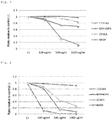
- Human iPS cell strain MYH-GIP4 was seeded in a 12-well plate (cell density: 20% confluency). Forty-eight hours after seeding, 0, 0.05, and 5 ⁇ g/ml of an anti-CD30 antibody-binding agent (general name: Brentuximab vedotin, abbreviated as "BV") (trade name: Adcetris (registered trademark)) was added to each well (the agent-containing medium was exchanged every 24 hours).
- BV Brentuximab vedotin
- Adcetris (registered trademark) contains additives, in addition to BV, numerical values converted from the net weight of BV were described (i.e., "0, 0.05, and 5 ⁇ g/ml as BV").
- Example 1 In order to examine the influence of BV on normal human dermal fibroblasts (NHDF), the same experiment as in Example 1 was conducted.
- NHDF Human fibroblasts
- Example 2 Method for removing undifferentiated cells using an anti-CD30 antibody-binding agent
- BV was added in vitro to human iPS cells, cell proliferation assay (CCK-8 assay), which reflects the number of cells, was performed, and viable cells were evaluated quantitatively.
- CCK-8 assay cell proliferation assay
- iPS cell strains (1231A3, MYH-GIP4, and 253G1) and NHDF were each seeded in a 12-well plate (cell density: 20% confluency). However, the cell density of NHDF was set to 50% confluency.
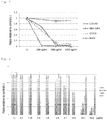
- Fig. 3 (24 hours later), Fig. 4 (48 hours later), and Fig. 5 (72 hours later) show the results.
- the BV concentration at which the number of cells was almost completely suppressed for 72 hours was 5 to 50 ⁇ g/ml for 1231A3, and 25 to 50 ⁇ g/ml for MYH-GIP4 and 253G1.
- NHDF was hardly affected by BV.
- Example 3 Method for removing undifferentiated cells using an anti-CD30 antibody-binding agent
- BV was added in vitro to human iPS cells, cell proliferation assay (CCK-8 assay), which reflects the number of cells, was performed, and viable cells were evaluated quantitatively.
- CCK-8 assay cell proliferation assay
- NHDF Three human iPS cell strains (253G1, MYH-GIP4, and 201B7) and NHDF were each seeded in a 12-well plate (cell density: 20% confluency). However, the cell density of NHDF was set to 50% confluency.
- Fig. 6 shows the results.
- the concentration-dependent effects of BV were confirmed in the human iPS cells.
- NHDF was hardly affected by BV.
- Example 4 Method for removing undifferentiated cells using an anti-CD30 antibody-binding agent
- iPS-CM human iPS cell-derived cardiomyocytes
- the method for inducing differentiation into cardiomyocytes was performed according to the following document: Matsuura K, et al. Creation of human cardiac cell sheets using pluripotent stem cells. Biochem Biophys Res Commun, 2012, and 425(2) pp. 321-7 .
- iPS-CM derived from human iPS cell strain 253G1 was seeded in a 12-well plate (cell density: 90% confluency). Forty-eight hours after seeding, 0, 5, and 10 ⁇ g/ml of BV was added to each well (the agent-containing medium was exchanged every 24 hours) . Thereafter, mRNA was extracted 72 hours and 96 hours after addition. Lin28 expression levels were quantified by quantitative PCR.
- the Lin28 expression level of pure human iPS cells was regarded as 100%
- the Lin28 expression level of the control group at the 72nd hour was about 0.7%
- the Lin28 expression level of the BV-added groups at the 72nd hour was reduced to about 0.3%
- the Lin28 expression level of the BV-added groups at the 96th hour was reduced to about 0.1% ( Fig. 8 ) .
- Example 5 Method for removing undifferentiated cells using a BET inhibitor
- JQ1 BET inhibitor 1
- NHDF normal human dermal fibroblasts
- Human iPS cell strain 253G1 was seeded in a 12-well plate (cell density: 20% confluency).
- Human fibroblasts (NHDF) were seeded in a 12-well plate (cell density: 50% confluency).
- Example 6 Method for removing undifferentiated cells using a BET inhibitor
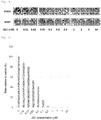
- JQ1 was added in vitro to human iPS cells, cell proliferation assay (CCK-8 assay), which reflects the number of cells, was performed 96 hours later, and viable cells were evaluated quantitatively.
- CCK-8 assay cell proliferation assay
- Human iPS cell strain 253G1 was seeded in a 12-well plate (cell density: 20% confluency).
- Example 6 In order to determine that JQ1 was not toxic against human normal differentiated cells (NHDF and iPS-CM), the same cell proliferation assay as in Example 6 was conducted.
- NHDF and iPS-CM were each seeded in a 12-well plate (cell density: 50% and 90% confluency, respectively).
- Figs. 11 and 12 show the results of NHDF and iPS-CM, respectively. It was confirmed that JQ1 was almost not toxic against NHDF and iPS-CM.
- Example 7 Method for removing undifferentiated cells using a BET inhibitor
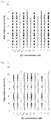
- iPS-CM derived from human iPS cell strain MYH-GIP4 was seeded in a 12-well plate (cell density: 90% confluency). Forty-eight hours after seeding, 0, 1, and 5 ⁇ Ml of JQ1 was added to each well (the agent-containing medium was exchanged every 48 hours). Thereafter, the TRA-1-60 positive rate was quantified 96 hours after addition. As a control, the same measurement was performed using an isotype control antibody, and it was confirmed that there were no false-positives.
- Fig. 13 show that the TRA-1-60 positive rate was 2.0% in the control (JQ1: 0 ⁇ M) group, whereas the positive rate was reduced to 0.2% in the 1- ⁇ M JQ1-added group, and to 0.1% in the 5- ⁇ M JQ1-added group.
Landscapes
- Health & Medical Sciences (AREA)
- Life Sciences & Earth Sciences (AREA)
- Engineering & Computer Science (AREA)
- Biomedical Technology (AREA)
- Zoology (AREA)
- Biotechnology (AREA)
- Chemical & Material Sciences (AREA)
- Genetics & Genomics (AREA)
- Organic Chemistry (AREA)
- Bioinformatics & Cheminformatics (AREA)
- Wood Science & Technology (AREA)
- Cell Biology (AREA)
- General Health & Medical Sciences (AREA)
- Microbiology (AREA)
- Biochemistry (AREA)
- General Engineering & Computer Science (AREA)
- Developmental Biology & Embryology (AREA)
- Reproductive Health (AREA)
- Gynecology & Obstetrics (AREA)
- Rheumatology (AREA)
- Epidemiology (AREA)
- Immunology (AREA)
- Pharmacology & Pharmacy (AREA)
- Virology (AREA)
- Animal Behavior & Ethology (AREA)
- Public Health (AREA)
- Veterinary Medicine (AREA)
- Medicinal Chemistry (AREA)
- Molecular Biology (AREA)
- Transplantation (AREA)
- Cardiology (AREA)
- Micro-Organisms Or Cultivation Processes Thereof (AREA)
- Medicines Containing Material From Animals Or Micro-Organisms (AREA)
- Measuring Or Testing Involving Enzymes Or Micro-Organisms (AREA)
Applications Claiming Priority (3)
| Application Number | Priority Date | Filing Date | Title |
|---|---|---|---|
| JP2014226682 | 2014-11-07 | ||
| EP15856872.5A EP3216859B1 (de) | 2014-11-07 | 2015-11-06 | Differenzierungsinduzierte zellpopulation, aus der undifferenzierte zellen entfernt wurden, verwendung davon und verfahren zur herstellung davon |
| PCT/JP2015/081408 WO2016072519A1 (ja) | 2014-11-07 | 2015-11-06 | 未分化細胞が除去された分化誘導細胞集団、その利用及びその製造方法 |
Related Parent Applications (2)
| Application Number | Title | Priority Date | Filing Date |
|---|---|---|---|
| EP15856872.5A Division EP3216859B1 (de) | 2014-11-07 | 2015-11-06 | Differenzierungsinduzierte zellpopulation, aus der undifferenzierte zellen entfernt wurden, verwendung davon und verfahren zur herstellung davon |
| EP15856872.5A Division-Into EP3216859B1 (de) | 2014-11-07 | 2015-11-06 | Differenzierungsinduzierte zellpopulation, aus der undifferenzierte zellen entfernt wurden, verwendung davon und verfahren zur herstellung davon |
Publications (1)
| Publication Number | Publication Date |
|---|---|
| EP3567100A1 true EP3567100A1 (de) | 2019-11-13 |
Family
ID=55909242
Family Applications (2)
| Application Number | Title | Priority Date | Filing Date |
|---|---|---|---|
| EP19181427.6A Ceased EP3567100A1 (de) | 2014-11-07 | 2015-11-06 | Differenzierungsinduzierte zellpopulation, aus der undifferenzierte zellen entfernt wurden, verwendung davon und verfahren zur herstellung davon |
| EP15856872.5A Active EP3216859B1 (de) | 2014-11-07 | 2015-11-06 | Differenzierungsinduzierte zellpopulation, aus der undifferenzierte zellen entfernt wurden, verwendung davon und verfahren zur herstellung davon |
Family Applications After (1)
| Application Number | Title | Priority Date | Filing Date |
|---|---|---|---|
| EP15856872.5A Active EP3216859B1 (de) | 2014-11-07 | 2015-11-06 | Differenzierungsinduzierte zellpopulation, aus der undifferenzierte zellen entfernt wurden, verwendung davon und verfahren zur herstellung davon |
Country Status (9)
| Country | Link |
|---|---|
| US (2) | US20170335284A1 (de) |
| EP (2) | EP3567100A1 (de) |
| JP (1) | JP6938154B2 (de) |
| KR (1) | KR102639313B1 (de) |
| CN (1) | CN107075473B (de) |
| AU (1) | AU2015344125B2 (de) |
| CA (1) | CA2966576C (de) |
| SG (2) | SG11201703544QA (de) |
| WO (1) | WO2016072519A1 (de) |
Families Citing this family (14)
| Publication number | Priority date | Publication date | Assignee | Title |
|---|---|---|---|---|
| JP2018014972A (ja) * | 2016-07-29 | 2018-02-01 | 国立大学法人大阪大学 | 未分化細胞が除去された分化誘導細胞集団の製造方法 |
| WO2018117127A1 (ja) * | 2016-12-20 | 2018-06-28 | 大日本住友製薬株式会社 | 未分化iPS細胞の除去剤 |
| CN106854646A (zh) * | 2016-12-21 | 2017-06-16 | 南开大学 | 一种维持小鼠胚胎干细胞Naive状态的低表达Lin28的小鼠胚胎干细胞 |
| CN110506109B (zh) * | 2017-06-05 | 2024-03-12 | 泰尔茂株式会社 | 细胞培养物的制造方法 |
| WO2020067436A1 (ja) * | 2018-09-27 | 2020-04-02 | 国立大学法人大阪大学 | 多能性幹細胞由来細胞の移植片形成方法 |
| JP7781521B2 (ja) * | 2018-09-27 | 2025-12-08 | 国立大学法人大阪大学 | 多能性幹細胞由来細胞のシート化方法 |
| EP3739040B1 (de) * | 2018-09-27 | 2023-07-05 | Osaka University | Absteifungsverfahren für zellen aus pluripotenten stammzellen |
| CA3119746A1 (en) * | 2018-11-13 | 2020-05-22 | Memorial Sloan-Kettering Cancer Center | Stem cell-based multiplex methods and compositions |
| US12178879B2 (en) | 2019-02-13 | 2024-12-31 | Sumitomo Pharma Co., Ltd. | Hemiasterlin derivative and antibody-drug conjugate thereof |
| WO2020166613A1 (ja) * | 2019-02-13 | 2020-08-20 | 大日本住友製薬株式会社 | 多能性幹細胞の除去剤 |
| US12312419B2 (en) | 2019-02-13 | 2025-05-27 | Sumitomo Pharma Co., Ltd. | Hemiasterlin derivative having cysteine residue |
| KR102181316B1 (ko) * | 2019-05-31 | 2020-11-20 | 한국한의학연구원 | 봉독을 유효성분으로 포함하는 미분화 인간 유도만능 줄기세포의 선택적 세포사멸 유도용 조성물 및 이를 이용한 세포사멸 방법 |
| CN111979175A (zh) * | 2020-08-28 | 2020-11-24 | 安徽惠恩生物科技股份有限公司 | 一种清除干细胞分化体系中残留的多能干细胞的方法 |
| CN115074307B (zh) * | 2021-03-15 | 2024-01-09 | 广州暨南大学医药生物技术研究开发中心有限公司 | 小分子化合物诱导成纤维细胞重编程为睾丸支持细胞的方法及其应用 |
Citations (3)
| Publication number | Priority date | Publication date | Assignee | Title |
|---|---|---|---|---|
| EP1983042A1 (de) * | 2006-01-31 | 2008-10-22 | Asubio Pharma Co., Ltd. | Verfahren zur reinigung einer herzmuskelzelle und aus stammzelle und fötus gewonnene mutmassliche herzmuskelzelle |
| WO2010033084A1 (en) * | 2008-09-18 | 2010-03-25 | Agency For Science, Technology And Research | Markers of induced pluripotent stem cells |
| US20110312090A1 (en) * | 2010-06-18 | 2011-12-22 | Nathan Meyer | Cardiomyocyte medium with dialyzed serum |
Family Cites Families (14)
| Publication number | Priority date | Publication date | Assignee | Title |
|---|---|---|---|---|
| AU2004217699B2 (en) * | 2003-03-07 | 2008-07-03 | Gamida-Cell Ltd. | Expansion of renewable stem cell populations using modulators of PI 3-kinase |
| CA2644856A1 (en) * | 2006-03-06 | 2007-09-13 | Agency For Science, Technology And Research | Human embryonic stem cell methods and podxl expression |
| WO2007143193A1 (en) * | 2006-06-02 | 2007-12-13 | University Of Georgia Research Foundation, Inc. | Pancreatic and liver endoderm cells and tissue by differentiation of definitive endoderm cells obtained from human embryonic stems |
| KR100937456B1 (ko) * | 2007-08-01 | 2010-01-19 | 한국생명공학연구원 | 인간배아줄기세포를 조골세포 직계열로 분화시키는 방법 |
| US20100035327A1 (en) * | 2008-08-11 | 2010-02-11 | Ann Marie Steele | Use of rice-derived products in a universal cell culture medium |
| CA2777552C (en) * | 2009-10-19 | 2019-05-21 | Cellular Dynamics International, Inc. | Cardiomyocyte production |
| WO2011094538A1 (en) * | 2010-01-29 | 2011-08-04 | The Board Of Trustees Of The Leland Stanford Junior University | Depletion of teratoma-forming pluripotent stem cells |
| MX384074B (es) * | 2010-05-14 | 2025-03-12 | Dana Farber Cancer Inst Inc | Composiciones y métodos para tratar neoplasias, enfermedades inflamatorias y otros trastornos. |
| JP5913292B2 (ja) * | 2010-05-14 | 2016-04-27 | ダナ−ファーバー キャンサー インスティテュート, インコーポレイテッド | 代謝を調節する組成物および方法 |
| US20130219954A1 (en) * | 2010-11-02 | 2013-08-29 | Nec Corporation | Cooling device and method for producing the same |
| WO2012168167A1 (en) * | 2011-06-09 | 2012-12-13 | F. Hoffmann-La Roche Ag | Method for differentiation of pluripotent stem cells into vascular bed cells |
| BR112014020697B1 (pt) * | 2012-02-24 | 2024-01-09 | Alteogen Inc | Anticorpo modificado compreendendo um motivo contendo cisteína na terminação do anticorpo, conjugado anticorpo-droga modificado compreendendo uma droga ligada ao anticorpo modificado e método de produção do mesmo |
| KR101590603B1 (ko) * | 2012-10-12 | 2016-02-01 | 서강대학교산학협력단 | 미분화 인간 유도만능줄기세포의 선택적 세포사멸 유도를 통한 테라토마 형성 억제 방법 |
| CN114558032B (zh) * | 2012-12-21 | 2025-07-29 | 安斯泰来再生医药协会 | 由多能干细胞制备血小板的方法及其组合物 |
-
2015
- 2015-11-06 EP EP19181427.6A patent/EP3567100A1/de not_active Ceased
- 2015-11-06 CN CN201580058577.0A patent/CN107075473B/zh active Active
- 2015-11-06 EP EP15856872.5A patent/EP3216859B1/de active Active
- 2015-11-06 KR KR1020177014373A patent/KR102639313B1/ko active Active
- 2015-11-06 WO PCT/JP2015/081408 patent/WO2016072519A1/ja not_active Ceased
- 2015-11-06 US US15/523,746 patent/US20170335284A1/en not_active Abandoned
- 2015-11-06 SG SG11201703544QA patent/SG11201703544QA/en unknown
- 2015-11-06 AU AU2015344125A patent/AU2015344125B2/en active Active
- 2015-11-06 JP JP2016557838A patent/JP6938154B2/ja active Active
- 2015-11-06 SG SG10201903910RA patent/SG10201903910RA/en unknown
- 2015-11-06 CA CA2966576A patent/CA2966576C/en active Active
-
2021
- 2021-07-28 US US17/386,776 patent/US20210388320A1/en active Pending
Patent Citations (3)
| Publication number | Priority date | Publication date | Assignee | Title |
|---|---|---|---|---|
| EP1983042A1 (de) * | 2006-01-31 | 2008-10-22 | Asubio Pharma Co., Ltd. | Verfahren zur reinigung einer herzmuskelzelle und aus stammzelle und fötus gewonnene mutmassliche herzmuskelzelle |
| WO2010033084A1 (en) * | 2008-09-18 | 2010-03-25 | Agency For Science, Technology And Research | Markers of induced pluripotent stem cells |
| US20110312090A1 (en) * | 2010-06-18 | 2011-12-22 | Nathan Meyer | Cardiomyocyte medium with dialyzed serum |
Non-Patent Citations (13)
| Title |
|---|
| ANONYMOUS: "ADCETRIS (brentuximab vedotin)", 1 November 2014 (2014-11-01), XP055388825, Retrieved from the Internet <URL:https://www.accessdata.fda.gov/drugsatfda_docs/label/2014/125388_S056S078lbl.pdf> [retrieved on 20170707] * |
| CHAD TANG ET AL: "An antibody against SSEA-5 glycan on human pluripotent stem cells enables removal of teratoma-forming cells", NATURE BIOTECHNOLOGY, vol. 29, no. 9, 14 August 2011 (2011-08-14), pages 829 - 834, XP055067218, ISSN: 1087-0156, DOI: 10.1038/nbt.1947 * |
| EMIKO ITO ET AL: "Tumorigenicity assay essential for facilitating safety studies of hiPSC-derived cardiomyocytes for clinical application", SCIENTIFIC REPORTS, vol. 9, no. 1, 13 February 2019 (2019-02-13), XP055608663, DOI: 10.1038/s41598-018-38325-5 * |
| KUMAR T. PEEYUSH ET AL: "Isolation and Culture of Endothelial Cells from the Embryonic Forebrain", JOURNAL OF VISUALIZED EXPERIMENTS, no. 83, 23 January 2014 (2014-01-23), XP055776917, Retrieved from the Internet <URL:https://www.ncbi.nlm.nih.gov/pmc/articles/PMC4089495/pdf/jove-83-51021.pdf> DOI: 10.3791/51021 * |
| MASUDA SHIGEO ET AL: "Eliminating residual iPS cells for safety in clinical application", PROTEIN & CELL, vol. 6, no. 7, 4 June 2015 (2015-06-04), SPRINGER ASIA, BEIJING, CN, pages 469 - 471, XP035507309, ISSN: 1674-800X, [retrieved on 20150604], DOI: 10.1007/S13238-015-0170-4 * |
| NAGAKO SOUGAWA ET AL: "Immunologic targeting of CD30 eliminates tumourigenic human pluripotent stem cells, allowing safer clinical application of hiPSC-based cell therapy", SCIENTIFIC REPORTS, vol. 8, no. 1, 27 February 2018 (2018-02-27), XP055608664, DOI: 10.1038/s41598-018-21923-8 * |
| PANAGIS FILIPPAKOPOULOS ET AL: "Selective inhibition of BET bromodomains", NATURE, vol. 468, no. 7327, 24 September 2010 (2010-09-24), pages 1067 - 1073, XP055104608, ISSN: 0028-0836, DOI: 10.1038/nature09504 * |
| RAMON M RODRIGUEZ ET AL: "Role of BRD4 in hematopoietic differentiation of embryonic stem cells", EPIGENETICS, vol. 9, no. 4, 20 January 2014 (2014-01-20), US, pages 566 - 578, XP055388938, ISSN: 1559-2294, DOI: 10.4161/epi.27711 * |
| RASHIN MOHSENI: "Safe Transplantation Of Pluripotent Stem Cell By Preventing Teratoma Formation", JOURNAL OF STEM CELL RESEARCH & THERAPY, vol. 04, no. 06, 1 January 2014 (2014-01-01), XP055388873, DOI: 10.4172/2157-7633.1000212 * |
| SOUGAWA NAGAKO ET AL: "Abstract 14773:A Promising in vitro Treatment to Reduce Tumorigenicity in iPSCBased Cardiomyogenesis Therapy by Antibody-Drug Conjugate Selectively Targeting Undifferentiated iPSCs Contaminating in the Graft", 11 November 2016 (2016-11-11), XP002771843, ISSN: 0009-7322, Retrieved from the Internet <URL:http://circ.ahajournals.org/content/134/Suppl_1/A14773> [retrieved on 20170707] * |
| SOUGAWA NAGAKO ET AL: "Abstract 14832: Immunologic Targeting of CD30 Eliminates Tumorigenic Human Pluripotent Stem Cells (iPSC) Allowing Safer Clinical Application of hiPSC-Based Therapy", 25 November 2014 (2014-11-25), XP002771844, ISSN: 0009-7322, Retrieved from the Internet <URL:http://circ.ahajournals.org/content/130/Suppl_2/A14832> [retrieved on 20170707] * |
| STOELZLE SONJA ET AL: "Automated Patch Clamp on mESC-Derived Cardiomyocytes for Cardiotoxicity Prediction", SLAS DISCOVERY: ADVANCING LIFE SCIENCES R&D, vol. 16, no. 8, 1 September 2011 (2011-09-01), pages 910 - 916, XP055946359, ISSN: 2472-5552, Retrieved from the Internet <URL:https://api.elsevier.com/content/article/PII:S2472555222078248?httpAccept=text/plain> DOI: 10.1177/1087057111413924 * |
| Z. RONG ET AL: "A Scalable Approach to Prevent Teratoma Formation of Human Embryonic Stem Cells", JOURNAL OF BIOLOGICAL CHEMISTRY, vol. 287, no. 39, 4 August 2012 (2012-08-04), US, pages 32338 - 32345, XP055311258, ISSN: 0021-9258, DOI: 10.1074/jbc.M112.383810 * |
Also Published As
| Publication number | Publication date |
|---|---|
| CN107075473B (zh) | 2021-07-13 |
| CA2966576A1 (en) | 2016-05-12 |
| AU2015344125A1 (en) | 2017-05-25 |
| EP3216859A4 (de) | 2017-09-13 |
| AU2015344125B2 (en) | 2022-03-24 |
| CA2966576C (en) | 2021-07-20 |
| SG11201703544QA (en) | 2017-06-29 |
| WO2016072519A1 (ja) | 2016-05-12 |
| US20170335284A1 (en) | 2017-11-23 |
| EP3216859A1 (de) | 2017-09-13 |
| SG10201903910RA (en) | 2019-05-30 |
| KR20170074996A (ko) | 2017-06-30 |
| KR102639313B1 (ko) | 2024-02-20 |
| JPWO2016072519A1 (ja) | 2017-08-17 |
| EP3216859B1 (de) | 2020-03-11 |
| US20210388320A1 (en) | 2021-12-16 |
| CN107075473A (zh) | 2017-08-18 |
| JP6938154B2 (ja) | 2021-09-22 |
Similar Documents
| Publication | Publication Date | Title |
|---|---|---|
| US20210388320A1 (en) | Differentiation-induced cell population from which undifferentiated cells have been removed, use of same, and method for producing same | |
| Wang et al. | SKP-SC-EVs mitigate denervated muscle atrophy by inhibiting oxidative stress and inflammation and improving microcirculation | |
| US7691415B2 (en) | Method for preventing, or reducing the severity of, graft-versus-host disease using pluri-differentiated mesenchymal progenitor cells | |
| US9481866B2 (en) | Methods of producing T cell populations enriched for stable regulatory T-cells | |
| Sansegundo et al. | Energy metabolism and hyperactivation of spermatozoa from three mouse species under capacitating conditions | |
| Sun et al. | ALIX increases protein content and protective function of iPSC-derived exosomes | |
| Brini et al. | Cell-mediated drug delivery by gingival interdental papilla mesenchymal stromal cells (GinPa-MSCs) loaded with paclitaxel | |
| WO2011062963A2 (en) | Induced puripotent stem cells and related methods | |
| AU2008266019A1 (en) | Peptide linked cell matrix materials for stem cells and methods of using the same | |
| US20030003084A1 (en) | Human mesenchymal progenitor cell | |
| Zheng et al. | Antioxidants improve the proliferation and efficacy of hUC-MSCs against H2O2-induced senescence | |
| Kays et al. | Evaluation of microglia/macrophage cells from rat striatum and prefrontal cortex reveals differential expression of inflammatory-related mRNA after methamphetamine | |
| Narakornsak et al. | Sesamin encouraging effects on chondrogenic differentiation of human amniotic fluid-derived mesenchymal stem cells | |
| Zielniok et al. | Vadadustat, a HIF prolyl hydroxylase inhibitor, improves immunomodulatory properties of human mesenchymal stromal cells | |
| CN110507668A (zh) | 用于治疗免疫性疾病的干细胞制剂及其应用 | |
| Meissner et al. | Extracellular Vesicles Isolated from Equine Adipose-Derived Stromal Stem Cells (ASCs) Mitigate Tunicamycin-Induced ER Stress in Equine Corneal Stromal Stem Cells (CSSCs) | |
| Hatori et al. | Platelet-rich fibrin-conditioned medium as an alternative to fetal bovine serum promotes osteogenesis of human dental pulp stem cells | |
| Dobrocsyova et al. | Modulation of adipogenesis and oxidative status by quercetin and ochratoxin A: positive or negative impact on rat adipocyte metabolism? | |
| JP2018014972A (ja) | 未分化細胞が除去された分化誘導細胞集団の製造方法 | |
| Sandhu et al. | Effects of tolerance-induced preconditioning on mitochondrial biogenesis in undifferentiated and differentiated neuronal cells | |
| Jayasingha et al. | Aqueous extract of freeze-dried Protaetia brevitarsis larvae promotes osteogenesis by activating β-catenin signaling | |
| Klyucherev et al. | Mesenchymal Stem Cell-Derived Extracellular Vesicles Attenuate Pro-Inflammatory Macrophage Polarization: Comparison of Matrix-Bound and Small Extracellular Vesicles | |
| Snoeij et al. | Differential effects of tri-n-butylin chloride on macromolecular synthesis and ATP levels of rat thymocyte subpopulations obtained by centrifugal elutriation | |
| EP3795677A1 (de) | Zusammensetzung zur förderung der stammzelldifferenzierung mit vorläuferzellenkulturlösung und mehrschichtigem graphitfilm und ihre verwendung | |
| JP2018074983A (ja) | 未分化細胞が除去された分化誘導細胞集団の製造方法 |
Legal Events
| Date | Code | Title | Description |
|---|---|---|---|
| PUAI | Public reference made under article 153(3) epc to a published international application that has entered the european phase |
Free format text: ORIGINAL CODE: 0009012 |
|
| STAA | Information on the status of an ep patent application or granted ep patent |
Free format text: STATUS: THE APPLICATION HAS BEEN PUBLISHED |
|
| AC | Divisional application: reference to earlier application |
Ref document number: 3216859 Country of ref document: EP Kind code of ref document: P |
|
| AK | Designated contracting states |
Kind code of ref document: A1 Designated state(s): AL AT BE BG CH CY CZ DE DK EE ES FI FR GB GR HR HU IE IS IT LI LT LU LV MC MK MT NL NO PL PT RO RS SE SI SK SM TR |
|
| STAA | Information on the status of an ep patent application or granted ep patent |
Free format text: STATUS: REQUEST FOR EXAMINATION WAS MADE |
|
| 17P | Request for examination filed |
Effective date: 20200528 |
|
| RBV | Designated contracting states (corrected) |
Designated state(s): AL AT BE BG CH CY CZ DE DK EE ES FI FR GB GR HR HU IE IS IT LI LT LU LV MC MK MT NL NO PL PT RO RS SE SI SK SM TR |
|
| STAA | Information on the status of an ep patent application or granted ep patent |
Free format text: STATUS: EXAMINATION IS IN PROGRESS |
|
| 17Q | First examination report despatched |
Effective date: 20200714 |
|
| STAA | Information on the status of an ep patent application or granted ep patent |
Free format text: STATUS: THE APPLICATION HAS BEEN REFUSED |
|
| 18R | Application refused |
Effective date: 20231126 |