EP3567892A1 - Procédé, dispositif et système de configuration d'informations - Google Patents
Procédé, dispositif et système de configuration d'informations Download PDFInfo
- Publication number
- EP3567892A1 EP3567892A1 EP17894072.2A EP17894072A EP3567892A1 EP 3567892 A1 EP3567892 A1 EP 3567892A1 EP 17894072 A EP17894072 A EP 17894072A EP 3567892 A1 EP3567892 A1 EP 3567892A1
- Authority
- EP
- European Patent Office
- Prior art keywords
- information
- resource
- index
- indication information
- terminal device
- Prior art date
- Legal status (The legal status is an assumption and is not a legal conclusion. Google has not performed a legal analysis and makes no representation as to the accuracy of the status listed.)
- Pending
Links
Images



Classifications
-
- H—ELECTRICITY
- H04—ELECTRIC COMMUNICATION TECHNIQUE
- H04L—TRANSMISSION OF DIGITAL INFORMATION, e.g. TELEGRAPHIC COMMUNICATION
- H04L5/00—Arrangements affording multiple use of the transmission path
- H04L5/0091—Signalling for the administration of the divided path, e.g. signalling of configuration information
- H04L5/0094—Indication of how sub-channels of the path are allocated
-
- H—ELECTRICITY
- H04—ELECTRIC COMMUNICATION TECHNIQUE
- H04L—TRANSMISSION OF DIGITAL INFORMATION, e.g. TELEGRAPHIC COMMUNICATION
- H04L41/00—Arrangements for maintenance, administration or management of data switching networks, e.g. of packet switching networks
- H04L41/08—Configuration management of networks or network elements
- H04L41/0803—Configuration setting
- H04L41/0806—Configuration setting for initial configuration or provisioning, e.g. plug-and-play
-
- H—ELECTRICITY
- H04—ELECTRIC COMMUNICATION TECHNIQUE
- H04B—TRANSMISSION
- H04B7/00—Radio transmission systems, i.e. using radiation field
- H04B7/02—Diversity systems; Multi-antenna system, i.e. transmission or reception using multiple antennas
- H04B7/04—Diversity systems; Multi-antenna system, i.e. transmission or reception using multiple antennas using two or more spaced independent antennas
- H04B7/06—Diversity systems; Multi-antenna system, i.e. transmission or reception using multiple antennas using two or more spaced independent antennas at the transmitting station
- H04B7/0613—Diversity systems; Multi-antenna system, i.e. transmission or reception using multiple antennas using two or more spaced independent antennas at the transmitting station using simultaneous transmission
- H04B7/0615—Diversity systems; Multi-antenna system, i.e. transmission or reception using multiple antennas using two or more spaced independent antennas at the transmitting station using simultaneous transmission of weighted versions of same signal
- H04B7/0619—Diversity systems; Multi-antenna system, i.e. transmission or reception using multiple antennas using two or more spaced independent antennas at the transmitting station using simultaneous transmission of weighted versions of same signal using feedback from receiving side
- H04B7/0621—Feedback content
- H04B7/0626—Channel coefficients, e.g. channel state information [CSI]
-
- H—ELECTRICITY
- H04—ELECTRIC COMMUNICATION TECHNIQUE
- H04B—TRANSMISSION
- H04B7/00—Radio transmission systems, i.e. using radiation field
- H04B7/02—Diversity systems; Multi-antenna system, i.e. transmission or reception using multiple antennas
- H04B7/04—Diversity systems; Multi-antenna system, i.e. transmission or reception using multiple antennas using two or more spaced independent antennas
- H04B7/06—Diversity systems; Multi-antenna system, i.e. transmission or reception using multiple antennas using two or more spaced independent antennas at the transmitting station
- H04B7/0686—Hybrid systems, i.e. switching and simultaneous transmission
- H04B7/0695—Hybrid systems, i.e. switching and simultaneous transmission using beam selection
- H04B7/06952—Selecting one or more beams from a plurality of beams, e.g. beam training, management or sweeping
- H04B7/0696—Determining beam pairs
-
- H—ELECTRICITY
- H04—ELECTRIC COMMUNICATION TECHNIQUE
- H04B—TRANSMISSION
- H04B7/00—Radio transmission systems, i.e. using radiation field
- H04B7/02—Diversity systems; Multi-antenna system, i.e. transmission or reception using multiple antennas
- H04B7/04—Diversity systems; Multi-antenna system, i.e. transmission or reception using multiple antennas using two or more spaced independent antennas
- H04B7/08—Diversity systems; Multi-antenna system, i.e. transmission or reception using multiple antennas using two or more spaced independent antennas at the receiving station
- H04B7/0868—Hybrid systems, i.e. switching and combining
- H04B7/088—Hybrid systems, i.e. switching and combining using beam selection
-
- H—ELECTRICITY
- H04—ELECTRIC COMMUNICATION TECHNIQUE
- H04L—TRANSMISSION OF DIGITAL INFORMATION, e.g. TELEGRAPHIC COMMUNICATION
- H04L41/00—Arrangements for maintenance, administration or management of data switching networks, e.g. of packet switching networks
- H04L41/08—Configuration management of networks or network elements
-
- H—ELECTRICITY
- H04—ELECTRIC COMMUNICATION TECHNIQUE
- H04L—TRANSMISSION OF DIGITAL INFORMATION, e.g. TELEGRAPHIC COMMUNICATION
- H04L5/00—Arrangements affording multiple use of the transmission path
- H04L5/0001—Arrangements for dividing the transmission path
- H04L5/0003—Two-dimensional division
- H04L5/0005—Time-frequency
- H04L5/0007—Time-frequency the frequencies being orthogonal, e.g. OFDM(A) or DMT
-
- H—ELECTRICITY
- H04—ELECTRIC COMMUNICATION TECHNIQUE
- H04L—TRANSMISSION OF DIGITAL INFORMATION, e.g. TELEGRAPHIC COMMUNICATION
- H04L5/00—Arrangements affording multiple use of the transmission path
- H04L5/0001—Arrangements for dividing the transmission path
- H04L5/0014—Three-dimensional division
- H04L5/0023—Time-frequency-space
-
- H—ELECTRICITY
- H04—ELECTRIC COMMUNICATION TECHNIQUE
- H04L—TRANSMISSION OF DIGITAL INFORMATION, e.g. TELEGRAPHIC COMMUNICATION
- H04L5/00—Arrangements affording multiple use of the transmission path
- H04L5/003—Arrangements for allocating sub-channels of the transmission path
- H04L5/0048—Allocation of pilot signals, i.e. of signals known to the receiver
-
- H—ELECTRICITY
- H04—ELECTRIC COMMUNICATION TECHNIQUE
- H04L—TRANSMISSION OF DIGITAL INFORMATION, e.g. TELEGRAPHIC COMMUNICATION
- H04L5/00—Arrangements affording multiple use of the transmission path
- H04L5/0091—Signalling for the administration of the divided path, e.g. signalling of configuration information
-
- H—ELECTRICITY
- H04—ELECTRIC COMMUNICATION TECHNIQUE
- H04L—TRANSMISSION OF DIGITAL INFORMATION, e.g. TELEGRAPHIC COMMUNICATION
- H04L5/00—Arrangements affording multiple use of the transmission path
- H04L5/0091—Signalling for the administration of the divided path, e.g. signalling of configuration information
- H04L5/0096—Indication of changes in allocation
-
- H—ELECTRICITY
- H04—ELECTRIC COMMUNICATION TECHNIQUE
- H04W—WIRELESS COMMUNICATION NETWORKS
- H04W16/00—Network planning, e.g. coverage or traffic planning tools; Network deployment, e.g. resource partitioning or cells structures
- H04W16/24—Cell structures
- H04W16/28—Cell structures using beam steering
-
- H—ELECTRICITY
- H04—ELECTRIC COMMUNICATION TECHNIQUE
- H04W—WIRELESS COMMUNICATION NETWORKS
- H04W72/00—Local resource management
- H04W72/50—Allocation or scheduling criteria for wireless resources
- H04W72/54—Allocation or scheduling criteria for wireless resources based on quality criteria
- H04W72/541—Allocation or scheduling criteria for wireless resources based on quality criteria using the level of interference
-
- H—ELECTRICITY
- H04—ELECTRIC COMMUNICATION TECHNIQUE
- H04W—WIRELESS COMMUNICATION NETWORKS
- H04W72/00—Local resource management
- H04W72/50—Allocation or scheduling criteria for wireless resources
- H04W72/54—Allocation or scheduling criteria for wireless resources based on quality criteria
- H04W72/542—Allocation or scheduling criteria for wireless resources based on quality criteria using measured or perceived quality
-
- H—ELECTRICITY
- H04—ELECTRIC COMMUNICATION TECHNIQUE
- H04B—TRANSMISSION
- H04B17/00—Monitoring; Testing
- H04B17/30—Monitoring; Testing of propagation channels
-
- H—ELECTRICITY
- H04—ELECTRIC COMMUNICATION TECHNIQUE
- H04W—WIRELESS COMMUNICATION NETWORKS
- H04W72/00—Local resource management
- H04W72/04—Wireless resource allocation
- H04W72/044—Wireless resource allocation based on the type of the allocated resource
- H04W72/0446—Resources in time domain, e.g. slots or frames
-
- H—ELECTRICITY
- H04—ELECTRIC COMMUNICATION TECHNIQUE
- H04W—WIRELESS COMMUNICATION NETWORKS
- H04W72/00—Local resource management
- H04W72/04—Wireless resource allocation
- H04W72/044—Wireless resource allocation based on the type of the allocated resource
- H04W72/046—Wireless resource allocation based on the type of the allocated resource the resource being in the space domain, e.g. beams
Definitions
- Embodiments of this application relate to the communications field, and more specifically, to a measurement information configuration method, apparatus, and system.
- a high frequency band (generally, a frequency band greater than 6 GHz is a high frequency band, and a frequency band less than 6 GHz is a low frequency band) becomes a main operating frequency band in 5G technologies due to abundant spectrum resources.
- a path loss of an electromagnetic wave is large and anti-fading performance is poor in a data transmission process, a narrow beam analog weighting technology needs to be introduced.
- a width of a narrow beam is generally less than 5 degrees, and with mobility of a terminal device and a time-varying characteristic of a channel, the narrow beams detected by the terminal device at different moments may be different. Therefore, a network device needs to configure different narrow beam measurement information for a same terminal device at different moments. Then, the terminal device measures the narrow beam based on the received narrow beam measurement information and feeds back current channel state information of the narrow beam.
- the technical problem to be resolved in the present invention is how to perform measurement based on a narrow beam channel in a timely and accurate manner for a narrow beam analog weighting technology used in a high-frequency band.
- the embodiments of this application provide an information configuration method, apparatus, and system.
- an embodiment of the present invention provides an information configuration method, and the method includes: generating first configuration information, where the first configuration information includes at least one of the following information:
- the method further includes: generating second configuration information, and sending the second configuration information to the terminal device, where the second configuration information includes at least one of the following information:
- each resource set includes a plurality of resources, and each resource includes at least one of the following information: resource time-frequency information, resource index information, a resource sending time-domain characteristic, and resource function indication information.
- each reporting setting includes at least one of the following information: information used to indicate a reporting time-domain characteristic, information used to indicate a reporting frequency-domain granularity, and information used to indicate a reporting type or content.
- the link specifically includes at least one of the following information: a resource setting index, a reporting setting index, and a quantity to be measured.
- the receive beam indication information of the terminal device is one or more of the following information: a transmit beam index, a receive beam index, a beam pair index, and a quasi co-location QCL index or a QCL indicator used to indicate a beam.
- the RS sending and feedback period indication information is one or more of the following information: a quantity of orthogonal frequency division multiplexing OFDM symbols, a quantity of transmission time intervals TTIs, a quantity of transmission time units TTUs, a time, or a time value obtained through table lookup or a formula.
- the RS activation or deactivation indication information is one or more of the following information: a resource setting index, a resource set index, a resource index, a port index, and an OFDM symbol index.
- the RS sending and CSI feedback time offset indication information is: a sending and CSI feedback time offset of one or more reference signal ports, a sending and CSI feedback time offset of one or more reference signals RSs, a sending and CSI feedback time offset of one or more resource sets, or a sending and CSI feedback time offset of one or more resource settings.
- the RS sending and CSI feedback time offset indication information is one or more of the following information: a quantity of OFDM symbols, a quantity of TTIs, a time, or a time value obtained through table lookup or a formula.
- an information configuration method including: receiving first configuration information from a network device, where the first configuration information includes at least one of the following information:
- the method further includes: receiving second configuration information from the base station, where the second configuration information includes at least one of the following information:
- each resource set includes a plurality of resources, and each resource includes at least one of the following information: resource time-frequency information, resource index information, a resource sending time-domain characteristic, and resource function indication information.
- each reporting setting includes at least one of the following information: information used to indicate a reporting time-domain characteristic, information used to indicate a reporting frequency-domain granularity, and information used to indicate a reporting type or content.
- the link specifically includes at least one of the following information: a resource setting index, a reporting setting index, and a quantity to be measured.
- the receive beam indication information of the terminal device is a transmit beam index, a receive beam index, a beam pair index, a quasi co-location QCL index or a QCL indicator, or a combination of any two or more of the foregoing information.
- the receive beam indication information of the terminal device is a transmit beam index, a receive beam index, a beam pair index, a quasi co-location QCL index or a QCL indicator, or a combination of any one or more of the foregoing information.
- the RS sending and feedback period indication information is: a quantity of orthogonal frequency division multiplexing OFDM symbols, a quantity of transmission time intervals TTIs, a quantity of transmission time units TTUs, an absolute time, or a time value obtained through table lookup or a formula.
- the RS activation or deactivation indication information is one or more of the following information: a resource setting index, a resource set index, a resource index, a port index, and an OFDM symbol index.
- the RS sending and CSI feedback time offset indication information is: a sending and CSI feedback time offset of one or more reference signal ports, a sending and CSI feedback time offset of one or more reference signals RSs, a sending and CSI feedback time offset of one or more resource sets, or a sending and CSI feedback time offset of one or more resource settings.
- the RS sending and CSI feedback time offset indication information is one or more of the following information: a quantity of OFDM symbols, a quantity of TTIs, an absolute time, or a time value obtained through table lookup or a formula.
- the performing measurement and feedback based on the first configuration information specifically includes:
- an embodiment of the present invention further provides an information configuration method, including:
- the CSI-RS basic pattern further includes one or more of the following information: a quantity of channel state information-reference signal (channel state information-reference signal, CSI-RS) ports configured on an orthogonal frequency division multiplexing (Orthogonal Frequency Division Multiplexing, OFDM) symbol, CSI-RS time-frequency domain mapping information or location information, an offset or location information that is of the first OFDM symbol used for CSI-RS transmission and on a frame, a subframe, or a timeslot, or a maximum value or a maximum quantity of OFDM symbols used for CSI-RS transmission.
- CSI-RS channel state information-reference signal
- OFDM Orthogonal Frequency Division Multiplexing
- the CSI-RS basic pattern is relatively stable and has a short delay and high tolerance. Therefore, in this embodiment of the present invention, the CSI-RS basic pattern is transmitted to the terminal device by using RRC signaling, and signaling overheads can be reduced.
- the second configuration information includes at least one of the following information: one or more resource settings (resource setting), one or more reporting settings (reporting setting), and a link, where the link is used to indicate a quantity to be measured and a relationship between the one or more resource settings and the one or more reporting settings.
- each resource setting is corresponding to one resource setting index that is used to uniquely identify the resource setting.
- each resource setting includes one or more resource sets, and each resource set is corresponding to one resource set index that is used to uniquely identify the resource set.
- each resource set further includes one or more CSI-RS resources, and each CSI-RS resource is corresponding to one resource index that is used to uniquely identify the CSI-RS resource.
- each CSI-RS resource further includes one or more of the following information: CSI-RS time-frequency location information, a CSI-RS sending time-domain characteristic, CSI-RS function indication information, CSI-RS receive beam information of the terminal device, CSI-RS sending and CSI-RS feedback period indication information, CSI-RS deactivation or activation indication information, CSI-RS sending and CSI feedback time offset indication information, and beam sweeping method indication information.
- each reporting setting includes one or more of the following information: a reporting setting index that is used to uniquely identify a reporting setting, a CSI measurement and reporting time-domain characteristic, a CSI measurement and reporting frequency-domain granularity, a CSI reporting type or content, and beam sweeping method indication information.
- the link includes one or more of the following information: a resource setting index, a reporting setting index, a quantity to be measured (quantity to be measured), and beam sweeping method indication information.
- the receive beam indication information of the terminal device is a transmit beam index, a receive beam index, a beam pair index, a quasi co-location QCL index or a QCL indicator, or a combination of any one or more of the foregoing information.
- the receive beam indication information of the terminal device is a transmit beam index, a receive beam index, a beam pair index, a quasi co-location QCL index or a QCL indicator, or a combination of any one or more of the foregoing information.
- the RS sending and feedback period indication information is: a quantity of orthogonal frequency division multiplexing OFDM symbols, a quantity of transmission time intervals (Time Transmission interval, TTI), a quantity of transmission time units (Time Transmission Unit, TTU), an absolute time, or a time value obtained through table lookup or a formula.
- the RS activation or deactivation indication information is one or more index sets, and each index set is a resource setting index, a resource set index, a resource index, or a combination of any one or more of the foregoing information.
- the RS sending and CSI feedback time offset indication information is: a sending and CSI feedback time offset of one or more reference signal ports, a sending and CSI feedback time offset of one or more reference signals RSs, a sending and CSI feedback time offset of one or more resource sets, or a sending and CSI feedback time offset of one or more resource settings.
- the RS sending and CSI feedback time offset indication information is one or more of the following information: a quantity of OFDM symbols, a quantity of TTIs, an absolute time, or a time value obtained through table lookup or a formula.
- an embodiment of the present invention further provides an information configuration method, including:
- the CSI-RS basic pattern further includes one or more of the following information: a quantity of channel state information-reference signal (channel state information-reference signal, CSI-RS) ports configured on an orthogonal frequency division multiplexing (Orthogonal Frequency Division Multiplexing, OFDM) symbol, CSI-RS time-frequency domain mapping information or location information, an offset or location information that is of the first OFDM symbol used for CSI-RS transmission and on a frame, a subframe, or a timeslot, or a maximum value or a maximum quantity of OFDM symbols used for CSI-RS transmission.
- CSI-RS channel state information-reference signal
- OFDM Orthogonal Frequency Division Multiplexing
- the CSI-RS basic pattern is relatively stable and has a short delay and high tolerance. Therefore, in this embodiment of the present invention, the CSI-RS basic pattern is transmitted to the terminal device by using RRC signaling, and signaling overheads can be reduced.
- the second configuration information includes at least one of the following information: one or more resource settings (resource setting), one or more reporting settings (reporting setting), and a link, where the link is used to indicate a relationship between the one or more resource settings and the one or more reporting settings.
- each resource setting is corresponding to one resource setting index that is used to uniquely identify the resource setting.
- each resource setting includes one or more resource sets, and each resource set is corresponding to one resource set index that is used to uniquely identify the resource set.
- each resource set further includes one or more CSI-RS resources, and each CSI-RS resource is corresponding to one resource index that is used to uniquely identify the CSI-RS resource.
- each CSI-RS resource further includes one or more of the following information: time-frequency location information of each CSI-RS, a CSI-RS sending time-domain characteristic, CSI-RS function indication information, CSI-RS receive beam information of the terminal device, CSI-RS sending and CSI-RS feedback period indication information, CSI-RS deactivation or activation indication information, CSI-RS sending and CSI feedback time offset indication information, and beam sweeping method indication information.
- each reporting setting includes one or more of the following information: a reporting setting index that is used to uniquely identify a reporting setting, a CSI measurement and reporting time-domain characteristic, a CSI measurement and reporting frequency-domain characteristic, a CSI reporting type or content, and beam sweeping method indication information.
- the link includes one or more of the following information: a resource setting index, a reporting setting index, a quantity to be measured (quantity to be measured), and beam sweeping method indication information.
- the receive beam indication information of the terminal device is a transmit beam index, a receive beam index, a beam pair index, a quasi co-location QCL index or a QCL indicator, or a combination of any one or more of the foregoing information.
- the receive beam indication information of the terminal device is a transmit beam index, a receive beam index, a beam pair index, a quasi co-location QCL index or a QCL indicator, or a combination of any one or more of the foregoing information.
- the RS sending and feedback period indication information is: a quantity of orthogonal frequency division multiplexing OFDM symbols, a quantity of transmission time intervals TTIs, a quantity of transmission time units TTUs, an absolute time, a time value obtained through table lookup or a formula, or a combination of any one or more of the foregoing information.
- the RS activation or deactivation indication information is one or more index sets, and each index set includes a resource setting index, a resource set index, a resource index, or a combination of any one or more of the foregoing information.
- the RS sending and CSI feedback time offset indication information is: a sending and CSI feedback time offset of one or more reference signal ports, a sending and CSI feedback time offset of one or more reference signals RSs, a sending and CSI feedback time offset of one or more resource sets, or a sending and CSI feedback time offset of one or more resource settings.
- the RS sending and CSI feedback time offset indication information is: a quantity of OFDM symbols, a quantity of TTIs, an absolute time, a time value obtained through table lookup or a formula, or a combination of any one or more of the foregoing information.
- an embodiment of the present invention provides a network device, including a processor and a transceiver, and the processor is configured to generate first configuration information, where the first configuration information includes at least one of the following information:
- the processor is further configured to:
- each resource set includes one or more resources, and each resource includes at least one of the following information: resource time-frequency information, resource index information, a resource sending time-domain characteristic, and resource function indication information.
- each reporting setting includes at least one of the following information: information used to indicate a reporting time-domain characteristic, information used to indicate a reporting frequency-domain granularity, and information used to indicate a reporting type or content.
- the link specifically includes at least one of the following information: a resource setting index, a reporting setting index, and a quantity to be measured.
- the receive beam indication information of the terminal device is one or more of the following information: a transmit beam index, a receive beam index, a beam pair index, and a quasi co-location QCL index or a QCL indicator used to indicate beam information.
- the RS sending and feedback period indication information is: a quantity of orthogonal frequency division multiplexing OFDM symbols, a quantity of transmission time intervals TTIs, a quantity of transmission time units TTUs, and a time.
- the RS activation or deactivation indication information is one or more of the following information: a resource setting index, a resource set index, a resource index, a port index, and an OFDM symbol index.
- the RS sending and feedback time offset indication information is: a quantity of OFDM symbols, a quantity of transmission time intervals TTIs, and a time.
- an embodiment of the present invention further provides a terminal device, including a transceiver and a processor, where the transceiver is configured to receive first configuration information from a network device, where the first configuration information includes at least one of the following information:
- the receive beam indication information of the terminal device is one or more of the following information: a transmit beam index, a receive beam index, a beam pair index, and a quasi co-location QCL index or a QCL indicator used to indicate beam information.
- the RS sending and feedback period indication information is: a quantity of orthogonal frequency division multiplexing OFDM symbols, a quantity of transmission time intervals TTIs, a quantity of transmission time units TTUs, and a time.
- the RS activation or deactivation indication information includes one or more of the following information: a resource setting index, a resource set index, a resource index, a port index, and an OFDM symbol index.
- the RS sending and feedback time offset indication information is: a quantity of OFDM symbols, a quantity of transmission time intervals TTIs, and a time.
- the terminal device is further configured to: receive second configuration information from the network device, where the second configuration information includes at least one of the following information:
- each resource set includes one or more resources, and each resource includes at least one of the following information: resource time-frequency information, resource index information, a resource sending time-domain characteristic, and resource function indication information.
- each reporting setting includes at least one of the following information: information used to indicate a reporting time-domain characteristic, information used to indicate a reporting frequency-domain granularity, and information used to indicate a reporting type or content.
- the link specifically includes at least one of the following information: a resource setting index, a reporting setting index, and a quantity to be measured.
- the processor is specifically configured to:
- an embodiment of the present invention provides a network device, including a processor and a transceiver, where the processor is configured to divide configuration information into first configuration information and second configuration information; and the transceiver is configured to send the first configuration information to a terminal device by using RRC signaling, and send the second configuration information to the terminal device by using a MAC CE or DCI.
- the first configuration information includes one or more of: a CSI-RS basic pattern, a quantity of OFDM symbols used for reference signal transmission, time-frequency location information of OFDM used for RS transmission, or a CSI-RS sending period.
- the CSI-RS basic pattern further includes one or more of the following information: a quantity of channel state information-reference signal (channel state information-reference signal, CSI-RS) ports configured on an orthogonal frequency division multiplexing (Orthogonal Frequency Division Multiplexing, OFDM) symbol, CSI-RS time-frequency domain mapping information or location information, an offset or location information that is of the first OFDM symbol used for CSI-RS transmission and on a frame, a subframe, or a timeslot, or a maximum value or a maximum quantity of OFDM symbols used for CSI-RS transmission.
- CSI-RS channel state information-reference signal
- OFDM Orthogonal Frequency Division Multiplexing
- the CSI-RS basic pattern is relatively stable and has a short delay and high tolerance. Therefore, in this embodiment of the present invention, the CSI-RS basic pattern is transmitted to the terminal device by using RRC signaling, and signaling overheads can be reduced.
- the second configuration information includes at least one of the following information: one or more resource settings (resource setting), one or more reporting settings (reporting setting), and a link, where the link is used to indicate a relationship between the one or more resource settings and the one or more reporting settings.
- each resource setting is corresponding to one resource setting index that is used to uniquely identify the resource setting.
- each resource setting includes one or more resource sets, and each resource set is corresponding to one resource set index that is used to uniquely identify the resource set.
- each resource set further includes one or more CSI-RS resources, and each CSI-RS resource is corresponding to one resource index that is used to uniquely identify the CSI-RS resource.
- each CSI-RS resource further includes one or more of the following information: time-frequency location information of each CSI-RS, a CSI-RS sending time-domain characteristic, CSI-RS function indication information, CSI-RS receive beam information of the terminal device, CSI-RS sending and CSI-RS feedback period indication information, CSI-RS deactivation or activation indication information, CSI-RS sending and CSI feedback time offset indication information, and beam sweeping method indication information.
- each reporting setting includes one or more of the following information: a reporting setting index that is used to uniquely identify a reporting setting, a CSI measurement and reporting time-domain characteristic, a CSI measurement and reporting frequency-domain granularity, a CSI reporting type or content, and beam sweeping method indication information.
- the link includes one or more of the following information: a resource setting index, a reporting setting index, a quantity to be measured (quantity to be measured), and beam sweeping method indication information.
- the receive beam indication information of the terminal device is a transmit beam index, a receive beam index, a beam pair index, a quasi co-location QCL index or a QCL indicator, or a combination of any one or more of the foregoing information.
- the receive beam indication information of the terminal device is a transmit beam index, a receive beam index, a beam pair index, a quasi co-location QCL index or a QCL indicator, or a combination of any one or more of the foregoing information.
- the RS sending and feedback period indication information is: a quantity of orthogonal frequency division multiplexing OFDM symbols, a quantity of transmission time intervals (Time Transmission interval, TTI), a quantity of transmission time units (Time Transmission Unit, TTU), an absolute time, or a time value obtained through table lookup or a formula.
- the RS activation or deactivation indication information is one or more index sets, and each index set includes a resource setting index, a resource set index, a resource index, or a combination of any one or more of the foregoing information.
- the RS sending and CSI feedback time offset indication information is: a sending and CSI feedback time offset of one or more reference signal ports, a sending and CSI feedback time offset of one or more reference signals RSs, a sending and CSI feedback time offset of one or more resource sets, or a sending and CSI feedback time offset of one or more resource settings.
- the RS sending and CSI feedback time offset indication information is: a quantity of OFDM symbols, a quantity of TTIs, an absolute time, a time value obtained through table lookup or a formula, or a combination of any one or more of the foregoing information.
- an embodiment of the present invention provides a terminal device, including a processor and a transceiver, where the transceiver is configured to: receive first configuration information from a network device, and receive second configuration information from a transmitter; and the processor is configured to perform measurement and feedback based on the first configuration information and the second configuration information.
- the first configuration information includes one or more of: a CSI-RS basic pattern, a quantity of OFDM symbols used for reference signal transmission, time-frequency location information of OFDM used for RS transmission, or a CSI-RS sending period.
- the CSI-RS basic pattern further includes one or more of the following information: a quantity of channel state information-reference signal (channel state information-reference signal, CSI-RS) ports configured on an orthogonal frequency division multiplexing (Orthogonal Frequency Division Multiplexing, OFDM) symbol, CSI-RS time-frequency domain mapping information or location information, an offset or location information that is of the first OFDM symbol used for CSI-RS transmission and on a frame, a subframe, or a timeslot, or a maximum value or a maximum quantity of OFDM symbols used for CSI-RS transmission.
- CSI-RS channel state information-reference signal
- OFDM Orthogonal Frequency Division Multiplexing
- the CSI-RS basic pattern is relatively stable and has a short delay and high tolerance. Therefore, in this embodiment of the present invention, the CSI-RS basic pattern is transmitted to the terminal device by using RRC signaling, and signaling overheads can be reduced.
- the second configuration information includes at least one of the following information: one or more resource settings (resource setting), one or more reporting settings (reporting setting), and a link, where the link is used to indicate a relationship between the one or more resource settings and the one or more reporting settings.
- each resource setting is corresponding to one resource setting index that is used to uniquely identify the resource setting.
- each resource setting includes one or more resource sets, and each resource set is corresponding to one resource set index that is used to uniquely identify the resource set.
- each resource set further includes one or more CSI-RS resources, and each CSI-RS resource is corresponding to one resource index that is used to uniquely identify the CSI-RS resource.
- each CSI-RS resource further includes one or more of the following information: time-frequency location information of each CSI-RS, a CSI-RS sending time-domain characteristic, CSI-RS function indication information, CSI-RS receive beam information of the terminal device, CSI-RS sending and CSI-RS feedback period indication information, CSI-RS deactivation or activation indication information, CSI-RS sending and CSI feedback time offset indication information, and beam sweeping method indication information.
- each reporting setting includes one or more of the following information: a reporting setting index that is used to uniquely identify a reporting setting, a CSI measurement and reporting time-domain characteristic, a CSI measurement and reporting frequency-domain characteristic, a CSI reporting type or content, and beam sweeping method indication information.
- the link includes one or more of the following information: a resource setting index, a reporting setting index, a quantity to be measured (quantity to be measured), and beam sweeping method indication information.
- the receive beam indication information of the terminal device is a transmit beam index, a receive beam index, a beam pair index, a quasi co-location QCL index or a QCL indicator, or a combination of any one or more of the foregoing information.
- the receive beam indication information of the terminal device is a transmit beam index, a receive beam index, a beam pair index, a quasi co-location QCL index or a QCL indicator, or a combination of any one or more of the foregoing information.
- the RS sending and feedback period indication information is: a quantity of orthogonal frequency division multiplexing OFDM symbols, a quantity of transmission time intervals TTIs, a quantity of transmission time units TTUs, an absolute time, a time value obtained through table lookup or a formula, or a combination of any one or more of the foregoing information.
- the RS activation or deactivation indication information is one or more index sets, and each index set includes a resource setting index, a resource set index, a resource index, or a combination of any one or more of the foregoing information.
- the RS sending and CSI feedback time offset indication information is: a sending and CSI feedback time offset of one or more reference signal ports, a sending and CSI feedback time offset of one or more reference signals RSs, a sending and CSI feedback time offset of one or more resource sets, or a sending and CSI feedback time offset of one or more resource settings.
- the RS sending and CSI feedback time offset indication information is: a quantity of OFDM symbols, a quantity of TTIs, an absolute time, a time value obtained through table lookup or a formula, or a combination of any one or more of the foregoing information.
- Another aspect of the present invention provides a communications system, including a network device and a terminal device.
- the network device is the network device according to the fifth or the seventh aspect
- the terminal device is the terminal device according to the sixth or the eighth aspect.
- Still another aspect of this application provides a computer readable storage medium.
- the computer readable storage medium stores an instruction.
- the instruction runs on a computer, the computer performs the method in the foregoing aspects.
- Yet still another aspect of this application provides a computer program product that includes an instruction.
- the instruction runs on a computer, the computer performs the method in the foregoing aspects.
- the beam sweeping method indication information is resource setting index information.
- the beam sweeping method indication information is resource set index information.
- the receive beam indication information of the terminal device is a combination of one or more of the following information:
- the embodiments of the present invention provide a measurement information configuration solution when a narrow beam technology is used in a high-frequency band.
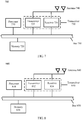
- FIG. 1 is a schematic diagram of an application scenario of a technical solution according to an embodiment of this application.
- a network device has six different transmit beams B1-B6 on a radio frequency channel, and different analog weighting processing is performed on the six same or different beams.
- a terminal device 1 has one beam A1.
- a terminal device 2 has two beams A1 and A2.
- Beam pair information between the network device and the terminal device 1 is established by using B1-B4 and A1 for communication between the network device and the terminal device 1.
- Beam pair information between the network device and the terminal device 2 is established by using B5-B6 and A1-A2 for communication between the network device and the terminal device 2. It should be understood that this application is applied to any communication between a network device and a terminal device based on analog beam weighting.
- GSM Global System for Mobile Communications
- CDMA Code Division Multiple Access
- WCDMA Wideband Code Division Multiple Access
- LTE Long Term Evolution
- FDD Frequency Division Duplex
- TDD Time Division Duplex
- UDD Universal Mobile Telecommunications System
- 5G 5 th generation
- the embodiments are described with reference to a terminal device in this application.
- the terminal device may also refer to user equipment (User Equipment, "terminal device” for short), an access terminal, a subscriber unit, a subscriber station, a mobile station, a mobile console, a remote station, a remote terminal, a mobile device, a user terminal, a terminal, a wireless communications device, a user agent, or a user apparatus.
- User Equipment User Equipment
- the access terminal may be a cellular phone, a cordless phone, a Session Initiation Protocol (Session Initiation Protocol, "SIP” for short) phone, a wireless local loop (Wireless Local Loop, “WLL” for short) station, a personal digital assistant (Personal Digital Assistant, "PDA” for short), a handheld device having a wireless communication function, a computing device, another processing device connected to a wireless modem, an in-vehicle device, a wearable device, a terminal device in a future 5G network, a terminal device in a future evolved public land mobile network (Public Land Mobile Network, "PLMN” for short), or the like.
- SIP Session Initiation Protocol
- WLL Wireless Local Loop
- PDA Personal Digital Assistant
- the network device may be a device configured to communicate with the terminal device.
- the network device may be a combination of a base transceiver station (Base Transceiver Station, "BTS” for short) and a base station controller (Base Station Controller, "BSC” for short) in a GSM or CDMA system, or may be a NodeB (NodeB, "NB” for short) or a radio network controller (Radio Network Controller, "RNC” for short) in a WCDMA system, or may be an evolved NodeB (evolved Node B, "eNB” or “eNodeB” for short) in an LTE system; or the network device may be a relay station, an access point, an in-vehicle device, a wearable device, an access network device in a 5G network, for example, a next generation base station, a transmission reception point (Transmission Reception Point, TRP), an access network device in a future evolved P
- TRP Transmission Reception Point
- a basic principle of the embodiments of the present invention is as follows: In a high-frequency communications system (a frequency band greater than 6 GHz), to receive and send a reference signal or data by using an analog narrow beam, a time-frequency resource or port information of the reference signal needs to be associated with a receive beam or a transmit beam on a receiving side. In this way, the receiving side can obtain a receive beam or transmit beam that is specifically used to receive or send the reference signal or the data.
- the association information needs to be configured for the receiving side before the reference signal or the data is sent. After obtaining the configuration information, the receiving side can receive the specific reference signal or data by using a correct receive beam.
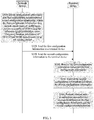
- FIG. 2A shows a schematic flowchart of an information configuration method 200 according to an embodiment of this application.
- a network device generates first configuration information, where the first configuration information includes at least one of the following information: receive beam indication information of a terminal device, reference signal RS sending and feedback period indication information, RS function indication information, and beam sweeping method indication information.
- S220 Send the first configuration information to the terminal device by using layer 1 or layer 2 signaling.
- the terminal device receives the layer 1 or layer 2 signaling and obtains the first configuration information.
- the layer 1 (layer 1) signaling is downlink control information (downlink control information, DCI).
- the layer 2 (layer 2) signaling is a Media Access Control control element (media access control control element, MAC CE).
- the first configuration information further includes the following information:
- the method 200 further includes:
- the network device generates second configuration information and sends the second configuration information to the terminal device, where the second configuration information may be referred to as a measurement setting (measurement setting).
- the second configuration information may include one or more of the following information: one or more resource settings (resource setting), one or more reporting settings (reporting setting), or a link (link).
- resource setting resource setting
- reporting settings reporting setting
- link link
- FIG. 2B shows a schematic diagram of the measurement setting. M, N, X, and Y in FIG. 2B are all integers greater than 1.
- Each RS resource setting is corresponding to one resource setting index that is used to uniquely identify the resource setting.
- the second configuration information should be sent before or when the first configuration information is sent.
- each resource setting includes one or more RS resource sets (resource set) and a resource type.
- the resource type is used to identify a function or a purpose of the reference signal resource. For example, when the resource type is a first value, the resource type is used to indicate that the reference signal is used for beam management; when the resource type is a second value, the resource type is used to indicate that the reference signal is used for channel state information acquisition (CSI acquisition).
- CSI acquisition channel state information acquisition
- each RS resource setting is corresponding to one resource setting index that is used to uniquely identify the resource setting.
- each RS resource set is corresponding to one resource set index that is used to uniquely identify the resource set.
- each RS resource set includes one or more RS resources, and each RS resource is corresponding to one resource index that is used to uniquely identify the resource.
- each RS resource includes one or more of the following information: time-domain resource information of each RS, an RS sending time-domain behavior (time-domain behavior), or RS function indication information.
- the function indication information is used to indicate a function of the RS. For example, when the indication information is a first value, the RS is used for interference measurement (interference measurement, IM). When the indication information is a second value, the RS is used for channel state measurement. When the indication information is a third value, the RS is used for beam management (beam management, BM).
- the RS function indication information may be power information.
- a field or a line is newly added to power information provided in the existing LTE to identify a function of an RS.
- the RS is used for interference measurement.
- the RS is of non-zero power and is used for channel estimation.
- time-domain resource information of each RS includes one or more of the following information: a quantity of OFDM symbols occupied by the RS, location information of each OFDM symbol in a subframe, a quantity of RS ports on one OFDM symbol, or mapping information of a resource element (resource element, RE) (mapping to REs).
- the information is mainly used to notify a receiver of time-frequency locations of the RS, and the receiving side can measure the RS based on the information.
- the time-domain behavior may be periodic (periodic), aperiodic (aperiodic), and semi-persistent (semi-persistent).
- a periodic time-domain behavior is that a reference signal measurement resource configured by a base station periodically appears in time.
- a semi-persistent time-domain behavior is that a reference signal measurement resource configured by a base station periodically appears within specified duration, and may not be limited beyond the specified duration.
- An aperiodic time-domain behavior is that a base station configures a temporary reference signal measurement resource for user equipment. When the base station indicates a periodic time-domain behavior, generally, specific duration of one period needs to be indicated. For example, 50 ms is one period and 100 ms is one period.
- the time-domain behavior is mainly used to notify a receiver of a period, frequency, or time at which a transmitter transmits reference signals, so that the receiver can receive the reference signals.
- Each CSI reporting setting is corresponding to one reporting setting index that is used to uniquely identify the reporting setting.
- Each reporting setting includes at least one of the following content: a reporting beam management (beam management, BM) parameter, a CSI type (CSI type), codebook configuration information such as a codebook subset restriction (codebook subset restriction), a time-domain behavior (time-domain behavior), a frequency-domain granularity (frequency granularity), and measurement restriction configuration (measurement restriction configurations).
- a reporting beam management (beam management, BM) parameter a CSI type (CSI type)
- codebook configuration information such as a codebook subset restriction (codebook subset restriction), a time-domain behavior (time-domain behavior), a frequency-domain granularity (frequency granularity), and measurement restriction configuration (measurement restriction configurations).
- the reporting setting is used to indicate information fed back by the receiver to the transmitter, and how to feed back the information, or feedback frequency or a feedback period.
- the reporting beam management parameter may include one or more of: a resource set index; a resource set index and a resource index; a resource set index and an RS port index; a resource set index, a resource index, and an RS port index; a resource index; a resource index and an RS port index; or an RS port index.
- the frequency-domain granularity is information about a subcarrier corresponding to one or more RS measurement resources in frequency domain, or may be information such as a subcarrier sequence number, a subcarrier width, or a subcarrier spacing corresponding to a subcarrier in one or more resource blocks (resource block, RB).
- the RS is a CSI-RS.
- the CSI-RS is a downlink reference signal used when channel state measurement, for example, channel quality information (channel quality information, CQI), a precoding matrix indicator (Precoding Matrix Indicator, PMI), a rank indicator (rank indicator, RI), or beam management is performed.
- a CSI-RS measurement resource is a time-frequency resource configured by the base station for a CSI-RS, and is used by the base station to perform beam alignment with the terminal device. In a beam alignment process, the base station can send the CSI-RS on the CSI-RS measurement resource, and the terminal device can receive and measure, on the CSI-RS measurement resource, the CSI-RS sent by the base station.
- the first configuration information may be sent to the terminal device by using a random access response message or a physical downlink shared channel (physical downlink shared channel, PDSCH) after the terminal device completes random access.
- a random access response message or a physical downlink shared channel (physical downlink shared channel, PDSCH) after the terminal device completes random access.
- PDSCH physical downlink shared channel
- the RS is a sounding reference signal (sounding reference signal, SRS).
- SRS is an uplink reference signal used for channel estimation or beam management.
- An SRS measurement resource is a time-frequency resource configured by the base station for an SRS, and is used by the base station to perform beam alignment with the terminal device. In a beam alignment process, the terminal device can send the SRS on the SRS measurement resource, and the base station can receive and measure, on the SRS measurement resource, the SRS sent by the terminal device.
- the first configuration information may be sent to the terminal device by using a random access response message or a physical downlink shared channel (physical downlink shared channel, PDSCH) after the terminal device completes random access.
- a random access response message or a physical downlink shared channel (physical downlink shared channel, PDSCH) after the terminal device completes random access.
- PDSCH physical downlink shared channel
- the link is used to indicate a quantity to be measured and a correspondence between a resource setting and a reporting setting.
- One reporting setting may be associated with one or more resource settings.
- a plurality of reporting settings may be associated with one resource setting.
- the link includes a resource setting index or indication (index or indication), a reporting setting index or indication, and a quantity to be measured (quantity to be measured).
- a resource setting index 1 is in a one-to-one correspondence with a reporting setting index 2.
- the terminal device needs to perform reporting according to a requirement of the reporting setting index 2 when feeding back the RS measurement information.
- the link may further include a beam sweeping type.
- the beam sweeping type is used to indicate sweeping manners of the network device and the terminal device.
- three downlink sweeping modes and three uplink sweeping modes namely, P1/P2/P3 and U1/U2/U3 respectively are agreed in the standard.
- 01 indicates sweeping in a P2 manner.
- P1, P2, P3, U1, U2, and U3 refer to a definition in the standard, and details are not described herein.
- the receive beam indication information of the terminal device may be receive beam information used to indicate one or more reference signal ports, receive beam information used to indicate one or more reference signal resources, receive beam information used to indicate a resource set, or receive beam information used to indicate a resource setting.
- the RS port in the present invention is used to indicate a time-frequency location of the reference signal in an OFDM symbol, and is not a physical port.
- receive beam indication information of the terminal device may be a transmit beam index, a receive beam index, a beam pair index (used to describe a transmit beam and a receive beam), a quasi-co-located (Quasi-co-located, QCL) index or a QCL indicator used to indicate beam information, and any combination of the foregoing several indexes.
- the network device indicates that the receive beam information of the terminal device is a beam pair index
- the terminal device first feeds back beam information to the network device, and the network device indicates the receive beam pair (BPL: Beam pair link) information of the terminal device based on the beam information fed back by the terminal device.
- BPL Beam pair link
- the terminal device may specifically feed back beam information of one of or a combination of any two or more of the following information: a group index group ID, a receive beam ID, and a transmit beam ID.
- the group ID may be one of or a combination of any two or more of the following information: first information and second information.
- the first information is group information obtained according to a predefined or preconfigured rule, and the rule includes but is not limited to antenna grouping and antenna panel grouping. For example, beams formed by ports on a same antenna panel are in a same group.
- the second information includes but is not limited to logical beam ID information, logical group ID information, and bitmap-based logical beam information.
- the transmit beam ID may be one of or a combination of more pieces of information of a resource setting (resource setting) index, a resource set (resource set) index, a resource (resource) index, a port index, a time index, and a synchronization block SS block index.
- the receive beam ID may be a logical ID of a receive beam of the terminal device.
- the logical ID may be global logical numbers of all beams selected by the terminal device, or may be local logical numbers of all beams corresponding to the group ID. It should be further understood that receive beams corresponding to a same group may be received or sent on the terminal device side at the same time.
- Information about receive beams selected by the terminal device Global logical number Local logical number 4 0 Group #0: 0 5 1 Group #0: 1 9 2 Group #1: 0 12 3 Group #1: 1
- the beam pair index information may be one of or a combination of more pieces of the following information:
- the first indication information may be different types of reference signals, and includes but is not limited to an initial access reference signal, a beam management reference signal, a CSI measurement reference signal, and a data transmission reference signal.
- the first indication information may be different communication processes, and includes but is not limited to an initial access phase, a beam management phase, a CSI measurement phase, and a data transmission phase.
- the first indication information is of 2 bits. 00 represents the initial access reference signal, 01 represents the beam management reference signal, 10 represents the CSI measurement reference signal, and 11 represents the data transmission reference signal.
- the second indication information is a group ID.
- a representation form of the group ID may be one of or a combination of any two or more of the following information: first information and second information.
- the first information is group information obtained according to a predefined or preconfigured rule, and the rule includes but is not limited to antenna grouping and antenna panel grouping. For example, beams formed by ports on a same antenna panel are in a same group.
- the second information includes but is not limited to logical beam ID information, logical group ID information, and bitmap-based logical beam information.
- the third indication information is a logical ID of a transmit beam or indicates a beam index in a bitmap manner.
- Beam information fed back by the terminal device Logical ID Bitmap information 4 0 [1, 1, 0, 1]. 1 indicates that the transmit beam is selected, and 0 indicates that the transmit beam is not selected. 5 1 9 2 12 3
- the fourth indication information is a logical ID of a receive beam or indicates beam index information in a bitmap manner.
- the logical ID may be global logical numbers of all beams selected by the terminal device, or may be local logical numbers of all beams corresponding to the group ID. It should be further understood that receive beams corresponding to a same group may be received or sent on the terminal device side at the same time. Beam information selected by the terminal device Global logical number Local logical number 4 0 Group #0: 0 5 1 Group #0: 1 9 2 Group #1: 0 12 3 Group #1: 1
- the reference signal sending and CSI feedback period indication information may be: a sending period and a CSI feedback period of one or more reference signal ports, a sending period and a CSI feedback period of one or more reference signal resources, a sending period and a CSI feedback period of one or more resource sets, a sending period and a CSI feedback period of one or more resource settings, or any combination of the foregoing several manners.
- the reference signal sending and CSI feedback period indication information may be a quantity of timeslots, a timeslot index, a quantity of OFDM symbols, a quantity of transmission time intervals (time transmission interval, TTI), a quantity of transmission time units (time transmission unit, TTU), an absolute time value, or a time value obtained through table lookup.
- a period index may identify a feedback period.
- the absolute time may be a microsecond (us), a millisecond (ms), or a second (s), for example, may be 2 ms or 4 ms.
- the reference signal activation or deactivation indication information means that a network device configures a plurality of reference signals, but a terminal device may use only one or several reference signals.
- the network device may deactivate unused reference signal resources.
- the network device may indicate, to the terminal device by using an index or a bitmap (Bitmap), resource sets or resources that are deactivated or activated.
- the index indication information may indicate resource sets, resources, or reference signal ports that are deactivated or activated.
- the indication information may include one or more indexes, and an index value may be a combination relationship of a plurality of indexes ⁇ a resource setting index, a resource set index, a resource index, and a port index ⁇ .
- an index value may be a combination relationship of a plurality of indexes ⁇ a resource setting index, a resource set index, a resource index, and a port index ⁇ .
- an index value may be a combination relationship of a plurality of indexes ⁇ a resource setting index, a resource set index, a resource index, and a port index ⁇ .
- bitmap indication manner in an example of eight resource sets and three resources in each resource set, two levels of bitmap are required for indication, as shown in FIG. 6 .
- 10011001 indicates that the first, fourth, fifth, and eighth resource sets are valid resources, and the second, third, sixth, and seventh resource sets are invalid resources.
- Valid resources in the first, fourth, fifth, and eighth resource sets need to be further indicated.
- the first and third resources are valid and the second resource is invalid in the first resource set; the third resource is valid, and the first and second resources are invalid in the fourth resource set; all resources are valid in the fifth resource set; the first and third resources are valid and the second resource is invalid in the eighth resource set.
- the sending and feedback time offset information of the reference signal may be: a sending and feedback time offset of one or more reference signal ports, a sending and feedback time offset of one or more reference signals, a sending and feedback time offset of one or more resource sets, a sending and feedback time offset of one or more resource settings, and any combination of the foregoing four manners.
- sending time offset is used to indicate a time interval between a configuration moment and an RS sending moment
- feedback time offset is used to indicate a time interval between a configuration moment and a feedback moment.
- the time interval may be specifically a quantity of OFDM symbols, a timeslot, a quantity of TTIs, an absolute time, a time value T 1 -T N obtained through table lookup or a formula, or a time offset index, as shown in Table 2.
- the absolute time may be a microsecond (us), a millisecond (ms), or a second (s), for example, may be 2 ms or 4 ms.
- a correspondence between the time offset index and the time offset shown in Table 2 is only an example, and Table 1 does not constitute a limitation on this embodiment of the present invention.
- a corresponding time offset may be determined based on a preset correspondence between the time offset index and the time offset.
- the reference signal function indication information is used to indicate a function or a purpose of the reference signal, for example, interference measurement, channel estimation, or beam management.
- a purpose of the reference signal is indicated in a bitmap manner.
- 1100 indicates that the first two resources are used for channel estimation, and the latter two resources are used for interference measurement.
- 1000 indicates that the first resource is used for channel estimation, and the latter three resources are used for interference measurement.
- 0011 indicates that the first two resources are used for interference measurement, and the latter two resources are used for channel estimation.
- a power class is newly added to an existing power class table to identify a function or a purpose of the reference signal. For example, when the power is set to 0 or null, the RS resource is used for interference measurement. When the power is set to a non-zero value, the RS resource is used for CSI measurement.
- the beam sweeping method indication information is used to indicate a beam sweeping method corresponding to the reference signal.
- the beam sweeping type is used to indicate sweeping manners of the network device and the terminal device.
- three downlink sweeping modes and three uplink sweeping modes namely, P1/P2/P3 and U1/U2/U3 respectively are agreed in the standard.
- 01 indicates sweeping in a P2 manner.
- P1, P2, P3, U1, U2, and U3 refer to a definition in the standard, and details are not described herein.
- the beam sweeping type may be carried in a resource set, a resource, a resource setting, a reporting setting, or a link.
- a field of a sweeping type (sweeping type) may be named, and a length of the field is 2 bits.
- 00 indicates that a beam sweeping manner is a procedure 2 (procedure 2, P2)
- 01 indicates that a beam sweeping manner is a procedure 3 (P3).
- P3 procedure 3
- uplink pilot configuration 00 indicates that a beam sweeping manner is uplink 2 (U2)
- 01 indicates that a beam sweeping manner is uplink 3 (U3).
- P1, P2, P3, U1, U2, and U3 refer to the description in the standard, and details are not described herein.
- a beam sweeping method may be indicated in an implicit manner.
- a beam sweeping method or type is implicitly indicated by using index information indicating a resource setting (resource setting) or a resource set (resource set).
- index information indicating a resource setting (resource setting) or a resource set (resource set).
- a beam sweeping method or type is implicitly indicated by using index information indicating a resource setting (resource setting) or a resource set (resource set).
- index information indicating a resource setting (resource setting) or a resource set (resource set).
- Table 3 Beam sweeping method defined in the standard Resource set index P2 Resource set index 0 ⁇ resource set #0 ⁇ P3 Resource set index 1 ⁇ resource set #1 ⁇
- Table 4 Beam sweeping method defined in the standard Resource setting index P2 Resource setting index 0 ⁇ resource setting #0 ⁇ P3 Resource setting index 1 ⁇ resource setting #1 ⁇
- Information about a mapping relationship between the beam sweeping type and the resource setting or the resource set in Table 3 or Table 4 may be sent to the terminal device by using RRC signaling or MAC-CE or DCI signaling, or may be prestored or preconfigured in the base station and the terminal device.
- the base station configures corresponding resource set index information or resource setting index information for the terminal device, and the terminal device may obtain a corresponding beam sweeping method based on the resource set index information or the resource setting index information.
- the resource set index information may include one or more resource set indexes, so as to implement joint beam management in different beam sweeping processes.
- time relationships corresponding to different beam sweeping types may be determined by a location relationship in index information.
- the terminal device when configuration information indicated by the base station is ⁇ resource set #1, resource set #0 ⁇ , the terminal device first completes beam sweeping based on P3, and then completes beam sweeping based on P2.
- a time difference between the two beam sweeping processes may be configured by the base station for the terminal device, or may be a default value defined in the standard.
- the base station configures corresponding resource set index information or resource setting index information for the terminal device, and the terminal device may obtain the corresponding resource setting or resource set configuration information based on corresponding beam sweeping indication information.
- the beam sweeping indication information may include one or more beam sweeping methods, so as to implement joint beam management in different beam sweeping processes.
- time relationships corresponding to different beam sweeping types may be determined by a location relationship in the beam sweeping indication information. For example, as shown in Table 3, when the configuration information indicated by the base station is ⁇ P-3, P-2 ⁇ , the terminal device first completes beam sweeping based on P3, and then completes beam sweeping based on P2.
- a time difference between the two beam sweeping processes may be configured by the base station for the terminal device, or may be a default value defined in the standard.
- the terminal device receives, by using the layer 1 or layer 2 signaling, the first configuration information from the base station, so as to obtain the specific information in the first configuration information described above.
- the terminal device Before step 230, the terminal device should further receive the second configuration information from the network device, to obtain specific information in the second configuration information described above.
- the performing measurement and feedback based on the first configuration information and the second configuration information specifically includes: that the receive side performs measurement based on the first configuration information and the second configuration information specifically includes:
- RS measurement may be unified with beam management (beam management, BM).
- the indication information may be represented in one of or a combination of any two or more of the following manners: a beam index and corresponding beam grouping information.
- the beam index is a combination of ⁇ a resource set index and a resource index ⁇ or ⁇ a resource set index, a resource index, and a port index ⁇ , or a combination of ⁇ a resource set index, a resource index, a port index, and a symbol index ⁇ .
- the beam index and the corresponding beam grouping information are fed back in a bitmap manner.
- the beam pair information is indicated by using a resource set index and a resource index, or the beam pair information is indicated by using a resource set index, a resource index, and a port index, or the beam pair information is indicated by using a resource set index, a resource index, a port index, and a symbol index.
- the resource setting when used for beam management (beam management, BM), the resource setting may be referred to as a beam management resource setting, a reporting setting may be referred to as a beam management reporting setting, and a link may be referred to as a beam management link.
- a quantity of resource sets in the beam management resource setting is equal to a quantity of time units (time unit, TU) in a beam sweeping period.
- time unit time unit
- a plurality of beam management reporting settings may be associated with a same beam management resource setting.
- a plurality of beam management resource settings may be associated with a same beam management reporting setting.
- different resource sets in a same beam management resource setting may be set to a same value.
- These parameters may be a quantity of ports and a time-domain behavior.
- a plurality of RS resources may be configured for beam management, and each RS resource is corresponding to one beam. Therefore, the beam management reporting setting may be a CSI RS resource set index, a CSI RS resource index, an RS reception power (reference signal reception power, RSRP), or a port index.
- the beam management reporting setting may be a CSI RS resource set index, a CSI RS resource index, an RS reception power (reference signal reception power, RSRP), or a port index.
- the solution provided in this embodiment of the present invention provides a technical solution for channel measurement and feedback when a narrow beam technology is used in a high-frequency band.
- FIG. 3 shows a schematic flowchart of an information configuration method 300 according to an embodiment of this application.
- a network device may be the network device in FIG. 1
- a terminal device may be the terminal device in FIG. 1 .
- S310 Divide configuration information into first configuration information and second configuration information.
- S320 Send the first configuration information to the terminal device by using layer 2 signaling.
- S330 Send the second configuration information to the terminal device by using layer 1 signaling or the layer 2 signaling.
- S360 Perform channel measurement, interference measurement, or beam management based on the first configuration information and the second configuration information.
- step 320 and step 330 may be adjusted, or the first configuration information and the second configuration information may be simultaneously sent. This is not limited by step numbers.
- the first configuration information may be a parameter with a relatively slow time variation.
- the second configuration information may be a parameter with a relatively fast time variation.
- the first configuration information may include one or more of: an RS basic pattern (basic pattern or basic subset pattern), a quantity of OFDM used for reference signal transmission, time-frequency location information of OFDM used for RS transmission, or an RS sending period.
- a quantity of OFDM used for reference signal transmission is a maximum quantity of OFDM symbols for RS transmission that can be carried by a cell in which the terminal is located or a transmission receiving point TRP
- the time-frequency location information of OFDM used for RS transmission is a time-frequency location of an OFDM symbol used for RS transmission in a cell in which the terminal device is located or a TRP.
- the RS basic pattern includes at least one of the following information: a quantity of reference signal ports configured on an orthogonal frequency division multiplexing (Orthogonal Frequency Division Multiplexing, OFDM) symbol, RS time-frequency domain mapping information or location information, an offset or location information that is of the first OFDM symbol used for RS transmission and on a frame, a subframe, or a timeslot, and a maximum value or a maximum quantity of OFDM symbols used for RS transmission.
- OFDM Orthogonal Frequency Division Multiplexing
- the RS basic pattern is relatively stable and has a short delay and high tolerance. Therefore, in this embodiment of the present invention, the RS basic pattern is transmitted to the terminal device by using RRC signaling, and signaling overheads can be reduced.
- the layer 2 signaling may be RRC signaling.
- the RRC signaling may include one or more newly-added fields, and the first measurement information is carried on the one or more newly-added fields.
- the second configuration information includes at least one of the following information: one or more resource settings (resource setting), one or more reporting settings (reporting setting), and a link (link).
- Each resource setting is corresponding to one resource setting index that is used to uniquely identify the resource setting.
- Each resource setting includes one or more resource sets, and each resource set is corresponding to one resource set index that is used to uniquely identify the resource set.
- Each resource set further includes one or more RS resources, and each RS resource is corresponding to one resource index that is used to uniquely identify the RS resource.
- Each RS resource further includes one or more of the following information: time-frequency location information of each RS, an RS sending time-domain characteristic, RS function indication information, RS receive beam information of the terminal device, RS sending and RS feedback period indication information, RS deactivation or activation indication information, RS sending and feedback time offset indication information, and beam sweeping method indication information.
- a beam sweeping method or type may be indicated in an implicit manner.
- a beam sweeping method or type is implicitly indicated by using index information indicating a resource setting (resource setting) or a resource set (resource set).
- index information indicating a resource setting (resource setting) or a resource set (resource set).
- a beam sweeping method or type is implicitly indicated by using index information indicating a resource setting (resource setting) or a resource set (resource set).
- index information indicating a resource setting (resource setting) or a resource set (resource set).
- Table 3 Beam sweeping method or type defined in the standard Resource set index P2 Resource set index 0 ⁇ resource set #0 ⁇ P3 Resource set index 1 ⁇ resource set #1 ⁇
- Table 4 Beam sweeping method or type defined in the standard Resource setting index P2 Resource setting index 0 ⁇ resource setting #0 ⁇ P3 Resource setting index 1 ⁇ resource setting #1 ⁇
- Information about a mapping relationship between the beam sweeping type and the resource setting or the resource set in Table 3 or Table 4 may be sent to the terminal device by using RRC signaling or MAC-CE or DCI signaling, or may be prestored or preconfigured in the base station and the terminal device.
- the base station configures corresponding resource set index information or resource setting index information for the terminal device, and the terminal device may obtain a corresponding beam sweeping method based on the resource set index information or the resource setting index information.
- the resource set index information may include one or more resource set indexes, so as to implement joint beam management in different beam sweeping processes.
- time relationships corresponding to different beam sweeping types may be determined by a location relationship in index information.
- the terminal device when configuration information indicated by the base station is ⁇ resource set #1, resource set #0 ⁇ , the terminal device first completes beam sweeping based on P3, and then completes beam sweeping based on P2.
- a time difference between the two beam sweeping processes may be configured by the base station for the terminal device, or may be a default value defined in the standard.
- the base station configures corresponding resource set index information or resource setting index information for the terminal device, and the terminal device may obtain the corresponding resource setting or resource set configuration information based on corresponding beam sweeping indication information.
- the beam sweeping indication information may include one or more beam sweeping methods, so as to implement joint beam management in different beam sweeping processes.
- time relationships corresponding to different beam sweeping types may be determined by a location relationship in the beam sweeping indication information. For example, as shown in Table 3, when the configuration information indicated by the base station is ⁇ P-3, P-2 ⁇ , the terminal device first completes beam sweeping based on P3, and then completes beam sweeping based on P2.
- a time difference between the two beam sweeping processes may be configured by the base station for the terminal device, or may be a default value defined in the standard.
- Each reporting setting includes one or more of the following information: a reporting setting index that is used to uniquely identify a reporting setting, a CSI measurement and reporting time-domain characteristic, a CSI measurement and reporting frequency-domain characteristic, a CSI reporting type or content, and beam sweeping method indication information.
- the link includes one or more of the following information: a resource setting index, a reporting setting index, a quantity to be measured (quantity to be measured), and beam sweeping method indication information.
- the RS receive beam information of the terminal device the RS sending and RS feedback period indication information, the RS deactivation or activation indication information, the RS sending and feedback time offset indication information, and the beam sweeping method indication information are the same as descriptions in Embodiment 1, and are not described herein again.
- the RS sending time-domain characteristic may be periodic, aperiodic, and semi-persistent.
- a periodic RS time-domain characteristic when configured, a specific value of a period should also be configured, for example, a period of 50 ms and a period of 10 ms, as shown in FIG. 4 .
- the CSI measurement and feedback frequency-domain characteristic may be broadband, narrowband, or some bandwidths.
- which subbands (subband) are used for feedback in frequency domain.
- the CSI feedback type or content may be an RS resource indicator (RS resource indicator, CRI), a precoding matrix indicator (precoding matrix indicators, PMI), a codebook configuration, a rank indicator (rank indicator, RI), or a channel quality indicator (channel quality indicator, CQI).
- RS resource indicator CRI
- precoding matrix indicators PMI
- codebook configuration a codebook configuration
- rank indicator rank indicator
- channel quality indicator channel quality indicator
- the second configuration information may be sent to the terminal device by using the MAC CE or the DCI.
- One or more fields may be newly added to the MAC CE or the DCI to carry second measurement information.
- the RS function indication information is used to indicate a function of a CSI-RS. For example, in a possible implementation, when a value of the field is 0 or null (zero or null), the CSI-RS resource is used for interference measurement. When a value of the field is NZP CRI-RS configuration, the CSI-RS resource is used for channel estimation.
- the RS is a CSI-RS.
- the CSI-RS is a downlink reference signal used when channel state measurement, for example, channel quality information (channel quality information, CQI), a precoding matrix indicator (Precoding Matrix Indicator, PMI), a rank indicator (rank indicator, RI), or beam management is performed.
- a CSI-RS measurement resource is a time-frequency resource configured by the base station for a CSI-RS, and is used by the base station to perform beam alignment with the terminal device. In a beam alignment process, the base station can send the CSI-RS on the CSI-RS measurement resource, and the terminal device can receive and measure, on the CSI-RS measurement resource, the CSI-RS sent by the base station.
- the first configuration information may be sent to the terminal device by using a random access response message or a physical downlink shared channel (physical downlink shared channel, PDSCH) after the terminal device completes random access.
- a random access response message or a physical downlink shared channel (physical downlink shared channel, PDSCH) after the terminal device completes random access.
- PDSCH physical downlink shared channel
- the RS is a sounding reference signal (sounding reference signal, SRS).
- SRS is an uplink reference signal used for channel estimation or beam management.
- An SRS measurement resource is a time-frequency resource configured by the base station for an SRS, and is used by the base station to perform beam alignment with the terminal device. In a beam alignment process, the terminal device can send the SRS on the SRS measurement resource, and the base station can receive and measure, on the SRS measurement resource, the SRS sent by the terminal device.
- the first configuration information may be sent to the terminal device by using a random access response message or a physical downlink shared channel (physical downlink shared channel, PDSCH) after the terminal device completes random access.
- a random access response message or a physical downlink shared channel (physical downlink shared channel, PDSCH) after the terminal device completes random access.
- PDSCH physical downlink shared channel
- the terminal device receives the layer 2 signaling and obtains the first configuration information.
- the first configuration information is the same as that described above, and details are not described herein again.
- the terminal device receives the layer 1 or layer 2 signaling and obtains the second configuration information.
- the second configuration information is the same as that described above, and details are not described herein again.
- step S260 specifically includes the following steps:
- RS measurement may be unified with beam management (beam management, BM).
- beam management the terminal device needs to feed back one or more pieces of beam pair information, and a beam pair includes a transmit beam and a receive beam.
- the indication information may be represented in one of or a combination of any two or more of the following manners: a beam index and corresponding beam grouping information.
- the beam index is a combination of ⁇ a resource set index and a resource index ⁇ or ⁇ a resource set index, a resource index, and a port index ⁇ , or a combination of ⁇ a resource set index, a resource index, a port index, and a symbol index ⁇ .
- the beam index and the corresponding beam grouping information are fed back in a bitmap manner.
- the beam pair information is indicated by using a resource set index and a resource index, or the beam pair information is indicated by using a resource set index, a resource index, and a port index, or the beam pair information is indicated by using a resource set index, a resource index, a port index, and a symbol index.
- the resource setting when used for beam management (beam management, BM), the resource setting may be referred to as a beam management resource setting, a reporting setting may be referred to as a beam management reporting setting, and a link may be referred to as a beam management link.
- a quantity of resource sets in the beam management resource setting is equal to a quantity of time units (time unit, TU) in a beam sweeping period.
- time unit time unit
- a plurality of beam management reporting settings may be associated with a same beam management resource setting.
- a plurality of beam management resource settings may be associated with a same beam management reporting setting.
- different resource sets in a same beam management resource setting may be set to a same value.
- These parameters may be a quantity of ports and a time-domain behavior.
- a plurality of RS resources may be configured for beam management, and each RS resource is corresponding to one beam. Therefore, the beam management reporting setting may be a CSI RS resource set index, a CSI RS resource index, an RS reception power (reference signal reception power, RSRP), or a port index.
- the beam management reporting setting may be a CSI RS resource set index, a CSI RS resource index, an RS reception power (reference signal reception power, RSRP), or a port index.
- That the receive side performs measurement based on the first configuration information and the second configuration information specifically includes:
- the determining a beam sweeping method based on the beam sweeping method indication information in step b specifically includes: determining the beam sweeping method based on the resource setting index information or the resource set index information.
- This embodiment of the present invention provides a solution for reference signal configuration and measurement when a narrow beam is used in a high frequency scenario.
- FIG. 7 provides a schematic diagram of a network device, and the network device may be applied to a system shown in FIG. 1 .
- the network device 700 includes a processor 710, a memory 720, a transceiver 730, an antenna 740, and a bus 750.
- the processor 710 controls an operation of the network device 700, for example, controls the network device 700 to perform S210 and S310.
- the processor may be a general purpose processor, a digital signal processor, an application-specific integrated circuit, a field-programmable gate array, or another programmable logic component.
- the transceiver 730 is configured to communicate with the terminal device, for example, may perform S220, S320, and S330. For details, refer to the description in the method embodiments, and details are not described herein again.
- the transceiver 730 includes a transmitter 732 and a receiver 734.
- the transmitter 732 is configured to transmit a signal
- the receiver 734 is configured to receive a signal.
- bus 750 Components of the network device 700 are coupled together by using the bus 750.
- the bus system 750 further includes a power bus, a control bus, and a status signal bus.
- various buses are marked as the bus system 750 in the figure. It should be noted that the foregoing descriptions of the network device structure may be applied to the method embodiments in this application.
- the memory 720 may include a read-only memory (Read Only Memory, ROM for short), a random access memory (Random Access Memory, RAM for short), or another type of dynamic storage device that may store information and an instruction, or may be a disk memory.
- the memory 720 may be configured to store an instruction for implementing a related method provided in the embodiments of this application. It may be understood that an executable instruction is programmed or loaded to at least one of the processor 710, a cache, or a long-term memory of the network device 700.
- the memory is configured to store computer executable program code.
- the program code includes an instruction
- the processor executes the instruction
- the instruction enables the network device to perform an operation in the method embodiments.
- FIG. 8 is a schematic block diagram of an information indication terminal device 800 according to an embodiment of this application.
- the terminal device may be applied to the system shown in FIG. 1 .
- the terminal device 800 includes a processor 810, a memory 820, a transceiver 830, an antenna 840, and a bus 850.
- the processor 810 controls an operation of the terminal device 800, for example, controls the terminal device 800 to perform S240 and S360.
- the processor may be a general purpose processor, a digital signal processor, an application-specific integrated circuit, a field-programmable gate array, or another programmable logic component.
- the transceiver 830 is configured to communicate with the terminal device, for example, may perform S230, S340, and S350. For details, refer to the description in the method embodiments, and details are not described herein again.
- the transceiver 830 includes a transmitter 832 and a receiver 834.
- the transmitter 832 is configured to transmit a signal
- the receiver 834 is configured to receive a signal.
- the terminal device 800 may further include a user interface 860, such as a keyboard, a microphone, a loudspeaker, and/or a touchscreen.
- the user interface 860 may transfer content and a control operation to the terminal device 800.
- bus 850 Components of the terminal device 800 are coupled together by using the bus 850.
- the bus system 850 further includes a power bus, a control bus, and a status signal bus.
- various buses are marked as the bus system 850 in the figure. It should be noted that the foregoing descriptions of the terminal device structure may be applied to the embodiments in this application.
- the memory 820 may include a read-only memory (Read-Only Memory, ROM for short), a random access memory (Random Access Memory, RAM for short), or another type of dynamic storage device that may store information and an instruction, or may be a disk memory.
- the memory 820 may be configured to store an instruction for implementing a related method provided in the embodiments of this application. It may be understood that an executable instruction is programmed or loaded to at least one of the processor 810, a cache, or a long-term memory of the terminal device 800.
- the memory is configured to store computer executable program code.
- the program code includes an instruction
- the processor executes the instruction
- the instruction enables the terminal device to perform an operation in the method embodiments.
- the disclosed system, apparatus, and method may be implemented in other manners.
- the described apparatus embodiment is merely an example.
- the unit division is merely logical function division and may be other division in actual implementation.
- a plurality of units or components may be combined or integrated into another system, or some features may be ignored or not performed.
- the displayed or discussed mutual couplings or direct couplings or communication connections may be implemented by using some interfaces.
- the indirect couplings or communication connections between the apparatuses or units may be implemented in electronic, mechanical, or other forms.
- the units described as separate parts may or may not be physically separate, and parts displayed as units may or may not be physical units, may be located in one position, or may be distributed on a plurality of network units. Some or all of the units may be selected according to actual needs to achieve the objectives of the solutions of the embodiments.
- All or some of the foregoing embodiments may be implemented by using software, hardware, firmware, or any combination thereof.
- the embodiments may be implemented completely or partially in a form of a computer program product.
- the computer program product includes one or more computer instructions.
- the computer may be a general-purpose computer, a dedicated computer, a computer network, or another programmable apparatus.
- the computer instructions may be stored in a computer-readable storage medium or may be transmitted from a computer-readable storage medium to another computer-readable storage medium.
- the computer instructions may be transmitted from a website, computer, server, or data center to another website, computer, server, or data center in a wired (for example, a coaxial cable, an optical fiber, or a digital subscriber line (DSL)) or wireless (for example, infrared, radio, microwave, or the like) manner.
- the computer-readable storage medium may be any usable medium accessible by a computer, or a data storage device, such as a server or a data center, integrating one or more usable media.
- the usable medium may be a magnetic medium (for example, a floppy disk, a hard disk, or a magnetic tape), an optical medium (for example, a DVD), a semiconductor medium (for example, a solid state disk Solid State Disk, (SSD)), or the like.
- a magnetic medium for example, a floppy disk, a hard disk, or a magnetic tape
- an optical medium for example, a DVD
- a semiconductor medium for example, a solid state disk Solid State Disk, (SSD)
Landscapes
- Engineering & Computer Science (AREA)
- Signal Processing (AREA)
- Computer Networks & Wireless Communication (AREA)
- Quality & Reliability (AREA)
- Mobile Radio Communication Systems (AREA)
- Position Fixing By Use Of Radio Waves (AREA)
Applications Claiming Priority (3)
| Application Number | Priority Date | Filing Date | Title |
|---|---|---|---|
| CN201710061848 | 2017-01-26 | ||
| CN201710184921.1A CN108365939B (zh) | 2017-01-26 | 2017-03-24 | 一种配置信息的方法、装置及系统 |
| PCT/CN2017/113092 WO2018137397A1 (fr) | 2017-01-26 | 2017-11-27 | Procédé, dispositif et système de configuration d'informations |
Publications (2)
| Publication Number | Publication Date |
|---|---|
| EP3567892A1 true EP3567892A1 (fr) | 2019-11-13 |
| EP3567892A4 EP3567892A4 (fr) | 2020-01-08 |
Family
ID=63009828
Family Applications (1)
| Application Number | Title | Priority Date | Filing Date |
|---|---|---|---|
| EP17894072.2A Pending EP3567892A4 (fr) | 2017-01-26 | 2017-11-27 | Procédé, dispositif et système de configuration d'informations |
Country Status (4)
| Country | Link |
|---|---|
| US (1) | US11051182B2 (fr) |
| EP (1) | EP3567892A4 (fr) |
| CN (1) | CN108365939B (fr) |
| BR (1) | BR112019015303A2 (fr) |
Cited By (1)
| Publication number | Priority date | Publication date | Assignee | Title |
|---|---|---|---|---|
| EP4503495A4 (fr) * | 2022-04-05 | 2025-07-30 | Apogee Networks Llc | Procédé et appareil de communication sans fil |
Families Citing this family (33)
| Publication number | Priority date | Publication date | Assignee | Title |
|---|---|---|---|---|
| WO2018086057A1 (fr) * | 2016-11-11 | 2018-05-17 | Qualcomm Incorporated | Indication de but de signal de référence |
| WO2018203679A1 (fr) * | 2017-05-04 | 2018-11-08 | 엘지전자(주) | Procédé d'émission et de réception de signal au moyen d'un faisceau dans un système de communication sans fil, et appareil pour ledit procédé |
| EP3619878A1 (fr) * | 2017-05-04 | 2020-03-11 | Ntt Docomo, Inc. | Procédé d'acquisition d'informations d'état de canal (csi), équipement utilisateur (ue) et point d'émission et de réception (trp) |
| CN110603853B (zh) * | 2017-05-05 | 2020-11-27 | 中兴通讯股份有限公司 | 用于传送同步信号定时信息的技术 |
| US11184132B2 (en) * | 2018-11-14 | 2021-11-23 | Mediatek Inc. | Transmission configuration indication (TCI)—state indication for non-coherent joint transmission (NCJT) channel state information (CSI) reporting |
| CN113078927B (zh) | 2019-01-07 | 2022-08-26 | 上海朗帛通信技术有限公司 | 一种被用于无线通信的节点中的方法和装置 |
| CN111586846B (zh) * | 2019-02-15 | 2024-02-20 | 成都华为技术有限公司 | 传输配置编号状态指示的方法和通信装置 |
| CN115038177B (zh) * | 2019-03-29 | 2025-10-24 | 中兴通讯股份有限公司 | 传输指示方法和装置 |
| CN111757374B (zh) * | 2019-03-29 | 2023-05-05 | 大唐移动通信设备有限公司 | 一种波束管理方法及装置 |
| EP3961953B1 (fr) * | 2019-06-14 | 2023-06-14 | Guangdong Oppo Mobile Telecommunications Corp., Ltd. | Procédé et appareil pour indiquer un signal de référence, terminal et dispositif de réseau |
| CN112312455B (zh) * | 2019-07-31 | 2022-07-26 | 成都华为技术有限公司 | 波束测量方法及装置 |
| CN113711528A (zh) * | 2019-08-15 | 2021-11-26 | Oppo广东移动通信有限公司 | 一种码本子集的确定方法及装置、用户设备 |
| US12284532B2 (en) * | 2019-08-15 | 2025-04-22 | Interdigital Patent Holdings, Inc. | Joint communication and sensing aided beam management for NR |
| CN112654051A (zh) | 2019-10-12 | 2021-04-13 | 索尼公司 | 用于无线通信的电子设备和方法、计算机可读存储介质 |
| CN113840380B (zh) * | 2020-06-24 | 2024-10-22 | 华为技术有限公司 | 一种波束指示方法及通信装置 |
| CN113993209A (zh) * | 2020-07-27 | 2022-01-28 | 大唐移动通信设备有限公司 | 一种波束确定方法及设备 |
| WO2022032670A1 (fr) * | 2020-08-14 | 2022-02-17 | 华为技术有限公司 | Procédé de transmission de données et appareil de communication |
| US12375159B2 (en) * | 2020-09-09 | 2025-07-29 | Qualcomm Incorporated | Measurement reporting for multi-port receive beams |
| WO2022061782A1 (fr) * | 2020-09-25 | 2022-03-31 | Oppo广东移动通信有限公司 | Procédé et appareil de retour d'informations d'état de canal, dispositif de terminal et support de stockage |
| WO2022109927A1 (fr) * | 2020-11-26 | 2022-06-02 | 华为技术有限公司 | Procédé et appareil de communication, et support de stockage lisible par ordinateur |
| WO2022151230A1 (fr) * | 2021-01-14 | 2022-07-21 | 北京小米移动软件有限公司 | Procédé et appareil d'indication de faisceau |
| US20240159853A1 (en) * | 2021-03-31 | 2024-05-16 | Sony Group Corporation | A method for assisting a first network node in determining a property of a network node, a related first network node and a related wireless device |
| CN115175227A (zh) * | 2021-04-02 | 2022-10-11 | 华为技术有限公司 | 信道测量方法及装置 |
| CN117999829A (zh) | 2021-10-01 | 2024-05-07 | 苹果公司 | 针对多trp操作的增强型csi报告 |
| CN115882920A (zh) * | 2021-10-09 | 2023-03-31 | 中兴通讯股份有限公司 | 波束确定方法、设备和存储介质 |
| US20250175239A1 (en) * | 2022-02-08 | 2025-05-29 | Beijing Xiaomi Mobile Software Co., Ltd. | Beam management method and communication device |
| CN116980914A (zh) * | 2022-04-18 | 2023-10-31 | 华为技术有限公司 | 波束管理的方法、通信装置以及通信系统 |
| CN117015010A (zh) * | 2022-04-28 | 2023-11-07 | 大唐移动通信设备有限公司 | 一种信息处理方法、装置、网络设备及终端 |
| EP4550708A4 (fr) * | 2022-06-28 | 2025-07-30 | Beijing Xiaomi Mobile Software Co Ltd | Procédé de détermination de rétroaction d'informations d'état de canal (csi), et appareil associé |
| CN118042479A (zh) * | 2022-11-04 | 2024-05-14 | 维沃移动通信有限公司 | 测量上报和指示方法、终端及网络侧设备 |
| EP4668939A4 (fr) * | 2023-02-16 | 2026-04-22 | 1Finity Inc | Procédé et appareil de configuration de ressources de signal de référence |
| CN118870379A (zh) * | 2023-04-27 | 2024-10-29 | 大唐移动通信设备有限公司 | 信息传输方法、装置及存储介质 |
| WO2025237124A1 (fr) * | 2024-05-14 | 2025-11-20 | 上海推络通信科技合伙企业(有限合伙) | Procédé et appareil de rapport d'informations dans un nœud pour une communication sans fil |
Family Cites Families (24)
| Publication number | Priority date | Publication date | Assignee | Title |
|---|---|---|---|---|
| CN102165720B (zh) * | 2008-09-26 | 2015-10-14 | 三星电子株式会社 | 支持多个天线的探测参考信号发射的装置及方法 |
| CN101931957B (zh) * | 2009-06-22 | 2013-07-31 | 电信科学技术研究院 | 一种控制下行测量参考信号干扰的方法和设备 |
| CN102404689B (zh) * | 2010-09-13 | 2015-08-12 | 电信科学技术研究院 | 接收和发送csi-rs配置信息的方法和装置 |
| CN103299558B (zh) * | 2011-01-07 | 2016-07-06 | 交互数字专利控股公司 | 无线发射/接收单元和由无线发射/接收单元执行的方法 |
| CN102740447B (zh) * | 2011-04-13 | 2016-05-25 | 华为技术有限公司 | 确定定时提前量的方法、终端设备和网络侧设备 |
| KR102159660B1 (ko) * | 2011-12-08 | 2020-09-28 | 인터디지탈 패튼 홀딩스, 인크 | 복수의 무선 액세스 기술을 사용한 통신 |
| CN102685795B (zh) * | 2012-04-18 | 2015-08-05 | 新邮通信设备有限公司 | 一种无线资源管理rrm测量的配置方法 |
| CN103391126B (zh) * | 2012-05-11 | 2016-08-10 | 电信科学技术研究院 | 一种子带信道信息的周期反馈方法、装置及系统 |
| KR101971079B1 (ko) * | 2012-09-20 | 2019-08-13 | 삼성전자 주식회사 | 이동통신 시스템에서 피드백 송수신 방법 및 장치 |
| EP3016430B1 (fr) * | 2013-03-28 | 2019-08-21 | LG Electronics Inc. | Procédé et appareil pour acquérir des informations d'état de canal dans un réseau d'antennes |
| CN104105120B (zh) * | 2013-04-08 | 2019-03-12 | 中兴通讯股份有限公司 | 一种干扰测量方法、网络侧设备及终端设备 |
| KR102039535B1 (ko) * | 2013-10-22 | 2019-11-01 | 삼성전자 주식회사 | 무선 자원 할당 방법 및 장치 |
| CN104734758A (zh) * | 2013-12-20 | 2015-06-24 | 中兴通讯股份有限公司 | 一种同步波束成形信号的发送、接收方法、基站和终端 |
| KR102258289B1 (ko) * | 2014-05-22 | 2021-05-31 | 삼성전자 주식회사 | 이차원 배열 안테나를 사용하는 이동통신 시스템에서의 채널 피드백의 생성 및 전송 방법 및 장치 |
| EP3657882B1 (fr) * | 2014-06-09 | 2023-04-26 | Commscope Technologies LLC | Réseaux d'accès radio utilisant plusieurs unités à distance |
| US10321435B2 (en) * | 2014-06-27 | 2019-06-11 | Qualcomm Incorporated | Method and apparatus for lightweight messaging during initial synchronization, discovery, and association in directional wireless systems |
| US10476563B2 (en) * | 2014-11-06 | 2019-11-12 | Futurewei Technologies, Inc. | System and method for beam-formed channel state reference signals |
| US20160242153A1 (en) * | 2015-02-13 | 2016-08-18 | Qualcomm Incorporated | Eimta in enhanced carrier aggregation |
| CN106304120A (zh) * | 2015-06-08 | 2017-01-04 | 中兴通讯股份有限公司 | 一种波束识别方法、系统和网络节点 |
| US10270514B2 (en) * | 2016-01-14 | 2019-04-23 | Samsung Electronics Co., Ltd. | Method and apparatus for generating beam measurement information in a wireless communication system |
| WO2017123060A1 (fr) * | 2016-01-14 | 2017-07-20 | Samsung Electronics Co., Ltd. | Système, procédé et appareil de suivi de faisceau et de fonctionnement de rétroaction faisceau dans un système à base de formation de faisceau |
| EP3455985B1 (fr) * | 2016-05-11 | 2022-03-09 | Convida Wireless, LLC | Nouveau canal de commande de liaison descendante radio |
| US10425139B2 (en) * | 2016-09-21 | 2019-09-24 | Samsung Electronics Co., Ltd. | Method and apparatus for beam management reference signals in wireless communication systems |
| US10524246B2 (en) * | 2017-01-15 | 2019-12-31 | FG Innovation Company Limited | Two-stage downlink control information configurations for beam operation |
-
2017
- 2017-03-24 CN CN201710184921.1A patent/CN108365939B/zh active Active
- 2017-11-27 EP EP17894072.2A patent/EP3567892A4/fr active Pending
- 2017-11-27 BR BR112019015303-9A patent/BR112019015303A2/pt unknown
-
2019
- 2019-07-26 US US16/522,945 patent/US11051182B2/en active Active
Cited By (1)
| Publication number | Priority date | Publication date | Assignee | Title |
|---|---|---|---|---|
| EP4503495A4 (fr) * | 2022-04-05 | 2025-07-30 | Apogee Networks Llc | Procédé et appareil de communication sans fil |
Also Published As
| Publication number | Publication date |
|---|---|
| CN108365939B (zh) | 2024-03-01 |
| US20190349784A1 (en) | 2019-11-14 |
| BR112019015303A2 (pt) | 2020-03-17 |
| US11051182B2 (en) | 2021-06-29 |
| EP3567892A4 (fr) | 2020-01-08 |
| CN108365939A (zh) | 2018-08-03 |
Similar Documents
| Publication | Publication Date | Title |
|---|---|---|
| US11051182B2 (en) | Information configuration method, apparatus, and system | |
| US11569959B2 (en) | Signal sending and receiving method, apparatus, and system | |
| US20240396605A1 (en) | Systems and methods for determining transmitter and receiver configurations for a wireless device | |
| US11595108B2 (en) | Wireless communication method, network device, and terminal device | |
| EP3637838B1 (fr) | Procédé de communication et appareil de communication | |
| EP3565170B1 (fr) | Procédé de communication, dispositif associé et support de stockage informatique | |
| KR102394302B1 (ko) | 참조 신호를 구성하기 위한 방법 및 디바이스 | |
| CN110401470B (zh) | 通信方法及装置,计算机可读存储介质 | |
| EP3576333B1 (fr) | Procédé, dispositif et système de transmission de signalisation | |
| WO2018137397A1 (fr) | Procédé, dispositif et système de configuration d'informations | |
| EP3906728A1 (fr) | Dispositif, réseau, et procédé de pour émission et réception de signal de référence de sondage | |
| WO2018028540A1 (fr) | Procédé, appareil, et système de calcul d'informations de qualité de canal | |
| US20220225337A1 (en) | Interference measurement reporting method and communications apparatus | |
| WO2019137441A1 (fr) | Procédé et dispositif de communication | |
| EP3813416B1 (fr) | Procédés et dispositifs de communication | |
| KR102507510B1 (ko) | 신호 전송 방법 및 기기 | |
| US10420137B2 (en) | System and method for signal density reduction in the frequency domain | |
| EP3687214A1 (fr) | Terminal d'utilisateur et procédé de communication sans fil | |
| CN111819878B (zh) | 基于非码本的ul传输的方法和装置 | |
| CN121219977A (zh) | 针对用于网络节能的空间域和功率域适配的统一信道状态信息(csi)框架 | |
| CN110086511A (zh) | 一种波束赋形的方法及装置 | |
| AU2017433231A1 (en) | Method for calculating channel quality indicator (CQI), terminal device, and network device | |
| US20260046083A1 (en) | Method and device for transmitting or receiving sounding reference signal in wireless communication system | |
| CN121605583A (zh) | 用于信道状态信息(csi)或波束配置的增强的操作 |
Legal Events
| Date | Code | Title | Description |
|---|---|---|---|
| STAA | Information on the status of an ep patent application or granted ep patent |
Free format text: STATUS: THE INTERNATIONAL PUBLICATION HAS BEEN MADE |
|
| PUAI | Public reference made under article 153(3) epc to a published international application that has entered the european phase |
Free format text: ORIGINAL CODE: 0009012 |
|
| STAA | Information on the status of an ep patent application or granted ep patent |
Free format text: STATUS: REQUEST FOR EXAMINATION WAS MADE |
|
| 17P | Request for examination filed |
Effective date: 20190807 |
|
| AK | Designated contracting states |
Kind code of ref document: A1 Designated state(s): AL AT BE BG CH CY CZ DE DK EE ES FI FR GB GR HR HU IE IS IT LI LT LU LV MC MK MT NL NO PL PT RO RS SE SI SK SM TR |
|
| AX | Request for extension of the european patent |
Extension state: BA ME |
|
| A4 | Supplementary search report drawn up and despatched |
Effective date: 20191209 |
|
| RIC1 | Information provided on ipc code assigned before grant |
Ipc: H04W 72/04 20090101ALN20191203BHEP Ipc: H04W 24/10 20090101ALN20191203BHEP Ipc: H04W 16/28 20090101AFI20191203BHEP Ipc: H04L 5/00 20060101ALI20191203BHEP |
|
| DAV | Request for validation of the european patent (deleted) | ||
| DAX | Request for extension of the european patent (deleted) | ||
| STAA | Information on the status of an ep patent application or granted ep patent |
Free format text: STATUS: EXAMINATION IS IN PROGRESS |
|
| 17Q | First examination report despatched |
Effective date: 20200923 |