EP3567962A1 - Procédé et dispositif de regroupement d'ondes porteuses - Google Patents
Procédé et dispositif de regroupement d'ondes porteuses Download PDFInfo
- Publication number
- EP3567962A1 EP3567962A1 EP18816841.3A EP18816841A EP3567962A1 EP 3567962 A1 EP3567962 A1 EP 3567962A1 EP 18816841 A EP18816841 A EP 18816841A EP 3567962 A1 EP3567962 A1 EP 3567962A1
- Authority
- EP
- European Patent Office
- Prior art keywords
- component carrier
- type
- terminal
- network device
- component
- Prior art date
- Legal status (The legal status is an assumption and is not a legal conclusion. Google has not performed a legal analysis and makes no representation as to the accuracy of the status listed.)
- Granted
Links
Images






Classifications
-
- H—ELECTRICITY
- H04—ELECTRIC COMMUNICATION TECHNIQUE
- H04W—WIRELESS COMMUNICATION NETWORKS
- H04W16/00—Network planning, e.g. coverage or traffic planning tools; Network deployment, e.g. resource partitioning or cells structures
- H04W16/14—Spectrum sharing arrangements between different networks
-
- H—ELECTRICITY
- H04—ELECTRIC COMMUNICATION TECHNIQUE
- H04L—TRANSMISSION OF DIGITAL INFORMATION, e.g. TELEGRAPHIC COMMUNICATION
- H04L27/00—Modulated-carrier systems
- H04L27/26—Systems using multi-frequency codes
- H04L27/2601—Multicarrier modulation systems
- H04L27/2602—Signal structure
- H04L27/26025—Numerology, i.e. varying one or more of symbol duration, subcarrier spacing, Fourier transform size, sampling rate or down-clocking
-
- H—ELECTRICITY
- H04—ELECTRIC COMMUNICATION TECHNIQUE
- H04W—WIRELESS COMMUNICATION NETWORKS
- H04W72/00—Local resource management
- H04W72/04—Wireless resource allocation
- H04W72/044—Wireless resource allocation based on the type of the allocated resource
- H04W72/0453—Resources in frequency domain, e.g. a carrier in FDMA
-
- H—ELECTRICITY
- H04—ELECTRIC COMMUNICATION TECHNIQUE
- H04L—TRANSMISSION OF DIGITAL INFORMATION, e.g. TELEGRAPHIC COMMUNICATION
- H04L27/00—Modulated-carrier systems
- H04L27/26—Systems using multi-frequency codes
- H04L27/2601—Multicarrier modulation systems
- H04L27/2647—Arrangements specific to the receiver only
- H04L27/2655—Synchronisation arrangements
- H04L27/2666—Acquisition of further OFDM parameters, e.g. bandwidth, subcarrier spacing, or guard interval length
-
- H—ELECTRICITY
- H04—ELECTRIC COMMUNICATION TECHNIQUE
- H04L—TRANSMISSION OF DIGITAL INFORMATION, e.g. TELEGRAPHIC COMMUNICATION
- H04L5/00—Arrangements affording multiple use of the transmission path
- H04L5/0001—Arrangements for dividing the transmission path
- H04L5/0003—Two-dimensional division
- H04L5/0005—Time-frequency
- H04L5/0007—Time-frequency the frequencies being orthogonal, e.g. OFDM(A) or DMT
- H04L5/0008—Wavelet-division
-
- H—ELECTRICITY
- H04—ELECTRIC COMMUNICATION TECHNIQUE
- H04L—TRANSMISSION OF DIGITAL INFORMATION, e.g. TELEGRAPHIC COMMUNICATION
- H04L5/00—Arrangements affording multiple use of the transmission path
- H04L5/0001—Arrangements for dividing the transmission path
- H04L5/0003—Two-dimensional division
- H04L5/0005—Time-frequency
- H04L5/0007—Time-frequency the frequencies being orthogonal, e.g. OFDM(A) or DMT
- H04L5/001—Time-frequency the frequencies being orthogonal, e.g. OFDM(A) or DMT the frequencies being arranged in component carriers
-
- H—ELECTRICITY
- H04—ELECTRIC COMMUNICATION TECHNIQUE
- H04L—TRANSMISSION OF DIGITAL INFORMATION, e.g. TELEGRAPHIC COMMUNICATION
- H04L5/00—Arrangements affording multiple use of the transmission path
- H04L5/003—Arrangements for allocating sub-channels of the transmission path
-
- H—ELECTRICITY
- H04—ELECTRIC COMMUNICATION TECHNIQUE
- H04L—TRANSMISSION OF DIGITAL INFORMATION, e.g. TELEGRAPHIC COMMUNICATION
- H04L5/00—Arrangements affording multiple use of the transmission path
- H04L5/003—Arrangements for allocating sub-channels of the transmission path
- H04L5/0053—Allocation of signalling, i.e. of overhead other than pilot signals
- H04L5/0055—Physical resource allocation for ACK/NACK
-
- H—ELECTRICITY
- H04—ELECTRIC COMMUNICATION TECHNIQUE
- H04L—TRANSMISSION OF DIGITAL INFORMATION, e.g. TELEGRAPHIC COMMUNICATION
- H04L5/00—Arrangements affording multiple use of the transmission path
- H04L5/0091—Signalling for the administration of the divided path, e.g. signalling of configuration information
-
- H—ELECTRICITY
- H04—ELECTRIC COMMUNICATION TECHNIQUE
- H04W—WIRELESS COMMUNICATION NETWORKS
- H04W72/00—Local resource management
- H04W72/04—Wireless resource allocation
-
- H—ELECTRICITY
- H04—ELECTRIC COMMUNICATION TECHNIQUE
- H04W—WIRELESS COMMUNICATION NETWORKS
- H04W72/00—Local resource management
- H04W72/12—Wireless traffic scheduling
-
- H—ELECTRICITY
- H04—ELECTRIC COMMUNICATION TECHNIQUE
- H04W—WIRELESS COMMUNICATION NETWORKS
- H04W72/00—Local resource management
- H04W72/12—Wireless traffic scheduling
- H04W72/1263—Mapping of traffic onto schedule, e.g. scheduled allocation or multiplexing of flows
-
- H—ELECTRICITY
- H04—ELECTRIC COMMUNICATION TECHNIQUE
- H04W—WIRELESS COMMUNICATION NETWORKS
- H04W72/00—Local resource management
- H04W72/50—Allocation or scheduling criteria for wireless resources
- H04W72/51—Allocation or scheduling criteria for wireless resources based on terminal or device properties
-
- H—ELECTRICITY
- H04—ELECTRIC COMMUNICATION TECHNIQUE
- H04W—WIRELESS COMMUNICATION NETWORKS
- H04W8/00—Network data management
- H04W8/18—Processing of user or subscriber data, e.g. subscribed services, user preferences or user profiles; Transfer of user or subscriber data
Definitions
- This application relates to the field of wireless communications technologies, and in particular, to a component carrier grouping method and a device.
- a new access technology for example, a 5G technology
- Enhanced Mobile Broadband, eMBB enhanced Mobile Broadband
- LTE Long Term Evolution
- ultra-reliable and low-latency communications Ultra-Reliable and Low-Latency Communications, URLLC
- massive machine type communications massive Machine Type Communication, mMTC
- 5G supports frequency bands of sub 6 GHz (for example, 700 MHz or 3.5 GHz) and above 6 GHz (for example, 28 GHz or 40 GHz), and different system parameters such as subcarrier spacings, symbol lengths, and time units also need to be correspondingly configured for different frequency bands.
- sub 6 GHz for example, 700 MHz or 3.5 GHz
- 6 GHz for example, 28 GHz or 40 GHz
- different system parameters such as subcarrier spacings, symbol lengths, and time units also need to be correspondingly configured for different frequency bands.
- NR New Radio
- a component carrier aggregation technology proposes a component carrier aggregation technology.
- a component carrier aggregation technology a plurality of component carriers can be well aggregated into a wider spectrum, and some non-contiguous spectrums can also be aggregated together.
- a component carrier grouping is determined according to a hybrid automatic repeat request-acknowledgment (Hybrid Automatic Repeat Request-ACK, HARQ-ACK) principle or a physical uplink control channel (Physical Uplink Control Channel, PUCCH) principle.
- Hybrid Automatic Repeat Request-ACK Hybrid Automatic Repeat Request-ACK
- PUCCH Physical Uplink Control Channel
- a decoding result of the data may be fed back in a time unit of another component carrier.
- an acknowledgement Acknowledgement, ACK
- NACK Negative Acknowledgement
- cross-component carrier feedback can be implemented in the current component carrier grouping, and the current component carrier grouping is a component carrier group grouped based on the cross-component carrier feedback.
- the concept of cross-component carrier scheduling is further introduced in LTE-A.
- a time unit of another component carrier can be scheduled through cross-component carrier scheduling.
- a physical downlink control channel Physical Downlink Control Channel, PDCCH
- PDCCH Physical Downlink Control Channel
- PDSCH Physical Downlink Shared Channel
- PUSCH Physical Uplink Shared Channel
- time units used for aggregated component carriers are the same and are all 1 ms.
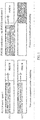
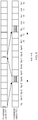
- time units used for aggregated component carriers may be different. For example, as shown in FIG.
- a component carrier 1 has a subframe length of 0.5 ms
- a component carrier 2 has a subframe length of 0.125 ms.
- system parameters such as a component carrier spacing, a symbol length, and a time unit are flexibly configured in NR.
- a component carrier configuration parameter (numerology) of a component carrier may include a subcarrier spacing, a time unit length, a CP type, and the like.
- the cross-component carrier scheduling in the current component carrier grouping further affects a maximum quantity of HARQ processes, a timing (timing) value indication complexity, and complexity of blind detection performed by a terminal.
- the terminal there is a specific requirement on a capability of the terminal.
- Embodiments of this application provide a component carrier grouping method and a device, and a component carrier aggregation and feedback method and a device, to resolve a problem in the prior art that cross-component carrier scheduling is relatively complex.
- an embodiment of this application provides a component carrier grouping method, including: grouping, by a network device, a plurality of component carriers configured for a terminal into at least one component carrier group of a first type, so that the network device sends control information corresponding to a first component carrier to the terminal over a second component carrier, where the first component carrier and the second component carrier belong to a same component carrier group of the first type, and when a plurality of component carriers in at least two component carrier groups of the first type are scheduled, the terminal aggregates feedback information corresponding to the plurality of component carriers and feeds back the aggregated feedback information to the network device over one component carrier; and sending, by the network device, first grouping configuration information to the terminal, where the first grouping configuration information is used to indicate a grouping result of the at least one component carrier group of the first type.
- the network device groups the component carriers configured for the terminal into the at least one component carrier group of the first type, and a component carrier group grouped based on cross-component carrier feedback and a component carrier group grouped based on cross-component carrier scheduling are decoupled, so that component carrier aggregation scheduling performed by the network device under aggregation of component carriers including different numerologies can be simplified, a quantity of required processes can be reduced, timing value indication complexity can be reduced, and blind detection overheads can be reduced.
- the terminal can aggregate the feedback information corresponding to the component carriers in the at least two component carrier groups of the first type, and feed back the aggregated feedback information over a same component carrier. Therefore, a limitation on a terminal power can further be avoided.
- the network device cannot perform cross-component carrier scheduling between two component carrier groups of the first type.
- the network device before the network device groups the plurality of component carriers configured for the terminal into the at least one component carrier group of the first type, the network device receives information about a first capability that is reported by the terminal, and the information about the first capability is used to notify the network device that the terminal supports carrying of the control information corresponding to the first component carrier on the second component carrier.
- the network device may determine, based on the information about the first capability that is reported by the terminal, that the terminal can support the cross-component carrier scheduling, and then group the plurality of component carriers configured for the terminal into the at least one component carrier group of the first type.
- At least two component carriers included in the component carrier group of the first type have a same subcarrier spacing or time unit length.
- the network device groups, by using the same subcarrier spacing or the same time unit length as a grouping criterion, the plurality of component carriers configured for the terminal into the at least one component carrier group of the first type. Therefore, cross-component carrier scheduling complexity can be greatly reduced in the grouping manner.
- the network device further ensures, in the grouping manner, that a maximum of one component carrier group of the first type has component carriers having different subcarrier spacings or different time unit lengths.
- the network device may first group, by using the same subcarrier spacing or the same time unit length as the grouping criterion, the plurality of component carriers configured for the terminal into the at least one component carrier group of the first type, and then use a remaining component carrier as one component carrier group of the first type.
- At least two component carriers included in the component carrier group of the first type have a maximum of two different subcarrier spacing or time unit length configurations.
- component carriers allocated by the network device to each component carrier group of the first type have a maximum of two different subcarrier spacing or time unit length configurations, to reduce the cross-component carrier scheduling complexity, thereby avoiding relatively high cross-component carrier scheduling complexity caused by excessively many types of subcarrier spacing or time unit length configurations in the component carrier group.
- component carriers included in one component carrier group of the first type have a maximum of two different subcarrier spacing or time unit length configurations, and the two different subcarrier spacings or time unit lengths are two neighboring component carrier spacings or time unit lengths that are supported by the terminal or a system.
- component carriers included in one component carrier group of the first type have a maximum of two different subcarrier spacing or time unit length configurations. This grouping manner is easier.
- the grouping, by a network device, a plurality of component carriers configured for a terminal into at least one component carrier group of a first type may be that each component carrier configured for the terminal is grouped into one component carrier group of the first type; or some component carriers configured for the terminal are grouped into at least one component carrier group of the first type, and a remaining component carrier configured for the terminal does not belong to any component carrier group of the first type.
- the information about the first capability is further used to indicate a difference between a component carrier configuration parameter of the first component carrier and a component carrier configuration parameter of the second component carrier that are supported by the terminal.
- the network device groups, based on the information about the first capability, the plurality of component carriers configured for the terminal into the at least one component carrier group of the first type.
- the network device may group, based on the specific capability, the plurality of component carriers configured for the terminal into the at least one component carrier group of the first type, so that the at least one grouped component carrier group of the first type is more targeted, and can be supported by the terminal.
- the information about the first capability may further include whether the terminal supports the cross-component carrier feedback.
- the network device groups a plurality of component carriers configured for the terminal into at least one component carrier group of a second type, so that the terminal sends feedback information corresponding to each component carrier in each component carrier group of the second type to the network device over a primary component carrier or one component carrier in the component carrier group of the second type.
- the network device sends second grouping configuration information to the terminal, and the second grouping configuration information is used to indicate a grouping result of the at least one component carrier group of the second type.
- the network device groups the component carriers configured for the terminal into the at least one component carrier group of the second type, so that the terminal may send the feedback information corresponding to each component carrier in each component carrier group of the second type to the network device over the primary component carrier or the one component carrier in the component carrier group of the second type. Therefore, the limitation on the terminal power can be avoided.
- each component carrier group of the first type is a subset of one component carrier group of the second type.
- the component carrier group grouped based on the cross-component carrier feedback and the component carrier group grouped based on the cross-component carrier scheduling may be partially decoupled or completely decoupled.
- the network device when one component carrier group of the second type includes a plurality of component carrier groups of the first type, and at least two component carriers in the plurality of component carrier groups of the first type are scheduled, the network device receives aggregated feedback information corresponding to the at least two component carriers over a primary component carrier or one component carrier in the component carrier group of the second type, where the aggregated feedback information is feedback information fed back by the terminal to the network device after the terminal aggregates feedback information corresponding to the at least two component carriers.
- the network device groups the component carriers configured for the terminal into the at least one component carrier group of the second type , and when one component carrier group of the second type includes a plurality of component carrier groups of the first type, and at least two component carriers in the plurality of component carrier groups of the first type are scheduled, the terminal may aggregate feedback information corresponding to the at least two component carriers, and feed back the aggregated feedback information to the network device, thereby avoiding the limitation on the terminal power.
- a component carrier grouping method includes: receiving, by a terminal, first grouping configuration information sent by a network device, where the first grouping configuration information is used to indicate a grouping result of at least one component carrier group of a first type; and receiving, by the terminal, control information corresponding to a first component carrier that is sent by the network device over a second component carrier, where the first component carrier and the second component carrier belong to a same component carrier group of the first type, and/or when a plurality of component carriers in at least two component carrier groups of the first type are scheduled, the terminal aggregates feedback information corresponding to the plurality of component carriers and feeds back the aggregated feedback information to the network device over one component carrier.
- the terminal receives the first grouping configuration information sent by the network device, and a component carrier group grouped based on cross-component carrier feedback and a component carrier group grouped based on cross-component carrier scheduling are decoupled, so that component carrier aggregation scheduling performed by the network device under aggregation of component carriers including different numerologies can be simplified, a quantity of required processes can be reduced, timing value indication complexity can be reduced, and blind detection overheads can be reduced.
- the terminal can aggregate the feedback information corresponding to the component carriers in the at least two component carrier groups of the first type, and feed back the aggregated feedback information over a same component carrier. Therefore, a limitation on a terminal power can be avoided.
- the terminal before the terminal receives the first grouping configuration information sent by the network device, the terminal reports information about a first capability to the network device, and the information about the first capability is used to notify the network device that the terminal supports carrying of the control information corresponding to the first component carrier on the second component carrier.
- the network device may determine, based on the information about the first capability that is reported by the terminal, that the terminal can support the cross-component carrier scheduling, and then group the plurality of component carriers configured for the terminal into the at least one component carrier group of the first type.
- At least two component carriers included in the component carrier group of the first type have a same subcarrier spacing or time unit length.
- the network device groups, by using the same subcarrier spacing or the same time unit length as a grouping criterion, the plurality of component carriers configured for the terminal into the at least one component carrier group of the first type. Therefore, cross-component carrier scheduling complexity can be greatly reduced in the grouping manner.
- At least two component carriers included in the component carrier group of the first type have a maximum of two different subcarrier spacing or time unit length configurations.
- component carriers allocated by the network device to each component carrier group of the first type have a maximum of two different subcarrier spacing or time unit length configurations, to reduce the cross-component carrier scheduling complexity, thereby avoiding relatively high cross-component carrier scheduling complexity caused by excessively many types of subcarrier spacing or time unit length configurations in the component carrier group.
- the information about the first capability is further used to indicate a difference between a component carrier configuration parameter of the first component carrier and a component carrier configuration parameter of the second component carrier that are supported by the terminal.
- the network device may group, based on the specific capability, the plurality of component carriers configured for the terminal into the at least one component carrier group of the first type, so that the at least one grouped component carrier group of the first type is more targeted, and can be supported by the terminal.
- the terminal receives second grouping configuration information sent by the network device, and the second grouping configuration information is used to indicate a grouping result of at least one component carrier group of a second type.
- the terminal sends feedback information corresponding to each component carrier in each component carrier group of the second type to the network device over a primary component carrier or one component carrier in the component carrier group of the second type.
- the terminal receives the second grouping configuration information sent by the network device, and the terminal may send the feedback information corresponding to each component carrier in each component carrier group of the second type to the network device over the primary component carrier or the one component carrier in the component carrier group of the second type. Therefore, the limitation on the terminal power can be avoided.
- each component carrier group of the first type is a subset of one component carrier group of the second type.
- the component carrier group grouped based on the cross-component carrier feedback and the component carrier group grouped based on the cross-component carrier scheduling may be partially decoupled or completely decoupled.
- the terminal when one component carrier group of the second type includes a plurality of component carrier groups of the first type, and at least two component carriers in the plurality of component carrier groups of the first type are scheduled, the terminal sends aggregated feedback information corresponding to the at least two component carriers to the network device over a primary component carrier or one component carrier in the component carrier group of the second type, where the aggregated feedback information is feedback information fed back by the terminal to the network device after the terminal aggregates feedback information corresponding to the at least two component carriers.
- the network device groups the component carriers configured for the terminal into the at least one component carrier group of the second type , when one component carrier group of the second type includes a plurality of component carrier groups of the first type, and at least two component carriers in the plurality of component carrier groups of the first type are scheduled, the terminal may aggregate feedback information corresponding to the at least two component carriers, and feed back the aggregated feedback information to the network device, thereby avoiding the limitation on the terminal power.
- an embodiment of this application further provides a network device.
- the network device may be a base station, and the network device has a function of implementing a behavior of the network device in the foregoing method example.
- the function may be implemented by using hardware, or may be implemented by hardware executing corresponding software.
- the hardware or software includes one or more modules corresponding to the foregoing function.
- a structure of the network device includes a processing unit and a transceiver unit. These units can perform corresponding functions in the foregoing method example. For details, refer to the detailed descriptions in the method example, and details are not described herein again.
- the structure of the network device includes a processor, a transmitter, and a receiver.
- the transmitter and the receiver are configured to communicate and interact with a terminal, and the processor is configured to support the network device in performing a corresponding function in the foregoing method.
- the network device may further include a memory.
- the memory is coupled to the processor and stores a program instruction and data that are necessary to the network device.
- the processor groups a plurality of component carriers configured for a terminal into at least one component carrier group of a first type, so that a transceiver sends control information corresponding to a first component carrier to the terminal over a second component carrier, where the first component carrier and the second component carrier belong to a same component carrier group of the first type, and when a plurality of component carriers in at least two component carrier groups of the first type are scheduled, the terminal aggregates feedback information corresponding to the plurality of component carriers and feeds back the aggregated feedback information to the network device over one component carrier; and the transmitter sends first grouping configuration information to the terminal, where the first grouping configuration information is used to indicate a grouping result of the at least one component carrier group of the first type.
- the receiver receives information about a first capability that is reported by the terminal, and the information about the first capability is used to notify the network device that the terminal supports carrying of the control information corresponding to the first component carrier on the second component carrier.
- At least two component carriers included in the component carrier group of the first type have a same subcarrier spacing or time unit length; or at least two component carriers included in the component carrier group of the first type have a maximum of two different subcarrier spacing or time unit length configurations.
- the information about the first capability is further used to indicate a difference between a component carrier configuration parameter of the first component carrier and a component carrier configuration parameter of the second component carrier that are supported by the terminal.
- the processor groups, based on the information about the first capability, the plurality of component carriers configured for the terminal into the at least one component carrier group of the first type.
- the processor further groups a plurality of component carriers configured for the terminal into at least one component carrier group of a second type, so that the terminal sends feedback information corresponding to each component carrier in each component carrier group of the second type to the network device over a primary component carrier or one component carrier in the component carrier group of the second type; and the transmitter sends second grouping configuration information to the terminal, where the second grouping configuration information is used to indicate a grouping result of the at least one component carrier group of the second type.
- each component carrier group of the first type there is an intersection set between each component carrier group of the first type and at least one component carrier group of the second type.
- the receiver when one component carrier group of the second type includes a plurality of component carrier groups of the first type, and at least two component carriers in the plurality of component carrier groups of the first type are scheduled, the receiver further receives aggregated feedback information corresponding to the at least two component carriers over a primary component carrier or any component carrier in the component carrier group of the second type, where the aggregated feedback information is feedback information fed back by the terminal to the network device after the terminal aggregates feedback information corresponding to the at least two component carriers.
- an embodiment of the present invention further provides a terminal, and the terminal has a function of implementing behaviors of the terminal in the foregoing method example.
- the terminal may be UE.
- the function may be implemented by using hardware, or may be implemented by hardware executing corresponding software.
- the hardware or software includes one or more modules corresponding to the foregoing function.
- a structure of the terminal includes a receiving unit and a sending unit. These units can perform corresponding functions in the foregoing method example. For details, refer to the detailed descriptions in the method example, and details are not described herein again.
- the structure of the terminal includes a transmitter and a processor.
- the transmitter is configured to communicate and interact with a network device, and the processor is configured to support the terminal in performing a corresponding function in the foregoing method.
- the terminal may further include a memory, and the memory is coupled to the processor and stores a program instruction and data that are necessary to the terminal.
- the transceiver When the instruction stored in the memory is executed, the transceiver receives first grouping configuration information sent by a network device, where the first grouping configuration information is used to indicate a grouping result of at least one component carrier group of a first type; and the transceiver further receives control information corresponding to a first component carrier that is sent by the network device over a second component carrier, where the first component carrier and the second component carrier belong to a same component carrier group of the first type, and/or when a plurality of component carriers in at least two component carrier groups of the first type are scheduled, the transceiver is configured to: aggregate feedback information corresponding to the plurality of component carriers, and feed back the aggregated feedback information to the network device over one component carrier.
- the transceiver further reports information about a first capability to the network device before receiving the first grouping configuration information sent by the network device, and the information about the first capability is used to notify the network device that the terminal supports carrying of the control information corresponding to the first component carrier on the second component carrier.
- At least two component carriers included in the component carrier group of the first type have a same subcarrier spacing or time unit length; or at least two component carriers included in the component carrier group of the first type have a maximum of two different subcarrier spacing or time unit length configurations.
- the information about the first capability is further used to indicate a difference between a component carrier configuration parameter of the first component carrier and a component carrier configuration parameter of the second component carrier that are supported by the terminal.
- the transceiver further receives second grouping configuration information sent by the network device, and the second grouping configuration information is used to indicate a grouping result of at least one component carrier group of the second type; and the transceiver further sends feedback information corresponding to each component carrier in each component carrier group of the second type to the network device over a primary component carrier or any component carrier in the component carrier group of the second type.
- each component carrier group of the first type there is an intersection set between each component carrier group of the first type and at least one component carrier group of the second type.
- the transceiver when one component carrier group of the second type includes a plurality of component carrier groups of the first type, and at least two component carriers in the plurality of component carrier groups of the first type are scheduled, the transceiver sends aggregated feedback information corresponding to the at least two component carriers to the network device over a primary component carrier or any component carrier in the component carrier group of the second type, where the aggregated feedback information is feedback information fed back by the processor to the network device by using the transceiver after the processor aggregates feedback information corresponding to the at least two component carriers.
- an embodiment of this application further provides a communications system, and the communications system includes a network device and a terminal.
- an embodiment of this application further provides a first non-transitory computer storage medium, the first non-transitory computer storage medium stores a computer-executable instruction, and the computer-executable instruction is used to perform the component carrier grouping method performed by the network device according to this application.
- an embodiment of this application further provides a second non-transitory computer storage medium, the second non-transitory computer storage medium stores a computer-executable instruction, and the computer-executable instruction is used to perform the component carrier grouping method performed by the terminal according to this application.
- an embodiment of this application further provides a first computer program product, the computer program product includes a computer program stored in the foregoing first non-transitory computer storage medium, the computer program includes a program instruction, and when the program instruction is executed by a computer, the computer is enabled to perform the component carrier grouping method according to this application.
- an embodiment of this application further provides a second computer program product
- the computer program product includes a computer program stored in the foregoing second non-transitory computer storage medium
- the computer program includes a program instruction, and when the program instruction is executed by a computer, the computer is enabled to perform the component carrier grouping method according to this application.
- an embodiment of this application further provides a component carrier aggregation and feedback method, including:
- the network device before the network device sends the control information corresponding to the first component carrier to the terminal over the second component carrier, the network device receives information about a first capability that is reported by the terminal, and the information about the first capability is used to notify the network device that the terminal supports carrying of the control information corresponding to the first component carrier on the second component carrier.
- the network device can determine, based on the information about the first capability that is reported by the terminal, that the terminal can support cross-component carrier scheduling.
- an embodiment of this application provides a network device for component carrier aggregation and feedback
- a structure of the network device includes a processor, a transmitter, and a receiver.
- the transmitter and the receiver are configured to communicate and interact with a terminal, and the processor is configured to support the network device in performing a corresponding function in the method according to the tenth aspect.
- the network device may further include a memory.
- the memory is coupled to the processor and stores a program instruction and data that are necessary to the network device.
- the network device groups the component carriers configured for the terminal into the at least one component carrier group of the first type, and the network device sends the first grouping configuration information to the terminal.
- the network device may perform cross-component carrier scheduling on a component carrier including each numerology in downlink, and the component carriers including the plurality of numerologies may share one PUCCH for feedback.
- the component carrier group grouped based on the cross-component carrier feedback and the component carrier group grouped based on the cross-component carrier scheduling can be decoupled, so that the component carrier aggregation scheduling performed by the network device under the aggregation of the component carriers including the different numerologies can be simplified, the quantity of required processes can be reduced, the timing value indication complexity can be reduced, and the blind detection overheads can be reduced.
- the terminal can aggregate the feedback information corresponding to the component carriers in the at least two component carrier groups of the first type and feed back the aggregated feedback information over a same component carrier. Therefore, the limitation to the terminal power can be avoided.
- a technology described in this application is applicable to radio communications systems using various radio access technologies, for example, a system using an access technology such as code division multiple access (code division multiple access, CDMA), frequency division multiple access (frequency division multiple access, FDMA), time division multiple access (time division multiple access, TDMA), orthogonal frequency division multiple access (orthogonal frequency division multiple access, OFDMA), or single component carrier-frequency division multiple access (single component carrier-frequency division multiple access, SC-FDMA), and is further applicable to a subsequent evolved system, for example, a fifth-generation 5G (which may also be referred to as new radio (new radio, NR)) system.
- code division multiple access code division multiple access
- FDMA frequency division multiple access
- time division multiple access time division multiple access
- OFDMA orthogonal frequency division multiple access
- SC-FDMA single component carrier-frequency division multiple access
- Network elements in the embodiments of this application include a network device and a terminal.
- the network device is an access device that is in a mobile communications system and that is wirelessly accessed by the terminal, and may be a NodeB (NodeB), an evolved NodeB (eNodeB), a base station in a 5G mobile communications system, a base station in a future mobile communications system, an access node in a Wi-Fi system, or the like.
- NodeB NodeB
- eNodeB evolved NodeB
- a specific technology used for and a specific device form of the network device are not limited in the embodiments of this application.
- the terminal may also be referred to as terminal equipment (Terminal equipment), user equipment (user equipment, UE), a mobile station (mobile station, MS), a mobile terminal (mobile terminal, MT), and the like.
- the terminal may be a mobile phone (mobile phone), a tablet computer (Pad), a computer having a wireless sending and receiving function, a virtual reality (Virtual Reality, VR) terminal device, an augmented reality (Augmented Reality, AR) terminal device, a wireless terminal in industrial control (industrial control), a wireless terminal in self driving (self driving), a wireless terminal in remote medical surgery (remote medical surgery), a wireless terminal in a smart grid (smart grid), a wireless terminal in transportation safety (transportation safety), a wireless terminal in a smart city (smart city), a wireless terminal in a smart home (smart home), or the like.
- VR Virtual Reality
- AR Augmented Reality
- the time unit may be a subframe, or a transmission time interval (where one transmission time interval is equal to a sum of several subframe lengths, or a sum of several transmission time intervals is equal to a subframe length), or a slot (slot), or aggregation of a plurality of slots, or a mini-slot (mini-slot), or aggregation of a plurality of mini-slots, or aggregation of a mini-slot and a slot, or a time domain symbol, or a plurality of time domain symbols, or the like.
- An existing NR technology mainly supports a subcarrier spacing of 15 kHz ⁇ 2n, where n is an integer. Assuming that a normal cyclic prefix (normal CP) length is configured and a slot including 14 time domain symbols is used as a time unit, a time unit length corresponding to the 15kHz ⁇ 2n-subcarrier spacing is 1/(2n) ms, to be specific, 0.5 ms, 0.25 ms, 0.125 ms, and the like are supported. If a slot including seven time domain symbols is considered, a length of the slot is correspondingly reduced by half. Similarly, a length of a mini-slot also depends on a quantity of symbols of the mini-slot.
- normal CP normal cyclic prefix
- a subcarrier spacing is 15 kHz, and a time unit corresponding to a slot or subframe including 14 time domain symbols is 1 ms.
- the time unit is correspondingly proportionally reduced. For example, if the subcarrier spacing is 60 kHz, the time unit is reduced to 0.25 ms.
- a component carrier configuration parameter (numerology) of a component carrier may include a subcarrier spacing, a time unit length, a CP type, and the like.
- the component carrier (component carrier, CC) is also referred to as a cell.
- the network device groups, based on one or more HARQ-ACKs, a plurality of component carriers configured for the terminal into groups.
- these component carriers are grouped into a maximum of two component carrier groups, which are respectively a component carrier group including a primary component carrier (Primary cell, Pcell) and a component carrier group that does not include a Pcell.
- Primary cell Primary cell
- one or more HARQ-ACK messages over component carriers in the component carrier group may be aggregated and fed back over the Pcell, to be specific, the one or more HARQ-ACK messages are aggregated and fed back over a PUCCH of the Pcell.
- one or more HARQ-ACK messages over component carriers in the component carrier group may be aggregated and fed back over a serving component carrier (serving cell, Scell). Therefore, all existing component carrier groups are component carrier groups grouped based on cross-component carrier feedback. It should be understood that the aggregation and the feedback herein are also referred to as joint feedback or feedback over one PUCCH.
- cross-component carrier scheduling can be implemented for each component carrier group, but the cross-component carrier scheduling is limited in the component carrier group grouped based on the cross-component carrier feedback.
- many new problems may occur when cross-component carrier scheduling is performed in a component carrier group grouped based on cross-component carrier feedback. The problems include:
- an embodiment of this application provides a component carrier grouping method, to resolve the foregoing problems.
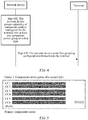
- the method includes the following steps.
- Step 400 The network device groups a plurality of component carriers configured for the terminal into at least one component carrier group of a first type, so that the network device sends control information corresponding to a first component carrier to the terminal over a second component carrier, where the first component carrier and the second component carrier belong to a same component carrier group of the first type, and when a plurality of component carriers in at least two component carrier groups of the first type are scheduled, the terminal aggregates feedback information corresponding to the plurality of component carriers and feeds back the aggregated feedback information to the network device over one component carrier.
- Step 410 The network device sends first grouping configuration information to the terminal, where the first grouping configuration information is used to indicate a grouping result of the at least one component carrier group of the first type.
- signaling for sending the first grouping configuration information may be configured through radio resource control (radio resource control, RRC), or may be a master information block (master information block, MIB) message, a system information block (system information block, SIB) message, RRC signaling, a media access control control element (media access control control element, MAC CE), downlink control information (downlink control information, DCI), or a combination of the foregoing plurality of pieces of signaling (for example, an RRC+DCI manner).
- RRC radio resource control
- the network device may perform cross-component carrier scheduling on a component carrier including each numerology in downlink, and the component carriers including the plurality of numerologies share one PUCCH for feedback.
- the component carriers included in the component carrier group of the first type have a same subcarrier spacing or time unit length, to be specific, the network device groups, by using the same subcarrier spacing or the same time unit length as a grouping criterion, the plurality of component carriers configured for the terminal into the at least one component carrier group of the first type. Therefore, cross-component carrier scheduling complexity can be greatly reduced in the grouping manner.
- a maximum of one component carrier group of the first type has component carriers having different subcarrier spacings or different time unit lengths.
- the network device may alternatively first group, by using the same subcarrier spacing or the same time unit length as the grouping criterion, the plurality of component carriers configured for the terminal into the at least one component carrier group of the first type, and then use a remaining component carrier as one component carrier group of the first type.
- At least two component carriers included in the component carrier group of the first type have a maximum of two different subcarrier spacing or time unit length configurations, to be specific, component carriers allocated by the network device to each component carrier group of the first type have a maximum of two different subcarrier spacing or time unit length configurations, to reduce the cross-component carrier scheduling complexity, thereby avoiding relatively high cross-component carrier scheduling complexity caused by excessively many types of subcarrier spacing or time unit length configurations in the component carrier group.
- component carriers included in one component carrier group of the first type have a maximum of two different subcarrier spacing or time unit length configurations, and the two different subcarrier spacings or time unit lengths are two neighboring component carrier spacings or time unit lengths that are supported by the terminal or a system.
- component carriers whose subcarrier spacings are configured to 15 kHz, 60 kHz, and 120 kHz component carriers whose subcarrier spacings are configured to 15 kHz and 60 kHz may be grouped into one group, and component carriers whose subcarrier spacings are configured to 15 kHz and 120 kHz cannot be grouped into one group.
- the at least two component carriers included in the component carrier group of the first type have a maximum of two different subcarrier spacing or time unit length configurations. This grouping manner is easier.
- the network device cannot perform cross-component carrier scheduling between two component carrier groups of the first type.
- a g1 and a g2 are two component carrier groups of the first type, so that the network device cannot add control information of a component carrier in the g1 over a component carrier in the g2.
- the grouping, by the network device, a plurality of component carriers configured for the terminal into at least one component carrier group of a first type may be that the component carriers configured for the terminal are grouped into one component carrier group of the first type; or some component carriers (for example, activated component carriers) configured for the terminal are grouped into at least one component carrier group of the first type, and a remaining component carrier configured for the terminal does not belong to any component carrier group of the first type.
- the network device configures five component carriers for the terminal.
- a component carrier 1, a component carrier 2, and a component carrier 3 that have a same subcarrier spacing are used as one component carrier group of the first type.
- a component carrier 4 and a component carrier 5 have different subcarrier spacings and the subcarrier spacings are different from the subcarrier spacing of the component carrier 1. Therefore, the component carrier 4 and the component carrier 5 may be used as one component carrier group of the first type, or the component carrier 4 and the component carrier 5 may not be used as one component carrier group of the first type.
- the network device before the network device groups the plurality of component carriers configured for the terminal into the at least one component carrier group of the first type, the network device receives information about a first capability that is reported by the terminal, and the information about the first capability is used to notify the network device whether the terminal supports carrying of the control information corresponding to the first component carrier on the second component carrier, to be specific, whether the terminal can support the cross-component carrier scheduling.
- the information about the first capability may be used to notify the network device that the terminal supports carrying of the control information corresponding to the first component carrier on the second component carrier, or the information about the first capability may be used to notify the network device that the terminal does not support carrying of the control information corresponding to the first component carrier on the second component carrier.
- the network device may determine, based on the information about the first capability that is reported by the terminal, that the terminal can support the cross-component carrier scheduling, and then group the plurality of component carriers configured for the terminal into the at least one component carrier group of the first type.
- the information about the first capability is further used to indicate a difference between a component carrier configuration parameter of the first component carrier and a component carrier configuration parameter of the second component carrier that are supported by the terminal.
- the component carrier configuration parameter herein may be a subcarrier spacing or a time unit length. For example, a subcarrier spacing of the first component carrier that is supported by the terminal is 15 kHz, and a subcarrier spacing of the second component carrier that is supported by the terminal is 30 kHz; or a subcarrier spacing of the first component carrier that is supported by the terminal is 15 kHz, and a subcarrier spacing of the second component carrier that is supported by the terminal is 60 kHz.
- a ratio indicating a maximum difference between the subcarrier spacing of the first component carrier that is supported by the terminal and the subcarrier spacing of the second component carrier that is supported by the terminal is 1:2 or 1:4.
- a ratio of the subcarrier spacing of the first component carrier that is supported by the terminal to the subcarrier spacing of the second component carrier that is supported by the terminal may be 1:1, 1:2, or 1:4.
- the network device groups, based on the information about the first capability, the plurality of component carriers configured for the terminal into the at least one component carrier group of the first type.
- the information about the first capability includes a specific capability supported by the terminal. Therefore, the network device may group, based on the specific capability, the plurality of component carriers configured for the terminal into the at least one component carrier group of the first type, so that the at least one grouped component carrier group of the first type is more targeted, and can be supported by the terminal.
- the network device groups a plurality of component carriers configured for the terminal into at least one component carrier group of a second type, so that the terminal sends feedback information corresponding to each component carrier in each component carrier group of the second type to the network device over a primary component carrier or one component carrier in the component carrier group of the second type.
- the component carrier group of the second type herein is similar to an existing component carrier grouping. For details, refer to the foregoing method for grouping, by the network device based on one or more HARQ-ACKs, a plurality of component carriers configured for the terminal.
- the network device sends second grouping configuration information to the terminal, and the second grouping configuration information is used to indicate a grouping result of the at least one component carrier group of the second type.
- the information about the first capability may further include whether the terminal supports cross-component carrier feedback.
- each component carrier group of the first type there is an intersection set between each component carrier group of the first type and at least one component carrier group of the second type.
- the component carrier group of the first type is a subset of one component carrier group of the second type.
- both a sub-group (sub-group) 1 and a sub-group 2 are subsets of a group 1.
- the component carrier group of the first type and the two component carrier groups of the second type have partially overlapping component carriers.
- the second component carrier group of the first type (Type 1:Group 2) and the first component carrier group of the second type (Type 2:Group 1) have an overlapping component carrier CC4
- the second component carrier group of the first type (Type 1:Group 2) and the second component carrier group of the second type (Type 2:Group 2) have an overlapping component carrier CC5.
- the network device when one component carrier group of the second type includes a plurality of component carrier groups of the first type, and at least two component carriers in the plurality of component carrier groups of the first type are scheduled, the network device receives aggregated feedback information corresponding to the at least two component carriers over a primary component carrier or one component carrier in the component carrier group of the second type, where the aggregated feedback information is feedback information fed back by the terminal to the network device after the terminal aggregates feedback information corresponding to the at least two component carriers.
- each piece of HARQ ACK feedback information corresponding to each of 10 component carriers corresponds to one bit
- the terminal aggregates 10-bit HARQ ACK feedback information into one piece of feedback information, and feeds back the aggregated piece of feedback information to the network device over one component carrier (for example, one PUCCH).
- the network device configures a plurality of component carriers for the terminal, for example, six component carriers shown in FIG. 5 , and the network device uses the six component carriers as one component carrier group of the second type, which is indicated by using Group 1.
- a component carrier 6 is a Pcell, and it is assumed that a subcarrier spacing of the component carrier 6 is 15 kHz. Therefore, the terminal aggregates feedback information corresponding to a component carrier 1 to the component carrier 6, and feeds back the aggregated feedback information to the network device over the component carrier 6. Therefore, the component carrier group of the second type is a component carrier group grouped based on cross-component carrier feedback.
- Subcarrier spacings of the component carrier 1 and the component carrier 2 are both 30 kHz, subcarrier spacings of the component carrier 3 and the component carrier 4 are both 60 kHz, and a subcarrier spacing of the component carrier 5 is 120 kHz.
- the network device groups the six carries configured for the terminal into two component carrier groups of the first type, which are respectively a sub-group 1 and a sub-group 2. As shown in FIG. 6 , the sub-group 1 includes the component carrier 1 and the component carrier 2, and the sub-group 2 includes the component carrier 3 and the component carrier 4. In each sub-group, cross-component carrier scheduling can be implemented.
- control information corresponding to the component carrier 1 may be carried over the component carrier 2
- control information corresponding to the component carrier 3 may be carried over the component carrier 4
- control information corresponding to the component carrier 1 cannot be carried over the component carrier 4. Therefore, the component carrier group of the first type is a component carrier group grouped based on cross-component carrier scheduling.
- the network device may further use the component carrier 5 and the component carrier 6 as one component carrier group of the first type based on the information about the first capability that is reported by the terminal.
- the network device does not use the component carrier 5 and the component carrier 6 as one component carrier group of the first type.
- both the sub-group 1 and the sub-group 2 are subsets of the group 1. Further, the sub-group 1 and the sub-group 2 may share one PUCCH for feedback, to be specific, feedback is performed over the component carrier 6. Therefore, the network device groups the component carriers configured for the terminal into the at least one component carrier group of the first type, so that component carrier aggregation scheduling performed by the network device under aggregation of component carriers including different numerologies can be simplified. For example, component carriers including a same numerology may be grouped into one group. In addition, the terminal may aggregate the feedback information corresponding to the component carriers in the at least two component carrier groups of the first type, and feed back the aggregated feedback information over a same component carrier.
- the component carrier group grouped based on the cross-component carrier feedback and the component carrier group grouped based on the cross-component carrier scheduling are decoupled, and the cross-component carrier scheduling is not limited in the component carrier group grouped based on the cross-component carrier feedback any longer.
- the network device configures a plurality of component carriers for the terminal, for example, eight component carriers shown in FIG. 7 , and the network device uses a CC1 to a CC4 as one component carrier group of the second type, which is indicated by using Type 2:Group 1; and uses a CC5 to a CC8 as one component carrier group of the second type, which is indicated by using Type 2: Group 2.
- the CC1 is a Pcell, and it is assumed that a subcarrier spacing of the CC1 is 15 kHz. Therefore, the terminal aggregates feedback information corresponding to the CC1 to the CC4, and feeds back the aggregated feedback information to the network device over the CC1.
- the subcarrier spacing of the CC8 is 15 kHz.
- the terminal aggregates feedback information corresponding to the CC5 to the CC8, and feeds back the aggregated feedback information to the network device over the CC8.
- Subcarrier spacings of the CC2 and the CC3 are both 60 kHz, subcarrier spacings of the CC5 and the CC4 are both 120 kHz, and subcarrier spacings of the CC7 and the CC6 are both 30 kHz.
- the network device groups the six component carriers into three component carrier groups of the first type, which are respectively Type 1 :Group 1, Type 1 :Group 2, and Type 1 :Group 3. As shown in FIG. 7 , Type 1:Group 1 includes the CC2 and the CC3, Type 1:Group 2 includes the CC4 and the CC5, and Type 1 :Group 3 includes the CC6 and the CC7. In each sub-group, cross-component carrier scheduling can be implemented.
- control information corresponding to the CC2 is carried over the CC3
- control information corresponding to the CC4 is carried over the CC5
- control information corresponding to the CC6 is carried over the CC7
- control information corresponding to the CC7 cannot be carried over the CC4.
- Type 1 :Group 2 and Type 2: Group 1 have an overlapping component carrier CC4, and Type 1:Group 2 and Type 2:Group 2 have an overlapping component carrier CC5.
- Type 1 :Group 1 and Type 2:Group 2 have no overlapping component carrier. Therefore, Type 1 :Group 1 and Type 2:Group 2 are completely decoupled.
- HARQ-ACKs of PDSCHs of the CC1 to the CC4 may be carried over a PUCCH of the CC1
- HARQ-ACKs of PDSCHs of the CC5 to the CC8 may be carried over a PUCCH of the CC8. Therefore, the network device groups the component carriers configured for the terminal into the at least one component carrier group of the first type, so that component carrier aggregation scheduling performed by the network device under aggregation of component carriers including different numerologies can be simplified.
- the terminal may aggregate feedback information corresponding to the component carriers in the at least one component carrier groups of the first type, and feed back the aggregated feedback information over a same component carrier. Therefore, the limitation on the terminal power can further be avoided.
- the component carrier group grouped based on the cross-component carrier feedback and the component carrier group grouped based on the cross-component carrier scheduling may be completely decoupled, and the cross-component carrier scheduling is not limited in the component carrier group grouped based on the cross-component carrier feedback any longer.
- timing value indication complexity is relatively low (for example, a timing relationship in LTE may be multiplexed), and overheads of blind detection performed by the terminal may not be increased.
- an embodiment of this application provides a network device, configured to implement the component carrier grouping method shown in FIG. 4 .
- the network device 900 includes a transceiver unit 901 and a processing unit 902.
- the processing unit 902 is configured to group a plurality of component carriers configured for a terminal into at least one component carrier group of a first type, so that the transceiver sends control information corresponding to a first component carrier to the terminal over a second component carrier, the first component carrier and the second component carrier belong to a same component carrier group of the first type, and when a plurality of component carriers in at least two component carrier groups of the first type are scheduled, the terminal aggregates feedback information corresponding to the plurality of component carriers and feeds back the aggregated feedback information to the network device over one component carrier.
- the transceiver unit 901 is configured to send first grouping configuration information to the terminal, and the first grouping configuration information is used to indicate a grouping result of the at least one component carrier group of the first type.
- unit division in this embodiment of this application is an example, and is merely logical function division and may be other division in actual implementations.
- the functional units in this embodiment of this application may be integrated into one processing unit, or each of the units may exist alone physically, or two or more units are integrated into one unit.
- the integrated unit may be implemented in a form of hardware, or may be implemented in a form of a software functional unit.
- the integrated unit When the integrated unit is implemented in the form of a software functional unit and sold or used as an independent product, the integrated unit may be stored in a computer-readable storage medium. Based on such an understanding, the technical solutions of this application essentially, or the part contributing to the prior art, or all or some of the technical solutions may be implemented in the form of a software product.
- the software product is stored in a storage medium and includes several instructions for instructing a computer device (which may be a personal computer, a server, or a network device) or a processor (processor) to perform all or some of the steps of the methods described in the embodiments of this application.
- the foregoing storage medium includes: any medium that can store program code, such as a USB flash drive, a removable hard disk, a read-only memory (ROM, Read-Only Memory), a random access memory (RAM, Random Access Memory), a magnetic disk, or an optical disc.
- program code such as a USB flash drive, a removable hard disk, a read-only memory (ROM, Read-Only Memory), a random access memory (RAM, Random Access Memory), a magnetic disk, or an optical disc.
- an embodiment of this application further provides a network device, configured to implement the component carrier grouping method shown in FIG. 4 and having a function of the network device 900 shown in FIG. 9 .
- the network device 1000 includes a transmitter 1001, a receiver 1002, a processor 1003, a bus 1004, and a memory 1005.
- a function of the transceiver unit 901 is implemented by the transmitter 1001 and the receiver 1002, and a function of the processing unit 902 is implemented by the processor 1003.
- the bus 1004 may be a peripheral component interconnect (peripheral component interconnect, PCI) bus, an extended industry standard architecture (extended industry standard architecture, EISA) bus, or the like.
- PCI peripheral component interconnect
- EISA extended industry standard architecture
- the bus may be classified into an address bus, a data bus, a control bus, and the like. For ease of indication, the bus is indicated by using only one bold line in FIG. 10 . However, it does not indicate that there is only one bus or only one type of bus.
- the memory 1005 is configured to store a program and the like.
- the program may include program code, and the program code includes a computer operation instruction.
- the memory 1005 may include a random access memory (random access memory, RAM), or may include a non-volatile memory (non-volatile memory), for example, at least one magnetic disk memory.
- the processor 1003 executes program stored in the memory 1005 to implement the foregoing function, to implement the component carrier grouping method shown in FIG. 4 .
- the processor 1003 groups a plurality of component carriers configured for a terminal into at least one component carrier group of a first type, so that a transceiver sends control information corresponding to a first component carrier to the terminal over a second component carrier, where the first component carrier and the second component carrier belong to a same component carrier group of the first type, and when a plurality of component carriers in at least two component carrier groups of the first type are scheduled, the terminal aggregates feedback information corresponding to the plurality of component carriers and feeds back the aggregated feedback information to the network device over one component carrier; and the transmitter 1001 sends first grouping configuration information to the terminal, where the first grouping configuration information is used to indicate a grouping result of the at least one component carrier group of the first type.
- the receiver receives information about a first capability that is reported by the terminal, and the information about the first capability is used to notify the network device that the terminal supports carrying of the control information corresponding to the first component carrier on the second component carrier.
- At least two component carriers included in the component carrier group of the first type have a same subcarrier spacing or time unit length; or at least two component carriers included in the component carrier group of the first type have a maximum of two different subcarrier spacing or time unit length configurations.
- the information about the first capability is further used to indicate a difference between a component carrier configuration parameter of the first component carrier and a component carrier configuration parameter of the second component carrier that are supported by the terminal.
- the processor 1003 groups, based on the information about the first capability, the plurality of component carriers configured for the terminal into the at least one component carrier group of the first type.
- the processor 1003 further groups a plurality of component carriers configured for the terminal into at least one component carrier group of a second type, so that the terminal sends feedback information corresponding to each component carrier in each component carrier group of the second type to the network device over a primary component carrier or any component carrier in the component carrier group of the second type; and the transmitter 1001 sends second grouping configuration information to the terminal, where the second grouping configuration information is used to indicate a grouping result of the at least one component carrier group of the second type.
- each component carrier group of the first type there is an intersection set between each component carrier group of the first type and at least one component carrier group of the second type.
- the receiver 1002 when one component carrier group of the second type includes a plurality of component carrier groups of the first type, and at least two component carriers in the plurality of component carrier groups of the first type are scheduled, the receiver 1002 further receives aggregated feedback information corresponding to the at least two component carriers over a primary component carrier or any component carrier in the component carrier group of the second type, where the aggregated feedback information is feedback information fed back by the terminal to the network device after the terminal aggregates feedback information corresponding to the at least two component carriers.
- an embodiment of this application provides a terminal, configured to implement the component carrier grouping method shown in FIG. 4 .
- the terminal 1100 includes a sending unit 1101 and a receiving unit 1102.
- the receiving unit 1102 receives first grouping configuration information sent by a network device, and the first grouping configuration information is used to indicate a grouping result of at least one component carrier group of a first type.
- the receiving unit 1102 further receives control information corresponding to a first component carrier that is sent by the network device over a second component carrier, the first component carrier and the second component carrier belong to a same component carrier group of the first type, and/or when a plurality of component carriers in at least two component carrier groups of the first type are scheduled, the sending unit 1101 is configured to: aggregate feedback information corresponding to the plurality of component carriers, and feed back the aggregated feedback information to the network device over one component carrier.
- an embodiment of this application further provides a terminal, configured to implement the component carrier grouping method shown in FIG. 4 and having a function of the terminal 1100 shown in FIG. 11 .
- the terminal device includes a transceiver 1201, a processor 1202, a bus 1203, and a memory 1204. Functions of the sending unit 1101 and the receiving unit 1102 are implemented by the transceiver 1201.
- the transceiver 1201, the processor 1202, and the memory 1204 are connected to each other by using the bus 1203.
- the bus 1203 may be a PCI bus, an EISA bus, or the like.
- the bus may be classified into an address bus, a data bus, a control bus, or the like.
- the bus is indicated by using only one bold line in FIG. 12 . However, it does not indicate that there is only one bus or only one type of bus.
- the memory 1204 is configured to store a program and the like.
- the program may include program code, and the program code includes a computer operation instruction.
- the memory 1204 may include a RAM, and may further include a non-volatile memory, for example, at least one magnetic disk storage.
- the processor 1202 executes program stored in the memory 1204 to implement the foregoing function, to implement the component carrier grouping method shown in FIG. 4 .
- the transceiver 1201 receives first grouping configuration information sent by a network device, where the first grouping configuration information is used to indicate a grouping result of at least one component carrier group of a first type; and the transceiver 1201 further receives control information corresponding to a first component carrier that is sent by the network device over a second component carrier, where the first component carrier and the second component carrier belong to a same component carrier group of the first type, and/or when a plurality of component carriers in at least two component carrier groups of the first type are scheduled, the transceiver is configured to: aggregate feedback information corresponding to the plurality of component carriers, and feed back the aggregated feedback information to the network device over one component carrier.
- the transceiver 1201 further reports information about a first capability to the network device before receiving the first grouping configuration information sent by the network device, and the information about the first capability is used to notify the network device that the terminal supports carrying of the control information corresponding to the first component carrier on the second component carrier.
- At least two component carriers included in the component carrier group of the first type have a same subcarrier spacing or time unit length; or at least two component carriers included in the component carrier group of the first type have a maximum of two different subcarrier spacing or time unit length configurations.
- the information about the first capability is further used to indicate a difference between a component carrier configuration parameter of the first component carrier and a component carrier configuration parameter of the second component carrier that are supported by the terminal.
- the transceiver 1201 further receives second grouping configuration information sent by the network device, and the second grouping configuration information is used to indicate a grouping result of at least one component carrier group of the second type; and the transceiver 1201 further sends feedback information corresponding to each component carrier in each component carrier group of the second type to the network device over a primary component carrier or any component carrier in the component carrier group of the second type.
- each component carrier group of the first type there is an intersection set between each component carrier group of the first type and at least one component carrier group of the second type.
- the transceiver 1201 when one component carrier group of the second type includes a plurality of component carrier groups of the first type, and at least two component carriers in the plurality of component carrier groups of the first type are scheduled, the transceiver 1201 sends aggregated feedback information corresponding to the at least two component carriers to the network device over a primary component carrier or any component carrier in the component carrier group of the second type, where the aggregated feedback information is feedback information fed back by the processor to the network device by using the transceiver after the processor aggregates feedback information corresponding to the at least two component carriers.
- the network device groups the component carriers configured for the terminal into the at least one component carrier group of the first type, and a component carrier group grouped based on cross-component carrier feedback and a component carrier group grouped based on cross-component carrier scheduling are decoupled, so that component carrier aggregation scheduling performed by the network device under aggregation of component carriers including different numerologies can be simplified, a quantity of required processes can be reduced, timing value indication complexity can be reduced, and blind detection overheads can be reduced.
- the terminal can aggregate the feedback information corresponding to the component carriers in the at least two component carrier groups of the first type and feed back the aggregated feedback information over a same component carrier. Therefore, a limitation on a terminal power can be avoided.
- the embodiments of this application may be provided as a method, a system, or a computer program product. Therefore, the embodiments of this application may use a form of hardware only embodiments, software only embodiments, or embodiments with a combination of software and hardware. Moreover, the embodiments of this application may use a form of a computer program product that is implemented on one or more computer-usable storage media (including but not limited to a disk memory, a CD-ROM, an optical memory, and the like) that include computer-usable program code.
- computer-usable storage media including but not limited to a disk memory, a CD-ROM, an optical memory, and the like
- These computer program instructions may be provided to a general-purpose computer, a dedicated computer, an embedded processor, or a processor of another programmable data processing device to generate a machine, so that the instructions executed by the computer or the processor of the another programmable data processing device generate an apparatus for implementing a specific function in one or more processes in the flowcharts and/or in one or more blocks in the block diagrams.
- These computer program instructions may be stored in a computer-readable memory that can instruct the computer or the another programmable data processing device to work in a specific manner, so that the instructions stored in the computer-readable memory generate an artifact that includes an instruction apparatus.
- the instruction apparatus implements a specified function in one or more processes in the flowcharts and/or in one or more blocks in the block diagrams.
- These computer program instructions may also be loaded onto the computer or the another programmable data processing device, so that a series of operations and steps are performed on the computer or the another programmable device, thereby generating computer-implemented processing. Therefore, the instructions executed on the computer or the another programmable device provide steps for implementing a specific function in one or more processes in the flowcharts and/or in one or more blocks in the block diagrams.
Landscapes
- Engineering & Computer Science (AREA)
- Signal Processing (AREA)
- Computer Networks & Wireless Communication (AREA)
- Databases & Information Systems (AREA)
- Physics & Mathematics (AREA)
- Mathematical Physics (AREA)
- Mobile Radio Communication Systems (AREA)
Applications Claiming Priority (2)
| Application Number | Priority Date | Filing Date | Title |
|---|---|---|---|
| CN201710459133.9A CN109152018B (zh) | 2017-06-16 | 2017-06-16 | 一种载波分组方法及设备 |
| PCT/CN2018/090894 WO2018228397A1 (fr) | 2017-06-16 | 2018-06-12 | Procédé et dispositif de regroupement d'ondes porteuses |
Publications (3)
| Publication Number | Publication Date |
|---|---|
| EP3567962A1 true EP3567962A1 (fr) | 2019-11-13 |
| EP3567962A4 EP3567962A4 (fr) | 2020-03-18 |
| EP3567962B1 EP3567962B1 (fr) | 2022-07-27 |
Family
ID=64659974
Family Applications (1)
| Application Number | Title | Priority Date | Filing Date |
|---|---|---|---|
| EP18816841.3A Active EP3567962B1 (fr) | 2017-06-16 | 2018-06-12 | Procédé et dispositif de regroupement d'ondes porteuses |
Country Status (4)
| Country | Link |
|---|---|
| US (1) | US11109240B2 (fr) |
| EP (1) | EP3567962B1 (fr) |
| CN (1) | CN109152018B (fr) |
| WO (1) | WO2018228397A1 (fr) |
Families Citing this family (12)
| Publication number | Priority date | Publication date | Assignee | Title |
|---|---|---|---|---|
| US10952215B2 (en) * | 2018-07-10 | 2021-03-16 | Huawei Technologies Co., Ltd. | Method and system for transmission over multiple carriers |
| US11228405B2 (en) * | 2019-01-02 | 2022-01-18 | Qualcomm Incorporated | Control channel processing limits for asynchronous cells |
| US11265879B2 (en) * | 2019-07-05 | 2022-03-01 | Qualcomm Incorporated | Group component carrier based updates |
| US11457464B2 (en) * | 2019-09-20 | 2022-09-27 | Qualcomm Incorporated | Carrier-group based cross-slot scheduling adaptation |
| WO2021097682A1 (fr) * | 2019-11-19 | 2021-05-27 | 北京小米移动软件有限公司 | Procédé et appareil de rétroaction harq-ack, et dispositif de communication |
| CN115211188B (zh) * | 2020-03-23 | 2025-11-28 | 株式会社Ntt都科摩 | 终端 |
| WO2021191983A1 (fr) * | 2020-03-23 | 2021-09-30 | 株式会社Nttドコモ | Terminal |
| US11758388B2 (en) * | 2020-04-23 | 2023-09-12 | Qualcomm Incorporated | Configurations for complexities of carriers |
| WO2021253390A1 (fr) * | 2020-06-19 | 2021-12-23 | 深圳传音控股股份有限公司 | Procédé de transmission d'informations, dispositif, et support de stockage |
| CN115699866B (zh) * | 2020-07-16 | 2025-01-03 | Oppo广东移动通信有限公司 | 载波聚合的配置方法、装置、设备及存储介质 |
| CN112584523B (zh) * | 2020-12-07 | 2025-01-07 | 北京奥比安贸易有限公司 | 基于5g通信系统的传输电子商务信息的方法及系统 |
| US11902952B2 (en) * | 2021-12-15 | 2024-02-13 | T-Mobile Innovations Llc | Carrier aggregation grouping based on user location in 5G NR massive MIMO beamforming network |
Family Cites Families (15)
| Publication number | Priority date | Publication date | Assignee | Title |
|---|---|---|---|---|
| WO2010102456A1 (fr) * | 2009-03-13 | 2010-09-16 | 华为技术有限公司 | Procédé de distribution de ressources, procédé de transmission de données, station de base et terminal |
| WO2010124238A2 (fr) * | 2009-04-24 | 2010-10-28 | Interdigital Patent Holdings, Inc. | Procédé et dispositif pour envoyer un retour concernant une demande de répétition automatique hybride pour une agrégation de porteuse |
| KR101799272B1 (ko) * | 2010-02-03 | 2017-11-20 | 엘지전자 주식회사 | 무선 통신 시스템에서 제어 정보의 전송 방법 및 장치 |
| CN101841398B (zh) * | 2010-05-06 | 2015-10-21 | 中兴通讯股份有限公司 | 一种上行控制信令的传输方法及用户设备 |
| CN103095433B (zh) * | 2011-11-04 | 2018-06-15 | 北京三星通信技术研究有限公司 | 一种发送harq-ack反馈信息的方法 |
| US8953635B2 (en) * | 2012-05-17 | 2015-02-10 | Sharp Kabushiki Kaisha | Devices for sending and receiving feedback information |
| WO2013181829A1 (fr) * | 2012-06-07 | 2013-12-12 | Renesas Mobile Corporation | Appareils, procédés et produits programmes d'ordinateur concernant des perfectionnements apportés à des rapports d'état de chargement de porteuse |
| CN103905165B (zh) | 2012-12-28 | 2017-10-31 | 电信科学技术研究院 | 应答反馈信息的发送和接收方法及设备 |
| CN104426637A (zh) * | 2013-08-22 | 2015-03-18 | 北京三星通信技术研究有限公司 | 载波聚合系统的harq-ack反馈方法及用户终端 |
| CN105991249B (zh) * | 2015-01-30 | 2019-08-27 | 上海诺基亚贝尔股份有限公司 | 一种在增强载波聚合系统中用于反馈uci的方法 |
| CN105991260B (zh) * | 2015-01-30 | 2019-07-23 | 上海诺基亚贝尔股份有限公司 | 传输针对大规模载波聚合的下行控制信令的方法和装置 |
| EP3070870B1 (fr) * | 2015-03-18 | 2018-02-21 | Panasonic Intellectual Property Corporation of America | Mécanisme de rétroaction harq amélioré pour l'agrégation de porteuses au-delà de 5 porteuses |
| EP3304990B1 (fr) * | 2015-05-28 | 2020-02-19 | Nec Corporation | Procédé pour exécuter une eca prenant en charge jusqu'à 32 composantes porteuses et améliorer l'attribution de ressource pucch dynamique pour un usage associé |
| CN106470093A (zh) * | 2015-08-14 | 2017-03-01 | 中兴通讯股份有限公司 | 应答消息的反馈、接收方法及装置 |
| US10904784B2 (en) * | 2016-06-15 | 2021-01-26 | Qualcomm Incorporated | Beam reporting and scheduling in multicarrier beamformed communications |
-
2017
- 2017-06-16 CN CN201710459133.9A patent/CN109152018B/zh active Active
-
2018
- 2018-06-12 EP EP18816841.3A patent/EP3567962B1/fr active Active
- 2018-06-12 WO PCT/CN2018/090894 patent/WO2018228397A1/fr not_active Ceased
-
2019
- 2019-09-11 US US16/567,694 patent/US11109240B2/en active Active
Also Published As
| Publication number | Publication date |
|---|---|
| CN109152018A (zh) | 2019-01-04 |
| CN109152018B (zh) | 2021-02-09 |
| EP3567962B1 (fr) | 2022-07-27 |
| US20200008076A1 (en) | 2020-01-02 |
| US11109240B2 (en) | 2021-08-31 |
| WO2018228397A1 (fr) | 2018-12-20 |
| EP3567962A4 (fr) | 2020-03-18 |
Similar Documents
| Publication | Publication Date | Title |
|---|---|---|
| US11109240B2 (en) | Component carrier grouping method and device | |
| US11229026B2 (en) | Carrier switching method, base station, and user equipment | |
| US10869303B2 (en) | Method for monitoring, transmitting, and receiving downlink pre-emption indication information in new radio networks and apparatus thereof | |
| EP3902187B1 (fr) | Procédé et dispositif pour recevoir un signal dans un système de communication sans fil | |
| US10856307B2 (en) | Method for transmitting and receiving downlink pre-emption indication information using bitmap in new radio networks and apparatus thereof | |
| US9716569B2 (en) | Method and apparatus for hybrid automatic repeat request signaling | |
| JP6749491B2 (ja) | 改善された復号タイムラインのための探索空間およびサウンディング基準信号配置の最適化 | |
| US11082971B2 (en) | Wireless communications method and system, network device, and user equipment | |
| EP3364582A1 (fr) | Terminal utilisateur, station de base sans fil et procédé de communication sans fil | |
| KR101805563B1 (ko) | Ack/nack 피드백 비트수의 확정 방법 및 장치 | |
| EP4021115A1 (fr) | Procédé et appareil de transmission de données | |
| US9763239B2 (en) | Data transmission method and apparatus for half-duplex devices | |
| EP2536203A1 (fr) | Procédé, système et dispositif pour la programmation d'un accès aléatoire non concurrentiel et pour la transmission d'un préambule | |
| US10581578B2 (en) | Feedback information transmission method, base station, and user equipment | |
| EP3547587A1 (fr) | Procédé de transmission de données, équipement réseau et équipement terminal | |
| EP3641210A1 (fr) | N ud d'accès radio, terminal de communication et procédés mis en uvre en son sein | |
| CN107079440A (zh) | 用户终端、无线基站以及无线通信方法 | |
| CN104937865A (zh) | 监测无线通信系统中的下行链路控制信道的方法和装置 | |
| CN103688480A (zh) | 无线通信系统中设置控制信道和数据信道的方法和装置 | |
| US20190069218A1 (en) | Flexible Transmission of Combined System Information Blocks | |
| CN106537945A (zh) | 用于设备到设备通信的类型1和类型2跳跃 | |
| KR20210095699A (ko) | 데이터 송신 방법 및 디바이스 | |
| CN116076143A (zh) | 发送上行链路信道的方法、用户设备、处理装置、存储介质和计算机程序及接收上行链路信道的方法和基站 | |
| EP3386254B1 (fr) | Procédés de programmation inter-porteuse, et appareils | |
| KR20220063725A (ko) | 통신 시스템에서 스케줄링 및 harq 피드백을 위한 방법 및 장치 |
Legal Events
| Date | Code | Title | Description |
|---|---|---|---|
| STAA | Information on the status of an ep patent application or granted ep patent |
Free format text: STATUS: THE INTERNATIONAL PUBLICATION HAS BEEN MADE |
|
| PUAI | Public reference made under article 153(3) epc to a published international application that has entered the european phase |
Free format text: ORIGINAL CODE: 0009012 |
|
| STAA | Information on the status of an ep patent application or granted ep patent |
Free format text: STATUS: REQUEST FOR EXAMINATION WAS MADE |
|
| 17P | Request for examination filed |
Effective date: 20190806 |
|
| AK | Designated contracting states |
Kind code of ref document: A1 Designated state(s): AL AT BE BG CH CY CZ DE DK EE ES FI FR GB GR HR HU IE IS IT LI LT LU LV MC MK MT NL NO PL PT RO RS SE SI SK SM TR |
|
| AX | Request for extension of the european patent |
Extension state: BA ME |
|
| A4 | Supplementary search report drawn up and despatched |
Effective date: 20200214 |
|
| RIC1 | Information provided on ipc code assigned before grant |
Ipc: H04L 5/00 20060101AFI20200210BHEP |
|
| DAV | Request for validation of the european patent (deleted) | ||
| DAX | Request for extension of the european patent (deleted) | ||
| REG | Reference to a national code |
Ref country code: DE Ref legal event code: R079 Ref document number: 602018038534 Country of ref document: DE Free format text: PREVIOUS MAIN CLASS: H04W0072040000 Ipc: H04L0005000000 |
|
| GRAP | Despatch of communication of intention to grant a patent |
Free format text: ORIGINAL CODE: EPIDOSNIGR1 |
|
| STAA | Information on the status of an ep patent application or granted ep patent |
Free format text: STATUS: GRANT OF PATENT IS INTENDED |
|
| INTG | Intention to grant announced |
Effective date: 20220311 |
|
| RIC1 | Information provided on ipc code assigned before grant |
Ipc: H04L 27/26 20060101ALI20220225BHEP Ipc: H04L 5/00 20060101AFI20220225BHEP |
|
| GRAS | Grant fee paid |
Free format text: ORIGINAL CODE: EPIDOSNIGR3 |
|
| GRAA | (expected) grant |
Free format text: ORIGINAL CODE: 0009210 |
|
| STAA | Information on the status of an ep patent application or granted ep patent |
Free format text: STATUS: THE PATENT HAS BEEN GRANTED |
|
| AK | Designated contracting states |
Kind code of ref document: B1 Designated state(s): AL AT BE BG CH CY CZ DE DK EE ES FI FR GB GR HR HU IE IS IT LI LT LU LV MC MK MT NL NO PL PT RO RS SE SI SK SM TR |
|
| REG | Reference to a national code |
Ref country code: CH Ref legal event code: EP |
|
| REG | Reference to a national code |
Ref country code: DE Ref legal event code: R096 Ref document number: 602018038534 Country of ref document: DE |
|
| REG | Reference to a national code |
Ref country code: AT Ref legal event code: REF Ref document number: 1507804 Country of ref document: AT Kind code of ref document: T Effective date: 20220815 |
|
| REG | Reference to a national code |
Ref country code: IE Ref legal event code: FG4D |
|
| REG | Reference to a national code |
Ref country code: LT Ref legal event code: MG9D |
|
| REG | Reference to a national code |
Ref country code: NL Ref legal event code: MP Effective date: 20220727 |
|
| PG25 | Lapsed in a contracting state [announced via postgrant information from national office to epo] |
Ref country code: SE Free format text: LAPSE BECAUSE OF FAILURE TO SUBMIT A TRANSLATION OF THE DESCRIPTION OR TO PAY THE FEE WITHIN THE PRESCRIBED TIME-LIMIT Effective date: 20220727 Ref country code: RS Free format text: LAPSE BECAUSE OF FAILURE TO SUBMIT A TRANSLATION OF THE DESCRIPTION OR TO PAY THE FEE WITHIN THE PRESCRIBED TIME-LIMIT Effective date: 20220727 Ref country code: PT Free format text: LAPSE BECAUSE OF FAILURE TO SUBMIT A TRANSLATION OF THE DESCRIPTION OR TO PAY THE FEE WITHIN THE PRESCRIBED TIME-LIMIT Effective date: 20221128 Ref country code: NO Free format text: LAPSE BECAUSE OF FAILURE TO SUBMIT A TRANSLATION OF THE DESCRIPTION OR TO PAY THE FEE WITHIN THE PRESCRIBED TIME-LIMIT Effective date: 20221027 Ref country code: NL Free format text: LAPSE BECAUSE OF FAILURE TO SUBMIT A TRANSLATION OF THE DESCRIPTION OR TO PAY THE FEE WITHIN THE PRESCRIBED TIME-LIMIT Effective date: 20220727 Ref country code: LV Free format text: LAPSE BECAUSE OF FAILURE TO SUBMIT A TRANSLATION OF THE DESCRIPTION OR TO PAY THE FEE WITHIN THE PRESCRIBED TIME-LIMIT Effective date: 20220727 Ref country code: LT Free format text: LAPSE BECAUSE OF FAILURE TO SUBMIT A TRANSLATION OF THE DESCRIPTION OR TO PAY THE FEE WITHIN THE PRESCRIBED TIME-LIMIT Effective date: 20220727 Ref country code: FI Free format text: LAPSE BECAUSE OF FAILURE TO SUBMIT A TRANSLATION OF THE DESCRIPTION OR TO PAY THE FEE WITHIN THE PRESCRIBED TIME-LIMIT Effective date: 20220727 Ref country code: ES Free format text: LAPSE BECAUSE OF FAILURE TO SUBMIT A TRANSLATION OF THE DESCRIPTION OR TO PAY THE FEE WITHIN THE PRESCRIBED TIME-LIMIT Effective date: 20220727 |
|
| REG | Reference to a national code |
Ref country code: AT Ref legal event code: MK05 Ref document number: 1507804 Country of ref document: AT Kind code of ref document: T Effective date: 20220727 |
|
| PG25 | Lapsed in a contracting state [announced via postgrant information from national office to epo] |
Ref country code: PL Free format text: LAPSE BECAUSE OF FAILURE TO SUBMIT A TRANSLATION OF THE DESCRIPTION OR TO PAY THE FEE WITHIN THE PRESCRIBED TIME-LIMIT Effective date: 20220727 Ref country code: IS Free format text: LAPSE BECAUSE OF FAILURE TO SUBMIT A TRANSLATION OF THE DESCRIPTION OR TO PAY THE FEE WITHIN THE PRESCRIBED TIME-LIMIT Effective date: 20221127 Ref country code: HR Free format text: LAPSE BECAUSE OF FAILURE TO SUBMIT A TRANSLATION OF THE DESCRIPTION OR TO PAY THE FEE WITHIN THE PRESCRIBED TIME-LIMIT Effective date: 20220727 Ref country code: GR Free format text: LAPSE BECAUSE OF FAILURE TO SUBMIT A TRANSLATION OF THE DESCRIPTION OR TO PAY THE FEE WITHIN THE PRESCRIBED TIME-LIMIT Effective date: 20221028 |
|
| PG25 | Lapsed in a contracting state [announced via postgrant information from national office to epo] |
Ref country code: SM Free format text: LAPSE BECAUSE OF FAILURE TO SUBMIT A TRANSLATION OF THE DESCRIPTION OR TO PAY THE FEE WITHIN THE PRESCRIBED TIME-LIMIT Effective date: 20220727 Ref country code: RO Free format text: LAPSE BECAUSE OF FAILURE TO SUBMIT A TRANSLATION OF THE DESCRIPTION OR TO PAY THE FEE WITHIN THE PRESCRIBED TIME-LIMIT Effective date: 20220727 Ref country code: DK Free format text: LAPSE BECAUSE OF FAILURE TO SUBMIT A TRANSLATION OF THE DESCRIPTION OR TO PAY THE FEE WITHIN THE PRESCRIBED TIME-LIMIT Effective date: 20220727 Ref country code: CZ Free format text: LAPSE BECAUSE OF FAILURE TO SUBMIT A TRANSLATION OF THE DESCRIPTION OR TO PAY THE FEE WITHIN THE PRESCRIBED TIME-LIMIT Effective date: 20220727 Ref country code: AT Free format text: LAPSE BECAUSE OF FAILURE TO SUBMIT A TRANSLATION OF THE DESCRIPTION OR TO PAY THE FEE WITHIN THE PRESCRIBED TIME-LIMIT Effective date: 20220727 |
|
| REG | Reference to a national code |
Ref country code: DE Ref legal event code: R097 Ref document number: 602018038534 Country of ref document: DE |
|
| PG25 | Lapsed in a contracting state [announced via postgrant information from national office to epo] |
Ref country code: SK Free format text: LAPSE BECAUSE OF FAILURE TO SUBMIT A TRANSLATION OF THE DESCRIPTION OR TO PAY THE FEE WITHIN THE PRESCRIBED TIME-LIMIT Effective date: 20220727 Ref country code: EE Free format text: LAPSE BECAUSE OF FAILURE TO SUBMIT A TRANSLATION OF THE DESCRIPTION OR TO PAY THE FEE WITHIN THE PRESCRIBED TIME-LIMIT Effective date: 20220727 |
|
| PLBE | No opposition filed within time limit |
Free format text: ORIGINAL CODE: 0009261 |
|
| STAA | Information on the status of an ep patent application or granted ep patent |
Free format text: STATUS: NO OPPOSITION FILED WITHIN TIME LIMIT |
|
| PG25 | Lapsed in a contracting state [announced via postgrant information from national office to epo] |
Ref country code: AL Free format text: LAPSE BECAUSE OF FAILURE TO SUBMIT A TRANSLATION OF THE DESCRIPTION OR TO PAY THE FEE WITHIN THE PRESCRIBED TIME-LIMIT Effective date: 20220727 |
|
| 26N | No opposition filed |
Effective date: 20230502 |
|
| PG25 | Lapsed in a contracting state [announced via postgrant information from national office to epo] |
Ref country code: SI Free format text: LAPSE BECAUSE OF FAILURE TO SUBMIT A TRANSLATION OF THE DESCRIPTION OR TO PAY THE FEE WITHIN THE PRESCRIBED TIME-LIMIT Effective date: 20220727 |
|
| PG25 | Lapsed in a contracting state [announced via postgrant information from national office to epo] |
Ref country code: MC Free format text: LAPSE BECAUSE OF FAILURE TO SUBMIT A TRANSLATION OF THE DESCRIPTION OR TO PAY THE FEE WITHIN THE PRESCRIBED TIME-LIMIT Effective date: 20220727 |
|
| PG25 | Lapsed in a contracting state [announced via postgrant information from national office to epo] |
Ref country code: MC Free format text: LAPSE BECAUSE OF FAILURE TO SUBMIT A TRANSLATION OF THE DESCRIPTION OR TO PAY THE FEE WITHIN THE PRESCRIBED TIME-LIMIT Effective date: 20220727 |
|
| REG | Reference to a national code |
Ref country code: CH Ref legal event code: PL |
|
| REG | Reference to a national code |
Ref country code: BE Ref legal event code: MM Effective date: 20230630 |
|
| GBPC | Gb: european patent ceased through non-payment of renewal fee |
Effective date: 20230612 |
|
| PG25 | Lapsed in a contracting state [announced via postgrant information from national office to epo] |
Ref country code: LU Free format text: LAPSE BECAUSE OF NON-PAYMENT OF DUE FEES Effective date: 20230612 |
|
| REG | Reference to a national code |
Ref country code: IE Ref legal event code: MM4A |
|
| PG25 | Lapsed in a contracting state [announced via postgrant information from national office to epo] |
Ref country code: LU Free format text: LAPSE BECAUSE OF NON-PAYMENT OF DUE FEES Effective date: 20230612 |
|
| PG25 | Lapsed in a contracting state [announced via postgrant information from national office to epo] |
Ref country code: IE Free format text: LAPSE BECAUSE OF NON-PAYMENT OF DUE FEES Effective date: 20230612 |
|
| PG25 | Lapsed in a contracting state [announced via postgrant information from national office to epo] |
Ref country code: IE Free format text: LAPSE BECAUSE OF NON-PAYMENT OF DUE FEES Effective date: 20230612 Ref country code: GB Free format text: LAPSE BECAUSE OF NON-PAYMENT OF DUE FEES Effective date: 20230612 Ref country code: CH Free format text: LAPSE BECAUSE OF NON-PAYMENT OF DUE FEES Effective date: 20230630 |
|
| PG25 | Lapsed in a contracting state [announced via postgrant information from national office to epo] |
Ref country code: IT Free format text: LAPSE BECAUSE OF FAILURE TO SUBMIT A TRANSLATION OF THE DESCRIPTION OR TO PAY THE FEE WITHIN THE PRESCRIBED TIME-LIMIT Effective date: 20220727 Ref country code: FR Free format text: LAPSE BECAUSE OF NON-PAYMENT OF DUE FEES Effective date: 20230630 Ref country code: BE Free format text: LAPSE BECAUSE OF NON-PAYMENT OF DUE FEES Effective date: 20230630 |
|
| PG25 | Lapsed in a contracting state [announced via postgrant information from national office to epo] |
Ref country code: BG Free format text: LAPSE BECAUSE OF FAILURE TO SUBMIT A TRANSLATION OF THE DESCRIPTION OR TO PAY THE FEE WITHIN THE PRESCRIBED TIME-LIMIT Effective date: 20220727 |
|
| PG25 | Lapsed in a contracting state [announced via postgrant information from national office to epo] |
Ref country code: BG Free format text: LAPSE BECAUSE OF FAILURE TO SUBMIT A TRANSLATION OF THE DESCRIPTION OR TO PAY THE FEE WITHIN THE PRESCRIBED TIME-LIMIT Effective date: 20220727 |
|
| PGFP | Annual fee paid to national office [announced via postgrant information from national office to epo] |
Ref country code: DE Payment date: 20250429 Year of fee payment: 8 |
|
| PG25 | Lapsed in a contracting state [announced via postgrant information from national office to epo] |
Ref country code: CY Free format text: LAPSE BECAUSE OF FAILURE TO SUBMIT A TRANSLATION OF THE DESCRIPTION OR TO PAY THE FEE WITHIN THE PRESCRIBED TIME-LIMIT; INVALID AB INITIO Effective date: 20180612 |
|
| PG25 | Lapsed in a contracting state [announced via postgrant information from national office to epo] |
Ref country code: HU Free format text: LAPSE BECAUSE OF FAILURE TO SUBMIT A TRANSLATION OF THE DESCRIPTION OR TO PAY THE FEE WITHIN THE PRESCRIBED TIME-LIMIT; INVALID AB INITIO Effective date: 20180612 |
|
| PG25 | Lapsed in a contracting state [announced via postgrant information from national office to epo] |
Ref country code: TR Free format text: LAPSE BECAUSE OF FAILURE TO SUBMIT A TRANSLATION OF THE DESCRIPTION OR TO PAY THE FEE WITHIN THE PRESCRIBED TIME-LIMIT Effective date: 20220727 |