EP3567974B1 - Procédés et dispositifs de connexion d'un dispositif dans un système de communication sans fil à courte portée - Google Patents
Procédés et dispositifs de connexion d'un dispositif dans un système de communication sans fil à courte portée Download PDFInfo
- Publication number
- EP3567974B1 EP3567974B1 EP18750791.8A EP18750791A EP3567974B1 EP 3567974 B1 EP3567974 B1 EP 3567974B1 EP 18750791 A EP18750791 A EP 18750791A EP 3567974 B1 EP3567974 B1 EP 3567974B1
- Authority
- EP
- European Patent Office
- Prior art keywords
- connection
- information
- response signal
- discovery
- signal
- Prior art date
- Legal status (The legal status is an assumption and is not a legal conclusion. Google has not performed a legal analysis and makes no representation as to the accuracy of the status listed.)
- Active
Links
Images


Classifications
-
- H—ELECTRICITY
- H04—ELECTRIC COMMUNICATION TECHNIQUE
- H04W—WIRELESS COMMUNICATION NETWORKS
- H04W12/00—Security arrangements; Authentication; Protecting privacy or anonymity
- H04W12/50—Secure pairing of devices
- H04W12/55—Secure pairing of devices involving three or more devices, e.g. group pairing
-
- H—ELECTRICITY
- H04—ELECTRIC COMMUNICATION TECHNIQUE
- H04W—WIRELESS COMMUNICATION NETWORKS
- H04W12/00—Security arrangements; Authentication; Protecting privacy or anonymity
- H04W12/06—Authentication
-
- H—ELECTRICITY
- H04—ELECTRIC COMMUNICATION TECHNIQUE
- H04W—WIRELESS COMMUNICATION NETWORKS
- H04W12/00—Security arrangements; Authentication; Protecting privacy or anonymity
- H04W12/50—Secure pairing of devices
-
- H—ELECTRICITY
- H04—ELECTRIC COMMUNICATION TECHNIQUE
- H04W—WIRELESS COMMUNICATION NETWORKS
- H04W4/00—Services specially adapted for wireless communication networks; Facilities therefor
- H04W4/80—Services using short range communication, e.g. near-field communication [NFC], radio-frequency identification [RFID] or low energy communication
-
- H—ELECTRICITY
- H04—ELECTRIC COMMUNICATION TECHNIQUE
- H04W—WIRELESS COMMUNICATION NETWORKS
- H04W40/00—Communication routing or communication path finding
- H04W40/24—Connectivity information management, e.g. connectivity discovery or connectivity update
- H04W40/246—Connectivity information discovery
-
- H—ELECTRICITY
- H04—ELECTRIC COMMUNICATION TECHNIQUE
- H04W—WIRELESS COMMUNICATION NETWORKS
- H04W72/00—Local resource management
- H04W72/20—Control channels or signalling for resource management
-
- H—ELECTRICITY
- H04—ELECTRIC COMMUNICATION TECHNIQUE
- H04W—WIRELESS COMMUNICATION NETWORKS
- H04W76/00—Connection management
- H04W76/10—Connection setup
- H04W76/15—Setup of multiple wireless link connections
-
- H—ELECTRICITY
- H04—ELECTRIC COMMUNICATION TECHNIQUE
- H04W—WIRELESS COMMUNICATION NETWORKS
- H04W76/00—Connection management
- H04W76/20—Manipulation of established connections
- H04W76/23—Manipulation of direct-mode connections
-
- H—ELECTRICITY
- H04—ELECTRIC COMMUNICATION TECHNIQUE
- H04W—WIRELESS COMMUNICATION NETWORKS
- H04W8/00—Network data management
- H04W8/005—Discovery of network devices, e.g. terminals
-
- H—ELECTRICITY
- H04—ELECTRIC COMMUNICATION TECHNIQUE
- H04W—WIRELESS COMMUNICATION NETWORKS
- H04W84/00—Network topologies
- H04W84/18—Self-organising networks, e.g. ad-hoc networks or sensor networks
- H04W84/20—Leader-follower arrangements
-
- H—ELECTRICITY
- H04—ELECTRIC COMMUNICATION TECHNIQUE
- H04W—WIRELESS COMMUNICATION NETWORKS
- H04W92/00—Interfaces specially adapted for wireless communication networks
- H04W92/16—Interfaces between hierarchically similar devices
- H04W92/18—Interfaces between hierarchically similar devices between terminal devices
-
- H—ELECTRICITY
- H04—ELECTRIC COMMUNICATION TECHNIQUE
- H04B—TRANSMISSION
- H04B7/00—Radio transmission systems, i.e. using radiation field
- H04B7/02—Diversity systems; Multi-antenna system, i.e. transmission or reception using multiple antennas
- H04B7/04—Diversity systems; Multi-antenna system, i.e. transmission or reception using multiple antennas using two or more spaced independent antennas
- H04B7/0413—MIMO systems
-
- H—ELECTRICITY
- H04—ELECTRIC COMMUNICATION TECHNIQUE
- H04M—TELEPHONIC COMMUNICATION
- H04M1/00—Substation equipment, e.g. for use by subscribers
- H04M1/72—Mobile telephones; Cordless telephones, i.e. devices for establishing wireless links to base stations without route selection
- H04M1/724—User interfaces specially adapted for cordless or mobile telephones
- H04M1/72403—User interfaces specially adapted for cordless or mobile telephones with means for local support of applications that increase the functionality
- H04M1/72409—User interfaces specially adapted for cordless or mobile telephones with means for local support of applications that increase the functionality by interfacing with external accessories
- H04M1/72412—User interfaces specially adapted for cordless or mobile telephones with means for local support of applications that increase the functionality by interfacing with external accessories using two-way short-range wireless interfaces
-
- H—ELECTRICITY
- H04—ELECTRIC COMMUNICATION TECHNIQUE
- H04W—WIRELESS COMMUNICATION NETWORKS
- H04W12/00—Security arrangements; Authentication; Protecting privacy or anonymity
- H04W12/30—Security of mobile devices; Security of mobile applications
- H04W12/33—Security of mobile devices; Security of mobile applications using wearable devices, e.g. using a smartwatch or smart-glasses
-
- H—ELECTRICITY
- H04—ELECTRIC COMMUNICATION TECHNIQUE
- H04W—WIRELESS COMMUNICATION NETWORKS
- H04W76/00—Connection management
- H04W76/10—Connection setup
- H04W76/14—Direct-mode setup
Definitions
- the disclosure relates to a method for establishing a connection between devices in a short range wireless communication system and, in particular, to methods and apparatuses for a device to establish a connection with one of other devices connected with each other.
- the 5G or pre-5G communication system is also called a 'Beyond 4G Network' or a 'Post LTE System'.
- the 5G communication system is considered to be implemented in higher frequency (mmWave) bands, e.g., 60GHz bands, so as to accomplish higher data rates.
- mmWave e.g., 60GHz bands
- MIMO massive multiple-input multiple-output
- FD-MIMO Full Dimensional MIMO
- array antenna an analog beam forming, large scale antenna techniques are discussed in 5G communication systems.
- RANs Cloud Radio Access Networks
- D2D device-to-device
- CoMP Coordinated Multi-Points
- FQAM Hybrid FSK and QAM Modulation
- SWSC sliding window superposition coding
- ACM advanced coding modulation
- FBMC filter bank multi carrier
- NOMA non-orthogonal multiple access
- SCMA sparse code multiple access
- the Internet which is a human centered connectivity network where humans generate and consume information
- IoT Internet of Things
- IoE Internet of Everything
- sensing technology “wired/wireless communication and network infrastructure”, “service interface technology”, and “Security technology”
- M2M Machine-to-Machine
- MTC Machine Type Communication
- IoT Internet technology services
- IoT may be applied to a variety of fields including smart home, smart building, smart city, smart car or connected cars, smart grid, health care, smart appliances and advanced medical services through convergence and combination between existing Information Technology (IT) and various industrial applications.
- IT Information Technology
- 5G communication systems to IoT networks.
- technologies such as a sensor network, Machine Type Communication (MTC), and Machine-to-Machine (M2M) communication may be implemented by beamforming, MIMO, and array antennas.
- MTC Machine Type Communication
- M2M Machine-to-Machine
- Application of a cloud Radio Access Network (RAN) as the above-described Big Data processing technology may also be considered to be as an example of convergence between the 5G technology and the IoT technology.
- RAN Radio Access Network
- a conventional short range wireless communication system is inconvenient for establishing a connection between master and slave devices. Particularly in the case of being required to connect a new master device to a slave device that always has a connection with another master device, it is inevitable to release the previously established connection to establish a new connection, which is inconvenient.
- US 2016/057796 A1 discloses a method and an apparatus for generating discovery information based on information related to a P2P device that cannot be newly connected, and providing the discovery information to a new host.
- the disclosure provides a method and apparatus for allowing a user to establish a new connection between two devices, of which one already has an old connection established with another device, through a short range wireless communication link without releasing the old connection.
- the disclosure is advantageous in terms of improving a user's convenience of using a short range wireless communication system with automatic inter-device connectivity and connectable device list organization functions as well as making it possible to establish a new connection between two devices, of which one already has an old connection established with another device, without releasing the old connection
- each block of the flowcharts and/or block diagrams, and combinations of blocks in the flowcharts and/or block diagrams can be implemented by computer program instructions.
- These computer program instructions may be provided to a processor of a general-purpose computer, special purpose computer, or other programmable data processing apparatus, such that the instructions that are executed via the processor of the computer or other programmable data processing apparatus create means for implementing the functions/acts specified in the flowcharts and/or block diagrams.
- These computer program instructions may also be stored in a non-transitory computer-readable memory that can direct a computer or other programmable data processing apparatus to function in a particular manner, such that the instructions stored in the non-transitory computer-readable memory produce articles of manufacture embedding instruction means that implement the function/act specified in the flowcharts and/or block diagrams.
- the computer program instructions may also be loaded onto a computer or other programmable data processing apparatus to cause a series of operational steps to be performed on the computer or other programmable apparatus to produce a computer implemented process such that the instructions that are executed on the computer or other programmable apparatus provide steps for implementing the functions/acts specified in the flowcharts and/or block diagrams.
- the respective block diagrams may illustrate parts of modules, segments, or codes including at least one or more executable instructions for performing specific logic function(s).
- the functions of the blocks may be performed in a different order in several modifications. For example, two successive blocks may be performed substantially at the same time, or they may be performed in reverse order according to their functions.
- a module means, but is not limited to, a software or hardware component, such as a Field Programmable Gate Array (FPGA) or Application Specific Integrated Circuit (ASIC), which performs certain tasks.
- a module may advantageously be configured to reside on the addressable storage medium and configured to be executed on one or more processors.
- a module may include, by way of example, components, such as software components, object-oriented software components, class components and task components, processes, functions, attributes, procedures, subroutines, segments of program code, drivers, firmware, microcode, circuitry, data, databases, data structures, tables, arrays, and variables.
- the functionalities of the components and modules may be combined into fewer components and modules or further separated into more components and modules.
- the components and modules may be implemented such that they execute one or more CPUs in a device or a secure multimedia card.
- a master device is a host device that is capable of controlling establishment of a connection with another device; examples of the master device include a portable phone and a laptop computer.
- a slave device is a peripheral device that connects to the master device under the control of the master device.
- Examples of the slave device include a Bluetooth earphone and a Bluetooth keyboard.
- a device such as a Bluetooth earphone, that can be controlled to establish a connection with another device may simultaneously operate as a master device and a slave device.
- the disclosure is directed to a situation where there are first and second devices as master devices and a third device as a slave device for convenience of explanation.
- all of the first to third devices may each operate as a master device and a slave device simultaneously.
- FIG. 1 is a diagram for explaining a method for establishing a connection between devices according to a conventional technology.
- FIG. 1 there are a Bluetooth earphone 121 and a Bluetooth speaker 125 as examples of a third device, and a second device 111 is connected to the Bluetooth earphone 121.
- a first device 101 broadcasts a discovery signal to search for connectable devices and establishes a connection to one of discovered devices.
- the Bluetooth speaker 125 that has no connection with any device may transmit a discovery response signal in reply to the discovery signal broadcast by the first device 101.
- the first device 101 may establish a connection with the Bluetooth speaker 125 based on the discovery response signal.
- the Bluetooth earphone 121 cannot respond to the discovery signal from the first device 101 because it has a connection established with the second device 111. Accordingly, the Bluetooth earphone 121 cannot establish a connection with the first device 101.
- the disclosure proposes a method for the first device to establish a connection to the third device via the second device having a connection previously established with the third device. That is, the disclosure proposes a method for the first device to establish a connection with the third device without exchanging any signals with the third device.
- FIG. 2 is a flowchart illustrating a method for establishing a connection between devices in a short range wireless communication system according to an embodiment of the disclosure.
- the first device broadcasts a discovery signal to search for devices around the first device.
- the discovery signal is broadcast under the control of the first device for the case where it is necessary to connect the first device to another device.
- the discovery signal may be broadcast at step S211 when the first device powers on or an application is executed on the first device at step S201.
- the first device if the first device is powered on for use at step S201, it may need a device for its operation and thus broadcast a discovery signal at step S211; if a predetermined application (music application or text-editing application as to be described later) is executed at step S201, it may need a device for an operation or use of the application and thus broadcast a discovery signal at step S211. That is, if a trigger event such as power-on of the device and execution of application occurs, a discovery signal may be broadcast at step S211.
- a trigger event such as power-on of the device and execution of application occurs
- the second device having no connection established with the third device may transmit a response signal in reply to the discovery signal from the first device.
- the discovery signal may include a connection information request.
- the connection information request may include type information of a device to which the first device aims to connect.
- the type information of the device is information for determining whether a device to which the first device aims to connect is a target device.
- the device type information may be information indicative of a Bluetooth keyboard or a Bluetooth mouse.
- connection information request may also include the first device's name, type, Bluetooth address, and account information
- discovery signal may further include information on a service in use by the first device.
- the first device receives a discovery response signal including information on the third device connected to the second device from the second device. That is, the first device acquires the information on the third device for use in establishing a connection with the third device from the second device with no signal exchange with the third device.
- the discovery response signal may include various kinds of information such as type of the third device.
- the discovery response signal may also include a Bluetooth address and account information of the third device.
- the discovery response signal may also include a Bluetooth address and account information of the second device, because it is a signal being transmitted from the second device to the first device, as well as the information on the third device.
- the procedure may include a step for the first device to perform an operation of authenticating the third device after step S221.
- the authentication step may be omitted because there is no need to perform the authentication step.
- the first device displays at least one device, at step S231, to which the first device can establish a connection.
- the at least one device to which the first device can connect may be displayed in various manners and, in particular, the first electronic device may display at least one device connected to the second device in the form of a list.
- the first device may display the multiple third devices connected to the second device in the form of a list. If there are multiple second devices, the first device may also display the multiple devices connected to each second device in the form of a list.
- FIGs. 3 to 9 are diagrams illustrating how the first device displays a list according to an embodiment of the disclosure.
- a Bluetooth earphone and a Bluetooth mouse are depicted as examples of third devices 321, and both the Bluetooth earphone and Bluetooth mouse are connected to a second device 311.
- the Bluetooth earphone and Bluetooth mouse are displayed on a first device 301 as the devices connected to the second device 311 in FIG. 3 .
- connection targets if the Bluetooth mouse and the Bluetooth earphone as the third devices 321 are selected as connection targets, a connection between the second device 311 and the third devices 321 may be released, and a new connection between the first device 301 and the third devices 321 may be established.
- FIG. 4 is a diagram illustrating a situation where a list of devices sorted by relevance to an application executed in a first device 401 is displayed according to an embodiment of the disclosure.
- a health care device 423 capable of counting heart rate and a Bluetooth earphone 421 as third devices are connected to a second device 411, and a music application is executed on the first device 401.
- the health care device 423 has a lower relevance to the music application than that of the Bluetooth earphone 421 and thus is ranked below the Bluetooth earphone 421 in the list displayed on the first device 410. As shown in FIG. 4 , the health care device 423 may be excluded from the list of the first device.
- the relevance of a third device to the application executed on the first device may be determined by comparing a category of the third device and a category of the application.
- a category denotes a field in which the third device or the application is classified, and both the Bluetooth earphone and the music application may fall in the music category.
- the relevance between the third device and the application is high for the case where they fall in the same category and low for the case where they fall in different categories.
- the Bluetooth earphone 421 is selected as a connection target of the first device 401, a connection between the second device 411 and the Bluetooth earphone 421 may be released, and a new connection may be established between the first device 401 and the Bluetooth earphone 421.
- the health care device 412 may maintain a connection established with the second device 411 as shown in FIG. 4 .
- FIG. 5 is a diagram illustrating a situation where a text-editing application is executed on a first device according to an embodiment of the disclosure.
- a Bluetooth earphone 523 and a Bluetooth keyboard 421 as third devices are connected to a second device 511, and an application related to a document work is executed in the first device 501.
- the Bluetooth keyboard 521 may be ranked above the Bluetooth earphone 523 in a list displayed, as in FIG. 4 , on the first device 501 (or the Bluetooth earphone 523 may be excluded from the list as shown in FIG. 5 ).
- the connection between the second device 511 and the Bluetooth keyboard 521 may be released, and a new connection may be established between the first device 501 and the Bluetooth keyboard 521. Meanwhile, the Bluetooth earphone 523 may maintain the connection to the second device 523.
- FIG. 6 is a diagram illustrating a situation where a health care application is executed on a first device 601 according to an embodiment of the disclosure.
- a health care device 621 connected to a second device 611 may be ranked high in a list displayed on the first device 601; if the health care device 621 is selected as a connection target of the first device 601, the connection between the health care device 621 and the second device 611 may be released, and a new connection may be established between the first device 601 and the health care device 621.
- FIG. 7 is a diagram illustrating a situation where a list of devices preregistered with a first device 701 is displayed according to an embodiment of the disclosure.
- a device that is frequently connected to the first device 701 according to the nature of the device may be previously registered with the first device.
- a preregistered device list may be separately displayed along with a list of third devices for communication with the second device 711 as shown in FIG. 7 .
- the list just means a list of devices preregistered with the first device 701, and the claim is not limited by by its name.
- FIG. 8 is a diagram illustrating a situation where a list of devices connectable to a first device 801 using a second device 811 as an upper node is displayed according to an embodiment of the disclosure.
- a plurality of devices connected to the second device 811 may be displayed in a tree structure.
- the first device 801 may display a tree structure composed of an upper node of the second device 811 and lower nodes of the Bluetooth mouse 821 and the Bluetooth earphone 823 as lower nodes connected to the second device 811.
- the second device 811 i.e., upper node
- connections of the Bluetooth mouse 821 and the Bluetooth earphone 823 i.e., lower nodes to the second device 811, are all released, and new connections to the first device 801 are established.
- the Bluetooth earphone and mouse as lower nodes are shown in FIG. 8 , there may be multiple devices classified as upper nodes. It may also be possible that the tree structure has three or more hierarchical levels rather than two (upper node and lower node).
- FIG. 9 is a diagram illustrating a situation where a list is configured according to capabilities of third devices according to an embodiment of the disclosure.
- a music application is executed on a first device 901 as described with reference to FIG. 4 , it may become necessary to establish a connection to a device related to a music application, e.g., Bluetooth speaker 921 and Bluetooth earphone 923.
- a device related to a music application e.g., Bluetooth speaker 921 and Bluetooth earphone 923.
- the Bluetooth speaker 921 that is superior in performance to the Bluetooth earphone 923 may be ranked higher in a list displayed on the first device 901.
- the Bluetooth speaker 921 is selected as a connection target of the first device 901, a connection established between the Bluetooth speaker 921 and the second device 911 may be released, and a new connection may by established between the Bluetooth speaker 921 and the first device 901.
- step S241 After performing the operation of step 231 as described above, if a second device is selected as a connection target of the first device, the first device transmits a connection request signal to the second device at step S241.
- the first device transmits a signal including information necessary for connection with the third device to the second device. Because the first device has acquired the basic information on the second and third devices by exchanging discovery signals, the connection request signal may include the least information necessary for establishing a connection between the first and third devices (e.g., Bluetooth address of the third device).
- the connection request signal may include the least information necessary for establishing a connection between the first and third devices (e.g., Bluetooth address of the third device).
- the first device may receive a connection response signal, at step S251, from the second device in response to the connection request signal; it may be preferable to include the least information necessary for establishing the connection between the first and third devices in the connection response signal as in the connection request signal in view of power consumption of the first and second devices.
- the first device After step S251, the first device establishes a connection with the third device at step S261 based on the connection response signal. If the connection between the first and third devices is established the old connection between the second and third devices is released as described with reference to FIGs. 3 to 9 .
- the method of establishing a connection between devices may be implemented according to various embodiments including the embodiment of FIG. 2 , e.g., an embodiment in which step S231 of FIG. 2 is omitted.
- the first device after receiving the discovery response signal at step S221, if the type of device that is indicated in the discovery signal as a connection target of the first device matches the type of the third device that is included in the discovery response signal, the first device automatically performs step S241.
- the first device may automatically establish a connection with a target device without any control intervention, which leads to improvement of a user's convenience of using a short range wireless communication system.
- FIG. 2 Various embodiments may be derived from the embodiment of FIG. 2 depending on the characteristics of devices in use.
- FIG. 10 is a diagram illustrating a situation where a first device 1001 is handed a task running on a second device 1011 seamlessly according to an embodiment of the disclosure.
- the first device 1001 may be controlled such that the work in progress on the second device 1011 is to be seamlessly performed on the first device 1001 along with connecting the Bluetooth mouse 1021 and the Bluetooth keyboard 1023 to the first device 1001 according to the control method described with reference to FIG. 2 .
- the first device transmits discovery signals, receives discovery response signals, and establishes connections to the Bluetooth mouse 1021 and the Bluetooth keyboard 1023 based on connection request signals and connection response signals exchanged based thereon.
- the first device 1001 by controlling only the device for use in continuing the document work, i.e., the first device 1001, it becomes possible to connect the Bluetooth mouse 1021 and the Bluetooth keyboard 1023 to the first device 1001 as well as to release old connections between the second device 1011 and the Bluetooth mouse 1021 and the Bluetooth keyboard 1023, thereby continuing the document work on the first device 1001.
- FIG. 11 is a diagram illustrating a situation where a first device 1101 cannot display devices available for use according to an embodiment of the disclosure.
- the first device 1101 is a wireless camera
- a third device 1121 is a headset that is capable of outputting video and voice input to the wireless camera.
- step S231 of FIG. 2 may be omitted; in this case, it may be preferable for the first device 1101 to be provided with a button for transmitting a connection request signal to establish a connection between the first device 1101 and the third device 1121.
- a connection between the third device 1121 and the second device 1111 may be released based on the connection request signal transmitted by the first device.
- FIG. 12 is a block diagram illustrating a configuration of a first device 1201 in a short range wireless communication system according to an embodiment of the disclosure.
- the first device 1201 may include a transceiver 1211 for transmitting a discovery signal including a connection information request to a second device and receiving a discovery response signal including information on a third device connected to the second device, a controller 1221 for establishing a connection to the third device based on the discovery response signal, and a display unit 1231 for displaying at least one connectable device based on the discovery response signal.
- the information on the third device may include type information of the third device
- the connection information request may include type information of a device to which the first device 1201 aims to establish a connection.
- the controller 1221 may automatically establish a connection with the third device based on the discovery response signal.
- the transceiver 1211 of the first device 1201 may transmit a discovery signal upon power-up of the first device or execution of an application on the first device as well as according to a control for transmitting the discovery signal.
- the display unit 1231 of the first device 1201 may display a list of at least one type of devices connected to the second device, and the device type list may contain devices ranked in an order of relevance to the type of the first device 1201 or an application executed on the first device 1201 or device use frequency.
- the display unit 1231 of the first device may also display a tree structure composed of the second device as an upper node and at least one device as a lower node connected to the second device based on the discovery response signal.
- the transceiver 1211 of the first device may transmit a connection request signal to the second device and receive a connection response signal from the second device in response to the connection request signal, and the controller 1221 of the first device may establish a connection with the third device based on the connection response signal.
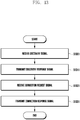
- FIG. 13 is a flowchart illustrating a communication method of a second device according to an embodiment of the disclosure.
- the second device receives a discovery signal including a connection information request from a first device; the connection information request may include information on a type of device to which the first device aims to establish a connection.
- the second device transmits to the first device a discovery response signal including information on a third device determined based on the discovery signal; the information on the third device may include type information of the third device.
- the second device may receive, at step S1321, a connection request signal from the first device determined based on the discovery response signal and transmit, at step S1331, a connection response signal to the first device determined based on the connection request signal.
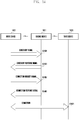
- FIG. 14 is a signal flow diagram illustrating signal flows among a first device 1401, a second device 1411, and a third device 1421 according to an embodiment of the disclosure.
- the first device 1401 transmits, at step S1431, a discovery signal to the second device 1411, and the second device 1411 transmits, at step S1441, a discovery response signal, including information indicating that the third device 1421 is connected to the second device 1411, to the first device 1401 in response to the discovery signal.
- the first device 1401 transmits, at step S1451, a connection request signal to the second device 1411 to request for information on the third device, and the second device 1411 transmits, at step S1461, a connection response signal, including information on the third device 1421, to the first device 1401 in response to the connection request signal.
- the first device 1401 upon receipt of the information on the third device 1421 from the second device 1411 at step S1461, the first device 1401 establishes a connection with the third device 1421 at step S1471. Although not shown in the drawing, an old connection established between the second device 1411 and the third device 1421 may be released.
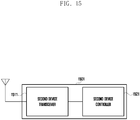
- FIG. 15 is a block diagram illustrating a configuration of a second device according to an embodiment of the disclosure.
- the second device 1501 may include a transceiver 1511 for receiving a discovery signal including a connection information request from a first device and transmitting a discovery response signal to the first device in response to the discovery signal and a controller 1521 for determining the discovery response signal including information on a third device based on the discovery signal.
- the information on the third device may include type information of the third device, and the connection information request may include type information of a device to which the first device aims to establish a connection.
- the transceiver 1511 of the second device may receive the connection request signal determined based on the discovery response signal from the first device and transmit a connection response signal to the first device, and the controller 1521 of the second device may determine the connection response signal based on the connection request signal.
Landscapes
- Engineering & Computer Science (AREA)
- Computer Networks & Wireless Communication (AREA)
- Signal Processing (AREA)
- Computer Security & Cryptography (AREA)
- Databases & Information Systems (AREA)
- Mobile Radio Communication Systems (AREA)
Claims (15)
- Procédé de connexion mis en œuvre par un premier dispositif (101) pour un système de communication sans fil à courte portée, le procédé comprenant :l'émission (S211) d'un signal de découverte comportant une demande d'informations de connexion vers un deuxième dispositif (111) ;la réception (S221) d'un signal de réponse de découverte, comportant des informations sur un troisième dispositif (121) connecté au deuxième dispositif, en provenance du deuxième dispositif ;l'émission (S241) d'un signal de demande de connexion vers le deuxième dispositif sur la base des informations sur le troisième dispositif ;la réception (S251) d'un signal de réponse de connexion, déterminé sur la base du signal de demande de connexion, en provenance du deuxième dispositif ; etl'établissement (S261) de la connexion au troisième dispositif sur la base du signal de réponse de connexion,dans lequel une connexion entre le troisième dispositif et le deuxième dispositif est libérée sur la base du signal de demande de connexion émis par le premier dispositif.
- Procédé selon la revendication 1, dans lequel les informations sur le troisième dispositif (121) comprennent des informations de type du troisième dispositif, la demande d'informations de connexion comprend des informations de type d'un dispositif auquel le premier dispositif (101) vise à établir une connexion, et l'établissement de la connexion comprend l'établissement, sur la base d'un type du dispositif auquel le premier dispositif vise à établir une connexion correspondant au type du troisième dispositif, la connexion au troisième dispositif étant automatique, sur la base du signal de réponse de découverte.
- Procédé selon la revendication 1, dans lequel le signal de découverte est émis sur la base du premier dispositif (101) qui est mis sous tension ou d'une application qui est exécutée sur le premier dispositif.
- Procédé selon la revendication 1, comprenant en outre l'authentification du troisième dispositif (121) sur la base du signal de réponse de découverte.
- Procédé selon la revendication 1, comprenant en outre :l'affichage, pour la sélection comme cible de connexion, d'au moins un dispositif qui peut être connecté sur la base du signal de réponse de découverte,dans lequel l'affichage de l'au moins un dispositif comprend :l'affichage d'une liste d'un type d'au moins un dispositif connecté au deuxième dispositif (111), la liste de type de dispositif contenant des dispositifs classés dans un ordre de pertinence par rapport au type du premier dispositif (101) ou d'une application exécutée sur le premier dispositif ou d'une fréquence d'utilisation de dispositifs.
- Procédé selon la revendication 1, comprenant en outre :l'affichage d'une arborescence comprenant le deuxième dispositif (111) servant de nœud supérieur et au moins un dispositif connecté au deuxième dispositif servant de nœud inférieur sur la base du signal de réponse de découverte ;l'émission d'un signal de demande de connexion vers le deuxième dispositif servant de nœud supérieur sur la base du deuxième dispositif qui est sélectionné comme cible de connexion du premier dispositif (101) ; etl'établissement de connexions à tous les, au moins un, dispositifs connectés au deuxième dispositif servant de nœud inférieur sur la base du signal de réponse de connexion.
- Premier dispositif (101 ; 1201) pour un système de communication sans fil à courte portée, le premier dispositif comprenant :un émetteur-récepteur (1211) ; etun dispositif de commande (1221) connecté en fonctionnement à l'émetteur-récepteur, le dispositif de commande étant configuré pour :commander à l'émetteur-récepteur d'émettre (S211) un signal de découverte comportant une demande d'informations de connexion vers un deuxième dispositif (111) ;commander à l'émetteur-récepteur de recevoir (S221) un signal de réponse de découverte, comportant des informations sur un troisième dispositif (121) connecté au deuxième dispositif, en provenance du deuxième dispositif ;commander à l'émetteur-récepteur d'émettre (S241) un signal de demande de connexion vers le deuxième dispositif sur la base des informations sur le troisième dispositif ;commander à l'émetteur-récepteur de recevoir (S251) un signal de réponse de connexion, déterminé sur la base du signal de demande de connexion, en provenance du deuxième dispositif ; etétablir (S261) la connexion au troisième dispositif sur la base du signal de réponse de connexion,dans lequel une connexion entre le troisième dispositif et le deuxième dispositif est libérée sur la base du signal de demande de connexion émis par le premier dispositif.
- Premier dispositif (101 ; 1201) selon la revendication 7, dans lequel les informations sur le troisième dispositif (121) comprennent des informations de type du troisième dispositif, la demande d'informations de connexion comprend des informations de type d'un dispositif auquel le premier dispositif vise à établir une connexion, et le dispositif de commande (1221) est configuré pour commander d'établir, sur la base d'un type du dispositif auquel le premier dispositif vise à établir une connexion correspondant au type du troisième dispositif, la connexion au troisième dispositif étant automatique, sur la base du signal de réponse de découverte.
- Premier dispositif (101 ; 1201) selon la revendication 7, dans lequel l'émetteur-récepteur (1211) est configuré pour émettre le signal de découverte sur la base du premier dispositif qui est mis sous tension ou d'une application qui est exécutée sur le premier dispositif.
- Premier dispositif (101 ; 1201) selon la revendication 7, dans lequel le dispositif de commande (1221) est configuré pour commander d'authentifier le troisième dispositif (121) sur la base du signal de réponse de découverte.
- Premier dispositif (101 ; 1201) selon la revendication 7, comprenant en outre un affichage configuré pour afficher, pour la sélection comme cible de connexion, au moins un dispositif qui peut être connecté sur la base du signal de réponse de découverte,
dans lequel l'affichage (1231) est configuré pour afficher une liste d'un type d'au moins un dispositif connecté au deuxième dispositif (111), la liste de type de dispositif contenant des dispositifs classés dans un ordre de pertinence par rapport au type du premier dispositif ou d'une application exécutée sur le premier dispositif ou d'une fréquence d'utilisation de dispositifs. - Premier dispositif (101 ; 1201) selon la revendication 7, comprenant en outre un affichage configuré pour afficher une arborescence comprenant le deuxième dispositif servant de nœud supérieur et au moins un dispositif connecté au deuxième dispositif servant de nœud inférieur sur la base du signal de réponse de découverte,
dans lequel l'émetteur-récepteur (1211) est configuré pour émettre un signal de demande de connexion vers le deuxième dispositif (111) servant de nœud supérieur sur la base du deuxième dispositif qui est sélectionné comme cible de connexion du premier dispositif et recevoir, en provenance du deuxième dispositif, un signal de réponse de connexion déterminé sur la base du signal de demande de connexion, et le dispositif de commande (1221) est configuré pour commander d'établir des connexions à tous les, au moins un, dispositifs connectés au deuxième dispositif servant de nœud inférieur sur la base du signal de réponse de connexion. - Procédé de communication mis en œuvre par un deuxième dispositif (111) connecté à un troisième dispositif et communiquant avec un premier dispositif (101 ; 1201) pour un système de communication sans fil à courte portée, le procédé comprenant :la réception d'un signal de découverte comportant une demande d'informations de connexion en provenance du premier dispositif ;l'émission, vers le premier dispositif, d'un signal de réponse de découverte comportant des informations sur le troisième dispositif (121) déterminé sur la base du signal de découverte ;la réception, en provenance du premier dispositif, d'un signal de demande de connexion sur la base des informations sur le troisième dispositif ;l'émission, vers le premier dispositif, d'un signal de réponse de connexion déterminé sur la base du signal de demande de connexion ; etla libération d'une connexion entre le troisième dispositif et le deuxième dispositif sur la base du signal de demande de connexion émis par le premier dispositif,dans lequel une connexion entre le troisième dispositif et le premier dispositif est établie sur la base du signal de réponse de connexion.
- Procédé selon la revendication 13, dans lequel les informations sur le troisième dispositif (121) comprennent des informations de type du troisième dispositif, et la demande d'informations de connexion comprend des informations de type d'un dispositif auquel le premier dispositif (101 ; 1201) vise à établir une connexion.
- Deuxième dispositif (111 ; 1501) connecté à un troisième dispositif (121) et destiné à communiquer avec un premier dispositif (101 ; 1201) dans un système de communication sans fil à courte portée, le deuxième dispositif comprenant :un émetteur-récepteur (1511) ; etun dispositif de commande (1521) connecté en fonctionnement à l'émetteur-récepteur, le dispositif de commande étant configuré pour :commander à l'émetteur-récepteur de recevoir un signal de découverte comportant une demande d'informations de connexion en provenance du premier dispositif ;commander à l'émetteur-récepteur d'émettre, vers le premier dispositif, un signal de réponse de découverte comportant des informations sur le troisième dispositif déterminé sur la base du signal de découverte ;commander à l'émetteur-récepteur de recevoir, en provenance du premier dispositif, un signal de demande de connexion sur la base des informations sur le troisième dispositif ;commander à l'émetteur-récepteur d'émettre, vers le premier dispositif, un signal de réponse de connexion déterminé sur la base du signal de demande de connexion ; etlibérer une connexion entre le troisième dispositif et le deuxième dispositif sur la base du signal de demande de connexion émis par le premier dispositif,dans lequel une connexion entre le troisième dispositif et le premier dispositif est établie sur la base du signal de réponse de connexion.
Applications Claiming Priority (2)
| Application Number | Priority Date | Filing Date | Title |
|---|---|---|---|
| KR1020170018341A KR102458486B1 (ko) | 2017-02-09 | 2017-02-09 | 근거리 무선 통신 시스템에서 디바이스의 연결 방법 및 장치 |
| PCT/KR2018/001355 WO2018147592A1 (fr) | 2017-02-09 | 2018-01-31 | Procédé et dispositif de connexion d'un dispositif dans un système de communication sans fil à courte portée |
Publications (3)
| Publication Number | Publication Date |
|---|---|
| EP3567974A1 EP3567974A1 (fr) | 2019-11-13 |
| EP3567974A4 EP3567974A4 (fr) | 2020-01-15 |
| EP3567974B1 true EP3567974B1 (fr) | 2021-09-15 |
Family
ID=63107025
Family Applications (1)
| Application Number | Title | Priority Date | Filing Date |
|---|---|---|---|
| EP18750791.8A Active EP3567974B1 (fr) | 2017-02-09 | 2018-01-31 | Procédés et dispositifs de connexion d'un dispositif dans un système de communication sans fil à courte portée |
Country Status (4)
| Country | Link |
|---|---|
| US (1) | US11082856B2 (fr) |
| EP (1) | EP3567974B1 (fr) |
| KR (1) | KR102458486B1 (fr) |
| WO (1) | WO2018147592A1 (fr) |
Families Citing this family (7)
| Publication number | Priority date | Publication date | Assignee | Title |
|---|---|---|---|---|
| KR102898271B1 (ko) | 2019-11-12 | 2025-12-12 | 삼성전자주식회사 | 전자 장치 및 이의 제어 방법 |
| US11596006B2 (en) * | 2020-03-13 | 2023-02-28 | Pixart Imaging Inc. | Connection synchronizing method of Bluetooth system and slave device |
| CN113691964B (zh) * | 2020-05-19 | 2023-09-05 | 成都鼎桥通信技术有限公司 | 蓝牙设备的连接方法、装置和存储介质 |
| CN111356089B (zh) | 2020-05-22 | 2020-11-20 | 深圳市汇顶科技股份有限公司 | 数据通信方法、系统、电子设备、芯片和存储介质 |
| CN111787553B (zh) * | 2020-06-01 | 2023-12-19 | 深圳市匠盟科技有限公司 | 一种多类型无线设备的连接方法、装置和系统 |
| CN114980149A (zh) * | 2021-02-24 | 2022-08-30 | 阿里巴巴集团控股有限公司 | 网络设备管理系统、方法、装置、设备和存储介质 |
| CN113853031B (zh) * | 2021-09-18 | 2024-04-02 | 雅迪科技集团有限公司 | 头盔的连接方式切换方法及装置 |
Family Cites Families (12)
| Publication number | Priority date | Publication date | Assignee | Title |
|---|---|---|---|---|
| JP3696192B2 (ja) * | 2002-09-27 | 2005-09-14 | 株式会社東芝 | 電子機器および同電子機器の接続先切替え方法 |
| CN101340212A (zh) | 2007-07-03 | 2009-01-07 | 艾威梯软件技术(北京)有限公司 | 按键触发蓝牙连接设备自动切换的方法、设备和系统 |
| ATE545302T1 (de) | 2008-06-30 | 2012-02-15 | Telecom Italia Spa | System und verfahren zum automatischen umschalten der verbindung einer drahtlosen schnittstelle |
| US20120083208A1 (en) | 2010-09-30 | 2012-04-05 | Apple Inc. | Wireless accessory device pairing transfer between multiple host devices |
| WO2013008994A1 (fr) * | 2011-07-12 | 2013-01-17 | 엘지전자 주식회사 | Procédé de découverte de dispositifs et procédé de téléchargement de contenu |
| KR20140119547A (ko) | 2013-04-01 | 2014-10-10 | 삼성전자주식회사 | Wi-Fi 통신 시스템에서 P2P(Peer-to-Peer) 디바이스를 디스커버리하는 방법 및 장치 |
| WO2015069030A1 (fr) | 2013-11-11 | 2015-05-14 | 엘지전자(주) | Procédé et appareil pour la connexion bluetooth |
| US10034239B2 (en) | 2014-06-17 | 2018-07-24 | Lg Electronics Inc. | Method and apparatus for forming connection between devices using bluetooth low energy technology |
| KR101636022B1 (ko) * | 2014-07-30 | 2016-07-04 | 에스케이텔레콤 주식회사 | 서비스 제어 장치 연동을 통한 단말간 컨텐츠 전송 방법 및 이를 위한 프로그램을 기록한 컴퓨터 판독 가능한 기록매체 |
| WO2016017909A1 (fr) * | 2014-07-31 | 2016-02-04 | 엘지전자(주) | Procédé et appareil de commande d'un dispositif électronique dans un système de communication sans fil prenant en charge une communication bluetooth |
| US20170215113A1 (en) | 2014-07-31 | 2017-07-27 | Lg Electronics Inc. | Method and apparatus for controlling electronic device in wireless communication system supporting bluetooth communication |
| WO2017018604A1 (fr) * | 2015-07-26 | 2017-02-02 | 엘지전자(주) | Procédé et dispositif de connexion de moyen de communication de substitution à l'aide de la technique bluetooth basse consommation (le) |
-
2017
- 2017-02-09 KR KR1020170018341A patent/KR102458486B1/ko active Active
-
2018
- 2018-01-31 US US16/481,963 patent/US11082856B2/en active Active
- 2018-01-31 WO PCT/KR2018/001355 patent/WO2018147592A1/fr not_active Ceased
- 2018-01-31 EP EP18750791.8A patent/EP3567974B1/fr active Active
Also Published As
| Publication number | Publication date |
|---|---|
| KR102458486B1 (ko) | 2022-10-25 |
| US11082856B2 (en) | 2021-08-03 |
| US20190394818A1 (en) | 2019-12-26 |
| EP3567974A1 (fr) | 2019-11-13 |
| EP3567974A4 (fr) | 2020-01-15 |
| KR20180092535A (ko) | 2018-08-20 |
| WO2018147592A1 (fr) | 2018-08-16 |
Similar Documents
| Publication | Publication Date | Title |
|---|---|---|
| EP3567974B1 (fr) | Procédés et dispositifs de connexion d'un dispositif dans un système de communication sans fil à courte portée | |
| US10666367B2 (en) | Method and apparatus for controlling operation based on distance between transmission device and reception device | |
| CN112189374B (zh) | 无线通信系统中利用波束成形的通信方法和装置 | |
| US9924017B2 (en) | Methods and systems for a vehicle computing system to launch an application | |
| KR102950972B1 (ko) | 데이터 패스를 셋업하는 전자 장치 및 그 동작 방법 | |
| US11516627B2 (en) | SMS in a telecommunication network | |
| KR102936189B1 (ko) | 복수의 통신 방식을 사용하는 전자 장치 및 이의 제어 방법 | |
| KR20220018874A (ko) | 전자 장치의 무선 연결을 관리하는 방법 및 그 장치 | |
| US12507056B2 (en) | Electronic device for performing cluster merging in NAN communication and operation method of electronic device | |
| EP4462734A1 (fr) | Dispositif électronique pour commander un appareil de l'internet des objets, et son procédé de fonctionnement | |
| US12470425B2 (en) | Method and device for multiple control of IoT device on basis of C2C account linkage in wireless LAN system in smart home environment | |
| EP4429283A1 (fr) | Procédé de fonctionnement associé à v2x de noeud dans un système de communication sans fil | |
| US12389241B2 (en) | Electronic device for performing network management operation and operating method thereof | |
| KR20240062866A (ko) | 네트워크의 외부 전자 장치와 연결하기 위한 전자 장치 및 방법 | |
| KR20230110941A (ko) | 전자 장치 및 전자 장치에서 uwb 신호를 이용하여 위치를 판단하는 방법 | |
| US20250151001A1 (en) | Electronic device for managing internet of things device and operation method of therefor | |
| US20250202981A1 (en) | Electronic device for managing thread networks and method for operating same | |
| EP4221294B1 (fr) | Dispositif électronique, procédé et support de stockage non transitoire permettant l'atténuation de suivi d'emplacement | |
| US12250269B2 (en) | Electronic device and method of forming Wi-Fi peer to peer (P2P) group | |
| US20250012914A1 (en) | Electronic device and method for providing ultra wide band communication | |
| US20240389175A1 (en) | Wireless communication method in wireless network and electronic device for performing same | |
| KR20230157023A (ko) | 사물 인터넷 장치를 제어하는 전자 장치 및 그 동작 방법 | |
| KR20230111127A (ko) | Wlan을 위한 가용 채널들을 설정하는 방법 및 그 방법을 수행하는 전자 장치 | |
| CN104954048A (zh) | 蓝牙通信方法和系统 |
Legal Events
| Date | Code | Title | Description |
|---|---|---|---|
| STAA | Information on the status of an ep patent application or granted ep patent |
Free format text: STATUS: THE INTERNATIONAL PUBLICATION HAS BEEN MADE |
|
| PUAI | Public reference made under article 153(3) epc to a published international application that has entered the european phase |
Free format text: ORIGINAL CODE: 0009012 |
|
| STAA | Information on the status of an ep patent application or granted ep patent |
Free format text: STATUS: REQUEST FOR EXAMINATION WAS MADE |
|
| 17P | Request for examination filed |
Effective date: 20190808 |
|
| AK | Designated contracting states |
Kind code of ref document: A1 Designated state(s): AL AT BE BG CH CY CZ DE DK EE ES FI FR GB GR HR HU IE IS IT LI LT LU LV MC MK MT NL NO PL PT RO RS SE SI SK SM TR |
|
| AX | Request for extension of the european patent |
Extension state: BA ME |
|
| A4 | Supplementary search report drawn up and despatched |
Effective date: 20191212 |
|
| RIC1 | Information provided on ipc code assigned before grant |
Ipc: H04W 76/23 20180101ALI20191206BHEP Ipc: H04W 12/06 20090101ALN20191206BHEP Ipc: H04M 1/725 20060101ALI20191206BHEP Ipc: H04W 8/00 20090101AFI20191206BHEP Ipc: H04W 76/14 20180101ALN20191206BHEP |
|
| DAV | Request for validation of the european patent (deleted) | ||
| DAX | Request for extension of the european patent (deleted) | ||
| RIC1 | Information provided on ipc code assigned before grant |
Ipc: H04W 12/55 20210101ALN20210324BHEP Ipc: H04W 12/50 20210101ALN20210324BHEP Ipc: H04W 12/06 20210101ALN20210324BHEP Ipc: H04W 76/14 20180101ALN20210324BHEP Ipc: H04W 76/23 20180101ALI20210324BHEP Ipc: H04M 1/725 20210101ALI20210324BHEP Ipc: H04W 8/00 20090101AFI20210324BHEP |
|
| GRAP | Despatch of communication of intention to grant a patent |
Free format text: ORIGINAL CODE: EPIDOSNIGR1 |
|
| STAA | Information on the status of an ep patent application or granted ep patent |
Free format text: STATUS: GRANT OF PATENT IS INTENDED |
|
| INTG | Intention to grant announced |
Effective date: 20210512 |
|
| GRAJ | Information related to disapproval of communication of intention to grant by the applicant or resumption of examination proceedings by the epo deleted |
Free format text: ORIGINAL CODE: EPIDOSDIGR1 |
|
| STAA | Information on the status of an ep patent application or granted ep patent |
Free format text: STATUS: REQUEST FOR EXAMINATION WAS MADE |
|
| REG | Reference to a national code |
Ref country code: DE Ref legal event code: R079 Ref document number: 602018023637 Country of ref document: DE Free format text: PREVIOUS MAIN CLASS: H04W0076140000 Ipc: H04W0008000000 |
|
| INTC | Intention to grant announced (deleted) | ||
| RIC1 | Information provided on ipc code assigned before grant |
Ipc: H04W 12/55 20210101ALN20210623BHEP Ipc: H04W 12/50 20210101ALN20210623BHEP Ipc: H04W 12/06 20210101ALN20210623BHEP Ipc: H04W 76/14 20180101ALN20210623BHEP Ipc: H04W 76/23 20180101ALI20210623BHEP Ipc: H04M 1/725 20210101ALI20210623BHEP Ipc: H04W 8/00 20090101AFI20210623BHEP |
|
| GRAP | Despatch of communication of intention to grant a patent |
Free format text: ORIGINAL CODE: EPIDOSNIGR1 |
|
| STAA | Information on the status of an ep patent application or granted ep patent |
Free format text: STATUS: GRANT OF PATENT IS INTENDED |
|
| GRAS | Grant fee paid |
Free format text: ORIGINAL CODE: EPIDOSNIGR3 |
|
| GRAA | (expected) grant |
Free format text: ORIGINAL CODE: 0009210 |
|
| STAA | Information on the status of an ep patent application or granted ep patent |
Free format text: STATUS: THE PATENT HAS BEEN GRANTED |
|
| INTG | Intention to grant announced |
Effective date: 20210730 |
|
| AK | Designated contracting states |
Kind code of ref document: B1 Designated state(s): AL AT BE BG CH CY CZ DE DK EE ES FI FR GB GR HR HU IE IS IT LI LT LU LV MC MK MT NL NO PL PT RO RS SE SI SK SM TR |
|
| REG | Reference to a national code |
Ref country code: CH Ref legal event code: EP |
|
| REG | Reference to a national code |
Ref country code: DE Ref legal event code: R096 Ref document number: 602018023637 Country of ref document: DE |
|
| REG | Reference to a national code |
Ref country code: IE Ref legal event code: FG4D |
|
| REG | Reference to a national code |
Ref country code: AT Ref legal event code: REF Ref document number: 1431484 Country of ref document: AT Kind code of ref document: T Effective date: 20211015 |
|
| REG | Reference to a national code |
Ref country code: NL Ref legal event code: FP |
|
| REG | Reference to a national code |
Ref country code: LT Ref legal event code: MG9D |
|
| PG25 | Lapsed in a contracting state [announced via postgrant information from national office to epo] |
Ref country code: LT Free format text: LAPSE BECAUSE OF FAILURE TO SUBMIT A TRANSLATION OF THE DESCRIPTION OR TO PAY THE FEE WITHIN THE PRESCRIBED TIME-LIMIT Effective date: 20210915 Ref country code: BG Free format text: LAPSE BECAUSE OF FAILURE TO SUBMIT A TRANSLATION OF THE DESCRIPTION OR TO PAY THE FEE WITHIN THE PRESCRIBED TIME-LIMIT Effective date: 20211215 Ref country code: NO Free format text: LAPSE BECAUSE OF FAILURE TO SUBMIT A TRANSLATION OF THE DESCRIPTION OR TO PAY THE FEE WITHIN THE PRESCRIBED TIME-LIMIT Effective date: 20211215 Ref country code: HR Free format text: LAPSE BECAUSE OF FAILURE TO SUBMIT A TRANSLATION OF THE DESCRIPTION OR TO PAY THE FEE WITHIN THE PRESCRIBED TIME-LIMIT Effective date: 20210915 Ref country code: FI Free format text: LAPSE BECAUSE OF FAILURE TO SUBMIT A TRANSLATION OF THE DESCRIPTION OR TO PAY THE FEE WITHIN THE PRESCRIBED TIME-LIMIT Effective date: 20210915 Ref country code: RS Free format text: LAPSE BECAUSE OF FAILURE TO SUBMIT A TRANSLATION OF THE DESCRIPTION OR TO PAY THE FEE WITHIN THE PRESCRIBED TIME-LIMIT Effective date: 20210915 Ref country code: SE Free format text: LAPSE BECAUSE OF FAILURE TO SUBMIT A TRANSLATION OF THE DESCRIPTION OR TO PAY THE FEE WITHIN THE PRESCRIBED TIME-LIMIT Effective date: 20210915 |
|
| REG | Reference to a national code |
Ref country code: AT Ref legal event code: MK05 Ref document number: 1431484 Country of ref document: AT Kind code of ref document: T Effective date: 20210915 |
|
| PG25 | Lapsed in a contracting state [announced via postgrant information from national office to epo] |
Ref country code: LV Free format text: LAPSE BECAUSE OF FAILURE TO SUBMIT A TRANSLATION OF THE DESCRIPTION OR TO PAY THE FEE WITHIN THE PRESCRIBED TIME-LIMIT Effective date: 20210915 Ref country code: GR Free format text: LAPSE BECAUSE OF FAILURE TO SUBMIT A TRANSLATION OF THE DESCRIPTION OR TO PAY THE FEE WITHIN THE PRESCRIBED TIME-LIMIT Effective date: 20211216 |
|
| PG25 | Lapsed in a contracting state [announced via postgrant information from national office to epo] |
Ref country code: AT Free format text: LAPSE BECAUSE OF FAILURE TO SUBMIT A TRANSLATION OF THE DESCRIPTION OR TO PAY THE FEE WITHIN THE PRESCRIBED TIME-LIMIT Effective date: 20210915 |
|
| PG25 | Lapsed in a contracting state [announced via postgrant information from national office to epo] |
Ref country code: IS Free format text: LAPSE BECAUSE OF FAILURE TO SUBMIT A TRANSLATION OF THE DESCRIPTION OR TO PAY THE FEE WITHIN THE PRESCRIBED TIME-LIMIT Effective date: 20220115 Ref country code: SM Free format text: LAPSE BECAUSE OF FAILURE TO SUBMIT A TRANSLATION OF THE DESCRIPTION OR TO PAY THE FEE WITHIN THE PRESCRIBED TIME-LIMIT Effective date: 20210915 Ref country code: SK Free format text: LAPSE BECAUSE OF FAILURE TO SUBMIT A TRANSLATION OF THE DESCRIPTION OR TO PAY THE FEE WITHIN THE PRESCRIBED TIME-LIMIT Effective date: 20210915 Ref country code: RO Free format text: LAPSE BECAUSE OF FAILURE TO SUBMIT A TRANSLATION OF THE DESCRIPTION OR TO PAY THE FEE WITHIN THE PRESCRIBED TIME-LIMIT Effective date: 20210915 Ref country code: PT Free format text: LAPSE BECAUSE OF FAILURE TO SUBMIT A TRANSLATION OF THE DESCRIPTION OR TO PAY THE FEE WITHIN THE PRESCRIBED TIME-LIMIT Effective date: 20220117 Ref country code: PL Free format text: LAPSE BECAUSE OF FAILURE TO SUBMIT A TRANSLATION OF THE DESCRIPTION OR TO PAY THE FEE WITHIN THE PRESCRIBED TIME-LIMIT Effective date: 20210915 Ref country code: ES Free format text: LAPSE BECAUSE OF FAILURE TO SUBMIT A TRANSLATION OF THE DESCRIPTION OR TO PAY THE FEE WITHIN THE PRESCRIBED TIME-LIMIT Effective date: 20210915 Ref country code: EE Free format text: LAPSE BECAUSE OF FAILURE TO SUBMIT A TRANSLATION OF THE DESCRIPTION OR TO PAY THE FEE WITHIN THE PRESCRIBED TIME-LIMIT Effective date: 20210915 Ref country code: CZ Free format text: LAPSE BECAUSE OF FAILURE TO SUBMIT A TRANSLATION OF THE DESCRIPTION OR TO PAY THE FEE WITHIN THE PRESCRIBED TIME-LIMIT Effective date: 20210915 Ref country code: AL Free format text: LAPSE BECAUSE OF FAILURE TO SUBMIT A TRANSLATION OF THE DESCRIPTION OR TO PAY THE FEE WITHIN THE PRESCRIBED TIME-LIMIT Effective date: 20210915 |
|
| REG | Reference to a national code |
Ref country code: DE Ref legal event code: R097 Ref document number: 602018023637 Country of ref document: DE |
|
| PLBE | No opposition filed within time limit |
Free format text: ORIGINAL CODE: 0009261 |
|
| STAA | Information on the status of an ep patent application or granted ep patent |
Free format text: STATUS: NO OPPOSITION FILED WITHIN TIME LIMIT |
|
| PG25 | Lapsed in a contracting state [announced via postgrant information from national office to epo] |
Ref country code: DK Free format text: LAPSE BECAUSE OF FAILURE TO SUBMIT A TRANSLATION OF THE DESCRIPTION OR TO PAY THE FEE WITHIN THE PRESCRIBED TIME-LIMIT Effective date: 20210915 |
|
| 26N | No opposition filed |
Effective date: 20220616 |
|
| PG25 | Lapsed in a contracting state [announced via postgrant information from national office to epo] |
Ref country code: SI Free format text: LAPSE BECAUSE OF FAILURE TO SUBMIT A TRANSLATION OF THE DESCRIPTION OR TO PAY THE FEE WITHIN THE PRESCRIBED TIME-LIMIT Effective date: 20210915 Ref country code: MC Free format text: LAPSE BECAUSE OF FAILURE TO SUBMIT A TRANSLATION OF THE DESCRIPTION OR TO PAY THE FEE WITHIN THE PRESCRIBED TIME-LIMIT Effective date: 20210915 |
|
| REG | Reference to a national code |
Ref country code: CH Ref legal event code: PL |
|
| REG | Reference to a national code |
Ref country code: BE Ref legal event code: MM Effective date: 20220131 |
|
| PG25 | Lapsed in a contracting state [announced via postgrant information from national office to epo] |
Ref country code: LU Free format text: LAPSE BECAUSE OF NON-PAYMENT OF DUE FEES Effective date: 20220131 |
|
| PG25 | Lapsed in a contracting state [announced via postgrant information from national office to epo] |
Ref country code: FR Free format text: LAPSE BECAUSE OF NON-PAYMENT OF DUE FEES Effective date: 20220131 Ref country code: BE Free format text: LAPSE BECAUSE OF NON-PAYMENT OF DUE FEES Effective date: 20220131 |
|
| PG25 | Lapsed in a contracting state [announced via postgrant information from national office to epo] |
Ref country code: LI Free format text: LAPSE BECAUSE OF NON-PAYMENT OF DUE FEES Effective date: 20220131 Ref country code: CH Free format text: LAPSE BECAUSE OF NON-PAYMENT OF DUE FEES Effective date: 20220131 |
|
| PG25 | Lapsed in a contracting state [announced via postgrant information from national office to epo] |
Ref country code: IT Free format text: LAPSE BECAUSE OF FAILURE TO SUBMIT A TRANSLATION OF THE DESCRIPTION OR TO PAY THE FEE WITHIN THE PRESCRIBED TIME-LIMIT Effective date: 20210915 Ref country code: IE Free format text: LAPSE BECAUSE OF NON-PAYMENT OF DUE FEES Effective date: 20220131 |
|
| PG25 | Lapsed in a contracting state [announced via postgrant information from national office to epo] |
Ref country code: MK Free format text: LAPSE BECAUSE OF FAILURE TO SUBMIT A TRANSLATION OF THE DESCRIPTION OR TO PAY THE FEE WITHIN THE PRESCRIBED TIME-LIMIT Effective date: 20210915 Ref country code: CY Free format text: LAPSE BECAUSE OF FAILURE TO SUBMIT A TRANSLATION OF THE DESCRIPTION OR TO PAY THE FEE WITHIN THE PRESCRIBED TIME-LIMIT Effective date: 20210915 |
|
| PG25 | Lapsed in a contracting state [announced via postgrant information from national office to epo] |
Ref country code: HU Free format text: LAPSE BECAUSE OF FAILURE TO SUBMIT A TRANSLATION OF THE DESCRIPTION OR TO PAY THE FEE WITHIN THE PRESCRIBED TIME-LIMIT; INVALID AB INITIO Effective date: 20180131 |
|
| PG25 | Lapsed in a contracting state [announced via postgrant information from national office to epo] |
Ref country code: TR Free format text: LAPSE BECAUSE OF FAILURE TO SUBMIT A TRANSLATION OF THE DESCRIPTION OR TO PAY THE FEE WITHIN THE PRESCRIBED TIME-LIMIT Effective date: 20210915 |
|
| PG25 | Lapsed in a contracting state [announced via postgrant information from national office to epo] |
Ref country code: MT Free format text: LAPSE BECAUSE OF FAILURE TO SUBMIT A TRANSLATION OF THE DESCRIPTION OR TO PAY THE FEE WITHIN THE PRESCRIBED TIME-LIMIT Effective date: 20210915 |
|
| PGFP | Annual fee paid to national office [announced via postgrant information from national office to epo] |
Ref country code: GB Payment date: 20251222 Year of fee payment: 9 |
|
| PGFP | Annual fee paid to national office [announced via postgrant information from national office to epo] |
Ref country code: NL Payment date: 20251223 Year of fee payment: 9 |
|
| PGFP | Annual fee paid to national office [announced via postgrant information from national office to epo] |
Ref country code: DE Payment date: 20251222 Year of fee payment: 9 |