EP3569233A1 - Agent thérapeutique pour des symptômes non moteurs associés à la maladie de parkinson - Google Patents
Agent thérapeutique pour des symptômes non moteurs associés à la maladie de parkinson Download PDFInfo
- Publication number
- EP3569233A1 EP3569233A1 EP18739127.1A EP18739127A EP3569233A1 EP 3569233 A1 EP3569233 A1 EP 3569233A1 EP 18739127 A EP18739127 A EP 18739127A EP 3569233 A1 EP3569233 A1 EP 3569233A1
- Authority
- EP
- European Patent Office
- Prior art keywords
- group
- pyrazol
- oxy
- methylmethanamine
- substituted
- Prior art date
- Legal status (The legal status is an assumption and is not a legal conclusion. Google has not performed a legal analysis and makes no representation as to the accuracy of the status listed.)
- Withdrawn
Links
- 0 C*(CC1=**(CC2CCCCC2)C(OCc2ccccc2)=C1)C(O)(O)O Chemical compound C*(CC1=**(CC2CCCCC2)C(OCc2ccccc2)=C1)C(O)(O)O 0.000 description 2
- JLVDVIXDYDGVLS-UHFFFAOYSA-N C(C1)C2COC1C2 Chemical compound C(C1)C2COC1C2 JLVDVIXDYDGVLS-UHFFFAOYSA-N 0.000 description 1
- BNBQRQQYDMDJAH-UHFFFAOYSA-N C1Oc2ccccc2OC1 Chemical compound C1Oc2ccccc2OC1 BNBQRQQYDMDJAH-UHFFFAOYSA-N 0.000 description 1
- ZEOZGDUGZVKRTI-UHFFFAOYSA-N CC(C)(C)C[n]1nc(CNC)cc1OCc1cc(F)ccc1F Chemical compound CC(C)(C)C[n]1nc(CNC)cc1OCc1cc(F)ccc1F ZEOZGDUGZVKRTI-UHFFFAOYSA-N 0.000 description 1
- LXOCKQMLTANJCF-UHFFFAOYSA-N CC(C1)C(F)=CC(COC2=CC(C)(CNC)NN2CCC(C)(C)C)=C1F Chemical compound CC(C1)C(F)=CC(COC2=CC(C)(CNC)NN2CCC(C)(C)C)=C1F LXOCKQMLTANJCF-UHFFFAOYSA-N 0.000 description 1
- VJMQDMNOAYAQQU-UHFFFAOYSA-N CC(C1CCCCC1)[n]1nc(CNC)cc1OCc1ccccc1 Chemical compound CC(C1CCCCC1)[n]1nc(CNC)cc1OCc1ccccc1 VJMQDMNOAYAQQU-UHFFFAOYSA-N 0.000 description 1
- LXPQJGWWOYWNAG-UHFFFAOYSA-N CNC(c1n[n](CC2CCCCC2)c(OCc2ccccc2)c1)=O Chemical compound CNC(c1n[n](CC2CCCCC2)c(OCc2ccccc2)c1)=O LXPQJGWWOYWNAG-UHFFFAOYSA-N 0.000 description 1
- YXTPNEAYVVLZAC-UHFFFAOYSA-N CNCc1n[n](CC2CCCCC2)c(OCc2cc(Cl)ccc2F)c1 Chemical compound CNCc1n[n](CC2CCCCC2)c(OCc2cc(Cl)ccc2F)c1 YXTPNEAYVVLZAC-UHFFFAOYSA-N 0.000 description 1
- FTUKEJVCJVKXNE-UHFFFAOYSA-N CNCc1n[n](CC2CCCCC2)c(OCc2cc(F)ccc2)c1 Chemical compound CNCc1n[n](CC2CCCCC2)c(OCc2cc(F)ccc2)c1 FTUKEJVCJVKXNE-UHFFFAOYSA-N 0.000 description 1
- SUWWVEIEGDBYEE-UHFFFAOYSA-N CNCc1n[n](Cc(cc2)ccc2Cl)c(OCc2cc(F)ccc2F)c1 Chemical compound CNCc1n[n](Cc(cc2)ccc2Cl)c(OCc2cc(F)ccc2F)c1 SUWWVEIEGDBYEE-UHFFFAOYSA-N 0.000 description 1
- DUGLMATUSUVYMV-UHFFFAOYSA-N c1c(cc2)[o]c2c1 Chemical compound c1c(cc2)[o]c2c1 DUGLMATUSUVYMV-UHFFFAOYSA-N 0.000 description 1
Images


Classifications
-
- A—HUMAN NECESSITIES
- A61—MEDICAL OR VETERINARY SCIENCE; HYGIENE
- A61K—PREPARATIONS FOR MEDICAL, DENTAL OR TOILETRY PURPOSES
- A61K31/00—Medicinal preparations containing organic active ingredients
- A61K31/33—Heterocyclic compounds
- A61K31/395—Heterocyclic compounds having nitrogen as a ring hetero atom, e.g. guanethidine or rifamycins
- A61K31/41—Heterocyclic compounds having nitrogen as a ring hetero atom, e.g. guanethidine or rifamycins having five-membered rings with two or more ring hetero atoms, at least one of which being nitrogen, e.g. tetrazole
- A61K31/415—1,2-Diazoles
-
- A—HUMAN NECESSITIES
- A61—MEDICAL OR VETERINARY SCIENCE; HYGIENE
- A61K—PREPARATIONS FOR MEDICAL, DENTAL OR TOILETRY PURPOSES
- A61K31/00—Medicinal preparations containing organic active ingredients
- A61K31/33—Heterocyclic compounds
- A61K31/395—Heterocyclic compounds having nitrogen as a ring hetero atom, e.g. guanethidine or rifamycins
- A61K31/41—Heterocyclic compounds having nitrogen as a ring hetero atom, e.g. guanethidine or rifamycins having five-membered rings with two or more ring hetero atoms, at least one of which being nitrogen, e.g. tetrazole
- A61K31/415—1,2-Diazoles
- A61K31/4155—1,2-Diazoles non condensed and containing further heterocyclic rings
-
- A—HUMAN NECESSITIES
- A61—MEDICAL OR VETERINARY SCIENCE; HYGIENE
- A61K—PREPARATIONS FOR MEDICAL, DENTAL OR TOILETRY PURPOSES
- A61K45/00—Medicinal preparations containing active ingredients not provided for in groups A61K31/00 - A61K41/00
-
- A—HUMAN NECESSITIES
- A61—MEDICAL OR VETERINARY SCIENCE; HYGIENE
- A61K—PREPARATIONS FOR MEDICAL, DENTAL OR TOILETRY PURPOSES
- A61K45/00—Medicinal preparations containing active ingredients not provided for in groups A61K31/00 - A61K41/00
- A61K45/06—Mixtures of active ingredients without chemical characterisation, e.g. antiphlogistics and cardiaca
-
- A—HUMAN NECESSITIES
- A61—MEDICAL OR VETERINARY SCIENCE; HYGIENE
- A61P—SPECIFIC THERAPEUTIC ACTIVITY OF CHEMICAL COMPOUNDS OR MEDICINAL PREPARATIONS
- A61P25/00—Drugs for disorders of the nervous system
-
- A—HUMAN NECESSITIES
- A61—MEDICAL OR VETERINARY SCIENCE; HYGIENE
- A61P—SPECIFIC THERAPEUTIC ACTIVITY OF CHEMICAL COMPOUNDS OR MEDICINAL PREPARATIONS
- A61P25/00—Drugs for disorders of the nervous system
- A61P25/08—Antiepileptics; Anticonvulsants
-
- A—HUMAN NECESSITIES
- A61—MEDICAL OR VETERINARY SCIENCE; HYGIENE
- A61P—SPECIFIC THERAPEUTIC ACTIVITY OF CHEMICAL COMPOUNDS OR MEDICINAL PREPARATIONS
- A61P25/00—Drugs for disorders of the nervous system
- A61P25/14—Drugs for disorders of the nervous system for treating abnormal movements, e.g. chorea, dyskinesia
- A61P25/16—Anti-Parkinson drugs
-
- A—HUMAN NECESSITIES
- A61—MEDICAL OR VETERINARY SCIENCE; HYGIENE
- A61P—SPECIFIC THERAPEUTIC ACTIVITY OF CHEMICAL COMPOUNDS OR MEDICINAL PREPARATIONS
- A61P25/00—Drugs for disorders of the nervous system
- A61P25/18—Antipsychotics, i.e. neuroleptics; Drugs for mania or schizophrenia
-
- A—HUMAN NECESSITIES
- A61—MEDICAL OR VETERINARY SCIENCE; HYGIENE
- A61P—SPECIFIC THERAPEUTIC ACTIVITY OF CHEMICAL COMPOUNDS OR MEDICINAL PREPARATIONS
- A61P25/00—Drugs for disorders of the nervous system
- A61P25/20—Hypnotics; Sedatives
-
- A—HUMAN NECESSITIES
- A61—MEDICAL OR VETERINARY SCIENCE; HYGIENE
- A61P—SPECIFIC THERAPEUTIC ACTIVITY OF CHEMICAL COMPOUNDS OR MEDICINAL PREPARATIONS
- A61P25/00—Drugs for disorders of the nervous system
- A61P25/22—Anxiolytics
-
- A—HUMAN NECESSITIES
- A61—MEDICAL OR VETERINARY SCIENCE; HYGIENE
- A61P—SPECIFIC THERAPEUTIC ACTIVITY OF CHEMICAL COMPOUNDS OR MEDICINAL PREPARATIONS
- A61P25/00—Drugs for disorders of the nervous system
- A61P25/24—Antidepressants
-
- A—HUMAN NECESSITIES
- A61—MEDICAL OR VETERINARY SCIENCE; HYGIENE
- A61P—SPECIFIC THERAPEUTIC ACTIVITY OF CHEMICAL COMPOUNDS OR MEDICINAL PREPARATIONS
- A61P25/00—Drugs for disorders of the nervous system
- A61P25/28—Drugs for disorders of the nervous system for treating neurodegenerative disorders of the central nervous system, e.g. nootropic agents, cognition enhancers, drugs for treating Alzheimer's disease or other forms of dementia
-
- A—HUMAN NECESSITIES
- A61—MEDICAL OR VETERINARY SCIENCE; HYGIENE
- A61P—SPECIFIC THERAPEUTIC ACTIVITY OF CHEMICAL COMPOUNDS OR MEDICINAL PREPARATIONS
- A61P43/00—Drugs for specific purposes, not provided for in groups A61P1/00-A61P41/00
Definitions
- the present invention relates to treatment for non-motor symptoms associated with Parkinson's disease (also referred to as "PD” hereinafter). Specifically, the present invention relates to a medicament or drug for treating psychopathic symptoms (also referred to as “psychosis” hereinafter) and other non-motor symptoms associated with Parkinson's disease or preventing a relapse thereof, comprising as an active ingredient a compound of Formula (1) as below or a pharmaceutically acceptable salt thereof, and a method for treating or preventing a relapse of the same.
- a medicament or drug for treating psychopathic symptoms also referred to as “psychosis” hereinafter
- other non-motor symptoms associated with Parkinson's disease or preventing a relapse thereof comprising as an active ingredient a compound of Formula (1) as below or a pharmaceutically acceptable salt thereof, and a method for treating or preventing a relapse of the same.
- Parkinson's disease is a progressive neurodegenerative disease based on dopamine neuron degeneration in mensencephalic substantia nigra.
- a prominent symptom of Parkinson's disease includes motor disorder such as tremor at rest, muscular rigidity, immobility, hypokinesis, and impairment of postural reflexes.
- various non-motor symptoms are also observed.
- Non-motor symptoms include various conditions such as sleep-wake cycle abnormity (sleep disorder), cognitive dysfunction, psychopathic symptoms such as hallucination and delusion, depressive symptoms, anxiety symptoms, autonomic disorder, pain, edema, and impaired sense of smell, each of which increases in the expression frequency or becomes severe with progression of Parkinson's disease.
- Non Patent Literature 1 It is known that about 30% of PD patients show psychopathic symptoms and these symptoms greatly affect the quality of life (QOL). The symptoms constitute a primary factor in prolonged hospitalization or admission to a nursing home, which also leads to increase of caregiver burden (Non Patent Literature 1).
- Psychosis in PD patients may be induced with a medicament for treating motor symptoms such as dopamine replacement drugs and dopamine receptor agonists.
- motor symptoms such as dopamine replacement drugs and dopamine receptor agonists.
- it is common to first reduce the dose of a dopamine replacement drug or dopamine receptor agonist or discontinue the administration thereof.
- Such treatment has not necessarily ameliorated the symptoms, and it has become a problem that such treatment involves exacerbations of a prominent symptom, motor symptoms.
- an atypical antipsychotic drug has been attempted to be administered so far.
- Atypical antipsychotic drugs may have the risk of exacerbations of motor symptoms due to their dopamine D 2 receptor antagonism (Non Patent Literature 2, Non Patent Literature 3, and Non Patent Literature 4), and in addition, no atypical antipsychotic drug has been demonstrated in long-term efficacy on psychopathic symptoms in Parkinson's disease in randomized controlled studies so far. Only clozapine has been reported to ameliorate psychopathic symptoms without exacerbations of motor symptoms in lower doses in a randomized controlled study (Non Patent Literature 5). Clozapine has not been approved for the symptoms as an indication in terms of the pharmaceutical affairs and have concerns for a serious adverse effect, agranulocytosis, and therefore, its off-label use requires severe watchful waiting.
- Patent Literature 1 discloses that pyrazole compounds are successful in treating depression or anxiety, but it does not disclose specific effects on psychopathic symptoms and other non-motor symptoms such as sleep disorder in various diseases accompanied by Parkinson's disease or cognitive dysfunction.
- Non Patent Literature 6 A primary pharmacological activity of pimavanserin is serotonin 5-HT 2A receptor inverse agonism, and in addition to that, it also shows serotonin 5-HT 2C receptor inverse agonism (Non Patent Literature 7).
- Non Patent Literature 8 In Parkinson's disease patients, multiple non-motor symptoms frequently occur with motor symptoms, and it is reported that depressive symptoms, anxiety symptoms, sleep disorder, and cognitive dysfunction are accompanied in about 60%, about 50%, about 60%, and about 50%, respectively, of patients (Non Patent Literature 8). These non-motor symptoms lower QOL of Parkinson's disease patients markedly (Non Patent Literature 9), but no drug has been approved for the indication of depressive symptoms, anxiety symptoms, sleep disorder, and cognitive dysfunction associated with Parkinson's disease so far.
- Non Patent Literature 10 Non Patent Literature 11
- Non Patent Literature 12 a drug with extensive therapeutic effects on non-motor symptoms associated with Parkinson's disease and lower risks of adverse effects has been desired to be developed.
- An antidepressant, selective serotonin reuptake inhibitor (SSRI: the primary pharmacological action is serotonin transporter (SERT) inhibitory action), shows antidepressant effects or anxiolytic effects (Patent Literature 1).
- SSRIs have been reported recently to be involved in sleep-wake cycle regulation (Non Patent Literature 13).
- Serotonin 5-HT 2A/2C receptor antagonists or inverse agonists have been indicated to ameliorate cognitive function in addition to the antidepressant effect, anxiolytic effect, and the action of ameliorating sleep disorder (Non Patent Literature 14 and Non Patent Literature 15). It has also been reported that compounds having both SERT inhibitory action and serotonin 5-HT 2A receptor antagonism are suitable for improvement of sleep quality (Non Patent Literature 13).
- Patent Literature 1 It has been known that a combination of SERT inhibitory action and serotonin 5-HT 2C receptor antagonism (including inverse agonist action) enhances pharmacological actions such as antidepressant effects and anxiolytic effects. It has also been reported that a combination of serotonin 5-HT 2A receptor antagonism (including inverse agonist action) with SERT inhibitory action enhances each of the pharmacological actions (Non Patent Literature 16).
- Patent Literature 1 WO 2012/008528
- An object of the present invention is to provide a medicament for treating psychopathic symptoms and other non-motor symptoms associated with diseases mediated by serotonergic system or dopaminergic system, particularly Parkinson's disease, or preventing a relapse thereof and a method for treating the symptoms or preventing a relapse thereof.
- a compound of Formula (1) below or a pharmaceutically acceptable salt thereof (also referred to as “the present compound” hereinafter) is useful for treating psychopathic symptoms and other non-motor symptoms associated with diseases mediated by serotonergic system or dopaminergic system, particularly Parkinson's disease, and/or preventing a relapse thereof. Based upon the findings, the present invention has been completed.
- the present inventors have focused on pharmacological profiles of pimavanserin (wherein the primary pharmacological action is serotonin 5-HT 2A/2C receptor inverse agonist action) currently used for treatment of psychopathic symptoms associated with Parkinson's disease and selective serotonin reuptake inhibitors (SSRI: the primary pharmacological action is serotonin transporter (SERT) inhibitory action) used for treatment of depressive symptoms or anxiety symptoms associated with various diseases, and then have found that the present compound has serotonin 5-HT 2A receptor antagonism or inverse agonist action, serotonin transporter (SERT) inhibitory action, and serotonin 5-HT 2C receptor antagonism or inverse agonist action simultaneously, resulting in the efficacy for treating psychopathic symptoms and other non-motor symptoms associated with diseases mediated by serotonergic system or dopaminergic system, particularly Parkinson's disease, and/or preventing a relapse thereof.
- SSRI serotonin transporter
- SERT serotonin
- the present invention encompasses the following embodiments.
- the present compound has serotonin 5-HT 2A receptor antagonism or inverse agonist action, serotonin 5-HT 2C receptor antagonism or inverse agonist action, and SERT inhibitory action and may be effective for treating psychopathic symptoms and other non-motor symptoms in diseases mediated by serotonergic system or dopaminergic system, particularly Parkinson's disease, and/or preventing a relapse thereof.
- Administration of the present compound may be more effective than a single administration of a medicament that has one of these actions only.
- C 1-6 , C 1-4 , and C 6 indicate that the number of carbon atoms is 1 to 6, 1 to 4, and 6, respectively.
- a similar definition of carbon having a different subscript number is also meant in the same manner.
- halogen atom used herein includes fluorine atom, chlorine atom, bromine atom, and iodine atom.
- the halogen atom includes preferably fluorine atom and chlorine atom.
- C 1-6 alkyl group used herein means a straight- or branched-chain saturated aliphatic hydrocarbon group having 1 to 6 carbon atoms, and specifically includes methyl group, ethyl group, propyl group, n-butyl group, n-pentyl group, n-hexyl group, isopropyl group, sec-butyl group, isobutyl group, tert-butyl group, 1-methylbutyl group, 2-methylbutyl group, 3-methylbutyl group, 1-ethylpropyl group, and the like.
- the C 1-6 alkyl group includes preferably a C 1-4 alkyl group, more preferably a C 1-3 alkyl group.
- C 1-6 alkyl group optionally substituted with 1 to 3 deuterium atoms used herein means a C 1-6 alkyl group where any 1 to 3 hydrogen atoms of the above-defined C 1-6 alkyl group may be optionally replaced with deuterium atom (also referred to as " 2 H” or “D” hereinafter) .
- the C 1-6 alkyl group substituted with 1 to 3 deuterium atoms includes preferably ( 2 H 3 )methyl group.
- C 4-7 alkyl group used herein means a straight- or branched-chain saturated aliphatic hydrocarbon group having 4 to 7 carbon atoms, and specifically includes n-butyl group, n-pentyl group, n-hexyl group, n-heptyl group, 1-ethylpropyl group, 1,1-dimethylpropyl group, 1-methyl-1-ethylpropyl group, 1,1-diethylpropyl group, 2,2-dimethylpropyl group, sec-butyl group, isobutyl group, tert-butyl group, 1-methylbutyl group, 2-methylbutyl group, 3-methylbutyl group, 2-ethylbutyl group, 2,2-dimethylbutyl group, 3,3-dimethylbutyl group, 2-methyl-2-ethylbutyl group, and the like.
- the C 4-7 alkyl group includes preferably a C 4-6 alkyl group, and specifically includes isobutyl group, 2,2-dimethylpropyl group, 3-methylbutyl group, 3,3-dimethylbutyl group, and 2-ethylbutyl group.
- C 6-10 aryl group used herein means a monocyclic or bicyclic aromatic hydrocarbon ring group having 6 to 10 carbon atoms, and includes preferably a C 6 or C 10 aryl group.
- the C 6-10 aryl group specifically includes phenyl group, 1-and 2-naphthyl group, and the like.
- the "5- to 10-membered heteroaryl group” means a 5- to 10-membered monocyclic or bicyclic aromatic heterocyclic group comprising 1 to 3 heteroatoms independently selected from the group consisting of nitrogen atom, oxygen atom, and sulfur atom, wherein the position of heteroatom in the heteroaryl group and the bonding position of the heteroaryl group are not limited as long as they are chemically stable.
- the 5- to 10-membered heteroaryl group specifically includes furyl group, thienyl group, pyrrolyl group, oxazolyl group, isoxazolyl group, thiazolyl group, isothiazolyl group, imidazolyl group, pyrazolyl group, furazanyl group, oxadiazolyl group, triazolyl group, tetrazolyl group, pyridyl group, pyrimidinyl group, pyridazinyl group, pyrazinyl group, indolyl group, quinolyl group, isoquinolyl group, quinazolinyl group, imidazo[2,1-b][1,3]thiazolyl group, benzofuryl group, indolizinyl group, indazolyl group, and the like; preferably 5- and 6-membered monocyclic heteroaryl group and 9- and 10-membered bicyclic heteroaryl group.
- the C 6-10 aryl group and the 5- to 10-membered heteroaryl group may each form a fused ring with a C 3-8 cycloalkyl, C 4-8 cycloalkenyl, or 5- to 10-membered saturated heterocyclic group.
- the C 6-10 aryl group forming a fused ring specifically includes the following formulae: wherein the bonding position of the benzene ring is not limited as long as it is chemically stable.
- the 5- to 10-membered heteroaryl group forming a fused ring specifically includes the following formulae: wherein the bonding position of the pyridine ring is not limited as long as it is chemically stable.
- the fused ring may have the below-mentioned substituent which is illustrated as a substituent for each of rings forming the fused ring.
- C 3-8 cycloalkyl group used herein means a monocyclic or bicyclic saturated aliphatic hydrocarbon ring group having 3 to 8 carbon atoms; and specifically includes cyclopropyl group, cyclobutyl group, cyclopentyl group, cyclohexyl group, cycloheptyl group, cyclooctyl group, bicyclo[2,2,1]heptyl group (norbornyl group), bicyclo[3,2,0]heptyl group, and the like.
- the C 3-8 cycloalkyl group includes preferably a monocyclic C 3-6 cycloalkyl group.
- C 4-8 cycloalkenyl group used herein means a monocyclic or bicyclic unsaturated aliphatic hydrocarbon ring group having 4 to 8 carbon atoms with 1 or 2 double bonds, and specifically includes cyclobutenyl group, cyclopentenyl group, cyclohexenyl group, and cycloheptenyl group. The position of double bond in the ring is not limited.
- the C 4-8 cycloalkenyl group includes preferably C 5 and C 6 cycloalkenyl groups.
- the "5- to 10-membered saturated heterocyclic group” used herein means a 5- to 10-membered monocyclic or bicyclic saturated aliphatic heterocyclic group comprising 1 to 3 heteroatoms independently selected from the group consisting of oxygen atom and sulfur atom as a constituent atom of the ring, wherein the position of heteroatom in the heterocyclic group and the bonding position of the heterocyclic group are not limited as long as they are chemically stable.
- the saturated heterocyclic group includes preferably 5- to 8-membered saturated heterocyclic groups, more preferably 5- and 6-membered saturated heterocyclic groups.
- the 5- to 10-membered saturated heterocyclic group specifically includes tetrahydrofuryl group, tetrahydro-2H-pyranyl group, 1,4-dioxanyl group, tetrahydrothienyl group, tetrahydro-2H-thiopyranyl group, and bicyclic groups of the following formulae: wherein the bonding position of the ring is not limited as long as it is chemically stable.
- the 5- to 10-membered saturated heterocyclic group is preferably a 5- to 10-membered saturated heterocyclic group comprising 1 or 2 oxygen atoms in the ring, and includes, for example, tetrahydrofuryl group, tetrahydro-2H-pyranyl group, 1,4-dioxanyl group, 7-oxabicyclo[2,2,1]heptyl group, and 2-oxabicyclo[2,2,2]octyl group.
- the C 3-8 cycloalkyl group, C 4-8 cycloalkenyl group, and 5- to 10-membered saturated heterocyclic group may each form a fused ring with a C 6-10 aryl or 5- to 10-membered heteroaryl.
- the fused ring specifically includes the following formulae: wherein the bonding position of the C 3-8 cycloalkyl group, C 4-8 cycloalkenyl group, and 5- to 10-membered saturated heterocyclic group is not limited as long as it is chemically stable.
- the fused ring may have the below-mentioned substituent which is illustrated as a substituent for each of rings forming the fused ring.
- the substituents include preferably a halogen atom, a C 1-6 alkyl group optionally substituted with fluorine atom, a C 1-6 alkyloxy group optionally substituted with fluorine atom, hydroxy group, a C 1-6 alkylthio group, and cyano group; and more preferably fluorine atom, chlorine atom, bromine atom, methyl group, ethyl group, isopropyl group, trifluoromethyl group, methoxy group, ethoxy group, isopropoxy group, trifluoromethoxy group, difluoromethoxy group, and cyano group.
- one or more of the same or different substituents may exist at any position as long as the substitution is possible.
- substituents of the "optionally-substituted C 1-6 alkyl group” and “optionally-substituted C 4-7 alkyl group” include, for example, fluorine atom; hydroxy group; and a C 1-6 alkyloxy group optionally substituted with fluorine atom.
- substituents may exist at any position as long as the substitution is possible.
- substituents of the "optionally-substituted C 3-8 cycloalkyl group", “optionally-substituted C 4-8 cycloalkenyl group”, and “optionally-substituted 5- to 10-membered saturated heterocyclic group” include, for example, fluorine atom; a C 1-6 alkyl group optionally substituted with fluorine atom; hydroxy group; and a C 1-6 alkyloxy group optionally substituted with fluorine atom.
- one or more of the same or different substituents may exist at any position as long as the substitution is possible.
- C 1-6 alkyloxy group used herein means an oxy group substituted with the above-defined "C 1-6 alkyl group", and specifically includes methoxy group, ethoxy group, propoxy group, isopropoxy group, 1-methylethoxy group, n-butoxy group, sec-butoxy group, tert-butoxy group, 1-methylpropoxy group, 2-methylpropoxy group, 1,1-dimethylethoxy group, pentyloxy group, and hexyloxy group.
- the C 1-6 alkyloxy group includes preferably a C 1-4 alkyloxy group, and includes, for example, methoxy group, ethoxy group, and isopropoxy group.
- C 1-6 alkylthio group used herein means thio group substituted with the above-defined "C 1-6 alkyl group” and includes, for example, methylthio group, ethylthio group, propylthio group, 1-methylethylthio group, butylthio group, 1-methylpropylthio group, 2-methylpropylthio group, 1,1-dimethylethylthio group, pentylthio group, and hexylthio group.
- the C 1-6 alkylthio group includes preferably a C 1-4 alkylthio group.
- the "C 6-10 aryloxy group” used herein means oxy group substituted with the above-defined "C 6-10 aryl group”.
- the C 6-10 aryloxy group includes preferably a C 6 aryloxy group and C 10 aryloxy group, and includes, for example, phenyloxy group, 1-naphthyloxy group, and 2-naphthyloxy group.
- C 6-10 arylthio group used herein means thio group substituted with the above-defined "C 6-10 aryl group”.
- the C 6-10 arylthio group includes preferably a C 6 arylthio group or C 10 arylthio group, and includes, for example, phenylthio group, 1-naphthylthio group, and 2-naphthylthio group.
- the "-CONR 12 R 13" used herein includes, for example, carbamoyl group, methylcarbamoyl group, ethylcarbamoyl group, propylcarbamoyl group, isopropylcarbamoyl group, dimethylcarbamoyl group, diethylcarbamoyl group, and methylethylcarbamoyl group.
- the "-CO 2 R 11" used herein includes, for example, methoxycarbonyl group, ethoxycarbonyl group, propoxycarbonyl group, butoxycarbonyl group, and tert-butoxy-carbonyl group.
- the "-COR 12" used herein includes, for example, acetyl group, propionyl group, butyryl group, isobutyryl group, valeryl group, isovaleryl group, pivaloyl group, pentanoyl group, isopentanoyl group, neopentanoyl group, and hexanoyl group.
- the "-SO 2 R 11" used herein includes, for example, methylsulfonyl group, ethylsulfonyl group, propylsulfonyl group, butylsulfonyl group, and tert-butylsulfonyl group.
- the "-NR 10 SO 2 R 11" used herein includes, for example, methylsulfonylamide group, ethylsulfonylamide group, propylsulfonylamide group, butylsulfonylamide group, and tert-butylsulfonylamide group.
- the "-NR 10 CONR 12 R 13" used herein includes, for example, methylureido group, ethylureido group, and propylureido group.
- the "-NR 12 R 13" used herein includes, for example, amino group, methylamino group, ethylamino group, propylamino group, dimethylamino group, diethylamino group, and methylethylamino group.
- the "-NR 10 COR 12" used herein includes, for example, acetylamino group, ethylcarbonylamino group, propylcarbonylamino group, isopropylcarbonylamino group, butylcarbonylamino group, isobutylcarbonylamino group, benzoylamino group, and 1- and 2-naphthoylamino group.
- the "-OSO 2 R 11" used herein includes, for example, methylsulfonyloxy group, ethylsulfonyloxy group, propylsulfonyloxy group, butylsulfonyloxy group, and tert-butylsulfonyloxy group.
- the "-SO 2 NR 12 R 13" used herein includes, for example, methylaminosulfonyl group, ethylaminosulfonyl group, propylaminosulfonyl group, butylaminosulfonyl group, and tert-butylaminosulfonyl group.
- each substituent in a compound of Formula (1) is illustrated as follows.
- the present invention also encompasses any combinations of the embodiments of each substituent in Formula (1).
- R 1 and R 2 are each independently hydrogen atom, a C 1-6 alkyl group optionally substituted with deuterium atoms, or a C 3-8 cycloalkyl group; preferably hydrogen atom, a C 1-6 alkyl group optionally substituted with 1 to 3 deuterium atoms (e.g., a C 1-3 alkyl group), or a C 3-6 cycloalkyl group. More preferably, one of R 1 and R 2 is hydrogen atom, and the other is a C 1-6 alkyl group (e.g., a C 1-3 alkyl group).
- R 1 and R 2 specifically include hydrogen atom, methyl group, ( 2 H 3 )methyl group, ethyl group, propyl group, isopropyl group, and cyclopropyl group; preferably one of R 1 and R 2 is hydrogen atom, and the other is methyl group.
- R 3 and R 4 are each independently hydrogen atom, deuterium atom, or a C 1-6 alkyl group, preferably hydrogen atom, deuterium atom, or a C 1-3 alkyl group.
- R 3 and R 4 specifically include hydrogen atom, deuterium atom, methyl group, and ethyl group; preferably both of R 3 and R 4 are hydrogen atom.
- R 3 and R 4 may be each independently hydrogen atom or methyl group.
- R 5 is an optionally-substituted C 4-7 alkyl group or-(CR 8 R 9 ) r -E.
- the C 4-7 alkyl group of R 5 specifically includes n-butyl group, n-pentyl group, n-hexyl group, n-heptyl group, 1-ethylpropyl group, 1,1-dimethylpropyl group, 1-methyl-1-ethylpropyl group, 1,1-diethylpropyl group, 2,2-dimethylpropyl group, sec-butyl group, isobutyl group, tert-butyl group, 1-methylbutyl group, 2-methylbutyl group, 3-methylbutyl group, 2-ethylbutyl group, 2,2-dimethylbutyl group, 3,3-dimethylbutyl group, 2-methyl-2-ethylbutyl group, and the like; preferably isobutyl group, 2,2-dimethylpropyl group, 3-methylbutyl group, 3,3-dimethylbutyl group, and 2-ethylbutyl group.
- R 8 and R 9 are each independently hydrogen atom, fluorine atom, or an optionally-substituted C 1-6 alkyl group; preferably hydrogen atom or a C 1-6 alkyl group optionally substituted with the same or different 1 to 3 halogen atoms; more preferably hydrogen atom or a C 1-3 alkyl group. Even more preferably, both of R 8 and R 9 are hydrogen atom. R 8 and R 9 specifically include hydrogen atom, methyl group, ethyl group, and hydroxymethyl group.
- r is 1, 2, 3, or 4; preferably 1, 2, or 3; more preferably 1 or 2; even more preferably 1.
- E is an optionally-substituted C 3-8 cycloalkyl group, an optionally-substituted C 4-8 cycloalkenyl group, an optionally-substituted 5- to 10-membered saturated heterocyclic group which comprises 1 to 3 heteroatoms independently selected from the group consisting of oxygen atom and sulfur atom as a constituent atom of the ring, an optionally-substituted C 6-10 aryl group, or an optionally-substituted 5- to 10-membered heteroaryl group; preferably an optionally-substituted C 3-8 cycloalkyl group, an optionally-substituted 5- to 10-membered saturated heterocyclic group which comprises 1 to 3 heteroatoms independently selected from the group consisting of oxygen atom and sulfur atom as a constituent atom of the ring, an optionally-substituted C 6-10 aryl group, or an optionally-substituted 5- to 10-membered heteroaryl group; more preferably an optional
- the substituents of the optionally-substituted C 6-10 aryl group and optionally-substituted 5- to 10-membered heteroaryl group in E include, for example, (i) halogen atoms such as fluorine atom and chlorine atom, (ii) C 1-6 alkyl groups such as methyl group, ethyl group, and propyl group, (iii) C 1-6 alkyloxy groups such as methoxy group, ethoxy group, and isopropoxy group, (iv) C 1-6 alkylthio groups such as methylthio group and ethylthio group, (v) cyano group, (vi) trifluoromethyl group, (vii) trifluoromethoxy group, (viii) hydroxy group, and (ix) difluoromethoxy group; preferably halogen atoms (preferably fluorine atom and chlorine atom), methyl group, and methoxy group.
- E specifically includes phenyl group optionally substituted with a substituent selected from the group consisting of a halogen atom, cyano group, a C 1-6 alkyl group and a C 1-6 alkyloxy group (e.g., phenyl group substituted at the 2-, 3-, or 4-position, preferably at the 4-position); 1-naphthyl group; 2-naphthyl group; cyclopropyl group; cyclobutyl group; cyclopentyl group; cyclohexyl group; cycloheptyl group; tetrahydrofuryl group; tetrahydro-2H-pyranyl group; 1,4-dioxanyl group; tetrahydrothienyl group; tetrahydro-2H-thiopyranyl group; and bicyclic ring groups of the following formulae: wherein the bonding position of the bicyclic ring is not limited as long as it is chemically stable.
- E includes preferably phenyl group, 4-fluorophenyl group, 4-chlorophenyl group, 4-methylphenyl group, 4-ethylphenyl group, 4-methoxyphenyl group, 4-ethoxyphenyl group, 4-isopropoxyphenyl group, 4-trifluoromethylphenyl group, cyclopropyl group, cyclobutyl group, cyclopentyl group, cyclohexyl group, and groups of the following formulae: wherein * is the bonding position.
- R 6 and R 7 are each independently hydrogen atom, deuterium atom, fluorine atom, or an optionally-substituted C 1-6 alkyl group; preferably hydrogen atom, deuterium atom, or fluorine atom; more preferably hydrogen atom or deuterium atom; even more preferably both of R 6 and R 7 are hydrogen atom.
- R 6 and R 7 specifically include hydrogen atom, deuterium atom, fluorine atom, methyl group, ethyl group, and hydroxymethyl group.
- A is an optionally-substituted C 6-10 aryl group or an optionally-substituted 5- to 10-membered heteroaryl group; preferably an optionally-substituted C 6-10 aryl group.
- the optionally-substituted C 6-10 aryl group is preferably an optionally-substituted C 6 or C 10 aryl group, more preferably an optionally-substituted C 6 aryl group (phenyl group).
- the optionally-substituted 5- to 10-membered heteroaryl group is preferably an optionally-substituted 5- or 6-membered monocyclic group, or an optionally-substituted 9- or 10-membered bicyclic heteroaryl group; more preferably an optionally-substituted 5- or 6-membered monocyclic heteroaryl group.
- A include preferably an optionally-substituted phenyl group and an optionally-substituted 1- and 2-naphthyl group; more preferably an optionally-substituted phenyl group.
- the substituents of the optionally-substituted C 6-10 aryl group, optionally-substituted 5- to 10-membered heteroaryl group, optionally-substituted phenyl group, and optionally-substituted 1- or 2-naphthyl group in A include, for example, (i) a halogen atom such as fluorine atom and chlorine atom, (ii) a C 1-6 alkyl group optionally substituted with fluorine atom such as methyl group, ethyl group, propyl group, and trifluoromethyl group, (iii) a C 1-6 alkyloxy group optionally substituted with fluorine atom such as methoxy group, ethoxy group, isopropoxy group, and trifluoromethoxy group, (iv) a C 1-6 alkylthio group such as methylthio group and ethylthio group, (v) cyano group, and (vi) hydroxy group;
- the C 6-10 aryl group and the 5- to 10-membered heteroaryl group may form a fused ring with a C 3-8 cycloalkyl, C 4-8 cycloalkenyl, or 5- to 10-membered saturated heterocyclic group.
- the optionally-substituted phenyl group includes, for example, the following formulae: wherein
- L is oxygen atom, sulfur atom, or -NR 10 -; preferably oxygen atom or sulfur atom; more preferably oxygen atom.
- R 10 is hydrogen atom, a C 1-6 alkyl group, or a C 3-8 cycloalkyl group; preferably hydrogen atom or a C 1-6 alkyl group; more preferably hydrogen atom or a C 1-3 alkyl group.
- R 10 specifically includes hydrogen atom, methyl group, ethyl group, n-propyl group, butyl group, pentyl group, hexyl group, cyclopropyl group, cyclobutyl group, cyclopentyl group, and cyclohexyl group; preferably hydrogen atom and methyl group.
- X is hydrogen atom, a C 1-6 alkyl group optionally substituted with fluorine atom, or a halogen atom, and includes, for example, hydrogen atom, fluorine atom, chlorine atom, and methyl group.
- X is preferably hydrogen atom or a halogen atom, more preferably hydrogen atom.
- n is 1, 2, or 3; preferably 1 or 2; more preferably 1.
- One embodiment of a compound of Formula (1) may be the embodiment illustrated as follows: a compound of Formula (1), or a pharmaceuctically acceptable salt thereof, wherein
- Another embodiment includes a compound of Formula (1), or a pharmaceutically acceptable salt thereof, wherein R 1 and R 2 are each independently hydrogen atom, a C 1-6 alkyl group, or a C 1-6 alkyl group substituted with 1 to 3 deuterium atoms, R 3 and R 4 are each independently hydrogen atom or deuterium atom, R 5 is an optionally-substituted C 4-7 alkyl group or-(CR 8 R 9 ) r -E, R 6 and R 7 are each independently hydrogen atom or deuterium atom, R 8 and R 9 are each independently hydrogen atom, fluorine atom, or an optionally-substituted C 1-6 alkyl group, A is an optionally-substituted C 6-10 aryl group, r is 1 or 2, E is an optionally-substituted C 3-8 cycloalkyl group, an optionally-substituted 5- to 10-membered saturated heterocyclic group wherein the saturated heterocyclic group includes 1 to 3 oxygen atom
- Still another embodiment includes a compound of Formula (1), or a pharmaceutically acceptable salt thereof, wherein one of R 1 or R 2 is hydrogen atom, and the other is a C 1-6 alkyl group, for example, methyl group, R 5 is an optionally-substituted C 4-7 alkyl group (e.g., isobutyl group, 2,2-dimethylpropyl group, 3-methylbutyl group, 3,3-dimethylbutyl group, and 2-ethylbutyl group), or -CH 2 -E, R 3 , R 4 , R 6 , and R 7 are hydrogen atom, A is an optionally-substituted C 6-10 aryl group (e.g., phenyl group and naphthyl group), E is an optionally-substituted C 3-8 cycloalkyl group (e.g., cyclopropyl, cyclobutyl, cyclopentyl group, and cyclohexyl group) or an optional
- Still another embodiment includes a compound of Formula (1), or a pharmaceutically acceptable salt thereof, wherein R 1 and R 2 are each independently hydrogen atom, a C 1-6 alkyl group optionally substituted with 1 to 3 deuterium atoms, or a C 3-6 cycloalkyl group, R 3 and R 4 are each independently hydrogen atom, deuterium atom, or methyl group, R 5 is an optionally-substituted C 4-7 alkyl group (e.g., n-butyl group, isobutyl group, 2,2-dimethylpropyl group, 3-methylbutyl group, 3,3-dimethylbutyl group, and 2-ethylbutyl group), or -(CR 8 R 9 ) r -E, wherein a substituent on the C 4-7 alkyl group is 1 to 3 groups independently selected from the group consisting of, for example, a halogen atom and methoxy group, R 6 and R 7 are each independently hydrogen atom, deuterium atom, or
- a pharmaceutically acceptable salt of a compound of Formula (1) is a typically-used nontoxic salt including, for example, acid addition salts such as organic acid salts (e.g., acetate, propionate, trifluoroacetate, maleate, fumarate, citrate, succinate, tartrate, methanesulfonate, benzenesulfonate, formate, and toluenesulfonate) and inorganic acid salts (e.g., hydrochloride, hydrobromide, hydroiodide, sulfate, nitrate, and phosphate); salts with amino acids such as arginine acid, aspartic acid, and glutamic acid; metal salts such as alkali metal salts (e.g., sodium salt and potassium salt) and alkaline earth metal salts (e.g., calcium salt and magnesium salt); ammonium salts; and organic base salts (e.g., trimethylamine salt, triethylamine salt, pyridine salt,
- the present compound may be in the form of its solvate such as hydrate.
- the present compound can show a high binding affinity (antagonism or inverse agonist action) for human serotonin 5-HT 2A receptor, serotonin 5-HT 2C receptor, and serotonin transporter (SERT). Based on the binding-affinity profile, the present compound can be useful as a medicament for treating a disease mediated by serotonergic system or dopaminergic system, particularly non-motor symptoms associated with Parkinson's disease, and/or preventing a relapse thereof.
- a compound that does not show the affinity for dopamine D 2L receptor can be advantageous in view of fewer adverse effects such as exacerbations of motor symptoms in Parkinson's disease.
- the disease mediated by serotonergic system or dopaminergic system herein includes F00-F09: organic mental disorder including symptomatic one, F10-F19: mental and behavioral disorders caused by use of psychotropic substances, F45: somatoform disorder, F84: pervasive development disorder, F90-F98: behavioral and emotional disorder typically developed in childhood and adolescence, F99: unspecified psychopathic disorder, G10: Huntington disease, G20-G26: extrapyramidal disturbance and abnormal movement, G30-G32: other degenerative diseases of nervous system, M79: fibromyalgia encompassed in other soft-tissue disorders or other unclassified disorders, and R45: symptoms and signs involving emotional state, as listed in International Statistical Classification of Diseases and Related Health Problems 10th edition (ICD-10).
- ICD-10 International Statistical Classification of Diseases and Related Health Problems 10th edition
- F00-F09 organic mental disorder including symptomatic one includes, for example, Alzheimer disease, vascular dementia, Lewy body dementia, dementia in Parkinson's disease, psychopathic disorder associated with diseases such as brain injury, and other psychopathic disorders caused by brain dysfunction or physical disorder.
- F10-F19 Psychopathic and behavioral disorder caused by use of psychotropic substances includes, for example, delirium tremens, psychotic disorder, and amnestic syndrome, which are caused by use of various substances.
- Somatoform disorder includes, for example, somatization disorder, hypochondriacal disorder, somatoform disorder, and persistent somatoform pain disorder.
- F84 Pervasive development disorder includes, for example, autism, hypophrenia, and hyperactivity disorder associated with stereotyped movement.
- F90-F98 Behavioral and emotional disorder typically developed in childhood and adolescence includes, for example, hyperactivity disorder, behavioral disorder, and mixed disturbance of behavior and emotion.
- G20-G26 Extrapyramidal disturbance and abnormal movement includes, for example, Parkinson's disease and secondary parkinsonism.
- G30-G32 Other degenerative diseases of nervous system include, for example, Alzheimer disease, frontotemporal dementia, frontotemporal degeneration, Lewy body dementia, and senile cerebral degeneration.
- R45 Symptoms and signs involving emotional state include, for example, nervous erethism, emotional anxiety and agitation, funk, and other symptoms and signs associated with emotional conditions.
- the present compound may be useful for treating these diseases, particulalry various conditions associated with Parkinson's disease, e.g., psychopathic symptoms such as hallucination and delusion, and non-motor symptoms such as sleep-wake cycle abnormity (sleep disorder), depressive symptoms, anxiety symptoms, cognitive dysfunction, autonomic disorder, pain, edema, and impaired sense of smell and/or preventing a relapse thereof.
- Parkinson's disease e.g., psychopathic symptoms such as hallucination and delusion
- non-motor symptoms such as sleep-wake cycle abnormity (sleep disorder), depressive symptoms, anxiety symptoms, cognitive dysfunction, autonomic disorder, pain, edema, and impaired sense of smell and/or preventing a relapse thereof.
- the present compound may also be useful for treating various conditions associated with Alzheimer disease, e.g., psychopathic symptoms, depressive symptoms, anxiety disorder, agitation symptoms, and sleep disorder, and/or preventing a relapse thereof
- inverse agonist action means a stimulating action so as to inhibit a receptor.
- antagonist used herein means an action where a substance binds to a receptor to inhibit activation. Both an inverse agonist and antagonist show an inhibitory action against the receptor.
- the present compound is considered to be generally useful for treating depression and anxiety disorders including depressive symptoms and anxiety symptoms in Parkinson's disease, and/or preventing a relpse thereof because that showed marked antidepressant effect and anxiolytic effect in Tests 3 and 4.
- Doses of the present compound may vary depending on the age and conditions of patients; and in general, when it is administered to humans, about 0.1 mg to about 1,000 mg, preferably about 1 mg to about 100 mg, can be administered as a daily dose per an individual patient.
- the administration may be once or several times a day, and each administration may include 1, 2, or 3 doses.
- the present compound can be administered orally or parenterally (e.g., intravenously, subcutaneously, intramuscularly, intrathecally, topically, transrectally, percutaneously, nasally, and pulmonarily) as a pharmaceutical composition.
- Oral dosage forms include, for example, tablets, capsules, pills, granules, fine granules, powders, solutions, syrups, and suspensions; and parenteral dosage forms include, for example, aqueous injections, non aqueous injections, suppositories, nasal preparations, transdermal preparations such as lotions, emulsion, ointments, creams, jellies, gels, adhesive skin patches (e.g., tapes, transdermal patches, and poultices), topical powders, and the like.
- These formulations can be formulated according to conventionally well-known techniques, and they may comprise nontoxic and inactive carriers which are typically used in the field of formulation.
- the carriers used for formulation include substances typically used in the field of formulation which react with neither a compound of Formula (1) nor a pharmaceutically acceptable salt thereof. That is, a pharmaceutical composition comprising a compound of Formula (1) or a pharmaceutically acceptable salt thereof may further contain carriers used for formulation such as excipients, binders, lubricants, stabilizers, disintegrants, buffers, solubilizers, tonicity agents, pH adjusters, surfactants, emulsifying agents, suspending agents, dispersants, suspension stabilizers, thickeners, viscosity modifiers, gelling agents, soothing agents, preservatives, plasticizers, transdermal-absorption promoters, antioxidants, humectants, antiseptics, flavors, and the like. Furthermore, a pharmaceutical composition may optionally comprise a mixture of two or more of the above-listed carriers used for formulation.
- Solid formulations such as tablets can be formulated by mixing an active ingredient, the present compound, with carriers used for formulation, for example, excipients (e.g., lactose, sucrose, and corn starch); binders (e.g., crystalline cellulose, hydroxypropylcellulose, polyvinylpyrrolidone, and hydroxypropyl methylcellulose); disintegrants (e.g., carboxymethylcellulose sodium and sodium carboxymethyl starch); lubricants (e.g., stearic acid and magnesium stearate); and preservatives.
- excipients e.g., lactose, sucrose, and corn starch
- binders e.g., crystalline cellulose, hydroxypropylcellulose, polyvinylpyrrolidone, and hydroxypropyl methylcellulose
- disintegrants e.g., carboxymethylcellulose sodium and sodium carboxymethyl starch
- lubricants e.g., stearic acid and magnesium stea
- an active ingredient may be dissolved or suspended in physiologically acceptable carriers such as water, saline, oil, and aqueous glucose solution; and if necessary, adjuvants such as emulsifying agents, stabilizing agents, salts for regulating osmotic pressure, and/or buffers may be added thereto.
- physiologically acceptable carriers such as water, saline, oil, and aqueous glucose solution
- adjuvants such as emulsifying agents, stabilizing agents, salts for regulating osmotic pressure, and/or buffers may be added thereto.
- a pharmaceutical composition may be prepared as a formulation according to conventional methods.
- a phamaceutical composition may comprise the present compound as an active ingredient in a therapeutically effective amount of, for example, 0.05 wt% to 99 wt%, preferably 0.05 wt% to 80 wt%, more preferably 0.1 wt% to 70 wt%, even more preferably 0.1 wt% to 50 wt%, per formulation.
- the formulation may comprise other ingredients which are efficacious for the treatment.
- a formulation comprising the present compound for example tablets, can be formulated by mixing 20 mg of the compound of Example 1, 100 mg of lactose, 25 mg of crystalline cellulose, and 1 mg of magnesium stearate, and then compressing the mixture.
- the present compound may be used in combination with medicaments such as antidepressants, anxiolytic drugs, antipsychotic drugs, dopamine replacement drugs, dopamine receptor agonists, antiparkinsonian drugs, antiepilepsy drugs, anticonvulsant drugs, analgesic drugs, hormone preparations, antimigraine drugs, adrenergic ⁇ receptor antagonists, antidementia drugs, and therapeutic drugs for mood disorder.
- medicaments such as antidepressants, anxiolytic drugs, antipsychotic agents, dopamine replacement drugs, dopamine receptor agonists, antiparkinsonian drugs, antidementia drugs, and therapeutic drugs for mood disorder.
- the present compound may be used in combination with medicaments such as antiemetic drugs, sleep-inducing drugs, and anticonvulsants.
- medicaments such as antiemetic drugs, sleep-inducing drugs, and anticonvulsants.
- the timing of administration of the present compound and the above additional medicaments are not limited, and thus they may be administered simultaneously or sequentially with a certain time interval to a subject.
- the present compound and the combined medicaments may be administered in the form of a single compound drug comprising them.
- the dose of a combined medicament may vary, and can be optionally determined on the basis of the amount used in clinical practice.
- the administration or combination ratio of the present compound and a combined medicament can be optionally determined on the basis of, for example, a subject to be administered, administration route, disease, symptom, or a combination thereof.
- a subject is human
- 0.01 to 1000 parts by volume of a combined medicament per 1 part by volume of the present compound may be used.
- deuterated compounds may be prepared with corresponding starting materials according to the methods of Examples 492 to 499:
- Example 500 To the compound of Example 500 (5.0 g, 11.48 mmol) was added toluene (80 mL), followed by addition of 20%aqueous solution of potassium carbonate (40 mL) at room temperature, and the mixture was stirred at room temperature for 60 minutes. Then, the organic layer was separated and washed with water, and then solvents were removed under reduced pressure. The resulted concentrated residue was purified by silica gel column chromatography (chloroform-methanol solvent system) to give the title compound (3.70 g, 95%) as an oil.
- Example 501 To the compound of Example 501 (300 mg, 0.889 mmol) was added 2-propanol (1.5 mL), followed by addition of anhydrous citric acid (171 mg, 0.890 mmol), and the mixture was heated to 85°C. Then, thereto was added 2-propanol (1.5 mL), and the mixture was maintained at 75°C. Then, thereto was added a seed crystal that was synthesized separatly, and the mixture was cooled slowly to room temperature. The precipitate was filtered and dried under reduced pressure to give the title compound (439 mg, 93%) as a solid.
- Example 501 The compound of Example 501 (2.68 g, 6.89 mmol) was dissolved in 2-propanol (20 mL), and then was added dropwise to a solution of succinic acid (814 mg, 6.89 mmol) in 2-propanol (20 mL). Solvents were removed under reduced pressure. To the residue was added 2-propanol (21 mL), and the mixture was warmed to 30 to 35°C. Then, thereto was added a seed crystal that was synthesized separately. Thereto was added n-hexane (11 ml), and the mixture was maintained at 30 to 35°C for 60 minutes, and then cooled slowly to room temperature.
- Example 258 The compound of Example 258 described in Patent Literature 1 (i.e., 1- ⁇ 5-[(2,5-difluorobenzyl)oxy]-1-(2,2-dimethylpropyl)-1H-pyrazol-3-yl ⁇ -N-methylmethanamine hydrochloride) was reacted and treated according to the method of Example 501 to give 1- ⁇ 5-[(2,5-difluorobenzyl)oxy]-1-(2,2-dimethylpropyl)-1H-pyrazol-3-yl ⁇ -N-methylmethanamine, which was then reacted and treated according to the method of Example 502 to give the title compound (170.80 g, 48%).
- Example 499 step 3 The compound obtained in Example 499 step 3 was reacted and treated with corresponding starting materials according to the method of Example 485 described in Patent Literature 1 to give 1-[5- ⁇ [(2,5-difluorophenyl)( 2 H 2 )methyl]oxy ⁇ -1-(3,3-dimethylbutyl)-1H-pyrazol-3-yl]( 2 H 2 )methanamine, followed by reaction and treatment according to Example 502, to give the title compound (6.04 g, 70%).
- Example 507 Using corresponding starting materials according to the method of Example 507 can give the following compounds. 1-[1-(Cyclopentylmethyl)-5- ⁇ [(2,5-difluorophenyl)( 2 H 2 )methyl]oxy ⁇ -1H-pyrazol-3-yl] ( 2 H 2 )methanamine monocitrate; 1-[1-(3-Methylbutyl)-5- ⁇ [(2,4,5-trifluorophenyl)( 2 H 2 )methyl]oxy ⁇ -1H-pyrazol-3-yl]( 2 H 2 )methanamine monocitrate; 1-[5- ⁇ [(2,5-Difluorophenyl)( 2 H 2 )methyl]oxy ⁇ -1-(2-methylpropyl)-1H-pyrazol-3-yl]( 2 H 2 )methanamine monocitrate.
- Test 1 In vitro receptor affinity evaluation
- a 5-HT 2A receptor binding test was performed as follows to determine the human 5-HT 2A receptor binding activity of [ 3 H]-ketanserin.
- a glass fiber filter plate Multiscreen FB, Millipore
- the radioactivity of the filtered substance remained on the glass fiber filter was measured by liquid scintillation counter.
- the radioactivity value measured by liquid scintillation counter was deemed to be a receptor binding activity, and the binding inhibition was calculated from the total binding (TB), non-specific binding (NSB), and specific binding (SB) of a test compound according to the following equations.
- Total binding TB Radioacivity of the solvent-added group
- Non-specific binding NSB Radioactivity of the MDL ⁇ 100907 solution-added group
- Non-specific binding was measured in the presence of 10 ⁇ mol/L of MDL-100907, and [ 3 H]-ketanserin binding inhibition (%) was calculated in each test concentration of a test compound.
- the human 5-HT 2C receptor binding activity of [ 3 H]-mesulergine was determined as follows.
- a solution containing 50 ⁇ L of [ 3 H]-mesulergine (GE Healthcare) diluted with 50 mmol/L Tris-HCl (pH 7.4) (the final concentration: about 2 nM), 149 ⁇ L of h-5-HT 2C /CHO cell membrane sample (20 ⁇ g/well for the amount of protein), and 1 ⁇ L of a solution of a test compound dissolved in DMSO or a solvent (DMSO) was reacted at 37°C for 30 minutes, and then filtered promptly by aspiration under lower pressure with a glass fiber filter coated with a 1% aqueous solution of bovine serum albumin.
- the radioactivity of the filtered substance remained on the filter was measured by liquid scintillation counter.
- the radioactivity value measured by liquid scintillation counter was deemed to be a receptor binding activity, and the binding inhibition was calculated from the total binding (TB), non-specific binding (NSB), and specific binding (SB) of a test compound according to the following equations.
- Total binding TB Radioactivity of the solvent-added group
- Non-specific binding NSB Radioactivity of the SB206553 solution-added group
- Non-specific binding of [ 3 H]-mesulergine was deemed to be the binding amount in the presence of 10 ⁇ mol/L of SB206553 (Sigma Aldrich), and [ 3 H]-mesulergine binding inhibition (%) was calculated in each test concentration of a test compound.
- the SERT binding activity of [ 3 H]-citalopram was determined according to the method of Owens et al. ( Owens M. J. et al., J. Pharm. Exp. Ther., 283, 1305-1322 (1997 )).
- a solution containing 50 ⁇ L of [ 3 H]-citalopram (GE Healthcare) diluted with SERT buffer (50 mmol/L Tris-HCl (pH 7.4) containing 120 mmol/L NaCl and 5 mmol/L KCl) (the final concentration: about 2 nmol/L), 149 ⁇ L of h-SERT/CHO cell membrane sample (40 ⁇ g/well for the amount of protein), and 1 ⁇ L of a solution of a test compound in DMSO or a solvent (DMSO) was reacted at room temperature for 60 minutes, and then filtered promptly by aspiration under lower pressure with a glass fiber filter coated with a 0.05% aqueous polyethyleneimine solution.
- the filtered substance on the glass fiber filter was washed with 250 ⁇ L of SERT buffer twice, and then transferred to an ACS-II (Amersham) 4-mL-glass vial.
- the radioactivity of the filtered substance remained on the filter was measured by liquid scintillation counter.
- the radioactivity value measured by liquid scintillation counter was deemed to be a receptor binding activity, and the binding inhibition was calculated from the total binding (TB), non-specific binding (NSB), and specific binding (SB) of a test compound according to the following equations.
- Total binding TB Radioactivity of a solvent-added group
- Non-specific binding NSB Radoactivity of the clomipramine solution-added group
- Non-specific binding of [3H]-citalopram was deemed to be the binding amount in the presence of 1 ⁇ mol/L of clomipramine (Sigma Aldrich), and [3H]-citalopram binding inhibition (%) was calculated in each test concentration of a test compound.
- test compounds showed high binding affinities (antagonism or inverse agonist action) for serotonin 5-HT 2A receptor, serotonin 5-HT 2C receptor, and serotonin transporter (SERT).
- the human D 2L receptor binding activity of [ 3 H]-spiperone was determined as follows.
- the radioactivity of the filtered substance remained on the glass fiber filter was measured by liquid scintillation counter.
- the radioactivity value measured by liquid scintillation counter was deemed to be a receptor binding activity, and the binding inhibition was calculated from the total binding (TB), non-specific binding (NSB), and specific binding (SB) of a test drug according to the following equations.
- Total binding TB Radioactivity of a solvent-added group
- Non-specific binding NSB Radioactivity of the spiperone solution-added group
- Non-specific binding was measured in the presence of 10 ⁇ mol/L of spiperone solution, and [ 3 H]-spiperone binding inhibition (%) was calculated in 10 nmol/L of a test drug.
- the IC 50 value was calculated according to Hill analysis ( Hill A. V., J. Physiol., 40, 190-200 (1910 )).
- Hill analysis Hill A. V., J. Physiol., 40, 190-200 (1910 )
- the calculation of IC 50 value by Hill analysis was impossbile and the IC 50 value was deemed to be > the maximum concentration.
- Table 2 Example D 2L receptor IC 50 value (nmol/L) 275 >1000 283 >1000 485 >1000 500 >1000 504 >1000
- Test 2 Rat tryptamine-induced forelimb clonic convulsion model for evaluation of in vivo serotonin 5-HT 2A receptor antagonism
- Evaluation was conducted in a rodent tryptamine-induced forelimb clonic convulsion model which has been known as one of the methods for assessing the serotonin 5-HT 2A receptor antagonism in vivo.
- the evaluation is to demonstrate that a test compound has serotonin 5-HT 2A receptor antagonism when convulsion induced by serotonin 5-HT 2A receptor-agonistic action is inhibited.
- a dose solution for a test compound was preapred with 0.5% methylcellulose solution or saline for a solvent.
- a test compound was used in the form of a dose solution obtained by mixing with 0.5% methylcellulose solution to get cloudy (for oral administration) or dissolving in saline (for subcutaneous administration). Tryptamine was used and dissolved in saline as a substance inducing clonic convulsion.
- a dose solution of a test compound or a solvent only was administered orally or subcutaneously to rats at the start of the test, and after 60 minutes of the administration, a saline solution containing tryptamine 25 mg/kg was administered intravenously to rats. Rats were transferred to an observation cage right after the administration of tryptamine, and their forelimb clonic convulsion was evaluated for 3 minutes. The forelimb clonic convulsion was evaluated according to the scores shown in Table 3. Table 3: Evaluation score for forelimb clonic convulsion Score Symptoms 0 No observation of forelimb clonic convulsion.
- the average inhibition ratio of each individual calculated from the following equation was deemed to be the inhibition ratio of each administration group.
- Inhibition ratio of each individual Average score of the solvent-administered group ⁇ Score of each individual / Average score of the solvent-administered group ⁇ 100
- Test 2 the test compounds were confirmed to show the 5-HT 2A receptor antagonism in vivo as observed for pimavanserin used for treatment of psychopathic symptoms.
- the forced swimming test was conducted as follows with a transparent plastic water tank filled with 5.8 L of tap water at 25°C of a water temperature.
- a swimming training was conducted by transferring animals into the water tank and forcing them to swim for 15 minutes. After the swimming training, the animals were wiped promptly to remove waterdrops adhered to them and brought back to a home cage, and 15 minutes after the training, a dose solution (solvent only, a positive control compound, or a test compound) was administered orally.
- a dose solution solvent only, a positive control compound, or a test compound
- the swimming test was conducted by forcing to swim in the water tank for 5 minutes after oral administration of a dose solution 1 hour before start of the test.
- swimming behavior of each individual was videotaped from a side surface of the water tank, and immobility time was measured with a stopwatch.
- the immobility refers to the state of being suspended without moving the forelimbs or trunk in the water tank and is deemed to include slight actions required to remain suspended.
- the cumulative time of showing immobility was determined to be the immobility time for an individual.
- test results were analyzed as follows.
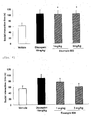
- parametric Dunnett's multiple comparison (significance level: two-sided 5%) was conducted for a test compound-administered group and solvent-administered group. When the test compound-administered group showed a significant reduction of the immobility time compared to the solvent-administered group, the test compound was determined to have the antidepressant effect.
- the parametric Dunnett's multiple comparison (significance level: two-sided 5%) was also conducted for a control substance. When the control substance showed a significant reduction of the immobility time compared to the solvent-administered group, the substance was determined to have the antidepressant effect. The results are shown in Fig. 1 and Fig. 2 .
- Rat social interaction evaluation commonly used as one of the behavioral pharmacological tests of evaluation for the anxiolytic effect, was conducted.
- a benzodiazepine anxiolytic drug, benzodiazepine used in the treatment of anxiety symptoms in Parkinson's disease has been reported to have the efficacy (Non Patent Literature 20).
- the rat social interaction was evaluated with the anxiety state under a novel environment in an observation box (acrylic; wrapped a side surface up in black paper to be masked). The test was conducted as follows.
- each individual had its body weight measured and was allocated into each administration group with "blocked allocation by one variable" of statistical analysis software (Stat Preclinica: Takumi Information Technology) with the average body weight of each cage as indicator.
- a dose solution (solvent only, diazepam, or a test compound) was administered orally to an administration group 1 hour before start of the test, and then one animal was transferred from each of two cages of the same administration group to an observation box with 200 lx of the illuminance. Behavior of each animal was videotaped for 10 minutes in the observation box, and social interaction behavior time was measured with a stopwatch.
- the social interaction behavior refers to sniffing partner, mutual grooming, crawling under and climbing over partner, following and walking around partner, and genital investigation, and the cumulative time of showing these behavior was determined to be the social interaction time for an individual.
- test results were analyzed by parametric Dunnett's multiple comparison (significance level: two-sided 5%).
- the test compound was determined to have the anxiolytic effect.
- the results are shown in Fig. 3 to Fig. 6 .
- test compounds were confirmed to show the efficacy comparable to the existing antidepressants or anxiolytic drugs in the forced swimming test and social interaction evaluation commonly used for evaluation of the antidepressant effect and anxiolytic effect.
- Test 5 Clinical trial evaluation of psychopathic symptoms and depressive symptoms in Parkinson's disease
- psychopathic symptoms such as hallucination and delusion
- a test compound is administered to the patients once or several times (regardless of the number of doses a day).
- Psychopathic symptoms are evaluated on the basis of an appropriate scale for assessment of symptoms before and after start of the administration, and the efficacy of the present compound on psychopathic symptoms in Parkinson's disease can be determined if the score decreases compared to that before the administration.
- the efficacy of the present compound can also be determined if the amount of change of the scale is larger in the present compound than that in a control drug in a controlled study with a placebo or drug with similar drug efficacy.
- the scale for assessment of psychopathic symptoms in Parkinson's disease includes, for example, clinical global impressions (CGI) and associated indicators thereof, the scale for assessment of positive symptoms-Parkinson's disease scale (SAPS-PD) or scale for assessment of positive symptoms (SAPS), and the whole or a part of Neuropsychiatric Inventory (NPI) (e.g., psychotic scores (Delusions [Domain A] + Hallucinations [Domain B])).
- the efficacy can also be determined on the basis of the change on an image in the region of interests (ROI) by image diagnostic indicator such as optical topography (near-infrared spectroscopy, NIRS) and functional magnetic resonance imaging (fMRI).
- Test compound is administered to the patients once or several times (regardless of the number of doses a day).
- Depressive symptoms are evaluated on the basis of an appropriate scale for assessment of symptoms before and after start of the administration, and the efficacy of the present compound on depressive symptoms in Parkinson's disease can be determined if the score decreases compared to that before the administration.
- the efficacy of the present compound can also be determined if the amount of change of the scale is larger in the present compound than that in a control drug in a controlled study with a placebo or drug with similar drug efficacy.
- the scale for assessment of depressive symptoms in Parkinson's disease includes, for example, CGI and associated indicators thereof, Montgomery-Asberg depression scale (MADRS) or Hamilton depression scale (HAM-D), and the whole or a part of NPI (e.g., depression scores).
- the efficacy can also be determined on the basis of the change on an image in the ROI by image diagnostic indicator such as NIRS and fMRI.
- Test 6 Clinical trial evaluation of psychopathic symptoms, depressive symptoms, and agitation symptoms in Alzheimer disease
- the following clinical trial can confirm that the present compound is useful for psychopathic symptoms, depressive symptoms, or agitation symptoms in Alzheimer disease.
- Clinical evaluation of psychopathic symptoms, depressive symptoms, and agitation symptoms are illustrated as an example, and other non-motor symptoms can also be evaluated in a similar manner.
- a test compound is administered to the patients once or several times (regardless of the number of doses a day).
- Psychopathic symptoms are evaluated on the basis of an appropriate scale for assessment of symptoms before and after start of the administration, and the efficacy of the present compound on psychopathic symptoms in Alzheimer disease can be determined if the score decreases compared to that before the administration.
- the efficacy of the present compound can also be determined if the amount of change of the scale is larger in the present compound than that in a control drug in a controlled study with a placebo or drug with similar drug efficacy.
- the scale for assessment of psychopathic symptoms in Alzheimer disease includes, for example, CGI and associated indicators thereof, and the whole or a part of NPI (e.g., psychotic scores (Delusions [Domain A] + Hallucinations [Domain B])).
- the scale for assessment such as SAPS, positive and negative symptom scale (PANSS), and brief psychiatric rating scale (BPRS) can also be used depending on the conditions of patients.
- the efficacy can also be determined on the basis of the change on an image in the ROI by image diagnostic indicator such as NIRS and fMRI.
- a test compound is administered to the patients once or several times (regardless of the number of doses a day).
- Depressive symptoms are evaluated on the basis of an appropriate scale for assessment of symptoms before and after start of the administration, and the efficacy of the present compound on depressive symptoms in Alzheimer disease can be determined if the score decreases compared to that before the administration.
- the efficacy of the present compound can also be determined if the amount of change of the scale is larger in the present compound than that in a control drug in a controlled study with a placebo or drug with similar drug efficacy.
- the scale for assessment of depressive symptoms in Alzheimer disease includes, for example, CGI and associated indicators thereof, Cornell Scale for Depression in Dementia (CSDD), and the whole or a part of NPI (depression scores).
- the scale for assessment such as MADRS and HAM-D can also be used depending on the conditions of patients.
- the efficacy can also be determined on the basis of the change on an image in the ROI by image diagnostic indicator such as NIRS and fMRI.
- a test compound is administered to the patients once or several times (regardless of the number of doses a day). Agitation symptoms are evaluated on the basis of an appropriate scale for assessment of symptoms before and after start of the administration, and the efficacy of the present compound on agitation symptoms in Alzheimer disease can be determined if the score decreases compared to that before the administration. The efficacy of the present compound can also be determined if the amount of change of the scale is larger in the present compound than that in a control drug in a controlled study with a placebo or drug with similar drug efficacy.
- the scale for assessment of agitation symptoms in Alzheimer disease includes, for example, CGI and associated indicators thereof, Cohen-Mansfield Agitation Inventory (CMAI), and the whole or a part of NPI.
- CMAI Cohen-Mansfield Agitation Inventory
- the efficacy can also be determined on the basis of the change on an image in the ROI by image diagnostic indicator such as NIRS and fMRI.
- the present compound can exert potent efficacy on psychopathic symptoms in Parkinson's disease and other non-motor symptoms to provide improvement of life quality in Parkinson's disease patients and decrease of caregiver burden.
Landscapes
- Health & Medical Sciences (AREA)
- Chemical & Material Sciences (AREA)
- Medicinal Chemistry (AREA)
- Pharmacology & Pharmacy (AREA)
- Life Sciences & Earth Sciences (AREA)
- Animal Behavior & Ethology (AREA)
- General Health & Medical Sciences (AREA)
- Public Health (AREA)
- Veterinary Medicine (AREA)
- Bioinformatics & Cheminformatics (AREA)
- Engineering & Computer Science (AREA)
- Biomedical Technology (AREA)
- Neurosurgery (AREA)
- Neurology (AREA)
- Organic Chemistry (AREA)
- Chemical Kinetics & Catalysis (AREA)
- General Chemical & Material Sciences (AREA)
- Nuclear Medicine, Radiotherapy & Molecular Imaging (AREA)
- Epidemiology (AREA)
- Psychiatry (AREA)
- Pain & Pain Management (AREA)
- Psychology (AREA)
- Hospice & Palliative Care (AREA)
- Anesthesiology (AREA)
- Pharmaceuticals Containing Other Organic And Inorganic Compounds (AREA)
- Medicines That Contain Protein Lipid Enzymes And Other Medicines (AREA)
- Acyclic And Carbocyclic Compounds In Medicinal Compositions (AREA)
Applications Claiming Priority (2)
| Application Number | Priority Date | Filing Date | Title |
|---|---|---|---|
| JP2017004498 | 2017-01-13 | ||
| PCT/JP2018/000568 WO2018131672A1 (fr) | 2017-01-13 | 2018-01-12 | Agent thérapeutique pour des symptômes non moteurs associés à la maladie de parkinson |
Publications (2)
| Publication Number | Publication Date |
|---|---|
| EP3569233A1 true EP3569233A1 (fr) | 2019-11-20 |
| EP3569233A4 EP3569233A4 (fr) | 2020-09-30 |
Family
ID=62840494
Family Applications (1)
| Application Number | Title | Priority Date | Filing Date |
|---|---|---|---|
| EP18739127.1A Withdrawn EP3569233A4 (fr) | 2017-01-13 | 2018-01-12 | Agent thérapeutique pour des symptômes non moteurs associés à la maladie de parkinson |
Country Status (11)
| Country | Link |
|---|---|
| US (3) | US11576897B2 (fr) |
| EP (1) | EP3569233A4 (fr) |
| JP (1) | JP7219091B2 (fr) |
| KR (1) | KR20190105015A (fr) |
| CN (1) | CN110430875A (fr) |
| AU (1) | AU2018208321A1 (fr) |
| CA (1) | CA3049319A1 (fr) |
| PH (1) | PH12019501615A1 (fr) |
| SG (2) | SG11201906289YA (fr) |
| TW (1) | TWI761425B (fr) |
| WO (1) | WO2018131672A1 (fr) |
Families Citing this family (1)
| Publication number | Priority date | Publication date | Assignee | Title |
|---|---|---|---|---|
| US12527775B2 (en) | 2020-03-26 | 2026-01-20 | Shionogi & Co., Ltd. | Heteroaromatic derivatives having serotonin receptor binding activity |
Family Cites Families (8)
| Publication number | Priority date | Publication date | Assignee | Title |
|---|---|---|---|---|
| CA2119155C (fr) | 1991-10-18 | 1999-06-15 | Dennis Paul Phillion | Fongicides pour lutter contre le pietin-echaudage des vegetaux |
| TWI263497B (en) * | 2002-03-29 | 2006-10-11 | Lilly Co Eli | Pyridinoylpiperidines as 5-HT1F agonists |
| US20060003996A1 (en) * | 2002-06-17 | 2006-01-05 | Stephen Roth | Intralesional treatment of psoriasis |
| DE60305519T2 (de) | 2002-10-07 | 2006-11-23 | Glaxo Group Ltd., Greenford | Sulfonamidderivate als antipsychotische mittel |
| US20050261278A1 (en) | 2004-05-21 | 2005-11-24 | Weiner David M | Selective serotonin receptor inverse agonists as therapeutics for disease |
| TWI415845B (zh) * | 2006-10-03 | 2013-11-21 | Arena Pharm Inc | 用於治療與5-ht2a血清素受體相關聯病症之作為5-ht2a血清素受體之調節劑的吡唑衍生物 |
| CN103097357B (zh) * | 2010-07-15 | 2015-01-28 | 大日本住友制药株式会社 | 吡唑化合物 |
| JP2015129094A (ja) * | 2012-04-16 | 2015-07-16 | 大日本住友製薬株式会社 | アリールアミノピラゾール誘導体 |
-
2018
- 2018-01-12 SG SG11201906289YA patent/SG11201906289YA/en unknown
- 2018-01-12 CN CN201880018126.8A patent/CN110430875A/zh active Pending
- 2018-01-12 TW TW107101269A patent/TWI761425B/zh not_active IP Right Cessation
- 2018-01-12 US US16/476,925 patent/US11576897B2/en active Active
- 2018-01-12 EP EP18739127.1A patent/EP3569233A4/fr not_active Withdrawn
- 2018-01-12 CA CA3049319A patent/CA3049319A1/fr not_active Abandoned
- 2018-01-12 JP JP2018561424A patent/JP7219091B2/ja active Active
- 2018-01-12 KR KR1020197021411A patent/KR20190105015A/ko not_active Withdrawn
- 2018-01-12 WO PCT/JP2018/000568 patent/WO2018131672A1/fr not_active Ceased
- 2018-01-12 SG SG10201912846PA patent/SG10201912846PA/en unknown
- 2018-01-12 AU AU2018208321A patent/AU2018208321A1/en not_active Withdrawn
-
2019
- 2019-07-10 PH PH12019501615A patent/PH12019501615A1/en unknown
-
2022
- 2022-12-28 US US18/089,752 patent/US12508244B2/en active Active
-
2025
- 2025-12-17 US US19/423,150 patent/US20260108494A1/en active Pending
Also Published As
| Publication number | Publication date |
|---|---|
| AU2018208321A1 (en) | 2019-07-18 |
| US12508244B2 (en) | 2025-12-30 |
| JPWO2018131672A1 (ja) | 2019-11-07 |
| US20210299099A1 (en) | 2021-09-30 |
| EP3569233A4 (fr) | 2020-09-30 |
| WO2018131672A1 (fr) | 2018-07-19 |
| TW201831452A (zh) | 2018-09-01 |
| SG10201912846PA (en) | 2020-02-27 |
| CN110430875A (zh) | 2019-11-08 |
| JP7219091B2 (ja) | 2023-02-07 |
| US20230149357A1 (en) | 2023-05-18 |
| US20260108494A1 (en) | 2026-04-23 |
| CA3049319A1 (fr) | 2018-07-19 |
| KR20190105015A (ko) | 2019-09-11 |
| US11576897B2 (en) | 2023-02-14 |
| PH12019501615A1 (en) | 2019-11-04 |
| TWI761425B (zh) | 2022-04-21 |
| SG11201906289YA (en) | 2019-08-27 |
Similar Documents
| Publication | Publication Date | Title |
|---|---|---|
| US9701631B2 (en) | TIP60 inhibitors | |
| CN102838546B (zh) | 作为5-ht2a血清素受体调节剂用于治疗与其相关病症的吡唑衍生物 | |
| HUE032948T2 (en) | Opioid receptor ligands and methods of using and making same | |
| TWI791507B (zh) | 使用ccr3-抑制劑治療老化相關損傷之方法及組合物 | |
| JP7352294B2 (ja) | ムスカリン性アセチルコリン受容体m4のアンタゴニスト | |
| CN109563047A (zh) | 含有硅原子的依伐卡托类似物 | |
| TW200811142A (en) | Pyrimidinyl sulfonamide compounds which inhibit leukocyte adhesion mediated by VLA-4 | |
| JP2020526557A (ja) | ムスカリン性アセチルコリン受容体m4のアンタゴニスト | |
| US20230219955A1 (en) | Lsd derivatives, synthesis & method for treatment of diseases and disorders | |
| US20260108494A1 (en) | Therapeutic agent for non-motor symptoms associated with parkinson's disease | |
| JP2019504113A (ja) | 痛覚過敏を治療する方法 | |
| KR20200081424A (ko) | 무스카린성 아세틸콜린 수용체 m4의 길항제 | |
| JP2020537667A (ja) | ムスカリン性アセチルコリン受容体m4のアンタゴニスト | |
| JP2018016544A (ja) | 新規ジアザビシクロ[2.2.2]オクタン誘導体 | |
| TW201710248A (zh) | 做為nr2b nmda受體拮抗劑之3,3-二氟哌啶胺基甲酸酯雜環化合物 | |
| CN111902143B (zh) | 神经细胞内钙浓度上升抑制剂 | |
| HK40017297A (en) | Therapeutic agent for non-motor symptoms associated with parkinson's disease | |
| US20250177354A1 (en) | Therapeutic combinations, compositions, and methods for designing and producing entactogenic mindstates | |
| EP3607948A1 (fr) | Modulateurs de la transglutaminase tissulaire pour utilisation médicale | |
| JP2025532594A (ja) | グリコーゲンシンターゼ1(gys1)の阻害剤としてのシクロアルキルカルボン酸誘導体及びその使用方法 | |
| WO2024059661A1 (fr) | Utilisation de dérivés de n-(benzhydryl)cycloalkylcarboxamide comme inhibiteurs de la glycogène synthase 1 (gys1) et méthodes d'utilisation y relatives | |
| JP2013144649A (ja) | 新規ピラゾール誘導体 | |
| TW202132278A (zh) | 魯哌啶酮用於治療負性症狀及疾病、增加神經可塑性及促進神經保護的用途 |
Legal Events
| Date | Code | Title | Description |
|---|---|---|---|
| STAA | Information on the status of an ep patent application or granted ep patent |
Free format text: STATUS: THE INTERNATIONAL PUBLICATION HAS BEEN MADE |
|
| PUAI | Public reference made under article 153(3) epc to a published international application that has entered the european phase |
Free format text: ORIGINAL CODE: 0009012 |
|
| STAA | Information on the status of an ep patent application or granted ep patent |
Free format text: STATUS: REQUEST FOR EXAMINATION WAS MADE |
|
| 17P | Request for examination filed |
Effective date: 20190703 |
|
| AK | Designated contracting states |
Kind code of ref document: A1 Designated state(s): AL AT BE BG CH CY CZ DE DK EE ES FI FR GB GR HR HU IE IS IT LI LT LU LV MC MK MT NL NO PL PT RO RS SE SI SK SM TR |
|
| AX | Request for extension of the european patent |
Extension state: BA ME |
|
| DAV | Request for validation of the european patent (deleted) | ||
| DAX | Request for extension of the european patent (deleted) | ||
| REG | Reference to a national code |
Ref country code: HK Ref legal event code: DE Ref document number: 40017297 Country of ref document: HK |
|
| A4 | Supplementary search report drawn up and despatched |
Effective date: 20200827 |
|
| RIC1 | Information provided on ipc code assigned before grant |
Ipc: A61P 25/28 20060101ALI20200821BHEP Ipc: A61P 25/24 20060101ALI20200821BHEP Ipc: A61K 45/06 20060101ALI20200821BHEP Ipc: A61P 25/18 20060101ALI20200821BHEP Ipc: A61K 31/4155 20060101ALI20200821BHEP Ipc: A61P 25/16 20060101ALI20200821BHEP Ipc: A61K 31/415 20060101AFI20200821BHEP Ipc: A61P 43/00 20060101ALI20200821BHEP Ipc: A61P 25/20 20060101ALI20200821BHEP Ipc: A61P 25/22 20060101ALI20200821BHEP Ipc: A61K 45/00 20060101ALI20200821BHEP |
|
| RAP3 | Party data changed (applicant data changed or rights of an application transferred) |
Owner name: SUMITOMO PHARMA CO., LTD. |
|
| STAA | Information on the status of an ep patent application or granted ep patent |
Free format text: STATUS: THE APPLICATION HAS BEEN WITHDRAWN |
|
| 18W | Application withdrawn |
Effective date: 20221012 |