EP3569731B1 - Cr-legierung-targetmaterial - Google Patents
Cr-legierung-targetmaterial Download PDFInfo
- Publication number
- EP3569731B1 EP3569731B1 EP17890888.5A EP17890888A EP3569731B1 EP 3569731 B1 EP3569731 B1 EP 3569731B1 EP 17890888 A EP17890888 A EP 17890888A EP 3569731 B1 EP3569731 B1 EP 3569731B1
- Authority
- EP
- European Patent Office
- Prior art keywords
- alloy target
- powder
- target material
- mass
- present example
- Prior art date
- Legal status (The legal status is an assumption and is not a legal conclusion. Google has not performed a legal analysis and makes no representation as to the accuracy of the status listed.)
- Active
Links
Images




Classifications
-
- C—CHEMISTRY; METALLURGY
- C22—METALLURGY; FERROUS OR NON-FERROUS ALLOYS; TREATMENT OF ALLOYS OR NON-FERROUS METALS
- C22C—ALLOYS
- C22C27/00—Alloys based on rhenium or a refractory metal not mentioned in groups C22C14/00 or C22C16/00
- C22C27/06—Alloys based on chromium
-
- C—CHEMISTRY; METALLURGY
- C23—COATING METALLIC MATERIAL; COATING MATERIAL WITH METALLIC MATERIAL; CHEMICAL SURFACE TREATMENT; DIFFUSION TREATMENT OF METALLIC MATERIAL; COATING BY VACUUM EVAPORATION, BY SPUTTERING, BY ION IMPLANTATION OR BY CHEMICAL VAPOUR DEPOSITION, IN GENERAL; INHIBITING CORROSION OF METALLIC MATERIAL OR INCRUSTATION IN GENERAL
- C23C—COATING METALLIC MATERIAL; COATING MATERIAL WITH METALLIC MATERIAL; SURFACE TREATMENT OF METALLIC MATERIAL BY DIFFUSION INTO THE SURFACE, BY CHEMICAL CONVERSION OR SUBSTITUTION; COATING BY VACUUM EVAPORATION, BY SPUTTERING, BY ION IMPLANTATION OR BY CHEMICAL VAPOUR DEPOSITION, IN GENERAL
- C23C14/00—Coating by vacuum evaporation, by sputtering or by ion implantation of the coating forming material
- C23C14/22—Coating by vacuum evaporation, by sputtering or by ion implantation of the coating forming material characterised by the process of coating
- C23C14/34—Sputtering
- C23C14/3407—Cathode assembly for sputtering apparatus, e.g. Target
- C23C14/3414—Metallurgical or chemical aspects of target preparation, e.g. casting, powder metallurgy
-
- B—PERFORMING OPERATIONS; TRANSPORTING
- B22—CASTING; POWDER METALLURGY
- B22F—WORKING METALLIC POWDER; MANUFACTURE OF ARTICLES FROM METALLIC POWDER; MAKING METALLIC POWDER; APPARATUS OR DEVICES SPECIALLY ADAPTED FOR METALLIC POWDER
- B22F3/00—Manufacture of workpieces or articles from metallic powder characterised by the manner of compacting or sintering; Apparatus specially adapted therefor ; Presses and furnaces
- B22F3/10—Sintering only
-
- B—PERFORMING OPERATIONS; TRANSPORTING
- B22—CASTING; POWDER METALLURGY
- B22F—WORKING METALLIC POWDER; MANUFACTURE OF ARTICLES FROM METALLIC POWDER; MAKING METALLIC POWDER; APPARATUS OR DEVICES SPECIALLY ADAPTED FOR METALLIC POWDER
- B22F3/00—Manufacture of workpieces or articles from metallic powder characterised by the manner of compacting or sintering; Apparatus specially adapted therefor ; Presses and furnaces
- B22F3/12—Both compacting and sintering
- B22F3/14—Both compacting and sintering simultaneously
-
- B—PERFORMING OPERATIONS; TRANSPORTING
- B22—CASTING; POWDER METALLURGY
- B22F—WORKING METALLIC POWDER; MANUFACTURE OF ARTICLES FROM METALLIC POWDER; MAKING METALLIC POWDER; APPARATUS OR DEVICES SPECIALLY ADAPTED FOR METALLIC POWDER
- B22F3/00—Manufacture of workpieces or articles from metallic powder characterised by the manner of compacting or sintering; Apparatus specially adapted therefor ; Presses and furnaces
- B22F3/12—Both compacting and sintering
- B22F3/14—Both compacting and sintering simultaneously
- B22F3/15—Hot isostatic pressing
-
- C—CHEMISTRY; METALLURGY
- C23—COATING METALLIC MATERIAL; COATING MATERIAL WITH METALLIC MATERIAL; CHEMICAL SURFACE TREATMENT; DIFFUSION TREATMENT OF METALLIC MATERIAL; COATING BY VACUUM EVAPORATION, BY SPUTTERING, BY ION IMPLANTATION OR BY CHEMICAL VAPOUR DEPOSITION, IN GENERAL; INHIBITING CORROSION OF METALLIC MATERIAL OR INCRUSTATION IN GENERAL
- C23C—COATING METALLIC MATERIAL; COATING MATERIAL WITH METALLIC MATERIAL; SURFACE TREATMENT OF METALLIC MATERIAL BY DIFFUSION INTO THE SURFACE, BY CHEMICAL CONVERSION OR SUBSTITUTION; COATING BY VACUUM EVAPORATION, BY SPUTTERING, BY ION IMPLANTATION OR BY CHEMICAL VAPOUR DEPOSITION, IN GENERAL
- C23C14/00—Coating by vacuum evaporation, by sputtering or by ion implantation of the coating forming material
- C23C14/22—Coating by vacuum evaporation, by sputtering or by ion implantation of the coating forming material characterised by the process of coating
- C23C14/34—Sputtering
Definitions
- the present invention relates to a Cr alloy target material for vacuum deposition, and particularly, to a Cr alloy target material useful as an evaporation source according to an arc ion plating method.
- a hard film made of a Cr alloy is applied to the surface of a cutting tool, a sliding component, a mold or the like.
- an ion plating method using a Cr alloy target material as an evaporation source is generally applied.
- An arc ion plating method which is a type of ion plating method, is a method in which, in a reaction gas atmosphere with a reduced pressure, a target material which is a raw material of a hard film is instantly dissolved and ionized by arc discharge and is adhered to a negatively-applied material to be treated to form a hard film.
- a target material which is a raw material of a hard film
- an ionization rate of an evaporated metal is higher and a hard film having excellent adhesion is obtained, and thus this method is currently increasingly being applied.
- the Cr alloy target material used in the arc ion plating method is composed of a plate material having a desired composition and is generally produced by a powder sintering method.
- a hard film formed using this Cr alloy target material may become separated by a cutting tool or a sliding component during use, and nowadays when a high cutting speed in a cutting tool and more reliability for a sliding component are required, improvement thereof is required.
- Patent Literature 1 proposes that, in a sputtering target material containing Cr as a main component and containing aluminum, silicon, titanium, and the like, a content of oxygen, carbon, sulfur, and hydrogen as impurity elements is controlled such that it is 3,000 ppm by mass or less.
- the sputtering target material disclosed in Patent Literature 1 is a material useful for forming a hard film having strong adhesion.
- Patent Literature 2 provides a multi-component alloy sputtering target and method of producing the same.
- the composition of the sputtering target is represented by Cr(1-a-b)-Tia-Mb, wherein M represents copper, molybdenum or their combination, a is more than 1 at% and less than 35 at%, and b is more than 10 at% and less than or equal to 50 at%.
- M represents copper, molybdenum or their combination
- a is more than 1 at% and less than 35 at%
- b is more than 10 at% and less than or equal to 50 at%.
- the multi-component alloy sputtering target not only improves the bending strength, but also prevents the falling of particles from the sputtering target and the generation of arcing during sputtering.
- Patent Literature 3 provides a Cr alloy target material with which production of particles can be reduced when a Cr alloy substrate film obtained by adding a specified element (s) and B to Cr is deposited by
- the inventors found a new problem that, when a hard film is formed on a material to be treated by an arc ion plating method using a Cr alloy target material containing Ti and V, an abnormal discharge is generated, and additionally innumerable droplets are scattered from the Cr alloy target material and adhere to the material to be treated.
- the droplets are disadvantageous because they cause deterioration in the smoothness of the hard film, and particularly, inhibit improvement of the wear resistance and seizure resistance of a cutting tool or a sliding component, and droplets fall off from the material to be treated, which causes another risk of the cutting tool or the sliding component being damaged.
- the inventors found that the problem of generation of droplets occurs when local melting occurs mainly due to oxidatively active elements such as Ti and V contained in the Cr alloy target material, and craters with a diameter of 0.5 mm or more are formed on the surface of the Cr alloy target material.
- the present invention provides a novel Cr alloy target material in which it is possible to limit generation of craters on the surface of the Cr alloy target material and it is possible to limit adhesion of droplets to a material to be treated during film formation.
- the inventors conducted extensive studies regarding causes of droplets generated in a Cr alloy target material containing Ti and V during film formation, and as a result, found that, when an amount of oxygen contained in a target material is set to a predetermined amount, it is possible to limit generation of craters on the surface of the Cr alloy target material and it is possible to limit prevent adhesion of droplets to a material to be treated.
- the inventors found that, in addition to the content of oxygen, when a total content of S, Al, and Si contained in the Cr alloy target material is limited to a predetermined amount or less, it is possible to limit generation of craters, and thereby completed the present invention.
- the present invention provides a Cr alloy target material having a composition formula in terms of an atomic ratio of Cr 100-x-y M1 x M2 y , 0.1 ⁇ x ⁇ 21.0, 0.1 ⁇ y ⁇ 23.0, in which M1 represents at least one element type selected from Ti and V, M2 represents at least one element type selected from Mo, Mn, B, W, Nb, and Ta, with the remainder being unavoidable impurities, in which 50 to 700 ppm by mass of oxygen is contained in the unavoidable impurities.
- the Cr alloy target material of the present invention 300 ppm by mass or less of a total content of S, Al, and Si as unavoidable impurities is contained.
- the Cr alloy target material of the present invention more preferably, 60 ppm by mass or less of a total content of S, Al, and Si as unavoidable impurities is contained.
- the present invention can provide a Cr alloy target material in which, when a Cr alloy hard film is applied to a material to be treated, it is possible to limit generation of craters on the surface of the Cr alloy target material and it is possible to limit adhesion of droplets to a material to be treated, and which is useful for hard film coating on the surface of a cutting tool, a sliding component, a mold or the like.
- An important feature of the present invention is that a content of oxygen is controlled such that it is a predetermined amount in order to limit generation of craters with a diameter of 0.5 mm or more formed on the surface of a Cr alloy target material which is disadvantageous in formation of a hard film.
- a content of oxygen is controlled such that it is a predetermined amount in order to limit generation of craters with a diameter of 0.5 mm or more formed on the surface of a Cr alloy target material which is disadvantageous in formation of a hard film.
- the Cr alloy target material of the present invention is a Cr alloy target material which has a composition formula in terms of an atomic ratio of Cr 100-x-y M1 x M2 y , 0.1 ⁇ x ⁇ 21.0, 0.1 ⁇ y ⁇ 23.0, in which M1 represents at least one element type selected from Ti and V and M2 represents at least one element type selected from Mo, Mn, B, W, Nb, and Ta, with the remainder being unavoidable impurities, in which 50 to 700 ppm by mass of oxygen is contained in the unavoidable impurities.
- each main constituent element is indicated in atom% with respect to all main constituent elements, and unavoidable impurities other than main constituent elements are represented by ppm by mass in the entire Cr alloy target material.
- a content of at least one element type selected from Ti and V is set in a range in which the oxidation resistance of the coated Cr alloy hard film is improved and the hardness of the hard film is not significantly impaired and a total content of the M1 element is limited to 0.1 to 21.0 atom%.
- a total content of the M1 element is preferably 0.5 atom% or more.
- a total content of the M1 element is preferably 15.0 atom% or less.
- a content of at least one element type selected from Mo, Mn, B, W, Nb, and Ta is set in a range in which the seizure resistance of the coated Cr alloy hard film can be improved and also pores formed due to the decrease in sinterability when the Cr alloy target material is produced by a powder sintering method or the like can be limited, and a total content of the M2 element is limited to 0.1 to 23.0 atom%.
- a total content of the M2 element is preferably 0.5 atom% or more.
- a total content of the M2 element is preferably 15.0 atom% or less.
- a total content of the M1 element and the M2 element is more preferably less than 10 atom%.
- a content of oxygen is 50 to 700 ppm by mass.
- Oxygen reacts with at least one element type selected from Ti and V in the Cr alloy target material when a raw material powder is sintered to produce the Cr alloy target material, and forms an oxide phase of which an electrical conductivity is significantly different from that of other metallic phases.
- the upper limit of the content of oxygen is 1,000 ppm by mass.
- a content of oxygen contained in the Cr alloy target material less than 50 ppm by mass.
- a content of oxygen is 50 to 700 ppm by mass.
- a content of oxygen is preferably 500 ppm by mass or less.
- a content of oxygen is preferably 100 ppm by mass or more.
- a total content of S, Al, and Si is 300 ppm by mass or less.
- S and Al have a very low melting point, and easily become a starting point of generation of local melting during film formation, that is, a starting point of craters.
- Si reacts with main constituent elements in the Cr alloy target material of the present invention to form a brittle phase and easily becomes a starting point of craters, and also during film formation and handling, damage such as cracks in the Cr alloy target material body may occur, and an abnormal discharge resulting from the cracking may be caused.
- a total content of S, Al, and Si is preferably 300 ppm by mass or less.
- a total content of S, Al, and Si is more preferably 60 ppm by mass or less.
- a total content of S, Al, and Si is preferably 1 ppm by mass or more.
- a total content of S, Al, Si is more preferably 10 ppm by mass or more.
- the Cr alloy target material of the present invention can be obtained by mixing, for example, a Cr powder, a powder composed of at least one element type selected from Ti and V, and a powder composed of at least one element type selected from Mo, Mn, B, W, Nb, and Ta, as raw material powders, and pressure sintering them.
- the Cr powder used as the raw material powder can be obtained, for example, by mechanically crushing Cr flakes with a purity of 99.9 mass% or more produced by electrolytic refining and subjecting them to a vacuum heat treatment or a reduction treatment in a hydrogen atmosphere. Further, regarding the Cr powder, powder particles with a particle size of 500 ⁇ m or less are preferably used. Thereby, it is possible to improve a mixability with other metal powders, and it is possible to obtain a homogeneous sintered product. In addition, regarding the Cr powder, powder particles with a particle size of 45 ⁇ m or more are preferably used. Thereby, it is possible to reduce an amount of volatile impurities adsorbed on the surface of the Cr powder and therefore an amount of oxygen in the Cr alloy target material is preferably controlled such that it is within the above range.
- the Ti powder used as the raw material powder can be produced by, for example, temporarily hydrogenating an ingot with a purity of 99.9 mass% or more, which is obtained by vacuum secondary refining Ti sponge, and performing mechanical crushing, and then performing a dehydrogenation treatment.
- powder particles with a particle size of 500 ⁇ m or less are preferably used. Therefore, it is possible to improve a mixability with a Cr powder and other metal powders, and it is possible to obtain a homogeneous sintered product.
- powder particles with a particle size of 1 ⁇ m or more are more preferably used. Therefore, it is possible to reduce an amount of volatile impurities adsorbed on the surface of the Ti powder and it is preferable to control a content of oxygen in the Cr alloy target material to be within the above range.
- the V powder used as the raw material powder can be produced by, for example, crushing an ingot with a purity of 99.9 mass% or more, which is obtained by repeating secondary refinement according to electron beam melting, with a V-Al alloy refined by an aluminum thermite method.
- the V powder powder particles with a particle size of 500 ⁇ m or less are preferably used. Therefore, it is possible to improve mixability with the Cr powder and other metal powders, and it is possible to obtain a homogeneous sintered product.
- powder particles with a particle size of 1 ⁇ m or more are preferably used. Therefore, it is possible to reduce an amount of volatile impurities adsorbed on the surface of the V powder and a content of oxygen in the Cr alloy target material is preferably controlled such that it is within the above range.
- a content of oxygen contained as impurities is preferably reduced to 50 to 700 ppm by mass. Then, regarding this powder, powder particles with a particle size of 1 to 150 ⁇ m are preferably used. Therefore, the Cr alloy target material of the present invention is preferable because an oxide phase causing droplets is reduced and a content of oxygen is controlled such that it is within the above range.
- a hot isostatic pressing method, a hot pressing method, an electric sintering method, and the like can be applied.
- a sintering temperature is set to 900 to 1,300 °C, and an applied pressure is set to 50 MPa or more, it is possible to obtain a sintered product in which formation of a brittle intermetallic compound phase is sufficiently limited and favorable sintering is possible without impairing a sintering density.
- a powder in which Cr flakes with a purity of 99.9 mass% produced by electrolytic refining were crushed by a ball mill and subjected to a vacuum heat treatment, and then classified using a sieve with an opening of 300 ⁇ m was prepared.
- the Ti powder a powder in which a Ti powder with a purity of 99.9 mass% was produced by collecting cutting chips from an ingot with a purity of 99.9 mass%, which was obtained by vacuum secondary refining Ti sponge, performing hydrogenating once and crushing, and then performing a dehydrogenation treatment, and classified using a sieve with an opening of 150 ⁇ m was prepared.
- V powder a powder in which an ingot with a purity of 99.9 mass% obtained by repeating secondary refinement according to electron beam melting was additionally crushed with a V-Al alloy refined by an aluminum thermite method and then classified using a sieve with an opening of 150 ⁇ m was prepared.
- B powder a commercial B powder with a purity of 99 mass% was classified using a sieve with an opening of 45 ⁇ m to prepare a powder.
- a powder in which Cr flakes with a purity of 99.99 mass% produced by electrolytic refining were crushed by a ball mill and subjected to a reduction treatment in a hydrogen atmosphere and then classified using a sieve with an opening of 150 ⁇ m was prepared.
- the Ti powder a powder in which a Ti powder with a purity of 99.9 mass% was produced by collecting cutting chips from an ingot with a purity of 99.9 mass%, which was obtained by vacuum secondary refining Ti sponge, performing hydrogenating once and crushing, and then performing a dehydrogenation treatment, and classified using a sieve with an opening of 45 ⁇ m was prepared.
- the V powder and the B powder the same powders as in Present Example 1 were prepared.
- the powders prepared as above were weighed out so that a composition formula in terms of an atomic ratio was Cr 90.2 M1 5.2 M2 4.6 , and specifically Cr 90.2 Ti 4.7 V 0.5 B 4.6 , and then mixed in a V type mixer, filled into a soft iron capsule, and subjected to degassing sealing under conditions of 450 °C for 4 hours, and then subjected to hot isostatic pressing under conditions of a temperature 1,180 °C, a holding pressure of 100 MPa, and a holding time of 1 hour, and were pressure-sintered to produce sintered products.
- the obtained sintered products were subjected to machining processing to have a diameter of 105 mm and a thickness of 16 mm and thereby Cr alloy target materials were produced.
- the Cr powder and Cr flakes with a purity of 99.9 mass% produced by electrolytic refining used in Present Example 1 were crushed by a ball mill, and no vacuum heat treatment was then performed, and classification using a sieve with an opening of 300 ⁇ m was performed to prepare a Cr mixed powder in which the Cr powder was mixed in at 3:1.
- the Ti powder, the V powder and the B powder the same powders as in Present Example 1 were prepared.
- the powders prepared as above were weighed out so that a composition formula in terms of an atomic ratio was Cr 90.2 M1 5.2 M2 4.6 , and specifically Cr 90.2 Ti 4.7 V 0.5 B 4.6 and then mixed in a V type mixer, and subjected to pressure sintering under the same sintering conditions as above, and thereby a Cr alloy target material as Present Example 3 was prepared.
- the powders prepared as above were weighed out so that a composition formula in terms of an atomic ratio was Cr 90.2 M1 5.2 M2 4.6 , and specifically Cr 90.2 Ti 4.7 V 0.5 B 4.6 , and then mixed in a V type mixer, and subjected to pressure sintering under the same sintering conditions as above, and thereby a Cr alloy target material as Comparative Example 1 was prepared.
- a Cr mixed powder in which the Cr powder used in Present Example 2 and the Cr powder used in Comparative Example 1 were mixed at 1:1 was prepared.
- the Ti powder, the V powder and the B powder the same powders as in Present Example 1 were prepared.
- the powders prepared as above were weighed out so that a composition formula in terms of an atomic ratio was Cr 90.2 M1 5.2 M2 4.6 , and specifically Cr 90.2 Ti 4.7 V 0.5 B 4.6 , and then mixed in a V type mixer, and subjected to pressure sintering under the same sintering conditions as above, and thereby a Cr alloy target material as Comparative Example 2 was prepared.
- a bulk density was measured by collecting gas over water, and a relative density was calculated by multiplying a value obtained by dividing this bulk density by a theoretical density obtained as a weighted average for the individual elements calculated using the mass ratio obtained from the composition ratio of the Cr alloy target material by 100.
- the Cr alloy target materials produced as above were placed on a cathode of an arc ion plating device (model: S-20, commercially available from Kobe Steel, Ltd.), and the inside of the chamber was vacuum-exhausted, the inside of the chamber was heated at 450 °C for 1 Hr, and then a metal bombardment treatment was performed under conditions of an Ar gas pressure 0.5 Pa, a target current of 100 A, and a bias voltage of 600 V for 2 minutes.
- Fig. 1 to Fig. 3 show surface observation images of the Cr alloy target materials of Present Example 1 to Present Example 3 after use.
- Fig. 4 and Fig. 5 show surface observation images of the Cr alloy target materials of Comparative Example 1 and Comparative Example 2 after use.
- the Cr alloy target material of the present invention during film formation using the same, it is possible to limit generation of craters on the surface of the Cr alloy target material and limit adhesion of droplets to the material to be treated.
- a Mo powder and a W powder with a purity 99.9 mass% obtained by reducing a MoO 3 powder and a WO 3 powder and crushing them with a hammer mill were prepared.
- Mn powder commercial Mn electrolytic flakes with a purity of 99.0 mass% were melted and refined in a vacuum induction melting furnace and cast, and then crushed by a ball mill, and the obtained crushed powder was additionally classified using a sieve with an opening of 150 ⁇ m to prepare a Mn powder.
- the powders prepared as above were weighed out so that the composition formula in terms of an atomic ratio was the composition described in Table 2, and then mixed in a V type mixer, filled into a soft iron capsule, and subjected to degassing sealing under conditions of 450 °C for 4 hours, and then subjected to hot isostatic pressing under conditions of a temperature 1,180 °C, a holding pressure of 100 MPa, and a holding time of 1 hour, and were pressure-sintered to produce sintered products.
- the obtained sintered products were subjected to machining processing to have a diameter of 105 mm and a thickness of 16 mm and thereby Cr alloy target materials were produced.
- the content and the relative density of the elements in the Cr alloy target materials produced as above were determined and calculated according to the methods in Example 1.
- the component analysis values and the relative density values of the Cr alloy target materials are shown in Table 2.
- the Cr alloy target materials produced as above were subjected to a metal bombardment treatment under conditions described in Example 1, and the number of craters with a diameter of 0.5 mm or more formed on the surface of the Cr alloy target materials after use was measured according to the method described in Example 1.
- the results are shown in Table 2.
- the Cr alloy target materials were evaluated such that, when the number of craters exceeds 200, it is expressed as "exceeding 200" and when the number of craters is 200 or less, the measured number is expressed.
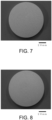
- Fig. 6 to Fig. 12 show surface observation images of the Cr alloy target materials of Present Example 4 to Present Example 10 after use.
- Fig. 13 and Fig. 14 show surface observation images of the Cr alloy target materials of Comparative Example 3 and Comparative Example 4 after use.
- the Cr alloy target material of the present invention during film formation using the same, it is possible to limit generation of craters on the surface of the Cr alloy target material and limit adhesion of droplets to the material to be treated.
Landscapes
- Chemical & Material Sciences (AREA)
- Engineering & Computer Science (AREA)
- Materials Engineering (AREA)
- Mechanical Engineering (AREA)
- Metallurgy (AREA)
- Organic Chemistry (AREA)
- Chemical Kinetics & Catalysis (AREA)
- Powder Metallurgy (AREA)
- Physical Vapour Deposition (AREA)
- Compositions Of Oxide Ceramics (AREA)
- Inorganic Compounds Of Heavy Metals (AREA)
Claims (2)
- Cr-Legierungs-Targetmaterial, wobei das Cr-Legierungs-Targetmaterial eine Zusammensetzungsformel in Form eines Atomverhältnisses von Cr100-x-yM1xM2y, 0,1 ≤x ≤21,0, 0,1≤ y ≤23,0 aufweist, wobei M1 wenigstens eine Elementart, ausgewählt aus Ti und V, darstellt, M2 wenigstens eine Elementart, ausgewählt aus Mo, Mn, B, W, Nb und Ta, darstellt, wobei der Rest unvermeidbare Verunreinigungen sind, dadurch gekennzeichnet, dass 50 bis 700 Massen-ppm Sauerstoff und 300 Massen-ppm oder weniger eines Gesamtgehalts an S, Al und Si in den unvermeidbaren Verunreinigungen enthalten sind.
- Cr-Legierungs-Targetmaterial gemäß Anspruch 1,
wobei 60 Massen-ppm oder weniger des Gesamtgehalts an S, Al und Si als unvermeidbare Verunreinigungen enthalten sind.
Applications Claiming Priority (2)
| Application Number | Priority Date | Filing Date | Title |
|---|---|---|---|
| JP2017003496 | 2017-01-12 | ||
| PCT/JP2017/043547 WO2018131328A1 (ja) | 2017-01-12 | 2017-12-05 | Cr合金ターゲット材 |
Publications (3)
| Publication Number | Publication Date |
|---|---|
| EP3569731A1 EP3569731A1 (de) | 2019-11-20 |
| EP3569731A4 EP3569731A4 (de) | 2020-09-02 |
| EP3569731B1 true EP3569731B1 (de) | 2024-03-13 |
Family
ID=62839448
Family Applications (1)
| Application Number | Title | Priority Date | Filing Date |
|---|---|---|---|
| EP17890888.5A Active EP3569731B1 (de) | 2017-01-12 | 2017-12-05 | Cr-legierung-targetmaterial |
Country Status (6)
| Country | Link |
|---|---|
| US (1) | US11118248B2 (de) |
| EP (1) | EP3569731B1 (de) |
| JP (1) | JP7103233B2 (de) |
| CN (1) | CN110168129B (de) |
| TW (1) | TWI639711B (de) |
| WO (1) | WO2018131328A1 (de) |
Families Citing this family (1)
| Publication number | Priority date | Publication date | Assignee | Title |
|---|---|---|---|---|
| KR20230082022A (ko) * | 2020-10-06 | 2023-06-08 | 오를리콘 서피스 솔루션스 아크티엔게젤샤프트, 페피콘 | HiPIMS에 의해 향상된 접착력을 갖는 경질 탄소 코팅 및 그 제조방법 |
Family Cites Families (13)
| Publication number | Priority date | Publication date | Assignee | Title |
|---|---|---|---|---|
| JP2601843B2 (ja) * | 1987-10-19 | 1997-04-16 | 株式会社東芝 | 半導体素子およびその製造方法 |
| JP3458871B2 (ja) * | 1995-03-31 | 2003-10-20 | 日立金属株式会社 | クロムタ−ゲットおよびその製造方法 |
| JP4491844B2 (ja) * | 1998-07-24 | 2010-06-30 | 東ソー株式会社 | スパッタリングターゲット |
| JP2000199055A (ja) * | 1999-01-06 | 2000-07-18 | Hitachi Metals Ltd | Crタ―ゲット材およびその製造方法 |
| JP4127474B2 (ja) * | 2002-02-04 | 2008-07-30 | 株式会社東芝 | スパッタリングターゲット |
| JP2005336611A (ja) * | 2004-04-27 | 2005-12-08 | Hitachi Metals Ltd | Cr合金ターゲット材およびその製造方法 |
| JP2005220444A (ja) * | 2005-03-31 | 2005-08-18 | Nikko Materials Co Ltd | 高純度金属、高純度金属からなるスパッタリングターゲット及びスパッタリングにより形成した薄膜並びに高純度金属の製造方法 |
| JP5854308B2 (ja) * | 2010-05-06 | 2016-02-09 | 日立金属株式会社 | Cr−Ti合金ターゲット材 |
| JP2012237056A (ja) * | 2011-04-28 | 2012-12-06 | Hitachi Metals Ltd | MoCrターゲット材の製造方法およびMoCrターゲット材 |
| CN102978576B (zh) | 2012-12-03 | 2014-12-31 | 苏州晶纯新材料有限公司 | 一种高致密铬合金靶材的生产方法 |
| JP2015196885A (ja) * | 2014-04-02 | 2015-11-09 | 株式会社エンハンストマテリアル | 極低酸素・超高純度クロムターゲットの製造方法および極低酸素・超高純度クロムターゲット |
| TWI515321B (zh) | 2014-04-24 | 2016-01-01 | 光洋應用材料科技股份有限公司 | 多元合金濺鍍靶材、其製法及多元合金層 |
| JP6312009B2 (ja) | 2015-02-12 | 2018-04-18 | 日立金属株式会社 | Cr−Ti合金スパッタリングターゲット材およびその製造方法 |
-
2017
- 2017-12-05 WO PCT/JP2017/043547 patent/WO2018131328A1/ja not_active Ceased
- 2017-12-05 CN CN201780082140.XA patent/CN110168129B/zh active Active
- 2017-12-05 US US16/476,119 patent/US11118248B2/en active Active
- 2017-12-05 EP EP17890888.5A patent/EP3569731B1/de active Active
- 2017-12-05 JP JP2018561848A patent/JP7103233B2/ja active Active
- 2017-12-18 TW TW106144404A patent/TWI639711B/zh active
Also Published As
| Publication number | Publication date |
|---|---|
| US11118248B2 (en) | 2021-09-14 |
| CN110168129B (zh) | 2021-04-30 |
| WO2018131328A1 (ja) | 2018-07-19 |
| JP7103233B2 (ja) | 2022-07-20 |
| CN110168129A (zh) | 2019-08-23 |
| TW201825691A (zh) | 2018-07-16 |
| EP3569731A4 (de) | 2020-09-02 |
| US20190352746A1 (en) | 2019-11-21 |
| EP3569731A1 (de) | 2019-11-20 |
| TWI639711B (zh) | 2018-11-01 |
| JPWO2018131328A1 (ja) | 2019-11-07 |
Similar Documents
| Publication | Publication Date | Title |
|---|---|---|
| JP7198211B2 (ja) | スパッタターゲット、及びスパッタターゲットの製造方法 | |
| US20160254128A1 (en) | Sputtering target and process for producing it | |
| EP4006197A1 (de) | Sputter-target | |
| EP3124647B1 (de) | Sputtertarget mit al-te-cu-zr-legierung und verfahren zur herstellung davon | |
| JP2018162493A (ja) | タングステンシリサイドターゲット及びその製造方法 | |
| EP3187619B1 (de) | Cu-ga-sputtertarget und verfahren zur herstellung des cu-ga-sputtertargets | |
| JP2008255440A (ja) | MoTi合金スパッタリングターゲット材 | |
| EP3569731B1 (de) | Cr-legierung-targetmaterial | |
| EP2666884A1 (de) | Cu-ga-target und verfahren zu seiner herstellung sowie aus einem cu-ga-legierungsfilm gebildete lichtabsorbierende schicht und cigs-solarzelle mit der lichtabsorbierenden schicht | |
| JP7831285B2 (ja) | 金属-Si系粉末、その製造方法、並びに金属-Si系焼結体、スパッタリングターゲット及び金属-Si系薄膜の製造方法 | |
| JP2017218621A (ja) | ターゲット材及びその製造方法 | |
| EP4484605A1 (de) | Sputtertarget und verfahren zur herstellung davon | |
| KR102316360B1 (ko) | 스퍼터링 타깃 및 제조방법 | |
| EP4129954A1 (de) | Cr-si-sinterkörper, sputtertarget und verfahren zur herstellung einer dünnschicht | |
| EP3951003B1 (de) | V-legierungs target | |
| EP3951002B1 (de) | V-legierungs target | |
| JP2021521334A5 (de) | ||
| KR101960206B1 (ko) | 텅스텐 스퍼터링 타깃 및 그 제조 방법 | |
| EP3170916B1 (de) | Sputtertarget mit al-te-cu-zr-legierung und verfahren zur herstellung davon | |
| JP2025054506A (ja) | ホウ化クロム含有クロム焼結体及びその製造方法 | |
| JP2020132978A (ja) | Cr合金ターゲット |
Legal Events
| Date | Code | Title | Description |
|---|---|---|---|
| STAA | Information on the status of an ep patent application or granted ep patent |
Free format text: STATUS: THE INTERNATIONAL PUBLICATION HAS BEEN MADE |
|
| PUAI | Public reference made under article 153(3) epc to a published international application that has entered the european phase |
Free format text: ORIGINAL CODE: 0009012 |
|
| STAA | Information on the status of an ep patent application or granted ep patent |
Free format text: STATUS: REQUEST FOR EXAMINATION WAS MADE |
|
| 17P | Request for examination filed |
Effective date: 20190701 |
|
| AK | Designated contracting states |
Kind code of ref document: A1 Designated state(s): AL AT BE BG CH CY CZ DE DK EE ES FI FR GB GR HR HU IE IS IT LI LT LU LV MC MK MT NL NO PL PT RO RS SE SI SK SM TR |
|
| AX | Request for extension of the european patent |
Extension state: BA ME |
|
| DAV | Request for validation of the european patent (deleted) | ||
| DAX | Request for extension of the european patent (deleted) | ||
| A4 | Supplementary search report drawn up and despatched |
Effective date: 20200803 |
|
| RIC1 | Information provided on ipc code assigned before grant |
Ipc: B22F 3/10 20060101ALI20200728BHEP Ipc: B22F 3/15 20060101ALI20200728BHEP Ipc: B22F 3/14 20060101ALI20200728BHEP Ipc: C22C 27/06 20060101ALI20200728BHEP Ipc: C23C 14/34 20060101AFI20200728BHEP Ipc: C22C 1/04 20060101ALI20200728BHEP |
|
| RAP3 | Party data changed (applicant data changed or rights of an application transferred) |
Owner name: PROTERIAL, LTD. |
|
| GRAP | Despatch of communication of intention to grant a patent |
Free format text: ORIGINAL CODE: EPIDOSNIGR1 |
|
| STAA | Information on the status of an ep patent application or granted ep patent |
Free format text: STATUS: GRANT OF PATENT IS INTENDED |
|
| INTG | Intention to grant announced |
Effective date: 20231116 |
|
| P01 | Opt-out of the competence of the unified patent court (upc) registered |
Effective date: 20231213 |
|
| GRAS | Grant fee paid |
Free format text: ORIGINAL CODE: EPIDOSNIGR3 |
|
| GRAA | (expected) grant |
Free format text: ORIGINAL CODE: 0009210 |
|
| STAA | Information on the status of an ep patent application or granted ep patent |
Free format text: STATUS: THE PATENT HAS BEEN GRANTED |
|
| AK | Designated contracting states |
Kind code of ref document: B1 Designated state(s): AL AT BE BG CH CY CZ DE DK EE ES FI FR GB GR HR HU IE IS IT LI LT LU LV MC MK MT NL NO PL PT RO RS SE SI SK SM TR |
|
| REG | Reference to a national code |
Ref country code: GB Ref legal event code: FG4D |
|
| REG | Reference to a national code |
Ref country code: CH Ref legal event code: EP |
|
| REG | Reference to a national code |
Ref country code: DE Ref legal event code: R096 Ref document number: 602017080095 Country of ref document: DE |
|
| REG | Reference to a national code |
Ref country code: IE Ref legal event code: FG4D |
|
| PG25 | Lapsed in a contracting state [announced via postgrant information from national office to epo] |
Ref country code: LT Free format text: LAPSE BECAUSE OF FAILURE TO SUBMIT A TRANSLATION OF THE DESCRIPTION OR TO PAY THE FEE WITHIN THE PRESCRIBED TIME-LIMIT Effective date: 20240313 |
|
| REG | Reference to a national code |
Ref country code: LT Ref legal event code: MG9D |
|
| PG25 | Lapsed in a contracting state [announced via postgrant information from national office to epo] |
Ref country code: GR Free format text: LAPSE BECAUSE OF FAILURE TO SUBMIT A TRANSLATION OF THE DESCRIPTION OR TO PAY THE FEE WITHIN THE PRESCRIBED TIME-LIMIT Effective date: 20240614 |
|
| REG | Reference to a national code |
Ref country code: NL Ref legal event code: MP Effective date: 20240313 |
|
| PG25 | Lapsed in a contracting state [announced via postgrant information from national office to epo] |
Ref country code: RS Free format text: LAPSE BECAUSE OF FAILURE TO SUBMIT A TRANSLATION OF THE DESCRIPTION OR TO PAY THE FEE WITHIN THE PRESCRIBED TIME-LIMIT Effective date: 20240613 Ref country code: HR Free format text: LAPSE BECAUSE OF FAILURE TO SUBMIT A TRANSLATION OF THE DESCRIPTION OR TO PAY THE FEE WITHIN THE PRESCRIBED TIME-LIMIT Effective date: 20240313 |
|
| PG25 | Lapsed in a contracting state [announced via postgrant information from national office to epo] |
Ref country code: ES Free format text: LAPSE BECAUSE OF FAILURE TO SUBMIT A TRANSLATION OF THE DESCRIPTION OR TO PAY THE FEE WITHIN THE PRESCRIBED TIME-LIMIT Effective date: 20240313 |
|
| PG25 | Lapsed in a contracting state [announced via postgrant information from national office to epo] |
Ref country code: RS Free format text: LAPSE BECAUSE OF FAILURE TO SUBMIT A TRANSLATION OF THE DESCRIPTION OR TO PAY THE FEE WITHIN THE PRESCRIBED TIME-LIMIT Effective date: 20240613 Ref country code: NO Free format text: LAPSE BECAUSE OF FAILURE TO SUBMIT A TRANSLATION OF THE DESCRIPTION OR TO PAY THE FEE WITHIN THE PRESCRIBED TIME-LIMIT Effective date: 20240613 Ref country code: LT Free format text: LAPSE BECAUSE OF FAILURE TO SUBMIT A TRANSLATION OF THE DESCRIPTION OR TO PAY THE FEE WITHIN THE PRESCRIBED TIME-LIMIT Effective date: 20240313 Ref country code: HR Free format text: LAPSE BECAUSE OF FAILURE TO SUBMIT A TRANSLATION OF THE DESCRIPTION OR TO PAY THE FEE WITHIN THE PRESCRIBED TIME-LIMIT Effective date: 20240313 Ref country code: GR Free format text: LAPSE BECAUSE OF FAILURE TO SUBMIT A TRANSLATION OF THE DESCRIPTION OR TO PAY THE FEE WITHIN THE PRESCRIBED TIME-LIMIT Effective date: 20240614 Ref country code: FI Free format text: LAPSE BECAUSE OF FAILURE TO SUBMIT A TRANSLATION OF THE DESCRIPTION OR TO PAY THE FEE WITHIN THE PRESCRIBED TIME-LIMIT Effective date: 20240313 Ref country code: ES Free format text: LAPSE BECAUSE OF FAILURE TO SUBMIT A TRANSLATION OF THE DESCRIPTION OR TO PAY THE FEE WITHIN THE PRESCRIBED TIME-LIMIT Effective date: 20240313 Ref country code: BG Free format text: LAPSE BECAUSE OF FAILURE TO SUBMIT A TRANSLATION OF THE DESCRIPTION OR TO PAY THE FEE WITHIN THE PRESCRIBED TIME-LIMIT Effective date: 20240313 |
|
| PG25 | Lapsed in a contracting state [announced via postgrant information from national office to epo] |
Ref country code: SE Free format text: LAPSE BECAUSE OF FAILURE TO SUBMIT A TRANSLATION OF THE DESCRIPTION OR TO PAY THE FEE WITHIN THE PRESCRIBED TIME-LIMIT Effective date: 20240313 Ref country code: LV Free format text: LAPSE BECAUSE OF FAILURE TO SUBMIT A TRANSLATION OF THE DESCRIPTION OR TO PAY THE FEE WITHIN THE PRESCRIBED TIME-LIMIT Effective date: 20240313 |
|
| PG25 | Lapsed in a contracting state [announced via postgrant information from national office to epo] |
Ref country code: NL Free format text: LAPSE BECAUSE OF FAILURE TO SUBMIT A TRANSLATION OF THE DESCRIPTION OR TO PAY THE FEE WITHIN THE PRESCRIBED TIME-LIMIT Effective date: 20240313 |
|
| PG25 | Lapsed in a contracting state [announced via postgrant information from national office to epo] |
Ref country code: NL Free format text: LAPSE BECAUSE OF FAILURE TO SUBMIT A TRANSLATION OF THE DESCRIPTION OR TO PAY THE FEE WITHIN THE PRESCRIBED TIME-LIMIT Effective date: 20240313 |
|
| PG25 | Lapsed in a contracting state [announced via postgrant information from national office to epo] |
Ref country code: IS Free format text: LAPSE BECAUSE OF FAILURE TO SUBMIT A TRANSLATION OF THE DESCRIPTION OR TO PAY THE FEE WITHIN THE PRESCRIBED TIME-LIMIT Effective date: 20240713 |
|
| PG25 | Lapsed in a contracting state [announced via postgrant information from national office to epo] |
Ref country code: PT Free format text: LAPSE BECAUSE OF FAILURE TO SUBMIT A TRANSLATION OF THE DESCRIPTION OR TO PAY THE FEE WITHIN THE PRESCRIBED TIME-LIMIT Effective date: 20240715 Ref country code: SM Free format text: LAPSE BECAUSE OF FAILURE TO SUBMIT A TRANSLATION OF THE DESCRIPTION OR TO PAY THE FEE WITHIN THE PRESCRIBED TIME-LIMIT Effective date: 20240313 |
|
| PG25 | Lapsed in a contracting state [announced via postgrant information from national office to epo] |
Ref country code: EE Free format text: LAPSE BECAUSE OF FAILURE TO SUBMIT A TRANSLATION OF THE DESCRIPTION OR TO PAY THE FEE WITHIN THE PRESCRIBED TIME-LIMIT Effective date: 20240313 Ref country code: CZ Free format text: LAPSE BECAUSE OF FAILURE TO SUBMIT A TRANSLATION OF THE DESCRIPTION OR TO PAY THE FEE WITHIN THE PRESCRIBED TIME-LIMIT Effective date: 20240313 |
|
| PG25 | Lapsed in a contracting state [announced via postgrant information from national office to epo] |
Ref country code: PL Free format text: LAPSE BECAUSE OF FAILURE TO SUBMIT A TRANSLATION OF THE DESCRIPTION OR TO PAY THE FEE WITHIN THE PRESCRIBED TIME-LIMIT Effective date: 20240313 |
|
| PG25 | Lapsed in a contracting state [announced via postgrant information from national office to epo] |
Ref country code: SK Free format text: LAPSE BECAUSE OF FAILURE TO SUBMIT A TRANSLATION OF THE DESCRIPTION OR TO PAY THE FEE WITHIN THE PRESCRIBED TIME-LIMIT Effective date: 20240313 |
|
| PG25 | Lapsed in a contracting state [announced via postgrant information from national office to epo] |
Ref country code: SM Free format text: LAPSE BECAUSE OF FAILURE TO SUBMIT A TRANSLATION OF THE DESCRIPTION OR TO PAY THE FEE WITHIN THE PRESCRIBED TIME-LIMIT Effective date: 20240313 Ref country code: SK Free format text: LAPSE BECAUSE OF FAILURE TO SUBMIT A TRANSLATION OF THE DESCRIPTION OR TO PAY THE FEE WITHIN THE PRESCRIBED TIME-LIMIT Effective date: 20240313 Ref country code: RO Free format text: LAPSE BECAUSE OF FAILURE TO SUBMIT A TRANSLATION OF THE DESCRIPTION OR TO PAY THE FEE WITHIN THE PRESCRIBED TIME-LIMIT Effective date: 20240313 Ref country code: PT Free format text: LAPSE BECAUSE OF FAILURE TO SUBMIT A TRANSLATION OF THE DESCRIPTION OR TO PAY THE FEE WITHIN THE PRESCRIBED TIME-LIMIT Effective date: 20240715 Ref country code: PL Free format text: LAPSE BECAUSE OF FAILURE TO SUBMIT A TRANSLATION OF THE DESCRIPTION OR TO PAY THE FEE WITHIN THE PRESCRIBED TIME-LIMIT Effective date: 20240313 Ref country code: IS Free format text: LAPSE BECAUSE OF FAILURE TO SUBMIT A TRANSLATION OF THE DESCRIPTION OR TO PAY THE FEE WITHIN THE PRESCRIBED TIME-LIMIT Effective date: 20240713 Ref country code: EE Free format text: LAPSE BECAUSE OF FAILURE TO SUBMIT A TRANSLATION OF THE DESCRIPTION OR TO PAY THE FEE WITHIN THE PRESCRIBED TIME-LIMIT Effective date: 20240313 Ref country code: CZ Free format text: LAPSE BECAUSE OF FAILURE TO SUBMIT A TRANSLATION OF THE DESCRIPTION OR TO PAY THE FEE WITHIN THE PRESCRIBED TIME-LIMIT Effective date: 20240313 |
|
| PG25 | Lapsed in a contracting state [announced via postgrant information from national office to epo] |
Ref country code: IT Free format text: LAPSE BECAUSE OF FAILURE TO SUBMIT A TRANSLATION OF THE DESCRIPTION OR TO PAY THE FEE WITHIN THE PRESCRIBED TIME-LIMIT Effective date: 20240313 |
|
| REG | Reference to a national code |
Ref country code: DE Ref legal event code: R097 Ref document number: 602017080095 Country of ref document: DE |
|
| PG25 | Lapsed in a contracting state [announced via postgrant information from national office to epo] |
Ref country code: IT Free format text: LAPSE BECAUSE OF FAILURE TO SUBMIT A TRANSLATION OF THE DESCRIPTION OR TO PAY THE FEE WITHIN THE PRESCRIBED TIME-LIMIT Effective date: 20240313 |
|
| PG25 | Lapsed in a contracting state [announced via postgrant information from national office to epo] |
Ref country code: DK Free format text: LAPSE BECAUSE OF FAILURE TO SUBMIT A TRANSLATION OF THE DESCRIPTION OR TO PAY THE FEE WITHIN THE PRESCRIBED TIME-LIMIT Effective date: 20240313 |
|
| PLBE | No opposition filed within time limit |
Free format text: ORIGINAL CODE: 0009261 |
|
| STAA | Information on the status of an ep patent application or granted ep patent |
Free format text: STATUS: NO OPPOSITION FILED WITHIN TIME LIMIT |
|
| PG25 | Lapsed in a contracting state [announced via postgrant information from national office to epo] |
Ref country code: DK Free format text: LAPSE BECAUSE OF FAILURE TO SUBMIT A TRANSLATION OF THE DESCRIPTION OR TO PAY THE FEE WITHIN THE PRESCRIBED TIME-LIMIT Effective date: 20240313 |
|
| 26N | No opposition filed |
Effective date: 20241216 |
|
| REG | Reference to a national code |
Ref country code: AT Ref legal event code: UEP Ref document number: 1665820 Country of ref document: AT Kind code of ref document: T Effective date: 20240313 |
|
| PG25 | Lapsed in a contracting state [announced via postgrant information from national office to epo] |
Ref country code: SI Free format text: LAPSE BECAUSE OF FAILURE TO SUBMIT A TRANSLATION OF THE DESCRIPTION OR TO PAY THE FEE WITHIN THE PRESCRIBED TIME-LIMIT Effective date: 20240313 |
|
| PG25 | Lapsed in a contracting state [announced via postgrant information from national office to epo] |
Ref country code: MC Free format text: LAPSE BECAUSE OF FAILURE TO SUBMIT A TRANSLATION OF THE DESCRIPTION OR TO PAY THE FEE WITHIN THE PRESCRIBED TIME-LIMIT Effective date: 20240313 |
|
| REG | Reference to a national code |
Ref country code: CH Ref legal event code: PL |
|
| PG25 | Lapsed in a contracting state [announced via postgrant information from national office to epo] |
Ref country code: LU Free format text: LAPSE BECAUSE OF NON-PAYMENT OF DUE FEES Effective date: 20241205 |
|
| GBPC | Gb: european patent ceased through non-payment of renewal fee |
Effective date: 20241205 |
|
| REG | Reference to a national code |
Ref country code: BE Ref legal event code: MM Effective date: 20241231 |
|
| PG25 | Lapsed in a contracting state [announced via postgrant information from national office to epo] |
Ref country code: GB Free format text: LAPSE BECAUSE OF NON-PAYMENT OF DUE FEES Effective date: 20241205 Ref country code: BE Free format text: LAPSE BECAUSE OF NON-PAYMENT OF DUE FEES Effective date: 20241231 |
|
| PG25 | Lapsed in a contracting state [announced via postgrant information from national office to epo] |
Ref country code: FR Free format text: LAPSE BECAUSE OF NON-PAYMENT OF DUE FEES Effective date: 20241231 |
|
| PG25 | Lapsed in a contracting state [announced via postgrant information from national office to epo] |
Ref country code: CH Free format text: LAPSE BECAUSE OF NON-PAYMENT OF DUE FEES Effective date: 20241231 |
|
| PG25 | Lapsed in a contracting state [announced via postgrant information from national office to epo] |
Ref country code: IE Free format text: LAPSE BECAUSE OF NON-PAYMENT OF DUE FEES Effective date: 20241205 |
|
| PGFP | Annual fee paid to national office [announced via postgrant information from national office to epo] |
Ref country code: DE Payment date: 20251028 Year of fee payment: 9 |
|
| PGFP | Annual fee paid to national office [announced via postgrant information from national office to epo] |
Ref country code: AT Payment date: 20251126 Year of fee payment: 9 |
|
| PG25 | Lapsed in a contracting state [announced via postgrant information from national office to epo] |
Ref country code: CY Free format text: LAPSE BECAUSE OF FAILURE TO SUBMIT A TRANSLATION OF THE DESCRIPTION OR TO PAY THE FEE WITHIN THE PRESCRIBED TIME-LIMIT; INVALID AB INITIO Effective date: 20171205 |