EP3569932B1 - Verfahren zum niedertemperatur-garen von nahrungsmitteln - Google Patents
Verfahren zum niedertemperatur-garen von nahrungsmitteln Download PDFInfo
- Publication number
- EP3569932B1 EP3569932B1 EP19174892.0A EP19174892A EP3569932B1 EP 3569932 B1 EP3569932 B1 EP 3569932B1 EP 19174892 A EP19174892 A EP 19174892A EP 3569932 B1 EP3569932 B1 EP 3569932B1
- Authority
- EP
- European Patent Office
- Prior art keywords
- cooking
- food
- temperature
- phase
- cooked
- Prior art date
- Legal status (The legal status is an assumption and is not a legal conclusion. Google has not performed a legal analysis and makes no representation as to the accuracy of the status listed.)
- Active
Links
Images
Classifications
-
- F—MECHANICAL ENGINEERING; LIGHTING; HEATING; WEAPONS; BLASTING
- F24—HEATING; RANGES; VENTILATING
- F24C—DOMESTIC STOVES OR RANGES ; DETAILS OF DOMESTIC STOVES OR RANGES, OF GENERAL APPLICATION
- F24C7/00—Stoves or ranges heated by electric energy
- F24C7/08—Arrangement or mounting of control or safety devices
- F24C7/087—Arrangement or mounting of control or safety devices of electric circuits regulating heat
Definitions
- the invention relates to a method for low-temperature cooking of food.
- low-temperature cooking is that the finished food is not optimal in terms of food safety. Unlike foods that are seared, boiled or cooked in superheated steam at very high temperatures, low-temperature cooking may not completely kill off any germs. Certain important germs are killed from 49°C, but not all. In addition, a very long holding time is required for sufficient germ inactivation. Therefore, low-temperature cooked foods are not safe for risk groups (e.g. elderly or sick people and children). In addition, foods cooked at low temperatures often only have a short shelf life.
- the EP 2 537 418 A1 discloses a method for cooking food in a cooking appliance without the cooking chamber temperature having to be very high.
- the cooking process can be divided into a food temperature control phase and a high-temperature phase.
- a cooking chamber temperature should not exceed a limit temperature TLIM, which is at most 20° above the final temperature of the food to be cooked.
- the DE 10 2013 218 785 A1 describes a method of cooking food that takes place at a relatively low temperature of, for example, 55°C to 65°C.
- a controller can use stored values or algorithms to calculate the required cooking time. After the cooking time has elapsed, the power can be reduced by at least 5% to 25%.
- the object of the invention is to create a method for low-temperature cooking of food, with which the food can also be cooked in commercial applications (e.g. in restaurants, canteens and large catering establishments) in such a way that it is integrity in terms of food safety , have a longer shelf life and still have a high sensory quality.
- commercial applications e.g. in restaurants, canteens and large catering establishments
- the method according to the invention combines two measures in order to obtain a foodstuff during low-temperature cooking that is an integrity from a food-technical point of view.
- a maximum duration of the cooking phase is specified.
- the cooking phase is particularly critical with regard to food safety, since the food passes through a critical temperature range during cooking, in which the majority of germ multiplication takes place. According to the invention, it is ensured that the cooking phase does not last longer than can be tolerated, taking food safety requirements into account.
- a pasteurization phase is provided according to the invention, with which any germs are reduced to such an extent that the food is safe even for risk groups and can be stored for a certain period of time.
- a longer holding time even at comparatively low temperatures, kills germs.
- control module calculates a minimum duration of the pasteurization phase. This minimum time may depend on the food being cooked and the core temperature of the finished food.
- the parameters relevant to the cooking time can in particular be the diameter of the food and/or the size. These are, in particular, those parameters which, with regard to heat conduction, are relevant for when a specified core temperature is reached in the center of a specific food.
- the possible geometric shapes can be classified into groups, with the detected geometric shape being classified into one of the groups. This reduces the effort involved in calculating the temperature profile of the cooking process.
- the geometric shape of the food can, for example, be assigned to the groups plate, cylinder or sphere, with the cross-section of the food to be cooked being taken into account here in particular.
- the different groups can represent a distinction between small, medium and large.
- the method according to the invention uses a maximum temperature during the cooking phase which is no higher than 90°C.
- the specified maximum duration is 4 hours. This value is advantageous in terms of food safety and is generally accepted.
- the food is cooked in a steam atmosphere.
- this has the advantage that there is a high heat input into the food to be cooked. This allows the cooking phase to be kept as short as possible.
- a steam atmosphere has the advantage that the food does not dry out during the pasteurization phase.
- the parameter relevant to the cooking time is determined by means of a camera and an image evaluation module. This prevents operating errors.
- the parameter relevant to the cooking time is queried using a user interface. This can be done either in addition to recording by means of a camera and image analysis module, for example if an automated assignment is not possible with the desired level of security, or exclusively if the effort for the camera and the image analysis module is to be avoided.
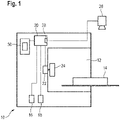
- a cooking appliance 10 is shown schematically with which the method according to the invention can be carried out. This is a cooking appliance for professional use, especially for restaurants, canteens and large catering establishments.
- the cooking appliance has a cooking space 12 in which food can be cooked.
- a food item 14 which is roast beef is shown here as an example.
- the food can be cooked in a cooking chamber atmosphere, which is characterized in particular by the temperature and the humidity.
- the cooking appliance 10 has a heating device 16 and a steam generator 18 . These are controlled by a control device 20 .
- the control device 20 also controls the drive motor 22 of a fan wheel 24 with which the circulation speed of the cooking chamber atmosphere in the cooking chamber 12 can be controlled.
- the cooking appliance 10 also has a device 26 for detecting at least one parameter of the foodstuff that is relevant to the cooking time. This is a camera.
- the camera 26 is connected to the control device 20 .
- a control module 28 is integrated into the control device 20, which can calculate a temperature profile of a cooking process on the basis of the parameter relevant to the cooking time.
- the cooking appliance 10 also has a user interface 30, for example a touch-sensitive screen, with which an operator can select a cooking process or also directly enter parameters relevant to the cooking time.
- a user interface 30 for example a touch-sensitive screen, with which an operator can select a cooking process or also directly enter parameters relevant to the cooking time.
- the control module calculates the temperature profile with which the piece of roast beef 14 should be cooked best.
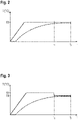
- the control module calculates, for example using the formula given above, that at a cooking chamber temperature of 59° C., the desired target core temperature is reached with a cooking phase that ends at time t 1 , the cooking phase lasting 3.5 hours. This duration is below a predetermined maximum duration, which is stored in the control device 20 as 4 hours.
- a pasteurization phase starts, during which the core temperature remains essentially unchanged, since the cooking chamber temperature is lowered to the target core temperature on average.
- the pasteurization phase serves to reduce the contamination with any germs that may be present.
- the duration of the pasteurization phase can be calculated using the P-value method, for example.
- FIG 3 an exemplary embodiment is shown in which the control module 28 recognizes that when using a cooking chamber temperature which is only slightly above the target core temperature, the cooking phase would exceed the stored maximum duration. This can be due in particular to the fact that the roast beef 14 has too large a diameter. For this reason, a cooking chamber temperature that is 10 °C higher than in in is selected for the cooking phase figure 2 shown embodiment. This ensures that the core temperature of the roast beef 14 has reached the desired value of 57° C. at a point in time t 1 , which is a maximum of 4 hours after the start of the cooking process. The cooking phase is followed by a pasteurization phase, during which the cooking chamber temperature is lowered to 57 °C so that the core temperature no longer increases, or at most only increases insignificantly.
Landscapes
- Engineering & Computer Science (AREA)
- Chemical & Material Sciences (AREA)
- Combustion & Propulsion (AREA)
- Mechanical Engineering (AREA)
- General Engineering & Computer Science (AREA)
- Food Preservation Except Freezing, Refrigeration, And Drying (AREA)
- General Preparation And Processing Of Foods (AREA)
Description
- Die Erfindung betrifft ein Verfahren zum Niedertemperatur-Garen von Nahrungsmitteln.
- Es ist allgemein bekannt, dass Nahrungsmittel mit niedrigen Temperaturen gegart werden können, also mit Temperaturen, die geringfügig oberhalb der Ziel-Kerntemperatur des fertig gegarten Nahrungsmittels liegen. Solche Verfahren sind sehr schonend für die Nahrungsmittel und führen zu einem sensorisch sehr hochwertigen Gargut.
- Nachteilig am Niedertemperatur-Garen ist allerdings, dass das fertig gegarte Gargut unter Aspekten der Lebensmittelsicherheit nicht optimal ist. Anders als Lebensmittel, die bei sehr hohen Temperaturen angebraten, gekocht oder in Heißdampf gegart werden, werden eventuelle Keime beim Niedertemperatur-Garen womöglich nicht vollständig abgetötet. Zwar werden bestimmte wichtige Keime schon ab 49°C abgetötet, allerdings nicht alle. Außerdem benötigt man für eine ausreichende Keiminaktivierung eine sehr lange Haltezeit. Daher sind Niedertemperatur-gegarte Nahrungsmittel nicht sicher für Risikogruppen (beispielsweise ältere oder kranke Menschen und Kinder). Außerdem sind Niedertemperatur-gegarte Nahrungsmittel oft nur kurz haltbar.
- Die
EP 2 537 418 A1 offenbart ein Verfahren zum Garen eines Garguts in einem Gargerät, ohne dass die Garraumtemperatur sehr hoch sein muss. Der Garprozess kann in eine Garguttemperatur-Regelphase und eine Hochtemperaturphase aufgeteilt sein. Während des Garprozesses soll eine Garraumtemperatur eine Grenztemperatur TLIM, die höchstens 20° über der End-Garguttemperatur liegt, nicht überschreiten. - Die
DE 10 2013 218 785 A1 beschreibt ein Verfahren zum Garen von Lebensmitteln, das bei relativ niedriger Temperatur von beispielsweise 55°C bis 65°C erfolgt. Eine Steuerung kann anhand hinterlegter Werte oder Algorithmen die notwendige Garzeit berechnen. Nach Ablauf der Garzeit kann eine Leistungsreduzierung vorgenommen werden, die mindestens 5% bis 25% beträgt. - Die Aufgabe der Erfindung besteht darin, ein Verfahren zum Niedertemperatur-Garen von Nahrungsmitteln zu schaffen, mit dem die Nahrungsmittel auch bei gewerblichen Anwendungen (beispielsweise in Restaurants, Kantinen und der Großgastronomie) so gegart werden können, dass sie im Hinblick auf die Lebensmittelsicherheit einwandfrei sind, länger haltbar sind und dennoch eine hohe sensorische Qualität aufweisen.
- Zur Lösung dieser Aufgabe ist erfindungsgemäß ein Verfahren gemäß Anspruch 1 vorgesehen.
- Das erfindungsgemäße Verfahren kombiniert zwei Maßnahmen, um beim Niedertemperatur-Garen ein Nahrungsmittel zu erhalten, das in lebensmitteltechnischer Hinsicht einwandfrei ist. Zum einen wird eine Maximaldauer der Garphase vorgegeben. Die Garphase ist im Hinblick auf die Lebensmittelsicherheit besonders kritisch, da das Nahrungsmittel im Verlauf des Garens einen kritischen Temperaturbereich durchschreitet, in dem der Großteil der Keimvermehrung stattfindet. Erfindungsgemäß wird sichergestellt, dass die Garphase nicht länger dauert, als dies unter Berücksichtigung der Anforderungen der Lebensmittelsicherheit toleriert werden kann. Zum anderen ist erfindungsgemäß eine Pasteurisationsphase vorgesehen, mit der eventuelle Keime so weit verringert werden, dass das Nahrungsmittel auch für Risikogruppen unbedenklich ist und über eine gewisse Zeit gelagert werden kann. Hierbei wird die Erkenntnis genutzt, dass eine längere Haltezeit auch bei vergleichsweise niedrigen Temperaturen dazu führt, dass Keime abgetötet werden.
- Erfindungsgemäß ist vorgesehen, dass das Steuermodul eine Mindestdauer der Pasteurisationsphase errechnet. Diese Mindestdauer kann abhängen vom Nahrungsmittel, das gegart wird, sowie von der Kerntemperatur, die das fertig gegarte Nahrungsmittel hat.
- Die garzeitrelevanten Parameter, insbesondere die geometrische Form, die für die Errechnung des Temperaturverlaufs des Garprozesses verwendet wird, können insbesondere der Durchmesser des Nahrungsmittels, und/oder die Größe sein. Es handelt sich hierbei insbesondere um diejenigen Parameter, die im Hinblick auf die Wärmeleitung dafür relevant sind, wann bei einem bestimmten Nahrungsmittel eine vorgegebene Kerntemperatur in der Mitte erreicht ist.
- Die möglichen geometrischen Formen können dabei in Gruppen eingeordnet sein, wobei die erfasste geometrische Form in eine der Gruppen eingeordnet wird. Dies verringert den Aufwand beim Errechnen des Temperaturverlaufs des Garprozesses. Die geometrische Form des Nahrungsmittels kann beispielsweise den Gruppen Platte, Zylinder oder Kugel zugeordnet sein, wobei hier insbesondere auf den Querschnitt des zu garenden Nahrungsmittels abgestellt wird. Bei der Dicke des Nahrungsmittels können die unterschiedlichen Gruppen beispielsweise eine Unterscheidung in klein, mittel und groß darstellen.
- Erfindungsgemäß wird die Dauer der Garphase anhand der folgenden Formel ermittelt:

- Dabei sind:
- t:
- Garzeit [Minuten]
- a:
- empirisch ermittelter Faktor der Garzeit pro Temperaturdifferenz und Fläche [s/(In(°C) ∗ cm2]
Dieser Faktor ist abhängig von der Temperaturdifferenz zwischen der Garraumtemperatur und der Soll-Kerntemperatur und dem Verhältnis aus Breite und Dicke (B/D) des zu garenden Nahrungsmittels. Dieser Faktor wird für die einzelnen Produktgruppen definiert. - GT:
- Garraumtemperatur [°C]
In der Regel beträgt GT gleich der Soll-Kerntemperatur plus 2 °C. Diese Differenz zwischen der Garraumtemperatur und der Soll-Kerntemperatur kann dann höher gewählt werden, wenn andernfalls nicht innerhalb der vorgegebenen Maximaldauer die Soll-Kerntemperatur erreicht werden kann. - T0:
- Ausgangstemperatur [°C]
Hier kann aus Gründen der Vereinfachung stets von T0 gleich 0 °C ausgegangen werden. - b:
- empirisch ermittelter Faktor, der repräsentativ für die Formänderung des zu garenden Nahrungsmittels während des Garprozesses ist. Er ist abhängig von der Soll-Kerntemperatur und von der Produktkategorie, da sich manche Lebensmittel (insbesondere Fleischsorten) mehr verändern als andere. Dieser Faktor wird insbesondere bei im Ganzen gegartem Roastbeef benötigt, das auf eine Kerntemperatur größer 60 °C gegart werden soll.
- x:
- charakteristische Länge, also kürzeste Strecke zum Schwerpunkt des Produkts. Bei einem zylindrischen oder kugelförmigen Nahrungsmittel entspricht x der halben Dicke oder des halben Durchmessers; bei einem quaderförmigen Produkt entspricht x der Hälfte der Dicke.
- Das erfindungsgemäße Verfahren verwendet eine Maximaltemperatur während der Garphase, die nicht höher als 90 °C liegt. Je niedriger die Maximaltemperatur während der Garphase, desto höher ist die Qualität des gegarten Nahrungsmittels. Es ist daher vorteilhaft, dass die Maximaltemperatur nicht mehr als 20 °C über der Soll-Kerntemperatur liegt. Optimal ist, dass die Maximaltemperatur während der Garphase um nicht mehr als 2 °C über der Soll-Kerntemperatur liegt. Hierbei wird immer davon ausgegangen, dass mit der gewählten Garraumtemperatur die vorgegebene Maximaldauer der Garphase eingehalten wird, also die Soll-Kerntemperatur erreicht wird, bevor die vorgegebene Maximaldauer erreicht ist.
- Die vorgegebene Maximaldauer beträgt gemäß einer vorteilhaften Ausgestaltung des erfindungsgemäßen Verfahrens 4 Stunden. Dieser Wert ist im Hinblick auf die Lebensmittelsicherheit vorteilhaft und allgemein akzeptiert.
- Gemäß einer vorteilhaften Ausgestaltung der Erfindung wird das Nahrungsmittel in einer Dampfatmosphäre gegart. Dies hat zum einen den Vorteil, dass sich ein hoher Wärmeeintrag ins Gargut ergibt. Hierdurch kann die Garphase möglichst kurzgehalten werden. Zum anderen hat eine Dampfatmosphäre den Vorteil, dass das Nahrungsmittel während der Pasteurisationsphase nicht austrocknet.
- Erfindungsgemäß ist vorgesehen, dass der garzeitrelevante Parameter mittels einer Kamera und einem Bildauswertungsmodul ermittelt wird. Dies verhindert Fehlbedienungen. Erfindungsgemäß kann auch vorgesehen sein, dass der garzeitrelevante Parameter mittels einer Benutzerschnittstelle abgefragt wird. Dies kann entweder ergänzend zur Erfassung mittels Kamera und Bildauswertungsmodul erfolgen, beispielsweise wenn eine automatisierte Zuordnung nicht mit der gewünschten Sicherheit möglich ist, oder ausschließlich, wenn der Aufwand für die Kamera und das Bildauswertungsmodul vermieden werden soll.
- Die Erfindung wird nachfolgend anhand von Ausführungsbeispielen erläutert, die in den beigefügten Zeichnungen dargestellt sind. In diesen zeigt:
-
Figur 1 schematisch ein Gargerät, das beim erfindungsgemäßen Verfahren verwendet wird; -
Figur 2 in einem schematischen Diagramm den Verlauf der Garraumtemperatur und der Kerntemperatur bei einem ersten Ausführungsbeispiel; und -
Figur 3 in einem schematischen Diagramm den Verlauf der Garraumtemperatur und der Kerntemperatur in einem zweiten Ausführungsbeispiel. - In
Figur 1 ist schematisch ein Gargerät 10 gezeigt, mit dem das erfindungsgemäße Verfahren ausgeführt werden kann. Es handelt sich hier um ein Gargerät für den professionellen Gebrauch, insbesondere für Restaurants, Kantinen und die Großgastronomie. - Das Gargerät weist einen Garraum 12 auf, in welchem Nahrungsmittel gegart werden können. Als Beispiel ist hier ein Nahrungsmittel 14 gezeigt, bei dem es sich um Roastbeef handelt.
- Im Garraum 12 können die Nahrungsmittel in einer Garraumatmosphäre gegart werden, die insbesondere gekennzeichnet ist durch die Temperatur und die Feuchte. Um diese Parameter einzustellen, weist das Gargerät 10 eine Heizvorrichtung 16 sowie einen Dampfgenerator 18 auf. Diese werden von einer Steuervorrichtung 20 angesteuert.
- Die Steuervorrichtung 20 steuert auch den Antriebsmotor 22 eines Lüfterrades 24 an, mit dem die Umwälzgeschwindigkeit der Garraumatmosphäre im Garraum 12 gesteuert werden kann.
- Das Gargerät 10 weist weiterhin eine Vorrichtung 26 zur Erfassung mindestens eines garzeitrelevanten Parameters des Nahrungsmittels auf. Es handelt sich hier um eine Kamera. Die Kamera 26 steht mit der Steuervorrichtung 20 in Verbindung. In die Steuervorrichtung 20 ist ein Steuermodul 28 integriert, das auf der Basis des garzeitrelevanten Parameters einen Temperaturverlauf eines Garprozesses errechnen kann.
- Das Gargerät 10 weist außerdem eine Benutzerschnittstelle 30 auf, beispielsweise einen berührungsempfindlichen Bildschirm, mit dem ein Bediener einen Garprozess auswählen kann oder auch Garzeitrelevante Parameter direkt eingeben kann.
- Nachfolgend sei angenommen, dass das Stück Roastbeef 14 in den Garraum 12 eingebracht wird und dort in einem Niedertemperatur-Garprozess gegart werden soll.
- Beim Einbringen des Roastbeefs 14 in den Garraum werden die Größe und die Form des Fleischstücks erfasst. Ausgehend hiervon errechnet das Steuermodul, mit welchem Temperaturverlauf das Stück Roastbeef 14 am besten gegart werden soll.
- Es wird angenommen, dass eine Soll-Kerntemperatur von 57 °C erreicht werden soll. Das Steuermodul errechnet, beispielsweise unter Verwendung der oben angegebenen Formel, dass bei einer Garraumtemperatur von 59 °C die gewünschte Soll-Kerntemperatur mit einer Garphase erreicht wird, die zum Zeitpunkt t1 abgeschlossen ist, wobei die Garphase 3,5 Stunden dauert. Diese Dauer liegt unterhalb einer vorgegebenen Maximaldauer, die in der Steuervorrichtung 20 mit 4 Stunden hinterlegt ist.
- Im Diagramm ist der Verlauf der Garraumtemperatur mit der durchgezogenen Linie und der Verlauf der Kerntemperatur im Roastbeef 14 mit der gestrichelten Linie dargestellt.
- Wenn die Garphase abgeschlossen ist, startet eine Pasteurisationsphase, während der die Kerntemperatur im Wesentlichen unverändert bleibt, da die Garraumtemperatur im Schnitt auf die Soll-Kerntemperatur gesenkt wird. Die Pasteurisationsphase dient dazu, die Belastung mit eventuell vorhandenen Keimen zu verringern. Die Dauer der Pasteurisationsphase kann beispielsweise nach der P-Wert-Methode berechnet werden.
- Wenn die vorberechnete Pasteurisationsdauer abgelaufen ist (hier zum Zeitpunkt t2), wird ein Benutzer darüber benachrichtigt, dass das Nahrungsmittel nun fertig gegart ist.
- In
Figur 3 ist ein Ausführungsbeispiel gezeigt, bei dem das Steuermodul 28 erkennt, dass bei Verwendung einer Garraumtemperatur, die lediglich geringfügig über der Soll-Kerntemperatur liegt, die Garphase die hinterlegte Maximaldauer überschreiten würde. Dies kann insbesondere daran liegen, dass das Roastbeef 14 einen zu großen Durchmesser hat. Daher wird für die Garphase eine Garraumtemperatur gewählt, die hier um 10 °C höher liegt als im inFigur 2 gezeigten Ausführungsbeispiel. Dies gewährleistet, dass die Kerntemperatur des Roastbeefs 14 zu einem Zeitpunkt t1, der maximal 4 Stunden nach Beginn des Garprozesses liegt, den gewünschten Wert von 57 °C erreicht hat. An die Garphase schließt sich hier eine Pasteurisationsphase an, während der die Garraumtemperatur auf 57 °C abgesenkt ist, damit sich die Kerntemperatur nicht mehr oder allenfalls unwesentlich weiter erhöht. - Auch hier wird der Bediener benachrichtigt, sobald die Pasteurisationsphase abgeschlossen ist.
Claims (6)
- Verfahren zum Niedertemperatur-Garen von Nahrungsmitteln mittels der folgenden Schritte:- das zu garende Nahrungsmittel wird in einen Garraum eingebracht, wobei das Nahrungsmittel erfasst wird und wobei garzeitrelevante Parameter, insbesondere eine geometrische Form des Nahrungsmittels, mittels einer Kamera und einem Bildauswertungsmodul erfasst werden oder mittels einer Benutzerschnittstelle abgefragt werden,- ein Steuermodul errechnet auf der Basis der geometrischen Form einen Temperaturverlauf eines Garprozesses, der eine Garphase und eine Pasteurisationsphase enthält, wobei eine vorgegebene Maximaldauer der Garphase eingehalten wird, die maximal vier Stunden beträgt, und wobei die Garraumtemperatur während der Pasteurisationsphase im Schnitt auf die Soll-Kerntemperatur gesenkt wird,- die Dauer der Garphase wird anhand der folgenden Formel ermittelt:
 - das Steuermodul errechnet eine Mindestdauer der Pasteurisationsphase in Abhängigkeit vom zu garenden Nahrungsmittel und von der Kerntemperatur des fertig gegarten Nahrungsmittels,- das Nahrungsmittel wird mit dem errechneten Temperaturverlauf gegart,- ein Benutzer wird darüber informiert, dass der Garprozess abgeschlossen ist.
 - Verfahren nach Anspruch 1, dadurch gekennzeichnet, dass die erfasste geometrische Form ein Durchmesser und/oder die Größe des Nahrungsmittels ist.
- Verfahren nach Anspruch 2, dadurch gekennzeichnet, dass mögliche geometrische Formen in Gruppen geordnet sind und dass die erfasste geometrische Form in eine der Gruppen eingeordnet wird.
- Verfahren nach einem der vorhergehenden Ansprüche, dadurch gekennzeichnet, dass die Maximaltemperatur während der Garphase nicht höher als 90°C liegt.
- Verfahren nach Anspruch 4, dadurch gekennzeichnet, dass die Maximaltemperatur während der Garphase nicht mehr als 20°C über der Ziel-Kerntemperatur gewählt wird, um die Maximaldauer der Garphase nicht zu überschreiten.
- Verfahren nach Anspruch 5, dadurch gekennzeichnet, dass die Maximaltemperatur während der Garphase um nicht mehr als 3 °C und insbesondere nicht mehr als 2 °C über der Ziel-Kerntemperatur gewählt wird, wenn mit der sich dabei ergebenden Dauer der Garphase deren vorgegebene Maximaldauer nicht überschritten wird.
Applications Claiming Priority (1)
| Application Number | Priority Date | Filing Date | Title |
|---|---|---|---|
| DE102018111789.2A DE102018111789A1 (de) | 2018-05-16 | 2018-05-16 | Verfahren zum Niedertemperatur-Garen von Nahrungsmitteln |
Publications (2)
| Publication Number | Publication Date |
|---|---|
| EP3569932A1 EP3569932A1 (de) | 2019-11-20 |
| EP3569932B1 true EP3569932B1 (de) | 2022-06-29 |
Family
ID=66793749
Family Applications (1)
| Application Number | Title | Priority Date | Filing Date |
|---|---|---|---|
| EP19174892.0A Active EP3569932B1 (de) | 2018-05-16 | 2019-05-16 | Verfahren zum niedertemperatur-garen von nahrungsmitteln |
Country Status (2)
| Country | Link |
|---|---|
| EP (1) | EP3569932B1 (de) |
| DE (1) | DE102018111789A1 (de) |
Families Citing this family (1)
| Publication number | Priority date | Publication date | Assignee | Title |
|---|---|---|---|---|
| CN111142394B (zh) * | 2019-12-25 | 2021-12-07 | 珠海格力电器股份有限公司 | 烹饪设备的控制方法、装置、设备及计算机可读介质 |
Family Cites Families (6)
| Publication number | Priority date | Publication date | Assignee | Title |
|---|---|---|---|---|
| CH688396A5 (de) * | 1995-01-23 | 1997-09-15 | V Zug Ag | Ofen und Verfahren zum Garen von Fleisch. |
| DE19609116A1 (de) * | 1996-03-08 | 1997-09-18 | Eloma Gmbh | Verfahren und Vorrichtung zum Garen von Nahrungsmitteln |
| DE20023460U1 (de) * | 1999-01-22 | 2004-07-08 | Frima S.A. | Vorrichtung zum Erhitzen oder Kochen von mehreren Nahrungsmitteln |
| CH702581B1 (de) * | 2011-06-21 | 2019-09-13 | V Zug Ag | Verfahren zum Garen eines Garguts mittels Dampf. |
| DE102013218785B4 (de) * | 2013-09-19 | 2018-07-05 | E.G.O. Elektro-Gerätebau GmbH | Verfahren und Vorrichtung zum Garen von Lebensmitteln |
| DE102014110559A1 (de) * | 2014-07-25 | 2016-01-28 | Rational Aktiengesellschaft | Verfahren zur Steuerung eines Gargeräts |
-
2018
- 2018-05-16 DE DE102018111789.2A patent/DE102018111789A1/de active Pending
-
2019
- 2019-05-16 EP EP19174892.0A patent/EP3569932B1/de active Active
Also Published As
| Publication number | Publication date |
|---|---|
| DE102018111789A1 (de) | 2019-11-21 |
| EP3569932A1 (de) | 2019-11-20 |
Similar Documents
| Publication | Publication Date | Title |
|---|---|---|
| EP2031306B1 (de) | Verfahren und Gargerät zum Garen | |
| DE60104077T2 (de) | Ofen und Verfahren zu seiner Steuerung | |
| EP2469173B1 (de) | Verfahren zum Steuern eines Garverfahrens in einem Gargerät sowie Gargerät | |
| EP2999928B1 (de) | Garverfahren sowie gargerät | |
| EP2688364B1 (de) | Kochfeldvorrichtung | |
| EP2910856B1 (de) | Verfahren zum Betreiben eines Gargeräts und Gargerät | |
| WO2018138078A1 (de) | Verfahren zum betreiben eines gargeräts sowie baugruppe zum durchführen des verfahrens | |
| EP2189724A1 (de) | Verfahren zur Auswahl zumindest eines Gargeräte-Arbeitsprogramms und Gargerät hierfür | |
| EP2537418B2 (de) | Verfahren zum Garen eines Garguts mittels Dampf | |
| DE102019107558A1 (de) | Verfahren zum Betrieb einer Kochstelle eines Kochfelds, vorzugsweise eines Induktionskochfelds, mit einem Kochgeschirr | |
| DE60214214T2 (de) | Vorrichtung und verfahren zum kochen von nahrungsmitteln mit mikrowellen | |
| DE102012013275A1 (de) | Verfahren zum Durchführen eines Garvorganges mit einem Brat- und/oder Kochgerät sowie Brat- und/oder Kochgerät zur Durchführung dieses Verfahrens | |
| EP3858203A1 (de) | Kochgeschirr, kochsystem und verfahren zum betreiben | |
| EP2789918B1 (de) | Verfahren zum Garen eines Garguts und Gargerät | |
| WO2014124984A1 (de) | Verfahren und vorrichtung zur berechnung der gesamtdauer von garprozessen von lebensmitteln sowie garverfahren | |
| EP3569932A1 (de) | Verfahren zum niedertemperatur-garen von nahrungsmitteln | |
| DE102007043371A1 (de) | Garverfahren mit taupunktgeregelter Dampfzufuhr | |
| EP3118524A1 (de) | Verfahren zum steuern eines garverfahrens in einem gargerät sowie gargerät | |
| DE20221600U1 (de) | Vorrichtung zum Steuern eines Gargerätes, insbesondere Haushaltsgargerätes | |
| EP2233016B2 (de) | Verfahren zum Garen von Gargut mit einem Gargerät | |
| DE102015006825A1 (de) | Verfahren zur Steuerung einer Heizeinrichtung eines Gargerätes und Gargerät | |
| DE20023460U1 (de) | Vorrichtung zum Erhitzen oder Kochen von mehreren Nahrungsmitteln | |
| EP3345519B1 (de) | Elektrisches grillgerät | |
| DE102011120280B4 (de) | Verfahren zum Druckgaren von Lebensmitteln sowie Druckgargerät | |
| EP1768461B1 (de) | Verfahren zum Erzeugen, Verarbeiten und Auswerten eines mit der Temperatur korrelierten Signals und entsprechende Vorrichtung |
Legal Events
| Date | Code | Title | Description |
|---|---|---|---|
| PUAI | Public reference made under article 153(3) epc to a published international application that has entered the european phase |
Free format text: ORIGINAL CODE: 0009012 |
|
| STAA | Information on the status of an ep patent application or granted ep patent |
Free format text: STATUS: THE APPLICATION HAS BEEN PUBLISHED |
|
| AK | Designated contracting states |
Kind code of ref document: A1 Designated state(s): AL AT BE BG CH CY CZ DE DK EE ES FI FR GB GR HR HU IE IS IT LI LT LU LV MC MK MT NL NO PL PT RO RS SE SI SK SM TR |
|
| AX | Request for extension of the european patent |
Extension state: BA ME |
|
| STAA | Information on the status of an ep patent application or granted ep patent |
Free format text: STATUS: REQUEST FOR EXAMINATION WAS MADE |
|
| 17P | Request for examination filed |
Effective date: 20200519 |
|
| RBV | Designated contracting states (corrected) |
Designated state(s): AL AT BE BG CH CY CZ DE DK EE ES FI FR GB GR HR HU IE IS IT LI LT LU LV MC MK MT NL NO PL PT RO RS SE SI SK SM TR |
|
| STAA | Information on the status of an ep patent application or granted ep patent |
Free format text: STATUS: EXAMINATION IS IN PROGRESS |
|
| 17Q | First examination report despatched |
Effective date: 20210618 |
|
| GRAP | Despatch of communication of intention to grant a patent |
Free format text: ORIGINAL CODE: EPIDOSNIGR1 |
|
| STAA | Information on the status of an ep patent application or granted ep patent |
Free format text: STATUS: GRANT OF PATENT IS INTENDED |
|
| INTG | Intention to grant announced |
Effective date: 20220112 |
|
| GRAS | Grant fee paid |
Free format text: ORIGINAL CODE: EPIDOSNIGR3 |
|
| GRAA | (expected) grant |
Free format text: ORIGINAL CODE: 0009210 |
|
| STAA | Information on the status of an ep patent application or granted ep patent |
Free format text: STATUS: THE PATENT HAS BEEN GRANTED |
|
| AK | Designated contracting states |
Kind code of ref document: B1 Designated state(s): AL AT BE BG CH CY CZ DE DK EE ES FI FR GB GR HR HU IE IS IT LI LT LU LV MC MK MT NL NO PL PT RO RS SE SI SK SM TR |
|
| REG | Reference to a national code |
Ref country code: CH Ref legal event code: EP |
|
| REG | Reference to a national code |
Ref country code: AT Ref legal event code: REF Ref document number: 1501580 Country of ref document: AT Kind code of ref document: T Effective date: 20220715 |
|
| REG | Reference to a national code |
Ref country code: IE Ref legal event code: FG4D Free format text: LANGUAGE OF EP DOCUMENT: GERMAN |
|
| REG | Reference to a national code |
Ref country code: DE Ref legal event code: R096 Ref document number: 502019004774 Country of ref document: DE |
|
| REG | Reference to a national code |
Ref country code: LT Ref legal event code: MG9D |
|
| PG25 | Lapsed in a contracting state [announced via postgrant information from national office to epo] |
Ref country code: SE Free format text: LAPSE BECAUSE OF FAILURE TO SUBMIT A TRANSLATION OF THE DESCRIPTION OR TO PAY THE FEE WITHIN THE PRESCRIBED TIME-LIMIT Effective date: 20220629 Ref country code: NO Free format text: LAPSE BECAUSE OF FAILURE TO SUBMIT A TRANSLATION OF THE DESCRIPTION OR TO PAY THE FEE WITHIN THE PRESCRIBED TIME-LIMIT Effective date: 20220929 Ref country code: LT Free format text: LAPSE BECAUSE OF FAILURE TO SUBMIT A TRANSLATION OF THE DESCRIPTION OR TO PAY THE FEE WITHIN THE PRESCRIBED TIME-LIMIT Effective date: 20220629 Ref country code: HR Free format text: LAPSE BECAUSE OF FAILURE TO SUBMIT A TRANSLATION OF THE DESCRIPTION OR TO PAY THE FEE WITHIN THE PRESCRIBED TIME-LIMIT Effective date: 20220629 Ref country code: GR Free format text: LAPSE BECAUSE OF FAILURE TO SUBMIT A TRANSLATION OF THE DESCRIPTION OR TO PAY THE FEE WITHIN THE PRESCRIBED TIME-LIMIT Effective date: 20220930 Ref country code: FI Free format text: LAPSE BECAUSE OF FAILURE TO SUBMIT A TRANSLATION OF THE DESCRIPTION OR TO PAY THE FEE WITHIN THE PRESCRIBED TIME-LIMIT Effective date: 20220629 Ref country code: BG Free format text: LAPSE BECAUSE OF FAILURE TO SUBMIT A TRANSLATION OF THE DESCRIPTION OR TO PAY THE FEE WITHIN THE PRESCRIBED TIME-LIMIT Effective date: 20220929 |
|
| REG | Reference to a national code |
Ref country code: NL Ref legal event code: MP Effective date: 20220629 |
|
| PG25 | Lapsed in a contracting state [announced via postgrant information from national office to epo] |
Ref country code: RS Free format text: LAPSE BECAUSE OF FAILURE TO SUBMIT A TRANSLATION OF THE DESCRIPTION OR TO PAY THE FEE WITHIN THE PRESCRIBED TIME-LIMIT Effective date: 20220629 Ref country code: LV Free format text: LAPSE BECAUSE OF FAILURE TO SUBMIT A TRANSLATION OF THE DESCRIPTION OR TO PAY THE FEE WITHIN THE PRESCRIBED TIME-LIMIT Effective date: 20220629 |
|
| PG25 | Lapsed in a contracting state [announced via postgrant information from national office to epo] |
Ref country code: NL Free format text: LAPSE BECAUSE OF FAILURE TO SUBMIT A TRANSLATION OF THE DESCRIPTION OR TO PAY THE FEE WITHIN THE PRESCRIBED TIME-LIMIT Effective date: 20220629 |
|
| PG25 | Lapsed in a contracting state [announced via postgrant information from national office to epo] |
Ref country code: SM Free format text: LAPSE BECAUSE OF FAILURE TO SUBMIT A TRANSLATION OF THE DESCRIPTION OR TO PAY THE FEE WITHIN THE PRESCRIBED TIME-LIMIT Effective date: 20220629 Ref country code: SK Free format text: LAPSE BECAUSE OF FAILURE TO SUBMIT A TRANSLATION OF THE DESCRIPTION OR TO PAY THE FEE WITHIN THE PRESCRIBED TIME-LIMIT Effective date: 20220629 Ref country code: RO Free format text: LAPSE BECAUSE OF FAILURE TO SUBMIT A TRANSLATION OF THE DESCRIPTION OR TO PAY THE FEE WITHIN THE PRESCRIBED TIME-LIMIT Effective date: 20220629 Ref country code: PT Free format text: LAPSE BECAUSE OF FAILURE TO SUBMIT A TRANSLATION OF THE DESCRIPTION OR TO PAY THE FEE WITHIN THE PRESCRIBED TIME-LIMIT Effective date: 20221031 Ref country code: ES Free format text: LAPSE BECAUSE OF FAILURE TO SUBMIT A TRANSLATION OF THE DESCRIPTION OR TO PAY THE FEE WITHIN THE PRESCRIBED TIME-LIMIT Effective date: 20220629 Ref country code: EE Free format text: LAPSE BECAUSE OF FAILURE TO SUBMIT A TRANSLATION OF THE DESCRIPTION OR TO PAY THE FEE WITHIN THE PRESCRIBED TIME-LIMIT Effective date: 20220629 |
|
| PG25 | Lapsed in a contracting state [announced via postgrant information from national office to epo] |
Ref country code: PL Free format text: LAPSE BECAUSE OF FAILURE TO SUBMIT A TRANSLATION OF THE DESCRIPTION OR TO PAY THE FEE WITHIN THE PRESCRIBED TIME-LIMIT Effective date: 20220629 Ref country code: IS Free format text: LAPSE BECAUSE OF FAILURE TO SUBMIT A TRANSLATION OF THE DESCRIPTION OR TO PAY THE FEE WITHIN THE PRESCRIBED TIME-LIMIT Effective date: 20221029 |
|
| REG | Reference to a national code |
Ref country code: DE Ref legal event code: R097 Ref document number: 502019004774 Country of ref document: DE |
|
| PG25 | Lapsed in a contracting state [announced via postgrant information from national office to epo] |
Ref country code: AL Free format text: LAPSE BECAUSE OF FAILURE TO SUBMIT A TRANSLATION OF THE DESCRIPTION OR TO PAY THE FEE WITHIN THE PRESCRIBED TIME-LIMIT Effective date: 20220629 |
|
| PG25 | Lapsed in a contracting state [announced via postgrant information from national office to epo] |
Ref country code: DK Free format text: LAPSE BECAUSE OF FAILURE TO SUBMIT A TRANSLATION OF THE DESCRIPTION OR TO PAY THE FEE WITHIN THE PRESCRIBED TIME-LIMIT Effective date: 20220629 Ref country code: CZ Free format text: LAPSE BECAUSE OF FAILURE TO SUBMIT A TRANSLATION OF THE DESCRIPTION OR TO PAY THE FEE WITHIN THE PRESCRIBED TIME-LIMIT Effective date: 20220629 |
|
| PLBE | No opposition filed within time limit |
Free format text: ORIGINAL CODE: 0009261 |
|
| STAA | Information on the status of an ep patent application or granted ep patent |
Free format text: STATUS: NO OPPOSITION FILED WITHIN TIME LIMIT |
|
| 26N | No opposition filed |
Effective date: 20230330 |
|
| P01 | Opt-out of the competence of the unified patent court (upc) registered |
Effective date: 20230522 |
|
| PG25 | Lapsed in a contracting state [announced via postgrant information from national office to epo] |
Ref country code: SI Free format text: LAPSE BECAUSE OF FAILURE TO SUBMIT A TRANSLATION OF THE DESCRIPTION OR TO PAY THE FEE WITHIN THE PRESCRIBED TIME-LIMIT Effective date: 20220629 |
|
| REG | Reference to a national code |
Ref country code: CH Ref legal event code: PL |
|
| PG25 | Lapsed in a contracting state [announced via postgrant information from national office to epo] |
Ref country code: MC Free format text: LAPSE BECAUSE OF FAILURE TO SUBMIT A TRANSLATION OF THE DESCRIPTION OR TO PAY THE FEE WITHIN THE PRESCRIBED TIME-LIMIT Effective date: 20220629 |
|
| GBPC | Gb: european patent ceased through non-payment of renewal fee |
Effective date: 20230516 |
|
| REG | Reference to a national code |
Ref country code: BE Ref legal event code: MM Effective date: 20230531 |
|
| PG25 | Lapsed in a contracting state [announced via postgrant information from national office to epo] |
Ref country code: MC Free format text: LAPSE BECAUSE OF FAILURE TO SUBMIT A TRANSLATION OF THE DESCRIPTION OR TO PAY THE FEE WITHIN THE PRESCRIBED TIME-LIMIT Effective date: 20220629 Ref country code: LU Free format text: LAPSE BECAUSE OF NON-PAYMENT OF DUE FEES Effective date: 20230516 Ref country code: LI Free format text: LAPSE BECAUSE OF NON-PAYMENT OF DUE FEES Effective date: 20230531 Ref country code: CH Free format text: LAPSE BECAUSE OF NON-PAYMENT OF DUE FEES Effective date: 20230531 |
|
| REG | Reference to a national code |
Ref country code: IE Ref legal event code: MM4A |
|
| PG25 | Lapsed in a contracting state [announced via postgrant information from national office to epo] |
Ref country code: IE Free format text: LAPSE BECAUSE OF NON-PAYMENT OF DUE FEES Effective date: 20230516 |
|
| PG25 | Lapsed in a contracting state [announced via postgrant information from national office to epo] |
Ref country code: IE Free format text: LAPSE BECAUSE OF NON-PAYMENT OF DUE FEES Effective date: 20230516 Ref country code: GB Free format text: LAPSE BECAUSE OF NON-PAYMENT OF DUE FEES Effective date: 20230516 |
|
| PG25 | Lapsed in a contracting state [announced via postgrant information from national office to epo] |
Ref country code: FR Free format text: LAPSE BECAUSE OF NON-PAYMENT OF DUE FEES Effective date: 20230531 Ref country code: BE Free format text: LAPSE BECAUSE OF NON-PAYMENT OF DUE FEES Effective date: 20230531 |
|
| PG25 | Lapsed in a contracting state [announced via postgrant information from national office to epo] |
Ref country code: BG Free format text: LAPSE BECAUSE OF FAILURE TO SUBMIT A TRANSLATION OF THE DESCRIPTION OR TO PAY THE FEE WITHIN THE PRESCRIBED TIME-LIMIT Effective date: 20220629 |
|
| PG25 | Lapsed in a contracting state [announced via postgrant information from national office to epo] |
Ref country code: BG Free format text: LAPSE BECAUSE OF FAILURE TO SUBMIT A TRANSLATION OF THE DESCRIPTION OR TO PAY THE FEE WITHIN THE PRESCRIBED TIME-LIMIT Effective date: 20220629 |
|
| PGFP | Annual fee paid to national office [announced via postgrant information from national office to epo] |
Ref country code: DE Payment date: 20250519 Year of fee payment: 7 |
|
| PGFP | Annual fee paid to national office [announced via postgrant information from national office to epo] |
Ref country code: IT Payment date: 20250530 Year of fee payment: 7 |
|
| REG | Reference to a national code |
Ref country code: AT Ref legal event code: MM01 Ref document number: 1501580 Country of ref document: AT Kind code of ref document: T Effective date: 20240516 |
|
| PG25 | Lapsed in a contracting state [announced via postgrant information from national office to epo] |
Ref country code: AT Free format text: LAPSE BECAUSE OF NON-PAYMENT OF DUE FEES Effective date: 20240516 |
|
| PG25 | Lapsed in a contracting state [announced via postgrant information from national office to epo] |
Ref country code: CY Free format text: LAPSE BECAUSE OF FAILURE TO SUBMIT A TRANSLATION OF THE DESCRIPTION OR TO PAY THE FEE WITHIN THE PRESCRIBED TIME-LIMIT; INVALID AB INITIO Effective date: 20190516 |
|
| PG25 | Lapsed in a contracting state [announced via postgrant information from national office to epo] |
Ref country code: HU Free format text: LAPSE BECAUSE OF FAILURE TO SUBMIT A TRANSLATION OF THE DESCRIPTION OR TO PAY THE FEE WITHIN THE PRESCRIBED TIME-LIMIT; INVALID AB INITIO Effective date: 20190516 |
|
| PG25 | Lapsed in a contracting state [announced via postgrant information from national office to epo] |
Ref country code: TR Free format text: LAPSE BECAUSE OF FAILURE TO SUBMIT A TRANSLATION OF THE DESCRIPTION OR TO PAY THE FEE WITHIN THE PRESCRIBED TIME-LIMIT Effective date: 20220629 |
|
| PGFP | Annual fee paid to national office [announced via postgrant information from national office to epo] |
Ref country code: AT Payment date: 20260410 Year of fee payment: 5 |