EP3570038B1 - Zusammensetsungen zwei oder mehrere biomarker von heparan sulfate proteoglycan core protein und carbonic anhydrase - Google Patents
Zusammensetsungen zwei oder mehrere biomarker von heparan sulfate proteoglycan core protein und carbonic anhydrase Download PDFInfo
- Publication number
- EP3570038B1 EP3570038B1 EP19183308.6A EP19183308A EP3570038B1 EP 3570038 B1 EP3570038 B1 EP 3570038B1 EP 19183308 A EP19183308 A EP 19183308A EP 3570038 B1 EP3570038 B1 EP 3570038B1
- Authority
- EP
- European Patent Office
- Prior art keywords
- protein
- patients
- alpha
- risk
- diabetic nephropathy
- Prior art date
- Legal status (The legal status is an assumption and is not a legal conclusion. Google has not performed a legal analysis and makes no representation as to the accuracy of the status listed.)
- Active
Links
Images



Classifications
-
- G—PHYSICS
- G01—MEASURING; TESTING
- G01N—INVESTIGATING OR ANALYSING MATERIALS BY DETERMINING THEIR CHEMICAL OR PHYSICAL PROPERTIES
- G01N33/00—Investigating or analysing materials by specific methods not covered by groups G01N1/00 - G01N31/00
- G01N33/48—Biological material, e.g. blood, urine; Haemocytometers
- G01N33/50—Chemical analysis of biological material, e.g. blood, urine; Testing involving biospecific ligand binding methods; Immunological testing
- G01N33/68—Chemical analysis of biological material, e.g. blood, urine; Testing involving biospecific ligand binding methods; Immunological testing involving proteins, peptides or amino acids
- G01N33/6893—Chemical analysis of biological material, e.g. blood, urine; Testing involving biospecific ligand binding methods; Immunological testing involving proteins, peptides or amino acids related to diseases not provided for elsewhere
-
- G—PHYSICS
- G01—MEASURING; TESTING
- G01N—INVESTIGATING OR ANALYSING MATERIALS BY DETERMINING THEIR CHEMICAL OR PHYSICAL PROPERTIES
- G01N27/00—Investigating or analysing materials by the use of electric, electrochemical, or magnetic means
- G01N27/26—Investigating or analysing materials by the use of electric, electrochemical, or magnetic means by investigating electrochemical variables; by using electrolysis or electrophoresis
- G01N27/416—Systems
- G01N27/447—Systems using electrophoresis
- G01N27/44756—Apparatus specially adapted therefor
- G01N27/44773—Multi-stage electrophoresis, e.g. two-dimensional electrophoresis
- G01N27/44778—Multi-stage electrophoresis, e.g. two-dimensional electrophoresis on a common gel carrier, i.e. 2D gel electrophoresis
-
- G—PHYSICS
- G01—MEASURING; TESTING
- G01N—INVESTIGATING OR ANALYSING MATERIALS BY DETERMINING THEIR CHEMICAL OR PHYSICAL PROPERTIES
- G01N33/00—Investigating or analysing materials by specific methods not covered by groups G01N1/00 - G01N31/00
- G01N33/48—Biological material, e.g. blood, urine; Haemocytometers
- G01N33/50—Chemical analysis of biological material, e.g. blood, urine; Testing involving biospecific ligand binding methods; Immunological testing
- G01N33/68—Chemical analysis of biological material, e.g. blood, urine; Testing involving biospecific ligand binding methods; Immunological testing involving proteins, peptides or amino acids
- G01N33/6803—General methods of protein analysis not limited to specific proteins or families of proteins
- G01N33/6848—Methods of protein analysis involving mass spectrometry
-
- G—PHYSICS
- G01—MEASURING; TESTING
- G01N—INVESTIGATING OR ANALYSING MATERIALS BY DETERMINING THEIR CHEMICAL OR PHYSICAL PROPERTIES
- G01N2800/00—Detection or diagnosis of diseases
- G01N2800/04—Endocrine or metabolic disorders
- G01N2800/042—Disorders of carbohydrate metabolism, e.g. diabetes, glucose metabolism
-
- G—PHYSICS
- G01—MEASURING; TESTING
- G01N—INVESTIGATING OR ANALYSING MATERIALS BY DETERMINING THEIR CHEMICAL OR PHYSICAL PROPERTIES
- G01N2800/00—Detection or diagnosis of diseases
- G01N2800/34—Genitourinary disorders
- G01N2800/347—Renal failures; Glomerular diseases; Tubulointerstitial diseases, e.g. nephritic syndrome, glomerulonephritis; Renovascular diseases, e.g. renal artery occlusion, nephropathy
-
- G—PHYSICS
- G01—MEASURING; TESTING
- G01N—INVESTIGATING OR ANALYSING MATERIALS BY DETERMINING THEIR CHEMICAL OR PHYSICAL PROPERTIES
- G01N2800/00—Detection or diagnosis of diseases
- G01N2800/50—Determining the risk of developing a disease
Definitions
- the invention pertains to the technical domain of prediction of diabetic nephropathy.
- Type 1 diabetes insulin-dependent diabetes mellitus
- IDDM insulin-dependent diabetes mellitus
- Type 2 diabetes non-insulin-dependent diabetes mellitus
- DN Diabetic nephropathy
- ON affects about 25-40 % of type 1 or type 2 diabetic patients and is the major cause of end-stage renal disease (ESRD) in these patients.
- Diabetic nephropathy is characterized by an alteration of the glomerular filtration rate and progressive abnormal increase of proteins in the urines.
- Microalbuminuria (urine albumin excretion is about 30-300 mg/24h) is the first clinical sign of early DN and has been the standard test for diagnosing DN. The microalbuminuria stage may last about 10 years. Then, the amount of urine albumin increases above 300 mg/24h (macroalbuminuria) which is indicative of overt ON and increased risk of ESRD.
- Jin et al. (Experimental Diabetes Research, Vol. 2012, Article ID 168602 ), used iTRAQ approach in normoalbuminuric and microalbuminuric diabetic patients and identified 193 proteins differentially expressed. After a selection and subsequent validation by western-blot and MRM, 3 proteins (Alpha 1 Antitrypsin, Alpha -1 acid glycoprotein 1 and Prostate Stem Cell Antigen) were considered as good biomarkers of DN.
- Lim et al (Diabetic Medicine, 2012 ), Nielsen et al (Diabetes Care, 2010 ) or O'Brien et al (Diabetes Care, 1995 ) identified different biomarkers in urine samples of normoalbuminuric diabetic patients.
- biomarkers identified in the above-mentioned studies were all only observed in patients already displaying an increased level of urine albumin (i.e. the differential expression is observed when DN, or at least with the early stage of DN, is already established), they can only have an interest for diagnosis purposes, particularly to confirm a diagnosis of DN, determined for example by the detection of a high level of urine albumin.
- the inventors were able to identify new DN prediction biomarkers in normoalbuminuric diabetic patients who were considered to be at risk of developing diabetic nephropathy on the basis of the test described in O'Brien et al. 1995.
- the present invention indeed relies on the surprising finding that a differential expression of certain proteins can be detected between patients determined to be at risk of developing DN according to the O'Brien test and patients determined not to be at risk of developing DN according to the O'Brien test, and that this variation is associated with the risk of developing diabetic nephropathy.
- the present application thus discloses a method for the in vitro detection of an increased risk of diabetic nephropathy in a subject suffering from diabetes and being normoalbuminuric, said method comprising the steps of:
- Another disclosed aspect of the application pertains to a method for the in vitro identification of a marker for prediction of diabetic nephropathy, said method comprising the steps of:
- the present invention relates to the use of a kit for detecting proteins used as biomarkers for in vitro detection of an increased risk of diabetic nephropathy in a subject suffering from diabetes and being normoalbuminuric, wherein said kit comprises, in separate containers or in the same container, means for detecting in a biological sample at least two proteins which are heparan sulfate proteoglycan core protein or fragments thereof and carbonic anhydrase 1, wherein said heparan sulfate proteoglycan core protein fragments are endorepellin or LG3.
- a "s ubject" herein refers to any animal, such as a vertebrate or a mammal, preferably a non-human or human mammal.
- vertebrates include birds and poultry, in particular chicken.
- non-human mammals include rodents, horses, swine and primates. Most preferably, the subject is a human.
- the "subject" according to the disclosed application is an individual who suffers from diabetes, i.e. diabetes has been diagnosed in said individual.
- Diabetes mellitus refers to metabolic diseases characterized by an abnormal high level of glucose in blood, either because the pancreas does not produce enough insulin, or because cells do not respond to the insulin that is produced. There are two main types of diabetes.
- Type-1 diabetes is caused by the destruction of the pancreas ⁇ -cells of the islets of Langerhans, resulting in a failure to produce insulin, and it usually leads to an absolute insulin deficiency. It generally requires the subject to inject insulin or wear an insulin pump. This form is also referred to as “insulin-dependent diabetes mellitus” (IDDM) or "juvenile diabetes”.
- IDDM insulin-dependent diabetes mellitus
- Type-2 diabetes is characterized by an abnormal insulin resistance, a condition in which cells fail to use insulin properly, sometimes combined with an absolute insulin deficiency. This form is also referred to as “non-insulin-dependent diabetes mellitus” (NIDDM) or "adult-onset diabetes”.
- NIDDM non-insulin-dependent diabetes mellitus
- the "subject” according to the disclosed application may suffer from type-1 or type-2 diabetes. Preferably, the subject according to the disclosed application suffers from type-1 diabetes.
- Diabetic nephropathy is a glomerular pathology affecting diabetic patients. DN affects about 25-40 % of type 1 or type 2 diabetic patients and is the major cause of end-stage renal disease (ESRD) in these patients. Diabetic nephropathy is characterized by an alteration of the glomerular filtration rate and progressive abnormal increase of proteins in the urines.
- microalbuminuria a term which refers to the appearance of abnormal amounts of albumin in urine. Detection of microalbuminuria is generally used as a standard test for diagnosing DN. Whereas normoalbuminuria is typically defined by a urine albumin excretion rate (UAER) lower than 30 mg/24h, microalbuminuria is defined by a urine albumin excretion rate comprised between 30 mg/24h and 300 mg/24h.
- UER urine albumin excretion rate
- microalbuminuria is defined by a urine albumin excretion rate comprised between 30 mg/24h and 300 mg/24h.
- the microalbuminuria stage may last about 10 years in patients. Then, the complication may progress to a "macroalbuminuria" stage, which is defined by a urine albumin excretion rate higher that 300 mg/24h.
- Macroalbuminuria is generally indicative of overt DN and increased risk of ESRD.
- the urine albumin excretion rate and urine albumin creatinine ratio (UACR) associated with normo-, micro-, and macroalbuminuria are summarized in Table 1.
- Table 1 urine albumin excretion rate (UAER) and urine albumin creatinine ratio (UACR) associated with normo-, micro-, and macroalbuminuria.
- Urine Albumin excretion rate UER
- Urine Albumin creatinine ratio UCR
- UCR Urine Albumin creatinine ratio
- the subject according the disclosed application is normoalbuminuric, i.e. a normal amount of albumin may be detected in his/her urine.
- the urine albumin excretion rate (UAER) detected in the urine of said subject is lower than 20 ⁇ g/min, or than 30 mg/24h.
- the urine albumin creatinine ratio (UACR) detected in the urine of said subject is lower than 2.5 mg/mmol if the subject is a woman, or lower than 3.5 mg/mmol if the subject is a man, or the UACR is lower than 30 mg/g.
- the disclosed methods allow early prediction of an increased risk of diabetic nephropathy in a subject who does not present any symptoms of diabetic nephropathy, in particular who does not display microalbuminuria.
- the disclosed methods are based on the detection of particular proteins in a biological sample of a subject according to the disclosed application.
- the term "biological sample” refers to any type of biological sample.
- the biological sample may e.g. correspond to a urine sample, a blood sample, a serum sample or a plasma sample.
- the biological sample most preferably corresponds to a urine sample.
- the biological sample may optionally be treated for allowing further analysis of for example phosphorylated proteins, and such treatment may consist of using phosphatase inhibitors (for instance with 1 mM sodium orthovanadate, 10 mM sodium fluoride, 20 mM glycerol 2-phosphate disodium and/or protease inhibitors).
- the biological sample may optionally be concentrated and/or frozen until use.
- the biological sample may be prepared as shown in Example 1.4.
- the biological sample comes from a subject who has been submitted to a "physical exercise” before sample collection.
- a "physical exercise” or a “physical activity” is defined as any bodily movement produced by skeletal muscles requiring energy expenditure.
- the subject may have performed an exercise test on a cycle ergometer.
- the workload of each step may be calculated from the theoretical maximal aerobic power (W max ), i.e. power corresponding to the theoretical maximal oxygen consumption (VO 2max ).
- W max theoretical maximal aerobic power
- VO 2max theoretical maximal oxygen consumption
- the subjects may undergo a test with the same relative incremental workload and may be compared at the same percentage of their W max .
- the test may consist of six minutes steady-states workloads at 20, 40, 60 and 80 % of W max .
- the duration of the exercise may typically be of around 24 minutes.
- the subjects may then rest and drink water before sample collection.
- the subject may have performed an exercise test as described in Example 1.2, or in O'Brien, Watts et al., 1995.
- the inventors have surprisingly found that a differential expression of certain particular proteins can be detected in biological samples of a subgroup of normoalbuminuric diabetic patients who have been determined to be at risk of developing diabetic nephropathy after a physical exercise test, and that this variation is associated with an increased risk of developing diabetic nephropathy.
- These particular proteins which may be used as biomarkers in the method for in vitro detection of an increased risk of diabetic nephropathy, are selected from the group consisting of heparan sulfate proteoglycan core protein or fragments thereof, carbonic anhydrase 1, prothrombin or fragments thereof, tetranectin, CD59 glycoprotein, plasma serine protease inhibitor, mannan-binding lectin serine protease 2 or isoforms thereof, antithrombin-III, alpha-1-antitrypsin, collagen alpha-1(I) chain, alpha-enolase, histone H2B type 1-O, glutaminyl-peptide cyclotransferase, protein AMBP and zinc-alpha-2-glycoprotein.
- Carbonic anhydrase 1 typically refers to the protein referenced as P00915 in the UniProtKB/Swiss-Prot database on January 28, 2013. Alternative names for Carbonic anhydrase 1 include Carbonate dehydratase I, Carbonic anhydrase B, CAB, Carbonic anhydrase I, CA-I or CA1 (which herein means the protein encoded by the gene CA1), as non-limiting examples.
- carbonic anhydrase 1 is an enzyme that catalyzes the hydration of carbon dioxide and the dehydration of bicarbonate.
- CD59 glycoprotein typically refers to the protein referenced as P13987 in the UniProtKB/Swiss-Prot database on January 28, 2013.
- Alternative names for CD59 glycoprotein include 1F5 antigen, 20 kDa homologous restriction factor, HRF20, MAC-inhibitory protein, MAC-IP, MEM43 antigen, Membrane attack complex inhibition factor, MACIF, Membrane inhibitor of reactive lysis, MIRL, Protectin or CD59 (which herein means the protein encoded by the gene CD59), as non-limiting examples.
- CD59 glycoprotein is an inhibitor of the complement membrane attack complex (MAC) action. It binds to the C8 and/or C9 complements of the assembling MAC.
- CD59 is expressed by endothelial cells, including renal glomerular and peritubular endothelial cells.
- Tetranectin typically refers to the protein referenced as P05452 in the UniProtKB/Swiss-Prot database on January 28, 2013.
- Alternative names for Tetranectin include TN, C-type lectin domain family 3 member B, Plasminogen kringle 4-binding protein or CLEC3B (which herein means the protein encoded by the gene CLEC3B), as non-limiting examples.
- Tetranectin is a protein with a C-type lectin domain, which was originally isolated as a plasminogen-binding protein that can enhance plasminogen activation in the presence of tissue plasminogen activator.
- Collagen alpha-1(I) chain typically refers to the protein referenced as P02452 in the UniProtKB/Swiss-Prot database on January 28, 2013.
- Alternative names for Collagen alpha-1(I) chain include Alpha-1 type I collagen or (which herein means the protein encoded by the gene COL1A1), as non-limiting examples.
- Collagen alpha -1(I) chain is a member of group I collagen (fibrillar forming collagen). Tough bundles of collagen called collagen fibers are a major component of the extracellular matrix that supports most tissues and gives cells structure from the outside, but collagen is also found inside certain cells.
- Prothrombin typically refers to the protein referenced as P00734 in the UniProtKB/Swiss-Prot database on January 28, 2013.
- Alternative names for Prothrombin include Coagulation factor II or F2 (which herein means the protein encoded by the gene F2), as non-limiting examples.
- F2a Thrombin
- prothrombin is cleaved into the following 4 chains: activation peptide fragment 1, activation peptide fragment 2, thrombin light chain and thrombin heavy chain.
- prothrombin or fragments thereof are used to designate prothombin, activation fragment 1, activation fragment 2, thrombin light chain or thrombin heavy chain.
- Heparan sulfate proteoglycan core protein typically refers to the protein referenced as P98160 in the UniProtKB/Swiss-Prot database on January 28, 2013.
- Alternative names for Heparan sulfate proteoglycan core protein include Basement membrane-specific heparan sulfate proteoglycan core protein, Perlecan, LC or HSPG2 (which herein means the protein encoded by the gene HSPG2), as non-limiting examples.
- Heparan sulfate proteoglycan core protein is a large multidomain proteoglycan that binds many extracellular matrix (ECM) components and cell-surface molecules.
- HSPG2 is synthesized by both vascular endothelial and smooth muscle cells and deposited in the extracellular matrix.
- HSPG2 is cleaved into the following 2 chains: endorepellin (78 kDa) and LG3 peptide (22 kDa).
- endorepellin 78 kDa
- LG3 peptide 22 kDa
- heparin sulfate proteoglycan core protein or fragments thereof are used to designate heparin sulfate proteoglycan core protein, endorepellin or LG3.
- Mannan-binding lectin serine protease 2 typically refers to the protein referenced as 000187 in the UniProtKB/Swiss-Prot database on January 28, 2013.
- Alternative names for Mannan-binding lectin serine protease 2 include MBL-associated serine protease 2, Mannose-binding protein-associated serine protease 2 or MASP2 (which herein means the protein encoded by the gene MASP2), as non-limiting examples.
- MASP2 Mannose-binding protein-associated serine protease 2
- the alternate splice product of MASP2 is a protein of 185 amino acid and 20.62 kDa named MAp19 or sMAP (Small MBL-associated protein).
- Mannan-binding lectin serine protease 2 is a serum protease that plays an important role in the activation of the complement system via mannose-binding lectin. After activation by auto-catalytic cleavage it cleaves C2 and C4, leading to their activation and to the formation of C3 convertase.
- MASP2 is cleaved into the following 2 chains: mannan-binding lectin serine protease 2 A chain and mannan-binding lectin serine protease 2 B chain.
- the terms "Mannan-binding lectin serine protease 2" indifferently designate MASP2 or Map19.
- Alpha-1-antitrypsin typically refers to the protein referenced as P01009 in the UniProtKB/Swiss-Prot database on January 28, 2013.
- Alternative names for Alpha-1-antitrypsin include Alpha-1 protease inhibitor, Alpha-1-antiproteinase or Serpin A1 (which herein means the protein encoded by the gene Serpin A1), as non-limiting examples.
- Alpha-1-antitrypsin is an inhibitor of serine proteases, and its primary target is neutrophil elastase, but it also has a moderate affinity for plasmin and thrombin. It is the major plasma inhibitor of FXla and kallikreins.
- Plasma serine protease inhibitor typically refers to the protein referenced as P05154 in the UniProtKB/Swiss-Prot database on January 28, 2013.
- Alternative names for Plasma serine protease inhibitor include Acrosomal serine protease inhibitor, Plasminogen activator inhibitor 3, PAI-3, Protein C inhibitor, PCI, or Serpin A5 (which herein means the protein encoded by the gene Serpin A5), as non-limiting examples.
- Plasma serine protease inhibitor is a member of the serpin family of protease inhibitors. In humans, it is produced in the liver and secreted into the blood. It inhibits the proteases which comprise the protein C anticoagulant pathway, activated protein C and the thrombin-thrombomodulin complex.
- Antithrombin-Ill typically refers to the protein referenced as P01008 in the UniProtKB/Swiss-Prot database on January 28, 2013. Alternative names for Antithrombin-III include ATIII or Serpin C1 (which herein means the protein encoded by the gene Serpin C1), as non-limiting examples.
- Antithrombin-Ill is an important serine protease inhibitor in plasma, which regulates the blood coagulation cascade. It inhibits thrombin as well as factors IXa and Xa.
- Alpha-enolase typically refers to the protein referenced as P06733 in the UniProtKB/Swiss-Prot database on January 28, 2013.
- Alternative names for Alpha-enolase include 2-phospho-D-glycerate hydro-lyase, C-myc promoter-binding protein, Enolase 1, MBP-1, MPB-1, Non-neural enolase, NNE, Phosphopyruvate hydratase, Plasminogen-binding protein, or ENO1 (which herein means the protein encoded by the gene ENO1), as non-limiting examples.
- the alternate splice product of ENO1 is a protein of 341 amino acids and 36.92 kDa named MPB-1.
- the terms "Alpha-enolase” indifferently designate ENO1 and/or MPB-1.
- Histone H2B type 1-O typically refers to the protein referenced as P23527 in the UniProtKB/Swiss-Prot database on January 28, 2013.
- Alternative names Histone H2B type 1-O include Histone H2B.2, Histone H2B.n, H2B/n, or HIST1H2BO (which herein means the protein encoded by the gene HIST1H2BO), as non-limiting examples.
- Glutaminyl-peptide cyclotransferase typically refers to the protein referenced as Q16769 in the UniProtKB/Swiss-Prot database on January 28, 2013.
- Alternative names for Glutaminyl-peptide cyclotransferase include Glutaminyl cyclase, QC, sQC, GlutaminyltRNA cyclotransferase, Glutamyl cyclase, EC, or QPCT (which herein means the protein encoded by the gene QPCT), as non-limiting examples.
- the alternate splice product of QPCT is a protein of 312 amino acids and 35.42 kDa named QPCT isoform 2.
- the terms "Glutaminyl-peptide cyclotransferase" indifferently designate the QPCT protein defined above and/or the QPCT isoform 2.
- Protein AMBP typically refers to the protein referenced as P02760 in the UniProtKB/Swiss-Prot database on January 28, 2013.
- Alternative names for Protein AMBP include AMBP (which herein means the protein encoded by the gene AMBP), as a non-limiting example.
- Protein AMBP is cleaved into the following 3 chains: Alpha-1-microglobulin (alternative names: Protein HC, Alpha-1 microglycoprotein, or Complexforming glycoprotein heterogeneous in charge), Inter-alpha-trypsin inhibitor light chain (alternative names: ITI-LC, Bikunin, EDC1, HI-30, or Uronic-acid-rich protein) and Trypstatin.
- Protein AMBP are indifferently used to designate Protein AMBP, alpha-1-microglobulin, inter-alpha-trypsin inhibitor light chain and/or Trypstatin.
- Zinc-alpha-2-glycoprotein typically refers to the protein referenced as P25311 in the UniProtKB/Swiss-Prot database on January 28, 2013.
- Alternative names for Zinc-alpha-2-glycoprotein include Zn-alpha-2-GP, Zn-alpha-2-glycoprotein, or AZGP1 (which herein means the protein encoded by the gene AZGP1), as non-limiting examples.
- the measurement of a given protein in the method according to the disclosed application comprises the measurement of the protein naturally present in the concerned biological sample, which implies that it encompasses the measurement of the same protein having any potential post-translational modifications (such as glycosylation, phosphorylation, etc.) that may arise.
- the present application discloses a method for the in vitro detection of an increased risk of diabetic nephropathy in a subject suffering from diabetes and being normoalbuminuric, said method comprising the steps of:
- the method comprises the steps of:
- the method comprises the steps of:
- Diabetic nephropathy is a glomerular pathology affecting about 25-40 % of diabetic patients. Thus, among a population of diabetic patients, statistically about 25-40 % of the subjects will develop diabetic nephropathy, while the remaining 60-75 % of the subjects will never develop diabetic nephropathy.
- Detecting an increased risk of diabetic nephropathy in a subject suffering from diabetes means predicting the appearance or development of diabetic nephropathy in said patient or evaluating the chance of said patient to suffer from diabetic nephropathy. "Detecting an increased risk of diabetic nephropathy in a subject suffering from diabetes” also means determining if said patient is likely to develop diabetic nephropathy.
- “Measuring the level of at least one protein” means” measuring the expression level of at least one protein". This step may be performed using any method well-known in the art. For instance, the expression level of one or more proteins may be determined by gel electrophoresis, e.g. 2D gel electrophoresis. Electrophoresis may be coupled with mass spectrometry, for instance LC/MS-MS. The expression level of one or more proteins may be also directly determined by mass spectrometry, such as targeted mass spectrometry. The expression level of one or more proteins may also be determined by immunoblot assays, such as Western Blots. Alternatively, the expression level of one or more proteins may be measured by immunologic assays such as ELISA, multiplex or antibody arrays . In particular, the expression level of one or more proteins may be measured as described in Examples 1.5, 1.10 and 1.11.
- the level of several proteins may be measured in step a1) of the method of detection of an increased risk of diabetic nephropathy.
- the step a1) of the method may consist in measuring the level of at least 2, 3, 4, 5, 6, 7, 8, 9, 10, 11, 12, 13, 14 or 15 proteins selected from the group consisting of heparan sulfate proteoglycan core protein or fragments thereof, carbonic anhydrase 1, prothrombin or fragments thereof, tetranectin, CD59 glycoprotein, plasma serine protease inhibitor, mannan-binding lectin serine protease 2 or isoforms thereof, antithrombin-III, alpha-1-antitrypsin, collagen alpha-1(I) chain, alpha-enolase, histone H2B type 1-O, glutaminyl-peptide cyclotransferase, protein AMBP and zinc-alpha-2-glycoprotein, preferably from the group consisting of heparan sulfate proteog
- the method further comprises a step (a2) of comparing the level(s) measured at step (a1) with at least one pre-determined value and step (b) consists in determining the presence of an increased risk of diabetic nephropathy in the subject, based on the comparison in step (a2).
- pre-determinded value preferably refers to the average level of said at least one protein measured in a biological sample from normoalbuminuric subjects suffering from diabetes and determined not to be at risk of developing diabetic nephropathy.
- the expression “normoalbuminuric subject” refers to subjects for whom UAER or UACR is as depicted in Table 1.
- a subject is "determined not to be at risk of developing diabetic nephropathy" if no diabetic nephropathy has been clinically found in such subject after a period of at least 2 years of monitoring.
- such subjects determined not to be at risk of developing diabetic nephropathy are those normoalbuminuric subjects who remain normoalbuminuric after a physical exercise, as described in O'Brien, Watts et al., 1995 (Diabetes Care, Vol.18, No.12, December 1995 ).
- the use of the physical exercise to determine the absence of risk of developing diabetic nephropathy is particularly advantageous in the situations where the control subjects can with difficulty (or cannot) be monitored during a period of at least 2 years.
- the level of a virtual marker obtained from the levels of said at least two proteins as defined above, may be compared with at least one predetermined value.
- a virtual marker for combining the results of at least two proteins is described for instance in the patent applications US2013/0210661 (Bio-Rad Innovations & CNRS) and US2014004538 (Bio-Rad Innovations, CHRU Lille, liable de Lille 2).
- the predetermined value may be a threshold value, such as a median or mean, or a range of values, such as a confidence interval.
- the predetermined value may correspond to the mean level of the protein in a population of diabetic individuals known to have no risk of diabetic nephropathy.
- the predetermined value may also correspond to the range of values of the level of the protein which is the most observed in a population of diabetic individuals known to have no risk of diabetic nephropathy.
- the order of magnitude of the period A between tx and t0 is preferably in months (preferably 24 months, still preferably 20 months, still preferably 18 months, still preferably 16 months, still preferably 14 months, still preferably 12 months, still preferably 11 months, still preferably 10 months, still preferably 9 months, still preferably 8 months, still preferably 7 months, still preferably 6 months, still preferably 5 months, still preferably 4 months, still preferably 3 months, still preferably 2 months, still preferably 1 month). More preferably, the order of magnitude of A is in weeks (preferably 6 weeks, more preferably 5 weeks, still preferably 4 weeks, still preferably 3 weeks, still preferably 2 weeks, still preferably one week).
- the order of magnitude of A is in hours (preferably 72 hours, more preferably 60 hours, still preferably 48 hours, still preferably 36 hours, still preferably 24 hours, still preferably 18 hours, still preferably 12 hours, still preferably 10 hours, still preferably 8 hours, still preferably 6 hours, still preferably 4 hours, still preferably 3 hours, still preferably 2 hours, still preferably 1 hour).
- A is 90 minutes, still preferably 60 minutes, still preferably 45 minutes and still preferably 30 minutes.
- t0 corresponds to the time of the sampling at the admission of the patient.
- the predetermined value is dependent on the biological sample type and on the method used for measuring the level of the protein in the biological sample.
- the predetermined value is preferably provided by using the same assay technique as used for measurement of the subject's protein levels, to avoid any error in standardization.
- the disclosed method may further comprise a step a2) of determining whether the level(s) measured at step a1) is(are) higher or lower than at least one predetermined value as defined above.
- a level of a protein higher than, or lower than, a pre-determined value preferably refers to a level significantly higher than, or lower than, said pre-determined value in a statistic point of view.
- a decreased level of at least one protein selected from the group consisting of prothrombin or fragments thereof (in particular Activation peptide fragment 1), tetranectin, CD59 glycoprotein, plasma serine protease inhibitor, Map19, LG3, glutaminyl-peptide cyclotransferase, protein AMBP, alpha-enolase and histone H2B type 1-O in said subject is indicative of an increased risk of diabetic nephropathy.
- a level of at least one protein selected from the group consisting of prothrombin or fragments thereof (in particular Activation peptide fragment 1), tetranectin, CD59 glycoprotein, plasma serine protease inhibitor, Map19, LG3, glutaminyl-peptide cyclotransferase, protein AMBP, alpha-enolase and histone H2B type 1-O at least 10% lower than a pre-determined value is indicative of an increased risk of diabetic nephropathy or, according to increasingly preferred embodiments, at least 15%, 20%, 25%, 30%, 35%, 40%, 45%, 50%, 55%, 60%, 65%, 70%, 75%, 80%, 85%, 90%, 95% or 100% lower than a pre-determined value is indicative of an increased risk of diabetic nephropathy.
- the level of at least one protein selected from the group consisting of prothrombin or fragments thereof (in particular Activation peptide fragment 1), tetranectin, CD59 glycoprotein, plasma serine protease inhibitor, Map19, LG3, glutaminyl-peptide cyclotransferase, protein AMBP, alpha-enolase and histone H2B type 1-O is statistically significantly decreased compared to a pre-determined value if the p-value is less than 0.05 in the appropriate statistical test.
- an increased level of at least one protein selected from the group consisting of endorepellin, carbonic anhydrase 1, collagen alpha-1(I) chain, alpha-1-antitrypsin, antithrombin-III and zinc-alpha-2-glycoprotein in said subject is indicative of an increased risk of diabetic nephropathy.
- a level of at least one protein selected from the group consisting of endorepellin, carbonic anhydrase 1, collagen alpha-1(I) chain, alpha-1-antitrypsin, antithrombin-III and zinc-alpha-2-glycoprotein at least 10% higher than a pre-determined value is indicative of an increased risk of diabetic nephropathy, or according to increasingly preferred embodiments, at least 15%, 20%, 25%, 30%, 35%, 40%, 45%, 50%, 55%, 60%, 65%, 70%, 75%, 80%, 85%, 90%, 95% or 100% higher than a pre-determined value is indicative of an increased risk of diabetic nephropathy.
- the level of at least one protein selected from the group consisting of endorepellin, carbonic anhydrase 1, collagen alpha-1(I) chain, alpha-1-antitrypsin, antithrombin-III and zinc-alpha-2-glycoprotein is statistically significant increased compared to a pre-determined value if the p-value is less than 0.05 in the appropriate statistical test.
- the application also discloses a method for the prevention of diabetic nephropathy in a subject suffering from diabetes and being normoalbuminuric, said method comprising the steps of:
- the method for the prevention of diabetic nephropathy comprises the steps of:
- the method for the prevention of diabetic nephropathy comprises the steps of:
- preventive treatment against diabetic nephropathy refers mainly to treatment with drugs that lower blood pressure by using anti-hypertensive agents such as, for instance, Angiotensin-converting enzyme (ACE) inhibitors or Angiotensin II receptor blockers (ARBs).
- ACE Angiotensin-converting enzyme
- ARBs Angiotensin II receptor blockers
- the application also discloses a method for the in vitro identification of a marker for prediction of diabetic nephropathy, said method comprising the steps of:
- the "method for in vitro identification of a marker” disclosed herein may for instance be a method for in vitro screening of a marker.
- a "marker for prediction of a disease" detected in a biological sample from a subject refers to a biomolecule which expression level indicates that said disease is likely to appear, develop, or progress in said subject.
- the marker for prediction is a protein.
- the marker for prediction of a disease is an early marker, i.e. said marker allows early prediction of an increased risk of diabetic nephropathy in a subject who does not present any symptoms of diabetic nephropathy, including microalbuminuria.
- steps a) and b) of measuring the level of a protein may be carried out as described in the section "Method for in vitro detection of an increased risk of diabetic nephropathy" above.
- steps (a) and (b) of the method of identification of a marker according to the disclosed application are taken from the subjects after said subjects were submitted to a physical exercise, as described above.
- step (a) of the present method has been determined to be at risk of developing diabetic nephropathy and the subject mentioned in step (b) of the present method has been determined not to be at risk of developing diabetic nephropathy.
- Determining if a subject is at risk, or respectively not at risk, of developing diabetic nephropathy may be performed by any method well-known by the person skilled in the art. Preferably, this may be performed by submitting said subject to a physical exercise as described above.
- a subject may be determined to be at risk of developing diabetic nephropathy if he/she presents an increased level of urine albumin, a microalbuminuria, or a macroalbuminuria after a physical exercise as defined above.
- a subject who does not present an increased level of urine albumin i.e. a subject remaining normalbuminuric after physical exercise as defined above, may be determined not to be at risk of developing diabetic nephropathy.
- Step c) of the method of identification of a marker according to the disclosed application consists in comparing the level determined at step (b) with the level determined at step (a), in other words determining if the level determined at step (b) and the level determined at step (a) are different.
- the level determined at step (b) and the level determined at step (a) are considered as different if the difference between them is statistically significant.
- a statistically significant difference may for instance corresponds to a p-value lower than 0.05 according to the appropriate statistical test.
- the protein which level has been measured in the biological samples is identified as being a marker for prediction of diabetic nephropathy.
- the application also discloses a kit comprising, in separate containers or in the same container, means for detecting at least two proteins selected from the group consisting of heparan sulfate proteoglycan core protein or fragments thereof, carbonic anhydrase 1, prothrombin or fragments thereof, tetranectin, CD59 glycoprotein, plasma serine protease inhibitor, mannan-binding lectin serine protease 2 or isoforms thereof, antithrombin-III, alpha-1-antitrypsin, collagen alpha-1(I) chain, alpha-enolase, histone H2B type 1-O, glutaminyl-peptide cyclotransferase, protein AMBP and zinc-alpha-2-glycoprotein.
- proteins selected from the group consisting of heparan sulfate proteoglycan core protein or fragments thereof, carbonic anhydrase 1, prothrombin or fragments thereof, tetranectin, CD59 glycoprotein, plasma serine
- Non-limiting disclosed examples of such means in particular of antibodies for detecting heparan sulfate proteoglycan core protein or fragments thereof, carbonic anhydrase 1, prothrombin or fragments thereof, tetranectin, CD59 glycoprotein, plasma serine protease inhibitor, mannan-binding lectin serine protease 2 or isoforms thereof, antithrombin-III, alpha-1-antitrypsin, collagen alpha-1(I), glutaminyl-peptide cyclotransferase, protein AMBP, alpha-enolase, histone H2B type 1-O and/or zinc-alpha-2-glycoprotein are given in Table 4 (see Example 1.11).
- means for detecting CD59 glycoprotein, mannan-binding lectin serine protease 2, alpha-1-antitrypsin, antithrombin-III and carbonic anhydrase 1, glutaminyl-peptide cyclotransferase, protein AMBP, histone H2B type 1-O and zinc-alpha-2-glycoprotein may be respectively the antibodies provided by Sigma TM under the references HPA026494, SAB1401534, HPA001292, HPA001816, HPA006558, HPA008406, HPA001497, HPA043013 and HPA012582
- means for detecting tetranectin, plasma serine protease inhibitor and heparan sulfate proteoglycan core protein may be respectively the antibodies provided by R&D Systems TM under the references AF5170, AF1266 and AF2364
- means for detecting prothrombin, collagen alpha-1(I) chain and alpha-enolase may be respectively the antibodies
- the kit of the invention may also comprise one or more secondary antibodies conjugated to an enzyme or a fluorochrome. Alternatively, it may also comprise relevant combination of enzymes, metabolites and colorimetric or fluorescent substrates.
- the disclosed kit comprises means for detecting a combination of various biomarkers, as defined in the Section "Biomarkers".
- the disclosed kit may comprise means for detecting at least 2, 3, 4, 5, 6, 7, 8, 9, 10, 11, 12, 13, 14 or 15 proteins selected from the group consisting of heparan sulfate proteoglycan core protein or fragments thereof, carbonic anhydrase 1, prothrombin or fragments thereof, tetranectin, CD59 glycoprotein, plasma serine protease inhibitor, mannan-binding lectin serine protease 2 or isoforms thereof, antithrombin-III, alpha-1-antitrypsin, collagen alpha-1(I) chain, alpha-enolase, histone H2B type 1-O, glutaminyl-peptide cyclotransferase, protein AMBP and zinc-alpha-2-glycoprotein.
- the kit of the invention may also comprise other ingredients suitable for implementing certain techniques allowing detection of one or more proteins, such as e.g. immonoblotting techniques, immuno-staining techniques, ELISA techniques, multiplex techniques, quantitative mass spectrometry, or antibody arrays, as non-limiting examples.
- other ingredients suitable for implementing certain techniques allowing detection of one or more proteins such as e.g. immonoblotting techniques, immuno-staining techniques, ELISA techniques, multiplex techniques, quantitative mass spectrometry, or antibody arrays, as non-limiting examples.
- the test consisted on six minutes steady-states workloads at 20, 40, 60 and 80 % of W max . At the end of 24 minutes of exercise, all the patients rested for 1 hour and drank water. After this resting phase, the urine sample of each patient was collected. All urine samples were collected in sterile cups containing 1 mM sodium orthovanadate, 10 mM sodium fluoride, 20 mM glycerol 2-phosphate disodium (Sigma Aldrich, ST Louis, MO) and protease inhibitors (Roche Diagnostics, Meylan, France), and stored at -80°C until use. Collection of urine samples was performed in a reproducible manner and in the same period.
- Urinary albumin/creatinine ratio was determined for all samples before and after exercise test. Depending on UACR in sample collected after exercise test, the patients were divided into two cohorts: 1) a control cohort consisting of 14 patients whose urine remain negative for microalbuminuria (MA -) (UACR ⁇ 30 mg/g) after the exercise test; and 2) a cohort considered at risk for developing DN consisting of 12 patients becoming positive for microalbuminuria (MA +) (30 ⁇ UACR ⁇ 300 mg/g) after the exercise test. The clinical characteristics of the patients are shown in Table 2.
- Urine was centrifuged at 4°C for 30 min at 11 000 ⁇ g and the supernatant was dialyzed against 18 M ⁇ .cm water at 4°C for 48 hours. Then, the sample was concentrated using 5000 Da cut-off centrifugal tube (Millipore, Bedford, MA) at 4°C to approximately 1/40 of the initial volume. The concentrated urine was lyophilized and then solubilized in lysis buffer containing 8 M urea, 2 M thio-urea, 4 % w/v CHAPS, 65 mM DTE, 40 mM Trisbase and protease inhibitors for 2 h at room temperature on a rotating wheel. Protein amount was estimated using RCDC protein assay kit (Bio-Rad, Hercules, CA).
- the proteins were reduced (6 M urea, 50 mM Tris-HCl, pH 8.8, 30% v/v glycerol, 2% w/v SDS, 0.001 v/v bromophenol blue and 65 mM DTT) and alkylated for 10 min in the same buffer containing 135 mM iodoacetamide instead of DTT. Then, proteins were separated in the second dimension on homemade 12% SDS-polyacrylamide gels using an ISO-DALT electrophoresis unit at a constant voltage of 120 V overnight at 10°C. The gels were stained with Sypro Ruby fluorescent dye (Bio-Rad, Hercules, CA).
- Gel images were digitalized individually with a Typhoon 9200 TM scanner (GE Healthcare, Uppsala, Sweden) at 50 ⁇ m resolution with the photo multiplier tube (PTM) voltage adjusted for maximum range without signal saturation.
- Gel images were analyzed using Progenesis SameSpot software v3.0 (Nonlinear Dynamics, Durham, UK). Gels were warped to align images and protein spots were automatically detected. This software is based on the concept of recursive gel matching, that means that each gel of a matching set is recursively used as "reference gel” once during the matching process. The quality of the automatic match was critically evaluated in each case, and, if necessary, corrections were done manually.
- each gel is represented by an expression vector of dimension n (n being the number of spots).
- n being the number of spots.
- the Euclidian distance between vectors was calculated.
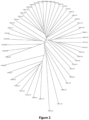
- the resulting distance matrix was used to construct a phylogenetic tree using the "Kitsch algorithm”.
- the "Drawtree algorithm” which gives a graphical representation of an unrooted tree was used. This approach of classification based on distances between two dimensional gels establishes the overall homogeneity between gels and eventually pinpoint an experimental bias or the particular behavior of a sample.
- Spots were excised from gels with a Propic robot (Perkin-Elmer, Wellesley, MA). All subsequent steps were done automatically using a Multiprobe II robot (Perkin-Elmer, Wellesley, MA). Spots were first washed with 300 ⁇ l of water and then 300 ⁇ l of 25 mM NH4HCO3. Destaining was performed twice in the presence of 300 ⁇ l of 50 % acetonitrile in 25 mM NH4HCO3. Gel pieces were then dehydrated twice by 300 ⁇ l of 100 % CH3CN, and finally dried at 37°C for 1 h.
- the protein digests were analysed using a High Capacity ion trap mass spectrometer (Esquire HCT; Bruker Daltonik GmbH, Bremen, Germany), interfaced with a nano-HPLC Chip-Cube system (Agilent Technologies, Santa Clara, USA).
- the chips contained both the pre-column and the column (Zorbax 300SB-C18; Agilent Technologies, Santa Clara, USA). Samples were first loaded onto the 4 mm enrichment cartridge at a flow rate of 4 ⁇ l/min using 0.1% formic acid.
- peptides were separated on the column (75 ⁇ m diameter, 43 mm length) at a flow rate of 0.3 ⁇ l/min using a 15 min linear gradient from 3 % to 80 % acetonitrile in 0.1% formic acid, and eluted into the mass spectrometer.
- a capillary voltage of 1.8-2.1 kV in the positive ion mode was used together with a dry gas flow rate of 4.5 I/min at 250°C.
- a first full-scan mass spectrum was measured in the 310 m/z to 1800 m/z range, followed by a second scan at higher resolution to measure precisely the mass of the three major ions in the previous scan.
- control cohort and cohort at risk of developing DN are described in Table 2. No significant differences were observed for age, duration of diabetes, systolic and diastolic blood pressure before exercise test, creatinuria and HbA1c among the two cohorts of patients. Compared with diabetic controls, diabetic subjects at risk of developing DN have after exercise test higher levels of albuminuria and UACR. The average level of systolic blood pressure was significantly higher after exercise than before, for both cohorts.
- the proteome profile of the G1 group (urine samples of control diabetic patients collected before the exercise test), contains all proteins shared between control type 1 diabetic patients.
- the proteome profile of the G2 group (urine samples of control diabetic patients collected after the exercise test) reflects all proteins whose urinary excretion was increased or decreased under the effect of physical activity among control patients.
- a set of proteins so-called "exercise proteome of control patients” is revealed by the comparison of protein profile from urine samples of control patients collected before the exercise test (G1 group) with those collected from same patients after exercise (G2 group), i.e. the G1G2 comparison.
- the G3 group may include the candidate biomarkers for the early diagnosis of DN revealed without any physical activity. These biomarkers could be identified by comparing protein profiles from urine samples collected before the exercise test from control patients (G1 group) with those from at risk patients (G3 group), i.e. the G1G3 comparison.
- the G4 group (urine samples of diabetic patients at risk for developing DN collected after exercise test) reflects biomarkers which are not differential before exercise test but become differential versus control after the exercise test. These biomarkers are revealed by the comparison of protein profiles from urine samples collected after the exercise test from control patients (G2 group) with those from at risk patients (G4 group), i.e. G2G4 comparison. The intersection of G2G4 comparison with G1G3 comparison reflects the candidate biomarkers for the early diagnosis of DN which are differential before and after exercise.
- G4 group reflects the "the exercise proteome of at risk patients". This proteome is highlighted by comparing the protein profiles of the urine samples collected from at risk patients before the exercise test (G3 group) with those collected from the same patients after exercise (G4 group), i.e . the G3G4 comparison.
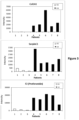
- Protein C inhibitor (SerpinA5), CD59 glycoprotein (CD59), tetranectin (CLEC3B) were decreased in G4 group in comparison with G2, confirming the proteomic data.
- Prothrombin or Coagulation factor II (F2) which has a molecular weight of 70 kDa is activated by a proteolytic cleavage leading to formation of an activation peptide fragment 1 and 2 (F1.2) (31 kDa), and active thrombin (F2a) (37 kDa).
- F1.2 is an index of in vivo thrombin generation, one molecule of F1.2 being released with the generation of each thrombin molecule. The antibody used was raised against amino-acids mapping near the N-terminus of F1.2.
- a MASP2 fragment of around 20 kDa was decreased in G4 group in comparison with G2.
- HSPG2 is cleaved in 2 chains: Endorepellin and LG3 peptide. Endorepellin was higher in G4 group than in the G2 group and LG3 peptide was decreased in G4 group in comparison with G3 group.
- the inventors investigated the presence of these biomarkers in samples of native urines ( i.e. without previous treatment and unconcentrated).
- HSPG2 heparan sulfate proteoglycan 2
- Col1A1 Collagen, type I, alpha 1
- Serpin C1 and F2 prothrombin
- Example 8 Confirmation of proteomic analysis by Western-blot experiments on urinary samples from healthy subjects and patients suffering from diabetic nephropathy
- biomarkers were selected as being specific of nephropathy and not of diabetes. In order to validate this point, analytic validation of the ten biomarkers was done for two other populations of subjects: i) healthy subjects who should behave as diabetic patients of the "control" cohort (G1, G2) and ii) diabetic patients suffering from nephropathy who should behave as diabetic patients of the "at risk” cohort (G3, G4).
- the protein CD59, CLEC3B, Serpin A5, and MASP2 were under-expressed in urines of diabetic patients at risk of developing nephropathy and of diabetic patients suffering from nephropathy (microalbuminuric and macroalbuminuric patients) ( Figure 4 ). Moreover, the protein MASP2 was not detected in urines from diabetic patients suffering from nephropathy ( Figure 4 ). For certain biomarkers, the signals obtained for patients of the same group were not homogenous. Indeed, concerning proteins Serpin A5 and MASP2, a healthy subject (different in both cases) appeared to have a lower quantity of analyzed biomarkers than the other studied healthy subjects.
- the proteins HSPG2 and F2 were overexpressed in urine of diabetic patients at risk of developing diabetic nephropathy and in diabetic patients suffering from nephropathy ( Figure 4 ).
- the signal obtained for a diabetic patient suffering from nephropathy was lower than for the other patients of the same group.
- ROC Receiving Operating Characteristics
- AUC ROC area under the ROC curve; Threshold: expressed in 2D-GE relative intensity and selected by Youden index; Se: sensibility; Sp: specificity; PPV: positive predictive value (measures the proportion of subjects with positive test results who are correctly diagnosed); NPV: negative predictive value (measures the proportion of subjects with negative test results who are correctly diagnosed); Cl 95%: 95% confidence interval.
- Multivariate analysis with mROC approach improved significantly AUC when comparing control patients versus at risk patients of developing diabetic nephropathy before physical exercises.
- the marker combination associating for example CA1 to CD59, CA1 to AMBP, CA1 to QPCT, CD59 to QPCT, CD59 to AMPBP has a predictive value for higher risk of developing diabetic nephropathy as reported by the higher sensitivity and specificity (Table 8).
- the statistical analysis combining two markers generated a series of decision rules; a new virtual marker (Z) was calculated for each combination as illustrated in table 9 and Figure 5 .
- the virtual marker Based on the combination of two markers, the virtual marker, transposing markers from the multivariate conditions into a univariate setting, discriminated significantly control patient from at risk patients of developing diabetic nephropathy before physical exercises with p-values ⁇ 0.01.
- Table 8 Examples of diagnosis performances (mROC approach) of two-markers combination for G1 versus G3 comparison.
- AUC ROC area under the ROC curve; Threshold: expressed in 2D-GE relative intensity and selected by Youden index; Se: sensibility; Sp: specificity; PPV: positive predictive value (measures the proportion of subjects with positive test results who are correctly diagnosed); NPV: negative predictive value (measures the proportion of subjects with negative test results who are correctly diagnosed); Cl 95%: 95% confidence interval.
- Markers combinations Z a 1 x [Marker1] + a 2 x [Marker2]
- CA1 + CD59 Z + (1,56361513356411e-07)x [CA1] - (1,01677256583679e-08)x [CD59]
- CA1 + AMBP Z + (1,35230449215072e-07)x [CA1] - (4,18637841481153e-08)x [AMBP]
- CA1 + QPCT Z + (1,24848530852367e-07)x [CA1] - (9,75979899375066e-07)x [QPCT]
- CD59 + QPCT Z - (1,36301781949143e-08)x [CD59] - (1,14127754739464e-06)x [QPCT]
- CD59 + AMBP Z - (1,0745556660865e-08)x [CD59] - (3,39944153133327
- ROC Receiving Operating Characteristics
- AUC ROC area under the ROC curve; Threshold: expressed in 2D-GE relative intensity and selected by Youden index; Se: sensibility; Sp: specificity; PPV: positive predictive value (measures the proportion of subjects with positive test results who are correctly diagnosed); NPV: negative predictive value (measures the proportion of subjects with negative test results who are correctly diagnosed); Cl 95%: 95% confidence interval.
- Multivariate analysis with mROC approach improved significantly AUC when comparing control patients versus at risk patients of developing diabetic nephropathy after physical exercises.
- the marker combination associating for example CLE3B to ENO1, SERPINA5 to AZGP1, SERPINA5 to SERPINA1, CLEC3B to CD59 has a predictive value for higher risk of developing diabetic nephropathy as reported by the higher sensitivity and specificity (Table 11).
- the statistical analysis combining two markers generated a series of decision rules; a new virtual marker (Z) was calculated for each combination as illustrated in table 12 and Figure 5 .
- the virtual marker Based on the combination of two markers, the virtual marker, transposing markers from the multivariate conditions into a univariate setting, discriminated significantly control patient from at risk patients of developing diabetic nephropathy after physical exercises with p-values ⁇ 0.001.
- Table 11 Examples of diagnosis performances (mROC approach) of two-marker combination for G2 versus G4 comparison.
- AUC ROC area under the ROC curve; Threshold: expressed in 2D-GE relative intensity and selected by Youden index; Se: sensibility; Sp: specificity; PPV: positive predictive value (measures the proportion of subjects with positive test results who are correctly diagnosed); NPV: negative predictive value (measures the proportion of subjects with negative test results who are correctly diagnosed); Cl 95%: 95% confidence interval.
- 2D-GE analysis was performed, which is an accurate semi-quantitative comparison method to analyze differences between the urine proteomes from control and at risk patients. 14 and 156 protein spots that were differentially expressed before and after exercise test, respectively, were observed.
- the exercise proteomes of controls and at risk diabetic patients were obtained by comparing the pre- and post-exercise test urine samples in each cohort (G1G2 and G3G4 comparisons respectively). Greater variability of excreted urinary protein after the exercise in at risk patients (101 differential spots) than in control patients (5 differential spots) was observed.
- proteins identified as potential DN markers ten were validated by Western blotting. Many differential spots in G2G4 comparison have a statistical total score equal to 5, which means that their differences in protein expression are statistically very significant (in the seven statistical tests). These proteins have thus a potential clinical diagnostic value.
Landscapes
- Life Sciences & Earth Sciences (AREA)
- Health & Medical Sciences (AREA)
- Engineering & Computer Science (AREA)
- Molecular Biology (AREA)
- Chemical & Material Sciences (AREA)
- Immunology (AREA)
- Physics & Mathematics (AREA)
- Biomedical Technology (AREA)
- Hematology (AREA)
- Urology & Nephrology (AREA)
- General Health & Medical Sciences (AREA)
- Biochemistry (AREA)
- General Physics & Mathematics (AREA)
- Analytical Chemistry (AREA)
- Pathology (AREA)
- Medicinal Chemistry (AREA)
- Food Science & Technology (AREA)
- Microbiology (AREA)
- Cell Biology (AREA)
- Biotechnology (AREA)
- Proteomics, Peptides & Aminoacids (AREA)
- Bioinformatics & Computational Biology (AREA)
- Bioinformatics & Cheminformatics (AREA)
- Chemical Kinetics & Catalysis (AREA)
- Electrochemistry (AREA)
- Dispersion Chemistry (AREA)
- Spectroscopy & Molecular Physics (AREA)
- Biophysics (AREA)
- Investigating Or Analysing Biological Materials (AREA)
- Measuring Or Testing Involving Enzymes Or Micro-Organisms (AREA)
- Peptides Or Proteins (AREA)
Claims (4)
- Verwendung eines Kits zum Nachweisen von Proteinen unter Verwendung als Biomarker zum In-vitro-Nachweis eines erhöhten Risikos für diabetische Nephropathie bei einem Individuum, das an Diabetes erkrankt ist und normoalbuminurisch ist, wobei der Kit in getrennten Behältern oder in dem gleichen Behälter Mittel zum Nachweisen von zumindest zwei Proteinen in einer biologischen Probe umfasst, bei denen es sich um Heparansulfatproteoglykankernprotein oder Fragmente davon und Carboanhydrase 1 handelt, wobei die Heparansulfatproteoglykankernproteinfragmente Endorepellin oder LG3 sind.
- Verwendung nach Anspruch 1, wobei die Mittel zum Nachweisen von zumindest zwei Proteinen ein oder mehrere Antikörper sind.
- Verwendung nach Anspruch 2, wobei der eine oder die mehreren Antikörper monoklonale Antikörper sind.
- Verwendung nach Anspruch 2 oder 3, wobei der Kit ferner ein oder mehrere sekundäre Antikörper umfasst, die an ein Enzym oder ein Fluorochrom konjugiert sind.
Applications Claiming Priority (3)
| Application Number | Priority Date | Filing Date | Title |
|---|---|---|---|
| EP14306071.3A EP2963422A1 (de) | 2014-07-01 | 2014-07-01 | Marker zur frühen Vorhersage von diabetischer Nephropathie |
| EP15731622.5A EP3164715B1 (de) | 2014-07-01 | 2015-06-30 | Marker zur frühen vorhersage von diabetischer nephropathie |
| PCT/EP2015/064831 WO2016001215A2 (en) | 2014-07-01 | 2015-06-30 | Early prediction markers of diabetic nephropathy |
Related Parent Applications (2)
| Application Number | Title | Priority Date | Filing Date |
|---|---|---|---|
| EP15731622.5A Division-Into EP3164715B1 (de) | 2014-07-01 | 2015-06-30 | Marker zur frühen vorhersage von diabetischer nephropathie |
| EP15731622.5A Division EP3164715B1 (de) | 2014-07-01 | 2015-06-30 | Marker zur frühen vorhersage von diabetischer nephropathie |
Publications (3)
| Publication Number | Publication Date |
|---|---|
| EP3570038A2 EP3570038A2 (de) | 2019-11-20 |
| EP3570038A3 EP3570038A3 (de) | 2020-01-01 |
| EP3570038B1 true EP3570038B1 (de) | 2025-05-07 |
Family
ID=51177001
Family Applications (3)
| Application Number | Title | Priority Date | Filing Date |
|---|---|---|---|
| EP14306071.3A Withdrawn EP2963422A1 (de) | 2014-07-01 | 2014-07-01 | Marker zur frühen Vorhersage von diabetischer Nephropathie |
| EP19183308.6A Active EP3570038B1 (de) | 2014-07-01 | 2015-06-30 | Zusammensetsungen zwei oder mehrere biomarker von heparan sulfate proteoglycan core protein und carbonic anhydrase |
| EP15731622.5A Active EP3164715B1 (de) | 2014-07-01 | 2015-06-30 | Marker zur frühen vorhersage von diabetischer nephropathie |
Family Applications Before (1)
| Application Number | Title | Priority Date | Filing Date |
|---|---|---|---|
| EP14306071.3A Withdrawn EP2963422A1 (de) | 2014-07-01 | 2014-07-01 | Marker zur frühen Vorhersage von diabetischer Nephropathie |
Family Applications After (1)
| Application Number | Title | Priority Date | Filing Date |
|---|---|---|---|
| EP15731622.5A Active EP3164715B1 (de) | 2014-07-01 | 2015-06-30 | Marker zur frühen vorhersage von diabetischer nephropathie |
Country Status (4)
| Country | Link |
|---|---|
| US (1) | US11237175B2 (de) |
| EP (3) | EP2963422A1 (de) |
| CN (1) | CN106796240A (de) |
| WO (1) | WO2016001215A2 (de) |
Families Citing this family (13)
| Publication number | Priority date | Publication date | Assignee | Title |
|---|---|---|---|---|
| CN109891241B (zh) * | 2016-10-03 | 2022-12-06 | 秀比特生物技术公司 | 能够进行糖尿病性肾病的早期病情的特异性诊断的检查方法 |
| CN107871536A (zh) * | 2017-09-30 | 2018-04-03 | 平安科技(深圳)有限公司 | 糖尿病分析方法及应用服务器 |
| CN110117613B (zh) * | 2018-02-05 | 2022-10-11 | 中国科学院分子植物科学卓越创新中心 | 一种制备雄性不育的鳞翅目昆虫的方法及其核酸构建物 |
| EP4088117A1 (de) * | 2020-01-10 | 2022-11-16 | SomaLogic Operating Co., Inc. | Verfahren zur bestimmung von beeinträchtigter glukosetoleranz |
| CN111613334A (zh) * | 2020-06-01 | 2020-09-01 | 广东省心血管病研究所 | 主动脉弓置换术后急性肾损伤概率预测模型的建立方法 |
| CN111763724A (zh) * | 2020-06-09 | 2020-10-13 | 中南大学湘雅二医院 | TN的抑制剂在制备改善β细胞功能、预防和/或治疗糖尿病的药物中的应用 |
| CN113917154B (zh) * | 2021-09-22 | 2023-11-24 | 北京松果天目健康管理有限公司 | 尿蛋白标志物在制备糖尿病肾病临床早期检测的试剂盒中的应用 |
| JPWO2023145898A1 (de) * | 2022-01-27 | 2023-08-03 | ||
| DE102023135015B3 (de) | 2023-12-13 | 2025-05-15 | Philipps-Universität Marburg, Körperschaft des öffentlichen Rechts | Diagnose und Verlaufskontrolle der akuten Nierenschädigung |
| CN117711619A (zh) * | 2023-12-15 | 2024-03-15 | 南方医科大学南方医院 | 一种糖尿病患者慢性肾脏病发生风险预测系统及存储介质 |
| CN117711618B (zh) * | 2023-12-15 | 2024-08-06 | 南方医科大学南方医院 | 一种基于蛋白质的肾脏病发生风险预测系统及存储介质 |
| CN118262911B (zh) * | 2024-03-12 | 2024-08-20 | 广东省人民医院 | 一种糖尿病患者dme风险评估模型及早期筛查系统 |
| CN118707104A (zh) * | 2024-05-08 | 2024-09-27 | 杭州珞米医疗科技有限公司 | 蛋白标志物联合用于制备诊断区分糖尿病肾病进展者与非进展者的试剂盒的用途 |
Family Cites Families (8)
| Publication number | Priority date | Publication date | Assignee | Title |
|---|---|---|---|---|
| WO2006010047A2 (en) | 2004-07-09 | 2006-01-26 | Tripath Imaging, Inc. | Methods and compositions for the detection of ovarian cancer |
| US20120329071A1 (en) * | 2010-03-05 | 2012-12-27 | Mark Chance | Protein biomarkers and therapeutic targets for renal disorders |
| EP2405271A1 (de) | 2010-07-06 | 2012-01-11 | Bio-Rad Innovations | Markers der Verletzlichkeit von Atherosklerotischem Plaque |
| EP2601532B1 (de) * | 2010-08-06 | 2016-01-27 | Mycartis N.V. | Perlecan als biomarker für niereninsuffizienz |
| US20150072360A1 (en) * | 2011-12-14 | 2015-03-12 | The Johns Hopkins University | Biomarkers of pulmonary hypertension |
| EP2680002A1 (de) | 2012-06-29 | 2014-01-01 | Bio-Rad Innovations | Verfahren zur Diagnose invasiver Candidainfektionen |
| WO2014160275A2 (en) * | 2013-03-14 | 2014-10-02 | Battell Memorial Institute | Biomarkers for liver fibrosis |
| US20160169910A1 (en) * | 2013-08-01 | 2016-06-16 | Rush University Medical Center | Non-Glycosylated suPar Biomarkers and Uses Thereof |
-
2014
- 2014-07-01 EP EP14306071.3A patent/EP2963422A1/de not_active Withdrawn
-
2015
- 2015-06-30 US US15/322,742 patent/US11237175B2/en active Active - Reinstated
- 2015-06-30 WO PCT/EP2015/064831 patent/WO2016001215A2/en not_active Ceased
- 2015-06-30 CN CN201580037598.4A patent/CN106796240A/zh active Pending
- 2015-06-30 EP EP19183308.6A patent/EP3570038B1/de active Active
- 2015-06-30 EP EP15731622.5A patent/EP3164715B1/de active Active
Non-Patent Citations (1)
| Title |
|---|
| ELISA BELLEI: "Proteomic analysis of early urinary biomarkers of renal changes in type 2 diabetic patients", PROTEOMICS CLINICAL APPLICATIONS, vol. 2, no. 4, 1 April 2008 (2008-04-01), DE, pages 478 - 491, XP093157615, ISSN: 1862-8346, DOI: 10.1002/prca.200780109 * |
Also Published As
| Publication number | Publication date |
|---|---|
| EP3164715B1 (de) | 2019-08-14 |
| WO2016001215A3 (en) | 2016-02-18 |
| EP3570038A3 (de) | 2020-01-01 |
| WO2016001215A2 (en) | 2016-01-07 |
| EP3164715A2 (de) | 2017-05-10 |
| EP2963422A1 (de) | 2016-01-06 |
| US20170153249A1 (en) | 2017-06-01 |
| CN106796240A (zh) | 2017-05-31 |
| US11237175B2 (en) | 2022-02-01 |
| EP3570038A2 (de) | 2019-11-20 |
Similar Documents
| Publication | Publication Date | Title |
|---|---|---|
| EP3164715B1 (de) | Marker zur frühen vorhersage von diabetischer nephropathie | |
| Metzger et al. | Urinary excretion of twenty peptides forms an early and accurate diagnostic pattern of acute kidney injury | |
| US8394601B2 (en) | Peptide biomarkers predictive of renal function decline and kidney disease | |
| Kistler et al. | Identification of a unique urinary biomarker profile in patients with autosomal dominant polycystic kidney disease | |
| EP2601532B1 (de) | Perlecan als biomarker für niereninsuffizienz | |
| EP3497451B1 (de) | Histone und/oder proadm als marker zur anzeige eines unerwünschten ereignisses | |
| EP2506016B1 (de) | Diagnostisches verfahren für den nachweis von akuter nierenläsion mit dem hitzeschockprotein 72 als sensitiver biomarker | |
| AU2010279302B2 (en) | Methods and compositions for diagnosis and prognosis of renal injury and renal failure | |
| US12174201B2 (en) | Prognosis and progression biomarkers for chronic kidney disease | |
| Chang et al. | Urinary glycated uromodulin in diabetic kidney disease | |
| Albeltagy et al. | Early diagnosis of acute kidney injury by urinary YKL-40 in critically ill patients in ICU: a pilot study | |
| JP2017513009A (ja) | 免疫評価および移植片拒絶の予測のためのタンパク質バイオマーカー | |
| Patel et al. | Characterization of low molecular weight urinary proteins at varying time intervals in type 2 diabetes mellitus and diabetic nephropathy patients | |
| Lewandowicz et al. | Changes in urine proteome accompanying diabetic nephropathy progression. | |
| EP3012634B1 (de) | Biomarker zur diagnose rheumatoider arthritis oder zur aktivitätsbewertung | |
| Snipsøyr et al. | Towards identification of novel putative biomarkers for infective endocarditis by serum proteomic analysis | |
| WO2012004276A2 (en) | Multiprotein biomarkers of amyotrophic lateral sclerosis in peripheral blood mononuclear cells, diagnostic methods and kits | |
| WO2022218961A1 (en) | Biomarker for in vitro diagnosis and/or prognosis of a systemic inflammation | |
| CA2581929C (en) | Methods for assessing the risk for development of cardiovascular disease | |
| CN114207436A (zh) | 基于c-c基序趋化因子配体14测量而评估和治疗肾损伤的方法 | |
| Isabel Padrão et al. | Proteome‐base biomarkers in diabetes mellitus: Progress on biofluids' protein profiling using mass spectrometry | |
| EP2883057B1 (de) | Diagnose und behandlung von herzversagen | |
| Catanese et al. | A novel urinary proteomics classifier for non-invasive evaluation of interstitial fibrosis and tubular atrophy in chronic kidney disease. Proteomes 2021; 9: 32 | |
| CA3173639C (en) | Method of screening for a chronic kidney disease or glomerulopathy, method of monitoring a response to treatment of a chronic kidney disease or glomerulopathy in a subject and a method of treatment of a chronic kidney disease or glomerulopath | |
| Lapolla et al. | Urinary peptides as a diagnostic tool for renal failure detected by matrix-assisted laser desorption/ionisation mass spectrometry: an evaluation of their clinical significance |
Legal Events
| Date | Code | Title | Description |
|---|---|---|---|
| PUAI | Public reference made under article 153(3) epc to a published international application that has entered the european phase |
Free format text: ORIGINAL CODE: 0009012 |
|
| STAA | Information on the status of an ep patent application or granted ep patent |
Free format text: STATUS: REQUEST FOR EXAMINATION WAS MADE |
|
| 17P | Request for examination filed |
Effective date: 20190628 |
|
| AC | Divisional application: reference to earlier application |
Ref document number: 3164715 Country of ref document: EP Kind code of ref document: P |
|
| AK | Designated contracting states |
Kind code of ref document: A2 Designated state(s): AL AT BE BG CH CY CZ DE DK EE ES FI FR GB GR HR HU IE IS IT LI LT LU LV MC MK MT NL NO PL PT RO RS SE SI SK SM TR |
|
| PUAL | Search report despatched |
Free format text: ORIGINAL CODE: 0009013 |
|
| AK | Designated contracting states |
Kind code of ref document: A3 Designated state(s): AL AT BE BG CH CY CZ DE DK EE ES FI FR GB GR HR HU IE IS IT LI LT LU LV MC MK MT NL NO PL PT RO RS SE SI SK SM TR |
|
| RIC1 | Information provided on ipc code assigned before grant |
Ipc: G01N 33/68 20060101AFI20191122BHEP |
|
| RIN1 | Information on inventor provided before grant (corrected) |
Inventor name: MOLINA, FRANCK Inventor name: SIALA, RANDA Inventor name: MOLINA, LAURENCE Inventor name: GRANIER, CLAUDE Inventor name: SALVETAT, NICOLAS Inventor name: RENARD, ERIC |
|
| RAP1 | Party data changed (applicant data changed or rights of an application transferred) |
Owner name: CHU MONTPELLIER Owner name: UNIVERSITE DE MONTPELLIER Owner name: CENTRE NATIONAL DE LA RECHERCHE SCIENTIFIQUE Owner name: BIO-RAD EUROPE GMBH |
|
| STAA | Information on the status of an ep patent application or granted ep patent |
Free format text: STATUS: EXAMINATION IS IN PROGRESS |
|
| 17Q | First examination report despatched |
Effective date: 20221206 |
|
| P01 | Opt-out of the competence of the unified patent court (upc) registered |
Effective date: 20230505 |
|
| GRAP | Despatch of communication of intention to grant a patent |
Free format text: ORIGINAL CODE: EPIDOSNIGR1 |
|
| STAA | Information on the status of an ep patent application or granted ep patent |
Free format text: STATUS: GRANT OF PATENT IS INTENDED |
|
| INTG | Intention to grant announced |
Effective date: 20241218 |
|
| GRAS | Grant fee paid |
Free format text: ORIGINAL CODE: EPIDOSNIGR3 |
|
| GRAA | (expected) grant |
Free format text: ORIGINAL CODE: 0009210 |
|
| STAA | Information on the status of an ep patent application or granted ep patent |
Free format text: STATUS: THE PATENT HAS BEEN GRANTED |
|
| AC | Divisional application: reference to earlier application |
Ref document number: 3164715 Country of ref document: EP Kind code of ref document: P |
|
| AK | Designated contracting states |
Kind code of ref document: B1 Designated state(s): AL AT BE BG CH CY CZ DE DK EE ES FI FR GB GR HR HU IE IS IT LI LT LU LV MC MK MT NL NO PL PT RO RS SE SI SK SM TR |
|
| REG | Reference to a national code |
Ref country code: GB Ref legal event code: FG4D |
|
| REG | Reference to a national code |
Ref country code: CH Ref legal event code: EP |
|
| REG | Reference to a national code |
Ref country code: DE Ref legal event code: R096 Ref document number: 602015091618 Country of ref document: DE |
|
| REG | Reference to a national code |
Ref country code: IE Ref legal event code: FG4D |
|
| PGFP | Annual fee paid to national office [announced via postgrant information from national office to epo] |
Ref country code: DE Payment date: 20250626 Year of fee payment: 11 |
|
| PGFP | Annual fee paid to national office [announced via postgrant information from national office to epo] |
Ref country code: GB Payment date: 20250617 Year of fee payment: 11 |
|
| PGFP | Annual fee paid to national office [announced via postgrant information from national office to epo] |
Ref country code: FR Payment date: 20250624 Year of fee payment: 11 |
|
| REG | Reference to a national code |
Ref country code: NL Ref legal event code: MP Effective date: 20250507 |
|
| PG25 | Lapsed in a contracting state [announced via postgrant information from national office to epo] |
Ref country code: PT Free format text: LAPSE BECAUSE OF FAILURE TO SUBMIT A TRANSLATION OF THE DESCRIPTION OR TO PAY THE FEE WITHIN THE PRESCRIBED TIME-LIMIT Effective date: 20250908 Ref country code: FI Free format text: LAPSE BECAUSE OF FAILURE TO SUBMIT A TRANSLATION OF THE DESCRIPTION OR TO PAY THE FEE WITHIN THE PRESCRIBED TIME-LIMIT Effective date: 20250507 Ref country code: ES Free format text: LAPSE BECAUSE OF FAILURE TO SUBMIT A TRANSLATION OF THE DESCRIPTION OR TO PAY THE FEE WITHIN THE PRESCRIBED TIME-LIMIT Effective date: 20250507 |
|
| REG | Reference to a national code |
Ref country code: LT Ref legal event code: MG9D |
|
| PG25 | Lapsed in a contracting state [announced via postgrant information from national office to epo] |
Ref country code: GR Free format text: LAPSE BECAUSE OF FAILURE TO SUBMIT A TRANSLATION OF THE DESCRIPTION OR TO PAY THE FEE WITHIN THE PRESCRIBED TIME-LIMIT Effective date: 20250808 Ref country code: NO Free format text: LAPSE BECAUSE OF FAILURE TO SUBMIT A TRANSLATION OF THE DESCRIPTION OR TO PAY THE FEE WITHIN THE PRESCRIBED TIME-LIMIT Effective date: 20250807 |
|
| PG25 | Lapsed in a contracting state [announced via postgrant information from national office to epo] |
Ref country code: PL Free format text: LAPSE BECAUSE OF FAILURE TO SUBMIT A TRANSLATION OF THE DESCRIPTION OR TO PAY THE FEE WITHIN THE PRESCRIBED TIME-LIMIT Effective date: 20250507 Ref country code: NL Free format text: LAPSE BECAUSE OF FAILURE TO SUBMIT A TRANSLATION OF THE DESCRIPTION OR TO PAY THE FEE WITHIN THE PRESCRIBED TIME-LIMIT Effective date: 20250507 |
|
| REG | Reference to a national code |
Ref country code: AT Ref legal event code: MK05 Ref document number: 1792994 Country of ref document: AT Kind code of ref document: T Effective date: 20250507 |
|
| PG25 | Lapsed in a contracting state [announced via postgrant information from national office to epo] |
Ref country code: BG Free format text: LAPSE BECAUSE OF FAILURE TO SUBMIT A TRANSLATION OF THE DESCRIPTION OR TO PAY THE FEE WITHIN THE PRESCRIBED TIME-LIMIT Effective date: 20250507 |
|
| PG25 | Lapsed in a contracting state [announced via postgrant information from national office to epo] |
Ref country code: HR Free format text: LAPSE BECAUSE OF FAILURE TO SUBMIT A TRANSLATION OF THE DESCRIPTION OR TO PAY THE FEE WITHIN THE PRESCRIBED TIME-LIMIT Effective date: 20250507 |
|
| PG25 | Lapsed in a contracting state [announced via postgrant information from national office to epo] |
Ref country code: AT Free format text: LAPSE BECAUSE OF FAILURE TO SUBMIT A TRANSLATION OF THE DESCRIPTION OR TO PAY THE FEE WITHIN THE PRESCRIBED TIME-LIMIT Effective date: 20250507 |
|
| PG25 | Lapsed in a contracting state [announced via postgrant information from national office to epo] |
Ref country code: RS Free format text: LAPSE BECAUSE OF FAILURE TO SUBMIT A TRANSLATION OF THE DESCRIPTION OR TO PAY THE FEE WITHIN THE PRESCRIBED TIME-LIMIT Effective date: 20250807 |
|
| PG25 | Lapsed in a contracting state [announced via postgrant information from national office to epo] |
Ref country code: IS Free format text: LAPSE BECAUSE OF FAILURE TO SUBMIT A TRANSLATION OF THE DESCRIPTION OR TO PAY THE FEE WITHIN THE PRESCRIBED TIME-LIMIT Effective date: 20250907 |
|
| PG25 | Lapsed in a contracting state [announced via postgrant information from national office to epo] |
Ref country code: LV Free format text: LAPSE BECAUSE OF FAILURE TO SUBMIT A TRANSLATION OF THE DESCRIPTION OR TO PAY THE FEE WITHIN THE PRESCRIBED TIME-LIMIT Effective date: 20250507 |
|
| PG25 | Lapsed in a contracting state [announced via postgrant information from national office to epo] |
Ref country code: DK Free format text: LAPSE BECAUSE OF FAILURE TO SUBMIT A TRANSLATION OF THE DESCRIPTION OR TO PAY THE FEE WITHIN THE PRESCRIBED TIME-LIMIT Effective date: 20250507 Ref country code: SM Free format text: LAPSE BECAUSE OF FAILURE TO SUBMIT A TRANSLATION OF THE DESCRIPTION OR TO PAY THE FEE WITHIN THE PRESCRIBED TIME-LIMIT Effective date: 20250507 |
|
| PG25 | Lapsed in a contracting state [announced via postgrant information from national office to epo] |
Ref country code: CZ Free format text: LAPSE BECAUSE OF FAILURE TO SUBMIT A TRANSLATION OF THE DESCRIPTION OR TO PAY THE FEE WITHIN THE PRESCRIBED TIME-LIMIT Effective date: 20250507 |
|
| PG25 | Lapsed in a contracting state [announced via postgrant information from national office to epo] |
Ref country code: EE Free format text: LAPSE BECAUSE OF FAILURE TO SUBMIT A TRANSLATION OF THE DESCRIPTION OR TO PAY THE FEE WITHIN THE PRESCRIBED TIME-LIMIT Effective date: 20250507 |
|
| PG25 | Lapsed in a contracting state [announced via postgrant information from national office to epo] |
Ref country code: SK Free format text: LAPSE BECAUSE OF FAILURE TO SUBMIT A TRANSLATION OF THE DESCRIPTION OR TO PAY THE FEE WITHIN THE PRESCRIBED TIME-LIMIT Effective date: 20250507 Ref country code: RO Free format text: LAPSE BECAUSE OF FAILURE TO SUBMIT A TRANSLATION OF THE DESCRIPTION OR TO PAY THE FEE WITHIN THE PRESCRIBED TIME-LIMIT Effective date: 20250507 |
|
| REG | Reference to a national code |
Ref country code: CH Ref legal event code: H13 Free format text: ST27 STATUS EVENT CODE: U-0-0-H10-H13 (AS PROVIDED BY THE NATIONAL OFFICE) Effective date: 20260127 |
|
| PG25 | Lapsed in a contracting state [announced via postgrant information from national office to epo] |
Ref country code: IT Free format text: LAPSE BECAUSE OF FAILURE TO SUBMIT A TRANSLATION OF THE DESCRIPTION OR TO PAY THE FEE WITHIN THE PRESCRIBED TIME-LIMIT Effective date: 20250507 |
|
| REG | Reference to a national code |
Ref country code: DE Ref legal event code: R097 Ref document number: 602015091618 Country of ref document: DE |
|
| PG25 | Lapsed in a contracting state [announced via postgrant information from national office to epo] |
Ref country code: LU Free format text: LAPSE BECAUSE OF NON-PAYMENT OF DUE FEES Effective date: 20250630 |
|
| PG25 | Lapsed in a contracting state [announced via postgrant information from national office to epo] |
Ref country code: MC Free format text: LAPSE BECAUSE OF FAILURE TO SUBMIT A TRANSLATION OF THE DESCRIPTION OR TO PAY THE FEE WITHIN THE PRESCRIBED TIME-LIMIT Effective date: 20250507 |
|
| REG | Reference to a national code |
Ref country code: BE Ref legal event code: MM Effective date: 20250630 |
|
| PLBE | No opposition filed within time limit |
Free format text: ORIGINAL CODE: 0009261 |
|
| STAA | Information on the status of an ep patent application or granted ep patent |
Free format text: STATUS: NO OPPOSITION FILED WITHIN TIME LIMIT |
|
| REG | Reference to a national code |
Ref country code: CH Ref legal event code: L10 Free format text: ST27 STATUS EVENT CODE: U-0-0-L10-L00 (AS PROVIDED BY THE NATIONAL OFFICE) Effective date: 20260318 |
|
| PG25 | Lapsed in a contracting state [announced via postgrant information from national office to epo] |
Ref country code: IE Free format text: LAPSE BECAUSE OF NON-PAYMENT OF DUE FEES Effective date: 20250630 |
|
| 26N | No opposition filed |
Effective date: 20260210 |
|
| PG25 | Lapsed in a contracting state [announced via postgrant information from national office to epo] |
Ref country code: BE Free format text: LAPSE BECAUSE OF NON-PAYMENT OF DUE FEES Effective date: 20250630 |
|
| PG25 | Lapsed in a contracting state [announced via postgrant information from national office to epo] |
Ref country code: CH Free format text: LAPSE BECAUSE OF NON-PAYMENT OF DUE FEES Effective date: 20250630 |