EP3570868B1 - Synthetische antimikrobiellen peptide und deren verwendung zur behandlung und vorbeugung von muskoloskeletalen infektionen - Google Patents
Synthetische antimikrobiellen peptide und deren verwendung zur behandlung und vorbeugung von muskoloskeletalen infektionen Download PDFInfo
- Publication number
- EP3570868B1 EP3570868B1 EP17704656.2A EP17704656A EP3570868B1 EP 3570868 B1 EP3570868 B1 EP 3570868B1 EP 17704656 A EP17704656 A EP 17704656A EP 3570868 B1 EP3570868 B1 EP 3570868B1
- Authority
- EP
- European Patent Office
- Prior art keywords
- lys
- leu
- ile
- trp
- met
- Prior art date
- Legal status (The legal status is an assumption and is not a legal conclusion. Google has not performed a legal analysis and makes no representation as to the accuracy of the status listed.)
- Not-in-force
Links
Images

Classifications
-
- A—HUMAN NECESSITIES
- A61—MEDICAL OR VETERINARY SCIENCE; HYGIENE
- A61K—PREPARATIONS FOR MEDICAL, DENTAL OR TOILETRY PURPOSES
- A61K38/00—Medicinal preparations containing peptides
- A61K38/16—Peptides having more than 20 amino acids; Gastrins; Somatostatins; Melanotropins; Derivatives thereof
- A61K38/17—Peptides having more than 20 amino acids; Gastrins; Somatostatins; Melanotropins; Derivatives thereof from animals; from humans
- A61K38/1703—Peptides having more than 20 amino acids; Gastrins; Somatostatins; Melanotropins; Derivatives thereof from animals; from humans from vertebrates
- A61K38/1709—Peptides having more than 20 amino acids; Gastrins; Somatostatins; Melanotropins; Derivatives thereof from animals; from humans from vertebrates from mammals
- A61K38/1729—Cationic antimicrobial peptides, e.g. defensins
-
- C—CHEMISTRY; METALLURGY
- C07—ORGANIC CHEMISTRY
- C07K—PEPTIDES
- C07K14/00—Peptides having more than 20 amino acids; Gastrins; Somatostatins; Melanotropins; Derivatives thereof
- C07K14/435—Peptides having more than 20 amino acids; Gastrins; Somatostatins; Melanotropins; Derivatives thereof from animals; from humans
- C07K14/43504—Peptides having more than 20 amino acids; Gastrins; Somatostatins; Melanotropins; Derivatives thereof from animals; from humans from invertebrates
- C07K14/43563—Peptides having more than 20 amino acids; Gastrins; Somatostatins; Melanotropins; Derivatives thereof from animals; from humans from invertebrates from insects
- C07K14/43572—Peptides having more than 20 amino acids; Gastrins; Somatostatins; Melanotropins; Derivatives thereof from animals; from humans from invertebrates from insects from bees
-
- C—CHEMISTRY; METALLURGY
- C07—ORGANIC CHEMISTRY
- C07K—PEPTIDES
- C07K7/00—Peptides having 5 to 20 amino acids in a fully defined sequence; Derivatives thereof
- C07K7/04—Linear peptides containing only normal peptide links
- C07K7/08—Linear peptides containing only normal peptide links having 12 to 20 amino acids
Definitions
- the invention involves describes peptides of formulae I-XIII and their selected enantiomers as well as their use to treat musculoskeletal infections in orthopaedics and traumatology, including applications on implants used in orthopaedics, especially when mixed with the local carrier.
- Musculoskeletal infections still belong to frequent postoperative complications in orthopaedics and traumatology. Despite improving prevention, surgery techniques, postoperative care and better access to antibiotics, they bring a serious danger due to their typical progression with relapses and frequent development of resistance. In medical practice, these include primarily osteomyelitis and infections associated with implants used in orthopaedics and traumatology.
- osteomyelitis bone infection
- antimicrobial therapy currently using antibiotics
- surgical treatment and adjuvant therapy The key problem is the solution of "dead space" in bone after debridement, which involves removing sequesters, eradication of infection and solving problems with the formation of bacterial biofilms.
- One of the ways to increase the therapeutic potential and to fill in the cavity of the bone affected with infection is the use of local carriers mixed with antibiotics [1-4].
- Infection of implants used in orthopaedics, such as joint replacements, materials used for their fixation and osteosynthesis materials represent another serious problem. In these cases, the infection is associated with the formation of microbial biofilms on the implant surfaces [5].
- Microbial biofilms are for example very easily formed on an implant prepared from bone cement, which is based on polymethyl methacrylate [6]. Even in this case, the solution is to mix the cement with antibiotics just prior to use, or to use cement, whose powder component contains antibiotics from the producer.
- Local carriers for the antibiotics used in orthopaedics can be divided into synthetic and natural polymers, ceramics, composites, and bone grafts. In clinical practice, calcium phosphate, calcium sulphate, collagen, bone grafts, hydroxyapatite and bone cement (polymethyl methacrylate) are the most commonly used. Local carriers with antibiotics can be used both for treatment and prevention of osteomyelitis by filling the "dead" area of the infected bone, but also for the prevention of microbial biofilms on the surfaces of implants.
- Antimicrobial treatment of musculoskeletal infections with local carriers with antibiotics compared to systemic application of antibiotics, has the advantage of achieving concentrations of antimicrobial agents that are far beyond their minimum inhibitory concentration (MIC). Antibiotics released from local carriers thus act also in avascular zones and without increasing systemic toxicity. Antibiotics slowly released from the bone cement prevents its surface colonization by microbes and subsequent formation of microbial biofilm.
- MIC minimum inhibitory concentration
- MRSA methicillin resistant Staphylococcus aureus
- Staphylococcus epidermidis Staphylococcus epidermidis
- Streptococcus species Pseudomonas aeruginosa
- Alarming is the occurrence of Staphylococcus aureus resistant to vancomycin, as this is often used as a last resort antibiotic.
- yeast infections of the Candida genus These microbes colonize bone tissue or implants, and adhere to the surface with the consequent formation of biofilms.
- the infected bone tissue is difficult to treat, since microbes in the biofilm are many times more resistant to antimicrobials compared to planktonic microbes.
- the solution is to remove the implant from the body, mechanical removal of the biofilm, the necrotic tissue, and wear-induced granuloma, disinfection, local application of antimicrobial agents and treatment of the resulting "dead" space with several weeks of systemic administration of antimicrobial agents.
- Subsequent insertion of a new, usually a more complex implant may be made either at one time, or more frequent procedure - two-stage re-implantation using so-called spacers containing antibiotics or antifungal agents [7,8]. These procedures are always long, exhausting for the patient and very costly.
- AMPs antimicrobial peptides
- Our newly discovered highly effective AMPs offer the use of preferred, synthetically available compounds for eradication of bone infections or preventing the formation of microbial biofilms on the implant surfaces, particularly after incorporation into local carriers.
- Antimicrobial peptides have been identified in virtually the entire spectrum of animal and plant kingdom. For example, in the realm of insects, precisely these peptides are the main means of defence against microbes [17,18]. Taking into account the environment in which the insect lives, these must be very effective peptides. These peptides are able to rapidly kill bacteria and other microorganisms by a mechanism quite different from commonly used antibiotics. Although this mechanism is not yet fully understood, basically it involves disruption of the cell membrane of bacteria or yeast by formation of transmembrane ion channels or pores. Subsequent leakage of metabolites causes a collapse of the entire microbial structure [19-21]. Generally it is also known that antimicrobial peptides in bacteria do not cause resistance, which is known in the heretofore used conventional antibiotics.
- halictins shortening of the chain by one amino acid at the N-terminus
- halictin II shortening of the chain by one amino acid at the N-terminus
- analogues can be obtained which, unlike the previously synthesized halictins, retain antimicrobial activity even after incorporation into local carriers or bone cement. From these carriers, they are then readily released into the infected bone tissue and eradicate the infection.
- Subject matter of the invention involves antimicrobial peptides of the general formula a -Lys-Trp- b -Lys- c -Leu-Lys-Lys-Ile-Leu-Lys-NH 2 (A) where a is Gly, ⁇ Ala or there isn't any aminoacid, b is Met, Met(O), Leu, Val, or Lys, c is Leu, Met or Val, showing an antimicrobial effect in bone tissue, and being selected from the group consisting of:
- the peptides of the formulae VII, X, XI and XII are in the configuration of all-L-isomer, i.e., all amino acids are in L-configuration.
- the peptides of the formulae VIIa, Xa, XIa and XIIa have an identical sequence of amino acids as VII, X, XI and XII, respectively, but the amino acids are in the configuration of all-D-isomer, i.e. peptides VIIa, Xa, XIa and XIIa are composed only of D-amino acids.
- the peptides of formula XIII and of formula XIIIa have an identical sequence of amino acids, but are in mutually reverse configurations, i.e., in XIII, Leu in position 7 is in D-configuration and the remaining amino acid residues are in L-configuration, and in formula XIIIa, Leu in position 7 is in L-configuration and the remaining amino acid residues are in D-configuration.
- the invention further provides peptides of specific formulas I to XIII and their above described enantiomers for use in the treatment of musculoskeletal infections in orthopaedics and traumatology, particularly for the treatment of infectious diseases of bones and joints or infected surrounding tissue, and/or for prevention or eliminating the infectious agent from the joint and bone replacement, and sealants, and generally to prevent infectious complications occurring after implantation of joint replacements and after osteosynthesis.
- peptides of formulas I to XIII and their above described enantiomers in a mixture with the carrier material are used for treating an infectious disease of bones, or the infected surrounding soft tissue and/or for prevention or elimination of the infectious agent from the joint and bone replacement, and sealants, or generally to prevent infectious complications occurring after implantation of joint replacements and after osteosynthesis.
- the carrier material can be preferably selected from calcium phosphate, calcium sulfate, bioactive glass, apatite-wollastonite ceramic bioglass, hydrogel, collagen, bone graft, bone cement, or synthetic polymers such as polymethyl methacrylate, copolymer of methyl methacrylate and hydroxyethyl methacrylate, polyanhydride, polylactide, polyglycolide, a copolymer of hydroxybutyrate and hydroxyvalerate, polyhydroxyalkanoate, polycaprolactone or gelatine sponge with glycerine, or composites consisting of polymers and mineral carriers.
- synthetic polymers such as polymethyl methacrylate, copolymer of methyl methacrylate and hydroxyethyl methacrylate, polyanhydride, polylactide, polyglycolide, a copolymer of hydroxybutyrate and hydroxyvalerate, polyhydroxyalkanoate, polycaprolactone or gelatine sponge with gly
- Subject matter of the invention also involves peptides of the formulae I to XIII and their above described enantiomers, for production of drugs for treatment or prevention of infectious diseases of bones or infected surrounding tissues, and/or for prevention or elimination of the infectious agent from joint and bone replacements and sealants, and for the prevention of infection of orthopaedic implants.
- Subject matter of the invention also involves a pharmaceutical composition which contains therapeutically effective amount of at least one peptide of the general formula I to XIII or being their above described enantiomer, optionally a second active ingredient and at least one pharmaceutically acceptable carrier, filler and/or diluent.
- composition contains an antibiotic or antimycotic agent as the second active ingredient.
- Another aspect of the invention is that the above-mentioned pharmaceutical composition is intended for treatment or prevention of infectious diseases of bones or infected surrounding tissue, and/or prevention or elimination of the infectious agent from joint and bone replacements and sealants, and for the prevention of the infection of orthopaedic implants.
- Synthetic peptides of formulae I to XIII and their above described enantiomers can be included among halictins, named after the natural peptide halictin II [22].
- Analogues thus obtained are shown in Table 1; values of antimicrobial and haemolytic activities resulting from the performed substitutions are then given in Table 2.
- Topical application of antimicrobial peptides include their incorporation into local carriers, including bone cements and implants used in orthopaedics.
- a suitable carrier is selected from several groups including natural materials based on collagen, fibrin or thrombin, blood coagulate, or demineralized bone matrix or bone grafts.
- mineral carriers such as calcium phosphate, calcium sulphate, hydroxyapatite, nano-hydroxyapatite and beta-tricalcium phosphate, as well as bioactive glass and apatite-wollastonite ceramic bioglass can be used.
- Synthetic polymers such as polymethylmethacrylate (PMMA), PMMA/polyhydroxyethylmethacrylate (PHEMA), polyanhydride, polylactide, polyglycolide, polyhydroxybutyrate-co-hydroxyvalerate, polyhydroxyalkanoate, polycaprolactone and gelatin sponge with glycerine, or composite of polymers and mineral carriers are also often used.
- Suitable carrier is selected according to the method of application and indication of the type of the musculoskeletal infection.
- Another utilization of new antimicrobial peptides of the invention involves treatment or prevention of the surrounding infected tissues of musculoskeletal system, but also the prevention (treatment) of infectious complications when using joint replacement and osteosynthesis, associated with the formation of microbial biofilms on their surfaces.
- pharmaceutically acceptable refers to those compounds, which are suitable for use in contact with the tissues of patients without undue toxicity, irritation and allergic response, are commensurate with a reasonable benefit/risk ratio, and are effective for their intended use.
- Antimicrobial peptides of formulas I to XIII and their specific enantiomers were synthesized by the method of solid phase peptide synthesis (SPPS). The synthesis was performed manually in 5 ml polypropylene syringes with a polypropylene filter in the bottom of the syringe, using Fmoc-chemistry protocol [23]. Rink Amide MBHA resin (IRIS Biotech GmbH, Germany) with substitution of 0.7 mmol.g -1 was used as the solid carrier.
- Gram-positive bacteria Bacillus subtilis, Staphylococcus aureus, Staphylococcus epidermidis and Enterococcus faecalis
- Gram-negative bacteria Escherichia coli and Pseudomonas aeruginosa
- yeast Candida albicans
- microorganisms were added to the solutions of the tested antimicrobial peptides in LB medium in multi-well plates, so that the final peptide concentration it the wells was in the range of 0.5 to 100 ⁇ m ⁇ l.1 -1 .
- the plates were incubated at 37° C for 20 h while being continuously shaken in a Bioscreen C (Oy Growth Curves AB Ltd., Helsinki, Finland). Absorbance was measured at 540 nm every 15 min.
- Antimicrobial activity (Table 2) was determined as a quantitative minimum inhibitory concentration (MIC) by observing bacterial growth in the presence of different concentrations of tested peptides. In the experiments, ca 10 5 CFU of bacteria or candida per well were used. Tetracycline in a concentration range of 0.5 - 100 ⁇ mol.1 -1 was used as a standard.
- the peptides in the concentrations 2-400 ⁇ mol.1 -1 were incubated with the suspension of human red blood cells (5% v/v) for 1 h at 37 °C in a physiological solution at a final volume of 0.2 ml. The samples were then centrifuged for 5 min at 250 g. The absorbance of the supernatant was determined at 540 nm. 0.2% (v/v) TRITON X100 was used as a control for 100% haemolysis. The results of tests are shown in Table 2. Haemolytic activity is expressed as the peptide concentration required for lysis of 50% of human erythrocytes in the assay (LC 50 ). Table 2.
- 3-4 holes of a diameter of 5 mm and a depth of 10 mm are drilled with a surgical spoon into a femur head under sterile conditions (spongy part of the bone in the resection site). Thereafter, this bone graft is put into a beaker of appropriate size and lined with sterile gauze squares. The gauze is moistened with sterile physiological saline to prevent drying of the bone. Then, suspension of multiplied microbes in an appropriate medium (50-100 ⁇ l) at a concentration of 10 7 to 10 9 CFU is sequentially applied to the prepared holes in the bone graft and allowed to incubate for 1-2 days. This results in an induced osteomyelitis model. Beaker with the infected bone graft is covered with a sterile Petri dish. During the experiment, induced osteomyelitis models are kept protected from light at room temperature.
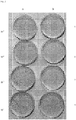
- the infected holes in the bone are filled with a mixture of the local carrier, and a peptide selected from the series of peptides of formulae I to XIII or their specific enantiomers ( Figure 1 ).
- a peptide selected from the series of peptides of formulae I to XIII or their specific enantiomers ( Figure 1 ).
- one of the holes is filled with the local carrier without peptide, or the carrier filled with antibiotic (vancomycin or gentamicin).
- antibiotic vancomycin or gentamicin
- a commercially available two-component material supplied by Synthes (Synthes GmbH, Switzerland) under the name ChronOS Inject was used as the carrier.
- Its solid component comprises a mixture of calcium phosphates CaHPO 4 .2H 2 O and Ca 3 (PO 4 ) 2 and additives, the liquid component is 0.5% (vol./vol.) solution of hyaluronic acid.
- the solid carrier component For preparation of a paste for filling the hole, 200 to 400 mg of the solid carrier component is used, 5 mg - 20 mg of peptide is stirred in, preferably 10 mg (or a mixture of L- and D-form of the peptide in the ratio 4:1), or 7 mg or vancomycin, or 5.5 mg gentamicin, or 5.4 mg ceftriaxone; and then the liquid component is stirred into this mixture in an amount of 60 - 80 ⁇ l to 200 mg of the solid component, and all of that is thoroughly mixed (a paste without peptide for the control experiment is prepared by the same procedure) .
- the filling is thoroughly removed with a surgical spoon and empty holes are wiped with moistened sterile cotton swab, which is then extracted into 400 ⁇ l physiological saline.
- the extract is diluted in a tenfold serial dilution and each diluted suspension is cultured on agar in Petri dishes; the culture is evaluated on the following day.
- the result of the experiment is evaluated by comparing the number of bacterial colonies from the swab from infected holes where the peptide was released from the carrier, with the number of colonies from the swab from the infected hole that was filled with carrier only without any peptide (Table 3). The result of the peptide effect is also compared with the result of the effect of antibiotics.
- microbiological examination of the bone tissue taken with a surgical spoon from a deeper area of the drilled holes is performed. Used femur heads are autoclaved to deactivate the infection and disposed of as clinical waste on the pathology of the Motol University Hospital. Table 3. Evaluation of the effect of antimicrobial peptides released from the carrier on an infection in the bone graft. Effect of antimicrobial activity is expressed in the number of CFU (colony-forming units) in the infected hole after swabbing. Bacteria CFU/hole Carrier without peptide Carrier with peptide No. a) Carrier with an antibiotic MRSA (clin.
- Motol) ChronOS 200 mg) III (8 mg)+IV (2 mg) Vancomycin (7 mg) 5,6x10 6 2,4x10 5 2,0x10 6 MRSA (clin. isolate Motol) ChronOS (200 mg) III (8 mg)+IV (2 mg) Gentamycin (5.2 mg) 7,0x10 7 5,4x10 2 9,2x10 5 MRSA (clin. isolate Motol) ChronOS (200 mg) V (10 mg) N/A 4,8x10 6 4,0 MRSA (clin. isolate Liberec) ChronOS (200 mg) I (10 mg)/III (10 mg) ) N/A 3,4x10 7 2,3x10 5 / 2,3x10 5 MRSA (clin.
- Bone cement (Palacos®r, Hereaus Medical GmbH, Germany) containing the peptide is prepared by mixing the peptide from the series of peptides I to XIII or their above described enantiomers with a powdered polymeric component of cement (poly-methylacrylate, poly-methyl methacrylate, benzoyl peroxide) and subsequently with a liquid monomer component (methyl methacrylate, N, N-dimethyl-p-toluidine).
- a powdered polymeric component of cement poly-methylacrylate, poly-methyl methacrylate, benzoyl peroxide
- a paste for filling the infected holes 125 mg powder component of cement is used, 5 mg - 20 mg (preferably 10 mg) of peptide is stirred in, or 7 mg of vancomycin, or 10 mg of fluconazole, or 10 mg of amphotericin B; then the liquid component is stirred into this mixture in an amount of 65 - 70 ⁇ l to 125 mg of the solid component and all of that is thoroughly mixed (a paste without peptide for the comparative experiment is prepared by the same procedure).
- the resulting elastic paste is placed into a 2 ml plastic syringe (without needle) and pressed into the infected holes in the spongy part of the bone, where it polymerizes and hardens.
- a Vancogenx® cement (Tecresa S. p. A., Italy) is used, made from a mixture of a powdered polymer component containing vancomycin and gentamicin. The mixture in an amount of 125 mg is mixed with liquid monomer (50-60 ⁇ l) and then pressed into the openings as described above.
- the cements are applied to uninfected holes, allowed to harden, and then microbes are pipetted into the hole excavated between implants. From there they penetrate through bone tissue and settle on the implants with consequent formation of biofilms.
- implants are removed with metal spikes and tweezers, mechanically cleaned from debris of bone tissue, and washed four times with physiological saline (0.5 ml) in plastic tubes to remove any residual planktonic microbes or bone cells from their surface.
- physiological saline 0.5 ml
- the implants in closed tubes with 0.4 ml saline are then sonicated four times for 3 min with occasional shaking.
- the of microbial biofilm on the surface of the implant is thus disrupted and microbes are loosed into the physiological saline.
- the resulting suspension is subsequently diluted using the tenfold serial dilution for culturing on agar.
- the result of the experiment is evaluated by comparing the number of microbial colonies corresponding to the number of microbes released from the implant surface, in which the peptide was incorporated, to the number of colonies from the implant surface, which did not contain the peptide (Table 4).
- the result of the peptide effect to prevent biofilm formation compared to the result of the effect of antibiotics or antifungal agents is also evaluated.
- Used femur heads are autoclaved to deactivate the infection and disposed as described in example 4.
- Table 4 Evaluation of the effect of antimicrobial peptides on the formation of microbial biofilm on the surface of the implant made of the bone cement.
- CFU microbial colonies
- test peptides from the group of peptides I to XIII incorporated into bone cements show a significant effect of preventing formation of a microbial biofilm on its surface in assays of induced osteomyelitis ( Figure 2 ).
- this effect is expressed in the number of bacterial colonies (CFU) that correspond to the residual infection deposited on the surface of cement with incorporated peptide.
- CFU bacterial colonies
- the effect of the peptides was in some cases by several orders of magnitude higher than the effect of simultaneously tested cements containing vancomycin and one order of magnitude higher than the effect of simultaneously tested cement Vancogenx®, containing mixture of vancomycin and gentamicin from the manufacturer.
- Example 5 The experiment was performed under similar conditions as described in Example 5. Here, 100 mg of the powder cement component was used to prepare a paste, which was mixed with in 3.5 mg of peptide XIII and subsequently 52 ⁇ l of liquid component. The resulting paste was thoroughly mixed and then pressed into a hole prepared in the spongy part of the bone. To a next hole in the spongy part of the same bone a paste was pressed, containing comparative peptide Hal 2/4 (3.5 mg) with the sequence H-Lys-Trp-Met-Ser-Leu-Leu-Lys-Lys-Ile-Leu-Lys-NH 2 , which was also prepared from 100 mg of the powder component and 52 ⁇ l of the liquid component.
- comparative peptide Hal 2/4 3.5 mg
- the third hole was filled with paste without peptide prepared from the same amount of components.
- the Candida albicans yeast (clinical isolate Olomouc), grown in YPG, was pipetted in the hole excavated between implants equidistant (approximately 1 cm) from each. From there, the yeast penetrated through the bone tissue and was deposited on the implant with consequent formation of biofilms.
- the implants were removed, mechanically cleaned of bone tissue residues and washed four times with physiological saline (0.5 ml) in plastic tubes to remove planktonic microbes or residues of bone cells from their surfaces. Then the implants in closed tubes with 0.4 ml of saline were treated ultrasonically four times for three minutes with occasional shaking. This way, microbial biofilm on the surface of the implant was disrupted and microbes loosed into the physiological saline. The resulting suspension was then diluted in a decimal dilution series for culturing on agar. The result of the experiment was evaluated by comparing the number of microbial colonies (CFU), corresponding to the number of microbes released from the surfaces of implants.
- CFU microbial colonies
- the number of colonies from the implant surface, which contained no peptide was 1.8 ⁇ 10 3 CFU/implant and the number of colonies from the surface of the implant, containing a Hal 4/2 peptide of the above sequence, was 2.8 ⁇ 10 2 CFU/implant. In contrast, the number of colonies on an implant containing peptide XIII was zero.
- Newly synthesized antimicrobial peptides of formulae I-XIII and their specific enantiomers demonstrated high efficiency in tests involving the aforementioned indications, which was several orders of magnitude higher in the model of induced osteomyelitis than the efficiency of antibiotics such as vancomycin or gentamicin, and they also prevented the formation of microbial biofilms on surfaces of model implants made of bone cement.
Landscapes
- Health & Medical Sciences (AREA)
- Life Sciences & Earth Sciences (AREA)
- Chemical & Material Sciences (AREA)
- Organic Chemistry (AREA)
- General Health & Medical Sciences (AREA)
- Zoology (AREA)
- Proteomics, Peptides & Aminoacids (AREA)
- Medicinal Chemistry (AREA)
- Gastroenterology & Hepatology (AREA)
- Insects & Arthropods (AREA)
- Biochemistry (AREA)
- Genetics & Genomics (AREA)
- Biophysics (AREA)
- Molecular Biology (AREA)
- Engineering & Computer Science (AREA)
- Tropical Medicine & Parasitology (AREA)
- Marine Sciences & Fisheries (AREA)
- Toxicology (AREA)
- Bioinformatics & Cheminformatics (AREA)
- Immunology (AREA)
- Pharmacology & Pharmacy (AREA)
- Epidemiology (AREA)
- Animal Behavior & Ethology (AREA)
- Public Health (AREA)
- Veterinary Medicine (AREA)
- Medicines That Contain Protein Lipid Enzymes And Other Medicines (AREA)
- Materials For Medical Uses (AREA)
Claims (7)
- Synthetische antimikrobielle Peptide, die eine antimikrobielle Wirkung im Knochengewebe zeigen, ausgewählt aus der Gruppe bestehend aus:H-Lys-Trp-Met-Lys-Leu-Leu-Lys-Lys-Ile-Leu-Lys-NH2 (I),H-Lys-Trp-Met-Lys-Leu-Leu-Lys-Lys-Ile-Leu-Lys-NH2 (II),H-Gly-Lys-Trp-Met-Lys-Leu-Leu-Lys-Lys-Ile-Leu-Lys-NH2 (III),H-Gly-Lys-Trp-Met-Lys-Leu-Leu-Lys-Lys-Ile-Leu-Lys-NH2 (IV),H-βAla-Lys-Trp-Met-Lys-Leu-Leu-Lys-Lys-Ile-Leu-Lys-NH2 (V),H-βAla-Lys-Trp-Met-Lys-Leu-Leu-Lys-Lys-Ile-Leu-Lys-NH2 (VI),H-Gly-Lys-Trp-Leu-Lys-Leu-Leu-Lys-Lys-Ile-Leu-Lys-NH2 (VII),H-Gly-Lys-Trp-Leu-Lys-Leu-Leu-Lys-Lys-Ile-Leu-Lys-NH2 (VIIa)H-Gly-Lys-Trp-Val-Lys-Leu-Leu-Lys-Lys-Ile-Leu-Lys-NH2 (VIII),H-Gly-Lys-Trp-Val-Lys-Leu-Leu-Lys-Lys-Ile-Leu-Lys-NH2 (IX)H-Gly-Lys-Trp-Lys-Lys-Leu-Leu-Lys-Lys-Ile-Leu-Lys-NH2 (X),H-Gly-Lys-Trp-Lys-Lys-Leu-Leu-Lys-Lys-Ile-Leu-Lys-NH2 (Xa),H-Gly-Lys-Trp-Met-Lys-Met-Leu-Lys-Lys-Ile-Leu-Lys-NH2 (XI),H-Gly-Lys-Trp-Met-Lys-Met-Leu-Lys-Lys-Ile-Leu-Lys-NH2 (XIa),H-Gly-Lys-Trp-Met(O)-Lys-Leu-Leu-Lys-Lys-Ile-Leu-Lys-NH2 (XII),H-Gly-Lys-Trp-Met(O)-Lys-Leu-Leu-Lys-Lys-Ile-Leu-Lys-NH2 (XIIa),H-Gly-Lys-Trp-Met-Lys-Leu-Leu-Lys-Lys-Ile-Leu-Lys-NH2 (XIII)H-Gly-Lys-Trp-Met-Lys-Leu-Leu-Lys-Lys-Ile-Leu-Lys-NH2 (XIIIa)wobei die Aminosäuren in D-Konfiguration kursiv angegeben sind, L-Konfigurations-Aminosäuren in normaler Schrift angegeben sind,
und wobei H eine freie N-terminale Aminogruppe anzeigt, -NH2 eine amidierte C-terminale Carboxylgruppe von Peptiden anzeigt und Met(O) Methioninsulfoxid ist. - Synthetische Peptide nach Patentanspruch 1 zur Verwendung in einem Verfahren zur Behandlung von Infektionen des Bewegungsapparates in der Orthopädie und Traumatologie, insbesondere zur Behandlung von Infektionskrankheiten der Knochen oder des umgebenden infizierten Gewebes und/oder zur Verhinderung oder Beseitigung des Infektionserregers aus Gelenk- und Knochenersatz und Dichtstoffen; und zur Verhinderung der Infektion von orthopädischen Implantaten.
- Verwendung von synthetischen Peptiden nach Patentanspruch 1 zur Herstellung von Arzneimitteln zur Behandlung oder Prävention von Infektionskrankheiten von Knochen oder infizierten umgebenden Geweben und/oder zur Vorbeugung oder Beseitigung der Infektionserreger aus Gelenk- und Knochenersatz und Versiegelungsmitteln sowie zur Vorbeugung einer Infektion von Orthopäden Implantate.
- Synthetische Peptide nach Patentanspruch 1 zur Verwendung in einer Mischung mit einem Träger ausgewählt aus der Gruppe bestehend aus Kalziumphosphat, Kalziumsulfat, bioaktivem Glas, Apatit-Wollastonit-Keramik-Bioglas, Hydrogel, Kollagen, Knochentransplantaten, Knochenzement, synthetischen Polymeren ausgewählten aus Polymethyl Methacrylat, Co-Polymere von Methyl Methacrylat und Hydroxyethyl Methacrylat, Polyanhydrid, Polylactid, Polyglycolid, Co-Polymere von Hydroxybutyrat und Hydroxyvalerat, Polyhydroxyalkanoat, Polycaprolacton, Gelatineschwämme mit Glycerin, Verbundwerkstoffe, die aus Polymeren und/oder Mineralträger bestehen, zur Behandlung von infektiösen Knochenerkrankungen oder infizierten umgebenden Geweben und/oder zur Verhinderung oder Beseitigung von Infektionserregern aus Gelenk- und Knochenersatz und Versiegelungsmitteln und zur Verhinderung der Infektion von orthopädischen Implantaten.
- Eine pharmazeutische Zusammensetzung, die dadurch gekennzeichnet ist, dass sie eine therapeutisch wirksame Menge von mindestens einem Peptid aus der Gruppe von Peptiden der Formel nach Patentanspruch 1, gegebenenfalls einen zweiten Wirkstoff, der ein Antibiotikum oder ein Antimykotikum ist, und mindestens einen pharmazeutisch verträglichen Träger, Füllstoff und/oder Verdünnungsmittel umfasst.
- Die pharmazeutische Zusammensetzung nach Patentanspruch 5 zur Verwendung bei der Behandlung und/oder Prävention von Infektionskrankheiten von Knochen oder infizierten umgebenden Geweben und/oder zur Prävention oder Eliminierung des Infektionserregers aus Gelenk- und Knochenersatz und Versiegelungsmitteln und zur Prävention von infektiösen Komplikationen nach Implantation von Gelenkersatz und nach Osteosynthese.
- Eine Zusammensetzung zur medizinischen Verwendung, die synthetische Peptide nach Patentanspruch 1 und einen Träger ausgewählt aus der Gruppe bestehend aus Kalziumphosphat, Kalziumsulfat, bioaktivem Glas, Apatit-Wollastonit-Keramik-Bioglas, Hydrogel, Kollagen, Knochentransplantaten, Knochenzement, synthetischen Polymeren ausgewählten aus Polymethyl Methacrylat, Co-Polymeren von Methyl Methacrylat und Hydroxyethyl Methacrylat, Polyanhydrid, Polylactid, Polyglycolid, Co-Polymeren von Hydroxybutyrat und Hydroxyvalerat, Polyhydroxyalkanoat, Polycaprolacton, Gelatineschwämmen mit Glycerin, Verbundstoffen aus Polymeren und/oder Mineralstoffen.
Applications Claiming Priority (1)
| Application Number | Priority Date | Filing Date | Title |
|---|---|---|---|
| PCT/CZ2017/050001 WO2018133887A1 (en) | 2017-01-20 | 2017-01-20 | Synthetic antimicrobial peptides and their applications for the treatment and prevention of musculoskeletal infections |
Publications (2)
| Publication Number | Publication Date |
|---|---|
| EP3570868A1 EP3570868A1 (de) | 2019-11-27 |
| EP3570868B1 true EP3570868B1 (de) | 2020-05-20 |
Family
ID=58017870
Family Applications (1)
| Application Number | Title | Priority Date | Filing Date |
|---|---|---|---|
| EP17704656.2A Not-in-force EP3570868B1 (de) | 2017-01-20 | 2017-01-20 | Synthetische antimikrobiellen peptide und deren verwendung zur behandlung und vorbeugung von muskoloskeletalen infektionen |
Country Status (2)
| Country | Link |
|---|---|
| EP (1) | EP3570868B1 (de) |
| WO (1) | WO2018133887A1 (de) |
Families Citing this family (1)
| Publication number | Priority date | Publication date | Assignee | Title |
|---|---|---|---|---|
| CN112933108B (zh) * | 2021-02-05 | 2024-07-23 | 华东理工大学 | 掺杂多肽聚合物的骨髓腔填充物及在骨髓炎治疗中的用途 |
-
2017
- 2017-01-20 WO PCT/CZ2017/050001 patent/WO2018133887A1/en not_active Ceased
- 2017-01-20 EP EP17704656.2A patent/EP3570868B1/de not_active Not-in-force
Non-Patent Citations (1)
| Title |
|---|
| None * |
Also Published As
| Publication number | Publication date |
|---|---|
| EP3570868A1 (de) | 2019-11-27 |
| WO2018133887A1 (en) | 2018-07-26 |
Similar Documents
| Publication | Publication Date | Title |
|---|---|---|
| EP3280722B1 (de) | Antimikrobische peptide und deren verwendung zur behandlung von topischen entzündungen | |
| Kaliaraj et al. | Surface functionalized bioceramics coated on metallic implants for biomedical and anticorrosion performance–a review | |
| Gao et al. | Enhancing antibacterial capability and osseointegration of polyetheretherketone (PEEK) implants by dual-functional surface modification | |
| Schaer et al. | Hydrophobic polycationic coatings that inhibit biofilms and support bone healing during infection | |
| Alt et al. | The effects of combined gentamicin–hydroxyapatite coating for cementless joint prostheses on the reduction of infection rates in a rabbit infection prophylaxis model | |
| Qin et al. | Enhanced antibacterial properties, biocompatibility, and corrosion resistance of degradable Mg-Nd-Zn-Zr alloy | |
| Townsend et al. | Antimicrobial peptide coatings for hydroxyapatite: electrostatic and covalent attachment of antimicrobial peptides to surfaces | |
| Spicer et al. | Evaluation of antibiotic releasing porous polymethylmethacrylate space maintainers in an infected composite tissue defect model | |
| Yu et al. | Synergistic effect of a biodegradable Mg–Zn alloy on osteogenic activity and anti-biofilm ability: an in vitro and in vivo study | |
| Yang et al. | Bioinspired from mussel and salivary acquired pellicle: a universal dual-functional polypeptide coating for implant materials | |
| KR102414533B1 (ko) | 이식 가능한 페이스트 및 이의 용도 | |
| Wang et al. | Mussel-inspired deposition of copper on titanium for bacterial inhibition and enhanced osseointegration in a periprosthetic infection model | |
| CN118453961A (zh) | 一种多酚/类淀粉样蛋白复合微球及其制备植入物涂层的应用 | |
| EP4371586B1 (de) | Multifunktionale chitosan-kompositen für die füllung von knochendefekten und die regenerierung von knochengewebe sowie verfahren zu deren herstellung | |
| EP3570868B1 (de) | Synthetische antimikrobiellen peptide und deren verwendung zur behandlung und vorbeugung von muskoloskeletalen infektionen | |
| Kong et al. | Current Advances of Antibacterial Biomaterials for Bone Regeneration | |
| Stallmann et al. | In vivo release of the antimicrobial peptide hLF1‐11 from calcium phosphate cement | |
| JP2007332040A (ja) | カーボンナノチューブを含む抗菌剤とそれを用いた材料及び製剤 | |
| Kazemzadeh-Narbat et al. | Antimicrobial peptide delivery from trabecular bone grafts | |
| Konev et al. | Results of the fosfomycin application for the impregnation of bone replacement materials in the treatment of chronic osteomyelitis | |
| WO2018115877A2 (en) | Compositions and methods of treatment | |
| Vladescu et al. | Nanomaterials for medical applications and their antimicrobial advantages | |
| EP1849474B1 (de) | Antimikrobielles peptid und verwendung davon | |
| WO2009070564A2 (en) | Compositions and methods for prevention of infection in transcutaneous osseointegrated implants | |
| JPWO2005049819A1 (ja) | 抗菌ペプチド及びその利用 |
Legal Events
| Date | Code | Title | Description |
|---|---|---|---|
| STAA | Information on the status of an ep patent application or granted ep patent |
Free format text: STATUS: UNKNOWN |
|
| STAA | Information on the status of an ep patent application or granted ep patent |
Free format text: STATUS: THE INTERNATIONAL PUBLICATION HAS BEEN MADE |
|
| PUAI | Public reference made under article 153(3) epc to a published international application that has entered the european phase |
Free format text: ORIGINAL CODE: 0009012 |
|
| STAA | Information on the status of an ep patent application or granted ep patent |
Free format text: STATUS: REQUEST FOR EXAMINATION WAS MADE |
|
| 17P | Request for examination filed |
Effective date: 20190801 |
|
| AK | Designated contracting states |
Kind code of ref document: A1 Designated state(s): AL AT BE BG CH CY CZ DE DK EE ES FI FR GB GR HR HU IE IS IT LI LT LU LV MC MK MT NL NO PL PT RO RS SE SI SK SM TR |
|
| AX | Request for extension of the european patent |
Extension state: BA ME |
|
| GRAP | Despatch of communication of intention to grant a patent |
Free format text: ORIGINAL CODE: EPIDOSNIGR1 |
|
| STAA | Information on the status of an ep patent application or granted ep patent |
Free format text: STATUS: GRANT OF PATENT IS INTENDED |
|
| GRAS | Grant fee paid |
Free format text: ORIGINAL CODE: EPIDOSNIGR3 |
|
| DAX | Request for extension of the european patent (deleted) | ||
| INTG | Intention to grant announced |
Effective date: 20200310 |
|
| GRAA | (expected) grant |
Free format text: ORIGINAL CODE: 0009210 |
|
| STAA | Information on the status of an ep patent application or granted ep patent |
Free format text: STATUS: THE PATENT HAS BEEN GRANTED |
|
| DAV | Request for validation of the european patent (deleted) | ||
| AK | Designated contracting states |
Kind code of ref document: B1 Designated state(s): AL AT BE BG CH CY CZ DE DK EE ES FI FR GB GR HR HU IE IS IT LI LT LU LV MC MK MT NL NO PL PT RO RS SE SI SK SM TR |
|
| REG | Reference to a national code |
Ref country code: GB Ref legal event code: FG4D |
|
| REG | Reference to a national code |
Ref country code: CH Ref legal event code: EP |
|
| REG | Reference to a national code |
Ref country code: DE Ref legal event code: R096 Ref document number: 602017017003 Country of ref document: DE |
|
| REG | Reference to a national code |
Ref country code: AT Ref legal event code: REF Ref document number: 1272175 Country of ref document: AT Kind code of ref document: T Effective date: 20200615 |
|
| REG | Reference to a national code |
Ref country code: LT Ref legal event code: MG4D |
|
| REG | Reference to a national code |
Ref country code: NL Ref legal event code: MP Effective date: 20200520 |
|
| PG25 | Lapsed in a contracting state [announced via postgrant information from national office to epo] |
Ref country code: LT Free format text: LAPSE BECAUSE OF FAILURE TO SUBMIT A TRANSLATION OF THE DESCRIPTION OR TO PAY THE FEE WITHIN THE PRESCRIBED TIME-LIMIT Effective date: 20200520 Ref country code: SE Free format text: LAPSE BECAUSE OF FAILURE TO SUBMIT A TRANSLATION OF THE DESCRIPTION OR TO PAY THE FEE WITHIN THE PRESCRIBED TIME-LIMIT Effective date: 20200520 Ref country code: GR Free format text: LAPSE BECAUSE OF FAILURE TO SUBMIT A TRANSLATION OF THE DESCRIPTION OR TO PAY THE FEE WITHIN THE PRESCRIBED TIME-LIMIT Effective date: 20200821 Ref country code: NO Free format text: LAPSE BECAUSE OF FAILURE TO SUBMIT A TRANSLATION OF THE DESCRIPTION OR TO PAY THE FEE WITHIN THE PRESCRIBED TIME-LIMIT Effective date: 20200820 Ref country code: IS Free format text: LAPSE BECAUSE OF FAILURE TO SUBMIT A TRANSLATION OF THE DESCRIPTION OR TO PAY THE FEE WITHIN THE PRESCRIBED TIME-LIMIT Effective date: 20200920 Ref country code: FI Free format text: LAPSE BECAUSE OF FAILURE TO SUBMIT A TRANSLATION OF THE DESCRIPTION OR TO PAY THE FEE WITHIN THE PRESCRIBED TIME-LIMIT Effective date: 20200520 Ref country code: PT Free format text: LAPSE BECAUSE OF FAILURE TO SUBMIT A TRANSLATION OF THE DESCRIPTION OR TO PAY THE FEE WITHIN THE PRESCRIBED TIME-LIMIT Effective date: 20200921 |
|
| PG25 | Lapsed in a contracting state [announced via postgrant information from national office to epo] |
Ref country code: LV Free format text: LAPSE BECAUSE OF FAILURE TO SUBMIT A TRANSLATION OF THE DESCRIPTION OR TO PAY THE FEE WITHIN THE PRESCRIBED TIME-LIMIT Effective date: 20200520 Ref country code: HR Free format text: LAPSE BECAUSE OF FAILURE TO SUBMIT A TRANSLATION OF THE DESCRIPTION OR TO PAY THE FEE WITHIN THE PRESCRIBED TIME-LIMIT Effective date: 20200520 Ref country code: RS Free format text: LAPSE BECAUSE OF FAILURE TO SUBMIT A TRANSLATION OF THE DESCRIPTION OR TO PAY THE FEE WITHIN THE PRESCRIBED TIME-LIMIT Effective date: 20200520 Ref country code: BG Free format text: LAPSE BECAUSE OF FAILURE TO SUBMIT A TRANSLATION OF THE DESCRIPTION OR TO PAY THE FEE WITHIN THE PRESCRIBED TIME-LIMIT Effective date: 20200820 |
|
| REG | Reference to a national code |
Ref country code: AT Ref legal event code: MK05 Ref document number: 1272175 Country of ref document: AT Kind code of ref document: T Effective date: 20200520 |
|
| PG25 | Lapsed in a contracting state [announced via postgrant information from national office to epo] |
Ref country code: AL Free format text: LAPSE BECAUSE OF FAILURE TO SUBMIT A TRANSLATION OF THE DESCRIPTION OR TO PAY THE FEE WITHIN THE PRESCRIBED TIME-LIMIT Effective date: 20200520 Ref country code: NL Free format text: LAPSE BECAUSE OF FAILURE TO SUBMIT A TRANSLATION OF THE DESCRIPTION OR TO PAY THE FEE WITHIN THE PRESCRIBED TIME-LIMIT Effective date: 20200520 |
|
| PG25 | Lapsed in a contracting state [announced via postgrant information from national office to epo] |
Ref country code: RO Free format text: LAPSE BECAUSE OF FAILURE TO SUBMIT A TRANSLATION OF THE DESCRIPTION OR TO PAY THE FEE WITHIN THE PRESCRIBED TIME-LIMIT Effective date: 20200520 Ref country code: CZ Free format text: LAPSE BECAUSE OF FAILURE TO SUBMIT A TRANSLATION OF THE DESCRIPTION OR TO PAY THE FEE WITHIN THE PRESCRIBED TIME-LIMIT Effective date: 20200520 Ref country code: SM Free format text: LAPSE BECAUSE OF FAILURE TO SUBMIT A TRANSLATION OF THE DESCRIPTION OR TO PAY THE FEE WITHIN THE PRESCRIBED TIME-LIMIT Effective date: 20200520 Ref country code: EE Free format text: LAPSE BECAUSE OF FAILURE TO SUBMIT A TRANSLATION OF THE DESCRIPTION OR TO PAY THE FEE WITHIN THE PRESCRIBED TIME-LIMIT Effective date: 20200520 Ref country code: IT Free format text: LAPSE BECAUSE OF FAILURE TO SUBMIT A TRANSLATION OF THE DESCRIPTION OR TO PAY THE FEE WITHIN THE PRESCRIBED TIME-LIMIT Effective date: 20200520 Ref country code: ES Free format text: LAPSE BECAUSE OF FAILURE TO SUBMIT A TRANSLATION OF THE DESCRIPTION OR TO PAY THE FEE WITHIN THE PRESCRIBED TIME-LIMIT Effective date: 20200520 Ref country code: DK Free format text: LAPSE BECAUSE OF FAILURE TO SUBMIT A TRANSLATION OF THE DESCRIPTION OR TO PAY THE FEE WITHIN THE PRESCRIBED TIME-LIMIT Effective date: 20200520 Ref country code: AT Free format text: LAPSE BECAUSE OF FAILURE TO SUBMIT A TRANSLATION OF THE DESCRIPTION OR TO PAY THE FEE WITHIN THE PRESCRIBED TIME-LIMIT Effective date: 20200520 |
|
| REG | Reference to a national code |
Ref country code: DE Ref legal event code: R097 Ref document number: 602017017003 Country of ref document: DE |
|
| PG25 | Lapsed in a contracting state [announced via postgrant information from national office to epo] |
Ref country code: PL Free format text: LAPSE BECAUSE OF FAILURE TO SUBMIT A TRANSLATION OF THE DESCRIPTION OR TO PAY THE FEE WITHIN THE PRESCRIBED TIME-LIMIT Effective date: 20200520 Ref country code: SK Free format text: LAPSE BECAUSE OF FAILURE TO SUBMIT A TRANSLATION OF THE DESCRIPTION OR TO PAY THE FEE WITHIN THE PRESCRIBED TIME-LIMIT Effective date: 20200520 |
|
| PLBE | No opposition filed within time limit |
Free format text: ORIGINAL CODE: 0009261 |
|
| STAA | Information on the status of an ep patent application or granted ep patent |
Free format text: STATUS: NO OPPOSITION FILED WITHIN TIME LIMIT |
|
| 26N | No opposition filed |
Effective date: 20210223 |
|
| PGFP | Annual fee paid to national office [announced via postgrant information from national office to epo] |
Ref country code: CH Payment date: 20210119 Year of fee payment: 5 Ref country code: FR Payment date: 20210118 Year of fee payment: 5 |
|
| PGFP | Annual fee paid to national office [announced via postgrant information from national office to epo] |
Ref country code: GB Payment date: 20210120 Year of fee payment: 5 Ref country code: BE Payment date: 20210120 Year of fee payment: 5 Ref country code: DE Payment date: 20210121 Year of fee payment: 5 |
|
| PG25 | Lapsed in a contracting state [announced via postgrant information from national office to epo] |
Ref country code: MC Free format text: LAPSE BECAUSE OF FAILURE TO SUBMIT A TRANSLATION OF THE DESCRIPTION OR TO PAY THE FEE WITHIN THE PRESCRIBED TIME-LIMIT Effective date: 20200520 |
|
| PG25 | Lapsed in a contracting state [announced via postgrant information from national office to epo] |
Ref country code: LU Free format text: LAPSE BECAUSE OF NON-PAYMENT OF DUE FEES Effective date: 20210120 |
|
| PG25 | Lapsed in a contracting state [announced via postgrant information from national office to epo] |
Ref country code: IE Free format text: LAPSE BECAUSE OF NON-PAYMENT OF DUE FEES Effective date: 20210120 |
|
| REG | Reference to a national code |
Ref country code: DE Ref legal event code: R119 Ref document number: 602017017003 Country of ref document: DE |
|
| REG | Reference to a national code |
Ref country code: CH Ref legal event code: PL |
|
| GBPC | Gb: european patent ceased through non-payment of renewal fee |
Effective date: 20220120 |
|
| REG | Reference to a national code |
Ref country code: BE Ref legal event code: MM Effective date: 20220131 |
|
| PG25 | Lapsed in a contracting state [announced via postgrant information from national office to epo] |
Ref country code: GB Free format text: LAPSE BECAUSE OF NON-PAYMENT OF DUE FEES Effective date: 20220120 Ref country code: DE Free format text: LAPSE BECAUSE OF NON-PAYMENT OF DUE FEES Effective date: 20220802 |
|
| PG25 | Lapsed in a contracting state [announced via postgrant information from national office to epo] |
Ref country code: FR Free format text: LAPSE BECAUSE OF NON-PAYMENT OF DUE FEES Effective date: 20220131 Ref country code: BE Free format text: LAPSE BECAUSE OF NON-PAYMENT OF DUE FEES Effective date: 20220131 |
|
| PG25 | Lapsed in a contracting state [announced via postgrant information from national office to epo] |
Ref country code: LI Free format text: LAPSE BECAUSE OF NON-PAYMENT OF DUE FEES Effective date: 20220131 Ref country code: CH Free format text: LAPSE BECAUSE OF NON-PAYMENT OF DUE FEES Effective date: 20220131 |
|
| PG25 | Lapsed in a contracting state [announced via postgrant information from national office to epo] |
Ref country code: CY Free format text: LAPSE BECAUSE OF FAILURE TO SUBMIT A TRANSLATION OF THE DESCRIPTION OR TO PAY THE FEE WITHIN THE PRESCRIBED TIME-LIMIT Effective date: 20200520 |
|
| PG25 | Lapsed in a contracting state [announced via postgrant information from national office to epo] |
Ref country code: HU Free format text: LAPSE BECAUSE OF FAILURE TO SUBMIT A TRANSLATION OF THE DESCRIPTION OR TO PAY THE FEE WITHIN THE PRESCRIBED TIME-LIMIT; INVALID AB INITIO Effective date: 20170120 |
|
| PG25 | Lapsed in a contracting state [announced via postgrant information from national office to epo] |
Ref country code: SI Free format text: LAPSE BECAUSE OF FAILURE TO SUBMIT A TRANSLATION OF THE DESCRIPTION OR TO PAY THE FEE WITHIN THE PRESCRIBED TIME-LIMIT Effective date: 20200520 |
|
| PG25 | Lapsed in a contracting state [announced via postgrant information from national office to epo] |
Ref country code: MK Free format text: LAPSE BECAUSE OF FAILURE TO SUBMIT A TRANSLATION OF THE DESCRIPTION OR TO PAY THE FEE WITHIN THE PRESCRIBED TIME-LIMIT Effective date: 20200520 |
|
| PG25 | Lapsed in a contracting state [announced via postgrant information from national office to epo] |
Ref country code: MT Free format text: LAPSE BECAUSE OF FAILURE TO SUBMIT A TRANSLATION OF THE DESCRIPTION OR TO PAY THE FEE WITHIN THE PRESCRIBED TIME-LIMIT Effective date: 20200520 |
|
| PG25 | Lapsed in a contracting state [announced via postgrant information from national office to epo] |
Ref country code: TR Free format text: LAPSE BECAUSE OF FAILURE TO SUBMIT A TRANSLATION OF THE DESCRIPTION OR TO PAY THE FEE WITHIN THE PRESCRIBED TIME-LIMIT Effective date: 20200520 |